
 Login
Login Register
 Submit a Paper
 Propose a Special lssue
 Open Access
ARTICLE

Development and Thermal Evaluation of a Cocoa Solar Roaster Using a Dual-Axis Parabolic Cylinder Collector (PCC)
1 División Académica de Ingeniería y Arquitectura (DAIA-UJAT), Universidad Juárez Autónoma de Tabasco, Cunduacán, CP 86690, Tabasco, México
2 Maestría en Ciencias en Ingeniería, División Académica de Ingeniería y Arquitectura (DAIA-UJAT), Universidad Juárez Autónoma de Tabasco, Cunduacán, CP 86690, Tabasco, México
3 Laboratorio de Ingeniería de Procesos, División Académica de Ciencias Agropecuarias (DACA), Universidad Juárez Autónoma de Tabasco (UJAT), Carretera Villahermosa-Teapa Km. 25, La Huasteca, Centro, Villahermosa, 86280, Tabasco, México
4 División de Estudios de Posgrado e Investigación, Tecnológico Nacional de México/IT de Pachuca, Carretera México-Pachuca Km. 87.5, Colonia Venta Prieta, Pachuca de Soto, CP 42080, Hidalgo, México
* Corresponding Author: J. Serrano-Arellano. Email:
Frontiers in Heat and Mass Transfer 2026, 24(1), 9 https://doi.org/10.32604/fhmt.2025.074900
Received 21 October 2025; Accepted 27 November 2025; Issue published 28 February 2026
 View Full Text
 Download PDF
Abstract
This study presents the design, construction, and thermal evaluation of a solar-powered cocoa roaster based on a Parabolic Cylinder Collector (PCC) with dual-axis solar tracking. The system integrates three functional subsystems: the cylindrical-parabolic reflecting surface, the stainless-steel absorber tube, and a microcontroller-based tracking mechanism. The prototype enables continuous acquisition of key thermal variables (solar irradiance, ambient temperature, absorber surface temperature, and bean temperature), allowing a detailed characterization of heat transfer processes during roasting. Roasting experiments were conducted at controlled durations of 40, 55, and 70 min between 10:00 and 14:00 h. Maximum roasting temperatures of 125°C–137°C were reached under average irradiance levels of 685.7–930.5 W m−2. The lowest final moisture content was 2.19%, within the recommended range for high-quality cocoa. Longer roasting durations promoted thermal energy accumulation within the absorber tube, enhancing convective and radiative heat transfer to the bean mass even under fluctuating irradiance. The experimental trends reveal a strong coupling between irradiance variability, absorber temperature, and internal air-beam heat transfer. Comparison with reference parabolic trough collector studies indicate that, although the process-level roasting efficiency (3.83%–7.45%) is lower than conventional collector-level thermal efficiencies, the operating temperatures and moisture-reduction rates align with the thermal requirements of food-processing systems rather than high-enthalpy solar applications. These results also demonstrate the potential of coupling PCC-based solar concentration with low-temperature convective–radiative roasting processes. Overall, the findings confirm the feasibility of implementing PCC-based roasting technologies in rural or off-grid regions, where solar-driven heat transfer offers a sustainable, low-cost alternative to fossil-fuel-based roasting systems, enabling a controlled thermophysical environment for cocoa transformation.Keywords
Currently, climate change, the depletion of hydrocarbon reserves, the increasing complexity of extraction processes, and the persistent demand for energy have led to significant instability in the energy market. This situation has driven several countries to seek energy alternatives that are more efficient, competitive, and sustainable in the long term [1]. In this context, renewable energies are presented as an attractive option, since they have demonstrated a low environmental impact and significant economic potential. In renewable energy, solar energy can be used in two primary ways: photovoltaic or solar thermal. Photovoltaic solar energy directly converts solar radiation into electricity using photovoltaic systems. In contrast, solar thermal energy converts solar radiation into heat, either passively (capturing, storing, and distributing heat without mechanical devices) or actively (using mechanical devices to capture, transport, or concentrate heat) [2].
Solar thermal energy can be utilized in processes at low (<100°C), medium (100°C–350°C), and high (>350°C) temperatures [1]. Medium-temperature systems have proven particularly useful in supplying thermal energy to industrial operations in the chemical, textile, paper, and food sectors, partially or fully replacing fossil fuels and reducing environmental impacts [3].
One of the most widely adopted solar thermal technologies for medium-temperature applications is the Parabolic Cylinder Collector (PCC), which has been extensively studied and validated both analytically and experimentally. PCCs can reach temperatures of up to ~350°C [4–6], concentrate solar radiation over a line focus to enhance heat absorption [7], and offer operational simplicity and lower costs compared with conventional thermal systems [8,9]. These features make PCCs attractive for thermal processes in the agri-food sector, where many operations such as thermal treatment, drying, dehydration, and roasting demand temperatures between 100°C and 500°C [3]. PCCs have already been applied in processes such as shrimp drying, poultry feed production [10], guava dehydration [11], and tobacco drying [12].
A particularly relevant application is the roasting of cocoa beans, a critical step in chocolate manufacturing that directly determines aroma, flavor, and microbiological quality. Typical roasting conditions involve temperatures between 90°C and 170°C, with durations ranging from 5 to 65 min depending on the roasting method (dry or moist) [13–16]. Moisture content is the primary quality indicator and is commonly used as a control variable, with optimal final moisture reported between 1% and 2% [13,17].
Although solar roasting has been explored using heliostat-based and Scheffler-type concentrators, as reported by Veynandt et al. [18], and Escalante [19], these systems share important limitations. Their point-focus optical configuration produces localized heat fluxes, resulting in temperature oscillations of ±15–20°C during cloud transients [18]. This leads to uneven roasting and reduced repeatability. Escalante [19] achieved roasting times of 25–40 min but without precise temperature control.
More broadly, conventional cocoa roasting technologies exhibit significant thermal and energy-related constraints. Studies on superheated-steam and hot-air roasting report that temperature fluctuations within roasting chambers often reach 10°C–25°C, generating heterogeneous heat transfer and affecting color, acidity reduction, and texture development [15,20]. These thermal inconsistencies limit the formation of desirable flavor precursors, as documented in comprehensive reviews of cocoa aroma chemistry and roasting behavior [17,21]. Moreover, industrial analyses show that traditional systems (whether convection-based or gas-fired) continue to rely on substantial thermal input, and their efficiency is constrained by convective and radiative losses inherent to batch roasting equipment [22]. Recent advances in roasting technologies, such as fluidized-bed roasting and infrared-assisted or microwave-assisted heating, have demonstrated more uniform thermal profiles and significantly faster heat penetration, although temperature heterogeneity still persists and influences moisture migration and volatile precursor formation [23,24]. Likewise, new evaluations of post-harvest processing and roasting parameters highlight that variations in bean origin, fermentation level, and airflow conditions can markedly alter energy requirements and final moisture content [25]. Even broader analyses of cocoa-processing technologies indicate that improvements in drying and roasting efficiency remain limited by equipment design and energy source availability, emphasizing the need for sustainable and thermally stable alternatives in regions with restricted access to fossil or electrical energy [26].
In this context, the use of PCCs presents a significant opportunity for innovation. Their linear concentration geometry enables more uniform heat flux distribution along the receiver tube, facilitating stable temperature profiles suitable for cocoa roasting (90°C–170°C) [27]. Thermal and optical evaluations have shown that PCCs can maintain temperature oscillations as low as ±5°C under stable irradiance, representing a 40%–60% improvement over Scheffler and heliostat systems, while promoting more homogeneous heat transfer and potentially enhancing moisture-removal uniformity by 15%–25% compared with point-focus concentrators. Despite this favorable thermal behavior and their suitability for medium-temperature food-processing applications, no prior studies have reported or documented the use of PCCs specifically for cocoa roasting. This represents a clear gap in literature and highlights the need to explore PCC-based roasting systems as a low-emission and energy-efficient alternative to conventional and previously developed solar roasters.
Therefore, this work proposes the design, development, construction, and thermal evaluation of a solar cocoa roaster based on a Parabolic Cylinder Collector (PCC), equipped with an automatic dual-axis tracking system to maximize solar energy capture and continuously monitor cocoa bean temperature throughout the roasting process. The prototype was designed, built, and instrumented to improve thermal stability and uniformity, minimize heat loss, optimize roasting conditions, and assess post-roasting bean quality. The evaluation of energy gains, roasting efficiency, and final product characteristics provides a comprehensive assessment of system performance and identifies opportunities for refinement and future scale-up.
2 Design and Construction of the Prototype
The design and development of the PCC are presented in three main sections: the solar collection area, the absorber tube or grain container, and the solar tracking system.
Based on the geometry of a commercial aluminum sheet (122 cm × 61 cm), the cylindrical parabolic reflector was designed using the canonical equation of a parabola with vertex at the origin: y2 = 4fx. Taking the half-width of the aperture 0.305 m and evaluating three possible focal points (25, 30, and 35 cm), the corresponding curves were generated using Octave to analyze the relationship between aperture, edge angle, and concentrator depth. The selection of f = 0.30 m is justified because it provides “good optical and thermal conditions” (maximum irradiance capture and an aperture angle compatible with the commercial sheet and the structural rigidity of the support), while keeping the focus sufficiently far from the reflector plane to facilitate the integration of the absorber tube. This geometric procedure is consistent with the recommendations of IEC 62862-3-2 [28] for parabolic trough collectors, which require clearly defining the aperture width, collector length, and receiver position to characterize the optical efficiency and focus accuracy subsequently. The procedure described above was followed to identify the focal distance that maximizes solar energy use. The catchment area was constructed with a reflective aluminum plate, Miro-Sun weatherproof, 0.05 cm thick and 90% reflective, supported on an aluminum structure with structural steel angular elements as supports. The structure was formed according to the calculated dimensions.
The selection of these materials and the rotation system was carried out using a structural design methodology, through the establishment of functional alternatives and evaluation criteria, which were compared and evaluated in a decision matrix where the most appropriate functional options are selected, that is, those that best satisfy the purpose and functionality of the experimental equipment. The selection criteria considered were, in general, thermal properties, resistance, durability, availability, ease of operation, aesthetics, precision, and costs, among others. The solar collection area features a pair of 2.54 cm (1 inch) supports on the steel support structure, enabling mobility at the zenith angle. The parabolic structure will be used to track the sun’s path across the sky, as determined by the hour angle. Fig. 1 shows a photograph of the PCC, where the solar collection area is visible.
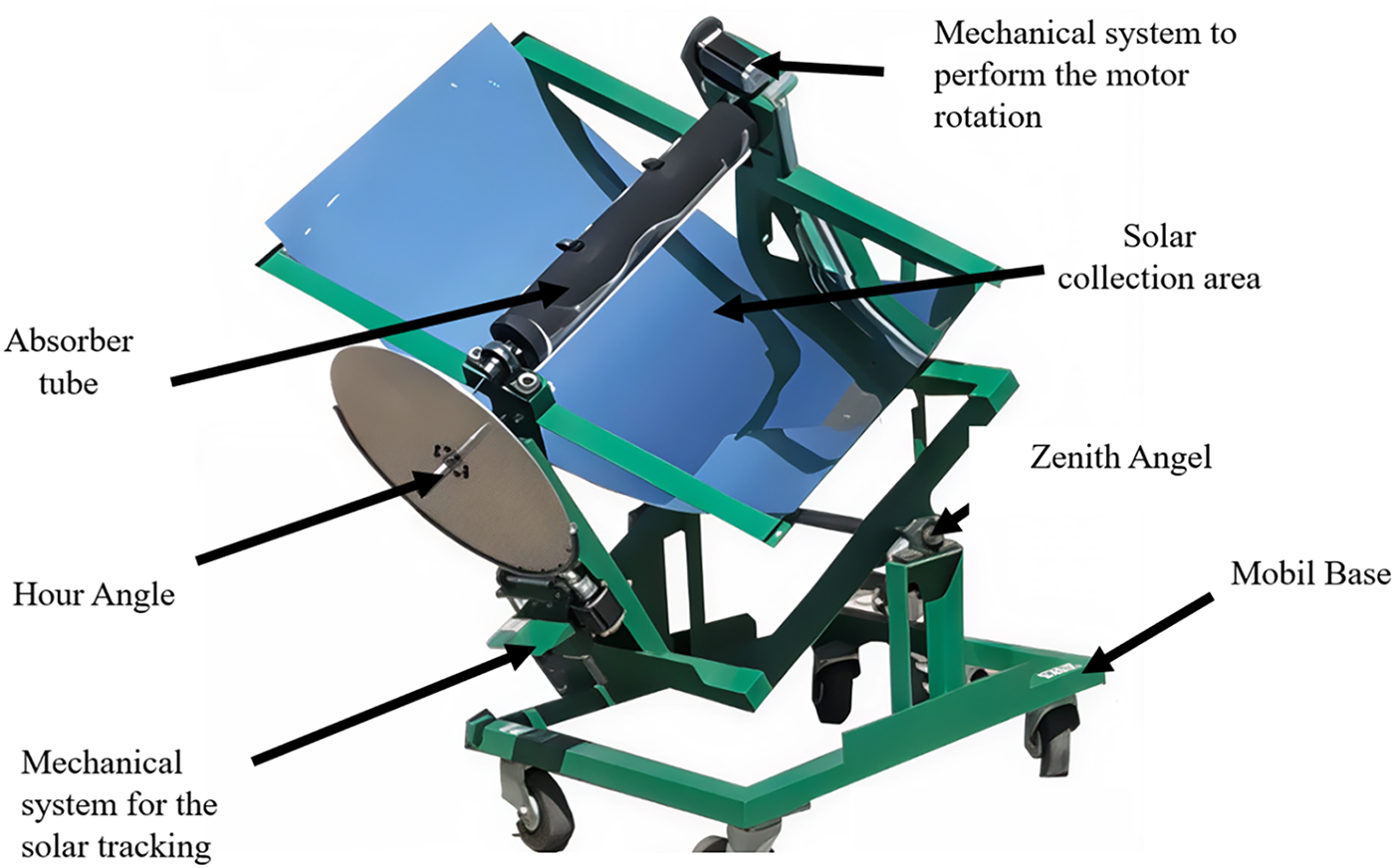
Figure 1: Photograph of the PCC with an absorber tube
The design was made with an energy balance in mind for the solar collection area and the absorber tube. The energy balance considered the normal direct solar radiation incident on the collector surface, energy losses from both the solar collection area and the absorber tube, thermal losses from the absorber tube, and heat gain by the air in the absorber tube. To estimate the external convective coefficient, classic heat transfer correlations were used, based on the Nusselt, Prandtl, and Rayleigh numbers associated with the tube outer diameter and the average ambient air temperature, following the procedure described by Duffie and Beckman [7]. This design approach, based on energy balances and numerical simulation, is consistent with the collector testing and characterization framework established in ISO 9806/UNE-EN ISO 9806 [29], which requires reporting thermal performance based on geometric parameters, optical properties, and operating conditions. The absorber tube was designed to hold 0.5 kg of cocoa beans, which can be distributed evenly throughout the tube, allowing them to move freely during roasting for a more uniform result. To allow the absorber tube to be opened for depositing the beans, it was cut transversely. Inside the tube, we installed two separators that enable the distribution of cocoa beans. To join the duct halves and close the tube cylinder, we used two hinges and a snap, respectively.
The absorber tube was constructed from stainless steel sheet grade 304, 1.6 mm thick, a material suitable for the food industry. The tube is 10 cm in diameter and 60 cm long. The duct has three divisions along its length, which we refer to as chambers, separated by 20 cm. These chambers allow separation of the cocoa beans, preventing accumulation at the ends of the absorber tube when the azimuth and zenith angles incline it. These angles depend on the day and time of testing. To complete the construction of the absorber tube, two stainless steel supports, each measuring 2.54 cm (1 in), were placed at each end to accommodate the bearings for rotation during the roasting process. The PCC concentration ratio in the study was 1.94, calculated using the collector aperture width (0.61 m) and the absorber tube diameter (0.10 m). Fig. 1 shows an image of the absorber tube in both closed and open positions.
The tracking system comprises a support structure and a solar tracking structure that allows for adjustments in the zenith and azimuthal angles. For its design, two degrees of freedom were considered, allowing for the apparent displacement of the sun at the zenith and the tracking of the hour angles. For the zenith angle, it was considered the latitude and the declination of the earth of the test site where the PCC was located. The zenith angle tracking system is manual because this angle changes every day of the year, so it does not require time tracking. Meanwhile, the hour-angle tracking system was designed with an automatic system that features adjustable support for the rotation of the absorber tube, maximizing solar radiation capture throughout the day. The selection of motors for automatic tracking was made to ensure adequate torque capacity (200 N·m) and angular accuracy (≤±1.0°) to keep tracking error within margins compatible with the requirements of IEC 62817 [30] and IEC 62862-3-2 [28], which consider tracking accuracy to be a critical parameter for ensuring the utilization of direct radiation and the reproducibility of thermal performance.
The support and solar tracking system were designed with resistance and mobility in mind; therefore, the material selected was steel in the form of Rectangular Tubular Profile (RTP) with a diameter of 5.08 cm (2 in) and a rowlock of 2.54 cm (1 in) for movement. Fig. 1 shows the structure for tracking the zenith angle and the hour angle.
The instrumentation was carried out in three sections of the PCC: (1) the motion automation system for solar tracking, (2) the measurement of the temperature in the absorber tube and the cocoa beans, and (3) the meteorological variables (ambient temperature and global solar irradiance).
T-type thermocouples with a ±0.5°C uncertainty were used to measure the duct temperature. All thermocouples were calibrated according to ASTM E-230-2017 [31]. For the duct interior, nine thermocouples were calibrated and installed, with three in each of the three chambers (C1, C2, C3) of the absorber tube. In each chamber, a thermocouple was mounted on the interior wall to measure the tube’s temperature. The second thermocouple measured air temperature at an average height, and the third thermocouple was installed inside a cocoa bean to measure its temperature. Fig. 2 shows a photograph of the instrumentation inside the duct.
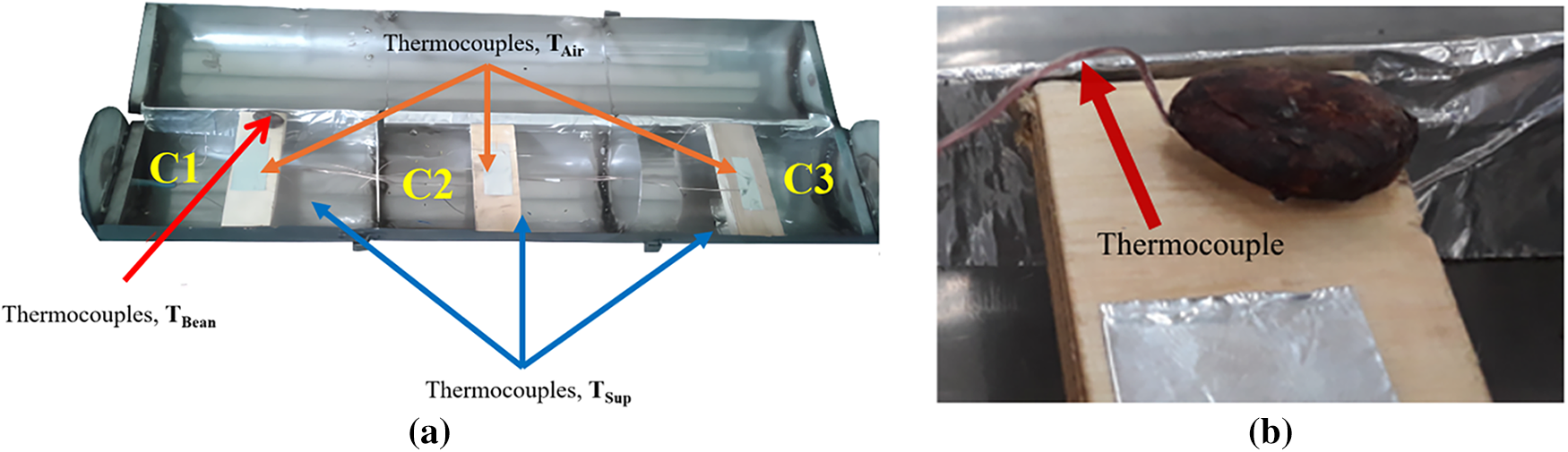
Figure 2: (a) instrumentation of the absorber tube, and (b) instrumented cocoa bean
For the instrumentation of the interior of the absorber duct, the shaft that moves the cocoa beans container has a hole in the center to introduce the thermocouples, preventing the cables from becoming entangled by the rotation of the absorber tube. The motors were programmed to perform two clockwise turns, then alternate two counterclockwise turns. This process was repeated cyclically until the end of the roasting period.
3.2 Measurement of Meteorological Variables
The ambient temperature and global solar irradiance were measured during the days the experiment was conducted. The ambient temperature was measured using an RTD sensor (PT100 class B) with an uncertainty of ±0.3°C, calibrated in this study according to ASTM E230-2017 [31]. The ambient temperature sensor is protected by a housing that prevents the effects of direct and diffuse radiation and protects it from variations caused by air streams. The global solar irradiance was measured using a first-class pyranometer with an uncertainty of ±20 W m−2.
The temperature variable in the absorber tube, the cocoa bean temperatures, and the meteorological variables were monitored and recorded using Keysight 34972A multimeter, with measurements taken at 1-min intervals.
3.3 Automation System for Solar Tracking
For the system’s motion, the dimensions of a set of helical, worm, conical, and straight gears were designed and calculated to track the zenith and azimuth angles. The set of helical and worm gears was used to transmit movement between two intersecting shafts forming a 90-degree angle. The augers were manufactured on a conventional lathe, while the gears were manufactured on a 3D printer (Ultimaker). One of the helical gears is coupled to the tracking system via a Nylamid support and a worm screw, which tracks the hour angle. The other gears are connected to the movement of the absorber tube (360°) to generate uniform roasting.
For the automatic movement of the gear system, two bipolar NEMA 23 motors with a torque of 1.8 and 1.9 N·m were used, each coupled with a driver and a control system (Arduino) powered by a 24 V power source. The first motor moves one of the gears, following the path of the sun across the sky at a speed of 15° per hour. At the same time, the second motor provides mobility to the absorber tube, enabling homogeneous roasting at speeds from 0 to 8 rpm. The programming of both engines was done with the Mach3 software. Figs. 3 and 4 show the experimental setup, where the instrumentation system, including the automatic movement system, can be seen.
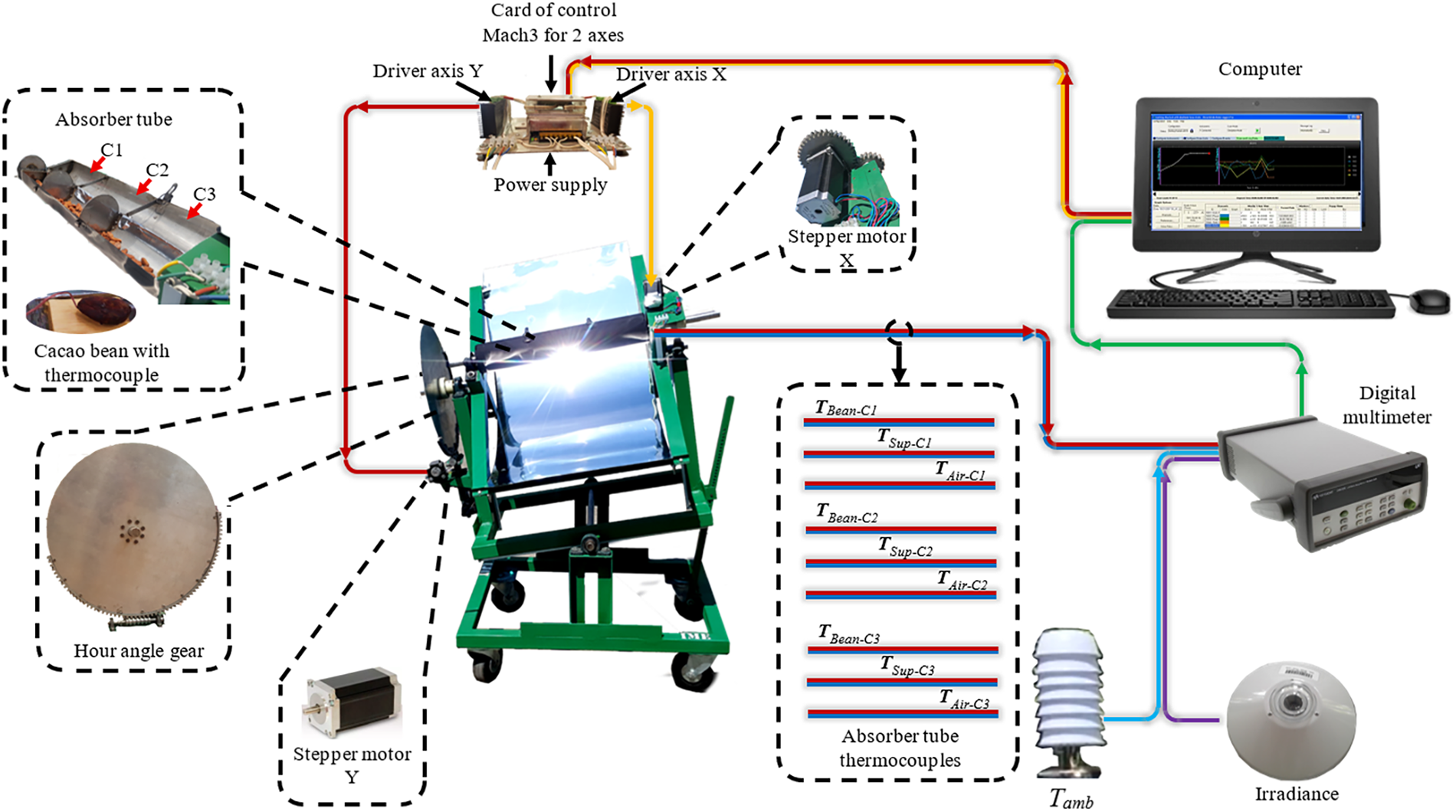
Figure 3: Experimental set-up of the PCC
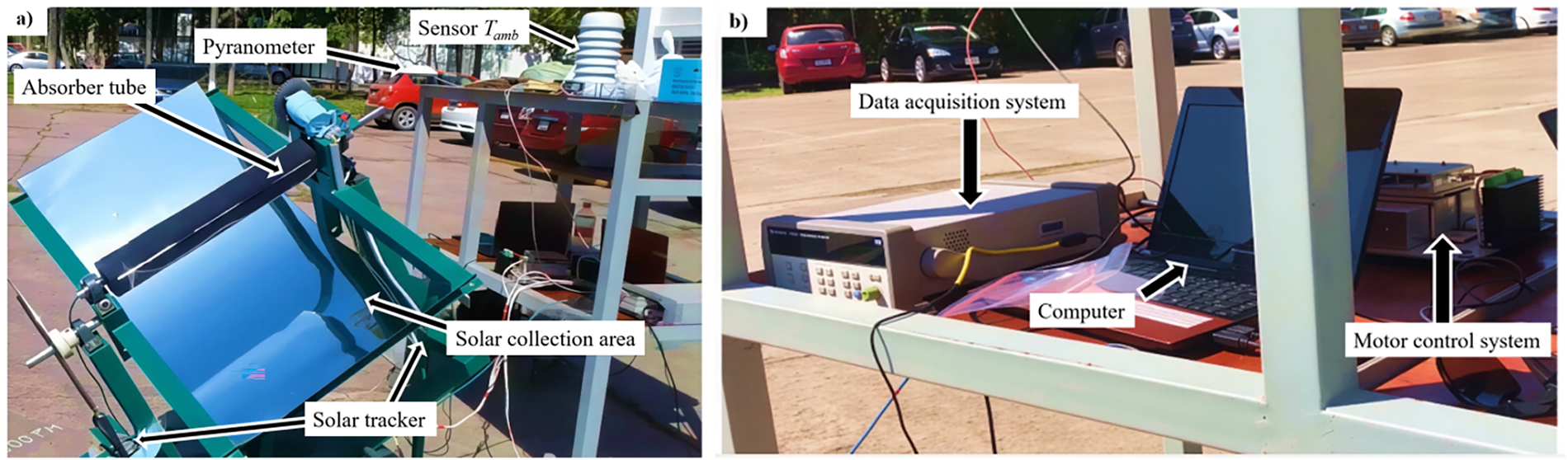
Figure 4: Experimental set up, (a) PCC y (b) Control and acquisition systems
The experimental procedure is divided into two sections: functional tests and roasting tests with varying solar irradiance. During the toasting test, the temperature of the cocoa beans can be monitored, and their quality can be analyzed after toasting.
The samples of cocoa beans used for the roasting tests were fermented and sun-dried. They are cocoa beans of the Trinitario Mexicano variety, from the Integral Consultancy and Advisory Center of the Southeast of the city of Villahermosa, Tabasco. The beans used were carefully selected by weight and size from a 15 kg sample to have comparable tests. The chosen grains weighed between 1.1 and 1.5 g, with dimensions of 21 to 25 mm in length, 11 to 14 mm in width, and 6 to 9 mm in thickness. For each experimental test, 0.5 kg of cocoa beans were toasted, and a temperature sensor was inserted into one bean in each chamber of the absorber tube to monitor the bean’s behavior during roasting, as shown in Fig. 2b.
To determine the prototype’s heating potential before placing the cocoa beans, two functional tests were conducted to observe the temperature behavior of the tube. The functionality tests lasted 30 min (Test 1F) and 39 min (Test 2F), and the maximum recorded temperature was noted. In Test 1F, the absorber tube temperature was monitored using thermographic images captured with a FLUKE Ti400 infrared camera, with an uncertainty of ±2°C. During Test 2F, the temperature was monitored using the instrumentation described in Section 3.
Subsequently, three roasting tests were performed at different times of the day (10:00, 12:00, and 14:00 h) and with varying intervals of time (40, 55, and 70 min). The test schedules were established based on the maximum solar irradiance interval observed on a given day. In contrast, the time intervals were selected based on times reported in the literature, ranging from 5 to 65 min [13], 35 min [32], and 15 to 40 min [33]. Therefore, due to the heating source of the PCC, roasting times were considered above the reported average value, considering the results of the functional tests.
In the experimental tests, the PCC was placed under the perpendicular incidence of the solar irradiance, adjusting the solar tracking system for the zenith and hour angle according to the day and time of the test. Subsequently, the turning system was activated, and a 5-min preheating process was initiated. After preheating, the container rotation system was stopped, the variable acquisition system was programmed and activated, the cocoa beans were introduced into the container, and the container rotation system was reactivated. The test was stopped when the time allotted for each test (40, 55, and 70 min) was reached. During the tests, in addition to recording the temperatures in the PCC and the meteorological variables, the mass of the cocoa beans was recorded at the beginning and at the end (after being roasted) to determine the moisture content (MC) of the roasted grain and determine the quality of the grain according to the values reported in the literature.
The MC of the roasted grain was carried out by taking a sample of 10 grains of roasted cocoa, which were weighed and subsequently dried in a Felisa hot air stove at a temperature of 103°C for 24 h. Once the sample is dry, it is cooled to room temperature, and the final mass is weighed using a Denver Instrument analytical balance with an accuracy of ±0.1 mg. This process was repeated for the total number of roasted grain samples and the unroasted cocoa sample to determine the initial MC. The MC (%) was determined with Eq. (1). The uncertainty of the moisture content is determined considering the general law of propagation [34,35] using a coverage factor k = 3.
The thermal efficiency of the roasting process was determined using Eq. (2), which represents the relation between the energy used for roasting the 0.5 kg of cocoa beans and the energy received by the PCC.
The results are presented in two sections: functional tests and roasting tests with varying solar irradiance.
5.1 Functionality Tests: Without Cocoa
Table 1 summarizes the general data and the maximum temperatures reached in the absorber tube for Test 1F. Fig. 5 shows thermographic images for the test times of 5, 10, 15, and 20 min. These images were selected based on the reported minimum time for cocoa roasting (5–65 min). A homogeneous temperature distribution is observed; the lowest temperatures were measured at the ends of the absorber tube due to convective effects, as these areas do not directly receive solar irradiance. The results indicate that the absorber tube is preheated to over 90°C under both clear and partially cloudy conditions. These temperatures are within the range reported in the literature for roasted cocoa (90°C–170°C). It was observed that the test’s maximum temperature, 97.5°C, was reached within the first 5 min.
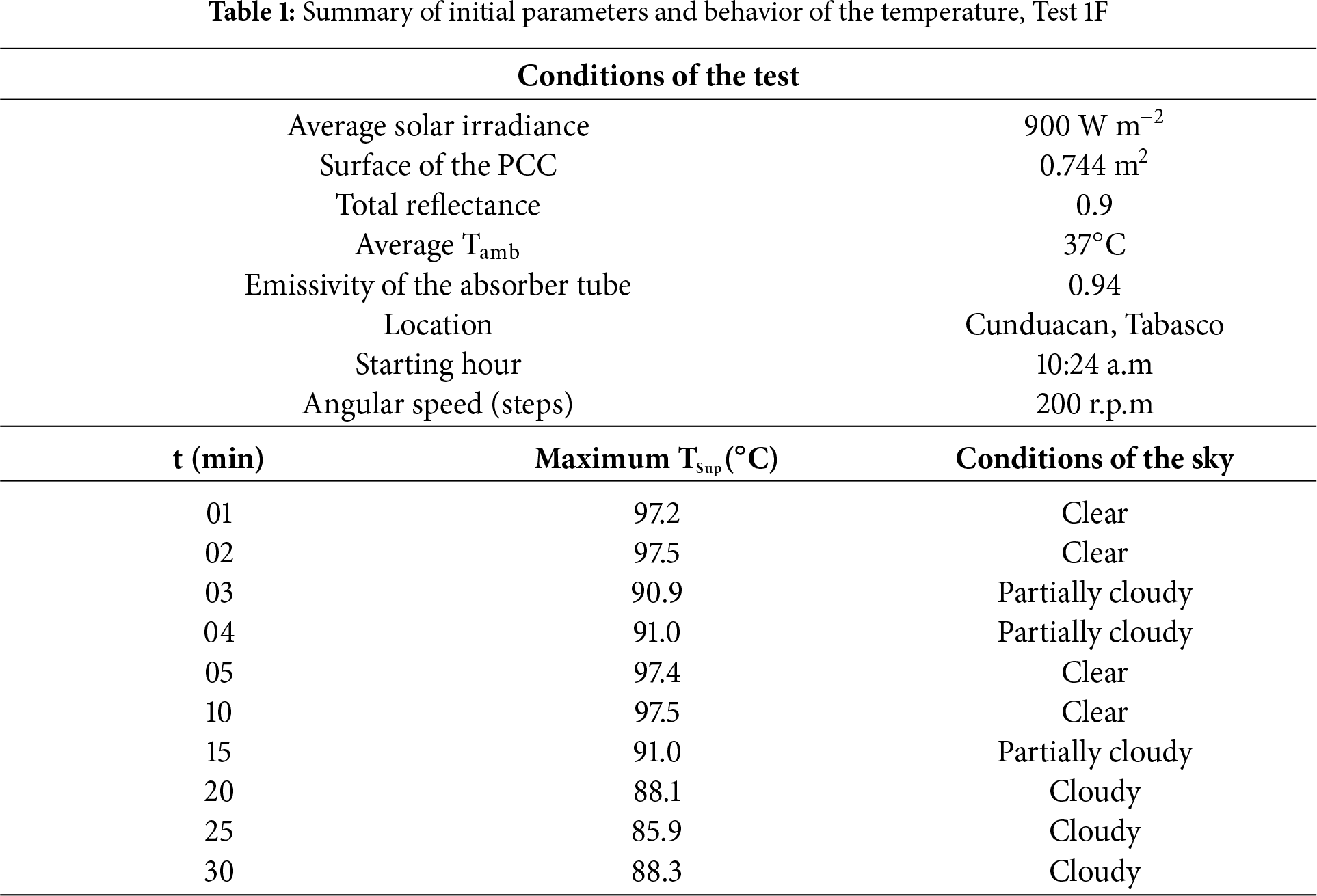
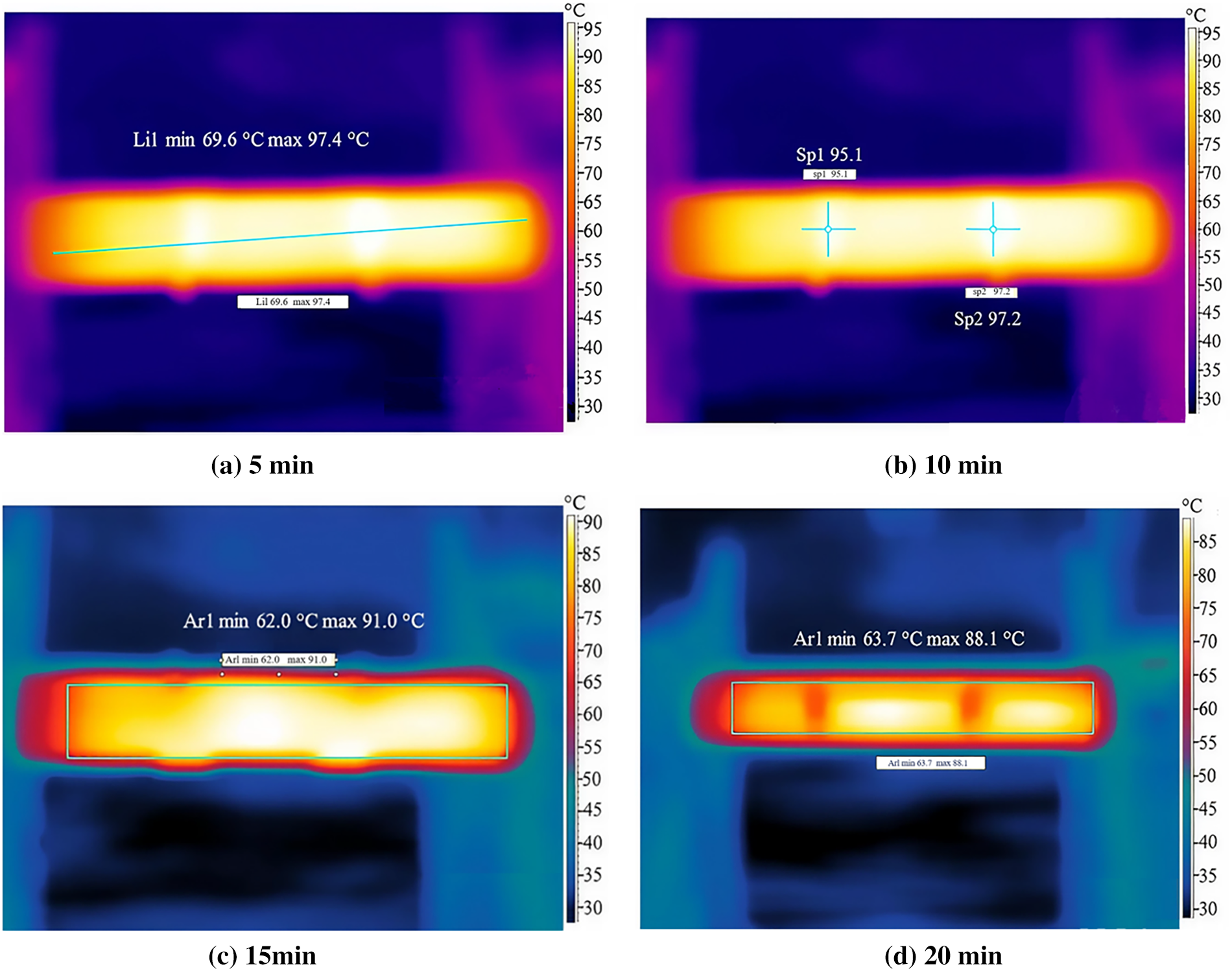
Figure 5: Thermographic image of the temperature distribution of the absorber tube for the period with highest temperature. (a) 5 min; (b) 10 min; (c) 15 min; (d) 20 min
Test 2F was carried out under conditions of average solar irradiance of 900 W m−2, starting at 10:30 am, in the municipality of Cunduacan, Tabasco (Latitude: 18.0722°, Longitude: −93.1712 18°4′20″ North, 93°10′16″ West). Fig. 6 shows the behavior of the ambient temperature, solar irradiance, indoor temperature, and the absorber tube surface. The ambient temperature oscillated between 34°C and 36°C, while the solar irradiance remained at an average of 900 W m−2. Under these environmental conditions, the surface temperature of the absorber tube reached up to 150°C, specifically in Chamber 3, located at the end of the absorber tube, with a slightly favored azimuthal angle to capture the most solar radiation. The indoor temperature of the absorber tube reached above 130°C (Chamber 3). However, it should be noted that although Chamber 1 reached the lowest temperature, its value is above the minimum reported for cocoa roasting, 90°C. After 15 min of testing, TSup and TAir decreased, then recovered within 10 min, likely due to air currents during the test that cooled the absorber tube surface. The results obtained in Tests 1F and 2F indicate that the system can reach the minimum temperature required to toast cocoa beans.
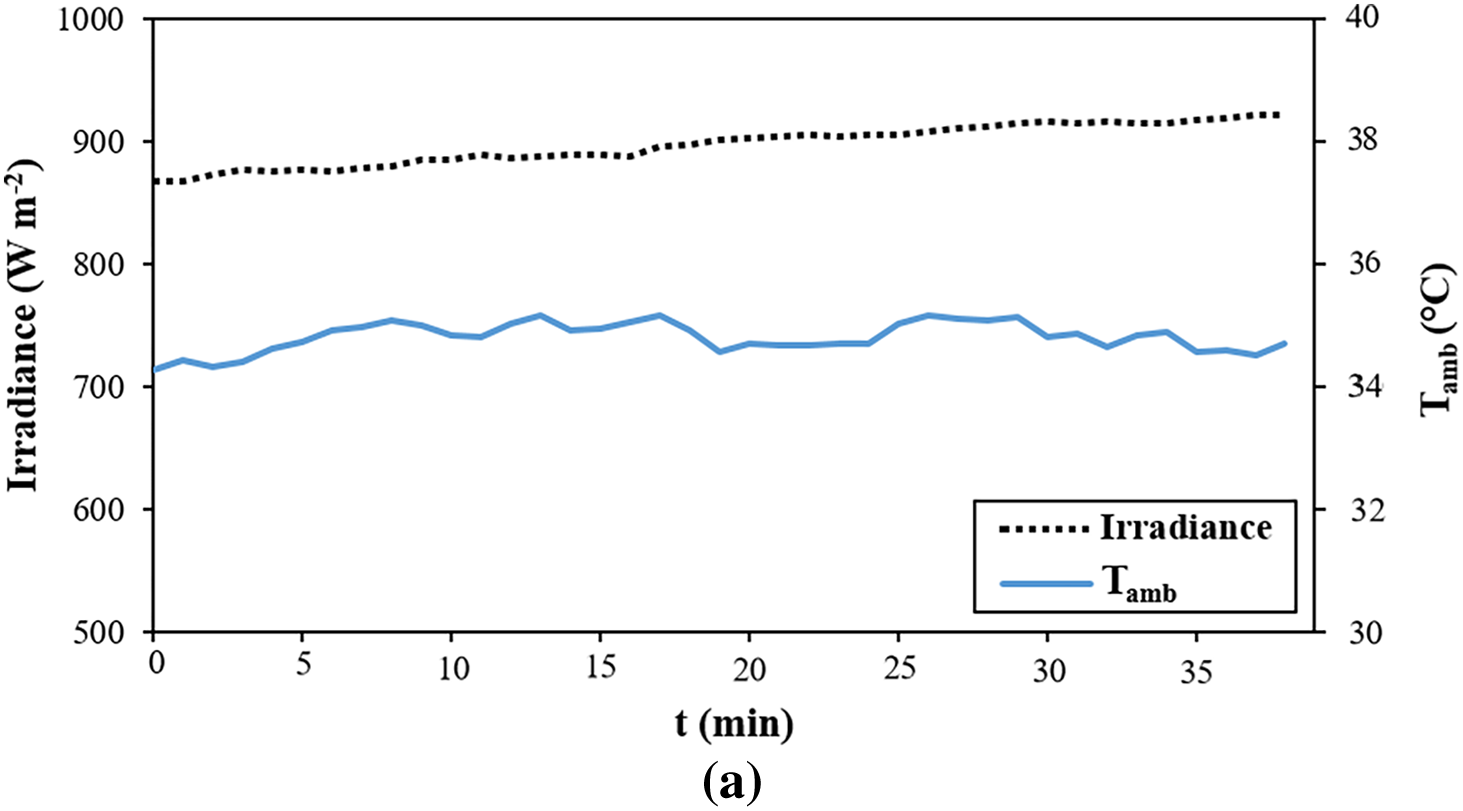
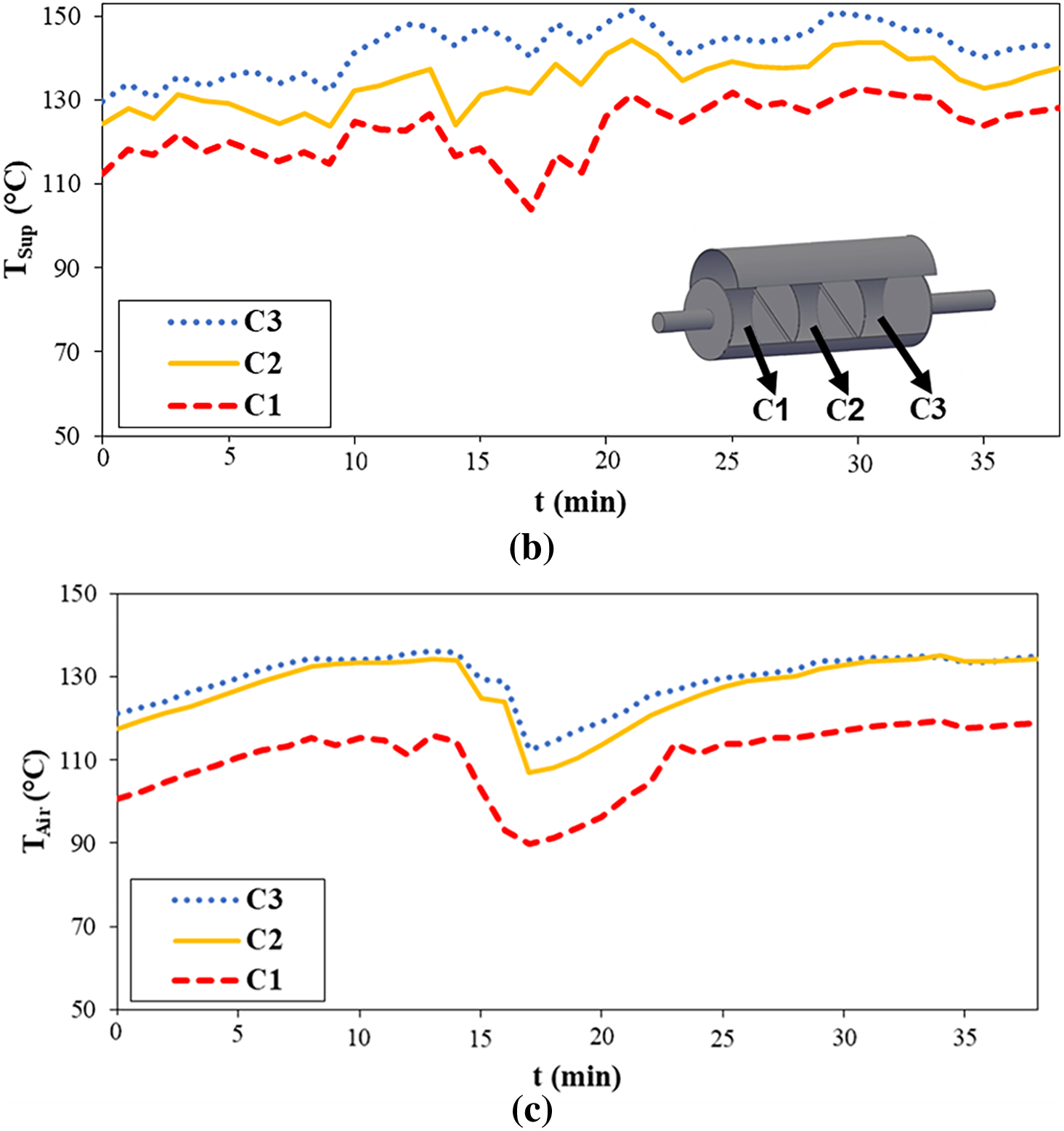
Figure 6: Behavior of the variables during test 2F: (a) meteorological variables, (b) surface temperature of the absorber tube, and (c) temperature of the air inside the absorber tube
5.2 Experimental Tests of Roasting with Cocoa
Table 2 summarizes the experimental tests, including the reported roasting times and the hours of the day with the highest solar incidence at the study site. Three tests were defined, in which the roasting times were increased. Fig. 3 shows the PCC’s location and orientation during the test under perpendicular solar radiation. This figure indicates that the PCC is aligned and located by the angle of the zenith (which follows the sun’s path on the celestial vault) and the azimuthal angle (which follows the sun’s height). The graphs of the behavior of the temperature of the cocoa beans, the temperature of the indoor air, and the surface of the absorber tube (located in each of the three chambers of the absorber tube), the environmental conditions of solar irradiance, and room temperature are presented in Figs. 7–9 for Tests 1R, 2R, and 3R, respectively.
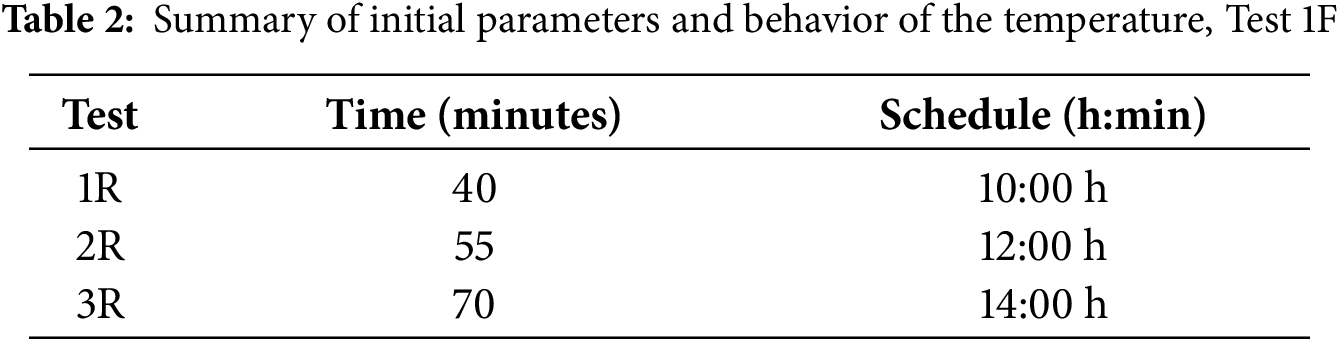
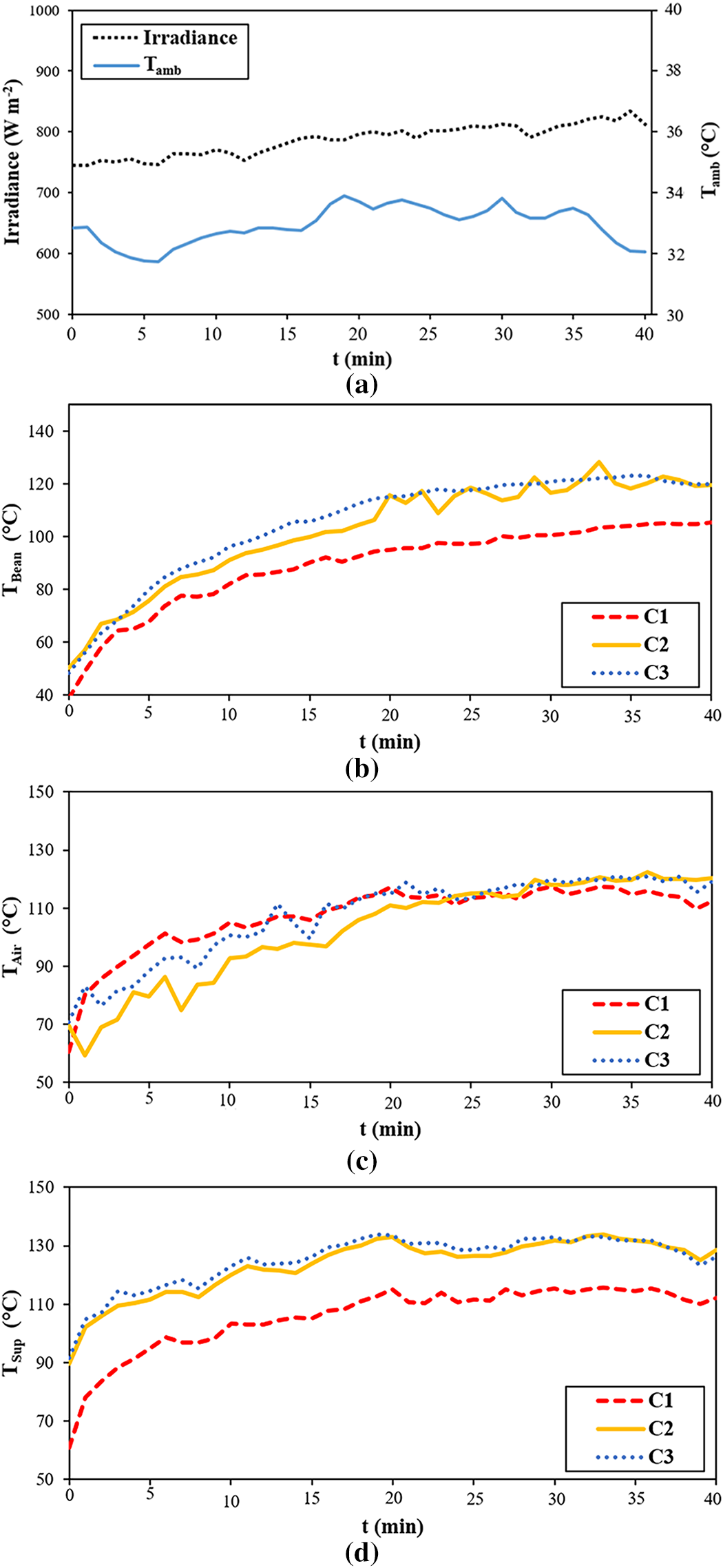
Figure 7: Behavior of the variables in test 1R, (a) meteorological variables, (b) temperature of the cocoa bean, (c) temperature of the air in the absorber tube, and (d) surface temperature of the absorber tube
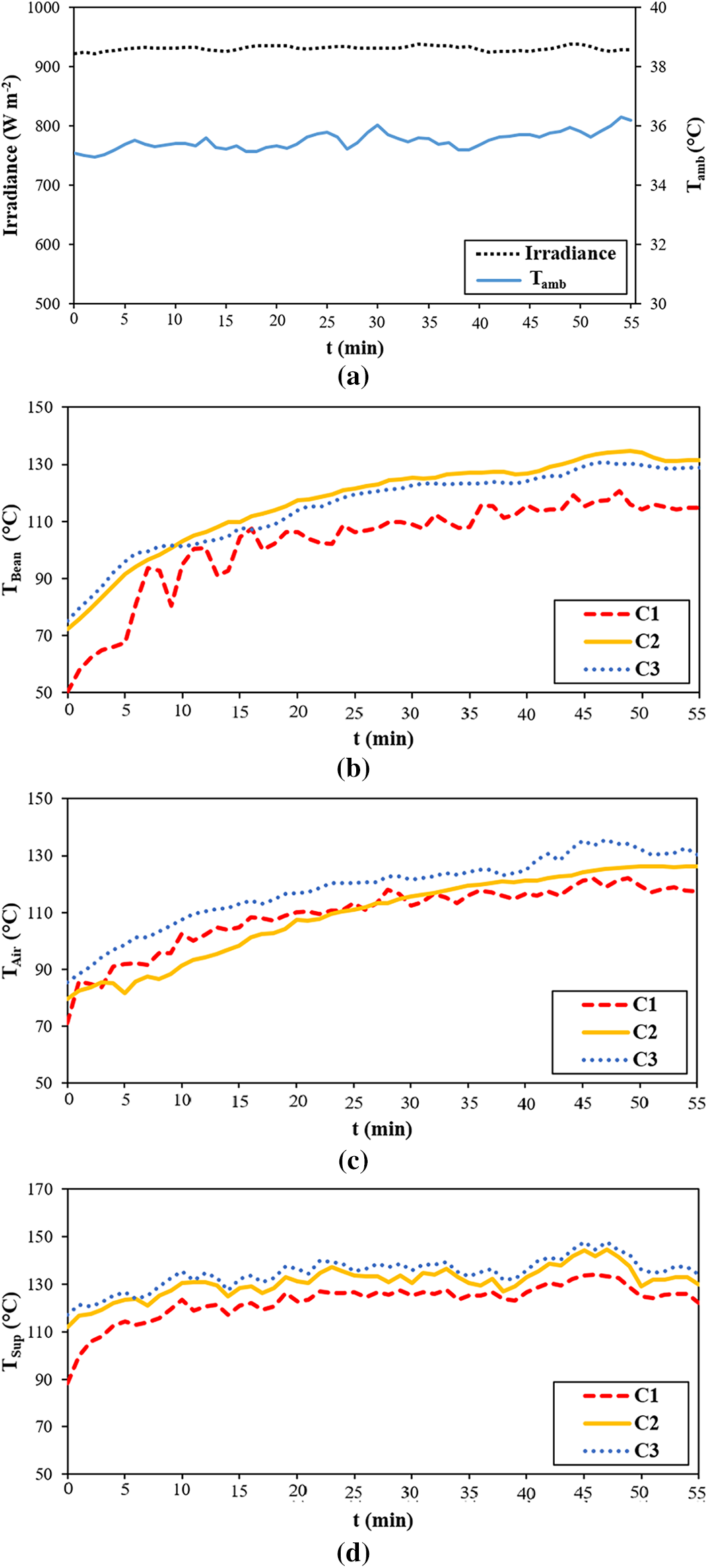
Figure 8: Behavior of the variables in test 2R, (a) meteorological variables, (b) temperature of the cocoa bean, (c) temperature of the air in the absorber tube, and (d) surface temperature of the absorber tube
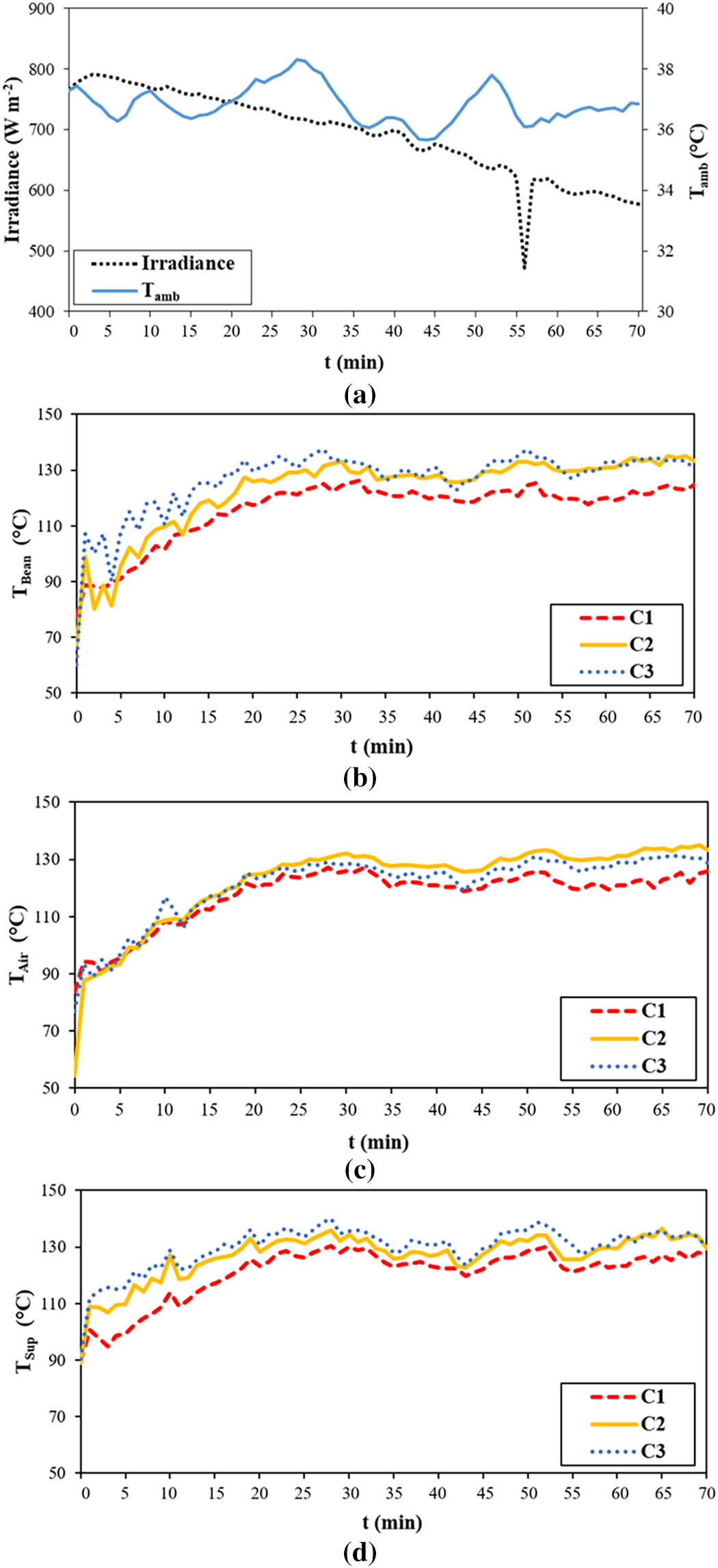
Figure 9: Behavior of the variables during the test 3R, (a) meteorological variables, (b) surface temperature of the absorber tube, (c) temperature of the air inside the absorber tube, and (d) surface temperature of the absorber tube
Fig. 7 shows the results from Test 1R; it indicates that the maximum ambient temperature was 34°C and the maximum solar irradiance was 830 W m−2. These environmental conditions allowed reaching a maximum TSup, TAir, and TBean of 130°C, 120°C, and 125°C, respectively. As expected, the absorber tube surface temperature was the highest; however, it is interesting to note that the cocoa beans reached temperatures slightly higher than the interior air temperature. Fig. 7b,c shows that the behavior of TAir exhibited a similar pattern across the three chambers, whereas TBean was higher in chambers C2 and C3. This behavior of TBean is because the energy captured on the surface of the absorber tube in C1 had a maximum temperature of 90°C, as shown in Fig. 7d. In general, it can be observed that for an average irradiance smaller than 800 W m−2, it was possible to roast the cocoa beans.
The results obtained from Test 2R correspond to the highest solar incidence (Fig. 8). In this test, a maximum Tamb of 36.2°C and a maximum solar irradiance of 940 W m−2 were reached. Both solar irradiance and Tamb remained constant throughout the test. The increase in solar irradiance in this test allowed for reaching maximum TSup, TAir, and TBean values of 148°C, 137°C, and 135°C, respectively. The difference between the maximum temperatures of TAir and TBean was minimal compared to Test 1R, which reached up to 5°C. On the other hand, the grains in C2 and C3 reached the highest temperatures. When comparing the three chambers, the maximum temperature difference in the cocoa beans was smaller than 15°C. This difference can be attributed to the shape of the absorber tube, its inclination, and the azimuthal angle. The grains tend to agglomerate on the lower side of the absorber tube, which does not receive direct solar radiation, resulting in those grains receiving less energy than those in other chambers. Therefore, in C1, the cocoa beans were roasted by the heat flow conducted from the rest of the tube surface.
Fig. 9 shows the results obtained from Test 3R. The graph of meteorological variables indicates that although solar irradiance decreased from 790 to 590 W m−2, Tamb did not change significantly, reaching a maximum of 38.4°C. In Fig. 9a, a decrease in solar irradiance is observed, dropping to 470 W m−2; this behavior was due to a cloud, after which solar irradiance recovered within just 2 min. Under these environmental conditions, it was possible to obtain maximum TSup, TAir, and TBean values of 140°C, 135°C, and 137°C, respectively. TBean was higher than TAir because the longer roasting time favored heat gain in the absorber tube; moreover, the residence time and the mass of the cocoa beans both allowed the beans to store energy, thereby increasing their temperature. It is important to note that in this test, TSup, TAir, and TBean exhibited similar behavior, unlike the previous tests, which showed both decreases and increases during the same periods. Furthermore, the reduction in solar irradiance during the test did not significantly influence the temperature behavior inside the absorber tube or in the cocoa beans. As in Tests 1R and 2R, C1 had the lowest temperatures, reaching a maximum TBean of 125°C, which is within the range reported for cocoa roasting.
In general, during the roasting tests, the TBean consistently exceeded 90°C, the minimum temperature reported for cocoa roasting [13]. The TBean at 90°C was obtained between 5 and 10 min into the roasting tests. This is important to emphasize because it means the cocoa beans could be roasted in under 10 min.
Table 3 presents a summary of the average values of the meteorological variables, TSup, TAir, TBean, and MC, for each chamber of the absorber tube. The MCf is the final moisture content of the roasted cocoa bean, and the MCi is the initial moisture content of the cocoa bean before the roasting process; both were determined with Eq. (1). The MCi is used as a reference for the analysis of the results and was estimated on average at 6.0%, considering all tests. The average maximum temperature on the chamber surfaces was measured in C2 and C3 of Test 2R, with values of 131.0°C and 134.8°C, respectively. These results occurred because Test 2R was conducted during the peak solar irradiance period, with an average irradiance of 930.5 W m−2. Meanwhile, the average maximum TAir and average maximum TBean were obtained in C2 and C3 during Test 3R. Although the average maximum TSup was observed in Test 2R, it was not in this test that the highest TAir and TBean temperatures were recorded. This is because in Test 3R, the roasting process lasted 70 min, allowing heat to accumulate in the indoor air of the absorber tube and in the cocoa beans due to their thermal mass. This effect allowed the cocoa beans to reach average temperatures of up to 126.7°C during roasting, even though Test 3R had the lowest average solar irradiance of 685.7 W m−2.
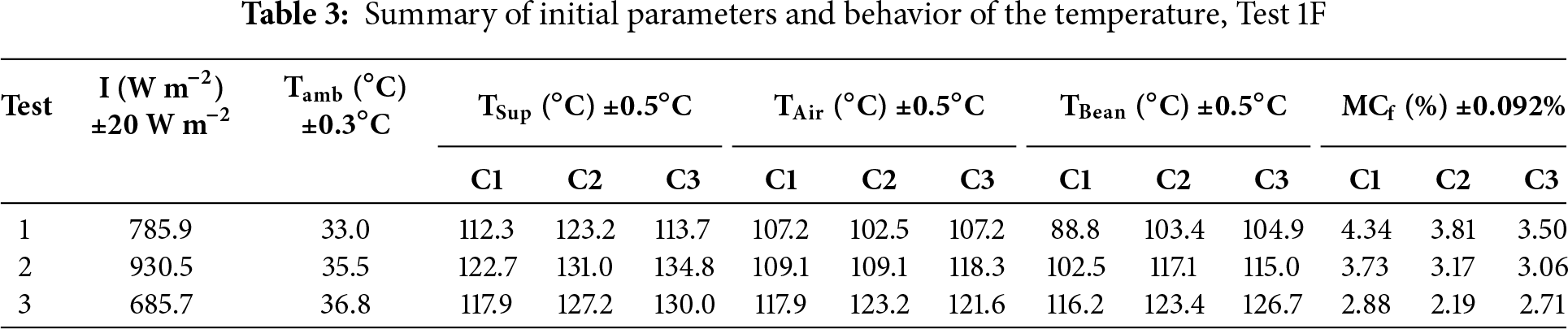
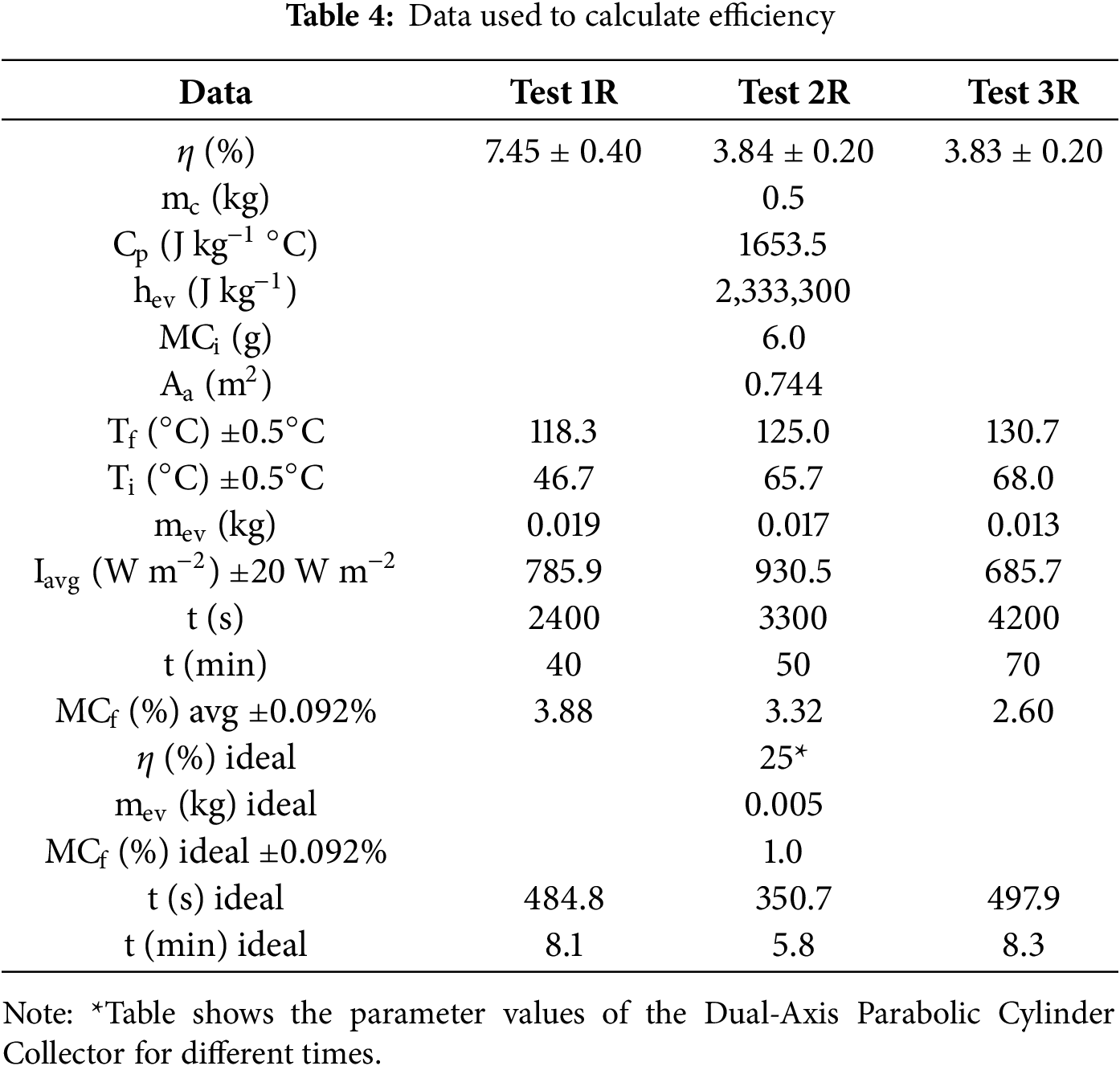
On the other hand, regarding the MCf values, it was observed that Test 3R had the lowest humidity content, with a minimum of 2.19% in C2. This value is close to the 1%–2% reported by [16,36] as the optimum moisture content for roasted cocoa used in chocolate making. It is important to note that this moisture value was obtained even with a 70-min roasting time and a Tamb of 38.4°C, the highest in the test set. The solar irradiance contributed to a slow roasting process, with only 0.013 kg of water evaporating from the roasted grain, as shown in Table 4.
5.3 Efficiency of the PCC for the Toasting Process
The efficiency of the roasting process was estimated considering the energy used to remove the humidity and the changes in the temperature of cocoa beans, Eq. (2). Table 4 presents the data and efficiency calculated for the three roasting tests. The maximum efficiency was obtained in Test 1R (7.45%) due to the cocoa beans’ initial temperature and the test duration. This efficiency can be considered low compared with that reported for concentration systems using PCCs, which reach 25%–77% [3,5,37–39]. The differences in efficiency values between this study and previous studies are due to the present calculation considering only the energy used for the roasting process, without including the intermediate elements required to direct energy to the process. Moreover, the amount of cocoa used in this study was small (0.5 kg), so a large fraction of the captured energy was used solely to maintain the desired temperature.
Although a moisture content close to the ideal value was obtained in Test 3R, the efficiency was low. Therefore, an analysis was conducted to determine the optimal roasting time required to achieve a moisture content of 1% in the roasted beans and an optimal efficiency of 25%, under the prevailing climatic and temperature conditions during the experimentation with cocoa beans. As a result, it was found that using the PCC would require only 5.8–8.3 min to obtain roasted cocoa beans under optimal conditions for chocolate production. These results agree with those observed in Figs. 7b, 8b and 9b, which indicate that the average time for cocoa beans to reach a temperature of 90°C, the minimum temperature required for roasting cocoa, was between 5 and 10 min.
The results indicate that the best temperature behavior was observed during tests conducted between 12:00 and 14:00 h. However, the results also suggest that, in the experimental tests, the cocoa beans were already roasted after 10 min, since achieving the ideal moisture content of 1% would require removing only 0.005 kg of water. In the tests carried out, between 0.0013 and 0.0019 kg of water was removed from the cocoa bean samples, representing up to almost four times the ideal value.
Table 5 shows a comparative analysis summarizing the temperature reached, characteristic time, thermal efficiency of the process, and study conditions for the present study vs. previous studies. The performance analysis of the PCC developed in this study gains clarity when contrasted with the thermal behavior and efficiency margins reported in the literature for parabolic trough collectors. While the efficiency values obtained in Tests 1R, 2R, and 3R (7.45%, 3.84%, and 3.83%, respectively) appear lower than the thermal efficiencies typically documented for conventional PTC systems, ranging from 40%–60% [37], 42%–55% [38], and 50%–77% [39], it is important to emphasize that these studies evaluate collector-level thermal performance. In contrast, the present work quantifies process-level roasting efficiency, calculated strictly from the energy effectively used to heat and roast cocoa beans. Therefore, efficiency is not directly comparable in absolute magnitude. Still, the contrast highlights that the system developed operates under the far more complex requirements of biomass heating, continuous rotation, and convective–radiative interactions with product load.
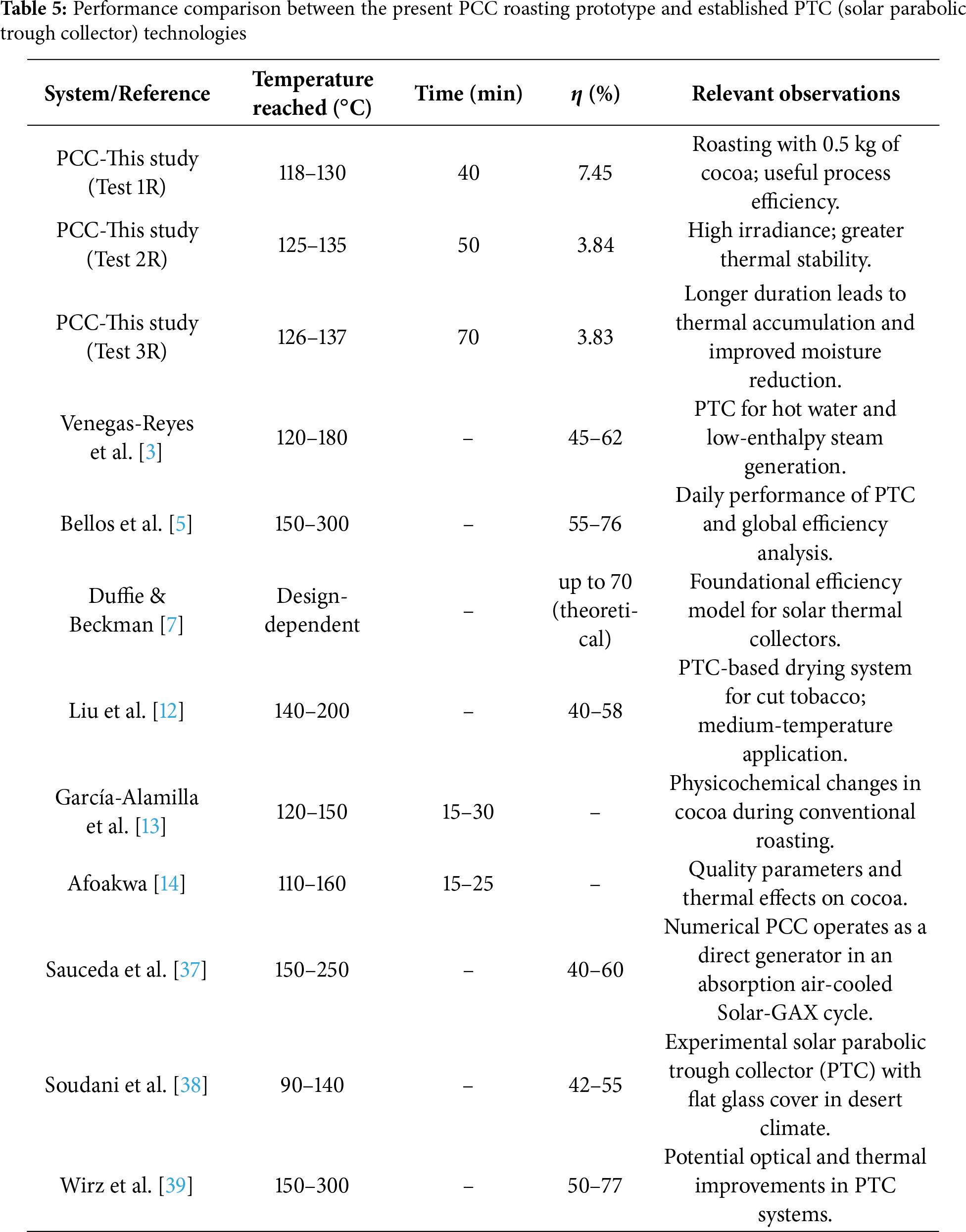
In terms of temperature levels, the prototype reached 118°C–137°C across the three tests, which is entirely consistent with the thermal range reported as adequate for cocoa roasting, 110°C–160°C [13,14]. These temperatures fall below the maximum absorber temperatures reported in solar engineering literature, 150°C–300°C [39] and 150°C–300°C [5], because PTC studies generally report absorber or heat-transfer-fluid temperatures, not temperatures measured inside a roasting chamber containing biological products. This reinforces that the prototype effectively channels solar energy into a controlled thermal environment suitable for food processing rather than high-temperature thermal cycles.
Regarding operating times, the experimental roasting cycles in this study (40–70 min) are consistent with the ranges reported for conventional cocoa roasting processes (15–60 min, depending on technique and bean characteristics). The increasing duration from Test 1R to 3R correlates with cumulative solar input and bean moisture reduction, consistent with thermal–mass behavior in roasting systems and with the physicochemical transformations described by García-Alamilla et al. [13]. Although literature on PTCs does not report process times, since these systems are not used for food roasting, the stability of the temperature profiles observed in Tests 1R–3R aligns well with the thermal uniformity descriptions achieved in optically optimized collectors such as those discussed by Soudani et al. [38] and Wirz et al. [39].
Overall, the comparison shows that although the prototype operates at significantly lower thermal efficiency than industrial PTCs, it achieves temperature ranges, roasting durations, and moisture-reduction behaviors consistent with accepted standards for cocoa processing, validating the technical feasibility of using a PCC for food roasting. Table 5 also highlights that the thermal conditions obtained in the present study fall within the thresholds recognized as critical for flavor development and quality improvement in cocoa, confirming the practical relevance and adequacy of the system despite its lower collector-level efficiency.
5.4 Economic Feasibility of PCC
A simplified economic feasibility analysis indicates that the proposed PCC-based roaster is more cost-effective for small cocoa producers than conventional LPG or electric roasters. The initial investment is mainly associated with the construction of the aluminum reflector, the stainless-steel absorber tube, the steel support structure, and a low-power tracking and data-acquisition system, all of which can be fabricated locally using standard workshop capabilities. In contrast, conventional roasting systems require not only higher acquisition costs, but also continuous expenditure on LPG or electricity throughout their operating life. Considering that typical LPG roasters consume about 433.3237 kg/h [40] of LPG per kilogram of cocoa and the consume of electric systems, the cumulative fuel cost over multiple harvest seasons can easily exceed the one-time construction cost of the PCC prototype. Because the solar roaster consumes no fuel, each roasting cycle directly translates into avoided energy costs, so the investment is progressively recovered through fuel savings. In addition, the PCC achieves roasting temperatures between 118°C and 137°C and final moisture contents as low as 2.19%, comparable with those obtained in conventional systems, indicating that cost savings are not achieved at the expense of product quality. Consequently, in rural or off-grid contexts with good solar availability, the balance between relatively low construction costs, negligible operating energy costs, and acceptable roasting performance supports the economic viability of the proposed device.
In this study, a solar-powered cocoa roaster equipped with a dual-axis automatic tracking mechanism was designed and developed. Roasting trials were carried out according to predefined schedules and controlled operating conditions, enabling assessment of both process efficiency and the physicochemical quality of roasted cocoa beans. From the analysis of the results, we found that:
• In tests without cocoa beans, the absorber tube reached up to 150°C in Chamber 3 under an average irradiance of 900 W m−2. Even under partially cloudy conditions, a maximum temperature of 91°C could be obtained. This registered temperature falls within the range reported in the literature for cocoa roasting (90°C–170°C), confirming the system’s ability to deliver roasting-level temperatures under varying solar conditions.
• During the roasting tests with cocoa beans, the maximum indoor temperature of 137°C was achieved in Chamber 3 of Test 3R, which enabled the moisture content to be reduced to 2.19%. This humidity percentage was reached in 70 min, with an average irradiance of 685.7 W m−2. Moisture reduction was strongly influenced by temperature and exposure time, with Test 3R approaching the optimal final moisture range for desirable flavor and aroma development.
• Regarding the cocoa bean quality tests, temperature and roasting time significantly affected the decrease in moisture content, with Test 3R showing a final moisture level close to the optimal range (1%–2%).
• Compared with reference parabolic trough collector (PTC) systems, the PCC presented in this study achieved temperatures consistent with those reported in the literature for medium-temperature solar applications, such as hot-water generation, food dehydration, and biomass drying [3,11,12]. Although its process-level roasting efficiency (3.83%–7.45%) is lower than the collector-level thermal efficiencies reported for classical PTC systems [5,37–39], this difference is expected, as the literature efficiencies represent optical-thermal performance under fluid-based heat transfer. In contrast, the present work quantifies only the energy strictly used for the roasting process, including bean rotation, internal convection, and direct product heating. Therefore, the comparison confirms that the PCC operates under more complex thermal conditions and that its performance is appropriate for food-processing applications.
• The comparative analysis also indicates that, unlike high-temperature PTC applications documented in the literature (150°C–300°C), the roasting temperatures achieved in this study (118°C–137°C) align well with the requirements of cocoa transformation, particularly regarding moisture diffusion and precursor reactions described in previous studies. This reinforces the technical feasibility of adapting a PCC for thermal food processing rather than for conventional heat-transfer-fluid cycles.
• In terms of efficiency, it was found that to achieve 25% efficiency, the roasting test would need to be stopped at approximately 10 min to obtain high-quality roasted cocoa beans under the environmental conditions in which the experiments were carried out. However, doing so would compromise bean quality, as insufficient moisture reduction would prevent the achievement of optimal sensory characteristics. Therefore, longer roasting durations are necessary to meet quality requirements, even if this decreases the process-level efficiency.
• The proposed PCC-based roasting system demonstrates strong economic viability due to its low construction cost, zero-energy operation, minimal maintenance, and scalability. These characteristics position the system as a practical and sustainable alternative for cocoa roasting in rural and off-grid environments, supporting both economic and energy resilience in cocoa-producing regions.
The results of this study indicate that the PCC can be effectively used for cocoa roasting, achieving temperatures and moisture reductions compatible with industrial standards while reducing the reliance on fossil fuels through solar thermal energy. One identified improvement opportunity is redesigning the absorber tube to prevent bean agglomeration and enhance heat distribution, thereby improving uniform roasting and thermal efficiency. Scaling this system could further expand its application in rural or off-grid cocoa-producing regions, where sustainable and low-cost thermal processing technologies are needed.
Acknowledgement: P. R. Torres-Hernández acknowledges the National Council of Science and Technology (CONACYT) for the grant for his master’s degree studies. The authors also thank Oscar May García for his collaboration on this project.
Funding Statement: The authors thank the Program for Teaching Development (PRODEP) for funding the project UJAT-PTC-251 (Development and Evaluation of a Cocoa Roaster in the Tabasco Region).
Author Contributions: The authors confirm contribution to the paper as follows: study conception and design: E. V. Macias-Melo, P. R. Torres-Hernández, K. M. Aguilar-Castro, P. García-Alamilla; data collection: P. R. Torres-Hernández; analysis and interpretation of results: E. V. Macias-Melo, J. Serrano-Arellano, C. E. Torres-Aguilar; draft manuscript preparation: I. Hernández-Pérez, S. Medina García, M. I. Hernández-López, K. M. Aguilar-Castro, J. Serrano-Arellano. All authors reviewed the results and approved the final version of the manuscript.
Availability of Data and Materials: The data that support the findings of this study are available from the corresponding author, [J. Serrano-Arellano], upon reasonable request.
Ethics Approval: Not applicable.
Conflicts of Interest: The authors declare no conflicts of interest to report regarding the present study.
Nomenclature
| Aa | Opening area (m2) |
| C1 | Chamber one |
| C2 | Chamber two |
| C3 | Chamber three |
| cp | Specific heat (J Kg−1 °C−1) |
| f | Focal length |
| h | Enthalpy (J kg−1) |
| I | Solar irradiance (W m−2) |
| m | Mass (kg) |
| MC | Moisture content (%) |
| Qu | Useful heat (J) |
| T | Temperature (°C) |
| t | Time (s, min) |
| Greek | |
| η | Efficiency |
| Subscripts | |
| Air | Air |
| amb | Ambient |
| Bean | Cocoa bean |
| c | Cocoa |
| ev | Evaporation |
| f | Final |
| i | Initial |
| Sup | Absorber tube surface |
References
1. Romero-Hernández S, Romero-Hernández O, Wood D. Energías renovables: impulso político y tecnológico para un México sustentable. Mexico City, México: USAID/ITAM; 2011. [Google Scholar]
2. Jara W. Introducción a las energías renovables no convencionales. Madrid, Spain: ENDESAeco; 2008. [Google Scholar]
3. Venegas-Reyes E, Jaramillo OA, Castrejón-García R, Aguilar JO, Sosa-Montemayor F. Design, construction, and testing of a parabolic trough solar concentrator for hot water and low enthalpy steam generation. J Renew Sustain Energy. 2012;4(5):053103. doi:10.1063/1.4751461. [Google Scholar] [CrossRef]
4. Jebasingh VK, Joselin Herbert GM. A review of solar parabolic trough collector. Renew Sustain Energy Rev. 2016;54:1085–91. doi:10.1016/j.rser.2015.10.043. [Google Scholar] [CrossRef]
5. Bellos E, Tzivanidis C, Belessiotis V. Daily performance of parabolic trough solar collectors. Sol Energy. 2017;158:663–78. doi:10.1016/j.solener.2017.10.038. [Google Scholar] [CrossRef]
6. Franco J, Cadena C, Saravia L. Multiple use communal solar cookers. Sol Energy. 2004;77(2):217–23. doi:10.1016/j.solener.2004.03.026. [Google Scholar] [CrossRef]
7. Duffie JA, Beckman WA. Solar engineering of thermal processes. Hoboken, NJ, USA: John Wiley & Sons, Inc.; 2013. [Google Scholar]
8. Faisal M, Salim MA, Sopian K, Al-Sulaiman FA, Hasanuzzaman M. Numerical investigation of a solar collector integrated with encapsulated phase change materials for thermal performance improvement. Energies. 2024;17:5243. doi:10.3390/en17215243. [Google Scholar] [CrossRef]
9. Shokrnia M, Shateri S, Ahmadi MH. Photothermal performance optimization of a parabolic trough solar collector with selective coating arrangement. Energies. 2024;17:3221. doi:10.3390/en17133221. [Google Scholar] [CrossRef]
10. Tagle PD, Agraz A, Rivera CI. Study of applications of parabolic trough solar collector technology in Mexican industry. Energy Proc. 2016;91:661–7. doi:10.1016/j.egypro.2016.06.227. [Google Scholar] [CrossRef]
11. Ullah F, Khattak MK, Khan M, Hasrat K. Impact of the dehydration process on guava by using the parabolic trough solar concentrator. Pak J Food Sci. 2016;26(2):92–7. [Google Scholar]
12. Liu JT, Li M, Yu QF, Ling DL. A novel parabolic trough concentrating solar heating for cut tobacco drying system. Int J Photoenergy. 2014;2014:209028. doi:10.1155/2014/209028. [Google Scholar] [CrossRef]
13. García-Alamilla P, Lagunes-Gálvez LM, Barajas-Fernández J, García-Alamilla R. Physicochemical changes of cocoa beans during roasting process. J Food Qual. 2017;2017:2969324. doi:10.1155/2017/2969324. [Google Scholar] [CrossRef]
14. Afoakwa EO. Chocolate science and technology. Hoboken, NJ, USA: John Wiley & Sons, Inc.; 2016. [Google Scholar]
15. Zzaman W, Yang TA. Moisture, color and texture changes in cocoa beans during superheated steam roasting. J Food Process Preserv. 2014;38(3):1364–70. doi:10.1111/jfpp.12098. [Google Scholar] [CrossRef]
16. Hernández JA, Heyd B, Irles C, Valdovinos B, Trystram G. Analysis of the heat and mass transfer during coffee batch roasting. J Food Eng. 2007;78(4):1141–8. doi:10.1016/j.jfoodeng.2005.12.041. [Google Scholar] [CrossRef]
17. Aprotosoaie AC, Luca SV, Miron A. Flavor chemistry of cocoa and cocoa products—an overview. Compr Rev Food Sci Food Saf. 2016;15(1):73–91. doi:10.1111/1541-4337.12180. [Google Scholar] [PubMed] [CrossRef]
18. Veynandt F, Perez Panduro JP, Soria Navarro JE, Hadzich M. Cacao roasting in rural areas of Peru using concentrated solar thermal energy: experimental results. Renew Energy Environ Sustain. 2016;1:8. doi:10.1051/rees/2016008. [Google Scholar] [CrossRef]
19. Escalante F. Desarrollo de un prototipo de tostador de granos de cacao de 6 kg/hora que funcione con energía solar concentrada [master’s thesis]. Lima, Peru: Pontificia Universidad Católica del Perú; 2015. [Google Scholar]
20. Krysiak WS. Influence of roasting conditions on the color changes and volatile profile of cocoa beans. Food Res Int. 2011;44:1184–90. doi:10.1016/j.jfoodeng.2005.07.013. [Google Scholar] [CrossRef]
21. Afoakwa EO, Paterson A, Fowler M, Ryan A. Flavor formation and character in cocoa and chocolate: a critical review. Crit Rev Food Sci Nutr. 2008;48(9):840–57. doi:10.1080/10408390701719272. [Google Scholar] [PubMed] [CrossRef]
22. Fowler M, Ziegleder G. Cocoa beans: from tree to factory. In: Industrial chocolate manufacture and use. 5th ed. Hoboken, NJ, USA: John Wiley & Sons, Inc.; 2020. p. 15–47. [Google Scholar]
23. Peña-Correa RF, Vélez-Medina J, Torres-Delgado G, Mendivil-Gallego F, Abril A, Correa-Hernández A, et al. Fluidized-bed-roasted cocoa has different chemical composition and thermal behaviour. J Agric Food Chem. 2023;71:10323–34. doi:10.1021/acs.jafc.3c01678. [Google Scholar] [PubMed] [CrossRef]
24. Schouteten JJ, Gellynck X, Delbaere C, De Steur H, Van Langenhove H, Herrera A, et al. Microwave roasting as an alternative to convection roasting of cocoa beans. Foods. 2023;12:887. doi:10.3390/foods12040887. [Google Scholar] [PubMed] [CrossRef]
25. Lima GVS, Murcia M, Ospina J, Ciro H, Montoya EC, Sanchez F, et al. Impact of post-harvest processing and roasting conditions on cocoa beans from Colombia. Food Chem. 2024;437:137930. doi:10.1016/j.lwt.2024.116825. [Google Scholar] [CrossRef]
26. Santander M, Chica V, Correa HAM, Rodríguez J, Villagran E, Vaillant F, et al. Unravelling cocoa drying technology: a comprehensive review of the influence on flavor formation and quality. Foods. 2025;14(5):721. doi:10.3390/foods14050721. [Google Scholar] [PubMed] [CrossRef]
27. Mao Q, Zhang L, Wu H. Study on concentrating characteristics of a solar parabolic dish concentrator within high radiation flux. Int J Photoenergy. 2015;2015:787280. doi:10.1155/2015/787280. [Google Scholar] [CrossRef]
28. IEC 62862-3-2:2018. Solar thermal electric plants—systems and components—part 3-2: general requirements and test methods for parabolic-trough collectors. Geneva, Switzerland: International Electrotechnical Commission; 2018. [Google Scholar]
29. ISO 9806:2017. Solar energy—solar thermal collectors—test methods. Geneva, Switzerland: International Organization for Standardization; 2017. [Google Scholar]
30. IEC 62817:2014+AMD1:2017. Photovoltaic systems—design qualification of solar trackers. Geneva, Switzerland: International Electrotechnical Commission; 2017. [Google Scholar]
31. ASTM E230–17. Standard specification and temperature electromotive force (EMF) tables for standardized thermocouples. West Conshohocken, PA, USA: ASTM International; 2017. [Google Scholar]
32. Żyżelewicz D, Krysiak W, Budryn G, Oracz J, Nebesny E. Tocopherols in cocoa butter obtained from cocoa bean roasted in different forms and under various process parameters. Food Res Int. 2014;63(1):390–9. doi:10.1016/j.foodres.2014.03.027. [Google Scholar] [CrossRef]
33. Farah DMH, Zaibunnisa AH, Misnawi G. Optimization of cocoa beans roasting process using response surface methodology based on concentration of pyrazine and acrylamide. Int Food Res J. 2012;19(1):1355–9. doi:10.22302/iccri.jur.pelitaperkebunan.v28i1.163. [Google Scholar] [CrossRef]
34. Schmid WA, Lazos Martínez RJ. Guía para estimar la incertidumbre de la medición. Querétaro, México: Centro Nacional de Metrología (CENAM); 2008. [Google Scholar]
35. Martínez E, Lira L. Evaluación de la incertidumbre de algunos factores de influencia en la determinación del contenido de humedad en granos. Querétaro, México: Centro Nacional de Metrología (CENAM); 2008. [Google Scholar]
36. SAGARPA. Planeación agrícola nacional 2017–2030. [cited 2025 Jan 1]. Available from: https://www.gob.mx/cms/uploads/attachment/file/256425/B_sico-Cacao.pdf. [Google Scholar]
37. Sauceda D, Velázquez N, García-Valladares O, Beltrán R. Numerical simulation and design of a parabolic trough solar collector used as a direct generator in a solar-GAX cooling cycle? J Mech Sci Technol. 2011;25(6):1399–408. doi:10.1007/s12206-011-0326-y. [Google Scholar] [CrossRef]
38. Soudani ME, Aiadi KE, Bechki D, Chihi S. Experimental and theoretical study of parabolic trough collector (PTC) with a flat glass cover in the region of Algerian Sahara (Ouargla). J Mech Sci Technol. 2017;31(8):4003–9. doi:10.1007/s12206-017-0747-3. [Google Scholar] [CrossRef]
39. Wirz M, Petit J, Haselbacher A, Steinfeld A. Potential improvements in the optical and thermal efficiencies of parabolic trough concentrators. Sol Energy. 2014;107:398–414. doi:10.1016/j.solener.2014.05.002. [Google Scholar] [CrossRef]
40. Universidad Politécnica Salesiana. Diseño de una tostadora de cacao para productores minoristas. Cuenca, Ecuador: Universidad Politécnica Salesiana; 2023 [cited 2025 Jan 1]. Available from: https://dspace.ups.edu.ec/bitstream/123456789/26025/1/UPS-CT010873.pdf. [Google Scholar]
Cite This Article
 Copyright © 2026 The Author(s). Published by Tech Science Press.
This work is licensed under a Creative Commons Attribution 4.0 International License , which permits unrestricted use, distribution, and reproduction in any medium, provided the original work is properly cited.
 Downloads
 Citation Tools
