
 Login
Login Register
 Submit a Paper
 Propose a Special lssue
 Open Access
ARTICLE

A Real-Time IoT and Cloud Monitoring Framework for Performance Enhancement of Solar Evacuated Tube Heaters
1 Department of Mechatronics Engineering, Faculty of Engineering, National University of Trujillo, Trujillo, 13001, Peru
2 Department of Mechanical Engineering, Federal University of Santa María, Santa Maria, 97105-900, Rio Grande do Sul, Brazil
3 Department of Industrial Systems and Technologies Engineering, University of Parma, Parma, 43124, Italy
* Corresponding Author: Giulio Lorenzini. Email:
Frontiers in Heat and Mass Transfer 2026, 24(1), 13 https://doi.org/10.32604/fhmt.2025.074995
Received 23 October 2025; Accepted 15 December 2025; Issue published 28 February 2026
 View Full Text
 Download PDF
Abstract
The continuous improvement of solar thermal technologies is essential to meet the growing demand for sustainable heat generation and to support global decarbonization efforts. This study presents the design, implementation, and validation of a real-time monitoring framework based on the Internet of Things (IoT) and cloud computing to enhance the thermal performance of evacuated tube solar water heaters (ETSWHs). A commercial system and a custom-built prototype were instrumented with Industry 4.0 technologies, including platinum resistance temperature detectors (PT100), solar irradiance and wind speed sensors, a programmable logic controller (PLC), a SCADA interface, and a cloud-connected IoT gateway. Data were processed locally and transmitted to cloud storage for continuous analysis and visualization via a mobile application. Experimental results demonstrated the prototype’s superior thermal energy storage capacity −47.4 vs. 36.2 MJ for the commercial system, representing a 31%—achieved through the novel integration of Industry 4.0 architecture with an optimized collector design. This improvement is attributed to optimized geometric design parameters, including a reduced tilt angle, increased inter-tube spacing, and the incorporation of an aluminum reflective surface. These modifications collectively enhanced solar heat absorption and reduced optical losses. The framework effectively identified thermal stratification, monitored environmental effects on heat transfer, and enabled real-time system diagnostics. By integrating automation, IoT, and cloud computing, the proposed architecture establishes a scalable and replicable model for the intelligent management of solar thermal systems, facilitating predictive maintenance and future integration with artificial intelligence for performance forecasting. This work provides a practical, data-driven approach to digitizing and optimizing heat transfer systems, promoting more efficient and sustainable solar thermal energy applications.Keywords
The urgent need to mitigate climate change, as underscored by the COP26 agreements and the United Nations’ Sustainable Development Goals (SDGs), prioritizes a rapid transition from fossil fuels to renewable energy sources, aiming for 45% reduction in carbon dioxide emissions by 2030. Within this global framework, solar energy is paramount, and solar thermal technologies represent a critical pathway for decarbonizing heating applications, which account for a significant portion of global energy consumption. A notable example of these systems is the evacuated glass tube solar water heater [1,2] or observation. Cite only directly pertinent references, and do not include data or conclusions from the work being reported.
In Peru, the share of non-conventional renewable energy sources has been steadily increasing, reaching 8.5% in 2023 [3]. However, there still remains a significant gap to be addressed in order to harness the potential of renewable energy fully. Evacuated glass tube solar water heaters (EGTSWH), capturing solar thermal energy by transferring heat from solar radiation to a working fluid [4]. Although solar water heaters are a promising clean technology, the lack of robust and accessible monitoring tools hinders the assessment of their actual performance and the optimization of their efficiency.
The literature review highlights various studies focused on measuring thermal parameters [5] presents an in-house experimental approach to evaluate heat transfer in a copper tube tilted at 45 degrees, heated through electrical resistances. This method involves the use of T-type thermocouples, strategically placing seven units across the cross-section of a perspex-made cubic storage tank. The findings indicate that applying heat through electrical resistances ranging from 45 to 55 W of the tube causes the water temperature in the tank to rise to approximately 65°C. The entire experiment was conducted under controlled laboratory conditions. In [6], the IoT-based air pollution monitoring system for Nagpur utilizes a combination of sensors, microcontrollers, and wireless communication modules to collect and transmit real-time environmental data; an ESP8266/ESP32 microcontroller processes the sensor data and sends it via Wi-Fi/GSM to a cloud-based server for analysis. The system is powered by a solar-powered battery, ensuring continuous operation. The article [7] presents a solar-powered cooling system integrated with IoT for real-time monitoring. The system also incorporates current/voltage sensors (INA219) to monitor solar power efficiency. Key monitored variables are temperature, humidity, cooling efficiency, and solar energy parameters (voltage, current, power). Data is transmitted to a cloud platform. The article [8] presents an integrated system combining IoT sensors and AI analytics to monitor hybrid renewable energy systems. The hardware includes Raspberry Pi/Arduino microcontrollers for data acquisition, ESP8266/ESP32 modules for wireless communication, and environmental sensors (DHT22 for temperature/humidity, pyranometers for solar irradiance). Similarly, in [9], an Internet of Things (IoT) system was designed and implemented to monitor photovoltaic installations in both Brazil and Germany. This system conditioned sensor signals to measure variables such as photovoltaic module temperature, solar radiation, ambient temperature, relative humidity, and wind speed. The collected data facilitated the analysis of module efficiency, fault detection, and overall system performance monitoring. In the thesis [10], the researcher analyzed the thermal performance of solar water heaters by applying an energy balance to design a 150-L vacuum tube solar water heater adapted to the climatic conditions of Peru’s northern coast. To achieve this, a numerical tool was developed using MATLAB software, allowing modifications to the geometric configurations of the solar water heater to identify the basic configuration with optimal thermal performance. Similarly, in [11], a remote monitoring system was developed and implemented, incorporating the simulation and thermal analysis of heat pipes for air heating. This system utilized sensor modules and Arduino to collect data, which was then transmitted to the internet via a Raspberry Pi controller for further acquisition and processing. In the article [12], a cost-effective automatic data acquisition system was designed using an ESP32 microcontroller and custom open-source software integrated into a data logger. This system maintained both low hardware costs and high measurement quality while adhering to the ISO 9806:2017 standard. Similarly, in the study [13], a data monitoring system for a solar power system was implemented, combining a data logger with an Internet of Things (IoT) setup. Furthermore, in [14], experiments were conducted to evaluate the thermal efficiency of a solar thermal system by employing both active and passive methods, including modifications to the solar collector. For all the experiments, hourly measurements of the inlet and outlet temperatures were required to calculate the heat transfer fluid for each scenario considered in the research. The study [15] quantified high electrical energy consumption during briquetting using an ET-5060C power analyzer, electronics-enabled monitoring highlighted inefficiencies, emphasizing the need for scaled industrial automation to reduce costs. In [16], this article develops an IoT-enabled smart solar water heating system using an Arduino One and a smartphone app for real-time control. The system optimizes water usage by redirecting unused cold water to the tank and allows temperature customization manually or via IoT. It monitors tank level, temperature, and pH, uploading data to the ThingSpeak platform for analysis. Ref. [17] introduces a semi-derivative (fractional-time) extension of the classical heat-balance integral method, addresses transient conduction in semi-infinite media with time-dependent temperature boundaries following a power-law behavior, also [18]. Ref. [19] presents an IoT-driven commissioning/data-audit methodology for solar water heaters—useful as a methodological precedent for using IoT telemetry + cloud analytics to detect performance issues and improve system efficiency. This investigation [20] presents a comprehensive review of solar water heating technologies, highlighting the superior thermal performance of evacuated tube collectors under fluctuating environmental conditions. They identify real-time monitoring, IoT-enabled diagnostics, and data-driven performance optimization as critical research gaps for improving the reliability and efficiency of modern solar water heating systems. Experimentally and numerically evaluated a novel evacuated tube collector configuration, reporting thermal efficiency improvements of up to 12%–18% compared with conventional designs. The study [21] demonstrates that performance can be further enhanced through design modifications such as advanced absorber geometry and improved heat-transfer media, achieving outlet temperature gains exceeding 10°C under similar solar irradiance conditions. Their findings highlight the significant sensitivity of evacuated-tube performance to design parameters, underscoring the need for monitoring frameworks capable of capturing these variations in real operating environments. Ref. [22] present a comprehensive review of IoT-integrated solar energy systems, noting that IoT-enabled monitoring can improve energy efficiency by 10%–20% through enhanced real-time data acquisition and fault detection. Analyze over 120 studies, highlighting the dominant use of cloud-based architectures (over 60% of reported implementations) for scalable data processing in both PV and solar thermal applications. They also identify key challenges—such as sensor power consumption, data reliability, and cybersecurity—that must be addressed to achieve robust IoT-based performance optimization in solar systems. In the article [23], their results show that accurate prediction strongly depends on high-quality sensor data, directly aligning with IoT-based instrumentation that provides continuous real-time thermal and environmental measurements.
The primary objective of this research is to develop and validate a real-time IoT and cloud monitoring framework to optimize the performance and efficiency of evacuated tube solar water heaters. This is achieved by instrumenting both a commercial system and a developed prototype under real operating conditions with Industry 4.0 technologies. The framework employs industrial components for remote monitoring and real-time storage of distributed temperature, solar radiation, and wind speed data. This research is justified by the development of a real-time IoT and cloud monitoring framework addresses a key challenge in renewable energy: the lack of actionable, high-resolution data for performance validation and optimization. This work moves beyond conventional studies by implementing a comprehensive Industry 4.0 architecture—integrating PLCs, SCADA, SQL databases, and cloud computing—to instrument and automate solar thermal systems under real operating conditions. The framework generates an unprecedented database of key parameters, providing invaluable data for future research on thermal efficiency models and system design. Crucially, it demonstrates a practical application of digitalization, enabling the detection of inefficiencies and validating the superior performance of the prototype design. By providing a scalable model for data-driven management, this system empowers users and researchers to monitor performance remotely and in real-time, ultimately promoting the adoption and continuous improvement of solar thermal technology for a more sustainable energy future.
While the thermal principles involved are well-established, the lack of robust, industrial-grade monitoring tools hinders the validation and optimization of these systems in the field. This work moves beyond conventional studies by implementing a comprehensive Industry 4.0 architecture. The primary novelty of this research is therefore not in the thermal theory, but in the practical integration of this architecture to provide a scalable model for the intelligent, data-driven management of solar thermal systems.
To develop the main objective of this research work, a mechatronic design methodology based on the German standard VDI 2206 [24] was used, in the instrumentation and automation of an evacuated glass tube solar water heater using Industry 4.0 technologies, for the following steps were carried out.
2.1 Evacuated Glass Tube Solar Thermal Systems
An automated system for a commercial and developed evacuated solar glass tube water heater (EGTSWH) was installed. This automated system is located on the outdoor terrace of the Department of Mechatronics Engineering, National University of Trujillo, in the Universal Transverse Mercator (UTM) coordinate system. The geographical location is defined by a longitude of −79.0286°, a latitude of −8.11167°, and an altitude of 33 m above sea level, Peru. The solar water heaters, commercial and developed prototype, have 265 and 315 L, respectively, both thermal systems have 30 vacuum tubes installed in each thermal system. Each evacuated glass tube has an internal diameter of 44 mm in the inner tube. The main variations in the design include the tilt angle of the evacuated glass tube attached to the storage tank, where the commercial heater has 25° and the prototype has 15° [25], as well as the separation between the vacuum tubes, which is 80 mm in the commercial heater and 116 mm in the prototype, in addition, the designed thermal includes a reflecting plate lined with aluminum [26]. The instrumentation and monitoring system is designed to provide real-time data on critical parameters such as the water temperature at the entrance of an evacuated glass tube, the water temperature at three height levels in the thermal storage tank, the water input temperature, ambient temperature, global solar radiation, and wind speed. In addition, the system is equipped with real-time data storage capability to facilitate the recording and analysis of information over extended periods, ensuring efficient operation and performance evaluation of the solar water heaters. The systems were tested under real atmospheric conditions in Trujillo, Peru, the main restrictions being the natural variability of solar irradiance and ambient temperature. The assumptions for the energy calculation considered constant water mass and the use of temperature-dependent specific heat, which are explicitly stated in Eq. (2).
The solution concept describes a qualitative approach to the design of thermal installation automation, instrumentation, and monitoring, using Industry 4.0 technologies [24]. This is specifically applied to the instrumentation and automation of the vacuum-tube solar thermal heater.
The proposed solution concept is shown in Fig. 1, dimensions in mm, which represents the exact location of the temperature sensors, three sensors are installed within the vertical symmetry plane of a single evacuated glass tube, spaced along its cross-section; identically, three sensors are deployed along the vertical symmetry plane of the collector tank at distinct height levels; the location of the wind speed and global solar radiation sensor that has been instrumented in the commercial solar thermal system and the prototype developed with an electrical control panel.
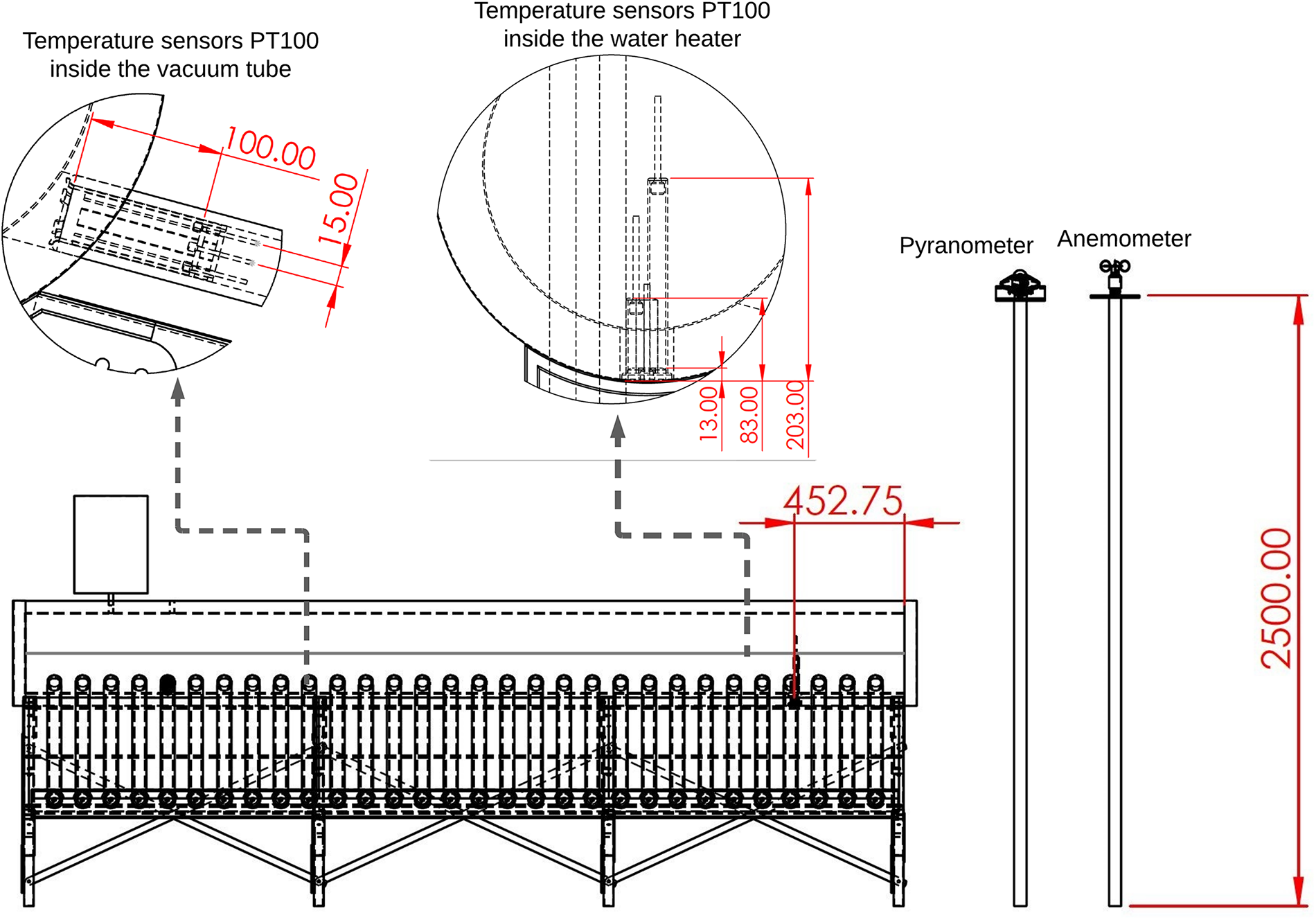
Figure 1: Location of the sensors in the proposed system, dimensions in millimeters
2.3 Selection and Dimensioning of Components
Fig. 2 presents the key elements of the system, including temperature sensors, the controller, the Human-Machine Interface (HMI), an SQL database, Internet of Things (IoT) integration, and cloud storage. A total of 18 analog inputs were identified as necessary for processing temperature signals, comprising 8 PT100 temperature sensors for the commercial solar thermal system, 8 PT100 sensors for the solar thermal prototype, wind speed measurements obtained by an anemometer, and global solar radiation data captured by a pyranometer. The Controller Logic programmable (PLC) used is PLC S7 1200 CPU 1214 from Siemens, with the capacity to connect 2 analog input modules SM1231 of 8 × 13 bits.
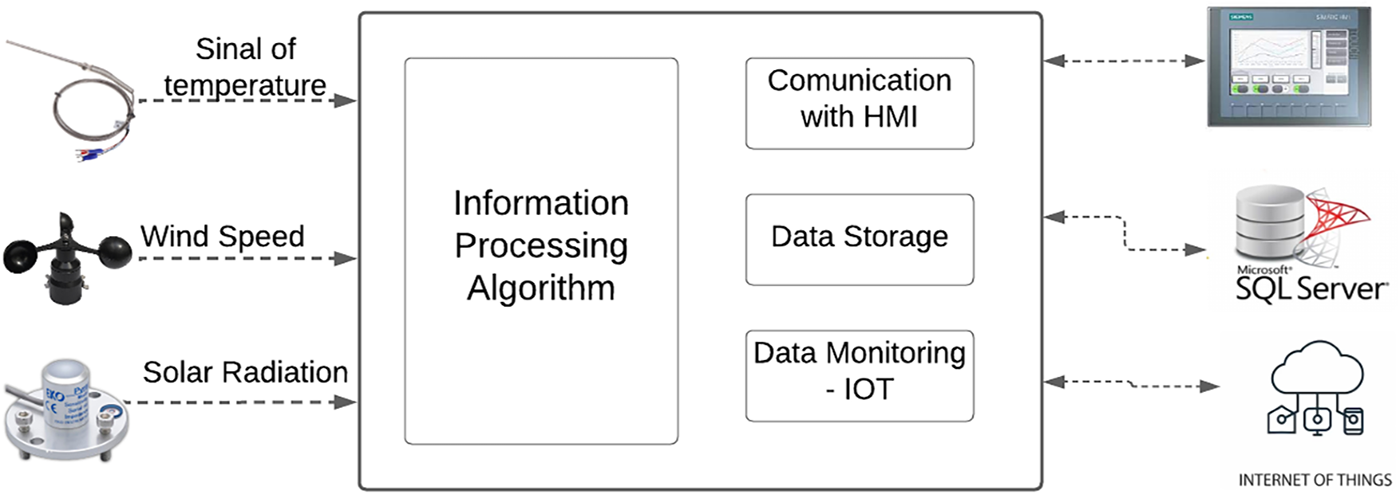
Figure 2: Programmable logic controller input and output variable
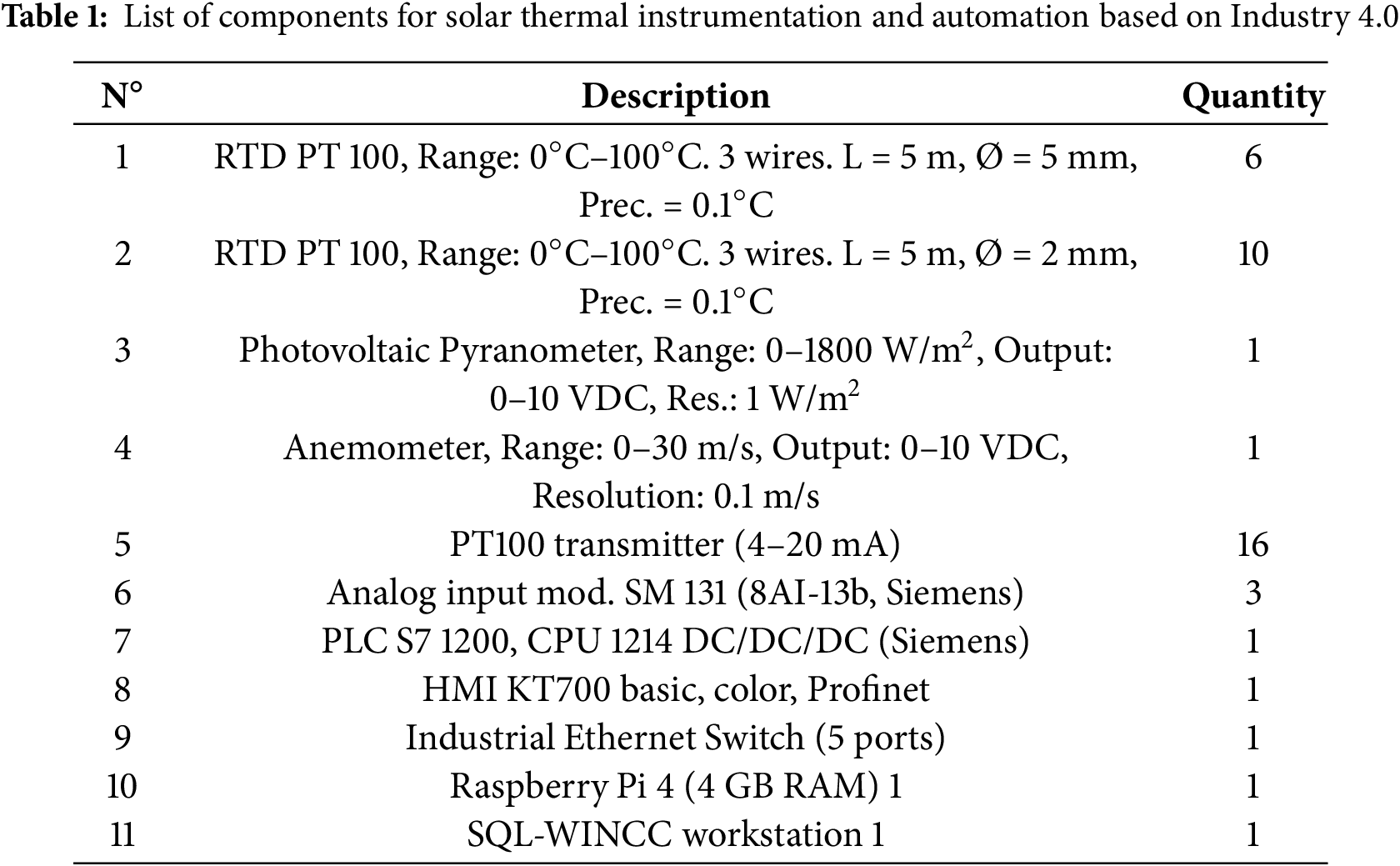
The machine interface used is an HMI KTP700 Basic with PROFINET communication. In addition, Siemens SITRANS TH200 current transmitters are employed to process signals from RTD PT100 temperature sensors, connected through a 5-port DIN rail-mounted Ethernet switch. The component sizing and design of the electrical panel follow the IEC 61439-1 standard. For the IoT system, the hardware consists of a Raspberry Pi 4 featuring a Broadcom BCM2712 CPU, quad-core Cortex-A76 (ARM v8) 64-bit SoC @ 2.4 GHz, and 4 GB of RAM. Therefore, the basic components for the instrumentation and automation of the evacuated tube solar thermal system are described in Table 1. From this table, the power supply and the safety components are both dimensioned. For the dimensioning of the voltage regulator components supplying the system, Eq. (1) is used.
where:
Applying Eq. (1), the total current consumption is 7.8 A, so, a SITOP Smart 24VDC-10A Siemen’s power supply is selected as the regulating source. A circuit disjunctor or differential switch is considered a protection element of 220 VDC × 16 A. The cable selected is a 16 AWG control cable, wire gauge, and for the AC power signal to the regulated source 14 AWG cable.
The experimental setup was equipped with calibrated temperature, irradiance, and flow sensors to ensure reliable data acquisition. All water temperatures—inside the vacuum tube, in the collector tank, and at the water inlet and outlet—were measured using Class A PT100 RTD sensors (range: –0°C to 100°C; accuracy: ±0.1°C), while solar irradiance was recorded with a pyranometer (range: 0–1500 W/m2; accuracy: ±1 W/m2). All sensors were factory calibrated and verified before installation using a reference thermometer, according to IEC 60751 and a certified irradiance meter, according the ISO 9847. For the calibration of the anemometer, it was performed using the ISO 17025 standard according to the data sheet of the equipment and a reference wind speed meter.
2.4 Automation and Instrumentation Architecture of the Solar Thermal System
Based on the dimensioning and selection of components, the instrumentation and automation architecture of the solar thermal system is proposed. Fig. 3 shows the automation and instrumentation architecture of the solar thermal system; the programmable logic controller is responsible for processing the information acquired from the sensors and instruments installed in the evacuated glass tube solar water heaters, these data can be manipulated from the SCADA, monitoring, control and data acquisition system; through a Human Machine Interface HMI, the information is stored in a locally SQL Server station, the system also allows the sending of the information to the cloud through the Internet of things IoT Gateway and it is stored on a server in the cloud, also known as cloud computing; this information can be accessed from any electronic device that has internet connection anywhere and in real-time, with an application designed in a free software, android studio koala, it can be accessed from any smartphone with internet connection; the implementation is related to the guidelines of [27].
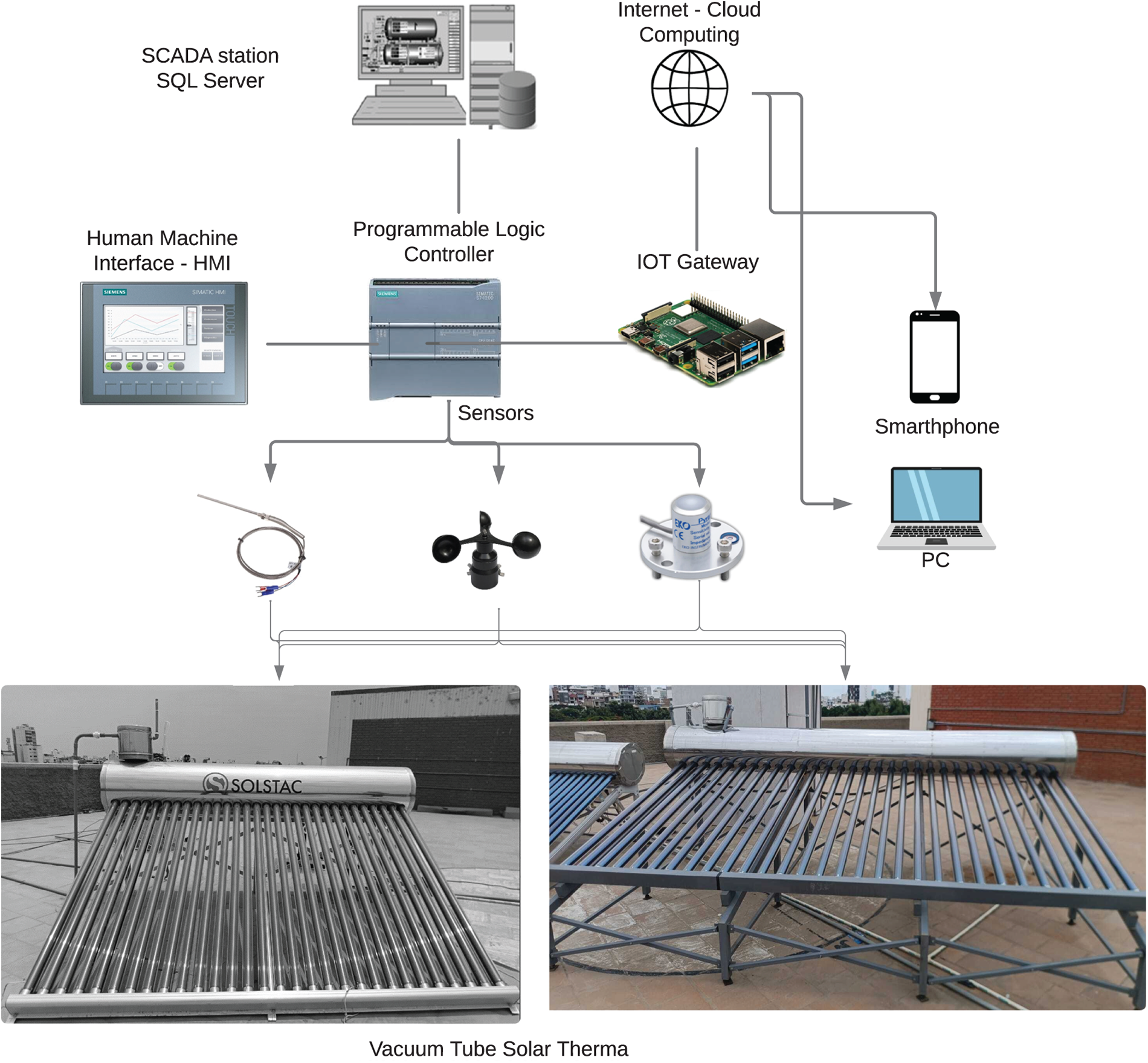
Figure 3: Evacuated glass tube solar water heaters instrumentation and automation architecture using IOT and cloud computing
2.5 PLC Programmable Logic Controller, HMI Human Machine Interface Algorithm and Station SQL Server
The Siemens PLC S71200 is programmed using the TIA PORTAL V17 software, the programming takes into account the guidelines of [28] the algorithm is programmed in Ladder language and SCL, structured language, in the programming the process of normalization and scaling of the variables has to be performed, as well as the development of functions to process the FC and FB type data and to have the data in a data block, DB, within the TIA PORTAL, see Algorithm 1 of PLC algorithm flowchart.
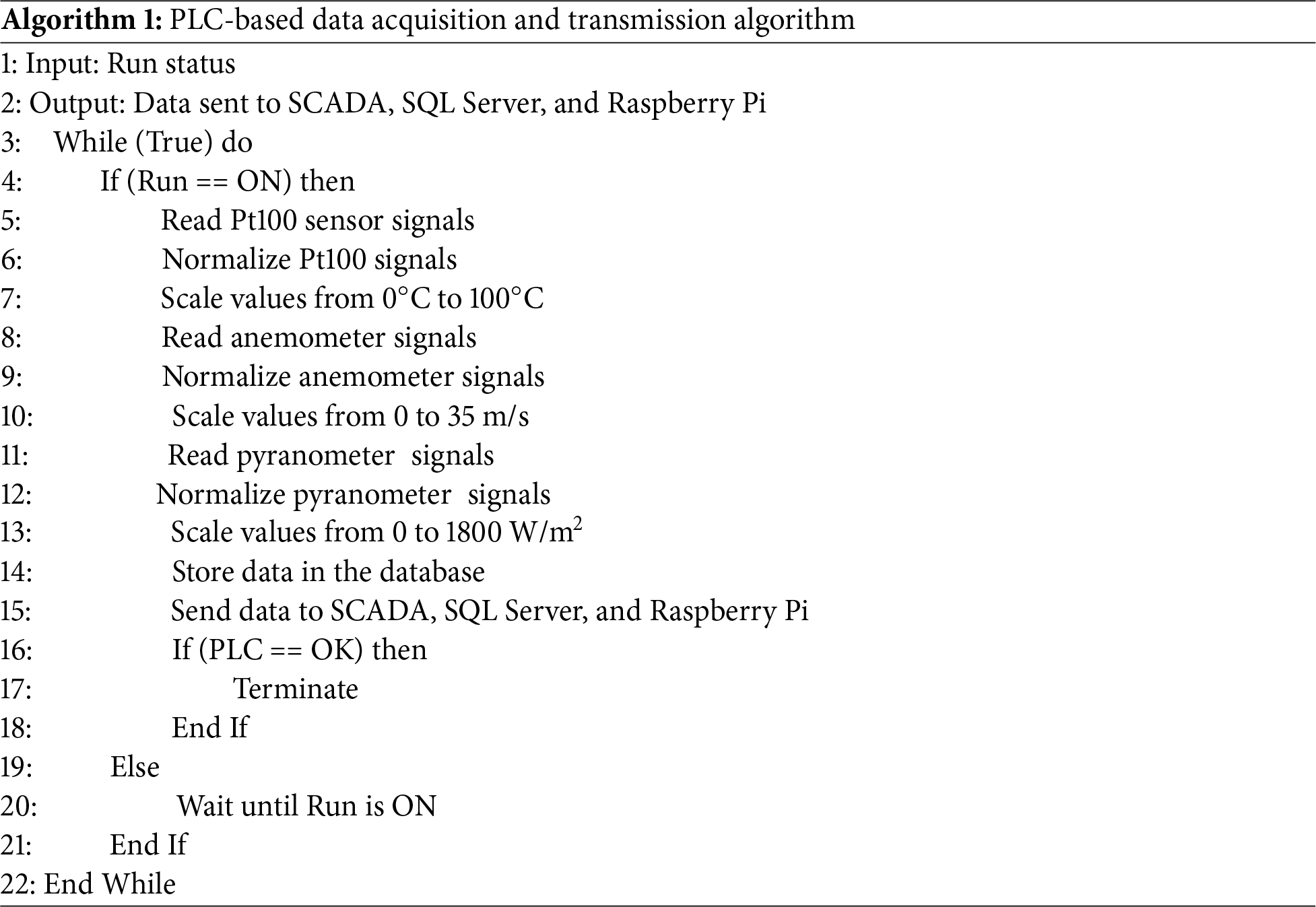
The supervision, control, and data acquisition system were programmed in the KT700 basic HMI human machine interface, by the use of the WINCC software. The flow chart of the algorithm is shown in Algorithm 2.
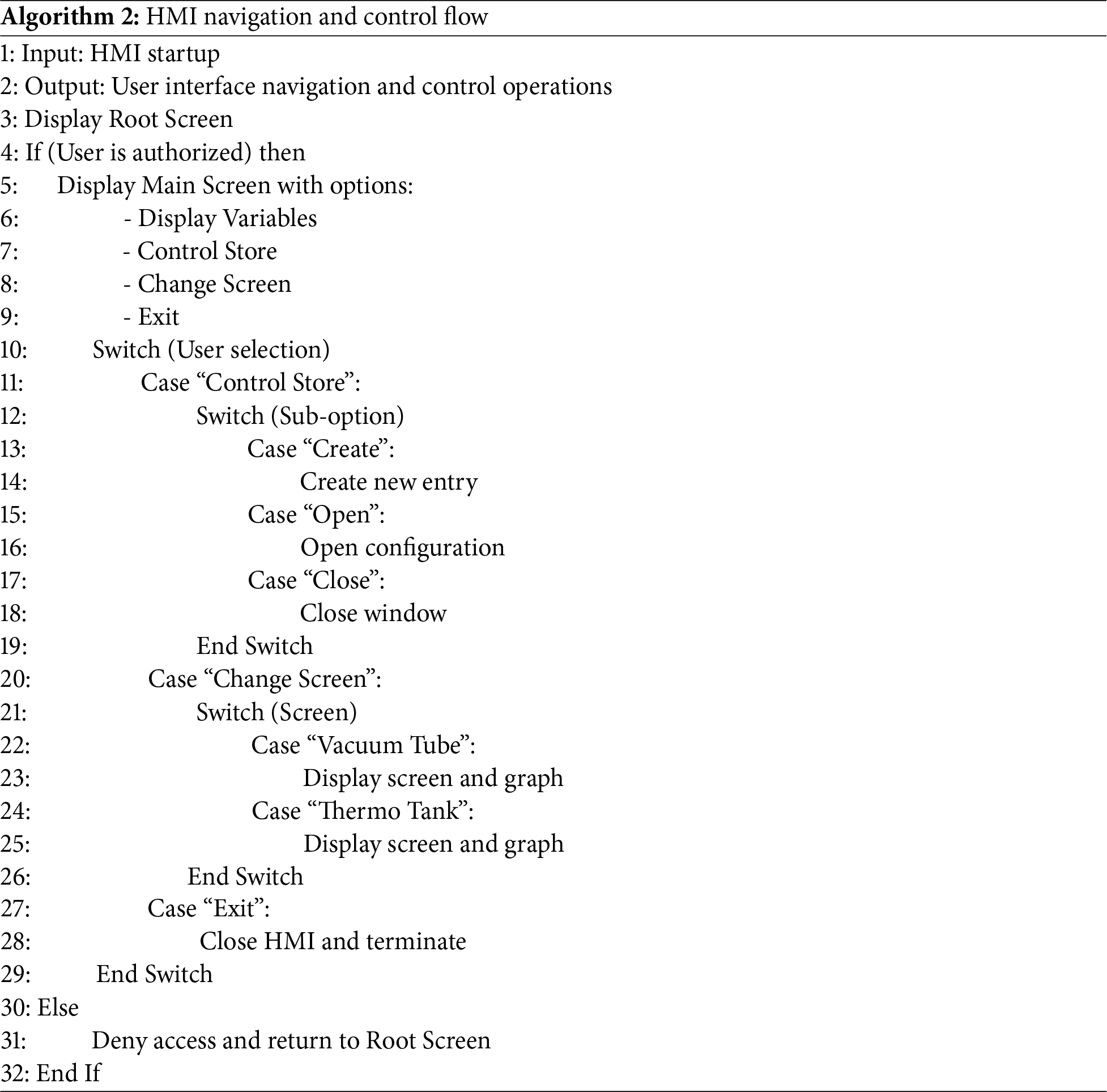
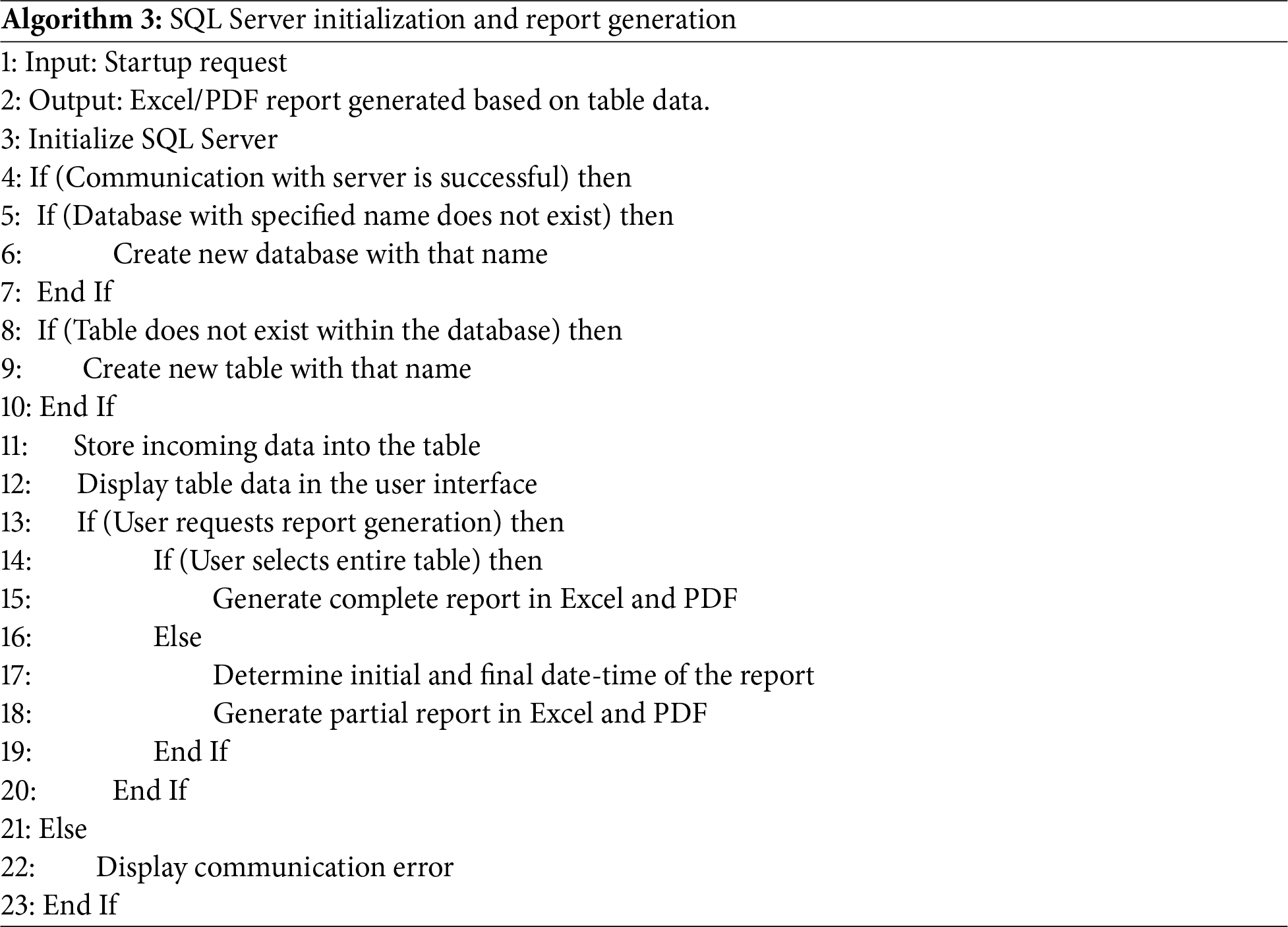
The implemented algorithm for the SQL server station is shown in Algorithm 3.
2.6 Internet of the Things IOT and Cloud Computing
It was possible to design and implement a real-time monitoring system with PLC and Internet of Things IoT [29], in addition to the storage of data in the cloud, for this end, it was used a Raspberry Pi 4 with 4 GB of RAM, It worked with the Raspbian OS operating system, and it was also installed the Node Red [30] and the necessary plug-ins for operation, including SNAP 7, which allows bidirectional communication between the PLC S7 1200 and Node Red. For real-time data monitoring from any electronic equipment connected to the Internet, the implementation of a smartphone application is developed, and the data was also stored using Google’s server, called Google Drive. The algorithm implemented is shown in Algorithm 4.
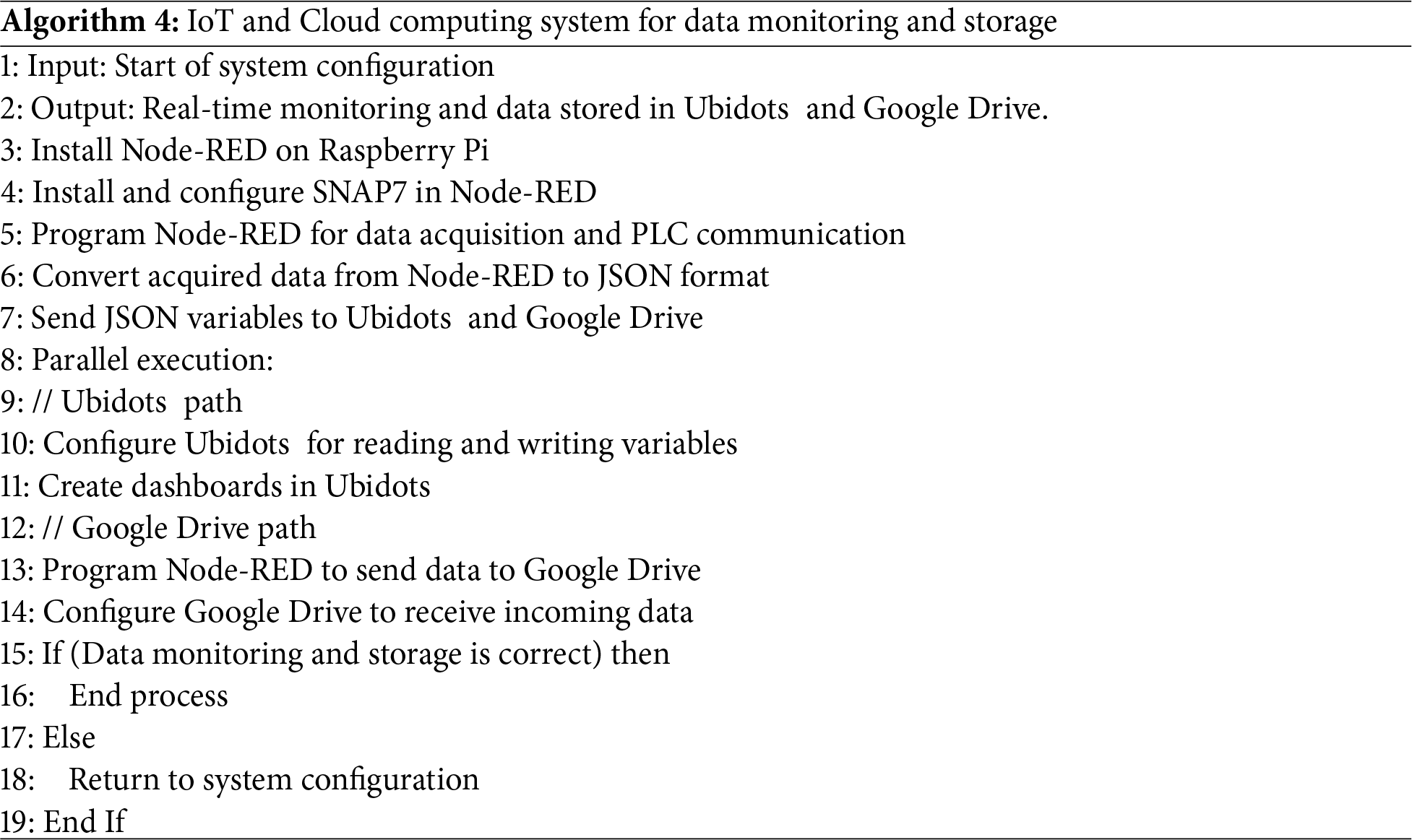
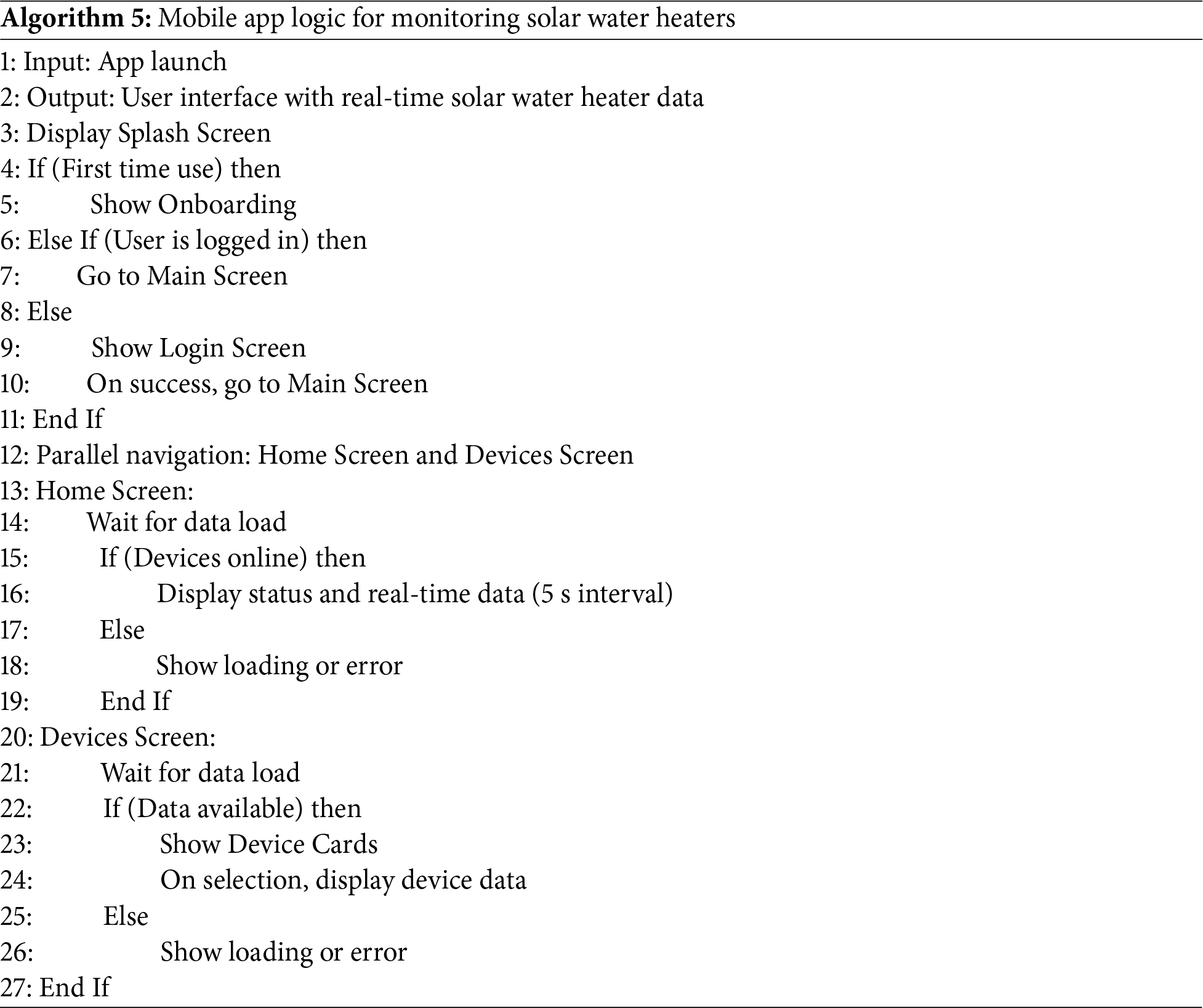
An Android app for smartphone was developed to allow real-time monitoring of the data obtained from the commercial solar thermal and the developed prototype, wind speed, solar radiation, temperatures in the collector tank, and temperatures in the evacuated glass tube; the flow diagram of the implemented algorithm is shown in Algorithm 5. The application consists of an initial screen to enter with a user, then a screen is displayed to access to monitor the data of the commercial or designed thermal, for both cases a refresh rate
2.7 Stored Thermal Energy in a Vacuum Tube Solar Water Heater
The calculation of the thermal energy stored in a solar system due to the temperature increase of water is expressed by:
where, m is the mass of water in the storage tank [kg],
It is worth highlighting that Eq. (2) is used in references [4,26] for solar thermal analysis. On the other hand, the Uncertainty Propagation Law give us to the following expression:
where,
where,
The integration of industrial-grade components and an IoT framework is critical for ensuring the precision, reliability, and scalability required in real-world clean technology applications. The results obtained from the automation system, instrumentation, monitoring, and storage of the solar thermal data are shown in the following Section 3.
The instrumentation and automation of both evacuated glass tube solar water heaters were implemented, where, for each EGTSWH, 3 RTD PT100 sensors were installed at different levels in the inner of a unique evacuated glass tube located 10 mm from the end of the collector tank. On the other hand, 3 RTD PT100 sensors were installed at different levels in the thermal storage tank, see Fig. 1.
A PT100 sensor was installed at the water entry, and 1 PT100 was installed to measure ambient temperature. Instrumentation was carried out for both the commercial vacuum tube heater and the developed prototype heater, while the electrical control panel was implemented with its respective human-machine interface. Finally, the IOT gateway system and the workstation server were installed at the National University of Trujillo, Peru. The supports for the PT100, these were manufactured using 3D printing, industrial epeek material, which resists high temperatures up to 130°C, see Fig. 4a,b. Calibration of the RTD PT100 sensors was performed according to IEC 60751, for standard provides guidelines and procedures for the calibration of PT100 RTD platinum resistance temperature sensors, using a reference thermometer. Reference measurements are taken at different temperature points to fit a calibration curve. All the sensors were installed and connected to an electrical panel, as shown in Fig. 5. Fig. 4b shows the instrumentation of the thermal prototype designed. The process is followed in the same way as the commercial, so as not to change the measurement conditions. The electrical control panel is mounted in a cabinet made for this purpose; see Fig. 5. the anemometer and the pyranometer, were installed at 2.5 m above the floor, highlighting that the sensor was placed with a tilt angle of 15° with the horizontal, taking as reference the inclination of the vacuum tubes of the designed solar thermal system, the implemented control board is also shown in the figure, the whole system is powered with 220 VAC. The algorithm was implemented using the Tia Portal V17 software. It worked with block functions, and a data block for the reading and processing of the PT100 temperature sensors, in the same way, for the anemometer and pyranometer, the processed data are sent to the HMI and SQL Server station.
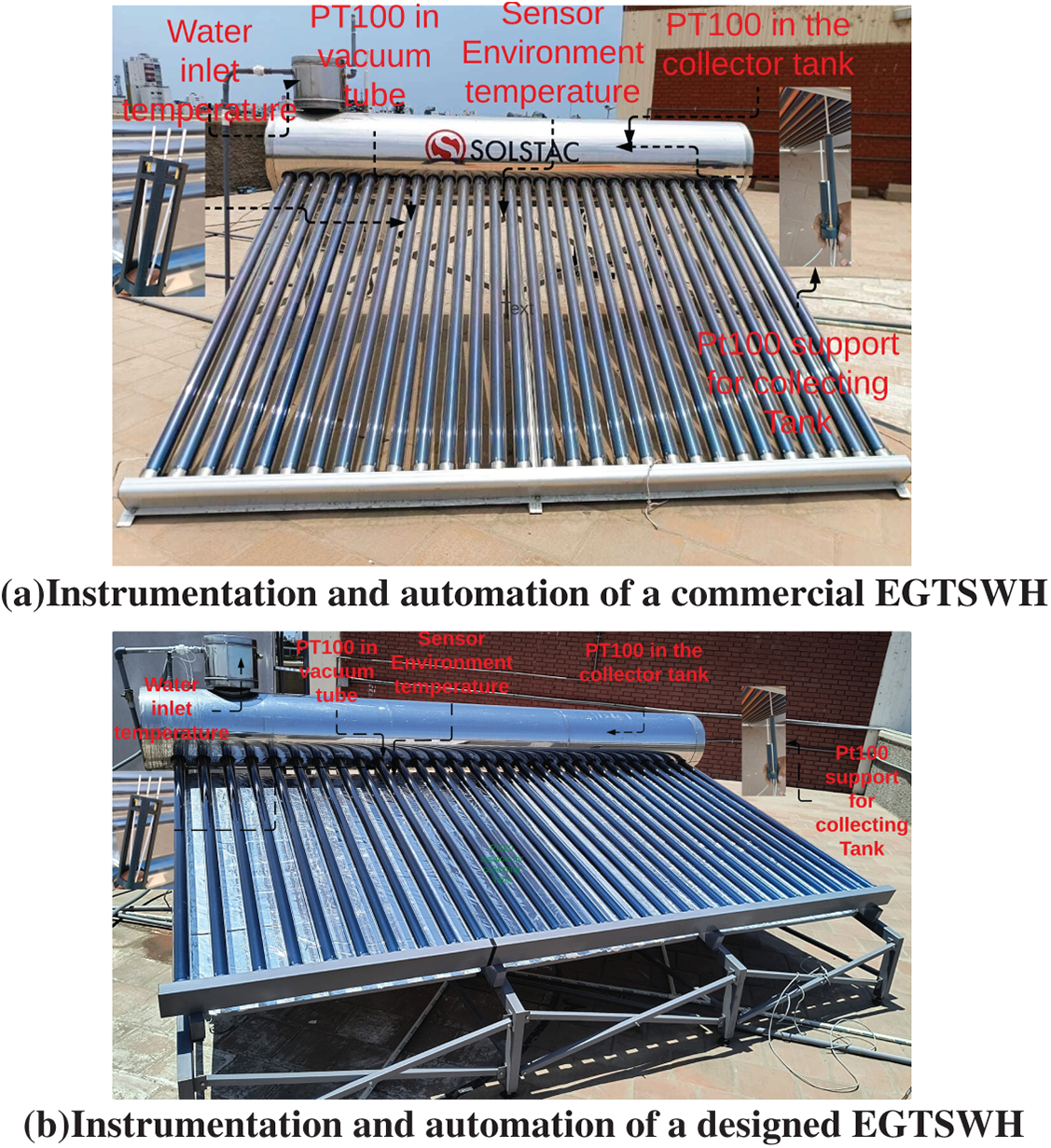
Figure 4: Comparison between the instrumentation and automation of commercial and designed EGTSWHs
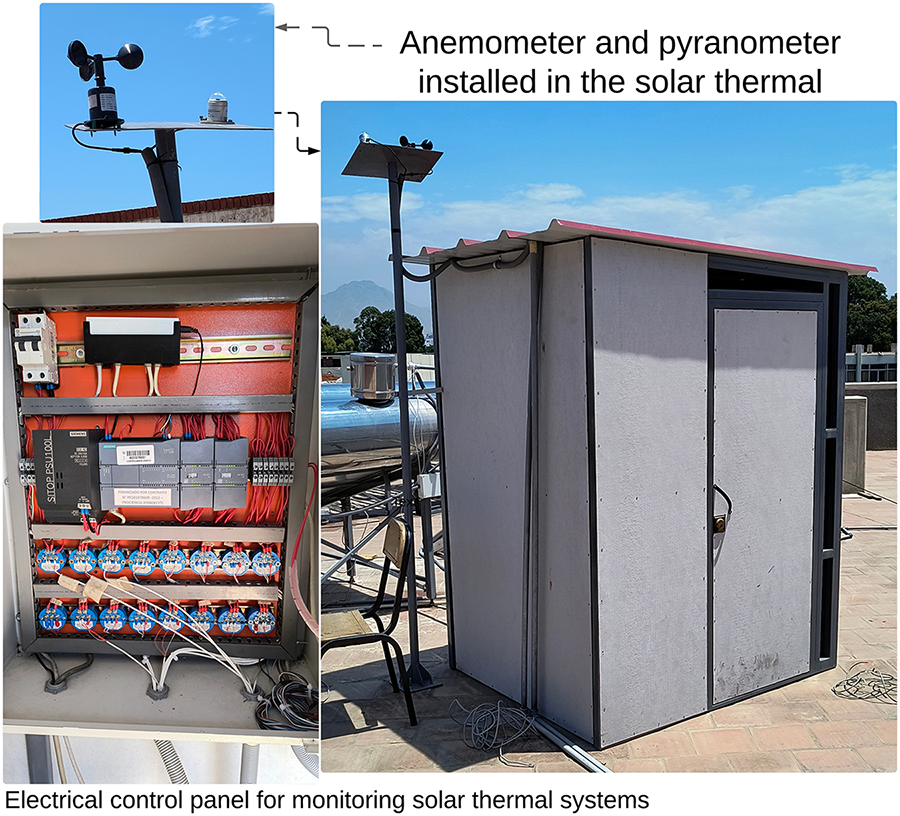
Figure 5: Electrical control panel for monitoring solar thermal systems
The SCADA system is shown in Fig. 6a, it was designed in the root screen, which requires a user name and password, the main page includes, buttons were implemented to start the board, data storage buttons in Server SQL, and the display of solar thermal temperature, wind speed and solar radiation. The update rate of the variables is 100 ms. Also, the graphs of the sensors as a function of time are shown. The data is stored in the SQL server in order to store and to further process the database. The Microsoft SQL Server Management Software is used. The database was programmed via a PC station developed in Tia Portal V17. The SQL server is installed in a Workstation, and the communication is through Ethernet. The database has the functionality to export the data, from a date defined by the user and turned in pdf or xlsx format; Fig. 6b shows the graphical interface of the SQL database developed with the Algorithm 3. For the Industry 4.0 system, an IoT and Cloud Computing system was implemented, as shown in Fig. 6c and Fig. 6d shows the dashboard of the real-time monitoring of the parameters in the application developed on a Smartphone, which allows access from any electronic device connected to the Internet. The data is stored directly in Google Drive as a spreadsheet file, and it can be exported as PDF or CVS formats. Providing great versatility and ease of access to the data, it is only necessary to have a Google account.
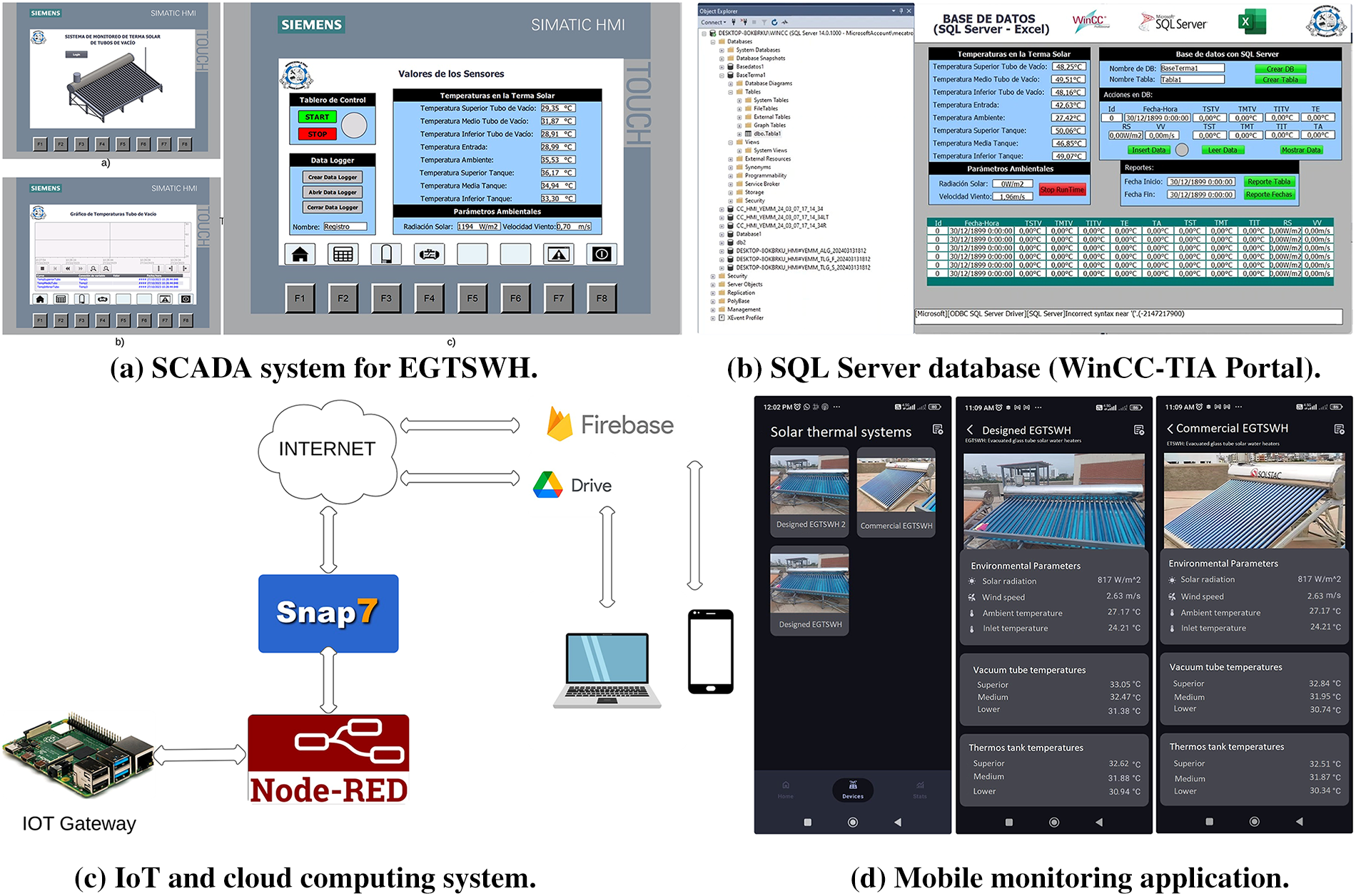
Figure 6: Integrated architecture of SCADA, SQL, IoT/cloud system, and mobile monitoring app for EGTSWH. (a) SCADA system for EGTSWH. (b) SQL Server database (WinCC-TIA Portal). (c) IoT and cloud computing system. (d) Mobile monitoring application
Fig. 7a shows the thermal response of a commercial evacuated glass tube solar water heater (EGTSWH), based on experimental measurements obtained from three PT100 RTD temperature sensors located at the upper, central, and lower regions of the storage tank. In addition, the variation of global solar radiation is presented for comparison. At the beginning of the monitoring period (06:00 h), the water temperature in the tank remained nearly uniform, with values around 29°C–30°C. As solar radiation increased after 08:00 h, a stratification process developed inside the tank. The upper section exhibited the fastest increase, reaching a maximum of 64.91°C, while the lower region warmed more gradually, achieving 58.43°C by the end of the day. The central sensor followed an intermediate trajectory, closely matching the upper temperature trend, particularly after midday.
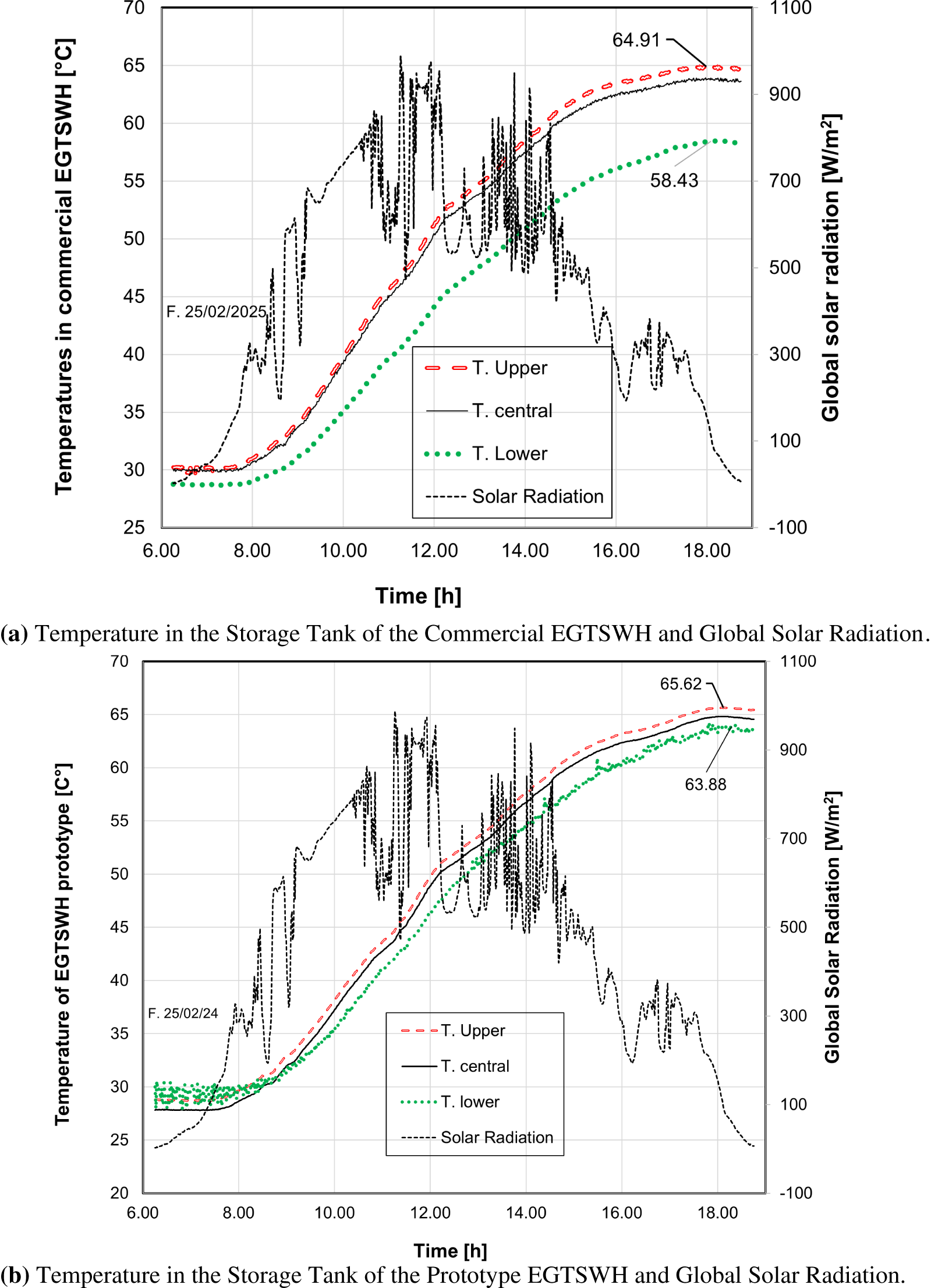
Figure 7: Environmental and Thermal behavior of evacuated-tube solar water heating systems in the collector tank. (a) Temperature in the storage tank of the commercial EGTSWH and Global Solar Radiation. (b) Temperature in the storage tank of the prototype EGTSWH and Global solar radiation
In Fig. 7b, the temperature profiles for all three sensor points exhibit a strong positive correlation with the solar radiation curve, following its diurnal pattern. As solar irradiance increases after 06:00, all temperatures begin a steady rise. The rate of temperature increase is most pronounced between 08:00 and 14:00, coinciding with the period of peak insolation. The maximum temperature for all points is recorded shortly after solar radiation peaks, exhibiting a characteristic thermal lag. The “T. Upper” sensor consistently records the highest temperatures throughout the day, reaching a maximum of approximately 65.62°C, followed by the “T. Central” sensor, and finally the “T. Lower” a value of 63.88°C, indicating a clear vertical thermal gradient within the prototype. The observed profile is similar to the research work of [5] that used T-type thermocouples in a controlled environment, and the results are consistent with those shown in the article [14]. The designed prototype reached 65.62°C compared to 64.91°C for the commercial unit. This increase of approximately 0.71°C, analyzed and identified through instrumentation and monitoring of variables under real operating conditions of evacuated tube solar water heaters, demonstrates a tangible improvement in clean energy capture and justifies the analysis supported by the monitoring system with IoT and Cloud Computing. The data shown in the graph is from 6 to 18 standard time, the data storage time is 1 min, and corresponds to 25 February 2025.
The solar radiation, Fig. 7a,b profile, exhibited significant fluctuations due to intermittent cloud cover, with a peak exceeding 900 W/m2 around solar noon. Despite these variations, the thermal inertia of the system ensured a smoother and more stable temperature rise inside the tank. The results confirm the stratified behavior of the commercial EGTSWH, where the upper layers attain higher temperatures suitable for immediate use, while the lower layers act as a thermal reserve.
The solar radiation, Fig. 7a,b profile, exhibited significant fluctuations due to intermittent cloud cover, with a peak exceeding 900 W/m2 around solar noon. Despite these variations, the thermal inertia of the system ensured a smoother and more stable temperature rise inside the tank. The results confirm the stratified behavior of the commercial EGTSWH, where the upper layers attain higher temperatures suitable for immediate use, while the lower layers act as a thermal reserve.
Fig. 8 demonstrates the useful energy output of both a prototype and a commercial Evacuated Glass Tube Solar Water Heater (EGTSWH), calculated from PT100 RTD sensor data in the storage tank using Eqs. (2) and (3). The useful energy accumulation for both systems follow the expected diurnal profile of the incident global solar radiation, commencing around 08:00, peaking symmetrically at midday coinciding with maximum insolation, and ceasing by 18:00. The analysis of the daily accumulated energy yield reveals a significant performance difference: the prototype EGTSWH stored a total of approximately 47.4 MJ, while the commercial unit stored a total of approximately 36.2 MJ, this means a difference of 11.2 MJ. This consistent superiority in total energy output indicates a higher thermal efficiency and superior performance of the prototype design, as it converted a larger portion of the available solar radiation into storable thermal energy, thus validating its enhanced design under the tested conditions.
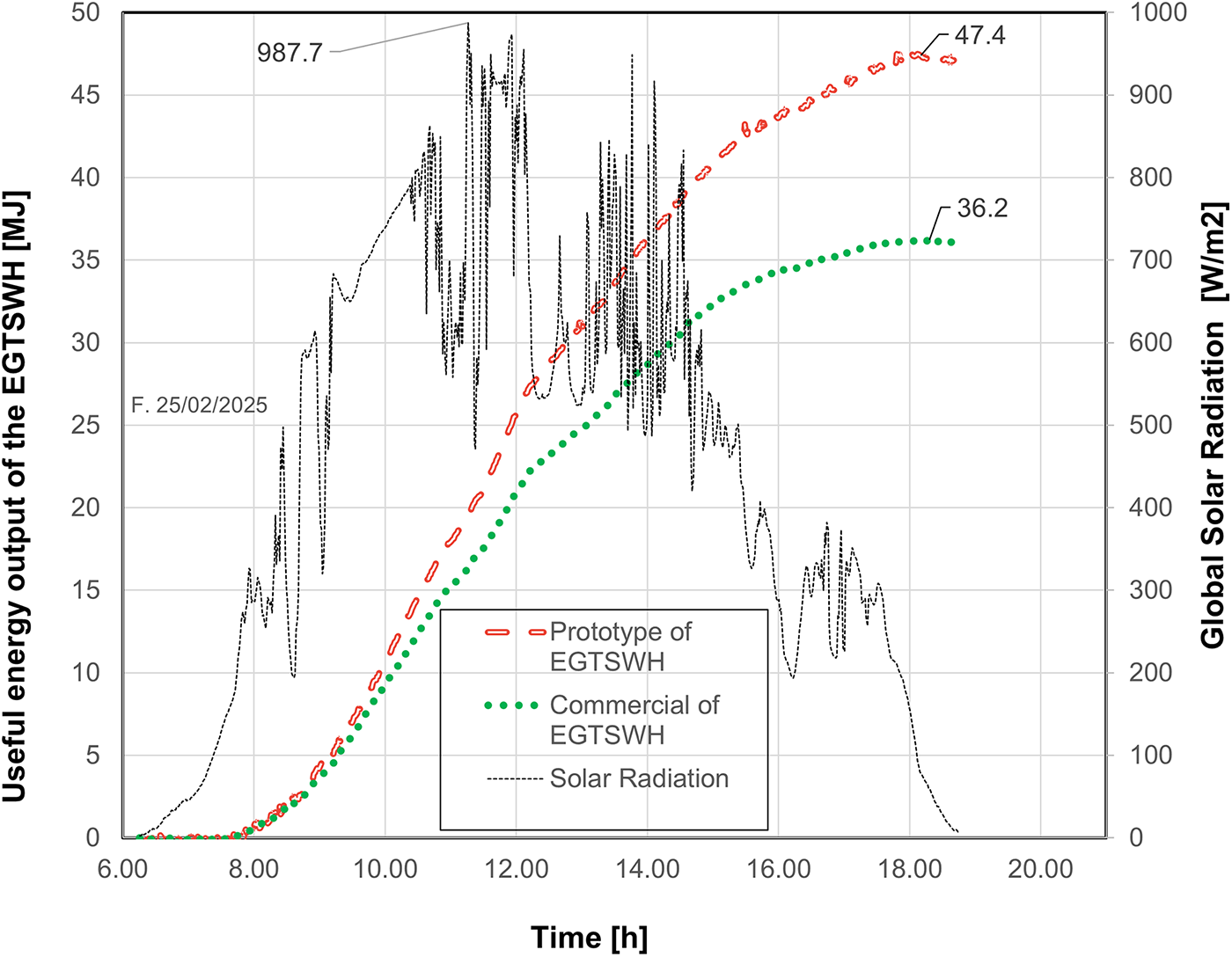
Figure 8: Useful energy output of the EGTSWH
The most significant finding lies in the useful thermal energy output. The developed prototype stored 47.4 MJ, surpassing the commercial system’s 36.2 by 11.2 MJ (approximately 31%), as shown in Fig. 8. This substantial improvement in solar-to-thermal conversion efficiency can be directly attributed to the design modifications implemented in the prototype. The combination of a reduced tilt angle 15° compared 25°, increased tube separation (116 vs. 80 mm), and the addition of an aluminum reflecting plate [26] appears to have optimized solar radiation capture and minimized inter-tube shading, resulting in greater absorption of incident energy. These findings align with literature suggesting that relatively simple geometric optimizations can significantly impact solar collector performance [4,5]. The primary aim of this study was the experimental comparison between a commercial system and an optimized prototype under identical real-world conditions, using a highly accurate monitoring framework. A direct theoretical validation against a model, while valuable, is a separate and extensive study. However, we have now strengthened the validation by providing a quantitative comparison with results from the literature [25,26] showing that the measured temperature profiles and stratification behavior are consistent with the methodologies proposed.
The uncertainty analysis was performed using the temperature sensor precision data provided in Table 2, and the uncertainty calculation was carried out based on Eqs. (3) and (4).
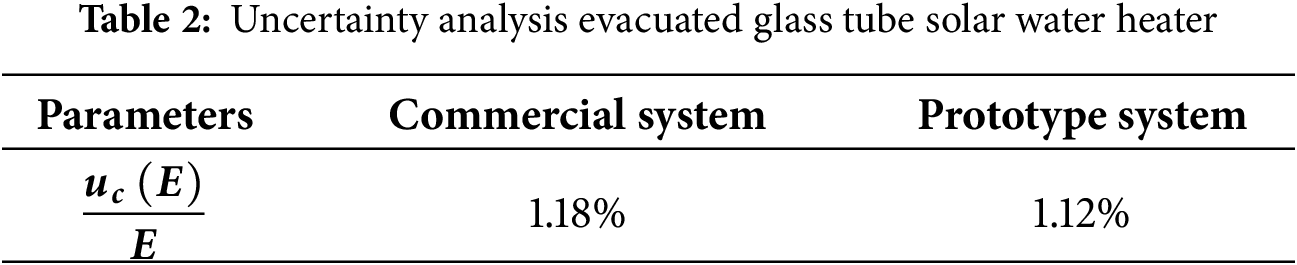
To express this as an expanded uncertainty with a 95% level of confidence (using a coverage factor k = 2).
Commercial System:
Prototype System:
This level of uncertainty is generally acceptable for performance evaluation and comparison between the two solar thermal systems. When comparing the total energy accumulated by the commercial and prototype systems, a difference of less than ~2.5% may not be statistically significant and could be attributed to measurement imprecision. For future work, employing temperature sensors with higher precision would significantly reduce this uncertainty and allow for the detection of more subtle performance differences.
This robust instrumentation, combined with an IoT and cloud computing framework, enables scalable data acquisition, remote monitoring, and centralized management of multiple distributed systems. The framework facilitates real-time performance optimization, predictive maintenance through continuous data analysis, and seamless integration into larger smart energy grids. By adhering to this industrial paradigm, the system transcends a mere experimental setup, providing a validated and replicable model for the data-driven management of renewable energy assets, which is fundamental for reducing operational costs, maximizing energy yield, and accelerating the global adoption of solar thermal technology.
Discussions
The experimental data, which clearly delineate thermal stratification within the storage tank (Fig. 7), are consistent with fundamental principles and prior experimental observations. The temperature profiles and stratification behavior observed in both systems validate the methodologies reported by Budihardjo and Morrison [5] and Hamada et al. [14], who documented similar thermal dynamics. The present study confirms that these phenomena are reliably captured under real-world operating conditions using high-precision industrial instrumentation, moving beyond controlled laboratory settings.
The superior performance of the developed prototype—achieving a 31% higher energy yield (47.4 vs. 36.2 MJ)—directly corroborates literature emphasizing the critical impact of geometric design on collector efficiency. As highlighted by Aggarwal et al. [4] and demonstrated experimentally by Yang et al. [21], modifications such as optimized tilt angles, tube spacing, and reflective surfaces can yield substantial gains. The prototype, with its reduced tilt angle (15°), increased inter-tube spacing (116 mm), and aluminum reflector, serves as a practical validation of these research findings, translating theoretical design optimizations into a quantifiable performance enhancement in a field-deployed system [26].
Advancement in IoT and Monitoring Capabilities, while previous studies have successfully implemented IoT for monitoring solar systems [6–9,16,19], the present framework distinguishes itself through its industrial-grade architecture. In contrast to systems based primarily on microcontrollers like Arduino or ESP8266, the integration of a Programmable Logic Controller (PLC), SCADA, and a structured SQL database ensures higher reliability, precision, and scalability for industrial applications. This aligns with the review by Nath et al. [22], who identified the need for robust architectures. Furthermore, this system delivers on the potential, noted by Al-Mamun et al. [20], for IoT-enabled diagnostics to be a critical tool for performance validation, providing an unprecedented database of high-resolution operational data.
The high-quality, real-time data stream generated by this framework directly addresses a prerequisite for advanced analytics, as emphasized by Kuang et al. [23], who showed that accurate performance prediction strongly depends on high-quality sensor data. By providing a continuous, reliable flow of thermal and environmental parameters, this system establishes the essential data foundation required for applying machine learning and convolutional neural networks for performance forecasting and predictive maintenance, a logical next step identified in the literature.
Finally, this study provides a concrete case that substantiates broader claims in the literature regarding the value of IoT integration. The review by Nath et al. [22] suggested that IoT-enabled monitoring can improve energy efficiency by 10%–20%. While the efficiency gain is primarily attributed to the physical prototype design, the IoT framework was instrumental in precisely quantifying this 31% improvement, detecting subtle temperature differences, and validating the system’s operation in real-time. It thus serves as the enabling technology that makes such rigorous performance validation and optimization possible.
This study successfully designed, implemented, and validated a robust real-time IoT and cloud monitoring framework for the performance optimization of evacuated tube solar water heaters (EGTSWHs). The integration of industrial-grade components—including PT100 RTD sensors for high-precision temperature measurement and a PLC for reliable control—within an Industry 4.0 architecture ensured data accuracy, system resilience, and operational scalability under real-world conditions.
The monitoring system provided unprecedented granularity in data acquisition, capturing critical parameters such as thermal stratification within the storage tank, solar radiation, and wind speed with high resolution. The key findings conclusively demonstrate the superior performance of the developed prototype over a commercial unit. The prototype not only achieved a higher maximum temperature (65.62°C vs. 64.91°C) but, more significantly, stored 31% more thermal energy daily (47.4 vs. 36.2 MJ). The expanded uncertainty for the daily energy calculation was determined to be 2.36% for the commercial system and 2.24% for the prototype, confirming the reliability of the reported performance differences.
This substantial increase in energy yield validates the enhanced design of the prototype and underscores the critical role of precise, data-driven monitoring in quantifying and optimizing thermal efficiency. The implemented framework, which combines SCADA supervision, local SQL data logging, IoT, and cloud computing, transcends a mere experimental setup. It establishes a scalable model for the intelligent management of solar thermal assets, enabling remote performance monitoring, predictive maintenance, and seamless potential integration into smart energy grids. By providing a reliable and accessible stream of operational data, this work paves the way for the application of artificial intelligence and machine learning methods to predict system performance, further automate optimization, and accelerate the adoption of data-informed strategies in renewable energy technology.
This research conclusively demonstrates that the principal contribution is the practical convergence of industrial automation, IoT, and cloud computing into a robust monitoring framework. This system transcends a mere experimental application of classical heat transfer by establishing a validated and replicable model for the real-time performance validation and data-driven management of renewable energy assets. It is recommended to carry out a sensitivity study of the geometric parameters (tilt, spacing, reflector) of the vacuum-tube solar water heater. This independent study evaluates the influence of each variable on the performance of the solar heater.
Acknowledgement: Acknowledgments are extended to the ARCAM Research Group—Automation, Robotics, and Automatic Control—affiliated with the Department of Mechatronic Engineering at the National University of Trujillo (UNT), as well as to the Mechanical Engineering Research Group of the Federal University of Santa Maria, Brazil. Special thanks are also given to Prociencia for funding all the equipment acquired.
Funding Statement: This work was funded by the National Council of Science, Technology, and Technological Innovation (CONCYTEC) and the National Program of Scientific Research and Advanced Studies (PROCIENCIA) under the E041-2022—“Applied Research Projects” competition. Contract number: PE501078609-2022-PROCIENCIA.
Author Contributions: Conceptualization, Elder Mendoza Orbegoso, Josmell Alva Alcántara and Nattan Roberto Caetano; methodology, Josmell Alva Alcántara and Luis Julca Verástegui; software, Jimmy Silvera Otañe and Josmell Alva Alcántara; validation, Yvan Leiva Calvanapón and Giulio Lorenzini; formal analysis, Elder Mendoza Orbegoso and Giulio Lorenzini; investigation, Josmell Alva Alcántara and Nattan Roberto Caetano; resources, Elder Mendoza Orbegoso; data curation, Juan Bengoa Seminario and Luis Julca Verástegui; writing—original draft preparation, Josmell Alva Alcántara, Elder Mendoza Orbegoso and Giulio Lorenzini; writing—review and editing, Elder Mendoza Orbegoso and Giulio Lorenzini; visualization, Josmell Alva Alcántara and Jimmy Silvera Otañe; supervision, Elder Mendoza Orbegoso and Nattan Roberto Caetano; project administration, Josmell Alva Alcántara and Yvan Leiva Calvanapón; funding acquisition, Elder Mendoza Orbegoso. All authors reviewed the results and approved the final version of the manuscript.
Availability of Data and Materials: Data available on request from the authors. The data that support the findings of this study are available from the corresponding author, Giulio Lorenzini, upon reasonable request.
Ethics Approval: Not applicable.
Conflicts of Interest: The authors declare no conflicts of interest to report regarding the present study.
References
1. Tiwari GN, Tiwari A, Shyam. Handbook of solar energy: theory, analysis and applications. Berlin/Heidelberg, Germany: Springer; 2016. doi:10.1007/978-981-10-0807-8. [Google Scholar] [CrossRef]
2. Avallone E, Cunha DG, Padilha A, Scalon VL. Electronic multiplex system using the Arduino platform to control and record the data of the temperatures profiles in heat storage tank for solar collector. Int J Energy Environ Eng. 2016;7(4):391–8. doi:10.1007/s40095-016-0217-1. [Google Scholar] [CrossRef]
3. Osinergmin, Schmerler D, Velarde JC, Rodríguez A, Solís B, editors. Energías renovables: experiencia y perspectivas en la ruta del Perú hacia la transición energética [Internet]. 1st ed. Lima, Perú: Organismo Supervisor de la Inversión en Energía y Minería; 2023 [cited 2025 Jan 1]. Available from: https://www.osinergmin.gob.pe/seccion/centro_documental/Institucional/Estudios_Economicos/Libros/Osinergmin-Energias-Renovables-Experiencia-Perspectivas.pdf [Google Scholar]
4. Aggarwal S, Kumar R, Lee D, Kumar S, Singh T. A comprehensive review of techniques for increasing the efficiency of evacuated tube solar collectors. Heliyon. 2023;9(4):e15185. doi:10.1016/j.heliyon.2023.e15185. [Google Scholar] [PubMed] [CrossRef]
5. Budihardjo I, Morrison GL. Performance model for water-in-glass evacuated tube solar water heaters. In: Goswami DY, Zhao Y, editors. Proceedings of ISES World Congress 2007 (Vol. I–Vol. V); 2007 Sep 18–21; Beijing, China. Berlin/Heidelberg, Germany: Springer; 2008. p. 2018–22. doi:10.1007/978-3-540-75997-3_410. [Google Scholar] [CrossRef]
6. Bajpai A, Girish Kumar TP, Sreenivasan G, Srivastav SK. System design, automatic data collection framework and embedded software development of Internet of Things (IoT) for air pollution monitoring of Nagpur metropolis. J Indian Soc Remote Sens. 2024;52(10):2347–59. doi:10.1007/s12524-024-01943-w. [Google Scholar] [CrossRef]
7. Kushagra C, Kirtimaan S, Rushit P, Jane Joshita K, Divya Navamani J, Lavanya A. Design of intelligent solar cooling system with IoT monitoring. In: Stroe DI, Nasimuddin, Laskar SH, Pandey SK, editors. Emerging electronics and automation. Singapore: Springer; 2025. p. 243–53. doi:10.1007/978-981-97-3090-2_21. [Google Scholar] [CrossRef]
8. Almihyawi AYT, Kurnaz S. A secure smart monitoring network for hybrid energy systems using IoT, AI. Discov Comput. 2025;28(1):14. doi:10.1007/s10791-025-09506-4. [Google Scholar] [CrossRef]
9. Pereira RIS, Jucá SCS, Carvalho PCM, Souza CP. IoT network and sensor signal conditioning for meteorological data and photovoltaic module temperature monitoring. IEEE Lat Am Trans. 2019;17(6):937–44. doi:10.1109/TLA.2019.8896816. [Google Scholar] [CrossRef]
10. Ramos UWE. Análisis, diseño energético y control de una terma solar de tubos al vacío de 150 litros adaptada a condiciones climáticas del norte costero del Perú [Internet]. Trujillo, Perú: Universidad Nacional de Trujillo; 2020 [cited 2025 Jan 1]. Available from: https://dspace.unitru.edu.pe/items/f2b8881a-f5ac-4db4-875c-1d34c9371712. [Google Scholar]
11. Carhuancho Lucen CA. Diseño y construcción de un sistema de monitoreo remoto para la simulación y evaluación de un tubo de calor para calentamiento del aire [Internet]. Lima, Perú: Universidad Nacional de Ingeniería. 2020 [cited 2025 Jan 1]. Available from: http://hdl.handle.net/20.500.14076/21494. [Google Scholar]
12. Panagopoulos O, Argiriou AA. Low-cost data acquisition system for solar thermal collectors. Electronics. 2022;11(6):934. doi:10.3390/electronics11060934. [Google Scholar] [CrossRef]
13. Tanimun Hasan S, Sultana Shompa M, Rahman MA, Abu Rasel M, Rahim Hossain Apu M, Arifur Rahman M. IoT based solar power monitoring & data logger system. In: Proceedings of the 2022 IEEE International Women in Engineering (WIE) Conference on Electrical and Computer Engineering (WIECON-ECE); 2022 Dec 30–31; Naya Raipur, India. p. 182–7. doi:10.1109/wiecon-ece57977.2022.10150511. [Google Scholar] [CrossRef]
14. Hamada MA, Ehab A, Khalil H, Al-Sood MMA, Sharshir SW. Thermal performance augmentation of parabolic trough solar collector using nanomaterials, fins and thermal storage material. J Energy Storage. 2023;67:107591. doi:10.1016/j.est.2023.107591. [Google Scholar] [CrossRef]
15. da Silva BP, Saccol F, Caetano NR, Pedrazzi C, Caetano NR. Technical and economic viability for the briquettes manufacture. Defect Diffus Forum. 2017;380:218–26. doi:10.4028/www.scientific.net/ddf.380.218. [Google Scholar] [CrossRef]
16. Chandrasekaran G, Kumar NS, Chokkalingam A, Gowrishankar V, Priyadarshi N, Khan B. IoT enabled smart solar water heater system using real time ThingSpeak IoT platform. IET Renew Power Gener. 2025;19(1):e12760. doi:10.1049/rpg2.12760. [Google Scholar] [CrossRef]
17. Hristov J. Semi-derivative integral method to transient heat conduction: time-dependent (power-law) temperature boundary conditions. Therm Sci. 2021;25(5 Part A):3557–68. doi:10.2298/tsci201014143h. [Google Scholar] [CrossRef]
18. Hristov J. Transient heat conduction with variable thermophysical properties power-law temperature-depenent heat capacity and thermal conductivity. Therm Sci. 2023;27(Spec. Issue 1):411–22. doi:10.2298/tsci23s1411h. [Google Scholar] [CrossRef]
19. Li WT, Tushar W, Yuen C, Ng BKK, Tai S, Chew KT. Energy efficiency improvement of solar water heating systems—an IoT based commissioning methodology. Energy Build. 2020;224:110231. doi:10.1016/j.enbuild.2020.110231. [Google Scholar] [CrossRef]
20. Al-Mamun MR, Roy H, Islam MS, Ali MR, Hossain MI, Saad Aly MA, et al. State-of-the-art in solar water heating (SWH) systems for sustainable solar energy utilization: a comprehensive review. Sol Energy. 2023;264:111998. doi:10.1016/j.solener.2023.111998. [Google Scholar] [CrossRef]
21. Yang X, Lin Q, Singh P, Riaz F, Agrawal MK, Alsenani TR, et al. Evaluating the proficiency of a novel solar evacuated tube collector. Appl Therm Eng. 2023;226:120311. doi:10.1016/j.applthermaleng.2023.120311. [Google Scholar] [CrossRef]
22. Nath DC, Kundu I, Sharma A, Shivhare P, Afzal A, Soudagar MEM, et al. Internet of Things integrated with solar energy applications: a state-of-the-art review. Environ Dev Sustain. 2024;26(10):24597–652. doi:10.1007/s10668-023-03691-2. [Google Scholar] [CrossRef]
23. Kuang R, Du B, Lund PD, Wang J. Improving performance prediction of evacuated tube solar collector through convolutional neural network method. Therm Sci Eng Prog. 2023;39:101717. doi:10.1016/j.tsep.2023.101717. [Google Scholar] [CrossRef]
24. Gausemeier J, Moehringer S. VDI 2206—a new guideline for the design of mechatronic systems. IFAC Proc Vol. 2002;35(2):785–90. doi:10.1016/S1474-6670(17)34035-1. [Google Scholar] [CrossRef]
25. Mendoza Orbegoso EM, Alcántara JA, Verástegui LJ, Bengoa JC, Marcelo-Aldana D, La Madrid Olivares R, et al. Thermofluidics in water-in-glass evacuated-tube solar collectors analysis based on the symmetry conditions of heat flux and tilt angle. Symmetry. 2025;17(1):44. doi:10.3390/sym17010044. [Google Scholar] [CrossRef]
26. Mendoza Orbegoso EM, Alva Alcántara J, Julca Verástegui L, Asto-Rodriguez E, Bengoa Seminario JC, Leiva Calvanapón Y, et al. Predictive modeling and validation of water in glass evacuated tube solar heaters. Sol Energy. 2026;303:114125. doi:10.1016/j.solener.2025.114125. [Google Scholar] [CrossRef]
27. Machado DB, Calderón CA, Moreno LP. Propuesta de arquitectura para Internet de las cosas [Internet]. 2016 [cited 2025 Jan 1]. Available from: https://www.researchgate.net/publication/320353907. [Google Scholar]
28. Yuste RL, Guerrero V. Autómatas programables SIEMENS Grafcet y Guía Gemma con TIA portal. Barcelona, Spain: Marcombo; 2017. 369 p. [Google Scholar]
29. Kumar GJR, Zaki K. IoT based system for monitoring and control of industrial process using real-time firebase database. AIP Conf Proc. 2023;2427(1):020110. doi:10.1063/5.0100856. [Google Scholar] [CrossRef]
30. Hagino T. Practical node-RED programming: learn powerful visual programming techniques and best practices for the web and IoT. 1st ed. Birmingham, UK: Packt Publishing Ltd.; 2021. [Google Scholar]
Cite This Article
 Copyright © 2026 The Author(s). Published by Tech Science Press.
This work is licensed under a Creative Commons Attribution 4.0 International License , which permits unrestricted use, distribution, and reproduction in any medium, provided the original work is properly cited.
 Downloads
 Citation Tools
