
 Login
Login Register
 Submit a Paper
 Propose a Special lssue
 Open Access
REVIEW

Mapping the Intellectual Structure of Game Theory Applications in Blockchain: A Decade Bibliometric Analysis
1 School of Computing Science & Engineering, Galgotias University, Greater Noida, India
2 School of Computer Science Engineering and Technology, Bennett University, Greater Noida, India
3 Department of Information Technology, Bharati Vidyapeeth’s College of Engineering, New Delhi, India
* Corresponding Author: Achin Jain. Email:
Journal of Blockchain and Intelligent Computing 2026, 2, 1-26. https://doi.org/10.32604/jbic.2026.077106
Received 02 December 2025; Accepted 21 January 2026; Issue published 11 March 2026
 View Full Text
 Download PDF
Abstract
This study conducts a systematic bibliometric investigation of scholarly research on game-theoretic applications in blockchain ecosystems over the period 2014–2024, based on 554 publications retrieved from the Web of Science and Scopus databases. Using citation analysis, co-citation analysis, bibliographic coupling, and keyword co-occurrence mapping implemented through VOSviewer, the study quantitatively reveals the intellectual structure, thematic evolution, and collaborative architecture of this interdisciplinary research domain. The results demonstrate an exponential growth in publications after 2020, corresponding with the rapid expansion of decentralized finance (DeFi) and Web3 ecosystems. Five dominant research clusters are identified: consensus mechanisms, token economics and incentive design, decentralized finance protocols, governance systems, and blockchain security frameworks. The geographical analysis shows that the United States, China, and European Union collectively contribute more than 65% of the global research output, highlighting their central role in shaping this field. Co-citation patterns reveal classical game theory, mechanism design, and evolutionary game theory as the foundational theoretical pillars underpinning blockchain research. Furthermore, emerging research fronts are identified in cross-chain interoperability, layer-2 scaling solutions, and decentralized governance optimization. This study provides the first PRISMA-compliant bibliometric mapping of game-theoretic blockchain research, offering a comprehensive scientific foundation for future theoretical development and protocol-level engineering design. This study constitutes the first PRISMA-compliant global bibliometric synthesis of game-theoretic blockchain research, revealing dominant intellectual streams, collaboration architectures, and future research trajectories.Keywords
Supplementary Material
Supplementary Material FileBlockchain and game theory coming together is one of the largest technological and theoretical intersections that occurred this century [1–3]. This introduction sets the stage for our bibliometric study, exploring how research in this dynamic area has evolved and discussing pertinent theoretical foundations and the landscape of this field.
Since the introduction of Bitcoin in 2008, blockchain technology has taken a revolutionary turn into decentralized systems [4–6]. The Blockchain has matured in the last 10 years, now ranging from a basic cryptocurrency exchange platform to its full-fledged ecosystem supporting smart contracts, decentralized applications (DApps), and much more advanced financial trade techniques [7–10]. Since then, the technology has evolved in stages; first with crypto assets (2009–2014), followed by Ethereum and smart contracts (2015–2019) [11,12], reaching its current landscape of decentralized finance (DeFi) [13,14] and Web3 applications (2020-present) [15].
Despite the rapid expansion of research applying game-theoretic principles to blockchain systems, the existing literature remains fragmented across application-centric domains such as consensus mechanisms, decentralized finance, governance protocols, and security frameworks. Most prior studies have adopted narrative review approaches or focused on isolated technical implementations, which limits their ability to reveal the global intellectual structure, collaboration patterns, and thematic evolution of the field. Consequently, a unified, quantitative, and reproducible mapping of scholarly knowledge in this domain is currently lacking. This absence restricts a holistic understanding of how theoretical game models have evolved and diffused across blockchain research communities. The present study directly addresses this gap by providing a comprehensive, PRISMA-compliant bibliometric synthesis of global research on game-theoretic blockchain applications.
1.2 Evolution of Blockchain Technology
Blockchain technology was formally introduced in 2008 with the release of Bitcoin invented by Satosi Nakamoto [16–19]. Blockchain was originally developed as a decentralized digital currency. Today, it has evolved into a universal technology applied across multiple domains, which introduces complex incentive alignment and trust management challenges in decentralized environments [20–23]. We can highlight several key milestones in the development of blockchain:
• Bitcoin (2009): The first successful application of blockchain and the idea of a distributed ledger [24,25].
• Ethereum (2015): Ethereum launched and represented a major step forward, allowing smart contracts/DApps to be built on top of its platform, opening new solutions that blockchain technology could provide [26,27].
• DeFi Boom (2020): A new series of decentralised financial platforms, some already valued in the billions and trillions, proved the power of blockchain to reshape the global economic paradigm by facilitating peer-to-peer lending, borrowing, and trading functionality without an intermediary [28,29].
• Layer 2 Solutions and Interoperability: Recent news for these technologies points to ongoing efforts to scale and connect existing chain networks, common challenges involving transaction speed and cost [30,31].
1.3 Role of Game Theory in Blockchain
A core component of the design and functionality of blockchain systems is game theory, a mathematical model that helps to explore interactions between rational decision-makers [32]. As such, game theory has emerged as one of the most important frameworks on which to base our understanding and design of blockchain systems [33,34]. The idea is woven into the fabric of many blockchain-related things, including consensus protocols and tokenomics. The use of game theoretical concepts supports security guarantees, offers incentives for player behaviour, and aids protocol design [35]. Key applications include:
• Consensus Mechanisms: Game theory is applied to create the rules that help achieve consensus across distributed nodes (e.g., PoW, PoS). Such mechanisms reward honesty and punish malpractice [36].
• Incentive Structures: Game theoretical models help in designing incentive structures that align the interests of network participants, such as miners, validators, and users, to secure the network efficiently [37,38].
• The practice of security analysis: The modelling tools that game theory provides are great for analysing potential attack vectors, including but not limited to Sybil attacks and 51% attacks, which aid in the building of robust security measures [39–41].
• Cooperative Strategies: Game theory can model participants with cooperative behaviours, and decentralised applications offer this possibility, for example, in decentralised autonomous organisations (DAOs), where governance and decision-making are distributed [42–44].
Classical non-cooperative game theory provides the theoretical foundation for early blockchain consensus protocols. Proof-of-Work and Proof-of-Stake mechanisms can be formally interpreted as Nash equilibrium systems in which rational miners or validators maximize individual payoffs while maintaining network stability. Mechanism design theory extends this framework by enabling the construction of incentive-compatible protocols that align individual rationality with global system objectives, forming the theoretical basis of tokenomics, validator reward schemes, and penalty mechanisms. More recent blockchain ecosystems, particularly decentralized finance (DeFi) platforms and decentralized autonomous organizations (DAOs), increasingly rely on evolutionary, repeated, and cooperative game frameworks to model long-term strategic behaviour, governance participation, and dynamic market equilibria. This progression reflects a systematic theoretical evolution from static equilibrium-based consensus modelling toward adaptive, ecosystem-scale strategic system design.
1.4 Importance of Bibliometric Analysis
A bibliometric analysis in this area is of great importance. With the increasing intersection of game theory and blockchain, it is important to assess the intellectual structure, research trends, and evolution in this domain. This systematic mapping of the research landscape helps identify influential works and understand collaboration networks that shape this field, which can be attained with the help of bibliometric analysis. Bibliometric analysis, a quantitative approach focusing on the analysis of academic literature, can provide insights into research trends across disciplines as well as collaboration patterns and intellectual structure between specific fields. Here are some of its significances in terms of game theory and blockchain:
• Mapping Research Landscape: A bibliometric analysis provides insights into the development and growth of research on game theory applications to blockchain, key contributors, and key works.
• Aiding Research Gaps: Researchers can point out conspicuous fields and ascendant themes through the analysis of publication trends along with citation patterns, which also contributes to guiding future research directions.
• Collaborations: Knowing how often authors and institutions collaborate with each other will help foster interdisciplinary research and collaborations, further increasing the field’s impact.
• Implications for research policy and practice: Research in bibliometric studies can provide authorities, practitioners, and researchers with recent positing of theoretical ground applied to blockchain technology.
The rapid expansion of decentralized finance platforms, blockchain governance systems, and incentive-driven digital economies has introduced complex multi-agent coordination, security, and market equilibrium challenges that cannot be effectively addressed through isolated technical studies. Despite the growing volume of blockchain game-theoretic research, existing studies remain fragmented across application-specific domains, making it difficult to identify dominant intellectual foundations, collaborative structures, and emerging research trajectories. Consequently, researchers, protocol designers, and policymakers lack an integrated, evidence-based understanding of how game-theoretic frameworks are shaping decentralized infrastructures. This study is motivated by the need to provide a unified, quantitative, and reproducible mapping of global research efforts in this domain to support theoretically grounded, policy-relevant, and future-oriented blockchain system design.
This study intends to provide a comprehensive understanding of the evolution of game theory applications in blockchain from the perspective of academic literature. The first goal of the paper is to reflect on not only the connectedness of other research streams in this field, but also how it is related to different theoretical frameworks. By mapping existing research in this area and providing an overview of different research clusters and themes, the hope is to find out whether or how various aspects of game theory help with some blockchain challenges. In addition, we want to analyse the patterns of collaboration between researchers and institutions, and how knowledge flows have informed research partnerships. This will provide critical information on both the geography of research and its international collaborative nature. We are identifying areas where more research is needed and future research directions using trends and gaps in the literature.
1.7 Contributions of the Study
This study makes the following major contributions:
1. It provides the first PRISMA-compliant, decade-long bibliometric synthesis of game-theoretic blockchain research based on a systematically curated dataset of 554 publications from Web of Science and Scopus.
2. It quantitatively maps the intellectual structure, thematic evolution, and global collaboration architecture of blockchain game-theoretic research using advanced bibliometric network modelling techniques.
3. It identifies four dominant theoretical research streams—consensus and security modelling, token economics, decentralized finance, and governance optimization—thereby establishing a unifying conceptual framework for future theoretical development.
4. It reveals dominant geographic, institutional, and funding-driven knowledge hubs shaping the global blockchain research ecosystem.
5. It provides theory-grounded research directions to guide the design of next-generation decentralized infrastructures, DAOs, and DeFi platforms.
In this section, we present the systematic process that was followed in order to implement a thorough bibliometric analysis of game theory applications over Blockchain technology. The reader can find mainly two parts in the methodology: the data collection method and the bibliometric analysis methods. Data collection will be performed by an operational literature search strategy conducted through the selected academic databases. The bibliography methods include different analytical strategies used on the data you have gathered to gain some insights into the research landscape.
The first stage of this bibliometric investigation involved the systematic collection of relevant scholarly publications from two authoritative academic databases: Web of Science (WoS) and Scopus. These databases were selected due to their comprehensive coverage of high-quality peer-reviewed journals, conference proceedings, and book chapters, making them particularly suitable for bibliometric research in interdisciplinary domains such as blockchain and game theory.
To ensure transparency, reproducibility, and methodological rigor, a structured Boolean search strategy was employed across both databases. The search was conducted within the Title, Abstract, and Author Keywords fields to capture publications explicitly addressing both blockchain technology and game-theoretic modelling. The final search query was formulated as:
(“game theory” OR “game theoretic” OR “mechanism design” OR “evolutionary game” OR “Nash equilibrium”)
AND
(“blockchain” OR “distributed ledger” OR “smart contract” OR “cryptocurrency” OR “decentralized finance” OR “DeFi”)
The search was limited to English-language publications and document types, including journal articles, conference proceedings, and book chapters. The publication period was restricted to 2014–2024 to capture the post-Ethereum evolution of blockchain-based research and its growing intersection with game-theoretic modelling. All retrieved records were exported in BibTeX and CSV formats for subsequent bibliometric processing using VOSviewer.
Table S1 presents the complete Boolean search queries used in Web of Science and Scopus and documents the detailed data cleaning and screening workflow applied in this study.
2.1.1 Study Selection Criteria
A structured three-stage screening procedure was applied:
(i) duplicate removal;
(ii) title–abstract relevance screening;
(iii) full-text eligibility assessment.
Publications were included if they explicitly applied game-theoretic modeling within blockchain systems. Studies were excluded if they were non-peer-reviewed, did not incorporate game-theoretic frameworks, were unrelated to blockchain technology, or were editorials, notes, or non-English publications.
2.1.2 Data Cleaning and Duplicate Handling
Retrieved records from Web of Science and Scopus were merged and processed using Microsoft Excel and VOSviewer. Duplicate records were identified and removed based on Digital Object Identifier (DOI), article title, and author name matching. In cases of conflicting metadata, the record with more complete bibliographic information was retained.
Data cleaning involved standardizing author names, institutional affiliations, and keyword variants (e.g., unifying plural/singular forms and abbreviations) to avoid artificial fragmentation in network construction. Records with incomplete bibliographic information were excluded prior to analysis.
The study followed the PRISMA-2020 reporting guidelines for systematic reviews. A four-stage screening process identification, screening, eligibility, and inclusion was applied. A total of 1296 records were initially retrieved from WoS and Scopus. After removing 314 duplicate records, 982 publications were screened based on titles and abstracts, resulting in the exclusion of 348 records. Full texts of 634 articles were then assessed for eligibility, of which 80 were excluded due to irrelevance to blockchain, absence of game-theoretic modelling, editorial content, or language limitations. Finally, 554 publications were retained for bibliometric analysis. Screening flow diagram is presented in Fig. 1.
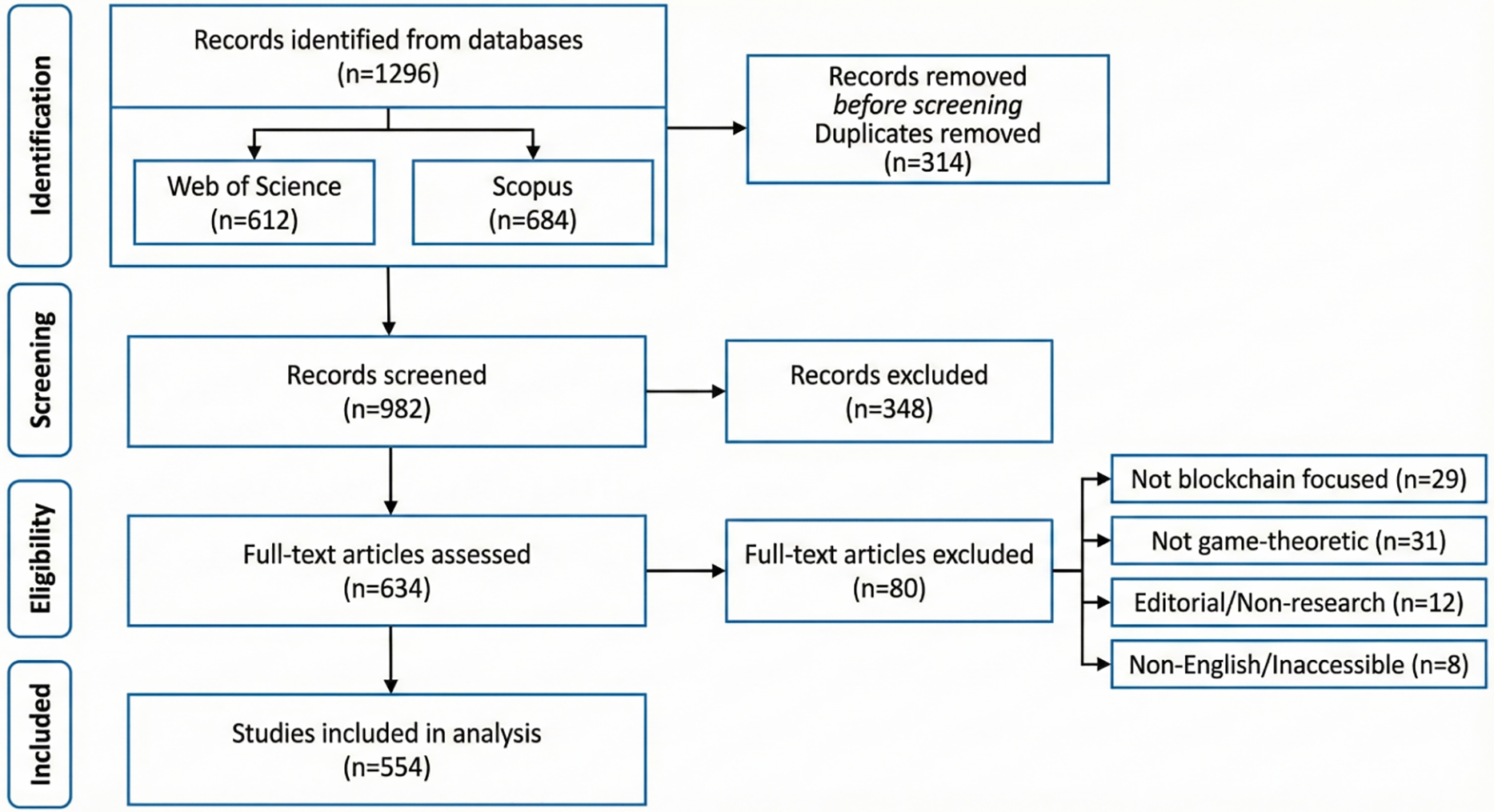
Figure 1: Screening flow diagram.
A suite of bibliometric techniques was employed to analyse the collected dataset and address the research objectives by mapping the structural, thematic, and collaborative dimensions of game-theoretic blockchain research. Bibliometric analysis enables quantitative assessment of scientific production, knowledge diffusion, and intellectual linkages across scholarly communities.
Citation analysis was applied to identify highly influential publications, authors, and journals by examining citation counts, thereby revealing foundational works and dominant research contributors within the domain.
Co-citation analysis was conducted to explore intellectual structures by identifying references that are frequently cited together, allowing the detection of foundational research clusters and shared theoretical frameworks underpinning the field.
Bibliographic coupling analysis was used to identify contemporary research streams by examining publications that share common reference bases, thereby capturing emerging thematic similarities and methodological alignments among recent studies.
Co-authorship network analysis was employed to examine collaboration patterns among authors, institutions, and countries, enabling the identification of major research communities, central contributors, and international collaboration structures.
Keyword co-occurrence analysis was performed to detect dominant research themes, topical hotspots, and the evolution of conceptual focus within the literature.
All analyses were implemented using VOSviewer for network construction, normalization, clustering, and visualization.
Network Construction and Threshold Parameters
To enhance analytical rigor and avoid visual noise, threshold criteria were applied during network construction in VOSviewer for all bibliometric analyses. Only items meeting minimum occurrence and citation thresholds were included in the network visualizations.
For co-authorship analysis, authors with a minimum of two publications were considered to ensure the identification of stable collaboration patterns. Institutional and country collaboration networks were constructed using a minimum document threshold of three publications per entity.
For keyword co-occurrence analysis, only keywords appearing in at least five publications were included, enabling the identification of dominant research themes and reducing the influence of sporadic or incidental terms.
For co-citation analysis, references with a minimum of 20 citations were selected to ensure that only foundational and influential studies contributed to the intellectual structure mapping.
For bibliographic coupling analysis, documents sharing a minimum of 15 common references were included to highlight strong theoretical and methodological linkages among publications.
All networks were normalized using the association strength normalization method, which corrects for scale effects and ensures meaningful comparison of node importance and link strength. Network visualization and clustering were generated using VOSviewer’s modularity-based clustering algorithm, with clusters interpreted as coherent thematic research streams.
An analysis of annual publication output reveals a substantial and sustained growth in scholarly research on game-theoretic applications in blockchain systems between 2014 and 2024 (Fig. 2). Publication activity remained limited prior to 2016, followed by a pronounced acceleration beginning in 2017 and reaching a peak in 2023. Journal articles constitute the dominant publication type, increasing from a single publication in 2016 to a maximum of 74 publications in 2023, reflecting the progressive institutionalization of this research domain within high-impact scholarly outlets. Conference proceedings also demonstrate notable growth, particularly in 2021, while book chapters exhibit a steady upward trend, peaking in 2022. Preprint publications remained comparatively limited, indicating that peer-reviewed dissemination has remained the primary channel for knowledge consolidation in this field.
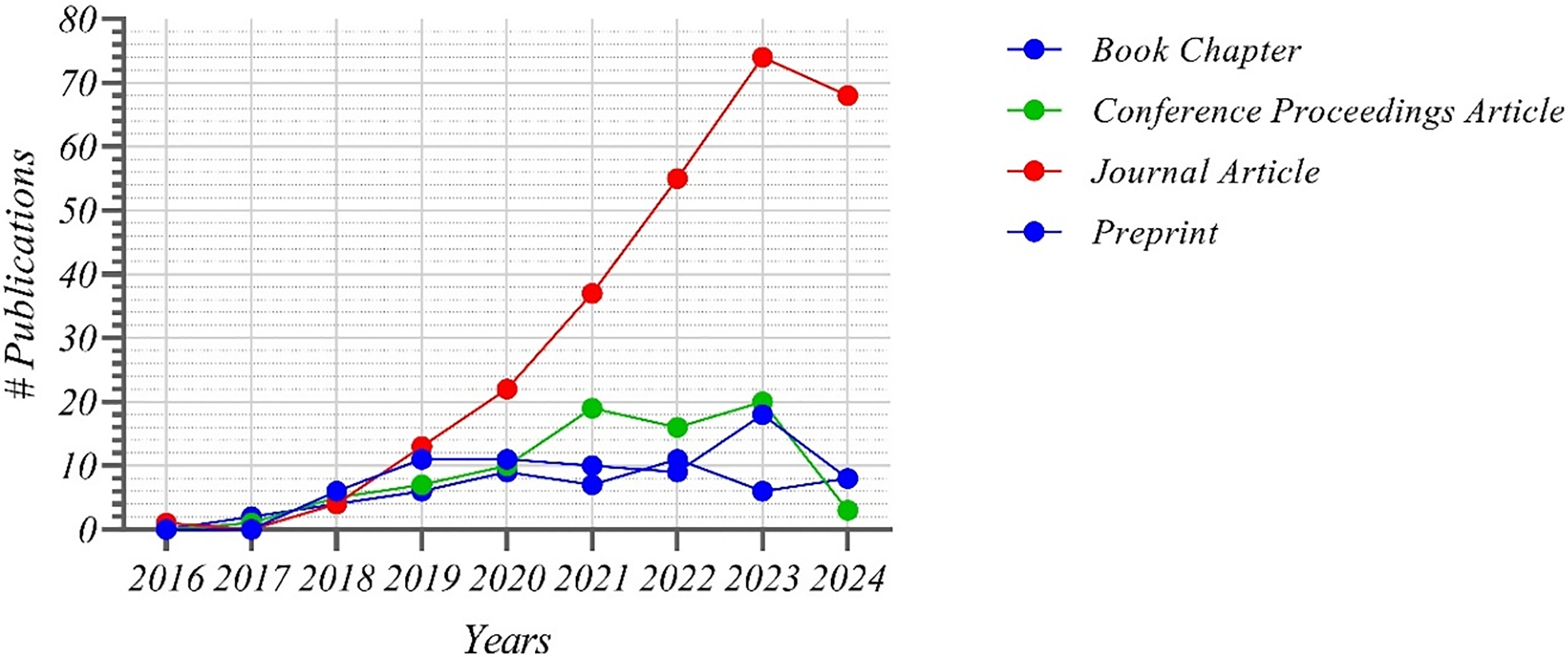
Figure 2: Scholarly works over time.
The pronounced expansion of publication activity after 2020 corresponds with the rapid proliferation of decentralized finance (DeFi) ecosystems and Web3 infrastructures, which introduced increasingly complex incentive coordination, governance, and security challenges. This temporal shift indicates that game theory has evolved from a supplementary analytical tool into a foundational design paradigm for blockchain protocol economics, governance optimization, and strategic security modelling.
An analysis of institutional productivity reveals a geographically concentrated research landscape dominated by leading Asian and Western universities (Fig. 3). Beijing University of Posts and Telecommunications emerges as the most prolific institution with eight publications, indicating its central role in advancing game-theoretic modelling of blockchain systems. Nanyang Technological University follows closely with seven publications, reflecting its strong institutional focus on blockchain economics and protocol engineering.
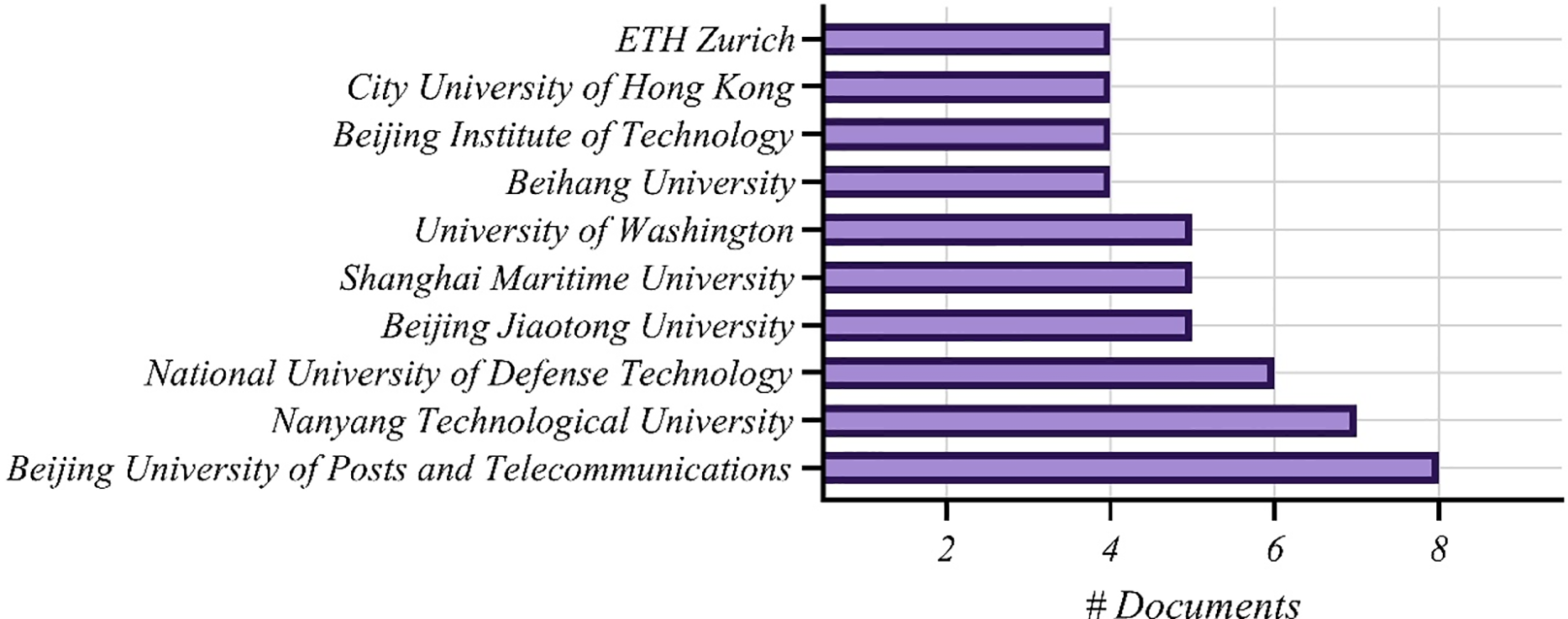
Figure 3: Top 10 institutes.
The National University of Défense Technology ranks third with six publications, highlighting the strategic relevance of blockchain research in security-sensitive and defence-oriented technological contexts. Several institutions, including the University of Washington, Beihang University, Beijing Institute of Technology, City University of Hong Kong, and ETH Zurich, each contribute four publications, demonstrating a diversified but concentrated global research participation.
An examination of author productivity reveals a concentrated core of prolific contributors shaping research on game-theoretic applications in blockchain systems (Fig. 4). Sudeep Tanwar emerges as the most productive author with eight publications, reflecting his sustained contributions to blockchain incentive mechanisms, security modelling, and decentralized system design. Qin Hu, Riya Kakkar, and Smita Agrawal follow with seven publications each, indicating the presence of tightly connected collaborative research groups. Additional active contributors include Huan Zhou and Rajesh Gupta (five publications each), along with Adarsh Kumar, André Vasconcelos, Catarina Pedreira, and Cees de Laat (four publications each), collectively illustrating the formation of a stable scholarly core driving research productivity in this domain.
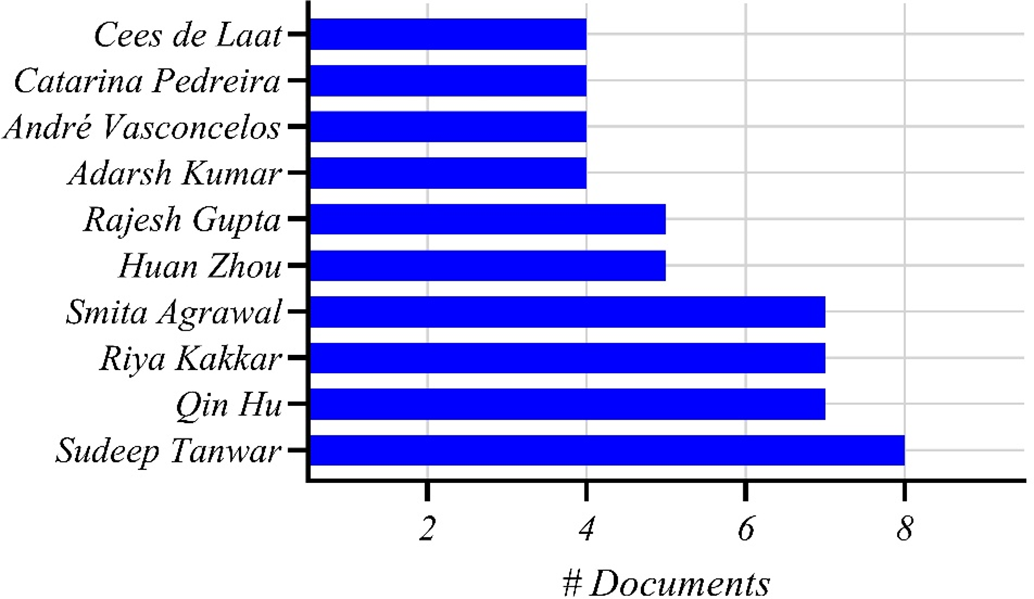
Figure 4: Most active authors.
Citation-based analysis (Fig. 5) further highlights intellectual influence within the field. Wuhui Chen stands as the most highly cited author with 296 citations, signifying foundational contributions to strategic blockchain protocol modelling. Authors such as Ebisa D. Wollega, Esteban A. Soto, Lisa Bosman, and Walter D. Leon-Salas follow closely, reflecting substantial impact on incentive design, energy-aware blockchain architectures, and decentralized system optimization. Luobin Liu, Xiaoyu Qiu, Zibin Zheng, and Zicong Hong also demonstrate strong citation performance, while Vikas Hassija and Vinay Chamola represent influential contributors in blockchain security and vehicular blockchain ecosystems.
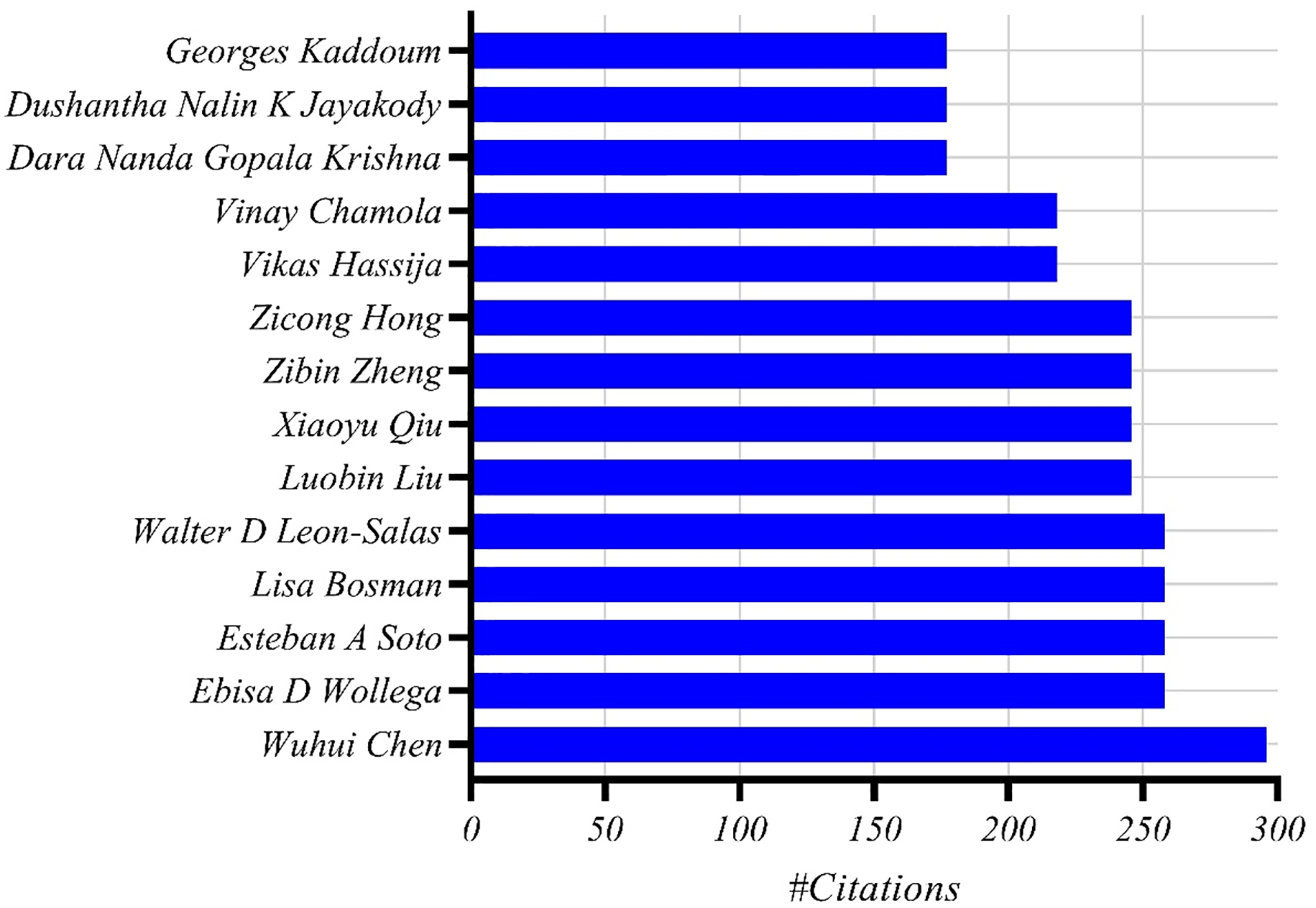
Figure 5: Top 15 authors according to citations.
The concentration of citation influence among a relatively small group of authors reflects the emergence of theoretical gatekeepers whose foundational equilibrium models, evolutionary game formulations, and incentive engineering frameworks serve as reference architectures for subsequent blockchain protocol research. This citation structure indicates increasing theoretical consolidation rather than conceptual fragmentation within the field.
An examination of funding agency contributions reveals a highly centralized funding landscape dominated by Chinese national research bodies (Fig. 6). The National Natural Science Foundation of China (NSFC) emerges as the leading funding agency, supporting 46 publications, thereby underscoring China’s strategic investment in blockchain economics, security, and incentive engineering research.
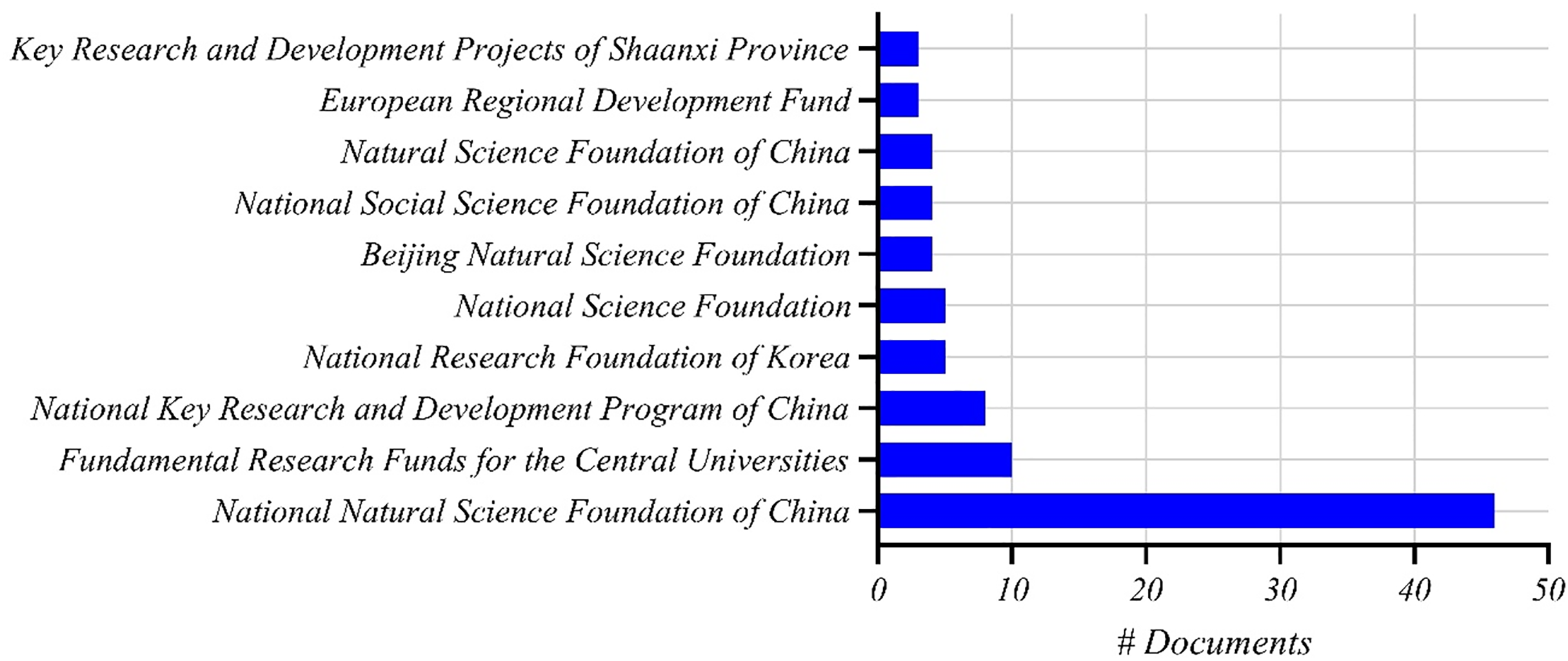
Figure 6: Top funding organisations.
The Fundamental Research Funds for the Central Universities follow with 10 funded publications, reflecting strong institutional-level support for foundational blockchain research. The National Key Research and Development Program of China ranks third with eight publications, further highlighting government-driven prioritization of blockchain technologies as part of national digital infrastructure development strategies.
International funding participation remains comparatively limited, with the National Research Foundation of Korea and the U.S. National Science Foundation each supporting three publications. Additional contributions from the Beijing Natural Science Foundation, National Social Science Foundation of China, European Regional Development Fund, and regional development agencies indicate emerging but less centralized international funding engagement.
An examination of the most productive publication venues highlights the interdisciplinary dissemination of game-theoretic blockchain research across computing, engineering, sustainability, and economic domains (Fig. 7). The SSRN Electronic Journal emerges as the leading outlet with 18 publications, reflecting its role as a rapid diffusion platform for emerging interdisciplinary research. IEEE Access and Sustainability follow with 14 publications each, indicating strong representation of blockchain incentive modelling within both technological and sustainability-oriented research communities.
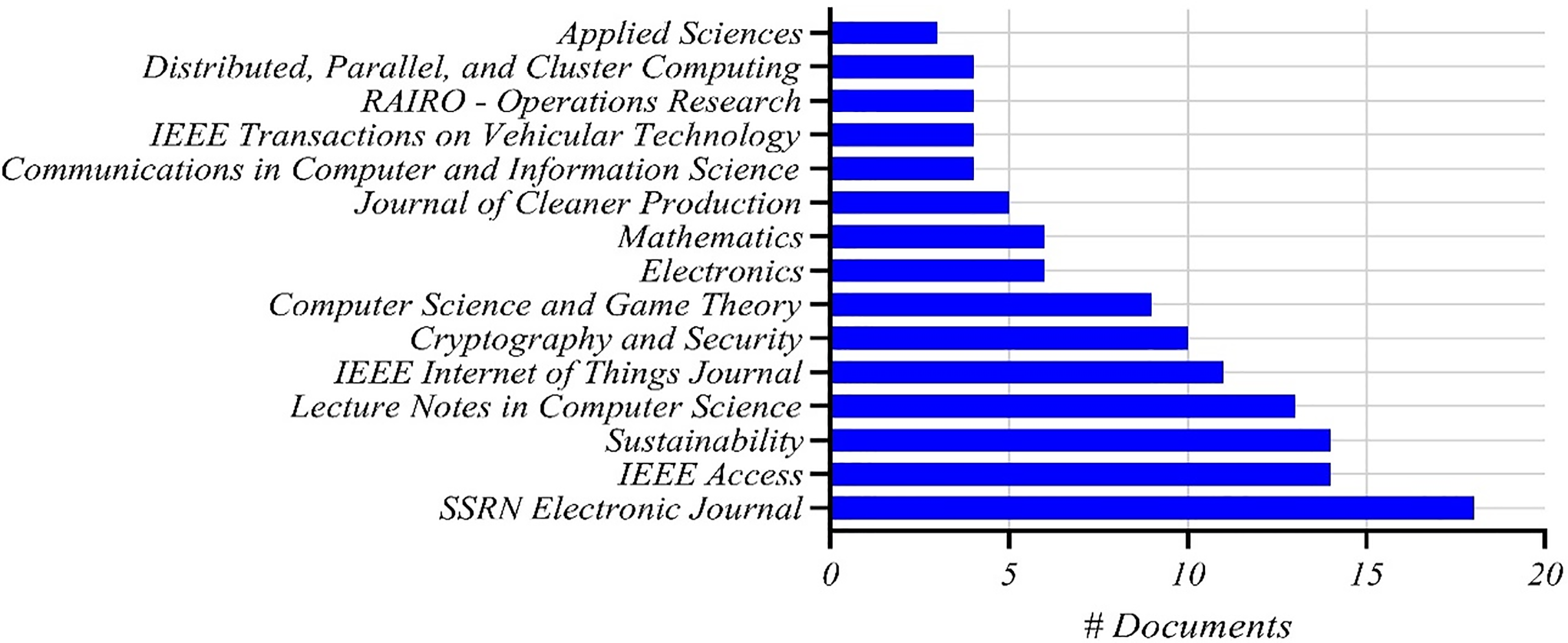
Figure 7: Top journals.
The Lecture Notes in Computer Science series ranks next with 13 publications, demonstrating the prominence of conference-oriented and proceedings-based dissemination in advancing computational game-theoretic models. The IEEE Internet of Things Journal (11 publications) and Cryptography and Security (10 publications) further underscore the importance of blockchain security, decentralized networking, and cryptographic trust modelling. Additional contributions from Computer Science and Game Theory, Electronics, Mathematics, Journal of Cleaner Production, and Communications in Computer and Information Science illustrate the broad disciplinary integration of blockchain game theory research.
Citation-based analysis (Fig. 8) reveals influential knowledge hubs within the scholarly ecosystem. Gaming Law Review and Economics ranks as the most highly cited source (1183 citations), highlighting the centrality of economic regulation, governance, and legal-economic incentive modelling in blockchain systems. IEEE Transactions on Vehicular Technology (503 citations) and Applied Energy (386 citations) demonstrate strong influence in mobility-centric and energy-oriented blockchain applications. Additional high-impact sources include IEEE Access, IEEE Internet of Things Journal, Sustainability, and Lecture Notes in Computer Science, reflecting their roles as core knowledge conduits across decentralized infrastructure, sustainability, and computational research streams.
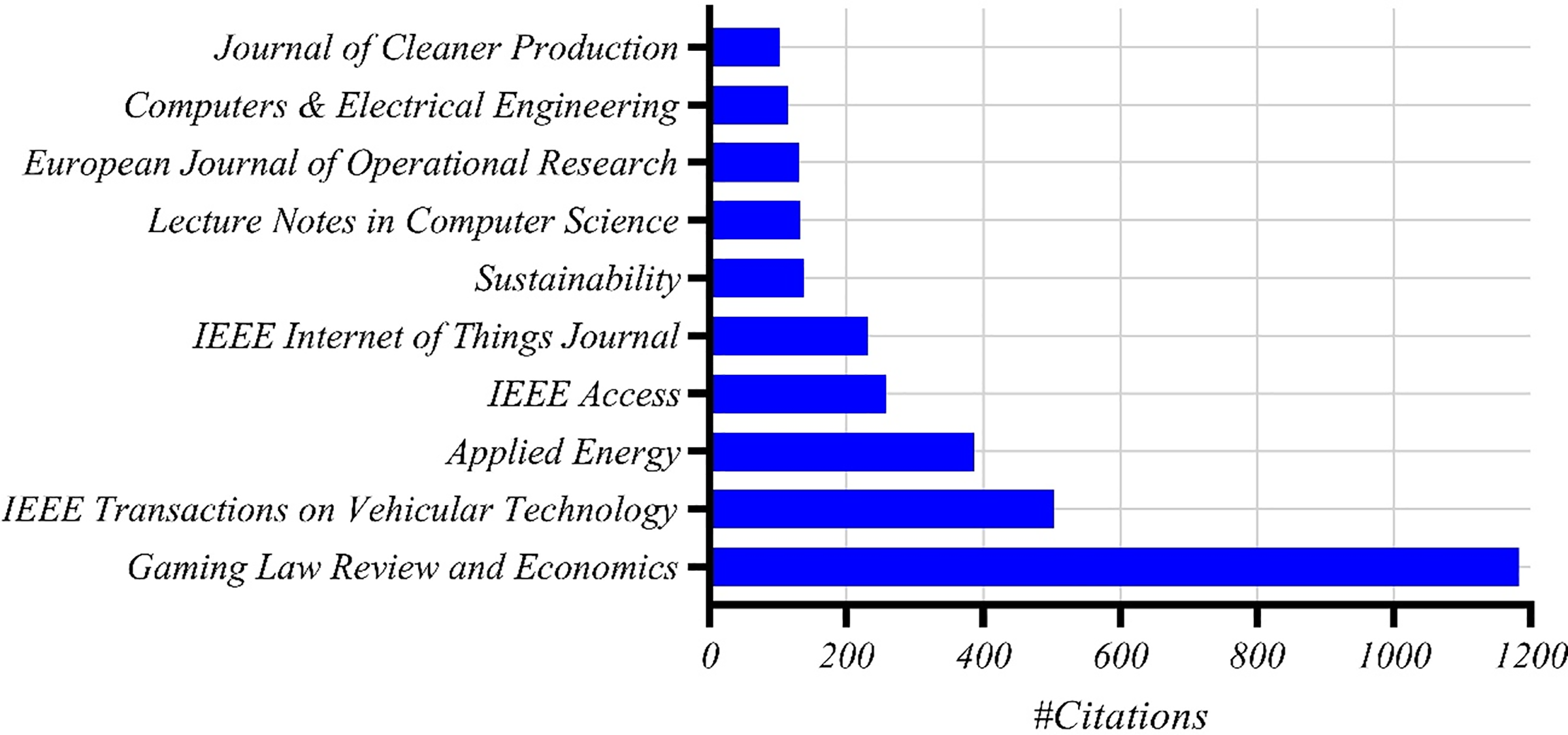
Figure 8: Top journals according to citations.
An examination of publisher-level dissemination patterns reveals a concentrated yet diversified publishing ecosystem for research on game-theoretic applications in blockchain systems (Fig. 9 and Table 1). Elsevier BV emerges as the most dominant publisher, primarily through its dissemination of research in SSRN Electronic Journal, Journal of Cleaner Production, Computer Networks, and Computers & Industrial Engineering. This dominance highlights Elsevier’s strong positioning at the intersection of blockchain economics, sustainability, and computational modelling.
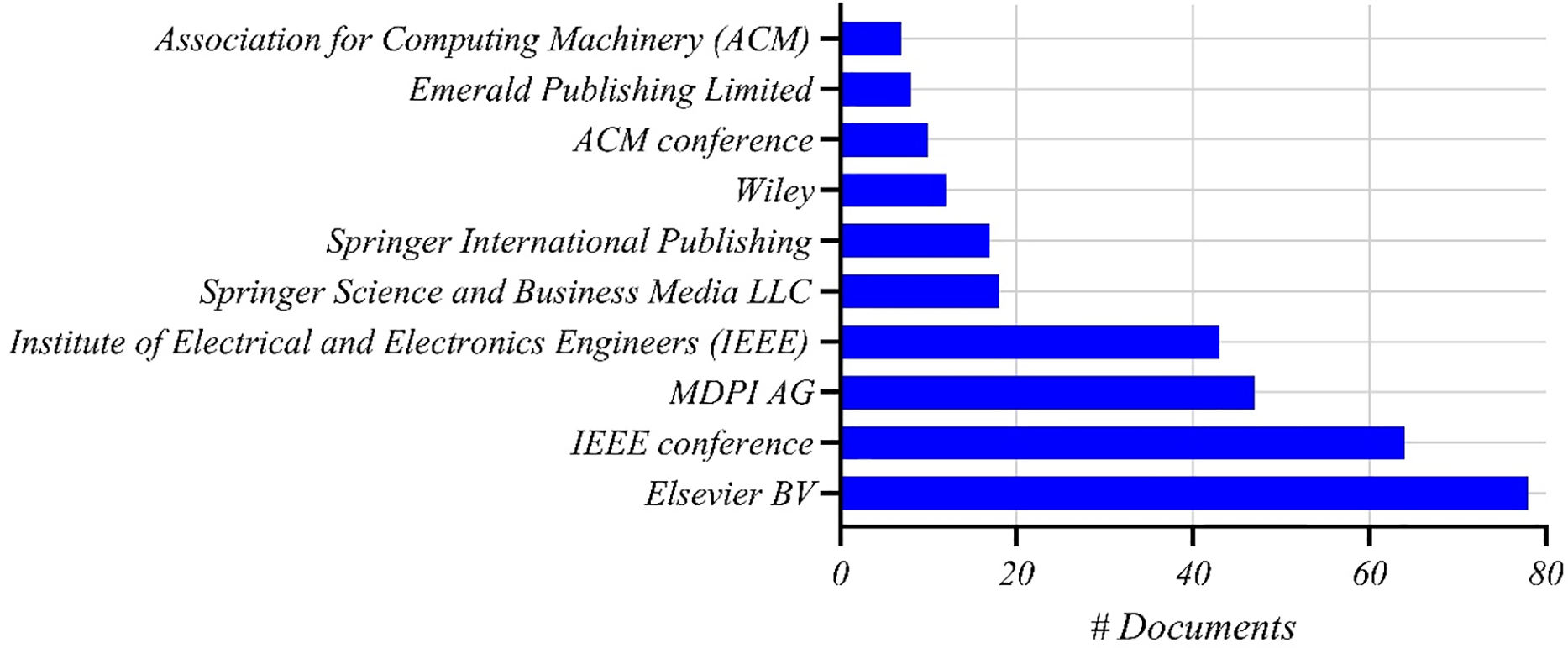
Figure 9: Top publisher.
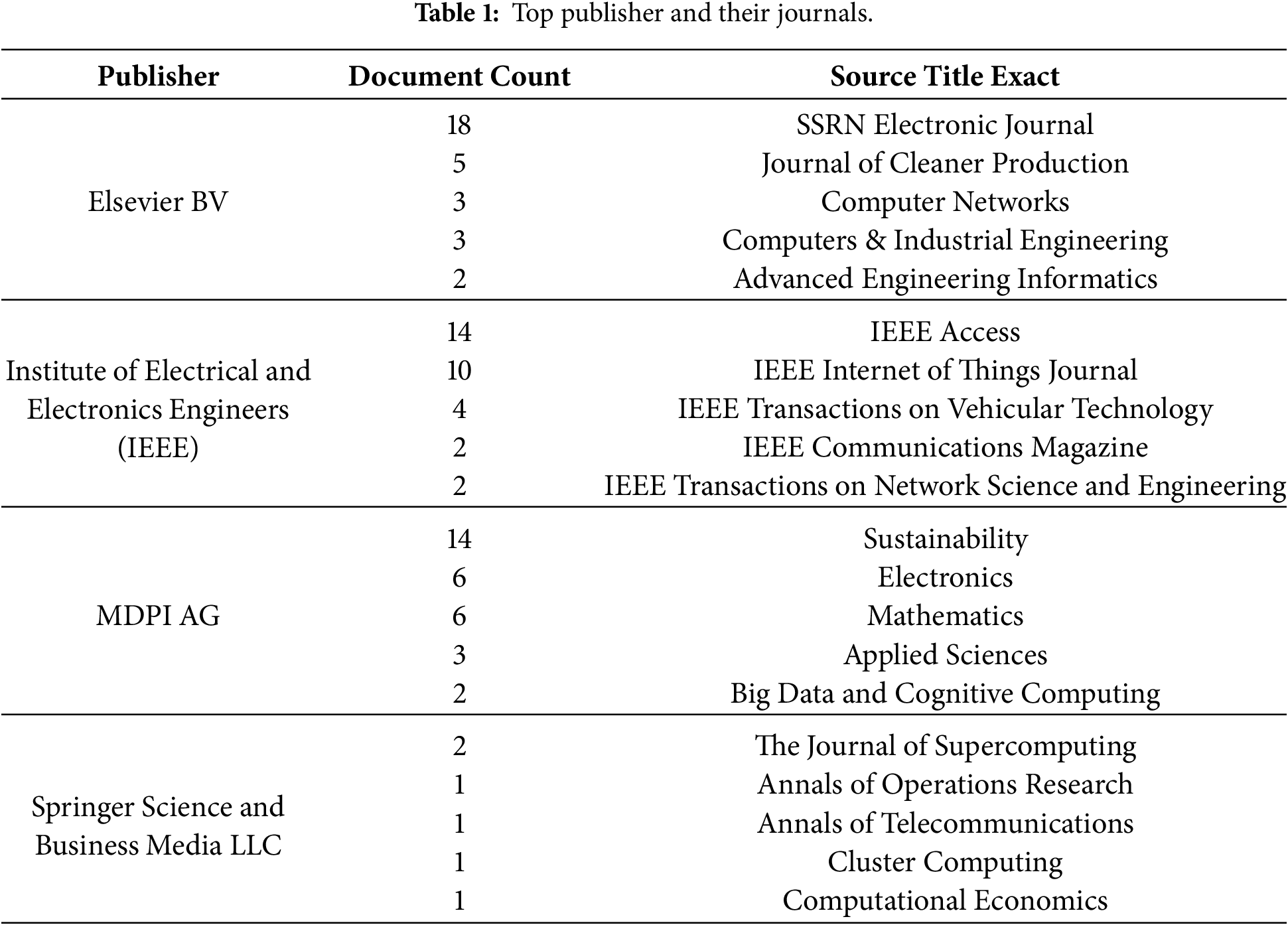
The Institute of Electrical and Electronics Engineers (IEEE) ranks as the second most prolific publisher, with major contributions appearing in IEEE Access, IEEE Internet of Things Journal, IEEE Transactions on Vehicular Technology, and IEEE Transactions on Network Science and Engineering. This pattern underscores IEEE’s central role in advancing blockchain protocol engineering, incentive modelling, and decentralized system security research.
MDPI AG demonstrates strong participation through interdisciplinary outlets such as Sustainability, Electronics, and Mathematics, reflecting its open-access dissemination model and broad coverage of blockchain economics, energy-efficient consensus, and incentive engineering studies. Additional contributions from Springer Nature, Wiley, ACM, and Emerald Publishing further indicate the presence of a competitive and diversified scholarly publishing environment.
Overall, the distribution presented in Table 1 confirms that blockchain game-theoretic research is disseminated through both technology-centric and sustainability-oriented publication channels, highlighting the field’s interdisciplinary maturity and the active engagement of major academic publishers in promoting this emerging research domain.
The disciplinary distribution of publications reveals the strongly interdisciplinary nature of research on game-theoretic blockchain systems (Fig. 10). Computer Science dominates the field with 421 publications, reflecting its central role in blockchain protocol engineering, consensus algorithm design, and decentralized system implementation. Computer Security follows with 275 publications, underscoring the critical importance of strategic defence modelling, attack mitigation, and trust management in blockchain ecosystems.
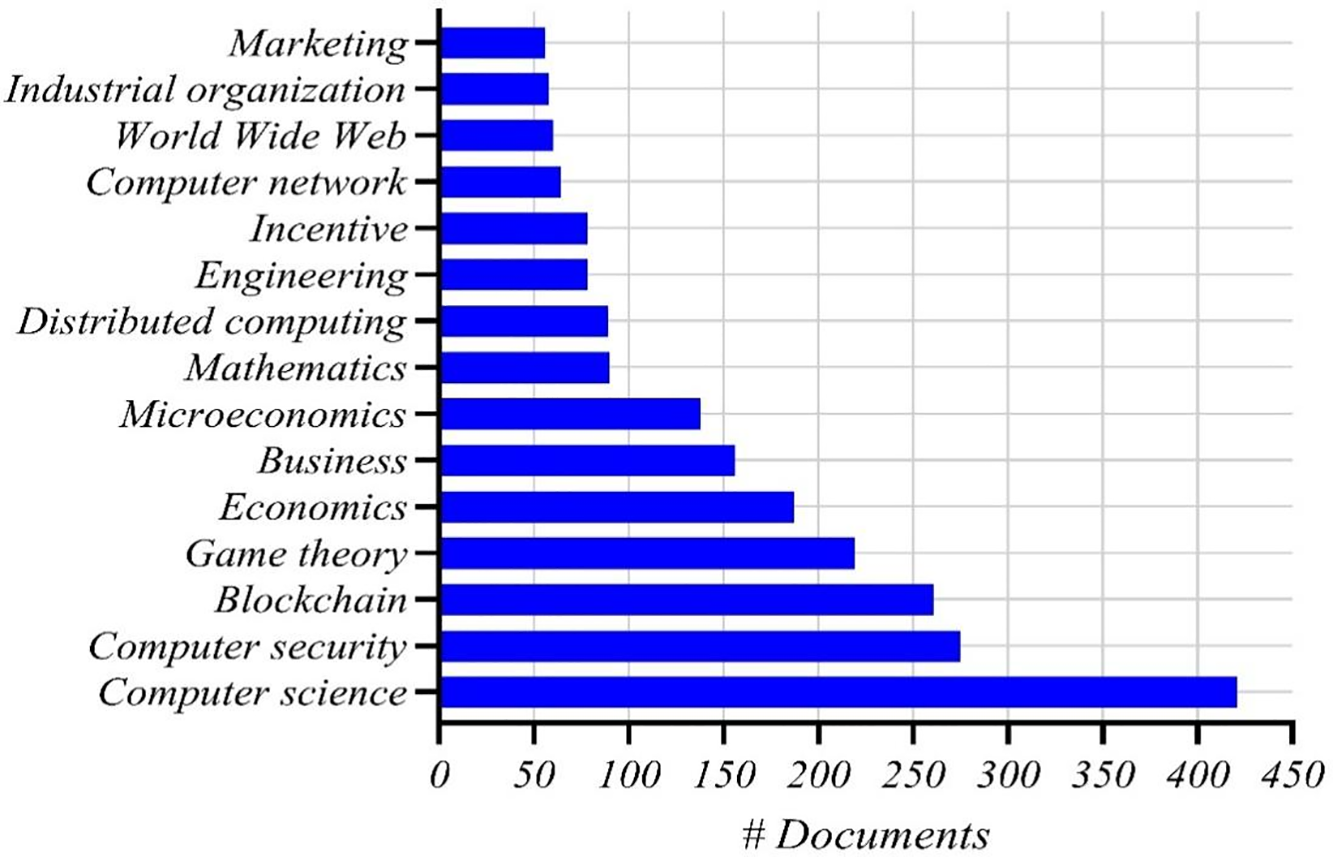
Figure 10: Top filed of studies.
The Blockchain-specific research category accounts for 261 publications, indicating the maturation of blockchain as an independent scholarly domain. Game Theory contributes 219 publications, confirming the widespread adoption of strategic and incentive-based modeling as a foundational analytical framework. Substantial participation from Economics (187 publications) and Business (156 publications) further highlights the techno-economic nature of blockchain research, particularly in decentralized finance, token economics, and governance modelling. Additional contributions from Microeconomics, Mathematics, Distributed Computing, and Engineering illustrate the integration of theoretical, computational, and applied engineering perspectives, confirming the cross-domain character of this research field.
An analysis of temporal disciplinary trends from 2017 to 2024 (Fig. 11) demonstrates the dynamic evolution of research activity. Early contributions in 2017 were limited, marking the formative stage of blockchain-oriented strategic modelling. From 2018 onward, a pronounced growth trajectory emerged, led primarily by Computer Science and Game Theory, reflecting increasing academic interest in incentive design and decentralized protocol modelling. This upward momentum intensified through 2019 and 2020, coinciding with the rapid expansion of blockchain infrastructures.
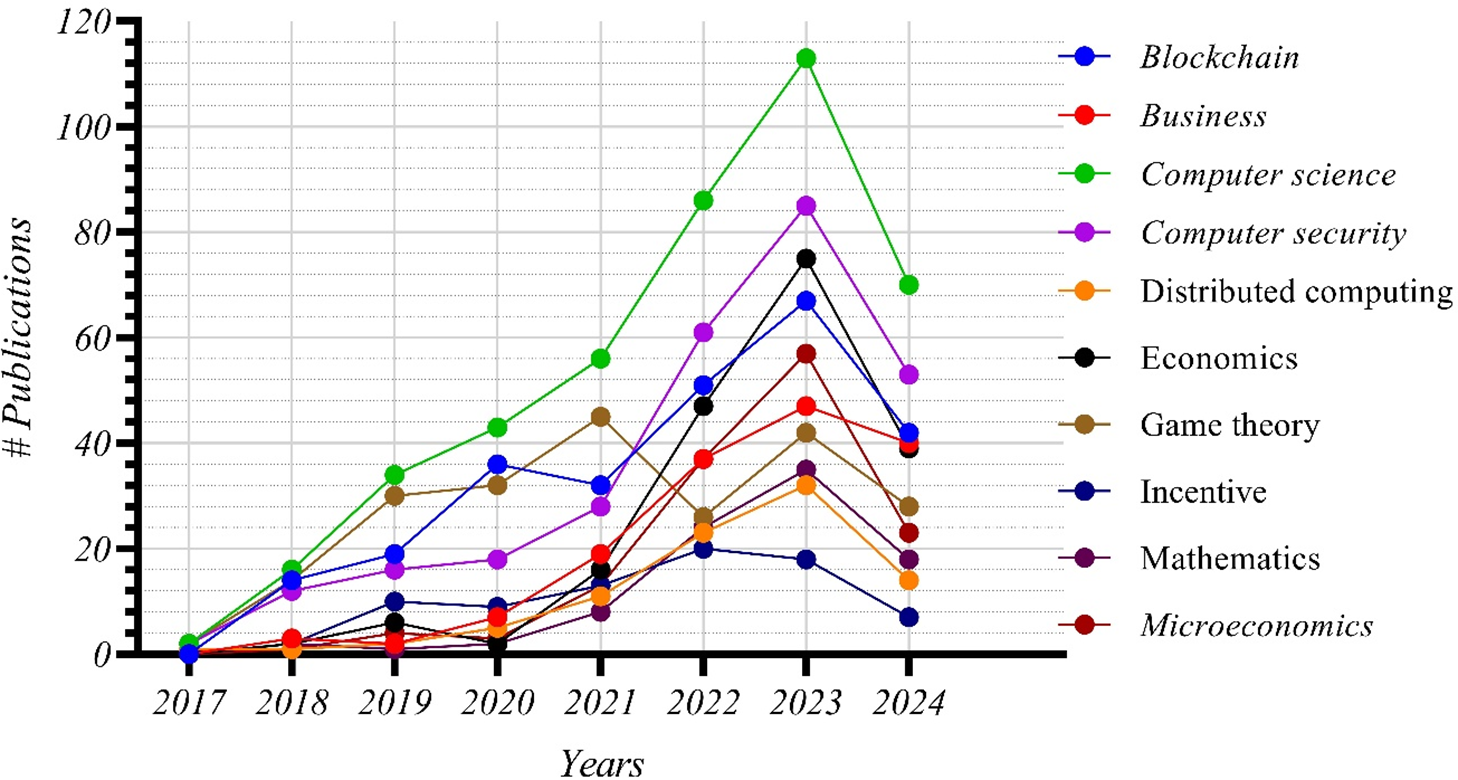
Figure 11: Top filed of studies over the time.
In 2021, stronger participation from Economics and Business became evident, indicating a shift toward techno-economic system modelling of decentralized ecosystems. Publication activity peaked in 2022 and 2023, with Computer Science and Blockchain-focused research achieving their highest volumes, corresponding with large-scale DeFi adoption and Web3 system development. A modest decline in 2024 suggests a stabilization phase following rapid expansion, indicating the field’s transition from exploratory growth toward consolidation and theoretical refinement.
Overall, these findings confirm that blockchain game-theoretic research has evolved into a hybrid techno-economic research paradigm, integrating computing, economics, and engineering sciences within a unified scholarly framework.
3.8 Geographic Distribution of Institutional and Journal Contributions
The geographic distribution of institutional affiliations (Fig. 12) demonstrates a highly centralized global research structure dominated by East Asia and North America. China emerges as the most prolific contributor, accounting for the largest share of institutional publications, significantly surpassing all other countries. This dominance reflects strong national prioritization of blockchain economics, incentive modelling, and decentralized system research, supported by extensive governmental funding programs and coordinated academic–industrial initiatives.
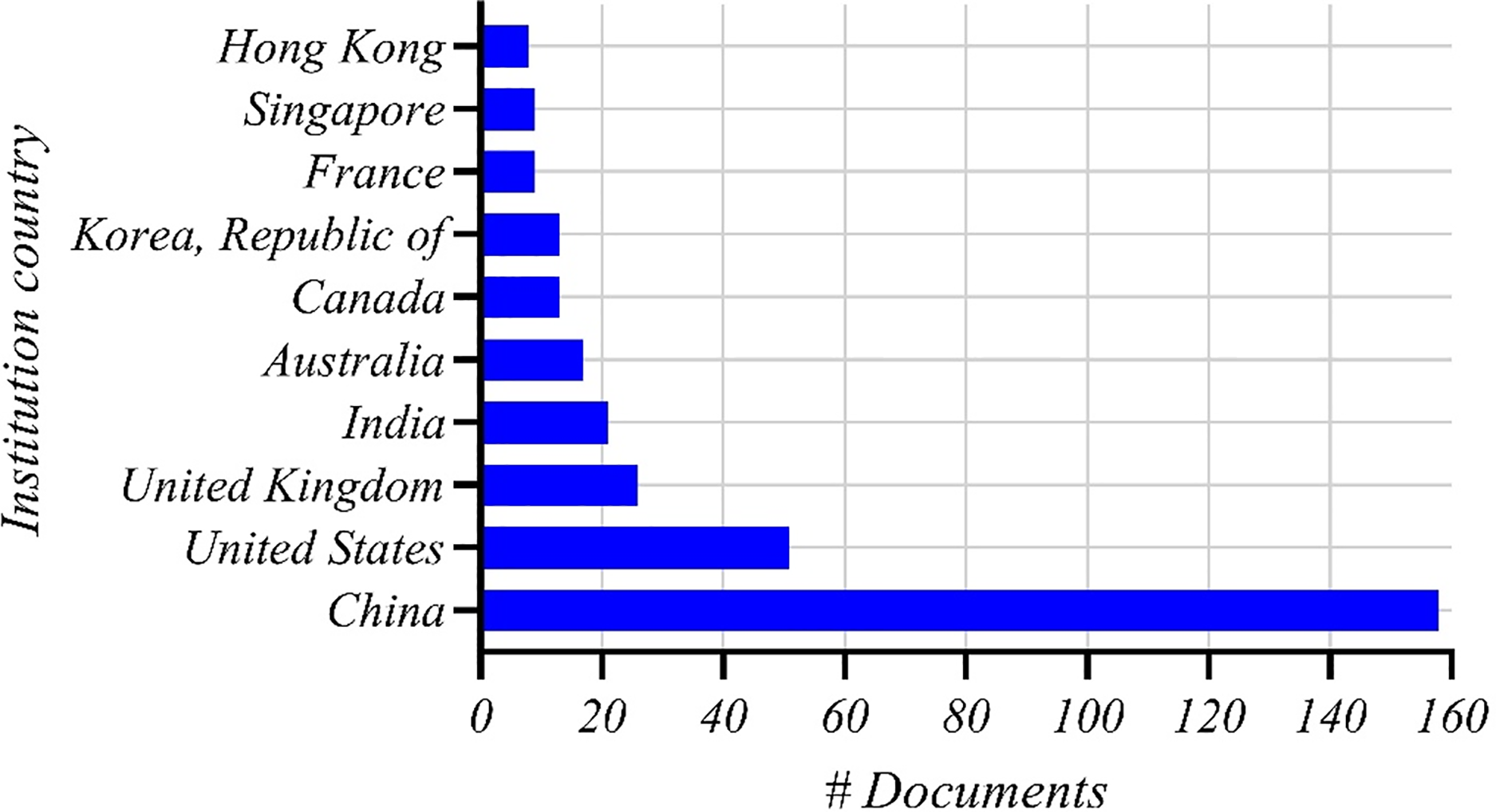
Figure 12: Top institution countries.
The United States ranks as the second most productive contributor, indicating its central role in theoretical development, decentralized finance research, and blockchain security modelling. The United Kingdom follows, highlighting Europe’s sustained engagement in blockchain governance, regulatory modelling, and economic mechanism design. India and Australia demonstrate moderate but rapidly growing research activity, reflecting increasing adoption of blockchain game-theoretic frameworks in emerging digital economies. Contributions from Canada, Republic of Korea, France, Singapore, and Hong Kong further indicate a geographically diverse but still highly concentrated global research ecosystem.
Analysis of journal-level geographic distribution (Fig. 13) reveals a different yet complementary pattern. The United States dominates as the primary publication hub, indicating that many high-impact journals disseminating blockchain game-theoretic research are U.S.-based. The United Kingdom, The Netherlands, and Germany follow, demonstrating Europe’s strong presence in high-impact computational, engineering, and sustainability-oriented journals. Switzerland also appears as an influential journal hub, reflecting its role in fintech, cryptographic research, and blockchain governance scholarship.
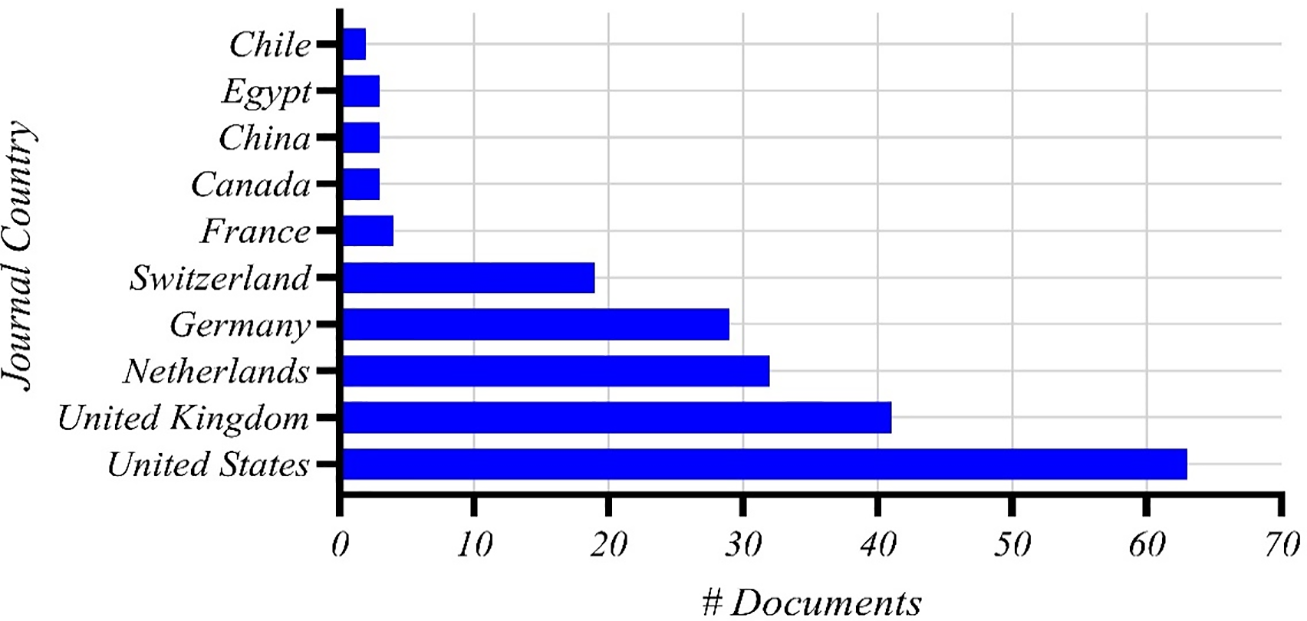
Figure 13: Top journal countries.
Together, these findings reveal a dual-centered geographic structure in which China leads institutional research production, while the United States and Western Europe dominate journal dissemination channels. This asymmetry indicates that much of the global knowledge generation in blockchain game theory is institutionally driven by Asia, while its formal scholarly communication and citation consolidation are largely mediated through Western publication venues.
Co-authorship network analysis was conducted to examine collaborative relationships among researchers and to identify major research communities within the domain of game-theoretic blockchain studies (Fig. 14). This analysis reveals a structurally clustered collaboration network composed of three dominant research communities.
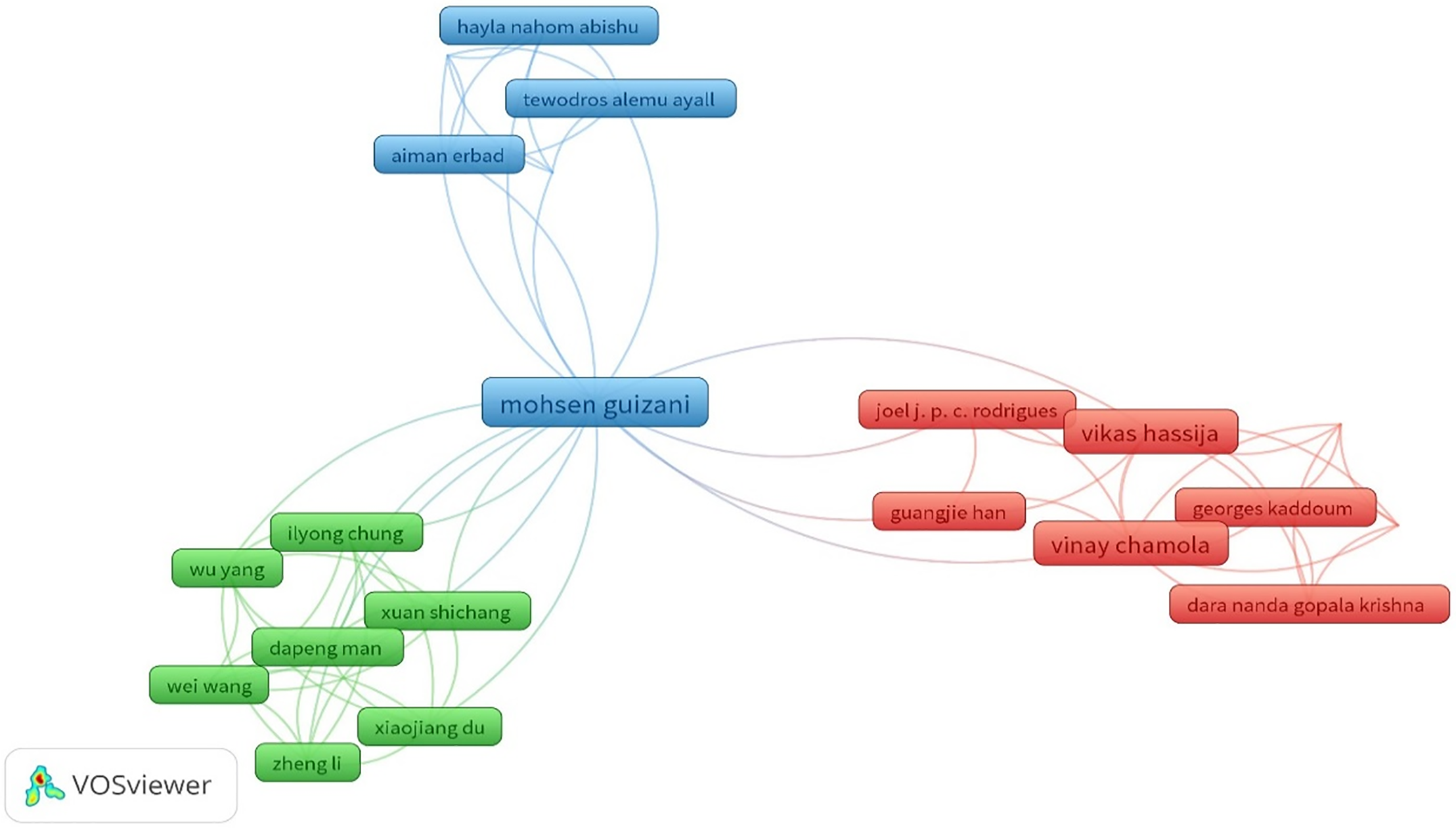
Figure 14: Co-authorship analysis with author as a unit of analysis.
The central node Mohsen Guizani functions as a key bridging author connecting multiple collaboration clusters, indicating his pivotal role in facilitating cross-group knowledge exchange. The blue cluster comprises authors such as Hayla Nahom Abishu, Tewodros Alemu Ayall, and Aiman Erbad, who form a closely connected collaborative group focused on blockchain security and decentralized network modelling.
The green cluster primarily consists of Chinese researchers, including Wu Yang, Wei Wang, and Zheng Li, representing a regionally concentrated collaboration network indicative of nationally coordinated research initiatives in blockchain economics and protocol engineering.
The red cluster, featuring authors such as Vikas Hassija, Vinay Chamola, and Georges Kaddoum, reflects an internationally oriented collaboration group specializing in vehicular blockchain systems, security modelling, and decentralized infrastructure.
The presence of distinct but interconnected clusters demonstrates both the formation of stable research communities and the existence of cross-cluster collaboration pathways, highlighting a maturing and globally networked research ecosystem.
3.10 Co-Occurrence of Keyword Analysis
Keyword co-occurrence analysis was conducted to identify dominant research themes and conceptual linkages within the literature on game-theoretic blockchain applications (Fig. 15). This analysis reveals a structured conceptual network composed of four major thematic clusters centered around the core concept of blockchain.
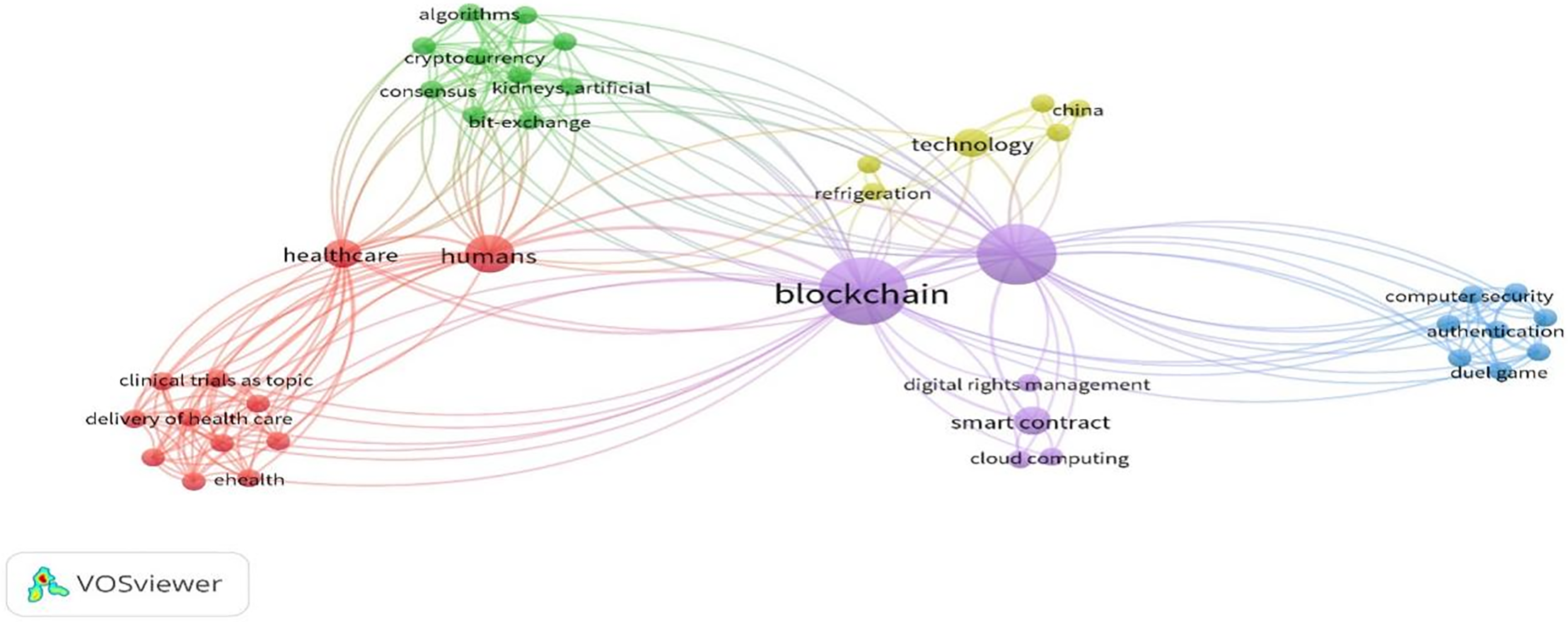
Figure 15: Co-occurrence analysis with all keywords as a unit of analysis.
The green cluster represents blockchain infrastructure and protocol engineering, encompassing keywords such as algorithms, cryptocurrency, and consensus, which reflect a strong research focus on decentralized protocol design and incentive-compatible consensus mechanisms.
The red cluster highlights blockchain applications in healthcare and biomedical systems, with prominent terms including healthcare, clinical trials, e-health, and humans, indicating a substantial body of research addressing secure medical data sharing and health information management using game-theoretic frameworks.
The blue cluster captures security-centric research themes, including computer security, authentication, and dual game, reflecting strategic defence modelling and adversarial behaviour mitigation within blockchain networks.
The purple cluster corresponds to digital infrastructure and cloud-integrated blockchain systems, featuring keywords such as smart contracts, digital rights management, and cloud computing, which emphasize research on automated trust enforcement and decentralized digital service architectures.
The network structure demonstrates that blockchain game-theoretic research extends across multiple application domains, integrating protocol engineering, healthcare informatics, cybersecurity, and digital infrastructure development into a unified conceptual research ecosystem.
Author keyword co-occurrence analysis was performed to capture how researchers themselves conceptualize and categorize game-theoretic blockchain research (Fig. 16). Unlike all-keyword analysis, this approach reflects author-defined thematic structures and therefore provides deeper insight into conceptual positioning within the field.
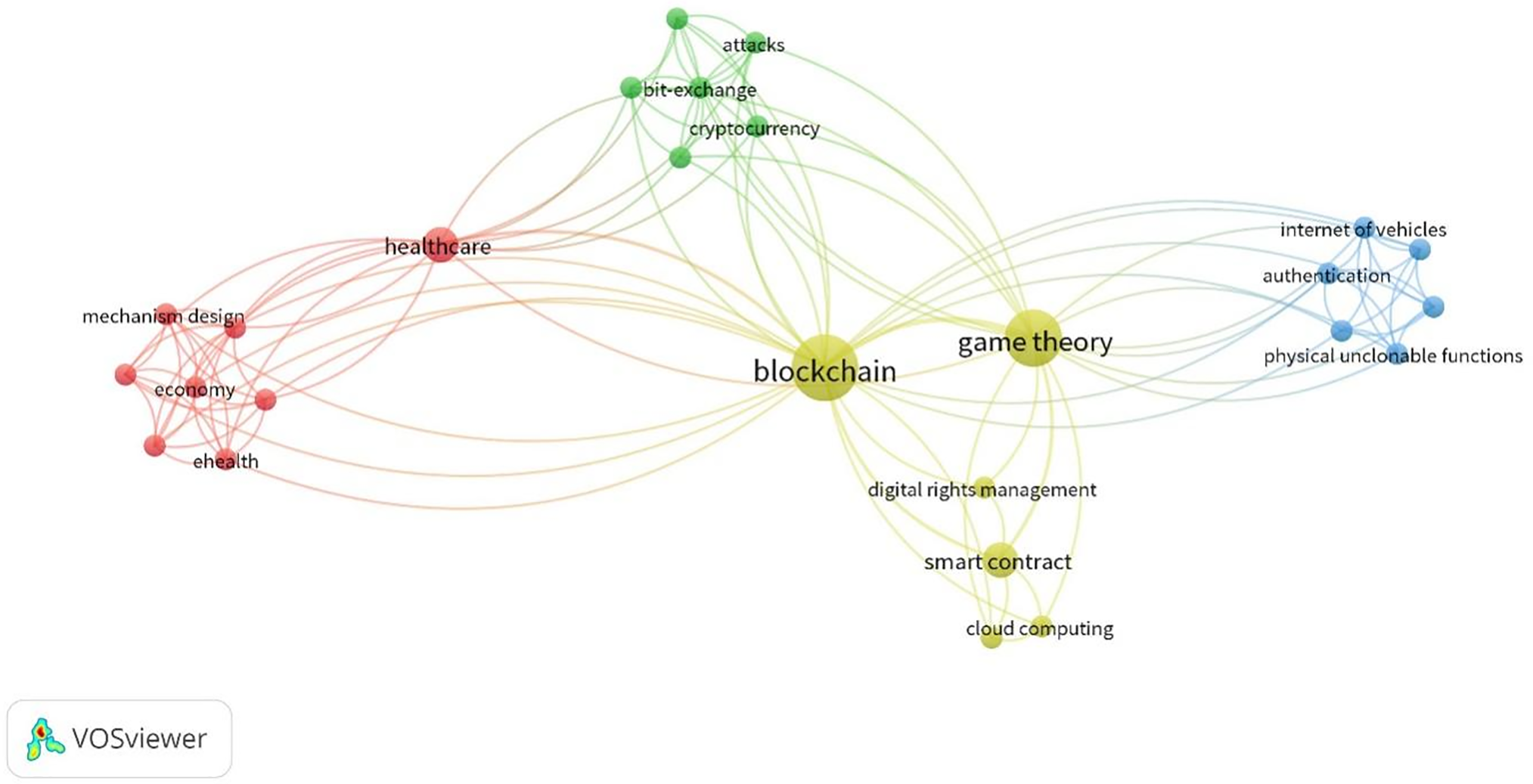
Figure 16: Co-occurrence analysis with authors keywords as a unit of analysis.
The resulting network is centered around two dominant core nodes blockchain and game theory which form the intellectual nucleus of the research domain. Four major thematic clusters emerge from the network.
The red cluster is associated with healthcare applications and mechanism design, indicating strong research emphasis on secure medical data sharing, incentive compatible healthcare protocols, and regulatory compliant blockchain systems.
The green cluster focuses on cryptocurrency economics and security, featuring keywords related to attacks, incentive mechanisms, and decentralized exchange operations, reflecting strategic defence modelling and adversarial game theoretic frameworks.
The yellow cluster represents digital infrastructure and smart contract ecosystems, including terms related to cloud computing and digital rights management, highlighting research on automated trust enforcement and decentralized service architectures.
The blue cluster captures authentication mechanisms and Internet of Vehicles (IoV) applications, illustrating the extension of game theoretic blockchain modelling into mobility, transportation, and cyber physical system domains.
Strong inter cluster linkages particularly between blockchain, game theory, and smart contracts indicate high conceptual integration across technical, economic, and application-oriented research streams. This structure confirms the interdisciplinary consolidation of blockchain game theory as a unified techno economic research paradigm.
3.11 Citation Network Analysis
Citation network analysis was performed to examine patterns of knowledge diffusion, intellectual influence, and theoretical lineage among publications within the domain of game theoretic blockchain research (Fig. 17). The resulting network illustrates interconnected citation relationships among documents published between 2017 and 2023, revealing both foundational and emerging research trajectories.
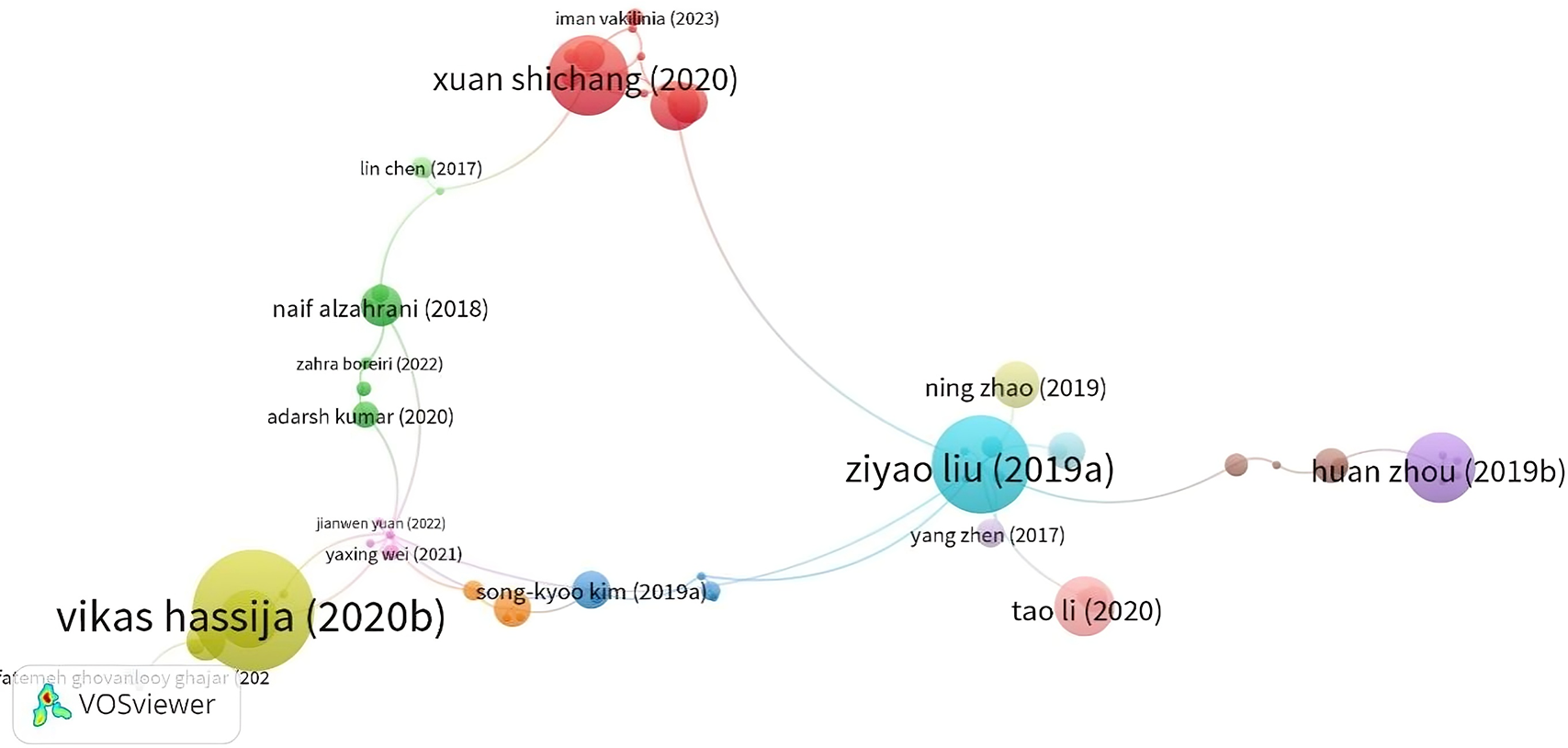
Figure 17: Citation network analysis with document as a unit of analysis.
Highly influential nodes such as Hassija (2020b) and Liu (2019a) occupy central positions in the network, indicating their roles as cornerstone studies shaping subsequent research in blockchain incentive design, security modelling, and decentralized protocol optimization. These foundational works form the theoretical backbone of the field and serve as reference architectures for later studies.
The network further reveals multiple interconnected research clusters, reflecting the co evolution of research themes across security, governance, decentralized finance, and protocol design. Earlier foundational contributions (e.g., Chen, 2017; Zhen, 2017) are consistently cited by more recent studies, illustrating a cumulative and progressive knowledge development trajectory. Emerging publications such as Vakilinia (2023) and Bofeiri (2022) appear as newly integrated nodes, indicating the continual expansion of research fronts.
Citation network analysis at the source level was conducted to examine citation linkages among publication venues, including journals and conference proceedings, thereby revealing knowledge diffusion pathways within the blockchain game theoretic research ecosystem (Fig. 18).

Figure 18: Citation network analysis with source as a unit of analysis.
The network highlights IEEE Access and SSRN Electronic Journal as central citation hubs, indicating their dominant roles in disseminating and bridging interdisciplinary research across multiple thematic clusters. Strong interconnectivity is also observed for Lecture Notes in Computer Science and the IEEE Internet of Things Journal, reflecting their importance in computational and decentralized networking research streams.
The Journal of Cleaner Production emerges as a distinct but connected node, underscoring its role in sustainability oriented blockchain research, particularly in energy efficient consensus and green blockchain economics. Additional venues such as Electronics, Security and Communication Networks, and conference proceedings further illustrate the diversity of dissemination platforms supporting this field.
The source level citation network reveals a multi hub scholarly ecosystem characterized by strong cross citation patterns, with IEEE affiliated publications functioning as major knowledge conduits across blockchain security, incentive modelling, and decentralized infrastructure research communities.
3.12 Bibliographic Coupling Network Analysis
Bibliographic coupling analysis was conducted to identify intellectual similarities and emerging research streams based on shared reference patterns among publications (Figs. 19 and 20). Two documents are considered bibliographically coupled when they cite common references, with stronger coupling indicating greater theoretical and methodological alignment.
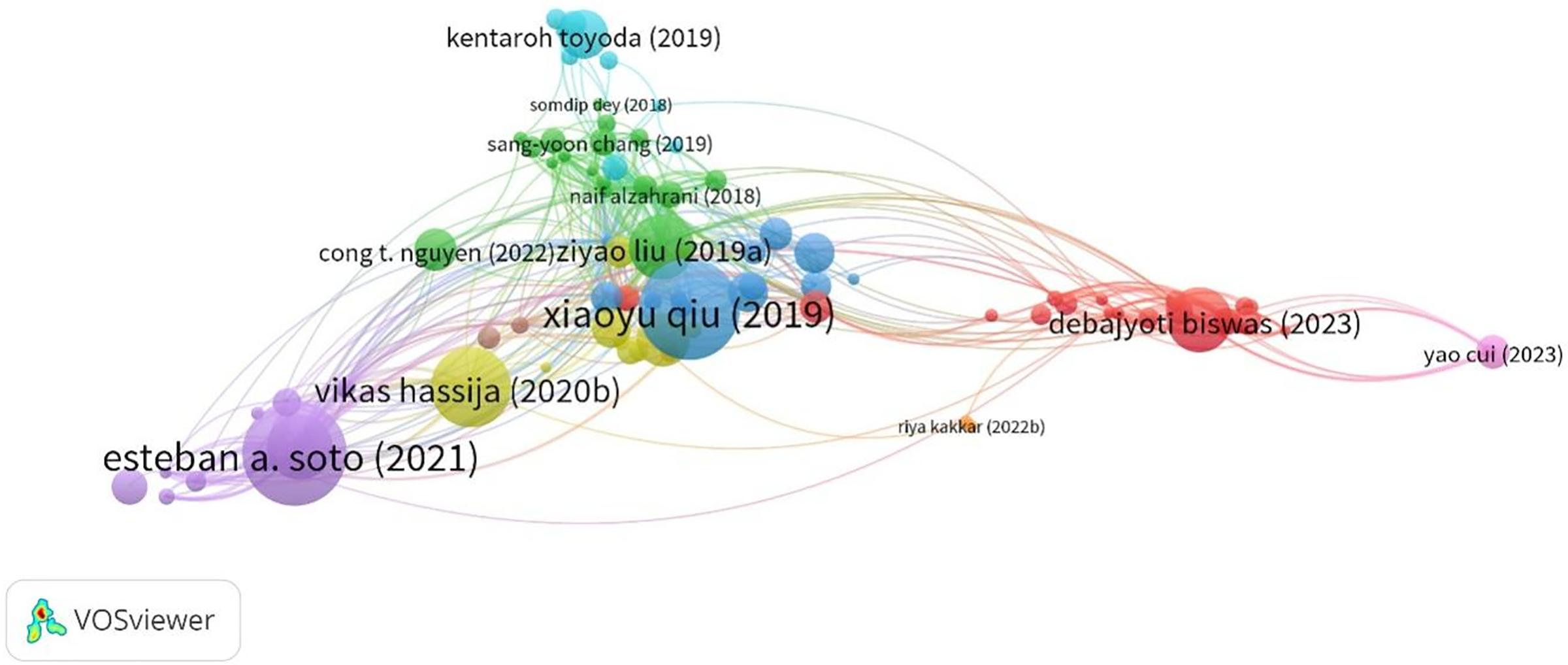
Figure 19: Bibliographic coupling network analysis with document as a unit of analysis.
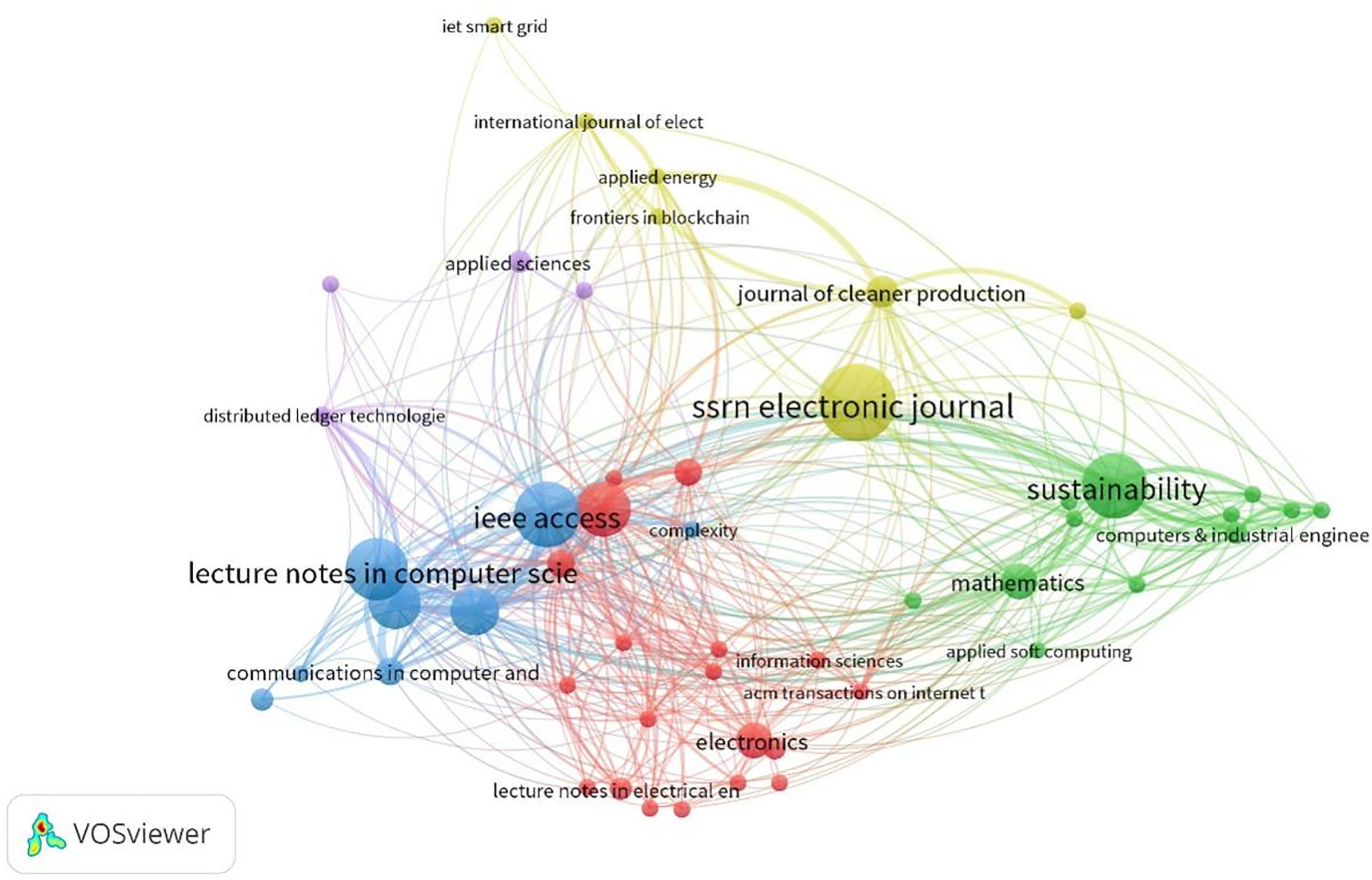
Figure 20: Bibliographic coupling network analysis with document as a unit of analysis.
3.12.1 Document Level Coupling
The document level coupling network (Fig. 19) reveals multiple coherent research clusters formed between 2018 and 2023. Qiu (2019) and Liu (2019a) occupy central positions within the network, reflecting their foundational roles in shaping incentive design and decentralized protocol optimization research. The largest cluster, dominated by studies such as Toyoda (2019) and Alzahrani (2018), represents a mature research stream focused on blockchain security and distributed consensus modelling.
A distinct cluster centered around Soto (2021) and Hassija (2020b) reflects a separate thematic stream emphasizing decentralized finance mechanisms and strategic economic modelling. Emerging research directions are represented by newer works such as Biswas (2023) and Cui (2023), which form evolving clusters addressing next generation blockchain applications.
Source level bibliographic coupling analysis (Fig. 20) reveals four distinct publication clusters. The blue cluster, centered on Lecture Notes in Computer Science and IEEE Access, represents computational and engineering oriented research streams. The red cluster comprises engineering centric venues including Electronics and electrical engineering conference proceedings. The green cluster, anchored by Sustainability and Computers & Industrial Engineering, reflects sustainability and industrial blockchain research. The yellow cluster, including Applied Energy and energy focused journals, represents energy efficient blockchain modelling and green consensus research.
SSRN Electronic Journal emerges as a central bridging venue connecting multiple clusters, indicating its role in facilitating interdisciplinary knowledge diffusion. Overall, the bibliographic coupling structure reveals both strong disciplinary specialization and significant cross domain integration within the blockchain game theoretic research ecosystem.
The integrated findings from the citation, coupling, and keyword networks collectively reveal the theoretical consolidation and interdisciplinary maturation of blockchain game-theoretic research, which are synthesized in the following “Discussion Section”.
The bibliometric results are technically interpreted by mapping dominant citation, keyword, and coupling clusters onto established game-theoretic constructs, including Nash equilibrium-based consensus stability, mechanism design-driven incentive engineering, and evolutionary game-based governance modelling. This enables systematic validation of research maturity, theoretical consolidation, and emerging application pathways.
4.1 Intellectual Structure and Research Evolution
The bibliometric evidence demonstrates that research on game theoretic blockchain systems has undergone a clear evolutionary transition from protocol level consensus modelling toward ecosystem scale economic governance, incentive engineering, and security optimization. Early research predominantly employed classical non cooperative game models to analyse miner behaviour and consensus stability. In contrast, recent studies increasingly adopt evolutionary, repeated, and cooperative game theoretic frameworks to model dynamic, multi agent decentralized ecosystems such as DeFi platforms and decentralized autonomous organizations (DAOs).
Four dominant intellectual streams are observed: (i) consensus mechanisms and security modelling, (ii) token economics and incentive design, (iii) decentralized finance and economic mechanism design, and (iv) governance and decentralized decision making systems. The emergence of these streams reflects the field’s maturation from purely technical blockchain engineering toward integrated techno economic system modelling.
The increasing application of evolutionary and behavioural game theory indicates a paradigm shift toward modelling bounded rationality, learning dynamics, and long-term equilibrium behaviour, particularly within DeFi markets and governance protocols.
4.2 Theoretical and Practical Implications
This study establishes a unifying scientific framework linking classical game theory, evolutionary economics, and blockchain protocol engineering. The findings provide theoretical grounding for designing incentive compatible consensus mechanisms, governance structures, and decentralized market platforms.
From a practical standpoint, the results inform blockchain architects, policymakers, and protocol designers regarding dominant research paradigms, influential knowledge hubs, and emerging design principles. The strong concentration of funding and research leadership within Chinese institutions further highlights the strategic national prioritization of blockchain economics and digital governance infrastructure.
4.3 Critical Evaluation of Representative Blockchain Schemes
Several representative blockchain-based systems illustrate both the strengths and limitations of existing decentralized trust and incentive management frameworks identified in this bibliometric synthesis.
DrugBlock [45], a blockchain-enabled drug supply chain security system integrated with Internet of Things (IoT) technologies, exemplifies the healthcare-oriented application stream detected in the keyword and citation clusters. Its principal advantages include immutable provenance tracking, end-to-end traceability, automated compliance verification, and mitigation of counterfeit drug circulation. However, the system faces scalability limitations, latency overhead in IoT–blockchain integration, and lacks formal game-theoretic incentive modeling to ensure long-term stakeholder participation, highlighting the need for incentive-compatible mechanism design.
More broadly, dominant blockchain consensus and incentive schemes exhibit strengths in decentralization, cryptographic trust enforcement, and auditability, but suffer from high energy consumption, limited governance adaptability, and inadequate modeling of long-term strategic behaviour. These structural limitations motivate the growing integration of evolutionary, repeated, and cooperative game-theoretic frameworks identified in this study.
The findings of this study provide direct practical value for multiple stakeholder groups. For blockchain protocol designers, the identified dominant research streams and theoretical frameworks offer evidence-based guidance for designing incentive-compatible consensus mechanisms, governance structures, and decentralized finance platforms.
For policymakers and regulatory bodies, the mapped intellectual foundations and funding-driven research priorities support informed regulatory design for digital assets, decentralized governance, and blockchain-based financial infrastructures.
For industrial practitioners and system architects, the results inform the development of secure, scalable, and incentive-compatible blockchain-enabled systems in healthcare, energy markets, vehicular networks, and supply chain management.
For academic researchers, the identified research gaps and emerging clusters provide a structured roadmap for future theoretical and applied research in cross-chain coordination, DAO governance, and privacy-preserving decentralized systems.
4.5 Research Gaps and Future Directions
Despite rapid growth, several critical research gaps remain:
• Limited cooperative game theoretic modelling of cross chain interoperability and multi chain coordination.
• Insufficient long term equilibrium analysis of blockchain governance mechanisms.
• Underrepresentation of behavioural and bounded rationality models in blockchain incentive systems.
• Scarcity of game theoretic studies addressing the scalability–security–decentralization trilemma.
• Limited integration of privacy preserving cryptographic mechanisms with incentive compatible game models.
Future research should prioritize multi-layer game models for cross chain ecosystems, behavioural economics integration, DAO governance optimization, and privacy preserving incentive systems for next generation decentralized infrastructures.
4.6 East-West Knowledge Asymmetry in Blockchain Game-Theoretic Research
The observed asymmetry between Eastern-dominated institutional production hubs and Western-dominated publication dissemination hubs reflects a dual-layered knowledge production system. Eastern research ecosystems particularly in China are strongly driven by centralized national funding programs, mission-oriented digital infrastructure initiatives, and coordinated academic–industrial collaborations that accelerate large-scale empirical and protocol engineering research. In contrast, Western scholarly dissemination is primarily mediated through globally indexed, English-language journals headquartered in North America and Europe, which function as gatekeepers of citation consolidation and normative academic recognition. This asymmetry is consistent with innovation diffusion theory and science policy frameworks that describe geographically separated loci of technological production and formal scholarly validation.
This study presented a comprehensive bibliometric investigation of 554 publications examining game theoretic applications in blockchain ecosystems from 2014 to 2024. By integrating citation analysis, co citation mapping, bibliographic coupling, co authorship networks, and keyword co-occurrence analysis, the study systematically mapped the intellectual structure, thematic evolution, and collaborative architecture of this rapidly expanding interdisciplinary domain.
The findings reveal exponential growth in scholarly output following the emergence of decentralized finance and Web3 infrastructures, positioning game theory as a foundational analytical paradigm for blockchain protocol design, incentive engineering, governance modelling, and security optimization. Chinese institutions and funding agencies emerge as dominant contributors, reflecting strategic national prioritization of blockchain economics and digital governance research. The identification of four dominant intellectual streams, consensus and security modelling, token economics, decentralized finance, and governance systems, confirms the field’s transition from protocol centric engineering toward ecosystem scale techno economic system modelling.
This study constitutes the first unified, bibliometric synthesis of blockchain game theoretic research and provides a scientific foundation for future theoretical advancement and protocol level engineering design. The findings support the development of next generation decentralized infrastructures by guiding research toward cooperative multi chain coordination, governance optimization, privacy preserving incentive systems, and scalable decentralized financial ecosystems. The results further support the design and governance of real-world decentralized infrastructures across finance, healthcare, energy, mobility, and supply chain ecosystems.
Acknowledgement: Not applicable.
Funding Statement: The authors received no specific funding.
Author Contributions: The authors confirm contribution to the paper as follows: Conceptualization, Arvind Panwar and Achin Jain; methodology, Arvind Panwar; software, Achin Jain; validation, Arvind Panwar, Urvashi Sugandh and Arun Kumar Dubey; formal analysis, Achin Jain; investigation, Achin Jain; resources, Arvind Panwar; data curation, Urvashi Sugandh; writing—original draft preparation, Achin Jain; writing—review and editing, Arvind Panwar and Arun Kumar Dubey; visualization, Sarita Yadav; supervision, Arvind Panwar; project administration, Arvind Panwar. All authors reviewed and approved the final version of the manuscript.
Availability of Data and Materials: No dataset has been used for this study.
Ethics Approval: Not applicable.
Conflicts of Interest: The authors declare no conflicts of interest.
Supplementary Materials: The supplementary material is available online at https://www.techscience.com/doi/10.32604/jbic.2026.077106/s1.
References
1. Commey D, Mai B, Hounsinou SG, Crosby GV. Securing blockchain-based IoT systems: a review. IEEE Access. 2024;12:98856–81. doi:10.1109/access.2024.3428490. [Google Scholar] [CrossRef]
2. Zhang L, Xiong Q, Lan Q. Inventory pledge financing decisions based on a permissioned blockchain by controlling fraudulent risk. RAIRO-Oper Res. 2024;58(6):4791–817. doi:10.1051/ro/2024194. [Google Scholar] [CrossRef]
3. Huang Q, Liu Y, Wang L, Sun P, Li J, Xu J. A blockchain-enabled coalitional game framework for carbon emission trading. IEEE Trans Netw Sci Eng. 2024;11(6):5503–14. doi:10.1109/TNSE.2023.3293453. [Google Scholar] [CrossRef]
4. Hou H, Lin R, Wang J, Li S, Chen W. Blockchain and game theory-based strategies for anti-jamming and eavesdropping in EH-CR networks. IEEE Access. 2024;12:146996–7011. doi:10.1109/ACCESS.2024.3471864. [Google Scholar] [CrossRef]
5. Zhou L, Tan C, Zhao H. Information disclosure decision for tourism O2O supply chain based on blockchain technology. Mathematics. 2022;10(12):2119. doi:10.3390/math10122119. [Google Scholar] [CrossRef]
6. Xu M, Ma S, Wang G. Differential game model of information sharing among supply chain finance based on blockchain technology. Sustainability. 2022;14(12):7139. doi:10.3390/su14127139. [Google Scholar] [CrossRef]
7. Liu X, Huang Z, Wang Q, Chen Y, Cao Y. A repeated game-based distributed denial of service attacks mitigation method for mining pools. Electronics. 2024;13(2):398. doi:10.3390/electronics13020398. [Google Scholar] [CrossRef]
8. Mitrea D, Rozina Chifu V, Cioara T, Anghel I, Bianca Pop C. Social factors in P2P energy trading using hedonic games. IEEE Access. 2024;12:71256–70. doi:10.1109/ACCESS.2024.3402226. [Google Scholar] [CrossRef]
9. Okoye MO, Kim HM. Adopting the game theory approach in the blockchain-driven pricing optimization of standalone distributed energy generations. IEEE Access. 2022;10:47154–68. doi:10.1109/ACCESS.2022.3168981. [Google Scholar] [CrossRef]
10. Cardoso AG. Decentralized autonomous organizations-DAOs: the convergence of technology, law, governance, and behavioral economics. SSRN J. 2023:1–29. doi:10.2139/ssrn.4341884. [Google Scholar] [CrossRef]
11. Zhang C, Xu Y, Zheng Y. Blockchain traceability adoption in low-carbon supply chains: an evolutionary game analysis. Sustainability. 2024;16(5):1817. doi:10.3390/su16051817. [Google Scholar] [CrossRef]
12. Ahmad Khan M, Khan SM, Subramaniam SK. Secured dynamic request scheduling and optimal CSP selection for analyzing cloud service performance using intelligent approaches. IEEE Access. 2023;11:140914–33. doi:10.1109/ACCESS.2023.3339378. [Google Scholar] [CrossRef]
13. Sun JM, Liu ZH, Jiang YZ. Game study on synergistic effect of building supply chain based on blockchain. RAIRO-Oper Res. 2024;58(1):865–79. doi:10.1051/ro/2023184. [Google Scholar] [CrossRef]
14. Surekha S, Rahman MZU. Blockchain framework for cognitive sensor network using non-cooperative game theory. IEEE Access. 2022;10:60114–27. doi:10.1109/ACCESS.2022.3180336. [Google Scholar] [CrossRef]
15. Anagnostakis AG, Naxakis C, Giannakeas N, Tsipouras MG, Tzallas AT, Glavas E. Scalable consensus over finite capacities in multiagent IoT ecosystems. IEEE Internet Things J. 2023;10(8):6673–88. doi:10.1109/JIOT.2022.3162103. [Google Scholar] [CrossRef]
16. Ma X, Yu D, Du Y, Li L, Ni W, Lv H. A blockchain-based incentive mechanism for sharing cyber threat intelligence. Electronics. 2023;12(11):2454. doi:10.3390/electronics12112454. [Google Scholar] [CrossRef]
17. Luo X, Chen X, Chen X, Cheng Q. A survey on the application of blockchain in cryptographic protocols. Cybersecurity. 2024;7(1):79. doi:10.1186/s42400-024-00324-7. [Google Scholar] [CrossRef]
18. Igonor OS, Amin MB, Garg S. The application of blockchain technology in the field of digital forensics: a literature review. Blockchains. 2025;3(1):5. doi:10.3390/blockchains3010005. [Google Scholar] [CrossRef]
19. Xu Y, Alderete Peralta A, Balta-Ozkan N. Vehicle-to-vehicle energy trading framework: a systematic literature review. Sustainability. 2024;16(12):5020. doi:10.3390/su16125020. [Google Scholar] [CrossRef]
20. Vakilinia I, Wang W, Xin J. An incentive-compatible mechanism for decentralized storage network. IEEE Trans Netw Sci Eng. 2023;10(4):2294–306. doi:10.1109/tnse.2023.3245326. [Google Scholar] [CrossRef]
21. Liu X, Huang Z, Wang Q, Wan B. An evolutionary game theory-based method to mitigate block withholding attack in blockchain system. Electronics. 2023;12(13):2808. doi:10.3390/electronics12132808. [Google Scholar] [CrossRef]
22. Le W, Moros-Daza A, Jubiz-Diaz M, Voß S. A blockchain prototype for improving electronic seals on container shipping operations. Sustainability. 2023;15(14):11341. doi:10.3390/su151411341. [Google Scholar] [CrossRef]
23. Qian M, Li Y. Smart mutual peer-to-peer insurance contract and its claim fraud avoidance mechanism based on blockchain. SSRN J. 2022:1–31. doi:10.2139/ssrn.4239345. [Google Scholar] [CrossRef]
24. Zhang L, Yang Q, Yang Y, Chen S, Gu J. Data sharing scheme of smart grid based on identity condition proxy re-encryption. Electronics. 2024;13(1):139. doi:10.3390/electronics13010139. [Google Scholar] [CrossRef]
25. Sugandh U, Nigam S, Khari M. Blockchain technology in agriculture for Indian farmers: a systematic literature review, challenges, and solutions. IEEE Syst Man Cybern Mag. 2022;8(4):36–43. doi:10.1109/MSMC.2022.3197914. [Google Scholar] [CrossRef]
26. Wang S, Zhou M, Xiang S. Blockchain-enabled utility optimization for supply chain finance: an evolutionary game and smart contract based approach. Mathematics. 2024;12(8):1243. doi:10.3390/math12081243. [Google Scholar] [CrossRef]
27. Yan K, Ma W, Yang Q, Sun S, Wang W. Info-chain: reputation-based blockchain for secure information sharing in 6G intelligent transportation systems. IEEE Internet Things J. 2024;11(5):9198–212. doi:10.1109/JIOT.2023.3323011. [Google Scholar] [CrossRef]
28. Yang S, Zhang Y, Cui L, Deng B, Chen T, Dong Q. A web 3.0-based trading platform for data annotation service with optimal pricing. IEEE Trans Netw Sci Eng. 2024;11(5):4032–44. doi:10.1109/TNSE.2023.3322817. [Google Scholar] [CrossRef]
29. Liao C, Lu Q, Shui Y. Governmental anti-pandemic and subsidy strategies for blockchain-enabled food supply chains in the post-pandemic era. Sustainability. 2022;14(15):9497. doi:10.3390/su14159497. [Google Scholar] [CrossRef]
30. Nigam S, Sugandh U, Khari M. The integration of blockchain and IoT edge devices for smart agriculture: challenges and use cases. In: Edge/Fog computing paradigm: the concept platforms and applications. Amsterdam, The Netherlands: Elsevier; 2022. p. 507–37. doi:10.1016/bs.adcom.2022.02.015. [Google Scholar] [CrossRef]
31. Deng L, Zhang Y, Tang L. Research on low-carbon dual-channel supply chain emission reduction and financing strategy based on blockchain. IEEE Access. 2024;12(1):97115–31. doi:10.1109/ACCESS.2024.3420773. [Google Scholar] [CrossRef]
32. Sugandh U, Nigam S, Khari M. Integrated approach using blockchain, sensors and smart contracts for weather alert. In: Proceedings of the 2024 11th International Conference on Computing for Sustainable Global Development (INDIACom); 2024 Feb 28–Mar 1; New Delhi, India. p. 1699–705. [Google Scholar]
33. Wu J, Yue L, Li N, Zhang Q. Financing a capital-constrained supply chain under risk regulations: traditional finance versus platform finance. Sustainability. 2024;16(17):7268. doi:10.3390/su16177268. [Google Scholar] [CrossRef]
34. Vijayendra Prasad KH, Periyasamy S. Secure-energy efficient bio-inspired clustering and deep learning-based routing using blockchain for edge assisted WSN environment. IEEE Access. 2023;11:145421–40. doi:10.1109/ACCESS.2023.3345218. [Google Scholar] [CrossRef]
35. Song LH, Li T, Wang YL. Applications of game theory in blockchain. J Cryptologic Res. 2019;6(1):100–11. doi:10.13868/j.cnki.jcr.000287. [Google Scholar] [CrossRef]
36. Zhang P, Wu H, Li H, Zhong B, Fung IWH, Lee YYR. Exploring the adoption of blockchain in modular integrated construction projects: a game theory-based analysis. J Clean Prod. 2023;408:137115. doi:10.1016/j.jclepro.2023.137115. [Google Scholar] [CrossRef]
37. Liang Y, Wang X, Wu YC, Fu H, Zhou M. A study on blockchain sandwich attack strategies based on mechanism design game theory. Electronics. 2023;12(21):4417. doi:10.3390/electronics12214417. [Google Scholar] [CrossRef]
38. Udokwu C. Formalizing and simulating the token aspects of blockchain-based research collaboration platform using game theory. Mathematics. 2024;12(20):3252. doi:10.3390/math12203252. [Google Scholar] [CrossRef]
39. Sugandh U, Khari M, Nigam S. How blockchain technology can transfigure the Indian agriculture sector. In: Handbook of green computing and blockchain technologies. Boca Raton, FL, USA: CRC Press; 2021. p. 69–88. doi:10.1201/9781003107507-6. [Google Scholar] [CrossRef]
40. Liao C. Analysis of government subsidy strategies for blockchain-enabled green supply chains under competition. RAIRO-Oper Res. 2024;58(5):4119–43. doi:10.1051/ro/2024164. [Google Scholar] [CrossRef]
41. Cheng Z, Wang B, Pan Y, Liu Y. Strategic analysis of participants in BCFL-enabled decentralized IoT data sharing. Mathematics. 2023;11(21):4520. doi:10.3390/math11214520. [Google Scholar] [CrossRef]
42. Panwar A, Bhatnagar V, Khari M, Salehi AW, Gupta G. A blockchain framework to secure personal health record (PHR) in IBM cloud-based data lake. Comput Intell Neurosci. 2022;2022:3045107. doi:10.1155/2022/3045107. [Google Scholar] [PubMed] [CrossRef]
43. Li S, Chen R, Li Z, Chen X. Can blockchain help curb “greenwashing” in green finance? Based on tripartite evolutionary game theory. J Clean Prod. 2024;435:140447. doi:10.1016/j.jclepro.2023.140447. [Google Scholar] [CrossRef]
44. Sugandh U, Nigam S, Misra S, Khari M. A bibliometric analysis of the evolution of state-of-the-art blockchain technology (BCT) in the agrifood sector from 2014 to 2022. Sensors. 2023;23(14):6278. doi:10.3390/s23146278. [Google Scholar] [PubMed] [CrossRef]
45. Namasudra S, Das S, Crespo RG, Taniar D, Moparthi NR. DrugBlock: an advanced system to secure drug supply chain using internet of things and blockchain-enabled consumer electronics. IEEE Trans Consum Electron. 2025;71(2):4497–507. doi:10.1109/TCE.2024.3473739. [Google Scholar] [CrossRef]
Cite This Article
 Copyright © 2026 The Author(s). Published by Tech Science Press.
This work is licensed under a Creative Commons Attribution 4.0 International License , which permits unrestricted use, distribution, and reproduction in any medium, provided the original work is properly cited.
 Downloads
 Citation Tools
