
 Login
Login Register
 Submit a Paper
 Propose a Special lssue
 Open Access
ARTICLE

Digital literacy and subjective well-being among older adults: The chain mediating effect of physical exercise and consumption
1 Department of Sociology, School of Philosophy and Sociology, Jilin University, Changchun, 130012, China
2 Department of Physical Education, School of Physical Education, Jilin University, Changchun, 130012, China
* Corresponding Authors: Jie Yang. Email: ; Lei Yuan. Email:
Journal of Psychology in Africa 2025, 35(2), 249-256. https://doi.org/10.32604/jpa.2025.065790
Received 29 October 2024; Accepted 04 March 2025; Issue published 30 June 2025
 View Full Text
 Download PDF
Abstract
Subjective well-being is a key indicator of quality of life and a crucial factor for successful aging among older adults. However, few studies have explored the subjective well-being among older adults from the perspective of digital literacy. Therefore, this study explores the relationship between digital literacy and subjective well-being using data on 4270 older adults from the 2020 China Family Panel Studies (CFPS) dataset. PROCESS mediation analysis results indicated digital literacy is associated with higher subjective well-being among the older adults. Digital literacy was associated with the frequency of physical exercise and consumption. Moreover, Digital literacy can also enhance the subjective well-being among older adults by increasing the frequency of physical exercise, and consumption, and a chain mediator subjective well-being. These findings align with the theoretical framework of digital health literacy. Theory which posits that health information obtained through digital literacy can help older adults better engage in healthy lifestyles, thereby enhancing their quality of life. These findings hold significant practical implications for enhancing the subjective well-being among older adults and advancing the development of successful aging.Keywords
Digital tools now span all aspects of everyday life including physical exercise and consumption behaviors for their subjective wellbeing. Subjective well-being or the self-evaluation of an individual’s life quality based is also a key indicator of successful aging (Diener et al., 2018; Diener & Ryan, 2009), and less well studied among older adults by their use of digital tools. Previous studies have found that digital literacy can change an individual’s lifestyle, thereby affecting their health status (Chatterjee et al., 2021). This study focuses on the mediating effect of lifestyle factors such as physical exercise and consumption in the relationship between older adults’ digital literacy and the subjective well-being among older adults.
Digital literacy and subjective well-being
Digital literacy comprises information communication and collaboration, digital content creation, security, and problem-solving (Joint Research Centre, 2022; Martin & Grudziecki, 2006). Higher digital literacy can significantly enhance subjective well-being by increasing participation in social activities and promoting the accumulation of personal social capital (Steinfield et al., 2008; Graham & Nikolova, 2013). The use of devices such as smartphones and computers to access information and communicate the well-being among older adults (Cotten et al., 2022; Wallcook et al., 2021; Byrne et al., 2021; Bianchi, 2021). Students are needed on dimensions of digital literacy and the subjective well-being among older adults.
The mediating effect of physical exercise
Physical exercise includes in, and outdoor activities such as cycling and skill-based sports (Leyland et al., 2019; Malik & Maciaszek, 2022). With physical exercise, the older adults can enter a state of flow, enhancing satisfaction and well-being (Iwasaki, 2007). For instance, it is possible to monitor physical exercise with digital tools providing safe and personalized guidance for older adults, helping them to persist in physical exercise (Schwartz et al., 2021; Peterlin et al., 2024). Studies have shown that digital tools can help older adults better engage in physical exercise by providing health information and social support (Fang et al., 2024). This kind of participation not only improves the physical health among older adults but also significantly enhances their mental health and social well-being (Fang et al., 2024). However, older adults would have higher benefits their physical exercise with digital literacy.
The mediating effect of consumption
Consumption is access and use of resources for well-being in people’s lives (Yao, 2014). For instance, leisure consumption is more likely to enhance the subjective well-being among older adults (DeLeire & Kalil, 2010). What people consume or utilize their everyday lives would depend on their digital literacy, and particularly for those products or events that require online access. For instance, older adults wanting to obtain health services would need to use digital tools some if not all of the time, depending on their life situation. These services may include purchasing medications, using mobile health applications, or accessing online health consultation services, among others. The extent to which they are successful the consumption they need or desire would determine subjective well-being. When older adults perceive to achieve the consumption their desire, they have a sense of autonomy and control (Golant, 2017), which would increase their subjective well-being (Abdi et al., 2019; Taylor et al., 2024). Therefore, this study suggests that consumption may be related to the subjective well-being. In summary, high digital literacy can improve older adult people’s consumption behavior for their subjective well-being (Tian et al., 2023).
The chain mediating effect of physical exercise and consumption
There is also a close relationship between physical exercise and consumption. For instance, participating in physical exercise necessitates the purchase of certain goods and equipment. When injuries occur, medical treatment and rehabilitation services are required. Therefore, engaging in physical exercise can increase people’s physical consumption. When older adults engage in physical exercise by the goods and services for it, they may in psychological relaxation and emotional release from it (Tóth et al., 2025). Also, participating in some outdoor or even indoor physical exercise may require the payment of venue fees, registration fees and so forth.
We aimed to explore the relationship between digital literacy and subjective well-being and the role of physical exercise and consumption behaviour in that relationship. Based on Figure 1, we hypothesized that.
H1: Digital literacy predicts the subjective well-being among older adults.
H2: Physical exercise mediates the relationship between digital literacy and the subjective well-being among older adults for higher subjective well-being.
H3: Consumption mediates the relationship between digital literacy and the subjective well-being among older adults for higher subjective well-being.
H4: Physical exercise and consumption have the chain mediating effect between digital literacy and the subjective well-being among older adults for augmented subjective well-being than with either alone.

Figure 1: The theoretical model of the impact mechanism of digital literacy on the subjective well-being among older adults
We utilized the 2020 data from the China Family Panel Studies (CFPS) at Peking University. These data are multi-stage, and multi-level, collected with random sampling method nationwide. This study selected for study data on older adults aged 60. We selected 4270 valid cases for the empirical analysis of this study. Table 1 presents the participant characteristics.
Measures subjective well-being
This CFPS study uses a single-item question method to measure subjective well-being: “How happy do you think you are?” Participants use a scoring range of 0–10, where a higher score indicates stronger subjective well-being among the older adults.
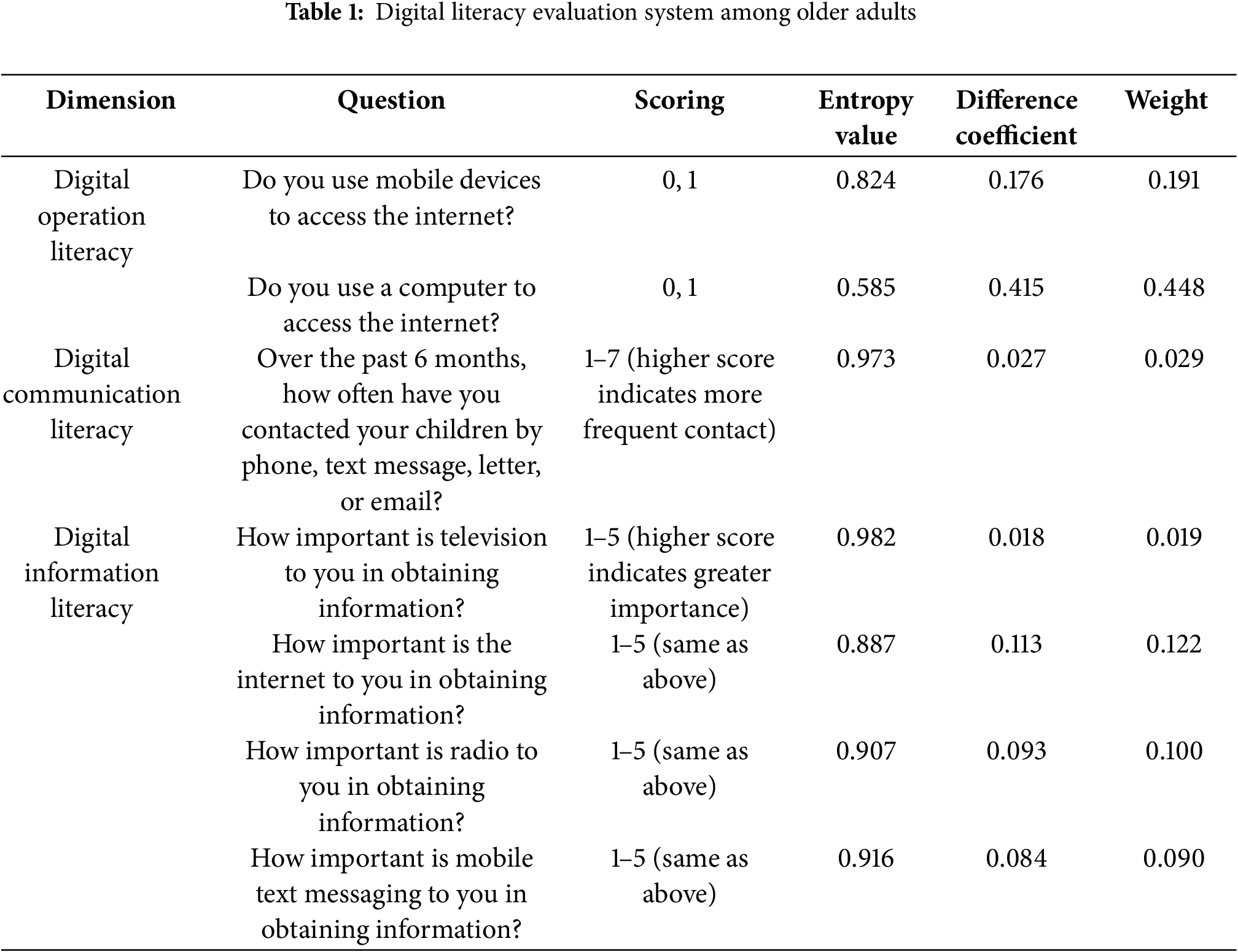
This CFPS study operationalizes digital literacy is into 7 questions, with higher scores indicating a higher level of digital literacy. An example item is “Do you use mobile devices to access the internet?”
This CFPS study operationalizes physical exercise as the frequency of exercise. The question “Over the past 12 months, how often have you participated in physical fitness and leisure activities?” from the CFPS questionnaire is used as a measurement indicator. The scoring range is 1–8, representing “never participate” to “more than twice a day”, respectively. The higher the score, the more frequently the older adults participate in physical exercise.
The CFPS survey covers consumption such as the spending habits and lifestyles of family members who live together over the long term will gradually tend to become consistent. It yields a “total household expenditure over the past 12 months” divided by the size of the household population, and then taking the logarithm of the resulting value.
As by previous studies (Kim et al., 2020; Abe et al., 2023; He et al., 2023; Liu et al., 2023), we controlled for gender (0 = Male, 1 = Female), age (1 = 60–74 years old as young older adults, 2 = 75 years old and above as old older adults), marital status (No spouse = 0, Spouse = 1), education level (1 = Junior high school and below, 2 = High school and above), household registration (1 = Agricultural household registration, 2 = Non-agricultural household registration), and self-rated health are selected as control variables (Using the CFPS questionnaire question “How do you rate your health condition?” 1 = Unhealthy, 2 = Average, and 3 = merge “Very healthy”, “Very healthy”, and “Fairly healthy” into Healthy).
Using the STATA 16.0 software to calculate the digital literacy scores among older adults with the entropy method. Using the Process plugin Bootstrap method to conduct a test of the chain mediating effect (Preacher & Hayes, 2004), with the following specific settings: PROCESS Model 6 is set, X = Digital literacy, M1 = Physical exercise, M2 = Consumption, Y = Subjective well-being, with a sample size of 5000 and a 95% confidence interval. Prior to the analysis for the hypothesis testing, we perform common method bias test using Harman’s single-factor test.
The Harman single-factor test was used to conduct the common method bias test. The results showed that there were a total of 6 factors with an eigenvalue greater than 1, with the first factor explaining 17.221% of the variance, which is less than the critical value of 40%, indicating that common method bias is not significant.
Descriptive statistics and correlation analysis
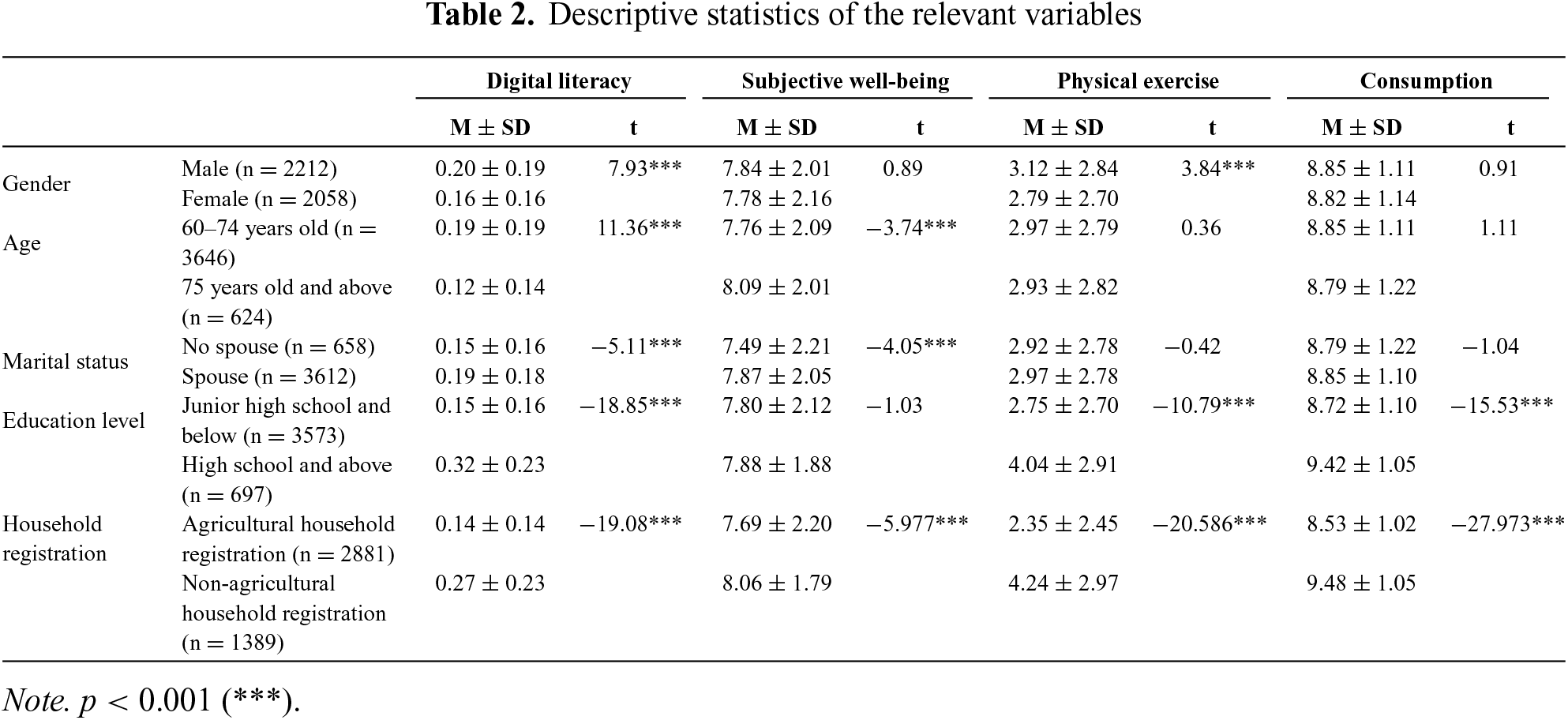
As in Table 2, the results of the independent samples t-test indicate that older adult males have higher digital literacy scores than females and also participate in physical exercise more frequently. Younger older adults have higher digital literacy scores than older older adults, but lower subjective well-being scores. Older adults with a spouse score higher in digital literacy and subjective well-being than those with no spouse. Compared with older adults with an educational level of junior high school and below, those with an educational level of high school and above have higher digital literacy scores, participate in physical exercise more frequently, and have a higher level of consumption. Compared with older adults with agricultural household registration, older adults with non-agricultural household registration have higher scores in digital literacy and subjective well-being, participate in physical exercise more frequently, and have a higher level of consumption.
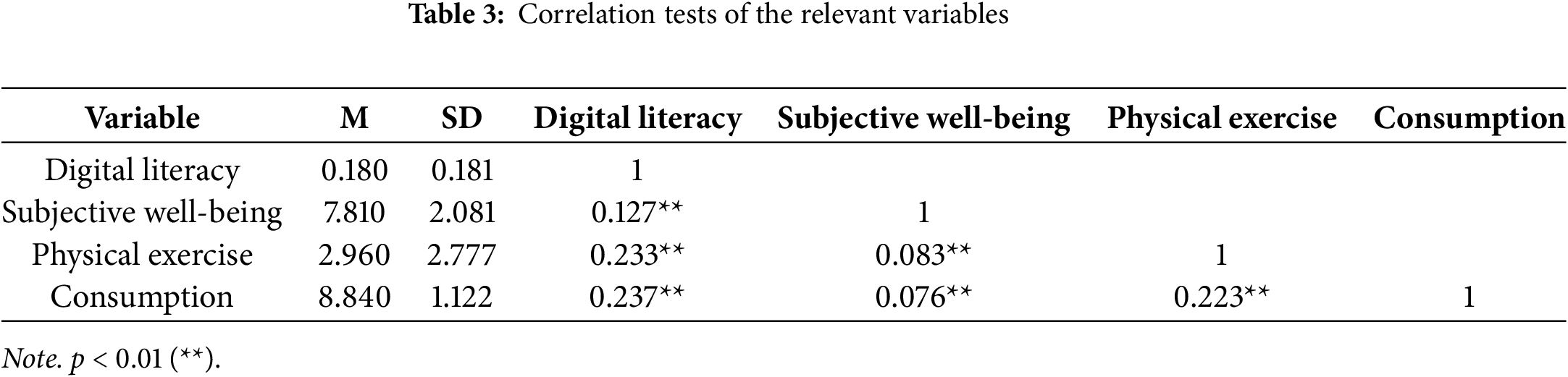
As in Table 3, digital literacy is significantly positively correlated with subjective well-being (r = 0.127, p < 0.01), physical exercise (r = 0.233, p < 0.01), and consumption (r = 0.237, p < 0.01). Subjective well-being is also significantly positively correlated with physical exercise (r = 0.083, p < 0.01) and consumption (r = 0.076, p < 0.01). Physical exercise is significantly positively correlated with consumption (r = 0.223, p < 0.01). The correlation analysis results among the variables indicate that further mediation tests can be conducted next.
Subjective well-being from digital literacy physical exercise and consumption
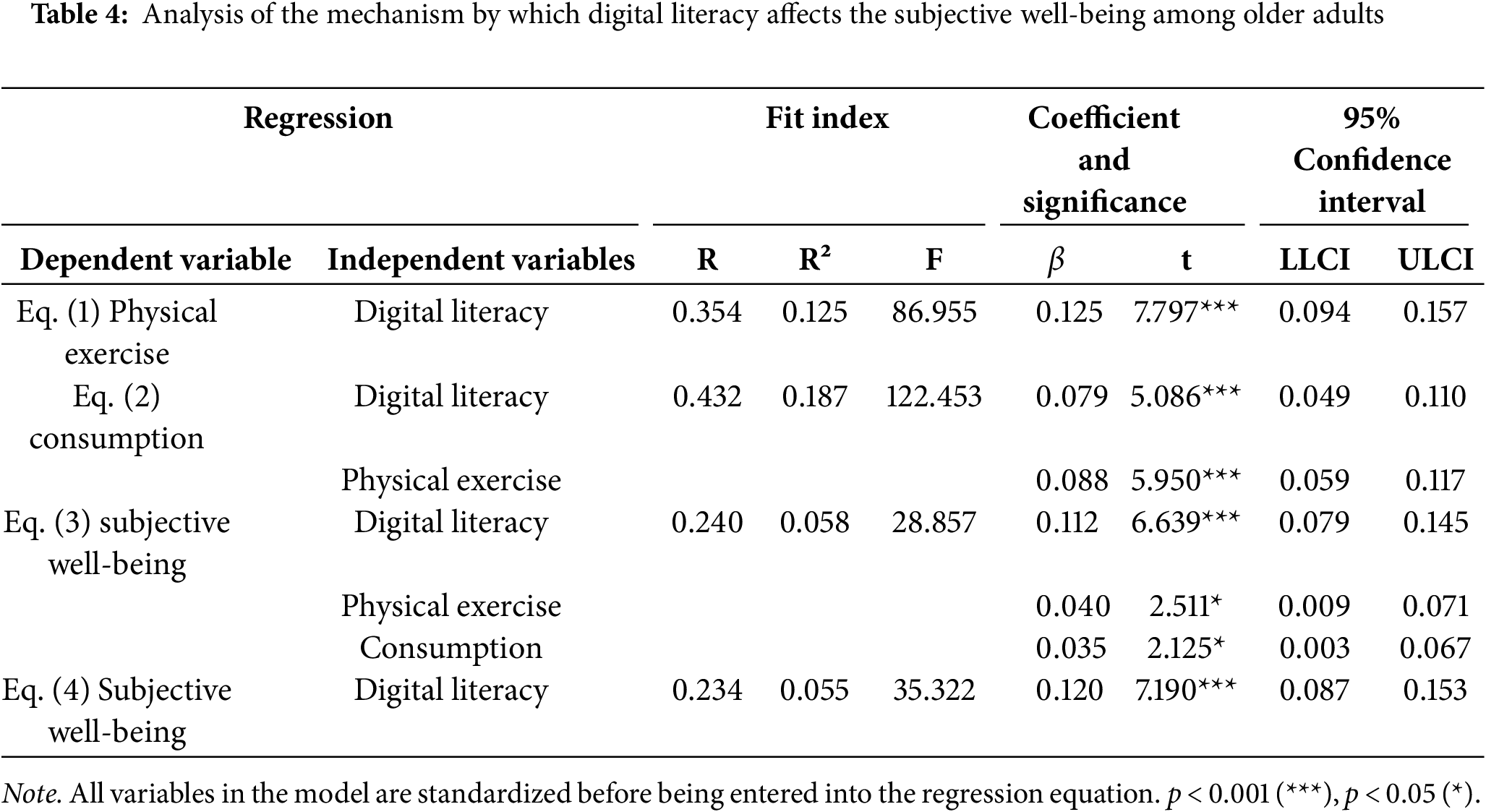
Table 4 presents the regression analysis. Digital literacy can significantly and positively predict physical exercise (β = 0.125, p < 0.001). Digital literacy and physical exercise can significantly and positively predict consumption (β = 0.079, p < 0.001; β = 0.088, p < 0.001). Digital literacy, physical exercise, and consumption can significantly and positively predict subjective well-being (β = 0.112, p < 0.001; β = 0.040, p < 0.05; β = 0.035, p < 0.05). Digital literacy can significantly and positively predict subjective well-being (β = 0.120, p < 0.001).
The chain mediating effect of physical exercise and consumption
Table 5 presents results of the mediating effect. The direct effect value of digital literacy on subjective well-being is 0.112, accounting for 93.333% of the total effect value, with a confidence interval of [0.079, 0.145], which does not include 0, indicating that the direct effect is significant, and Hypothesis H1 is supported. The total indirect effect value of digital literacy on subjective well-being is 0.008, accounting for 6.667% of the total effect, with a confidence interval of [0.004, 0.014], which does not include 0, indicating that the mediating effects of physical exercise and consumption are significant. The indirect effect consists of three pathways: 1) The effect value of the “Digital Literacy → Physical Exercise → Subjective Well-Being” pathway is 0.005, accounting for 4.167% of the total effect, with a confidence interval of [0.001, 0.009], which does not include 0, indicating that physical exercise has a significant mediating effect between digital literacy and subjective well-being, and Hypothesis H2 is supported. 2) The effect value of the “Digital Literacy → Consumption → Subjective Well-Being” pathway is 0.002, accounting for 1.667% of the total effect, with a confidence interval of [0.001, 0.006], which does not include 0, indicating that consumption has a significant mediating effect between digital literacy and subjective well-being, and Hypothesis H3 is supported. 3) The effect value of the “Digital Literacy → Physical Exercise → Consumption → Subjective Well-Being” pathway is 0.001, accounting for 0.842% of the total effect, with a confidence interval of [0.001, 0.001], which does not include 0, indicating that physical exercise and consumption have the significant chain mediating effect between digital literacy and subjective well-being, and Hypothesis H4 is supported.
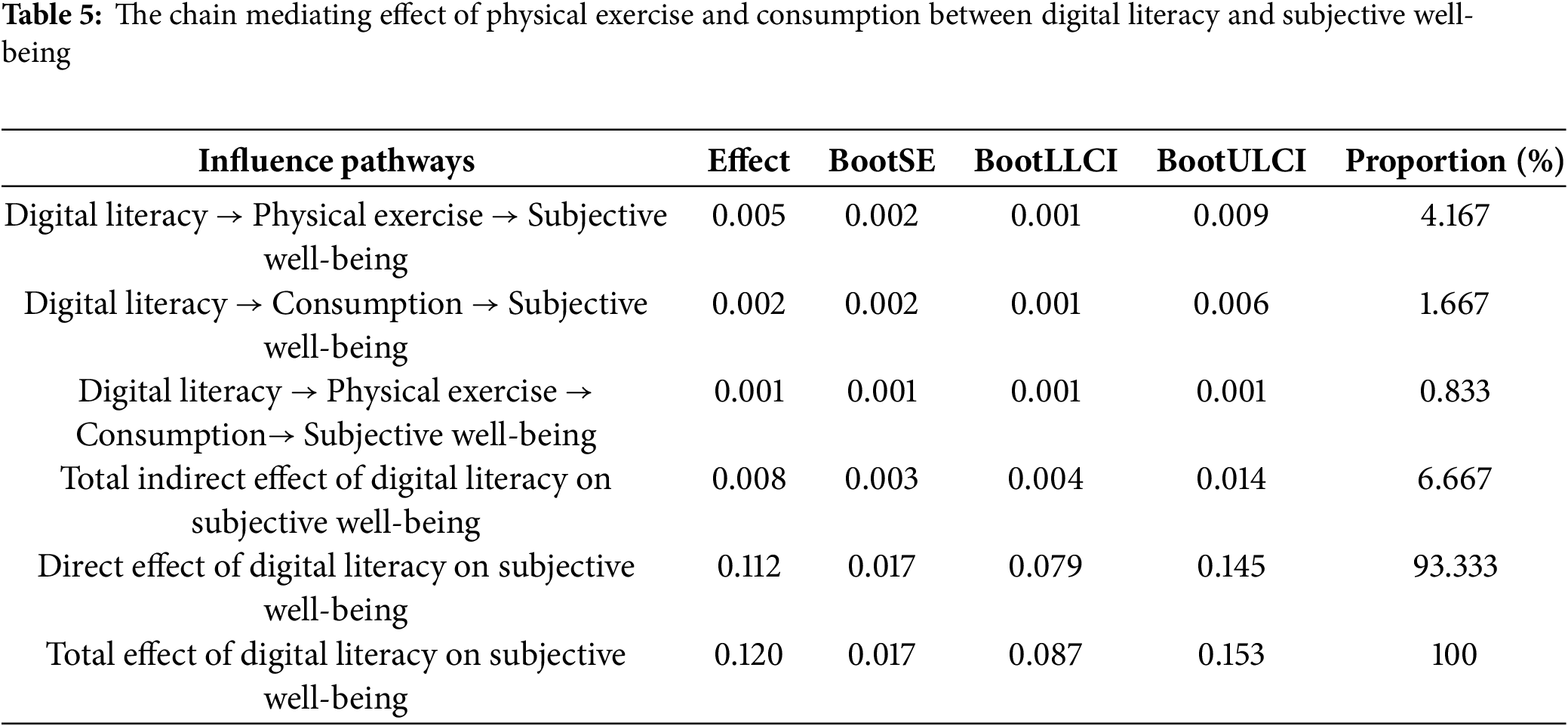
Since the direct predictive effect of digital literacy on subjective well-being is significant, physical exercise and consumption have the chain mediating effect between digital literacy and subjective well-being. Therefore, the total effect of digital literacy on the subjective well-being among older adults is 0.120, with a direct effect of 0.112 and an indirect effect of 0.008, and the chain mediating effect model is shown in Fig. 2.

Figure 2: The impact mechanism model of digital literacy on the subjective well-being among older adults. Note. p < 0.001 (***), p < 0.05 (*).
In the information age, the use of digital technology brings new opportunities for promoting the subjective well-being among older adults. This study found digital literacy to be associated with higher subjective well-being among older adults. This finding is consistent with previous research findings (Oh & Bae, 2024). On the one hand, high digital literacy can reduce social isolation among older adults and increase their well-being; Older adults can use the internet to gain more opportunities for social interaction, thereby enhancing their subjective sense of happiness (Sen et al., 2022; Sprecher et al., 2016; Crolic et al., 2024). On the other hand, digital health literacy is an essential component of digital literacy. Older adults with high digital health literacy can use the internet to obtain and comprehend health information, and make effective health decisions. This contributes to kindling their enthusiasm in health management and enhancing their subjective well-being (Wang & Luan, 2022; Dong et al., 2023).
This study found physical exercise mediation of the association between digital literacy and the subjective well-being among older adults. In other words, the enhancement of digital literacy can increase the frequency of physical exercise, thereby improving the subjective well-being among older adults. Previous studies have found that physical exercise can affect the subjective well-being among older adults by impacting aspects such as self-esteem, emotions, stress, cognition, and the sense of meaning in life (Langlois et al., 2013; Edwards, 2006; Chen et al., 2022). This finding may be explained by the fact that older adults can search for various types of knowledge and learning materials related to physical exercise on the internet, and the use of digital video tutorials can improve the quality of individual motor skill learning (Bulca et al., 2020). Digital technology can also meet the needs and preferences among older adults in physical exercise, monitor the safety of their activities, and thereby increase their frequency of participation in physical exercise (Huang et al., 2024; Chen et al., 2023). Furthermore, there are multiple reasons why physical exercise can enhance subjective well-being among older adults. Physical exercise can reduce social isolation among older adults, which is valuable for alleviating loneliness caused by a lack of social interaction (Gu et al., 2024). Active aging suggests that increasing social participation among older adults can effectively improve their subjective well-being (Bar-Tur, 2021).
This study found consumption to mediate the relationship between digital literacy and the subjective well-being among older adults. Previous studies have found that older adults show different consumption tendencies across various categories, and they may increase spending on dining while reducing spending on personal image and entertainment (Tian et al., 2024). This result can be variously explained. On the one hand, digital literacy can enhance the willingness among older adults to engage in online shopping, thereby increasing their level of consumption (Rybaczewska & Sparks, 2022). On the other hand, digital literacy can help older adults better acquire, process, and communicate information, which is crucial for their consumption in the digital environment (Ban et al., 2024).
This study found the chain mediating effect of physical exercise and consumption between digital literacy and the subjective well-being among older adults. In other words, the higher the frequency of physical exercise among older adults, the higher their level of consumption. This viewpoint is consistent with previous research findings (Wu & Wu, 2023). Previous studies have found that participation in physical exercise helps to prevent and alleviate a variety of health issues among older adults, such as osteoporosis, anxiety, and cognitive impairments (Eckstrom et al., 2020). In order to maintain this state of health, they may be more willing to invest in products and services related to physical exercise, such as fitness equipment and sports gear. Appropriate physical exercise helps to maintain the physical functions among older adults and reduces the care needs that arise from the decline of physical capabilities (Nikitas et al., 2022). In order to maintain these physical functions, older adults may be more willing to invest in personalized fitness plans and professional sports coaching. Physical exercise provides older adults with social opportunities and enhances social connections (Gu et al., 2024). This social demand may encourage older adults to participate more in group sports or fitness classes, thereby increasing spending on sports services and related social activities.
Theory and practice implications
This study has certain theoretical significance. The theoretical framework of digital health literacy posits that health information obtained through digital literacy can help older adults better engage in certain lifestyles, thereby enhancing their quality of life (Ban et al., 2024). This study elucidates the mechanism by which digital literacy affects subjective well-being through physical exercise and consumption lifestyles, emphasizing the chain mediating effect of physical exercise and consumption. This finding not only provides a new theoretical basis for promoting the subjective well-being among older adults but also enriches the research on the relationship between digital literacy and the well-being among older adults, offering a new perspective for future studies.
This study also has certain practical implications. On the one hand, the improvement of digital literacy enables older adults to more conveniently obtain health-related information, which in turn guides them to engage more actively in physical exercise. Physical exercise and other forms of social participation can enhance social connections, help older adults stay active and engaged in social life, which is crucial for their subjective well-being (Stončikaitė, 2019). On the other hand, digital literacy can promote the consumption among older adults by enhancing their awareness of digital security and protecting their personal property (Oh et al., 2021). Such consumption often leads to a greater satisfaction of their own needs, thereby enhancing the subjective well-being among older adults (Mathur & Moschis, 2023). Furthermore, by increasing spending on activities such as physical exercise that are related to social participation, older adults can strengthen their sense of social involvement, thereby enhancing their subjective well-being. These findings hold significant practical implications for enhancing the subjective well-being among older adults and advancing the development of successful aging.
Limitations and future directions
This study has some limitations, including the fact that it was cross-section and largely correlational rather than causal. Moreover, the study relied solely on the survey data. It also selected physical exercise and consumption as mediating variables, and there could be other explanatory variables. Future studies should seek to address these limitations for more robust findings.
Digital literacy is closely related to the subjective well-being among older adults. To a certain extent, digital literacy can positively predict the subjective well-being among older adults. Digital literacy, subjective well-being, physical exercise, and consumption are closely related to each other. Physical exercise and consumption have the chain mediating effect between digital literacy and the subjective well-being among older adults. These results imply a need for targeted interventions to enhance digital literacy among older adults. Specifically, the relevant programs can be advanced through measures such as organizing community workshops and developing online tutorials. These programs are designed not only to enhance the basic digital skills among older adults, but more importantly, to help them acquire the ability to access and utilize health information via digital platforms. In this way, it can be ensured that older adults can effectively leverage digital technology to promote their own health and well-being.
Acknowledgement: Not applicable.
Funding Statement: This research did not receive any specific grant from funding agencies in the public, commercial, or not-for-profit sectors.
Author Contributions: Jiahan Li contributed to developing the theoretical framework, data analysis, organization, and overall writing of the paper. Jie Yang and You Zhou contributed to the editing and organization of the paper. Lei Yuan was concerned with drafting the work and revising critically. All authors reviewed the results and approved the final version of the manuscript.
Availability of Data and Materials: China Family Panel Studies (CFPS) is a https://www.isss.pku.edu.cn/cfps/(accessed on 25 January 2024) nationally representative, biennual longitudinal survey of Chinese communities, families, and individuals launched in 2010 by the Institute of Social Science Survey (ISSS) of Peking University, China. If you want to obtain the data used in this paper, first visit website https://www.isss.pku.edu.cn/cfps/ (accessed on 25 January 2024) register with your own email, and then apply to obtain the data.
Ethics Approval: The current research was done according to the ethical standards set out in the Declaration of Helsinki in 1964 and its later amendments, or comparable ethical standards.
Conflicts of Interest: The authors declare no conflicts of interest to report regarding the present study.
References
Abdi, S., Spann, A., Borilovic, J., de Witte, L., & Hawley, M. (2019). Understanding the care and support needs of older people: A scoping review and categorisation using the WHO international classification of functioning, disability and health framework (ICF). BMC Geriatrics, 19(1), 1–15. https://doi.org/10.1186/s12877-019-1189-9 [Google Scholar] [PubMed] [CrossRef]
Abe, N., Oe, N., Tadaka, E., & Ojima, T. (2023). Factors related to subjective well-being among community-dwelling older adults living alone: A stratified analysis by sex and marital status from the JAGES. PLoS One, 18(8), e0289571. https://doi.org/10.1371/journal.pone.0289571 [Google Scholar] [PubMed] [CrossRef]
Ban, S., Kim, Y., & Seomun, G. (2024). Digital health literacy: A concept analysis. Digital Health, 10, 20552076241287894. https://doi.org/10.1177/20552076241287894 [Google Scholar] [PubMed] [CrossRef]
Bar-Tur, L. (2021). Fostering well-being in the elderly: Translating theories on positive aging to practical approaches. Frontiers in Medicine, 8, 517226. https://doi.org/10.3389/fmed.2021.517226 [Google Scholar] [PubMed] [CrossRef]
Bianchi, C. (2021). Exploring how internet services can enhance elderly well-being. Journal of Services Marketing, 35(5), 585–603. https://doi.org/10.1108/JSM-05-2020-0177 [Google Scholar] [CrossRef]
Bulca, Y., Ozdurak, R. H., & Demirhan, G. (2020). The effects of digital physical exercise videos on the locomotor skill learning of pre-school children. European Early Childhood Education Research Journal, 28(2), 231–241. https://doi.org/10.1080/1350293X.2020.1716475 [Google Scholar] [CrossRef]
Byrne, K. A., Anaraky, R. G., Dye, C., Ross, L. A., Chalil Madathil, K. et al. (2021). Examining rural and racial disparities in the relationship between loneliness and social technology use among older adults. Frontiers in Public Health, 9, 723925. https://doi.org/10.3389/fpubh.2021.723925 [Google Scholar] [PubMed] [CrossRef]
Chatterjee, A., Prinz, A., Gerdes, M., & Martinez, S. (2021). Digital interventions on healthy lifestyle management: Systematic review. Journal of Medical Internet Research, 23(11), e26931. https://doi.org/10.2196/26931 [Google Scholar] [PubMed] [CrossRef]
Chen, C., Ding, S., & Wang, J. (2023). Digital health for aging populations. Nature Medicine, 29(7), 1623–1630. https://doi.org/10.1038/s41591-023-02391-8 [Google Scholar] [PubMed] [CrossRef]
Chen, R., Liu, Y. F., Huang, G. D., & Wu, P. C. (2022). The relationship between physical exercise and subjective well-being in Chinese older people: The mediating role of the sense of meaning in life and self-esteem. Frontiers in Psychology, 13, 1029587. https://doi.org/10.3389/fpsyg.2022.1029587 [Google Scholar] [PubMed] [CrossRef]
Cotten, S. R., Schuster, A. M., & Seifert, A. (2022). Social media use and well-being among older adults. Current Opinion in Psychology, 45, 101293. https://doi.org/10.1016/j.copsyc.2021.12.005 [Google Scholar] [PubMed] [CrossRef]
Crolic, C., Zubcsek, P. P., Stephen, A. T., & Brooks, G. (2024). Social platform use and psychological well-being. Journal of Consumer Psychology, 33(779), 330. https://doi.org/10.1002/jcpy.1437 [Google Scholar] [CrossRef]
DeLeire, T., & Kalil, A. (2010). Does consumption buy happiness? Evidence from the United States. International Review of Economics, 57(2), 163–176. https://doi.org/10.1007/s12232-010-0093-6 [Google Scholar] [CrossRef]
Diener, E., Oishi, S., & Tay, L. (2018). Advances in subjective well-being research. Nature Human Behaviour, 2(4), 253–260. https://doi.org/10.1038/s41562-018-0307-6 [Google Scholar] [PubMed] [CrossRef]
Diener, E., & Ryan, K. (2009). Subjective well-being: A general overview. South African Journal of Psychology, 39(4), 391–406. https://doi.org/10.1177/008124630903900402 [Google Scholar] [CrossRef]
Dong, Q., Liu, T., Liu, R., Yang, H., & Liu, C. (2023). Effectiveness of digital health literacy interventions in older adults: Single-arm meta-analysis. Journal of Medical Internet Research, 25, e48166. https://doi.org/10.2196/48166 [Google Scholar] [PubMed] [CrossRef]
Eckstrom, E., Neukam, S., Kalin, L., & Wright, J. (2020). Physical activity and healthy aging. Clinics in Geriatric Medicine, 36(4), 671–683. https://doi.org/10.1016/j.cger.2020.06.009 [Google Scholar] [PubMed] [CrossRef]
Edwards, S. (2006). Physical exercise and psychological well-being. South African Journal of Psychology, 36(2), 357–373. https://doi.org/10.1177/008124630603600209 [Google Scholar] [CrossRef]
Fang, Z., Liu, Y., & Peng, B. (2024). Empowering older adults: Bridging the digital divide in online health information seeking. Humanities and Social Sciences Communications, 11(1), 1–11. https://doi.org/10.1057/s41599-024-04312-7 [Google Scholar] [CrossRef]
Golant, S. M. (2017). A theoretical model to explain the smart technology adoption behaviors of elder consumers (Elderadopt). Journal of Aging Studies, 42(2), 56–73. https://doi.org/10.1016/j.jaging.2017.07.003 [Google Scholar] [PubMed] [CrossRef]
Graham, C., & Nikolova, M. (2013). Does access to information technology make people happier? Insights from well-being surveys from around the world. The Journal of Socio-Economics, 44, 126–139. https://doi.org/10.1016/j.socec.2013.02.025 [Google Scholar] [CrossRef]
Gu, S., Zhang, X., & Peng, Y. (2024). A serial mediation model of physical exercise and loneliness: The role of perceived social support and resilience. BMC Geriatrics, 24(1), 811. https://doi.org/10.1186/s12877-024-05407-1 [Google Scholar] [PubMed] [CrossRef]
He, Q., Liu, L., Zhang, H., Chen, R., Dong, G. et al. (2023). Environmental greenspace, subjective well-being, and all-cause mortality in elderly Chinese: Association and mediation study in a prospective cohort. Environmental Research, 227(1), 115732. https://doi.org/10.1016/j.envres.2023.115732 [Google Scholar] [PubMed] [CrossRef]
Huang, J., Tan, Q., & Fang, Q. (2024, May). VitalStep: Revitalizing elderly health and connectivity with E-square-dance. In: Extended Abstracts of the CHI Conference on Human Factors in Computing Systems (pp. 1–7). [Google Scholar]
Iwasaki, Y. (2007). Leisure and quality of life in an international and multicultural context: What are major pathways linking leisure to quality of life? Social Indicators Research, 82(2), 233–264. https://doi.org/10.1007/s11205-006-9032-z [Google Scholar] [CrossRef]
Joint Research Centre (2022). DigComp 2.2: The digital competence framework for citizens. Retrieved from: https://pact-for-skills.ec.europa.eu/community-resources/publications-and-documents/digcomp-22-digital-competence-framework-citizens_en. [Google Scholar]
Kim, G., Wang, S. Y., & Sellbom, M. (2020). Measurement equivalence of the Subjective Well-Being Scale among racially/ethnically diverse older adults. The Journals of Gerontology: Series B, 75(5), 1010–1017. https://doi.org/10.1093/geronb/gby110 [Google Scholar] [PubMed] [CrossRef]
Langlois, F., Vu, T. T. M., Chassé, K., Dupuis, G., Kergoat, M. J. et al. (2013). Benefits of physical exercise training on cognition and quality of life in frail older adults. Journals of Gerontology Series B: Psychological Sciences and Social Sciences, 68(3), 400–404. https://doi.org/10.1093/geronb/gbs069 [Google Scholar] [PubMed] [CrossRef]
Leyland, L. A., Spencer, B., Beale, N., Jones, T., & Van Reekum, C. M. (2019). The effect of cycling on cognitive function and well-being in older adults. PLoS One, 14(2), e0211779. https://doi.org/10.1371/journal.pone.0211779 [Google Scholar] [PubMed] [CrossRef]
Liu, H., Gan, Q., Tan, J., Sun, X., Liu, Y. et al. (2023). The association between quality of life and subjective wellbeing among older adults based on canonical correlation analysis. Frontiers in Public Health, 11, 1235276. https://doi.org/10.3389/fpubh.2023.1235276 [Google Scholar] [PubMed] [CrossRef]
Malik, J., & Maciaszek, J. (2022, December). Effect of the juggling-based motor learning physical activity on well-being in elderly: A pre–post study with a special training protocol. Healthcare, 10(12), 2442. https://doi.org/10.3390/healthcare10122442 [Google Scholar] [PubMed] [CrossRef]
Martin, A., & Grudziecki, J. (2006). DigEuLit: Concepts and tools for digital literacy development. Innovation in Teaching and Learning in Information and Computer Sciences, 5(4), 249–267. https://doi.org/10.11120/ital.2006.05040249 [Google Scholar] [CrossRef]
Mathur, A., & Moschis, G. P. (2023). Effects of personal control and optimism on older adults’ wellbeing. Activities, Adaptation & Aging, 47(4), 519–534. https://doi.org/10.1080/01924788.2023.2168588 [Google Scholar] [CrossRef]
Nikitas, C., Kikidis, D., Bibas, A., Pavlou, M., Zachou, Z. et al. (2022). Recommendations for physical activity in the elderly population: A scoping review of guidelines. Journal of Frailty, Sarcopenia and Falls, 7(1), 18–28. https://doi.org/10.22540/JFSF-07-018 [Google Scholar] [PubMed] [CrossRef]
Oh, E. A., & Bae, S. M. (2024). The relationship between the digital literacy and healthy aging of the elderly in Korea. Current Psychology, 43(18), 16160–16169. https://doi.org/10.1007/s12144-023-05557-2 [Google Scholar] [CrossRef]
Oh, S. S., Kim, K. A., Kim, M., Oh, J., Chu, S. H. et al. (2021). Measurement of digital literacy among older adults: Systematic review. Journal of Medical Internet Research, 23(2), e26145. https://doi.org/10.2196/26145 [Google Scholar] [PubMed] [CrossRef]
Peterlin, J., Dimovski, V., Colnar, S., Blažica, B., & Kejžar, A. (2024). Older adults’ perceptions of online physical exercise management. Frontiers in Public Health, 12, 1303113. https://doi.org/10.3389/fpubh.2024.1303113 [Google Scholar] [PubMed] [CrossRef]
Preacher, K. J., & Hayes, A. F. (2004). SPSS and SAS procedures for estimating indirect effects in simple mediation models. Behavior Research Methods, Instruments, & Computers, 36(4), 717–731. https://doi.org/10.3758/BF03206553 [Google Scholar] [PubMed] [CrossRef]
Rybaczewska, M., & Sparks, L. (2022). Ageing consumers and e-commerce activities. Ageing & Society, 42(8), 1879–1898. https://doi.org/10.1017/S0144686X20001932 [Google Scholar] [CrossRef]
Schwartz, H., Har-Nir, I., Wenhoda, T., & Halperin, I. (2021). Staying physically active during the COVID-19 quarantine: Exploring the feasibility of live, online, group training sessions among older adults. Translational Behavioral Medicine, 11(2), 314–322. https://doi.org/10.1093/tbm/ibaa141 [Google Scholar] [PubMed] [CrossRef]
Sen, K., Prybutok, G., & Prybutok, V. (2022). The use of digital technology for social wellbeing reduces social isolation in older adults: A systematic review. SSM-population Health, 17(6), 101020. https://doi.org/10.1016/j.ssmph.2021.101020 [Google Scholar] [PubMed] [CrossRef]
Sprecher, S., Hampton, A. J., Heinzel, H. J., & Felmlee, D. (2016). Can I connect with both you and my social network? Access to network-salient communication technology and get-acquainted interactions. Computers in Human Behavior, 62, 423–432. https://doi.org/10.1016/j.chb.2016.03.090 [Google Scholar] [CrossRef]
Steinfield, C., Ellison, N. B., & Lampe, C. (2008). Social capital, self-esteem, and use of online social network sites: A longitudinal analysis. Journal of Applied Developmental Psychology, 29(6), 434–445. https://doi.org/10.1016/j.appdev.2008.07.002 [Google Scholar] [CrossRef]
Stončikaitė, I. (2019). Revisiting happiness and well-being in later life from interdisciplinary age-studies perspectives. Behavioral Sciences, 9(9), 94. https://doi.org/10.3390/bs9090094 [Google Scholar] [PubMed] [CrossRef]
Taylor, E., Frost, J., Ball, S., Clegg, A., Brown, L. et al. (2024). Participation, autonomy and control are shared concepts within older people’s interpretations of independence: A qualitative interview study. Ageing & Society, 44(3), 1–24. https://doi.org/10.1017/S0144686X23000740 [Google Scholar] [CrossRef]
Tian, G., Jin, C., & Wu, W. (2024). Too old to spend? Understanding the consumption of the elderly in China. China Economic Review, 5, 102286. https://doi.org/10.1016/j.chieco.2024.102286 [Google Scholar] [CrossRef]
Tian, Z., Wang, R., & Tan, Y. (2023). Research on the influence mechanism of internet use on rural residents’ consumption level in China——The mediating effect of consumption literacy. PLoS One, 18(11), e0294723. https://doi.org/10.1371/journal.pone.0294723 [Google Scholar] [PubMed] [CrossRef]
Tóth, E. E., Vujić, A., Ihász, F., Ruíz-Barquín, R., & Szabo, A. (2025). Functional fitness and psychological well-being in older adults. BMC Geriatrics, 25(1), 1–12. [Google Scholar]
Wallcook, S., Nygård, L., Kottorp, A., & Malinowsky, C. (2021). The use of everyday information communication technologies in the lives of older adults living with and without dementia in Sweden. Assistive Technology, 33(6), 333–340. https://doi.org/10.1080/10400435.2019.1644685 [Google Scholar] [PubMed] [CrossRef]
Wang, X., & Luan, W. (2022). Research progress on digital health literacy of older adults: A scoping review. Frontiers in Public Health, 10, 906089. https://doi.org/10.3389/fpubh.2022.906089 [Google Scholar] [PubMed] [CrossRef]
Wu, J., & Wu, Y. (2023). From participation to consumption: The role of self-concept in creating shared values among sport consumers. Psychology Research and Behavior Management, 16, 1037–1050. https://doi.org/10.2147/PRBM.S406346 [Google Scholar] [PubMed] [CrossRef]
Yao, J. (2014). Unification of the urban minimum living standard in China: Using a consumption expenditure percentile method. Journal of Social Service Research, 40(4), 530–544. https://doi.org/10.1080/01488376.2014.917448 [Google Scholar] [CrossRef]
Cite This Article
 Copyright © 2025 The Author(s). Published by Tech Science Press.
This work is licensed under a Creative Commons Attribution 4.0 International License , which permits unrestricted use, distribution, and reproduction in any medium, provided the original work is properly cited.
 Downloads
 Citation Tools
