
 Login
Login Register
 Submit a Paper
 Propose a Special lssue
 Open Access
ARTICLE

Assessing the psychometric properties of the Copenhagen Burnout Inventory (CBI) across various sectors in Sudan
1 School of Humanities and Education, Xi’an Eurasia University, Xi’an, 710065, China
2 Department of Psychology, College of Education, King Saud University, Riyadh, 11362, Saudi Arabia
3 Department of English, Faculty of Letters and Languages, Ibn Khaldoun University of Tiaret, Tiaret, 14000, Algeria
4 Department of Psychology, College of Arts, University of Khartoum, Khartoum, 11111, Sudan
5 Gifted Education Program, Department of Special Education, College of Education, Administrative and Technical Sciences, Arabian Gulf University, Manama, P.O. Box 26671, Bahrain
6 Department of Special Education, College of Education, Imam Mohammad Ibn Saud Islamic University (IMSIU), Riyadh, 11564, Saudi Arabia
7 Self-Development Skills Department, King Saud University, Riyadh, 11362, Saudi Arabia
* Corresponding Author: Abdo Hasan AL-Qadri. Email:
Journal of Psychology in Africa 2026, 36(1), 65-77. https://doi.org/10.32604/jpa.2025.069675
Received 28 June 2025; Accepted 25 November 2025; Issue published 26 February 2026
 View Full Text
 Download PDF
Abstract
Burnout is an escalating global occupational health challenge, requiring valid and reliable assessment tools. This study validates the Copenhagen Burnout Inventory (CBI) for assessing burnout among Sudanese workers in the education, healthcare, and banking sectors, where burnout prevalence is high. Utilizing the 19-item CBI, translated into Arabic, the study measured burnout across three dimensions: Personal Burnout (PB), Work-related Burnout (WB), and Client-related Burnout (CB). A total of 1068 participants were surveyed, including 438 teachers (41%), 326 healthcare workers (30.5%), and 304 bank employees (28.5%). Exploratory and Confirmatory Factor Analyses confirmed the construct validity of the CBI, while concurrent validity was supported through moderate to high correlations with the Maslach Burnout Inventory (MBI) domains, except for a weak correlation between Depersonalization and PB/WB. Reliability was established through Cronbach’s Alpha (α), McDonald’s Omega (ω), Composite Reliability (CR), Average Variance Extracted (AVE), and discriminant validity, all of which were satisfactory across the three groups. The study resulted in two final versions of the CBI: a 17-item version for healthcare workers and a 19-item version for teachers and bank employees. Both versions are available in Arabic, and stakeholders are recommended to use the CBI tailored to each sector’s specific psychometric properties. This tailored approach ensures accurate measurement of burnout, aiding psychologists, therapists, and policymakers in addressing and mitigating burnout effectively within each professional group.Keywords
Burnout is a widespread global concern and employing a valid and reliable instrument to assess it is essential for understanding its determinants and consequences (Schaufeli et al., 2020; Sakakibara et al., 2020). In Sudan, where socio-political instability, armed conflict, and economic hardship are prevalent, the need for a culturally appropriate burnout measure is even more pressing. Teachers, workers, and the general population experience heightened stress due to low socio-economic status and challenging working conditions (Mohiuddin, 2023). The consequences of burnout—such as reduced productivity, emotional and physical health problems, lower quality of life, and high turnover rates—pose significant societal and economic challenges (Ahmed et al., 2021; El Dabbah & Elhadi, 2021). Because burnout affects both individual well-being and broader social structures, accurate assessment in the Sudanese context is crucial for mitigating these negative outcomes (Edú-Valsania et al., 2022).
The Copenhagen Burnout Inventory (CBI) is a well-established instrument designed to measure three dimensions of burnout: personal, work-related, and client-related exhaustion (Malesic, 2022; Mendaglio & Swanson, 2021). Despite its international use, no study has yet validated the CBI for the Sudanese population. This gap is significant given the unique socio-economic stressors in Sudan, including widespread poverty, high migration rates, and increased workload in sectors such as education and healthcare (Roth et al., 2021; Puzzo et al., 2024; Vianello et al., 2024). Migration and displacement intensify stress through social exclusion, income instability, and precarious living conditions. Importantly, the CBI’s distinction among burnout dimensions minimizes overlap with general stress, enabling a more precise assessment of chronic work-related exhaustion—an outcome that emerges after prolonged stress exposure (Kristensen et al., 2005; Maslach & Leiter, 2016; Koutsimani et al., 2019; Hall et al., 2016). Given these contextual challenges, validating the CBI in Sudan is vital. Establishing the instrument’s psychometric properties will ensure that it accurately captures burnout levels among Sudanese professionals, particularly teachers and workers. Reliable assessment tools are essential for designing effective interventions to reduce burnout and its detrimental effects on mental health, job performance, and overall well-being (Elssalih, 2021; Rmadan & Kassahun, 2021). The high workload extended working hours, and inadequate compensation common in Sudan further increase burnout risk. Understanding the specific forms of burnout—especially work-related burnout, which contributes to exhaustion and reduced productivity—can inform targeted and context-appropriate interventions (Li et al., 2024; Møller et al., 2022). Following prior recommendations (Tran et al., 2023), this study examines the construct validity and reliability of the CBI across different occupational groups in Sudan.
Validating the CBI in Sudan will provide a culturally adapted tool for assessing burnout, tailored to the unique stressors of the Sudanese context. This tool will support the development of strategies to enhance the well-being and productivity of employees and educators, ultimately benefiting both individuals and society (Obregon et al., 2020; Todorovic et al., 2021). Additionally, this study aims to provide evidence of the tool’s validity, confirming the original factorial structure and the reliability of the adapted Sudanese version.
Four decades after its introduction, burnout remains a complex construct characterized by diverse and often subjective definitions, though emotional fatigue consistently emerges as its core component, sometimes overlapping with mental or physical exhaustion (Edú-Valsania et al., 2022; Hillert et al., 2020). Teachers are among the most affected groups, and foundational definitions of burnout were shaped by observations of school educators (Skaalvik & Skaalvik, 2020; Calin et al., 2022). Initially identified in clergy, burnout is now prevalent in professions requiring human service and altruism, as occupations involving direct or indirect interpersonal interaction show heightened vulnerability (Enfield, 2021; Russo, 2022).
Theoretical models aim to predict burnout as sociodemographic conditions shift, revealing disrupted variable relationships and related outcomes while identifying occupational risks and intervention points, helping professionals understand workplace demands and long-term consequences across diverse physical, psychosocial, managerial, and political roles.
Early burnout definitions emphasized worker exhaustion resulting from accumulated life stress (Guthier et al., 2020). Contemporary perspectives frame burnout as a job-induced human factor shaped by personal experiences and existential work engagement (Adebayo, 2022; Jooste, 2020). Public training increasingly targets symptom recognition and motivation, while burnout inventories align measurement with these evolving conceptualizations (Shoman et al., 2021; Schaufeli et al., 2020).
This study draws on established theoretical models explaining the nature and origins of burnout (Galanakis & Tsitouri, 2022; Prentice et al., 2023). While the Maslach Burnout Inventory remains the classical measure (Aguayo-Estremera et al., 2023), newer frameworks, such as the Job Demands–Resources and Person–Environment Fit models, reflect conditions in developed societies (Begum et al., 2024; Xiong et al., 2022). These models posit that burnout arises from excessive demands and insufficient resources (Edú-Valsania et al., 2022; Bakker & de Vries, 2021; Bakker et al., 2023).
Each selected model provides distinct indicators for understanding the persistence and variation of burnout in professional settings, though each has strengths and limitations. These models strongly reflect the individual, social, and economic realities of Sudanese schools (Macaulay, 2023; Hamid et al., 2020). While applied primarily to education, their relevance extends across sectors, offering a foundation for identifying measurable indicators and informing prevention-oriented policy strategies (Oke & Fernandes, 2020).
Development and purpose of the CBI
The development of CBI was not an immediate process but emerged from extensive prior research on burnout. While the Maslach Burnout Inventory (MBI) originated in the mid-1970s, major theoretical and empirical advances across diverse fields, including healthcare, education, management, sports, air-traffic control, and human service work, accelerated during the 1980s and 1990s (Wilson, 2020; Vila et al., 2022). Numerous studies demonstrated significant associations between MBI scores and multiple variables, emphasizing the need for a refined and valid alternative measure (Obregon et al., 2020; González-Rodríguez et al., 2020; Soares et al., 2023).
Through extensive qualitative research, including in-depth interviews, participant observation, and field testing across Danish occupational sectors, the CBI was systematically developed and finalized (Thrush et al., 2021; Fadare et al., 2021; Montgomery et al., 2021; Piperac et al., 2021). The instrument was designed to assess three core dimensions identified through intervention studies: personal burnout, work-related burnout, and client-related burnout (Fadare et al., 2021; Barton et al., 2022; Alvey, 2020; Tran et al., 2023). These dimensions reflect a cross-cultural, subjective understanding of burnout and aim to capture its full spectrum of consequences.
Pilot testing of eight CBI versions in Sudan demonstrated partial factorial validity, item clarity, and strong intercorrelations among the three scales, supporting its relevance in varied occupational settings. The CBI thus provides health professionals and organizational leaders with a practical tool for identifying, diagnosing, and addressing burnout across professions (Montgomery et al., 2021; Majeed et al., 2022; Piperac et al., 2021).
The primary aim of this study is to examine the psychometric properties of CBI in assessing burnout among teachers and other workers in Sudan. By evaluating its validity and reliability within Sudan’s cultural, social, and professional context, the study seeks to provide insights into burnout experiences across demanding occupations and to strengthen the understanding of occupational stress in the region, benefiting both educational and workplace sectors.
A psychometric study was intended to ensure the validity and reliability of the CBI scale. This involved distributing the scale in a cross-sectional study among various Sudanese workers, as well as bank employees, medical staff, and teachers, with the aim of developing an effective diagnostic tool
The study was conducted in the 2021–2022 academic year in Khartoum, the capital of Sudan, in its 7 localities: Al-Khartoum, Jabal-olia, Khartoum-bahri, Shariq-Alniel, Omdurman, Umbada, and Karrari. the number of participants were (1068), males (n = 461; 43.2%), females (n = 607; 56.8%); they were distributed in three different professions: Bank employees (n = 304; 28.5%), medical staff (n = 326; 30.5%), and teachers (n = 438; 41%). Their qualifications varied: less than Secondary School Certificate (n = 6; 0.6%), Secondary School Certificate (n = 43; 4%), Middle Diploma (n = 70; 6.5%), Bachelor (n = 698, 65.4%), Higher Diploma (n = 80; 7.5%), Master Degree (n = 138; 12.9%), Doctorate holders (n = 33; 3.1%).
Data were collected using the CBI, distributed by institutional volunteers. Ethical approval was granted by the University of Khartoum, Faculty of Arts Research Board (No. 4–81, Oct 2022). Participants provided informed consent and were assured confidentiality, with all procedures conducted in accordance with relevant guidelines and regulations.
The original CBI was obtained from Kristensen et al. (2005), and permission was granted by the authors to adapt it culturally and linguistically for use in Sudan. The scale was first translated from English to Arabic by two university professors specializing in psychology and English language teaching. The authors then revised the translation. A back-translation into English was conducted by another professor specializing in English–Arabic linguistics, confirming equivalence between versions. The Arabic version was subsequently reviewed by 11 experts in mental health and organizational psychology, who recommended simplifying the language for everyday use and converting items from questions to statements to align with a five-point Likert scale. All suggested revisions were incorporated, establishing surface validity for the adapted instrument.
A pilot test involving 103 participants was conducted to evaluate the expert panel’s recommendations. Reliability for the three CBI factors was acceptable (α = 0.701, 0.745, and 0.723). Validity, assessed using the square root of alpha, yielded √α values of 0.837, 0.863, and 0.850, indicating satisfactory psychometric properties (AL-Qadri & Zhao, 2021; Smits et al., 2018). The final data collection used 19 items across three domains: PB (6 items), WB (7 items), and CB (6 items), with sample items such as “I experience physical exhaustion during work” and “Working with students drains my energy.”
A team of 20 volunteers with a bachelor’s degree in psychology was formed, and the following steps were undertaken: First, the data collection team was trained. Second, the necessary approvals were obtained prior to data collection. Third, the volunteers were allocated to each occupational group. Fourth, the questionnaires were administered, checked for completeness, scored, and entered an electronic database over a four-month period to complete the cross-sectional process. Finally, the findings were compiled and reported in the manuscript.
This study included three groups (teachers, medical staff, and bank employees) to investigate the psychometric properties of the CBI scale, which comprises 19 items distributed across three factors: PB, WB, and CB. To ensure robust validation and comparison among these groups, data analysis was conducted separately for each category within the study sample.
Exploratory factor analysis of the CBI
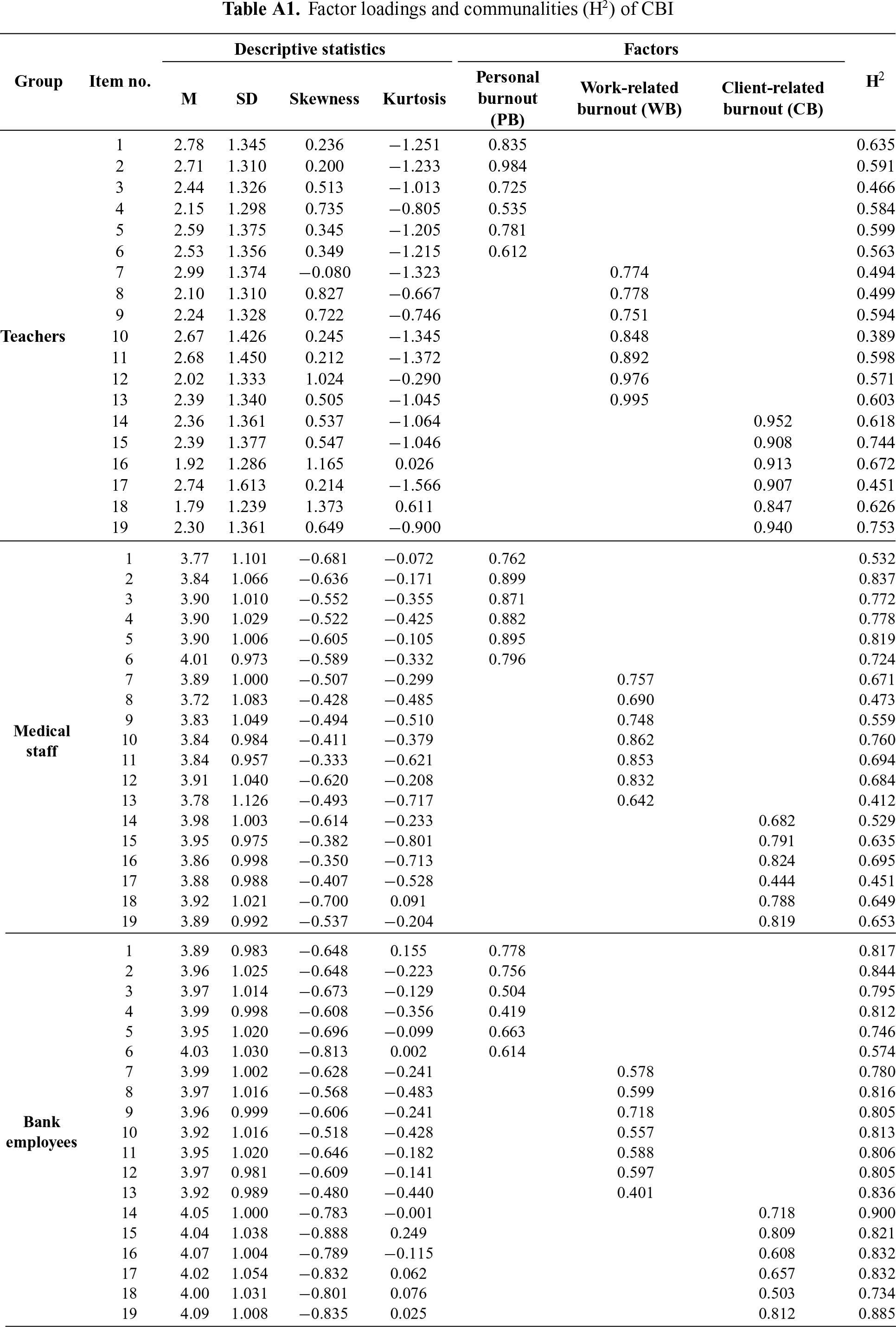
A principal components analysis with varimax rotation was conducted for teachers, medical staff, and bank employees. Kaiser–Meyer–Olkin (KMO) values (0.926, 0.930, 0.947) exceeded the 0.60 threshold (Kaiser, 1974; Field, 2009). Bartlett’s tests were significant (χ2 = 4299.793, 4071.961, 6446.505, p < 0.001), confirming factorability as shown in Appendix A.
All items showed communalities above 0.40 across the three factors for teachers, medical staff, and bank employees. Three factors emerged for each group, explaining 58.146%, 63.820%, and 80.285% of variance, respectively. Items were assigned to factors based on loadings >0.40; cross-loading items were allocated to the factor with the highest loading (González-Rodríguez et al., 2020). All 19 items demonstrated significant loadings (See Appendix A). For teachers, factor loadings ranged from 0.984–0.535 (PB), 0.995–0.751 (WB), and 0.952–0.940 (CB). For medical staff, loadings ranged from 0.899–0.762, 0.862–0.690, and 0.819–0.444, respectively. For bank employees, loadings ranged from 0.778–0.419, 0.718–0.401, and 0.812–0.503, respectively. Descriptive statistics for all items are reported in Appendix A.
Confirmatory factor analysis of the CBI
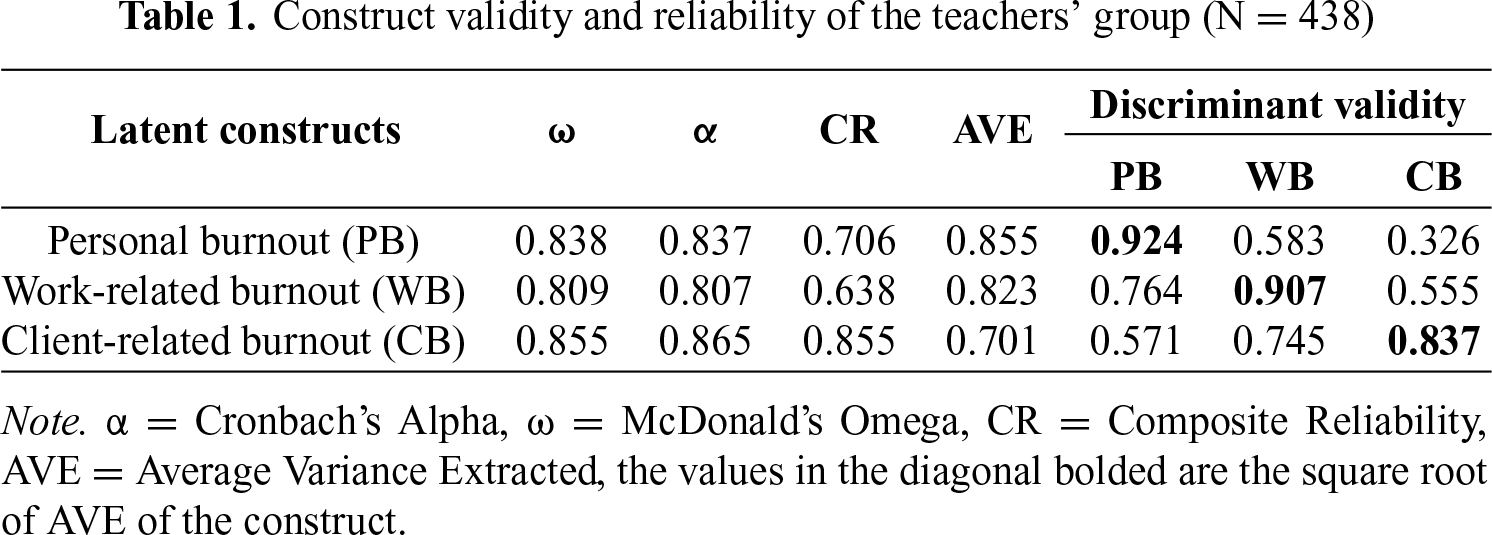
Next, to confirm the orientation of the items and verify the validation for the three factors, researchers used the distribution obtained through Table 1 to show that the reliability coefficients (ω, α, and CR) were all above 0.70, and the AVE values exceeded 0.50, indicating acceptable reliability and discriminant validity according to Tran et al. (2023) and AL-Qadri & Zhao (2021). As well as the results reported, the squared correlations between latent constructs were assessed to assess discriminant validity more rigorously. AVE values for each construct exceeded their corresponding shared variances, confirming both convergent and discriminant validity.
The CBI Scale was refined through confirmatory factor analysis (CFA), focusing on items with high modification indices. All items were retained, as factor loadings exceeded 0.40 (Figure 1a). Initial model fit was inadequate (χ2/df = 5.039; CFI = 0.856; GFI = 0.812; TLI = 0.836; RMSEA = 0.096). Modification indices recommended correlating selected error terms, items 1–2, 8–9, 9–11, 16–18, and 15–19 (Figure 1b). After these modifications, the teachers’ model demonstrated satisfactory fit (χ2/df = 2.854; CFI = 0.936; GFI = 0.921; TLI = 0.925; RMSEA = 0.065), with all loadings remaining above 0.40, confirming model adequacy (Figure 1b).
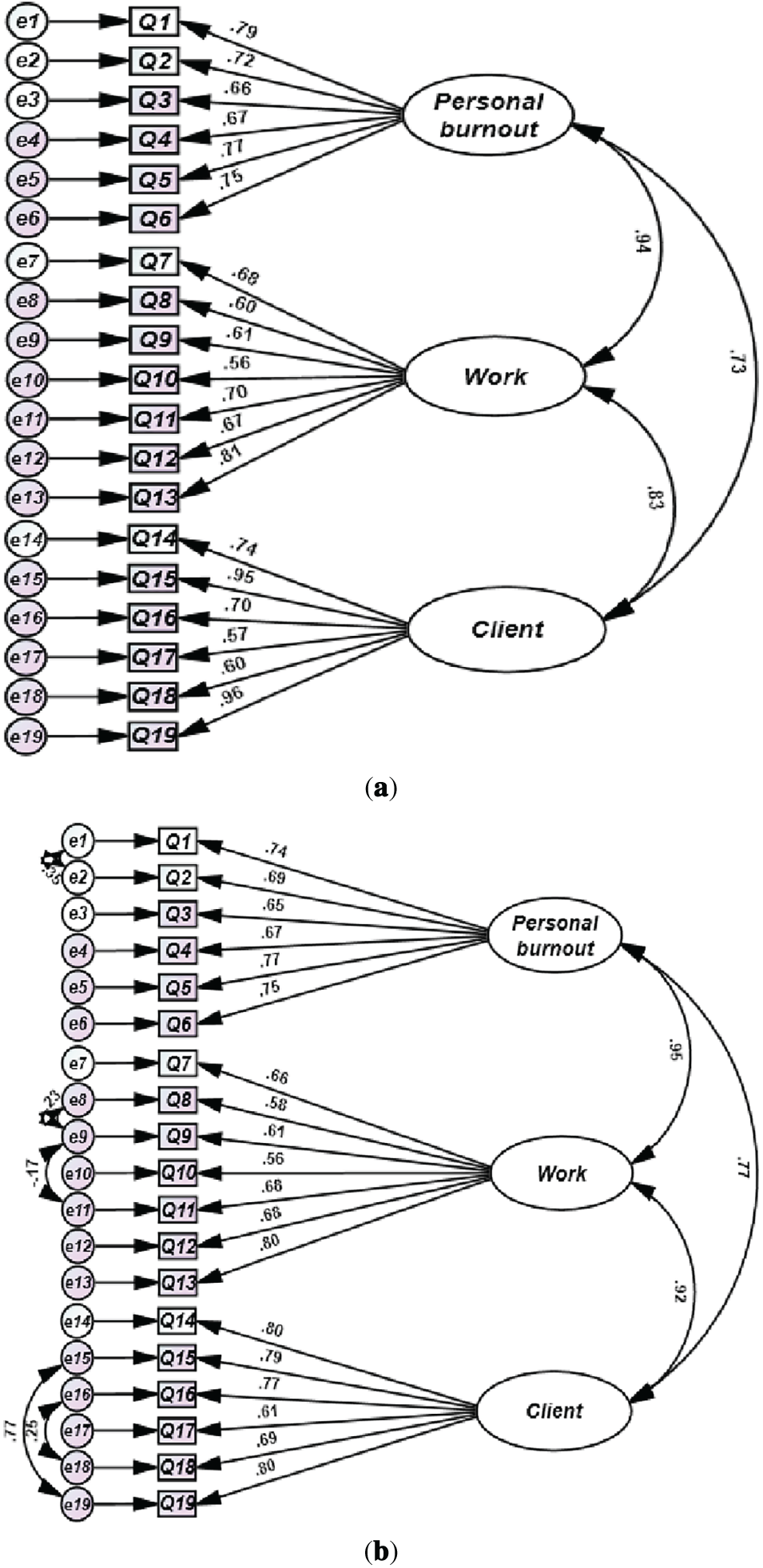
Figure 1: (a) Three–factor model of CBI before modification based on the teachers’ group (19-Item). (b) Three–factor model of CBI after modification based on the teachers’ group (19-Item)
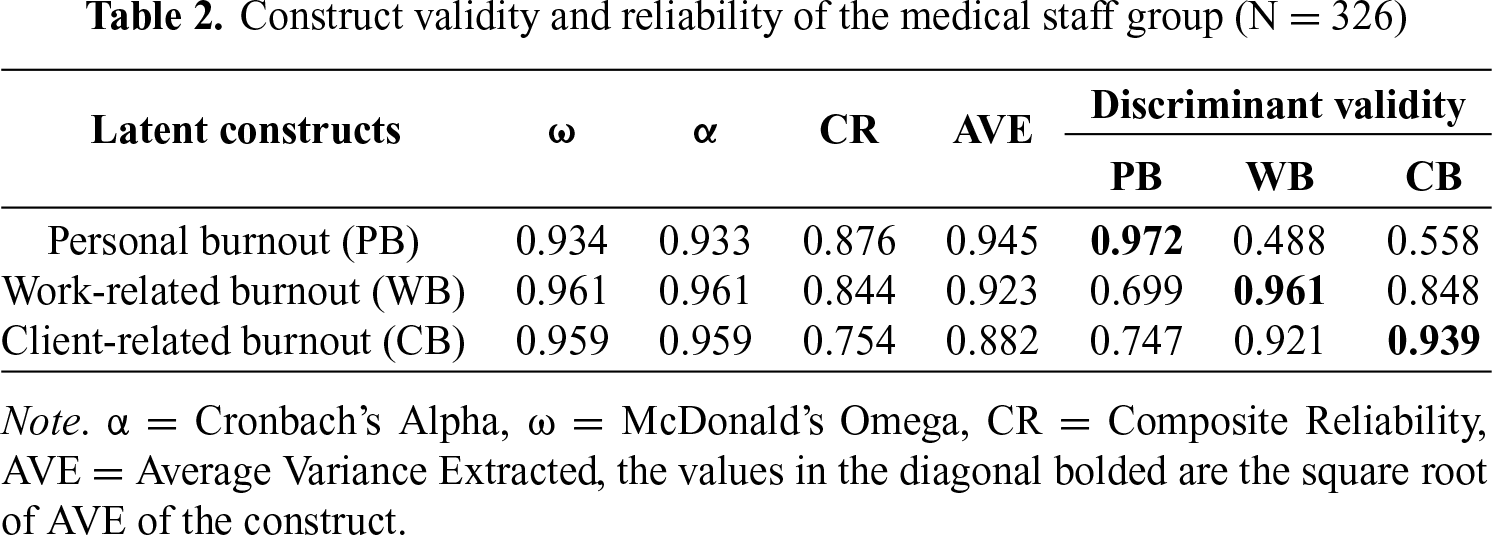
Likewise, CFA validated the medical staff responses, confirming construct reliability, AVE, and discriminant validity (Table 2). Reliability coefficients (ω, α, CR) exceeded 0.70, and AVE values were above 0.50. Squared inter-factor correlations were lower than each construct’s AVE, demonstrating acceptable convergent and discriminant validity.
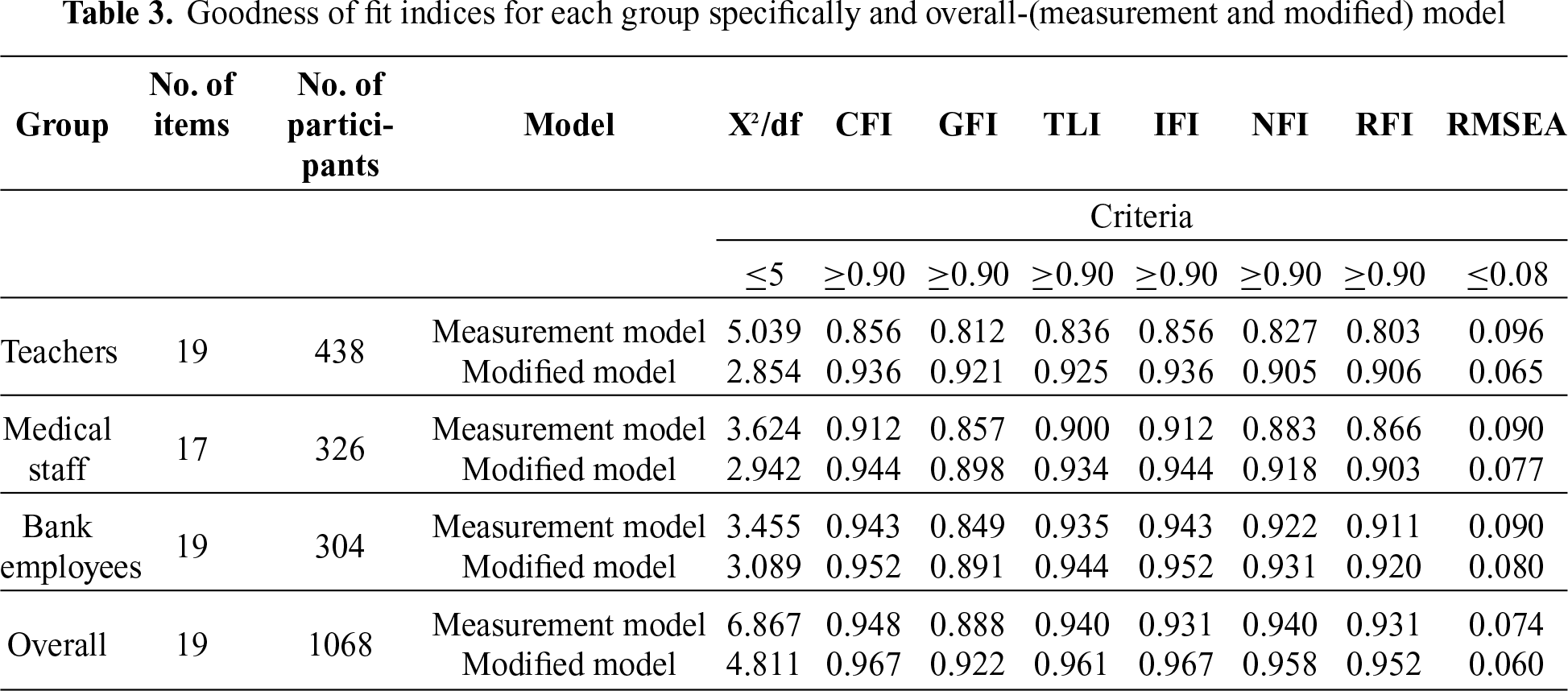
The initial CFA model for the medical staff group showed adequate item loadings (Figure 2a) but poor overall fit (χ2/df = 3.624, CFI = 0.912, GFI = 0.857, TLI = 0.900, RMSEA = 0.090), as later detailed in Table 3. Modification indices recommended removing Items 9 and 13 from WB and correlating selected error terms (Items 15–16 and 18–19) to improve fit (Figure 2b). The revised model demonstrated satisfactory indices (χ2/df = 2.942, CFI = 0.944, GFI = 0.898, TLI = 0.934, RMSEA = 0.077). Although Item 13 had a strong loading (0.88), it impaired overall model fit (CFI and TLI < 0.90). Consistent with Kline (2016) and Hair et al. (2019), priority was given to achieving robust model fit, supporting the decision to remove items despite high loadings.
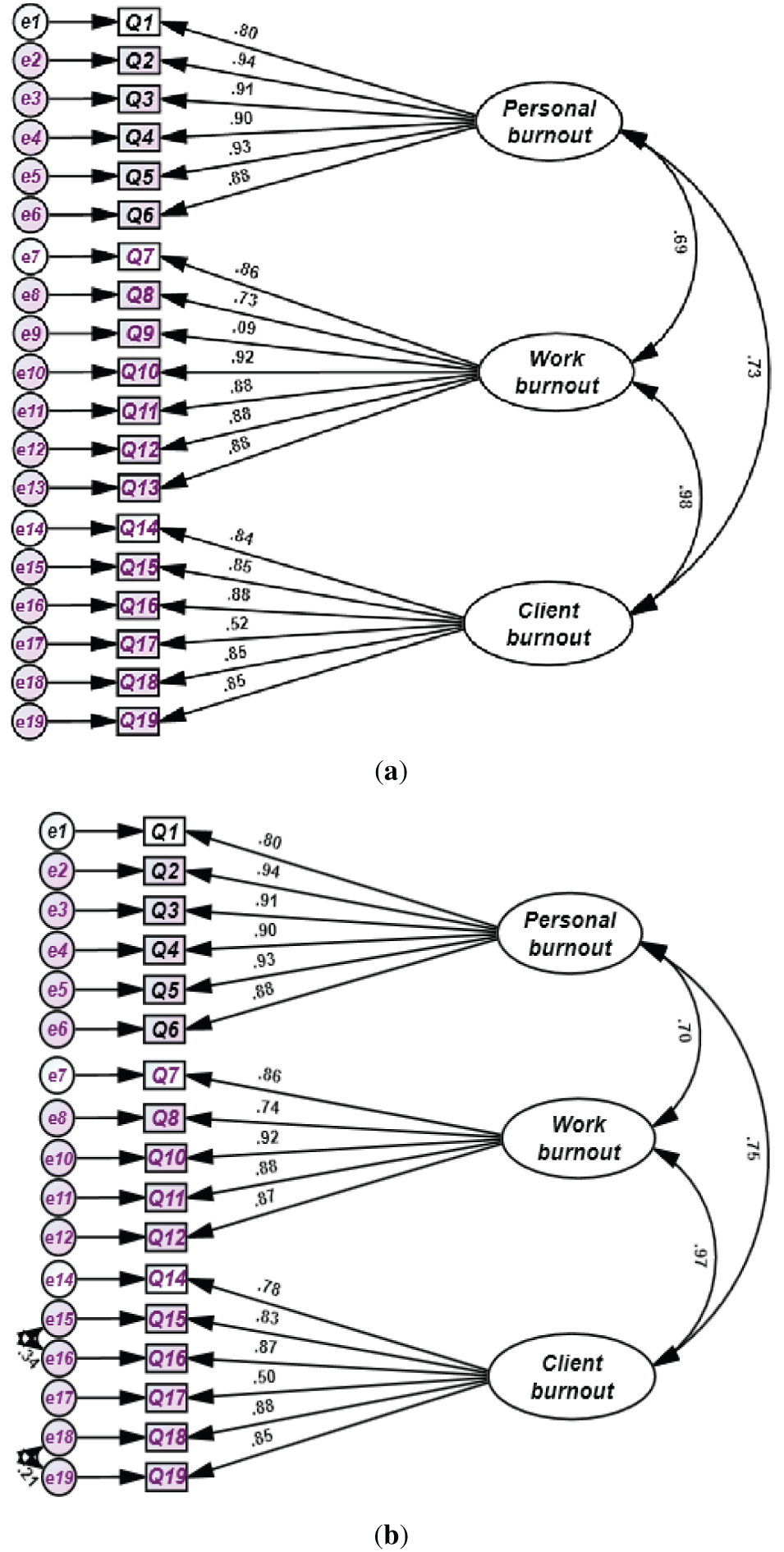
Figure 2: (a) Three–factor model of CBI before modification based on the medical staff group (19-Item). (b) Three–factor model of CBI after modification based on the medical staff group (17-Item)
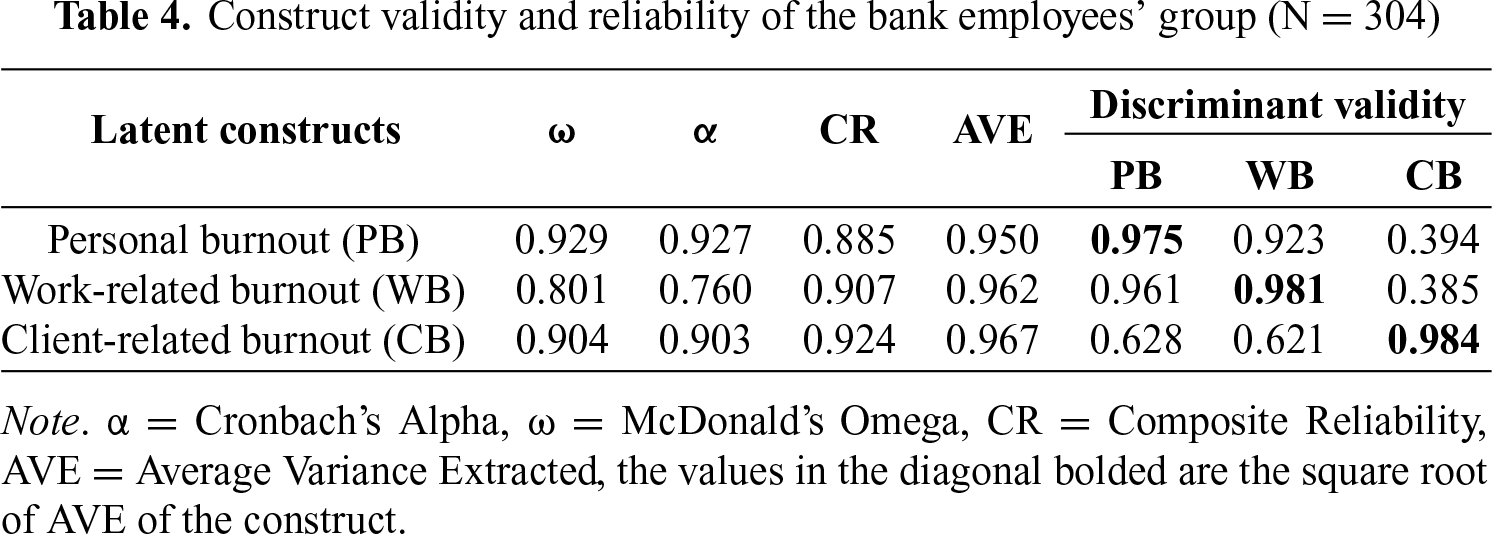
The bank employees’ model was validated using CFA to assess reliability, AVE, and discriminant validity. As shown in Table 4, reliability coefficients (ω, α, CR) exceeded 0.70, and AVE values were above 0.50, meeting criteria recommended by Thrush et al. (2021) and Al-Khadher et al. (2024). Squared inter-construct correlations were lower than each construct’s AVE, confirming adequate convergent and discriminant validity.
The CBI Scale for bank employees was refined through CFA, focusing on items with high modification indices. All items were initially retained because their loadings exceeded 0.40 (Figure 3a). However, the initial model showed inadequate fit (χ2/df = 3.455; CFI = 0.943; GFI = 0.849; TLI = 0.935; RMSEA = 0.090), as later reported in Table 3. Modification indices indicated the need to correlate selected error terms, including Items 1–2 and 2–6 (Factor 1) and Items 12–13 (Factor 2), as shown in Figure 3b. After these adjustments, the model achieved satisfactory fit (χ2/df = 3.089; CFI = 0.952; GFI = 0.891; TLI = 0.944; RMSEA = 0.080). All item loadings remained above 0.40 in the revised model, confirming model adequacy (Figure 3b).
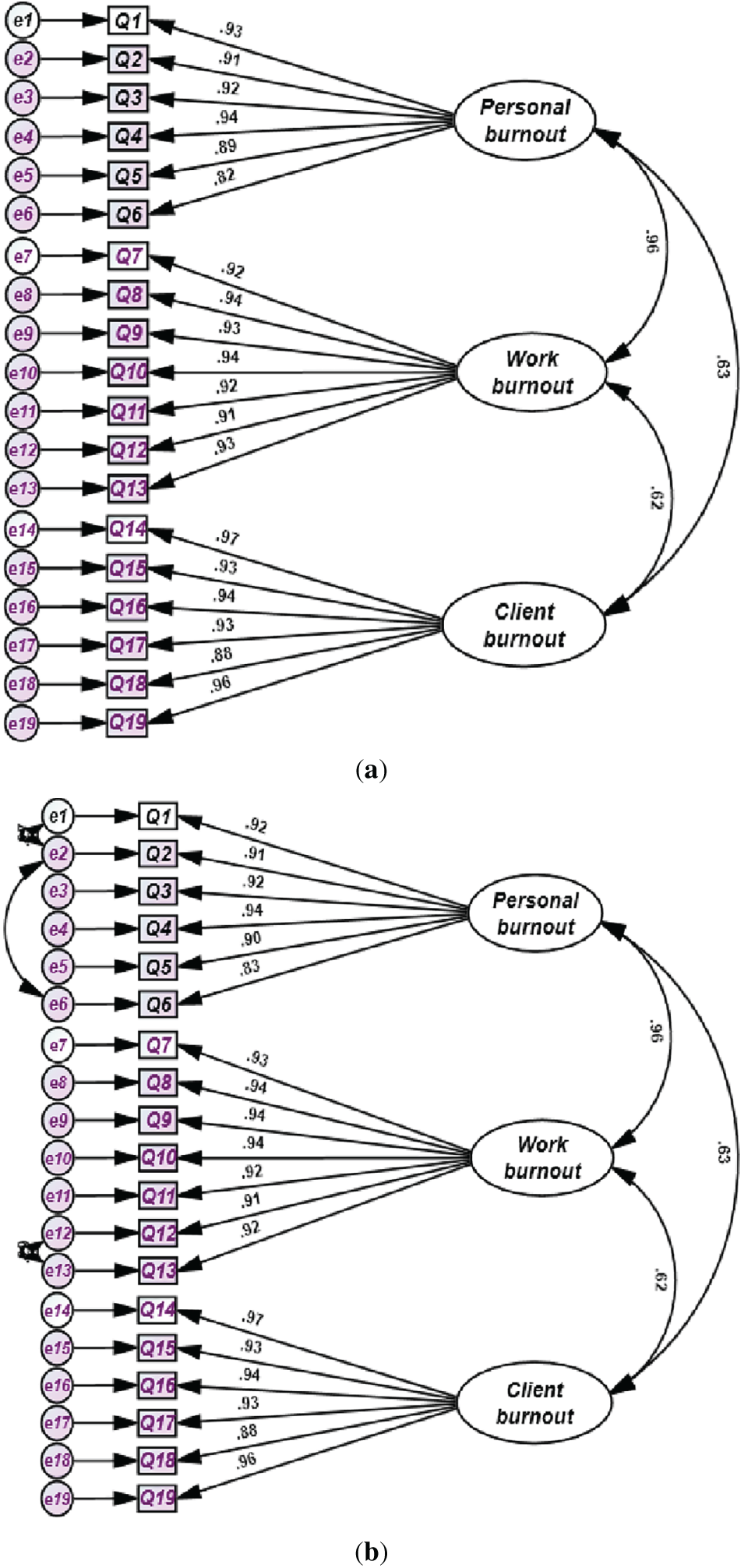
Figure 3: (a) Three-factor model of CBI before modification based on the bank employees’ group (19-Item). (b) Three-factor model of CBI after modification based on the bank employees’ group (19-Item)
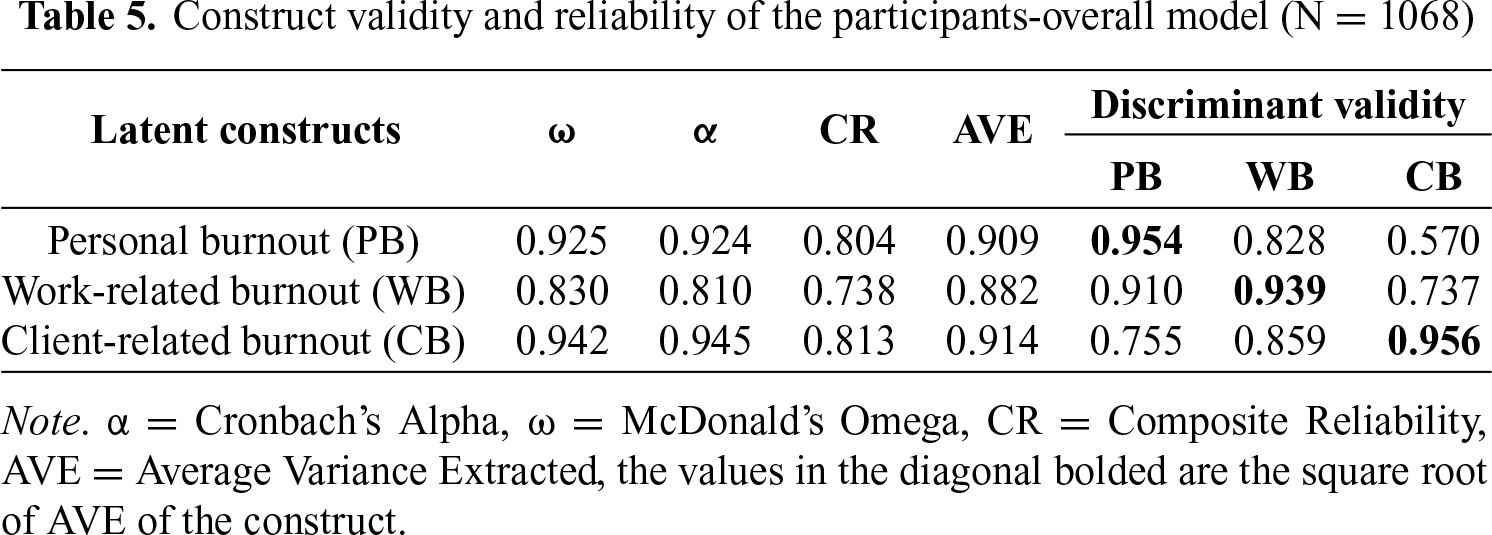
The overall model, comprising all three groups, was validated using CFA to assess reliability, AVE, and discriminant validity. Table 5 shows that reliability coefficients (ω, α, CR) exceeded 0.70 and AVE values were above 0.50, meeting criteria by Thrush et al. (2021) and Al-Khadher et al. (2024). Squared inter-construct correlations were lower than each construct’s AVE, confirming convergent and discriminant validity.
The final CBI Scale was refined through CFA, focusing on items with high modification indices. All items were initially retained because their loadings exceeded 0.40 as shown in Figure 4a. However, the initial model showed inadequate fit (χ2/df = 6.867; CFI = 0.948; GFI = 0.888; TLI = 0.940; RMSEA = 0.074), as reported in Table 3. Modification indices recommended correlating selected error terms, Items 1–2 (Factor 1) and Items 15–19 (Factor 3), to address residual misspecifications (Figure 4b). After these adjustments, the model achieved satisfactory fit (χ2/df = 4.811; CFI = 0.967; GFI = 0.922; TLI = 0.961; RMSEA = 0.060). All item loadings in the revised model remained above 0.40, confirming model adequacy as shown in Figure 4b.
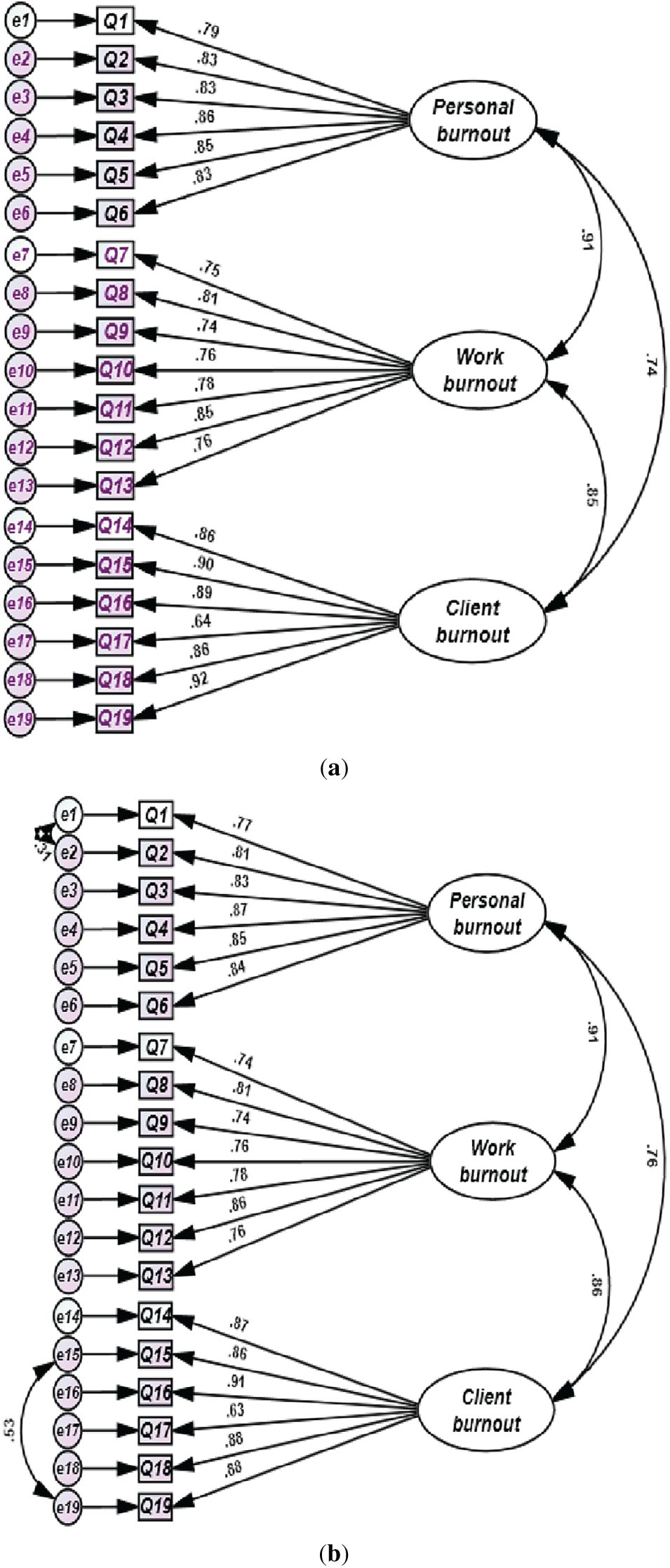
Figure 4: (a) Three–factor model of CBI before modification based on all participants: Overall model (19-Item). (b) Three–factor model of CBI after modification based on all participants: Overall model (19-Item)
Besides, the researchers provided a study model for each group and an overall model encompassing 19 items for the CBI, except for the medical staff group, which included 17 items. As shown in Table 3, all models’ fits were acceptable after modifications. The overall model was determined to be appropriate for Sudanese workers across various fields, including education, healthcare, and banking. The study’s results indicate that the latest version of the CBI scale, which incorporates all adaptation processes detailed in the methodology, includes 17 items specifically for workers in healthcare. However, other workers can assess their burnout inventory using the latest version of the CBI scale, which is clarified and modified in this study and contains 19-item.
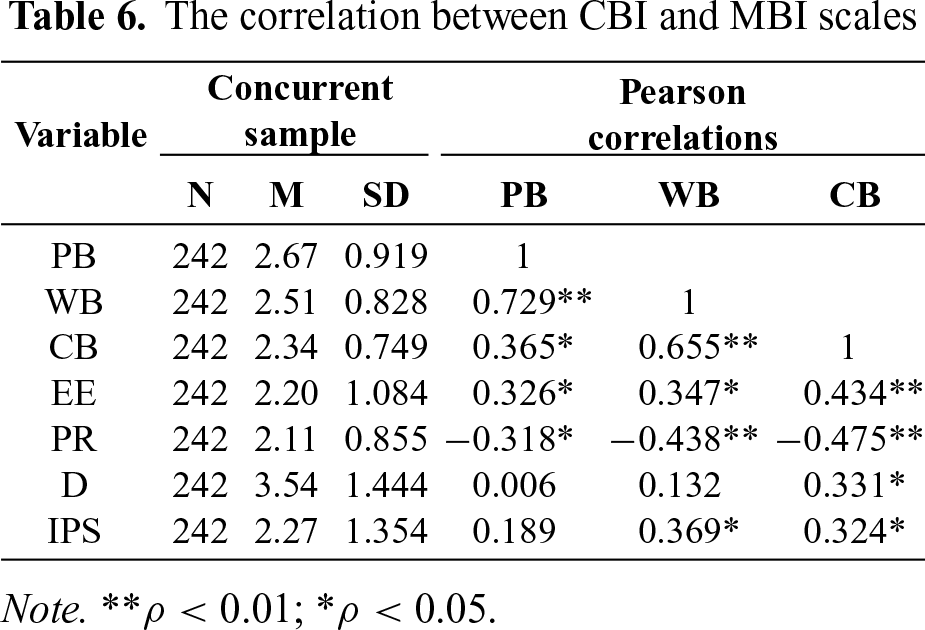
Concurrent validity was assessed by correlating the CBI with the Maslach Burnout Inventory (MBI), including Emotional Exhaustion (EE), Personal Realization (PR), and Depersonalization (D), defined as a detachment from oneself (American Psychiatric Association, 2022) and marked by emotional numbing and disrupted self-awareness (Sierra & David, 2011), and Interpersonal Psychological Stress (IPS) adapted by González-Rodríguez et al. (2020). A total of 242 teachers, medical staff, and bank employees participated.
The investigation of the CBI subscales revealed statistically significant correlations, ranging from [r = 0.365(CB and PB) to 0.729 (WB and PB)], at the 0.05 and 0.01 levels, as shown in Table 6. Moreover, CBI subscales’ values correlated positively significant, ranging from (r = 0.324 to 434), negatively significant, ranging from [r = −0.318 (PR and PB) to −0.475 (PR and CB)], and weakly [r = 0.006 (D and PB) to 0.189 (IPS and PB)] scores of the MBI subscales. Emotional Exhaustion (EE) correlated positively significant the PB, WB, and CB [r = 0.326, 0.347, and 0.434], respectively. Personal Realization (PR) correlated negatively significant the PB, WB, and CB (r = −0.318, −0.438, and −0.475), respectively. While Depersonalization (D) correlated positively significant the CB (r = 0.331). Furthermore, Interpersonal Psychological Stress (IPS) correlated significantly positive the WB and CB (r = 0.369 and 0.324), respectively. These results indicated that there is a good concurrent validity of CBI scale with MBI scale as presented in Table 6.
This study evaluated the validity and reliability of the Copenhagen Burnout Inventory (CBI), based on the model by Kristensen et al. (2005) and Montgomery et al. (2021). Results demonstrated strong psychometric properties across Sudanese teachers, medical staff, and bank employees. The study also assessed the factorial structure of the original version by examining item loadings, extracting eigenvalues for three factors, and conducting EFA using principal components analysis with varimax rotation.
The findings demonstrate that the CBI is a valid instrument in the current context. KMO values were high for teachers (0.926), medical staff (0.930), and bank employees (0.947). These values were slightly lower than those reported by Bolatov et al. (2021) and Piperac et al. (2021), yet higher than Todorovic et al. (2021) and Mahmoudi et al. (2017). Elevated burnout scores among medical and bank employees may reflect the ongoing conflict in Sudan, consistent with evidence that burnout adversely affects individuals and organizations (Euwema et al., 2004).
Teachers’ factor loadings ranged from 0.984–0.535 (PB), 0.995–0.751 (WB), and 0.952–0.940 (CB), showing stronger loadings than those reported by Piperac et al. (2021). However, Piperac et al. (2021)’s values exceeded the loadings observed for bank employees in this study. Medical staff loadings were also lower than those reported by Todorovic et al. (2021) for PB and WB. Despite these variations, all item loadings in the present study were satisfactory across groups, confirming the CBI as a robust and valid instrument for the three target samples.
Construct reliability and validity were supported across all groups. Among teachers, Cronbach’s alpha values were 0.837 (PB), 0.807 (WB), and 0.865 (CB), slightly lower than those reported by Campos et al. (2013) and Bolatov et al. (2021). In contrast, alpha values for medical staff and bank employees were marginally higher than those found in Campos et al. (2013), Piperac et al. (2021), and Montgomery et al. (2021). Overall, the scale demonstrated strong internal consistency, indicating a reliable and homogeneous construct across Sudanese professionals. Additional reliability indicators, including ω and CR, were also satisfactory across all factors and groups, an important contribution, as these coefficients are often overlooked in validation studies. Furthermore, AVE and discriminant validity analyses confirmed acceptable convergent and discriminant validity. By examining diverse occupational groups in Sudan, this study extends the evidence base for the Copenhagen Burnout Inventory and contributes new insights into its applicability in an African context.
The inventory demonstrated strong construct validity, with all three modified models showing satisfactory fit. RMSEA values were acceptable for teachers (0.065), medical staff (0.077), and bank employees (0.080). These findings align with Milfont et al. (2008), whose three-factor model for New Zealand teachers reported higher RMSEA values, and with Thrush et al. (2021), who found comparable fit indices among academic health center employees (CFI = 0.922, RMSEA = 0.083, SRMR = 0.044). Similarly, Johnson (2024) reported acceptable fit for U.S. academic librarians (CFI = 0.918, RMSEA = 0.088, SRMR 0.058). All fit indices in the present study were satisfactory across the Sudanese groups, particularly following model modifications. A key contribution of this research is the identification of minor variations across the three samples: the final scale included 19 items for teachers, 17 for medical staff, and 19 for bank employees. Differences emerged in the WB factor, which was reduced from seven to five items in the medical staff group, reflecting sample-specific adaptations while maintaining factorial coherence.
Concurrent validity assesses the degree to which a construct corresponds with related measures. In this study, the CBI showed significant correlations with the MBI. Emotional Exhaustion (EE) demonstrated strong positive associations with PB, WB, and CB, aligning with evidence that identifies EE as the central dimension of burnout (Bekker et al., 2005; Tijdink et al., 2014). Consistent with these findings, Ogunsuji et al. (2022) also reported strong CBI–MBI correlations, particularly for EE. Although Depersonalization (D) showed weak correlations with PB and WB, suggesting that emotional detachment may operate independently, shaped by coping behaviours or socio-cultural conditions in Sudan. However, Depersonalization was significantly correlated with CB. This contrasts with Campos et al. (2013), who reported weaker depersonalization associations. Ogunsuji et al. (2022) similarly noted weak validity for depersonalization and Client Burnout but still observed a positive relationship. Overall, the results support the CBI’s validity, applicability, and generalizability among Sudanese teachers, medical staff, and bank employees.
Besides, the final version of the CBI scale retains key psychometric properties for each specific Sudanese group represented in the study. These properties are valuable for psychologists and therapists in diagnosing burnout among Sudanese workers. As well, the study’s outcomes offer practical insights for stakeholders, managers, and policymakers in these three sectors, enabling them to design targeted programs to reduce workers' burnout and improve mental health and overall well-being in the Sudanese employees.
This study confirms that the CBI demonstrates strong psychometric properties and is a reliable instrument for assessing burnout among Sudanese workers in education, healthcare, and banking. Two validated versions emerged: a 17-item scale for healthcare workers (6 PB, 5 WB, 6 CB) and the original 19-item scale for teachers and bank employees (6 PB, 7 WB, 6 CB). Both versions were rigorously validated through EFA and CFA, supporting their factorial stability and suitability for these professional groups. The CBI effectively differentiates among PB, WB, and CB, providing a robust multidimensional measure. Concurrent validity testing showed significant correlations with all Maslach Burnout Inventory (MBI) domains, except Depersonalization, which exhibited weak associations with PB and WB.
Even with the cross-sectional design is appropriate for this type of research, it limits causal and temporal interpretations. The large, diverse sample was restricted to Khartoum, reducing generalizability to other regions. Conducting EFA and CFA on the same sample may inflate model fit and require cautious interpretation. Additionally, unmeasured socioeconomic, political, and conflict-related factors in Sudan may have influenced burnout perceptions.
Despite these limitations, the validated Arabic CBI versions for education, healthcare, and banking sectors provide reliable and culturally adapted tools for assessing burnout, offering valuable insights for psychologists, therapists, and policymakers to develop sector-specific interventions.
Future research should employ longitudinal designs to clarify causality and include perceived stress measures, conflict exposure, and protective factors such as coping and social support. Expanding sampling to rural and socioeconomically diverse populations, and conducting cross-cultural comparisons across Arabic-speaking countries, would strengthen external validity and deepen understanding of burnout dynamics within varied working and cultural contexts.
Acknowledgement: The authors would like to thank the Ongoing Research Funding Program (ORFFT-2025-136-1), King Saud University, Riyadh, Saudi Arabia, for its financial support.
Funding Statement: This research was funded by King Saud University, Riyadh, Saudi Arabia, grant number (ORFFT-2025-136-1).
Author Contributions: The authors confirm contribution to the paper as follows: Conceptualization, Abdo Hasan AL-Qadri and Salaheldin Farah Bakhiet; methodology, Abdo Hasan AL-Qadri and Mohammed Ateik Al-Khadher; software, Nadia Saraa; validation, Abdo Hasan AL-Qadri, Nadia Saraa and Ahmed Abdalmonem Mohmed Ahmed; formal analysis, Mohammed Ateik Al-Khadher; investigation, Abdo Hasan AL-Qadri; data curation, Ismael Salamah Albursan; writing—original draft preparation, Abdo Hasan AL-Qadri; writing—review and editing, Hazim M. Alhaqbani; visualization, Pengfei Chen; supervision, Abdullah Saad Almutairi; project administration, Ahmed Abdalmonem Mohmed Ahmed; funding acquisition, Ismael Salamah Albursan. All authors reviewed the results and approved the final version of the manuscript.
Availability of Data and Materials: The data are available upon request.
Ethics Approval: Data were collected using the CBI, distributed by institutional volunteers. Ethical approval was granted by the University of Khartoum, Faculty of Arts Research Board (No. 4–81, Oct 2022). Participants provided informed consent and were assured confidentiality, with all procedures conducted in accordance with relevant guidelines and regulations.
Conflicts of Interest: The authors declare no conflicts of interest to report regarding the present study.
References
Adebayo, B. S. (2022). Work-induced stress and job performance of academic staff in the University of Ilorin, Nigeria. Indonesian Journal of Multidiciplinary Research, 2(2), 317–326. https://doi.org/10.17509/ijomr.v2i2.42784 [Google Scholar] [CrossRef]
Aguayo-Estremera, R., Cañadas, G. R., Ortega-Campos, E., Ariza, T., & De la Fuente-Solana, E. I., (2023). Validity evidence for the internal structure of the Maslach Burnout Inventory-student survey: A comparison between classical CFA model and the ESEM and the bifactor models. Mathematics, 11(6), 1515. https://doi.org/10.3390/math11061515 [Google Scholar] [CrossRef]
Ahmed, M. M., Abdulhamid, O. H., & Suleiman, I. E. E. (2021). The prevalence and factors associated with burnout among sudanese health care professionals at primary health care centers in Wad Madani Al-Kubra (Sudan), and Sharjah (UAE), 20 October–20 November 2020. Academic Journal of Research and Scientific Publishing, 3(26), 5–27. https://doi.org/10.52132/Ajrsp.e.2021.261 [Google Scholar] [CrossRef]
Al-Khadher, M. A., Alghamdi, A. A., Saraa, N., Albursan, I. S., Bakhiet, S. F., & AL-Qadri, A. H. (2024). The dimensional validity and reliability of the Italian smartphone addiction inventory of Yemeni university students. Acta Psychologica, 250(2), 104493. https://doi.org/10.1016/j.actpsy.2024.104493. [Google Scholar] [PubMed] [CrossRef]
AL-Qadri, A. H., & Zhao, W. (2021). Preparation of an observation card to measure the developmental learning difficulties among primary school students in Sana’a City, Yemen. South African Journal of Education, 41(2), 1–15. https://doi.org/10.15700/saje.v41n2a1720 [Google Scholar] [CrossRef]
Alvey, H. L. (2020). Evaluating burnout in direct support professionals in america: an exploratory factor analysis of the Copenhagen burnout inventory [dissertation]. Louisville, KY, USA: Spalding University. [Google Scholar]
American Psychiatric Association (2022). Diagnostic and statistical manual of mental disorders. 5th ed. Arlington, VA, USA: American Psychiatric Publishing. [Google Scholar]
Bakker, A. B., & de Vries, J. D., (2021). Job demands-resources theory and self-regulation: New explanations and remedies for job burnout. Anxiety, Stress & Coping, 34(1), 1–21. https://doi.org/10.1080/10615806.2020.1797695. [Google Scholar] [PubMed] [CrossRef]
Bakker, A. B., Xanthopoulou, D., & Demerouti, E. (2023). How does chronic burnout affect dealing with weekly job demands? A test of central propositions in JD-R and COR-theories. Applied Psychology, 72(1), 389–410. https://doi.org/10.1111/apps.12382 [Google Scholar] [CrossRef]
Barton, M. A., Lall, M. D., Johnston, M. M., Lu, D. W., Nelson, L. S. et al. (2022). Reliability and validity support for an abbreviated Copenhagen burnout inventory using exploratory and confirmatory factor analysis. Journal of the American College of Emergency Physicians Open, 3(4), e12797. https://doi.org/10.1002/emp2.12797. [Google Scholar] [PubMed] [CrossRef]
Begum, M. S., Hashim, R. A., Som, H. M., & Rahman, S. M. (2024). The moderating role of person-environment fit on the relationship between job demands, job resources and work engagement among hospital nurses. Current Psychology, 43(31), 25760–25772. https://doi.org/10.1007/s12144-024-06255-3 [Google Scholar] [CrossRef]
Bekker, M. H., Croon, M. A., & Bressers, B. (2005). Childcare involvement, job characteristics, gender and work attitudes as predictors of emotional exhaustion and sickness absence. Work & Stress, 19(3), 221–237. https://doi.org/10.1080/02678370500286095 [Google Scholar] [CrossRef]
Bolatov A. K., Seisembekov T. Z., Askarova A. Z., Igenbayeva B., Smailova D. S., & Hosseini H. (2021). Psychometric properties of the Copenhagen burnout inventory in a sample of medical students in Kazakhstan. Psychology in Russia: State of the Art, 14(2), 15–24. https://doi.org/10.11621/pir.2021.0202. [Google Scholar] [PubMed] [CrossRef]
Calin, M. F., Tasente, T., & Seucea, A. (2022). The effects of burnout on the professional activity of teachers. Technium Social Sciences Journal, 34(1), 430. https://doi.org/10.47577/tssj.v34i1.7156 [Google Scholar] [CrossRef]
Campos, J. A. D. B., Carlotto, M. S., & Marôco, J. (2013). Copenhagen burnout inventory—student version: Adaptation and transcultural validation for Portugal and Brazil. Psicologia: Reflexão e Crítica, 26(1), 87–97. https://doi.org/10.1590/S0102-79722013000100010 [Google Scholar] [CrossRef]
Edú-Valsania, S., Laguía, A., & Moriano, J. A. (2022). Burnout: A review of theory and measurement. International Journal of Environmental Research and Public Health, 19(3), 1780. https://doi.org/10.3390/ijerph19031780. [Google Scholar] [PubMed] [CrossRef]
El Dabbah, N. A., & Elhadi, Y. A. M. (2021). Burnout among frontline health professionals in two African countries: A cross sectional study from Egypt and Sudan. Research Square. 2021. https://doi.org/10.21203/rs.3.rs-951355/v1 [Google Scholar] [CrossRef]
Elssalih, E. A. (2021). The level of teachers’ job satisfaction in secondary schools of East Darfur state in Sudan. Technium Social Sciences Journal, 21, 250. https://doi.org/10.47577/tssj.v21i1.3754 [Google Scholar] [CrossRef]
Enfield, S. (2021). Holy American burnout! Essays. Fairbanks, AK, USA: University of Alaska Fairbanks. [Google Scholar]
Euwema, M. C., Kop, N., & Bakker, A. B. (2004). The behaviour of police officers in conflict situations: How burnout and reduced dominance contribute to better outcomes. Work & Stress, 18(1), 23–38. https://doi.org/10.1080/0267837042000209767 [Google Scholar] [CrossRef]
Fadare, O. O., Andreski, M., & Witry, M. J. (2021). Validation of the Copenhagen burnout inventory in pharmacists. Innovations in Pharmacy, 12(2), 4. https://doi.org/10.24926/iip.v12i2.3699. [Google Scholar] [PubMed] [CrossRef]
Field, A. (2009). Discovering statistics using SPSS. London, UK: SAGE Publications. [Google Scholar]
Galanakis, M. D., & Tsitouri, E. (2022). Positive psychology in the working environment. Job demands-resources theory, work engagement and burnout: A systematic literature review. Frontiers in Psychology, 13, 1022102. https://doi.org/10.3389/fpsyg.2022.1022102. [Google Scholar] [PubMed] [CrossRef]
González-Rodríguez, R., Dominguez Alonso, J., Verde-Diego, C., & Frieiro Padin, P. (2020). Psychometric properties of the Maslach Burnout Inventory-human services in social work professionals in Spain. Health & Social Care in the Community, 30(3), 949–956. https://doi.org/10.1111/hsc.13256. [Google Scholar] [PubMed] [CrossRef]
Guthier, C., Dormann, C., & Voelkle, M. C. (2020). Reciprocal effects between job stressors and burnout: A continuous time meta-analysis of longitudinal studies. Psychological Bulletin, 146(12), 1146–1173. https://doi.org/10.1037/bul0000304. [Google Scholar] [PubMed] [CrossRef]
Hair, J. F., Black, W. C., Babin, B. J., & Anderson, R. E. (2019). Multivariate data analysis. 8th ed. Singapore: Cengage. [Google Scholar]
Hall, L. H., Johnson, J., Watt, I., Tsipa, A., & O’Connor, D. B. (2016). Healthcare staff wellbeing, burnout, and patient safety: A systematic review. PLoS One, 11(7), e0159015. https://doi.org/10.1371/journal.pone.0159015. [Google Scholar] [PubMed] [CrossRef]
Hamid, M., Thron, C., & Fageeri, S. (2020). Status and trends in university admissions for women in sudan: A graphical data analysis. Social Sciences & Humanities Open, 2(1), 100076. https://doi.org/10.1016/j.ssaho.2020.100076 [Google Scholar] [CrossRef]
Hillert, A., Albrecht, A., & Voderholzer, U. (2020). The burnout phenomenon: A Résumé after more than 15,000 scientific publications. Frontiers in Psychiatry, 11, 519237. https://doi.org/10.3389/fpsyt.2020.519237. [Google Scholar] [PubMed] [CrossRef]
Johnson, M. W. (2024). Use of the Copenhagen Burnout Inventory among US academic librarians: Examining construct validity through factor structure and model fit. The Journal of Academic Librarianship, 50(5), 102922. https://doi.org/10.1016/j.acalib.2024.102922 [Google Scholar] [CrossRef]
Jooste, M. (2020). The role of emotion, psychophysiological markers of burnout and their relevance within the leadership pipeline [dissertation]. Pretoria, South Africa: University of Pretoria. [Google Scholar]
Kaiser, H. F. (1974). An index of factorial simplicity. Psychometrika, 39, 31–36. https://doi.org/10.1007/BF02291575 [Google Scholar] [CrossRef]
Kline, R. B. (2016). Principles and practice of structural equation modeling. 4th ed. New York, NY, USA: Guilford Press. [Google Scholar]
Koutsimani, P., Montgomery, A., & Georganta, K. (2019). The relationship between burnout, depression, and anxiety: A systematic review and meta-analysis. Frontiers in Psychology, 10, 429219. https://doi.org/10.3389/fpsyg.2019.00284. [Google Scholar] [PubMed] [CrossRef]
Kristensen, T. S., Borritz, M., Villadsen, E., & Christensen, K. B. (2005). The Copenhagen Burnout Inventory: A new tool for the assessment of burnout. Work & Stress, 19(3), 192–207. https://doi.org/10.1080/02678370500297720 [Google Scholar] [CrossRef]
Li, H., Dance, E., Poonja, Z., Aguilar, L. S., & Colmers-Gray, I. (2024). Agreement between the maslach burnout inventory and the Copenhagen Burnout Inventory among emergency physicians and trainees. Academic Emergency Medicine, 31(12), 1243–1255. https://doi.org/10.1111/acem.14994. [Google Scholar] [PubMed] [CrossRef]
Macaulay, L. (2023). She just saw me-she didn’t teach me: The perspectives of Australian sudanese and South Sudanese youth on the student/teacher relationship in Australian schools. The Australian Educational Researcher, 50(5), 1323–1341. https://doi.org/10.1007/s13384-022-00554-z [Google Scholar] [CrossRef]
Mahmoudi S., Atashzadeh-Shoorideh F., Rassouli M., Moslemi A., Pishgooie A. H., & Azimi H. (2017). Translation and psychometric properties of the Copenhagen Burnout Inventory in Iranian nurses. Iranian Journal of Nursing and Midwifery Research, 22(2), 117–122. https://doi.org/10.4103/1735-9066.205958. [Google Scholar] [PubMed] [CrossRef]
Majeed F., Naeem Liaqat, Maqbool Hussain M., Iqbal A., Hashim I., & Saleem M. (2022). Burnout among postgraduate residents using Copenhagen Burnout Inventory. Journal of Ayub Medical College Abbottabad, 34(3), 463–467. https://doi.org/10.55519/JAMC-03-9594. [Google Scholar] [PubMed] [CrossRef]
Malesic, J. (2022). The end of burnout: Why work drains us and how to build better lives. Berkeley, CA, USA: University of California Press. [Google Scholar]
Maslach, C., & Leiter, M. P. (2016). Understanding the burnout experience: Recent research and its implications for psychiatry. World Psychiatry, 15(2), 103–111. https://doi.org/10.1002/wps.20311. [Google Scholar] [PubMed] [CrossRef]
Mendaglio, S., & Swanson, D. (2021). Stress and burnout in rehabilitative settings. In: Management and administration of rehabilitation programmes (pp. 257–277). London, UK: Routledge. [Google Scholar]
Milfont, T. L., Denny, S., Ameratunga, S., Robinson, E., & Merry, S. (2008). Burnout and wellbeing: Testing the Copenhagen Burnout Inventory in New Zealand teachers. Social Indicators Research, 89(1), 169–177. https://doi.org/10.1007/s11205-007-9229-9 [Google Scholar] [CrossRef]
Mohiuddin, A. (2023). Healthcare challenges due to global conflict escalation amid the pandemic, climate, and economic dilemmas. Preprints. https://doi.org/10.20944/preprints202301.0517.v1 [Google Scholar] [CrossRef]
Montgomery, A. P., Azuero, A., & Patrician, P. A. (2021). Psychometric properties of Copenhagen Burnout Inventory among nurses. Research in Nursing & Health, 44(2), 308–318. https://doi.org/10.1002/nur.22114. [Google Scholar] [PubMed] [CrossRef]
Møller, C. M., Clausen, T., Aust, B., & Eiberg, J. P. (2022). A cross-sectional national study of burnout and psychosocial work environment in vascular surgery in Denmark. Journal of Vascular Surgery, 75(5), 1750–1759. https://doi.org/10.1016/j.jvs.2021.11.042. [Google Scholar] [PubMed] [CrossRef]
Obregon, M., Luo, J., Shelton, J., Blevins, T., & MacDowell, M. (2020). Assessment of burnout in medical students using the Maslach Burnout Inventory-student survey: A cross-sectional data analysis. BMC Medical Education, 20(1), 1–10. https://doi.org/10.1186/s12909-020-02274-3. [Google Scholar] [PubMed] [CrossRef]
Ogunsuji O., Ogundipe H., Adebayo O., Oladehin T., Oiwoh S. et al. (2022). Internal reliability and validity of Copenhagen burnout inventory and Oldenburg burnout inventory compared with Maslach burnout inventory among Nigerian resident doctors: A pilot study. Dubai Medical Journal, 5(2), 89–95. https://doi.org/10.1159/000521376 [Google Scholar] [CrossRef]
Oke, A., & Fernandes, F. A. P. (2020). Innovations in teaching and learning: Exploring the perceptions of the education sector on the 4th industrial revolution (4IR). Journal of Open Innovation: Technology, Market, and Complexity, 6(2), 31. https://doi.org/10.3390/joitmc6020031 [Google Scholar] [CrossRef]
Piperac P., Todorovic J., Terzic-Supic Z., Maksimovic A., Karic S., Pilipovic F., & Soldatovic I. (2021). The validity and reliability of the Copenhagen Burnout Inventory for examination of burnout among preschool teachers in Serbia. International Journal of Environmental Research and Public Health, 18(13), 6805. https://doi.org/10.3390/ijerph18136805. [Google Scholar] [PubMed] [CrossRef]
Prentice, S., Elliott, T., Dorstyn, D., & Benson, J. (2023). Burnout, wellbeing and how they relate: A qualitative study in general practice trainees. Medical Education, 57(3), 243–255. https://doi.org/10.1111/medu.14931. [Google Scholar] [PubMed] [CrossRef]
Puzzo, G., Sbaa, M. Y., Zappalà, S., & Pietrantoni, L. (2024). The impact of cultural intelligence on burnout among practitioners working with migrants: An examination of age, gender, training, and language proficiency. Current Psychology, 43(5), 4443–4457. https://doi.org/10.1007/s12144-023-04641-x [Google Scholar] [CrossRef]
Rmadan, A. F., & Kassahun, T. (2021). Level of job satisfaction among the Staff of Gezira University in Sudan. Electronic Research Journal of Social Sciences and Humanities, 3(2), 27–41. [Google Scholar]
Roth, C., Berger, S., Krug, K., Mahler, C., & Wensing, M. (2021). Internationally trained nurses and host nurses’ perceptions of safety culture, work-life-balance, burnout, and job demand during workplace integration: A cross-sectional study. BMC Nursing, 20(1), 1–15. https://doi.org/10.1186/s12912-021-00581-8. [Google Scholar] [PubMed] [CrossRef]
Russo, E. M. (2022). The relationship leadership style and job burnout have on turnover intention among Texas high school principals during the COVID-19 Global Pandemic [dissertation]. Commerce, TX, USA: East Texas A&M University. [Google Scholar]
Sakakibara, K., Shimazu, A., Toyama, H., & Schaufeli, W. B. (2020). Validation of the Japanese version of the burnout assessment tool. Frontiers in Psychology, 11, 1819. https://doi.org/10.3389/fpsyg.2020.01819. [Google Scholar] [PubMed] [CrossRef]
Schaufeli, W. B., Desart, S., & De Witte, H. (2020). Burnout Assessment Tool (BAT)—development, validity, and reliability. International Journal of Environmental Research and Public Health, 17(24), 9495. https://doi.org/10.3390/ijerph17249495. [Google Scholar] [PubMed] [CrossRef]
Shoman, Y., Marca, S. C., Bianchi, R., Godderis, L., van der Molen, H. F., & Canu, I. G. (2021). Psychometric properties of burnout measures: A systematic review. Epidemiology and Psychiatric Sciences, 30, e8. https://doi.org/10.1017/S2045796020001134. [Google Scholar] [PubMed] [CrossRef]
Sierra, M., & David, A. S. (2011). Depersonalization: A selective impairment of self-awareness. Consciousness and Cognition, 20(1), 99–108. https://doi.org/10.1016/j.concog.2010.10.018. [Google Scholar] [PubMed] [CrossRef]
Skaalvik, E. M., & Skaalvik, S. (2020). Teacher burnout: Relations between dimensions of burnout, perceived school context, job satisfaction and motivation for teaching. A longitudinal study. Teachers and Teaching, 26(7–8), 602–616. https://doi.org/10.1080/13540602.2021.1913404 [Google Scholar] [CrossRef]
Smits, N., van der Ark, L. A., & Conijn, J. M. (2018). Measurement versus prediction in the construction of patient-reported outcome questionnaires: Can we have our cake and eat it? Quality of Life Research, 27(7), 1673–1682. https://doi.org/10.1007/s11136-017-1720-4. [Google Scholar] [PubMed] [CrossRef]
Soares, J. P., Lopes, R. H., de Souza Mendonça, P. B., Silva, C. R. D. V., Rodrigues, C. C. F. M., & de Castro, J. L. (2023). Use of the Maslach burnout inventory among public health care professionals: Scoping review. JMIR Mental Health, 10(1), e44195. https://doi.org/10.2196/44195. [Google Scholar] [PubMed] [CrossRef]
Thrush, C. R., Gathright, M. M., Atkinson, T., Messias, E. L., & Guise, J. B. (2021). Psychometric properties of the Copenhagen Burnout Inventory in an academic healthcare institution sample in the US. Evaluation & the Health Professions, 44(4), 400–405. https://doi.org/10.1177/0163278720934165. [Google Scholar] [PubMed] [CrossRef]
Tijdink, J. K., Vergouwen, A. C., & Smulders, Y. M. (2014). Emotional exhaustion and burnout among medical professors; a nationwide survey. BMC Medical Education, 14, 1–7. http://www.biomedcentral.com/1472-6920/14/183/prepub. [Google Scholar]
Todorovic, J., Terzic-Supic, Z., Divjak, J., Stamenkovic, Z., Mandic-Rajcevic, S. et al. (2021). Validation of the Study Burnout Inventory and the Copenhagen Burnout Inventory for the use among medical students. International Journal of Occupational Medicine and Environmental Health, 34(6), 737–745. [Google Scholar] [PubMed]
Tran T. T. T., Nguyen Q. T., Nguyen N. T., Vu S. T., Kaewboonchoo O. et al. (2023). Psychometric properties and factor structure of the Vietnamese Copenhagen Burnout Inventory. Journal of Occupational Health, 65(1), e12425. https://doi.org/10.1002/1348-9585.12425. [Google Scholar] [PubMed] [CrossRef]
Vianello, F. A., Redini, V., & Zaccagnini, F. (2024). Exhaustion: Migrant mental health, gendered migration and workplace regime. International Migration, 62(4), 3–19. https://doi.org/10.1111/imig.13274 [Google Scholar] [CrossRef]
Vila, R. C. B., Burgos, L. M., Sigal, A., Costabel, J. P., & de Lima, A. A., (2022). Burnout syndrome in cardiology residents. Impact of the COVID-19 pandemic on burnout syndrome in cardiology residents. Current Problems in Cardiology, 47(1), 100873. https://doi.org/10.1016/j.cpcardiol.2021.100873. [Google Scholar] [PubMed] [CrossRef]
Wilson, T. M. K. (2020). A correlational analysis of burnout and trait emotional intelligence among geriatric social workers [dissertation]. Phoenix, AZ USA: Grand Canyon University. [Google Scholar]
Xiong, B., Newton, S., & Skitmore, M. (2022). Towards a conceptual model of the job performance of construction professionals: A person-environment fit perspective. International Journal of Construction Management, 22(7), 1308–1322. https://doi.org/10.1080/15623599.2019.1695417 [Google Scholar] [CrossRef]
Cite This Article
 Copyright © 2026 The Author(s). Published by Tech Science Press.
This work is licensed under a Creative Commons Attribution 4.0 International License , which permits unrestricted use, distribution, and reproduction in any medium, provided the original work is properly cited.
 Downloads
 Citation Tools
