
 Login
Login Register
 Submit a Paper
 Propose a Special lssue
 Open Access
ARTICLE

How does mindfulness influence study engagement? The role of affect and psychological capital pathways in university students
1 Faculty of Educational Studies, Universiti Putra Malaysia, Serdang, 43000, Selangor, Malaysia
2 Faculty of Education and Psychological Science, Sichuan University of Science and Engineering, Zigong, 643000, China
* Corresponding Author: Zaida Nor binti Zainudin. Email:
Journal of Psychology in Africa 2026, 36(1), 9-20. https://doi.org/10.32604/jpa.2026.072027
Received 18 August 2025; Accepted 28 November 2025; Issue published 26 February 2026
 View Full Text
 Download PDF
Abstract
Mindfulness would enhance university students’ emotional well-being and study engagement. However, the role of affect (positive and negative emotions) and psychological resources (psychological capital) linking mindfulness to study engagement remain underexplored. This cross-sectional study surveyed 688 Chinese university students (females = 413, mean age = 20.3, SD = 0.83), using validated self-report measures of mindfulness, positive and negative emotions, psychological capital, and study engagement. Structural equation modeling and bias-corrected bootstrap analyses (5000 resamples) revealed that mindfulness directly enhanced positive emotions, psychological capital, and study engagement, while reducing negative emotions. Positive emotions partially mediated the positive effect of mindfulness on psychological capital and study engagement. Negative emotions partially and negatively mediated only the mindfulness–psychological capital link. Psychological capital independently mediated the mindfulness–engagement relationship, and two sequential mediation pathways emerged: (a) mindfulness → positive emotions → psychological capital → higher study engagement and (b) mindfulness → reduced negative emotions → psychological capital → higher study engagement. Consistent with broaden-and-build (B&B) theory and Conservation of Resources (COR) theory, these findings suggest that mindfulness fosters study engagement primarily by promoting positive emotional experiences and strengthening psychological capital. By implication, university student support programs should employ mindfulness-based interventions to cultivate emotional and psychological resources for higher students’ engagement and overall well-being.Keywords
University students thrive in their studies with engagement. They may also experience stress, emotional turbulence, and declining motivation, which can jeopardize both their academic performance and overall well-being (Olson et al., 2025), especially when they are less mindful of their study demands. Mindfulness is a psychological process of intentionally paying attention to present-moment experiences with openness and non-judgmental acceptance (Chems-Maarif et al., 2025), and can enhance students’ study focus, resilience, and emotional regulation (González-Martín et al., 2023). With mindfulness, students would have vigor, dedication, and absorption in academic activities (Schaufeli et al., 2002). Nonetheless, the role of affect and psychological capital (PsyCap) in the relationship between mindfulness and study engagement in student populations remains underexplored. Therefore, this study addresses this gap by examining a dual-pathway model in which mindfulness is proposed to influence study engagement both directly and indirectly through affect and PsyCap.
Mindfulness and study engagement
Mindfulness has emerged as a vital psychological resource for enhancing student well-being and academic functioning. Prior research indicates that students with higher dispositional mindfulness are more likely to sustain cognitive effort, remain emotionally invested, and persist academically despite setbacks (Navarro et al., 2024). Specifically, students who are more mindful are likely to engage more deeply with learning materials, recover from setbacks more quickly, and maintain sustained attention, core facets of study engagement (Prakash et al., 2015; Zhao et al., 2024). Empirical evidence from both cross-sectional and intervention studies supports this association. For example, Shapiro et al. (2011) found that mindfulness-based interventions significantly improved students’ concentration, emotional regulation, and motivation in academic settings. Similarly, a longitudinal study by Bakosh et al. (2016) demonstrated that students who practiced brief daily mindfulness reported higher engagement and reduced test anxiety over time. In another study, Palalas et al. (2020) found that mindfulness predicted greater online learning experience, and improved students’ self-regulated learning skills.
However, prior research has often examined the direct relationship between mindfulness and engagement, overlooking the underlying psychological mechanisms that explain how and why mindfulness leads to greater engagement. As Carmody and Baer (2008) noted, mindfulness exerts its influence not only through cognitive presence but also through modulation of emotional and motivational processes. Nevertheless, such processes, particularly affective states and internal psychological resources, have been underrepresented in most models linking mindfulness to study engagement (Farsimadan et al., 2022; Zhao et al., 2024).
The psychological mechanisms through which mindfulness translates into study engagement are not solely attentional (Bordbar et al., 2024). Theoretical advances suggest that mindfulness may operate through affective and resource-based pathways. According to the broaden-and-build (B&B) theory (Fredrickson, 2001), positive emotions such as joy, interest, and enthusiasm expand individuals’ cognitive scope and promote the development of durable internal resources. In contrast, negative emotions such as anxiety or frustration constrict cognitive flexibility, impair academic functioning, and erode motivation (Lu et al., 2025; Johnson, 2024).
Within this framework, mindfulness is believed to both amplify positive emotions and dampen negative ones (Loucks et al., 2021), which in turn may influence students’ academic motivation and resilience. However, most studies examine only the direct effects of mindfulness on engagement or performance, without explicitly modeling affect as a dual-path mediation mechanism (positive vs. negative). Moreover, prior work often treats affect and engagement as parallel outcomes rather than part of a process model in which emotions shape psychological resources and, ultimately, engagement (Salanova et al., 2011). Given that emotions play a central role in shaping academic behavior, we examine their predictive influence on students’ internal psychological resources and engagement.
Psychological capital mediation
Another key construct in this motivational cascade is psychological capital (PsyCap), a higher-order resource composed of self-efficacy, optimism, hope, and resilience (Luthans et al., 2007). Grounded in the Conservation of Resources (COR) theory (Hobfoll et al., 2023), PsyCap functions as a motivational reservoir that helps individuals cope with academic demands, protect against psychological strain, and maintain adaptive functioning. Accumulating evidence suggests that PsyCap enhances students’ academic persistence and engagement by reinforcing their confidence in handling academic challenges (Siu et al., 2023).
Recent studies have also begun to explore PsyCap as a psychological mechanism through which other personal attributes, such as emotional intelligence (Lye et al., 2022) and grit (Luthans et al., 2019), influence student engagement. However, limited attention has been paid to how mindfulness contributes to PsyCap development in academic contexts (Gordani & Sadeghzadeh, 2023). While mindfulness is known to cultivate psychological strengths (Niemiec et al., 2012), the specific mechanism by which it builds PsyCap and, in turn, consequently boosts study engagement remains underexplored in the literature.
Affect and psychological capital chain mediation
Finally, building on both broaden-and-build (Fredrickson, 2001) and the Conservation of Resources (Hobfoll et al., 2023) theories, we propose a sequential mediation model in which mindfulness enhances study engagement by first fostering positive emotional states, which subsequently build psychological capital (PsyCap). This cascading mechanism posits that mindfulness not only helps regulate momentary affective experiences but also contributes to the accumulation of durable psychological resources (Bi & Ye, 2021). Positive emotions, by broadening cognitive perspectives, may enable students to reframe academic challenges as growth opportunities, thereby reinforcing hope, optimism, and resilience—core components of PsyCap (Carmona-Halty et al., 2021; Luthans et al., 2007). In turn, heightened PsyCap may facilitate sustained cognitive and emotional engagement with academic tasks.
Despite these strong theoretical foundation, empirical studies integrating both affective and resource-based mechanisms as mediators in the mindfulness–engagement link remain scarce. Prior studies often focus on either affect or PsyCap (Ali et al., 2022; Wu & Ma, 2025), neglecting their potential interdependence as a motivational chain. Moreover, most existing research employs direct path models or parallel mediators, rather than testing serial mediation models that reflect the dynamic process of emotional and psychological resource development. Therefore, this study addresses this empirical gap by testing a dual-pathway model in which mindfulness influences study engagement through (a) a positive affect → PsyCap sequential pathway, and (b) a negative affect reduction → PsyCap pathway. This design provides a more nuanced understanding of how momentary emotional states evolve into sustainable psychological resources, offering new insights into the motivational architecture of mindful study engagement.
This study investigated: the: (a) direct relationships among mindfulness, affective experiences, psychological capital, and study engagement; (b) mediating roles of positive and negative emotions and psychological capital; and (c) serial mediation pathways connecting mindfulness to study engagement via emotional states and psychological capital. Figure 1 presents the conceptual model outlining the hypothesized relationships among mindfulness, emotional states (positive and negative), psychological capital, and study engagement.
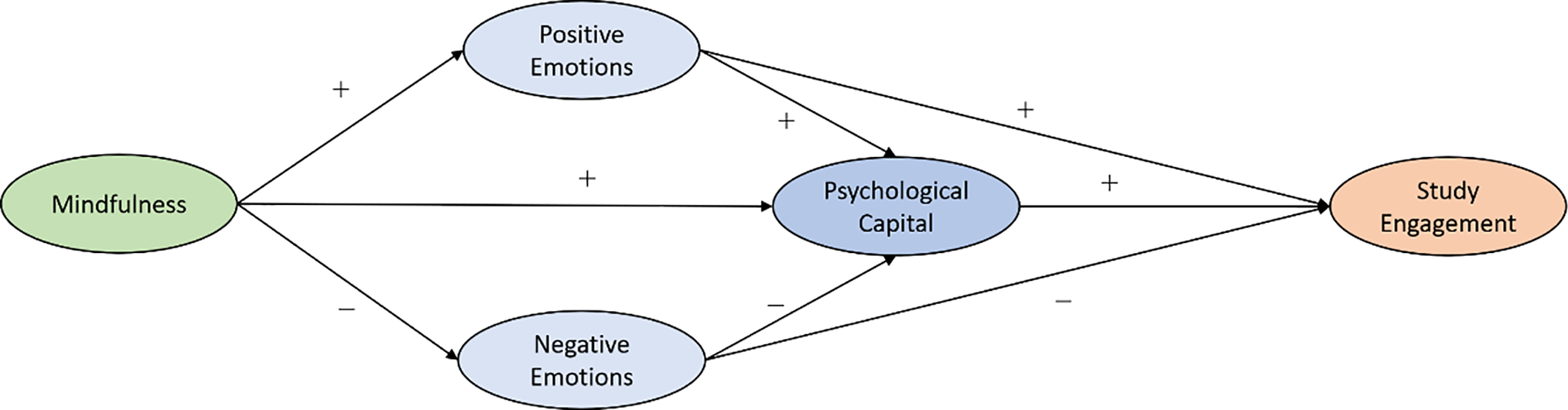
Figure 1: The proposed model
We tested the following hypotheses:
H1: Mindfulness predicts higher emotions, psychological capital, and study engagement.
H2: Emotions predict higher psychological capital and study engagement.
H3: Psychological capital significantly predicts higher study engagement.
H4: Emotions mediate the relationship between mindfulness and psychological capital.
H5: Emotions and psychological capital mediate the relationship between mindfulness and study engagement.
H6: Mindfulness enhances study engagement through sequential pathways of emotions and psychological capital.
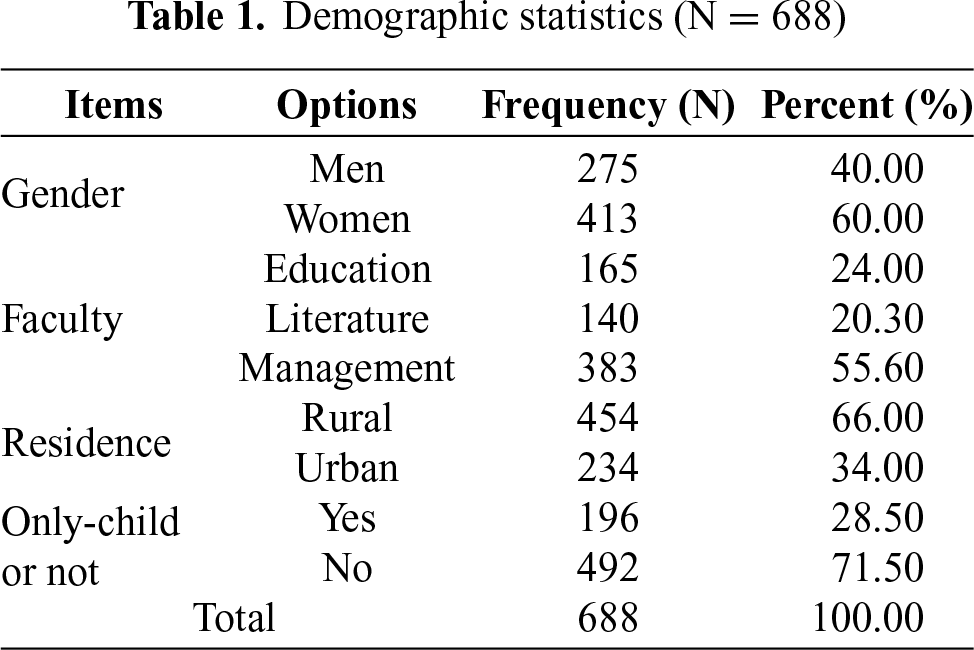
The participants comprised 688 of the full-time undergraduate students enrolled at a comprehensive university in Sichuan, China. The sample consisted of students from three bachelor’s-level faculties—Education, Literature, and Management—selected to capture a broad spectrum of academic backgrounds. Of the participants, 413 were female (60.0%) and 275 were male (40.0%), with ages ranging from 18 to 23 years (mean age = 20.30, SD = 0.83). The inclusion of students across different faculties ensured diversity in academic experience, whereas the relatively narrow age range reflected the typical progression pattern of full-time university undergraduates. This sampling approach provided a representative yet focused cohort for examining psychological and academic variables among Chinese university students. Table 1 summarizes the demographic characteristics.
The mindful attention awareness scale (MAAS)
Dispositional mindfulness was assessed with the 15-item Mindful Attention Awareness Scale (Brown & Ryan, 2003). The MAAS is a unidimensional measure that captures individuals’ attention to and aware individuals are of their present-moment experiences. Participants respond using a six-point Likert scale from 1 (“almost always”) to 6 (“almost never”), and higher average ratings correspond to greater mindfulness. Sample items include: “I could be experiencing some emotion and not be conscious of it until some time later” and “I find myself doing things without paying attention.”
To examine the construct validity of the MAAS, a confirmatory factor analysis (CFA) was conducted. Based on factor loading thresholds (Hair et al., 2019), items 1, 4, 5, 6, 10, 11 and 15, which had standardized loadings below 0.50, were excluded from the model. Finally, the model retained eight items and demonstrated an acceptable fit: χ2/df = 2.866, GFI = 0.983, CFI = 0.983, TLI = 0.973, and RMSEA = 0.052 (90% CI = [0.035, 0.070], PCLOSE = 0.391). These indices reflect an adequate model fit according to widely accepted benchmarks (Groskurth et al., 2024; Hu & Bentler, 1999).
The positive and negative affect scale (PANAS)
Emotional experiences were assessed using the Positive and Negative Affect Scale, which features two separate 10-item subscales for positive and negative affect (Watson et al., 1988). Participants reported how strongly they had felt each emotion over the preceding weeks on a five-point Likert scale, from 1 (“very slightly or not at all”) to 5 (“extremely”). Higher mean scores on each subscale indicate stronger intensity of the respective emotional experiences.
To improve model fit and ensure construct validity, separate confirmatory factor analyses (CFAs) were carried out for each subscale. For the positive affect subscale, one item (Item 6) was removed due to a standardized factor loading below 0.50. The revised 9-item model showed a satisfactory fit, with χ2/df = 3.171, GFI = 0.975, CFI = 0.986, TLI = 0.979, and RMSEA = 0.056 (90% CI = [0.042, 0.071], PCLOSE = 0.219. Similarly, for the negative affect subscale, one item (Item 7) was excluded due to low loading. The resulting 9-item model showed a reasonable fit: χ2/df = 4.611, GFI = 0.972, CFI = 0.980, TLI = 0.962, and RMSEA = 0.073, PCLOSE = 0.008)
The psychological capital scale (PCQ)
Psychological capital was measured with the Chinese version of the Psychological Capital Questionnaire. This instrument contains 12 items covering four key dimensions—self-efficacy, hope, resilience and optimism—with three items for each dimension (Luthans et al., 2008). A sample item includes: “I believe I can analyze long-term problems and find solutions.” Participants’ responses were measured through a Likert scale with 6 points ranging from 1 (strongly disagree) to 6 (strongly agree). Higher levels of psychological capital have been demonstrated to correspond with higher average scores.
To validate the structure of psychological capital, a second-order confirmatory factor analysis (CFA) was conducted, where the four first-order factors (PCE, PCH, PCR, PCO) were specified to load onto a higher-order latent factor representing overall psychological capital. Based on modification indices, the residual terms of resilience and optimism were enabled to covariate, thereby enhancing the fit of the model. The model yielded an excellent fit: χ2/df = 0.276, GFI = 1.000, CFI = 1.000, TLI = 1.002, and RMSEA = 0.000 (90% CI = [0.000, 0.081], PCLOSE = 0.817). All standardized factor loadings exceeded the recommended threshold of 0.67.
The study engagement scale (UWES-S)
Study engagement was assessed using the Utrecht Work Engagement Scale for Students, adapted for academic contexts (Schaufeli et al., 2002). The scale comprises three dimensions: vigor, dedication, and absorption, each measured by three items. Sample items include, “When I’m studying, I feel bursting with energy” (vigor), “I am enthusiastic about my studies” (dedication), and “I get carried away when I’m studying” (absorption). Respondents evaluated each item on a seven-point Likert scale from 1 (“never”) to 7 (“always”); higher averages signified stronger study engagement.
Following the same analytic strategy as used for psychological capital, mean scores for each dimension were calculated and treated as observed indicators of study engagement in the structural model. To justify the use of averaged scores for the three subdimensions as observed indicators in the structural model, a second-order confirmatory factor analysis (CFA) was conducted. Results supported the hierarchical structure of study engagement, with all three dimensions loading strongly on a higher-order factor (more than 0.794). Model fit indices indicated an acceptable to good fit: χ2/df = 3.714, CFI = 0.986, TLI = 0.980, RMSEA = 0.063, and GFI = 0.972. These findings validate the second-order factorial structure of the UWES-S and provide empirical justification for treating the mean scores of each dimension as parcels (Little et al., 2002; Matsunaga, 2008) in the subsequent SEM.
This study was approved by the Ethics Committee for Research Involving Human Subjects at Universiti Putra Malaysia. Prior to data collection, all participants granted informed consent. They were fully informed about the purpose of the study and assured that their participation was voluntary. Their responses would remain confidential and be used solely for academic research purposes. Participants were also reminded of their right to withdraw from the study at any point without any negative consequences.
This study utilized SPSS 26.0 and AMOS (24.0) for structural equation modeling (SEM) (Hayes, 2013). Specifically, SPSS was applied to perform preliminary analysis, which involved descriptive statistics, correlation analysis, checking for normality and multicollinearity, as well as other relevant assumptions. These steps ensured that the dataset met the basic statistical assumptions required for subsequent structural modeling.
AMOS 24.0 was then used to test the hypothesized mediation model through structural equation modeling (SEM). SEM was selected because it allows for the simultaneous estimation of multiple dependent relationships, the modeling of latent variables, and the assessment of direct, indirect, and sequential mediation effects. Model evaluation involved a two-step approach: (a) assessment of the measurement model using confirmatory factor analysis (CFA) to establish construct validity (factor loadings, composite reliability, AVE), and (b) evaluation of the structural model to test the hypothesized paths. Goodness-of-fit indices (e.g., CFI, TLI, GFI, RMSEA, χ²/df) were used to assess model adequacy. Bootstrapping with 5000 resamples was performed to obtain bias-corrected confidence intervals for mediation effects, which is recommended for non-normal indirect effects. All results were considered statistically significant at p < 0.05.
To assess multicollinearity among the predictors, inspecting diagnostic measures like variance inflation factors and tolerance statistics were employed. Following Hair et al. suggestions, multicollinearity becomes problematic if a VIF is greater than 10 or a tolerance value is less than 0.10 (Hair et al., 2019), multicollinearity is a concern when VIF exceeds 10 or when tolerance falls below 0.10. In the present analysis, all VIF values were well below the critical cut-off, and corresponding tolerance statistics were above the acceptable minimum. The findings indicate that multicollinearity did not compromise the validity of the regression estimates in this study.
To address potential common method variance (CMV) due to the self-report design, Harman’s single-factor test and a latent CMV factor analysis were conducted.
First, Harman’s single-factor test was performed using unrotated exploratory factor analysis (EFA) on all items. The first factor accounted for 26.38% of the total variance, which is well below the 50% threshold, suggesting that CMV is unlikely to pose a major threat (Podsakoff et al., 2003). Second, a latent CMV factor was added to the SEM model, with all items loading on both their theoretical construct and the CMV factor. The inclusion of this method factor did not significantly alter model fit indices or the key path coefficients, indicating that the study’s findings are robust against CMV.
All of the measurement scales used in this study showed acceptable internal consistency. The Cronbach’s alpha coefficients ranged from 0.853 to 0.943 across all scales, exceeding the commonly accepted threshold of 0.70, thus indicating strong reliability (see Table A1).
Convergent validity was assessed through the calculation of composite reliability and average variance extracted values in Appendix A (see Table A1). All constructs exhibited CR values above the recommended cut-off of 0.70, and most showed AVE values exceeding 0.50. Although the AVE value for mindfulness was slightly below the threshold (AVE = 0.457), it is still considered acceptable given that its CR exceeded 0.70 in line with Fornell and Larcker (Fornell & Larcker, 1981). This suggests that most of the variance reflects the construct rather than measurement error.
Discriminant validity was also assessed by contrasting each construct’s square root of AVE with its correlations to other constructs. In all cases, the square root of the AVE exceeded the inter-construct correlations, demonstrating sufficient discrimination among the latent variables.
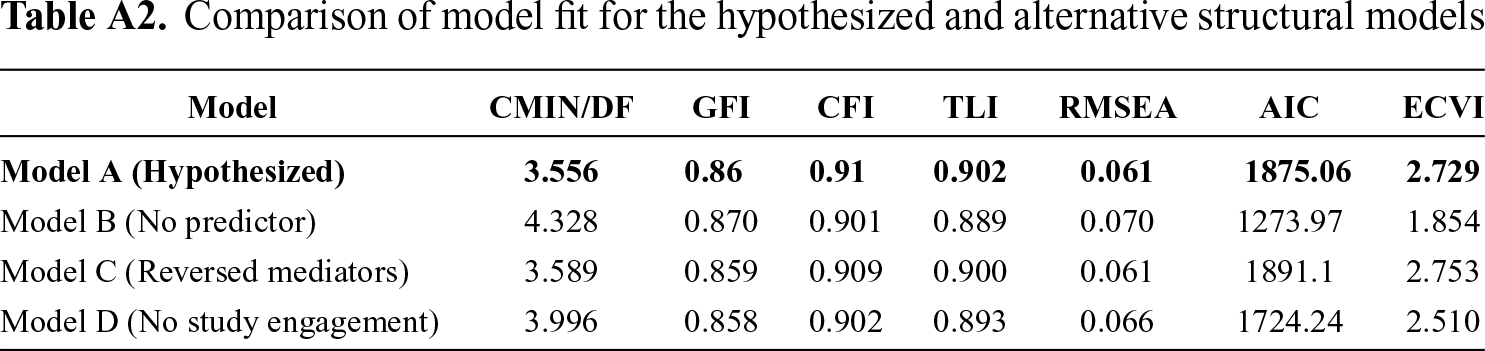
Before testing the hypothesized relationships, both the measurement model and two structural models—namely, the direct-effect model and the full mediation model—were evaluated to ensure the structural adequacy and reliability of the latent constructs. Model fit was assessed using multiple indices, including χ2/df, GFI, CFI, TLI, and RMSEA. As summarized in Table 2, all models demonstrated an acceptable level of fit, even though some indices did not reach ideal thresholds. For completeness, a comparison between the hypothesized structural model and alternative structural specifications is reported in Appendix C (see Table A2). Nonetheless, the overall fit statistics were within the recommended ranges suggested by Hu and Bentler (Hu & Bentler, 1999), supporting the suitability of the models for further structural equation modeling. The standardized estimates for the final structural model are presented in Appendix B, Figure A1.
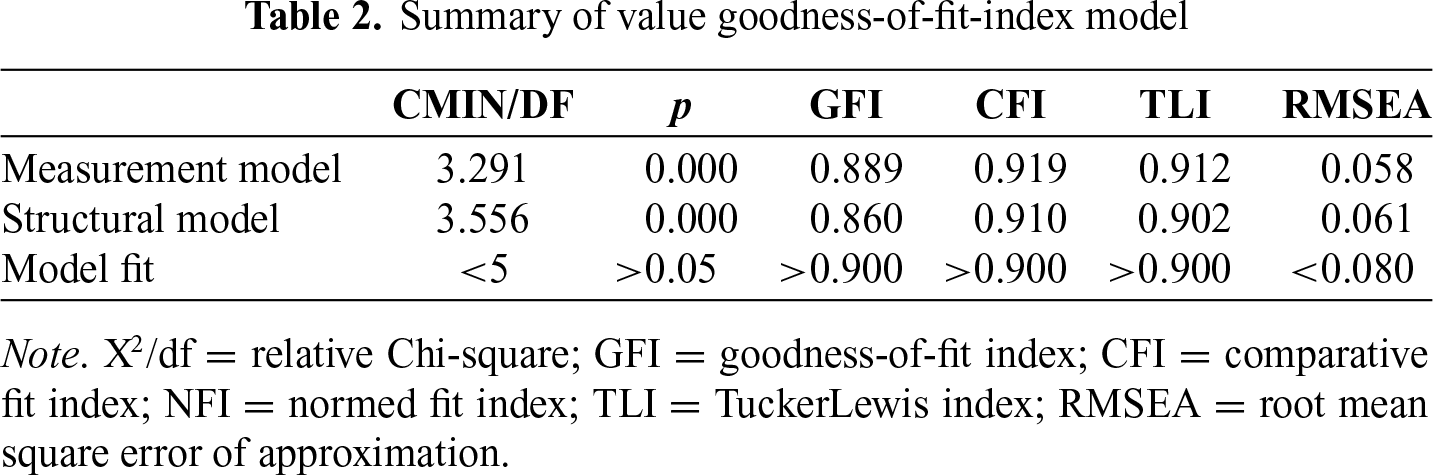
Table 3 displays the bivariate relationships among the study variables. Mindfulness correlated positively with positive emotions (r = 0.45, p < 0.001), psychological capital (r = 0.46, p < 0.001), and study engagement (r = 0.38, p < 0.001), and negatively with negative emotions (r = –0.30, p < 0.001). Positive emotions were positively related to psychological capital (r = 0.64, p < 0.001) and study engagement (r = 0.49, p < 0.001), whereas negative emotions showed inverse associations with both psychological capital (r = –0.27, p < 0.001) and study engagement (r = –0.22, p < 0.001). Psychological capital had the strongest positive link with study engagement (r = 0.54, p < 0.001).
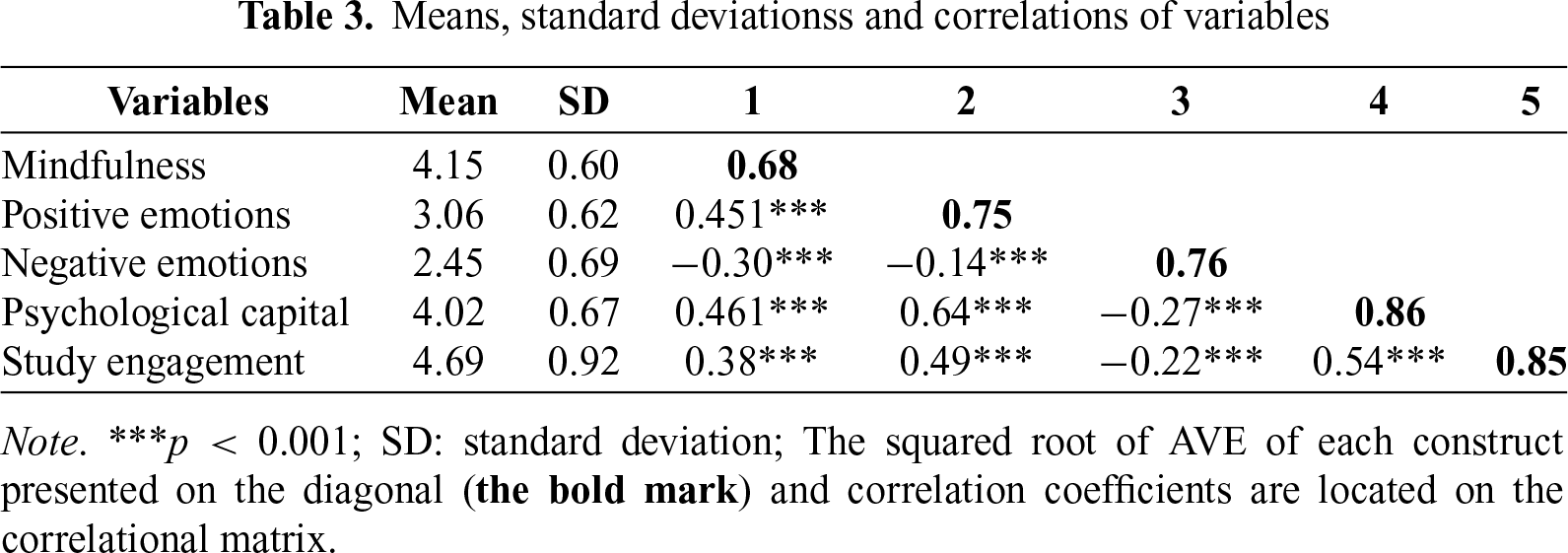
The square roots of the AVE values on the diagonal (0.68–0.86) exceed the corresponding inter-construct correlations, certifying discriminant validity and suggesting that multicollinearity is not a concern for subsequent mediation analyses.
Direct effects: Mindfulness and study engagement
The results from structural equation modeling (Table 4) provided full support for H1. Mindfulness significantly predicted students’ emotional states, psychological capital, and study engagement. Specifically, higher levels of mindfulness were positively associated with increased positive emotions (β = 0.451, p < 0.001) and negatively associated with negative emotions (β = –0.304, p < 0.001), indicating its dual role in enhancing affective well-being. Additionally, mindfulness was positively linked to psychological capital (β = 0.172, p < 0.001), reflecting its contribution to internal psychological resources such as hope, resilience, and optimism. Lastly, mindfulness also significantly predicted study engagement (β = 0.112, p = 0.011), albeit with a smaller effect size, suggesting that its impact on engagement may be partially mediated by emotional or psychological mechanisms. Collectively, these findings confirm H1 and underscore mindfulness as a foundational resource for supporting students’ emotional, psychological, and academic functioning.
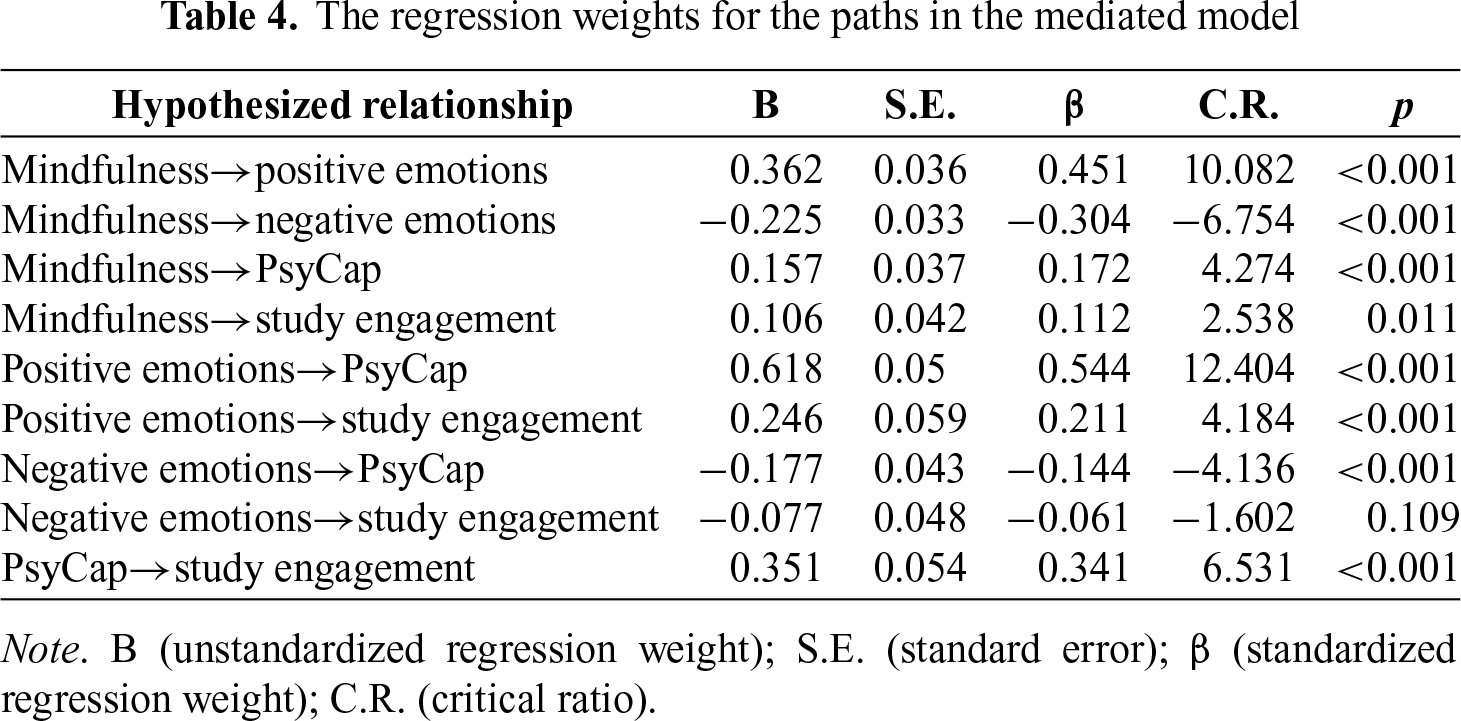
Positive emotions were found to be significant positive predictors of both psychological capital and study engagement. Students experiencing higher levels of positive emotions reported significantly greater psychological capital (β = 0.544, p < 0.001) and demonstrated stronger engagement in academic activities (β = 0.211, p < 0.001). In contrast, negative emotions were negatively associated with psychological capital (β = –0.144, p < 0.001), indicating that elevated levels of negative affect corresponded with reduced psychological resources. However, the direct effect of negative emotions on study engagement was not statistically significant (β = –0.061, p = 0.109), suggesting that while negative emotions may deplete internal psychological resources, they do not directly undermine study engagement. These findings lend partial support to H2, highlighting the asymmetric roles of positive and negative emotions in predicting academic outcomes.
Psychological capital mediation
Psychological capital emerged as the strongest proximal predictor of study engagement among university students. Specifically, higher levels of psychological capital were significantly associated with greater engagement in academic activities (β = 0.341, p < 0.001). This finding underscores the pivotal role of internal psychological resources—such as self-efficacy, hope, resilience, and optimism—in sustaining students’ motivation, effort, and involvement in their studies. The strength and significance of this relationship highlight psychological capital as a central mechanism through which students maintain high levels of study engagement.
Bootstrapped mediation analysis (5000 resamples) confirmed that emotions and psychological capital together served as critical mediators linking mindfulness to the development of psychological capital (see Table 5). Specifically, mindfulness significantly enhanced psychological capital via increased positive emotions (β = 0.245, 95% BC CI = [0.197, 0.300], p < 0.001), and also through reduced negative emotions (β = 0.044, 95% BC CI = [0.018, 0.079], p = 0.001). These dual emotional pathways indicate that both the presence of positive affect and the attenuation of distress mediates the influence of mindfulness on students’ internal psychological resources. This provides strong support for H4, emphasizing the affective mechanisms through which mindfulness builds resilience and motivational strength in academic settings.
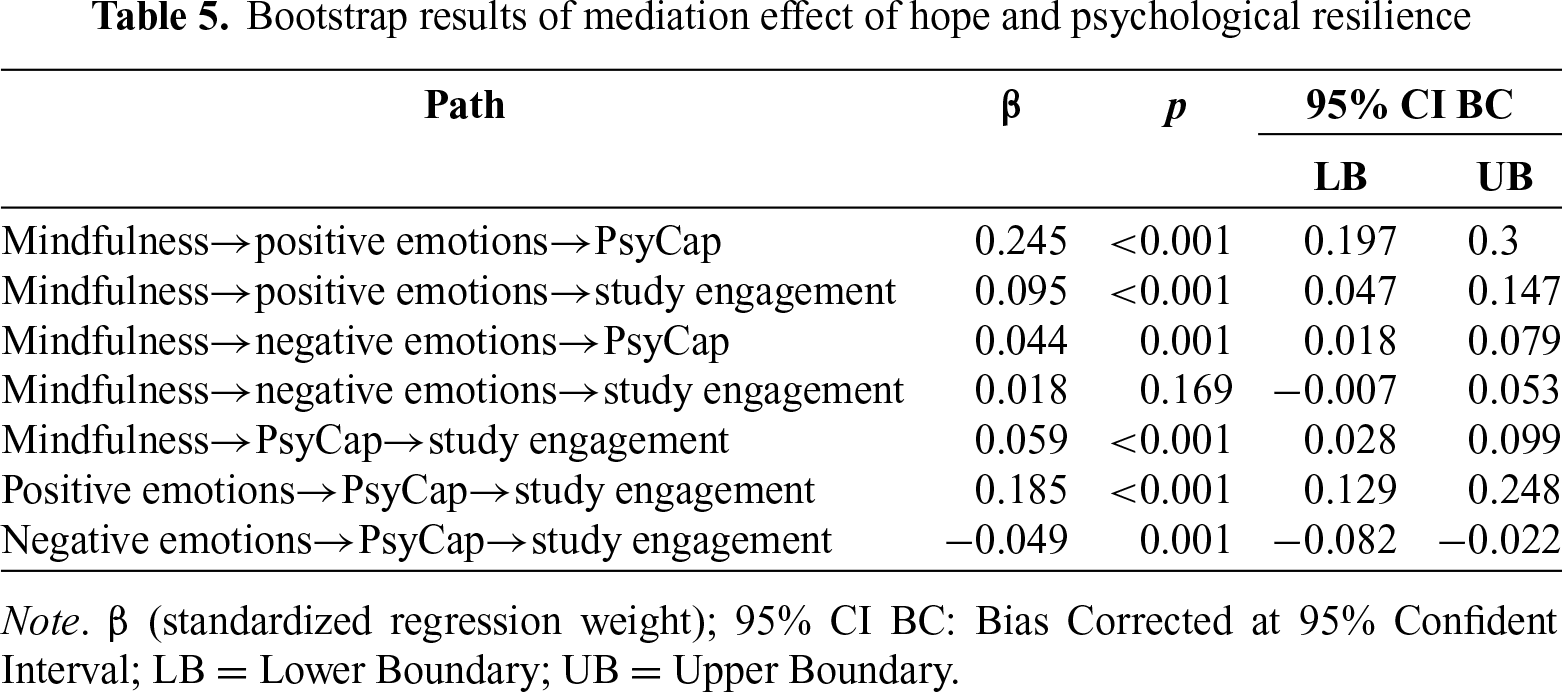
The results also partially supported H5, indicating that the relationship between mindfulness and study engagement is mediated by both emotional experiences and psychological capital. First, positive emotions significantly mediated the link between mindfulness and engagement (β = 0.095, 95% BC CI = [0.047, 0.147], p < 0.001), whereas the path through negative emotions was not significant (β = 0.018, 95% BC CI = [–0.007, 0.053], p = 0.169). Moreover, psychological capital functioned as a key intermediary in this relationship (β = 0.059, 95% BC CI = [0.028, 0.099], p < 0.001), underscoring its role as a proximal driver of study engagement. Additional findings revealed a sequential pathway whereby positive emotions further promoted engagement via increased psychological capital (β = 0.185, 95% BC CI = [0.129, 0.248], p < 0.001), while negative emotions impeded engagement through depleted psychological capital (β = –0.049, 95% BC CI = [–0.082, –0.022], p = 0.001). These results collectively illustrate a complex, multi-stage mediational process through which mindfulness cultivates student engagement.
Affect and psychological capital serial mediation effects
Bootstrapped serial mediation analysis (5000 resamples; see Table 6) provided robust evidence in support of H6. Specifically, mindfulness was found to enhance study engagement indirectly through a sequential pathway involving positive emotions followed by psychological capital (β = 0.084, 95% BC CI = [0.056, 0.117], p < 0.001). This two-step chain mediation represented the strongest indirect effect in the structural model, highlighting how increased emotional positivity and strengthened internal resources work synergistically to transform mindfulness into sustained study engagement.
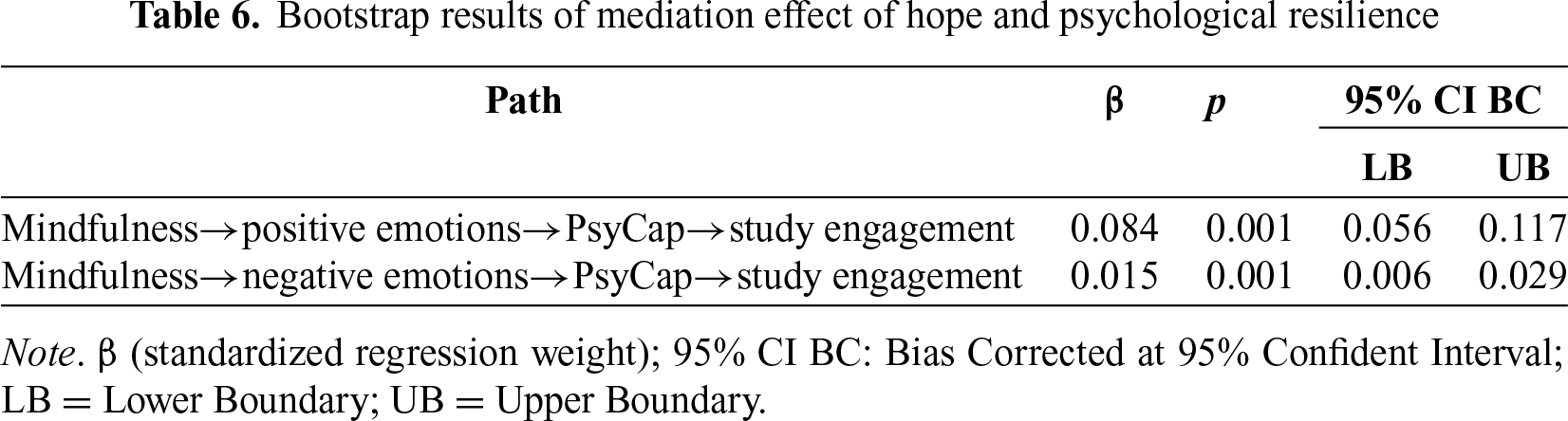
In addition, a weaker but statistically significant serial pathway was observed, wherein mindfulness led to reduced negative emotions, which in turn facilitated the development of psychological capital, ultimately contributing to higher study engagement (β = 0.015, 95% BC CI = [0.006, 0.029], p = 0.001). Although this effect was smaller in magnitude, the confidence interval did not cross zero, suggesting that alleviating negative affect becomes impactful only when accompanied by downstream psychological resource gains. Collectively, these findings reinforce the critical role of both emotional valence and personal psychological assets in linking mindfulness to optimal academic functioning.
Together, these findings establish that mindfulness operates through two distinct affect-resource cascades (one amplifying positive emotions and the other attenuating negative emotions) to augment the psychological capital that most proximally drives students’ engagement with their studies (see Figure 2).
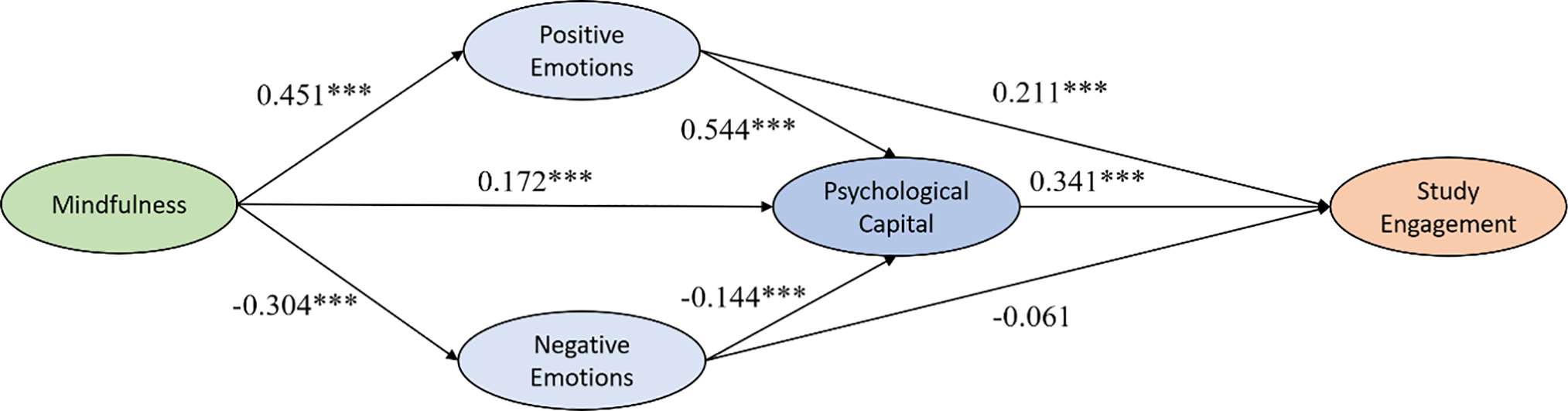
Figure 2: The relationships between soft skills and study engagement. Note: ***p < 0.001. N = 688. Coefficients were standardized.
Guided by the broaden-and-build theory (Fredrickson, 2001) and Conservation of Resources (COR) theory (Hobfoll et al., 2023), this study examined how mindfulness contributes to study engagement among university students through dual affective (positive and negative emotions) and resource-based (psychological capital) pathways. The findings largely support the hypothesized model and shed light on the interwoven roles of emotions and internal resources in sustaining study engagement.
As hypothesized (H1), mindfulness significantly predicted increased positive emotions and reduced negative emotions, replicating findings from existing literature indicating that mindfulness cultivates emotional balance, enhancing positive affect and buffering against negative emotions (Lee et al., 2022). These results align with the core mechanism of mindfulness, which fosters present-moment awareness and nonjudgmental acceptance—skills shown to stabilize emotional reactivity and improve emotion regulation (Chiesa et al., 2013). Additionally, mindfulness positively predicted psychological capital, supporting previous evidence that mindful individuals exhibit greater hope, self-efficacy, and resilience (Almarwani et al., 2025). Although the direct path from mindfulness to study engagement was weaker than other pathways, its significance suggests that mindfulness may influence engagement both directly and indirectly.
Consistent with H2, positive emotions were positively linked to both psychological capital and study engagement, whereas negative emotions showed a deleterious effect on psychological capital but no significant direct effect on engagement. This asymmetric influence underscores the broader motivational potential of positive affect, as proposed by the broaden-and-build theory, whereby emotions like enthusiasm and gratitude facilitate the construction of cognitive and social resources (Fredrickson & Joiner, 2002) and psychological resources (Carmona-Halty et al., 2024). Conversely, negative affect may drain emotional energy, eroding resource development, but does not necessarily inhibit engagement unless internal resources are compromised (Pekrun et al., 2002). These findings echo recent studies emphasizing the differential roles of emotional valence in academic performance and motivation (Liu, 2022).
Supporting H3, psychological capital emerged as the strongest proximal predictor of study engagement, reinforcing its status as a core personal resource in academic settings. This finding corroborates prior work demonstrating that students with higher PsyCap are more persistent, optimistic, and confident in their academic pursuits (Luthans et al., 2007; Siu et al., 2014). PsyCap enables students to reframe challenges, recover from failure, and approach learning tasks with determination—traits that align with all three dimensions of study engagement: vigor, dedication, and absorption (Schaufeli et al., 2002). As such, investing in the development of PsyCap through targeted interventions may provide a robust route to sustainable student engagement.
Hypotheses H4 and H5 explored the indirect effects of mindfulness on psychological capital and study engagement via affective states and internal resources. Positive emotions significantly mediated both pathways, confirming the cascade from mindfulness → positive affect → resource development and mindfulness → positive affect → study engagement (Fredrickson, 2001; Carmona-Halty et al., 2019). The nonsignificant indirect path from negative emotions to study engagement suggests that simply reducing emotional distress is insufficient for activating engagement unless accompanied by resource restoration—a finding echoed in prior emotion regulation research (Tugade & Fredrickson, 2007; Liu, 2022). Psychological capital itself served as a robust mediator between mindfulness and study engagement, aligning with studies that position PsyCap as a psychological “Engine” for academic persistence (Almarwani et al., 2025).
Finally, in support of H6, the most substantial indirect pathway observed was a serial mediation chain: mindfulness enhanced positive emotions, which in turn elevated psychological capital, ultimately promoting higher study engagement. This sequential mechanism affirms the interdependence of emotional and resource systems in driving academic behavior (Carmona-Halty et al., 2021). A secondary pathway—where mindfulness reduced negative emotions, allowing psychological capital to be maintained and thus supporting engagement—was statistically significant though weaker in magnitude. These findings extend earlier models by illustrating how emotional valence functions not only as an outcome of mindfulness but as a catalyst for resource building, particularly within academically demanding environments (Carmona-Halty et al., 2021).
Implications for research and practice
The findings confirm that mindfulness not only directly boosts positive emotions, psychological capital, and study engagement while suppressing negative emotions, but also indirectly enhances engagement through both individual and chained mediators. The most robust pathway emerged from a serial mediation: mindfulness → positive emotions → psychological capital → study engagement. This provides empirical support for the broaden-and-build theory (Fredrickson, 2001) and Conservation of Resources (COR) theory (Hobfoll et al., 2023) in an integrated academic context. Besides, the findings illuminate how emotional and cognitive resources function together as mediators in the mindfulness–engagement relationship. By refining and empirically testing this expanded theoretical framework, this study offers a multi-layered understanding of the mechanisms underlying sustained study engagement—an area previously underexplored in the context of both positive and negative affect.
Practically, this study offers several recommendations for universities seeking to improve student engagement and psychological well-being through mindfulness-based strategies. First, higher education institutions can introduce structured mindfulness programs, such as elective courses, weekly guided sessions, or brief mindfulness practices embedded into regular classroom routines. These initiatives can be delivered in-person or online, and supported by trained facilitators or digital tools (e.g., mindfulness apps) to ensure scalability and accessibility. Second, academic staff can embed emotional and psychological capital development into curriculum design. For example, assignments can include reflective components, classroom discussions can normalize emotional challenges in learning, and group activities can be used to build optimism, self-efficacy, and resilience, key elements of psychological capital. Third, student affairs units and mental health services can collaborate to integrate mindfulness into broader well-being programs. This might include stress reduction workshops, peer-led mindfulness clubs, or integration into first-year orientation to build a culture of self-awareness and emotional regulation from the outset. From a policy perspective, the findings support embedding mindfulness and resource-building indicators into university performance metrics, graduate outcome frameworks, and national mental health initiatives. This aligns with institutional goals of promoting student retention, academic excellence, and holistic development.
Limitations and future directions
Despite its contributions, this study has limitations. The cross-sectional design limits causal interpretations; future longitudinal or experimental research could yield more robust evidence about causality and directional effects. Second, data were collected through self-report measures, potentially introducing common method variance and response biases. Multi-method approaches, including observational or physiological measures, are recommended in future studies to enhance validity. Third, the sample was drawn from a single cultural context and limited to three academic majors—Education, Literature, and Management. Demographic variables such as academic year and gender were not included in the analysis. These limitations may constrain the generalizability of the findings. Future studies should aim to recruit a more diverse sample across disciplines, academic levels (e.g., freshmen vs. seniors), and gender groups, and test the model in different cultural and institutional settings (e.g., public vs. private universities) to enhance external validity. Finally, although univariate normality assumptions were met, Mardia’s coefficients indicated violations of multivariate normality. Nevertheless, the parameter estimates remained stable, likely due to the large sample size (N = 688) and acceptable residual structure. To further safeguard against non-normality, future research may consider using robust estimation techniques, such as bootstrapping or Bayesian methods.
This study advances the understanding of how mindfulness enhances university students’ study engagement by unveiling a comprehensive dual-pathway model integrating affective (positive and negative emotions) and cognitive-resource (psychological capital) mechanisms. While prior research has explored bivariate associations between mindfulness and academic outcomes, the current study contributes novel insights by (1) testing a parallel and sequential mediation model with both positive and negative affect, and (2) identifying psychological capital as a key downstream mechanism through which affective states translate into engagement.
Acknowledgement: We would like to express my sincere gratitude to all the participants for their time and valuable contributions to this study.
Funding Statement: The authors received no specific funding for this study.
Author Contributions: All authors contributed to the study conception and design. Material preparation, data collection and analysis were performed by Xiang Deng and Xiaoling Wang. Supervision, methodology and validation were performed by Zaida Nor binti Zainudin and Wan Norhayati Wan Othman. The first draft of the manuscript was written by Xiang Deng and Xiaoling Wang. All authors reviewed the results and approved the final version of the manuscript.
Availability of Data and Materials: The data that support the findings of this study are available from the corresponding author upon reasonable request.
Ethics Approval: The studies involving human participants were subjected to a review and approval process conducted by the Ethics Committee for Research Involving Human Subjects of University Putra Malaysia (JKEUPM-2024-033).
Informed Consent: Informed consent was obtained from all subjects involved in the study.
Conflicts of Interest: The authors declare no conflicts of interest to report regarding the present study.
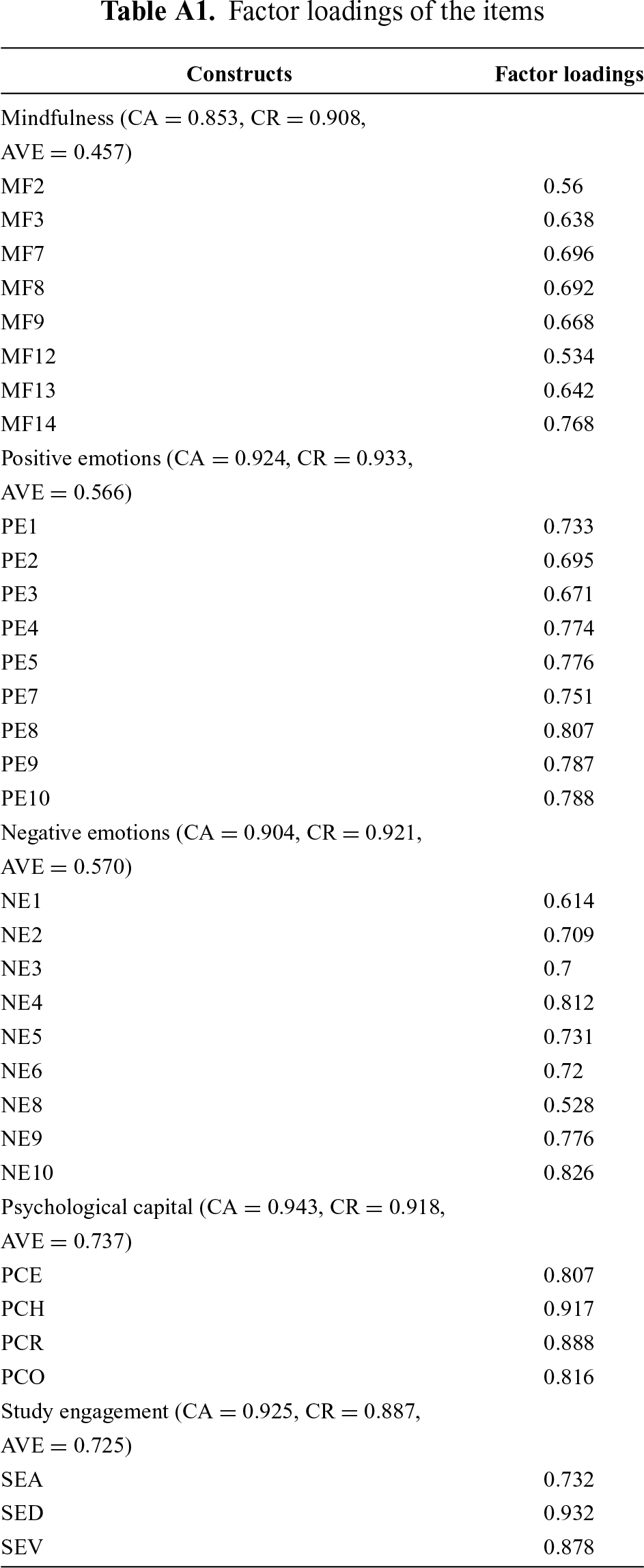
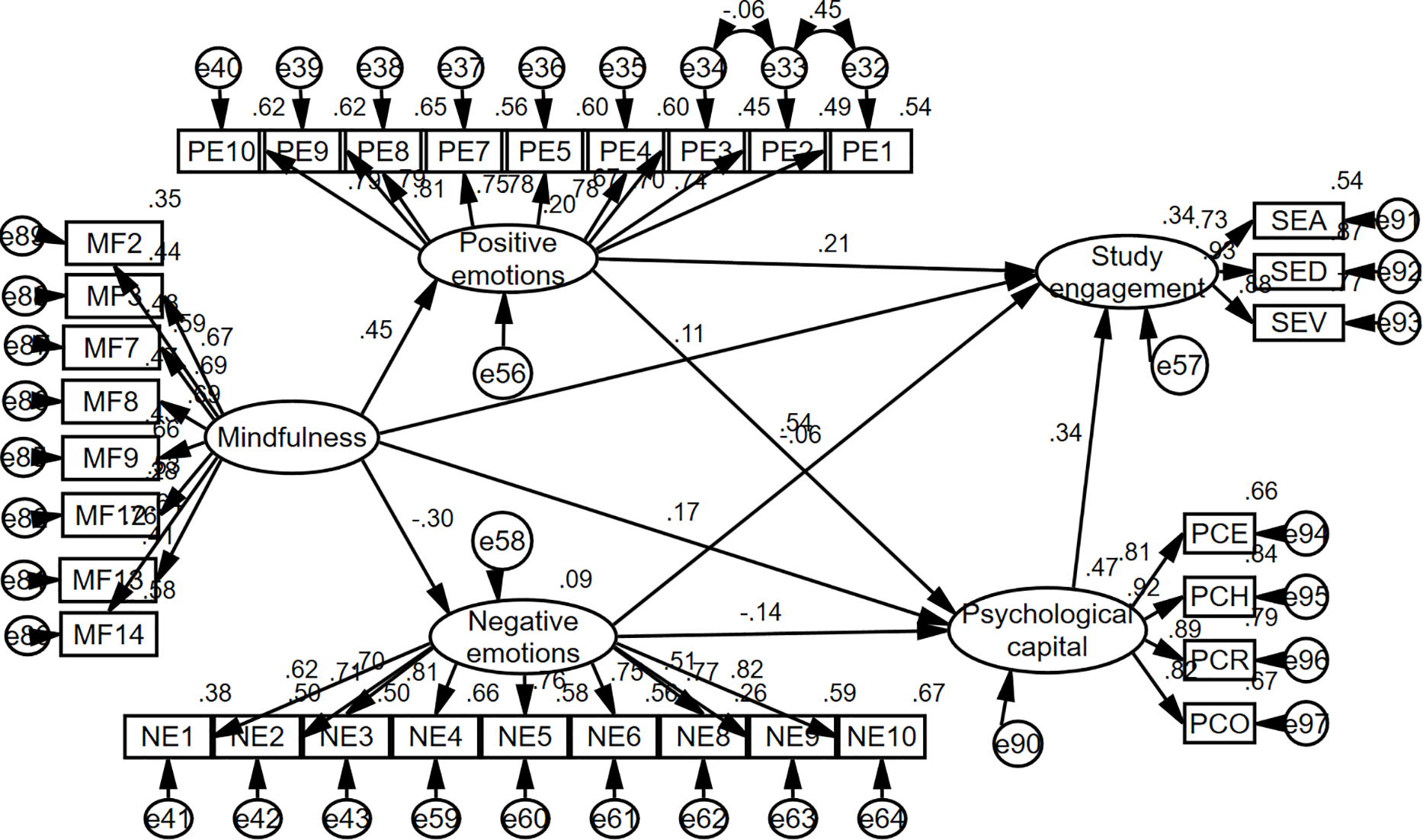
Figure A1: The structural model (standard estimate)
To examine the robustness of the hypothesized chain mediation model (Model A), we conducted several alternative model comparisons:
Model A (hypothesized): Mindfulness → Emotions → Psychological Capital → Study Engagement
Model B: Model A without mindfulness
Model C: Reversed mediator sequence
Model D: Without study engagement
References
Ali, M., Khan, A. N., Khan, M. M., Butt, A. S., & Shah, S. H. H. (2022). Mindfulness and study engagement: Mediating role of psychological capital and intrinsic motivation. Journal of Professional Capital and Community, 7(2), 144–158. https://doi.org/10.1108/jpcc-02-2021-0013 [Google Scholar] [CrossRef]
Almarwani, A. M., AbuAlula, N. A., & Ebeid, I. A. (2025). Cultivating academic excellence: Unveiling the impact of mindfulness through psychological capital among nursing students. International Journal of Mental Health Nursing, 34(3), e70053. https://doi.org/10.1111/inm.70053. [Google Scholar] [PubMed] [CrossRef]
Bakosh, L. S., Snow, R. M., Tobias, J. M., Houlihan, J. L., & Barbosa-Leiker, C. (2016). Maximizing mindful learning: Mindful awareness intervention improves elementary school students’ quarterly grades. Mindfulness, 7(1), 59–67. https://doi.org/10.1007/s12671-015-0387-6 [Google Scholar] [CrossRef]
Bi, Y., & Ye, X. (2021). The effect of trait mindfulness on teachers’ emotional exhaustion: The chain mediating role of psychological capital and job engagement. Healthcare, 9, 1527. https://doi.org/10.3390/healthcare9111527. [Google Scholar] [PubMed] [CrossRef]
Bordbar, S., Ahmadinejad, P., Bahmaei, J., & Yusefi, A. R. (2024). The impact of mindfulness on academic achievement of students with the mediating role of adaptability: A structural equation modeling approach. BMC Medical Education, 24(1), 1167. https://doi.org/10.1186/s12909-024-06192-6. [Google Scholar] [PubMed] [CrossRef]
Brown, K. W., & Ryan, R. M. (2003). The benefits of being present: Mindfulness and its role in psychological well-being. Journal of Personality and Social Psychology, 84(4), 822–848. https://doi.org/10.1037/0022-3514.84.4.822. [Google Scholar] [PubMed] [CrossRef]
Carmody, J., & Baer, R. A. (2008). Relationships between mindfulness practice and levels of mindfulness, medical and psychological symptoms and well-being in a mindfulness-based stress reduction program. Journal of Behavioral Medicine, 31(1), 23–33. https://doi.org/10.1007/s10865-007-9130-7. [Google Scholar] [PubMed] [CrossRef]
Carmona-Halty, M., Alarcón-Castillo, K., Semir-González, C., Sepúlveda-Páez, G., Mena-Chamorro, P. et al. (2024). How study-related positive emotions and academic psychological capital mediate between teacher-student relationship and academic performance: A four-wave study among high school students. Frontiers in Psychology, 15, 1419045. https://doi.org/10.3389/fpsyg.2024.1419045. [Google Scholar] [PubMed] [CrossRef]
Carmona-Halty, M., Salanova, M., Llorens, S., & Schaufeli, W. B. (2019). How psychological capital mediates between study-related positive emotions and academic performance. Journal of Happiness Studies, 20(2), 605–617. https://doi.org/10.1007/s10902-018-9963-5 [Google Scholar] [CrossRef]
Carmona-Halty, M., Salanova, M., Llorens, S., & Schaufeli, W. B. (2021). Linking positive emotions and academic performance: The mediated role of academic psychological capital and academic engagement. Current Psychology, 40(6), 2938–2947. https://doi.org/10.1007/s12144-019-00227-8 [Google Scholar] [CrossRef]
Chems-Maarif, R., Cavanagh, K., Baer, R., Gu, J., & Strauss, C. (2025). Defining mindfulness: A review of existing definitions and suggested refinements. Mindfulness, 16(1), 1–20. https://doi.org/10.1007/s12671-024-02507-2 [Google Scholar] [CrossRef]
Chiesa, A., Serretti, A., & Jakobsen, J. C. (2013). Mindfulness: Top-down or bottom-up emotion regulation strategy? Clinical Psychology Review, 33(1), 82–96. https://doi.org/10.1016/j.cpr.2012.10.006. [Google Scholar] [PubMed] [CrossRef]
Farsimadan, E., Ghazanfari, A., Ahmadi, R., & Charami, M. (2022). Explaining academic engagement based on mindfulness and academic self-efficacy: Path analysis model. Clinical Psychology Achievements, 8(2), 115–134. [Google Scholar]
Fornell, C., & Larcker, D. F. (1981). Evaluating structural equation models with unobservable variables and measurement error. Journal of Marketing Research, 18(1), 39–50. https://doi.org/10.2307/3151312 [Google Scholar] [CrossRef]
Fredrickson, B. L. (2001). The role of positive emotions in positive psychology: The broaden-and-build theory of positive emotions. American Psychologist, 56(3), 218–226. https://doi.org/10.1037//0003-066x.56.3.218. [Google Scholar] [PubMed] [CrossRef]
Fredrickson, B. L., & Joiner, T. (2002). Positive emotions trigger upward spirals toward emotional well-being. Psychological Science, 13(2), 172–175. https://doi.org/10.1111/1467-9280.00431. [Google Scholar] [PubMed] [CrossRef]
González-Martín, A. M., Aibar-Almazán, A., Rivas-Campo, Y., Castellote-Caballero, Y., & Carcelén-Fraile, M. D. C. (2023). Mindfulness to improve the mental health of university students. A systematic review and meta-analysis. Frontiers in Public Health, 11, 1284632. https://doi.org/10.3389/fpubh.2023.1284632. [Google Scholar] [PubMed] [CrossRef]
Gordani, Y., & Sadeghzadeh, M. (2023). Mindfulness and the mediating role of psychological capital in predicting the foreign language anxiety. Journal of Psycholinguistic Research, 52(5), 1785–1797. https://doi.org/10.1007/s10936-023-09938-3. [Google Scholar] [PubMed] [CrossRef]
Groskurth, K., Bluemke, M., & Lechner, C. M. (2024). Why we need to abandon fixed cutoffs for goodness-of-fit indices: An extensive simulation and possible solutions. Behavior Research Methods, 56(4), 3891–3914. https://doi.org/10.3758/s13428-023-02193-3. [Google Scholar] [PubMed] [CrossRef]
Hair, J. F., Jr., Black, W. C., Babin, B. J., & Anderson, R. E. (2019). Multivariate data analysis (8th ed.). Boston, MA, USA: Cengage. [Google Scholar]
Hayes, A. F. (2013). Introduction to mediation, moderation, and conditional process analysis: A regression-based approach. New York, NY, USA: The Guilford Press. [Google Scholar]
Hobfoll, S. E., Neveu, J.-P., & Westman, M. (2023). Conservation of resources theory. In: An introduction to contemporary work psychology (pp. 215–232). Hoboken, NJ, USA: John Wiley & Sons, Inc. [Google Scholar]
Hu, L.t, & Bentler, P. M. (1999). Cutoff criteria for fit indexes in covariance structure analysis: Conventional criteria versus new alternatives. Structural Equation Modeling: A Multidisciplinary Journal, 6(1), 1–55. https://doi.org/10.1080/10705519909540118 [Google Scholar] [CrossRef]
Johnson, J. (2024). Effect of emotions on learning, memory, and disorders associated with the changes in expression levels: A narrative review. Brain Circulation, 10(2), 134–144. https://doi.org/10.4103/bc.bc_86_23. [Google Scholar] [PubMed] [CrossRef]
Lee, A. S. Y., Sun, Y., & Chung, K. K. H. (2022). Linking University Students’ mindfulness to positive adjustment amidst COVID-19 pandemic: A 6-month cross-lagged panel design. Mindfulness, 13(12), 3080–3090. https://doi.org/10.1007/s12671-022-02014-2. [Google Scholar] [PubMed] [CrossRef]
Little, T. D., Cunningham, W. A., Shahar, G., & Widaman, K. F. (2002). To parcel or not to parcel: Exploring the question, weighing the merits. Structural Equation Modeling, 9(2), 151–173. https://doi.org/10.1207/s15328007sem0902_1 [Google Scholar] [CrossRef]
Liu, M. (2022). Exploring the motivation-engagement link: The moderating role of positive emotion. Journal For the Psychology of Language Learning, 4(1), e415022. https://doi.org/10.52598/jpll/4/1/3 [Google Scholar] [CrossRef]
Loucks, E. B., Nardi, W. R., Gutman, R., Saadeh, F. B., Li, Y. et al. (2021). Mindfulness-based college: A stage 1 randomized controlled trial for university student well-being. Biopsychosocial Science and Medicine, 83(6), 602–614. https://doi.org/10.1097/psy.0000000000000860. [Google Scholar] [PubMed] [CrossRef]
Lu, R., Zhou, J., Zhao, S., Ou, W., Ge, J. et al. (2025). The relationship of anxiety, benefit finding and academic engagement among Chinese college students in different stages of COVID-19: A repeated cross-sectional pilot study. Current Psychology, 44(5), 3178–3196. https://doi.org/10.1007/s12144-025-07281-5 [Google Scholar] [CrossRef]
Luthans, F., Avey, J. B., Clapp-Smith, R., & Li, W. (2008). More evidence on the value of Chinese workers’ psychological capital: A potentially unlimited competitive resource? The International Journal of Human Resource Management, 19(5), 818–827. https://doi.org/10.1080/09585190801991194 [Google Scholar] [CrossRef]
Luthans, F., Avolio, B. J., Avey, J. B., & Norman, S. M. (2007). Positive psychological capital: Measurement and relationship with performance and satisfaction. Personnel Psychology, 60(3), 541–572. https://doi.org/10.1111/j.1744-6570.2007.00083.x [Google Scholar] [CrossRef]
Luthans, K. W., Luthans, B. C., & Chaffin, T. D. (2019). Refining grit in academic performance: The mediational role of psychological capital. Journal of Management Education, 43(1), 35–61. https://doi.org/10.1177/1052562918804282 [Google Scholar] [CrossRef]
Lye, A. J., Liew, P. Y., Mohd Fadzil, H., & Foong, C. C. (2022). Effect of emotional intelligence and demographic characteristics on psychological capital among chemical engineering students. Journal of Chemical Education, 100(2), 479–488. https://doi.org/10.1021/acs.jchemed.2c00105 [Google Scholar] [CrossRef]
Matsunaga, M. (2008). Item parceling in structural equation modeling: A primer. Communication Methods and Measures, 2(4), 260–293. https://doi.org/10.1080/19312450802458935 [Google Scholar] [CrossRef]
Navarro, R., Vega, V., Bayona, H., Bernal, V., & Garcia, A. (2024). The relationship between perceived learning, academic performance and academic engagement in virtual education for university students. Journal of Education and E-Learning Research, 11(1), 174–180. https://doi.org/10.20448/jeelr.v11i1.5404 [Google Scholar] [CrossRef]
Niemiec, R., Rashid, T., & Spinella, M. (2012). Strong mindfulness: Integrating mindfulness and character strengths. Journal of Mental Health Counseling, 34(3), 240–253. https://doi.org/10.17744/mehc.34.3.34p6328x2v204v21 [Google Scholar] [CrossRef]
Olson, N., Oberhoffer-Fritz, R., Reiner, B., & Schulz, T. (2025). Stress, student burnout and study engagement—a cross-sectional comparison of university students of different academic subjects. BMC Psychology, 13(1), 293. https://doi.org/10.1186/s40359-025-02602-6. [Google Scholar] [PubMed] [CrossRef]
Palalas, A., Mavraki, A., Drampala, K., Krassa, A., & Karakanta, C. (2020). Mindfulness practices in online learning: Supporting learner self-regulation. Journal of Contemplative Inquiry, 7(1), 4. [Google Scholar]
Pekrun, R., Goetz, T., Titz, W., & Perry, R. P. (2002). Academic emotions in students’ self-regulated learning and achievement: A program of qualitative and quantitative research. Educational Psychologist, 37(2), 91–105. https://doi.org/10.1207/s15326985ep3702_4 [Google Scholar] [CrossRef]
Podsakoff, P. M., MacKenzie, S. B., Lee, J.-Y., & Podsakoff, N. P. (2003). Common method biases in behavioral research: A critical review of the literature and recommended remedies. Journal of Applied Psychology, 88(5), 879–903. https://doi.org/10.1037/0021-9010.88.5.879. [Google Scholar] [PubMed] [CrossRef]
Prakash, R. S., Hussain, M. A., & Schirda, B. (2015). The role of emotion regulation and cognitive control in the association between mindfulness disposition and stress. Psychology and Aging, 30(1), 160. https://doi.org/10.1037/a0038544. [Google Scholar] [PubMed] [CrossRef]
Salanova, M., Llorens, S., & Schaufeli, W. B. (2011). “Yes, I can, I feel good, and I just do it!” On gain cycles and spirals of efficacy beliefs, affect, and engagement. Applied Psychology, 60(2), 255–285. https://doi.org/10.1111/j.1464-0597.2010.00435.x [Google Scholar] [CrossRef]
Schaufeli, W. B., Martinez, I. M., Pinto, A. M., Salanova, M., & Bakker, A. B. (2002). Burnout and engagement in university students: A cross-national study. Journal of Cross-Cultural Psychology, 33(5), 464–481. https://doi.org/10.1177/0022022102033005003 [Google Scholar] [CrossRef]
Shapiro, S. L., Brown, K. W., & Astin, J. (2011). Toward the integration of meditation into higher education: A review of research evidence. Teachers College Record, 113(3), 493–528. https://doi.org/10.1177/016146811111300306 [Google Scholar] [CrossRef]
Siu, O. L., Bakker, A. B., & Jiang, X. (2014). Psychological capital among university students: Relationships with study engagement and intrinsic motivation. Journal of Happiness Studies, 15(4), 979–994. https://doi.org/10.1007/s10902-013-9459-2 [Google Scholar] [CrossRef]
Siu, O. L., Lo, B. C. Y., Ng, T. K., & Wang, H. (2023). Social support and student outcomes: The mediating roles of psychological capital, study engagement, and problem-focused coping. Current Psychology, 42(4), 2670–2679. https://doi.org/10.1007/s12144-021-01621-x [Google Scholar] [CrossRef]
Tugade, M. M., & Fredrickson, B. L. (2007). Regulation of positive emotions: Emotion regulation strategies that promote resilience. Journal of Happiness Studies, 8(3), 311–333. https://doi.org/10.1007/s10902-006-9015-4 [Google Scholar] [CrossRef]
Watson, D., Clark, L. A., & Tellegen, A. (1988). Development and validation of brief measures of positive and negative affect: The PANAS scales. Journal of Personality and Social Psychology, 54(6), 1063. https://doi.org/10.1037/0022-3514.54.6.1063. [Google Scholar] [PubMed] [CrossRef]
Wu, Y., & Ma, R. (2025). Mindfulness as a key mechanism: Linking flow and emotional intelligence to academic engagement in Chinese university students. Frontiers in Psychology, 16, 1635604. https://doi.org/10.3389/fpsyg.2025.1635604. [Google Scholar] [PubMed] [CrossRef]
Zhao, F., Li, Y., Hu, W., Zhang, H., Wu, H., & et al. (2024). Benefits of dispositional mindfulness among adolescents: Relationship with academic emotions and academic engagement. Current Psychology, 43(39), 31093–31106. https://doi.org/10.1007/s12144-024-06670-6 [Google Scholar] [CrossRef]
Cite This Article
 Copyright © 2026 The Author(s). Published by Tech Science Press.
This work is licensed under a Creative Commons Attribution 4.0 International License , which permits unrestricted use, distribution, and reproduction in any medium, provided the original work is properly cited.
 Downloads
 Citation Tools
