
 Login
Login Register
 Submit a Paper
 Propose a Special lssue
 Open Access
ARTICLE

A Preliminary Study on Controlling Chilo suppressalis in Rice Fields Using Precision Timing and Insecticide Combinations
1 Department of Municipal and Ecological Engineering, Shanghai Urban Construction Vocational College, Shanghai, China
2 Department of Modern Agriculture, Meishan Vocational and Technical College, Sichuan, China
3 Rice Research Institute, Sichuan Agricultural University, Sichuan, China
4 Department of Bioclimatology, Poznan University of Life Sciences, Poznan, Poland
* Corresponding Authors: Zhiyuan Yang. Email: ; Anshu Rastogi. Email:
Phyton-International Journal of Experimental Botany 2026, 95(2), 10 https://doi.org/10.32604/phyton.2026.075709
Received 06 November 2025; Accepted 20 January 2026; Issue published 28 February 2026
 View Full Text
 Download PDF
Abstract
Chilo suppressalis (Walker) is one of the most important rice pests worldwide, posing a significant challenge to effective control. To develop a precision-timed, eco-friendly management strategy, overwintering population investigation and dynamic monitoring of C. suppressalis populations were conducted in the Meishan region of Sichuan, China, from 2023 to 2024. The optimal timing for insecticide application was estimated, followed by field trials evaluating the efficacy of different insecticides. Results demonstrated that the peak emergence of first-generation adults typically occurred in early July (under the environmental conditions of the Meishan region), with the ambient humidity below 75% and temperature around 29°C. Pesticide efficacy trials show that insecticide combinations exhibited superior control. Notably, a combined treatment of emamectin benzoate·methoxyfenozide + chlorantraniliprole achieved the highest control efficacy (90.05%) and a corresponding yield of 12,491.55 kg/ha. All tested treatments were determined to be safe for rice growth. Furthermore, this optimized strategy resulted in notable economic benefits, including a 50% reduction in pesticide usage and cost savings of 4796.15 CNY compared to conventional practices. This study provides valuable insights into sustainable rice production and pest management and, for the first time, proposes a precision application time window based on intelligent monitoring.Keywords
Supplementary Material
Supplementary Material FileChilo suppressalis (Walker) (Lepidoptera: Crambidae) is one of the most destructive insect pests in rice ecosystems across Asia and Europe, posing a persistent threat to global rice production and food security [1,2]. During the tillering stage in rice, the larvae severely damage the vascular system, causing the interior leaf to wilt and resulting in dead hearts. During the flowering stage, panicles are severed at their base, creating white heads with unfilled grains, which cause annual economic losses estimated up to $40 million [3,4]. C. suppressalis is widely distributed across major rice-growing regions of Asia and parts of Europe, where it causes substantial yield losses [5,6]. The pest is particularly prevalent in East and Southeast Asia, including China, Japan, Korea, Vietnam, the Philippines, and Thailand, where climatic conditions favor multiple generations per year and persistent infestations [7,8]. In China, C. suppressalis is recognized as one of the most destructive rice pests across the Yangtze River Basin, Sichuan Basin, and southern rice-growing provinces. Beyond Asia, established populations have also been reported in parts of southern Europe, including Spain and Italy, highlighting its expanding geographic footprint [5]. This underscores the seriousness of C. suppressalis infestations. Moreover, economic impacts are likely to intensify under climate change scenarios, as rising temperatures and altered humidity patterns can increase pest survival and outbreak frequency. Given the potential escalation of damage under these changing conditions, there is an urgent need to develop effective management practices to prevent losses and enhance productivity.
For decades, the primary strategy for controlling C. suppressalis has largely depended on chemical pesticides [9], thereby substantially mitigating yield losses resulting from the borer’s infestation. The long-term, excessive, or indiscriminate use of pesticides can lead to increased pest resistance [10]. Additionally, the overuse of chemical pesticides in rice cultivation results in measurable residue accumulation that compromises grain quality and poses health risks. In China, the toxicological studies indicated a surge of 17.7% of brown rice samples contained multiple residues exceeding maximum limits in Guilan Province [11], in Iran, the average concentration of the organophosphorus pesticide diazinon in rice reached 31.91 mg/kg, far above EU safety standards [9]; and in Nigeria, rice samples exceeded permissible thresholds with hazard quotients [12]. More critically, field populations of C. suppressalis have developed high levels of resistance. Studies indicate that resistance ratios have reached up to 461.7-fold for chlorantraniliprole compared to susceptible strains [13]. This escalating resistance not only renders chemical treatments ineffective but also exacerbates environmental pollution and poses risks to food safety and ecosystem health.
In response to these challenges, Integrated Pest Management (IPM) has emerged as the cornerstone of modern, sustainable crop protection to manage pest populations in an economically and ecologically sound manner [14]. Applying physical and chemical control measures, at the most vulnerable stage of a pest’s life cycle can dramatically increase efficacy while minimizing the number of applications, thereby reducing selection pressure for resistance and lowering costs [15]. However, the effective timing of interventions against C. suppressalis has been hampered by a lack of precise, real-time data on its population dynamics. Traditional forecasting methods often rely on historical data and manual scouting, which are labor-intensive and often fail to capture the fluctuating local weather conditions on pest development [16]. To overcome these limitations, the intelligent monitoring systems, which combine automated trapping with spray timing analytics, offer a transformative opportunity to overcome this limitation. Dynamic monitoring employs continuous, real-time data collection through advanced sensors, remote sensing. This approach provides a granular, temporally dense picture of pest populations and environmental conditions, enabling the identification of early warning signals before pest populations reach damaging thresholds. When integrated with intelligent decision-support systems, pest management transforms from reactive to proactive, enabling interventions tailored precisely to current pest pressure [17,18,19].
In China, the convergence of pesticide-reduction policies and the widespread resistance of C. suppressalis to common insecticides necessitates optimized management strategies [20,21]. To advance the sustainable production of rice, this study was designed to precisely determine the optimal timing for pesticide application against C. suppressalis based on real-time adult population dynamics and evaluate the efficacy of different insecticide combinations applied, aiming to identify strategies that reduce overall insecticide dependency. This approach provides a comprehensive evaluation of its viability for sustainable rice farming. This research fills critical gaps by demonstrating how sensor-based, real-time monitoring coupled with intelligent decision-making can revolutionize C. suppressalis management, offering a novel, precise, and adaptive framework that differs fundamentally from conventional, threshold-based IPM practices.
2.1 Overwintering Population Determination and Adult Monitoring of C. suppressalis
To ascertain the baseline overwintering population data of C. suppressalis, representative winter fallow rice fields were surveyed across various locations in Meishan County, Sichuan Province, China (Table 1). A jumping multi-point sampling method was employed, wherein rice stubble from a total area of 10 m2 was excavated at each site. Approximately 100 rice stubbles per site were randomly selected, dissected, and examined for live overwintering larvae to determine the initial insect population density. This density was then extrapolated to estimate the population per hectare, providing a standardized baseline for subsequent assessments [22].
To monitor adult population dynamics, an intelligent insect monitoring and reporting system (BA-T/CBX, Chengdu Bian Technology Co., Ltd.) was deployed in the surveyed areas (Fig. S1). This system operated continuously from June to August 2023 to monitor the adult moth population dynamics based on an artificial intelligence framework that integrates machine vision for species identification with real-time environmental data acquisition. It automatically captures images of trapped insects and identifies and counts adult C. suppressalis. Concurrently, the system records key meteorological variables, including daily average temperature (°C) and relative humidity (%), to analyze the relationship between environmental factors and pest population fluctuations.
2.2 Experimental Material and Field Management
The rice variety ‘Zheyou 210’ selected by Zhejiang Academy of Agricultural Science, which exhibited the highest susceptibility to overwintering C. suppressalis infestation based on preliminary surveys, was suitable for evaluating control efficacy. ‘Zheyou 210’seedlings were sown on March 17 and manually transplanted on April 18, 2024, into experimental plots covering an area of 0.1 ha. The field was prepared by rotary tilling to a depth of 20 cm, followed by flooding for one week before harrowing and transplanting. A standardized fertilization was applied to all plots to ensure uniform crop nutrition. This included a basal application of a compound fertilizer (N-P-K = 15-15-15) at a rate of 300 kg/ha before transplanting, followed by two topdressings of urea at 150 kg/ha each, applied at the mid-tillering and panicle initiation stages, respectively.
The chemical insecticides used in the study were 1.8% Avermectin (EC), 40% Chlorantraniliprole (DPC), 34% Spinetoram (SC), 9% Emamectin Benzoate · Methoxyfenozide (SC), and 16% Avermectin · Indoxacarb (SC). Detailed information regarding the registration and manufacturing of these products is provided in the Supplementary Material (Table S1).
2.3 Pesticide Treatment and Application
Based on the dynamic monitoring data of C. suppressalis adult populations from 2023, pesticide applications were timed to precede the predicted peak of the first-generation larval hatching. Seven pesticide treatment groups (T1-T7) and an untreated group (control; CK) were established in a randomized complete block design. The recommended dosage of pesticides is based on instructions, and the dosage of compound pesticides is halved as follows: T1 = 2.7 g a.i. ha−1, Avermectin, T2 = 60 g a.i. ha−1, Chlorantraniliprole, T3 = 51 g a.i. ha−1, Spinetoram, T4 = 1.35 g a.i. ha−1, Avermectin + 30 g a.i. ha−1, Chlorantraniliprol, T5 = 6.75 g a.i. ha−1, Emamectin Benzoate · Methoxyfenozide + 60 g a.i. ha−1, Chlorantraniliprole, T6 = 25.5 g a.i. ha−1, Spinetoram + 30 g a.i. ha−1, Chlorantraniliprole, T7 = 24 g a.i. ha−1, Avermectin·Indoxacarb, CK = Untreated Control. Pesticide applications were applied twice at the tillering stage and the heading stage. A backpack electric sprayer (3WBD-20) equipped with a fan-shaped nozzle was used, operating at a pressure of 0.3 MPa and an application speed of approximately 1 m/s to ensure uniform coverage of the rice canopy.
2.4 Assessment of Withered Heart Rate and Control Efficacy
Fourteen days after each pesticide application, the efficacy of the treatments was assessed. In each plot, 100 rice tillers were randomly sampled using a parallel jumping sampling method. The number of tillers showing ‘withered heart’ symptoms was recorded. The withered heart rate (%) and control efficacy (%) were calculated using the following formulas: Eqs. (1) and (2) [16,23].
2.5 Analysis of Rice Yield and Economic Benefit
During the rice maturity period, five rice panicles were randomly selected from each treatment, dried, and evaluated. The number of productive panicles, total grains per panicle, seed setting rate (%), and thousand-grain weight TGW (g) were recorded to calculate the theoretical yield (Eq 3). The experiment was replicated thrice for accuracy.
An economic analysis was conducted by calculating the total cost of pest management, including insecticides and labor, for the average of pest prevention areas and control areas based on the actual yield and the prevailing market price of rice. The net economic benefit was then determined to evaluate the cost-effectiveness of each control strategy.
2.6 Determination of Heavy Metal and Pesticide Residues
For residue analysis, a composite sample of rice grains was prepared for each treatment by combining grains collected from all three replicates. 200 g of powdered rice from each composite sample was sent to the Sichuan Zhong’an Testing Center for analysis. The contents of lead (Pb), cadmium (Cd), and total mercury (Hg) were determined using atomic fluorescence spectrometry ICP-MS (7900, Agilent) and AFS (9700, Beijing Titan Instrument Co., Ltd.) after microwave digestion. The limits of detection (LOD) were 0.02, 0.002, and 0.001 mg/kg, respectively. Residues of organophosphate and pyrethroid insecticides were analyzed using GC-MS (7010D, Agilent), while carbamate insecticides were analyzed using LC-MS/MS (6470, Agilent).
The experiment was conducted using a randomized complete block design with three replications. Data on withered heart rate, yield components, and final yield were subjected to analysis of variance using SPSS Statistics (Version 26.0, IBM Corp.). The assumptions of ANOVA were checked prior to analysis. When the F-test indicated significant differences among treatment means (p < 0.05), Duncan’s multiple range test was employed for post-hoc pairwise comparisons to separate the means.
3.1 Overwintering C. suppressalis Population in Rice Fields
The investigation of overwintering baseline survey data of C. suppressalis across nine locations in Sichuan Province revealed significant variation in residual insect densities (Table 1). The average overwintering population was estimated at 4515 heads, with an average natural mortality rate of 10.25%. Notably, the highest population densities were recorded in Songjiang (10,890 heads) and Qinjia (9405 heads), both of which were planted with the rice variety ‘Zheyou 210’. The survival rates in these high-density locations were 87.34% and 91.66%, respectively, indicating a substantial carryover population and posing a high risk for pest outbreaks in the subsequent rice-growing season. In contrast, locations such as Simeng and Duoyue, planted with ‘Pin Xiang You’, exhibited the lowest population density, suggesting varietal or micro-environmental influences on overwintering success.
Table 1: Overwintering population of C. suppressalis in different locations of Sichuan province.
| Survey Location | GPS Coordinates for Samples | Rice Varieties | Investigated Rice Stubble/Panicle | Overwintering Insect (heads/ha) | Mortality Rate (%) |
|---|---|---|---|---|---|
| Simeng | 29°53′55″ N, 103°46′41″ E | Pin Xiang You | 216 | 495 | 0 |
| Funiu | 30°7′104″ N, 103°78′2″ E | Quanyou 1606 | 312 | 3960 | 10 |
| Shangyi | 30°5′31″ N, 103°46′19″ E | Linliang You | 149 | 2475 | 8.34 |
| Qinjia | 29°56′24″ N, 103°51′26″ E | Zheyou 210 | 191 | 9405 | 8.34 |
| Yongshou | 29°58′52″ N, 103°51′39″ E | Unknown | 194 | 3960 | 0 |
| Duoyue | 30°5′31″ N, 103°46′19″ E | Pin Xiang You | 141 | 495 | 0 |
| Wansheng | 30°0′21″ N, 103°51′47″ E | Unknown | 203 | 6930 | 15.39 |
| Songjiang | 29°59′49″ N, 103°42′17″ E | Zheyou 210 | 280 | 10,890 | 12.66 |
| Taihe | 30°6′30″ N, 103°48′5″ E | Linliang You | 168 | 1980 | 37.50 |
| Average | 206 | 4515 | 10.25 | ||
3.2 Population Dynamics and Forecasting of C. suppressalis Adults
According to the intelligent insect monitoring results from June to August 2024, adult C. suppressalis showed dynamic population fluctuations. As shown in Fig. 1, the first-generation adults peaked between 1 and 7 July, with the highest count of 66 on the night of 5 July. The second generation reached its peak on 24 July, with 75 adults, followed by a smaller peak from 3 to 7 August. The first-generation peak lasted about 5 days, indicating a prolonged or multi-phased emergence. Monitoring ended on 10 August, with adults still present.
Further analysis of the relationship between moth emergence and meteorological factors indicated a strong correlation. As shown in Fig. 1, the two major population peaks occurred at average daily temperatures of 28~30°C with relative humidity below 75%, suggesting that warm and dry conditions trigger synchronized pupal eclosion in C. suppressalis. This information is crucial for determining the optimal window for applying control measures, targeting the subsequent larval stage before significant crop damage occurs.
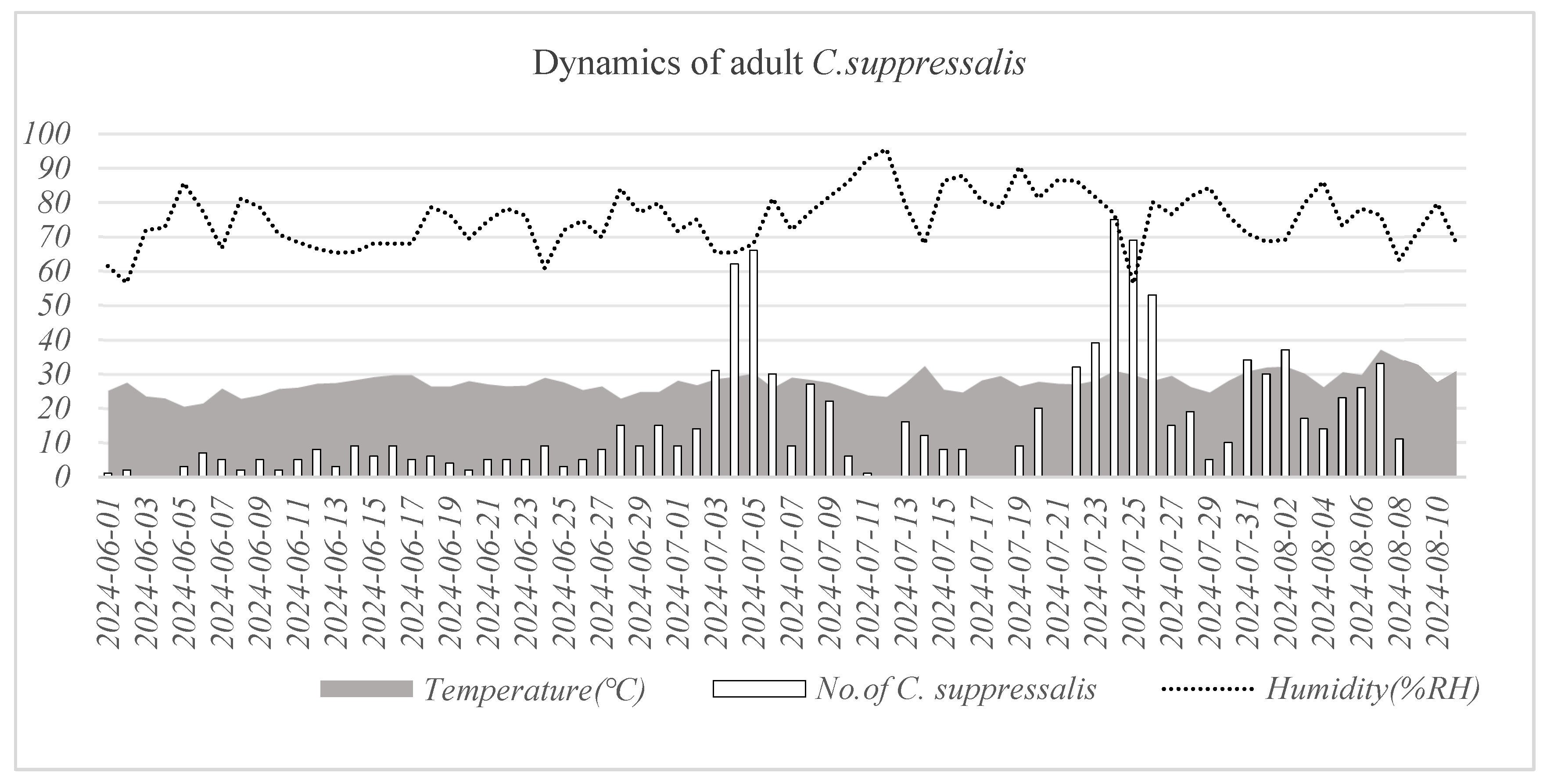
Figure 1: Dynamic monitoring of the occurrence of C. suppressalis adults.
3.3 Effect of Different Pesticide Treatments on C. suppressalis
The effectiveness of seven pesticide treatments against C. suppressalis was evaluated using withered heart rate and white panicle number (Table 2). The results clearly demonstrate that combination treatments were more effective than single-agent applications. Among the single-agent treatments, Abamectin (T1), Chlorantraniliprole (T2), and Spinetoram (T3) exhibited the lowest control efficacy, at 50.41%, 60.63%, and 65.10%, respectively. This relatively low performance suggests the potential development of resistance to these insecticides in the local C. suppressalis population.
In comparison to single-agent treatment, the combination of pesticides (T4–T7) achieved significantly better results. Notably, the treatment combining Emamectin Benzoate·Methoxyfenozide + Chlorantraniliprole (T5) and the one combining Spinetoram + Chlorantraniliprole (T6) were the most effective. These treatments resulted in the lowest withered heart rates, which were 0.96% and 1.27%, respectively. Furthermore, T5 significantly reduced the number of white panicles compared to the untreated control group. The T5 group retains the lowest withered heart rate in rice fields, with the control effect reaching 90.05%.
Table 2: Control effects of different pesticide treatments on C. suppressalis.
| Treatment | No. of Effective Panicles | No. of White Panicles | Withered Heart Rate% | Control Effect% |
|---|---|---|---|---|
| T1 | 22.48 ± 1.91a | 0.93 ± 0.24a | 4.18 ± 1.36a | 50.41 |
| T2 | 19.90 ± 2.13ab | 0.74 ± 0.28ab | 3.77 ± 1.54ab | 60.63 |
| T3 | 19.47 ± 0.90ab | 0.65 ± 0.20ab | 3.34 ± 0.99ab | 65.10 |
| T4 | 22.55 ± 3.30a | 0.49 ± 0.04ab | 2.20 ± 0.13a | 77.04 |
| T5 | 21.79 ± 2.36a | 0.21 ± 0.06b | 0.96 ± 0.28abc | 90.05 |
| T6 | 22.23 ± 1.75a | 0.28 ± 0.09b | 1.27 ± 0.40ab | 86.80 |
| T7 | 19.93 ± 0.85ab | 0.49 ± 0.18ab | 2.48 ± 0.94a | 74.08 |
| CK | 21.45 ± 0.92a | 2.06 ± 0.34a | 9.58 ± 1.30a |
3.4 Phytotoxicity and Residue Analysis
Throughout the experiment, no signs of phytotoxicity, such as leaf discoloration, stunting, or other abnormal growth, were observed in any of the pesticide-treated plots when compared to the untreated control group. This shows that all tested insecticides were safe for the ‘Zheyou 210’ rice variety at the applied doses. Residue analysis of the harvested rice grains revealed that Pb and Hg were not detected in any sample (Table 3). Cd was detected in all samples, including the control, but the concentrations in all treatment groups were well below the national food safety standard permissible limit of ≤0.2 mg/kg. Furthermore, no residues of the applied pesticides were detected in the final grain products. These results confirm that the tested pest management strategies are safe for consumers and do not lead to the accumulation of harmful residues in rice.
Table 3: Detection of heavy metals and pesticide residues in rice.
| Treatment Group | Pb mg/kg | Cd mg/kg | Hg mg/kg | Pesticide Residues mg/kg |
|---|---|---|---|---|
| T1 | Not detected | 0.0517 | Not detected | Not detected |
| T2 | Not detected | 0.0103 | Not detected | Not detected |
| T3 | Not detected | 0.0118 | Not detected | Not detected |
| T4 | Not detected | 0.0278 | Not detected | Not detected |
| T5 | Not detected | 0.0373 | Not detected | Not detected |
| T6 | Not detected | 0.0172 | Not detected | Not detected |
| T7 | Not detected | 0.0100 | Not detected | Not detected |
| CK | Not detected | 0.0147 | Not detected | Not detected |
3.5 Impact of Insecticide Treatments on Rice Yield and Economic Efficiency
The application of effective pesticide treatments translated directly into improved yield-related traits and higher grain yield (Table 4). The T5 treatment, emamectin benzoate·methoxyfenozide + chlorantraniliprole, which demonstrated the highest pest control efficacy, also produced the best agronomic results. It recorded the highest seed setting rate (91.23%), a significantly higher 1000-grain weight (26.3 g), and the highest grain yield (12,491.55 kg/ha). Representing a 27.95% yield increase compared to the untreated control. Other combination treatments (T4, T6, T7) also showed positive trends in yield components and delivered substantial yield gains over the control. The average yield across all pesticide treatments was 11,737.65 kg/ha.
Table 4: Rice yield and related traits under different pesticide treatment groups.
| No. of Effective Panicles | No. of Grains per Panicle | Seed Setting Rate/% | 1000-Grain Weight/g | Theoretical Yield//kg ha−1 | Yield/kg ha−1 | |
|---|---|---|---|---|---|---|
| T1 | 22.48 ± 1.91a | 199 ± 65.94ab | 83.96 ± 4.14b | 24.24 ± 0.62abc | 10,917.3 ± 217.28a | 11,049.60 |
| T2 | 19.90 ± 2.13ab | 191.6 ± 33.45ab | 83.09 ± 8.02cd | 20.91 ± 1.60c | 11,390.4 ± 225.07a | 11,099.25 |
| T3 | 19.47 ± 0.90ab | 196.2 ± 24.39ab | 85.72 ± 3.35abc | 21.44 ± 4.33bc | 12,272.1 ± 181.26a | 11,354.25 |
| T4 | 22.55 ± 3.30a | 241.4 ± 7.13a | 86.42 ± 5.81abc | 19.69 ± 3.56c | 12,700.8 ± 138.93a | 12,193.65 |
| T5 | 21.79 ± 2.36a | 218.80 ± 62.18ab | 91.23 ± 2.24a | 26.3 ± 3.29ab | 13,725.6 ± 222.97a | 12,491.55 |
| T6 | 22.23 ± 1.75a | 240.20 ± 76.39a | 84.18 ± 4.84bcd | 21.75 ± 2.73bc | 13,268.7 ± 306.89a | 12,459.75 |
| T7 | 19.93 ± 0.85ab | 224.80 ± 73.31ab | 89.76 ± 2.91ab | 22.95 ± 1.34abc | 12,406.8 ± 297.70a | 11,515.05 |
| CK | 21.45 ± 0.92a | 160.80 ± 41.28b | 78.27 ± 2.10d | 27.39 ± 6.58a | 10,220.7 ± 220.01ab | 9762.60 |
The economic benefit analysis hinges on the market price of paddy rice. By comparing yield data and input versus benefits under the three management models, the results shown in Table 5 indicate that the net profits for pesticide-treated areas amounted to 29,943.44 CNY/ha. Notably, compared to traditional pesticide application areas, the pesticide-treated areas reduced pesticide usage by half, significantly decreasing both pesticide and labor costs, resulting in savings of 4796.15 CNY/ha.
Table 5: Economic benefit analysis (Unit: CNY/ha).
| Treatment | Yield/kg | Rice Price | Revenue | Fertilizer Cost | Pesticide Cost | Labor/Mechanical Cost | Total Cost | Net Profit | Efficiency |
|---|---|---|---|---|---|---|---|---|---|
| Non-Pesticide area | 11,737.65 | 2.96 | 34,743.44 | 2250 | 750 | 1800 | 4800 | 29,943.44 | |
| Pesticide-treated area | 9762.6 | 2.96 | 28,897.30 | 2250 | 0 | 1500 | 3750 | 25,147.30 | 4796.15 |
| Conventional pesticide application area | 11,262.6 | 2.96 | 33,337.30 | 2250 | 1125 | 2550 | 5925 | 27,412.30 | 2531.15 |
To control Chilo suppressalis, it is necessary to understand its occurrence pattern. C. suppressalis is a holometabolous insect with four stages throughout its life cycle, including the egg stage, the larval stage, the pupal stage, and the adult stage. Damage occurs when larvae bore into the stem, resulting in withered seedlings during the tillering stage of rice, withered ears during the booting stage, and withered hearts during the mature stage [13,15]. The disaster in crop growth caused by the C. suppressalis is mainly due to the rapid growth of its population and the limitations of comprehensive control. During the egg and larval stages, the rice stem borer typically infests the rice panicles, causing brick damage, making chemical control ineffective. Therefore, control of the rice stem borer can only be implemented during the adult stage, including the mating period. The outbreak of this pest is closely related to farming systems, rice varieties, cultivation techniques, climate change, and the pest’s resistance to commonly used insecticides [24,25]. In recent years, the mechanized harvesting method has largely retained rice stumps, and the surplus rice stumps are too high, resulting in an increase in the survival rate of overwintering larvae of the C. suppressalis [13]. The trials survey results indicated that the overwintering C. suppressalis population in the Songjiang region reached 10,890 heads, significantly increasing the baseline population for the subsequent year. This highlights the necessity of integrating cultural practices, like deep tillage and stubble management, to reduce the initial pest pressure.
Our research demonstrates the pivotal role of intelligent monitoring systems in modern pest management. By providing real-time data on adult moth populations, these systems enable precise timing of interventions. We identified a peak emergence of the first-generation adults around July 5th, which correlated with an average daily temperature of approximately 29°C and ambient humidity below 75%. Similar results for the increase in adult moth emergence were observed by Xiang et al. [15], who also noted the influence of temperature on adult emergence. The lower humidity might reduce fungal pathogens or natural enemies, thereby favoring adult emergence, and that temperature thresholds align with the insect’s thermally driven development cycles [26]. This synergistic effect of optimal temperature and lower humidity facilitates the synchronized emergence of mature pupae, resulting in a concentrated population peak. The ability to pinpoint this peak activity is crucial for scheduling pesticide applications just before larval hatching, thereby maximizing efficacy and minimizing the number of treatments. The IoT-based smart traps using machine or deep learning for automatic pest identification and counting offer a major improvement over traditional labor-intensive scouting methods [27]. Using these insights, we formulated a decision-support guideline: insecticide application application should be triggered when ambient temperature reaches ~29°C with humidity below 75%, or when monitored adult counts exceed defined economic threshold.
So far, the control measures for the rice stem borer in agriculture mainly rely on chemical pesticides [28]. The effectiveness of pesticide control has gradually decreased, accompanied by an increase in dosage, which has exacerbated the formation of drug resistance and caused a vicious cycle, leading to an increase in the number of residual pests in the field and a growing population year by year. Mao et al. (2019) used rice stem soaking and drip methods to determine the resistance levels of 20 field populations of C. suppressalis developed resistance to triazophos, chlorpyrifos, and avermectin at 64.5~461.3 times, 10.1~125.0 times, and 6.5~76.5 times, respectively, through the LD50 of the topical application test [29]. The resistance levels of the C. suppressalis population to avermectin in some areas of Jiangxi Province range from 74.8 to 108.7 times [30]. Seed treatments of chlorantraniliprole just provide 30% control of C. suppressalis infestations [31]. Monitoring the development of C. suppressalis resistance to diamide and abamectin insecticides. The emamectin benzoate became a key insecticide for the control of this species in China. However, with the widespread use of emamectin benzoate, resistance has developed rapidly in some field populations of C. suppressalis [26]. In the present investigation, the chemical combination emamectin benzoate · methoxyfenozide + chlorantraniliprole retains the lowest withered heart rate in rice fields, with the control effect reaching 90.05%. This superior performance is likely attributed to the synergistic action of the ingredients The chlorantraniliprole and emamectin benzoate target the insect’s muscular and nervous systems, respectively, while methoxyfenozide acts as a molting hormone agonist to disrupt development. This coordinated, multi-target approach not onlyensures rapid control but also helps delay the evolution of resistance.
The decision-making process, therefore, could be strengthened following this workflow: 1) Monitoring: Regular collection of temperature, humidity, and adult pest counts. 2) Analysis: Compare current environmental data and pest numbers to established thresholds. 3) Action: Scheduling insecticide application at the optimal time (shortly before peak emergence) if thresholds are met; and 4) Evaluation: Assessing efficacy to adjust future strategies. Integrating these steps into a practical pest management calendar, as supported by Cui et al. [24], enables farmers to make informed decisions based on real-time cues. By optimizing insecticide timing to coincide with peak adult emergence and utilizing synergistic chemical combinations, this strategy contributes significantly to sustainable rice pest management.
Effective management of C. suppressalis during rice cultivation hinges on the precise timing of interventions. This requires dynamic monitoring to apply treatments before the peak of adult infestation. While cultural practices like deep tillage and post-harvest irrigation contribute to reducing overwintering pest populations, our study specifically demonstrates the efficacy of a targeted chemical strategy. The combined application of emamectin benzoate·methoxyfenozide + chlorantraniliprole, timed just before July 1st in the Songjiang region, effectively controlled C. suppressalis populations. This approach led to a significant rice yield increase of over 27.95%, minimized the withered heart rate, and allowed for a 50% reduction in pesticide usage compared to conventional methods. Economically, this strategy resulted in an additional income of 4796.15 CNY per hectare while halving pesticide costs, highlighting its potential to enhance profitability and mitigate environmental impact. In line with the principles of green agriculture, future research should focus on optimizing this integrated approach and validating the adaptability of this strategy across different rice-growing regions with varying ecological conditions.
Acknowledgement:
Funding Statement: This research was funded by the National Key R&D Project ‘Innovation and Integration of Key Technologies for Integration of Agricultural Machinery and Agronomy in Weak Links of Hybrid Mid-season Rice in Hilly Areas of Southwest China’ (2023YFD2301901).
Author Contributions: The authors confirm contribution to the paper as follows: study conception and design: Li Wang, Zhiyuan Yang; data collection: Jinfeng Zhang, Binbin Li; analysis and interpretation of results: Li Wang, Zhengbo Pen, Zhiyuan Yang, Anshu Rastogi; draft manuscript preparation: Li Wang, Zhiyuan Yang. All authors reviewed the results and approved the final version of the manuscript conceived by the project.
Availability of Data and Materials: We confirm that the data is available within the article or its Supplementary Materials.
Ethics Approval: Not Applicable.
Conflicts of Interest: The authors declare that they have no known competing financial interests or personal relationships that could have appeared to influence the work reported in this paper.
Supplementary Materials: The supplementary material is available online at https://www.techscience.com/doi/10.32604/phyton.2026.075709/s1. Figure S1: The intelligent insect monitoring and reporting system. Table S1: The registration and manufacturing details of insecticides used.
References
1. Lin KJ , Hou ML , Han LZ , Liu YD . Research progress in host selection and underlying mechanisms, and factors affecting population dynamics of Chilo suppressalis. Plant Prot. 2008; 34( 1): 22– 8. (In Chinese). doi:10.3969/j.issn.0529-1542.2008.01.005. [Google Scholar] [CrossRef]
2. Chen M , Shelton A , Ye GY . Insect-resistant genetically modified rice in China: from research to commercialization. Annu Rev Entomol. 2011; 56: 81– 101. doi:10.1146/annurev-ento-120709-144810. [Google Scholar] [CrossRef]
3. Wilson BE , Beuzelin JM , Reagan TE . Population distribution and range expansion of the invasive Mexican rice borer (Lepidoptera: Crambidae) in Louisiana. Environ Entomol. 2017; 46( 2): 175– 82. doi:10.1093/ee/nvx036. [Google Scholar] [CrossRef]
4. Beuzelin JM , Wilson BE , VanWeelden MT , Mészáros A , Way MO , Stout MJ , et al. Biology and management of the Mexican rice borer (Lepidoptera: Crambidae) in rice in the United States. J Integr Pest Manag. 2016; 7( 1): 7. doi:10.1093/jipm/pmw006. [Google Scholar] [CrossRef]
5. Kfir R , Overholt WA , Khan ZR , Polaszek A . Biology and management of economically important lepidopteran cereal stem borers in Africa. Annu Rev Entomol. 2002; 47: 701– 31. doi:10.1146/annurev.ento.47.091201.145254. [Google Scholar] [CrossRef]
6. Pathak MD , Khan ZR . Insect pests of rice. Manila, Philippines: International Rice Research Institute; 1994. [Google Scholar]
7. Graziosi I , Minato N , Alvarez E , Ngo DT , Hoat TX , Aye TM , et al. Emerging pests and diseases of South-east Asian cassava: a comprehensive evaluation of geographic priorities, management options and research needs. Pest Manag Sci. 2016; 72( 6): 1071– 89. doi:10.1002/ps.4250. [Google Scholar] [CrossRef]
8. Heong KL , Hardy B . Planthoppers: new threats to the sustainability of intensive rice production systems in Asia. Los Baños, Philippines: International Rice Research Institute; 2009. doi:10.22004/ag.econ.281811. [Google Scholar] [CrossRef]
9. Zhang W , Jiang F , Ou JJ . Global pesticide consumption and pollution: with China as a focus. Proc Int Acad Ecol Environ Sci. 2011; 1( 2): 125. [Google Scholar]
10. Tabashnik BE , Mota-Sanchez D , Whalon ME , Hollingworth RM , Carrière Y . Defining terms for proactive management of resistance to Bt crops and pesticides. J Econ Entomol. 2014; 107( 2): 496– 507. doi:10.1603/ec13458. [Google Scholar] [CrossRef]
11. Wong HL , Brown CD . Assessment of occupational exposure to pesticides applied in rice fields in developing countries: a critical review. Int J Environ Sci Technol. 2021; 18( 2): 499– 520. doi:10.1007/s13762-020-02834-6. [Google Scholar] [CrossRef]
12. Oladapo F , Adeboye A , Ogundele R . Human health risk assessment of pesticide residues in some cereals sold in Nigerian markets. J Sci Inf Technol. 2022; 17( 1): 1– 11. [Google Scholar]
13. Mo W , Li Q , Lu Z , Ullah F , Guo J , Xu H , et al. Dynamic monitoring of Chilo suppressalis resistance to insecticides and the potential influencing factors. Plants. 2025; 14( 5): 724. doi:10.3390/plants14050724. [Google Scholar] [CrossRef]
14. Pretty J , Bharucha ZP . Integrated pest management for sustainable intensification of agriculture in Asia and Africa. Insects. 2015; 6( 1): 152– 82. doi:10.3390/insects6010152. [Google Scholar] [CrossRef]
15. Xiang X , Liu S , Li H , Danso Ofori A , Yi X , Zheng A . Defense strategies of rice in response to the attack of the herbivorous insect, Chilo suppressalis. Int J Mol Sci. 2023; 24( 18): 14361. doi:10.3390/ijms241814361. [Google Scholar] [CrossRef]
16. Ali H , Khan SS , Maula F , Shah SH , Uddin M . Effect of different rice varieties and synthetic insecticides on the population density of rice stem borer scirpiophag incertulus (Lepidoptera: Crambidae). Pak J Agric Res. 2022; 35( 1): 105. doi:10.17582/journal.pjar/2022/35.1.105.114. [Google Scholar] [CrossRef]
17. Khan S , Uddin M , Rizwan M , Khan W , Farooq M , Sattar Shah A , et al. Mechanism of insecticide resistancein insects/pests. Pol J Environ Stud. 2020; 29( 3): 2023– 30. doi:10.15244/pjoes/108513. [Google Scholar] [CrossRef]
18. Phang SK , Chiang THA , Happonen A , Chang MML . From satellite to UAV-based remote sensing: a review on precision agriculture. IEEE Access. 2023; 11: 127057– 76. doi:10.1109/ACCESS.2023.3330886. [Google Scholar] [CrossRef]
19. Krishnan S , Chander S . Simulation of climatic change impact on crop-pest interactions: a case study of rice pink stem borer Sesamia inferens (Walker). Clim Change. 2015; 131( 2): 259– 72. doi:10.1007/s10584-015-1385-3. [Google Scholar] [CrossRef]
20. Ge W , Chen G , Wang M , Wu S , Gao C . Advances in the molecular mechanisms of resistance in Chilo suppressalis. Insects. 2025; 16( 9): 942. doi:10.3390/insects16090942. [Google Scholar] [CrossRef]
21. Meng H , Huang R , Wan H , Li J , Li J , Zhang X . Insecticide resistance monitoring in field populations of Chilo suppressalis Walker (Lepidoptera: Crambidae) from Central China. Front Physiol. 2022; 13: 1029319. doi:10.3389/fphys.2022.1029319. [Google Scholar] [CrossRef]
22. Zheng J , Xu Y . A review: development of plant protection methods and advances in pesticide application technology in agro-forestry production. Agriculture. 2023; 13( 11): 2165. doi:10.3390/agriculture13112165. [Google Scholar] [CrossRef]
23. Heinrichs E . Rice-feeding insects and selected natural enemies in West Africa: biology, ecology, identification. Los Baños, Philippines: International Rice Research Institute; 2004. [Google Scholar]
24. Cui L , Wang Q , Qi H , Wang Q , Yuan H , Rui C . Resistance selection of indoxacarb in Helicoverpa armigera (Hübner) (Lepidoptera: Noctuidae): cross-resistance, biochemical mechanisms and associated fitness costs. Pest Manag Sci. 2018; 74( 11): 2636– 44. doi:10.1002/ps.5056. [Google Scholar] [CrossRef]
25. Elhamalawy O , Bakr A , Eissa F . Impact of pesticides on non-target invertebrates in agricultural ecosystems. Pestic Biochem Physiol. 2024; 202: 105974. doi:10.1016/j.pestbp.2024.105974. [Google Scholar] [CrossRef]
26. Wang S , Qiao ST , Guo FR , Xie Y , Liu C , Liu JW , et al. Overexpression and alternative splicing of the glutamate-gated chloride channel are associated with emamectin benzoate resistance in the rice stem borer, Chilo suppressalis Walker (Lepidoptera: Crambidae). Pest Manag Sci. 2025; 81( 4): 2114– 25. doi:10.1002/ps.8610. [Google Scholar] [CrossRef]
27. Kiobia DO , Mwitta CJ , Ngimbwa PC , Schmidt JM , Lu G , Rains GC . Machine-learning approach facilitates prediction of whitefly spatiotemporal dynamics in a plant canopy. J Econ Entomol. 2025; 118( 2): 732– 45. doi:10.1093/jee/toaf035. [Google Scholar] [CrossRef]
28. Sharifzadeh MS , Abdollahzadeh G . Do typologies of pesticide risk knowledge influence the adoption of IPM strategies? Evidence from rice farmers’ behavior in northern Iran. Pest Manag Sci. 2024; 80( 9): 4427– 36. doi:10.1002/ps.8151. [Google Scholar] [CrossRef]
29. Mao K , Li W , Liao X , Liu C , Qin Y , Ren Z , et al. Dynamics of insecticide resistance in different geographical populations of Chilo suppressalis (Lepidoptera: Crambidae) in China 2016–2018. J Econ Entomol. 2019; 112( 4): 1866– 74. doi:10.1093/jee/toz109. [Google Scholar] [CrossRef]
30. Huang S , Jing D , Xu L , Luo G , Hu Y , Wu T , et al. Genome-wide identification and functional analysis of long non-coding RNAs in Chilo suppressalis reveal their potential roles in chlorantraniliprole resistance. Front Physiol. 2023; 13: 1091232. doi:10.3389/fphys.2022.1091232. [Google Scholar] [CrossRef]
31. Stout MJ , McCarter K , Villegas JM , Wilson BE . Natural incidence of stem borer damage in U.S. rice varieties. Crop Prot. 2024; 177: 106565. doi:10.1016/j.cropro.2023.106565. [Google Scholar] [CrossRef]
Cite This Article
 Copyright © 2026 The Author(s). Published by Tech Science Press.
This work is licensed under a Creative Commons Attribution 4.0 International License , which permits unrestricted use, distribution, and reproduction in any medium, provided the original work is properly cited.
 Downloads
 Citation Tools
