
 Login
Login Register
 Submit a Paper
 Propose a Special lssue
 Open Access
EDITORIAL

Editorial: Announcing the Renaming of Our Journal
1 Department of Cardiothoracic Surgery, Children’s Hospital of Nanjing Medical University, Nanjing, China
2 Department of Cardiovascular Surgery, Mt. Fuji Shizuoka Children’s Hospital, Shizuoka, Japan
3 Pediatric and Congenital Cardiac Surgery Unit, Department of Cardiac, Thoracic and Vascular Sciences and Public Health, University of Padua, Padua, Italy
* Corresponding Authors: Xuming Mo. Email: ; Kisaburo Sakamoto. Email:
; Vladimiro L. Vida. Email:
Structural and Congenital Heart Disease 2026, 21(1), 1 https://doi.org/10.32604/schd.2026.080525
Received 11 February 2026; Accepted 11 February 2026; Issue published 31 March 2026
 View Full Text
 Download PDF
Abstract
This article has no abstract.For many years, Congenital Heart Disease (CHD) has served as a dedicated platform for advancing knowledge in the diagnosis, treatment, and long-term management of congenital heart disorders. Over this period, major progress has been made in fetal and perinatal screening, early intervention, surgical techniques, and postoperative care. As a result, the incidence of severe congenital heart defects has declined in many regions, while growing numbers of patients now survive into adulthood following corrective or palliative procedures. These achievements represent a remarkable success of modern medicine, yet they have also led to a gradual reduction in research output exclusively focused on congenital heart disease.
At the same time, the global cardiovascular field is undergoing rapid transformation. Structural heart disease, encompassing abnormalities of the valves, chambers, septa, and great vessels, whether congenital or acquired, has become one of the most dynamic and rapidly evolving areas of cardiovascular medicine. Developments in transcatheter therapies, advanced imaging, structural interventions, and device technologies are reshaping how clinicians diagnose and manage structural abnormalities. These advances provide substantial research opportunities and create natural intersections with the congenital field, particularly in the expanding population of adults with congenital heart disease (ACHD).
In light of these scientific and clinical developments, and following extensive discussion with our Editor-in-Chiefs (EiC), including Prof. Xuming Mo, Prof. Kisaburo Sakamoto, Prof. Vladimiro L. Vida, and each Editorial Board Members, the Asian Association for Pediatric and Congenital Heart Surgery (AAPCHS), and Children’s Hospital of Nanjing Medical University as official affiliation and Tech Science Press (TSP) as publishing partner, we are pleased to announce that our journal will be officially renamed from CHD to: Structural and Congenital Heart Disease (SCHD).
The decision to rename the journal reflects several key considerations:
- 1.Broadening to a More Comprehensive Scientific Scope
Congenital heart disease represents a subset within the wider category of structural heart disease. By expanding our scope, we are now able to include both congenital and acquired structural abnormalities, such as valvular heart disease, cardiomyopathies with structural features, atrial and ventricular septal disorders, diseases of the great vessels, and structural changes arising from degenerative, inflammatory, or systemic conditions.
- 2.Alignment with Global Research Trends
Structural heart interventions, including transcatheter aortic valve replacement (TAVR), mitral and tricuspid repair, atrial and ventricular septal defect closure, and left atrial appendage occlusion, have become major areas of international cardiovascular research and clinical practice. The expanded scope positions our journal to serve as an important academic outlet in these rapidly growing fields.
- 3.Supporting Lifelong Cardiovascular Care
The number of adults living with congenital heart disease continues to increase, and many develop new structural issues in adulthood or require interventions similar to those used for acquired structural heart disease. Our new scope reflects the need for continuous care from the fetal period through adulthood.
- 4.Ensuring Academic Vitality and Long-Term Development
As research exclusively focused on congenital heart disease declines, timely strategic adjustment is essential. The broadened scope will attract submissions from surgeons, cardiologists, interventionalists, critical-care specialists, anesthesiologists, imaging specialists, perfusionists, rehabilitation specialists, psychologists, nursing and basic scientists, strengthening the journal’s future impact and competitiveness.
Our Expanded Scope and Vision
Under the name SCHD, the journal will publish high-quality original research articles, reviews, guidelines, consensus statements, case reports, editorials, letters to editor, and commentaries in areas including:
- 1.Clinical Care and Prevention: Surgical and transcatheter interventions, electrophysiology and arrhythmias, perioperative and critical care, long-term outcomes, secondary prevention, rehabilitation, and population-level prevention strategies.
- 2.Diagnostics and Disease Mechanisms: Multimodality imaging, physiology, epidemiology, genetics, and molecular pathways.
- 3.Cross-Disciplinary and Emerging Fields: Developmental biology, data science, behavioral and psychological sciences, and other interdisciplinary approaches.
- 4.Disease-Specific Focus: Conditions such as end-stage heart disease, Kawasaki disease, and other congenital or acquired structural disorders.
Our vision is to establish a leading international platform that integrates basic science, clinical medicine, and advanced interventional techniques, fostering collaboration and innovation within a unified framework for structural and congenital heart disease research. Ultimately, we aim to improve patient care worldwide.
We believe that the new name, SCHD, more accurately reflects our evolving mission and the scientific realities of modern cardiovascular medicine. We are deeply grateful to our authors, reviewers, and readers for their longstanding support, and we warmly invite researchers and clinicians from all relevant disciplines to continue submitting to our journal as we take this exciting step forward.
Together, let us build a vibrant, influential, and forward-looking publication that advances science and clinical practice in structural and congenital heart disease.
Editorial Board
Structural and Congenital Heart Disease
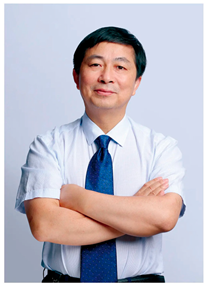 | 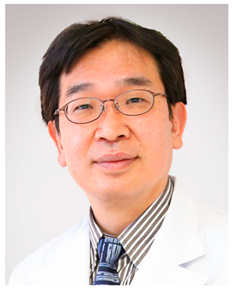 | 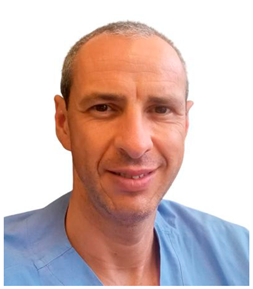 |
| EiC. Prof. Mo | EiC. Prof. Sakamoto | EiC. Prof. Vida |
Cite This Article
 Copyright © 2026 The Author(s). Published by Tech Science Press.
This work is licensed under a Creative Commons Attribution 4.0 International License , which permits unrestricted use, distribution, and reproduction in any medium, provided the original work is properly cited.
 Downloads
 Citation Tools
