
 Login
Login Register
 Submit a Paper
 Propose a Special lssue
 Open Access
REVIEW
Patent Foramen Ovale in Cryptogenic Stroke: A 20-Year Systematic Review of Evolving Interventional and Antithrombotic Strategies
Department of Cardiology, The First Hospital of Hebei Medical University, Hebei Medical University, Shijiazhuang, China
* Corresponding Authors: Huilian Tan. Email: ; Jun Liu. Email:
# Li Wang and Hongzhao Li contributed equally to this work and share first authorship
Structural and Congenital Heart Disease 2026, 21(4), 10 https://doi.org/10.32604/schd.2026.084716
Received 28 April 2026; Accepted 11 August 2026; Issue published 30 September 2026
 View Full Text
 Download PDF
Abstract
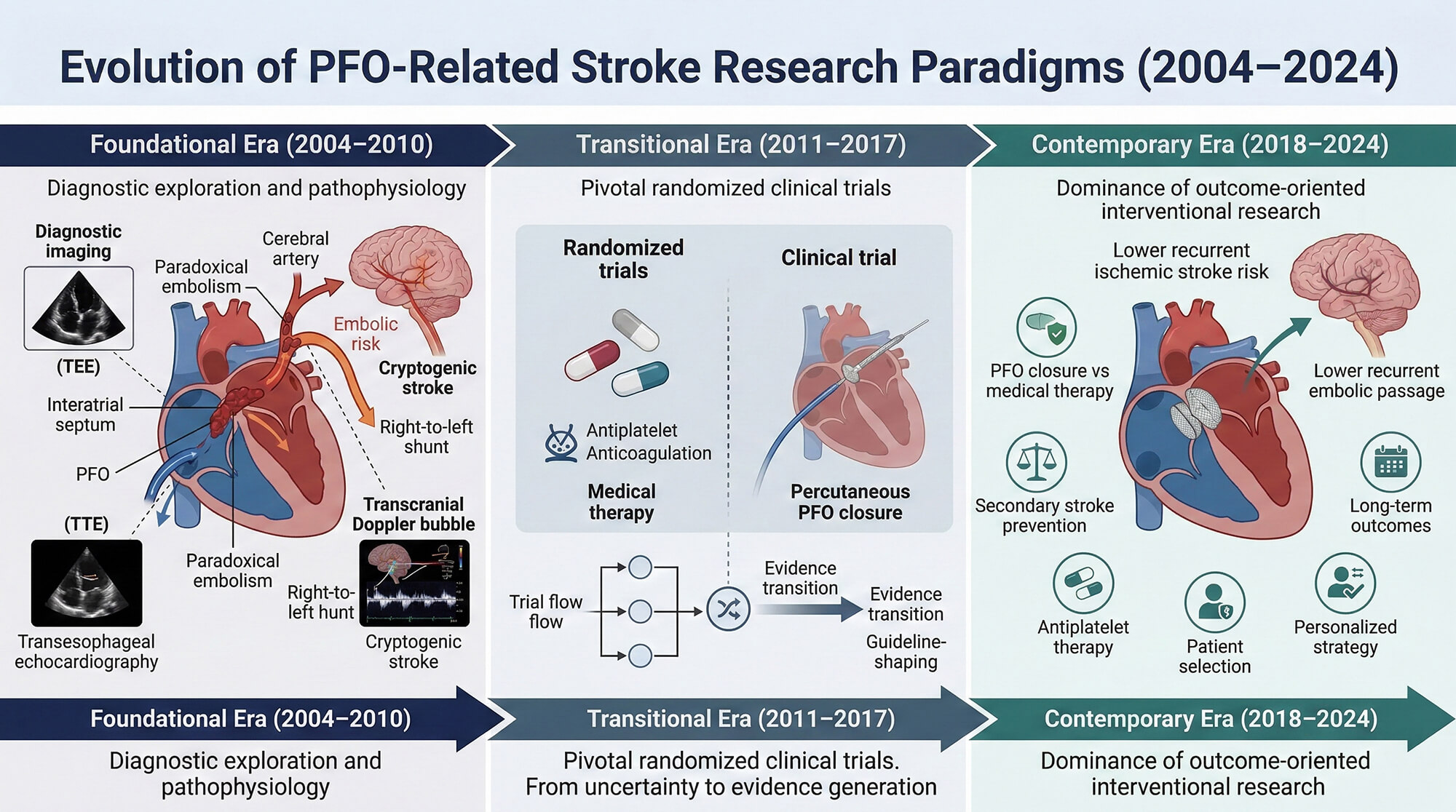
Background: Patent foramen ovale (PFO) is the most prevalent congenital cardiac anomaly and a key structural heart disease enabling paradoxical embolism, a leading mechanism of cryptogenic stroke. Over the past two decades, the management of PFO-associated stroke has evolved substantially from antithrombotic therapy alone to include percutaneous PFO closure. This systematic review aims to delineate the evolution of therapeutic strategies and clinical evidence in PFO-related stroke research, with particular emphasis on interventional and antithrombotic approaches. Methods: We performed a preferred reporting items for systematic reviews and meta-Analyses (PRISMA)-informed bibliometric systematic review of literature published from 2004 to 2024. The primary bibliometric dataset was retrieved from the Web of Science Core Collection, and PubMed was used as a sensitivity source to evaluate retrieval coverage. Using CiteSpace, VOSviewer, and Microsoft Excel, we analyzed 1178 articles and reviews to map research trends, identify key contributors, and synthesize major clinical findings in structural and congenital heart disease. Results: The United States emerged as the most productive country (367 publications; 12,342 citations), while European nations—Germany, Switzerland, and Italy—formed a strong collaborative network. PubMed sensitivity retrieval identified 3497 potentially relevant records, confirming that database selection materially affects retrieval sensitivity. Analysis revealed a paradigm shift from early diagnostic approaches to therapeutic comparisons between PFO closure and medical therapy. Landmark randomized controlled trials (RESPECT, REDUCE, DEFENSE-PFO) demonstrated that percutaneous PFO closure combined with antiplatelet therapy significantly reduces recurrent ischemic stroke compared with medical therapy alone in appropriately selected patients aged 18–60 years. Current guidelines recommend PFO closure for PFO-attributable cryptogenic stroke, often identified using the RoPE score and high-risk anatomical features. Key remaining challenges include management of post-procedural atrial fibrillation, older patients, primary prevention, and integrated risk stratification. Conclusions: This systematic bibliometric review documents the maturation of PFO-stroke research from mechanistic exploration to evidence-based interventional management within the field of structural and congenital heart disease. Optimal secondary prevention requires a personalized approach balancing closure efficacy against procedural risks. As structural heart interventions continue to evolve, ongoing interdisciplinary collaboration between cardiologists and neurologists remains essential for advancing PFO-related stroke care.Graphic Abstract
Keywords
Supplementary Material
Supplementary Material FileThe foramen ovale is a crucial physiological shunt in the fetal circulatory system, located within the interatrial septum, which facilitates the direct flow of oxygenated blood from the right to the left atrium. Postnatally, physiological changes in pulmonary and systemic vascular resistance elevate left atrial pressure above that of the right atrium, leading to the functional and eventual anatomical fusion of the septum primum and secundum, thereby closing the foramen ovale. Persistence of this opening beyond three years of age is defined as a patent foramen ovale (PFO), the most prevalent congenital cardiac anomaly, affecting approximately 25% of the adult population globally [1,2,3,4]. A growing body of clinical and epidemiological evidence has established significant associations between PFO and a spectrum of clinical disorders, primarily attributable to paradoxical embolism, in which venous thrombi bypass the pulmonary circulation by shunting directly through the PFO into the systemic arterial circulation. This mechanism has been implicated in cryptogenic stroke (CS), migraine with aura, and other neurovascular and systemic conditions [5,6,7,8,9].
Cryptogenic stroke, an ischemic stroke for which no definitive etiology is identified after a comprehensive diagnostic workup [10,11], has been a major focus of PFO-related research. Paradoxical embolism via a PFO is now considered a leading mechanism underlying a substantial proportion of CS cases, particularly in younger patients [12,13]. Consequently, critical questions regarding risk stratification for PFO-attributable stroke recurrence and the optimal secondary prevention strategies have become central challenges in cardiology and neurology. The clinical discourse is dominated by debates over the comparative efficacy of antiplatelet therapy, systemic anticoagulation, and percutaneous PFO closure [14,15]. These ongoing discussions underscore the necessity for continued research to refine patient selection criteria and tailor long-term management strategies. High-risk PFO generally refers to anatomical or functional features that increase the probability of paradoxical embolism, including a large right-to-left shunt, atrial septal aneurysm, long PFO tunnel, prominent Eustachian valve or Chiari network, substantial shunt at rest or during Valsalva maneuver, and the absence of an alternative stroke mechanism after standardized neurological evaluation [16,17].
Bibliometrics offers a quantitative and objective methodology to analyze the scholarly landscape of a research field [18,19,20]. By employing mathematical and statistical techniques, this approach can systematically map the evolution of scientific knowledge, identify key contributors, and reveal emerging trends, thus overcoming the potential biases inherent in traditional narrative reviews. Despite the extensive volume of clinical and basic research on PFO-mediated paradoxical embolism, a comprehensive bibliometric analysis of this specific domain is lacking. This study aims to fill that gap by systematically analyzing literature published over the past two decades. Through co-occurrence analysis of keywords, co-citation analysis, and mapping of collaborative networks among authors, institutions, and countries, we seek to delineate the primary research themes, influential stakeholders, and geographical distribution of research activities. Furthermore, this analysis will identify the foundational knowledge base and pinpoint the research frontiers, providing a valuable reference to guide future investigative efforts in this clinically significant field. The 20-year evolution of PFO-related stroke research, shifting from diagnostic exploration to evidence-based therapeutic interventions, is summarized in the Central Illustration.
2.1 Data Source and Search Strategy
The review was planned and reported in accordance with the preferred reporting items for systematic reviews and meta-Analyses (PRISMA) 2020 statement, where applicable, for bibliometric systematic reviews [21]. The primary bibliographic dataset for quantitative bibliometric mapping was retrieved from the Web of Science Core Collection (WoSCC), specifically the Science Citation Index Expanded (SCIE), because WoSCC provides standardized cited-reference fields required for co-citation and burst analyses. To address retrieval sensitivity, we also performed a PubMed sensitivity search using title/abstract terms for PFO and stroke-related embolic events. The PubMed strategy was: ((patent foramen ovale[Title/Abstract] OR PFO[Title/Abstract]) AND (stroke[Title/Abstract] OR embol*[Title/Abstract] OR thromboembol*[Title/Abstract] OR transient ischemic attack[Title/Abstract] OR TIA[Title/Abstract])) AND (2004:2024[pdat]). PubMed retrieved 3497 records before bibliometric field harmonization. Because PubMed does not provide the same cited-reference structure required for CiteSpace co-citation and burst detection, PubMed results were used for sensitivity assessment and clinical interpretation rather than merged into the WoSCC bibliometric dataset. The WoSCC search was conducted on 15 December 2024, and encompassed literature published from January 1, 2004, to the search date. The search strategy targeted records where key terms appeared in the title (TI) or author-supplied keywords (AK). The following advanced search query was executed:
(TI = (Embol*) OR TI = (Thromboembol*) OR TI = (stroke) OR TI = (Transient Ischemic Attack) OR TI = (TIA) OR AK = (Embol*) OR AK = (Thromboembol*) OR AK = (stroke) OR AK = (Transient Ischemic Attack) OR AK = (TIA)) AND (TI = (patent Foramen Ovale) OR TI = (“PFO”) OR AK = (patent foramen ovale) OR AK = (“PFO”)).
This query yielded an initial 2926 WoSCC records. The results were refined by applying inclusion criteria: (1) document type limited to “Article” or “Review Article”; (2) language restricted to English; and (3) publication years from 2004 to 2024. After database-scope, language, and document-type restrictions, a final dataset of 1178 publications was exported in plain text format for analysis. The literature screening and selection process is detailed in Supplementary Fig. S1, and a completed PRISMA 2020 checklist is provided as Supplementary Material. The exported records and database filters were manually verified by the author team, and discrepancies in record eligibility or term standardization were resolved through discussion with a senior author. No automation tools beyond database filters and bibliometric software were used for eligibility screening.
2.2 Data Analysis and Visualization
The bibliometric analysis and visualization were performed using CiteSpace (version 6.1.R6; Chaomei Chen, Drexel University, Philadelphia, PA, USA; https://citespace.podia.com), VOSviewer (version 1.6.18; Centre for Science and Technology Studies, Leiden University, Leiden, the Netherlands; https://www.vosviewer.com), and Microsoft Excel 2021 (Microsoft Corporation, Redmond, WA, USA). The raw data exported from WoSCC, comprising titles, authors, keywords, institutions, countries, citations, journals, and publication dates, were first processed and standardized in Excel.
VOSviewer, developed by van Eck and Waltman [22,23], was employed to construct and visualize static network maps based on co-occurrence data. The counting method was set to full counting. For country/region, institution, author, and keyword networks, the minimum occurrence thresholds were selected to retain the most informative connected items while avoiding over-fragmented networks; the top 25 keywords and references were displayed for burst analyses. In these maps, nodes represent individual items, node size corresponds to frequency, and connecting lines signify total link strength.
CiteSpace, developed by Dr. Chaomei Chen [24,25], was used to analyze temporal dynamics and intellectual structure. The time slicing was set from 2004 to 2024 with one year per slice; the node types included keywords, cited references, authors, institutions, and countries; selection criteria used the top N strategy (N = 50 per slice) with pruning by Pathfinder and pruning sliced networks. Burst detection was performed using Kleinberg’s algorithm. For the polynomial publication-growth model, leave-one-out cross-validation was used to evaluate overfitting; the mean absolute prediction error was 3.6 publications per year, and the root mean square error was 4.9 publications per year, indicating that the model was used descriptively rather than for prospective forecasting. The principal methodological parameters and sensitivity checks are summarized in Table 1.
Table 1: Methodological parameters and sensitivity checks.
| Item | Setting or Result |
|---|---|
| PRISMA reporting | PRISMA 2020 statement followed where applicable; checklist prepared as Supplementary Material. |
| Primary bibliometric source | WoSCC/SCIE; 2926 initial records and 1178 final articles/reviews. |
| PubMed sensitivity search | 3497 records retrieved using PFO and stroke/embolism title-abstract terms, used to assess retrieval sensitivity. |
| CiteSpace parameters | Version 6.1.R6; 2004–2024; one-year slices; top N = 50 per slice; pathfinder pruning; burst detection by Kleinberg algorithm. |
| VOSviewer parameters | Version 1.6.18; full counting; country, institution, author, journal, reference, and keyword networks. |
| Cross-validation of publication-growth model | Leave-one-out mean absolute prediction error 3.6 publications/year; root mean square error 4.9 publications/year. |
By integrating the analytical capabilities of these tools, we conducted a multi-dimensional analysis of the research landscape. Excel was used for descriptive statistics, such as tracking annual publication trends. VOSviewer provided clear visualizations of collaborative structures, while CiteSpace offered a dynamic perspective on the evolution of research frontiers and foundational knowledge.
No separate protocol was prospectively registered or publicly posted before this bibliometric analysis.
3.1 Publication and Citation Trends
The temporal dynamics of scholarly output in PFO-related stroke research from 2004 to 2024 are depicted in Fig. 1A,B. Fig. 1A illustrates that while the annual volume of publications has demonstrated a fluctuating yet gradually declining trend since peaking in 2018 (n = 89), the annual citation count has followed a distinct, fluctuating upward trajectory. A notable peak in citation frequency occurred in 2024, with 2592 citations, suggesting that recent high-impact research has significantly influenced the field. Fig. 1B shows the cumulative growth in publications, which has continued to rise, although the rate of growth has moderated in recent years. A polynomial regression analysis was applied to the cumulative publication data to describe the historical growth pattern (R2 = 0.9999). This high coefficient of determination indicates that the regression model closely fits the historical data, describing a sustained, albeit maturing, growth trajectory for the field (Fig. 1B).
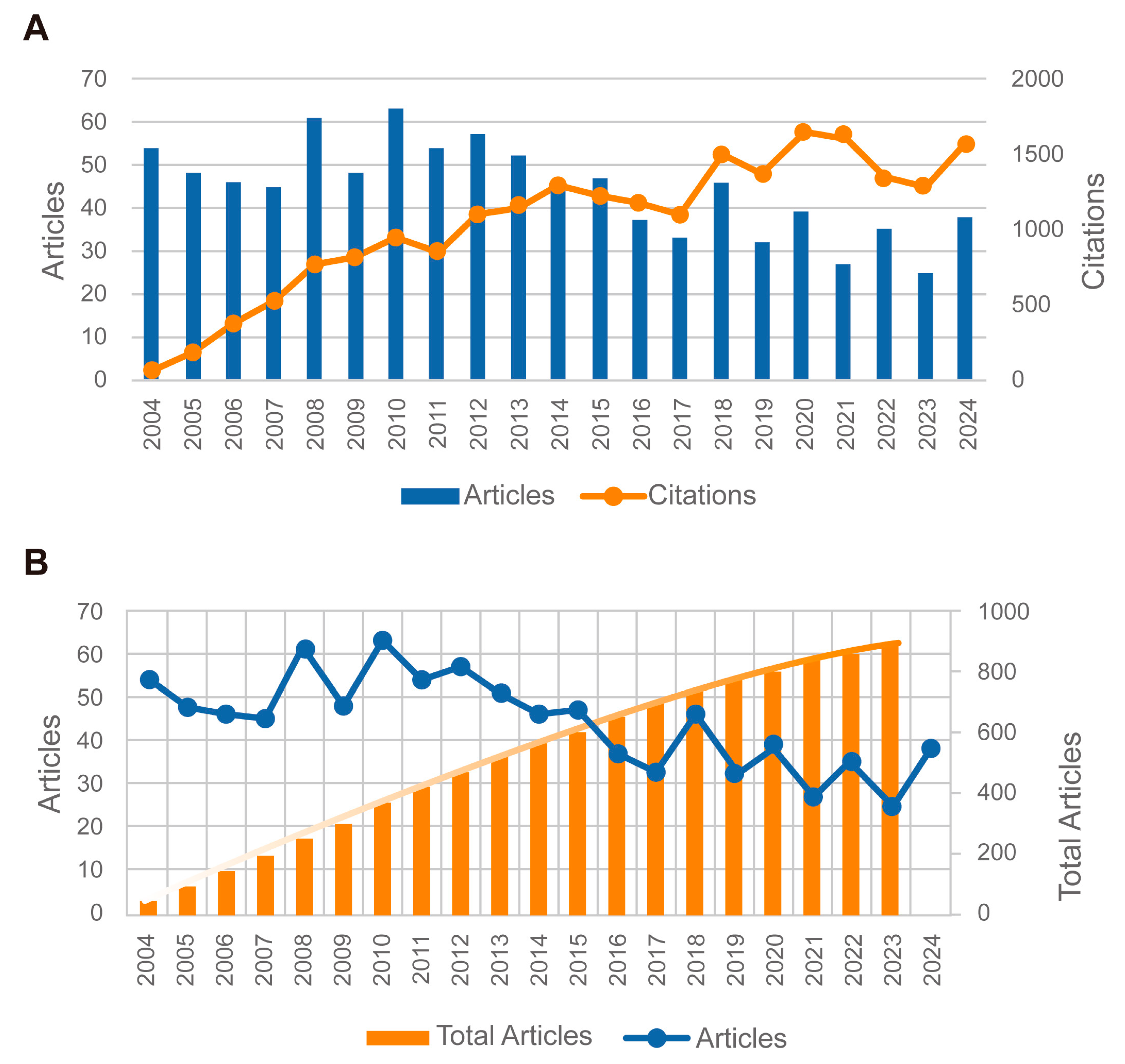
Figure 1: Temporal trends in PFO-stroke research. (A) Annual publication volume and citation frequency from 2004 to 2024. (B) Cumulative publication growth with the polynomial trend line (R2 = 0.9999).
3.2 Analysis of Countries/Regions
Table 2 presents the top five most productive and influential countries/regions in PFO-stroke research. The United States holds a commanding lead, ranking first in both publication volume (367 documents) and total citations (12,342), establishing it as the global epicenter of research in this domain. European nations also demonstrate substantial contributions, with Germany, Italy, and Switzerland being major research hubs. The country collaboration map is shown in Fig. 2, confirming that the United States acts as the central hub with extensive collaborative links to Germany, China, and Italy. A strong European collaborative cluster is also evident, with Germany, the United Kingdom, and France forming a tightly interconnected network. This dense web of international partnerships underscores the global and collaborative nature of contemporary research in this field.
Table 2: Overview of the top 5 contributors in PFO-stroke research (2004–2024) based on publication volume.
| Rank | Country (Documents) | Institution (Documents) | Author (Documents) | Journal (Documents) |
|---|---|---|---|---|
| 1 | USA (367) | University Hospital Bern (34) | Meier B. (43) | Catheter Cardiovasc Interv (71) |
| 2 | Italy (166) | Columbia University (29) | Mattle H.P. (28) | Stroke (49) |
| 3 | Germany (128) | University of Pennsylvania (29) | Thaler D.E. (27) | J Stroke Cerebrovasc Dis (41) |
| 4 | China (101) | Mayo Clinic (28) | Rigatelli G. (23) | Echocardiography (28) |
| 5 | Switzerland (91) | Tufts University (28) | Kent D.M. (22) | Neurological Sciences (25) |
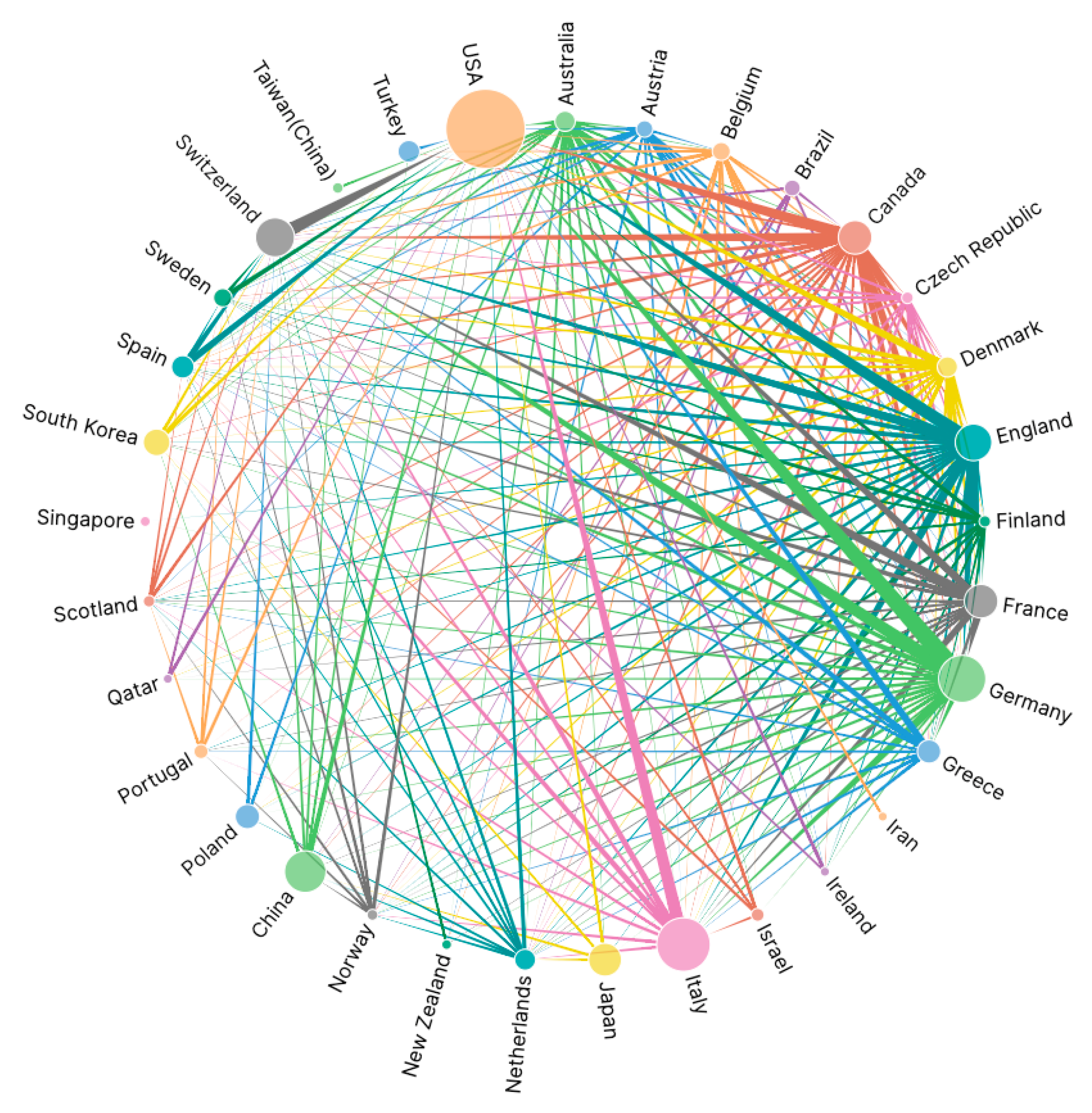
Figure 2: Country/region collaboration network in PFO-stroke research. Node size indicates publication volume, and link thickness indicates collaboration strength.
Table 2 also provides an overview of the most prolific authors. Bernhard Meier (University of Bern, Switzerland) is the most prolific author with 43 publications, followed by Heinrich P. Mattle (University of Bern, Switzerland) with 28 and David E. Thaler (Tufts Medical Center, USA) with 27. The author co-citation analysis reveals a different set of leaders. Jean-Louis Mas (Université de Paris, France) is the most co-cited author (788 citations), followed by Shunichi Homma (Columbia University, USA; 607 citations) and David M. Kent (Tufts University, USA; 506 citations). Network mapping of co-authorship and co-citations is provided in Fig. 3, showing distinct collaborative clusters organized by geographical and institutional proximity.
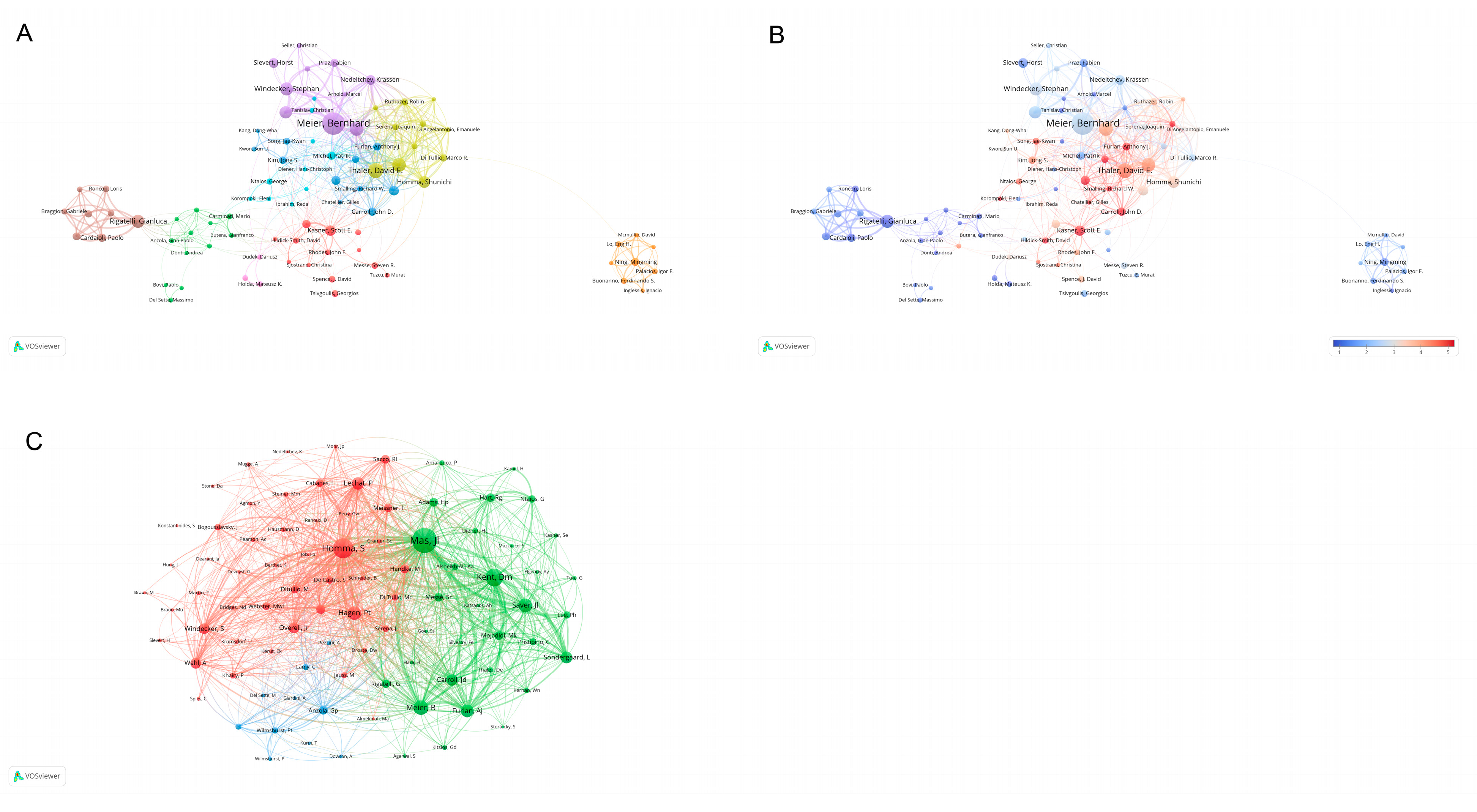
Figure 3: Author collaboration and co-citation structure. (A) Author co-authorship network. (B) Temporal overlay of the author co-authorship network according to average publication year. (C) Author co-citation network.
The analysis of institutional productivity is summarized in Table 2. The University Hospital Bern (Switzerland) is the most productive institution with 34 publications. American institutions dominate the top list, including Columbia University, the University of Pennsylvania, and the Mayo Clinic, all demonstrating high productivity and citation impact. Institutional collaboration networks are shown in Fig. 4, highlighting a strong European network centered around the University Hospital Bern and a prominent North American cluster centered in Boston, USA.
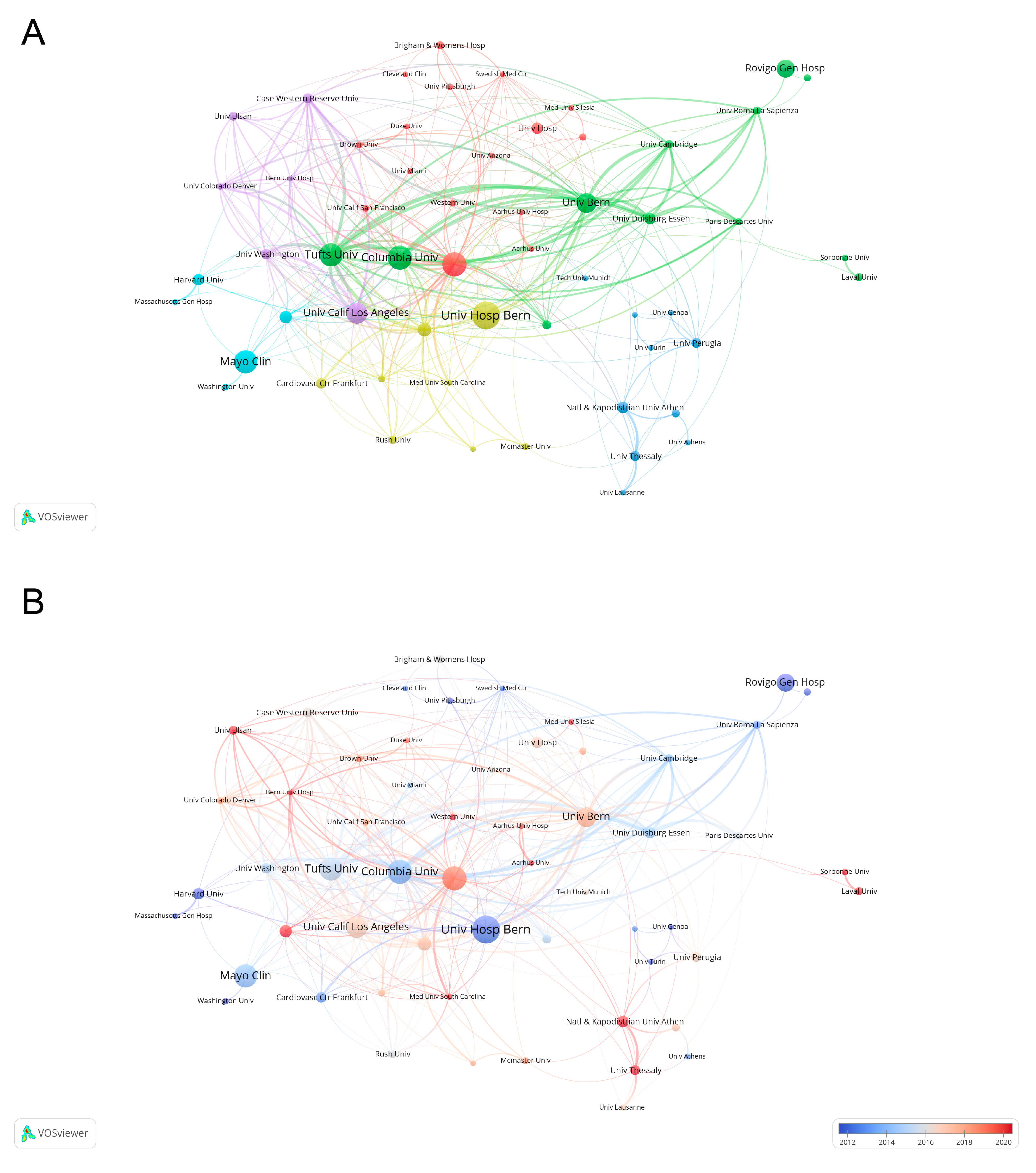
Figure 4: Institutional collaboration and temporal structure. (A) Institutional collaboration network. (B) Temporal overlay of the institutional collaboration network according to average publication year.
Table 2 also lists the top five journals by publication volume. Catheterization and Cardiovascular Interventions published the most articles (71), followed by Stroke (49). In terms of co-citations, Stroke leads decisively with 4058 citations. High-impact general medical and cardiology journals, including the New England Journal of Medicine, the Journal of the American College of Cardiology, and Circulation, also feature prominently in the co-citation rankings. Journal network mapping and dual-map overlay results are shown in Fig. 5, demonstrating strong citation pathways between general medicine, interventional cardiology, neurology, and clinical research.
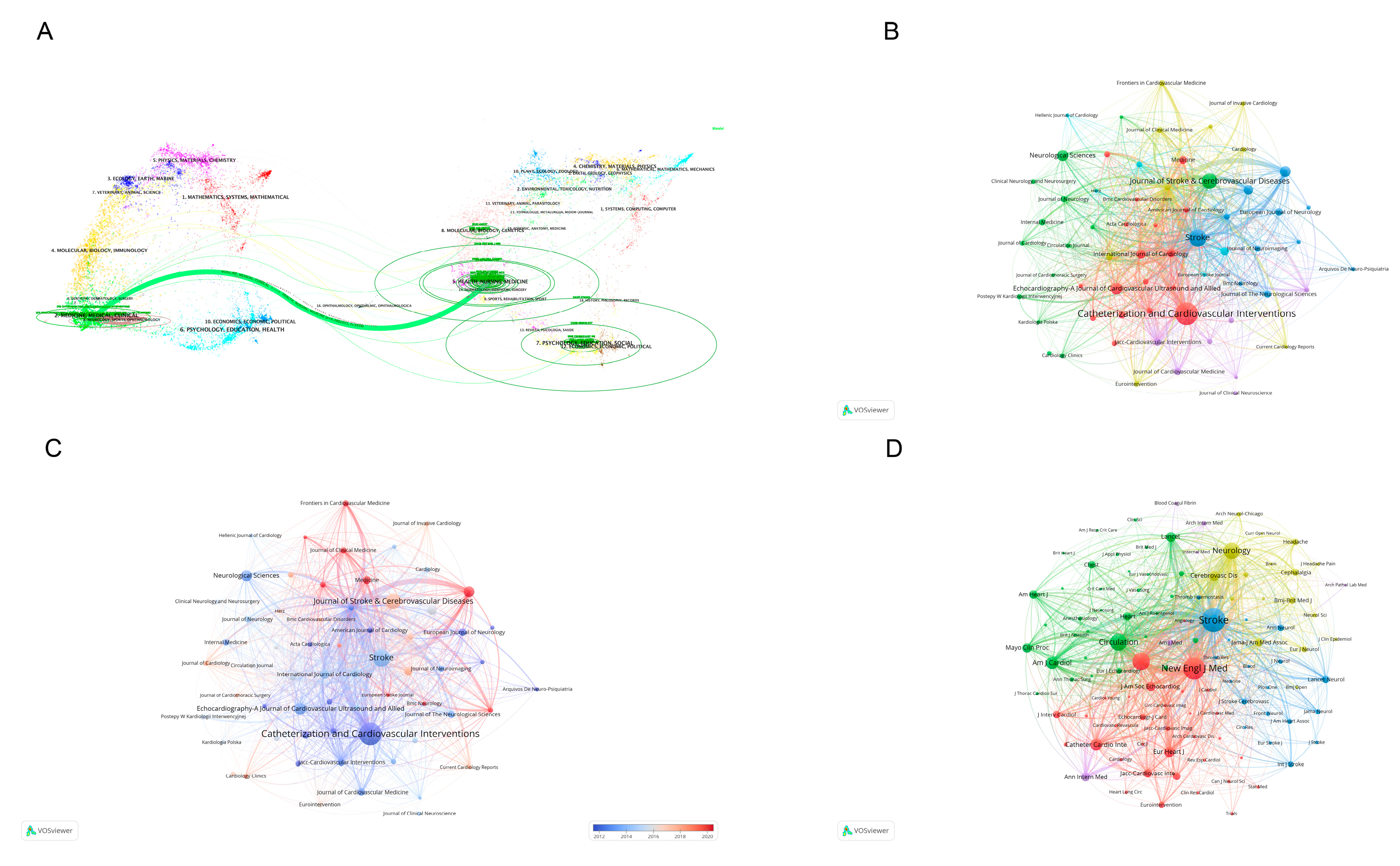
Figure 5: Journal distribution and interdisciplinary citation structure. (A) Dual-map overlay showing citation pathways between source and citing disciplines. (B) Network visualization of journals publishing PFO-stroke research. (C) Temporal overlay of the journal network according to average publication year. (D) Journal co-citation network.
A co-occurrence analysis of author keywords provides insight into the core topics and evolving themes of the research field. As shown in Table 3, “patent foramen ovale” (898 occurrences), “stroke” (344), and “cryptogenic stroke” (249) are the most frequent keywords, confirming the central focus of the domain. “Paradoxical embolism” (151) is also a core concept.
The keyword co-occurrence network (Fig. 6A) visualizes primary thematic clusters. These clusters represent different facets of the field: cardiovascular disease aspects, structural heart defects and closure, diagnostic imaging, associated neurological symptoms such as migraine, stroke mechanisms, antithrombotic therapy, and other embolic complications. The normalized-citation overlay (Fig. 6B) highlights keywords with comparatively high citation impact, while the temporal overlay (Fig. 6C) shows the progression from earlier diagnostic and mechanistic terms to more recent treatment- and outcome-oriented topics. The keyword-cluster timeline (Fig. 6D) further demonstrates the longitudinal persistence and interaction of themes including interatrial septum, recurrent stroke, atrial cardiopathy, pulmonary embolism, right-to-left shunt, and cryptogenic stroke. The keyword citation burst analysis (Fig. 7) identifies keywords with a sharp increase in frequency over time. Early bursts (2004–2010) included diagnostic terms such as “transesophageal echocardiography” and anatomical features such as “atrial septal aneurysm.” A subsequent wave (2014–2020) focused on evidence synthesis (“meta-analysis”) and long-term management (“secondary prevention”). The most recent bursts (2018–2024 onward) are dominated by treatment-related terms such as “PFO closure,” “antiplatelet therapy,” and “outcome,” alongside “embolic stroke of undetermined source,” reflecting the current emphasis on optimizing therapeutic interventions and patient outcomes based on evidence from major clinical trials.
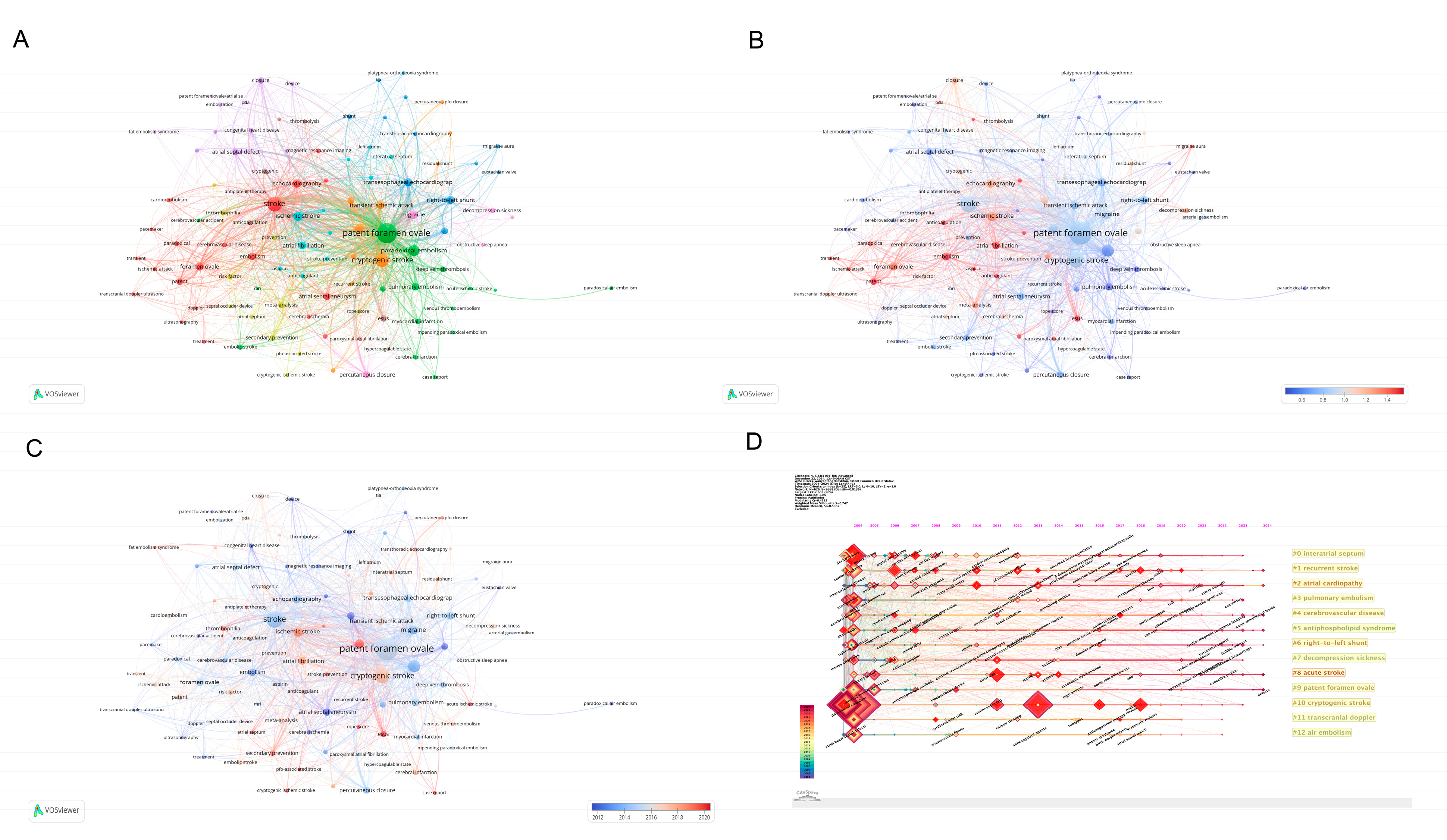
Figure 6: Keyword knowledge maps and temporal evolution. (A) Keyword co-occurrence network. (B) Overlay visualization according to normalized citation impact. (C) Temporal overlay according to average publication year. (D) CiteSpace keyword-cluster timeline view.
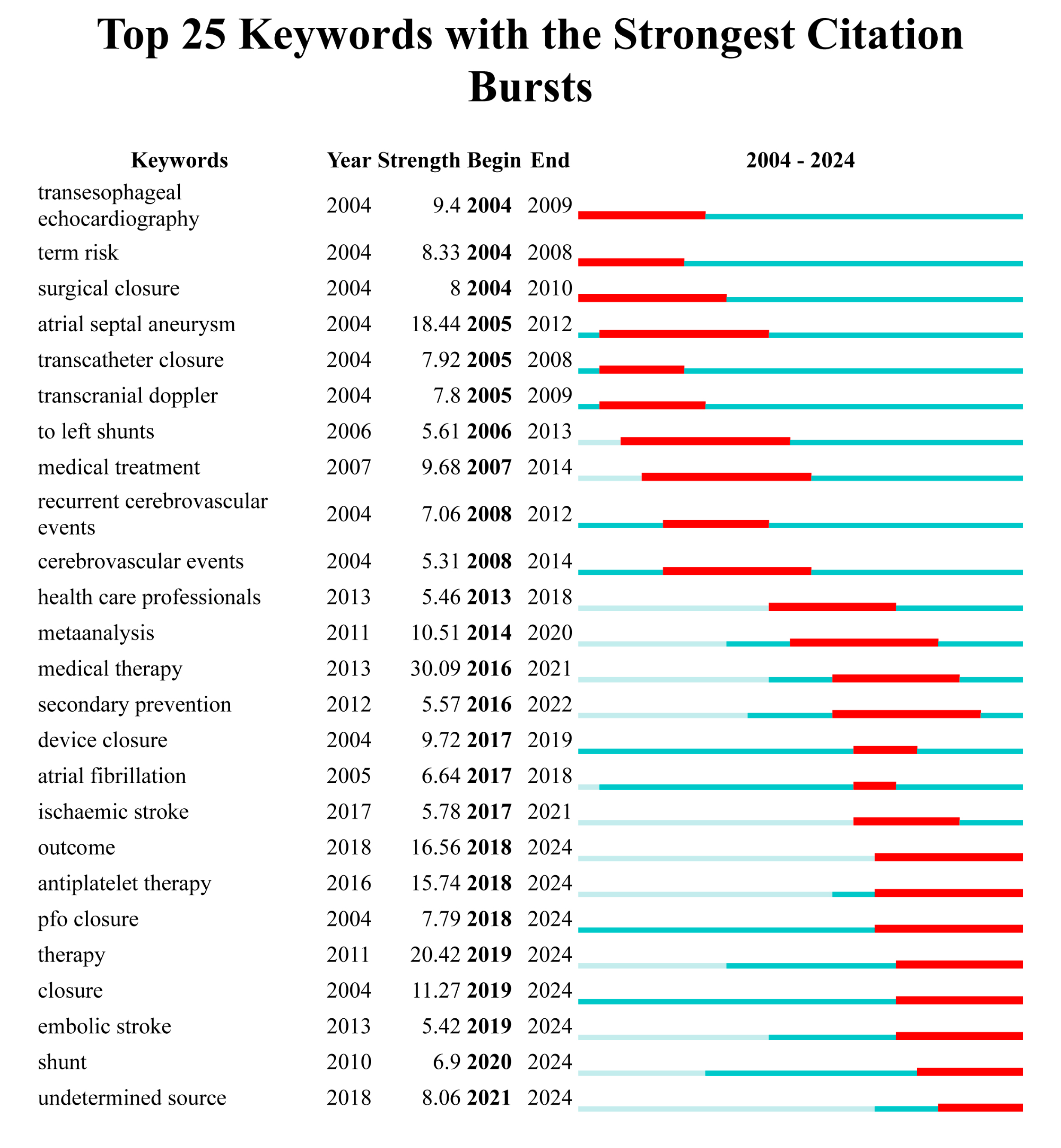
Figure 7: Top 25 keywords with the strongest citation bursts in PFO-stroke research.
Table 3: Top 20 author keywords by occurrence frequency in PFO-stroke research.
| Rank | Keyword | Occurrences | Rank | Keyword | Occurrences |
|---|---|---|---|---|---|
| 1 | Patent Foramen Ovale | 898 | 11 | Right-To-Left Shunt | 53 |
| 2 | Stroke | 344 | 12 | Transient Ischemic Attack | 50 |
| 3 | Cryptogenic Stroke | 249 | 13 | Pulmonary Embolism | 43 |
| 4 | Paradoxical Embolism | 151 | 14 | Transcatheter Closure | 42 |
| 5 | Ischemic Stroke | 84 | 15 | Atrial Fibrillation | 41 |
| 6 | Migraine | 79 | 16 | Atrial Septal Aneurysm | 41 |
| 7 | PFO Closure | 71 | 17 | Percutaneous Closure | 39 |
| 8 | Echocardiography | 65 | 18 | Transcranial Doppler | 33 |
| 9 | Transesophageal Echocardiography | 63 | 19 | Embolic Stroke Of Undetermined Source | 32 |
| 10 | Embolism | 53 | 20 | Secondary Prevention | 31 |
3.7 Analysis of Highly Cited References
Fig. 8A provides a temporal network visualization of influential cited references, with nodes representing individual articles. Key publications, identified by their high centrality and citation counts, include landmark clinical trials published by Saver et al. (2017) [26], Carroll et al. (2013) [27], and Meier et al. (2013) [28]. The reference co-citation cluster analysis shown in Fig. 8B reveals the major research streams within the literature. The largest cluster, “#0 ESUS” (embolic stroke of undetermined source), demonstrates the centrality of this clinical entity to the field. It is closely linked to clusters on secondary stroke prevention and atrial septal aneurysm, indicating that research on PFO is deeply embedded within the broader context of stroke prevention.
Finally, Fig. 8C displays the top 25 references with the strongest citation bursts. The article by Furlan et al. (2012) on the CLOSURE I trial [29] exhibited the highest burst strength (59.1), reflecting its profound, though initially negative, impact on the field. Subsequent positive trials, such as those reported by Wahl et al. (2012) [30], Carroll et al. (2013) [27], Meier et al. (2013) [28], and Lee et al. (2018) [31], also show strong citation bursts. These papers collectively shifted the clinical paradigm by providing robust evidence from randomized controlled trials that PFO closure is superior to medical therapy for secondary stroke prevention in appropriately selected patients.
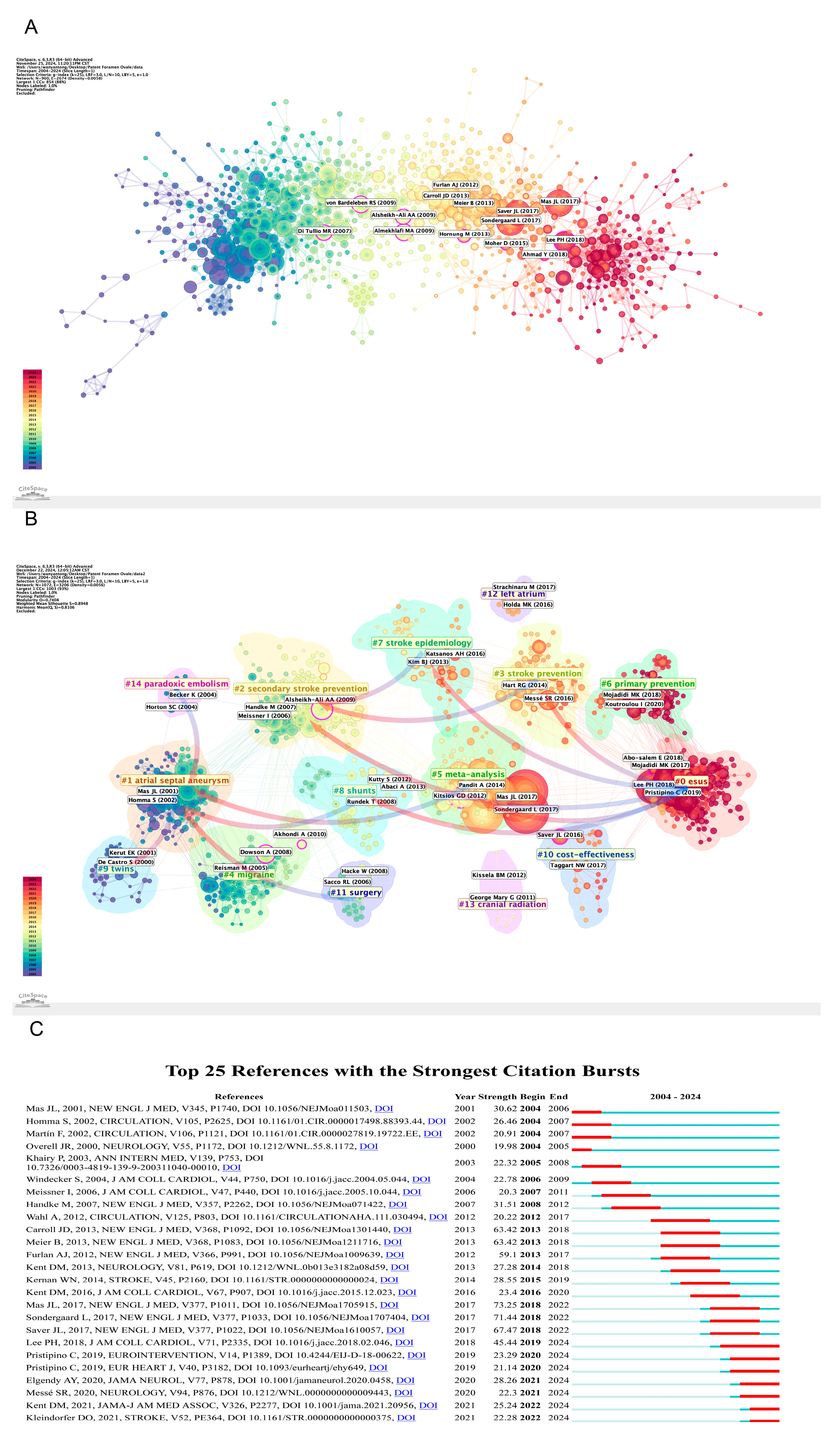
Figure 8: Intellectual structure and landmark references. (A) Temporal network of influential cited references. (B) Reference co-citation cluster map, including ESUS and secondary stroke prevention. (C) Top 25 references with the strongest citation bursts.
4.1 General Distribution and Key Contributors
This bibliometric analysis provides a comprehensive overview of the global research landscape of PFO-associated stroke from 2004 to 2024. Our findings reveal a maturing field characterized by a shift from exploratory and diagnostic research to a focus on evidence-based therapeutic interventions. The trend of decreasing annual publication volume alongside increasing citation frequency suggests a consolidation of research efforts. As foundational questions about the PFO-stroke link were addressed, the field has likely pivoted towards higher-impact, methodologically rigorous studies, such as large-scale clinical trials and meta-analyses, which garner more citations and have a greater influence on clinical guidelines. Important unresolved questions remain, particularly whether evidence from younger randomized-trial populations can be generalized to older patients. Current guidelines primarily support closure in patients younger than 60 years with PFO-attributable ischemic stroke, whereas randomized data in older patients remain limited. Recent evidence indicates that PFO closure in selected older patients may be safe and may reduce recurrence compared with antithrombotic therapy alone, but prospective randomized trials are still required before routine expansion of indications [32]. Evidence for PFO closure as primary stroke prevention is even more limited and should not be extrapolated from secondary-prevention trials [33].
Geographically, the United States is the undisputed leader in both productivity and research impact, a finding consistent with its substantial investment in medical research and the presence of world-leading academic institutions. European countries, particularly Germany, Switzerland, and Italy, also form a powerful research consortium. The author analysis identified Bernhard Meier as the most prolific author and Jean-Louis Mas as the most influential in terms of co-citations. The co-citation prominence of Mas and colleagues underscores the field’s focus on carefully selected patients. More broadly, the long-term RESPECT results reported by Saver et al. in 2017 (750 citations in our dataset) were pivotal in shaping current clinical practice by demonstrating the superiority of closure for secondary stroke prevention in selected patients [26]. This highlights the critical role of key opinion leaders and their high-impact research in driving the field forward. Similarly, the institutional analysis confirms the dominance of major academic medical centers in the USA and Europe, with University Hospital Bern and Tufts University emerging as key hubs of productivity and influence, respectively.
The journal analysis underscores the field’s dual focus on cardiology and neurology. While interventional cardiology journals like Catheterization and Cardiovascular Interventions are primary venues for procedural research, leading neurology journals like Stroke serve as the intellectual core, as indicated by their high co-citation scores. The publication of seminal trials in premier journals such as the New England Journal of Medicine signifies the clinical importance and broad academic interest in this topic.
4.2 Research Hotspots and Evolving Frontiers
The keyword analysis effectively traces the intellectual evolution of the field. The persistent high frequency of “patent foramen ovale,” “stroke,” “cryptogenic stroke,” and “paradoxical embolism” confirms their status as foundational concepts. The citation burst analysis reveals a clear chronological progression of research themes, moving from diagnosis to therapy. The current and ongoing bursts for “PFO closure,” “antiplatelet therapy,” and “therapy” (burst strength 20.42) confirm that optimizing treatment strategies remains the foremost research frontier.
4.2.1 Advancements in Diagnostic Imaging
The diagnosis and risk stratification of PFO remain heavily reliant on imaging. While transthoracic echocardiography (TTE) and transesophageal echocardiography (TEE) are standard modalities, research continues to refine their application. Studies have confirmed TTE as a valuable initial screening tool, particularly for detecting large right-to-left shunts (RLS) [34,35], while TEE provides superior anatomical detail and specificity [35,36]. The importance of a properly performed Valsalva maneuver during contrast studies has been emphasized to minimize false-negative results [36]. Recent work has also highlighted the enhanced diagnostic yield of combining contrast-TTE with TEE [37]. Moreover, advanced techniques are emerging. Intracardiac echocardiography (ICE) has shown superiority over TTE/TEE in identifying high-risk PFO features [38], and transcranial Doppler (TCD), including robotic automated TCD (raTCD), has proven to be a highly sensitive and specific non-invasive method for detecting RLS [39,40,41], offering a viable alternative, especially in stroke unit settings. TCD is highly sensitive for detecting right-to-left shunt but does not define PFO anatomy; therefore, combining TCD with TTE or TEE can improve the overall diagnostic pathway by pairing sensitive shunt screening with anatomical confirmation and risk-feature assessment. Peri-interventional TEE remains important for defining septal anatomy, guiding device selection, and identifying residual shunts. Inferior vena cava compression during TEE can enhance PFO detection when the Valsalva maneuver is suboptimal [42], and TEE under moderate-to-deep sedation has been reported as feasible when maneuvers are carefully performed [43]. Three-dimensional TEE further improves visualization of PFO morphology, tunnel length, adjacent septal aneurysm, and relationships with surrounding atrial structures [44].
4.2.2 The Therapeutic Landscape: From Medical Management to Percutaneous Closure
The management of patients with PFO and a history of stroke has evolved significantly. Initial management relied on medical therapy, comprising antiplatelet agents (e.g., aspirin, clopidogrel) and anticoagulants [45]. While antiplatelet therapy remains a cornerstone for general secondary stroke prevention, studies exploring outcomes in PFO patients have yielded mixed results [46,47]. Direct oral anticoagulants (DOACs) have shown promise compared to aspirin in some observational studies [48], and a meta-analysis suggested that oral anticoagulation might be superior to antiplatelet therapy for preventing recurrence, although definitive randomized evidence is still needed [49]. However, whether DOACs are superior to antiplatelet therapy remains uncertain. The available data include prospective and observational evidence suggesting fewer recurrent events with dabigatran than aspirin in selected cryptogenic stroke patients with PFO [48], and meta-analytic evidence suggesting a possible advantage of oral anticoagulation over antiplatelet therapy [49]. Nevertheless, most closure trials were not designed to directly compare DOACs with antiplatelet therapy, and bleeding risk, occult atrial fibrillation, venous thrombosis risk, and patient preference must be considered. Thus, the current evidence supports DOACs as a reasonable individualized option in selected patients but not as universally superior therapy.
The most significant shift in the field has been the validation of PFO closure as a superior strategy for secondary prevention in carefully selected patients. Following several initially neutral or negative trials, landmark randomized controlled trials, including RESPECT, REDUCE, and DEFENSE-PFO, demonstrated that percutaneous PFO closure combined with antiplatelet therapy significantly reduces the risk of recurrent ischemic stroke compared with medical therapy alone [15,26,31]. This has led to updated clinical guidelines recommending closure for patients aged 18–60 years with a PFO-attributable cryptogenic stroke, often identified using tools like the RoPE score [16,17,50]. Subsequent meta-analyses and long-term follow-up studies have confirmed the sustained efficacy and safety of closure [51,52,53,54]. However, research frontiers remain, including the management of the small but significant risk of post-procedural atrial fibrillation [54,55,56] and the ongoing evaluation of newer-generation closure devices to optimize safety and efficacy [57,58]. The overarching trend is toward personalized medicine, using integrated risk stratification schemes like the PASCAL classification system to ensure that closure is offered to patients most likely to benefit [17,55]. Patient selection should integrate age, stroke phenotype, exclusion of alternative etiologies, RoPE score, PASCAL classification, and high-risk anatomy. Suitable candidates generally include patients aged 18–60 years with non-lacunar ischemic stroke or systemic embolism, no competing mechanism after standardized neurological and vascular workup, a moderate-to-large shunt or atrial septal aneurysm, and acceptable procedural risk. Patients with low RoPE scores, uncontrolled vascular risk factors, atrial fibrillation, or a plausible non-PFO stroke mechanism require more cautious individualized decision-making. In addition to device size and procedural factors, pre-closure atrial remodeling may contribute to post-procedural atrial fibrillation; speckle-tracking echocardiography has been proposed as a tool to detect left atrial structural and functional changes that may identify patients with latent arrhythmic vulnerability [59].
This study represents a comprehensive PRISMA-informed bibliometric analysis of the PFO-stroke literature over a 20-year period. By employing a multi-faceted analytical approach with validated software tools and by adding a PubMed sensitivity search, we provide an objective, data-driven overview of the field’s structure, evolution, and key research trends. This quantitative perspective complements traditional narrative reviews by highlighting the intellectual connections and dynamic shifts within the scholarly landscape.
Nonetheless, certain limitations must be acknowledged. First, although the primary quantitative bibliometric dataset was restricted to English-language articles indexed in WoSCC to preserve cited-reference compatibility, this approach may introduce language and database-selection bias. The PubMed sensitivity search retrieved 3497 records and confirmed that broader biomedical searches identify additional potentially relevant literature; therefore, our findings should be interpreted as a WoSCC-based bibliometric map rather than an exhaustive clinical evidence synthesis. Second, the search strategy was limited to the title and author keyword fields to enhance specificity, which may have missed records where relevant terms appeared only in the abstract. Third, although we followed PRISMA reporting principles and provided a PRISMA flow diagram and checklist, this study is primarily bibliometric and did not conduct a formal ROBINS-I risk-of-bias assessment or meta-analysis of individual clinical outcomes. No separate protocol was prospectively registered or publicly posted before this bibliometric analysis. Finally, data collection was finalized on 15 December 2024, so late-indexed 2024 records and 2025–2026 publications are not included in the quantitative map. Future research should combine multi-database systematic review methods with risk-of-bias assessment and meta-analysis focused on specific clinical questions, such as PFO closure in older patients, primary prevention, DOAC-based strategies, and post-closure atrial fibrillation surveillance.
This bibliometric analysis maps the dynamic evolution of research on the association between PFO and stroke over the past two decades. The field has matured from establishing a causal link to focusing intensely on evidence-based strategies for secondary stroke prevention. The United States and key European nations, along with leading institutions such as Tufts University and the University Hospital Bern, have been instrumental in this progress. Research published in high-impact cardiology and neurology journals, such as Stroke and the New England Journal of Medicine, has shaped the current clinical landscape. The central research trend has been a decisive shift toward percutaneous PFO closure for selected patients with cryptogenic stroke, driven by landmark randomized trials (RESPECT, REDUCE, DEFENSE-PFO) and refined by risk stratification using RoPE and PASCAL frameworks. Future research should focus on older patients, primary prevention, DOAC-based individualized therapy, high-risk anatomical phenotypes, residual shunt surveillance, post-closure atrial fibrillation prediction, and continued interdisciplinary collaboration between cardiology and neurology.
Acknowledgement:
Funding Statement: This work was supported by the 2024 Hebei Provincial Health Commission Key Science and Technology Research Plan (No. 20241850) and the 2024 Hebei Provincial Medical Applicability Follow-up Project (No. 20240278).
Author Contributions: Li Wang and Hongzhao Li conceptualized the study, acquired and analyzed the data, and were major contributors in writing the manuscript. Ling Liu, Yanchao Qi and Dahong Zhang contributed to data interpretation and visualization. Yanchun Zhi, Runyu Wang and Gairong Jin assisted with software analysis and manuscript drafting. Shunda Liu helped in processing the bibliographic data. Huilian Tan and Jun Liu designed the study, supervised the project, and critically revised the manuscript for important intellectual content. All authors reviewed and approved the final version of the manuscript.
Availability of Data and Materials: The primary dataset analyzed during the current study is available from the Web of Science Core Collection (WoSCC) database using the search query provided in the manuscript. The PubMed sensitivity search strategy is also reported in the manuscript. Processed bibliometric data are available from the corresponding author on reasonable request.
Ethics Approval: Not applicable.
Conflicts of Interest: The authors declare no conflicts of interest.
Supplementary Materials: The supplementary material is available online at https://www.techscience.com/doi/10.32604/schd.2026.084716/s1.
Abbreviation
| PFO | Patent Foramen Ovale |
| CS | Cryptogenic Stroke |
| WoSCC | Web of Science Core Collection |
| SCIE | Science Citation Index Expanded |
| TTE | Transthoracic Echocardiography |
| TEE | Transesophageal Echocardiography |
| RLS | Right-to-Left Shunt |
| ICE | Intracardiac Echocardiography |
| TCD | Transcranial Doppler |
| DOACs | Direct Oral Anticoagulants |
| RoPE | Risk of Paradoxical Embolism |
| PASCAL | PFO-Associated Stroke Causal Likelihood |
| ROBINS-I | Risk Of Bias In Non-randomized Studies of Interventions |
| PRISMA | Preferred Reporting Items for Systematic Reviews and Meta-Analyses |
References
1. Calvert PA , Rana BS , Kydd AC , Shapiro LM . Patent foramen ovale: Anatomy, outcomes, and closure. Nat Rev Cardiol. 2011; 8( 3): 148– 60. doi:10.1038/nrcardio.2010.224. [Google Scholar] [CrossRef]
2. Homma S , Messé SR , Rundek T , Sun YP , Franke J , Davidson K , et al. Patent foramen ovale. Nat Rev Dis Primers. 2016; 2: 15086. doi:10.1038/nrdp.2015.86. [Google Scholar] [CrossRef]
3. Heckmann JG , Wasmeier G , Dütsch F , Dütsch M , Dedow E . Patent foramen ovale as lifesaving purging valve. Eur J Emerg Med. 2006; 13( 4): 230– 2. doi:10.1097/01.mej.0000206189.54577.21. [Google Scholar] [CrossRef]
4. Dattilo PB , Kim MS , Carroll JD . Patent foramen ovale. Cardiol Clin. 2013; 31( 3): 401– 15. doi:10.1016/j.ccl.2013.05.002. [Google Scholar] [CrossRef]
5. Shi F , Sha L , Li H , Tang Y , Huang L , Liu H , et al. Recent progress in patent foramen ovale and related neurological diseases: A narrative review. Front Neurol. 2023; 14: 1129062. doi:10.3389/fneur.2023.1129062. [Google Scholar] [CrossRef]
6. Bajaj D , Bandyopadhyay D , Mondal S , Ghosh RK . An interesting correlation between patent foramen ovale and migraine. Int J Cardiol. 2018; 256: 14. doi:10.1016/j.ijcard.2017.12.070. [Google Scholar] [CrossRef]
7. Racharla L , Kher A , Patel Z , Maitz T , Kluck B . The hype surrounding patent foramen ovale closure and cryptogenic stroke: A walk through history. Heart Int. 2022; 16( 1): 59– 63. doi:10.17925/HI.2022.16.1.59. [Google Scholar] [CrossRef]
8. Immens MH , van den Hoeven V , van Lith TJ , Duijnhouwer TD , Ten Cate TJ , de Leeuw FE . Heart-stroke team: A multidisciplinary assessment of patent foramen ovale-associated stroke. Eur Stroke J. 2024; 9( 1): 219– 25. doi:10.1177/23969873231214862. [Google Scholar] [CrossRef]
9. Liu K , Wang BZ , Hao Y , Song S , Pan M . The correlation between migraine and patent foramen ovale. Front Neurol. 2020; 11: 543485. doi:10.3389/fneur.2020.543485. [Google Scholar] [CrossRef]
10. Hart RG , Diener HC , Coutts SB , Easton JD , Granger CB , O’Donnell MJ , et al. Embolic strokes of undetermined source: The case for a new clinical construct. Lancet Neurol. 2014; 13( 4): 429– 38. doi:10.1016/S1474-4422(13)70310-7. [Google Scholar] [CrossRef]
11. Campbell BCV , Khatri P . Stroke. Lancet. 2020; 396( 10244): 129– 42. doi:10.1016/S0140-6736(20)31179-X. [Google Scholar] [CrossRef]
12. Nakanishi K , Yoshiyama M , Homma S . Patent foramen ovale and cryptogenic stroke. Trends Cardiovasc Med. 2017; 27( 8): 575– 81. doi:10.1016/j.tcm.2017.06.016. [Google Scholar] [CrossRef]
13. Furlan AJ , Jauss M . Patent foramen ovale and cryptogenic stroke: The hole story. Stroke. 2013; 44( 9): 2676– 8. doi:10.1161/STROKEAHA.113.001676. [Google Scholar] [CrossRef]
14. Kleindorfer DO , Towfighi A , Chaturvedi S , Cockroft KM , Gutierrez J , Lombardi-Hill D , et al. 2021 guideline for the prevention of stroke in patients with stroke and transient ischemic attack: A guideline from the American heart association/American stroke association. Stroke. 2021; 52( 7): e364– 467. doi:10.1161/STR.0000000000000375. [Google Scholar] [CrossRef]
15. Søndergaard L , Kasner SE , Rhodes JF , Andersen G , Iversen HK , Nielsen-Kudsk JE , et al. Patent foramen ovale closure or antiplatelet therapy for cryptogenic stroke. N Engl J Med. 2017; 377( 11): 1033– 42. doi:10.1056/NEJMoa1707404. [Google Scholar] [CrossRef]
16. Kavinsky CJ , Szerlip M , Goldsweig AM , Amin Z , Boudoulas KD , Carroll JD , et al. SCAI guidelines for the management of patent foramen ovale. J Soc Cardiovasc Angiogr Interv. 2022; 1( 4): 100039. doi:10.1016/j.jscai.2022.100039. [Google Scholar] [CrossRef]
17. Kent DM , Saver JL , Kasner SE , Nelson J , Carroll JD , Chatellier G , et al. Heterogeneity of treatment effects in an analysis of pooled individual patient data from randomized trials of device closure of patent foramen ovale after stroke. JAMA. 2021; 326( 22): 2277– 86. doi:10.1001/jama.2021.20956. [Google Scholar] [CrossRef]
18. Thompson DF , Walker CK . A descriptive and historical review of bibliometrics with applications to medical sciences. Pharmacotherapy. 2015; 35( 6): 551– 9. doi:10.1002/phar.1586. [Google Scholar] [CrossRef]
19. Weingart P . Impact of bibliometrics upon the science system: Inadvertent consequences? Scientometrics. 2005; 62( 1): 117– 31. doi:10.1007/s11192-005-0007-7. [Google Scholar] [CrossRef]
20. Ninkov A , Frank JR , Maggio LA . Bibliometrics: Methods for studying academic publishing. Perspect Med Educ. 2022; 11( 3): 173– 6. doi:10.1007/s40037-021-00695-4. [Google Scholar] [CrossRef]
21. Page MJ , McKenzie JE , Bossuyt PM , Boutron I , Hoffmann TC , Mulrow CD , et al. The PRISMA 2020 statement: An updated guideline for reporting systematic reviews. BMJ. 2021; 372: n71. doi:10.1136/bmj.n71. [Google Scholar] [CrossRef]
22. van Eck NJ , Waltman L . Software survey: VOSviewer, a computer program for bibliometric mapping. Scientometrics. 2010; 84( 2): 523– 38. doi:10.1007/s11192-009-0146-3. [Google Scholar] [CrossRef]
23. van Eck NJ , Waltman L . Visualizing bibliometric networks. In: Ding Y , Rousseau R , Wolfram D , editors. Measuring scholarly impact: Methods and practice. Cham, Switzerland: Springer International Publishing; 2014. p. 285– 320. doi:10.1007/978-3-319-10377-8_13. [Google Scholar] [CrossRef]
24. Chen C . CiteSpace II: Detecting and visualizing emerging trends and transient patterns in scientific literature. J Am Soc Inf Sci Technol. 2006; 57( 3): 359– 77. doi:10.1002/asi.20317. [Google Scholar] [CrossRef]
25. Chen C . Searching for intellectual turning points: Progressive knowledge domain visualization. Proc Natl Acad Sci U S A. 2004; 101( Suppl 1): 5303– 10. doi:10.1073/pnas.0307513100. [Google Scholar] [CrossRef]
26. Saver JL , Carroll JD , Thaler DE , Smalling RW , MacDonald LA , Marks DS , et al. Long-term outcomes of patent foramen ovale closure or medical therapy after stroke. N Engl J Med. 2017; 377( 11): 1022– 32. doi:10.1056/NEJMoa1610057. [Google Scholar] [CrossRef]
27. Carroll JD , Saver JL , Thaler DE , Smalling RW , Berry S , MacDonald LA , et al. Closure of patent foramen ovale versus medical therapy after cryptogenic stroke. N Engl J Med. 2013; 368( 12): 1092– 100. doi:10.1056/nejmoa1301440. [Google Scholar] [CrossRef]
28. Meier B , Kalesan B , Mattle HP , Khattab AA , Hildick-Smith D , Dudek D , et al. Percutaneous closure of patent foramen ovale in cryptogenic embolism. N Engl J Med. 2013; 368( 12): 1083– 91. doi:10.1056/NEJMoa1211716. [Google Scholar] [CrossRef]
29. Furlan AJ , Reisman M , Massaro J , Mauri L , Adams H , Albers GW , et al. Closure or medical therapy for cryptogenic stroke with patent foramen ovale. N Engl J Med. 2012; 366( 11): 991– 9. doi:10.1056/NEJMoa1009639. [Google Scholar] [CrossRef]
30. Wahl A , Jüni P , Mono ML , Kalesan B , Praz F , Geister L , et al. Long-term propensity score-matched comparison of percutaneous closure of patent foramen ovale with medical treatment after paradoxical embolism. Circulation. 2012; 125( 6): 803– 12. doi:10.1161/CIRCULATIONAHA.111.030494. [Google Scholar] [CrossRef]
31. Lee PH , Song JK , Kim JS , Heo R , Lee S , Kim DH , et al. Cryptogenic stroke and high-risk patent foramen ovale: The DEFENSE-PFO trial. J Am Coll Cardiol. 2018; 71( 20): 2335– 42. doi:10.1016/j.jacc.2018.02.046. [Google Scholar] [CrossRef]
32. Vidal-Calés P , Llull L , Lanthier S , del Portillo JH , Desjardins L , Houde C , et al. Patent foramen ovale closure in older patients with cryptogenic stroke: Current evidence and next steps. Struct Heart. 2025; 9( 8): 100699. doi:10.1016/j.shj.2025.100699. [Google Scholar] [CrossRef]
33. Ibrahim R , Pathangey G , Pham HN , Abdelnabi M , Bhakta MD , Sorajja D , et al. Patent foramen ovale closure for primary prevention of stroke. CJC Open. 2026; 8( 5): 493– 7. doi:10.1016/j.cjco.2025.12.017. [Google Scholar] [CrossRef]
34. Schnieder M , Chebbok M , Didié M , Wolf F , Badr M , Allam I , et al. Comparing the diagnostic value of Echocardiography in Stroke (CEIS)—Results of a prospective observatory cohort study. BMC Neurol. 2021; 21( 1): 118. doi:10.1186/s12883-021-02136-5. [Google Scholar] [CrossRef]
35. Takaya Y , Nakayama R , Akagi T , Yokohama F , Miki T , Nakagawa K , et al. Importance of saline contrast transthoracic echocardiography for evaluating large right-to-left shunt in patent foramen ovale associated with cryptogenic stroke. Int J Cardiovasc Imaging. 2022; 38( 3): 515– 20. doi:10.1007/s10554-021-02418-6. [Google Scholar] [CrossRef]
36. Rodrigues AC , Picard MH , Carbone A , Arruda AL , Flores T , Klohn J , et al. Importance of adequately performed Valsalva maneuver to detect patent foramen ovale during transesophageal echocardiography. J Am Soc Echocardiogr. 2013; 26( 11): 1337– 43. doi:10.1016/j.echo.2013.07.016. [Google Scholar] [CrossRef]
37. Huang W , Wang H . Predictive value of transesophageal echocardiography combined with contrast transthoracic echocardiography for embolic stroke of undetermined source. Perfusion. 2023: 2676591231198356. doi:10.1177/02676591231198356. [Google Scholar] [CrossRef]
38. Chaturvedi A , Moroni F , Axline M , Tomdio A , Mojadidi MK , Gertz Z . Comparative evaluation of intracardiac, transesophageal, and transthoracic echocardiography in the assessment of patent foramen ovale: A retrospective single-center study. Cathet Cardio Intervent. 2023; 102( 7): 1348– 56. doi:10.1002/ccd.30825. [Google Scholar] [CrossRef]
39. Palazzo P , Ingrand P , Agius P , Belhadj Chaidi R , Neau JP . Transcranial Doppler to detect right-to-left shunt in cryptogenic acute ischemic stroke. Brain Behav. 2019; 9: e01091. doi:10.1002/brb3.1091. [Google Scholar] [CrossRef]
40. Chang I , Pirahanchi Y , Izaguirre S , Rodriguez R , Wicknick A . Incorporation of robotic automated transcranial Doppler to screen for patent foramen ovale (PFO) and quantify right-to-left shunt severity in the evaluation of ischemic stroke patients for etiology and PFO management. Front Neurol. 2024; 15: 1481817. doi:10.3389/fneur.2024.1481817. [Google Scholar] [CrossRef]
41. Shah R , Devlin C , Gao L , Ledford S , Ramjee V , Madan V , et al. Enhancing the diagnostic efficacy of right-to-left shunt using robot-assisted transcranial Doppler: A quality improvement project. Front Neurol. 2025; 16: 1512061. doi:10.3389/fneur.2025.1512061. [Google Scholar] [CrossRef]
42. Yamashita E , Murata T , Goto E , Fujiwara T , Sasaki T , Minami K , et al. Inferior vena cava compression as a novel maneuver to detect patent foramen ovale: A transesophageal echocardiographic study. J Am Soc Echocardiogr. 2017; 30( 3): 292– 9. doi:10.1016/j.echo.2016.11.011. [Google Scholar] [CrossRef]
43. Park YS , Choi DK , Kang J , Park J , Joung KW , Choi IC . Comparison between monitored anesthesia care and general anesthesia in patients undergoing device closure of atrial septal defect. J Thorac Dis. 2019; 11( 4): 1421– 7. doi:10.21037/jtd.2019.03.56. [Google Scholar] [CrossRef]
44. Taha F , Elshedoudy S . Role of 3D transesophageal echocardiography in transcatheter closure of atrial septal aneurysms. Echocardiography. 2019; 36( 10): 1884– 94. doi:10.1111/echo.14482. [Google Scholar] [CrossRef]
45. Mac Grory B , Yaghi S , Cordonnier C , Sposato LA , Romano JG , Chaturvedi S . Advances in recurrent stroke prevention: Focus on antithrombotic therapies. Circ Res. 2022; 130( 8): 1075– 94. doi:10.1161/CIRCRESAHA.121.319947. [Google Scholar] [CrossRef]
46. Reisman AM , Robbins BT , Chou DE , Yugrakh MS , Gross GJ , Privitera L , et al. Ticagrelor for refractory migraine/patent foramen ovale (TRACTOR): An open-label pilot study. Neurology. 2018; 91( 22): 1010– 7. doi:10.1212/WNL.0000000000006573. [Google Scholar] [CrossRef]
47. Shinohara Y , Katayama Y , Uchiyama S , Yamaguchi T , Handa S , Matsuoka K , et al. Cilostazol for prevention of secondary stroke (CSPS 2): An aspirin-controlled, double-blind, randomised non-inferiority trial. Lancet Neurol. 2010; 9( 10): 959– 68. doi:10.1016/S1474-4422(10)70198-8. [Google Scholar] [CrossRef]
48. Chen S , Cai D , Lai Y , He J , Wu Q , Huang P , et al. Dabigatran versus aspirin for stroke prevention after cryptogenic stroke with patent foramen ovale: A prospective study. Clin Neurol Neurosurg. 2022; 215: 107189. doi:10.1016/j.clineuro.2022.107189. [Google Scholar] [CrossRef]
49. Angelini F , Fortuni F , Tsivgoulis G , Agnelli G , Bocchino PP , Franchin L , et al. Comparison of antithrombotic strategies in patients with cryptogenic stroke and patent foramen ovale: An updated meta-analysis. Cardiovasc Drugs Ther. 2021; 35( 5): 987– 93. doi:10.1007/s10557-020-07068-9. [Google Scholar] [CrossRef]
50. Parrini I , Cecchi E , Forno D , Lyon AR , Asteggiano R . Device closure for patent foramen ovale in patients with cryptogenic stroke: Which patients should get it? Eur Heart J Suppl. 2020; 22( Suppl M): M43– 50. doi:10.1093/eurheartj/suaa163. [Google Scholar] [CrossRef]
51. Shen Y , Nie Q , Zhang Y , Cao Q , Hou Z , Xu L . Treatment strategies for cryptogenic stroke patients with patent foramen ovale: What do we choose? Neuropsychiatr Dis Treat. 2021; 17: 3205– 14. doi:10.2147/NDT.S333930. [Google Scholar] [CrossRef]
52. Liu Y , Wu Y , Xiong L . Surgical vs. drug therapy in patients with patent foramen ovale and cryptogenic stroke. Herz. 2021; 46( 3): 250– 4. doi:10.1007/s00059-020-04921-3. [Google Scholar] [CrossRef]
53. Kim M , Kim S , Moon J , Oh PC , Park YM , Shin DH , et al. Effect of patent foramen ovale closure for prevention on recurrent stroke or transient ischemic attack in selected patients with cryptogenic stroke. J Interv Cardiol. 2018; 31( 3): 368– 74. doi:10.1111/joic.12430. [Google Scholar] [CrossRef]
54. Vidale S , Russo F , Campana C , Agostoni E . Patent foramen ovale closure versus medical therapy in cryptogenic strokes and transient ischemic attacks: A meta-analysis of randomized trials. Angiology. 2019; 70( 4): 325– 31. doi:10.1177/0003319718802635. [Google Scholar] [CrossRef]
55. Lucà F , Pino PG , Parrini I , Di Fusco SA , Ceravolo R , Madeo A , et al. Patent foramen ovale and cryptogenic stroke: Integrated management. J Clin Med. 2023; 12( 5): 1952. doi:10.3390/jcm12051952. [Google Scholar] [CrossRef]
56. Skibsted CV , Korsholm K , Pedersen L , Bonnesen K , Nielsen-Kudsk JE , Schmidt M . Long-term risk of atrial fibrillation or flutter after transcatheter patent foramen ovale closure: A nationwide Danish study. Eur Heart J. 2023; 44( 36): 3469– 77. doi:10.1093/eurheartj/ehad305. [Google Scholar] [CrossRef]
57. Trabattoni D , Gili S , Calligaris G , Teruzzi G , Troiano S , Ravagnani P , et al. Patent foramen ovale closure with the Occlutech Figulla flex II device: A long-term (up to 10-years) follow-up. Int J Cardiol. 2023; 387: 131116. doi:10.1016/j.ijcard.2023.06.007. [Google Scholar] [CrossRef]
58. Kasner SE , Sondergaard L , Nakum M , Gomez Montero M , Hashim M , Landaas EJ . A matching-adjusted indirect comparison of results from REDUCE and RESPECT—Two randomized trials on patent foramen ovale closure devices to prevent recurrent cryptogenic stroke. J Med Econ. 2024; 27( 1): 337– 43. doi:10.1080/13696998.2024.2320604. [Google Scholar] [CrossRef]
59. Vitarelli A , Capotosto L , Tanzilli G , Mangieri E . Speckle tracking echocardiographic prediction of atrial fibrillation after patent foramen ovale closure: A challenging matter. Eur Heart J Imaging Methods Pract. 2024; 2( 1): qyae032. doi:10.1093/ehjimp/qyae032. [Google Scholar] [CrossRef]
Cite This Article
 Copyright © 2026 The Author(s). Published by Tech Science Press.
This work is licensed under a Creative Commons Attribution 4.0 International License , which permits unrestricted use, distribution, and reproduction in any medium, provided the original work is properly cited.
 Downloads
 Citation Tools
