
 Login
Login Register
 Submit a Paper
 Propose a Special lssue
 Open Access
LEGENDS IN UROLOGY

Legends In Urology
Senior Consultant—Urology
Senior Trustee—MPUH
Nadiad, Gujarat, India
Canadian Journal of Urology 2025, 32(6), 541-544. https://doi.org/10.32604/cju.2025.077490
Issue published 30 December 2025
 View Full Text
 Download PDF
Abstract
This article has no abstract.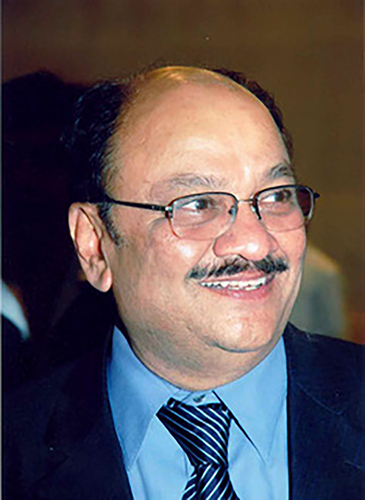
In Pursuit of Excellence: A Life Devoted to Urology and Humanity
To be recognized in the Legends-in-Urology section of the Canadian Journal of Urology is in itself an honor and humbling moment. As I reflect on my journey from a small village in Gujarat to a career rooted in urological innovation and humanitarianism, I know this honor belongs as much to my mentors, colleagues, patients, and family as it does to me. After getting this invitation as I was reflecting on what to put in the article, I felt I should focus mainly on my journey that is not captured by scientific publications or my many medical talks…… The institute I helped develop, and the humanitarian mission.
Born in the small town of Matar in Gujarat State in India on 30 May 1944, my path into medicine was deeply personal. My mother passed away following excessive bleeding from a gynecological surgery. Despite access to capable physicians, her condition proved fatal. I was just 17. Her dream was for me to become a doctor, and that tragedy shaped my commitment to medicine as both a science and a service. From then on, I saw surgery not merely as a clinical skill, but as a solemn responsibility—to ensure that fewer families experienced what mine had. As I always say, I see my mother in every patient and myself in every family member. To me, the essence of medicine lies not just in surgical excellence—compassionate care is also critical.
My early surgical training at BJ Medical College, Pune under the guidance of Dr. Bodhe laid the foundation. Surgery immediately appealed to me, not just for its precision but for the direct and transformative impact it could have on a patient’s life. Dr. Bodhe was a task master and expected perfection and this early surgical apprenticeship instilled a deep work ethic and discipline that I have tried my best to maintain throughout my career. Driven by a hunger to grow, I moved to the UK to pursue specialization in urology. There, I earned my FRCS degrees from both London and Edinburgh. At Lewisham and Dartford Hospitals, I trained under Mr. Tuffil and Mr. J. P. Williams. Their mentorship instilled an appreciation for and an enduring commitment to methodical thinking, adaptation to new technologies, and compassionate care.
It was also in England that I met Dr. Virendra Desai—then a registrar and later, the visionary who would later establish the Muljibhai Patel Urological Hospital (MPUH) in Nadiad. Virendra Desai was a registrar in my unit before me, and he had returned to India and was fundraising and planning a superspeciality hospital for urological and nephrological diseases in a small rural town in my home state.
When I returned to India in 1976, I established my own private practice and remained immersed in the care of patients, many of whom traveled long distances for treatment. It is fair to say my early career was as a solo private practitioner……very different to how my career evolved later. In 1978, I reconnected with Virendra Desai, who invited me to join MPUH—a center he envisioned as a beacon of hope for rural patients. MPUH at the time was a unique concept—a dedicated center for the treatment of urology and nephrology in a rural setting in India. Unfortunately, Dr. Virendra Desai passed away prematurely and I along with my colleagues took upon the task of continuing the institute mission.
MPUH began with a few dialysis machines—then a scarce resource in western India. Our goal was bold: to provide world-class care regardless of a patient’s ability to pay. We treated cases of kidney failure from stones, diabetes, and other causes. In 1980, we performed Gujarat’s first kidney transplant. Our earliest surgeries involved related donors and came with complications, including urinary leaks. But every challenge became an opportunity to learn and refine. By the early 1990s, MPUH had conducted over 1000 kidney transplants. In 1996, I invited Dr. Inderbir Gill to perform laparoscopic donor nephrectomies at MPUH which was the first in India. The success of the procedures marked the beginning of a transformative shift in better care of the living donors. Overall, we have performed 4000 living related kidney transplants till date, Additionally, trainees from our institution have established transplant units, many in areas where no transplant services were available, and have collectively performed more than 11,000 transplant procedures. I am proud that our institution has remained at the forefront of technical evolution of renal transplantation including robotic recipients and single port donor nephrectomy.
In 1982, I attended the SIU meeting in San Francisco that introduced me to three revolutionary procedures: extracorporeal shock wave lithotripsy (ESWL), percutaneous nephrolithotomy (PCNL), and early ureteroscopy. These minimally invasive approaches held enormous promise, especially in our region, where stone disease is endemic. We were one of the first centers to adopt these techniques and modify them to local needs and resources. By 1985, we performed one of India’s first PCNLs. In 1986, we introduced the country’s first ureteroscopy. Recognizing the critical importance of a safe kidney puncture in PCNL, I traveled to Denmark to study ultrasound guidance with Dr. Holmes. I brought that knowledge back and introduced ultrasound-guided renal access to India. Dr. Arthur Smith would later recognize this technique as my unique contribution to endourology. In 1989, MPUH hosted the USICON meeting in Ahmedabad and conducted a live surgical workshop in Nadiad, featuring experts like Dr. Dretler from Boston and Dr. Perez Castro from Spain. Their demonstrations sparked widespread adoption of ureteroscopy across India. The following year, 24 urologists presented their own ureteroscopy experiences at USICON—a testament to the ripple effect of shared learning.
By 1994 and 1998, we were hosting national workshops to teach PCNL and ureteroscopy. These sessions were held in high-prevalence areas for stone disease—the “stone belt” of India. I saw firsthand how local urologists, when trained and equipped, could deliver outstanding care. One case I recall vividly is a young farmer from rural Gujarat who had suffered for years with bilateral stones. After a PCNL procedure at MPUH, he returned home within days, pain-free, and able to resume work. He later wrote to say he had named his newborn son after one of our surgical fellows. These are the legacies that cannot be measured in numbers.
Another critical turn was in establishing our center for urology and nephrology residency in 1992. None of the existing faculty were recognized teachers at the time so we solicited the help of senior recently retired teachers such as Dr. Sharad Bapat, Dr. Vidya Acharya and Dr. Shriram Joshi to support the start of a formal urology and nephrology residency program. From one urology trainee every year we are now one of India’s largest training programs with 6 urology trainees and fellowships in Endourology and Transplantation. Our Alumni pool exceeds 170 urologists and nephrologist who provide urology services in all parts of India and the downstream impact of the quality of renal disease urologic care that our trainees have provided and centers that they have built all across India is most gratifying.
The growth of MPUH went hand in hand with my own growth as a surgeon and humanitarian. Over the years, I’ve performed more than 16,000 PCNLs, a volume that represents not just experience but responsibility. Each case brought a new lesson—about anatomy, about technique, about empathy. From elderly patients with complex comorbidities to children whose families had traveled for days, each encounter reinforced my belief in the humanistic core of medicine. As part of the humanitarian effort, we adopted a small village Bidada located in the Kutch region of Gujarat. In 2001, there was a terrible earthquake that destroyed the region including the hospitals and for a while there were no medical services. We initially went there as part of a humanitarian effort but now have an ongoing program where we organize camps 4–5 times a year and offer free care at our institute for all the complex cases.
I also was interested in establishing epidemiological benchmarks for urological diseases in the Indian population. In our state we have been doing systematic screening for prostate cancer and till date have screened more than 7566 patients in 40 villages in our state. These screening camps are also used for health education and wellness sessions for the population.
The hospital has been more than an institution. It was an idea, a movement, a community effort. From the outset, we were clear on our purpose: no patient would ever be denied care because of their financial status. This philosophy shaped every major decision—from investing in cutting-edge equipment to designing patient-centric care models. We formed partnerships with donors, NGOs, and government entities, creating a web of support that allowed MPUH to thrive and remain accessible.
While clinical care remained my daily passion, academic excellence formed our backbone. Over the decades, I authored more than 750 peer-reviewed publications and led over 230 workshops worldwide. These included live surgeries in remote corners of Asia, South America, and Africa—each with its own challenges but always driven by the same goal: to train, not just to treat.
To institutionalize this philosophy, we founded the Jayaramdas Patel Academic Centre (JPAC) in 2007, that helped establish state-of-the-art simulation labs, JPAC has trained thousands through programs like the Laparoscopic Urology Training Program (LUTP) and the Robotic Urology Training Program (RUTP). Our motto is simple: “Enter to Learn, Exit to Serve”. JPAC became more than a training ground. It became a bridge across generations and geographies. I have seen young surgeons from small cities in India train side-by-side with visiting fellows from Europe, Africa, and the Middle East. I have watched hesitant hands gain confidence, unsure minds find clarity, and strangers become collaborators. This has been one of my greatest joys.
Alongside this, I’ve had the privilege of serving as President of the Urological Society of India, the World Endourology Society, the Asian Society of Endourology, and the Société Internationale d’Urologie. I’ve also acted as examiner and visiting professor in Singapore, Nepal, Bangladesh, and across India. These roles were not about prestige—they were about building bridges, empowering colleagues, and fostering a global dialogue around urological care.
I have always embraced any opportunity that has come my way throughout my career and many have resulted in exponential downstream benefits that I had not even dreamt of when I accepted them. I wanted to share a specific example. In 1999, I received a call from Dr. Gopal Badlani that the venue for the upcoming Videourology Congress had a problem and asked if I could organize it at a short notice. I immediately took up the offer and we successfully hosted this with very little time for preparation. This was one of the prime reasons why I was awarded the World Congress of Endourology that we hosted in Mumbai in 2004. This was the first major international conference in India and it showcased excellence and innovation of Indian endourologists worldwide. It also propelled my career in the field of endourology.
Over the years, I’ve been fortunate to receive numerous accolades: the Dr. B. C. Roy National Award, The Spence Award from the AAGUS, AUA President’s Citation, St. Paul’s Medal from BAUS, Felix Guyon Award from SIU, and the Lifetime Achievement Award from the Endourology Society. Most recently, I was honored with the AUA Humanitarian Recognition Award and the Super Indian Award from Bharat 24. But every award has one thing in common—they are shared, not earned alone. They belong to my patients, my Institution, to every nurse, technician, resident, and administrator who gave their best, day after day.
When I look back, the defining feature of my life is not a singular success or breakthrough. It is the act of service: to restore health, to share knowledge, to build institutions that outlive us. My wife, Dr. Nalini, has been my partner in life and medicine. My son Dr. Mihir and daughter Renu have been unwavering sources of joy and purpose.
I remain forever indebted to Dr. Mihir, my mentors, my colleagues, my mentees whose influence shaped me into a physician, a teacher, and above all, a student of life.
To future generations of urologists: remain curious, stay humble, and remember that no amount of skill can substitute for kindness and empathy. Let every patient encounter be a lesson, every surgery a meditation, and every setback an invitation to grow.
As I write this, I feel not just pride, but peace. Peace in knowing that I walked a path of purpose, with people I respect, in service of something greater than myself. I thank the Canadian Journal of Urology for this honor. May this story be a guidepost, a reflection, and above all, an inspiration.
Dr. Mahesh R. Desai, MS, FRCS, FRCS, FACS
Senior Consultant—Urology
Senior Trustee—MPUH
Nadiad, Gujarat, India
Cite This Article
 Copyright © 2025 The Author(s). Published by Tech Science Press.
This work is licensed under a Creative Commons Attribution 4.0 International License , which permits unrestricted use, distribution, and reproduction in any medium, provided the original work is properly cited.
 Downloads
 Citation Tools
