
 Login
Login Register
 Submit a Paper
 Propose a Special lssue
 Open Access
LEGENDS IN UROLOGY

Legends in Urology
Vascular Biology Research Laboratory, Boston Childrens Hospital, 300 Longwood Avenue, Boston, Massachusetts 02115
Canadian Journal of Urology 2026, 33(1), 3-6. https://doi.org/10.32604/cju.2026.079368
Issue published 28 February 2026
 View Full Text
 Download PDF
Abstract
This article has no abstract.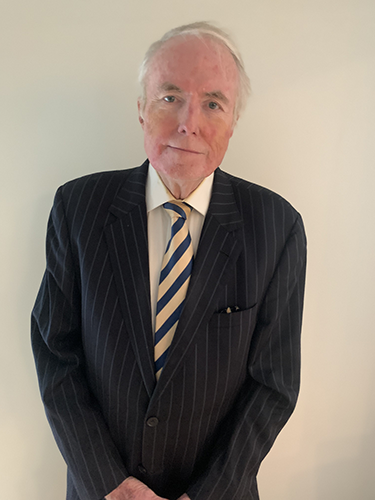
When I was informed that I had been selected to be featured in Legends in Urology by the Canadian Journal of Urology, I was surprised and humbled. It was a honor to be included in that special group of urologists.
To put my life in perspective, you have to start with my parents. Anything that I have achieved would not have been possible without them. They were members of ‘The Greatest Generation’ as described by Tom Brokaw in his book of the same name. My father left college in December, 1941, within six months of graduation, to enlist in the Navy. Six months later, in June of 1942, while on leave, he returned to marry his college sweetheart, my mother. After the war, he finished his engineering degree on the GI bill and later went on to get an MBA.
I was born on 10 August 1949 at St. Vincent’s Hospital in New York City. A few years later, like so many of that generation, my parents left Manhattan to move to Long Island to acquire a home with a backyard.
As an engineer, my father was very mechanically inclined and my childhood memories are filled with Saturday morning trips to the hardware store or lumber yard with him to pick up supplies for our latest home project. These activities created a bond between us that lasted a lifetime. In all the time that the two of us spent together, I never heard dad curse. He was in the navy in World War II in the South Pacific, so he knew all the words. He made up a nonsense word, “jingonetty”, if he hit his finger with a hammer, so he would never give his son a bad example.
I was always active in athletics and participated in all the usual boyhood sports. However, a few days before starting the seventh grade, I suffered a very serious hip injury during a track meet. Being only twelve years old, I never understood the exact nature of the injury, but the treatment at that time required me to be placed in a spica cast, which immobilized my hips and upper legs for nine months. I was able to attend the seventh grade remotely via a speaker system between my bedroom and the grammar school which was provided as a protype by the New York Telephone Company. It was the first of its kind and it worked.
Although I didn’t realize it at the time, my mother saved my life. There were no visiting nurses in those days, so she took a leave of absence from her job and took care of me 24/7. I easily could have died from pneumonia or decubiti-neither occurred. She would review class lessons with me at night and I remained on the honor role.
In the eighth grade, the faculty selected six of us to sit for the entrance exam to the very competitive scholarship school, Regis High School in Manhattan. It is considered the Catholic equivalent of Stuyvesant and numbers Anthony Fauci among its alumni. Two of us passed the exam and were awarded scholarships. With the wisdom of a thirteen year old, I assumed that is where I would go. I remember a conversation with my father who advised that I attend Chaminade High School, an all male parochial on Long Island, which was much closer to home. He reasoned that extracurricular activities were an important part of the high school experience and a daily trip to New York City would limit my participation. Like so many other pieces of advice from my father, he was absolutely right.
I chose Chaminade and thrived there. There were 314 boys in my class and that all-male environment engendered competition and achievement in the best sense of the word. I was elected chairman of the junior prom, president of the senior class, president of the student council and valedictorian and made friendships that have lasted sixty years. While at Chaminade, I was the New York State champion in extemporaneous speaking. At our fiftieth class reunion, when I gave the class oration, I said, “Chaminade made us all better than we thought we could be.”
I attended Princeton University and majored in biology and again made life-long friends including some wonderful roommates. I was accepted to medical school and attended New York Medical College. I began a pediatric residency at New York Hospital/Cornell. However, I had always been interested in urology and two urology attendings, John McGovern and John Coleman, took me under their wings and nutured that interest.
I completed the three year pediatric residency which was a pyramid program and I was offered the coveted chief residency position and a fourth year. However, Victor Marshall had just retired as urology chief at New York Hospital and a wonderful man, Ed Muecke, was the acting chairman. He offered me the complete package-a general surgery spot followed by four years as a urology resident which I accepted.
For some reason, I had always been enamored with Boston. I applied to the Boston urology programs and Doctor Ben Gittes offered me an interview with him at the Peter Bent Brigham Hospital. I arrived at that small brick building and met Ben Gittes. His charisma captured me and a few days later, I received a page at New York Hospital and it was Ben offering me a spot in his training program. I accepted and reluctantly told Doctor Muecke of my decision. It represents one of the great ‘what ifs’ of my career. My contemporary Cornell residents would have been Bal Carter, Peter Schlegel, Ernie Sosa and Steve Schlossberg. What a privilege it would have been to train with them under the tutelage of Darracott Vaughan.
I did my general surgery training at Bellevue Hospital and then moved to Boston where I completed my training at the Harvard Program in Urology. Ben was a special mentor and became a lifelong friend. I was very comfortable in the Brigham environment and won resident research prizes from the Boston Surgical Society and the New England Section of Urology.
Then came the next ‘what if’ of my career. I was considering applying to the NIH for a fellowship position and spoke to Ben for advice. He told me that he was disappointed that none of his current faculty were interested in research and he offered me a clinical appointment with protected research time. He encouraged me to apply for a AUA Scholar Award which I won and I began my academic career in Boston.
Working with Ben Gittes was a privilege. He created an environment supporting academic research that was unmatched. To me, when he left for the Scripps Institute in San Diego, the North Star of Boston academic urology dimmed, never to be rekindled to the same degree. He invited me to come with him with an appointment at Scripps which I declined. More than once, I regretted that decision.
I was now in my late thirties and had enough experience to create my own academic agenda. It is important to mention two faculty members, Subbarao Yalla at the West Roxbury VA Hospital and Alan Retik at Boston Children’s who were always available when I needed some advice. I moved up the academic ladder at the Brigham and introduced most of the new technology to the urology service. Early on, I spent a few days with Joe Segura at the Mayo Clinic and introduced percutaneous nephrolithotomy to our hospital. I performed the first rigid and flexible ureteroscopy on the urology service and introduced laser technology for upper tract stones and prostate surgery. I introduced urologic laparoscopy at the hospital. Sanjaya Kumar and I took two of our urology nurses to the DaVinci training center in Houston and performed the first robotic cases on the urology service. I also initiated the use of cryoablation of small renal masses in the OR with 13 of 14 cases being free of recurrence.
I recruited Kathy Juliano, RN and began the urodynamic service at the institution and worked with a vendor to acquire an agreement for a portable ESWL machine which strengthened the stone service in the division. I worked with Sanjaya Pathak, one of the hospital administrators, to organize the urologic clinics and outpatient surgery at the Foxboro Center at Patriot Place which continues to the present day and is a major part of the urology practice at the institution.
When Phil Kantoff started the multispecialty urologic oncology clinic at the Dana Farber, I was the first and only Brigham urologist to staff the clinic. Ken Wishnow represented the Beth Israel urology group in that clinic as well. Some years later, I collaborated with Scott McDougal and organized the first BWH-MGH joint urology lecture series. We utilized a forerunner of Zoom technology and it ran for ten weeks and was attended by residents from both institutions. Throughout my career, I often felt it necessary to put the needs of the division above my own personal professional goals, but I felt it was necessary to keep the division contemporary and moving forward.
During my career, I helped train approximately 100 urology residents as well as 25 fellows who worked directly with me. I received multiple faculty teaching awards, but there was one event that was sobering. A defining moment in my academic career came when I questioned the actions of a resident. I stood alone, erect and unwavering, but integrity prevailed. I always tried to conduct myself following the words of Alan Simpson, the Wyoming senator, “With integrity, nothing else matters. Without integrity, nothing else matters.”
My career extended beyond Harvard. I served on the editorial boards of the Journal of Urology and Contemporary Urology. I continue to serve on the editorial boards of Urology, Urologic Oncology, the Canadian Journal of Urology and as editor-in-chief of Urologic Clinics of North America. I also served as a member of NCCN-the National Comprehensive Cancer Network.
I have always been an active Princeton alumnus. I have served as a member of the Greater Boston Chapter of the Princeton Prize in Race Relations which annually honors high school students for their activities to promote interracial harmony. This has been a source of great personal satisfaction for me.
I was fortunate to win some accolades during my career. These included 3rd place AUA Research Award, 1st place New England Section Research Award, the AUA Distinguished Service Award, the William P. Didusch Art and History Award, the New York Medical College Alumnus Gold Medal and the New England Section Joseph B. Dowd Lifetime Achievement Award. Along the way, I obtained a MBA from Boston University and a MA (hon.) from Harvard when I became a full professor. I published 320 articles in peer-reviewed journals and was the author or editor of 20 books.
Probably because of my father’s influence, I have always been mechanically inclined. I have designed several surgical instruments and developed a female incontinence procedure known as the Brigham Sling. I also hold two patents. In my retirement, I have become involved in environmental issues and serve on the Edgartown Energy Committee and as vice chairman of the Edgartown Climate Committee. I felt that I needed a stronger engineering background so I went back to school and obtained an online certificate from the Stanford School of Engineering, Energy Innovation and Emerging Technologies. So there is life in retirement!
Since high school, I have been interested in leadership. There are three medical leaders that I would like to acknowledge as they taught me a lot about leadership. Ben Gittes was my urologic father. Like my natural father, he was a man of uncommon integrity. Another one of his trainees, Marty Koyle, captured the essence of Ben when he said, “The great thing about Ben is that he isn’t a back stabber, he’s a chest stabber”.
Marsha Moses, PhD is the Julia Dyckman Professor at Harvard Medical School. We have been collaborators for several decades. I still attend her lab meetings every week for two hours. She runs the research lab founded by Judah Folkman. Not only has she taught me a lot of science, she has taught me a lot about leadership. Like all great leaders, she is unselfish. She applauds the success of those around her and never tries to usurp their accomplishments.
Like most ABU trustees, I consider serving as a trustee as the zenith of my career. Aside from working with a talented group of fellow trustees, I had the privilege to work with Gerry Jordan. He was also a man of uncommon integrity as well as possessing an uncanny vision of what was coming next in medical certifications. He was adept at delegating authority to a group of alpha males and alpha females but maintained an invisible hand to ensure a fair and balanced outcome. He was a marvel to observe close up. I consider Ben, Marsha and Gerry to be my medical legends.
Another part of my career which gave me great satisfaction was the medical missionary work that I did. I went to Haiti with my friend, Paul Farmer, as part of Partners in Health. I am still involved with PIH and recently taught part of the physical diagnosis course via Zoom to some of the medical students at the school that Paul founded in Rwanda. I also went to Gaza and Egypt with Charley Horton as part of Physicians for Peace. We stood shoulder to shoulder with Palestinian and Israeli physicians at the operating table. There were no politics in the OR. I was the head of the Boston surgical team that reconstructed one of the young women from Sierra Leone who had been mutilated as part of intentional genocide.
On my last day in the operating room, my Haitian scrub nurse of twenty years said goodbye and said to me, “Dr. Loughlin, in the twenty years that we have worked together and during all the tough cases that I have done with you, I have never once heard you curse.” I guess that I am my father’s son.
When it is time for me to push my chips to the center of the table, I hope what is said of me can be what was said by Nick Carroway of Jay Gatsby in Fitzgerald’s masterpiece, the Great Gatsby, that I “… . .turned out all right in the end… .”
Kevin R. Loughlin MD, MBA
Vascular Biology Research Laboratory
Boston Childrens Hospital
300 Longwood Avenue
Boston, Massachusetts 02115
Cite This Article
 Copyright © 2026 The Author(s). Published by Tech Science Press.
This work is licensed under a Creative Commons Attribution 4.0 International License , which permits unrestricted use, distribution, and reproduction in any medium, provided the original work is properly cited.
 Downloads
 Citation Tools
