
 Login
Login Register
 Submit a Paper
 Propose a Special lssue
 Open Access
REVIEW
Gut microbiota-driven epigenetic regulation of cytokine gene expression: microbial metabolites, chromatin mechanisms, and clinical perspectives
1 Department of Medical-Surgical and Prophylactic Disciplines, Faculty of Medicine, Titu Maiorescu University of Bucharest, Bucharest, Romania
2 Department of Hematology, Colentina Clinical Hospital, Bucharest, Romania
3 Department of Hematology, Carol Davila University of Medicine and Pharmacy, Bucharest, Romania
4 Department of Hematology and Bone Marrow Transplantation, Fundeni Clinical Institute, Bucharest, Romania
5 Department of General Surgery, Witting Clinical Hospital, Bucharest, Romania
6 Department of Preclinical Disciplines, Faculty of Medicine, Titu Maiorescu University of Bucharest, Bucharest, Romania
7 Department of General Surgery, Monza Clinical Hospital, Bucharest, Romania
8 Medical Doctoral School, Titu Maiorescu University of Bucharest, Bucharest, Romania
9 Research Centre in the Medical-Pharmaceutical Field, Faculty of Medicine and Pharmacy “Dunarea de Jos” University, Galati, Romania
10 Department of Hematology, “Sf. Apostol Andrei” County Emergency Clinical Hospital, Galati, Romania
* Corresponding Author: Cosmin Alec Moldovan. Email:
European Cytokine Network 2026, 37(3), 207-223. https://doi.org/10.32604/ecn.2026.086087
Received 24 May 2026; Accepted 31 August 2026; Issue published 28 September 2026
 View Full Text
 Download PDF
Abstract
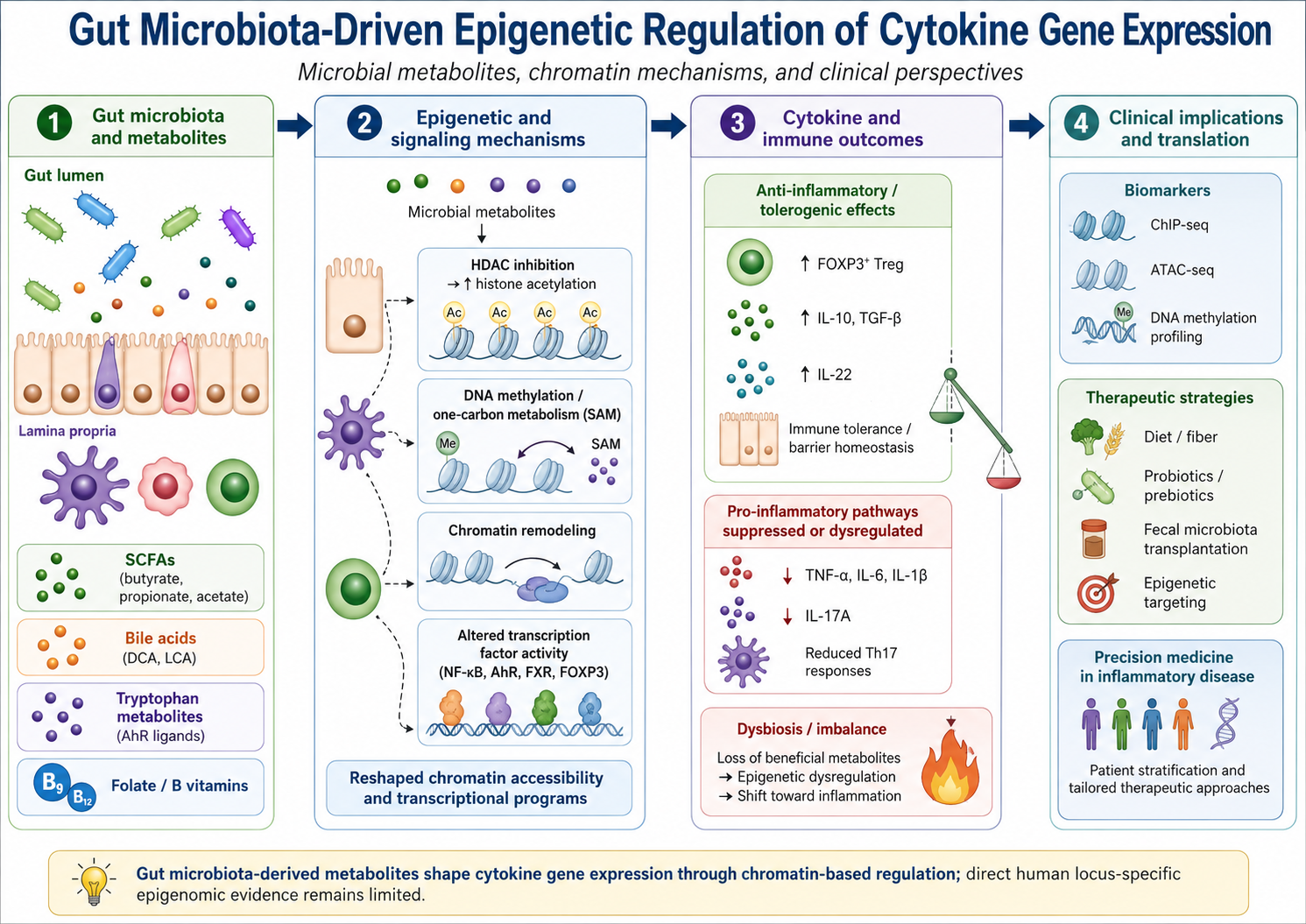
Accumulating evidence suggests that the gut microbiota regulates cytokine gene expression through multiple epigenetic mechanisms that shape chromatin states in response to microbial metabolites. Alterations in the gut microbiota have been implicated in the pathogenesis of numerous inflammatory, autoimmune, and metabolic disorders. Key mediators including short-chain fatty acids, bile acids, and tryptophan derivatives modulate histone modifications and DNA methylation at cytokine gene loci, influencing the balance between pro-inflammatory and tolerogenic immune responses. Experimental evidence, including ChIP-seq studies, indicates that microbial colonization promotes regulatory chromatin configurations, while dysbiosis is associated with epigenetic patterns favoring inflammatory cytokine programs. Short-chain fatty acid–mediated histone deacetylase inhibition represents a central mechanism supporting regulatory T cell differentiation and anti-inflammatory cytokine expression. This review summarizes the current evidence linking microbial metabolites, epigenetic regulation, and cytokine expression, while critically discussing the strengths and limitations of the available experimental and translational studies. Although these findings highlight a mechanistic link between the microbiota and cytokine epigenetic regulation, direct evidence in human immune cells remains limited. Further integrative studies are required to support the development of microbiome-informed biomarkers and therapeutic strategies.Graphic Abstract
Keywords
Cytokines are central mediators of immune communication, orchestrating inflammatory responses, tissue repair, and immune homeostasis. Their expression is tightly regulated not only by canonical signaling pathways and transcription factors but also by epigenetic mechanisms that determine chromatin accessibility and transcriptional competence at promoters and enhancers. Among these mechanisms, post-translational histone modifications and DNA methylation are particularly important, as they enable immune cells to integrate environmental stimuli into stable yet dynamic transcriptional programs [1,2].
Among the most influential environmental determinants of cytokine epigenetic programming is the gut microbiota. The trillions of microorganisms colonizing the gastrointestinal tract contribute not only to digestion and metabolic homeostasis but also to the development, education, and functional tuning of the immune system [3,4]. This effect is mediated in part through a diverse repertoire of microbial metabolites, including short-chain fatty acids (SCFAs) and other bioactive compounds, which act locally within the intestinal mucosa and exert systemic immunomodulatory and epigenetic effects after entering the circulation [5]. Consequently, the microbiota is increasingly recognized as an active regulator of host gene expression and inflammatory tone [6].
A growing body of evidence indicates that one of the principal mechanisms through which the gut microbiota shapes immune responses is the modulation of host epigenetic pathways [7]. In this context, microbiota-derived metabolites—such as SCFAs, bile acid derivatives, and tryptophan catabolites—have attracted particular interest for their ability to influence histone acetylation, histone methylation, chromatin accessibility, and indirectly DNA methylation [8]. These interactions provide a mechanistic framework linking microbial composition and metabolic activity to cytokine gene regulation, immune tolerance, and susceptibility to inflammatory diseases [9]. Among these metabolites, SCFAs—particularly butyrate—represent the best-characterized link between microbial activity and immune epigenetic regulation [10,11]. Experimental studies have demonstrated that butyrate promotes regulatory T-cell differentiation and modulates macrophage inflammatory responses through histone deacetylase inhibition, while additional work suggests that SCFAs can also influence histone crotonylation, further expanding the spectrum of chromatin-based regulatory mechanisms [12,13].
Mechanistic understanding of how microbial signals are transduced into cytokine gene chromatin changes has been significantly advanced by high-throughput epigenomic technologies, particularly chromatin immunoprecipitation followed by sequencing (ChIP-seq), which enables genome-wide mapping of histone marks and transcription factor occupancy at regulatory regions [14]. Comparative studies in germ-free, antibiotic-treated, and microbiota-reconstituted models have provided compelling evidence that microbial colonization shapes the chromatin landscape at immune regulatory gene loci—including cytokine gene promoters and enhancers—in ways that influence both the magnitude and quality of cytokine responses [15,16]. However, the available evidence remains heterogeneous. Although experimental models provide strong proof of concept, direct, locus-specific epigenomic evidence linking defined microbial metabolites to specific cytokine gene regulatory elements, particularly in human tissues, is still limited and represents an evolving area of investigation [7–9].
Against this background, the present review examines the cytokine–epigenetic interface of gut microbiota biology, with a particular focus on chromatin-based mechanisms and the insights provided by ChIP-seq and related epigenomic approaches. We discuss the major classes of microbiota-derived metabolites that may shape cytokine-associated chromatin states, the current level of evidence supporting these interactions, the tissue-specific dimensions of microbiota-driven epigenetic programming, and the potential clinical implications for inflammatory disease biomarkers and therapeutic targeting of the microbiota–cytokine epigenetic axis. Throughout, we distinguish between findings supported by direct experimental evidence and those that remain mechanistically plausible but not yet fully validated.
This narrative review summarizes current evidence on gut microbiota-mediated epigenetic regulation of cytokine gene expression, with particular emphasis on findings derived from chromatin immunoprecipitation sequencing (ChIP-seq) and related epigenomic approaches.
A comprehensive literature search was conducted in PubMed to identify relevant studies published between April 2021 and March 2026. Selected landmark studies published before this period were also included when they provided essential mechanistic background, methodological context, or historical evidence for foundational concepts such as microbiota-derived SCFAs, regulatory T-cell differentiation, DNA methylation, and ChIP-seq methodology.
Because this was designed as a narrative mechanistic review rather than a systematic review, no formal risk-of-bias assessment or meta-analysis was performed. The search strategy was used to identify representative mechanistic, translational, and recent review literature. Priority was given to studies providing direct epigenomic evidence, followed by studies reporting metabolite-dependent cytokine regulation with plausible epigenetic mechanisms. The search strategy combined Medical Subject Headings (MeSH) and free-text terms using Boolean operators, as follows: (“gut microbiota” OR microbiome) AND (cytokine OR “cytokine production”) AND (epigenetics OR “histone modification”). This search yielded 247 records (figure 1).
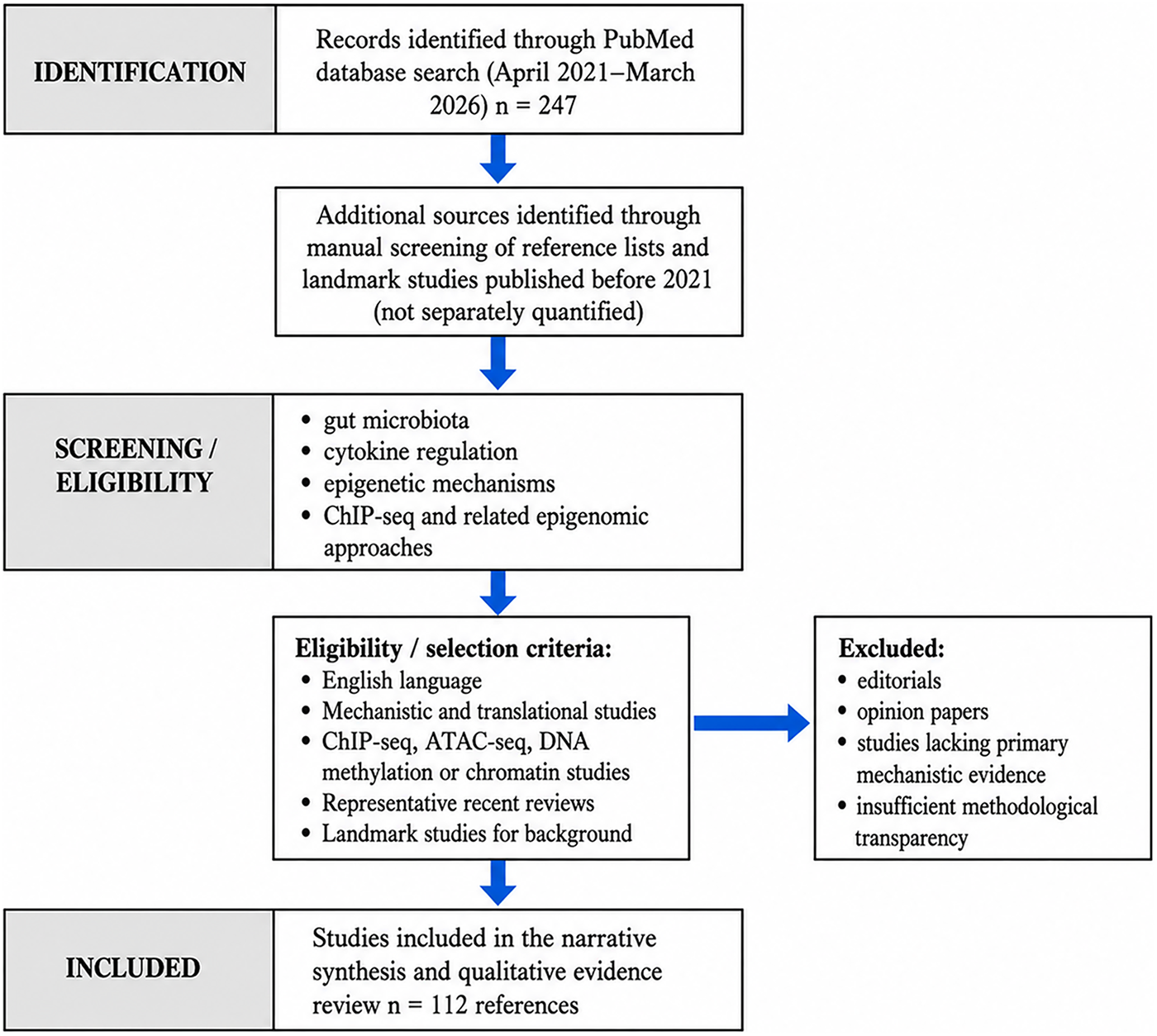
Figure 1: Modified PRISMA-style flow diagram of the literature search and study selection process. The diagram summarizes the PubMed database search, manual screening of reference lists, eligibility assessment, exclusion criteria, and final inclusion of studies in this narrative review on gut microbiota–driven epigenetic regulation of cytokine gene expression. Because this study is a narrative review, additional landmark studies published before the predefined search period were included when they provided essential mechanistic background. No formal risk-of-bias assessment or meta-analysis was performed.
In addition, the reference lists of all retrieved articles were manually screened to identify further relevant studies not captured by the initial search.
Studies were considered eligible if they investigated chromatin-level regulatory mechanisms—such as histone modifications, transcription factor occupancy, or DNA methylation—in the context of host–microbiota immune interactions. Particular emphasis was placed on studies employing ChIP-seq or other high-throughput epigenomic techniques.
Exclusion criteria comprised non-English publications, editorials or opinion articles lacking primary data, and studies with insufficient methodological transparency.
Given the narrative nature of this review, the available evidence was synthesized qualitatively, with emphasis on studies providing mechanistic insights into epigenetic regulation of cytokine expression in the context of host–microbiota interactions.
3 Microbiota-Derived Metabolites as Modulators of Cytokine Gene Chromatin and Immune Programs
Emerging evidence positions the gut microbiota as a central regulator of host immune transcriptional programs through epigenetic mechanisms, including histone modifications, DNA methylation, and higher-order chromatin remodeling [15]. These microbiota-sensitive pathways are dynamically shaped by environmental factors such as diet, antibiotic exposure, and host metabolic state, which collectively influence microbial composition and metabolite availability [16] (table 1). In this context, microbiota-derived metabolites are increasingly recognized as bioactive signaling molecules that integrate environmental cues into cytokine gene regulation and immune-cell state transitions [17] (figure 2).
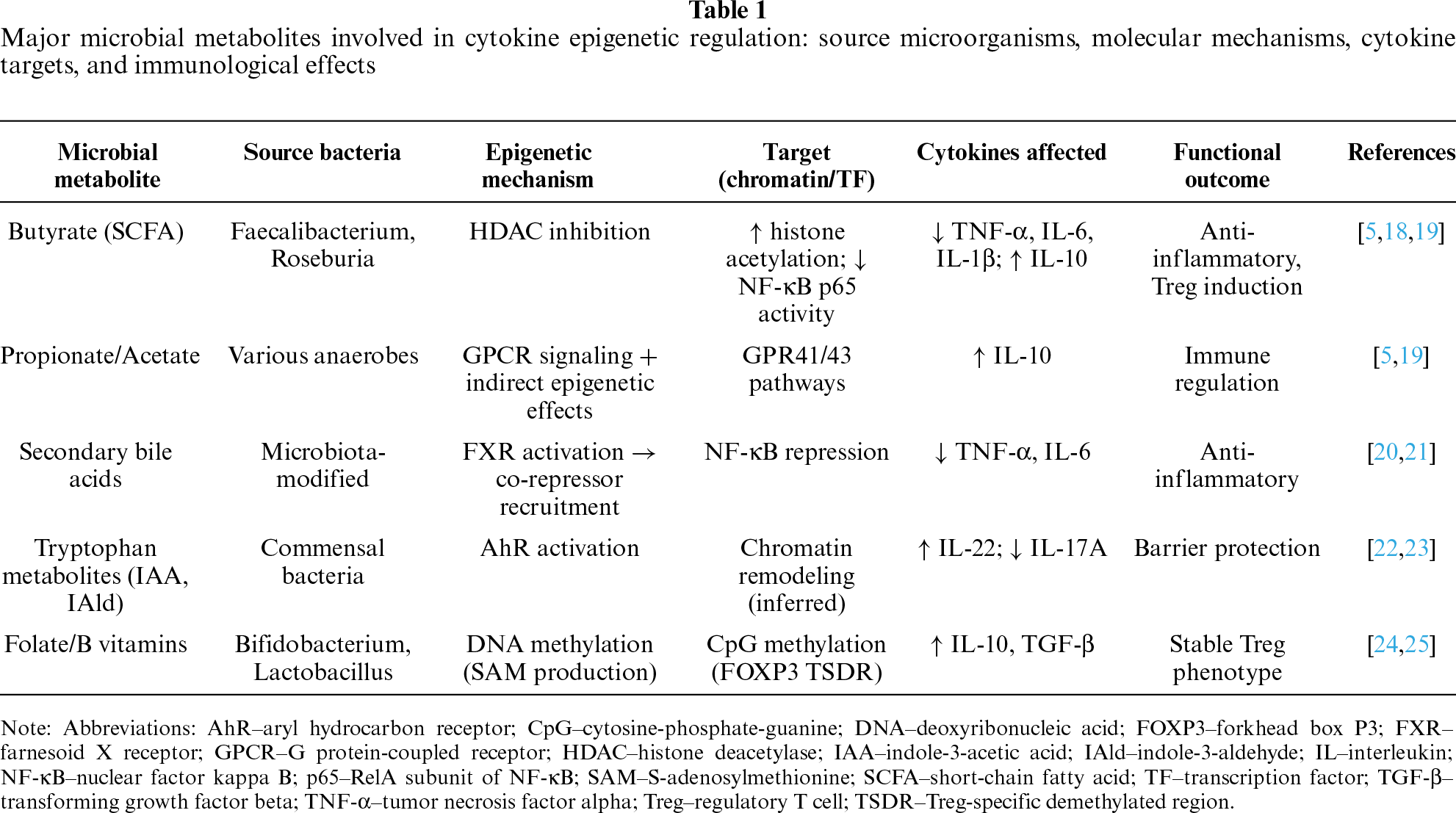
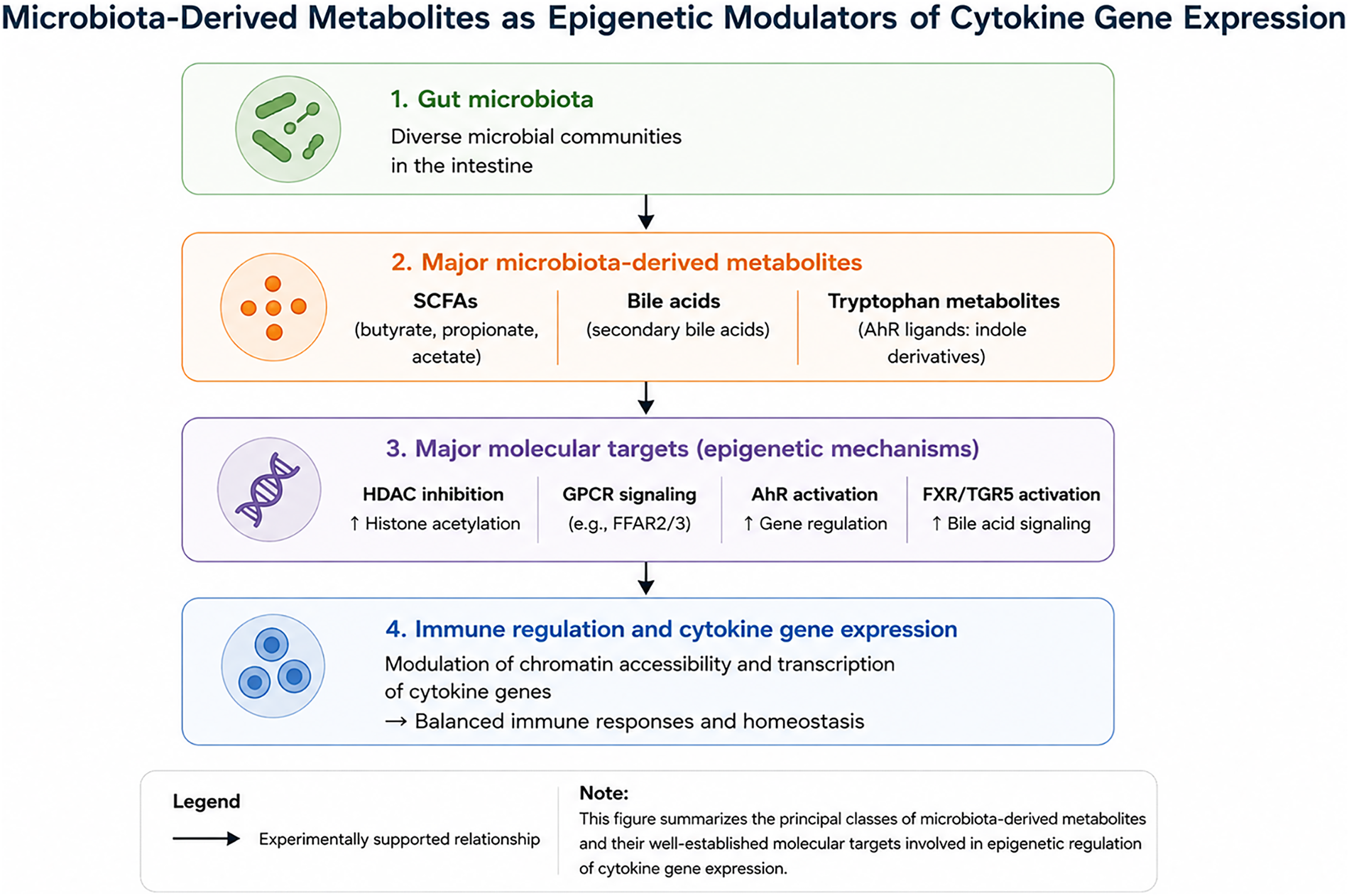
Figure 2: Gut-immune interface: microbiota-derived signals. Conceptual illustration based on data from [5,19–21]. Abbreviations: AhR, aryl hydrocarbon receptor; FFAR2/3, free fatty acid receptors 2 and 3 (GPR43/GPR41); FXR, farnesoid X receptor; GPCR, G protein-coupled receptor; HDAC, histone deacetylase; SCFAs, short-chain fatty acids; TGR5, Takeda G protein-coupled receptor 5 (G protein-coupled bile acid receptor 1).
3.1 Short-Chain Fatty Acids as Multifunctional Epigenetic Regulators
SCFAs—acetate, propionate, and butyrate—produced through microbial fermentation of dietary fiber represent the most extensively characterized link between microbiota metabolism and epigenetic regulation of cytokine gene expression [26]. Among these, butyrate is a potent inhibitor of class I histone deacetylases (HDAC1, HDAC2, HDAC3, and HDAC8), leading to globally increased histone acetylation at gene regulatory elements [27]. Importantly, while HDAC inhibition is broadly associated with transcriptional activation, the anti-inflammatory effects of butyrate on cytokine expression are largely mediated through indirect and context-dependent mechanisms rather than direct repression at pro-inflammatory loci [19].
Mechanistic studies indicate that class I HDACs—including HDAC3—regulate the acetylation state of the NF-κB p65 subunit, with downstream effects on its DNA binding and nuclear localization [28]. Acetylation-dependent interactions with IκBα further influence nuclear export, providing a mechanistic basis by which HDAC inhibition by butyrate may modulate NF-κB-dependent cytokine transcription and promoter occupancy [29,30]. These effects are accompanied by increased production of anti-inflammatory cytokines such as IL-10 and by the promotion of regulatory T-cell (Treg) differentiation, underscoring the role of SCFAs in establishing tolerogenic immune states [31,32].
Beyond classical histone acetylation, recent evidence expands the epigenetic scope of SCFA action to include alternative acylation-dependent chromatin modifications, such as histone crotonylation and lactylation, which have been implicated in trained immunity and inflammatory memory [18]. Additionally, SCFAs can modulate chromatin accessibility through effects on histone acetyltransferase complexes, including the Tip60 complex, suggesting that microbial metabolites influence transcription through multiple, partially overlapping chromatin-based mechanisms [33].
Propionate and acetate further contribute to cytokine regulation through G-protein-coupled receptor signaling (GPR41, GPR43), providing an additional layer of integration between metabolic and transcriptional regulation [27]. Notably, reduced SCFA production in dysbiotic states—associated with depletion of butyrate-producing taxa such as Faecalibacterium and Roseburia—correlates with impaired immune regulation [34]. However, while functional effects on cytokine output are well established, comprehensive genome-wide mapping of SCFA-induced histone modifications at specific cytokine loci remains relatively limited, particularly in human tissues [35].
3.2 Tryptophan Metabolism and Aryl Hydrocarbon Receptor–Dependent Chromatin Regulation
Microbial catabolism of dietary tryptophan generates a diverse set of indole derivatives that act as ligands for the host aryl hydrocarbon receptor (AhR), thereby linking microbial metabolism to cytokine regulation and mucosal immune homeostasis [36]. Activation of AhR by metabolites such as indole-3-acetic acid and indole-3-aldehyde promotes IL-22 production, enhances epithelial barrier integrity, and modulates the balance between Th17- and Treg-associated cytokine programs, including IL-17A [22].
At the chromatin level, AhR signaling has been associated with context-dependent remodeling of cytokine gene regulatory regions, including changes in histone modification patterns and transcription factor occupancy [28]. Although much of the mechanistic insight derives from experimental systems, recent evidence indicates that microbiota-derived tryptophan metabolites can exert epigenetic control over immune effector functions, including CD8+ T-cell–mediated antitumor responses [1]. These findings support a model in which AhR-dependent pathways integrate environmental and microbial cues into durable transcriptional programs, although systematic ChIP-seq–based mapping of cytokine loci in this context remains an area of active investigation [23].
3.3 Bile Acid Metabolites and Nuclear Receptor–Mediated Chromatin Remodeling
Microbiota-dependent bile acid metabolism represents an additional regulatory axis through which microbial activity modulates cytokine gene expression and associated chromatin states [37]. Secondary bile acids, including deoxycholate and lithocholate, signal through nuclear receptors such as the farnesoid X receptor (FXR) and related transcriptional regulators, modulating immune-cell differentiation and cytokine production [21]. FXR activation has been shown to suppress NF-κB–dependent transcription of pro-inflammatory cytokines through recruitment of co-repressor complexes to gene promoters, implicating bile acid signaling in chromatin-level regulation of inflammatory pathways [38].
Recent studies further suggest that microbiota-derived bile acid metabolites influence lineage specification along Treg and Th17 pathways, thereby indirectly shaping cytokine output through effects on immune-cell identity [39]. While these findings provide strong evidence for functional immune modulation, direct epigenomic mapping of bile acid–induced chromatin changes at specific cytokine gene loci remains comparatively limited [40]. Dysbiosis-associated alterations in bile acid composition may therefore contribute to a chromatin environment permissive for inflammatory gene expression, though the extent to which this mechanism operates in human disease requires further clarification [41].
3.4 One-Carbon Metabolism and DNA Methylation at Cytokine Gene Promoters
In addition to histone-based mechanisms, microbiota-derived metabolites influence cytokine gene regulation through effects on DNA methylation [24,42]. Several commensal bacterial taxa, particularly Bifidobacterium and Lactobacillus, contribute to host one-carbon metabolism by synthesizing folate and B vitamins required for the generation of S-adenosylmethionine (SAM), the universal methyl donor for DNA methyltransferases [43]. Through this pathway, the microbiota can modulate CpG methylation patterns at gene regulatory regions, including cytokine gene promoters [7].
A paradigmatic example is the FOXP3 locus, which contains a Treg-specific demethylated region (TSDR/CNS2) essential for stable Foxp3 expression and maintenance of a tolerogenic cytokine profile characterized by IL-10 and TGF-β production [44]. Microbiota-derived metabolic inputs appear to contribute to the maintenance of permissive methylation states at this locus, thereby supporting stable Treg identity [19]. Conversely, dysbiosis-associated impairment of microbial metabolite production may disrupt SAM availability and alter DNA methylation landscapes, potentially affecting cytokine gene expression [25]. However, direct causal links between specific microbial taxa, CpG methylation changes, and cytokine gene regulation in human tissues remain incompletely defined [45] (table 1).
4 ChIP-Seq and Epigenomic Evidence: Microbiota Shapes Cytokine Chromatin Landscapes
Accumulating evidence from epigenomic studies indicates that the gut microbiota shapes cytokine gene regulation through chromatin-based mechanisms with direct implications for immune function and disease [6].
As discussed in Section 3.1, SCFA-mediated HDAC inhibition represents the best-characterized mechanism linking microbial metabolites to cytokine epigenetic regulation. Here, we focus specifically on the epigenomic evidence demonstrating how these mechanisms are reflected at cytokine-associated chromatin loci [1].
Although inhibition of histone deacetylases (HDACs) by SCFAs represents the best-characterized mechanism linking microbial metabolites to cytokine regulation, histone acetylation is dynamically controlled by the coordinated activities of both histone deacetylases and histone acetyltransferases (HATs). HATs catalyze the addition of acetyl groups to lysine residues on histone tails, thereby promoting chromatin accessibility and transcriptional activation [33]. While direct evidence linking gut microbiota-derived metabolites to HAT activity remains limited, the balance between HAT- and HDAC-mediated histone acetylation is recognized as a fundamental regulator of cytokine gene expression and immune-cell differentiation [18]. Whether microbial metabolites directly modulate HAT-dependent chromatin remodeling in human immune cells remains to be established [19].
High-throughput approaches, particularly chromatin immunoprecipitation followed by sequencing (ChIP-seq), together with germ-free and microbiota-perturbation models, have enabled the identification of microbiota-sensitive epigenetic signatures at immune regulatory loci [46]. These findings provide a mechanistic framework linking microbial composition and metabolite availability to cytokine expression programs and, ultimately, to clinical phenotypes [47]. A summary of microbiota-dependent epigenetic regulation of cytokine loci is provided in table 2.
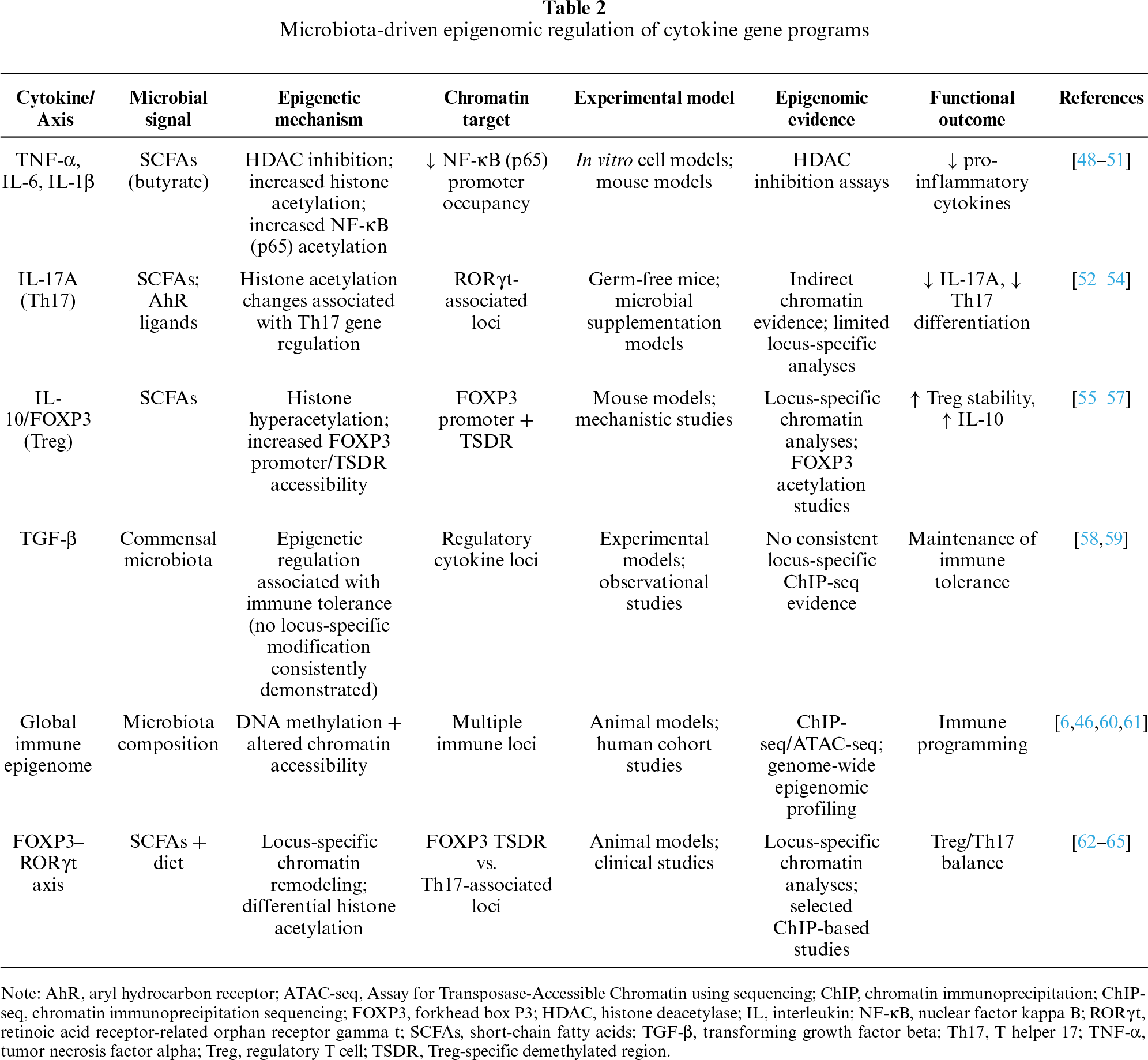
4.1 Pro-Inflammatory Cytokine Loci: TNF-α, IL-6, IL-1β, and IL-17A and Microbiota-Dependent Chromatin Remodeling
Epigenomic analyses have begun to delineate how microbiota-derived signals influence the chromatin landscape at pro-inflammatory cytokine loci, including TNF, IL6, IL1B, and IL17A [51,60]. Early integrative studies combining microbiota profiling with ChIP-seq in intestinal biopsies demonstrated that dysbiosis is associated with altered histone modification patterns at immune regulatory gene regions, supporting the concept of a microbiota-sensitive epigenetic signature in inflammatory disease [61].
Consistent with the mechanistic framework outlined in Section 3.1, epigenomic studies demonstrate that SCFA-mediated HDAC inhibition is accompanied by altered chromatin accessibility and reduced NF-κB occupancy at pro-inflammatory cytokine loci. ChIP-seq studies have provided evidence of changes in histone modifications and transcription factor occupancy, while chromatin accessibility is more directly assessed using approaches such as ATAC-seq [48–50].
For IL17A, the defining cytokine of Th17 cells, evidence from germ-free and SCFA-supplemented models supports a microbiota-dependent restriction of Th17 differentiation and cytokine production [52]. Tryptophan-derived metabolites acting through the aryl hydrocarbon receptor (AhR) further modulate the Th17/Treg balance, with functional suppression of IL-17A expression [53]. While mechanistic data from experimental systems support chromatin-level regulation at Th17-associated loci, comprehensive ChIP-seq mapping of these effects in primary human immune cells remains limited, highlighting an important gap in translational epigenomics [66].
4.2 Tolerogenic Cytokine Programs: Epigenetic Regulation of IL-10, TGF-β, and FOXP3
The most compelling evidence for microbiota-driven epigenetic programming is observed in tolerogenic cytokine pathways. Building on the mechanisms described in Sections 3.1 and 3.4, the strongest epigenomic evidence currently available concerns tolerogenic cytokine programs centered on FOXP3 and regulatory T cells [55]. This process is associated with demethylation of the FOXP3 TSDR/CNS2 region, a key epigenetic feature of stable FOXP3 expression and Treg lineage commitment, together with permissive histone modifications at the FOXP3 locus that support transcriptional activation resulting in increased chromatin accessibility [56]. Consistent with these findings, germ-free models exhibit reduced Treg frequency and diminished IL-10 production, both of which can be partially restored by SCFA supplementation [59]. These observations support a direct link between microbiota-derived metabolites, chromatin remodeling, and the establishment of tolerogenic cytokine programs [64].
TGF-β expression similarly appears to be supported by commensal colonization, contributing to immune homeostasis within mucosal environments [58]. In parallel, early-life microbial exposure has been implicated in shaping chromatin states at additional cytokine loci, including those involved in Th2 responses, although direct locus-specific epigenomic evidence in defined human immune subsets remains incomplete [67,68].
4.3 The FOXP3–RORγt Chromatin Axis and Immune Balance
The reciprocal regulation of Treg and Th17 cell programs represents a central microbiota-dependent epigenetic axis with direct relevance to cytokine balance [62]. As discussed above, SCFA-dependent regulation of the FOXP3 locus provides the mechanistic basis for the reciprocal balance between Treg and Th17 programs [55].
This dual effect is not merely a consequence of global HDAC inhibition but reflects selective sensitivity of key regulatory loci to microbiota-derived signals [63]. In particular, the FOXP3 TSDR region exhibits a high degree of epigenetic plasticity in response to SCFAs, supporting stable Treg identity and sustained production of IL-10 [57]. Concurrently, inhibition of Th17 differentiation is associated with reduced IL-17A expression and altered chromatin accessibility at Th17-related gene loci [54].
Dietary modulation of the microbiota further reinforces this axis: high-fiber diets that increase colonic SCFA concentrations are consistently associated with enhanced Treg frequency and reduced pro-inflammatory cytokine production, illustrating the translation of microbial metabolic inputs into measurable immune outcomes [65].
4.4 Complementary Epigenomic Approaches: ChIP-Seq, ATAC-Seq, and DNA Methylation Analysis
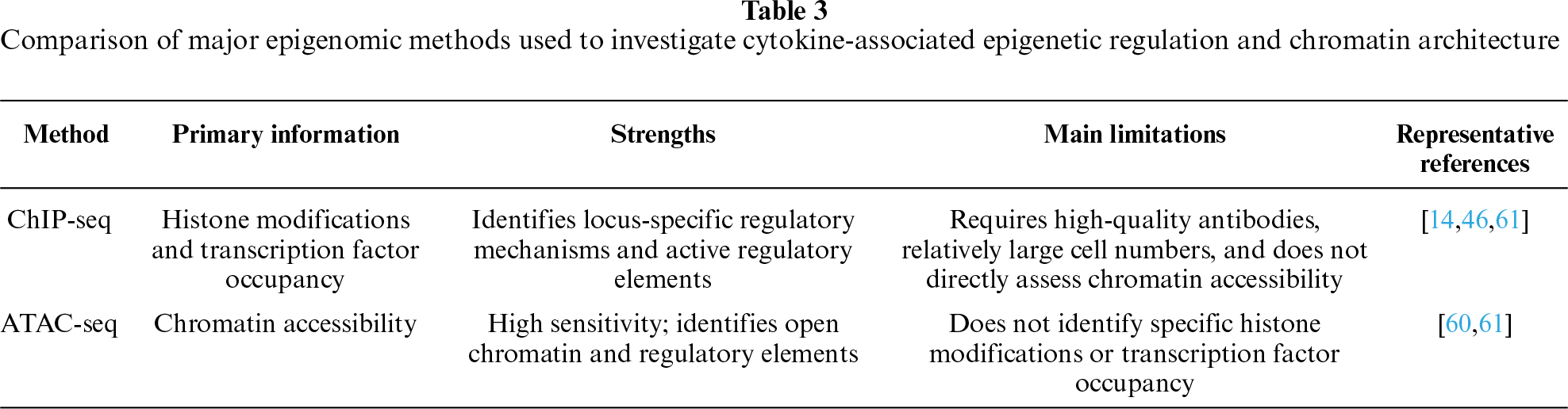
Although ChIP-seq has greatly advanced our understanding of microbiota-driven cytokine regulation, it captures only one component of the epigenetic landscape. Complementary approaches such as ATAC-seq and DNA methylation profiling provide additional information that improves the interpretation of microbiota-induced immune programming [6]. The principal characteristics, strengths, and limitations of these epigenomic approaches are summarized in table 3. ChIP-seq identifies histone modifications and transcription factor occupancy at cytokine regulatory regions, whereas ATAC-seq maps chromatin accessibility and detects regulatory elements that are permissive for gene transcription [46,60]. In contrast, DNA methylation analysis identifies stable CpG methylation patterns associated with long-term regulation of immune-cell identity and cytokine expression, including the FOXP3 TSDR region that supports regulatory T-cell stability [55–57]. Because these methods interrogate different layers of epigenetic regulation, they should be considered complementary rather than interchangeable [61]. Integrating ChIP-seq with ATAC-seq, DNA methylation profiling, and emerging single-cell multi-omic technologies will provide a more comprehensive understanding of how microbiota-derived signals shape cytokine-associated chromatin landscapes and may facilitate the identification of clinically relevant epigenetic biomarkers [14].
5 Tissue-Specific Cytokine Epigenetic Programming
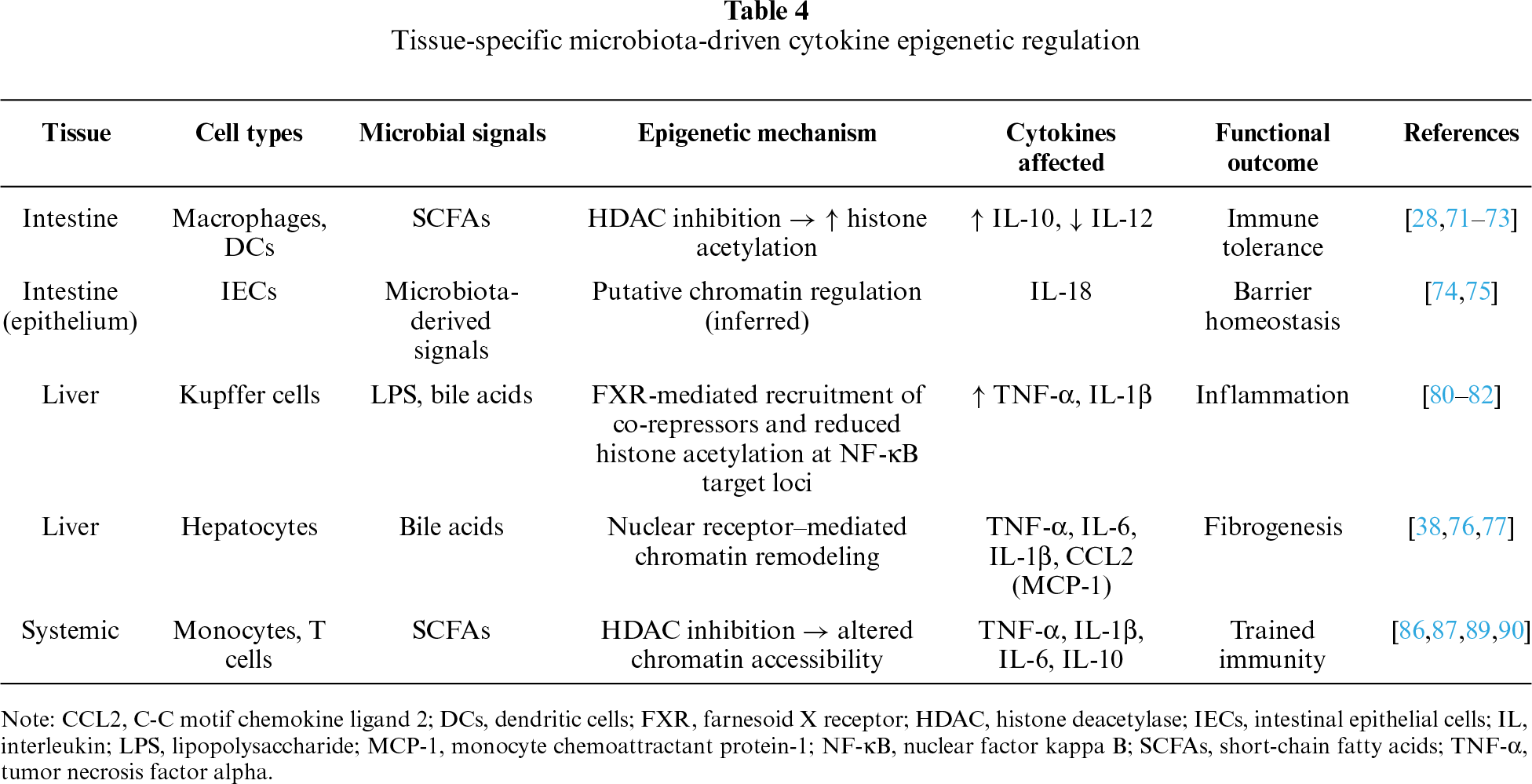
Lamina propria macrophages and dendritic cells represent key antigen-presenting cells within the intestinal mucosa, where they interact closely with commensal microbiota and contribute to the regulation of immune responses, including cytokine production and T-cell differentiation [68] (figure 3). Evidence from germ-free and antibiotic-treated animal models indicates that the loss of microbial-derived signals results in diminished interleukin-10 (IL-10) production and heightened susceptibility to experimental intestinal inflammation, underscoring the essential role of the microbiota in sustaining tolerogenic cytokine programs within mucosal immune compartments [69,70]. Evidence that these functional changes involve chromatin-level modifications at IL-10 and pro-inflammatory cytokine gene loci, including alterations in histone acetylation patterns, is supported by studies demonstrating that SCFA exposure modulates macrophage epigenetic states [28,71]. Dendritic cells similarly exhibit SCFA-dependent changes in cytokine gene expression, including altered IL-10 and IL-12 production, with evidence that histone deacetylase (HDAC) inhibition modulates their capacity to prime T cell cytokine responses [72,73].
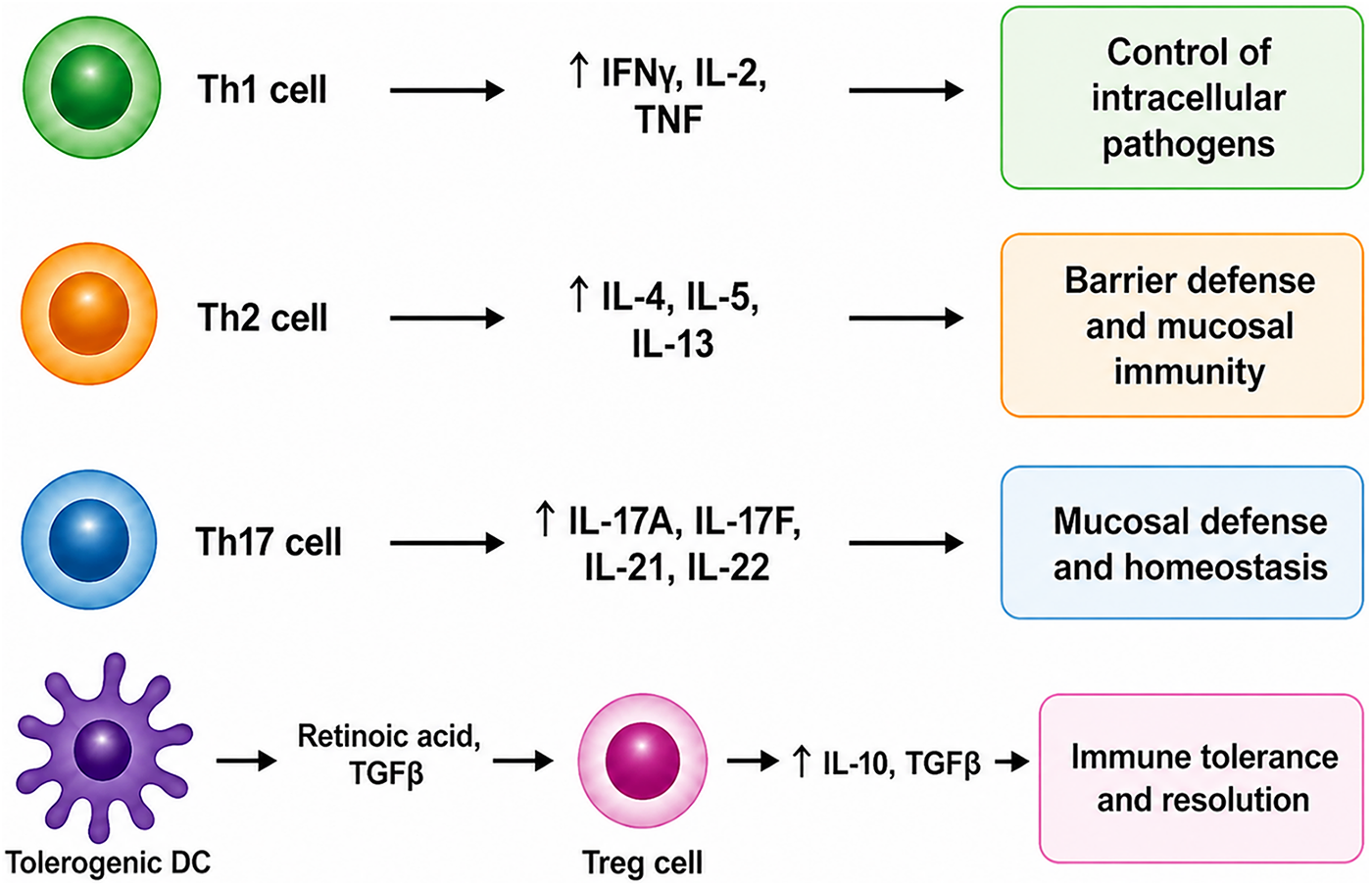
Figure 3: Immune modulation and cytokine regulation. Major immune cell subsets and cytokine profiles involved in microbiota-mediated immune regulation. This schematic summarizes the principal T helper (Th) cell subsets and tolerogenic dendritic cell (DC)-mediated regulatory pathways involved in maintaining intestinal immune homeostasis. Th1 cells predominantly produce interferon gamma (IFN-γ), interleukin (IL)-2 and tumor necrosis factor (TNF), thereby promoting immunity against intracellular pathogens. Th2 cells secrete IL-4, IL-5, IL-6 and IL-13, contributing to barrier defense and mucosal immunity. Th17 cells produce IL-17A, IL-17F, IL-21, and IL-22, which are essential for mucosal defense, epithelial integrity, and maintenance of intestinal homeostasis. Tolerogenic DCs promote the differentiation of regulatory T (Treg) cells through retinoic acid and transforming growth factor beta (TGF-β), resulting in increased production of IL-10 and TGF-β and the establishment of immune tolerance. The cytokine profiles and immune functions illustrated are supported by experimental evidence and represent the major functional characteristics of these immune cell subsets rather than individual intracellular signaling pathways. Conceptual illustration based on data from [39–41].
In intestinal epithelial cells (IECs), studies in germ-free models have demonstrated altered expression of barrier-associated cytokines, including interleukin-18 (IL-18), indicating that microbial colonization is required for the proper regulation of epithelial cytokine gene expression [74]. Whether these functional changes reflect direct chromatin-level modifications at cytokine gene regulatory elements in intestinal epithelial cells—detectable by approaches such as ChIP-seq—rather than indirect transcriptional effects remains an important mechanistic question that warrants further investigation [75].
5.2 Hepatic Cytokine Regulation
The liver receives gut-derived microbial metabolites via the portal circulation and represents a key immunological interface where microbiota-driven signals shape cytokine production and immune programming [76]. In the setting of dysbiosis-associated metabolic liver disease, hepatic Kupffer cells adopt a pro-inflammatory phenotype characterized by increased production of cytokines such as TNF-α and IL-1β, thereby contributing to the inflammatory milieu that drives hepatic inflammation and fibrogenesis [77,78]. In parallel, impairment of regulatory pathways, including reduced IL-10 production and loss of tolerogenic Kupffer cell polarization, further amplifies hepatic immune dysregulation [79]. Microbial-derived ligands such as lipopolysaccharide activate Toll-like receptor signaling pathways, reinforcing NF-κB-mediated cytokine production [80].
Disruption of microbiota-derived secondary bile acid homeostasis impairs FXR-dependent repression of NF-κB signaling, thereby promoting pro-inflammatory cytokine transcription in hepatocytes and Kupffer cells [38]. In addition, hepatic stellate cells respond to this pro-inflammatory environment by promoting fibrogenic activation, linking immune dysregulation to structural liver remodeling. Evidence from hepatic chromatin remodeling studies indicates that bile acid signaling influences the epigenetic state of metabolic and immune regulatory gene regions, including those governing cytokine expression [81,82]. These findings support the concept that microbiota-derived bile acid metabolites shape cytokine-associated chromatin landscapes in hepatic immune cells, although the specific histone modification changes at individual pro-inflammatory cytokine gene promoters in response to defined bile acid signals require further direct characterization in human liver tissue [83].
5.3 Systemic Immune Cell Programming
Emerging evidence indicates that microbiota-derived signals can systemically influence cytokine gene expression patterns in circulating immune cells [84]. Gut microbiota dysbiosis has been associated with altered expression of immune regulatory genes in peripheral blood cells [85]. These alterations may involve peripheral immune cell subsets, including monocytes and T lymphocytes, and could be mediated in part by microbiota-derived metabolites such as SCFAs [86]. Notably, SCFAs, particularly butyrate, can function as histone deacetylase inhibitors, thereby modulating chromatin accessibility and cytokine gene transcription [87].
Whether these transcriptional differences reflect direct epigenetic modification of cytokine gene chromatin in circulating immune cells—mediated by systemic metabolite levels—or are secondary to altered immune cell trafficking and activation from intestinal sites remains an important mechanistic question [88]. These observations are consistent with the concept of trained immunity, in which microbiota-derived signals drive sustained functional reprogramming of innate immune cells through integrated metabolic and epigenetic mechanisms [89,90].
Definitive resolution of this question will require genome-wide ChIP-seq profiling of cytokine gene loci across peripheral immune cell subsets in human subjects exposed to well-characterized microbiota perturbations [66].
Collectively, microbiota-derived signals regulate cytokine expression across tissues through epigenetic mechanisms that integrate metabolic cues into context-specific immune responses (table 4).
6 Temporal Dynamics and Epigenetic Memory at Cytokine Loci
6.1 Acute Versus Persistent Cytokine Chromatin Changes
Experimental evidence indicates that SCFA-mediated epigenetic changes at immune regulatory gene loci can occur rapidly, consistent with the kinetics of HDAC inhibition, and may influence cytokine gene transcription within hours of exposure [24,91].
At the other temporal extreme, studies in antibiotic-treated animal models suggest that dysbiosis-associated chromatin alterations at immune regulatory loci may persist even after microbiota recovery, indicating a potential for epigenetic “memory” of prior microbial perturbation [15,89].
Whether such persistent changes specifically affect cytokine gene promoters—including H3K4me3 enrichment at TNF-α, IL-1β, or other pro-inflammatory loci—and contribute to the chronicity of microbiota-associated inflammatory diseases remains to be determined. While this hypothesis is biologically plausible and supported by analogous findings in other inflammatory contexts, it requires direct longitudinal ChIP-seq investigation at defined cytokine gene loci [9]. The temporal dynamics of microbiota-induced epigenetic changes and their potential long-term consequences are summarized in figure 4.
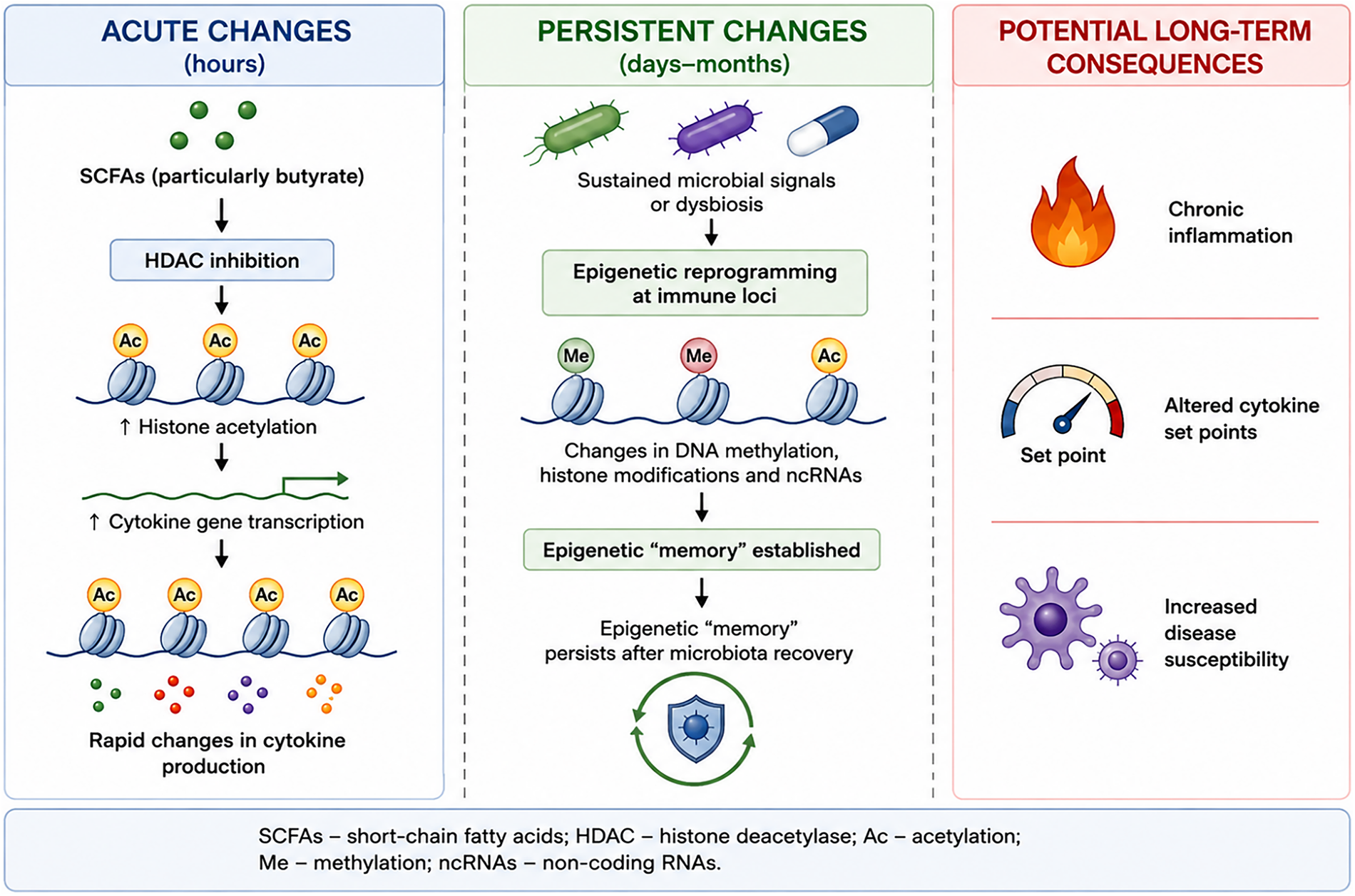
Figure 4: Temporal progression of microbiota-induced epigenetic regulation, from acute responses to persistent immune reprogramming and potential long-term consequences. Conceptual illustration based on data from [9–11].
6.2 Developmental Windows for Cytokine Chromatin Programming
Early life represents a critical window for microbiota-mediated immune programming with long-term consequences [92,93].
Developmental colonization studies demonstrate that neonatal microbial exposure shapes immune system maturation and cytokine response capacity in ways that are not fully recapitulated by later-life colonization [94].
The establishment of durable cytokine immune set-points by early microbiota likely involves epigenetic programming at cytokine gene loci during critical developmental windows [92]. This concept is supported by experimental evidence showing that early-life SCFA exposure promotes Treg differentiation and tolerogenic cytokine programs [95].
Additionally, animal models indicate that maternal gut dysbiosis can influence offspring immune development and inflammatory susceptibility. This raises the hypothesis that microbiota-derived maternal metabolites may shape fetal immune chromatin states during gestation [96,97].
However, direct ChIP-seq evidence supporting this mechanism in fetal immune tissues is currently lacking. Addressing this gap represents an important translational objective, particularly in the context of immune-mediated complications of high-risk pregnancy, such as recurrent pregnancy loss and preeclampsia, where cytokine balance and maternal–fetal immune tolerance are central to pathogenesis [98,99].
Critical developmental windows for microbiota-driven cytokine chromatin programming are illustrated in figure 5.
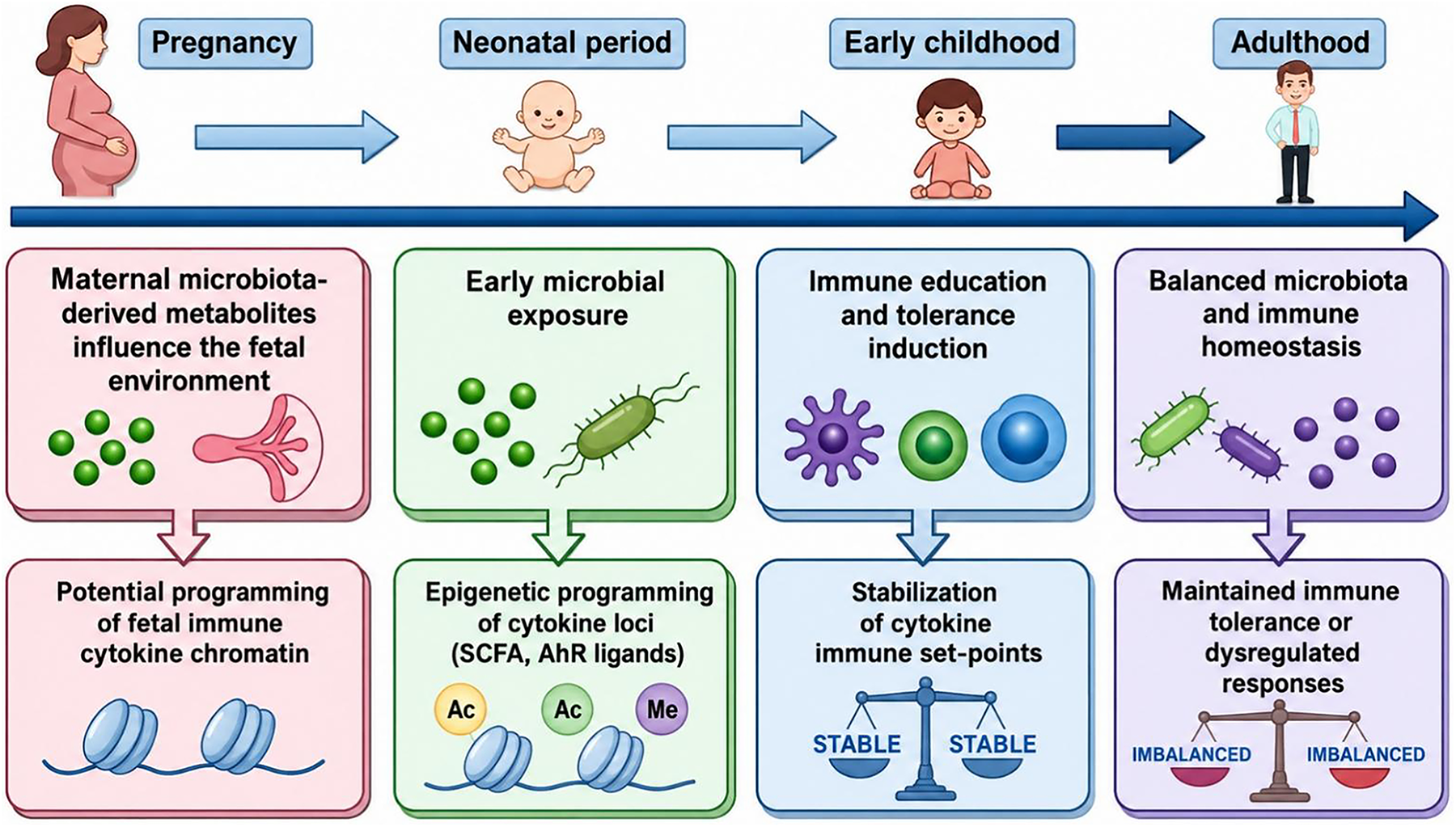
Figure 5: Developmental windows for microbiota-driven cytokine chromatin programming. Conceptual illustration showing the sequential stages of microbiota-mediated immune and epigenetic programming from pregnancy to adulthood. During pregnancy, maternal microbiota-derived metabolites may influence fetal immune development through placental transfer, potentially initiating epigenetic programming of cytokine-associated chromatin. In the neonatal period, early microbial colonization and microbiota-derived metabolites, including short-chain fatty acids (SCFAs) and aryl hydrocarbon receptor (AhR) ligands, contribute to epigenetic regulation of immune cells through mechanisms such as histone modifications and DNA methylation. During early childhood, these processes promote immune education, regulatory T-cell differentiation, and stabilization of cytokine immune set-points. In adulthood, a balanced microbiota supports immune homeostasis and maintenance of tolerogenic cytokine programs, whereas dysbiosis may contribute to persistent inflammatory responses and altered epigenetic regulation. Conceptual illustration based on data from [92–99]. Abbreviations: Ac, acetylation; Me, methylation.
7.1 Cytokine Chromatin Signatures as Potential Biomarkers
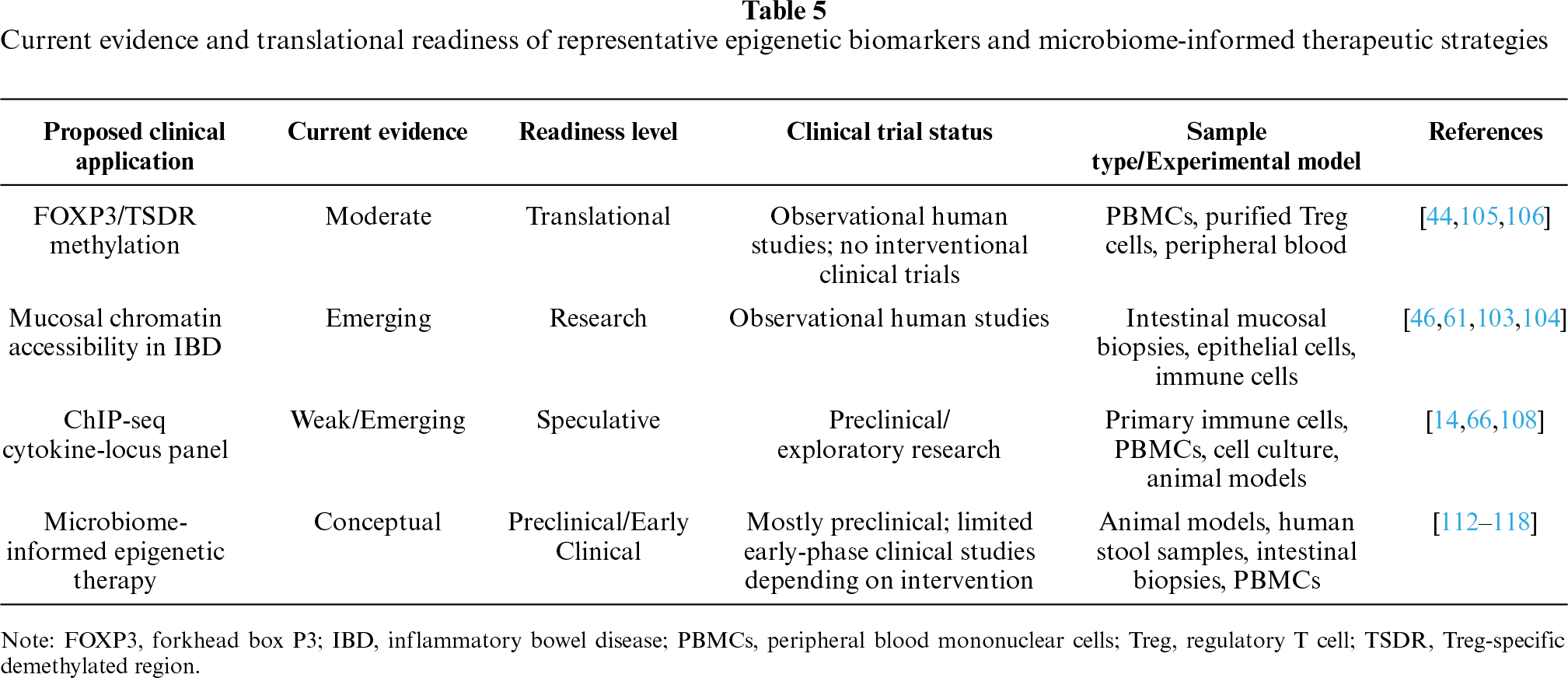
The mechanistic evidence linking microbiota composition to cytokine gene chromatin states raises the possibility that histone modification patterns at cytokine gene loci could serve as novel biomarkers of microbiota-associated inflammatory disease [100]. Emerging evidence suggests that microbiota-sensitive epigenetic signatures—reflecting chromatin changes at immune regulatory loci associated with dysbiotic microbial composition—may be detected in intestinal biopsies from Crohn’s disease patients, supporting the potential of mucosal epigenetic profiling as a readout of microbiota–immune interactions [61,101,102]. Broader epigenomic approaches—including ATAC-seq profiling of chromatin accessibility at cytokine gene regulatory elements—have similarly shown correlations with gut microbiota composition and inflammatory disease activity [103,104]. DNA methylation profiling at the FOXP3/TSDR locus in intestinal biopsies or peripheral blood reflects Treg functional status and has been explored in the context of inflammatory bowel disease [105,106].
Compared with currently established inflammatory biomarkers, such as circulating cytokines, C-reactive protein (CRP), and conventional immune-cell phenotyping, cytokine-associated epigenetic biomarkers may provide complementary information by reflecting relatively stable regulatory states rather than transient inflammatory responses. This characteristic could improve disease stratification, prognosis, and therapeutic monitoring [47]. However, several important challenges remain before clinical implementation can be achieved. Epigenetic signatures are highly dependent on tissue and cell type, exhibit substantial inter-individual variability, and are influenced by age, diet, medications, environmental exposures, and disease stage. In addition, the lack of standardized sample processing, analytical pipelines, and validation across independent cohorts currently limits reproducibility [60,61]. Consequently, large prospective multicenter studies integrating microbiome, epigenomic, and clinical data will be required before cytokine-associated epigenetic biomarkers can be considered for routine clinical use [47].
These findings are encouraging, but it is important to note that the translation of cytokine chromatin signatures into validated clinical biomarkers remains at an early stage [107]. Concepts such as using the ratio of histone marks at tolerogenic versus pro-inflammatory cytokine gene loci as a diagnostic index, or applying ChIP-seq–based epigenetic profiling of patient samples to guide individualized therapy selection, represent promising future directions rather than established clinical applications, as current evidence supports the translational potential of epigenetic biomarkers but highlights the need for large-scale clinical validation [108,109]. Realizing this potential will require prospective human cohort studies with integrated microbiota and epigenomic profiling, the establishment of validated and standardized methodologies for routine epigenomic analysis of clinical biopsy samples, and robust evidence demonstrating clinical utility beyond research settings [110].
7.2 Microbiome-Informed Therapeutic Strategies: Potential and Limitations
The microbiota–cytokine epigenetic axis constitutes a compelling conceptual framework for the development of targeted therapeutic strategies [111]. Microbiome-based interventions—including high-fiber dietary modulation, prebiotic supplementation, targeted probiotic formulations enriched in SCFA-producing taxa, and fecal microbiota transplantation (FMT)—are designed to restore physiological metabolite profiles and, consequently, to influence epigenetic regulation at tolerogenic cytokine loci [112,113]. Clinical evidence robustly supports the efficacy of FMT in achieving remission in recurrent Clostridioides difficile infection, while studies in inflammatory bowel disease (IBD) have demonstrated heterogeneous, yet in some cases clinically meaningful, therapeutic responses [114]. Notwithstanding these observations, it remains unclear to what extent such clinical improvements are accompanied by normalization of cytokine-associated chromatin landscapes, underscoring the need for integrative epigenomic analyses in pre- and post-intervention tissue specimens [115].
Despite their therapeutic promise, microbiome-based interventions also present important safety considerations. Although fecal microbiota transplantation (FMT) is highly effective for recurrent Clostridioides difficile infection, its application in immune-mediated diseases remains limited by variability in donor microbiota composition, inconsistent clinical efficacy, and the potential risk of transmitting infectious agents or undesirable microbial traits [101,102]. Furthermore, manipulation of the gut microbiota may induce widespread metabolic and immunological changes that extend beyond the intended therapeutic targets. Similarly, epigenetic therapies, including HDAC inhibitors, may produce off-target chromatin modifications affecting multiple genes and biological pathways rather than selectively regulating cytokine-associated loci [18,33,103]. These safety concerns highlight the need for carefully designed clinical trials, standardized donor screening protocols, and the development of more selective microbiome-based and epigenetic therapeutic strategies before broader clinical implementation [102].
Pharmacological approaches that recapitulate or potentiate SCFA-mediated epigenetic modulation represent a complementary and increasingly explored therapeutic avenue. Histone deacetylase (HDAC) inhibitors have demonstrated efficacy in experimental models of IBD and other inflammatory disorders, primarily through the regulation of cytokine gene transcription [116]. More selective epigenetic targeting strategies—such as HDAC3-specific inhibition to modulate macrophage chromatin states or bromodomain and extraterminal (BET) protein inhibition to disrupt H3K27ac-dependent NF-κB-driven transcriptional programs—represent promising emerging directions, although their clinical translation in the context of microbiota-driven inflammatory disease remains at an early stage [117]. Table 5 summarizes the current evidence, translational readiness, and clinical development status of representative cytokine-associated chromatin biomarkers and microbiome-informed epigenetic therapeutic strategies.
The advancement of microbiome-informed epigenetic therapeutics will likely depend on the integration of individualized microbiota signatures, cytokine-associated chromatin biomarkers, and a refined mechanistic understanding of metabolite-specific deficiencies driving epigenetic dysregulation in each patient [118].
8 Limitations and Future Directions
Despite substantial progress in understanding microbiota-driven epigenetic regulation of cytokine gene expression, several important limitations remain [118]. Discrepancies among published studies likely reflect differences in experimental models, microbial composition, host genetics, tissue specificity, and analytical methodologies, making direct comparison across studies challenging [6,19,47].
First, most mechanistic insights derive from animal models or in vitro systems, while direct genome-wide epigenomic profiling in primary human immune cells remains limited [19]. In addition, many studies infer chromatin-level regulation from functional readouts—such as cytokine expression or transcription factor activity—without direct mapping of histone modifications at specific cytokine gene loci [100].
Moreover, microbiota-derived metabolites exert pleiotropic effects through multiple overlapping pathways, including receptor-mediated signaling, metabolic rewiring, transcription factor modulation, and chromatin remodeling [119]. This functional complexity complicates the attribution of cytokine outcomes to discrete epigenetic mechanisms [120]. Furthermore, the widespread reliance on bulk-cell analyses obscures cell-type–specific chromatin dynamics within heterogeneous immune populations [121].
Technical challenges associated with human tissue studies also remain a major limitation in this field. High-quality epigenomic analyses require well-preserved clinical specimens and sufficient numbers of purified immune cells, which are often difficult to obtain from patients [14,46]. Furthermore, human tissues exhibit substantial cellular heterogeneity, while inter-individual variability related to disease stage, treatment, diet, and environmental exposures further complicates data interpretation. Techniques such as ChIP-seq and ATAC-seq also require standardized sample processing and optimized experimental protocols to ensure reproducibility across studies [14,103,104]. These challenges contribute to the current reliance on in vitro and animal models and underscore the need for standardized, high-resolution epigenomic studies in primary human tissues to facilitate clinical translation [47,122].
An additional consideration is the potential influence of biological sex on microbiota–epigenome interactions. Emerging evidence suggests that sex hormones contribute to differences in gut microbiota composition, microbial metabolite production, and immune responses, which may subsequently affect epigenetic regulation of cytokine gene expression [123,124]. However, most available mechanistic and epigenomic studies have not been specifically designed or sufficiently powered to evaluate sex-related differences, limiting the generalizability of current findings. Future investigations should therefore incorporate sex-stratified analyses to better define the contribution of biological sex to microbiota-driven epigenetic regulation and immune homeostasis [125].
Another important source of variability arises from factors that independently influence both the gut microbiota and the host epigenome. Commonly prescribed medications, including antibiotics, proton pump inhibitors, metformin, statins, corticosteroids, and immunomodulatory therapies, can substantially alter microbial composition, metabolic activity, and immune signaling. Likewise, diet, age, obesity, smoking, and other environmental exposures may independently shape epigenetic profiles and cytokine regulation [126]. Failure to account for these confounding factors may obscure microbiota-specific effects and contribute to inconsistent findings across studies. Future human investigations should therefore incorporate careful clinical characterization and appropriate adjustment for these variables to improve the reproducibility and interpretation of microbiota–epigenome associations [16].
Future studies should therefore prioritize integrative, high-resolution approaches combining microbiome profiling with ChIP-seq, ATAC-seq, DNA methylation analysis, and single-cell multi-omics in well-characterized human cohorts [122]. Longitudinal study designs incorporating defined microbiota perturbations—such as dietary interventions, antibiotic exposure, or microbiota-based therapies—will be essential to establish causal links between microbial signals, cytokine-associated chromatin states, and immune phenotypes [127].
Importantly, although numerous studies have demonstrated associations between gut microbiota composition, microbial metabolites, and cytokine-associated epigenetic alterations, these findings should not be interpreted as establishing direct causality. Definitive causal relationships will require longitudinal human studies and mechanistic validation using integrated multi-omics and locus-specific epigenomic approaches [47].
The gut microbiota plays a central role in regulating cytokine gene expression through epigenetic mechanisms that shape histone modifications and DNA methylation at cytokine gene regulatory regions. Among these, SCFA-mediated HDAC inhibition represents the most consistently supported pathway, promoting Foxp3 expression and IL-10 production in regulatory T cells while attenuating NF-κB-driven pro-inflammatory cytokine transcription. Nevertheless, direct genome-wide ChIP-seq evidence defining histone modifications at cytokine loci in primary human immune cells remains limited, with many mechanistic insights still derived from experimental models or indirect approaches.
The clinical translation of microbiota-driven epigenetic regulation—including cytokine chromatin biomarkers and microbiome-informed therapeutic strategies—remains a promising but still emerging field. Future progress will depend on integrative human studies combining microbiome profiling with high-resolution epigenomic approaches, alongside precise mechanistic characterization of metabolite–chromatin–cytokine interactions. Overall, the microbiota–cytokine epigenetic axis provides a compelling framework for the development of precision medicine strategies in inflammatory diseases.
Acknowledgement: The figures were created using Microsoft Power Point.
Funding Statement: The authors received no specific funding for this study.
Author Contributions: The authors confirm contribution to the paper as follows: Conceptualization, Mihaela Andreescu, Monica-Daniela Padurariu-Covit, Alina Tanase; methodology, Mihaela Andreescu, Cosmin Alec Moldovan, Stefana Petrut; software, Mihaela Andreescu, Daniel Cochior; validation, Mihaela Andreescu, Laura Tirlea, Adina-Diana Moldovan, Monica-Daniela Padurariu-Covit; formal analysis, Mihaela Andreescu, Cosmin Alec Moldovan; investigation, Laura Tirlea; resources, Monica-Daniela Padurariu-Covit; data curation, Mihaela Andreescu, Alina Tanase; writing—original draft preparation, Monica-Daniela Padurariu-Covit, Cosmin Alec Moldovan, Stefana Petrut; writing—review and editing, Mihaela Andreescu, Laura Tirlea, Alina Tanase; visualization, Mihaela Andreescu, Daniel Cochior, Monica-Daniela Padurariu-Covit, Cosmin Alec Moldovan; supervision, Monica-Daniela Padurariu-Covit; project administration, Laura Tirlea, Alina Tanase, Adina-Diana Moldovan. All authors reviewed and approved the final version of the manuscript.
Availability of Data and Materials: No new datasets were generated or analyzed during the current study. All information discussed in this review is derived from previously published studies cited in the reference list.
Ethics Approval: Not applicable. This article is a narrative review and did not involve human participants, animals, or the collection of original data.
Conflicts of Interest: The authors declare no conflicts of interest.
References
1. Liu R, Wu J, Guo H, et al. Post-translational modifications of histones: mechanisms, biological functions, and therapeutic targets. MedComm 2023;4(3):e292. doi:10.1002/mco2.292. [Google Scholar] [CrossRef]
2. Moore LD, Le T, Fan G. DNA methylation and its basic function. Neuropsychopharmacology 2013;38(1):23–38. doi:10.1038/npp.2012.112. [Google Scholar] [CrossRef]
3. Sommer F, Bäckhed F. The gut microbiota—masters of host development and physiology. Nat Rev Microbiol 2013;11(4):227–38. doi:10.1038/nrmicro2974. [Google Scholar] [CrossRef]
4. Belkaid Y, Hand TW. Role of the microbiota in immunity and inflammation. Cell 2014;157(1):121–41. doi:10.1016/j.cell.2014.03.011. [Google Scholar] [CrossRef]
5. Kim CH. Complex regulatory effects of gut microbial short-chain fatty acids on immune tolerance and autoimmunity. Cell Mol Immunol 2023;20(4):341–50. doi:10.1038/s41423-023-00987-1. [Google Scholar] [CrossRef]
6. Jin Q, Li X, Liu Z, Qi T, Xiao D, Yang W. The interaction between gut microbiota and host DNA methylation in the pathogenesis and therapy of inflammatory bowel disease. Front Microbiol 2025;16:1718358. doi:10.3389/fmicb.2025.1718358. [Google Scholar] [CrossRef]
7. Woo V, Alenghat T. Epigenetic regulation by gut microbiota. Gut Microbes 2022;14(1):2022407. doi:10.1080/19490976.2021.2022407. [Google Scholar] [CrossRef]
8. Woo V, Alenghat T. Host-microbiota interactions: epigenomic regulation. Curr Opin Immunol 2017;44:52–60. doi:10.1016/j.coi.2016.12.001. [Google Scholar] [CrossRef]
9. Zhang Q, Liu Y, Li Y, et al. Implications of gut microbiota-mediated epigenetic modifications in intestinal diseases. Gut Microbes 2025;17(1):2508426. doi:10.1080/19490976.2025.2508426. [Google Scholar] [CrossRef]
10. Furusawa Y, Obata Y, Fukuda S, et al. Commensal microbe-derived butyrate induces the differentiation of colonic regulatory T cells. Nature 2013;504(7480):446–50. doi:10.1038/nature12721. [Google Scholar] [CrossRef]
11. Arpaia N, Campbell C, Fan X, et al. Metabolites produced by commensal bacteria promote peripheral regulatory T-cell generation. Nature 2013;504(7480):451–5. doi:10.1038/nature12726. [Google Scholar] [CrossRef]
12. Chang PV, Hao L, Offermanns S, Medzhitov R. The microbial metabolite butyrate regulates intestinal macrophage function via histone deacetylase inhibition. Proc Natl Acad Sci U S A 2014;111(6):2247–52. doi:10.1073/pnas.1322269111. [Google Scholar] [CrossRef]
13. Fellows R, Denizot J, Stellato C, et al. Microbiota derived short chain fatty acids promote histone crotonylation in the colon through histone deacetylases. Nat Commun 2018;9(1):105. doi:10.1038/s41467-017-02651-5. [Google Scholar] [CrossRef]
14. Park PJ. ChIP-seq: advantages and challenges of a maturing technology. Nat Rev Genet 2009;10(10):669–80. doi:10.1038/nrg2641. [Google Scholar] [CrossRef]
15. Kabil AK, Cait A, Reynolds LA, et al. Early-life microbiota skews long-term gene expression and chromatin states of bone marrow hematopoietic precursors. Cell Rep 2026;45(2):116871. doi:10.1016/j.celrep.2025.116871. [Google Scholar] [CrossRef]
16. Ma Z, Zuo T, Frey N, Rangrez AY. A systematic framework for understanding the microbiome in human health and disease: from basic principles to clinical translation. Sig Transduct Target Ther 2024;9(1):237. doi:10.1038/s41392-024-01946-6. [Google Scholar] [PubMed] [CrossRef]
17. Zeng L, Qian Y, Cui X, et al. Immunomodulatory role of gut microbial metabolites: mechanistic insights and therapeutic frontiers. Front Microbiol 2025;16:1675065. doi:10.3389/fmicb.2025.1675065. [Google Scholar] [CrossRef]
18. Wang J, Zhao Q, Zhang S, et al. Microbial short chain fatty acids: effective histone deacetylase inhibitors in immune regulation (Review). Int J Mol Med 2026;57(1):16. doi:10.3892/ijmm.2025.5687. [Google Scholar] [CrossRef]
19. Takeuchi T, Nakanishi Y, Ohno H. Microbial metabolites and gut immunology. Annu Rev Immunol 2024;42(1):153–78. doi:10.1146/annurev-immunol-090222-102035. [Google Scholar] [CrossRef]
20. Fleishman JS, Kumar S. Bile acid metabolism and signaling in health and disease: molecular mechanisms and therapeutic targets. Sig Transduct Target Ther 2024;9(1):97. doi:10.1038/s41392-024-01811-6. [Google Scholar] [CrossRef]
21. Kiriyama Y, Nochi H. The role of gut microbiota-derived lithocholic acid, deoxycholic acid and their derivatives on the function and differentiation of immune cells. Microorganisms 2023;11(11):2730. doi:10.3390/microorganisms11112730. [Google Scholar] [CrossRef]
22. Zelante T, Puccetti M, Giovagnoli S, Romani L. Regulation of host physiology and immunity by microbial indole-3-aldehyde. Curr Opin Immunol 2021;70:27–32. doi:10.1016/j.coi.2020.12.004. [Google Scholar] [CrossRef]
23. Coumoul X, Barouki R, Esser C, et al. The aryl hydrocarbon receptor: structure, signaling, physiology and pathology. Sig Transduct Target Ther 2026;11(1):20. doi:10.1038/s41392-025-02500-8. [Google Scholar] [CrossRef]
24. El-Sayed A, Aleya L, Kamel M. Microbiota and epigenetics: promising therapeutic approaches? Environ Sci Pollut Res Int 2021;28(36):49343–61. doi:10.1007/s11356-021-15623-6. [Google Scholar] [CrossRef]
25. Alzahrani SS. Gut microbiome-epigenetic crosstalk in obesity and type 2 diabetes: mechanisms, evidence, and translational opportunities. Front Microbiol 2026;17:1805937. doi:10.3389/fmicb.2026.1805937. [Google Scholar] [CrossRef]
26. Kopczyńska J, Kowalczyk M. The potential of short-chain fatty acid epigenetic regulation in chronic low-grade inflammation and obesity. Front Immunol 2024;15:1380476. doi:10.3389/fimmu.2024.1380476. [Google Scholar] [CrossRef]
27. Facchin S, Bertin L, Bonazzi E, et al. Short-chain fatty acids and human health: from metabolic pathways to current therapeutic implications. Life 2024;14(5):559. doi:10.3390/life14050559. [Google Scholar] [CrossRef]
28. Du Y, He C, An Y, et al. The role of short chain fatty acids in inflammation and body health. Int J Mol Sci 2024;25(13):7379. doi:10.3390/ijms25137379. [Google Scholar] [CrossRef]
29. Lf C, Fischle W, Verdin E, Greene WC. Duration of nuclear NF-kappaB action regulated by reversible acetylation. Science 2001;293(5535):1653–7. doi:10.1126/science.1062374. [Google Scholar] [CrossRef]
30. Chen LF, Mu Y, Greene WC. Acetylation of RelA at discrete sites regulates distinct nuclear functions of NF-κB. EMBO J 2002;21(23):6539–48. doi:10.1093/emboj/cdf660. [Google Scholar] [CrossRef]
31. Luu M, Riester Z, Baldrich A, et al. Microbial short-chain fatty acids modulate CD8+ T cell responses and improve adoptive immunotherapy for cancer. Nat Commun 2021;12(1):4077. doi:10.1038/s41467-021-24331-1. [Google Scholar] [CrossRef]
32. Kiernan R, Brès V, Ng RWM, et al. Post-activation turn-off of NF-κB-dependent transcription is regulated by acetylation of p65. J Biol Chem 2003;278(4):2758–66. doi:10.1074/jbc.m209572200. [Google Scholar] [CrossRef]
33. Hashemi F, Nourozi A, Loushab MS, Riabowol K. Functions of TIP60/NuA4 complex subunits in cell differentiation. Cells 2025;14(21):1720. doi:10.3390/cells14211720. [Google Scholar] [CrossRef]
34. Chong S, Lin M, Chong D, Jensen S, Lau NS. A systematic review on gut microbiota in type 2 diabetes mellitus. Front Endocrinol 2024;15:1486793. doi:10.3389/fendo.2024.1486793. [Google Scholar] [CrossRef]
35. Snodgrass JL, Velayudhan BT. Butyrate-producing bacteria as a keystone species of the gut microbiome: a systemic review of dietary impact on gut-brain and host health. Int J Mol Sci 2026;27(3):1289. doi:10.3390/ijms27031289. [Google Scholar] [CrossRef]
36. Huang FC. Therapeutic potential of nutritional aryl hydrocarbon receptor ligands in gut-related inflammation and diseases. Biomedicines 2024;12(12):2912. doi:10.3390/biomedicines12122912. [Google Scholar] [CrossRef]
37. Bao Y, Zhao X, An Z, Tang C. Roles and mechanistic insights into bile acids in sepsis pathogenesis. Genes Dis 2026;79(6):102051. doi:10.1016/j.gendis.2026.102051. [Google Scholar] [CrossRef]
38. Yan W, Zhang K, Guo J, Xu L. Bile acid-mediated gut-liver axis crosstalk: the role of nuclear receptor signaling in dynamic regulation of inflammatory networks. Front Immunol 2025;16:1595486. doi:10.3389/fimmu.2025.1595486. [Google Scholar] [CrossRef]
39. Li G, Xiong Y, Li Z, et al. Gut microbiota-derived metabolites modulate Treg/Th17 balance: novel therapeutic targets in autoimmune diseases. Front Immunol 2025;16:1710733. doi:10.3389/fimmu.2025.1710733. [Google Scholar] [CrossRef]
40. Lu Y, Yuan H, Liang S, et al. Microbial metabolite-driven immune reprogramming in tumor immunotherapy: mechanisms and therapeutic perspectives. Front Immunol 2025;16:1603658. doi:10.3389/fimmu.2025.1603658. [Google Scholar] [CrossRef]
41. Wahlström A, Brumbaugh A, Sjöland W, et al. Production of deoxycholic acid by low-abundant microbial species is associated with impaired glucose metabolism. Nat Commun 2024;15(1):4276. doi:10.1038/s41467-024-48543-3. [Google Scholar] [CrossRef]
42. Le HH, Lee MT, Besler KR, Johnson EL. Host hepatic metabolism is modulated by gut microbiota-derived sphingolipids. Cell Host Microbe 2022;30(6):798–808.e7. doi:10.1016/j.chom.2022.05.002. [Google Scholar] [CrossRef]
43. Nunna Sai Venkata L, Mishra AK, Mohanta YK, et al. The gut gambit: a review of how microbial imbalance fuels metabolic mayhem. Nutrients 2026;18(6):888. doi:10.3390/nu18060888. [Google Scholar] [CrossRef]
44. Kawakami R, Kitagawa Y, Chen KY, et al. Distinct Foxp3 enhancer elements coordinate development, maintenance, and function of regulatory T cells. Immunity 2021;54(5):947–61.e8. doi:10.1016/j.immuni.2021.04.005. [Google Scholar] [CrossRef]
45. Sharma SA, Oladejo SO, Kuang Z. Chemical interplay between gut microbiota and epigenetics: implications in circadian biology. Cell Chem Biol 2025;32(1):61–82. doi:10.1016/j.chembiol.2024.04.016. [Google Scholar] [CrossRef]
46. Fraschilla I, Amatullah H, Rahman RU, Jeffrey KL. Immune chromatin reader SP140 regulates microbiota and risk for inflammatory bowel disease. Cell Host Microbe 2022;30(10):1370–81.e5. doi:10.1016/j.chom.2022.08.018. [Google Scholar] [CrossRef]
47. Gilbert JA, Azad MB, Bäckhed F, et al. Clinical translation of microbiome research. Nat Med 2025;31(4):1099–113. doi:10.1038/s41591-025-03615-9. [Google Scholar] [CrossRef]
48. Pedersen SS, Prause M, Williams K, Barrès R, Billestrup N. Butyrate inhibits IL-1β-induced inflammatory gene expression by suppression of NF-κB activity in pancreatic beta cells. J Biol Chem 2022;298(9):102312. doi:10.1016/j.jbc.2022.102312. [Google Scholar] [CrossRef]
49. Caetano-Silva ME, Rund L, Hutchinson NT, Woods JA, Steelman AJ, Johnson RW. Inhibition of inflammatory microglia by dietary fiber and short-chain fatty acids. Sci Rep 2023;13(1):2819. doi:10.1038/s41598-022-27086-x. [Google Scholar] [CrossRef]
50. Sarkar A, Mitra P, Lahiri A, et al. Butyrate limits inflammatory macrophage niche in NASH. Cell Death Dis 2023;14(5):332. doi:10.1038/s41419-023-05853-6. [Google Scholar] [CrossRef]
51. Mukherjee A. Dietary modulation of the gut–immune–brain axis: nutritional immunoepigenomics for immune regulation in autoimmunity, cancer, and infection. Clin Immunol Commun 2026;9(3):42–53. doi:10.1016/j.clicom.2026.01.004. [Google Scholar] [CrossRef]
52. Dupraz L, Magniez A, Rolhion N, et al. Gut microbiota-derived short-chain fatty acids regulate IL-17 production by mouse and human intestinal γδ T cells. Cell Rep 2021;36(1):109332. doi:10.1016/j.celrep.2021.109332. [Google Scholar] [CrossRef]
53. Fan X, Wang S, Hu S, Yang B, Zhang H. Host-microbiota interactions: the aryl hydrocarbon receptor in the acute and chronic phases of cerebral ischemia. Front Immunol 2022;13:967300. doi:10.3389/fimmu.2022.967300. [Google Scholar] [CrossRef]
54. Park E, Ciofani M. Th17 cell pathogenicity in autoimmune disease. Exp Mol Med 2025;57(9):1913–27. doi:10.1038/s12276-025-01535-9. [Google Scholar] [CrossRef]
55. Pang A, Pu S, Pan Y, Huang N, Li D. Short-chain fatty acids from gut microbiota restore Th17/Treg balance in rheumatoid arthritis: mechanisms and therapeutic potential. J Transl Autoimmun 2025;11:100316. doi:10.1016/j.jtauto.2025.100316. [Google Scholar] [CrossRef]
56. Subedi K, Parajuli N, Solone XK, et al. Unraveling the epigenetic regulation of regulatory T cells in cancer immunity. Cells 2026;15(3):228. doi:10.3390/cells15030228. [Google Scholar] [CrossRef]
57. Ney LM, Wipplinger M, Grossmann M, Engert N, Wegner VD, Mosig AS. Short chain fatty acids: key regulators of the local and systemic immune response in inflammatory diseases and infections. Open Biol 2023;13(3):230014. doi:10.1098/rsob.230014. [Google Scholar] [CrossRef]
58. Bretto E, Urpì-Ferreruela M, Casanova GR, González-Suárez B. The role of gut microbiota in gastrointestinal immune homeostasis and inflammation: implications for inflammatory bowel disease. Biomedicines 2025;13(8):1807. doi:10.3390/biomedicines13081807. [Google Scholar] [CrossRef]
59. Roy S, Alizadeh Bahmani AH, Davids M, Herrema H, Nieuwdorp M. Modulating the gut-muscle axis: increasing SCFA-producing gut microbiota commensals and decreasing endotoxin production to mitigate cancer cachexia. Microorganisms 2025;13(6):1356. doi:10.3390/microorganisms13061356. [Google Scholar] [CrossRef]
60. Anton L, Cristancho AG, Ferguson B, Ravel J, Elovitz MA. Cervicovaginal microbiome alters transcriptomic and chromatin accessibility signatures across cervicovaginal epithelial barriers. Microbiome 2025;13(1):238. doi:10.1186/s40168-025-02223-6. [Google Scholar] [CrossRef]
61. Yang L, Peery RC, Zhou S, et al. Weaning drives microbiome-mediated epigenetic regulation to shape immune memory in mice. Nat Microbiol 2026;11(4):1064–79. doi:10.1038/s41564-026-02295-6. [Google Scholar] [CrossRef]
62. Lauten TH, Elkhatib SK, Natour T, Reed EC, Jojo CN, Case AJ. TH17/Treg lymphocyte balance is regulated by beta adrenergic and cAMP signaling. Brain Behav Immun 2025;123:1061–70. doi:10.1016/j.bbi.2024.11.013. [Google Scholar] [PubMed] [CrossRef]
63. Khaneshi M, Alizadeh F, Ghahremanzadeh A, et al. Epigenetic regulation by gut microbiota-derived metabolites in celiac disease. Biochem Biophys Rep 2026;46(2):102584. doi:10.1016/j.bbrep.2026.102584. [Google Scholar] [CrossRef]
64. Wastyk HC, Fragiadakis GK, Perelman D, et al. Gut-microbiota-targeted diets modulate human immune status. Cell 2021;184(16):4137–53.e14. doi:10.1016/j.cell.2021.06.019. [Google Scholar] [PubMed] [CrossRef]
65. Pederson JW, Nita-Lazar A. A systems approach for elucidating the role of the microbiome in epigenetic cellular memory. mSystems 2025;10(9):e0018525. doi:10.1128/msystems.00185-25. [Google Scholar] [CrossRef]
66. Tan AL, Hendricks SF, Carter EE, Buckley KM, Strader ME. Microbial communities experienced during early development shape the host immune system and epigenome. iScience 2025;28(11):113767. doi:10.1016/j.isci.2025.113767. [Google Scholar] [CrossRef]
67. Ogino T, Takeda K. Immunoregulation by antigen-presenting cells in human intestinal lamina propria. Front Immunol 2023;14:1138971. doi:10.3389/fimmu.2023.1138971. [Google Scholar] [CrossRef]
68. Branchett WJ, Saraiva M, O’Garra A. Regulation of inflammation by Interleukin-10 in the intestinal and respiratory mucosa. Curr Opin Immunol 2024;91:102495. doi:10.1016/j.coi.2024.102495. [Google Scholar] [CrossRef]
69. Xu X, Gao Y, Xiao Y, et al. Characteristics of the gut microbiota and the effect of Bifidobacterium in very early-onset inflammatory bowel disease patients with IL10RA mutations. Front Microbiol 2024;15:1479779. doi:10.3389/fmicb.2024.1479779. [Google Scholar] [CrossRef]
70. Stein RA, Riber L. Epigenetic effects of short-chain fatty acids from the large intestine on host cells. Microlife 2023;4:uqad032. doi:10.1093/femsml/uqad032. [Google Scholar] [CrossRef]
71. Shvets Y, Khranovska N, Senchylo N, et al. Microbiota substances modulate dendritic cells activity: a critical view. Heliyon 2024;10(5):e27125. doi:10.1016/j.heliyon.2024.e27125. [Google Scholar] [CrossRef]
72. Andrusaite A, Lewis J, Frede A, et al. Microbiota-derived butyrate inhibits cDC development via HDAC inhibition, diminishing their ability to prime T cells. Mucosal Immunol 2024;17(6):1199–211. doi:10.1016/j.mucimm.2024.08.003. [Google Scholar] [CrossRef]
73. Zhao Y, Ma Y, Li H, et al. An atlas of transcriptomic changes in human immune cells driven by 364 endogenous and gut-microbiota-derived metabolites. Sci Rep 2025;15(1):13814. doi:10.1038/s41598-025-98781-8. [Google Scholar] [CrossRef]
74. Papoutsopoulou S, Pollock L, Walker C, et al. Impact of interleukin 10 deficiency on intestinal epithelium responses to inflammatory signals. Front Immunol 2021;12:690817. doi:10.3389/fimmu.2021.690817. [Google Scholar] [CrossRef]
75. Won SM, Park E, Jeong JJ, et al. The gut microbiota-derived immune response in chronic liver disease. Int J Mol Sci 2021;22(15):8309. doi:10.3390/ijms22158309. [Google Scholar] [CrossRef]
76. Jee YM, Lee JY, Ryu T. Chronic inflammation and immune dysregulation in metabolic-dysfunction-associated steatotic liver disease progression: from steatosis to hepatocellular carcinoma. Biomedicines 2025;13(5):1260. doi:10.3390/biomedicines13051260. [Google Scholar] [CrossRef]
77. Shen S, Liu Y, Wang N, Huang Z, Deng G. The role of microbiota in nonalcoholic fatty liver disease: mechanism of action and treatment strategy. Front Microbiol 2025;16:1621583. doi:10.3389/fmicb.2025.1621583. [Google Scholar] [CrossRef]
78. Cai Q, Chen Y, Tang L. Kupffer cells: orchestrators of liver physiology. Liver Res 2026;10(2):99–108. doi:10.1016/j.livres.2026.01.004. [Google Scholar] [CrossRef]
79. Mercado-Gómez M, Goikoetxea-Usandizaga N, Kerbert AJC, et al. The lipopolysaccharide-TLR4 axis regulates hepatic glutaminase 1 expression promoting liver ammonia build-up as steatotic liver disease progresses to steatohepatitis. Metabolism 2024;158:155952. doi:10.1016/j.metabol.2024.155952. [Google Scholar] [CrossRef]
80. Fan Y, Qian H, Zhang M, et al. Caloric restriction remodels the hepatic chromatin landscape and bile acid metabolism by modulating the gut microbiota. Genome Biol 2023;24(1):98. doi:10.1186/s13059-023-02938-5. [Google Scholar] [CrossRef]
81. Hassan HM, Onabote O, Isovic M, Passos DT, Dick FA, Torchia J. Regulation of chromatin accessibility by the farnesoid X receptor is essential for circadian and bile acid homeostasis in vivo. Cancers 2022;14(24):6191. doi:10.3390/cancers14246191. [Google Scholar] [CrossRef]
82. Zhao X, Wang Y, Wang Y, Gewirtz AT, Zou J. Inulin aggravates colitis through gut microbiota modulation and MyD88/IL-18 signaling. Gut Microbes 2025;17(1):2570425. doi:10.1080/19490976.2025.2570425. [Google Scholar] [CrossRef]
83. Jinato T, Khamjerm J, Manprasong S, et al. Gut microbiota and host transcriptome interactions reveal diagnostic biomarkers in MASLD-associated hepatocellular carcinoma. Gut Pathog 2025;17(1):107. doi:10.1186/s13099-025-00782-5. [Google Scholar] [CrossRef]
84. Kim CH, Park J, Kim M. Gut microbiota-derived short-chain Fatty acids, T cells, and inflammation. Immune Netw 2014;14(6):277–88. doi:10.4110/in.2014.14.6.277. [Google Scholar] [CrossRef]
85. Saban Güler M, Arslan S, Ağagündüz D, et al. Butyrate: a potential mediator of obesity and microbiome via different mechanisms of actions. Food Res Int 2025;199:115420. doi:10.1016/j.foodres.2024.115420. [Google Scholar] [CrossRef]
86. Yang B, Wu J, Hou X, Bai T, Liu S. Memory in misfire: the gut microbiome-trained immunity circuit in inflammatory bowel diseases. Int J Mol Sci 2025;26(19):9663. doi:10.3390/ijms26199663. [Google Scholar] [CrossRef]
87. Pellon A, Palacios A, Abecia L, Rodríguez H, Anguita J. Friends to remember: innate immune memory regulation by the microbiota. Trends Microbiol 2025;33(5):510–20. doi:10.1016/j.tim.2024.12.002. [Google Scholar] [CrossRef]
88. Schlüter T, van Elsas Y, Priem B, Ziogas A, Netea MG. Trained immunity: induction of an inflammatory memory in disease. Cell Res 2025;35(11):792–802. doi:10.1038/s41422-025-01171-y. [Google Scholar] [CrossRef]
89. Chakraborty P, Laird AS. Understanding activity of butyrate at a cellular level. Neural Regen Res 2025;20(8):2323–4. doi:10.4103/NRR.NRR-D-24-00468. [Google Scholar] [CrossRef]
90. Hoskinson C, Petersen C, Turvey SE. How the early life microbiome shapes immune programming in childhood asthma and allergies. Mucosal Immunol 2025;18(1):26–35. doi:10.1016/j.mucimm.2024.12.005. [Google Scholar] [CrossRef]
91. de Groen P, Gouw SC, Hanssen NMJ, Nieuwdorp M, Rampanelli E. Early-life gut microbiota: education of the immune system and links to autoimmune diseases. Microorganisms 2026;14(1):210. doi:10.3390/microorganisms14010210. [Google Scholar] [CrossRef]
92. Brown JA, Bashir H, Zeng MY. Lifelong partners: gut microbiota-immune cell interactions from infancy to old age. Mucosal Immunol 2025;18(3):509–23. doi:10.1016/j.mucimm.2025.01.006. [Google Scholar] [CrossRef]
93. Almansour N, Al-Rashed F, Choudhry K, et al. Gut microbiota: a promising new target in immune tolerance. Front Immunol 2025;16:1607388. doi:10.3389/fimmu.2025.1607388. [Google Scholar] [CrossRef]
94. Lee JM, Kim MJ, Lee H, et al. Maternal gut microbial legacy shapes intestinal health and susceptibility of offspring to colitis. npj Biofilms Microbiomes 2026;12(1):71. doi:10.1038/s41522-026-00938-4. [Google Scholar] [CrossRef]
95. Junaid M, Ahmad A, Hu Z, et al. The maternal and infant gut microbiome: implications for pregnancy outcomes, immune development, and health in the first 1000 days. J Transl Med 2026;24(1):449. doi:10.1186/s12967-026-07846-3. [Google Scholar] [CrossRef]
96. Moustakli E, Potiris A, Zikopoulos A, et al. Immunological factors in recurrent pregnancy loss: mechanisms, controversies, and emerging therapies. Biology 2025;14(7):877. doi:10.3390/biology14070877. [Google Scholar] [CrossRef]
97. Andreescu M, Tanase A, Andreescu B, Moldovan C. A review of immunological evaluation of patients with recurrent spontaneous abortion (RSA). Int J Mol Sci 2025;26(2):785. doi:10.3390/ijms26020785. [Google Scholar] [CrossRef]
98. Han Y, Wang Z, Xie J, et al. Host-gut microbiota interactions in health and disease: mechanisms and intervention strategies. Front Microbiol 2026;17:1785607. doi:10.3389/fmicb.2026.1785607. [Google Scholar] [CrossRef]
99. Xu S, Li X, Zhang S, et al. Oxidative stress gene expression, DNA methylation, and gut microbiota interaction trigger Crohn’s disease: a multi-omics Mendelian randomization study. BMC Med 2023;21(1):179. doi:10.1186/s12916-023-02878-8. [Google Scholar] [CrossRef]
100. Basher AA, Rejili M, Ahmed AA, et al. Epigenetic alterations in microbiome-host interactions in inflammatory and autoimmune diseases. Int J Mol Sci 2026;27(8):3354. doi:10.3390/ijms27083354. [Google Scholar] [CrossRef]
101. Awad A, Alcala AJ, Cowles MW, Sheikh SZ. Chromatin profiling to identify biomarkers in inflammatory bowel diseases. Curr Opin Gastroenterol 2025;41(4):216–22. doi:10.1097/MOG.0000000000001104. [Google Scholar] [CrossRef]
102. Meadows V, Yang Z, Basaly V, Guo GL. FXR friend-ChIPs in the enterohepatic system. Semin Liver Dis 2023;43(3):267–78. doi:10.1055/a-2128-5538. [Google Scholar] [CrossRef]
103. Bautista J, Lamas-Maceiras M, Hidalgo-Tinoco C, Guerra-Guerrero A, Betancourt-Velarde A, López-Cortés A. Gut microbiome-driven colorectal cancer via immune, metabolic, neural, and endocrine axes reprogramming. npj Biofilms Microbiomes 2026;12(1):21. doi:10.1038/s41522-025-00883-8. [Google Scholar] [CrossRef]
104. Priya S, Burns MB, Ward T, et al. Identification of shared and disease-specific host gene-microbiome associations across human diseases using multi-omic integration. Nat Microbiol 2022;7(6):780–795. doi:10.1038/s41564-022-01121-z. [Google Scholar] [CrossRef]
105. Yue Y, Ren Y, Lu C, Li P, Zhang G. Epigenetic regulation of human FOXP3+ Tregs: from homeostasis maintenance to pathogen defense. Front Immunol 2024;15:1444533. doi:10.3389/fimmu.2024.1444533. [Google Scholar] [CrossRef]
106. Bastida G, Mínguez A, Nos P, Moret-Tatay I. Immunoepigenetic regulation of inflammatory bowel disease: current insights into novel epigenetic modulations of the systemic immune response. Genes 2023;14(3):554. doi:10.3390/genes14030554. [Google Scholar] [CrossRef]
107. Servian JE, Brady B, Biswas P, Sukumar TK, King SE. Pharmacoepigenetic biomarkers in inflammatory bowel diseases: a narrative review. Yale J Biol Med 2025;98(2):171–86. doi:10.59249/FTXB7704. [Google Scholar] [CrossRef]
108. Khan SN, Siddiqui MH, Ahmad A, Guarnera L, Isah ST. Epi-liquidomics: redefining cancer diagnostics through epigenetic profiling. Front Epigenet Epigenom 2026;4:1813822. doi:10.3389/freae.2026.1813822. [Google Scholar] [CrossRef]
109. Yao W, Hu X, Wang X. Crossing epigenetic frontiers: the intersection of novel histone modifications and diseases. Sig Transduct Target Ther 2024;9(1):232. doi:10.1038/s41392-024-01918-w. [Google Scholar] [CrossRef]
110. Benčik I, Saftić Martinović L, Mladenić T, Ostojić S, Dević Pavlić S. From DNA methylation and histone modifications to non-coding RNAs: evaluating tools for epigenetic research. Appl Sci 2025;15(18):9940. doi:10.3390/app15189940. [Google Scholar] [CrossRef]
111. Liu Y, Li X, Chen Y, et al. Fecal microbiota transplantation: application scenarios, efficacy prediction, and factors impacting donor-recipient interplay. Front Microbiol 2025;16:1556827. doi:10.3389/fmicb.2025.1556827. [Google Scholar] [CrossRef]
112. Suleiman KY, Akorede GJ, Afisu B, Onimajesin AO, Saadudeen A, Lawal MO. The epigenetic influence of diet-induced gut microbiome changes in precision nutrition—a systematic review. Gastroenterol Hepatol Bed Bench 2025;18(3):270–85. doi:10.22037/ghfbb.v18i3.3136. [Google Scholar] [CrossRef]
113. Ramasinghe C, Bordiga M, Xu B. A comprehensive review of the triangular relationship among diet, gut microbiota, and aging. Int J Mol Sci 2025;26(18):8785. doi:10.3390/ijms26188785. [Google Scholar] [CrossRef]
114. Porcari S, Severino A, Rondinella D, et al. Fecal microbiota transplantation for recurrent Clostridioides difficile infection in patients with concurrent ulcerative colitis. J Autoimmun 2023;141103033. doi:10.1016/j.jaut.2023.103033. [Google Scholar] [CrossRef]
115. Dennison TW, Edgar RD, Payne F, et al. Patient-derived organoid biobank identifies epigenetic dysregulation of intestinal epithelial MHC-I as a novel mechanism in severe Crohn’s disease. Gut 2024;73(9):1464–77. doi:10.1136/gutjnl-2024-332043. [Google Scholar] [CrossRef]
116. Li C, Gu S, Zhang Y, et al. Histone deacetylase in inflammatory bowel disease: novel insights. Ther Adv Gastroenterol 2025;18(9):17562848251318833. doi:10.1177/17562848251318833. [Google Scholar] [CrossRef]
117. Watson N, Kuppuswamy S, Ledford WL, Sukumari-Ramesh S. The role of HDAC3 in inflammation: mechanisms and therapeutic implications. Front Immunol 2024;15:1419685. doi:10.3389/fimmu.2024.1419685. [Google Scholar] [CrossRef]
118. Rubas NC, Torres A, Maunakea AK. The gut microbiome and epigenomic reprogramming: mechanisms, interactions, and implications for human health and disease. Int J Mol Sci 2025;26(17):8658. doi:10.3390/ijms26178658. [Google Scholar] [CrossRef]
119. Bishoyi AK, Al-Hasnaawei S, Salem KH, et al. Gut microbiome metabolites in lung cancer: the emerging importance of short-chain fatty acids. Int Immunopharmacol 2026;168(8):115821. doi:10.1016/j.intimp.2025.115821. [Google Scholar] [CrossRef]
120. Shih HY, Sciumè G, Mikami Y. Epigenomic control of immunity: from mechanisms to therapeutic targets in inflammatory bowel diseases. Int Immunol 2025;37(12):733–42. doi:10.1093/intimm/dxaf039. [Google Scholar] [CrossRef]
121. Mansisidor AR, Risca VI. Chromatin accessibility: methods, mechanisms, and biological insights. Nucleus 2022;13(1):238–78. doi:10.1080/19491034.2022.2143106. [Google Scholar] [CrossRef]
122. Chetty A, Blekhman R. Multi-omic approaches for host-microbiome data integration. Gut Microbes 2024;16(1):2297860. doi:10.1080/19490976.2023.2297860. [Google Scholar] [CrossRef]
123. Mondal S, Chowdhury S, Kar K, Mazumder K, Chakraborty P. Gut microbiota as a drug discovery target: mechanistic insights and therapeutic potential. Gut Microbiome Heal 2026;1:100002. doi:10.1016/j.gmh.2026.100002. [Google Scholar] [CrossRef]
124. Jašarević E, Morrison KE, Bale TL. Sex differences in the gut microbiome-brain axis across the lifespan. Philos Trans R Soc Lond B Biol Sci 2016;371(1688):20150122. doi:10.1098/rstb.2015.0122. [Google Scholar] [CrossRef]
125. Forsyth KS, Jiwrajka N, Lovell CD, Toothacre NE, Anguera MC. The conneXion between sex and immune responses. Nat Rev Immunol 2024;24(7):487–502. doi:10.1038/s41577-024-00996-9. [Google Scholar] [CrossRef]
126. Weersma RK, Zhernakova A, Fu J. Interaction between drugs and the gut microbiome. Gut 2020;69(8):1510–9. doi:10.1136/gutjnl-2019-320204. [Google Scholar] [CrossRef]
127. Nourazarain A, Vaziri Y. Nutrigenomics meets multi-omics: integrating genetic, metabolic, and microbiome data for personalized nutrition strategies. Genes Nutr 2025;20(1):30. doi:10.1186/s12263-025-00790-9. [Google Scholar] [CrossRef]
Cite This Article
 Copyright © 2026 The Author(s). Published by Tech Science Press.
This work is licensed under a Creative Commons Attribution 4.0 International License , which permits unrestricted use, distribution, and reproduction in any medium, provided the original work is properly cited.
 Downloads
 Citation Tools
