
 Login
Login Register
 Submit a Paper
 Propose a Special lssue
 Open Access
ARTICLE

The Impact of Chinese Teachers’ Career Calling on Job Burnout: A Dual Path Model of Career Adaptability and Work Engagement
1 College of Education Science and Technology, Nanjing University of Posts and Telecommunications, Nanjing, 210023, China
2 Center for Research and Reform in Education, Johns Hopkins University, Baltimore, MD 21218, USA
3 School of Educational Science, Nanjing Normal University, Nanjing, 210097, China
4 School of Teacher Education, Nanjing Xiaozhuang University, Nanjing, 211171, China
* Corresponding Author: Ya Wen. Email:
International Journal of Mental Health Promotion 2025, 27(3), 379-400. https://doi.org/10.32604/ijmhp.2025.060370
Received 30 October 2024; Accepted 05 February 2025; Issue published 31 March 2025
 View Full Text
 Download PDF
Abstract
Objectives: Teachers are facing unprecedented new challenges leading them to face an increasing number of tasks that are not part of their job, as well as having to cope with the additional skills acquisition that comes with non-traditional forms of teaching and learning, and increased work pressure leading to an increase in the rate of teachers leaving the profession. Therefore, this study aims to explore the mechanism of the career calling on job burnout through career adaptability and work engagement. Methods: This study conducted a cross-sectional survey of 465 primary and secondary school teachers (PSST) in mainland China from the perspective of work adjustment and used structural equation modeling (SEM) to examine the mediating roles of career adaptability and work engagement in the relationship between teachers’ career calling and job burnout. Results: The results show that PSSTs are above average in career calling, career adaptability, and work engagement, while job burnout is below average. A significant positive or negative correlation exists between career calling, career adaptability, work engagement, and job burnout. The result of path analysis indicates that career adaptability and work engagement exert an indirect influence on the job burnout of PSST through three paths: namely, the independent intermediary role of career adaptability (EV = −0.144), the independent intermediary role of work engagement (EV = 0.172) and the chain intermediary role of the two (EV = 0.176). Conclusion: This study emphasizes the importance of career adaptability and work engagement in teacher development in regulating career calling and job burnout. Therefore, on the one hand, we think that if managers want to reduce teachers’ job burnout, they need to pay more attention to teachers’ career adaptability and work engagement, rather than relying solely on teachers’ career calling. On the other hand, it is to remind teachers not to rely on their adjustment to adapt to the work, but also to need outside help as much as possible.Keywords
As essential contributors to education, teachers are confronting novel challenges due to the rapid shift toward digital learning environments [1]. They are faced with increasing non-job-related tasks and the need to learn new skills due to non-traditional teaching methods, leading to job dissatisfaction and burnout, especially during the pandemic, causing many to leave or change jobs [2]. Besides, the increasing stress of the workplace and the psychological overwhelm are also major influencing factors [3].
Job burnout is recognized as an important measure of teacher sustainable development [4]. Facing the problem of teachers’ job burnout, different countries and regions may seek solutions according to different stressors [5]. Given the long working hours of Chinese teachers compared to international averages [6], China has recognized the need to address teacher workload and burnout. This has led to policies aimed at reducing teachers’ work pressure and improving their well-being [7]. In 2021, the Chinese government introduced policies, known as the “Opinions on Further Reducing the Homework and Extracurricular Training Burdens,” to alleviate academic pressures on students in compulsory education. These policies aimed to enhance educational engagement within schools and continuously monitor and adjust the scope of extracurricular training [8]. The “double reduction policy” aims to reduce excessive homework and streamline supplementary educational services to create a balanced educational environment for young learners [9]. This policy has increased demands on PSST to enhance professionalism and handle additional tasks beyond teaching. Moreover, epidemic-driven changes in educational technology have accelerated the innovation of teaching methods, requiring teachers to continuously improve their technological literacy and informatization teaching level in their practice [10]. The ongoing national education and curriculum reforms, along with the push to strengthen the teaching workforce, are placing new demands on teachers. However, some teachers are not yet fully prepared for these new challenges and have faced career setbacks. Additionally, the “double reduction policy,” while easing students’ burdens, has increased teachers’ workload, especially with extended after-school hours. These changes are causing new issues in teachers’ professional development. Thus, focusing on teachers’ career development is a timely and impactful research topic, crucial for the nation’s and society’s long-term development.
Career calling and career adaptability represent abilities, beliefs, or actions that promote career development, alleviate burnout, job stress, and motivation, and have a positive impact on individual career satisfaction and well-being [11,12]. This study explores how these concepts manifest in teaching compared to other professions, aiming to uncover unique patterns specific to teachers. While the link between career calling and burnout is well-documented in medical fields [13,14], its application to teaching remains underexplored [15,16]. Based on the Theory of Work Adjustment (TWA), this research examines how teachers’ career calling can mitigate burnout, considering both internal and external factors [17–19]. The study also addresses the impact of China’s “double reduction” policy on teachers’ workload and the need for better support systems to prevent burnout [20–22].
2 Literature Review and Research Hypothesis
2.1 Career Calling in the Context of Chinese
The calling originally stems from religion, and as it evolved into the realm of careers and work, it is considered that work is not only a means to realize personal value but also a way to contribute to society and create value, which can come from the individual (internal) or from society (external) [23,24]. Therefore, the calling is usually regarded as a guiding force, which makes people feel that they are shouldering a certain mission put themselves to work, and constantly find the value that matches their self-cognition, find the meaning of life, and get happiness in their work [25]. There are different views on the structural research of career calling. Some researchers view it as a unidimensional whole, such as a 12-item calling scale [26]. Nevertheless, more researchers tend to think that Career calling is composed of a multidimensional structure, such as a 5-elements career calling scale (includes transcendent guidance, work identity and personal-environment fit, a sense of meaning, and value-driven behavior) [27]. Dik and Duffy divide career calling into three dimensions: predictor variables, mediator and moderator variables, and positive and potentially negative outcomes, which believe an individual’s career calling is a continuously advancing process [28]. Based on this, We conceptualize career calling as defined in the manner, namely as a sense in which (a) one feels called by some external, beyond-the-self force, to a particular career in a manner that (b) is a source or expression of one’s broader sense of meaning and purpose in life, and that (c) views the needs or benefits of others as a motivating force [29]. In summary, career calling is a complex and multifaceted concept that encompasses both internal and external influences, shaping an individual’s connection to their work and life purpose.
China’s Double Reduction Policy (CDRP), which aims to reduce the burden of homework on primary and secondary school students and to reduce excessive intervention by out-of-school training institutions, has had a significant impact on PSST’ career calling. Unlike the education systems of other countries, such as shadow education, CDRP is based on the uneven development of local education, the blind worship of academic qualifications, and the abnormal development of social tutoring organizations, which was proposed by the government and is mandatory [30]. The total cancellation of social tutoring institutions in a short period resulted in schools adopting extended after-school hours to ensure the continuation of students’ learning, resulting in PSST’ passive overtime work bringing about a great deal of complaining and dissatisfaction with their work, but their sense of responsibility towards students led them to hold on to their posts. However, the resulting job stress and psychological problems for teachers have led to an increasing turnover rate, and teaching is not becoming more effective. Although career calling is not the only factor that can help teachers stay in their positions, it is a factor that cannot be ignored.
In conclusion, under the CDRP, the career calling of PSST has become more prominent. They are not only the transmitters of knowledge, but also the stimulators of students’ interest in learning, the guides of their personalized development, and the promoters of their all-round development. Under the guidance of the new policy, teachers are constantly upgrading their teaching and learning abilities to better fulfill their duties and missions as educators. Therefore, in this study, teachers’ career calling can be considered as a feeling that teachers are called to engage in the teaching profession in some way because of some external force beyond themselves, to realize their broader life meaning and purpose, and can be regarded as an incentive force from the needs or interests of others.
2.2 Teacher’s Job Burnout and Career Calling
Job burnout denotes the condition of extreme tiredness, both physically and mentally, which arises from work-related stress. It is indicative of emotional exhaustion and is predominantly observed in professions dedicated to assisting [31,32]. Subsequently, several scholars have identified a psychological condition, characterized by responses to ongoing emotional and relational pressures in the workplace as burnout [33]. The prevailing view is that job burnout manifests as a severe response when someone struggles to effectively manage work stress. This condition is marked by a persistent state of emotional, cognitive, and behavioral fatigue stemming from enduring exposure to stress [34]. Teacher job burnout, a form of burnout in education, is marked by intense emotional, cognitive, and behavioral exhaustion due to prolonged work stress. It often leads to decreased job satisfaction, fading passion, and increased emotional detachment [35]. In terms of influencing factors, previous studies have concluded that both individual factors and the external environment will influence job burnout. The former includes psychological attachment, occupational stress, and occupational identity [14,36]. The latter includes occupational role ambiguity, social environment support, leader leadership, and administrative support [37,38]. Career calling can be regarded as a protective factor against job burnout [39]. It is defined as a transcendental call that originates from self and transcends self. It is a way to play a specific role in life by showing or gaining a sense of purpose or meaning, with others-oriented values and goals as the basic power source [29]. Research shows that teachers’ job burnout can be predicted by the intensity of career calling [40]. Job burnout is a critical issue in the teaching profession, with career calling emerging as a significant protective factor against its detrimental effects.
Therefore, this study puts forward research hypothesis 1 (H1): career calling can directly and negatively impact teacher job burnout.
2.3 Career Adaptability as a Mediator
Career adaptability is conceptualized as a multifaceted construct, deeply rooted in Super’s theoretical underpinnings of career development. It encapsulates an individual’s proactive disposition and dynamic capability to navigate through a spectrum of anticipated vocational responsibilities, roles, and transitions, as well as to adeptly address the complexities of unforeseen career adversities [41]. Career calling emphasizes internal motivation and passion, while career adaptability focuses on responding to external environmental changes. Career calling is a strong internal drive for a specific occupation, whereas career adaptability is the ability to handle change, uncertainty, and new challenges. Career adaptability helps individuals smoothly transition careers, serves as a psychological resource for coping with career issues and transitions, and is a key ability for achieving career success in a fast-changing society [12]. In addition, Career adaptability is seen as the ability to manage changing career roles and maintain balance, crucial for career success in today’s fast-changing society and a recent focus in career psychology. A four-year cross-national study by researchers from 13 regions (2008–2012) identified four dimensions: career concern, control, curiosity, and confidence, which are widely recognized [42,43]. Career adaptability is a crucial construct that bridges the gap between internal career aspirations and external environmental demands, offering a dynamic framework for understanding professional resilience and growth.
Previous studies show that teachers, driven by career calling, are more resilient and better at career adaptability. Career calling reflects a love for education and deep concern for students, motivating teachers to persist despite challenges. Conversely, career adaptability involves adjusting to educational policy changes, teaching method renewals, and diverse student needs. Teachers must adapt to maintain effectiveness and development in a changing environment. Thus, career adaptability is the ability to flexibly adjust roles, behaviors, and mentality to actively respond to career changes and challenges, involving personal psychology, professional development, educational environment, and social culture [44]. For instance, an investigation involving 330 university students revealed a significant correlation between the presence of a career calling and the four distinct aspects of career adaptability, with varying degrees of strength, which identified that the dimensions of career concern and career confidence acted as mediators in the relationship between career self-efficacy and its influence on career adaptability [45]. A study of 458 Romanian undergraduate students figured out that career adaptability can mediate the relationship between career calling and career competence, and they claimed to have found that career calling is the most important task for first-time job seekers, and that career calling is crucial for career adaptability and career self-management [46].
Therefore, this study puts forward research hypothesis 2 (H2): teacher career calling has a positive effect on career adaptability.
Previous research has similarly illuminated the interconnection between career adaptability and the phenomenon of job burnout. Based on career construct theory and person-environment fit theory, some researchers developed a career adaptability model and burnout among entrepreneurs and tested the negative correlation between them [47]. Although few studies have been found to directly examine career adaptability and job burnout among teachers, it is often possible to see different perceptions of teachers’ recognition of their careers and career choices due to career adaptability. For example, McLennan et al. hold the view that career adaptability effectively predicts teachers’ optimism about their careers, which is central to teacher retention, and that teachers with better resilience reduce their negative emotions and thus the likelihood of burnout [48]. The link between career adaptability and job burnout is further established, with adaptability playing a key role in mitigating the risks of burnout and enhancing teacher retention.
Therefore, this study puts forward research hypothesis 3 (H3): career adaptability can directly and negatively influence job burnout.
Career adaptability may play a mediating role between career calling and job burnout. As teachers’ career calling undergoes major changes in national policies and realities, teachers’ responsibilities are given more weight, such as overburdening teachers with non-teaching tasks that influence the teaching quality, and thus students’ learning outcomes are not optimistic, and if teachers have difficulty in adapting their mindset as much as possible in the process, that can easily lead to an increase in turnover rate [49,50]. Previous studies have also found that the influence of teachers’ career calling on the outcome variables such as job burnout and happiness may be influenced by mental health, personality characteristics, and career ability [24,36].
Therefore, this study puts forward research hypothesis 4 (H4): career adaptability can mediate the relationship between career calling and job burnout.
2.4 Work Engagement as a Mediator
The concept of work engagement is intricately linked to an individual’s intrinsic alignment with their occupational responsibilities, wherein the execution of job tasks is regarded not merely as a duty but as an extension of one’s intrinsic values, mirroring a deeper commitment to professional excellence. As the earliest proponent of this concept, Kahn defined work engagement as organizational members’ control of the self to integrate the self with the work role and argued that the self and work roles are in a dynamic and mutual transformation process (when work engagement is high, the individual will devote his/her energy to self-employment, and self-expression) [51]. Conversely, when work engagement is low, individuals withdraw themselves from their work roles to avoid creating the performance they need for their work roles and potentially develop a willingness to leave. In the educational sector, the construction of teacher work engagement is an extrapolation and adaptation of the established paradigm of employee engagement within corporate settings. Predominantly, scholarly inquiries have adopted the framework of corporate employee engagement, either by directly transplanting it into the educational milieu or by engaging in a process of conceptual refinement, modification, or amalgamation [52]. Work engagement is presented as a key mediator that reflects the intrinsic motivation and commitment of individuals to their professional roles, with significant implications for teacher well-being and performance.
Employment can be seen as either a necessary but unpleasant way to make a living or a meaningful pursuit that contributes to society. Those who view their jobs as crucial and aim to positively impact their community have a career calling. This calling is linked to a sense of purpose, values, and goals aimed at helping others and society. It benefits both individuals and groups by enhancing well-being and life satisfaction. A study of 286 Turkish teachers by Ersoy et al. found a positive correlation between career calling and work engagement [53]. A study of 207 teachers found that career calling, psychological meaning, and work engagement were positively correlated [54]. It was worth noticing that higher career-calling teachers are more engaged in their work than lower career-calling teachers. According to Social Cognitive Career Theory, some researchers surveyed 1029 in-service teachers in China through questionnaires and analyzed the correlation between career calling, career self-efficacy, career outcomes, and learning engagement [55]. The results reveal that career calling has a significant positive effect on learning engagement, and career self-efficacy and career outcomes play an intermediary role in this influence path.
Therefore, this study puts forward research hypothesis 5 (H5): career calling can directly and positively influence work engagement.
Previous research has also examined the connection between work engagement and job burnout. Mullen et al. investigated 288 school counselors, and discovered that heightened introspective rumination about work, without adequate problem-solving thought, was associated with a rise in job burnout and a decline in work engagement [56]. There was also evidence of a reverse pattern regarding the dynamics of job burnout and involvement among the participants. Concurrently, D’Amico et al. deduced from their examination of 238 Italian teachers that there is a positive correlation between the perception of one’s emotional intelligence and the levels of work engagement and job satisfaction and an inverse correlation with the extent of job burnout [57].
Therefore, this study puts forward research hypothesis 6 (H6): work engagement can directly and negatively influence job burnout.
Work engagement probably can mediate career calling and teacher job burnout. Park et al. found that work engagement acted as a complete intermediary in the link between career calling and job satisfaction by following up with new employees in a Korean company at three points during the first two years of employment (one week later, one year later, and two years later), but not supported in the link between career calling and job performance, while perceived organizational support reinforced the effect of career calling on work engagement [58]. A multi-source study on a sample of 965 individuals, including salespeople and managers, showed partial support for the hypothesis that career calling promotes performance. Career calling can anticipate an individual’s job performance and level of engagement when faced with limited job demands [59]. This is sufficient evidence to suggest the likelihood that work engagement may mediate the connection between a teacher’s career calling and their susceptibility to burnout.
Therefore, this study puts forward research hypothesis 7 (H7): work engagement can mediate the relationship between teachers’ career calling and job burnout.
Furthermore, exploring the dynamics between an individual’s career calling, career adaptability, work engagement, and job burnout, many studies have sought to understand the interactions among these factors. Xie et al. examined the connection between one’s career calling and indices of career success, such as job satisfaction, was examined, alongside the potential mediating influence of career adaptability, with a sample comprising 832 employees from China [60]. The study revealed that there was a positive association between a strong career calling and both the adaptability and satisfaction of the employees with their career trajectories, with career adaptability also acting to temper the relationship between career calling and levels of work engagement and satisfaction.
Therefore, this study puts forward research hypothesis 8 (H8): career adaptability and work engagement can play a chain mediating effect between teachers’ career calling on job burnout.
TWA is a new theory in Organizational Behavior and Occupational Psychology, that concentrates on how individuals adapt to the work environment and the effects of such adaptation on individual performance and occupational satisfaction, which is a dynamic interactive process in individual and work environments, and both the adaptive strategies and changes in the work environment affect the outcome of adaptation [61]. It is a dynamic and interactive process in which the individual and the work environment interact, and both the individual’s adaptive strategies and changes in the work environment have an impact on the outcome of adaptation. TWA emphasizes that the match between individual characteristics (e.g., ability, personality, values, etc.) and the work environment (e.g., job requirements, organizational culture, co-worker relationships, etc.) is crucial to an individual’s job adaptation [62]. At the same time, TWA indicates that individuals undergo an adaptation process in new work environments, involving perception, assessment, and adjustment. Strategies for adaptation include changing oneself (e.g., learning new skills) or the environment (e.g., seeking job adjustments). Good job adaptation leads to positive outcomes like job satisfaction and performance. It encompasses adapting to tasks, organizational culture, and relationships. Organizations can facilitate this by offering training and support, enhancing employee satisfaction and commitment. This framework helps identify and address adaptation issues to improve work effectiveness and career development [63].
After the above review of existing studies, this paper argues that PSST’ adaptation outcomes (job burnout) are bound to change to a certain extent after going through individual competence (career adaptability) and normal working conditions (work engagement) from their intrinsic factors (career calling), which is at the heart of the research mechanism of concern in this paper. According to TWA, previous studies have built a turnover intention model for the data of 131 working adults, which points out that factors such as job satisfaction and personality characteristics have significant effects on turnover intention, which enriches the framework of TWA. It is pointed out that these findings may have an impact on future work adaptation [64]. Therefore, this study established a theoretical framework to deeply comprehend the association between teachers’ career calling and job burnout, which is intended to further enrich the content of this theory in the context of China. The hypothesized model can be seen in Fig. 1.
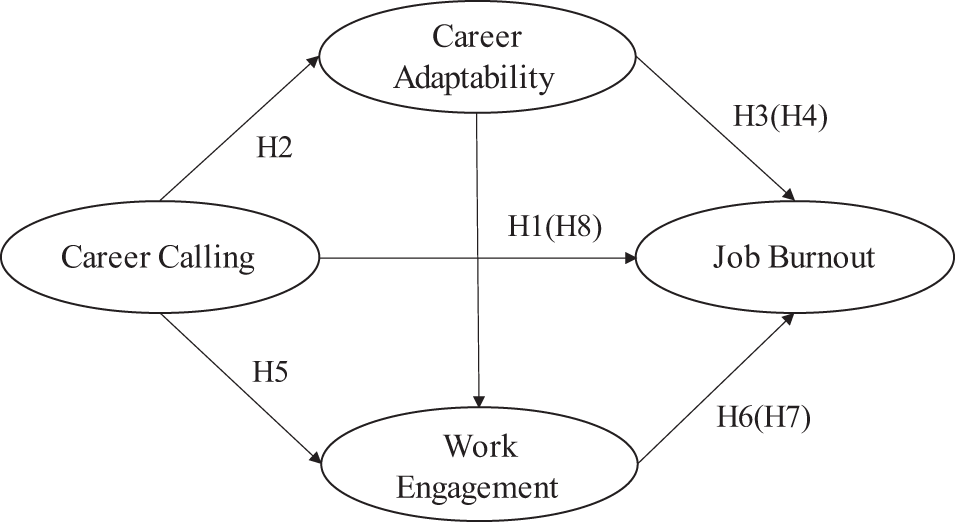
Figure 1: The hypothesized model
In this study, an online survey was conducted among PSSTs from mainland China, utilizing a digital questionnaire system. To guarantee the data’s breadth and representativeness, the investigators distributed the questionnaire link through WeChat (which has a large number of users and is the preferred communication platform between school leaders and administrators. Its extremely fast communication speed and feedback helped to spread the survey results conveniently and widely) in January 2024, targeting school leaders or administrative staff at public primary and secondary schools across various regions in China. Before completing the questionnaire, teachers will be introduced and explained about the data used to ensure that the data will only be used for scientific research and will be supervised by the Ethics Committee of Nanjing University of Posts and Telecommunications (No. 20230168) to ensure privacy, and all study procedures were under the most recent version of the Declaration of Helsinki. All participants provided written informed consent to participate. When teachers choose to agree, they can enter the process of filling in the questionnaire. When submitting the questionnaire, they will be asked again whether they agree to the use of the data. Once they choose to submit, they will be regarded as agreeing that the data is used.
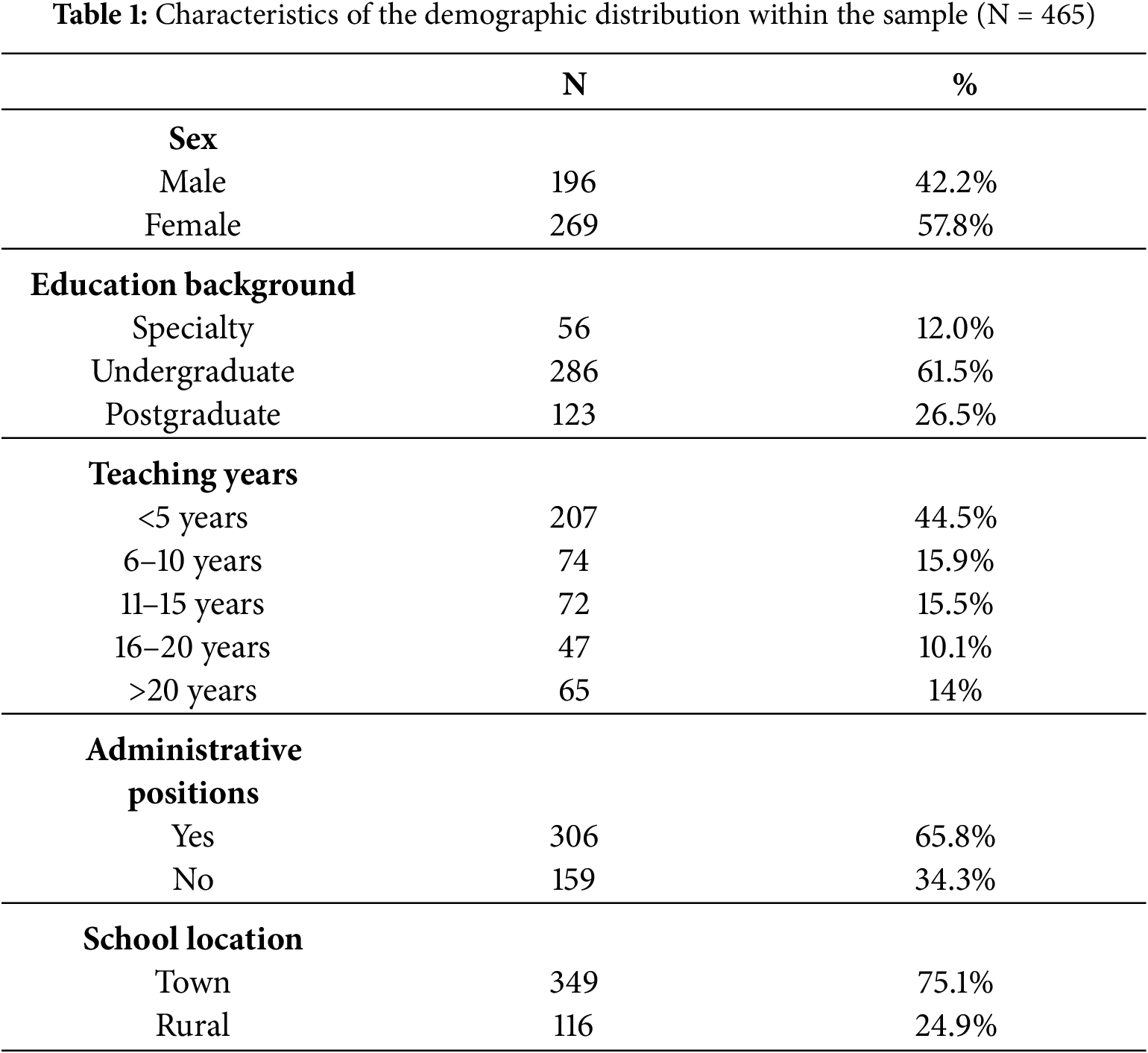
Given the specific administrative framework and teaching criteria of China’s education system, our research did not differentiate between the various types of PSST. To ensure that there was no bias in the data due to differences between primary and secondary schools, we analyzed differences in career calling and job burnout. Teachers’ career calling: Mean (primary) = 3.985, Mean (middle) = 4.060, p > 0.05. Teachers’ job burnout: Mean (primary) = 2.098, Mean (middle) = 2.078, p > 0.05. This result also confirmed that there was no difference, so in the follow-up study, we analyzed all the data in aggregate. In addition, to ensure the high validity of the questionnaire, several polygraph questions (set up as reverse questions) were interspersed with the questionnaire to exclude the questionnaires that were answered incorrectly. As of March 2024, the study gathered a sum of 522 completed surveys from individuals residing in several Chinese provinces, including Jiangsu, Shanghai, Zhejiang, Beijing, and Fujian. Post a preliminary review, 57 responses were deemed invalid and subsequently set aside, resulting in 465 questionnaires that passed the validity check, at a rate of 91.9%, which meets the sample requirements of SEM [65]. The characteristics of the demographic distribution within the sample are presented in Table 1. It is important to note that there is a relatively high percentage of female teachers, and the same occurs for education background, teaching years, administrative positions, and school locations, all of which may have some impact on the results.
According to the specificity of the Chinese locality, all the scales in this study were revised and put into use and finally consisted of four scales: career calling, career adaptability, work engagement, and job burnout. Each item within this survey was rated using a five-point Likert scale, with scores beginning at 1, indicating “strongly disagree,” and culminating at 5, signifying “strongly agree.”
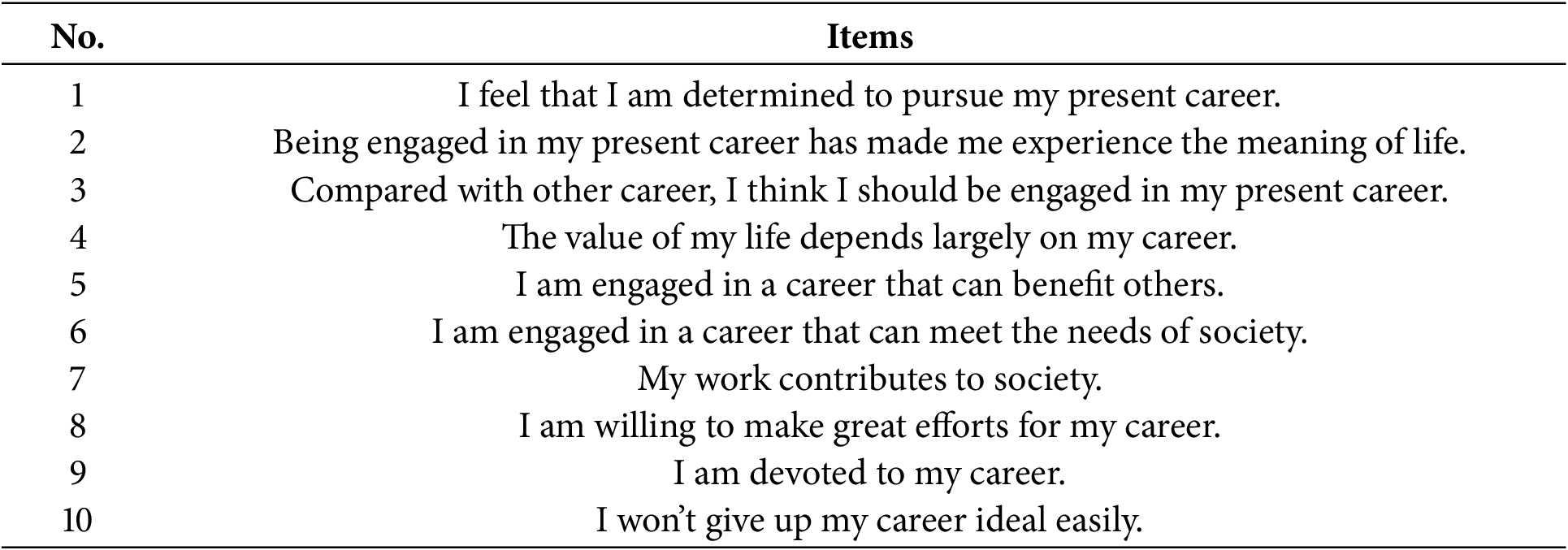
Teacher Career Calling Scale. The Teacher Career Calling Instrument is based on a locally developed Career Calling Scale by Zhang et al. in China, which can be seen in the Appendix A [66]. The final scale consists of 10 items in three dimensions: guiding force, altruistic contribution, proactive, and enterprising. The alpha coefficient of the overall scale and the internal consistency reliability of the subscales were 0.913, 0.882, 0.889, and 0.876, respectively. These indexes all exceed the accepted thresholds of alpha not less than 0.7, which proves that they have good reliability.
Career Adaptability Scale. The Career Adaptability Instrument is a Chinese version of the Career Adaptability Scale translated and revised [12]. The final scale consisted of 4 dimensions of career concern, career control, career curiosity, and career confidence, with 6 items for each dimension, for a total of 24 items. The alpha coefficient of the overall scale and the internal consistency reliability of the subscales were 0.949, 0.889, 0.863, 0.886, and 0.900, respectively. These indexes all exceed the accepted thresholds of alpha not less than 0.7, which proves that they have good reliability.
Teacher Work Engagement Scale. The Teacher Work Engagement Instrument (TWEI) adopted the Teacher Work Engagement Scale compiled by Klassen, and the Chinese version of the TWEI, which was formed after the revision and reliability test by researchers of this study, was administered to PSST to collect relevant data [67]. After eliminating relevant unqualified items, the final scale consisted of four dimensions: cognitive engagement, emotional engagement, social engagement with colleagues, and social engagement with students, with 4 items in each dimension, for a total of 16 items (same with original scale). The alpha coefficient of the overall scale and the internal consistency reliability of the subscales were 0.932, 0.851, 0.916, 0.864, and 0.918, respectively. These indexes all exceed the accepted thresholds of alpha not less than 0.7, which proves that they have good reliability.
Teacher Job Burnout Scale. The teacher burnout instrument used was the revised teacher burnout scale prepared by Maslach’s Burnout Inventory-Education Survey (MBI-ES), and the Chinese version was administered to primary and middle school teachers after revision and reliability testing by researchers of this study, and the final scale consisted of three dimensions: emotional exhaustion, depersonalization, and personal accomplishment, with a total of 8 items (same with original scale) [68]. The alpha coefficient of the overall scale and the internal consistency reliability of the subscales were 0.959, 0.907, 0.907, and 0.870, respectively. These indexes all exceed the accepted thresholds of alpha not less than 0.7, which proves that they have good reliability.
All the qualified data in this study will be analyzed by confirmatory factor analysis (CFA), structural equation model (SEM) and bootstrap mediated effect test. The choice of SEM as an effective method for analyzing latent variables such as “career calling” and “job burnout” is underscored by its ability to estimate complex relationships between multiple variables simultaneously. SEM is particularly suitable for this study due to its capacity to handle latent constructions that are not directly observable, such as career calling and job burnout. To ensure the suitability of SEM, we must verify several underlying assumptions, including data normality and adequate sample size. The data were processed through the use of SPSS 25.0 and Amos 23.0. Firstly, this study qualitatively analyzes the data through normal distribution and CFA, which is a necessary preliminary step for SEM. Secondly, this study engaged in the development and assessment of a model utilizing SEM, concentrating on the architecture of underlying variables that are not overtly measurable and investigating the influence exerted by these latent constructs. In this model, career calling is considered as an independent variable, while job burnout is a dependent variable. Teachers’ career adaptability and work engagement were both recognized as mediating factors. This study scrutinized both the direct and indirect effects of career calling on these three variables. Thirdly, to ensure the reliability and representativeness of the sample size, SEM suggested that there should be at least 200 and that a larger sample size is more conducive to obtaining more reliable and generalized results. The sample size of this study is 465, which far exceeds the minimum sample size and has sufficient reliability [69]. Finally, the bootstrap procedure is used in this study to estimate the sampling distribution of the indirect effects. We will use a bias-corrected bootstrap interval, which adjusts for potential bias in the estimation of the confidence intervals. This method involves resampling the data with replacement to generate a large number of bootstrap samples, from which the confidence intervals for the indirect effects are calculated. The type of interval chosen, such as bias-corrected, is crucial for obtaining accurate and reliable estimates of the mediation effects. In this study, we will test all the variables and paths using a bootstrap procedure with 5000 iterations, which is considered sufficient for stable estimates. The confidence intervals for 95% of the estimates will be reported in standardized values, allowing for a direct comparison of the magnitude and significance of the mediation effects across different paths in the model [70].
3.4 Validity and Reliability Testing
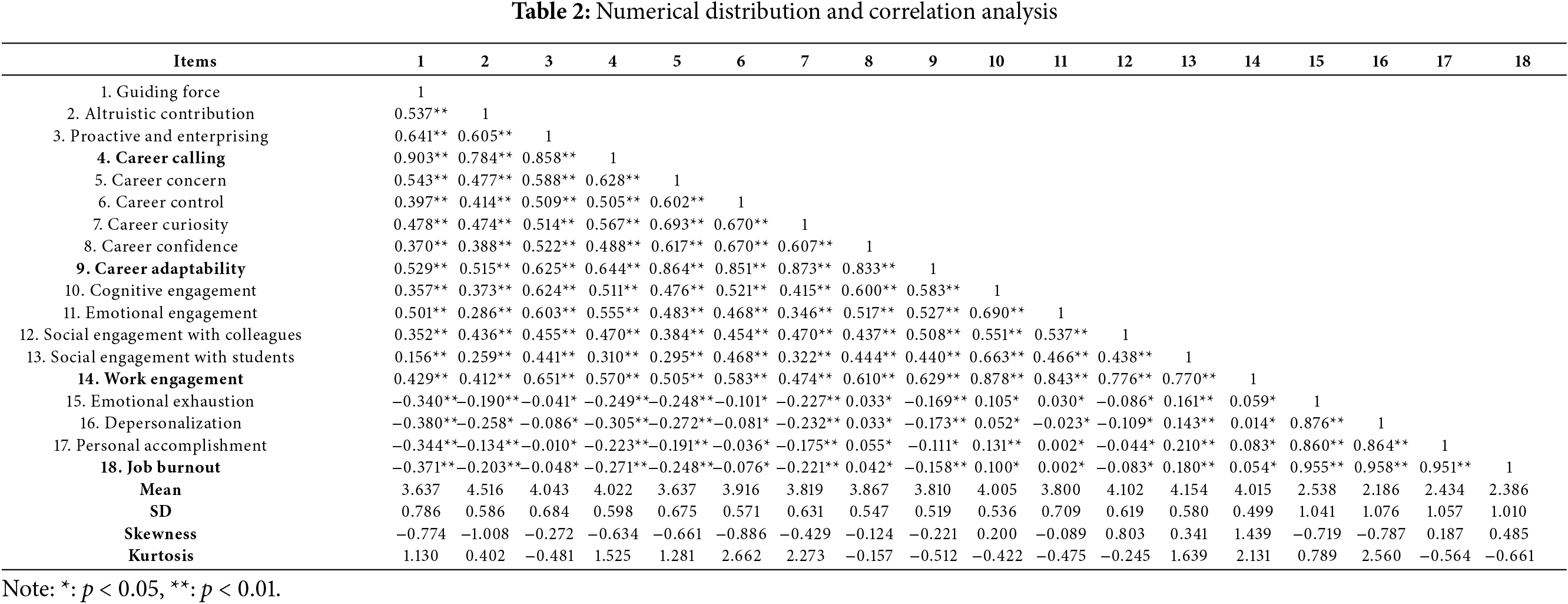
This study ensured the questionnaire’s measurement integrity and validity through a meticulous factor analysis process. Each item’s factor loadings were affirmative and statistically robust (Z > 1.960) within the measurement models. The standardized coefficients for all dimensions not only cleared the 0.7 but also indicated that the squared multiple correlation (SMC) values were above 0.4, while the mean component reliability (CR) scores were nestled between 0.8 and 0.9 (0.942, 0.945, 0.937, 0.972), all of which are indicative of a well-performing structural equation model. The discriminant validity was further substantiated by comparing the average variance extracted (AVE) root values against the correlation outcomes. The analysis revealed that the AVE root values for each dimension (0.801, 0.805, 0.795, 0.855) surpassed the corresponding dimensional correlations, underscoring the strong discriminative power among the various dimensions. In addition, as shown in Table 2, through the univariate normality test, it is found that the distribution of all dimensions also meets the normal distribution, and there is a significant correlation between dimensions. The skewness (−1.008~1.439) and kurtosis (−0.661~2.662) of all variables entering the SEM were under the recommended limits, which is statistically significant [71].
4.1 Common Method Deviation Test
The phenomenon of common method bias occurs when there is an artificial inflation of the correlation between predictor and criterion variables due to factors such as shared data sources or raters, a uniform measurement context, the program’s environment, and intrinsic program features. This induced correlation constitutes a systematic bias that can confound the research findings and mislead the interpretative conclusions drawn from the study.
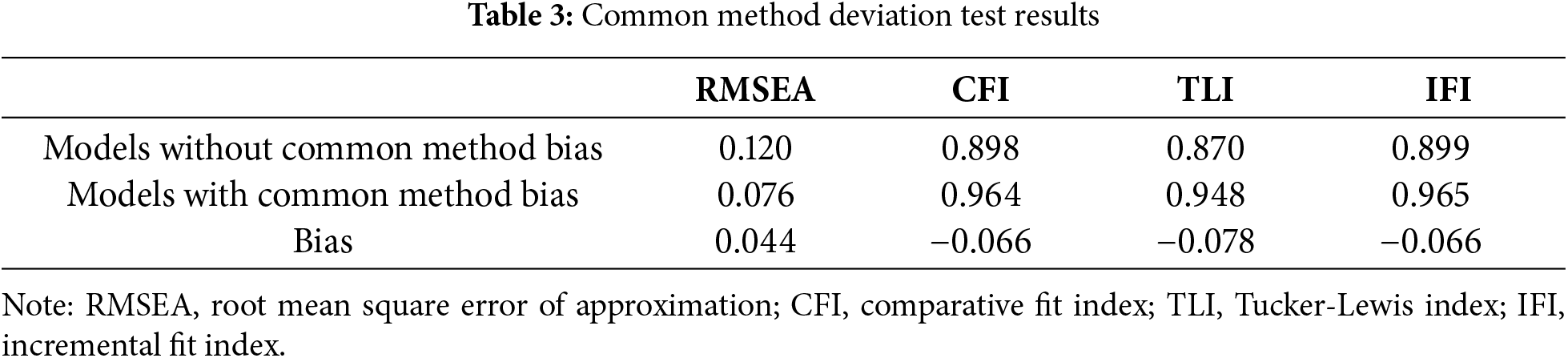
In this study, the CFA labeling technique was used to assess the latent variable correlation model as well as the model with its indicators [72]. A comparison of the fit indices between these two models was conducted to identify the presence of common method bias. Chin et al. reported that a significant bias would be indicated by an improvement in the fit indices, e.g., an increase in a comparative fit index (CFI) and Tucker-Lewis index (TLI) of more than 0.1 and a decrease in root mean square error of approximation (RMSEA) of more than 0.050 [72].
The outcomes of the common method bias assessment are detailed in Table 3. The observed changes were as follows: a decrease of 0.044 in RMSEA, a reduction of 0.066 in CFA, a decrease of 0.078 in TLI, and a reduction of 0.066 in an incremental fit index (IFI). Since the fit indices did not increase by more than 0.1 and the RMSEA did not decrease by more than 0.050, it was determined that there was no significant common method bias affecting the data in this study.
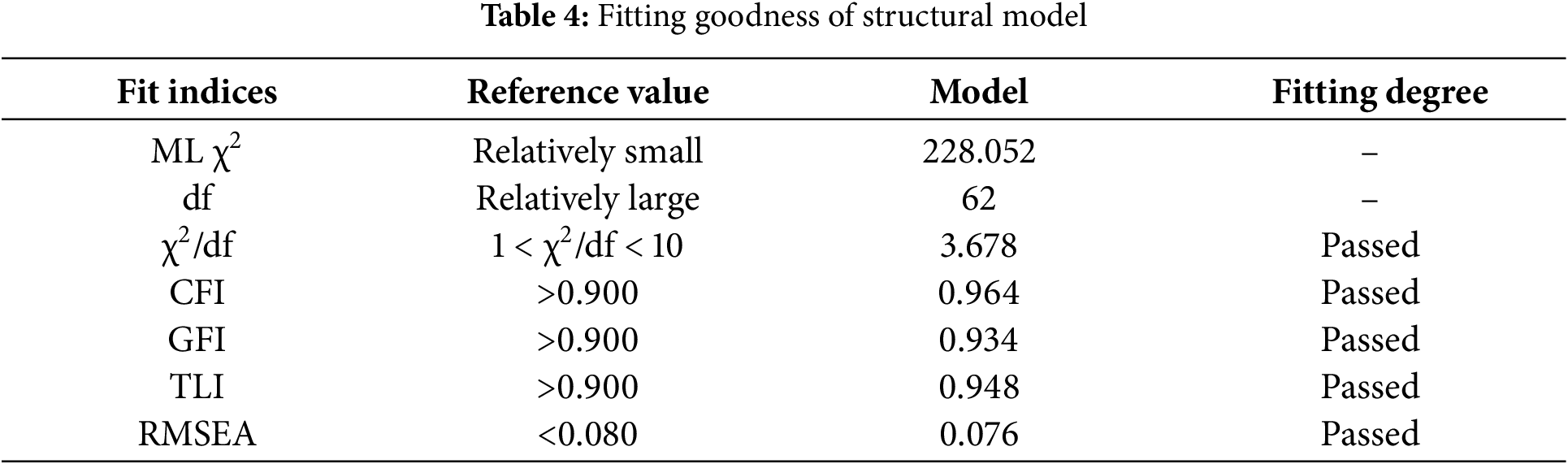
4.2 Fitting Goodness of Structural Model
The structural equation model fit metrics include absolute fit metrics, value-added fit metrics, and parsimonious fit metrics, where representative metrics are selected to simplify the reporting of the model fit metrics [73].
4.3 Tructural Equation Modeling Path Testing
Based on the hypothetical model of this study, the SEM was constructed in this study through Amos 23.0, and its standardized path coefficient test results are shown in Fig. 2. All hypothesized paths showed significant results. Upon reviewing the findings of SEM, it’s clear that teachers’ career calling positively influences their career adaptability and work engagement. With a path coefficient of 0.77 (p < 0.001) for career adaptability and 0.21 (p < 0.001) for work engagement, the former is more significantly affected by career calling. Interestingly, while career adaptability negatively affects job burnout with a path coefficient of −0.49 (p < 0.001), work engagement’s positive effect on job burnout, indicated by a path coefficient of 0.43 (p < 0.001), contradicts earlier findings and merits further analysis. Moreover, the indirect effect of career calling on job burnout through career adaptability and work engagement is significant, with a path coefficient of −0.06 (p < 0.001). The study’s conclusions uphold all hypotheses, yet the definitive establishment of career adaptability and work engagement as mediators in the impact of teachers’ career calling on job burnout necessitates additional testing.
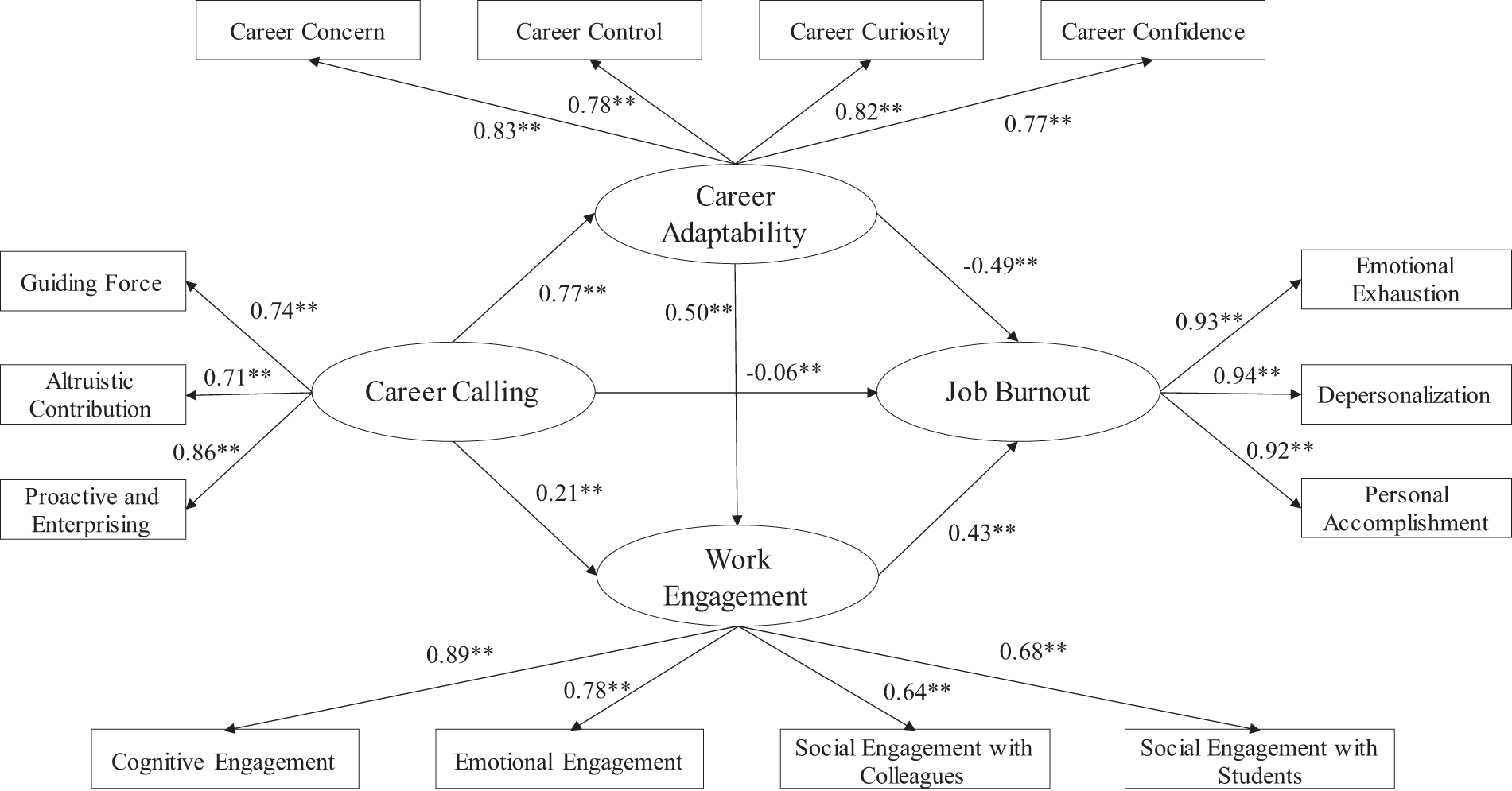
Figure 2: The results of SEM (two decimal places are reserved). **p < 0.01
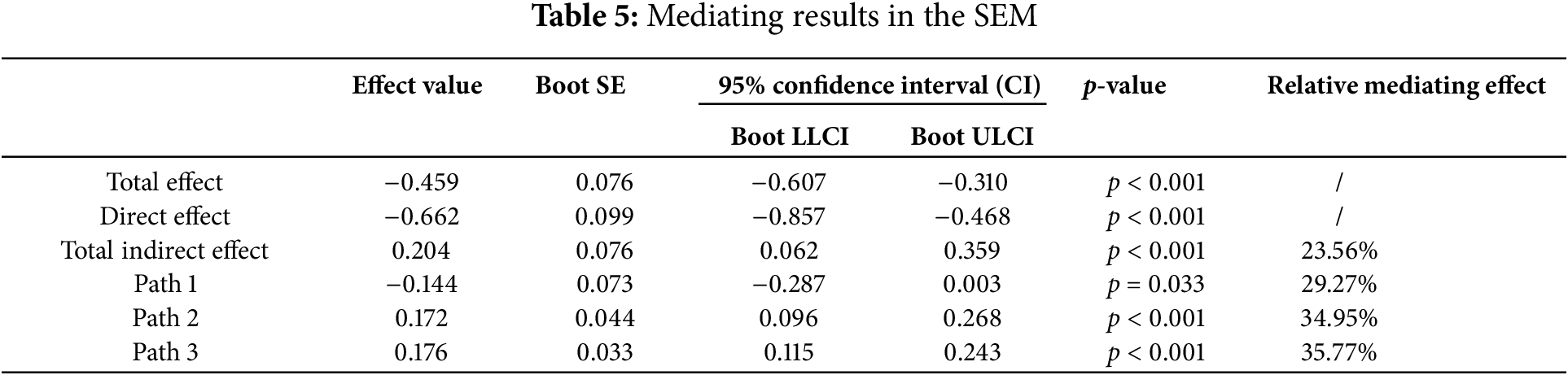
This study used the nonparametric Bootstrap method, incorporating a bias-corrected percentile estimation, to examine the mediating roles of teachers’ career adaptability and their level of work engagement [74], and the data was passed through Process in SPSS for path-specific line item counts. The results are shown in Table 5, with a total effect of −0.459 (Z > 1.960, 95% CI = (−0.607, −0.310)) and a direct effect of −0.662 (Z > 1.960, 95% CI = (−0.857, −0.468)) on teachers’ career calling and job burnout. When teachers’ career adaptability was added to the mediating effect, the effect of Path 1 (career calling-career adaptability-job burnout) was −0.144 (Z > 1.960, 95% CI = (−0.287, 0.003)), with the value of the confidence interval containing 0. It can be inferred that this path is not significant, and the reasons for this result may have many factors, which need to be further explained in the discussion. When teacher work engagement was added to the mediating effect, the effect of Path 2 (career calling–work engagement–job burnout) was 0.172 (Z > 1.960, 95% CI = (0.096, 0.268)), from which it was inferred that Path 2 was significant. In addition, when teachers’ career adaptability and work engagement were jointly added to the mediating effect, the effect of Path 3 (career calling–career adaptability–work engagement–job burnout) was 0.176 (Z > 1.96, 95% CI = (0.115, 0.243)), and the mediating effect reached statistically significant, which was calculated to account for a mediating effect of 23.56%. To encapsulate the findings, it was discovered that the influence of teachers’ career calling on job burnout is moderated through the mediating roles of career adaptability and work engagement.
Based on the work adjustment theory, this study examined the mechanisms by which teachers’ career calling affects teachers’ career adaptability, work engagement, and job burnout with Chinese PSST as the research subjects. In addition, the relationship between career calling and job burnout was partially mediated by career adaptability and work engagement. Originally, TWA emphasized the match between individuals and their environments, paying more attention to individual skills and environmental requirements, from which organizational satisfaction and employee satisfaction were judged, and ignored the very important individual psychological state and actual working conditions. Based on this, this study further discusses the logic between career calling and job burnout in terms of the individual’s adaptability and engagement at work, providing more psychological evidence for TWA and the basis for debugging in the individual’s work. This study further confirms the guiding role and practicality of TWA in teachers’ career development and gives important instructions to teachers’ psychological debugging and cognitive behavior.
Firstly, the results of this study found that teachers’ career calling had a significant positive effect on teachers’ career adaptability and some negative effects on job burnout. Those results are in harmony with a multitude of earlier research that has verified a linkage between the perception of having a calling in one’s career and the four adaptive dimensions of career adaptability with the strength of these linkages differing [45]. By embedding the notion of career calling into the examination of teacher development in China, it is apparent that instructors imbued with a pronounced mission are more predisposed to demonstrate a robust sense of purpose and an innate push towards adapting their careers. This inherent impetus encourages a more rigorous and lively involvement in their career development and social interactions, particularly in the context of teachers’ forward-leaning adaptive actions and constructive attitudes when confronting the progressive transformation of conventional educational models amidst the pervasive integration of global digital technologies. In addition, in the local context of Chinese teachers’ development, the career calling belongs to the field of cultivating teachers’ educational sentiment, which is the internal motivation and spiritual support for teachers’ persistent pursuit of the meaning of life in education and their perseverance in the profession of educating people. However, unlike this situation, teachers’ career calling showed a lower negative effect on job burnout, which confirms that career calling consistently affects job burnout [37]. Therefore, we think that teachers with higher career calling are less likely to show negative professional emotions and emotional exhaustion in job burnout, which can help them think differently based on their goals, maintain their long-term enthusiasm for work, and adjust their optimism in time to adapt to work well. They can naturally engage in work engagement in “the work they love”, maintain a strong passion and continuous focus on a certain career, and experience intrinsic joy and self-fulfillment in work. In conclusion, the career calling emphasizes the cultivation of teachers’ intrinsic values and the maintenance of positive emotions to facilitate teachers’ positive adaptation to the uncertainties of their careers and to reduce personal burnout. However, it is important to note that the results for Path 1 were not significant, i.e., career adaptability did not play a significant role in the relationship between career calling and job burnout. The suppression effect in mediation refers to the phenomenon that occurs in the analysis of mediating variables when the sign or significance of the direct effect of a variable is altered by the inclusion of the mediating variable [75]. Specifically, if the direct effect of an independent variable on the dependent variable is inconsistent in statistical significance or sign of the effect without controlling for the mediator variable and after the inclusion of the mediator variable, then this effect is known as a masking effect, which includes masking in the reverse relationship. In this study, career calling and career adaptability were positive factors and job burnout was a negative factor. In the original direct relationship, career calling should have a reverse predictive effect on job burnout, with the intervention of career adaptability the effect of this relationship will be further enhanced, but because it is a negative effect therefore the amount of this effect will be closer to 0 after the subsequent increase or even become a positive effect. Therefore, it is reasonable to assume that Path 1 is most likely due to this reason.
Secondly, the findings of this study confirm that teachers’ career adaptability, work engagement, and job burnout exit a significant correlation, which is consistent with the previous studies [60,76]. Xie et al. concluded that career adaptability moderates the relationship between career calling, work engagement, and career satisfaction, which proved the overall level of Chinese PSST’ work engagement is in the middle to high degree, indicating that Chinese PSST can fully realize the value and meaning brought by work, and have the spirit of forgetting to work [60]. This study found that the overall level of work engagement of Chinese PSSTs is in the upper middle range, which indicates that teachers can fully perceive the value and significance of their work and that they have the spirit of selfless work. Similarly, career adaptability is also in the upper-middle range, which indicates that PSST can overcome various career problems such as high work pressure and poor welfare benefits and can continuously adjust their roles independently to cope with various challenges and opportunities in their career development. At the same time, they are full of self-confidence and curiosity about their future career development and are concerned about exploring new student issues to cope with their career tasks and career transitions. However, teachers’ job burnout is in the middle to lower level, which reflects that the burnout problem of Chinese PSST is not very serious at present. On the one hand, teachers’ career adaptability is a social psychological resource that reserves “positive energy” for teachers’ work engagement and is good at tapping the favorable factors in the work environment, so that individuals can continuously adjust their self-role to realize the interaction between individuals and environment and realize the transformation from positive cognition to positive behavior. On the other hand, the more lasting the positive emotions generated by PSST, the easier it is to transform the positive results of work engagement into psychological capital. PSSTs with a high level of psychological capital receive more emotional support and psychological energy and are more optimistic, resilient, and more confident in coping with unfavorable factors in the primary and secondary education work environment. In the long run, as mental health and positive emotions of PSST are safeguarded, teachers’ cognitive engagement, social engagement with colleagues and students, and emotional engagement are all enhanced accordingly. In a word, whether it is career adaptability or work engagement, it plays a very significant role in teachers’ career development, which is very important for teachers’ well-being. Teachers are emotional workers [77]. It is found that teachers’ psychology will affect their performance, self-efficacy, job satisfaction, burnout, and teaching effect (classroom management, teachers’ support for students, student-centered teaching methods, and cognitive and motivational stimulation provided for students) [78]. Therefore, according to the findings of Paths 1, 2, and 3, this study further provides evidence for managers to pay attention to teachers’ working conditions as well as psychological problems.
Finally, this study revealed that teachers’ career calling had a substantial direct effect on job burnout and also served to lessen it through the mediating effects of career adaptability and work engagement. In a study that correlated teachers’ career calling and work engagement, career calling had a significant effect on learning (work) engagement, in which career self-efficacy and career outcome expectations played a key mediating role [55]. In addition, teachers with a sense of career calling show better work attitudes and higher satisfaction in specific areas such as work engagement and work participation [79]. When they encounter all kinds of difficulties, they may be able to overcome and adapt to this kind of negative state better because of the support of career calling. This study found that the mediating effect of teachers’ career calling on job burnout was not significant when career adaptability was included as a mediating variable, which may be due to the masking effect of job burnout as a negative variable after the moderating effect of career adaptability. This finding proves that career adaptability is the key factor if job burnout is to be reduced. In addition, work engagement as a positive variable surprisingly formed a positive correlation with job burnout, which may be related to the current educational environment in China. The implementation of the “double reduction policy” leads teachers to delay their off-duty hours after school to help students finish their homework, which increases their working hours, but has more opportunities to learn about students and can effectively teach students under their aptitude. However, teachers ignore personal rest time, family, and other factors in the long run, which would make them feel more tired emotions will fluctuate more, and the emergence of a negative state can be seen. To a certain extent, this also shows that the more work input is not the better, and it is very important to master a certain degree. Excessive work will only be counterproductive. Many teachers tend to put in more work engagement than their load due to their heavy calling, thus instead of being conducive to career development, a more serious burnout problem occurs. However, it is positive to note that when teachers’ career adaptability and work engagement are co-invested in influencing the relationship, the relationship between teachers’ career calling and job burnout is significant and can have a more substantial reduction in overall burnout levels. When teachers choose to join the teaching profession because of their calling, if they encounter setbacks or difficulties, they will often find themselves in an unsuitable situation. With the deepening of the degree, the teacher may reduce the time and energy they put into work, which may lead to more and more dissatisfaction at work and eventually leaving the job. Thus, schools expect PSST to have a high level of work engagement, not only to pay attention to whether the teachers’ career calling is maintained but also to predict how their psychological state and self-regulation in the work and whether they have better career adaptability when they are facing an uncertain task. This is also an explanation of the dynamic adjustment of teachers’ work engagement from the theoretical perspective of work adjustment.
6 Conclusions and Implications
In conclusion, this study verifies that there is a significant negative relationship between teachers’ career calling and job burnout in the context of China and also tests that career adaptability and work engagement have a significant mediating role in this relationship. In the academic landscape, the concept of career calling has become a prominent topic, capturing the attention of experts in the fields of psychology and organizational science. A consensus has emerged that there is a beneficial relationship between the perception of having a career calling and the individual’s ability to adapt within their career, as well as their overall career satisfaction. Additionally, it is now widely accepted that career adaptability acts as an intermediary in the link between career calling and the levels of engagement and satisfaction experienced in one’s work [60]. The practical effect of the TWA, which originated from Western countries, in the context of the development of teachers in China has not yet fully emerged. The findings of this study not only enrich the applicability of this theory in multiple situations but also expand the relevant research on international teacher development.
This study has several implications for school administrators and PSST. First, the study found that school administrators try to promote teachers’ work engagement not only from external conditions such as job benefits, salary, job opportunities, and work environment, but also from the teachers’ intrinsic sense of career calling, giving guidance on goal orientation to PSST of different teaching ages, enhance teachers’ career adaptability and exploratory ability and perception of job altruism, and pay attention to PSST’ growth stages in terms of job pressure, psychological state and self-regulation mechanism during the growth stage of PSST. This reveals that school administrators need to change the teacher training and guidance model for post-service teachers, cultivate more teachers’ psychological capital and career development resources, and fundamentally and consistently increase teachers’ work engagement. For example, schools can organize some activities such as teachers’ career development planning, teachers’ psychological counseling, and teachers’ teaching skills training. In this way, teachers can avoid being helpless and seeking help when they encounter career planning and psychological problems, resulting in more serious job burnout. Second, this study emphasizes the positive relationship between career calling on career adaptability and its negative relationship with job burnout. Career calling is a guiding force that allows people to perceive that they are engaged in work with a specific mission, to continuously find values in their work that match their self-perceptions, to find meaning in their lives, and to gain well-being. In addition, career calling can provide the power to be proactive and work hard, which has a positive impact in the categories of psychological empowerment such as work meaning, self-efficacy, autonomy, etc. It also enables teachers to have a higher self-identity and enhances the ability of emotional self-regulation and management. Therefore, from the perspective of teachers’ development, it is important to pay attention to career calling and combine life goals with work goals, to motivate them to innovate and reshape their work, thus contributing new values. From the perspective of school administrators, attention must be keenly directed towards the prospective career trajectory planning and the holistic health of active teachers, to guarantee that the beneficial influences of career calling are effectively leveraged. For example, schools can provide teachers with personal career development files, professional opportunities for further study, and daily benefits to enhance teachers’ psychological satisfaction. In this way, teachers’ career development and psychological changes can be tracked for a long time, and it is possible to predict the emergence of problems and intervention in time.
However, this study did not include more potential variables to discuss the more detailed mechanisms of impact of this model. In previous analyses, it was found that the demographic variables of the statistic did not cause significant differences, possibly due to sample sampling, and the inclusion of a larger sample may have yielded different results, so this was not specifically discussed in the results. The same problem occurs with the distinction between primary and secondary teachers, which is the reason why the study combined the PSST in the analysis. These shortcomings can be looked at and further analyzed in future studies.
Acknowledgement: We would like to express our sincere gratitude to the reviewers and editorial team for their valuable comments and suggestions, which have substantially improved the quality of this article. We are also deeply grateful to all the anonymous participants who took part in this study. Their contributions have been invaluable to the successful completion of this study.
Funding Statement: This study was funded by Humanities and Social Sciences Foundation and Natural Science Foundation of Nanjing University of Posts and Telecommunications (NYY222055, NY224176), General Subject of Educational Science Planning in Jiangsu Province (C/2024/01/76) and National Natural Science Foundation of China (62307025).
Author Contributions: The authors confirm contribution to the paper as follows: study conception and design: Huaruo Chen, Wanru Song; data collection: Huaruo Chen, Jian Xie, Huadi Wang; analysis and interpretation of results: Huaruo Chen, Wanru Song, Feifei Zheng; draft manuscript preparation: Huaruo Chen, Ya Wen. All authors reviewed the results and approved the final version of the manuscript.
Availability of Data and Materials: The data for the present study are available from the corresponding author upon reasonable request.
Ethics Approval: This protocol was approved by the ethics committee of Nanjing University of Posts and Telecommunications (No. 20230168), and all study procedures were in accordance with the most recent version of the Declaration of Helsinki. All participants provided written informed consent to participate.
Conflicts of Interest: The authors declare no conflicts of interest to report regarding the present study.
Appendix A: Career Calling Scale
References
1. Kiryakova G, Kozhuharova D. The digital competences necessary for the successful pedagogical practice of teachers in the digital age. Educ Sci. 2024;14(5):507. doi:10.3390/educsci14050507. [Google Scholar] [CrossRef]
2. Chen H, Liu F, Pang L, Liu F, Fang T, Wen Y, et al. Are you tired of working amid the pandemic? The role of professional identity and job satisfaction against job burnout. Int J Environ Res Public Health. 2020;17(24):9188. doi:10.3390/ijerph17249188. [Google Scholar] [PubMed] [CrossRef]
3. Martínez Agudo JDD. Psychological and emotional impact of COVID-19 on TESOL: learning to teach EFL in a VUCA environment. Innov Lang Learn Teach. 2024;18(5):1–13. doi:10.1080/17501229.2024.2315099. [Google Scholar] [CrossRef]
4. Madigan DJ, Kim LE, Glandorf HL, Kavanagh O. Teacher burnout and physical health: a systematic review. Int J Educ Res. 2023;119(7549):102173. doi:10.1016/j.ijer.2023.102173. [Google Scholar] [CrossRef]
5. Emir G, Saral NÇ, Saçan BM, Özmen KS. The stressors affecting teacher burnout in emergency remote teaching context. Teach Teach Educ. 2023;134(1):104313. doi:10.1016/j.tate.2023.104313. [Google Scholar] [CrossRef]
6. Teng J, Yang Z, Yu M, Crowley CB, Jing X. Chinese primary school teachers’ working time allocation after the enactment of the Double Reduction policy: a mixed-methods study. Teach Teach Educ. 2024;137(2):104385. doi:10.1016/j.tate.2023.104385. [Google Scholar] [CrossRef]
7. Zhang H, Shi Y, Teng LS. Exploring relationships of job satisfaction and burnout with turnover intention among Chinese English language teachers. Asia-Pac Educ Res. 2023;33(3):587–601. doi:10.1007/s40299-023-00755-9. [Google Scholar] [CrossRef]
8. Council CSS. Opinions on further reducing students’ homework burden and off-campus training burden in compulsory education stage. Beijing: Xinhua News Agency; 2021 Jul 24. [Google Scholar]
9. Qian H, Walker A, Chen S. The ‘double-reduction’ education policy in China: three prevailing narratives. J Educ Policy. 2023;39(4):602–21. doi:10.1080/02680939.2023.2222381. [Google Scholar] [CrossRef]
10. Gao C, Li Z, Zheng L. Develop and validate a scale to measure primary and secondary teachers’ digital teaching competence. Educ Inf Technol. 2023;29(9):10763–89. doi:10.1007/s10639-023-12228-z. [Google Scholar] [CrossRef]
11. Huang W, Zhang S. The impact of meaning in life on preservice teachers’ innovative behavior: the chain mediating effects of career calling and learning engagement. Curr Psychol. 2024;43(20):18294–306. doi:10.1007/s12144-024-05671-9. [Google Scholar] [CrossRef]
12. Chen H, Fang T, Liu F, Pang L, Wen Y, Chen S, et al. Career adaptability research: a literature review with scientific knowledge mapping in web of science. Int J Environ Res Public Health. 2020;17(16):5986. doi:10.3390/ijerph17165986. [Google Scholar] [PubMed] [CrossRef]
13. Xie SJ, Jing J, Li R, Yan SQ, Yu G, Xu ZJ. The impact of career calling on nurse burnout: a moderated mediation model. Int Nurs Rev. 2024;71(4):969–76. doi:10.1111/inr.12957. [Google Scholar] [PubMed] [CrossRef]
14. Zhang S, Wang J, Xie F, Yin D, Shi Y, Zhang M, et al. A cross-sectional study of job burnout, psychological attachment, and the career calling of Chinese doctors. BMC Health Serv Res. 2020;20(1):1–11. doi:10.1186/s12913-020-4996-y. [Google Scholar] [PubMed] [CrossRef]
15. Ding X, Liu Y, Peng J-E. Straddling burnout and resilience: a Q methodology study among high school EFL teachers. J Multiling Multicult Develop. 2023:1–18. doi:10.1080/01434632.2023.2193171. [Google Scholar] [CrossRef]
16. Chao CNG, Cheung AC-K, Lau E, Leung ANM. Teachers’ perceptions on quality of school leadership and psychological well-being: the mediating roles of work-related meaning in life and optimism in Hong Kong Kindergarten teachers. Appl Res Qual Life. 2023;18(3):1249–68. doi:10.1007/s11482-022-10138-9. [Google Scholar] [CrossRef]
17. Fernet C, Guay F, Senécal C. Adjusting to job demands: the role of work self-determination and job control in predicting burnout. J Vocat Behav. 2004;65(1):39–56. doi:10.1016/S0001-8791(03)00098-8. [Google Scholar] [CrossRef]
18. Pei S, Wang S, Jiang R, Guo J, Ni J. How work stress influence turnover intention among Chinese local undergraduate university teachers: the mediating effect of job burnout and the moderating effect of self-efficacy. Front Public Health. 2024;12:1308486. doi:10.3389/fpubh.2024.1308486. [Google Scholar] [PubMed] [CrossRef]
19. Um B, Seon Y. Counseling trainees’ academic burnout, meaningful work, and career choice satisfaction: a resilience framework. Career Dev Q. 2024;72(1):18–31. doi:10.1002/cdq.12341. [Google Scholar] [CrossRef]
20. Zhao C. A critical discourse problematization framework (CDPF) analysis of “Double Reduction” policy in China. Policy Futures Educ. 2024;22(7):14782103241228902. doi:10.1177/14782103241228902. [Google Scholar] [CrossRef]
21. Yue W, Yu L, Yang Y. The occupational anxiety of teachers caused by China’s ‘double reduction’ policy—a study based on the grounded theory. Front Psychol. 2023;14:1144565. doi:10.3389/fpsyg.2023.1144565. [Google Scholar] [PubMed] [CrossRef]
22. Kendrick AH, Kapoyannis T, Pagaling R. Streaking and self-care planning: the influence of integrating a well-being initiative in one teacher education program. Teach Educ. 2024;35(4):1–22. doi:10.1080/10476210.2024.2305472. [Google Scholar] [CrossRef]
23. Blackie C, Arnold J. A qualitative examination of calling in the context of job mobility among clergy. Brit J Guid Couns. 2024;39:1–16. doi:10.1080/03069885.2024.2305674. [Google Scholar] [CrossRef]
24. Wen Y, Chen H, Liu F, Wei X. The relationship between career calling and resilience among rural-oriented pre-service teachers: the chain mediating role of career adaptability and decent work. Behav Sci. 2023;14(1):11. doi:10.3390/bs14010011. [Google Scholar] [PubMed] [CrossRef]
25. Parola A, Zammitti A, Marcionetti J. Career calling, courage, flourishing and satisfaction with life in Italian university students. Behav Sci. 2023;13(4):345. doi:10.3390/bs13040345. [Google Scholar] [PubMed] [CrossRef]
26. Dobrow SR, Tosti-Kharas J. Calling: the development of a scale measure. Pers Psychol. 2011;64(4):1001–49. doi:10.1111/j.1744-6570.2011.01234.x. [Google Scholar] [CrossRef]
27. Hagmaier T, Abele AE. The multidimensionality of calling: conceptualization, measurement and a bicultural perspective. J Vocat Behav. 2012;81(1):39–51. doi:10.1016/j.jvb.2012.04.001. [Google Scholar] [CrossRef]
28. Duffy RD, Dik BJ, Douglass RP, England JW, Velez BL. Work as a calling: a theoretical model. J Couns Psychol. 2018;65(4):423–39. doi:10.1037/cou0000276. [Google Scholar] [PubMed] [CrossRef]
29. Dik BJ, Duffy RD. Calling and vocation at work. Couns Psychol. 2007;37(3):424–50. doi:10.1177/0011000008316430. [Google Scholar] [CrossRef]
30. Chen L, Lin S. Examining China’s “Double Reduction” policy: promises and challenges for balanced and quality development in compulsory education. ECNU Rev Educ. 2024;42(22):20965311241265123. doi:10.1177/20965311241265123. [Google Scholar] [CrossRef]
31. Bakker AB, Demerouti E, Sanz-Vergel A. Job demands-resources theory: ten years later. Annu Rev Organ Psychol Organ Behav. 2023;10(1):25–53. doi:10.1146/annurev-orgpsych-120920-053933. [Google Scholar] [CrossRef]
32. Freudenberger HJ. The issues of staff burnout in therapeutic communities. J Psychoactive Drugs. 1986;18(3):247–51. doi:10.1080/02791072.1986.10472354. [Google Scholar] [PubMed] [CrossRef]
33. Maslach C, Leiter MP. Understanding the burnout experience: recent research and its implications for psychiatry. World Psychiat. 2016;15(2):103–11. doi:10.1002/wps.20311. [Google Scholar] [PubMed] [CrossRef]
34. Schaufeli WB, Leiter MP, Maslach C. Burnout: 35 years of research and practice. Career Dev Int. 2009;14(3):204–20. doi:10.1108/13620430910966406. [Google Scholar] [CrossRef]
35. Madigan DJ, Kim LE. Towards an understanding of teacher attrition: a meta-analysis of burnout, job satisfaction, and teachers’ intentions to quit. Teach Teach Educ. 2021;105(2):103425. doi:10.1016/j.tate.2021.103425. [Google Scholar] [CrossRef]
36. Lian L, Guo S, Wang Q, Hu L, Yang X, Li X. Calling, character strengths, career identity, and job burnout in young Chinese university teachers: a chain-mediating model. Children Youth Serv Rev. 2021;120(2):105776. doi:10.1016/j.childyouth.2020.105776. [Google Scholar] [CrossRef]
37. Yoon JD, Daley BM, Curlin FA. The association between a sense of calling and physician well-being: a national study of primary care physicians and psychiatrists. Acad Psychiat. 2017;41(2):167–73. doi:10.1007/s40596-016-0487-1. [Google Scholar] [PubMed] [CrossRef]
38. Pereira SPM, Correia PMAR, Da Palma PJ, Pitacho L, Lunardi FC. The conceptual model of role stress and job burnout in judges: the moderating role of career calling. Laws. 2022;11(3):42. doi:10.3390/laws11030042. [Google Scholar] [CrossRef]
39. Zhao X, Wu K, Sun B, Li W. Teacher career calling reduces burnout: the mediation effects of work engagement and psychological capital. Front Psychol. 2022;13:988467. doi:10.3389/fpsyg.2022.988467. [Google Scholar] [PubMed] [CrossRef]
40. Hagmaier T, Volmer J, Spurk D. Calling and burnout: integrating career research with occupational health psychology. In: Doolittle BR, editor. Psychology of burnout: new research. New York: Nova Science Publishers; 2013. p. 19–32. [Google Scholar]
41. Scholl MB, Cascone J. The constructivist résumé: promoting the career adaptability of graduate students in counseling programs. Career Dev Q. 2011;59(2):180–91. doi:10.1002/j.2161-0045.2010.tb00061.x. [Google Scholar] [CrossRef]
42. Savickas ML, Porfeli EJ. Revision of the career maturity inventory. J Career Assess. 2011;19(4):355–74. doi:10.1177/1069072711409342. [Google Scholar] [CrossRef]
43. Porfeli EJ, Savickas ML. Career adapt-abilities scale-USA form: psychometric properties and relation to vocational identity. J Vocat Behav. 2012;80(3):748–53. doi:10.1016/j.jvb.2012.01.009. [Google Scholar] [CrossRef]
44. McIlveen P, Perera HN, Baguley M, van Rensburg H, Ganguly R, Jasman A, et al. Impact of teachers’ career adaptability and family on professional learning. Asia-Pacific J Teach Educ. 2018;47(2):103–17. doi:10.1080/1359866X.2018.1444141. [Google Scholar] [CrossRef]
45. Douglass RP, Duffy RD. Calling and career adaptability among undergraduate students. J Vocat Behav. 2015;86(3):58–65. doi:10.1016/j.jvb.2014.11.003. [Google Scholar] [CrossRef]
46. Dumulescu D, Balazsi R, Opre A. Calling and career competencies among Romanian students: the mediating role of career adaptability. Proc Soc Behav Sci. 2015;209(1):25–32. doi:10.1016/j.sbspro.2015.11.223. [Google Scholar] [CrossRef]
47. Zhao H, Weng Q, Li J, Gao W. Linking career adaptability to entrepreneurial burnout: a moderated mediation model. J Career Dev. 2022;50(4):785–802. doi:10.1177/08948453221124888. [Google Scholar] [CrossRef]
48. McLennan B, McIlveen P, Perera HN. Pre-service teachers’ self-efficacy mediates the relationship between career adaptability and career optimism. Teach Teach Educ. 2017;63(1):176–85. doi:10.1016/j.tate.2016.12.022. [Google Scholar] [CrossRef]
49. Ingersoll RM. Teacher turnover and teacher shortages: an organizational analysis. Am Educ Res J. 2016;38(3):499–534. doi:10.3102/00028312038003499. [Google Scholar] [CrossRef]
50. Hur EH, Ardeleanu K, Satchell TW, Jeon L. Why are they leaving? Understanding Associations between early childhood program policies and teacher turnover rates. Child Youth Care Forum. 2022;52(2):417–40. doi:10.1007/s10566-022-09693-x. [Google Scholar] [CrossRef]
51. Kahn WA. Psychological conditions of personal engagement and disengagement at work. Acad Manage J. 1990;33(4):692–724. doi:10.2307/256287. [Google Scholar] [CrossRef]
52. Fathi J, Zhang LJ, Arefian MH. Testing a model of EFL teachers’ work engagement: the roles of teachers’ professional identity, L2 grit, and foreign language teaching enjoyment. Int Rev Appl Linguist Lang Teach. 2023;62(4):2087–119. doi:10.1515/iral-2023-0024. [Google Scholar] [CrossRef]
53. Ersoy N, Peker M, Giray M. Exploring the association between calling and work engagement: the mediating role of psychological needs satisfaction and perception of meaningful work. Stud Psychol. 2023;43(2):345–66. doi:10.26650/SP2022-1152304. [Google Scholar] [CrossRef]
54. Ugwu FO, Onyishi IE. Linking perceived organizational frustration to work engagement. J Career Assess. 2017;26(2):220–39. doi:10.1177/1069072717692735. [Google Scholar] [CrossRef]
55. Shang W, Yu T, Liang X, Wang J, Su J. How does career calling influence preservice teachers’ learning engagement? a multiple mediating roles of occupational self-efficacy and vocational outcome expectation. Front Psychol. 2022;13:874895. doi:10.3389/fpsyg.2022.874895. [Google Scholar] [PubMed] [CrossRef]
56. Mullen PR, Backer A, Chae N, Li H. School counselors’ work-related rumination as a predictor of burnout, turnover intentions, job satisfaction, and work engagement. Prof School Couns. 2020;24(1):2156759X20957253. doi:10.1177/2156759X20957253. [Google Scholar] [CrossRef]
57. D’Amico A, Geraci A, Tarantino C. The relationship between perceived emotional intelligence, work engagement, job satisfaction, and burnout in Italian school teachers. Psihologijske teme. 2020;29(1):63–84. doi:10.31820/pt.29.1.4. [Google Scholar] [CrossRef]
58. Park J, Kim S, Lim M, Sohn YW. Having a calling on board: effects of calling on job satisfaction and job performance among South Korean newcomers. Front Psychol. 2019;10:1584. doi:10.3389/fpsyg.2019.01584. [Google Scholar] [PubMed] [CrossRef]
59. Vianello M, Dalla Rosa A, Gerdel S. Career calling and task performance: the moderating role of job demand. J Career Assess. 2022;30(2):238–57. doi:10.1177/10690727211039454. [Google Scholar] [CrossRef]
60. Xie B, Xia M, Xin X, Zhou W. Linking calling to work engagement and subjective career success: the perspective of career construction theory. J Vocat Behav. 2016;94(5):70–8. doi:10.1016/j.jvb.2016.02.011. [Google Scholar] [CrossRef]
61. Lawson L. Theory of work adjustment personality constructs. J Vocat Behav. 1993;43(1):46–57. doi:10.1006/jvbe.1993.1029. [Google Scholar] [CrossRef]
62. Dawis RV, Lofquist LH. Personality style and the process of work adjustment. J Couns Psychol. 1976;23(1):55–9. doi:10.1037/0022-0167.23.1.55. [Google Scholar] [CrossRef]
63. Dawis RV, Lofquist LH. From TWA to PEC. J Vocat Behav. 1993;43(1):113–21. [Google Scholar]
64. Dahling JJ, Librizzi UA. Integrating the theory of work adjustment and attachment theory to predict job turnover intentions. J Career Dev. 2014;42(3):215–28. doi:10.1177/0894845314545169. [Google Scholar] [CrossRef]
65. Loehlin JC. Latent variable models: an introduction to factor, path, and structural equation analysis. New York: Psychology Press; 2004. [Google Scholar]
66. Zhang C, Herrmann A, Hirschi A, Wei J, Zhang J. Assessing calling in Chinese college students. J Career Assess. 2015;23(4):582–96. doi:10.1177/1069072715595804. [Google Scholar] [CrossRef]
67. Klassen RM, Aldhafri S, Mansfield CF, Purwanto E, Siu AFY, Wong MW, et al. Teachers’ engagement at work: an international validation study. J Exp Educ. 2012;80(4):317–37. doi:10.1080/00220973.2012.678409. [Google Scholar] [CrossRef]
68. Byrne BM. The maslach burnout inventory: testing for factorial validity and invariance across elementary, intermediate and secondary teachers. J Occup Organ Psychol. 2011;66(3):197–212. doi:10.1111/j.2044-8325.1993.tb00532.x. [Google Scholar] [CrossRef]
69. Fan X, Thompson B, Wang L. Effects of sample size, estimation methods, and model specification on structural equation modeling fit indexes. Struct Equat Model: Multidiscip J. 1999;6(1):56–83. doi:10.1080/10705519909540119. [Google Scholar] [CrossRef]
70. Podsakoff PM, MacKenzie SB, Lee JY, Podsakoff NP. Common method biases in behavioral research: a critical review of the literature and recommended remedies. J Appl Psychol. 2003;88(5):879–903. doi:10.1037/0021-9010.88.5.879. [Google Scholar] [PubMed] [CrossRef]
71. Curran PJ, West SG, Finch JF. The robustness of test statistics to nonnormality and specification error in confirmatory factor analysis. Psychol Methods. 1996;1(1):16–29. doi:10.1037/1082-989X.1.1.16. [Google Scholar] [CrossRef]
72. Chin WW, Thatcher JB, Wright RT. Assessing common method bias: problems with the ULMC technique. MIS Q. 2012;36(3):1003–19. doi:10.2307/41703491. [Google Scholar] [CrossRef]
73. Hayes AF, Scharkow M. The relative trustworthiness of inferential tests of the indirect effect in statistical mediation analysis: does method really matter? Psychol Sci. 2013;24(10):1918–27. doi:10.1177/0956797613480187. [Google Scholar] [PubMed] [CrossRef]
74. Wen Z, Marsh HW, Hau K-T. Structural equation models of latent interactions: an appropriate standardized solution and its scale-free properties. Struct Equ Modeling. 2010;17(1):1–22. doi:10.1080/10705510903438872. [Google Scholar] [CrossRef]
75. MacKinnon DP, Krull JL, Lockwood CM. Equivalence of the mediation, confounding and suppression effect. Prev Sci. 2000;1(4):173–81. doi:10.1023/A:1026595011371. [Google Scholar] [PubMed] [CrossRef]
76. Qi Y, Liu T, Chen Y-W. Relationships among personality, calling, career engagement, and self-defeating job search behavior in Chinese undergraduate students: the mediating effects of career adaptability. In: 2017 IEEE International Conference on Industrial Engineering and Engineering Management (IEEM); 2017; Singapore. p. 2215–20. doi:10.1109/IEEM.2017.8290285. [Google Scholar] [CrossRef]
77. Yin H, Huang S, Lv L. A Multilevel analysis of job characteristics, emotion regulation, and teacher well-being: a job demands-resources model. Front Psychol. 2018;9:2395. doi:10.3389/fpsyg.2018.02395. [Google Scholar] [PubMed] [CrossRef]
78. Chen J. Efficacious and positive teachers achieve more: examining the relationship between teacher efficacy, emotions, and their practicum performance. Asia-Pac Educ Res. 2018;28(4):327–37. doi:10.1007/s40299-018-0427-9. [Google Scholar] [CrossRef]
79. Gazica MW, Spector PE. A comparison of individuals with unanswered callings to those with no calling at all. J Vocat Behav. 2015;91(3):1–10. doi:10.1016/j.jvb.2015.08.008. [Google Scholar] [CrossRef]
Cite This Article
 Copyright © 2025 The Author(s). Published by Tech Science Press.
This work is licensed under a Creative Commons Attribution 4.0 International License , which permits unrestricted use, distribution, and reproduction in any medium, provided the original work is properly cited.
 Downloads
 Citation Tools
