
 Login
Login Register
 Submit a Paper
 Propose a Special lssue
 Open Access
REVIEW
The Association between Mindfulness and Learning Burnout among University Students: A Systematic Review and Meta-Analysis
1 Faculty of Education, Universiti Kebangsaan Malaysia, Selangor, 43600, Malaysia
2 School of Marxism, Fujian University of Technology, Fuzhou, 350118, China
* Corresponding Authors: Zhimei Cai. Email: ; Faridah Mydin Kutty. Email:
(This article belongs to the Special Issue: Mental Health and Subjective Well-being of Students: New Perspectives in Theory and Practice)
International Journal of Mental Health Promotion 2025, 27(6), 753-769. https://doi.org/10.32604/ijmhp.2025.064983
Received 28 February 2025; Accepted 03 June 2025; Issue published 30 June 2025
 View Full Text
 Download PDF
Abstract
Background: considering the significant issue of learning burnout among university students, it is essential to investigate the connection between mindfulness and learning burnout. This systematic review and meta-analysis sought to thoroughly examine the direct and indirect relationships between mindfulness and learning burnout. Methods: a comprehensive literature search was conducted in Scopus, Google Scholar, and Web of Science databases until 07 July 2024. A comprehensive literature review analysis of 19 articles was included, which identified three dimensions of learning burnout: emotions, behaviors, and outcomes, determined the indirect and direct relationships between mindfulness and learning burnout, and outlined the indirect relationship between mindfulness and learning burnout. This meta-analysis incorporated data from nine studies, encompassing a total of 5227 university students experiencing learning burnout. Results: the findings revealed a significant negative correlation between mindfulness and learning burnout, with a correlation coefficient of r = −0.396, (98.6% CI [−0.521, −0.272]). Additionally, a notable negative relationship was observed between mindfulness and emotional exhaustion, characterized by a correlation coefficient of r = −0.281, (98.0% CI [−0.438, −0.123]). It also found that mindfulness indirectly influenced learning burnout by other factors (such as self-efficacy, social support, and so on). However, the empirical analysis of the indirect relationship is not supported by sufficient meta-data. Conclusion: this study indicates that there is a significant and negative direct relationship or some indirect correlation between learning burnout and mindfulness, which may affect learning burnout through internal and external factors. These results also highlight the urgent need for a more in-depth exploration of the indirect mechanisms influencing the relationship between mindfulness and learning burnout.Keywords
Supplementary Material
Supplementary Material FileFrom a global perspective, the severity of learning burnout deserves more attention from researchers [1]. It should be noticed that the field of burnout research has flourished in high educational and academic settings, with a particular emphasis on academic burnout in recent decades [2]. A survey in the United States showed that among 5500 invited students, 1178 (21.0%) responded, and 75.6% met the burnout level [3]. The rate of university students’ burnout (75.6%) was higher than the historical norm [3]. Moreover, the Israeli survey study included 2160 medical students, of whom 966 (44.7%) completed the Maslach Burnout Inventory-Student Survey (MBI-SS) and demographic questionnaires, revealing an overall burnout rate of 50.6% [4]. There is evidence indicating that learning burnout in higher education has emerged as a significant concern [1]. Therefore, the education systems of various countries need to pay attention and take effective measures to relieve students’ stress and promote a healthy learning environment [2].
Given its consequences, it is vital that learning burnout in university students is identified and addressed. Research shows that lower support [5], higher stress [6], lack of interest [7], and lack of control [8] may be a risk factor for burnout. Consequently, several scholars have investigated interventions aimed at enhancing students’ resilience to academic burnout. The most common interventions include various exercises [9], cognitive stress management [10], relaxation training [11], time management [12], or the utilization of team self-management interventions [13]. However, the majority of them are designed to facilitate the expression of negative emotions and discourage behaviors that hinder personal growth [14]. Understanding the protective factors to university students’ learning burnout and its impacts is still limited [2].
Interestingly, comprehensive intervention studies that integrate multiple interventions based on the factors of learning burnout have demonstrated their effectiveness [15]. The future warrants attention to this aspect [15]. Existing studies pointed out trait mindfulness, serving as a comprehensive psychological protective factor against burnout [16]. Compared to cognitive behavior therapy (CBT), emotion regulation and stress management, mindfulness helps individuals block rumination and reduce automatic responses to stress (such as anxiety and avoidance) [17] by cultivating non-judgmental awareness of present experiences [18], which is more conducive to students suffering from learning burnout to restore attention and improve cognition [19]. However, the literature currently lacks comprehensive studies on the role of mindfulness in learning burnout and its influencing factors, and it is crucial to urgently conduct research to address these limitations [15].
Therefore, in order to conduct learning burnout intervention more effectively, it is highly necessary to conduct a systematic literature review on the relationship between mindfulness and learning burnout. To further specify, the aim is to bridge these research gaps through an extensive evaluation of existing literature and a meta-analysis, focusing on three key objectives: (1) to explore the current status of learning burnout among university students, (2) to quantify the association between learning burnout and mindfulness, and (3) to comprehensively analyze the existing literature and propose the main factors that affect learning burnout through mindfulness.
This study followed the PRISMA 2020 guidelines for reporting systematic reviews [20]. The PRISMA 2020 checklist and abstracts checklist were shown as Supplementary Materials S1 and S2. The PRISMA record has been published on the International Prospective Register of Systematic Reviews (PROSPERO) with registration number CRD420251000534. Available from https://www.crd.york.ac.uk/PROSPERO/view/CRD420251000534 (accessed on 03 June 2025). Three reviewers took apart in this study. Studies were screened by one person and checked by two other persons by computers. For this meta-analysis and systematic review, ethical approval was not necessary due to the nature of the study.
2.2 Formulation of the Research Questions
An extensive literature search was performed across multiple databases, including Google Scholar, Scopus, and Web of Science (WOS) and including records up to 07 July 2024. The search syntax combined the article title, abstract, and keywords. The focus was on three main areas: university students (e.g., undergraduates, university students), learning burnout (e.g., academic burnout, school burnout, learning procrastination, emotional exhaustion, low achievement), and mindfulness (e.g., mindfulness traits and mindfulness levels, etc.).
The initial scoping search was designed to identify studies that investigated the relationship between mindfulness and learning burnout in university students. Consequently, this systematic literature search focused on addressing the following key questions: (1) What are the prevalence and characteristics of learning burnout among university students? (2) What are the levels of mindfulness observed in university students, and what related studies exist? (3) How does mindfulness relate to learning burnout in university students?
The review process consists of three primary stages: identification, screening, and eligibility assessment (see Fig. 1 for details).
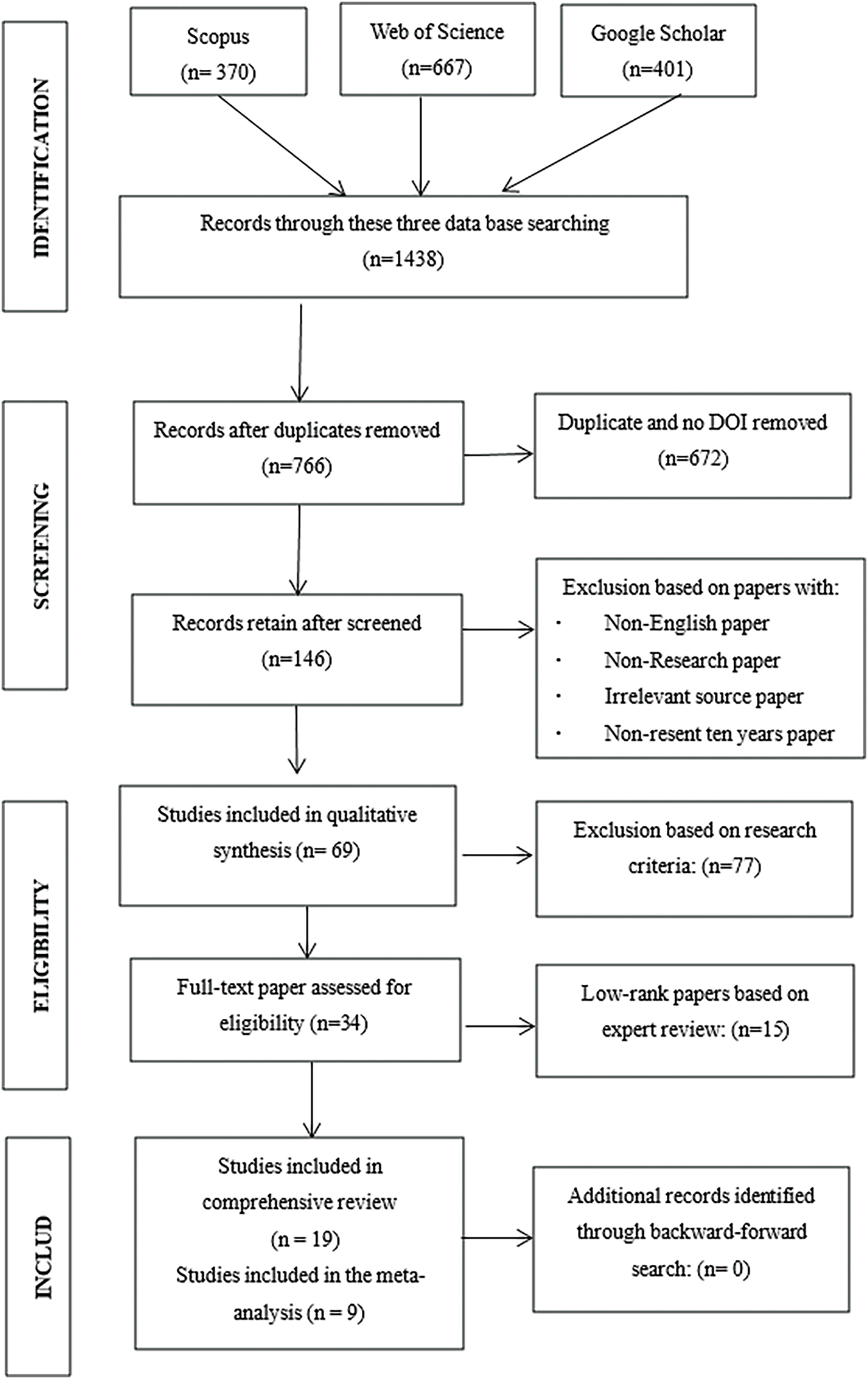
Figure 1: Flow diagram of PRISMA
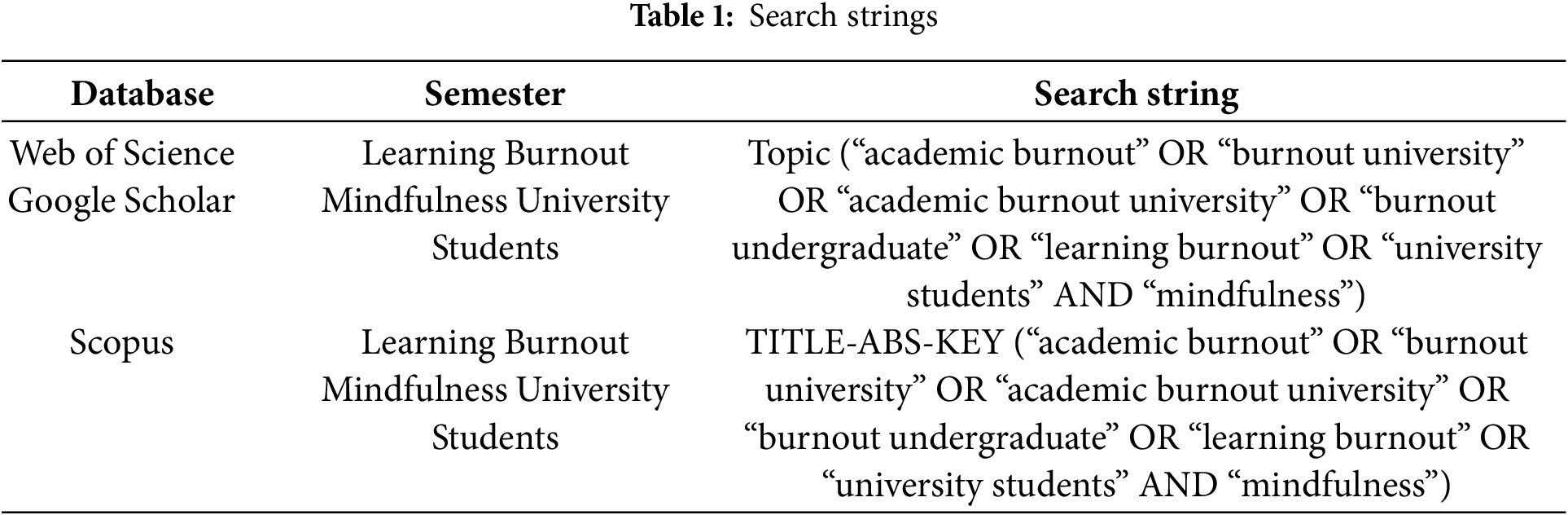
The identification stage involves searching for appropriate keywords based on the research question. In this study, the primary keywords were “university students”, “mindfulness”, and “learning burnout”. These keywords, along with their synonyms, related terms, and variations, were utilized to conduct the literature search. As detailed in Table 1, a comprehensive set of keyword strings was developed using Google Scholar, WOS, and Scopus to locate relevant articles. The researchers selected these three databases over others because they ensure rigorous peer review and editorial processes, which guarantee high-quality publications and maintain strong journal impact factors. Using these databases, the search process yielded 1438 articles that aligned with the study’s objectives.
Initially, all 1438 articles were screened to eliminate duplicate records. A total of 672 papers were excluded due to duplication or the absence of a DOI, leaving 766 articles for further evaluation. The remaining 766 articles underwent a second round of screening to ensure that only studies with empirical data published in peer-reviewed journals were included. The exclusion criteria were defined as follows: (1) non-English paper, (2) non-research paper, (3) irrelevant source paper, (4) non-resent ten years paper. This process resulted in the exclusion of 620 articles that did not meet the inclusion criteria. Consequently, 146 articles were selected for the third stage of analysis.
The third stage of the process was the eligibility assessment. The authors manually evaluated the retrieved articles to ensure that all remaining papers (after the initial screening) met the inclusion criteria. This evaluation involved reviewing the titles and abstracts of the articles. The extracted data encompassed the following elements: (1) basic study information (first author, year, country); (2) study variables; (3) population; (4) study design; (5) definition and measurement of learning burnout and mindfulness; (8) the relationship between learning burnout and mindfulness; (6) research findings; (7) study limitations. Additionally, quantitative data and correlation coefficients were extracted for quality assessment purposes. During this phase, 127 articles were excluded, leaving only 34 articles for full-text expert review.
A full-text review was conducted in two stages. In the first stage, the goal was to select articles that provided a comprehensive review of the literature on burnout and mindfulness among university students. In the second stage, the focus shifted to identifying studies suitable for inclusion in the meta-analysis. Specifically, this stage targeted studies that met the following criteria: (1) focused on undergraduate university student populations. (2) examined burnout and mindfulness traits. (3) were empirical studies rather than literature reviews. Articles were excluded if they were irrelevant, lacked sufficient data, or employed qualitative methods. This process led to the further exclusion of 15 articles of relatively low quality. Therefore, 19 articles were finally included for comprehensive review and 9 for meta-analysis.
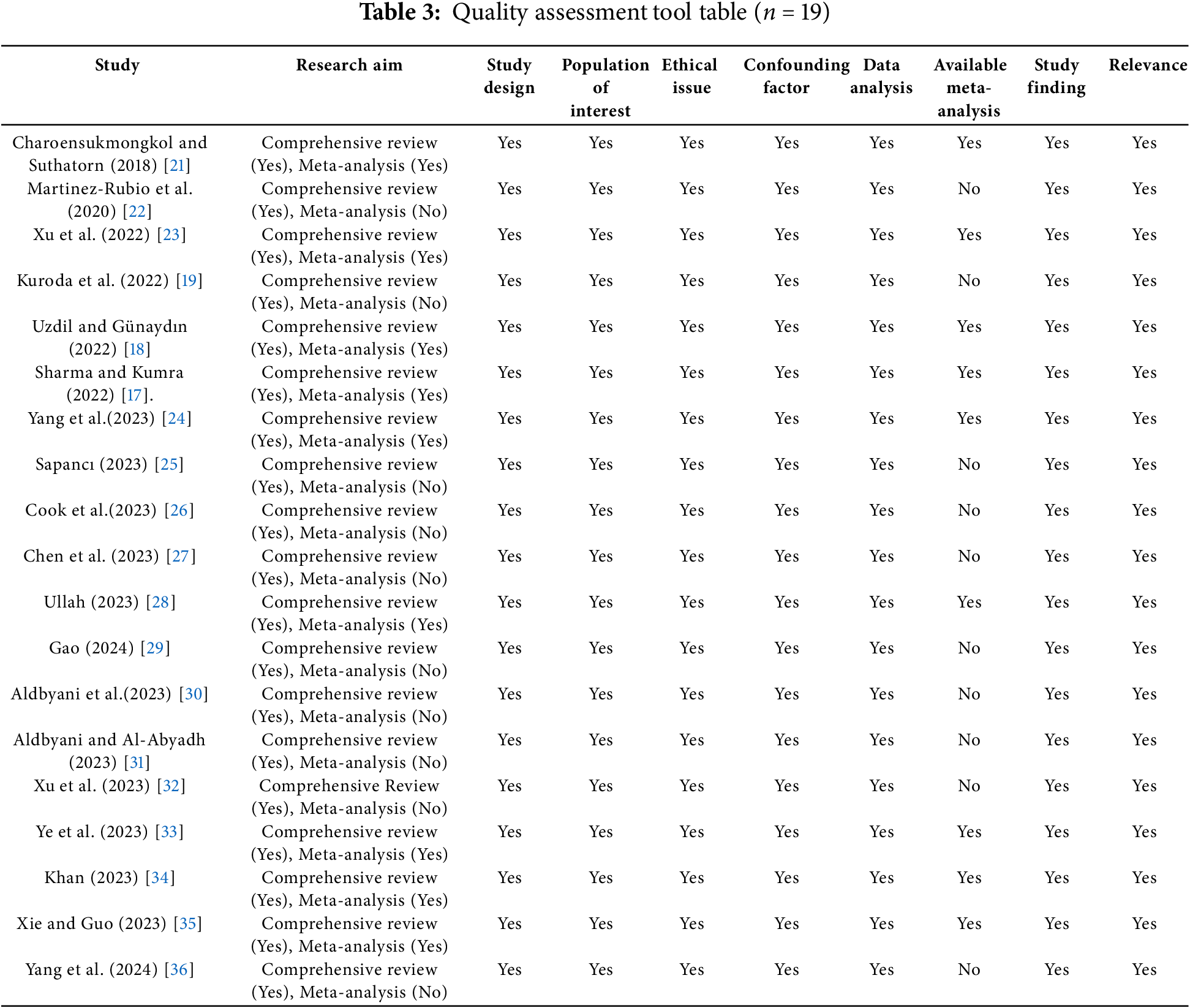
The quality assessment of all studies was conducted using a modified Critical Appraisal Skills Program (CASP) cohort study checklist, adapted to fit the specific context of our research. The evaluation covered key aspects such as research design, methodology, results, and relevant considerations. The specific evaluation criteria included: (1) Research Aim: does the research clearly articulate its objectives? (2) Study Design: is the chosen study design suitable for achieving the research objectives? (3) Methodology: is the methodology thoroughly described and justified? (4) Population Identification: does the study specify the target population? (5) Data Analysis: was the data analysis methodologically sound and well-defined? (6) Ethical Considerations: have ethical concerns been adequately addressed? (7) Results Presentation: are the results presented in a clear and comprehensive manner? (8) Confounding Variables: does the study address potential confounding factors? (9) Findings and Conclusions: are the results clearly articulated and supported by the data? (10) Relevance: are the study’s outcomes relevant to understanding the relationship between mindfulness and learning burnout?
The meta-analysis aimed to investigate the relationship between mindfulness and learning burnout among university students. The analysis proceeded once at least three studies provided comparable correlation coefficients. Initially, we considered conducting subgroup analyses; however, this approach was not feasible due to the limited number of relevant articles and the lack of detailed subgroup data on learning burnout in most studies. Consequently, subgroup analyses were not included in our meta-analysis. Correlation coefficient was used in the synthesis or presentation of results. Data analysis was conducted using Stata software 18 (Stata Corp LLC, College Station, TX, USA).
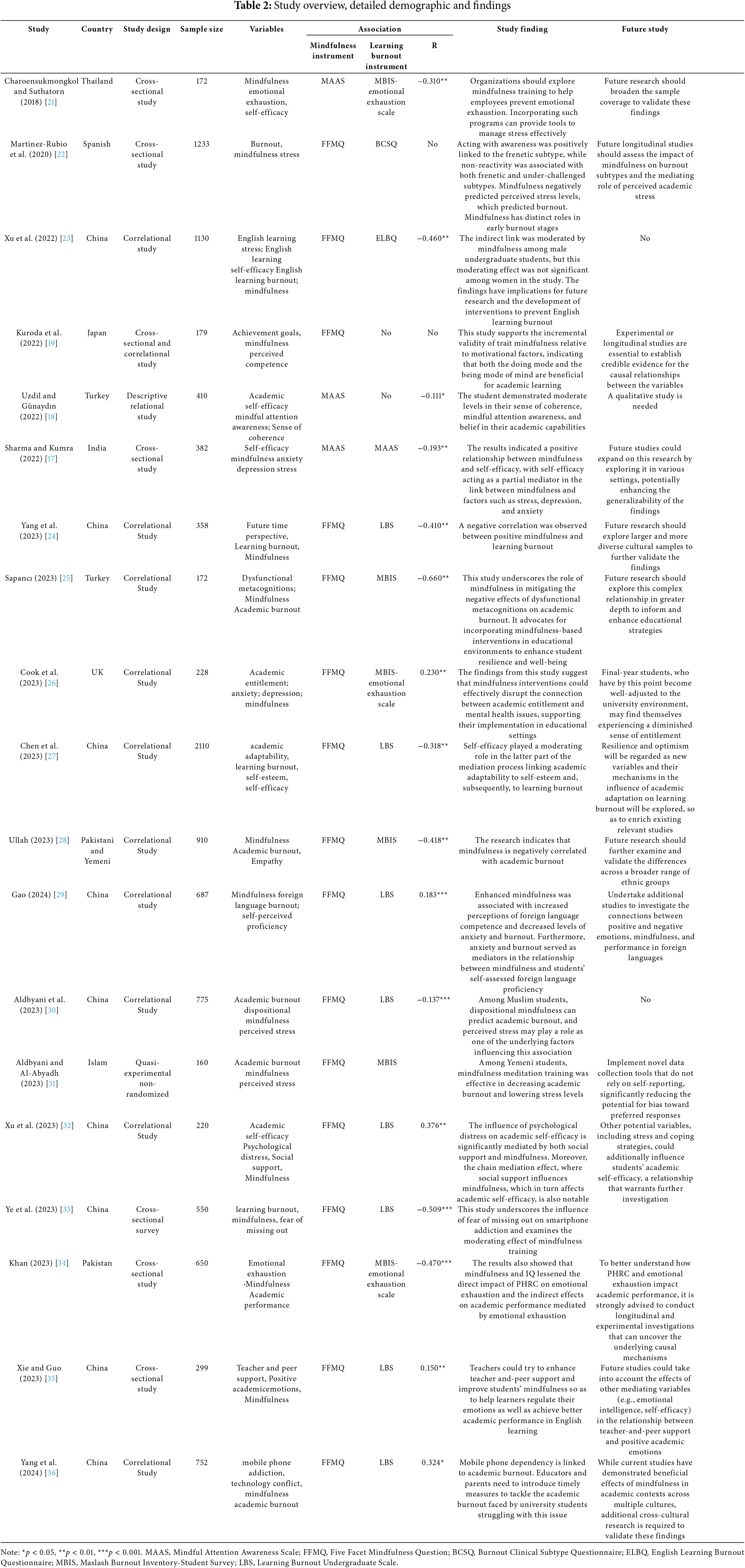
The database search initially identified 1438 articles. After applying the exclusion criteria, the titles and abstracts of 146 articles were screened. Of these, 34 full-text articles were selected for expert review. Ultimately, 19 studies were included in the literature review, and 9 studies were selected for the meta-analysis (see Fig. 1). The comprehensive literature review encompassed 19 studies conducted between 2014 and 2024, with 17 of these published within the last three years. Geographically, the studies were predominantly from China (9 studies), with additional contributions from Pakistan (2 studies), India, the UK, Turkey, Spain, Japan, and Thailand (1 study each).
The sample sizes in these studies ranged from 162 participants to over 1000 participants. The study populations included undergraduate students from both public and private universities, with the average age of participants ranging from 18 to 25 years old. The primary focus was on exploring the potential relationship between learning burnout and its dimensions, as well as mindfulness. The measurement of mindfulness mainly adopts the Five Facet Mindfulness Questionnaire (FFMQ) and the Mindful Attention Awareness Scale (MAAS). The measurement of learning burnout mainly adopts The Learning Burnout Undergraduates Scales (LBUS) developed by Lian et al. in China and the emotional exhaustion subscale of the MBI-SS in other countries. Hence, the studies included adopted the scales in a highly consistent manner, which also reduced the deviation of the research.
Besides, these studies collectively examined the various dimensions and influencing factors of learning burnout, with a specific focus on the relationship between learning burnout and mindfulness across different contexts. The literature mainly used cross-sectional surveys and correlational research, and the main part showed a wide range of research focuses: 17 related studies on the impact of mindfulness on learning burnout, 11 on the rist factors that affect learning burnout and mindfulness, and 6 on the protective factors that affect mindfulness and learning burnout. It is important to highlight that: (1) 4 studies examined the relationship between the sub-dimensions of learning burnout and mindfulness. (2) 3 studies discussed the influence of self-efficacy on both mindfulness and learning burnout. (3) 4 studies explored the impact of stress on mindfulness and learning burnout. These findings provide a nuanced understanding of the various factors influencing the relationship between learning burnout and mindfulness.
Based on the existing research, the majority of studies indicate that mindfulness is negatively correlated with learning burnout. However, the significance of the association awaits further meta-analysis. Notably, four studies discussed the relationship between emotional exhaustion and mindfulness in academic burnout. In addition, the main internal factors that mindfulness affects learning burnout include self-efficacy, empathy, and self-esteem. The main external factors that affect mindfulness on learning burnout include teacher support, learning pressure, and mobile phone use. It can be seen that mindfulness may have an indirect impact on learning burnout. Future studies need to further explore its indirect mechanism. In terms of sampling, cross-cultural research is also very necessary. For a detailed overview of each study, refer to Table 2.
3.2 Quality Assessment Results
The quality assessment of this study mainly evaluates the indicators mentioned above. The quality assessment results of 19 studies in the comprehensive literature review on learning burnout and mindfulness are detailed in Table 3. The results show that the research methods are highly consistent and relevant. Notably, just 9 of the studies provided data considered appropriate for meta-analysis, indicating a limitation in the amount of data available for more thorough quantitative evaluation. These 9 meta-analysis studies involved a total of 5227 university students with an average age ranging from 19.52 to 25.30 years old. Geographically, 6 studies were conducted in China, one in Turkey, one in Pakistan, and one in Pakistan and Yemeni (see Table 3 for details).
This section presents the summary correlation estimates, confidence intervals (CI), heterogeneity test results, and overall effects, which are detailed in Table 4. Fig. 2 illustrates the summary correlation estimates between mindfulness and indicators of learning burnout, including 95% CI and Fisher’s r-to-z transformed correlation coefficients (r), based on a random-effects model (RE model). In this meta-analysis, limited data availability precluded the possibility of conducting subgroup analyses. Nevertheless, these data allowed for the exploration and comparison of the relationship between mindfulness and emotional exhaustion. Due to data limitations, a meta-analysis comparing the internal and external factors of mindfulness’s effects on learning burnout was difficult to conduct. Therefore, the analysis of the effect of mindfulness on learning burnout was limited to the correlation between mindfulness and learning burnout and the association between mindfulness’s effects on learning burnout indicators (emotional exhaustion).
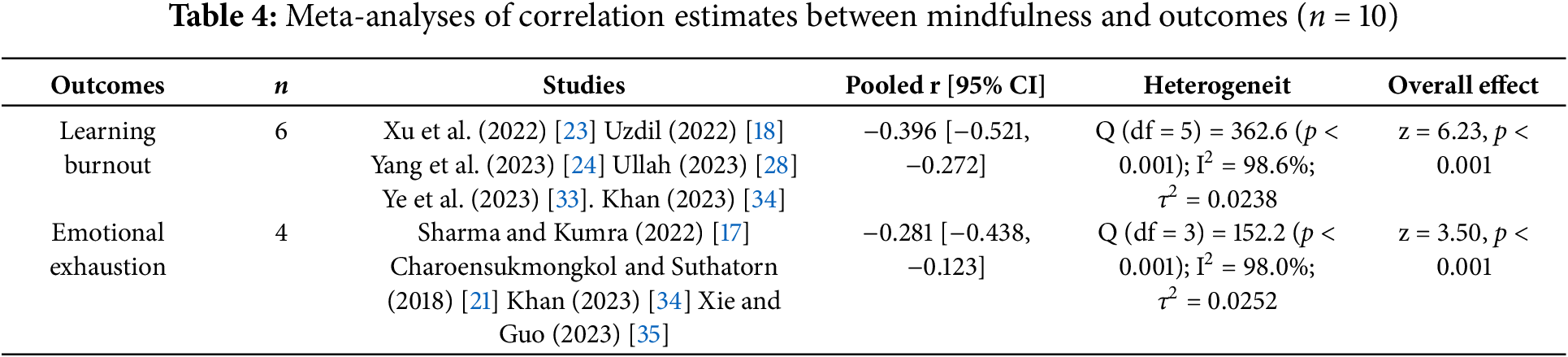
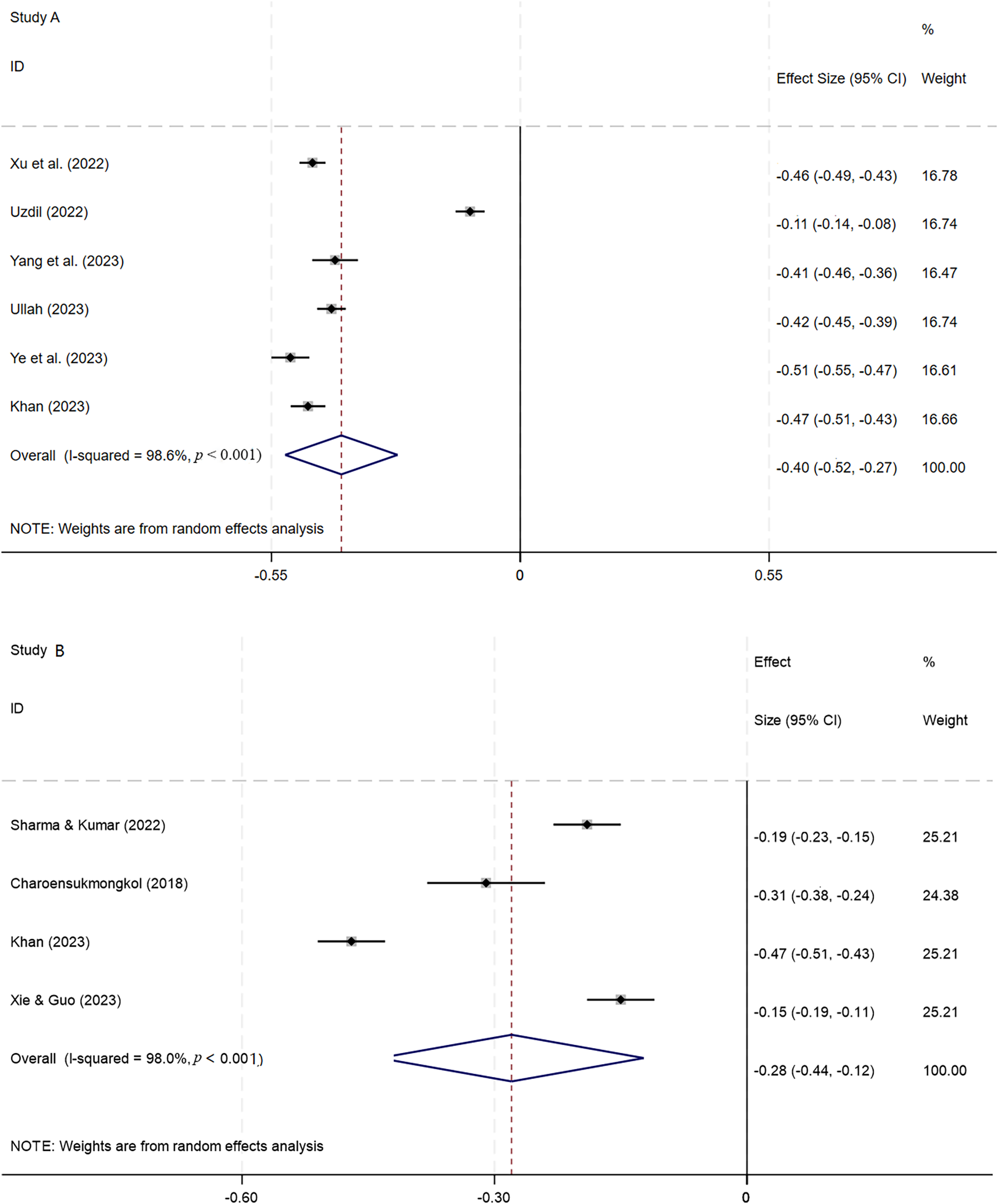
Figure 2: Pooled correlations between mindfulness and outcomes. (A) Pooled correlations between mindfulness and learning burnout [18,23,24,28,33,34]; (B) pooled correlations between mindfulness and emotional exhaustion [17,21,34,35]
This study explored the relationship between mindfulness and learning burnout include studies by Xu et al. (2022), Uzdil and Günaydın (2022), Li et al. (2023), Ullah (2023), Ye et al. (2023), and Khan (2024). A modest, yet statistically significant negative association was observed (pooled effect size: −0.396; 98.6% CI [−0.521, −0.272]). The analysis revealed a significant link between mindfulness levels and heightened academic burnout, with this association backed by a strong overall effect (z value = 6.23, p < 0.001) (refer to Fig. 2A). Additionally, meta-analyses have investigated the connection between mindfulness and emotional exhaustion, including Charoensukmongkol and Suthatorn et al. (2018), Sharma and Kumra (2022), Research by Xie and Guo (2024) and Khan (2024). It found a modest, statistically significant positive association (pooled effect size: −0.281, 98.0% CI −0.438 to −0.123). It showed a clear link between mindfulness and increased levels of academic burnout. The overall effect was significant (z value = 3.50, p < 0.001) strengthened the relationship between mindfulness and learning burnout (refer to Fig. 2B).
After a comprehensive literature analysis of 19 studies, this study identified three dimensions of learning burnout: emotional, behavioral, and outcome. The emotional dimension is mainly manifested as emotional exhaustion. The impact of mindfulness on the emotional dimension is mainly concerned with improving mindfulness and reducing emotional exhaustion through mindfulness training [21]. The behavioral dimension is typically reflected in inappropriate learning behaviors, such as playing with mobile phones and procrastinating in learning [37]. The impact of mindfulness on the behavioral dimension primarily focuses on how mindfulness can improve learning behaviors [38]. The outcome dimension is mainly manifested in low academic self-efficacy and insufficient sense of achievement in learning results [39]. The impact of mindfulness on outcome behaviors predominantly focuses on how mindfulness can improve the sense of achievement in academic goals and academic self-efficacy [18]. It can be seen that the level of mindfulness can directly affect learning burnout and its dimensions.
This meta-analysis combined data from nine studies involving 5227 participants to examine the relationship between mindfulness and academic burnout. The research results consistently showed that the level of mindfulness was significantly negatively correlated with learning burnout, including sub-dimensions (such as emotional exhaustion). Specifically, a meta-analysis of 6 studies [18,23,24,28,33,34] revealed a significant negative correlation between mindfulness levels and increased learning burnout. Especially in the dimension of emotional exhaustion, a meta-analysis of 4 studies [17,21,34,35] further confirmed that mindfulness can effectively alleviate negative effects such as emotional exhaustion caused by learning pressure. This verifies the direct correlation effect of mindfulness on learning burnout.
In addition, the 4 studies [17,22,23,31] found that mindfulness plays a moderating role in learning stress and learning burnout. Xu et al. (2023) and Xie et al. (2024) found that mindfulness can improve the perception of teacher support and social support, thereby alleviating learning burnout. There are also four studies [21,23,27,32] that showed that mindfulness can improve self-efficacy and self-esteem, thereby alleviating learning burnout. These research results can be summarized as the effect of mindfulness on learning burnout can alleviate learning burnout through internal factors (self-efficacy, self-esteem, etc.) and external factors (learning pressure, teacher support, etc.). It can be seen that there is some indirect correlation between the effects of mindfulness on learning burnout.
Furthermore, from the perspective of the Stress-Buffering Hypothesis, the relationship between mindfulness, self-efficacy, and learning burnout can be explained by the psychological resource regulation mechanism of individuals in the face of stress [40]. The hypothesis holds that certain psychological variables or social resources can buffer the negative effects of stress on physical and mental health [41]. Mindfulness enhances individuals’ confidence in their own abilities (self-efficacy) by reducing negative cognitions [23]. High self-efficacy further reduces helplessness under stress, thereby alleviating burnout (such as emotional exhaustion and reduced sense of achievement) [27]. Although existing studies have proven this indirect relationship, more empirical research is needed to establish an indirect causal relationship.
5 Limitations and Future Research
Although this meta-analysis provides significant insights into the connection between learning burnout and mindfulness, it is crucial to recognize some limitations. One key limitation is that the analysis relies on only nine studies, which, despite being comprehensive, might not fully encompass the diversity of research in this field and could limit the generalizability of the results. Future research should aim to expand the findings of this article and use a larger study sample to more fully understand the relationship between learning burnout and mindfulness. Second, variations in research methods, sample sizes, and evaluation measures among the included studies could contribute to heterogeneous results, which may restrict direct comparability. Third, the advantage of cross-sectional studies limits causal inferences between mindfulness and learning burnout. Longitudinal studies are required to establish causal relationships. Fourth, the meta-analysis mainly focuses on the direct and indirect relationship between mindfulness and learning burnout. Future research can further empirically explore the intrinsic and indirect mechanisms of mindfulness and learning burnout. Moreover, the possibility of publication bias must be considered, since studies reporting significant findings are more likely to be published. This bias may skew the overall interpretation of the relationship between mindfulness and learning burnout.
In summary, whether directly or indirectly, these findings suggest that mindfulness can serve as a protective factor against learning burnout, providing a new perspective for intervening in learning burnout. Mindfulness has a profound impact on improving students’ academic self-efficacy, academic management ability, and overall well-being. Hence, this indicates that university students should increase the application of mindfulness training in study and promote their self-regulation ability, especially self-efficacy. Besides, future research can explore the psychological mechanism of self-efficacy between mindfulness and learning burnout. Due to the limited scope and time of the research search, the sample size used for meta-analysis was small, the heterogeneity was high, and the generalizability was limited. Therefore, future research can continue to follow up on these three aspects.
Acknowledgement: We extend our heartfelt thanks to the reviewers and editorial team for their insightful feedback and recommendations, which significantly enhanced the quality of this paper. Additionally, we are profoundly grateful to all the anonymous participants who contributed to this research. Their involvement was crucial to the successful completion of this study.
Funding Statement: The authors received no specific funding for this study.
Author Contributions: The authors confirm contribution to the paper as follows: conceptualization, design, literature review, data-analysis, writing: Zhimei Cai; literature review, supervision: Faridah Mydin Kutty; critical revision of manuscript: Muhammad Syawal Amran. All authors reviewed the results and approved the final version of the manuscript.
Availability of Data and Materials: The datasets supporting the findings of this study are available from the corresponding authors upon request.
Ethics Approval: Not applicable.
Conflicts of Interest: The authors declare no conflicts of interest to report regarding the present study.
Supplementary Materials: The supplementary material is available online at https://www.techscience.com/doi/10.32604/ijmhp.2025.064983/s1.
References
1. Rosales-Ricardo Y, Rizzo-Chunga F, Mocha-Bonilla J, Ferreira JP. Prevalence of burnout syndrome in university students: a systematic review. Salud Ment. 2021;44(2):91–102. doi:10.17711/sm.0185-3325.2021.013. [Google Scholar] [CrossRef]
2. El Barusi AR, Kurniawati F. Systematic literature review: a study of academic burnout among undergraduate students in universities. Int J Sci Educ Cult Stud. 2024;3(1):1–18. doi:10.58291/ijsecs.v3i1.198. [Google Scholar] [CrossRef]
3. Briggs LG, Riew GJ, Kim NH, Aharon S, Klickstein JA, Cao AQ, et al. Racial and gender differences in medical student burnout: a 2021 national survey. Mayo Clin Proc. 2023;98(5):723–35. doi:10.1016/j.mayocp.2022.11.003. [Google Scholar] [PubMed] [CrossRef]
4. Gilbey P, Moffat M, Sharabi-Nov A, Cohen O, Kroszynski GN, Karnieli-Miller O, et al. Burnout in Israeli medical students: a national survey. BMC Med Educ. 2023;23(1):37–56. doi:10.1186/s12909-023-04037-2. [Google Scholar] [PubMed] [CrossRef]
5. Liu Y, Cao Z. The impact of social support and stress on academic burnout among medical students in online learning: the mediating role of resilience. Front Public Health. 2022;10:938132. doi:10.3389/fpubh.2022.938132. [Google Scholar] [PubMed] [CrossRef]
6. Qin PF, Zhao SY, Li DL, Huang MM, Liu GQ. The effect of perceived stress on college students’ mobile phone addiction: a serial mediation effect of self-control and learning burnout. J Psychol Sci. 2020;43(5):1111–16. (In Chinese). [Google Scholar]
7. Xie HY, Xiao H. Investigation and analysis of students’ learning burnout in normal colleges and universities. J High Educ. 2022;8(35):1–6. (In Chinese). doi:10.19980/j.CN23-1593/G4.2022.35.001. [Google Scholar] [CrossRef]
8. Xiao H, Li XR, Zhang YN, Ouyang YY, Wang MY. Influence of restorative environment on alleviating college students’ learning burnout. China J Health Psychol. 2021;29(11):1727–32. (In Chinese). doi:10.13342/j.cnki.cjhp.2021.11.026. [Google Scholar] [CrossRef]
9. Fu W, Li Y, Liu Y, Li D, Wang G, Liu Y, et al. The influence of different physical exercise amounts on learning burnout in adolescents: the mediating effect of self-efficacy. Front Psychol. 2023;14(23):65–70. doi:10.3389/fpsyg.2023.1089570. [Google Scholar] [PubMed] [CrossRef]
10. Baratisedeh M, Zomorodkia Z, Sadooghi F, Khaligh M. Investigating the effect of cognitive-behavioral group counseling on the academic burnout of students. J Adolesc Youth Psychol Stud. 2023;4(10):216–23. doi:10.61838/kman.jayps.4.10.21. [Google Scholar] [CrossRef]
11. Chittaro L, Serafini M, Vulcano Y. Virtual reality experiences for breathing and relaxation training: the effects of real vs. placebo biofeedback. Int J Hum-Comput Stud. 2024;1(3):32–75. doi:10.1016/j.ijhcs.2024.103275. [Google Scholar] [CrossRef]
12. Wang K, Li Y, Yang Y, Zhang T, Luo J. The role of loneliness and learning burnout in the regulation of physical exercise on internet addiction in Chinese college students. BMC Public Health. 2023;23(1):1994. doi:10.1186/s12889-023-16783-5. [Google Scholar] [PubMed] [CrossRef]
13. Fahmi IM, Rosdiana IC, Lestari DS. The influence of the use of self-management strategies in group counseling on the learning burnout o class in junior high school students. PD ABKIN JATIM Open J Syst. 2023;3(2):90–7. (In Indonesian). doi:10.1234/pdabkin.v3i2.156. [Google Scholar] [CrossRef]
14. Crosina E, Frey E, Corbett A, Greenberg D. From negative emotions to entrepreneurial mindset: a model of learning through experiential entrepreneurship education. Acad Manag Learn Educ. 2024;23(1):88–127. doi:10.5465/amle.2022.0260. [Google Scholar] [CrossRef]
15. Tang L, Zhang F, Yin RY, Fan ZY. Effect of interventions on learning burnout: a systematic review and meta-analysis. Front Psychol. 2021;12(2):46–76. doi:10.3389/fpsyg.2021.645662. [Google Scholar] [PubMed] [CrossRef]
16. Folch A, Gasol L, Heredia L, Vicens P, Torrente M. Mindful schools: neuropsychological performance after the implementation of a mindfulness-based structured program in the school setting. Curr Psychol. 2021;42(14):12118–28. doi:10.1007/s12144-021-02572-z. [Google Scholar] [CrossRef]
17. Sharma PK, Kumra R. Relationship between mindfulness, depression, anxiety and stress: mediating role of self-efficacy. Personal Individ Differ. 2022;186(11):13–63. doi:10.1016/j.paid.2021.111363. [Google Scholar] [CrossRef]
18. Uzdil N, Günaydın Y. The effect of sense of coherence on mindful attention awareness and academic self-efficacy in nursing students. Nurse Educ Pract. 2022;64(4):103–29. doi:10.1016/j.nepr.2022.103429. [Google Scholar] [PubMed] [CrossRef]
19. Kuroda Y, Yamakawa O, Ito M. Benefits of mindfulness in academic settings: trait mindfulness has incremental validity over motivational factors in predicting academic affect, cognition, and behavior. BMC Psychol. 2022;10(1):48. doi:10.1186/s40359-022-00746-3. [Google Scholar] [PubMed] [CrossRef]
20. Page MJ, McKenzie JE, Bossuyt PM, Boutron I, Hoffmann TC, Mulrow CD, et al. The PRISMA, 2020 statement: an updated guideline for reporting systematic reviews. BMJ. 2021;372:n71. doi:10.1136/bmj.n71. [Google Scholar] [PubMed] [CrossRef]
21. Charoensukmongkol P, Suthatorn P. Salespeople’s trait mindfulness and emotional exhaustion: the mediating roles of optimism, resilience, and self-efficacy. Econ Manag. 2018;9(2):125–42. doi:10.1504/IJSEM.2018.096075. [Google Scholar] [CrossRef]
22. Martinez-Rubio D, Sanabria-Mazo JP, Feliu-Soler A, Colomer-Carbonell A, Martinez-Brotons C, Sole S, et al. Testing the intermediary role of perceived stress in the relationship between mindfulness and burnout subtypes in a large sample of Spanish university students. Int J Environ Res Public Health. 2020;17(19):7013. doi:10.3390/ijerph17197013. [Google Scholar] [PubMed] [CrossRef]
23. Xu LL, Wang HH, Chen JX, Zhang YW, Huang ZQ, Yu CF. English learning stress, self-efficacy, and burnout among undergraduate students: the moderating effect of mindfulness and gender. Int J Environ Res Public Health. 2022;19(23):15819. doi:10.3390/ijerph192315819. [Google Scholar] [PubMed] [CrossRef]
24. Yang L, Da QS, Rui JX. Mediating effects of future time perspective on the relationship between mindfulness and learning burnout in college students: a cross-sectional descriptive study. Medicine. 2023;102(19):e33740. doi:10.1097/md.0000000000033740. [Google Scholar] [PubMed] [CrossRef]
25. Sapancı A. From metacognition to academic burnout in university students: the mediating role of mindfulness. J Pedagog Res. 2023;7(4):356–68. doi:10.33902/JPR.202313708. [Google Scholar] [CrossRef]
26. Cook A, Egan H, Wood J, Mantzios M. Examining the relationship of depression and anxiety to academic entitlement, and the potential mediating role of mindfulness. J Furth High Educ. 2023;47(9):1211–20. doi:10.1080/0309877x.2023.2241382. [Google Scholar] [CrossRef]
27. Chen C, Shen Y, Zhu Y, Xiao F, Zhang J, Ni J. The effect of academic adaptability on learning burnout among college students: the mediating effect of self-esteem and the moderating effect of self-efficacy. Psychol Res Behav Manag. 2023;23(4):1615–29. doi:10.2147/PRBM.S408591. [Google Scholar] [PubMed] [CrossRef]
28. Ullah A, Afzal K, Aldbyani A. Association between mindfulness and academic burnout; empathy a mediating factor: exploring differences between students of Pakistan and Yemen. Pak J Educ Res. 2023;6(4):11–22. [Google Scholar]
29. Gao X. Mindfulness and foreign language learners’ self-perceived proficiency: the mediating roles of anxiety and burnout. J Multiling Multicult Dev. 2024;45(10):4182–99. doi:10.1080/01434632.2022.2150196. [Google Scholar] [CrossRef]
30. Aldbyani A, Alabyadh M, Ma B, Lv Y, Leng J, Guo Q. Dispositional mindfulness associated with less academic burnout among Muslim students during the COVID-19 pandemic. S Afr J Educ. 2023;43(3):1–7. doi:10.15700/saje.v43n3a2231. [Google Scholar] [CrossRef]
31. Aldbyani A, Al-Abyadh MHA. The effect of mindfulness meditation on academic burnout and perceived stress among Muslim students: a Quasi-experimental approach. Islam Guid Couns J. 2023;6(1):152–64. doi:10.25217/igcj.v6i1.3467. [Google Scholar] [CrossRef]
32. Xu T, Zhu PT, Ji QY, Wang W, Qian MY, Shi GH. Psychological distress and academic self-efficacy of nursing undergraduates under the normalization of COVID-19: multiple mediating roles of social support and mindfulness. BMC Med Educ. 2023;23(1):27–32. doi:10.1186/s12909-023-04288-z. [Google Scholar] [PubMed] [CrossRef]
33. Ye X, Li Y, Liu Y, Zheng QY, Lin ZL, Zeng YH, et al. Effect of fear of missing out on learning burnout in medical students: a moderated mediation. Front Psychiatry. 2023;14:1289906. doi:10.3389/fpsyt.2023.1289906. [Google Scholar] [PubMed] [CrossRef]
34. Khan AN. Students are at risk? Elucidating the impact of health risks of COVID-19 on emotional exhaustion and academic performance: role of mindfulness and online interaction quality. Curr Psychol. 2023;4(6):1–14. doi:10.1007/s12144-023-04355-0. [Google Scholar] [PubMed] [CrossRef]
35. Xie XY, Guo JD. Influence of teacher-and-peer support on positive academic emotions in EFL learning: the mediating role of mindfulness. Asia-Pac Educ Res. 2023;32(4):439–47. doi:10.1007/s40299-022-00665-2. [Google Scholar] [CrossRef]
36. Yang GH, Cao XX, Fu YY, Wang ND, Lian SL. Mobile phone addiction and academic burnout: the mediating role of technology conflict and the protective role of mindfulness. Front Psychiatry. 2024;15:1365914. doi:10.3389/fpsyt.2024.1365914. [Google Scholar] [PubMed] [CrossRef]
37. González-Brignardello MP, Paniagua ASE. Contribution of passion and multidemensional academic procrastiation on burnout in the university distance learning setting. Accion Psicol. 2023;20(1):131–42. doi:10.5944/ap.20.1.39246. [Google Scholar] [CrossRef]
38. Yasar HJ, Pirani Z, Ali ZE. A parental burnout modelling based on perfectionism mediated through self-compassion in parents of students suffering from specific learning behavioral disorder. Acta Psychol. 2024;246(4):104227. doi:10.1016/j.actpsy.2024.104227. [Google Scholar] [PubMed] [CrossRef]
39. Xu ZH, Wang XQ, Zhao ZX, Zhan N. The influence of college students’ self-efficacy on learning engagement: the mediating role of emotion regulation. Psychol Mon. 2023;18(11):99–101, 5. (In Chinese). doi:10.19738/j.cnki.psy.2023.11.026. [Google Scholar] [CrossRef]
40. Tang Y-Y, Ma Y, Wang J, Fan Y, Feng S, Lu Q, et al. Short-term meditation training improves attention and self-regulation. Proc Natl Acad Sci U S A. 2007;104(43):17152–56. doi:10.1073/pnas.0707678104. [Google Scholar] [PubMed] [CrossRef]
41. Cohen S, Wills TA. Stress, social support, and the buffering hypothesis. Psychol Bull. 1985;98(2):310. [Google Scholar] [PubMed]
Cite This Article
 Copyright © 2025 The Author(s). Published by Tech Science Press.
This work is licensed under a Creative Commons Attribution 4.0 International License , which permits unrestricted use, distribution, and reproduction in any medium, provided the original work is properly cited.
 Downloads
 Citation Tools
