
 Login
Login Register
 Submit a Paper
 Propose a Special lssue
 Open Access
ARTICLE

The Relationship between Peer Victimization and Non-Suicidal Self-Injury Behavior among Middle School Students: The Mediating Role of Future Orientation and Social Withdrawal
1 School of Education, Guangxi Science & Technology Normal University, Laibin, 546199, China
2 Faculty of Education, Guangxi Normal University, Guilin, 541004, China
3 School of Education Science, Nanning Normal University, Nanning, 530299, China
4 School of Physics and Electronic Information, Guangxi Minzu University, Nanning, 530006, China
* Corresponding Author: Yunbin Deng. Email:
# Biao Li and Xiao Hu contributed equally to this work
(This article belongs to the Special Issue: Evidence-based Approaches to Managing Stress, Depression, Anxiety, and Suicide)
International Journal of Mental Health Promotion 2026, 28(2), 10 https://doi.org/10.32604/ijmhp.2026.073489
Received 19 September 2025; Accepted 29 December 2025; Issue published 27 February 2026
 View Full Text
 Download PDF
Abstract
Objectives: Non-suicidal self-injury (NSSI) represents a prominent and escalating concern within mental health, associated with considerable psychological and physical dangers. Peer victimization is identified as a significant predictor of NSSI behavior. Although prior research has explored the association between peer victimization and NSSI, the mechanisms underlying this relationship remain insufficiently understood. Utilizing social information processing theory frameworks, the present study seeks to examine the sequential mediating roles of a cognitive factor, future orientation, and a behavioral factor, social withdrawal, in middle school students. Methods: A cross-sectional survey was administered in China, involving 528 participants (261 females and 267 males; Meanage = 13.71, standard deviation [SD] = 0.93). Participants completed self-report measures assessing peer victimization via the Delaware Bullying Victimization Scale-Student Version, NSSI via the Adolescents Self-Harm Scale, future orientation via the Adolescent Future Orientation Questionnaire, and social withdrawal via the Social Withdrawal Questionnaire. Results: Findings indicated a significant positive correlation between peer victimization and NSSI (r = 0.30, p < 0.01). Additionally, future orientation and social withdrawal functioned as serial mediators, with an indirect effect of 0.01 (95% CI: [0.01, 0.02]), representing 2.70% of the total effect (β = 0.37, 95% CI: [0.25, 0.47]). Conclusions: The findings endorse a theoretical framework in which negative future outlook and social withdrawal are sequentially linked within the relationship between peer victimization and NSSI. Although the serial indirect effect observed is modest, it delineates a distinct associative pattern that characterizes adolescents subjected to victimization. These results carry practical significance for school-based intervention programs, indicating that targeting future perspectives and social connections may enhance strategies for preventing NSSI.Keywords
Non-suicidal self-injury (NSSI) constitutes a notable and escalating concern within mental health domains, characterized by intentional, direct, and repetitive acts of bodily harm, such as cutting or burning [1]. These behaviors are not driven by suicidal intent and typically do not result in death [1]. Nonetheless, the prevalence of NSSI has been rising. Meta-analyses found that 22% of adolescents engage in NSSI [2], with rates reaching 27.4% among middle school students in grades seven to nine in some studies [3]. NSSI carries substantial psychological and physical risks, as individuals who self-injure face a significantly higher risk of suicidal ideation in the future [4]. Understanding the factors that contribute to NSSI and its underlying mechanisms is essential for the development of effective prevention and intervention strategies.
1.1 Peer Victimization and Non-Suicidal Self-Injury Behavior
Peer influence plays a critical role in individual behavior, with peer victimization being considered a significant predictor of NSSI [5,6]. Peer influence exerts a substantial impact on individual behavior, with peer victimization identified as a key predictor of NSSI [7]. Middle school represents a critical period of social adjustment, during which students may be particularly vulnerable to peer-related stressors [8,9]. This vulnerability underscores the importance of examining the psychological mechanisms linking victimization to NSSI in this population.
According to the Experiential-Avoidance Model [10], peer victimization is a highly aversive experience that generates intense and unwanted negative internal experiences—such as feelings of shame, anger, worthlessness, and emotional pain. These internal experiences are distressing, and individuals are motivated to avoid or escape them. Since the social situation cannot be easily avoided, the individual turns inward, using self-injury as a maladaptive strategy [10]. This behavior is negatively reinforced because the physical pain of NSSI provides a powerful distraction from emotional distress, offering a temporary sense of relief. Gratz (2007) found that most people who self-injure do so to alleviate negative emotions, transferring emotional distress to physical pain, which reinforces their self-injurious behavior [11]. A meta-analysis also indicated positive and significant relations between NSSI and peer victimization [12,13]. Based on this, we propose that peer victimization significantly and positively predicts non-suicidal self-injury in middle school students (Hypothesis 1).
1.2 The Mediating Role of Future Orientation
Future orientation, which refers to an individual’s thoughts and behaviors directed toward their future goals [14], is a critical cognitive resource that provides motivation and guidance for adaptive behavior [15]. This process of forming a positive future outlook is particularly sensitive during adolescence [16]. However, peer victimization can significantly disrupt this process [17]. According to the Implicit Theories of Relationships, children who believe social traits are fixed are more likely to internalize negative peer experiences, which is associated with depressive symptoms and a more pessimistic outlook on the future [18]. Victimization can shift children’s goals from learning and growth to performance and approval, making them more vulnerable to negative self-evaluation and pessimism about future social success.
A negative future orientation, in turn, can increase the likelihood of NSSI. Problem Behavior Theory suggests that hopelessness about the future is a key factor related to individuals engaging in risky behaviors [19,20]. For adolescents with victimization experiences, a negative future orientation may manifest as a belief that they cannot alter negative life trends or regulate their own behavior [21]. Conversely, a positive outlook on the future can alleviate suicidal and self-injurious behaviors [22]. Thus, we hypothesize that future orientation mediates the relationship between peer victimization and NSSI (Hypothesis 2).
1.3 The Mediating Role of Social Withdrawal
Social withdrawal, the persistent solitary behavior, and avoidance of peer interaction [23], may also mediate the relationship between peer victimization and NSSI. When confronted with a threatening social environment, victims may adopt withdrawal and solitude as a form of self-protection [24]. Consistent with this, Sousa et al. (2024) found that middle school students who experience peer victimization are more likely to exhibit social withdrawal [25]. The Interpersonal Multi-Motive Model suggests that inappropriate peer behaviors, such as betrayal or exclusion, damage peer relationships and diminish an individual’s sense of belonging, which is ultimately linked to social withdrawal [26].
Furthermore, individuals with severe social withdrawal are more prone to NSSI. The Reward-Impediment Model explains this connection by positing that NSSI can serve as a substitute reward. Social withdrawal creates a significant impediment to receiving natural, positive social rewards like emotional support and a sense of belonging. The absence of these rewards is associated with intense emotional distress. NSSI then provides a maladaptive reward, the physical pain distracts from emotional pain, offering temporary relief and a sense of control [27]. We therefore hypothesize that social withdrawal mediates the relationship between peer victimization and non-suicidal self-injury (Hypothesis 3).
1.4 The Chain Mediating Effect of Future Orientation and Social Withdrawal
It is important to examine not only the independent mediating roles but also the sequential interplay between future orientation and social withdrawal. While individual relationships among these variables have been explored, the precise mechanism through which they collectively mediate the impact of peer victimization on NSSI remains less understood. Drawing on the Social Information Processing Model (SIP) [28], we propose a chain mediation.
Within the SIP framework, peer victimization constitutes a significant, aversive social input. During the initial stages of processing (encoding and interpretation), this trauma triggers a fundamental shift in an adolescent’s goal clarification. As persistent threats make long-term aspirations seem unattainable, the individual’s primary social goal shifts from achievement and connection to immediate safety. This cognitive shift manifests as a diminished future orientation. The sequential structure of the SIP model requires that such cognitive processing informs the subsequent response decision. Empirical evidence supports this “cognition-to-behavior” priority; for instance, systematic reviews indicate that maladaptive appraisals drive avoidant coping in traumatized youth [29]. Similarly, longitudinal study show that negative future-related thinking, such as hopelessness, predicts later internalizing symptoms and behavioral avoidance [30]. When an adolescent’s expectation of positive outcomes is compromised, the motivational drive for social investment ceases [31]. Consequently, the chosen strategy to minimize further threat is social withdrawal, the active avoidance of peer interaction. This sequence is theoretically grounded in the principle that cognitive appraisals of a stressor dictate the subsequent coping behavior, rendering this order superior to the reverse [32]. Finally, the resulting social withdrawal and isolation compromise essential social support mechanisms. In alignment with the experiential avoidance model, the absence of healthy emotional outlets leaves adolescents highly vulnerable to overwhelming internal distress, compelling them to resort to NSSI as a final, maladaptive strategy for emotional regulation.
Therefore, we propose that future orientation and social withdrawal serially mediate the effect of peer victimization on NSSI (Hypothesis 4). This chain suggests that peer victimization contributes to a negative future orientation, which in turn fosters social withdrawal, ultimately increasing the likelihood of NSSI among middle school students.
Although prior research identifies both cognitive and behavioral factors as correlates of NSSI [33,34], a comprehensive understanding of the underlying mechanisms remains elusive. Our review emphasizes three critical gaps that constrain current knowledge of the victimization-NSSI link. Firstly, there is a lack of exploration into the specific roles of future orientation and social withdrawal as distinct mediators in this pathway. Prior studies have predominantly focused on general factors such as depression [35] or coping strategies [36], with empirical investigations into these individual mechanisms being notably scarce. Our study addresses this gap by testing two novel mediating factors. Furthermore, there is a scarcity of studies combining these two mechanisms into a cohesive, stepwise model. The proposed serial structure is essential for understanding how risk factors are sequentially associated with cognitive alterations preceding behavioral responses, thereby bridging this important theoretical gap. Our study aims to address these issues by testing a serial mediation model (see Fig. 1) that elucidates the process linking peer victimization to NSSI among middle school students. Our research aims to fill this gap by empirically testing a serial mediation model that elucidates how peer victimization influences NSSI among middle school students.
Based on the theoretical framework and research gap presented, we propose the following hypotheses:
Hypothesis 1: Experiences of peer victimization are positively correlated with NSSI.
Hypothesis 2: Future orientation serves as an individual mediating factor in the association between peer victimization and NSSI.
Hypothesis 3: Social withdrawal will individually mediate the relationship between peer victimization and NSSI.
Hypothesis 4: Future orientation and social withdrawal will serially mediate the relationship between peer victimization and NSSI, such that peer victimization is associated with a negative future orientation, which in turn links to increased social withdrawal, ultimately increasing the likelihood of NSSI.
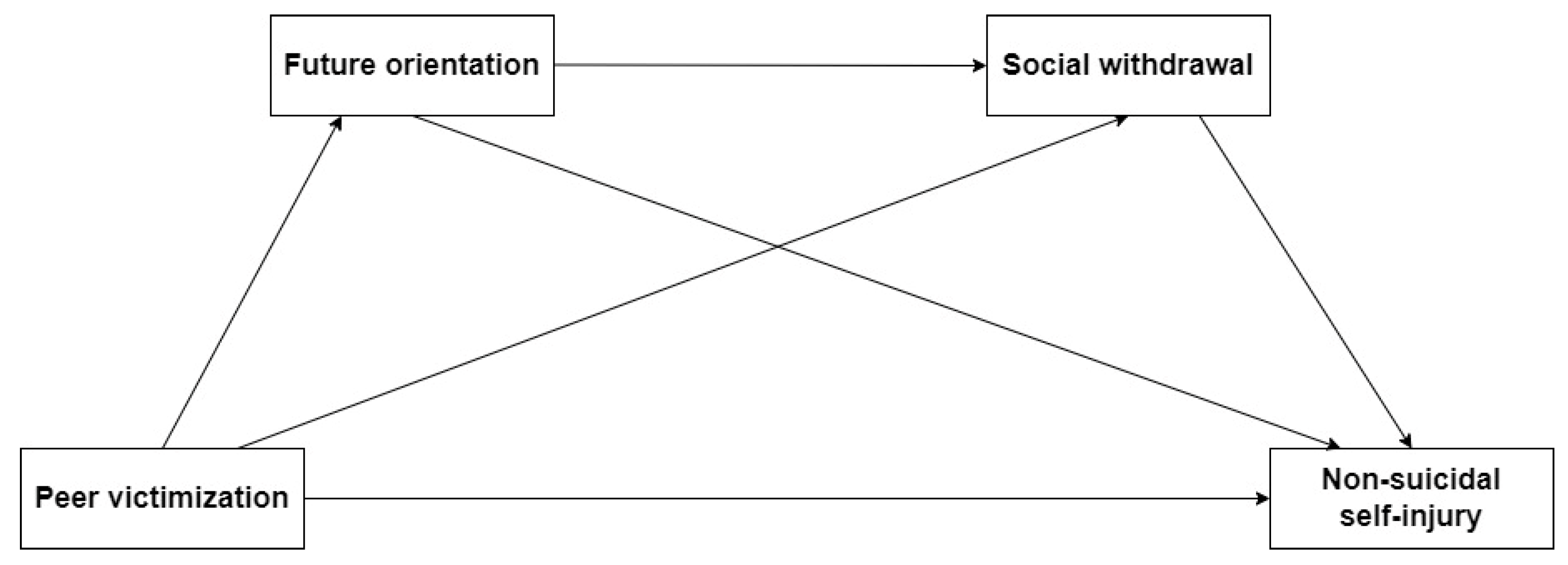
Figure 1: Hypothesis model.
Participants were recruited from the adolescent student population of three public middle schools in Guangxi, China, using a convenience sampling method. These schools were selected to represent typical educational environments in the regional urban and semi-urban districts. To be eligible for the study, participants had to be currently enrolled full-time students in grades seven through nine and provide informed consent. We excluded individuals with a self-reported history of severe intellectual disability or those unable to comprehend the survey language. A total of 560 students were initially recruited. Following data collection, we implemented exclusion criteria to ensure data quality: 32 questionnaires were excluded due to (a) incomplete responses (missing >15% of items) or (b) clear evidence of patterned/random responding. The final valid sample consisted of 528 participants (94.28% valid response rate). The mean age was 13.71 years (standard deviation [SD] = 0.93), consisting of 267 males (50.6%) and 261 females (49.4%). The sample was distributed across all three grades: 185 (35.0%) from seventh grade, 169 (32.0%) from eighth grade, and 174 (33.0%) from ninth grade.
To determine whether the sample size was adequate, a Monte Carlo power analysis for indirect effects was conducted using 1000 replications and 20,000 draws per replication [37]. We utilized the smallest effect sizes reported in previous literature concerning peer-based interpersonal stressors, future-directed expectations, and social-emotional difficulties as parameters for the model [31,38,39,40,41,42]. The analysis was conducted with a statistical power of 0.80 and a confidence level of 95%. It determined that a sample size of n = 256 would be adequate to identify the proposed indirect effects. Given our final sample size of n = 528, the study provided substantial statistical power (estimated at >0.95) to detect small-to-medium serial indirect effects.
The research was conducted by qualified psychology educators who had undergone specialized training on administration protocols and questionnaire content. Standardized instructions were provided to uphold data integrity, highlighting the significance of honest responses and participant anonymity. Participants and their guardians were informed about the study’s objectives and procedures, and written informed consent and assent were secured prior to participation. The completion of the questionnaires took approximately 20 minutes, with responses collected immediately afterward. Following the survey, participants were given a small token of appreciation, such as a pen or a bookmark.
This study was approved by the Ethics Committees of School of Education Science at Guangxi Science & Technology Normal University (Reg. No. JK2023004), following the ethical standards of the Declaration of Helsinki.
Peer victimization was evaluated using a modified Chinese adaptation of the Delaware Bullying Victimization Scale-Student Version (DBVS-S), consisting of 12 items [43]. The revised instrument encompasses three dimensions: verbal bullying, physical bullying, and social/relational bullying, each comprising four items. Participants indicated the frequency of their experiences with various bullying behaviors on a six-point Likert scale. A higher cumulative score signifies increased severity of peer victimization. Xie et al. utilized the Chinese version of the DBVS-S in a sample of 2,443 students ranging from sixth grade to third grade of senior high school in Hunan Province, China [43]. Both exploratory and confirmatory factor analyses validated the three-factor structure of the scale. The overall Cronbach’s alpha coefficient was 0.84, with a four-week test-retest reliability of 0.68. In the present study, the Cronbach’s alpha was calculated to be 0.86.
2.3.2 Non-Suicidal Self-Injury
NSSI was assessed using the Adolescents Self-Harm Scale (ASHS), a modified instrument originally developed by Feng (2008) [44]. The scale features an open-ended question, which was not incorporated into the scoring process for this investigation. For the remaining 18 items, participants provided two separate ratings: one for frequency on a 4-point scale and another for harm severity on a 5-point scale. An overall score was derived by summing the products of frequency and severity ratings across all items, with higher scores reflecting more severe self-injury. The Chinese adaptation of the NSSI scale demonstrated a Cronbach’s alpha of 0.83 in a sample of 165 middle school students. Additional validation involving 214 juvenile delinquents and 340 middle school students supported the scale’s reliability and validity. The internal consistency coefficient for this study was 0.84.
Future Orientation was assessed using a 31-item instrument [45], with responses rated on a 5-point Likert scale ranging from 1 (“completely disagree”) to 5 (“completely agree”). The scale encompasses three dimensions: future cognition, future affect, and future volitional action. Future cognition involves aspects of breadth and density, while future affect includes optimism and thoughtfulness, and future volitional action pertains to planning and implementation. Higher scores indicate a more positive and optimistic perspective towards the future. The questionnaire was administered to a large cohort of Chinese adolescents, yielding a Cronbach’s alpha of 0.87 for the overall scale and a test-retest reliability coefficient of 0.92. In this particular study, the Cronbach’s alpha was 0.89.
Social withdrawal was assessed using the 16-item Social Withdrawal Questionnaire [46]. The instrument encompasses three dimensions: avoidance of unfamiliar environments, social isolation, and reluctance to speak in public. Participants rated each item on a 5-point Likert scale, from 1 (“completely disagree”) to 5 (“completely agree”). Higher scores reflect a greater extent of social withdrawal. The scale and its subdimensions demonstrated strong internal consistency, with Cronbach’s α coefficients consistently exceeding 0.80. In studies involving Chinese adolescents [47], the overall Cronbach’s alpha was reported as 0.92.
Prior to conducting data analysis, missing values were addressed through mean imputation based on the series. This approach was chosen due to the minimal extent of missing data, which was less than 1%, rendering mean imputation suitable for handling such sparse missingness [48]. Furthermore, data pertaining to NSSI often exhibit pronounced skewness and kurtosis. To satisfy the normality assumptions necessary for standard analytical methods like linear regression, the scores were subjected to a square-root transformation to reduce the impact of non-normal distribution on the validity of the findings [49,50].
Data management and descriptive statistical analyses were performed utilizing SPSS version 26.0 (IBM Corp., Armonk, NY, USA). The examination of mediating effects was performed with Mplus version 8.3 (Muthén & Muthén, Los Angeles, CA, USA). Model fit was evaluated using indices including the chi-square (χ2) test, Comparative Fit Index (CFI), Tucker-Lewis Index (TLI), Root Mean Square Error of Approximation (RMSEA), and Standardized Root Mean Squared Residual (SRMR). A model was deemed to have an adequate fit if the CFI and TLI values were at or above 0.9, and the RMSEA and SRMR values were below 0.1 [51]. While χ2 value is reported, we prioritize the alternative fit indices (CFI, TLI, RMSEA, SRMR) for model evaluation, as the χ2 test is known to be overly sensitive to sample size in larger datasets [52].
Following the guidance of Erceg-Hurn and Mirosevich [53], we employed bootstrap resampling to assess the significance of the regression coefficients. A total of 5000 resamples were generated from the original dataset, with each resample comprising 528 observations. This approach enabled the estimation of standard errors and confidence intervals for the model parameters. Statistical significance was established when the 95% confidence interval (CI) did not encompass zero.
In relation to common method variance, this study utilized self-report measures, which may introduce covariance bias due to the measurement technique. To mitigate this issue, two established methods were implemented. Initially, Harman’s single-factor test was conducted on the unrotated exploratory factor structure of all scale items [54]. The analysis indicated that the first factor accounted for only 16.65% of the total variance, well below the 40% threshold indicative of problematic common method variance.
Subsequently, the Unmeasured Latent Method Construct technique was employed to further control for potential effects of an unmeasured latent method factor [55]. Model fit indices were compared with and without this latent factor, revealing minimal differences (ΔRMSEA = 0.004, ΔCFI = 0.012, ΔTLI = 0.011, ΔSRMR = 0.002). These findings suggest that the inclusion of the common method factor did not significantly improve model fit. Overall, the results indicate that common method bias does not substantially threaten the validity of the study’s conclusions.
3.1 Descriptive Statistics and Correlations
The prevalence of self-injurious behavior in the sample of 528 participants was 38.6%. There was no significant difference in the occurrence of self-harm between female students (41.4%) and male students (36.0%), χ2 (1, 528) = 1.64, p > 0.05. Among those who engaged in self-harm, the most frequently reported methods were scratching (23.3%), hitting a wall with their body (23.9%), cutting (17.4%), and burning (10.8%).
The means, SDs, and correlation coefficients for all variables are presented in Table 1. Peer victimization was found to have a significant positive correlation with both non-suicidal self-injury (r = 0.30, p < 0.01) and social withdrawal (r = 0.17, p < 0.01). In contrast, future orientation was significantly negatively correlated with peer victimization (r = −0.13, p < 0.01), non-suicidal self-injury (r = −0.18, p < 0.01), and social withdrawal (r = −0.19, p < 0.01). Social withdrawal was significantly positively correlated with non-suicidal self-injury (r = 0.25, p < 0.01).
Table 1: Descriptive statistics of variables (n = 528).
| Variables | Mean | SD | Skewness | Kurtosis | 1 | 2 | 3 |
|---|---|---|---|---|---|---|---|
| 1. Peer Victimization | 3.35 | 7.94 | 2.11 | 4.59 | 1 | ||
| 2. Non-Suicidal Self-Injury | 1.00 | 1.53 | 1.72 | 3.28 | 0.30** | 1 | |
| 3. Future Orientation | 17.66 | 6.50 | −0.49 | 0.20 | −0.13** | −0.18** | 1 |
| 4. Social Withdrawal | 96.47 | 18.79 | −0.03 | −0.42 | 0.17** | 0.25** | −0.19** |
As shown in Fig. 2, a serial mediation model was developed with peer victimization as the independent variable, and future orientation and social withdrawal serving as mediating variables. The dependent variable was NSSI, while gender and age were included as control variables. The model demonstrated acceptable fit indices, including χ2/df = 4.96, RMSEA = 0.08, CFI = 0.91, TLI = 0.90, and SRMR = 0.06. Results indicated that peer victimization significantly predicted reductions in future orientation (β = −0.14, t = −2.90, p < 0.01) and increases in social withdrawal (β = 0.19, t = 3.77, p < 0.001), as well as elevated levels of NSSI (β = 0.32, t = 5.54, p < 0.001). Furthermore, future orientation was negatively associated with social withdrawal (β = −0.18, t = −3.15, p < 0.01) and NSSI (β = −0.10, t = −2.10, p < 0.05). Social withdrawal was positively related to NSSI (β = 0.16, t = 3.23, p < 0.01).
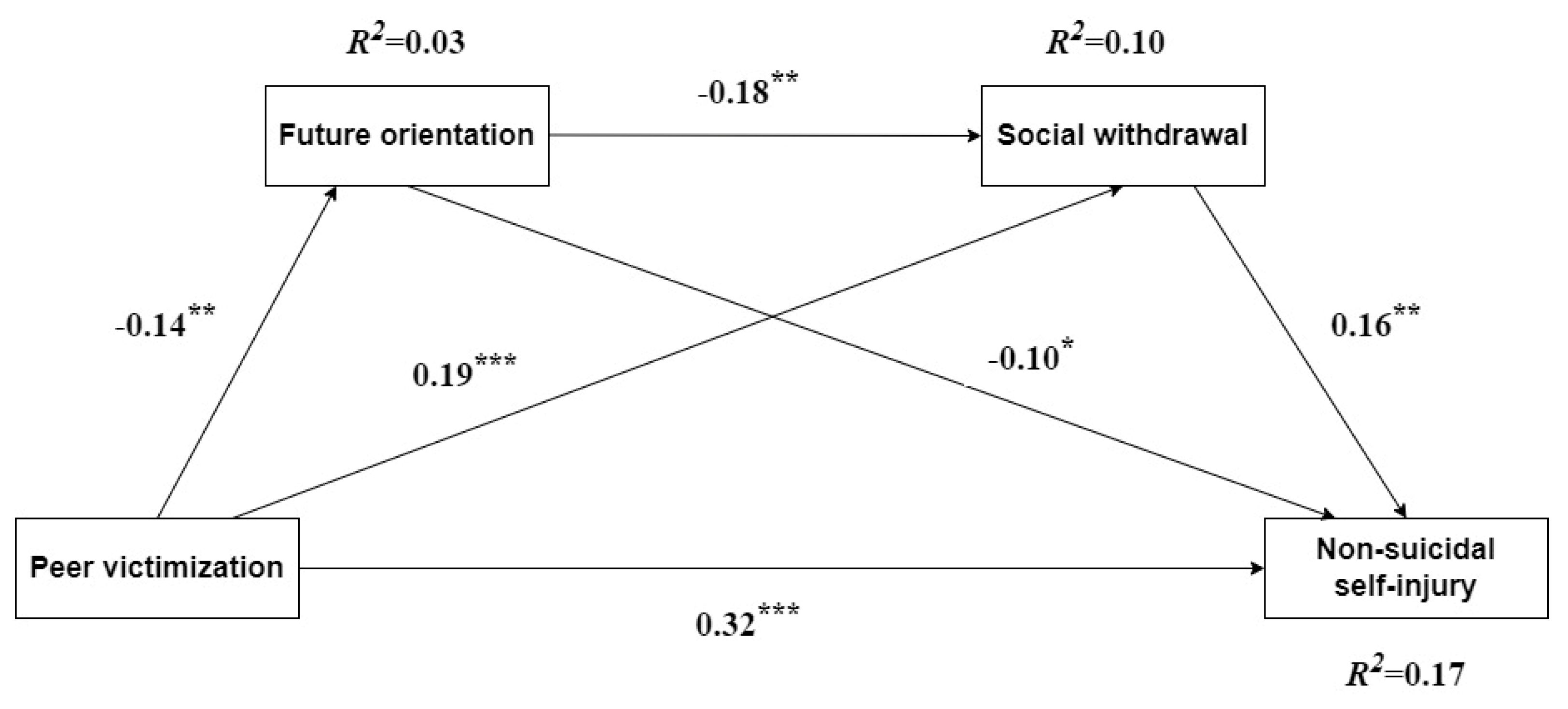
Figure 2: Serial mediation model. Note: *p < 0.05, **p < 0.01, ***p < 0.001.
The mediating effects were examined utilizing the Bootstrap method, employing 5000 resampling iterations. The outcomes of this analysis are displayed in Table 2. Specifically, the mediation analysis revealed three significant indirect associations. The first path, with an indirect effect of 0.02 (95% CI: [0.01, 0.04]), showed that peer victimization was linked to non-suicidal self-injury through future orientation. The second path, with an indirect effect of 0.03 (95% CI: [0.01, 0.06]), demonstrated that peer victimization was related to non-suicidal self-injury through social withdrawal. The third path, with an indirect effect of 0.01 (95% CI: [0.01, 0.02]), revealed a serial link where peer victimization was associated with non-suicidal self-injury through both future orientation and social withdrawal. The three indirect effects accounted for 5.41%, 8.11%, and 2.70% of the total effect, respectively. The total effect of peer victimization on non-suicidal self-injury was 0.37, with a significant direct effect of 0.31.
Table 2: Mediation effects of future orientation and social withdrawal.
| Path | Effect Size | Bootstrap SE | Bootstrap 95% LLCI | Bootstrap 95% ULCI |
|---|---|---|---|---|
| Total Effect | 0.37 | 0.06 | 0.25 | 0.47 |
| Direct Effect | 0.31 | 0.05 | 0.20 | 0.41 |
| Total Indirect Effect | 0.06 | 0.02 | 0.02 | 0.09 |
| Indirect Effect 1 | 0.02 | 0.01 | 0.01 | 0.04 |
| Indirect Effect 2 | 0.03 | 0.01 | 0.01 | 0.06 |
| Indirect Effect 3 | 0.01 | 0.01 | 0.01 | 0.02 |
The current study reveals several key findings regarding the relationship between peer victimization and NSSI among middle school students. The results found a positive and significant association between peer victimization and NSSI, supporting Hypothesis 1 and also aligning with prior research [56]. During adolescence, the traumatic nature of peer victimization is associated with intense and unwanted negative internal states [57]. This persistent emotional pain fundamentally compromises the victim’s psychological resources, resulting in significant emotion regulation deficits and heightened stress reactivity [10,58]. Consistent with the Experiential-Avoidance Model, the inability to effectively manage this distress compels the individual to employ self-injury as a maladaptive coping strategy. NSSI functions by providing a powerful physical distraction that temporarily reduces overwhelming emotional arousal, thereby negatively reinforcing the behavior [10,11].
Our findings support Hypothesis 2, showing that future orientation mediates the relationship between peer victimization and NSSI. This indicates that peer victimization not only has a direct effect on NSSI but can also indirectly predict it through an individual’s future orientation. Research has shown that forms of peer victimization, such as bullying and cyberbullying, were associated with an increased likelihood of reporting a pessimistic future orientation [59]. As a cognitive capacity, a positive future orientation can help individuals navigate and overcome current stressful situations, thereby reducing the risk of engaging in NSSI [60]. Our results suggest that higher levels of peer victimization are linked to a more negative future outlook. This diminished hope, in turn, is associated with an increased likelihood of self-injurious behavior. This mechanism aligns with Problem Behavior Theory, which posits that hopelessness about the future is a key factor related to individuals engaging in risky and maladaptive coping behaviors like NSSI [19,20]. The cognitive shift experienced by victims manifests as a belief that they cannot alter negative life trends [21], which is linked to NSSI as a temporary escape from distress.
The results support Hypothesis 3, indicating that social withdrawal mediates the relationship between peer victimization and NSSI. Peer victimization is associated with victims perceiving social settings as unsafe, which is associated with self-isolation and the adoption of social avoidance strategies [61]. This is consistent with the Interpersonal Multi-Motive Model, where betrayal or exclusion diminishes an individual’s sense of belonging, contributing to withdrawal [26]. Furthermore, the resulting prolonged isolation is significantly associated with the risk of NSSI. Our finding is best explained by the Reward-Impediment Model, which posits that social withdrawal acts as an impediment to receiving natural, positive social rewards [27]. The absence of these rewards is associated with intense emotional distress. NSSI then provides a substitute, maladaptive reward [27]. This supports the notion that social withdrawal is a direct risk factor by removing essential external coping resources.
The findings support Hypothesis 4, suggesting a serial mediating effect of future orientation and social withdrawal. This shows that the two variables work in tandem to connect peer victimization to NSSI. This sequence aligns with the SIP Model, which provides an empirically supported structure for the ordering of risk factors. Victimization acts as an aversive social input, triggering a shift in the adolescent’s goal clarification. The traumatic experience is linked to a diminished future orientation, a cognitive impairment where positive future outcomes are perceived as unattainable. The erosion of positive goal-setting is linked to the subsequent response decision. When positive social outcomes are deemed unattainable, this cognitive state is associated with social withdrawal. Finally, the increased social withdrawal increases the likelihood of NSSI among middle school students.
This study not only suggests potential mechanisms linking peer victimization and NSSI but also offers several practical implications for prevention and intervention. Specifically, the validated sequential structure provides a clear and theory-driven roadmap for designing targeted interventions, moving beyond general risk reduction to address the specific cognitive and behavioral factors involved.
Teachers and school administrators should be proactive in monitoring student peer relationships to prevent potential harm, such as verbal or relational aggression. Schools should also implement mental health courses to increase students’ awareness of the risks of peer victimization and the dangers of self-harm.
Given the mediating roles of future orientation and social withdrawal, interventions should focus on cultivating a positive future outlook and improving students’ social coping skills. Regarding future orientation, while Randomized Controlled Trials (RCTs) directly targeting this variable in the context of NSSI are limited, evidence from related domains offers strong support. Future orientation, as a malleable cognitive skill, can be enhanced through cognitive restructuring programs [62]. For instance, Future-Oriented Group Training (FOGT) shows promising effects in decreasing suicidal ideation, depression, hopelessness, and increasing future-oriented thinking in individuals with suicidal ideation [63]. Given a shared neurobiological vulnerability between suicidal ideation and NSSI [64,65], such goal-oriented training programs are likely to be effective for victimized students.
Similarly, social withdrawal can be mitigated through evidence-based social skills training. For instance, RCTs evaluating the PEERS® program demonstrate that structured social skills intervention leads to a significant reduction in depressive symptoms and social isolation by improving peer interaction quality [66]. This directly maps onto the second mediator of our serial chain; by equipping victimized students with concrete social coping strategies, we can reduce their reliance on social withdrawal as a defense mechanism. By improving school connectedness and reducing isolation, these interventions remove the behavioral vacuum that often leads to maladaptive emotional regulation through NSSI.
Furthermore, schools should establish or strengthen psychological counseling centers to provide timely emotional support to student victims, helping them develop healthy coping strategies to deal with negative events.
This study has a few limitations that should be addressed in future research. First, cross-sectional design prevents us from drawing conclusions about causality. Longitudinal studies, interventions, and behavioral experiments are needed to explore the potential changes and long-term effects of peer victimization. Second, the proportion of variance explained by the model is relatively small. Although the serial indirect effects reached statistical significance, their magnitude remains limited. Similarly, the mediating variables explain only a small proportion of the overall variance in NSSI. While the results support the proposed theoretical framework, future investigations should consider increasing the sample size or employing longitudinal methodologies to capture a greater portion of the variance. Third, our research encounters methodological limitations pertaining to the sample and measurement approaches. The reliance on convenience sampling from a limited number of educational institutions restricts the generalizability of our findings. Furthermore, the exclusive use of self-report measures for all constructs introduces the potential for common method bias. Although Harman’s single-factor test did not indicate a substantial concern, future investigations should adopt stratified or random sampling techniques and include multiple data sources, such as teacher evaluations, peer nominations, or behavioral observations, to enhance data triangulation and mitigate dependence on a single measurement source. Fourth, our sample was limited to a specific region in China. Future research should broaden the geographic scope by including participants from various cultural contexts to assess the generalizability of these results. Finally, the study was not pre-registered, nor was the analysis plan made publicly available prior to data collection. This limits research transparency and increases the risk of reporting bias [67]. Future research should strictly adhere to pre-registration protocols to enhance the rigor and replicability of the findings.
In present research, we gain a deeper understanding of the relationship between peer victimization and NSSI among adolescents. Our findings indicate a significant positive association between peer victimization and NSSI. Crucially, the results tentatively support a sequential psychological structure where diminished future orientation and increased social withdrawal are associated in sequence within this relationship, validating our hypothesized model.
Acknowledgement:
Funding Statement: This work was supported by 2024 The Basic Ability Improvement Project for Young and Middle-aged Teachers of Colleges and Universities in Guangxi (No. 2024KY0165), 2024 Guangxi Minzu University General Research Project (Humanities and Social Sciences Category; No. 2024MDSKYB20), and 2022 Annual Teaching and Research Project of Shiyuan College of Nanning Normal University (No. 2022JY13).
Author Contributions: Biao Li and Xiao Hu contributed equally to this work. Biao Li wrote the original draft of the manuscript and performed statistical analysis. Xiao Hu revised the manuscript and edited it. Pengzhan Wei collected the data. Yunbin Deng supervised the study and reviewed the final manuscript. All authors reviewed and approved the final version of the manuscript.
Availability of Data and Materials: The data used and analyzed in this study are not publicly accessible because of ethical limitations. The corresponding author can provide the dataset that supports the findings upon reasonable request.
Ethics Approval: The study received ethical approval from the Ethics Committees of School of Education Science at Guangxi Science & Technology Normal University (Reg. No. JK2023004), following the ethical standards of the Declaration of Helsinki.
Informed Consent: We informed the participants and their parents about the purpose and procedures of the study and obtained their written informed consent and assent to participate.
Conflicts of Interest: The authors declare no conflicts of interest to report.
Abbreviations
| NSSI | Non-Suicidal Self-Injury |
| CI | Confidence Interval |
References
1. Jacobson CM , Gould M . The epidemiology and phenomenology of non-suicidal self-injurious behavior among adolescents: a critical review of the literature. Arch Suicide Res. 2007; 11( 2): 129– 47. doi:10.1080/13811110701247602. [Google Scholar] [CrossRef]
2. Xiao Q , Song X , Huang L , Hou D , Huang X . Global prevalence and characteristics of non-suicidal self-injury between 2010 and 2021 among a non-clinical sample of adolescents: a meta-analysis. Front Psychiatry. 2022; 13: 912441. doi:10.3389/fpsyt.2022.912441. [Google Scholar] [CrossRef]
3. Han A , Xu G , Su P . A meta-analysis of characteristics of non-suicidal self-injury among middle school students in mainland China. Chin J Sch Health. 2017; 38( 11): 1665– 70. [Google Scholar]
4. Hawton K , Bale L , Brand F , Townsend E , Ness J , Waters K , et al. Mortality in children and adolescents following presentation to hospital after non-fatal self-harm in the multicentre study of self-harm: a prospective observational cohort study. Lancet Child Adolesc Health. 2020; 4( 2): 111– 20. doi:10.1016/S2352-4642(19)30373-6. [Google Scholar] [CrossRef]
5. Brechwald WA , Prinstein MJ . Beyond homophily: a decade of advances in understanding peer influence processes. J Res Adolesc. 2011; 21( 1): 166– 79. doi:10.1111/j.1532-7795.2010.00721.x. [Google Scholar] [CrossRef]
6. Serafini G , Aguglia A , Amerio A , Canepa G , Adavastro G , Conigliaro C , et al. The relationship between bullying victimization and perpetration and non-suicidal self-injury: a systematic review. Child Psychiatry Hum Dev. 2023; 54( 1): 154– 75. doi:10.1007/s10578-021-01231-5. [Google Scholar] [CrossRef]
7. van Geel M , Goemans A , Zwaanswijk W , Vedder P . Does peer victimization predict future suicidal ideation? A meta-analysis on longitudinal studies. Aggress Violent Behav. 2022; 64: 101577. doi:10.1016/j.avb.2021.101577. [Google Scholar] [CrossRef]
8. Monachino C , Splett JW , Shen Z , Cornett S , Halliday CA , Weist MD . Patterns and pathways of peer victimization across the transition to middle school. Sch Psychol Rev. 2021; 50( 2–3): 420– 40. doi:10.1080/2372966X.2021.1904792. [Google Scholar] [CrossRef]
9. DeGue S , Ray CM , Bontempo D , Niolon PH , Tracy AJ , Estefan LF , et al. Prevalence of violence victimization and perpetration during middle and high school in underresourced, urban communities. Violence Vict. 2023; 38( 6): 839– 57. doi:10.1891/VV-2022-0033. [Google Scholar] [CrossRef]
10. Chapman AL , Gratz KL , Brown MZ . Solving the puzzle of deliberate self-harm: the experiential avoidance model. Behav Res Ther. 2006; 44( 3): 371– 94. doi:10.1016/j.brat.2005.03.005. [Google Scholar] [CrossRef]
11. Gratz KL . Targeting emotion dysregulation in the treatment of self-injury. J Clin Psychol. 2007; 63( 11): 1091– 103. doi:10.1002/jclp.20417. [Google Scholar] [CrossRef]
12. van Geel M , Goemans A , Vedder P . A meta-analysis on the relation between peer victimization and adolescent non-suicidal self-injury. Psychiatry Res. 2015; 230( 2): 364– 8. doi:10.1016/j.psychres.2015.09.017. [Google Scholar] [CrossRef]
13. Huang H , Ding Y , Wan X , Liang Y , Zhang Y , Lu G , et al. A meta-analysis of the relationship between bullying and non-suicidal self-injury among children and adolescents. Sci Rep. 2022; 12( 1): 17285. doi:10.1038/s41598-022-22122-2. [Google Scholar] [CrossRef]
14. Nurmi JE . How do adolescents see their future? A review of the development of future orientation and planning. Dev Rev. 1991; 11( 1): 1– 59. doi:10.1016/0273-2297(91)90002-6. [Google Scholar] [CrossRef]
15. Praskova A , Johnston L . The role of future orientation and negative career feedback in career agency and career success in Australian adults. J Career Assess. 2021; 29( 3): 463– 85. doi:10.1177/1069072720980174. [Google Scholar] [CrossRef]
16. Shubert J , Wray-Lake L , McKay B . Looking ahead and working hard: how school experiences foster adolescents’ future orientation and perseverance. J Res Adolesc. 2020; 30( 4): 989– 1007. doi:10.1111/jora.12575. [Google Scholar] [CrossRef]
17. Rutter M . Resilience as a dynamic concept. Dev Psychopathol. 2012; 24( 2): 335– 44. doi:10.1017/S0954579412000028. [Google Scholar] [CrossRef]
18. Rudolph KD . Implicit theories of peer relationships. Soc Dev. 2010; 19( 1): 113– 29. doi:10.1111/j.1467-9507.2008.00534.x. [Google Scholar] [CrossRef]
19. Jessor R , Turbin MS , Costa FM , Dong Q , Zhang H , Wang C . Adolescent problem behavior in China and the United States: a cross-national study of psychosocial protective factors. J Res Adolesc. 2003; 13( 3): 329– 60. doi:10.1111/1532-7795.1303004. [Google Scholar] [CrossRef]
20. Robbins RN , Bryan A . Relationships between future orientation, impulsive sensation seeking, and risk behavior among adjudicated adolescents. J Adolesc Res. 2004; 19( 4): 428– 45. doi:10.1177/0743558403258860. [Google Scholar] [CrossRef]
21. Navarro R , Yubero S , Larrañaga E . Cyberbullying victimization and fatalism in adolescence: resilience as a moderator. Child Youth Serv Rev. 2018; 84: 215– 21. doi:10.1016/j.childyouth.2017.12.011. [Google Scholar] [CrossRef]
22. Chang EC , Yu EA , Kahle ER , Jeglic EL , Hirsch JK . Is doubling up on positive future cognitions associated with lower suicidal risk in latinos? A look at hope and positive problem orientation. Cogn Ther Res. 2013; 37( 6): 1285– 93. doi:10.1007/s10608-013-9572-x. [Google Scholar] [CrossRef]
23. Rubin KH , Bukowski WM , Bowker JC . Children in peer groups. In: Handbook of child psychology and developmental science: ecological settings and processes. 7th ed. Vol. 4. Hoboken, NJ, USA: John Wiley & Sons, Inc.; 2015. p. 175– 222. [Google Scholar]
24. Chen L , Zeng S , Su Y . The influence of social exclusion on adolescents’ social withdrawal behavior: the moderating role of connectedness to nature. J Environ Psychol. 2023; 87: 101951. doi:10.1016/j.jenvp.2022.101951. [Google Scholar] [CrossRef]
25. Sousa M , Cruz S , Inman R , Marchante M , Coelho VA . Bullying victimization and bullying perpetration, social anxiety, and social withdrawal in Portuguese adolescents: a reciprocal association model. Aggress Behav. 2024; 50( 4): e22170. doi:10.1002/ab.22170. [Google Scholar] [CrossRef]
26. Smart Richman L , Leary MR . Reactions to discrimination, stigmatization, ostracism, and other forms of interpersonal rejection: a multimotive model. Psychol Rev. 2009; 116( 2): 365– 83. doi:10.1037/a0015250. [Google Scholar] [CrossRef]
27. Hooley JM , Franklin JC . Why do people hurt themselves? a new conceptual model of nonsuicidal self-injury. Clin Psychol Sci. 2018; 6( 3): 428– 51. doi:10.1177/2167702617745641. [Google Scholar] [CrossRef]
28. Crick NR , Dodge KA . A review and reformulation of social information-processing mechanisms in children’s social adjustment. Psychol Bull. 1994; 115( 1): 74– 101. doi:10.1037/0033-2909.115.1.74. [Google Scholar] [CrossRef]
29. Patronick J , Molloy KR , Bothwell SJ , Wade SL . Applying the cognitive model of post-traumatic stress to examine the role of appraisals, trauma memory, and coping strategies following pediatric injury: a systematic review. J Child Adolesc Trauma. 2025; 18( 2): 331– 48. doi:10.1007/s40653-025-00695-0. [Google Scholar] [CrossRef]
30. Tang P , Kostyrka-Allchorne K , Butura AM , Phillips-Owen J , Sonuga-Barke E . Reciprocal developmental pathways between future-related thinking and symptoms of adolescent depression and anxiety: a systematic review and meta-analysis of longitudinal studies. Clin Psychol Rev. 2024; 112: 102465. doi:10.1016/j.cpr.2024.102465. [Google Scholar] [CrossRef]
31. Li B , Zhang L , Zhang Z . The effect of unpredictable childhood environment on social withdrawal in adolescents: mediating role of future orientation. Ment Health Educ Prim Second Sch. 2024; 21: 10– 3. (In Chinese). [Google Scholar]
32. Lazarus RS , Folkman S . Stress, appraisal, and coping. Berlin/Heidelberg, Germany: Springer; 1984. [Google Scholar]
33. Lee JS , Kim S , Lee JH , Kim JW , Yoo JH , Han DH , et al. A latent profile analysis on adolescents’ non-suicidal self-injury related to intrapersonal and interpersonal factors. Child Adolesc Psychiatry Ment Health. 2024; 18( 1): 120. doi:10.1186/s13034-024-00801-4. [Google Scholar] [CrossRef]
34. Ma C , Liu W , Liu Z , Zhang F , Cheng W . Latent profiles of coping styles and their associations with non-suicidal self-injury in adolescents with social anxiety disorder. Eur Child Adolesc Psychiatry. 2025; 34( 8): 2497– 506. doi:10.1007/s00787-025-02660-6. [Google Scholar] [CrossRef]
35. Li M , Wang H , Li J , Deng Y , Yu C . Peer victimization, depression, and non-suicidal self-injury among Chinese adolescents: the moderating role of the 5-HTR2A gene rs6313 polymorphism. Child Adolesc Psychiatry Ment Health. 2022; 16( 1): 108. doi:10.1186/s13034-022-00532-4. [Google Scholar] [CrossRef]
36. Wang Y , Wang T , Wang J , Zeng L , Li G , Li J , et al. The school bullying victimization in adolescents with non-suicidal self-injury: the role of coping strategies and emotion regulation. Stress Health. 2024; 40( 6): e3506. doi:10.1002/smi.3506. [Google Scholar] [CrossRef]
37. Schoemann AM , Boulton AJ , Short SD . Determining power and sample size for simple and complex mediation models. Soc Psychol Pers Sci. 2017; 8( 4): 379– 86. doi:10.1177/1948550617715068. [Google Scholar] [CrossRef]
38. Wang YJ , Li X , Ng CH , Xu DW , Hu S , Yuan TF . Risk factors for non-suicidal self-injury (NSSI) in adolescents: a meta-analysis. EClinicalMedicine. 2022; 46: 101350. doi:10.1016/j.eclinm.2022.101350. [Google Scholar] [CrossRef]
39. Schacter HL , Bakth FN , Johnson J , Hoffman AJ . Longitudinal effects of peer victimization on adolescents’ future educational and work expectations: depressive symptoms as a mechanism. J Res Adolesc. 2024; 34( 4): 1445– 55. doi:10.1111/jora.13012. [Google Scholar] [CrossRef]
40. Chaiyasit K , Sari I , Gong J . Self-esteem as a mediator between peer victimization and social withdrawal in youth. J Adolesc Youth Psychol Stud. 2025; 6( 6): 1– 9. doi:10.61838/kman.jayps.6.6.10. [Google Scholar] [CrossRef]
41. Zolotareva AA , Maltseva NV , Sarapultseva LA . Somatization, psychological distress, and self-harming behavior in emerging adulthood: do positive future expectations help? Clin Psychol Spec Educ. 2025; 14( 1): 95– 107. doi:10.17759/cpse.2025140106. [Google Scholar] [CrossRef]
42. Zhang B , Zhang W , Sun L , Jiang C , Zhou Y , He K . Relationship between alexithymia, loneliness, resilience and non-suicidal self-injury in adolescents with depression: a multi-center study. BMC Psychiatry. 2023; 23( 1): 445. doi:10.1186/s12888-023-04938-y. [Google Scholar] [CrossRef]
43. Xie JS , Lv YX . Reliability and validity of the Chinese version of Delaware bullying victimization scale-student. Chin J Clin Psychol. 2015; 23( 4): 594– 6. (In Chinese). [Google Scholar]
44. Feng Y . The relation of adolecents’ self-harm behaviors, individual emotion characteristics and family environment factors [ master’s thesis]. Shenzhen, China: Central China Normal University; 2008. (In Chinese). [Google Scholar]
45. Liu X , Huang X , Bi C . Development of the questionnaire for teenagers’ future orientation. J Southwest Univ. 2011; 37( 6): 7– 201. (In Chinese). [Google Scholar]
46. Yuan T . Social withdrawal college students’ online communication [ dissertation]. Shenzhen, China: Central China Normal University; 2012. (In Chinese). [Google Scholar]
47. Liu XJ . The relationship between social comparison and social withdrawal among vocational school students: the role of inferiority complex and psychological resilience [ master’s thesis]. Mudanjiang, China: Mudanjiang Normal University; 2025. (In Chinese). [Google Scholar]
48. Eekhout I , de Vet HCW , Twisk JWR , Brand JPL , de Boer MR , Heymans MW . Missing data in a multi-item instrument were best handled by multiple imputation at the item score level. J Clin Epidemiol. 2014; 67( 3): 335– 42. doi:10.1016/j.jclinepi.2013.09.009. [Google Scholar] [CrossRef]
49. Boone SD , Brausch AM . Physical activity, exercise motivations, depression, and nonsuicidal self-injury in youth. Suicide Life Threat Behav. 2016; 46( 5): 625– 33. doi:10.1111/sltb.12240. [Google Scholar] [CrossRef]
50. Robertson CD , Miskey H , Mitchell J , Nelson-Gray R . Variety of self-injury: is the number of different methods of non-suicidal self-injury related to personality, psychopathology, or functions of self-injury? Arch Suicide Res. 2013; 17( 1): 33– 40. doi:10.1080/13811118.2013.748410. [Google Scholar] [CrossRef]
51. Kline RB . Principles and practice of structural equation modeling. 5th ed. New York, NY, USA: Guilford Press; 2016. [Google Scholar]
52. Meade AW , Johnson EC , Braddy PW . Power and sensitivity of alternative fit indices in tests of measurement invariance. J Appl Psychol. 2008; 93( 3): 568– 92. doi:10.1037/0021-9010.93.3.568. [Google Scholar] [CrossRef]
53. Erceg-Hurn DM , Mirosevich VM . Modern robust statistical methods: an easy way to maximize the accuracy and power of your research. Am Psychol. 2008; 63( 7): 591– 601. doi:10.1037/0003-066X.63.7.591. [Google Scholar] [CrossRef]
54. Podsakoff PM , MacKenzie SB , Lee JY , Podsakoff NP . Common method biases in behavioral research: a critical review of the literature and recommended remedies. J Appl Psychol. 2003; 88( 5): 879– 903. doi:10.1037/0021-9010.88.5.879. [Google Scholar] [CrossRef]
55. Richardson HA , Simmering MJ , Sturman MC . A tale of three perspectives: examining post hoc statistical techniques for detection and correction of common method variance. Organ Res Meth. 2009; 12( 4): 762– 800. doi:10.1177/1094428109332834. [Google Scholar] [CrossRef]
56. Esposito C , Bacchini D , Affuso G . Adolescent non-suicidal self-injury and its relationships with school bullying and peer rejection. Psychiatry Res. 2019; 274: 1– 6. doi:10.1016/j.psychres.2019.02.018. [Google Scholar] [CrossRef]
57. Song Q , Yuan T , Hu Y , Liu X , Fei J , Zhao X , et al. The effect of peer victimization during adolescence on depression and gender differences: a systematic review and meta-analysis. Trauma Violence Abuse. 2024; 25( 4): 2862– 76. doi:10.1177/15248380241227538. [Google Scholar] [CrossRef]
58. Leadbeater BJ , Thompson K , Sukhawathanakul P . It gets better or does it? Peer victimization and internalizing problems in the transition to young adulthood. Dev Psychopathol. 2014; 26( 3): 675– 88. doi:10.1017/S0954579414000315. [Google Scholar] [CrossRef]
59. Låftman SB , Alm S , Sandahl J , Modin B . Future orientation among students exposed to school bullying and cyberbullying victimization. Int J Environ Res Public Health. 2018; 15( 4): 605. doi:10.3390/ijerph15040605. [Google Scholar] [CrossRef]
60. O’Connor RC , Smyth R , Williams JMG . Intrapersonal positive future thinking predicts repeat suicide attempts in hospital-treated suicide attempters. J Consult Clin Psychol. 2015; 83( 1): 169– 76. doi:10.1037/a0037846. [Google Scholar] [CrossRef]
61. Barzeva SA , Richards JS , Meeus WHJ , Oldehinkel AJ . The social withdrawal and social anxiety feedback loop and the role of peer victimization and acceptance in the pathways. Dev Psychopathol. 2020; 32( 4): 1402– 17. doi:10.1017/S0954579419001354. [Google Scholar] [CrossRef]
62. van Beek W , Kerkhof A , Beekman A . Future oriented group training for suicidal patients: a randomized clinical trial. BMC Psychiatry. 2009; 9( 1): 65. doi:10.1186/1471-244X-9-65. [Google Scholar] [CrossRef]
63. De Jaegere E , Stas P , van Heeringen K , Dumon E , van Landschoot R , Portzky G . Future-oriented group training for suicidal individuals: a randomized controlled trial. Suicide Life Threat Behav. 2023; 53( 2): 270– 81. doi:10.1111/sltb.12944. [Google Scholar] [CrossRef]
64. Auerbach RP , Pagliaccio D , Allison GO , Alqueza KL , Alonso MF . Neural correlates associated with suicide and nonsuicidal self-injury in youth. Biol Psychiatry. 2021; 89( 2): 119– 33. doi:10.1016/j.biopsych.2020.06.002. [Google Scholar] [CrossRef]
65. Ho TC , Walker JC , Teresi GI , Kulla A , Kirshenbaum JS , Gifuni AJ , et al. Default mode and salience network alterations in suicidal and non-suicidal self-injurious thoughts and behaviors in adolescents with depression. Transl Psychiatry. 2021; 11( 1): 38. doi:10.1038/s41398-020-01103-x. [Google Scholar] [CrossRef]
66. Schiltz HK , McVey AJ , Dolan BK , Willar KS , Pleiss S , Karst JS , et al. Changes in depressive symptoms among adolescents with ASD completing the PEERS® social skills intervention. J Autism Dev Disord. 2018; 48( 3): 834– 43. doi:10.1007/s10803-017-3396-6. [Google Scholar] [CrossRef]
67. Hardwicke TE , Wagenmakers EJ . Reducing bias, increasing transparency and calibrating confidence with preregistration. Nat Hum Behav. 2023; 7( 1): 15– 26. doi:10.1038/s41562-022-01497-2. [Google Scholar] [CrossRef]
Cite This Article
 Copyright © 2026 The Author(s). Published by Tech Science Press.
This work is licensed under a Creative Commons Attribution 4.0 International License , which permits unrestricted use, distribution, and reproduction in any medium, provided the original work is properly cited.
 Downloads
 Citation Tools
