
 Login
Login Register
 Submit a Paper
 Propose a Special lssue
 Open Access
ARTICLE

How does Maternal Absence Affect Adolescent Loneliness? The Role of Rejection Sensitivity and Friendship Quality
1 School of Psychology, Capital Normal University, Beijing, 100048, China
2 School of Psychology, Shandong Normal University, Jinan, 250300, China
* Corresponding Author: Shufen Xing. Email:
(This article belongs to the Special Issue: Family Risk Factors and Child & Adolescent Mental Health: Perspectives from the Chinese Cultural Context)
International Journal of Mental Health Promotion 2026, 28(2), 2 https://doi.org/10.32604/ijmhp.2025.074636
Received 15 October 2025; Accepted 15 December 2025; Issue published 27 February 2026
 View Full Text
 Download PDF
Abstract
Objectives: Loneliness among left-behind adolescents is the most frequently reported emotional problem because of parental neglect. The present study explored the relationship between maternal absence and adolescent loneliness as well as its mechanisms. Methods: The study included 305 participants (Meanage = 15.99 ± 0.81, 48.9% females) in southeast China, and constructed a chain mediation model to test the roles of rejection sensitivity and friendship quality. Parent absence types, rejection sensitivity, friendship quality, and adolescent loneliness were all assessed with questionnaires. Results: The results showed that adolescents with a mother absent (both-parent absent, mother-only absent) experienced higher levels of loneliness than those with a mother not absent (father-only absent, non-parent absent) (β = 0.3137, 95%CI [0.0849, 0.5425], p < 0.01). Besides, the mediating roles of rejection sensitivity (β = 0.0344, 95%CI [0.0020, 0.0808]) and friendship quality (β = 0.1198, 95% CI [0.0049, 0.2428]) and their chain mediating role were found significant between maternal absence and loneliness (β = 0.0245, 95% CI [0.0015, 0.0575]). Conclusions: These findings have revealed the significant impact of maternal absence on adolescent loneliness and provide important practical implications for educators to reduce adolescent loneliness.Graphic Abstract

Keywords
Since the 1980s, in conjunction with the progressive deepening of economic reforms and the swift advancement of urbanization in China, a substantial number of young and middle-aged laborers have left their children at home and migrated from rural areas to urban centers for employment. In such a social context, a large group of left-behind children has emerged, who are younger than 17 years old and cannot live with either of their parents for at least 6 months. Usually, left-behind adolescents can be divided into three categories, namely, both-parent absence, mother-only absence, and father-only absence. By 2020, the number of left-behind children had reached more than 66 million in China [1]. Compared with non-left behind children, left behind children were more likely to be neglected in terms of emotional, educational, and physical [2,3]. Parental neglect puts children at greater risk of mental health issues, such as increased reliance on short videos and various problem behaviors [2,4,5]. Therefore, the mental health of left-behind children is of great concern to policymakers and researchers.
Loneliness is the most frequently reported emotional problem among left-behind adolescents. A certain number of studies have explored the effects and mechanisms of different types of parental absence on adolescents’ loneliness [6,7,8,9,10,11,12,13,14]. However, there are still the following gaps in previous studies. First, there is a lack of research specifically addressing the effects of maternal absence on adolescents’ loneliness. The majority of prior studies typically exclude adolescents experiencing maternal-only absence [6], or merge adolescents experiencing maternal-only absence or paternal-only absence into a single category of “one-parent absence” [7], thereby leaving little empirical evidence on whether maternal absence impacts adolescents’ loneliness. Second, among studies that include adolescents experiencing maternal-only absence, the findings regarding the effect of maternal-only absence on adolescents’ loneliness have been inconsistent. Some studies found that adolescents from mother-only absent families significantly perceived the highest level of loneliness [8,9], while some research also found no significant differences in loneliness regardless of whether the mother was absent [10,11]. Third, the mechanisms underlying the association between maternal-only absence and adolescent loneliness remain unclear and warrant further investigation. Few studies have focused on the potential roles of rejection sensitivity and friendship quality. To address these gaps, the present study examined the effect of maternal absence on adolescents’ loneliness and further investigated the potential roles of rejection sensitivity and friendship quality within the Chinese context.
1.1 Maternal Absence and Adolescent Loneliness
Loneliness is a negative emotion that arises when an individual feels isolated or rejected by the outside world [15]. Based on attachment theory [16], the spatial separation between parents and children makes it difficult for parents to respond to their children’s needs in a timely manner. As a result, left-behind adolescents are more likely to develop an internal working pattern of rejection and experience higher levels of loneliness [7,12], such negative effects can persist into late adolescence [17]. According to the dominance hypothesis, mothers function as the primary agents of family processes, and the greater amount of mother–child interaction plays a leading role in shaping adolescents’ psychological outcomes [18]. From this perspective, maternal absence reduces opportunities for timely, face-to-face interaction between mothers and adolescents, which may in turn heighten adolescents’ feelings of loneliness. Unfortunately, previous findings regarding the effect of maternal absence on adolescents’ loneliness remain inconsistent. Some studies have shown a greater adverse effect of mother absence on adolescent development [8,9]. For example, Zhao et al. (2019) [9] examined the latent profiles of 2102 adolescents’ psychosocial adaptation in four different types of parental absence; the findings revealed that the loneliness of mother-only absent adolescents (n = 49) was significantly higher than the other three types of adolescents. However, some studies have not found a difference in loneliness among the three types of left-behind adolescents [10,11]. For example, Qi and Jia (2010) [11] conducted a study on the factors affecting loneliness among 528 left-behind adolescents in four types and found that differences in loneliness between left-behind adolescents with and without maternal absence (maternal absent adolescents: n = 25) were not significant. Given the attachment theory and the inconsistent research findings, the first aim of the current study was to group both-parent absence and mother-only absence into a single category of maternal absence and to examine whether maternal absence predicts higher levels of loneliness among adolescents, thereby providing empirical evidence relevant to the dominance hypothesis.
1.2 The Role of Rejection Sensitivity and Friendship Quality
How does maternal absence affect adolescent loneliness? It is necessary to explore the potential mechanisms of maternal absence affecting adolescent loneliness, which may provide new perspectives for intervention for the school mental health workers. One important mechanism in the effect of maternal absence on adolescent loneliness may be rejection sensitivity. Rejection sensitivity is a cognitive-affective processing disposition to anxiously expect, readily perceive, and emotionally or behaviorally overreact to rejection [19]. Based on attachment theory [16], internal working models formed through experiences of neglect or excessive rejection among left-behind adolescents may lead them to exhibit an attentional bias towards the information of external rejection [20]. Moreover, maternal absence may result in adolescents encountering rejection when attempting to seek emotional support, which further contributes to accumulated rejection experiences and elevated rejection sensitivity [21,22]. Nonetheless, empirical evidence on the association between maternal absence and adolescents’ rejection sensitivity remains limited. Furthermore, some studies have revealed a positive relationship between rejection sensitivity and loneliness [23]. Concretely, individuals with high rejection sensitivity exhibit withdrawal or avoidance of rejection cues, which results in difficulties in establishing and maintaining relationships. Hence, highly rejection-sensitive individuals are likely to perceive a higher level of loneliness [24]. Above all, rejection sensitivity may play the mediating role in the relationship between maternal absence and adolescent loneliness.
Another important mechanism by which maternal absence affects adolescent loneliness is friendship quality. Based on attachment theory [16], adolescents who experience prolonged separation from their mothers tend to have a lower level of mother-child attachment and less communication with their mothers, which negatively impacts their social interactions, ultimately leading to lower friendship quality [25,26]. Previous research has shown that mother-child communication positively predicts an individual’s friendship quality in the following year [25]. Further, Zhang et al. (2023) [26] found that left behind adolescents, who are a group with less parent-child communication, had poorer friendship quality. When adolescents perceive a lower level of friendship quality, which means that it is difficult for them to obtain companionship and support from their friendships, the resulting dissatisfaction can easily lead to feelings of loneliness [27,28]. Therefore, friendship quality may mediate the effect of maternal absence on adolescent loneliness.
In addition, rejection sensitivity and friendship quality may function as a chain mediating mechanism in the effect of maternal absence on adolescent loneliness. Based on cognitive-personality system theory [29], individuals with high rejection sensitivity exhibit fear, behavioral, and emotional overreactions to rejection cues or potential rejection cues across various contexts. They may display hostile aggression or engage in avoidance even before rejection occurs, which may increase interpersonal conflicts and undermine the quality of friendships among highly rejection-sensitive individuals [30]. Given the above considerations, the second aim of the study was to examine the mediating roles of rejection sensitivity and friendship quality in the impact of maternal absence on adolescent loneliness, and to further investigate the chain-mediated effects of both.
Notably, adolescents in the stage of late adolescence face multiple developmental challenges, and are under huge academic pressure in China [31]. The mental health of left-behind adolescents who lack maternal accompaniment during such a critical period and the factors influencing it require attention. To summarize, in the current study, we mainly investigated the effects of maternal absence on adolescent loneliness and further explored the mediating roles of rejection sensitivity and friendship quality. First, we expected that adolescents from mother-absent families would perceive a higher level of loneliness (H1). Second, we constructed a chain-mediated model, we hypothesized that rejection sensitivity would play a mediating role on the effect of maternal absence on adolescent loneliness (H2a); friendship quality would play a mediating role on the effect of maternal absence on adolescent loneliness (H2b); rejection sensitivity and friendship quality would play a chain mediating role on the effect of maternal absence on adolescent loneliness (H3). The conceptual model is presented in Fig. 1.
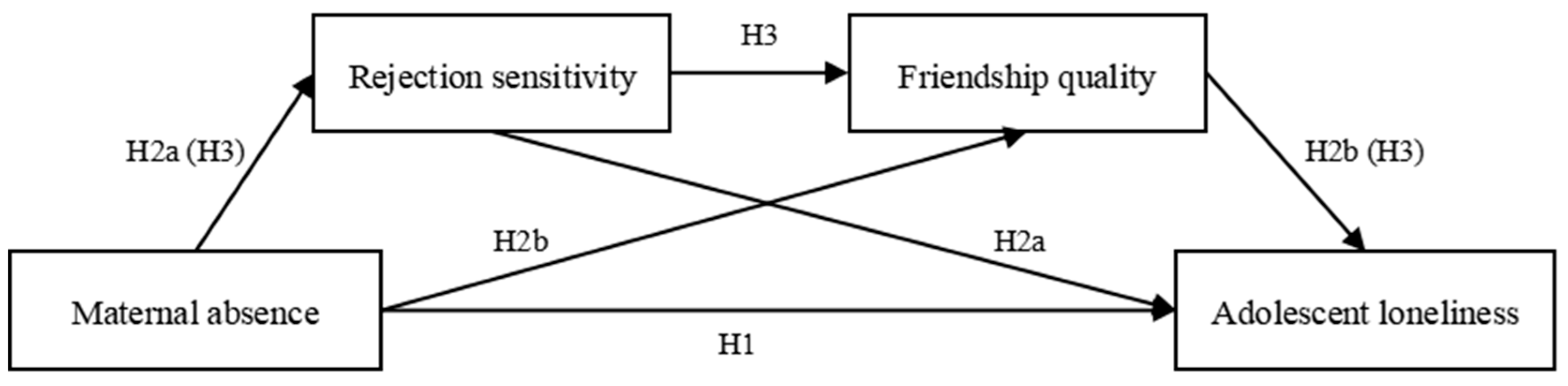
Figure 1: The conceptual model.
2.1 Participants and Procedures
Participants were recruited from two public high schools in Jiangxi province, China. We randomly selected six classes from grade 10 and grade 11. A total of 314 adolescents filled in the questionnaires. 5 participants who left half items of the questionnaire unanswered were excluded, and 4 participants whose scores exceeded 3 standard deviations (SDs) from the mean were deleted. An a priori power analysis using G*Power indicated that a minimum sample size of 138 was required to achieve 95% statistical power (1 − β = 0.95), which was satisfied by the sample size of the present study. The final sample consisted of 305 participants (Meanage = 15.99 years, SD = 0.81, 48.9% females), including 110 adolescents from both-parent absent families, 10 adolescents from mother-only absent families, 55 adolescents from father-only absent families, and 130 adolescents from non-parent absent families. More than half of the adolescents live in rural areas (73.5%). Only 7.5% of the adolescents are only children.
This study design and data collection procedures were approved by the Psychological Ethics Committee of Capital Normal University (CNU-20211202). All participants and one of their guardians approved informed consents.
2.2.1 Sociodemographic Information Form
Sociodemographic information was measured by using a self-constructed questionnaire including adolescents’ age, gender, grade, and only-child status (e.g., whether the participant is an only child, residence (e.g., whether the participant lived in urban or rural), and the category of parent absence. Among them, gender, grade, only-child status, and residence were included as control variables.
Loneliness was measured using the Chinese version of the Child Loneliness Scale [32] revised by Li et al. [33]. The revised scale consists of 21 items, for example, “I have no one to talk to at school”, each item was rated by a 5-point scale, ranging from “1 = completely untrue” to “5 = completely true”, 6 items on perception of one’s social competence dimension were coded in reverse, and the mean score of 21 items were used in the following analysis, with higher scores indicating stronger feelings of loneliness. The Cronbach’s alpha was 0.90 in the current sample.
Rejection sensitivity was evaluated using the Adolescents’ Rejection Sensitivity Questionnaire [34], basing on the revised version of the Child Rejection Sensitivity Questionnaire [35]. The questionnaire consists of 18 scenes, and each scene includes 3 items measuring rejection anxiety, rejection anger, and rejection expectation, respectively. An example of an item is “I wish I had friends who were different from the ones I have now.” Each item was rated on a 6-point scale, ranging from “1 = completely not worried/angry/disagree” to “6 = completely worried/angry/disagree”. The averaged scores of rejection anxiety, rejection anger, and rejection expectation were first calculated, and higher scores indicated higher rejection sensitivity. The Cronbach’s alpha for the current study was 0.87.
Friendship quality was assessed by using the Chinese version of the Friendship Quality Scale translated by Cui et al. [36]. The scale consists of a 10-item peer trust scale from the revised version of the Inventory of Parent and Peer Attachment (IPPA) and 4 items to capture the reciprocal nature of adolescent friendships [37,38]. An example of an item is “My friends accept me.” Each item was rated on a 7-point scale, ranging from “1 = completely untrue” to “7 = completely true”. The first item should be scored in reverse, and the mean score of the whole scale was used in the following analysis. Higher scores indicated a greater level of friendship quality. In this study, Cronbach’s alpha was 0.89.
First, Harman’s single-factor one-way test was used to diagnose multicollinearity, and the results showed that the explained variance of the largest factor was 14.66%, which is lower than 40%, indicating that there is no serious common methodological bias in the current study. Second, a one-way analysis of variance (ANOVA) was conducted to compare loneliness among adolescents with four parent-absent categories. When significant differences were detected, the Least Significant Difference (LSD) post hoc test was applied to examine which specific categories differed from each other. In addition, an independent-samples t test was used to examine the appropriateness of classifying parental absence into mother-absence and non-mother-absence groups. Third, after standardizing all variables, use the person correlation analysis to explore the correlation between maternal absence, rejection sensitivity, friendship quality, loneliness, and sociodemographic items. Then, regression analyses were conducted using Model 6 of the PROCESS macro (Version 3.3; Andrew F. Hayes, University of Calgary, Calgary, AB, Canada) for SPSS version 22.0 (IBM Corp., Armonk, NY, USA) [39] to examine the mediating role of rejection sensitivity and friendship quality in the association between maternal absence and loneliness. The 5000 times bias-corrected bootstrapping method was used to estimate the indirect effects. If the 95% confidence interval (CI) did not include 0, it meant that the mediating effect was significant.
3.1 Maternal Absence and Loneliness
First, ANOVA was used to estimate differences in loneliness among four parental absent types of adolescents. As presented in Fig. 2, there were significant differences among the four types of parental absence in loneliness (F(3, 304) = 3.12, p < 0.05, η2 = 0.03). LSD post-hoc test revealed that adolescents from mother-only parent-absent significantly had higher levels of loneliness (Mean = 2.79) than adolescents from father-only absent (Mean = 2.33, p < 0.05, Cohen’s d = 0.71) and non-parent absent families (Mean = 2.33, p < 0.05, Cohen’s d = 0.69). In addition, the results showed father-only absent adolescents experienced marginally lower loneliness than both-parent absent adolescents (Mean = 2.52, p = 0.08), but perceived no significant difference in loneliness compared with non-parent absent adolescents (p > 0.05). There were no significant differences between adolescents with both-parent absent and adolescents with mother-only absent or between adolescents with father-only absent and adolescents with non-parent absent (p > 0.05). Second, this study classified adolescents from both-parent absent and mother-only absent families into the mother-absent group (n = 120), and classified adolescents from father-only absent and non-absent families into the mother-not-absent group (n = 185). Further independent-samples t-tests showed that adolescents in the mother-absent group reported significantly higher levels of loneliness than those in the mother-not-absent group (t = 2.79, p < 0.01).
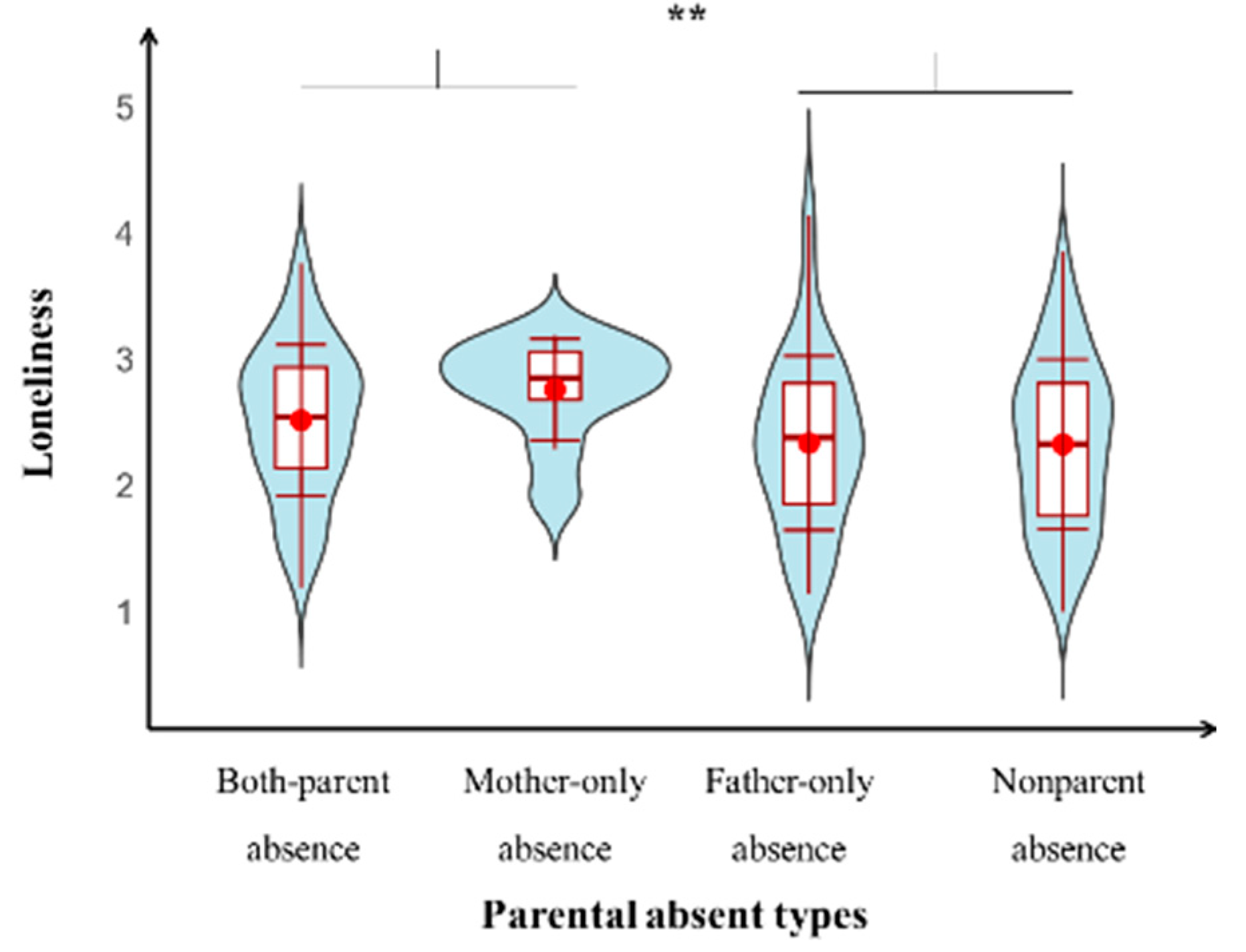
Figure 2: The adolescent loneliness among parental absence types. Note: **p < 0.01.
3.2 The Mediating Roles of Rejection Sensitivity and Friendship Quality
Correlational analyses were conducted to describe the bivariate associations among maternal absence, rejection sensitivity, friendship quality, and loneliness. As shown in Table 1, maternal absence was positively associated with loneliness (r = 0.16, p < 0.05) and rejection sensitivity (r = 0.13, p < 0.05), negatively associated with friendship quality (r = −0.16, p < 0.05). The result indicates that if the mother is absent, adolescents tend to have higher rejection sensitivity, lower friendship quality, and experience more loneliness. Besides, rejection sensitivity, friendship quality, and loneliness were significantly correlated with each other. Loneliness was positively correlated with rejection sensitivity (r = 0.25, p < 0.01), negatively correlated with friendship quality (r = −0.54, p < 0.01). Rejection sensitivity and friendship quality were negatively correlated (r = −0.17, p < 0.01). Additionally, gender (male = 0), grade (grade 10 = 0), only-child (only-child = 0), and residence (rural = 0) were encoded as dummy variables and were controlled in the following analysis.
Table 1: Descriptive statistics and correlations among variables.
| Variable | 1 | 2 | 3 | 4 | 5 | 6 | 7 |
|---|---|---|---|---|---|---|---|
| 1 maternal absence | 1 | ||||||
| 2 Rejection sensitivity | 0.13* | 1 | |||||
| 3 Friendship quality | −0.16** | −0.17** | 1 | ||||
| 4 Loneliness | 0.16** | 0.25** | −0.54** | 1 | |||
| 5 Grade | 0.21** | 0.02 | −0.03 | 0.03 | 1 | ||
| 6 Gender | 0.03 | 0.27** | 0.10 | 0.07 | 0.25** | 1 | |
| 7 Residence | −0.21** | −0.08 | 0.14* | −0.02 | −0.15* | 0.04 | 1 |
| 8 Only-child | 0.00 | 0.11* | −0.06 | −0.02 | 0.05 | 0.11 | −0.25** |
| Mean | --- | 17.34 | 5.45 | 50.65 | --- | --- | 50.65 |
| Standard Deviation | --- | 13.67 | 0.93 | 13.67 | --- | --- | 13.67 |
Maternal absence, rejection sensitivity, friendship quality, and loneliness are significantly correlated, which meets the basic prerequisite for further mediating effect analysis of maternal absence and loneliness. Using Model 6 in the SPSS PROCESS macro with 5000 bootstrap samples to analyze the mediating effects of rejection sensitivity and friendship quality in the relationship between maternal absence and loneliness.
The regression analysis results of the relationship between maternal absence and loneliness are shown in Table 2. The results show that maternal absence positively predicts loneliness at a significant level (β = 0.3137, 95% CI [0.0849, 0.5425], p < 0.01). When rejection sensitivity and friendship quality are included in the regression equation, maternal absence significantly predicts rejection sensitivity (β = 0.2441, 95% CI [0.0288, 0.4593], p = 0.0264 < 0.05) and friendship quality (β = −0.2196, 95% CI [−0.4373, −0.0019], p = 0.0480 < 0.05). Rejection sensitivity has a significant predictive effect on friendship quality (β = −0.1837, 95% CI [−0.2978, −0.0696], p = 0.0017 < 0.01) and loneliness (β = 0.1408, 95% CI [0.0387, 0.2428], p = 0.0070 < 0.01). Moreover, friendship quality is a significant negative predictor of loneliness (β = −0.5455, 95% CI [−0.6457, −0.4452], p < 0.001). After considering mediating effects, the direct effect value of maternal absence on loneliness reduced to a non-significant level (β = 0.1351, 95% CI [−0.0576, 0.3278], p > 0.05). The above results indicate that not only the mediating effect of rejection sensitivity and friendship quality, but also the chain mediating effect between the two are all significant in the relationship between maternal absence and loneliness.
Table 2: Regression analysis of the relationship between maternal absence and loneliness.
| Regression Equation | Fitting Index | Statistics | 95% CI | |||||
|---|---|---|---|---|---|---|---|---|
| Result Variable | Predictor Variable | R | R2 | F | β | t | LLCI | ULCI |
| Loneliness | 0.18 | 0.03 | 1.89 | |||||
| Maternal absence | 0.3137 | 2.70** | 0.0849 | 0.5425 | ||||
| Grade | −0.0512 | −0.42 | −0.2922 | 0.1898 | ||||
| Gender | 0.1450 | 1.27 | −0.0791 | 0.3690 | ||||
| Residence | −0.0100 | −0.08 | −0.2706 | 0.2506 | ||||
| Only-child | −0.0958 | −0.45 | −0.5193 | 0.3277 | ||||
| Rejection sensitivity | 0.32 | 0.10 | 6.90*** | |||||
| Maternal absence | 0.2441 | 2.23* | 0.0288 | 0.4593 | ||||
| Grade | −0.1792 | −1.55 | −0.4060 | 0.0476 | ||||
| Gender | 0.5292 | 4.94*** | 0.3183 | 0.7400 | ||||
| Residence | −0.1280 | −1.03 | −0.3732 | 0.1173 | ||||
| Only-child | 0.2558 | 1.26 | −0.1427 | 0.6544 | ||||
| Friendship quality | 0.29 | 0.08 | 4.42*** | |||||
| Maternal absence | −0.2196 | −1.99* | −0.4373 | −0.0019 | ||||
| Rejection sensitivity | −0.1837 | −3.17** | −0.2978 | −0.0696 | ||||
| Grade | −0.0556 | −0.48 | −0.2840 | 0.1728 | ||||
| Gender | 0.3056 | 2.73* | 0.0852 | 0.5251 | ||||
| Residence | 0.1794 | 1.43 | −0.0669 | 0.4258 | ||||
| Only-child | −0.1187 | −0.58 | −0.5195 | 0.2821 | ||||
| Loneliness | 0.58 | 0.34 | 21.52*** | |||||
| Maternal absence | 0.1351 | 1.38 | −0.0576 | 0.3278 | ||||
| Rejection sensitivity | 0.1408 | 2.71** | 0.0387 | 0.2428 | ||||
| Friendship quality | −0.5455 | −10.71*** | −0.6457 | −0.4452 | ||||
| Grade | −0.0384 | −0.38 | −0.2393 | 0.1625 | ||||
| Gender | 0.1839 | 1.85 | −0.0119 | 0.3797 | ||||
| Residence | 0.1187 | 1.07 | −0.0988 | 0.3361 | ||||
| Only-child | −0.2222 | −1.24 | −0.5794 | 0.1305 | ||||
The mediating effects of rejection sensitivity and friendship quality in the relationship between maternal absence and adolescent loneliness are shown in Table 3 and Fig. 3. The results show that rejection sensitivity and friendship quality both play mediating roles between maternal absence and adolescent loneliness. The total effect value of maternal absence and adolescent loneliness is 0.3137. The total indirect effect value is 0.1786, and the ratio of the total mediating effect to the total effect is 59.42%. The mediating effect is composed of three indirect effects: (1) maternal absence could affect adolescent loneliness via rejection sensitivity (Path 1); (2) maternal absence could affect adolescent loneliness via friendship quality (Path 2); (3) maternal absence could affect adolescent loneliness through rejection sensitivity and friendship quality (Path 3). The ratios of the three indirect effects to the total effect are 10.97%, 38.19%, and 7.81% for paths 1, 2, and 3, respectively. All three paths reach a significant level because the 95% CI of these indirect effects does not contain a zero value.
Table 3: The mediating effects analysis.
| Path | Effect | Boot SE | 95% CI | Relative Mediation | |
|---|---|---|---|---|---|
| Boot LLCI | Boot ULCI | ||||
| Total indirect effect | 0.1786 | 0.0663 | 0.0530 | 0.3105 | 59.42% |
| Path 1: MA → RS → L | 0.0344 | 0.0206 | 0.0020 | 0.0808 | 10.97% |
| Path 2: MA → FQ → L | 0.1198 | 0.0603 | 0.0049 | 0.2428 | 38.19% |
| Path 3: MA → RS → FQ → L | 0.0245 | 0.0145 | 0.0015 | 0.0575 | 7.81% |
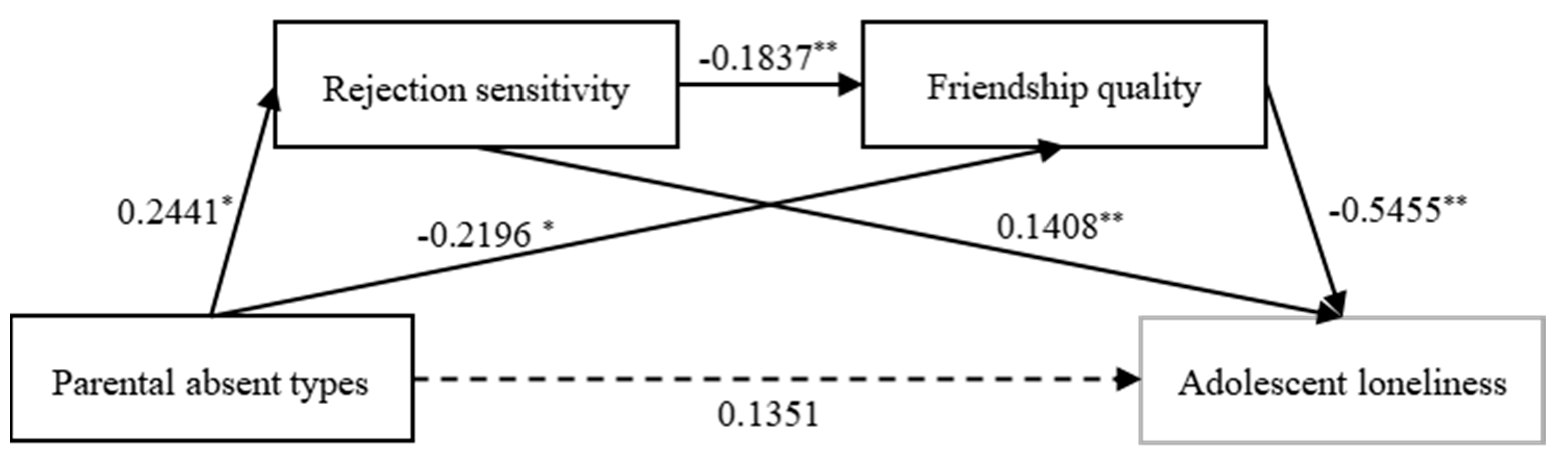
Figure 3: The mediating paths of parental absence types on loneliness. Note: **p < 0.01, *p < 0.05.
The loneliness of left-behind adolescents who lack maternal companionship during the critical period of their development is of great concern. The current study, grounded in attachment theory and dominance hypothesis, explored the association between maternal absence and adolescent loneliness by chain mediation models. The results suggest that adolescents from mother-absent families perceived a higher level of loneliness than mother-not-absent adolescents. The study also found that rejection sensitivity and friendship quality could both mediate the relationship between maternal absence and adolescent loneliness. Additionally, the chain of rejection sensitivity to friendship quality could mediate the effect of maternal absence on adolescent loneliness. These findings not only reveal the importance of maternal companionship but also provide teachers with new perspectives on interventions to reduce adolescent loneliness.
4.1 Maternal Absence and Adolescent Loneliness
In the current study, we first found that adolescents from mother-absent families perceived stronger loneliness than those from mother-not-absent families (father-only absence, non-parent absence), thereby supporting H1. This result partially aligns with the findings of previous research [8,9]. The above findings confirmed the maternal dominance, the mother is the leader of family activities and the primary caretaker of the child [40], mother absence may reduce the mother-child interaction and lower the level of mother-child attachment [18], resulting in higher perceived loneliness among mother-absent adolescents.
In addition, the study found no significant difference in loneliness between father-only absent adolescents and non-parent absent adolescents. One explanation may be that fathers’ relations with their children tend to be emotionally flat and distant [38]. Another explanation may be that the financial improvement provided by the absent father mitigates the negative effects of father absence to a certain extent. A study found that the return of the absent parent could lead adolescents to spend more time on after-school studies [41], which fills the educating and accompanying roles of the absent father, thereby alleviating the negative impact caused by father absence.
4.2 The Mediation Effects of Rejection Sensitivity and Friendship Quality
First, the findings of the present study supported H2a, indicating rejection sensitivity could mediate the relationship between maternal absence and adolescent loneliness. This result confirms the attachment theory [16,42], stating that for adolescents separated from their mothers at an early age, the insecure internal working model makes them exhibit heightened perception of rejection and excessive avoidance responses in ambiguous situations, forming a higher rejection sensitivity, thereby increasing the feeling of loneliness. The positive predictive effect of maternal absence on adolescents’ rejection sensitivity remains even in late adolescence. Moreover, since adolescents are separated from their mothers, the inability to communicate face-to-face may lead to the rejection of their needs (e.g., parent-teacher conferences, requests for help with emotional problems). Long-term rejection by the attachment figure (mother) prompts adolescents to be more sensitive to rejection and proactively avoid and reject others [43]. Therefore, adolescents with a mother absent tend to develop rejection sensitivity and feel stronger loneliness.
Second, consistent with H2b, we also found that friendship quality played an independent mediating role in the relationship between maternal absence and loneliness, which aligns with previous findings [27]. To be specific, mother absence would decrease adolescents’ friendship quality and lead to a higher level of loneliness among adolescents. The possible reason for this is that mothers play an important role in the development of interpersonal relationships for their children. Prior research has shown that adolescents typically form stronger emotional bonds with their mothers, who are perceived as more accepting, responsive, and supportive than fathers [44], and that Chinese adolescents also report more positive maternal parenting attributes and better mother–child communication [45]. Additionally, previous studies found that mother-child attachment is more predictive of children’s peer relations [46]. Therefore, during the period of mother absence, adolescents are unable to establish a stable bond with their mothers and find it difficult to seek help for relationship problems, then decrease the quality of friendship and feelings of loneliness also rise.
Third, the hypothesized chain-mediating pathway proposed in H3 was empirically supported, such that rejection sensitivity and friendship quality sequentially mediated the association between maternal absence and adolescent loneliness. This finding aligns with previous studies [20] and supports the cognitive-personality system theory [29], stating that adolescents with high rejection sensitivity may exhibit behavioral aggression and emotional avoidance, which bridge the gap between adolescents and their friends, thus lower their friendship quality. In other words, when mother is absent, adolescents receive stronger rejection signals and may be more sensitive to rejection, even regard neutral responses from friends as rejection, and exhibit avoidant behaviors proactively, thus reducing the quality of friendship and experiencing a stronger sense of loneliness. Therefore, this mediation model indicates that rejection sensitivity and friendship quality consisted of three mediating pathways in the relationship between maternal absence and adolescent loneliness.
Finally, the current study found that the direct predictive effect of maternal absence on adolescent loneliness was not significant when rejection sensitivity and friendship quality were included, which was inconsistent with our hypothesis. This may be explained by the fact that high school students are in adolescence, and peer influence is gradually increasing [47], and friendships are becoming more and more important to the development of the individual [25]. In a study exploring the relative importance of peers and parents on the smoking behavior of 11- and 14-year-olds, they found that parental influence did not differ significantly between the two age levels, while peer influence was greater in the 14-year-old age group [48]. Therefore, it may be because loneliness is triggered mainly by peers during late adolescence, and maternal absence is no longer directly predictive of adolescent loneliness but could predict adolescent loneliness through rejection sensitivity and friendship quality.
The current study results have the following strengths. First, this study classified adolescents according to maternal absence status. The dominance hypothesis was tested by examining whether maternal absence influenced adolescents’ loneliness. Second, the present study further examined the mechanisms of the relationship between maternal absence and adolescent loneliness. Considering adolescent disposition and peer support system, we explored the roles of rejection sensitivity and friendship quality in the relationship between maternal absence and adolescent loneliness. Third, the findings of the current study had great practical value. The results of the current study indicated the importance of maternal companionship and provided educators with effective methods to reduce their loneliness from rejection sensitivity and friendship quality.
There are also several limitations in this study. First, the current study adopted a cross-sectional design, which precludes causal inferences regarding the relationship between maternal absence and adolescent loneliness. Second, although the sample size met the requirements indicated by G*Power, the sample size of this study was relatively small. The samples were all collected from the same district, and the participants were all high school students, which made it difficult to generalize to other groups and limited the scope of the investigation. Future studies could expand the sample size and replicate the findings among primary and middle school students. Third, the data for the present study relied on a single reporter. All variables measured in this study were self-reported, which may be influenced by the social approval effect. Finally, the present study did not assess other sources of social support among left-behind adolescents, such as support from grandparents, nor did it include variables such as the number of close friends. Future research should incorporate these factors to enhance the rigor of the findings.
In summary, the present study provides clear evidence that maternal absence is associated with higher levels of loneliness among adolescents. Furthermore, the results demonstrate that this association is indirectly transmitted through rejection sensitivity and friendship quality, supporting the proposed mediating model. Together, these findings highlight the importance of maternal presence during late adolescence and suggest that interventions targeting adolescents’ rejection sensitivity and peer relationship quality may be particularly beneficial in alleviating loneliness.
Acknowledgement:
Funding Statement: This work was supported by the National Natural Science Foundation of China (32171069).
Author Contributions: The authors confirm contribution to the paper as follows: Conceptualization: Jiani Zang, Shufen Xing, Jingxin Zhao; methodology, Jiani Zang, Shufen Xing, Jingxin Zhao; software, Jiani Zang; validation, Jiani Zang, Shufen Xing, Jingxin Zhao; formal analysis, Jiani Zang; investigation, Jiani Zang; resources, Jiani Zang; data curation, Jiani Zang; writing—original draft preparation, Jiani Zang; writing—review and editing, Jiani Zang, Shufen Xing, Jingxin Zhao; visualization, Jiani Zang; supervision, Jingxin Zhao, Shufen Xing; funding acquisition, Shufen Xing. All authors reviewed the results and approved the final version of the manuscript.
Availability of Data and Materials: The data that support the findings of this study are available from the Corresponding Author, Shufen Xing, upon reasonable request.
Ethics Approval: This study design and data collection procedures were approved by the Psychological Ethics Committee of Capital Normal University (CNU-20211202). All participants and one of their guardians approved informed consents.
Conflicts of Interest: The authors declare no conflicts of interest to report regarding the present study.
References
1. National Bureau of Statistics of China, UNICEF China, UNFPA China . What the 2020 Census Can Tell us about Children in China: Facts and Figures [Internet]. 2023 [cited 2025 Oct 8]. Available from: https://www.stats.gov.cn/zs/tjwh/tjkw/tjzl/202304/P020230419425670560273.pdf. [Google Scholar]
2. Wen YJ , Li XB , Zhao XX , Wang XQ , Hou WP , Bo QJ , et al. The effect of left-behind phenomenon and physical neglect on behavioral problems of children. Child Abus Negl. 2019; 88: 144– 51. doi:10.1016/j.chiabu.2018.11.007. [Google Scholar] [CrossRef]
3. Wen YJ , Hou WP , Zheng W , Zhao XX , Wang XQ , Bo QJ , et al. The neglect of left-behind children in China: a meta-analysis. Trauma Violence Abus. 2021; 22( 5): 1326– 38. doi:10.1177/1524838020916837. [Google Scholar] [CrossRef]
4. Liu QQ , Tu W , Shang YF , Xu XP . Unique and interactive effects of parental neglect, school connectedness, and trait self-control on mobile short-form video dependence among Chinese left-behind adolescents. Child Abuse Negl. 2022; 134: 105939. doi:10.1016/j.chiabu.2022.105939. [Google Scholar] [CrossRef]
5. Zhong W , Liang Q , Yang A , Yan R . Why emotional neglect brings suicidal ideation? The mediating effect of meaning in life and the moderating effect of post-stress growth. Child Abuse Negl. 2024; 149: 106700. doi:10.1016/j.chiabu.2024.106700. [Google Scholar] [CrossRef]
6. Zhao J , Liu X , Wang M . Parent–child cohesion, friend companionship and left-behind children’s emotional adaptation in rural China. Child Abuse Negl. 2015; 48: 190– 9. doi:10.1016/j.chiabu.2015.07.005. [Google Scholar] [CrossRef]
7. Wang Q , Wang H , Liu X . Loneliness, non-suicidal self-injury, and friendship quality among Chinese left-behind adolescents: the role of parent-child cohesion. J Affect Disord. 2020; 271: 193– 200. doi:10.1016/j.jad.2020.03.112. [Google Scholar] [CrossRef]
8. Annor FB , Amene EW , Zhu L , Stamatakis C , Picchetti V , Matthews S , et al. Parental absence as an adverse childhood experience among young adults in sub-Saharan Africa. Child Abus Negl. 2024; 150: 106556. doi:10.1016/j.chiabu.2023.106556. [Google Scholar] [CrossRef]
9. Zhao J , Li Q , Wang L , Lin L , Zhang W . Latent profile analysis of left-behind adolescents’ psychosocial adaptation in rural China. J Youth Adolesc. 2019; 48: 1146– 60. doi:10.1007/s10964-019-00989-1. [Google Scholar] [CrossRef]
10. Nguyen LV , Nguyen TT , Trinh LT , Nguyen HH . Factors affecting loneliness among left-behind children. Curr Issues Pers Psychol. 2023; 12( 1): 41. doi:10.5114/cipp/162007. [Google Scholar] [CrossRef]
11. Qi H , Jia Y . Status and influencing factors of loneliness among left-behind adolescents in rural areas. Soft Sci Health. 2010; 24( 5): 450– 3. (In Chinese). [Google Scholar]
12. Xiong Y , Li X , Li H , Qu C , Liu M , Lu C , et al. A meta-analysis of loneliness among left-behind children in China. Curr Psychol. 2024; 43( 12): 10660– 8. doi:10.1007/s12144-023-04882-w. [Google Scholar] [CrossRef]
13. Fellmeth G , Rose-Clarke K , Zhao C , Busert LK , Zheng Y , Massazza A , et al. Health impacts of parental migration on left-behind children and adolescents: a systematic review and meta-analysis. Lancet. 2018; 392( 10164): 2567– 82. doi:10.1016/S0140-6736(18)32558-3. [Google Scholar] [CrossRef]
14. Fatima S , Bashir M , Khan K , Farooq S , Shoaib S , Farhan S . Effect of presence and absence of parents on the emotional maturity and perceived loneliness in adolescents. J Mind Med Sci. 2021; 8( 2): 259– 66. doi:10.22543/7674.82.P259266. [Google Scholar] [CrossRef]
15. Jong-Gierveld J . Developing and testing a model of loneliness. J Personal Soc Psychol. 1987; 53( 1): 119. doi:10.1037/0022-3514.53.1.119. [Google Scholar] [CrossRef]
16. Bowlby J . Attachment and loss. New York, NY, USA: Random House; 1969; 466 p. [Google Scholar]
17. Lapsley DK , Varshney NM , Aalsma MC . Pathological attachment and attachment style in late adolescence. J Adolesc. 2000; 23( 2): 137– 55. doi:10.1006/jado.2000.0304. [Google Scholar] [CrossRef]
18. Murphy SE , Boyd Soisson E , Jacobvitz DB , Hazen NL . Dyadic and triadic family interactions as simultaneous predictors of children’s externalizing behaviors. Fam Relat. 2017; 66( 2): 346– 59. doi:10.1111/fare.12225. [Google Scholar] [CrossRef]
19. Downey G , Feldman SI . Implications of rejection sensitivity for intimate relationships. J Personal Soc Psychol. 1996; 70( 6): 1327. doi:10.1037/0022-3514.70.6.1327. [Google Scholar] [CrossRef]
20. Chen Z , Du J , Xiang M , Zhang Y , Zhang S . Social exclusion leads to attentional bias to emotional social information: Evidence from eye movement. PLoS One. 2017; 12( 10): e0186313. doi:10.1371/journal.pone.0186313. [Google Scholar] [CrossRef]
21. Zhuang J , Ng JC , Wu Q . The role of parent–child communication on Chinese rural left-behind children’s educational expectation: a moderated mediation analysis. Humanit Soc Sci Commun. 2025; 12( 1): 1– 11. doi:10.1057/s41599-024-04334-1. [Google Scholar] [CrossRef]
22. Euteneuer F , Lass-Hennemann J , Pfundmair M , Salzmann S , Kuehl LK . Childhood emotional maltreatment and sensitivity to social rejection in emerging adults. Child Abus Negl. 2024; 149: 106604. doi:10.1016/j.chiabu.2023.106604. [Google Scholar] [CrossRef]
23. Brekalo M , Keresteš G . Remembrances of childhood rejection and loneliness in female university students: a mediating role of rejection sensitivity. Curr Psychol. 2024; 43( 9): 8252– 60. doi:10.1007/s12144-023-05010-4. [Google Scholar] [CrossRef]
24. Schaan VK , Schulz A , Bernstein M , Schächinger H , Vögele C . Effects of rejection intensity and rejection sensitivity on social approach behavior in women. PLoS One. 2020; 15( 1): e0227799. doi:10.1371/journal.pone.0227799. [Google Scholar] [CrossRef]
25. Qu W , Li K , Wang Y . Early adolescents’ parent–child communication and friendship quality: a cross-lagged analysis. Soc Behav Personal. 2021; 49( 9): 1– 10. doi:10.2224/sbp.10697. [Google Scholar] [CrossRef]
26. Zhang H , Shen B , Deng C , LYu X . The relationship between parent-offspring communication and the school adaptation of leftover children in overseas countries: the mediating role of companionship and the moderating role of a sense of safety. Behav Sci. 2023; 13( 7): 557. doi:10.3390/bs13070557. [Google Scholar] [CrossRef]
27. Geukens F , Buecker S , Van den Noortgate W , Bijttebier P , Bosmans G , Van Leeuwen K , et al. Loneliness and friendship quality in early adolescence: analyzing bidirectional associations. Curr Res Behav Sci. 2023; 5: 100132. doi:10.1016/j.crbeha.2023.100132. [Google Scholar] [CrossRef]
28. Lodder GM , Scholte RH , Goossens L , Verhagen M . Loneliness in early adolescence: Friendship quantity, friendship quality, and dyadic processes. J Clin Child Adolesc Psychol. 2017; 46( 5): 709– 20. doi:10.1080/15374416.2015.1070352. [Google Scholar] [CrossRef]
29. Mischel W , Shoda Y . A cognitive-affective system theory of personality: reconceptualizing situations, dispositions, dynamics, and invariance in personality structure. Psychol Rev. 1995; 102( 2): 246. doi:10.1037/0033-295x.102.2.246. [Google Scholar] [CrossRef]
30. Molinari L , Grazia V , Corsano P . School relations and solitude in early adolescence: a mediation model involving rejection sensitivity. J Early Adolesc. 2019; 40( 3): 426– 48. doi:10.1177/0272431619847523. [Google Scholar] [CrossRef]
31. Zhou X , Bambling M , Bai X , Edirippulige S . Chinese school adolescents’ stress experience and coping strategies: a qualitative study. BMC Psychol. 2023; 11( 1): 91. doi:10.1186/s40359-023-01137-y. [Google Scholar] [CrossRef]
32. Asher SR , Hymel S , Renshaw PD . Loneliness in children. Child Dev. 1984; 55 ( 4): 1456– 64. doi:10.2307/1130015. [Google Scholar] [CrossRef]
33. Li X , Zou H , Liu Y . Psychometric evaluation of loneliness scale in Chinese middle school students. Chin J Clin Psychol. 2014; 22( 4): 731– 60. (In Chinese). doi:10.16128/j.cnki.1005-3611.2014.04.037. [Google Scholar] [CrossRef]
34. Wang J , Wang M , Nie J , Qin S , Shu Z . Development and application of the “Adolescent Rejection Sensitivity Self-Report Questionnaire”. J Liaoning Norm Univ. 2022; 45( 2): 94– 101. (In Chinese). doi:10.16216/j.cnki.lsxbwk.202202094. [Google Scholar] [CrossRef]
35. Downey G , Lebolt A , Rincón C , Freitas AL . Rejection sensitivity and children’s interpersonal difficulties. Child Dev. 1998; 69( 4): 1074– 91. doi:10.2307/1132363. [Google Scholar] [CrossRef]
36. Cui XX , Sun XJ , Niu GF . The effect of self-presentation in online social networking sites on Adolescents’ friendship quality: the mediating role of positive feedback. Psychol Dev Educ. 2016; 32( 3): 294– 300. (In Chinese). doi:10.16187/j.cnki.issn1001-4918.2016.03.05. [Google Scholar] [CrossRef]
37. Armsden GC , Greenberg MT . The inventory of parent and peer attachment: Individual differences and their relationship to psychological well-being in adolescence. J Youth Adolesc. 1987; 16( 5): 427– 54. doi:10.1007/BF02202939. [Google Scholar] [CrossRef]
38. Youniss J , Smollar J . Adolescent relations with mothers, fathers, and friends. Chicago, IL, USA: University of Chicago Press; 1985. 201 p. [Google Scholar]
39. Hayes AF . Introduction to mediation, moderation, and conditional process analysis: a regression-based approach. New York, NY, USA: Guilford Press; 2013; 507 p. [Google Scholar]
40. Li M . Maternal emotions and childrearing in China. Oxford, UK: Oxford University Press; 2024. doi:10.1093/acrefore/9780190228613.013.1450. [Google Scholar] [CrossRef]
41. Liu Z , Yu L , Zheng X . No longer left-behind: The impact of return migrant parents on children’s performance. China Econ Rev. 2018; 49: 184– 96. doi:10.1016/j.chieco.2017.06.004. [Google Scholar] [CrossRef]
42. Feldman S , Downey G . Rejection sensitivity as a mediator of the impact of childhood exposure to family violence on adult attachment behavior. Dev Psychopathol. 1994; 6( 1): 231– 47. doi:10.1017/S0954579400005976. [Google Scholar] [CrossRef]
43. Gao S , Assink M , Liu T , Chan KL , Ip P . Associations between rejection sensitivity, aggression, and victimization: a meta-analytic review. Trauma Violence Abus. 2021; 22( 1): 125– 35. doi:10.1177/1524838019833005. [Google Scholar] [CrossRef]
44. Yang X , Lin L , Feng W , Liu P , Liang N , Xue Z . Maternal and paternal harsh parenting and anxiety symptoms in Chinese adolescents: examining a multiple mediation model. Child Adolesc Psychiatry Ment Health. 2024; 18( 1): 134. doi:10.1186/s13034-024-00826-9. [Google Scholar] [CrossRef]
45. Dou D , Shek DT , Kwok KHR . Perceived paternal and maternal parenting attributes among Chinese adolescents: a meta-analysis. Int J Environ Res Public Health. 2020; 17( 23): 8741. doi:10.3390/ijerph17238741. [Google Scholar] [CrossRef]
46. Seibert A , Kerns K . Early mother–child attachment: Longitudinal prediction to the quality of peer relationships in middle childhood. Int J Behav Dev. 2015; 39( 2): 130– 8. doi:10.1177/0165025414542710. [Google Scholar] [CrossRef]
47. Laursen B , Veenstra R . Toward understanding the functions of peer influence: a summary and synthesis of recent empirical research. J Res Adolesc. 2021; 31( 4): 889– 907. doi:10.1111/jora.12606. [Google Scholar] [CrossRef]
48. Krosnick JA , Judd CM . Transitions in social influence at adolescence: Who induces cigarette smoking? Dev Psychol. 1982; 18: 359– 68. doi:10.1037//0012-1649.18.3.359. [Google Scholar] [CrossRef]
Cite This Article
 Copyright © 2026 The Author(s). Published by Tech Science Press.
This work is licensed under a Creative Commons Attribution 4.0 International License , which permits unrestricted use, distribution, and reproduction in any medium, provided the original work is properly cited.
 Downloads
 Citation Tools
