
 Login
Login Register
 Submit a Paper
 Propose a Special lssue
 Open Access
ARTICLE
The Effect of a Psychiatric Nurse–Led AI-Based Online Group Guided Self-Help Program on Eating Behaviours and Body Image among Overweight and Obese Women Nurses: A Randomized Controlled Trial
1 Department of Psychiatric Nursing, Faculty of Nursing, Dokuz Eylül University, Izmir, Türkiye
2 Department of Fundamentals of Nursing, Faculty of Health Sciences, Gümüşhane University, Gümüşhane, Türkiye
* Corresponding Author: Gülsüm Zekiye Tuncer. Email:
(This article belongs to the Special Issue: The Use of Generative AI (Chatbots) in Relation to Mental Health and Well-Being)
International Journal of Mental Health Promotion 2026, 28(9), 11 https://doi.org/10.32604/ijmhp.2026.081472
Received 03 March 2026; Accepted 29 May 2026; Issue published 22 September 2026
 View Full Text
 Download PDF
Abstract
Aim: This study aimed to evaluate the effectiveness of a psychiatric nurse–led, AI-supported online group guided self-help programme on eating behaviours, body image, and body mass index (BMI) among overweight and obese women nurses. Method: A randomised controlled experimental design with pre-test, post-test, and three-month follow-up assessments was employed. Forty-four overweight and obese women nurses were randomly assigned to intervention (n = 22) and control (n = 22) groups. The intervention consisted of an 8-week online group guided self-help programme supported by a large language model (LLM), under the leadership of a psychiatric nurse. Participants did not interact directly with the LLM; all AI-generated feedback was clinically reviewed and delivered by the researcher. Results: The intervention group demonstrated significant reductions in emotional eating and external eating, along with significant improvements in body image scores and adaptive coping strategies. A significant decrease in BMI was also observed from baseline to three-month follow-up. Between-group comparisons at post-test and follow-up indicated statistically significant differences favouring the intervention for eating behaviours and selected body image–related outcomes, whereas between-group differences in BMI were not statistically significant. Conclusion: A multi-component online group guided self-help intervention incorporating structured AI-assisted feedback under psychiatric nurse leadership may represent a promising approach to improving eating behaviours, body image, and weight-related outcomes among overweight and obese women nurses.Keywords
Supplementary Material
Supplementary Material FileThe global burden of overweight and obesity continues to increase and poses significant public health consequences [1]. In 2022, approximately 2.5 billion adults worldwide were reported to be living with overweight or obesity [2]. This trend is also reflected within the healthcare workforce, with a substantial proportion of nurses classified as overweight or obese [3]. The risk of weight gain among nurses has been associated with work-related factors such as shift work, high workload, and the psychosocial demands of the profession [4,5]. In addition, long working hours and difficulties in accessing healthy food may disrupt eating patterns and contribute to weight gain among nurses [6,7]. In particular, among women nurses, stress and shift patterns have been reported to exert adverse effects on eating behaviours [8]. Overweight and obesity contribute to the development of psychosocial difficulties through weight stigma, including disordered eating behaviours and body image concerns. This constellation of risks represents a distinct vulnerability domain among women nurses, where professional conditions intersect with gender-related factors [4,9,10,11]. Additionally, limited follow-up and ongoing support in many interventions may contribute to reduced adherence over time [12,13]. Particularly in groups such as nurses, who work under intensive and irregular conditions, time constraints and weight-related stigma pose substantial barriers to consistent participation in such interventions [14]. Although face-to-face and group-based interventions may be effective, maintaining regular participation is often difficult due to shift work, transportation barriers, and limited service availability [15]. Additionally, although digital interventions may improve accessibility, their effectiveness can be limited by variations in digital literacy, access to technological infrastructure, and declining user engagement over time [15]. Furthermore, the absence of structured follow-up and continuous support components in many interventions may lead to high dropout rates and a reduction in long-term benefits [13].
In response to these limitations, artificial intelligence–based interventions have emerged as innovative approaches that are gaining increasing prominence in the fields of mental health and behaviour change, including eating behaviours and body image [16]. Applications based on chatbots and large language models (LLMs) can provide rapid and structured feedback on behavioural assignments, thereby compensating for the lack of individualised support frequently encountered in group-based digital interventions. LLM-based chatbots, through their capacity to deliver structured feedback aligned with cognitive-behavioural principles, can support processes such as self-monitoring, cognitive restructuring, and behavioural reinforcement [17]. Moreover, their scalability, capacity for personalisation, and potential for anonymous use may facilitate sustained engagement while reducing weight-related stigma [16,18]. Nevertheless, ethical and structural concerns, including data privacy, transparency, and clinical accountability, remain critical considerations in the integration of AI-based interventions into practice [19,20]. In this context, psychiatric nurse leadership may play a distinctive and critical role in AI-based interventions. Drawing on clinical expertise and a person-centred care perspective, psychiatric nurses can interpret AI-generated outputs within a clinical framework, provide ethical oversight, and establish a control mechanism to ensure safe and appropriate use [21]. Furthermore, nurses may adapt AI-generated recommendations according to individual needs, thereby guiding the intervention process. In this way, technology can function as a supportive tool rather than replacing human care, while maintaining the therapeutic relationship and trust. This integration may facilitate balanced and safe access to interventions targeting eating behaviours and body image [20].
In this context, guided self-help interventions, when delivered through internet- and application-based formats, have demonstrated effectiveness in addressing eating behaviours and body image concerns [22]. In the implementation of guided self-help interventions, challenges arise in providing direct and individualised feedback to each participant [23]. Therefore, the availability of timely and structured feedback systems, particularly in eHealth applications, is considered essential for supporting behavioural change and improving outcomes [17]. In recent years, digital health interventions and AI-supported tools have also been shown to be effective in improving eating behaviours and weight management [24]. Moreover, rapid advancements in AI technologies have increased both direct and indirect applications of these tools in therapeutic settings [25]. AI-based systems can provide rapid, structured, and scalable feedback on behavioural assignments, thereby enhancing self-monitoring, cognitive restructuring, and behavioural reinforcement processes. However, the use of assistive AI tools to support facilitators within structured, evidence-based guided self-help group interventions has not yet been sufficiently examined. In addition, AI-supported feedback within a broader guided self-help framework approaches led by psychiatric nurses may offer evidence-based, empathetic, and personalised support within care processes [26]. Although AI-based interventions and guided self-help approaches have demonstrated effectiveness independently, evidence regarding their combined use within structured, clinician-led group interventions remains limited. Existing studies have primarily focused either on standalone digital interventions or on conventional guided self-help models, with insufficient attention to how AI-assisted feedback may function as a supportive component within broader therapeutic frameworks. In particular, there is limited evidence regarding the systematic integration of AI-assisted feedback into guided self-help programmes conducted under psychiatric nurse supervision. Therefore, further research is needed to evaluate the feasibility and potential contribution of incorporating structured LLM-assisted feedback into evidence-based guided self-help interventions delivered in online group settings. In this context, the present study evaluates, using a randomised controlled design, an online group guided self-help programme led by a psychiatric nurse and supported by LLM-assisted feedback based on the Role–Context–Constraint prompting model among overweight and obese women nurses, and examines its effects on eating behaviours and body image.
This study was conducted as a randomised controlled experimental trial incorporating pre-test, post-test, and 3-month follow-up assessments. The research was designed and reported in accordance with the CONSORT guidelines for randomised controlled trials and was registered on ClinicalTrials.gov under the protocol number NCT06653673.
2.2 Participants and Recruitment
The sample of this study consisted of overweight and obese women nurses who responded to three recruitment announcements posted on the Instagram platform between September and November 2024, each disseminated at ten-day intervals. An informational announcement describing the study was shared, and applications were collected through an online preliminary screening questionnaire created via Google Forms. The preliminary application form gathered information regarding eligibility criteria as well as contact details. Nurses who indicated their willingness to participate and provided contact information were subsequently contacted by the researcher for preliminary screening and brief telephone interviews in accordance with the inclusion criteria. The inclusion criteria were defined as follows: holding a bachelor’s degree in nursing; being a woman; having a body mass index (BMI) of 25 or above; having no hearing impairment that would hinder comprehension of verbal instructions or participation in the study; having access to a smartphone or computer with a camera; voluntarily agreeing to participate in the study; and scoring 50 or above in total on the Emotional Eating and External Eating subscales of the Dutch Eating Behavior Questionnaire (DEBQ). In line with these criteria, the study sample comprised overweight and obese women nurses exhibiting disordered eating behaviours. A total of 44 women nurses were included in the study (Fig. 1).
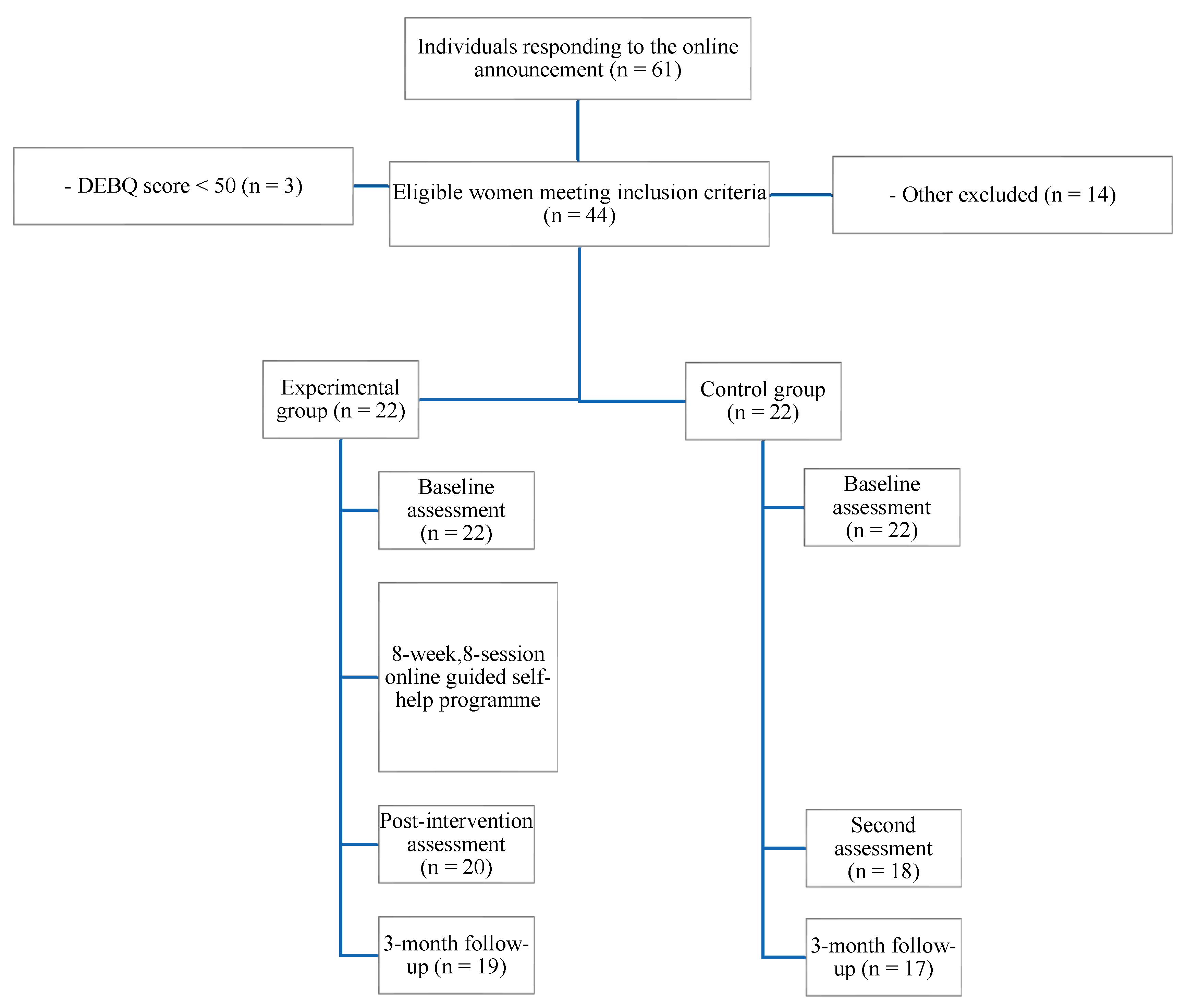
Figure 1: CONSORT flow diagram.
2.3 Randomization and Blinding
Participants who met the inclusion criteria and completed the pre-test assessments were allocated to the intervention and control groups in a 1:1 ratio. Random allocation was performed using the simple randomisation method via the online randomisation tool randomizer.org. Randomisation was conducted after completion of the pre-test measurements, and group assignment was not known to the primary researcher in advance. The randomisation process was carried out by a third researcher, and participants were assigned to the intervention (n = 22) and control (n = 22) groups accordingly. Due to the nature of the intervention (online group sessions and a guided self-help programme), blinding of the participants and the first researcher who delivered the intervention was not feasible. However, data collection in both groups was conducted at identical time points and using the same measurement instruments, and was implemented in a standardised manner by the third researcher. Statistical analyses were also performed by the third researcher, who was blinded to group allocation, in order to minimise potential analysis-related bias.
Eligible participants were provided with a detailed explanation of the study’s purpose and procedures. The informed consent form was presented online, and verbal consent was additionally obtained. Following random allocation, baseline (pre-test) assessments evaluating variables related to eating behaviours and body image were administered to participants in both groups. Subsequently, the intervention programme was delivered to the intervention group. Upon completion of the intervention, post-test assessments were conducted in both groups. Three months after the completion of the intervention, follow-up assessments were performed for both groups. After all follow-up measurements had been completed, the intervention programme was also offered to the control group for ethical balancing purposes.
To facilitate continued participation in the programme, limited flexibility was provided between session dates. Participants who failed to attend sessions for two consecutive weeks were classified as dropouts.
2.5 LLM-Assisted Online Group Guided Self-Help Intervention
Following the collection of baseline data, the AI-supported Online Group Guided Self-Help Programme was implemented. For logistical reasons, the intervention group was divided into two subgroups, each comprising 11 participants. The same intervention content was delivered to both subgroups (Supplementary S1). The intervention sessions were scheduled over an 8-week period, conducted twice weekly (Mondays and Tuesdays), with each session lasting 45–60 min. Sessions were held synchronously via the Google Meet platform. Ongoing communication with participants was maintained through a WhatsApp group. During each session, cognitive and behavioural exercises aligned with the session theme were implemented, and homework assignments were provided at the end of each session. At the beginning of each session, participants were instructed to measure their weight and record it in an online form. Separate online forms were created for homework submissions, and participants were asked to upload their assignments to the system. A separate Google Form was developed for each session to collect participants’ homework and self-monitoring data; however, no form was used for the final session, which focused on consolidation and termination of the intervention (Supplementary S2). In addition, individual contact was established with each participant at least once per week via WhatsApp. This individual communication was strictly limited to reminders related to the process, procedural guidance, and feedback on the content submitted in the forms; no additional therapeutic content was provided.
2.5.1 LLM Prompt Strategy and Researcher Supervision
Participants’ homework outputs and weekly self-monitoring records were reviewed by the researcher and evaluated using a large language model (LLM; Claude, Pro plan, version 4.5) in accordance with a structured Role–Context–Constraint (RCC) prompt framework (Supplementary S3). Throughout the process, the researcher assumed an active intermediary and supervisory role; participants were not permitted to interact directly with the LLM.
To ensure standardisation, the same RCC prompt template was used for all participants; however, the prompt content was adapted according to the specific objectives of each session (evaluation of eating diaries, development of regular eating plans, mindful eating exercises, alternative behaviour lists, problem-solving forms, and cognitive exercises related to body image). The prompts were based on a standardised RCC template across all sessions. While the core structure and constraints remained fixed, specific content was adapted according to session objectives. Personalisation elements were included, and all outputs were reviewed by the researcher to ensure consistency with intervention boundaries. All outputs generated by the LLM were systematically reviewed by the researcher in terms of clinical appropriateness and alignment with programme objectives, and were revised when necessary. The same RCC prompt framework and predefined feedback principles were applied across participants within each session. Although prompt content varied according to session objectives and participants’ submitted materials, the overall feedback structure, tone, and therapeutic boundaries remained standardised. Researcher modifications to LLM-generated outputs generally involved simplifying wording, improving emotional appropriateness, ensuring consistency with session goals, and removing potentially directive or clinically inappropriate expressions. Final feedback was delivered to participants using a therapeutic communication style consistent with psychiatric nursing guidance. Full clinical responsibility for the content and delivery of the feedback rested with the first researcher; the LLM was utilised solely as an assistive tool to support the generation of structured and reflective feedback.
2.5.2 Program Modules and Content
The Guided Self-Help Programme was structured based on the guided self-help approach originally developed by Fairburn (2008) for binge eating disorder and subsequently adapted for various forms of disordered eating behaviours [27]. The programme comprises modules focusing on self-monitoring, regular eating, mindful eating, developing alternatives to emotional eating behaviours, problem-solving skills, body image and diet-related cognitive processes, and termination. The programme consists of a total of eight sessions. The session content sequentially includes: monitoring eating behaviours; establishing regular eating patterns; mindful eating practices; generating alternative behaviours; enhancing problem-solving skills; cognitive restructuring targeting body image and rigid dieting beliefs; and termination of the intervention process (Supplementary S1).
Participants in the control group did not receive any intervention during the study period and participated only in the pre-test, post-test, and three-month follow-up assessments. The control group was maintained as a wait-list control. After completion of all measurements, the online group guided self-help programme was delivered to the control group.
The primary outcomes of the study were eating behaviour measures and BMI. Secondary outcomes included body image and body image coping strategies.
Dutch Eating Behavior Questionnaire (DEBQ): The scale was developed to assess emotional, external, and restrained eating behaviours. It consists of 33 items and three subscales (restrained eating: 10 items; emotional eating: 13 items; external eating: 10 items). Items are rated on a 5-point Likert scale (1 = never, 5 = very often), with Item 31 reverse-scored. The Turkish validity and reliability study was conducted by Bozan et al. (2011), confirming the three-factor structure. In the adaptation study, Cronbach’s alpha coefficients were reported as 0.90 for emotional eating, 0.94 for restrained eating, and 0.96 for external eating [28].
Body Mass Index (BMI): BMI values were calculated based on participants’ self-reported height and weight measurements.
Body Image Scale (BIS): This scale was developed by Saylan and Soyyiğit (2022) to assess individuals’ perceptions of body image. It consists of 21 items rated on a five-point Likert scale. The scale comprises four subscales: negative body perception, evaluation sensitivity, positive body perception, and body change. Higher scores indicate a more negative body image. The Cronbach’s alpha internal consistency coefficient was reported as 0.76 [29].
Body Image Coping Strategies Inventory (BICSI): This scale assesses coping strategies individuals use in response to body image–related threats. It consists of 29 items and three subscales: positive rational acceptance, appearance fixing, and avoidance. Items are rated on a 4-point Likert scale. The Turkish validity and reliability study was conducted by Doğan et al. (2011) [30]. In the adaptation study, internal consistency coefficients for the appearance fixing subscale were 0.84 for women, 0.87 for men, and 0.86 for the total sample; for positive rational acceptance, 0.83 for women, 0.81 for men, and 0.81 for the total sample; and for avoidance, 0.84 for women, 0.84 for men, and 0.84 for the total sample.
Data were analysed using SPSS Statistics. Descriptive statistics, including percentages, means, and standard deviations, were calculated to summarise participants’ sociodemographic characteristics. Given the relatively small sample size and the non-normal distribution of several outcome variables, non-parametric analyses were preferred. Accordingly, within-group changes over time were evaluated using Friedman tests, and between-group comparisons at each assessment point were conducted using Mann–Whitney U tests. Within-group changes across pre-test, post-test, and three-month follow-up measurements in the intervention and control groups were evaluated using the Friedman test. Following significant Friedman test results, pairwise comparisons between time points were conducted using the Wilcoxon signed-rank test. Between-group comparisons at the pre-test, post-test, and three-month follow-up time points were performed separately using the Mann–Whitney U test. Effect sizes were calculated for key non-parametric analyses using Kendall’s W for Friedman tests and r values for Mann–Whitney U comparisons. Missing data arising from attrition at follow-up were handled using the intention-to-treat approach with last observation carried forward. This approach was preferred to preserve the original group allocation and minimise potential bias associated with participant dropout in this small-sample randomized trial.
This study involved human participants. Ethical approval was obtained from the Non-Interventional Research Ethics Committee of Dokuz Eylül University (Approval No.: 9128-GOA). The study was conducted in accordance with the principles of the Declaration of Helsinki. Informed consent was obtained from all participants prior to participation. Participants did not have any direct interaction with the LLM at any stage of the study.
When baseline characteristics were compared between the intervention and control groups, no statistically significant differences were identified in terms of BMI, exercise status, reasons for not exercising, meal skipping, or dieting behaviour. However, a statistically significant difference was observed in age between the groups (p = 0.029) (Table 1).
Table 1: Comparison of Participants’ Eating-Related Characteristics (n = 44).
| Eating-Related Characteristics | Intervention Group (n = 22) | Control Group (n = 22) | |||||
|---|---|---|---|---|---|---|---|
| SS | SS | U | p | ||||
| Age | 29.0 | 7.5 | 33.36 | 8.11 | 149.0 | 0.029 | |
| BMI | 30.69 | 5.06 | 29.77 | 4.19 | 240.0 | 0.768 | |
| n | % | n | % | X2 | p | ||
| Exercise status | No | 11 | 50.0 | 16 | 72.7 | 2.618a | 0.270 |
| Yes | 3 | 13.6 | 1 | 4.5 | |||
| Sometimes | 8 | 36.4 | 5 | 22.7 | |||
| Reason for not exercising | Lack of time & workload | 8 | 36.4 | 15 | 68.2 | 2.958b | 0.190 |
| Lack of habit & environmental barriers | 5 | 22.7 | 2 | 9.1 | |||
| Skipping meals | No | 9 | 40.9 | 1 | 4.5 | 8.154a | 0.086 |
| Yes | 3 | 13.6 | 8 | 36.4 | |||
| Sometimes | 10 | 45.5 | 13 | 59.1 | |||
| Dieting status | No | 1 | 4.5 | 1 | 4.5 | 6.727a | 0.151 |
| Yes | 7 | 31.8 | 4 | 18.2 | |||
| Sometimes | 14 | 63.6 | 17 | 77.3 | |||
3.1 Primary Outcomes: Eating Behaviours and BMI
Among the overweight and obese women nurses in the intervention group, no significant difference was observed across pre-intervention, post-intervention, and 3-month follow-up measurements in the DEBQ Restraint (Cognitive Restriction) subscale. However, significant differences were identified in the DEBQ External Eating subscales between pre- and post-intervention measurements, as well as between pre-intervention and 3-month follow-up measurements. Although the overall Friedman test for DEBQ Emotional Eating in the intervention group did not reach the conventional level of statistical significance (p = 0.055), pairwise comparisons suggested reductions between pre-intervention and post-intervention measurements, as well as between pre-intervention and 3-month follow-up measurements. A significant within-group decrease in BMI was observed in the intervention group from baseline to three-month follow-up; however, between-group differences in BMI were not statistically significant. In the control group, statistically significant changes over time were observed in the cognitive restraint and external eating subscales. No significant overall change was found for emotional eating or BMI; however, some pairwise comparisons suggested differences between specific time points for emotional eating. Between-group comparisons revealed a significant difference in the DEBQ Restraint subscale at the post-intervention measurement, and in the DEBQ External Eating subscale at both post-intervention and 3-month follow-up assessments (Table 2).
Table 2: Comparison of DEBQ Subscale Scores and BMI Values of the Intervention and Control Groups across Time (n = 44).
| Time | Pre-Test ( | Post-Test ( | 3-Month ( | X2a | p | Between-Time Differencesb | Effect Size (Kendall’s W) | |
|---|---|---|---|---|---|---|---|---|
| Group | ||||||||
| Cognitive Restraint Subscale | ||||||||
| Intervention Group (n = 22) | 27.95 ± 7.84 | 30.68 ± 6.37 | 30.09 ± 7.95 | 2.493 | 0.287 | Pre-Post Z = −1.121 p = 0.262 | 0.06 | |
| Pre-3-month Z = −1.010 p = 0.313 | ||||||||
| Post-3-month Z = −0.189 p = 0.850 | ||||||||
| Control Group (n = 22) | 27.13 ± 4.78 | 25.86 ± 6.75 | 28.13 ± 5.54 | 6.830 | 0.033* | Pre-Post Z = −1.138 p = 0.255 | 0.16 | |
| Pre-3-month Z = −1.438 p = 0.150 | ||||||||
| Post-3-month Z = −2.814 p = 0.005* | ||||||||
| Uc | 250.000 | 156.000 | 211.500 | |||||
| p | 0.946 | 0.027 | 0.345 | |||||
| Emotional Eating Subscale | ||||||||
| Intervention Group (n = 22) | 53.27 ± 9.94 | 41.95 ± 10.43 | 44.27 ± 15.06 | 5.792 | 0.055 | Pre-Post Z = −3.053 p = 0.002* | 0.13 | |
| Pre-3-month Z = −2.396 p = 0.017* | ||||||||
| Post-3-month Z = −0.131 p = 0.896 | ||||||||
| Control Group (n = 22) | 49.45 ± 12.85 | 47.36 ± 14.82 | 50.13 ± 13.50 | 3.804 | 0.149 | Pre-Post Z = −1.163 p = 0.245 | 0.09 | |
| Pre-3-month Z = −1.115 p = 0.265 | ||||||||
| Post-3-month Z = −2.350 p = 0.019* | ||||||||
| U | 216.500 | 178.500 | 199.000 | |||||
| p | 0.407 | 0.090 | 0.220 | |||||
| External Eating Subscale | ||||||||
| Intervention Group (n = 22) | 36.45 ± 5.98 | 29.31 ± 7.39 | 30.90 ± 6.85 | 10.900 | 0.004* | Pre-Post Z = −2.811 p = 0.005* | 0.25 | |
| Pre-3-month Z = −2.762 p = 0.006* | ||||||||
| Post-3-month Z = −0.392 p = 0.695 | ||||||||
| Control Group (n = 22) | 33.90 ± 6.01 | 35.50 ± 9.05 | 37.01 ± 7.89 | 6.250 | 0.044* | Pre-Post Z = −1.758 p = 0.079 | 0.14 | |
| Pre-3-month Z = −2.363 p = 0.018* | ||||||||
| Post-3-month Z = −1.334 p = 0.182 | ||||||||
| U | 212.500 | 132.500 | 138.000 | |||||
| p | 0.356 | 0.006 | 0.009 | |||||
| Body Mass Index | ||||||||
| Intervention Group (n = 22) | 30.69 ± 5.06 | 30.03 ± 5.09 | 29.89 ± 5.04 | 14.597 | 0.001* | Pre-Post Z = −3.196 p = 0.001* | 0.33 | |
| Pre-3-month Z = −3.059 p = 0.002* | ||||||||
| Post-3-month Z = −0.910 p = 0.363 | ||||||||
| Control Group (n = 22) | 29.77 ± 4.19 | 30.22 ± 4.65 | 29.93 ± 4.63 | 2.945 | 0.229 | Pre-Post Z = −1.223 p = 0.221 | 0.07 | |
| Pre-3-month Z = −0.881 p = 0.378 | ||||||||
| Post-3-month Z = −1.531 p = 0.126 | ||||||||
| U | 240.000 | 223.000 | 230.000 | |||||
| p | 0.768 | 0.496 | 0.601 | |||||
3.2 Secondary Outcomes: Body Image and Body Image Coping Strategies
Among the overweight and obese nurses in the intervention group, significant differences were observed in BIS scores between pre- and post-intervention measurements, as well as between pre-intervention and 3-month follow-up assessments. In the intervention group, significant differences were also identified in the BICSI Positive Rational Acceptance and Avoidance subscales between pre- and post-intervention measurements and between pre-intervention and 3-month follow-up assessments. In contrast, no significant differences were found in the control group across pre-intervention, post-intervention, and 3-month follow-up measurements for either the BICSI subscales or the BIS total scores. Between-group comparisons at the three-month follow-up indicated statistically significant differences in the Positive Rational Acceptance and Avoidance subscales (Table 3).
Table 3: Comparison of BIS and BICSI of the intervention and control groups over time (n = 44).
| Time | Pre-Test ( | Post-Test ( | 3-Month ( | X2a | p | Between-Time Differencesb | Effect Size (Kendall’s W) | |
|---|---|---|---|---|---|---|---|---|
| Group | ||||||||
| Body Image Scale | ||||||||
| Intervention Group (n = 22) | 74.09 ± 11.01 | 65.59 ± 11.73 | 62.36 ± 12.36 | 16.001 | 0.000* | Pre-Post Z = −2.306 p = 0.021* | 0.36 | |
| Pre-3-month Z = −2.955 p = 0.003* | ||||||||
| Post-3-month Z = −1.139 p = 0.255 | ||||||||
| Control Group (n = 22) | 70.22 ± 15.93 | 69.09 ± 15.20 | 69.18 ± 16.40 | 0.414 | 0.813 | Pre-Post Z = −0.497 p = 0.619 | 0.01 | |
| Pre-3-month Z = −0.489 p = 0.625 | ||||||||
| Post-3-month Z = −0.267 p = 0.789 | ||||||||
| Uc | 196.000 | 221.500 | 191.000 | |||||
| p | 0.195 | 0.474 | 0.159 | |||||
| Body Image Coping Strategies Inventory—Appearance Fixing Subscale | ||||||||
| Intervention Group (n = 22) | 27.90 ± 4.49 | 27.50 ± 6.33 | 26.55 ± 5.01 | 0.030 | 0.985 | Pre-Post Z = −0.324 p = 0.746 | 0.001 | |
| Pre-3-month Z = −1.399 p = 0.162 | ||||||||
| Post-3-month Z = −0.284 p = 0.776 | ||||||||
| Control Group (n = 22) | 26.59 ± 5.35 | 25.63 ± 5.56 | 26.05 ± 5.05 | 0.655 | 0.721 | Pre-Post Z = −0.712 p = 0.476 | 0.01 | |
| Pre-3-month Z = −0.078 p = 0.938 | ||||||||
| Post-3-month Z = −1.404 p = 0.160 | ||||||||
| U | 196.500 | 218.000 | 250.000 | |||||
| p | 0.198 | 0.425 | 0.946 | |||||
| Body Image Coping Strategies Inventory—Positive Rational Acceptance Subscale | ||||||||
| Intervention Group (n = 22) | 23.45 ± 7.10 | 29.45 ± 6.20 | 30.81 ± 4.96 | 12.676 | 0.002* | Pre-Post Z = −2.316 p = 0.021* | 0.29 | |
| Pre-3-month Z = −2.628 p = 0.009* | ||||||||
| Post-3-month Z = −0.441 p = 0.659 | ||||||||
| Control Group (n = 22) | 24.95 ± 6.49 | 25.09 ± 6.27 | 24.22 ± 7.12 | 2.481 | 0.289 | Pre-Post Z = −0.778 p = 0.437 | 0.06 | |
| Pre-3-month Z = −0.472 p = 0.637 | ||||||||
| Post-3-month Z = −1.725 p = 0.084 | ||||||||
| U | 230.500 | 180.000 | 138.000 | |||||
| p | 0.609 | 0.097 | 0.009 | |||||
| Body Image Coping Strategies Inventory—Avoidance Subscale | ||||||||
| Intervention Group (n = 22) | 21.31 ± 3.65 | 18.31 ± 4.96 | 18.07 ± 4.30 | 4.987 | 0.083 | Pre-Post Z = −2.526 p = 0.021* | 0.11 | |
| Pre-3-month Z = −2.194 p = 0.028* | ||||||||
| Post-3-month Z = −0.095 p = 0.924 | ||||||||
| Control Group (n = 22) | 19.72 ± 5.64 | 20.13 ± 5.71 | 21.36 ± 5.65 | 3.714 | 0.156 | Pre-Post Z = −0.518 p = 0.604 | 0.08 | |
| Pre-3-month Z = −2.408 p = 0.016 | ||||||||
| Post-3-month Z = −2.201 p = 0.028 | ||||||||
| U | 202.500 | 201.000 | 167.000 | |||||
| p | 0.250 | 0.236 | 0.049 | |||||
In this study, the LLM-supported online group self-help programme was found to be effective in improving eating behaviours and body image among overweight and obese women nurses. The study represents one of the first initiatives to evaluate the supportive role of artificial intelligence within a psychiatric nurse–led framework. The findings indicate that AI, when utilised indirectly through controlled feedback rather than direct interaction, may contribute to improvements in eating behaviours and body image. The literature also emphasises the effectiveness of AI technologies, particularly in the domains of eating behaviours and weight regulation [31]. However, existing studies suggest that many AI-based applications are not structured within a therapist- or clinician-guided framework. In this respect, the present study offers an innovative perspective on emerging technologies and provides direction for future research. Recent evidence indicates that AI-based applications may contribute substantially to the assessment of eating behaviours, clinical decision-support processes, and the development of personalised interventions [32]. Clinical experts regard AI as a promising development with the potential to analyse individuals’ eating behaviours, monitor prognosis, generate empathic responses, and assist in developing personalised care plans [33]. Similarly, in cognitive-behavioural approaches, integrating AI tools into case formulation processes allows the combination of multidimensional analyses, thereby functioning as a decision-support system for therapists [34]. Accordingly, AI tools may serve as low-intensity supportive elements between therapy sessions [33]. Clinicians further report that appropriately structured AI applications may not only support clinical decision-making but also assist in identifying eating triggers and developing personalised awareness and relaxation techniques [35]. The effectiveness of such applications appears to be enhanced when implemented through closed-loop and validated algorithms. In addition, smartphone-based interventions targeting eating-related problems are recommended to be dynamically adaptable to users’ evolving needs [17]. Consistent with these findings, a chatbot-based self-monitoring and self-regulation programme conducted among individuals with obesity reduced binge eating behaviours and improved self-regulation skills [31]. Furthermore, personalised chatbot systems used in the monitoring of individuals with eating disorders have been reported to demonstrate considerable potential [25]. Guided self-help interventions delivered via email or messaging have also been shown to improve eating behaviours while offering cost-effectiveness advantages [36]. Collectively, these complementary approaches, particularly due to their low-cost and accessible nature, hold substantial potential to enhance the effectiveness of therapeutic interventions.
This study demonstrates that a psychiatric nurse–led, AI-supported online group guided self-help intervention produced significant improvements in emotional eating, external eating, and body image among women nurses. Women nurses frequently experience high levels of stress due to heavy workloads, shift schedules, and challenges in maintaining work–life balance; these stressors may adversely affect eating behaviours. In overweight and obese nurses, the presence of concomitant metabolic risks may further exacerbate these negative effects. In this context, accessible online interventions hold potential to enhance well-being by regulating eating behaviours. The literature indicates that guided self-help approaches are effective in reducing emotional and uncontrolled eating among overweight and obese adult women [37]. In professions such as nursing, characterised by high workload and emotional stress, digital interventions offer a feasible and accessible solution. Moreover, the AI-supported online group guided self-help intervention delivered under nurse leadership yielded favourable outcomes among overweight and obese women nurses. Similarly, nurse-led mobile self-help programmes implemented among pregnant women with obesity have been reported to be effective [38]. Current evidence suggests that online self-help/CBT interventions may be as effective as face-to-face CBT in addressing eating-related problems [39]. Online group guided self-help programmes conducted among adults with binge eating disorder have been associated with better eating outcomes and lower dropout rates compared with unguided self-help [40]. Online platforms incorporating CBT-GSH facilitate interaction with participants, enhance problem awareness [41], and expand access to treatment among individuals experiencing health inequities [42]. Nevertheless, online unguided self-help interventions have also been reported to demonstrate a certain degree of effectiveness in regulating eating behaviours [43]. However, the change in restrained eating was found to be limited among obese women nurses in the present study. This finding suggests that restrained eating may represent a cognitively maintained behavioural pattern that is more resistant to short-term interventions [13,27]. Furthermore, changes in restrained eating may require longer-term behavioural monitoring, structured nutritional support, and sustainable lifestyle interventions.
In the present study, the AI-based online group guided self-help programme was associated with a reduction in excess weight during the intervention period. However, this change was relatively minimal. It should also be considered that changes in body weight may develop more slowly and are influenced by multiple factors compared with psychological improvements in eating behaviours. The literature indicates that disordered eating behaviours contribute to overweight and obesity [31]. Increasing awareness of eating behaviours and restructuring maladaptive habits may therefore exert a positive impact on obesity. Furthermore, evidence suggests that directly AI-based lifestyle modification applications can lead to improvements in body mass index (BMI) among women with obesity [44]. However, online interventions targeting eating-related problems in overweight and obese individuals often prioritise enhancing awareness and self-regulation skills; consequently, direct weight loss is not always designated as the primary outcome [39]. In contrast, nurse-led mobile self-help programmes implemented among overweight and obese pregnant women have demonstrated positive weight control outcomes by increasing levels of physical activity [38]. Beyond conventional online platforms, chatbot applications grounded in well-structured prompt design have also been shown to provide weight management recommendations and monitoring strategies aimed at preventing type 2 diabetes and metabolic syndrome [45]. From this perspective, easily accessible digital modalities, such as online platforms and chatbot-based applications, may represent viable alternative approaches for obesity and weight management in contemporary healthcare contexts.
The AI-supported online group guided self-help intervention enhanced body image and strengthened coping capacity in relation to negative body image among women nurses. Body image is influenced by perceptions of the body, weight-focused cognitions, and self-esteem–related variables. Online group guided self-help interventions delivered to women have been shown to increase internal awareness and self-compassion, as supported by participant feedback [46]. Online therapy groups conducted with adults with obesity have demonstrated potential not only to improve eating behaviours but also to reduce weight-related stigma [47]. When follow-up support via email is incorporated into such online interventions, further reductions in stigma and strengthening of positive health behaviours have been observed [48]. Chatbot applications have been reported to positively influence body image and self-esteem among women [49], and directly implemented chatbot interventions have been shown to enhance positive body perception, mood, and self-efficacy [50]. Additionally, unguided mental health applications have demonstrated more pronounced effects on positive body image and self-compassion among women compared with men [51]. Body image–focused chatbots may exert their impact through brief, accessible content delivered at moments of need, fostering a sense of supportive presence [52]. Taken together, these findings suggest that AI-supported closed-loop algorithms and online applications may represent viable and effective options for promoting positive body image. Additionally, no significant change was observed in appearance fixing coping behaviours. This finding suggests that body image-related behaviours may require more specific interventions directly targeting body image perceptions.
The principal limitation of this study is that only a single LLM was utilised as the AI component. Given that LLMs may differ in terms of feedback generation style, linguistic structure, and contextual sensitivity, the findings may be specific to the particular model employed. Therefore, the results should not be directly generalised to interventions implemented with different large language models. Future research should comparatively evaluate multiple LLMs within similar intervention frameworks. Another limitation concerns the multi-component nature of the intervention. Participants in the intervention group engaged in a structured programme comprising online group sessions, homework assignments, self-monitoring practices, and limited individual contact, whereas the control group did not receive any active intervention. In addition, the statistical analysis strategy primarily focused on within-group changes and between-group comparisons at individual time points rather than directly modelling group-by-time interaction effects. A further limitation of the study is the statistically significant difference in baseline age between the intervention and control groups. Although randomisation was applied, this imbalance may have introduced a potential confounding effect, as age may influence eating behaviours, body image, and coping strategies. Consequently, the observed between-group differences may not be attributable solely to the AI-supported component, but also to factors such as group interaction, regular contact, structured content delivery, and attention effects. Accordingly, the findings reflect the combined impact of all intervention components, and the independent contribution of each component could not be disentangled within the scope of this study.
This study demonstrates that a psychiatric nurse–led, AI-supported online group self-help intervention yielded significant improvements in emotional eating, external eating, and body image among overweight and obese women nurses. Additionally, a reduction in body mass index (BMI) was observed among participants in the intervention group, whereas no change was detected in the control group. These findings suggest that AI-supported online group self-help programmes may serve as a promising tool for promoting healthier eating behaviours and strengthening body image perceptions among overweight and obese women nurses.
Relevance to Clinical Practice
Positioning AI systems not as direct therapeutic agents but as assistive tools that support psychiatric nurses in their roles as therapists, counsellors, or facilitators may offer a novel perspective. Given that such systems are increasingly utilised by researchers and nurses, their application as direct or indirect digital assistants within online interventions may enhance time and cost efficiency, thereby enabling trained psychiatric nurses to reach broader client populations. However, these implications should be considered preliminary and require confirmation in larger trials with stronger comparator conditions and clearer separation of intervention components. Accordingly, further research and the development of structured guidelines are needed to ensure the controlled and ethically grounded use of AI-based systems by psychiatric nurses through well-defined algorithms.
Acknowledgement:
Funding Statement: The authors received no specific funding for this study.
Author Contributions: The authors confirm contribution to the paper as follows: study conception and design: Gülsüm Zekiye Tuncer, Zekiye Çetinkaya Duman, Metin Tuncer; data collection: Gülsüm Zekiye Tuncer, Zekiye Çetinkaya Duman, Metin Tuncer; analysis and interpretation of results: Gülsüm Zekiye Tuncer, Zekiye Çetinkaya Duman, Metin Tuncer; draft manuscript preparation: Gülsüm Zekiye Tuncer. All authors reviewed and approved the final version of the manuscript.
Availability of Data and Materials: The datasets generated and/or analysed during the current study are available from the corresponding author on reasonable request. Data cannot be publicly shared due to ethical considerations related to participant confidentiality.
Ethics Approval: This study involved human participants. Ethical approval was obtained from the Non-Interventional Research Ethics Committee of Dokuz Eylül University (Approval No.: 9128-GOA). The study was conducted in accordance with the principles of the Declaration of Helsinki. Informed consent was obtained from all participants prior to participation. Participants did not have any direct interaction with the large language model (LLM) at any stage of the study.
Conflicts of Interest: The authors declare no conflicts of interest.
Supplementary Materials: The supplementary material is available online at https://www.techscience.com/doi/10.32604/ijmhp.2026.081472/s1.
References
1. World Health Organization . Obesity and overweight. 2025 [cited 2026 Jan 1]. Available from: https://www.who.int/news-room/fact-sheets/detail/obesity-and-overweight. [Google Scholar]
2. NCD Risk Factor Collaboration. Worldwide trends in underweight and obesity from 1990 to 2022: A pooled analysis of 3663 population-representative studies with 222 million children, adolescents, and adults. Lancet. 2024; 403( 10431): 1027– 50. doi:10.1016/S0140-6736(23)02750-2. [Google Scholar] [CrossRef]
3. Kyle RG , Neall RA , Atherton IM . Prevalence of overweight and obesity among nurses in Scotland: A cross-sectional study using the Scottish Health Survey. Int J Nurs Stud. 2016; 53: 126– 33. doi:10.1016/j.ijnurstu.2015.10.015. [Google Scholar] [CrossRef]
4. Chin DL , Nam S , Lee SJ . Occupational factors associated with obesity and leisure-time physical activity among nurses: A cross sectional study. Int J Nurs Stud. 2016; 57: 60– 9. doi:10.1016/j.ijnurstu.2016.01.009. [Google Scholar] [CrossRef]
5. Luo H , Badrin S , Yang T , Badrin S , Mohamad N . Prevalence obesity and influencing factors among nurses in China: Systematic review. Electron J Gen Med. 2025; 22( 2): em631. doi:10.29333/ejgm/15959. [Google Scholar] [CrossRef]
6. Nicholls R , Perry L , Duffield C , Gallagher R , Pierce H . Barriers and facilitators to healthy eating for nurses in the workplace: An integrative review. J Adv Nurs. 2017; 73( 5): 1051– 65. doi:10.1111/jan.13185. [Google Scholar] [CrossRef]
7. Stanulewicz N , Knox E , Narayanasamy M , Shivji N , Khunti K , Blake H . Effectiveness of lifestyle health promotion interventions for nurses: A systematic review. Int J Environ Res Public Health. 2020; 17( 1): 17. doi:10.3390/ijerph17010017. [Google Scholar] [CrossRef]
8. Bartosiewicz A , Dereń K , Łuszczki E , Zielińska M , Nowak J , Lewandowska A , et al. Exploring body composition and eating habits among nurses in Poland. Nutrients. 2025; 17( 16): 2686. doi:10.3390/nu17162686. [Google Scholar] [CrossRef]
9. Gieniusz-Wojczyk L , Dąbek J , Kulik H . Nutrition habits of Polish nurses: An approach. Healthcare. 2021; 9( 7): 786. doi:10.3390/healthcare9070786. [Google Scholar] [CrossRef]
10. Wu YK , Berry DC . Impact of weight stigma on physiological and psychological health outcomes for overweight and obese adults: A systematic review. J Adv Nurs. 2018; 74( 5): 1030– 42. doi:10.1111/jan.13511. [Google Scholar] [CrossRef]
11. Samsury SF , Shafei MN , Ibrahim MI , Arifin WN , Mahmud N . Predictors of body image perceptions among healthcare providers in Terengganu, Malaysia. Heliyon. 2024; 10( 18): e37674. doi:10.1016/j.heliyon.2024.e37674. [Google Scholar] [CrossRef]
12. Bacalhau SPOS , Orange LG , Correia Junior MAV , Nunes JV , Almeida CLAS , Coriolano-Marinus MWL . Mindfulness-based interventions and their relationships with body image and eating behavior in adolescents: A scoping review. J Eat Disord. 2025; 13( 1): 77. doi:10.1186/s40337-025-01238-6. [Google Scholar] [CrossRef]
13. Neri LCL , Mariotti F , Guglielmetti M , Fiorini S , Tagliabue A , Ferraris C . Dropout in cognitive behavioral treatment in adults living with overweight and obesity: A systematic review. Front Nutr. 2024; 11: 1250683. doi:10.3389/fnut.2024.1250683. [Google Scholar] [CrossRef]
14. Gericke C , Rippy S , D’Lima D . Anticipated barriers and enablers to signing up for a weight management program after receiving an opportunistic referral from a general practitioner. Front Public Health. 2023; 11: 1226912. doi:10.3389/fpubh.2023.1226912. [Google Scholar] [CrossRef]
15. Milne-Ives M , Burns L , Swancutt D , Calitri R , Ananthakrishnan A , Davis H , et al. The effectiveness and usability of online, group-based interventions for people with severe obesity: A systematic review and meta-analysis. Int J Obes. 2025; 49( 4): 564– 77. doi:10.1038/s41366-024-01669-2. [Google Scholar] [CrossRef]
16. Nyakhar S , Wang H . Effectiveness of artificial intelligence chatbots on mental health & well-being in college students: A rapid systematic review. Front Psychiatry. 2025; 16: 1621768. doi:10.3389/fpsyt.2025.1621768. [Google Scholar] [CrossRef]
17. Linardon J , Torous J . Integrating artificial intelligence and smartphone technology to enhance personalized assessment and treatment for eating disorders. Int J Eat Disord. 2025; 58( 8): 1415– 24. doi:10.1002/eat.24468. [Google Scholar] [CrossRef]
18. Gutierrez G , Stephenson C , Eadie J , Asadpour K , Alavi N . Examining the role of AI technology in online mental healthcare: Opportunities, challenges, and implications, a mixed-methods review. Front Psychiatry. 2024; 15: 1356773. doi:10.3389/fpsyt.2024.1356773. [Google Scholar] [CrossRef]
19. Huang W , Xing Y , Zhao F , Wang Y . Mobile apps, AI, and teletherapy: A comprehensive review of digital mental health tools for nurses. Front Public Health. 2025; 13: 1686766. doi:10.3389/fpubh.2025.1686766. [Google Scholar] [CrossRef]
20. Svensson E , Osika W , Carlbring P . Commentary: Trustworthy and ethical AI in digital mental healthcare–wishful thinking or tangible goal? Internet Interv. 2025; 41: 100844. doi:10.1016/j.invent.2025.100844. [Google Scholar] [CrossRef]
21. American Psychiatric Nurses Association . What you need to know about AI. 2023 [cited 2026 Jan 1]. Available from: https://www.apna.org/news/what-you-need-to-know-about-ai/. [Google Scholar]
22. Yim SH , Schmidt U . Experiences of computer-based and conventional self-help interventions for eating disorders: A systematic review and meta-synthesis of qualitative research. Int J Eat Disord. 2019; 52( 10): 1108– 24. doi:10.1002/eat.23142. [Google Scholar] [CrossRef]
23. Tuncer GZ , Duman ZÇ . Effects of online-guided group self-help program on female nursing students’ attempts to cope with their emotional eating and uncontrolled eating behaviors: A quasi-experimental study. J Psychiatr Nurs. 2024; 15( 2): 120– 31. doi:10.14744/phd.2023.54926. [Google Scholar] [CrossRef]
24. Koo TH , Leong XB , Ng JK , Tan NKB , Mohamed M . Emerging trends in telehealth and AI-driven approaches for obesity management: A new perspective. Malays J Med Sci. 2025; 32( 1): 26– 34. doi:10.21315/mjms-08-2024-614. [Google Scholar] [CrossRef]
25. Fitzsimmons-Craft EE , Rackoff GN , Shah J , Strayhorn JC , D’Adamo L , DePietro B , et al. Effects of chatbot components to facilitate mental health services use in individuals with eating disorders following online screening: An optimization randomized controlled trial. Int J Eat Disord. 2024; 57( 11): 2204– 16. doi:10.1002/eat.24260. [Google Scholar] [CrossRef]
26. Milasan LH , Scott-Purdy D . The future of artificial intelligence in mental health nursing practice: An integrative review. Int J Ment Health Nurs. 2025; 34: e70003. doi:10.1111/inm.70003. [Google Scholar] [CrossRef]
27. Fairburn CG . Cognitive behavior therapy and eating disorders. New York, NY, USA: Guilford Press; 2008. [Google Scholar]
28. Bozan N . Hollanda yeme davranışı anketinin Türk üniversite öğrencilerinde geçerlik ve güvenirliğinin sınanması [ master’s thesis]. Ankara, Turkey: Başkent Üniversitesi; 2009. [Google Scholar]
29. Saylan E , Soyyiğit V . Dimensions of body image: Body image scale. Turk Psychol Couns Guid J. 2022; 12( 65): 229– 47. doi:10.17066/tpdrd.1138273. [Google Scholar] [CrossRef]
30. Doğan T , Sapmaz F , Totan T . Beden imgesi baş etme stratejileri ölçeğinin Türkçe uyarlaması. Anadolu Psikiyatr Derg. 2010; 12( 2): 121– 9. [Google Scholar]
31. Chew HSJ , Chew NW , Loong SSE , Lim SL , Tam WSW , Chin YH , et al. Effectiveness of an artificial intelligence-assisted app for improving eating behaviors: Mixed methods evaluation. J Med Internet Res. 2024; 26: e46036. doi:10.2196/46036. [Google Scholar] [CrossRef]
32. Linardon J , Fuller-Tyszkiewicz M . Using artificial intelligence to advance eating disorder research, treatment and practice. Int J Eat Disord. 2025; 58( 5): 811– 2. doi:10.1002/eat.24394. [Google Scholar] [CrossRef]
33. Linardon J , Liu C , Messer M , McClure Z , Anderson C , Jarman HK . Current practices and perspectives of artificial intelligence in the clinical management of eating disorders: Insights from clinicians and community participants. Int J Eat Disord. 2025; 58( 4): 724– 34. doi:10.1002/eat.24385. [Google Scholar] [CrossRef]
34. Nelson J , Kaplan J , Simerly G , Nutter N , Edson-Heussi A , Woodham B , et al. The balance and integration of artificial intelligence within cognitive behavioral therapy interventions. Curr Psychol. 2025; 44( 9): 7847– 57. doi:10.1007/s12144-025-07320-1. [Google Scholar] [CrossRef]
35. Monaco F , Vignapiano A , Piacente M , Pagano C , Mancuso C , Steardo L Jr , et al. An advanced artificial ıntelligence platform for a personalised treatment of eating disorders. Front Psychiatry. 2024; 15: 1414439. doi:10.3389/fpsyt.2024.1414439. [Google Scholar] [CrossRef]
36. Jenkins PE , Luck A , Violato M , Robinson C , Fairburn CG . Clinical and cost-effectiveness of two ways of delivering guided self-help for people with an eating disorder: A multi-arm randomized controlled trial. Int J Eat Disord. 2021; 54( 7): 1224– 37. doi:10.1002/eat.23554. [Google Scholar] [CrossRef]
37. Smith J , Ang XQ , Giles EL , Traviss-Turner G . Emotional eating interventions for adults living with overweight or obesity: A systematic review and meta-analysis. Int J Environ Res Public Health. 2023; 20( 3): 2722. doi:10.3390/ijerph20032722. [Google Scholar] [CrossRef]
38. Chen HH , Lee CF , Huang JP , Hsiung Y , Chi LK . Effectiveness of a nurse-led mHealth app to prevent excessive gestational weight gain among overweight and obese women: A randomized controlled trial. J Nurs Scholarsh. 2023; 55( 1): 304– 18. doi:10.1111/jnu.12813. [Google Scholar] [CrossRef]
39. de Zwaan M , Herpertz S , Zipfel S , Svaldi J , Friederich HC , Schmidt F , et al. Effect of Internet-based guided self-help vs individual face-to-face treatment on full or subsyndromal binge eating disorder in overweight or obese patients: The INTERBED randomized clinical trial. JAMA Psychiatry. 2017; 74( 10): 987– 95. doi:10.1001/jamapsychiatry.2017.2150. [Google Scholar] [CrossRef]
40. Harris AL , Nunes A , Dixon L , Ali SI , Town J , Lacroix E , et al. Comparing a novel, virtual, group-based guided self-help to unguided self-help for the treatment of binge-eating disorder in adults: A randomized controlled trial. Eat Disord. 2026; 34( 4): 414– 32. doi:10.1080/10640266.2025.2497665. [Google Scholar] [CrossRef]
41. D’Adamo L , Laboe AA , Goldberg J , Howe CP , Steinhoff MF , DePietro B , et al. Development and usability testing of an online platform for provider training and implementation of cognitive-behavioral therapy guided self-help for eating disorders. BMC Digit Health. 2025; 3( 1): 2. doi:10.1186/s44247-024-00140-6. [Google Scholar] [CrossRef]
42. Vendlinski SS , Laboe AA , Crest P , McGinnis CG , Steinhoff MF , Wilfley DE , et al. Adaptations of an online cognitive-behavioral therapy intervention for binge type eating disorders in publicly-insured and uninsured adults: A pilot study. BMC Public Health. 2025; 25( 1): 1296. doi:10.1186/s12889-025-22494-w. [Google Scholar] [CrossRef]
43. Gentile AD , Kristian YY , Cini E . Effectiveness of unguided Internet-based computer self-help platforms for eating disorders (with or without an associated app): A systematic review. PLoS Digit Health. 2025; 4( 4): e0000684. doi:10.1371/journal.pdig.0000684. [Google Scholar] [CrossRef]
44. Wang X , Bai Y , Li W , Yang C , Zhang L , Zhu H , et al. Effect of artificial intelligence driven therapeutic lifestyle changes (AI-TLC) intervention on health behavior and health among obesity pregnant women in China: A randomized controlled trial protocol. Front Public Health. 2025; 13: 1580060. doi:10.3389/fpubh.2025.1580060. [Google Scholar] [CrossRef]
45. Naja F , Taktouk M , Matbouli D , Khaleel S , Maher A , Uzun B , et al. Artificial intelligence chatbots for the nutrition management of diabetes and the metabolic syndrome. Eur J Clin Nutr. 2024; 78( 10): 887– 96. doi:10.1038/s41430-024-01476-y. [Google Scholar] [CrossRef]
46. Burnette CB , Davies AE , Mazzeo SE . Lessons learned from a pilot intuitive eating intervention for college women delivered through group and guided self-help: Qualitative and process data. Eat Disord. 2022; 30( 4): 385– 410. doi:10.1080/10640266.2021.1877886. [Google Scholar] [CrossRef]
47. Levin ME , Petersen JM , Durward C , Bingeman B , Davis E , Nelson C , et al. A randomized controlled trial of online acceptance and commitment therapy to improve diet and physical activity among adults who are overweight/obese. Transl Behav Med. 2021; 11( 6): 1216– 25. doi:10.1093/tbm/ibaa123. [Google Scholar] [CrossRef]
48. Potts S , Krafft J , Levin ME . A pilot randomized controlled trial of acceptance and commitment therapy guided self-help for overweight and obese adults high in weight self-stigma. Behav Modif. 2022; 46( 1): 178– 201. doi:10.1177/0145445520975112. [Google Scholar] [CrossRef]
49. Ameen N , Cheah JH , Kumar S . It’s all part of the customer journey: The impact of augmented reality, chatbots, and social media on the body image and self-esteem of Generation Z female consumers. Psychol Mark. 2022; 39( 11): 2110– 29. doi:10.1002/mar.21715. [Google Scholar] [CrossRef]
50. Matheson EL , Smith HG , Amaral ACS , Meireles JFF , Almeida MC , Linardon J , et al. Using chatbot technology to improve Brazilian adolescents’ body image and mental health at scale: Randomized controlled trial. JMIR Mhealth Uhealth. 2023; 11: e39934. doi:10.2196/39934. [Google Scholar] [CrossRef]
51. Ong WY , Sündermann O . Efficacy of the mental health app “intellect” to improve body image and self-compassion in young adults: A randomized controlled trial with a 4-week follow-up. JMIR Mhealth Uhealth. 2022; 10( 11): e41800. doi:10.2196/41800. [Google Scholar] [CrossRef]
52. Beilharz F , Sukunesan S , Rossell SL , Kulkarni J , Sharp G . Development of a positive body image chatbot (KIT) with young people and parents/carers: Qualitative focus group study. J Med Internet Res. 2021; 23( 6): e27807. doi:10.2196/27807. [Google Scholar] [CrossRef]
Cite This Article
 Copyright © 2026 The Author(s). Published by Tech Science Press.
This work is licensed under a Creative Commons Attribution 4.0 International License , which permits unrestricted use, distribution, and reproduction in any medium, provided the original work is properly cited.
 Downloads
 Citation Tools
