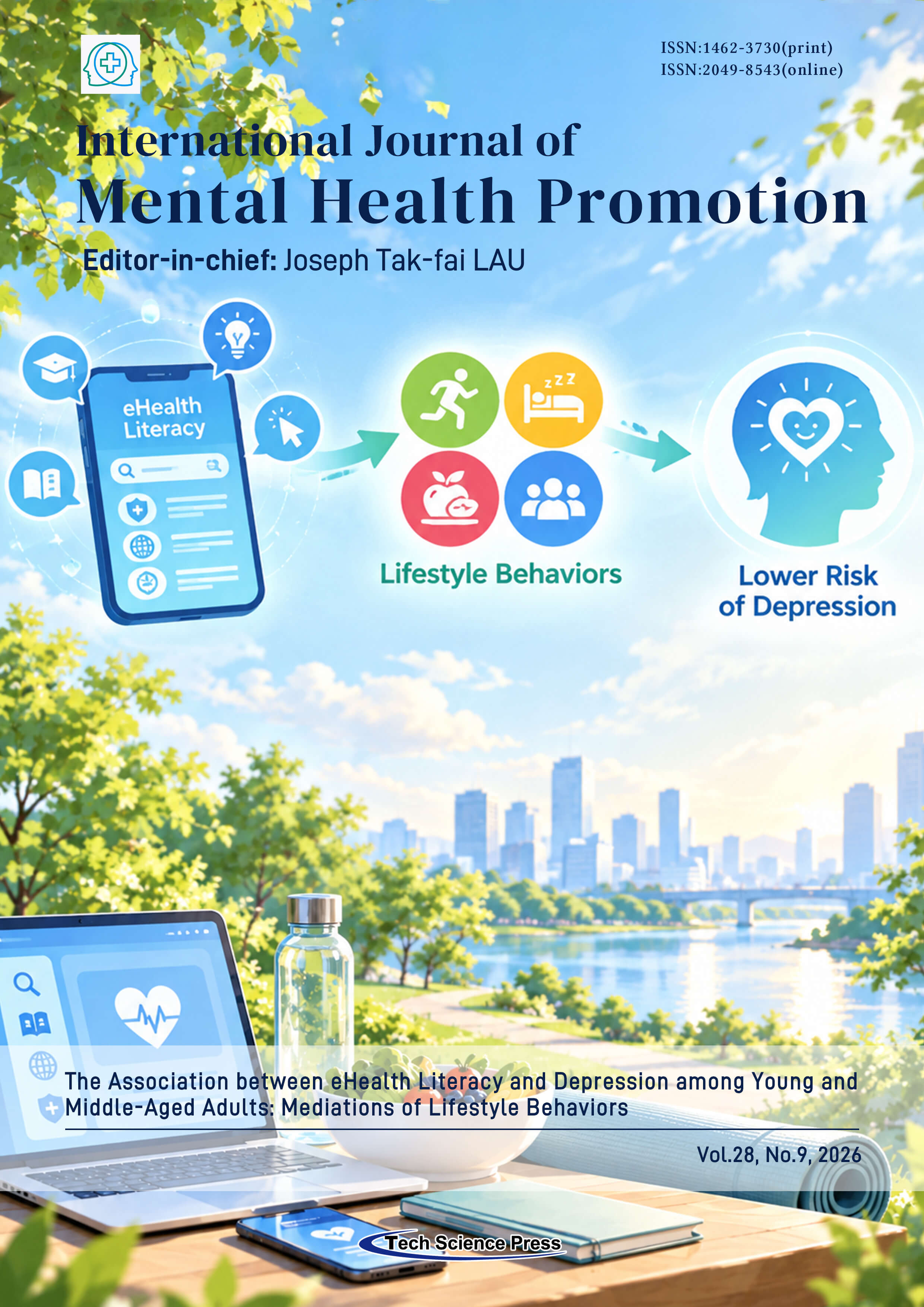
Digital health literacy—the ability to obtain and use health information through digital channels—may play a role in mental health. This study examined the association between eHealth literacy and depression among young and middle-aged adults in China and tested whether lifestyle behaviors mediate this link. Using data from 1,280 participants (mean age 39.55 years; 56.72% female), researchers conducted correlation and regression analyses and established a parallel-mediation model. Higher eHealth literacy was significantly associated with lower depression (β = −0.2900, 95% CI [−0.3259, −0.2544], p < 0.001). Smoking, alcohol consumption, sleeping, and exercising each mediated the association, suggesting that eHealth literacy may relate to depression partly through these lifestyle behaviors. These findings highlight the potential value of improving eHealth literacy for depression prevention and mental health promotion, with practical implications for policymakers, organizations, and individuals.
View this paper

 Login
Login Register
 Submit a Paper
 Propose a Special lssue