
 Login
Login Register
 Submit a Paper
 Propose a Special lssue
 Open Access
ARTICLE
Who Exceeds Support Matters: A Moderated Mediation Analysis of Support Gaps and Psychological Distress among International Students in China
1 School of English and International Studies, Beijing Foreign Studies University, Beijing, China
2 Department of Communication, University of Kentucky, Lexington, KY, USA
3 School of Psychology, College of Liberal Arts, Wenzhou-Kean University, Wenzhou, China
* Corresponding Author: Danni Liao. Email:
International Journal of Mental Health Promotion 2026, 28(9), 12 https://doi.org/10.32604/ijmhp.2026.083903
Received 13 April 2026; Accepted 29 May 2026; Issue published 22 September 2026
 View Full Text
 Download PDF
Abstract
Background: While previous research has highlighted the pivotal role of sufficient social support in reducing psychological distress among international students, it has largely overlooked the discrepancy between the support they receive and the support they desire. Drawing on the support gaps framework, this study aims to examine international students’ experiences in China and the indirect effect of support gaps on their psychological distress, considering the types and sources of support. Methods: The participants in this study were international students in China (N = 232), aged 18 to 40 years at the time of data collection, and were recruited through convenience and snowball sampling between October and December 2023. Four moderated mediation models were performed individually using PROCESS Model 7 (version 4.0), along with paired-samples t-tests and McNemar’s tests performed in SPSS 31.0. Results: The main findings revealed that international students in China experienced support deficits, which were reported to be greater when interacting with Chinese individuals. Socioemotional support surpluses from Chinese individuals were indirectly and negatively associated with international students’ psychological distress through a positive association with perceived support quality. However, no significant moderated mediation was found for support deficits and informational support surpluses. Conclusions: These findings highlight the distinct roles of Chinese individuals and peer sojourners in shaping international students’ experiences and suggest boundary conditions for the hypothesized moderated mediation model, with collectivistic cultural orientations potentially impacting the way support gaps affect mental health outcomes. This study extends the support gaps framework by examining discrepancies in social support within an intercultural, non-Western context. It also underscores the need for a culturally sensitive approach to social support that better aligns with international students’ actual needs, thereby promoting their overall mental health while studying abroad.Keywords
The number of international students in China has surged dramatically since 2012, driven by the country’s ambition to strengthen its global influence both economically and diplomatically [1,2]. The actual needs of this population, however, often misalign with the support services on and off the Chinese campus [3,4]. These mismatches expose international students to various challenges, including pedagogical, linguistic, and cross-cultural maladaptation, all of which contribute to their psychological distress while studying in China [5,6]. Sufficient social support can help international students cope with these challenges, thereby reducing their psychological distress and promoting their mental health in host countries [7,8]. However, this perspective focuses solely on what international students actually receive without considering what they truly desire. Given mismatches between international students’ actual needs and support services, this population may perceive the social support they receive as insufficient and experience support gaps, defined as the discrepancy between the amount of support they desire and the support they actually receive [9].
Existing research on support gaps has been conducted predominantly in Western cultures and has focused mainly on interpersonal communication in the contexts of family, marriage, and friendship [9,10,11,12,13,14]. From the support gaps perspective, receiving social support does not always translate into positive experiences, and may paradoxically result in adverse psychological and relational outcomes for support recipients at times [9,14]. However, international students, particularly those studying in non-Western cultures, have received limited attention in the support gaps literature. Current scholarship on social support among international students in China has largely emphasized the amount of support they receive [15,16,17,18,19], while overlooking whether such support corresponds to their actual needs. Moreover, cultural differences between support providers and recipients may shape how support is expected, perceived, and evaluated [19], thus potentially influencing the ways support gaps are experienced and their psychological implications. Therefore, applying the support gaps framework to international students in China provides a distinct theoretical lens for understanding how discrepancies in social support affect support recipients’ mental health in an intercultural setting. More importantly, this approach extends the predominantly Western-focused support gaps literature to an emerging but understudied non-Western study-abroad destination, where cultural orientations may alter both the manifestation and consequences of support gaps.
To fill the research gap mentioned above, the present study aims to (a) compare the support gaps experienced by international students in China when receiving support from Chinese individuals versus peer sojourners (i.e., co-nationals and sojourners from third countries), and (b) investigate the indirect effects of support gaps on international students’ psychological distress via perceived support quality, considering socioemotional and informational support from two sources. Theoretically, this study extends research on support gaps, shifting from the previous focus on the direct effects of support gaps on relational outcomes in close relationships to an examination of how these gaps indirectly impact mental health outcomes in tertiary education settings [10,11]. Practically, it is expected to offer insights into a culturally sensitive approach to social support, helping higher education institutions develop support services that better align with international students’ actual needs, thereby alleviating their psychological distress and promoting their overall mental health while studying abroad [7].
2 Theoretical Rationale and Hypotheses
2.1 Support Gaps among Different Types and Sources of Support
Supportive communication generally encompasses nurturant support and action-facilitating support [11,20]. Nurturant support, which emphasizes care, love, comfort, and compassion [10,11,20], is analogous to the socioemotional support provided to sojourners [21]. Action-facilitating support, which comprises both informational and tangible support [11], corresponds to instrumental support among sojourners [21]. In the Chinese context, mismatches between the instrumental support international students receive and their actual needs primarily revolve around informational support [3,22], which has been examined more extensively than tangible support in the support gaps literature [12,13,14]. Therefore, this study will examine informational support gaps experienced by this population.
International students in China seek different types of support from various support providers. For socioemotional support, they often turn to peer sojourners, who share similar experiences as out-group members within Chinese society [2,23]. The similarity-based support can connect international students with international communities in China, thereby fostering a strong sense of belonging among this population [18,24]. For informational support, these students rely on both Chinese individuals and peer sojourners. They may seek academic assistance from Chinese supervisors and classmates while relying on other international students for practical guidance to navigate an unfamiliar educational system [25,26,27].
Apart from support types and sources, support gaps are operationalized in two ways: support deficits, defined as receiving less support than desired, and support surpluses, which manifest as receiving more support than desired [12,20]. Support deficits are more common than surpluses in interpersonal relationships [12,28]. Research shows that support deficits can increase individuals’ negative psychological symptoms, such as distress and dissatisfaction with interpersonal interactions [9,29]. The larger the magnitude of support deficits, the greater their influence on individuals’ negative psychological outcomes [12].
Support deficits from out-group members might be perceived more negatively because individuals often lack the cultural knowledge or skills to meet out-group members’ expectations [30], due to the intergroup differences outlined by social identity theory [31,32,33]. Drawing on this theory, Davis and High [13] demonstrate that intergroup differentiation can amplify support gaps: American women judge support deficits from racial outsiders more critically and experience greater support surpluses from same-race support providers. In collectivistic contexts such as China, where social relationships are often characterized by lower relational mobility and more stable in-group networks, out-group members may face greater difficulty integrating into existing social circles and thus be exposed to more pronounced intergroup boundaries [34,35,36]. Given the more salient intergroup differentiation, support gaps experienced by international students in China are likely to vary depending on whether support comes from in-group or out-group members. More specifically, they are likely to report greater support deficits from out-group members and greater support surpluses from in-group members. Accordingly, we propose the following hypotheses,
Hypothesis 1 (H1): International students will report more deficits in both (a) socioemotional and (b) informational support when receiving support from Chinese individuals than from peer sojourners.
Hypothesis 2 (H2): International students will report more surpluses in both (a) socioemotional and (b) informational support when receiving support from peer sojourners than from Chinese individuals.
2.2 Support Deficits, Support Quality, and Psychological Distress
Deficits in socioemotional support and informational support are often related to adverse outcomes in interpersonal relationships, such as depression, low self-esteem, and poor relational quality [12,14,37]. These risks are particularly salient for international students, who often rely on peer sojourners to cope with stress when studying abroad [38,39]. In China, international students are particularly vulnerable to support deficits from Chinese individuals, primarily due to limited intergroup contact, cultural and linguistic barriers, and differences in lived experiences [3,40,41]. When socioemotional support from Chinese individuals (e.g., Chinese supervisors, students, and administrators) is inadequate, international students may experience anxiety, loneliness, and low self-esteem [42,43]. Similarly, insufficient informational support from Chinese individuals and host country institutions can increase international students’ psychological distress by heightening their disorientation in a new environment and reducing their satisfaction with studying in China [3,44].
The relationship between support deficits and psychological distress is likely mediated by international students’ perceptions of support quality. Previous studies have shown that support deficits negatively affect support recipients’ perceptions of support quality [14,28]. Low-quality support is less effective in buffering international students’ stress, thereby exposing them to negative psychological outcomes [45]. Conversely, high-quality support can reduce stress among this population [46,47]. Taken together, support deficits may be indirectly related to international students’ psychological distress through a negative association with the support quality they perceive.
From a social identity perspective [31,32,33], individuals tend to evaluate social support from in-groups more positively and view support from out-groups as less valuable [48,49]. This distinction might bias international students’ perceptions of support deficits, support quality, and their effects on psychological distress. The negative, indirect effect of support deficits on psychological distress is likely to be amplified when they come from Chinese individuals who are considered cultural out-group members. Thus, we propose the following moderated mediation,
Hypothesis 3 (H3): International students’ perceived deficits in (a) socioemotional support and (b) informational support will be indirectly and positively related to their psychological distress through negative associations with perceived support quality, especially when they report deficits from Chinese individuals.
2.3 Support Surpluses, Support Quality, and Psychological Distress
Although much research on support gaps emphasizes support deficits, surpluses warrant separate attention [10]. Unlike the detrimental effects of support deficits, findings on the impact of socioemotional support surpluses on psychological and relational outcomes are inconsistent. In stigmatized contexts such as bullying or unintended pregnancy, excessive socioemotional support is linked to poorer emotional outcomes [11,14]. In family communication, the relationship between support surpluses and children’s relationship satisfaction is curvilinear: Children’s relationship satisfaction increases when support surpluses reach a certain level, but decreases when the support becomes excessive [10]. However, other studies show that socioemotional support surpluses can enhance individuals’ reappraisal of stressors, reduce their hurt feelings, and enhance their self-esteem [12,13,20].
For international students in China, surpluses in socioemotional support are more likely to have a positive effect. Previous studies have linked negative outcomes of such surpluses to stigmatized contexts (e.g., bullying, unintended pregnancy) or family dynamics (e.g., parent–child relationships), neither of which is directly applicable to international students’ experiences in China. From an appraisal-based coping perspective, socioemotional support can help people view stressors as manageable, thereby reducing their psychological distress [10,50]. Akin to support recipients in interpersonal relationships, international students may view socioemotional support surpluses, especially from close friends and acquaintances, as highly beneficial, helping them reappraise their study-abroad stressors positively in an intercultural context [12,13].
Similar to the effect of support deficits, support surpluses are likely to have an indirect effect on international students’ psychological distress through perceived support quality. Prior studies show that mismatched support, whether deficits or surpluses, alters evaluations of support quality [14,28]. High-quality support consistently predicts lower stress among international students [46,47]. Thus, when socioemotional support surpluses are perceived as appropriate, they are likely to elevate perceived support quality and, in turn, reduce psychological distress. Further, from the perspective of expectancy violation theory [51], excessive socioemotional support, especially from Chinese individuals, can be viewed as a positive violation of international students’ expectations. Positive expectancy violations, unexpected yet welcome, occur when someone’s behavior exceeds expectations in a favorable way, often leading to positive consequences [51]. Such violations are evident in interracial communication, where individuals often respond positively when socioemotional support from racial outsiders exceeds their expectations [13]. Similarly, international students in China may value socioemotional support surpluses from Chinese individuals, who are cultural outsiders to them, more than those from peer sojourners and perceive support from Chinese individuals as of higher quality. Such perceptions may be particularly salient due to the collectivistic orientation of Chinese culture, which highly values attentiveness to others’ needs in maintaining harmonious relationships [36]. Therefore, we hypothesize,
Hypothesis 4 (H4): International students’ perceived surpluses in socioemotional support will be indirectly and negatively associated with their psychological distress through positive associations with perceived support quality, especially when they report surpluses from Chinese individuals.
In contrast to surpluses in socioemotional support, surpluses in informational support are often associated with negative consequences [20]. As a key aspect of informational support, offering advice, especially when unsolicited or unwanted, can threaten support recipients’ autonomy and face, leaving them feeling weak, incompetent, emotionally stressed, or overwhelmed [12,20]. Such support surpluses are related to impaired well-being, heightened stress, and relational strain [10,14,20].
The negative impact of informational support surpluses is also likely to be mediated by perceived support quality. From the stress-buffering perspective, social support protects against stress only when it is perceived as responsive and appropriate [14]. When informational support surpluses are seen as off-target, they can undermine support quality and may exacerbate psychological distress [22,52]. Thus, informational support surpluses from Chinese individuals and peer sojourners may lower international students’ evaluations of support quality, which, in turn, diminishes its effectiveness in reducing their psychological distress.
These risks may be amplified when informational support surpluses come from Chinese individuals. Due to out-group bias, social support from out-group members is often evaluated less favorably [48,49]. Consequently, international students may interpret informational support surpluses from Chinese individuals as more intrusive than those from peer sojourners and thus experience more intensified stress. Therefore, we hypothesize,
Hypothesis 5 (H5): International students’ perceived surpluses in informational support will be indirectly and positively associated with their psychological distress through negative associations with perceived support quality, especially when they report surpluses from Chinese individuals.
3.1 Sample and Data Collection
The dataset analyzed in this study was from a cross-sectional survey conducted between October and December 2023, following approval from Wenzhou-Kean University Ethics Committee (approval number: IRB2023-070). All participants have signed informed consent in this study. Participants were foreign nationals aged 18 or older who were studying at Chinese higher education institutions at the time of data collection. They were recruited through convenience and snowball sampling, including the authors’ personal networks and the China Association for International Education, a nationwide organization focused on international student management. To ensure data quality, two attention check questions were included in the survey. Failure to answer either question correctly rendered the response invalid, resulting in 232 valid responses out of 255.
The sample includes 93 females, 133 males, and 6 participants who did not disclose their gender. The participants’ ages ranged from 18 to 40 years old (Mean = 25.220, SD = 4.684). They came from five continents and were enrolled in diverse programs across two municipalities and eight provinces at the time of data collection (see Table 1 for participant demographics). They reported the language proficiency based on a 5-point Likert scale (1 = poor and 5 = excellent or native speaker), including English proficiency (Mean = 4.060, SD = 0.822) and Chinese proficiency, represented by Chinese reading ability (Mean = 2.650, SD = 1.149).
Table 1: Demographic characteristics of participants.
| Characteristic | Full Sample | |
|---|---|---|
| n | % | |
| Gender | ||
| Female | 93 | 40.086 |
| Male | 133 | 57.328 |
| Unspecified | 6 | 2.586 |
| Age | ||
| 18–25 | 141 | 60.776 |
| 26–35 | 84 | 36.207 |
| 36–40 | 7 | 3.017 |
| Continent | ||
| Africa | 32 | 13.793 |
| America | 13 | 5.603 |
| Asia | 160 | 68.966 |
| Europe | 26 | 11.207 |
| Oceania | 1 | 0.431 |
| Nature of program | ||
| Preparatory | 2 | 0.862 |
| Non-degree | 27 | 11.638 |
| Joint-degree | 1 | 0.431 |
| Undergraduate | 81 | 34.914 |
| Master’s | 77 | 33.190 |
| Doctoral | 44 | 18.966 |
| Location | ||
| Anhui | 16 | 6.897 |
| Beijing | 34 | 14.655 |
| Guangdong | 20 | 8.621 |
| Henan | 1 | 0.431 |
| Jiangsu | 127 | 54.741 |
| Shanghai | 7 | 3.017 |
| Shaanxi | 1 | 0.431 |
| Sichuan | 18 | 7.759 |
| Yunnan | 2 | 0.862 |
| Zhejiang | 6 | 2.586 |
We performed confirmatory factor analyses on the original variables we used to compute support gaps, including socioemotional support from Chinese individuals, socioemotional support from peer sojourners, informational support from Chinese individuals, and informational support from peer sojourners. We also conducted confirmatory factor analyses on the mediators and outcomes, including quality of support from Chinese individuals, quality of support from peer sojourners, and international students’ psychological distress. The measures established an acceptable model fit based on Hu and Bentler’s standard [53] (see Table 2 for fit statistics). Descriptive statistics and zero-order correlations of the measures are reported in Table 3.
Table 2: Fit statistics for confirmatory factor analyses.
| Variable | χ2 (df) | CFI | RMSEA (90% CI) | SRMR |
|---|---|---|---|---|
| Received Emo. Local | 41.658 (27)* | 0.984 | 0.048 (0.021, 0.072) | 0.028 |
| Received Info. Local | 42.023 (14)*** | 0.957 | 0.093 (0.067, 0.119) | 0.035 |
| Received Emo. Sojourners | 77.228 (27)*** | 0.944 | 0.090 (0.071, 0.108) | 0.039 |
| Received Info. Sojourners | 29.564 (14)** | 0.975 | 0.069 (0.042, 0.096) | 0.030 |
| Desired Emo. Local | 51.208 (27)** | 0.969 | 0.062 (0.042, 0.082) | 0.035 |
| Desired Info. Local | 38.745 (14)*** | 0.955 | 0.087 (0.066, 0.109) | 0.034 |
| Desired Emo. Sojourners | 29.268 (27) | 1.00 | 0.019 (0.000, 0.046) | 0.023 |
| Desired Info. Sojourners | 21.332 (14)† | 0.987 | 0.048 (0.015, 0.073) | 0.022 |
| Quality Local | 98.055 (54)*** | 0.965 | 0.059 (0.044, 0.074) | 0.035 |
| Quality Sojourners | 71.654 (54)† | 0.985 | 0.038 (0.014, 0.055) | 0.025 |
| Psych Distress | 88.587 (35)*** | 0.951 | 0.081 (0.063, 0.100) | 0.034 |
Table 3: Descriptive statistics and zero-order correlations of the measures.
| No. | Measures | Mean ± SD | 1 | 2 | 3 | 4 | 5 | 6 | 7 | 8 | 9 | 10 | 11 | 12 | 13 | 14 |
|---|---|---|---|---|---|---|---|---|---|---|---|---|---|---|---|---|
| 1 | Emo Surpluses (Chinese individuals) | 0.148 ± 0.386 | --- | |||||||||||||
| 2 | Emo Surpluses (Peer Sojourners) | 0.177 ± 0.419 | 0.259*** | --- | ||||||||||||
| 3 | Emo Deficits (Chinese individuals) | 0.616 ± 0.784 | −0.302*** | −0.166* | --- | |||||||||||
| 4 | Emo Deficits (Peer Sojourners) | 0.442 ± 0.700 | −0.154* | −0.267*** | 0.548*** | --- | ||||||||||
| 5 | Info Surpluses (Chinese individuals) | 0.151 ± 0.322 | 0.476*** | 0.331*** | −0.249*** | −0.178** | --- | |||||||||
| 6 | Info Surpluses (Peer Sojourners) | 0.193 ± 0.445 | 0.177** | 0.644*** | −0.139* | −0.165* | 0.249*** | --- | ||||||||
| 7 | Info Deficits (Chinese individuals) | 0.563 ± 0.749 | −0.178** | −0.148* | 0.638*** | 0.463*** | −0.353*** | −0.136* | --- | |||||||
| 8 | Info Deficits (Peer Sojourners) | 0.414 ± 0.624 | −0.080 | −0.198** | 0.459*** | 0.627*** | −0.231*** | −0.288*** | 0.571*** | --- | ||||||
| 9 | Support Quality (Chinese individuals) | 3.692 ± 0.819 | 0.158* | 0.045 | −0.135* | −0.010 | 0.107 | 0.092 | −0.124† | 0.035 | --- | |||||
| 10 | Support Quality (Peer Sojourners) | 3.748 ± 0.773 | 0.006 | −0.027 | 0.013 | 0.038 | −0.034 | 0.048 | 0.038 | 0.003 | 0.646*** | --- | ||||
| 11 | Psych Distress | 2.457 ± 0.909 | −0.059 | −0.124† | 0.117† | 0.146* | 0.014 | −0.098 | 0.067 | 0.076 | −0.123† | −0.143* | --- | |||
| 12 | Age | 25.220 ± 4.684 | 0.075 | −0.031 | 0.060 | 0.081 | 0.114† | −0.103 | 0.102 | 0.106 | −0.080 | −0.017 | 0.005 | --- | ||
| 13 | English Proficiency | 4.060 ± 0.822 | 0.116† | 0.081 | 0.016 | 0.054 | 0.061 | 0.060 | 0.079 | 0.062 | 0.007 | 0.065 | −0.061 | 0.177** | --- | |
| 14 | Chinese Proficiency | 2.650 ± 1.149 | 0.180** | 0.091 | −0.118† | −0.115† | 0.105 | 0.064 | −0.111† | −0.120† | 0.051 | 0.041 | −0.071 | −0.130* | 0.079 | --- |
3.2.1 Support Gaps (Independent Variables)
The Index of Sojourner Social Support Scale [21] was adapted to measure the social support international students received and desired from Chinese individuals and peer sojourners. Nine items were used to assess socioemotional support (e.g., “Share your good and bad times”) and seven items to assess informational support (e.g., “Provide necessary information to help orient you to your new surroundings”) from each group. Participants rated both the received and desired support on a 5-point Likert scale (1 = don’t receive/desire at all, 5 = receive/desire a great deal).
We first computed the mean scores for received support and desired support across items for each support type and source. Support gap scores were then calculated at the scale level by subtracting the mean of desired support from the mean of received support. Positive scores indicated support surplus, negative scores indicated support deficits, and zero indicated a support match (i.e., no discrepancy).
Following procedures used in prior studies [9,12], we created two separate variables for each type of support gaps from each source. For the support surplus variables (e.g., surpluses from Chinese individuals, surpluses from peer sojourners), positive gap scores were retained, and all other values (i.e., deficits and matches) were coded as zero, indicating the absence of a surplus. For the support deficit variables (e.g., deficits from Chinese individuals, deficits from peer sojourners), negative gap scores were retained, and all other values were coded as zero, indicating the absence of a deficit. The retained negative values were converted to absolute values, such that higher scores indicated greater deficits. Because gap scores were created at the scale level and from the same variables, participants could not simultaneously experience both support surpluses and deficits.
3.2.2 Quality of Social Support (Mediator)
The Social Support Quality Measure proposed by Goldsmith et al. [54] was adapted to evaluate the overall quality of support participants received from Chinese individuals and peer sojourners. Twelve 7-point semantic-differential scales (e.g., “Inconsiderate-Considerate”, “Selfish-Generous”, “Unhelpful-Helpful”) were used to measure the quality of social support in this study. The support quality measure demonstrated good reliability for both Chinese individual support (α = 0.949) and peer sojourner support (α = 0.955).
3.2.3 Psychological Distress (Dependent Variable)
The 10-item scale developed by Kessler et al. [55] was adapted to assess participants’ general psychological distress experienced both within and outside the tertiary education context over the past 30 days. Participants rated items such as “How often have you felt so depressed that nothing could cheer you up?” on a 5-point Likert scale (1 = none of the time, 5 = all of the time). All items were coded in the same direction, with higher scores indicating greater psychological distress. No reverse coding was required. Consistent with prior research [56] and supported by the confirmatory factor analysis results (see Table 2), the scale was treated as a unidimensional measure (α = 0.934), and items were averaged to create a composite variable.
Descriptive analyses were first conducted to examine the percentages of participants who reported support surpluses and deficits from each support source. McNemar’s tests were then used to compare these percentages between Chinese individuals and peer sojourners. To test H1 and H2, we conducted paired-samples t-tests in SPSS 31.0. To test H3, H4, and H5, we ran four moderated mediation models separately in PROCESS Model 7 (version 4.0), each with 5000 bootstrapped samples and 95% confidence intervals (CIs). The dataset was reshaped to create a source variable indicating whether the reported support gaps came from Chinese individuals or peer sojourners. In each moderated mediation model, support gaps (e.g., socioemotional support deficits) served as the independent variable, support source as the moderator, support quality as the mediator, and psychological distress as the dependent variable (see Fig. 1 for the hypothesized moderated mediation model). The independent variable and the moderator were centered to create the interaction term. Participants’ age, English proficiency, and Chinese proficiency, as represented by reading ability, were included as covariates. Statistical significance was evaluated at α = 0.050.
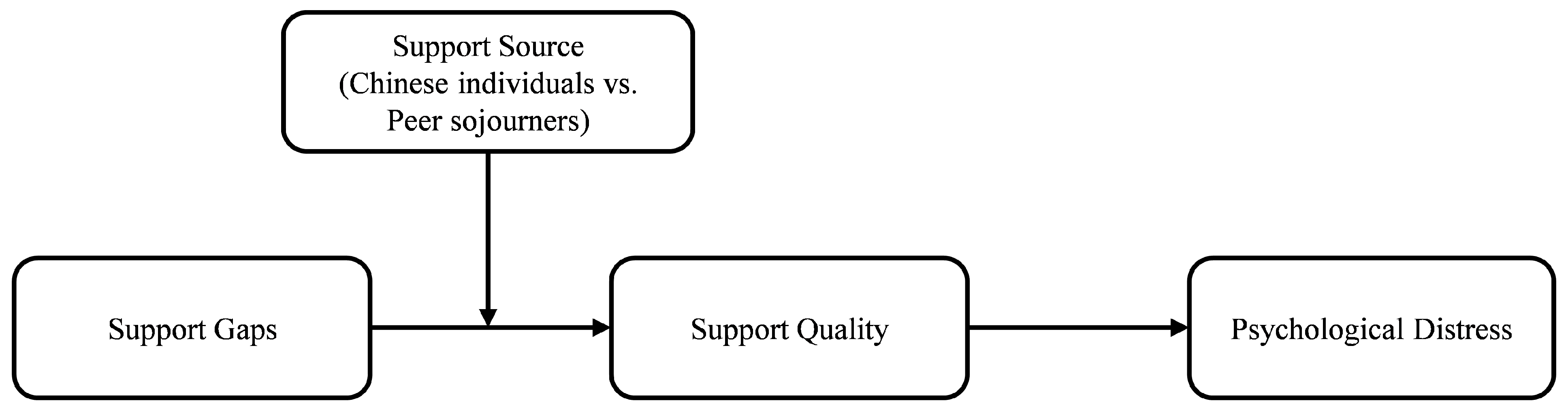
Figure 1: The hypothesized moderated mediation model. H1 and H2 correspond to group differences in support gaps (i.e., deficits and surpluses in socioemotional and informational support) across support sources (Chinese individuals vs. peer sojourners) and therefore are not pictured in this figure. H3, H4 and H5 correspond to indirect associations between support gaps and psychological distress through perceived support quality, with support source moderating these relationships.
The descriptive analysis revealed that 24.1% of the participants reported socioemotional support surpluses from Chinese individuals and 30.6% from peer sojourners. These proportions did not differ significantly, p = 0.086. In contrast, deficits in socioemotional support were reported by 65.1% and 53.4% of the participants from Chinese individuals and peer sojourners, respectively. International students were more likely to experience socioemotional support deficits from Chinese individuals than from peer sojourners, p = 0.004. For informational support, 28.4% of the participants reported surpluses from Chinese individuals and 28.9% from peer sojourners, with no significant difference between the two percentages, p > 0.999. Informational support deficits were reported by 62.1% and 50.4% of the participants from Chinese individuals and peer sojourners, respectively. International students were more likely to experience informational support deficits from Chinese individuals than from peer sojourners, p = 0.004.
The paired-samples t-tests revealed that participants reported greater deficits in socioemotional support when interacting with Chinese individuals (Mean = 0.616, SD = 0.784) than when interacting with peer sojourners (Mean = 0.442, SD = 0.700), t(231) = 3.743, p < 0.001, Cohen’s d = 0.246. Thus, the first sub-hypothesis of Hypothesis 1 (H1a) was supported. Similarly, they reported greater deficits in informational support when interacting with Chinese individuals (Mean = 0.563, SD = 0.749) compared to peer sojourners (Mean = 0.413, SD = 0.624), t(231) = 3.515, p < 0.001, Cohen’s d = 0.231, supporting the second sub-hypothesis of Hypothesis 1 (H1b). However, international students’ reported surpluses in socioemotional support did not differ significantly between Chinese individuals (Mean = 0.148, SD = 0.385) and peer sojourners (Mean = 0.177, SD = 0.418), t(231) = −0.908, p = 0.365, Cohen’s d = −0.060. Their reported surpluses in informational support did not differ significantly between Chinese individuals (Mean = 0.151, SD = 0.322) and peer sojourners (Mean = 0.193, SD = 0.445), t(231) = −1.328, p = 0.185, Cohen’s d = −0.087. Therefore, neither the first (H2a) nor the second sub-hypothesis (H2b) of Hypothesis 2 was supported.
The first sub-hypothesis of Hypothesis 3 (H3a) proposed a positive indirect effect of socioemotional support deficits on psychological distress via perceived support quality, moderated by support source. However, the moderated mediation was not statistically significant, b = −0.026, se = 0.018, 95% CI −0.065, 0.003. For the second sub-hypothesis of Hypothesis 3 (H3b), which proposed a positive indirect effect of informational support deficits on psychological distress through perceived support quality, moderated by support source. The moderated mediation was not statistically significant, b = −0.020, se = 0.019, 95% CI −0.062, 0.012. Thus, neither H3a nor H3b was supported.
H4 proposed a negative indirect association between socioemotional support surpluses and international students’ psychological distress via perceived support quality, conditioned by support source. The moderated mediation was statistically significant, b = 0.055, se = 0.041, 95% CI 0.001, 0.154. As shown in Fig. 2, greater socioemotional support surpluses from Chinese individuals were associated with higher perceived support quality, which, in turn, reduced psychological distress among international students in China, b = −0.046, se = 0.030, 95% CI −0.119, −0.003. However, this indirect effect was not statistically significant when international students perceived greater socioemotional support surpluses from peer sojourners, b = 0.009, se = 0.022. 95% CI −0.026, 0.066. Consequently, H4 was partially supported.
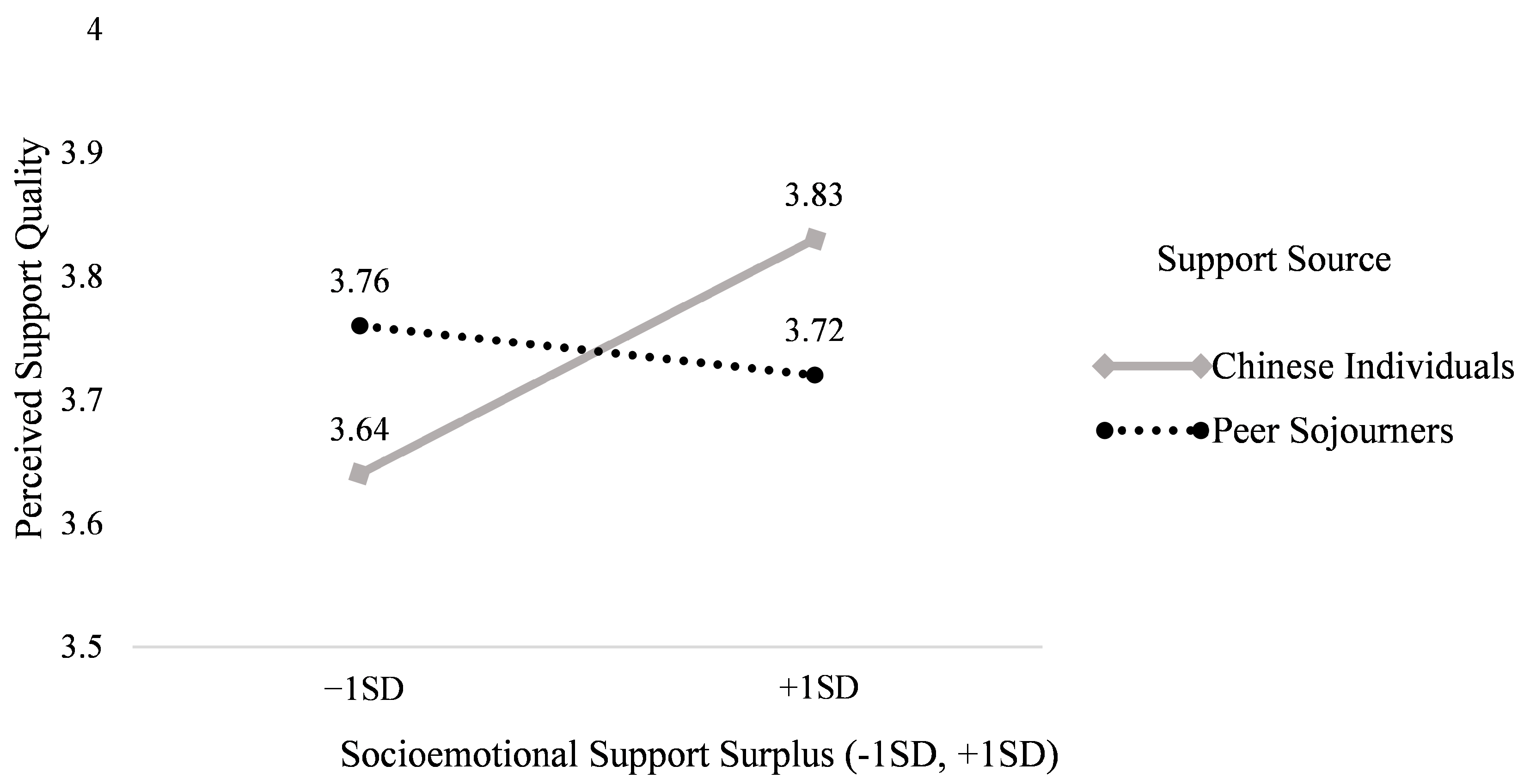
Figure 2: Plotting interactions between socioemotional support surplus and support source.
H5 proposed that international students’ informational support surpluses would be indirectly and positively associated with their psychological distress via perceived support quality, especially when they reported surpluses from Chinese individuals. The moderated mediation was not statistically significant, b = 0.030, se = 0.034, 95% CI −0.035, 0.104, leaving H5 unsupported. Standardized coefficients, unstandardized coefficients, standard errors, R2, indirect effects, and moderated mediation indexes for the moderated mediation analyses are presented in Table 4, Table 5, Table 6 and Table 7.
Table 4: Moderated mediation results of socioemotional support deficits predicting psychological distress through support quality.
| Variables | Support Quality | Psych Distress | ||||
|---|---|---|---|---|---|---|
| β | b | se | β | b | se | |
| Study Variables | ||||||
| Emo Deficits | −0.127* | −0.135* | 0.067 | 0.119* | 0.145* | 0.056 |
| Source (1 = peer, 0 = local) | −0.031 | −0.049 | 0.091 | --- | --- | --- |
| Emo Deficits × Source | 0.125† | 0.184† | 0.100 | --- | --- | --- |
| Support Quality | --- | --- | --- | −0.122** | −0.139** | 0.053 |
| Control Variables | ||||||
| Age | −0.051 | −0.009 | 0.008 | −0.006 | −0.001 | 0.009 |
| English Proficiency | 0.042 | 0.040 | 0.046 | −0.056 | −0.061 | 0.052 |
| Chinese Proficiency | 0.030 | 0.021 | 0.033 | −0.048 | −0.038 | 0.037 |
| R2 | 0.017 | 0.038 | ||||
| Conditional Indirect Effects | ||||||
| Support Source | Effect | BootSE | BootLLCI | BootULCI | ||
| Chinese Individuals | 0.019 | 0.013 | −0.003 | 0.050 | ||
| Peer Sojourners | −0.007 | 0.010 | −0.030 | 0.013 | ||
| Index of Moderated Mediation | ||||||
| Index | BootSE | BootLLCI | BootULCI | |||
| −0.026 | 0.018 | −0.065 | 0.003 | |||
Table 5: Moderated mediation results of informational support deficits predicting psychological distress through support quality.
| Variables | Support Quality | Psych Distress | ||||
|---|---|---|---|---|---|---|
| β | b | se | β | b | se | |
| Study Variables | ||||||
| Info Deficits | −0.114† | −0.131† | 0.070 | 0.060 | 0.078 | 0.061 |
| Source (1 = peer, 0 = local) | −0.014 | −0.022 | 0.091 | --- | --- | --- |
| Info Deficits × Source | 0.087 | 0.142 | 0.109 | --- | --- | --- |
| Support Quality | --- | --- | --- | −0.125** | −0.142** | 0.053 |
| Control Variables | ||||||
| Age | −0.048 | −0.008 | 0.008 | −0.005 | −0.001 | 0.009 |
| English Proficiency | 0.046 | 0.045 | 0.046 | −0.055 | −0.061 | 0.052 |
| Chinese Proficiency | 0.030 | 0.021 | 0.033 | −0.055 | −0.043 | 0.037 |
| R2 | 0.015 | 0.028 | ||||
| Conditional Indirect Effects | ||||||
| Support Source | Effect | BootSE | BootLLCI | BootULCI | ||
| Chinese Individuals | 0.019 | 0.015 | −0.006 | 0.052 | ||
| Peer Sojourners | −0.002 | 0.012 | −0.026 | 0.023 | ||
| Index of Moderated Mediation | ||||||
| Index | BootSE | BootLLCI | BootULCI | |||
| −0.020 | 0.019 | −0.062 | 0.012 | |||
Table 6: Moderated mediation results of socioemotional support surpluses predicting psychological distress through support quality.
| Variables | Support Quality | Psych Distress | ||||
|---|---|---|---|---|---|---|
| β | b | se | β | b | se | |
| Study Variables | ||||||
| Emo Surpluses | 0.166* | 0.328* | 0.137 | −0.073 | −0.166 | 0.106 |
| Source (1 = peer, 0 = local) | 0.073 | 0.116 | 0.080 | --- | --- | --- |
| Emo Surpluses × Source | −0.152* | −0.391* | 0.185 | --- | --- | --- |
| Support Quality | --- | --- | --- | −0.124** | −0.142** | 0.053 |
| Control Variables | ||||||
| Age | −0.060 | −0.010 | 0.008 | 0.002 | 0.000 | 0.009 |
| English Proficiency | 0.036 | 0.035 | 0.046 | −0.045 | −0.050 | 0.052 |
| Chinese Proficiency | 0.022 | 0.016 | 0.033 | −0.052 | −0.041 | 0.037 |
| R2 | 0.020 | 0.032 | ||||
| Conditional Indirect Effects | ||||||
| Support Source | Effect | BootSE | BootLLCI | BootULCI | ||
| Chinese Individuals | −0.046 | 0.030 | −0.119 | −0.003 | ||
| Peer Sojourners | 0.009 | 0.022 | −0.026 | 0.066 | ||
| Index of Moderated Mediation | ||||||
| Index | BootSE | BootLLCI | BootULCI | |||
| 0.055 | 0.041 | 0.001 | 0.154 | |||
Table 7: Moderated mediation results of informational support surpluses predicting psychological distress through support quality.
| Variables | Support Quality | Psych Distress | ||||
|---|---|---|---|---|---|---|
| β | b | se | β | b | se | |
| Study Variables | ||||||
| Info Surpluses | 0.135† | 0.276† | 0.164 | −0.033 | −0.077 | 0.109 |
| Source (1 = peer, 0 = local) | 0.054 | 0.085 | 0.081 | --- | --- | --- |
| Info Surpluses × Source | −0.087 | −0.211 | 0.202 | --- | --- | --- |
| Support Quality | --- | --- | --- | −0.126** | −0.144** | 0.053 |
| Control Variables | ||||||
| Age | −0.057 | −0.010 | 0.008 | −0.001 | 0.000 | 0.009 |
| English Proficiency | 0.039 | 0.037 | 0.046 | −0.049 | −0.055 | 0.052 |
| Chinese Proficiency | 0.028 | 0.020 | 0.033 | −0.059 | −0.047 | 0.037 |
| R2 | 0.014 | 0.026 | ||||
| Conditional Indirect Effects | ||||||
| Support Source | Effect | BootSE | BootLLCI | BootULCI | ||
| Chinese Individuals | −0.040 | 0.030 | −0.106 | 0.012 | ||
| Peer Sojourners | −0.009 | 0.019 | −0.054 | 0.026 | ||
| Index of Moderated Mediation | ||||||
| Index | BootSE | BootLLCI | BootULCI | |||
| 0.030 | 0.034 | −0.035 | 0.104 | |||
Drawing on the support gaps framework in interpersonal communication [9], this study foregrounds mismatched support in an intercultural context and examines the impact of support gaps on international students’ psychological distress in a non-Western setting. Similar to their counterparts studying in traditional Western study-abroad destinations, international students in China experienced discrepancies between the support they desired and the support they received [5,7,57,58]. These mismatches may be more pronounced in China, where the quality of support services for international students remains below international benchmarks [4,17].
Our findings revealed that international students in China faced significant deficits in social support, and Chinese people played a key role in exceeding their socioemotional needs. Although support quality was found to mediate the relationship between support gaps and psychological distress, the mediation was significant only when it came to socioemotional support surpluses from Chinese individuals. These findings highlight the distinct roles of Chinese individuals and peer sojourners in influencing international students’ mental health outcomes and suggest that the impact of support gaps may be contingent on cultural orientations. These research findings are discussed in the following section, followed by a discussion of practical implications, limitations, and future research directions.
5.1 Distinct Roles of Two Support Sources
Deficits in social support are common among international students in China. In this study, 65.1% of participants reported socioemotional support deficits from Chinese individuals, while 53.4% reported similar deficits from peer sojourners. Regarding informational support, 62.1% and 50.4% of the participants reported deficits from the two sources, respectively. Compared to peer sojourners, the participants reported greater deficits in both socioemotional and informational support when interacting with Chinese individuals. This pattern may reflect differences in shared experiences and cultural understanding between the two groups. Peer sojourners, having faced similar challenges as out-group members in destination countries, are often more attuned to each other’s specific needs than locals [59,60,61,62]. Although support from peer sojourners may not always match international students’ expectations, it tends to align more closely with their actual needs than support from Chinese individuals. However, support surpluses from Chinese individuals and peer sojourners did not differ significantly, possibly because the uniformly low percentages from both sources limited the variability needed to detect intergroup differences.
Further, our findings revealed that support surpluses, especially in socioemotional domains, could significantly reduce international students’ psychological distress, particularly when the surpluses came from Chinese individuals, even though the effect size was generally small. The positive effect of socioemotional support surpluses from Chinese individuals aligns with expectancy violation theory, which suggests that violations of expectations elicit cognitive and emotional responses [51]. Positive violations, characterized by unexpected yet welcome behaviors, are common in interracial communication, where individuals respond favorably to greater-than-expected socioemotional support from those perceived as racial outsiders [13,51]. The racial insider-outsider dyad shows the dynamic between international students and Chinese individuals, who form a new binary of out-group and in-group within Chinese society [62,63]. Upon arrival in China, international students may have lowered expectations of Chinese individuals due to linguistic barriers and cultural differences. When local people provide socioemotional support that exceeds international students’ expectations, international students are likely to value it more and perceive it as of higher quality than similar support from peer sojourners. This finding aligns with previous research, which suggests that enhanced perceptions of support quality can improve international students’ reappraisals of study-abroad stressors, foster a sense of acceptance and belonging among this population, and alleviate their psychological distress [46,47].
In contrast, the moderated mediation was non-significant when socioemotional support surpluses were provided by peer sojourners. One plausible explanation is that international students, as sojourners themselves, may already have incorporated socioemotional support from their peers into their existing stress-coping mechanisms [38,39], thereby limiting the additional psychological benefits they can gain. Contrarily, support surpluses from Chinese individuals are less expected. International students may interpret these unanticipated behaviors as indicating that Chinese individuals are exceptionally accepting and willing to build deeper relationships with them [64]. Consequently, socioemotional support surpluses from Chinese individuals may more effectively enhance perceived support quality, thereby reducing international students’ psychological distress.
5.2 Culture-Sensitive Impacts of Support Gaps
Contrary to previous research suggesting that intergroup differentiation exacerbates support gaps [13,48,49], the hypothesized moderated mediation model examining support deficits was not supported for either socioemotional or informational support in the Chinese context. This finding suggests that the indirect effects of deficits in socioemotional and informational support on international students’ psychological distress, mediated by perceived support quality, did not differ significantly between the two support sources. According to expectancy violation theory [51], negative expectancy violations, manifested as receiving less support than desired, are likely to elicit adverse reactions, driven by the unmet expectation of support rather than by the support source. Thus, the deficits in both socioemotional and informational support may be universally perceived as negative expectancy violations, overriding the effects of support sources.
One possible explanation for the lack of significant moderated mediation regarding informational support surpluses is that cultural orientations may shape how social support is perceived. In contrast to Western contexts, where unsolicited or excessive advice is seen as detrimental to psychological well-being and relationships [10,14,20], such advice-giving behaviors in collectivistic cultures like China may be viewed as a sign of care rather than intrusion, reflecting a cultural orientation that emphasizes interdependence and group harmony [7,36]. For instance, international doctoral students often view supervision from Chinese supervisors as a familial relationship that offers care, but the lack of support, particularly in academic writing, can lead to feelings of isolation [22,25,52]. Additionally, many participants came from Asian and African countries, which are often characterized by collectivistic cultural orientations [7,36]. Such a collectivism-anchored perspective may explain the mitigated negative impact of informational support surpluses on perceived support quality, potentially leaving H5 unsupported in the Chinese context. In sum, these findings enrich expectancy violation theory by suggesting that negative expectancy violations, manifested in support deficits, operate independently of support sources, while positive expectancy violations triggered by informational support surpluses yield culturally contingent effects.
This study highlights the pivotal role of Chinese individuals in enhancing international students’ emotional resilience and helping them reframe study-abroad challenges more positively. Even modest socioemotional support from Chinese individuals can exceed international students’ expectations, be rated as of higher quality, and significantly reduce their psychological distress. As China has emerged as an increasingly popular study-abroad destination in recent years [1,25,63], these findings present a critical opportunity for researchers, practitioners, and policymakers in the country to understand the unmet needs of international students. By adopting a culturally sensitive approach to social support, it is expected that Chinese higher education institutions can provide more effective support services to promote mental health among this population, taking into account the impact of culture on perceptions and understanding of support gaps. In this context, several culture-aware support services and interventions are recommended to create a more supportive learning and living environment for international students in China. First, intercultural competence training for Chinese staff and mental health counselors should be developed. Such training would help these support providers foster a deeper empathetic understanding of the challenges faced by international students and equip them with the necessary skills to identify signs of psychological distress and provide culturally appropriate care [7,65]. Second, mentoring programs that pair international students with Chinese faculty who have studied abroad are recommended, as these faculty could offer targeted guidance, providing students with a sense of security and comfort based on similar experiences, especially when discussing sensitive mental health issues [7]. Third, peer-led initiatives, such as cultural festivals and language meetups, can be organized to create informal spaces for international students to form intercultural friendships with their Chinese peers, an essential source of socioemotional support throughout their studies abroad [66]. Such supportive relationships with Chinese students can increase international students’ sense of belonging and life satisfaction as well as reduce their psychological distress in China [7,61]. Lastly, artificial intelligence (AI)-powered technologies, tailored to the cultural context of Chinese higher education, are encouraged to complement human-led support on and off campus by identifying international students’ actual needs, providing personalized interventions, and enhancing their resilience in coping with challenges, thereby promoting their overall mental health while studying in China [67].
5.4 Limitations and Future Research Directions
This study has five limitations that can be addressed in future research. First, the cross-sectional design limits our ability to establish causal relationships between support gaps and psychological distress. Longitudinal designs could be used in future studies to examine the effects of support gaps on international students’ psychological distress over time. Second, the convenience and snowball sampling employed in this study may introduce selection bias by overrepresenting participants who were more connected or engaged with the sampling networks, potentially limiting the generalizability of our findings. Future research could adopt more systematic sampling methods to include underrepresented areas, such as the Northeast and Northwest frontier regions of China, offering a more comprehensive understanding of international students’ experiences of support gaps across the country. Third, the predominance of participants from collectivistic cultural backgrounds (68.97% from Asia, 13.79% from Africa) may limit the generalizability of the results. Asian students have historically constituted the largest group of international students in China, and the Belt and Road Initiative (BRI), launched in 2013, has further increased the presence of students from Asian and African countries [68,69,70]. Given this overrepresentation, future research could recruit more participants from individualistic cultures (e.g., North America, Western Europe, and Australia) and measure cultural orientation at the individual level to enable a more comprehensive understanding of whether the mediating role of perceived support quality differs across cultures. Fourth, our measure of peer sojourners did not distinguish between co-national peers and peers from a third country, potentially conflating in-group and out-group support dynamics. Future research could attempt to disentangle these sources of support to examine how they differentially influence international students’ experiences of support gaps and psychological well-being. Finally, using raw difference scores to operationalize support gaps may pose certain limitations. Although this approach offers interpretability and has been widely adopted in prior support gaps literature [12], it has psychometric limitations, including the potential introduction of artificial ceiling and floor effects. Future research could employ more advanced analytic approaches, such as polynomial regression with response surface analysis, to capture more nuanced patterns of support gaps [71].
The present study makes three contributions to the literature on social support for international students. Theoretically, this study positioned support gaps as a central concept, examined discrepancies in social support experienced by international students in an intercultural setting, and investigated the impact of support gaps in a non-Western and collectivistic cultural context. Empirically, our findings revealed that international students experienced significant support deficits in China, with Chinese individuals and peer sojourners playing distinct roles in shaping their experiences. Notably, when Chinese individuals provided more socioemotional support than desired, international students perceived higher support quality and thus lowered their psychological distress while studying abroad. Practically, a culturally sensitive approach to social support, involving Chinese faculty, staff, students, and mental health counselors, is recommended to better address international students’ actual needs and promote their overall mental health in China.
Acknowledgement:
Funding Statement: This research was funded by the Fundamental Research Funds for the Central Universities (2026YB030).
Author Contributions: The authors confirm contribution to the paper as follows: conceptualization: Yang Liu and Danni Liao; methodology: Yang Liu and Danni Liao; software: Yang Liu and Danni Liao; validation: Yang Liu, Danni Liao and Alexander S. English; formal analysis: Yang Liu and Danni Liao; investigation: Yang Liu, Danni Liao and Alexander S. English; resources: Yang Liu; data curation: Yang Liu; writing—original draft preparation: Yang Liu and Danni Liao; writing—review and editing: Yang Liu, Danni Liao and Alexander S. English; visualization: Yang Liu and Danni Liao; supervision: Yang Liu; project administration: Yang Liu; funding acquisition: Yang Liu. All authors reviewed and approved the final version of the manuscript.
Availability of Data and Materials: The dataset generated and analyzed during the current study is not publicly available due to the privacy of the subjects involved, but is available from the first author upon reasonable request.
Ethics Approval: The study involving human participants was reviewed and approved by Wenzhou-Kean University Ethics Committee (approval number: IRB2023-070). All participants have signed informed consent in this study.
Conflicts of Interest: The authors declare no conflicts of interest.
References
1. Muganga A , Mekonen YK , Adarkwah MA , Oladipo OA , Nweze CN , Bibi S . Is everywhere I go home? Reflections on the acculturation journey of African international students in China. Int J Intercult Relat. 2025; 105: 102136. doi:10.1016/j.ijintrel.2024.102136. [Google Scholar] [CrossRef]
2. Niu C , Liao SA , Sun Y . African students’ satisfaction in China: From the perspectives of China-Africa educational cooperation. J Stud Int Educ. 2023; 27( 2): 298– 315. doi:10.1177/10283153211052771. [Google Scholar] [CrossRef]
3. Ding X . Survey on satisfaction of international students in China with support services: A case study of Shanghai. J High Educ Manag. 2018; 12( 1): 115– 24. (In Chinese). [Google Scholar]
4. Liu W , Liu Z . International student management in China: Growing pains and system transitions. High Educ Res Dev. 2021; 40( 4): 781– 94. doi:10.1080/07294360.2020.1792848. [Google Scholar] [CrossRef]
5. Bui HTN , Selvarajah C , Vinen DG , Meyer D . Acculturation: Role of student–university alignment for international student psychological adjustment. J Stud Int Educ. 2021; 25( 5): 546– 64. doi:10.1177/1028315320964286. [Google Scholar] [CrossRef]
6. Mao Y , Ji H . Acculturation in China: Acculturation strategies, social support, and self-assessment of Mandarin learning performance of international students in Chinese universities. J Multiling Multicult Dev. 2026; 47( 1): 606– 24. doi:10.1080/01434632.2024.2399643. [Google Scholar] [CrossRef]
7. Shek CHM , Chan SWC , Stubbs MA , Lee RLT . Promoting international students’ mental health unmet needs: An integrative review. Int J Ment Health Promot. 2024; 26( 11): 905– 24. doi:10.32604/ijmhp.2024.055706. [Google Scholar] [CrossRef]
8. Brunsting NC , Zachry C , Liu J , Bryant R , Fang X , Wu S , et al. Sources of perceived social support, social-emotional experiences, and psychological well-being of international students. J Exp Educ. 2021; 89( 1): 95– 111. doi:10.1080/00220973.2019.1639598. [Google Scholar] [CrossRef]
9. Xu Y , Burleson BR . Effects of sex, culture, and support type on perceptions of spousal social support: An assessment of the “support gap” hypothesis in early marriage. Human Comm Res. 2001; 27( 4): 535– 66. doi:10.1111/j.1468-2958.2001.tb00792.x. [Google Scholar] [CrossRef]
10. Wang N . Emerging adults’ received and desired support from parents: Evidence for optimal received–desired support matching and optimal support surpluses. J Soc Pers Relatio. 2019; 36( 11–12): 3448– 70. doi:10.1177/0265407518822784. [Google Scholar] [CrossRef]
11. Crowley JL , High AC , Thomas LJ . Desired, expected, and received support: How support gaps impact affect improvement and perceived stigma in the context of unintended pregnancy. Health Commun. 2019; 34( 12): 1441– 53. doi:10.1080/10410236.2018.1495162. [Google Scholar] [CrossRef]
12. High AC , Crowley JL . Gaps among desired, sought, and received support: Deficits and surpluses in support when coping with taboo marital stressors. Commun Res. 2018; 45( 3): 319– 38. doi:10.1177/0093650215626975. [Google Scholar] [CrossRef]
13. Davis SM , High AC . Widening the gap: Support gaps in same race versus different race female friendship dyads. J Soc Pers Relatio. 2019; 36( 1): 187– 213. doi:10.1177/0265407517722245. [Google Scholar] [CrossRef]
14. Matsunaga M . Underlying circuits of social support for bullied victims: An appraisal-based perspective on supportive communication and postbullying adjustment. Hum Commun Res. 2011; 37( 2): 174– 206. doi:10.1111/j.1468-2958.2010.01398.x. [Google Scholar] [CrossRef]
15. Li Y , Liang F , Xu Q , Gu S , Wang Y , Li Y , et al. Social support, attachment closeness, and self-esteem affect depression in international students in China. Front Psychol. 2021; 12: 618105. doi:10.3389/fpsyg.2021.618105. [Google Scholar] [CrossRef]
16. Li X , Rahman MS , Yu L . Is university support effective? A longitudinal study of cultural adaptation of south Asian students in Chinese universities. J Stud Int Educ. 2024; 28( 4): 643– 62. doi:10.1177/10283153231211993. [Google Scholar] [CrossRef]
17. Ding X . Exploring the experiences of international students in China. J Stud Int Educ. 2016; 20( 4): 319– 38. doi:10.1177/1028315316647164. [Google Scholar] [CrossRef]
18. Liu Y , Liao D , English A . Social support and psychological distress among international students in China: The mediating role of sense of belonging. Stud High Educ. 2025: 1– 16. doi:10.1080/03075079.2025.2566934. [Google Scholar] [CrossRef]
19. English AS , Zhang YB , Tong R . Social support and cultural distance: Sojourners’ experience in China. Int J Intercult Relat. 2021; 80: 349– 58. doi:10.1016/j.ijintrel.2020.10.006. [Google Scholar] [CrossRef]
20. McLaren RM , High AC . The effect of under- and over-benefited support gaps on hurt feelings, esteem, and relationships. Commun Res. 2019; 46( 6): 785– 810. doi:10.1177/0093650215605155. [Google Scholar] [CrossRef]
21. Ong ASJ , Ward C . The construction and validation of a social support measure for sojourners: The index of sojourner social support (ISSS) scale. J Cross Cult Psychol. 2005; 36( 6): 637– 61. doi:10.1177/0022022105280508. [Google Scholar] [CrossRef]
22. Dai K , Hardy I , Jiang Y . Caught ‘in-between’: Insights into international students’ doctoral thesis writing practices in China. High Educ Res Dev. 2025; 44( 2): 354– 70. doi:10.1080/07294360.2024.2401017. [Google Scholar] [CrossRef]
23. Luo M , Ikram AH , Zhang X , Peng F , Zhao J , Deng H . Role of attachment style, acculturation orientation, and social support in the acculturation of international students in China. Int J Intercult Relat. 2024; 103: 102087. doi:10.1016/j.ijintrel.2024.102087. [Google Scholar] [CrossRef]
24. Scott English A , Yang Y , Marshall RC , Nam BH . Social support for international students who faced emotional challenges midst Wuhan’s 76-day lockdown during early stage of the COVID-19 pandemic. Int J Intercult Relat. 2022; 87: 1– 12. doi:10.1016/j.ijintrel.2022.01.003. [Google Scholar] [CrossRef]
25. Dai K , Hardy I . Pursuing doctoral research in an emerging knowledge hub: An exploration of international students’ experiences in China. Stud High Educ. 2023; 48( 6): 784– 96. doi:10.1080/03075079.2023.2166917. [Google Scholar] [CrossRef]
26. Kong L , Ma Z , Li X , Kim H . Interactions between international doctoral students studying in China and their advisors: The role of intercultural adaptive guidance and psychological safety. Int J Intercult Relat. 2023; 96: 101872. doi:10.1016/j.ijintrel.2023.101872. [Google Scholar] [CrossRef]
27. Peng R , Zhu C , Liu N . Life satisfaction and acculturation of European students in the Chinese context. Humanit Soc Sci Commun. 2023; 10( 1): 695. doi:10.1057/s41599-023-02167-y. [Google Scholar] [CrossRef]
28. High AC , Steuber KR . An examination of support (In)adequacy: Types, sources, and consequences of social support among infertile women. Commun Monogr. 2014; 81( 2): 157– 78. doi:10.1080/03637751.2013.878868. [Google Scholar] [CrossRef]
29. Thong MSY , Kaptein AA , Krediet RT , Boeschoten EW , Dekker FW . Social support predicts survival in dialysis patients. Nephrol Dial Transpl. 2007; 22( 3): 845– 50. doi:10.1093/ndt/gfl700. [Google Scholar] [CrossRef]
30. Samter W , Morse CR , Whaley BB . Do we need to put God into emotional support?: A comparison of caucasians’ and African-Americans’ evaluations of religious versus non-religious comforting messages. J Intercult Commun Res. 2013; 42( 2): 172– 91. doi:10.1080/17475759.2012.744340. [Google Scholar] [CrossRef]
31. Tajfel H . Social identity and intergroup relations. Cambridge, UK: Cambridge University Press; 1982. [Google Scholar]
32. Tajfel H . Social categorization, social identity and social comparison. In: Tajfel H , editor. Differentiation between social groups: Studies in the social psychology of intergroup relations. London, UK: Academic Press; 1978. p. 61– 76. [Google Scholar]
33. Tajfel H , Turner JC . The social identity theory of intergroup behavior. In: Worchel S , Austin WG , editors. Psychology of intergroup relations. Chicago, IL, USA: Nelson-Hall Publishers; 1986. p. 7– 24. [Google Scholar]
34. Gao G , Ting-Toomey S . Communicating effectively with the Chinese. Thousand Oaks, CA, USA: SAGE Publications; 1998. doi:10.4135/9781452220659. [Google Scholar] [CrossRef]
35. Gao G . Self and OTHER: A Chinese perspective on interpersonal relationships. In: Gudykunst WB , Ting-Toomey S , Nishida T , editors. Communication in personal relationships across cultures. Thousand Oaks, CA, USA: Sage Publications; 1996. p. 81– 101. [Google Scholar]
36. Liu SS , Shteynberg G , Morris MW , Yang Q , Galinsky AD . How does collectivism affect social interactions? A test of two competing accounts. Pers Soc Psychol Bull. 2021; 47( 3): 362– 76. doi:10.1177/0146167220923230. [Google Scholar] [CrossRef]
37. Priem JS , Buehler EM , Bailey LC . Deconstructing support inadequacy: Unique effects of support deficit and surplus on relationship characteristics and interaction perceptions. In: Proceedings of the National Communication Association Conference; 2014 Nov 20–23; Chicago, IL, USA. [Google Scholar]
38. Chavajay P . Perceived social support among international students at a U.S. university. Psychol Rep. 2013; 112( 2): 667– 77. doi:10.2466/17.21.PR0.112.2.667-677. [Google Scholar] [CrossRef]
39. Poyrazli S , Kavanaugh PR , Baker A , Al-Timimi N . Social support and demographic correlates of acculturative stress in international students. J Coll Couns. 2004; 7( 1): 73– 82. doi:10.1002/j.2161-1882.2004.tb00261.x. [Google Scholar] [CrossRef]
40. Zhang Y , Zeng H . Acculturation of international students in a non–first-tier city in China. Int J Intercult Relat. 2023; 97: 101873. doi:10.1016/j.ijintrel.2023.101873. [Google Scholar] [CrossRef]
41. Mao Y . Academic adaptation of international students in the Chinese higher education environment: A case study with mixed methods. Int J Intercult Relat. 2024; 103: 102082. doi:10.1016/j.ijintrel.2024.102082. [Google Scholar] [CrossRef]
42. Tian M , Lowe JA . Missing dialogue: Intercultural experiences of Pakistani students in their first-year studies at a Chinese university. In: Awad A , Tran LT , Liyanage I , editors. Educational reciprocity and adaptivity: International students and stakeholders. London, UK: Routledge; 2018. p. 142– 61. doi:10.4324/9781315201412-8. [Google Scholar] [CrossRef]
43. Singh JKN , Kaur A . Is teaching and learning in Chinese higher education classrooms internationalized? Perspectives from international students in China. High Educ Res Dev. 2023; 42( 5): 1283– 97. doi:10.1080/07294360.2023.2197196. [Google Scholar] [CrossRef]
44. Hussain M , Shen H . A study on academic adaptation of international students in China. High Educ Stud. 2019; 9( 4): 80. doi:10.5539/hes.v9n4p80. [Google Scholar] [CrossRef]
45. Dady N , Sang G . A qualitative case study of international doctorate students’ perceptions of higher education quality in China. Asia Pac Educ Rev. 2024; 25( 5): 1177– 95. doi:10.1007/s12564-022-09752-x. [Google Scholar] [CrossRef]
46. Prasath PR , Xiong Y , Zhang Q , Jeon L . Psychological capital, well-being, and distress of international students. Int J Adv Couns. 2022; 44( 3): 529– 49. doi:10.1007/s10447-022-09473-1. [Google Scholar] [CrossRef]
47. Bender M , van Osch Y , Sleegers W , Ye M . Social support benefits psychological adjustment of international students: Evidence from a meta-analysis. J Cross Cult Psychol. 2019; 50( 7): 827– 47. doi:10.1177/0022022119861151. [Google Scholar] [CrossRef]
48. Hewstone M , Rubin M , Willis H . Intergroup bias. Annu Rev Psychol. 2002; 53: 575– 604. doi:10.1146/annurev.psych.53.100901.135109. [Google Scholar] [CrossRef]
49. Hogg MA , Abrams D , Otten S , Hinkle S . The social identity perspective: Intergroup relations, self-conception, and small groups. Small Group Res. 2004; 35( 3): 246– 76. doi:10.1177/1046496404263424. [Google Scholar] [CrossRef]
50. Burleson BR , Goldsmith DJ . How the comforting process works: Alleviating emotional distress through conversationally induced reappraisals. In: Handbook of communication and emotion: Research, theory, applications, and contexts. San Diego, CA, USA: Academic Press; 1998. p. 245– 80. doi:10.1016/B978-012057770-5/50011-4. [Google Scholar] [CrossRef]
51. Burgoon JK . Expectancy violations theory. In: Berger CR , Roloff ME , Wilson SR , Dillard JP , Caughlin J , Solomon D , editors. The international encyclopedia of interpersonal communication. Hoboken, NJ, USA: John Wiley & Sons, Inc.; 2015. p. 1– 9. [Google Scholar]
52. Doi K , Dai K . PhD journey in an academic ‘semi-periphery’: Reflexive narrative of a Japanese student’s learning experience in China. High Educ Res Dev. 2025; 44( 5): 1079– 93. doi:10.1080/07294360.2025.2462071. [Google Scholar] [CrossRef]
53. Hu LT , Bentler PM . Cutoff criteria for fit indexes in covariance structure analysis: Conventional criteria versus new alternatives. Struct Equ Model A Multidiscip J. 1999; 6( 1): 1– 55. doi:10.1080/10705519909540118. [Google Scholar] [CrossRef]
54. Goldsmith DJ , McDermott VM , Alexander SC . Helpful, supportive and sensitive: Measuring the evaluation of enacted social support in personal relationships. J Soc Pers Relatio. 2000; 17( 3): 369– 91. doi:10.1177/0265407500173004. [Google Scholar] [CrossRef]
55. Kessler RC , Andrews G , Colpe LJ , Hiripi E , Mroczek DK , Normand SL , et al. Short screening scales to monitor population prevalences and trends in non-specific psychological distress. Psychol Med. 2002; 32( 6): 959– 76. doi:10.1017/S0033291702006074. [Google Scholar] [CrossRef]
56. Sarwar F , Panatik SA , Jameel HT . Does fear of terrorism influence psychological adjustment of academic sojourners in Pakistan? Role of state negative affect and emotional support. Int J Intercult Relat. 2020; 75: 34– 47. doi:10.1016/j.ijintrel.2020.01.002. [Google Scholar] [CrossRef]
57. Yu Y , Moskal M . Why do Christian churches, and not universities, facilitate intercultural engagement for Chinese international students? Int J Intercult Relat. 2019; 68: 1– 12. doi:10.1016/j.ijintrel.2018.10.006. [Google Scholar] [CrossRef]
58. Koo K , Nyunt G . Culturally sensitive assessment of mental health for international students. New Dir Stud Serv. 2020; 2020( 169): 43– 52. doi:10.1002/ss.20343. [Google Scholar] [CrossRef]
59. Bertram DM , Poulakis M , Elsasser BS , Kumar E . Social support and acculturation in Chinese international students. J Multicult Couns Dev. 2014; 42( 2): 107– 24. doi:10.1002/j.2161-1912.2014.00048.x. [Google Scholar] [CrossRef]
60. Gareis E . Intercultural friendship: Effects of home and host region. J Int Intercult Commun. 2012; 5( 4): 309– 28. doi:10.1080/17513057.2012.691525. [Google Scholar] [CrossRef]
61. Ng TK , Wang KWC , Chan W . Acculturation and cross-cultural adaptation: The moderating role of social support. Int J Intercult Relat. 2017; 59: 19– 30. doi:10.1016/j.ijintrel.2017.04.012. [Google Scholar] [CrossRef]
62. Lee KH . Becoming a bona fide cosmopolitan: Unpacking the narratives of Western-situated degree-seeking transnational students in China. Soc Cult Geogr. 2022; 23( 6): 873– 91. doi:10.1080/14649365.2020.1821393. [Google Scholar] [CrossRef]
63. Wu DB , Hou S , Fang F . Performing ‘alterity’: Global geographies of power, translocal subjectivity, and everyday identity negotiation of African students at a university in China. High Educ. 2025: 1– 20. doi:10.1007/s10734-025-01570-5. [Google Scholar] [CrossRef]
64. Wang L , Byram M . International doctoral students’ experience of supervision: A case study in a Chinese university. Camb J Educ. 2019; 49( 3): 255– 74. doi:10.1080/0305764X.2018.1518405. [Google Scholar] [CrossRef]
65. Kuffuor O , Aggrawal S , Jaiswal A , Smith RJ , Morris PV . Transformative pathways: Implementing intercultural competence development in higher education using kotter’s change model. Educ Sci. 2024; 14( 7): 686. doi:10.3390/educsci14070686. [Google Scholar] [CrossRef]
66. Wong MLL , Liu S . “Who is my friend?”: The meaning and value of intercultural friendship for Chinese international students during acculturation in Malaysia. Int J Intercult Relat. 2025; 108: 102266. doi:10.1016/j.ijintrel.2025.102266. [Google Scholar] [CrossRef]
67. Li J , Zhang C , Xue E . The impacts of AI on college students’ mental health and well-being in higher education system: A systematic review approach. Int J Ment Health Promot. 2026; 8( 1): 080105. doi:10.32604/ijmhp.2026.080105. [Google Scholar] [CrossRef]
68. Ge Y , Ho KC . Belt and Road Initiatives: Implications for China’s internationalisation of tertiary-level education. Educ Res Eval. 2022; 27( 3–4): 260– 79. doi:10.1080/13803611.2022.2041858. [Google Scholar] [CrossRef]
69. Yue Y , Gong L , Ma Y . Factors influencing international student inward mobility in China: A comparison between students from BRI and non-BRI countries. Educ Stud. 2024; 50( 5): 597– 615. doi:10.1080/03055698.2021.1978939. [Google Scholar] [CrossRef]
70. Yang P , Lu N , Yin J . Student mobility to China: An overview. In: Haugen HØ , Wang B , editors. Handbook on migration to China. Cheltenham, UK: Edward Elgar Publishing; 2025. p. 98– 113. doi:10.4337/9781035332700.00014. [Google Scholar] [CrossRef]
71. Shanock LR , Baran BE , Gentry WA , Pattison SC , Heggestad ED . Polynomial regression with response surface analysis: A powerful approach for examining moderation and overcoming limitations of difference scores. J Bus Psychol. 2010; 25( 4): 543– 54. doi:10.1007/s10869-010-9183-4. [Google Scholar] [CrossRef]
Cite This Article
 Copyright © 2026 The Author(s). Published by Tech Science Press.
This work is licensed under a Creative Commons Attribution 4.0 International License , which permits unrestricted use, distribution, and reproduction in any medium, provided the original work is properly cited.
 Downloads
 Citation Tools
