
 Login
Login Register
 Submit a Paper
 Propose a Special lssue
 Open Access
ARTICLE
The Association between eHealth Literacy and Depression among Young and Middle-Aged Adults: Mediations of Lifestyle Behaviors
1 Vanke School of Public Health, Tsinghua University, Beijing, China
2 T.H. Chan School of Public Health, Harvard University, Boston, MA, USA
3 Walter H. Shorenstein Asia-Pacific Research Center, Stanford University, Stanford, CA, USA
4 School of Management, Fudan University, Shanghai, China
5 College of General Practice, Southern University of Science and Technology, Shenzhen, China
* Corresponding Authors: Yangxin Huang. Email: ; Sijiu Wang. Email:
; Wannian Liang. Email:
# These authors contributed equally to this work
International Journal of Mental Health Promotion 2026, 28(9), 1 https://doi.org/10.32604/ijmhp.2026.084709
Received 28 April 2026; Accepted 25 June 2026; Issue published 22 September 2026
 View Full Text
 Download PDF
Abstract
Background: Young and middle-aged adults are susceptible to depression, which may impose health and economic burdens on both individuals and society. eHealth literacy is the ability for individuals to obtain health information through digital channels, which may be beneficial to their mental health. This study aims to investigate the association between eHealth literacy and depression, as well as the mediating roles of lifestyle behaviors. Methods: The study adopted a cross-sectional survey to collect data from 1280 young and middle-aged participants (Meanage = 39.55 years, 56.72% females) in China. The Chinese version of the eHealth Literacy Scale (eHEALS) and the 10-item Center for Epidemiologic Studies Depression Scale (CESD-10) were used to measure eHealth literacy and depression, respectively. Correlation analysis and ordinary least squares regression were conducted to analyze the data. A parallel-mediation model was established to examine the mediating roles of four lifestyle behaviors: smoking, alcohol consumption, sleeping, and exercising. Results: The results showed that eHealth literacy was significantly negatively associated with depression among young and middle-aged adults in China (β = −0.294, 95%CI [−0.330, −0.258], p < 0.001). In addition, the results statistically suggest the mediating roles of smoking (β = −0.010, 95%CI [−0.019, −0.002]), alcohol consumption (β = −0.010, 95%CI [−0.021, −0.002]), sleeping (β = −0.017, 95%CI [−0.026, −0.009]), and exercising (β = −0.016, 95%CI [−0.026, −0.007]) in the association between eHealth literacy and depression. Conclusions: These results suggest that higher levels of eHealth literacy are associated with lower levels of depression, indicating that eHealth literacy could be beneficial to mental health. Healthy lifestyle behaviors in terms of smoking, alcohol consumption, sleeping, and exercising may be mediators in the association.Keywords
Depression is a noticeable challenge faced by humanity. According to new data from the World Health Organization (WHO) in 2025, more than 1 billion people worldwide are living with mental health disorders [1]. Depression is one of the most common mental health disorders. Approximately 332 million people globally suffer from depression, accounting for about 4.4% of the world’s population [2]. The number of people with depression has been increasing since 1990, and this trend has become particularly evident since the COVID-19 pandemic [3]. For example, in the first year of the COVID-19 pandemic, the global prevalence of depression increased by 25% [4]. Depression is one of the primary contributors to the global burden of mental diseases [2,5], as it is closely associated with an increased risk of suicide, which in turn places pressure on the healthcare system, economic productivity, and even social stability [6,7]. Therefore, exploring effective ways to prevent and address depression is of great significance for global health, economic development, and social stability.
The rapid advancement of digital technology is offering potential solutions for treating depression by significantly transforming people’s lifestyles [8]. eHealth literacy is individuals’ ability to obtain health-related information through digital channels [9]. High eHealth literacy could support individuals in acquiring more and better health-related information and knowledge through digital channels such as search engines, online forums, and generative artificial intelligence [10]. Based on this information, individuals can better understand their health conditions and develop healthier lifestyle behaviors, thereby achieving improved physical and mental health outcomes, such as lower rates of chronic diseases and depression [11,12]. However, there are still several gaps in the existing research on eHealth literacy and depression. First, the association between eHealth literacy and depression remains unclear. Several studies have examined this association within certain periods (e.g., during the COVID-19 pandemic) or among certain populations (e.g., older adults or adolescents) [13,14,15]. However, research focusing on the association between eHealth literacy and depression among young and middle-aged adults after the COVID-19 pandemic remains limited. Second, the mediating role of lifestyle behaviors in the association between eHealth literacy and depression has not been empirically demonstrated. Although existing studies pointed out that developing healthy lifestyle behaviors, accessing social support, and seeking mental health services may serve as potential mediators between eHealth literacy and depression [16], few studies have empirically examined the mediating roles of certain lifestyle behaviors (e.g., smoking, alcohol consumption, sleeping, and exercising) in the association between eHealth literacy and depression. This study aims to address the above research gaps.
1.1 Association between eHealth Literacy and Depression
Depression refers to a condition in which individuals exhibit a depressed mood, unhappiness, or loss of interest in usual activities, sometimes accompanied by other psychological or somatic symptoms [17]. At the physiological level, depression is prospectively associated with obesity, cardiac disease, and suicide, while at the social level it may have negative impacts on education, employment, and social interactions [18]. In addition, the loss of working days caused by depression imposes economic costs on both individuals and society [19,20,21]. Given these adverse effects, the effective prevention of depression is of great importance for both individuals and society. Identifying the correlative factors of depression is a prerequisite for implementing targeted preventive actions. Existing literature suggests that the antecedents of depression can be broadly categorized into four categories. First, at the biological level, genetics may contribute to depression [22]. Second, demographic factors (e.g., gender, age, and marital status) are associated with depression [23,24]. Third, the likelihood of depression is significantly associated with social factors including economic conditions, healthcare, education, and community context [25]. Fourth, the likelihood of depression may also be influenced by lifestyle behaviors, such as smoking, alcohol consumption, and exercising [26]. However, existing literature has paid relatively limited attention to how emerging technologies in the digital era, such as the Internet and intelligent health applications, are associated with depression.
Health literacy refers to the ability to access, understand, evaluate, and apply health information to maintain and promote health [27,28,29]. eHealth literacy is an extension of health literacy in the digital era, and it refers to the ability to search, understand, evaluate, and apply information about health through electronic channels such as the Internet and generative artificial intelligence [30,31,32]. Individuals with higher eHealth literacy could access more and higher-quality health information. Such information may help individuals detect depression in a timely manner and adopt measures—such as lifestyle modifications and medication—to prevent and address depression [10,16]. Moreover, higher eHealth literacy enables individuals to access external resources including mental health services and social supports, which may enable them to cope more effectively with depression [33,34]. Existing studies have shown that individuals with higher eHealth literacy are more likely to have better mental health conditions and lower prevalence of psychological disorders such as anxiety and depression [13,14,15,35].
1.2 Mediating Roles of Lifestyle Behaviors
Existing research has shown that eHealth literacy is associated with lifestyle behaviors such as smoking, alcohol consumption, sleeping, and exercising. In the digital era, an increasing number of organizations provide health information through digital channels such as the Internet, and more individuals obtain such information through these channels [36,37]. For individuals, it is not sufficient merely to have access to this information, and they must also be able to understand and evaluate it, thus applying it effectively [38]. eHealth literacy refers to individuals’ ability to obtain, understand, evaluate, and apply health information through digital channels [30,31,32]. The Knowledge-Attitude-Practice (KAP) model suggests that the process of behavioral change consists of three stages: knowledge acquisition, attitude formation, and behavioral change [39]. Among these, knowledge acquisition provides the foundation for behavioral change, while attitude formation serves as the driving force for behavioral change [40]. Within the context of eHealth literacy, the ability to obtain health information facilitates knowledge acquisition, the ability to understand and evaluate health information promotes attitude formation, and the ability to apply health information corresponds to behavioral change. From an economic perspective, eHealth literacy may also be regarded as a type of health-related human capital. Individuals with higher eHealth literacy may possess greater capacities to obtain, understand, evaluate, and apply health information from digital channels, thereby potentially making more informed decisions about mental health. Better mental health could be beneficial for individuals to provide longer-term and higher-quality labor to the labor market. In addition, eHealth literacy may help reduce information frictions in the digital environment of health information. Information friction refers to additional costs arising from incomplete or asymmetric information. eHealth literacy may help individuals reduce information search costs and improve the efficiency of health information processing, which may be favorable to health equity.
Therefore, individuals with higher eHealth literacy are able to access more and higher-quality health information, which may be beneficial to their mental health outcomes [10]. In contrast, individuals with lower eHealth literacy may encounter difficulties in understanding and accessing health information, which may be unfavorable to their mental health management [16]. Based on the above arguments, amounts of evidence has empirically indicated that eHealth literacy is significantly associated with lifestyle behaviors such as smoking, alcohol consumption, sleeping, and exercising [41,42,43,44].
Existing research also indicates that lifestyle behaviors could be physiologically, neurologically, psychologically, or socially associated with depression. In terms of the physiological association, exercising could reduce depression by lowering biomarkers such as inflammation and cortisol [45]. In terms of the neurological association, smoking, alcohol consumption, and sleep may be associated with depression by influencing the development of the prefrontal cortex, which is tightly related to neurogenesis [46,47]. In terms of psychological associations, individuals with higher levels of exercise tend to have greater psychological resilience and better psychological adjustment, and tend to report lower levels of depression [48]. In terms of social associations, smoking and alcohol consumption could be related to depression by contributing to educational or employment failures [49]. Based on the above, a series of evidence has indicated that lifestyle behaviors in terms of smoking, alcohol consumption, sleeping, and exercising are significantly associated with depression [45,46,47,48,49].
In summary, this study posits that smoking, alcohol consumption, sleeping, and exercising play mediating roles in the association between eHealth literacy and depression.
Due to the rapid intensification of economic and social competition, young and middle-aged adults in China face substantial occupational and academic pressures [50,51,52,53,54]. These pressures may lead to depression, which could translate into health and economic burdens for both individuals and society [20,21,22]. At the same time, the rapid development of digital technologies in China has provided important channels for individuals to access information for managing mental health. Among the Chinese population, young and middle-aged adults are sensitive to and receptive to digital technologies [55]. Based on this background, the association between eHealth literacy and depression, as well as the potential mediating roles of lifestyle behaviors, among young and middle-aged adults in China warrants attention. First, this study hypothesizes that eHealth literacy is negatively associated with depression among young and middle-aged adults in China (H1). Second, this study develops a parallel-mediation model to explain the mediating roles of lifestyle behaviors in this association, which is shown in Fig. 1. Specifically, this study hypothesizes that smoking (H2), alcohol consumption (H3), sleeping (H4), and exercising (H5) play mediating roles in the association between eHealth literacy and depression.
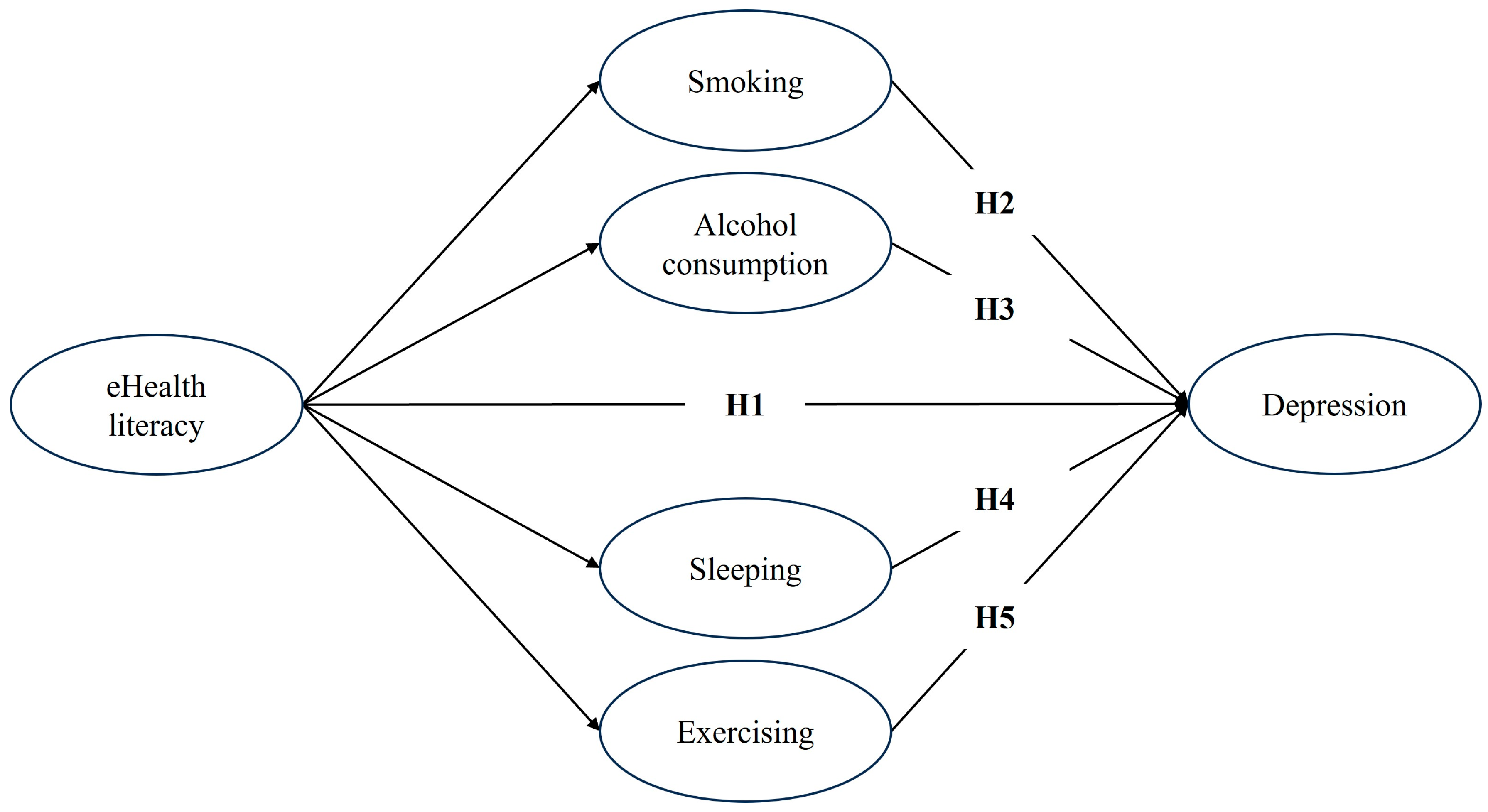
Figure 1: The conceptual model.
2.1 Participants and Procedures
We recruited 1317 young or middle-aged adults aged from 18 to 60 using convenience sampling in eight provinces of China (Hebei, Inner Mongolia, Shanxi, Shandong, Fujian, Jiangxi, Guizhou, and Guangxi) from 12 to 22 March 2026. An online questionnaire based on the Credamo survey platform (https://www.credamo.com/#/) was sent to residents, who voluntarily completed the questionnaire. 32 participants who left half of the questionnaire unanswered and 5 participants who provided incorrect answers to the attention check item were excluded, resulting in 1280 participants included in the formal analysis (Meanage = 39.55 years, SDage = 10.53, 56.72% females). The descriptive information of samples in terms of gender, educational attainment, employment status, marital status, and income level is shown in Table 1. The samples included individuals from different groups divided by gender, educational attainment, employment status, marital status, and income level.
The study design and the procedure used to collect data were approved by the Medical Ethics Committee of Tsinghua University (THU-01-2026-0014), and the ethics approval was obtained before 12 March 2026. All participants approved informed consents.
2.2.1 Sociodemographic Information
Sociodemographic information was measured by 6 self-constructed items about participants’ age, gender, educational attainment, employment status, marital status, and income level. All of the items about sociodemographic information were included as control variables in the following analysis. The item measuring age was an open-ended question in which participants reported their age. The items measuring gender, educational attainment, employment status, marital status, and income level were multiple-choice questions, and the meanings of their values are shown in Table 1.
Table 1: Descriptive information and meanings of variable values.
| Variables | Values | Meanings | Frequency (%) |
|---|---|---|---|
| Gender | 0 | Female | 726 (56.72%) |
| 1 | Male | 554 (43.28%) | |
| Educational attainment | 0 | College or below | 575 (44.92%) |
| 1 | Bachelor’s degree or higher | 705 (55.08%) | |
| Employment status | 0 | Unemployed or students | 179 (13.98%) |
| 1 | Employed | 1101 (86.02%) | |
| Marital status | 0 | Without a Spouse | 284 (22.19%) |
| 1 | With a Spouse | 996 (77.81%) | |
| Income level | 0 | ≤5000 CNY | 718 (56.09%) |
| 1 | >5000 CNY | 562 (43.91%) |
eHealth literacy was measured using the Chinese version of eHEALS [56]. The scale consists of 8 items, for example, “I know how to find helpful health information on the Internet”. Each item was rated on a 5-point scale, ranging from “1 = completely untrue” to “5 = completely true”. The mean score of the 8 items was used in the formal analysis, with higher scores indicating higher levels of eHealth literacy. The Cronbach’s alpha was 0.96 in the current dataset, indicating good validation [57].
Depression was measured using the Chinese version of CESD-10 [58]. The scale consists of 10 items. For 8 items about negative feeling (e.g., “I felt depressed”), each of them was rated by a 4-point scale about the frequency of a certain feeling over the past week, with “1 = 0 day”, “2 = 1–3 days”, “3 = 4–6 days”, and “4 = 7 days”. 2 items on positive feelings (e.g., “I was happy”) were coded in reverse, with “1 = 7 days”, “2 = 4–6 days”, “3 = 1–3 days”, and “4 = 0 days”. The mean score of 10 items was used in the formal analysis, with higher scores indicating higher levels of depression. The Cronbach’s alpha was 0.84 in the current dataset, indicating good validation [57].
Lifestyle Behaviors were measured by four self-constructed items about participants’ lifestyle behaviors in terms of smoking, alcohol consumption, sleeping, and exercising. The item measuring smoking behavior was “How many days in the past week did you smoke”, with “0 = Yes” and “1 = No”. The item measuring alcohol consumption behavior was “How many days in the past week did you consume alcohol”, with “1 = 7 days”, “2 = 4–6 days”, “3 = 1–3 days”, and “4 = 0 day”. The joint consensus statement of the American Academy of Sleep Medicine and the Sleep Research Society recommends that adults obtain 7 h or more of sleep per night [59], so the item measuring sleeping behavior was “How many days in the past week did you sleep at least 7 h”, with “1 = 0 day”, “2 = 1–3 days”, “3 = 4–6 days”, and “4 = 7 days.” WHO guidelines recommend that adults engage in at least 150 min of physical activity per week, equivalent to exercising at least 30 min per day across an average of 5 days per week [60]. Therefore, the item measuring exercising behavior was “How many days in the past week did you exercise for at least 30 min”, with “1 = 0 days”, “2 = 1–3 days”, “3 = 4–6 days”, and “4 = 7 days”. For all of these variables, higher scores indicated healthier lifestyle behaviors. Considering that participants recruited through online convenience sampling may be unwilling to complete long or complex questionnaires, we adopted the above four self-constructed single-item questions rather than existing multi-item questions to measure their lifestyle behaviors. This measurement could reduce respondent burden and questionnaire length in the context of an online survey, thereby improving participants’ willingness to respond and the quality of their responses.
The data was analyzed in four steps. First, Harman’s single-factor test was conducted as a preliminary diagnostic for common method bias (CMB). The first unrotated factor accounted for 28.265% of the total variance, which was below the commonly used threshold. However, Harman’s test cannot fully rule out potential CMB, and the following findings should be interpreted with caution. Second, the Pearson correlation analysis was used to investigate the associations between eHealth literacy, depression, smoking habit, alcohol consumption habit, sleeping habit, exercising habit, and sociodemographic items. Third, ordinary least squares regression was used to investigate the association between eHealth literacy and depression. Fourth, regression was conducted using Model 4 of the PROCESS macro in SPSS 27.0 (IBM Corp., Armonk, NY, USA) to investigate the mediating roles of smoking, alcohol consumption, sleeping, and exercising in the association between eHealth literacy and depression. The 5000-times bootstrapping method and 95% confidence interval (CI) were used to estimate the indirect effects. The threshold for statistical significance used in the above analysis was two-tailed p < 0.05.
3.1 Results of Correlation Analysis
In the preliminary analysis, correlation analysis was conducted to describe the bivariate associations among depression, eHealth literacy, smoking, alcohol consumption, sleeping, exercising, age, gender, educational attainment, employment status, marital status, and income level.
The results of the correlation analysis are presented in Table 2. It can be observed that eHealth literacy has a significantly negative association with depression score (r = −0.477, p < 0.001), which indicates that individuals with higher levels of eHealth literacy on average report lower levels of depression, providing preliminary support for H1.
Table 2: Correlation analysis of variables.
| 1 | 2 | 3 | 4 | 5 | 6 | 7 | 8 | 9 | 10 | 11 | 12 | |
|---|---|---|---|---|---|---|---|---|---|---|---|---|
| 1. Depression | 1 | |||||||||||
| 2. eHealth | −0.477*** | 1 | ||||||||||
| 3. Healthy smoking | −0.197*** | 0.165*** | 1 | |||||||||
| 4. Healthy alcohol | −0.189*** | 0.173*** | 0.606*** | 1 | ||||||||
| 5. Sleep | −0.292*** | 0.235*** | 0.115*** | 0.112*** | 1 | |||||||
| 6. Exercise | −0.295*** | 0.264*** | 0.156*** | 0.162*** | 0.328*** | 1 | ||||||
| 7. Age | −0.114*** | −0.045 | −0.163*** | −0.167*** | 0.068** | 0.202*** | 1 | |||||
| 8. Gender | 0.054* | −0.036 | −0.341*** | −0.287*** | −0.043 | −0.049* | 0.087*** | 1 | ||||
| 9. Educational attainment | −0.153*** | 0.185*** | −0.003 | −0.057** | 0.129*** | 0.052* | −0.115*** | −0.016 | 1 | |||
| 10. Employment status | −0.031 | 0.052* | 0.030 | 0.005 | −0.011 | −0.001 | 0.139*** | −0.048* | 0.225*** | 1 | ||
| 11. Marital status | −0.073*** | −0.047* | −0.026 | −0.044 | 0.047* | 0.148*** | 0.655*** | −0.012 | −0.089*** | 0.267*** | 1 | |
| 12. Income level | −0.141*** | 0.118*** | −0.147*** | −0.214*** | 0.147*** | 0.035 | 0.164*** | 0.066** | 0.242*** | 0.0120 | 0.075*** | 1 |
In addition, eHealth literacy has significantly positive correlations with healthy smoking habit (r = 0.165, p < 0.001), healthy alcohol consumption habit (r = 0.173, p < 0.001), healthy sleeping habit (r = 0.235, p < 0.001) and healthy exercising habit (r = 0.264, p < 0.001). This suggests that individuals with higher levels of eHealth literacy are more likely to have healthy habits in terms of smoking, alcohol consumption, sleeping, and exercising. At the same time, depression has significantly negative correlations with healthy habits in terms of smoking (r = −0.197, p < 0.001), alcohol consumption (r = −0.189, p < 0.001), sleeping (r = −0.292, p < 0.001), and exercising (r = −0.295, p < 0.001). This indicates that individuals who have healthier habits in terms of smoking, alcohol consumption, sleeping, and exercising have lower levels of depression. These findings provide preliminary support for H2 to H5.
3.2 Results of Regression Models
Regression was used to estimate the association between eHealth literacy and depression. In the regression model, the dependent variable was depression, the core independent variable was eHealth literacy, and control variables included age, gender, educational attainment, employment status, marital status, and income level. The results of the regression models are presented in Table 3. As shown in Model 1 of Table 3, eHealth literacy has a significantly negative association with depression (β = −0.303, 95%CI [−0.337, −0.268], p < 0.001), when control variables are not included. As shown in Model 3 of Table 3, eHealth literacy still has a significantly negative association with depression (β = −0.294, 95%CI [−0.330, −0.258], p < 0.001), when control variables are included. Comparing Model 2 and Model 3 of Table 3, the inclusion of eHealth literacy in the regression model with only control variables increases the R2 from 0.053 to 0.258, indicating that eHealth literacy has an important explanatory power for depression. These results suggest that individuals with higher levels of eHealth literacy have lower levels of depression, which supports H1.
Table 3: Regression analysis of the association between eHealth literacy and depression.
| Independent Variable | Dependent Variable: Depression | ||
|---|---|---|---|
| Model 1 | Model 2 | Model 3 | |
| eHealth | −0.303*** | −0.294*** | |
| (0.018) | (0.018) | ||
| Age | −0.007*** | −0.007*** | |
| (0.002) | (0.002) | ||
| Gender | 0.080* | 0.060* | |
| (0.032) | (0.028) | ||
| Educational attainment | −0.174*** | −0.093** | |
| (0.036) | (0.032) | ||
| Employment status | 0.042 | 0.063 | |
| (0.052) | (0.045) | ||
| Marital status | −0.007 | −0.029 | |
| (0.052) | (0.048) | ||
| Income level | −0.103** | −0.055 | |
| (0.034) | (0.031) | ||
| Constant | 2.872*** | 2.083*** | 3.143*** |
| (0.070) | (0.081) | (0.103) | |
| N | 1280 | 1280 | 1280 |
| R2 | 0.228 | 0.053 | 0.258 |
3.3 Results of Mediation Analysis
Regression was also used to investigate the potential mediating roles of lifestyle behaviors. Specifically, Model 4 of the PROCESS macro in SPSS with 5000 bootstrap samples to examine the mediating roles of smoking, alcohol consumption, sleeping, and exercising.
The results of each regression model are shown in Table 4. When smoking, alcohol consumption, sleeping, and exercising are used as dependent variables, eHealth literacy has significantly positive associations with smoking (β = 0.064, 95%CI [0.044, 0.084], p < 0.001), alcohol consumption (β = 0.142, 95%CI [0.098, 0.186], p < 0.001), sleeping (β = 0.219, 95%CI [0.161, 0.277], p < 0.001), and exercising (β = 0.285, 95%CI [0.230, 0.339], p < 0.001). When depression is used as the dependent variable, all of eHealth literacy (β = −0.241, 95% CI [−0.278, −0.204], p < 0.001), smoking (β = −0.151, 95%CI [−0.271, −0.032], p = 0.013 < 0.05), alcohol consumption (β = −0.071, 95%CI [−0.138, −0.004], p = 0.039 < 0.05), sleeping (β = −0.077, 95%CI [−0.111, −0.042], p < 0.001), and exercising (β = −0.057, 95%CI [−0.089, −0.026], p < 0.001) have significantly negative associations with depression. These results are consistent with those of the correlation analysis, statistically suggesting the potential mediating roles of smoking, alcohol consumption, sleeping, and exercising in the association between eHealth literacy and depression. In addition, we calculated the variance inflation factor (VIF) for each independent variable in the regression model including all independent variables to assess the potential impact of multicollinearity. The results show that the maximum VIF value was 1.96, which was well below the commonly used threshold of 10, statistically suggesting that the multicollinearity was not serious.
Table 4: Regression analysis of mediating roles of smoking, alcohol consumption, sleeping, and exercising on the association between eHealth literacy and depression.
| Independent Variables | Dependent Variables | ||||
|---|---|---|---|---|---|
| Smoke | Alcohol | Sleep | Exercise | Depression | |
| eHealth | 0.064*** | 0.142*** | 0.219*** | 0.285*** | −0.241*** |
| (0.010) | (0.022) | (0.030) | (0.028) | (0.019) | |
| Smoke | −0.151* | ||||
| (0.061) | |||||
| Alcohol | −0.071* | ||||
| (0.034) | |||||
| Sleep | −0.077*** | ||||
| (0.017) | |||||
| Exercise | −0.057*** | ||||
| (0.016) | |||||
| Age | −0.006*** | −0.010*** | 0.006 | 0.019*** | −0.007*** |
| (0.001) | (0.002) | (0.003) | (0.003) | (0.002) | |
| Gender | −0.215*** | −0.340*** | −0.090 | −0.107* | −0.009 |
| (0.019) | (0.036) | (0.051) | (0.050) | (0.029) | |
| Educational attainment | −0.017 | −0.087* | 0.171** | 0.109* | −0.082** |
| (0.020) | (0.038) | (0.055) | (0.053) | (0.031) | |
| Employment status | 0.012 | 0.003 | −0.170* | −0.199* | 0.040 |
| (0.031) | (0.060) | (0.080) | (0.079) | (0.043) | |
| Marital status | 0.081** | 0.124* | 0.069 | 0.114 | 0.004 |
| (0.029) | (0.058) | (0.085) | (0.081) | (0.046) | |
| Income level | −0.082*** | −0.245*** | 0.169** | −0.086 | −0.077* |
| (0.019) | (0.036) | (0.055) | (0.054) | (0.031) | |
| Constant | 0.920*** | 3.762*** | 1.804*** | 0.410** | 3.709*** |
| (0.057) | (0.119) | (0.167) | (0.142) | (0.145) | |
| N | 1280 | 1280 | 1280 | 1280 | 1280 |
| R2 | 0.178 | 0.173 | 0.084 | 0.126 | 0.313 |
The results of the separate analysis of the mediating roles of four lifestyle behaviors are shown in Table 5 and Fig. 2. It can be observed that the total magnitude of the association between eHealth literacy and depression is −0.294. Among these, the total magnitude of these four mediations is −0.053, accounting for 18.027% of the total magnitude. First, eHealth literacy is associated with depression via smoking (Mediation 1), with a magnitude value of −0.010, accounting for 18.868% of the total indirect association. Second, eHealth literacy is associated with depression via alcohol consumption (Mediation 2), with a magnitude value of −0.010, accounting for 18.868% of the total indirect association. Third, eHealth literacy is associated with depression via sleeping (Mediation 3), with a magnitude value of −0.017, accounting for 32.075% of the total indirect association. Fourth, eHealth literacy is associated with depression via exercising (Mediation 4), with a magnitude value of −0.016, accounting for 30.189% of the total indirect association. Each of the four mediations has a significant level, with a 95%CI that does not include 0.
Table 5: Separate analysis of the mediating roles of four lifestyle behaviors.
| Mediation | Effect | Boot SE | 95% CI | Relative Mediation | |
|---|---|---|---|---|---|
| Boot LLCI | Boot ULCI | ||||
| Ratio in total association: | |||||
| Total mediation | −0.053 | 0.007 | −0.068 | −0.040 | 18.027% |
| Ratio in total indirect association: | |||||
| Mediation 1: Smoking | −0.010 | 0.004 | −0.019 | −0.002 | 18.868% |
| Mediation 2: Alcohol consumption | −0.010 | 0.005 | −0.021 | −0.002 | 18.868% |
| Mediation 3: Sleeping | −0.017 | 0.005 | −0.026 | −0.009 | 32.075% |
| Mediation 4: Exercising | −0.016 | 0.005 | −0.026 | −0.007 | 30.189% |
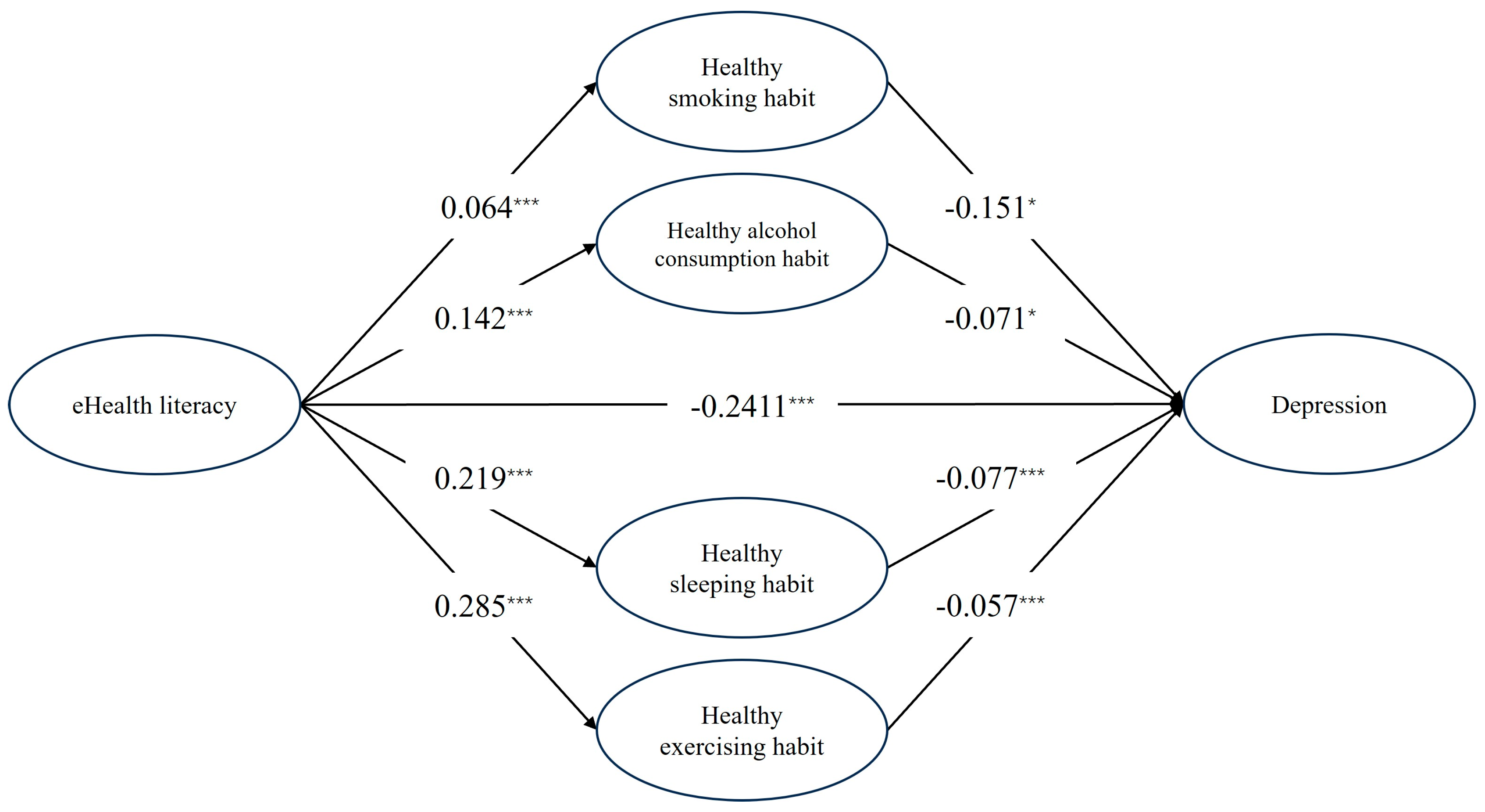
Figure 2: The mediating roles of lifestyle behaviors. Note: *p < 0.05, ***p < 0.001.
Young and middle-aged adults in China face substantial occupational and academic pressures, which may lead to depression [50,51,52,53,54], and impose health and economic burdens on both individuals and society [20,21,22]. The development of digital technologies provides potential solutions to this issue. eHealth literacy is the ability related to whether young and middle-aged adults in China can use digital channels to obtain health information and thereby promote mental health [30,31,32]. This study investigated the association between eHealth literacy and depression among young and middle-aged adults in China, as well as the mediating roles of four lifestyle behaviors. The results suggest that eHealth literacy is negatively associated with depression. Furthermore, the findings statistically suggest the mediating roles of smoking, alcohol consumption, sleeping, and exercising in the association between eHealth literacy and depression. These findings not only reveal the potential benefits of eHealth literacy, but also provide new perspectives for policymakers and health-related organizations in the field of mental health.
4.2 Interpretations of Findings
4.2.1 Interpretation of Association between eHealth Literacy and Depression
This study found a significantly negative association between eHealth literacy and depression among young and middle-aged adults in China. In other words, individuals with higher eHealth literacy are more likely to report lower levels of depression, whereas those with lower eHealth literacy are more likely to report higher levels of depression. This finding is consistent with previous studies conducted in other population groups [13,14,15]. In the digital era, an increasing number of organizations provide health information through digital channels such as the Internet. At the same time, more individuals obtain such information through these digital channels. Existing research indicates that young and middle-aged adults are particularly receptive to these digital channels [55].
eHealth literacy refers to individuals’ ability to obtain, understand, evaluate, and apply health information from digital channels [30,31,32]. This type of ability is highly related to whether individuals can effectively use health information from digital channels to maintain their mental health. Individuals with higher eHealth literacy could access more and higher-quality health information through digital channels and make more effective use of them to prevent depression, which may be beneficial to their mental health [10]. In contrast, individuals with lower eHealth literacy may encounter difficulties in understanding and evaluating health information from digital channels, which may be unfavorable to their mental health [16]. Therefore, eHealth literacy is negatively associated with depression.
The magnitude of the association between eHealth literacy and depression was noticeable. Numerically, the estimated coefficient of eHealth literacy in the regression model was −0.2939, statistically indicating that a one-unit increase in eHealth literacy measured by the eHEALS was associated with an average decrease of 0.2939 units in depression measured by the CESD-10. Comparatively, eHealth literacy, like important socioeconomic factors that have been shown in previous studies (e.g., educational attainment and income level) [61,62], is negatively associated with depression, which indicates the potential benefits of eHealth literacy in the field of mental health. It should be noted that the above interpretation of the magnitude of the association between eHealth literacy and depression may not fully capture the complexity of the relevant information. More precise estimation and comparison of the magnitude may require future studies employing more refined measurements.
4.2.2 Interpretation of Mediating Roles of Lifestyle Behaviors
The results of this study statistically suggest the mediating roles of smoking, alcohol consumption, sleeping, and exercising in the association between eHealth literacy and depression among young and middle-aged adults in China.
Specifically, eHealth literacy is significantly positively associated with healthy habits in terms of smoking, alcohol consumption, sleeping, and exercising. The KAP model provides an explanation for these results. The KAP model conceptualizes the process of behavioral change as consisting of three stages: knowledge acquisition, attitude formation, and behavioral change [39]. Knowledge acquisition forms the foundation of behavioral change, while attitudes provide the motivation for such change [40]. eHealth literacy encompasses individuals’ ability to obtain, understand, and evaluate health information from digital channels. This ability could increase individuals’ knowledge, while the ability to understand and evaluate such health information enables individuals to form scientific beliefs about healthy lifestyle behaviors, which in turn motivate the adoption of healthy lifestyle behaviors. Higher eHealth literacy may also reflect stronger human capital. Individuals with higher levels of eHealth literacy may have better mental health, which may help them provide longer-term and higher-quality labor to the labor market. Moreover, eHealth literacy may represent an ability that helps reduce information frictions related to health. In the digital environment of health information, the quantity and quality of information may be similar for all individuals, whereas individuals’ abilities to process such information may differ, which may contribute to health inequities. Individuals with higher eHealth literacy may face fewer difficulties in obtaining, understanding, evaluating, and applying health information, which may be beneficial to equity in the health field. In general, eHealth literacy is significantly associated with smoking, alcohol consumption, sleeping, and exercising.
Furthermore, these lifestyle behaviors could have physiological, neurological, psychological, and social associations with depression. First, smoking and alcohol consumption could be neurologically and socially associated with depression. In terms of neurogenesis, smoking and alcohol consumption may contribute to abnormal development of the prefrontal cortex, which may disrupt neurogenesis and trigger depression [47]. In terms of social relationships, smoking and alcohol consumption may lead to educational and occupational failures, which are potential contributors to depression [49]. Second, sleep could be neurologically associated with depression, as adequate sleep could help maintain the development of the prefrontal cortex [46]. Third, exercising could be physiologically and psychologically associated with depression. In terms of physiology, appropriate exercise could help reduce biomarkers associated with depression, such as inflammation and cortisol [45]. In terms of psychology, higher levels of exercise are often associated with greater psychological resilience and better psychological adjustment, which may make individuals less likely to experience depression [48].
It should be noted that although the mediating roles of these four lifestyle behaviors were statistically significant, their total magnitude was small. Therefore, these four lifestyle behaviors partially mediated the association between eHealth literacy and depression, and there may be other mediating factors (e.g., salt and oil control, diet, and physical examinations) in the association, which is recommended to be investigated by future research.
4.3 Contributions and Implications
This study could contribute to existing knowledge from several aspects.
First, it identifies the significantly negative association between eHealth literacy and depression among young and middle-aged adults in China. Given this population’s high susceptibility to depression and strong acceptance of digital channels, identifying the relationship between eHealth literacy and depression is of great importance for promoting their mental health.
Second, this study finds the mediating roles of smoking, alcohol consumption, sleeping, and exercising in the association between eHealth literacy and depression. This finding provides an explanation enhancing the plausibility of the observed statistical association.
Third, the findings of this study have important practical implications for various stakeholders, such as policymakers, enterprises, healthcare institutions, and individuals. These stakeholders could take actions based on the findings of this study that eHealth literacy and healthy lifestyle behaviors may be beneficial to mental health.
The findings of this study have the following implications for multiple stakeholders.
First, these findings demonstrate to policymakers the potential benefits of eHealth literacy in the field of mental health. Policymakers could improve individuals’ eHealth literacy by developing policies or providing community services, that enable individuals to obtain more health information from digital channels and use such information in a better manner, which may be beneficial to their mental health.
Second, enterprises and healthcare institutions could utilize digital channels such as the Internet to provide health information for individuals. With the development of digital technology and the improvement of individuals’ eHealth literacy, more and more individuals can access health information through these digital channels, which may help them form healthier lifestyles.
Third, young and middle-aged adults could improve their eHealth literacy and proactively use digital channels to obtain health information. Based on such information, they could develop a healthier lifestyle in terms of smoking, alcohol consumption, sleeping, and exercising, which may be favorable to their mental health.
4.4 Limitations and Future Research
This study also has several limitations.
First, there is a limitation about the measurement. Variables in this study were self-reported and collected in the same instrument. Although Harman’s method was adopted to examine CMB, the bias caused by CMB could not be totally excluded, and it may lead to an overestimation of the correlation. In addition, sleep and exercise were measured by the number of days meeting thresholds in the past week, without considering sleep quality or exercise intensity, which may lose some information about lifestyle behaviors. Moreover, the four lifestyle behaviors were measured using self-constructed single-item questions. Although single-item questions may reduce respondent burden and questionnaire length to improve participants’ willingness to respond and the quality of their responses, internal reliability cannot be statistically tested for single items. We suggest future research employ more appropriate measurements (e.g., behavioral tracking data or multiple-item measurements) to reduce measurement bias and examine the findings of this study.
Second, there is a limitation in the sampling. We collected data from eight provinces in China using online convenience sampling. The sampling approach may lead to selection bias because residents with higher levels of digital literacy and digital access were more likely to see and be willing to complete the online questionnaire, which may result in insufficient representation of residents with lower eHealth literacy. Additionally, the sample obtained by a convenience sampling method is inherently non-probability based, which may not be representative of the general young and middle-aged population. Therefore, the generalization of the findings to other populations should be made with caution.
Third, there was a limitation regarding the variables controlled in this study. Although this study found a significant association between eHealth literacy and depression, this relationship may be mixed with other correlated traits, such as cognitive ability, noncognitive skills, digital access, and personality traits. For example, high digital literacy and digital access may be highly correlated to both eHealth literacy and depression. However, these potentially correlated traits were not controlled in this study, which may lead to the overestimation of the association between eHealth literacy and depression. Future research could try to measure and control these variables to obtain a purer magnitude of the relationship between eHealth literacy and depression.
Fourth, there was a limitation about potential endogeneity caused by reverse causality, omitted variables, and simultaneity. For reverse causality, depression may also influence eHealth literacy. Individuals with lower levels of depression may have greater motivation to seek health information through digital channels, manifesting higher eHealth literacy. For omitted variables, some factors that may simultaneously influence eHealth literacy and depression were not measured and controlled, such as cognitive ability, digital access, personality traits, and noncognitive skills. For simultaneity, lifestyle behaviors and depression may influence each other. For example, poor sleep and exercising may contribute to depression, while depression may also negatively affect sleep quality and exercising. Therefore, the results of this study should be interpreted as correlations rather than causal relationships, and future research could use longitudinal data and experimental design to address endogeneity and examine the findings of this study.
Fifth, there was a limitation in terms of model setting. Smoking behavior and alcohol consumption showed a relatively high correlation in the correlation analysis, which may be attributable to multicollinearity or potential sequential mediation. Although the VIF values indicated that multicollinearity among variables was not serious, the parallel-mediation model adopted in this study cannot capture potential sequential mediations. In addition, the PROCESS models used in this study to examine mediations relied on several strong assumptions, such as that mediators are conditionally exogenous. Due to data limitations, the conditional exogeneity of mediators was not empirically demonstrated. Therefore, this study did not interpret the relevant findings as causal mechanisms but rather as statistically potential mediating roles of lifestyle behaviors. Future research could collect more comprehensive data to examine causal mechanisms and construct alternative models to investigate whether sequential mediations exist.
Given the high susceptibility to depression and strong acceptance of health information from digital channels among young and middle-aged adults, this study investigates the association between eHealth literacy and depression in this population group. Evidence from China shows that there is a significantly negative association between eHealth literacy and depression among young and middle-aged adults. Furthermore, smoking, alcohol consumption, sleep, and exercise may play mediating roles in the association. The findings of this study highlight the importance of eHealth literacy in the field of mental health. In addition, the results suggest that improving these behaviors may be beneficial to mental health.
Acknowledgement:
Funding Statement: This work was supported by the National Natural Science Foundation of China (72441022), the National Social Science Foundation of China (25CSH093), Tsinghua University Initiative Scientific Research Program (2024TSG06402), Shuimu Tsinghua Scholar Program (2024SM205).
Author Contributions: Conceptualization, Tianran Wang, Sijiu Wang and Wannian Liang; Methodology, Tianran Wang and Yiran Wang; Software, Tianran Wang and Yiran Wang; Validation, Wenwen Liu, Chenyu Yan and Ning Zhang; Formal analysis, Tianran Wang and Yiran Wang; investigation, Tianran Wang, Yiran Wang, Wenwen Liu, Chenyu Yan and Ning Zhang; Resources, Yangxin Huang; Data curation, Yangxin Huang; Writing—original draft preparation, Tianran Wang, Yiran Wang; Writing—review and editing, Yangxin Huang, Wenwen Liu, Chenyu Yan and Ning Zhang; Visualization, Yangxin Huang; supervision, Sijiu Wang and Wannian Liang; Project administration, Ning Zhang and Yangxin Huang; Funding acquisition, Tianran Wang, Yiran Wang, Ning Zhang and Wannian Liang. All authors reviewed and approved the final version of the manuscript.
Availability of Data and Materials: The data that support the findings of this study are available from the Corresponding Author [Yangxin Huang], upon reasonable request.
Ethics Approval: This study has been approved by the Medical Ethics Committee of Tsinghua University (THU-01-2026-0014). All participants approved informed consents.
Conflicts of Interest: The authors declare no conflicts of interest. The funders had no role in the design of the study; in the collection, analyses, or interpretation of data; in the writing of the manuscript; or in the decision to publish the results.
References
1. World Health Organization . Over a billion people living with mental health conditions—Services require urgent scale-up [Internet]. 2025 [cited 2026 Mar 20]. Available from: https://www.who.int/news/item/02-09-2025-over-a-billion-people-living-with-mental-health-conditions-services-require-urgent-scale-up. [Google Scholar]
2. World Health Organization . Depressive disorder (depression) [Internet]. 2025 [cited 2026 Mar 20]. Available from: https://www.who.int/news-room/fact-sheets/detail/depression. [Google Scholar]
3. Wang Y , Qin C , Chen H , Liang W , Liu M , Liu J . Global, regional, and national burden of major depressive disorders in adults aged 60 years and older from 1990 to 2021, with projections of prevalence to 2050: Analyses from the Global Burden of Disease Study 2021. J Affect Disord. 2025; 374: 486– 94. doi:10.1016/j.jad.2025.01.086. [Google Scholar] [CrossRef]
4. World Health Organization . COVID-19 pandemic triggers 25% increase in prevalence of anxiety and depression worldwide [Internet]. 2025 [cited 2026 Mar 20]. Available from: https://www.who.int/news/item/02-03-2022-covid-19-pandemic-triggers-25-increase-in-prevalence-of-anxiety-and-depression-worldwide. [Google Scholar]
5. World Health Organization . Mental disorders [Internet]. 2025 [cited 2026 Jan 1]. Available from: https://www.who.int/news-room/fact-sheets/detail/mental-disorders. [Google Scholar]
6. Klaufus L , Verlinden E , van der Wal M , Cuijpers P , Chinapaw M , Smit F . Adolescent anxiety and depression: Burden of disease study in 53,894 secondary school pupils in the Netherlands. BMC Psychiatry. 2022; 22( 1): 225. doi:10.1186/s12888-022-03868-5. [Google Scholar] [CrossRef]
7. O’Connor EA , Perdue LA , Coppola EL , Henninger ML , Thomas RG , Gaynes BN . Depression and suicide risk screening: Updated evidence report and systematic review for the US preventive services task force. JAMA. 2023; 329( 23): 2068– 85. doi:10.1001/jama.2023.7787. [Google Scholar] [CrossRef]
8. Wang T , He J , Wang Y , Liu W , Zhang X , Zhang N , et al. The relationship between cities’ digitalization degrees and residents’ health behaviors: An empirical study of 289 cities in China. Glob Transitions. 2026; 8( 1): 223– 30. doi:10.1016/j.glt.2026.01.004. [Google Scholar] [CrossRef]
9. Yang SC , Luo YF , Chiang CH . The associations among individual factors, eHealth literacy, and health-promoting lifestyles among college students. J Med Internet Res. 2017; 19( 1): e15. doi:10.2196/jmir.5964. [Google Scholar] [CrossRef]
10. Castarlenas E , Sánchez-Rodríguez E , Roy R , Tomé-Pires C , Solé E , Jensen MP , et al. Electronic health literacy in individuals with chronic pain and its association with psychological function. Int J Environ Res Public Health. 2021; 18( 23): 12528. doi:10.3390/ijerph182312528. [Google Scholar] [CrossRef]
11. Wu Y , Wen J , Wang X , Wang Q , Wang W , Wang X , et al. Associations between e-health literacy and chronic disease self-management in older Chinese patients with chronic non-communicable diseases: A mediation analysis. BMC Public Health. 2022; 22( 1): 2226. doi:10.1186/s12889-022-14695-4. [Google Scholar] [CrossRef]
12. Okumu M , Logie CH , Byansi W , Cohen F , Nyoni T , Nafula CN , et al. eHealth literacy and digital health interventions: Key ingredients for supporting the mental health of displaced youth living in the urban slums of Kampala, Uganda. Comput Hum Behav. 2025; 162: 108434. doi:10.1016/j.chb.2024.108434. [Google Scholar] [CrossRef]
13. Akingbade O , Adeleye K , Fadodun OA , Fawole IO , Li J , Choi EPH , et al. eHealth literacy was associated with anxiety and depression during the COVID-19 pandemic in Nigeria: A cross-sectional study. Front Public Health. 2023; 11: 1194908. doi:10.3389/fpubh.2023.1194908. [Google Scholar] [CrossRef]
14. Zhu X , Yang F . The association among eHealth literacy, depressive symptoms and health-related quality of life among older people: A cross-section study. Int J Older People Nurs. 2023; 18( 1): e12497. doi:10.1111/opn.12497. [Google Scholar] [CrossRef]
15. Li Q , Fang F , Zhang Y , Tu J , Zhu P , Xi L . eHealth literacy and its outcomes among postsecondary students: Systematic review. J Med Internet Res. 2025; 27: e64489. doi:10.2196/64489. [Google Scholar] [CrossRef]
16. Xu Y , Chen Z . The interactive effects of eHealth literacy and mental health literacy on social media addiction and depression-anxiety-stress in adolescents: Cross-sectional study. J Med Internet Res. 2025; 27: e81741. doi:10.2196/81741. [Google Scholar] [CrossRef]
17. Yang E , Chen F , Yang Y , Zhang Y , Lin H , Zhang Y , et al. Global trends in depressive disorder prevalence and DALYs among young populations: A comprehensive analysis from 1990 to 2021. BMC Psychiatry. 2024; 24( 1): 943. doi:10.1186/s12888-024-06419-2. [Google Scholar] [CrossRef]
18. Moitra M , Santomauro D , Degenhardt L , Collins PY , Whiteford H , Vos T , et al. Estimating the risk of suicide associated with mental disorders: A systematic review and meta-regression analysis. J Psychiatr Res. 2021; 137: 242– 9. doi:10.1016/j.jpsychires.2021.02.053. [Google Scholar] [CrossRef]
19. Greenberg PE , Fournier AA , Sisitsky T , Pike CT , Kessler RC . The economic burden of adults with major depressive disorder in the United States (2005 and 2010). J Clin Psychiatry. 2015; 76( 2): 155– 62. doi:10.4088/jcp.14m09298. [Google Scholar] [CrossRef]
20. Greenberg PE , Fournier AA , Sisitsky T , Simes M , Berman R , Koenigsberg SH , et al. The economic burden of adults with major depressive disorder in the United States (2010 and 2018). PharmacoEconomics. 2021; 39( 6): 653– 65. doi:10.1007/s40273-021-01019-4. [Google Scholar] [CrossRef]
21. Greenberg P , Chitnis A , Louie D , Suthoff E , Chen SY , Maitland J , et al. The economic burden of adults with major depressive disorder in the United States (2019). Adv Ther. 2023; 40( 10): 4460– 79. doi:10.1007/s12325-023-02622-x. [Google Scholar] [CrossRef]
22. Oberst P , Xu N , Munguba H , Zhang C , Zhong A , Zhou T , et al. Environmental and genetic risk factors of depression converge on neuronal dysfunction driven by changes in cholesterol homeostasis. Dev Cell. 2026; 61( 1): 102– 16.e6. doi:10.1016/j.devcel.2025.08.011. [Google Scholar] [CrossRef]
23. Ettman CK , Subramanian M , Fan AY , Adam GP , Abdalla SM , Galea S , et al. Assets and depression in U.S. adults during the COVID-19 pandemic: A systematic review. Soc Psychiatry Psychiatr Epidemiol. 2024; 59( 4): 571– 83. doi:10.1007/s00127-023-02565-2. [Google Scholar] [CrossRef]
24. Wu J , Zhou Y , Hu X , Liu H . Exploring the diversity and determinants of various depression symptoms in youth: Analysis based on the living environments of university students. Front Psychiatry. 2025; 16: 1672561. doi:10.3389/fpsyt.2025.1672561. [Google Scholar] [CrossRef]
25. Wang X , Wei L , Xiao C , Chen B , Zhou W , Yu J , et al. Social determinants of health and depressive symptoms states transitions among middle-aged and older adults: A Markov-based longitudinal study. J Affect Disord. 2026; 394( Pt B): 120685. doi:10.1016/j.jad.2025.120685. [Google Scholar] [CrossRef]
26. Srisoem C , Haddad M , Panyasarawut J , Shi L . Individual and cumulative health and lifestyle risk factors for depressive symptoms in older adults: Evidence from NHANES. Geriatrics. 2026; 11( 1): 5. doi:10.3390/geriatrics11010005. [Google Scholar] [CrossRef]
27. Meppelink CS , van Weert JC , Haven CJ , Smit EG . The effectiveness of health animations in audiences with different health literacy levels: An experimental study. J Med Internet Res. 2015; 17( 1): e11. doi:10.2196/jmir.3979. [Google Scholar] [CrossRef]
28. Nutbeam D . The evolving concept of health literacy. Soc Sci Med. 2008; 67( 12): 2072– 8. doi:10.1016/j.socscimed.2008.09.050. [Google Scholar] [CrossRef]
29. World Health Organization . Health literacy [Internet]. 2024 [cited 2026 Mar 20]. Available from: https://www.who.int/news-room/fact-sheets/detail/health-literacy. [Google Scholar]
30. Norman CD , Skinner HA . eHEALS: The eHealth literacy scale. J Med Internet Res. 2006; 8( 4): e27. doi:10.2196/jmir.8.4.e27. [Google Scholar] [CrossRef]
31. Norman CD . eHealth literacy 2.0: Problems and opportunities with an evolving concept. J Med Internet Res. 2011; 13( 4): e125. doi:10.2196/JMIR.2035. [Google Scholar] [CrossRef]
32. Soellner R , Huber S , Reder M . The concept of eHealth literacy and its measurement: German translation of the eHEALS. J Medium Psychol. 2014; 26( 1): 29– 38. doi:10.1027/1864-1105/a000104. [Google Scholar] [CrossRef]
33. Xu RH , Shi LS , Xia Y , Wang D . Associations among eHealth literacy, social support, individual resilience, and emotional status in primary care providers during the outbreak of the SARS-CoV-2 Delta variant. Digit Health. 2022; 8: 20552076221089789. doi:10.1177/20552076221089789. [Google Scholar] [CrossRef]
34. Zhao Y , Zhao Y , Xie Z , Ziyadan P , Xiu Z , Qi M . The relationship between eHealth literacy and mental health of adult workers: A cross-sectional study. J Psychosoc Nurs Ment Health Serv. 2023; 61( 9): 40– 6. doi:10.3928/02793695-20230322-01. [Google Scholar] [CrossRef]
35. Yang BX , Xia L , Huang R , Chen P , Luo D , Liu Q , et al. Relationship between eHealth literacy and psychological status during COVID-19 pandemic: A survey of Chinese residents. J Nurs Manag. 2021; 29( 4): 805– 12. doi:10.1111/jonm.13221. [Google Scholar] [CrossRef]
36. Fleming J . Health information on the Internet. J R Soc Promot Health. 2003; 123( 1): 10– 1. doi:10.1177/146642400312300109. [Google Scholar] [CrossRef]
37. Win KT , Hassan NM , Bonney A , Iverson D . Benefits of online health education: Perception from consumers and health professionals. J Med Syst. 2015; 39( 3): 27. doi:10.1007/s10916-015-0224-4. [Google Scholar] [CrossRef]
38. Jadad AR , Gagliardi A . Rating health information on the Internet: Navigating to knowledge or to Babel? JAMA. 1998; 279( 8): 611– 4. doi:10.1001/jama.279.8.611. [Google Scholar] [CrossRef]
39. Wang Q , Wu Y , Wang D , Lai X , Tan L , Zhou Q , et al. The impacts of knowledge and attitude on behavior of antibiotic use for the common cold among the public and identifying the critical behavioral stage: Based on an expanding KAP model. BMC Public Health. 2023; 23( 1): 1683. doi:10.1186/s12889-023-16595-7. [Google Scholar] [CrossRef]
40. da Cunha DT , Soon JM , Eluwole KK , Mullan BA , Bai L , Stedefeldt E . Knowledge, attitudes and practices model in food safety: Limitations and methodological suggestions. Food Control. 2022; 141: 109198. doi:10.1016/j.foodcont.2022.109198. [Google Scholar] [CrossRef]
41. Mitsutake S , Shibata A , Ishii K , Oka K . Associations of eHealth literacy with health behavior among adult Internet users. J Med Internet Res. 2016; 18( 7): e192. doi:10.2196/jmir.5413. [Google Scholar] [CrossRef]
42. Tsukahara S , Yamaguchi S , Igarashi F , Uruma R , Ikuina N , Iwakura K , et al. Association of eHealth literacy with lifestyle behaviors in university students: Questionnaire-based cross-sectional study. J Med Internet Res. 2020; 22( 6): e18155. doi:10.2196/18155. [Google Scholar] [CrossRef]
43. Kim K , Shin S , Kim S , Lee E . The relation between eHealth literacy and health-related behaviors: Systematic review and meta-analysis. J Med Internet Res. 2023; 25: e40778. doi:10.2196/40778. [Google Scholar] [CrossRef]
44. Zuo HJ , Mu FZ , Zhang DY , Zhu WD , Zhou N , Zhang Y , et al. The impact of emotional management ability on sleep quality of university students: Chain mediation of physical exercise and electronic health literacy. BMC Psychol. 2025; 13( 1): 1218. doi:10.1186/s40359-025-03535-w. [Google Scholar] [CrossRef]
45. Kandola A , Ashdown-Franks G , Hendrikse J , Sabiston CM , Stubbs B . Physical activity and depression: Towards understanding the antidepressant mechanisms of physical activity. Neurosci Biobehav Rev. 2019; 107: 525– 39. doi:10.1016/j.neubiorev.2019.09.040. [Google Scholar] [CrossRef]
46. Jobson CLM , Renard J , Szkudlarek H , Rosen LG , Pereira B , Wright DJ , et al. Adolescent nicotine exposure induces dysregulation of mesocorticolimbic activity states and depressive and anxiety-like prefrontal cortical molecular phenotypes persisting into adulthood. Cereb Cortex. 2019; 29( 7): 3140– 53. doi:10.1093/cercor/bhy179. [Google Scholar] [CrossRef]
47. Lees B , Meredith LR , Kirkland AE , Bryant BE , Squeglia LM . Effect of alcohol use on the adolescent brain and behavior. Pharmacol Biochem Behav. 2020; 192: 172906. doi:10.1016/j.pbb.2020.172906. [Google Scholar] [CrossRef]
48. Yan C , Liu Y , Xiao T , Zhang T . Psychological resilience and emotional distress as chain mediators between physical activity and short video dependency among adolescents. J Genet Psychol. 2026: 1– 16. doi:10.1080/00221325.2026.2625059. [Google Scholar] [CrossRef]
49. Esmaeelzadeh S , Moraros J , Thorpe L , Bird Y . Examining the association and directionality between mental health disorders and substance use among adolescents and young adults in the U.S. and Canada—A systematic review and meta-analysis. J Clin Med. 2018; 7( 12): 543. doi:10.3390/jcm7120543. [Google Scholar] [CrossRef]
50. Liu A , Wang Y , Li R , Chen Z , Ni J . Academic involution and mental internal friction of college students: The mediating role of academic stress and the moderating role of rumination. Asia Pac Educ Res. 2025; 34( 3): 1001– 10. doi:10.1007/s40299-024-00915-5. [Google Scholar] [CrossRef]
51. Wang Y , Kee DMH . Connecting the dots: Psychosocial safety climate, job stress, burnout and depression in public universities in China. AEDS. 2025; 14( 3): 545– 62. doi:10.1108/aeds-06-2024-0133. [Google Scholar] [CrossRef]
52. Wang J . Occupational stress on depression and sleep among hr professionals in large corporations. Schizophr Bull. 2026; 52( Suppl 1): S138. doi:10.1093/schbul/sbag003.201. [Google Scholar] [CrossRef]
53. Yu W , Liu M , Gao Z , Qi Z , Miao C , Yan W , et al. The impact of quality of work life, professional identity, and job burnout on presenteeism among family doctors: A cross-sectional study in China. Front Public Health. 2026; 14: 1756164. doi:10.3389/fpubh.2026.1756164. [Google Scholar] [CrossRef]
54. Li X . Experience differences and adaptive design strategies for mental health interactive products across different age groups. Schizophr Bull. 2026; 52( Suppl 1): S179– 80. doi:10.1093/schbul/sbag003.261. [Google Scholar] [CrossRef]
55. Tang X , Peng H , Li J , Si M . The impact of digital literacy on health behaviors among middle-aged and older adults: The mediating roles of proactive health awareness and social capital. Front Public Health. 2026; 14: 1735211. doi:10.3389/fpubh.2026.1735211. [Google Scholar] [CrossRef]
56. Ma Z , Wu M . The psychometric properties of the Chinese eHealth literacy scale (C-eHEALS) in a Chinese rural population: Cross-sectional validation study. J Med Internet Res. 2019; 21( 10): e15720. doi:10.2196/15720. [Google Scholar] [CrossRef]
57. Nunnally JC , Bernstein IH . Psychometric Theory. New York, NY, USA: McGraw-Hill; 1978. [Google Scholar]
58. Yu SC , Lin YH , Hsu WH . Applying structural equation modeling to report psychometric properties of Chinese version 10-item CES-D depression scale. Qual Quant. 2013; 47( 3): 1511– 8. doi:10.1007/s11135-011-9604-0. [Google Scholar] [CrossRef]
59. Watson NF , Badr MS , Belenky G , Bliwise DL , Buxton OM , Buysse D , et al. Recommended amount of sleep for a healthy adult: A joint consensus statement of the American academy of sleep medicine and sleep research society. J Clin Sleep Med. 2015; 11( 6): 591– 2. doi:10.5664/jcsm.4758. [Google Scholar] [CrossRef]
60. World Health Organization . WHO guidelines on physical activity and sedentary behaviour [Internet]. 2025 [cited 2026 Jan 1]. Available from: https://www.who.int/publications/i/item/9789240015128. [Google Scholar]
61. Vinueza Veloz MF , Bhatta L , Jones PR , Tesli M , Davey Smith G , Davies NM , et al. Educational attainment and mental health outcomes: A within-sibship Mendelian randomization study. Psychol Med. 2025; 55: e282. doi:10.1017/S0033291725101736. [Google Scholar] [CrossRef]
62. Guo D , Wang Y , Zhao Y , Ding R , Luo Y , Dai W , et al. The longitudinal association between multiple cardiometabolic diseases, socioeconomic status, and depressive symptoms in China. Sci Rep. 2025; 15( 1): 2971. doi:10.1038/s41598-025-87516-4. [Google Scholar] [CrossRef]
Cite This Article
 Copyright © 2026 The Author(s). Published by Tech Science Press.
This work is licensed under a Creative Commons Attribution 4.0 International License , which permits unrestricted use, distribution, and reproduction in any medium, provided the original work is properly cited.
 Downloads
 Citation Tools
