
 Login
Login Register
 Submit a Paper
 Propose a Special lssue
 Open Access
ARTICLE
Parental Achievement Pressure and Emotional and Behavioral Problems in Adolescents: The Mediating Role of Adolescent-Parent Conflict and Adolescent Distress
1 Vocational School of Social Sciences, Department of Child Care and Youth Services, Batman University, Batman, Türkiye
2 Faculty of Health Sciences, Department of Child Development, Kayseri University, Kayseri, Türkiye
3 Vocational School of Health Services, Department of Child Development, Iğdır University, Iğdır, Türkiye
4 Faculty of Health Sciences, Department of Child Development, Inonu University, Malatya, Türkiye
* Corresponding Author: Cihangir Kaçmaz. Email:
International Journal of Mental Health Promotion 2026, 28(9), 7 https://doi.org/10.32604/ijmhp.2026.085990
Received 22 May 2026; Accepted 14 July 2026; Issue published 22 September 2026
 View Full Text
 Download PDF
Abstract
Background: Excessive pressure from parents to achieve academically has been acknowledged as a substantial risk factor associated with adolescents’ psychological adjustment. However, the mechanisms through which parental achievement pressure contributes to adolescents’ emotional and behavioral problems remain insufficiently understood. This study examined the relationship between parental achievement pressure and emotional and behavioral problems in adolescents, with parent–adolescent conflict and adolescent distress as sequential mediators. Methods: A total of 676 adolescents aged 12–15 years from the Batman province of Türkiye participated in the study. Data were collected using the Parental Achievement Pressure Scale, the Adolescent–Parent Conflict Scale, the Adolescent Distress Scale, and the Strengths and Difficulties Questionnaire. Serial mediation analysis was conducted using PROCESS Macro Model 6, with parental achievement pressure as the independent variable, emotional and behavioral problems as the dependent variable, and parent–adolescent conflict and adolescent distress as sequential mediators. Results: Research findings showed that parental achievement pressure (β = 0.140, p = 0.001), parent–adolescent conflict (β = 0.182, p < 0.001), and adolescent distress (β = 0.219, p < 0.001) were positively associated with emotional and behavioral problems. Significant indirect effects were also observed through parent–adolescent conflict (β = 0.097), adolescent distress (β = 0.070), and their sequential pathway (β = 0.021). The final model explained 19.1% of the variance. Conclusions: Our findings indicate that parental achievement pressure may be associated with adolescents’ emotional and behavioral problems both directly and indirectly through parent–adolescent conflict and adolescent distress. These findings emphasize the importance of family- and school-based interventions aimed at reducing excessive achievement pressure, strengthening parent–adolescent communication, and supporting adolescents’ stress-management skills.Keywords
Adolescence is a developmentally sensitive period in terms of mental health and psychosocial adjustment [1]. During this period, adolescents feel a stronger need to make independent decisions, develop their individuality and become relatively independent from parental authority. On the other hand, Smetana et al. [2] note that demands regarding personal choice during adolescence present opportunities for the development of individuality, autonomy and identity. The pressure to achieve academic success faced by adolescents during this period is one of the most common sources of stress they encounter throughout their educational lives. Indeed, it is noted that parental expectations, academic competition, numerous exams, fear of failure, uncertainty about the future, and comparison with others are among the primary sources of academic stress in adolescents [3,4].
Emotional and behavioural problems in adolescents should not be viewed solely as a result of individual characteristics. The family environment, parental expectations, academic pressure and experiences of stress are also associated with adolescents’ psychological adjustment [5,6]. Indeed, family functioning has been associated with adolescents’ emotional and behavioural well-being, whilst adolescents experiencing high academic pressure report more mental health issues [4,5,6]. Particularly in competitive educational contexts where academic success is linked to the future, status and security, parental expectations and academic pressure may be experienced as significant sources of stress and may be associated with poorer psychological adjustment among adolescents [7,8,9]. It is therefore important to examine the associations between parental achievement pressure and emotional and behavioural problems in adolescents, as well as the possible indirect statistical roles of adolescent-parent conflict and adolescent distress in these associations.
1.1 Parental Achievement Pressure and Emotional-Behavioral Problems
Academic pressure is defined as a state of psychological tension arising from internal and external expectations regarding a student’s educational performance [10]. This pressure has a multidimensional structure comprising family-related, school-related and societal sources [11,12,13]. Although academic pressure may originate from parental, school-related and societal sources, the present study focuses specifically on parental achievement pressure. Parental achievement pressure may include high grade expectations, comparison with other children, belittling of success, coercion and restriction [14]. Pascoe et al. [15] noted that secondary and higher education students face various persistent stressors related to academic demands, such as exam preparation, grade anxiety, time management pressure and uncertainty about the future.
It has been reported that pressure to achieve academic success is associated with emotional and behavioural problems in adolescents. For example, Eremsoy et al. [16] reported a significant relationship between academic stress and symptoms of depression and anxiety. Among the factors examined, pressure for academic achievement was one of the variables most strongly associated with depressive symptoms. A separate study [17] has also shown that parental achievement pressure is positively associated with academic stress and school burnout among secondary school students. Furthermore, it has been associated with problematic smartphone use among adolescents [18], aggressive behaviour [19], and poorer family and peer relationships [11].
1.2 The Mediating Role of Adolescent-Parent Conflict
Smetana et al. [2] note that adolescents’ and parents’ perceptions of the legitimacy of parental authority change throughout adolescence, particularly regarding personal and multifaceted issues; adolescents tend to view parental authority as a limited or illegitimate form of intervention in matters they regard as part of their personal sphere. Higher levels of perceived academic pressure may be associated with adolescents perceiving their parents less as supportive figures and more as sources of control and pressure [20]. Indeed, the literature indicates that parental psychological control is associated with maladaptive academic functioning among adolescents [21], and that families’ demands and pressures regarding success are experienced by adolescents as sources of stress and are associated with tension in family relationships [22].
Furthermore, higher levels of adolescent-parent conflict may be associated with a weaker perception of being understood, accepted and supported within the family. Branje et al. [23] found that the frequency of conflict with parents was significantly associated with adolescents’ internalising and externalising problems. In particular, it was shown that when only withdrawal strategies were used to resolve conflict, the frequency of conflict was more strongly associated with externalising problems. Furthermore, it has been reported that a mismatch between parents’ academic expectations and adolescents’ own expectations is associated with externalising problems in adolescents [9]. In light of the findings summarised above, parent-adolescent conflict may represent an indirect statistical pathway in the association between parental achievement pressure and emotional and behavioural problems.
1.3 The Mediating Role of Adolescent Distress
The pressure to achieve academically may be associated with adolescents feeling constantly evaluated, comparing themselves with their peers, and striving to meet their parents’ expectations [17]. Higher parental expectations for academic success have consistently been associated with greater levels of stress among adolescents. In the present study, parental achievement pressure specifically refers to adolescents’ perceptions of achievement-related expectations and pressure originating from their parents. Deb et al. [8] report that 63.5% of students experience stress due to academic pressure. This finding is consistent with an association between academic pressure and psychological distress among adolescents. Indeed, in a separate study, it was found that higher levels of academic pressure were associated with an increase in depressive symptoms [24]. Consistent with these findings, reference [4] demonstrated that academic stress and parental pressure are highly prevalent among adolescents preparing for competitive exams.
Higher levels of distress may be associated with weaker emotion-regulation capacities among adolescents [25]. Rózsa and Kövesdi [26] stated that perceived stress is strongly associated with emotional and behavioural difficulties and that higher stress levels are related to greater internalising and externalising symptoms among adolescents. McLaughlin and Hatzenbuehler [27] found that emotion-regulation difficulties statistically accounted for part of the association between stressful life events and internalising symptoms in adolescents. Furthermore, it was found that, in addition to general stress levels, specific stress areas related to school and the future are significantly associated with emotional and behavioural problems [28]. Consistent with these findings, Wang et al. [7] found in their three-wave longitudinal study with adolescents that academic stress was directly associated with more severe depressive symptoms in the subsequent period. Furthermore, the results indicated that stress associated with academic pressure was indirectly associated with subsequent symptoms of depression and anxiety through loneliness, sleep problems and physical activity [7]. These findings support the presence of both direct and indirect associations between stress and emotional problems in adolescents. When the findings summarised above are considered together, they suggest that higher academic pressure may be associated with higher levels of distress among adolescents and that higher stress may, in turn, be associated with more emotional and behavioural problems.
1.4 The Serial Mediating Role of Adolescent-Parent Conflict and Adolescent Distress
The association between pressure to achieve academically and adolescents’ emotional and behavioural problems may not be limited to a direct relationship. Indirect associations involving psychosocial processes may also be present. Pressure to achieve academically has been associated with tension within family relationships [22]. When parents’ demanding expectations regarding success are perceived as conflicting with adolescents’ need for autonomy, higher levels of parent-adolescent conflict may be reported. Higher levels of conflict may, in turn, be associated with a weaker perception of the family environment as a safe and supportive space. Such family tension may be associated with a greater psychological burden and higher levels of distress among adolescents [24]. Higher levels of distress and stress may be associated with emotion-regulation difficulties and more emotional and behavioural problems [25]. The ordering of parent-adolescent conflict before adolescent distress was theoretically informed by the relational context in which academic pressure is experienced. When achievement-related expectations originating from parents are perceived as controlling or as conflicting with adolescents’ growing need for autonomy, academic pressure may first be reflected in tension and conflict within the parent-adolescent relationship [2,20,22]. Such relational conflict may be associated with a weaker sense of parental understanding, support and belonging, which may in turn correspond to greater psychological distress [23]. This ordering is also consistent with longitudinal research suggesting that parent-adolescent conflict may precede later emotional and psychological difficulties in adolescents [29]. However, longitudinal research also indicates that adolescents’ negative affect and internalising symptoms may be associated with subsequent parent-adolescent conflict [29,30]. Therefore, the proposed ordering represents one theoretically plausible indirect pathway rather than the assumption that conflict necessarily precedes distress. The present study examines whether the observed cross-sectional associations are statistically consistent with this proposed sequence, while recognising that simultaneous, reciprocal or reverse relationships may also be possible.
Previous research has established that academic pressure is associated with adolescents’ emotional and behavioural difficulties and that parent-adolescent conflict and psychological distress are each relevant to adolescent adjustment [5,11,17,23,31]. However, existing studies have generally examined these associations separately or have focused on different mediating variables and more specific outcomes, leaving family-relational and individual psychological processes insufficiently integrated within a single model. Consequently, it remains unclear whether the observed associations are statistically consistent with a theory-informed sequence in which parental achievement pressure is associated with parent-adolescent conflict, which is in turn associated with adolescent distress and broader emotional and behavioural problems. By examining parent-adolescent conflict and adolescent distress simultaneously, the present study evaluates both their separate indirect associations and their proposed sequential indirect association within the same model. This gap is particularly relevant in Türkiye, where adolescents in this age range, particularly those attending eighth grade, may take a nationwide central examination for placement in selective high schools. Because admission to these schools may be perceived by families as providing access to more advantageous educational opportunities, the examination process may heighten parental anxiety and achievement expectations. Previous research in Türkiye has shown that parental achievement pressure is positively associated with adolescents’ test anxiety [13], while studies focusing on the high school entrance examination indicate that parental test anxiety is associated with students’ anxiety and that many eighth-grade students perceive their parents’ examination-related expectations as a source of pressure [32,33]. This educational context makes Türkiye particularly relevant for examining the associations among parental achievement pressure, parent-adolescent conflict, adolescent distress, and emotional and behavioural problems.
This study aims to examine the direct and indirect associations between parental achievement pressure and emotional and behavioural problems through parent-adolescent conflict and adolescent distress. It is anticipated that the findings of this study will contribute to the development of family-based and school-based interventions aimed at supporting adolescent mental health. In line with the research model, the following hypotheses were formulated and tested.
Hypothesis 1 (H1): Parental achievement pressure is positively associated with emotional and behavioural problems in adolescents.
Hypothesis 2 (H2): Adolescent-parent conflict mediates the relationship between parental achievement pressure and emotional and behavioural problems in adolescents.
Hypothesis 3 (H3): Adolescent distress mediates the relationship between parental achievement pressure and emotional and behavioural problems in adolescents.
Hypothesis 4 (H4): Adolescent-parent conflict and adolescent distress act as serial mediators in the relationship between parental achievement pressure and emotional and behavioural problems in adolescents.
This study examined the relationship between parental achievement pressure, parent-adolescent conflict, adolescent distress, and emotional and behavioural problems. In the cross-sectional model, parental achievement pressure was included as the independent variable, parent-adolescent conflict and adolescent distress as mediating variables, and emotional and behavioural problems as the dependent variables. The research model is presented in Fig. 1.
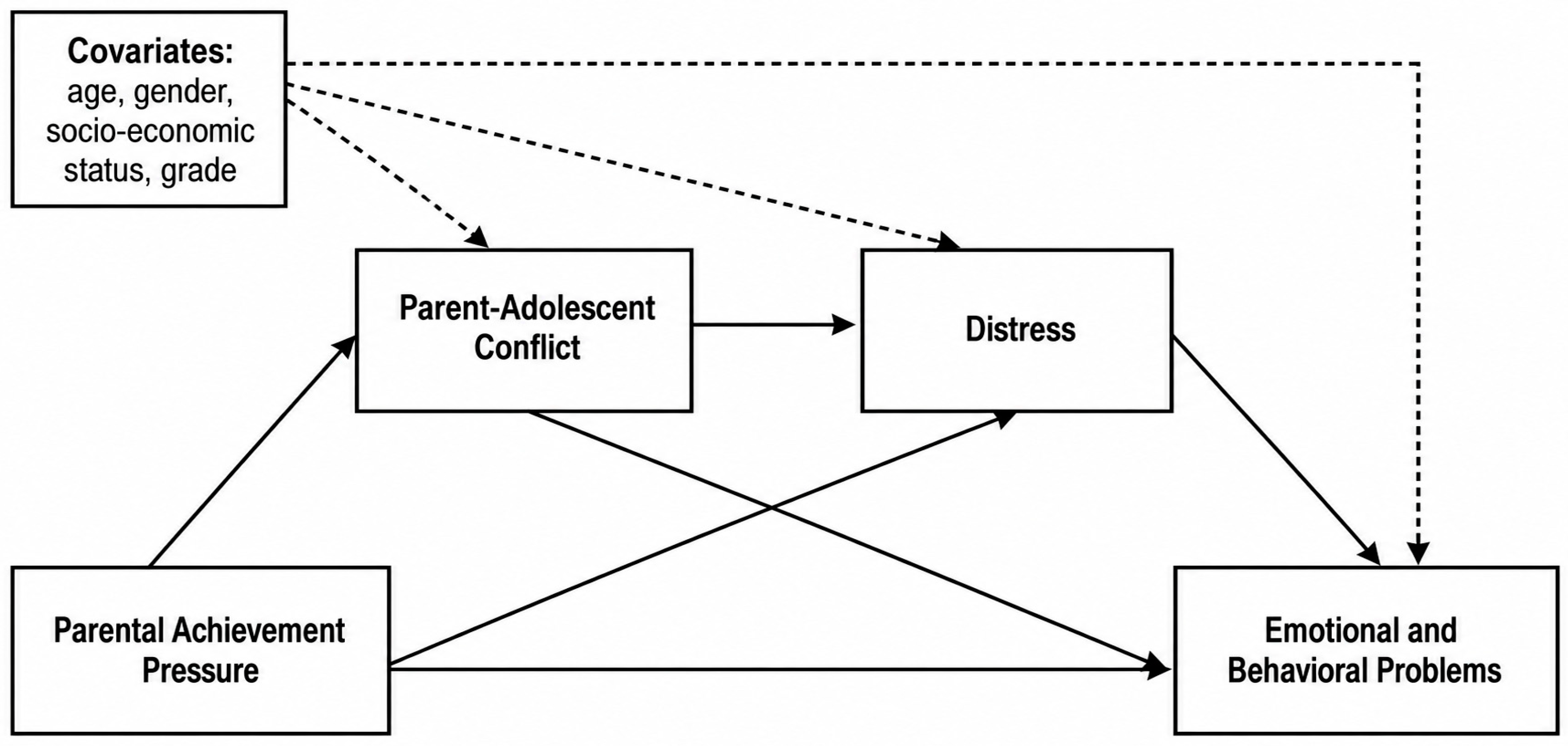
Figure 1: The proposed serial mediation model. The model illustrates both the direct effects of parental achievement pressure on adolescents’ emotional and behavioural problems, and its indirect effects via parent-adolescent conflict and distress. In the model, the adolescents’ age, gender, grade, and socio-economic status were included in the analysis as control variables.
The study sample consisted of a total of 676 adolescents living in the province of Batman Türkiye. A power analysis for multiple linear regression was conducted using the G*Power (3.1.9.7) software to determine the sample size. The analysis assumed a moderate effect size (0.15), a significance level of α = 0.05, a statistical power (1 − β) of 0.95, and seven predictor variables. The analysis determined that a minimum of 153 participants would be sufficient.
The study sample consisted of adolescents attending public secondary schools in Batman Province, Türkiye. A two-stage sampling method was used. At the school level, the principals of public secondary schools in Batman Province were contacted and provided with information about the study’s purpose and procedures. Fourteen public secondary schools whose administrators agreed to participate were included in the study. Thus, school participation was determined based on accessibility and willingness to participate.
At the student level, criterion-based convenience sampling was used to recruit available and consenting Grade 7 and Grade 8 students who met the inclusion criteria. Participation criteria included being enrolled in 7th or 8th grade and not having any previously diagnosed psychiatric or psychological disorders. These grade levels were selected because they represent a particularly significant period in the transition to high school education in Türkiye. At the end of 8th grade, students can take the centralized exam administered under the High School Transition System to gain admission to high schools that select students based on exam performance. Therefore, while 8th grade is considered the exam year, 7th grade is the academic year immediately preceding this period. During this period, academic expectations and preparations for the transition to high school may become more pronounced [34]. Consequently, these grade levels were deemed appropriate for examining the relationship between parents’ perception of pressure to succeed and its association with parent-adolescent conflict, psychological distress, and emotional and behavioral problems.
Data were collected in May and June 2026. Following approval from the participating school administrations, parental consent forms were distributed to the parents of Grade 7 and Grade 8 students. Questionnaires were administered to 694 students for whom written parental consent and student assent had been obtained. The researchers visited the participating classrooms and administered the questionnaires in person. To minimize the potential risk of common method bias during data collection, several procedural measures were implemented. Before completing the questionnaires, students were informed about the purpose of the study, the voluntary nature of participation, the confidentiality of their responses, their right to withdraw without any negative consequences, and that the data would be used solely for scientific purposes. In addition, the scale titles were removed from the questionnaire to reduce similar response patterns and participants’ ability to infer the hypothesized relationships among the variables [35]. Eighteen questionnaires were excluded because missing responses prevented the calculation of scores for one or more primary study variables. Consequently, the final analytic sample consisted of 676 adolescents aged 12–15 years. Of the participants, 374 (55.3%) were enrolled in Grade 7 and 302 (44.7%) were enrolled in Grade 8. The sample included 348 female students (51.5%) and 328 male students (48.5%). Detailed demographic characteristics of the participants are presented in Table 1.
The study was approved by the Batman University Ethics Committee (Date: 22 April 2026; Decision No.: 2026/05-07). All procedures were conducted in accordance with research and publication ethics and the principles of the Declaration of Helsinki.
Table 1: Demographic characteristics of the participants (N = 676).
| Variables | Categories | n (%) |
|---|---|---|
| Gender | Female | 348 (51.5) |
| Male | 328 (48.5) | |
| Age | 12 | 8 (1.2) |
| 13 | 387 (57.2) | |
| 14 | 275 (40.7) | |
| 15 | 6 (0.9) | |
| Mean ± SD | 13.41 ± 0.53 | |
| Grade level | Grade 7 | 374 (55.3) |
| Grade 8 | 302 (44.7) | |
| Mother’s education | High school or below | 516 (76.3) |
| Associate degree | 44 (6.5) | |
| Bachelor’s degree | 81 (12.0) | |
| Graduate degree | 35 (5.2) | |
| Father’s education | High school or below | 374 (55.3) |
| Associate degree | 83 (12.3) | |
| Bachelor’s degree | 127 (18.8) | |
| Graduate degree | 92 (13.6) | |
| Socio-economic status | Low | 29 (4.3) |
| Moderate | 394 (58.3) | |
| High | 253 (37.4) |
2.2.1 Parental Achievement Pressure Scale
The scale was developed by Haspolat and Yalçın [36] to assess the pressure parents place on their children to succeed. The single-dimension scale consists of 15 items and is rated on a 5-point Likert scale (strongly disagree = 1…strongly agree = 5). Higher scores on the scale indicate that students perceive greater academic pressure. Sample items include: “My parents determine the criteria for my success” and “My parents take great pride in my achievements”. The scale’s overall internal consistency coefficient was found to be 0.93. In this study, it was found to be 0.90.
2.2.2 Adolescent-Parent Conflict Scale
It was developed by Eryılmaz and Mammadov [37] to determine the levels of conflict adolescents experience with their parents. The single-dimension scale consists of 12 items and is rated on a 4-point Likert scale (not at all = 1…very much = 4). Higher scores on the scale indicate that adolescents experience more conflict with their parents. Sample items include: “I argue with my mum/dad about my spending” and “My mum/dad and I argue because I’ve been skipping school”. The scale’s internal consistency coefficient was found to be 0.88. In this study, it was determined to be 0.80.
2.2.3 Adolescent Distress-Eustress Scale
The Adolescent Distress–Eustress Scale was developed by Branson, Dry [38] to assess adolescents’ negative and positive responses to stressful demands and was adapted into Turkish by Akgün et al. [39]. The scale consists of 10 items rated on a 5-point Likert-type scale ranging from 0 (not at all like me) to 4 (very much like me). It comprises two five-item subscales: distress and eustress. Distress represents the negative, undesirable, and potentially harmful response to pressure, whereas eustress represents a positive, desirable, and potentially beneficial response. Only the distress subscale was used in the present study because the proposed model specifically focused on the negative psychological response through which perceived parental achievement pressure and parent–adolescent conflict may be associated with emotional and behavioural problems. Eustress reflects adaptive and potentially beneficial responses to pressure and was therefore outside the conceptual scope of the hypothesized risk-oriented model. The distress subscale includes items such as “I felt overwhelmed” and “I felt anxious”. Higher scores indicate greater negative psychological distress. In the present sample, Cronbach’s alpha for the distress subscale was 0.79.
2.2.4 Strengths and Difficulties Questionnaire
The scale, developed by Goodman [40], was designed to identify emotional and behavioral problems in children and adolescents. It was adapted into Turkish by Güvenir et al. [41]. The scale consists of 25 items and is rated on a 3-point Likert scale: not true = 0, somewhat true = 1, and certainly true = 2. The scale includes five subdimensions: emotional symptoms, conduct problems, attention deficit/hyperactivity, peer problems, and prosocial behaviors. For emotional and behavioral problems, a total score is calculated based on all subdimensions except prosocial behaviors. In the present study, the total score was used. Higher scores on the scale indicate higher levels of emotional and behavioral problems. Sample items include “I worry a lot” and “I get very angry and often lose my temper.” The internal consistency coefficient of the scale was reported as 0.73. In the present study, it was found to be 0.71.
The data were analyzed using SPSS version 25.0 (IBM Corp., Armonk, NY, USA) together with the PROCESS macro (Model 6) [42]. Prior to analysis, the issue of multicollinearity—which could compromise model reliability in multivariate analyses—was tested. Tolerance and VIF values were used to assess multicollinearity. Multicollinearity is considered problematic when Tolerance values are below 0.10 and VIF values are above 10 [43]. In this study, it was observed that Tolerance values ranged from 0.62 to 0.97 and VIF values from 1.02 to 1.60 confirming that there was no multicollinearity problem among the variables.
In the data analysis, descriptive statistics and Pearson correlation analysis were first conducted for the variables. A serial mediation analysis was subsequently conducted using Hayes’ PROCESS Macro (Model 6) to evaluate the direct and indirect effects of academic pressure on adolescents’ emotional and behavioural problems. Model 6 tests how the effect of the independent variable on the dependent variable is transmitted through multiple sequential mediating variables [42]. In the model, parent-adolescent conflict and stress were identified as mediating variables. The statistical significance of the indirect effects was evaluated using bootstrap confidence intervals generated from 5000 resamples. The bootstrap method is used as a reliable technique in mediation analyses because it does not require the assumption of a normal distribution [44]. The literature indicates that indirect effects are regarded as statistically significant provided that their confidence intervals exclude zero [42]. Age, gender, grade, and socioeconomic status were included as control variables in the analysis. Control variables serve to reduce the effects on the dependent variable and clearly reveal the relationships between the primary variables [45]. This approach is commonly used in the literature to enhance the explanatory power and internal validity of the model, particularly when explaining relationships between psychological variables.
Collecting data on all study variables at the same time, from the same participants, and through self-report measures posed a potential risk of common method variance. Statistically, potential common method bias was assessed using Harman’s single-factor test [46]. An exploratory factor analysis in which all measurement items were entered simultaneously identified 15 factors with eigenvalues greater than 1. The first factor accounted for 16.159% of the total variance. The absence of a single dominant factor and the fact that the first factor did not explain the majority of the total variance suggest that common method bias was unlikely to have substantially influenced the relationships among the study variables.
3.2 Correlation and Descriptive Statistics Values
Table 2 presents the descriptive statistics and Pearson correlation coefficients for the variables examined in the study. The mean scores were 39.14 (SD = 14.14) for parental achievement pressure, 19.48 (SD = 6.35) for parent–adolescent conflict, 9.70 (SD = 5.65) for adolescent distress, and 15.75 (SD = 5.87) for emotional and behavioral problems. The analysis results indicate that parental achievement pressure exhibits positive and significant relationships with parent-adolescent conflict (r = 0.55, p < 0.01), adolescent distress (r = 0.38, p < 0.01) and emotional and behavioural problems (r = 0.29, p < 0.01). This finding suggests that parental achievement pressure was positively associated with both intra-family relational tension and individual psychological distress. Furthermore, parent-adolescent conflict showed positive and significant correlations with adolescent distress (r = 0.34, p < 0.01) and emotional and behavioural problems (r = 0.30, p < 0.01). Similarly, a significant positive relationship was found between adolescent distress and emotional and behavioural problems (r = 0.34, p < 0.01).
Table 2: Descriptive statistics and correlation analysis results (N = 676).
| Variable | Mean | SD | 1 | 2 | 3 |
|---|---|---|---|---|---|
| 1. PAP | 39.14 | 14.14 | — | ||
| 2. PAC | 19.48 | 6.35 | 0.55** | — | |
| 3. EBP | 15.75 | 5.87 | 0.29** | 0.30** | — |
| 4. DS | 9.70 | 5.65 | 0.38** | 0.34** | 0.34** |
PROCESS Model 6 was used to examine whether the association between parental achievement pressure and emotional and behavioural problems was statistically accounted for by the hypothesized indirect pathways through parent–adolescent conflict and adolescent distress. The regression-based estimates and their 95% confidence intervals are presented in Table 3, and the hypothesized model is shown in Fig. 2. Gender, age, grade and socioeconomic status were included as covariates. Given the cross-sectional nature of the data, the coefficients are interpreted as conditional associations rather than evidence of temporal or causal relationships.
Table 3: Regression-based results for the serial mediation model (Model 6).
| Criterion | Predictor | B | SE | β | t | p-Value | 95% BC Bootstrap CI for B | R2 |
|---|---|---|---|---|---|---|---|---|
| PAC | PAP | 0.693 | 0.044 | 0.536 | 15.89 | <0.001 | [0.609, 0.780] | 0.320 |
| DS | PAP | 0.324 | 0.043 | 0.319 | 7.61 | <0.001 | [0.239, 0.405] | 0.217 |
| PAC | 0.142 | 0.034 | 0.181 | 4.14 | <0.001 | [0.077, 0.209] | ||
| EBP | PAP | 0.148 | 0.046 | 0.140 | 3.23 | <0.001 | [0.056, 0.235] | 0.191 |
| PAC | 0.148 | 0.035 | 0.182 | 4.24 | <0.001 | [0.078, 0.216] | ||
| DS | 0.228 | 0.044 | 0.219 | 5.15 | <0.001 | [0.136, 0.310] |
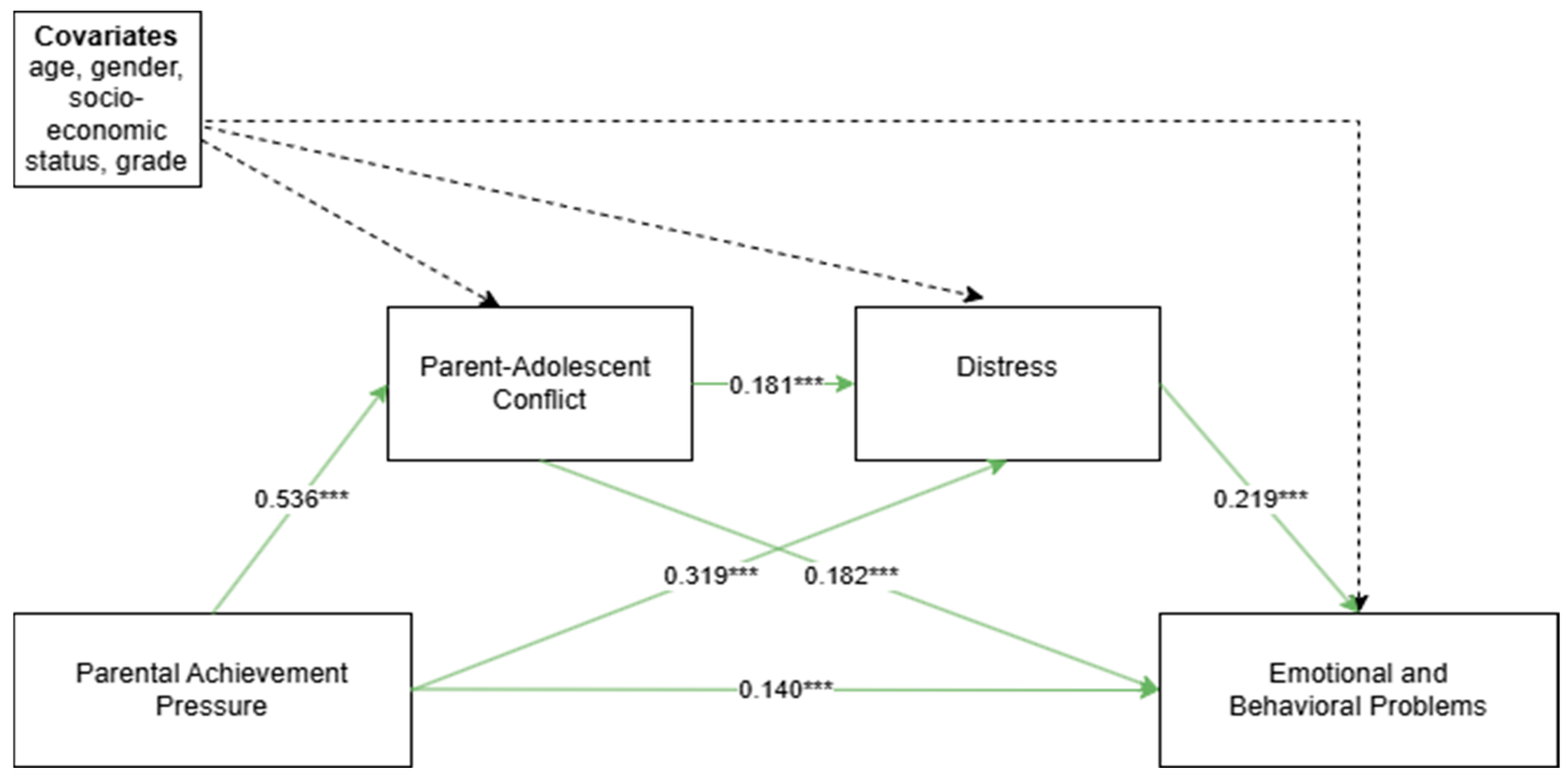
Figure 2: The serial mediation model of parent–adolescent conflict and distress in the association between parental achievement pressure and emotional and behavioral problems. Values displayed on the paths are standardized regression coefficients (β) adjusted for age, gender, grade, and socioeconomic status. ***p < 0.001.
Parental achievement pressure was positively associated with parent–adolescent conflict (B = 0.693, SE = 0.044, β = 0.536, t = 15.89, p < 0.001, 95% BC bootstrap CI [0.609, 0.780]). The complete regression model accounted for 32.0% of the variance in parent–adolescent conflict. In the model predicting adolescent distress, parental achievement pressure was positively associated with adolescent distress (B = 0.324, SE = 0.043, β = 0.319, t = 7.61, p < 0.001, 95% BC bootstrap CI [0.239, 0.405]). Parent–adolescent conflict was also positively associated with adolescent distress after parental achievement pressure and the covariates were taken into account (B = 0.142, SE = 0.034, β = 0.181, t = 4.14, p < 0.001, 95% BC bootstrap CI [0.077, 0.209]). The complete model explained 21.7% of the variance in adolescent distress. In the final regression equation, adolescent distress showed the largest standardized association with emotional and behavioural problems (B = 0.228, SE = 0.044, β = 0.219, t = 5.15, p < 0.001, 95% BC bootstrap CI [0.136, 0.310]). Parent–adolescent conflict was also positively associated with emotional and behavioural problems (B = 0.148, SE = 0.035, β = 0.182, t = 4.24, p < 0.001, 95% BC bootstrap CI [0.078, 0.216]). The direct association between parental achievement pressure and emotional and behavioural problems remained statistically significant but was comparatively smaller in magnitude (B = 0.148, SE = 0.046, β = 0.140, t = 3.23, p = 0.001, 95% BC bootstrap CI [0.056, 0.235]). The complete regression equation accounted for 19.1% of the variance in emotional and behavioural problems.
3.4 Bootstrap Test of the Mediation Effect
A serial mediation analysis was performed using the PROCESS macro (Model 6) to examine whether parent–adolescent conflict and adolescent distress mediated the association between parental achievement pressure and adolescents’ emotional and behavioural problems. The significance of the indirect effects was evaluated using 95% bootstrap confidence intervals. The results obtained from the analysis are reported in Table 4.
Table 4: Total, direct, and indirect effects of parental achievement pressure on emotional and behavioral problems.
| Effect | β | Boot SE | 95% Bootstrap CI |
|---|---|---|---|
| Total effect (PAP → EBP) | 0.329*** | 0.035 | [0.258, 0.394] |
| Direct effect (PAP → EBP) | 0.140*** | 0.043 | [0.052, 0.223] |
| Indirect effect 1 (PAP → PAC → EBP) | 0.097 | 0.024 | [0.052, 0.146] |
| Indirect effect 2 (PAP → DS → EBP) | 0.070 | 0.016 | [0.041, 0.105] |
| Indirect effect 3 (PAP → PAC → DS → EBP) | 0.021 | 0.007 | [0.010, 0.038] |
| Total indirect effect | 0.189 | 0.028 | [0.136, 0.243] |
The standardized total effect of parental achievement pressure on emotional and behavioural problems was statistically significant (β = 0.329, Boot SE = 0.035, 95% BC bootstrap CI [0.258, 0.394]). After parent–adolescent conflict and adolescent distress were included in the model, the standardized direct effect remained statistically significant but was smaller in magnitude (β = 0.140, Boot SE = 0.043, 95% BC bootstrap CI [0.052, 0.223]). Statistical significance was observed for all three specific indirect effects, as none of the corresponding bootstrap confidence intervals included zero. The largest specific indirect effect occurred through parent–adolescent conflict (β = 0.097, Boot SE = 0.024, 95% BC bootstrap CI [0.052, 0.146]). The indirect effect through adolescent distress was also significant (β = 0.070, Boot SE = 0.016, 95% BC bootstrap CI [0.041, 0.105]). The sequential indirect effect through parent–adolescent conflict and adolescent distress was statistically significant but comparatively small (β = 0.021, Boot SE = 0.007, 95% BC bootstrap CI [0.010, 0.038]). The standardized total indirect effect was 0.189 (Boot SE = 0.028, 95% BC bootstrap CI [0.136, 0.243]). Descriptively, the combined indirect pathways represented approximately 57.4% of the total standardized association. The positive direct association between parental achievement pressure and emotional and behavioral problems supported H1. The significant indirect effects through parent–adolescent conflict and adolescent distress supported H2 and H3, respectively. Furthermore, the significant sequential indirect effect through parent–adolescent conflict and adolescent distress supported H4.
This study examined the relationship between parental achievement pressure and emotional and behavioural problems in adolescents, as well as the mediating roles of parent-adolescent conflict and adolescent distress in this relationship. The findings of the study supported the research hypotheses and were largely consistent with the existing literature. The first finding of the present study revealed a positive association between parental achievement pressure and adolescents’ emotional and behavioural problems. This finding is in agreement with previous research demonstrating that higher levels of parental achievement pressure are associated with greater emotional and behavioural difficulties among adolescents [5,47,48]. Tang et al. [49] conducted a systematic analysis of emotional and behavioural risk factors among secondary school students and found that the higher the academic pressure experienced by students, the higher their depressive symptoms. In a large-scale study conducted in the UK, academic pressure was identified as one of the most frequently reported precursors in forensic investigations into adolescent suicides [50]. Similarly, in Asian countries such as China, Nepal and India, emotional and behavioural problems such as depression, fear, anxiety and emotional exhaustion have emerged as a result of the academic pressure experienced by adolescents [51,52,53,54]. Yang [48] found that higher levels of parental academic pressure were positively associated with problematic smartphone use among early adolescents. Jun and Choi [55] suggested that adolescents experiencing academic pressure tend to develop stronger negative emotions, such as anger and frustration, which may subsequently be expressed through addictive behaviours. In this context, the findings from our study have contributed to the empirical evidence supporting the link between parental academic pressure and adolescents’ emotional and behavioural problems.
The second finding of our study revealed that parent-adolescent conflict plays a mediating role in the relationship between parental academic pressure and emotional and behavioural problems. This finding is consistent with studies demonstrating that family factors play a significant role in adolescents’ emotional and behavioural problems [56,57]. Parent-adolescent conflict refers to a set of discordant relationships characterised by dissatisfaction, differences of opinion, and contradictions between parents and adolescents [58]. The more severe the disruption in these discordant relationships, the greater the increase in emotional and behavioural problems among adolescents, such as depression, anxiety, anger, impulsivity, withdrawal, rejection and being ignored [59,60]. Adolescents are often subjected to pressure from their parents to achieve greater academic success [53]. Consequently, adolescents living in a conflict-ridden family environment with high levels of academic pressure are at a higher risk of developing issues such as withdrawal, emotional instability and dependency [48,61,62]. Haspolat and Ağirkan [31] found that heightened parental pressure for academic success can negatively influence parent–adolescent relationships, which may, in turn, diminish adolescents’ life satisfaction. According to Yang [48], the relationship between parental academic pressure and adolescents’ smartphone addiction is mediated by family communication. The study also showed that open, trust-based communication between parents and their children was associated with lower levels of smartphone addiction. Liu et al. [63], however, concluded that in parents who exhibit a psychologically controlling attitude alongside pressure for academic success, emotional support weakens, and as a result, children become overwhelmed by feelings of guilt and shame regarding their academic performance. These studies suggest that parents’ relationships with their children should not be centred solely on parental achievement pressure, and that the pressure they exert regarding parental achievement pressure triggers emotional and behavioural problems. In this regard, it can be said that when parents adopt a confrontational attitude towards their children, this exacerbates these problems; conversely, when warmer relationships are established, children experience a reduction in emotional and behavioural problems.
The third finding of our study revealed that distress plays a mediating role between parental achievement pressure and emotional and behavioural problems in adolescents. This finding is consistent with empirical studies showing that distress in adolescents are closely linked to psychological processes [31,64,65]. When distress levels rise, it becomes a source of concern. It has been reported that children experiencing distress suffer intensely from issues such as lethargy, fatigue, insomnia, dependency and poor academic performance [57,66,67]. Haspolat and Ağirkan [31] reported that increased stress resulting from parental pressure regarding parental academic achievement is directly linked to insomnia. Similarly, in another study involving high-achieving students, it was found that the stress arising from their efforts to fulfil academic tasks led to emotional and behavioural problems such as insomnia, depression and anxiety [68]. Given the negative impact of academic pressure on adolescent mental health, it is likely that they will experience emotional and behavioural problems alongside the distresscaused by this pressure [5]. Accordingly, the present study provides support for the mediating role of distress in the relationship between parental achievement pressure and emotional and behavioural problems.
The final and most striking finding of our study is that parental-adolescent conflict and distress play a significant mediating role in the relationship between parental achievement pressure and emotional and behavioural problems. This result suggests that parental achievement pressure was positively associated with parent–adolescent conflict, which was concurrently associated with greater adolescent distress and more emotional and behavioural problems. Furthermore, when considered within the framework of ecological systems theory, this finding supports the view that adolescent development is shaped by the interplay of individual, familial and environmental factors. When considered in the context of Türkiye, this situation can be even more pronounced. In Türkiye, students are placed in high schools through a centralized exam system at the end of 8th grade. This exam plays a critical role in giving students the opportunity to attend a high-quality high school and in shaping their future academic journeys. While parents place great importance on their children’s academic success throughout this exam process, they may also experience significant anxiety. Consequently, parents’ growing anxiety can lead to high academic expectations for their children, which in turn may cause the children to feel academic pressure over time. Research conducted in Türkiye in this context shows that parents’ exam anxiety increases adolescents’ exam anxiety and that the process of preparing for centralized exams is a major source of psychological stress for adolescents [32,69]. The literature indicates that the intense academic competition experienced by children, particularly during secondary school and sixth form, increases stress among students and plays a significant role in the emergence of internalised problematic behaviours [70,71]. In this process, parent-adolescent relationships play a particularly important role. High academic expectations from parents are perceived by adolescents as pressure and control, and this situation increases family conflict and tension. These conflicts increase adolescents’ distress levels, thereby impairing their emotional well-being [71]. Consequently, the pressure for parental achievement pressure does not remain confined to the individual level but is associated with emotional and behavioural problems through a multi-stage mechanism involving parent-adolescent conflict and the subsequent distress. In addition, the serial mediation model explained 19.1% of the variance in adolescents’ emotional and behavioral problems. This finding also supports the explanatory power of the proposed model. In conclusion, the findings of this study not only highlight the serial mediating roles of parent-adolescent conflict and distress but also contribute to a holistic understanding of the relationship between parental achievement pressure and adolescent mental health.
This study has several limitations. First, the research was conducted using a cross-sectional design. Although cross-sectional studies conducted in different contexts and time periods regarding the relationships among the same variables may strengthen findings regarding the presence or absence of such relationships, caution is warranted when interpreting the results. In this context, our study cannot assess the relationships between academic pressure, parent-adolescent conflict, adolescent distress, and emotional and behavioral problems from a causal perspective. Although the findings provide important insights into the relationships among the variables, longitudinal studies are needed to shed more detailed light on the direction and changes in these relationships over time. Second, although participants were drawn from 7th- and 8th-grade students of both genders, it cannot be assumed that the sample represents the broader adolescent population in Türkiye, which may vary by geographic region, school type, urban–rural residence, socioeconomic background, and exposure to academic competition. Future studies should employ stratified or multistage probability sampling methods across different regions, school types, and socioeconomic contexts in Türkiye. Additionally, given that parental pressure for academic success may be linked to the education system, cultural expectations, and family structures, studies conducted in different regions and cultures could contribute to the literature. Another limitation is that the study relied exclusively on self-report measures for data collection. Although certain procedural measures were taken to address common method bias, and the statistical results are appropriate for data analysis, evaluating family processes such as parent-adolescent conflict and parental pressure for academic success solely from the adolescents’ perspective may not fully reflect the multidimensional nature of these relationships. Finally, in the social sciences, there may be numerous variables that could influence a given variable, and the limitations of controlling for them are evident. In this context, future research could expand its analyses by incorporating variables that might influence potential outcomes into the model as control variables.
This study examined the relationship between parental achievement pressure and emotional and behavioural problems in adolescents, as well as the mediating roles of parent-adolescent conflict and adolescent distress in this relationship. The research findings suggest that parental achievement pressure may be associated with emotional and behavioural problems in adolescents. Furthermore, it was observed that parent-adolescent conflict and adolescent distress may act as mediators in this relationship, both independently and in a sequential manner. The findings suggest that parental achievement pressure may be viewed not merely as an individual source of stress, but as a multidimensional construct that could be linked to adolescent mental health through family relationships and psychological processes. The findings indicate that intense expectations of success from parents may increase intra-family conflict, and that increased conflict, in turn, may contribute to the emergence of emotional and behavioural problems by raising adolescents’ distress levels. This supports the notion that adolescents’ psychological adjustment may be related not only to individual characteristics but also to the family environment and academic setting. Overall, the findings indicate that parent–adolescent conflict and adolescent distress may be important mechanisms linking parental achievement pressure to adolescents’ emotional and behavioural problems.
Acknowledgement:
Funding Statement: The authors received no specific funding for this study.
Author Contributions: The authors confirm their contributions to this manuscript as follows: Conceptualization, Mehmet Akif Kay, Cihangir Kaçmaz and Yunus Tunç; Methodology, Mehmet Akif Kay, Cihangir Kaçmaz, Yunus Tunç, Mehmet Emin Çay and Osman Tayyar Çelik; Formal analysis, Osman Tayyar Çelik and Mehmet Emin Çay; Investigation, Mehmet Akif Kay, Yunus Tunç, Mehmet Emin Çay and Osman Tayyar Çelik; Data curation, Mehmet Akif Kay; Writing—original draft preparation, Mehmet Akif Kay; Writing—review and editing, Cihangir Kaçmaz, Yunus Tunç, Mehmet Emin Çay and Osman Tayyar Çelik; Visualization, Osman Tayyar Çelik; Supervision, Osman Tayyar Çelik; Project administration, Cihangir Kaçmaz. All authors reviewed and approved the final version of the manuscript.
Availability of Data and Materials: Due to the nature of this research and the ethical requirements related to the participation of adolescents, the data supporting the findings of this study are not publicly available. The data may be available from the Corresponding Author (Cihangir Kaçmaz) upon reasonable request, subject to ethical approval and applicable data protection regulations.
Ethics Approval: This study was conducted in accordance with the ethical principles of the Declaration of Helsinki. Ethical approval was obtained from the Institutional Ethics Committee of [Batman University] (Approval No.: [2026/05-07], Date: [22 April 2026]). Written informed consent was obtained from the parents or legal guardians of all participating adolescents, and assent was obtained from the adolescents prior to participation. Participation was voluntary, and all data were collected anonymously and treated confidentially.
Conflicts of Interest: The authors declare no conflicts of interest.
Abbreviations
The following abbreviations are used in this manuscript:
| PAP | Parental Achievement Pressure |
| PAC | Parent–Adolescent Conflict |
| DS | Distress |
| EBP | Emotional and Behavioral Problems |
References
1. WHO . Mental health of adolescents [Internet]. 2025 [cited 2026 Jun 29]. Available from: https://www.who.int/news-room/fact-sheets/detail/adolescent-mental-health. [Google Scholar]
2. Smetana J , Crean HF , Campione-Barr N . Adolescents’ and parents’ changing conceptions of parental authority. New Dir Child Adolesc Dev. 2005; 2005( 108): 31– 46. doi:10.1002/cd.126. [Google Scholar] [CrossRef]
3. Hosseinkhani Z , Hassanabadi HR , Parsaeian M , Karimi M , Nedjat S . Academic stress and adolescents mental health: a multilevel structural equation modeling (MSEM) study in northwest of Iran. J Res Health Sci. 2020; 20( 4): e00496. doi:10.34172/jrhs.2020.30. [Google Scholar] [CrossRef]
4. Pienyu K , Margaret B , D’Souza A . Academic stress, perceived parental pressure, and anxiety related to competitive entrance examinations and the general well-being among adolescents—a cross-sectional survey from Karnataka, India. J Educ Health Promot. 2024; 13: 474. doi:10.4103/jehp.jehp_2094_23. [Google Scholar] [CrossRef]
5. Xu T , Zuo F , Zheng K . Parental educational expectations, academic pressure, and adolescent mental health: an empirical study based on CEPS survey data. Int J Ment Health Promot. 2024; 26( 2): 93– 103. doi:10.32604/ijmhp.2023.043226. [Google Scholar] [CrossRef]
6. Demetriou C . Family functioning and adolescents’ mental health problems: a mixed-methods analysis of community and clinical samples. Int J Dev Sci. 2025; 19( 1–2): 5– 15. doi:10.1177/2192001x251326198. [Google Scholar] [CrossRef]
7. Wang J , Wang Z , Yang Y , Wang T , Lin H , Zhang W , et al. Academic burden and emotional problems among adolescents: a longitudinal mediation analysis. J Adolesc. 2025; 97( 4): 989– 1001. doi:10.1002/jad.12471. [Google Scholar] [CrossRef]
8. Deb S , Strodl E , Sun J . Academic stress, parental pressure, anxiety and mental health among Indian high school students. Int J Psychol Behav Sci. 2015; 5( 1): 26– 34. [Google Scholar]
9. Almroth M , László KD , Kosidou K , Galanti MR . Academic expectations and mental health in adolescence: a longitudinal study involving parents’ and their children’s perspectives. J Adolesc Health. 2019; 64( 6): 783– 9. doi:10.1016/j.jadohealth.2018.11.015. [Google Scholar] [CrossRef]
10. Capulcuoglu U , Gunduz B . Coping with stress, test anxiety, academic self-efficacy and parental attitudes in predicting student burnout. J Educ Sci Res. 2013; 3( 1): 201– 18. doi:10.12973/jesr.2013.3111a. [Google Scholar] [CrossRef]
11. Jiang MM , Gao K , Wu ZY , Guo PP . The influence of academic pressure on adolescents’ problem behavior: chain mediating effects of self-control, parent-child conflict, and subjective well-being. Front Psychol. 2022; 13: 954330. doi:10.3389/fpsyg.2022.954330. [Google Scholar] [CrossRef]
12. Hurrelmann K , Engel U , Weidman JC . Impacts of school pressure, conflict with parents, and career uncertainty on adolescent stress in the federal republic of Germany. Int J Adolesc Youth. 1992; 4( 1): 33– 50. doi:10.1080/02673843.1992.9747722. [Google Scholar] [CrossRef]
13. Kapikiran Ş . Ergenlerde ebeveyn akademik Başarı baskısı ve desteği ile Sınav kaygısı arasındaki İlişkide akademik dayanıklılığın aracı rolü. Pamukkale Univ J Educ. 2020; 48: 409– 30. (In Turkish). doi:10.9779/pauefd.521230. [Google Scholar] [CrossRef]
14. Haspolat NK , Yalçın İ . Psychological symptoms in high achieving students: the multiple mediating effects of parental achievement pressure, perfectionism, and academic expectation stress. Psychol Sch. 2023; 60( 11): 4721– 39. doi:10.1002/pits.23012. [Google Scholar] [CrossRef]
15. Pascoe MC , Hetrick SE , Parker AG . The impact of stress on students in secondary school and higher education. Int J Adolesc Youth. 2020; 25( 1): 104– 12. doi:10.1080/02673843.2019.1596823. [Google Scholar] [CrossRef]
16. Eremsoy CE , Çelimli Ş , Gençöz T . Students under academic stress in a Turkish university: variables associated with symptoms of depression and anxiety. Curr Psychol. 2005; 24( 2): 123– 33. doi:10.1007/s12144-005-1011-z. [Google Scholar] [CrossRef]
17. Tatlı S , Atmaca T . Ebeveyn başarı baskısı ve akademik stresin ortaöğretim öğrencilerinin okul tükenmişliğini yordama düzeyi. Bayburt Egit Fak Derg. 2023; 18( 40): 1328– 49. (In Turkish). doi:10.35675/befdergi.1322675. [Google Scholar] [CrossRef]
18. Xu TT , Wang HZ , Fonseca W , Zimmerman MA , Rost DH , Gaskin J , et al. The relationship between academic stress and adolescents’ problematic smartphone usage. Addctn Res Theory. 2019; 27( 2): 162– 9. doi:10.1080/16066359.2018.1488967. [Google Scholar] [CrossRef]
19. Park M , Choi J , Lim SJ . Factors affecting aggression in South Korean middle school students. Asian Nurs Res. 2014; 8( 4): 247– 53. doi:10.1016/j.anr.2014.05.007. [Google Scholar] [CrossRef]
20. Barber BK . Parental psychological control: revisiting a neglected construct. Child Dev. 1996; 67( 6): 3296– 319. [Google Scholar]
21. Xu X , Dai DY , Liu M , Deng C . Parental psychological control and academic functioning in Chinese high school students: a short-term longitudinal study. Br J Dev Psychol. 2020; 38( 1): 90– 107. doi:10.1111/bjdp.12308. [Google Scholar] [CrossRef]
22. Eriksen IM . Class, parenting and academic stress in Norway: middle-class youth on parental pressure and mental health. Discourse Stud Cult Polit Educ. 2021; 42( 4): 602– 14. doi:10.1080/01596306.2020.1716690. [Google Scholar] [CrossRef]
23. Branje SJT , van Doorn M , van der Valk I , Meeus W . Parent–adolescent conflicts, conflict resolution types, and adolescent adjustment. J Appl Dev Psychol. 2009; 30( 2): 195– 204. doi:10.1016/j.appdev.2008.12.004. [Google Scholar] [CrossRef]
24. Steare T , Gutiérrez Muñoz C , Sullivan A , Lewis G . The association between academic pressure and adolescent mental health problems: a systematic review. J Affect Disord. 2023; 339: 302– 17. doi:10.1016/j.jad.2023.07.028. [Google Scholar] [CrossRef]
25. Martin RE , Ochsner KN . The neuroscience of emotion regulation development: implications for education. Curr Opin Behav Sci. 2016; 10: 142– 8. doi:10.1016/j.cobeha.2016.06.006. [Google Scholar] [CrossRef]
26. Rózsa S , Kövesdi A . Psychological resources, stress, and well-being in adolescence: an integrative structural model. Children. 2026; 13( 1): 38. doi:10.3390/children13010038. [Google Scholar] [CrossRef]
27. McLaughlin KA , Hatzenbuehler ML . Mechanisms linking stressful life events and mental health problems in a prospective, community-based sample of adolescents. J Adolesc Health. 2009; 44( 2): 153– 60. doi:10.1016/j.jadohealth.2008.06.019. [Google Scholar] [CrossRef]
28. Eppelmann L , Parzer P , Lenzen C , Bürger A , Haffner J , Resch F , et al. Stress, coping and emotional and behavioral problems among German high school students. Ment Health Prev. 2016; 4( 2): 81– 7. doi:10.1016/j.mhp.2016.03.002. [Google Scholar] [CrossRef]
29. Bülow A , Boele S , Lougheed JP , Denissen JJA , van Roekel E , Keijsers L . A matter of timing? Effects of parent-adolescent conflict on adolescent negative affect and depressive symptoms on six timescales. J Psychopathol Clin Sci. 2025; 134( 4): 414– 26. doi:10.1037/abn0000987. [Google Scholar] [CrossRef]
30. Brière FN , Archambault K , Janosz M . Reciprocal prospective associations between depressive symptoms and perceived relationship with parents in early adolescence. Can J Psychiatry. 2013; 58( 3): 169– 76. doi:10.1177/070674371305800307. [Google Scholar] [CrossRef]
31. Haspolat NK , Ağirkan M . When parents press for achievement: the relationship between academic stress, insomnia, adolescent-parent relationships, and life satisfaction. J Child Fam Stud. 2024; 33( 11): 3486– 99. doi:10.1007/s10826-024-02921-z. [Google Scholar] [CrossRef]
32. Büber A , Başay Ö . How does the parental test anxiety affect the test anxiety of the student: a cross-sectional study in secondary schools in Turkey. Turk J Child Adolesc Ment Health. 2023; 30( 1): 80– 8. doi:10.4274/tjcamh.galenos.2022.73644. [Google Scholar] [CrossRef]
33. Babacan T . Evaluation of impact of the high school entrance exam on students and parents according to meaningful evaluation model. Cukurova Univ Fac Educ J. 2024; 53( 2): 718– 54. doi:10.14812/cuefd.1357064. [Google Scholar] [CrossRef]
34. Doğan S , Oktay Y . Liselere Geçiş Sınavı (LGS) hazırlık Sürecinin değerlendirilmesi. İnsan Ve Toplum Bilim Araştırmaları Derg. 2022; 11( 2): 963– 92. doi:10.15869/itobiad.1054829. [Google Scholar] [CrossRef]
35. Podsakoff PM , MacKenzie SB , Podsakoff NP . Sources of method bias in social science research and recommendations on how to control it. Annu Rev Psychol. 2012; 63: 539– 69. doi:10.1146/annurev-psych-120710-100452. [Google Scholar] [CrossRef]
36. Haspolat NK , Yalçin İ . Yüksek Başarılı öğrencilerde ebeveyn Başarı baskısı ölçeği geliştirme çalışması. Milli Eğitim Derg. 2022; 51( 236): 3413– 42. (In Turkish). doi:10.37669/milliegitim.992912. [Google Scholar] [CrossRef]
37. Eryılmaz A , Mammadov M . Ergen-ebeveyn çatışma ölçeğinin psikometrik özelliklerinin incelenmesi. Cocuk Genc Ruh Sagligi Derg. 2016; 23( 3): 201– 10. (In Turkish). [Google Scholar]
38. Branson V , Dry MJ , Palmer E , Turnbull D . The adolescent distress-eustress scale: development and validation. Sage Open. 2019; 9( 3): 2158244019865802. doi:10.1177/2158244019865802. [Google Scholar] [CrossRef]
39. Akgün N , Sevim E , Ekşi F , Ekşi H . Ergenlerde sıkıntı-özstres ölçeğinin türkçe’ye uyarlanması. Turk J Child Adolesc Ment Health. 2021; 28( 2): 102– 9. (In Turkish). doi:10.4274/tjcamh.galenos.2020.82905. [Google Scholar] [CrossRef]
40. Goodman R . Psychometric properties of the strengths and difficulties questionnaire. J Am Acad Child Adolesc Psychiatry. 2001; 40( 11): 1337– 45. doi:10.1097/00004583-200111000-00015. [Google Scholar] [CrossRef]
41. Güvenir T , Özbek A , Baykara B , Arkar H , Şentürk B , İncekaş S . Güçler ve güçlükler anketi’nin (gga) Türkçe uyarlamasinin psikometrik özellikleri. Turk J Child Adolesc Ment Health. 2008; 15( 2): 65– 74. (In Turkish). [Google Scholar]
42. Hayes AF . Partial, conditional, and moderated moderated mediation: quantification, inference, and interpretation. Commun Monogr. 2018; 85( 1): 4– 40. doi:10.1080/03637751.2017.1352100. [Google Scholar] [CrossRef]
43. Hair JF Jr , Black WC , Babin BJ , Anderson RE . Multivariate data analysis. 8th ed. Independence, KY, USA: Cengage; 2019. [Google Scholar]
44. Preacher KJ , Hayes AF . Asymptotic and resampling strategies for assessing and comparing indirect effects in multiple mediator models. Behav Res Methods. 2008; 40( 3): 879– 91. doi:10.3758/brm.40.3.879. [Google Scholar] [CrossRef]
45. Becker TE , Atinc G , Breaugh JA , Carlson KD , Edwards JR , Spector PE . Statistical control in correlational studies: 10 essential recommendations for organizational researchers. J Organ Behavior. 2016; 37( 2): 157– 67. doi:10.1002/job.2053. [Google Scholar] [CrossRef]
46. Podsakoff PM , Organ DW . Self-reports in organizational research: problems and prospects. J Manag. 1986; 12( 4): 531– 44. doi:10.1177/014920638601200408. [Google Scholar] [CrossRef]
47. Armitage JM , Lewis G , Page N , Tseliou F , Anthony R , Murphy S , et al. Change over time in perceived schoolwork pressure and associations with emotional problems among 11–16-year-olds: a repeat cross-sectional study in Wales, UK. JCPP Adv. 2025; 5( 4): e70005. doi:10.1002/jcv2.70005. [Google Scholar] [CrossRef]
48. Yang HM . The mediating role of family communication in the relationship between academic achievement pressure and problematic smartphone use among Korean early adolescents. Children. 2025; 12( 9): 1141. doi:10.3390/children12091141. [Google Scholar] [CrossRef]
49. Tang X , Tang S , Ren Z , Wong DFK . Psychosocial risk factors associated with depressive symptoms among adolescents in secondary schools in mainland China: a systematic review and meta-analysis. J Affect Disord. 2020; 263: 155– 65. doi:10.1016/j.jad.2019.11.118. [Google Scholar] [CrossRef]
50. Rodway C , Tham SG , Ibrahim S , Turnbull P , Kapur N , Appleby L . Children and young people who die by suicide: childhood-related antecedents, gender differences and service contact. BJPsych Open. 2020; 6( 3): e49. doi:10.1192/bjo.2020.33. [Google Scholar] [CrossRef]
51. Lu F , Wen M , Niu W , Wu X , Zhang C . Parental educational anxiety and adolescent problem behaviors: serial mediation of psychological control and parent-child relationship with gender differences. Acta Psychol. 2025; 259: 105348. doi:10.1016/j.actpsy.2025.105348. [Google Scholar] [CrossRef]
52. Zhang C , Zhang Q , Zhuang H , Xu W . The reciprocal relationship between depression, social anxiety and aggression in Chinese adolescents: the moderating effects of family functioning. J Affect Disord. 2023; 329: 379– 84. doi:10.1016/j.jad.2023.02.134. [Google Scholar] [CrossRef]
53. Fu Y , Ren W , Liang Z . Perceived academic stress and depressive symptoms among Chinese adolescents: a moderated mediation analysis of overweight status. J Affect Disord. 2022; 296: 224– 32. doi:10.1016/j.jad.2021.09.060. [Google Scholar] [CrossRef]
54. Pant S , Rajbhandari B , Gurung M , Poudel L , Maharjan A , Nepal S , et al. Academic stress among adolescents of rural Nepal: a community-based cross-sectional study. J Nepal Health Res Counc. 2023; 21( 1): 136– 44. doi:10.33314/jnhrc.v21i1.4629. [Google Scholar] [CrossRef]
55. Jun S , Choi E . Academic stress and Internet addiction from general strain theory framework. Comput Hum Behav. 2015; 49: 282– 7. doi:10.1016/j.chb.2015.03.001. [Google Scholar] [CrossRef]
56. Wang Y , Tang W . The association between parent-adolescent conflicts and depressive mood: a systematic review and meta-analysis. BMC Psychol. 2025; 13( 1): 1044. doi:10.1186/s40359-025-03021-3. [Google Scholar] [CrossRef]
57. Deng Y , Cherian J , Khan NUN , Kumari K , Sial MS , Comite U , et al. Family and academic stress and their impact on students’ depression level and academic performance. Front Psychiatry. 2022; 13: 869337. doi:10.3389/fpsyt.2022.869337. [Google Scholar] [CrossRef]
58. Mastrotheodoros S , Van der Graaff J , Deković M , Meeus WHJ , Branje S . Parent-adolescent conflict across adolescence: trajectories of informant discrepancies and associations with personality types. J Youth Adolesc. 2020; 49( 1): 119– 35. doi:10.1007/s10964-019-01054-7. [Google Scholar] [CrossRef]
59. Ouyang Q , Cheung RYM . Mother–child versus father–child conflict and emerging adults’ depressive symptoms: the role of trust in parents and maladaptive emotion regulation. J Adult Dev. 2023; 30( 2): 205– 15. doi:10.1007/s10804-022-09425-4. [Google Scholar] [CrossRef]
60. Peng C , Chen J , Wu H , Liu Y , Liao Y , Wu Y , et al. Father-child conflict and Chinese adolescent depression: a moderated mediation model. Front Psychol. 2021; 12: 723250. doi:10.3389/fpsyg.2021.723250. [Google Scholar] [CrossRef]
61. Koss KJ , Cummings EM , Davies PT , Cicchetti D . Patterns of adolescent regulatory responses during family conflict and mental health trajectories. J Res Adolesc. 2017; 27( 1): 229– 45. doi:10.1111/jora.12269. [Google Scholar] [CrossRef]
62. Biglan A , Gau JM , Jones LB , Hinds E , Rusby JC , Cody C , et al. The role of experiential avoidance in the relationship between family conflict and depression among early adolescents. J Context Behav Sci. 2015; 4( 1): 30– 6. doi:10.1016/j.jcbs.2014.12.001. [Google Scholar] [CrossRef]
63. Liu F , Wang J , Wang Y . Examining the moderating role of academic pressure in the indirect influence of parental psychological control on mental health problems through self-compassion. Curr Psychol. 2025; 44( 11): 10403– 15. doi:10.1007/s12144-025-07892-y. [Google Scholar] [CrossRef]
64. Zimmer-Gembeck MJ , Skinner EA . Stress appraisals and coping across and within academic, parent, and peer stressors: the roles of adolescents’ emotional problems, coping flexibility, and age. Adolescents. 2024; 4( 1): 120– 37. doi:10.3390/adolescents4010009. [Google Scholar] [CrossRef]
65. Kristensen SM , Larsen TMB , Urke HB , Danielsen AG . Academic stress, academic self-efficacy, and psychological distress: a moderated mediation of within-person effects. J Youth Adolesc. 2023; 52( 7): 1512– 29. doi:10.1007/s10964-023-01770-1. [Google Scholar] [CrossRef]
66. Gobena GA . Effects of academic stress on students’ academic achievements and its implications for their future lives. Int J Instr. 2024; 9( 1): 113– 30. doi:10.29333/aje.2024.918a. [Google Scholar] [CrossRef]
67. Chyu EPY , Chen JK . Associations between academic stress, mental distress, academic self-disclosure to parents and school engagement in Hong Kong. Front Psychiatry. 2022; 13: 911530. doi:10.3389/fpsyt.2022.911530. [Google Scholar] [CrossRef]
68. Galloway M , Conner J , Pope D . Nonacademic effects of homework in privileged, high-performing high schools. J Exp Educ. 2013; 81( 4): 490– 510. doi:10.1080/00220973.2012.745469. [Google Scholar] [CrossRef]
69. Genç A , Şanlı E . The effect of students exam anxiety on high school entrance exam success: the moderator role of parental exam anxiety. J Pedagog Res. 2023; 7( 1): 260– 72. doi:10.33902/jpr.202316861. [Google Scholar] [CrossRef]
70. Barbayannis G , Bandari M , Zheng X , Baquerizo H , Pecor KW , Ming X . Academic stress and mental well-being in college students: correlations, affected groups, and COVID-19. Front Psychol. 2022; 13: 886344. doi:10.3389/fpsyg.2022.886344. [Google Scholar] [CrossRef]
71. Xue L . The impact of secondary school students’ perceptions of parental academic involvement and academic stress on internalizing problem behaviors: the mediating roles of psychological resilience and materialism. Front Psychol. 2025; 16: 1582493. doi:10.3389/fpsyg.2025.1582493. [Google Scholar] [CrossRef]
Cite This Article
 Copyright © 2026 The Author(s). Published by Tech Science Press.
This work is licensed under a Creative Commons Attribution 4.0 International License , which permits unrestricted use, distribution, and reproduction in any medium, provided the original work is properly cited.
 Downloads
 Citation Tools
