
 Login
Login Register
 Submit a Paper
 Propose a Special lssue
 Open Access
ARTICLE
Enhanced Artificial Protozoa Optimizer via a Multi-Strategy Framework for Engineering Design Problems
1 School of Computer Science and Artificial Intelligence, Hubei University of Technology, Wuhan, China
2 School of Economics and Management, Hubei University of Technology, Wuhan, China
3 Digital Economy Development Research Center, Hubei University of Technology, Wuhan, China
* Corresponding Author: Haibo Wang. Email:
Computers, Materials & Continua 2026, 89(2), 54 https://doi.org/10.32604/cmc.2026.084242
Received 18 April 2026; Accepted 03 August 2026; Issue published 15 September 2026
 View Full Text
 Download PDF
Abstract
The Artificial Protozoa Optimizer (APO) is a population-based metaheuristic for numerical optimization and engineering design. However, its stochastic initialization and limited local refinement can reduce performance on non-convex, discontinuous, and high-dimensional landscapes. To address these issues, this paper proposes an enhanced Artificial Protozoa Optimizer with a multi-strategy framework (EAPO). The method incorporates three mechanisms: a Symmetry-Enhanced Latin Hypercube Initialization (SELHI) strategy to improve the uniformity of the initial population, an Adaptive Phase Equilibrium Strategy (APES) to regulate the exploration–exploitation balance using iteration progress and population diversity, and an Adaptive Elite Perturbation Strategy (AEPS) to strengthen local refinement around high-quality individuals. Experiments on the CEC2005 and CEC2017 benchmark suites and five constrained engineering design problems show that EAPO improves upon the baseline APO and remains competitive with the selected comparison algorithms in solution quality, convergence behavior, and stability. Two-sided Wilcoxon rank-sum tests with Holm–Bonferroni correction indicate that many of these improvements are statistically significant. These results suggest that combining more uniform initialization, diversity-aware phase regulation, and elite-guided perturbation can improve APO on complex continuous and engineering optimization tasks.Keywords
Optimization problems are ubiquitous in scientific and engineering domains, ranging from mechanical design and production scheduling to automatic control, signal processing, and computer vision [1]. With rapid technological development, these problems have grown increasingly complex, often involving non-convex, discontinuous, constrained, and high-dimensional search spaces [2,3]. Such landscapes frequently contain numerous local optima and ill-conditioned regions, making premature convergence a persistent challenge in complex engineering design. Traditional mathematical optimization techniques, which usually rely on assumptions such as convexity or differentiability, are ill-suited to these settings and often fail in the presence of multimodality or noise. The No Free Lunch theorem also suggests that no single optimizer can remain dominant across all problem classes [4]; therefore, improving a recent optimizer for specific difficult landscapes remains meaningful when the modification is supported by mechanism-level analysis and fair empirical comparison.
These limitations have fueled the development of metaheuristic algorithms, which are nature-inspired computational methods capable of solving complex optimization problems without requiring strong structural assumptions [5,6]. Swarm intelligence techniques, in particular, have achieved remarkable success by simulating the collective behavior of biological and physical systems, such as flocking birds, schooling fish, or hunting wolves [7]. Representative examples include Particle Swarm Optimization (PSO) [8], Grey Wolf Optimizer (GWO) [9], and Whale Optimization Algorithm (WOA) [10]. Recent studies continue to propose new and hybrid metaheuristics for engineering and numerical optimization, including red-crowned crane optimization and ensemble population-based designs [11,12]. Human-inspired search strategies have also been explored [13], while a modified APO variant has recently been applied to nonlinear system identification [14]. Despite their success, these approaches still face challenges such as premature convergence, stagnation, and parameter sensitivity, especially in high-dimensional and multimodal problems [15].
The Artificial Protozoa Optimizer (APO) [16] is a recently proposed metaheuristic that balances exploration and exploitation through population-level update operators. Although APO has demonstrated competitive results, it still suffers from several structural drawbacks [17]: (i) reliance on random initialization, which may create clustered samples and leave parts of the search space insufficiently explored; (ii) limited feedback from population diversity when switching between search phases, which can weaken the response to diversity collapse; and (iii) insufficient use of elite statistical information for late-stage local refinement. These factors can make APO prone to premature convergence in non-convex, high-dimensional, and constrained engineering problems.
To address these shortcomings, this paper proposes an Enhanced Artificial Protozoa Optimizer with a multi-strategy framework (EAPO), an improved APO variant. The novelty of EAPO lies in assigning complementary roles to three mechanisms at different stages of the search rather than merely adding extra random perturbations. The main innovations of EAPO are as follows:
• A Symmetry-Enhanced Latin Hypercube Initialization (SELHI) mechanism that uses orthogonal-rotation symmetry to remove sampling bias, thereby improving population diversity and ensuring uniform coverage of the search space.
• An Adaptive Phase Equilibrium Strategy (APES) that provides a population-diversity feedback framework to dynamically regulate the exploration–exploitation balance across search phases.
• An Adaptive Elite Perturbation Strategy (AEPS) that uses elite statistics (mean and standard deviation) to guide efficient local refinement of top individuals and reduce stagnation.
The paper is structured as follows. Section 2 reviews the baseline APO framework. Section 3 presents the three EAPO enhancements. Section 4 reports the experimental setup and results. Section 5 concludes and outlines future work.
2 Overview of Artificial Protozoa Optimizer
APO is a population-based metaheuristic motivated by adaptive protozoan behavior in changing environments [16,17]. In the original algorithm, each iteration mainly consists of two foraging updates: autotrophic foraging, which favors exploration of the search space, and heterotrophic foraging, which emphasizes search around better solutions. In addition, dormancy and reproduction are triggered with certain probabilities to reintroduce diversity and preserve advantageous individuals. These four operators together define the basic search process of APO.
APO uses stochastic uniform initialization within the search bounds. For the
where
APO uses different operators for foraging, dormancy (encystment), and reproduction. In this study, the original APO operators are retained, while the three proposed modules are inserted around them. Specifically, autotrophic foraging is used as the main exploratory mode, heterotrophic foraging promotes movement around more promising regions, dormancy regenerates weak individuals to restore diversity, and reproduction preserves and recombines advantageous individuals. The implementation follows the original APO formulation [16]; EAPO modifies only the initialization, phase-selection control, and elite-refinement stages described in Section 3. This separation helps distinguish the baseline APO behavior from the proposed enhancements.
3 Enhanced Artificial Protozoa Optimizer with Multi-Strategies
The baseline APO achieves a balance between exploration and exploitation through mechanisms such as autotrophic/heterotrophic foraging, encystment, and reproduction. Nevertheless, two major limitations persist: (i) insufficient initial population diversity, which may undermine global search efficiency, and (ii) susceptibility to stagnation in highly multimodal landscapes [2,3]. To address these challenges, we propose EAPO, which incorporates three complementary enhancements designed to strengthen early exploration, regulate search dynamics throughout iterations, and provide progressively finer elite refinement in later iterations. The design of these mechanisms follows population-level principles of diversity preservation, adaptive phase regulation, and elite-guided refinement. The overall framework of EAPO is illustrated in Fig. 1.
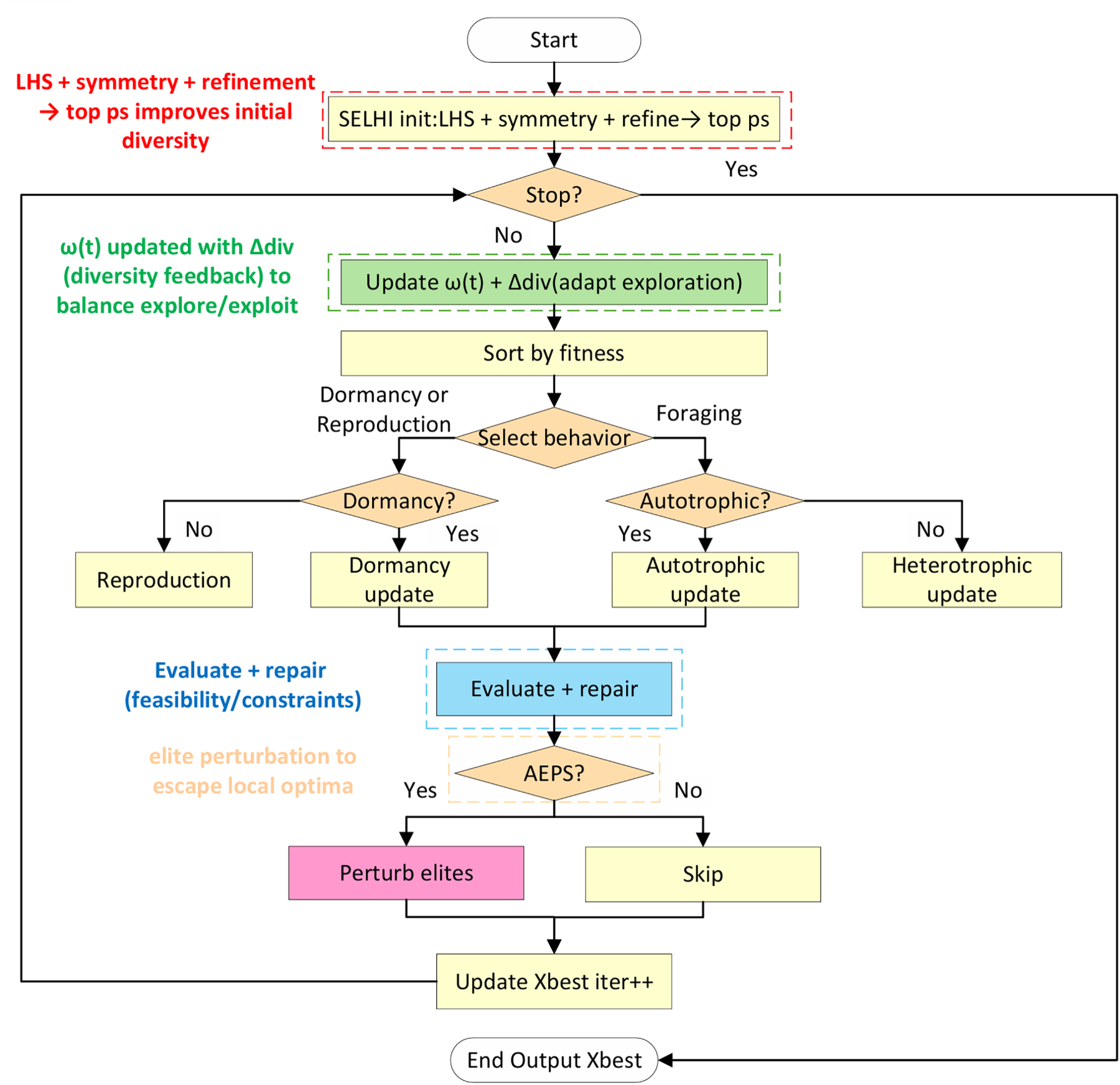
Figure 1: Framework of EAPO.
3.1 Symmetry-Enhanced Latin Hypercube Initialization (SELHI)
The first innovation of EAPO is a refined initialization strategy, termed SELHI. Biologically, protozoa in heterogeneous environments tend to disperse to reduce intra-species competition, and their trajectories often exhibit symmetric spread around local stimuli, which helps cover multiple micro-niches. SELHI translates this behavior into a space-filling initialization by integrating Latin Hypercube Sampling (LHS) with orthogonal-rotation symmetry and distance-based dispersion refinement. The synergy of these components systematically reduces sampling bias, improves global coverage, and significantly increases the probability of locating promising regions at the outset of the optimization process.
Unlike conventional uniform random initialization, LHS divides each dimension into equiprobable intervals, ensuring that one candidate solution is sampled per interval. This guarantees more uniform coverage of the search space, particularly in high-dimensional or multimodal problems. Related evidence also indicates that quasi-random or low-discrepancy sampling can improve population-based optimization performance by reducing initialization bias [18,19], while opposition-based initialization can enlarge the sampled region by generating paired candidates [20]. SELHI follows this general motivation of improving initial coverage, but further applies an orthogonal rotation in normalized space to create a symmetric counterpart for each candidate and then performs a local dispersion refinement that repels points from their neighborhood centers. This dual mechanism mitigates the risk of clustered samples and provides a stronger foundation for subsequent optimization.
Empirical evidence suggests that uniform random sampling often results in clustered and uneven distributions, leaving large portions of the search space unexplored. In contrast, the LHS with orthogonal-rotation symmetry and dispersion refinement employed in SELHI yields broader coverage and better dispersion, thereby enhancing both efficiency and robustness in the early stage of optimization. Fig. 2 visualizes the coverage advantage of SELHI over conventional random initialization.
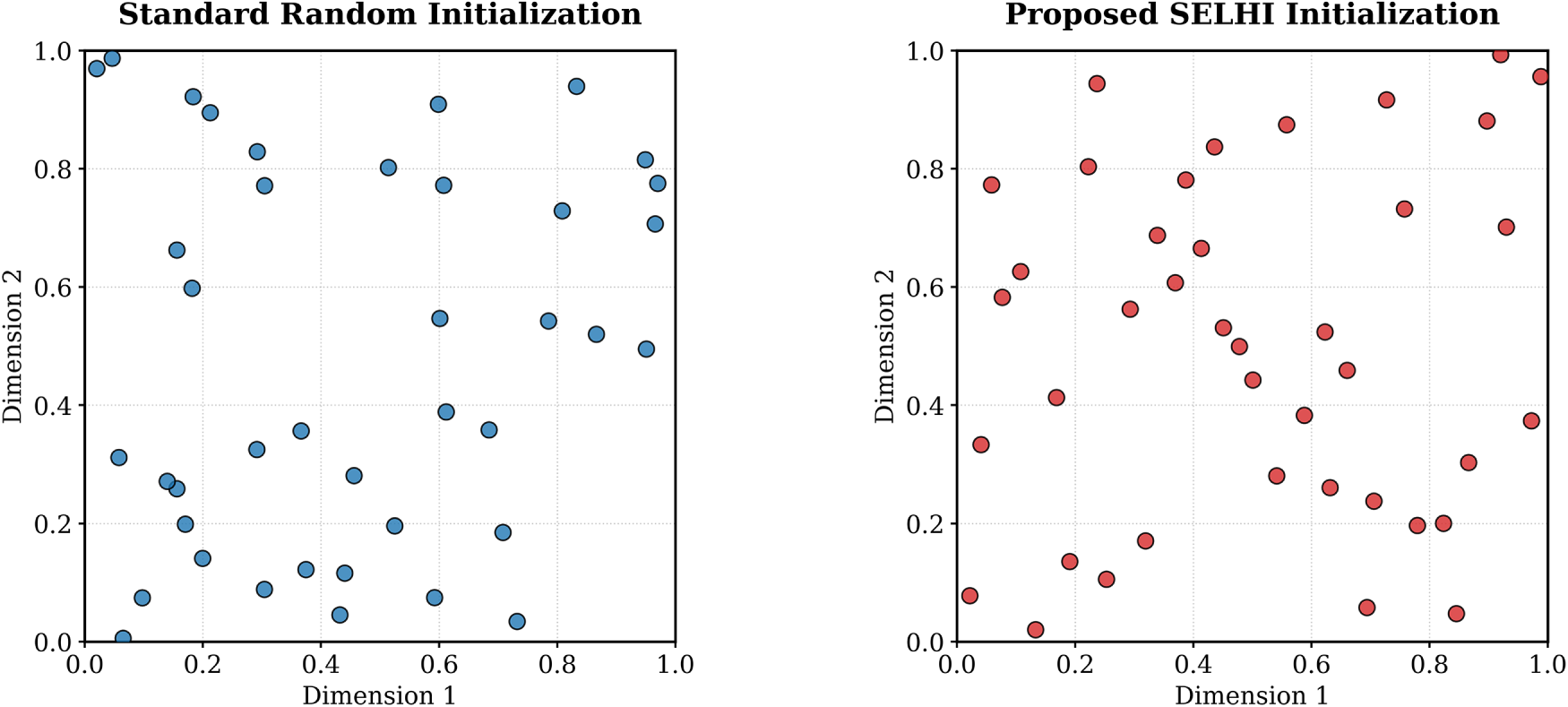
Figure 2: SELHI initialization comparison: coverage differences between conventional random sampling and the proposed SELHI mechanism.
Formally, the LHS-based initialization in dimension
Subsequently, an orthogonal-rotation symmetry is applied in the normalized space to generate a rotated counterpart:
where
where
where
3.2 Adaptive Phase Equilibrium Strategy (APES)
The second innovation, termed Adaptive Phase Equilibrium Strategy (APES), introduces a dynamic control law that balances global exploration and local exploitation during the optimization process. Instead of fixed parameters, APES adjusts search intensity using both iteration progress and a diversity feedback signal.
Formally, the exploration-to-exploitation ratio is modeled as a monotonically decreasing function of the iteration index
where
APES further introduces a diversity feedback mechanism by monitoring the average pairwise distance
where
where normalization by
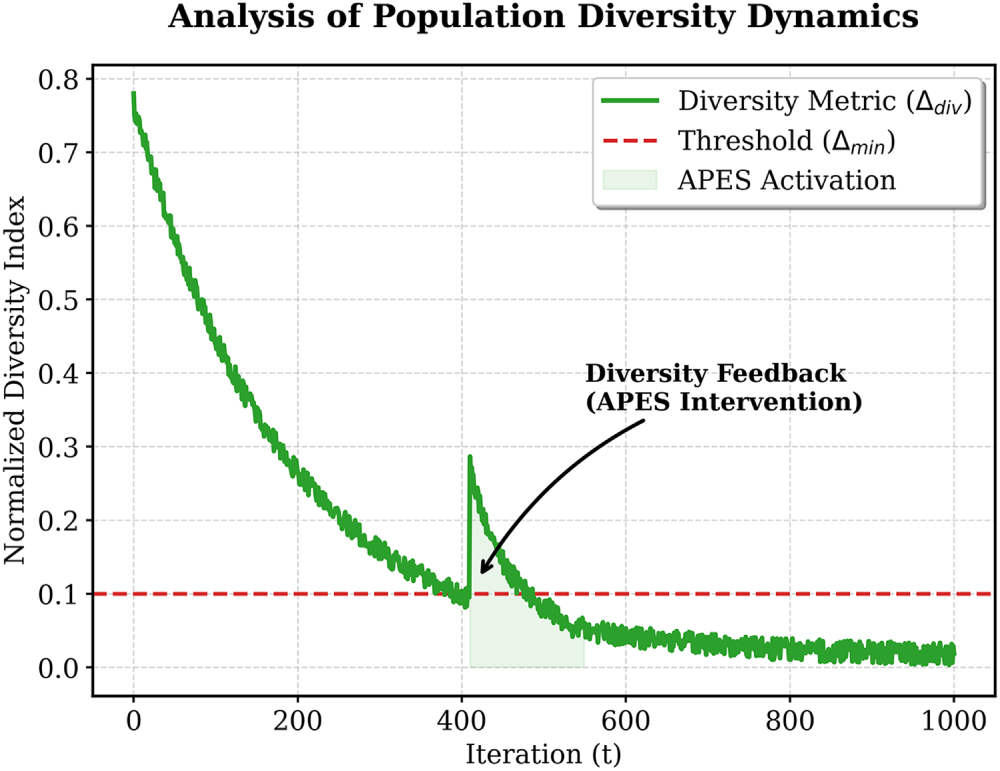
Figure 3: Population diversity dynamics under APES: feedback around
3.3 Adaptive Elite Perturbation Strategy (AEPS)
The third innovation, termed Adaptive Elite Perturbation Strategy (AEPS), refines the exploitation ability of EAPO through statistics-guided local perturbations of top-performing individuals. AEPS operates after the canonical foraging, dormancy, and reproduction stages to intensify local search while preserving sufficient variability to escape local optima.
AEPS selects the top
where
Early in the search, larger
If
where
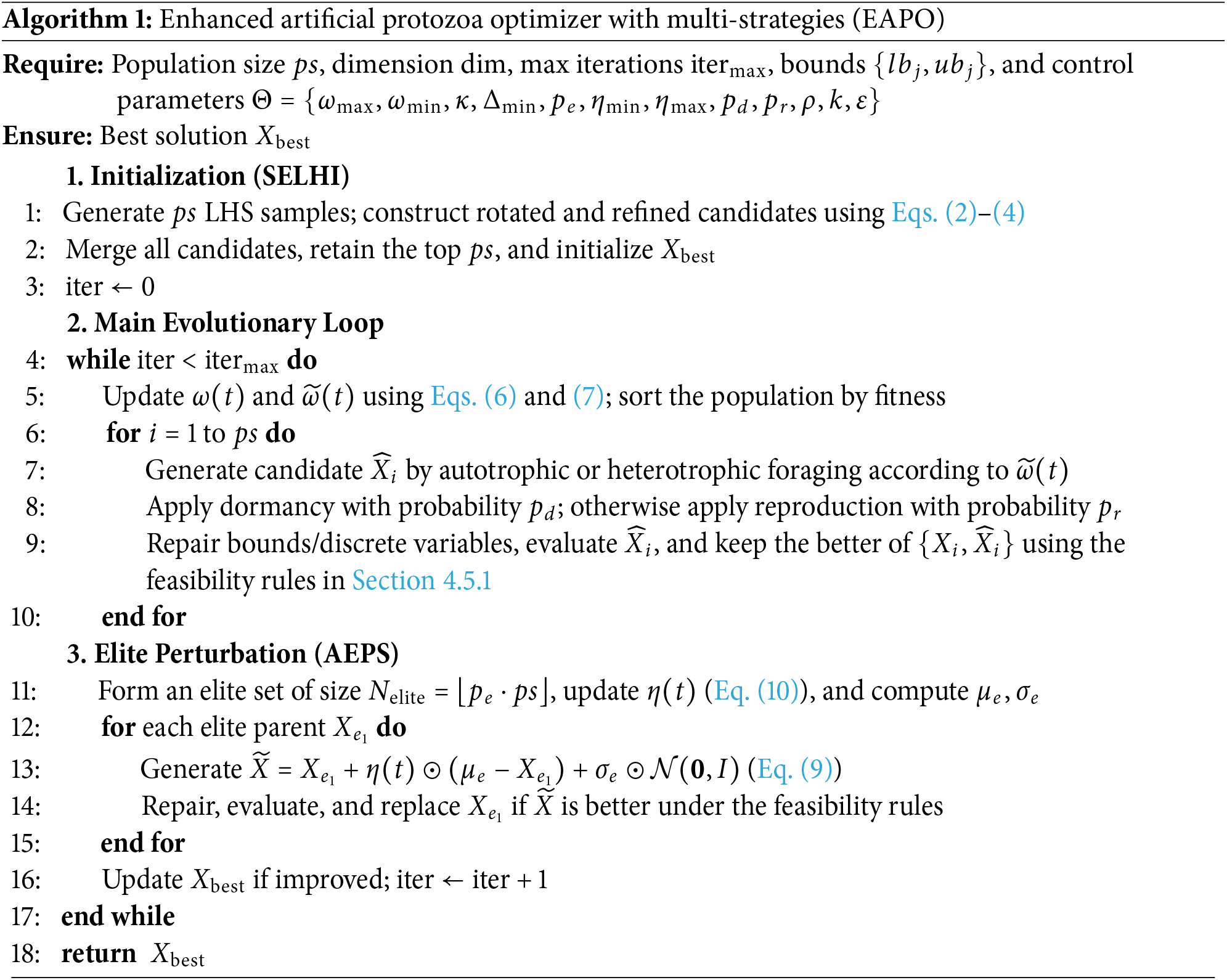
Algorithm 1 summarizes the proposed EAPO. Built on the baseline APO, EAPO introduces three modules: SELHI improves the initial population by combining LHS, rotational symmetry, and dispersion refinement; APES regulates the exploration–exploitation balance through the scheduled weight
3.5 Algorithm Complexity Analysis of EAPO
Let
If only a diversity indicator is required for feedback, the pairwise term can be approximated by a centroid-based measure (mean and average distance to the centroid), by per-dimension variance, or by subsampling a small number of pairs. In these cases the diversity cost reduces to
In practice,
4 Experimental Results and Discussion
To ensure a fair comparison, the experimental environment is as follows: the operating system is Ubuntu 22.04, the CPU is Intel(R) Core(TM) i7-12700 2.10 GHz, the RAM is 64 GB, and the programming language is Python.
4.1 Experimental Protocol and Parameter Settings
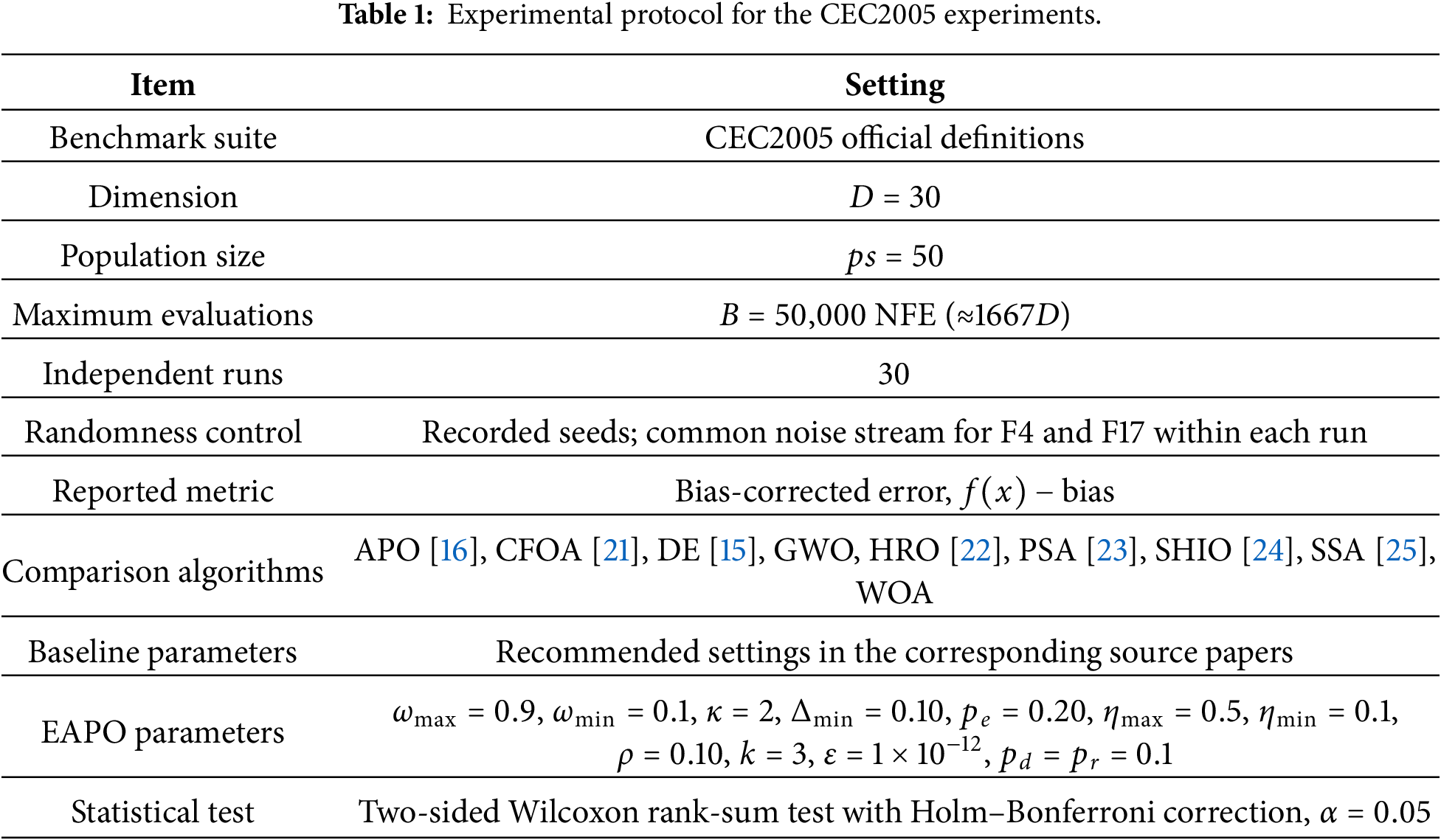
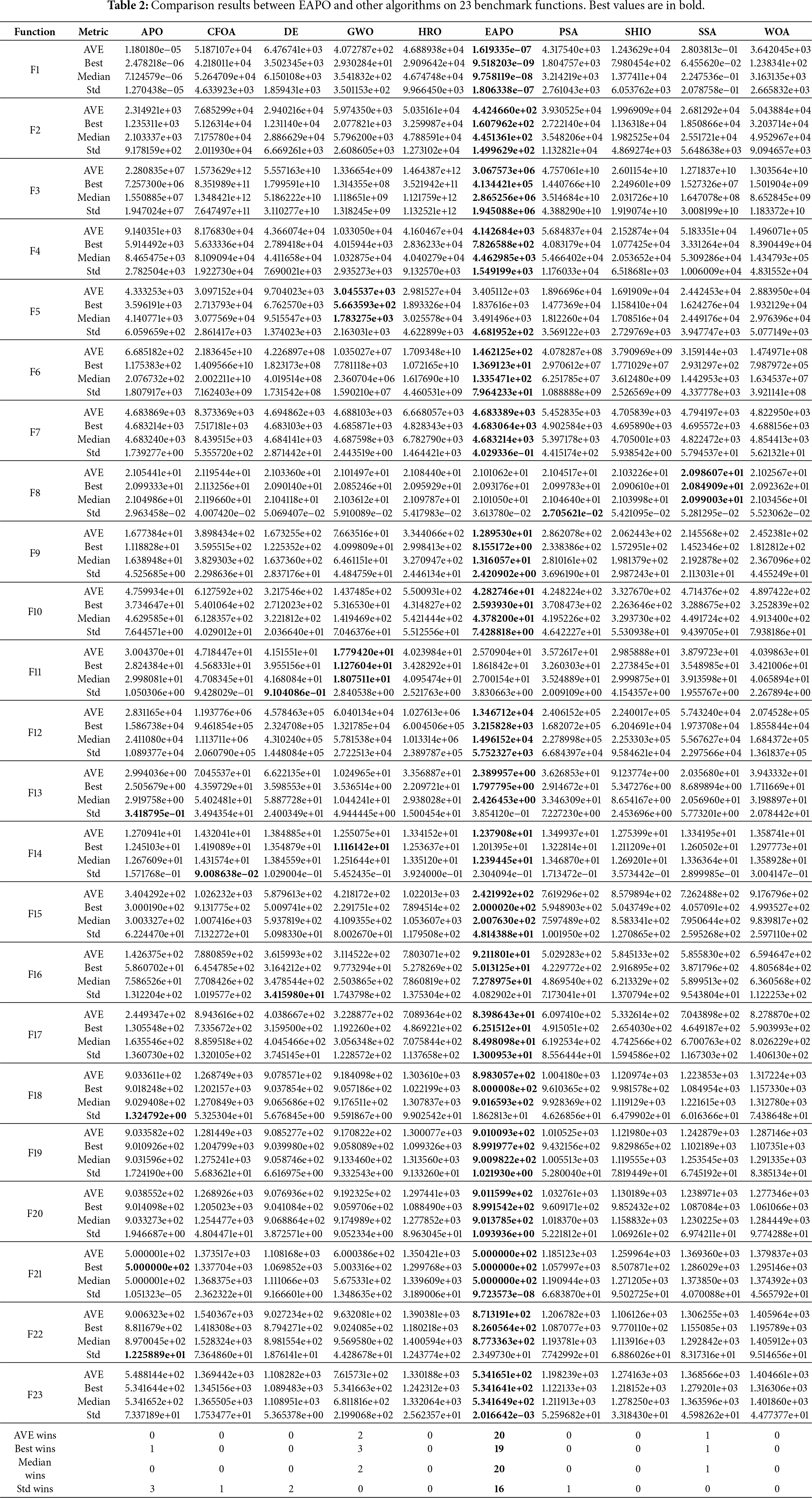
The algorithms were tested on the standard CEC 2005 benchmark suite (CEC2005) following the official definitions. The experimental protocol, comparison algorithms, statistical settings, and EAPO control parameters are summarized in Table 1. For EAPO, the additional SELHI and AEPS candidate evaluations are counted within the same NFE budget, and the number of main-loop iterations is reduced accordingly. Detailed results for all 23 functions are reported in Table 2.
4.2 CEC2005 Benchmark Experiments
The CEC2005 suite (23 shifted/rotated functions, dimension
4.2.1 Result Statistics and Convergence Curve Analysis
Based on the comprehensive results in Table 2, EAPO is among the top performers across the benchmark functions. Among the 23 test functions, EAPO attains the best average value on 20 functions (86.96%) and the best optimal value on 19 functions (82.61%). It also exhibits the lowest standard deviation on 16 functions (69.57%) and the best median value on 20 functions (86.96%). Other algorithms achieve the best results on a few functions (e.g., GWO on F5 and F11, SSA on F8), indicating complementary strengths. Overall, EAPO maintains strong accuracy and stability on both unimodal and multimodal scenarios.
The first group (F1–F7) illustrates the difference in convergence speed and exploitation capability, as shown in Fig. 4. On F1, for instance, EAPO achieves an average value of
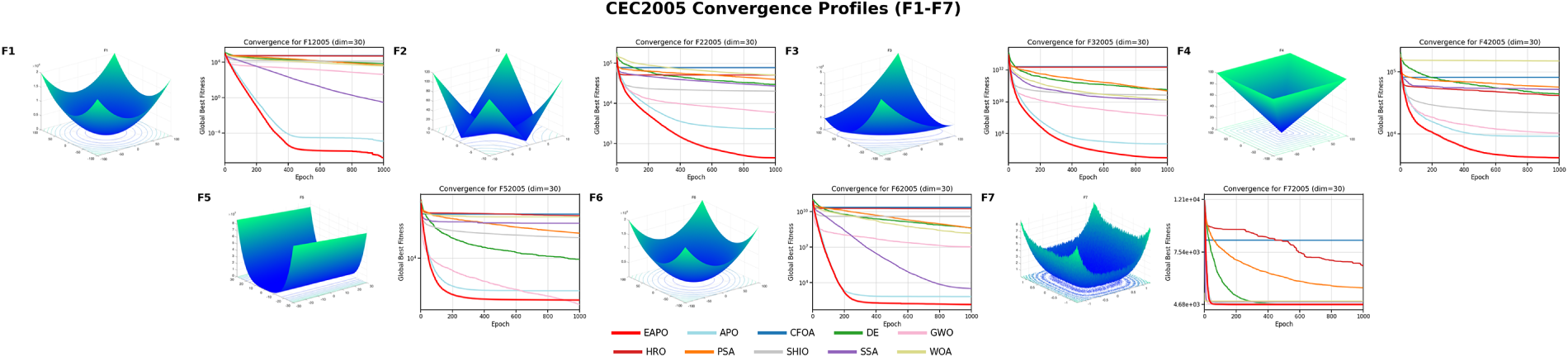
Figure 4: CEC2005 convergence profiles for F1–F7 with a unified, non-overlapping legend.
In F3, EAPO attains
The second group (F8–F13) emphasizes the capacity to preserve diversity and escape local minima, with convergence behaviors illustrated in Fig. 5. In F9, EAPO’s average is about
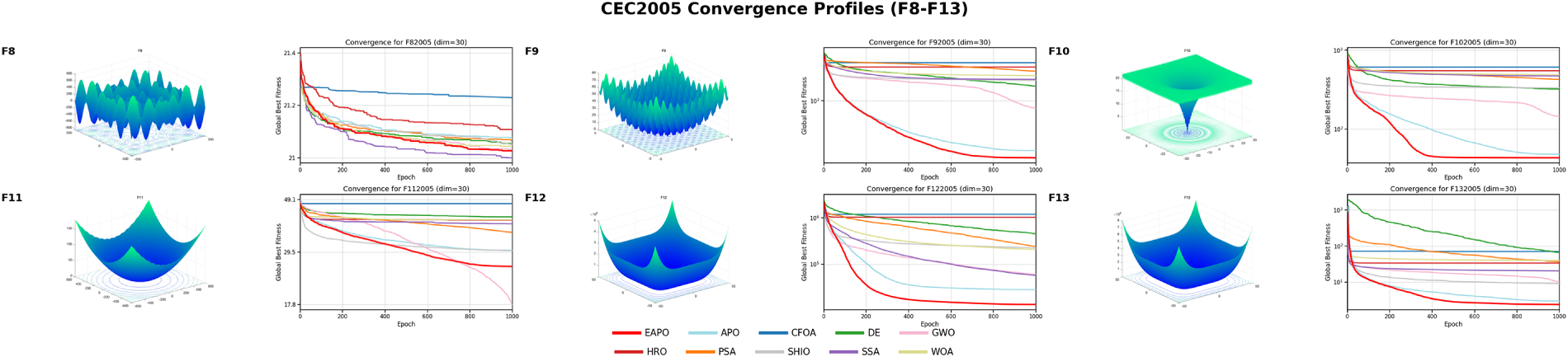
Figure 5: CEC2005 convergence profiles for F8–F13 with a unified, non-overlapping legend.
The third group (F14–F23) further highlights EAPO’s balance of exploitation and exploration, as shown in Fig. 6. In F14, EAPO’s mean is
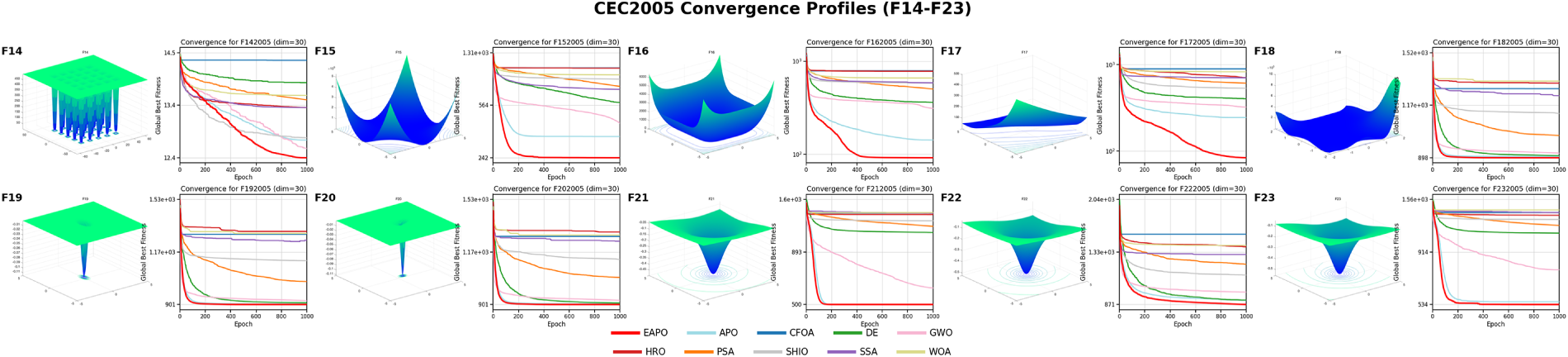
Figure 6: CEC2005 convergence profiles for F14–F23 with a unified, non-overlapping legend.
Comparisons between EAPO and the original APO show that the improved algorithm achieves more accurate solutions by one to four orders of magnitude on many benchmarks, while also reducing performance variance, as evidenced by both the numerical results in Table 2 and the convergence trends in Figs. 4–6. In standard APO, local exploitation can be weak and stagnation can occur when the initial sampling lacks diversity or when elite solutions do not receive sufficient refinement. EAPO mitigates these issues by combining SELHI (diverse coverage), APES (dynamic balance with diversity feedback), and AEPS (elite-statistics-guided refinement), which together maintain convergence pressure in later iterations. These trends suggest that EAPO is well suited for complex engineering applications and for demanding optimization tasks where stable convergence is important.
4.2.2 Wilcoxon Rank-Sum Test Results Analysis
Table 3 summarizes the corrected Wilcoxon rank-sum test results comparing the proposed algorithm with nine benchmark optimization algorithms across 23 benchmark functions.
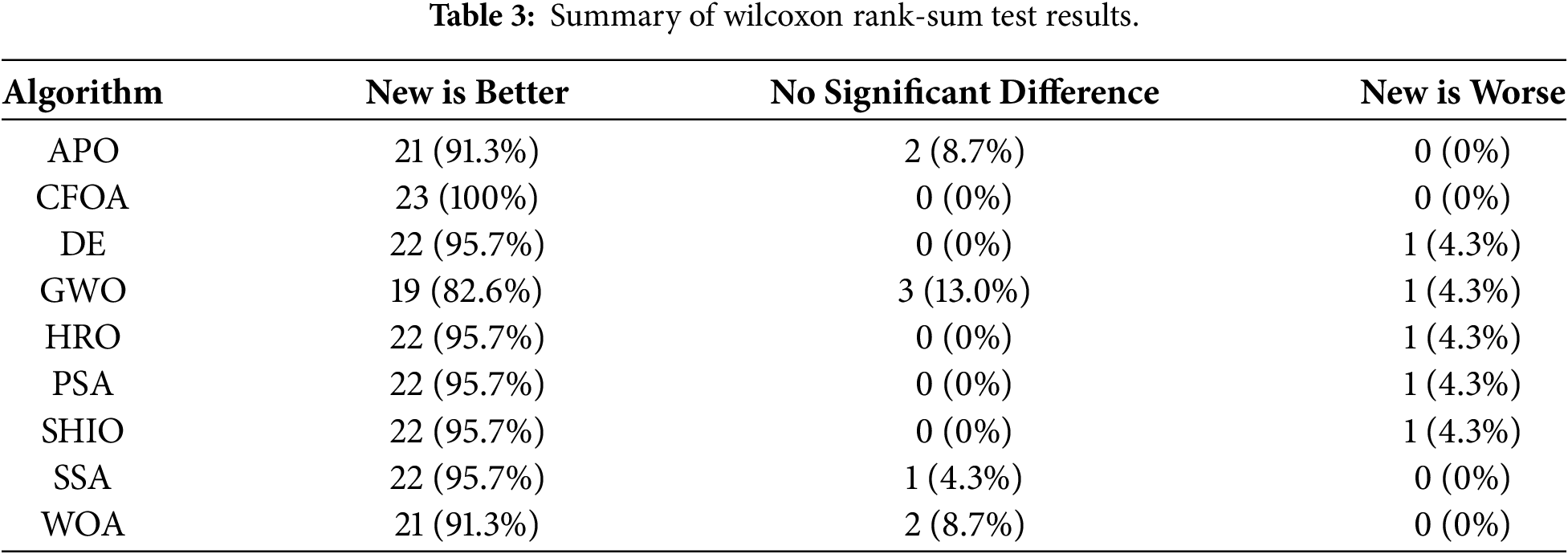
The statistical results demonstrate that the proposed algorithm achieves corrected success rates ranging from 82.6% to 100%. Under the Holm–Bonferroni adjustment, the “New is Better” counts in Table 3 represent statistically significant wins, and EAPO attains 19–23 significant wins out of 23 functions against each of the nine competitors, with at most one significant loss. Against CFOA, the new algorithm is significantly better on all 23 functions (100%). Against DE, HRO, PSA, SHIO, and SSA, it is better on 22 of 23 functions (95.7%). APO and WOA show a success rate of 91.3%, with only a few functions showing no significant difference. GWO presents the lowest success rate (82.6%). Overall, these Holm–Bonferroni-corrected results confirm the statistical significance of EAPO’s win rates and provide strong evidence of its robustness and consistency across the benchmark suite.
As an additional omnibus comparison, a Friedman rank test is applied to the per-function average errors in Table 2. Lower average rank indicates better overall performance. The Friedman statistic is

To assess stability, each CEC2005 function is evaluated over repeated independent runs. Fig. 7 shows that EAPO generally has lower medians and tighter interquartile ranges than competing methods, indicating both better final quality and higher run-to-run consistency. This trend is clear on unimodal cases (e.g., F1–F5) and remains visible on multimodal/hybrid functions.
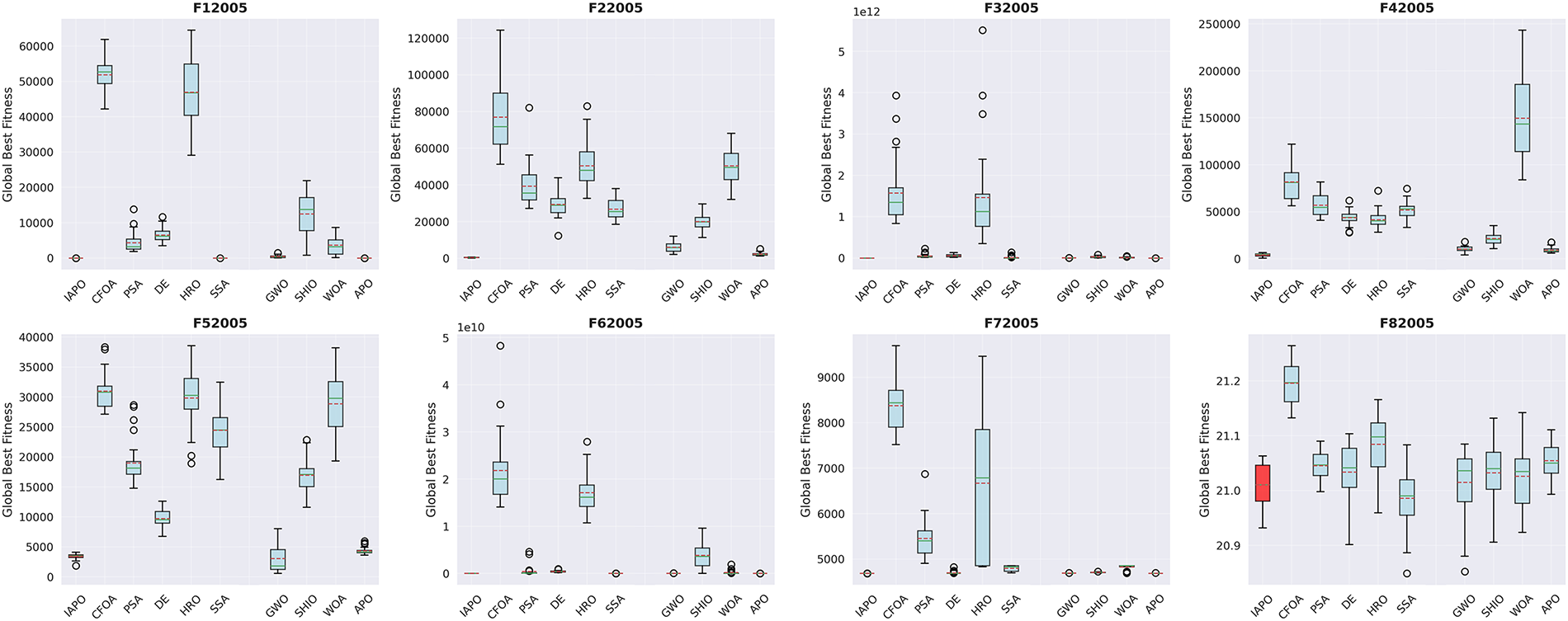
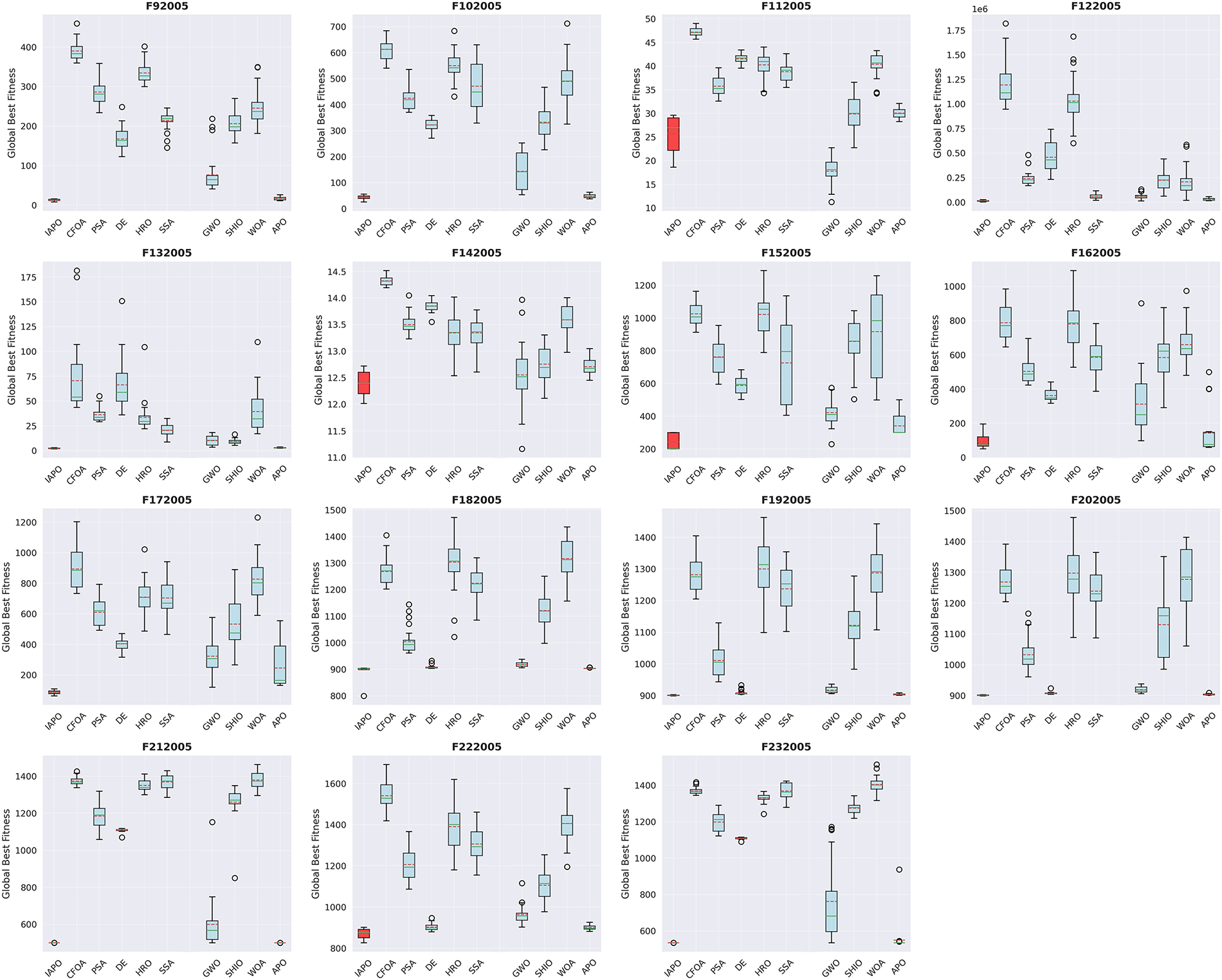
Figure 7: Boxplot analysis for stability comparison on CEC2005 functions.
Representative values support the visual pattern: on F1, EAPO reaches approximately
4.3 CEC2017 Benchmark Evaluation
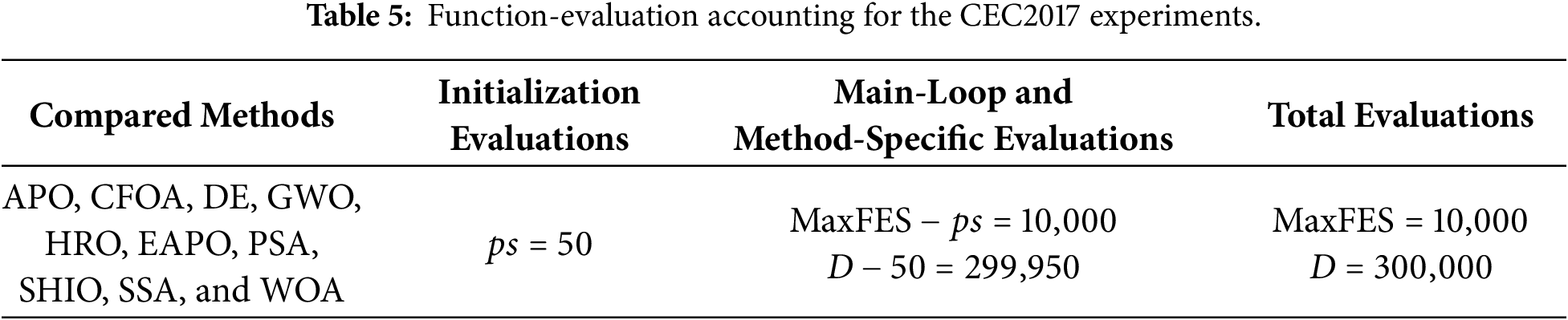
To further evaluate the performance of EAPO under the CEC2017 evaluation protocol, the compared algorithms were tested on the 29 CEC2017 functions F1–F29 at
The function-evaluation accounting is summarized in Table 5, and the corresponding numerical results are presented in Table 6. Results are reported as error values under the lower-is-better convention.
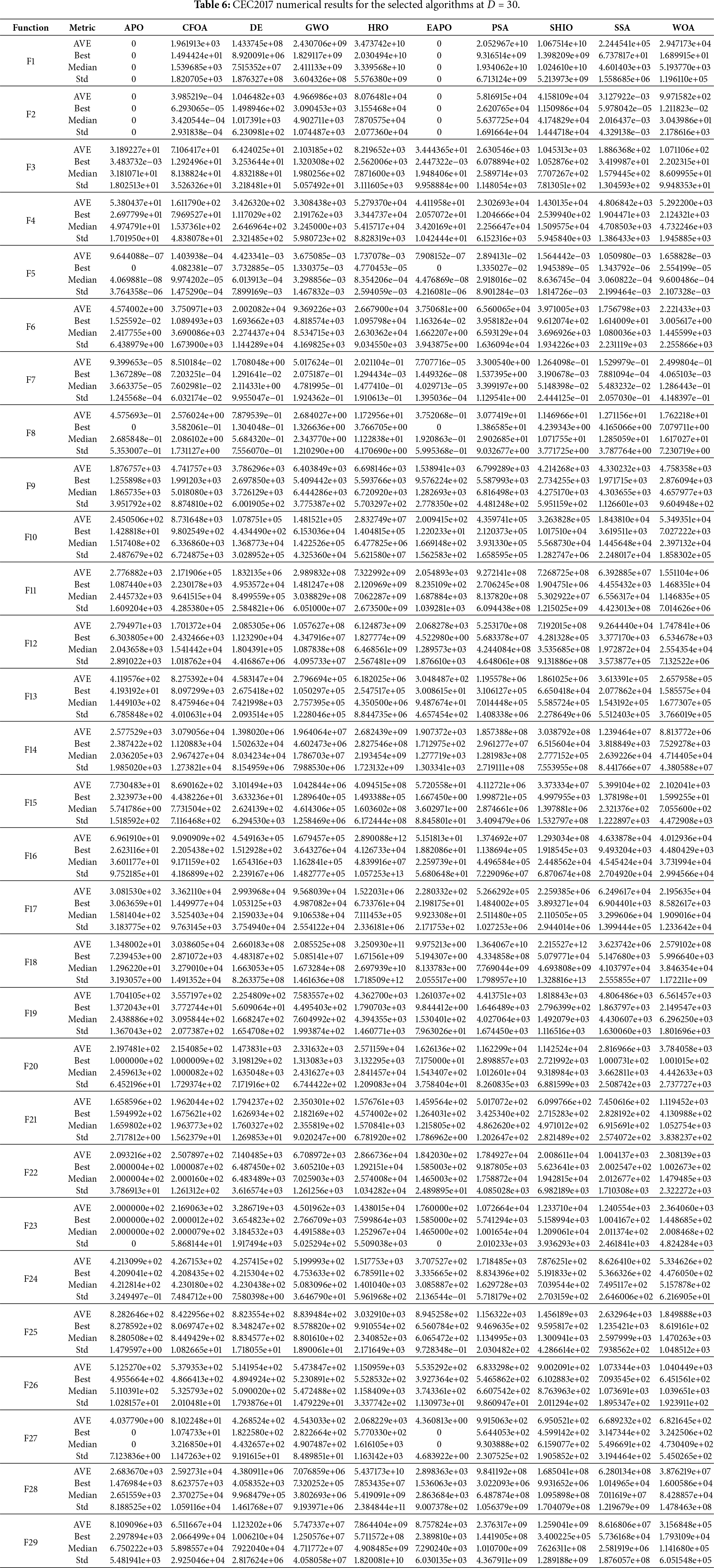
Across the CEC2017 benchmark functions, EAPO attains the lowest average value on 23 of the 29 reported functions, the best final value on 24 functions, the lowest standard deviation on 23 functions, and the best median value on 23 functions. Its average ranks are 1.45, 1.33, 1.26, and 1.26 for AVE, Best, Std, and Median, respectively, under the lower-is-better convention. These results indicate that EAPO maintains strong competitiveness on the CEC2017 benchmark suite under the 300,000-function-evaluation and 51-run protocol.
4.4 Ablation and Parameter-Sensitivity Analysis
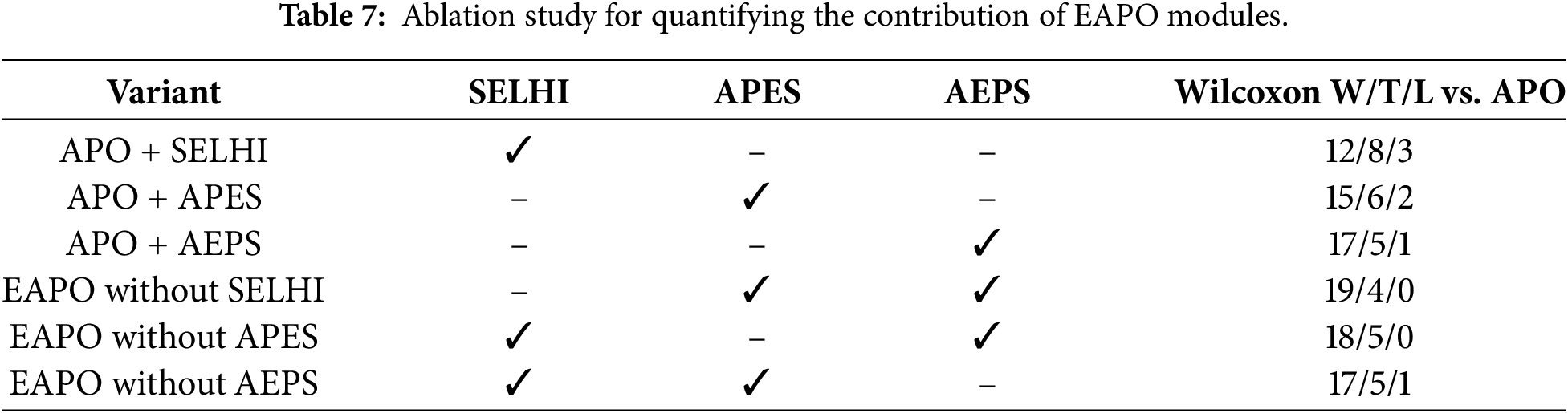
The ablation study evaluates the contribution of the three main EAPO modules: SELHI, APES, and AEPS. Table 7 compares single-module variants and module-removal variants under the same CEC2005 reporting protocol.
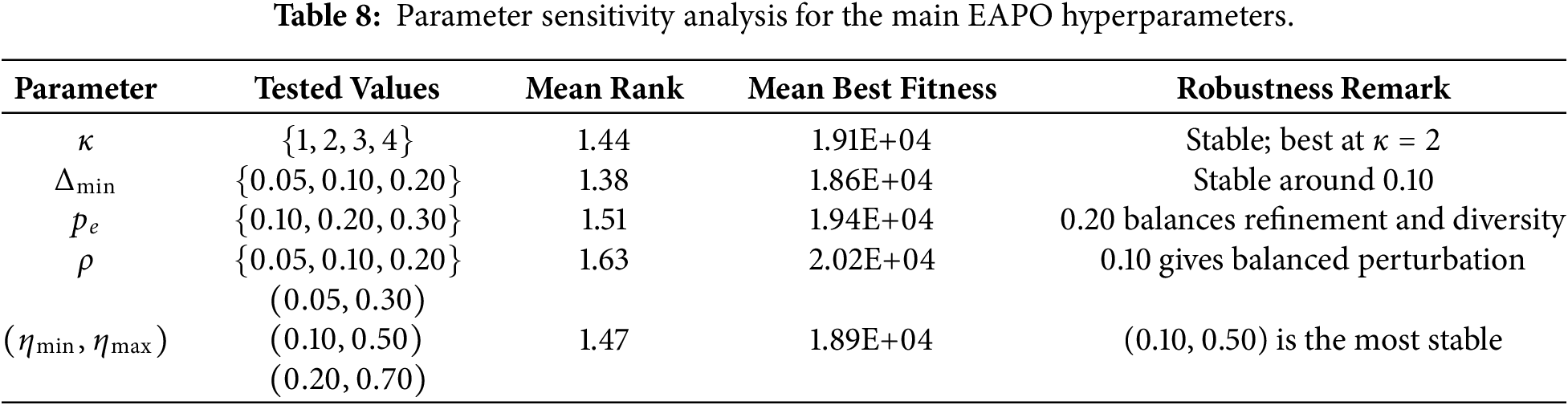
Parameter sensitivity is evaluated on the main EAPO hyperparameters that directly affect phase regulation and elite perturbation. Table 8 reports the tested value ranges and aggregate performance indicators.
4.5 Constrained Engineering Design Problems
This section reports five constrained engineering design benchmarks: spring, pressure vessel, welded beam, car side impact, and speed reducer. The standard benchmark formulations follow the cited literature in each subsection, and we report the variable bounds, comparative statistics, and best feasible EAPO designs.
4.5.1 Constraint Handling and Discrete Variables
All constrained cases use Deb’s feasibility rules. For a candidate
Feasible solutions are preferred over infeasible ones; among feasible solutions, lower objective is preferred; among infeasible solutions, smaller
4.5.2 Tension/Compression Spring Design Problem
The configuration of the tension/compression spring design problem is illustrated in Fig. 8. We adopt the standard three-variable benchmark formulation in [25,26]. Bounds are:
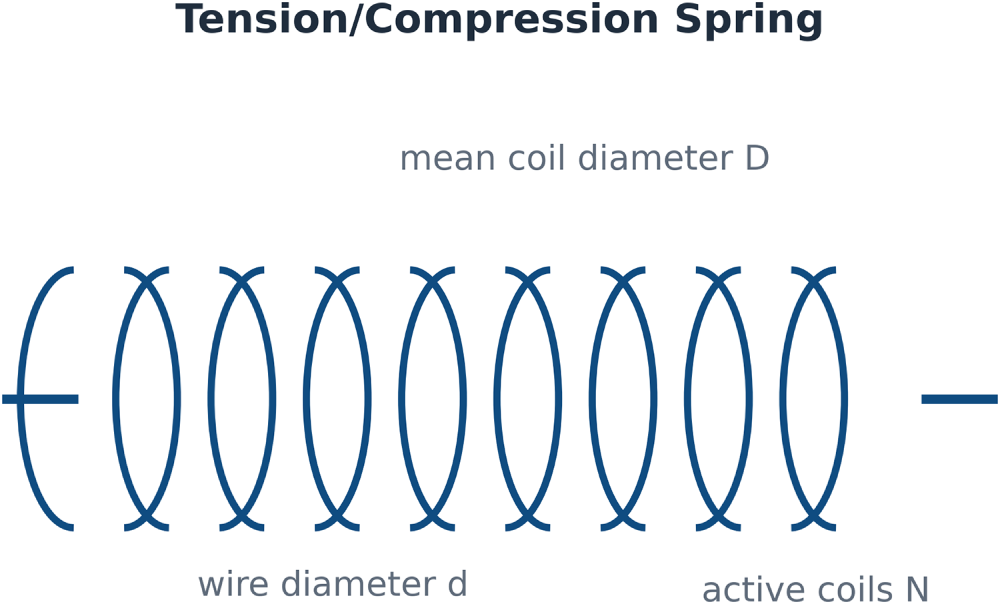
Figure 8: Unified schematic of the tension/compression spring design problem.
From Table 9, EAPO obtains the best objective value and the best average result, while keeping variance at a very low level. This indicates that EAPO is not only competitive in peak performance but also stable across repeated runs for the spring constraints. Its best value,

4.5.3 Pressure Vessel Design Problem
The configuration of the pressure-vessel design problem is illustrated in Fig. 9. We adopt the standard benchmark formulation in [28,29]. Bounds are:
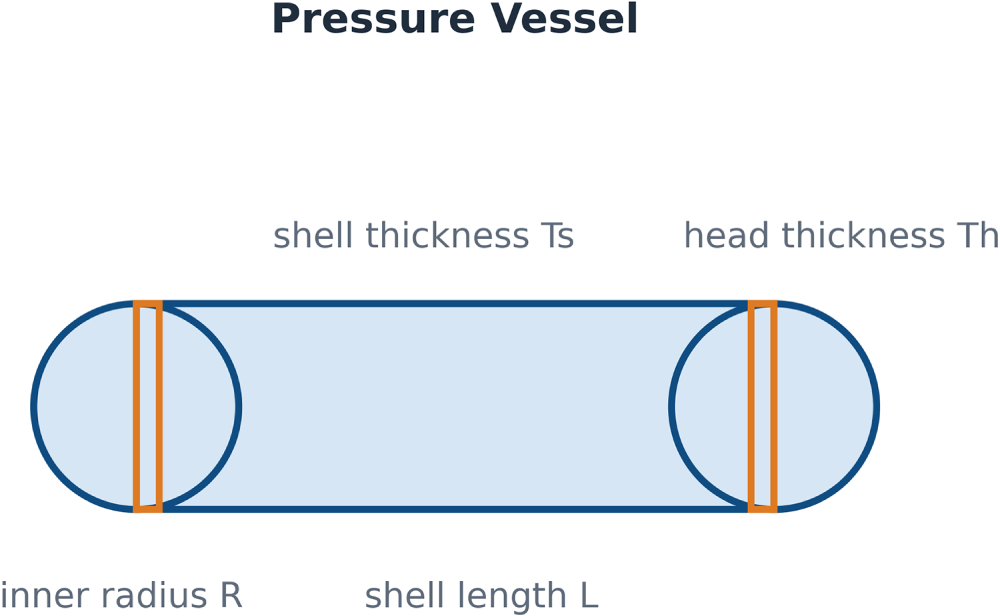
Figure 9: Unified schematic of the pressure vessel design problem.
Table 10 shows that EAPO achieves the best Best/Ave values with the smallest standard deviation by a clear margin. The result suggests that the method handles discrete thickness repair and nonlinear constraints effectively, and converges to high-quality feasible designs reliably. The best objective value,

4.5.4 Welded Beam Design Problem
The configuration of the welded-beam design problem is illustrated in Fig. 10. We adopt the standard benchmark formulation widely used in engineering optimization studies [1,16]. Bounds are:
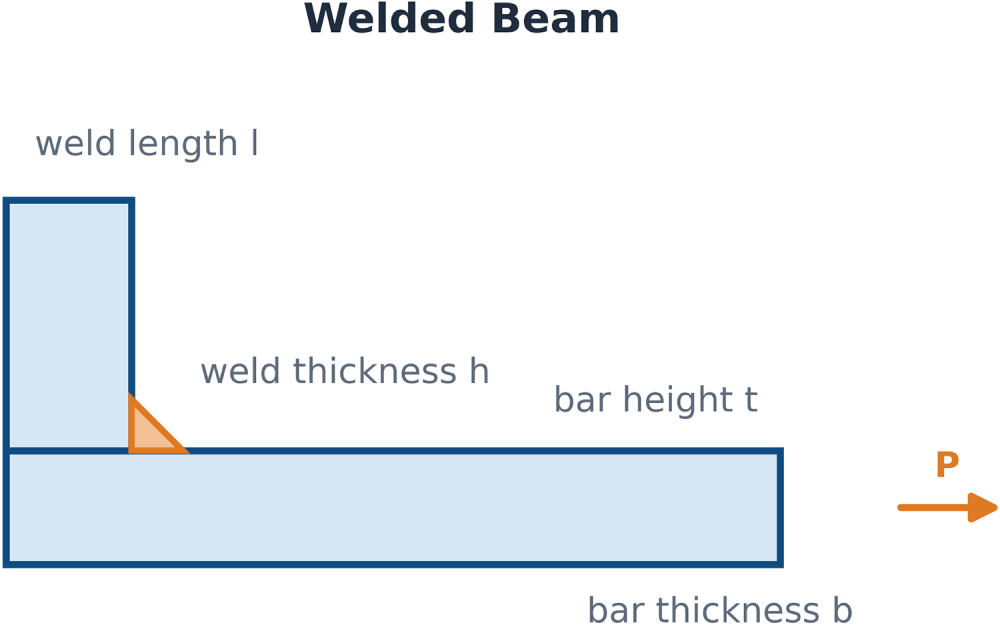
Figure 10: Unified schematic of the welded beam design problem.
Table 11 shows that EAPO obtains a competitive best objective value of

4.5.5 Car Side Impact Design Problem
The configuration of the car side impact design problem is illustrated in Fig. 11. This benchmark is commonly used to evaluate constrained optimizers in vehicle safety design [27,30]. The objective is to minimize structural weight while satisfying impact-response constraints. In the formulation used here,
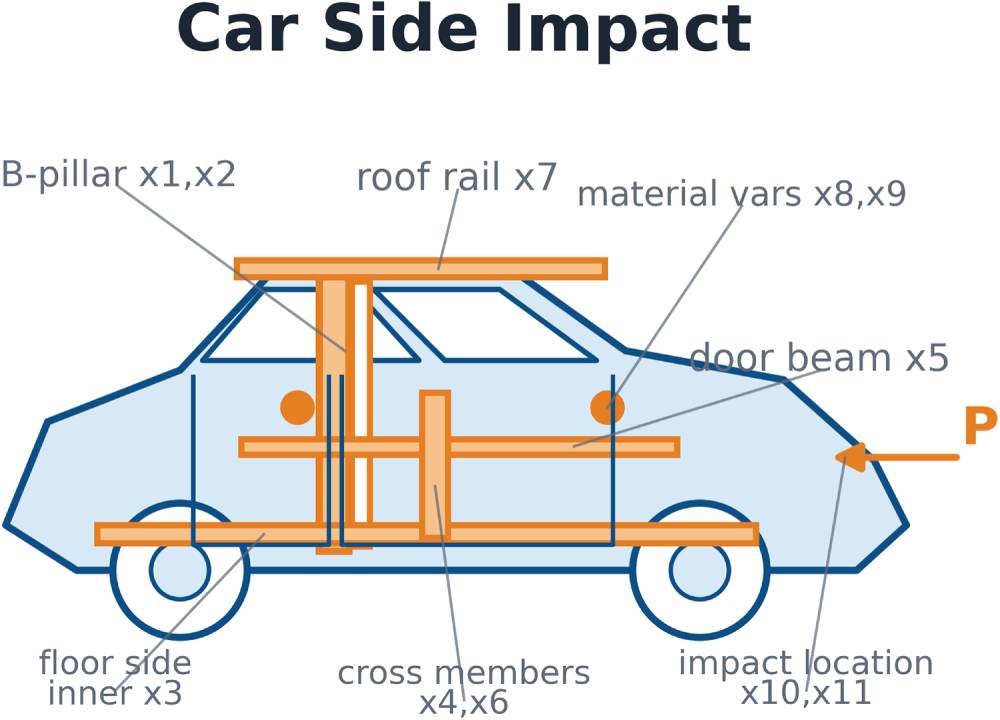
Figure 11: Unified schematic of the car side impact design problem.
Table 12 shows that EAPO obtains the lowest Best and Ave values on the car-side-impact case, while SSA has the smallest dispersion. Compared with the external reference value

The configuration of the speed-reducer design problem is illustrated in Fig. 12. We adopt the standard benchmark formulation widely used in engineering optimization studies [1,16]. Bounds are:
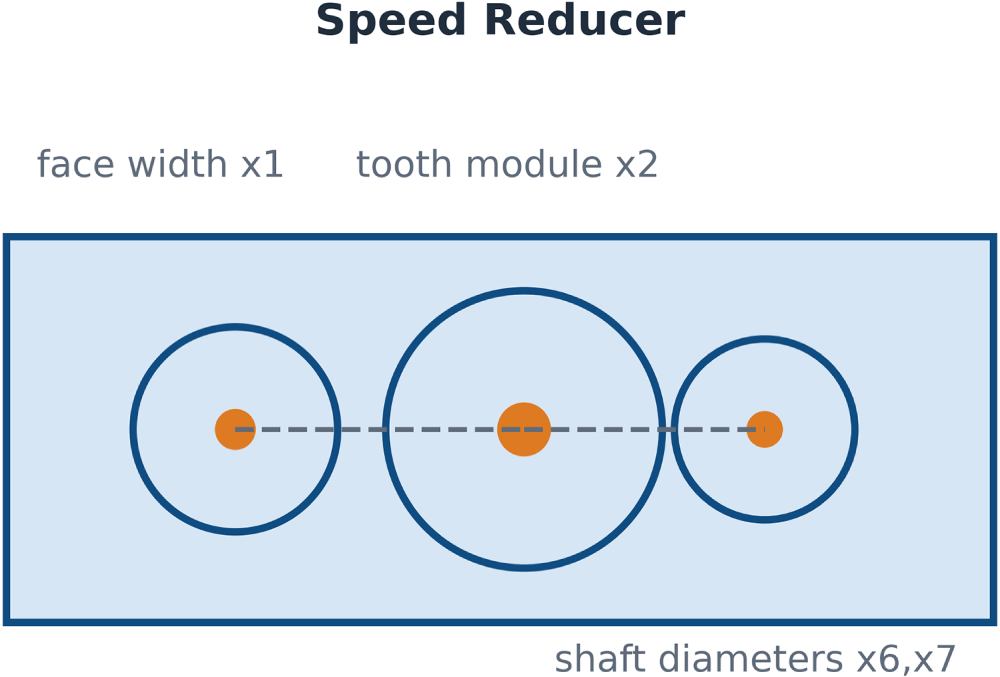
Figure 12: Unified schematic of the speed reducer design problem.
In Table 13, EAPO attains the best objective value and also shows the lowest Ave value and the smallest standard deviation among the reported results. This indicates not only strong final design quality but also high repeatability on a higher-dimensional constrained mechanical optimization task. Its best value,

Overall, across the five engineering benchmarks, EAPO ranks first or tied first in Best/Ave solution quality while maintaining low run-to-run variance in most cases. Therefore, the engineering experiments support the claim that EAPO improves both optimization accuracy and robustness under practical constrained settings.
5 Conclusions and Future Works
In this paper, we proposed EAPO for complex numerical and engineering optimization problems. The main novelty of EAPO is its stage-oriented multi-strategy design: SELHI combines LHS with orthogonal-rotation symmetry and dispersion refinement to expand initial coverage and suppress clustering; APES regulates the exploration–exploitation balance throughout the search; and AEPS leverages elite statistics to guide perturbations, strengthening local refinement while avoiding stagnation. Experimental results on the CEC2005 and CEC2017 benchmarks and engineering design problems show that these mechanisms generally lead to faster convergence, higher accuracy, and stronger robustness than the selected baseline metaheuristics.
The comprehensive analysis further indicates that SELHI improves population diversity at initialization, APES stabilizes search dynamics across phases, and AEPS accelerates convergence in later iterations. Together, these mechanisms enhance the optimizer’s ability to navigate complex and high-dimensional search spaces, making EAPO a promising metaheuristic alternative for various practical optimization applications.
Future work can further extend EAPO to complete modern CEC benchmark campaigns such as CEC2020 and CEC2022, deep neural network architecture optimization, and hybrid frameworks that combine gradient-based methods with metaheuristic search, especially in problems with extremely rugged fitness landscapes.
Overall, the results presented in this study not only validate the effectiveness of the proposed EAPO but also provide a solid foundation for future research in the intersection of swarm intelligence, metaheuristic optimization, and neural network training.
Acknowledgement: The authors extend their gratitude to all researchers whose work contributed to this study. AI-assisted tools were used during revision to support language editing, consistency checking, table-format inspection, and document preparation. The authors reviewed and verified the scientific content, numerical results, interpretations, and final manuscript.
Funding Statement: This research was supported by the Young and Middle-aged Scientific and Technological Innovation Team Plan in Higher Education Institutions in Hubei Province, China (Grant No. T2023007).
Author Contributions: Conceptualization, Dingfeng Song and Haibo Wang; methodology, Dingfeng Song and Haibo Wang; validation, Dingfeng Song, Zhiwei Ye, Shuhao Yang and Mengxuan Li; formal analysis, Dingfeng Song and Haibo Wang; investigation, Dingfeng Song; data curation, Zhiwei Ye, Shuhao Yang and Mengxuan Li; writing—original draft preparation, Dingfeng Song; writing—review and editing, Haibo Wang, Zhiwei Ye, Shuhao Yang and Mengxuan Li; supervision, Haibo Wang. All authors reviewed and approved the final version of the manuscript.
Availability of Data and Materials: Additional implementation code, data files, and run logs supporting the findings of this study are available from the corresponding author upon reasonable request and will be archived at https://github.com/songdf666/EAPO.
Ethics Approval: Not applicable.
Conflicts of Interest: The authors declare no conflicts of interest.
References
1. Knypiński Ł., Devarapalli R, Kamiński M. Metaheuristic algorithms in optimal design of engineering problems. Algorithms. 2024;17(11):522. doi:10.3390/a17110522. [Google Scholar] [CrossRef]
2. Turgut OE, Turgut MS, Kirtepe E. A systematic review of the emerging metaheuristic algorithms on solving complex optimization problems. Neural Comput Appl. 2023;35(19):14275–378. doi:10.1007/s00521-023-08481-5. [Google Scholar] [CrossRef]
3. Benaissa B, Kobayashi M, Al Ali M, Khatir T, El Amine Elaissaoui Elmeliani M. Metaheuristic optimization algorithms: an overview. HCMCOU J Sci Adv Comput Struct. 2024;14(1):33–61. doi:10.46223/hcmcoujs.acs.en.14.1.47.2024. [Google Scholar] [CrossRef]
4. Adam SP, Alexandropoulos SN, Pardalos PM, Vrahatis MN. No free lunch theorem: a review. In: Approximation and optimization: algorithms, complexity and applications. Cham, Switzerland: Springer International Publishing; 2019. p. 57–82. doi:10.1007/978-3-030-12767-1_5. [Google Scholar] [CrossRef]
5. Bian H, Li C, Liu Y, Tong Y, Bing S, Chen J, et al. Improved snow geese algorithm for engineering applications and clustering optimization. Sci Rep. 2025;15(1):4506. doi:10.1038/s41598-025-88080-7. [Google Scholar] [CrossRef]
6. Yang XS. Nature-inspired optimization algorithms. Cambridge, MA, USA: Academic Press; 2020. [Google Scholar]
7. Dorigo M, Maniezzo V, Colorni A. Ant system: optimization by a colony of cooperating agents. IEEE Trans Syst, Man, Cybern B. 1996;26(1):29–41. doi:10.1109/3477.484436. [Google Scholar] [CrossRef]
8. Wang D, Tan D, Liu L. Particle swarm optimization algorithm: an overview. Soft Comput. 2018;22(2):387–408. doi:10.1007/s00500-016-2474-6. [Google Scholar] [CrossRef]
9. Makhadmeh SN, Al-Betar MA, Abu Doush I, Awadallah MA, Kassaymeh S, Mirjalili S, et al. Recent advances in grey wolf optimizer, its versions and applications: review. IEEE Access. 2024;12(3):22991–3028. doi:10.1109/access.2023.3304889. [Google Scholar] [CrossRef]
10. Nadimi-Shahraki MH, Zamani H, Asghari Varzaneh Z, Mirjalili S. A systematic review of the whale optimization algorithm: theoretical foundation, improvements, and hybridizations. Arch Comput Methods Eng. 2023;30(7):4113–59. doi:10.1007/s11831-023-09928-7. [Google Scholar] [CrossRef]
11. Kang J, Ma Z. Red-crowned crane optimization: a novel biomimetic metaheuristic algorithm for engineering applications. Biomimetics. 2025;10(9):565. doi:10.3390/biomimetics10090565. [Google Scholar] [CrossRef]
12. Li H, Tang J, Pan Q, Zhan J, Lao S. Ensemble of population-based metaheuristic algorithms. Comput Mater Contin. 2023;76(3):2835–59. doi:10.32604/cmc.2023.038670. [Google Scholar] [CrossRef]
13. Givi H, Hubalovska M. Skill optimization algorithm: a new human-based metaheuristic technique. Comput Mater Contin. 2023;74(1):179–202. doi:10.32604/cmc.2023.030379. [Google Scholar] [CrossRef]
14. Izci D, Ekinci S, Yüksek G, Rashdan M, Güneş BB, Güngör Mİ, et al. A modified artificial protozoa optimizer for robust parameter identification in nonlinear dynamic systems. Biomimetics. 2026;11(1):65. doi:10.3390/biomimetics11010065. [Google Scholar] [CrossRef]
15. Storn R, Price K. Differential evolution–a simple and efficient heuristic for global optimization over continuous spaces. J Glob Optim. 1997;11(4):341–59. doi:10.1023/A:1008202821328. [Google Scholar] [CrossRef]
16. Wang X, Snášel V, Mirjalili S, Pan JS, Kong L, Shehadeh HA. Artificial protozoa optimizer (APOa novel bio-inspired metaheuristic algorithm for engineering optimization. Knowl Based Syst. 2024;295(5):111737. doi:10.1016/j.knosys.2024.111737. [Google Scholar] [CrossRef]
17. Fakhouri HN, Hamad F, Ishtaiwi A, Hudaib A, Halalsheh N, Fakhouri SN. Advancing engineering solutions with protozoa-based differential evolution: a hybrid optimization approach. Automation. 2025;6(2):13. doi:10.3390/automation6020013. [Google Scholar] [CrossRef]
18. Shields MD, Zhang J. The generalization of Latin hypercube sampling. Reliab Eng Syst Saf. 2016;148(2):96–108. doi:10.1016/j.ress.2015.12.002. [Google Scholar] [CrossRef]
19. Kannan SK, Diwekar U. An enhanced particle swarm optimization (PSO) algorithm employing quasi-random numbers. Algorithms. 2024;17(5):195. doi:10.3390/a17050195. [Google Scholar] [CrossRef]
20. Mahdavi S, Rahnamayan S, Deb K. Opposition based learning: a literature review. Swarm Evol Comput. 2018;39(8):1–23. doi:10.1016/j.swevo.2017.09.010. [Google Scholar] [CrossRef]
21. Jia H, Wen Q, Wang Y, Mirjalili S. Catch fish optimization algorithm: a new human behavior algorithm for solving clustering problems. Cluster Comput. 2024;27(9):13295–332. doi:10.1007/s10586-024-04618-w. [Google Scholar] [CrossRef]
22. Ye Z, Ma L, Chen H. A hybrid rice optimization algorithm. In: Proceedings of the 2016 11th International Conference on Computer Science & Education (ICCSE); 2016 Aug 23–25; Nagoya, Japan. p. 169–74. doi:10.1109/iccse.2016.7581575. [Google Scholar] [CrossRef]
23. Gao Y. PID-based search algorithm: a novel metaheuristic algorithm based on PID algorithm. Expert Syst Appl. 2023;232(3):120886. doi:10.1016/j.eswa.2023.120886. [Google Scholar] [CrossRef]
24. Fakhouri HN, Hamad F, Alawamrah A. Success history intelligent optimizer. J Supercomput. 2022;78(5):6461–502. doi:10.1007/s11227-021-04093-9. [Google Scholar] [CrossRef]
25. Gharehchopogh FS, Namazi M, Ebrahimi L, Abdollahzadeh B. Advances in sparrow search algorithm: a comprehensive survey. Arch Comput Methods Eng. 2023;30(1):427–55. doi:10.1007/s11831-022-09804-w. [Google Scholar] [PubMed] [CrossRef]
26. Tzanetos A, Blondin M. A qualitative systematic review of metaheuristics applied to tension/compression spring design problem: current situation, recommendations, and research direction. Eng Appl Artif Intell. 2023;118(1):105521. doi:10.1016/j.engappai.2022.105521. [Google Scholar] [CrossRef]
27. Brajević I, Stanimirović PS, Li S, Cao X, Khan AT, Kazakovtsev LA. Hybrid sine cosine algorithm for solving engineering optimization problems. Mathematics. 2022;10(23):4555. doi:10.3390/math10234555. [Google Scholar] [CrossRef]
28. Stephen SEA, Ajay AJ, David DCN. Design optimisation of cost of the pressure vessel through MATLAB and simulation through ANSYS. Int J Math Oper Res. 2019;14(4):473. doi:10.1504/ijmor.2019.10022357. [Google Scholar] [CrossRef]
29. Baishya NJ, Sharma D, Dixit US. Optimization of pressure vessel under thermo-elastic condition. J Inst Eng Ind Ser C. 2014;95(4):389–400. doi:10.1007/s40032-014-0149-6. [Google Scholar] [CrossRef]
30. Sadeeq HT, Abdulazeez AM. Car side impact design optimization problem using giant trevally optimizer. Structures. 2023;55(4598):39–45. doi:10.1016/j.istruc.2023.06.016. [Google Scholar] [CrossRef]
Cite This Article
 Copyright © 2026 The Author(s). Published by Tech Science Press.
This work is licensed under a Creative Commons Attribution 4.0 International License , which permits unrestricted use, distribution, and reproduction in any medium, provided the original work is properly cited.
 Downloads
 Citation Tools
