
 Login
Login Register
 Submit a Paper
 Propose a Special lssue
 Open Access
EDITORIAL

Artificial Intelligence-Driven Advanced Wave Energy Planning and Control: Framework, Challenges and Perspectives
1 Faculty of Electric Power Engineering, Kunming University of Science and Technology, Kunming, 650500, China
2 Department of Electrical and Electronic Engineering, Auckland University of Technology, Auckland, 1010, New Zealand
3 School of Engineering and Physical Sciences, University of Lincoln, Lincoln, LN6 7TS, UK
* Corresponding Author: Bo Yang. Email:
Energy Engineering 2025, 122(10), 3905-3915. https://doi.org/10.32604/ee.2025.069600
Received 26 June 2025; Accepted 29 July 2025; Issue published 30 September 2025
 View Full Text
 Download PDF
Abstract
This article has no abstract.Keywords
With the continuous increase in global population, the demand for energy is upgrading at an unprecedented rate. At present, fossil fuels dominate the global energy landscape, but their limitations lay the groundwork for the upcoming global energy crisis [1]. The non renewable nature of fossil fuels, coupled with increasing energy consumption, poses a significant threat to the long-term energy security of the world. In addition, the combustion of fossil fuels releases a large amount of air pollutants such as carbon dioxide and sulfur dioxide, leading to serious environmental pollution and climate change. These environmental issues have far-reaching impacts, including rising sea levels, extreme weather events, and loss of biodiversity [2–4].
To address these challenges, countries around the world are striving to fundamentally adjust the global energy structure and achieve sustainable development. A noteworthy example is the Paris Agreement reached within the framework of the United Nations Framework Convention on Climate Change in 2015. The agreement aims to limit the global average temperature rise to below 2°C above pre-industrial levels and strive to further limit the temperature rise to below 1.5°C. It also calls for global greenhouse gas emissions to peak as soon as possible and then rapidly decline. Each country has set ambitious goals to reduce its carbon footprint. For example, China announced a plan at the 2020 united nations general assembly to peak carbon dioxide emissions by 2030 and achieve carbon neutrality by 2060 [4,5].
In the process of seeking sustainable energy solutions, renewable energy has become a key alternative. Among them, wave energy has great potential due to its enormous and relatively stable energy potential. The waves in the ocean are a continuous and powerful source of energy, and utilizing this energy can play a crucial role in meeting the world’s growing energy demand while reducing dependence on fossil fuels. Wave energy, as a widely distributed and abundant marine renewable energy source, has enormous development potential and application prospects [6,7]. According to the International Energy Agency’s statistics, the theoretical annual power generation of global wave energy can meet about 10% of electricity demand, but its actual utilization rate is still at a relatively low level [8]. This indicates that wave energy technology is gradually moving from the experimental exploration stage to large-scale applications, and its efficient development and system integration will have a profound impact on the global energy structure transformation, marine economic development, and zero carbon energy system construction [9].
As the core equipment for the development and utilization of wave energy, the performance of wave energy converter (WEC) directly determines the efficiency and cost of wave energy generation. WEC control technology is the key to improving the performance of WEC. It can adjust the operating parameters of WEC in real time according to the dynamic changes of ocean waves to achieve maximum energy capture. However, the marine environment is complex and ever-changing, and the wave characteristics have high uncertainty and randomness, which makes traditional WEC control methods difficult to adapt to actual working conditions, resulting in low energy capture efficiency and limiting the large-scale commercial application of wave energy [10–12].
At the same time, the hybrid planning of wind solar wave power generation, as a strategy that comprehensively utilizes multiple renewable energy sources, can effectively integrate the advantages of wind energy, solar energy, and wave energy, compensate for the intermittency and instability of single energy generation, and improve the reliability and stability of energy supply. Reasonable planning of the power generation scale, layout, and coordinated control of the operation between various energy sources are crucial for achieving optimal overall system performance in wind solar hybrid power generation systems [13,14].
However, the field of advanced wave energy planning and control driven by artificial intelligence faces many complex challenges. In terms of WEC control, the nonlinearity of the marine environment, the coupling of multiple physical fields, and the dynamic characteristics of WEC itself make the design and optimization of control algorithms face great difficulties. In the mixed planning of wind solar power generation, it is necessary to consider the spatial and temporal distribution differences between different energy sources, the dynamic changes in the electricity market, and the demands of multiple stakeholders, which further increases the complexity and uncertainty of the planning [15].
In this context, the flourishing development of artificial intelligence (AI) technology has brought new opportunities to solve the above-mentioned problems. AI technology, with its powerful data processing ability, adaptive learning ability, and optimization decision-making ability, can accurately model and analyze complex marine environments and energy systems, achieving intelligent control of WEC and optimization planning of wind solar hybrid power generation systems. Through AI algorithms such as deep learning and reinforcement learning, real-time perception of changes in ocean waves can be achieved, and the control strategy of WEC can be dynamically adjusted to improve energy capture efficiency; Meanwhile, in the mixed planning of wind solar power generation, AI technology can comprehensively consider multiple factors to achieve the rational allocation and efficient utilization of energy resources [16].
Based on the above background, this article believes that the current field is facing two major challenges: firstly, efficient control of WEC in dynamic environments is the key to ensuring stable capture and efficient utilization of wave energy, which requires real-time adaptation to changes in ocean waves; Secondly, the optimization planning of wind solar hybrid power generation system is the core to achieve complementary advantages of multiple energy sources and optimal overall performance, which requires comprehensive consideration of various factors such as energy distribution and market demand. These two challenges are interrelated and mutually influential, collectively constituting the key issues that urgently need to be addressed in the field of advanced wave energy planning and control driven by artificial intelligence.
Currently, while the application of artificial intelligence (AI) in the energy sector is gradually emerging, there is still a notable research gap in the field of wave energy, particularly regarding the two core issues of efficient control of wave energy converters and optimal planning of hybrid power generation systems combining wind, solar, and wave energy. To effectively address these challenges, this paper will delve into an advanced wave energy planning and control framework driven by AI, meticulously analyze the key challenges faced, and anticipate future research directions and development trends. It aims to provide insights into filling the research gap in this field and offer valuable references and guidance for advancing the development of wave energy and related renewable energy technologies.
2 Advanced Hybrid System Planning Techniques
In recent years, offshore power generation technology has developed rapidly, and the layout planning of hybrid wind-wave energy converter and hybrid wind-solar-wave energy converter arrays has become a hot topic in the academic community [17]. The rise of this research trend stems from the urgent need to achieve complementary advantages of multiple energy sources and improve the stability and reliability of energy supply. In the context of energy transition and sustainable development, how to efficiently integrate offshore wind energy, solar energy, and wave energy has become a key issue that urgently needs to be addressed [18,19].
There is a significant symbiotic relationship between wind energy, solar energy, and wave energy. From the perspective of resource distribution, deep-sea areas are often rich in wind and wave resources, and these energy sources have strong complementarity. Taking offshore wind and wave energy as examples, when offshore wind is weak and wind power generation efficiency decreases, wave energy can provide relatively stable power output with its unique energy characteristics [20]. This complementary relationship is crucial for improving the overall power supply stability of hybrid energy systems, and can effectively alleviate the power supply fluctuations caused by environmental factors in single energy generation. The layout structure diagram of the wind-solar-wave hybrid system is shown in Fig. 1.
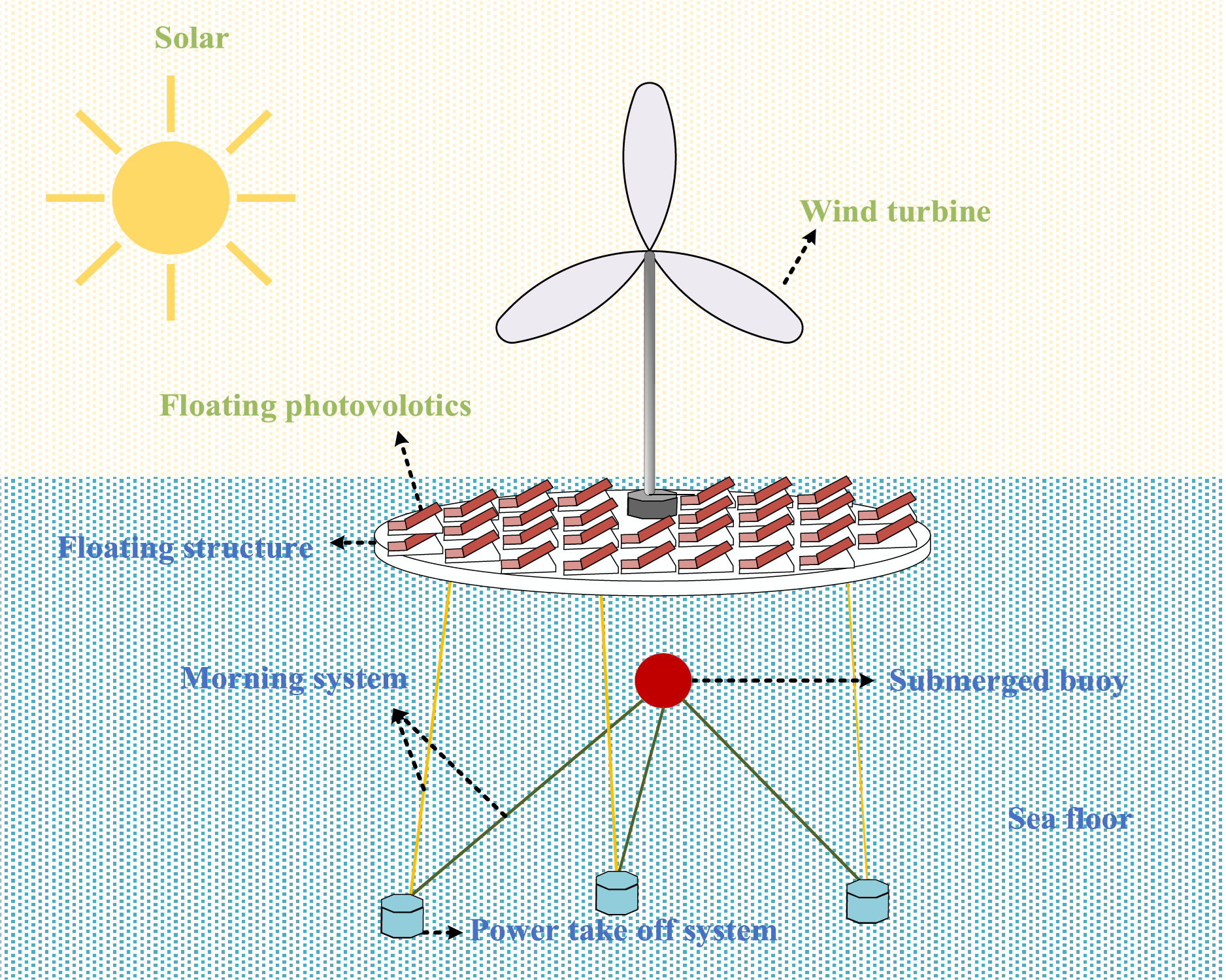
Figure 1: Layout structure diagram of the wind-solar-wave hybrid system
In the field of hybrid wind-solar-wave energy converter array layout planning, numerous researchers have employed AI technology to conduct extensive and in-depth explorations, aiming to achieve system synergy, enhance offshore space utilization, reduce costs, and stabilize power output. For instance, various heuristic algorithms are used for array optimization. Reference [21] proposes a hybrid wave-wind energy converter (HWWEC) array optimization strategy based on the artificial ecosystem optimization-manta ray foraging optimization collaborative optimizer (EMCO). This strategy ingeniously utilizes AI technology to balance local development and global exploration through the dynamic collaboration between artificial ecosystem optimization and manta ray foraging optimization operators. EMCO achieves the maximum total absorption power and demonstrates good stability, improving the HWWEC factor values across all four scales. However, in terms of computational cost, EMCO requires relatively high computational resources due to its complex dynamic collaboration mechanism between multiple operators, which may limit its application in scenarios with limited computing power. Regarding scalability, although it shows good performance in the studied scales, its effectiveness in extremely large-scale array optimization remains to be further verified. Nevertheless, it provides important references for subsequent research.
On this basis, work [22] also constructs the HWWEC model and further focuses on array configuration optimization problems. Researchers have developed an optimization scheme based on the enhanced serpentine optimizer (ESO), which integrates multiple AI optimization mechanisms such as chaos initialization, asynchronous learning factors, and Levy flight. The synergistic effect of these mechanisms enables the algorithm to avoid falling into local optima and search for global optimal solutions in a broader search space. The simulation results show that the ESO algorithm achieves the highest absorption power and has a significant output power advantage compared to other algorithms. In terms of computational cost, ESO’s integration of multiple mechanisms increases its computational complexity, but the chaos initialization and Levy flight can sometimes accelerate the convergence, partially offsetting the increased cost. Regarding scalability, ESO shows good potential for large-scale applications as its mechanisms are designed to handle complex search spaces, providing new ideas for optimizing the configuration of HWWEC arrays.
As research deepens, reference [23] expands the scope of study to hybrid solar-wind-wave energy systems (HSWWS). This system integrates multiple energy advantages and has the ability to generate electricity both on-grid and off-grid, which is of great significance for improving the efficiency and reliability of power supply, especially in areas beyond the coverage of traditional power grids. To solve the HSWWS layout problem, researchers propose a chaotic artificial rabbit optimization algorithm. Through case studies, it was found that it outperforms other comparative algorithms in terms of total power output and convergence. In terms of computational cost, the chaotic artificial rabbit optimization algorithm has a relatively moderate computational load as it mainly relies on simple chaotic mapping and rabbit-inspired search behaviors. Regarding scalability, it can be easily adapted to different system sizes, providing an effective tool for HSWWS layout planning.
At the same time, study [24] also establishes the HSWWS model, focusing on studying the impact of system spatial array optimization on power output. Researchers have improved the original slime mould algorithm into the exponential slime mould algorithm (ESMA), enhancing the algorithm’s optimization capabilities by integrating chaos algorithms, exponential asynchronous factors, and sine-cosine mechanisms. The simulation results show that the ESMA algorithm is superior to other algorithms, and its advantages become more significant as the system size increases. In terms of computational cost, ESMA’s integration of multiple complex mechanisms leads to a relatively high computational cost, but its excellent performance in large-scale systems justifies the cost. Regarding scalability, ESMA is well-suited for large-scale HSWWS layout planning due to its ability to handle complex spatial array optimization problems, providing strong support for large-scale HSWWS layout planning.
In summary, AI technology has played a key role in the layout planning of hybrid wind solar wave energy converter arrays. From algorithm optimization to system performance improvement, AI technology provides efficient and accurate solutions for solving complex layout problems.
3 Advanced WEC Control Technology
The core goal of research on wave energy conversion device control is to improve the energy capture efficiency and operational stability of the device in complex marine environments. Although current research has achieved certain results, the complex and ever-changing marine environment still brings many challenges [25–27]. In this context, AI technology, with its powerful data processing, model optimization, and adaptive capabilities, has brought new opportunities for the research of wave energy conversion device control.
Adaptive control, as an advanced control method, has shown great potential after deep integration with AI technology [28–30]. It can flexibly adjust parameters with the help of AI algorithms based on real-time system status and environmental changes, thereby significantly improving system performance and environmental adaptability. At the same time, AI supported adaptive control systems also have automatic learning capabilities and can continuously adapt to various changes. In the wave energy conversion system in low-energy density sea areas, AI enabled adaptive control can analyze the wave parameters captured by the wave energy capture device in real time, and adjust the parameters accurately through the adaptive controller to adapt to different sea conditions [31–33]. The flowchart of AI-driven WEC control is shown in Fig. 2.
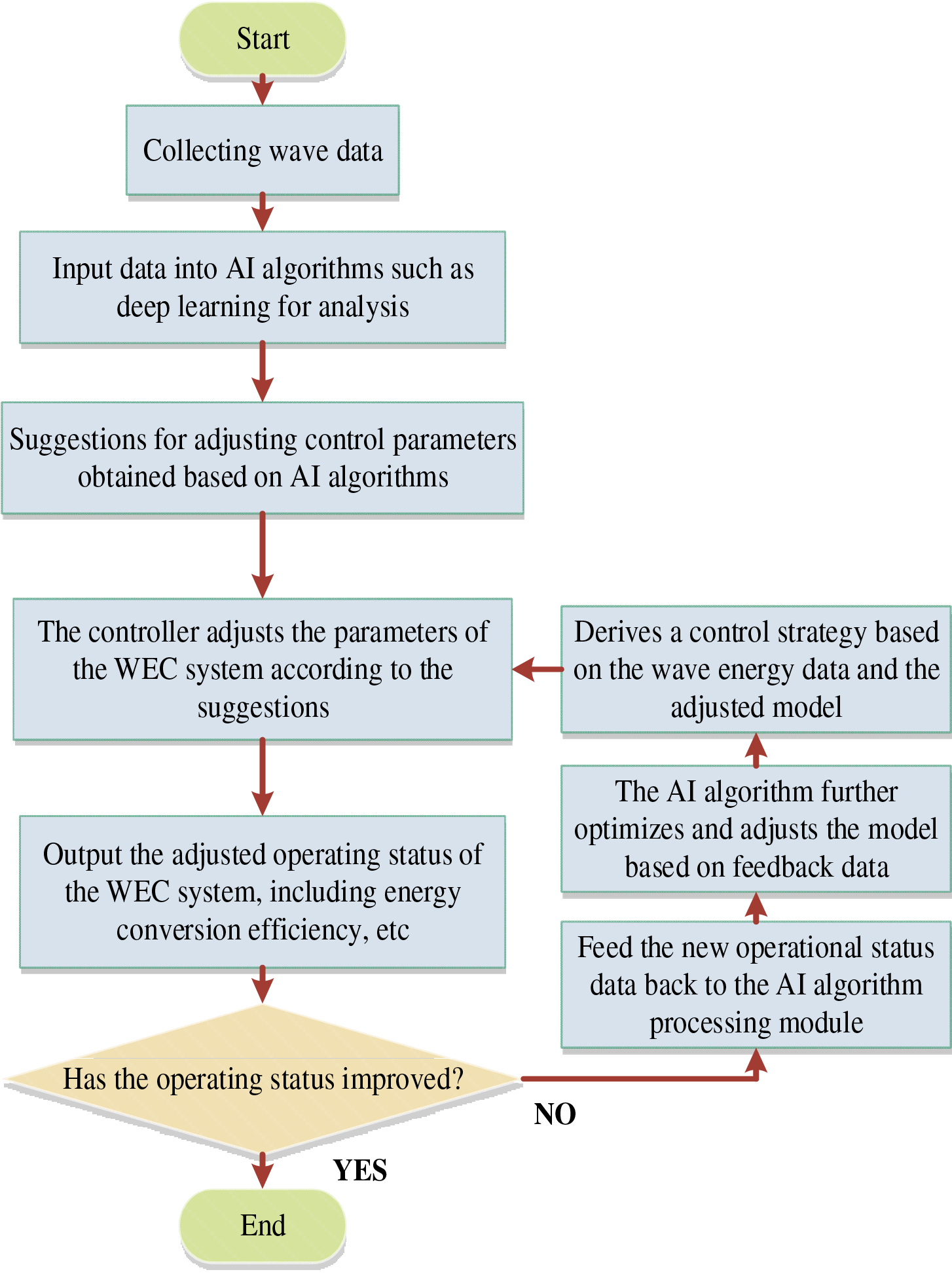
Figure 2: Flowchart of AI-driven WEC control
In terms of research status, numerous institutions and scholars have conducted extensive research on the control methods of wave energy conversion devices, among which AI technology has played an important role, such as using neural networks, deep learning, etc., to implement control strategies. Reference [34] is the first to apply deep reinforcement learning (DRL) to WEC control. In the constructed linear simulation environment equipped with linear model predictive control, researchers collected data from various sea states to initialize the DRL agent. Specifically, in terms of the selection of DRL algorithm, the soft actor-critic (SAC) was adopted to achieve real-time control of the wave energy converter. In terms of implementation process, the controller is divided into an actor and a critic. The critic updates the action-value function using collected environmental samples and feeds back the discounted reward to the actor. Based on this, the actor selects actions to interact with the environment and improves the strategy. In terms of settings, two deep neural networks are used to approximate the evaluation strategy to reduce bias. During training, the minimum value of two soft Q functions is taken to accelerate convergence. Additionally, a target network is introduced to smooth the noise impact, while leveraging the entropy parameter to balance exploration and reward maximization, ultimately achieving efficient real-time control.
Work [35] focuses on model uncertainty and energy maximization issues, proposing a robust adaptive optimal control strategy. To address model uncertainty, a new estimator is constructed, and the complex control problem is transformed into an optimal control problem. Within the framework based on adaptive dynamic programming, an artificial intelligence evaluation neural network with a multi-layer structure is used to approximate the cost value. The researchers adopt an adaptive dynamic programming-based approach to handle model uncertainty and design optimal control. In terms of implementation process, an uncertainty estimator is first introduced, estimating the uncertainty concentrated in additive variables by defining filter variables. Then, to cope with input and floating body motion constraints, the weights of the cost function are adjusted. Simultaneously, to solve the finite-time optimal control problem, an evaluation neural network with time-varying activation functions and fixed weights is introduced. In terms of settings, filter variables are defined based on system state, waves, and control inputs. The improved cost function is used to increase the control input amplitude and state adjustment flexibility. The time-varying activation function evaluation neural network is employed to avoid incorporating future waves, enabling the control algorithm to run online. This approach not only achieves rapid convergence but also enhances the feasibility of real-time applications.
Research [36] focuses on enhancing the efficiency of different wave energy conversion devices under various actual random wave conditions and proposes a novel and practical control strategy. A real-time model predictive control method is developed, which integrates a long short-term memory (LSTM) recurrent neural network wave prediction model, especially suitable for real-time control of wave energy converters in irregular wave environments. LSTM is employed to address the non-causal issue between wave force and wave height, enabling the prediction of wave excitation force. In terms of implementation process, the network is constructed with wave height as the input and wave force as the output, utilizing the unique memory block structure of LSTM to process temporal information. In terms of settings, the memory block includes a constant error carousel (CEC) as well as input, output, and forget gates. CEC implements time series feature memory, with each gate controlling information flow and bridging short-term and long-term memory, while the state cell stores long-term memory. During training and testing, wave excitation force information precedes wave height, allowing the network to reflect the relationship between current and future wave forces. The research conclusion indicates that the model predictive control controller implemented using the new LSTM algorithm can double the power absorption capacity of the wave energy converter model under actual irregular wave conditions.
In summary, AI technology has played an important role in the research of wave energy conversion device control, providing new ideas and methods for improving energy capture efficiency and operational stability.
In this article, we will focus on two major challenges faced by wave energy planning and control: the efficient control of WECs in dynamic environments, and the optimization dilemma of hybrid wind-solar-wave energy generation systems. We will rank these challenges based on their urgency and link them to specific case studies and indicators.
The first and most urgent obstacle in AI-empowered WEC dynamic control is the real-time computing challenge. In complex marine environments, ocean waves exhibit a high degree of randomness, nonlinearity, and complexity, with changing patterns that are difficult to accurately capture and predict. For AI control systems, the real-time requirements are extremely high. The system needs to complete data collection, processing, analysis, and decision-making within an extremely short time frame. For instance, in a real-world WEC deployment off the coast of Scotland, researchers found that for effective real-time control, the system had to respond to wave changes within a latency of less than 100 ms. However, the existing computing resources and algorithm efficiency often fall short. Deep learning and reinforcement learning algorithms, which are used to perceive real-time changes in ocean waves, require significant computational power for training and execution. When dealing with large-scale and high-frequency wave data, if there are insufficient computing resources or low algorithm efficiency, it will lead to delayed adjustment of control strategies. This delay means the system cannot respond to changes in ocean waves in a timely manner, significantly reducing the energy capture efficiency of WEC. A study showed that a delay of just 500 ms in control strategy adjustment could lead to a 15% decrease in the power absorption capacity of a WEC model under certain wave conditions.
The second obstacle, with medium urgency, is the issue of personalized control for diverse WEC devices. The physical characteristics and operating mechanisms of WEC devices are complex and diverse, and different types and scales of WEC have distinct requirements for control strategies. While AI technology aims to implement universal control strategies, it struggles to fully consider the personalized needs of each device. For example, in a large-scale wave energy power plant, there were various types of WECs, including point-absorber and oscillating-water-column devices. The point-absorber devices required rapid and precise control to match the high-frequency wave motions, while the oscillating-water-column devices needed more stable and long-term control strategies to optimize energy conversion. The universal AI control approach led to some devices being unable to fully utilize their performance advantages. Some point-absorber devices experienced sub-optimal energy capture because the control strategy could not adapt to their specific dynamic characteristics, resulting in a 10%–12% reduction in their overall energy output compared to what could be achieved with a more personalized control approach.
In addition to the above challenges in WEC control, the AI optimization planning of wind-solar-wave hybrid power generation systems also faces complex issues. The first major challenge here is the rational allocation of energy resources, which is a complex optimization problem involving multiple objectives and constraints. In a hybrid wind-solar-wave power generation system, it is necessary to consider the power generation characteristics, output laws, and synergistic relationships between wind energy, solar energy, and wave energy, while also taking into account factors such as power demand, grid access, and energy storage configuration. For example, in a large-scale hybrid system planned for a remote island, AI technology was used to optimize energy allocation. However, dealing with such a complex problem required a large amount of computing resources and time. Even with advanced AI algorithms, it was difficult to guarantee finding the global optimal solution. The system often got stuck in local optima, resulting in sub-optimal energy resource allocation and a 8%–10% reduction in the overall energy utilization efficiency of the system.
The second challenge in hybrid system optimization is the uncertainty of market demand. The electricity market demand is highly dynamic and uncertain due to factors such as the economy, society, and climate. Although AI technology has certain advantages in predicting market demand, there are still errors in the predicted results. In a case study of a hybrid power generation system in California, inaccurate market demand forecasting led to an over-allocation of energy resources to meet peak demand that did not materialize as expected. This resulted in an increase in operating costs by 12% and a decrease in the economic benefits of the system.
These challenges, both in WEC control and hybrid system optimization, are interrelated and mutually influential, collectively constituting the key issues that urgently need to be addressed in the field of advanced wave energy planning and control driven by artificial intelligence.
In response to the above challenges, this special issue focuses on “Advanced Wave Energy Planning and Control Driven by Artificial Intelligence”, with topics including but not limited to:
• Expansion of complex wave scene data and model optimization: Future research should focus on collecting more comprehensive and rich ocean wave data, covering various extreme and rare wave conditions, to improve the training datasets for AI algorithms such as deep learning and reinforcement learning. At the same time, developing a hybrid AI model that can adapt to different wave scenarios, improving the algorithm’s ability to recognize and adapt to complex wave changes through online learning and real-time update mechanisms, thereby enhancing the dynamic adjustment effect of control strategies and energy capture efficiency.
• Personalized control strategy customization and universality integration: Conduct in-depth research on the physical characteristics and operating mechanisms of different types and scales of WEC devices, and establish a device characteristic database. Based on this database, AI technology is used to customize personalized control strategies for each device, while exploring the integration method of universal control strategies and personalized strategies to ensure the coordination and efficiency of the overall control system while meeting the personalized needs of the devices.
• Real time computing resource optimization and algorithm efficiency improvement: Research efficient distributed computing architecture and edge computing technology, sink some computing tasks to offshore field devices, reduce data transmission delay, and improve the real-time response capability of the system. At the same time, developing lightweight AI algorithms can reduce the computational complexity of algorithms, improve the execution efficiency of algorithms, and ensure that AI control systems can quickly complete data collection, processing, analysis, and decision-making in complex marine environments.
• Innovation of multi-objective optimization algorithms and exploration of global optimal solutions: In response to the complex optimization problem of rational allocation of energy resources, future research should explore new multi-objective optimization algorithms, such as hybrid optimization algorithms based on evolutionary algorithms and deep learning, to improve the performance of algorithms in handling large-scale and high-dimensional optimization problems. At the same time, parallel computing and cloud computing technologies are introduced to accelerate the optimization process and increase the possibility of finding the global optimal solution.
• Improving the accuracy of market demand forecasting and adjusting dynamic programming: Combining multiple sources of data such as macroeconomic, social trends, and climate change, utilizing AI technologies such as deep learning and time series analysis, to construct a more accurate electricity market demand forecasting model. Establish a dynamic programming adjustment mechanism to timely adjust the energy resource allocation plan of the wind solar hybrid power generation system based on real-time market demand forecasting results, ensuring the rational utilization of energy resources and the economic benefits of the system.
• Multi stakeholder coordination mechanism and optimization of interest balance: Using theories and methods such as game theory and multi-agent systems, this study investigates the coordination mechanism of multiple stakeholders in the construction of wind solar hybrid power generation systems. Design an AI based intelligent negotiation and decision support system that fully considers the interests and goals of all parties, balances the interests of all parties through optimized algorithms, and improves the feasibility of planning schemes and the efficiency of project implementation.
Acknowledgement: This work was supported by Yunnan Provincial Basic Research Project and National Natural Science Foundation of China.
Funding Statement: This work was supported by Yunnan Provincial Basic Research Project (202401AT070344) and National Natural Science Foundation of China (62263014).
Author Contributions: The authors confirm contribution to the paper as follows: study conception and design: Bo Yang and Guo Zhou; data collection: Shuai Zhou; analysis and interpretation of results: Yaxing Ren; draft manuscript preparation: Bo Yang and Guo Zhou. All authors reviewed the results and approved the final version of the manuscript.
Availability of Data and Materials: Not applicable.
Ethics Approval: Not applicable.
Conflicts of Interest: The authors declare no conflicts of interest to report regarding the present study.
References
1. Ping L, Shang JG, Chen MX, Ling YF, Liu MJ. Research on damping of PTO system based on vertical motion wave energy power generation. Shandong Electr Power. 2023;50(9):28–34. (In Chinese). doi:10.20097/j.cnki.issn1007-9904.2023.09.004. [Google Scholar] [CrossRef]
2. Wang H, Wu W, Fan G, Cui L, Blaabjerg F. Maximum power point tracking control strategy for built-in direct-drive wave energy converter. Energy. 2025;329(6):136692. doi:10.1016/j.energy.2025.136692. [Google Scholar] [CrossRef]
3. Yang L, Huang J, Spencer SJ, Li X, Mi J, Bacelli G, et al. Electrical power potential of a wave energy converter using an active mechanical motion rectifier based power take-off. Renew Energy. 2025;252(10):123477. doi:10.1016/j.renene.2025.123477. [Google Scholar] [CrossRef]
4. Yang B, Zhou Y, Liu B, Li M, Duan J, Cao P, et al. Optimal array layout design of wave energy converter via honey badger algorithm. Renew Energy. 2024;234(1):121182. doi:10.1016/j.renene.2024.121182. [Google Scholar] [CrossRef]
5. Zheng X, Lai W, Li J, Rong S, Yang H. Nonlinear numerical investigation and performance analysis of an oscillating-body wave energy converter integrated with a floating breakwater. Ocean Eng. 2025;336(22):121743. doi:10.1016/j.oceaneng.2025.121743. [Google Scholar] [CrossRef]
6. Jia N, Wang X, Han L, Xia H. Field testing methodology for wave energy converters using the MIKE 21 model. Energy Eng. 2025;122(6):2389–400. doi:10.32604/ee.2025.064891. [Google Scholar] [CrossRef]
7. Trueworthy A, Gaebele D, Jones K, Hermanson I, Grear M. Wave energy in season: a comparative approach to feasibility of seasonal deployments for remote coastal communities. Appl Energy. 2025;396(4):126206. doi:10.1016/j.apenergy.2025.126206. [Google Scholar] [CrossRef]
8. Ali R, Meek M, Robertson B. Submerged wave energy converter dynamics and the impact of PTO-mooring configuration on power performance. Renew Energy. 2025;243(1959):122525. doi:10.1016/j.renene.2025.122525. [Google Scholar] [CrossRef]
9. Zhang Y, Huang Z, Bian J. Multi-dimensional vibration control for offshore floating platform synergizing built-in wave energy converter with decoupled power take-offs. Ocean Eng. 2025;322(7):120450. doi:10.1016/j.oceaneng.2025.120450. [Google Scholar] [CrossRef]
10. Meduri A, Kang H. Sequential design optimization with Bayesian approach for cost-competitive levelized cost of energy of a wave energy converter with adaptive resonance. Appl Energy. 2025;382(11):125166. doi:10.1016/j.apenergy.2024.125166. [Google Scholar] [CrossRef]
11. Sun X, Zhang H, Li P, Liu C, Shi Q, Xu D. Feasibility study of potential flow and viscous flow models for a bistable wave energy converter using numerical and experimental methods. Energy. 2025;316(11):134465. doi:10.1016/j.energy.2025.134465. [Google Scholar] [CrossRef]
12. Xu H, Zhang Y, Wang C, Yang H. Numerical study on aerodynamic and hydrodynamic load characteristics of a floating pneumatic wave energy converter under real sea conditions. Energy. 2025;314(2):134153. doi:10.1016/j.energy.2024.134153. [Google Scholar] [CrossRef]
13. Mi J, Huang J, Yang L, Ahmed A, Li X, Wu X, et al. Multi-scale concurrent design of a 100 kW wave energy converter. Renew Energy. 2025;238:121835. doi:10.1016/j.renene.2024.121835. [Google Scholar] [CrossRef]
14. Zhang Y, Liu S, Shen Q, Zhang L, Li Y, Hou Z, et al. Short-term prediction model of wave energy converter generation power based on CNN-BiLSTM-DELA integration. Electronics. 2024;13(21):4163. doi:10.3390/electronics13214163. [Google Scholar] [CrossRef]
15. Gonzalez DT, Anderlini E, Yassin H, Parker G. Nonlinear model predictive control of heaving wave energy converter with nonlinear Froude-Krylov forces. Energies. 2024;17(20):5112. doi:10.3390/en17205112. [Google Scholar] [CrossRef]
16. Pierart FG, Campos PG, Basoalto CE, Rohten J, Davey T. Experimental implementation of reinforcement learning applied to maximise energy from a wave energy converter. Energies. 2024;17(20):5087. doi:10.3390/en17205087. [Google Scholar] [CrossRef]
17. Luo ZM, Li J, Guo T, Yang T, Chao HC. Study on array optimal arrangement of energy capture device in low velocity ocean current. Acta Energiae Solaris Sin. 2024;45(11):561–9. (In Chinese). doi:10.19912/j.0254-0096.tynxb.2023-1067. [Google Scholar] [CrossRef]
18. Housner S, Hall M, Tran TT, de Miguel Para B, Maeso A. Shared mooring system designs and cost estimates for wave energy arrays. Renew Energy. 2024;231(9):120924. doi:10.1016/j.renene.2024.120924. [Google Scholar] [CrossRef]
19. Yang B, Duan J, Chen Y, Wu S, Li M, Cao P, et al. A critical survey of power take-off systems based wave energy converters: summaries, advances, and perspectives. Ocean Eng. 2024;298(3):117149. doi:10.1016/j.oceaneng.2024.117149. [Google Scholar] [CrossRef]
20. Ma HD, Deng YB, Guo QB. Optimization of 2-dof wave energy converters array based on genetic algorithm. Acta Energiae Solaris Sin. 2022;43(6):264–9. (In Chinese). doi:10.19912/j.0254-0096.tynxb.2020-1067. [Google Scholar] [CrossRef]
21. Yang B, Duan J, Yan Y, Liu B, Huang J, Jiang L, et al. EMCO-based optimal layout design of hybrid wind-wave energy converters array. Prot Control Mod Power Syst. 2024;9(5):142–61. doi:10.23919/pcmp.2023.000129. [Google Scholar] [CrossRef]
22. Yang B, Li M, Qin R, Luo E, Duan J, Liu B, et al. Extracted power optimization of hybrid wind-wave energy converters array layout via enhanced snake optimizer. Energy. 2024;293(1):130529. doi:10.1016/j.energy.2024.130529. [Google Scholar] [CrossRef]
23. Yang B, Duan J, Li M, Liu B, Cao P, He P, et al. Optimal placement of hybrid solar-wind-wave systems for maximum energy harvesting via chaotic artificial rabbits algorithm. Energy Convers Manag. 2024;322(3):119143. doi:10.1016/j.enconman.2024.119143. [Google Scholar] [CrossRef]
24. Li M, Yang B, Duan J, Shu H, Wang Y, Yang Z, et al. Exponential slime mould algorithm based spatial arrays optimization of hybrid wind-wave-PV systems for power enhancement. Appl Energy. 2024;373(3):123905. doi:10.1016/j.apenergy.2024.123905. [Google Scholar] [CrossRef]
25. Qin H, Su H, Wen Z, Liang H. Latching control of a point absorber wave energy converter in irregular wave environments coupling computational fluid dynamics and deep reinforcement learning. Appl Energy. 2025;396(4):126282. doi:10.1016/j.apenergy.2025.126282. [Google Scholar] [CrossRef]
26. Wang ZC, Peng JG, Huang Y. Overview of wave energy converter and control methods in low energy density seas. Acta Energiae Solaris Sin. 2025;46(4):654–62. (In Chinese). doi:10.19912/j.0254-0096.tynxb.2023-2023. [Google Scholar] [CrossRef]
27. Bao XY, Li M, Chen Z, Song CL. Energy optimization control of wave energy converter considering physical constraints. Period Ocean Univ China. 2025;55(5):157–66. (In Chinese). doi:10.16441/j.cnki.hdxb.20230016. [Google Scholar] [CrossRef]
28. Vervaet T, Cromheeke L, Quartier N, Streicher M, Stratigaki V, Troch P. Wave basin testing of hydrodynamic interactions in centralized controlled wave energy converter arrays for irregular short- and long-crested waves. Appl Ocean Res. 2025;156(4):104467. doi:10.1016/j.apor.2025.104467. [Google Scholar] [CrossRef]
29. Ermakov AM, Ali ZA, Mahmoodi K, Mason O, Ringwood JV. Optimisation of heterogeneous wave energy converter arrays: a control co-design strategy. Renew Energy. 2025;244(3):122637. doi:10.1016/j.renene.2025.122637. [Google Scholar] [CrossRef]
30. Yassin H, Gonzalez DT, Nelson K, Parker G, Weaver W. Optimal control of nonlinear, nonautonomous, energy harvesting systems applied to point absorber wave energy converters. J Mar Sci Eng. 2024;12(11):2078. doi:10.3390/jmse12112078. [Google Scholar] [CrossRef]
31. Huang Z, Zhang Y, Bian J. Offshore floating platform synergizing internally-installed self-reacting wave energy converters for optimizing vibration control and energy harvesting. Ocean Eng. 2024;313:119429. doi:10.1016/j.oceaneng.2024.119429. [Google Scholar] [CrossRef]
32. Liu YJ, Huang MY, Peng AW. Research progress on electromechnical conversion and control of oscillating water column wave energy converter. Acta Energiae Solaris Sin. 2024;45(10):699–709. (In Chinese). doi:10.19912/j.0254-0096.tynxb.2023-1016. [Google Scholar] [CrossRef]
33. Nguyen HN, Tona P. An efficiency-aware continuous adaptive proportional-integral velocity-feedback control for wave energy converters. Renew Energy. 2020;146:1596–608. doi:10.1016/j.renene.2019.07.093. [Google Scholar] [CrossRef]
34. Anderlini E, Husain S, Parker GG, Abusara M, Thomas G. Towards real-time reinforcement learning control of a wave energy converter. J Mar Sci Eng. 2020;8(11):845. doi:10.3390/jmse8110845. [Google Scholar] [CrossRef]
35. Na J, Li G, Wang B, Herrmann G, Zhan S. Robust optimal control of wave energy converters based on adaptive dynamic programming. IEEE Trans Sustain Energy. 2019;10(2):961–70. doi:10.1109/tste.2018.2856802. [Google Scholar] [CrossRef]
36. Zhang M, Yu SR, Zhao GW, Dai SS, He F, Yuan ZM. Model predictive control of wave energy converters. Ocean Eng. 2024;301(12–13):117430. doi:10.1016/j.oceaneng.2024.117430. [Google Scholar] [CrossRef]
Cite This Article
 Copyright © 2025 The Author(s). Published by Tech Science Press.
This work is licensed under a Creative Commons Attribution 4.0 International License , which permits unrestricted use, distribution, and reproduction in any medium, provided the original work is properly cited.
 Downloads
 Citation Tools
