
 Login
Login Register
 Submit a Paper
 Propose a Special lssue
 Open Access
ARTICLE
Stewardism-in the Context of Energy Poverty Alleviation, Renewable Energy Investment and High-Quality Economic Development in Developed and Emerging Economies
Department of Engineering, Staffordshire University, Mellor Building, College Road, Stoke-on-Trent, UK
* Corresponding Author: Sandra Kiessling. Email:
(This article belongs to the Special Issue: Renewable Energy Community (REC) Engineering towards Sustainable Development and Energy Poverty Reduction)
Energy Engineering 2026, 123(11), 3 https://doi.org/10.32604/ee.2026.084429
Received 22 April 2026; Accepted 08 July 2026; Issue published 24 September 2026
 View Full Text
 Download PDF
Abstract
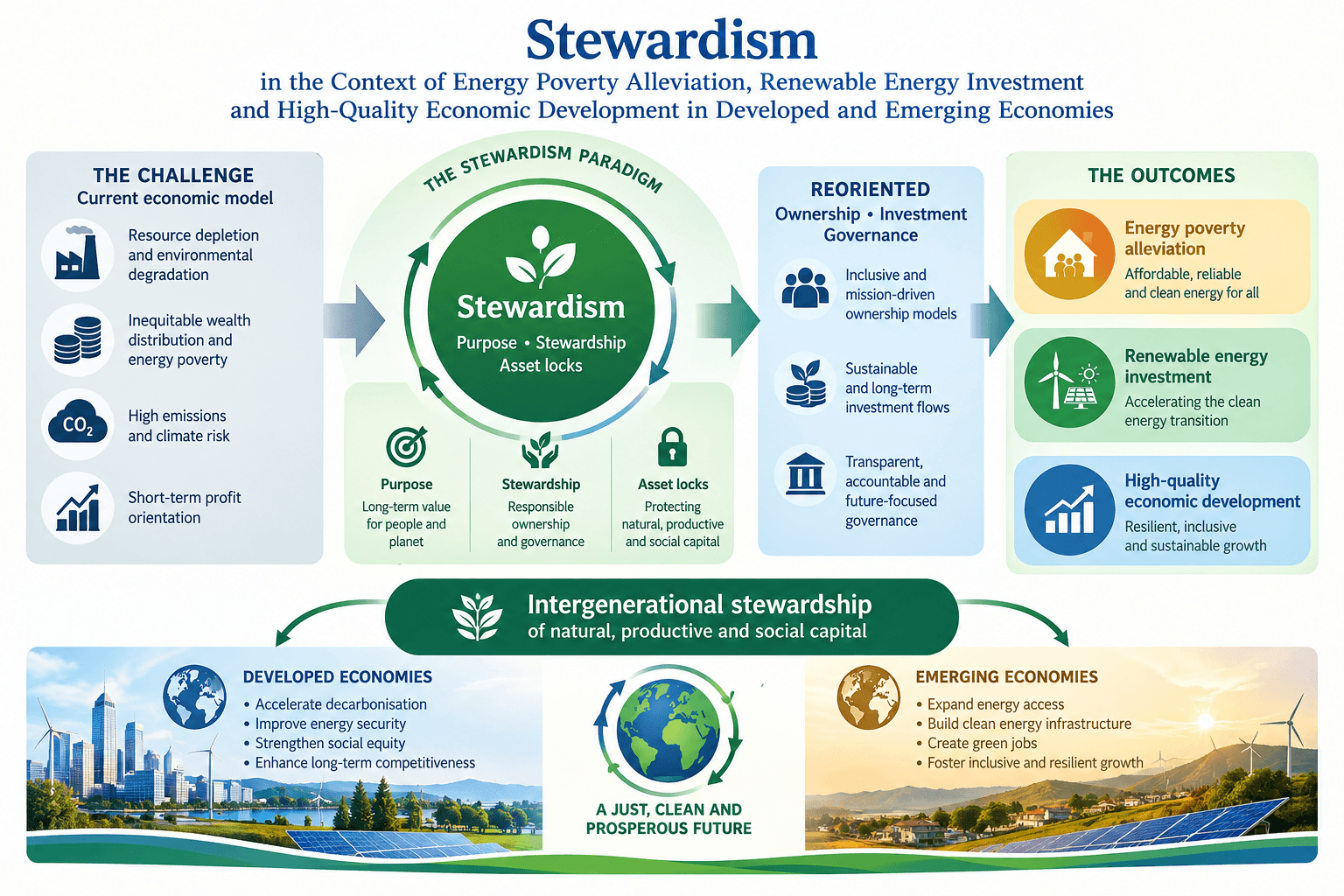
The prevailing capitalist emphasis on perpetual economic growth conflicts with the ecological reality of a planet with finite resources, calling into question the long-term sustainability of the current economic framework. Both developed and developing countries require a new economic system that recognises humanity’s stewardship role in managing the natural environment and its finite resources. Drawing on the concept of steward-ownership, previously explored in both academic and commercial contexts, this article proposes a new socio-economic paradigm: Stewardism. Stewardism represents an emerging socio-economic governance model that fundamentally departs from both traditional shareholder capitalism and state socialism by embedding purpose, stewardship, and asset locks within ownership structures. Addressing the limitations of existing linear economic systems, this article proposes Stewardism as a sustainable socio-economic paradigm for the intergenerational stewardship of natural, productive, and social capital in both developed and developing countries. To demonstrate the practical applicability of Stewardism, this article examines renewable energy investment for energy poverty alleviation and high-quality economic development in both established and emerging economies. By integrating governance, sustainability, and intergenerational stewardship into a single conceptual framework, Stewardism is proposed as a novel socio-economic paradigm with the potential to inform future research and policy.Graphic Abstract
Keywords
1 Introduction–The Need for a New Paradigm
As the effects of climate change are all around us, one would think that the fact we are living through an environmental crisis has reached every human being’s mind. With the occurrence of extreme weather phenomena increasing at an alarming rate, flooding, wildfires, hurricanes and earthquakes are literally shaking the ground we live on [1,2]. And yet, these extreme weather events do not seem to be severe enough to motivate people to act. Even previously stable weather systems, such as the jet stream, which has provided the mid-European geographical zone with a temperate climate, is changing its patterns, with great negative effects on the global arable belt and food production [1–3]. Extreme weather events are phenomena of disrupted natural weather patterns, which are vital for crop production and animal husbandry alike [3–9]. Most of the World’s food is being produced in temperate climatic zones, located North and South of the equator, stopping short of the Arctic/Antarctic latitudes [3–9]. The effects of capitalism and unshackled, infinite growth in a world of finite resources, this zone, which was once rich in arable land, has been severely depleted of its rich microbiome and the resulting crops have dramatically dropped their nutrient values [3,6,9–11].
Additionally, the size of the climatic zones suitable for arable use are decreasing at an alarming rate, which is largely due to the increasing unpredictability of previously naturally occurring seasons and weather patterns. Therefore, the agricultural industry, worldwide, is struggling to meet the demand for the quantities of nutritionally valuable and sufficiently available food to feed an ever increasing World population [3,6,9–11]. In this work, the framework of Stewardism will be explored as an alternative to existing, planet-destroying linear systems. Addressing the issue of energy poverty alleviation via investment into renewable energy technology and enabling high-quality economic development in developed and emerging economies will be discussed, as well as food production challenges under the pressures of climate change [3,6,9–11]. Changing food production methods by moving to indoor agriculture and using other innovative systems [12–18], such as aquatic and floating food farming.
The contemporary energy transition presents one of the most consequential socio-economic challenges of the twenty-first century. Globally, more than 750 million people lack access to electricity, whilst in the wealthy nations of the Organization for Economic Cooperation and Development (OECD), an estimated 50 to 125 million households struggle to afford adequate energy services—a condition variously described as energy poverty, fuel poverty, or domestic energy deprivation [19–23]. In the United Kingdom alone, official statistics recorded approximately 13.4% of households in fuel poverty in 2023, a figure widely acknowledged to underestimate the true prevalence of energy-related hardship [21,22].
Simultaneously, the imperative to decarbonise energy systems with the urgency demanded by climate science is generating new forms of economic organisation—in energy generation, distribution, finance and governance—that have the potential either to deepen existing inequalities or to restructure them in fundamentally more equitable directions. The direction of travel can currently be seen as ‘in development’, and not at all predetermined. It is a matter of political economy, institutional design and, above all, of the conceptual frameworks through which societies—and the respective governments—choose to understand the relationship between energy, economy and justice.
Existing paradigms have been found to be inadequate and ill-equipped to this dual challenge. Neoliberal market frameworks, which have governed the organisation of energy systems in the United Kingdom and across much of the OECD since the late 1980s, have produced significant efficiency gains and cost reductions in wholesale energy markets whilst simultaneously contributing to the concentration of energy assets, the erosion of energy affordability for lower-income households, and the systematic exclusion of communities from the governance and benefits of energy infrastructure [19,23,24]. Welfare-state redistribution frameworks, whilst critically important as safety nets, have proved reactive and structurally inadequate to the scale of transformation required by the net-zero transition [24].
This paper proposes Stewardism as a new socio-economic paradigm that transcends the limitations of both market liberalism and welfare redistribution by focusing the energy transition on the principles of community stewardship, democratic ownership, intergenerational equity and the co-production of social and environmental value. Stewardism is not a utopian abstraction: it is grounded in—and synthesises—a substantial body of empirical evidence from community energy schemes, energy justice scholarship, cooperative economics and the practice of just transition governance across the United Kingdom, Europe and the Global South.
The urgency of the energy transition must be met with an equal urgency on justice. Transition pathways that do not explicitly address distributional, procedural and recognition justice concerns will reproduce—and in some cases intensify—existing patterns of inequality—McCauley and Heffron [25].
The following sections of this white paper develop the empirical, operational and policy dimensions of the Stewardism framework in detail, drawing on the systematic literature review presented following Table A1 and the practical experience of the Laurea-Tech Decarbonisation Programme [Laurea Tech Consulting Ltd.] as a real-world embodiment of the Stewardism paradigm in the UK context.
1.1 Theoretical Foundations: Energy Justice, and the Just Transition
1.1.1 The Energy Justice Framework
The theoretical foundations of Stewardism are rooted in the energy justice scholarship that has developed rapidly since the foundational contributions in 2015/2016, and has since developed an independent dynamic of creative intellectual discourse, covering a multitude of aspects with regards to environmental justice, energy justice, sustainable transport systems, to name a few [25–30]. Energy justice, as a field of inquiry, draws on broader traditions of environmental justice, distributive justice and political philosophy to interrogate the equity dimensions of energy systems—asking not only whether energy systems are efficient or technically sound, but whether they are fair in their distribution of benefits and burdens, inclusive in their governance, and respectful of the dignity and agency of all people affected by energy decisions.
A ten-principle framework for energy justice encompassing availability, affordability, due process, good governance, sustainability, intergenerational equity, responsibility, resistance and intersectionality was proposed in 2015 [28]. Subsequently, this framework was extended in 2017 to six new frontiers, including cosmopolitan justice—the idea that energy justice obligations extend across national boundaries—and restorative justice—the recognition that historical harms caused by fossil fuel extraction and energy poverty must be actively remedied, not merely avoided in future [29]. These contributions established energy justice as a multi-dimensional analytical tool capable of evaluating energy systems across their full social, political and environmental complexity.
Three dimensions of energy justice are of particular relevance to the Stewardism framework:
• Distributive justice: the fair distribution of the costs, risks and benefits of energy systems across society, with particular attention to the position of low-income, vulnerable and historically marginalised households and communities.
• Procedural justice: the meaningful participation of affected communities in the decisions that shape energy systems—from infrastructure siting to tariff design to the allocation of public investment.
• Recognition justice: the acknowledgement of, and respect for, the particular circumstances, vulnerabilities and identities of communities that have been systematically excluded from energy decision-making processes [27–29].
Stewardism incorporates all three dimensions but goes beyond these by proposing a fourth, constitutive dimension: generative justice—the capacity of communities to not merely receive fair treatment within existing energy systems but to actively generate, own, govern and benefit from the energy systems of the future. This dimension, absent from most energy justice frameworks, is central to Stewardism’s distinction from preceding paradigms.
The concept of the just transition has evolved from its origins in trade union movements concerned with the employment impacts of environmental regulation to become a broader framework for evaluating the distributional and governance dimensions of the shift from fossil fuels to low-carbon energy systems [25]. It is herein argued persuasively that the three major strands of justice scholarship—climate justice, environmental justice and energy justice—must be synthesised under the just transition concept if policy is to coherently address the intersecting inequities produced by the energy transition [25].
The authors emphasise that the just transition is not merely a distributional question—who gains and who loses from decarbonisation—but a procedural and recognitional one: whose voices shape the transition, and whose histories, vulnerabilities and aspirations are taken seriously in its design. This insight is foundational to Stewardism, which proposes that the energy transition can only be genuinely just if communities are not merely compensated for the costs of transition but empowered to lead it.
Just transition is a new framework of analysis that brings together climate, energy and environmental justice scholarships. The urgency of the transition could, and should, unite these research communities rather than allowing them to continue in isolation—McCauley and Heffron [25] (p. 1).
And the empirical evidence on just transition outcomes is sobering [30]. Studies of large-scale renewable energy deployment across Europe, North America and Asia consistently find that the benefits of transition—reduced energy costs, improved air quality, local employment, asset appreciation—flow disproportionately to higher-income households, communities with existing institutional capacity, and private investors, whilst the costs-disrupted landscapes, stranded assets, regressive energy price structures, displacement of traditional industries—are borne disproportionately by lower-income and rural communities [31–34]. The Australian evidence is particularly instructive: it was demonstrated that solar PV adoption subsidies in Australia have systematically reinforced energy inequality rather than alleviating it, because policy design failed to target low-income and renting households [35].
Stewardism proposes that these failures are not incidental—they are the predictable consequence of deploying renewable energy investment within existing paradigms of market liberalism and welfare redistribution without the structural transformation of ownership, governance and benefit-distribution that a genuinely just transition requires.
1.2 Community Energy and Democratic Ownership
1.2.1 The Community Energy Evidence Base
The second major theoretical pillar of Stewardism is the community energy scholarship, which has produced a rich empirical and conceptual literature on the conditions under which locally owned, democratically governed energy projects generate superior social, economic and environmental outcomes compared with centrally owned and managed renewable energy infrastructure.
It was proposed that community renewable energy must be understood along two dimensions: process [who controls the project] and outcome [who benefits from it] [36]. This analysis—subsequently revisited and enriched a decade later [37]—established that neither dimension alone is sufficient to constitute genuine community energy. Projects that are community-controlled but generate benefits that flow primarily outside the community, and projects that are externally controlled but claim to deliver community benefits, both fall short of the transformative potential of authentic community energy. This process-outcome framework is directly constitutive of the Stewardism model. The empirical evidence for the co-benefits of community-owned renewable energy is now substantial. In 2018, in a comparative review across the United Kingdom, Germany and the United States, consistent evidence was found that community energy schemes deliver social cohesion, democratic participation and local economic circulation as co-benefits beyond energy generation [38]. The diversity and rapid growth of the UK community energy sector was investigated, whilst identifying systemic barriers—regulatory complexity, grid access, policy volatility—that have consistently prevented the sector from scaling to its potential [31]. It was later in 2022 posed via large-N quantitative evidence provided from Switzerland that participation in community energy cooperatives significantly increases social cohesion and civic trust among members, with effects strongest in rural and peri-urban communities [39].
In 2016, the financial system was identified as a structural determinant of community energy ownership models: Germany’s cooperative banking sector has enabled community energy to scale, whilst the United Kingdom’s commercial banking system has systematically disadvantaged community actors relative to private energy developers [40]. This institutional analysis has direct policy implications for
Stewardism: the paradigm change it proposes cannot be achieved without complementary reform of the financial infrastructure through which energy investment is intermediated. Stewardism is as much a paradigm of economic democracy as it is of environmental responsibility.
1.2.2 Recognition Justice and Community Energy
The community energy literature has not been uncritical of its subject. It was found that the UK community energy sector has made significant progress on distributive and procedural justice dimensions whilst frequently falling short on recognition justice—failing to include marginalised, low-income and vulnerable groups in the governance and benefits of community energy projects [41]. In a qualitative study of community renewable energy in rural Indonesia, it was documented how power asymmetries and elite capture can cause community energy benefits to flow disproportionately to wealthier households even within nominally community-governed schemes [42]. These findings are not arguments against community energy: they are arguments for the kind of explicit equity governance and inclusive design that the Stewardism framework mandates.
45 European urban community energy case studies were reviewed, and it was found that governance structure is the primary determinant of whether equity benefits materialise: community energy schemes with explicit equity mandates and inclusive governance deliver measurably superior poverty alleviation outcomes compared with schemes that are community-branded but not community-governed [43]. This evidence directly informs Stewardism’s insistence that community ownership is a necessary but not sufficient condition for just energy transition: it must be paired with intentional equity governance.
The Stewardism proposition:
Community ownership + equity governance = just transition
The empirical evidence consistently shows that community energy delivers superior social outcomes when it combines authentic process-dimension ownership with explicit equity governance mechanisms that prioritise inclusion of the most vulnerable [36]. Stewardism proposes this combination as the organisational core of the just transition.
1.3 Stewardism: Defining the Paradigm
1.3.1 Conceptual Origins and Intellectual Lineage
The term stewardship has a long intellectual history, spanning theological traditions of responsible custodianship, ecological frameworks of intergenerational resource governance, and political economy traditions of commons management [43,44]. Stewardism draws on and synthesises these traditions, but constitutes a genuinely new paradigm rather than a revival of existing ones. Whilst stewardship has typically been applied to the management of natural resources—land, water, biodiversity—Stewardism applies the same constitutive logic to the governance of energy systems, carbon assets and the social infrastructure of the energy transition. Stewardism is distinguished from stewardship by its explicitly socio-economic character. It is not merely a disposition of responsible custodianship but a fully articulated framework of economic organisation, governance design and social contract—one in which communities are not passive beneficiaries of, or compensated victims of, the energy transition, but active stewards of the energy systems on which their lives and livelihoods depend. In this sense, Stewardism is as much a paradigm of economic democracy as it is of environmental responsibility.
1.3.2 The Five Pillars of Stewardism
Stewardism as a socio-economic paradigm rests on five constitutive pillars, each grounded in and supported by the empirical evidence reviewed above:
1. Community ownership and democratic governance. Energy assets-generation, storage, distribution-should be owned and governed by the communities they serve, not by distant private capital. Ownership is the primary mechanism of distributive justice in the energy transition [36,39,43,44].
2. Intergenerational equity and carbon stewardship. The benefits of decarbonisation and the costs of transition must be distributed equitably not only across present communities but across generations. Stewardism incorporates intergenerational equity as a foundational governance principle, requiring that energy decisions be evaluated against their long-term social and environmental consequences [24,28].
3. Energy poverty alleviation is a primary objective. Stewardism treats the alleviation of energy poverty not as a secondary social policy objective but as a primary purpose of the energy transition itself. The empirical evidence from China [45], the European Union [46] and the global South [47,48] consistently demonstrates that renewable energy investment can be structured to directly reduce energy poverty—but only when ownership, governance and benefit distribution are explicitly designed to that end.
4. Co-production of social and environmental value. Stewardism is premised on the co-production of social and environmental value: the recognition that well-designed energy community schemes generate not only clean energy but social cohesion, democratic participation, local economic circulation and improved health outcomes as inseparable co-benefits [37,49,50]. The paradigm measures success not by energy output alone but by the full range of social, environmental and economic value generated.
5. Institutional stewardship of public goods. Stewardism reconceptualises energy infrastructure as a public good held in trust for present and future communities, rather than a commodity to be exploited for private gain. This reconceptualisation has direct implications for the design of regulatory frameworks, public investment mechanisms, grant and subsidy structures, and the governance of transition finance [51–53].
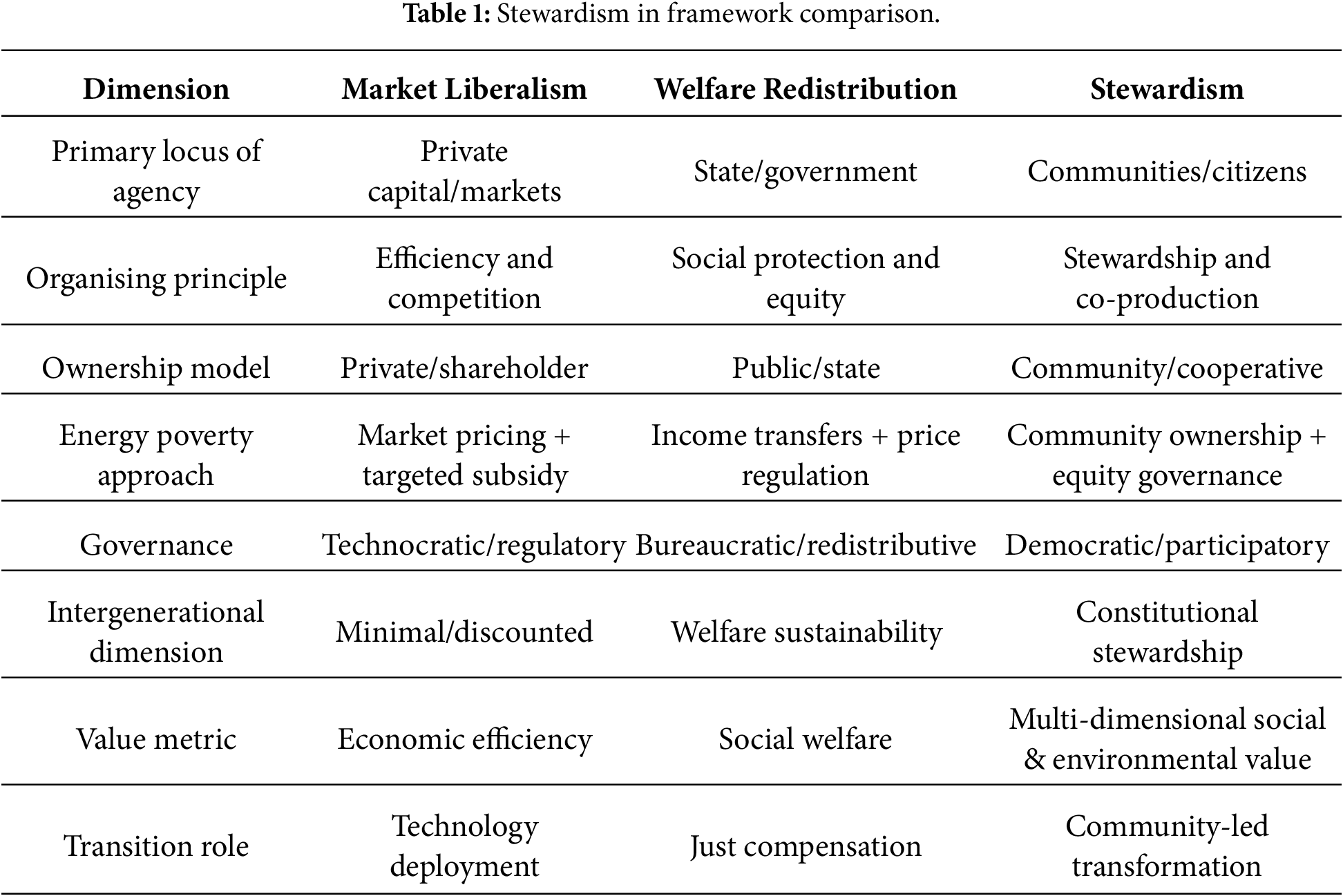
1.3.3 Stewardism Compared: A Paradigm Differentiation
The distinctiveness of Stewardism as a paradigm is clarified by comparing it systematically with the two frameworks it seeks to supersede, please see Table 1:
Throughout this project, global data sets in the context of energy poverty alleviation, renewable energy investment and high-quality economic development in developed and emerging economies in different settings were reviewed [41–50]. Best-Worst Method (BWM), Quality Function Deployment (QFD), a diverse range numbers systematic review, systematic review, and bibliometric analysis were utilised as basis for econometric modelling.
The gathered data and information was analysed and a. used to create a new paradigm in a shift away from capitalism, b. create a set of legal and formal frameworks for implementation, and c. design a set of key elements for global standards, measuring progress, issue adequate certifications and design rules to adhere to.
It was established early on that there are two significant hurdles to the implementation of any new ‘ism’: (1) lack of willingness across the political realms to incorporate the required changes in their policy and budgeting planning, and (2) lack of viable financing provision of all efforts provided by the respective governments. The first hurdle relies on the political leaders and associations to act and drive the alleviation of energy poverty by implementing the tenets of Stewardism to avert climate disaster.
It appears that governments worldwide are struggling to gain the support for developing policies with the aim to decarbonise society, widespread renewables deployment or to implement and enforce adequate policies—despite the extreme weather events affecting every one of us. The second hurdle has been partly addressed by governments across the globe and the UK government with grants, loans, and subsidies. The author’s preceding publications [54–56] can be seen as guidance papers for the decarbonisation of all industrial sectors, and were the foundation to create the innovative concept of Stewardism, as a logical consequence of the insights gained during the research.
3 Literature Review-Stewardism and the Literature on Poverty Alleviation
A substantial strand of the literature reviewed for this paper addresses the relationship between renewable energy investment and poverty alleviation across both developed and developing country contexts and—in some cases—both situations were investigated.
The literature used specifically for researching this issue is listed in Appendix A.
This evidence base in Table A1 in Appendix B provides powerful empirical grounding for Stewardism’s core proposition that the energy transition can be simultaneously an environmental and a social justice project.
In developed country contexts, the evidence presents a complex picture. The Australian case [35] demonstrates that renewable energy investment without equity design reinforces rather than reduces energy poverty. The European evidence [46,49,57] suggests that when renewable energy investment is structured around community ownership or explicitly targeted at low-income households—as in the Italian energy community model—poverty alleviation benefits are measurable and significant. The geographical coincidence in the United States between renewable energy potential and disadvantaged communities was documented, and it was argued that equity-informed investment prioritisation can simultaneously address energy poverty and accelerate decarbonisation: the two objectives are not in tension, they are mutually reinforcing when investment is correctly designed [34].
The developing country evidence, though originating in vastly different institutional contexts, offers equally instructive lessons. The Chinese PV poverty alleviation programme—the world’s largest renewable energy poverty alleviation initiative—demonstrates that structured renewable energy investment can reduce rural poverty by 7%–8% in beneficiary counties, with effects that double in strength after two to three years as income multiplier effects take hold [45,58,59]. The community mini-grid evidence from Nepal, Peru and Kenya [47] and from Sub-Saharan Africa [59] consistently identifies community ownership and local governance as the primary determinants of whether renewable energy projects deliver sustained poverty alleviation or capture by elites.
Critically, the RCT evidence from India [60] and the qualitative evidence from Indonesia [42] serve as important correctives to any simplistic equation of renewable energy investment with poverty alleviation.
To show the difference between the expected effects of renewable energy deployment on energy poverty alleviation, a graph was created to give meaning to findings derived from the different data sets and set outcomes, as displayed in Fig. 1, as follows:
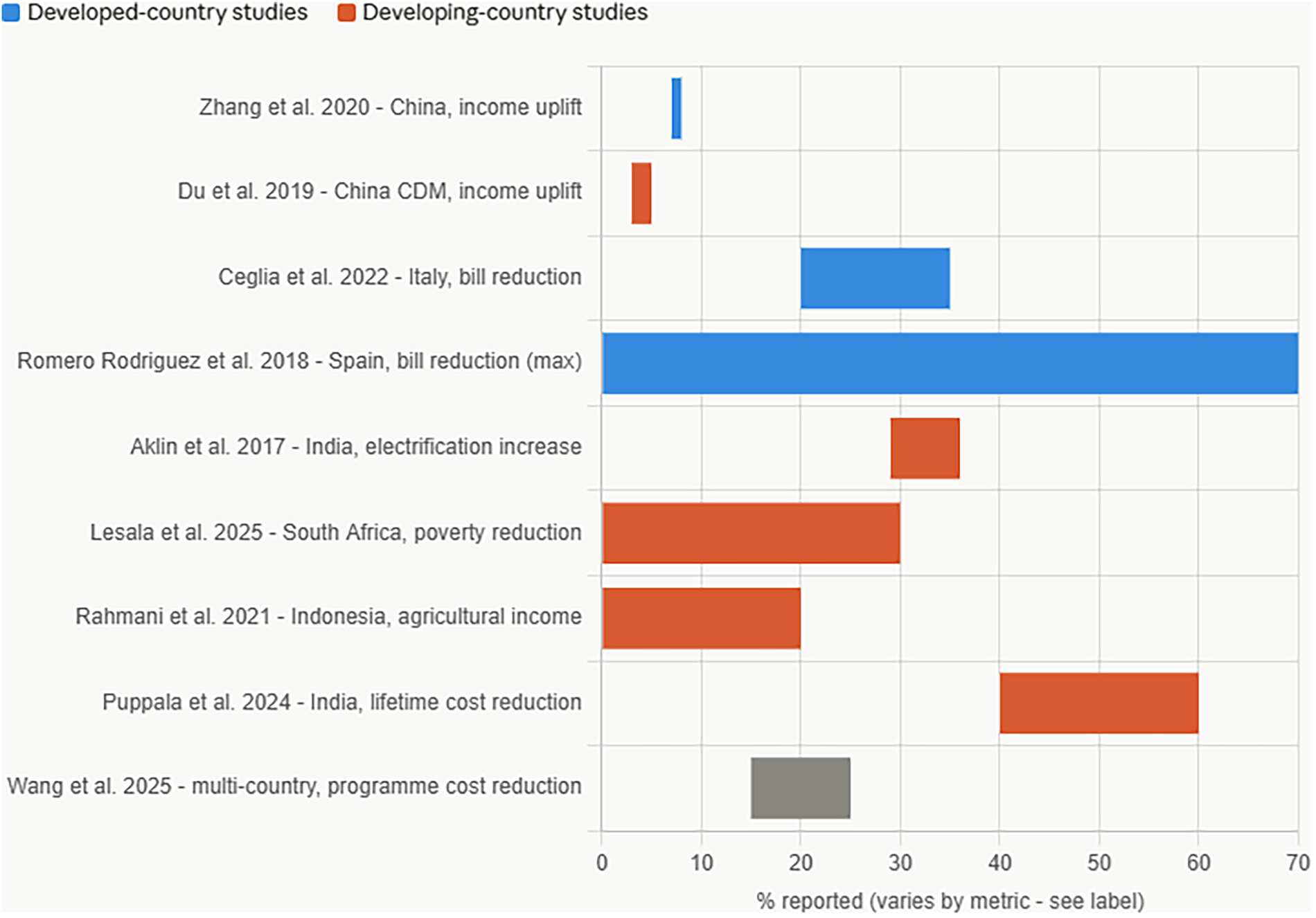
Figure 1: Percentage figures relative to expected energy poverty alleviation potential.
The bars in this graph display the percentage change figures exactly as reported in each source study (income, bill reduction, electrification, or cost effects-units vary by study, see labels). These are not outputs of a common econometric model and are not directly comparable across studies.
Notes on this chart:
• Each bar represents a different metric (income uplift, bill reduction, electrification rate, cost reduction, etc.) as defined by its own study—they are not standardised units and shouldn’t be read as a single “effect size scale.”
• Blue = developed-country contexts (China, Italy, Spain); coral = developing-country contexts (China CDM, India, South Africa, Indonesia).
• The multi-country AI study reports a cost-reduction effect not tied to one region, shown in grey.
• This is purely descriptive synthesis of figures as stated in abstracts/findings
In order to create a more definitive graphic illustration of the positive % changes in energy poverty alleviation, both in developed and developing countries, academia would be required to generate sets of studies with a framework of clearly defined output requirements, in order to compare the findings in the geographically different zones. As it stands, this has evidently not taken place, and the author had to utilise the findings as described. To evaluate the study strengths and weaknesses, the “n” population size was tested against, and plotted for developing and developed countries, as in Fig. 2:
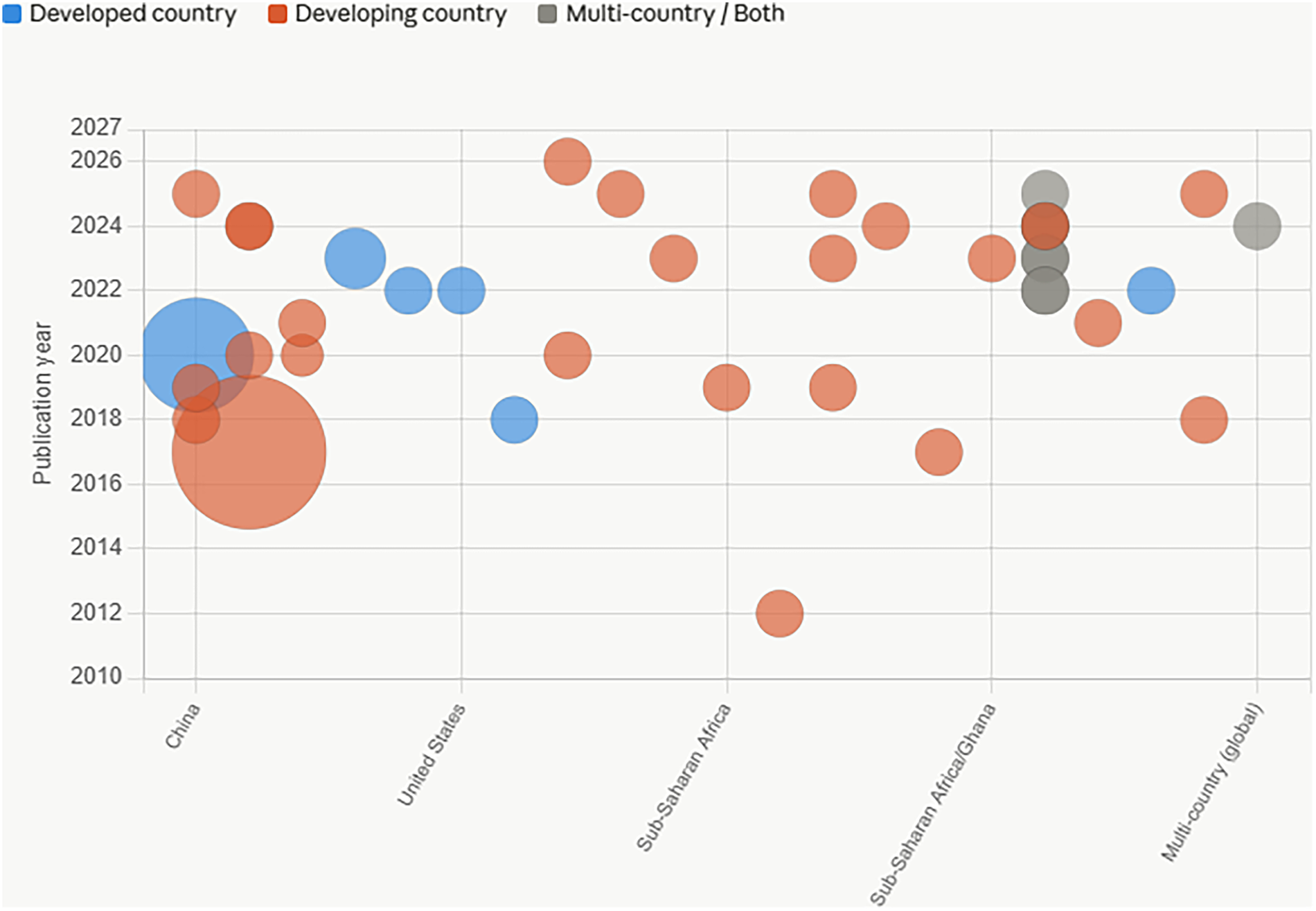
Figure 2: Population sizes ‘n’ according to the literature.
The bubble size reflects reported sample size (counties, households, or countries) where stated. Most studies in this corpus are reviews, case studies or modelling papers without a comparable sample-size figure—these are shown as fixed small markers at the bottom for reference, not because their sample is literally smallest.
A few important caveats here:
• Only 4 of the 39 studies report a comparable numeric sample size. These are the bubbles with meaningfully different sizes.
• All other studies—reviews, case studies, modelling/feasibility papers—don’t report an “n” in a comparable unit, so they’re shown as uniform small bubbles purely to plot their country/year—their bubble size carries no information.
• Colour = developed (blue), developing (coral), multi-country/both (grey), per the spreadsheet’s own categorisation.
• The x-axis is a categorical list of countries/regions, not a continuous scale-spacing between them is arbitrary, just for label separation.
Given how sparse the sample-size data actually is, this chart is more useful as a “where is the evidence geographically concentrated” map than a true study population size-comparison plot.
However, despite the sparse ‘n’ data in the investigated studies, based on the data provided, it was demonstrated that energy access alone [60]—without complementary interventions in income generation, education and social capital—does not translate automatically into broader socioeconomic improvement. Evidence was found demonstrating how community energy projects can reproduce and intensify existing inequalities without explicit equity governance [41,42]. These findings do not undermine the Stewardism proposition: they refine it. Stewardism does not argue that renewable energy investment is sufficient for poverty alleviation; it argues that renewable energy investment structured around community ownership, equity governance and the co-production of social value is the necessary organisational form for a genuinely just energy transition.
Community renewable energy projects are not inherently just. Power asymmetries and elite capture can cause benefits to flow disproportionately to wealthier households. The governance structure—not the technology—determines the equity outcome—After Fathoni et al. [42] and Lacey-Barnacle et al. [41]
Stewardism and the UK Policy Context
Unlike Socialism, Stewardism does not aim to abolish private ownership or enterprise. Stewardism, in direct opposition to Capitalism, does not treat natural resources as commodities. The underlying concept of degrowth is not primarily about reduction, but about regenerative constraint and circular flourishing instead of unlimited extraction and utilisation. These conceptual cornerstones make Stewardism a constitutional ecology model of political economy grounded in shared custodianship and sustainable, regenerative productivity.
The United Kingdom presents both a compelling case for Stewardism and a set of specific institutional conditions that shape how the paradigm can be operationalised. The UK energy system is characterised by high household energy costs, significant fuel poverty rates, a fragmented community energy sector constrained by policy volatility and grid access barriers, and a net-zero commitment that is generating substantial public and private investment in renewable energy infrastructure—investment that, in the absence of a deliberate equity framework, risks replicating the distributional failures identified in the Australian, European and US evidence bases.
The UK’s experience with community energy is instructive, and a 2013 survey documented a rapidly growing but institutionally fragile sector, characterised by diversity of model and constrained by regulatory and financial barriers [31]. The subsequent decade has confirmed this pattern: the withdrawal of Feed-in Tariff support in 2019 caused significant contraction in the community energy sector, precisely demonstrating the policy instability identified in 2018 [37,38], where this issue—the withdrawal—was identified as a primary barrier to community energy scaling. The partial recovery since 2021—through the British Business Bank’s Community Energy Fund and Ofgem’s Low Carbon Networks Fund—has been insufficient to realise the sector’s transformative potential.
The EU Clean Energy Package 2019 [53], transposed into UK law prior to Brexit and retained in modified form, creates a legal basis for Renewable Energy Communities and Citizen Energy Communities that Stewardism can build upon [53]. The growing body of evidence on Italian energy communities [49]—which have demonstrated 20%–35% reductions in energy bills for low-income community members—provides a European model that is directly transferable to the UK context.
Stewardism’s practical framework for the UK context incorporates three interlocking mechanisms: (i) community carbon co-reporting-systematic measurement and public disclosure of community-level carbon footprints as the basis for targeted decarbonisation investment; (ii) community energy ownership facilitation—the institutional, financial and regulatory architecture required to enable communities to own and govern energy assets; and (iii) energy justice navigation—expert support for communities in accessing the grant, loan and cooperative finance mechanisms that can make community energy investment affordable and equitable. The Laurea-Tech Decarbonisation Membership Programme [Laurea Tech Consulting Ltd.], which operationalises these mechanisms for UK organisations and communities, embodies the Stewardism paradigm in practical form.
4 Results–Towards a Research Agenda
The positioning of Stewardism within the energy justice and community ownership literature reveals both the strength of the evidence base on which it draws and the significant research gaps that remain. Four priority areas for future empirical research emerge from this review:
Equity governance mechanisms: Whilst the evidence that governance structure determines equity outcomes is now robust [40–43], there is insufficient comparative evidence on which specific governance mechanisms—ownership structures, benefit distribution rules, participation protocols—are most effective in different institutional contexts. A systematic comparative study of UK community energy governance models and their equity outcomes would make a significant contribution.
Financial architecture: The financial system were identified as a structural determinant of community energy ownership [40]. The specific mechanisms—including green lending criteria, community share offerings, blended public-private finance, and the role of community development finance institutions—through which the financial barriers to community energy ownership can be most effectively reduced require systematic evaluation.
Measuring co-produced value: Existing literature documents the co-benefits of community energy qualitatively but lacks robust frameworks for quantifying the full range of social, environmental and economic value generated by community energy schemes. Development of a Stewardism Value Assessment Framework—analogous to the social return on investment frameworks used in the social enterprise sector—would significantly strengthen the evidence base.
Scaling from pilot to system: The community energy evidence base is dominated by case studies and small-N comparisons. The conditions under which community energy models can be scaled from pilot projects to system-level transformation—as the German Energiewende demonstrates is possible—remain insufficiently understood in the UK context.
4.1 Stewardship and Resource Governance, Constitutional Ecology and Practical Implementation
The emerging framework of Stewardism builds upon, yet substantially diverges from, several existing strands of scholarship in political ecology, commons governance, ecological economics, and constitutional environmental law. While the principle of stewardship has a long moral and theological lineage [61–65], its application as a structural organising framework for economic and political institutions remains underdeveloped [64–72]. The present analysis extends stewardship from an ethical disposition to a constitutional basis for resource governance.
Regenerative Circular Stewardship [RCS]—an integrated political-economic framework that replaces the linear, non-sustainable growth-at-all-costs logic with rules, incentives and institutions that require all human systems to: (1) design for continuous material/value cycling, (2) regenerate ecological systems (soil, water, biodiversity) and (3) steward finite resources as public trust assets.
Summarised, this means to design everything to loop, restore what we use, steward what remains.
Core principles: the normative foundations
• Design for infinite loops: products and infrastructure must be designed for disassembly, remanufacture, reuse, and material recovery.
• Ecological regeneration first: agriculture, forestry and land-use must improve soil health, biodiversity and carbon sequestration, not merely reduce harm.
• Producer accountability: producers hold extended responsibility for materials across their lifecycle [enhanced product responsibility (EPR, material passports, take-back].
• Resource sovereignty and trust: critical material stocks are treated as stewardship assets with transparency and limits.
• Last-resort energy from non-recyclables: must mean that energy recovery is only permitted when reuse/recycling is impossible or environmentally worse.
• Value redefinition: any society’s level of civilisation and success should in future be measured by human and ecological wellbeing (material circularity metrics, soil carbon footprint), and not only general domestic (GDP).
• Just transition and access: ensuring employment by local industry leaders and thus housing and food security benefit communities rather than concentrating wealth.
• These simple steps have provided data to create a new emerging vocabulary:
• ReCirc Stewardship/RCS (short form)
• Material Passport: machine-readable, persistent record of a product’s materials, recyclability, and repair/recycling history.
• Design-for-loop (DfL): design standard that guarantees remanufacture or predictable conversion-to-energy.
• Urban resource hubs: local facilities that recover high-value materials from products, buildings & waste streams.
There is a range of issues to be considered before fully embracing the Stewardism philosophy, and they can be ordered by how much time the implementation of practical steps is likely to take.
Legal & political framework [0→15 years]
Below are the legal/political building blocks ordered by priority and linked to practical steps, data, mechanisms and process information extracted from contemporary research and summarised in a comprehensive, easy-to-follow format [19–26].
Phase A: Immediate [0→2 years]
Foundational laws and rapid deployment
1. Baseline Circularity Law (national): mandates EPR, right-to-repair, ban destructive inbuilt obsolescence, and requires government procurement to prefer products meeting DfL and Material Passport rules.
2. Amend planning and environmental law to require material/resource accounting and carbon footprint reports on major infrastructure and building consents (material passports for larger projects).
3. Create a ‘National Resource Circularity Agency’ (or expand DEFRA/UK and others elsewhere) to set standards, run material-flow audits, and issue certification for DfL.
4. Tax and subsidy changes: immediate increase in extraction and landfill taxes; tax credits as incentives for remanufacturing and urban resource management start-ups
5. Pilot local urban resource hubs funded by government/green bonds in major cities, in place of or expanding existing recycling centers.
Phase B: Mid-term [2→5 years]
Standards, industry transition, procurement
1. National Standards for DfL and Material Passports (mandatory for specified product categories: electronics, furniture, vehicles, construction and more).
2. Public procurement reform: all public contracts require minimum circularity score (procurement power drives market development and share value).
3. Finance and investment rules: require disclosure of material risks for large corporations, and preferential lending for projects designed on circularity principles.
4. Skills and employment programs: training and re-skilling programs for repair/remanufacturing and recycling workforce.
5. Agronomic policy shift pilots (payments for ecosystem services, soil carbon credits, incentives for agroecology or nutrient cycling).
Phase C: Longer term [5→10 years]:
Infrastructure scale-up & regulation tightening
1. Full EPR systems across product groups with rising fees to incentivize circular design.
2. Infrastructure Investment: large-scale investment in high-value recycling, chemical recycling for hard-to-recycle plastics, material sorting tech, repair networks, and distributed composting/anaerobic digestion for organic streams.
3. Land-use and food systems: mainstream payments for regenerative agriculture, bans or phase-outs for practices destroying peatlands/soils, nutrient-cycling regulation.
4. Trade and standards diplomacy to align cross-border rules: circular tariffs, material passport recognition.
5. Phase-out timetables for landfill of recyclable streams; energy-from-waste strictly regulated as replacing landfills and as mandatory requirement.
Phase D: Long-term [10→15 years]:
Consolidation and global alignment
1. Cross-border circular trade agreements: recognize material passports, harmonise standards and restrict exports of problem waste to nations without circular infrastructure.
2. Material budgeting and caps: set sustainable extraction caps for critical materials and enforce via quotas/permits.
3. Widespread institutionalisation of RCS metrics into national accounts (GPI + circularity indicators).
4. Full integration: mainstream circular business models (product-as-service, leasing, remanufacture) across sectors.
Supporting the phases A–D are practical design and production mechanisms, which need to be developed as we proceed through the phases and time. These need to be enforceable standards and design-rules that cascade into procurement, codes, certification, and implementation, in equal measures.
• Design-for-Loop (DfL) standard
∘ Minimum modularity and fasteners standards (no glued-only engineering)
∘ Standardised materials and coatings only to enable high-quality recycling.
∘ Max ≤ X% of new virgin material allowed in certified categories after year 5.
• Material Passports (digital + physical tag)
∘ Embed QR/NFC + central registry. Record polymer types, alloys, adhesives, repair history, EOL pathways.
∘ Passports required in construction and electronics.
• Right-to-Repair and parts availability
∘ Mandatory availability of spare parts and repair manuals for a legal minimum period of 10 years for every device and appliance.
• Extended producer responsibility (EPR) with eco-modulated fees:
∘ Fees lower for products scoring highly on DfL, higher for single-use or chemical-mix materials.
∘ Fees fund take-back, urban resource management, and worker transition.
• Design-for-Conversion (DfC): for items that truly cannot be remade, define safe energy-recovery conversion standards [max emissions, ash management] as last resort.
∘ Material categorisation and standardisation:
• A national catalogue of preferred circular materials (recyclable, low-toxicity) and disfavoured materials (complex composites, toxic additives) with scheduled phase-outs.
• Product-as-Service (PaS) models encouraged: ownership is retained by the producer or service providers, so products are returned to the original manufacturer for remanufacture once they have reached the end of the determined product lifetime.
• Construction and building codes updated: modular building, deconstruction plans required, material passports for buildings, targets for reuse of building components.
These largely manufacturing-based mechanisms require adaptation to fit the special situation in agriculture and land management as the basis for food production systems.
Agronomy land systems specifics
Regenerative agriculture mandates and incentives require to be established and a shift in subsidies to reward soil-carbon increase, reduced tillage, agroforestry, crop rotation, integrated nutrient cycling. An organic and nutrient looping infrastructure needs to be created, where municipal/industrial composting and anaerobic digestion for organics are made available, and collection systems to return nutrients to farmland (sanitation/biosolids properly treated), safely. The way multi-stakeholder are managing land stewardship agreements requires a rethinking process, with transparent measurement of soil organic carbon, biodiversity metrics and payment for ecosystem services considered mandatory elements. Woodland creation and managed forestry programs under RCS need to be developed, where timber traceability, wood product passports, long-lived timber use is being prioritised (building industry), and short-rotation bioresources managed for materials and biomass energy only where circular reuse is impossible.
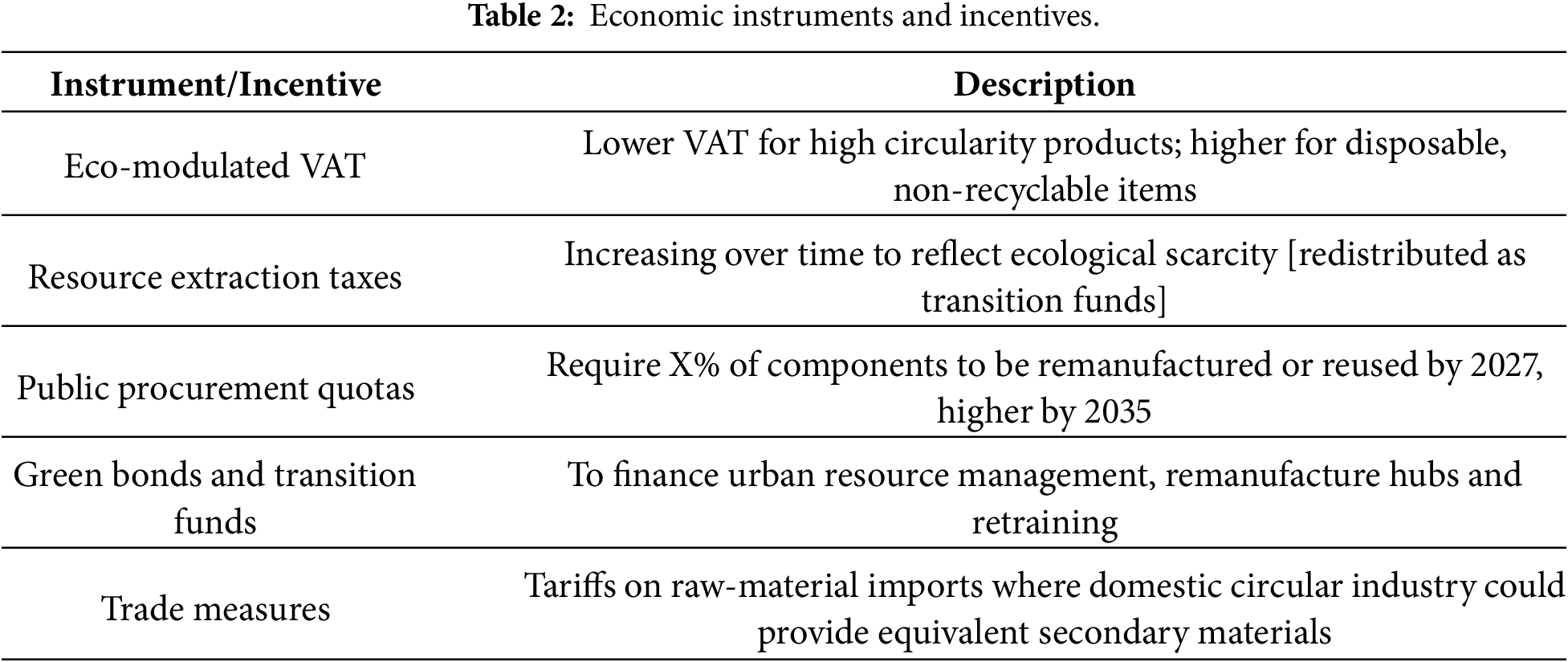
In order to have any hope of these mechanisms and political instruments being implemented, the process requires economic instruments and incentives to be developed, details of which are shown in Table 2, in the following:
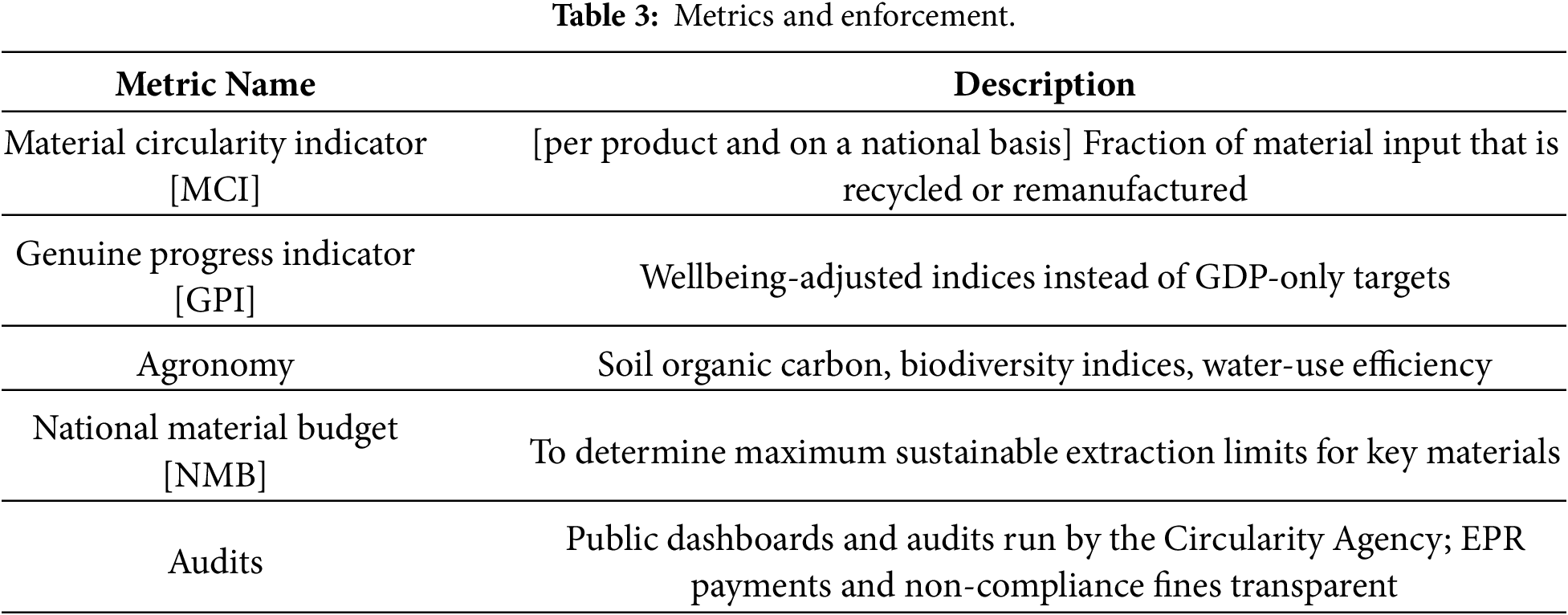
The success of all these efforts require metrics and key performance indicators to be developed, which then need to be enforced to have any meaningful impact, based on circular economic principles [63–72] (as shown in the following Table 3).
Of course, this can only be achieved if there are associations, Government agencies and related institutions in place to have an overview of all these mechanisms and implementation incentives, as well as project oversight. Therefore, a range of government departments for the specific purposes, as explained before, require to be established.
Governance
• ‘National Circularity Agency’: standards, audits, marketplace for material passports, enforcement of EPR and design standards.
• Regional urban resource hubs: public-private nodes to process, sort and remanufacture locally.
• ‘Stewardship Councils’ made up of government, industry, communities, scientists need to be created with the purpose of allocation of material budgets and regional land stewardship contracts.
• ‘Citizen Right-to-Know Association’: accessible tracking of material flows, corporate circularity scores, soil health.
Social and workforce transition
• ‘Just Transition Fund’ for workers displaced by extractive or linear industries to re-train in repair, remanufacturing, recycling and agronomy.
• SME support programmes: microgrants for retrofitting factories to modular manufacturing; legal clinics to help companies comply with EPR.
• Education and consumer campaigns: repair cafés, community remanufacturing co-ops, urban compost networks.
Example sectoral policies
• Electronics: mandatory DfL, spare parts for 10 years, right-to-upgrade modules, mandatory take-back with refurbishment targets (e.g., 60% refurbished by year 7).
• Construction: building material passports; deconstruction plans in planning consent; targets for reused materials in new builds.
• Plastics: ban certain multi-layer films unless designed for chemical recycling with verified lifecycle benefit; recycled content mandates.
• Food and farming: subsidy swap; eliminate harmful inputs subsidies; pay for carbon sequestered soil and for returning treated organics to soils.
Risks, realistic friction points and mitigation
1. Incumbent industry resistance: mitigation via phased timelines, transition funds, and procurement leverage.
2. International leakage: address via trade rules and material passports.
3. Technology and sorting gaps: invest in R&D and public infrastructure.
4. Greenwashing: strict certification and public dashboards and audits.
5. Inequitable effects: just transition funds; targeted regional investment
Implementation timeline
The estimated time it might quite possibly take to implement the required changes to take hold are calculated to be between ten and fifteen years. Legal reforms need to happen, standards as basis for implementation and monitoring of progress need to be established, enhanced product passports need to be conventionalised and the corresponding agency to issue the certificates and enforce the rules need to be established, resource management hubs need to be created-possibly on the basis of existing recycling facilities, and resource and material budgeting need to become the gold standard for a circular economy, where nothing is wasted and everything is considered a resource. The following image (Fig. 3) aims to provide a simple overview of the implementation timeline:
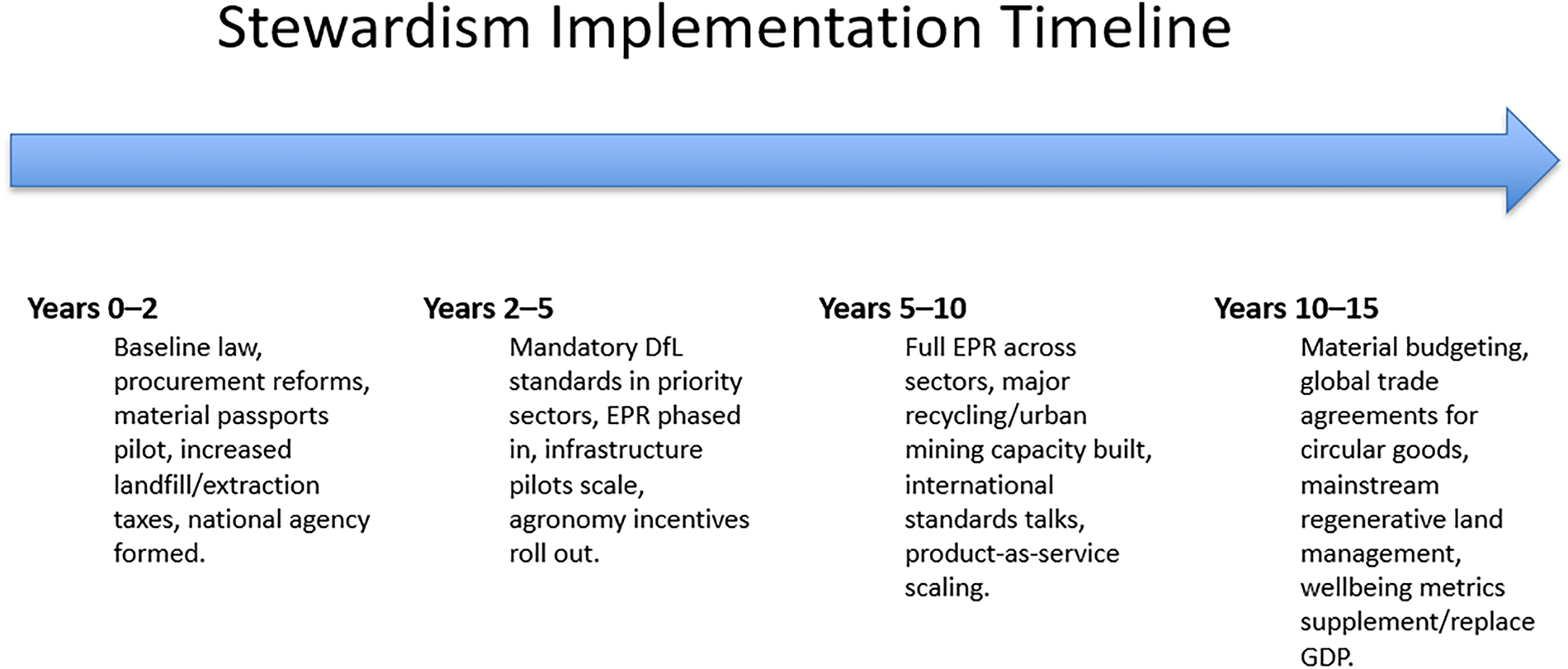
Figure 3: Implementation timeline-a brief overview.
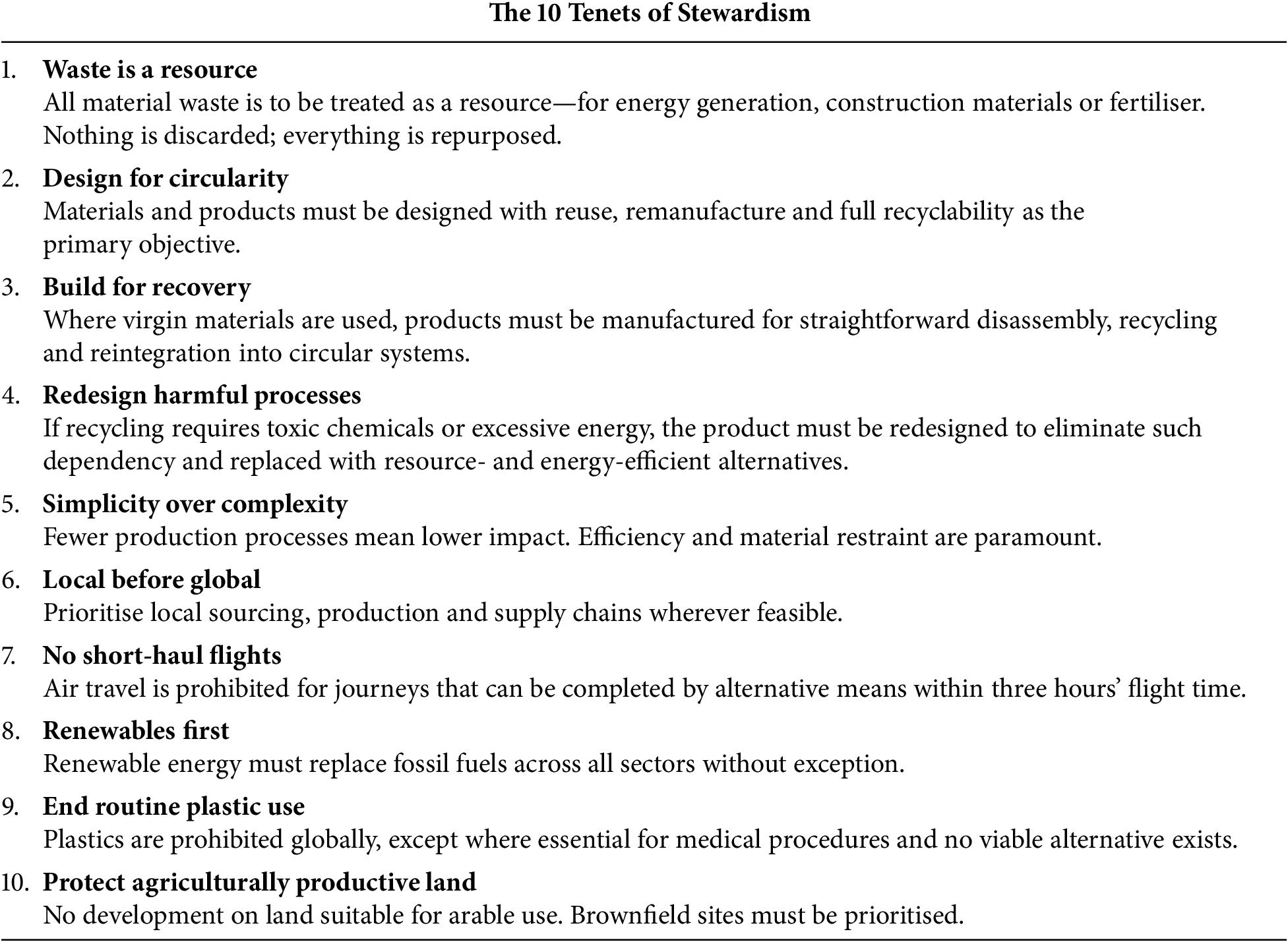
As a result of all this evaluation, and for practical implementation, the 10 tenets of Stewardism have been developed, as follows:
4.2 Ecological Limits and the Political Economy of Extraction
Mainstream economic systems remain structurally grounded in linear throughput models of extraction, production and disposal [71,72]. The assumption of continuous material growth has already been widely critiqued as incompatible with planetary biophysical boundaries [1,28]. While degrowth scholarship argues for the reduction of material throughput, critics contend that degrowth lacks a positive institutional design for sustaining welfare and industrial capability under constrained resource flows [28–30].
Stewardism acknowledges planetary material limits, but rather than prioritising the linear system of extraction, utilisation, and disposal, it emphasises regenerative productivity and circular economic value retention. Essentially, a shift from linear to circular economy, and from inbuilt obsolescence for economic growth to built-in recyclability and remanufacturing characteristics for resource preservation [29,30,73–88].
An interesting working example for resource preservation can be found in China, where farmers are using integrated systems. This farming practice entails rice and fish being grown together in a perfect symbiosis, as the fish are living among the water in which the rice is grown, and they are fertilising plants with their excretions whilst feeding on the pests affecting the rice crops. This harmonic coexistence has the positive effect that no fertilizer or pesticides are needed, as the naturally within the rice crops occurring pests provide the food for the fish and their processed food becomes the fertiliser for the rice crop [30–33].
There are, of course, other systems offering immense opportunities, where as a successful example: in Indonesia, farmers have been successfully producing food for thousands of years, as they cultivated (and not drained) swamps with their floating farms and made water-logged land, otherwise unsuitable for traditional farming, successful food production sites [33]. Making these innovative and ancient ideas work in the 21st century is posing great challenges—but they also offer opportunities and solutions at the same time.
Innovators, governments and industry leaders alike are currently researching and exploring technical solutions for indoor farming and other advanced innovative and ancient food production systems [30–33].
Especially for arable farmers, the model and strategy of the Bio Steel Cycle [54]—although it sounds upon first reading about it as an alien concept to this industry sector—can be seen as the nucleus to provide a food production process blueprint. The Bio Steel Cycle can provide the benefit of increased asset efficiency and provides opportunities in farm diversification, whilst utilising the existing building infrastructure and adding CCUS (carbon capture utilisation and storage) technologies into the mix. The Bio Steel Cycle model and strategy [54] contains elements which make for a multi-disciplinary approach of production processes in other industries, including food production, and can well be the foundation for a new standard in production: The SusCiP principle [13]. The applied SusCiP principle offers:
• increased asset efficiency
• farm diversification potential
• capturing and utilising carbon at the same time.
4.3 Commons Governance and Collective Resource Custodianship
The strongest precedent for the paradigm-shift from Capitalism to Stewardship lies in the commons governance theory, particularly with the view on polycentric management of shared resources [36–43]. However, previous academic work on economical frameworks are primarily local and community-based, whereas the present model extends stewardship to national constitutional authority. It entails public trusteeship of irreplaceable natural resources, democratic oversight of ecological baselines, and legal duties to future generations. This aligns with emerging arguments for the public trust doctrine in climate governance [39,40] and the recognition of the environment as a subject of constitutional rights [19,41].
4.4 Circular Economy and Material Governance
Circular economy research offers a technical foundation framework as an alternative to closed-loop systems [65–74]. So far, it has been criticised for being predominantly corporate-led and insufficiently highlighted or actively implemented in political discourse [28–30]. The challenge lies in the absence of binding legal authority that mandates circular design and material return.
Stewardism addresses this gap by proposing constitutional material custodianship, where natural resources cannot be owned outright, only stewarded. This innovative concept is built on the narrative of a national circular design authority to regulate product design, repairability, modularity and recyclability. All natural resources are to be governed by resource trusts to hold rights to land, waters, minerals and ecosystems in perpetuity (1–5). The contemporary issue of energy poverty in developing as well as developed countries can be alleviated when renewable energy technologies are employed to drive economic growth and development when adhering to the paradigm of stewardism. This can be achieved in the short-term by utilising organic matter from the hospitality industry, food production, agriculture and sewage plants as feedstocks in anaerobic digester plants. Multiple elements of the circular economic principle are being utilised and the environment as well as the geopolitical landscape benefit from the widespread utilisation of the renewable energy technology: anaerobic digestion.
The following image [Fig. 4] will provide an overview of the mechanisms utilised in anaerobic digestion:
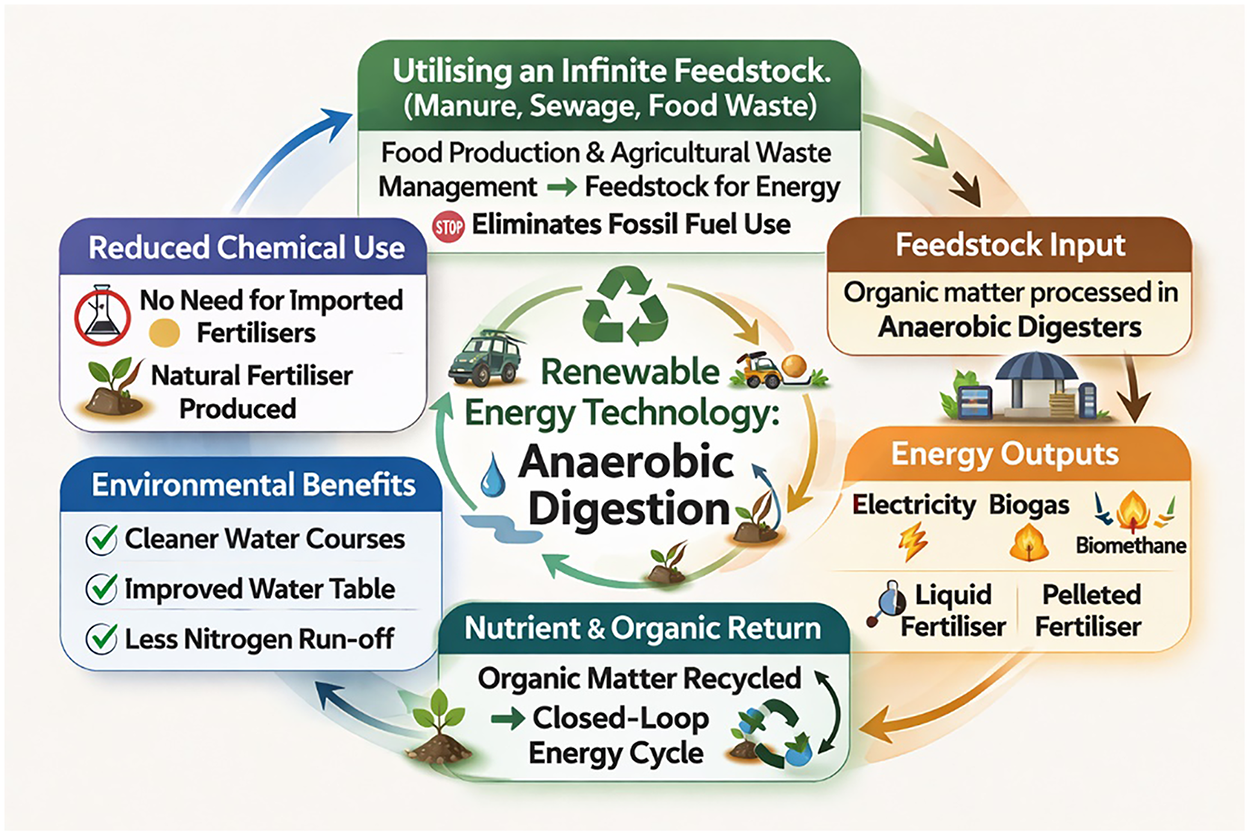
Figure 4: The circular system of anaerobic digestion explained.
From an economic perspective, utilising renewable energy systems such as anaerobic digesters initiate economic growth by providing additional opportunities to create jobs where “green skills” are required. A higher degree of energy independence can be achieved as the energy required is produced locally, without having to negotiate with suppliers from abroad, significantly reducing the need for fossil fuels, effectively eliminating the exposure to extortion by energy suppliers, and is affecting growth by reducing the cost for energy significantly. In the UK and parts of Europe, the governments have made grants available for technologies supporting decarbonisation.
4.5 Intergenerational Ethics and Civic Responsibility
The normative core of Stewardism aligns with the contemporary discussion on intergenerational justice, which holds that present societies have binding obligations to future generations [43–49]. However, current implementations of intergenerational ethics are largely symbolic, whereas Stewardism translates this obligation into legal duties of care, budgetary rules aligned with ecological regeneration, and transparency and accountability mechanisms for mandatory positive ecological outcomes.
This aligns with “Green Republicanism”, which frames ecological harm as a form of domination constraining the freedoms of future generations [1,3].
4.6 Energy Poverty Alleviation via Renewable Energy Investment
The impact of clean energy development on alleviating energy poverty is currently being investigated by entities in a number of countries, but is yet largely challenging to quantify [46–51]. Micro data of the ‘China Family Panel Studies’ was used and the Probit estimation model in order to investigate and determine the measurable impact of clean energy on alleviating energy poverty [88–94]. One of the findings points towards the widespread use of clean energy having the potential to significantly reduce the risk of respondents falling into energy poverty. Furthermore, the investigations established that clean energy not only plays an accelerator role in promoting employment and increasing household income, but the follow-on effect has been measured as improved life-style effects, leading to an improved health situation overall and, therefore, reduced household medical expenditure. It was therefore concluded that investment in renewable energy technologies can have a wide-ranging number of positive effects besides more income which can be spent to improve the energy consumption structure but also has the potential to eliminate energy poverty. Additional work in this direction concluded that there is a distinct relationship between investment into clean energy and alleviation of energy poverty—providing invaluable insights as the basis for recommendations to setting policy implementation plans [88–90]. Although, different authors in varying geographical regions tend to arrive at different conclusions, and therefore, all statements have to be viewed with the lens of geographical locations.
Overall, China is currently the World Champion of renewable energy installations and has formulated ambitious renewable energy installations targets for carbon reduction, energy security, and rural revitalisation, as currently between nearly 13.2%−35.3% of the Chinese population are still suffering from energy poverty [45]. Although the transformation of energy infrastructure is accelerating at a fast pace, it remains to be seen whether the expansion of renewable energy installations has the potential to alleviate energy poverty, and at what rate. Panel data from 30 Chinese provinces and regions was collected from 2004 to 2020 and applied the difference-generalized moment method (GMM) to quantify the rate of renewable energy infrastructure expansion in alleviating energy poverty [45–50]. The team established a four-dimensional comprehensive assessment system, where robustness tests and heterogeneity analysis provided reliable results. The findings were that the role of renewable energy expansion in alleviating energy poverty showed significant variation across geographical regions. However, in regions with serious energy poverty and regional large-scale expansion of renewable energy, the development of renewable energy infrastructure seems to be an effective means to mitigate energy poverty. In regions with lower levels of energy poverty and less intense renewable energy technology expansion, the effect on alleviation of energy poverty is also less impactful. Furthermore, it was established that renewable energy expansion is most effective at alleviating energy poverty in regions with an elevated level of existing energy poverty, and in regions with a lower level of energy poverty less so [49].
In this context, it can be said that the development of the renewable energy industry is therefore an important measure for countries to intensify efforts to build an ecologically and economically balanced society [46]. Additionally, work was undertaken to empirically investigate the effect of renewable energy consumption on global energy poverty alleviation, whereby the energy poverty composite index across the globe was determined first [51]. Incorporating regional heterogeneity and the mediating role of energy efficiency in the renewable energy poverty alleviation nexus were also taken into consideration [51]. The data produced a clear picture: There is a congruent growth rate of development in global energy poverty alleviation and development of renewable energy infrastructure, although regional results vary. It was observed that mainly in European countries increasing the renewable energy capacity significantly reduces. Additionally, an increase in renewable energy infrastructure not only directly alleviates global energy poverty but also improves energy efficiency and thus inhibits energy poverty due to less energy output being required.
4.7 High-Quality Economic Development in Developed and Emerging Economies
From the perspective of economics, [48–50] thorough research resulted in the finding that high-quality economic development is a concept that is not easy to grasp, as it is a relatively complex topic with a significant volume of factors to be considered in order to reach a definite conclusion [48,49]. By definition, economic growth and economic development are considered the main factors when evaluating high-quality economic development, constituting the core connotation of the modern economic value system. It was therefore seen of great importance to measure the quality of economic development and evaluate the influencing factors. Taking the concept of “innovation, coordination, green, openness, and sharing” as the baseline, an evaluation index system was established for the high-quality development level of the Chinese economy, along with using the principal component analysis method [48,49]. China’s high-quality economic development level in each Chinese province was measured. The main contribution of this work is that it has established the use of principal component analysis as a way of better measuring the high-quality development level of China’s economy, by analysing its main influencing factors. This procedure provides new insights and provides the data to create new possible paths for China’s economic transformation.
A different perspective was delivered by work which came to the conclusion, that the key to making sustainable human development a reality is to improve the utilisation of ecological capital [42,50,51]. The set parameters of innovation-driven and green economic development gave the direction for:
- how to formulate appropriate environmental regulation policies
- accurately implement high-quality economic development strategies
- promoting the utilisation of ecological capital
and became the focus of their theoretical research, driven not by a paradigm but a practical issue, and approached the research questions with a thorough, practical investigation.
A slightly different approach was taken with work which examined the effects of environmental regulation, high-value economic development and their interaction on ecological capital utilisation [92]. They utilised a fixed-effects model, based on panel data for 30 provinces in China from 2008 to 2020. The findings showed that both environmental regulation and economic high value development have a decisive positive effect on the ecological capital utilisation. They identified barriers to development, too. They established that tight environmental regulation has a negative effect on technological innovation and might negatively affect economic growth. This, in turn, affects economic quality development, quality renewable infrastructure development and therefore, the interaction between restrictive environmental regulation and economic quality development has a significant negative effect on ecological capital utilisation. The recommendations issued centred around the enhancement of environmental regulations in line with sustainable growth, whilst increasing financial and practical support, and technological innovation subsidies for heavily polluting enterprises. It was found that it is possible to support new industries to promote high-quality economic development whilst improving the utilisation of ecological capital.
An investigation from a different angle was conducted when the impact of the business environment on economic development quality was examined [51], with the lens of theory and governance of low-carbon transitions. The authors established that the status of the business environment during the transition from a high-carbon emitting to a low-carbon emitting situation can have a significant positive effect on economic development quality [51]. The total labour force was utilised as a moderating component variable. Interestingly, the analysis established that the impact is more pronounced in countries with higher economic output, which was providing valuable insights and a framework for countries aiming to enhance their economic development quality.
Similarly, the intricate relationship between economic growth and its ecological repercussions was critically evaluated when the ecological footprint was assessed across 131 nations between 2009 to 2019, utilising the CS-ARDL methodology [52]. The results indicated an interdependence between reducing ecological footprint and increasing private sector domestic credit [finance sector], a positive relationship between diminishing private sector domestic credit of banks, augmentation of private sector domestic credit, and a notable reduction in human population’s adverse impact on the environment. Interestingly, increased levels of energy consumption, foreign direct investment [FDI] and per capita GDP (gross domestic product) are globally associated with an improvement in the overall quality of life. The implications of this research are far-reaching: it is suggested that positive global economic dynamics may support efforts towards environmental conservation, although the outcomes may differ across geographical regions and countries.
The findings of the literature review, utilising all sources as listed, have been summarised in Table 4 with regards to the innovative paradigm of Stewardism, as follows:
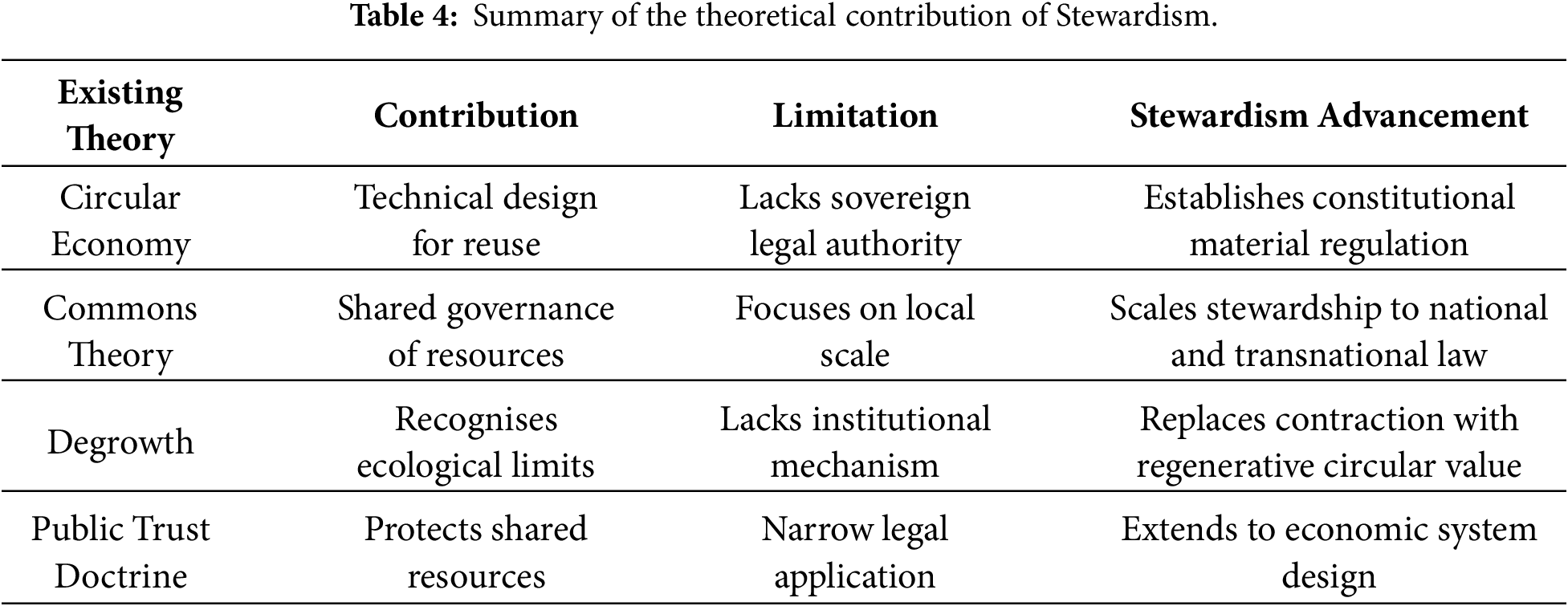
In order to establish the ecological limits and the political economy of extraction, one requires to investigate the mainstream economic systems, as they remain structurally grounded in linear throughput models of extraction, production and disposal. Continuous, linear material growth has already been widely critiqued as incompatible with planetary biophysical boundaries, as unlimited growth on a planet with limited resources leads inevitably to societal collapse. One alternative system, ‘degrowth’ is widely criticised for lacking a positive institutional design for sustaining welfare and industrial capability under constrained resource flows. Acknowledging all critics’ opinions, and including ongoing debate, Stewardism acknowledges planetary material limits, but rather than prioritising the linear system of extraction, utilisation, and disposal, it emphasises regenerative productivity and circular economic value retention. Therefore, a shift from linear to circular economy, and from inbuilt obsolescence to built-in recyclability and resource preservation is being explored and, in conclusion, lauded as one of the possible pathways to ensure humanity’s existence for the foreseeable future.
One of the strongest precedents for the paradigm shift from Capitalism to Stewardism exists in the commons governance theory, explored in Ostrom’s work on polycentric management of shared resources [43,80]. Although, it needs to be acknowledged that Ostrom focuses mainly on local and community-based systems, whereas the present model ‘Stewardism’ extends stewardship to national constitutional authority. It relies on public trusteeship of irreplaceable natural resources, democratic oversight of ecological baselines, and legal and moral duties to future generations. This aligns with emerging arguments for the public trust doctrine in climate governance and the recognition of the environment as a subject of constitutional rights.
Circular economy research offers a technical foundation framework as an alternative to linear, closed-loop systems, but it has been criticized for being predominantly corporate-led and insufficiently highlighted or actively implemented in political discourse. The challenge lies in the absence of binding legal authority that mandates circular design and material return.
Stewardism addresses this gap by proposing constitutional material custodianship, where natural resources cannot be owned outright, only resource-managed. This innovative concept is built around the creation of a national circular design authority to regulate product design, repairability, modularity and recyclability. All natural resources are to be governed by resource trusts to hold rights to land, waters, minerals and ecosystems in perpetuity, addressing the contemporary issue of energy poverty by proposing alleviation via investment into renewable energy technology and infrastructure. Renewable energy technologies are a major factor which drives economic growth and development when adhering to the paradigm of stewardism. Furthermore, the normative core of Stewardism aligns with the contemporary discussion on intergenerational justice, in that present societies have binding obligations to future generations. Stewardism translates this obligation into legal duties of care, budgetary and monetary rules aligned with ecological regeneration, and transparency and accountability mechanisms for mandatory, positive ecological outcomes based on the resource circularity principle.
Further along this train of thought, the impact of clean energy development on alleviating energy poverty is the focus of contemporary discussion, and the complexity of quantifying the positive effects has been acknowledged. Interestingly, one of the findings points towards the widespread use of clean energy having the potential to significantly reduce the risk of respondents falling into energy poverty, whilst also establishing that clean energy not only plays an accelerator role in promoting employment and increasing household income, but the follow-on effect has been measured as improved life-style effects. In conclusion, it was therefore stated that investment into renewable energy technologies can have a wide-ranging number of positive effects, including positive economic effects and the potential to eliminate energy poverty.
However, economic growth and economic development are considered the main factors when evaluating high-quality economic development, Chen and Huo’s [90] work established an evaluation index system for the high-quality development level of the Chinese economy, along with using the principal component analysis method. This procedure provides new insights and provides the data to create new possible paths for worldwide economic transformation.
Investigations starting from a different perspective concluded that the key to making sustainable human development a reality is to improve the utilisation of ecological capital [51]. The findings established that tight environmental regulation has a negative effect on technological innovation and might negatively affect economic growth. Therefore, their recommendations centred around the enhancement of environmental regulations in line with sustainable growth, whilst increasing financial and practical support, and technological innovation subsidies for heavily polluting enterprises. It was found that it is possible to support new industries to promote high-quality economic development whilst improving the utilisation of ecological capital.
Furthermore, 66 ‘Belt and Road Initiative countries’ from 2015 to 2020 were investigated [93] and the analysis established that the status of the business environment can have a significant positive effect on economic development quality [50–52]. A further study delved into the intricate relationship between economic growth and its ecological repercussions when they assessed the ecological footprint across 131 nations between 2009 to 2019, utilising the CS-ARDL methodology [52]. Their results indicated an interdependence between reducing ecological footprint and increasing private sector domestic credit (finance sector). The implications of this research are far-reaching: it is suggested that positive global economic dynamics may support efforts towards effective environmental conservation [53].
It could be argued that, within the developed countries contexts, that the evidence presents a complex picture: the Australian case [35] demonstrates that renewable energy investment without equity design reinforces rather than reduces energy poverty. Whereas the European evidence suggests that when renewable energy investment is structured around community ownership or explicitly targeted at low-income households-as in the Italian energy community model-poverty alleviation benefits are measurable and significant [46,49]. Similarly to the European evidence base, the geographical coincidence in the United States between renewable energy potential and disadvantaged communities was documented, arguing that equity-informed investment prioritisation can simultaneously address energy poverty and accelerate decarbonisation: the two objectives are not in tension, they are mutually reinforcing when investment is correctly designed [34].
Similar to the situation in developed countries, it could be argued that the data originating in vastly different institutional contexts offers equally instructive lessons. The Chinese PV poverty alleviation programme—the world’s largest renewable energy poverty alleviation initiative—demonstrates that structured renewable energy investment can reduce rural poverty by 7%–8% in beneficiary counties (particularly when viewed in a commercial context), with effects that double in strength after two to three years as income multiplier effects take hold [45,58,59,92–94]. The community mini-grid evidence from Nepal, Yadoo and Cruickshank [47] and from Sub-Saharan Africa [59] and other developing countries [95,96] consistently identifies community ownership and local governance as the primary determinants of whether renewable energy projects deliver sustained poverty alleviation or capture by elites.
Critically, the RCT evidence from India [60] and the qualitative evidence from Indonesia [42] serve as important correctives to any simplistic equation of renewable energy investment with poverty alleviation.
Stewardism proposes a socio-economic paradigm, grounded in the knowledge that our planet’s resources are finite and—ideally—should be governed and shared with equal rights and responsibilities by everyone, as equals. There is a rich history of thought models embracing the ideology that humans are all equals and nobody should have to suffer in poverty—nature provides if we don’t destroy it. The translation of this ideology into Socialism has not quite brought the desired benefits to society as a whole, and a better model was thought to be needed to remedy the shortcomings of Capitalism and Socialism as a working paradigm. The term stewardship as such has been developed over time during a long intellectual debate, spanning theological traditions of responsible custodianship, ecological frameworks of intergenerational resource governance, and political economy traditions of commons management. Stewardism draws on and synthesises these traditions, but constitutes a genuinely innovative paradigm rather than a revival of existing ones. Whilst stewardship has typically been applied to the management of natural resources—land, water, biodiversity—Stewardism applies the same constitutive logic to the governance of energy systems, carbon assets and the social infrastructure of the energy transition.
Stewardism proposes a fundamental reorientation of the energy transition—from a process of technological deployment and market adjustment within existing paradigms of ownership and governance, to a process of socio-economic transformation in which communities become the primary stewards of the energy systems on which their lives, livelihoods and futures depend. This reorientation is grounded in a substantial and growing body of evidence from energy justice scholarship, community energy research, poverty alleviation studies and just transition governance. The evidence is consistent: when renewable energy investment is structured around community ownership, democratic governance, and explicit equity mandates, it delivers not only clean energy but poverty alleviation, social cohesion, democratic participation and intergenerational environmental stewardship. When it is not so structured, it risks replicating and intensifying the distributional failures of the fossil fuel paradigm it is supposed to replace.
Stewardism does not propose a utopian departure from existing institutions. It proposes the systematic application of lessons that the evidence already teaches: that ownership matters, that governance determines outcomes, that equity must be designed-in rather than redistributed after the fact, and that communities are not merely the recipients of the energy transition but its most capable and legitimate stewards. The prevailing linear economic systems remain structurally incompatible with planetary biophysical limits, while existing alternatives—whether degrowth or corporate-led circular economy models—lack a sufficiently robust institutional and constitutional foundation to secure long-term ecological and social welfare. Stewardism emerges as a coherent synthesis: acknowledging material limits, embedding circularity as a legal and economic principle, and extending stewardship from local commons governance to national constitutional authority. By instituting public trusteeship of natural resources, mandatory circular design standards, and legally enforceable duties to future generations, Stewardism bridges the gap between ecological theory and political economy. Empirical research on renewable energy, ecological capital utilisation, regulatory design, financial development and business environment quality further indicates that environmental stewardship and high-quality economic development are not mutually exclusive, but potentially mutually reinforcing. Investment in clean energy and improved ecological governance can alleviate energy poverty, stimulate innovation, enhance economic resilience and reduce ecological footprints. Stewardism represents a new political-economic paradigm: a constitutional ecology in which critical resources are held in shared custodianship, sustainable production systems, based on built-in infinite recyclability which regenerates rather than depletes, and retains economic value through circular material cycles. Stewardism therefore presents not merely a normative vision, but a structurally grounded pathway towards regenerative prosperity, intergenerational justice and the long-term continuity of human civilisation.
Acknowledgement: None.
Funding Statement: The author received no specific funding for this study.
Availability of Data and Materials: Data and materials can be provided upon request.
Ethics Approval: Ethical approval was not required for this study because it is based exclusively on a review and synthesis of published literature. The research did not involve human participants, animals, personal data, or experimental procedures.
Conflicts of Interest: The author declares that there are no known competing interests of any nature, or personal or professional relationships that could have potentially appeared to have influenced this work. This article represents the author’s original work and is founded upon extensive independent research, critical analysis and evaluation of the subject matter.
Appendix A
Literature list of studies on renewables deployment and energy poverty alleviation in developed and developing countrie
Developed country studies
Spain—Thermal storage, low-income households [57]
China—Rural PV poverty alleviation programme (211) counties [45]
Australia—Solar PV adoption and equity [35]
United States—Disadvantaged communities & RE potential [34]
Italy—Energy community case study [49]
EU [27 states]—Fossil fuels, renewables & energy poverty (27 countries) [46]
Developing country studies (+ geolocational equivalents)
Nepal/Peru/Kenya—Renewable mini-grids, 3-country case study [47]
India—Off-grid solar RCT (128) households [60]
Global South (multi)—Social Energy Systems framework [48]
China—National PV poverty alleviation review [58]
Developing countries (multi)—Solar potential & emissions [95]
South Africa/multi—Microgrid reliability & economics [96]
Sub-Saharan Africa—Decentralised solar home systems [97]
China—CDM projects, rural poverty impacts [98]
India—Grid-independent RE, remote communities [99]
Ethiopia—Household RE technology adoption determinants [100]
Indonesia—Community RE justice & equity [4 communities] [42]
Nigeria—Integrated rural energy planning [101]
Indonesia—Solar water pumping, 1 community [102]
Mexico/Latin America—In-situ generation, rural communities [103]
South Africa—Optimal RE deployment, low-income areas [104]
Sub-Saharan Africa/Ghana—Decentralised mini-grids [59]
India—V2G microgrid smart villages [105]
India—Standalone microgrid feasibility [106]
Brazil—RE & poverty, PRISMA review [107]
China—RE demonstration zones can alleviate energy poverty [108]
Multi-country—PV poverty alleviation, bibliometric [109]
Least Developed Countries—RE innovation in LDCs [110]
China—PV programme & health equity [111]
South Africa—Rural energy poverty drivers [112]
Nigeria—NCA, EJF, and Socio-Technical Systems Theory [113]
Ethiopia—Electrification & off-grid solar [114]
Supply chain practices for global rural regions, NCA [115]
Multi-country/both
Multi-country—RE innovation & energy poverty, GMM [116]
Multi-country—RE technology prioritisation, BWM-QFD [117]
Multi-country—Sustainable energy tech & poverty, review [118]
Multi-country—Solar & wind grid integration, review [119]
Multi-country [global]—Determinants of energy poverty, ML [120]

References
1. Rockström J, Donges JF, Fetzer I, Martin MA, Wang-Erlandsson L, Richardson K. Planetary boundaries guide humanity’s future on Earth. Nat Rev Earth Environ. 2024;5(11):773–88. doi:10.1038/s43017-024-00597-z. [Google Scholar] [CrossRef]
2. Climate Action Tracker. Germany [Internet]. 2024 [cited 2024 Mar 8]. Available from: https://climateactiontracker.org/countries/germany/. [Google Scholar]
3. Barry J, Eckersley R. The state and the global ecological crisis. Cambridge, MA, USA: The MIT Press; 2005. doi:10.7551/mitpress/6439.001.0001. [Google Scholar] [CrossRef]
4. Canada G. Together, we can reduce food waste, fight climate change, and strengthen our food systems [Internet]. 2022 [cited 2026 Jan 1]. Available from: https://impact.canada.ca/en/challenges/food-waste-reduction-challenge. [Google Scholar]
5. Butsch C, Beckers LM, Nilson E, Frassl M, Brennholt N, Kwiatkowski R, et al. Health impacts of extreme weather events-Cascading risks in a changing climate. J Health Monit. 2023;8(Suppl 4):33–56. doi:10.25646/11652. [Google Scholar] [CrossRef]
6. Rosenzweig C, Iglesius A, Yang XB, Epstein P, Chivian E. Climate change and extreme weather events-Implications for food production, plant diseases, and pests. United States National Aeronautics and Space Administration: Publications [Internet]. 2001 [cited 2026 Jan 1]. Available from: https://digitalcommons.unl.edu/nasapub/24. [Google Scholar]
7. What are El Niño and La Niña, and how do they change the weather? BBC news [Internet]. 2023 [cited 2024 Jul 12]. Available from: https://www.bbc.com/news/science-environment-64192508. [Google Scholar]
8. McGrath M. Climate change: extreme weather events are ‘the new norm’. BBC: Science and Environment [Internet]. 2021 [cited 2026 Jun 15]. Available from: https://www.bbc.co.uk/news/science-environment-59105963. [Google Scholar]
9. Weather extremes are proof the world’s climate is changing. CTV news-CTV television. Scarborough, ON, Canada: CTV Television; 2005. [Google Scholar]
10. Gomez-Zavaglia A, Mejuto JC, Simal-Gandara J. Mitigation of emerging implications of climate change on food production systems. Food Res Int. 2020;134(7):109256. doi:10.1016/j.foodres.2020.109256. [Google Scholar] [CrossRef]
11. World Economic Forum. Climate change and food: the potential impact on production and prices [Internet]. 2021 [cited 2026 Jan 1]. Available from: https://www.weforum.org/agenda/2021/12/climate-change-extreme-weather-food-shortages-rise-prices/. [Google Scholar]
12. Kummu M, Heino M, Taka M, Varis O, Viviroli D. Climate change risks pushing one-third of global food production outside the safe climatic space. One Earth. 2021;4(5):720–9. doi:10.1016/j.oneear.2021.04.017. [Google Scholar] [CrossRef]
13. Advances in Environmental and Engineering Research. The bio steel cycle meets indoor farming-CCUS with the SusCiP principle in agriculture [Internet]. [cited 2026 Jan 1]. Available from: https://www.lidsen.com/journals/aeer/aeer-06-01-006. [Google Scholar]
14. Despommier DD. Vertical farms, building a viable indoor farming model for cities. Field Actions Sci Rep. 2019;20:68–73. [Google Scholar]
15. Farming B. Indoor farming: the future of agriculture [Internet]. 2022 [cited 2026 Jan 1]. Available from: https://bowery.co/indoor-farming/. [Google Scholar]
16. Hopkins M. Will indoor vertical farming address food insecurity and help meet future food demand? AgriBusiness global [Internet]. 2021 [cited 2026 Jan 1]. Available from: https://www.agribusinessglobal.com/markets/will-indoor-vertical-farming-address-food-insecurity-and-help-meet-future-food-demand/. [Google Scholar]
17. Lillian S. Indoor vertical farming could boost Africa’s food sustainability. Nat Africa. 2023. doi:10.1038/d44148-023-00073-8. [Google Scholar] [CrossRef]
18. Sheibani F, Bourget M, Morrow RC, Mitchell CA. Close-canopy lighting, an effective energy-saving strategy for overhead sole-source LED lighting in indoor farming. Front Plant Sci. 2023;14:1215919. doi:10.3389/fpls.2023.1215919. [Google Scholar] [CrossRef]
19. Bouzarovski S, Petrova S. A global perspective on domestic energy deprivation: overcoming the energy poverty-fuel poverty binary. Energy Res Soc Sci. 2015;10(66):31–40. doi:10.1016/j.erss.2015.06.007. [Google Scholar] [CrossRef]
20. González-Eguino M. Energy poverty: an overview. Renew Sustain Energy Rev. 2015;47(2):377–85. doi:10.1016/j.rser.2015.03.013. [Google Scholar] [CrossRef]
21. Thomson H, Bouzarovski S, Snell C. Rethinking the measurement of energy poverty in Europe: a critical analysis of indicators and data. Indoor Built Environ. 2017;26(7):879–901. doi:10.1177/1420326X17699260. [Google Scholar] [CrossRef]
22. Simcock N, Walker G, Day R. Fuel poverty in the UK: beyond heating? People Place Policy. 2016;10(1):25–41. doi:10.3351/ppp.0010.0001.0003. [Google Scholar] [CrossRef]
23. Bouzarovski S, Petrova S, Sarlamanov R. Energy poverty policies in the EU: a critical perspective. Energy Policy. 2012;49:76–82. doi:10.1016/j.enpol.2012.01.033. [Google Scholar] [CrossRef]
24. Grossmann K. The regulation of energy poverty: rethinking demand-side management for households in financial distress. Energy Res Soc Sci. 2019;52(10):77–84. doi:10.1016/j.erss.2019.01.020. [Google Scholar] [CrossRef]
25. Heffron RJ, McCauley D. What is the ‘just transition’? Geoforum. 2018;88:74–7. doi:10.1016/j.geoforum.2017.11.016. [Google Scholar] [CrossRef]
26. Sovacool BK, Iskandarova M, Geels FW. Leading the post-industrial revolution? Policy windows, issue linkage and decarbonization dynamics in the UK’s net-zero strategy (2010–2022). Ind Corp Change. 2024;33(6):1487–517. doi:10.1093/icc/dtae015. [Google Scholar] [CrossRef]
27. Sovacool BK, Noel L, Kester J, Zarazua de Rubens G. Reviewing Nordic transport challenges and climate policy priorities: expert perceptions of decarbonisation in Denmark, Finland, Iceland, Norway, Sweden. Energy. 2018;165(1):532–42. doi:10.1016/j.energy.2018.09.110. [Google Scholar] [CrossRef]
28. Sovacool BK, Dworkin MH. Energy justice: conceptual insights and practical applications. Appl Energy. 2015;142:435–44. doi:10.1016/j.apenergy.2015.01.002. [Google Scholar] [CrossRef]
29. Sovacool BK, Burke M, Baker L, Kotikalapudi CK, Wlokas H. New frontiers and conceptual frameworks for energy justice. Energy Policy. 2017;105:677–91. doi:10.1016/j.enpol.2017.03.005. [Google Scholar] [CrossRef]
30. Jenkins K, McCauley D, Heffron R, Stephan H, Rehner R. Energy justice: a conceptual review. Energy Res Soc Sci. 2016;11:174–82. doi:10.1016/j.erss.2015.10.004. [Google Scholar] [CrossRef]
31. Seyfang G, Park JJ, Smith A. A thousand flowers blooming? An examination of community energy in the UK. Energy Policy. 2013;61(3):977–89. doi:10.1016/j.enpol.2013.06.030. [Google Scholar] [CrossRef]
32. Gibbons S. Gone with the wind: valuing the local welfare effects of large wind turbines. J Political Econ. 2015;123(5):1498–536. doi:10.1086/680239. [Google Scholar] [CrossRef]
33. Bridge G, Bouzarovski S, Bradshaw M, Eyre N. Geographies of energy transition: space, place and the low-carbon economy. Energy Policy. 2013;53(10):331–40. doi:10.1016/j.enpol.2012.10.066. [Google Scholar] [CrossRef]
34. Ross E, Day M, Ivanova C, McLeod A, Lockshin J. Intersections of disadvantaged communities and renewable energy potential. Renew Energy Focus. 2022;41:219–30. doi:10.1016/j.ref.2022.04.004. [Google Scholar] [CrossRef]
35. Hammerle M, Burke PJ. Solar PV and energy poverty in Australia’s residential sector. Aus J Agri Res Econ. 2022;66(4):822–41. doi:10.1111/1467-8489.12487. [Google Scholar] [CrossRef]
36. Walker G, Devine-Wright P. Community renewable energy: what should it mean? Energy Policy. 2008;36(2):497–500. doi:10.1016/j.enpol.2007.10.019. [Google Scholar] [CrossRef]
37. Creamer E, Taylor Aiken G, van Veelen B, Walker G, Devine-Wright P. Community renewable energy: what does it do? Walker and devine-wright (2008) ten years on. Energy Res Soc Sci. 2019;57(2):101223. doi:10.1016/j.erss.2019.101223. [Google Scholar] [CrossRef]
38. Brummer V. Community energy-benefits and barriers: a comparative literature review of Community Energy in the UK, Germany and the USA, the benefits it provides for society and the barriers it faces. Renew Sustain Energy Rev. 2018;94(2):187–96. doi:10.1016/j.rser.2018.06.013. [Google Scholar] [CrossRef]
39. Franzen A, Mader S. Community energy and social cohesion: evidence from Switzerland. Energy Policy. 2022;163(3):112803. doi:10.1016/j.enpol.2022.112803. [Google Scholar] [CrossRef]
40. Hall S, Foxon TJ, Bolton R. Financing the civic energy sector: how financial institutions affect ownership models in Germany and the United Kingdom. Energy Res Soc Sci. 2016;12(12):5–15. doi:10.1016/j.erss.2015.11.004. [Google Scholar] [CrossRef]
41. Lacey-Barnacle M, Robison R, Foulds C. Energy justice in the community energy sector of the United Kingdom. Energy Res Soc Sci. 2020;69(10):101777. doi:10.1016/j.erss.2020.101777. [Google Scholar] [CrossRef]
42. Fathoni HS, Setyowati AB, Prest J. Is community renewable energy always just? Examining energy injustices and inequalities in rural Indonesia. Energy Res Soc Sci. 2021;71(2):101825. doi:10.1016/j.erss.2020.101825. [Google Scholar] [CrossRef]
43. Ostrom E. Governing the commons: the evolution of institutions for collective action [Internet]. 1990 [cited 2026 Jan 1]. Available from: http://archive.org/details/governing-the-commons. [Google Scholar]
44. Strunz S. The German energy transition as a regime shift. Ecol Econ. 2014;100(7):150–8. doi:10.1016/j.ecolecon.2014.01.019. [Google Scholar] [CrossRef]
45. Zhang H, Wu K, Qiu Y, Chan G, Wang S, Zhou D, et al. Solar photovoltaic interventions have reduced rural poverty in China. Nat Commun. 2020;11(1):1969. doi:10.1038/s41467-020-15826-4. [Google Scholar] [CrossRef]
46. Halkos G, Gkampoura EC. Assessing fossil fuels and renewables’ impact on energy poverty conditions in Europe. Energies. 2023;16(1):560. doi:10.3390/en16010560. [Google Scholar] [CrossRef]
47. Yadoo A, Cruickshank H. The role for low carbon electrification technologies in poverty reduction and climate change strategies: a focus on renewable energy mini-grids with case studies in Nepal, Peru and Kenya. Energ Policy. 2012;42(8):591–602. doi:10.1016/j.enpol.2011.12.029. [Google Scholar] [CrossRef]
48. Cloke J, Mohr A, Brown E. Imagining renewable energy: towards a social energy systems approach to community renewable energy projects in the Global South. Energy Res Soc Sci. 2017;31(2):263–72. doi:10.1016/j.erss.2017.06.023. [Google Scholar] [CrossRef]
49. Ceglia F, Marrasso E, Samanta S, Sasso M. Addressing energy poverty in the energy community: assessment of energy, environmental, economic, and social benefits for an Italian residential case study. Sustainability. 2022;14(22):15077. doi:10.3390/su142215077. [Google Scholar] [CrossRef]
50. Lennon B, Dunphy NP, Sanvicente E. Community acceptability and the energy transition: a citizens’ perspective. Energy Sustain Soc. 2019;9(1):35. doi:10.1186/s13705-019-0218-z. [Google Scholar] [CrossRef]
51. Rosenbloom D. Pathways: an emerging concept for the theory and governance of low-carbon transitions. Glob Environ Change. 2017;43(19):37–50. doi:10.1016/j.gloenvcha.2016.12.011. [Google Scholar] [CrossRef]
52. Finon D, Perez Y. The social efficiency of instruments of promotion of renewable energies: a transaction-cost perspective. Ecol Econ. 2007;62(1):77–92. doi:10.1016/j.ecolecon.2006.05.011. [Google Scholar] [CrossRef]
53. Lowitzsch J, Hoicka CE, van Tulder FJ. Renewable energy communities under the 2019 European clean energy package-governance model for the energy clusters of the future? Renew Sustain Energy Rev. 2020;122:109489. doi:10.1016/j.rser.2019.109489. [Google Scholar] [CrossRef]
54. Kiessling S, Darabkhani HG, Soliman AH. Energies|free full-text|the bio steel cycle: 7 steps to net-zero CO2 emissions steel production [Internet]. 2022 [cited 2026 Jan 1]. Available from: https://www.mdpi.com/1996-1073/15/23/8880. [Google Scholar]
55. Kiessling S, Gohari Darabkhani H, Soliman AH. Greater energy independence with sustainable steel production. Sustainability. 2024;16(3):1174. doi:10.3390/su16031174. [Google Scholar] [CrossRef]
56. Kiessling S, Darabkhani HG, Soliman AH. Circular steel production: pathways to net-zero carbon emissions. Weinheim, Germany: Wiley-VCH; 2026. 866 p. [Google Scholar]
57. Romero Rodríguez L, Sánchez Ramos J, Guerrero Delgado M, Molina Félix JL, Álvarez Domínguez S. Mitigating energy poverty: potential contributions of combining PV and building thermal mass storage in low-income households. Energy Convers Manag. 2018;173:65–80. doi:10.1016/j.enconman.2018.07.058. [Google Scholar] [CrossRef]
58. Li Y, Zhang Q, Wang G, McLellan B, Liu XF, Wang L. A review of photovoltaic poverty alleviation projects in China. Renew Sustain Energy Rev. 2018;90:347–61. doi:10.1016/j.rser.2018.03.047. [Google Scholar] [CrossRef]
59. Nyarko K, Whale J, Urmee T. Empowering low-income communities with sustainable decentralized renewable energy-based mini-grids. Energies. 2023;16(23):7741. doi:10.3390/en16237741. [Google Scholar] [CrossRef]
60. Aklin M, Bayer P, Harish SP, Urpelainen J. Does basic energy access generate socioeconomic benefits? A field experiment with off-grid solar power in India. Sci Adv. 2017;3(5):e1602153. doi:10.1126/sciadv.1602153. [Google Scholar] [CrossRef]
61. Wang L. Wind and solar generation to double during the 14th Five-Year Plan (Chinese) [Internet]. Beijing, China: Economic Information Daily; 2022 [cited 2026 Jan 1]. Available from: http://www.jjckb.cn/2022-06/24/c_1310632092.htm. [Google Scholar]
62. Ojene UO. Initiative for energy justice: What is Energy Justice? A Comprehensive Introduction [Internet]. 2025 [cited 2026 Aug 13]. Available from: What is Energy Justice? A Comprehensive Introduction - Initiative for Energy Justice. [Google Scholar]
63. Palmer C. Environmental ethics and process thinking [Internet]. Oxford, UK: Oxford University Press; 1998. doi:10.1093/acprof:oso/9780198269526.001.0001. [Google Scholar] [CrossRef]
64. The rights of nature [Internet]. 2017 [cited 2026 Mar 2]. Available from: https://www.simonandschuster.com/books/The-Rights-of-Nature/David-R-Boyd/9781770412392. [Google Scholar]
65. EMAF Ellen MacArthur Foundation. Summit 23-redesigning the future: a circular economy showcase [Internet]. 2023 [cited 2023 Oct 18]. Available from: https://www.ellenmacarthurfoundation.org/summit/2023. [Google Scholar]
66. COM (European Commission). Communication from the commission to the European parliament, the council, the European economic and social committee and the committee of the regions closing the loop-An EU action plan for the Circular Economy [Internet]. 2015 [cited 2026 Jan 1]. Available from: https://eur-lex.europa.eu/legal-content/EN/TXT/?uri=CELEX:. [Google Scholar]
67. Charter M. Designing for the circular economy. 1st ed. New York, NY, USA: Routledge; 2018. doi:10.4324/9781315113067. [Google Scholar] [CrossRef]
68. COM (European Commission). Circular economy: faster progress needed to meet EU resource-efficiency targets, ensure sustainable use of materials and enhance strategic autonomy [Internet]. Brussels, Belgium: COM (European Commission); 2023 [cited 2026 Jan 1]. Available from: https://environment.ec.europa.eu/news/circular-economy-faster-progress-needed-meet-eu-resource-efficiency-targets-ensure-sustainable-use-2023-05-15_en#:. [Google Scholar]
69. CIRAIG (International Reference Centre for the Life Cycle of Products, Processes and Services). Circular economy: a critical literature review of concepts. Montréal, QC, Canada: Polytechnique Montréal; 2015. [Google Scholar]
70. COM (European Commission). First circular economy action plan-European Commission [Internet]. 2015 [cited 2026 Jan 1]. Available from: https://environment.ec.europa.eu/topics/circular-economy/first-circular-economy-action-plan_en. [Google Scholar]
71. EMAF Ellen MacArthur Foundation. Completing the picture-how the circular economy tackles climate change. 2019 [cited 2026 Jan 1]. Available from: https://www.ellenmacarthurfoundation.org/assets/downloads/Completing_The_Picture_How_The_Circular_Economy-_Tackles_Climate_Change_V3_26_September.pdf. [Google Scholar]
72. Francis RA. Socioecological transitions and land-use change. Landsc Ecol. 2008;23(8):1003–5. doi:10.1007/s10980-008-9247-2. [Google Scholar] [CrossRef]
73. Steffen W, Richardson K, Rockström J, Cornell SE, Fetzer I, Bennett EM, et al. Sustainability. Planetary boundaries: guiding human development on a changing planet. Science. 2015;347(6223):1259855. doi:10.1126/science.1259855. [Google Scholar] [CrossRef]
74. Corvellec H, Stowell AF, Johansson N. Critiques of the circular economy. J Ind Ecol. 2022;26(2):421–32. doi:10.1111/jiec.13187. [Google Scholar] [CrossRef]
75. Goh YS, Hum YC, Lee YL, Lai KW, Yap WS, Tee YK. A meta-analysis: food production and vegetable crop yields of hydroponics. Sci Hortic. 2023;321(16):112339. doi:10.1016/j.scienta.2023.112339. [Google Scholar] [CrossRef]
76. Kondaka LS, Iyer R, Jaiswal S, Ali A. A smart hydroponic farming system using machine learning. In: 2023 International Conference on Intelligent and Innovative Technologies in Computing, Electrical and Electronics (IITCEE); 2023 Jan 27–28; Bengaluru, India. p. 357–62. doi:10.1109/IITCEE57236.2023.10090860. [Google Scholar] [CrossRef]
77. Niswar M. Design and implementation of an automated indoor hydroponic farming system based on the Internet of Things. Int J Comput Digit Syst. 2024;15(1):337–46. doi:10.12785/ijcds/150126. [Google Scholar] [CrossRef]
78. Fernandez-Zatrate F, Pérez-Delgado L, Coronel-Bustamante D, Huanca-Silva L, Taboada-Mitma VH, Quispe-Carhuapoma M, et al. Sustainable rice-fish farming systems: a systematic review and meta-analysis. Aquac Res. 2025;2025(1):4029275. doi:10.1155/are/4029275. [Google Scholar] [CrossRef]
79. Qurani IZ, Lakitan B. Inland swamp agriculture: opportunities and challenges. TJF Brief. 2021:1–5. [Google Scholar]
80. Ostrom E. Polycentric systems for coping with collective action and global environmental change. Glob Environ Change. 2010;20(4):550–7. doi:10.1016/j.gloenvcha.2010.07.004. [Google Scholar] [CrossRef]
81. Nature’s Trust. Cambridge University Press & Assessment [Internet]. [cited 2026 Jan 1]. Available from: https://www.cambridge.org/universitypress/subjects/law/environmental-law/natures-trust-environmental-law-new-ecological-age. [Google Scholar]
82. Blumm MC, Guthrie RD. Internationalizing the public trust doctrine: natural law and constitutional and statutory approaches to fulfilling the saxion vision. UC Davis Law Rev. 2012;45:741–808. [Google Scholar]
83. Kotzé LJ. Global environmental constitutionalism in the anthropocene. Oxford, UK: Hart Publishing; 2016. doi:10.5040/9781509907601. [Google Scholar] [CrossRef]
84. Stahel WR. The circular economy. Nature. 2016;531(7595):435–8. doi:10.1038/531435a. [Google Scholar] [CrossRef]
85. Kirchherr J, Reike D, Hekkert M. Conceptualizing the circular economy: an analysis of 114 definitions. Resour Conserv Recycl. 2017;127(3):221–32. doi:10.1016/j.resconrec.2017.09.005. [Google Scholar] [CrossRef]
86. Gosseries A, Meyer LH, editors. Intergenerational justice. Oxford, UK: Oxford University Press; 2009. doi:10.1093/acprof:oso/9780199282951.001.0001. [Google Scholar] [CrossRef]
87. Tremmel JC. A theory of intergenerational justice. Oxfordshire, UK: Routledge; 2009. doi:10.4324/9781849774369. [Google Scholar] [CrossRef]
88. Hong X, Wu S, Zhang X. Clean energy powers energy poverty alleviation: evidence from Chinese micro-survey data. Technol Forecast Soc Change. 2022;182(2):121737. doi:10.1016/j.techfore.2022.121737. [Google Scholar] [CrossRef]
89. Zhao J, Dong K, Dong X, Shahbaz M. How renewable energy alleviate energy poverty? A global analysis. Renew Energy. 2022;186:299–311. doi:10.1016/j.renene.2022.01.005. [Google Scholar] [CrossRef]
90. Chen L, Huo C. The measurement and influencing factors of high-quality economic development in China. Sustainability. 2022;14(15):9293. doi:10.3390/su14159293. [Google Scholar] [CrossRef]
91. Hickel J, Kallis G. Is green growth possible? New Polit Econ. 2020;25(4):469–86. doi:10.1080/13563467.2019.1598964. [Google Scholar] [CrossRef]
92. Li T, Tian W, Zhang S, Wang S. Environmental regulation, high-quality economic development and ecological capital utilization. Front Environ Sci. 2024;12:1325289. doi:10.3389/fenvs.2024.1325289. [Google Scholar] [CrossRef]
93. Ma J, He Z. Business environment and quality of economic development—evidence from countries along the Belt and Road. Finance Res Lett. 2024;69(3):106021. doi:10.1016/j.frl.2024.106021. [Google Scholar] [CrossRef]
94. Zhang S, Xu G, Shu Y, Zhu J, Cheng W. Comparing developed and emerging nations’ Economic development with environmental footprint for low-carbon competitiveness. Heliyon. 2024;10(14):e34039. doi:10.1016/j.heliyon.2024.e34039. [Google Scholar] [CrossRef]
95. Shahsavari A, Akbari M. Potential of solar energy in developing countries for reducing energy-related emissions. Renew Sustain Energy Rev. 2018;90(4):275–91. doi:10.1016/j.rser.2018.03.065. [Google Scholar] [CrossRef]
96. Adefarati T, Obikoya GD. Techno-economic evaluation of a grid-connected microgrid system. Int J Green Energy. 2019;16(15):1497–517. doi:10.1080/15435075.2019.1671421. [Google Scholar] [CrossRef]
97. Yadav P, Davies PJ, Sarkodie SA. The prospects of decentralised solar energy home systems in rural communities: user experience, determinants, and impact of free solar power on the energy poverty cycle. Energy Strategy Rev. 2019;26:100424. doi:10.1016/j.esr.2019.100424. [Google Scholar] [CrossRef]
98. Du Y, Takeuchi K. Can climate mitigation help the poor? Measuring impacts of the CDM in rural China. J Environ Econ Manag. 2019;95(2):178–97. doi:10.1016/j.jeem.2019.03.007. [Google Scholar] [CrossRef]
99. Bose D, Saini DK, Yadav M, Shrivastava S, Parashar N. Review of sustainable grid-independent renewable energy access in remote communities of India. Integr Environ Assess Manag. 2021;17(2):364–75. doi:10.1002/ieam.4373. [Google Scholar] [CrossRef]
100. Guta DD. Determinants of household use of energy-efficient and renewable energy technologies in rural Ethiopia. Technol Soc. 2020;61(1):101249. doi:10.1016/j.techsoc.2020.101249. [Google Scholar] [CrossRef]
101. Onyeche UB. The integrated rural renewable and sustainable energy planning framework for low-income countries: a Nigerian case study [Internet]. [cited 2026 Jan 1]. Available from: https://iris.polito.it/retrieve/e384c433-b063-d4b2-e053-9f05fe0a1d67/conv_blessing_phd_thesis.pdf. [Google Scholar]
102. Rahmani S, Murayama T, Nishikizawa S, Suwanteep K. Assessing the post-construction support for solar water-pumping systems in rural communities in Indonesia. Environ Dev Sustain. 2026;28(1):793–812. doi:10.1007/s10668-024-04981-z. [Google Scholar] [CrossRef]
103. Lozano FJ, Lozano R, Lozano-García DF, Flores-Tlacuahuac A. Reducing energy poverty in small rural communities through in situ electricity generation. Discover Sustain. 2023;4(1):13. doi:10.1007/s43621-023-00128-8. [Google Scholar] [CrossRef]
104. Tulkens B, Cloete S, Muvhali P, Bastiaans R. Optimal deployment of energy services for economic upliftment in Sub-Saharan Africa [Internet]. [cited 2026 Jan 1]. Available from: https://papers.ssrn.com/sol3/papers.cfm?abstract_id=4390292. [Google Scholar]
105. Nadimuthu LPR, Victor K, Bajaj M, Tuka MB. Feasibility of renewable energy microgrids with vehicle-to-grid technology for smart villages: a case study from India. Results Eng. 2024;24:103474. doi:10.1016/j.rineng.2024.103474. [Google Scholar] [CrossRef]
106. Puppala S, Singh PP, Potnuru D. Investigating the feasibility of a renewable energy-based standalone microgrid for remote area applications: an opto-techno-economic and environmental perspective. Environ Eng Res. 2025;30(3):240340. doi:10.4491/eer.2024.340. [Google Scholar] [CrossRef]
107. da Silva ECM, Lira MAT, Gonçalves MC, de Oliveira Lopes da Silva OAV, Jean W, dos Santos RB Jr. The role of renewable energies in combating poverty in Brazil: a systematic review. Sustainability. 2024;16(13):5584. doi:10.3390/su16135584. [Google Scholar] [CrossRef]
108. Wu H, Wang Z, Zhong R, Qu Y, Hao Y. The road to eliminating energy poverty: does renewable energy technology innovation work? Energy J. 2024;45(6):177–201. doi:10.1177/01956574241288973. [Google Scholar] [CrossRef]
109. Castro LFC, Carvalho PCM, Saraiva JPT, Fidalgo JN. Photovoltaic projects for multidimensional poverty alleviation: bibliometric analysis and state of the art. Int J Energy Econ Policy. 2024;14(2):507–22. doi:10.32479/ijeep.15201. [Google Scholar] [CrossRef]
110. Hossain RR, Qamruzzaman M, Mindia PM. Harnessing renewable energy and technological innovation to alleviate energy poverty in least developed countries: a pathway toward low-carbon and sustainable development. Int J Renew Energy Dev. 2025;14(5):1007–23. doi:10.61435/ijred.2025.61274. [Google Scholar] [CrossRef]
111. Yang X, Yu S, Jiang X, Jiang P. Addressing health inequities in energy-poor households: evidence from China’s photovoltaic poverty alleviation program. Energies. 2025;18(10):2620. doi:10.3390/en18102620. [Google Scholar] [CrossRef]
112. Lesala ME, Mukumba P, KeChrist O. Rural energy poverty: an investigation into socioeconomic drivers and implications for off-grid households in the eastern cape province, South Africa. Economies. 2025;13(5):128. doi:10.3390/economies13050128. [Google Scholar] [CrossRef]
113. Okeke A, Onyemere I. Sustainable supply chain practices as catalyst for energy poverty alleviation in developing countries: a necessary condition analysis. Discover Sustain. 2025;6(1):357. doi:10.1007/s43621-025-01003-4. [Google Scholar] [CrossRef]
114. Tenaw D, Greco L, Rettore E. Household energy poverty amidst large-scale electrification: impacts of grid reliability and off-grid solar technologies. Energy Policy. 2026;208(1):114914. doi:10.1016/j.enpol.2025.114914. [Google Scholar] [CrossRef]
115. Al-Rubaye H, Smith JD, Zangana MHS, Nagapurkar P, Zhou Y, Gelles G. Advances in energy hybridization for resilient supply: a sustainable approach to the growing world demand. Energies. 2022;15(16):5903. doi:10.3390/en15165903. [Google Scholar] [CrossRef]
116. Batool K, Zhao ZY, Atif F, Dilanchiev A. Nexus between energy poverty and technological innovations: a pathway for addressing energy sustainability. Front Environ Sci. 2022;10:888080. doi:10.3389/fenvs.2022.888080. [Google Scholar] [CrossRef]
117. Lu S, Zhou J, Ren J. Alleviating energy poverty through renewable energy technology: an investigation using a best-worst method-based quality function deployment approach with interval-valued intuitionistic fuzzy numbers. Int J Energy Res. 2023;2023:8358799. doi:10.1155/2023/8358799. [Google Scholar] [CrossRef]
118. Chen H, Gao K, Tian S, Sun R, Cui K, Zhang Y. Nexus between energy poverty and sustainable energy technologies: a roadmap towards environmental sustainability. Sustain Energy Technol Assess. 2023;56:102949. doi:10.1016/j.seta.2022.102949. [Google Scholar] [CrossRef]
119. Nwagu CN, Ujah CO, Kallon DVV, Aigbodion VS. Integrating solar and wind energy into the electricity grid for improved power accessibility. Unconv Resour. 2025;5(16):100129. doi:10.1016/j.uncres.2024.100129. [Google Scholar] [CrossRef]
120. Gawusu S. Evolving energy landscapes: a computational analysis of the determinants of energy poverty. Renew Sustain Energy Rev. 2024;202:114705. doi:10.1016/j.rser.2024.114705. [Google Scholar] [CrossRef]
121. Wang Q, Sun T, Li R. Artificial intelligence for alleviating energy poverty: pathways toward sustainable and renewable energy transitions. Sustain Dev. 2026;34(S2):1324–47. doi:10.1002/sd.70388. [Google Scholar] [CrossRef]
122. Ugwoke B, Sulemanu S, Corgnati SP, Leone P, Pearce JM. Demonstration of the integrated rural energy planning framework for sustainable energy development in low-income countries: case studies of rural communities in Nigeria. Renew Sustain Energy Rev. 2021;144:110983. doi:10.1016/j.rser.2021.110983. [Google Scholar] [CrossRef]
Cite This Article
 Copyright © 2026 The Author(s). Published by Tech Science Press.
This work is licensed under a Creative Commons Attribution 4.0 International License , which permits unrestricted use, distribution, and reproduction in any medium, provided the original work is properly cited.
 Downloads
 Citation Tools
