
 Login
Login Register
 Submit a Paper
 Propose a Special lssue
 Open Access
ARTICLE

Multi-Timescale Coordinated Optimal Dispatch of Active Distribution Networks Incorporating Thermal Storage Electric Heating Clusters
School of Electrical Engineering, Northeast Electric Power University, Jilin, 132012, China
* Corresponding Author: Yang Yu. Email:
(This article belongs to the Special Issue: Grid Integration of Intermittent Renewable Energy Resources: Technologies, Policies, and Operational Strategies)
Energy Engineering 2026, 123(3), 21 https://doi.org/10.32604/ee.2025.072333
Received 24 August 2025; Accepted 09 October 2025; Issue published 27 February 2026
 View Full Text
 Download PDF
Abstract
Thermal storage electric heating (TSEH), as a prevalent variable load resource, offers significant potential for enhancing system flexibility when aggregated into a cluster. To address the uncertainties of renewable energy and load forecasting in active distribution networks (ADN), this paper proposes a multi-timescale coordinated optimal dispatch strategy that incorporates TSEH clusters. It utilizes the thermal storage characteristics and short-term regulation capabilities of TSEH, along with the rapid and gradual response characteristics of resources in active distribution grids, to develop a coordinated optimization dispatch mechanism for day-ahead, intraday, and real-time stages. It provides a coordinated optimized dispatch technique across several timescales for active distribution grids, taking into account the integration of TSEH clusters. The proposed method is validated on a modified IEEE 33-node system. Simulation results demonstrate that the participation of TSEH in collaborative optimization significantly reduces the total system operating cost by 8.71% compared to the scenario without TSEH. This cost reduction is attributed to a 10.84% decrease in interaction costs with the main grid and a 47.41% reduction in network loss costs, validating effective peak shaving and valley filling. The multi-timescale framework further enhances economic efficiency, with overall operating costs progressively decreasing by 3.91% (intraday) and 4.59% (real-time), and interaction costs further reduced by 5.34% and 9.25%, respectively. Moreover, the approach enhances system stability by effectively suppressing node voltage fluctuations and ensuring all voltages remain within safe operating limits during real-time operation. Therefore, the proposed approach achieves rational coordination of diverse resources, significantly improving the economic efficiency and stability of ADNs.Graphic Abstract
Keywords
To better meet the “dual carbon” targets, State Grid Corporation of China is actively pushing clean heating policies. It suggests replacing conventional heating methods like coal-fired boilers with electric heating and other alternatives to ensure the environment’s sustainable growth [1]. Large-scale connections of electric heating equipment to the power grid, however, could put the system’s stability and safety at risk due to unexpected spikes in peak loads, decreased line operating efficiency, and node voltage exceeding limits as the “coal-to-electricity” project advances swiftly [2]. Thermal storage electric heating (TSEH) introduces a heat storage device based on electric heating, achieving combined heating and heat storage operation with a certain degree of heat storage regulation capability [3]. After cluster aggregation, it may participate in grid demand response as a dispatchable load resource, effectively performing peak shaving and valley filling [4]. Thus, researching the TSEH cluster scheduling mechanism is crucial for enhancing power system flexibility and promoting the effective use of clean energy.
Cluster scheduling for electric heating loads has been extensively studied by both domestic and foreign researchers. In [5], a control strategy for residential electric heating loads has been suggested, which includes ground-source heat pumps and air-source heat pumps, with the goal of improving the economic efficiency of residential heating. In [6], in order to guarantee both the steady operation of the power grid and the effective operation of electric boilers, a multiple start-stop operation strategy for TSEH is suggested when interfacing with the grid. In [7], a deep reinforcement learning-based multi-agent cooperative optimization control framework is developed to optimize supply and demand matching in electric heating systems. In [8], a dual-layer optimization and model predictive control based heat load management plan is developed for community energy systems, achieving reliable and economical scheduling through coordinated operator-user benefit optimization. In [9], an optimal control strategy for TSEH is developed, incorporating user thermal comfort preferences quantified via maximum likelihood estimation to balance operational economy with grid peak-shaving demands. In [10], intelligent TSEH load control is demonstrated to simultaneously optimize electricity retailer profits and user costs, effectively enhancing grid load-tracking capability. In [11], a grid safety-constrained optimal dispatch model for TSEH is established, effectively reducing operational costs while mitigating distribution grid load impacts. In [12], an optimal integration of electric heat pumps with medium-scale thermal storage is shown to maximize wind power utilization, whereas oversized storage degrades system efficiency, demanding a balanced configuration for optimal performance.
At the same time, traditional distribution grids are increasingly changing into active distribution networks (ADN) due to the widespread use of active management tools including distributed power generation, flexible loads, and large-scale energy storage [13–16]. But because of their high degree of unpredictability and volatility, renewable energy sources provide major difficulties for system dispatch choices and raise operational uncertainty in the distribution grid [17]. Enhancing dispatch plans’ capacity to adjust to the unpredictability of renewable energy generation is now a popular area of research. In [18], a multi-timescale coordinated dispatch method is developed for ADN, employing two-stage (day-ahead/intraday) optimization and intelligent soft switch-EV coordination to enhance operational efficiency under uncertainty. Cone relaxation and two-stage robust optimization are used in [19] to efficiently reduce ADN losses under wind power uncertainty by coordinating discrete/continuous reactive power compensation devices. In [20], a two-stage robust dispatch strategy is developed, incorporating time-of-use pricing and distributed generation reactive power regulation to minimize total supply costs. In [21], a multi-timescale scheduling framework is established, harmonizing demand response with user satisfaction through two-stage day-ahead/real-time optimization. This approach effectively mitigates distributed generation power fluctuations while enhancing distribution grid operational efficiency. It is obvious that ADN can efficiently integrate various distributed resources to achieve comprehensive regulation. This interaction not only enhances the economic viability and operational efficiency of each distributed resource but also strengthens the system stability and economic benefits of ADN.
The cluster scheduling of TSEH and the operational control of ADN have been covered in the previously stated literature, however there is still a lack of study in the following areas:
(1) From the perspective of resource aggregation and dispatch, existing research predominantly treats electric heating loads as user-side control objects, focusing on optimization for individual users or localized groups. It has yet to treat aggregated TSEH as a dispatchable resource from an ADN perspective for rational allocation, thereby achieving optimal operation in terms of both stability and economy.
(2) The short-term regulatory potential of TSEH for mitigating load prediction variation and renewable energy variability is not sufficiently explored in current research.
(3) System flexibility is severely limited by the understudied complementary coordination between TSEH and active management devices in ADN, especially when viewed through multi-timescale perspectives.
The paper proposes multi-timescale coordinated optimum dispatch of ADN utilizing TSEH clusters to overcome the aforementioned problems. The thermal conversion and heat storage properties of TSEH systems, as well as the operational variations of different active regulatory devices within the ADN across various time scales, form the basis of this approach. The multi-stage cooperative coordination between TSEH systems and customizable resources inside the ADN is fully taken into account. This approach achieves a sensible distribution of power resources across various time scales by utilizing the flexibility of the TSEH system and the resources on the ADN side. It successfully improves the ADN system’s economic performance and operational efficiency, and real-world case studies support the suggested scheduling approach.
2 Multi-Time Scale Collaborative Optimization Scheduling Framework
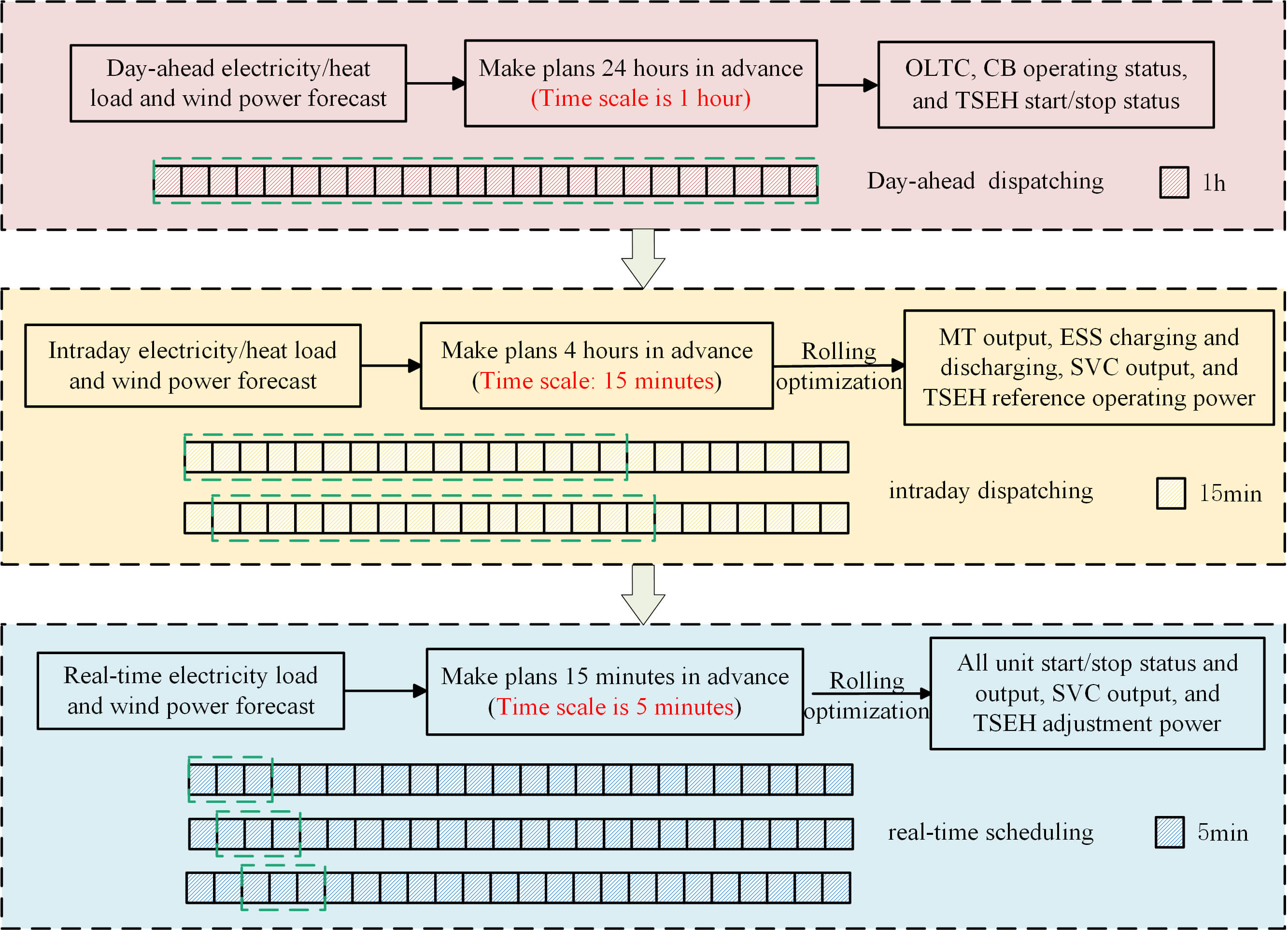
To reduce the uncertainty of renewable energy generation in ADN and the impact of demand forecast errors on system scheduling, fine-grained scheduling may be achieved by progressively reducing the time scale. This will increase the rationality of ADN optimized scheduling by making the optimized scheduling results more consistent with the actual system operation [22]. Based on the thermal storage characteristics and short-term regulation capabilities of TSEH, this paper establishes a multi-timescale collaborative optimization dispatch framework for ADN incorporating heat storage electric heating clusters. During the day-ahead planning phase, it participates as a dispatchable resource in formulating economic dispatch plans, determining heat storage and release rhythms, and providing decision-making foundations for slow-response equipment. In the intraday and real-time phases, it fully leverages its short-term power regulation capabilities, coordinating with fast-response resources such as micro-gas turbines and energy storage systems to jointly mitigate renewable energy output fluctuations and load forecast deviations. This multi-timescale coordination enables the thermal storage electric heating cluster to optimize system economic operation at the macro level while simultaneously tracking power fluctuations in real time at the micro level. Fig. 1 illustrates the collaborative optimal scheduling framework and ADN multi-time scale coordination relationship developed in this article, taking into account TSEH cluster access.
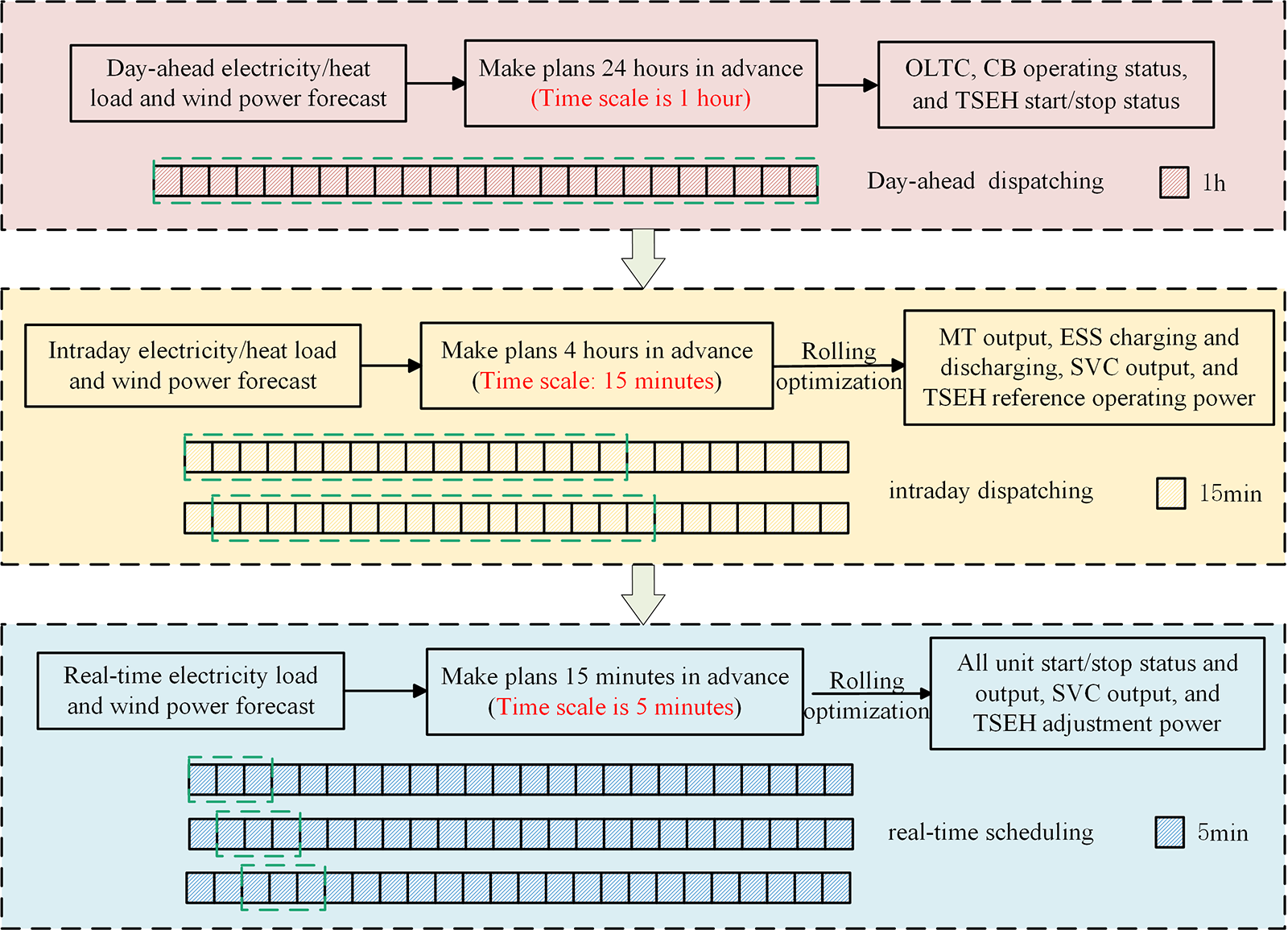
Figure 1: Multi-time-scale coordination and collaborative optimization scheduling framework
Using hourly resolution, optimization choices must be taken during the recent scheduling phase based on electric heating load demand, renewable energy output, and system factors (grid structure and electricity pricing data) within a 24-h forecast cycle. Due to mechanical inertia restrictions, slow-response equipment like on-load tap changers (OLTC) and capacitor banks (CB) in active distribution grids are unable to react rapidly to minute-level dispatch orders. Consequently, it is necessary to ascertain their operating state during this dispatch period. Furthermore, centralized management of TSEH is developed in order to fulfill the thermal demand of heating users. Plans for thermal storage and heat release are created specifically for TSEH, and the outcomes of each dispatch optimization are sent to the intraday phase.
Information on electricity/heat load demand, projection data for renewable energy generation, and other pertinent data must be acquired four hours prior to the intraday scheduling phase. With updates every hour, the schedule plan is created on a 15-min time frame. Rolling optimization is used to determine the output of the rapid regulation equipment (energy storage system (ESS), micro-turbine (MT)) in the ADN, and the intraday baseline operating power of the TSEH system. Based on the results of the day-ahead optimization and the intraday system operating limitations, the outcomes of each schedule optimization are subsequently sent to the real-time stage.
A 15-min time scale is enough to satisfy heating demands during real-time scheduling because of the comparatively moderate thermal reaction. As a result, with electricity scheduling done on a 5-min time frame, forecast data for renewable energy output and electrical load demand only has to be obtained 15 min in advance. In order to avoid additional costs associated with repeated charging and discharging of ESS equipment, the ESS output values determined by the intraday scheduling plan are also implemented immediately in this phase. Considering the outcomes of the day-ahead intraday optimization and system operating constraints, this phase determines the output and start/stop status of every unit, the output adjustment of static var compensators (SVC), and the real-time correction power of TSEH.
3 Multi-Time Scale Collaborative Optimization Scheduling Model
3.1 Day-Ahead Optimization Scheduling Model
The day-ahead optimization scheduling model predicts the production of new energy sources and the demand for electricity and heat load based on previous operational data and day-ahead weather forecasts. The goal is to reduce ADN’s overall operational expenses throughout the course of the scheduling cycle. While ensuring the thermal comfort of electric heating users, the output of each slow-response device in ADN and the day-ahead scheduling plan are determined. Here is the objective function:
where the current period T = 24 h, and the time resolution is 1 h. The specific calculation methods for each part are described below.
(1) Operating costs of MT
where CMT is the operating costs of MT; Ng is the total MT count in ADN; PMTi,t represents the active power output of the ith MT at time t; ρMT,i represents the ith MT’s marginal operating cost.
(2) Distribution network loss costs
where CLoss is total network loss cost of the distribution network; rij is the branch circuit resistance between node i and node j; Iij,t is the effective value of the current in the corresponding branch at time t; αt is the cost of energy loss per unit, i.e., network loss electricity price.
(3) ESS dispatch costs
where CESS is ESS dispatch costs; Ne is the number of ESS devices within ADN; αess is the ESS unit dispatch cost coefficient; The ith ESS device’s charging and discharging powers at time t are denoted by Pchar,i,t and Pdis,i,t, respectively.
(4) Interaction electricity cost with the upper-level power grid
where Cgrid is ADN and upper grid interaction electricity costs; cg,t is main grid electricity price at time t; The interaction power between the upper-level power grid and ADN over time t is denoted by Pg,t.
(1) Electric power balance constraint
where Pload,t, Qload,t are active and reactive power in the ADN at time t, respectively; Qg,t is the reactive power supplied by the higher grid at time t; QCB,t is the reactive power injected by the CB grouped and switched at time t; QSVC,t is the reactive power supplied by the SVC device at time t; PEHm,t is the power consumption of the mth TSEH device at time t.
(2) Constraints on heating balance for households with electric heating
Considering the thermal inertia of electric heating systems, operational complexity can be reduced by making sure that, without rigorously adhering to real-time power balance, the total heat supply during the scheduling cycle matches user heat demand while still satisfying actual heating requirements. According to the principles of building thermodynamics, the heating balance constraints for user buildings can be expressed as:
where Cair is the equivalent thermal capacity of the building’s air; Tin,t is the heating user’s interior temperature at time t; Heh,t is the heating power that the TSEH system provides to the building over time t; HS,t is the radiant heat provided to the building by sunlight at time t; HA,t is the conductive heat transferred from the indoor to the outdoor environment through the building at time t; HV,t is the dissipation of heat in both indoor and outdoor air at time t; Hb,t is the building’s heat loss due to thermal inertia at time t; ∆t is a 1-h time scale; The scheduling cycle T is 24 h. The relevant heat calculation formulas for each part are as follows [23]:
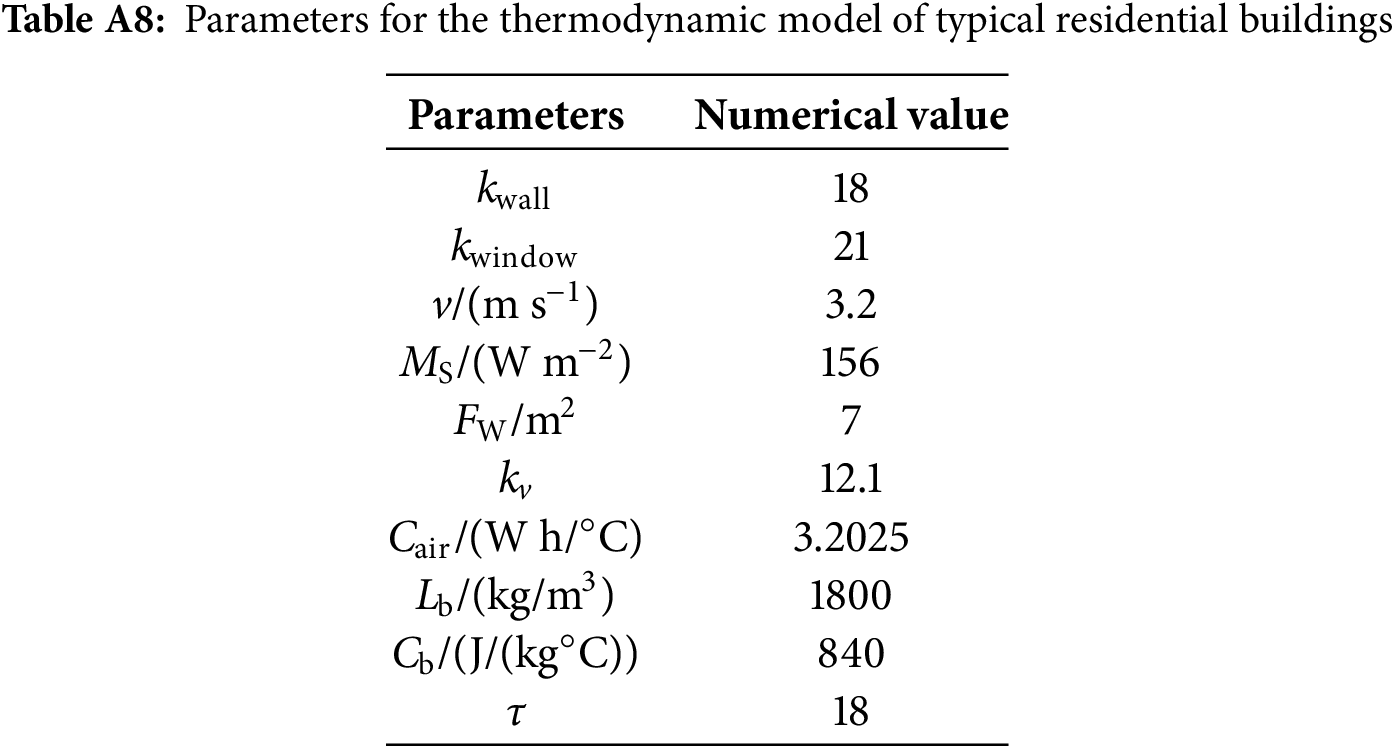
where Hwall,t and Hwindow,t represent the heat loss of the building’s exterior walls and windows, respectively, at time t; Tout,t is the outdoor temperature at time t; kwall and kwindow are the heat transfer coefficients of the building’s exterior walls and windows, respectively; v is the outdoor wind speed; kv is the overall heat transfer coefficient; MS stands for the intensity of solar radiation; FW is the building’s equal daylighting area; Lb is the building’s overall density; V is the volume of the building; Cb is the building’s specific thermal capacity; τ is the time constant of thermal inertia.
(3) Constraints on the working characteristics of TSEH
Under ideal circumstances, TSEH technology simultaneously provides real-time heating and heat storage during off-peak grid periods, ensuring steady grid operation and minimizing heating costs for consumers [24]; The system mainly uses the thermal storage unit to provide heating during periods of high grid load, with electric heating units acting as a complement. By moving peak loads to off-peak times and lowering customers’ heating expenses through off-peak energy prices, this strategy preserves grid stability and lessens the operational strain brought on by the system’s integration of distributed renewable power sources.
1. TSEH power constraints
where PEH,t is total power consumption for TSEH at time t; Peh,t is the direct heating power for TSEH at time t; Pabs,t is the amount of electricity used by the heat storage device at time t; Babs,t is the heat storage status of TSEH at time t.
2. TSEH thermal power balance constraints
where η0 is the energy efficiency coefficient of direct heating mode for TSEH; Hrelea,t is the heat storage device’s release of heat power at time t; Brelea,t is the heat release state of the heat storage device at time t.
3. Constraints on the heat storage characteristics of TSEH
where Seh,t is the heat storage device’s ability to store heat at time t; μ is the self-consumption energy coefficient of heat storage device; ηabs is the heat storage efficiency of heat storage devices; ∆t is the scheduling interval.
(4) Constraints on the operation of TSEH
Heating power, heat storage power, heat release power, and higher and lower restrictions on the heat storage device’s capacity are the primary constraints for TSEH. For single-unit TSEH devices, heat storage and heat release cannot occur simultaneously, and the initial and final heat storage levels in the scheduling cycle should remain consistent:
where
TSEH should have some regulatory authority to rectify the imbalance brought on by inaccurate wind and load forecasts:
where:
TSEH can only reduce power while it is operating at full load; it is unable to boost power. Reasonably controlling the system’s output power and maintaining the required adjustment margin are essential to guaranteeing that it has enough adjustment space while operating:
where
(5) Operational constraints of MT
where
(6) Distributed power supply output constraints
With the following constraints, this article analyzes ADN operational characteristics under dispersed wind power grid connection conditions:
where:
(7) Operational constraints of ESS
where
(8) Operational constraints of OLTC
where Vm,t is the voltage value of node j after conversion by OLTC; kOLTC,t is the OLTC tap ratio at t moment;
(9) Constraints on group switching of CB
where NCB,t and
(10) Operational constraints of SVC
where
(11) Interaction power constraints with the upper-level power grid
where
(12) ADN trend constraint
where: Pi and Qi are the active and reactive power injected into the nodes, respectively; The voltages for nodes i and j are denoted by Ui and Uj, respectively; Gij, Bij,
(13) ADN operational safety constraints
where Umin and Umax are the upper and lower voltage limits for system nodes;
3.2 Intraday Optimization Scheduling Model
The previous day’s plan serves as the basis for intraday scheduling, which accounts for the demand for electricity and heat load as well as short-term wind power output estimates. In order to lower the overall running costs of the ADN during the scheduling period, a rolling optimization scheduling model is developed for the intraday phase. In order to increase the precision of scheduling optimization and decrease the discrepancy between the previous day’s scheduling plan and actual operating conditions, this model calculates the output of each rapid-response device within the ADN system, the output of MT units, and the base power of the TSEH. Building elements like windows and outside walls absorb heat through heating equipment because of the thermal inertia of buildings, but the internal temperature takes time to climb to the desired level. This research uses the same 15-min time scale as electrical energy scheduling for thermal energy scheduling during the intraday period in order to better handle the time lag difficulties in heat transmission and control on the user side. In order to improve the system’s regulation precision, this time scale selection complements the ADN’s quick regulation resources and efficiently takes into account the dynamic changes in heat energy transfer and interior temperature regulation. The proposed objective function:
where the superscript “′” represents the comprehensive operating cost of ADN during the intraday dispatching phase; TSEH costs are covered by CEH and are determined using Eq. (31).
where kEH is the TSEH power adjustment compensation cost coefficient;
The limitations of the intraday phase are simplified by the intraday rolling optimization scheduling phase as the operational parameters and output of OLTC and CB have already been determined in the day-ahead scheduling plan. The ADN-related operational limitations, TSEH constraints, and output constraints for each fast-response device in the ADN are the same as those in day-ahead optimization scheduling and will not be discussed here:
3.3 Real-Time Optimization Scheduling Model
In order to minimize system operating costs, the real-time scheduling phase combines ultra-short-term wind power output and load demand forecast data. Each power generation unit’s output deviation compensation costs are taken into account, and the operating power of the TSEH and the output of the SVC are continuously adjusted to fulfill the goal of measuring power fluctuations in real-time. The objective function is as follows:
where the superscript “RT” represents the comprehensive operating cost of ADN during the real-time scheduling phase;
The output constraints of each fast-response device in the ADN included in the model, the TSEH constraints, and the operational constraints associated to the ADN are identical to those in the day-ahead optimization scheduling during the real-time scheduling phase, thus they won’t be repeated here. The power regulation limits should be met in this phase as TSEH can be freely modified in accordance with the operational power benchmark established during the intraday phase:
where ∆PEHm,t provides real-time power adjustment for TSEH during the t time period.
4.1 Calculation Example System and Parameter Settings
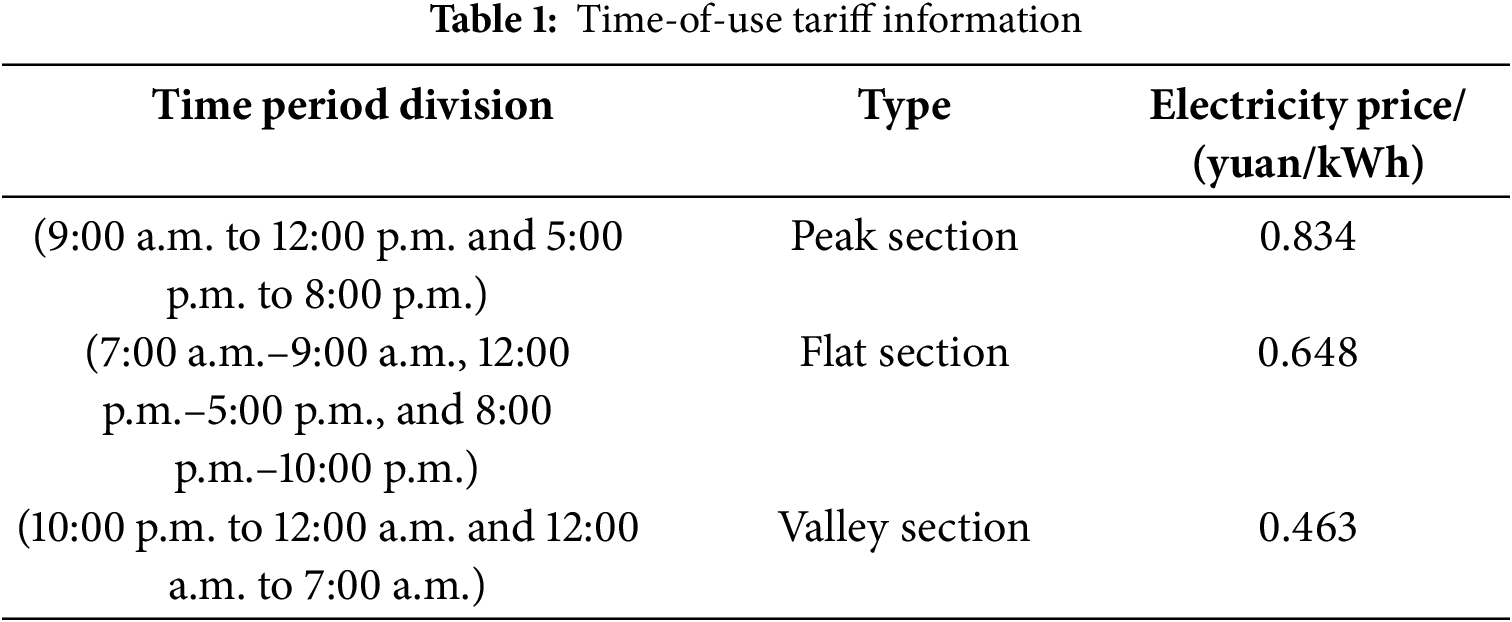
This paper uses an improved IEEE 33-node distribution network for case study analysis, as follows: the system reference voltage is 10 kV, the range of the node voltage tolerance is 0.94 to 1.06 p.u., the three-phase power reference value is 10 MVA, and the diagram of the network topology is displayed in Fig. 2. The parameters for each device in the ADN are listed in the Appendix A, Tables A1–A7. A typical daily outdoor temperature variation curve is shown in Appendix Fig. A1. For detailed Parameters for the thermodynamic model of typical residential buildings, see Appendix Table A8. The main grid electricity price adopts a time-of-use pricing model, with time periods divided as shown in Table 1 [26]. The optimization model constructed in this paper can be modeled using the YALMIP platform and solved using the GUROBI commercial solver.
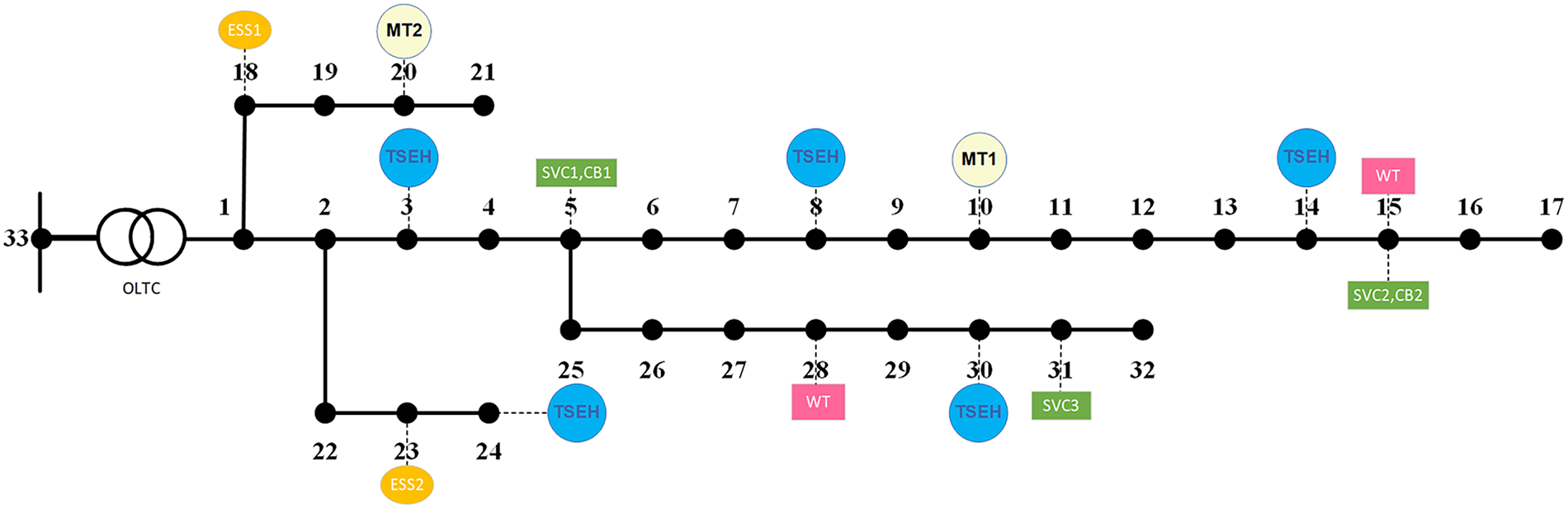
Figure 2: The topology of modified IEEE-33 node active distribution network
In this research, joint prediction curves for wind power and load at several time scales are constructed by superimposing normally distributed errors. The day-ahead, intraday, and real-time dispatch phases have confidence ranges of ±20%, ±5%, and ±2% for wind power output forecasts, respectively. For load forecasts, the relevant confidence intervals are set at ±3%, ±1%, and ±0.5%. The resulting prediction curves are shown in Fig. 3.
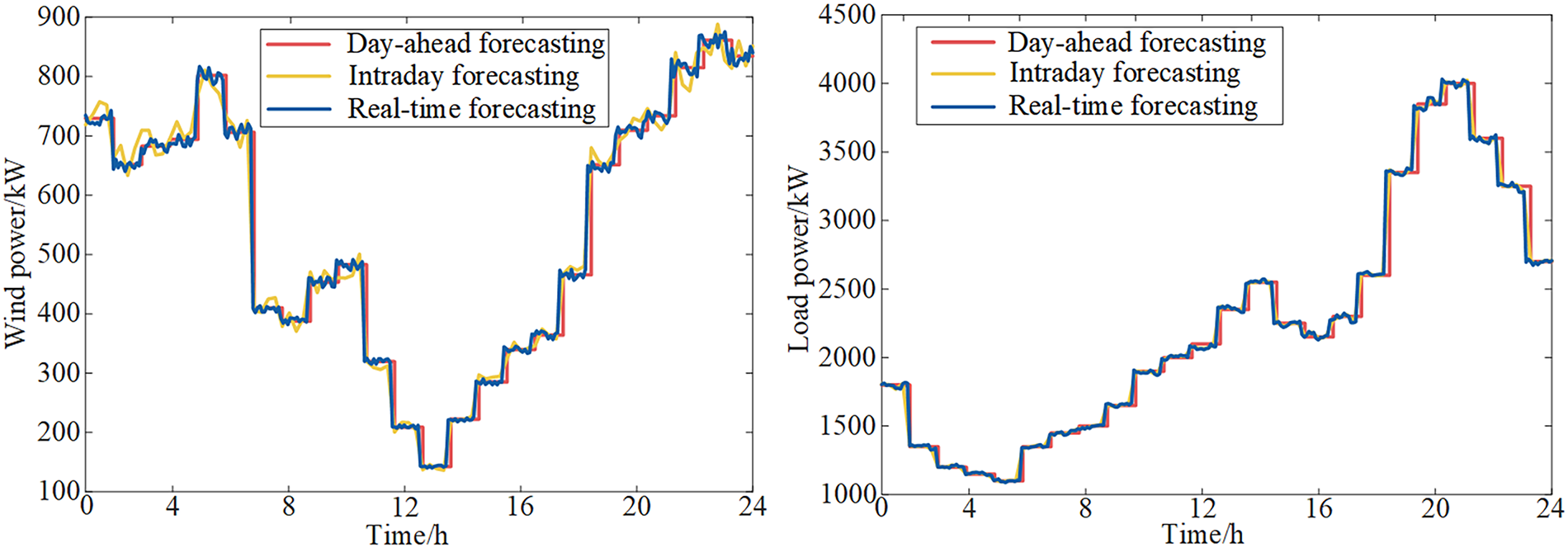
Figure 3: Wind power and load forecast curves
4.2 Analysis of Day-Ahead Scheduling Results
The day-ahead optimization of wind power forecast power and various active management measures is integrated to formulate a dispatch plan. The active power output of each dispatch resource on the day-ahead is shown in Fig. 4.
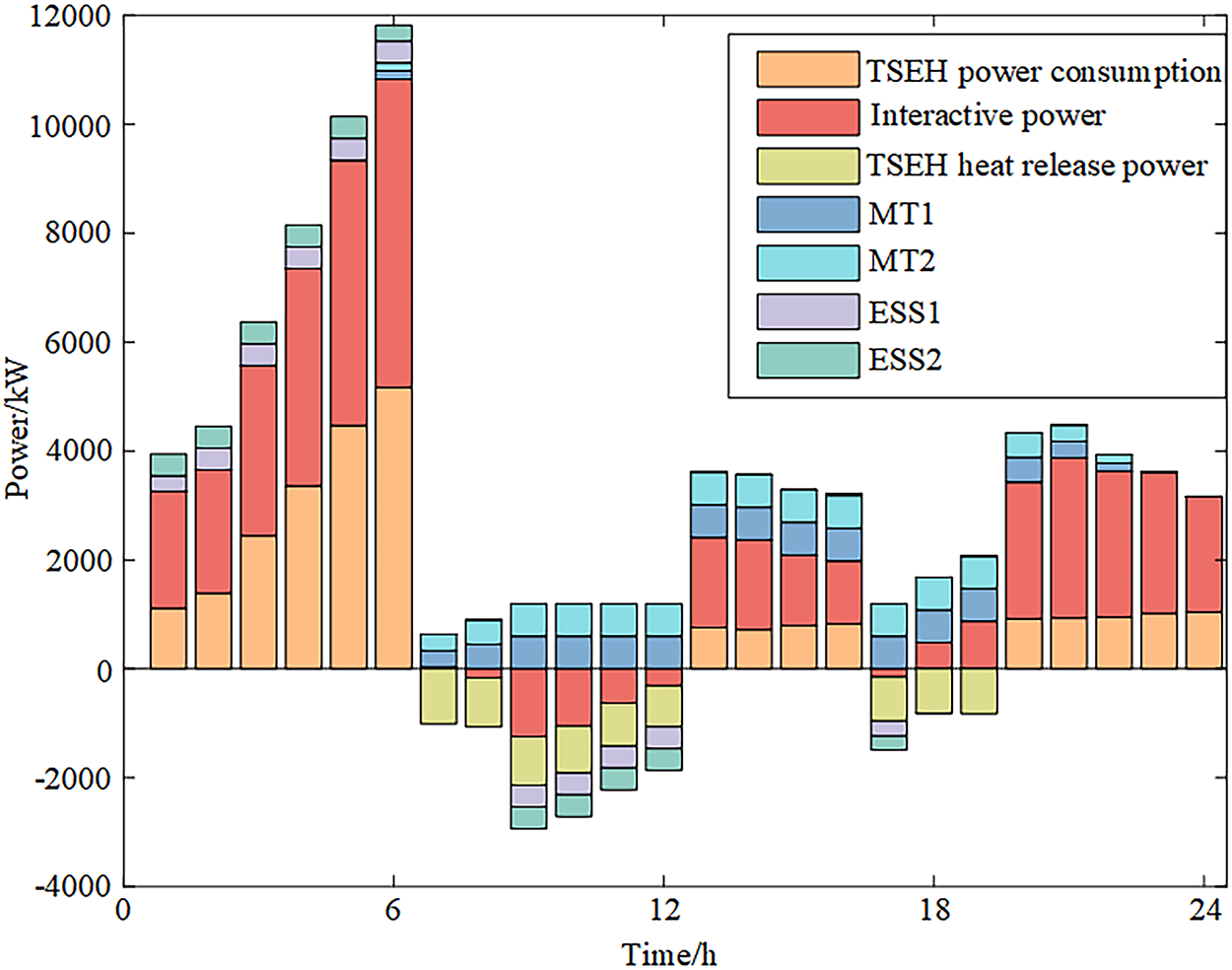
Figure 4: Day-ahead active power output of dispatching resources
As seen in Fig. 4, the TSEH system is turned on for heat storage during typical off-peak electrical consumption times (such as 0:00–06:00), which raises the overall load power. The TSEH heating system shuts off during typical high power usage times (such as 17:00–20:00), and the heat storage system constantly releases stored heat for heating, ensuring that indoor temperatures are maintained to satisfy user heating needs; For MT, since its marginal operating cost is lower than the peak-off-peak electricity price but higher than the off-peak electricity price, and the output of distributed wind farms is relatively low during the 11:00–17:00 period, MT operates during peak-off-peak periods to reduce the active distribution grid’s electricity purchase costs during peak periods and alleviate grid pressure; For ESS, energy is stored during the low-cost off-peak hours at night and released during the peak midday hours, which not only lowers the grid’s electricity purchase expenses but also effectively balances the grid’s supply and demand relationship.
Reactive power resources within the ADN may be modified to maintain node voltages within a manageable range during the day-ahead dispatch phase, preventing node voltage from exceeding distribution network limitations when wind turbine production is too high or demand is too heavy. The intraday phase then receives the OLTC’s tap settings and the number of CB switching groups. Following the completion of the day-ahead dispatch plan, Fig. 5 displays the OLTC’s tap settings and the number of CB switching groups.
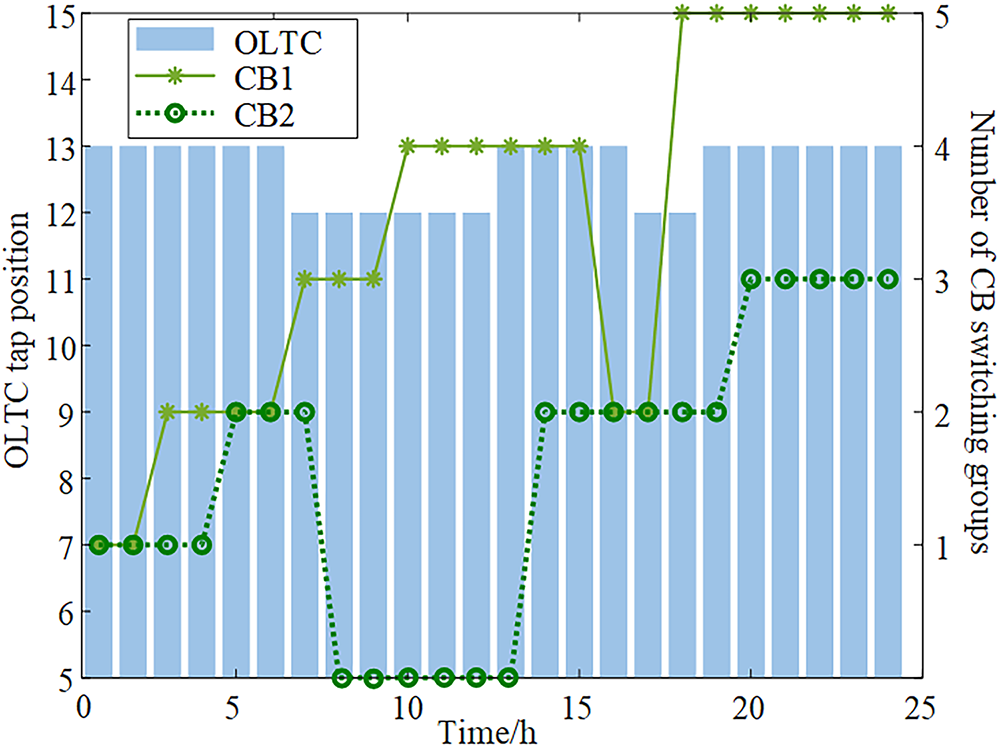
Figure 5: Tap Position of OLTC and Switching Groups of CB
Fig. 6 shows the dispatch results when TSEH is not involved in the collaborative optimization of the Active Distribution Network (ADN). To further demonstrate the synergistic optimization effect, we also conducted a comparative analysis in Fig. 7 of the voltage distribution across ADN nodes before and after TSEH’s involvement in scheduling. Additionally, Fig. 8 provides a voltage profile comparison to more clearly illustrate the temporal trends in voltage magnitude.
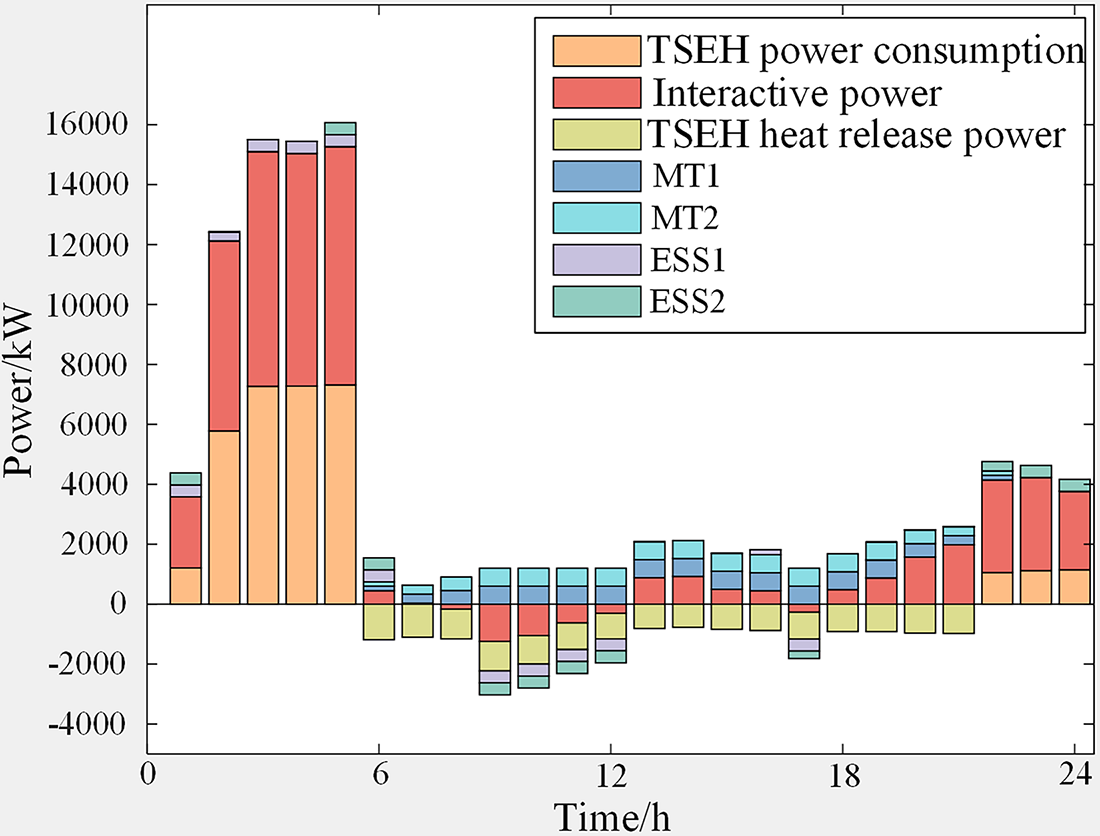
Figure 6: TSEH does not participate in ADN optimized scheduling results
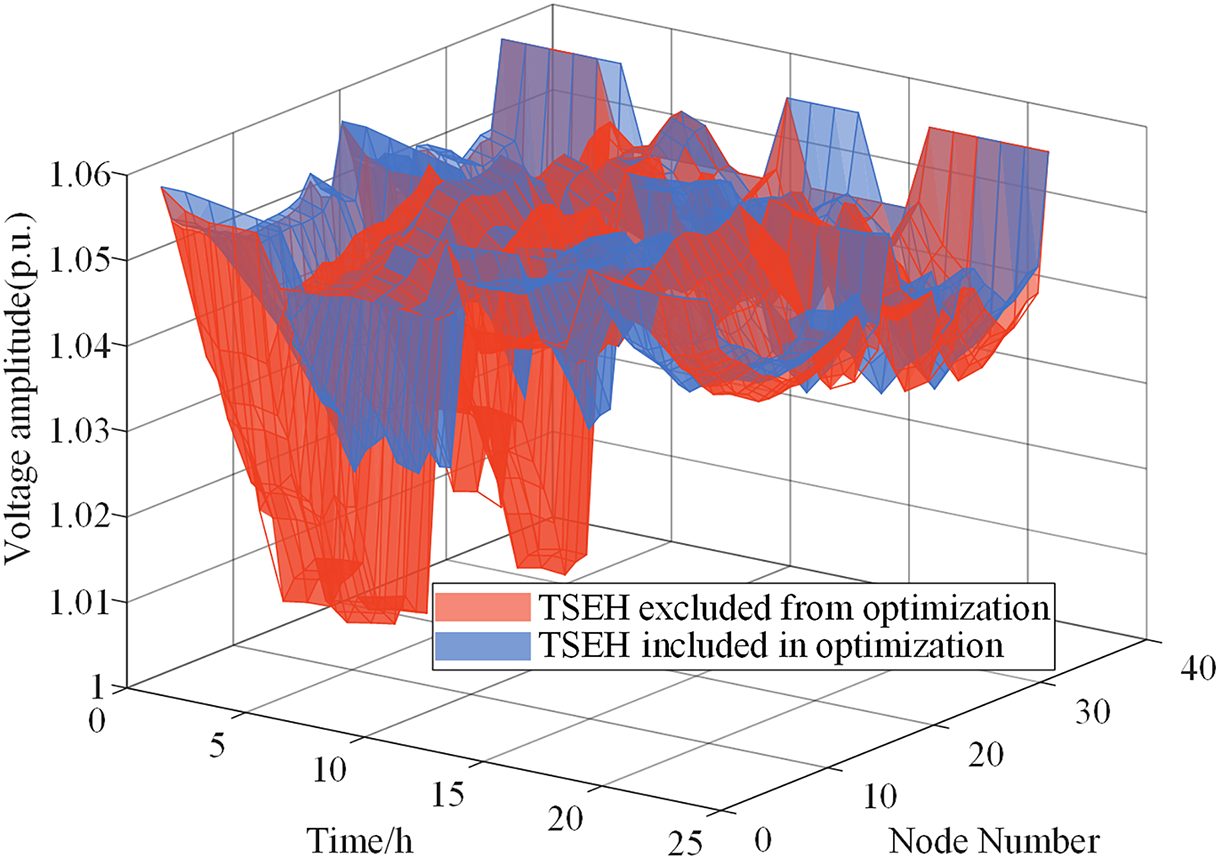
Figure 7: TSEH participation in optimizing pre- and post-node voltage changes
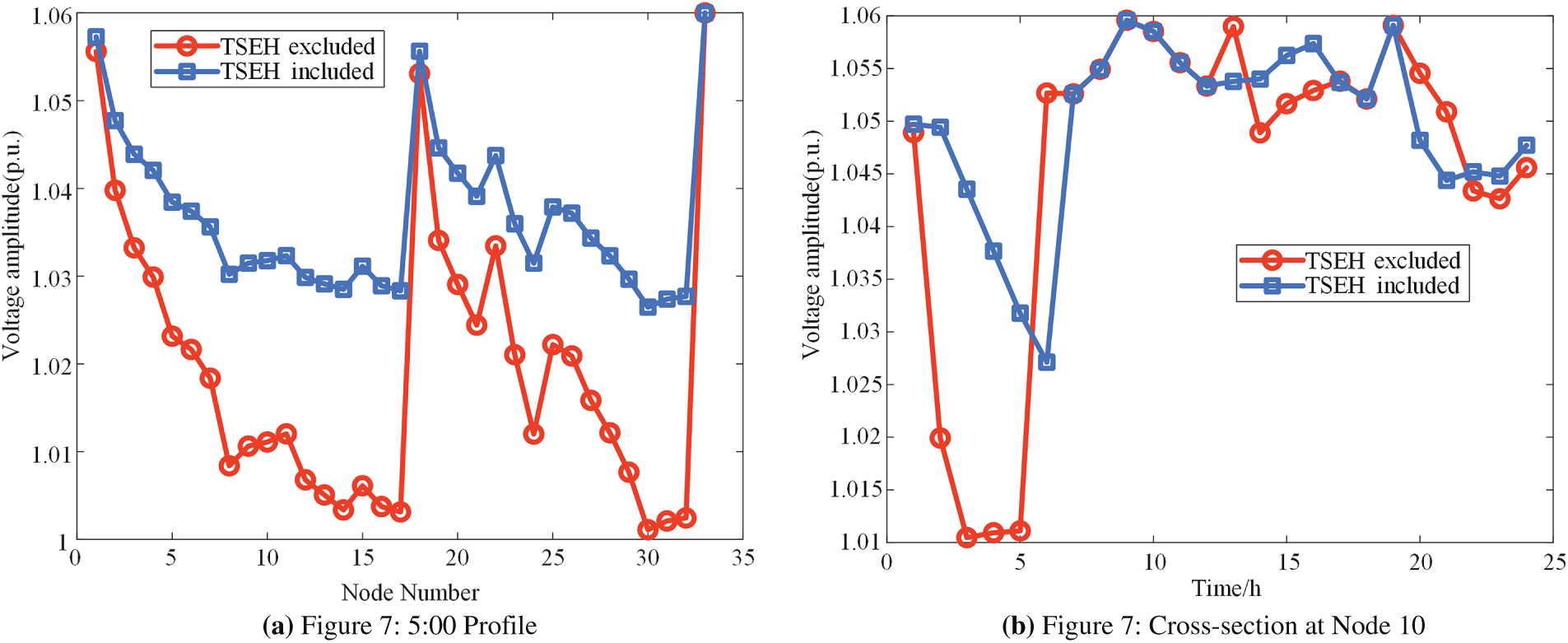
Figure 8: Fig. 7 Cross-section at 5:00 and Node 10
Analysis results indicate that if large-scale electric heating users concentrate heat storage between 02:00 and 05:00, then rely on heat release to maintain heating from 06:00 to 21:00, this approach may reduce user energy costs but would increase ADN’s electricity procurement costs from the main grid. It would also exacerbate node voltage fluctuations, adversely affecting system operational stability. By implementing the proposed TSEH-participating coordinated optimization dispatch strategy, TSEH loads are rationally regulated across the time dimension. This approach not only effectively smooths the system’s net load curve but also significantly suppresses voltage fluctuations, improves voltage quality, and enhances both the operational stability and economic efficiency of ADN.
4.3 Analysis of Intraday Scheduling Results
The TSEH benchmark electricity load taking part in ADN collaborative optimization, MT output, ESS output, and interaction electricity with the upper-level power grid are among the scheduling items for the day. Following intraday rolling optimization, Fig. 9 displays each resource’s output.
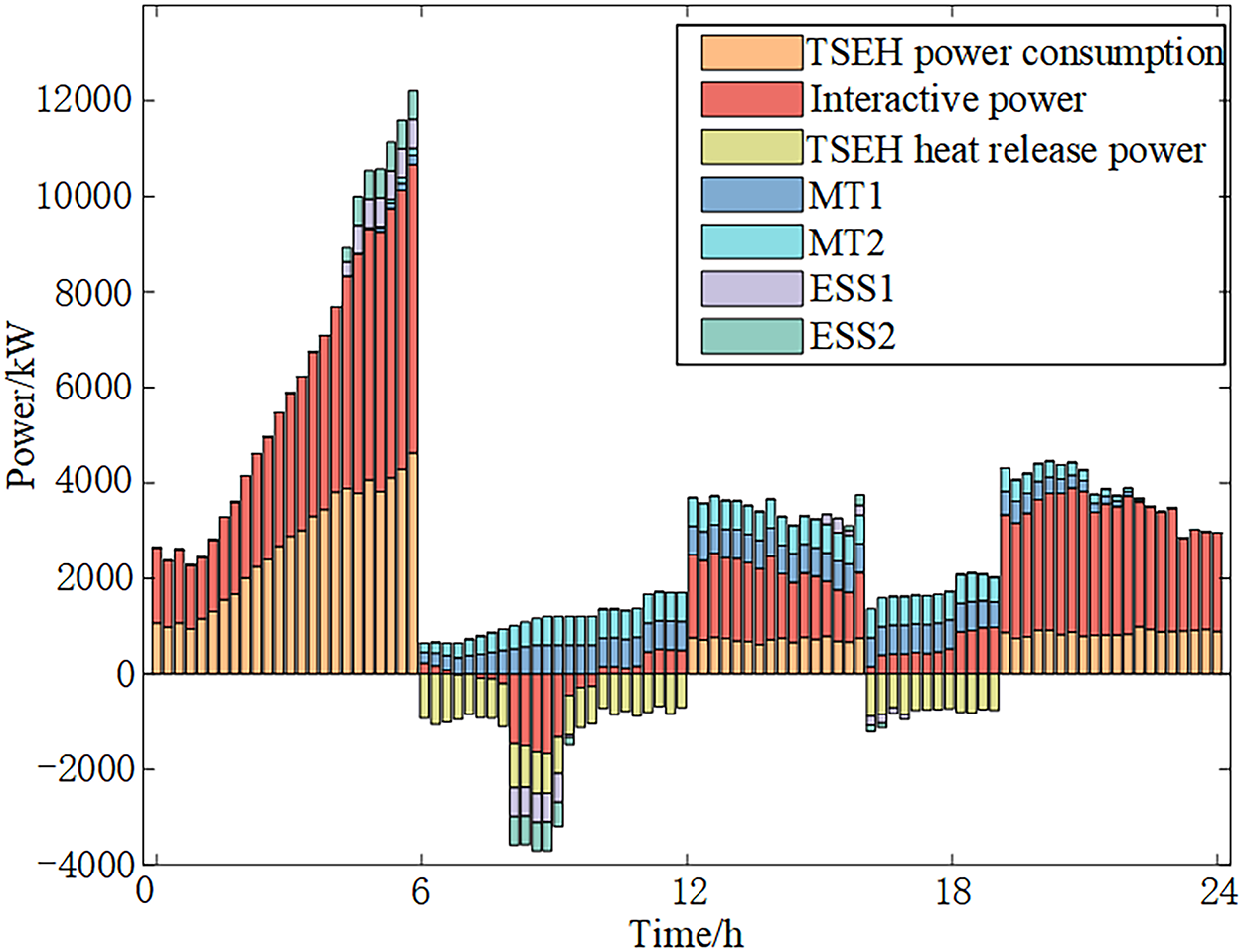
Figure 9: Intraday output status of dispatchable Resources
Fig. 9 illustrates that MT’s operational trend is consistent with the day before. The TSEH cluster load uses its rapid regulation capabilities based on the start-stop status established the day before to ensure heating while calculating the baseline operating power and transmitting it to the real-time phase in order to mitigate power imbalance issues brought on by variations in WT output and load. Its limited regulatory capabilities, however, mean that in order to achieve the requirements for dependable and cost-effective system operation, cooperation with ESS and MT within the distribution network is required.
4.4 Analysis of Real-Time Scheduling Results
Real-time dispatch objects include TSEH load adjustment, SVC output adjustment, and interaction with the upper-level power grid. Through dynamic correction of the daily plan, both system economy and regulation accuracy are optimized. During the real-time dispatch phase, the dispatch status of each dispatch resource is shown in Fig. 10.
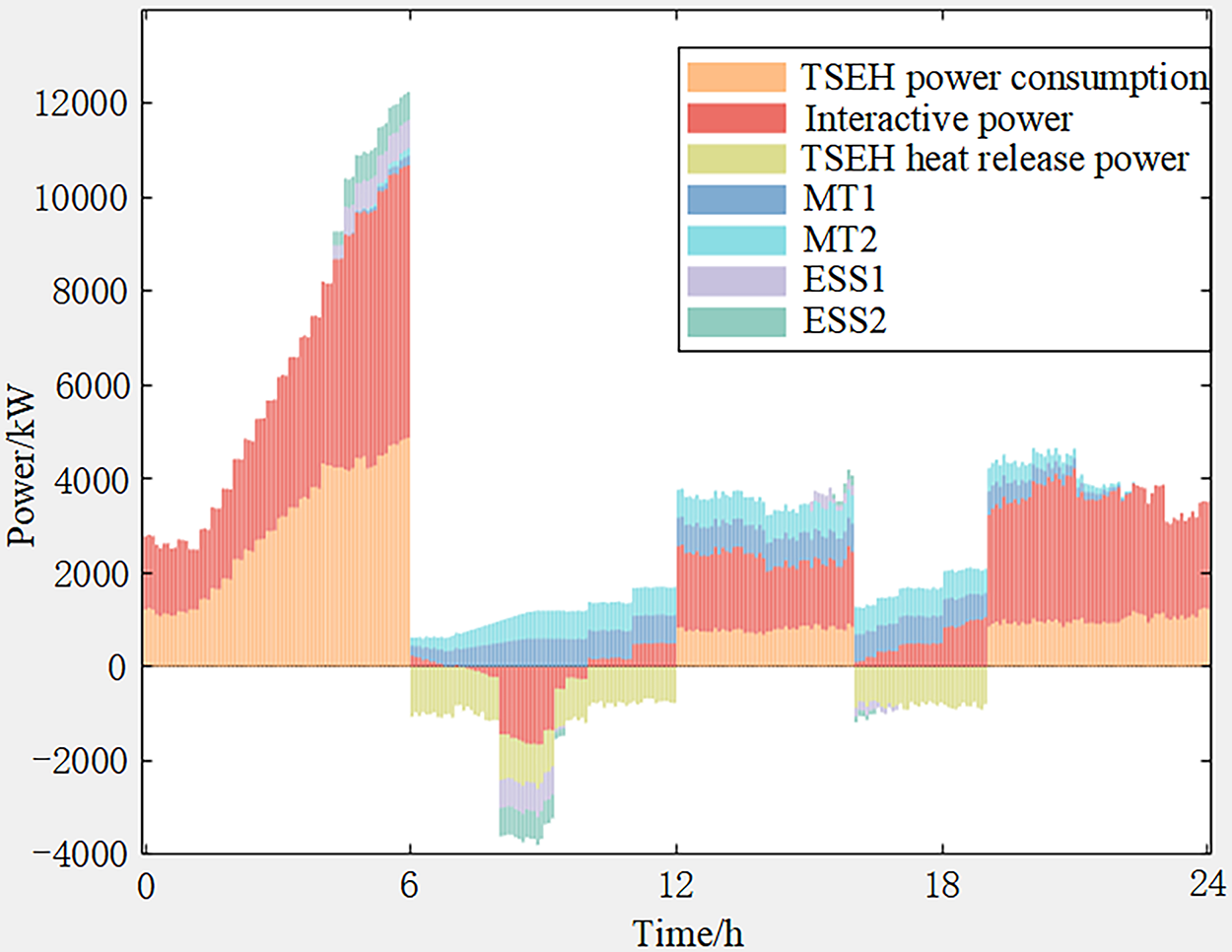
Figure 10: Real-time output status of dispatchable resources
The system’s capacity to follow WT random variations much increases when the scheduling cycle is shorter, as seen in Figs. 9 and 10. By integrating real-time rolling optimization with a dynamic feedback mechanism, the system flexibly modifies active power output during the real-time scheduling phase, efficiently reducing power deviations brought on by WT variations and guaranteeing the power grid’s steady operation.
The voltage distribution (normalized values) for every system node during the real-time scheduling stage is displayed in Fig. 11. For the ADN to continue operating steadily, the node voltage values’ magnitude is essential. While low node voltages can cause system failures and lower power supply dependability, excessively high node voltages can cause equipment overload and decreased energy efficiency. All node voltages, as depicted in the figure, stay within the system’s safe operating range, confirming that the technique suggested in this work can guarantee the ADN’s dependable and steady operation.
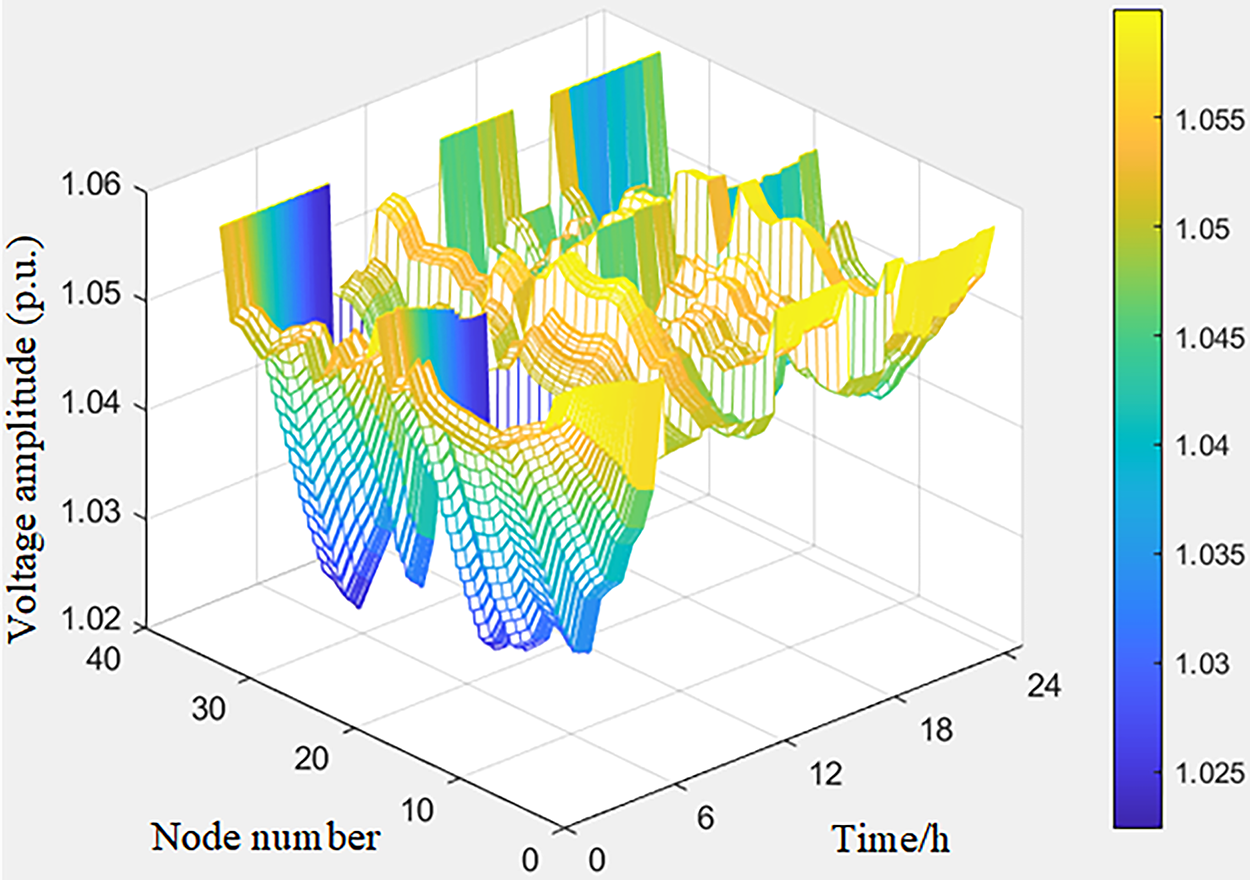
Figure 11: Real-time phase node voltage distribution
Compare the operating costs of ADN in the four scheduling phases, as shown in Table 2.
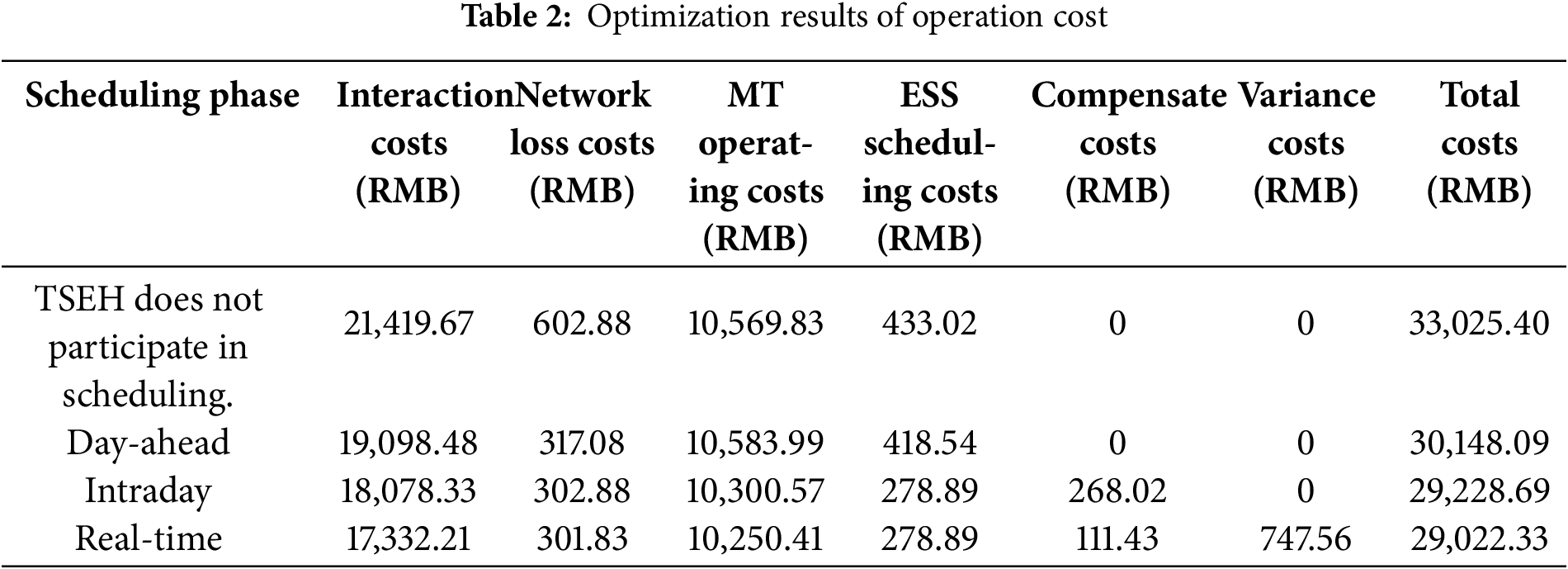
As shown in Table 2, when TSEH is not involved in optimization scheduling, the total system operating cost is 33,025.40 yuan. After TSEH participates in collaborative optimization, the total system operating cost is significantly reduced to 30,148.09 yuan, representing a decrease of 8.71%. This cost reduction stems primarily from two factors: First, interaction costs with the main grid decreased from 21,419.67 yuan to 19,098.48 yuan, a 10.84% reduction. This indicates that by rationally scheduling TSEH’s heat storage and discharge behavior, effective “peak shaving and valley filling” was achieved, reducing electricity purchases from the main grid. Second, grid loss costs decreased from RMB 602.88 to RMB 317.08, a reduction of 47.41%. This reflects more rational power flow distribution within the system following optimized scheduling, resulting in significantly lower line losses. At the same time, by analyzing the results of operational cost optimization across three phases—day-ahead, intraday, and real-time, during the intraday optimization and real-time rectification schedule stages, it is evident that the system’s TSEH compensation costs and system deviation costs increased compared to the day-ahead phase. However, while the overall operating costs of the ADN reduced by 3.91% and 4.59%, respectively, the interaction costs with the upper-level grid decreased by 5.34% and 9.25%. Therefore, by taking into account TSEH cluster access, the multi-timescale coordinated optimization strategy for ADN operation suggested in this paper can rationally coordinate TSEH load with the operational states of different active management devices, increasing the efficiency of distribution grid equipment and resource utilization. Consequently, this lowers the exorbitant price of buying power and improves the stability and economic efficiency of the system.
In order to fully utilize the control capabilities of the TSEH cluster and achieve optimal allocation and efficient utilization of system resources, this paper suggests an ADN multi-timescale collaborative optimization scheduling strategy that takes into account TSEH cluster access. This approach addresses the problems of strong output fluctuations and low prediction accuracy in the context of high proportions of renewable energy access. The method was validated using an upgraded IEEE 33-node system, and the following conclusions were drawn:
(1) Peak shaving and valley filling may be accomplished efficiently by utilizing TSEH’s scheduling capabilities to the fullest extent feasible and allowing it to take part in the coordinated optimization of ADN operations, which will reduce the operating strain on the distribution network.
(2) By building a multi-time-scale collaborative decision-making framework with “day-ahead, intraday, and real-time” scales, the suggested solution fully utilizes TSEH’s quick reaction capabilities to track and gradually optimize the fluctuation of renewable energy output. In addition to improving system scheduling accuracy, it suggests the best scheduling schemes for resources with distinct response characteristics across several control phases, balancing the needs for power supply dependability and system economic operation.
Acknowledgement: The authors wish to express their gratitude to the National Natural Science Foundation of China for its financial support of this technology management project.
Funding Statement: This work is supported by Integrated Distribution Network Planning and Operational Enhancement Using Flexibility Domains Under Deep Human-Vehicle-Charger-Road-Grid Coupling (U22B20105).
Author Contributions: The authors confirm contribution to the paper as follows: Conceptualization, Song Zhang and Yang Yu; methodology, Song Zhang; validation, Song Zhang, Yang Yu and Shuguang Li; formal analysis, investigation, resources and data curation, Song Zhang and Yang Yu; writing—original draft preparation, Song Zhang, Yang Yu and Shuguang Li; writing—review and editing, Xue Li; visualization and supervision, Song Zhang and Xue Li. All authors reviewed the results and approved the final version of the manuscript.
Availability of Data and Materials: The authors confirm that the data supporting the findings of this study are available within the article.
Ethics Approval: Not applicable.
Conflicts of Interest: The authors declare no conflicts of interest to report regarding the present study.
Nomenclature
| Optimization Variables | |
| PMTi,t | Active power output of the ith MT at time t |
| Iij,t | Effective value of the current in the corresponding branch at time t |
| Pchar,i,t | The ith ESS device’s charging powers at time t |
| Pdis,i,t | The ith ESS device’s discharging powers at time t |
| Pg,t | The interaction power between the upper-level power grid and ADN at time t |
| Qg,t | Reactive power supplied by the higher grid at time t |
| QCB,t | Reactive power injected by the CB grouped and switched at time t |
| QSVC,t | Reactive power supplied by the SVC device at time t |
| PEHm,t | Power consumption of the mth TSEH device at time t |
| Tin,t | Heating user’s interior temperature at time t |
| Heh,t | Heating power that the TSEH system provides to the building over time t |
| PEH,t | Total power consumption for TSEH at time t |
| Peh,t | Direct heating power for TSEH at time t |
| Pabs,t | Amount of electricity used by the heat storage device at time t |
| Babs,t | Heat storage status of TSEH at time t |
| Hrelea,t | Heat storage device’s release of heat power at time t |
| Brelea,t | Heat release state of the heat storage device at time t |
| Seh,t | Heat storage device’s ability to store heat at time t |
| TSEH’s capacity for upward adjustment at time t | |
| TSEH’s capacity for downward adjustment at time t | |
| State of charge of ESS at time t | |
| uchar,t | Charging states of the ESS at time t |
| udis,t | Discharging states of the ESS at time t |
| kOLTC,t | OLTC tap ratio at t moment |
| NCB,t | Capacitor bank switch position at time t |
| TCB,t | Operating status of CB at time t |
| Power consumption of TSEH intraday | |
| Active power output of the ith MT intraday | |
| The interaction power between the upper-level power grid and ADN intraday | |
| Power consumption optimized by TSEH for the real-time phase | |
| Active power output of the ith MT for the real-time phase | |
| The interaction power between the upper-level power grid and ADN for the real-time phase | |
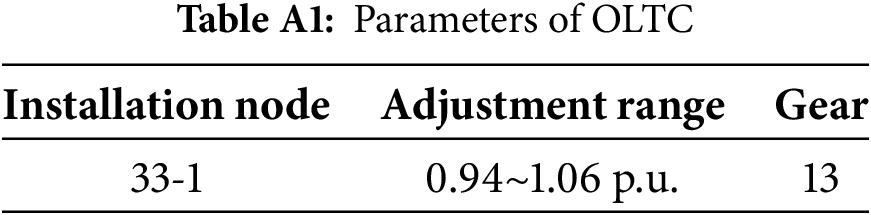

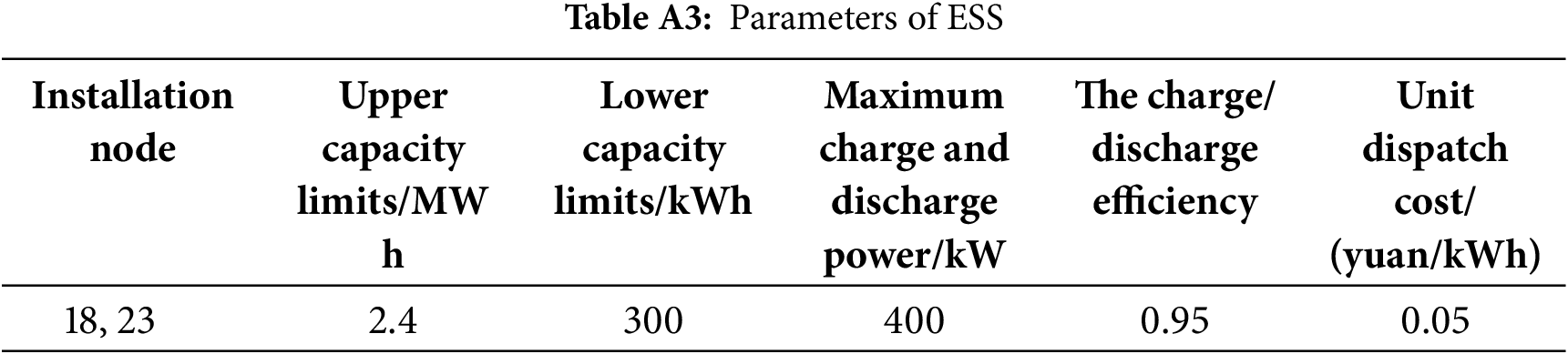

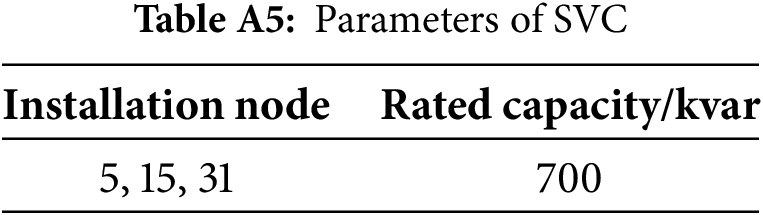
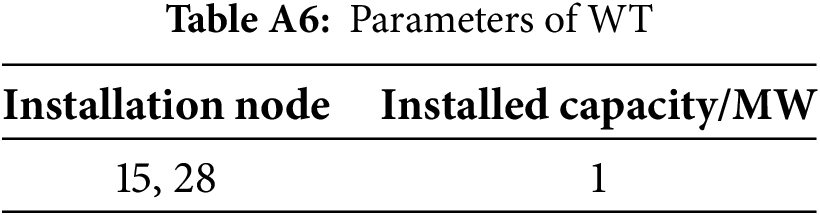
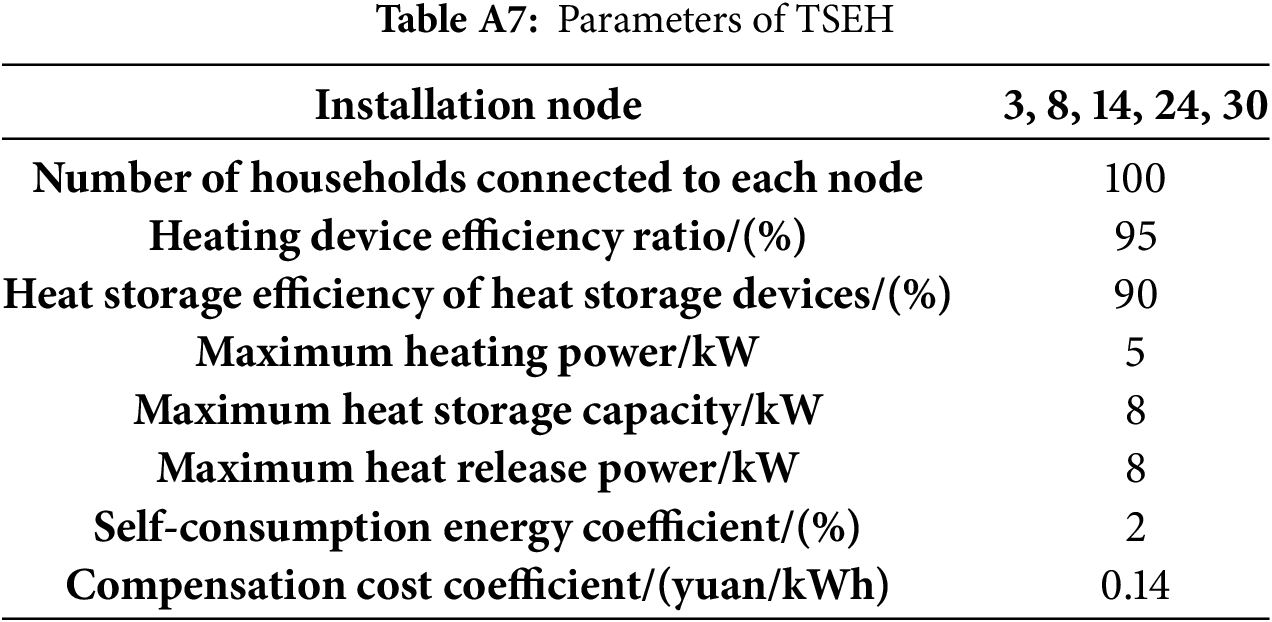
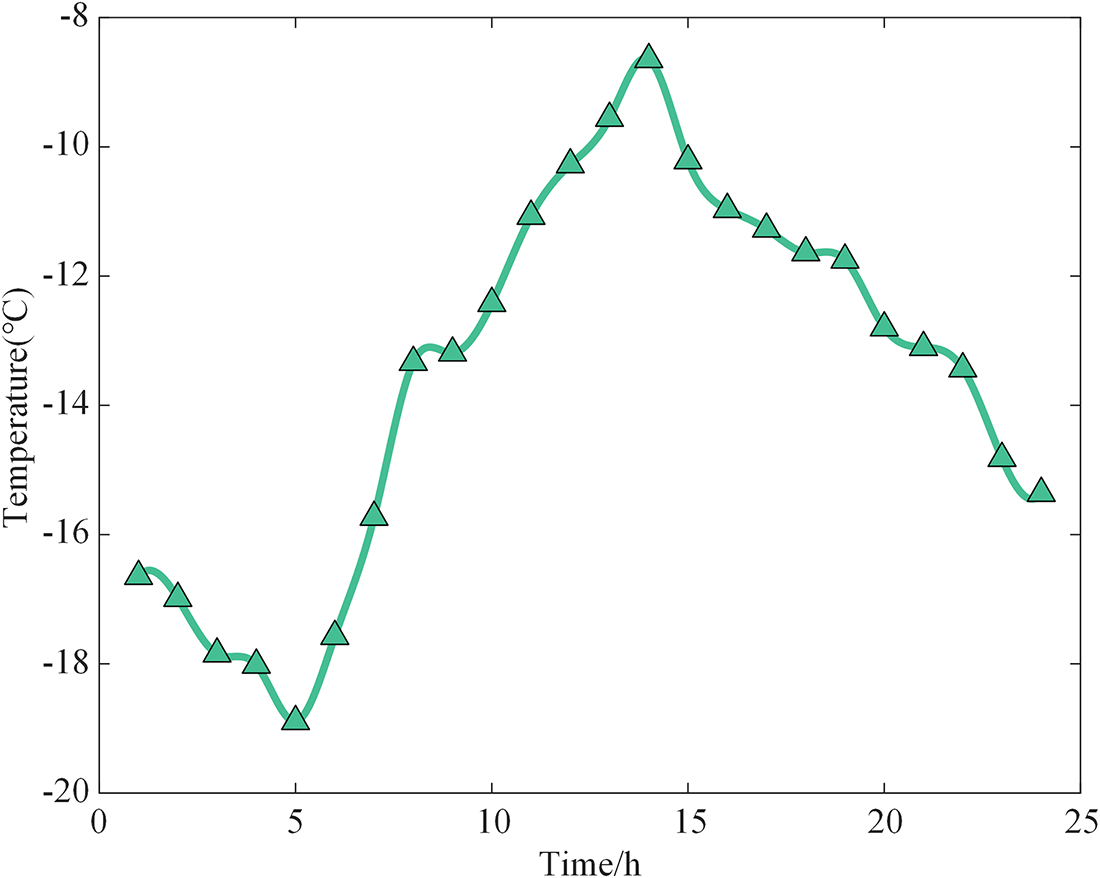
Figure A1: A typical daily outdoor temperature variation curve
References
1. Wang W, Li F. Study on substitutable value of electric heating instead of coal heating in northern China under carbon constraints. J Clean Prod. 2020;260(1):121155. doi:10.1016/j.jclepro.2020.121155. [Google Scholar] [CrossRef]
2. Xu J, Wang F, Li B, Xiang C, Su N, Zhang Z. Optimal configuration of regenerative electric heating for improving distribution network carrying capacity. In: Proceedings of the 2024 IEEE 8th Conference on Energy Internet and Energy System Integration (EI2); 2024 Nov 29–Dec 2; Shenyang, China. p. 3398–403. doi:10.1109/EI264398.2024.10991436. [Google Scholar] [CrossRef]
3. Guo J, Yu J, Wang Y, Zhang X. Experimental study on air source heat pump heating system based on phase change heat storage. IEEE Access. 2023;11:110878–87. doi:10.1109/ACCESS.2023.3321916. [Google Scholar] [CrossRef]
4. Yang D, Li B, Liu G, Sun Y, Fu J, Liu C. A flexibility assessment method of thermal storage electric heating load clusters. In: Proceedings of the 2022 IEEE 6th Conference on Energy Internet and Energy System Integration (EI2); 2022 Nov 11–13; Chengdu, China. p. 538–42. doi:10.1109/EI256261.2022.10117130. [Google Scholar] [CrossRef]
5. Zhang S, Cheng H, Wang D, Zhang L, Li F, Yao L. Distributed generation planning in active distribution network considering demand side management and network reconfiguration. Appl Energy. 2018;228:1921–36. doi:10.1016/j.apenergy.2018.07.054. [Google Scholar] [CrossRef]
6. Reynders G, Amaral Lopes R, Marszal-Pomianowska A, Aelenei D, Martins J, Saelens D. Energy flexible buildings: an evaluation of definitions and quantification methodologies applied to thermal storage. Energy Build. 2018;166:372–90. doi:10.1016/j.enbuild.2018.02.040. [Google Scholar] [CrossRef]
7. Shen R, Zhong S, Zheng R, Yang D, Xu B, Li Y, et al. Advanced control framework of regenerative electric heating with renewable energy based on multi-agent cooperation. Energy Build. 2023;281:112779. doi:10.1016/j.enbuild.2023.112779. [Google Scholar] [CrossRef]
8. Jin X, Wu Q, Jia H, Hatziargyriou ND. Optimal integration of building heating loads in integrated heating/electricity community energy systems: a bi-level MPC approach. IEEE Trans Sustain Energy. 2021;12(3):1741–54. doi:10.1109/TSTE.2021.3064325. [Google Scholar] [CrossRef]
9. Guan D, Feng Z, Song L, Hu K, Li Z, Ye P. An optimal operation strategy of regenerative electric heating considering the difference in user thermal comfort. Energies. 2023;16(15):5821. doi:10.3390/en16155821. [Google Scholar] [CrossRef]
10. Kilkki O, Alahäivälä A, Seilonen I. Optimized control of price-based demand response with electric storage space heating. IEEE Trans Ind Inform. 2015;11(1):281–8. doi:10.1109/TII.2014.2342032. [Google Scholar] [CrossRef]
11. Xuejun S, Shupeng L, Xianxu H, Jie S, Weiguo Z. Research on optimal dispatching strategy of regenerative electric heating in critical safety state of power grid. In: Proceedings of the 16th IET International Conference on AC and DC Power Transmission (ACDC 2020); 2020 Jul 2–3; Online. p. 556–62. [Google Scholar]
12. Wang H, Han J, Zhang R, Sun M, Sun Z, Hua P, et al. Heat-power peak shaving and wind power accommodation of combined heat and power plant with thermal energy storage and electric heat pump. Energy Convers Manag. 2023;297(5):117732. doi:10.1016/j.enconman.2023.117732. [Google Scholar] [CrossRef]
13. Verzijlbergh RA, De Vries LJ, Lukszo Z. Renewable energy sources and responsive demand: do we need congestion management in the distribution grid? IEEE Trans Power Syst. 2014;29(5):2119–28. doi:10.1109/TPWRS.2014.2300941. [Google Scholar] [CrossRef]
14. Gaurav A, Tyagi A, Jha SK, Kumar B. Optimal sizing and economic assessment of grid connected active distribution network for reliable rural electrification in India. Energy Convers Manag. 2024;311:118505. doi:10.1016/j.enconman.2024.118505. [Google Scholar] [CrossRef]
15. Dutta R, Chakrabarti S, Sharma A. Topology tracking for active distribution networks. IEEE Trans Power Syst. 2021;36(4):2855–65. doi:10.1109/TPWRS.2020.3045855. [Google Scholar] [CrossRef]
16. Prasad M, Rather ZH, Razzaghi R, Doolla S. A new approach to determine feasible operating region of unbalanced distribution networks with distributed photovoltaics. IEEE Trans Power Deliv. 2025;40(3):1493–504. doi:10.1109/TPWRD.2025.3555210. [Google Scholar] [CrossRef]
17. Zheng W, Huang W, Hill DJ, Hou Y. An adaptive distributionally robust model for three-phase distribution network reconfiguration. IEEE Trans Smart Grid. 2021;12(2):1224–37. doi:10.1109/TSG.2020.3030299. [Google Scholar] [CrossRef]
18. Yang X, Xu C, Zhang Y, Yao W, Wen J, Cheng S. Real-time coordinated scheduling for ADNs with soft open points and charging stations. IEEE Trans Power Syst. 2021;36(6):5486–99. doi:10.1109/TPWRS.2021.3070036. [Google Scholar] [CrossRef]
19. Ding T, Liu S, Yuan W, Bie Z, Zeng B. A two-stage robust reactive power optimization considering uncertain wind power integration in active distribution networks. IEEE Trans Sustain Energy. 2015;7(1):301–11. doi:10.1109/TSTE.2015.2494587. [Google Scholar] [CrossRef]
20. Zhang J, Cui M, He Y, Li F. Multi-period two-stage robust optimization of radial distribution system with cables considering time-of-use price. J Mod Power Syst Clean Energy. 2022;11(1):312–23. doi:10.35833/mpce.2021.000283. [Google Scholar] [CrossRef]
21. Sheng H, Wang C, Li B, Liang J, Yang M, Dong Y. Multi-timescale active distribution network scheduling considering demand response and user comprehensive satisfaction. IEEE Trans Ind Appl. 2021;57(3):1995–2005. doi:10.1109/TIA.2021.3057302. [Google Scholar] [CrossRef]
22. Chen S, Wang C, Zhang Z. Multitime scale active and reactive power coordinated optimal dispatch in active distribution network considering multiple correlation of renewable energy sources. IEEE Trans Ind Appl. 2021;57(6):5614–25. doi:10.1109/TIA.2021.3100468. [Google Scholar] [CrossRef]
23. Feng YC, Jia HP, Yan M, Li GZ, Liu L, Liu DN. Operation optimization method for virtual power plant participating in clean heating based on time-of-use tariff of wind power. Electr Power. 2024;57(1):51–60. (In Chinese). doi:10.11930/j.issn.1004-9649.202306102. [Google Scholar] [CrossRef]
24. Lei Z, Wang G, Li T, Cheng S, Yang J, Cui J. Strategy analysis about the active curtailed wind accommodation of heat storage electric boiler heating. Energy Rep. 2021;7(2):65–71. doi:10.1016/j.egyr.2021.02.021. [Google Scholar] [CrossRef]
25. Gao HJ, Liu JY, Shen XD, Xu R. Optimal power flow research in active distribution network and its application examples. Proc CSEE. 2017;37(6):1634–45. (In Chinese). doi:10.13334/j.0258-8013.pcsee.152839. [Google Scholar] [CrossRef]
26. Niu YF, Feng TY, Wang CF, Sha ZC, Xu DP. Multi-time scale optimal dispatching method of active distribution network considering the influence of cycle life for energy storage system. Electr Power Constr. 2024;45(11):89–101. (In Chinese). doi:10.12204/j.issn.1000-7229.2024.11.008. [Google Scholar] [CrossRef]
Cite This Article
 Copyright © 2026 The Author(s). Published by Tech Science Press.
This work is licensed under a Creative Commons Attribution 4.0 International License , which permits unrestricted use, distribution, and reproduction in any medium, provided the original work is properly cited.
 Downloads
 Citation Tools
