
 Login
Login Register
 Submit a Paper
 Propose a Special lssue
 Open Access
ARTICLE

Optimized Scheduling of an Integrated Electro-Gas Energy System with Hydrogen Storage Utilizing Information Gap Decision Theory
School of Automation and Electrical Engineering, Lanzhou Jiaotong University, Lanzhou, 730070, China
* Corresponding Author: Xu Liu. Email:
(This article belongs to the Special Issue: Integration of Hybrid Renewable Energy Systems for Sustainable Development)
Energy Engineering 2026, 123(4), 16 https://doi.org/10.32604/ee.2025.072246
Received 22 August 2025; Accepted 17 October 2025; Issue published 27 March 2026
 View Full Text
 Download PDF
Abstract
Further investigation is warranted into the collaborative function of carbon capture and electrolysis-to-gas conversion technologies within integrated electro-gas energy systems, as well as optimized scheduling that addresses the variability of wind and solar energy, to promote multi-energy complementarity and energy decarbonization while enhancing the capacity to absorb new energy. This work presents an optimized scheduling model for electro-gas integrated energy systems that include hydrogen storage, utilizing information gap decision theory (IGDT). A model is constructed that integrates the synergistic functions of carbon capture and storage (CCS), power-to-gas (P2G), and gas turbine units through electrical coupling. A carbon ladder trading mechanism is implemented to mitigate carbon emissions inside the system. A day-ahead optimization scheduling model is subsequently built to maximize system operational profit and ensure hydrogen storage safety, while considering economic viability, low-carbon performance, and safety. Secondly, the trinitrotoluene (TNT) equivalent approach and the half-lethal range were employed to quantify the safety concerns associated with hydrogen storage tanks, offering the model optimization guidance and conservative management. Ultimately, the CCS-P2G integrated operation accounted for the unpredictability in wind and solar energy production through the application of information gap decision theory. The model was solved using the GUROBI solver. The findings indicate that the proposed approach diminishes system carbon emissions by 66%, attains complete integration of wind and solar energy, and eliminates hazardous working time for hydrogen storage tanks, reducing it from 10 h to zero. It ensures system safety while guaranteeing profits of at least 90% of the anticipated value, accounting for changes in wind and solar output within ±14%. This confirms the model’s efficacy in improving renewable energy integration rates, facilitating low-carbon, cost-effective, and secure system operation, while mitigating the unpredictability of renewable energy production.Keywords
Motivated by global ‘dual carbon’ objectives, new energy will emerge as the primary focus of China’s energy growth, and the shift towards a low-carbon energy structure has become an unavoidable trend. The intermittent and counter-peak nature of new energy generation presents problems to the safety, stability, and economic efficiency of power system operation and dispatch [1]. The integrated electro-gas energy systems (IEGES) offer the benefits of multi-energy complementarity and energy synergy, significantly enhancing new energy consumption and system efficiency [2], thereby positioning IEGES as a crucial research focus for the future evolution and transformation of energy systems.
The rapid proliferation of gas-fired power plants and power-to-gas (P2G) technology has increased the interconnection between electricity and natural gas networks, creating an Integrated Electro-Gas Energy System (IEGES) [3]. Through multi-energy complementarity, integrated energy systems that combine Carbon capture and power-to-gas (P2G) technologies can increase renewable energy and reduce carbon emissions, laying the groundwork for low-carbon and sustainable development. According to [4], using H2 from P2G water electrolysis to synthesize CH4 with CO2 can reduce the system’s gas energy costs. A new coupling model [5] uses CO2 captured by CCS as feedstock for P2G, enabling IES to utilize CO2. Power-to-Gas (P2G) and Carbon Capture and Storage (CCS) systems are coupled into a holistic energy system that includes Combined Heat and Power (CHP) units [6], enabling renewable energy integration and optimized scheduling for a low-carbon economy. Research conducted by Zhu et al. on the Inner Mongolia Industrial Park case study in China [7] demonstrates that forming a collaborative alliance that integrates power-to-gas (P2G) and carbon capture and storage (CCS) facilities can effectively leverage their respective strengths, with P2G optimizing renewable energy utilization and CCS supplying carbon sources. This methodology exemplifies an effective framework for attaining low-carbon systems and optimizing operations. The Werlte project in Germany is the largest power-to-gas (P2G) facility to date, featuring an operational capacity of 6.3 MW. It produces methane by utilizing excess electricity from offshore wind farms in the North Sea and carbon dioxide provided by a neighboring carbon capture and storage (CCS) facility. This methane powers Audi A3 automobiles. Sohani [8] constructed a multi-generation power system driven by photovoltaic modules as a case study for various residential structures in Honolulu, HI, USA. This system concurrently absorbs CO2, generates power, and produces methanol and hydrogen for methanol synthesis. Simulations of the residential complex demonstrate the system’s capability to fulfill energy, environmental, and economic objectives, highlighting its potential for sustainable residential applications. The literature uses P2G-CCS combined operation and carbon trading mechanisms to increase integrated energy systems’ low-carbon economic efficiency, but it ignores hydrogen storage safety and wind and solar energy variability.
Hydrogen storage systems provide prolonged hydrogen energy consumption and energy source coordination. Recent research has focused on hydrogen energy apparatus design and economic evaluations, rather than quantitative measurements and optimization methods for potential hydrogen energy risks in integrated energy systems. A long-term operating method for integrated energy systems [9] accounts for hydrogen’s physical properties, including a comprehensive simulation of hydrogen pressure changes in non-ideal settings. The minimal molecular mass of hydrogen greatly affects hydrogen storage devices physical properties. Researchers often use the ideal gas law to characterize hydrogen storage tank pressure-mass relationships [10–12], but it ignores molecular volume and intermolecular interactions. Since tank pressure increases non-linearly with hydrogen mass, hydrogen molecular characteristics must be considered at high pressures. Hydrogen’s physical characteristics vary greatly with pressure. Under high pressure, hydrogen’s actual state may differ 20% from its ideal gas state. Neglecting this variance will make it harder to assess the hydrogen storage system’s safety [13]. Research [14] evaluated hydrogen diffusion and explosive qualities after a hydrogen storage tank leak, providing theoretical insights for hydrogen storage system development. The literature [15] explored hydrogen explosion overpressure and ventilation scenarios on hydrogen volume and diffusion distance. Public health and safety depend on integrated energy system safety, making system safety research crucial.
The significant randomness and volatility of non-renewable energy output have rendered the optimization of integrated energy systems [16], accounting for the uncertainty of renewable energy generation, a prominent area of research. The primary study methodologies for this issue encompass stochastic optimization and robust optimization. Robust optimization necessitates accurate specification of probability functions to delineate the range of fluctuations, which may not correspond with real-world conditions [17] and often produces conservative outcomes. This resilient optimization scheduling model [18] uses stochastic optimization to resolve solar power generation output uncertainty. Stochastic optimization was used to create a complete energy system optimization scheduling model that accounts for wind power generation output variability [19]. Stochastic programming requires multiple scenario samples to improve model dependability, increasing optimization model complexity [20]. In response, Reference [21] introduced the information gap decision theory (IGDT), which quantifies uncertainty in the absence of known probability distributions. It optimizes the variability of uncertain factors while guaranteeing that the solution outcomes meet or exceed the established objectives. Utilizing less information, it alters the system’s strategy to embrace risk aversion and opportunity pursuit, ultimately optimizing the mitigation of uncertainty’s influence on the outcomes. Reference [22] utilizes IGDT to facilitate the system’s capacity to make suitable judgments in times of great uncertainty. Reference [23] presents IGDT to improve the system’s capacity to manage variations in power generation and demand. Reference [24] formulates an IGDT optimization model addressing empirical proportional disturbances, hence enhancing the economic efficiency of IES. Reference [25] employs the IGDT method for the planning of integrated energy systems in industrial parks, whereas Reference [26] utilizes it for the planning of multi-energy microgrids, with both yielding favorable outcomes. At present, uncertainty management via IGDT has been implemented in virtual power plant optimization [27] and reactive power and voltage optimization [28]; however, research on its application in the low-carbon economic functioning of integrated energy systems remains scarce.
In summary, Current research has advanced considerably in utilizing P2G-CCS synergies to improve the low-carbon economics of the system. Nonetheless, two significant deficiencies persist: Primarily, numerous studies inadequately model and statistically evaluate hydrogen storage safety hazards within integrated energy systems. They frequently depend on ideal gas assumptions, disregarding hydrogen’s non-ideal characteristics at elevated pressures, and lack studies that integrate safety metrics into optimization targets. Secondly, conventional stochastic and robust optimization techniques demonstrate shortcomings in managing the output uncertainty associated with wind and solar renewable energy. They either depend significantly on data or produce excessively cautious outcomes, complicating the attainment of an effective equilibrium between economic efficiency and robustness in the absence of known probability distributions. To rectify these research deficiencies, this paper presents an optimized scheduling model for integrated energy systems that incorporates carbon capture and storage with power-to-gas (CCS-P2G) technology, integrating information gap decision theory (IGDT) and hydrogen storage safety considerations. Firstly, an integrated electricity-hydrogen-gas coupling model is initially established with a hierarchical carbon trading mechanism. A scheduling model for an Integrated Electro-Gas Energy System (IEGES) is developed to optimize operational profit while maintaining hydrogen storage safety. Secondly, the hydrogen storage apparatus is designed based on the physical characteristics of hydrogen. The TNT equivalent method, in conjunction with half-lethal range analysis, quantitatively evaluates the explosion hazards of hydrogen storage tanks to establish measurable control indicators. Third, to mitigate the impacts of wind-solar uncertainty on IEGES scheduling, an optimization model based on IGDT is developed, integrating risk-averse and opportunity-seeking strategies, thereby extending the previously mentioned deterministic framework. Ultimately, case studies corroborate the efficacy of the proposed model and strategies.
2 Structure and Model of the Integrated Electro-Gas Energy System
Fig. 1 illustrates the structural diagram of the Integrated Electro-Gas Energy System (IEGES) developed in this paper.
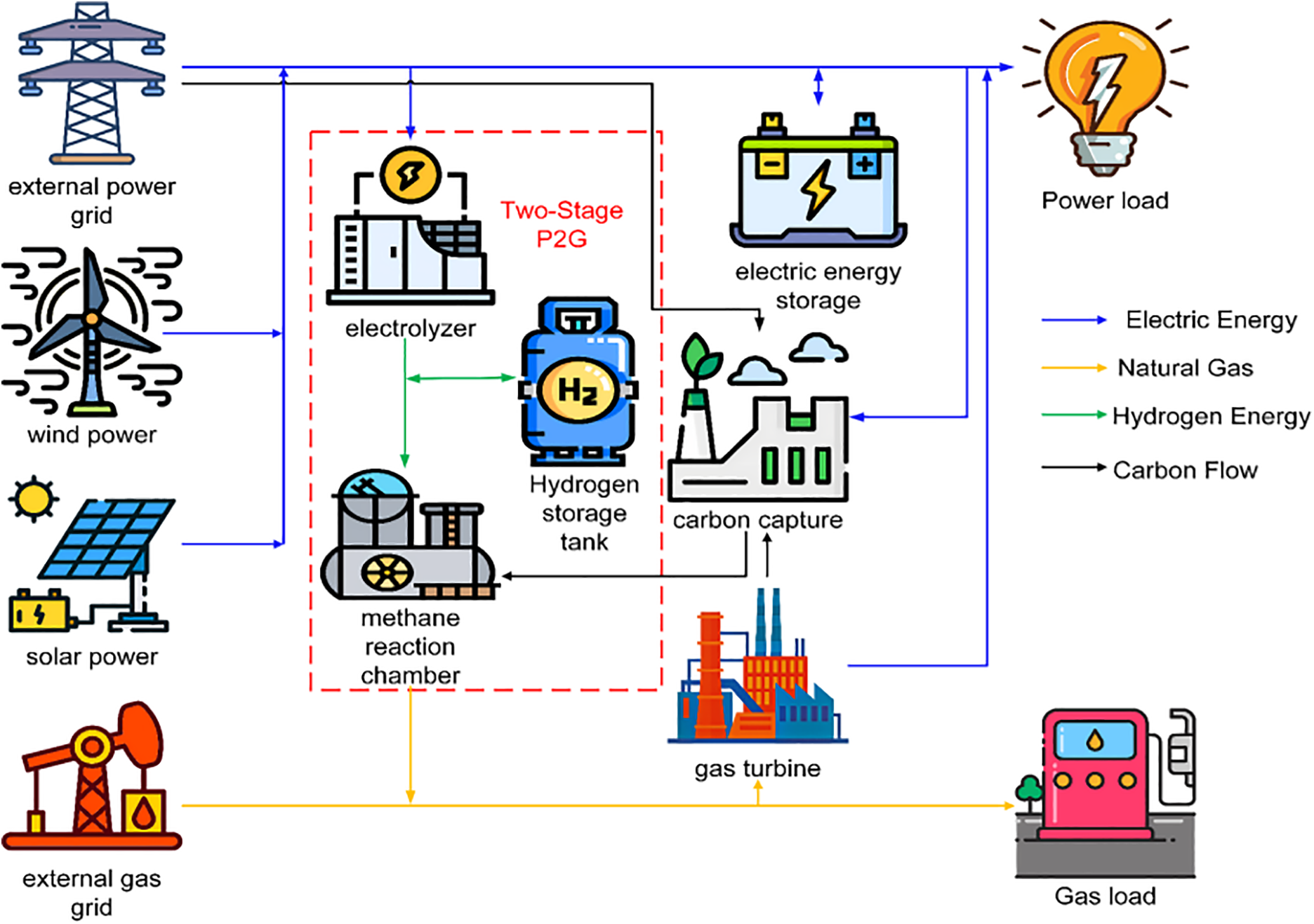
Figure 1: Schematic diagram of the integrated Electro-Gas energy system structure
The system comprises equipment for energy supply, conversion, storage, and consumption. Energy supply apparatus comprises photovoltaic panels, wind turbines, external power grids, and gas networks; conversion apparatus encompasses gas turbine units, electrolysers, and methane reaction chambers; storage apparatus includes hydrogen storage tanks and electrical energy storage devices; energy consumption apparatus features carbon capture equipment and electricity and natural gas loads. Electricity loads are supplied by the external power grid, renewable energy sources, gas turbine units, and electrical energy storage systems; the IEGES facilitates bidirectional interconnection between the power system and the natural gas system via power-to-gas conversion and gas turbine units as integrated devices. Natural gas for gas loads and gas turbines is provided via the external gas network, and methane is generated from power-to-gas conversion plants. The IEGES acquires energy from the external power grid and gas network, disregarding power backflow.
Power-to-gas is a technology that transforms surplus electricity into hydrogen and natural gas. The Power-to-Gas (P2G) process comprises two phases: electrolysis and methanation. Initially, hydrogen is generated via water electrolysis within an electrolyzer. A portion of the produced hydrogen is directed to the methanation reactor for the methanation reaction, while the surplus hydrogen is kept in a hydrogen storage tank. Secondly, CO2 captured by CCS interacts with hydrogen generated through water electrolysis in the methane reaction chamber, resulting in the formation of methane and water, therefore mitigating CO2 emissions from the system.
Hydrogen generation by electrolysis:
where
Production of methane:
where
CCS, as a direct approach to mitigate CO2 emissions, may efficiently absorb CO2 emitted by the system and function as a premium carbon feedstock for the subsequent phase of P2G methanation. Post-combustion carbon capture technique is used in this study, and the carbon capture and storage (CCS) mathematical model can be expressed as follows:
where
2.3 Hydrogen Storage Tanks (HST): Considering the Physical Properties of Hydrogen
Compressed hydrogen storage is the predominant and most technically advanced method for hydrogen storage. Despite its rapid charging and discharging capabilities and low costs, high-pressure containers present dangers of leakage and explosion. Consequently, precisely delineating pressure fluctuations within hydrogen storage tanks is essential for evaluating risks and guaranteeing the secure functioning of integrated energy systems.
The mass of hydrogen in the storage tank at time t is influenced by the hydrogen quantity at time
where
where
where
where
Gas turbines (GT) function as essential coupling apparatus linking natural gas networks with power systems. They utilize natural gas to produce electricity, offering adaptable and dependable power assistance and spinning reserve for the system. Concurrently, GT operation produces carbon dioxide (CO2) through the combustion of natural gas. This carbon emission represents a principal source of carbon within the system and can be absorbed by the previously mentioned carbon capture and storage (CCS) technology. The mathematical model can be articulated as:
where
In IEGES, electrical energy storage serves as a crucial equipment for storing electrical energy to address variations in power demand.
where
In contrast to conventional fixed carbon pricing systems, the tiered carbon trading mechanism has numerous emission thresholds, resulting in progressively higher carbon emission costs as emissions escalate. The objective is to promote low-carbon practices by elevating the marginal cost of surplus emissions. The model is depicted as follows:
where
3 Optimized Dispatch Model for Integrated Electro-Gas Energy Systems with Consideration of Hydrogen Storage Safety
3.1 Comprehensive Objective Function
This research aims to maximize daily operational profit for integrated energy systems while ensuring the safety of hydrogen storage. The whole objective function comprises two components:
where
Among them:
① sales revenue
where
② energy procurement costs
where
③ operating costs
where
④ carbon emission costs
⑤ cost of curtailing solar and wind power
where
where the danger level of the system is related to the number of dangerous periods
The hazard level of the hydrogen storage tank is assessed based on its explosive potential and the likelihood of detonation. This study employs the TNT equivalent approach and the half-lethal range to assess the probable explosive capacity of the hydrogen storage tank. The equation for determining the TNT equivalent of the hydrogen storage tank is as follows:
where
The integrated energy system requires safety constraints on the explosive force of hydrogen storage tanks. Let the system’s maximum safe distance be
where
The risk associated with hydrogen storage tanks is linked not only to their explosive potential but also to the likelihood of an explosion, which is directly proportional to the pressure within the tank. It is essential to maintain the hydrogen storage tank’s pressure within the specified range. The non-ideal pressure calculation model for hydrogen gas is presented in Eq. (8); thus, the pressure safety limitations for hydrogen storage tanks are as follows:
where
(1) Electrical power balance constraint
where
(2) Natural gas volume balance constraints
where
(3) Equipment operating constraints
where
(4) Electricity and gas purchase constraints
where
(5) Energy storage operation constraints
The constraints for electricity storage and hydrogen storage tanks are the same, expressed as:
where
4 IEGES Scheduling Model Based on Information Gap Decision Theory
In contrast to conventional random optimisation and robust optimisation, IGDT is capable of quantifying uncertainty when the probability density or uncertainty interval of uncertain variables is indeterminate. It encompasses two forms: risk aversion (RA) and opportunity seeking (OS). The initial IEGES optimisation scheduling paradigm can be articulated as follows:
where
The variability in IEGES arises from wind energy and solar photovoltaic production. The variability of wind and solar energy production is represented by a fractional uncertainty model, as detailed below:
where
The impact of unpredictability from wind and photovoltaic electricity on the system is contingent upon their respective shares of power generation. The detailed calculation of the uncertainty parameter in IEGES is presented in Eq. (30).
where
RA formulates a comprehensive model from a negative standpoint. Decision-makers must guarantee that the overall profit of the system meets or exceeds the anticipated dispatch profit, while mitigating the effects of uncertainty on the optimisation of system dispatch. The system is designed to maximise ambiguity. Increased uncertainty enhances the system’s risk-bearing ability, although it concurrently diminishes potential profits. OS formulates an opportunity model from an optimistic viewpoint. Decision-makers assert that uncertainty can enhance scheduling to augment operational revenues while mitigating the hazards that uncertainty presents to the system. The system is designed to minimise uncertainty. Eqs. (31) and (32) illustrate the robust model and the opportunity model, respectively.
(1) Risk Aversion (RA) Model:
where
(2) Opportunity Seeking (OS) Model:
where
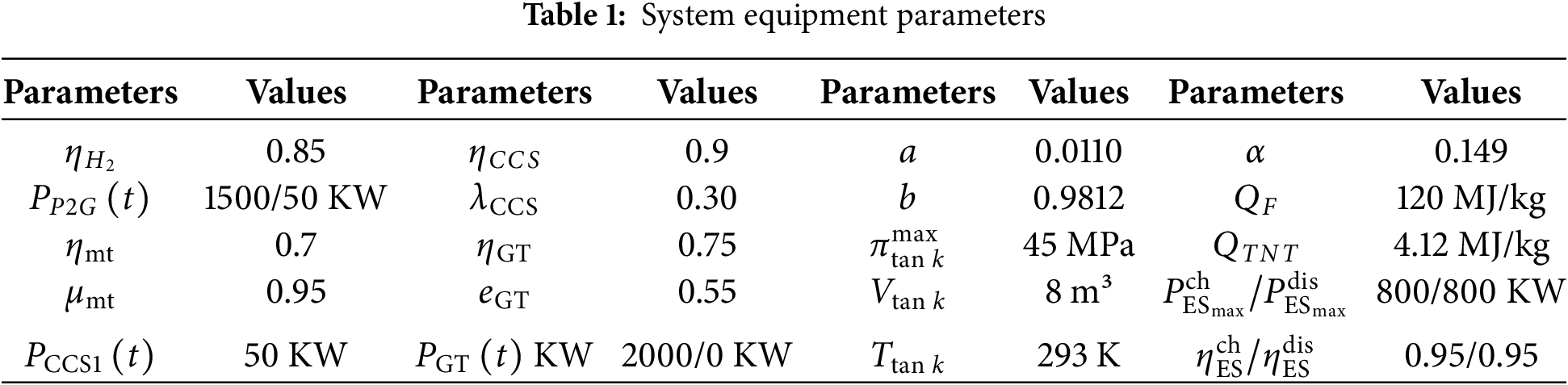
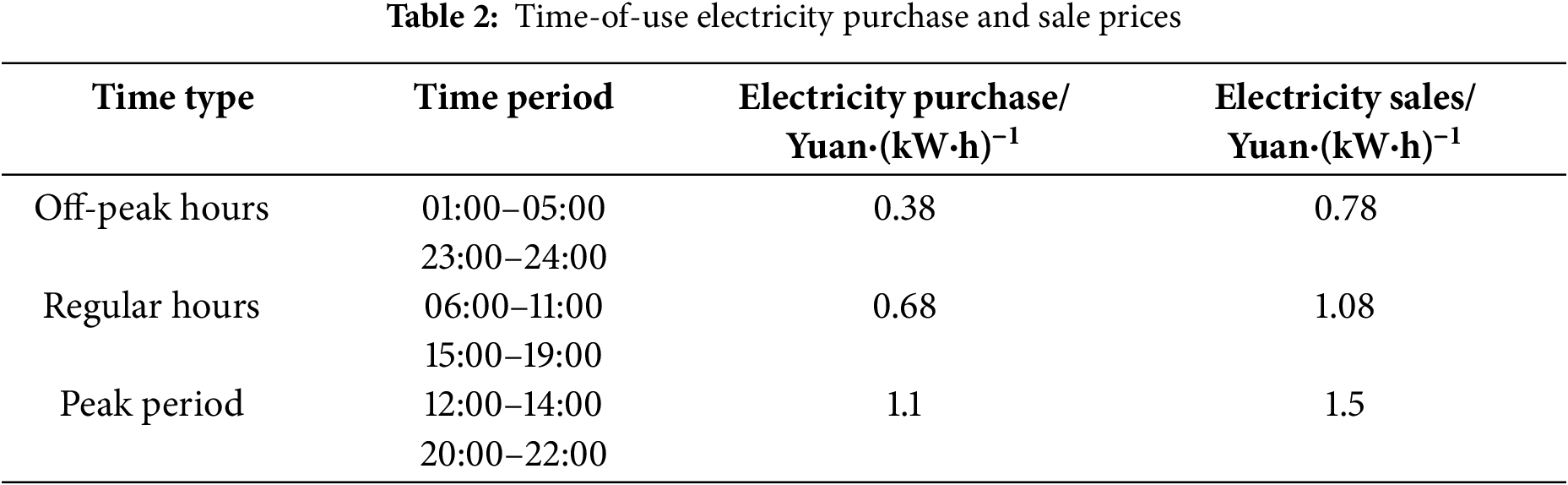
To verify the validity of the model, a typical integrated photoelectric-gas energy system in a certain region of Inner Mongolia, China, was used as an example, with a 24-h cycle and a step size of 1 h. The basic structure of the system is shown in Fig. 1; the predicted output of wind and solar power and load is shown in Fig. 2; the equipment parameters are shown in Table 1; the principal reference sources for the parameters in the table are as follows: The efficiency metrics for P2G are derived from sources [11,12]; the energy consumption numbers for CCS are obtained from sources [5,6]; the gas turbine parameters are based on standard model data. In terms of hydrogen storage tank specifications, 45 MPa [30] denotes the standard rated working pressure for commercial high-pressure hydrogen storage tanks, as per ISO 19880-1. Coefficients a and b are obtained using linear regression analysis of hydrogen property data supplied from the NIST database [29]. TNT-related metrics are cited from safety engineering literature [14,15] and safety standards. The parameters for electrical energy storage represent standard values for conventional lithium-ion battery energy storage systems. The time-of-use electricity purchase and sale prices are shown in Table 2; Time-of-use electricity pricing is determined by statistics published by the Inner Mongolia Development and Reform Commission. The actual carbon ladder trading model is shown in Eq. (11). The installed capacity of wind power is 3500 kW, and that of photovoltaic power is 4000 kW; the system purchases electricity from the grid and sells electricity to users at different time-of-use prices. Natural gas pricing will be determined by the non-residential natural gas sales prices released by the Development and Reform Commission of Inner Mongolia, China, the system purchases natural gas from the natural gas network and sells natural gas to users for 3 yuan/m³; the base price for ordinary carbon trading is 0.2 yuan/kg; The unit cost of curtailed wind and solar power is 0.4 yuan/kWh; the equipment operation coefficients and are 0.02 and 0.05 yuan/kWh, respectively; The unit carbon emission coefficient for purchasing electricity from the upper-level grid is 0.798 kg/kWh; The gaseous hydrogen storage tank selected is a commercially available 45 MPa high-pressure hydrogen storage tank with a hydrogen storage density of 28.77 kg/m³ and a tank volume of 8 m³; This model is a mixed-integer linear programming problem solved using the Gurobi commercial solver in the MATLAB simulation environment.
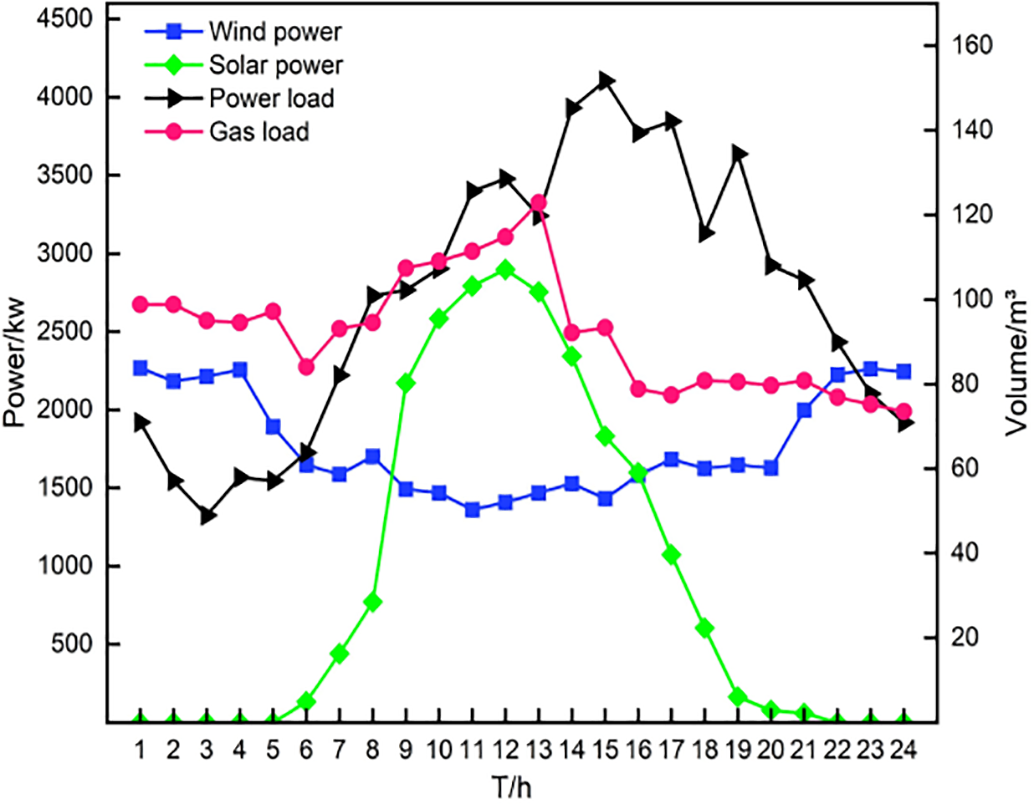
Figure 2: Wind load prediction curve
This study posits that equipment operating efficiency is constant, despite potential variations due to operating conditions; market pricing is projected figures that do not reflect real-time fluctuations; and wind and solar power output rely on standard daily statistics. These assumptions streamline the model but necessitate the incorporation of real-time data and calibration methods for practical implementation.
5.2 Deterministic Scenario Configuration and Examination
This paper establishes four scenarios, detailed in Table 3, to assess the economic viability and low-carbon attributes of the proposed model by examining and comparing the effects of a P2G-CCS coupled model, conventional carbon trading, and tiered carbon trading on system performance.
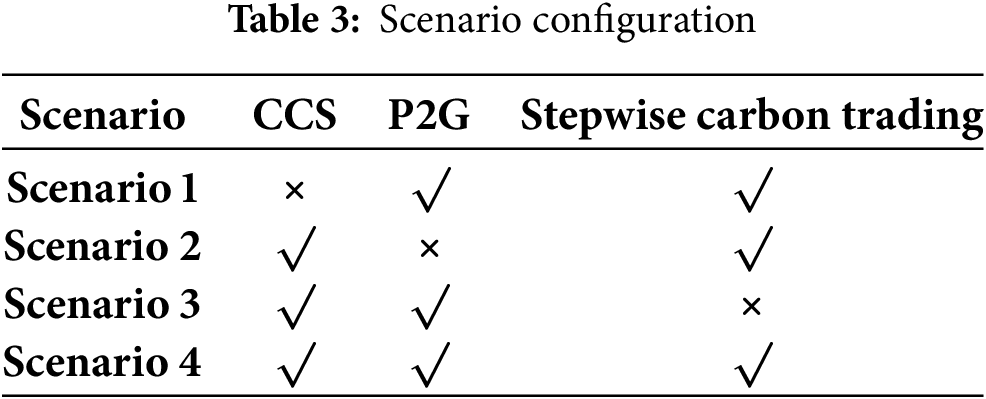
Scenario 1: An integrated energy system operating under a tiered carbon trading framework, without the consideration of carbon capture and storage (CCS) technology.
Scenario 2: Integrated energy system utilising tiered carbon pricing, except for two-stage P2G equipment.
Scenario 3: Integrated enerxsgy system utilising traditional carbon trading, with P2G-CCS integration.
Scenario 4: An integrated energy system utilising tiered carbon pricing, with P2G-CCS coupling.
Table 4 presents the scheduling outcomes for the aforementioned four situations.
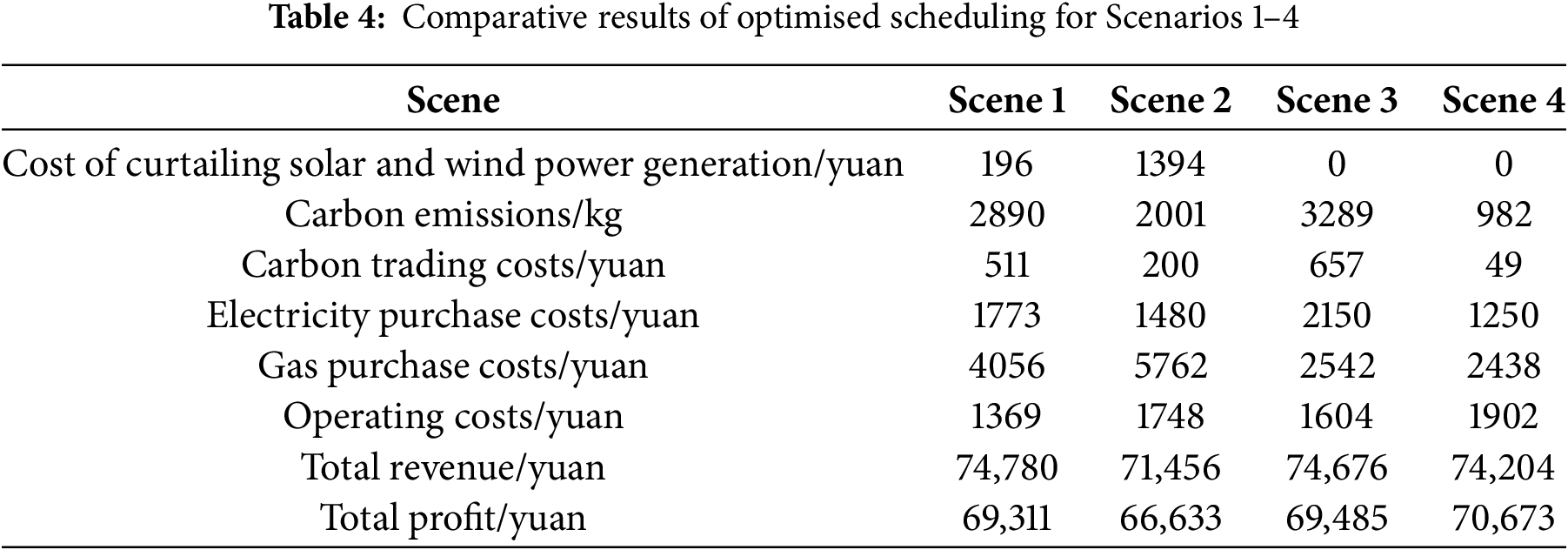
Compared to Scenarios 1 and 4, a carbon capture device reduced carbon emissions by 66%, from 2890 to 982 kg. CCS equipment’s carbon capture and P2G-CCS integration’s increased absorption of curtailed solar and wind energy reduced carbon trading prices from 511 to 49 yuan. P2G technology uses curtailed electricity for hydrogen generation, reducing dependence on conventional energy sources and lowering power and gas purchasing costs from 1773 to 1250 and 4056 to 2438 yuan, respectively. In Scenario 4, the operational cost rose to 1902 yuan, while the total profit rose from 69,311 to 70,673 yuan, showing that P2G-CCS coupled with the tiered carbon trading mechanism may boost the system’s low-carbon economic efficiency.
Between Scenarios 2 and 4, P2G equipment efficiently absorbed surplus electricity during the early morning wind power peak, reducing penalty costs for curtailed solar and wind energy from 1394 to 0 yuan. Carbon emissions dropped almost 50% from 2001 to 982 kg. P2G-CCS reduces indirect emissions from power wastage and directly sequesters carbon dioxide via CCS. Electricity procurement costs drop from 1480 to 1250 yuan, while natural gas procurement costs drop from 5762 to 2438 yuan, demonstrating the substantial substitution effect of P2G hydrogen production and methanation on natural gas acquisitions. Profit climbed from 66,633 to 70,673 yuan, showing that the P2G-CCS coupling may optimize the system’s cost structure and boost returns.
Comparing Scenarios 3 and 4, carbon emissions dropped 70% from 3289 to 982 kg, highlighting the tiered carbon trading mechanism’s emissions reduction restriction. Carbon trading costs dropped from 657 to 49 yuan, electricity purchase costs from 2150 to 1250 yuan, and natural gas purchase costs from 2542 to 2438 yuan, showing how the tiered carbon trading mechanism prioritizes clean electricity and hydrogen energy. Scenario 4’s operational costs rose, but total profit rose from 69,485 to 70,673 yuan, showing that the tiered carbon trading mechanism and P2G-CCS can maximize economic advantages and reduce carbon emissions.
The thorough scenario comparison results show that the P2G-CCS coupling model and tiered carbon trading mechanism are necessary to improve the integrated energy system’s low-carbon economic efficiency. P2G equipment effectively converts excess solar and wind energy, CCS technology directly sequesters carbon dioxide to reduce emissions, and the tiered carbon trading system limits financial incentives to optimize the energy framework. Through the synergistic interaction of the three components, the system significantly reduces carbon emissions, decreases carbon trading costs, and optimizes energy procurement structures. While some scenarios increase operational costs, the overall reduction in costs and increase in revenue ultimately increase total profit, validating the effectiveness and superiority of this integrated energy solution.
5.3 Analysis of Wind and Solar Power Integration Capacity and Carbon Emissions
Fig. 3 presents a comparative analysis of the integration of wind and solar power alongside carbon emissions across the four scenarios.
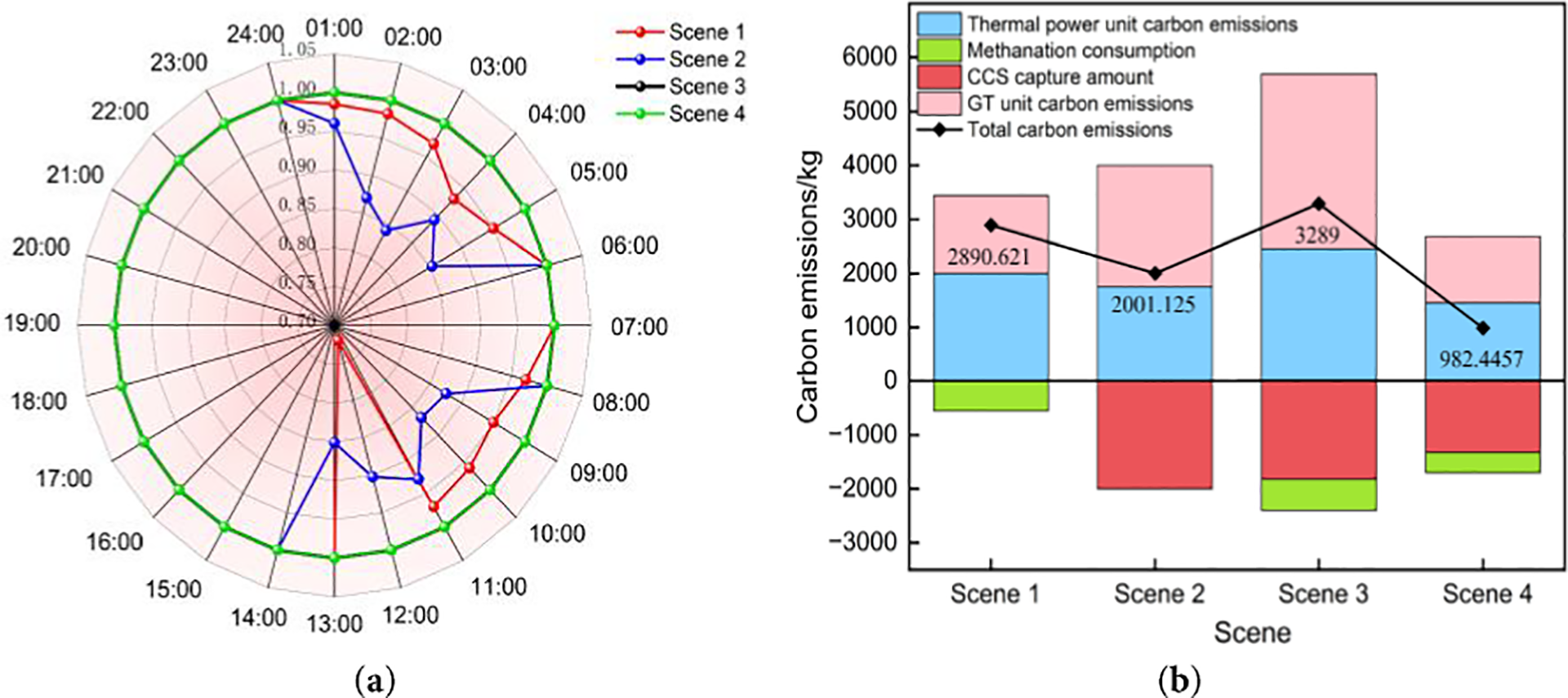
Figure 3: Comparison of wind and solar power curtailment rates and carbon emissions. (a) Comparison of wind power absorption rates; (b) Carbon emissions in different scenarios
Fig. 3a illustrates that curtailed solar and wind power generation predominantly occurs during the periods of 0:00–6:00 and 7:00–14:00. In Scenario 2, which excludes P2G, surplus electricity lacks a conversion pathway to ‘power-hydrogen-natural gas’, leading to the highest levels of solar and wind power curtailment. Conversely, Scenario 1, despite omitting CCS, incorporates P2G to utilize some of the curtailed electricity, resulting in reduced curtailment compared to Scenario 2. In Scenarios 3 and 4, P2G and CCS function synergistically: P2G converts excess electricity, while CCS provides CO2 for P2G methanation, thereby achieving zero curtailment of solar and wind power. The significant absorption capacity of P2G diminishes the impact of the tiered carbon pricing system on curtailed wind and solar generation. Consequently, irrespective of the mechanism’s implementation, the system can attain zero curtailed wind and solar energy.
Fig. 3b shows that the system’s carbon emissions are primarily from gas turbines and thermal power units. Carbon emissions over scenarios follow a pattern of ‘Scenario 3 > Scenario 1 ≈ Scenario 2 > Scenario 4’. Scenarios: Scenario 1 relies solely on P2G methane conversion to use CO2, resulting in higher total carbon emissions; Scenario 2 omits P2G, but CCS improves carbon reduction efficacy, resulting in lower total carbon emissions; Scenario 3 uses a traditional carbon trading framework, allowing fossil fuel-fired units to operate at high loads due to eased restrictions. Despite P2G and CCS, increased power demand would force fossil fuel-fired units to increase their generation capacity, exacerbating carbon emissions; Scenario 4 advocates for reduced fossil fuel utilization and leverages synergistic emission reduction potential through P2G-CCS coordination and a stratified carbon trading mechanism, resulting in minimal carbon emissions.
The synergistic effect of P2G-CCS and the carbon tiered trading mechanism can diminish wind and solar power curtailment and carbon emissions, thereby validating the scheme’s effectiveness.
5.4 Examination of IEGES Electricity-Gas Supply and Demand Equilibrium Outcomes
Using Scenario 4 as a case study, we examine the benefits of the IEGES system regarding the coordination among diverse energy coupling devices and the conversion of various energy sources within a tiered carbon trading framework. Figs. 4 and 5 illustrate the electricity and gas power balance diagrams for Scenario 4.
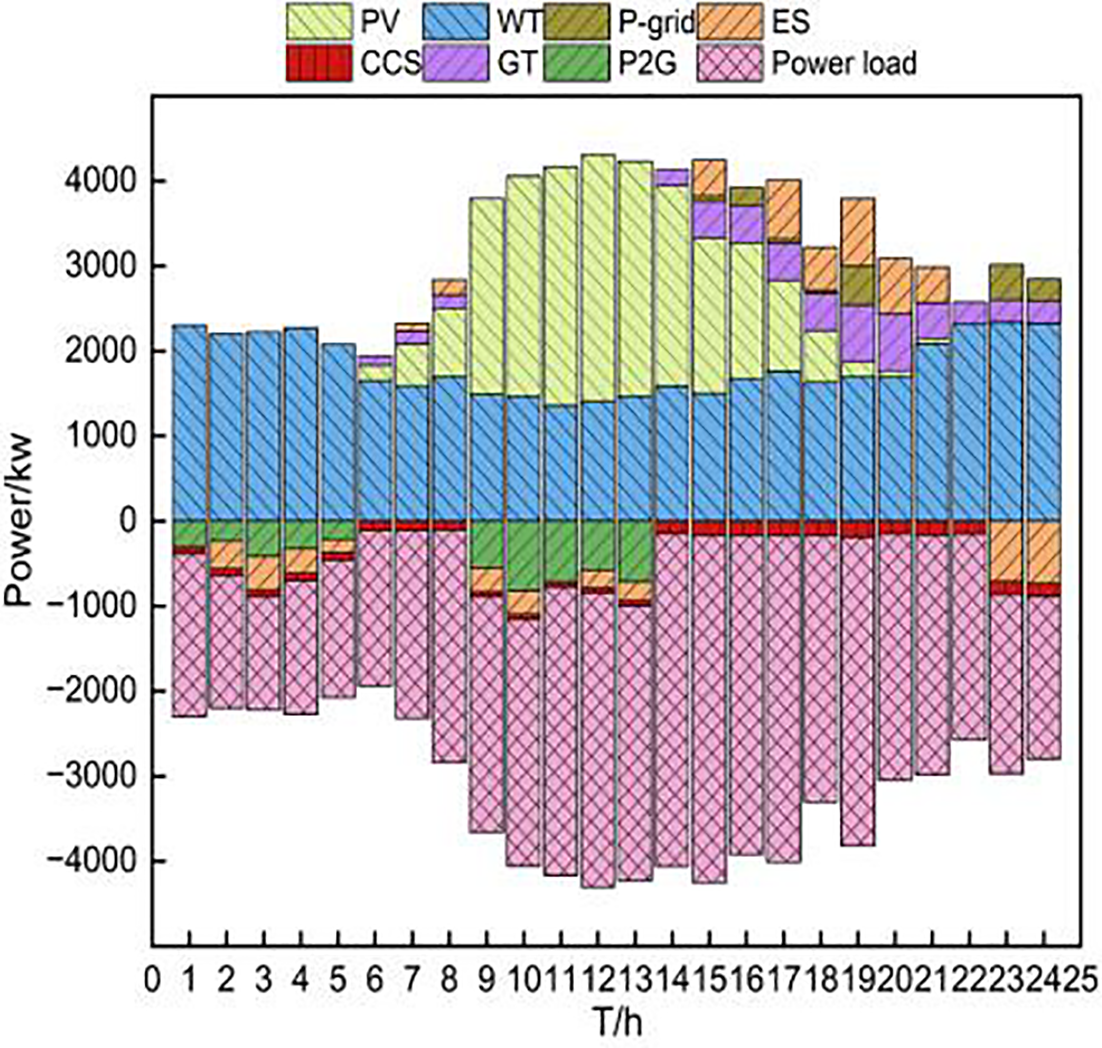
Figure 4: Power equilibrium status of Scenario 4
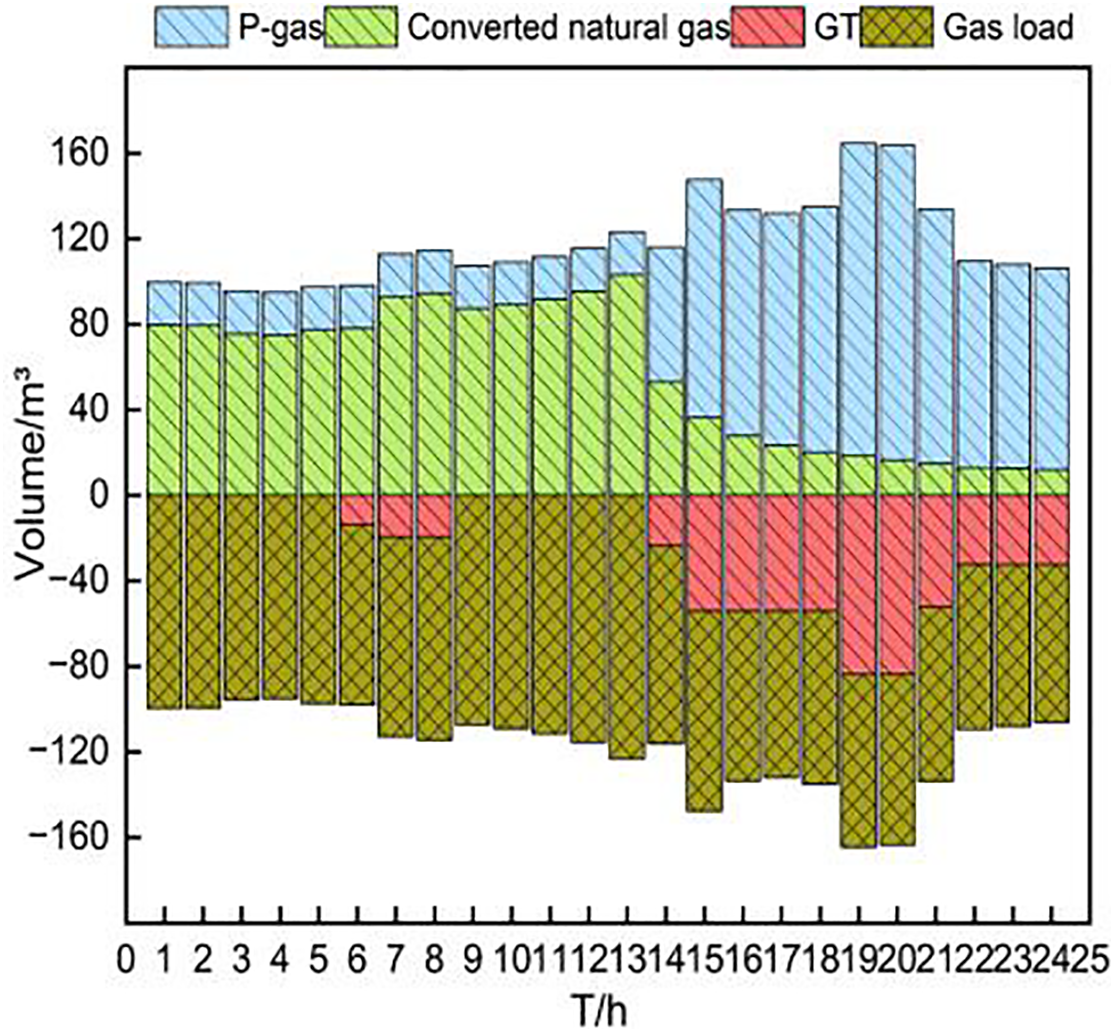
Figure 5: Gas equilibrium status of Scenario 4
Fig. 4 illustrates that between 01:00 and 05:00, electricity demand is minimal while wind power capacity is plentiful. To optimize wind power utilization while satisfying electricity demand, P2G equipment, CCS devices, and electrical energy storage systems commence operation, converting surplus electricity into hydrogen and alternative energy forms for use. Between 06:00 and 08:00, electricity demand escalates, wind power generation diminishes, and photovoltaic systems commence power production. Currently, wind and solar energy production are insufficient to satisfy electricity demand; therefore, the system compensates by utilizing energy storage discharge and gas turbine generation. 09:00–13:00: This timeframe represents the zenith of wind and solar energy production. P2G and CCS catch extra wind and solar energy, while energy storage stores electricity. Wind and solar power generation are inadequate between 14:00 and 22:00, when electricity demand peaks. Electricity is supplied by energy storage discharge, gas turbine generating, and the higher-level grid to maintain power supply and demand equilibrium. In the 23:00–24:00 time slot, when electricity purchase prices are lowest, wind power, gas turbines, and the upper-level grid meet electricity demand while energy storage technologies store electricity.
Fig. 5 shows that wind power is abundant and electricity consumption is low between 01:00 and 05:00. P2G uses extra electricity to electrolyze water for hydrogen. Some hydrogen is used in the methane reaction chamber to make natural gas, while the rest is kept in tanks and released during peak energy demand. During this time, natural gas demand is mostly met by production and a small amount by grid purchases. Between 06:00 and 08:00, electricity demand rises, raising rates. Hydrogen from storage tanks is released into the methane reaction chamber to synthesize natural gas while gas turbines generate power. Wind and solar energy generation is abundant between 09:00 and 13:00, while P2G equipment produces and stores hydrogen for peak gas consumption. To maintain electrical supply-demand equilibrium, the gas turbine boosts output between 14:00 and 24:00, peak electricity and gas consumption times. At this moment, the system’s natural gas power comes from gas purchased from the gas network, and the residual hydrogen is used to supplement the gas source with methane.
5.5 Failure Mode and Operational Resilience Analysis
Fault mode analysis is introduced to guarantee the applicability of the suggested optimal scheduling model in actual industrial settings. During the operation of IEGES, essential equipment may malfunction due to unforeseen events. This section examines the effects of abrupt failures in two critical facilities—power-to-gas (P2G) equipment and hydrogen storage tanks—on system operations, and assesses the robustness of the proposed IGDT scheduling technique in mitigating these unforeseen occurrences.
Assume that at 10:00 on that day, a vital piece of equipment in the system unexpectedly malfunctions and remains inoperative until the conclusion of the dispatch cycle. Two scenarios are established as follows:
Failure Scenario A: The P2G equipment ceases all operations.
Failure Scenario B: Hydrogen storage tanks are forcibly decommissioned and removed from operation in response to safety system alerts.
The best dispatch plan from Deterministic Scenario 4 functions as the baseline plan for both Failure Scenarios A and B. Simultaneously, the dispatch plan within the IGDT Risk Avoidance (RA) method, which already considers adverse variations in wind and solar power generation, is utilized to evaluate its robustness against failure scenarios. The Table 5 below presents a comparison of key results.
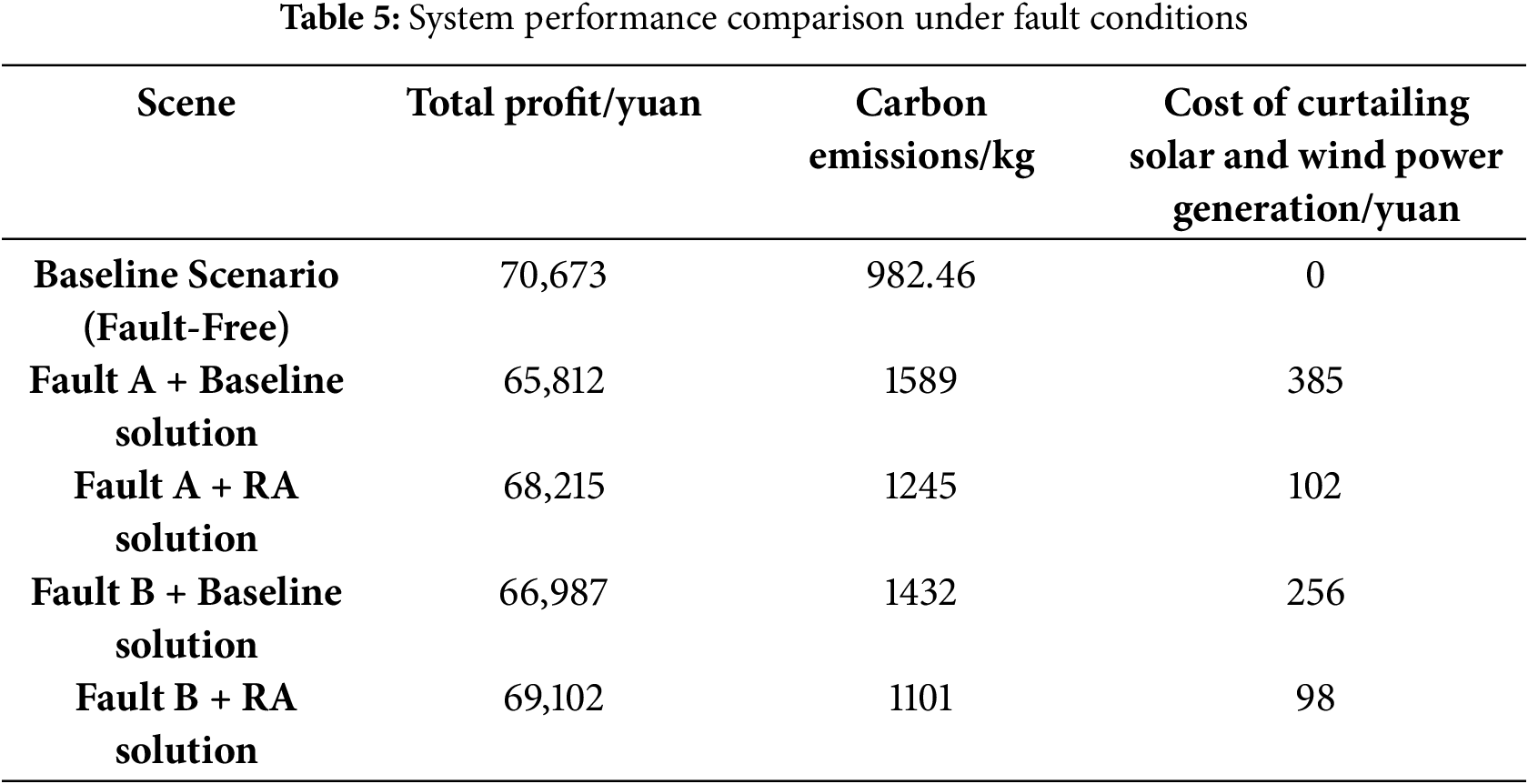
The comparison analysis in Table 5 demonstrates that abrupt failures of P2G equipment or hydrogen storage tanks can substantially impair system operations, resulting in profit reductions of 5.2%–9.7%, increases in carbon emissions of 45.8%–61.8%, and precipitating considerable wind and solar curtailment challenges. The risk avoidance (RA) technique implemented in this study exhibits significant system resilience, successfully mitigating 35%–57% of economic losses, curtailing 57%–74% of additional carbon emissions, and decreasing curtailment costs by 62%–73%. This result clearly demonstrates that the intrinsic “conservatism” of preventative dispatch techniques grounded in Information Gap Decision Theory (IGDT) is not just a performance trade-off. It converts uncertainty hazards into beneficial buffering capacity against internal equipment breakdowns through proactive management. This not only confirms the suggested model’s efficacy in mitigating wind and solar uncertainty but also illustrates its practical significance in improving overall system resilience in actual industrial environments.
5.6 Safety Assessment of IEGES Incorporating Hydrogen Storage
The IEGES system has a daily hydrogenation capacity of approximately 200 kg. The IEGES system outlined in this paper has a hazard level of Grade 4, with a maximum safety distance of 13.5 m and a safety margin distance of 10.5 m, as per hydrogen energy technical specifications [31,32]. To examine the responsiveness of scheduling results to system security preferences, the risk trade-off coefficient λ was established at 0–60 according to deterministic scenario 4, and various representative values were chosen to analyze the influence of differing λ values on system safety and economic efficiency comprehensively. The outcomes are presented in Tables 6 and 7, respectively.
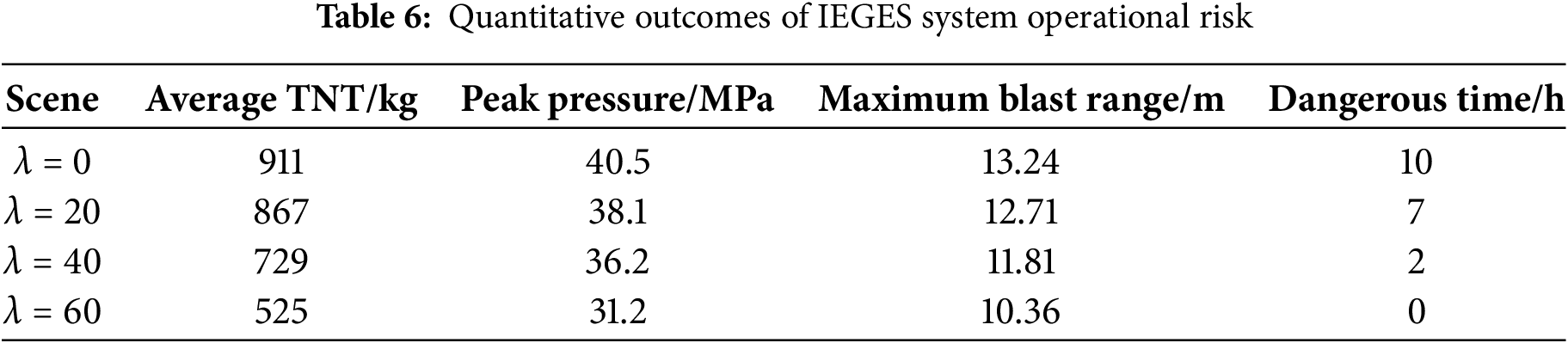
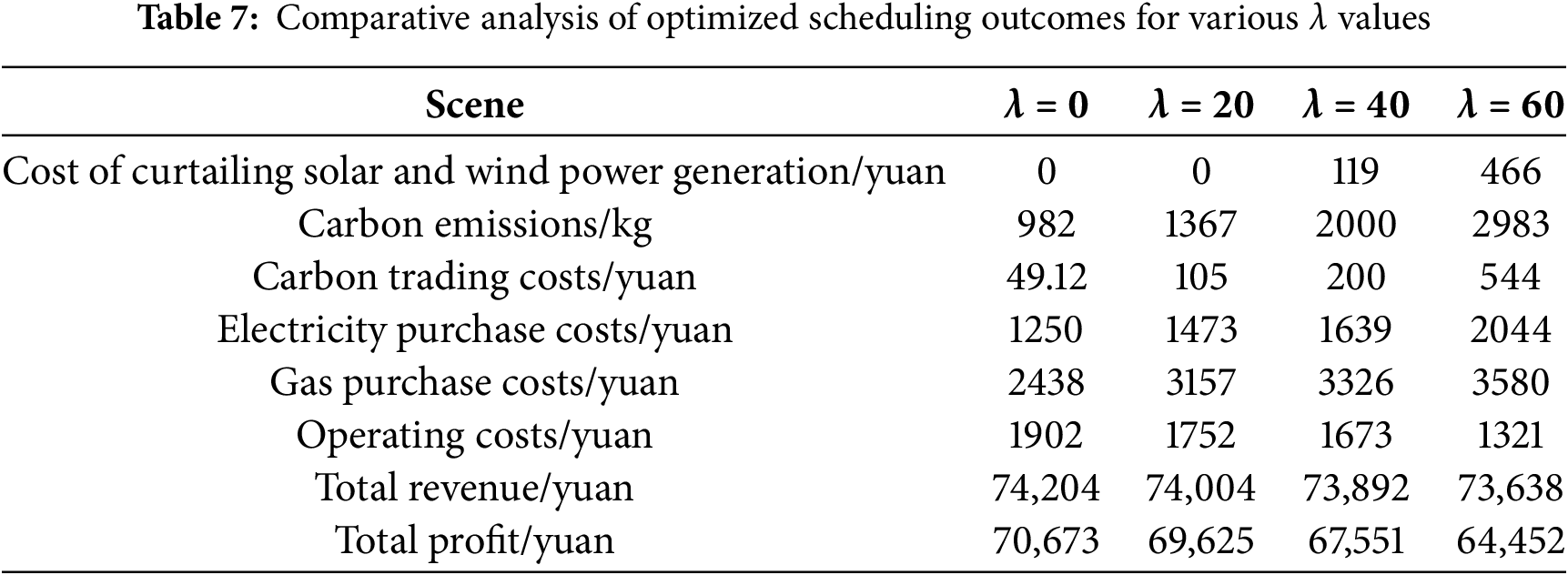
Table 6 illustrates that as the risk-reward coefficient λ escalates, the diverse hazard indicators of the IEGES system demonstrate a marked declining trend. Specifically, as λ rises from 0 to 60, the average TNT equivalent, peak pressure, maximum explosion range, and hazardous operating time diminish from 911 kg, 40.5 MPa, 13.24 m, and 10 h to 525 kg, 31.2 MPa, 10.36 m, and 0 h, respectively, with overall reduction rates of 42.2%, 22.9%, 21.8%, and 100%. The data demonstrate that augmenting the risk-weighting coefficient has led to substantial outcomes in mitigating the risk of hydrogen explosions.
Table 7 illustrates that with an increase in the system’s security level, the penalties associated with the restriction of wind and solar energy, carbon emissions, carbon trading expenses, electricity procurement costs, and gas procurement costs for the IEGES system progressively rise, whereas operating costs, total revenue, and total profit progressively decline.
The maximal hydrogen storage capacity in a tank decreases as λ increases. Hydrogen storage tanks reach their safe capacity, and electrical energy storage systems cannot absorb surplus wind and solar energy, forcing energy disposal and penalty mechanisms.
The cost for rejecting wind and solar energy increases to 466 yuan at λ = 60, highlighting the influence of hydrogen storage safety limits on wind and solar integration. At λ = 0, the system prioritizes clean wind and solar energy to meet load demand, while fossil fuel-fired units like gas turbines contribute minimally to output. Carbon emissions amount to 982 kg, costing 49.12 yuan to trade. As λ increases, hydrogen storage capacity decreases, wind and solar energy absorption gap widens, requiring gas turbine power generation and higher-level grid electricity purchase for power supply. As fossil fuel burning increases, carbon emissions reach 2983 kg at λ = 60, resulting in a 544 yuan carbon trading cost.
When wind and solar energy are abundant, the system generates hydrogen and stores it in tanks. Hydrogen storage tanks may peak-shave and valley-fill as wind and solar energy production drops, converting hydrogen into natural gas for gas turbine power generation. Nevertheless, extensive hydrogen storage elevates the operational risk metrics of hydrogen storage tanks. Consequently, the IEGES system will forgo a segment of renewable energy to ensure system safety. Power from the grid or gas network makes up for reduced wind and solar energy use. IEGES technology relies on electricity and natural gas from the grid and distribution network to provide seamless risk transition and off-peak utilization of hydrogen storage tanks when λ increases.
As λ increases from 0 to 60, the system’s operational cost decreases by 30.5% from 1902 to 1321 yuan. Increasing λ lowers peak pressure in the hydrogen storage tank, reducing wind and solar energy usage for hydrogen generation. Since power shortages no longer demand frequent peak load adjustments, electrolysers decline, and gas turbines lose less power. Thus, system operational costs decrease. As λ increases, system expenses increase but income decreases, resulting in a decreasing profit trend.
Fig. 6 illustrates the variations in hydrogen storage mass and pressure within the hydrogen storage tank across different risk weighting coefficients, revealing that the peak pressure is maximal at λ = 0 and minimal at λ = 60. The hydrogen refuelling for the storage tank predominantly occurs between 01:00 and 05:00, and 09:00 and 13:00, peaking at 05:00 and 13:00. The pressure within the hydrogen storage tank at λ = 20 and λ = 40 is lower than at λ = 0 because, as λ increases, the safety constraints of the IEGES system progressively intensify. To maintain the hydrogen storage tank pressure within a safe range, the system actively mitigates the hydrogen charging power by constraining the hydrogen production rate of the P2G electrolysis system and diminishing the power absorption from wind and solar energy. The hydrogen storage tank pressure is minimal at λ = 60 due to stringent safety regulations, which compel the IEGES system to utilize hydrogen from the storage tank earlier in the morning for conversion into natural gas, thus preventing hydrogen buildup and abrupt pressure surges.
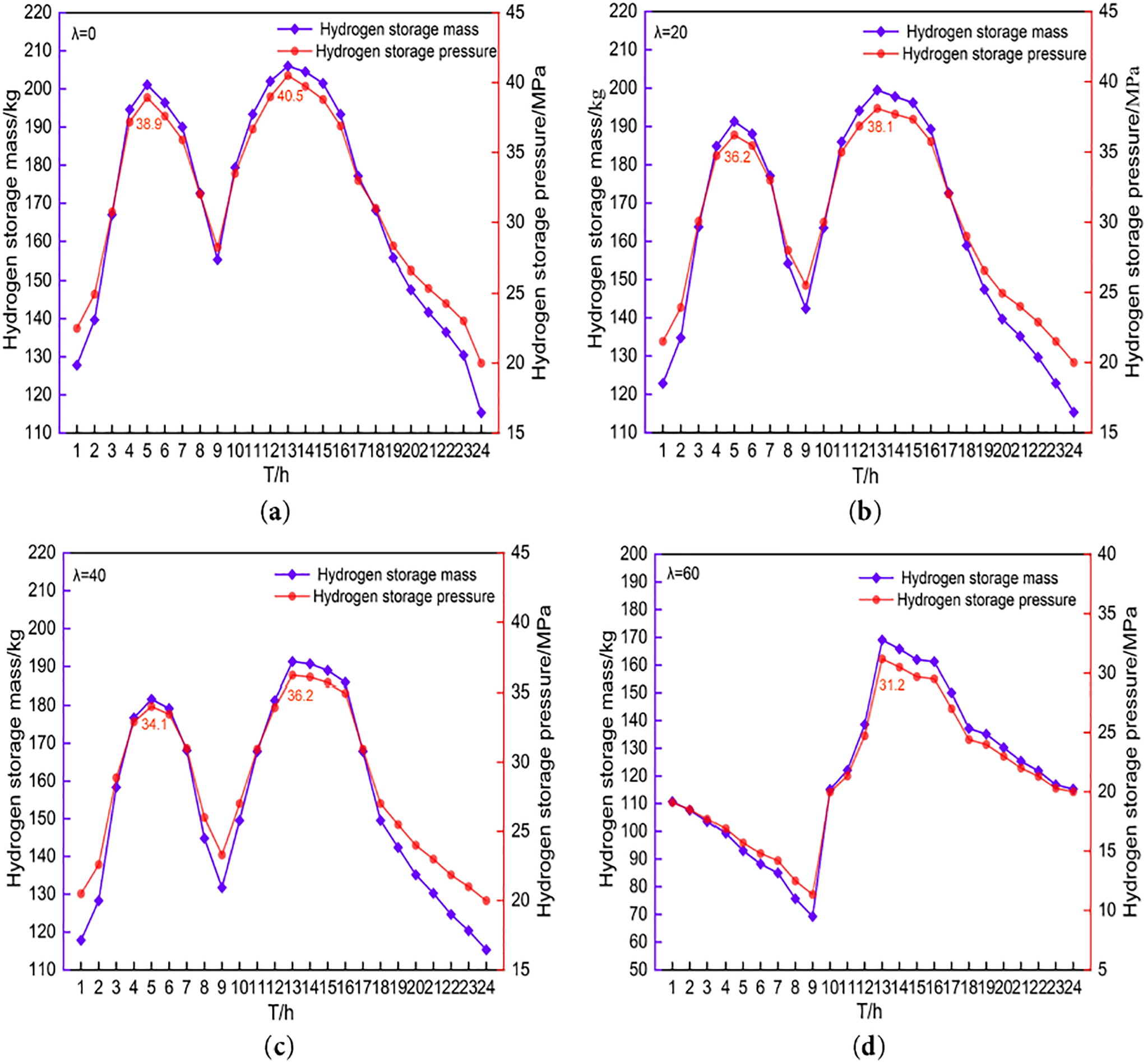
Figure 6: State of the hydrogen storage tank at different λ values. (a) λ = 0; (b) λ = 20; (c) λ = 40; (d) λ = 60
In conclusion, the augmentation of risk weighting coefficients has successfully diminished the diverse hazard indicators of the IEGES system, enhancing its safety; however, the economic efficiency of the IEGES system has deteriorated.
5.7 Dispatch Analysis Based on IGDT
This section employs information gap decision Theory to analyze the uncertainty related to wind and photovoltaic energy. The foundational model employed is deterministic scenario 4, yielding an optimal dispatch profit of 70,673 yuan. This paper posits k1 = 0.5 and k2 = 0.5, with deviation factors limited to 10%. The associated pessimistic and optimistic profits are 63,606 and 77,740 yuan, respectively, with volatility ranges of 14% and 12%. Figs. 7 and 8 illustrate the electricity and gas balance diagrams for Deterministic Scenario 4 under RA and OS conditions, respectively.
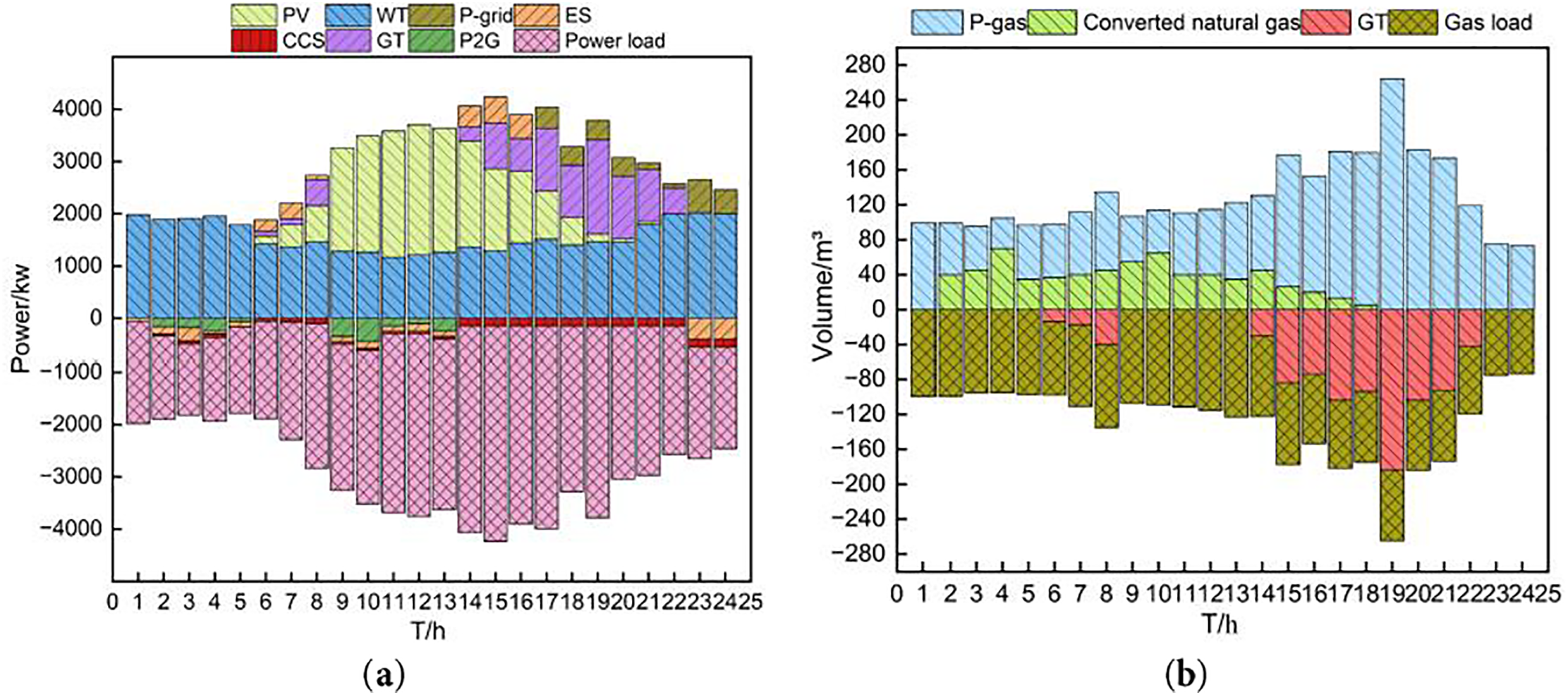
Figure 7: Results of system optimization scheduling under RA. (a) RA power equilibrium status; (b) RA gas equilibrium status
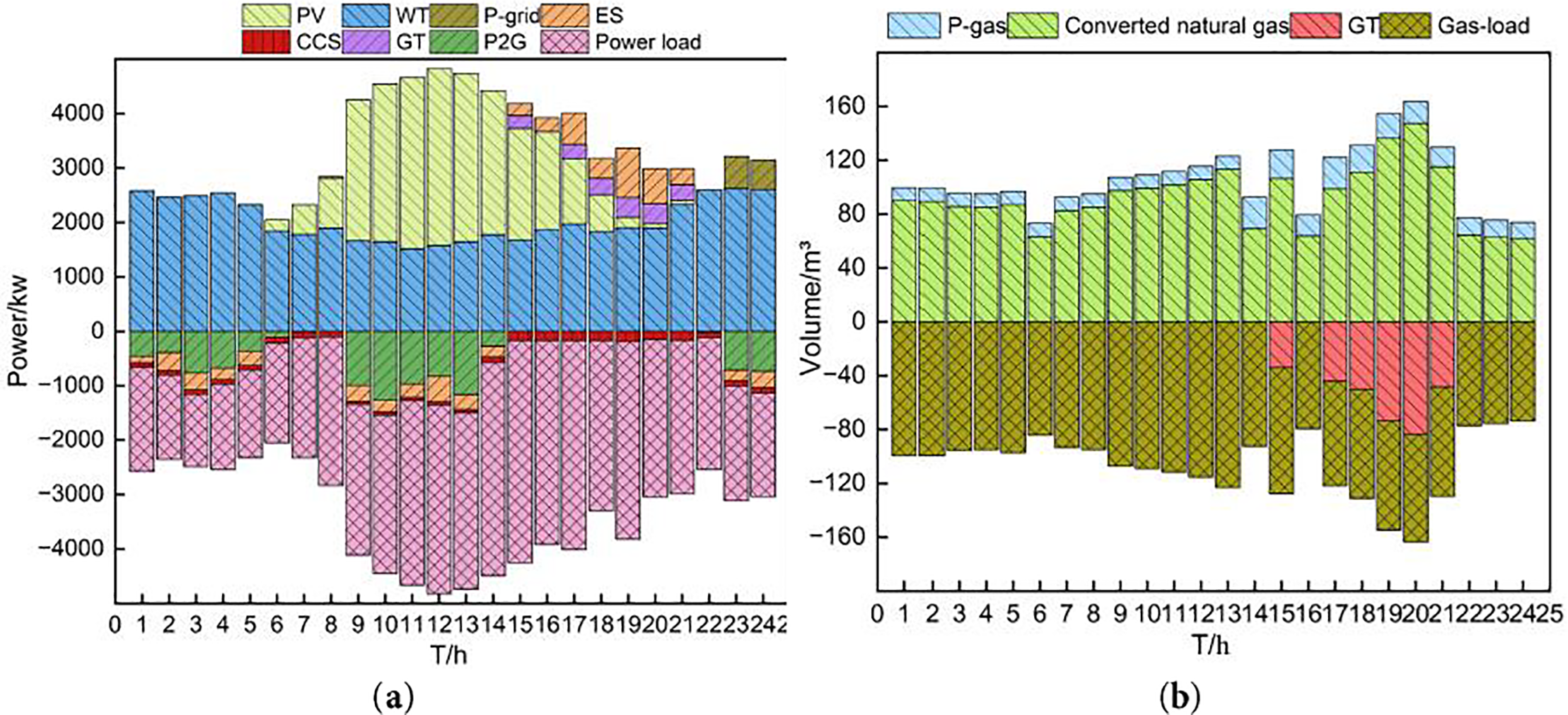
Figure 8: Results of system optimization scheduling under the operating system. (a) OS power equilibrium status; (b) OS gas equilibrium status
Fig. 7 illustrates that, under the RA strategy, the IEGES system anticipates that the actual wind and solar power output will be inferior to the forecasted values. During peak load periods, the demand for power supply escalates, while the capacity of energy storage systems and hydrogen storage tanks diminishes, resulting in inadequate system power supply capacity. Consequently, it is imperative to augment the output of gas turbine units and procure supplementary power from external sources to mitigate the energy shortfall; regarding gas supply, the diminished utilization of wind and solar energy correspondingly reduces the volume of natural gas converted by P2G. Consequently, the system augments the volume of purchased natural gas to satisfy gas load and gas turbine requirements.
Fig. 8 illustrates that, under the OS strategy, the IEGES system anticipates that the actual wind and solar power output will surpass the predicted values. The system will utilize surplus electricity for water electrolysis to generate hydrogen and for energy storage charging, subsequently releasing electricity during periods of low wind and solar power generation, thereby diminishing the system’s reliance on purchased power and gas turbine output. With the increasing utilization of wind and solar energy, the quantity of natural gas converted by Power-to-Gas (P2G) correspondingly increases. Consequently, the system predominantly satisfies gas load demand via converted natural gas and a minor quantity of procured natural gas.
IEGES employs various scheduling strategies based on differing risk attitudes. This paper further examines the optimal profit of IEGES and the variations in value under diverse risk attitudes. The deviation factor is incremented from 0.01 to 0.1 with a step size of 0.01, followed by optimized scheduling based on RA and OS, respectively. Fig. 9 illustrates the correlation among total profit, uncertainty, and the deviation factor of the two strategies.
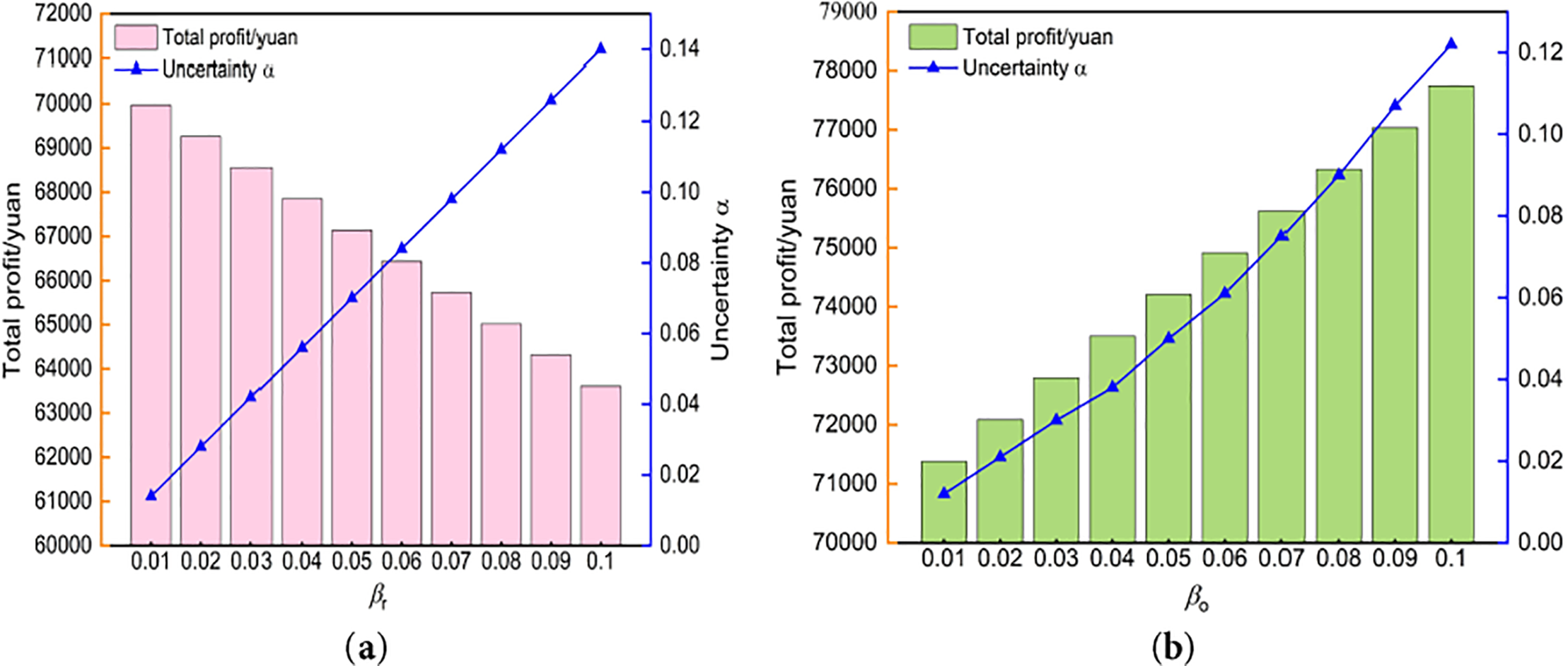
Figure 9: Variations in IEGES profit and
As illustrated in Fig. 9a, in the risk-averse model,
As illustrated in Fig. 9b, in the opportunity pursuit model, an increase in results in a corresponding increase in both
This study focuses on the CCS-P2G coupled IEGES, employing CCS-P2G synergistic operation to capture renewable energy and CO2, while simultaneously managing the fluctuations in wind and solar energy production. A low-carbon economic dispatch model for IEGES based on IGDT is developed, with a thorough consideration of the safe operation of IEGES during the optimization process. The proposed model’s validity is confirmed through a comparative analysis of calculation examples. The subsequent conclusions are derived:
(1) Following the implementation of CCS and a two-stage P2G synergistic operation alongside a tiered carbon trading mechanism, the system’s costs for wind and solar curtailment reduced from 1,394 to 0 yuan, resulting in the complete integration of wind and solar energy. Electricity procurement expenses decreased by 29.5%, whereas natural gas procurement expenses declined by 39.9%. Carbon emissions diminished by 66% relative to the scenario devoid of CCS-P2G, while carbon trading expenses fell from 512 to 49 yuan. This illustrates that CCS-P2G facilities have adaptable operational benefits, facilitating renewable energy integration and favourably influencing the low-carbon economic performance of IEGES.
(2) Effective safety limitations for the dispatch model are constructed based on safety quantification measures obtained from TNT equivalent and half-lethal range, in conjunction with a non-ideal gas pressure model. Case studies indicate that elevating the risk weighting coefficient
(3) Strategies for risk avoidance (RA) and opportunity seeking (OS) formulated within the IGDT framework offer dispatchers decision-making alternatives customised to varying risk preferences. Case studies indicate that the system can endure a maximum of 14% adverse deviation in wind and solar output while preserving revenues of at least 63,606 yuan. In contrast, advantageous variations of up to 12% may result in earnings of 77,741 yuan. This model proficiently aids IEGES decision-makers in navigating risks related to wind and solar energy production.
Acknowledgement: Not applicable.
Funding Statement: The authors received no specific funding for this study.
Author Contributions: The authors confirm contribution to the paper as follows: study conception and design: Xu Liu, Hongsheng Su; data collection: Xu Liu; analysis and interpretation of results: Xu Liu, Hongsheng Su; draft manuscript preparation: Xu Liu, Hongsheng Su. All authors reviewed the results and approved the final version of the manuscript.
Availability of Data and Materials: All data generated or analyzed during this study are included in this published article.
Ethics Approval: Not applicable.
Conflicts of Interest: The authors declare no conflicts of interest to report regarding the present study.
References
1. Zhang Y, Zhang P, Du S, Dong H. Economic optimal scheduling of integrated energy system considering wind-solar uncertainty and power to gas and carbon capture and storage. Energies. 2024;17(11):2770. doi:10.3390/en17112770. [Google Scholar] [CrossRef]
2. Zhang Z, Wang C, Lv H, Liu F, Sheng H, Yang M. Day-ahead optimal dispatch for integrated energy system considering power-to-gas and dynamic pipeline networks. IEEE Trans Ind Appl. 2021;57(4):3317–28. doi:10.1109/tia.2021.3076020. [Google Scholar] [CrossRef]
3. Duan J, Xia Y, Cheng R, Gao Q, Liu F. Low carbon and economic optimal operation of electricity-gas integrated energy system considering demand response. Sustain Energy Grids Netw. 2024 Jun;38(17):101290. doi:10.1016/j.segan.2024.101290. [Google Scholar] [CrossRef]
4. Zhang X, Chan KW, Wang H, Hu J, Zhou B, Zhang Y, et al. Game-theoretic planning for integrated energy system with independent participants considering ancillary services of power-to-gas stations. Energy. 2019;176(13):249–64. doi:10.1016/j.energy.2019.03.154. [Google Scholar] [CrossRef]
5. Zhang X, Zhang Y. Environment-friendly and economical scheduling optimization for integrated energy system considering power-to-gas technology and carbon capture power plant. J Cleaner Prod. 2020;276(3):123348. doi:10.1016/j.jclepro.2020.123348. [Google Scholar] [CrossRef]
6. Chen J, Xiao J, Zhang B, Zhang Z, Mao Z, He J. Low-carbon economic dispatch model of integrated energy system accounting for concentrating solar power and hydrogen-doped combustion. Sustainability. 2024;16(11):4818. doi:10.3390/su16114818. [Google Scholar] [CrossRef]
7. Zhu R, Ren YF, Meng QT, He WJ, Pan Y, He B. Electricity-heat-gas cooperative optimal operation strategy of integrated energy system based on cooperative game. Acta Energiae Solaris Sin. 2022;43:20–9. (In Chinese). doi:10.19912/j.0254-0096.tynxb.2022-0112. [Google Scholar] [CrossRef]
8. Sohani A. Time-dependent energy, economic, and environmental assessment of a PV-hydrogen integrated power system. Int J Hydrogen Energy. 2025;144:964–76. doi:10.1016/j.ijhydene.2025.01.327. [Google Scholar] [CrossRef]
9. Luo WM, Wu JK, Cai JJ, Mao YS, Chen SY. Capacity allocation optimization framework for hydrogen integrated energy system considering hydrogen trading and long-term hydrogen storage. IEEE Access. 2023;11:15772–87. doi:10.1109/access.2022.3228014. [Google Scholar] [CrossRef]
10. Li J, Lin J, Song Y, Xing X, Fu C. Operation optimization of power to hydrogen and heat (P2HH) in ADN coordinated with the district heating network. IEEE Trans Sustain Energy. 2019;10(4):1672–83. doi:10.1109/tste.2018.2868827. [Google Scholar] [CrossRef]
11. Teng S, Long F, Zou H. Operation strategy for an integrated energy system considering the slow dynamic response characteristics of power-to-gas conversion. Processes. 2024;12(6):1277. doi:10.3390/pr12061277. [Google Scholar] [CrossRef]
12. Wu Q, Li C. Modeling and operation optimization of hydrogen-based integrated energy system with refined power-to-gas and carbon-capture-storage technologies under carbon trading. Energy. 2023;270:126832. doi:10.1016/j.energy.2023.126832. [Google Scholar] [CrossRef]
13. Elberry AM, Thakur J, Santasalo-Aarnio A, Larmi M. Large-scale compressed hydrogen storage as part of renewable electricity storage systems. Int J Hydrogen Energy. 2021;46(29):15671–90. doi:10.1016/j.ijhydene.2021.02.080. [Google Scholar] [CrossRef]
14. Liu K, Jiang J, He C, Lin S. Numerical analysis of the diffusion and explosion characteristics of hydrogen-air clouds in a plateau hydrogen refuelling station. Int J Hydrogen Energy. 2023;48(100):40101–16. doi:10.1016/j.ijhydene.2023.07.155. [Google Scholar] [CrossRef]
15. Li Y, Wang Z, Shi X, Fan R. Safety analysis of hydrogen leakage accident with a mobile hydrogen refueling station. Process Saf Environ Prot. 2023;171:619–29. doi:10.1016/j.psep.2023.01.051. [Google Scholar] [CrossRef]
16. Zhang M, Xu W, Zhao W. Combined optimal dispatching of wind-light-fire-storage considering electricity price response and uncertainty of wind and photovoltaic power. Energy Rep. 2023;9:790–8. doi:10.1016/j.egyr.2022.11.099. [Google Scholar] [CrossRef]
17. Hu K, Wang B, Feng Y, Cao S, Wang L, Li W. Robust optimal scheduling of integrated energy systems considering multiple uncertainties. Energy Sci Eng. 2023 Oct;11(10):3413–33. doi:10.1002/ese3.1530. [Google Scholar] [CrossRef]
18. Huang H, Zhou M, Zhang L, Li G, Sun Y. Joint generation and reserve scheduling of wind-solar-pumped storage power systems under multiple uncertainties. Int Trans Electr Energy Syst. 2019;29(7). doi:10.1002/2050-7038.12003. [Google Scholar] [CrossRef]
19. Pan Y, Lin S, Liang W, Feng X, Sheng X, Liu M. Stochastic optimal dispatch of offshore-onshore regional integrated energy system based on improved state-space approximate dynamic programming. Int J Electr Power Energy Syst. 2024 Jan;155(4):109661. doi:10.1016/j.ijepes.2023.109661. [Google Scholar] [CrossRef]
20. Ju L, Yin Z, Zhou Q, Liu L, Pan Y, Tan Z. Near-zero carbon stochastic dispatch optimization model for power-to-gas-based virtual power plant considering information gap status theory. Int J Clim Change Strateg Manag. 2022;15(2):105–27. doi:10.1108/ijccsm-02-2022-0018. [Google Scholar] [CrossRef]
21. Kia M, Shafiekhani M, Arasteh H, Hashemi SM, Shafie-khah M, Catalão JPS. Short-term operation of microgrids with thermal and electrical loads under different uncertainties using information gap decision theory. Energy. 2020;208(1):118418. doi:10.1016/j.energy.2020.118418. [Google Scholar] [CrossRef]
22. Ahmadi A, Nezhad AE, Siano P, Hredzak B, Saha S. Information-gap decision theory for robust security-constrained unit commitment of joint renewable energy and gridable vehicles. IEEE Trans Ind Informat. 2020;16(5):3064–75. doi:10.1109/tii.2019.2908834. [Google Scholar] [CrossRef]
23. Wei ZB, Guo Y, Wei PA, Huang YH. IGDT-based multi-objective expansion planning model for integrated natural gas and electric power systems. High Volt Eng. 2022;48(2):526–37. (In Chinese). doi:10.13336/j.1003-6520.hve.20201730. [Google Scholar] [CrossRef]
24. Lyu CX, Sun W, Liang R, Luo G, S.W. LIN, Cheng YY. Information gap decision theory-based robust scheduling of coal mine integrated energy systems with power-to-gas. High Voltage Eng. 2023;49(10):4203–12. (In Chinese). doi:10.13336/j.1003-6520.hve.20230358. [Google Scholar] [CrossRef]
25. Ji Z, Tian J, Liu S, Yang L, Dai Y, Banerjee A. Optimal scheduling of park-level integrated energy system considering multiple uncertainties: a comprehensive risk strategy-information gap decision theory method. Appl Energy. 2025;377:124700. doi:10.1016/j.apenergy.2024.124700. [Google Scholar] [CrossRef]
26. Wei J, Zhang Y, Wang J, Cao X, Khan MA. Multi-period planning of multi-energy microgrid with multi-type uncertainties using chance constrained information gap decision method. Appl Energy. 2020;260:114188. doi:10.1016/j.apenergy.2019.114188. [Google Scholar] [CrossRef]
27. Wang L, Dong H, Lin J, Zeng M. Multi-objective optimal scheduling model with IGDT method of integrated energy system considering ladder-type carbon trading mechanism. Int J Electr Power Energy Syst. 2022 Dec;143(S2):108386. doi:10.1016/j.ijepes.2022.108386. [Google Scholar] [CrossRef]
28. Sarlak M, Samimi A, Nikzad M, Salemi AH. IGDT-based robust operation of thermal and electricity energy-based microgrid with distributed sources, storages, and responsive loads. Int Trans Electr Energy Syst. 2022;2022:1–20. doi:10.1155/2022/6002695. [Google Scholar] [CrossRef]
29. National Institute of Standards and Technology (NIST). “NIST Chemistry WebBook.” NIST Standard Reference Database Number 69. Gaithersburg, MD, USA: National Institute of Standards and Technology. [cited 2023 Oct 10]. Available from: https://webbook.nist.gov. [Google Scholar]
30. Pu L, Yu H, Dai M, He Y, Sun R, Yan T. Research progress and application of high-pressure hydrogen and liquid hydrogen in storage and transportation. Chin Sci Bull. 2022;67(19):2172–91. (In Chinese). doi:10.1360/tb-2022-0063. [Google Scholar] [CrossRef]
31. GB/T 34584–2017. General Administration of Quality Supervision, Inspection and Quarantine of the People’s Republic of China, Standardization Administration of the People’s Republic of China. Safety technical regulations for hydrogen refueling station. Beijing, China: Standards Press of China; 2017. (In Chinese). [Google Scholar]
32. GB 8218–2018. State Administration for Market Regulation, Standardization Administration of the People’s Republic of China. Identification of major hazard installations for hazardous chemicals. Beijing, China: Standards Press of China; 2018. (In Chinese). [Google Scholar]
Cite This Article
 Copyright © 2026 The Author(s). Published by Tech Science Press.
This work is licensed under a Creative Commons Attribution 4.0 International License , which permits unrestricted use, distribution, and reproduction in any medium, provided the original work is properly cited.
 Downloads
 Citation Tools
