
 Login
Login Register
 Submit a Paper
 Propose a Special lssue
 Open Access
ARTICLE

MHD Thermosolutal Flow in Casson-Fluid Microchannels: Taguchi–GRA–PCA Optimization
1 Department of Mathematics, COMSATS University Islamabad, Vehari Campus, Vehari, 61100, Pakistan
2 Department of Mathematical Sciences, Saveetha School of Engineering, SIMATS, Chennai, 602105, Tamilnadu, India
3 Department of Pure and Applied Mathematics, School of Mathematical Sciences, Sunway University, Bandar Sunway, Petaling Jaya, 47500, Selangor Darul Ehsan, Malaysia
4 Department of Physics, Faculty of Sciences, University of 20 Août 1955-Skikda, Skikda, 21000, Algeria
5 Department of Mathematics, Namal University, Mianwali, 42250, Pakistan
6 Department of Mathematics, Vijayanagara Sri Krishnadevaraya University, Ballari, 583105, Karnataka, India
* Corresponding Authors: Fateh Mebarek-Oudina. Email: ,
Fluid Dynamics & Materials Processing 2025, 21(11), 2829-2853. https://doi.org/10.32604/fdmp.2025.072492
Received 28 August 2025; Accepted 17 November 2025; Issue published 01 December 2025
 View Full Text
 Download PDF
Abstract
Understanding the complex interaction between heat and mass transfer in non-Newtonian microflows is essential for the development and optimization of efficient microfluidic and thermal management systems. This study investigates the magnetohydrodynamic (MHD) thermosolutal convection of a Casson fluid within an inclined, porous microchannel subjected to convective boundary conditions. The nonlinear, coupled equations governing momentum, energy, and species transport are solved numerically using the MATLAB bvp4c solver, ensuring high numerical accuracy and stability. To identify the dominant parameters influencing flow behavior and to optimize transport performance, a comprehensive hybrid optimization framework—combining a modified Taguchi design, Grey Relational Analysis (GRA), and Principal Component Analysis (PCA)—is proposed. This integrated strategy enables the simultaneous assessment of skin friction, Nusselt number, and Sherwood number, providing a rigorous multi-objective evaluation of system performance. Comparative validation with benchmark results from the literature confirms the accuracy and reliability of the present formulation and its numerical implementation. The results highlight the intricate coupling among flow slip, buoyancy effects, and convective transport mechanisms. Increased slip flow enhances axial velocity, while a higher solutal Biot number intensifies concentration gradients near the channel walls. Conversely, a lower thermal Biot number diminishes the temperature field, indicating weaker heat transfer across the boundaries. PCA results reveal that the first principal component (PC1) accounts for most of the system variance, demonstrating the dominant influence of coupled flow and transport parameters on overall system performance.Keywords
Viscous flows in inclined channels influenced by magnetohydrodynamic (MHD) effects are fundamental to a wide range of industrial, aerospace, and biomedical applications, including molten metal processing, pipeline fluid transport, drug delivery systems, and the analysis of blood flow in arteries. Magnetic fields provide a powerful means of controlling the motion of electrically conductive fluids, enabling better heat-transfer regulation, improved flow stability, and greater operational precision. Such mechanisms underpin technological progress in power generation, nuclear reactor cooling, and advanced medical therapies, where precise thermal and flow management are essential. For these reasons, considerable attention has been devoted to studying viscous MHD flows in inclined channels, as researchers seek to understand and optimize their behavior under various physical and electromagnetic conditions.
Verma et al. [1] conducted a numerical investigation of unsteady magnetohydrodynamic (MHD) flow for a Newtonian fluid in an inclined channel with temperature-dependent viscosity. The time-dependent Navier–Stokes and energy equations were employed to describe the fluid motion, while viscosity was expressed as an exponential function of temperature. Their results revealed that increasing temperature sensitivity of viscosity and stronger magnetic fields reduce fluid velocity and suppress overall mobility, whereas viscous dissipation exerts a marked influence on the thermal field. Das and Majumdar [2] presented an analytical formulation for MHD flow in an inclined channel incorporating an induced magnetic field and radiative heat transfer. By applying a perturbation technique to solve the governing equations, they demonstrated that thermal radiation substantially elevates fluid temperature, and that the imposed magnetic field facilitates both fluid motion and energy transport. Their contribution offers clear analytical understanding of radiative MHD behavior in inclined geometries. In a related contribution, Mani [3] conducted an entropy generation analysis of Jeffrey fluid flow under magnetohydrodynamic (MHD) effects within an inclined channel. The study considered several non-dimensional parameters, including the Deborah number, magnetic parameter, and Brinkman number. The results showed that both magnetic-field strength and fluid elasticity enhance entropy generation, while Bejan number analysis indicated that heat transfer dominates over viscous dissipation. This investigation provides important insights for improving the energy efficiency of thermal-fluid systems. Sharma et al. [4] explored MHD flow in a rotating inclined channel containing a porous medium and subjected to an inclined magnetic field. Using combined analytical and computational approaches, they demonstrated that rotation and porous resistance strongly influence secondary flow formation. The results revealed that an inclined magnetic field suppresses transverse velocity and promotes flow stability, offering valuable guidance for thermal management in geophysical and energy applications.
Singh and Vishwanath [5] examined the Hall and ion-slip effects on MHD free-convective flow of a viscoelastic fluid in an inclined porous channel exposed to a moving magnetic field. Their numerical analysis showed that Hall and ion-slip parameters significantly modify velocity and temperature gradients. They also found that permeability and magnetic inclination strongly affect heat and momentum transfer, highlighting the potential of magnetic-field manipulation for advanced MHD control in porous media. Riaz et al. [6] performed fractional numerical simulations of mixed convection in hybrid nanofluid flow through an inclined channel, incorporating chemical reactions and internal heat sources. By applying the Caputo fractional derivative to generalize the governing equations, they demonstrated that variations in thermal conductivity and chemical reaction rates have a pronounced effect on temperature and velocity distributions. The results confirmed that hybrid nanofluids achieve superior heat transfer performance compared with conventional fluids, underscoring the applicability of fractional calculus in modeling complex thermal processes. Bala Anasuya and Srinivas [7] investigated oscillatory two-fluid MHD flow in an inclined channel saturated with a porous medium under periodic boundary conditions. Their findings revealed that increasing magnetic intensity and porosity exerts a strong damping effect on oscillatory motion, whereas higher oscillation frequencies and stronger MHD forces enhance heat transfer efficiency. This study contributes meaningfully to the understanding of oscillatory transport phenomena in porous channel systems. Elmhedy et al. [8] examined the influence of an inclined magnetic field on the peristaltic motion of a Rabinowitsch non-Newtonian fluid within an inclined channel, incorporating the effects of heat transfer. Using a perturbation technique, they analyzed nonlinear wave propagation and its impact on flow characteristics. Their results indicated that magnetic inclination plays a crucial role in controlling flow reversal and heat dissipation. An increase in the magnetic angle suppresses axial velocity and thickens the thermal boundary layer, emphasizing the importance of magnetic orientation in managing transport phenomena. This study holds particular relevance for biomedical pumping and targeted drug-delivery systems. Boujelbene et al. [9] investigated heat transport in a generalized Newtonian nanofluid flowing through a conduit with slip boundary conditions, focusing on magnetohydrodynamic (MHD) behavior and inherent irreversibility. Their model accounted for entropy generation arising from viscous dissipation and magnetic effects. The findings revealed that wall slip can enhance cooling efficiency while simultaneously reducing entropy generation. Furthermore, the magnetic field strength and viscosity index were shown to govern both thermal and flow dynamics. This work offers valuable insights for the design and optimization of thermal systems operating under wall-slip conditions. Murty et al. [10] explored rotating two-fluid MHD convective flow and temperature distribution in an inclined channel, where the two fluid layers possessed distinct electrical conductivities and viscosities. Their analysis demonstrated that system rotation induces secondary flow structures that significantly influence thermal gradients. Additionally, the inclination angle and magnetic-field intensity were found to affect stratification and heat-transfer rates. These results provide practical implications for geophysical modeling and industrial thermal-flow processes. Naseem et al. [11] performed a numerical study of entropy generation in MHD flow of a viscous fluid subject to Joule heating as it passes over permeable, radially extending discs. Their results offered key benchmarks for entropy-based performance evaluation in cooling and energy-conversion systems. The study clarified how dissipation mechanisms—particularly viscous effects and Joule heating—govern the thermodynamic efficiency of MHD systems bounded by porous surfaces. Alshareef [12] investigated MHD Couette flow of a Carreau non-Newtonian fluid in an inclined channel equipped with convective boundaries and a porous wall liner. The analysis focused on how wall porosity and convective parameters influence heat transfer and velocity distribution. The results showed that wall suction and porosity enhance cooling efficiency, while magnetic and Carreau parameters alter boundary-layer thickness and overall flow stability. This research contributes to the development of advanced porous-flow configurations and smart thermal-coating technologies.
Mebarek-Oudina et al. [13] analyzed the coupled thermal and hydrodynamic behavior of a Burgers-type non-Newtonian fluid driven by a stretching cylinder under the influence of internal heat generation and absorption. Their findings highlighted the delicate interplay between complex rheological behavior and electromagnetic forcing, demonstrating how viscoelastic and dissipative properties shape boundary-layer structures, temperature distribution, and overall cooling performance in magnetically affected systems.
Optimizing heat transfer in channels is a critical aspect of modern thermal-system design, influencing applications that range from heat exchangers to electronic cooling units. Conventional optimization methods often target a single performance objective, such as minimizing pressure loss or enhancing heat-transfer efficiency. However, real-world engineering problems typically involve multiple, and sometimes competing, performance criteria. In such contexts, multi-criteria decision-making (MCDM) techniques have emerged as powerful analytical tools, allowing engineers to evaluate, compare, and rank various design alternatives based on multiple parameters. Anil Kumar et al. [14] examined the combined influence of Soret and Dufour effects, together with radiative heat transfer, on rotating laminar flows subject to chemical reactions. Their research clarified how cross-diffusion and radiative interactions modify temperature and concentration distributions, providing valuable insights for thermal management and transport processes in magnetized porous media. In a related investigation, Mebarek-Oudina et al. [15] analyzed the thermal performance of MgO–SWCNT/water hybrid nanofluids confined within geometrically complex cavities. This study extended the understanding of nanofluid-based heat-transfer enhancement by revealing how hybrid nanoparticles interact with intricate geometries and magnetic environments. The outcomes offer design guidance for efficient cooling in advanced microchannel configurations.
Vinutha et al. [16] further examined Casson fluid flow toward a rotating disk with an off-center stagnation point, accounting for thermophoretic particle deposition and coupled heat–mass transfer mechanisms. By integrating an artificial neural network (ANN) optimization framework, they demonstrated that variations in the flow and particle-deposition dynamics appreciably alter the temperature and concentration distributions, deposition rate, and Nusselt number.
In a complementary contribution, Vinutha et al. [17] investigated steady Casson fluid motion over a three-dimensional exponentially stretching surface, with emphasis on pollutant dispersion and environmental impacts. Their simulations reveal that increases in magnetic and Casson parameters reduce the flow velocity, while thermophoretic and Brownian-motion effects enhance the thermal field.
These mechanisms substantially influence skin-friction coefficients and mass-transfer rates, offering insights into industrial waste-management applications. Manohar et al. [18] developed a mathematical framework for analyzing MHD Casson nanofluid flow in a microchannel that incorporates temperature jump, porous-medium resistance, and velocity-slip effects. Numerical results obtained through the RKF45 scheme revealed that increasing nanoparticle volume fraction reduces both velocity and temperature fields, while magnetic interactions enhance drag forces. Moreover, hybrid nanofluids exhibited superior thermophysical performance compared to conventional single-particle suspensions, emphasizing their potential for high-efficiency thermal control systems. The Taguchi method is a reliable and widely used design-optimization strategy that has been effectively applied across numerous engineering disciplines to enhance system performance and refine operating parameters. Raza et al. [19] further presented a refined investigation of Casson nanofluid dynamics incorporating activation-energy effects into the governing framework. Their analysis highlighted the sensitivity of thermophysical properties—particularly heat-transfer rates and flow stability—to reaction energetics. These findings provide valuable insights into optimizing thermosolutal convection in Casson-fluid systems under magnetic and boundary-layer influences.
2 Novelty/Research GAP of the Study
Despite extensive research on viscous non-Newtonian fluids and the effects of various physical phenomena, several critical aspects remain underexplored.
First, prior studies have predominantly focused on slip or convective boundary conditions for Casson fluid flows, particularly in the context of renewable energy applications, leaving other practical configurations insufficiently addressed.
Second, the combined modeling of Casson fluid behavior with thermosolutal convection, magnetic fields, and radiative effects has not been fully developed, especially for microchannel flows.
Finally, there is a notable lack of investigations employing advanced multi-criteria optimization techniques—such as Principal Component Analysis or coupled Taguchi–Grey Relational Analysis—to systematically evaluate and optimize thermosolutal convection in Casson fluid flows within microchannels.
3 Constitutive Equations and Modelling
The Cauchy stress tensor
For our case, the rheological equation of state of Casson fluid is:
The Casson fluid yield stress, which is indicated by
For Casson fluid flow, we have
As a result, the fluid density, Casson number, and plastic dynamic viscosity all impact the kinematic viscosity. So,
Here are the fluid flow assumptions of the problem presented in the Fig. 1.
- Both channel plates are fixed and permeable.
- The flow is unidirectional, consistent, and fully developed. Injection and suction operations occur at constant velocities (
- Compared to its width, the channel’s length is limitless. Only in the transversal (width) direction do any physical quantities change.
- The flow is driven by a uniform magnetic field with intensity
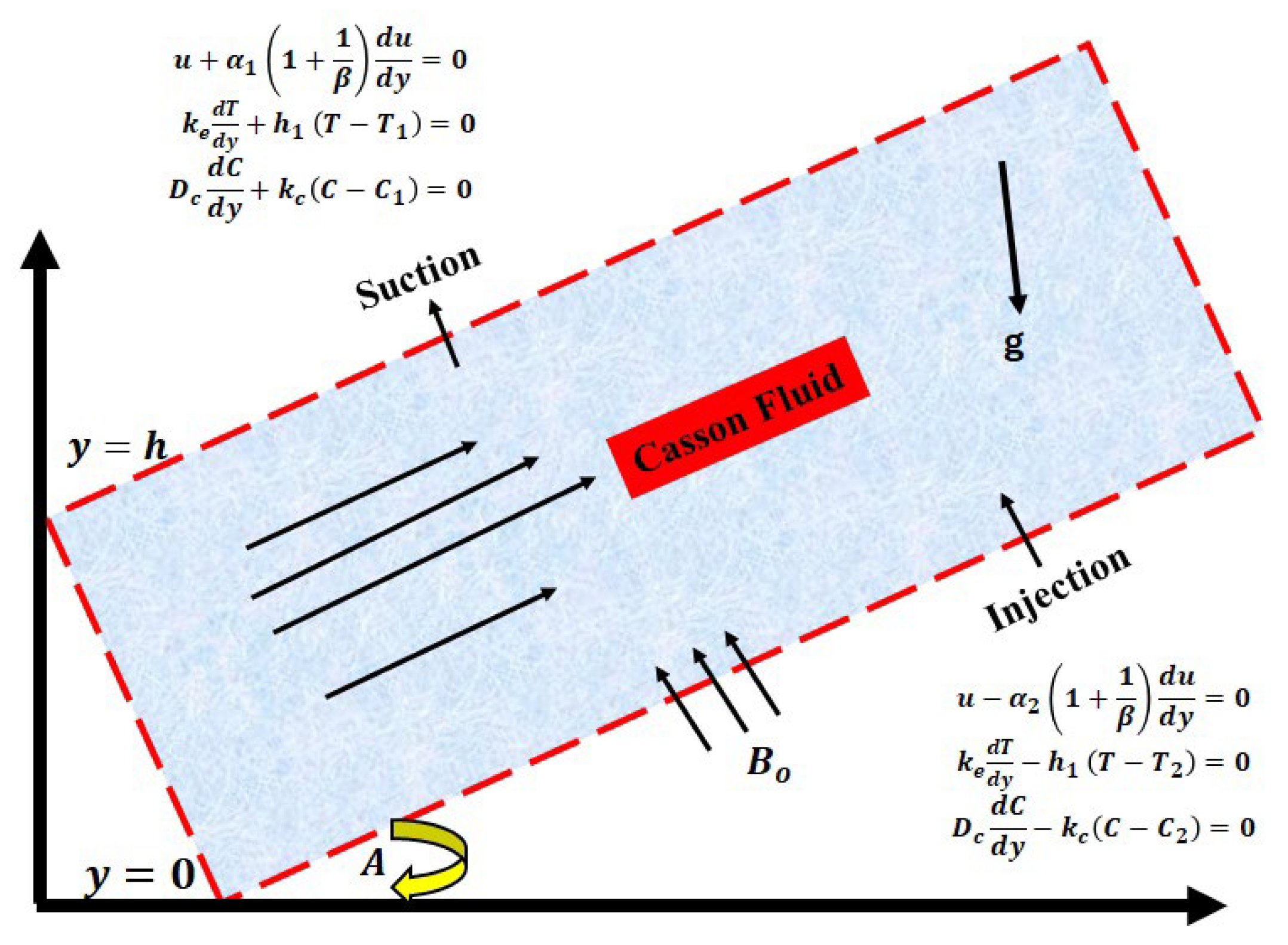
Figure 1: Fluid flow model.
The equation for continuity, momentum, energy, and concentration under the aforementioned assumptions and the linear Boussinesq’s approximation is as follows: Madhu et al. [20], Habibi-Matin & Pop [21], Hunt et al. [22]
The associate boundary conditions are:
At lower plate y = 0,
At upper plate y = h,
These boundary conditions describe a fluid confined between two parallel plates, with slip caused by non-Newtonian behavior or microscale factors. Heat is transferred between the plates and the fluid via conduction and convection. Mass transfer happens as a result of species diffusion and convective contact at the wall. Such conditions are frequently encountered in microfluidic devices, lubrication theory, polymer processing, and chemical reactors.
Introducing dimensionless variables:
Then
Subject to boundary conditions:
At
At
The following are the associated non-dimensional versions of the main physical parameters: skin friction coefficient, heat transfer rate (represented by the local Nusselt number), and Mass transfer rate (represented by the local Sherwood number).
The analytical solution of the coupled nonlinear differential Eqs. (13)–(15) with boundary conditions (16) and (17) is difficult and complex calculations. So, we have employed bvp4c solver (MATLAB) to obtain numerical solutions for given parametric values. The bvp4c is a finite difference code which executes three stages of Lobatto IIIa formula [23]. The bvp4c in MATLAB implemented step by step as follows:
Converting the problem into a system of first-order differential equations by introducing new variables.
- Assigning boundary conditions for the new variables;
- Guessing appropriate initial values for the new variable;
- Finally, calling inbuilt solver for solving first-order system.
For this we consider,
Is the system of 1st order ODEs corresponding to the boundary conditions
In this section, we will present our numerical outcomes in the form of tables and figures. The validity of the numerical results is presented in Fig. 2. From this graph, it came to know that present results are fully matched with previously published results by setting
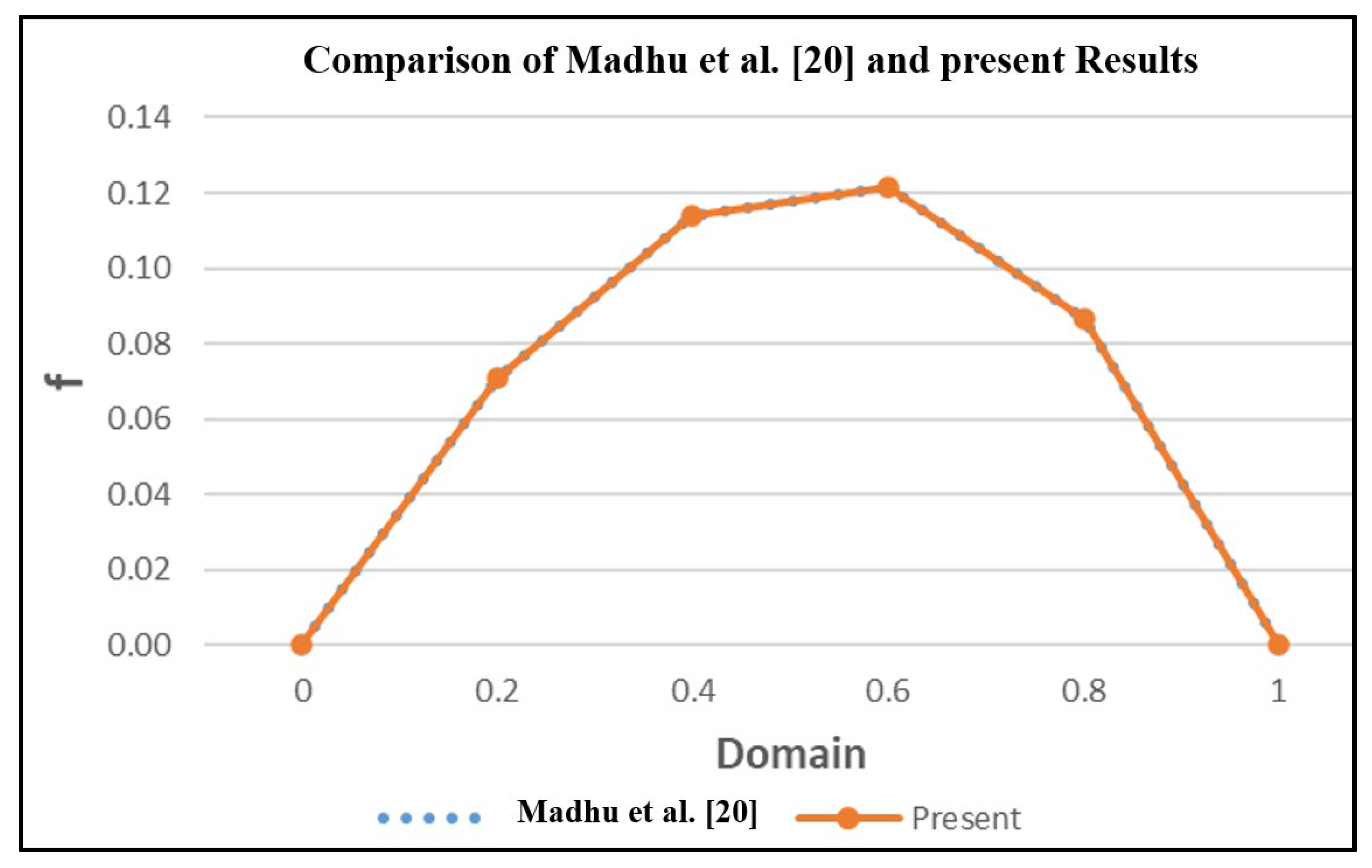
Figure 2: Validity of the numerical results [20].
Fig. 3a illustrates the trajectory of the dimensionless velocity
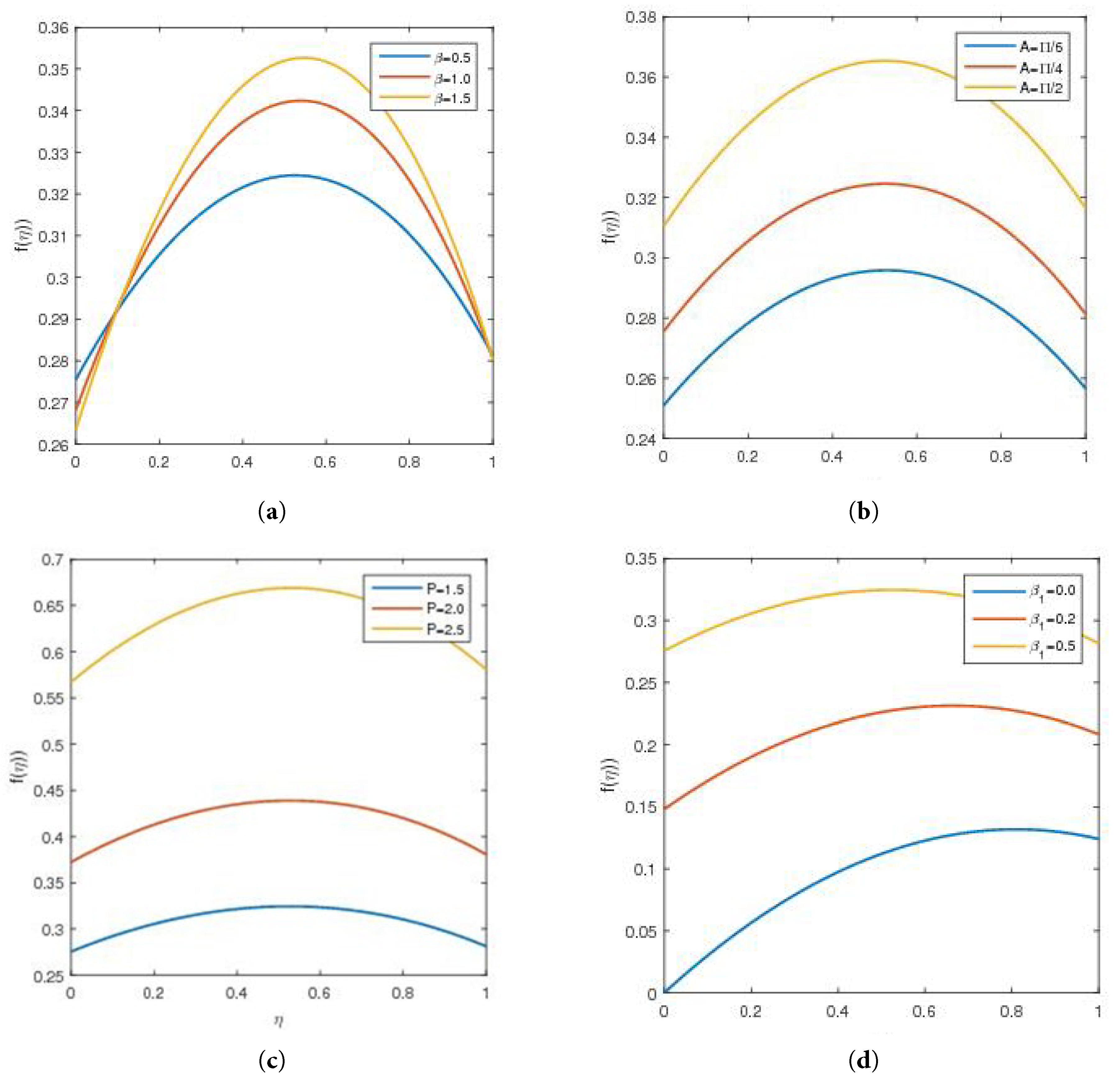
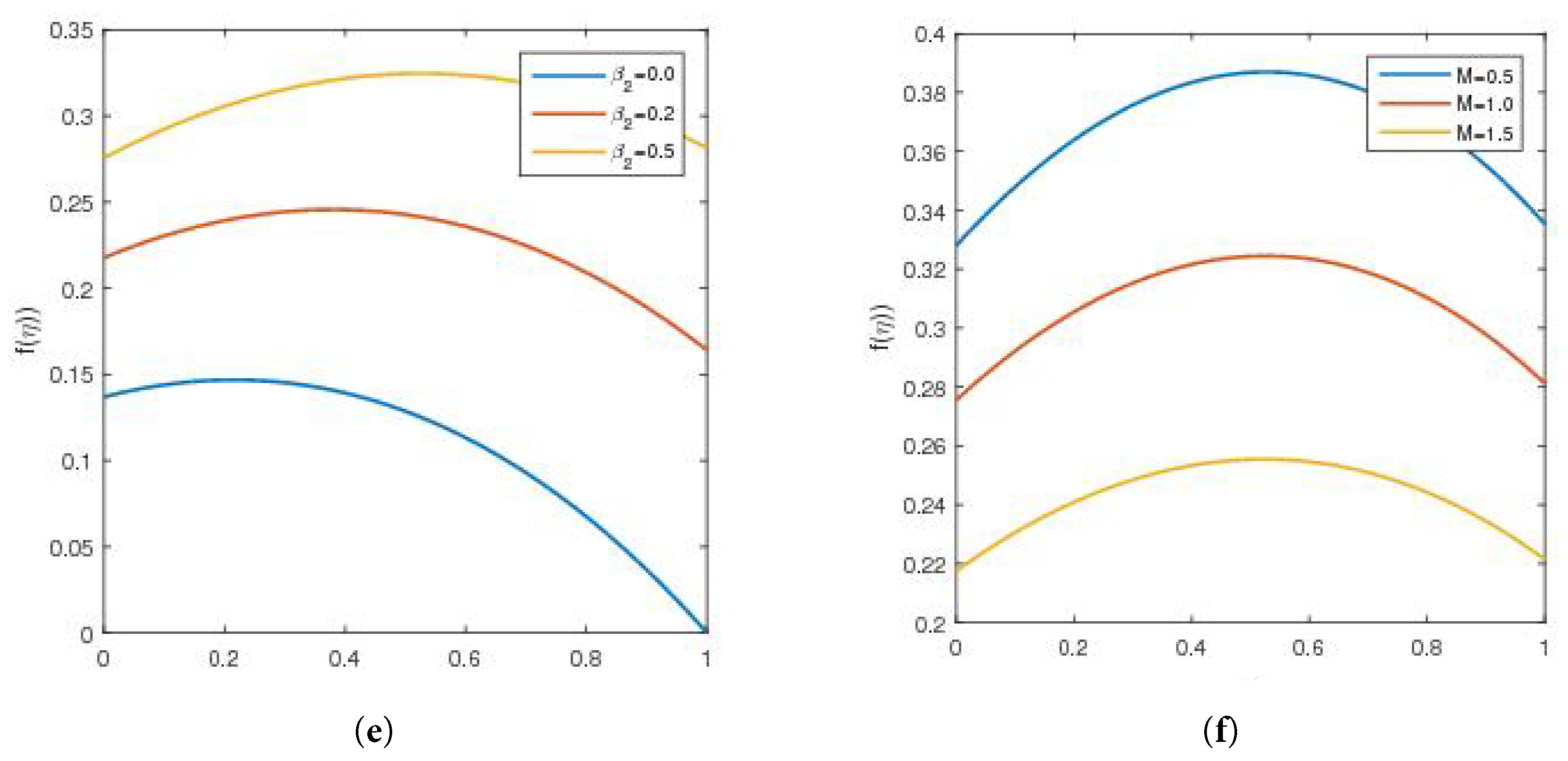
Figure 3: Effect of various physical parameters on velocity profile. (a)
Fig. 4a illustrates the temperature profile θ(η) for various values of the material fluid parameter β. As β increases, the temperature rises throughout the channel, reflecting enhanced heat conduction due to non-Newtonian behavior, which promotes greater internal energy accumulation. The cooling from the hot wall to the cold wall follows the expected convection pattern in the boundary layer, with temperature decreasing along η. Fig. 4b shows the dimensionless temperature θ(η) at different values of the flow control parameter A. With increasing A, the temperature decreases more rapidly from the lower to the upper plate, especially near the heated wall. This occurs because larger values of A strengthen buoyancy forces, which accelerate fluid motion and enhance convective heat transfer. The intensified convective flow efficiently removes heat from the hot surface, leading to a shallower temperature gradient. The increasingly parabolic shape and steeper negative slope of the temperature profile with higher A indicate faster heat transport due to buoyancy-driven flow enhancement. This behavior is consistent with both forced and natural convection principles, which state that stronger fluid motion improves heat removal from heated surfaces. Fig. 4c demonstrates that the temperature decreases as the Biot number BiT increases. A higher Biot number indicates stronger surface convection relative to conduction, causing faster heat loss and a cooler boundary layer, consistent with classical heat-transfer theory. Finally, Fig. 4d shows that the temperature rises with an increase in the Eckert number Ec. Since Ec represents the ratio of kinetic energy to enthalpy, higher values correspond to stronger viscous dissipation, which elevates the fluid temperature.
This internal warmth negates any cooling, thus the temperature will be higher throughout the boundary layer on the larger
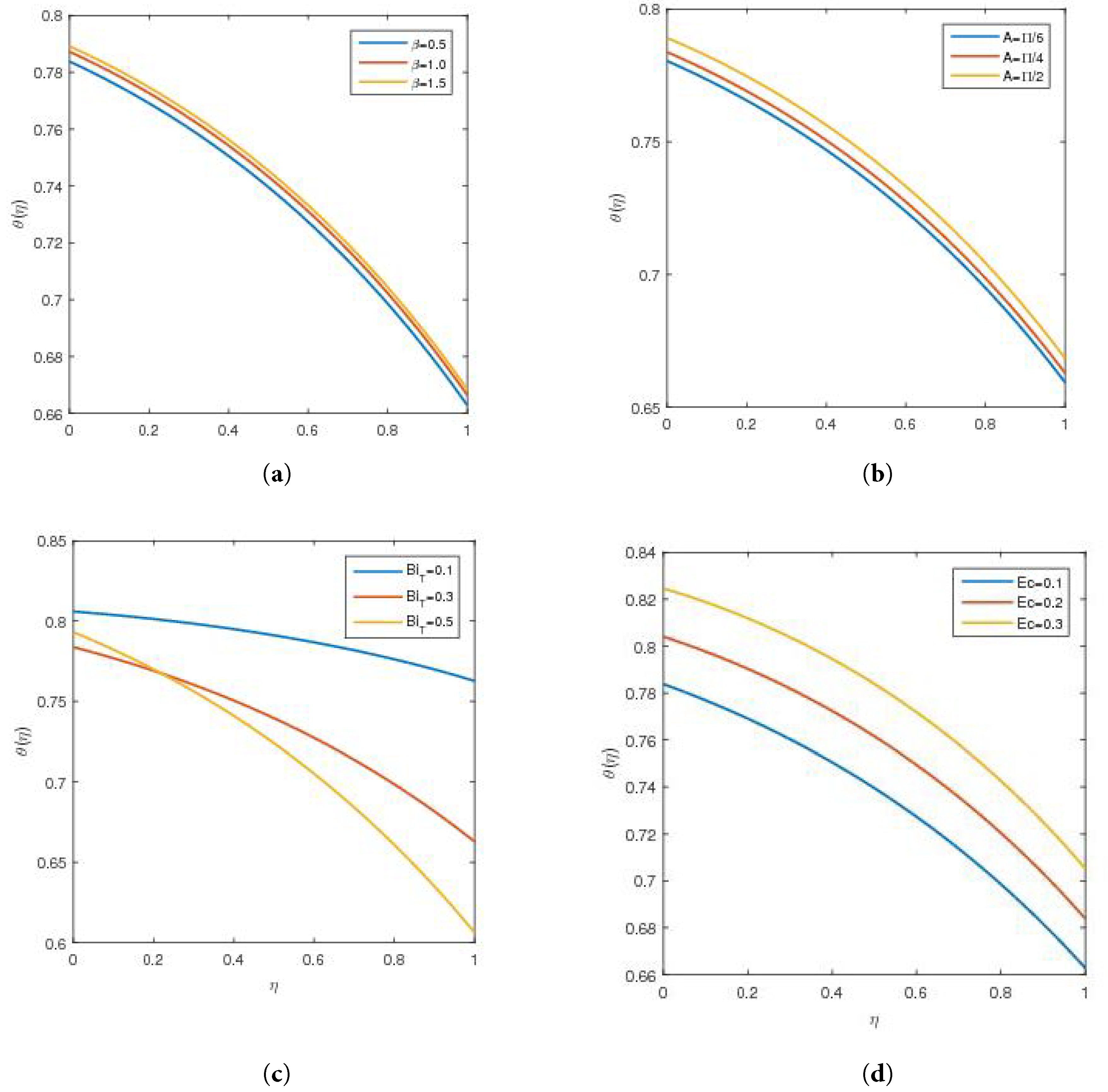
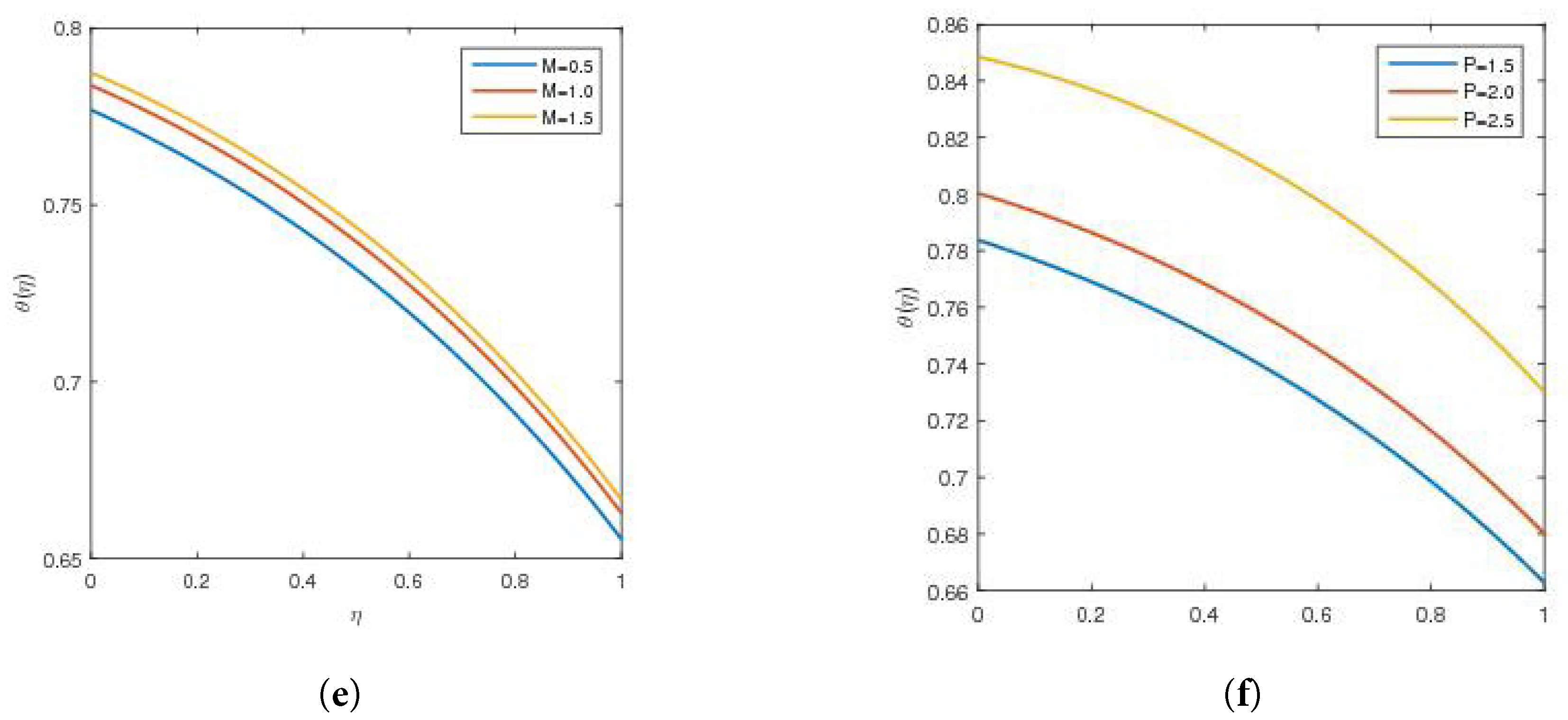
Figure 4: Effect of various parameters on temperature profile. (a) θ(η) vs. β, (b) θ(η) vs. A, (c) θ(η) vs. BiT, (d) θ(η) vs. Ec, (e) θ(η) vs. M, (f) a) θ(η) vs. P.
Fig. 5 represents the concentration profile along with the parameters solutal Biot number
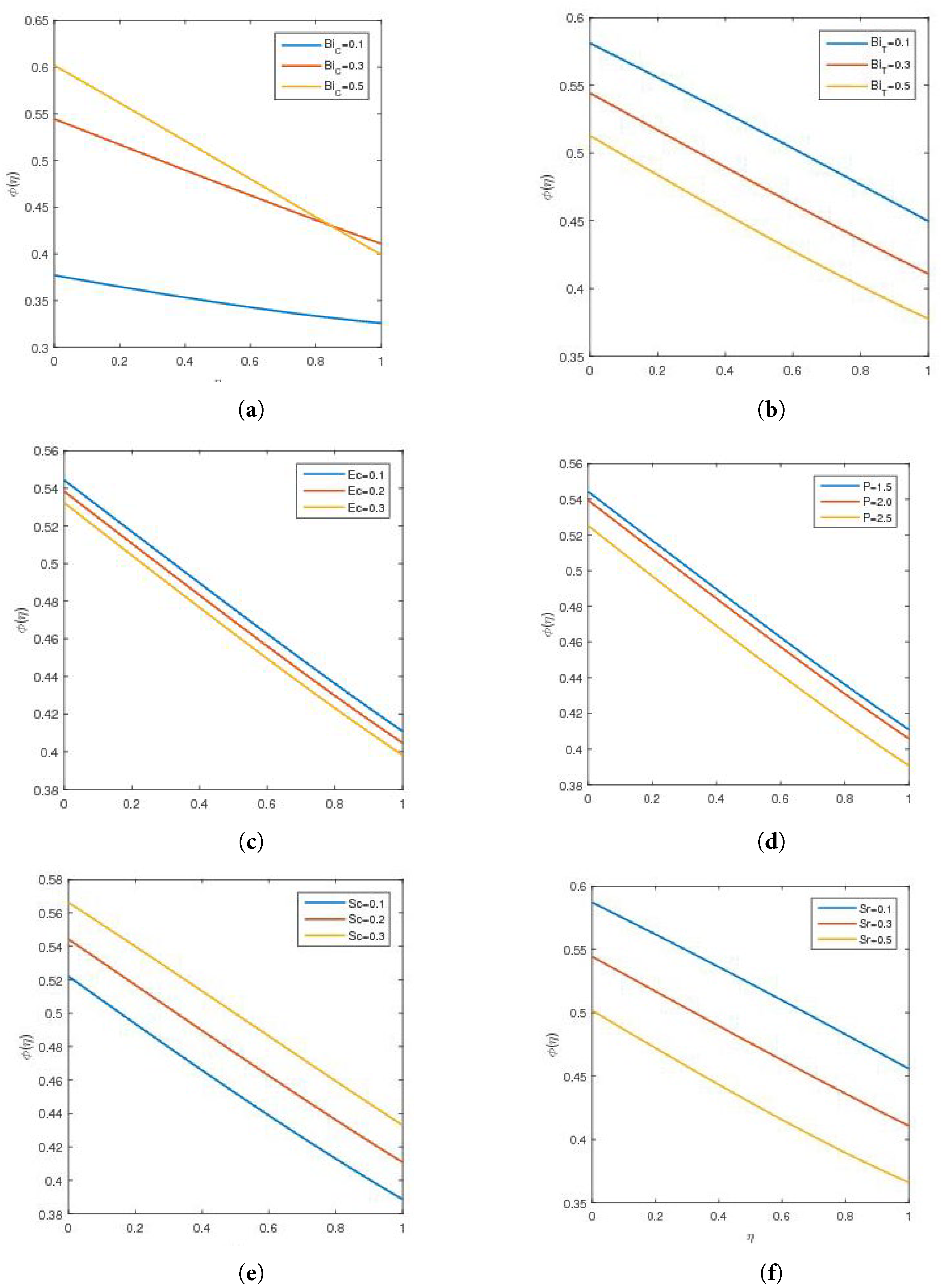
Figure 5: Effect of various parameters on concentration profile. (a)
6.1 Taguchi-Grey Relational Analysis (GRA)-Principal Component Analysis (PCA)
Principal Component Analysis (PCA), together with Taguchi-Grey Relational Analysis (GRA), serves as two multi-objective optimization techniques that are adopted: Taguchi’s Sturdy Design for noise reduction and experimental design. The method of Grey Relational Analysis (GRA) generates one unified performance index when analyzing multiple answers. PCA simplifies weighting through principal component analysis while stopping subjective bias from occurring. Engineers widely employ this method to optimize processes that have conflicting goals in their work related to manufacturing and quality improvement, and engineering.
Taguchi Experimental Design (Orthogonal Arrays)
Taguchi achieves statistical effectiveness through Orthogonal Arrays (OA), which reduce experimental requirements. We are using L27 (35), which means 27 experiments with 5 factors, each at 3 levels. We have three cases, the first case is of skin friction for which we have responses at
Table 1: Experiment layout L27 (design matrix) for skin friction.
| Factors | Responses (Lower is Better) | |||||
|---|---|---|---|---|---|---|
| Beta (β) | Gr1 | Gr2 | β1 | β2 | Cfx(0) | Cfx(1) |
| 0.5 | 0.5 | 0.5 | 0.1 | 0.1 | 0.05821 | 0.06313 |
| 0.5 | 0.5 | 0.5 | 0.1 | 0.2 | 0.06374 | 0.09825 |
| 0.5 | 0.5 | 0.5 | 0.1 | 0.3 | 0.06727 | 0.12062 |
| 0.5 | 1 | 1 | 0.2 | 0.1 | 0.12682 | 0.09368 |
| 0.5 | 1 | 1 | 0.2 | 0.2 | 0.14068 | 0.14782 |
| 0.5 | 1 | 1 | 0.2 | 0.3 | 0.14972 | 0.18311 |
| 0.5 | 1.5 | 1.5 | 0.3 | 0.1 | 0.20164 | 0.12582 |
| 0.5 | 1.5 | 1.5 | 0.3 | 0.2 | 0.22582 | 0.20053 |
| 0.5 | 1.5 | 1.5 | 0.3 | 0.3 | 0.24191 | 0.2501 |
| 1 | 0.5 | 1 | 0.3 | 0.1 | 0.13913 | 0.08358 |
| 1 | 0.5 | 1 | 0.3 | 0.2 | 0.15001 | 0.13559 |
| 1 | 0.5 | 1 | 0.3 | 0.3 | 0.15744 | 0.17109 |
| 1 | 1 | 1.5 | 0.1 | 0.1 | 0.07777 | 0.08859 |
| 1 | 1 | 1.5 | 0.1 | 0.2 | 0.08276 | 0.14192 |
| 1 | 1 | 1.5 | 0.1 | 0.3 | 0.08609 | 0.17756 |
| 1 | 1.5 | 0.5 | 0.2 | 0.1 | 0.1329 | 0.09778 |
| 1 | 1.5 | 0.5 | 0.2 | 0.2 | 0.14259 | 0.15788 |
| 1 | 1.5 | 0.5 | 0.2 | 0.3 | 0.1492 | 0.19862 |
| 1.5 | 0.5 | 1.5 | 0.2 | 0.1 | 0.11323 | 0.08399 |
| 1.5 | 0.5 | 1.5 | 0.2 | 0.2 | 0.11976 | 0.13681 |
| 1.5 | 0.5 | 1.5 | 0.2 | 0.3 | 0.12424 | 0.17309 |
| 1.5 | 1 | 0.5 | 0.3 | 0.1 | 0.1492 | 0.089 |
| 1.5 | 1 | 0.5 | 0.3 | 0.2 | 0.1586 | 0.14563 |
| 1.5 | 1 | 0.5 | 0.3 | 0.3 | 0.16512 | 0.18487 |
| 1.5 | 1.5 | 1 | 0.1 | 0.1 | 0.0798 | 0.09464 |
| 1.5 | 1.5 | 1 | 0.1 | 0.2 | 0.08402 | 0.15348 |
| 1.5 | 1.5 | 1 | 0.1 | 0.3 | 0.08692 | 0.19363 |
The next case of Nusselt number,
Table 2: Experiment layout L27 (design matrix) for Nusselt number.
| Factors | Responses (Higher the Best) | |||||
|---|---|---|---|---|---|---|
| Beta (β) | Re | Ec | M | BiT | Nux(0) | Nux(1) |
| 0.5 | 0.5 | 0.1 | 0.5 | 0.1 | 0.03002 | 0.06535 |
| 0.5 | 0.5 | 0.1 | 0.5 | 0.3 | 0.09316 | 0.16848 |
| 0.5 | 0.5 | 0.1 | 0.5 | 0.5 | 0.14619 | 0.25555 |
| 0.5 | 1 | 0.2 | 1 | 0.1 | 0.01158 | 0.08416 |
| 0.5 | 1 | 0.2 | 1 | 0.3 | 0.05852 | 0.20533 |
| 0.5 | 1 | 0.2 | 1 | 0.5 | 0.09753 | 0.30918 |
| 0.5 | 1.5 | 0.3 | 1.5 | 0.1 | 0.00601 | 0.10238 |
| 0.5 | 1.5 | 0.3 | 1.5 | 0.3 | 0.02933 | 0.23785 |
| 0.5 | 1.5 | 0.3 | 1.5 | 0.5 | 0.05736 | 0.35671 |
| 1 | 0.5 | 0.2 | 1.5 | 0.1 | 0.0163 | 0.07916 |
| 1 | 0.5 | 0.2 | 1.5 | 0.3 | 0.08202 | 0.17985 |
| 1 | 0.5 | 0.2 | 1.5 | 0.5 | 0.13563 | 0.26644 |
| 1 | 1 | 0.3 | 0.5 | 0.1 | 0.01085 | 0.10685 |
| 1 | 1 | 0.3 | 0.5 | 0.3 | 0.04326 | 0.22107 |
| 1 | 1 | 0.3 | 0.5 | 0.5 | 0.08359 | 0.32378 |
| 1 | 1.5 | 0.1 | 1 | 0.1 | 0.00783 | 0.08828 |
| 1 | 1.5 | 0.1 | 1 | 0.3 | 0.03992 | 0.22671 |
| 1 | 1.5 | 0.1 | 1 | 0.5 | 0.06711 | 0.34617 |
| 1.5 | 0.5 | 0.3 | 1 | 0.1 | 0.00735 | 0.10297 |
| 1.5 | 0.5 | 0.3 | 1 | 0.3 | 0.0674 | 0.19471 |
| 1.5 | 0.5 | 0.3 | 1 | 0.5 | 0.12229 | 0.28011 |
| 1.5 | 1 | 0.1 | 1.5 | 0.1 | 0.01474 | 0.081 |
| 1.5 | 1 | 0.1 | 1.5 | 0.3 | 0.06109 | 0.20278 |
| 1.5 | 1 | 0.1 | 1.5 | 0.5 | 0.09993 | 0.30679 |
| 1.5 | 1.5 | 0.2 | 0.5 | 0.1 | 0.00874 | 0.10516 |
| 1.5 | 1.5 | 0.2 | 0.5 | 0.3 | 0.02743 | 0.23982 |
| 1.5 | 1.5 | 0.2 | 0.5 | 0.5 | 0.05562 | 0.35854 |
The third and the last case is of Sherwood number, and we have the responses at the lower wall
Table 3: Experiment layout L27 (design matrix) for Sherwood number.
| Factors | Responses (Higher the Better) | |||||
|---|---|---|---|---|---|---|
| Sr | Sc | Re | Bic | Beta(β) | Shx(0) | Shx(1) |
| 0.1 | 0.1 | 0.5 | 0.1 | 0.5 | 0.05241 | 0.04278 |
| 0.1 | 0.1 | 0.5 | 0.1 | 1 | 0.05295 | 0.04224 |
| 0.1 | 0.1 | 0.5 | 0.1 | 1.5 | 0.05327 | 0.04191 |
| 0.1 | 0.2 | 1 | 0.3 | 0.5 | 0.12766 | 0.1328 |
| 0.1 | 0.2 | 1 | 0.3 | 1 | 0.12824 | 0.1322 |
| 0.1 | 0.2 | 1 | 0.3 | 1.5 | 0.12857 | 0.13185 |
| 0.1 | 0.3 | 1.5 | 0.5 | 0.5 | 0.16904 | 0.23057 |
| 0.1 | 0.3 | 1.5 | 0.5 | 1 | 0.16959 | 0.22996 |
| 0.1 | 0.3 | 1.5 | 0.5 | 1.5 | 0.1699 | 0.22961 |
| 0.3 | 0.1 | 1 | 0.5 | 0.5 | 0.22043 | 0.17745 |
| 0.3 | 0.1 | 1 | 0.5 | 1 | 0.22207 | 0.1757 |
| 0.3 | 0.1 | 1 | 0.5 | 1.5 | 0.22304 | 0.17466 |
| 0.3 | 0.2 | 1.5 | 0.1 | 0.5 | 0.08057 | 0.01358 |
| 0.3 | 0.2 | 1.5 | 0.1 | 1 | 0.08183 | 0.01229 |
| 0.3 | 0.2 | 1.5 | 0.1 | 1.5 | 0.08253 | 0.01156 |
| 0.3 | 0.3 | 0.5 | 0.3 | 0.5 | 0.13845 | 0.12201 |
| 0.3 | 0.3 | 0.5 | 0.3 | 1 | 0.14008 | 0.12035 |
| 0.3 | 0.3 | 0.5 | 0.3 | 1.5 | 0.14105 | 0.11935 |
| 0.5 | 0.1 | 1.5 | 0.3 | 0.5 | 0.18808 | 0.0681 |
| 0.5 | 0.1 | 1.5 | 0.3 | 1 | 0.19043 | 0.0656 |
| 0.5 | 0.1 | 1.5 | 0.3 | 1.5 | 0.19174 | 0.06418 |
| 0.5 | 0.2 | 0.5 | 0.5 | 0.5 | 0.21949 | 0.17946 |
| 0.5 | 0.2 | 0.5 | 0.5 | 1 | 0.22217 | 0.1767 |
| 0.5 | 0.2 | 0.5 | 0.5 | 1.5 | 0.22377 | 0.17505 |
| 0.5 | 0.3 | 1 | 0.1 | 0.5 | 0.08989 | 0.00438 |
| 0.5 | 0.3 | 1 | 0.1 | 1 | 0.09186 | 0.00238 |
| 0.5 | 0.3 | 1 | 0.1 | 1.5 | 0.09298 | 0.00123 |
The first step of optimization is to calculate the
The higher, the better:
A higher
The optimization method (GRA) merges multiple answers into one outcome. The Grey Relational Analysis (GRA) technique operates on complex systems that use imprecise and ambiguous, and partial data to evaluate and optimize response factors. The method resolves multi-response optimization problems across engineering sectors as well as management and quality control fields. GRA depends on the concept of grey systems, which describes insufficient or nonexistent information levels. Through GRA, researchers can identify relationships between response variables and factors, which subsequently allows them to establish priorities based on influence and similarity. GRA determines experimental data relationships with reference values through the gray relational coefficient (GRC) process. GRA functions ideally whenever diverse criteria and responses must be optimized at once. The different units and scales of responses in evaluation lead to the implementation of normalization processes. Table 4, given below, gives the numerically calculated data of Skin Friction. For the detailed calculations.
Table 4: S/N ratios, normalized data, deviation sequence, grey relational coefficient, grey relational grade and rank for skin friction.
| Sr. No. | S/N Ratios | Normalized Data | Deviation Sequence | GRC (γ) | ||||
|---|---|---|---|---|---|---|---|---|
| Cfx(0) | Cfx(1) | Cfx(0) | Cfx(1) | Cfx(0) | Cfx(1) | Cfx(0) | Cfx(1) | |
| 1. | 24.6 | 23.7 | 0 | 0 | 1 | 1 | 0.333333 | 0.333333 |
| 2. | 23.6 | 20.17 | 0.081433 | 0.302744 | 0.918567 | 0.697256 | 0.352468 | 0.417622 |
| 3. | 23.14 | 18.38 | 0.118893 | 0.456261 | 0.881107 | 0.543739 | 0.362028 | 0.479047 |
| 4. | 17.93 | 20.57 | 0.54316 | 0.268439 | 0.45684 | 0.731561 | 0.522553 | 0.405989 |
| 5. | 17.03 | 16.6 | 0.61645 | 0.608919 | 0.38355 | 0.391081 | 0.565899 | 0.561116 |
| 6. | 16.49 | 14.74 | 0.660423 | 0.768439 | 0.339577 | 0.231561 | 0.595538 | 0.68347 |
| 7. | 13.91 | 18.01 | 0.870521 | 0.487993 | 0.129479 | 0.512007 | 0.794308 | 0.494068 |
| 8. | 12.92 | 13.96 | 0.95114 | 0.835334 | 0.04886 | 0.164666 | 0.910979 | 0.752258 |
| 9. | 12.32 | 12.04 | 1 | 1 | 0 | 0 | 1 | 1 |
| 10. | 17.13 | 21.58 | 0.608306 | 0.181818 | 0.391694 | 0.818182 | 0.560731 | 0.37931 |
| 11. | 16.48 | 17.36 | 0.661238 | 0.543739 | 0.338762 | 0.456261 | 0.596117 | 0.52287 |
| 12 | 16.04 | 15.34 | 0.697068 | 0.716981 | 0.302932 | 0.283019 | 0.622718 | 0.638554 |
| 13. | 22.18 | 21.05 | 0.197068 | 0.227273 | 0.802932 | 0.772727 | 0.38375 | 0.392857 |
| 14. | 21.64 | 16.96 | 0.241042 | 0.578045 | 0.758958 | 0.421955 | 0.397154 | 0.542326 |
| 15. | 21.3 | 15.01 | 0.26873 | 0.745283 | 0.73127 | 0.254717 | 0.406085 | 0.6625 |
| 16. | 17.53 | 20.2 | 0.575733 | 0.300172 | 0.424267 | 0.699828 | 0.540969 | 0.416726 |
| 17. | 16.92 | 16.04 | 0.625407 | 0.656947 | 0.374593 | 0.343053 | 0.571695 | 0.593082 |
| 18. | 16.53 | 14.05 | 0.657166 | 0.827616 | 0.342834 | 0.172384 | 0.593237 | 0.743622 |
| 19. | 19.42 | 21.51 | 0.421824 | 0.187822 | 0.578176 | 0.812178 | 0.463746 | 0.381046 |
| 20. | 18.83 | 17.28 | 0.46987 | 0.5506 | 0.53013 | 0.4494 | 0.485375 | 0.526649 |
| 21. | 18.41 | 15.23 | 0.504072 | 0.726415 | 0.495928 | 0.273585 | 0.502044 | 0.646341 |
| 22. | 16.53 | 21.01 | 0.657166 | 0.230703 | 0.342834 | 0.769297 | 0.593237 | 0.393919 |
| 23. | 16 | 16.73 | 0.700326 | 0.59777 | 0.299674 | 0.40223 | 0.625255 | 0.554183 |
| 24. | 15.65 | 14.66 | 0.728827 | 0.7753 | 0.271173 | 0.2247 | 0.648363 | 0.689941 |
| 25. | 21.96 | 20.44 | 0.214984 | 0.279588 | 0.785016 | 0.720412 | 0.3891 | 0.409698 |
| 26. | 21.51 | 16.28 | 0.251629 | 0.636364 | 0.748371 | 0.363636 | 0.400522 | 0.578947 |
| 27. | 21.21 | 14.25 | 0.276059 | 0.810463 | 0.723941 | 0.189537 | 0.408516 | 0.725124 |
In our study, we are treating
In the above two equations,
Table 5 represents the S/N ratio, normalized data, deviation sequence, and the GRC values for Table 2.
Table 5: S/N ratios, normalized data, deviation sequence, grey relational coefficient, grey relational grade and rank for Nusselt number.
| Sr. No. | S/N Ratios | Normalized Data | Deviation Sequence | GRC (γ) | ||||
|---|---|---|---|---|---|---|---|---|
| Nux(0) | Nux(1) | Nux(0) | Nux(1) | Nux(0) | Nux(1) | Nux(0) | Nux(1) | |
| 1. | −30.45 | −23.69 | 0.470747 | 0 | 0.529253 | 1 | 0.485789 | 0.333333 |
| 2. | −20.62 | −15.47 | 0.849115 | 0.555781 | 0.150885 | 0.444219 | 0.768185 | 0.529538 |
| 3. | −16.7 | −11.85 | 1 | 0.800541 | 0 | 0.199459 | 1 | 0.714838 |
| 4. | −38.7 | −21.5 | 0.153195 | 0.148073 | 0.846805 | 0.851927 | 0.371249 | 0.369842 |
| 5. | −24.65 | −13.76 | 0.693995 | 0.6714 | 0.306005 | 0.3286 | 0.620344 | 0.603427 |
| 6. | −20.22 | −10.2 | 0.864511 | 0.912103 | 0.135489 | 0.087897 | 0.786796 | 0.850489 |
| 7. | −40.43 | −19.8 | 0.086605 | 0.263016 | 0.913395 | 0.736984 | 0.353758 | 0.404209 |
| 8. | −30.65 | −12.47 | 0.463048 | 0.758621 | 0.536952 | 0.241379 | 0.482183 | 0.674419 |
| 9. | −24.83 | −8.95 | 0.687067 | 0.996619 | 0.312933 | 0.003381 | 0.615057 | 0.993284 |
| 10. | −35.75 | −22.03 | 0.266744 | 0.112238 | 0.733256 | 0.887762 | 0.405431 | 0.360292 |
| 11. | −21.72 | −14.9 | 0.806774 | 0.59432 | 0.193226 | 0.40568 | 0.721266 | 0.552072 |
| 12 | −17.35 | −11.49 | 0.974981 | 0.824882 | 0.025019 | 0.175118 | 0.952346 | 0.740611 |
| 13. | −39.29 | −19.42 | 0.130485 | 0.288709 | 0.869515 | 0.711291 | 0.365093 | 0.412783 |
| 14. | −27.28 | −13.11 | 0.592764 | 0.715348 | 0.407236 | 0.284652 | 0.551124 | 0.637225 |
| 15. | −21.56 | −9.8 | 0.812933 | 0.939148 | 0.187067 | 0.060852 | 0.727731 | 0.891501 |
| 16. | −42.11 | −21.08 | 0.02194 | 0.176471 | 0.97806 | 0.823529 | 0.338281 | 0.377778 |
| 17. | −28 | −12.89 | 0.56505 | 0.730223 | 0.43495 | 0.269777 | 0.534788 | 0.649539 |
| 18. | −23.47 | −9.2 | 0.739415 | 0.979716 | 0.260585 | 0.020284 | 0.657389 | 0.961014 |
| 19. | −42.68 | −19.75 | 0 | 0.266396 | 1 | 0.733604 | 0.333333 | 0.405317 |
| 20. | −23.43 | −14.22 | 0.740955 | 0.640297 | 0.259045 | 0.359703 | 0.658722 | 0.581597 |
| 21. | −18.25 | −11.05 | 0.940339 | 0.854632 | 0.059661 | 0.145368 | 0.893398 | 0.774751 |
| 22. | −36.63 | −21.83 | 0.232871 | 0.125761 | 0.767129 | 0.874239 | 0.394593 | 0.363838 |
| 23. | −24.28 | −13.87 | 0.708237 | 0.663962 | 0.291763 | 0.336038 | 0.631502 | 0.598059 |
| 24. | −20.02 | −10.27 | 0.872209 | 0.90737 | 0.127791 | 0.09263 | 0.796444 | 0.843697 |
| 25. | −41.17 | −19.57 | 0.058122 | 0.278567 | 0.941878 | 0.721433 | 0.34677 | 0.409355 |
| 26. | −31.24 | −12.4 | 0.440339 | 0.763354 | 0.559661 | 0.236646 | 0.471849 | 0.678752 |
| 27. | −25.1 | −8.9 | 0.676674 | 1 | 0.323326 | 0 | 0.607293 | 1 |
Table 6 gives us the numerical values of S/N ratio, normalized data, deviation sequence, and the GRC values, calculated by using Eqs. (22), (25)–(27). The next step is to find the Grey Relational Grade (GRG), which is the average of all the corresponding GRC values. Eq. (28), given below, represents the GRG.
Table 6: S/N ratios, normalized data, deviation sequence, grey relational coefficient, grey relational grade and rank for Sherwood number.
| Sr. No. | S/N Ratios | Normalized Data | Deviation Sequence | GRC (γ) | ||||
|---|---|---|---|---|---|---|---|---|
| Shx(0) | Shx(1) | Shx(0) | Shx(1) | Shx(0) | Shx(1) | Shx(0) | Shx(1) | |
| 1. | −26.58 | −27.37 | 0 | 0.597413 | 1 | 0.402587 | 0.333333333 | 0.553963 |
| 2. | −26.54 | −27.42 | 0.002948 | 0.596037 | 0.997052 | 0.403963 | 0.333989663 | 0.55312 |
| 3. | −26.52 | −27.45 | 0.004422 | 0.595212 | 0.995578 | 0.404788 | 0.334318798 | 0.552616 |
| 4. | −17.93 | −17.76 | 0.637436 | 0.86186 | 0.362564 | 0.13814 | 0.579666809 | 0.783527 |
| 5. | −17.89 | −17.78 | 0.640383 | 0.86131 | 0.359617 | 0.13869 | 0.581654522 | 0.782852 |
| 6. | −17.87 | −17.8 | 0.641857 | 0.860759 | 0.358143 | 0.139241 | 0.582653499 | 0.782178 |
| 7. | −15.43 | −12.74 | 0.821665 | 1 | 0.178335 | 0 | 0.737099402 | 1 |
| 8. | −15.41 | −12.76 | 0.823139 | 0.99945 | 0.176861 | 0.00055 | 0.738704409 | 0.9989 |
| 9. | −15.4 | −12.77 | 0.823876 | 0.999174 | 0.176124 | 0.000826 | 0.739509537 | 0.998352 |
| 10. | −13.1 | −15.02 | 0.993368 | 0.937259 | 0.006632 | 0.062741 | 0.986909091 | 0.888509 |
| 11. | −13.04 | −15.11 | 0.997789 | 0.934783 | 0.002211 | 0.065217 | 0.995597946 | 0.884615 |
| 12 | −13.01 | −15.16 | 1 | 0.933407 | 0 | 0.066593 | 1 | 0.882467 |
| 13. | −21.88 | −38.67 | 0.346352 | 0.286461 | 0.653648 | 0.713539 | 0.433407857 | 0.412018 |
| 14. | −21.74 | −39.21 | 0.356669 | 0.271602 | 0.643331 | 0.728398 | 0.437318724 | 0.407034 |
| 15. | −21.66 | −39.54 | 0.362564 | 0.262521 | 0.637436 | 0.737479 | 0.439585358 | 0.404047 |
| 16. | −17.17 | −18.27 | 0.693441 | 0.847826 | 0.306559 | 0.152174 | 0.619917771 | 0.766667 |
| 17. | −17.1 | −18.37 | 0.6986 | 0.845074 | 0.3014 | 0.154926 | 0.623908046 | 0.763445 |
| 18. | −17.05 | −18.45 | 0.702284 | 0.842873 | 0.297716 | 0.157127 | 0.626789838 | 0.760888 |
| 19. | −14.52 | −23.34 | 0.888725 | 0.70831 | 0.111275 | 0.29169 | 0.817962628 | 0.631561 |
| 20. | −14.43 | −23.67 | 0.895357 | 0.699229 | 0.104643 | 0.300771 | 0.826934796 | 0.624399 |
| 21. | −14.37 | −23.94 | 0.899779 | 0.6918 | 0.100221 | 0.3082 | 0.833026397 | 0.618658 |
| 22. | −13.17 | −14.95 | 0.988209 | 0.939185 | 0.011791 | 0.060815 | 0.976961843 | 0.89156 |
| 23. | −13.1 | −15.06 | 0.993368 | 0.936159 | 0.006632 | 0.063841 | 0.986909091 | 0.886774 |
| 24. | −13.04 | −15.15 | 0.997789 | 0.933682 | 0.002211 | 0.066318 | 0.995597946 | 0.882896 |
| 25. | −20.46 | −43.58 | 0.450995 | 0.151348 | 0.549005 | 0.848652 | 0.476642079 | 0.370741 |
| 26. | −20.37 | −46.23 | 0.457627 | 0.078426 | 0.542373 | 0.921574 | 0.479674797 | 0.351723 |
| 27. | −20.31 | −49.08 | 0.462049 | 0 | 0.537951 | 1 | 0.48171814 | 0.333333 |
The Grey Relational Grade (GRG) serves as a single performance score (0–1) that ranks experimental runs in multi-objective optimization. The system generates one comprehensive performance measure from multiple conflicting analysis results. The situation delivers the lowest performance results when GRG reaches
6.3 Principal Component Analysis
Before PCA execution, we determine the mean value of all dataset columns or responses. The procedure centers data before running PCA because this method is sensitive to data alignment. The mean vector represents the central point of the data within the domain. We will find the mean of the GRC columns, and the formula to find the mean is given as Eq. (29).
In the above equation,
Centered data allows the principal components to stay unaffected by systematic offsets so they can directly track the maximum variation directions within the data.
The process of data centering requires subtraction of the mean from each data point. Covariance calculations achieve significance because the data maintains an even distribution around zero. The next step is to calculate the covariance matrix. The covariance matrix shows how all the responses change with each other. Covariance helps in understanding relationships between responses, at the same time, PCA identifies the main directions of data variation. The relationship between two variables becomes interdependent when their absolute covariance value is high, but exists as independent variables when this value reaches zero. The covariance matrix can be calculated by the following formula, involving the variance of
In Eqs. (31)–(34), Z is the number of experiments,
The next step after calculating the covariance matrix is to calculate the eigenvalues using Eq. (35)
The total variance can be calculated by adding both the eigenvalues as follows:
Table 7: Contribution, eigenvalues and eigenvectors for principal component analysis.
| Eigenvectors | ||||
|---|---|---|---|---|
| Variables | Eigenvalues | Contribution | PC1 (α) | PC2 (β) |
| | | | | |
| | | | | |
| | | | | |
| | | | | |
| | | | | |
| | | | | |
Now, the contribution of each principal component (PC) can be calculated by using the following formula:
We can see the individual contributions of PC’s in Table 7. We can see that the contribution of the PC1 is far greater than the PC2. PC1 in all three cases, explains most of the total variance, making it the most important PC while the lesser contribution of PC2 means it is adding additional information but contributing less than PC1. So we have ignored PC2 and used PC1 only while calculating the GRG(P) which is the Grey Relational Grade by Principal Component Analysis.
The way to generate GRG(P) begins with a calculation using weights from PC1. Our first step turned the square of
The primary focus is on PC1, as it accounts for the largest proportion of variance in the analysis. Table 8 presents a comparison of experimental rankings obtained from Grey Relational Analysis (GRA) and Principal Component Analysis (PCA) for skin friction. Both methods identify Experiment 9 as the highest-ranked case, confirming consistency between the two approaches. Similarly, Table 9 and Table 10 demonstrate that the same experiments are identified as optimal when using either GRA or PCA. Specifically, Table 9 highlights Experiment 3, while Table 10 identifies Experiment 12 as the best-performing case (emphasized in bold and underlined). These results validate the reliability and accuracy of our optimization methodology.
Table 8: Grey relational grade and ranks of skin friction, Nusselt number, and Sherwood number.
| Sr. No. | Skin Friction | |||
|---|---|---|---|---|
| GRG | Rank | GRG(P) | Rank | |
| 1. | 0.333333 | 27 | 0.333333 | 27 |
| 2. | 0.385045 | 26 | 0.381787 | 26 |
| 3. | 0.420538 | 23 | 0.414687 | 23 |
| 4. | 0.464271 | 21 | 0.470099 | 20 |
| 5. | 0.563508 | 12 | 0.563747 | 11 |
| 6. | 0.639504 | 6 | 0.635108 | 6 |
| 7. | 0.644188 | 5 | 0.6592 | 5 |
| 8. | 0.831619 | 2 | 0.839555 | 2 |
| 9. | 1 | 1 | 1 | 1 |
| 10. | 0.47002 | 19 | 0.479091 | 19 |
| 11. | 0.559493 | 13 | 0.563156 | 12 |
| 12 | 0.630636 | 7 | 0.629844 | 7 |
| 13. | 0.388304 | 25 | 0.387848 | 25 |
| 14. | 0.46974 | 20 | 0.462481 | 21 |
| 15. | 0.534292 | 14 | 0.521472 | 14 |
| 16. | 0.478848 | 18 | 0.48506 | 17 |
| 17. | 0.582389 | 9 | 0.581319 | 9 |
| 18. | 0.66843 | 4 | 0.66091 | 4 |
| 19. | 0.422396 | 22 | 0.426531 | 22 |
| 20. | 0.506012 | 15 | 0.503948 | 15 |
| 21. | 0.574193 | 10 | 0.566978 | 10 |
| 22. | 0.493578 | 16 | 0.503544 | 16 |
| 23. | 0.589719 | 8 | 0.593272 | 8 |
| 24. | 0.669152 | 3 | 0.667073 | 3 |
| 25. | 0.399399 | 24 | 0.398369 | 24 |
| 26. | 0.489735 | 17 | 0.480813 | 18 |
| 27. | 0.56682 | 11 | 0.55099 | 13 |
Table 9: Grey relational grade and ranks of skin friction, Nusselt number, and Sherwood number.
| Sr. No. | Nusselt Number | |||
|---|---|---|---|---|
| GRG | Rank | GRG(P) | Rank | |
| 1. | 0.409561 | 19 | 0.418316 | 19 |
| 2. | 0.648861 | 10 | 0.662931 | 10 |
| 3. | 0.857419 | 1 | 0.878104 | 1 |
| 4. | 0.370546 | 25 | 0.387929 | 26 |
| 5. | 0.611886 | 14 | 0.639579 | 14 |
| 6. | 0.818642 | 5 | 0.861677 | 8 |
| 7. | 0.378983 | 23 | 0.400359 | 21 |
| 8. | 0.578301 | 17 | 0.618907 | 17 |
| 9. | 0.80417 | 8 | 0.868324 | 5 |
| 10. | 0.382862 | 21 | 0.397795 | 23 |
| 11. | 0.636669 | 11 | 0.654977 | 11 |
| 12 | 0.846478 | 2 | 0.871736 | 2 |
| 13. | 0.388938 | 20 | 0.410592 | 20 |
| 14. | 0.594175 | 15 | 0.628173 | 15 |
| 15. | 0.809616 | 6 | 0.859162 | 9 |
| 16. | 0.35803 | 27 | 0.377657 | 27 |
| 17. | 0.592163 | 16 | 0.628053 | 16 |
| 18. | 0.809201 | 7 | 0.868421 | 4 |
| 19. | 0.369325 | 26 | 0.391738 | 25 |
| 20. | 0.620159 | 12 | 0.64407 | 12 |
| 21. | 0.834074 | 3 | 0.865199 | 6 |
| 22. | 0.379215 | 22 | 0.394973 | 24 |
| 23. | 0.614781 | 13 | 0.641465 | 13 |
| 24. | 0.82007 | 4 | 0.862033 | 7 |
| 25. | 0.378062 | 24 | 0.400236 | 22 |
| 26. | 0.5753 | 18 | 0.616782 | 18 |
| 27. | 0.803647 | 9 | 0.868779 | 3 |
Table 10: Grey relational grade and ranks of skin friction, Nusselt number, and Sherwood number by principal component analysis.
| Sr. No. | Sherwood Number | |||
|---|---|---|---|---|
| GRG | Rank | GRG(P) | Rank | |
| 1. | 0.443648 | 19 | 0.434823 | 19 |
| 2. | 0.443555 | 20 | 0.43479 | 20 |
| 3. | 0.443467 | 21 | 0.434735 | 21 |
| 4. | 0.681597 | 18 | 0.673443 | 18 |
| 5. | 0.682253 | 17 | 0.674205 | 17 |
| 6. | 0.682416 | 16 | 0.674435 | 16 |
| 7. | 0.86855 | 9 | 0.858034 | 9 |
| 8. | 0.868802 | 8 | 0.858395 | 8 |
| 9. | 0.868931 | 7 | 0.858577 | 7 |
| 10. | 0.937709 | 4 | 0.941645 | 4 |
| 11. | 0.940107 | 2 | 0.944546 | 2 |
| 12 | 0.941234 | 1 | 0.945935 | 1 |
| 13. | 0.422713 | 23 | 0.423569 | 23 |
| 14. | 0.422176 | 24 | 0.423388 | 24 |
| 15. | 0.421816 | 25 | 0.423238 | 25 |
| 16. | 0.693292 | 15 | 0.687422 | 15 |
| 17. | 0.693677 | 14 | 0.688095 | 14 |
| 18. | 0.693839 | 13 | 0.688475 | 13 |
| 19. | 0.724762 | 12 | 0.732218 | 12 |
| 20. | 0.725667 | 11 | 0.733768 | 11 |
| 21. | 0.725842 | 10 | 0.734417 | 10 |
| 22. | 0.934261 | 6 | 0.937677 | 6 |
| 23. | 0.936842 | 5 | 0.940847 | 5 |
| 24. | 0.939247 | 3 | 0.943755 | 3 |
| 25. | 0.423691 | 22 | 0.427927 | 22 |
| 26. | 0.415699 | 26 | 0.420817 | 26 |
| 27. | 0.407526 | 27 | 0.413461 | 27 |
This study presents a comprehensive numerical and optimization analysis of MHD thermosolutal convection for a Casson fluid within an inclined, permeable microchannel featuring convective boundary conditions. The governing nonlinear equations were solved using MATLAB’s bvp4c solver, while a hybrid Taguchi–Grey Relational Analysis (GRA) and Principal Component Analysis (PCA) framework was employed to perform a systematic, design-oriented evaluation of heat and mass transfer performance. The results show strong agreement with prior studies, validating both the modeling approach and the incorporation of non-Newtonian behavior under magnetic field effects.
Key findings include:
- (i)Velocity-slip and solutal effects significantly impact flow and concentration fields, while thermal impacts affect temperature distribution
- (ii)PC1 captures the dominant portion of system variability, justifying its use as the principal driver in the GRG-PCA optimization; and
- (iii)The integrated GRA–PCA methodology reliably identifies optimal operating scenarios, with GRA and PCA yielding consistent rankings across skin friction, Nusselt, and Sherwood responses.
Overall, the methodology offers actionable guidance for the design and control of microfluidic systems employing Casson fluids under electromagnetic effects, with potential extensions to broader non-Newtonian, multicomponent flows.
Acknowledgement:
Funding Statement: The authors received no specific funding for this study.
Author Contributions: Study conception and design: Amina Mahreen, Fateh Mebarek-Oudina, Amna Ashfaq, Jawad Raza, Sami Ullah Khan and Hanumesh Vaidya; data collection: Amina Mahreen, Fateh Mebarek-Oudina, Amna Ashfaq, Jawad Raza, Sami Ullah Khan and Hanumesh Vaidya; analysis and interpretation of results: Amina Mahreen, Fateh Mebarek-Oudina, Amna Ashfaq, Jawad Raza, Sami Ullah Khan and Hanumesh Vaidya; draft manuscript preparation: Amina Mahreen, Fateh Mebarek-Oudina, Amna Ashfaq, Jawad Raza, Sami Ullah Khan and Hanumesh Vaidya; All authors reviewed the results and approved the final version of the manuscript.
Availability of Data and Materials: The datasets generated and/or analyzed during the current study are available from the corresponding author on reasonable request.
Ethics Approval: Not applicable.
Conflicts of Interest: The authors declare no conflicts of interest to report regarding the present study.
References
1. Verma AK . Numerical investigation of unsteady magnetohydrodynamic flow of a Newtonian fluid with variable viscosity in an inclined channel. Phys Fluids. 2025; 37: 013623. doi:10.1063/5.0248969. [Google Scholar] [CrossRef]
2. Das UJ , Majumdar NM . An analytical approach to magnetohydrodynamic flow on an inclined channel with induced magnetic field and heat radiation. Lat Am Appl Res Int J. 2024; 54( 3): 313– 8. doi:10.52292/j.laar.2024.3109. [Google Scholar] [CrossRef]
3. Mani R , Krishna GG . Entropy analysis of MHD flow of Jeffrey fluid in an inclined channel. Heat Transf. 2022; 51( 6): 5789– 807. doi:10.1002/htj.22569. [Google Scholar] [CrossRef]
4. Sharma RP , Ghosh SK , Das S . MHD flow in a rotating channel surrounded in a porous medium with an inclined magnetic field. In: Energy systems and nanotechnology. Singapore: Springer; 2021. p. 369– 84. doi:10.1007/978-981-16-1256-5_18. [Google Scholar] [CrossRef]
5. Kumar S , Vishwanath S . Hall and ion-slip effects on MHD free convective flow of a viscoelastic fluid through porous regime in an inclined channel with moving magnetic field. Kragujevac J Sci. 2020( 42): 5– 18. doi:10.5937/KgJSci2042005K. [Google Scholar] [CrossRef]
6. Riaz S , Ali S , Ali Q , Khan SU , Amir M . Fractional simulations for mixed convection flow of hybrid nanofluids due to inclined channel with chemical reaction and external heat source features. Waves Random Complex Medium. 2013: 1– 19. doi:10.1080/17455030.2023.2226749. [Google Scholar] [CrossRef]
7. Bala Anasuya J , Srinivas S . Heat transfer characteristics of magnetohydrodynamic two fluid oscillatory flow in an inclined channel with saturated porous medium. Proc Inst Mech Eng Part E J Process Mech Eng. 2024; 238( 1): 427– 40. doi:10.1177/09544089221146364. [Google Scholar] [CrossRef]
8. Elmhedy Y , Abd-Alla AM , Abo-Dahab SM , Alharbi FM , Abdelhafez MA . Influence of inclined magnetic field and heat transfer on the peristaltic flow of Rabinowitsch fluid model in an inclined channel. Sci Rep. 2024; 14( 1): 4735. doi:10.1038/s41598-024-54396-z. [Google Scholar] [CrossRef]
9. Boujelbene M , Rehman S , Alqahtani S , Alshehery S , Eldin SM . Thermal transport and magnetohydrodynamics flow of generalized Newtonian nanofluid with inherent irreversibility between conduit with slip at the walls. Eng Appl Comput Fluid Mech. 2023; 17( 1): 2182364. doi:10.1080/19942060.2023.2182364. [Google Scholar] [CrossRef]
10. Sri Ramachandra Murty P , Balaji Prakash G , Karuna Sree C . Rotating hydromagnetic two-fluid convective flow and temperature distribution in an inclined channel. Int J Eng Technol. 2018; 7( 4.10): 629– 35. doi:10.14419/ijet.v7i4.10.21298. [Google Scholar] [CrossRef]
11. Naseem T , Mebarek-Oudina F , Vaidya H , Bibi N , Ramesh K , Khan SU . Numerical analysis of entropy generation in joule heated radiative viscous fluid flow over a permeable radially stretching disk. Comput Model Eng Sci. 2025; 143( 1): 351– 71. doi:10.32604/cmes.2025.063196. [Google Scholar] [CrossRef]
12. Alshareef TS . The effect of Wall’S porous liner on MHD couette flow of carreau fluid in an inclined channel under the convective conditions. Int J Heat Technol. 2024; 42( 1): 61– 70. doi:10.18280/ijht.420107. [Google Scholar] [CrossRef]
13. Mebarek-Oudina F , Dharmaiah G , Rama Prasad JL , Vaidya H , Kumari MA . Thermal and flow dynamics of magnetohydrodynamic Burgers’ fluid induced by a stretching cylinder with internal heat generation and absorption. Int J Thermofluids. 2025; 25: 100986. [Google Scholar]
14. Kumar MA , Mebarek-Oudina F , Mangathai P , Shah NA , Vijayabhaskar C , Venkatesh N , et al. The impact of Soret Dufour and radiation on the laminar flow of a rotating liquid past a porous plate via chemical reaction. Mod Phys Lett B. 2025; 39( 10): 2450458. doi:10.1142/s021798492450458x. [Google Scholar] [CrossRef]
15. Mebarek-Oudina F , Bouselsal M , Djebali R , Vaidya H , Biswas N , Ramesh K . Thermal performance of MgO-SWCNT/water hybrid nanofluids in a zigzag walled cavity with differently shaped obstacles. Mod Phys Lett B. 2025; 39( 29): 2550163. doi:10.1142/s0217984925501635. [Google Scholar] [CrossRef]
16. Vinutha K , Madhukesh JK , Patil N , Abdulrahman A . Numerical analysis of heat and mass transfer in off-centered stagnation point Casson fluid flow over a rotating disc with thermophoretic particle deposition and artificial neural network-based optimization. Eng Appl Artif Intell. 2025; 160: 112041. [Google Scholar]
17. Vinutha K , Madhukesh JK , Prasad KV , Kulshreshta A , Ali Shah N , Yar M . MHD Casson nanofluid flow over a three-dimensional exponentially stretching surface with waste discharge concentration: a revised Buongiorno’s model. Appl Rheol. 2025; 35: 20250040. doi:10.1515/arh-2025-0040. [Google Scholar] [CrossRef]
18. Manohar GR , Venkatesh P , Gireesha BJ , Ramesh GK . Numerical treatment for Casson liquid flow in a microchannel due to porous medium: a hybrid nanoparticles aspects. Proc Inst Mech Eng Part C J Mech Eng Sci. 2022; 236( 2): 1293– 303. doi:10.1177/09544062211008933. [Google Scholar] [CrossRef]
19. Raza J , Mebarek-Oudina F , Ali H , Sarris IE . Slip effects on casson nanofluid over a stretching sheet with activation energy: RSM analysis. Front Heat Mass Transf. 2024; 22( 4): 1017– 41. doi:10.32604/fhmt.2024.052749. [Google Scholar] [CrossRef]
20. Madhu M , Shashikumar NS , Gireesha BJ , Kishan N . Second law analysis of Powell–Eyring fluid flow through an inclined microchannel with thermal radiation. Phys Scr. 2019; 94( 12): 125205. doi:10.1088/1402-4896/ab32b7. [Google Scholar] [CrossRef]
21. Matin MH , Pop I . Forced convection heat and mass transfer flow of a nanofluid through a porous channel with a first order chemical reaction on the wall. Int Commun Heat Mass Transf. 2013; 46: 134– 41. [Google Scholar]
22. Hunt G , Karimi N , Torabi M . Two-dimensional analytical investigation of coupled heat and mass transfer and entropy generation in a porous, catalytic microreactor. Int J Heat Mass Transf. 2018; 119: 372– 91. [Google Scholar]
23. Reza J , Mebarek-Oudina F , Makinde OD . MHD slip flow of Cu-kerosene nanofluid in a channel with stretching walls using 3-stage lobatto IIIA formula. Defect Diffus Forum. 2018; 387: 51– 62. [Google Scholar]
Cite This Article
 Copyright © 2025 The Author(s). Published by Tech Science Press.
This work is licensed under a Creative Commons Attribution 4.0 International License , which permits unrestricted use, distribution, and reproduction in any medium, provided the original work is properly cited.
 Downloads
 Citation Tools
