
 Login
Login Register
 Submit a Paper
 Propose a Special lssue
 Open Access
ARTICLE

Co-Pyrolysis of CaO with Lignite Powder and Sawdust: Synergistic Effects and Model Characterization of Low-Temperature Convective Drying Kinetics of Municipal Sludge
1 School of Materials and Energy, Guangdong University of Technology, Guangzhou, China
2 Juncheng Herui Environmental Technology Group Co., Ltd., Yunfu, China
* Corresponding Author: Yanxin Hu. Email:
Frontiers in Heat and Mass Transfer 2026, 24(1), 16 https://doi.org/10.32604/fhmt.2026.075643
Received 05 November 2025; Accepted 22 January 2026; Issue published 28 February 2026
 View Full Text
 Download PDF
Abstract
In order to explore the effects of CaO, lignite dust and sawdust on the drying characteristics of municipal sludge at different concentrations, a three-factor three-level regression experiment was carried out based on the results of thermogravimetric experiment and single factor experiment. By fitting three common mathematical models, the Page model with the highest fitting degree was selected to determine the most suitable mathematical model to describe the municipal sludge drying process. In addition, the Box-Behnken design principle in the response surface method was used to analyze the interaction of three factors on the drying characteristics of municipal sludge. The results of the study show that below 100°C is the optimal drying temperature range for municipal sludge. The results of single factor experiments showed that the order of influence of the three factors on sludge drying time was CaO concentration > sawdust concentration > lignite dust concentration. In the single factor experiment, the optimal process parameters were CaO concentration 3%, lignite powder concentration 7%, and sawdust concentration 7%. In the multi-factor interaction analysis, the interaction between CaO and sawdust had the most significant effect on the reduction of drying time, and the order of influence was as follows: CaO interaction with sawdust > lignite dust interaction with sawdust > CaO interaction with lignite powder. Further analysis showed that the optimal process ratio was 3% CaO concentration and 3% sawdust concentration.Keywords
With the acceleration of urbanization, the amount of sludge generated worldwide has been increasing year by year, with an estimated 45 million tons of dry sludge produced annually globally [1]. Efficient treatment and utilization of sludge [2], including issues such as reduced calorific value, high energy consumption during dewatering, and transportation challenges [3,4], have become an important research topic in the field of environmental engineering. Sludge has an extremely high moisture content [5], and currently, municipal wastewater treatment plants typically only perform gravity thickening and mechanical dewatering [6]. However, the moisture content of the treated sludge remains high, and it still contains various organic substances, heavy metals, and pathogens. Improper disposal can lead to secondary pollution and health risks. If sludge is not properly treated, it can easily be wetted, eroded, or infiltrated by rainwater, leading to secondary pollution of water sources and soil, posing a significant threat to human health and the safety of the ecological environment. Sludge drying is a crucial process in waste treatment and environmental engineering, as it can significantly reduce the volume of sludge, making it easier to handle, transport, and dispose of. With the continuous increase in industrial and municipal waste, sludge treatment is facing growing pressure, particularly due to the environmental risks posed by untreated sludge and the demand for sustainable waste management. Therefore, the development of efficient sludge drying methods is of paramount importance. Among various drying methods, thermal drying is the most commonly used, becoming the primary sludge treatment technology following mechanical dewatering [7]. Typically, there are three methods for thermal drying of sewage sludge: convective drying [8], conductive drying in a paddle dryer [9], and radiant drying [10]. Convective drying is a traditional and mature technology in the drying industry, and it can also improve the stability of sewage sludge by inactivating pathogenic microorganisms [11]. However, due to the heterogeneity of sludge composition, uneven moisture distribution, and variations in particle size, the drying kinetics of sludge are generally complex.
There has been considerable progress in the study of sludge drying by scholars both domestically and internationally. For instance, Louarn et al. [12] conducted experiments on the convective, conductive, and combined drying characteristics of thin-layer drying within a temperature range of 20°C–80°C. They constructed a corresponding fitting mathematical model based on one-dimensional heat transfer and mass transfer mechanisms. This study provides a theoretical foundation for further exploration of sludge heat pump-assisted low-temperature drying technologies. Calcium oxide (CaO) is a widely used sludge conditioning agent [13]. Research by Xu et al. [14] studied the effects of municipal sludge pyrolysis performance, kinetics, by-products, and environmental risk assessment. Mowla et al. [15] found that during the sludge drying process, due to the presence of colloidal materials and extracellular polymers, the moisture in the sludge is strongly bound to solid surfaces or trapped within cells or flocs, making the drying process difficult. From both economic and environmental perspectives, the addition of additives to sewage sludge is often more cost-effective. Physical additives can form permeable and more rigid mesh structures that help maintain porosity during the drying process. Additionally, by combining hygroscopic materials, lignite, an easily accessible and inexpensive natural hydrogel, has been proven by Zhang et al. [16] to improve the dewatering performance of flocculated sludge through polymer bridging with lignite particles, which also enhances the drying process. Furthermore, studies have shown that the addition of biomass has a positive impact on the sludge drying process. Li et al. [17] revealed how the addition of sawdust influences the sludge based on its structural characteristics. In summary, additives can have a positive effect on sludge drying within a certain range. Research by Zhang et al. [18] demonstrated that CaO has strong hygroscopic and exothermic properties, which can react with moisture in the sludge to form Ca(OH)2 and release heat, thereby increasing local temperatures and accelerating moisture evaporation. Skarbalius et al. [19] found that lignite powder, with its rich porous structure and surface functional groups, possesses strong moisture adsorption ability and thermal buffering properties, which help improve the heat and mass transfer environment in the sludge. Ozfidan et al. [20] showed that sawdust, as a natural organic filler, can effectively increase the structural permeability of the sludge, promote the diffusion of water vapor, and, to some extent, adsorb free water. The three additives exhibit a certain degree of complementary functionality in regulating drying kinetics, collectively promoting the effective migration and release of moisture.
However, the aforementioned single additives each have certain inherent drawbacks: CaO tends to form a crust on the surface, which inhibits the migration of internal moisture; excessive addition of lignite powder may cause the material system to become too loose, thereby hindering heat transfer; sawdust has poor structural stability in high-humidity environments, and its moisture absorption capacity is limited. Additionally, under high moisture content, it is prone to structural collapse [21,22]. It is worth noting that existing studies mainly focus on the effects of individual additives, while there is a lack of systematic research on the interaction mechanisms between CaO, lignite powder, and sawdust, particularly under conditions of binary or ternary combinations, and their impact on drying kinetics. This issue constitutes a significant knowledge gap in the current field [23].
Therefore, this study aims to systematically investigate the synergistic effects of CaO, lignite powder, and sawdust in the thermal drying process of municipal sludge. Through drying performance tests, structural characterization, and kinetics fitting, the study seeks to reveal their comprehensive impact mechanisms on moisture migration behavior, drying rate, and thermal efficiency. The findings will provide a theoretical basis and engineering reference for the optimized application of multi-component coupling additives in sludge drying.
2.1 Materials and Sample Preparation
Municipal sludge with an initial moisture content of approximately 85% was collected from a municipal wastewater treatment plant in Yunfu City, Guangdong Province, China, as shown in Fig. 1. The sludge appeared as a black viscous solid with relatively uniform particle distribution at room temperature.
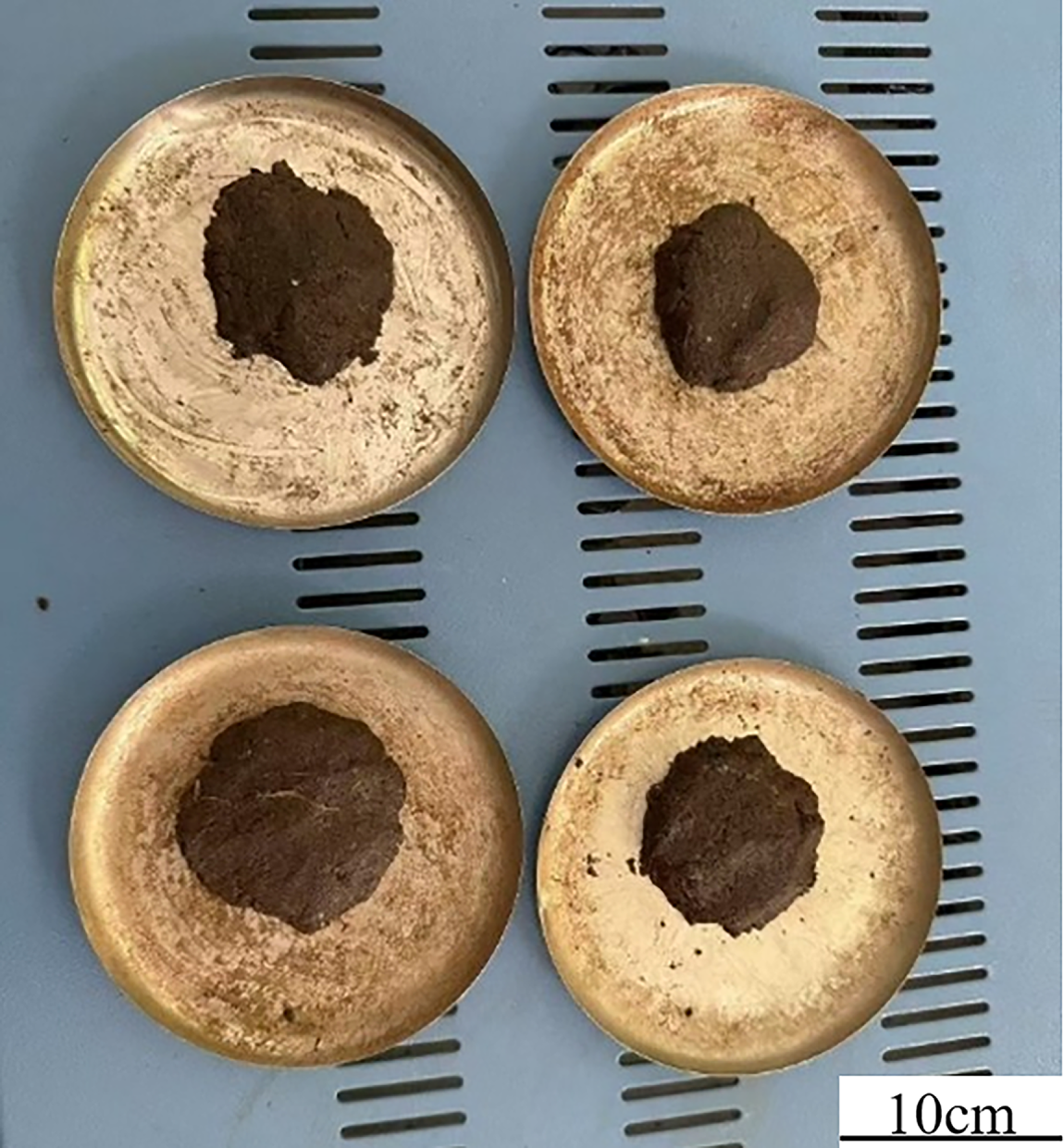
Figure 1: Municipal sludge sample map.
The absolute dry mass and water content of the sludge were measured using a moisture analyzer (LC-DHS-10A). Based on the absolute dry weight, CaO, lignite powder, and sawdust were added at mass ratios of 3%, 7%, and 11%, respectively. For each experiment, 10 g of wet sludge was weighed using an electronic balance, and the corresponding amount of additive was calculated and added.
The sludge and additives were thoroughly mixed manually until a homogeneous mixture was obtained. The prepared mixture was immediately used for drying experiments to avoid moisture loss prior to testing.
2.2 Drying Experimental Conditions
Drying experiments were conducted in an electric hot-air circulating constant-temperature drying oven (DHG-9070A). The oven was preheated to the target temperature before sample loading. The results will be recorded in real time and uploaded to the calculator, as shown in Fig. 2.
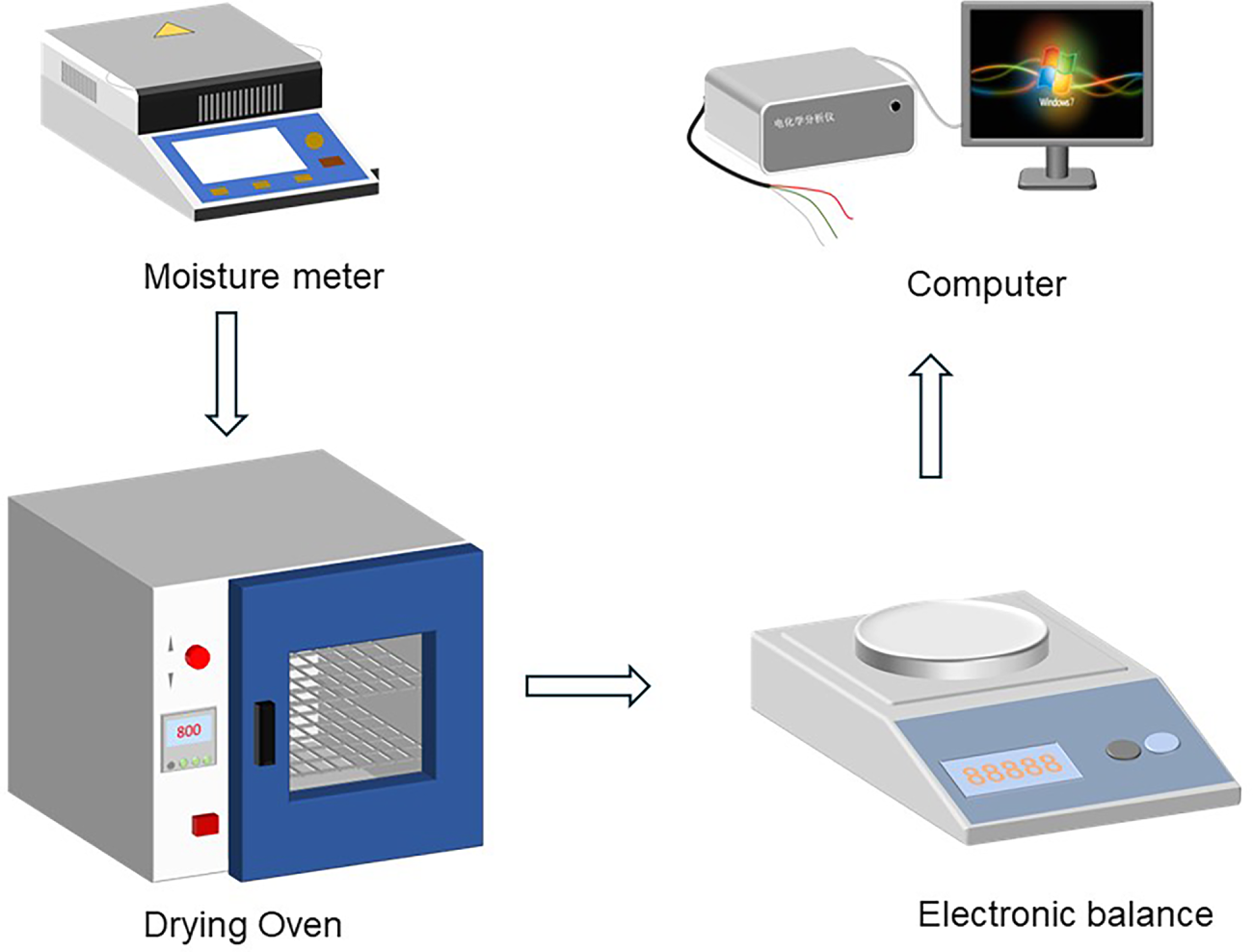
Figure 2: Experimental flowchart.
All drying tests were carried out at a constant temperature of 80°C and an air velocity of 1 m/s. The drying temperature was set to 80°C for the convective drying experiments because (i) TG/DTG analysis suggested that an appropriate drying temperature for municipal sludge should be below 100°C to mainly remove moisture without triggering notable thermal decomposition, and (ii) previous low-temperature convective drying studies commonly adopted a temperature range up to 80°C. Therefore, 80°C was selected as a representative low-temperature condition with sufficient drying driving force. Moreover, using a fixed temperature allows the effects of additive dosage and interactions on drying time to be evaluated without the confounding influence of temperature variation. During drying, the mass of the samples was recorded in real time using a weight sensor connected to a data acquisition system. The mass change was continuously transmitted to a computer for further analysis.
The drying process was continued until the mass change of the sample became negligible, indicating that equilibrium moisture content had been reached.
In the drying experiments, samples were dried at 80°C with an air velocity of 1 m/s, and dry-basis moisture content was determined by periodic weighing. TG and DTG analyses (20°C/min) were conducted on sludge samples with and without additives to evaluate thermal weight loss behavior. The moisture ratio (MR) was used to characterize drying kinetics and defined as:
Among them,
3.1 Thermogravi Metric Analysis
To investigate the effects of CaO, lignite powder, and sawdust on the thermal weight loss characteristics of municipal sludge, this study conducted thermogravimetric (TG) and differential thermogravimetric (DTG) analyses on municipal sludge samples with no additives, as well as those with 5% CaO, lignite powder, and sawdust, at a heating rate of 20°C/min. The experimental data are shown in Fig. 3. The thermal weight loss curve of municipal sludge can be divided into two stages: the first stage, from 30°C to 200°C, primarily involves the evaporation of moisture; the second stage, from 200°C to 600°C, is mainly associated with the decomposition of organic matter in the sludge. The results indicate that, in the second stage, sawdust is mostly decomposed, lignite powder undergoes slight decomposition, while CaO does not decompose, consistent with its characteristic decomposition temperature being greater than 800°C.
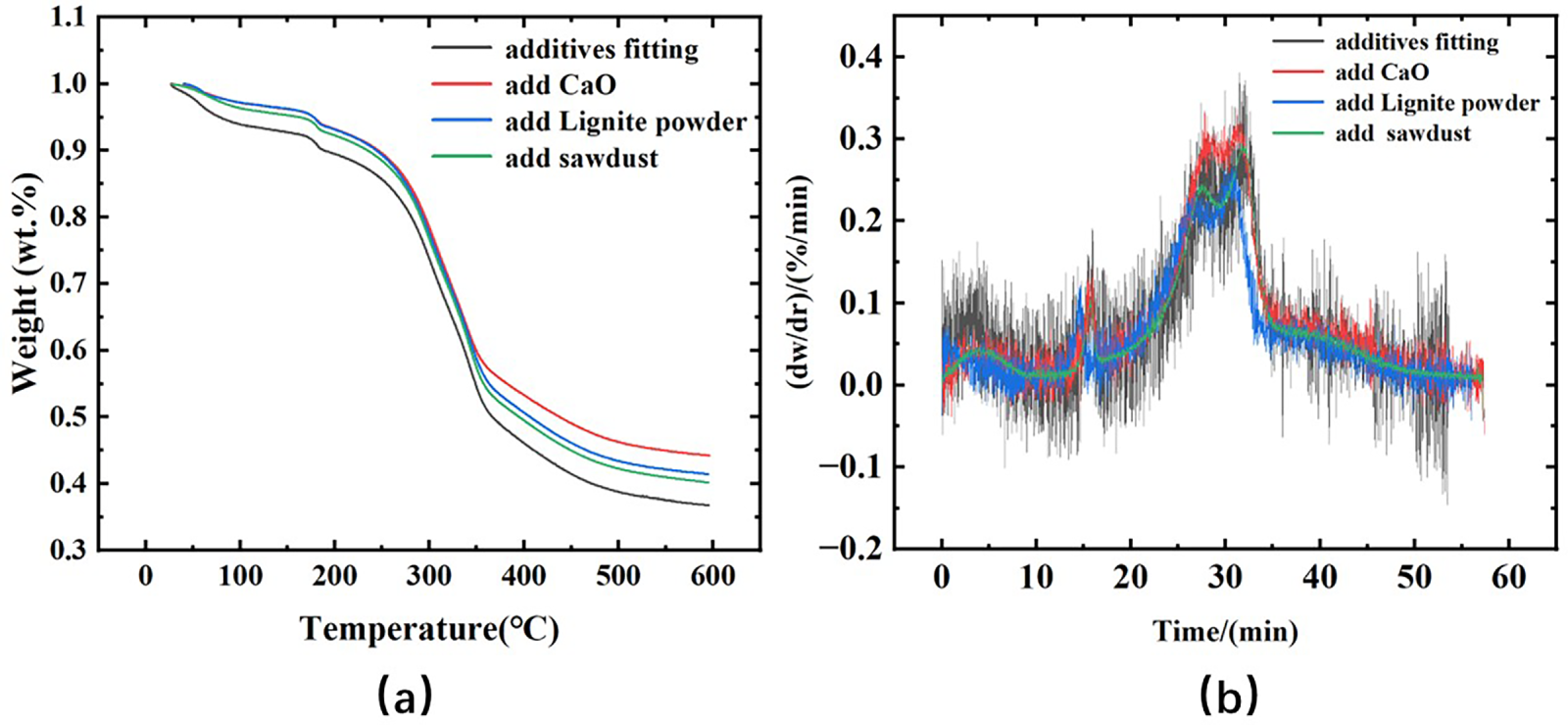
Figure 3: (a) TG diagram, and (b) DTG diagram.
In the first stage, the TG and DTG curves show that the addition of CaO and lignite powder significantly promotes moisture evaporation, with the effect of CaO being particularly pronounced, while the impact of sawdust is relatively limited. Additionally, in the experiments, small and large weight loss peaks were observed at 191°C and 280°C, respectively, on all TG curves, corresponding to the decomposition processes of aliphatic compounds and proteins in municipal sludge.
Based on the TG curve analysis, the optimal drying temperature for municipal sludge should be below 100°C. This finding is also supported by the study of Zhou et al. [24], who reported similar effects of lignite powder on moisture adsorption and mass transfer enhancement. This temperature is effective for evaporating moisture from the sludge while also promoting the moderate decomposition of additives. Specifically, when sawdust is added, drying should be performed at a temperature below 100°C; when lignite powder is added, the optimal drying temperature should be controlled below 200°C; and when CaO is added, drying should be conducted below 600°C to avoid unnecessary reactions when its decomposition temperature is reached.
The TG/DTG analysis provides a direct basis for interpreting the convective drying behavior and selecting appropriate drying conditions. The TG/DTG results indicate that, below approximately 200°C, the dominant mass loss of municipal sludge is mainly attributed to moisture evaporation, whereas significant thermal decomposition of organic components occurs at higher temperatures. This suggests that low-temperature drying conditions are sufficient to remove moisture while avoiding pronounced thermal degradation.
Based on this understanding, a drying temperature of 80°C was selected for the convective drying experiments as a practical compromise between minimizing thermal decomposition and maintaining an adequate drying rate. At 80°C, moisture removal remains the primary mass transfer mechanism, consistent with the TG/DTG observations, while the thermal driving force is sufficient to ensure stable drying kinetics and allow the effects of additives and their interactions to be systematically evaluated.
3.2 Effect of a Single Additive on the Drying Characteristics of Municipal Sludge
In this study, a drying temperature of 80°C was used to investigate the effects of adding 0%, 3%, 7%, and 11% CaO, lignite powder, and sawdust on the drying characteristics of municipal sludge. The drying curve (Fig. 4) shows that the addition of CaO significantly increased the drying rate, consistent with the three-stage drying pattern observed at low temperatures. Among the different additions, the best effect was achieved with 3% CaO. However, when the addition increased to 7% and 11%, the drying efficiency decreased, and at 11% addition, the efficiency was even lower than that of the control group.
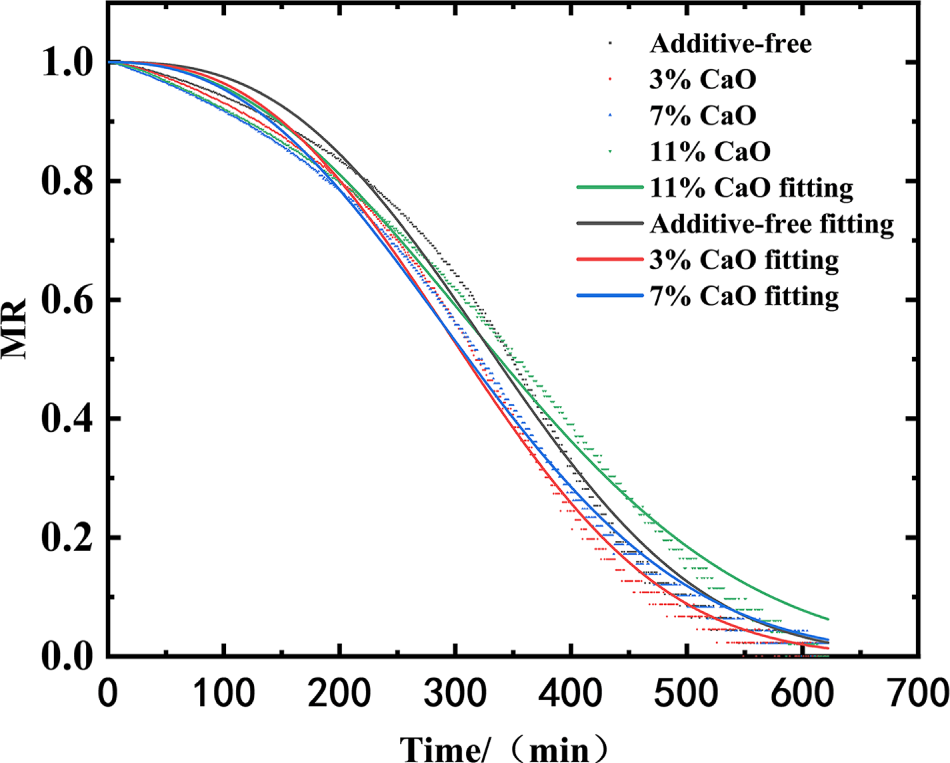
Figure 4: The effect of CaO on the drying of municipal sludge.
The results in this section indicate that CaO plays a dual role in the low-temperature drying process of municipal sludge. At a lower dosage (3%), CaO can significantly enhance the drying rate of the sludge; however, when the dosage is further increased to 7% and 11%, the drying performance actually decreases.
This behavior is in good agreement with previously reported studies on CaO-conditioned sludge drying. Zhang et al. [18] reported that the strong hygroscopicity and exothermic hydration reaction of CaO can effectively promote moisture evaporation and shorten drying time under low-temperature conditions. Similarly, Zhang et al. [21] observed that moderate CaO addition improves pore structure and reduces internal mass transfer resistance, thereby enhancing drying efficiency.
However, several studies have also indicated that excessive CaO can negatively affect the drying process due to the rapid formation of a dense Ca(OH)2 layer on the sludge surface, which induces surface hardening and pore blockage, ultimately hindering internal moisture diffusion during the falling-rate drying stage [18,21]. The present results further confirm this phenomenon and quantitatively identify 3% CaO as the optimal dosage under low-temperature convective drying conditions.
Compared with existing studies, this work provides additional insight by systematically evaluating CaO dosage effects within a multi-additive system, thereby offering a clearer understanding of the balance between thermal enhancement and structural limitation induced by CaO.
3.2.2 The Impact of Lignite Powder
As shown in Fig. 5, lignite powder improves the drying performance of sludge, though not as effectively as CaO. When 3% and 7% lignite powder was added, the drying efficiency was higher than that of the control group, with the best effect observed at 7%. However, when the lignite powder addition reached 11%, the drying efficiency decreased, indicating a nonlinear relationship between the amount of lignite powder added and the water loss rate, with the optimal addition ratio being approximately 7%.
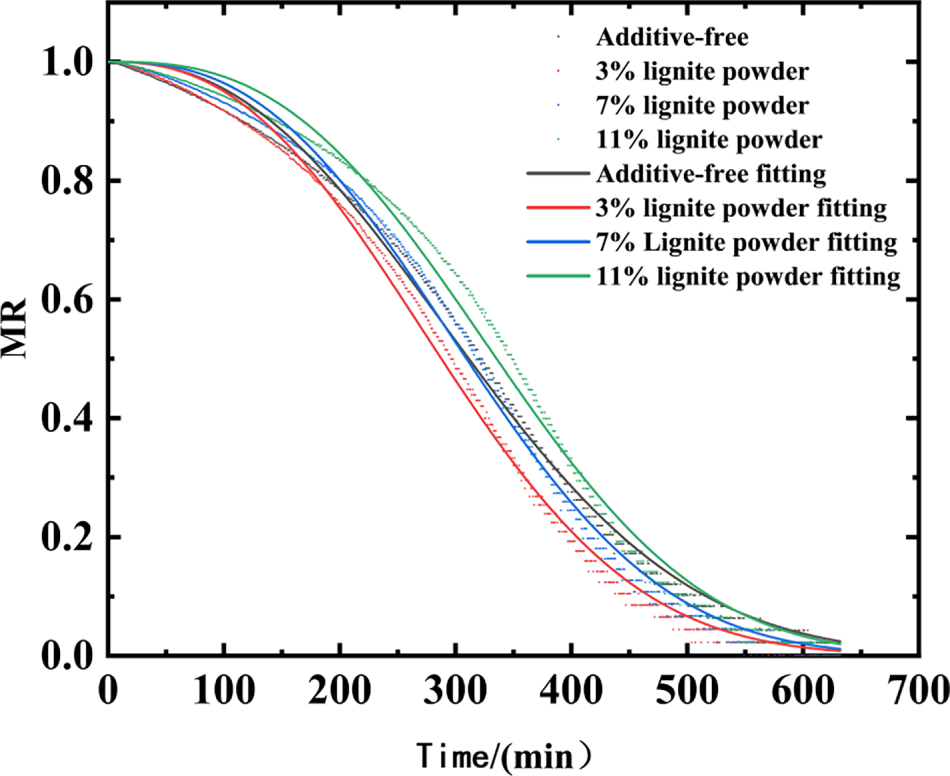
Figure 5: The effect of lignite powder on the drying of municipal sludge.
The results of this section indicate that lignite powder has a positive but non-linear effect on the drying performance of municipal sludge, with an optimal addition of about 7%. This behavior characteristic is consistent with findings reported in the literature. Zhang et al. [16] pointed out that lignite, due to its porous structure and polymer bridging effect, can effectively improve the dewatering performance of sludge, thereby further promoting subsequent drying processes.
In addition, Skarbalius et al. [19] reported that lignite powder possesses a rich pore structure and abundant surface functional groups, which contribute to strong moisture adsorption capacity and improved heat and mass transfer conditions during drying. Similar observations were also reported by Zhou et al., further confirming the beneficial role of lignite powder in promoting moisture migration and drying efficiency.
However, the decrease in drying efficiency observed at higher lignite powder dosages (11%) can also be explained by mechanisms discussed in previous studies. Excessive lignite addition may lead to an overly loose material structure, which weakens effective heat transfer and disrupts the continuity of moisture migration pathways, thereby limiting evaporation efficiency during the drying process [16,19]. The present results further support these findings and highlight the importance of optimizing lignite powder dosage to balance structural enhancement and thermal efficiency under low-temperature convective drying conditions.
As shown in Fig. 6, the drying performance with the addition of sawdust is between that of CaO and lignite powder, but still not as significant as the effect of CaO. The analysis indicates that the impact of sawdust on the water loss rate of sludge follows a nonlinear pattern, with the optimal addition ratio being approximately 7%.
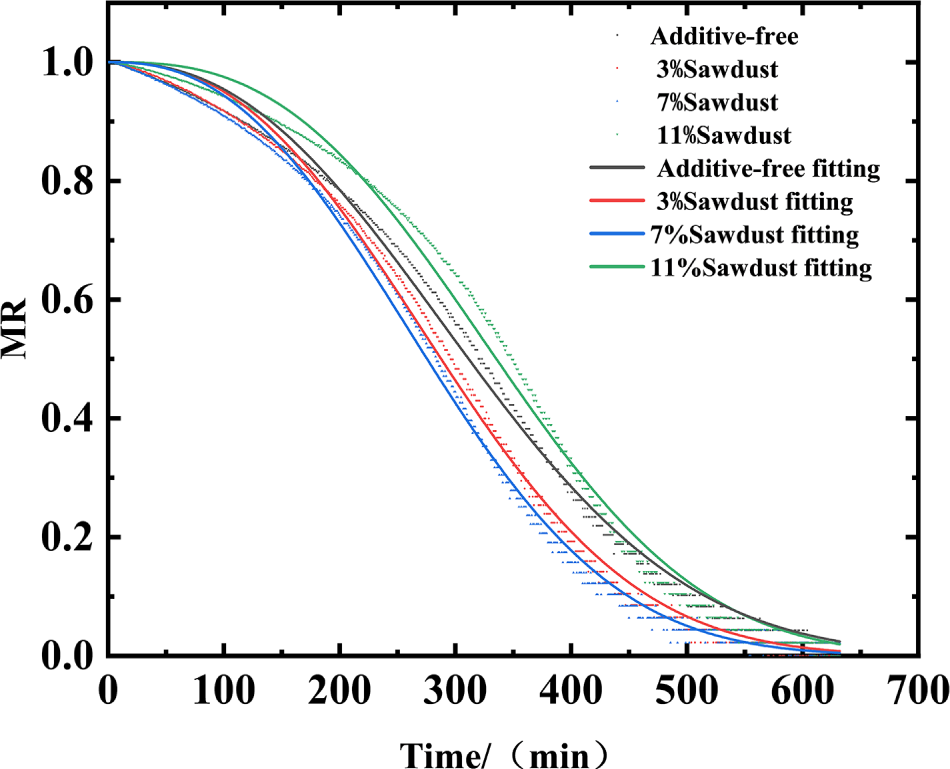
Figure 6: The effect of sawdust on the drying of municipal sludge.
The results of this section indicate that adding sawdust can improve the drying performance of municipal sludge, with the optimal amount being about 7%, while excessive addition can lead to a decrease in drying efficiency. This trend is consistent with the conclusions of previous studies. Li et al. [17] indicated that due to the fibrous structure of sawdust, it can significantly improve the porosity and structural stability of sludge during drying, thereby promoting moisture diffusion and enhancing drying kinetics.
Similarly, Ozfidan et al. [20] reported that biomass materials such as sawdust can act as effective structural fillers, increasing permeability and promoting water vapor diffusion in sludge-based systems. These findings support the present observation that moderate sawdust addition suppresses sludge agglomeration and surface crust formation, leading to improved convective heat and mass transfer.
However, when the sawdust dosage exceeds an optimal level, its inherent hygroscopicity and limited structural stability under high-moisture conditions may result in moisture retention and partial structural collapse, which in turn hinders effective moisture migration during the drying process [17,20]. The present results further confirm this behavior and highlight the importance of optimizing sawdust dosage to balance structural enhancement and moisture adsorption effects under low-temperature drying conditions.
3.3 Selection and Fitting of Drying Kinetics Models
Select three common drying kinetic models, as listed in Table 1, to determine the drying model for municipal sludge.

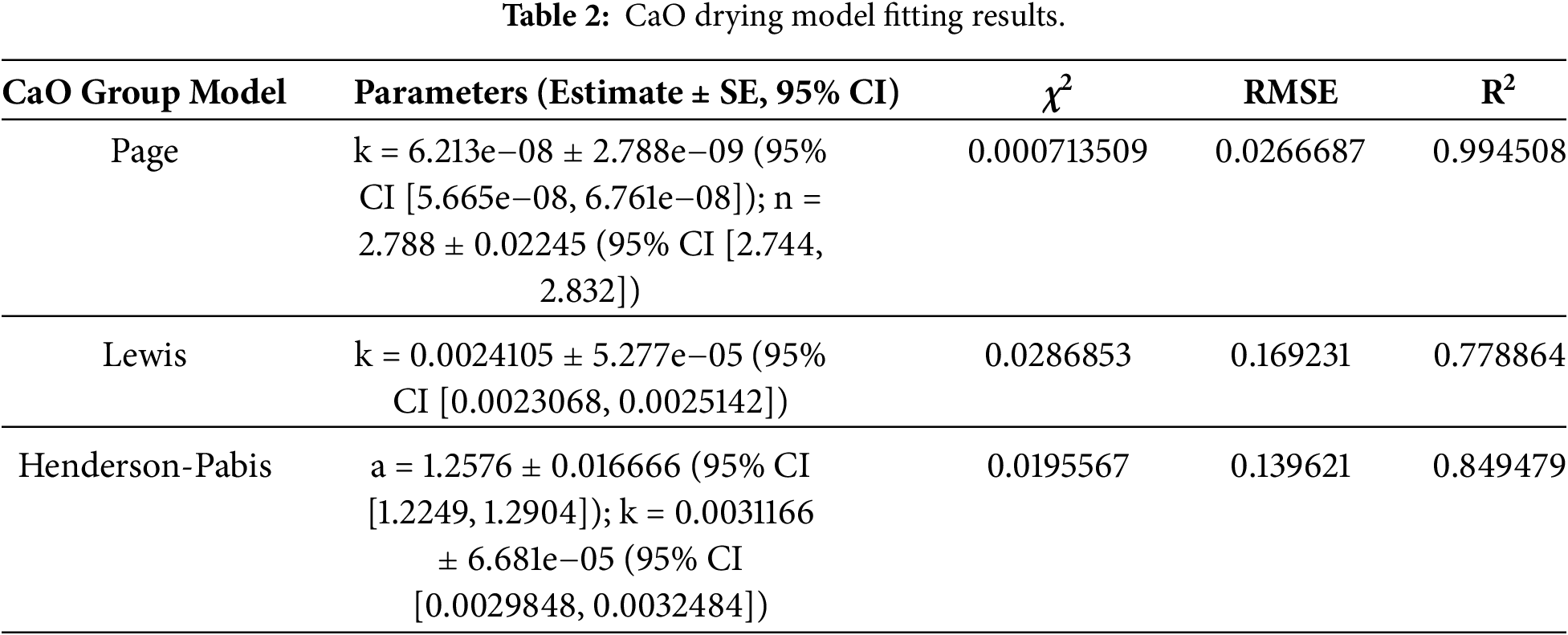
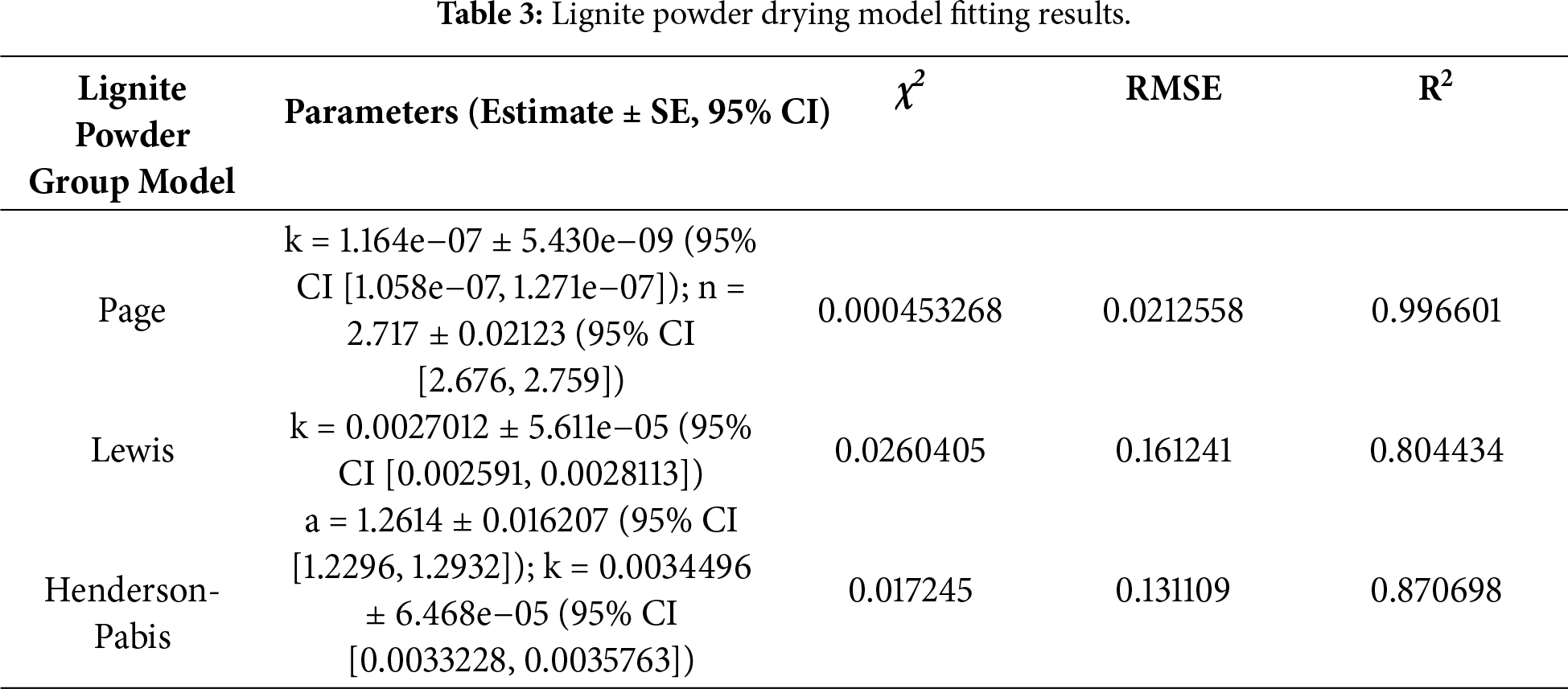
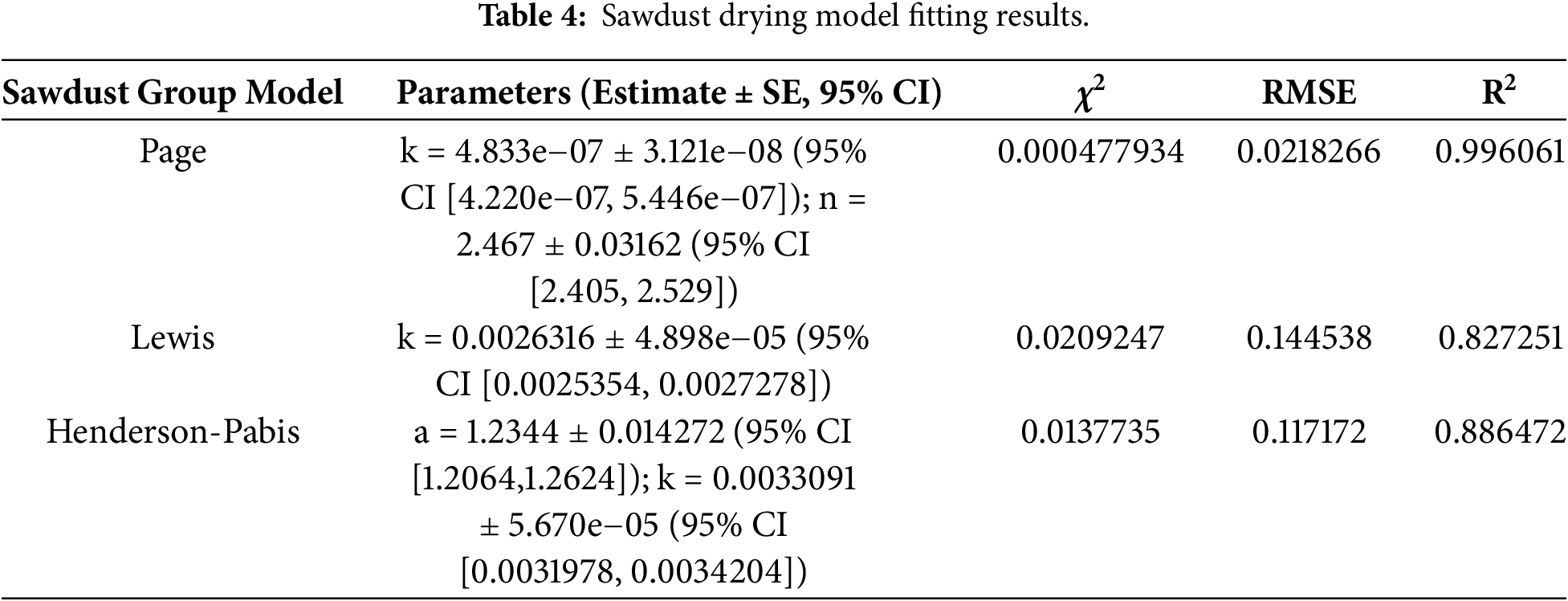
The drying curves of municipal sludge were fitted using three drying models from Tables 2–4, and the goodness of fit was evaluated using the coefficient of determination (R2), chi-square test (χ2), and root mean squared error (RMSE) [28]. The closer R2 is to 1, and the smaller the values of χ2 and RMSE, the better the model fit. This allows for the determination of the most suitable mathematical model for predicting the drying of municipal sludge and analyzing the drying behavior. These statistical parameters were calculated based on the comparison between experimentally measured moisture ratio values and those predicted by the drying models.
The chi-square (χ2) value was calculated using the following equation:
The root mean square error (RMSE) was calculated as:
where
As listed in Tables 2–4, under the drying condition of 80°C, the Page model has the highest R2, around 0.99, with the smallest RMSE and χ2 values, both within 0.05 and 0.001, respectively. Therefore, the Page model is the most suitable mathematical model for predicting the drying of municipal sludge.
In contrast, the Page model incorporates an additional exponent, allowing greater flexibility to describe the nonlinear drying behavior associated with the transition from the constant-rate stage to the falling-rate stage. This characteristic is particularly relevant for the sludge–additive system, where additive-induced structural evolution, such as pore development, agglomeration inhibition, or surface hardening, leads to time-dependent internal diffusion resistance. Therefore, the superior fitting performance of the Page model reflects its stronger capability to capture the complex and non-uniform moisture migration behavior in municipal sludge during low-temperature convective drying.
3.4 Additive Blending Optimization Experiment Based on Response Surface Method
3.4.1 Establishment of Response Models and Significance Analysis
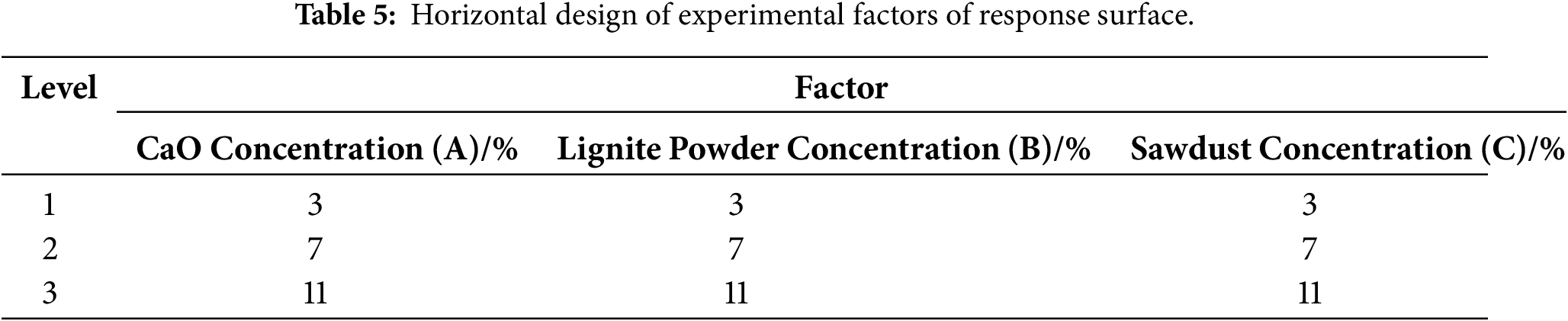
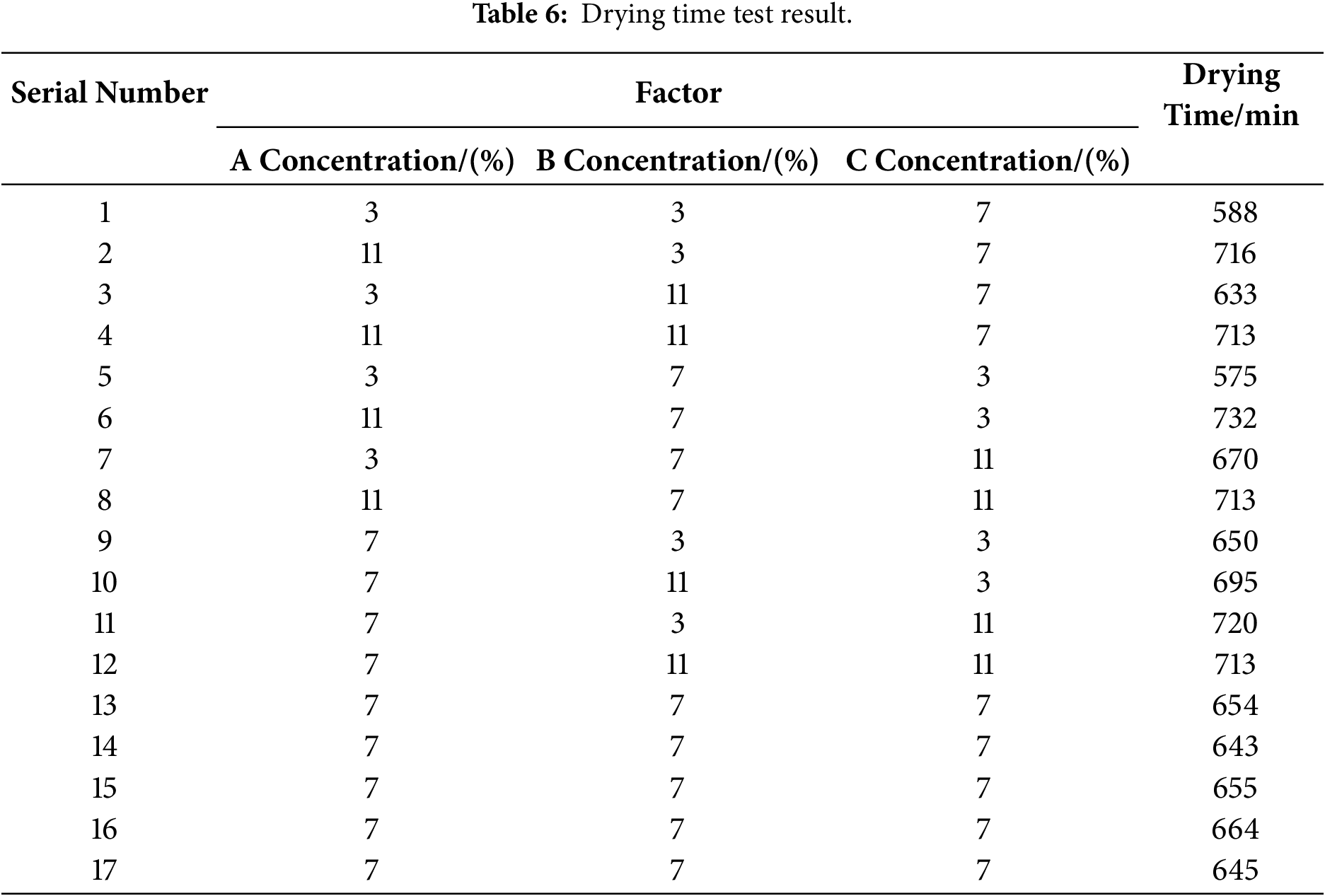
Based on the results of single-factor experiments, as shown in Table 5, this study selected the concentrations of CaO, lignite powder, and sawdust (3%, 7%, 11%) to investigate their effects on the drying characteristics of municipal sludge. A three-factor, three-level regression experiment was conducted using the Box-Behnken design principle [29] to evaluate the impact of each factor and their interactions on the drying process. The drying times at different concentrations were tested, and the results are listed in Table 6.
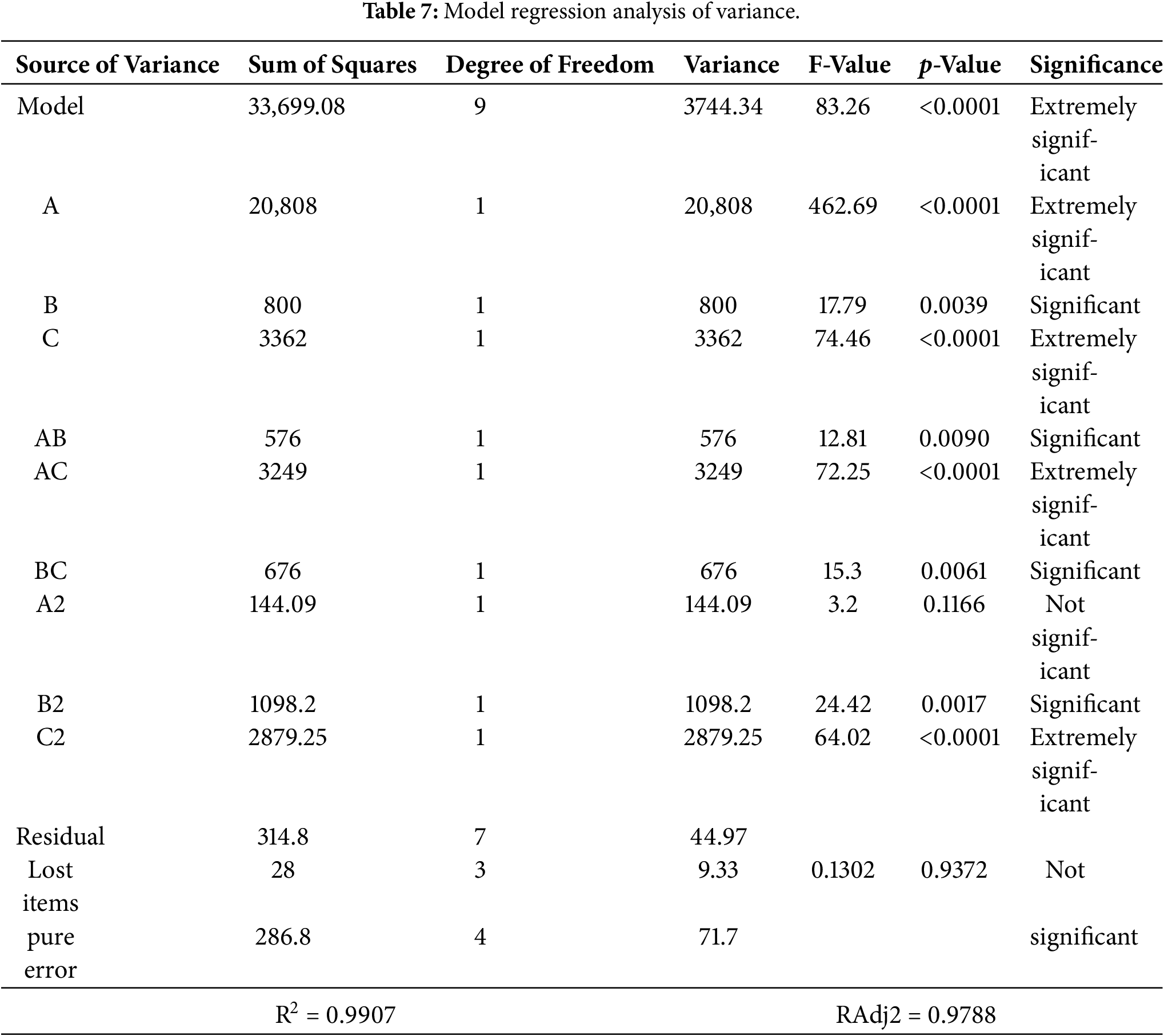
The regression equation has an R2 of 0.9907 and a p-value of <0.0001, indicating that the model is highly significant and fits the experimental results well. Model regression analysis of variance are listed in Table 7. The following is the process for calculating confidence intervals.
Fit parameters using nonlinear regression:
N—Model points;
p—The number of parameters in the model (Page = 2; Lewis = 1; H − P = 2).
Calculate parameter covariance matrix:
Obtain the standard error (SE):
Calculate the 95% confidence interval (CI):
3.4.2 Factor Interaction Analysis
To further investigate the interaction effects on drying time, response surface plots were generated using Design-Expert 13 software. As shown in Fig. 7, the slope corresponding to CaO concentration (A) is steeper than that of lignite powder concentration (B), indicating that CaO has a stronger influence on drying time within the studied range. Increasing CaO concentration leads to a pronounced increase in drying time, whereas lignite powder exhibits a nonlinear effect, with drying time decreasing initially and reaching a minimum at approximately 7% before increasing at higher dosages. These results confirm a significant interaction between CaO and lignite powder.
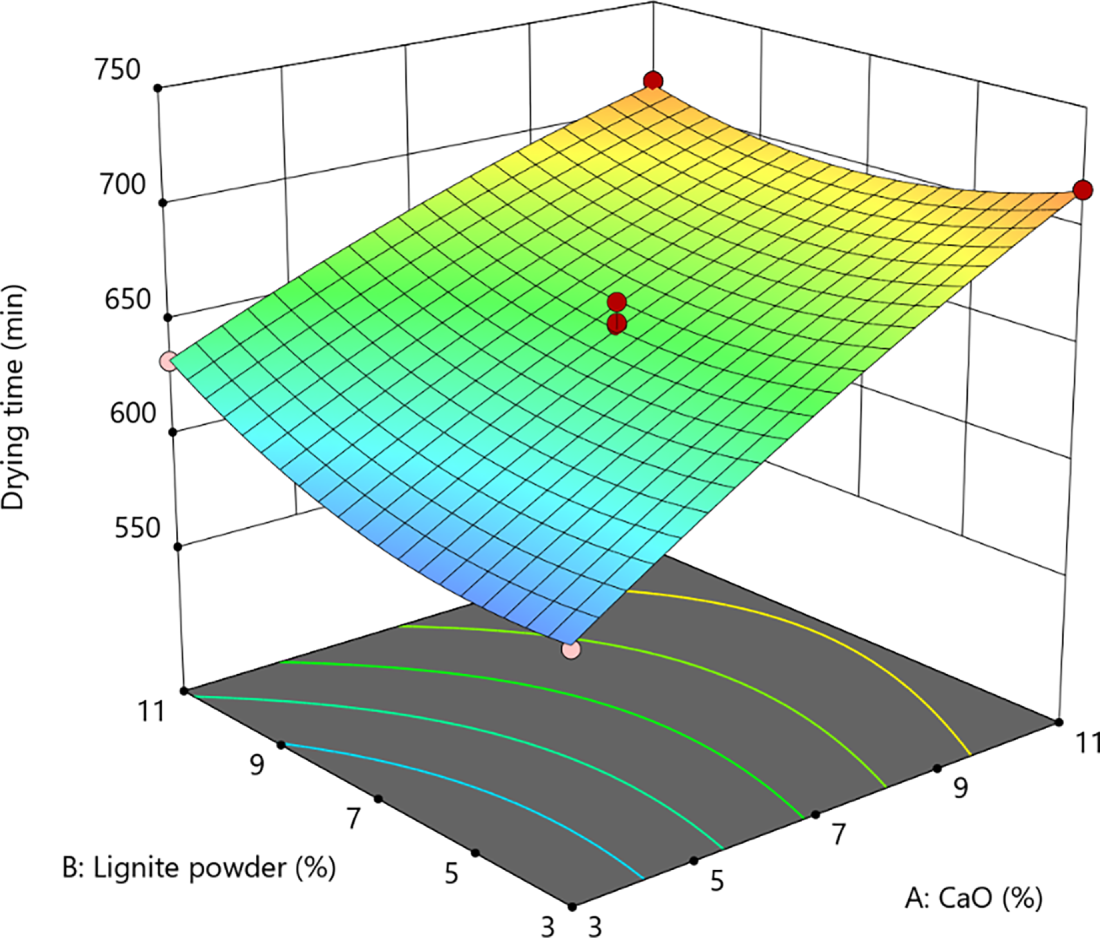
Figure 7: Effect of the interaction between CaO concentration and lignite concentration on drying time.
The interaction between CaO and lignite powder enhances sludge drying performance through complementary thermal and structural effects. The exothermic hydration of CaO increases the thermal driving force, while the porous structure of lignite powder improves material porosity and moisture migration pathways, jointly promoting evaporation during the constant-rate stage and diffusion during the falling-rate stage. However, excessive CaO results in rapid surface hardening due to the formation of a dense Ca(OH)2 layer, which restricts internal moisture diffusion and reduces drying efficiency.
As shown in Fig. 8, the interaction between CaO concentration and sawdust concentration significantly affects the drying time. The synergistic effect of CaO and sawdust can significantly enhance the drying rate of municipal sludge. During the hydration process, CaO releases a large amount of reaction heat, causing the sludge temperature to rise rapidly, which increases the evaporation driving force and accelerates moisture evaporation during the constant-rate phase. Meanwhile, the generated Ca(OH)2, along with structural expansion and microcrack formation, improves the internal pore structure of the sludge and reduces mass transfer resistance during the falling-rate phase. Sawdust, as a framework particle, increases the bed layer porosity and gas-solid contact area, suppresses crust formation and agglomeration, and makes the external convective heat transfer and evaporation process more stable and efficient. The synergistic effect of both provides additional heat sources and optimizes the heat and mass transfer pathways, thereby extending the constant-rate phase, enhancing the diffusion rate during the falling-rate phase, and significantly improving overall drying efficiency.
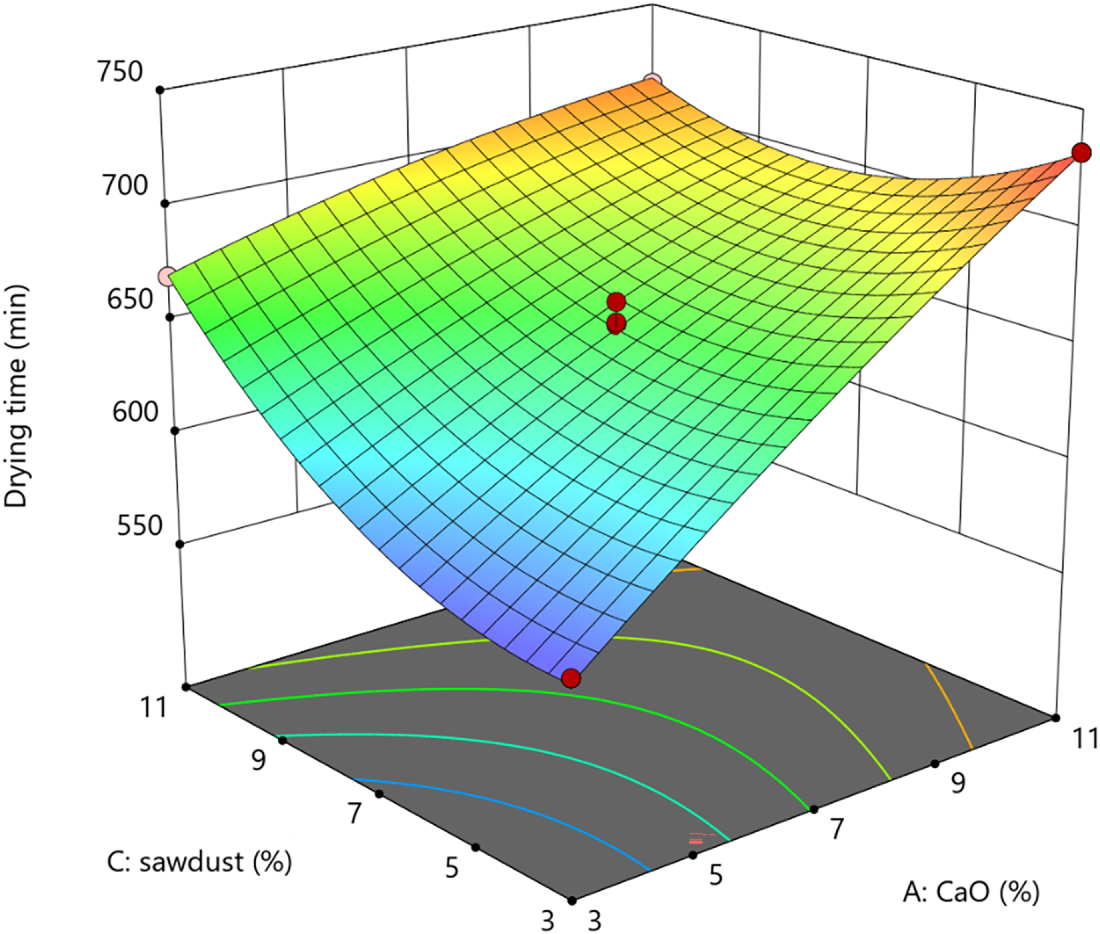
Figure 8: Effect of CaO concentration and sawdust concentration interaction on drying time.
Specifically, with the increase in sawdust concentration, the drying time initially decreases and then increases. This phenomenon may be attributed to the fact that at low sawdust concentrations, the addition of sawdust increases the surface area of the material or improves heat transfer efficiency, thereby accelerating moisture evaporation and shortening the drying time. However, as the sawdust concentration increases further, its hygroscopic properties may cause moisture to be trapped, which in turn suppresses the effective evaporation of moisture, ultimately leading to an extension of the drying time.
In summary, the interaction between CaO and sawdust concentrations indicates that under different conditions, these two factors collectively influence the efficiency of the drying process. Specifically, at higher sawdust concentrations, an increase in CaO concentration may further extend the drying time. Therefore, optimizing the concentration combination of these two factors can effectively improve drying efficiency.
As shown in Fig. 9, the interaction between lignite powder concentration and sawdust concentration significantly affects the drying time. Under their combined influence, lignite powder and sawdust concentrations exhibit a typical interactive effect on the sludge drying rate. At an appropriate ratio, the two factors can synergistically promote drying: lignite powder, with its porous structure and strong hygroscopic properties, increases mass transfer channels and enhances the moisture diffusion rate during the falling-rate phase; sawdust acts as a structural support, significantly improving bed porosity and air permeability, suppressing sludge agglomeration and surface crust formation, and ensuring more complete evaporation during the constant-rate phase. When both lignite powder and sawdust concentrations are at moderate levels, the optimization of pore structure and enhanced gas-solid contact result in maximized drying rates. However, when the concentrations of both are too high, the material layer may become too loose, heat distribution may become uneven, or local heat transfer may be obstructed, leading to a decrease in the drying rate. Therefore, a significant interaction exists between lignite powder and sawdust, and the proper ratio is key to improving sludge drying efficiency.
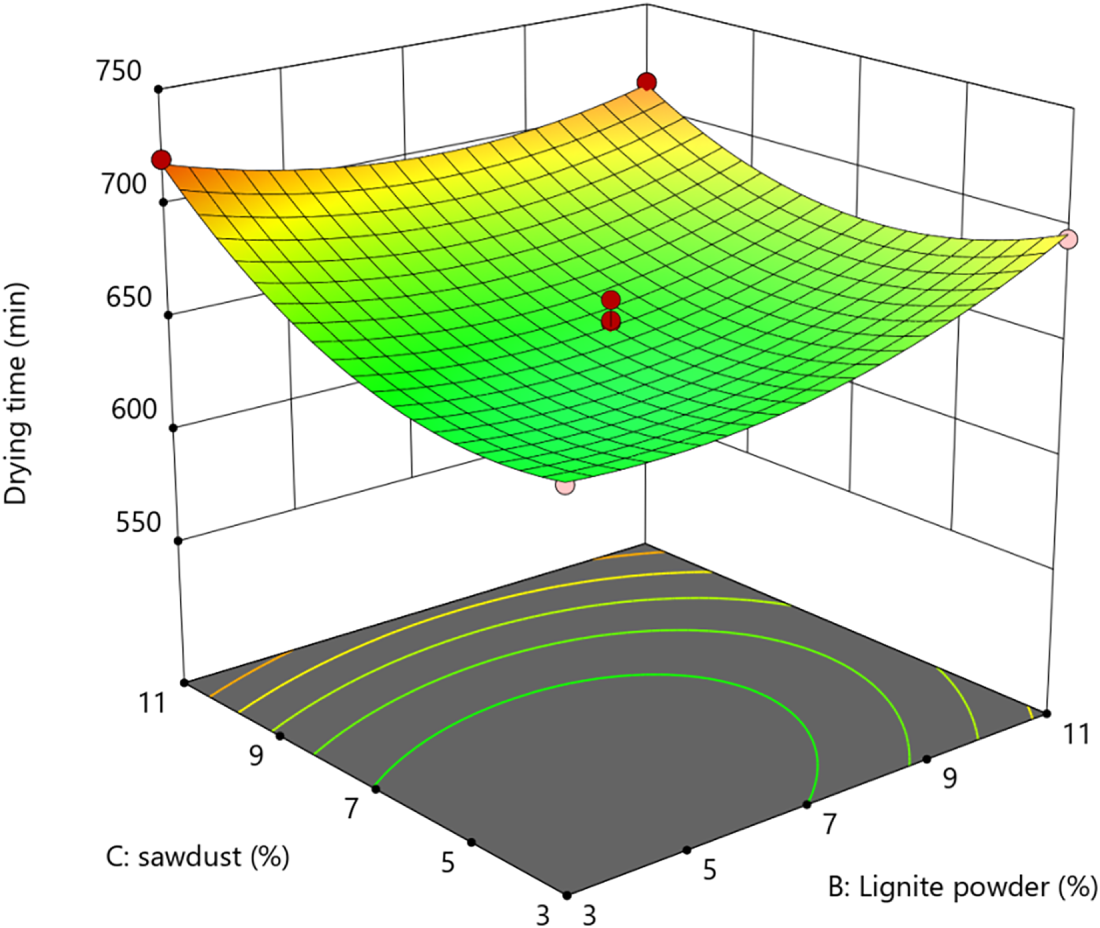
Figure 9: Effect of the interaction between lignite concentration and sawdust concentration on drying time.
Specifically, with the increase in lignite powder and sawdust concentrations, the drying time follows a trend of initially decreasing and then increasing. This phenomenon is likely closely related to the interaction between lignite powder and sawdust during the drying process. In the lower concentration range, lignite powder promotes moisture evaporation by increasing thermal conductivity or hygroscopicity, thus shortening the drying time. However, as the concentration increases further, lignite powder can hinder moisture migration, making it difficult for moisture to evaporate effectively, leading to an increase in drying time.
Meanwhile, as the sawdust concentration increases, the variation in drying time fluctuates significantly, indicating that the effect of sawdust concentration on drying time is more complex. This fluctuation may be related to the hygroscopic properties of sawdust and its thermodynamic behavior changes during the drying process. The addition of sawdust may improve moisture migration efficiency within certain concentration ranges, but in other concentration ranges, the hygroscopic effect of sawdust may lead to moisture retention, thereby prolonging the drying time.
In summary, the interaction between lignite powder concentration and sawdust concentration significantly affects drying time, and this effect is nonlinear. The concentration changes of both factors jointly influence the heat transfer and moisture migration mechanisms during the drying process. Therefore, the rational adjustment of the concentration ratio of lignite powder and sawdust is of great importance for optimizing the drying process and improving drying efficiency.
3.4.3 Optimization of Optimal Conditions
The optimized drying model was used as the objective function, with the goal of maximizing the reduction in drying time. The best process parameters were obtained as follows. As shown in Table 8, for single-factor influences, CaO concentration of 3%, lignite powder concentration of 7%, and sawdust concentration of 7%. As shown in Table 9, for pairwise factor interactions: (CaO concentration 3%, lignite powder concentration 3%), (CaO concentration 3%, sawdust concentration 3%), and (lignite powder concentration 3%, sawdust concentration 3%). Among these, the combination of (CaO concentration 3%, sawdust concentration 3%) yielded the best effect in reducing drying time.
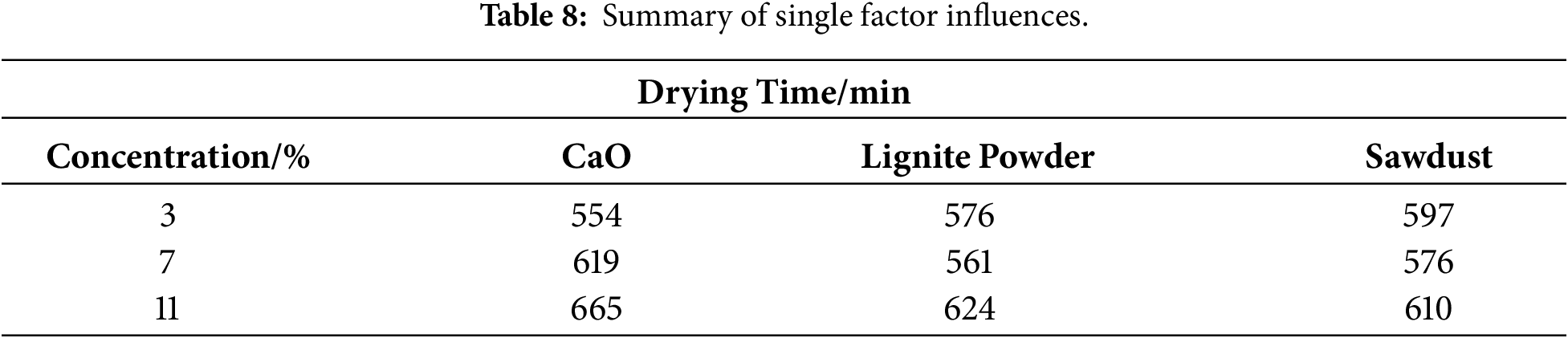

In the single-factor experimental analysis, the drying time of municipal sludge increased with the rise in CaO concentration, and initially decreased and then increased with the rise in lignite powder and sawdust concentrations. In the interaction experiment, the order of the one-factor effects on drying time was as follows: CaO concentration (A) > sawdust concentration (C) > lignite powder concentration (B). The order of the interaction effects was: AC > BC > AB. Among these, the interaction between sawdust and the other factors was the most significant.
Based on mathematical fitting of experimental data and response surface methodology (RSM) analysis, this study systematically investigates the effects of single additives and binary combinations of CaO, lignite powder, and sawdust on the municipal sludge drying process. It also quantitatively characterizes the contribution and interaction effects of each factor on the drying rate (or drying time). The results indicate:
1. Under single-factor conditions, the influence of each factor on drying time follows the order: CaO concentration > sawdust concentration > lignite powder concentration. The corresponding optimal parameters are 3% CaO, 7% lignite powder, and 7% sawdust.
2. Under multi-factor conditions, the interaction effects between any two factors on drying time follow the order: “CaO interaction with sawdust > lignite dust interaction with sawdust > CaO interaction with lignite powder” with the combination of CaO and sawdust having the most significant effect. The optimal ratio for this combination is 3% CaO and 3% sawdust.
The comprehensive optimization results show that the reasonable incorporation of pairwise interaction terms can significantly improve drying performance. The main effects and order relationships of different additives under their synergistic effects have been clarified, and practical parameter windows and ratio recommendations are provided. These findings offer empirical evidence and methodological reference for the engineering design and process optimization of sludge drying systems.
The comprehensive optimization results show that the reasonable incorporation of pairwise interaction terms can significantly improve drying performance. The main effects and order relationships of different additives under their synergistic effects have been clarified, and practical parameter windows and ratio recommendations are provided. These findings offer empirical evidence and methodological reference for the engineering design and process optimization of sludge drying systems.
Acknowledgement: The authors gratefully acknowledge the financial support for this research from the National Natural Science Foundation of China, the China Postdoctoral Science Foundation, the Natural Science Foundation of Guangdong Province, and the China Southern Power Grid Technology Project.
Funding Statement: The research was funded by the National Natural Science Foundation of China, grant number 52406074, the China Postdoctoral Science Foundation under Grant Number 2025T180171, the Natural Science Foundation of Guangdong Province (2025A1515011270), and the China Southern Power Grid Technology Project (GDKJXM20231415/030100KC23120104).
Author Contributions: The authors confirm contribution to the paper as follows: Conceptualization, Yanxin Hu and Jin Huang; methodology, Jin Huang; software, Zihao Tang; validation, Jin Huang, Zihao Tang and Tingting Wu; formal analysis, Jin Huang; investigation, Jin Huang and Tingting Wu; resources, Hualiang Li and Yanxin Hu; data curation, Zihao Tang; writing—original draft preparation, Jin Huang; writing—review and editing, Yanxin Hu, Zihao Tang and Tingting Wu; visualization, Zihao Tang; supervision, Yanxin Hu; project administration, Yanxin Hu; funding acquisition, Yanxin Hu and Hualiang Li. All authors reviewed and approved the final version of the manuscript.
Availability of Data and Materials: The data that support the findings of this study are available from the corresponding author, Yanxin Hu, upon reasonable request.
Ethics Approval: Not applicable.
Conflicts of Interest: The authors declare no conflicts of interest.
References
1. Jellali S, Khiari B, Usman M, Hamdi H, Charabi Y, Jeguirim M. Sludge-derived biochars: a review on the influence of synthesis conditions on pollutants removal efficiency from wastewaters. Renew Sustain Energy Rev. 2021;144:111068. doi:10.1016/j.rser.2021.111068. [Google Scholar] [CrossRef]
2. Sun J, Wang Y, Wang Y, Liu C, Ma S, Ma H. Effects of temperature, relative humidity, and sludge thickness on sludge drying characteristics and kinetic investigation. Chem Eng Res Des. 2025;214:177–87. doi:10.1016/j.cherd.2024.12.038. [Google Scholar] [CrossRef]
3. Zhao P, Shen Y, Ge S, Chen Z, Yoshikawa K. Clean solid biofuel production from high moisture content waste biomass employing hydrothermal treatment. Appl Energy. 2014;131:345–67. doi:10.1016/j.apenergy.2014.06.038. [Google Scholar] [CrossRef]
4. Zhang X, Ye P, Wu Y. Enhanced technology for sewage sludge advanced dewatering from an engineering practice perspective: a review. J Environ Manage. 2022;321:115938. doi:10.1016/j.jenvman.2022.115938. [Google Scholar] [PubMed] [CrossRef]
5. Yoo J, Oshita K, Kusakabe T, Takaoka M. Adhesion behavior of dewatered sewage sludge during indirect thermal drying. J Environ Manage. 2025;381(1):125203. doi:10.1016/j.jenvman.2025.125203. [Google Scholar] [PubMed] [CrossRef]
6. Rao B, Li Y, Zhang Y, Ren W, Jia H, Huang W, et al. Innovative synergistic deep dewatering of municipal sludge using coupled piezoelectric materials and mechanical filtration. J Environ Chem Eng. 2025;13(2):115600. doi:10.1016/j.jece.2025.115600. [Google Scholar] [CrossRef]
7. Karadirek IE, Erkaya O, Ciggin AS. Comparative life cycle assessment of sewage sludge drying by solar and thermal drying technologies. Waste Manag. 2025;201:114826. doi:10.1016/j.wasman.2025.114826. [Google Scholar] [PubMed] [CrossRef]
8. Fijalkowski K, Rorat A, Grobelak A, Kacprzak MJ. The presence of contaminations in sewage sludge—the current situation. J Environ Manag. 2017;203:1126–36. doi:10.1016/j.jenvman.2017.05.068. [Google Scholar] [PubMed] [CrossRef]
9. Barbosa VP, Carvalho LL, Pereira MS, Duarte CR, Ataíde CH. Paddle dryer: an analysis of particles’ bed distribution and flow dynamics. Powder Technol. 2025;466:121439. doi:10.1016/j.powtec.2025.121439. [Google Scholar] [CrossRef]
10. Wang C, He Z, Usman M, El-Din MG, Liu Z, Luo Z, et al. Optimizing drying of municipal dewatered sludge using heat-assisted microorganisms and pig manure addition: a process and economic analysis. Waste Manag Bull. 2025;3(4):100193. doi:10.1016/j.wmb.2025.100193. [Google Scholar] [CrossRef]
11. Mawejje MN, Pocock J, Septien S. Solar thermal drying kinetics of faecal sludge: effect of convection air stream conditions and type of sludge. Energy Eng. 2025;122(8):3177–99. doi:10.32604/ee.2025.063898. [Google Scholar] [CrossRef]
12. Louarn S, Ploteau JP, Glouannec P, Noel H. Experimental and numerical study of flat plate sludge drying at low temperature by convection and direct conduction. Dry Technol. 2014;32(14):1664–74. doi:10.1080/07373937.2014.916299. [Google Scholar] [CrossRef]
13. Deng W, Ma J, Xiao J, Wang L, Su Y. Orthogonal experimental study on hydrothermal treatment of municipal sewage sludge for mechanical dewatering followed by thermal drying. J Clean Prod. 2019;209(1):236–49. doi:10.1016/j.jclepro.2018.10.261. [Google Scholar] [CrossRef]
14. Xu G, Yang X, Yu F, Mei J, Liu M, Li M, et al. Impact of several sludge dewatering conditioners on municipal sludge pyrolysis properties, kinetics, by-products, and environmental risk assessment. Sci Total Environ. 2024;951:175653. doi:10.1016/j.scitotenv.2024.175653. [Google Scholar] [PubMed] [CrossRef]
15. Mowla D, Tran HN, Allen DG. A review of the properties of biosludge and its relevance to enhanced dewatering processes. Biomass Bioenergy. 2013;58:365–78. doi:10.1016/j.biombioe.2013.09.002. [Google Scholar] [CrossRef]
16. Zhang XY, Chen MQ, Huang YW, Xue F. Isothermal hot air drying behavior of municipal sewage sludge briquettes coupled with lignite additive. Fuel. 2016;171:108–15. doi:10.1016/j.fuel.2015.12.052. [Google Scholar] [CrossRef]
17. Li J, Plougonven E, Fraikin L, Salmon T, Toye D, Nistajakis E, et al. Influence of sawdust addition on drying of wastewater sludges: comparison of structural characteristics. Dry Technol. 2017;35(8):925–32. doi:10.1080/07373937.2016.1253020. [Google Scholar] [CrossRef]
18. Zhang Q, Wang B, Xing Y, Wang G, Zhang X, Lü X. Drying characteristics of sewage sludge pre-conditioned by CaO and sawdust under low-temperature drying conditions. Environ Technol. 2024;45(28):6237–48. doi:10.1080/09593330.2024.2330474. [Google Scholar] [PubMed] [CrossRef]
19. Skarbalius G, Dziugys A, Misiulis E, Navakas R. Iterative method for fast estimation of convective drying characteristics of biomass. arXiv:2105.12574. 2021. [Google Scholar]
20. Ozfidan M, Haykiri-Acma H, Yaman S. Co-combustion of lignite with sewage sludge and refuse-derived fuel. Environ Prog Sustain Energy. 2019;38(6):e13307. doi:10.1002/ep.13307. [Google Scholar] [CrossRef]
21. Zhang Z, Cheng Q, Huang J, Zhang X, Tan M, Huang Z, et al. Production of biochar from the combination of foaming drying and pyrolysis of sludge with the additive of Camellia oleifera shell biochar. J Anal Appl Pyrolysis. 2021;160:105350. doi:10.1016/j.jaap.2021.105350. [Google Scholar] [CrossRef]
22. Ebrahimi M, Dunn K, Li H, Rowlings DW, O’Hara IM, Zhang Z. Effect of hydrothermal treatment on deep dewatering of digested sludge: further understanding the role of lignocellulosic biomass. Sci Total Environ. 2022;810(1):152294. doi:10.1016/j.scitotenv.2021.152294. [Google Scholar] [PubMed] [CrossRef]
23. Fantasse A, Lakhal EK, Idlimam A, Berroug F. Energy efficiency of drying kinetics process of hydroxide sludge wastes in an indirect convection solar dryer. J Sol Energy Eng. 2021;143(4):041007. doi:10.1115/1.4049622. [Google Scholar] [CrossRef]
24. Zhou A, Deng N, Deng S, Hu Z, Magdziarz A, Tan H, et al. Study on pyrolysis behavior of municipal sludge based on TG-FTIR-MS. J Energy Inst. 2024;114:101643. doi:10.1016/j.joei.2024.101643. [Google Scholar] [CrossRef]
25. Setyoningrum TM, Kusuma HS, Umamah SH, Salsabila NE, Darmokoesoemo H, Amenaghawon AN. Analysis of moisture content and drying kinetics model for drying of Cananga odorata flowers. S Afr N J Chem Eng. 2025;52:292–9. doi:10.1016/j.sajce.2025.03.006. [Google Scholar] [CrossRef]
26. Ferreira da Silva AG, Bezerra da Costa F, Marinho do Nascimento A, Barros Sales GN, Leite da Silva J, Maria de Sousa Silva Neta A, et al. Spondias purpurea L. (Anacardiaceae) fruits flours at different maturation stages: drying kinetics, mathematical modelling, characterization and correlation analysis. Heliyon. 2025;11(2):e41832. doi:10.1016/j.heliyon.2025.e41832. [Google Scholar] [PubMed] [CrossRef]
27. Nisha, Sharma N, Mohite AM. Effect of vacuum and through flow drying technique on mathematical modelling, functional properties, color degradation kinetics, and essential oil components of fish mint (Houttuynia cordata Thunb). Food Phys. 2025;2(1):100057. doi:10.1016/j.foodp.2025.100057. [Google Scholar] [CrossRef]
28. Kaleta A, Górnicki K, Winiczenko R, Chojnacka A. Evaluation of drying models of apple (var. Ligol) dried in a fluidized bed dryer. Energy Convers Manag. 2013;67:179–85. doi:10.1016/j.enconman.2012.11.011. [Google Scholar] [CrossRef]
29. Waseem M, Salah B, Habib T, Saleem W, Abas M, Khan R, et al. Multi-response optimization of tensile creep behavior of PLA 3D printed parts using categorical response surface methodology. Polymers. 2020;12(12):2962. doi:10.3390/polym12122962. [Google Scholar] [PubMed] [CrossRef]
Cite This Article
 Copyright © 2026 The Author(s). Published by Tech Science Press.
This work is licensed under a Creative Commons Attribution 4.0 International License , which permits unrestricted use, distribution, and reproduction in any medium, provided the original work is properly cited.
 Downloads
 Citation Tools
