
 Login
Login Register
 Submit a Paper
 Propose a Special lssue
 Open Access
ARTICLE

Academic major satisfaction in a sample of Nigerian university students
1 Department of Philosophy, University of Nigeria, Nsukka, 410001, Enugu, Nigeria
2 Department of Psychology, University of Nigeria, Nsukka, 410001, Enugu, Nigeria
3 Department of Fine & Applied Arts, University of Nigeria, Nsukka, 410001, Enugu, Nigeria
4 Department of Sociology & Anthropology, University of Nigeria, Nsukka, 410001, Enugu, Nigeria
5 Charles Stewart Mott Department of Public Health, Michigan State University, Flint Michigan, MI 48502, USA
6 Promotion of Health and Innovation (PHI) Lab, International Network for Well-Being, Nsukka, 410001, Enugu, Nigeria
* Corresponding Author: Ekenechukwu Anazor Anikpe. Email:
Journal of Psychology in Africa 2025, 35(3), 345-353. https://doi.org/10.32604/jpa.2025.067166
Received 23 November 2024; Accepted 16 April 2025; Issue published 31 July 2025
 View Full Text
 Download PDF
Abstract
Despite the increasing enrolment in higher education in sub-Saharan Africa, the systematic understanding of students’ academic major satisfaction in these contexts has not received significant research interest. We examined the academic major satisfaction of students in the Nigerian context by the sense of autonomy, competence, and relatedness. Participants were 452 students from Fine and Applied Arts (FAA, n = 207, 32.9% female, mean age = 20.86, SD = 3.40) and philosophy (n = 245, 42.9% female, mean age = 21.43, SD = 3.38 years) at a large Nigerian public university. They completed the Basic Needs Satisfaction Scale and the Academic Major Satisfaction Scale, as well as a socio-demographic questionnaire. Results following regression analysis and post-hoc t-tests indicated that while FAA students were more satisfied with their major than those in philosophy overall. Philosophy students reported significantly higher relatedness than the FAA students. FAA students did not rate autonomy and competence higher than Philosophy students. Within academic majors, high autonomy was associated with greater academic major satisfaction for only FAA students, whereas FAA and Philosophy students with high competence and relatedness reported increased academic major satisfaction. Findings suggest students self-determine their academic major satisfaction in the Nigerian educational setting by primarily autonomy and competence considerations.Keywords
How students choose academic majors may be related to their psychological needs’ expression or realization, which is not to discount the role of employability with the major or future career options of individuals (Kena et al., 2016; Weatherton & Schussler, 2021). Of the basic psychological needs behind academic major satisfaction include involvement, engagement, and integration (e.g., Chen et al., 2023; Chukwuorji et al., 2018; Williams et al., 2017; Xu et al., 2024). Academic major satisfaction is the degree to which students are content with their choice of majors (Lehman & Nauta, 2022) or “the attraction or positive feelings that a student associates with the college or programme” (Marchiondo et al., 2010, p. 610). Students who are highly satisfied with their major (or studies) are more likely to successfully graduate from college (Elom et al., 2023; Mostert & Pienaar, 2020; Mostert & Du Toit, 2023; Simonsen & Rundmo, 2020). Yet, student academic major satisfaction would depend on the content of study, of which there are comparatively fewer studies in the Nigerian context.
Self-determination theory (SDT, Deci & Ryan, 2000) is a well-established psychological framework focusing on human motivation and personality. SDT proposes intrinsic motivation values of autonomy, competence and relatedness to explain human choices.
Autonomy refers to the feeling of being in control of one’s own behaviours and goals (Ryan & Deci, 2020). In an academic setting, autonomy represents students’ feeling that they have a sense of self-direction and control over their educational choices and learning. When students perceive a high level of autonomy in their major, they are more likely to make more satisfying career choices (Germeijs & Verschueren, 2006) and be satisfied with their choice of academic major (Jeno et al., 2019; Le et al., 2014; Nerona, 2021; Schenkenfelder et al., 2020; Vansteenkiste et al., 2005; Xu et al., 2023). Autonomy-supportive teaching methods have led to increased intrinsic motivation and satisfaction among students (Black & Deci, 2000). Apart from the studies that have been conducted among general students, support for the strong connection between autonomy and academic major satisfaction exists among medical students (Kusurkar et al., 2013).
Competence involves mastering challenging tasks, learning different skills and the capability to bring about change in one’s environment (Ryan & Deci, 2017). In the college setting, competence is reflected in students’ perception of their ability to succeed and excel in their academic major. When students believe they are capable and effective in their studies, they are more likely to enjoy and feel satisfied with their academic path (Jeno et al., 2019; Schenkenfelder et al., 2020; Niemiec & Ryan, 2009) or vocational education training (Volodina et al., 2019).
Relatedness is the feeling of connection to others and unconditional respect from other people (Ryan & Deci, 2000). For students, it is regarded as the extent to which they feel connected to their peers, advisors, faculty, and the academic community. A sense of belonging and connection within the academic community enhances students’ satisfaction with their major (Baumeister & Leary, 1995). Students who experienced higher levels of autonomy reported a greater sense of contentment with their academic fields of study (Jeno et al., 2019; Schenkenfelder et al., 2020; Soria & Stebleton, 2013) and were more satisfied with their vocational education training (Volodina et al., 2019).
Applied to academic satisfaction, intrinsic motivation of students in fine arts was significantly higher than those in other majors (except physical education and music) in Taiwan (Hsu & Chi, 2022). The same was true of Turkish students majoring in education (Cimsir, 2019; Hasret & Baltaci, 2021), American nursing students (Burks, 2022), and Korean physical therapy students (Kim & Lee, 2015). Evidence is lacking on the Nigerian context.
The Nigerian university context: Influences on academic major choices
The choice of academic major among Nigerian university students is influenced by a variety of factors, including personal interests, family influence, occupational prestige, institutional factors, and career prospects. Students often select majors that align with their passions and interests, considering this alignment crucial for academic success and future career satisfaction (Adeyanju et al., 2020). Family characteristics such as parental motivation, education level, socio-economic status, occupational status, expectations and level of parental guidance play a significant role in major selection among Nigerian students, with students sometimes choosing fields preferred by their parents (Adefeso-Olateju & Akowonjo, 2018; Ehigbo & Akinlosotu, 2016; Amoor & Aliyu, 2014; Egbo, 2017; Ekeng et al., 2022). In addition, tuition fees and the availability of financial aid or scholarships also determine the affordability of certain programs, influencing students’ choices accordingly (Ahmed et al., 2022; Manishimwe et al., 2025; Yunusa et al., 2021). Similarly, recommendations and experiences of friends and relations also sway students toward particular academic majors (Egbo et al., 2024; Kolawole et al., 2022; Ogunleye, 2018).
Furthermore, the perceived prestige and social ranking associated with a course impact Nigerian students’ choice of courses (Akodu et al., 2018; Owuamanam, 1982). Often, poor knowledge and awareness of specific fields of study among students and the public may make them associate higher occupational prestige with better career prospects and potential earnings (Badmus & Jita, 2023; Odunaiya et al., 2022). In a country where proximity to home, safety, and ease of transportation are important considerations in deciding institutions to attend, a student’s desired course or program of study may not be offered at a chosen university thereby making them settle for the available courses in that institution rather than go for their field of interest in another university located elsewhere (Adefulu et al., 2020). Due to lack of placements in the desired course in tertiary institutions and high unemployment rates, the choice of courses and the courses studied by graduates do not always correspond with professional trajectory. One out of every three Nigerian undergraduate student studied courses the university assigned to them as against their preferred courses (Ajibola et al., 2017). In order to create programs and support systems that meet the needs and goals of students, educational policy makers and university administrators must have a thorough understanding of the factors that influence the student’s choices of academic major.
Philosophy is not a most desired field of study by most students who are seeking admissions into Nigerian universities (Schoolcrib, 2023). It is when students do not get enrolled into the popular (“professional”) courses that they settle for advertised courses such as philosophy. Fine and Applied Arts (FAA) is a field of study which requires skills and interest, and most of the students who enroll in FAA often applied to study it through the university entrance examinations. We therefore decided to focus on these two majors for purposes of comparison.
Goals of the study. We aimed to examine academic major satisfaction of students in philosophy and FAA. We hypothesized as follows:
1. FAA students are higher than philosophy students in autonomy, competence, and relatedness.
2. FAA students are higher than Philosophy students in satisfaction with their academic major.
3. Autonomy, relatedness and competence needs are associated with academic major satisfaction for both FAA and Philosophy students.
The sample included 452 students from FAA (n = 207) and Philosophy (n = 245) departments at a large Nigerian public university. The age of participants in this study ranged from 18 to 49 years (M = 21.14, SD = 3.47). Participants’ demographic characteristics are shown in Table 1.
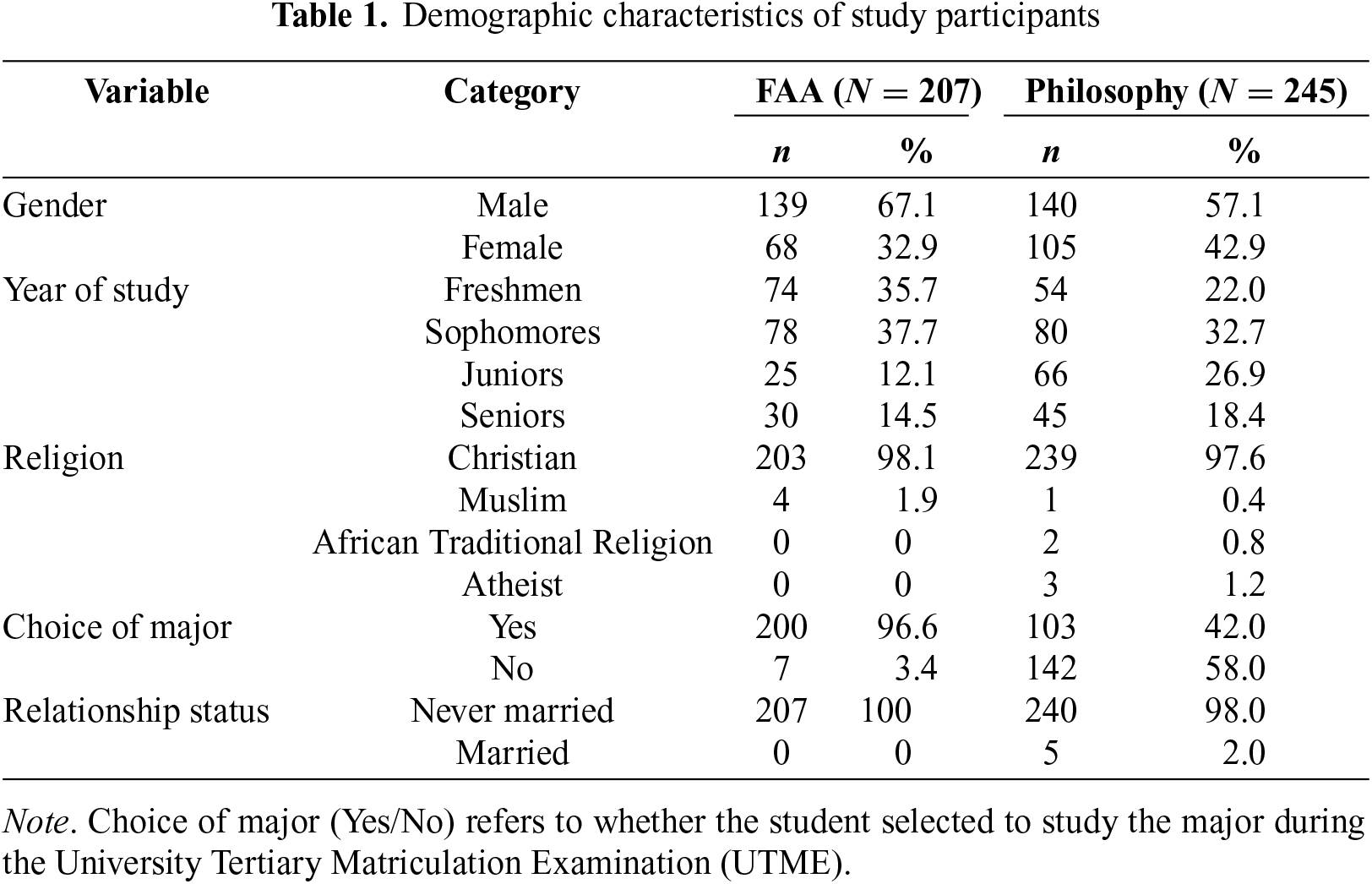
Table 1 indicates that there were more male students in the entire sample for both majors than female students. For their academic year, the FAA subsample had slightly more freshmen (35.7%) and sophomores (37.7%). Philosophy subsample had more sophomores (32.7%) followed by juniors (26.9%). There were overwhelmingly more Christians in the entire sample because the southeast region of Nigeria where the University of Nigeria is located, is a predominantly Christian population. As expected, a greater majority of the FAA students (96.6%) made the decision to study FAA during their UTME application compared to the philosophy students (42.0%). Regarding relationship status, participants in the entire sample were mostly single.
Academic major satisfaction scale (AMSS)
The six-item AMSS (Nauta, 2007) is on a 5-point Likert-type scale from 1 (strongly disagree) to 5 (strongly agree). A sample item is “Overall, I am happy with the major I’ve chosen.” The reliability and validity of the AMSS has been established in previous studies in Nigeria with αs of 0.91 (Ebulum & Chidiobi, 2016) and 0.90 (Elom et al., 2023). We obtained a α of 0.88 in the present study.
Basic needs satisfaction at college scale (BNSC-S)
We used the 16 items of the context-specific BNSC-S (Jenkins-Guarnieri et al., 2015) to measure levels of autonomy (e.g., I am free to express my ideas and opinions at school), competence (e.g., I have been able to learn interesting new skills in college), and relatedness (e.g., I get along with people at university) among the students. Respondents rated their level of need satisfaction using a Likert-type scale ranging from 1 (Not at all true) to 5 (Very true) with a midpoint anchor on response option 3 (Somewhat true). Internal consistency reliability estimates (αs) for the three subscales were 0.78 (autonomy), 0.72 (competence), and 0.83 relatedness (Jenkins-Guarnieri et al., 2015). For the current study, we observed αs of 0.76, 0.75 and 0.80 for autonomy, competence, and relatedness, respectively.
We obtained approval for the study from the psychology research ethics review committee of the University of Nigeria Nsukka. The students consented. They were also informed of their right to withdraw from participation in the study without any consequences or explanation of the reason for their withdrawal. The students completed the surveys during normal class hours
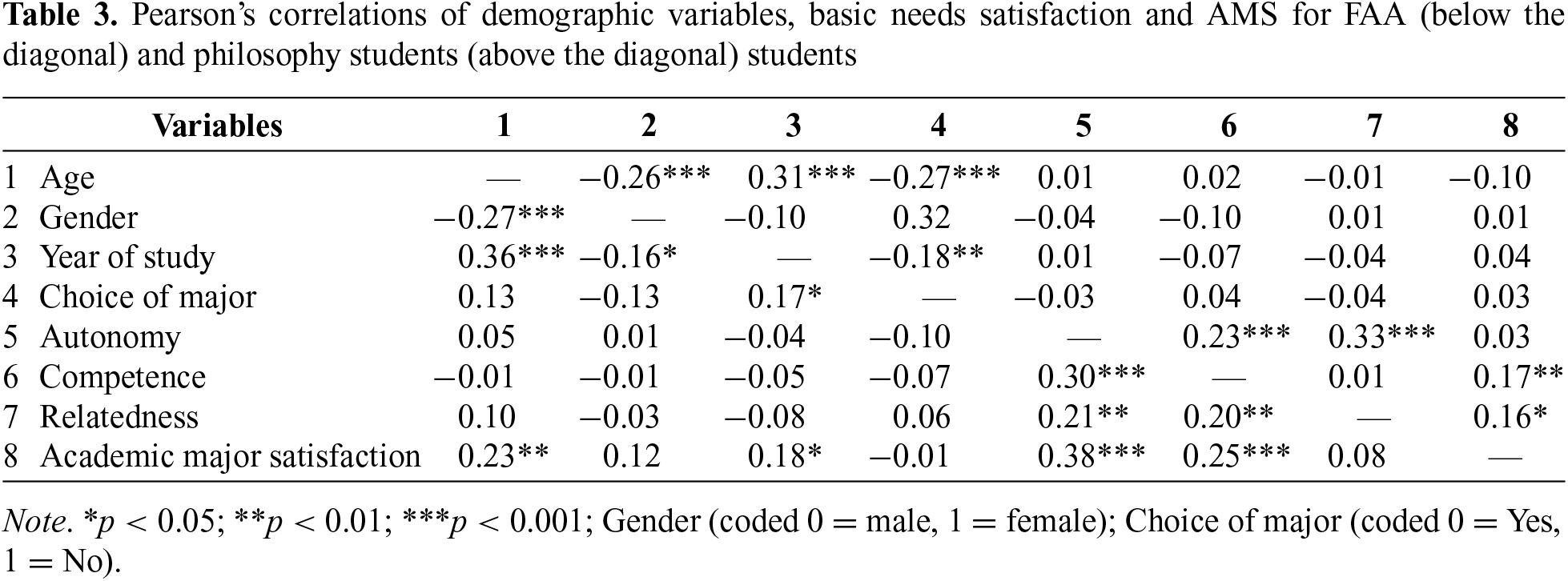
Data were analyzed with the SPSS for Windows (version 28). Independent samples t-test was used to test the differences between FAA and philosophy students in autonomy, competence, and relatedness. Bivariate analysis was conducted using Pearson’s correlation to test the relationship between the demographic factors and the study’s variables, while multivariate linear regression was used to determine the association between basic psychological needs and academic major satisfaction. Demographic factors (age, gender, year of study, and choice of major) that had significant correlations with the study’s variables were added to the first step of the regression analysis as covariates.
Differences between FAA and philosophy students in autonomy, competence, and relatedness
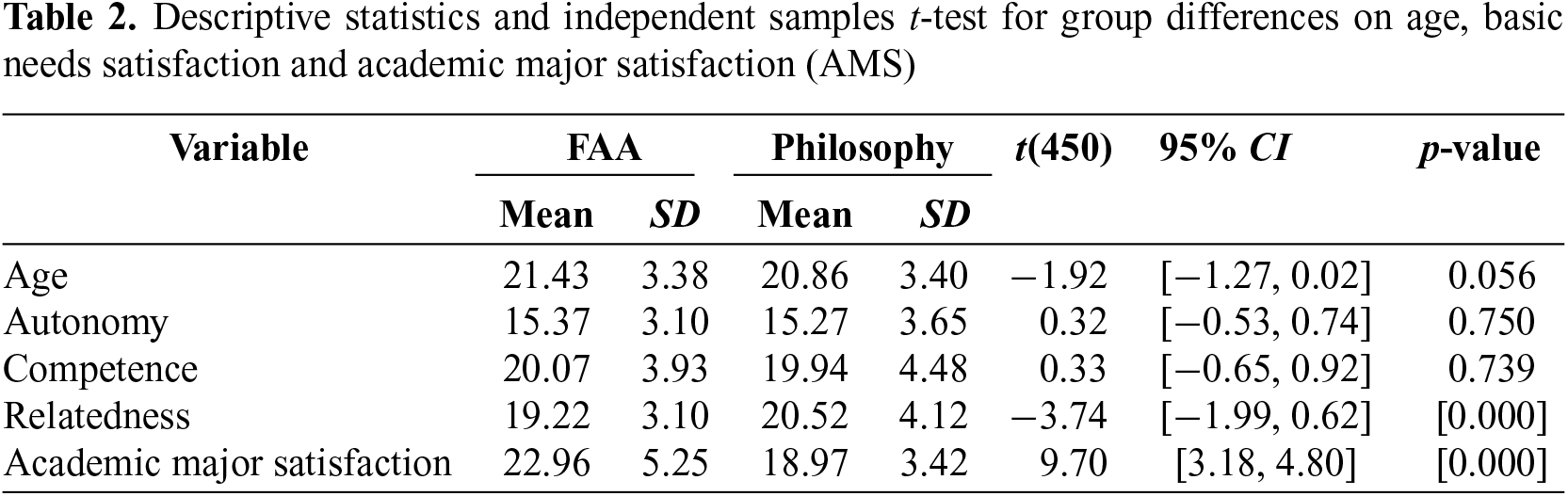
In Table 2, we did not find any significant difference between the FAA and philosophy students in autonomy {t(452) = 0.32}and competence {t(452) = 0.33}. However, philosophy students reported greater relatedness than FAA students {t(452) = −3.74, p < 0.011}. Our hypothesis 1 that FAA students would differ from philosophy majors in autonomy, competence, and relatedness was partly supported.
Differences between FAA and philosophy students in academic major satisfaction
Table 2 showed that FAA subsample is more satisfied with their major than the students in philosophy major {t(452) = 9.70, p < 0.001}. We anticipated that FAA students would differ from philosophy majors in academic major satisfaction, and this was supported by the finding. Our hypothesis 2 was supported.
For the FAA students, female gender and being in higher year of study were associated with higher satisfaction with academic major in Table 3. Autonomy had moderate positive association with competence and relatedness in both subsamples. Contributions of autonomy, competence, and relatedness were associated to academic major satisfaction for both FAA and philosophy students.
Results of the hierarchical multiple regression for the test of the hypotheses are shown in Table 4. In Step 1, age, gender, year of study and choice of academic major were included in the regression model as control variables. Age and gender were positively associated with FAA student’s academic major satisfaction. Year of study and choice of academic major were not significantly associated with academic major satisfaction. The model was significant, and it explained 10% of the variance in academic major satisfaction. In step 2, the three basic needs were added to the regression model. Autonomy (β = 0.36, p < 0.001), competence (β = 0.19, p < 0.01), and relatedness (β = 0.21, p < 0.01) were positively associated with academic major satisfaction for FAA students. The Bs showed that for each one unit rise in autonomy, competence, and relatedness, academic major satisfaction increased by 0.60, 0.26, and 0.35 units, respectively. The model was significant and the ΔR2 indicates that adding basic needs satisfaction to the model explained an additional 20% of the variance in FAA students’ academic major satisfaction.
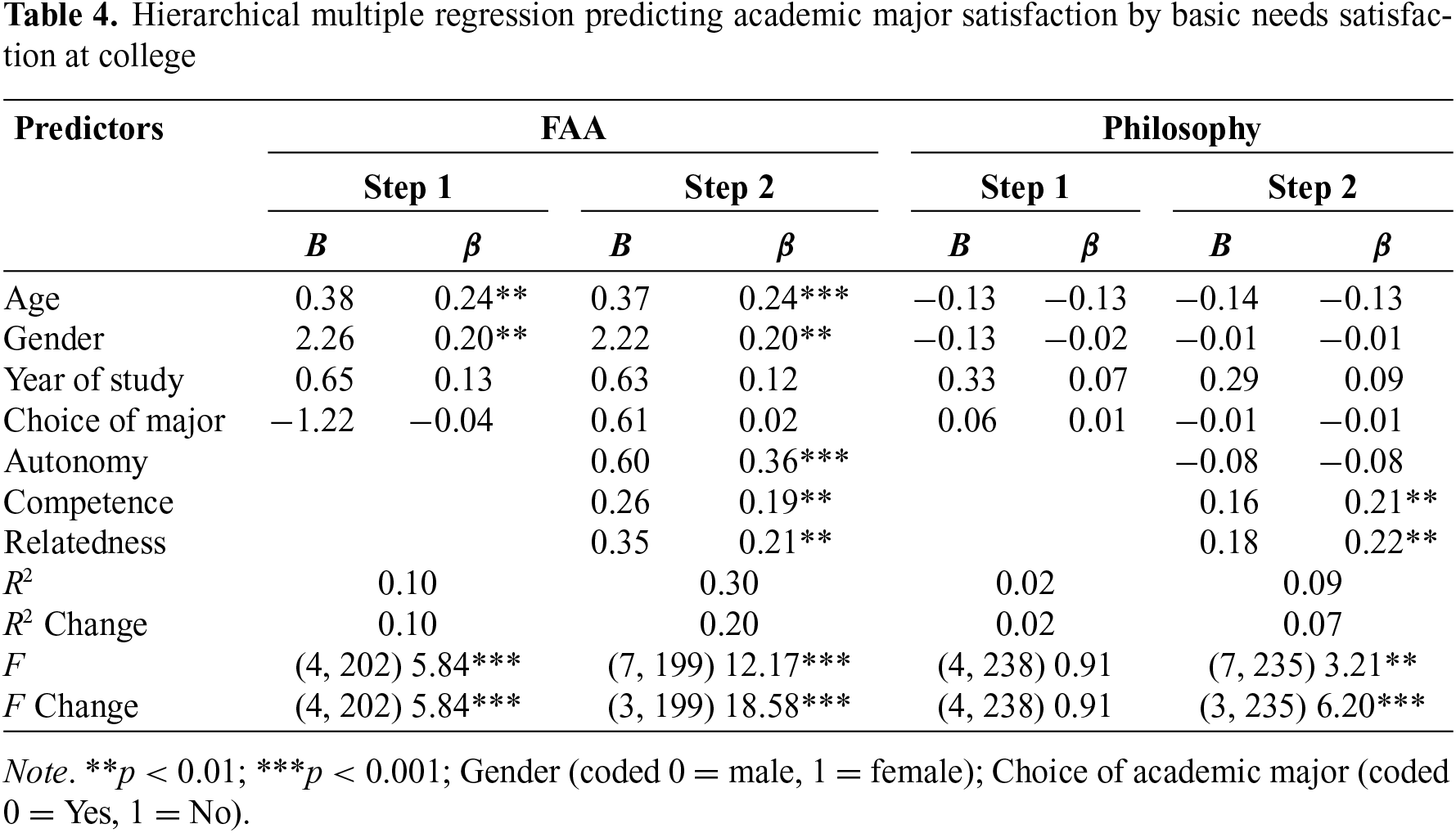
For the philosophy students, none of the demographic factors was significantly associated with academic major satisfaction in step 1. The model was not significant. In step 2, autonomy was not significantly associated with philosophy student’s academic major satisfaction. Competence (β = 0.21, p < 0.01) and relatedness (β = 0.22, p < 0.01) were positively associated with academic major satisfaction. The Bs showed that for each one unit rise in competence and relatedness, academic major satisfaction increased by 0.16 and 0.18 units, respectively. The model was significant and the ΔR2 indicates that adding the three basic needs to the model explained an additional 7% of the variance in philosophy students’ academic major satisfaction. Our earlier hypothesis which stated that autonomy, competence, relatedness would be associated with academic major satisfaction was supported for the FAA subsample but partly supported for the philosophy subsample. Hypothesis 3 was supported for FAA students and partly supported for philosophy students.
We did not find any significant difference between the FAA and philosophy students in autonomy and competence. However, philosophy students reported greater relatedness than FAA students. One important area of autonomy is the ability of students to spend time and effort in their work based on guided assignments in classes, without the restrictions imposed by the curriculum and course outlines (Dowlin, 2014). It is possible that the FAA and philosophy faculty allow students to thrive in the best possible way without unduly following the boundaries of the curriculum. Administratively, the philosophy department at the University of Nigeria is in the social sciences, while FAA department is under arts, but evaluation of the current curriculum and methodology of philosophy in the university shows that it is tilted towards the humanities. The humanities have seven core competencies: scientific inquiry, creative and artistic expression, communication, critical thinking, ethical reasoning, global and cultural awareness, and information literacy. All disciplines in the humanities must not equally meet all the core competencies. For instance, FAA requires at least four of the learning outcomes (Columbia State Community College, n.d). Therefore, the degree of any observed differences in student learning outcomes depends on the extent to which any institution focuses on areas that are aligned to a given competency in their curriculum.
Although it may be argued that competence is more aligned with the physical objects of FAA, it should be noted that both FAA and philosophy require talent, knowledge, skill, and commitment (Lyonette et al., 2017). The teaching curriculum of FAA seeks to provide students with a deeper understanding of contemporary issues through the development of creativity, harmony, empathy, and cultural awareness. These goals are also within the domain of the courses that are taught in philosophy. We believe that while the approach to these aims may vary, the endpoint seems to yield the same results in meeting the competency needs of students.
The difference in relatedness may be explained by the nature of the fields of study. Students majoring in philosophy study the epistemological, political, and social foundations of human nature and society. Interpersonal communication and critical thinking abilities are key aspects of the discipline of philosophy (Ciubotariu, 2024; Zalta & Nodelman, 2022) which may make it more likely for philosophy students to report greater fulfilment of their relational needs. In teaching the courses in philosophy, the seminars and assignments are more likely to be done in groups. In their group discussions, there is the tendency to have greater exchange of ideas about perception and reality or explorations of important questions concerning human existence (Zalta & Nodelman, 2022). For the students in FAA, they often perform their painting, drawing, or carving individually. This limited possibility of working with other students in their academic tasks may make them feel more independent in their academic work compared to the philosophy students who are likely to have greater interactions with their classmates.
We found that those in the FAA students were more satisfied with their major than the students in philosophy. Although they did not explicitly compare academic major satisfaction, Hsu and Chi (2022) reported that intrinsic motivation of students in fine arts was significantly higher than those in other majors. However, satisfaction with degree major could be by whether the students find the subject worthwhile and fulfilling (Nauta, 2007; Shen & Liao, 2022). Nigerian students prefer the Science, Technology, Engineering, Mathematics (STEM) courses, and to them, philosophy is not a very widely desired course in the university as compared to FAA (International Trade Administration, 2023). Seemingly, for FAA students, they may have the flair and interest in it which makes them more likely to be more satisfied in their major.
Autonomy contributed positively to academic major satisfaction of FAA students but not to that of the philosophy majors. Previous studies have shown that students who perceived that their autonomy needs were met had higher academic major satisfaction (e.g., Kusurkar et al., 2013). This could be explained by the greater freedoms of FAA students their portraying reality in different forms (Love & Worley, 2005), perhaps more than would be the case for philosophy students with their study of the nature of perception and reality in human existence. This is not to discount the fact that philosophy students also have a broad capacity to think differently about the nature of human existence
Competence and relatedness contributed positively to academic major satisfaction of both philosophy students more than FAA students. This suggest that philosophy students may value connection to other people in one’s environment more than sense of autonomy.
Implications for student development support practices
Our findings have some practical implications for supporting students to thrive in their majors with a sense of satisfaction. For instance, instructors should create major discipline-oriented motivations to support student engagement and self-directed learning. They can also utilize cross-discipline student engagement tools like the Peer Assisted Study Sessions (PASS) where students collectively share knowledge and solve course-related (Rivera-Pérez et al., 2021), which would also their relational bonds with students (Hutson et al., 2014; Read et al., 2017). There would be academic major differences in some domains, and FAA students may prefer a more collaborative learning in their own field and philosophy students may be more reflective at the person level. To address this major discipline orientation, instructors would use interdisciplinary collaboration to enhance knowledge exchange and innovation to equip students with diverse perspectives and ways of thinking (Ho et al., 2023). Interdisciplinary dialogue can also encourage group learning, allowing students to collaborate in creating solutions to challenging issues or real-world problems during class instructions, develop increased self-confidence, and improve their decision-making abilities (Erdogan, 2019; Warsah et al., 2021).
The prospects of employment after graduation may be one of the reasons for the lower academic major satisfaction among philosophy students. To improve the academic major satisfaction of philosophy students, faculty should strive to make the discipline more marketable by making their students acquire research writing skills for interdisciplinary research opportunities (see also Rix, 2023), for example.
Limitations of the study and suggestions for further research
First, we relied on self-report measures for the study which has the potential for unknown personal biases. Future research should add measures of social desirability or use multiple data collection approaches (e.g., reports from peers, family members, or academic advisors) to overcome this limitation. Second, we employed a cross-sectional design which prevented us from measuring the long-term effects of the SDT actors on students’ academic major satisfaction. A longitudinal design will help in clearly unraveling the effects of the SDT factors and establishing possible causal relations among the variables.
Third, the sample included students from a single Nigerian university, so the results should be considered with caution. Future studies should include participants from universities other regions of Nigeria and/or other African countries as well as other majors for higher external validity.
Our findings indicate that FAA students were more satisfied with their major than those in philosophy overall. Philosophy students reported significantly higher relatedness than the FAA. Moreover, philosophy students rated competence and relatedness higher than the FAA students. Within academic major, autonomy was associated with academic major satisfaction for only FAA students, whereas both competence and relatedness were positively associated with academic major satisfaction for FAA and Philosophy students. By fulfilling students’ autonomy, competence, and relatedness needs, educational institutions can create environments that support students’ intrinsic motivation and overall well-being. Our results support the importance of fostering a sense of mastery and belongingness in both FAA and philosophy students, highlight the critical role of volitional autonomy for the FAA students, and provide evidence that academic major satisfaction would vary by discipline or study.
Acknowledgement: Not applicable.
Funding Statement: Funding was not received for this study by any of the authors.
Author Contributions: The authors confirm contribution to the paper as follows: study conception and design: JohnBosco Chika Chukwuorji, Martin F. Asiegbu, Ekenechukwu Anazor Anikpe, Simeon C. Dimonye; data collection: Martin F. Asiegbu, Simeon C. Dimonye, Ekenechukwu Anazor Anikpe; analysis and interpretation of results: JohnBosco Chika Chukwuorji, Chidiebere Wisdom Obioha, John Chidubem Nwaogaidu; draft manuscript preparation: Charles Kenechukwu Okoro, Uzochukwu Chukwuka Chinweze. All authors reviewed the results and approved the final version of the manuscript.
Availability of Data and Materials: The data analysed for this study is available, not stored in any digital repository, and would be made available by the corresponding author upon request.
Ethics Approval: Approval was obtained from the Psychology Research Ethics Committee of the University of Nigeria Nsukka.
Informed Consent: Informed consent was obtained from all the caregivers who took part in the study.
Conflicts of Interest: The authors declare no conflicts of interest to report regarding the present study.
References
Adefeso-Olateju, M., & Akowonjo, A. (2018). How do Nigerian parents influence the career choices of their children? Retrieved from: https://www.difi.org.qa/wp-content/uploads/2021/05/Mo-Adefaso-DIFI-Doha_Parents-and-career-choice_Adefeso_Reviewed_sbmttd_04-Dec-2018-1.pdf. [Google Scholar]
Adefulu, A., Farinloye, T., & Mogaji, E. (2020). Factors influencing postgraduate students’ university choice in Nigeria. In: Mogaji E., Maringe F. and Hinson R. E. (Eds.Higher education marketing in Africa-explorations on student choice (pp. 187–225). London: Palgrave MacMillan. [Google Scholar]
Adeyanju, S., Mogaji, E., Olusola, J. A., & Oyinlola, M. A. (2020). Factors influencing students’ choice of a federal university: A case study of a Nigerian federal university. In: Mogaji E., Maringe F. and Hinson R. E. (Eds.Higher education marketing in Africa-explorations on student choice (pp. 135–163). London: Palgrave MacMillan. [Google Scholar]
Ahmed, W., Ejaz, M., Siddique, M., & Sadaf, S. (2022). Financial factors affecting major subject choice. International Journal of Business and Economic Affairs (IJBEA), 7(3), 29–38. https://doi.org/10.24088/IJBEA-2022-73003 [Google Scholar] [CrossRef]
Ajibola, M. O., Emeghe, I. J., Oluwumi, A. O., & Oni, A. S. (2017). A study on students’ choice of programme in the university. Journal of Educational and Social Research, 7(1), 137– 144. https://doi.org/10.5901/jesr.2017.v7n1p137.112918. [Google Scholar] [CrossRef]
Akodu, A. K., Akinfeleye, A. M., & Nwajueboe, A. C. (2018). Perceptions of physiotherapy as a possible career choice among prospective university students in Nigeria. Journal of Taibah University Medical Sciences, 13(4), 355–363. https://doi.org/10.1016/j.jtumed.2018.04.005. [Google Scholar] [PubMed] [CrossRef]
Amoor, S. S., & Aliyu, M. M. (2014). An empirical analysis of factors influencing the career choice of undergraduates in secretarial option of business education programme in Nigeria universities. Journal of Education and Practice, 5(39), 184–192. http://www.iiste.org/,112818. [Google Scholar]
Badmus, O. T., & Jita, L. C. (2023). Investigation of factors influencing career choice among STEM undergraduates in Nigeria universities. Eurasia Journal of Mathematics, Science & Technology Education, 19(1), 1–11. https://doi.org/10.29333/ejmste/12838 [Google Scholar] [CrossRef]
Baumeister, R. F., & Leary, M. R. (1995). The need to belong: Desire for interpersonal attachments as a fundamental human motivation. Psychological Bulletin, 117(3), 497–529. https://doi.org/10.1037/0033-2909.117.3.497 [Google Scholar] [CrossRef]
Black, A. E., & Deci, E. L. (2000). The effects of instructors’ autonomy support and students’ autonomous motivation on learning organic chemistry: A self-determination theory perspective. Science Education, 84(6), 740–756. https://doi.org/10.1002/1098-237x(200011)84:6<740::aid-sce4>3.0.co;2-3 [Google Scholar] [CrossRef]
Burks, C. H. (2022). Appreciative advising to enhance academic major satisfaction in prenursing students. NACADA Journal, 42(1), 64–73. https://doi.org/10.12930/nacada-21-26 [Google Scholar] [CrossRef]
Chen, C., Bian, F., & Zhu, Y. (2023). The relationship between social support and academic engagement among university students: The chain mediating effects of life satisfaction and academic motivation. BMC Public Health, 23, 2368. https://doi.org/10.1186/s12889-023-17301-3. [Google Scholar] [PubMed] [CrossRef]
Chukwuorji, J. C., Ituma, E. A., & Ugwu, L. E. (2018). Locus of control and academic engagement: Mediating role of religious commitment. Current Psychology, 37, 792– 802. https://doi.org/10.1007/s12144-016-9546-8 [Google Scholar] [CrossRef]
Cimsir, E. (2019). Insight, academic major satisfaction and life satisfaction among college students majoring in education: Implications for career counselling. Journal of Psychologists and Counsellors in Schools, 29(2), 206–218. https://doi.org/10.1017/jgc.2019.15 [Google Scholar] [CrossRef]
Ciubotariu, I. I. (2024). Reflections: Enhancing critical thinking in science education by implementing philosophy elements into training. mSphere, 9(7), e0039924. https://doi.org/10.1128/msphere.00399-24. [Google Scholar] [PubMed] [CrossRef]
Columbia State Community College (n.d). General education learning outcomes for humanities/fine arts. Retrieved from: https://www.columbiastate.edu/academics/documents19/Humanities-Fine-Arts.pdf. [Google Scholar]
Deci, E. L., & Ryan, R. M. (2000). The what and why of goal pursuits: Human needs and the self-determination of behavior. Psychological Inquiry, 11(4), 227–268. https://doi.org/10.1207/S15327965PLI1104_01 [Google Scholar] [CrossRef]
Dowlin, B. (2014, July 11). Ideology of autonomy in art classes. Retrieved from: https://baileyd718.wordpress.com/2014/07/11/ideology-of-autonomy-in-art-classes/. [Google Scholar]
Ebulum, G. C., & Chidiobi, R. U. (2016). Resilience, gender and age as predictors of satisfaction with academic major among university undergraduates. International Journal of Research in Engineering and Social Sciences, 6(4), 13–23. [Google Scholar]
Egbo, A. C. (2017). Parental influence on career choice of secondary school students in Enugu South Local Government Area of Enugu State Nigeria. European Journal of Education Studies, 3(6), 601–613. https://doi.org/10.5281/zenodo.802354 [Google Scholar] [CrossRef]
Egbo, A. C., Chinwendu, U. S., & Egbo, C. E. (2024). Determinants of career choice among secondary school students in Enugu east education zone. World Journal of Advanced Research and Reviews, 22(3), 1786–1795. https://doi.org/10.30574/wjarr.2024.22.3.1852 [Google Scholar] [CrossRef]
Ehigbo, B. O., & Akinlosotu, T. N. (2016). Parents’ occupation as correlate of students’ career aspiration in public secondary schools in Ekpoma metropolis. International Journal of Arts and Humanities (IJAH) Bahir Dar-Ethiopia, 5(3), 197–212. https://doi.org/10.4314/ijah.v5i3.17 [Google Scholar] [CrossRef]
Ekeng, E. B., Arop, L. O., Ngwu, M. E., & Ukwekie, S. I. (2022). Analysis of child right and parental influence on career choice and development in Nigeria. Journal of Advances in Educational Philosophy, 6(5), 301–305. https://doi.org/10.36348/jaep.2022.v06i05.007 [Google Scholar] [CrossRef]
Elom, C. O., Okolie, U. C., Abonyi, S. O., Ekeh, D. O., & Umoke, C. C. (2023). Students’ satisfaction with their academic majors and study commitment: The mediating role of academic psychological capital. Psychology in the Schools, 60(8), 2919–2931. https://doi.org/10.1002/pits.22896 [Google Scholar] [CrossRef]
Erdogan, F. (2019). Effect of cooperative learning supported by reflective thinking activities on students’ critical thinking skills. Eurasian Journal of Educational Research, 19(80), 89–112. [Google Scholar]
Germeijs, V., & Verschueren, K. (2006). High school students’ career decision-making process: Development and validation of the Study Choice Task Inventory. Journal of Career Assessment, 14(4), 449–471. https://doi.org/10.1177/1069072706286510 [Google Scholar] [CrossRef]
Hasret, Y., & Baltaci, H. S. (2021). Predictors of major satisfaction among education students. Turkish Psychological Counseling and Guidance Journal, 11(63), 471–486. https://doi.org/10.17066/tpdrd.1050745 [Google Scholar] [CrossRef]
Ho, Y.-R., Chen, B.-Y., Li, C.-M., & Chai, E. G. (2023). The distance between the humanities and medicine: Building a critical thinking mindset by interdisciplinary dialogue through mind mapping. Thinking Skills and Creativity, 50, 101420. https://doi.org/10.1016/j.tsc.2023.101420 [Google Scholar] [CrossRef]
Hsu, Y., & Chi, Y.-H. (2022). Academic major satisfaction and regret of students in different majors: Perspectives from self-determination theory. Psychology in the Schools, 59(11), 2287–2299. https://doi.org/10.1002/pits.22563 [Google Scholar] [CrossRef]
Hutson, B. L., He, Y., & Bloom, J. L. (2014). How appreciative advising is revolutionizing academic advising: Framework, evolution and possible future directions. AI Practitioner, 16(2), 47–53. https://doi.org/10.12781/978-1-907549-19-9-8 [Google Scholar] [CrossRef]
International Trade Administration (2023). Nigeria Education and training services industry snapshot. Retrieved from: https://www.trade.gov/country-commercial-. [Google Scholar]
Jenkins-Guarnieri, M. A., Vaughan, A. L., & Wright, S. L. (2015). Development of a self- determination measure for college students: Validity evidence for the Basic Needs Satisfaction at College Scale. Measurement and Evaluation in Counseling and Development, 48(4), 266–284. https://doi.org/10.1177/0748175615578737 [Google Scholar] [CrossRef]
Jeno, L. M., Adachi, P. J. C., Grytnes, J.-A., Vandvik, V., & Deci, E. L. (2019). The effects of m-learning on motivation, achievement and well-being: A self-determination theory approach. British Journal of Educational Technology, 50(2), 669–683. https://doi.org/10.1111/bjet.12657 [Google Scholar] [CrossRef]
Kena, G., Hussar, W., McFarland, J., de Brey, C., Musu-Gillette, L. et al. (2016). The condition of education 2016 (NCES 2016-144). Washington, DC, USA: U.S Department of Education, National Center for Education Statistics. [Google Scholar]
Kim, Y. L., & Lee, S. M. (2015). Effect of satisfaction in major at university on academic achievement among physical therapy students. Journal of Physical Therapy Science, 27(2), 405–409. https://doi.org/10.1589/jpts.27.405. [Google Scholar] [PubMed] [CrossRef]
Kolawole, J. A., Olagoke, D. P., & Obaseki, G. M. (2022). Effect of peer pressure and parental education on career choice of adolescent students in Osun state, Nigeria. Journal of Educational Studies, Trends and Practice, 26(8), 23–44. [Google Scholar]
Kusurkar, R. A., Ten Cate, T. J., Vos, C. M. P., Westers, P., & Croiset, G. (2013). How motivation affects academic performance: A structural equation modelling analysis. Advances in Health Sciences Education, 18(1), 57–69. https://doi.org/10.1007/s10459-012-9354-3. [Google Scholar] [PubMed] [CrossRef]
Le, H., Robbins, S. B., & Westrick, P. (2014). Predicting student commitment in college: The role of motivation and sense of belonging. The Journal of Higher Education, 85(3), 483– 504. [Google Scholar]
Lehman, A. N., & Nauta, M. M. (2022). The role of situational affect in students’ academic major satisfaction. The Career Development Quarterly, 70(1), 27–37. https://doi.org/10.1002/cdq.12287 [Google Scholar] [CrossRef]
Love, R. H., & Worley, M. P. (2005). Reflections of reality: American paintings from the collection of John and Susan Hainsworth. Chicago: Haase-Mumm Pub Co. [Google Scholar]
Lyonette, C., Hunt, W., & Baldauf, B. (2017). Occupations and skills of arts, humanities and social sciences graduates and postgraduates. Coventry: University of Warwick. [Google Scholar]
Manishimwe, T., Raimi, L., & Babatunde, B. N. (2025). Exploring the underlying factors influencing students’ choice of private education providers in Nigeria using PLS- SEM. Discover Education, 4(3), 1–27. https://doi.org/10.1007/s44217-024-00394-2 [Google Scholar] [CrossRef]
Marchiondo, K., Marchiondo, L. A., & Lasiter, S. (2010). Faculty incivility: Effects on program satisfaction of BSN students. The Journal of Nursing Education, 49(11), 608–614. https://doi.org/10.3928/01484834-20100524-05. [Google Scholar] [PubMed] [CrossRef]
Mostert, K., & Du Toit, C. (2023). Strengths use and deficit improvement of first-year university students: A structural model for social support and student outcomes. Journal of Psychology in Africa, 33(4), 368–377. https://doi.org/10.1080/14330237.2023.2233205 [Google Scholar] [CrossRef]
Mostert, K., & Pienaar, J. (2020). The moderating effect of social support on the relationship between burnout, intention to drop out, and satisfaction with studies of first-year university students. Journal of Psychology in Africa, 30(3), 197–202. https://doi.org/10.1080/14330237.2020.1767928 [Google Scholar] [CrossRef]
Nauta, M. M. (2007). Assessing college students’ satisfaction with their academic majors. Journal of Career Assessment, 15(4), 446–462. https://doi.org/10.1177/1069072707305762. [Google Scholar] [CrossRef]
Nerona, R. R. (2021). Parenting, major choice motivation, and academic major satisfaction among Filipino college students: A self-determination theory perspective. Journal of Career Assessment, 29(2), 205–220. https://doi.org/10.1177/1069072720941269 [Google Scholar] [CrossRef]
Niemiec, C. P., & Ryan, R. M. (2009). Autonomy, competence, and relatedness in the classroom: Applying self-determination theory to educational practice. Theory and Research in Education, 7(2), 133–144. https://doi.org/10.1177/14778785091043 [Google Scholar] [CrossRef]
Odunaiya N. A., Oladele A. K., Sanuade C. T., Adesanya T. B., & Odole A. C. (2022). Perceived occupational prestige of physiotherapy in Nigeria among physiotherapy undergraduates: Implication for public and healthcare professionals’ awareness of the role of physiotherapy. Bulletin of Faculty of Physical Therapy, 27(43), 1–13. https://doi.org/10.1186/s43161-022-00102-x. [Google Scholar] [CrossRef]
Ogunleye, T. (2018). The study of peer pressure and parental influence on the choice of career among secondary school students in Ogun state. International Journal of Educational Research, 5(1), 147–152. [Google Scholar]
Owuamanam, D. O. (1982). Occupational prestige and occupational aspirations of Nigerian adolescent students. Journal of Negro Education, 51(2), 157–164. https://doi.org/10.2307/2294681 [Google Scholar] [CrossRef]
Read, A., Hicks, J., & Christenbery, T. (2017). Appreciative advising in nursing education. Nurse Educator, 42(2), 81–84. https://doi.org/10.1097/NNE.0000000000000304. [Google Scholar] [PubMed] [CrossRef]
Rivera-Pérez, S., Fernandez-Rio, J., & Iglesias Gallego, D. (2021). Effects of an 8-week cooperative learning intervention on physical education students’ task and self-approach goals, and emotional intelligence. International Journal of Environmental Research and Public Health, 18(1), 61. https://doi.org/10.3390/ijerph18010061. [Google Scholar] [PubMed] [CrossRef]
Rix, K. (2023, October 6). Why majoring in the humanities can be a great career move. Retrieved from: https://artshumanities.berkeley.edu/news/why-majoring-. [Google Scholar]
Ryan, R. M., & Deci, E. L. (2000). Self-determination theory and the facilitation of intrinsic motivation, social development, and well-being. American Psychologist, 55(1), 68–78. https://doi.org/10.1037//0003-066x.55.1.68. [Google Scholar] [PubMed] [CrossRef]
Ryan, R. M., & Deci, E. L. (2017). Self-determination theory: Basic psychological needs in motivation, development, and wellness. New York: The Guilford Press. [Google Scholar]
Ryan, R. M., & Deci, E. L. (2020). Intrinsic and extrinsic motivation from a self-determination theory perspective. Definitions, theory, practices, and future directions. Contemporary Educational Psychology, 61(3), 101860. https://doi.org/10.1016/j.cedpsych.2020.101860 [Google Scholar] [CrossRef]
Schenkenfelder, M., Frickey, E. A., & Larson, L. M. (2020). College environment and basic psychological needs: Predicting academic major satisfaction. Journal of Counseling Psychology, 67(2), 265–273. https://doi.org/10.1037/cou0000380. [Google Scholar] [PubMed] [CrossRef]
Schoolcrib (2023). 15 best courses to study in Nigeria for quick employment—Schoolcrib. Retrieved from: https://medium.com/@schoolcrib/15-best-courses-to-study-in-nigeria-for-quick-employme-nt-schoolcrib-76de2e793382. [Google Scholar]
Shen, F. C., & Liao, K. Y.-H. (2022). Educational channeling, internalized stereotyping, expectations fulfillment and major choice on Asian Americans’ major satisfaction: A moderated mediation model. Journal of Vocational Behavior, 132(1), 103647. https://doi.org/10.1016/j.jvb.2021.103647 [Google Scholar] [CrossRef]
Simonsen, I.-E., & Rundmo, T. (2020). The role of school identification and self-efficacy in school satisfaction among Norwegian high-school students. Social Psychology of Education, 23(6), 1565–1586. https://doi.org/10.1007/s11218-020-09595-7 [Google Scholar] [CrossRef]
Soria, K. M., & Stebleton, M. (2013). Major decisions: Motivations for selecting a major, satisfaction, and belonging. NACADA Journal, 33(2), 29–43. https://doi.org/10.12930/NACADA-13-018 [Google Scholar] [CrossRef]
Vansteenkiste, M., Simons, J., Lens, W., Sheldon, K. M., & Deci, E. L. (2005). Motivating learning, performance, and persistence: The synergistic effects of intrinsic goal contents and autonomy-supportive contexts. Journal of Personality and Social Psychology, 87(2), 246–260. https://doi.org/10.1037/0022-3514.87.2.246. [Google Scholar] [PubMed] [CrossRef]
Volodina, A., Lindner, C., & Retelsdorf, J. (2019). Personality traits and basic psychological need satisfaction: Their relationship to apprentices’ life satisfaction and their satisfaction with vocational education and training. International Journal of Educational Research, 93(2), 197–209. https://doi.org/10.1016/j.ijer.2018.11.003 [Google Scholar] [CrossRef]
Warsah, I., Morganna, R., Uyun, M., Hamengkubuwono, H., & Afandi, M. (2021). The impact of collaborative learning on learners’ critical thinking skills. International Journal of Instruction, 14(2), 443–460. [Google Scholar]
Weatherton, M., & Schussler, E. E. (2021). Success for all? a call to re-examine how student success is defined in higher education. CBE–Life Sciences Education, 20(1), 1–13. https://doi.org/10.1187/cbe.20-09-0223. [Google Scholar] [PubMed] [CrossRef]
Williams, E. A., Zwolak, J. P., Dou, R., & Brewe, E. (2017). Engagement, integration, involvement: Supporting academic performance and developing a classroom social network. Physical Review Physics Education Research, 15(2), 1–15. [Google Scholar]
Xu, M., Lu, H., & Guo, Q. (2023). Research on the impact of basic psychological needs satisfaction on career adaptability of Chinese college students. Frontiers in Psychology, 14, 1275582. https://doi.org/10.3389/fpsyg.2023.1275582. [Google Scholar] [PubMed] [CrossRef]
Xu, X., Wu, Z., & Wei, D. (2024). Perceived teacher support and student engagement: The chain mediating effect of basic psychological needs satisfaction and learning drive. Journal of Psychology in Africa, 34(1), 73–79. https://doi.org/10.1080/14330237.2024.2311984 [Google Scholar] [CrossRef]
Yunusa, S., Jaafar, W. M. B. W., Ismail, A., & Othman, W. N. B. W. (2021). A study on the relationship between factors that determine career decision making among undergraduate students in Jigawa State Nigeria. International Research Journal of Education and Sciences (IRJES), 5(2), 31–36. [Google Scholar]
Zalta, E. N., & Nodelman, U. (Eds) (2022). Stanford encyclopedia of philosophy. Retrieved from: https://philosophy.stanford.edu/public-philosophy/stanford-. [Google Scholar]
Cite This Article
 Copyright © 2025 The Author(s). Published by Tech Science Press.
This work is licensed under a Creative Commons Attribution 4.0 International License , which permits unrestricted use, distribution, and reproduction in any medium, provided the original work is properly cited.
 Downloads
 Citation Tools
