
 Login
Login Register
 Submit a Paper
 Propose a Special lssue
 Open Access
ARTICLE

Proactive personality and employment preparation: The mediating role of self-efficacy and career exploration behavior
School of Economics and Management, Zhoukou Normal University, Zhoukou, 466001, China
* Corresponding Author: Yunsheng Ruan. Email:
Journal of Psychology in Africa 2025, 35(3), 319-325. https://doi.org/10.32604/jpa.2025.068970
Received 16 November 2024; Accepted 16 May 2025; Issue published 31 July 2025
 View Full Text
 Download PDF
Abstract
This study investigated proactive personality effects on employment preparation and the mediating roles of self-efficacy and career exploration behaviors in this relationship. The study sample comprised 445 university students (68.3% female; aged 20 to 24) from a university in central China. The participants completed measures to assess proactive personality, employment preparation, self-efficacy, and career exploration behaviors. Structural equation modeling analysis results indicated that proactive personality predicted higher employment preparation; Self-efficacy and career exploration behaviors partially mediated this relationship. Specifically, career exploration behaviors had a stronger mediating effect than self-efficacy on the total effect (34.71% vs. 28.89%). The findings suggest proactive personality is key to employment preparation through self-belief and willingness to explore the job market. Higher education career counseling and mental health education programs should provide targeted training to promote career exploration by the student's personal attributes for best match employment preparation.Keywords
How people transition to employment would depend not only on the labour market opportunities, but also on their personal qualities. Apparently, employment is a core pillar of economic and social life, which not only brings meaning to individuals, self-esteem, and income, but also provides a platform and opportunity to participate in contributing to society (Banerjee & Duflo, 2008; Taylor et al., 2017). Employment participation requires self-efficacy or self-beliefs as a person with a sense of direction in order to be able to engage in meaningful career exploration. Regarding university students, their employment prospects would require them to pay close attention to employment issues in a globalizing economy (Kim et al., 2022). These are future employees and drivers of industry for ensuring the stability and growth of the national and even global economy (Qenani et al., 2014). Their personal predispositions to employment preparation require close study for guiding interventions to best prepare them for work participation. Employment preparation involves job exploration, information gathering, and developing the skills required for a specific job (Kim et al., 2022).
Proactive personality is characterized by a person’s optimistic outlook and inclination to act decisively when encountering challenges, which helps the individual to better adapt to the environment and seize opportunities (Bateman & Crant, 1993), as would be the case with employment preparation. Past studies have demonstrated that proactive personality, being an active personal attribute, has a significant impact on one’s career progression (Seibert et al., 1999, 2001; Zhang et al., 2022). Proactive personality appears to be a high prospect predisposition for employment preparation, yet less well studied in developing country settings such as China.
Among the many factors that affect university students’ employment preparation, individual personality traits are particularly important. However, there is still a lack of research on how proactive personality specifically affects university students’ employment preparation. What is not yet clear is how proactive personality influences university students’ employment preparation effectiveness through mediating mechanisms such as self-efficacy and career exploration behaviors in the process of employment preparation. Uncovering these underlying mechanisms will not only help to deepen the understanding of the role of individual personality in employment-related behaviors, but also offer valuable insights for educational institutions and university students to develop targeted strategies to enhance employability.
Proactive personality and employment preparation
People with proactive personality can select and create environments that are conducive to their development, including occupational behaviors such as job performance (Crant, 1995; Thompson, 2005; Joo & Bennett III, 2018; Zahra & Kee, 2022), employee innovation (Joo & Bennett, 2018; Kim et al., 2009), job satisfaction (Hadi et al., 2023; Li et al., 2010), and career success (Fuller & Marler, 2009). This may be explained by the fact that such individuals can take initiative, are not restricted by external environments, and have the ability to change their surroundings (Bateman & Crant, 1993), which would enhance their employment preparation.
Employment preparation is becoming increasingly important to job competitiveness. A proactive personality would be an asset in adapting to the rapidly changing work environment, with higher levels of motivation and self-confidence during the job search process (Parker, 1998). Individuals with a proactive personality would have higher employment preparation by their work internships, volunteer work, and various training activities for their future career development (Fugate et al., 2004). Therefore, proactive personality traits would predict improved employment preparation. This study focuses on how proactive personality affects university students’ employment preparation and explores whether self-efficacy and career exploration behaviors play a dual mediating role in this process.
Self-efficacy and career exploration behaviors mediation
Proactive personality traits presume self-efficacy (Doğanülkü & Korkmaz, 2023) or confidence in their ability to complete specific tasks (Bandura, 1977). With higher self-efficacy, people may be more willing to engage in exploration of selves and opportunities, investing in efforts to achieve their goals (Aypay, 2010). Previous research has shown that self-efficacy plays a full mediating role between proactive personality and entrepreneurial intention (Prabhu et al., 2012) or partial (Kumar & Shukla, 2022). Therefore, we have reason to hypothesize that self-efficacy also plays an important mediating role when exploring the relationship between proactive personality and university students’ employment preparation behaviors.
Career exploration is a process through which individuals decide on employment opportunities in their life situations (Stumpf et al., 1983). Those who actively career exploration have stronger motivation to seek and utilize resources to achieve personal goals (Cai et al., 2015). For instance, they may be more willing to engage in internships, career counseling, and networking for enhancing their job search skills, and workplace adaptability as employment preparation (Lent & Brown, 2008). According to the social cognitive career theory (SCCT; Lent, et al., 1994), career-related behaviors are shaped by dynamic interactions between self-efficacy beliefs, outcome expectations, and goal-setting mechanisms. This theory posits that proactive personality traits (e.g., curiosity and information-seeking tendencies) may enhance career exploration by strengthening individuals’ confidence in navigating career challenges (i.e., self-efficacy) and their expectations of positive outcomes from career preparation efforts (Brown et al., 2006). Specifically, the proactive personality promotes career exploration behaviors by stimulating individuals’ curiosity about the unknown and their willingness to seek information, which in turn enhances their level of employment preparation. Therefore, proactive personality and employment preparation may be higher by self-efficacy for a deeper understanding of career exploration activities for successful future employment.
The Chinese employment context
Along with the transformation of economic structure and accelerated industrial upgrading, China’s demand for high-quality talent continues to rise. Against this background, the scale of university graduates in China in recent years has shown a year-on-year expansion trend. According to China’s Ministry of Education, around 11.79 million students graduated from universities in 2024. Such a large employment group has made the competition in the labor market increasingly fierce, and the problem of employment has become increasingly prominent. As the main force in the future workplace, the employment preparation of university students directly affects their career development. Adequate employment preparation will undoubtedly help enhance employment competitiveness and assist university graduates in achieving satisfactory employment.
This study will explore the impact of proactive personality on university students’ employment preparation from the perspective of individual traits, and analyze the mediating effects of self-efficacy and career exploration behaviors in the proactive personality-employment preparation link. Based on the conceptual model shown in Figure 1, we propose the following hypotheses:
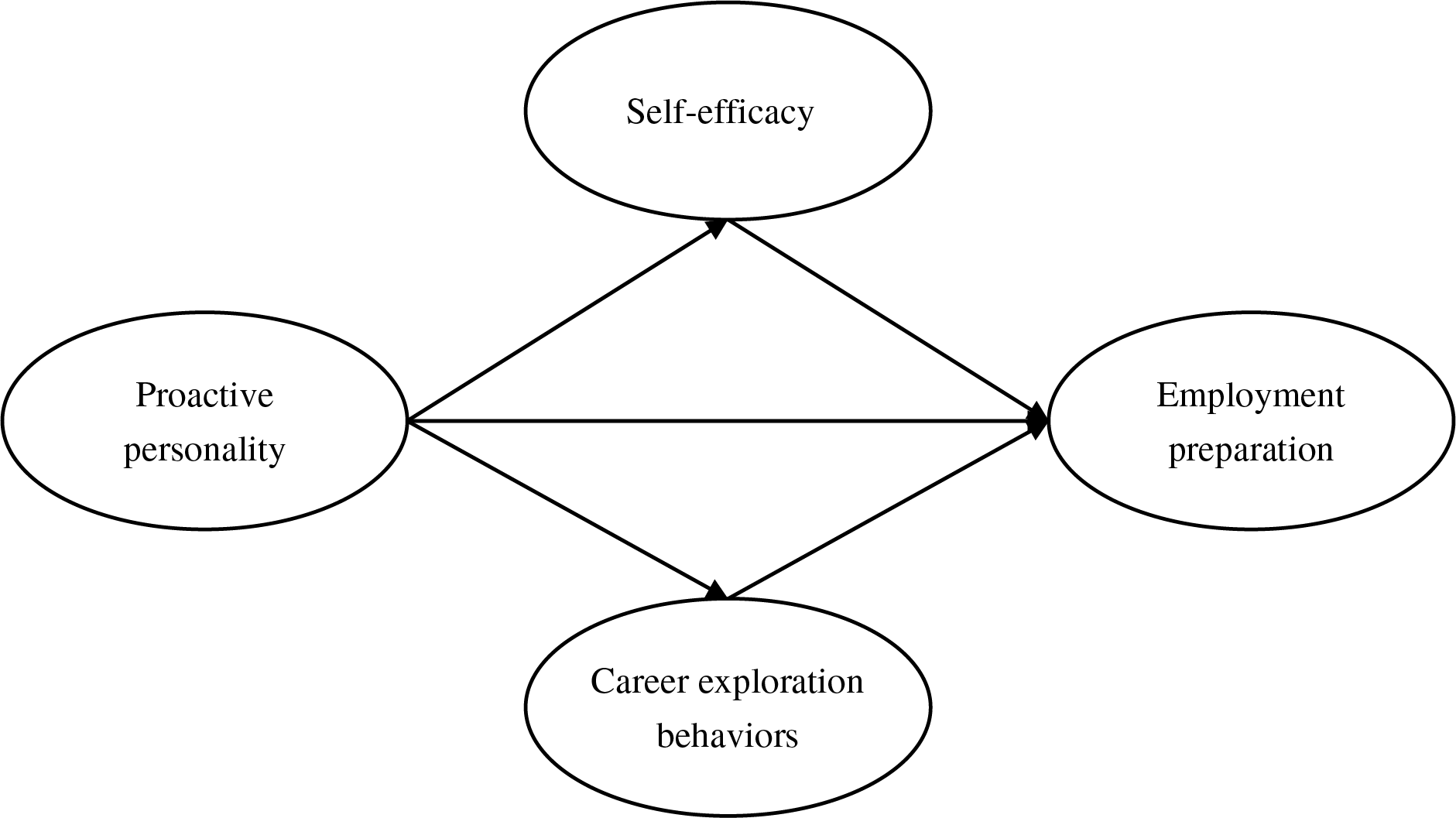
Figure 1: Conceptual model
H1: Proactive personality positively predicts university students’ employment preparation.
H2: Self-efficacy plays a mediating role in the influence of proactive personality on university students’ employment preparation.
H3: Career exploration behaviors play a mediating role in the influence of proactive personality on university students’ employment preparation.
Findings would deepen our comprehension of the connection between proactive personality and the employment preparation of university students. Moreover, the results would also offer solid theoretical foundations and practical insights for career guidance and mental health education in universities.
A sample of 445 university students from the social sciences (46.1%), natural sciences (39.6%), and the remaining others (14.4%) were participants (females = 68.3%, mean age = 21.2, SD = 0.958). They were third year (31.2%) or fourth year (68.8%). In terms of geographical origin, the participants came from cities and the countryside, with city students accounting for 20.9% and rural students accounting for 79.1%. All of these participants were at the important stage of entering the workplace and had urgent needs and concerns about career development and employment preparation, ensuring the diversity and representativeness of the sample.
Participants self-reported demographic information, including gender, age, academic field, grade level, place of birth, and current employment status. They also completed surveys on proactive personality (PPS: Shang & Gan, 2009), employment preparation (EPS: Xie, 2023), self-efficacy (SES: Lee et al., 2010), and career exploration behaviors (CEBS: Xu, 2008). All surveys used a five-point Likert scale, where 1 represents “strongly disagree” and 5 represents “strongly agree”. In this study, the reliability of each scale was tested using Table 1 presents the Cronbach’s alpha coefficients for the study measures.
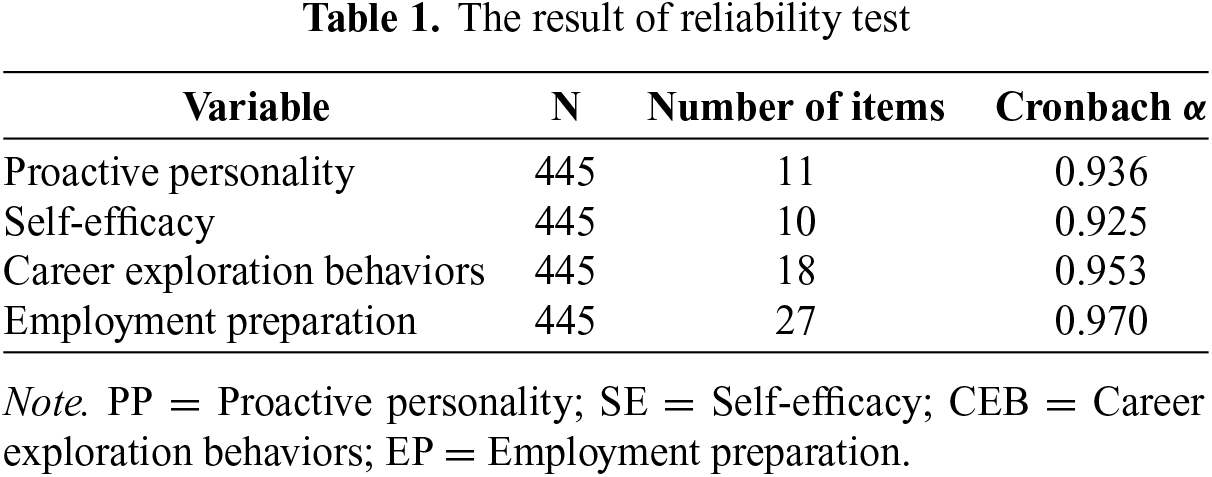
The 11-item PPS (Shang & Gan, 2009) is a measure of proactive personality. Sample items of PPS include: “When there’s a problem, I face it directly”; “If I firmly believe in something, regardless of the possibility of success or failure, I will do it”; and “I am always looking for new ways to make my life better”. In this study, the Cronbach’s alpha coefficient for PPS scores was 0.936.
The 27-item EPS (Xie, 2023) consists of three dimensions: practical experience (4 items), employability (17 items), and job-seeking actions (6 items). Sample items include: “I have taken on valuable work in the social practices or internships that I have participated in” (Practical experience); “In my professional field, I have good knowledge of my professional discipline” (Employability); and “I have a clear understanding of the current employment situation as I have learned about it in advance” (Job search action). In this study, the Cronbach’s alpha reliability coefficient for EPS scores reached 0.970.
The SES (Lee et al., 2010) consists of 10 items. Sample items include: “I can always solve problems if I work hard”; “I believe I can handle emergencies effectively”; “I can solve most problems if I put in the necessary effort”. In this study, the Cronbach’s alpha reliability coefficient for SES scores was 0.925.
The CEBS (Xu, 2008) consists of 18 items to explore their career preferences. Example items include: “Seeking information about career fields that interest me,” “Thinking about what kind of work I am suited for,” and “Planning my future career path.” In this study, the Cronbach’s alpha reliability coefficient for CEBS scores was 0.953.
The Academic Committee of the Faculty of Economics and Management at Zhoukou Normal University approved the study. Participants consented to the study with a full understanding of its voluntariness. Data collection was conducted through the “Questionnaire Star” online survey platform, ensuring data privacy and security.
We utilized SPSS 26.0 and Mplus 8.3 statistical software to conduct structural equation modeling analysis. The aim was to precisely test the significance of various path coefficients, thereby comprehensively revealing the complex interconnections between proactive personality, self-efficacy, career exploration behaviors, and university students’ employment preparation. Specifically, confirmatory factor analysis (CFA) was conducted using Mplus 8.3 software, based on the average variance extracted (AVE) and composite reliability (CR) values, as well as the square root of AVE values, to assess the convergent and discriminant validity of the scales. Then, a structural equation model was established using Mplus 8.3 software, and the significance of the model path coefficients was tested.
Figure 2 presents the standardized path diagram of the structural equation model in this study. The path coefficients and their signs indicate the degree and direction of the independent variable’s impact on the dependent variable. A positive path coefficient indicates a positive influence of the independent variable on the dependent variable, while a negative path coefficient indicates a negative influence. The magnitude of the path coefficient further shows the strength of the influence; the larger the value, the more pronounced the impact of the independent variable on the dependent variable.
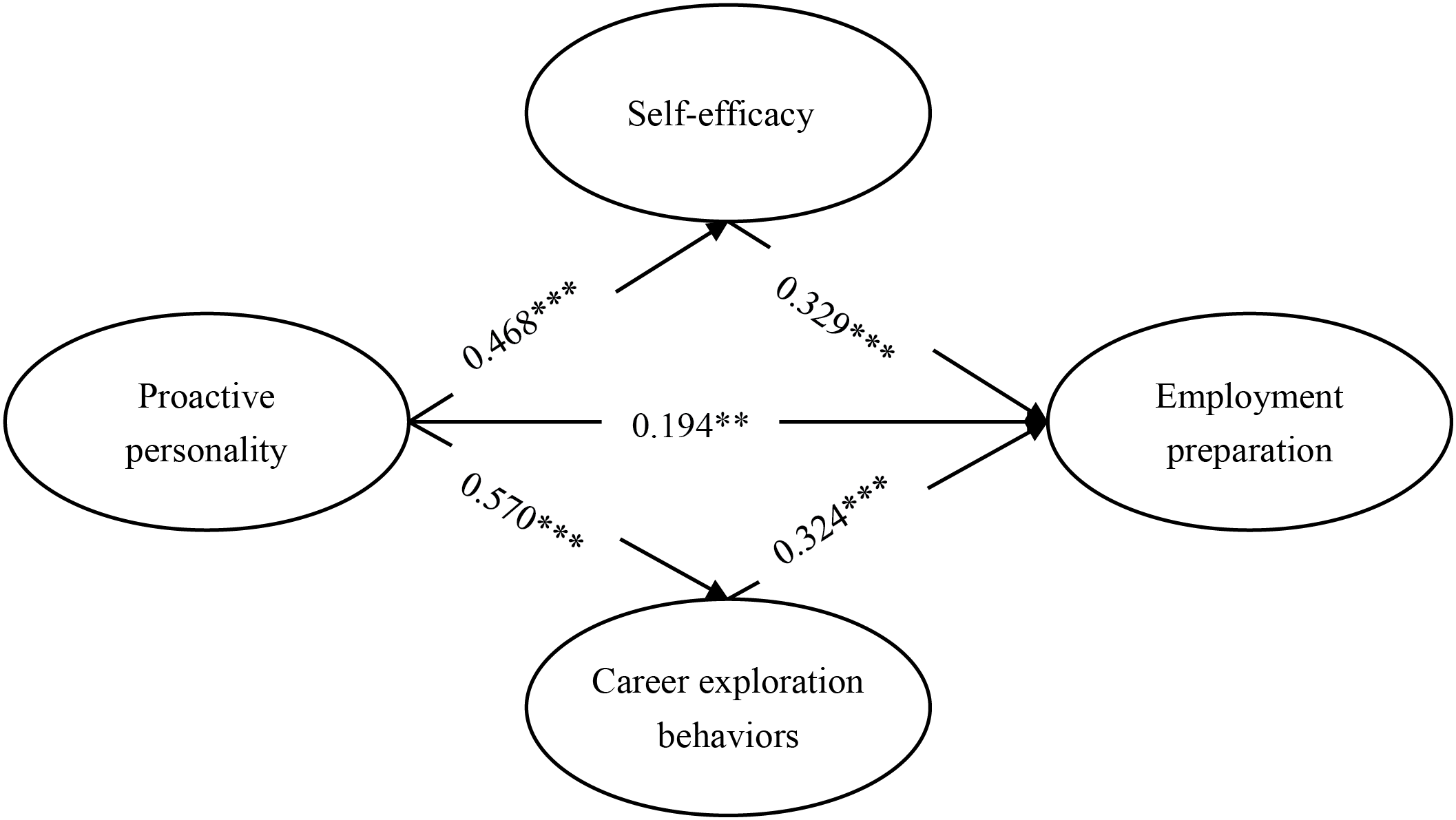
Figure 2: SEM path relationship diagram. Note. N = 445, ***p < 0.001 (two-tailed)
Structural equation model analysis
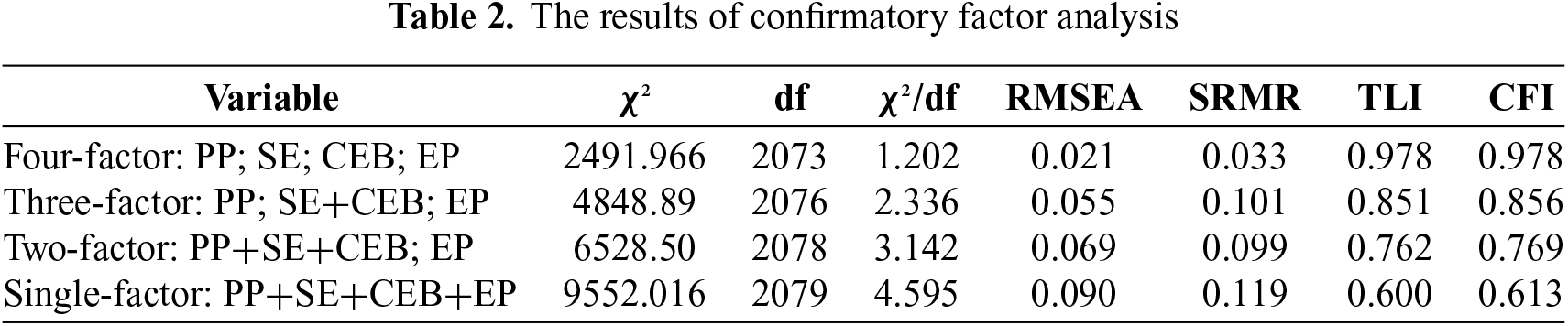
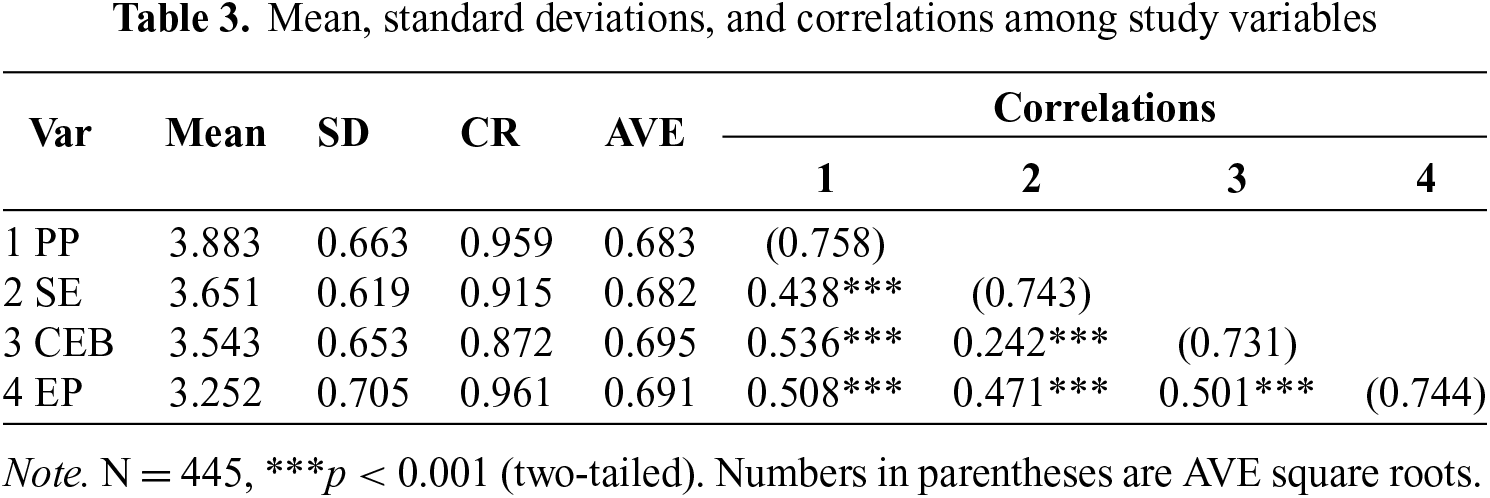
In this study, we utilized the Maximum Likelihood (ML) estimation method within Mplus 8.3 software to analyze the structural equation model. The specific results are shown in Table 2. The five-factor model has the best fitting degree, and the specific fitting indicators are as follows: χ2 = 2491.97, df = 2073, χ2/df = 1.202, RMSEA = 0.021, TLI = 0.978, CFI = 0.978, SRMR = 0.033, all fitting indicators perform well, and the overall model adaptation effect is good. Table 3 shows that the AVE and CR values of each construct ranged from 0.682–0.695 and 0.872–0.961, respectively, both meeting the criteria of AVE > 0.5 and CR > 0.8, indicating that the convergent validity of each construct has been validated. In addition, the square root values of AVE for each construct (i.e., the values in parentheses on the diagonal of Table 3) are higher than their correlation coefficients with other constructs. This result highlights the clear differentiation between measurement indicators and validates the discriminant validity between each construct.
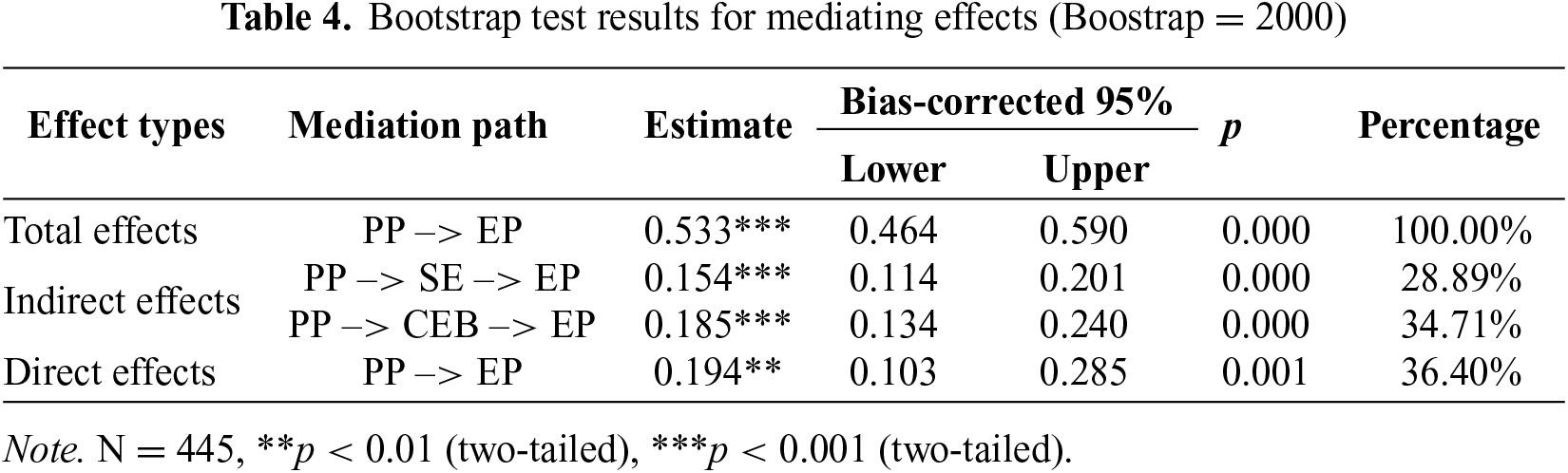
In this study, we employed the Bootstrap method (n = 2000) to investigate the mediating effects of self-efficacy and career exploration behaviors between proactive personality and university students’ preparation for employment, with a confidence level set at 95%.
Table 3 presents the descriptive statistics for each latent variable in the study, including means, standard deviations, and correlation coefficients. The analysis results reveal a close positive association between proactive personality, self-efficacy, career exploration behaviors, and employment preparation.
Proactive personality and employment preparation
As shown in the model validation results presented in Figure 2, the standardized path coefficient of proactive personality on employment preparation is 0.194 (p < 0.01), indicating that Hypothesis H1 is supported, meaning that proactive personality has a significant positive impact on university students’ employment preparation.
Self-efficacy and career exploration mediation
According to the test results presented in Table 4, the confidence interval for the mediating effect of self-efficacy is from 0.114 to 0.201, which does not include 0, demonstrating a significant mediating role of self-efficacy between proactive personality and employment preparation. The effect size accounts for 28.89%, confirming Hypothesis H2. Similarly, the confidence interval for the mediating effect of career exploration behaviors is from 0.134 to 0.240, which also does not include 0, indicating a significant mediating role of career exploration behaviors between proactive personality and employment preparation. The effect size accounts for 34.71%, supporting Hypothesis H3.
The study found that proactive personality has a positive predictive effect on the level of employment preparation among university students. This finding is consistent with numerous previous findings that proactive personality significantly enhances individuals’ career behavioral effects (Fang et al., 2024; Jiang, 2017; Zhao et al., 2022). University students with proactive personality traits are more motivated to seek employment information, make career plans, and work hard for the purpose (Barnett & Bradley, 2007). University students with proactive personality traits often demonstrate stronger self-motivation and goal orientation. They are more inclined to actively adapt to the demands of the job market, continuously improving their level of employment preparation and enhancing their employability.
The research findings further indicate that self-efficacy plays a partial mediating role in the relationship between proactive personality and employment preparation. This finding could be explained by the fact that people with proactive personality are confident in their abilities (Hou et al., 2014; Kumar & Shukla, 2022) and believe that they can overcome various difficulties and challenges in the employment process. This sense of self-efficacy will motivate them to be more active in seeking internships, participating in career planning seminars, and enhancing career skills and other employment preparation activities (Maddy et al., 2015), which in turn will enhance their employability. This aligns with Social Cognitive Career Theory (Lent et al., 1994), which posits that self-efficacy beliefs mediate how stable traits translate into career-related actions. Therefore, enhancing university students’ self-efficacy is one of the effective ways to enhance their employment preparation.
In addition, findings indicate that career exploration behaviors partially mediated the relationship between proactive personality and employment preparation. This finding could be explained by the fact that people with proactive personalities were more likely to actively seek and evaluate career opportunities (Brown et al., 2006). For instance, they would be more likely to seek work experience through internships and part-time jobs, thus deepening their career pathways. Career exploration promotes job search behavior, and those with a higher degree of career exploration are often better prepared for employment (Lee et al., 2016; Zikic & Saks, 2009). Notably, the stronger mediation effect of career exploration (vs. self-efficacy) extends SCCT’s framework by demonstrating how proactive individuals leverage exploratory behaviors—not just cognitive beliefs—to navigate uncertain job markets. These career exploration behaviors will not only help them clarify their career direction and goals, but will also increase their employment success.
Implications for research and practice
The results provide new perspectives for understanding the influence of individual traits on university students’ employment preparation, and also point out the direction for university administrators and policymakers to design a more effective career development support system. Specifically, universities can develop and strengthen students’ proactive personality traits and self-confidence through the implementation of specific educational interventions, such as through the addition of practical aspects of decision-making and problem-solving to course instruction, to effectively enhance their level of employment preparation.
Self-efficacy and career exploration behaviors enhance students’ employment preparation suggesting a need for specialized workshops or training programs aimed at helping students build up and strengthen confidence in their labour market abilities. Universities should provide sufficient resources and services, such as regular career counseling services, organizing industry expert lectures, and arranging opportunities for enterprise visits, to help students understand the development trends of different industries and personal career paths. Also, university counselor-teachers should counsel students on career exploration aligned with their interests and strengths.
Limitations and future directions
Although this study provides important insights, it has some limitations. First, this study utilized a cross-sectional design, which is deficient in identifying causal relationships and capturing trends over time. Future research should adopt a longitudinal design strategy to further validate the dynamic relationships between these variables over time. Second, the survey sample only came from one university in central China, which may limit the generalizability of the research results. Future research can expand the sample size to cover multiple universities in different countries and regions, in order to enhance the external validity of research results. Furthermore, future research should employ qualitative research methods, such as interviews or case studies, to gain a deeper understanding of how proactive personality influences employment preparation.
This study found evidence for a proactive personality effect on the employment preparation of university students. Self-efficacy and career exploration behaviors in this process partially mediated this relationship. Career exploration demonstrated a stronger mediating effect (34.71% of the total effect) compared to self-efficacy (28.89%), highlighting their distinct roles in translating proactive dispositions into preparation behaviors. In the current competitive and rapidly changing job market, gaining an in-depth understanding of the mechanisms by which proactive personality affects university students’ employment preparation is of utmost importance for enhancing their employability. These findings provide operational reference value for universities in employment guidance practices.
Acknowledgement: Not applicable.
Funding Statement: This paper represents the phased achievement of the “International Trade” course in the research-based teaching project of undergraduate universities in Henan Province in 2023 (project approval number: 121). The author expresses sincere gratitude to the institutions that funded this research and the anonymous respondents who participated in the survey.
Author Contributions: The authors confirm their contributions to the paper as follows: Conception and design of the study: Yunsheng Ruan; Data collection: Zibin Cao; Analysis and interpretation of results: Lina Xu, Chao Han, Qianlu Sun; Draft manuscript preparation: Yunsheng Ruan, Li Chen. All authors reviewed the results and approved the final version of the manuscript.
Availability of Data and Materials: The data that support the findings of this study are available from the corresponding author, [YR], upon reasonable request.
Ethics Approval: This study involving human subjects was reviewed and approved by the Ethics Committee of the School of Economics and Management, Zhoukou Normal University, under approval number 20240926. All processes performed in this study were in accordance with the ethical standards of the Institutional Research Board and in compliance with the ethical standards of the 1964 Declaration of Helsinki and its subsequent amendments, or their equivalents. Informed consent was obtained from all participating subjects for this study. Subjects were informed of the purpose of the study, the method of data collection, and their right to withdraw from the study at any time without penalty. All data were anonymised to protect the subjects' privacy and confidential information.
Conflicts of Interest: The authors declare no conflicts of interest to report regarding the present study.
References
Aypay, A. (2010). The adaptations study of General Self Efcacy (GSE) scale to Turkish. İnönü Üniversitesi Eğitim Fakültesi Dergisi, 11(2), 113–132. https://dergipark.org.tr/en/pub/inuefd/issue/8702/108659 [Google Scholar]
Bandura, A. (1977). Self-efficacy: Toward a unifying theory of behavioral change. Psychological Review, 84(2), 191–215. https://doi.org/10.1037/0033-295X.84.2.191. [Google Scholar] [PubMed] [CrossRef]
Banerjee, A. V., & Duflo, E. (2008). What is middle class about the middle classes around the world? Journal of Economic Perspectives, 22(2), 3–28. https://doi.org/10.1257/jep.22.2.3. [Google Scholar] [PubMed] [CrossRef]
Barnett, B. R., & Bradley, L. (2007). The impact of organisational support for career development on career satisfaction. Career Development International, 12(7), 617–636. https://doi.org/10.1108/13620430710834396 [Google Scholar] [CrossRef]
Bateman, T. S., & Crant, J. M. (1993). The proactive component of organizational behavior: A measure and correlates. Journal of Organizational Behavior, 14(2), 103–118. https://doi.org/10.1002/job.4030140202 [Google Scholar] [CrossRef]
Brown, D. J., Cober, R. T., Kane, K., Levy, P. E., & Shalhoop, J. (2006). Proactive personality and the successful job search: A field investigation with college graduates. Journal of Applied Psychology, 91(3), 717–726. https://doi.org/10.1037/0021-9010.91.3.717. [Google Scholar] [PubMed] [CrossRef]
Cai, Z., Guan, Y., Li, H., Shi, W., Guo, K. et al. (2015). Self-esteem and proactive personality as predictors of future work self and career adaptability: An examination of mediating and moderating processes. Journal of Vocational Behavior, 86, 86–94. https://doi.org/10.1016/j.jvb.2014.10.004 [Google Scholar] [CrossRef]
Crant, J. M. (1995). The proactive personality scale and objective job performance among real estate agents. Journal of Applied Psychology, 80(4), 532–537. https://doi.org/10.1037/0021-9010.80.4.532 [Google Scholar] [CrossRef]
Doğanülkü, H. A., & Korkmaz, O. (2023). The role of proactive personality and general self-efficacy in proactive career behavior: A mediation model. International Journal For Educational and Vocational Guidance, 25(1), 1–25. https://doi.org/10.1007/s10775-023-09597-9. [Google Scholar] [PubMed] [CrossRef]
Fang, M., Pan, R., Ding, R., Hou, Z., & Wang, D. (2024). Effect of proactive personality on career adaptability of higher vocational college students: The mediating role of college experience. Frontiers in Psychology, 15, 1333677. https://doi.org/10.3389/fpsyg.2024.1333677. [Google Scholar] [PubMed] [CrossRef]
Fugate, M., Kinicki, A. J., & Ashforth, B. E. (2004). Employability: A psycho-social construct, its dimensions, and applications. Journal of Vocational Behavior, 65(1), 14–38. https://doi.org/10.1016/j.jvb.2003.10.005 [Google Scholar] [CrossRef]
Fuller Jr B., & Marler L. E. (2009). Change driven by nature: A meta-analytic review of the proactive personality literature. Journal of Vocational Behavior, 75(3), 329–345. https://doi.org/10.1016/j.jvb.2009.05.008 [Google Scholar] [CrossRef]
Hadi, S. A., Kersting, M., Klehe, U. C., Deckenbach, M., & Häusser, J. A. (2023). Relationships between proactive personality, work locus of control, and vocational satisfaction: The role of level of education. Heliyon, 9(2), e13283. https://doi.org/10.1016/j.heliyon.2023.e13283. [Google Scholar] [PubMed] [CrossRef]
Hou, C., Wu, L., & Liu, Z. (2014). Effect of proactive personality and decision-making self-efficacy on career adaptability among Chinese graduates. Social Behavior and Personality, 42(6), 903–912. https://doi.org/10.2224/sbp.2014.42.6.903 [Google Scholar] [CrossRef]
Jiang, Z. (2017). Proactive personality and career adaptability: The role of thriving at work. Journal of Vocational Behavior, 98(5), 85–97. https://doi.org/10.1016/j.jvb.2016.10.003 [Google Scholar] [CrossRef]
Joo, B. K. B., & Bennett III, R. H.III (2018). The influence of proactivity on creative behavior, organizational commitment, and job performance: Evidence from a Korean multinational. Journal of International & Interdisciplinary Business Research, 5(1), 1–20. https://doi.org/10.58809/gwxr1454 [Google Scholar] [CrossRef]
Kim, J., Oh, J., & Rajaguru, V. (2022). Job-seeking anxiety and job preparation behavior of undergraduate students. Healthcare, 10(2), 288. https://doi.org/10.3390/healthcare10020288. [Google Scholar] [PubMed] [CrossRef]
Kim, T. Y., Hon, A. H. Y., & Crant, J. M. (2009). Proactive personality, employee creativity, and newcomer outcomes: A longitudinal study. Journal of Business and Psychology, 24(1), 93–103. https://doi.org/10.1007/s10869-009-9094-4 [Google Scholar] [CrossRef]
Kumar, R., & Shukla, S. (2022). Creativity, proactive personality and entrepreneurial intentions: Examining the mediating role of entrepreneurial self-efficacy. Global Business Review, 23(1), 101–118. https://doi.org/10.1177/0972150919844395 [Google Scholar] [CrossRef]
Lee, B., Porfeli, E. J., & Hirschi, A. (2016). Between-and within-person level motivational precursors associated with career exploration. Journal of Vocational Behavior, 92(2), 125–134. https://doi.org/10.1016/j.jvb.2015.11.009 [Google Scholar] [CrossRef]
Lee, J. C-k, Yin, H., & Zhang, Z. (2010). Adaptation and analysis of motivated strategies for learning questionnaire in the Chinese setting. International Journal of Testing, 10(2), 149–165. https://doi.org/10.1080/15305050903534670 [Google Scholar] [CrossRef]
Lent, R. W., & Brown, S. D. (2008). Social cognitive career theory and subjective well-being in the context of work. Journal of Vocational Behavior, 72(2), 236–249. https://doi.org/10.1177/1069072707305769 [Google Scholar] [CrossRef]
Lent, R. W., Brown, S. D., & Hackett, G. (1994). Toward a unifying social cognitive theory of career and academic interest, choice, and performance. Journal of Vocational Behavior, 45(1), 79–122. https://doi.org/10.1006/jvbe.1994.1024 [Google Scholar] [CrossRef]
Li, N., Liang, J., & Crant, J. M. (2010). The role of proactive personality in job satisfaction and organizational citizenship behavior: A relational perspective. Journal of Applied Psychology, 95(2), 395–404. https://doi.org/10.1037/a0018079. [Google Scholar] [PubMed] [CrossRef]
Maddy III, L. M., III, Cannon, J. G., & Lichtenberger, E. J. (2015). The effects of social support on self-esteem, self-efficacy, and job search efficacy in the unemployed. Journal of Employment Counseling, 52(2), 87–95. https://doi.org/10.1002/joec.12007 [Google Scholar] [CrossRef]
Parker, S. K. (1998). Enhancing role breadth self-efficacy: The roles of job enrichment and other organizational interventions. Journal of Applied Psychology, 83(6), 835–852. https://doi.org/10.1037/0021-9010.83.6.835. [Google Scholar] [PubMed] [CrossRef]
Prabhu, V. P., McGuire, S. J., Drost, E. A., & Kwong, K. K. (2012). Proactive personality and entrepreneurial intent: Is entrepreneurial self-efficacy a mediator or moderator? International Journal of Entrepreneurial Behavior & Research, 18(5), 559–586. https://doi.org/10.1108/13552551211253937 [Google Scholar] [CrossRef]
Qenani, E., MacDougall, N., & Sexton, C. (2014). An empirical study of self-perceived employability: Improving the prospects for student employment success in an uncertain environment. Active Learning in Higher Education, 15(3), 199–213. https://doi.org/10.1177/1469787414544875 [Google Scholar] [CrossRef]
Seibert, S. E., Crant, J. M., & Kraimer, M. L. (1999). Proactive personality and career success. Journal of Applied Psychology, 84(3), 416–427. https://doi.org/10.1037/0021-9010.84.3.416. [Google Scholar] [PubMed] [CrossRef]
Seibert, S. E., Kraimer, M. L., & Crant, J. M. (2001). What do proactive people do? A longitudinal model linking proactive personality and career success. Personnel Psychology, 54(4), 845–874. https://doi.org/10.1111/j.1744-6570.2001.tb00234.x [Google Scholar] [CrossRef]
Shang, J., & Gan, Y. (2009). Analysis of the effects of the proactive personality on graduates’ career decision-making self-efficacy. Acta Scientiarum Naturalium Universitatis Pekinensis, 45(3), 548–554. https://doi.org/10.13209/j.0479-8023.2009.081 [Google Scholar] [CrossRef]
Stumpf, S. A., Colarelli, S. M., & Hartman, K. (1983). Development of the career exploration survey (CES). Journal of Vocational Behavior, 22(2), 191–226. https://doi.org/10.1016/0001-8791(83)90028-3 [Google Scholar] [CrossRef]
Taylor, M., Marsh, G., Nicol, D., & Broadbent, P. (2017). Good work: The taylor review of modern working practices (Vol. 116). London: Department for Business, Energy & Industrial Strategy. [Google Scholar]
Thompson, J. A. (2005). Proactive personality and job performance: A social capital perspective. Journal of Applied Psychology, 90(5), 1011–1017. https://doi.org/10.1037/0021-9010.90.5.1011. [Google Scholar] [PubMed] [CrossRef]
Xie, J. (2023). The influence of career adaptability and employment preparation on the employment quality of postgraduate students [Master’s dissertation]. China: East China Normal University. [Google Scholar]
Xu, C. (2008). Career decision-making self efficacy and it’s relation to anxiety and career exploration [Master’s dissertation]. China Central China Normal University. [Google Scholar]
Zahra, M., & Kee, D. M. H. (2022). Influence of proactive personality on job performance of bank employees in Pakistan: Work engagement as mediator. International Journal of Management Studies, 29(1), 83–108. https://doi.org/10.32890/ijms2022.29.1.3 [Google Scholar] [CrossRef]
Zhang, Z., Fang, H., Luan, Y., Chen, Q., & Peng, J. (2022). A meta-analysis of proactive personality and career success: The mediating effects of task performance and organizational citizenship behavior. Frontiers in Psychology, 13, 979412. https://doi.org/10.3389/fpsyg.2022.979412. [Google Scholar] [PubMed] [CrossRef]
Zhao, L., Li, W., & Zhang, H. (2022). Career adaptability as a strategy to improve sustainable employment: A proactive personality perspective. Sustainability, 14(19), 12889. https://doi.org/10.3390/su141912889 [Google Scholar] [CrossRef]
Zikic, J., & Saks, A. M. (2009). Job search and social cognitive theory: The role of career-relevant activities. Journal of Vocational Behavior, 74(1), 117–127. https://doi.org/10.1016/j.jvb.2008.11.001 [Google Scholar] [CrossRef]
Cite This Article
 Copyright © 2025 The Author(s). Published by Tech Science Press.
This work is licensed under a Creative Commons Attribution 4.0 International License , which permits unrestricted use, distribution, and reproduction in any medium, provided the original work is properly cited.
 Downloads
 Citation Tools
