
 Login
Login Register
 Submit a Paper
 Propose a Special lssue
 Open Access
ARTICLE

Mindfulness and internalizing/externalizing problems among adolescents: Ethnicity moderation and psychological capital mediation
1 Research Center of Humanities and Medicine, Zunyi Medical University, Zunyi, China
2 The Institute of Ethnology and Anthropology, Chinese Academy of Social Sciences, Beijing, China
* Corresponding Authors: Taiyong Bi. Email: ; Hui Kou. Email:
# These authors are the co-first authors
Journal of Psychology in Africa 2026, 36(1), 97-106. https://doi.org/10.32604/jpa.2026.072761
Received 03 September 2025; Accepted 06 January 2026; Issue published 26 February 2026
 View Full Text
 Download PDF
Abstract
This study examines the mediating role of positive psychological capital and the moderating role of ethnicity in the relationship between mindfulness and internalizing/externalizing problems among adolescents. The study sample comprized Chinese adolescents (N = 637 ethnic minority; females = 40.97%, meam age = 12.68, SD = 0.49 years; N = 636 Han; females = 49.06%, mean age = 12.71, SD = 0.47 years). The participants completed the Child and Adolescent Mindfulness Measure, the Positive Psycap Questionnaire, and the Youth Self-Report. Results from the moderated mediation analysis showed mindfulness was negatively associated with both internalizing and externalizing problems. Ethnicity moderated the relationship between mindfulness and internalizing problems to be stronger for Han adolescents compared to ethnic minority adolescents. Psychological capital mediated the relationship between mindfulness and internalizing problems in both groups, with a negative direction. Findings support the Conservation of Resources theory and highlight mindfulness as a personal resource fostering adolescent well-being in multicultural contexts.Keywords
Mindfulness and behavioral problems
Adolescents with mindfulness may be better able to manage the critical developmental period’s emotional instability, during which problem behaviors often emerge and intensify (Liu, 2021). Mindfulness, defined as the awareness and attention to present experiences and thoughts with an open, tolerant, non-reactive, and non-judgmental attitude (Kabat-Zinn, 2003), has been shown to offer numerous psychological benefits. For instance, mindfulness can reduce the symptoms of depression, anxiety, and stress (Maddock & Blair, 2023). Higher mindfulness levels are also associated with stronger self-control and lower impulsivity (Ke et al., 2025), suggesting its role in regulating both emotional and behavioral dimensions of adjustment.
Problem behaviors refer to maladaptive actions that hinder social adaptation and deviate from social norms, thereby exerting negative effects on individual well-being and community functioning (Lassi et al., 2011). According to Achenbach (1966), these behaviors comprise two interrelated dimensions: internalizing problems, involving inwardly directed symptoms such as anxiety, depression, and social withdrawal, and externalizing problems, encompassing outwardly directed behaviors such as aggression and rule-breaking. Mindfulness has been found to mitigate both domains by enhancing emotion regulation and reducing impulsive responses, thereby promoting overall psychosocial adjustment during adolescence.
The mediating role of positive psychological capital
Psychological capital (PsyCap) is defined as an individual’s positive psychological state throughout the process of growth and development, encompassing four fundamental dimensions: self-efficacy, optimism, resilience, and hope (Luthans & Youssef, 2004).
Mindfulness is also a positive personal resource (Huang et al., 2021). From the broaden-and-build theory of positive emotions (Fredrickson, 2004), mindfulness cultivates positive affective states that enhance individuals’ cognitive flexibility and emotional awareness, thereby strengthening these PsyCap components. Empirical findings show that adolescents with higher mindfulness exhibit greater optimism, resilience, and self-efficacy (Pang & Ruch, 2019; Pepping et al., 2013), and mindfulness training effectively increases PsyCap (Huang et al., 2019; Oh et al., 2022). Thus, mindfulness can be viewed as a psychological antecedent that nurtures the development of positive psychological capital.
Building on the Conservation of Resources (COR) framework (Hobfoll et al., 2018), PsyCap functions as a protective resource that buffers emotional distress through enhanced social support, sense of belonging, and subjective well-being, thereby contributing to a reduction in adolescents’ internalizing problems, while promoting stronger self-control that helps prevent externalizing behaviors such as aggression or rule-breaking (Hu et al., 2025; Xiong et al., 2020). As an internal psychological resource, PsyCap enables adolescents to approach challenges with confidence and flexibility, thereby promoting adaptive emotional and behavioral regulation. Consequently, positive psychological capital serves as a key mechanism linking mindfulness to both internalizing and externalizing behavioral outcomes.
Taken together, mindfulness may reduce adolescents’ internalizing and externalizing problems by increasing their positive psychological capital, which fosters resilience and adaptive coping.
The moderating role of ethnicity
Ethnic identity, as a core dimension of adolescents’ self-concept, may profoundly influence their psychological processes and behavioral manifestations. For ethnic minority adolescents, identity formation is complicated by the need to navigate interpersonal relationships while also confronting their minority status within the dominant culture, shaping their sense of self and future development (Zamora & Padilla, 2024). The distinctive patterns of cultural socialization may contribute to discrepancies in emotion regulation and the development of psychological resources between minority and mainstream groups.
China, a multi-ethnic country, promotes ethnic equality and regional autonomy to support the development of all groups. In Chinese culture, influenced by Confucianism, Han adolescents are taught from a young age to regulate their emotions for better social adaptation, making them more likely to adopt various emotion regulation strategies. In contrast, Chinese ethnic minority cultures may place less emphasis on learning display rules, leading to difficulties in emotion regulation and cultural adaptation among ethnic minority adolescents (Lü & Wang, 2012). Therefore, ethnic minority adolescents may exhibit weaker effects of mindfulness in alleviating internalizing problems, possibly due to a lack of emotion regulation methods such as mindfulness. Beyond internalizing problems, mindfulness may also help reduce externalizing behaviors. Higher mindfulness is linked to greater self-control and lower impulsivity, thereby decreasing aggression and rule-breaking. Thus, mindfulness is expected to be negatively related to adolescents’ externalizing problems. Nevertheless, cultural differences in social norms and behavioral regulation may cause the moderating effect of ethnic identity on this pathway to differ from that for internalizing problems.
Our research focuses on Miao and Dong adolescents in Guizhou, a diverse and underdeveloped inland province in Southwest China, where the incidence of behavioral problems among minority children is significantly higher than the national average (Long et al., 2024). Based on empirical analysis in Yunnan, Guizhou, and Guangxi, results suggest that students in Guizhou exhibit relatively lower mental health (Wei et al., 2022). Previous studies have shown that Miao and Dong adolescents in Guizhou exhibit higher rates of risky behaviors and emotional problems than their peers. For example, Miao adolescents reported more smoking and drinking behaviors, which were closely associated with anxiety and depression (Zhang et al., 2015). Dong students scored higher on neuroticism, which was negatively related to mental health, suggesting greater emotional regulation difficulties under the pressure of bilingual education (Lu, 2010). Furthermore, research on cultural identity among Dong youth revealed that participation in cross-cultural activities enhances both cultural adaptation and ethnic identity, while some adolescents display a “bicultural identity strategy” oscillating between Han and ethnic cultures (Fan et al., 2022). Overall, these findings indicate that the psychological resources and emotion-regulation patterns of Miao and Dong adolescents differ systematically from those of Han adolescents, underscoring the need to examine the moderating role of ethnic identity in mindfulness effects. Similarly, in the United States, children from racial or ethnic minority groups and/or disadvantaged backgrounds may be more prone to behavioral problems (Kelch-Oliver & Smith, 2015).
Based on the Comprehensive Theoretical Model of Problem Behavior (CTMPB) framework, the variables in this study can be systematically categorized (Jessor, 1987). Mindfulness, as an individual disposition, belongs to the personality system; positive psychological capital, as an inner psychological resource, can also be regarded as an important component of this system. In contrast, the ethnic cultural background forms the perceived environmental system that influences adolescent development (Phinney, 2003). Therefore, this study aims to examine how variables within the personality system (i.e., mindfulness and psychological capital) affect the behavioral system (internalizing/externalizing problems), and how the perceived environmental system (i.e., ethnic culture) moderates this process.
Berry’s acculturation theory further suggests that adolescents from different ethnic groups may adopt distinct strategies (e.g., integration, assimilation) when interacting with the mainstream culture (Berry, 1980). These strategies represent not only behavioral choices but also reflections of their underlying psychological adaptation and resource allocation patterns. For instance, adolescents who adopt an integrative strategy may possess richer psychological resources, whereas those who experience marginalization may face greater internal conflicts. Thus, the ethnic cultural context may indirectly influence adolescents’ levels of psychological capital by shaping their acculturation strategies, thereby moderating the impact of mindfulness on behavioral problems. This forms the theoretical basis for the present study’s hypothesis regarding the moderating role of ethnic identity.
Based on the theoretical framework and prior empirical findings, the present study aimed to examine the mediating role of positive psychological capital and the moderating role of ethnicity in the relationship between mindfulness and internalizing/externalizing problems among adolescents in Southwest China. The conceptual model of the proposed moderated mediation is presented in Figure 1. Specifically, we sought to understand how ethnic identity may buffer or exacerbate the positive effects of mindfulness on adolescents’ internalizing and externalizing behaviors.
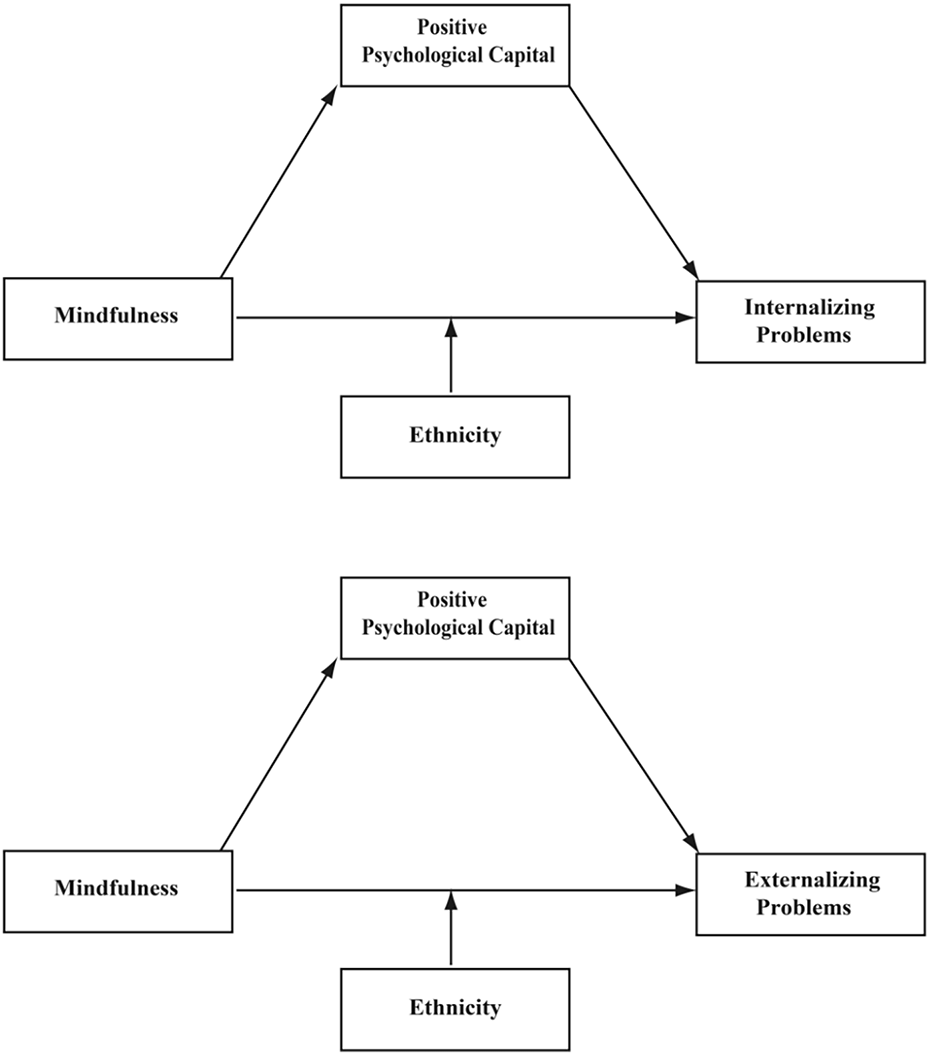
Figure 1: The study conceptual model of the moderated mediation model of ethnicity on the relationship between mindfulness and internalizing problems/externalizing problems
Based on the theoretical framework and prior empirical findings, the present study proposed the following hypotheses:
H1: Positive psychological capital mediates the relationship between mindfulness and adolescents’ behavioral problems; higher mindfulness predicts greater psychological capital and fewer internalizing and externalizing behaviors.
H2a: The negative association between mindfulness and internalizing problems is stronger for Han adolescents than for ethnic minority adolescents.
H2b: The negative association between mindfulness and externalizing problems is stronger for Han adolescents than for ethnic minority adolescents.
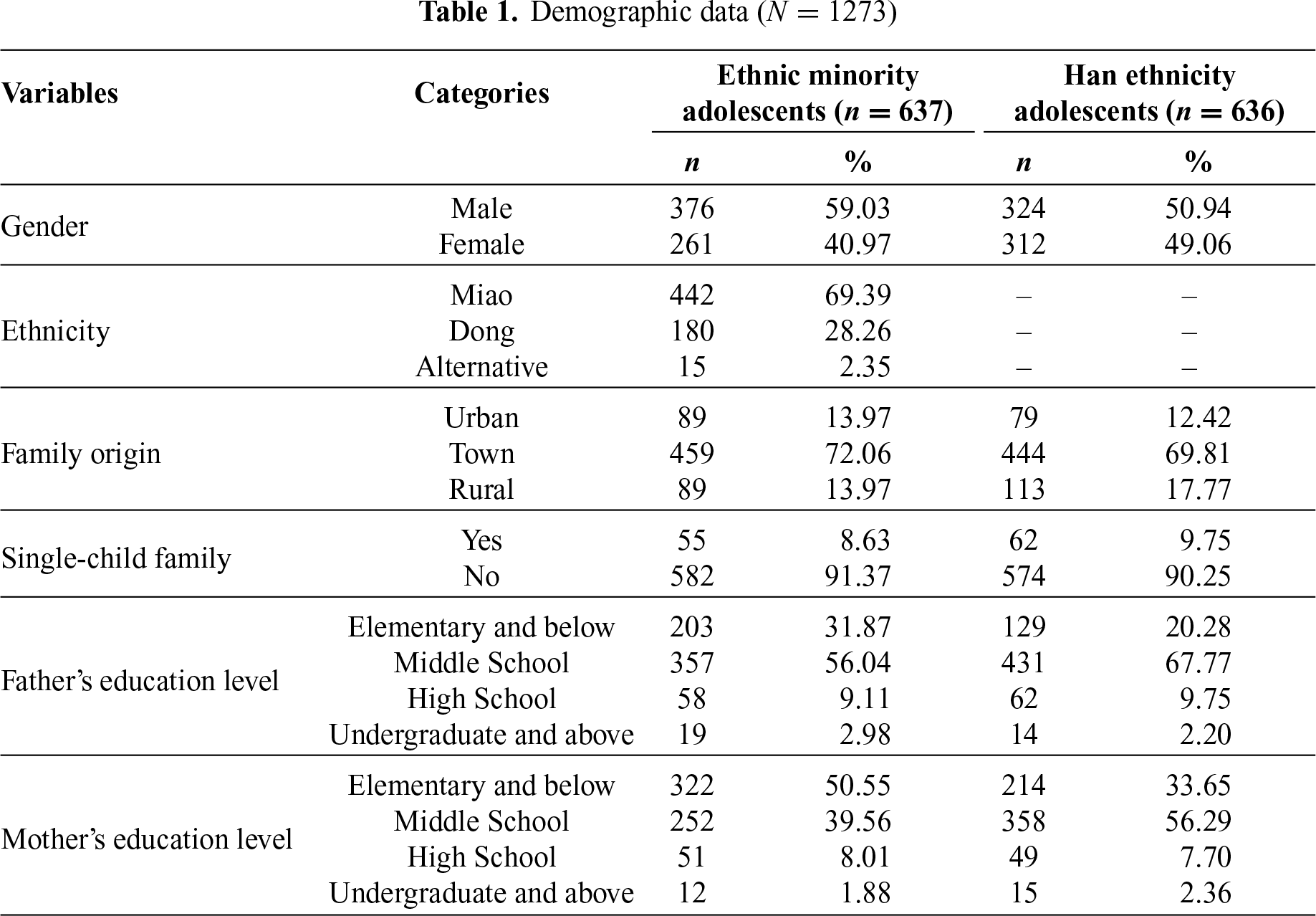
The study sample comprised 1273 adolescents aged 12 to 15 years (M = 13.17, SD = 0.54), including 700 boys and 573 girls. Of these were 637 Chinese ethnic minority adolescents (female = 40.97%, mean age = 12.68, SD = 0.49 Years) and 636 Han adolescents (female = 49.06%, mean age = 12.71, SD = 0.47 Years) from junior middle schools. All the adolescents were first-year middle school students (see Table 1 for demographics). Due to the sample size of individual ethnic subgroups being insufficient for reliable subgroup analysis, the ethnic minority adolescents were analyzed as a combined group in this study.
Mindfulness. The 10-item Child and Adolescent Mindfulness Measure (CAMM) (Greco et al., 2011) comprises two dimensions: “acceptance” and “awareness and non-judgment”. The “acceptance” dimension includes 4 items (e.g., I tell myself that my feelings are inappropriate); the “awareness and non-judgment” dimension includes 6 items (e.g., I feel bothered by my irrational emotions). Each item is rated on a 5-point scale from 0 = never to 4 = always. All items of the scale were reverse-scored. The higher the score, the higher the level of mindfulness. The Cronbach’s alpha coefficient for CAMM scores was 0.80.
Psychological capital. The Positive Psycap Questionnaire (PPQ) (Zhang et al., 2010) comprises 26 items across four dimensions: self-efficacy (7 Items, e.g., Many people appreciate my abilities.), optimism (7 Items, e.g., I can recover quickly after setbacks.), resiliency (6 Items, e.g., I pursue my goals with confidence), and hope (6 Items, e.g., When things are uncertain, I tend to expect positive outcomes.). Each item is rated on a 7-point Likert scale ranging from 1 = Completely not applicable to 7 = Completely applicable. Higher scores indicate a higher level of positive psychological capital. In the present study, Cronbach’s alpha was 0.92.
Affect regulation. The Youth Self-Report (YSR) (Achenbach, 1991) comprises two parts: 1) Competencies and 2) Problems. This study included only the problems section, which comprises 112 items. Each item is rated on a three-point scale (2 indicates that the symptom is present most of the time or applies well, 1 indicates that the symptom is present some of the time or applies to some extent, and 0 indicates the absence of symptom or problem behavior). All ratings refer to symptoms or problems experienced during the preceding 6 months. The YSR total problem scale can be divided into eight syndrome subscales: “Withdrawn” (7 Items, e.g., I like to be alone.), “Somatic complaints” (10 Items, e.g., I feel dizzy.), “Anxious/Depressed” (16 Items, e.g., I feel lonely.), “Social problems” (8 Items, e.g., I don’t get along with other young people.), “Thought problems” (7 Items, e.g., I always think about certain things and can’t get rid of them.), “Attention problems” (9 Items, e.g., I can’t concentrate and my attention span doesn’t last.), “Delinquent behavior” (11 Items, e.g., I don’t feel guilty if I have misbehaviour.) and “Aggressive behavior” (19 Items, e.g., I argue often.). “Withdrawn”, “Somatic complaints” and “Anxious/Depressed” together comprise a broad “internalizing” dimension, whereas “Delinquent” and “Aggressive” behaviors together constitute an “externalizing” dimension. The total YSR score is the sum of the scores for each entry, but the 16 socially desirable entries and entries 2 and 4 are not included in the total score, for a total of 101 entries. Higher scores indicate a greater likelihood of emotional and behavioral problems. In a previous study, the Cronbach’s alpha coefficient for YSR in a sample of Chinese adolescents was 0.94 (Wang et al., 2013). In the present study, Cronbach’s alpha was 0.93. This study utilized the “internalizing” and “externalizing” dimensions of the YSR scale.
This research was approved by the Human Research Ethics Committee of Zunyi Medical University. The parents or legal guardians gave written informed consent and the participants assented to the study. All the participants were informed of the purpose of the study and that participation was voluntary to participate.
Data analysis was conducted in SPSS 23.0. Before constructing a moderated mediation model, common method bias was assessed by Harman’s single-factor test in SPSS 23.0. Pearson correlation analysis was used to test the correlation between CAMM, PPQ, internalizing dimension, and externalizing dimension. Based on our hypothesis, mindfulness was set as the predictive variable, and the “internalizing” and “externalizing” dimensions of the YSR scale were individually set as the outcome variables. And a moderated mediation model was constructed with “Positive Psychological Capital” as the mediating variable and “ethnicity” as the moderating variable.
To examine the mediation effect of “Positive Psychological Capital” between mindfulness and internalizing problems/externalizing problems (Hypothesis 1), we utilized Model 4 of the PROCESS macro in SPSS 23.0 (Hayes, 2013). We conducted bootstrapping with 5000 resamples to determine the mediation effect. This technique does not assume the normality of the sampling distribution and provides more reliable estimations of mediation effects (Preacher & Hayes, 2008). A significant mediation effect at the α = 0.05 level is indicated if the bias-corrected bootstrap 95% confidence interval (CI) does not include zero.
To test our hypothesis that ethnicity moderates the direct relationship between mindfulness and behavioral problems (Hypothesis 2), we specifically selected Model 5 of the PROCESS macro (Hayes, 2013). Model 5 is designed for this specific scenario, testing moderation only on the direct path. The choice of Model 5 was driven by our theoretical framework, which posits that ethnicity moderates the direct effect of mindfulness on outcomes, but not the indirect effect through psychological capital. We performed bootstrapping with 5000 resamples to verify the significance of the moderated mediation effect.
An exploratory factor analysis without rotation was conducted on the questionnaires through Harman’s one-factor test, which revealed that the variance explained by the first common factor was 20.13% which was much less than the critical standard of 40% (Podsakoff et al., 2003), indicating that there was no common method bias in the present study.
Descriptive statistics and bivariate correlation analysis
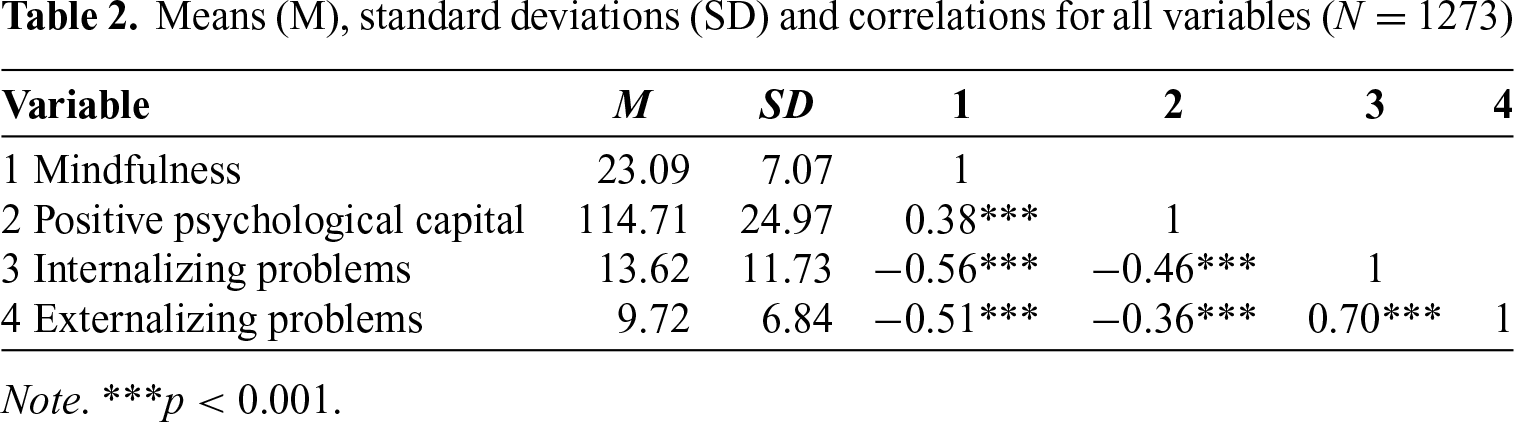
Descriptive statistics and bivariate correlation analysis were conducted on mindfulness, positive psychological capital, internalizing problems, and externalizing problems (see Table 2). The results show that mindfulness is significantly negatively correlated with internalizing problems (r = −0.56, p < 0.001), externalizing problems (r = −0.51, p < 0.001), and positively correlated with psychological capital (r = 0.38, p < 0.001). Positive psychological capital is significantly negatively correlated with internalizing problems (r = −0.46, p < 0.001) and externalizing problems (r = −0.36, p < 0.001). Internalizing problems are positively correlated with externalizing problems (r = 0.70, p < 0.001).
The PROCESS macro for SPSS (Model 4) was used to examine the mediating effect of positive psychological capital on the relationship between mindfulness and internalizing problems among adolescents. As seen in Figure 2, results showed that higher mindfulness was significantly correlated with higher positive psychological capital (β = 0.38, p < 0.001). Positive psychological capital was negatively associated with internalizing problems (β = −0.29, p < 0.001). As shown in Table 3, the total effect of mindfulness on internalizing problems was significant (β = −0.56, p < 0.001, Bootstrap 95%CI [−1.01, −0.86]), as was the direct effect (β = −0.45, p < 0.001, Bootstrap 95%CI [−0.83, −0.67]). The results revealed that the indirect effect path mindfulness → positive psychological capital → internalizing was also significant (Bootstrap 95%CI [−0.14, −0.08]).
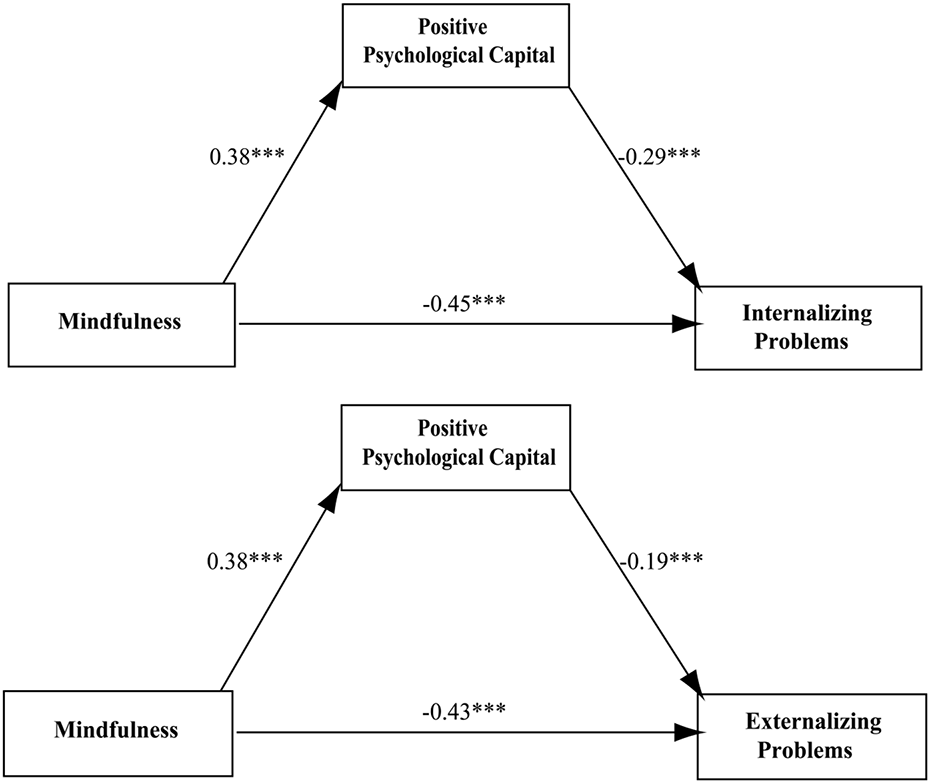
Figure 2: The mediating effects of positive psychological capital on the relationship between mindfulness and internalizing/externalizing problems (Standardized regression coefficients, ***p < 0.001)
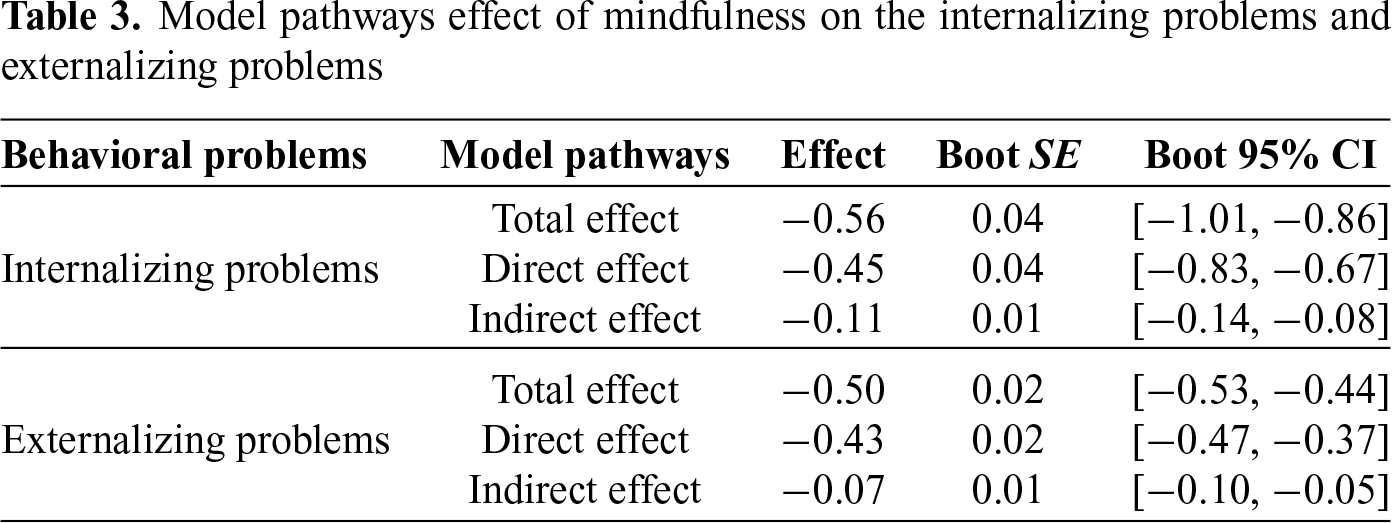
The PROCESS macro for SPSS (Model 4) was used to examine the mediating effect of positive psychological capital on the relationship between mindfulness and externalizing problems among adolescents. As seen in Figure 2, results showed that higher mindfulness was significantly correlated with higher positive psychological capital (β = 0.38, p < 0.001). Positive psychological capital was negatively associated with externalizing problems (β = −0.19, p < 0.001). As shown in Table 3, the total effect of mindfulness on externalizing problems was significant (β = −0.50, p < 0.001, Bootstrap 95%CI [−0.53, −0.44]), as was the direct effect (β = −0.43, p < 0.001, Bootstrap 95%CI [−0.47, −0.37]). The results revealed that the indirect effect path mindfulness → positive psychological capital → externalizing problems was also significant (Bootstrap 95%CI [−0.10, −0.05]).
To test the hypothesis that ethnicity moderates the direct relations between mindfulness and internalizing problems, we performed a moderated mediation analysis. As shown in the Table 4, the effects of mindfulness on positive psychological capital (β = 1.33, t = 14.49, p < 0.001) and internalizing problems (β = −0.62, t = −11.70, p < 0.001) were significant. More importantly, the effect of mindfulness on internalizing problems was moderated by ethnicity (β = −0.22, t = −2.77, p = 0.006).
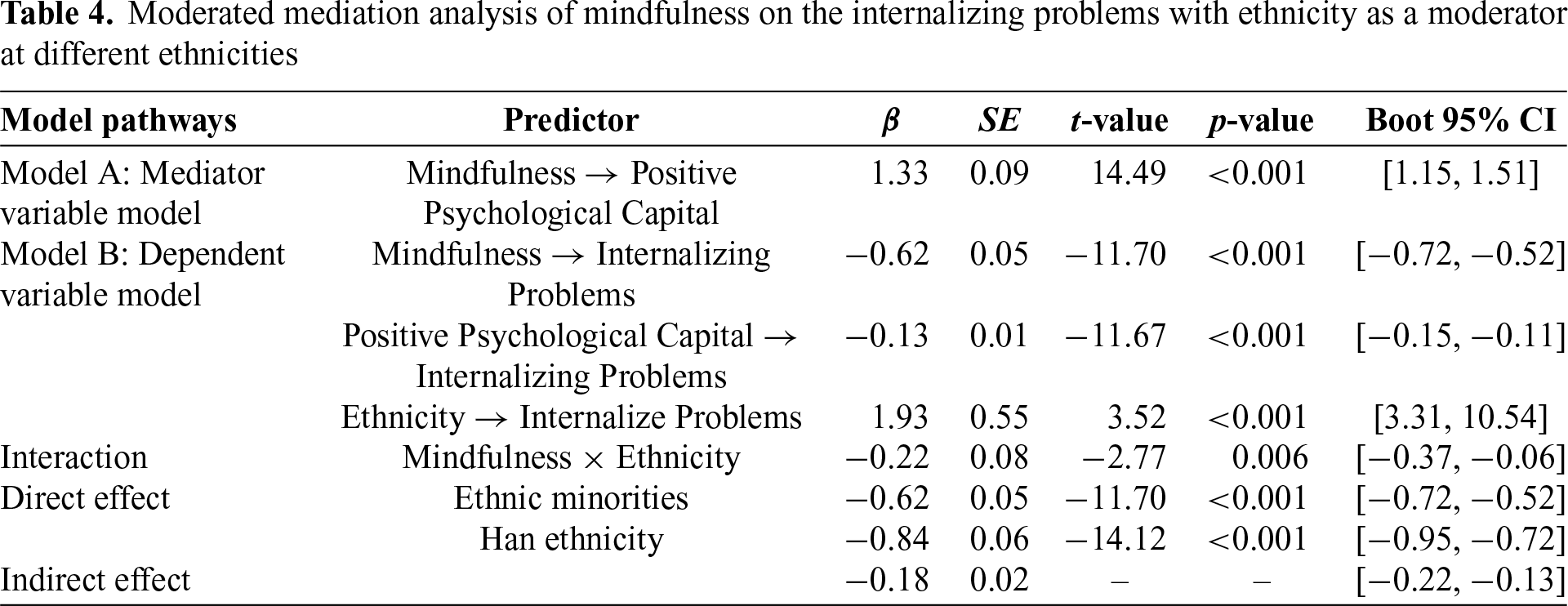
Simple slope tests (Figure 3) suggested that the relationship between mindfulness and the internalizing dimension was statistically weaker for ethnic minority adolescents than for Han ethnicity adolescents. As shown in Table 4, the effect of mindfulness on internalizing problems was significantly stronger for Han adolescents (β = −0.84, t = −14.12, p < 0.001) compared to ethnic minority adolescents (β = −0.62, t = −11.70, p < 0.001).
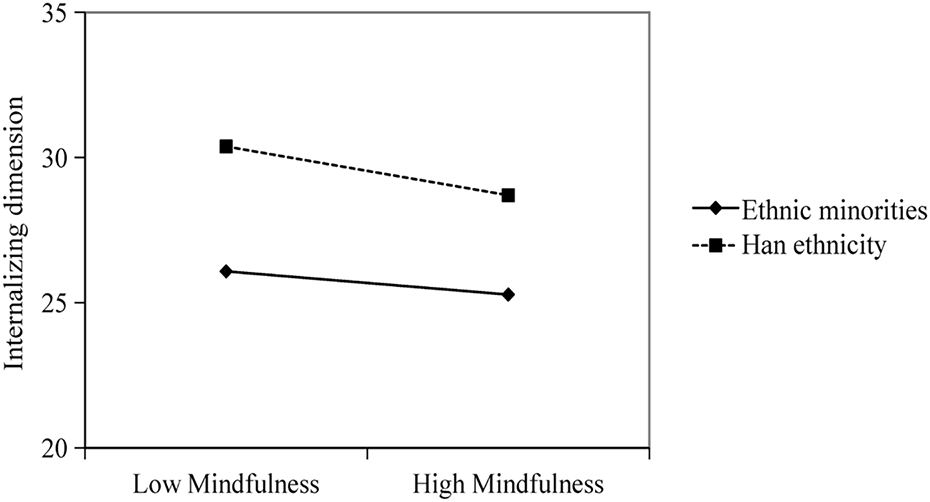
Figure 3: Ethnicity moderates the relationship between mindfulness and internalizing problems
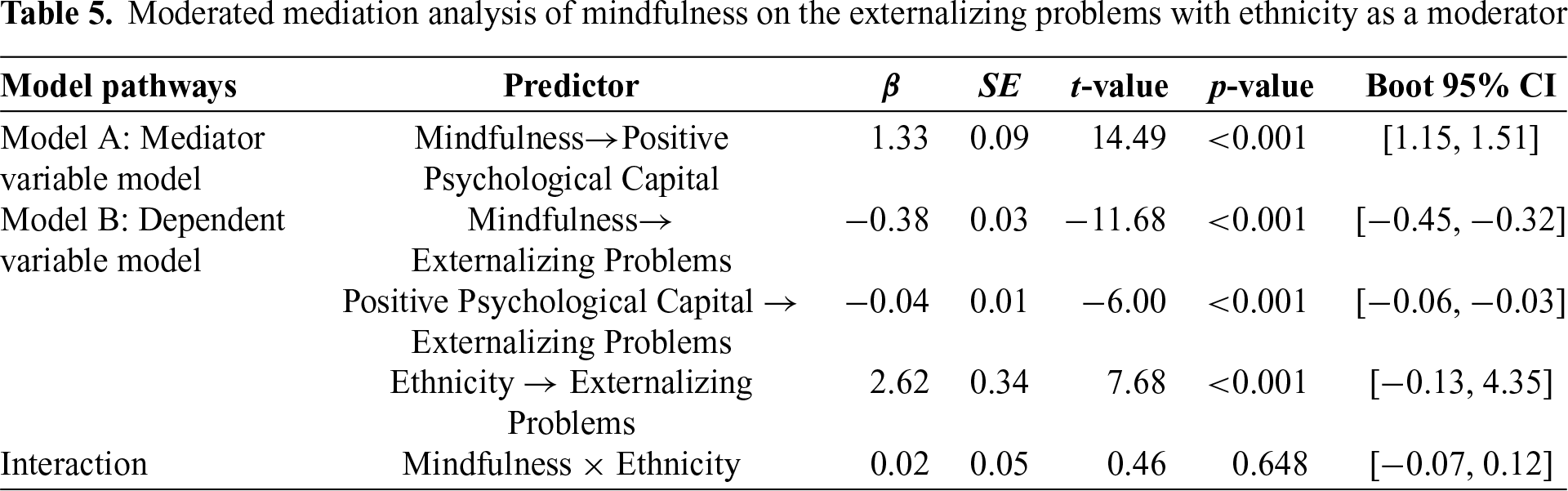
To test the hypothesis that ethnicity moderates the direct relations between mindfulness and externalizing problems, we performed a moderated mediation analysis. As presented in Table 5, the effect of the interaction term (Mindfulness × Ethnicity) on externalizing problems was nonsignificant (β = 0.02, t = 0.46, p = 0.648).
Psychological capital mediation
This study found that psychological capital mediates the effect of mindfulness on internalizing and externalizing problems of adolescents. This process can be explained through the Conservation of Resources (COR) theory, which posits that individuals are motivated to protect, acquire, and build valued resources, and that the threat or loss of these resources leads to negative psychological and behavioral outcomes (Hobfoll et al., 2018). As a positive personal resource, mindfulness helps individuals regulate, cultivate, and effectively manage positive psychological resources, thereby enhancing their overall psychological capital. Specifically, mindfulness exerts positive effects on the four core components of psychological capital, which in turn help alleviate behavioral problems. (1) Self-efficacy: Mindfulness enhances cognitive and emotional awareness (Fredrickson, 2004; Parent et al., 2016), enabling individuals to act thoughtfully rather than react impulsively, thus strengthening confidence in coping with challenges. (2) Hope: It is positively related to motivational constructs such as hope, as mindfulness fosters positive anticipation of the future (Pang & Ruch, 2019). (3) Optimism: By encouraging an open and nonjudgmental attitude toward current experiences, mindfulness complements the optimistic tendency to attribute success to positive causes (Pepping et al., 2013). (4) Resilience: Mindfulness training has been shown to enhance resilience and reduce emotional and behavioral problems (Huang et al., 2019). By enhancing these psychological resources, adolescents are better equipped to manage stress, navigate challenges, and regulate their emotions, ultimately reducing the likelihood of engaging in problematic behaviors (He, 2024; Lorenz et al., 2022). Thus, fostering positive psychological capital in adolescents not only builds resilience but also serves as a protective mechanism against the development of internalizing and externalizing behavioral problems.
In addition to the direct relationships previously discussed, it is crucial to consider the mediating role of positive psychological capital. While previous research has predominantly focused on the direct effects of mindfulness on both positive psychological capital and behavioral problems, there remains a limited understanding of the mechanisms through which mindfulness influences internalizing and externalizing behavioral problems. Much of the existing literature has emphasized the influence of parents’ mindfulness on children’s behavioral outcomes (Jones et al., 2014). However, there are fewer studies exploring the impact of adolescents’ own mindfulness on their personal psychological traits and behavioral problems. Our findings highlight that positive psychological capital plays a pivotal role in mediating the relationship between mindfulness and behavioral problems. This mediation mechanism enriches our understanding of the psychological processes by which mindfulness can mitigate both internalizing and externalizing problems in adolescents.
The study found that ethnic identity moderated the relationship between mindfulness and internalizing problems, but not between mindfulness and externalizing problems. Specifically, the effect of mindfulness on internalizing problems was significantly stronger among Han adolescents than among their ethnic minority counterparts. Ethnic identity, as a social dimension of self-identity, is considered crucial for psychological well-being across developmental stages (Adams et al., 2016), offering diverse perspectives on the mechanisms through which mindfulness exerts its effects. This phenomenon can be further interpreted from the perspectives of cultural adaptation and emotional socialization.
First, according to Berry’s bidimensional acculturation model (Berry, 1980), Han adolescents living in ethnically diverse regions tend to adopt an assimilation strategy within the dominant cultural context, placing greater emphasis on self-cultivation and emotional restraint in their self-concept development. Such a cultural background allows them to integrate the “nonjudgmental awareness” inherent in mindfulness with existing cultural cognitions—for instance, the Confucian tradition of self-restraint—thereby facilitating more effective acceptance and regulation of negative emotions and buffering the emergence of internalizing behaviors (Chan, 2020; Xie, 2021).
Second, within the broader context of Chinese culture, influenced by Confucian values, Han adolescents are often encouraged from an early age to regulate emotions for better social adaptation (Chan et al., 2024). A study in Southwest China found that ethnic minority adolescents paid less attention to and had less clarity about emotional expression rules than Han adolescents (Huang et al., 2015). The concept of emotion dysregulation may manifest differently and have varying effects across racial and ethnic groups, potentially shaped by cultural norms (Pencea et al., 2020). Consequently, they are more likely to develop and employ diverse emotional regulation strategies. In contrast, many ethnic minority cultures in China place relatively less emphasis on learning emotional expression rules, which may pose greater challenges for adolescents in emotion regulation and cultural adaptation. Therefore, when examining mindfulness—a trait reflecting refined emotional regulation skills—Han adolescents may exhibit a stronger protective effect owing to their culturally reinforced foundation, whereas ethnic minority adolescents may experience a comparatively weaker effect due to limited exposure to similar emotional socialization practices.
However, the moderating effect of ethnic identity on the relationship between mindfulness and externalizing problems was not significant, suggesting distinct underlying psychological mechanisms between internalizing and externalizing problems. Externalizing problems, such as aggression and rule-breaking behaviors, are more closely associated with impulse control, the internalization of social norms, and external behavioral constraints (Achenbach, 1991). The influence of ethnic identity on such behaviors may lie more in direct differences in behavioral norms than in moderating the protective role of mindfulness. In other words, regardless of ethnic background, mindfulness may exert a generally beneficial effect on reducing impulsive externalizing behaviors by enhancing individuals’ awareness of their present actions (Samarghandi et al., 2019). This finding extends the integrative model of problem behavior by examining the interaction between environmental factors (i.e., ethnicity) and individual factors (i.e., mindfulness and psychological capital) in Chinese adolescents. The model emphasizes the interplay among personality, perceived environment, and behavioral systems. Our study deepens this theoretical framework by illustrating how a cultural environmental factor—ethnic culture—modulates the influence of a personality trait (mindfulness) on behavioral systems, thereby enriching the understanding of this model in a cultural context.
This finding is particularly salient in Guizhou, a province characterized by high cultural and ethnic diversity, where the prevalence of behavioral problems among ethnic minority children is significantly higher than the national average. Our sample, consisting of early adolescents aged around 13, represents a critical period for identity formation. For ethnic minority adolescents, this process is especially complex, as they must navigate their minority status within the dominant cultural context. This unique process of cultural socialization may lead to differences in emotion regulation and the development of psychological resources compared with those from the mainstream group.
Implications for research and practice
In summary, the findings of this study hold important theoretical and practical implications. At the theoretical level, our results extend the theory of problem behavior by examining the interaction between environmental factors (i.e., ethnicity) and individual factors (i.e., mindfulness and positive psychological capital) in the context of Chinese adolescents’ behavioral problems. While the original theory emphasizes the interplay among personality, perceived environment, and behavior systems, our study specifically illustrates how ethnicity and cultural background moderate the influence of mindfulness—a personality trait—on behavioral outcomes, thereby deepening the theoretical understanding of this model. At the practical level, the findings underscore the necessity of culturally sensitive mindfulness interventions for adolescents. Programs should be adapted to participants’ ethnic and cultural backgrounds to enhance their preventive and therapeutic effectiveness in addressing behavioral problems. Our results strongly suggest that the design and implementation of mindfulness-based interventions must take into account adolescents’ ethnic and cultural contexts.
Limitations and future research directions
This study included several limitations that warrant further investigation. Firstly, the cross-sectional nature of the data precludes any interpretation regarding the evolution of these processes over time. Our results from cross-sectional data establish associations but not causation between variables. Future research should implement longitudinal studies to establish causal models and explore the psychological pathways through which individual traits, such as mindfulness and positive psychological capital, contribute to alleviating internalizing and externalizing behavioral problems among adolescents from different ethnic groups. Secondly, since all data were self-reported by the students, there is potential for both intentional and unintentional reporting errors. Future research could benefit from triangulating data sources, including input from teachers, peers, and parents, to enhance data validity. Incorporating methods such as interviews, observations, and experimental approaches within a long-term, multidimensional research design will offer a more comprehensive understanding of the interactions and pathways between these variables, providing deeper insights into reducing internalizing and externalizing behavioral problems among adolescents from diverse ethnic backgrounds. Finally, future studies, combining both mindfulness and positive psychological capital in their interventions, could be employed to better explore the synergistic effect of these two fields’ core concepts on adolescent psychological and behavioral health.
(1) Mindfulness negatively affects internalizing problems and externalizing problems. (2) Positive psychological capital mediates the relationship between mindfulness and internalizing/externalizing problems. (3) Ethnicity moderates the relationship between mindfulness and internalizing problems, but it does not moderate the relationship between mindfulness and externalizing problems. Specifically, the effect of mindfulness on internalizing problems was significantly weaker for ethnic minority adolescents compared to Han adolescents.
Acknowledgement: The authors are grateful to all participants for their invaluable input.
Funding Statement: This work was supported by the Guizhou Provincial Science and Technology Projects [Basic Science of Guizhou-[2024] Youth 309, Guizhou Platform Talents [2021] 1350-046], Zunyi Science and Technology Cooperation [HZ(2024)311], Funding of the Chinese Academy of Social Sciences (2024SYZH005), Peking University Longitudinal Scientific Research Technical Service Project (G-252), Guizhou Provincial Graduate Student Research Fund Project (2024YJSKYJJ339) and Zunyi Medical University Graduate Research Fund Project (ZYK206).
Author Contributions: The authors confirm contribution to the paper as follows: Conceptualization, Wei Luo and Hui Kou; methodology, Wei Luo and Taiyong Bi; software, Qianguo Xiao and Xiaodong Li; validation, Wei Luo and Hui Kou; formal analysis, Qianguo Xiao; investigation, Jia Wu, Qianguo Xiao, Qinhong Xie, Xiaodong Li and Taiyong Bi; resources, Taiyong Bi and Hui Kou; data curation, Jia Wu, Qinhong Xie and Xiaodong Li; writing—original draft preparation, Jia Wu, Wei Luo and Qianguo Xiao; writing—review and editing, Taiyong Bi and Hui Kou; visualization, None; supervision, Wei Luo and Hui Kou; project administration, Jia Wu and Taiyong Bi; funding acquisition, Jia Wu, Wei Luo, Taiyong Bi and Hui Kou. All authors reviewed and approved the final version of the manuscript.
Availability of Data and Materials: The data that support the findings of this study are available from the Corresponding Author, upon reasonable request.
Ethics Approval: All procedures involving human participants in this study were conducted in strict accordance with the ethical standards of the Human Research Ethics Committee of Zunyi Medical university, as well as the 1964 Helsinki Declaration and its subsequent amendments, or any comparable ethical standards.
Informed Consent: All participants are entitled to withdraw at any point and give informed consent before participating.
Conflicts of Interest: The authors declare no conflicts of interest.
References
Achenbach, T. M. (1966). The classification of children’s psychiatric symptoms: A factor-analytic study. Psychological Monographs: General and Applied, 80(7), 1–37. https://doi.org/10.1037/h0093906. [Google Scholar] [PubMed] [CrossRef]
Achenbach, T. (1991). Manual for the youth self-report and 1991 profile. Burlington, VT, USA: University of Vermont Department of Psychiatry. [Google Scholar]
Adams, B. G., Abubakar, A., Van de Vijver, F. J. R., De Bruin, G. P., Arasa, J. et al. (2016). Ethnic identity in emerging adults in Sub-Saharan Africa and the USA, and its associations with psychological well-being. Journal of Community & Applied Social Psychology, 26(3), 236–252. https://doi.org/10.1002/casp.2247 [Google Scholar] [CrossRef]
Berry, J. W. (1980). Acculturation as varieties of adaptation. In: A. Padilla (Ed.), Acculturation: Theory, models and some new findings (pp. 9–25). New York, NY, USA: Westview Press. [Google Scholar]
Chan, E. (2020). Reconciling confucianism with rule of law: Confucianisation or self-restraint? Asian Philosophy, 30(4), 275–294. https://doi.org/10.1080/09552367.2020.1844935 [Google Scholar] [CrossRef]
Chan, J. X. M., Preece, D. A., Weinborn, M., Sauer-Zavala, S., & Becerra, R. (2024). Assessing emotion regulation across Asian and Western cultures: Psychometric properties of three common scales across Singaporean and Australian samples. Journal of Personality Assessment, 106(4), 509–521. https://doi.org/10.1080/00223891.2023.2292257. [Google Scholar] [PubMed] [CrossRef]
Fan, L. N., Cen, Y., & Zhang, J. (2022). Adaptation and identity in cross-cultural communication of ethnic traditional villages from a structural perspective: An empirical study based on two dong villages in Southeast Guizhou. Chongqing Social Sciences, 6, 32–46. (In Chinese). https://doi.org/10.19631/j.cnki.css.2022.006.003 [Google Scholar] [CrossRef]
Fredrickson, B. L. (2004). The broaden-and–build theory of positive emotions. Philosophical Transactions of the Royal Society of London. Series B: Biological Sciences, 359(1449), 1367–1377. https://doi.org/10.1098/rstb.2004.1512. [Google Scholar] [PubMed] [CrossRef]
Greco, L. A., Baer, R. A., & Smith, G. T. (2011). Assessing mindfulness in children and adolescents: Development and validation of the Child and Adolescent Mindfulness Measure (CAMM). Psychological Assessment, 23(3), 606. https://doi.org/10.1037/a0022819. [Google Scholar] [PubMed] [CrossRef]
Hayes, A. (2013). Introduction to mediation, moderation,and conditional process analysis: A regression-based approach. New York, NY, USA: Guilford Press. [Google Scholar]
He, W.-J (2024). Psychological capital mediates the mindfulness-creativity link: The perspective of positive psychology [Original Research]. Frontiers in Psychology, 15, 1389909. https://doi.org/10.3389/fpsyg.2024.1389909. [Google Scholar] [PubMed] [CrossRef]
Hobfoll, S. E., Halbesleben, J., Neveu, J.-P., & Westman, M. (2018). Conservation of resources in the organizational context: The reality of resources and their consequences. Annual Review of Organizational Psychology and Organizational Behavior, 5, 103–128. https://doi.org/10.1146/annurev-orgpsych-032117-104640 [Google Scholar] [CrossRef]
Hu, Y., Weng, Y., Ning, P., Han, L., & Zhang, Y. (2025). The relationship between psychological capital and subjective academic achievement among middle school students: The chain mediating role of adolescent internalizing problems and life attitude. BMC Psychology, 13(1), 1166. https://doi.org/10.1186/s40359-025-03495-1. [Google Scholar] [PubMed] [CrossRef]
Huang, C.-C., Chen, Y., Greene, L., Cheung, S., & Wei, Y. (2019). Resilience and emotional and behavioral problems of adolescents in China: Effects of a short-term and intensive mindfulness and life skills training. Children and Youth Services Review, 100, 291–297. https://doi.org/10.1016/j.childyouth.2019.03.015 [Google Scholar] [CrossRef]
Huang, X. M., Wang, W., Gou, X. Y., & Gao, X. F. (2015). Comparison of health-related behaviors between junior middle school students of minority and of Han nationality in Panzhihua City. Practical Preventive Medicine, 22(1), 48–51. (In Chinese). [Google Scholar]
Huang, C., Xie, X., Cheung, S. P., Zhou, Y., & Ying, G. (2021). Job demands, resources, and burnout in social workers in China: Mediation effect of mindfulness. International Journal of Environmental Research and Public Health, 18(19), 10526. https://doi.org/10.3390/ijerph181910526. [Google Scholar] [PubMed] [CrossRef]
Jessor, R. (1987). Problem-behavior theory, psychosocial development, and adolescent problem drinking. British Journal of Addiction, 82(4), 331–342. https://doi.org/10.1111/j.1360-0443.1987.tb01490.x. [Google Scholar] [PubMed] [CrossRef]
Jones, L., Hastings, R. P., Totsika, V., Keane, L., & Rhule, N. (2014). Child behavior problems and parental well-being in families of children with Autism: The mediating role of mindfulness and acceptance. American Journal on Intellectual and Developmental Disabilities, 119(2), 171–185. https://doi.org/10.1352/1944-7558-119.2.171. [Google Scholar] [PubMed] [CrossRef]
Kabat-Zinn, J. (2003). Mindfulness-based interventions in context: Past, present, and future. Clinical Psychology: Science and Practice, 10(2), 144–156. https://doi.org/10.1093/clipsy.bpg016 [Google Scholar] [CrossRef]
Ke, M., Xie, Q., Huang, Y., Li, X., Liu, X. et al. (2025). The effect of social support on aggression among male juvenile delinquents in China: The multiple mediated role of trait mindfulness and self-control/impulsivity. Deviant Behavior, 46(12), 1533–1550. https://doi.org/10.1080/01639625.2024.2394817 [Google Scholar] [CrossRef]
Kelch-Oliver, K., & Smith, C. O. (2015). Using an evidence-based parenting intervention with African American parents. The Family Journal, 23(1), 26–32. https://doi.org/10.1177/1066480714555697 [Google Scholar] [CrossRef]
Lassi, Z. S., Mahmud, S., Syed, E. U., & Janjua, N. Z. (2011). Behavioral problems among children living in orphanage facilities of Karachi, Pakistan: Comparison of children in an SOS Village with those in conventional orphanages. Social Psychiatry and Psychiatric Epidemiology, 46, 787–796. https://doi.org/10.1007/s00127-010-0248-5. [Google Scholar] [PubMed] [CrossRef]
Liu, X. T. (2021). The developmental trajectories and dynamic relationship between early sleep problems and internalizing/externalizing behaviors in adolescents [Doctoral dissertation], Xi’an, China: Shaanxi Normal University. (In Chinese). [Google Scholar]
Long, R., Wang, J. H., Zhang, J. P., Lu, C. Y., Mao, Y. J. et al. (2024). A study on the current situation of behavioral problems and family-related factors of senior primary school students in Guizhou Province. Modern Preventive Medicine, 51(3), 460–465. https://doi.org/10.20043/j.cnki.MPM.202309310 [Google Scholar] [CrossRef]
Lorenz, T., Hagitte, L., & Prasath, P. R. (2022). Validation of the revised Compound PsyCap Scale (CPC-12R) and its measurement invariance across the US and Germany. Frontiers in Psychology, 13, 1075031. https://doi.org/10.3389/fpsyg.2022.1075031. [Google Scholar] [PubMed] [CrossRef]
Lu, X. P. (2010). Analysis of personality characteristics among Dong high school students in Guangxi. China Public Health, 26(11), 1434. (In Chinese). [Google Scholar]
Luthans, F., & Youssef, C. M. (2004). Human, social, and now positive psychological capital management: Investing in people for competitive advantage. Organizational Dynamics, 33(2), 143–160. https://doi.org/10.1016/j.orgdyn.2004.01.003 [Google Scholar] [CrossRef]
Lü, W., & Wang, Z. (2012). Emotional expressivity, emotion regulation, and mood in college students: A cross-ethnic study. Social Behavior and Personality: An International Journal, 40(2), 319–330. https://doi.org/10.2224/sbp.2012.40.2.319 [Google Scholar] [CrossRef]
Maddock, A., & Blair, C. (2023). How do mindfulness-based programmes improve anxiety, depression and psychological distress? A systematic review. Current Psychology, 42(12), 10200–10222. https://doi.org/10.1007/s12144-021-02082-y [Google Scholar] [CrossRef]
Oh, V. K. S., Sarwar, A., & Pervez, N. (2022). The study of mindfulness as an intervening factor for enhanced psychological well-being in building the level of resilience. Frontiers in Psychology, 13, 1056834. https://doi.org/10.3389/fpsyg.2022.1056834. [Google Scholar] [PubMed] [CrossRef]
Pang, D., & Ruch, W. (2019). The mutual support model of mindfulness and character strengths. Mindfulness, 10, 1545–1559. https://doi.org/10.1007/s12671-019-01103-z. [Google Scholar] [PubMed] [CrossRef]
Parent, J., McKee, L. G., N Rough, J., & Forehand, R. (2016). The association of parent mindfulness with parenting and youth psychopathology across three developmental stages. Journal of Abnormal Child Psychology, 44, 191–202. https://doi.org/10.1007/s10802-015-9978-x. [Google Scholar] [PubMed] [CrossRef]
Pencea, I., Munoz, A. P., Maples-Keller, J. L., Fiorillo, D., Schultebraucks, K. et al. (2020). Emotion dysregulation is associated with increased prospective risk for chronic PTSD development. Journal of Psychiatric Research, 121, 222–228. https://doi.org/10.1016/j.jpsychires.2019.12.008. [Google Scholar] [PubMed] [CrossRef]
Pepping, C. A., O’Donovan, A., & Davis, P. J. (2013). The positive effects of mindfulness on self-esteem. The Journal of Positive Psychology, 8(5), 376–386. https://doi.org/10.1080/17439760.2013.807353 [Google Scholar] [CrossRef]
Phinney, J. S. (2003). Ethnic identity and acculturation. In: K. M. Chun, P. S. Organista, G. Marin (Eds.), Acculturation: Advances in theory, measurement and applied research (pp. 63–82). Washington, DC, USA: American Psychological Association. https://doi.org/10.1037/10472-006. [Google Scholar] [CrossRef]
Podsakoff, P. M., MacKenzie, S. B., Lee, J.-Y., & Podsakoff, N. P. (2003). Common method biases in behavioral research: A critical review of the literature and recommended remedies. Journal of Applied Psychology, 88, 879–903. https://doi.org/10.1037/0021-9010.88.5.879. [Google Scholar] [PubMed] [CrossRef]
Preacher, K. J., & Hayes, A. F. (2008). Asymptotic and resampling strategies for assessing and comparing indirect effects in multiple mediator models. Behavior Research Methods, 40(3), 879–891. https://doi.org/10.3758/brm.40.3.879. [Google Scholar] [PubMed] [CrossRef]
Samarghandi, A., Mashhadi, A., & Sepehri Shamloo, Z. (2019). Predictive role of mindfulness in externalizing disorders among adolescents. Journal of Research and Health, 9(6), 463–470. https://doi.org/10.32598/jrh.9.6.463 [Google Scholar] [CrossRef]
Wang, R. C., Wang, M. C., & Yao, S. Q. (2013). Reliability and validity of the Chinese version of achenbach youth self-report (2001 Version). Chinese Journal of Clinical Psychology, 21(6), 977–980. (In Chinese). https://doi.org/10.16128/j.cnki.1005-3611.2013.06.036 [Google Scholar] [CrossRef]
Wei, J., Yang, T. H., Zhang, Q. L., & Zhang, J. M. (2022). Mental health and its relationship with alienation on minority middle school students in Yunnan, Guizhou and Guangxi region. China Journal of Health Psychology, 30(1), 124–129. (In Chinese). https://doi.org/10.13342/j.cnki.cjhp.2022.01.025 [Google Scholar] [CrossRef]
Xie, Q. (2021). On the “Present” Spirit of Chinese Culture. Academic Exploration, 10, 126–130. (In Chinese). [Google Scholar]
Xiong, J., Hai, M., Huang, F., Xin, L., & Xu, Y. (2020). Family cumulative risk and mental health in Chinese adolescents: The compensatory and moderating effects of psychological capital. Psychological Development and Education, 36(1), 94–102. https://doi.org/10.16187/j.cnki.issn1001-4918.2020.01.11 [Google Scholar] [CrossRef]
Zamora, T. I., & Padilla, A. M. (2024). Making sense of conflicting messages of multiracial identity: A systematic review. Frontiers in Psychology, 15, 1307624. https://doi.org/10.3389/fpsyg.2024.1307624. [Google Scholar] [PubMed] [CrossRef]
Zhang, K., Zhang, S., & Dong, Y. (2010). Positive psychological capital: Measurement and relationship with mental health (in Chinese). Studies of Psychology and Behavior, 8(1), 58–64. [Google Scholar]
Zhang, F. L., Zhang, T. C., & Lu, S. H. (2015). Analysis on influencing factors of health risk behaviors of Wuling Mountainous Tujia and Miao adolescents. Chinese Journal of School Health, 36, 361–363. (In Chinese). [Google Scholar]
Cite This Article
 Copyright © 2026 The Author(s). Published by Tech Science Press.
This work is licensed under a Creative Commons Attribution 4.0 International License , which permits unrestricted use, distribution, and reproduction in any medium, provided the original work is properly cited.
 Downloads
 Citation Tools
