
 Login
Login Register
 Submit a Paper
 Propose a Special lssue
 Open Access
REVIEW

Biobased Biodegradable Plastics for Food Packaging: Recent Progress, Feasibility and Limitations
Department of Environmental Science, The University of Arizona, Tucson, AZ 85721, USA
* Corresponding Author: Kuok Ho Daniel Tang. Email:
(This article belongs to the Special Issue: Development and Application of Biodegradable Plastics)
Journal of Polymer Materials 2026, 43(1), 1 https://doi.org/10.32604/jpm.2025.074391
Received 10 October 2025; Accepted 12 December 2025; Issue published 03 April 2026
 View Full Text
 Download PDF
Abstract
Biobased biodegradable plastics have gained increasing attention as sustainable alternatives to petroleum-based materials in food packaging, offering biodegradability, renewability, and reduced environmental impact. This review adopts a narrative review approach, integrating studies published between 2015 and 2025 from major databases to critically evaluate the recent advances, feasibility, and limitations of biobased biodegradable plastics in food packaging. Literature was thematically analyzed by material type and functional enhancement to assess their feasibility and limitations for sustainable packaging applications. Recent advances have focused on enhancing their mechanical, barrier, and functional properties through polymer blending, nanoparticle reinforcement, and incorporation of natural bioactive agents. Starch-based bioplastics, derived from renewable sources such as corn and cassava, have been improved by blending with polylactic acid (PLA) or polybutylene succinate (PBS) and reinforcing with nanocellulose or silica to enhance flexibility, strength, and thermal stability. Incorporating plant extracts and polyphenols has added antioxidant and antimicrobial functions. PLA-based films have benefited from nanoparticle fillers like zinc oxide and lignin nanoparticles, and the integration of bioactive compounds such as tea polyphenols and hop extract has enabled multifunctional, intelligent packaging with controlled release and UV protection. Polyhydroxyalkanoates (PHAs), produced microbially, have been functionalized with tannins, ferulic acid, and other natural agents to achieve high antioxidant, antibacterial, and UV-blocking performance, while multilayer coatings have improved moisture and gas resistance. PBS composites have been enhanced using nanofillers like silver or magnesium oxide and natural additives such as quercetin and essential oils, thereby improving durability and bioactivity. Emerging materials, including chitosan-, protein-, and polysaccharide-based films, show excellent film-forming ability and compatibility with natural antimicrobials; smart systems with pH-sensing and UV-shielding functions further extend food shelf life. Despite remaining challenges such as cost, moisture sensitivity, limited scalability, and potential competition with food resources, recent progress demonstrates that biobased biodegradable plastics hold strong potential to advance sustainable, high-performance food packaging, particularly when waste is valorized. Future research should focus on improving the cost-effectiveness, scalability, and moisture resistance of biobased biodegradable plastics, while advancing waste-derived feedstocks, multifunctional smart packaging, and comprehensive life cycle assessments to ensure sustainable and practical food packaging solutions.Keywords
Plastics have become deeply embedded in modern society because they are inexpensive, adaptable, durable, and easy to manufacture, making them preferable to materials like glass, paper, and metal in many applications [1]. Yet, the same durability that makes plastics useful also hinders their breakdown once discarded [2]. Consequently, the accumulation of plastic waste and the difficulties in managing it pose serious environmental concerns [3].
Plastic production has skyrocketed since the 1950s. Global plastic production was only about 2 million tonnes in 1950, but by 2023, it had surged to roughly 413.8 million tonnes—an increase of more than 200-fold [4]. If strong interventions are not implemented, annual production and consumption are projected to rise by around 70% by 2040 relative to 2020 levels [5]. Worldwide, less than one-tenth of plastic waste is recycled, with recent assessments placing the rate at about 9%. Close to half of the discarded plastics end up in landfills, roughly one-fifth is burned for energy recovery, and about one-fifth is poorly managed, escaping into natural systems, including rivers and oceans, and eventually fragmenting into microplastics. In 2019, an estimated 6.1 million tonnes of plastic waste entered freshwater systems such as rivers and lakes, while the total quantity reaching the oceans was projected to exceed 11 million tonnes each year [6]. Although an updated estimate of the amount of plastic waste entering freshwater and marine systems is not available, the amount of mismanaged plastic waste in 2024 was approximated at 69.5 million tonnes.
After entering the ocean, plastics disperse throughout the water column, creating multiple hazards. They can block sunlight needed by photosynthetic organisms, be ingested by marine life, leading to toxicity, and contribute to chemical imbalances such as ocean acidification [7]. With time, larger plastic debris fragments into microplastics, which, once colonized by microorganisms and other particles, become heavier, sink, and settle within marine sediments [8]. Plastic pollution extends beyond marine ecosystems and increasingly threatens land-based environments, particularly agricultural soils [9,10]. Research indicates that soils often contain substantial amounts of plastic, with some estimates suggesting their accumulation may surpass that found in oceans and freshwater bodies [11–13]. These plastic particles, particularly microplastics, alter soil structure, fertility, and biological activity. Their accumulation affects soil aggregation and porosity, impeding water infiltration and gas exchange [13]. Plastics can also adsorb and transport pollutants such as pesticides, heavy metals, and antibiotics, increasing their bioavailability and potential toxicity to soil organisms [14,15]. They interfere with the growth and reproduction of earthworms, nematodes, and microbes, disrupting nutrient cycling and organic matter decomposition. Over time, plastic-induced changes in soil microbiota can compromise soil health and plant productivity, posing long-term risks to the sustainability of agroecosystems [16].
Humans are exposed to microplastics through ingestion of contaminated food and water, inhalation of airborne particles, and, to a lesser extent, dermal contact. Microplastics have been detected in drinking water, seafood, table salt, and even fruits and vegetables, indicating their widespread presence in the human diet [17]. Once ingested or inhaled, microplastics can accumulate in organs such as the lungs, liver, and intestines, where they may trigger oxidative stress, inflammation, and immune responses [18]. Some microplastics also carry adsorbed pollutants and additives like phthalates and bisphenols, which can exert endocrine-disrupting or genotoxic effects. Although the full extent of health consequences remains uncertain, growing evidence suggests that chronic exposure could pose significant risks to human metabolic, reproductive, and respiratory health [19].
Disposable plastic products used in food services, including packaging for takeout, drinking cups, utensils, straws, wrappers, and carrier bags, account for a significant portion of plastic waste. Policymakers and industry experts consider these single-use items the primary drivers of plastic pollution [20]. To combat the growing plastic pollution, many countries have enacted laws to ban single-use plastic items and promote a circular economy for plastics. In line with changes in regulations and policies concerning plastics, the food packaging industry is undergoing a shift toward a circular plastic economy, emphasizing reuse and recycling to reduce waste [21]. To replace conventional plastics, food-packaging manufacturers are increasingly prioritizing the large-scale development and adoption of bioplastics. Bioplastics are a diverse class of materials that are either bio-based, biodegradable, or both. They are designed to reduce reliance on fossil fuels and mitigate environmental impacts associated with conventional plastics [22]. Many bioplastics not only have lower carbon footprints compared to traditional plastics, but can also be integrated into existing recycling systems and biodegrade at the end of their lifecycle [23]. Global production capacity for bioplastics reached approximately 2.18 million tons in 2023 and is projected to grow to about 7.43 million tons by 2028, according to European Bioplastics [24]. Of the 2023 output, nearly 43% was allocated to the packaging sector, which remains the largest application area for bioplastics. Expanding the use of recyclable and biodegradable bioplastics has the potential to benefit the global economy, provided it is reinforced by supportive regulations and shifts in consumer behavior that promote their widespread adoption [25,26].
A wide range of bioplastics with varying characteristics is currently used in packaging. These materials are generally classified into three categories: (1) bio-based or partly bio-based but non-biodegradable plastics, including bio-based polyethylene (PE), polypropylene (PP), and polyethylene terephthalate (PET); (2) plastics that are both bio-based and biodegradable, such as polylactic acid (PLA), polyhydroxyalkanoates (PHAs), and polybutylene succinate (PBS) (Fig. 1); and (3) fossil-derived plastics that are biodegradable, such as polybutylene adipate terephthalate (PBAT) [26,27]. In 2023, biodegradable plastics made up 56.3% of worldwide bioplastic production, with PLA accounting for 37.1% of the total, and starch-containing polymer compounds (SCPC) at a much smaller 5.7%. The global share of biodegradable plastics is expected to rise to 62% by 2028, with PLA remaining the leading material at 43.6%, followed by PHAs at 13.5% [24].
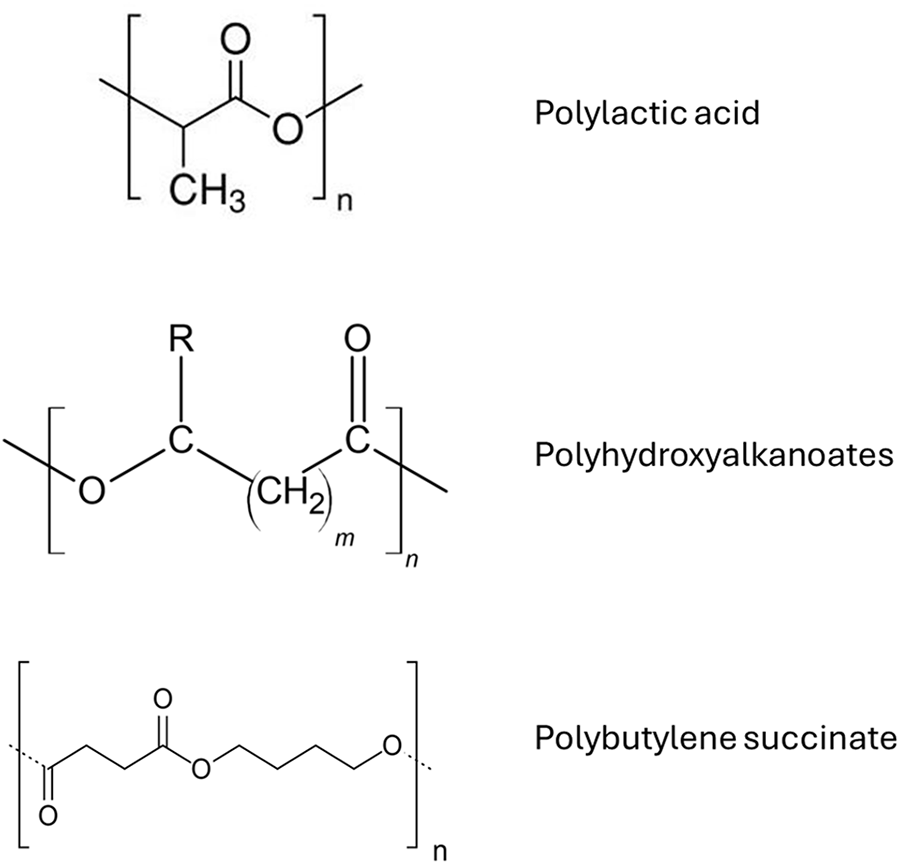
Figure 1: Chemical structures of common bio-based biodegradable plastics
A shifting landscape in the plastic economy towards biodegradable plastics, whether bio-based or non-bio-based, has driven the research and commercialization of various biodegradable packaging materials. Although labeled as biodegradable, these plastics may require specific conditions for biodegradation to occur, for instance, in industrial composting facilities. These plastics are called compostable plastics. Compostable plastics are biodegradable plastics that break down under managed composting conditions, which typically involve forced aeration and heat generated through microbial activity [22]. For example, PLA can decompose when subjected to industrial composting processes, such as aerobic digestion at 58 ± 2°C [28]. In the U.S., a polymer that biodegrades exclusively in composting facilities may be marketed as “compostable” but not as “biodegradable” [29].
Biobased biodegradable plastics hold promise for reducing reliance on conventional plastics in food packaging and dependence on fossil fuels for plastic production, but their widespread use is constrained by several challenges. Technically, they often lack the barrier, thermal, and mechanical properties needed to preserve food effectively, and many require industrial composting facilities that are not widely available [30]. Mismanagement at the end of life, such as mixing with conventional plastics or disposing of them in inappropriate environments, can lead to contamination or incomplete degradation into microplastics [31]. Their production also raises environmental and ethical concerns due to competition with food crops for land and resources, while high costs and limited global capacity hinder market expansion [32].
In view of these challenges, few reviews have been dedicated to examining the feasibility of biobased biodegradable plastics for food packaging. Ghasemlou et al. [33] reviewed the factors that promote and hinder the adoption of bioplastics in food packaging. Their review included only a few types of conventional bio-based biodegradable plastics. The review by Kim et al. [29] focuses on the properties and applications of biodegradable plastics, without specifically examining their use in food packaging. Siddiqui et al. [34] reviewed the latest developments in reinforced bioplastics for food packaging, encompassing both biobased biodegradable and non-biodegradable plastics, with a focus on the reinforced types. Paul-pont et al. [35] discussed the challenges in verifying the biodegradability of plastics and evaluating the toxicity of biobased and biodegradable plastics in natural settings, while also considering their suitability for specific uses and end-of-life pathways. In the review by Cruz et al., the properties of various bioplastic materials were presented, but it did not thoroughly explore recent advances in these materials and the practicality of these developments.
This review aims to explore the feasibility and limitations of the recently developed biobased, biodegradable plastics used for food packaging, providing a balanced understanding of their potential to advance sustainable, functional packaging solutions. This article offers a timely and distinctive contribution to the rapidly evolving field of biobased biodegradable plastics by synthesizing the most recent advances in materials specifically designed for food packaging, a focus largely overlooked in prior reviews. While earlier works have examined general bioplastic performance, reinforced composites, or challenges in verifying biodegradability, they have not provided an integrated assessment of newly developed biobased biodegradable plastics through the dual lens of technical feasibility and real-world applicability in food packaging systems [33–35]. This review uniquely bridges that gap by critically evaluating breakthrough materials such as next-generation PLA blends, engineered PHA variants, starch-based polymer hybrids, and emerging bio-derived polyesters based on their barrier performance, thermal stability, mechanical strength, biodegradability, and scalability. Overall, the novelty of this article lies in its holistic, feasibility-centered evaluation of the newest biobased biodegradable plastics for food packaging, offering deeper insight into their true potential and limitations as sustainable, functional alternatives to conventional plastics. This approach provides industry, researchers, and policymakers with clearer pathways to optimize material performance, guide responsible adoption, and avoid unintended ecological or socioeconomic consequences.
This review employed a narrative review methodology to critically examine the latest progress in the functional enhancements of biobased biodegradable plastics in food packaging, as well as the associated feasibility and limitations. In relation to this, it aims to answer the research questions of: 1) What are the advances in improving the performance of existing biobased biodegradable plastics? 2) What are the emerging biobased biodegradable plastic materials? 3) What are the feasibility and limitations of improving the functions of existing biobased biodegradable plastics and utilizing emerging materials, in terms of cost consideration, environmental impacts and scalability?
Unlike systematic reviews, which follow a rigid protocol for study selection, a narrative review allows for a more flexible integration of diverse sources to build a comprehensive understanding of the topic. A literature search was conducted across major academic databases, including Web of Science, Scopus, ScienceDirect, and Google Scholar, using combinations of keywords such as “biodegradable plastics”, “biobased biodegradable”, “bioplastics”, “food packaging”, “circular economy”, “sustainability”, “technical feasibility”, and “environmental impacts”.
Inclusion criteria focused on peer-reviewed publications from 2015 to 2025 that specifically address biobased biodegradable plastics in the context of food packaging, covering aspects such as material properties, costs, scalability, consumer perception, environmental performance, and end-of-life management. Studies not directly related to food packaging or lacking empirical or conceptual relevance were excluded. Studies on blends of biobased and non-biobased biodegradable plastics were also excluded.
The reviewed studies were first categorized according to material type, including major classes such as starch-based plastics, polylactic acid (PLA), polyhydroxyalkanoates (PHAs), polybutylene succinate (PBS), and emerging natural polymer systems (e.g., chitosan-, protein-, and polysaccharide-based films). Within each material category, the review was further classified based on the latest progress in their functional enhancements. This was followed by an overview of the feasibility and limitations of these enhancements, aimed at identifying key practical strategies for improving mechanical, barrier, and bioactive properties.
This narrative review has the limitation that it did not include VOSviewer visualizations and other bibliometric network maps because of the narrative, qualitative synthesis, rather than a bibliometric or systematic meta-analysis. VOSviewer requires a consistent, large-scale bibliographic dataset produced by a reproducible search protocol and is best suited to quantitative mapping of citations, co-authorship, or keyword networks across many publications. By contrast, the narrative approach prioritized purposive selection and thematic integration of topic-specific studies (2015–2025) across diverse biodegradable plastic materials and their recent functional enhancement.
Despite providing a comprehensive overview of the latest progress in biobased biodegradable plastics for food packaging, this review has several limitations inherent to its narrative methodology. Unlike systematic reviews, it does not follow a pre-registered protocol or standardized study selection process, which may introduce selection bias and limit reproducibility. The inclusion of studies was restricted to publications from 2015 to 2025 and only considered peer-reviewed sources directly related to food packaging, potentially excluding relevant earlier research or insights from industrial reports, patents, and grey literature. Furthermore, studies involving blends of biobased and non-biobased biodegradable plastics were excluded, which may overlook hybrid strategies increasingly applied in commercial applications. The qualitative synthesis approach also limits the ability to perform quantitative comparisons or meta-analyses of material performance, cost-effectiveness, or environmental impacts, constraining the generalizability of conclusions regarding feasibility and scalability. Finally, emerging materials with limited data or inconsistent reporting across studies may be underrepresented, highlighting the need for more standardized experimental assessments and long-term evaluations in future research.
Starch-based bioplastics are among the most widely studied and commercially applied biodegradable polymers for food packaging due to their low cost, abundance, and renewability. Derived primarily from corn, potato, or cassava starch, these materials can be processed into thermoplastic starch (TPS) by disrupting the starch granule structure with plasticizers such as glycerol. TPS exhibits good film-forming ability, transparency, and biodegradability, making it suitable for packaging applications like bags, trays, and single-use containers [36]. However, starch-based bioplastics generally have limitations in terms of mechanical strength, water sensitivity, and barrier properties against oxygen and moisture, which restrict their direct use for long-shelf-life food products [37]. Recent studies on starch-based plastics focus on overcoming these limitations. These include blending it with other biodegradable polymers such as PLA or PBS, or reinforcing it with nanomaterials, to improve durability and functionality. For the ease of discussion, starch blends containing other biobased biodegradable plastics are discussed here.
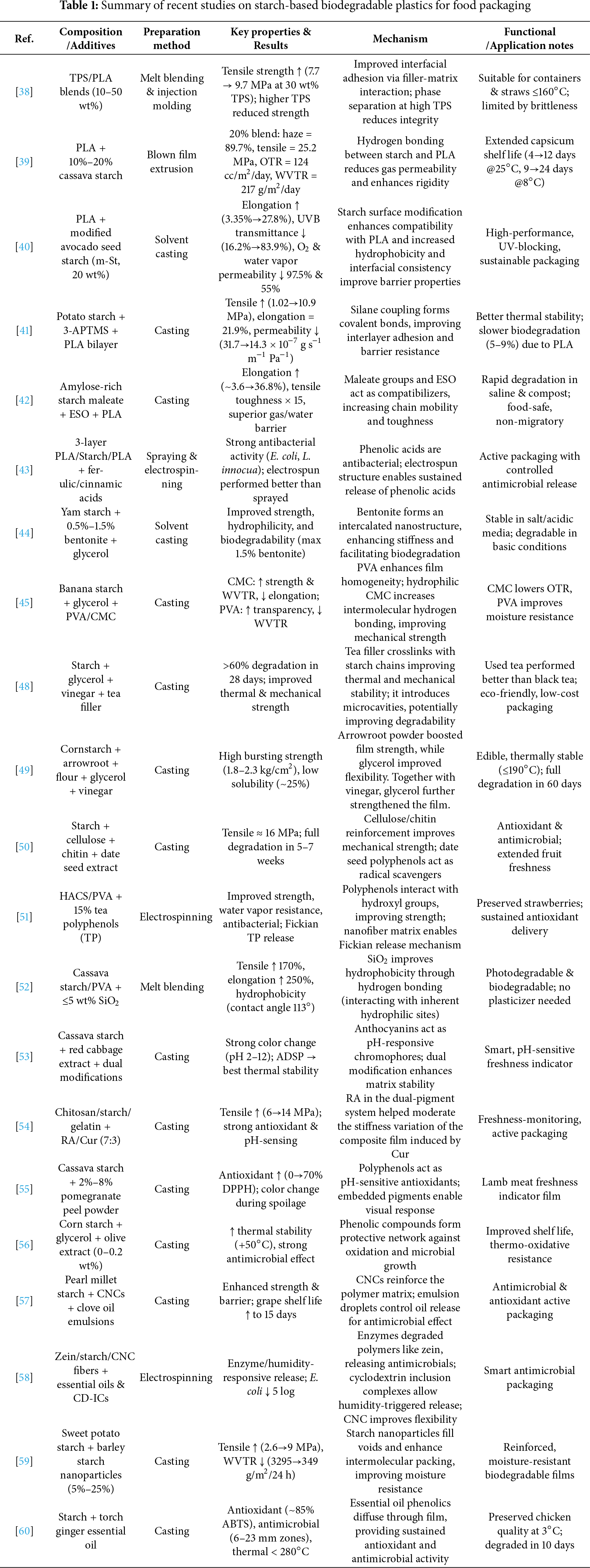
Yusoff et al. [38] developed a composite material for food packaging applications below 160°C, utilizing TPS and PLA at loadings of 10–50 wt.%. Samples were produced by melt blending extrusion and injection molding. Tensile strength of the blend was found to increase significantly with TPS addition, peaking at 30 wt.% (9.7 MPa) compared to pure PLA (7.7 MPa), but declined with higher TPS content. This material is appropriate for manufacturing items such as food containers and straws, provided they are not subjected to temperatures above 160°C, though their use remains limited due to inherent fragility and brittleness. In addition, biodegradable films were produced via blown film extrusion with 10%–20% cassava starch blended into PLA [39]. Their physical and barrier properties were comparable to pure PLA films, making them suitable for packaging. When used for modified atmosphere packaging, these films extended the shelf life of capsicum to 12 days at 25°C and 24 days at 8°C, compared to 4 and 9 days for unpackaged capsicum. The 20% cassava starch–PLA film showed haze of 89.68%, tensile strength of 25.16 MPa, oxygen transmission rate (OTR) of 123.92 cc/m2/day, and water vapor transmission rate (WVTR) of 217 g/m2/day, with overall physico-chemical properties superior to other starch–PLA blends [39]. Another study developed an eco-friendly starch blend by incorporating modified starch (m-St) derived from avocado seeds and synthesized with tert-butyl acetoacetate (t-BAA) into PLA [40]. The PLA/m-St (1:6, 20 wt%) composites showed exceptional mechanical and barrier properties, with elongation at break increasing from 3.35% to 27.8% (≈730% improvement). UV-blocking efficiency rose sharply, reducing UVB transmittance from 16.21% to 83.86%. Additionally, oxygen and water vapor permeability dropped by 97.5% and 55%, respectively, demonstrating the material’s strong potential for sustainable, high-performance food packaging.
Pure potato starch (PPS) recovered from waste was modified with 3-(aminopropyl) trimethoxysilane (3-APTMS) to form a crosslinked film, which was then combined with PLA via casting to produce a bilayer PPS-3APTMS-PLA film [41]. Characterization tests showed enhanced thermal stability in silane-modified and bilayer films. The tensile strength increased from 1.02 MPa (PPS) to 1.44 MPa (PPS-3APTMS) and 10.92 MPa (PPS-3APTMS-PLA), while elongation at break reached 21.9% only for the bilayer film. Solubility, swelling, water vapor permeability, and transparency decreased with bilayer formation; permeability dropped from 31.69 × 10⁻⁷ to 14.26 × 10⁻⁷ g s−1 m−1 Pa−1. Under composting (ISO 14855, 46 days), biodegradation rates were 9.30%, 5.45%, and 5.08% for PPS, PPS-3APTMS, and PPS-3APTMS-PLA, respectively, with reduced degradation linked to silane crosslinking and PLA’s slower breakdown [41]. A composite film of high-degree-of-substitution amylose-rich corn starch maleate (SM), epoxidized soybean oil (ESO), and PLA was also developed [42]. The film exhibited markedly enhanced ductility, with elongation at break rising from ~3.6% to 36.8%, and tensile toughness increasing 15-fold over neat PLA, due to improved interfacial bonding and enhanced chain mobility. The SM/ESO/PLA film, free of voids, also provided superior oxygen and water vapor barrier properties compared to ESO/PLA. It degraded rapidly in saline water (2.92 wt% per day) and compost (C/N ratio increasing from 20.4 to 22.69), and showed no ESO migration in fatty food simulants, making it a strong candidate for sustainable food packaging [42].
Three-layer PLA/starch/PLA (PSP) films have been developed to combine the barrier strengths of both polymers [43]. To enable the release of active compounds, two coating methods were tested: film spraying with 5% ethanolic solutions of ferulic or cinnamic acids, and electrospinning of PLA–active compound mixtures. Electrospinning formed fibrous mats encapsulating the acids, while spraying created crystalline deposits on the surface. Both methods inhibited Escherichia coli and Listeria innocua growth, with the latter being more sensitive, and cinnamic acid showing stronger antibacterial activity. Electrospun films were more effective, indicating better controlled release of active compounds (see Fig. 2 for the electrospun PSP film) [43].
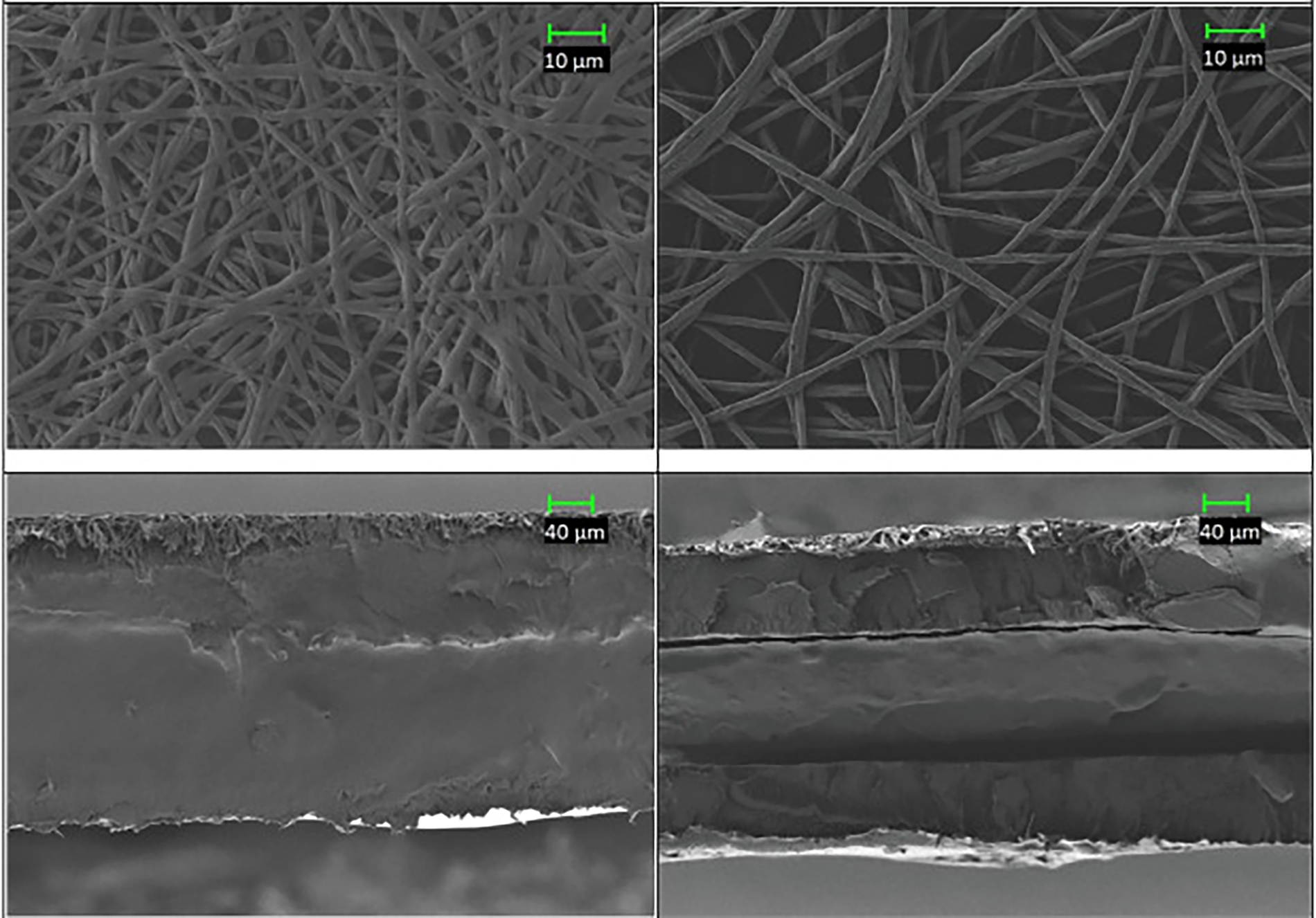
Figure 2: High-resolution field emission scanning electron microscope images (1.00 kV) of electrospun PSP film surfaces (top) (×1000) and cross-sections (bottom) (×200) with cinnamic (left) and ferulic acids (right) [43]
Starch for bioplastics can be derived from various sources. Behera et al. [44] developed yam (Dioscorea) starch-based bioplastic films plasticized with glycerol and reinforced with bentonite (0.5–1.5% w/w) via solvent casting. Fourier-transform infrared (FTIR) analysis on functional groups confirmed stronger O–H and Si–O–Si bonding, thereby enhancing mechanical strength. Bentonite increased hydrophilicity, with 1.5% yielding the highest soil degradation and lowest water absorption due to intercalated silicate layers. The films resisted salt and acidic media but degraded in basic conditions. Shuprajhaa et al. [45] examined banana starch-based bioplastic films with glycerol plasticizer and varying levels of polyvinyl alcohol (PVA) and carboxymethyl cellulose (CMC). CMC films were thicker, more soluble, absorbed more water, and showed higher gloss, WVTR, and tensile strength but lower elongation. PVA improved transparency, smoothness, and reduced WVTR, though with a higher OTR. FTIR confirmed the starch matrices and the CMC’s crystalline structure at 2θ = 23°, which lowered polarity and crystallinity, thereby affecting water uptake. The findings indicate that CMC lowers oxygen transmission and could slow oxidation of packaged food, while PVA better resists moisture loss. Other relatively new sources of starch include Prosopis juliflora and jackfruit seed [46,47].
Khalid Hossain et al. [48] developed starch-based bioplastics using vinegar and glycerol as matrix materials with tea as a filler. Over 60% degradation occurred within 28 days. Bioplastics made with used tea showed greater tensile strength, as well as higher melting and glass transition temperatures compared to those with black tea, as confirmed by thermogravimetric analysis (TGA) (for measuring thermal stability) and differential scanning calorimetry (DSC) (for analyzing heat absorption or release during processes like phase transitions and crystallization). FTIR further indicated the presence of diverse organic functional groups. Adding tea particles enhanced the mechanical and thermal properties of the bioplastics, with the improvements attributed to stronger filler–matrix bonding. Samples with used tea degraded faster, likely due to micro-cavities in their structure [48]. Also adding vinegar and glycerol, Shanbhag et al. [49] developed edible films from cornstarch, arrowroot powder, and refined wheat flour (see Fig. 3 for the scanning electron microscope images). Arrowroot enhanced strength and nutrition, while glycerol improved flexibility and, together with vinegar, further increased strength. Some films achieved the highest bursting strength (1.8–2.3 kg/cm2), with low moisture (6.76%–8.51%) and solubility (23.25%–27.32%). All had thicknesses above the 0.05 mm standard for packaging. Transparency varied significantly, with tensile strength and elongation being favorable, and water vapor permeability (0.0019–0.0035 g·mm/(m2·day·mmHg)) indicating good suitability for food packaging. The films partially degraded within 22 days and fully degraded in 60 days, while maintaining thermal stability up to 190°C with only about 5% mass loss [49].
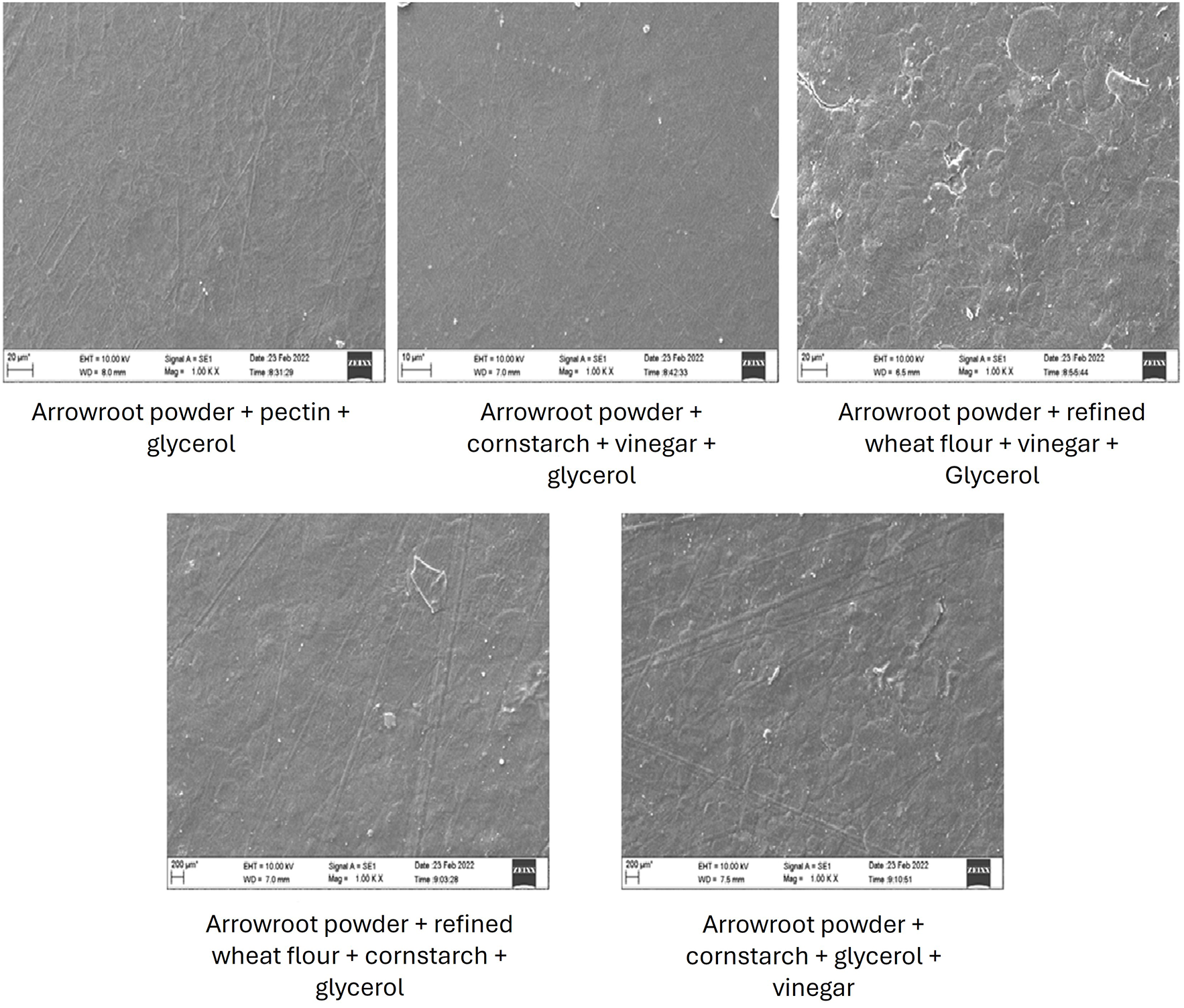
Figure 3: Scanning electron microscope images for edible films [49]
Additionally, a study was conducted to develop biodegradable films from starch modified with cellulose and chitin, incorporating date seed extracts as potential food packaging materials [50]. The composites showed higher tensile strength (up to 16 MPa) compared to non-composite films. Soil burial tests under ASTM D5988 conditions (25–30°C, 60%–65% moisture) indicated complete degradation within 5–7 weeks. The addition of date seed extracts provided antioxidant and antimicrobial functions, helping wrapped fruits stay fresh for longer. The economic evaluation indicated that producing these films is cost-effective and feasible. While Khalid Hossain et al. [48] used tea as a filler, Chen et al. [51] mixed tea polyphenols (TP) with starch-based nanofibrous films by electrospinning high-amylose corn starch (HACS) with polyvinyl alcohol (PVA) to produce HACS/PVA@TP composites. Incorporating 15% TP improved the films’ mechanical strength, water vapor resistance, and hydrogen bonding. TP was released gradually following Fickian diffusion, enabling sustained delivery. The HACS/PVA@TP films also showed strong antibacterial activity against Staphylococcus aureus and effectively extended the shelf life of strawberries [51]. Similar to date seed extracts, TP has antioxidant and antimicrobial properties.
Arayaphan et al. [52] developed cassava starch/PVA films enhanced with silica (SiO2) to improve hydrophobicity through hydrogen bonding. Triethylamine was used to remove residual acetate groups in PVA, replacing the need for a plasticizer or crosslinker. The blend showed good miscibility, with smooth fracture surfaces and a single glass transition temperature. At ≤5 wt% SiO2, particles dispersed well, boosting tensile strength by 170% and elongation-at-break by 250%. SiO2 also improved thermal stability and water resistance, raising the contact angle to 113° while lowering moisture absorption and solubility [52]. The resulting hydrophobic, photodegradable, and biodegradable films offer a low-cost, eco-friendly packaging option.
A study developed pH-sensitive cassava starch films with red cabbage extract using a simple casting method and compared native starch with dual-modified types (oxidized hydroxypropyl, acetylated distarch phosphate [ADSP], and oxidized-acetylated) [53]. Modified films showed improved transparency, water resistance, vapor barrier, and tensile strength, with microscopy confirming denser structures and spectroscopy verifying new functional groups. ADSP films demonstrated the highest thermal stability. All films displayed strong, visible color changes across a pH range of 2–12 and in the presence of ammonia, with varying degrees of reversibility. Electrostatic and hydrogen bonding between anionic starch and anthocyanins enhanced pigment stability [53]. Another study prepared chitosan/starch/gelatin (CSG) films with raspberry anthocyanin (RA) and curcumin (Cur) via solution casting, producing pH-responsive films with strong antioxidant activity (2,2′-azino-bis(3-ethylbenzothiazoline-6-sulfonic acid) [ABTS] assay) [54]. Cur improved tensile strength (6 → 14 MPa) but lowered elongation (55% → 40%). The films showed good preservation and freshness-monitoring ability, with the RA/Cur73 combination (RA:Cur of 7:3%v/v) offering the best balance of opacity, solubility, thickness, moisture content, and vapor barrier properties.
Esfahani et al. [55] developed cassava starch films incorporating pomegranate peel powder (PPP) to monitor the freshness of lamb meat. Films with 2%–8% PPP, prepared by solvent casting, showed altered mechanical properties, darker red coloration, and higher phenolic content (0–13 mg gallic acid equivalent/g) and antioxidant activity (0%–70% 1-1-diphenyl-2-picryl hadrazyl [DPPH] scavenging). When used in meat packaging, the films changed color from red to green during storage at 25°C, with the shift correlating to increasing total volatile basic nitrogen levels, indicating spoilage. Along the same line, García et al. [56] produced corn starch–glycerol films with olive extract (OE) from olive by-products (0–0.2 wt%) using the casting and solvent evaporation method. OE, rich in phenolics and flavonoids, showed strong antioxidant activity and enhanced the films’ antimicrobial effect against E. coli and Staphylococcus aureus, especially at 0.2 wt%. OE also improved thermo-oxidative stability, raising the degradation and oxidation onset temperatures by ~50°C, while reducing Young’s modulus, elongation at break, hardness, and water vapor permeability, thereby enhancing overall functional performance [56].
Cellulose nanocrystals are often added as reinforcing, stabilizing, and functional nanofillers that enhance both the mechanical and active properties of biodegradable films or fibers. Punia Bangar et al. [57] explored starch-based films reinforced with cellulose nanocrystals (CNCs) from Kudzu vine, with clove bud oil (CBO) incorporated via Pickering emulsions for added functionality. Biodegradable films were prepared using pearl millet starch (PMS), PMS with Kudzu CNCs, and PMS with CNC-stabilized CBO emulsions. Their thermal, mechanical, morphological, and barrier properties were evaluated, along with performance as grape packaging at 5°C. The PMS-CNC–CBO films were most effective, extending grape shelf life to 15 days by better preserving weight, firmness, and soluble solids. Moreover, Aytac et al. [58] developed enzyme- and humidity-responsive antimicrobial fibers (~225 ± 50 nm) for smart food packaging. Electrospun from cellulose nanocrystals, zein, and starch, the fibers contained natural antimicrobials (thyme oil, citric acid, nisin) and their cyclodextrin inclusion complexes (CD-ICs) with sorbic acid and nisin. Enzymes triggered the release of free antimicrobials by degrading polymers like zein, while high humidity (95% relative humidity) induced the release of CD-ICs. Within 24 h, the fibers reduced E. coli and L. innocua by ~5 log and Aspergillus fumigatus by >1 log. Kumari et al. [59] developed biodegradable sweet potato starch films reinforced with barley starch nanoparticles (SNP, 5%–25% w/w) using glycerol as a plasticizer and solution casting. Adding SNP improved tensile strength from 2.63 to 8.98 MPa (at 15% SNP) and enhanced thermal stability. Increasing SNP levels made film surfaces rougher, while high concentrations (up to 25%) reduced transparency, WVTR (3294.53 → 349.06 g/m2/24 h), and water solubility (up to 20%).
A study assessed the antioxidant, antibacterial, and physicochemical properties of starch-based edible films containing torch ginger inflorescence essential oil (TF) for chicken meat packaging [60]. TF showed higher opacity (3.168–9.024), reduced water solubility (0.070%–0.095%), and thermal resistance below 280°C. Antioxidant activity was confirmed by DPPH (67.36%) and ABTS+ (84.78%) assays. The films inhibited several pathogens, including Bacillus subtilis, S. aureus, Listeria monocytogenes, Salmonella typhi, and E. coli (inhibition zones of 6.0–23.0 mm), and degraded significantly within 10 days in compost. During chilled storage (3 ± 1°C), TF-packed chicken had the lowest coliform count (4.98 CFU/g) and thiobarbituric acid reactive substances value (0.212 mg MDA/kg). Sensory evaluation showed no significant differences, indicating the essential oil did not affect organoleptic properties [60]. A summary of the recent progress is shown in Table 1.
3.2 Feasibility and Limitations
Starch-based bioplastics represent one of the most feasible and sustainable alternatives to petroleum-derived plastics for food packaging, owing to their abundance, renewability, and low cost. Starch can be readily sourced from inexpensive and widely available crops, such as corn, cassava, potatoes, and yams, making it economically attractive for large-scale bioplastic production. Through plasticization with agents like glycerol, native starch can be transformed into TPS, a flexible, transparent, and biodegradable material suitable for film formation [38,39]. By blending TPS with biodegradable polymers, such as PLA or PBS, its mechanical strength, flexibility, and barrier properties are significantly enhanced, thereby improving both functionality and durability. For example, Yusoff et al. [38] found that PLA–TPS composites exhibited optimal tensile strength of 9.7 MPa at 30 wt% TPS, while cassava starch–PLA films extended the shelf life of capsicum from 9 to 24 days at 8°C [39].
Further advancements have been achieved through chemical modification, multilayer structuring, and nanofiller reinforcement. Silane-modified potato starch–PLA bilayer films demonstrated a tenfold increase in tensile strength (1.02 to 10.92 MPa) and reduced water vapor permeability, making them suitable for moisture-sensitive foods [41]. Modified starch composites derived from avocado seed starch (PLA/m-St) improved elongation at break by 730% and reduced oxygen permeability by 97.5% [40]. Functional additives such as ferulic acid, cinnamic acid, or tea polyphenols have imparted antioxidant and antimicrobial capabilities, inhibiting spoilage microorganisms and extending food shelf life [43,51,55,56]. Reinforcement with nanofillers like silica (SiO2) and CNCs has also enhanced tensile strength, hydrophobicity, and thermal resistance, with cassava starch/PVA films containing 5 wt% SiO2 achieving a 170% increase in tensile strength and a contact angle of 113° [52].
From an economic standpoint, starch-based plastics are comparatively cost-effective due to low raw material prices and established agricultural supply chains. The integration of agricultural waste starches (e.g., from cassava peel or potato waste) offers a circular and low-cost pathway that can enhance scalability while minimizing resource competition with food supplies. Environmentally, starch-based bioplastics exhibit excellent biodegradability and lower carbon footprints than petroleum-based plastics. They decompose under industrial composting or natural soil conditions without generating persistent microplastic residues, thus mitigating long-term pollution risks. Life-cycle assessments indicate that starch-based films can reduce greenhouse gas emissions and energy consumption compared with conventional polyethylene, particularly when produced from waste biomass.
Nevertheless, starch-based bioplastics face practical and economic challenges that limit their large-scale implementation. Although raw starch is inexpensive, extensive modification through blending, crosslinking, or nanofiller addition raises production costs and energy consumption [42,43]. Pure starch materials generally suffer from low tensile strength, brittleness, high water sensitivity, and poor barrier properties, which restrict their use for moist or long-shelf-life foods [45]. Compatibility issues in starch-polymer blends may lead to phase separation and inconsistent performance during processing and use [48]. Moreover, dependence on food-based starch sources can create competition with agricultural food supplies, although growing interest in using waste-derived or non-food starches, such as those from avocado seeds, offers more sustainable options [40]. Biodegradation rates can vary widely depending on environmental conditions, creating uncertainties in waste management and life cycle impacts [41]. Thus, achieving scalable, cost-effective, and high-performance starch-based bioplastics requires continued innovation in material modification, blending strategies, and circular resource use to ensure they fulfill both functional and environmental goals in food packaging.
4 Polylactic Acid (PLA)-Based Plastics
PLA is a biodegradable and bio-based polymer derived primarily from renewable resources such as corn starch, sugarcane, or cassava. It has gained significant attention as an eco-friendly alternative to conventional petroleum-based plastics in food packaging applications. PLA offers several advantages, including good transparency, mechanical strength, and processability, while being compostable under industrial conditions. Its ability to form films, trays, and containers with excellent aesthetic and functional properties makes it particularly suitable for packaging fresh produce, ready-to-eat meals, and disposable cutlery. However, challenges such as its relatively low thermal resistance, brittleness, and sensitivity to moisture continue to motivate ongoing research aimed at improving PLA’s performance through blending, copolymerization, and nanocomposite reinforcement.
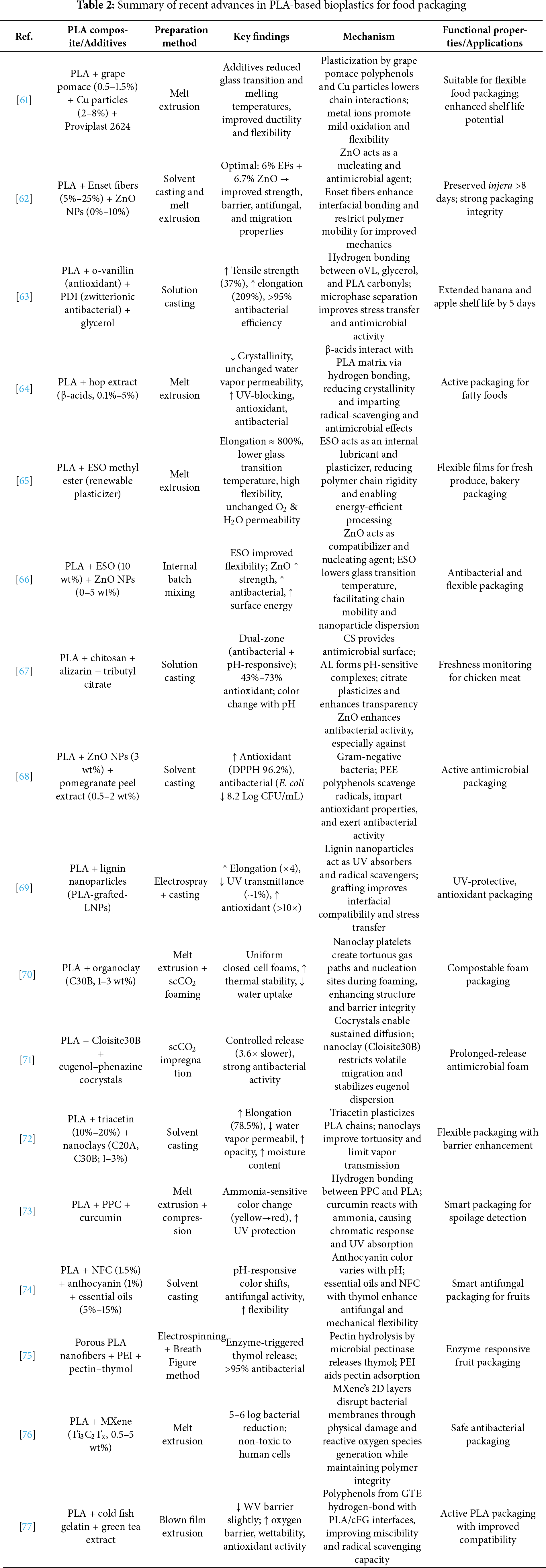
Moldovan et al. [61] developed bioactive food packaging materials by incorporating grape pomace and copper particles into PLA composites to enhance food shelf life and promote consumer health. Six PLA-based formulations were prepared using Proviplast 2624 as a plasticizer, with grape pomace added at 0.5%–1.5% and copper particles (PEG 600 + CuSO4) at 2%–8%. Results showed that the additives acted as plasticizers, lowering PLA’s glass transition, crystallization, and melting temperatures, and slightly reducing thermal stability. Although tensile strength decreased with additive content, elongation and flexibility improved, especially with grape pomace, indicating enhanced ductility suitable for flexible food packaging applications [61]. Along the line, Dejene et al. [62] developed optimized biocomposite packaging for injera, a traditional Ethiopian flatbread made from teff. The material was created by reinforcing a PLA matrix with Enset fibers (EFs) and zinc oxide nanoparticles (ZnO NPs) using a central composite design. EFs (5%–25%) and ZnO NPs (0%–10%) were evaluated for their effects on mechanical, barrier, antifungal, and migration properties. ZnO NPs enhanced tensile strength and barrier performance, while EFs improved mechanical and migration properties. The optimal formulation, containing 6% EFs and 6.7% ZnO NPs, produced packaging that effectively preserved injera freshness for more than eight days [62].
In another study, a bio-based zwitterionic antibacterial agent (PDI) with stereochemical synergy was synthesized and incorporated into a PLA matrix along with o-vanillin (oVL) as an antioxidant and glycerol as a plasticizer [63]. PLA/oVL/PDI composite films with antibacterial, antioxidant, and UV-resistant properties were prepared via solution casting. Compared to pure PLA, the composites showed 37% higher tensile strength and 209% greater elongation at break due to microphase separation from PDI and hydrogen bonding among glycerol, oVL, and PLA carbonyl groups. The films achieved >95% antibacterial efficiency against E. coli and S. aureus and extended the shelf life of fresh bananas and apples by up to 5 days, indicating strong potential for sustainable food packaging [63].
Studies using natural additives to enhance PLA performance have been conducted. Arruda et al. [64] developed sustainable active food packaging by incorporating hop extract rich in β-acids (KBA) into PLA sheets at concentrations of 0.1%–5% (w/w). The addition of KBA reduced crystallinity and modified the mechanical and thermal behavior of PLA, particularly at higher loadings. While surface hydrophobicity decreased, water vapor permeability remained unchanged. The films exhibited Fickian diffusion and were suitable for fatty food applications. Incorporation of KBA enhanced UV-blocking, antioxidant, and antibacterial activities, with strong inhibition of S. aureus and L. monocytogenes at 5% KBA content [64]. Zych et al. [65] produced highly flexible PLA films plasticized with renewable epoxidized soybean oil (ESO) methyl ester, achieving elongation at break of nearly 800%. Using amorphous PLA and the plasticizer’s lubricating effect enabled low-temperature extrusion at 140°C, reducing PLA degradation and energy use. The plasticized films generated less handling noise and showed greatly improved toughness and flexibility, along with a lower glass transition temperature. Oxygen and water vapor permeability remained largely unchanged, making the materials suitable for packaging fruits, vegetables, baked goods, and other low-oxidation foods [65].
PLA-based nanocomposites have also been prepared using an internal batch mixer with ESO as a plasticizer and ZnO NPs as reinforcements [66]. ESO introduced droplet-like structures whose size decreased with higher ZnO content. ZnO acted as a compatibilizer and nucleating agent. ESO lowered the glass transition temperature by about 2°C, enhanced crystallization, and improved flexibility while slightly reducing strength. Incorporating 5 wt% ZnO increased tensile strength by ~3.5 MPa in PLA with 10 wt% ESO. ESO raised surface free energy, whereas higher ZnO content increased contact angles and imparted antibacterial activity [66]. A multifunctional PLA-based composite membrane incorporating chitosan (CS) and alizarin (AL) was fabricated via solution casting [67]. The membrane featured an antibacterial outer zone (PLA/CS) and a pH-responsive inner zone (PLA/AL), with tributyl citrate added as an eco-friendly plasticizer to enhance flexibility and transparency. The PLA/CS and PLA/AL films demonstrated antioxidant activities of 43.3% and 72.8%, respectively. The PLA/CS membrane inhibited E. coli and S. aureus by 87.91% and 75.17%. The PLA/AL film also showed strong UV shielding and reversible color changes, i.e., yellow in acidic and purple in alkaline environments, enabling real-time monitoring of chicken breast freshness during packaging and storage [67].
In addition, ZnO NPs have been utilized in a study where a PLA-based composite film with antioxidant and antibacterial functions was developed using 3 wt% ZnO NPs and varying pomegranate peel extract (PEE) contents (0.5–2 wt%) via solvent casting [68]. Compared to pure PLA, the composite films exhibited improved UV shielding, water vapor permeability, and flexibility, but reduced transparency and tensile strength. The films showed strong antioxidant performance, with DPPH and ABTS scavenging activities of 96.2% and 93.1%, respectively. After 24 h, the PLA/ZnO NPs/PEE film inhibited S. aureus by 1.4 Log CFU/mL and E. coli by 8.2 Log CFU/mL relative to the control [68].
A study fabricated rice husk organosolv lignin nanoparticles (LNPs) via electrospray for incorporation into PLA films used in food packaging [69]. Under optimal conditions (49.1 mg/mL lignin concentration, 0.5 mL/h flow rate, 25.4 kV voltage, 22 cm tip-to-collector distance), uniform spherical LNPs (≈260 nm) were obtained. These LNPs were incorporated into PLA to form lignin/PLA, LNPs/PLA, and PLA-grafted LNPs films. The PLA-grafted LNPs showed the best dispersion and mechanical performance, with elongation at break increasing up to fourfold compared to neat PLA. Moreover, PLA-grafted LNPs exhibited strong UV-blocking ability (transmittance reduced to ~1%) while maintaining visible transparency and displayed over tenfold higher antioxidant activity, making them promising for active food packaging applications [69]. Furthermore, a foaming process using supercritical carbon dioxide (scCO2) was developed to produce compostable PLA/organoclay (C30B) bionanocomposite foams (see Fig. 4 for the micrographs of the cross-sections). PLA and PLA/C30B films (1–3 wt.%) were first prepared via melt extrusion and film casting (500–600 μm thick), then foamed in scCO2 at 25 MPa and 130°C for 30 min [70]. The resulting bionanocomposite foams exhibited uniform, closed-cell structures, while neat PLA showed irregular cells and thick walls. X-ray diffraction confirmed that well-dispersed nanoclays enhanced thermal stability and interfacial adhesion, leading to improved mechanical strength. The foams also showed minimal water absorption during the first week and degraded faster under composting conditions than PLA films, highlighting their sustainability [70].
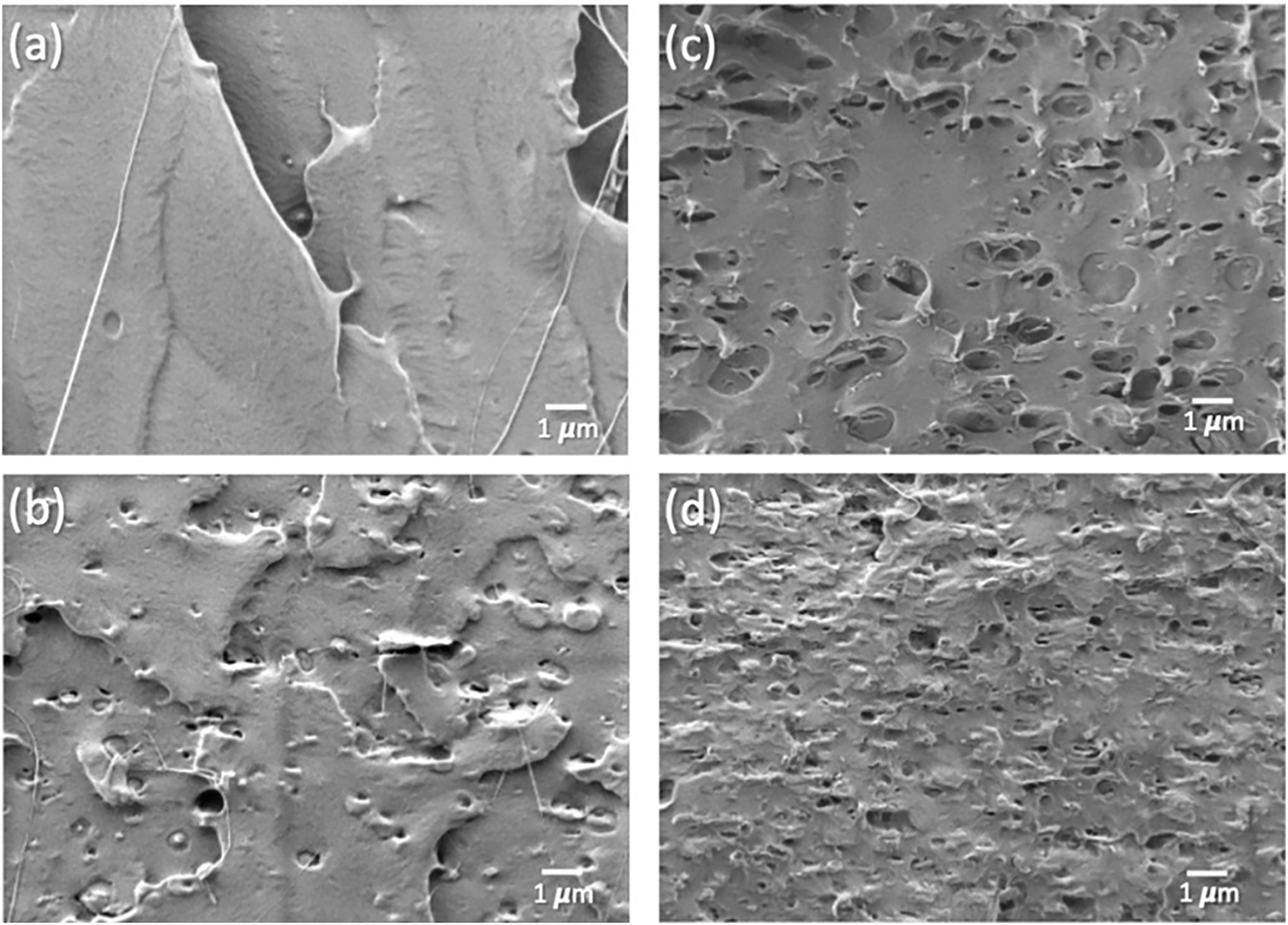
Figure 4: SEM images of freeze-fractured PLA film cross-sections at 5.0 k× magnification: (a) pure PLA nanocomposite, (b) PLA with 1% C30B, (c) PLA with 2% C30B, and (d) PLA with 3% C30B
Rojas et al. [71] developed novel prolonged-release eugenol–based PLA nanocomposite foams using supercritical fluid and cocrystallization techniques. Eugenol–phenazine cocrystals, produced via solvent-free mechanochemistry, were incorporated into PLA foams containing varying amounts of Cloisite30B® (a commercially modified montmorillonite nanoclay) through supercritical solvent impregnation. The release of eugenol followed a quasi-Fickian diffusion pattern described by the Korsmeyer–Peppas model, with a release rate up to 3.6 times slower than that of pure eugenol. The foams effectively prevented the adhesion of L. monocytogenes and Salmonella enteritidis and maintained prolonged antimicrobial activity in broth culture. Similarly, Pasha et al. [72] explored two strategies to improve PLA films: adding a plasticizer and incorporating nanoclays. Triacetin (10–20 wt%) served as the plasticizer, while modified nanoclays (C30B and C20A, 1–3 wt%) acted as reinforcements. PLA-based films were fabricated via solvent casting. Both triacetin and nanoclays enhanced elongation at break and tensile strength, with 20% triacetin yielding the highest elongation (78.5%). Adding nanoclays reduced water vapor permeability, stability, and light transmittance but increased moisture content, swelling, and opacity. The lowest water vapor permeability (1.06 × 10⁻¹⁰ g/m·s·Pa) was obtained with 10% triacetin and 3% C20A, while 3% C30B and 20% triacetin gave the highest moisture content (19.4%). The composite films showed slight improvement in thermal stability compared to neat PLA [72].
Cvek et al. [73] developed a biodegradable, bio-based smart packaging material capable of indicating ammonia vapor and food spoilage. The material consisted of PLA and poly(propylene carbonate) (PPC) blended with curcumin (CCM) via melt extrusion and compression molding. PLA and PPC showed good compatibility and hydrogen bonding, ensuring thermal stability and tunable mechanical properties. Adding CCM enhanced UV protection and antioxidant activity while maintaining transparency and barrier performance. The films visibly changed color from yellow to red upon ammonia exposure, enabling spoilage detection. When tested on shrimp, the PLA/PPC/CCM film effectively signaled freshness through a clear color shift, confirming its potential as a smart, sustainable food packaging indicator. Zabidi et al. [74] prepared active, pH-sensitive PLA/nanofibrillated cellulose (NFC) films by solvent casting with 1.5% NFC, 1% anthocyanin (as a pH indicator), and varying amounts (5%–15%) of essential oils, including thymol and curry. Incorporating NFC and essential oils reduced tensile strength but improved flexibility due to their plasticizing effect, with curry-based films showing slightly higher strength than thymol ones. Increased essential oil loading further enhanced film flexibility. Thermal analysis revealed lower degradation temperatures for active films than for neat PLA. The anthocyanin-containing films displayed clear color shifts at pH 2 and 14, and PLA/NFC films with thymol showed stronger antifungal activity on cherry tomatoes than those with curry oil [74].
Thymol was also used in a study where an enzyme-responsive food packaging film was developed using porous PLA nanofibers modified with polyethyleneimine (PEI) to adsorb a pectin coating loaded with thymol for fruit preservation [75]. The porous PLA nanofibers were produced through a combination of the “Breath Figure” method and electrospinning. The resulting film exhibited strong antibacterial activity (>95% inhibition of E. coli, S. aureus, and B. subtilis) and excellent antifungal effects against Aspergillus niger. Thymol release from the pectin-coated membrane (Thymol@PLA-PEI-Pectin) was activated by pectinase secreted by contaminating microorganisms. Moreover, the biocompatible film effectively extended the shelf life of citrus fruits [75].
Santos et al. [76] developed antibacterial PLA composite films incorporating MXene (Ti3C2Tx) as an active filler. The PLA/MXene films retained the thermal and mechanical properties of neat PLA while gaining strong antibacterial activity. Against L. monocytogenes and Salmonella enterica, the composites achieved six- and five-log bacterial reductions at MXene loadings of 0.5 and 5 wt.%, respectively. Cytotoxicity tests using the fHDF/TER166 cell line confirmed that all materials were non-toxic, indicating their suitability for safe, antibacterial food packaging applications. Rodrigues et al. [77] fabricated PLA films containing cold fish gelatin (cFG) and green tea extract (GTE) via blown film extrusion. While PLA naturally provides good water vapor resistance, it has high oxygen permeability. Adding cFG and GTE slightly reduced water vapor barrier and mechanical strength but improved oxygen barrier, wettability, and antioxidant activity. GTE polyphenols also enhanced molecular interactions and dispersion between PLA and cFG, improving overall compatibility [77]. A summary of the recent progress is shown in Table 2.
4.2 Feasibility and Limitations
PLA-based bioplastics present notable potential for sustainable food packaging, yet their broader adoption depends on overcoming several technical, economic, and environmental constraints. Although PLA is derived from renewable feedstocks such as corn, cassava, and sugarcane, which support reductions in carbon footprint and dependence on fossil resources, the cost of production remains higher than that of conventional plastics due to fermentation, purification, and polymerization processes [73,76]. Recent technological and agricultural advances are gradually narrowing this gap, but cost competitiveness is still a limiting factor for large-scale commercialization, particularly for applications requiring enhanced functionality.
From a performance perspective, neat PLA exhibits desirable transparency, rigidity, and processing compatibility, enabling its use in films, trays, containers, and single-use items. However, its low thermal resistance, inherent brittleness, and moisture sensitivity significantly constrain its use in hot-fill, microwaveable, or humid environments. As a result, most current innovations rely on plasticization, blending, copolymerization, or nanocomposite reinforcement to address these shortcomings. For example, epoxidized soybean oil and other renewable plasticizers improve flexibility and ductility [65], while Enset fibers, ZnO nanoparticles, and lignin nanoparticles serve as reinforcements that enhance tensile strength, barrier performance, UV shielding, or antioxidant activity [62,66,69]. Similarly, multifunctional additives such as hop extract [64], green tea polyphenols [77], zwitterionic antibacterial agents [63], and pomegranate peel extract [68] impart antimicrobial, antioxidant, or colorimetric sensing capabilities that extend food shelf life and support smart packaging applications.
Despite these advances, modifications often introduce trade-offs that limit feasibility. Plasticizers may improve flexibility but can reduce thermal stability or compromise mechanical integrity over time. Reinforcing nanoparticles, such as ZnO or nanoclays, improve strength and barrier properties [66,72], but can also reduce transparency, increase opacity, or alter degradation behavior, complicating end-of-life processing. Bioactive compounds, while beneficial for shelf-life extension, may migrate differently through the PLA matrix, raising regulatory considerations for food-contact compliance. The incorporation of multifunctional additives, such as copper particles [61], essential oils [74], or eugenol-based cocrystals [71], enhances bioactivity but may compromise tensile strength or introduce compatibility issues, requiring optimized formulations to balance mechanical performance with active functionality.
A further challenge relates to end-of-life management. PLA is compostable primarily under controlled industrial composting conditions, requiring elevated temperatures and humidity not present in home composting or natural environments. As a result, PLA persists for extended periods in soil, freshwater, and marine environments, with limited biodegradation rates [75]. Additives and nanofillers may further modify degradation profiles in unpredictable ways. Additionally, large-scale production raises sustainability concerns due to competition for arable land, water use, and potential conflicts with food crop production.
Scalability also depends on manufacturing compatibility. Advances in supercritical CO2 foaming and nanoclay reinforcement [70–72] have improved PLA’s processability, aiding the development of compostable foams and mechanically robust films. Nonetheless, achieving consistent, industrial-level performance across diverse packaging formats remains a hurdle, particularly when balancing flexibility, barrier properties, bioactivity, cost, and environmental compliance.
In summary, PLA-based packaging materials demonstrate substantial promise as eco-efficient, multifunctional, and smart alternatives to petroleum-based plastics. However, realizing their full environmental and economic potentials requires continued optimization in polymer formulation, additive compatibility, processing techniques, and end-of-life infrastructure. Only through integrated improvements spanning material science, manufacturing, and waste management can PLA transition from a niche bioplastic to a widely adopted, circular solution for sustainable food packaging.
5 Polyhydroxyalkanoates (PHA)-Based Plastics
PHAs are a class of biodegradable and biocompatible polymers synthesized by various microorganisms as intracellular carbon and energy reserves. In recent years, PHAs have attracted growing interest as sustainable alternatives to conventional petroleum-based plastics, particularly in food packaging applications. Their excellent biodegradability, non-toxicity, and tunable mechanical and barrier properties make them suitable for packaging perishable foods while reducing plastic pollution and dependence on fossil resources. By adjusting the monomer composition and blending PHAs with other biopolymers or additives, their flexibility, strength, and moisture resistance can be tailored to meet diverse packaging needs.
In a study, PHA-based bioplastics were functionalized with phloretin to evaluate their antioxidant, antimicrobial, and mechanical properties [78]. Phloretin concentrations (5–20 mg) slightly affected the films’ mechanical strength and hydrophilicity. The modified PHAs exhibited dose-dependent antioxidant activity, and effectively inhibited L. monocytogenes growth (Fig. 5). When used to package apple samples for up to 72 h, the functionalized films notably improved fruit preservation. Genovesi et al. [79] examined three blends of PHB copolymers, namely, poly(3-hydroxybutyrate-co-3-hydroxyhexanoate) P(3HB-co-3HH) and poly(3-hydroxybutyrate-co-4-hydroxybutyrate) P(3HB-co-4HB), to develop thin films for food packaging. The materials were prepared using twin-screw and cast film extrusion. Increasing the P(3HB-co-4HB) content improved film flexibility (higher elongation at break) but reduced strength and stiffness. Oxygen transmission rose noticeably, while the increase in water vapor permeability was smaller [79] (Fig. 5).
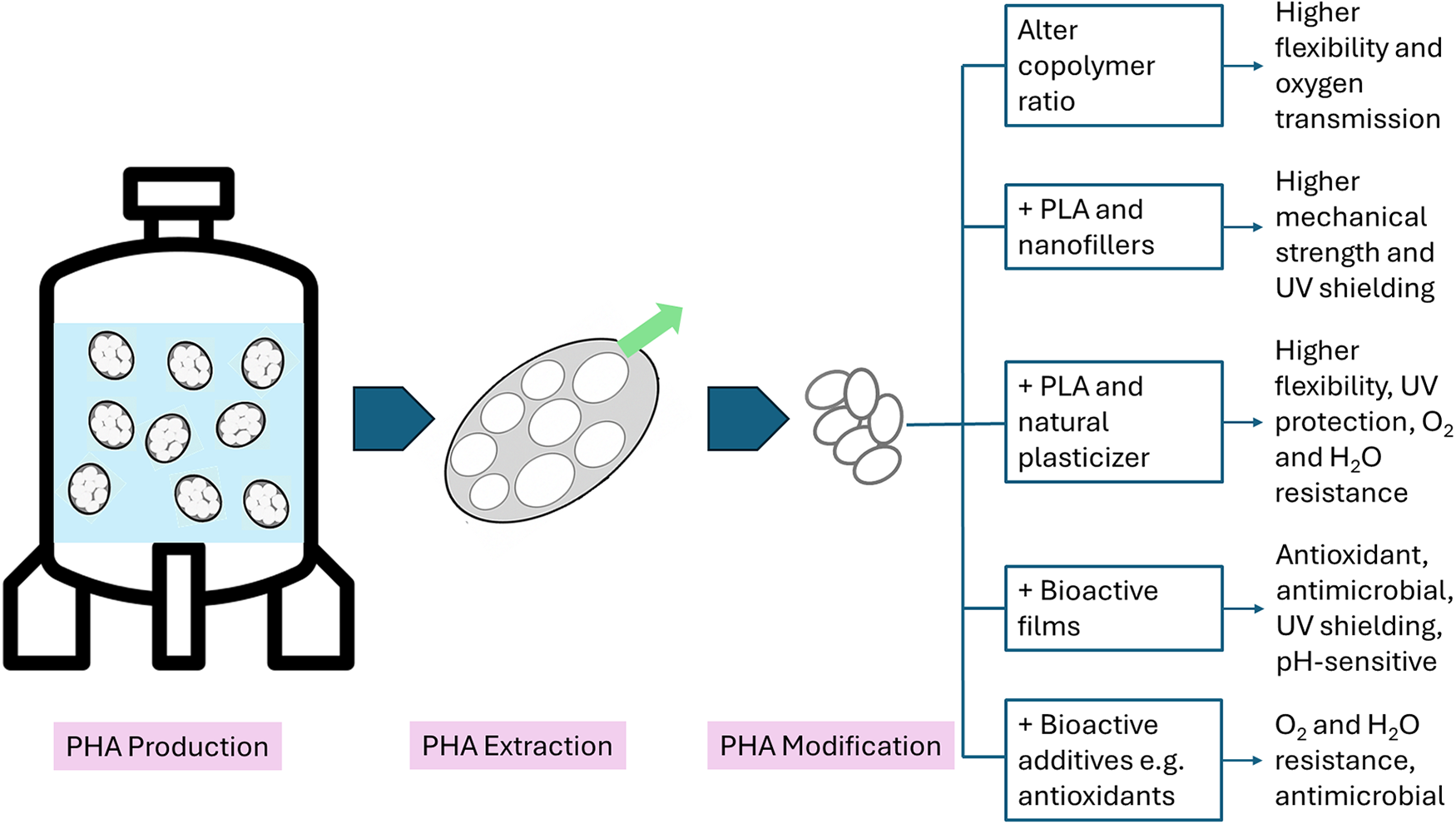
Figure 5: PHA production and modification through alteration of copolymer ratio as well as addition of other bioplastic polymers, natural fillers, natural plasticizers, and bioactive agents to acquire desired properties
Due to the extensiveness of studies on PLA modifications to improve its packaging properties in Section 4, PHA-PLA blends are discussed here. In a study, biodegradable PLA/PHA nanocomposite films were fabricated using graphene oxide (GO) and TEMPO (2,2,6,6-tetramethylpiperidine-1-oxyl)-oxidized cellulose nanofibers (T-CNF) as nanofillers, with clove oil (CO) as a natural plasticizer at an optimal GO:T-CNF ratio of 2:1 [80]. Nanofiller incorporation enhanced mechanical strength and UV shielding (Fig. 5). The CO-containing film demonstrated the best flexibility (46.6% elongation) and UV protection (>99.8% at 280 nm), while the GO-based film achieved the highest tensile strength (21.24 MPa) and modulus (1.23 GPa). Although gas barrier behavior varied, the CO film showed the best oxygen and vapor resistance and effectively preserved fresh-cut carrots, reducing appearance changes and weight loss by 46% and 36.9%, respectively, compared to controls (Fig. 5). Noh et al. [81] developed PLA/PHA blends to reduce PLA’s brittleness and examined how cellulose from paper waste influenced their thermal and mechanical behaviors. Cellulose had little effect on the glass transition temperatures of PLA and PHA but lowered PLA’s cold crystallization temperature and enhanced its crystallinity. Increasing cellulose content decreased tensile strength and elongation at break while raising the elastic modulus, likely due to cellulose aggregation. The addition of cellulose also improved the heat deflection temperature of the composites.
Mirpoor et al. [82] developed bioactive films using citrus pectin enriched with spent coffee ground extracts. To overcome pectin’s hydrophilicity and weak water barrier, the films were coated twice with PHA layers of varying monomer compositions. The PHA coating increased film stiffness, opacity, and hydrophobicity while reducing water vapor permeability. This multilayer structure preserved the antioxidant and antimicrobial activities of spent coffee ground compounds longer than uncoated films (Fig. 5). Additionally, the coated films slowed carotenoid degradation in mashed carrots, likely due to higher opacity from phenolic compounds (e.g., chlorogenic acid) and the PHA layer [82]. Blending PHB with PLA was found to improve the film-blowing processability compared to pure PLA [83]. Although the polymers were immiscible, PHB enhanced PLA crystallization, resulting in greater stiffness, improved barrier performance, and better UV shielding (Fig. 5). Films containing up to 30 wt% PHB also showed increased ductility and reduced oxygen and water vapor permeability, with stronger UV than visible light blocking.
Ferri et al. [84] developed a new poly(hydroxybutyrate-co-valerate) PHBV-based bioplastic for food packaging using tannins as multifunctional additives. PHBV/tannin films containing tannins at 1–10 per hundred of resin (phr) were produced by solvent casting with formic acid to ensure uniform dispersion. Tannins enhanced the films’ antioxidant, UV-blocking, and gas barrier properties, with 5 phr yielding the best balance while maintaining transparency (Fig. 5). DSC results showed thermal stability up to 200°C, and tensile tests (Young’s modulus 900–1030 MPa; strength 20 MPa) confirmed mechanical performance comparable to common packaging polymers. Additionally, the films could colorimetrically detect ammonia vapor, indicating potential use as smart packaging for monitoring food spoilage [84] (Fig. 5). In a study exploring the reuse potential of biobased and biodegradable materials, i.e., PHBV and PHBV–quercetin composites, material safety and stability were tested under two conditions: (i) a complete reuse cycle (food contact → detergent washing → food contact) and (ii) repeated washing with water, detergent, and NaOH solutions [85]. PHBV exposed to aqueous (10% ethanol) and acidic (3% acetic acid) food simulants showed nearly zero overall migration and retained its physicochemical properties. It also endured up to 20 water and detergent wash cycles with minimal property changes. A single wash in 1 wt% NaOH removed its surface layer but did not affect its bulk characteristics. Quercetin addition had no adverse effects during the full reuse cycle, and its limited migration (≈2 wt%) was well below safety limits. However, quercetin release during detergent washing and oxidation during NaOH exposure accelerated degradation, indicating potential limitations of such additives for PHAs [85].
Moreover, PHBV films containing 3%–9% ferulic acid or p-coumaric acid were produced by melt blending and compression molding. Increasing additive levels improved oxygen barrier performance and, to a lesser extent, water vapor resistance (Fig. 5) [86]. Ferulic acid enhanced film flexibility, whereas 9% p-coumaric acid increased brittleness. Both additives modified polymer crystallization, yielding smaller crystals and slightly lower crystallinity. All films showed migration below regulatory limits, with compound release strongly dependent on the food simulant. It was nearly complete in ethanol-based media but limited in aqueous systems.
5.2 Feasibility and Limitations
PHAs represent one of the most promising classes of biodegradable and biocompatible bioplastics for food packaging due to their renewability, versatility, and superior environmental profile. Produced naturally by microorganisms as intracellular carbon reserves, PHAs can be tailored through monomer composition, copolymerization, or blending to achieve diverse mechanical and barrier properties suitable for packaging perishable foods [79]. Their excellent biodegradability and non-toxicity make them attractive substitutes for petroleum-based plastics, significantly reducing plastic pollution and fossil dependence [84]. Studies have demonstrated their adaptability: PHA films functionalized with phloretin exhibit antioxidant and antimicrobial properties, effectively preserving fruits such as apples [78], while PHBV/tannin composites show enhanced UV-blocking and gas barrier performance with potential for smart packaging applications [84]. Similarly, multilayer systems combining PHA coatings with pectin films improved stiffness, water resistance, and bioactive retention for food preservation [82]. Blending PHAs with PLA or natural additives has further improved flexibility, mechanical performance, and UV protection, making them suitable for bioactive and compostable packaging films [80,83]. Their biodegradation under industrial and home composting conditions, low migration into food simulants, and safety during reuse cycles [85] highlight their potential as circular, eco-friendly materials for next-generation packaging.
However, cost, practicality, and scalability remain key challenges limiting the commercialization of PHA-based packaging. PHA production is biotechnologically intensive, relying on microbial fermentation and downstream recovery processes that remain costlier than those for PLA or conventional plastics [87]. Feedstock costs, carbon source selection, and purification processes contribute to high unit prices, making economic viability dependent on waste valorization and large-scale optimization [88]. Although copolymers such as P(3HB-co-4HB) and PHBV improve flexibility and thermal stability, they can also reduce tensile strength or gas barrier properties, requiring further optimization [79,86]. Environmental sustainability, while generally superior to petroplastics, can be compromised by energy-intensive fermentation and extraction processes, as well as inconsistent biodegradation rates under ambient conditions. Additionally, the incorporation of bioactive agents (e.g., quercetin or ferulic acid) may cause migration or oxidation issues, leading to partial loss of mechanical integrity over time [85,86]. On the processing side, PHA’s narrow thermal window can limit melt-extrusion scalability, while its brittleness and moisture sensitivity challenge performance in humid or long-shelf-life food packaging [83]. Despite these constraints, continuous innovations in feedstock engineering, copolymer synthesis, and biocomposite design are progressively reducing production costs and improving environmental efficiency, positioning PHAs as a viable pathway toward sustainable, functional, and fully biodegradable food packaging materials.
6 Polybutylene succinate (PBS)-Based Plastics
Derived from renewable or synthetic sources, PBS offers excellent processability, good mechanical strength, and compatibility with various biopolymers and natural fillers. Its biodegradability under industrial composting conditions makes it environmentally attractive, while its thermal stability and resistance to oils and fats enhance its suitability for food contact materials. However, challenges such as limited gas barrier properties and relatively high production costs have prompted ongoing research into PBS modification through blending, copolymerization, and incorporation of bioactive or nanostructured additives to improve performance and extend its functional lifespan in sustainable packaging systems.
Aziman et al. [89] investigated the properties and antimicrobial performance of PBS/tapioca starch biofilms containing 1.5% or 3% Biomaster-silver (BM) particles. The 3% BM addition produced a well-structured film with strong interaction between BM and PBS molecular chains. BM particles improved thermal stability through their flame-retardant effect and enhanced crystallinity via nucleation. The resulting films had smaller pores and superior gas barrier properties. Antimicrobial tests showed that PBS/tapioca starch with 3% BM was highly effective against S. aureus, E. coli, and Salmonella typhimurium, while the 1.5% BM film was strongly active only against E. coli [89]. In another study involving silver nanoparticles, magnesium oxide/silver (MgO/Ag) nanoparticles were synthesized and incorporated into poly(butylene succinate-co-terephthalate) (PBST) via solvent casting to form PBST/MgO/Ag nanocomposite films [90]. The addition of nanofillers improved the thermal, mechanical, and barrier properties of PBST, with optimal performance at 3 wt% MgO/Ag, showing a decomposition temperature of 343.3°C, elongation at 544.9%, and tensile strength of 31.6 MPa (Fig. 6). The films exhibited strong antibacterial activity against S. aureus, E. coli, and Salmonella paratyphi B, and effectively prolonged the freshness of cherry tomatoes. Furthermore, titanium dioxide/copper oxide (TiO2/CuO) nanoparticles have been synthesized via co-precipitation to enhance the photocatalytic activity of TiO2 and incorporated into PBST films by solvent casting [91]. At 3% nanoparticle content, the composite (PTC-3) showed optimal performance, with a tensile strength of 35.6 MPa and elongation at break of 590.7%. It also exhibited lower UV-Vis transmittance and water vapor permeability, ~90% antibacterial efficiency against S. aureus and E. coli, and extended the shelf life of cherry tomatoes to 18 days (Fig. 6).
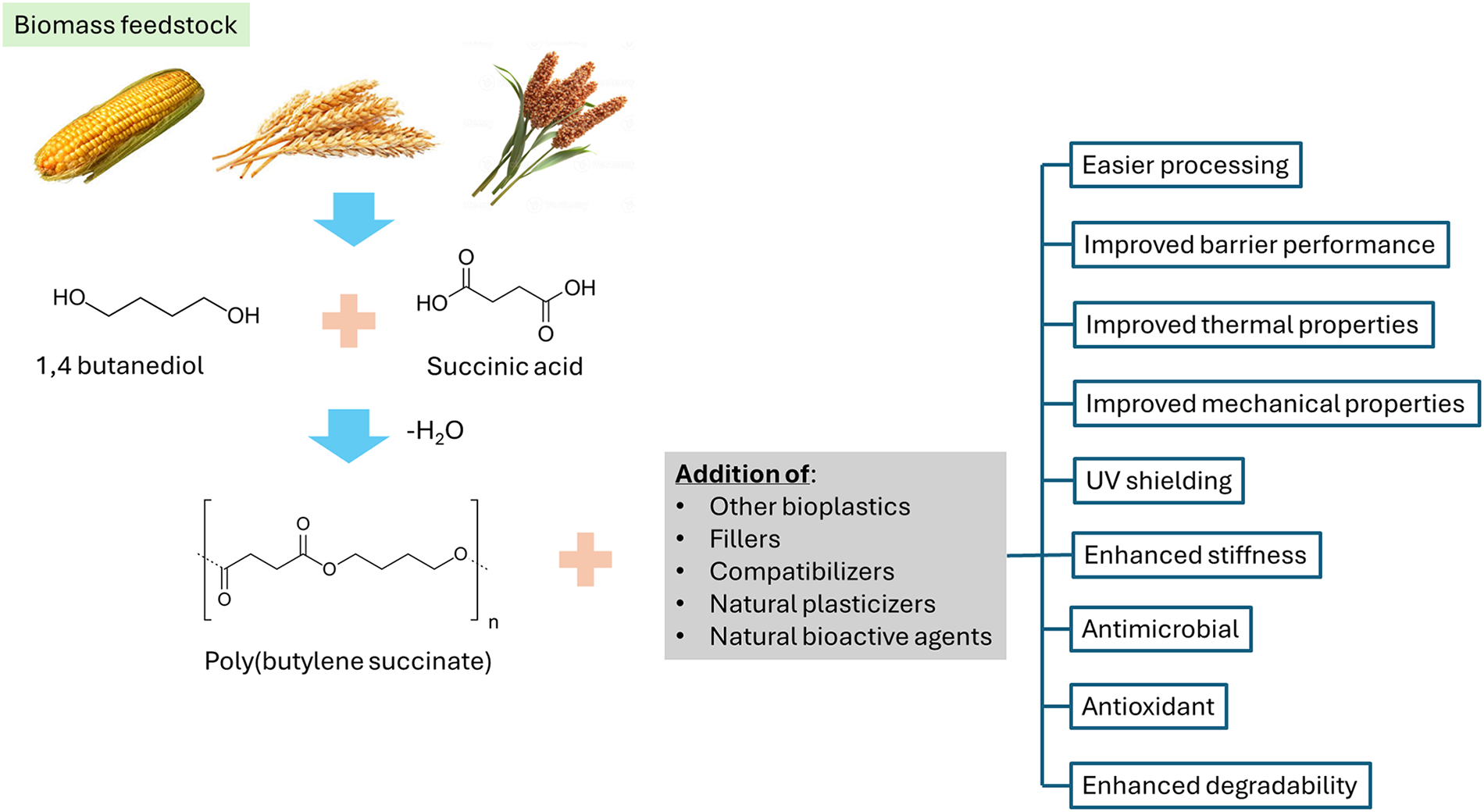
Figure 6: Synthesis and modification of poly(butylene succinate) for improved properties and processability
Barrino et al. [92] developed eco-friendly PBS films incorporating 1–3 wt% extra virgin olive oil or coconut oil to enhance physicochemical properties and extend food freshness. Apple and kiwi slices wrapped with the films were monitored for 12 days to assess oxidation and microbial growth. The PBS films, particularly those with 3 wt% extra virgin olive oil, effectively reduced fruit browning and prevented mold formation for up to 10–12 days (Fig. 6). Along the line of testing the effects of different natural additives, often with antioxidant and antimicrobial properties, on PBS properties, Mohamad et al. [93] developed active PBS films incorporating thymol, kesum, or curry extracts via solvent casting. Characterization showed that kesum provided a well-integrated film structure, while thymol and curry reduced adhesion compared to pure PBS. Functional and thermal analyses confirmed successful incorporation of active agents, with thymol-loaded films showing the highest heat resistance and kesum films exhibiting the greatest crystallinity due to nucleation effects. Films with 10% kesum or thymol inhibited S. aureus, though their antimicrobial effect on chicken fillets was minimal. Nonetheless, films with 15% active agents improved the color quality of stored chicken [93].
Additionally, PLA/PBS blend films containing up to 6% lesser galangal (Alpinia officinarum) essential oil were produced by cast extrusion [94]. Essential oil addition reduced α-relaxation temperature, crystallinity, and tensile strength but increased water vapor and oxygen permeability. Structural analyses showed that the essential oil modified the crystal morphology and smoothed the film surface by enhancing PBS melting. When used to package freshly steamed glutinous rice, the films released volatile essential oil compounds such as β-ocimene, eucalyptol, and geraniol, which suppressed fungal and bacterial growth (Fig. 6). Films with lower PLA content and over 4% essential oil significantly reduced microbial counts and doubled the rice’s shelf life through controlled release of volatiles [94]. PBS films containing different quercetin levels (0.05%–0.50% w/w) fabricated by solvent casting were observed to demonstrate altered film color, increased opacity, and enhanced UV-blocking ability due to quercetin addition [95]. Quercetin did not notably affect thermal stability, though it slightly reduced mechanical strength. The films demonstrated strong antioxidant activity (DPPH, ABTS, O2− scavenging) and moderate antibacterial effects against E. coli and S. aureus, with measurable quercetin migration into food-simulating liquids.
Continuing their earlier work on incorporating NFC and essential oils into packaging films, Zabidi et al. [96] developed PLA/PBS composite films reinforced with varying amounts of NFC and 9% thymol essential oil via solvent casting. Adding 2 wt% NFC increased tensile strength by 12%, while the PLA/PBS/NFC film with 9% thymol showed good water resistance and mechanical performance (tensile strength 13.2 MPa, elongation 13.1%, modulus 513 MPa). NFC enhanced film disintegration by 70.5%, and the composites exhibited antibacterial effects against S. aureus and E. coli (Fig. 6).
Nanni et al. [97] evaluated dried and milled grape stalks as fillers for PBS biocomposites. Samples containing 10% grape stalk powder, untreated or modified by acetylation or silylation, were analyzed for structural and mechanical properties. The modified fillers, especially the acetylated form, enhanced stiffness, increasing Young’s modulus from 616 to 732 MPa compared with pure PBS (Fig. 6). Delorme et al. [98] compared the mechanical, gas barrier, and photoaging properties of poly(butylene succinate-co-butylene adipate) PBSA and PBSA–layered double hydroxide (LDH) nanocomposite films produced on a pilot scale. Incorporating LDH fillers increased film rigidity and enhanced oxygen and water vapor barrier performance, broadening PBSA’s potential for food packaging. The PBSA–LDH nanocomposites also showed improved photo-durability and viscoelastic stability compared with neat PBSA [98].
A study developed sustainable packaging materials using biobased PBS and PHBV reinforced with hybrid natural fillers [99]. Adding 20 wt% talc improved oxygen and water vapor barriers of PBS by ~60%, while blending with 20 wt% PHBV further enhanced both by ~80%. Incorporating 1% maleic anhydride-grafted coupling agents improved interfacial adhesion, tensile strength, and barrier performance. Adding 5% starch increased material toughness and biodegradability but slightly reduced barrier efficiency.
6.2 Feasibility and Limitations
PBS-based bioplastics present significant opportunities in the development of sustainable and functional food packaging materials due to their excellent processability, mechanical strength, and biodegradability. Derived from renewable or synthetic sources, PBS offers good thermal stability, flexibility, and resistance to oils and fats, making it suitable for direct food contact [100]. Its biodegradability under industrial composting conditions also positions it as a strong candidate for circular economy applications, while blending with other biodegradable polymers such as PLA or PHBV further improves flexibility, processability, and overall performance [94,99]. Recent studies have demonstrated how bioactive and nanostructured additives can enhance PBS functionality. For instance, incorporating silver-based nanofillers significantly improved antibacterial activity, mechanical strength, and gas barrier performance [89,90], while titanium dioxide/copper oxide nanoparticles imparted photocatalytic self-cleaning ability and UV protection [91]. Similarly, PBS films enriched with natural plant extracts and essential oils such as thymol, kesum, or galangal have shown strong antimicrobial, antioxidant, and aroma-releasing properties, extending food freshness during storage [93,94]. Furthermore, hybrid composites containing natural fibers, nanocellulose, or grape stalk fillers have demonstrated enhanced stiffness, oxygen barrier performance, and biodegradability [96–98]. These advancements underscore the versatility and adaptability of PBS as a next-generation bioplastic capable of replacing petroleum-derived polymers in a wide range of packaging applications.
Despite its promising potential, PBS still faces several challenges related to cost, practicality, scalability, and environmental impact. The high production cost of PBS compared with conventional plastics remains a major barrier, largely due to its dependence on feedstock availability and the limited industrial scale of biosynthesis and polymerization processes [101]. While PBS exhibits good thermal and mechanical stability, it has relatively weak gas barrier properties and moderate resistance to moisture, which restrict its use in long-shelf-life or high-humidity food products [100]. Efforts to address these limitations through copolymerization, blending, and nanofiller incorporation have improved its functionality but also increased production complexity and cost. Moreover, while PBS is biodegradable under industrial composting conditions, its degradation rate in natural environments (e.g., soil or marine ecosystems) remains slow, raising concerns about its real-world environmental performance [98,102]. From a processing perspective, the compatibility of PBS with natural additives can vary; for instance, essential oil incorporation may lower tensile strength or increase permeability if not properly optimized [94]. Furthermore, the long-term environmental impact of nanofiller release during degradation is still under evaluation. Therefore, balancing material performance, production economics, and environmental sustainability will be key to scaling PBS-based packaging solutions. Continued innovation in bio-based feedstocks, green synthesis, and waste valorization is essential to make PBS a commercially viable and ecologically responsible alternative to petroleum-derived plastics.
7 Other Biobased Biodegradable Plastics
Beyond widely used bioplastics such as starch-based plastics, PLA, PBS, and PHA, several other biobased and biodegradable polymers have emerged as promising candidates for sustainable food packaging. These include chitosan-based materials, which can form transparent, flexible coatings, while also serving as oxygen and aroma barriers, as well as protein-based materials derived from sources like zein, gelatin, soy, and casein, which offer excellent film-forming ability and compatibility with active agents such as antimicrobials and antioxidants.
Chitosan is widely researched for its excellent biocompatibility, biodegradability, non-toxicity, and strong film-forming ability. However, its natural form offers limited UV protection, antioxidant capacity, and antimicrobial activity, making it less suitable for food packaging applications. Chitosan (CS) films were enhanced with tannic acid (TA) to improve their UV resistance, antioxidant, and antibacterial properties for food packaging. CS–TA composites were prepared under two neutralization conditions (pH 7.4 with PBS and pH 8.5 with Tris buffer) [103]. Higher pH promoted covalent crosslinking via quinone formation, with Schiff base reactions dominant at pH 7.4 and Michael addition at pH 8.5. The resulting films showed improved mechanical, thermal, and bioactive performance and effectively reduced browning and moisture loss in packaged bananas.
Rao et al. [104] synthesized epigallocatechin-3-gallate (EGCG)-loaded chitosan microspheres via a sol-gel method and incorporated them into a carboxymethyl cellulose layer bonded to a carboxymethyl chitosan substrate through hydrogen bonding. The resulting dense, stable bilayer film showed high tensile strength (37.05 MPa), effective UV shielding, excellent gas barrier properties, and sustained, pH-responsive EGCG release with strong bioactive effects. In addition, a novel chitosan/negatively charged graphitic carbon nitride bionanocomposite film was fabricated via one-step electrostatic self-assembly [105]. Under visible light, the film achieved strong antibacterial activity, eliminating 99.8% of E. coli and 99.9% of S. aureus. It also extended the shelf life of tangerines to 24 days. Hemolysis and cell tests confirmed its safety and non-toxicity. The low-cost carbon nitride further enhanced the mechanical, thermal, and hydrophobic properties of the chitosan film.
A trilayer packaging film was prepared by layer-by-layer casting using polyquaternium-10/carboxymethyl chitosan (PQ-10/CMC) microgels, a PQ-10/zein blend, and zein solution [106]. After incorporating thymol and cinnamaldehyde (THY&CA) nanoemulsions onto the loading layer, the resulting THY&CA@PC-PZ-Z film showed strong interlayer adhesion, good water retention, biocompatibility, and excellent antioxidant and antibacterial performance. The film sustained THY&CA release for over 7 days due to the zein barrier layer. When tested on chilled pork, it effectively reduced lipid and protein oxidation and inhibited microbial growth over 11 days, outperforming conventional low-density polyethylene packaging [106]. In addition, a biodegradable chitosan/kudzu-based nanocomposite film was prepared by incorporating paeonol-loaded ZIF-8 (PAE@ZIF-8) and Ag2CO3/Ag2O nano-heterojunctions through matrix mixing and solution casting for raspberry preservation [107]. ZIF-8 offered abundant active sites, achieving a 36.33% PAE loading rate and enabling pH-responsive slow release. The Ag2CO3/Ag2O structures enhanced antibacterial activity via silver ion release. The film showed improved mechanical, optical, and barrier properties, blocking 90.32% of UV–visible light, and exhibited 1.24-fold higher antioxidant and fourfold higher antibacterial performance. It extended raspberry shelf life to 5 days and maintained cucumber freshness, with silver migration levels within EU food safety limits [107].
Arslan et al. [108] developed bioactive chitosan films grafted with a lemon-peel–derived antifungal compound (AntiFun-LM) to reduce post-harvest citrus losses. The grafting, performed using various coupling agents, produced solvent-cast films that remained thermally stable and displayed smooth, compact surfaces under SEM. Compared with pure chitosan, the grafted films were more hydrophilic, showed enhanced UV-blocking capacity, and exhibited strong antifungal activity against common citrus-spoiling fungi while maintaining non-cytotoxicity toward L929 fibroblasts. The work demonstrates the potential of converting citrus waste into natural antifungal additives for chitosan-based packaging within a circular-economy framework.
As for protein-based materials, an edible gelatin/zein nanofiber film co-loaded again with cinnamaldehyde (CA) and thymol (THY) was developed for strawberry preservation [109]. The combined CA–THY system showed strong synergistic antibacterial activity. Electrospun films demonstrated improved hydrophobicity (water contact angle 85.1°), reduced water vapor permeability, and good mechanical strength (1.30 MPa tensile strength, 185% elongation). They also provided UV–visible light protection and high antioxidant capacity, with 99.9% DPPH scavenging in 4 h. At 12.5 mg/mL, the films inhibited E. coli (67.5%), S. aureus, and L. monocytogenes (100%). When used to package strawberries, they effectively maintained freshness for up to 7 days at room temperature [109].
Min et al. [110] developed pullulan/polyvinyl alcohol (PUL/PVA) nanofibers embedded with thymol-loaded porphyrin metal–organic framework nanoparticles (THY@PCN-224) for antibacterial food packaging. The PCN-224 served as thymol carriers and generated singlet oxygen with strong bactericidal effects. PUL/PVA provided a flexible, biodegradable, and biocompatible substrate, while the PCN-224 achieved about 20% thymol loading. Under light exposure, the composite nanofibers showed synergistic antibacterial effects against E. coli (~99%) and S. aureus (~98%). Cytotoxicity and fruit preservation tests confirmed the film’s biosafety, highlighting its promise for sustainable food packaging [110].
Inspired by the superhydrophobicity of swan feathers, a smart and sustainable food packaging film (C-CPQ) was developed using CMC and PVA [111]. Its asymmetric feather-like surface provided excellent water repellence and vapor barrier performance. The film showed good strength, biodegradability, and formability. The incorporation of quercetin introduced pH-sensing, fluorescence, antioxidant, UV-shielding, and antibacterial functions, enabling intelligent, active packaging. The C-CPQ film also demonstrated UV-responsive color change, anti-counterfeiting potential, and extended food shelf life to 5 days—two days longer than traditional polyethylene packaging [111]. In another study, a sodium alginate/cellulose nanofiber (SA/CNF) composite film containing peanut red skin extract (PSE) was crosslinked with Ca2+ to create an antimicrobial packaging material for fruit preservation [112]. The resulting SA/CNF/Ca2+/PSE (SCCP) film showed high strength, water resistance, and strong UV-blocking ability. It exhibited excellent antioxidant activity, achieving 99.28% ABTS radical scavenging in 10% ethanol, and effective antibacterial performance. Fruits wrapped with the SCCP film showed reduced decay and weight loss compared to controls.
Lingait et al. [113] developed sustainable packaging films using pectin (PCT) and PVA reinforced with sporopollenin (SP) extracted from Lycopodium clavatum. Incorporating 10–400 mg of SP reduced the hydrophilicity of the PCT/PVA matrix while enhancing its antioxidant and antimicrobial performance. Films containing 200 mg SP showed the best overall improvements, including higher mechanical strength (7.4 MPa), better water vapor barrier performance (17.2 g/m2 h), increased hydrophobicity, and stronger UV protection. All composites began to lose integrity within the first week of soil burial due to moisture and microbial activity, with PCT and PVA largely degraded by day 15 and complete mineralization, including of SP residues, achieved by day 30. In water, the films absorbed moisture rapidly, initiating breakdown within 30 min and fully disintegrating within an hour, regardless of SP loading.
7.2 Feasibility and Limitations
Other emerging bioplastics such as chitosan-, protein-, and polysaccharide-based materials present significant opportunities for sustainable food packaging due to their renewability, biodegradability, and inherent bioactivity. Chitosan, for example, is valued for its film-forming ability, biocompatibility, and antimicrobial potential, which can be further enhanced through blending or crosslinking with bioactive agents such as tannic acid, essential oils, or plant extracts [114]. For instance, Lee et al. [103] demonstrated that chitosan–tannic acid composites prepared under alkaline conditions improved UV resistance, mechanical strength, and antioxidant activity, reducing browning and moisture loss in packaged fruits. Similarly, Ni et al. [105] developed a chitosan/graphitic carbon nitride bionanocomposite that exhibited strong antibacterial activity and extended tangerine shelf life to 24 days, highlighting both functionality and food safety. These materials also offer potential cost savings when derived from abundant natural sources such as crustacean shells or agricultural residues. Moreover, their compatibility with natural antimicrobials or nanostructures enables multifunctional packaging with active and intelligent features. However, challenges remain in achieving consistent large-scale production, controlling film uniformity, and maintaining stability under variable humidity and temperature conditions. Their relatively high moisture sensitivity and poor mechanical strength compared with petroleum-based plastics still limit their scalability and cost-effectiveness in industrial applications [104,107].
Protein-based and polysaccharide-derived films, such as those made from zein, gelatin, casein, pullulan, and sodium alginate, also offer promising opportunities for active and edible packaging, particularly due to their excellent film-forming ability and compatibility with functional additives. For instance, gelatin/zein nanofiber films co-loaded with thymol and cinnamaldehyde extended strawberry shelf life by up to seven days while providing strong antibacterial and antioxidant activities [106]. Likewise, pullulan/polyvinyl alcohol nanofibers embedded with thymol-loaded porphyrin metal-organic frameworks achieved nearly complete bacterial inhibition under light activation [110], while smart alginate/cellulose nanofiber films containing peanut red skin extract exhibited UV-shielding and strong antioxidant properties for fruit preservation [112]. These advances indicate growing practicality for intelligent and biodegradable packaging systems. Nonetheless, challenges persist in balancing mechanical durability, moisture resistance, and biodegradation rates, while keeping costs competitive with conventional plastics. Environmental advantages, including reduced carbon footprint and full compostability, make these materials highly desirable; yet their large-scale adoption is hindered by limited processability, short shelf life, and the need for optimized barrier performance to meet diverse food preservation requirements. Thus, future efforts should focus on scalable fabrication techniques, cost reduction through waste-derived feedstocks, and hybridization with nanomaterials or bio-based plasticizers to enhance functionality and commercial feasibility.
The future of biobased biodegradable plastics in food packaging is moving toward high-performance, multifunctional, and environmentally optimized materials that can compete with conventional plastics while supporting global sustainability goals. A key trend is the development of next-generation biopolymer composites with enhanced mechanical strength, barrier properties, and thermal stability, achieved through fillers such as nanocellulose, silica nanoparticles, bioactive plant extracts, essential oils, and polyphenols [115]. These advanced composites will increasingly incorporate mechanism-driven design, where improvements in crystallinity, polymer compatibility, hydrogen bonding, and crosslinking are intentionally engineered to meet packaging requirements.
Another major trajectory is the rise of active and intelligent packaging systems, including antimicrobial, antioxidant, UV-shielding, and pH-sensitive films that extend food shelf life and improve safety. Electrospun multilayers, bioactive-loaded nanofibers, and encapsulation-based release systems will move toward commercial-scale production [116]. Smart indicators that monitor freshness or temperature exposure are expected to transition from research prototypes to market-ready solutions, driven by consumer demand for transparency and safety.
Scalability and cost reduction will shape the next phase of adoption. Advances in agricultural residue valorization, using waste starches, lignocellulosic biomass, chitosan, or seed extracts, are expected to significantly reduce raw material costs. Improvements in process technologies such as reactive extrusion, green solvent systems, and additive manufacturing will enhance production efficiency and consistency [117]. As these technologies mature, regulatory incentives and corporate sustainability commitments will further accelerate market uptake.
Environmental considerations will also define future development. Emphasis will shift toward materials with verified biodegradation performance under real-world conditions, avoiding microplastic formation and ensuring safe degradation products. Standardized testing for compostability, soil degradation, and marine safety will become more stringent [118]. Life cycle assessment (LCA) will play a central role in confirming that biobased biodegradable packaging offers genuine reductions in carbon emissions, resource use, and ecological impacts.
Overall, starch-based bioplastics, PLA, PBS, PHAs, and other bioplastic materials each demonstrate distinctive advantages and limitations in their use for sustainable food packaging. Starch-based plastics are abundant, low-cost, and biodegradable, offering an economical route to replace petroleum-derived polymers; however, their high hydrophilicity, brittleness, and poor mechanical and barrier properties often require blending or modification to improve functionality. PLA-based materials exhibit good processability, transparency, and mechanical strength, making them practical for commercial packaging, yet their brittleness, limited thermal stability, and slow biodegradation under ambient conditions constrain broader adoption. PBS-based plastics show balanced flexibility, thermal stability, and oil resistance, and can be enhanced with nanofillers or bioactive compounds to improve barrier and antimicrobial properties. Nonetheless, their relatively high production costs and modest gas barrier performance remain significant barriers. PHA-based bioplastics, on the other hand, are fully biodegradable under natural conditions and exhibit excellent biocompatibility, but their cost-intensive production process and limited scalability currently restrict widespread industrial use.
Beyond these main categories, other emerging bioplastics, including chitosan-, protein-, and polysaccharide-based materials, present exciting opportunities for multifunctional, intelligent, and edible packaging solutions. These materials often demonstrate intrinsic antimicrobial or antioxidant properties and can be engineered for controlled release or environmental responsiveness. However, challenges related to moisture sensitivity, mechanical fragility, and large-scale processability persist. Future research should focus on improving cost efficiency through optimized fermentation and polymer recovery processes for PHAs, developing composite and hybrid systems that combine different biopolymers to balance strength, flexibility, and biodegradability, and employing green nanotechnology to enhance barrier, thermal, and bioactive functions.
After their intended use, the final biobased biodegradable plastic composites should be managed in a way that aligns with their designed biodegradability and environmental safety. Depending on their composition, such materials can undergo industrial composting, home composting, or aerobic degradation under controlled conditions that promote microbial activity and complete mineralization into CO2, water, and biomass. However, it is crucial to note that biodegradability is highly dependent on environmental conditions, such as temperature, moisture, and microbial populations; therefore, uncontrolled disposal in landfills or aquatic environments may result in incomplete degradation or the formation of microplastics. When nanofillers, bioactive agents, or hybrid polymers are incorporated, their potential release and ecotoxicity should also be carefully evaluated. To ensure sustainable end-of-life management, post-use composites should ideally be characterized for degradation kinetics and tested in relevant composting or soil environments, ensuring no harmful residues remain. Integrating LCA and circular economy principles into disposal strategies will further support their environmentally responsible applications in food packaging.
Finally, advancing scalable processing techniques, such as extrusion, electrospinning, and 3D printing, alongside regulatory and consumer acceptance studies will be essential to transition these bioplastics from laboratory innovation to mainstream packaging solutions.
Acknowledgement: This author wishes to thank the University of Arizona for the administrative support provided.
Funding Statement: The author received no specific funding for this study.
Availability of Data and Materials: Not applicable.
Ethics Approval: Not applicable.
Conflicts of Interest: The author declares no conflicts of interest to report regarding the present study.
References
1. Filiciotto L, Rothenberg G. Biodegradable plastics: standards, policies, and impacts. ChemSusChem. 2021;14(1):56–72. doi:10.1002/cssc.202002044. [Google Scholar] [PubMed] [CrossRef]
2. Tang KHD. Occurrence and fate of microplastics in anaerobic digestion of dewatered sludge. In: Management of micro and nano-plastics in soil and biosolids. Cham, Switzerland: Springer Nature Switzerland; 2024. p. 325–41. doi:10.1007/978-3-031-51967-3_13. [Google Scholar] [CrossRef]
3. Tang KHD. Valorization of plastic waste through incorporation into construction materials. Civil Sustain Urban Eng. 2022;2(2):96–109. doi:10.53623/csue.v2i2.141. [Google Scholar] [CrossRef]
4. Plastic pollution [Internet]. 2023 [cited 2024 May 30]. Available from: https://ourworldindata.org/plastic-pollution. [Google Scholar]
5. OECD. Plastics [Internet]. 2025 [cited 2025 Dec 11]. Available from: https://www.oecd.org/en/topics/sub-issues/plastics.html. [Google Scholar]
6. OECD. Global plastics outlook: economic drivers, environmental impacts and policy options. Paris, France: OECD Publishing; 2022. doi:10.1787/de747aef-en. [Google Scholar] [CrossRef]
7. Tang KHD. Enhanced plastic economy: a perspective and a call for international action. Environ Sci Adv. 2023;2(8):1011–8. doi:10.1039/d3va00057e. [Google Scholar] [CrossRef]
8. Tang KHD, Hadibarata T. The application of bioremediation in wastewater treatment plants for microplastics removal: a practical perspective. Bioprocess Biosyst Eng. 2022;45(11):1865–78. doi:10.1007/s00449-022-02793-x. [Google Scholar] [PubMed] [CrossRef]
9. Scopetani C, Chelazzi D, Cincinelli A, Martellini T, Leiniö V, Pellinen J. Hazardous contaminants in plastics contained in compost and agricultural soil. Chemosphere. 2022;293:133645. doi:10.1016/j.chemosphere.2022.133645. [Google Scholar] [PubMed] [CrossRef]
10. Liwarska-Bizukojc E. Effect of (bio)plastics on soil environment: a review. Sci Total Environ. 2021;795(7):148889. doi:10.1016/j.scitotenv.2021.148889. [Google Scholar] [PubMed] [CrossRef]
11. Hurley RR, Nizzetto L. Fate and occurrence of micro(nano)plastics in soils: knowledge gaps and possible risks. Curr Opin Environ Sci Health. 2018;1:6–11. doi:10.1016/j.coesh.2017.10.006. [Google Scholar] [CrossRef]
12. Zhang B, Yang X, Chen L, Chao J, Teng J, Wang Q. Microplastics in soils: a review of possible sources, analytical methods and ecological impacts. J Chemical Tech Biotech. 2020;95(8):2052–68. doi:10.1002/jctb.6334. [Google Scholar] [CrossRef]
13. Tang KHD. Microplastics in soil: uncovering their hidden chemical implications. Trop Aqua Soil Pollut. 2025;5(1):88–109. doi:10.53623/tasp.v5i1.703. [Google Scholar] [CrossRef]
14. Tang KHD. Effects of microplastics on bioavailability, persistence and toxicity of plant pesticides: an agricultural perspective. Agriculture. 2025;15(4):356. doi:10.3390/agriculture15040356. [Google Scholar] [CrossRef]
15. Tang KHD. Microplastics and antibiotics in aquatic environments: a review of their interactions and ecotoxicological implications. Trop Aqua Soil Pollut. 2024;4(1):60–78. doi:10.53623/tasp.v4i1.446. [Google Scholar] [CrossRef]
16. Zhu F, Zhu C, Wang C, Gu C. Occurrence and ecological impacts of microplastics in soil systems: a review. Bull Environ Contam Toxicol. 2019;102(6):741–9. doi:10.1007/s00128-019-02623-z. [Google Scholar] [PubMed] [CrossRef]
17. Tang KHD. Counteracting the harms of microplastics on humans: an overview from the perspective of exposure. Microplastics. 2025;4(3):47. doi:10.3390/microplastics4030047. [Google Scholar] [CrossRef]
18. Tang KHD. A review of the toxic effects of microplastics based on studies on mammals and mammalian cell lines. Environ Sci Adv. 2024;3(12):1669–78. doi:10.1039/d4va00227j. [Google Scholar] [CrossRef]
19. Tang KHD, Li R, Li Z, Wang D. Health risk of human exposure to microplastics: a review. Environ Chem Lett. 2024;22(3):1155–83. doi:10.1007/s10311-024-01727-1. [Google Scholar] [CrossRef]
20. Schmidt S, Laner D. The multidimensional effects of single-use and packaging plastic strategies on German household waste management. Waste Manag. 2021;131(9):187–200. doi:10.1016/j.wasman.2021.06.003. [Google Scholar] [PubMed] [CrossRef]
21. Tang KHD. Attitudes towards plastic pollution: a review and mitigations beyond circular economy. Waste. 2023;1(2):569–87. doi:10.3390/waste1020034. [Google Scholar] [CrossRef]
22. Huang S, Dong Q, Che S, Li R, Tang KHD. Bioplastics and biodegradable plastics: a review of recent advances, feasibility and cleaner production. Sci Total Environ. 2025;969(96):178911. doi:10.1016/j.scitotenv.2025.178911. [Google Scholar] [PubMed] [CrossRef]
23. Medeiros Garcia Alcântara J, Distante F, Storti G, Moscatelli D, Morbidelli M, Sponchioni M. Current trends in the production of biodegradable bioplastics: the case of polyhydroxyalkanoates. Biotechnol Adv. 2020;42:107582. doi:10.1016/j.biotechadv.2020.107582. [Google Scholar] [PubMed] [CrossRef]
24. Applications for bioplastics [Internet]. 2025 [cited 2025 Dec 11]. Available from: https://www.european-bioplastics.org/market/applications-sectors/. [Google Scholar]
25. Lambert S, Wagner M. Environmental performance of bio-based and biodegradable plastics: the road ahead. Chem Soc Rev. 2017;46(22):6855–71. doi:10.1039/c7cs00149e. [Google Scholar] [PubMed] [CrossRef]
26. Stark NM, Matuana LM. Trends in sustainable biobased packaging materials: a mini review. Mater Today Sustain. 2021;15(34):100084. doi:10.1016/j.mtsust.2021.100084. [Google Scholar] [CrossRef]
27. Tang KHD, Zhou J. Ecotoxicity of biodegradable microplastics and bio-based microplastics: a review of in vitro and in vivo studies. Environ Manage. 2025;75(3):663–79. doi:10.1007/s00267-024-02106-w. [Google Scholar] [PubMed] [CrossRef]
28. Meereboer KW, Misra M, Mohanty AK. Review of recent advances in the biodegradability of polyhydroxyalkanoate (PHA) bioplastics and their composites. Green Chem. 2020;22(17):5519–58. doi:10.1039/d0gc01647k. [Google Scholar] [CrossRef]
29. Kim MS, Chang H, Zheng L, Yan Q, Pfleger BF, Klier J, et al. A review of biodegradable plastics: chemistry, applications, properties, and future research needs. Chem Rev. 2023;123(16):9915–39. doi:10.1021/acs.chemrev.2c00876. [Google Scholar] [PubMed] [CrossRef]
30. Kumar R, Lalnundiki V, Shelare SD, Abhishek GJ, Sharma S, Sharma D, et al. An investigation of the environmental implications of bioplastics: recent advancements on the development of environmentally friendly bioplastics solutions. Environ Res. 2024;244(9):117707. doi:10.1016/j.envres.2023.117707. [Google Scholar] [PubMed] [CrossRef]
31. Nazareth MC, Marques MRC, Pinheiro LM, Castro ÍB. Key issues for bio-based, biodegradable and compostable plastics governance. J Environ Manage. 2022;322(6):116074. doi:10.1016/j.jenvman.2022.116074. [Google Scholar] [PubMed] [CrossRef]
32. Thakur S, Chaudhary J, Sharma B, Verma A, Tamulevicius S, Thakur VK. Sustainability of bioplastics: opportunities and challenges. Curr Opin Green Sustain Chem. 2018;13:68–75. doi:10.1016/j.cogsc.2018.04.013. [Google Scholar] [CrossRef]
33. Ghasemlou M, Barrow CJ, Adhikari B. The future of bioplastics in food packaging: an industrial perspective. Food Packag Shelf Life. 2024;43(8):101279. doi:10.1016/j.fpsl.2024.101279. [Google Scholar] [CrossRef]
34. Siddiqui SA, Yang X, Deshmukh RK, Gaikwad KK, Bahmid NA, Castro-Muñoz R. Recent advances in reinforced bioplastics for food packaging—a critical review. Int J Biol Macromol. 2024;263(Pt 2):130399. doi:10.1016/j.ijbiomac.2024.130399. [Google Scholar] [PubMed] [CrossRef]
35. Paul-Pont I, Ghiglione JF, Gastaldi E, Ter Halle A, Huvet A, Bruzaud S, et al. Discussion about suitable applications for biodegradable plastics regarding their sources, uses and end of life. Waste Manag. 2023;157(5):242–8. doi:10.1016/j.wasman.2022.12.022. [Google Scholar] [PubMed] [CrossRef]
36. Jayarathna S, Andersson M, Andersson R. Recent advances in starch-based blends and composites for bioplastics applications. Polymers. 2022;14(21):4557. doi:10.3390/polym14214557. [Google Scholar] [PubMed] [CrossRef]
37. Srinivasa Rao L, Naidu CD, Tiwari S. Investigation on synthesis, structure and degradability of starch based bioplastics. Mater Today Proc. 2022;49(2):257–61. doi:10.1016/j.matpr.2021.01.917. [Google Scholar] [CrossRef]
38. Yusoff NH, Pal K, Narayanan T, de Souza FG. Recent trends on bioplastics synthesis and characterizations: polylactic acid (PLA) incorporated with tapioca starch for packaging applications. J Mol Struct. 2021;1232(3):129954. doi:10.1016/j.molstruc.2021.129954. [Google Scholar] [CrossRef]
39. Mangaraj S, Thakur RR, Yadav A. Development and characterization of PLA and Cassava starch-based novel biodegradable film used for food packaging application. Food Processing Preservation. 2022;46(9):e16314. doi:10.1111/jfpp.16314. [Google Scholar] [CrossRef]
40. Godoy Zúniga MM, Ding R, Oh E, Nguyen TB, Tran TT, Nam JD, et al. Avocado seed starch utilized in eco-friendly, UV-blocking, and high-barrier polylactic acid (PLA) biocomposites for active food packaging applications. Int J Biol Macromol. 2024;265(Pt 1):130837. doi:10.1016/j.ijbiomac.2024.130837. [Google Scholar] [PubMed] [CrossRef]
41. Gürler N, Paşa S, Temel H. Silane doped biodegradable starch-PLA bilayer films for food packaging applications: mechanical, thermal, barrier and biodegradability properties. J Taiwan Inst Chem Eng. 2021;123(4):261–71. doi:10.1016/j.jtice.2021.05.030. [Google Scholar] [CrossRef]
42. Roy Goswami S, Sudhakaran Nair S, Zhang X, Tanguy N, Yan N. Starch maleate/epoxidized soybean oil/polylactic acid films with improved ductility and biodegradation potential for packaging fatty foods. ACS Sustainable Chem Eng. 2022;10(43):14185–94. doi:10.1021/acssuschemeng.2c03881. [Google Scholar] [CrossRef]
43. Ordoñez R, Atarés L, Chiralt A. Multilayer antimicrobial films based on starch and PLA with superficially incorporated ferulic or cinnamic acids for active food packaging purposes. Food Chem Adv. 2023;2:100250. doi:10.1016/j.focha.2023.100250. [Google Scholar] [CrossRef]
44. Behera L, Mohanta M, Thirugnanam A. Intensification of yam-starch based biodegradable bioplastic film with bentonite for food packaging application. Environ Technol Innov. 2022;25:102180. doi:10.1016/j.eti.2021.102180. [Google Scholar] [CrossRef]
45. Shuprajhaa T, Paramasivam SK, Pushpavalli S, Anandakumar S, Naik R. Influence of additives on the development, mechanical, functional characteristics and biodegradability of banana starch-based bio plastic films. Int J Biol Macromol. 2025;295:139544. doi:10.1016/j.ijbiomac.2025.139544. [Google Scholar] [PubMed] [CrossRef]
46. Marichelvam MK, Manimaran P, Sanjay MR, Siengchin S, Geetha M, Kandakodeeswaran K, et al. Extraction and development of starch-based bioplastics from Prosopis juliflora plant: eco-friendly and sustainability aspects. Curr Res Green Sustain Chem. 2022;5(12):100296. doi:10.1016/j.crgsc.2022.100296. [Google Scholar] [CrossRef]
47. Nguyen TK, That NTT, Nguyen NT, Nguyen HT. Development of starch-based bioplastic from jackfruit seed. Adv Polym Technol. 2022;2022:6547461. doi:10.1155/2022/6547461. [Google Scholar] [CrossRef]
48. Khalid Hossain SM, Amin MR, Kowser MA, Chowdhury MA, Hossain N. Development and characterization of eco-friendly starch-based plastic reinforcing tea for packaging applications. Curr Res Green Sustain Chem. 2023;7(4):100374. doi:10.1016/j.crgsc.2023.100374. [Google Scholar] [CrossRef]
49. Shanbhag C, Shenoy R, Shetty P, Srinivasulu M, Nayak R. Formulation and characterization of starch-based novel biodegradable edible films for food packaging. J Food Sci Technol. 2023;60(11):2858–67. doi:10.1007/s13197-023-05803-2. [Google Scholar] [PubMed] [CrossRef]
50. Thakwani Y, Karwa A, Bg PK, Purkait MK, Changmai M. A composite starch-date seeds extract based biodegradable film for food packaging application. Food Biosci. 2023;54(3):102818. doi:10.1016/j.fbio.2023.102818. [Google Scholar] [CrossRef]
51. Chen L, Wu F, Xiang M, Zhang W, Wu Q, Lu Y, et al. Encapsulation of tea polyphenols into high amylose corn starch composite nanofibrous film for active antimicrobial packaging. Int J Biol Macromol. 2023;245(5):125245. doi:10.1016/j.ijbiomac.2023.125245. [Google Scholar] [PubMed] [CrossRef]
52. Arayaphan J, Boonsuk P, Chantarak S. Enhancement ofwater barrier properties of cassava starch-based biodegradable films using silica particles. Iran Polym J. 2020;29(9):749–57. doi:10.1007/s13726-020-00837-1. [Google Scholar] [CrossRef]
53. Cheng M, Cui Y, Yan X, Zhang R, Wang J, Wang X. Effect of dual-modified cassava starches on intelligent packaging films containing red cabbage extracts. Food Hydrocoll. 2022;124(1):107225. doi:10.1016/j.foodhyd.2021.107225. [Google Scholar] [CrossRef]
54. Duan A, Yang J, Wu L, Wang T, Liu Q, Liu Y. Preparation, physicochemical and application evaluation of raspberry anthocyanin and curcumin based on chitosan/starch/gelatin film. Int J Biol Macromol. 2022;220(19):147–58. doi:10.1016/j.ijbiomac.2022.08.053. [Google Scholar] [PubMed] [CrossRef]
55. Esfahani A, Mohammadi Nafchi A, Baghaei H, Nouri L. Fabrication and characterization of a smart film based on cassava starch and pomegranate peel powder for monitoring lamb meat freshness. Food Sci Nutr. 2022;10(10):3293–301. doi:10.1002/fsn3.2918. [Google Scholar] [PubMed] [CrossRef]
56. García AV, Álvarez-Pérez OB, Rojas R, Aguilar CN, Garrigós MC. Impact of olive extract addition on corn starch-based active edible films properties for food packaging applications. Foods. 2020;9(9):1339. doi:10.3390/foods9091339. [Google Scholar] [PubMed] [CrossRef]
57. Punia Bangar S, Whiteside WS, Ozogul F, Dunno KD, Cavender GA, Dawson P. Development of starch-based films reinforced with cellulosic nanocrystals and essential oil to extend the shelf life of red grapes. Food Biosci. 2022;47(4):101621. doi:10.1016/j.fbio.2022.101621. [Google Scholar] [CrossRef]
58. Aytac Z, Xu J, Raman Pillai SK, Eitzer BD, Xu T, Vaze N, et al. Enzyme- and relative humidity-responsive antimicrobial fibers for active food packaging. ACS Appl Mater Interfaces. 2021;13(42):50298–308. doi:10.1021/acsami.1c12319. [Google Scholar] [PubMed] [CrossRef]
59. Kumari S, Yadav BS, Yadav R. Morphological and thermo-mechanical characterization of sweet potato starch based nanocomposites reinforced with barley starch nanoparticles. J Food Sci Technol. 2022;59(12):4924–34. doi:10.1007/s13197-022-05581-3. [Google Scholar] [PubMed] [CrossRef]
60. Marzlan AA, Muhialdin BJ, Zainal Abedin NH, Manshoor N, Ranjith FH, Anzian A, et al. Incorporating torch ginger (Etlingera elatior Jack) inflorescence essential oil onto starch-based edible film towards sustainable active packaging for chicken meat. Ind Crops Prod. 2022;184(8):115058. doi:10.1016/j.indcrop.2022.115058. [Google Scholar] [CrossRef]
61. Moldovan A, Sarosi I, Cuc S, Prodan D, Taut AC, Petean I, et al. Development and characterization of PLA food packaging composite. J Therm Anal Calorim. 2025;150(4):2469–81. doi:10.1007/s10973-024-13841-x. [Google Scholar] [CrossRef]
62. Dejene BK, Gudayu AD, Abtew MA. Development and optimization of sustainable and functional food packaging using false banana (Enset) fiber and zinc-oxide (ZnO) nanoparticle-reinforced polylactic acid (PLA) biocomposites: a case of Injera preservation. Int J Biol Macromol. 2024;279(Pt 1):135092. doi:10.1016/j.ijbiomac.2024.135092. [Google Scholar] [PubMed] [CrossRef]
63. Gao C, Chen P, Ma Y, Sun L, Yan Y, Ding Y, et al. Multifunctional polylactic acid biocomposite film for active food packaging with UV resistance, antioxidant and antibacterial properties. Int J Biol Macromol. 2023; 253(Pt 1):126494. doi:10.1016/j.ijbiomac.2023.126494. [Google Scholar] [PubMed] [CrossRef]
64. Arruda TR, Bernardes PC, Moraes ARFE, Marques CS, Pinheiro PF, de Oliveira TV, et al. Beyond brewing: β-acid rich hop extract in the development of a multifunctional polylactic acid-based food packaging. Int J Biol Macromol. 2023;228:23–39. doi:10.1016/j.ijbiomac.2022.12.191. [Google Scholar] [PubMed] [CrossRef]
65. Zych A, Perotto G, Trojanowska D, Tedeschi G, Bertolacci L, Francini N, et al. Super tough polylactic acid plasticized with epoxidized soybean oil methyl ester for flexible food packaging. ACS Appl Polym Mater. 2021;3(10):5087–95. doi:10.1021/acsapm.1c00832. [Google Scholar] [CrossRef]
66. Ghoroghi M, Estaji S, Tayouri MI, Jahanmardi R, Nobre MAL, Ali Khonakdar H. Investigation of physico-mechanical, thermal, morphological, and antibacterial effects of bio-based epoxidized soybean oil plasticizer on PLA-ZnO nanocomposites as flexible food packaging. Arab J Chem. 2024;17(9):105928. doi:10.1016/j.arabjc.2024.105928. [Google Scholar] [CrossRef]
67. Wu Y, Ma Y, Gao Y, Liu Y, Gao C. Poly(lactic acid)-based pH responsive membrane combined with chitosan and alizarin for food packaging. Int J Biol Macromol. 2022;214(19):348–59. doi:10.1016/j.ijbiomac.2022.06.039. [Google Scholar] [PubMed] [CrossRef]
68. Dai L, Li R, Liang Y, Liu Y, Zhang W, Shi S. Development of pomegranate peel extract and nano ZnO co-reinforced polylactic acid film for active food packaging. Membranes. 2022;12(11):1108. doi:10.3390/membranes12111108. [Google Scholar] [PubMed] [CrossRef]
69. Daassi R, Durand K, Rodrigue D, Stevanovic T. Optimization of the electrospray process to produce lignin nanoparticles for PLA-based food packaging. Polymers. 2023;15(13):2973. doi:10.3390/polym15132973. [Google Scholar] [PubMed] [CrossRef]
70. Faba S, Arrieta MP, Agüero Á., Torres A, Romero J, Rojas A, et al. Processing compostable PLA/organoclay bionanocomposite foams by supercritical CO2 foaming for sustainable food packaging. Polymers. 2022;14(20):4394. doi:10.3390/polym14204394. [Google Scholar] [PubMed] [CrossRef]
71. Rojas A, Misic D, Zizovic I, de Dicastillo CL, Velásquez E, Rajewska A, et al. Supercritical fluid and cocrystallization technologies for designing antimicrobial food packaging PLA nanocomposite foams loaded with eugenol cocrystals with prolonged release. Chem Eng J. 2024;481:148407. doi:10.1016/j.cej.2023.148407. [Google Scholar] [CrossRef]
72. Pasha HY, Mohtasebi SS, Taherimehr M, Tabatabaeekoloor R, Firouz MS, Javadi A. New poly(lactic acid)-based nanocomposite films for food packaging applications. Iran Polym J. 2023;32(7):855–71. doi:10.1007/s13726-023-01170-z. [Google Scholar] [CrossRef]
73. Cvek M, Paul UC, Zia J, Mancini G, Sedlarik V, Athanassiou A. Biodegradable films of PLA/PPC and curcumin as packaging materials and smart indicators of food spoilage. ACS Appl Mater Interfaces. 2022;14(12):14654–67. doi:10.1021/acsami.2c02181. [Google Scholar] [PubMed] [CrossRef]
74. Zabidi N, Nazri F, Tawakkal ISMA, Basri MSM, Basha RK, Othman SH. Characterization of active and pH-sensitive poly(lactic acid) (PLA)/nanofibrillated cellulose (NFC) films containing essential oils and anthocyanin for food packaging application. Int J Biol Macromol. 2022;212(4):220–31. doi:10.1016/j.ijbiomac.2022.05.116. [Google Scholar] [PubMed] [CrossRef]
75. Min T, Zhou L, Sun X, Du H, Bian X, Zhu Z, et al. Enzyme-responsive food packaging system based on pectin-coated poly(lactic acid) nanofiber films for controlled release of thymol. Food Res Int. 2022;157(16):111256. doi:10.1016/j.foodres.2022.111256. [Google Scholar] [PubMed] [CrossRef]
76. Santos X, Álvarez M, Videira-Quintela D, Mediero A, Rodríguez J, Guillén F, et al. Antibacterial capability of MXene (Ti3C2Tx) to produce PLA active contact surfaces for food packaging applications. Membranes. 2022;12(11):1146. doi:10.3390/membranes12111146. [Google Scholar] [PubMed] [CrossRef]
77. Rodrigues PV, Cunha AB, Andrade MA, Vilarinho F, Machado AV, Castro MCR. Blown film of PLA for packaging with green tea and fish industrial residues: an insight on their properties. Food Packag Shelf Life. 2024;43(2):101283. doi:10.1016/j.fpsl.2024.101283. [Google Scholar] [CrossRef]
78. Mirpoor SF, Patanè GT, Corrado I, Giosafatto CVL, Ginestra G, Nostro A, et al. Functionalization of polyhydroxyalkanoates (PHA)-based bioplastic with phloretin for active food packaging: characterization of its mechanical, antioxidant, and antimicrobial activities. Int J Mol Sci. 2023;24(14):11628. doi:10.3390/ijms241411628. [Google Scholar] [PubMed] [CrossRef]
79. Genovesi A, Aversa C, Barletta M. Polyhydroxyalkanoates-based cast film as bio-based packaging for fresh fruit and vegetables: manufacturing and characterization. J Polym Environ. 2023;31(10):4522–32. doi:10.1007/s10924-023-02914-x. [Google Scholar] [CrossRef]
80. Mazaheri M, Kim JT, Shin GH. Synergistic enhancement of PLA/PHA bio-based films using tempo-oxidized cellulose nanofibers, graphene oxide, and clove oil for sustainable packaging. Mater Today Commun. 2025;42:111531. doi:10.1016/j.mtcomm.2025.111531. [Google Scholar] [CrossRef]
81. Noh S, Sung H, Kim JR, Lee E, Yoon KC, Kim J, et al. Preparation and characterization of cellulose-reinforced PLA/PHA compounds. J Polym Res. 2024;31(12):355. doi:10.1007/s10965-024-04202-1. [Google Scholar] [CrossRef]
82. Mirpoor SF, Corrado I, Di Girolamo R, Dal Poggetto G, Panzella L, Borselleca E, et al. Manufacture of active multilayer films made of functionalized pectin coated by polyhydroxyalkanoates: a fully renewable approach to active food packaging. Polymer. 2023;281:126136. doi:10.1016/j.polymer.2023.126136. [Google Scholar] [CrossRef]
83. Pietrosanto A, Scarfato P, Di Maio L, Incarnato L. Development of PLA/PHB blown films with improved performance for food packaging applications. Chem Eng Trans. 2021;87(23):91–6. doi:10.3390/ma13235395. [Google Scholar] [PubMed] [CrossRef]
84. Ferri M, Papchenko K, Degli Esposti M, Tondi G, De Angelis MG, Morselli D, et al. Fully biobased polyhydroxyalkanoate/tannin films as multifunctional materials for smart food packaging applications. ACS Appl Mater Interfaces. 2023;15(23):28594–605. doi:10.1021/acsami.3c04611. [Google Scholar] [PubMed] [CrossRef]
85. Bonnenfant C, Gontard N, Aouf C. PHBV-based polymers as food packaging: physical-chemical and structural stability under reuse conditions. Polymer. 2023;270(12):125784. doi:10.1016/j.polymer.2023.125784. [Google Scholar] [CrossRef]
86. Moll E, Chiralt A. Polyhydroxybutyrate-co-hydroxyvalerate (PHBV) with phenolic acids for active food packaging. Polymers. 2023;15(21):4222. doi:10.3390/polym15214222. [Google Scholar] [PubMed] [CrossRef]
87. Mai J, Kockler K, Parisi E, Chan CM, Pratt S, Laycock B. Synthesis and physical properties of polyhydroxyalkanoate (PHA)-based block copolymers: a review. Int J Biol Macromol. 2024;263(Pt 1):130204. doi:10.1016/j.ijbiomac.2024.130204. [Google Scholar] [PubMed] [CrossRef]
88. Yadav B, Talan A, Tyagi RD, Drogui P. Concomitant production of value-added products with polyhydroxyalkanoate (PHA) synthesis: a review. Bioresour Technol. 2021;337(4):125419. doi:10.1016/j.biortech.2021.125419. [Google Scholar] [PubMed] [CrossRef]
89. Aziman N, Kian LK, Jawaid M, Sanny M, Alamery S. Morphological, structural, thermal, permeability, and antimicrobial activity of PBS and PBS/TPS films incorporated with biomaster-silver for food packaging application. Polymers. 2021;13(3):391. doi:10.3390/polym13030391. [Google Scholar] [PubMed] [CrossRef]
90. Zhang J, Cao C, Wang Y, Xie L, Li W, Li B, et al. Magnesium oxide/silver nanoparticles reinforced poly(butylene succinate-co-terephthalate) biofilms for food packaging applications. Food Packag Shelf Life. 2021;30(2):100748. doi:10.1016/j.fpsl.2021.100748. [Google Scholar] [CrossRef]
91. Wang Y, Zhang J, Li W, Xie X, Yu W, Xie L, et al. Antibacterial poly(butylene succinate-co-terephthalate)/titanium dioxide/copper oxide nanocomposites films for food packaging applications. Food Packag Shelf Life. 2022;34(19):101004. doi:10.1016/j.fpsl.2022.101004. [Google Scholar] [CrossRef]
92. Barrino F, Rosa-Ramírez HDL, Schiraldi C, López-Martínez J, Samper MD. Preparation and characterization of new bioplastics based on polybutylene succinate (PBS). Polymers. 2023;15(5):1212. doi:10.3390/polym15051212. [Google Scholar] [PubMed] [CrossRef]
93. Mohamad N, Mazlan MM, Tawakkal ISMA, Talib RA, Kian LK, Jawaid M. Characterization of active polybutylene succinate films filled essential oils for food packaging application. J Polym Environ. 2022;30(2):585–96. doi:10.1007/s10924-021-02198-z. [Google Scholar] [CrossRef]
94. Wongphan P, Nampanya P, Chakpha W, Promhuad K, Laorenza Y, Leelaphiwat P, et al. Lesser galangal (Alpinia officinarum Hance) essential oil incorporated biodegradable PLA/PBS films as shelf-life extension packaging of cooked rice. Food Packag Shelf Life. 2023;37(4):101077. doi:10.1016/j.fpsl.2023.101077. [Google Scholar] [CrossRef]
95. Łopusiewicz Ł, Zdanowicz M, Macieja S, Kowalczyk K, Bartkowiak A. Development and characterization of bioactive poly(butylene-succinate) films modified with quercetin for food packaging applications. Polymers. 2021;13(11):1798. doi:10.3390/polym13111798. [Google Scholar] [PubMed] [CrossRef]
96. Zabidi N, Zainal NN, Tawakkal ISMA, Mohd Basri MS, Ariffin SH, Naim MN. Effect of thymol on properties of bionanocomposites from poly(lactic acid)/poly(butylene succinate)/nanofibrillated cellulose for food packaging application. Int J Biol Macromol. 2023;251(1):126212. doi:10.1016/j.ijbiomac.2023.126212. [Google Scholar] [PubMed] [CrossRef]
97. Nanni A, Cancelli U, Montevecchi G, Masino F, Messori M, Antonelli A. Functionalization and use of grape stalks as poly(butylene succinate) (PBS) reinforcing fillers. Waste Manag. 2021;126(5):538–48. doi:10.1016/j.wasman.2021.03.050. [Google Scholar] [PubMed] [CrossRef]
98. Delorme AE, Radusin T, Myllytie P, Verney V, Askanian H. Enhancement of gas barrier properties and durability of poly(butylene succinate-co-butylene adipate)-based nanocomposites for food packaging applications. Nanomater. 2022;12(6):978. doi:10.3390/nano12060978. [Google Scholar] [PubMed] [CrossRef]
99. Rodriguez-Uribe A, Wang T, Pal AK, Wu F, Mohanty AK, Misra M. Injection moldable hybrid sustainable composites of BioPBS and PHBV reinforced with talc and starch as potential alternatives to single-use plastic packaging. Compos Part C Open Access. 2021;6(6510):100201. doi:10.1016/j.jcomc.2021.100201. [Google Scholar] [CrossRef]
100. Rajgond V, Mohite A, More N, More A. Biodegradable polyester-polybutylene succinate (PBSa review. Polym Bull. 2024;81(7):5703–52. doi:10.1007/s00289-023-04998-w. [Google Scholar] [CrossRef]
101. Mochane MJ, Magagula SI, Sefadi JS, Mokhena TC. A review on green composites based on natural fiber-reinforced polybutylene succinate (PBS). Polymers. 2021;13(8):1200. doi:10.3390/polym13081200. [Google Scholar] [PubMed] [CrossRef]
102. Suzuki M, Ishii S, Ota M, Gonda K, Kashima H, Arai T, et al. Enhancing marine biodegradability of poly(butylene succinate) by blending with 16-hydroxyhexadecanoic acid and poly(ε-caprolactone). Polym Degrad Stab. 2024;228(44):110912. doi:10.1016/j.polymdegradstab.2024.110912. [Google Scholar] [CrossRef]
103. Lee SJ, Gwak MA, Chathuranga K, Lee JS, Koo J, Park WH. Multifunctional chitosan/tannic acid composite films with improved anti-UV, antioxidant, and antimicrobial properties for active food packaging. Food Hydrocoll. 2023;136(15):108249. doi:10.1016/j.foodhyd.2022.108249. [Google Scholar] [CrossRef]
104. Rao Z, Lei X, Chen Y, Ling J, Zhao J, Ming J. Facile fabrication of robust bilayer film loaded with chitosan active microspheres for potential multifunctional food packing. Int J Biol Macromol. 2023;231:123362. doi:10.1016/j.ijbiomac.2023.123362. [Google Scholar] [PubMed] [CrossRef]
105. Ni Y, Shi S, Li M, Zhang L, Yang C, Du T, et al. Visible light responsive, self-activated bionanocomposite films with sustained antimicrobial activity for food packaging. Food Chem. 2021;362(2319):130201. doi:10.1016/j.foodchem.2021.130201. [Google Scholar] [PubMed] [CrossRef]
106. Wang L, Yuan M, Sun E, Wu J, Lv A, Zhang X, et al. Antibacterial food packaging capable of sustained and unidirectional release carvacrol/thymol nanoemulsions for pork preservation. Food Hydrocoll. 2023;145(4):109169. doi:10.1016/j.foodhyd.2023.109169. [Google Scholar] [CrossRef]
107. Ding X, Zhao Y, Chen X, Huang Y, Lin Z, Wang J, et al. Chitosan/kudzu-based packaging films synergistically reinforced by paeonol@ZIF-8 and Ag2CO3/Ag2O nano-heterojunctions for raspberry preservation. Food Packag Shelf Life. 2025;51(2):101584. doi:10.1016/j.fpsl.2025.101584. [Google Scholar] [CrossRef]
108. Arslan D, Tuccitto N, Auditore A, Licciardello A, Marletta G, Riolo M, et al. Chitosan-based films grafted with Citrus waste-derived antifungal agents: an innovative and sustainable approach to enhance post-harvest preservation of Citrus fruit. Int J Biol Macromol. 2024;264(Pt 1):130514. doi:10.1016/j.ijbiomac.2024.130514. [Google Scholar] [PubMed] [CrossRef]
109. Wu X, Liu Z, He S, Liu J, Shao W. Development of an edible food packaging gelatin/zein based nanofiber film for the shelf-life extension of strawberries. Food Chem. 2023;426(10):136652. doi:10.1016/j.foodchem.2023.136652. [Google Scholar] [PubMed] [CrossRef]
110. Min T, Sun X, Zhou L, Du H, Zhu Z, Wen Y. Electrospun pullulan/PVA nanofibers integrated with thymol-loaded porphyrin metal-organic framework for antibacterial food packaging. Carbohydr Polym. 2021;270(2):118391. doi:10.1016/j.carbpol.2021.118391. [Google Scholar] [PubMed] [CrossRef]
111. Jiang H, Zhao S, Li Z, Chen L, Mo H, Liu X. Swan-feathers inspired smart-responsive sustainable carboxymethyl cellulose/polyvinyl alcohol based food packaging film for robustly integrated Intelligent and Active Packaging. Nano Today. 2024;56(35):102272. doi:10.1016/j.nantod.2024.102272. [Google Scholar] [CrossRef]
112. Dai Q, Huang X, Jia R, Fang Y, Qin Z. Development of antibacterial film based on alginate fiber, and peanut red skin extract for food packaging. J Food Eng. 2022;330(5):111106. doi:10.1016/j.jfoodeng.2022.111106. [Google Scholar] [CrossRef]
113. Lingait D, Sethy LK, Kumar A. Biopolymer sporopollenin reinforced pectin/PVA composite films for sustainable packaging application. Sustain Chem Pharm. 2024;41(3):101711. doi:10.1016/j.scp.2024.101711. [Google Scholar] [CrossRef]
114. Flórez M, Guerra-Rodríguez E, Cazón P, Vázquez M. Chitosan for food packaging: recent advances in active and intelligent films. Food Hydrocoll. 2022;124(4):107328. doi:10.1016/j.foodhyd.2021.107328. [Google Scholar] [CrossRef]
115. Sahota S, Soman V, Thakur D, Poddar MK. Biobased plastics and their nanocomposites: emerging trends in active and intelligent food packaging applications. J Food Sci Technol. 2025;62(9):1618–33. doi:10.1007/s13197-025-06359-z. [Google Scholar] [PubMed] [CrossRef]
116. Mallegni N, Cicogna F, Passaglia E, Gigante V, Coltelli MB, Coiai S. Natural antioxidants: advancing stability and performance in sustainable biobased and biodegradable plastics. Compounds. 2025;5(1):4. doi:10.3390/compounds5010004. [Google Scholar] [CrossRef]
117. Shi X, Cui L, Xu C, Wu S. Next-generation bioplastics for food packaging: sustainable materials and applications. Materials. 2025;18(12):2919. doi:10.3390/ma18122919. [Google Scholar] [PubMed] [CrossRef]
118. Hwang E, Yang YH, Choi J, Park SH, Park K, Lee J. Biodegradable plastics as sustainable alternatives: advances, basics, challenges, and directions for the future. Materials. 2025;18(18):4247. doi:10.3390/ma18184247. [Google Scholar] [PubMed] [CrossRef]
Cite This Article
 Copyright © 2026 The Author(s). Published by Tech Science Press.
This work is licensed under a Creative Commons Attribution 4.0 International License , which permits unrestricted use, distribution, and reproduction in any medium, provided the original work is properly cited.
 Downloads
 Citation Tools
