
 Login
Login Register
 Submit a Paper
 Propose a Special lssue
 Open Access
ARTICLE

Assessing Surface Roughness between Unishade and Conventional Composite Resins after Immersion in Different Staining Solutions: An In-Vitro Study
1 Restorative Department, College of Medicine and Dentistry, Riyadh Elm University, Riyadh, Saudi Arabia
2 Department of Conservative Dental Sciences, College of Dentistry, Prince Sattam bin Abdulaziz University, Al-Kharj, Saudi Arabia
3 Department of Clinical Dental Science, College of Dentistry, Princess Noura bint Abdulrahman University, Riyadh, Saudi Arabia
4 Department of Restorative Dental Science, College of Dentistry, King Saud University, Riyadh, Saudi Arabia
* Corresponding Authors: Sultan Binalrimal. Email: ; Mohammed Mustafa. Email:
Journal of Polymer Materials 2026, 43(1), 17 https://doi.org/10.32604/jpm.2026.075142
Received 26 October 2025; Accepted 20 February 2026; Issue published 03 April 2026
 View Full Text
 Download PDF
Abstract
Composite resin restorations are routinely exposed to acidic and chromogenic beverages that may alter their surface integrity over time. This in-vitro study evaluated the surface roughness behavior of two universal single-shade (Unishade) composites and two conventional multi-shade composites following immersion in commonly consumed staining solutions and assessed whether repolishing could restore smoothness after degradation. A total of 120 standardized disc specimens were fabricated and allocated to four material groups, with each group subdivided into distilled water, cola, and coffee immersion subgroups. Surface roughness was recorded at baseline, after one week, after one month, and following a final repolishing step using a standardized multi-step system. The findings demonstrated that Unishade composites exhibited more stable surface characteristics across all immersion periods, with changes consistently remaining below the threshold associated with biofilm accumulation. Conventional composites showed greater variability, particularly in cola, where roughness values increased significantly compared with distilled water and coffee. Repolishing substantially reduced immersion-induced roughness in all materials, although its effectiveness varied depending on composite formulation and beverage acidity. Cola produced the greatest surface alterations across all groups, highlighting the erosive potential of low-pH beverages. These results indicate that Unishade composites possess superior resistance to surface degradation, likely due to their nano-structured filler configuration and less hydrophilic resin matrices, while conventional materials appear more susceptible to acidic challenge. Within the limitations of this study, selecting surface-stable material types and applying appropriate finishing and repolishing protocols may enhance the long-term performance and esthetics of composite restorations.Keywords
Composite resin materials are integral to contemporary restorative dentistry due to their aesthetic properties, adhesion to tooth structure, and ability to support minimally invasive cavity preparation [1,2]. Progressive improvements in filler technology and resin chemistry have enhanced optical performance, strength, and clinical longevity of resin-based restorations [3,4]. Despite these advancements, surface roughness remains a key determinant of clinical success because irregular surfaces promote plaque retention, staining, wear, and marginal breakdown [5,6]. Even modest roughness increases may compromise gloss and increase the risk of discoloration and secondary caries [7,8].
Surface integrity is governed by intrinsic factors such as filler morphology, filler loading, resin matrix composition, and polymerization behavior [9]. It is also influenced by extrinsic variables, including finishing protocols, polishing systems, and exposure to dietary staining agents [10]. Cola and coffee are widely consumed beverages that contain acids, chromogens, and thermal conditions capable of degrading composite surfaces over time [11,12]. These challenges may induce resin matrix softening, filler–matrix interfacial disruption, and progressive surface irregularity, which can negatively affect both aesthetics and biofilm accumulation [6,11]. Distilled water is commonly used as a control medium for assessing hydrolytic degradation and baseline water sorption effects [13]. Importantly, although polishing reduces surface irregularities initially, repolishing after chemical challenge may not restore smoothness equally across different composite formulations [10,14].
Recently, universal single-shade (“Unishade”) composites have been introduced to simplify clinical shade selection and reduce inventory requirements [15]. These materials rely on uniform nano-spherical or supra-nano filler designs to achieve optical blending and shade adaptation [15]. However, evidence remains limited regarding their resistance to surface roughness changes under prolonged immersion in acidic and chromogenic beverages, particularly when compared with conventional multi-shade composites under standardized experimental conditions over time [12,14]. Furthermore, the extent to which repolishing can reverse beverage-induced surface degradation remains clinically relevant, as chairside repolishing is a common maintenance strategy for stained restorations [10,14].
Given these considerations, the present study aimed to compare the surface-roughness behaviour of two Unishade composite resins and two conventional composites following immersion in distilled water, cola, and coffee, and to evaluate the effectiveness of repolishing after immersion.
Based on the existing evidence, the following null hypotheses were formulated:
• Unishade and conventional resin composites show no significant difference in surface-roughness changes after immersion in different staining solutions.
• Polishing procedures do not significantly alter the surface roughness of any composite material after immersion in staining solutions.
A total of 120-disc specimens were prepared. Four distinct composite resin materials were used in this study.
• Unishade composites (2 materials):
∘ 3M™ Filtek™ Universal Restorative
∘ Omnichroma resin-based restorative (Tokuyama)
• Conventional multi-shade composites (2 materials):
∘ 3M™ Filtek™ Z350 XT
∘ ELITE SIGMA QUICK® (Tokuyama)
• Each material was treated as an independent experimental group:
∘ Group A–Omnichroma (Unishade)
∘ Group B–ELITE SIGMA QUICK® (Conventional)
∘ Group C–Filtek Universal Restorative (Unishade)
∘ Group D–Filtek Z350 XT (Conventional)
• All assessments and surface roughness analyses were performed separately for these four groups (Table 1).
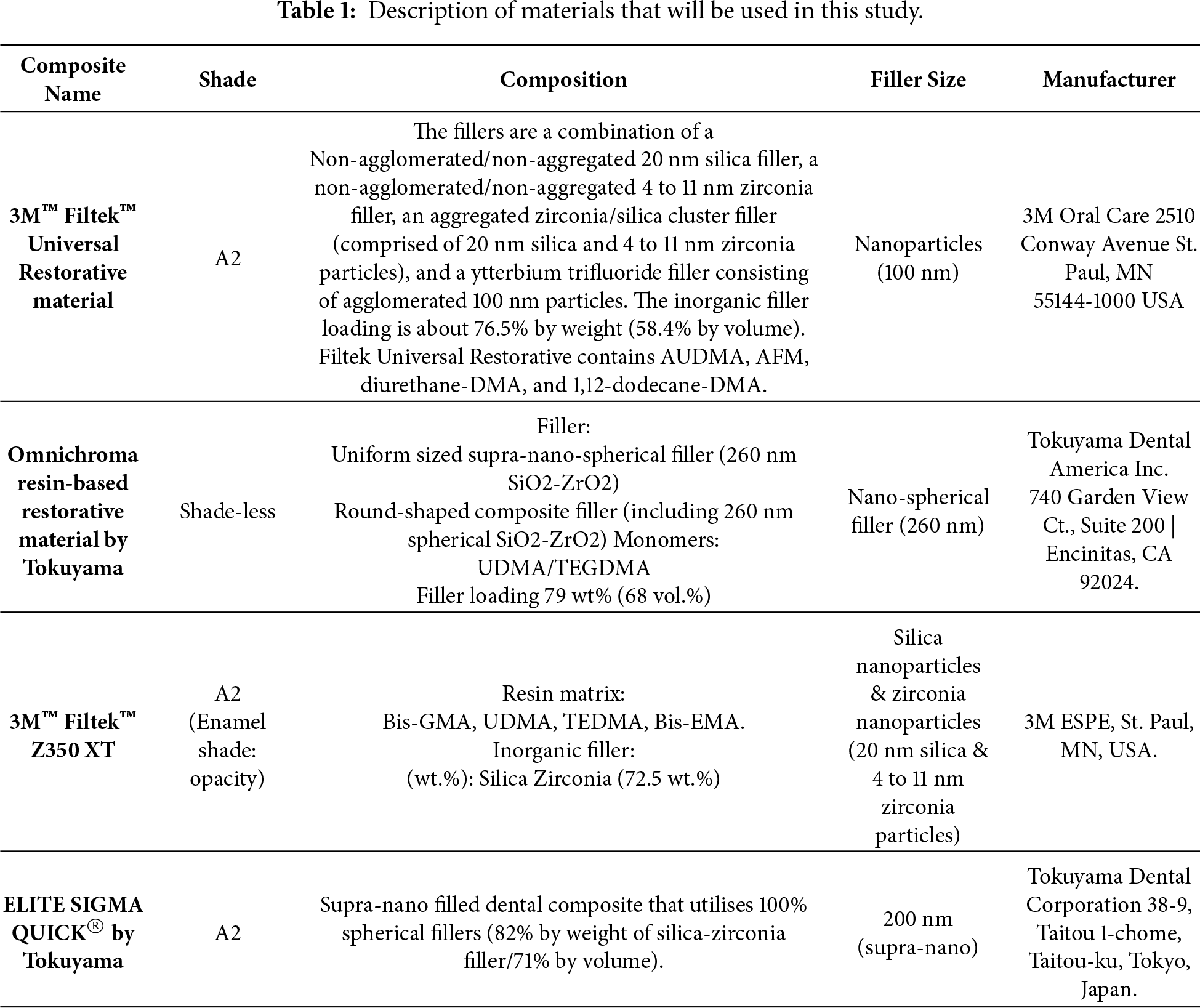
All specimens were stored in distilled water at 37°C for 24 h prior to baseline measurements to ensure complete polymerisation. During the immersion period, the pH of each staining solution (cola, coffee, and distilled water) was measured at baseline and at each weekly renewal using a calibrated digital pH meter to confirm consistency and detect any deviations. Solutions were replaced every seven days to maintain stable pH conditions. Specimens were randomly assigned to their respective groups and staining-solution subgroups using a computer-generated randomization sequence to minimise allocation bias [16].
To evaluate surface roughness and effect of polishing after immersion in common daily consumed beverages overtime. Each of the 4 composite materials was subdivided into 3 groups of solution to end up with 120 specimens. Therefore, there were (n = 10) per group (Table 2).
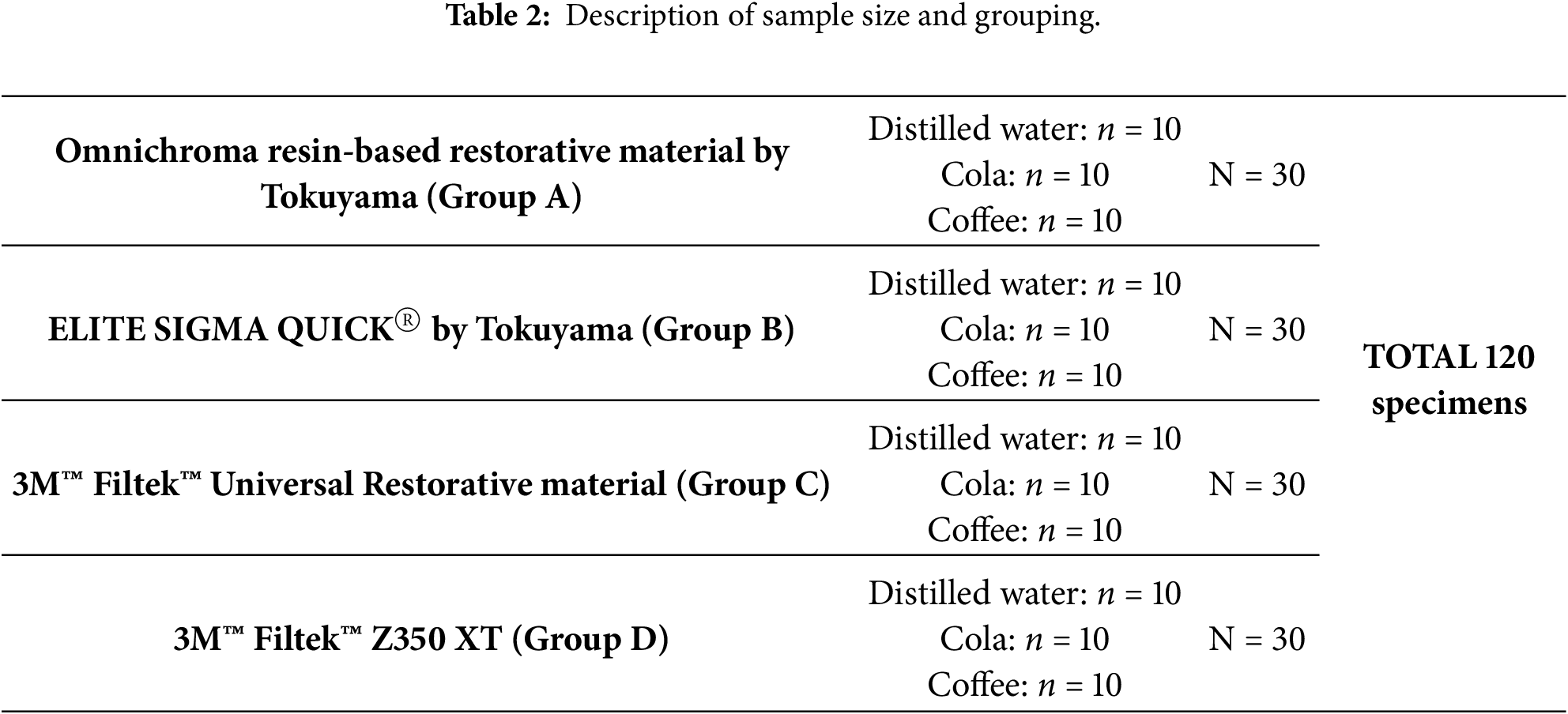
The sample size (n = 10 per subgroup) was determined based on feasibility considerations and consistency with comparable in-vitro composite surface roughness studies reported in the literature, rather than on a priori power calculation.
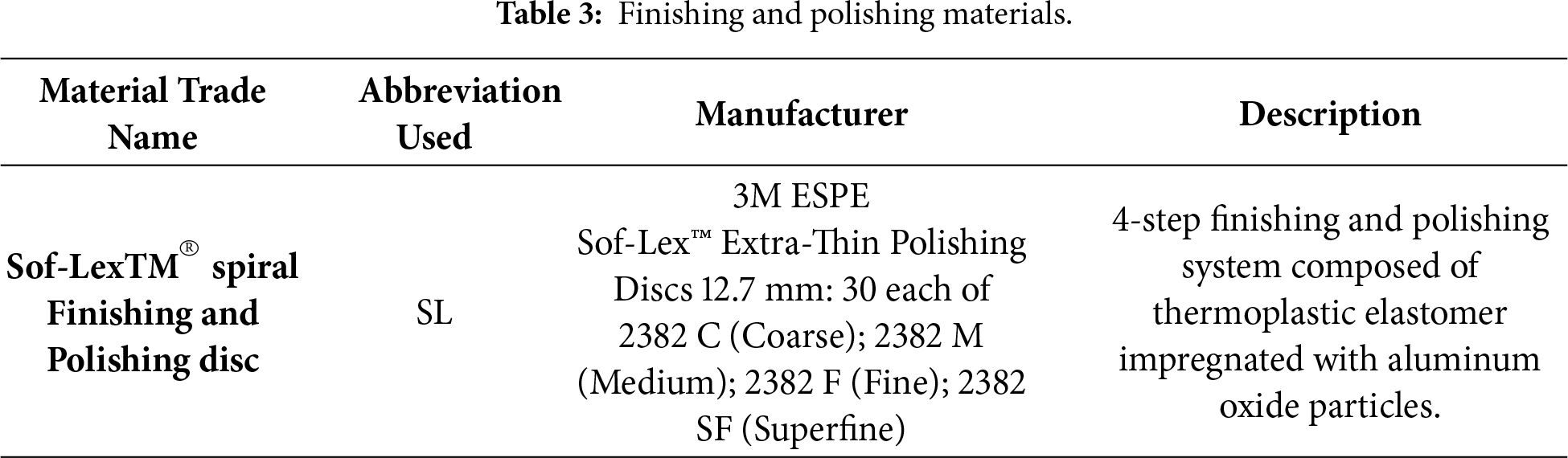
Specimen preparation started with using cylindrical standard Teflon mold (12.0 mm diameter and 2.0 mm in thickness) the material was packed and compressed within the mold, covered by mylar strip (Dental Mylar Strips, Dent America Inc., City of Industry, CA, USA), and a microscopic glass slide (Shandon™ Polysine Slides, Thermo Scientific, Kalamazoo, MI, USA) was positioned on the top to equalize the material within the mold. And then, each specimen was light cured for 20 s using an LED curing light, position of light tip 8 mm away from specimen (Elipar S10, 3M ESPE, Seefeld, with a center wavelength of 455 ± 10 nm, Germany). Each specimen was light-cured for 20 s using an LED curing unit (Elipar S10, 3M ESPE, Seefeld, Germany; center wavelength 455 ± 10 nm). The curing tip was positioned at a standardized distance of 8 mm from the specimen surface, and the light intensity was maintained at 1200 mW/cm2 according to the manufacturer’s specifications. Moreover, every specimen went through finishing using #600, #800, #1200 grit silicon carbide papers (standard finished surface) with tap water. Also, Polishing was conducted with Soflex system (Sof-Lex™ Extra-Thin Polishing Discs 12.7 mm: 30 each of 2382 C (Coarse); 2382 M (Medium); 2382 F (Fine); 2382 SF (Superfine), 3M ESPE, St. Paul, USA) using a low-speed hand piece according to the manufacturer’s instructions instantly after finishing, to mimic the clinical situation [16] (Table 3).
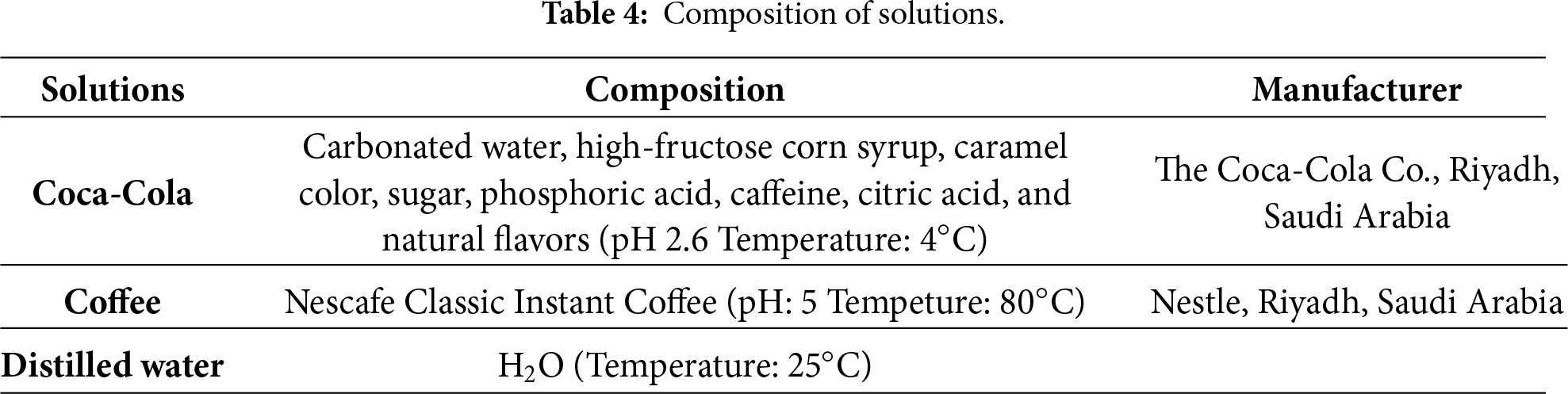
After that, all specimens were then kept in distilled water (pH 6.8) at room temperature under (37°C) and without direct contact to sunlight. At that point, specimens from each material were subdivided into 4 groups with 30 each to be immersed into coloring solutions. The specimen was immersed into 3 staining solutions containing (100-mL) in three different containers represented in: distilled water as a control (pH 6.8), coffee (Nestlé, Riyadh, Saudi Arabia) and soda (The Coca-Cola Co., Riyadh, Saudi Arabia) along with all staining solutions was renewed weekly [16] (Fig. 1 and Table 4).
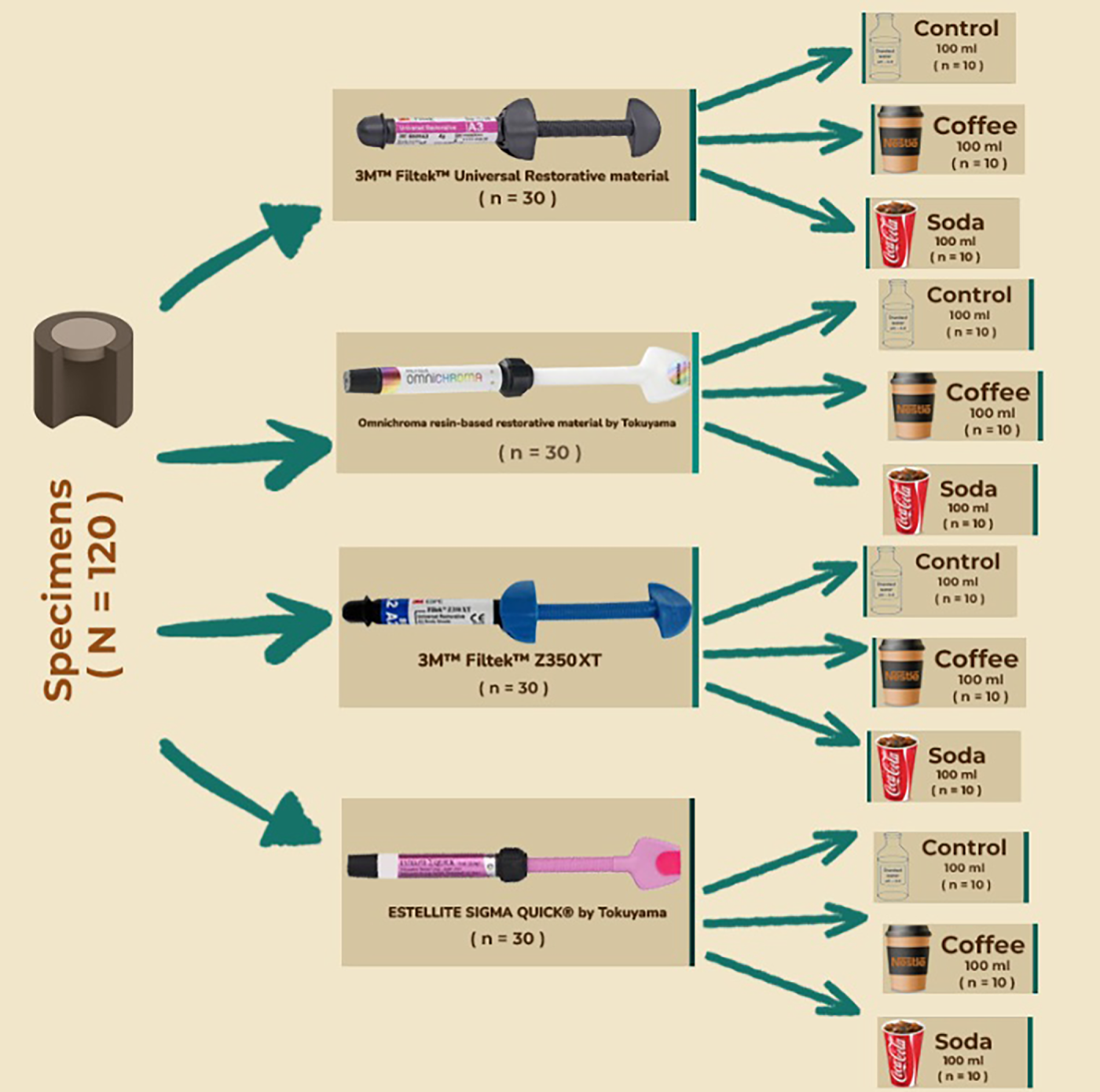
Figure 1: Detailed description about the distribution of sample size.
2.2 Immersion Media and Rationale for Temperature Conditions
Three immersion solutions were used: distilled water (control), cola, and coffee. The temperature of each solution was intentionally selected to simulate typical real-world consumption patterns and to reflect the different physicochemical mechanisms through which beverages may affect composite degradation.
• Cola was maintained at 4°C, representing common refrigerated serving conditions.
• Coffee was tested at 80°C, reflecting standard consumption temperature and to evaluate the synergistic effect of heat and acidity on composite surface integrity.
• Distilled water remained at 25°C (room temperature), representing a baseline medium for assessing hydrolytic changes.
Because temperature is known to influence polymer matrix softening, water sorption, and filler–matrix interface stability, these differences were preserved intentionally to model clinically relevant thermal exposures [16].
2.3 Temperature Maintenance Protocol
• Coffee solutions (80°C) were maintained continuously using a thermostatically controlled water bath throughout the immersion period.
• Cola (4°C) was stored in a dedicated temperature-controlled refrigeration unit and transferred to the immersion containers immediately before use.
• Distilled water (25°C) was kept at constant room temperature in a climate-controlled laboratory environment (22°C–25°C).
All immersion solutions were renewed weekly to maintain consistent temperature, pH, and chemical composition [16].
Distilled water was used to record the baseline measurements of surface roughness after performing the finishing and polishing procedure as the first measurement (T0). Baseline surface roughness (T0) was recorded immediately after the initial finishing and polishing procedures. The specimens were then immersed in their assigned staining solutions. At one week (T1) and one month (T2), specimens were briefly removed from the solutions, rinsed with distilled water, blotted dry, and measured for surface roughness. After each measurement, the same specimens were returned to their assigned solutions to continue the immersion protocol. This sequential measurement ensured that the same specimen contributed to all time-point data within its group (Fig. 2).
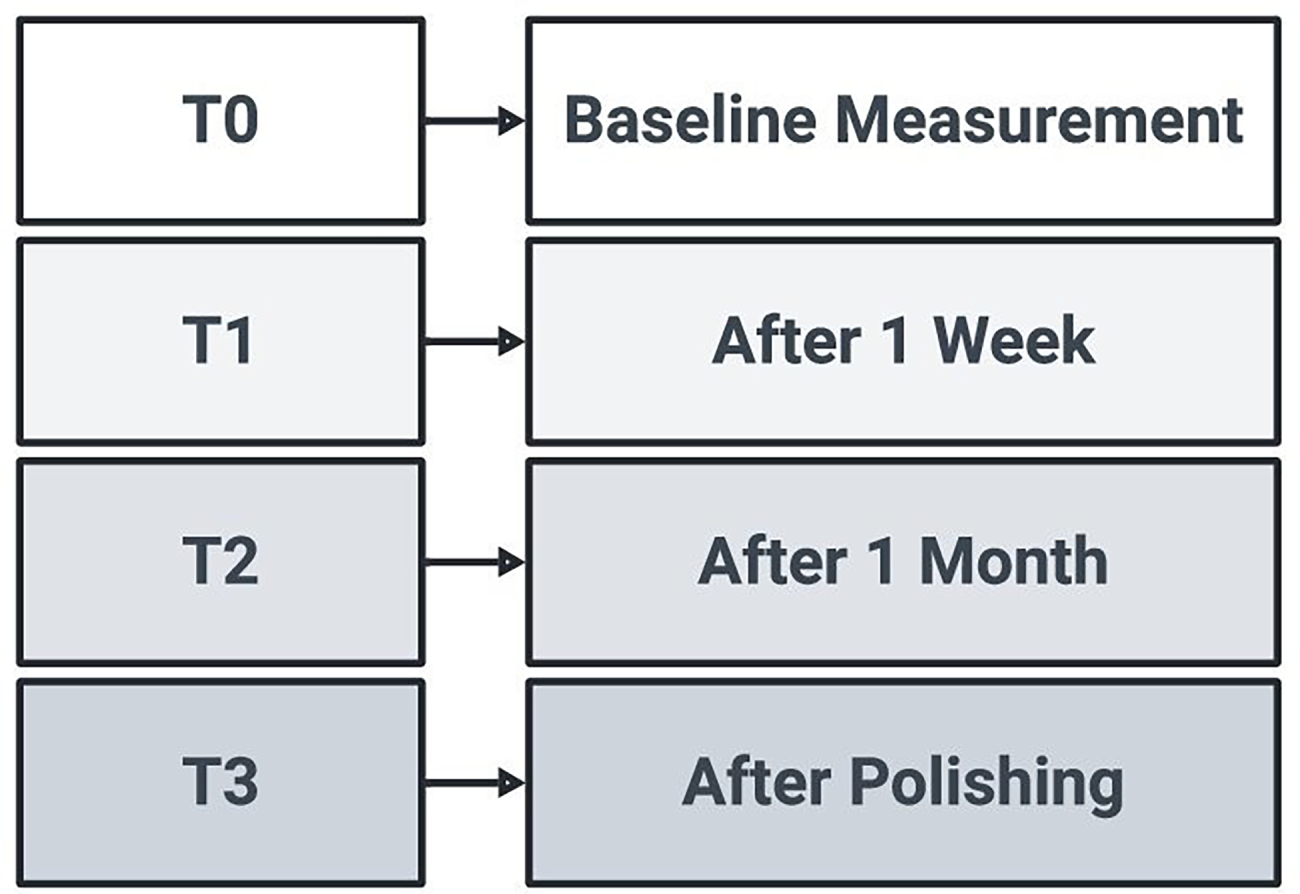
Figure 2: Surface Roughness measurements at 1 week (T1), 1 month (T2), and after polishing (T3).
The T3 (after polishing) measurement represented a re-polishing procedure performed after completion of the one-month immersion period. After T2 measurements, all specimens underwent a second polishing using the same Sof-Lex system and standardised protocol used at baseline. This T3 step was designed to evaluate whether repolishing could reverse immersion-induced surface changes. The final surface roughness values were recorded immediately after this post-immersion polishing.
Eventually, the Surface roughness measurement of each surface from the specimen was evaluated using a 3D optical noncontact surface profiler (Contour Gt-K1 optical profiler, Bruker Nano, Inc., Tucson, AZ, USA) in reference to non-contact scanning interferometry. The fair standard camera has a magnification of 5×. The profile meter scanned area was situated at the center of each surface (3 measurements in different directions), about 1.3 × 1.0 mm2 for image transfer. A Multi-Core Processor with Vision 64TM Software for Accelerated 3D Surface measurement and analyses used (Bruker Nano Surface Division, Inc., Tucson, AZ, USA) (Fig. 3).
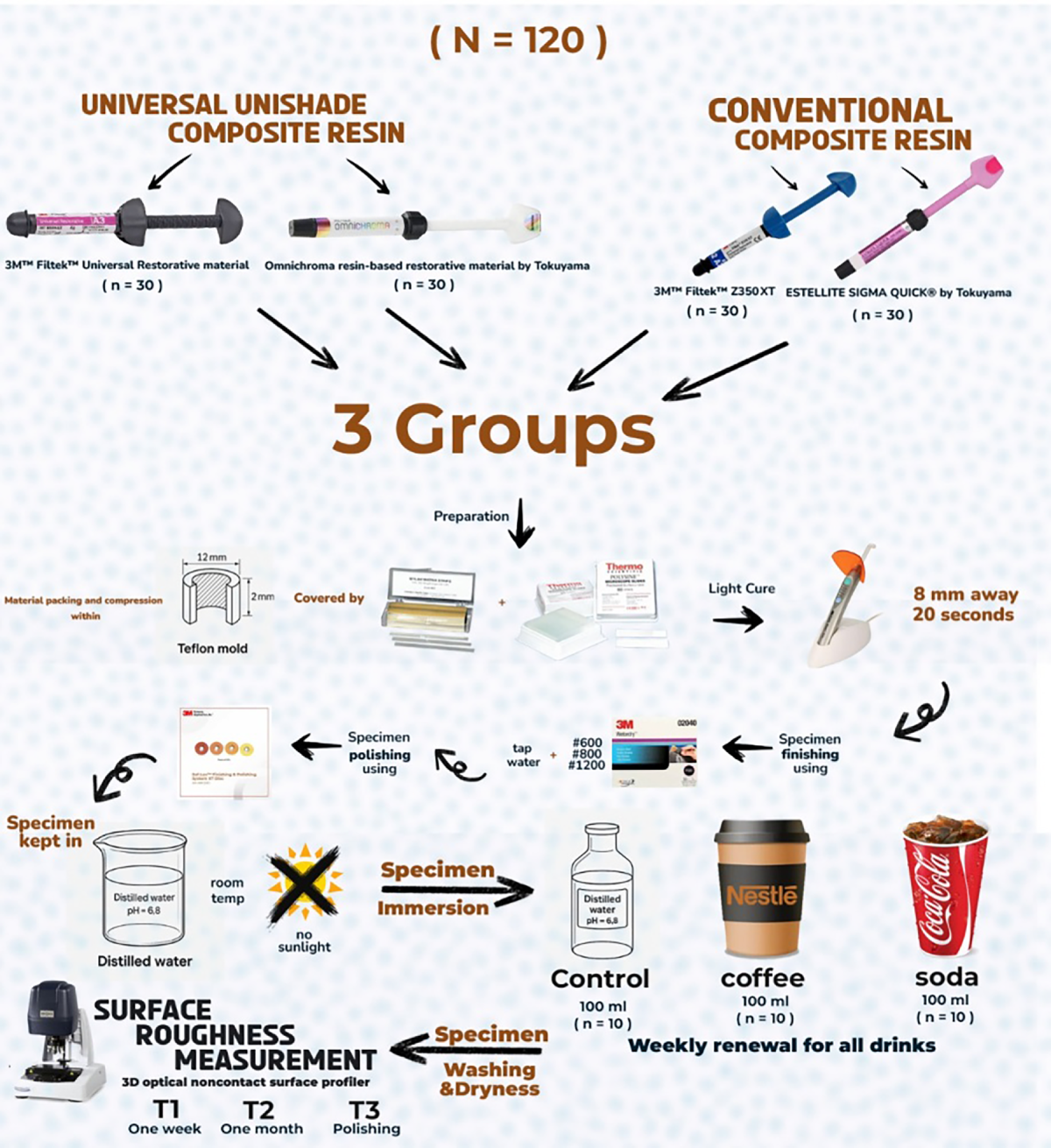
Figure 3: Schematic illustration of composite groups distributed over different staining solutions.
Data were coded and entered into the Statistical Package for the Social Sciences (SPSS) version 25. Quantitative variables were summarised using medians as indices of central tendency. Range as a measure of dispersion. The Kolmogorov-Smirnov test was used to determine the distribution of the variables. The Kruskal-Wallis test was used to compare more than two groups in erratically distributed variables. The Mann–Whitney test was employed for pairwise comparisons following significant Kruskal–Wallis results; however, a formal correction for multiple comparisons was not applied.
Table 5 Showed comparison between subgroups (Distilled water vs. Cola vs. Coffee) in main groups as regards surface roughness; Firstly group A; there is no statistically sig as regards surface roughness in all-time episodes {baseline, after one week, after one month and after polishing} as {(H = 0.45, p = 0.79), (H = 0.133, p = 0.94), (H = 0.2, p = 0.9) and (H = 2.3, p = 0.32), respectively}.
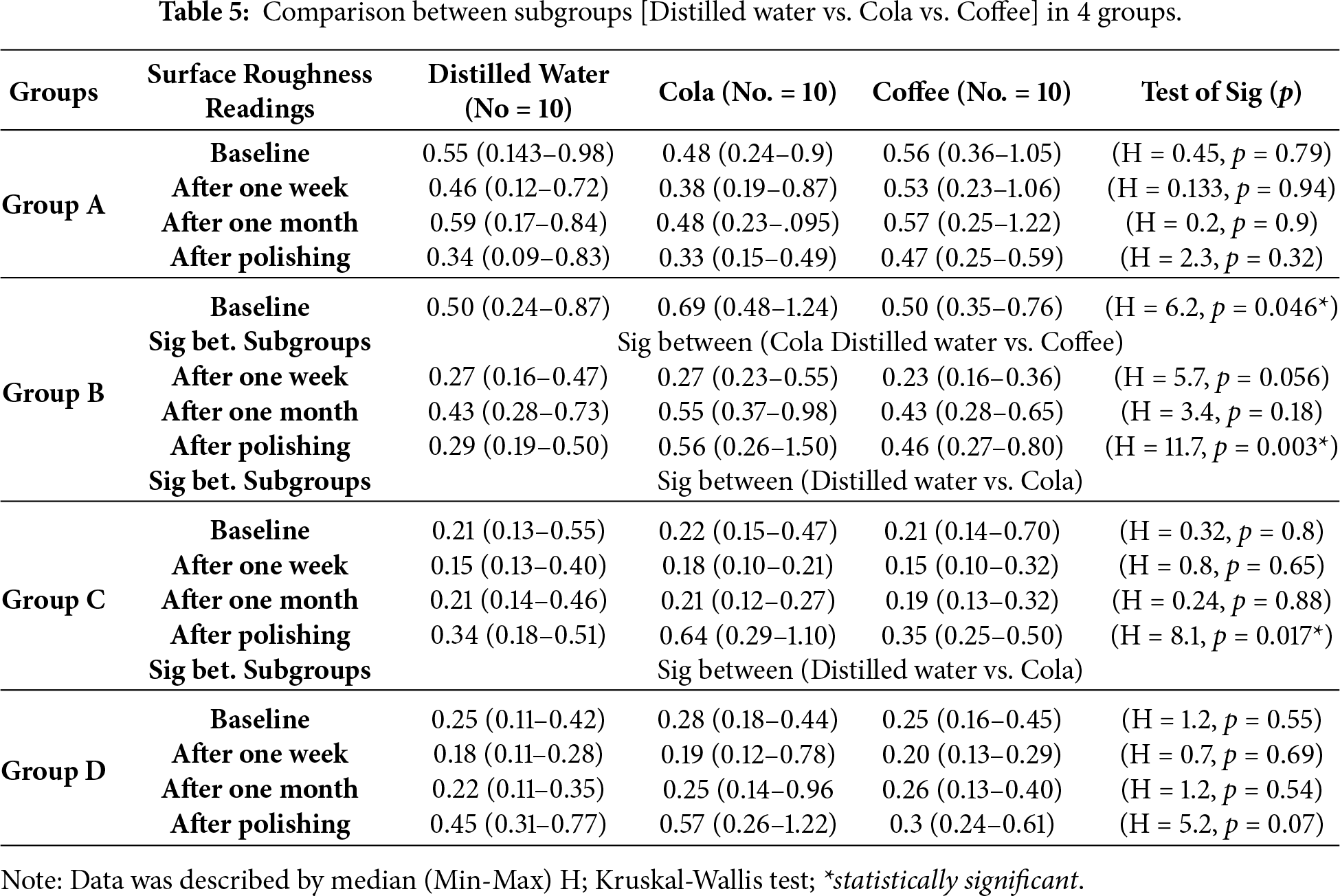
Secondly group B; there is only statistically sig as regards surface roughness in {Baseline and after polishing} as {(H = 6.2, p = 0.046) and (H = 11.7, p = 0.003), respectively} by using pair wise comparison using Mann-Whitney test confirmed that sig detected between (Cola vs. (Distilled water vs. Coffee)) in baseline while significance detected between (Distilled water vs. Cola) after polishing.
Thirdly in group C; there is only statistically significant as regards Surface roughness after polishing as (H = 8.1, p = 0.017), by using pair wise comparison significance detected between (Distilled water vs. Cola).
Finally in group D there is no statistically significant as regards surface roughness in all-time episodes {baseline, after one week, after one month and after polishing} as p value > 0.05.
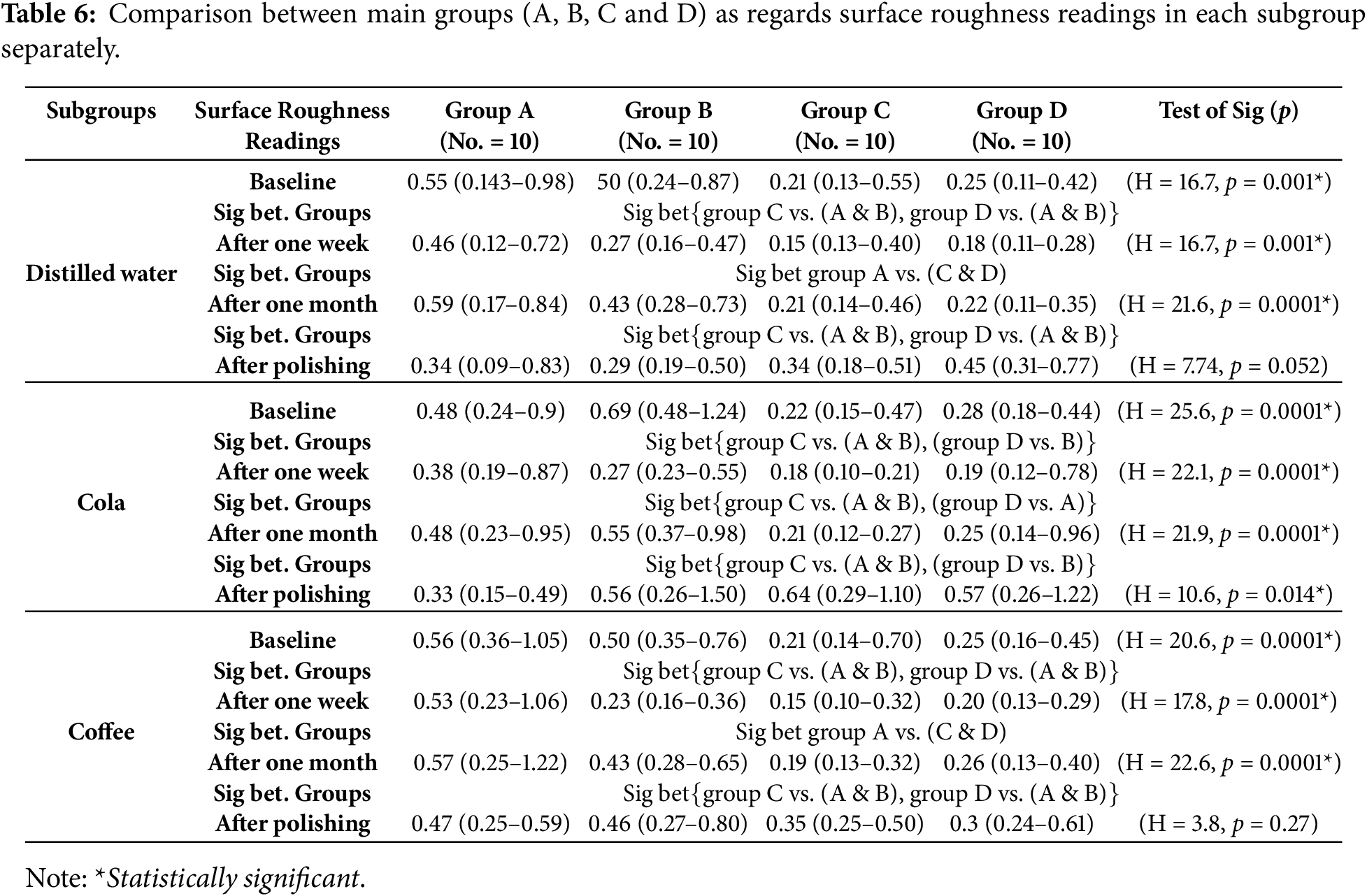
Table 6 Showed a comparison between main groups (A, B, C and D) as regards surface roughness readings in each subgroup separately. As in distilled water by comparing surface roughness readings between groups in {baseline, after one week, after one month and after polishing} the significance detected only in {baseline, after one week and after one month} as (H = 16.7, p = 0.001), (H = 16.7, p = 0.001) and (H = 21.6, p = 0.0001) while after polishing there is no significance detected as (H = 7.74, p = 0.052). In cola significance detected in all time episodes {baseline, after one week, after one month and after polishing} as {(H = 25.6, p = 0.0001), (H = 22.1, p = 0.0001), (H = 21.9, p = 0.0001) and (H = 10.6, p = 0.014), respectively. In coffee significance was detected only in the following episodes {baseline, after one week and after one month} as {(H = 20.6, p = 0.0001), (H = 17.8, p = 0.0001) and (H = 22.6, p = 0.0001)}, respectively, while after polishing, there is no significance detected as (H = 3.8, p = 0.27). Pair-wise comparison was done to detect significance between groups as mentioned in Table 6. Across all materials, cola consistently produced the highest roughness changes, many of which exceeded the 0.3 μm clinical threshold.
This in-vitro study compared surface roughness changes of two Unishade composites and two conventional multi-shade composites following immersion in distilled water, cola, and coffee, and evaluated whether repolishing could restore surface smoothness. The results demonstrated that Unishade composites generally maintained more stable roughness profiles across immersion periods, whereas conventional composites showed greater variability, particularly under cola exposure. This pattern is consistent with previous evidence showing that beverage acidity and composite formulation strongly influence surface degradation [6,11]. Repolishing reduced roughness values across all groups, supporting the concept that finishing maintenance can partially reverse immersion-induced surface deterioration [10,14].
4.2 Agreement with Previous Literature
The relatively favorable performance of Unishade materials aligns with recent studies reporting improved polish retention and smoother surface properties in universal single-shade composites compared with conventional materials [17]. In vitro investigations evaluating newly introduced monoshade composites have similarly shown that coffee and acidic beverages can increase surface roughness, though the magnitude varies by product chemistry and filler design [18].
Furthermore, the broader composite literature supports that nanofilled and nano-clustered materials often demonstrate better surface stability after polishing than composites with more heterogeneous filler distributions. These findings reinforce that filler architecture and filler–matrix coupling play a central role in resisting chemical and thermal challenges over time [19].
4.3 Mechanistic Interpretation: Filler Architecture and Resin Matrix Chemistry
Differences in roughness profiles among composite groups can be explained by variations in filler morphology and resin matrix composition. Unishade composites often incorporate uniform spherical or supra-nano fillers, which can generate smoother surfaces after polishing and may reduce susceptibility to filler plucking during chemical degradation. This structural uniformity is also fundamental to the optical blending mechanism used in many single-shade systems [15,17].
In contrast, conventional multi-shade composites frequently contain mixed filler sizes and less uniform filler distributions, which may increase inter-filler spacing and predispose the surface to micro-fracture or particle loss following acidic exposure. Resin matrix chemistry also contributes substantially to degradation. Hydrophilic monomers and less cross-linked matrices may exhibit higher water sorption, leading to resin plasticization and weakening of the filler–matrix interface. These mechanisms are well established and remain relevant for contemporary resin composites exposed to prolonged chemical challenge [20].
4.4 Influence of Immersion Media: Cola, Coffee, and Distilled Water
The immersion solutions produced distinct effects on composite roughness. Distilled water resulted in minimal roughness changes, supporting the concept that hydrolytic degradation in neutral environments is comparatively slow and governed mainly by resin hydrophilicity and coupling stability [21].
Cola produced the greatest roughness changes across all materials. This finding is consistent with evidence that low-pH beverages accelerate resin matrix softening, increase filler–matrix debonding, and promote surface irregularity. The erosive potential of cola is clinically relevant, as roughened surfaces are more prone to plaque retention and extrinsic staining [22].
Coffee immersion produced intermediate effects. Although coffee is less acidic than cola, its chromogenic nature and exposure at elevated temperature may contribute to resin softening and pigment diffusion, thereby increasing surface irregularity over time. This interpretation is supported by evidence showing that beverage temperature significantly influences surface roughness and microhardness, particularly in mono shade composites [22,23].
4.5 Repolishing: Clinical Implications and Restoration Maintenance
A clinically important finding of this study is that repolishing substantially reduced surface roughness across all groups, although the degree of improvement varied between materials. This observation supports systematic evidence indicating that polishing systems significantly influence final surface smoothness, gloss, and long-term surface integrity of resin composites [24].
Chairside repolishing is a conservative strategy commonly used to manage surface staining, dullness, and early surface deterioration, especially in patients with frequent intake of acidic beverages. However, the observation that some materials did not fully return to baseline suggests that degradation may extend beyond the superficial layer, particularly when filler–matrix debonding has occurred. Therefore, repolishing should be considered beneficial, but not universally restorative, and composite selection remains important for long-term aesthetic performance [25].
4.6 Role of Aging and Surface Degradation over Time
Surface roughness changes are influenced not only by staining solutions but also by aging-related processes such as water sorption, resin plasticization, and progressive filler–matrix fatigue. Aging and bleaching procedures have also been shown to alter surface roughness in modern single-shade composites, highlighting that surface stability is multifactorial and material dependent [26].
Additionally, comparative studies between single-shade and multi-shade composites have reported variability in surface roughness and color stability under staining challenges, reinforcing the need for product-specific evaluation [27]. The present study adds to this evidence by including both Unishade and conventional composites under standardized immersion conditions and incorporating repolishing as a clinically relevant post-exposure step.
Recent investigations further support the relationship between dietary exposure and surface degradation of resin-based restorative materials [28]. A recent in-vitro study evaluating resin composites immersed in commonly consumed beverages demonstrated measurable increases in surface roughness and changes in optical properties after prolonged exposure to acidic drinks and fruit-based beverages, suggesting that beverage composition and acidity play a crucial role in composite surface stability [29]. Similarly, other contemporary investigations examining food-simulating liquids and acidic environments have reported that chemical exposure may alter the resin matrix, disrupt filler–matrix interactions, and increase surface irregularity, thereby enhancing biofilm adhesion and staining susceptibility [30]. Recent experimental studies also indicate that modern restorative materials with nanostructured filler systems may exhibit improved resistance to surface degradation compared with earlier composite formulations, although variability between products remains considerable. These recent findings reinforce the clinical relevance of evaluating the behavior of different composite materials under simulated dietary challenges and support the need for ongoing investigations into the long-term durability of contemporary restorative systems [31].
4.7 Limitations and Future Directions
This study was conducted under controlled in-vitro conditions and cannot fully replicate the complexity of the oral environment, including salivary buffering, fluctuating pH, enzymatic activity, pellicle formation, tooth brushing abrasion, and occlusal loading. Continuous immersion may not perfectly represent real clinical exposure patterns, which are intermittent and influenced by oral clearance.
The sample size (n = 10 per subgroup) was based on feasibility and consistency with comparable in-vitro studies rather than on an a priori power calculation. Non-parametric tests were used appropriately; however, pairwise comparisons were performed without formal correction for multiple testing, which may increase type I error risk. Future investigations should incorporate thermocycling, simulated brushing, longer aging periods, and additional polishing systems to strengthen clinical extrapolation and improve evidence-based recommendations. Well-designed clinical studies are also required to confirm whether the superior surface stability observed for Unishade composites translates into improved long-term clinical performance.
Within the limitations of this study, the following was concluded:
Unishade composites demonstrated greater surface stability under the tested conditions; however, material-specific variability was still observed, particularly under acidic challenge and following repolishing.
The surface roughness of composite restorations was affected by the polishing procedure used. The findings emphasise the importance of material selection and polishing processes in producing optimal results, which will eventually lead to increased patient satisfaction and successful treatment.
Acknowledgement: The authors would like to thank the Deanship of Scientific Research, Prince Sattam bin Abdulaziz University, Al-Kharj, Saudi Arabia, for their support in this study.
Funding Statement: The authors received no specific funding.
Author Contributions: Conceptualization: Sultan Binalrimal, Abdullah M. Alshehri, and Mohammed Mustafa; methodology: Sultan Binalrimal and Mohammed Mustafa; validation: Ali Robaian Alqahtani, Rasha Alharthi, and Basil Almutairi; formal analysis: Ali Robaian Alqahtani; investigation: Sultan Binalrimal; resources: Rasha Alharthi; data curation: Basil Almutairi; writing—original draft preparation: Sultan Binalrimal and Mohammed Mustafa; writing—review and editing: Abdullah M. Alshehri and Ali Robaian Alqahtani; visualization: Rasha Alharthi and Basil Almutairi; supervision: Abdullah M. Alshehri; project administration: Mohammed Mustafa. All authors reviewed and approved the final version of the manuscript.
Availability of Data and Materials: The data that support the findings of this study are available from the corresponding authors upon reasonable request.
Ethics Approval: Not applicable.
Conflicts of Interest: The authors declare no conflicts of interest.
Nomenclature
| AFM | Atomic Force Microscopy |
| SEM | Scanning Electron Microscopy |
| Ra | Arithmetic mean surface roughness |
| T0 | Baseline (after finishing and polishing) |
| T1 | 1-week immersion time point |
| T2 | 1-month immersion time point |
| T3 | After repolishing (post-immersion) |
| LED | Light Emitting Diode |
| CAD/CAM | Computer-Aided Design/Computer-Aided Manufacturing |
| Bis-GMA | Bisphenol A-glycidyl methacrylate |
| UDMA | Urethane dimethacrylate |
| TEGDMA | Triethylene glycol dimethacrylate |
| SPSS | Statistical Package for the Social Sciences |
| IRB | Institutional Review Board |
References
1. Gupta R, Bhatheja A, John AG, Ramchandran M, Raina AA, Behera A, et al. Effect of beverages on color stability of resin composites: an in vitro study. Int J Appl Dent Sci. 2019;5(2):92–5. doi:10.4103/0976-433x.121739. [Google Scholar] [CrossRef]
2. Skorulska A, Piszko P, Rybak Z, Szymonowicz M, Dobrzyński M. Review on polymer, ceramic and composite materials for CAD/CAM indirect restorations in dentistry-application, mechanical characteristics and comparison. Materials. 2021;14(7):1592. doi:10.3390/ma14071592. [Google Scholar] [PubMed] [CrossRef]
3. Macedo MGFP, Volpato CAM, Henriques BAPC, Vaz PCS, Silva FS, Silva CFCL. Color stability of a bis-acryl composite resin subjected to polishing, thermocycling, intercalated baths, and immersion in different beverages. J Esthet Restor Dent. 2018;30(5):449–56. doi:10.1111/jerd.12404. [Google Scholar] [PubMed] [CrossRef]
4. Karaman E, Tuncer D, Firat E, Ozdemir OS, Karahan S. Influence of different staining beverages on color stability, surface roughness and microhardness of silorane and methacrylate-based composite resins. J Contemp Dent Pract. 2014;15(3):319–25. doi:10.5005/jp-journals-10024-1536. [Google Scholar] [PubMed] [CrossRef]
5. Al-Shami AM, Ali Alshami M, Al-Kholani AI, Al-Sayaghi AM. Color stability of nanohybrid and microhybrid composites after immersion in common coloring beverages at different times: a laboratory study. BDJ Open. 2023;9(1):39. doi:10.1038/s41405-023-00161-9. [Google Scholar] [PubMed] [CrossRef]
6. Ersöz B, Karaoğlanoğlu S, Oktay EA, Aydin N. Resistance of single-shade composites to discoloration. Oper Dent. 2022;47(6):686–92. doi:10.2341/21-156-L. [Google Scholar] [PubMed] [CrossRef]
7. Guler S, Unal M. The evaluation of color and surface roughness changes in resin based restorative materials with different contents after waiting in various liquids: an SEM and AFM study. Microsc Res Tech. 2018;81(12):1422–33. doi:10.1002/jemt.23104. [Google Scholar] [PubMed] [CrossRef]
8. Aydın N, Topçu FT, Karaoğlanoğlu S, Oktay EA, Erdemir U. Effect of finishing and polishing systems on the surface roughness and color change of composite resins. J Clin Exp Dent. 2021;13(5):e446–54. doi:10.4317/jced.58011. [Google Scholar] [PubMed] [CrossRef]
9. Ortengren U, Wellendorf H, Karlsson S, Ruyter IE. Water sorption and solubility of dental composites and adhesives. Dent Mater. 2001;17(3):229–36. doi:10.1046/j.1365-2842.2001.00802.x. [Google Scholar] [PubMed] [CrossRef]
10. Jaramillo-Cartagena R, López-Galeano EJ, Latorre-Correa F, Agudelo-Suárez AA. Effect of polishing systems on the surface roughness of nano-hybrid and nano-filling composite resins: a systematic review. Dent J. 2021;9(8):95. doi:10.3390/dj9080095. [Google Scholar] [PubMed] [CrossRef]
11. Hamouda IM. Effects of various beverages on hardness, roughness, and solubility of esthetic restorative materials. J Esthet Restor Dent. 2011;23(5):315–22. doi:10.1111/j.1708-8240.2011.00453.x. [Google Scholar] [PubMed] [CrossRef]
12. El-Rashidy AA, Shaalan O, Abdelraouf RM, Habib NA. Effect of immersion and thermocycling in different beverages on the surface roughness of single- and multi-shade resin composites. BMC Oral Health. 2023;23(1):367. doi:10.1186/s12903-023-03069-w. [Google Scholar] [PubMed] [CrossRef]
13. Al-Haj Ali SN, Alsulaim HN, Albarrak MI, Farah RI. Spectrophotometric comparison of color stability of microhybrid and nanocomposites following exposure to common soft drinks among adolescents: an in vitro study. Eur Arch Paediatr Dent. 2021;22(4):675–83. doi:10.1007/s40368-021-00605-6. [Google Scholar] [PubMed] [CrossRef]
14. Sideridou ID, Karabela MM, Vouvoudi E. Water sorption characteristics of dental resin composites based on Bis-GMA, UDMA, TEGDMA and their blends. J Biomed Mater Res B Appl Biomater. 2004;68(1):135–41. [Google Scholar]
15. Ilie N, Hickel R. Investigations on mechanical behaviour of dental composites. Clin Oral Investig. 2009;13(4):427–38. doi:10.1007/s00784-009-0258-4. [Google Scholar] [PubMed] [CrossRef]
16. Alshehri A, Binalrimal S, Alrumi L, Alhabeeb YY, Murshid LE, Alhalabi F, et al. Comparison of color stability between single-shade and conventional composite resins following immersion in staining solutions of coffee, Cola, and distilled water. Med Sci Monit. 2025;31:e946784. doi:10.12659/msm.946784. [Google Scholar] [PubMed] [CrossRef]
17. Alharbi G, Al Nahedh HN, Al-Saud LM, Shono N, Maawadh A. Effect of different finishing and polishing systems on surface properties of universal single shade resin-based composites. BMC Oral Health. 2024;24(1):197. doi:10.1186/s12903-024-03958-8. [Google Scholar] [PubMed] [CrossRef]
18. Checchi V, Forabosco E, Della Casa G, Kaleci S, Giannetti L, Generali L, et al. Color stability assessment of single- and multi-shade composites following immersion in staining food substances. Dent J. 2024;12(9):285. doi:10.3390/dj12090285. [Google Scholar] [PubMed] [CrossRef]
19. Azmy E, Al-Kholy MRZ, Fattouh M, Kenawi LMM, Helal MA. Impact of nanoparticles additions on the strength of dental composite resin. Int J Biomater. 2022;2022:1165431. doi:10.1155/2022/1165431. [Google Scholar] [PubMed] [CrossRef]
20. Hajdu AI, Dumitrescu R, Balean O, Jumanca D, Sava-Rosianu R, Floare L, et al. Microscopic and color changes in direct dental restorative composite resins upon immersion in beverages: characterization by scanning electron microscopy (SEM) and energy-dispersive X-ray spectroscopy EDS. Biomedicines. 2024;12(8):1740. doi:10.3390/biomedicines12081740. [Google Scholar] [PubMed] [CrossRef]
21. Al-Dulaijan YA, AlGhamdi MA, Azmy E, Al-Kholy MRZ, Almulhim KS, Helal MA. Color stability of nanoparticles-modified dental resin-based composites. Appl Sci. 2023;13(6):3870. doi:10.3390/app13063870. [Google Scholar] [CrossRef]
22. AlSheikh R, Almajed Y, Al Eid F, Zainaldeen S, Ahmad Siddiqui I, Gaffar B. The effect of beverage temperature on the surface roughness, microhardness, and color stability of the monoshade composite resin: an in vitro study. Saudi Dent J. 2024;36(5):740–4. doi:10.1016/j.sdentj.2024.03.002. [Google Scholar] [PubMed] [CrossRef]
23. Tuncer D, Karaman E, Firat E. Does the temperature of beverages affect the surface roughness, hardness, and color stability of a composite resin? Eur J Dent. 2013;7(2):165–71. doi:10.4103/1305-7456.110161. [Google Scholar] [PubMed] [CrossRef]
24. de Oliveira AG, Santos Rocha R, da Silva Spinola M, Batista GR, Bresciani E, Caneppele TMF. Surface smoothness of resin composites after polishing-a systematic review and network meta-analysis of in vitro studies. Eur J Oral Sci. 2023;131(2):e12921. doi:10.1111/eos.12921. [Google Scholar] [PubMed] [CrossRef]
25. Alex A, Venkatesh V. Comparative evaluation of surface roughness and color stability between single-shade composite and multi-shade composite: an in vitro study. Cureus. 2024;16(7):e65396. doi:10.7759/cureus.65396. [Google Scholar] [PubMed] [CrossRef]
26. Alshehri A, Alhalabi F, Mustafa M, Awad MM, Alqhtani M, Almutairi M, et al. Effects of accelerated aging on color stability and surface roughness of a biomimetic composite: an in vitro study. Biomimetics. 2022;7(4):158. doi:10.3390/biomimetics7040158. [Google Scholar] [PubMed] [CrossRef]
27. Chen S, Zhu J, Yu M, Jin C, Huang C. Effect of aging and bleaching on the color stability and surface roughness of a recently introduced single-shade composite resin. J Dent. 2024;143(2):104917. doi:10.1016/j.jdent.2024.104917. [Google Scholar] [PubMed] [CrossRef]
28. Cızıroğlu N, Hartavi D, Sasany R, Akburak I, Palaz CH, Mosaddad SA. Optical and surface characteristics of additively manufactured resin composite following immersion in functional beverages: a layer thickness-based comparison. Odontology. 2025. doi:10.1007/s10266-025-01266-3. [Google Scholar] [PubMed] [CrossRef]
29. Abd-Elfattah HY, Elawsya ME, ElEmbaby AE. Effect of immersion in different media on the color stability, surface roughness, and microhardness of flowable nanohybrid resin composites. BMC Oral Health. 2026;26(1):252. doi:10.1186/s12903-025-07555-1. [Google Scholar] [PubMed] [CrossRef]
30. Varsha P, Chauhan R. A comparative evaluation of change in surface roughness of aesthetic resin composite restorative material on exposure to different commonly consumed beverages: an in vitro study. J Pharm Bioallied Sci. 2025;17(Suppl 1):S535–7. doi:10.4103/jpbs.jpbs_1956_24. [Google Scholar] [PubMed] [CrossRef]
31. Sahin MA, Yenidunya OG, Kaleli I, Atca M. Surface roughness and biofilm formation on tooth-colored restorative materials immersed in food-simulating liquids. BMC Oral Health. 2025;25(1):1543. doi:10.1186/s12903-025-06847-w. [Google Scholar] [PubMed] [CrossRef]
Cite This Article
 Copyright © 2026 The Author(s). Published by Tech Science Press.
This work is licensed under a Creative Commons Attribution 4.0 International License , which permits unrestricted use, distribution, and reproduction in any medium, provided the original work is properly cited.
 Downloads
 Citation Tools
