
 Login
Login Register
 Submit a Paper
 Propose a Special lssue
 Open Access
ARTICLE
Segmental Dynamics, Ion-Associated Relaxation, and Ion Transport in Cellulose-Based Gel Polymer Electrolytes Revealed by Broadband Dielectric Spectroscopy
1 Department of Applied Chemistry, School of Materials and Chemistry, Anhui Agricultural University, Hefei, China
2 School of Light Industry Science and Engineering, Beijing Technology and Business University, Beijing, China
* Corresponding Authors: Wei Zhou. Email: ; Zhen Chen. Email:
Journal of Polymer Materials 2026, 43(3), 16 https://doi.org/10.32604/jpm.2026.087360
Received 15 June 2026; Accepted 14 September 2026; Issue published 24 September 2026
 View Full Text
 Download PDF
Abstract
Cellulose-based gel polymer electrolytes (GPEs) are promising sustainable candidates for next-generation lithium batteries; however, the relationship between polymer dynamics and ion transport remains insufficiently understood. In this study, cellulose-based GPEs with varying lithium salt concentrations and crosslinking densities were systematically investigated using broadband dielectric spectroscopy, complemented by structural and thermal characterizations. Three dielectric relaxations including a secondary relaxation, a structural relaxation arising from cooperative segmental motion of the cellulose network, and a slower near-Debye relaxation were identified. Both the and processes follow Vogel–Fulcher–Tammann (VFT) behavior, indicating their strong coupling with the glassy dynamics of the polymer matrix. The process is plausibly ascribed to orientational polarization of ion-associated species, such as transient ion pairs or small ionic aggregates coordinated with the cellulose network. The direct current conductivity of the samples was also found following VFT behavior. Notably, the conductivity relaxation time nearly coincides with the relaxation time across the entire investigated temperature range for all compositions, suggesting that lithium-ion transport is predominantly governed by polymer segmental dynamics. The dielectric glass transition temperature and fragility index, derived from VFT analysis, exhibit marked dependencies on salt concentration and crosslinking density, whereas the calorimetric glass transition temperature remains virtually invariant. This work unveils a strongly coupled ion-transport mechanism and provides fundamental insights into the intricate interplay among polymer dynamics, ionic association, and charge transport in cellulose-based GPEs.Keywords
Supplementary Material
Supplementary Material FileDriven by the growing global demand for efficient and sustainable energy storage systems, lithium-ion batteries and supercapacitors have attracted extensive attention owing to their outstanding electrochemical performance [1,2]. As a core constituent of these systems, electrolytes have persistently remained a central focus of research endeavors [3]. Conventional liquid electrolytes (LEs), however, pose significant safety risks, such as leakage, combustion, and even explosion, which severely hinder their application in next-generation high-energy-density devices [4,5]. To address these safety concerns, solid-state electrolytes (SEs) have emerged as promising alternatives and attracted tremendous interest in recent years [6,7].
SEs are conventionally categorized into all-solid-state electrolytes (ASEs) and gel polymer electrolytes (GPEs) [8]. Though ASEs completely eliminate liquid components, their practical application is largely limited by suboptimal electrode/electrolyte interfacial compatibility, elevated interfacial resistance, and restricted ionic mobility, often associated with lithium dendrite formation [7,9,10]. In comparison, GPEs, generally consisting of a polymer matrix, lithium salt, and plasticizer, represent a unique quasi-solid system that synergistically integrates the merits of both LEs and ASEs [8,11,12]. On one hand, they retain relatively high ionic conductivity and excellent interfacial wettability similar to LEs; on the other hand, the polymer framework provides mechanical robustness and improved safety [8,11,13]. This combination enables GPEs to reconcile electrochemical efficacy and operational reliability, positioning them as compelling candidates for next-generation energy storage materials [11,12,13,14]. Nevertheless, conventional GPEs predominantly employ fossil-derived polymers as the matrix, which are often flammable, toxic, or costly, thus conflicting with the principles of green and sustainable chemistry [15,16]. Accordingly, the design and deployment of environmentally benign and renewable materials for GPEs have emerged as a pivotal research frontier [15].
Among various green alternatives to fossil-derived polymers, cellulose and its derivatives have garnered significant attention due to their natural abundance, inherent biodegradability, and unique molecular architecture [15,16,17,18]. As the most abundant natural polymer, cellulose features a dense distribution of hydroxyl groups capable of coordinating with Li+ ions, thereby facilitating lithium salt dissociation and enhancing ion transport. Meanwhile, the extensive hydrogen-bonding network endows it with excellent mechanical properties, making it an ideal matrix for constructing robust GPEs. Recent studies have demonstrated that cellulose-based GPEs can achieve high ionic conductivity and stable electrochemical performance, highlighting their considerable promise as viable, eco-friendly alternatives to conventional petroleum-based electrolyte systems [18,19,20].
To date, significant progress has been achieved in cellulose-based GPEs, particularly in improving ionic conductivity through compositional optimization and porous structure design [20,21]. Nevertheless, the fundamental mechanistic understanding of ion transport within these systems still remains insufficient. It is generally accepted that ionic conduction in GPEs is intrinsically coupled with polymer segmental dynamics, ion–matrix interactions, and microstructural features [22,23]. Therefore, elucidating the structure–property relationships linking composition, microstructure, and macroscopic electrochemical performance is crucial for rational design of advanced materials. In this context, dielectric and impedance spectroscopy techniques have been widely used to probe charge transport behavior in polymer electrolytes [24,25] and specifically in GPEs [26,27,28]. Previous studies on cellulose-based systems have primarily focused on ionic conductivity and electrode polarization, while recent works have employed complementary techniques, such as NMR and spectroscopic analyses, to unravel ion dynamics. These studies collectively suggest that ion transport in cellulose-based matrices is critically modulated by polymer chain mobility and network architecture. However, dielectric investigations on cellulose-based GPEs still remain relatively limited; in particular, comprehensive investigations utilizing broadband dielectric spectroscopy (BDS) to resolve multi-scale relaxation processes—such as segmental (
In this work, a series of cellulose-based GPEs with varying crosslinking density and salt concentration were prepared, which were systematically characterized using X-ray diffraction (XRD), scanning electron microscopy (SEM), Fourier-transform infrared spectroscopy (FTIR), differential scanning calorimetry (DSC), and broadband dielectric spectroscopy (BDS). This work aims to elucidate the influence of crosslinking density and salt content on the microstructure, segmental dynamics, and lithium-ion transport of the cellulose-based GPEs, thereby contributing to a deeper insight into the structure–property relationship and providing guidance for the design of high-performance, eco-friendly polymer electrolytes.
Sodium Hydroxide (NaOH, 96%) and urea (CO(NH2)2, 99%) were purchased from Xilong Science Co., Ltd. Cellulose powder (99%) was purchased from Shanghai Jingchun Biochemical Technology Co., Ltd. Bistrifluoromethane sulfonimide lithium (LiTFSI, 99%) and epichlorohydrin (C3H5ClO, ECH, 99.5%) were purchased from Macklin Biochemical Technology Co., Ltd. All chemicals were used as received.
2.2 Preparation of Cellulose-Based GPE Films
To fabricate the cellulose-based GPEs, transparent cellulose solutions were initially prepared. Specifically, 2 g of cellulose powder was slowly added into 50 mL of an aqueous NaOH/urea solution (6:4:90 by weight) under continuous stirring, followed by incubation at −5°C for 12 h. The resulting mixture was then vigorously stirred at room temperature until complete dissolution of the cellulose powder and subsequently centrifuged at 7200 rpm for 15 min to remove residual insoluble impurities.
The GPE films were prepared via a solution casting method. Certain amounts of LiTFSI and ECH were successively introduced into the as-prepared cellulose solution and stirred for 30 min to ensure homogeneity. The resultant solutions were then cast into Petri dishes and heated at 60°C for 2 h to facilitate crosslinking and gelation. Subsequently, the freestanding GPE films were peeled off and immersed in ethanol for 12 h to remove unreacted residues, followed by drying in a forced-air convection oven at 60°C for 30 min. Two series of films were prepared (formulations summarized in Table S1). In series 1 (GPE-1, GPE-2, and GPE-3), the crosslinking density was maintained constant, while the molar ratio of LiTFSI to anhydroglucose unit (AGU) (
The morphology and microstructural characteristics of the GPE samples were characterized using a HITACHI S-4800 (Hitachi, Japan) field-emission SEM. The specimens were prepared by mounting a small section of the sample onto conductive carbon tape, followed by gold sputter-coating for 60 s using an ion sputtering system. Imaging was performed at an accelerating voltage ranging from 0.5 to 30 kV, with representative micrographs acquired at optimized magnifications.
The FTIR measurements were performed using a FT/IR-4X spectrometer (Jasco, Japan) equipped with a mid-infrared deuterated L-alanine-doped triglycine sulfate (DLaTGS) detector and a broad-range beam-splitter, which enables measurements over an extended wavenumber range of 7800 to 350 cm−1. Spectral data were acquired over this range. All samples were measured in triplicate, and subsequent data processing, including baseline correction and background subtraction, was performed using the instrument’s proprietary software.
The DSC measurements were conducted using a HITACHI DSC200 (Hitachi, Japan) under a controlled nitrogen atmosphere. The samples were cooled from room temperature to −80°C at a rate of 20°C/min and isothermally held for 10 min, followed by heating to 100°C at a rate of 20°C/min.
The XRD measurements were carried out by using a Bruker D8 Advance X-ray diffractometer (Bruker, Germany) equipped with a Cu Kα radiation source. Data were collected over a 2θ range of 5° to 90° with a scanning speed of 2°/min.
The BDS measurements were carried out using a Broadband Dielectric Spectrometer Concept 40 (Novocontrol GmbH, Germany), equipped with a high-precise temperature controller (Quatro Cryosystem) with a controlling accuracy better than 0.05°C. The GPE films were sandwiched between two gold-plated copper electrodes with a diameter of 10 mm, and then mounted into a sample holder (Novocontrol BDS 1200). The thickness of the films was precisely determined after the dielectric measurements. The dielectric measurements were performed in a frequency range of 0.1 Hz to 10 MHz, and the temperature was varied from −60°C to 20°C in steps of 5°C.
2.8 Dielectric Spectra Analysis
Since the dielectric responses of the GPE films contain several superimposed dielectric relaxations and are influenced by electrode polarization (EP) and direct current (DC) conductivity
To improve the resolution of the superimposed relaxations, the logarithmic derivative (LD) method [31] was employed to transform
3.1 Structural, Compositional, and Thermal Properties
Fig. 1 displays the digital photographs of the as-prepared GPE films (insets) and their corresponding micro-morphologies characterized via SEM. The optical images reveal that all samples form flexible and free-standing films without obvious macroscopic phase separation or electrolyte leakage, thereby demonstrating good compatibility between the crosslinked cellulose matrix and the lithium electrolyte. The SEM observations further elucidate their composition-dependent microstructures. GPE-1 and GPE-2 exhibit relatively rough and heterogeneous surface topographies characterized by locally aggregated domains, whereas GPE-3 and GPE-5 show smoother and more continuous morphologies, suggesting improved compatibility and homogenization within the polymer matrix. In contrast, GPE-4 displays numerous microscale pores or void-like structures, presumably arising from localized phase segregation or partial salt precipitation during solvent evaporation. Overall, these findings indicate that stable cellulose-based electrolyte networks were successfully constructed across all investigated formulations.
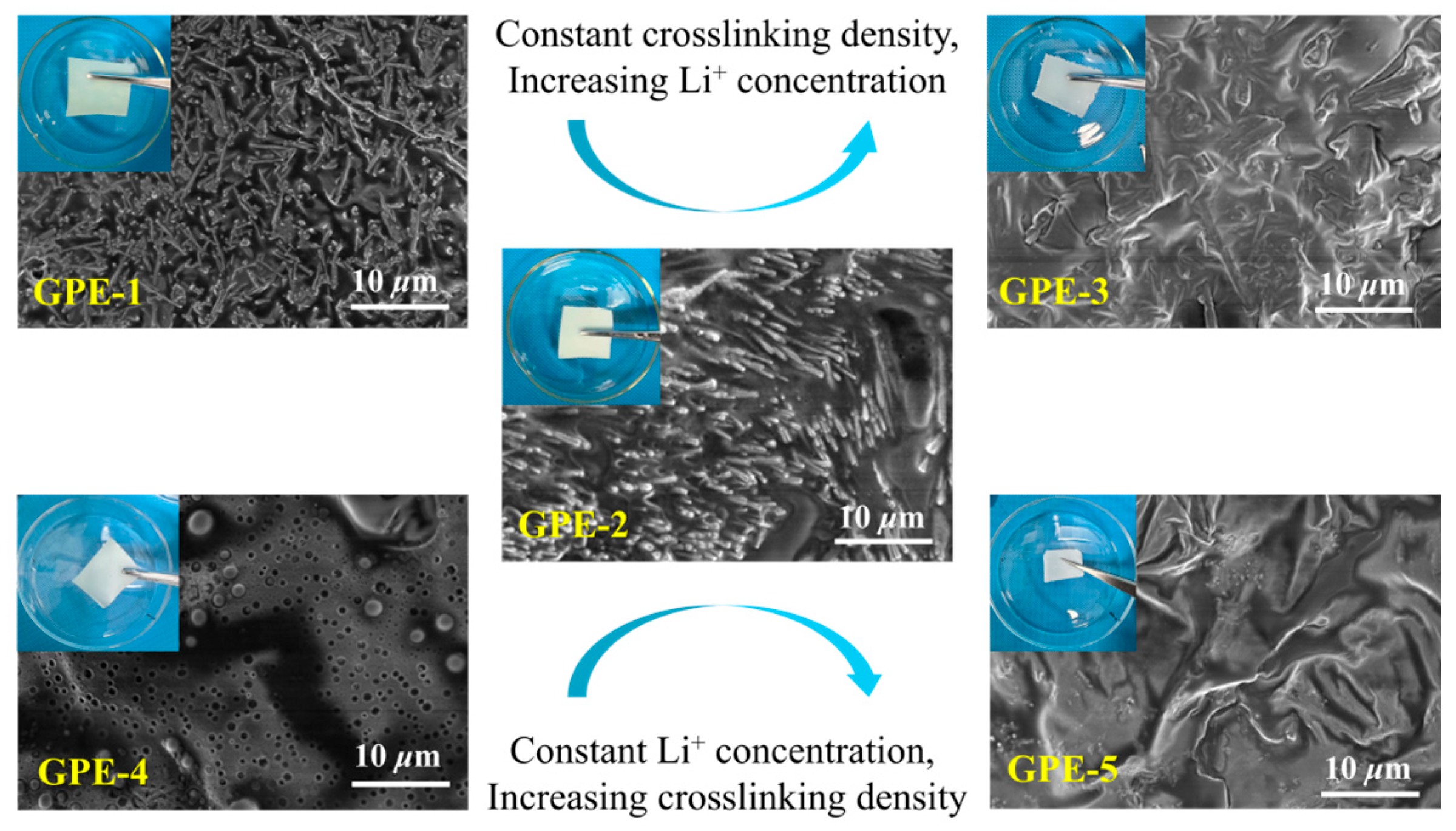
Figure 1: SEM images of cellulose-based GPE films with different Li+ ion concentration and crosslinking density. The insets are the digital photographs of the corresponding samples.
The structural characteristics of the GPE samples were further investigated by XRD, FTIR, and DSC measurements, as demonstrated in Fig. 2. The XRD patterns (Fig. 2a) are mainly dominated by broad, diffused halos centered at 2θ ≈ 20°, indicative of the predominantly amorphous nature of the prepared GPEs, which is a typical feature of highly disordered cellulose-based materials with limited long-range crystalline order [32,33]. However, several sharp Bragg diffraction peaks emerge at higher scattering angles, implying the presence of trace amounts of partially recrystallized salt species. These reflections, specifically at 2θ values of approximately 31.7°, 45.5°, and 56.5°, are also discernible in ECH-crosslinked cellulose free of LiTFSI (Fig. S1), and can be indexed to the (200), (220), and (222) crystallographic planes of NaCl [34]. Therefore, the recrystallized phase should be assigned to NaCl rather than LiTFSI; the NaCl is presumed to form as a byproduct during the ECH crosslinking reaction in the NaOH-based solvent system. Since no characteristic peaks corresponding to crystalline LiTFSI were detected, the lithium salt is believed to be completely dissociated and uniformly distributed within the crosslinked cellulose matrix.
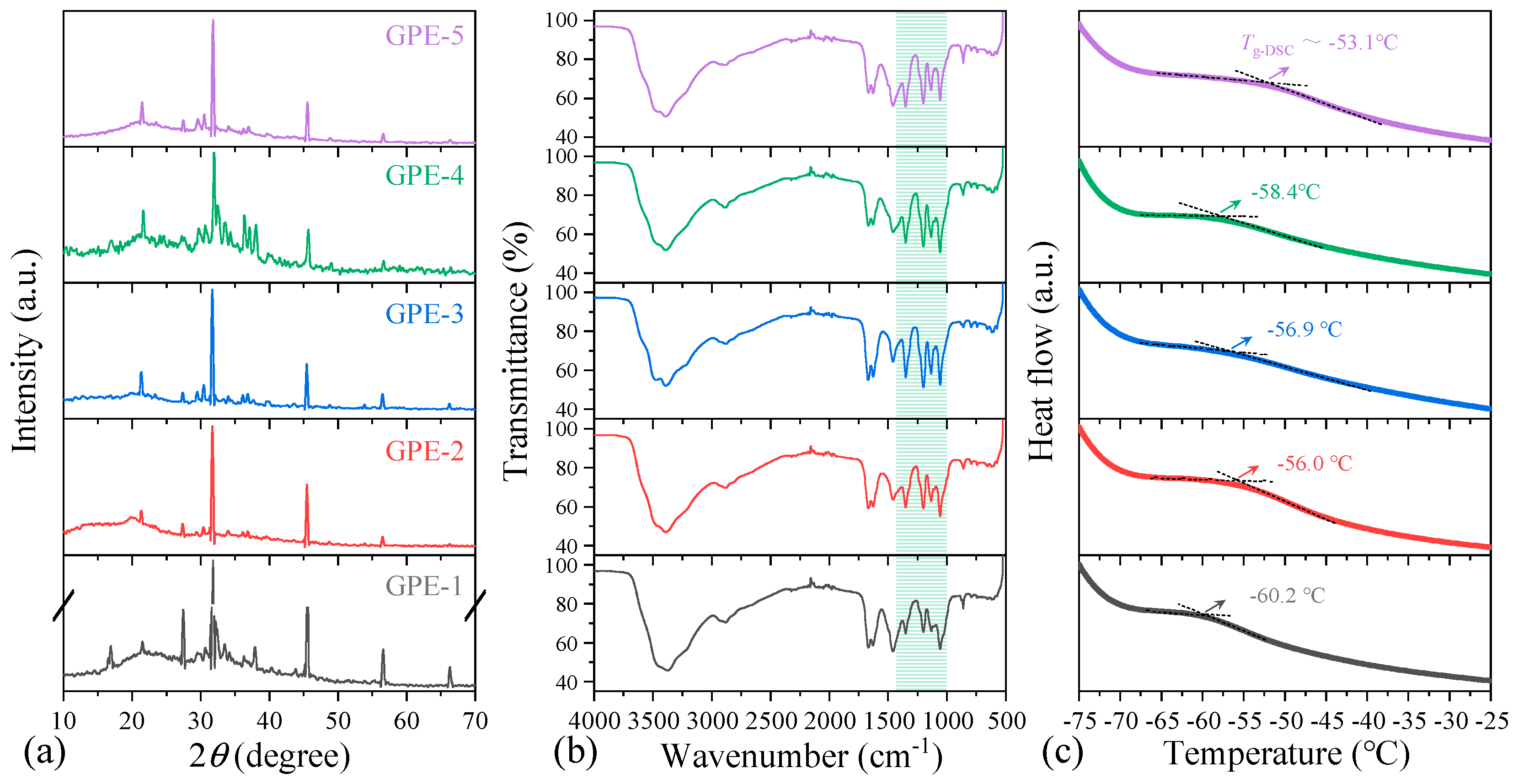
Figure 2: Structural and thermal characterizations of the cellulose-based GPE samples. (a) XRD patterns; (b) FTIR spectra; and (c) DSC curves.
The FTIR spectra (Fig. 2b) provide additional evidence for the successful incorporation and coordination of the lithium salt within the cellulose network. The spectra show characteristic absorption bands of the polymer host. Notably, shifts and changes in the intensity of the vibrational bands associated with polar functional groups (e.g., C-O/C-O-C stretching modes, highlighted in the shaded region) provide clear evidence of coordination interactions between the lithium ions and the polymer chains. This confirms that the lithium salt is not merely physically dispersed but is chemically integrated into the cellulose network through ion-dipole interactions. The calorimetric glass transition temperature (
3.2 Dielectric Relaxation Behavior
Fig. 3 shows the dielectric relaxation behavior of GPE-1 at the investigated temperatures, in terms of frequency dependent
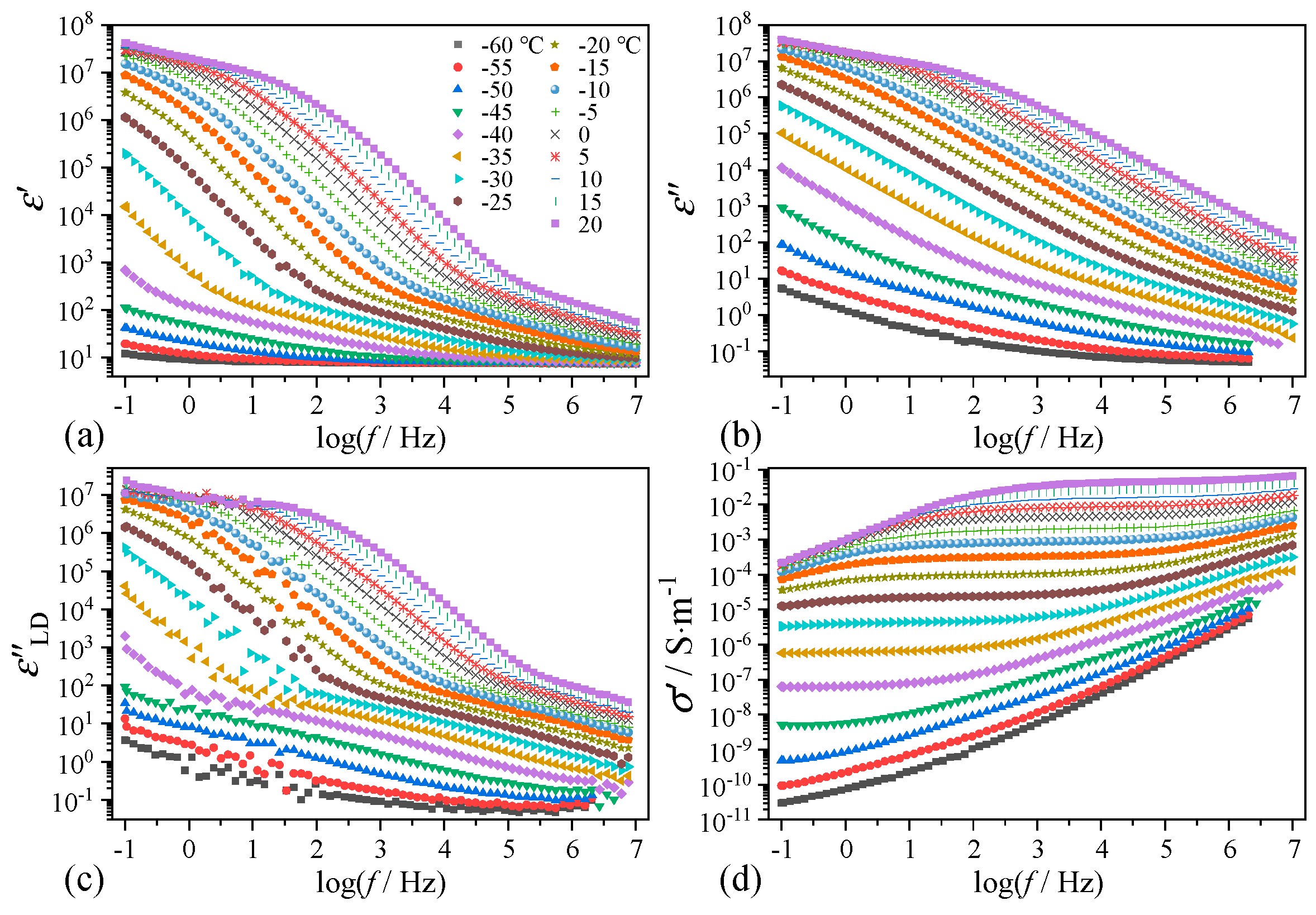
Figure 3: Frequency dependent dielectric constant (a), dielectric loss (b), derivative dielectric loss (c), and real conductivity (d) of GPE-1 at different temperatures.
To capture the features of these relaxations, all dielectric spectra were analyzed in line with Eq. (1). As representatives, Fig. 4 shows the fittings on the
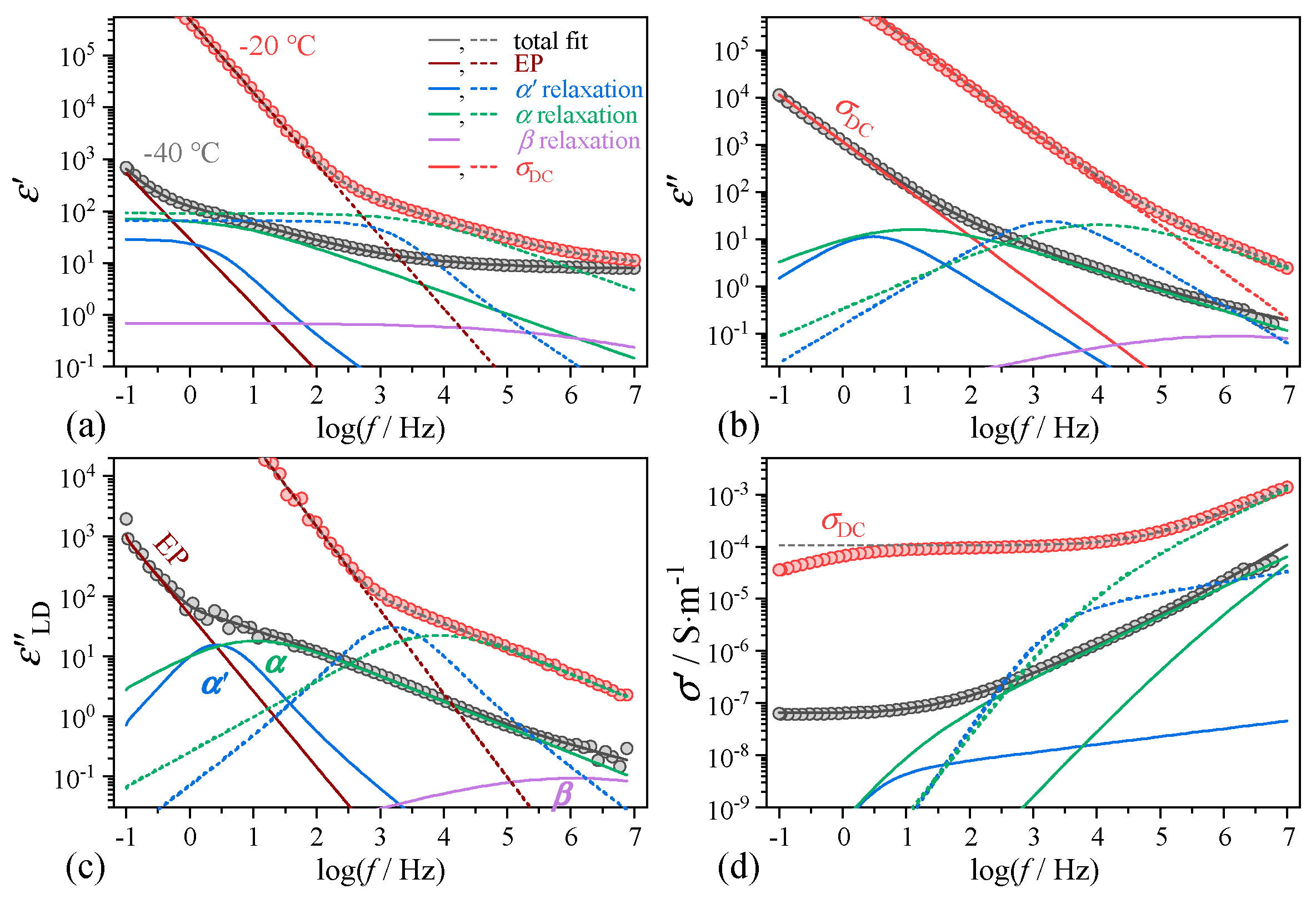
Figure 4: Spectra of dielectric constant (a), dielectric loss (b), derivative dielectric loss (c), and real conductivity (d) with fits (lines) of GPE-1 at −40°C and −20°C.
The activation behaviors of the observed dielectric relaxations in GPE-1 are presented in Fig. 5a, in which the most probable relaxation times of these relaxations are plotted against inverse temperature (the Arrhenius plot). The cases of the other GPE samples are presented in Fig. S3, which are quite similar to that of GPE-1. As clearly shown in Fig. 5a and Fig. S3, both the
The temperature dependences of
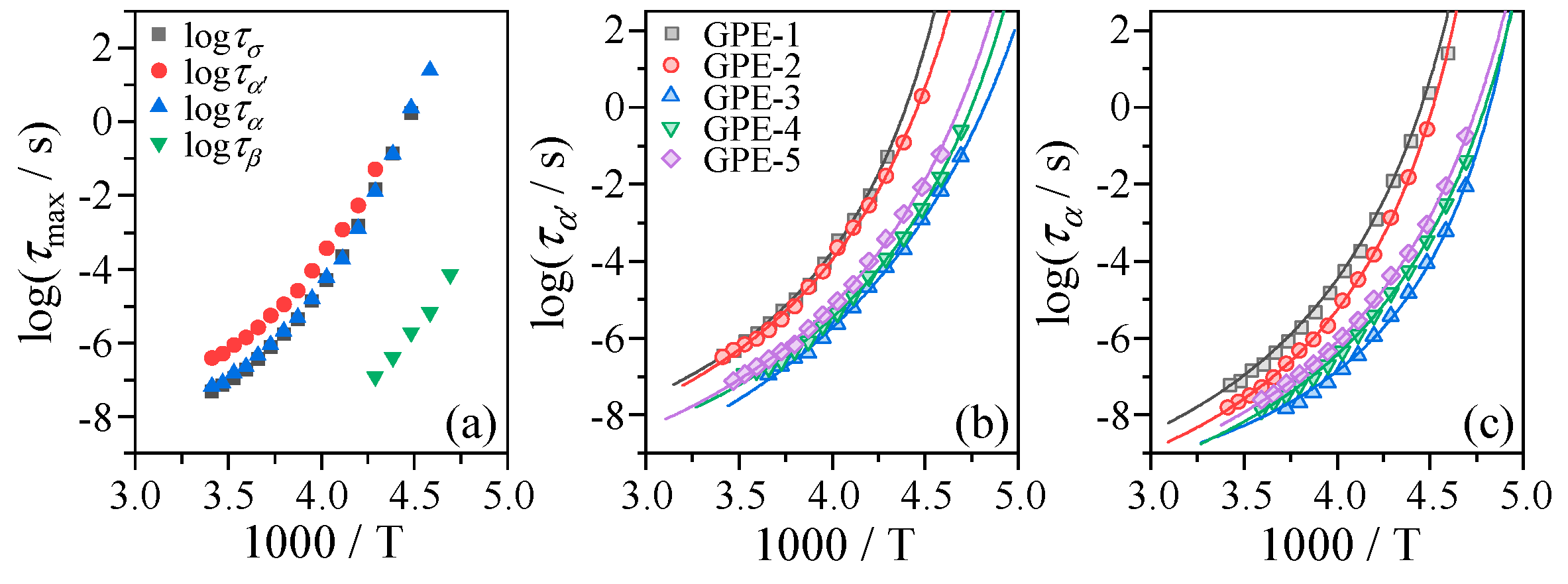
Figure 5: Temperature dependences of the relaxation time of the observed dielectric relaxations in GPE-1 (a), the
The dependences of
While
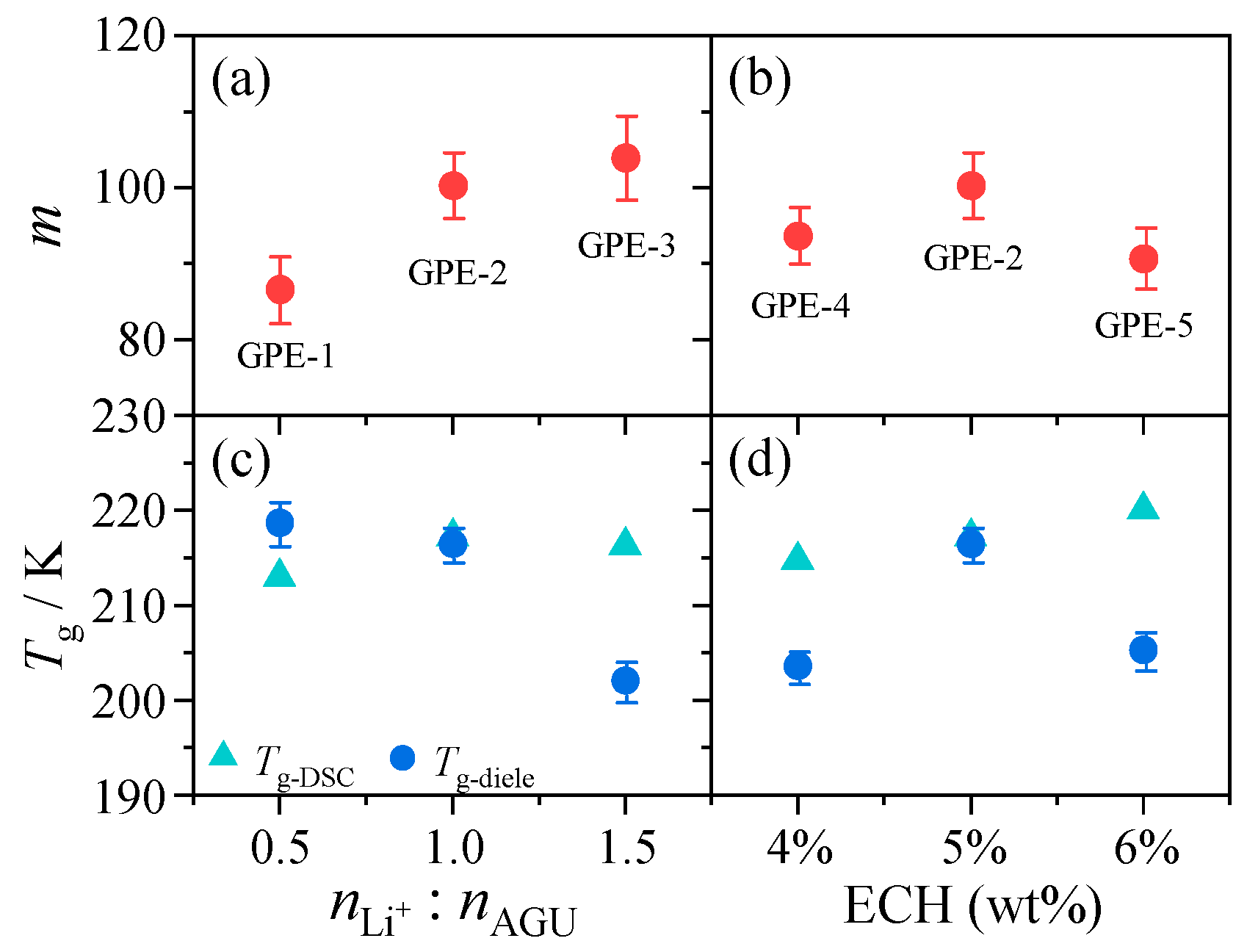
Figure 6: Kinetic fragility of the GPE samples as a function of the molar ratio of Li+ to AGU (a) and crosslinking density (b), and dependences of their glass transition temperature on the molar ratio of Li+ to AGU (c) and crosslinking density (d).
The kinetic fragility index, m, provides additional insight into the cooperative nature of the segmental dynamics in the investigated GPEs. As illustrated in Fig. 6, all samples exhibit m values ranging from 80 to 110, indicative of their moderately fragile glass-forming behavior [42]. For samples with the same crosslinking density, m increases monotonically with increasing
The temperature dependences of
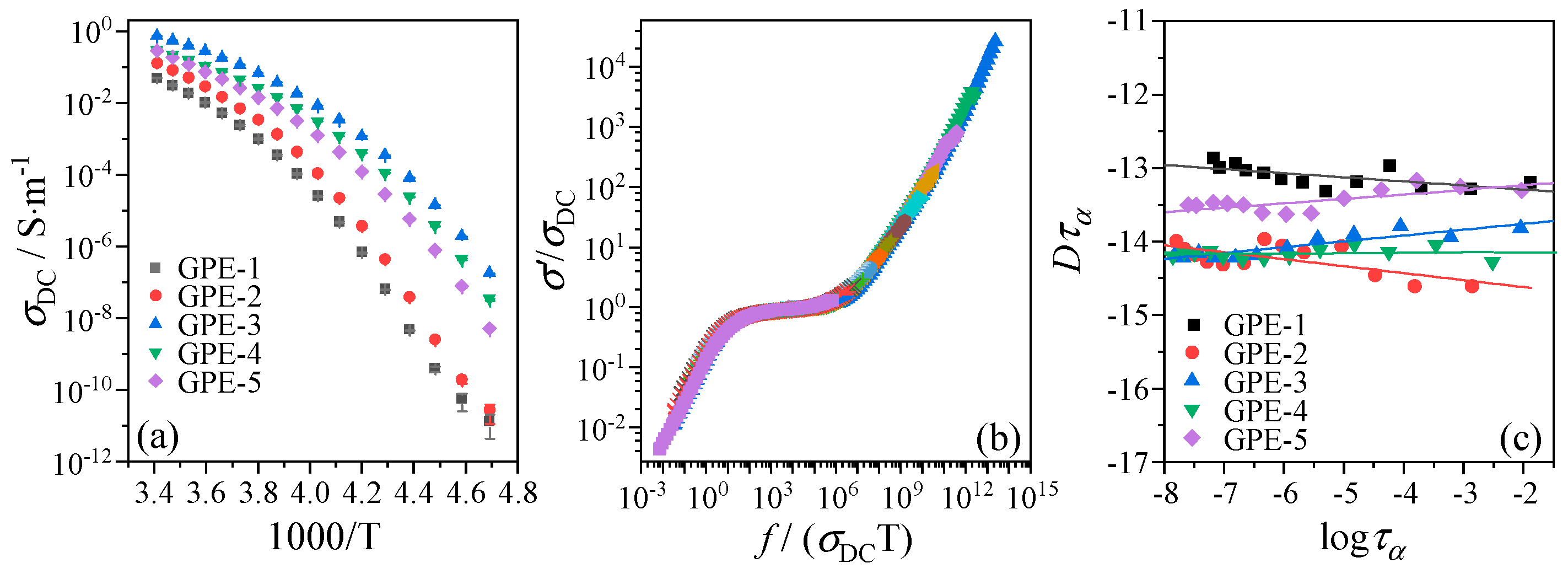
Figure 7: (a) Temperature dependence of DC conductivity of the investigated GPE samples; (b) conductivity scaling using Summerfield scaling approach for GPE-1; (c)
The conductivity relaxation time (
Further insight into the conduction mechanism was obtained from the conductivity scaling analysis. As shown in Fig. 7b (for GPE-1) and Fig. S4 (for the other GPE samples), the frequency dependent conductivity spectra measured at different temperatures can be successfully superimposed onto a single master curve using the Summerfield scaling formalism given by [46,47,48]
The present work provides a dynamic perspective on the ion transport and dielectric relaxations in crosslinked cellulose-based GPEs through an integrated approach combining BDS with structural and thermal characterizations. The structural characterization confirms the successful incorporation and coordination of lithium salts within the amorphous, crosslinked cellulose network. Three dielectric relaxations are identified across all the investigated GPE samples: a near-Debye
The combined analyses of the conductivity relaxation time, Summerfield scaling of conductivity spectra, and the Stokes-Einstein relationship reveal that a singular, dominant transport mechanism prevails across the investigated temperature range. A strong correlation between the conductivity relaxation and the structural
Collectively, these results establish a unified dynamic framework wherein polymer segmental motion governs Li+ transport, while ion-associated structures give rise to additional dielectric relaxation phenomena. This work provides fundamental insight into the intricate interplay among polymer network structure, molecular dynamics, and ionic conduction, and thereby offers valuable guidance for the rational design of high-performance, sustainable cellulose-based polymer electrolytes.
Acknowledgement:
Funding Statement: This research was funded by the National Natural Science Foundation of China, grant number 32272408.
Author Contributions: The authors confirm contribution to the paper as follows: conceptualization, Ruoxi Zhang, Rongzu Sun, Wei Zhou, and Zhen Chen; methodology, Ruoxi Zhang, Zhen Chen; software, Zhen Chen; validation, Ruoxi Zhang, Zhen Chen, and Rongzu Sun; formal analysis, Ruoxi Zhang, Zhen Chen; investigation, Ruoxi Zhang, Rongzu Sun, and Zhen Chen; resources, Zhen Chen; data curation, Ruoxi Zhang, Rongzu Sun; writing—original draft preparation, Ruoxi Zhang, Zhen Chen; writing—review and editing, Ruoxi Zhang, Rongzu Sun, Wei Zhou, and Zhen Chen; supervision, Zhen Chen, Wei Zhou; project administration, Zhen Chen, Wei Zhou; funding acquisition, Zhen Chen. All authors reviewed and approved the final version of the manuscript.
Availability of Data and Materials: The data that support the findings of this study are available from the Corresponding Author, ZC, upon reasonable request.
Ethics Approval: Not applicable.
Conflicts of Interest: The authors declare no conflicts of interest.
Supplementary Materials: The supplementary material is available online at https://www.techscience.com/doi/10.32604/jpm.2026.087360/s1.
References
1. Tarascon JM , Armand M . Issues and challenges facing rechargeable lithium batteries. Nature. 2001; 414( 6861): 359– 67. doi:10.1038/35104644. [Google Scholar] [CrossRef]
2. Simon P , Gogotsi Y . Materials for electrochemical capacitors. Nat Mater. 2008; 7( 11): 845– 54. doi:10.1038/nmat2297. [Google Scholar] [CrossRef]
3. Xu K . Electrolytes and interphases in Li-ion batteries and beyond. Chem Rev. 2014; 114( 23): 11503– 618. doi:10.1021/cr500003w. [Google Scholar] [CrossRef]
4. Truong KL , Bae J . Towards fire-safe polymer electrolytes for lithium-ion batteries: Strategies for electrolyte design and structural design. Polymers. 2025; 17( 21): 2828. doi:10.3390/polym17212828. [Google Scholar] [CrossRef]
5. Armand M , Tarascon JM . Building better batteries. Nature. 2008; 451( 7179): 652– 7. doi:10.1038/451652a. [Google Scholar] [CrossRef]
6. Zhao Q , Stalin S , Zhao CZ , Archer LA . Designing solid-state electrolytes for safe, energy-dense batteries. Nat Rev Mater. 2020; 5( 3): 229– 52. doi:10.1038/s41578-019-0165-5. [Google Scholar] [CrossRef]
7. Janek J , Zeier WG . A solid future for battery development. Nat Energy. 2016; 1: 16141. doi:10.1038/nenergy.2016.141. [Google Scholar] [CrossRef]
8. Aruchamy K , Ramasundaram S , Divya S , Chandran M , Yun K , Oh TH . Gel polymer electrolytes: Advancing solid-state batteries for high-performance applications. Gels. 2023; 9( 7): 585. doi:10.3390/gels9070585. [Google Scholar] [CrossRef]
9. Famprikis T , Canepa P , Dawson JA , Islam MS , Masquelier C . Fundamentals of inorganic solid-state electrolytes for batteries. Nat Mater. 2019; 18( 12): 1278– 91. doi:10.1038/s41563-019-0431-3. [Google Scholar] [CrossRef]
10. Wang C , Fu K , Kammampata SP , McOwen DW , Samson AJ , Zhang L , et al. Garnet-type solid-state electrolytes: Materials, interfaces, and batteries. Chem Rev. 2020; 120( 10): 4257– 300. doi:10.1021/acs.chemrev.9b00427. [Google Scholar] [CrossRef]
11. Li Z , Fu J , Zhou X , Gui S , Wei L , Yang H , et al. Ionic conduction in polymer-based solid electrolytes. Adv Sci. 2023; 10( 10): e2201718. doi:10.1002/advs.202201718. [Google Scholar] [CrossRef]
12. Han C , Shui X , Chen G , Xu G , Ma J , Dong S , et al. Recent progress in gel polymer electrolyte for lithium metal batteries. Giant. 2024; 20: 100337. doi:10.1016/j.giant.2024.100337. [Google Scholar] [CrossRef]
13. Baskakova YV , Yarmolenko OV , Efimov ON . Polymer gel electrolytes for lithium batteries. Russ Chem Rev. 2012; 81( 4): 367– 80. doi:10.1070/rc2012v081n04abeh004210. [Google Scholar] [CrossRef]
14. Chae W , Kim B , Ryoo WS , Earmme T . A brief review of gel polymer electrolytes using in situ polymerization for lithium-ion polymer batteries. Polymers. 2023; 15( 4): 803. doi:10.3390/polym15040803. [Google Scholar] [CrossRef]
15. Zhang J , Liu J , Xu Z , Cao D , Chen K . Enabling a sustainable future energy storage with cellulose-based solid-state electrolytes: A review. Mater Today Energy. 2025; 54: 102091. doi:10.1016/j.mtener.2025.102091. [Google Scholar] [CrossRef]
16. Low FS , Yabu H , Awang Selan A , Tan WC , Sun D , Thiam HS , et al. Cellulose derivation and its application for sustainable lithium-ion and emerging energy-storage systems: An overview. J Power Sources. 2026; 662: 238796. doi:10.1016/j.jpowsour.2025.238796. [Google Scholar] [CrossRef]
17. Zampieri M , Tommasone G , Morel L , Luque GL . Cellulose-based materials and their application in lithium-sulfur batteries. Polymers. 2025; 17( 2): 164. doi:10.3390/polym17020164. [Google Scholar] [CrossRef]
18. Hadad S , Hamrahjoo M , Dehghani E , Salami-Kalajahi M , Eliseeva SN , Moghaddam AR , et al. Cellulose-based solid and gel polymer electrolytes with super high ionic conductivity and charge capacity for high performance lithium ion batteries. Sustain Mater Technol. 2022; 33: e00503. doi:10.1016/j.susmat.2022.e00503. [Google Scholar] [CrossRef]
19. Gong X , Wang J , Zhong L , Qi G , Liu F , Pan Y , et al. Recent advances on cellulose-based solid polymer electrolytes. Ind Chem Mater. 2025; 3( 1): 31– 48. doi:10.1039/d4im00066h. [Google Scholar] [CrossRef]
20. Du X , Zhang Z , Liu W , Deng Y . Nanocellulose-based conductive materials and their emerging applications in energy devices—A review. Nano Energy. 2017; 35: 299– 320. doi:10.1016/j.nanoen.2017.04.001. [Google Scholar] [CrossRef]
21. Zhang Z , Cui K , Zhang JM , Xu Y , Xu F . Cellulose-based solid-state electrolytes for solid-state lithium metal batteries: Advances in functionalization strategies and interfacial engineering. Adv Energy Mater. 2026; 16( 9): e04386. doi:10.1002/aenm.202504386. [Google Scholar] [CrossRef]
22. Fenton DE , Parker JM , Wright PV . Complexes of alkali metal ions with poly(ethylene oxide). Polymer. 1973; 14( 11): 589. doi:10.1016/0032-3861(73)90146-8. [Google Scholar] [CrossRef]
23. Hallinan DT Jr , Balsara NP . Polymer electrolytes. Annu Rev Mater Res. 2013; 43: 503– 25. doi:10.1146/annurev-matsci-071312-121705. [Google Scholar] [CrossRef]
24. Kremer F , Schönhals A . Broadband Dielectric Spectroscopy. Berlin/Heidelberg, Germany: Springer; 2003. doi:10.1007/978-3-642-56120-7. [Google Scholar] [CrossRef]
25. Munar A , Andrio A , Iserte R , Compañ V . Ionic conductivity and diffusion coefficients of lithium salt polymer electrolytes measured with dielectric spectroscopy. J Non Cryst Solids. 2011; 357( 16–17): 3064– 9. doi:10.1016/j.jnoncrysol.2011.04.012. [Google Scholar] [CrossRef]
26. Sai Prasanna CM , Suthanthiraraj SA . Dielectric and thermal features of zinc ion conducting gel polymer electrolytes (GPEs) containing PVC/PEMA blend and EMIMTFSI ionic liquid. Ionics. 2018; 24( 9): 2631– 46. doi:10.1007/s11581-017-2421-2. [Google Scholar] [CrossRef]
27. Ratri CR , Sabrina Q , Lestariningsih T , Nugraha AF , Astutiningsih S , Chalid M . Unveiling frequency-dependent dielectric behavior of cellulose-based polymer electrolyte at various temperature and salt concentration. Int J Renew Energy Dev. 2023; 12( 4): 741– 8. doi:10.14710/ijred.2023.53103. [Google Scholar] [CrossRef]
28. Patla SK , Ghosh A . Charge carrier dynamics and relaxation in highly conducting gel polymer electrolytes added with adiponitrile and dual redox. J Appl Phys. 2024; 135( 20): 205102. doi:10.1063/5.0205550. [Google Scholar] [CrossRef]
29. Ngai KL . Relaxation and diffusion in complex systems. New York, NY, USA: Springer; 2011. doi:10.1007/978-1-4419-7649-9. [Google Scholar] [CrossRef]
30. Havriliak S , Negami S . A complex plane analysis of α-dispersions in some polymer systems. J Polym Sci C Polym Symp. 1966; 14( 1): 99– 117. doi:10.1002/polc.5070140111. [Google Scholar] [CrossRef]
31. Wübbenhorst M , van Turnhout J . Analysis of complex dielectric spectra. I. One-dimensional derivative techniques and three-dimensional modelling. J Non Cryst Solids. 2002; 305( 1–3): 40– 9. doi:10.1016/S0022-3093(02)01086-4. [Google Scholar] [CrossRef]
32. Park S , Baker JO , Himmel ME , Parilla PA , Johnson DK . Cellulose crystallinity index: Measurement techniques and their impact on interpreting cellulase performance. Biotechnol Biofuels. 2010; 3: 10. doi:10.1186/1754-6834-3-10. [Google Scholar] [CrossRef]
33. French AD . Idealized powder diffraction patterns for cellulose polymorphs. Cellulose. 2014; 21( 2): 885– 96. doi:10.1007/s10570-013-0030-4. [Google Scholar] [CrossRef]
34. Addala S , Bouhdjer L , Chala A , Bouhdjar A , Halimi O , Boudine B , et al. Structural and optical properties of a NaCl single crystal doped with CuO nanocrystals. Chin Phys B. 2013; 22( 9): 098103. doi:10.1088/1674-1056/22/9/098103. [Google Scholar] [CrossRef]
35. Khan MA , Chen Z . New insights into the dynamics of poly(amidoamine) dendrimers with amino surface groups from segmental relaxation and ionic conductivity. Macromolecules. 2024; 57( 13): 6199– 208. doi:10.1021/acs.macromol.4c00774. [Google Scholar] [CrossRef]
36. Chen Z , Li XW , Zhao KS , Xiao JX , Yang LK . Dielectric spectroscopy investigation on the interaction of poly(diallyldimethylammonium chloride) with sodium decyl sulfate in aqueous solution. J Phys Chem B. 2011; 115( 19): 5766– 74. doi:10.1021/jp200486u. [Google Scholar] [CrossRef]
37. Maxwell JC . A Treatise on Electricity and Magnetism. Wotton-under-Edge, UK: Clarendon Press; 1873. doi:10.1017/CBO9780511709340. [Google Scholar] [CrossRef]
38. Wagner KW . Dielektrische eigenschaften von verschiedenen isolierstoffen. Arch Für Elektrotech. 1914; 3( 3): 67– 106. doi:10.1007/BF01657563. [Google Scholar] [CrossRef]
39. Chen Z , Richert R . Dynamics of glass-forming liquids. XV. Dynamical features of molecular liquids that form ultra-stable glasses by vapor deposition. J Chem Phys. 2011; 135( 12): 124515. doi:10.1063/1.3643332. [Google Scholar] [CrossRef]
40. Jiang H , Fang W , Zhu Y , Chen Z . Dielectric relaxation and glass transition dynamics in melt-quenched ZIF-62 glass. J Chem Phys. 2026; 164( 13): 134504. doi:10.1063/5.0326548. [Google Scholar] [CrossRef]
41. Hoffknecht JP , Wettstein A , Atik J , Krause C , Thienenkamp J , Brunklaus G , et al. Coordinating anions “to the rescue” of the lithium ion mobility in ternary solid polymer electrolytes plasticized with ionic liquids. Adv Energy Mater. 2023; 13: 2202789. doi:10.1002/aenm.202202789. [Google Scholar] [CrossRef]
42. Angell CA . Formation of glasses from liquids and biopolymers. Science. 1995; 267( 5206): 1924– 35. doi:10.1126/science.267.5206.1924. [Google Scholar] [CrossRef]
43. Sidebottom DL . Connecting glass-forming fragility to network topology. Front Mater. 2019; 6: 144. doi:10.3389/FMATS.2019.00144. [Google Scholar] [CrossRef]
44. Ciarella S , Biezemans RA , Janssen LMC . Understanding, predicting, and tuning the fragility of vitrimeric polymers. Proc Natl Acad Sci U S A. 2019; 116( 50): 25013– 22. doi:10.1073/pnas.1912571116. [Google Scholar] [CrossRef]
45. Cao W , Gerhardt R . Calculation of various relaxation times and conductivity for a single dielectric relaxation process. Solid State Ion. 1990; 42( 3–4): 213– 21. doi:10.1016/0167-2738(90)90010-O. [Google Scholar] [CrossRef]
46. Tripathy SN , Wojnarowska Z , Knapik J , Shirota H , Biswas R , Paluch M . Glass transition dynamics and conductivity scaling in ionic deep eutectic solvents: The case of (acetamide + lithium nitrate/sodium thiocyanate) melts. J Chem Phys. 2015; 142( 18): 184504. doi:10.1063/1.4919946. [Google Scholar] [CrossRef]
47. Schrøder TB , Dyre JC . Scaling and universality of ac conduction in disordered solids. Phys Rev Lett. 2000; 84( 2): 310– 3. doi:10.1103/PhysRevLett.84.310. [Google Scholar] [CrossRef]
48. Summerfield S . Universal low-frequency behaviour in the a.c. hopping conductivity of disordered systems. Philos Mag B. 1985; 52( 1): 9– 22. doi:10.1080/13642818508243162. [Google Scholar] [CrossRef]
49. Wang Y , Agapov AL , Fan F , Hong K , Yu X , Mays J , et al. Decoupling of ionic transport from segmental relaxation in polymer electrolytes. Phys Rev Lett. 2012; 108( 8): 088303. doi:10.1103/PhysRevLett.108.088303. [Google Scholar] [CrossRef]
50. Sørensen TS , Compañ V . Complex permittivity of a conducting, dielectric layer containing arbitrary binary Nernst–Planck electrolytes with applications to polymer films and cellulose acetate membranes. J Chem Soc Faraday Trans. 1995; 91( 23): 4235– 50. doi:10.1039/ft9959104235. [Google Scholar] [CrossRef]
Cite This Article
 Copyright © 2026 The Author(s). Published by Tech Science Press.
This work is licensed under a Creative Commons Attribution 4.0 International License , which permits unrestricted use, distribution, and reproduction in any medium, provided the original work is properly cited.
 Downloads
 Citation Tools
