
 Login
Login Register
 Submit a Paper
 Propose a Special lssue
 Open Access
REVIEW

Enhancements in Oil Palm Fiber for Composite Material Development
1 Biomass Technology Unit, Engineering and Processing Division, Malaysian Palm Oil Board (MPOB), No 6., Persiaran Institusi, Bandar Baru Bangi, Kajang, 43000, Selangor, Malaysia
2 Bioresource Technology Division, School of Industrial Technology, Universiti Sains Malaysia, Gelugor, 11700, Pulau Pinang, Malaysia
* Corresponding Author: H. A. Aisyah. Email:
(This article belongs to the Special Issue: From Nature to Function: Natural Fiber Cellulose and Starch-Based Materials for a Sustainable Composites)
Journal of Renewable Materials 2026, 14(3), 2 https://doi.org/10.32604/jrm.2025.02025-0141
Received 11 June 2025; Accepted 24 September 2025; Issue published 25 March 2026
 View Full Text
 Download PDF
Abstract
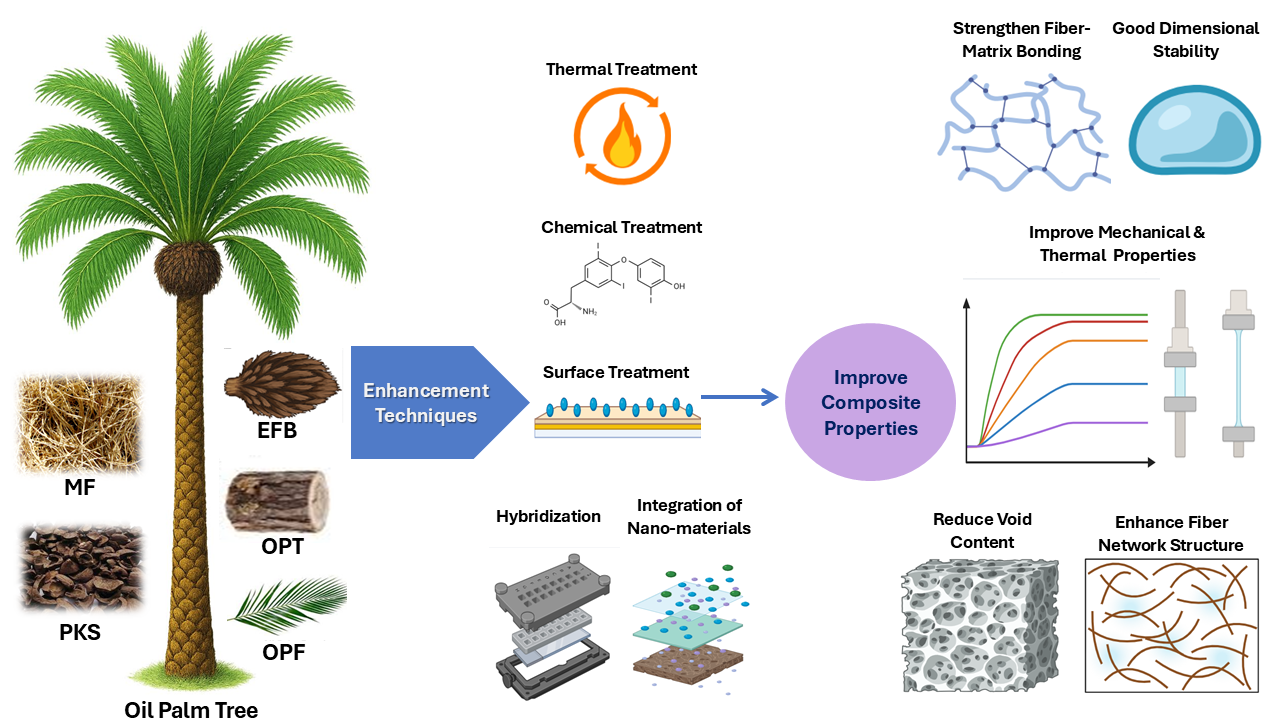
Oil palm fiber is a natural fiber derived from agricultural biomass and has gained significant attention as an alternative reinforcement material in composite materials due to its abundance, renewability, and environmental benefits. This review explores the various enhancement techniques applied to oil palm fiber to improve its properties for composite material development. Key areas of focus include chemical treatments, physical modifications, and hybridization with other fibers to improve fiber-matrix bonding, mechanical strength, and thermal stability. Integration of nanomaterials and bio-based resins to enhance the performance and sustainability of oil palm fiber composites is also discussed. Applications in industries such as automotive, construction, packaging, and consumer goods highlighted the potential for these composites to replace traditional, non-renewable materials. Challenges such as fiber variability, production scalability, and market adoption were examined, along with future directions in advancing oil palm fiber-based composites.Graphic Abstract
Keywords
Composite materials are formulated by merging two or more different constituents to create a material with enhanced properties compared to its separate components. They are widely utilized in various industries such as aerospace, automotive, building, construction, and packaging. They depend on synthetic fibers such as glass fiber, carbon fiber, and aramid, which provide excellent performance but pose environmental issues due to their non-degradable nature and significant energy usage during manufacturing. In recent years, the need for sustainable materials has resulted in increased focus on natural fiber-reinforced composites as environmentally friendly alternatives.
Natural fibers have emerged as sustainable alternatives in composite applications due to their compostability, renewability, and minimal environmental impact. Agricultural crops such as hemp, ramie, flax, jute, kenaf, and bamboo are increasingly explored as reinforcement materials in bio-composites [1]. These fibers provide benefits such as low density, good mechanical properties, and potential for carbon footprint reduction. However, challenges such as variability in fiber quality, moisture absorption, and fiber-matrix adhesion must be addressed through various enhancement techniques [2]. The growing focus on green materials and circular economy concepts has driven extensive research in optimizing natural fiber composites for high-performance applications.
Oil palm fiber has attracted significant interest among various natural fibers, due to its abundance and potential for value-added products. The oil palm industry generates a large quantity of biomass from both plantations and milling operations, which can be effectively processed into bio-composites, offering a sustainable alternative for various industrial applications. These fibers exhibit promising characteristics such as high cellulose content, good tensile strength, and lightweight properties [3]. Oil palm fiber-based composites have been successfully applied in the construction sector, automotive interior parts, furniture panels, packaging materials, and construction boards, demonstrating good dimensional stability, sound absorption, and cost competitiveness compared to synthetic composites [4]. They have also been developed into lightweight and biodegradable materials suitable for medium-load applications, such as building partition boards, and show potential for technical textile applications, particularly as reinforcement agents in composite structures [5,6].
However, their hydrophilic nature, residual oil content, and high lignin composition present challenges in composite fabrication, affecting fiber-matrix adhesion and overall performance. To overcome these limitations, various fiber treatment methods have been explored, including chemical, thermal, and biological treatments, each aiming to reduce surface impurities and modify fiber surface properties. Hybridization with synthetic or other natural fibers, as well as nano-integration using nano-materials, has also been employed to improve the composite’s structural integrity. These strategies are particularly relevant in the development of sustainable, high-performance materials for automotive, construction, and packaging applications.
This review aimed to explore improvements in oil palm fiber for bio-composite development through enhancement techniques such as chemical modifications, thermal treatments, hybridization strategies, and integration with nano-materials. Applications, challenges, and directions of oil palm fiber composites were explored to offer a thorough understanding of their potential in sustainable material advancement. By highlighting the innovations and addressing existing limitations, this review contributes to the efforts in promoting oil palm biomass as a viable alternative for eco-friendly composite materials.
The oil palm sector in Malaysia is a major source of biomass production, accounting for more than 90% of the country’s total biomass output [7]. In 2024, with an overall planted area of 5.61 million hectares, the oil palm industry generated approximately 91.04 million tons of lignocellulosic biomass, highlighting its massive potential as a renewable resource for sustainable applications [8]. This massive biomass resource, traditionally regarded as an agricultural by-product, holds significant potential for sustainable applications in bio-composites, bio-energy, and bio-chemical industries. These biomass resources include empty fruit bunches (EFB), oil palm trunks (OPT), oil palm fronds (OPF), mesocarp fiber (MF), and palm kernel shell (PKS), which can be effectively utilized in value-added product development. Generally, oil palm biomass can be categorized based on its source: plantation residues such as OPT and OPF, and milling by-products including EFB, MF and PKS (Fig. 1). EFB and MF are particularly valued because of their high cellulose content and fibrous structure, which make them ideal for fiber extraction and composite applications. By harnessing the full potential of these biomass resources, the industry can enhance material efficiency, promote sustainable production practices, and contribute to the advancement of biodegradable and renewable materials.
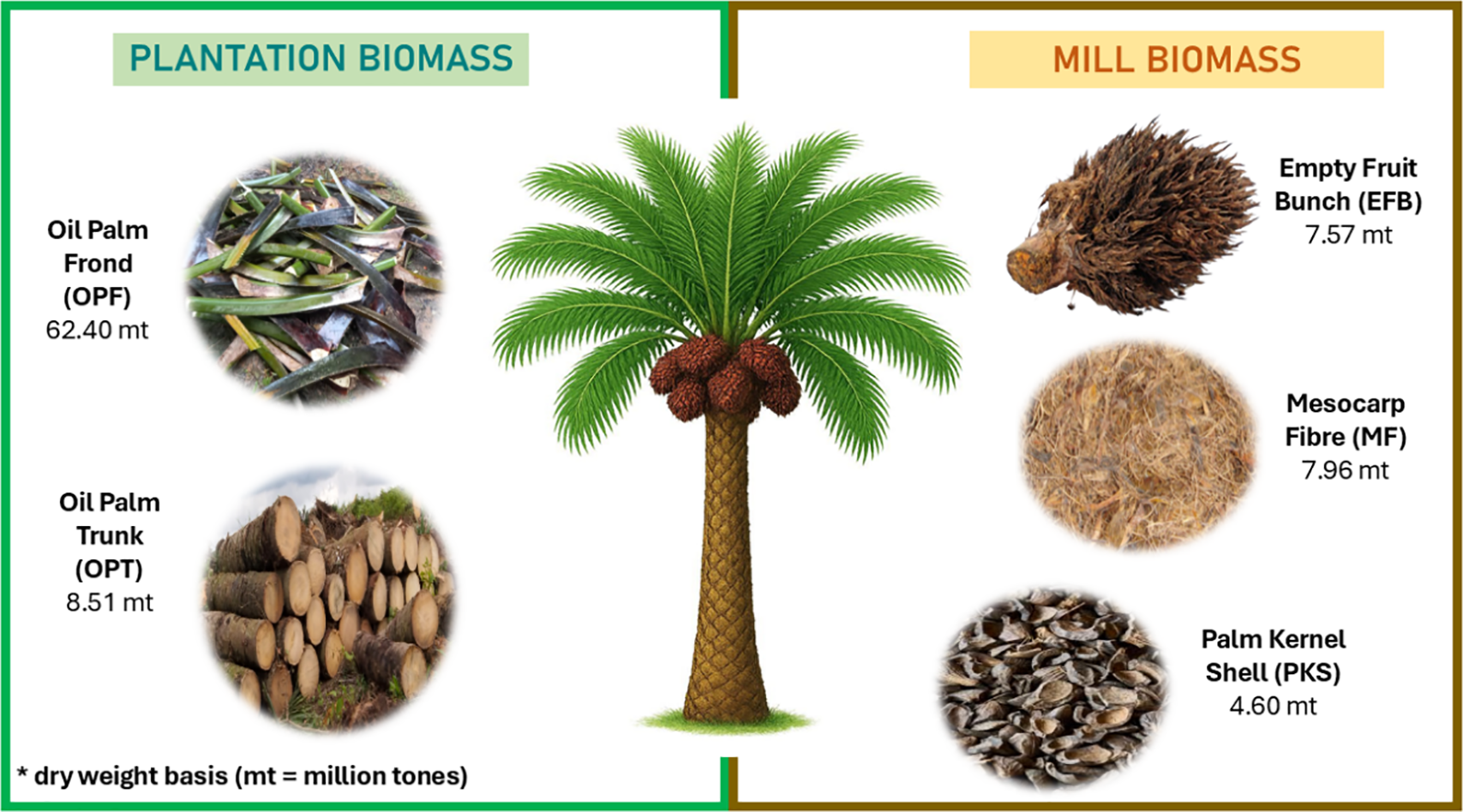
Figure 1: Sources of oil palm biomass from oil palm plantation and oil palm mill
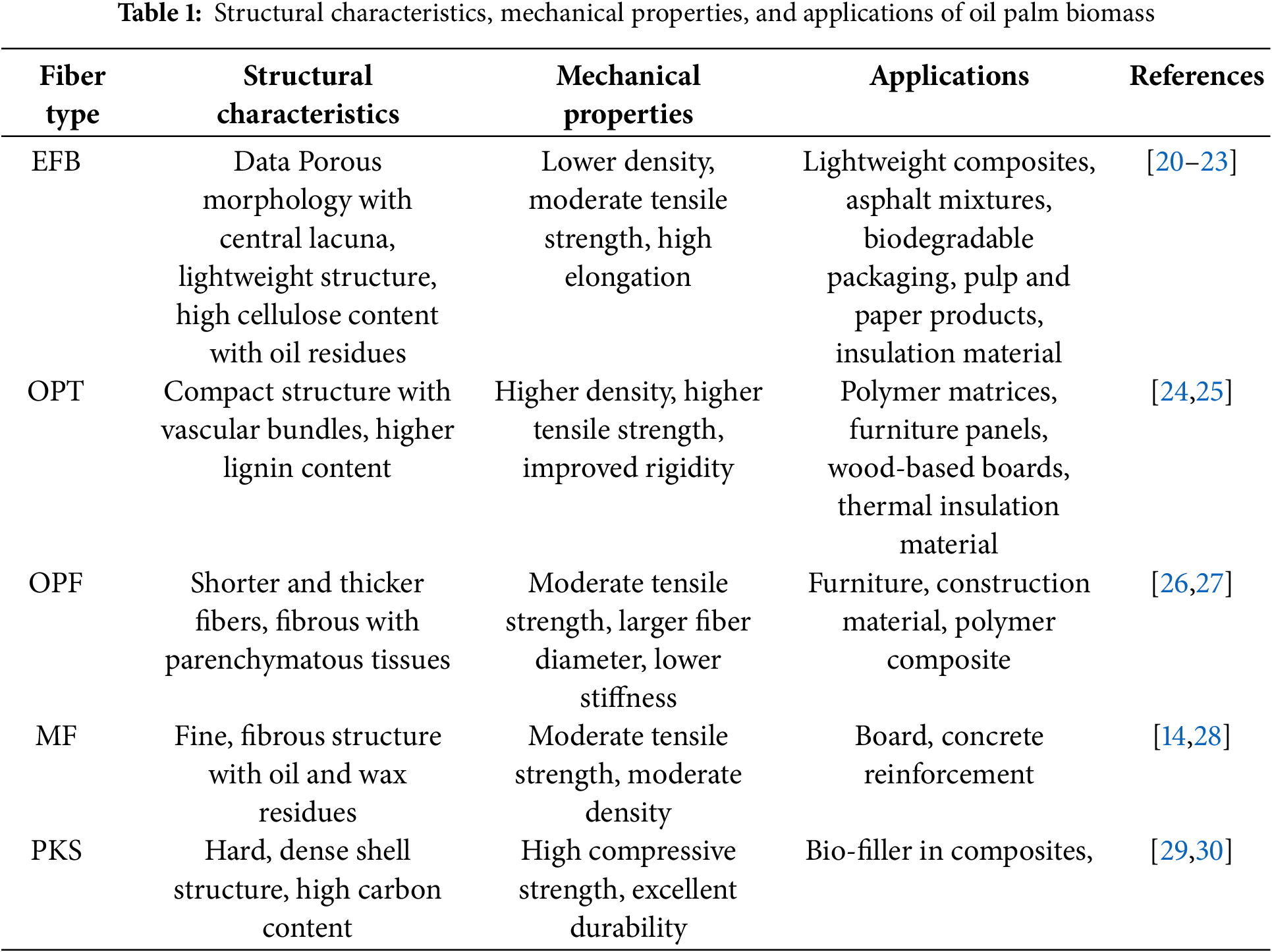
The structural and compositional differences among oil palm fibers play a crucial role in determining their suitability for composite applications. The EFB fibers, known for their highly porous morphology and central lacuna, are exceptionally lightweight, making them ideal for reinforcement in composites where weight reduction is a priority, such as in automotive and aviation applications [9]. Their porous structure not only enhances their flexibility but also improves resin impregnation, which is beneficial for composite fabrication. In contrast, OPT fibers possess a denser and more compact structure, with vascular bundles embedded in parenchymatous tissue, contributing to their superior mechanical strength and rigidity. This higher density makes OPT fibers particularly suitable for load-bearing applications, where enhanced durability and structural integrity are required [10]. The higher density of OPT fibers also rendered them to be more compatible with certain polymer matrices that require stronger interfacial adhesion [11]. In contrast, OPF fibers are shorter and more robust than EFB and OPT fibers, which impacts their mechanical performance in composites [9,10]. The shorter length of OPF fibers can lead to poorer load transfer at fiber-matrix interface, potentially compromising the overall mechanical properties of the composite. However, their thickness may provide advantages in certain applications where higher fiber diameter is beneficial, such as in thermoset polymer composites [12].
The mechanical characteristics of oil palm fibers differ based on their source and processing conditions, influencing their effectiveness as reinforcement materials in composite applications. EFB fibers are characterized by moderate tensile strength and high elongation, making them appropriate for flexible composite applications. However, their porous structure resulted in lesser tensile strength compared to OPT fibers, limiting their suitability for high-strength applications [13]. In contrast, OPT fibers, with their denser and more rigid structure, have significantly higher tensile strength and Young’s modulus, making them suitable for load-bearing uses which require enhanced stiffness and durability [11]. OPF fibers, while generally weaker than both EFB and OPT, provide benefits in terms of cost-effectiveness and ease of processing, making them suitable for applications where mechanical performance is less crucial.
The impact strength and flexural properties of oil palm fibers are greatly affected by their structural composition. Due to their porous morphology, EFB fibers tend to have lower impact strength, rendering them less appropriate for high-energy absorption applications [13]. However, OPT fibers, with their compact and high-density structure, have superior energy absorption, which enhance their suitability in impact-resistant composite applications such as automotive crash structures and protective panels [10,11]. Furthermore, anatomical features such as fiber length, lumen width, and microfibril orientation contributed to the reinforcement potential of oil palm fibers in composites. By understanding these mechanical characteristics, researchers and manufacturers can optimize fiber selection and processing techniques to develop high-performance oil palm fiber-based composites for diverse industrial applications.
Oil palm fibers are lignocellulosic materials primarily composed of cellulose, hemicellulose, and lignin, each playing a vital role in determining their structural integrity and functionality. Understanding the chemical composition of various oil palm biomass types is essential for optimizing their applications in sustainable material production. EFB has the highest cellulose content among these fibers, making it particularly valuable for reinforcing polymer matrices due to its excellent tensile strength and strong interfacial bonding, as cellulose provides mechanical strength and stability [14]. In contrast, MF contains lower cellulose but has higher concentration of extractives such as oil and wax, which can influence fiber-matrix interactions [15]. OPF fibers, on the other hand, have higher hemicellulose content (34%–38%), enhancing fiber cohesion and flexibility within composite structures [16]. The highest lignin content of PKS (50%) enhances its durability, stiffness, and resistance to deterioration, making it ideal for applications like biomass energy generation [17]. The unique chemical compositions of each type of oil palm fiber directly affect key properties such as mechanical performance, moisture absorption, and compatibility with polymer matrices [18]. Therefore, selecting the appropriate oil palm fiber for composite applications requires careful consideration of its chemical and structural characteristics for optimal performance [19]. Table 1 summarizes the structural features, mechanical properties, and possible applications of various oil palm biomass fibers, emphasizing their suitability for different composite and sustainable material uses.
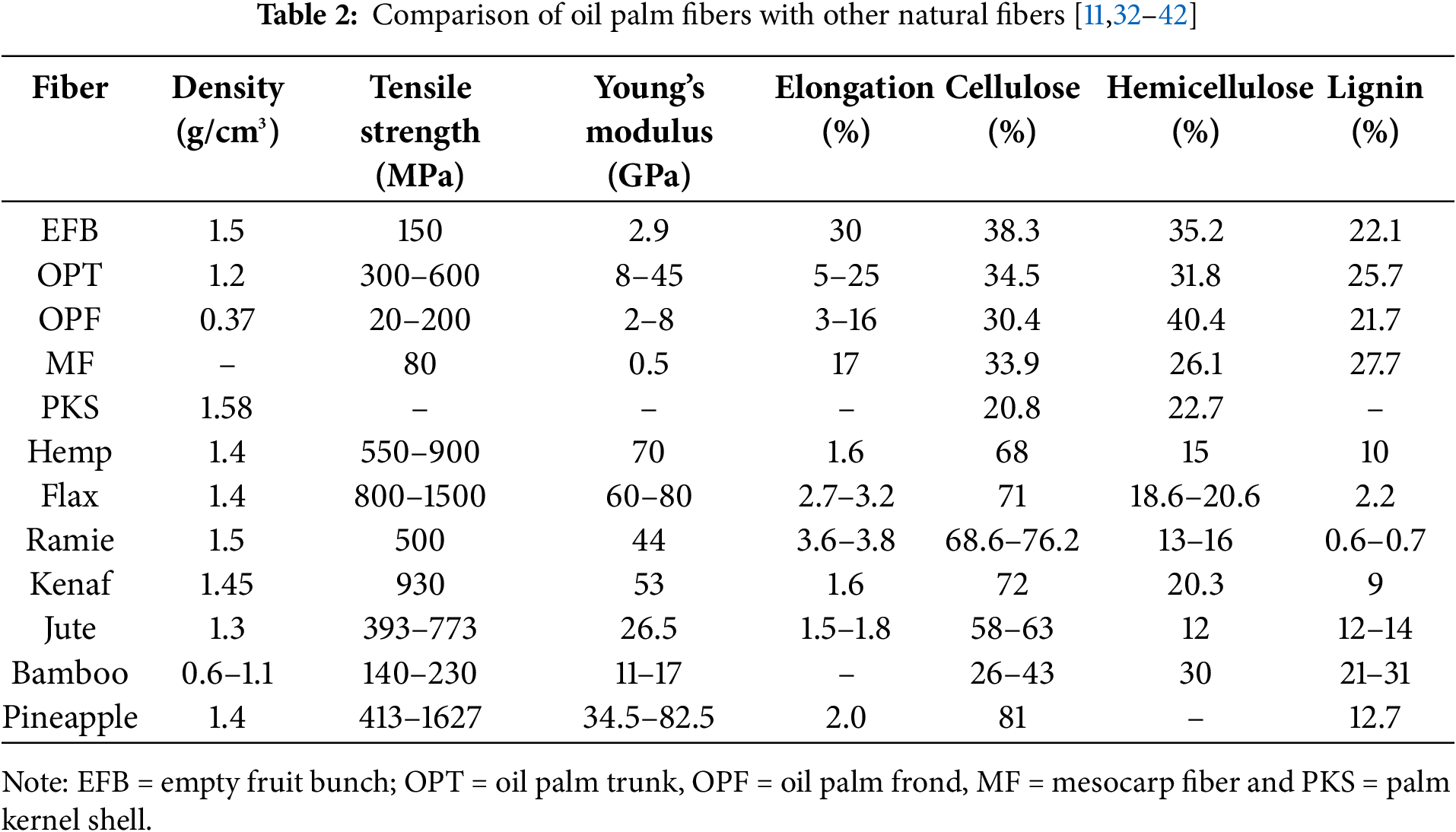
Compared to other natural fibers such as hemp, flax, kenaf, jute, and bamboo, oil palm fibers offer both unique advantages and certain limitations. Flax and hemp are well-known for their high tensile strength and modulus, making them ideal for structural and high-performance composite applications [31,32]. Similarly, kenaf and jute possess commendable strength and stiffness while being relatively easy to process into usable forms [14]. In contrast, oil palm fibers, such as EFB and OPF, generally exhibit lower tensile properties, largely attributed to their higher porosity and shorter fiber lengths. However, oil palm fibers present other favorable characteristics. The high cellulose content in EFB, for instance, enhances its reinforcing potential, especially in medium-load composite applications [19]. Additionally, the elevated lignin content in PKS and OPT fibers contributes to improved thermal stability and rigidity, which is beneficial for applications requiring dimensional stability and resistance to thermal degradation. Notably, EFB fibers demonstrate a relatively high elongation at break, indicating good flexibility and energy absorption capability. These properties may be advantageous in impact-prone applications where deformation without failure is desired. Therefore, while oil palm fibers may not match the tensile performance of traditional bast fibers, their abundance, biodegradability, and balanced mechanical-thermal properties make them highly attractive for sustainable composite development. Table 2 provides a comparative summary of oil palm fibers and other commonly used natural fibers.
Oil palm fibers also present certain challenges, including high moisture content, varying density, and water absorption, all of which significantly impact their durability and compatibility with polymer matrices. The high moisture content of OPT fibers is due to their parenchymatous structure, necessitating thorough drying and treatment to prevent degradation and dimensional instability during composite fabrication [18]. While EFB fibers have lower moisture levels, they still retain residual oils and silica bodies, which can hinder fiber-matrix adhesion and compromise overall composite performance [19]. Additionally, the density of oil palm fibers varies considerably, with OPT fibers being the densest and OPF fibers being the least dense, directly influencing their mechanical behavior, processing requirements, and end-use applications [43]. The high content of residual sugars and starches in oil palm boards also creates a conducive environment for fungal colonization and growth. To enhance their durability and resistance, antifungal treatments or thermal modifications are often required before application in humid or biological exposure environments [44].
Water absorption is another critical factor influencing the suitability of oil palm fibers for composite applications. Due to their high porosity, EFB fibers tend to absorb more moisture than OPT fibers, leading to swelling, reduced mechanical integrity, and dimensional instability in humid environments [13,43]. This limits their use in applications where moisture resistance is essential, such as outdoor structures and marine composites. Conversely, OPT fibers, with their denser and more compact structure, demonstrate enhanced dimensional stability and reduced water absorption rates, making them better suited for load-bearing and moisture-resistant uses [10]. The suitability of oil palm biomass for fiber extraction depends on several aspects, including fiber length, cellulose content, and ease of processing. EFB fibers, with their long structure and high cellulose content, are the most extracted for composite applications due to their reinforcement potential. Although OPT fibers offer superior mechanical strength, they require extensive processing due to their high moisture content and complex structure. OPF fibers, despite their abundant availability, are underutilized due to logistical challenges. The common practice is to leave them to decompose on-site [45].
To tackle these moisture-related issues, various fiber treatment and modification methods, including chemical and thermal processes, are crucial for improving fiber performance and enhancing their compatibility with polymer matrices. Maximizing the application of diverse oil palm biomass sources is crucial for sustainable material development, reducing environmental impact, and supporting circular bioeconomy. By optimizing fiber extraction and processing techniques, oil palm biomass can be converted into high-performance composites for use in various consumer product industries. This approach not only enhances resource efficiency but also supports the development of eco-friendly and renewable materials, aligning with the growing demand for sustainable alternatives. However, several enhancement methods are necessary to improve their mechanical performance, strength, and compatibility with polymer matrices to unlock the potential of oil palm fibers in composite applications.
3 Enhancement Techniques for Oil Palm Fiber
Oil palm fibers possess promising characteristics for composite applications. However, their inherent limitations require enhancement to enhance their compatibility with polymer matrices. Several methods, such as chemical, physical, and hybrid treatments, as well as nanomaterial integration, had been employed to modify the fiber structure, improve mechanical performance, and enhance durability. These modifications optimize fiber-matrix bonding, reduce degradation in humid environments, and broaden the potential uses of oil palm fiber composites. The following subsections detail the key enhancement techniques applied to EFB, OPT, OPF, MF, and PKS fibers for composite production.
Chemical treatments are widely used to alter the surface properties of oil palm fibers, enhancing their interfacial adhesion with polymer matrices and improving mechanical, physical, thermal, and moisture resistance properties. These treatments involved the use of acids, alkalis, coupling agents, and other chemical modifiers to remove surface impurities, alter fiber composition, and improve compatibility with synthetic and bio-based polymers. Alkaline treatment, also known as mercerization, is among the most frequently used chemical treatments to improve fiber bonding in composites. The treatment involves immersing fibers in sodium hydroxide (NaOH) solutions, which effectively removes hemicellulose, lignin, and residual oils, thereby exposing the cellulose structure and increasing fiber roughness. Research has shown that alkali treatment enhanced the mechanical properties of polylactic acid (PLA) materials strengthened with oil palm fibers by enhancing the bonding between the fibers and the matrix. Specifically, treating oil palm fiber with 10% NaOH for 20 min significantly improved the mechanical capabilities of PLA composites by enhancing interfacial bonding, increasing the fiber’s aspect ratio, and roughening its surface [46].
Alkaline treatment using NaOH is one of the most widely adopted chemical methods to enhance the performance of natural fiber composites, particularly oil palm fibers. The NaOH treatment effectively removed lignin and the waxy cuticle layer from the oil palm fiber surface, contributing to better adhesion. By breaking down hydrogen bonds in the fiber structure, alkali treatment also facilitates the disruption of fiber bundles, allowing for individual fibrils to be more accessible for matrix bonding. The increased aspect ratio and surface roughness likely enhanced the reinforcing efficiency of the fibers, leading to superior composite performance. This roughened surface promotes better mechanical interlocking and load transfer at the fiber–matrix interface. Studies have shown that alkaline-treated oil palm fibers remove lignin, hemicellulose, and impurities, enhancing fiber crystallinity and interfacial bonding with the polymer matrix. This improves thermal stability and mechanical properties by eliminating amorphous components, leading to stronger composite materials. Setiawan et al. [47] reported that NaOH treatment increased the tensile strength of oil palm fiber-reinforced composites from 12.4 to 19.6 MPa and the flexural strength from 17.3 to 25.8 MPa. This improvement is attributed to better stress transfer between the treated fibers and polymer matrix due to enhanced surface roughness and reduced fiber impurities. Similarly, NaOH-treated OPF fibers had increased tensile strength and flexural modulus, which enhanced their mechanical properties. Alkali treatment also reduced fiber bulk density with increasing NaOH concentrations, indicating structural modifications. According to Yunus et al. [48], treating OPF fibers with 6% NaOH increased the tensile strength of the resulting composites by approximately 32% and improved the flexural modulus by 28% compared to untreated fibers. The fiber bulk density also decreased from 0.59 to 0.47 g/cm³ with increasing NaOH concentration, confirming the effect of chemical modification on fiber morphology.
Sukmawan et al. [49] found that repeated alkali pretreatments and bleaching significantly enhanced the fibrillation of EFB, resulting in stronger epoxy adhesive composites with increased tensile strength and Young’s modulus. 12 cycles of alkali treatment improved fibrillation, boosting composite tensile strength by 3.6 times. This high level of fibrillation results in the separation of cell wall components into nanoscale fibrils, improving the available surface area for stress distribution. The mechanism behind this enhancement lies in the progressive removal of amorphous regions, which not only exposes the crystalline cellulose structure but also improves the stiffness and dimensional stability of the fiber. Moreover, the progressive swelling and delamination of the fiber walls during treatment increased the available surface area, further strengthening interfacial adhesion. This enhancement was attributed to the gradual removal of the amorphous cellulose fraction, which promoted fiber swelling, defibrillation, and fragmentation, ultimately improving composite performance. Another study showed that EFB fibers treated with a 2 wt% NaOH solution for 1 h exhibited significantly improved compatibility with the polyoxymethylene (POM) matrix [50]. The alkaline treatment effectively removed surface impurities and increased the fiber’s surface roughness, promoting stronger fiber–matrix interlocking. Consequently, the treated EFB-reinforced POM composites demonstrated enhanced wear resistance and tribological performance, making them suitable for self-lubricating bearing applications. Similarly, OPF fibers treated with 2% NaOH for 60 and 180 min were evaluated for their morphological and acoustic properties in composite boards using urea-formaldehyde (UF) adhesive [51]. Prolonged alkali treatment resulted in denser fiber structures, reduced void content, and rougher surfaces, which contributed to improved sound absorption characteristics. Boards treated for 180 min achieved an absorption coefficient (αn) above 0.99, classifying them as Class A sound absorbers and indicating their strong potential for commercial sound insulation applications.
Acid treatments were used to break down amorphous components and increase cellulose accessibility. This approach targets the partial hydrolysis of hemicellulose and lignin, promoting fiber surface purification and increasing the availability of hydroxyl groups for further functionalization. These treatments also aim to modify the fiber’s chemical structure, enhancing its compatibility and performance in composite materials. These treatments enhance the fiber’s hydrophobicity, which is beneficial in reducing moisture absorption. Moreover, acid treatments help reduce the number of polar sites on the fiber surface, minimizing water uptake and improving dimensional stability under humid conditions. Thermally treated EFB fibers, combined with citric acid, enhanced the mechanical and moisture-resistant properties of starch-based composite [52]. In this case, citric acid acted as a crosslinking agent, creating ester bonds between starch molecules and EFB fibers, which improved tensile strength while reducing water solubility and swelling. Higher citric acid concentrations (20–30 wt%) increased composite rigidity, but excessive amounts led to brittleness. Specifically, composites with 20 wt% citric acid and treated EFB fibers showed an increase in tensile strength from 2.6 MPa (control) to 5.1 MPa, while water solubility decreased by 42%. However, at 30 wt% citric acid, elongation at break dropped significantly, indicating increased brittleness due to excessive crosslinking [53]. Citric acid is an effective binder for EFB-based particleboard through covalent crosslinking with starch which enhanced adhesion and overall material performance [54]. Such organic acid treatments represent a greener alternative to conventional chemical additives, aligning with the growing demand for bio-based, non-toxic modification routes in composite manufacturing.
Silane coupling agents are frequently applied to oil palm fibers to enhance the compatibility between the water-attracting (hydrophilic) fiber surface and water-repellent (hydrophobic) polymer matrices. Silane treatments typically involve a hydrolysis-condensation mechanism, where the silane first hydrolyzes to form reactive silanol groups that bond to the hydroxyl-rich fiber surface, followed by condensation with polymer chains. Silane treatment introduces functional groups that chemically bond with both the fiber and polymer, improving interfacial adhesion and mechanical properties. Abdullah et al. [55] showed that alkaline and silane-treated EFB fibers enhanced the thermal stability of EFB-polypropylene (PP) composites, improving their melting point and crystallinity level. The study highlighted the shear thinning behavior of the composites, where complex viscosity reduced with rising angular frequency, and confirmed their viscoelastic solid nature, with storage modulus exceeding the loss modulus. These findings suggested that fiber treatments significantly improved the thermal stability and mechanical properties of EFB-PP composites, making them better suited for high-performance uses. Methacrylate silane-treated MF incorporated into PLA/polycaprolactone (PCL) nanoclay hybrid composites increased flexural modulus by 13% and impact strength by 48.43% at 10% fiber loading [56]. The flexural modulus increased from 1822 MPa (untreated) to 2060 MPa after silane treatment, while the impact strength improved from 2.27 to 3.37 kJ/m². This enhancement is attributed to improved interfacial adhesion between the treated fiber and polymer matrix, promoting efficient stress transfer and energy absorption. This improvement was also attributed to better matrix-fiber adhesion due to silane coupling agents forming siloxane bridges and covalent bonds with polymer matrices [57]. Furthermore, silane treatment decreased the hydrophilic character of the MF, improving compatibility with hydrophobic polymer matrices and improving stress transfer efficiency. By modifying the polarity of the fiber surface, silane treatment reduces interfacial tension, which facilitates uniform dispersion of fibers and minimizes stress concentration points in the composite. In addition, the use of different types of silanes, such as amino, methacryloxy and vinyl silanes, allows tailoring of fiber surface properties to suit a range of thermoplastic or thermoset matrices. This versatility makes silane coupling a key strategy in developing advanced fiber-reinforced composites with improved durability, processability, and mechanical integrity.
Other chemical modifications, such as benzoylation, have been investigated to enhance fiber durability and compatibility with polymer matrices. Zakaria and Pooh [58] reported that benzoylation significantly improved the mechanical properties and interfacial adhesion of EFB fiber composites. This process involved treating EFB fibers with benzoyl chloride in the presence of NaOH, introducing ester groups that reduce hydrophilicity and enhance fiber-matrix interactions with polymers such as poly (vinyl chloride) (PVC) and polystyrene. The chemical reaction replaces hydroxyl groups on the fiber surface with bulky benzoyl groups, improving thermal resistance and reducing moisture absorption. As a result, the tensile strength of polystyrene-benzoylated EFB composites increased from 8.4 MPa (untreated) to 15.2 MPa, and the flexural strength rose from 17.4 to 26.8 MPa. These improvements demonstrate the effectiveness of benzoylation in enhancing load transfer and mechanical reinforcement in polymer composites [59]. This treatment also improves dispersion of the fibers within hydrophobic matrices by minimizing polar–nonpolar incompatibility, leading to composites with better mechanical uniformity. Birnin-Yauri et al. [60] proposed aqueous borax treatment as a safer and effective alternative to traditional fiber modification methods such as mercerization. This eco-friendly approach enhanced the surface characteristics of EFB and MF fibers, resulting in cleaner and rougher surfaces that improve interfacial adhesion with the PLA matrix. Borax interacts with hydroxyl groups on cellulose chains to form stable crosslinked networks, which reinforce the fiber structure and contribute to higher dimensional stability. Consequently, the treated fibers exhibited enhanced mechanical performance, making them well-suited for composite applications. In contrast to more aggressive chemical modifiers, borax treatment offers lower toxicity, simpler processing, and compatibility with biodegradable matrix systems. Such environmentally conscious alternatives are increasingly favored due to growing interest in green manufacturing and biodegradable composite materials.
Chemical treatments are essential in modifying oil palm fiber characteristics to improve compatibility with polymer matrices in composite applications. The selection of an appropriate method depends on the fiber type, targeted mechanical performance, and intended end-use, with goals such as enhancing tensile strength, moisture resistance, and interfacial bonding. Techniques like alkaline, acid, silane, benzoylation, and borax treatments each offer distinct benefits based on the desired interaction with specific polymer systems. However, many of these conventional treatments involve the use of corrosive chemicals and generate harmful byproducts, contributing to environmental and health concerns. As a result, research is increasingly focused on eco-friendly alternatives such as enzymatic treatments, steam explosion, and the use of bio-based agents like citric acid and aqueous borax, which offer safer and more sustainable modification routes. Optimizing treatment parameters, such as concentration, duration, and temperature, not only improves composite performance but also aligns with sustainable manufacturing practices aimed at reducing the overall environmental footprint. The effects of these treatments are visually summarized in Fig. 2, highlighting their influence on fiber structure, surface properties, and compatibility with different polymer matrices.
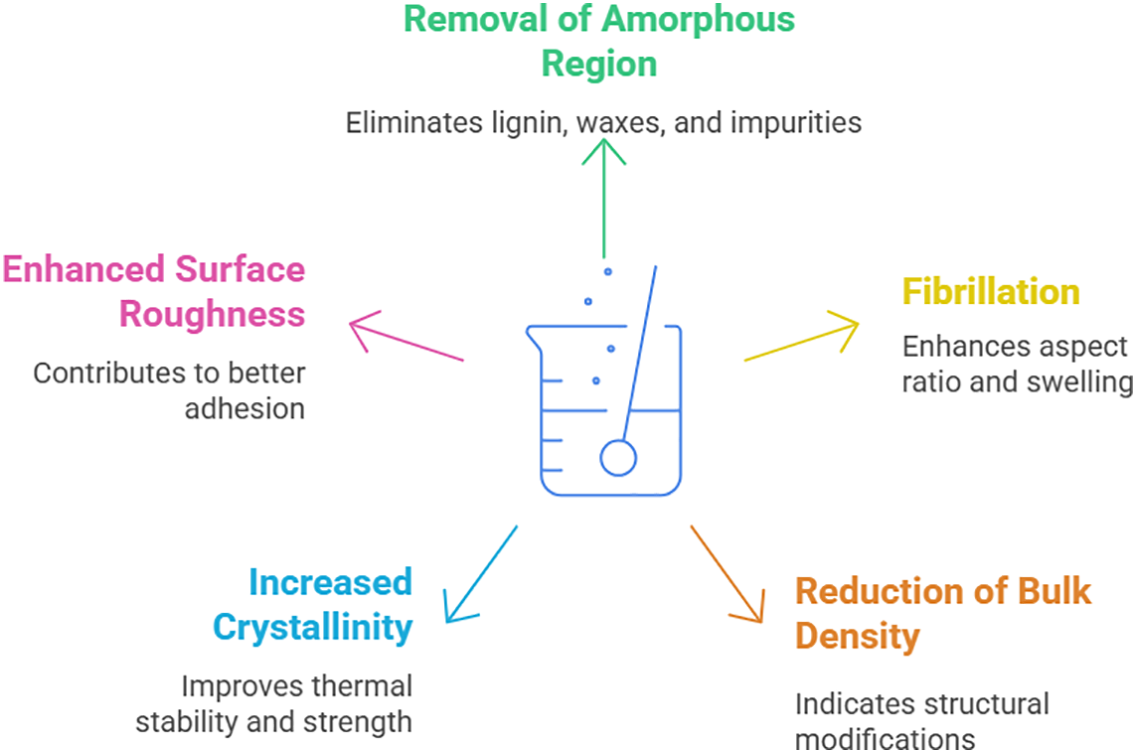
Figure 2: Summary of chemical treatment effects on oil palm fibers for composite applications
3.2 Physical and Thermal Treatments
Physical and thermal treatments are employed to enhance oil palm fiber properties by modifying their structural and morphological characteristics without altering their chemical composition. These treatments primarily focused on improving fiber-matrix adhesion, reducing moisture content, and increasing thermal stability. Drying is a fundamental physical treatment used to remove excess moisture from oil palm fibers, which is essential for preventing microbial degradation and improving fiber-matrix compatibility. Various drying methods, such as oven, solar, and freeze-drying, were studied for their effects on oil palm fibers. Proper drying techniques are crucial, especially for OPT which have high initial moisture content due to their parenchymatous structure. Controlled drying processes are crucial for preserving fiber integrity and enhancing compatibility with hydrophobic polymer matrices. OPT underwent kiln drying for 15 days had a moisture content of 13%–15% before resin impregnation. The impregnated OPT-polymer composites were then prepared using phenol formaldehyde (PF) and UF resins, ensuring effective resin stabilization and improved composite performance [61].
Yoon et al. [62] showed that superheated steam-alkali treatment significantly enhanced the tensile strength of MF/poly (butylene succinate) (PBS) composites by improving fiber-matrix interfacial bonding. Superheated steam (190°C–230°C, 1 h) roughened the fiber surface and exposed the microfibers, which enhanced mechanical interlocking, while subsequent alkali treatment (1%–5% NaOH, 1–4 h) removed lignin and hemicellulose, increased fiber crystallinity and tensile properties. Similarly, Ahamad Nordin et al. [63] reported that superheated steam treatment improved the properties of MF/polypropylene biocomposites, increased the tensile strength by 25%, reduced water absorption by 31%, and enhanced thermal stability by 8%. Warid et al. [64] further confirmed that superheated steam treatment improved the tensile and flexural properties of MF/PP composites by 9%–30% and 9%–12%, respectively, due to better fiber-polymer interfacial adhesion and reduced hemicellulose content. Steam treatment of EFB fibers significantly enhanced tensile strength by 23.9% and 23.8% at 10 and 30 wt.% fiber loadings, respectively [65]. This treatment also improved thermal stability, raising the degradation temperature from 276°C to 283°C. The removal of surface impurities and hemicellulose during steam treatment enhanced fiber-matrix interaction, leading to superior mechanical performance [66].
Overall, physical and thermal treatments provide effective solutions for improving the performance of oil palm fiber composites. These methods are crucial in altering fiber surface morphology, removing non-cellulosic materials, and increasing fiber-matrix compatibility. By optimizing these treatments, manufacturers can improve fiber durability, thermal stability, and interfacial adhesion, resulting in higher-quality biocomposite materials. The effects of these physical and thermal processes are visually summarized in Fig. 3, summarizing how structural changes at the fiber surface lead to enhanced composite integration and long-term performance under environmental stress.
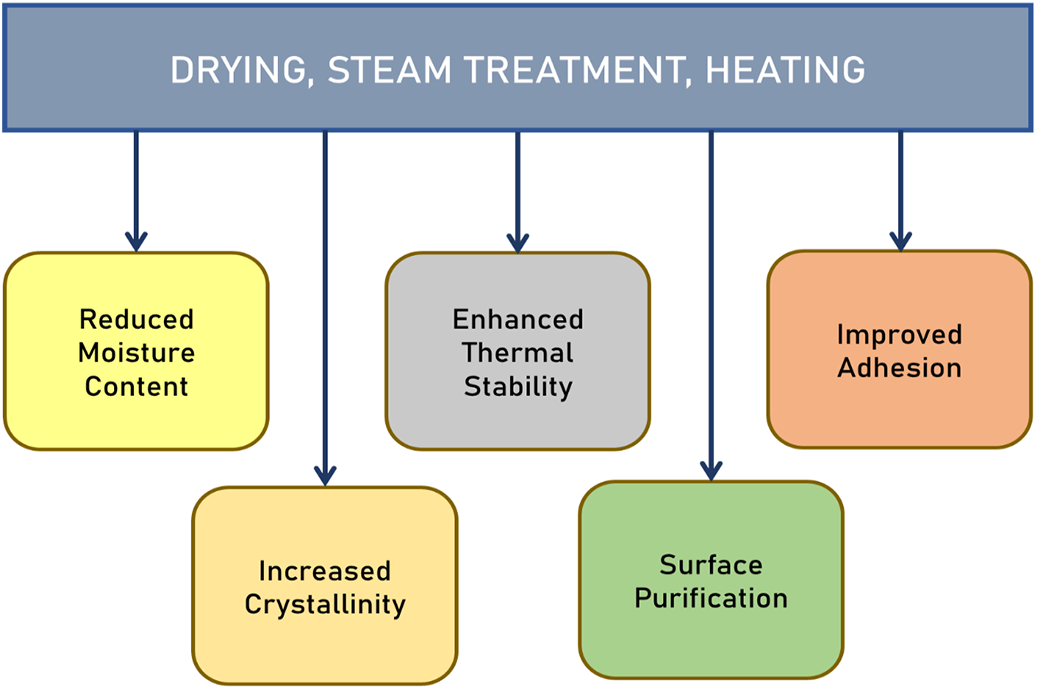
Figure 3: Effects of physical and thermal treatment on oil palm fiber properties and their influence on composite performance
3.3 Hybridization with Other Fibers
Oil palm fiber hybrid composites are attracting interest due to their potential in enhancing mechanical, thermal, and chemical properties of materials. These composites typically combine oil palm fibers with other natural fibers or materials to create a hybrid structure that that controls the strengths of each component. Hybrid composites incorporate oil palm fiber with synthetic or other natural fibers to achieve enhanced mechanical and thermal properties [67]. The combination with glass or carbon fibers improved strength and stiffness, while blending with other natural fibers enhanced biodegradability and sustainability. Such hybridization strategies expanded the application range of oil palm fiber composites as presented in Fig. 4.
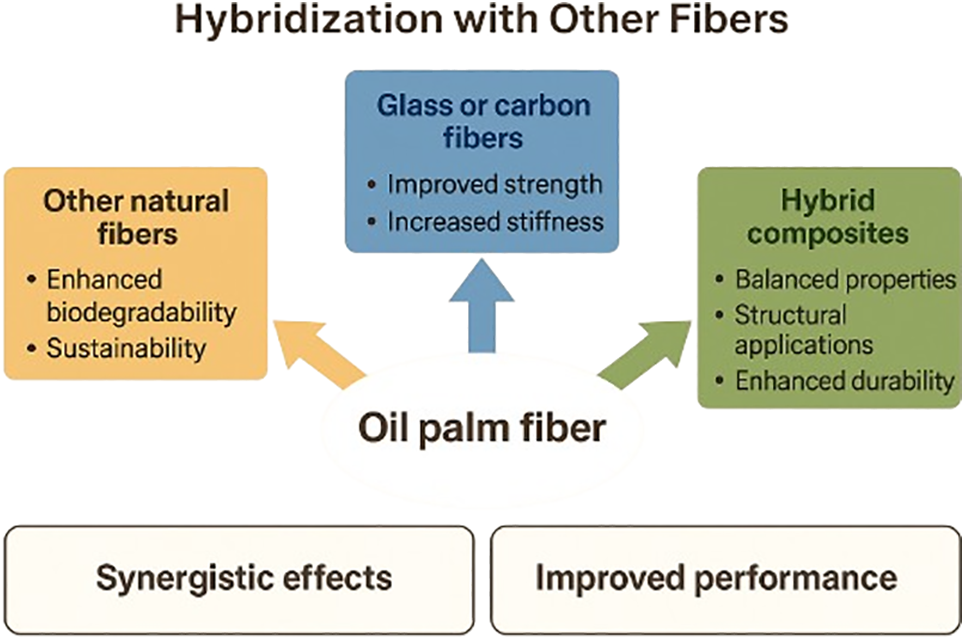
Figure 4: Hybridization effects on oil palm fiber composites
Significant mechanical enhancements were observed on EFB hybrid composites with ramie fibers in epoxy–carbon nanotube (CNT) matrix [68]. It was found that a 3:7 ratio of EFB to ramie fiber yielded the highest tensile and flexural strength. This composition resulted in 127% increase in tensile strength and 83% improvement in flexural strength compared to pure ramie fiber composites. The enhancements were attributed to alkali treatment, which removed impurities and improved fiber-matrix adhesion, while CNT function further enhanced compatibility. These findings highlighted the potential of EFB–ramie hybrid composites for load-bearing applications, offering superior mechanical performance and structural resilience.
Oil palm EFB–kenaf hybrid composites in epoxy matrix had superior thermal stability with breakdown temperatures reaching 450°C, making them suitable for aerospace, automotive, and civil engineering applications [69]. Angra et al. [70] studied a composite of EFB/Jute/EFB hybrid, which achieved tensile strength of 28.72 MPa with low void content, ensuring structural integrity and superior chemical resistance compared to pure fibers. This enhanced durability made the composite ideal for applications demanding resistance to extreme environmental conditions. Meanwhile, Mawardi et al. [71] explored OPT–ramie hybrid composites reinforced with tapioca starch, where pretreatment of oil palm wood particles and ramie fiber improved thermal stability to up to 358°C. This advancement highlighted their potential as environmentally friendly materials for green building applications.
Hybridization of EFB and nettle fibers (NTF) in chemically functionalized high-density polyethylene (CF-HDPE) composites demonstrates notable synergistic effects. The combination enhances both tensile and flexural properties, with NTF/CF-HDPE composites showing the highest performance, achieving 64% and 83% improvements in tensile and flexural strength, respectively. EFB/CF-HDPE composites also recorded substantial gains (40% tensile and 58% flexural), indicating effective stress transfer and interfacial bonding [72]. These findings confirm that hybridizing different natural fibers can significantly optimize composite performance for structural applications. A study by Raja et al. [73] on EFB in kenaf fiber–reinforced basalt particulate hybrid composites provided valuable understandings of their mechanical properties and dimensional stability. The addition of EFB and kenaf fibers enhanced composite performance, thus broadening their potential applications. EFB as an additive improved interfacial bonding between kenaf fibers, basalt particulates, and the polymer matrix by acting as natural plasticizer and hydrophobic agent. This reduced moisture absorption in kenaf fibers and enhanced compatibility with hydrophobic polymer matrices. The study identified the optimal EFB loading in hybridization that maximized strength and durability while maintaining biodegradability, making these composites a promising material for sustainable applications. Recent studies highlighted the potential of hybridizing bamboo and oil palm fibers in powder form to enhance composite performance. Awad et al. [74] concluded that this hybridization improved dimensional stability, thermal resistance, and mechanical properties by reducing moisture absorption and enhancing hydrophobicity and interfacial bonding. Bamboo fibers provided high tensile strength, while oil palm fibers contributed to the toughness and flexibility, creating a balanced synergy. This hybridization resulted in superior mechanical properties compared to composites made solely from bamboo or oil palm fibers, making them more versatile for various applications.
Hybridization with PKS enhanced the toughness of PKS/polyester (PE)/kenaf composites, leveraging PKS’s high lignin content (~50%), which provided rigidity but also brittleness. The inclusion of kenaf fibers improved flexibility and impact resistance, resulted in an 18%–25% increase in impact strength compared to pure PKS composites [75]. This synergy effectively balanced strength and toughness, making the hybrid composite more durable and suitable for structural applications. Rajest Jesudoss Hynes et al. [76] reported that silica-treated mesocarp hybrid PP composites were well-suited for heat-resistant packaging applications. The incorporation of silica improved the thermal stability and mechanical strength of the composite, making it ideal for containers requiring durability under elevated temperatures.
3.4 Integration of Nano-Materials
Incorporation of nanomaterials, such as nanocellulose and nanofillers, significantly enhanced the composite performance by improving load transfer efficiency, thermal and mechanical properties as shown in Fig. 5. For instance, oil palm ash (OPA) nanoparticles integrated into PF resin enhanced the dimensional stability of plywood by reducing water absorption and thickness swelling [77]. The hybrid plywood had superior flexural, shear, and impact strength due to the effective stress distribution facilitated by OPA nanoparticles. The presence of OPA nanoparticles improved the thermal stability of the plywood, rendering it ideal for high-temperature applications. Rizal et al. [78] also explored the potential of OPA nanofillers as effective reinforcements in epoxy-based composites. Incorporation of OPA nanoparticles significantly enhanced tensile strength and modulus, with the highest tensile strength reaching 75 MPa at 4% loading. The impact strength increased from 2.7 to 3.98 kJ/m² at 3% OPA nanofiller loading. Fracture surface morphology analysis confirmed reduced layer breakage and improved interfacial bonding, contributing to the composite’s overall durability. Additionally, OPA nanofillers improved thermal stability, with epoxy nanocomposites showing increased decomposition temperature to up to 435°C. These enhancements made OPA-reinforced epoxy composites promising for high-performance applications which require superior mechanical strength and thermal properties.
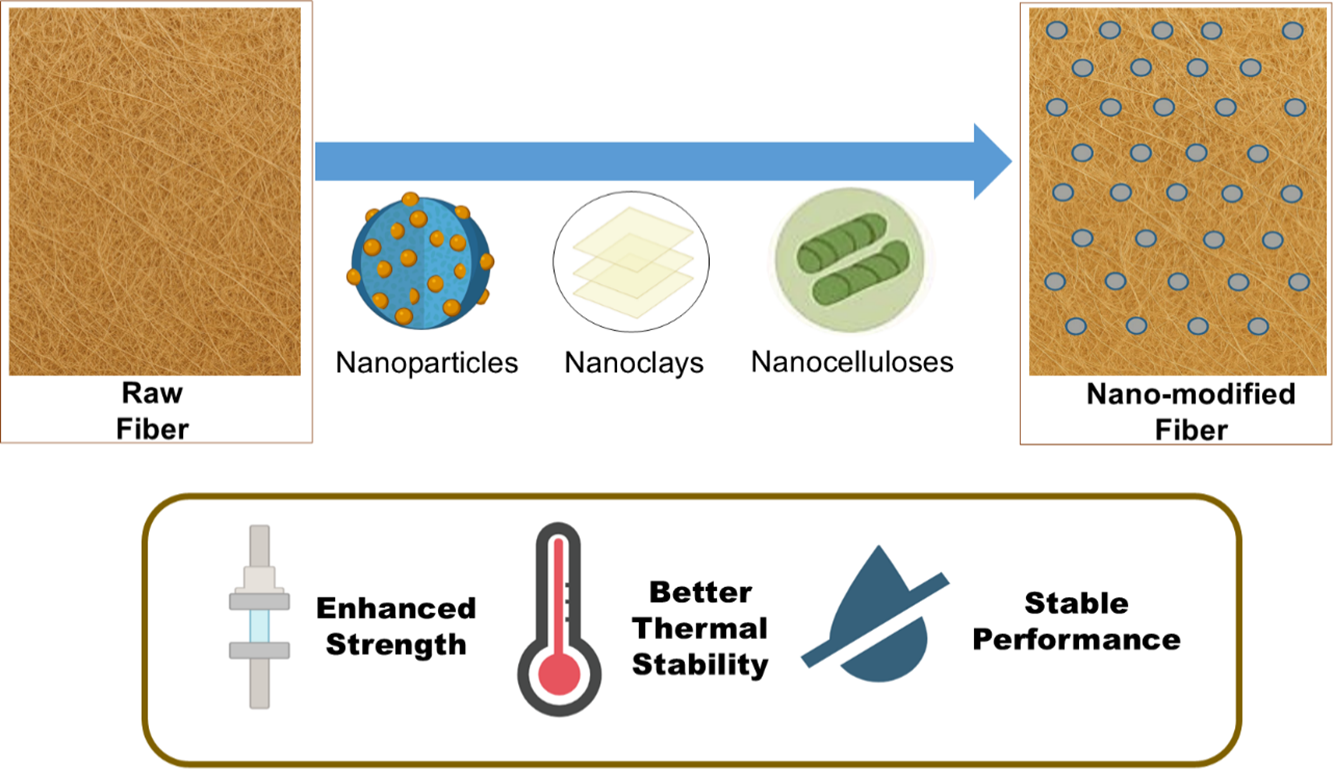
Figure 5: Effects of nanomaterial integration on oil palm fiber composites
Oil palm fiber composites incorporating OPF, EFB, and nanofillers had higher degradation temperatures which enhanced their thermal stability [79]. Nanoparticles improve interfacial adhesion, as evidenced by micrograph images showing nanomodified matrix deposits around fiber bundles. The addition of coconut shell nano powder significantly increased tensile strength (132.8–142.8 MPa), flexural strength, and hardness, with 30% improvement over untreated composites. Hardness values rose due to uniform nanofiller dispersion, minimizing void formation. Fourier Transform Infrared Spectroscopy (FTIR) analysis confirmed the enhanced chemical bonding with increased alcohol/phenol-OH stretches and reduced alkyl-CH stretches, indicating improved compatibility.
The addition of oil palm cellulose nanofibrils (CNF) enhanced the green epoxy nanocomposites, increasing tensile strength by 6.45% and hardness by 13.3% while also improving thermal stability through higher decomposition temperature and heat resistance [80]. These improvements were attributed to CNF’s high crystallinity and thermal conductivity. Rosamah et al. [81] observed that the density of hybrid PE composites increased between 1.133 and 1.141 g/cm³ with the addition of oil palm shell (OPS) nanoparticles as filler loading rose from 1% to 5%. Void content decreased from 5.143% to 4.933% at 3% loading, indicating improved filler dispersion and reduced porosity, though it increased at 5% due to nanoparticle agglomerations. Optimal mechanical properties were observed at 3% OPS loading, attributed to enhanced interfacial adhesion of nanoparticles and the polyester matrix. Improvement in thermal stability was observed with degradation temperatures rose from 240°C to 265°C with 3% nanofiller. Additionally, char residue increased at 3% OPS loading, demonstrating enhanced thermal resistance and heat shielding properties.
4 Applications of Oil Palm Fiber Composites
Oil palm composites derived from EFB, OPF, OPT, MF, and PKS have diverse applications across industries due to their mechanical strength, thermal stability, and eco-friendliness. These materials are increasingly used in construction, the automotive industry, furniture, packaging, and medical sectors, offering sustainable alternatives to conventional materials. EFB fibers are incorporated into cement-based composites for lightweight construction materials, providing enhanced flexural strength and thermal insulation [82]. OPT is processed into plywood, laminated veneer lumber (LVL), particleboards, and cement boards, serving as a sustainable substitute for wood-based panels [83–87]. The properties of OPT-based composites are comparable to rubberwood and are utilized in flooring, furniture, and structural applications [88–91]. Lee et al. [92] also reported the development of thermally treated particleboards using OPT and rubberwood particles. They found that higher treatment temperatures enhanced resistance to fungal attack. However, rubberwood boards showed lower resistance compared to OPT board due to their higher hygroscopic nature and lignin content, which favored fungal growth.
OPT biochar serves as a sustainable filler in rubber composites for tires, improving thermal stability, modulus, and tear strength while reducing reliance on petroleum-based fillers in the automotive sector [93]. OPF fibers have also been optimized for automotive components such as bumpers due to their strength and impact resistance [94]. Oil palm-based composites are also extensively used in furniture manufacturing, with OPT being transformed into molded laminated veneer oil palm (MLVOP) for tables, chairs, cabinets, and decorative items, with durability comparable to traditional wood veneer. Blends of EFB and OPT fibers in particleboards improved flexural strength, screw withdrawal resistance, and dimensional stability [88]. The medium density fiberboard (MDF) produced from OPF and EFB showed comparable strength and durability to conventional wood-based MDF [83,95]. In addition, Bubparenu et al. [96] reported that OPF fiberboards with a density of 170 kg/m³ demonstrated superior sound absorption capacity, particularly at higher frequencies.
MF fibers are integrated into biodegradable polymer matrices as sustainable packaging materials with enhanced mechanical characteristics and composability in the packaging industry. Oil palm-based PLA composites reinforced with EFB and cotton fibers are ideal for high-temperature food packaging [97], while MF-reinforced PE composites provide biodegradable solutions for disposable cutlery and containers [98]. In the medical sector, OPF-derived nanocellulose is used in biomedical applications such as drug delivery and tissue regeneration due to its biocompatibility and non-toxic nature [99]. PKS derivatives contain antibacterial, antifungal, and antioxidant properties, making them suitable for drug formulations and healthcare products [100].
The broad range of applications is visually illustrated in Fig. 6, highlighting the versatility of oil palm fiber composites across construction, automotive, packaging, furniture, and medical fields. With ongoing advancements, oil palm fiber composites continued to demonstrate significant potential for industrial applications, reinforcing their role in promoting sustainability and resource efficiency.
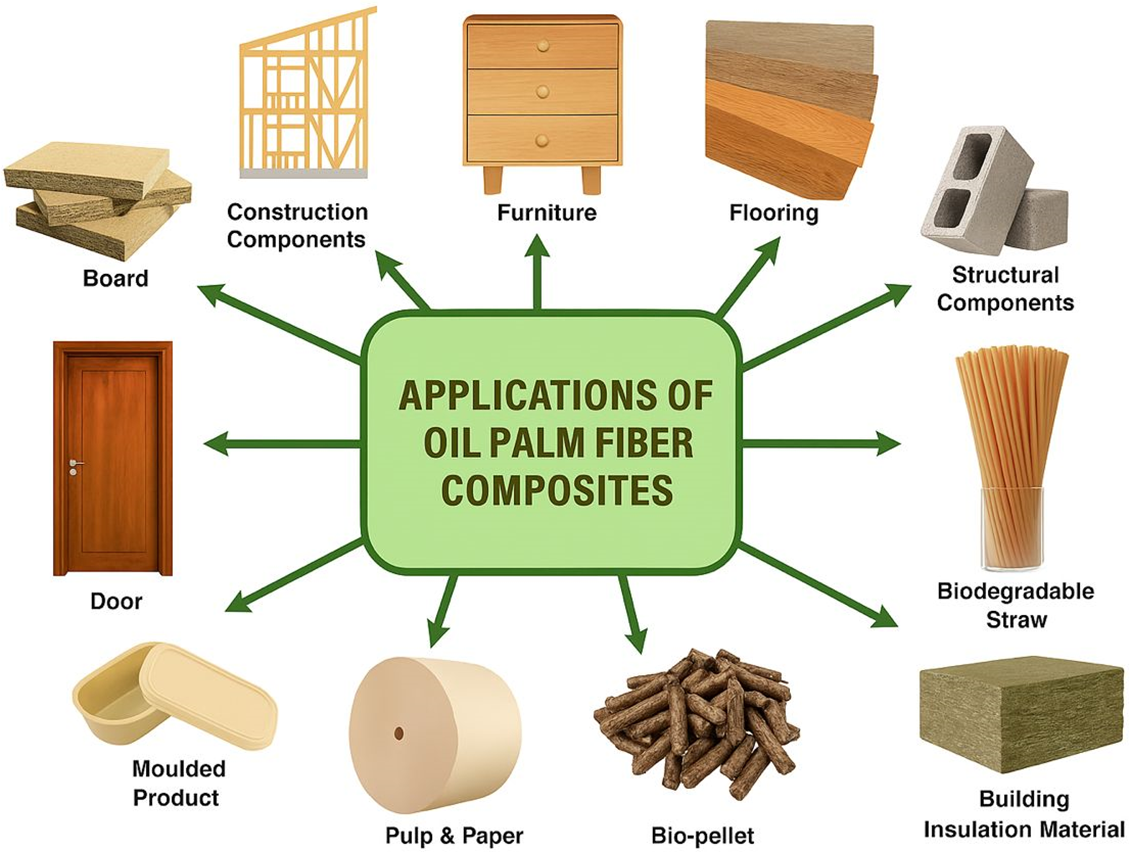
Figure 6: Applications of oil palm fiber composites
5 Applications of Oil Palm Fiber Composites
The development of oil palm fiber-based composites faced several challenges, primarily due to the intrinsic properties of natural fibers. One of the main limitations is their high moisture absorption, which impacts dimensional stability and mechanical properties. The hydrophilic nature of oil palm fibers resulted in weak interfacial adhesion with hydrophobic polymer matrices, reducing overall composite performance [73]. Additionally, the presence of non-cellulosic components such as lignin and waxes further hinders fiber–matrix interactions. Without adequate chemical or physical modification, these impurities act as barriers to bonding, resulting in inferior mechanical strength and reduced durability, particularly under humid conditions [101].
Another major constraint is the low thermal stability of oil palm fiber composites. Lignocellulosic fibers degrade at elevated temperatures, restricting their applicability in high-temperature environments such as automotive and aerospace sectors [69]. To overcome this, thermal stabilizers or hybridization with heat-resistant fibers have been explored, though optimization remains challenging. Similarly, while hybridization improves strength and durability, it introduces issues related to fiber dispersion, ratio optimization, and interfacial compatibility, which must be carefully balanced to achieve consistent performance [70].
Variability in raw material properties also presents difficulties. Unlike synthetic fibers, natural fibers vary in length, diameter, and chemical composition, resulting in inconsistencies in composite properties. This heterogeneity highlights the urgent need for standardization in fiber extraction, treatment, and processing procedures to ensure scalability and reproducibility [71]. To overcome scalability barriers, future strategies should emphasize continuous processing methods such as extrusion and automated fiber alignment, which can maintain fiber uniformity at large volumes. Establishing centralized pre-treatment facilities and adopting modular manufacturing systems may also streamline industrial-scale production while reducing variability and cost. Environmental durability poses another limitation where oil palm fiber composites are susceptible to UV radiation, microbial attack, and weathering. Long-term exposure to ultraviolet radiation leads to photo-oxidation, surface cracking, and gradual loss of mechanical strength. Similarly, prolonged humidity cycles cause swelling, fiber debonding, and dimensional instability, while biological degradation by fungi and bacteria further accelerates performance loss. These environmental stressors significantly limit the service life of oil palm fiber composites, particularly in outdoor and structural applications. While protective coatings and surface treatments can mitigate these effects, they increase processing costs and may raise environmental concerns [69].
Economic and regulatory barriers further restrict large-scale adoption. Specialized processing equipment and treatment technologies increase production costs, raising questions about economic competitiveness compared to conventional composites [78]. Additionally, the absence of comprehensive testing protocols, certification frameworks, and industrial standards limits market acceptance. Meeting stringent requirements for mechanical, thermal, and environmental performance remains a prerequisite for widespread commercialization [76]. Therefore, detailed techno-economic assessments of fiber treatment, chemical modification, and large-scale processing are necessary to evaluate cost-effectiveness relative to synthetic composites. Such analyses will help identify the most commercially viable approaches, balance sustainability with profitability, and guide investment decisions for industrial adoption.
Addressing these limitations requires a many-sided approach that integrates material innovations, processing improvements, and policy support. A key direction is the incorporation of nanomaterials such as nanocellulose, nanoclays, and oxide nanoparticles (e.g., OPA), which can significantly enhance mechanical strength, barrier properties, and dimensional stability [79]. Hybrid composite strategies, where OPF is combined with high-strength fibers such as basalt, jute, or kenaf, offer another promising route to improve tensile performance, thermal resistance, and impact strength, thereby expanding application potential.
Emerging applications also present new opportunities for oil palm fiber composites. For example, additive manufacturing (3D printing) can utilize oil palm fiber-reinforced biopolymers to produce customized, lightweight, and sustainable components for various industries [102,103]. In addition, their high strength-to-weight ratio makes them attractive candidates for lightweight aerospace interior panels, where sustainability and performance are both critical considerations.
Surface modification techniques also remain critical. Treatments such as alkali, silane, enzymatic processing, and bio-based coupling agents have demonstrated the ability to reduce hydrophilicity, strengthen fiber–matrix bonding, and improve durability while maintaining environmental compatibility [92]. In parallel, the integration of bio-based and biodegradable polymer matrices could transform oil palm fiber composites into fully sustainable, end-of-life-manageable materials without sacrificing essential performance [92]. Processing innovations will play an important role in scaling up. Automated fiber alignment and hybrid molding techniques can enhance fiber distribution, reduce waste, and improve reproducibility. Furthermore, the development of fire-retardant treatments and inherently flame-resistant hybrid composites will broaden their use in safety-critical sectors such as construction and transportation.
On a systemic level, stronger collaboration among academia, industry, and regulatory agencies is essential to establish standardized testing methods and certification guidelines. Such frameworks will accelerate industrial adoption and strengthen confidence in oil palm fiber composites [76]. Finally, embedding oil palm fiber composite development within circular economy models, through waste valorization, recycling strategies, and integration of palm oil industry by-products, can enhance sustainability while reducing environmental impact [78]. A visual overview of these barriers and strategies is presented in Fig. 7, which summarizes the key challenges in oil palm fiber composites and potential future directions to overcome them.
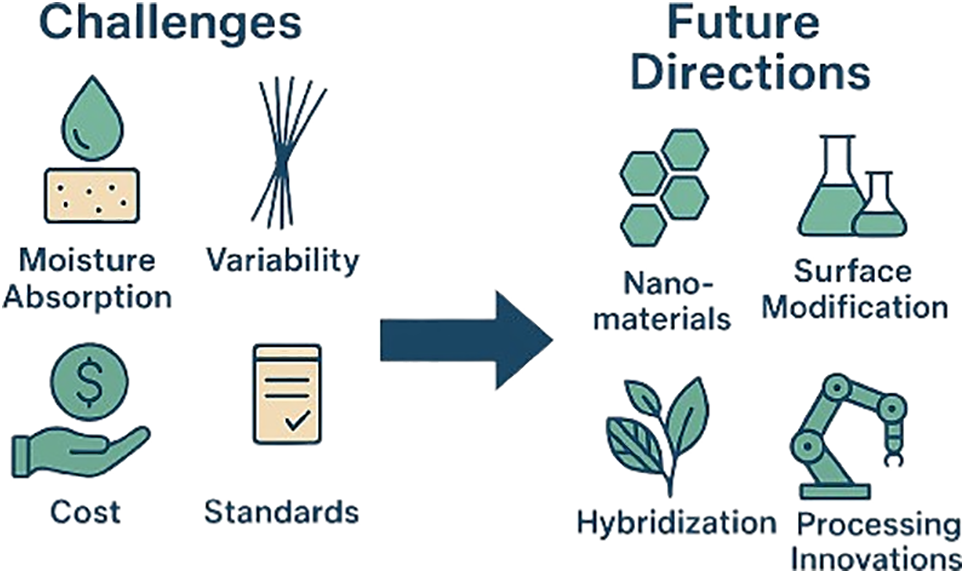
Figure 7: Summary of key challenges in oil palm fiber composites and potential future directions
Development of oil palm fiber hybrid composites represents an important advancement in sustainable materials, offering a viable alternative to conventional synthetic composites. This review highlighted the diverse properties, processing techniques, and industrial applications of oil palm fiber composites, emphasizing their potential in composite industries. Combination of oil palm fibers with other reinforcements has led to enhanced mechanical, thermal, and durability properties, making these composites suitable for various engineering applications. However, challenges such as fiber-matrix compatibility, moisture absorption, and processing optimization remained critical areas that require further research and technological improvements. Chemical modifications, hybridization strategies, and advanced processing methods could potentially address these limitations, paving the way for improved composite performance. Moreover, alignment of oil palm fiber composite development with global sustainability initiatives, including the National Biomass Action Plan and Sustainable Development Goals (SDGs), highlights its importance in supporting circular economy principles and minimizing environmental impact. Government policies, industry collaborations, and research initiatives play crucial roles in accelerating the adoption of these composites. Moving forward, continued innovations in fiber treatment, resin formulations, and manufacturing techniques will be essential in overcoming existing limitations and expanding the application scope of oil palm-based hybrid composites. By integrating sustainability-driven approaches with technological advancements, oil palm fiber composites can serve as a cornerstone in the transition towards greener and more resource-efficient materials, contributing to a more sustainable future.
Acknowledgement: The authors would like to express their gratitude to the Director General of MPOB for the permission to publish this review paper. Additionally, we extend our thanks to the Biomass Technology Unit and Economic and Industry Development Division of MPOB for providing data on oil palm biomass.
Funding Statement: The authors received no specific funding for this study.
Author Contributions: The authors confirm contribution to the paper as follows: Conceptualization, H. A. Aisyah; methodology, H. A. Aisyah and N. M. Nurazzi; validation, H. A. Aisyah, E. Hishamuddin and A. W. Noorshamsiana; resources, H. A. Aisyah, I. Nur Azreena and N. M. Nurazzi; writing—original draft preparation, H. A. Aisyah and I. Nur Azreena; writing—review and editing, H. A. Aisyah, E. Hishamuddin, A. W. Noorshamsiana and N. M. Nurazzi; visualization, H. A. Aisyah. All authors reviewed the results and approved the final version of the manuscript.
Availability of Data and Materials: Not applicable.
Ethics Approval: Not applicable.
Conflicts of Interest: The authors declare no conflicts of interest to report regarding the present study.
Abbreviations
| CF-HDPE | Chemically Functionalized High-Density Polyethylene |
| CNF | Cellulose Nanofibrils |
| CNT | Carbon Nanotube |
| EFB | Empty Fruit Bunch |
| FTIR | Fourier Transform Infrared Spectroscopy |
| LVL | Laminated Veneer Lumber |
| MDF | Medium Density Fiberboard |
| MF | Mesocarp Fiber |
| MLVOP | Molded Laminated Veneer Oil Palm |
| NaOH | Sodium Hydroxide |
| NTF | Nettle Fibers |
| OPA | Oil Palm Ash |
| OPF | Oil Palm Frond |
| OPS | Oil Palm Shell |
| OPT | Oil Palm Trunk |
| PBS | Polybutylene Succinate |
| PCL | Polycaprolactone |
| PE | Polyester |
| PF | Phenol Formaldehyde |
| PKS | Palm Kernel Shell |
| PLA | Polylactic Acid |
| POM | Polyoxymethylene |
| PP | Polypropylene |
| PVC | Polyvinyl Chloride |
| SDG | Sustainable Development Goal |
| UF | Urea Formaldehyde |
References
1. Peças P, Carvalho H, Salman H, Leite M. Natural fibre composites and their applications: a review. J Compos Sci. 2018;2(4):66. doi:10.3390/jcs2040066. [Google Scholar] [CrossRef]
2. McKay I, Vargas J, Yang L, Felfel RM. A review of natural fibres and biopolymer composites: progress, limitations, and enhancement strategies. Materials. 2024;17(19):4878. doi:10.3390/ma17194878. [Google Scholar] [PubMed] [CrossRef]
3. Asyraf MRM, Ishak MR, Syamsir A, Nurazzi NM, Sabaruddin FA, Shazleen SS, et al. Mechanical properties of oil palm fibre-reinforced polymer composites: a review. J Mater Res Technol. 2022;17:33–65. doi:10.1016/j.jmrt.2021.12.122. [Google Scholar] [CrossRef]
4. Poopalam KD, Tuan Ismail TNM, Hanzah N’, Humaira Alias A, Abdul Wahab N, Ibrahim Z’, et al. Utilization of oil palm biomass and Polyurethanes as sustainable construction materials: a review. Dev Built Environ. 2024;17(1):100380. doi:10.1016/j.dibe.2024.100380. [Google Scholar] [CrossRef]
5. Atalie D, Gideon RK. Extraction and characterization of Ethiopian palm leaf fibers. Res J Text Appar. 2018;22(1):15–25. doi:10.1108/rjta-06-2017-0035. [Google Scholar] [CrossRef]
6. Gideon R, Atalie D. Mechanical and water absorption properties of jute/palm leaf fiber-reinforced recycled poly-propylene hybrid composites. Int J Polym Sci. 2022;2022(1):4408455. doi:10.1155/2022/4408455. [Google Scholar] [CrossRef]
7. Loh SK. The potential of the Malaysian oil palm biomass as a renewable energy source. Energy Convers Manag. 2017;141:285–98. doi:10.1016/j.enconman.2016.08.081. [Google Scholar] [CrossRef]
8. Malaysian Palm Oil Board (MPOB). Economics and industry development division-statistics [Internet]. [cited 2025 Sep 2]. Available from: https://bepi.mpob.gov.my. [Google Scholar]
9. Bakri B, Naharuddin, Mustafa, Medi A, Padang L. A review of oil palm fruit fiber reinforced composites. IOP Conf Ser Mater Sci Eng. 2022;1212(1):012050. doi:10.1088/1757-899x/1212/1/012050. [Google Scholar] [CrossRef]
10. Khongtong S, Srivaro S, Phatchan S. Transforming oil palm trunk waste into high-performance lightweight materials. Ind Crops Prod. 2024;215:118639. doi:10.1016/j.indcrop.2024.118639. [Google Scholar] [CrossRef]
11. Asyraf MRM, Nurazzi NM, Norrrahim MNF, Hazrati KZ, Ghani A, Sabaruddin FA, et al. Thermal properties of oil palm lignocellulosic fibre reinforced polymer composites: a comprehensive review on thermogravimetry analysis. Cellulose. 2023;30(5):2753–90. doi:10.1007/s10570-023-05080-4. [Google Scholar] [CrossRef]
12. Alfatah T, Mistar EM, Syabriyana M, Supardan MD. Advances in oil palm shell fibre reinforced thermoplastic and thermoset polymer composites. Alex Eng J. 2022;61(6):4945–62. doi:10.1016/j.aej.2021.09.061. [Google Scholar] [CrossRef]
13. Aguilar AD, Tenemaza K, Valle V, Bastidas-Caldes C, Almeida-Naranjo CE, Gutiérrez P. A two-stage analysis for the role of fiber size in terms of length distribution on the performance under accelerated weathering tests of oil palm empty fruit bunch fiber-reinforced vinyl acrylic composites. Polym Compos. 2024;45(3):2232–52. doi:10.1002/pc.27916. [Google Scholar] [CrossRef]
14. Anuar NIS, Zakaria S, Gan S, Chia CH, Wang C, Harun J. Comparison of the morphological and mechanical properties of oil Palm EFB fibres and kenaf fibres in nonwoven reinforced composites. Ind Crops Prod. 2019;127:55–65. doi:10.1016/j.indcrop.2018.09.056. [Google Scholar] [CrossRef]
15. Megashah LN, Ariffin H, Zakaria MR, Ando Y. Characteristics of cellulose from oil palm mesocarp fibres extracted by multi-step pretreatment methods. IOP Conf Ser Mater Sci Eng. 2018;368:012001. doi:10.1088/1757-899x/368/1/012001. [Google Scholar] [CrossRef]
16. Kumneadklang S, O-Thong S, Larpkiattaworn S. Characterization of cellulose fiber isolated from oil palm frond biomass. Mater Today Proc. 2019;17(1):1995–2001. doi:10.1016/j.matpr.2019.06.247. [Google Scholar] [CrossRef]
17. Boonsombuti A, Phinichkha N, Supansomboon S, Luengnaruemitchai A. The use of lignin from palm kernel shell (PKS) to fabricate oil palm mesocarp fiber (OPMF) particleboards. Int J Adhes Adhes. 2023;125:103425. doi:10.1016/j.ijadhadh.2023.103425. [Google Scholar] [CrossRef]
18. Arno F, Katja FK. The use of oil palm trunks for wood products. Mater Res Proc. 2019;11:69–80. [Google Scholar]
19. Ibrahim Z, Ahmad M, Aziz AA, Ramli R, Hassan K, Alias AH. Properties of chemically treated oil palm empty fruit bunch (EFB) fibres. J Adv Res Fluid Mech Therm Sci. 2019;57(1):57–68. [Google Scholar]
20. Yiin CL, Ho S, Yusup S, Quitain AT, Chan YH, Loy ACM, et al. Recovery of cellulose fibers from oil palm empty fruit bunch for pulp and paper using green delignification approach. Bioresour Technol. 2019;290:121797. doi:10.1016/j.biortech.2019.121797. [Google Scholar] [PubMed] [CrossRef]
21. Syammaun T, Rani HA, Koting S. Revolutionizing asphalt engineering: unveiling the influence of oil palm fiber reinforcement on the mechanical attributes of asphalt mixtures. Elkawnie. 2024;10(1):28. doi:10.22373/ekw.v10i1.21669. [Google Scholar] [CrossRef]
22. Ahmad A, Rohman S, Roseno S, Gustiono D, Sultan AZ, Nur R, et al. Development and characterisation of eco-friendly hybrid polymer composites from palm oil empty fruit bunch (EFB) fibre and glass fiber reinforced polyester for biomedical applications. Mater Technol. 2025;40(1):2512017. doi:10.1080/10667857.2025.2512017. [Google Scholar] [CrossRef]
23. Ramlee NA, Jawaid M, Zainudin ES, Yamani SAK. Modification of oil palm empty fruit bunch and sugarcane bagasse biomass as potential reinforcement for composites panel and thermal insulation materials. J Bionic Eng. 2019;16(1):175–88. doi:10.1007/s42235-019-0016-5. [Google Scholar] [CrossRef]
24. Islam MN, Dungani R, Abdul Khalil H, Alwani MS, Nadirah WW, Fizree HM. Natural weathering studies of oil palm trunk lumber (OPTL) green polymer composites enhanced with oil palm shell (OPS) nanoparticles. SpringerPlus. 2013;2(1):592. doi:10.1186/2193-1801-2-592. [Google Scholar] [PubMed] [CrossRef]
25. Mawardi I, Nurdin N, Fakhriza F, Rizal S, Aprilia S, Faisal M, et al. Optimization of particle size and ramie fiber ratio on hybrid bio panel production from oil palm trunk as thermal insulation materials. J Ecol Eng. 2023;24(2):39–49. doi:10.12911/22998993/156830. [Google Scholar] [CrossRef]
26. Hasanah M, Saktisahdan TJ, Susilawati S, Frannoto F, Padriansyah A, Hafizh I. Physical and mechanical properties of palm frond-based fiberboard composite. Pertanika J Sci Technol. 2024;32(5):2313–26. doi:10.47836/pjst.32.5.21. [Google Scholar] [CrossRef]
27. Hongsriphan N, Subsanga J, Suebsai P, Sitthipong S, Patanathabutr P. Use of oil palm frond waste to reinforce poly(lactic acid) based composites with the improvement of interfacial adhesion by alkali treatment. J Met Mater Miner. 2022;32(1):134–43. doi:10.55713/jmmm.v32i1.1244. [Google Scholar] [CrossRef]
28. Padavala SSAB, Dey S, Veerendra GTN, Phani Manoj AV. Experimental study on concrete by partial replacement of cement with fly ash and coarse aggregates with palm kernel shells (Pks) and with addition of hybrid fibers. Chem Inorg Mater. 2024;2:100033. doi:10.1016/j.cinorg.2024.100033. [Google Scholar] [CrossRef]
29. Oladele IO, Ibrahim IO, Adediran AA, Akinwekomi AD, Adetula YV, Olayanju TMA. Modified palm kernel shell fiber/particulate cassava peel hybrid reinforced epoxy composites. Results Mater. 2020;5:100053. doi:10.1016/j.rinma.2019.100053. [Google Scholar] [CrossRef]
30. Lakshmaiya N, Kaliappan S, Patil PP, Ganesan V, Dhanraj JA, Sirisamphanwong C, et al. Influence of oil palm nano filler on interlaminar shear and dynamic mechanical properties of flax/epoxy-based hybrid nanocomposites under cryogenic condition. Coatings. 2022;12(11):1675. doi:10.3390/coatings12111675. [Google Scholar] [CrossRef]
31. Yan L, Chouw N, Jayaraman K. Flax fibre and its composites—a review. Compos Part B Eng. 2014;56:296–317. doi:10.1016/j.compositesb.2013.08.014. [Google Scholar] [CrossRef]
32. Faruk O, Bledzki AK, Fink HP, Sain M. Biocomposites reinforced with natural fibers: 2000–2010. Prog Polym Sci. 2012;37(11):1552–96. doi:10.1016/j.progpolymsci.2012.04.003. [Google Scholar] [CrossRef]
33. Sreekala MS, Kumaran MG, Thomas S. Oil palm fibers: morphology, chemical composition, surface modification, and mechanical properties. J Appl Polym Sci. 1997;66(5):821–35. doi:10.1002/(SICI)1097-4628(19971031)66:5821::AID-APP2>3.0.CO;2-X. [Google Scholar] [CrossRef]
34. Wahab R, Sukhairi Mat Rasat M, Mohd Fauzi N, Saiful Sulaiman M, Samsi HW, Mokhtar N, et al. Processing and properties of oil palm fronds composite boards from Elaeis guineensis. In: Elaeis guineensis. London, UK: IntechOpen; 2022. doi:10.5772/intechopen.98222. [Google Scholar] [CrossRef]
35. Ahmad Z, Saman HM, Tahir PM. Oil palm trunk fiber as a bio-waste resource for concrete reinforcement. Int J Mech Mater Eng. 2010;5(2):199–207. [Google Scholar]
36. Abdul Khalil HPS, Alwani MS, Ridzuan R, Kamarudin H, Khairul A. Chemical composition, morphological characteristics, and cell wall structure of Malaysian oil palm fibers. Polym Plast Technol Eng. 2008;47(3):273–80. doi:10.1080/03602550701866840. [Google Scholar] [CrossRef]
37. Bopda Fokam C, Toumi E, Kenmeugne B, Wiryikfu NC, Mevaa L. Experimental study of the addition of oil palm mesocarp fiber on the physical and mechanical properties of fiber cement mortar composites. SN Appl Sci. 2021;3(1):85. doi:10.1007/s42452-020-04037-7. [Google Scholar] [CrossRef]
38. Abdul Khalil HPS, Jawaid M, Abu Bakar A. Woven hybrid composites: water absorption and thickness swelling behaviors. BioResources. 2011;6(2):1043–52. doi:10.15376/biores.6.2.1043-1052. [Google Scholar] [CrossRef]
39. Islam MS, Pickering KL, Foreman NJ. Influence of alkali treatment on the interfacial and physico-mechanical properties of industrial hemp fibre reinforced polylactic acid composites. Compos Part A Appl Sci Manuf. 2010;41(5):596–603. doi:10.1016/j.compositesa.2010.01.006. [Google Scholar] [CrossRef]
40. Taiwo EM, Yahya K, Haron Z. Potential of using natural fiber for building acoustic absorber: a review. J Phys Conf Ser. 2019;1262(1):012017. doi:10.1088/1742-6596/1262/1/012017. [Google Scholar] [CrossRef]
41. Eichhorn SJ, Baillie CA, Zafeiropoulos N, Mwaikambo LY, Ansell MP, Dufresne A, et al. Review: current international research into cellulosic fibres and composites. J Mater Sci. 2001;36(9):2107–31. doi:10.1023/A:1017512029696. [Google Scholar] [CrossRef]
42. Mohanty A, Misra M, Drzal L, Selke S, Harte B, Hinrichsen G. Natural fibers, biopolymers, and biocomposites: an introduction. In: Natural fibers, biopolymers, and biocomposites. Boca Raton, FL, USA: CRC Press; 2005. doi:10.1201/9780203508206.ch1. [Google Scholar] [CrossRef]
43. Osman S, Ibrahim Z, Alias AH, Abdul Wahab N, Ramli R, Abdul Hamid F, et al. Basic properties of oil palm biomass (OPB). In: Oil palm biomass for composite panels. Amsterdam, The Netherlands: Elsevier; 2022. p. 39–56. doi:10.1016/b978-0-12-823852-3.00007-6. [Google Scholar] [CrossRef]
44. Alias AH, Ibrahim Z, Wahab NA, Idris NA, Ahmad Zairun M. Oil palm particleboard: properties and fungi susceptibility. J Renew Mater. 2025;13(1):163–80. doi:10.32604/jrm.2024.053388. [Google Scholar] [CrossRef]
45. SaifulAzry SOA, Lee SH, Lum WC. Particleboard from oil palm biomass. In: Oil palm biomass for composite panels. Amsterdam, The Netherlands: Elsevier; 2022. p. 283–96. doi:10.1016/b978-0-12-823852-3.00013-1. [Google Scholar] [CrossRef]
46. Srinara T, Lowrattanaounjit N, Chaochanchaikul K. Improvement of mechanical properties of polylactic acid/oil palm fiber composites by alkali treatment. Appl Mech Mater. 2020;901:73–8. doi:10.4028/www.scientific.net/amm.901.73. [Google Scholar] [CrossRef]
47. Setiawan A, Setiani V, Hardiyanti F, Puspitasari D. Pengaruh treatment alkali terhadap karakteristik fiber sabut kelapa sawit Dan pelepah pisang sebagai bahan komposit polimer. J Res Technol. 2018;5(2):117–128. doi:10.55732/jrt.v5i2.321. [Google Scholar] [CrossRef]
48. Yunus NYM, Jasmi NF, Mohd Nazri W, Abdul Rahman W. Processing and alkali treatment impact towards oil palm frond fibers bulk density and wood-plastic composite performance. In: Proceedings of 2nd World Conference on Byproducts of Palms and Their Applications. Singapore: Springer Nature; 2022. p. 65–77. doi:10.1007/978-981-19-6195-3_6. [Google Scholar] [CrossRef]
49. Sukmawan R, Kusmono, Rahmanta AP, Saputri LH. The effect of repeated alkali pretreatments on the morphological characteristics of cellulose from oil palm empty fruit bunch fiber-reinforced epoxy adhesive composite. Int J Adhes Adhes. 2022;114:103095. doi:10.1016/j.ijadhadh.2022.103095. [Google Scholar] [CrossRef]
50. Muhalim D, Liza S, Fukuda K, Mat Tahir NA, Yaakob Y. Tribological performance of self-lubricating polyoxymethylene composite reinforced with chemically treated oil palm empty fruit bunch fibers for bearing application. Fibres Polym. 2025;26(7):3075–93. doi:10.1007/s12221-025-00980-7. [Google Scholar] [CrossRef]
51. Istana B, Sutikno S, Batan IML, Utami LP. Effect of alkali treatments on morphology and acoustic properties of oil palm frond fibers in low-density composite particleboards. In: AIP Conference Proceedings. Padang, Indonesia. Melville, NY, USA: AIP Publishing; 2025. doi:10.1063/5.0243155. [Google Scholar] [CrossRef]
52. Yang J, Ching YC, Chuah CH, Hai ND, Singh R, Nor ARM. Preparation and characterization of starch-based bioplastic composites with treated oil palm empty fruit bunch fibers and citric acid. Cellulose. 2021;28(7):4191–210. doi:10.1007/s10570-021-03816-8. [Google Scholar] [CrossRef]
53. Pooja N, Chakraborty I, Mal SS, Prasad ASB, Mahato KK, Mazumder N. Evaluation of physicochemical properties of citric acid crosslinked starch elastomers reinforced with silicon dioxide. RSC Adv. 2024;14(1):139–46. doi:10.1039/d3ra07868j. [Google Scholar] [PubMed] [CrossRef]
54. Zakaria R, Bawon P, Lee SH, Salim S, Lum WC, Al-Edrus SSO, et al. Properties of particleboard from oil palm biomasses bonded with citric acid and tapioca starch. Polymers. 2021;13(20):3494. doi:10.3390/polym13203494. [Google Scholar] [PubMed] [CrossRef]
55. Abdullah CI, Abd Rahman NMM, Hassan A. A pre-mold study of alkaline-silane treated EFB-PP composites based on thermal and rheological analysis. J Appl Polym Sci. 2023;140(40):e54489. doi:10.1002/app.54489. [Google Scholar] [CrossRef]
56. Eng CC, Ibrahim NA, Zainuddin N, Ariffin H, Yunus WMZW. Impact strength and flexural properties enhancement of methacrylate silane treated oil palm mesocarp fiber reinforced biodegradable hybrid composites. Sci World J. 2014;2014:213180. doi:10.1155/2014/213180. [Google Scholar] [PubMed] [CrossRef]
57. Eng CC, Ibrahim NA, Zainuddin N, Ariffin H, Wan Yunus WMZ. Chemical modification of oil palm mesocarp fiber by methacrylate silane: effects on morphology, mechanical, and dynamic mechanical properties of biodegradable hybrid composites. BioResources. 2015;11(1):861–72. doi:10.15376/biores.11.1.861-872. [Google Scholar] [CrossRef]
58. Zakaria S, Poh LK. Polystyrene-benzoylated efb reinforced composites. Polym Plast Technol Eng. 2002;41(5):951–62. doi:10.1081/PPT-120014397. [Google Scholar] [CrossRef]
59. Abu Bakar A, Baharulrazi N. Mechanical properties of benzoylated oil palm empty fruit bunch short fiber reinforced poly(vinyl chloride) composites. Polym Plast Technol Eng. 2008;47(10):1072–9. doi:10.1080/03602550802367300. [Google Scholar] [CrossRef]
60. Birnin-Yauri AU, Ibrahim NA, Zainuddin N, Abdan K, Then YY, Chieng BW. Enhancement of the mechanical properties and dimensional stability of oil palm empty fruit bunch-kenaf core and oil palm mesocarp-kenaf core hybrid fiber-reinforced poly(lactic acid) biocomposites by borax decahydrate modification of fibers. BioResources. 2016;11(2):4865–84. doi:10.15376/biores.11.2.4865-4884. [Google Scholar] [CrossRef]
61. Abdullah CK, Jawaid M, Abdul Khalil HPS, Zaidon A, Hadiyane A. Oil palm trunk polymer composite: morphology, water absorption, and thickness swelling behaviours. BioResources. 2012;7(3):2948–59. doi:10.15376/biores.7.3.2948-2959. [Google Scholar] [CrossRef]
62. Then YY, Ibrahim NA, Zainuddin N, Ariffin H, Wan Yunus WMZ. Enhancement of tensile strength of oil palm mesocarp fiber/poly(butylene succinate) biocomposite via superheated steam-alkali treatment of oil palm mesocarp fiber. Sci Res J. 2014;11(2):19. doi:10.24191/srj.v11i2.5421. [Google Scholar] [CrossRef]
63. Ahamad Nordin NIA, Ariffin H, Ali Hassan M, Shirai Y, Ando Y, Ibrahim NA, et al. Superheated steam treatment of oil palm mesocarp fiber improved the properties of fiber-polypropylene biocomposite. BioResources. 2016;12(1):68–81. doi:10.15376/biores.12.1.68-81. [Google Scholar] [CrossRef]
64. Warid MNM, Yasim-Anuar TAT, Ariffin H, Ali Hassan M, Andou Y, Shirai Y. Static mechanical, thermal stability, and interfacial properties of superheated steam treated oil palm biomass reinforced polypropylene biocomposite. Pertanika J Sci Technol. 2020;28(S2):287–98. doi:10.47836/pjst.28.s2.22. [Google Scholar] [CrossRef]
65. Bin Bujang AM, Binti Ahamad Nordin NIA. Effect of steam treatment on the characteristics of oil palm empty fruit bunch and its biocomposite. Indones J Chem. 2020;20(2):292. doi:10.22146/ijc.40906. [Google Scholar] [CrossRef]
66. Then YY, Ibrahim NA, Zainuddin N, Ariffin H, Yunus WMZW, Chieng BW. The influence of green surface modification of oil palm mesocarp fiber by superheated steam on the mechanical properties and dimensional stability of oil palm mesocarp fiber/poly(butylene succinate) biocomposite. Int J Mol Sci. 2014;15(9):15344–57. doi:10.3390/ijms150915344. [Google Scholar] [PubMed] [CrossRef]
67. Aisyah HA, Hishamuddin E, Noorshamsiana AW, Ibrahim Z, Ilyas RA. Oil palm fiber hybrid composites: a recent review. J Renew Mater. 2024;12(10):1661–89. doi:10.32604/jrm.2024.055217. [Google Scholar] [CrossRef]
68. Wulan PPDK, Yolanda Y. Mechanical property improvement of oil palm empty fruit bunch composites by hybridization using ramie fibers on epoxy–CNT matrices. Sci Eng Compos Mater. 2023;30(1):20220198. doi:10.1515/secm-2022-0198. [Google Scholar] [CrossRef]
69. Hanan F, Khan T, Jawaid M, Sultan MTH, Sebaey T, Singh B, et al. Thermal characterization of epoxy bilayer hybrid composites reinforced with kenaf and oil palm fibers. Polym Compos. 2023;44(1):444–52. doi:10.1002/pc.27108. [Google Scholar] [CrossRef]
70. Angra DK, Kumar D, Angra DS. Characterization of void content, tensile strength, and chemical resistance in hybrid polymer composites reinforced with oil palm and jute fibers. Int J Multidiscip Res. 2023;5(6):11012. doi:10.36948/ijfmr.2023.v05i06.11012. [Google Scholar] [CrossRef]
71. Mawardi I, Rizal S, Aprilia S, Faisal M. Evaluation of thermal and spectroscopic properties of hybrid biocomposite OPW/ramie fiber for materials building. In: AIP Conference Proceedings. Surabaya, Indonesia. Melville, NY, USA: AIP Publishing; 2023. doi:10.1063/5.0110223. [Google Scholar] [CrossRef]
72. Gupta HS, Palsule S. Oil palm and nettle fibers reinforced functionalized HDPE hybrid composites and their comparative performance. Polym Eng Sci. 2025;65(9):4977–89. doi:10.1002/pen.70036. [Google Scholar] [CrossRef]
73. Raja T, Munuswamy DB, Francis RR, Vaidya G, Sundararaman S, Devarajan Y. Experimental investigations on the effect of palm oil in kenaf fibre–reinforced basalt particulate hybrid biocomposite. Biomass Convers Biorefin. 2024;14(4):5345–55. doi:10.1007/s13399-022-02714-8. [Google Scholar] [CrossRef]
74. Awad SA, Jawaid M, Fouad H, Saba N, Dhakal HN, Alothman OY, et al. A comparative assessment of chemical, mechanical, and thermal characteristics of treated oil palm/pineapple fiber/bio phenolic composites. Polym Compos. 2022;43(4):2115–28. doi:10.1002/pc.26525. [Google Scholar] [CrossRef]
75. Gangil B, Ranakoti L, Verma S, Singh T, Kumar S. Natural and synthetic fibers for hybrid composites. Hybrid Fiber Compos Mater Manuf Process Eng. 2020:1–5. doi:10.1002/9783527824571.ch1. [Google Scholar] [CrossRef]
76. Rajesh Jesudoss Hynes N, Sankaranarayanan R, Senthil Kumar J, Mavinkere Rangappa S, Siengchin S. Mechanical behavior of synthetic/natural fibers in hybrid composites. Hybrid Fiber Compos Mater Manuf Process Eng. 2020:129–46. doi:10.1002/9783527824571.ch8. [Google Scholar] [CrossRef]
77. Nuryawan A, Abdullah CK, Hazwan CM, Olaiya NG, Yahya EB, Risnasari I, et al. Enhancement of oil palm waste nanoparticles on the properties and characterization of hybrid plywood biocomposites. Polymers. 2020;12(5):1007. doi:10.3390/polym12051007. [Google Scholar] [PubMed] [CrossRef]
78. Rizal S, Fizree HM, Owolabi FAT, Gopakumar DA, Paridah MT, Kassim MHM, et al. Utilization of agrowaste-derived nanoparticles as reinforcement in microfilled epoxy composites. BioResources. 2019;14(3):5365–79. doi:10.15376/biores.14.3.5365-5379. [Google Scholar] [CrossRef]
79. Raja Dhas JE, Savio Lewise KA, Kumar KN, Raja V, AL-bonsrulah HAZ, Ahmad H, et al. Effect of coconut shell nanopowder reinforcement in the development of palm fiber composites. Front Mater. 2022;9:986011. doi:10.3389/fmats.2022.986011. [Google Scholar] [CrossRef]
80. Yusuf J, Sapuan SM, Rashid U, Ilyas RA, Hassan MR. Thermal, mechanical, and morphological properties of oil palm cellulose nanofibril reinforced green epoxy nanocomposites. Int J Biol Macromol. 2024;278(Pt 3):134421. doi:10.1016/j.ijbiomac.2024.134421. [Google Scholar] [PubMed] [CrossRef]
81. Rosamah E, Hossain MS, Abdul Khalil HPS, Wan Nadirah WO, Dungani R, Nur Amiranajwa AS, et al. Properties enhancement using oil palm shell nanoparticles of fibers reinforced polyester hybrid composites. Adv Compos Mater. 2017;26(3):259–72. doi:10.1080/09243046.2016.1145875. [Google Scholar] [CrossRef]
82. Omoniyi TE. Potential of oil palm (elaeisguineensis) empty fruit bunch fibres cement composites for building applications. AgriEngineering. 2019;1(2):153–63. doi:10.3390/agriengineering1020012. [Google Scholar] [CrossRef]
83. Nuryawan A, Sutiawan J, Rahmawaty, Masruchin N, Bekhta P. Panel products made of oil palm trunk: a review of potency, environmental aspect, and comparison with wood-based composites. Polymers. 2022;14(9):1758. doi:10.3390/polym14091758. [Google Scholar] [PubMed] [CrossRef]
84. Mokhtar A, Hassan K, Aziz AA, Wahid M. Plywood from oil palm trunks. J Oil Palm Res. 2011;23(3):1159–65. [Google Scholar]
85. Hoong YB, Loh YF, Chuah LA, Juliwar I, Pizzi A, Paridah MT, et al. Development a new method for pilot scale production of high grade oil palm plywood: effect of resin content on the mechanical properties, bonding quality and formaldehyde emission of palm plywood. Mater Des 1980 2015. 2013;52(4):828–34. doi:10.1016/j.matdes.2013.05.082. [Google Scholar] [CrossRef]
86. Jantawee S, Lim H, Li M, Oh JK, Pasztory Z, Cho H, et al. Developing structural sandwich panels for energy-efficient wall applications using laminated oil palm wood and rubberwood-based plywood/oriented strand board. J Wood Sci. 2023;69(1):35. doi:10.1186/s10086-023-02109-x. [Google Scholar] [CrossRef]
87. Ismail AC, Salim S, Tahir PM, Lee SH, Ghani MAA, Al Edrus SS, et al. Properties enhancement of oil palm trunk plywood against decay and termite for marine applications. Polymers. 2022;14(13):2680. doi:10.3390/polym14132680. [Google Scholar] [PubMed] [CrossRef]
88. Suhaily SS, Jawaid M, Abdul Khalil HPS, Mohamed AR, Ibrahim F. A review of oil palm biocomposites for furniture design and applications: potential and challenges. BioResources. 2012;7(3):4400–23. doi:10.15376/biores.7.3.4400-4423. [Google Scholar] [CrossRef]
89. Paridah MT. Rotary veneer processing of oil palm trunk. In: Oil palm biomass for composite panels. Amsterdam, The Netherlands: Elsevier; 2022. p. 131–52. doi:10.1016/b978-0-12-823852-3.00005-2. [Google Scholar] [CrossRef]
90. Loh YF, Paridah MT, Hoong YB, Yoong ACC. Effects of treatment with low molecular weight phenol formaldehyde resin on the surface characteristics of oil palm (Elaeis quineensis) stem veneer. Mater Des. 2011;32(4):2277–83. doi:10.1016/j.matdes.2010.11.014. [Google Scholar] [CrossRef]
91. Hashim R, Saari N, Sulaiman O, Sugimoto T, Hiziroglu S, Sato M, et al. Effect of particle geometry on the properties of binderless particleboard manufactured from oil palm trunk. Mater Des. 2010;31(9):4251–7. doi:10.1016/j.matdes.2010.04.012. [Google Scholar] [CrossRef]
92. Lee SH, Lee S, Lum WC, Zaidon A, Bakar ES, Nurliyana MY, et al. Mechanical and physical properties of oil palm trunk core particleboard bonded with different UF resins. J Oil Palm Res. 2015;26:163–9. [Google Scholar]
93. Chueangchayaphan N, Tarasin M, Phonjon W, Chueangchayaphan W. Evaluating oil palm trunk biochar and palm oil as environmentally friendly sustainable additives in green natural rubber composites. Polymers. 2025;17(2):223. doi:10.3390/polym17020223. [Google Scholar] [PubMed] [CrossRef]
94. Perdana SU, Hastuti S, Taufik I. Sifat mekanik komposit serat pelepah kelapa sawit sebagai penguat komposit terhadap kekuatan tarik Dan impak. J Tek Mesin Ind Elektro Dan Informatika. 2024;3(4):68–75. doi:10.55606/jtmei.v3i4.4329. [Google Scholar] [CrossRef]
95. Ibrahim Z, Ahmad M, Abdul Aziz A, Ramli R, Abdul Wahab N, Alias AH, et al. Oil palm empty fruit bunches (EFBinfluence of alkali and acid treatment on the mechanical properties of medium density fibreboard (MDF). J Adv Res Fluid Mech Therm Sci. 2020;79(1):44–53. doi:10.37934/arfmts.79.1.4453. [Google Scholar] [CrossRef]
96. Bubparenu N, Laemsak N, Chitaree R, Sihabut T. Effect of density and surface finishing on sound absorption of oil palm frond. Asia Pac J Sci Technol. 2018;23(4):1–7. [Google Scholar]
97. Meekum U, Kingchang P. Compounding oil palm empty fruit bunch/cotton fiber hybrid reinforced poly(lactic acid) biocomposites aiming for high-temperature packaging applications. BioResources. 2017;12(3):1–7. doi:10.15376/biores.12.3.4670-4689. [Google Scholar] [CrossRef]
98. Bakri B, Naharuddin, Mustafa, Seleng K, Chandrabakty S, Iqbal M, et al. Tensile strength and water absorption of oil palm mesocarp fiber reinforced polyester composites: effect of volume fraction of fiber. IOP Conf Ser Earth Environ Sci. 2022;1075(1):012003. doi:10.1088/1755-1315/1075/1/012003. [Google Scholar] [CrossRef]
99. Babu NSA, Alawi R, Muttlib NAA, Karobari MI. A comprehensive review on oil palm fibre implementations in medical sector. J Food Process Preserv. 2023;2023:1206963. doi:10.1155/2023/1206963. [Google Scholar] [CrossRef]
100. Uchegbulam I, Momoh EO, Agan SA. Potentials of palm kernel shell derivatives: a critical review on waste recovery for environmental sustainability. Clean Mater. 2022;6(1):100154. doi:10.1016/j.clema.2022.100154. [Google Scholar] [CrossRef]
101. Awad SA, Jawaid M, Ismail AS, Khalaf EM, Abu-Jdayil B. Dimension stability, tensile and thermomechanical properties of bamboo/oil palm fibre reinforced bio-epoxy hybrid biocomposites. J Mater Res Technol. 2024;30:7440–6. doi:10.1016/j.jmrt.2024.05.130. [Google Scholar] [CrossRef]
102. Ahmad MN, Ishak MR, Mohammad Taha M, Mustapha F, Leman Z, Irianto et al. Mechanical, thermal and physical characteristics of oil palm (Elaeis Guineensis) fiber reinforced thermoplastic composites for FDM–Type 3D printer. Polym Test. 2023;120:107972. doi:10.1016/j.polymertesting.2023.107972. [Google Scholar] [CrossRef]
103. Darsani AB, Marwah OMF, Sa’ude N, Hassan SB. Potential behaviour of oil palm empty fruit bunch fibre reinforced with polypropelene for 3D printing filament material. Int J Eng Trends Technol. 2021;69:194–7. doi:10.14445/22315381/IJETT-V69I1P229. [Google Scholar] [CrossRef]
Cite This Article
 Copyright © 2026 The Author(s). Published by Tech Science Press.
This work is licensed under a Creative Commons Attribution 4.0 International License , which permits unrestricted use, distribution, and reproduction in any medium, provided the original work is properly cited.
 Downloads
 Citation Tools
