
 Login
Login Register
 Submit a Paper
 Propose a Special lssue
 Open Access
REVIEW

Spotlight on Sustainable Biobased Carbon Catalysts: Recent Progress and Cross-Cutting Opportunities in Catalysis, Photochemistry and Electrochemistry
1 Divisão de Materiais, Instituto Nacional de Metrologia, Qualidade e Tecnologia (INMETRO), Duque de Caxias, RJ, Brazil
2 Departamento de Engenharia Química, Universidade Federal de São Carlos (UFSCAR), São Carlos, SP, Brazil
* Corresponding Author: Adriana Maria da Silva. Email:
(This article belongs to the Special Issue: Renewable Nanostructured Porous Materials: Synthesis, Processing, and Applications)
Journal of Renewable Materials 2026, 14(7), 2 https://doi.org/10.32604/jrm.2026.02025-0233
Received 31 December 2025; Accepted 30 April 2026; Issue published 28 July 2026
 View Full Text
 Download PDF
Abstract
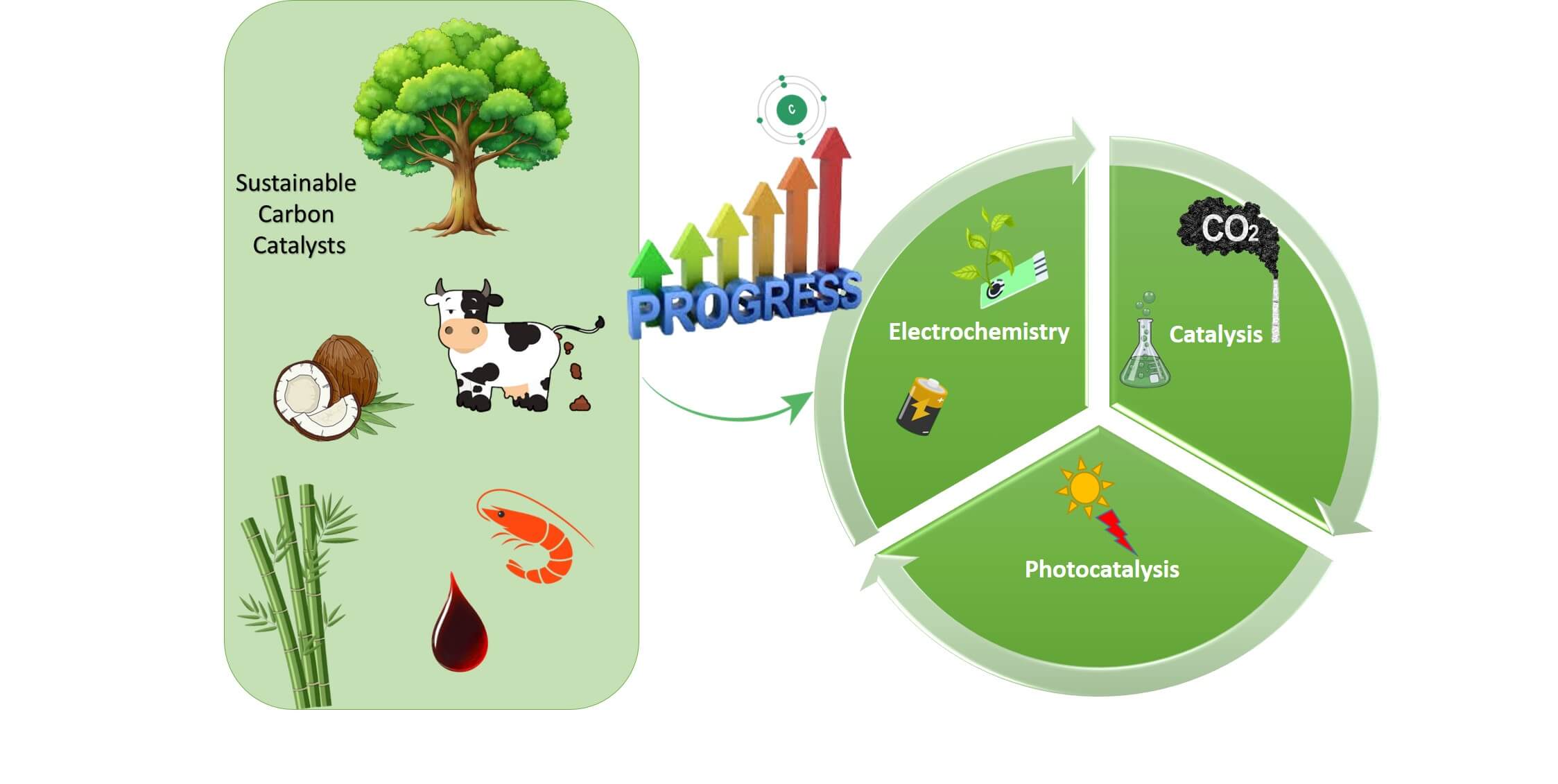
The transition toward a circular economy and zero-waste strategies has driven increasing interest in biomass-derived carbon materials as sustainable alternatives to conventional catalyst supports. Agricultural and industrial residues can be converted into porous carbons with high surface area, tunable porosity, and rich surface chemistry, enabling waste valorization and stabilization of metal species ranging from nanoparticles to single atoms. These properties support their application across heterogeneous catalysis, photocatalysis, and electrochemical systems, revealing cross-cutting opportunities among these fields. Despite these advantages, challenges remain, including feedstock heterogeneity, energy-intensive processing, scalability limitations, and the lack of standardized methodologies. This review highlights recent advances in the development of sustainable carbon catalysts, focusing on shared limitations and the relationships between structure, properties, and applications. In addition, it discusses key factors influencing material performance and long-term viability. Emphasis is placed on future perspectives that align with circular economy principles and low-waste strategies, aiming to guide the design of more efficient, scalable, and environmentally responsible catalytic systems.Graphic Abstract
Keywords
The requirement for a zero-waste process triggered the search for new raw materials and a process with a zero-waste approach aligned with the expression “from cradle to cradle,” encompassing reusing, recycling, and recovering. The design of the entire process must ensure minimal generation of by-products and energy consumption. In this scenario, alternative processes and resources have been considered, such as the utilization of CO2, CH4 (from landfills, biodigesters or biomass gasification); used cooking oil; biomass from agriculture or plastic recycling. All these feedstocks can serve as promising primary materials for the synthesis of chemicals, fuels, and porous materials for heterogeneous catalysts, photocatalysts, and electrochemical materials. Biomass derivatives stand out as a potential source for the synthesis of numerous materials for a broad range of applications, aiding in biomass waste management. Biomass is abundant in agricultural countries such as Brazil, India, China, Thailand, and Colombia, which are uniquely positioned to leverage this technology by converting low-cost agricultural residues into high-value carbon materials [1]. In Brazil, the world’s leading sugarcane producer, materials like sugarcane bagasse and coffee husks offer tremendous potential [2]. Similarly, India’s rice husks [3], China’s corn stover [4], Thailand’s coconut shells [5] and Colombia’s palm oil residues [6] represent valuable feedstocks for producing carbon-based materials [7]. However, agricultural residues present significant challenges for disposal. Utilizing biomass offers an opportunity to produce value-added products sustainably, while minimizing waste generation and aligning with circular economy principles [1].
One potential application relies on the development of porous materials from biomass-derived carbon, with application in sustainable processes in distinct areas such as heterogeneous catalysis, photocatalysis, and electrochemistry, including electrocatalysis, due to the shared properties critical for these fields. These applications require high porosity, high specific surface area, and abundant anchoring sites to enhance catalytic stability, charge transfer, and stabilization of metallic particles in heterogeneous catalysts. Sustainable materials, such as those derived from biomass, offer tunable properties, cost-effectiveness, and environmental benefits, making them ideal candidates for advancing these technologies [8,9].
The synthesis of sustainable carbonaceous materials can utilize a wide range of biomass, which can be categorized based on their sources: agricultural residues (e.g., rice husks, corncobs, wheat straw, fruit stones), forestry byproducts (e.g., wood, bamboo, palm and kernel shells), animal-derived wastes (e.g., eggshells, mollusk shells), industrial byproducts (e.g., weak black liquor from pulp and paper processing), and other waste materials (e.g., plastic waste). Additionally, CH4 derived from landfill biogas can serve as an indirect carbon source for energy-intensive synthesis processes or as a precursor for carbon-based materials. The choice of biomass is heavily influenced by regional availability, which varies across countries and enables localized, cost-effective sourcing. This diversity reduces reliance on non-renewable feedstocks and minimizes transportation-related costs and emissions [9,10].
Nevertheless, a potential challenge lies in the variability of biomass characteristics. Vegetal biomass, for example, depends on distinct factors such as the type of plant and soil conditions. This inherent variability directly influences the structural and chemical properties of the derived carbonaceous materials. Biomass composition can change considerably in terms of cellulose, hemicellulose, lignin, organic and inorganic compounds, which might drastically affect the final properties of the catalysts. The use of biomass without extensive purification can be advantageous in terms of sustainability and cost; however, pre-treatment or purification becomes necessary when inorganic contaminants significantly influence carbon structure, active-site formation, or catalytic performance. In particular, lignocellulosic biomass, such as coconut shells or bamboo, typically contains high levels of lignin and cellulose, which contribute to a high carbon (C) yield and structural stability during carbonization or activation processes [11]. In contrast, animal-derived wastes like eggshells are rich in calcium carbonate, requiring additional processing to produce porous carbon structures. The chemical composition (e.g., lignin, cellulose, hemicellulose, or ash content) and physical properties (e.g., density and particle size) of the biomass influence key parameters of the final material, such as surface area, pore size distribution, and surface chemistry. Typical inorganic contaminants, such as Na, K, P, Fe, Mg, and Si, must be considered. For example, rice husks, with their high Si content, can yield carbonaceous materials with unique textural properties suitable for specific adsorption applications. In this context, the use of biomass without further purification to remove inorganic contaminants should be prioritized in order to fulfill environmental and economic requirements. Moreover, this versatility in the selection of biomass sources aligns with the evolving global energy landscape, which increasingly emphasizes region-specific renewable resources to promote sustainability and mitigate environmental impacts. By utilizing locally abundant biomass, the production of carbonaceous materials adheres to sustainability, converting waste streams into valuable products such as porous carbon for distinct applications such as heterogeneous, photocatalysts and electrodes.
Despite their potential, several hurdles need to be addressed to enable the safe and economically competitive compared to conventional raw materials. Furthermore, biomass processing is energy-intensive, reflecting in the final costs. The lack of standardized procedures, coupled to inadequate purification methodologies remains a significant obstacle to overcome, impacting negatively the final costs of the material [12–14]. Furthermore, in this overview, the term “biomass-derived carbon materials” is used to collectively describe carbon materials obtained from renewable biomass sources, including metal-free carbons, heteroatom-doped carbons, and carbon-supported single-atom catalysts, unless otherwise specified.
Accordingly, this review is structured into three primary sections addressing the applications of biomass-derived carbons in catalysis, photocatalysis, and electrochemistry, alongside broader considerations including economic viability and future prospects. However, the objective of this work is not to provide a comprehensive survey of sustainable carbon materials for these applications, given the existence of several authoritative reviews on the subject [1,8–10,13,15]. Instead, it focuses on representative and conceptually relevant advances reported primarily over the past decade, selected to highlight key design principles, challenges, and cross-cutting trends in biomass-derived carbon catalysts. Unlike existing reviews that primarily address biomass-derived carbon materials within individual application domains, this work adopts a cross-cutting perspective by comparatively analyzing heterogeneous catalysis, photocatalysis, and electrochemistry, with emphasis on shared structure–property–application relationships, transferable design descriptors, and common performance-limiting factors across these fields.
2 Applications in Heterogeneous Catalysis, Photocatalysis and Electrochemistry
2.1 Sustainable Carbon-Based Materials for Heterogeneous Applications
Heterogeneous catalysts play a critical role in industry with over 90% of petrochemical, chemical and food manufacturing processes utilizing heterogeneous catalysts in at least one conversion step. These catalysts typically comprise a small amount of noble or transition metal supported on high-surface-area materials, such as carbon, Al2O3, SiO2, among others. The metal particles are engineered to remain at the nanoscale, smaller than 10 nm, with a narrow size distribution at the support surface. The particles exposed to the reaction at the surface are termed metallic dispersion. Nevertheless, controlling the nanoparticles distribution is still challenging due to their high surface energy, which drives the agglomeration to achieve a lower energy state. To counter this, high surface area support is used to stabilize the nanoparticles and facilitate mass transfer, a key factor since heterogeneous catalysis processes are mass-transfer driven. Currently, distinct methods have been suggested to maintain particles at the nanoscale, including the single-atom scale. Carbon-based materials, such as activated carbon (AC) [16,17], reduced graphene oxide (rGO) [18–22], carbon nitride (g-C3N4) [23] carbon nanotubes (CNTs) [24–27], carbon spheres (CS) [28,29], and biochar [30,31], have been explored for their exceptional capacity to promote high metallic dispersion. Hierarchical carbon materials such as AC, rGO, CNT, are particularly valued for their intrinsic attributes, including large specific surface area (often exceeding 500–3000 m2/g in optimized forms), oxygen vacancies, heteroatoms (N, S), robust thermal and chemical stability, high thermal conductivity, hydrophobicity, and the presence of functional oxygen groups and heteroatoms (e.g., N or S), which serve as interaction centers for stabilizing metal particles. Remarkably, all referenced catalyst supports can be derived from sustainable sources such as vegetal and animal biomass, as well as plastic waste. Additionally, gases generated from biomass conversion, such as methane (CH4), can serve as precursors for synthesizing carbon supports like CNTs. These carbon-derived materials can be engineered to exhibit hierarchical structures and high specific surface areas, enhancing their utility in catalytic applications.
The field of carbon materials has advanced significantly, with the development of distinct materials derived from different sources of biomass. Among them, the development of metal-free carbon catalysts and single-atom catalysts stands out as potential systems for several catalytic applications [32,33].
Among the biomass derived-catalysts, metal-free carbon catalysts have demonstrated excellent performance in various reactions, as illustrated in Fig. 1. These include alcohol dehydration and dehydrogenation, SOx and H2S oxidation, and NOx reduction. Metal-free carbon catalysts constitute a sustainable alternative [34,35], considering their advantages such as low cost, high activity, stability, and excellent physical and chemical properties [36,37]. Nevertheless, pristine carbon materials are inert and exhibit limited interaction with reactants [38], necessitating surface functionalization or the introduction of heteroatoms into the carbon lattice to enhance their reactivity. Thus, in the design of metal-free carbon catalysts, the presence of well-defined active sites is essential to achieve the desired chemical reactivity. These active sites are typically created through surface functional groups, heteroatom doping (e.g., nitrogen (N), boron (B), phosphorus (P), and sulfur (S)), defect engineering, and/or controlled thermal annealing. The heteroatom incorporation in the sp2-hybridized carbon frameworks results in charge delocalization and electronic changes, with enhanced catalytic performance. Among these heteroatoms, N is more often used as doping due to its similar atomic diameter to C [39]. The superior activity of N-doped carbon is related to electronic effects, considering its higher electronegativity (3.04) than that of C (2.55). When incorporated into the sp2 carbon lattice (such as graphene or carbon nanotubes—CNTs), the N atoms withdraw electrons from adjacent C atoms. This electron withdrawal enables a charge redistribution across the structure, thereby inducing an electrophilic (electron-deficient) character on the neighboring C atoms. The choice of the heteroatom will rely on the specific reaction and the required activity, selectivity and stability. However, the N-doped carbons are clearly the preferred supports for both metal and metal oxides. N-doping increases the creation of basic sites, offering benefits in several organic transformations such as hydrogenation and dehydrogenation, oxidation and coupling reactions (Fig. 1) [32].

Figure 1: Reactions promoted by N-doped carbons. Adapted from ref. [32]. Copyright 2023 American Chemical Society.
Furthermore, the presence of N atoms into the carbon lattice improves the hydrophilicity due to the introduction of polar groups, altering the electronic distribution, enabling the interaction with other polar groups.
Typically, there are four types of N atoms doping in carbon skeleton which are graphitic N, pyridinic N, pyrrolic N, and pyridinic N-oxide (Fig. 2) [40].

Figure 2: (a) Bonding configurations of nitrogen atoms in carbon networks. Reprinted with permission from ref. [40]. Copyright 2017 American Chemical Society and (b) XPS spectra of N atoms in different configurations. Reprinted with permission from ref. [40]. Copyright 2014 American Chemical Society.
XPS spectra show clearly these different N groups with the corresponding B. E. for N1s peaks at B. E. of 398.3–399.8, 400.1–400.5, 401.0–401.4, and 404.0–405.6 eV corresponding to nitrogen atoms in the species of pyridinic, pyrrolic, graphitic, and different N-oxide species, respectively. It is known that N in nitrogen-doped carbon materials (N-CNMs) occurs in the graphite-like configuration, where it is integrated into the planar structure by substitution of carbon atoms in the hexagonal graphitic structure [40].
Other Heteroatoms as doping for carbon catalysts: As discussed earlier, nitrogen remains the most extensively utilized heteroatom owing to its favorable electronic and structural properties. However, other heteroatoms, such as S, B, P, and O, are also incorporated, often in co-doping configurations with N to harness synergistic enhancements in catalytic performance. Table 1 presents a comparative overview of the primary properties of these heteroatoms, along with the catalytic reactions they predominantly promote.

The atomic radius and electronegativity of heteroatoms and C explain their activity in different reactions. The high electronegativity difference between N and C, compared to the other dopants, induces strong charge polarization on adjacent C atoms, creating positively charged active sites. The similar atomic size to C allows the lattice substitution with minimal distortion, enabling high doping levels and structural stability. In contrast, S and P have significantly larger atomic radius than C, affecting the lattice stability. The intermediate size of B induces moderate lattice strain. Nevertheless, B has the lowest electronegativity, which induces electron deficiency (positive on B, negative on the neighboring adjacent C) [38]. The electronegativity of S is nearly identical to that of C, resulting in negligible charge transfer. The role of S contrasts with N doping (charge-dominated), explaining the limited activity of S-doping alone whereas the co-doping with N often results in a synergistic effect, with N providing charge polarization, while S enhances spin density and strain [45]. Regarding P, it has almost the same electronic and chemical properties as C and N; thus, the main contribution arises from the atomic radius difference, creating defective sites, contributing to enhancing the reactivity. A promising approach is the utilization of two or three heteroatoms with different electronegativity, tuning the properties according to the catalytic reaction, resulting in a synergism among the different elements [37].
Metal-free catalysts, co-doped with N and S have demonstrated excellent performance in the hydrodeoxygenation of vanillin, achieving vanillin conversions exceeding 80% and selectivities to 4-methylguaiacol (MMP) of approximately 70% [37]. The authors ascribed this high efficiency to synergistic effects between N and S doping, combined with elevated surface areas and structural defects.
In another study, N-doped carbon materials derived from biomass, namely chitosan, which served as both C and N sources, were prepared using HNO3 as a solvent and evaluated for the selective oxidation of D-xylose to D-xylonic acid under mild reaction conditions (10 bar O2, 100°C) [41]. The superior performance obtained on the optimized catalyst was attributed to the abundance of graphitic N moieties. These N-containing species generate medium-strength basic sites, which facilitate activation of the aldehyde group and promote carboxyl group formation during the selective oxidation process.
A catalyst was prepared from spent coconut-based activated carbon (CAC) previously used for the adsorptive removal of neutral red (NR) dye [46]. The material was calcined under an N2 atmosphere at 800°C, yielding N-doped CAC. The resulting catalysts were evaluated in the hydrochlorination of acetylene, in which the NR-derived catalysts exhibited superior performance compared to undoped CAC, achieving higher acetylene conversion. The activity was correlated with the N content. Density functional theory (DFT) calculations revealed that pyridinic and pyrrolic N-species serve as the primary active sites for the reaction. Additionally, the inherent mesoporosity of the CAC played a crucial role in enhancing overall catalytic performance.
Starch biomass was used for the synthesis of P-doped carbon materials employing H3PO4 under different pyrolysis temperatures, yielding multilayered structures. The catalysts were evaluated in the selective aerobic oxidation of alcohols, with the enhanced performance attributed to the presence of P–O moieties and associated defects. The P–O–C species and the defects generated by P–O doping were identified as the active sites for benzyl alcohol conversion. Furthermore, Raman spectroscopy results revealed a clear correlation between turnover frequency (TOF) and the oxidation reaction activity. Despite the high surface areas obtained for the various samples, no evidence of correlation with catalytic activity was found, indicating that the predominant role arises from the defective structure generated by P–O moieties [43]. The catalysts exhibited sustained stability, retaining their performance even after eight cycles of reuse.
The aforementioned examples demonstrate the feasibility of synthesizing doped metal-free carbon catalysts and their remarkable performance in various relevant processes, along with their potential for recyclability. The sites generated by carbon doping also play a crucial role in the stabilization of metallic nanoparticles, even at the atomic scale, as briefly discussed in the following paragraphs.
In this regard, single-atom catalysts (SACs) have emerged as a sophisticated approach in catalyst design, wherein carbon-based SACs have garnered considerable interest due to their tunable morphologies, well-developed porosity, and rich surface chemistry featuring abundant functional groups. The term single-atom catalysts (SAC) was introduced by the seminal work of Qiao et al. in 2011, which demonstrated the preparation and superior catalytic performance of a Pt single-atom catalyst supported on FeOx (Pt1/FeOx) for CO oxidation. This study effectively established the concept of single-atom catalysis and highlighted its potential as a powerful approach to maximize metal atom utilization by reducing particle size to the atomic limit [47]. SACs also challenge conventional catalyst design by decoupling activity enhancement from metal loading, thereby shifting the focus toward coordination environment control and support chemistry rather than particle size alone.
In heterogeneous catalysis design, stabilizing metal particles at the nanoscale is a critical parameter, as metal particle size profoundly influences performance in numerous reactions. Furthermore, reducing the size of metallic particles confers additional benefits to catalytic behavior, as comprehensively reviewed by Yang et al. in 2013 [48]. These include: (i) the creation of low-coordination environments at metal centers arises from the higher proportion of unsaturated surface atoms in smaller particles; (ii) quantum size effects emerge from the spatiality of electron confinement in nanoscale structures. Resulting in the discretization of energy levels and in a pronounced increase in the energy separation between the highest occupied molecular orbital (HOMO) and the lowest unoccupied molecular orbital (LUMO); (iii) enhanced metal–support interactions at the interface, which facilitate charge transfer between the metal and the support. Collectively, these factors contribute to enhancing the activity, selectivity, and stability in supported metal catalysts. While these effects are well established for metal nanoparticles, their arrangement at the single-atom limit introduces distinct electronic and coordination constraints that fundamentally alter reaction pathways and stability trends.
Regarding SACs production from biomass, heteroatom doping provides anchoring sites for metal immobilization, thereby facilitating the stabilization of metal atoms at the nanoscale, including at the single-atom level. This approach is of fundamental importance, considering that the activity and yields of many relevant industrial processes still depend on transition or noble metals. The use of doped carbon as a support not only strengthens the metal–support interaction but also provides sites that enhance metal dispersion and introduce acid–base functionalities [49]. Additionally, it enables straightforward metal recovery through combustion of the carbon skeleton. However, the effectiveness of heteroatom doping strongly depends on dopant type, concentration, and spatial distribution, which remain difficult to control in biomass-derived carbons. This variability introduces trade-offs between catalyst performance, synthesis reproducibility, and scalability that are often underexplored in laboratory-scale studies, highlighting the need for more systematic evaluation in future research.
These considerations highlight that, despite their promising activity, the practical deployment of biomass-derived SACs requires balancing atomic dispersion, long-term stability, and sustainable synthesis routes.
Carbon-derived SACs have been applied in numerous heterogeneous catalyzed reactions in addition to photocatalysis and electrocatalysis [50], as shown in Fig. 3.

Figure 3: Applications of carbon-based SACs. Adapted from [51]. Copyright 2020 American Chemical Society.
SACs derived from a variety of biomass sources have been detailed [51]. Biomass is rich in nitrogen and oxygen functional groups, serving as self-doping for the single atom during pyrolysis at high temperature, producing N-doped biochar, without the need for toxic reactants to make the synthesis greener [49,51]. The interest in biomass-derived carbon as support for SACs dates to 2018 [52–55].
Derived lignin SACs, Co/Mn and Co supported on N-doped SA were evaluated in the aerobic oxidation of 5-hydroxymethylfurfural (HMF) to 2,5-furandicarboxylic acid (FDE) [56]. The excellent activity was correlated with the tuning of the electronic structure of metallic nanoparticles (NPs) embedded in the lignin structure. Similarly, lignin was used as a strategy for confining metal ions within a metal-lignin complex. DFT theoretical calculations demonstrated that Co-N3C sites were the centers responsible for the conversion of HMF to 2,5-furandicarboxilato de dimetila (FDME) [57]. Also, the authors highlight that the atomically dispersed Co active sites (Co–Nx) are responsible for the high efficiency and selectivity in the simultaneous oxidation of the alcohol and aldehyde groups of HMF into ester groups. Both investigations demonstrated the recyclability of the SACs without loss of integrity.
Recently, chitin-derived supramolecular nanowires-stabilized single-atom Pt catalysts (SS-Pt-CSNs) were evaluated in the selective hydrogenation of 31 α,β-unsaturated compounds (C=C, C=O, C≡C, –NO2) including nitroarenes and unsaturated aldehydes with excellent chemoselectivity. The stability of the catalyst was confirmed by recycling experiments without affecting its stability. DFT was used for determining the four coordination models and the supramolecular structure of chitin from XAS results. EXAFS results revealed three O/N atoms surrounding a Pt single atom, and also four O/N atoms were considered in the model.
Apart from the mentioned catalytic systems, numerous biomass-derived catalysts have been prepared and tested in heterogeneous catalytic reactions, and some examples are presented below.
Orange peel industrial waste was used for producing a carbon support for Pt (0.5%, wt) and used in the guaiacol hydrodeoxygenation, activated with H3PO4, leading to the formation of P–O species on the support. The presence of P-O moieties favored the formation of highly dispersed and active Pt nanoparticles, with concomitant superior catalytic performance. The enhanced catalytic activity and selectivity were attributed to the increased surface acidity induced by H3PO4 activation, which acts as a promoter through the incorporation of phosphorus-containing species. The outstanding performance of the optimized catalyst Pt-ACS was explained by a strong synergistic effect between the acidic sites provided by the phosphorylated support and the metallic Pt sites during the hydrodeoxygenation (HDO) of guaiacol.
Olive stone was used as a carbon source for the synthesis of a catalyst (CB), which was subsequently evaluated in the methoxylation of α-pinene at atmospheric pressure (1 atm) and temperatures ranging from 50°C to 65°C. The performance of this catalyst was compared with that of a carbon xerogel (CM) and a commercial activated carbon from Norit (NoritN) [58]. The CB exhibited catalytic behavior similar to the reference materials. Despite some textural differences among catalysts, the key factor governing the catalytic behavior was associated with the surface acidity. Both the strength and accessibility of the acid sites played a crucial role in the good performance of CB. Nevertheless, severe deactivation was observed after the second reaction cycle, although selectivity was maintained. Analysis of the spent catalyst by XPS revealed that some surface functional groups were likely modified, probably due to esterification of carboxylic acid groups caused by the excess methanol in the reaction medium.
Activated carbons (AC) were produced from the woody part of tea, which is highly available after the harvesting of tea leaves through activation and carbonization treatments. The AC produced was used as a support for Co, Ni and Cu nanoparticles and used in the H2 production from NH3BH3. The results reveal that Co nanoparticles with an average particle size of 3.18 nm on the AC support showed superior performance compared to Cu and Ni. Recyclability of the catalysts was evaluated over 5 cycles, with a loss of 40% after the second cycle [59].
Char-derived biomass residues were collected from a Tyrol gasifier plant (Italy) and used to prepare Co- and Fe-based catalysts (10 wt%) for evaluation in the Fischer-Tropsch (FT) reaction [60]. Compared with Fe, Co deactivated rapidly due to its susceptibility to chemical poisoning by inorganic contaminants (K, Mg, S). Furthermore, the authors observed an unexpected increase in SSA upon metal incorporation, which was attributed to the synthesis methodology. Additionally, TEM results indicated that the Fe particle size was below 4 nm whereas Co particles were significantly higher, with a bimodal distribution, ranging from 8–11 nm.
Aside from the previous discussion, it is noteworthy that CNTs can also be synthesized from biomass precursors through processes such as pyrolysis or chemical vapor deposition, or even from CH4 derived from pyrolysis or even from landfill gases. Biomass-derived CNTs are formed through carbon decomposition followed by structural rearrangement into nanotubes. The growth of CNTs can be enhanced by catalysts or minerals naturally present in the biomass. Carbon materials synthesized by microwave-assisted methods are an interesting approach because higher temperature homogeneity can be obtained by using microwave [61]. In addition, more energy effective heating in less time can be reached using a microwave compared to conventional heat sources.
The efficiency of CNTs has been proven in several heterogeneous catalytic reactions such as steam reforming (ethanol, glycerol), CO2 hydrogenation [27,62,63]. CNTs often yield structures with high conductivity, mechanical strength, and excellent performance as supports or metal-free catalysts in heterogeneous catalysis applications. The metal confinement effect provided by CNTs results in systems with nanosized metallic catalysts [27]. Notably, beyond porous carbons, biomass-derived carbon nanotubes represent another promising class of materials obtainable via sustainable routes, exhibiting superior electrical conductivity and serving as effective supports for metal nanoparticles in heterogeneous catalysis.
Overall, despite the high potential of biomass-derived supports, some aspects remain challenging, specifically related to the limits of metal loading. Regarding biomass-derived supports, it is accurate that conventional SACs on such materials frequently exhibit metal loadings below 1 w.t% (and often in the range of 0.5–1.5 wt.%) to preserve atomic dispersion. This limitation arises primarily from the inherent high surface energy of isolated metal atoms, which promotes aggregation into clusters or nanoparticles during synthesis (e.g., pyrolysis) or under operational conditions. Biomass-derived carbons, while sustainable and rich in heteroatoms (N, O, S) that facilitate coordination, typically provide moderate-to-weak metal-support interactions compared to engineered supports like MOF-derived or defect-rich materials. Consequently, insufficient anchoring sites or suboptimal pore structures can lead to migration and sintering, compromising long-term stability.
A critical trade-off exists between increasing metal loading density to enhance the number of active sites (and thus overall catalytic performance per unit mass) and maintaining atomic isolation to avoid aggregation. Higher loadings (HL) amplify site density and may introduce beneficial inter-site synergies or modified electronic effects; however, they shorten inter-atom distances, heightening the risk of Ostwald ripening, thermal migration, or leaching, particularly in demanding reaction environments. Recent advances have mitigated this through strategies like multilayer stabilization, defect engineering, or precursor design (e.g., urea-assisted coordination or sulfide-mediated atom trapping), enabling loadings up to 5–10 wt.% or higher in select cases without loss of single-atom character [64]. Nonetheless, achieving elevated loadings while ensuring robust stability remains challenging and often requires tailored heteroatom doping or hierarchical structuring.
Although the sustainability appeal of biomass-derived carbon materials is attractive, their synthesis often involves energy-intensive steps such as high-temperature pyrolysis, chemical activation, and heteroatom doping, which increase the overall environmental footprint. Future efforts should therefore focus on lower-temperature processes, milder activation methods, and the use of biomass-inherent heteroatoms to balance catalytic performance with sustainability and enable scalable, low-energy synthesis routes. Nevertheless, detailed life-cycle assessment and techno-economic analyses remain scarce for many biomass-derived carbon systems, available studies consistently indicate that feedstock availability, energy consumption during synthesis, and process scalability are key factors governing their environmental and economic viability.
2.3 Sustainable Carbon-Based Materials for Photocatalytic Applications
The development of sustainable carbon-based photocatalysts derived from biomass has emerged as a crucial strategy for addressing environmental and energy challenges worldwide [65–68]. The advantages of biomass-derived photocatalysts are manifold: their hierarchical porous structure, oxygen-rich surface chemistry, and excellent charge transport properties enhance photocatalytic efficiency for applications ranging from water purification to renewable hydrogen production [69–72]. These recent studies have highlighted the remarkable potential of biomass-derived materials as photocatalysts for environmental remediation and renewable energy production. Biomass-based carbon materials, as reviewed by Wang et al. (2021), exhibit high porosity and oxygen-rich surface functionalities such as hydroxyl and carboxyl groups, which enhance pollutant adsorption and provide abundant active sites for photocatalytic reactions. Furthermore, their excellent electrical conductivity facilitates efficient charge separation and transfer, significantly improving the degradation efficiency of organic contaminants under visible light [73]. Biochar, produced via controlled biomass pyrolysis, has emerged as a promising photocatalyst support owing to its porous structure and high density of oxygenated functional groups. These features enhance both adsorption capacity and interfacial charge transfer. Moreover, biochar acts as an effective electron reservoir, reducing electron-hole recombination and extending light absorption into the visible range by narrowing the band gap of the semiconductor [71]. A study demonstrated the successful fabrication of hierarchical porous TiO2 structures using wood as a natural template. By integrating CdS and noble metals to form ternary heterojunctions, the resulting photocatalyst exhibited improved mass transport, efficient light harvesting, and enhanced charge carrier separation. Notably, the photocatalytic hydrogen evolution rate increased by up to 6.7 times compared to non-templated systems, demonstrating the key role of hierarchical porosity and interface engineering [70].
The valorization of lignocellulosic biomass for environmental applications has been widely reported. The intrinsic three-dimensional porous architecture of lignocellulosic materials, combined with their oxygen-rich surface chemistry, promotes high adsorption capacity and enhances the photocatalytic degradation of pollutants in both aqueous and gaseous media. In addition, surface functional groups facilitate stronger interactions between the photocatalyst and target contaminants while improving charge carrier dynamics [69]. Finally, a 2021 review focused on biochar-based nanocomposites for the photocatalytic degradation of emerging organic pollutants highlighted the synergistic effects of biochar’s large surface area, high porosity, and oxygen-rich surface functionalities in enhancing pollutant adsorption and promoting the generation of reactive species [74]. The authors highlighted the synergistic effects of biochar’s large surface area, high porosity, and oxygen-rich surface functionalities in improving pollutant adsorption and enhancing reactive species generation. Additionally, the presence of biochar reduces electron-hole recombination and significantly improves visible-light-driven photocatalytic performance. Overall, these studies underscore that the hierarchical porous structure, oxygen-rich surface chemistry, and superior charge transport properties inherent to biomass-derived photocatalysts play a pivotal role in enhancing photocatalytic efficiency for a broad range of applications, from water purification to renewable hydrogen production.
Among the various materials that can be obtained from biomass, g-C3N4 appears as a potential carbon-derivative with potential applications in distinct areas. The polymeric carbon nitride allotrope g-C3N4 is a melamine-like molecular framework, based on triazine or tri-s-triazine monomer rings (Fig. 4), organized on defective microstructured lamellar nanosheets whose basal planes possess interplanar distances of around 3 Å and lateral dimensions on the micrometric scale, ensuring large surface areas, consequently enhancing its field of application. It is regarded as one of the oldest synthetic polymers, produced by Berzelius and named by Liebig as “melon” in 1834. More than 180 years after this discovery, dozens of synthetic methodologies have been widely developed, and numerous purposes are now known [75,76].

Figure 4: Graphitic carbon nitride triazine and tri-s-triazine allotropes structures. Based on ref. [75]. Copyright 2016, royal society of chemistry.
When compared to graphene, wherein covalent C–N bonds form and enhance chemical resistance to water, acids, bases and solvents like ethanol, toluene and THF (or common organic solvents), van der Waals interactions between sheets promote facile exfoliation due to weak interlayer forces [77]. Defects and structural discontinuities in g-C3N4 drive its reactivity, enabling its use as a photocatalysts or as anchoring sites for SACs, providing a myriad of possibilities, resulting in highly versatile structures [78].
Since Wang and coworkers revisited g-C3N4 and discovered that polymeric carbon nitride exhibits semiconducting behavior and promising photocatalytic performance for hydrogen production from water under solar irradiation, graphitic carbon nitride stands out as one of the most promising non-metallic photocatalysts. The absence of d0 transition metals or d10 post-transition metals, as commonly found in classical photocatalysts, highlights the simplicity and feasibility of this material [79].
The triazinic/heptazinic molecular structure reflects the synthetic approaches employed to build it and is based chiefly on the chemistry of thermal polycondensation of urea [80], thiourea [81], dicyandiamide [82] and melamine, which is also commonly used as a precursor [83]. Although thermal condensation is the main methodology and solid-state reactions are also reported [76]. Furthermore, several reactants can be used and different intermediates may be involved during the synthesis process of g-C3N4. Fig. 5 depicts the main reactants and intermediates involved in the synthesis.

Figure 5: Synthetic approaches for obtaining g-C3N4 by thermal condensation. Based on ref. [83,84]. Copyright 2012, royal society of chemistry.
Concerning specific surface area, graphitic carbon nitride inherently possesses a high specific surface area, which can be further enhanced by suitable preparation methods. For example, the use of gas bubbles as a soft template can substantially increase the specific surface area [85].
Structural and morphological modifications are pivotal in broadening the application scope of g-C3N4 [86]. For instance, foam-like ultrathin carbon nitride nanosheets, prepared through sequential calcination of bulk g-C3N4 (synthetized by thermal condensation of melamine), provide enhanced photocatalytic efficiency, complementing strategies such as gas bubble templating. The resulting meso-, micro-, and macropores, along with cross-plane diffusion channels, enhance electron transport, charge separation, and photodegradation product removal [86]. The incorporation of Pt single atoms via this modification led to an approximately threefold enhancement in discharge capacity. At a current density of 100 mA
Although g-C3N4 consists of stacked bidimensional polymeric sheets primarily assembled by aromatic triazine/heptazine units, its conjugated aromatic molecular structure, characterized by the perpendicular-to-plane carbon p-orbitals conjugation, confers exceptional chemical and thermal stability, along with structural robustness. The rich nitrogen content generates low charge transfer, and the carbon nitride has little or no electron conductivity, being characterized as a semiconductor due to its band gap [88].
The photocatalytic activity of g-C3N4 originates from its polymeric semiconductor nature and distinctive electronic structure, which arises from the periodic arrangement of sp2-hybridized C and N atoms in a framework within triazine and heptazine units. This framework forms an extended π-conjugated system through the overlap of p-orbitals, resulting in a valence band maximum (VBM) primarily composed of N 2p orbitals and a conduction band minimum (CBM) dominated by C 2p orbitals. The band gap of pristine g-C3N4 is typically reported in the range of 2.6–2.8 eV, enabling visible-light absorption up to approximately 460 nm [89].
Upon photon excitation with energy equal to or exceeding the band gap, electrons are excited from the valence to the conduction band, creating electron-hole pairs. These carriers drive surface redox reactions: the hydrogen evolution reaction (HER) reduces protons in aqueous media, while holes oxidize water or organic pollutants. A known limitation of this material is the rapid recombination of electron-hole pairs, caused by low electrical conductivity and high concentration of structural defects that act as recombination centers [90].
Recent research has demonstrated that the coupling of g-C3N4 with biomass-derived carbonaceous materials effectively mitigates this limitation while simultaneously enhancing the visible-light absorption. These improvements are primarily attributed to band gap narrowing, suppression of charge-carrier recombination, and more efficient interfacial charge transfer, ultimately leading to superior photocatalytic performance [91–95]. In this context, a hybrid photocatalyst composed of g-C3N4 and wheat straw–derived biochar (2% biochar/g-C3N4) was evaluated in the RhB degradation [94], achieving 91.3% RhB degradation efficiency after only 30 min of visible-light irradiation (Fig. 6a). The enhanced photocatalytic activity was primarily attributed to the improved visible-light absorption (band gap of 2.65 eV). The introduction of a small amount of biochar (2%) resulted in enhanced electron-transfer channels which effectively suppressed the recombination of photogenerated charge carriers on the g-C3N4 surface, with concomitant improvement in photocatalytic activity and recyclability of the catalyst [94].

Figure 6: (a) HR-TEM morphology, band gap energy, and recyclability performance of biochar/g-C3N4 (2% CGCD), along with schematic diagram of the mechanism of photocatalytic degradation of RHB. (b) SEM micrographs, cycling stability, and schematic illustration of the photoelectrocatalytic system based on carbon-fiber/g-C3N4 nanosheets arrays. Reproduced with permission from refs. [94] (a), [93] (b).
The composite exhibited tailored optoelectronic properties, markedly enhanced visible-light absorption (band gap reduction from 2.77 to 2.62 eV), and a substantially lower charge recombination rate. As a result, outstanding methylene blue (MB) degradation efficiency (99.9%) was accomplished under visible-light irradiation [95]. When g-C3N4 is integrated with carbon nanofibers, photogenerated electrons can readily migrate from g-C3N4 nanosheets to the carbon fibers, thereby promoting efficient electron–hole separation and enhancing the photodegradation of organic contaminants [93]. The relevance of designing hybrids with g-C3N4 nanosheets was also demonstrated through the fabrication of carbon-fiber/g-C3N4 nanosheet arrays via chemical vapor deposition (Fig. 6b).
Owing to the favorable structural and electronic characteristics of the hybrid material, the authors successfully applied it in photoelectrocatalytic systems for environmental remediation and sustainable energy production. Notably, the degradation efficiency of 2,4-dinitrophenol reached an impressive 99.5% after 240 min of photoelectrocatalytic treatment.
Shafique et al. additionally investigated the photocatalytic behavior of g-C3N4 combined with algal biomass–derived biochar (g-C3N4@BC). The production of g-C3N4 and biopolymer hybrids has also been shown to effectively suppress charge recombination and enhance photocatalytic efficiency toward emerging contaminants, including bisphenol A [96], organic dyes [97], volatile organic compounds (VOCs) [98], pesticides such as imidacloprid (IMI), 2,4-dichlorophenoxyacetic acid (2,4-D) and atrazine (AZO), as well as antibiotics including tetracycline (TC), ofloxacin (OFX) and sulfadiazine (SDZ) [91,99]. Recently, biomass-derived carbon dots have been incorporated into g-C3N4 matrices due to their upconversion photoluminescence properties, narrow band gap (~1.58 eV), and their ability to promote efficient separation and transfer of photogenerated charge carriers, particularly through O2●−-mediated pathways. These features contribute to significantly enhanced photocatalytic performance in the degradation of emerging organic pollutants and other environmental remediation processes under visible light irradiation [100]. A metal-free photocatalyst based on CQDs/g-C3N4 composites obtained via calcination of a mixture of urea and carbon quantum dots was synthesized hydrothermally from discarded pine needles [100]. The composite exhibited markedly enhanced photocatalytic performance toward tetracycline (TC) degradation under visible-light irradiation (90.54% within 150 min) and natural solar light (93.5% within 10 min), displaying an apparent kinetic rate constant 12.6-fold higher than that of pristine g-C3N4. The superoxide radical (O2•−) was identified as the dominant reactive species, while the material demonstrated high stability, good reusability (over five consecutive cycles), and a significant reduction in the toxicity of degradation intermediates. These findings highlight the strong potential of sustainable CQDs/g-C3N4 composites for the environmentally safe remediation of emerging organic contaminants in diverse aqueous matrices [100].
SACs supported on biomass and porous materials derived from sustainable routes have been extensively applied in photocatalysis, particularly in energy-related reactions and environmental remediation [101]. Despite the diversity of photocatalytic reactions and catalyst architectures reported, these studies collectively reveal recurring structure–activity relationships that transcend specific reactions or biomass sources. Fig. 7 summarizes the main photocatalytic applications of SACs, including hydrogen evolution, CO2 reduction, and the degradation of organic pollutants. Fig. 7a shows H2 production enabled by SACs supported on metal–organic frameworks (MOFs). The utilization of MOF MIL-25, as a metal-organic precursor, enabled an exceptionally high loading of isolated Cu atoms (~1.5 wt%) without significant aggregation [102]. This approach relied on the prior anchoring of Cu ions within the MIL-125 framework, promoting the formation of Cu–O–Ti bonds upon calcination, which ensured the uniform immobilization of metal atoms on the support. As a result, a stable atomic dispersion was achieved even at high loadings, facilitating efficient electron transfer through the Cu2+/Cu+ redox pair. This architecture translated into superior photocatalytic performance for H2 evolution under simulated solar irradiation, combined with a high apparent quantum efficiency (56%) and remarkable long-term stability (after 380 days of storage). This study illustrates that precise control of the coordination environment, rather than metal loading alone, is critical for achieving both high activity and long-term stability in photocatalytic SACs. Fig. 7b illustrates a sustainable photocatalytic strategy, in which biomass waste was converted into hydrothermal carbon (HTCC) for CO2 reduction. By anchoring Cu species onto biomass-derived HTCC under hydrothermal conditions, Cu ions were effectively captured and reduced to metallic Cu, forming a Cu–HTCC photocatalyst. Owing to the favorable redox potential and catalytic activity of Cu, the resulting Cu–HTCC exhibited approximately twofold higher CO2 reduction activity than pristine HTCC, achieving CO production rates ranging from 148.8 to 643.5 μmol g−1 h−1 [103]. Notably, this work highlights how biomass-derived supports can simultaneously act as carbon sources and coordination matrices, reducing synthetic complexity while maintaining competitive photocatalytic performance. Beyond energy-related reactions, SACs have been widely explored in advanced oxidation processes (AOPs) for the degradation of organic contaminants. The production of a biochar-based Fe–SAC was achieved from Myriophyllum aquaticum biomass and used for organic pollutant degradation [104]. The biochar was obtained through carbonization, activation, graphitization, and chemical etching, enabling the uniform deposition of isolated Fe atoms, reaching approximately 2.4 wt% of atomically dispersed Fe in the ISA Fe/MC catalyst. The ISA Fe/MC SAC was obtained via acid leaching (hydrochloric acid) of a nanostructured Fe/MC precursor, which transformed nanoparticulate Fe species into isolated Fe atoms stably anchored within the biochar matrix. The reported results demonstrated that isolated metal sites are particularly effective in advanced oxidation processes, where controlled redox cycling and site accessibility govern radical generation efficiency. In the presence of peroxymonosulfate (PMS), the ISA Fe/MC catalyst enabled complete phenol removal within 6 min, with an apparent rate constant of 1.096 min−1, underscoring the high catalytic efficiency of isolated Fe sites.

Figure 7: A schematic illustration of the versatile roles of single-atom catalysts (SACs) in photocatalysis. (a) SACs for photocatalytic H2 evolution; and (b) SACs on biomass-derived carbon for CO2 reduction. Reproduced with permission from refs. [102] Copyright 2025, Springer Nature (a) and [103] (b) Copyright © 2020 American Chemical Society.
An iron single-atom catalysts (Fe-SACs) was synthetized from iron-contaminated fern biomass collected during phytoremediation of iron mines [105]. The resulting Fe-SAC-800 exhibited outstanding activity and stability for peroxymonosulfate (PMS)-assisted photocatalytic degradation of quinolone antibiotics (norfloxacin [NOR], levofloxacin [LEV], ciprofloxacin [CIP], enrofloxacin [ENR], lomefloxacin [LOM], and flumequine [FLU]) under mild conditions, achieving near-complete removal efficiencies (>90%) and reaction rates markedly higher than those of previously reported photocatalysts. Advanced characterization techniques, including XAFS and HAADF-STEM, identified a well-defined Fe–N4 coordination environment in the optimized Fe-SAC-800.
Despite these advances, a key limitation of SACs remains the difficulty in simultaneously achieving high metal loadings and long-term structural stability, as increasing metal content often promotes aggregation into clusters or nanoparticles. Consequently, many reported SACs exhibit relatively low metal loadings (typically 0.1–0.3 wt%), and maintaining atomic dispersion beyond ~0.5 wt% remains challenging. Additionally, strong interactions between reaction intermediates and isolated metal sites can lead to irreversible deactivation, compromising recyclability [106–108]. This inherent trade-off between atomic dispersion and metal loading remains one of the central bottlenecks for the practical deployment of SAC-based photocatalysts. To address these issues, recent efforts have focused on advanced support and coordination microenvironment engineering strategies that stabilize isolated atoms, regulate site–intermediate interactions, and preserve local coordination environments, thereby improving catalytic durability and performance [109,110]. In this context, a universal and green strategy for synthesizing carbon-based transition-metal SACs (M = Fe, Co, Ni, Cu, Zn) was reported via a one-pot hydrothermal treatment combined with a mechanochemical process [111]. This method exploits abundant anchoring sites in the carbon matrix and compression confinement to prevent metal aggregation during high-temperature pyrolysis, yielding monodispersed MO3C atomic sites with metal loadings up to 1.15 wt%. Such strategies underscore the importance of confinement effects and defect-rich carbon matrices in overcoming aggregation at elevated metal loadings. The resulting Fe–SAC achieved 96.6% tetracycline removal under visible-light irradiation (Xe 300 W, 2 h), highlighting its superior photocatalytic efficiency, stability, and recyclability.
Further expanding biomass-derived SAC platforms, Cui et al. (2022) synthesized Mn–SACs by pyrolyzing Phytolacca americana, a Mn-hyperaccumulating plant, generating atomically dispersed Mn–N4 sites within a porous carbon matrix with a Mn loading of approximately 1.2 wt% [112]. The catalyst achieved 99% degradation of rhodamine B (10 mg L−1) within 60 min under visible light (300 W Xe lamp), with a rate constant of 0.052 min−1, which is 6.5 times higher than that of TiO2 P25, and retained its stability over 5 cycles. In situ XAS and DFT calculations confirmed that photoexcited electrons are transferred from adsorbed O2 to the Mn–N4 sites to generate 1O2 (with a quantum efficiency of 98% at 420 nm), providing a cost-effective strategy to upcycle phytoremediated biomass into environmental catalysts. Similarly, Wang et al. (2020) employed nitrogen-rich cyanobacterial biomass to produce Cu–N/C SACs via molten salt–assisted pyrolysis, achieving 1.9 wt% atomically dispersed Cu and near-complete tetracycline removal over a wide pH range, demonstrating the versatility of biomass-derived SACs for environmental photocatalysis [107]. Nevertheless, the wide variation in synthesis routes, testing conditions, and performance metrics complicates direct comparison across studies, underscoring the need for standardized evaluation protocols. Collectively, these studies demonstrate that biomass-derived SACs provide a flexible and efficient platform for photocatalytic pollutant degradation, combining high atomic utilization, sustainable synthesis routes, and robust performance under visible-light irradiation.
2.4 Sustainable Carbon-Based Materials for Electrochemistry Applications
Electrochemical applications of biomass-derived carbon materials are governed by the same structure–property relationships discussed for heterogeneous catalysis and photocatalysis, particularly those related to heteroatom coordination, defect density, and electronic conductivity. Biomass-derived carbon nanomaterials thus represent a promising and sustainable platform for the development of high-performance and low-cost electrochemical systems. Their intrinsic heteroatom content, tunable pore architecture, and high specific surface area promote the formation of abundant electroactive sites, facilitating charge-transfer processes and enhancing catalytic activity [113–117]. Recent studies further demonstrate that the enhanced electrochemical performance of biomass-derived carbon-based sensors arises from synergistic interactions between the carbon matrix and incorporated dopants or nanoparticles, which collectively improve electrical conductivity, electroactive surface area, and charge-carrier mobility. In this context, the rational integration of heteroatoms, structural defects, and secondary nanophases emerges as an effective strategy to regulate charge-transfer pathways and expand the density and diversity of active sites.
To provide a comprehensive overview of recent advances, Table 2 summarizes key publications from the past few years covering sensor development, electrocatalysis, and other electrochemical applications. This compilation highlights the diversity of biomass precursors, dopants, structural engineering strategies, and performance metrics, helping identify emerging trends, recurring challenges, and promising research directions within the field of sustainable carbon-based catalysts. Numerous examples illustrate how structural and compositional tuning governs [118–127] electrochemical performance.

For instance, silver-modified sugarcane bagasse biochar (SCBB@Ag) exhibited enhanced electron-transfer capability and improved selectivity toward Hg2+ detection due to the highly dispersed Ag nanoparticles [118]. In another work, a CeO2·CuO@BC nanocomposite lowered the oxidation potential of catechol from +0.60 to +0.45 V, an effect attributed to its low charge-transfer resistance (Rct = 12.8 kΩ) and the presence of oxygen vacancies in the mixed-oxide lattice [119]. Structural optimization is also key: Jiang et al. (2023) prepared a hierarchical porous carbon using a soft–hard dual-template strategy with tannic acid as the precursor, obtaining a large electroactive surface area (0.14 cm2) and an ultra low detection limit (LOD) of 6.2 nM for chlorogenic acid. Nitrogen doping and the incorporation of transition metal nanoparticles further enhance conductivity and reactivity. A nitrogen-doped carbon/molybdenum trioxide nanocomposite (CD–N/MoO3) from cow dung, achieving excellent electrocatalytic activity and low detection limits for diclofenac (0.08 μmol L−1) [121]. Pig-blood-derived carbon, whose intrinsic Fe centers and high graphitization degree (900°C) enabled hydrogen peroxide detection with a rapid response time (3 s). Collectively, these cases highlight how the interplay between dopants, hierarchical porosity, and graphitization degree governs charge transport and overall sensor sensitivity [120].
Biomass precursors bring clear sustainability advantages. Their inherent heteroatom content and natural porosity facilitate the formation of active sites and ion transport. However, the complex and heterogeneous composition of biomass often complicates structural control during pyrolysis, leading to irregular porosity, limited crystallinity, and hindered mass transport [128–130]. Dual-template strategies [122] mitigate these issues but add synthetic complexity. In addition, some biomass-derived carbons, especially those from lignin, straw, and agricultural residues, retain significant ash and silicate content after carbonization. Such mineral phases (e.g., SiO2, Al2O3, alkaline oxides) can block pores, introduce electrochemically inactive domains, and impair electron transport, reducing electrochemical stability in alkaline media. Recent studies confirm that rice husk-, straw- and lignin-derived carbons exhibit persistent mineral residues even after high-temperature pyrolysis, resulting in reduced conductivity and limited structural robustness [131,132]. Variability in ash and silica content among biomass sources further challenges the reproducibility and long-term stability of electrodes [133].
In summary, the renewable nature and intrinsic functionality of biomass make it an excellent carbon scaffold for electrochemical sensor design. However, achieving the crystallinity, porosity, and electrochemical stability required for next-generation sensing technologies demands precise control over precursor composition and carbonization parameters. A similar paradigm is observed in electrocatalysis. The catalytic performance of biomass-derived materials is governed by their structural, compositional, and electronic features, as well as by the deliberate incorporation of heteroatoms and metal species. Systematic studies show that pore architecture, graphitization degree, defect density, surface functionalization, and the presence of catalytically active metal centers critically influence charge-transfer kinetics, catalytic efficiency and operational stability. Guo et al. (2025) demonstrated that cotton-derived biochar modified with Ni and carbonates significantly improved coke resistance in the steam reforming of acetic acid, although partial surface-area loss and carbonate leaching remain problematic [134]. Transition-metal-doped carbons also exhibit multi-functional activity. Separately, Co/N, S co-doped biochar from shrimp shells showed trifunctional ORR/OER/HER performance, reaching an OER overpotential (η1) of 0.57 V at 10 mA cm−2, comparable to IrO2 [123]. Herein, ORR, OER, and HER refer to the oxygen reduction reaction, oxygen evolution reaction, and hydrogen evolution reaction, respectively. It is worth highlighting that the overpotential reported (η10 = 0.46 V) is relatively high compared to several transition metal/biochar composites described in the literature. The HER activity of the Co/N, S-CC and Fe/N, S-CC materials is attributed to the synergistic effect between the cobalt or iron species and the conductive N, S-co-doped carbon support. Furthermore, the incorporation of nitrogen and sulfur atoms into the carbon matrix modifies its electronic structure, thereby promoting hydrogen adsorption. In addition, N-doping enhances the hydrophobicity of the carbon-based catalyst, which improves electrode–electrolyte contact. The Tafel slope (TS) for the ORR was determined to be 35 mV dec−1, indicating favorable reaction kinetics. A catalyst based on P/S self-doped carbon from coffee grounds, enabling selective 2e− ORR for H2O2 production and efficient electrocatalytic degradation of Favipiravir [135]. Graphite-like porous carbon from sugarcane bagasse exhibiting a four-electron ORR pathway and high Zn–air battery power density (191.9 mW cm−2) [124]. Xu et al. (2024) synthesized O/B/N-co-doped carbon from coconut shells, achieving 91%–94% H2O2 selectivity and >80% Faradaic efficiency for 11 h in flow cells [125]. This trend is further supported by recent reports on porous heteroatom-doped carbons derived from biomass for pH-universal H2O2 electroproduction, underscoring the importance of surface chemistry control in electrochemical systems [134]. Other notable biomass precursors include shrimp shells (Co9S8@N, P–carbon), legume root nodules, chicken feathers, banana leaves and water hyacinth, all yielding high ORR selectivity, low over potentials and excellent stability [123,136–139]. The main challenges across these systems include optimizing heteroatom and metal dopants, controlling nanoparticle size and distribution, tuning porosity and ensuring long-term stability in different electrolytes. For instance, excessive phosphorus doping may collapse the porous structure of Co9S8@NPC-10, while maintaining active-site integrity in acidic media for Mo/Fe self-doped catalysts requires careful retention of heteroatoms [123].
The physicochemical properties of biomass-derived carbons are strongly dictated by the nature of the precursor and the synthesis conditions. During pyrolysis, naturally occurring elements such as C, O, N, S, and P can promote self-doping, thereby eliminating the need for external dopants [134]. Nitrogen-rich precursors, including shrimp shells rich in chitin, have been widely explored for the production of heteroatom-doped porous carbons [139], while spent coffee grounds provide additional P- and S-containing functionalities suitable for catalytic and energy-related applications [140–142]. Similarly, keratin-containing biomasses, such as chicken feathers, offer efficient routes toward N/S/O-doped carbons for electrochemical devices and energy storage systems [143,144]. By selecting appropriate precursors, researchers can fine-tune heteroatom content, electronic structure and the density of active sites. A hierarchical micro, meso and macroporous architecture is essential. Micropores supply a high electrochemically active surface area, whereas meso and macropores ensure efficient mass transport [140]. An optimal balance between porosity and graphitization is also required: graphitic domains enhance conductivity, while structural defects, often introduced via heteroatom doping, create active centers with modulated charge/spin density [141]. Rational design of porosity, doping and thermal treatment therefore enables simultaneous control of accessibility and catalytic activity, which is essential for high-performance electrocatalysts [142].
The electronic and synergistic effects of heteroatom dopants are central to defining activity and selectivity in ORR. Nitrogen doping (pyridinic-N, graphitic-N) is the most widely investigated, facilitating O2 adsorption and stabilizing metal–Nx structures [143]. Boron doping generates electron-deficient sites that favor 2e− ORR and H2O2 formation [144,145]. Hollow B-doped porous carbon spheres have achieved >90% H2O2 selectivity in alkaline media [144,145]. More complex systems, such as S-doped Co–N–C, benefit from synergistic interactions between S/N/metal centers, reaching half-wave potentials of 0.895 V vs. RHE (alkaline) [146]. N–S co-doped carbons also display enhanced active-site density and stability across pH values. Oxygen-containing groups (carbonyl, ether, hydroxy, carboxyl) increasingly emerge as key motifs for selective 2e− ORR by stabilizing –OOH intermediates and suppressing O–O cleavage [146,147]. Beyond single dopants, co-doping and multi-heteroatom doping (N–S, N–P, N–B) produce strong charge polarization and defect engineering, improving ORR activity and selectivity between 2e− and 4e− pathways. When used as supports for transition-metal nanoparticles, heteroatom-doped carbons enhance metal–support interactions, leading to improved dispersion, accelerated electron transfer, and optimized adsorption of oxygenated intermediates [148,149].
Both studies demonstrate that biomass-derived carbon materials combined with cobalt-based active phases are highly effective for bifunctional electrocatalysis in water splitting. For instance, mulberry bark-derived carbon modified with cobalt phospho-boride achieved low overpotentials of −86 mV for HER and 310 mV for OER at 10 mA cm−2, along with a low cell voltage of 1.59 V, demonstrating excellent overall water splitting performanc [126]. Similarly, banana leaf-derived N-doped porous carbon embedded with cobalt nanoparticles exhibited high gas evolution rates of 0.22 mL min−1 for H2 (at −0.8 V vs. RHE) and 0.078 mL min−1 for O2 (at 1.95 V vs. RHE) in 0.1 M KOH, highlighting its catalytic efficiency [127]. These findings confirm that the synergistic interaction between biomass-derived carbon frameworks and cobalt-based species, either as nanoparticles or phospho-boride phases, plays a crucial role in enhancing catalytic activity, stability, and charge transfer, reinforcing their potential for cost-effective green hydrogen production.
These shared descriptors suggest that design principles established in catalysis and photocatalysis can be directly translated to electrochemical systems, highlighting significant opportunities for future cross-disciplinary development. In summary, the interplay among dopant type, co-doping strategy, defect formation, and electronic structure is decisive for tuning catalytic activity, stability and selectivity toward H2O2 or H2O. Rational catalyst design, guided by desired ORR pathways, electrolyte conditions, and application requirements, remains essential for advancing metal-free or low-metal electrocatalysts.
3 Biomass Carbon-Based Materials Characterization—Challenges and Advances
The characterization of carbon-based materials has some critical aspects inherent to their structural variety, including crystalline forms (diamonds and graphite), amorphous carbon (amorphous carbon and diamond like carbon, DLC), and nanostructured carbon (CNT, graphene, fullerenes). These materials exhibit varied hybridization (sp2 and sp3), disorder, complex porosity, low density, and chemical heterogeneity, imposing challenges in their precise characterization. The intrinsic compositional variability of biomass feedstocks directly affects catalyst structure and performance, leading to reproducibility challenges across laboratories and limiting the transferability of laboratory-scale results to larger-scale applications. To mitigate these issues, recommended strategies include feedstock pre-classification, tighter control of processing parameters, and standardized reporting of synthesis and characterization conditions, which together can improve reproducibility and enable more reliable cross-study comparison.
Regarding structural features, most of the carbon produced from sustainable sources is amorphous, with an absence of structural order. X-ray diffraction (XRD) is the primary tool for the determination of the structure of materials. However, this disorder produces diffractograms with broad peaks, making phase distinction and the detailed quantification complex. Beyond these intrinsic limitations, XRD is inherently limited in the spatial resolution required to directly identify isolated metal atoms, rendering individual active sites in low-loading SACs (<2 wt%) effectively undetectable [150]. Consequently, SAC characterization relies on complementary techniques that, while informative, often provide qualitative or statistically limited insights due to low metal concentrations and the dynamic evolution of active sites under reaction conditions [151]. As a result, the quantitative discrimination between isolated and aggregated metal species, particularly under in situ/operando conditions, remains a critical challenge. Addressing this limitation will require integrated multimodal characterization frameworks, tightly coupled with advanced theoretical modeling, to enable a robust and predictive understanding of SAC structure–performance relationships [152].
With regard to the characterization by High Resolution Transmission Electron Microscopy (HRTEM) some relevant hurdles must be overcome in the characterization of carbon materials. Carbon, characterized by its low atomic number (Z = 6), behaves as a weak electron-scattering material, giving rise to the so-called contrast–voltage paradox; consequently, the characterization of carbon-based structures, such as graphene, carbon nanotubes, organic thin films, carbon nitride (e.g., graphitic g-C3N4), activated carbon, biochar, carbon black, and mesoporous carbons by conventional HRTEM is particularly challenging due to the combined effects of low scattering cross-sections and beam-induced radiation damage. At standard high accelerating voltages (200–300 kV), the elastic scattering cross-section is minimal, leading to poor image contrast. Modern methodologies emphasizes reducing the acceleration voltage to 60–80 kV (and progressively to 30 kV). This reduction increases the electron-matter interaction probability, significantly enhancing the contrast required to resolve the atomic lattice of light elements.
A further limitation in imaging sp2-hybridized carbon is knock-on damage, as the displacement threshold is approximately 86 keV [153], imposing a critical constraint on maintaining structural integrity during HRTEM analysis. Operating at the common 200 or 300 kV levels exceeds this energy threshold, causing direct kinetic displacement of carbon atoms and rapid structural degradation. Utilizing low-voltage regimes is therefore essential for “damage-free” imaging, preserving the sample’s intrinsic configuration during observation. Historically, lowering the voltage resulted in a drastic loss of resolution due to the dominance of spherical and chromatic aberrations. However, the development of aberration-corrected microscopes over the last two decades has revolutionized this field. Advanced spherical aberration correctors enable high-precision imaging at low accelerating voltages, allowing modern instruments to maintain sub-angstrom resolution even at 60 kV by compensating for geometric aberrations that would otherwise degrade image sharpness [154]. While standard field emission gun (FEG) systems, which works at 200 kV, remains the most cost-effective and common configuration [154], they are often suboptimal for light-element research. Without the specific tuning and correction hardware of high-end platforms, standard 200 kV systems fail to provide the delicate balance of high contrast and structural preservation required for carbon-based nanotechnology. The gold standard for carbon research has shifted toward low-voltage, aberration-corrected TEM/STEM. Although conventional 200 kV FEG TEMs still provide substantial structural and compositional information on carbon-based nanostructures used in catalysis, recent advances in aberration-corrector technology over the past decade now enable atomic-scale visualization of light-element frameworks while operating below the threshold for radiation-induced damage.
Finally, the complexity of a porous network with a high density of micropores also poses significant challenges in determining the specific surface area (SSA) through gas physisorption. Although N2 physisorption has been widely used for SSA determination, several critical factors must be considered. One of these concerns sample pretreatment: while mesoporous materials typically require high temperatures (e.g., 300°C) for a short period, the pretreatment of microporous materials generally involves longer times at lower temperatures (e.g., 200°C–250°C) to avoid structural damage while addressing diffusional limitations. Furthermore, the application of the BET method to such data is not always advisable, as the monolayer capacity may be inaccurately estimated due to micropore filling occurring in the same low relative pressure region as monolayer-multilayer adsorption. The choice of mathematical model for calculations remains a topic of ongoing debate, and the utilization of density functional theory (DFT)-based approaches (e.g., NLDFT or QSDFT) has been proposed to better reflect the complexity of porous networks [155]. Additionally, the utilization of smaller probe molecules, such as argon (Ar) and krypton (Kr), instead of nitrogen (N2), has also been employed for SSA determination. The use of Ar at 87 K is indeed recommended by the International Union of Pure and Applied Chemistry (IUPAC) (2015 technical report) [145] as the preferred adsorbate for the determination of surface area and pore size analysis in many microporous materials, particularly those with polar surfaces. For microporous carbons (generally non-polar), both N2 at 77 K and Ar at 87 K are suitable and widely employed, yielding comparable results. From a kinetic perspective, Ar at 87 K offers advantages, as micropore filling occurs at higher relative pressures, facilitating faster diffusion and more rapid attainment of equilibrium. Nevertheless, the IUPAC report highlights that both Ar and N2 exhibit kinetic limitations at cryogenic temperatures (87 and 77 K), restricting their applicability for very narrow micropores (ultramicropores). To address this issue, the use of CO2 as the adsorbate at 273 K is recommended. At this temperature, the higher saturation vapor pressure of CO2 (approximately 3.5 MPa or ~26,000 Torr) enables much faster diffusion and access to very narrow pores (down to ~0.4 nm). The utilization of CO2 has been widely employed for the characterization of narrow microporosity in carbonaceous materials, although it is not recommended for microporous solids with polar surface groups due to its strong quadrupole moment.
Aside from the molecule choice, it must be emphasized once again that the pretreatment (outgassing) stage requires particular care to ensure accurate and reproducible measurements. For microporous materials, including carbons, outgassing should be performed under high vacuum (typically <1 Pa) to effectively remove pre-adsorbed species without causing structural damage. Excessive temperatures or prolonged exposure can lead to pore collapse or chemical alterations in sensitive carbons, while insufficient outgassing may result in incomplete removal of adsorbates, underestimating the accessible porosity.
The utilization of biomass for the production of porous carbon offers a sustainable and environmentally benign pathway for advancing applications in heterogeneous catalysis, photocatalysis, and electrochemistry. By adopting a unified comparative framework, this review highlights how common design principles and constraints shape the performance of biomass-derived carbon catalysts across different catalytic platforms, thereby enabling more effective cross-disciplinary insight and rational material development.
These materials, derived from abundant renewable sources such as agricultural residues, facilitate waste valorization while providing high specific surface areas, hierarchical porosity, and intrinsic heteroatom doping, which are essential for enhanced catalytic performance, efficient mass transport, and improved charge transfer.
Nevertheless, to ensure that the synthesis is truly sustainable, critical aspects of the entire biomass conversion pathway must be addressed, including the environmental impact of reactants, generated gases, and solid wastes. Energy consumption, cost-efficiency, and process scalability require careful evaluation. Furthermore, optimization should prioritize the local availability of sustainable raw materials to minimize transportation issues, particularly given the low density of vegetal biomass.
Another critical aspect is related to the absence of standard methodologies for the treatment and conversion of biomass, which imposing serious regulatory concerns. Ongoing advancements in greener activation techniques, precise doping strategies, and comprehensive life-cycle assessments hold promise for overcoming these limitations, ultimately reinforcing the role of biomass-derived porous carbons in promoting circular economy principles and sustainable technological progress in energy and environmental fields.
Moreover, biomass utilization creates a new value chain for agricultural and other biomass byproducts, supporting circular economy principles. As research progresses, international collaboration between these biomass-rich nations could accelerate the optimization of conversion processes and the scale-up of production. Future efforts should focus on standardizing protocols for biomass conversion, characterization methods (biomass as a raw material and the produced porous carbon) and establishing pilot projects to demonstrate the commercial viability of these sustainable materials, particularly in developing agricultural economies where the greatest socioeconomic impact will take place.
Acknowledgement: The authors thank the Microscopy Laboratory (LABMI) of the National Institute of Metrology, Quality, and Technology and Instituto Nacional de Metrologia, Qualidade e Tecnologia for technical support.
Funding Statement: The authors are grateful for the financial support provided by the Conselho Nacional de Desenvolvimento Científico e Tecnológico (CNPq, Brazil) and the Fundação Carlos Chagas Filho de Amparo à Pesquisa do Estado do Rio de Janeiro (FAPERJ).
Author Contributions: Authors confirm contributions to the text as follows: Kelly Leite dos Santos Castro Assis: Writing—review & editing, Visualization, Conceptualization; Druval Santos de Sá: review & editing, Visualization, Conceptualization; Bruno da Silva Marques: review & editing, Visualization, Conceptualization. Carolina Carvalho de Mello: review & editing, Visualization; João Lucas Marques Barros: Writing—original draft; Henrique Carvalhais Milanezi: Writing—original draft; João Batista Oliveira dos Santos: Writing—review & editing; Carlos Alberto Franchini: Writing—review & editing, Conceptualization, Writing—original draft. Bráulio Soares Archanjo: Resources, Writing—review & editing. Carlos Alberto Achete: Supervision, Resources, Project administration, Writing—review & editing, Funding acquisition; Adriana Maria da Silva: Writing—review & editing, Supervision, Resources, Project administration, Funding acquisition. All authors reviewed and approved the final version of the manuscript.
Availability of Data and Materials: No datasets were generated or analyzed during the current study.
Ethics Approval: Not applicable.
Conflicts of Interest: The authors declare no conflicts of interest.
References
1. Savova D, Apak E, Ekinci E, Yardim F, Petrov N, Budinova T, et al. Biomass conversion to carbon adsorbents and gas. Biomass Bioenergy. 2001;21(2):133–42. doi:10.1016/S0961-9534(01)00027-7. [Google Scholar] [CrossRef]
2. da Costa GG, dos Santos IFS, Barros RM, Tiago Filho GL, de Oliveira Machado G, Barbedo MDG. Mapping and energy analysis of Brazilian bioenergy power potential for three agricultural biomass byproducts. J Clean Prod. 2022;349(6):131466. doi:10.1016/j.jclepro.2022.131466. [Google Scholar] [CrossRef]
3. Chakroborty S, Pal K, Nath N, Singh V, Barik A, Soren S, et al. Sustainable synthesis of multifunctional nanomaterials from rice wastes: a comprehensive review. Environ Sci Pollut Res. 2023;30(42):95039–53. doi:10.1007/s11356-023-29235-9. [Google Scholar] [PubMed] [CrossRef]
4. Yu K, Wang J, Wang X, Liang J, Liang C. Sustainable application of biomass by-products: corn straw-derived porous carbon nanospheres using as anode materials for lithium ion batteries. Mater Chem Phys. 2020;243:122644. doi:10.1016/j.matchemphys.2020.122644. [Google Scholar] [CrossRef]
5. Kettum W, Samart C, Chanlek N, Pakawanit P, Reubroycharoen P, Guan G, et al. Enhanced adsorptive composite foams for copper (II) removal utilising bio-renewable polyisoprene-functionalised carbon derived from coconut shell waste. Sci Rep. 2021;11(1):1459. doi:10.1038/s41598-020-80789-x. [Google Scholar] [PubMed] [CrossRef]
6. Maluin FN, Hussein MZ, Idris AS. An overview of the oil palm industry: challenges and some emerging opportunities for nanotechnology development. Agronomy. 2020;10(3):356. doi:10.3390/agronomy10030356. [Google Scholar] [CrossRef]
7. Schwidtal JM, Piccini P, Troncia M, Chitchyan R, Montakhabi M, Francis C, et al. Emerging business models in local energy markets: a systematic review of peer-to-peer, community self-consumption, and transactive energy models. Renew Sustain Energy Rev. 2023;179:113273. doi:10.1016/j.rser.2023.113273. [Google Scholar] [CrossRef]
8. Wang Y, Zhang M, Shen X, Wang H, Wang H, Xia K, et al. Biomass-derived carbon materials: controllable preparation and versatile applications. Small. 2021;17(40):2008079. doi:10.1002/smll.202008079. [Google Scholar] [PubMed] [CrossRef]
9. Ge L, Zuo M, Wang Y, Wang R, Rong N, Qi Z, et al. A review of comprehensive utilization of biomass to synthesize carbon nanotubes: from chemical vapor deposition to microwave pyrolysis. J Anal Appl Pyrolysis. 2024;177:106320. doi:10.1016/j.jaap.2023.106320. [Google Scholar] [CrossRef]
10. Zhang M, Zhang J, Ran S, Sun W, Zhu Z. Biomass-Derived sustainable carbon materials in energy conversion and storage applications: status and opportunities. A mini review. Electrochem Commun. 2022;138(2014):107283. doi:10.1016/j.elecom.2022.107283. [Google Scholar] [CrossRef]
11. Vinod A, Pulikkalparambil H, Jagadeesh P, Rangappa SM, Siengchin S. Recent advancements in lignocellulose biomass-based carbon fiber: synthesis, properties, and applications. Heliyon. 2023;9(3):e13614. doi:10.1016/j.heliyon.2023.e13614. [Google Scholar] [CrossRef]
12. Belluati M, Tabasso S, Calcio Gaudino E, Cravotto G, Manzoli M. Biomass-derived carbon-based catalysts for lignocellulosic biomass and waste valorisation: a circular approach. Green Chem. 2024;26(15):8642–68. doi:10.1039/d4gc00606b. [Google Scholar] [CrossRef]
13. Wang Z, Shen D, Wu C, Gu S. State-of-the-art on the production and application of carbon nanomaterials from biomass. Green Chem. 2018;20(22):5031–57. [Google Scholar]
14. Deng J, Li M, Wang Y. Biomass-derived carbon: synthesis and applications in energy storage and conversion. Green Chem. 2016;18(18):4824–54. doi:10.1039/c6gc01172a. [Google Scholar] [CrossRef]
15. Zhou Y, He J, Chen R, Li X. Recent advances in biomass-derived graphene and carbon nanotubes. Mater Today Sustain. 2022;18(8):100138. doi:10.1016/j.mtsust.2022.100138. [Google Scholar] [CrossRef]
16. Albers PW, Pietsch J, Krauter J, Parker SF. Investigations of activated carbon catalyst supports from different natural sources. Phys Chem Chem Phys. 2003;5(9):1941–9. doi:10.1039/b212210n. [Google Scholar] [CrossRef]
17. Jüntgen H. Activated carbon as catalyst support. Fuel. 1986;65(10):1436–46. doi:10.1016/0016-2361(86)90120-1. [Google Scholar] [CrossRef]
18. Wang Y, Zhao Z, Zhao Y, Lan X, Xu W, Chen L, et al. A ZrO2-RGO composite as a support enhanced the performance of a Cu-based catalyst in dehydrogenation of diethanolamine. RSC Adv. 2019;9(52):30439–47. doi:10.1039/c9ra05458h. [Google Scholar] [PubMed] [CrossRef]
19. Mignoli TR, Hewer TLR, Alves RMB, Schmal M. Reduced graphene oxide (rGO) as new support of cobalt/lanthanum oxide for the water gas shift reaction (WGSR). Appl Catal A Gen. 2022;635:118553. doi:10.1016/j.apcata.2022.118553. [Google Scholar] [CrossRef]
20. Barros JLM, Nunes MM, Alves OC, Franchini CA, Corat EJ, Silva AM. Evaluation of Al2O3 and ZrO2 addition to reduced graphene oxide (rGO) supports and their interplay with Cu sites in the catalyst surface. Inorg Chem Commun. 2022;142(14):109591. doi:10.1016/j.inoche.2022.109591. [Google Scholar] [CrossRef]
21. Franchini CA, Llorca J, Kuznetsov A, Silva AM. Outstanding dispersion of CeO2 on reduced graphene oxide. Implications for highly dispersed Pd catalysts. Diam Relat Mater. 2020;109(2527):108061. doi:10.1016/j.diamond.2020.108061. [Google Scholar] [CrossRef]
22. Pitínová M, Danylo I, Shafiq A, Hartman T, Khover M, Sevemez B, et al. Graphene oxide-supported metal catalysts for selective hydrogenation of cinnamaldehyde: impact of metal choice and support structure. Catalysts. 2025;15(5):470. doi:10.3390/catal15050470. [Google Scholar] [CrossRef]
23. Dandia A, Gupta SL, Saini P, Sharma R, Meena S, Parewa V. Structure couture and appraisal of catalytic activity of carbon nitride (g-C3N4) based materials towards sustainability. Curr Res Green Sustain Chem. 2020;3:100039. doi:10.1016/j.crgsc.2020.100039. [Google Scholar] [CrossRef]
24. Ashok A, Kumar A. Atomic level transition of graphene layer to carbon nanotubes over cobalt during ethanol decomposition reaction. Int J Hydrogen Energy. 2024;75:121–31. doi:10.1016/j.ijhydene.2024.01.070. [Google Scholar] [CrossRef]
25. Cinnathambi Subramani M, Budiman I, Subyakto S, Chitraningrum N, Pari G, Widyaningrum BA, et al. A review on functionalized carbon nanotubes as a heterogeneous catalyst for the synthesis of one-pot multicomponent reactions. J Organomet Chem. 2025;1038:123767. doi:10.1016/j.jorganchem.2025.123767. [Google Scholar] [CrossRef]
26. De Luca P, Siciliano C, Nagy JB, Macario A. The role of carbon nanotubes in the reactions of heterogeneous catalysis. Chem Eng Res Des. 2023;197(1–2):74–84. doi:10.1016/j.cherd.2023.07.016. [Google Scholar] [CrossRef]
27. de Oliveira JPB, Iwasaki MT, Milanezi HC, Barros JLM, Simionato AA, da Silva Marques B, et al. Production of sustainable synthetic natural gas from carbon dioxide and renewable energy catalyzed by carbon-nanotube-supported Ni and ZrO2 nanoparticles. Catalysts. 2025;15(7):675. doi:10.3390/catal15070675. [Google Scholar] [CrossRef]
28. Sengel SB, Deveci H, Bas H, Butun V. Carbon spheres as an efficient green catalysts for dehydrogenation of sodium borohydride in methanol. Catal Commun. 2023;177(8):106650. doi:10.1016/j.catcom.2023.106650. [Google Scholar] [CrossRef]
29. Molefe T, Jiang Y, Magubane A, Mguni L, Sikeyi L, Jiang C, et al. Hollow carbon spheres as catalyst support for Fischer-Tropsch synthesis: synthesis techniques, optimization strategies, and future research. Fuel Process Technol. 2025;276:108285. doi:10.1016/j.fuproc.2025.108285. [Google Scholar] [CrossRef]
30. Zhang SZ, Cui ZS, Zhang M, Zhang ZH. Biochar-based functional materials as heterogeneous catalysts for organic reactions. Curr Opin Green Sustain Chem. 2022;38:100713. doi:10.1016/j.cogsc.2022.100713. [Google Scholar] [CrossRef]
31. Balajii M, Niju S. Biochar-derived heterogeneous catalysts for biodiesel production. Environ Chem Lett. 2019;17(4):1447–69. doi:10.1007/s10311-019-00885-x. [Google Scholar] [CrossRef]
32. Jaryal VB, Villa A, Gupta N. Metal-free carbon-based nanomaterials: insights from synthesis to applications in sustainable catalysis. ACS Sustainable Chem Eng. 2023;11(41):14841–65. [Google Scholar]
33. Liu J. Catalysis by supported single metal atoms. ACS Catal. 2017;7(1):34–59. doi:10.1021/acscatal.6b01534. [Google Scholar] [CrossRef]
34. Chauhan A, Srivastava R. Biomass valorization with metal-free catalysts: innovations in thermocatalytic, photocatalytic, and electrocatalytic approaches. Chem Soc Rev. 2025;54(15):7114–73. doi:10.1039/d5cs00304k. [Google Scholar] [PubMed] [CrossRef]
35. Polidoro D, Perosa A, Selva M, Rodríguez-Padrón D. Metal-free carbonaceous catalytic materials: biomass feedstocks for a greener future. ChemCatChem. 2023;15(13):e202300415. doi:10.1002/cctc.202300415. [Google Scholar] [CrossRef]
36. Xiong W, Wang Z, He S, Hao F, Yang Y, Lv Y, et al. Nitrogen-doped carbon nanotubes as a highly active metal-free catalyst for nitrobenzene hydrogenation. Appl Catal B Environ. 2020;260(3):118105. doi:10.1016/j.apcatb.2019.118105. [Google Scholar] [CrossRef]
37. Lang M, Wang D, Yang S, Li H. N-S vacancy sites on heteroatomic doping metal-free carbo-catalyst for efficient biomass hydrodeoxygenation. Fuel. 2024;366(21):131222. doi:10.1016/j.fuel.2024.131222. [Google Scholar] [CrossRef]
38. Rangraz Y, Heravi MM. Recent advances in metal-free heteroatom-doped carbon heterogonous catalysts. RSC Adv. 2021;11(38):23725–78. doi:10.1039/d1ra03446d. [Google Scholar] [CrossRef]
39. Yang S, Xu S, Tong J, Ding D, Wang G, Chen R, et al. Overlooked role of nitrogen dopant in carbon catalysts for peroxymonosulfate activation: intrinsic defects or extrinsic defects? Appl Catal B Environ. 2021;295:120291. doi:10.1016/j.apcatb.2021.120291. [Google Scholar] [CrossRef]
40. Cao Y, Mao S, Li M, Chen Y, Wang Y. Metal/porous carbon composites for heterogeneous catalysis: old catalysts with improved performance promoted by N-doping. ACS Catal. 2017;7(12):8090–112. doi:10.1021/acscatal.7b02335. [Google Scholar] [CrossRef]
41. Li Z, Huang Y, Chi X, Li D, Zhong L, Li X, et al. Biomass-based N doped carbon as metal-free catalyst for selective oxidation of d-xylose into d-xylonic acid. Green Energy Environ. 2022;7(6):1310–7. doi:10.1016/j.gee.2021.01.004. [Google Scholar] [CrossRef]
42. Pérez Mayoral E, Godino Ojer M, Ventura M, Matos I. New insights into N-doped porous carbons as both heterogeneous catalysts and catalyst supports: opportunities for the catalytic synthesis of valuable compounds. Nanomaterials. 2023;13(13):2013. doi:10.3390/nano13132013. [Google Scholar] [CrossRef]
43. Hu X, Fan M, Zhu Y, Zhu Q, Song Q, Dong Z. Biomass-derived phosphorus-doped carbon materials as efficient metal-free catalysts for selective aerobic oxidation of alcohols. Green Chem. 2019;21(19):5274–83. [Google Scholar]
44. Kilic A, Aytar E, Kleij AW. Boron catalysis to expedite the synthesis of organic carbonates from carbon dioxide. ChemCatChem. 2025;17(7):e202500002. doi:10.1002/cctc.202500002. [Google Scholar] [CrossRef]
45. Zhang R, Shehzad N, Zhang L, Bin A, Shahid I. Investigating the synergistic effect of sulfur and nitrogen co-doping in graphene for enhanced CO2 reduction to CO: a computational study. Diam Relat Mater. 2023;139:110310. doi:10.1016/j.diamond.2023.110310. [Google Scholar] [CrossRef]
46. Mei S, Gu J, Ma T, Li X, Hu Y, Li W, et al. N-doped activated carbon from used dyeing wastewater adsorbent as a metal-free catalyst for acetylene hydrochlorination. Chem Eng J. 2019;371:118–29. doi:10.1016/j.cej.2019.04.008. [Google Scholar] [CrossRef]
47. Qiao B, Wang A, Yang X, Allard LF, Jiang Z, Cui Y, et al. Single-atom catalysis of CO oxidation using Pt1/FeOx. Nat Chem. 2011;3(8):634–41. doi:10.1038/nchem.1095. [Google Scholar] [PubMed] [CrossRef]
48. Yang XF, Wang A, Qiao B, Li J, Liu J, Zhang T. Single-atom catalysts: a new frontier in heterogeneous catalysis. Acc Chem Res. 2013;46(8):1740–8. doi:10.1021/ar300361m. [Google Scholar] [PubMed] [CrossRef]
49. Korampattu L, Dhepe PL. Nitrogen doped carbon supported ruthenium catalyst from chitosan: a sustainable approach for efficient hydrogenation of Levulinic acid to γ-valerolactone [Internet]. 2025 [cited 2026 Jan 1]. Available from: https://chemrxiv.org/doi/full/10.26434/chemrxiv-2025-njbzq. [Google Scholar]
50. Yu N, Liu X, Kuai L. Natural biomass derived single-atom catalysts for energy and environmental applications. Int J Biol Macromol. 2024;276(Pt 1):133694. doi:10.1016/j.ijbiomac.2024.133694. [Google Scholar] [PubMed] [CrossRef]
51. Gawande MB, Fornasiero P, Zbořil R. Carbon-based single-atom catalysts for advanced applications. ACS Catal. 2020;10(3):2231–59. doi:10.1021/acscatal.9b04217. [Google Scholar] [CrossRef]
52. Li J, Wang G, Sui W, Parvez AM, Xu T, Si C, et al. Carbon-based single-atom catalysts derived from biomass: fabrication and application. Adv Colloid Interface Sci. 2024;329:103176. doi:10.1016/j.cis.2024.103176. [Google Scholar] [CrossRef]
53. Zhang F, Yang X, Guan J, Qiu J. Biomass-based single-atom catalysts: synthesis, structure regulation, and applications in energy conversion. Nano Res. 2025;18(12):94907865. doi:10.26599/nr.2025.94907865. [Google Scholar] [CrossRef]
54. Gao S, Li M, Li N, Zhang L, Liu Q, Wang X, et al. Porous carbon-nanostructured electrocatalysts for zinc–air batteries: from materials design to applications. Nanoscale Adv. 2025;7(1):60–88. doi:10.1039/d4na00847b. [Google Scholar] [PubMed] [CrossRef]
55. Rivera-Cárcamo C, Serp P. Single atom catalysts on carbon-based materials. ChemCatChem. 2018;10(22):5058–91. doi:10.1002/cctc.201801174. [Google Scholar] [CrossRef]
56. Zhou H, Xu H, Liu Y. Aerobic oxidation of 5-hydroxymethylfurfural to 2,5-furandicarboxylic acid over Co/Mn-lignin coordination complexes-derived catalysts. Appl Catal B Environ. 2019;244(20):965–73. doi:10.1016/j.apcatb.2018.12.046. [Google Scholar] [CrossRef]
57. Zhou H, Hong S, Zhang H, Chen Y, Xu H, Wang X, et al. Toward biomass-based single-atom catalysts and plastics: highly active single-atom Co on N-doped carbon for oxidative esterification of primary alcohols. Appl Catal B Environ. 2019;256:117767. doi:10.1016/j.apcatb.2019.117767. [Google Scholar] [CrossRef]
58. Matos I, Silva MF, Ruiz-Rosas R, Vital J, Rodríguez-Mirasol J, Cordero T, et al. Methoxylation of α-pinene over mesoporous carbons and microporous carbons: a comparative study. Microporous Mesoporous Mater. 2014;199(6):66–73. doi:10.1016/j.micromeso.2014.08.006. [Google Scholar] [CrossRef]
59. Akbayrak S, Özçifçi Z, Tabak A. Activated carbon derived from tea waste: a promising supporting material for metal nanoparticles used as catalysts in hydrolysis of ammonia borane. Biomass Bioenergy. 2020;138(2):105589. doi:10.1016/j.biombioe.2020.105589. [Google Scholar] [CrossRef]
60. Benedetti V, Ail SS, Patuzzi F, Cristofori D, Rauch R, Baratieri M. Investigating the feasibility of valorizing residual char from biomass gasification as catalyst support in Fischer-Tropsch synthesis. Renew Energy. 2020;147:884–94. doi:10.1016/j.renene.2019.09.050. [Google Scholar] [CrossRef]
61. Nemati B, Kamali M, Aminabhavi TM, Dewil R, Ferreira P, Silva MRF, et al. Production of high yield and high-quality carbon nanotubes from biomass wastes under microwave irradiation—mechanism and properties. Sustain Mater Technol. 2025;45:e01573. doi:10.1016/j.susmat.2025.e01573. [Google Scholar] [CrossRef]
62. Zhang M, Hu C, Li N, Zhang Y, Khodakov A, Zhang Y, et al. Low temperature glycerol steam reforming on Ni/CNTs catalysts: the effect of nano-confinement. Int J Hydrogen Energy. 2024;91:1253–61. doi:10.1016/j.ijhydene.2024.10.181. [Google Scholar] [CrossRef]
63. Seelam PK, Huuhtanen M, Sápi A, Szabó M, Kordás K, Turpeinen E, et al. CNT-based catalysts for H2 production by ethanol reforming. Int J Hydrogen Energy. 2010;35(22):12588–95. doi:10.1016/j.ijhydene.2010.07.160. [Google Scholar] [CrossRef]
64. Rong C, Flint K, Doonan C, Chen Y. Recent advances in high-loading single-atom catalysts. Next Mater. 2025;7:100457. doi:10.1016/j.nxmate.2024.100457. [Google Scholar] [CrossRef]
65. Jin Y, Tang W, Wang J, Chen Z, Ren F, Sun Z, et al. High photocatalytic activity of spent coffee grounds derived activated carbon-supported Ag/TiO2 catalyst for degradation of organic dyes and antibiotics. Colloids Surf A Physicochem Eng Aspects. 2022;655:130316. doi:10.1016/j.colsurfa.2022.130316. [Google Scholar] [CrossRef]
66. Kamran U, Lee SY, Rhee KY, Park SJ. Rice husk valorization into sustainable Ni@TiO2/biochar nanocomposite for highly selective Pb (II) ions removal from an aqueous media. Chemosphere. 2023;323:138210. doi:10.1016/j.chemosphere.2023.138210. [Google Scholar] [CrossRef]
67. Zafeer MK, Menezes RA, Venkatachalam H, Bhat KS. Sugarcane bagasse-based biochar and its potential applications: a review. Emergent Mater. 2024;7(1):133–61. doi:10.1007/s42247-023-00603-y. [Google Scholar] [CrossRef]
68. Yuan L, Shao C, Zhang Q, Webb E, Zhao X, Lu S. Biomass-derived carbon dots as emerging visual platforms for fluorescent sensing. Environ Res. 2024;251:118610. doi:10.1016/j.envres.2024.118610. [Google Scholar] [PubMed] [CrossRef]
69. Mergbi M, Galloni MG, Aboagye D, Elimian E, Su P, Ikram BM, et al. Valorization of lignocellulosic biomass into sustainable materials for adsorption and photocatalytic applications in water and air remediation. Environ Sci Pollut Res Int. 2023;30(30):74544–74. doi:10.1007/s11356-023-27484-2. [Google Scholar] [PubMed] [CrossRef]
70. Zhou H, Pan J, Ding L, Tang Y, Ding J, Guo Q, et al. Biomass-derived hierarchical porous CdS/M/TiO2 (M = Au, Ag, Pt, Pd) ternary heterojunctions for photocatalytic hydrogen evolution. Int J Hydrogen Energy. 2014;39(29):16293–301. doi:10.1016/j.ijhydene.2014.08.032. [Google Scholar] [CrossRef]
71. Mian MM, Liu G. Recent progress in biochar-supported photocatalysts: synthesis, role of biochar, and applications. RSC Adv. 2018;8(26):14237–48. doi:10.1039/c8ra02258e. [Google Scholar] [PubMed] [CrossRef]
72. Zhao H, Cheng Y, Liu W, Yang L, Zhang B, Wang LP, et al. Biomass-derived porous carbon-based nanostructures for microwave absorption. Nano Micro Lett. 2019;11(1):24. doi:10.1007/s40820-019-0255-3. [Google Scholar] [PubMed] [CrossRef]
73. Son BT, Long NV, Nhat Hang NT. The development of biomass-derived carbon-based photocatalysts for the visible-light-driven photodegradation of pollutants: a comprehensive review. RSC Adv. 2021;11(49):30574–96. doi:10.1039/d1ra05079f. [Google Scholar] [PubMed] [CrossRef]
74. Ahmaruzzaman M. Biochar based nanocomposites for photocatalytic degradation of emerging organic pollutants from water and wastewater. Mater Res Bull. 2021;140(27):111262. doi:10.1016/j.materresbull.2021.111262; [Google Scholar] [CrossRef]
75. Liu J, Wang H, Antonietti M. Graphitic carbon nitride “reloaded”: emerging applications beyond (photo) catalysis. Chem Soc Rev. 2016;45(8):2308–26. doi:10.1039/c5cs00767d. [Google Scholar] [PubMed] [CrossRef]
76. Thomas A, Fischer A, Goettmann F, Antonietti M, Müller JO, Schlögl R, et al. Graphitic carbon nitride materials: variation of structure and morphology and their use as metal-free catalysts. J Mater Chem. 2008;18(41):4893–908. doi:10.1039/b800274f. [Google Scholar] [CrossRef]
77. Kotbi A, Imran M, Kaja K, Rahaman A, Ressami EM, Lejeune M, et al. Graphene and g-C3N4-based gas sensors. J Nanotechnol. 2022;2022:9671619. doi:10.1155/2022/9671619. [Google Scholar] [CrossRef]
78. Yu X, Ng SF, Putri LK, Tan LL, Mohamed AR, Ong WJ. Point-defect engineering: leveraging imperfections in graphitic carbon nitride (g-C(3) N(4)) photocatalysts toward artificial photosynthesis. Small. 2021;17(48):e2006851. doi:10.1002/smll.202006851; [Google Scholar] [CrossRef]
79. Wang X, Maeda K, Thomas A, Takanabe K, Xin G, Carlsson JM, et al. A metal-free polymeric photocatalyst for hydrogen production from water under visible light. Nat Mater. 2009;8(1):76–80. doi:10.1038/nmat2317. [Google Scholar] [PubMed] [CrossRef]
80. Schaber PM, Colson J, Higgins S, Thielen D, Anspach B, Brauer J. Thermal decomposition (pyrolysis) of urea in an open reaction vessel. Thermochim Acta. 2004;424(1–2):131–42. doi:10.1016/j.tca.2004.05.018. [Google Scholar] [CrossRef]
81. Hong Y, Liu E, Shi J, Lin X, Sheng L, Zhang M, et al. A direct one-step synthesis of ultrathin g-C3N4 nanosheets from thiourea for boosting solar photocatalytic H2 evolution. Int J Hydrogen Energy. 2019;44(14):7194–204. doi:10.1016/j.ijhydene.2019.01.274. [Google Scholar] [CrossRef]
82. Huang Y, Lin G, Hua Z, Chen X, Xu X. Effects of thermal program on physicochemical properties and photocatalytic activity of g-C3N4 prepared by dicyandiamide pyrolysis. Diam Relat Mater. 2024;141(17):110614. doi:10.1016/j.diamond.2023.110614. [Google Scholar] [CrossRef]
83. Zhang Y, Liu J, Wu G, Chen W. Porous graphitic carbon nitride synthesized via direct polymerization of urea for efficient sunlight-driven photocatalytic hydrogen production. Nanoscale. 2012;4(17):5300–3. doi:10.1039/c2nr30948c. [Google Scholar] [PubMed] [CrossRef]
84. Larsen FK, Hasen Mamakhel A, Overgaard J, Jørgensen JE, Kato K, Brummerstedt Iversen B. Accessing the rich carbon nitride materials chemistry by heat treatments of ammonium thiocyanate, NH4SCN. Acta Crystallogr B Struct Sci Cryst Eng Mater. 2019;75(Pt 4):621–33. doi:10.1107/S2052520619005791. [Google Scholar] [PubMed] [CrossRef]
85. Peng Q, Dong Y, Li Y. ZnSe semiconductor hollow microspheres. Angew Chem Int Ed. 2003;42(26):3027–30. doi:10.1002/anie.200250695. [Google Scholar] [PubMed] [CrossRef]
86. Li Y, Jin R, Xing Y, Li J, Song S, Liu X, et al. Macroscopic foam-like holey ultrathin g-C3N4 nanosheets for drastic improvement of visible-light photocatalytic activity. Adv Energy Mater. 2016;6(24):1601273. doi:10.1002/aenm.201601273. [Google Scholar] [CrossRef]
87. Zhao W, Wang J, Yin R, Li B, Huang X, Zhao L, et al. Single-atom Pt supported on holey ultrathin g-C3N4 nanosheets as efficient catalyst for Li-O2 batteries. J Colloid Interface Sci. 2020;564:28–36. doi:10.1016/j.jcis.2019.12.102. [Google Scholar] [PubMed] [CrossRef]
88. Lu C, Chen X. Nanostructure engineering of graphitic carbon nitride for electrochemical applications. ACS Nano. 2021;15(12):18777–93. doi:10.1021/acsnano.1c06454. [Google Scholar] [PubMed] [CrossRef]
89. Pei J, Li H, Zhuang S, Zhang D, Yu D. Recent advances in g-C3N4 photocatalysts: a review of reaction parameters, structure design and exfoliation methods. Catalysts. 2023;13(11):1402. doi:10.3390/catal13111402. [Google Scholar] [CrossRef]
90. Wang L, Wang K, He T, Zhao Y, Song H, Wang H. Graphitic carbon nitride-based photocatalytic materials: preparation strategy and application. ACS Sustainable Chem Eng. 2020;8(43):16048–85. doi:10.1021/acssuschemeng.0c05246. [Google Scholar] [CrossRef]
91. Tibebu S, Worku A, Weldmichael TG. Potential of biochar g-C3N4 nanocomposites in soil remediation of 2,4-D with mechanistic insights and future prospects. Discov Environ. 2025;3(1):197. doi:10.1007/s44274-025-00415-3. [Google Scholar] [CrossRef]
92. Li H, Zhang D, Chen Y, Luo W, Xu C, Chen Y, et al. Potassium and phosphorous Co-doped g-C3N4/shrimp shell biochar composite attached onto polylactic acid degradable mulching film for photocatalytic removal of atrazine in water and soil. Chem Eng J. 2025;512:162607. doi:10.1016/j.cej.2025.162607. [Google Scholar] [CrossRef]
93. Xi X, Lu Z, Chen HJ, Tian W, Yang YL. Flexible carbon-fiber/g-C3N4 nanosheet array as recyclable photocatalysts and photoelectrocatalysts. Sci Rep. 2025;15(1):21090. doi:10.1038/s41598-025-04701-1. [Google Scholar] [PubMed] [CrossRef]
94. Ma R, Sun Y, Zhang H, Zhu J, Tian H, Guo X, et al. Intense interaction between biochar/g-C3N4 promotes the photocatalytic performance of heterojunction catalysts. RSC Adv. 2024;14(28):19707–17. [Google Scholar] [PubMed]
95. Shafique A, Fazal T, Ayub HMU, Abbas Q, Ashraf F. Valorization of algal biomass to synthesize visible-light driven gC3N4-biochar composite for dye degradation: tuning of optical-electronic properties and persulfate-photocatalytic mechanistic insights. J Hazard Mater Adv. 2025;18:100683. doi:10.1016/j.hazadv.2025.100683. [Google Scholar] [CrossRef]
96. Liu J, Gao G, Gan L. Metal-free cellulose carbon nanofiber supported graphitic carbon nitride for high-efficient BPA degradation by photcatalytic peroxymonosulfate activation. Catalysts. 2025;15(8):788. doi:10.3390/catal15080788. [Google Scholar] [CrossRef]
97. Mishra PP, Behera D, Suman S, Das N, Tripathy BC, Kumar J, et al. Synergistic efficiency of modified banana leaf derived cellulose-g-C3N4 hybrid composite: a sustainable approach for visible-light-driven photodegradation of dyes. RSC Adv. 2025;15(17):13712–27. doi:10.1039/d5ra01156f. [Google Scholar] [PubMed] [CrossRef]
98. Zhong Y, Wang Y, Ji Y, Zhang X, Wang X. Biomass carbon-based composites for adsorption/photocatalysis degradation of VOCs: a comprehensive review. Colloid Interface Sci Commun. 2023;57(15):100749. doi:10.1016/j.colcom.2023.100749. [Google Scholar] [CrossRef]
99. Shi H, Wang W, Mao L, Zhang L, Zhu L, Wu C, et al. Visible light photocatalytic degradation of pesticides and antibiotics by H3PO4-activated biochar combined with g-C3N4: effects, mechanism, degradation pathway, and toxicity assessment. J Environ Manag. 2025;380(4):124929. doi:10.1016/j.jenvman.2025.124929. [Google Scholar] [PubMed] [CrossRef]
100. Huang F, Tan D, Li D, Guo S, Yan Y, Zhang W. Synthesis of broad spectrum-driven photocatalysts waste biomass-derived carbon quantum dots/g-C3N4 with superior energy bands for PPCPs restoration. J Alloys Compd. 2023;947(11):169487. doi:10.1016/j.jallcom.2023.169487. [Google Scholar] [CrossRef]
101. Panwar A, Soni V, Sambyal S, Raizada P, Singh P, Kaya S, et al. Emergence of single atom catalyst and metallic organic frameworks (MOF) derived photocatalytic systems for CO2 conversion into C1 value added products. J Environ Chem Eng. 2025;13(5):118786. doi:10.1016/j.jece.2025.118786. [Google Scholar] [CrossRef]
102. Zhang Y, Zhao J, Wang H, Xiao B, Zhang W, Zhao X, et al. Single-atom Cu anchored catalysts for photocatalytic renewable H2 production with a quantum efficiency of 56. Nat Commun. 2022;13(1):58. doi:10.1038/s41467-021-27698-3. [Google Scholar] [PubMed] [CrossRef]
103. Hu Z, Liu W. Conversion of biomasses and copper into catalysts for photocatalytic CO2 reduction. ACS Appl Mater Interfaces. 2020;12(46):51366–73. doi:10.1021/acsami.0c13323. [Google Scholar] [PubMed] [CrossRef]
104. Li Z, Li K, Ma S, Dang B, Li Y, Fu H, et al. Activation of peroxymonosulfate by iron-biochar composites: comparison of nanoscale Fe with single-atom Fe. J Colloid Interface Sci. 2021;582(Pt B):598–609. doi:10.1016/j.jcis.2020.08.049. [Google Scholar] [PubMed] [CrossRef]
105. Li X, Hu K, Huang Y, Gu Q, Chen Y, Yang B, et al. Upcycling biomass waste into Fe single atom catalysts for pollutant control. J Energy Chem. 2022;69:282–91. doi:10.1016/j.jechem.2022.01.044. [Google Scholar] [CrossRef]
106. Shen M, Hu W, Duan C, Li J, Ding S, Zhang L, et al. Cellulose nanofibers carbon aerogel based single-cobalt-atom catalyst for high-efficiency oxygen reduction and zinc-air battery. J Colloid Interface Sci. 2023;629(Pt A):778–85. doi:10.1016/j.jcis.2022.09.035. [Google Scholar] [PubMed] [CrossRef]
107. Wang Q, Li J, Tu X, Liu H, Shu M, Si R, et al. Single atomically anchored cobalt on carbon quantum dots as efficient photocatalysts for visible light-promoted oxidation reactions. Chem Mater. 2020;32(2):734–43. doi:10.1021/acs.chemmater.9b03708.s001. [Google Scholar] [CrossRef]
108. Zhuang J, Ren S, Zhu B, Han C, Li Y, Zhang X, et al. Lignin-based carbon dots as high-performance support of Pt single atoms for photocatalytic H2 evolution. Chem Eng J. 2022;446(6):136873. doi:10.1016/j.cej.2022.136873. [Google Scholar] [CrossRef]
109. Gao Z, Meng Y, Koso A, Mishima J, Xie B, Ni Z, et al. Theoretical study on CO2 reduction to methanol catalyzed by highly stable single-atom transition metal riveted bilayer 2D material. Colloids Surf A Physicochem Eng Aspects. 2022;648:129365. doi:10.1016/j.colsurfa.2022.129365. [Google Scholar] [CrossRef]
110. Hu W, Yang H, Wang C. Progress in photocatalytic CO2 reduction based on single-atom catalysts. RSC Adv. 2023;13(30):20889–908. doi:10.1039/d3ra03462c. [Google Scholar] [PubMed] [CrossRef]
111. Li D, Zhang F, Luo L, Shang Y, Yang S, Wang J, et al. A universal strategy for green synthesis of biomass-based transition metal single-atom catalysts by simple hydrothermal and compression treatment. Chem Eng J. 2023;461(10):142104. doi:10.1016/j.cej.2023.142104. [Google Scholar] [CrossRef]
112. Cui P, Liu C, Su X, Yang Q, Ge L, Huang M, et al. Atomically dispersed manganese on biochar derived from a hyperaccumulator for photocatalysis in organic pollution remediation. Environ Sci Technol. 2022;56(12):8034–42. doi:10.1021/acs.est.2c00992. [Google Scholar] [PubMed] [CrossRef]
113. Wang D, Deng Y, Liu X, Wang B, Yang F. Recent advances on biomass-derived carbon materials-based electrochemical sensors. Molecules. 2025;30(14):3046. doi:10.3390/molecules30143046. [Google Scholar] [PubMed] [CrossRef]
114. Shyam S, Daimary M, Narayan M, Sarma H. Biochar-based electroanalytical materials: towards sustainable, high-performance electrocatalysts and sensors. Next Mater. 2025;8(19):100873. doi:10.1016/j.nxmate.2025.100873. [Google Scholar] [CrossRef]
115. Chand S, Kumar R, Thakur N, Kumar K, Umar A, Almas T, et al. Sustainable synthesis and multifunctional applications of biowaste-derived carbon nanomaterials and metal oxide composites: a review. Chemosphere. 2025;385:144540. doi:10.1016/j.chemosphere.2025.144540. [Google Scholar] [PubMed] [CrossRef]
116. Zomorodbakhsh S, Dias LD, Calvete MJF, Peixoto AF, Carrilho RMB, Pereira MM. Biochar-based materials for catalytic CO2 valorization. Catalysts. 2025;15(6):568. doi:10.3390/catal15060568. [Google Scholar] [CrossRef]
117. Chandrasekaran S, Narducci R, Sgreccia E, Haider A, Pasquini L, Marrocchi A, et al. Sustainable electrodes based on biomass-derived catalysts and Ionomers for the Oxygen Reduction Reaction. J Mater Sci Mater Energy. 2025;1(1):7. doi:10.1007/s44308-025-00009-8. [Google Scholar] [CrossRef]
118. Lo M, Tang M, Faye D, Vaiyapuri V, Jayaram A, Mani N, et al. Silver-modified sugarcane bagasse biochar-based electrode materials for the electrochemical detection of mercury ions in aqueous media. Electrochim Acta. 2025;540:147214. doi:10.1016/j.electacta.2025.147214. [Google Scholar] [CrossRef]
119. Ahmed J, Faisal M, Algethami JS, Alkorbi AS, Harraz FA. Facile synthesis of CeO2·CuO-decorated biomass-derived carbon nanocomposite for sensitive detection of catechol by electrochemical technique. Mater Sci Semicond Process. 2024;172(6):108098. doi:10.1016/j.mssp.2023.108098. [Google Scholar] [CrossRef]
120. Liu X, Zhou Y, Zhou W, Li L, Huang S, Chen S. Biomass-derived nitrogen self-doped porous carbon as effective metal-free catalysts for oxygen reduction reaction. Nanoscale. 2015;7(14):6136–42. [Google Scholar] [PubMed]
121. Torrarit K, Thipwimonmas Y, Cotchim S, Kongkeaw S, Phonchai A, Limbut W. An electrochemical diclofenac sensor based on an electrode modified with nitrogen-doped biomass-derived carbon and molybdenum trioxide nanoparticles. Talanta. 2026;298(10):128936. doi:10.1016/j.talanta.2025.128936. [Google Scholar] [PubMed] [CrossRef]
122. Jiang W, Zhuo Z, Zhang X, Luo H, He L, Yang Y, et al. Smartphone-based electrochemical sensor for cost-effective, rapid and on site detection of chlorogenic acid in herbs using biomass-derived hierarchically porous carbon synthesized by a soft-hard dual template method. Food Chem. 2024;431(4):137165. doi:10.1016/j.foodchem.2023.137165. [Google Scholar] [PubMed] [CrossRef]
123. Matos R, Marques IS, Fernandes AJS, Peixoto AF, Fernandes DM. Multifunctional N,S-doped biochar decorated with transition metals as electrocatalysts for energy conversion applications. Biomass Bioenergy. 2026;204(2):108463. doi:10.1016/j.biombioe.2025.108463. [Google Scholar] [CrossRef]
124. Zhou Z, Shi Y, Zheng S, Li Z, Xie B, Ji Y, et al. Highly effective porous graphitic carbon derived from bagasse as catalyst for oxygen reduction reaction. Colloids Surf A Physicochem Eng Aspects. 2026;728:138764. doi:10.1016/j.colsurfa.2025.138764. [Google Scholar] [CrossRef]
125. Xu X, Xu R, Zhao Y, Wu Y, Yuan Q, Sun K, et al. Boron-doped biomass carbon nanostructures as electrocatalysts for the two-electron oxygen reduction reaction. ACS Appl Nano Mater. 2024;7(16):18912–9. doi:10.1021/acsanm.4c02704. [Google Scholar] [CrossRef]
126. Sirichandana B, Silviya R, Bhat SV, Patel N, Hegde G. Biomass-derived carbon supported cobalt-phospho-boride as a bifunctional electrocatalyst for enhanced alkaline water splitting. Nanoscale Adv. 2025;7(13):4056–66. doi:10.1039/d5na00213c/v2/response1. [Google Scholar] [CrossRef]
127. Kumar S, Anshu A, Kumar R, Anantharamaiah PN, Yadav A, Patil PN, et al. Cobalt nanoparticles embedded in N-doped carbon nanostructure sourced from banana leaves for oxygen and hydrogen generation. Energy Fuels. 2025;39(44):21498–510. doi:10.1021/acs.energyfuels.5c04282. [Google Scholar] [CrossRef]
128. Malode SJ, Shanbhag MM, Kumari R, Dkhar DS, Chandra P, Shetti NP. Biomass-derived carbon nanomaterials for sensor applications. J Pharm Biomed Anal. 2023;222:115102. doi:10.1016/j.jpba.2022.115102. [Google Scholar] [PubMed] [CrossRef]
129. Xiao X, Li L, Deng H, Zhong Y, Deng W, Xu Y, et al. Biomass-derived 2D carbon materials: structure, fabrication, and application in electrochemical sensors. J Mater Chem B. 2023;11(45):10793–821. doi:10.1039/d3tb01910a. [Google Scholar] [PubMed] [CrossRef]
130. Onfray C, Thiam A. Biomass-derived carbon-based electrodes for electrochemical sensing: a review. Micromachines. 2023;14(9):1688. doi:10.3390/mi14091688. [Google Scholar] [PubMed] [CrossRef]
131. El-Sayed SA. Chemical products yielded from different pyrolysis processes of rice waste residues: a comprehensive review. Biomass Convers Biorefin. 2025;15(14):20615–55. doi:10.1007/s13399-025-06624-3. [Google Scholar] [CrossRef]
132. Duan Y, Lv T, Dong K, Zheng F, Li X, Qi Y, et al. A novel hydrogel electrolyte for all-climate high-performance flexible zinc-ion hybrid capacitors within temperature range from −50°C to 100°C. Chem Eng J. 2023;474(23):145551. doi:10.1016/j.cej.2023.145551. [Google Scholar] [CrossRef]
133. Wen T, Li R, Xu P, Liu X, Wang P, Lei X, et al. Scalable synthesis of Ta1.1O1.05/biomass carbon composite with multiple structure engineering by boron-doped graphene quantum dot for high-energy supercapacitor. Appl Surf Sci. 2023;615(30):156387. doi:10.1016/j.apsusc.2023.156387. [Google Scholar] [CrossRef]
134. Guo Y, Wang L, Zhang L, Song Y, Liu W, Li C, et al. Diminishing coking in steam reforming of acetic acid through modification of reaction intermediates via adding carbonates to Ni/biochar catalyst. Appl Catal A Gen. 2026;709(6):120645. doi:10.1016/j.apcata.2025.120645. [Google Scholar] [CrossRef]
135. Huang ST, Lei YQ, Guo PR, Chen HX, Gan SC, Diao ZH. Electrocatalytic degradation of Favipiravir by heteroatom (P and S) doped biomass-derived carbon with high oxygen reduction reaction activity. Chem Eng J. 2024;484(48):149543. doi:10.1016/j.cej.2024.149543. [Google Scholar] [CrossRef]
136. Li M, Zhou Y, Lin L, Li W. Legume root nodule derived porous carbon materials through the in situ ZIF-8 activation strategy. RSC Adv. 2025;15(21):16267–75. doi:10.1039/d5ra01675d. [Google Scholar] [PubMed] [CrossRef]
137. Zhang X, Wang X, Yao D, Guo M, Lv J, Vongsvivut JP, et al. Porous N, O, S-doped carbon from feathers drives pH-universal H2O2Electroproduction. Adv Funct Mater. 2026;36(17):e24856. doi:10.1002/adfm.202524856. [Google Scholar] [CrossRef]
138. Balasubramanian D, Varadharajan H, Venugopal IP. Biomass-derived porous carbon from banana leaves for efficient supercapacitor applications–An experimental analysis. Biomass Bioenergy. 2025;201(Part 2):108104. doi:10.1016/j.biombioe.2025.108104. [Google Scholar] [CrossRef]
139. Simon S, Cherian AR, Sreeja PB. Transforming invasive weeds into energy solutions: water hyacinth-based hybrid electrodes for green supercapacitors. RSC Adv. 2025;15(22):17302–16. doi:10.1039/d5ra02140e. [Google Scholar] [PubMed] [CrossRef]
140. Bai X, Wang Z, Luo J, Wu W, Liang Y, Tong X, et al. Hierarchical porous carbon with interconnected ordered pores from biowaste for high-performance supercapacitor electrodes. Nanoscale Res Lett. 2020;15(1):88. doi:10.1186/s11671-020-03305-0. [Google Scholar] [PubMed] [CrossRef]
141. Wassner M, Eckardt M, Reyer A, Diemant T, Elsaesser MS, Behm RJ, et al. Synthesis of amorphous and graphitized porous nitrogen-doped carbon spheres as oxygen reduction reaction catalysts. Beilstein J Nanotechnol. 2020;11:1–15. doi:10.3762/bjnano.11.1. [Google Scholar] [PubMed] [CrossRef]
142. Zha Z, Zhang Z, Xiang P, Zhu H, Zhou B, Sun Z, et al. One-step preparation of eggplant-derived hierarchical porous graphitic biochar as efficient oxygen reduction catalyst in microbial fuel cells. RSC Adv. 2021;11(2):1077–85. doi:10.1039/d0ra09976g. [Google Scholar] [PubMed] [CrossRef]
143. Cosenza A, Roiron C, Ferro G, Atanassov P. Nitrogen-doped carbon supports for Pt-based fuel cell electrocatalysts. Chem Eng J. 2025;512(28):162816. doi:10.1016/j.cej.2025.162816. [Google Scholar] [CrossRef]
144. Yun WC, Yang J, Lee D, Lee J, Kim J, Byeon A, et al. Enhanced electroproduction of hydrogen peroxide with oxidized boron-doped carbon catalysts synthesized from gaseous CO2. J CO2 Util. 2024;84:102833. doi:10.1016/j.jcou.2024.102833. [Google Scholar] [CrossRef]
145. Choi JW, Byeon A, Kim S, Hwang CK, Zhang W, Lee J, et al. Mesoporous boron-doped carbon with curved B4C active sites for highly efficient H2O2 electrosynthesis in neutral media and air-supplied environments. Adv Mater. 2025;37(9):e2415712. doi:10.1002/adma.202415712. [Google Scholar] [PubMed] [CrossRef]
146. Qu S, Cao Y, Zhang J, Ma P, Liang Z, Cao R. Sulfur-doped cobalt–nitrogen–carbon materials for efficient oxygen electrocatalysis. Sustainable Energy Fuels. 2026;10(1):285–93. doi:10.1039/d5se01222h. [Google Scholar] [CrossRef]
147. Peng Z, Chen D, Nie J, Jia Z, Guo J, Jadhav CD, et al. Derived S/N/Co Co-doped porous carbon as superior oxygen reduction reaction catalysts. Diam Relat Mater. 2025;153:112058. doi:10.1016/j.diamond.2025.112058. [Google Scholar] [CrossRef]
148. Tang Y, Zeng Z, Yi L, Zhu S, Li X, Li H, et al. Heteroatom-anchored porous carbon as efficient electrocatalyst for oxygen reduction reaction. Energy Fuels. 2022;36(4):2068–74. doi:10.1021/acs.energyfuels.1c04371. [Google Scholar] [CrossRef]
149. Kaare K, Volperts A, Plavniece A, Walke P, Käämbre T, Noor N, et al. Heteroatom-doped carbon nanomaterials derived from black liquor for electrochemical oxygen reduction reaction. ACS Sustainable Resour Manage. 2024;1(8):1705–16. doi:10.1021/acssusresmgt.4c00022. [Google Scholar] [CrossRef]
150. Qi P, Wang J, Djitcheu X, He D, Liu H, Zhang Q. Techniques for the characterization of single atom catalysts. RSC Adv. 2022;12(2):1216–27. doi:10.1039/d1ra07799f. [Google Scholar] [PubMed] [CrossRef]
151. Egerton RF, Watanabe M. Characterization of single-atom catalysts by EELS and EDX spectroscopy. Ultramicroscopy. 2018;193(3):111–7. doi:10.1016/j.ultramic.2018.06.013. [Google Scholar] [PubMed] [CrossRef]
152. Li Z, Yang H, Cheng W, Tian L. Recent progress of in situ/operando characterization techniques for electrocatalytic energy conversion reaction. Chin Chem Lett. 2024;35(9):109237. doi:10.1016/j.cclet.2023.109237. [Google Scholar] [CrossRef]
153. Meyer JC, Eder F, Kurasch S, Skakalova V, Kotakoski J, Park HJ, et al. Accurate measurement of electron beam induced displacement cross sections for single-layer graphene. Phys Rev Lett. 2012;108(19):196102. doi:10.1103/PhysRevLett.108.196102. [Google Scholar] [PubMed] [CrossRef]
154. Linck M, Hartel P, Uhlemann S, Kahl F, Müller H, Zach J, et al. Chromatic aberration correction for atomic resolution TEM imaging from 20 to 80 kV. Phys Rev Lett. 2016;117(7):076101. doi:10.1103/PhysRevLett.117.076101. [Google Scholar] [PubMed] [CrossRef]
155. Centeno TA, Stoeckli F. The assessment of surface areas in porous carbons by two model-independent techniques, the DR equation and DFT. Carbon. 2010;48(9):2478–86. doi:10.1016/j.carbon.2010.03.020. [Google Scholar] [CrossRef]
Cite This Article
 Copyright © 2026 The Author(s). Published by Tech Science Press.
This work is licensed under a Creative Commons Attribution 4.0 International License , which permits unrestricted use, distribution, and reproduction in any medium, provided the original work is properly cited.
 Downloads
 Citation Tools
