
 Login
Login Register
 Submit a Paper
 Propose a Special lssue
 Open Access
ARTICLE

Response of Nitrogen Use Efficiency, Yield and Quality of Rice to Nitrogen Reduction Combined with Organic Fertilizer in Karst Region
1 College of Agronomy, Guizhou University, Guiyang, 550025, China
2 Key Laboratory of Plant Resource Conservation and Germplasm Innovation in Mountainous Region (Ministry of Education), Guizhou University, Guiyang, 550025, China
* Corresponding Author: Yuehua Feng. Email:
# These authors contributed equally to this work
Phyton-International Journal of Experimental Botany 2025, 94(10), 3251-3268. https://doi.org/10.32604/phyton.2025.067997
Received 19 May 2025; Accepted 11 August 2025; Issue published 29 October 2025
 View Full Text
 Download PDF
Abstract
Nitrogen (N) reduction combined with organic fertilizer has become a highly popular fertilization method, meeting the sustainable development of agriculture. A field experiment was conducted to investigate the effects of N reduction (NR) and combined application of organic fertilizer (OF) on N utilization, yield, and quality of hybrid indica rice in the karst area. Using rice ‘Yixiangyou2115’ as the material, a split-plot design experiment was carried out with OF application rate as the main plots and NR rate as the subplots. The OF application rate had three levels: M0 (0 kg/ha), M1 (low OF, 1673 kg/ha), and M2 (high amount OF, 3346 kg/ha). The NR rate had four levels: R1 (NR rate 0%), R2 (NR rate 25%), R3 (NR rate 50%), and R4 (NR rate 100%). Rice yield was the highest under R3 in the same amount of OF, and compared with R1M0, the yield of R2M2 increased significantly. In terms of N efficiency, with the increase in the N reduction rate, N recovery efficiency, agronomic efficiency (AE), and partial factor productivity (PFP) showed a continuous increase trend under the same amount of OF, and compared with R1M0, the AE, physiological efficiency, PFP of 50% N reduction with low or high amounts of organic fertilizer were significantly increased. Rice quality exhibit different patterns of change with different NR rate and OF application rate. In summary, NR combined with OF fertilization mode was conducive to the improvement of N efficiency, yield, and quality of hybrid indica rice.Keywords
Nitrogen (N) is one of the most important nutrient elements that are necessary for rice growth and has significant effects on rice yields and grain quality [1–7]. In recent years, due to the frequent application of N fertilizer by farmers, the ecological environment of farmland has been seriously damaged, causing considerable damage to the soil and problems such as declining yield and quality and low N fertilizer utilization [8–14]. Therefore, it is crucial to appropriately reduce N fertilizer application. The large number of elements and trace elements contained in organic fertilizers play an indispensable role in the growth and development of rice [15]. The rational application of organic fertilizer (OF) can not only increase soil organic matter content but also promote crop growth and increase crop yield and quality [16,17].
Some scholars have carried out research on the effects of NR combined with OF on rice yield and yield components. Compared with a single N fertilizer treatment, the yield of OF with 10% N reduction (NR) treatment was significantly increased [18]. Compared with a single application of chemical fertilizer treatment, the yield under 20% NR combined with green manure treatment increased by 6.76% [19]. Compared with a single application of chemical fertilizer, 55% NR and commercial OF increased yield by 9.42% [20]. Gu et al. [21] demonstrated that under isonitrogen conditions, as the NR rate increased, the effective panicle number (EPN) and spikelets per panicle (SPP) of the early-maturing late japonica rice variety Wuyunjing 23 initially increased and then decreased, whereas the seed setting rate (SSR) showed gradual improvement. Hu et al. [22] found that the application of 10% NR combined with OF treatment enhanced the EPN, thousand-grain weight (TGW), and SF of Kenjiandao 6, a conventional japonica rice cultivar, compared to traditional chemical fertilizer application.
In addition, some scholars showed that NR combined with OF can not only increase yield but also enhance N utilization and improve quality. Compared with a single application of chemical fertilizer, 50% NR combined with pig manure OF was conducive to the improvement of N recovery efficiency (RE), agronomic efficiency (AE), and partial factor productivity (PFP) [23]. In contrast, compared with a single application of chemical fertilizer, NR and commercial OF reduced RE, while there was no significant change in AE and PFP [24]. In terms of rice quality, A 25% NR with cattle stable fertilizer improved rice processing, appearance, and cooking quality compared with chemical fertilizer alone [25]. However, A 33.3% NR with commercial OF improves rice processing, appearance, and cooking quality compared with chemical fertilizer alone [26]. Compared with conventional N application rate, the chalkiness of rice grains treated with 15% NR combined with biogas slurry fertilizer, chicken manure and earthworm manure decreased by 0.39%, 1.05% and 0.06%, respectively [27].
In general, the previous research conclusions on the effect of N reduction combined with organic fertilizer on improving yield, N use efficiency and rice quality are different. Therefore, we carried out a field experiment in Huangping County, Guizhou Province using hybrid indica rice ‘Yixiangyou 2115’ as the material to study the response use efficiency, yield, and quality of hybrid indica rice to NR combined with OF in 2021, thus providing a theoretical reference and practical guidance for the promotion of NR combined with OF technology.
2.1 Experimental Site and Soil Properties
Field experiment was conducted in Zhaibi Village, Jiuzhou Town, Huangping County, Guizhou Province, China (26° 59′ 44.59″ N, 107° 43′ 58.90″ E) in 2021. The planting area had a subtropical humid climate, an altitude of 698 m, and an annual average temperature of 15.7°C. The frost-free period and average annual rainfall were 268 days and 1200 mm, respectively. Soil physicochemical indexes of the cultivation layer in the test field were as follows: total N, 2.55 g kg−1; total phosphorus, 0.38 g kg−1; total potassium, 13.27 g kg−1; pH 5.3; organic matter, 25.37 g kg−1; available N, 157.00 mg kg−1; available phosphorus, 16.37 mg kg−1; available potassium, 162.86 mg kg−1.
The test variety was Yixiangyou 2115 (supplied by Sichuan Lv Dan Seed Co. Ltd., Chengdu, China), which were indica rice with large promotion area in in southern China. The organic fertilizer (OF) was Laili OF produced by Zunyi Junyu Bioengineering Co., Ltd. (Zunyi, China). The N, phosphorus, and potassium contents of organic fertilizer were determined to be 1.345%, 0.949%, and 2.365%, respectively. Urea, superphosphate, and potassium chloride were used as N, phosphorus, and potassium fertilizers, respectively.
2.3 Experimental Design and Crop Management
A split-plot design with three replicates was adopted in this experiment. The organic fertilizer application rate was assigned to the main plots, and three levels were set: M0 (0 kg/ha), M1 (1673 kg ha−1, that is, 22.5 kg N ha−1, low amount of OF), and M2 (3346 kg ha−1, that is, 45 kg N ha−1, high amount of OF). The N reduction (NR) rate was assigned to the subplots, and four levels were set: R1 (180 kg N ha−1, NR rate 0%), R2 (135 kg N ha−1, NR rate 25%), R3 (90 kg N ha−1, NR rate 50%), and R4 (0 kg N ha−1, NR rate 100%). The amount of phosphorus and potassium fertilizer used in each treatment was the same (96 kg P2O5 ha−1 and 135 kg K2O ha−1, respectively). The amount of phosphorus and potassium contained in the applied OF was included in the total phosphorus and potassium of each treatment. The size of each subplot was 17.28 m2. OF was used as a base fertilizer. N fertilizer was split applied as follows: 35% basal, 20% at 7 days after transplanting, 30% at the panicle initiation stage, and 15% at the booting stage. Phosphate fertilizer was used as a base fertilizer, and potassium fertilizer was applied as follows: 50% basal and 50% flower-promoting fertilizer. A ridge measuring 30 cm in height and 20 cm in width was constructed around the subplots. This covering was pressed up to 30 cm underground to prevent infiltration of water and fertilizer. A 60 cm walkway was established between replicates for field operation and investigation. The seeds of rice were sown on 19 April and transplanted on May 27 with a row spacing of 30 cm × 20 cm. One seedling was planted per hole. The water surface in the field was kept at 3–5 cm from the early tillering stage until about 10 d before maturity, and irrigation was stopped, leaving it to dry naturally. Fine field management and diseases and pests in rice were controlled in a timely manner.
2.4 Measurement Items and Methods
2.4.1 Determination of Yield and Its Components
At the maturity stage, rice yield and its related components were determined by analyzing 90 hills in each subplot and adjusted to a moisture content of 0.135 g H2O g−1 fresh weight. Six representative hills were selected based on the average number of stems and tillers in the field survey as test samples to investigate the yield components of rice.
2.4.2 Determination of Plant N Content
In the rice jointing and heading stages, four holes of representative plants were taken according to the average number of stem tillers in each community, and six holes were taken at the maturity stage. These representative plants were killed at 105°C for 30 min and dried to a constant weight at 75°C, which was converted into the dry matter weight of rice. The samples of each part were ground and sieved, and 0.50 g of the plant samples were weighed and boiled in H2SO4-H2O2, and then the total N content was determined using the Kjeldahl method.
2.4.3 Determination of Rice Quality [17]
The measurement of rice quality included processing quality, appearance quality, cooking quality, and nutritional quality.
(1) Processing quality
According to the standard NY147-88 “Rice Quality Determination Method” of the Ministry of Agriculture of the People’s Republic of China, the brown rice rate (BRR) and milled rice rate (MRR) were determined after 3 months of rice storage, using the following equations:
(2) Appearance quality
The rice appearance quality detector (SC-E, Hangzhou Wanshen Detection Technology Co., Ltd., Hangzhou, China) was used to determine the rice grain length to width ratio (LWR), chalkiness degree (CD), chalky rice rate (CRR), and head rice rate (HRR).
(3) Cooking quality
According to NY147-88 “Rice Quality Determination Method,” the gelatinization temperature was determined by the alkali spreading value method. The gel consistency (GC) was determined using the rice gel extension method, and the amylose content (AC) was determined using the iodine blue colorimetric method.
(4) Nutritional quality
The protein content of rice was determined using a SKD-200 Kjeldahl analyzer, and the conversion coefficient was 5.95.
2.4.4 Calculation of Relevant Indicators
Recovery efficiency of N (%) = (N uptake of crops in N application area − N uptake of crops in blank area)/N application rate;
Agronomic efficiency of N (kg·kg−1) = (yield in N application area − yield in blank area)/N application rate;
Physiological efficiency of N (kg·kg−1) = (yield in N application area − yield in blank area)/(N uptake by plants in fertilization area − N uptake by plants in blank area);
Partial factor productivity of N = yield per N application area/N application rate per zone;
Grain production efficiency of N (kg·kg−1) = rice yield in fertilization area/N uptake in mature plants;
N harvest index = grain N uptake/plant N accumulation.
The statistical software SAS9.0 (SAS Institute, Cary, NC, USA) was used to perform the analyses. Two-way split-plot ANOVA was performed to test the effects of organic fertilizer application rate and nitrogen reduction rate, as well as the interactions between the factors. The LSD test was used to compare differences between the means.
Table 1 shows that the nitrogen reduction (NR) rate and the interaction between the NR rate and the organic fertilizer (OF) application rate had a significant impact on grain yield. For the main effect of the NR rate, there was no obvious change trend in grain yield with the increase in the NR rate, but under a low or high amount of OF, the NR rate of 50% (R3) was the highest, and R3 was significantly higher than that of 25% NR (R2) and 100% NR (R4). The application of a low or high amount of OF with 50% NR was more conducive to increasing grain yield than 25% and 100% combined with NR.
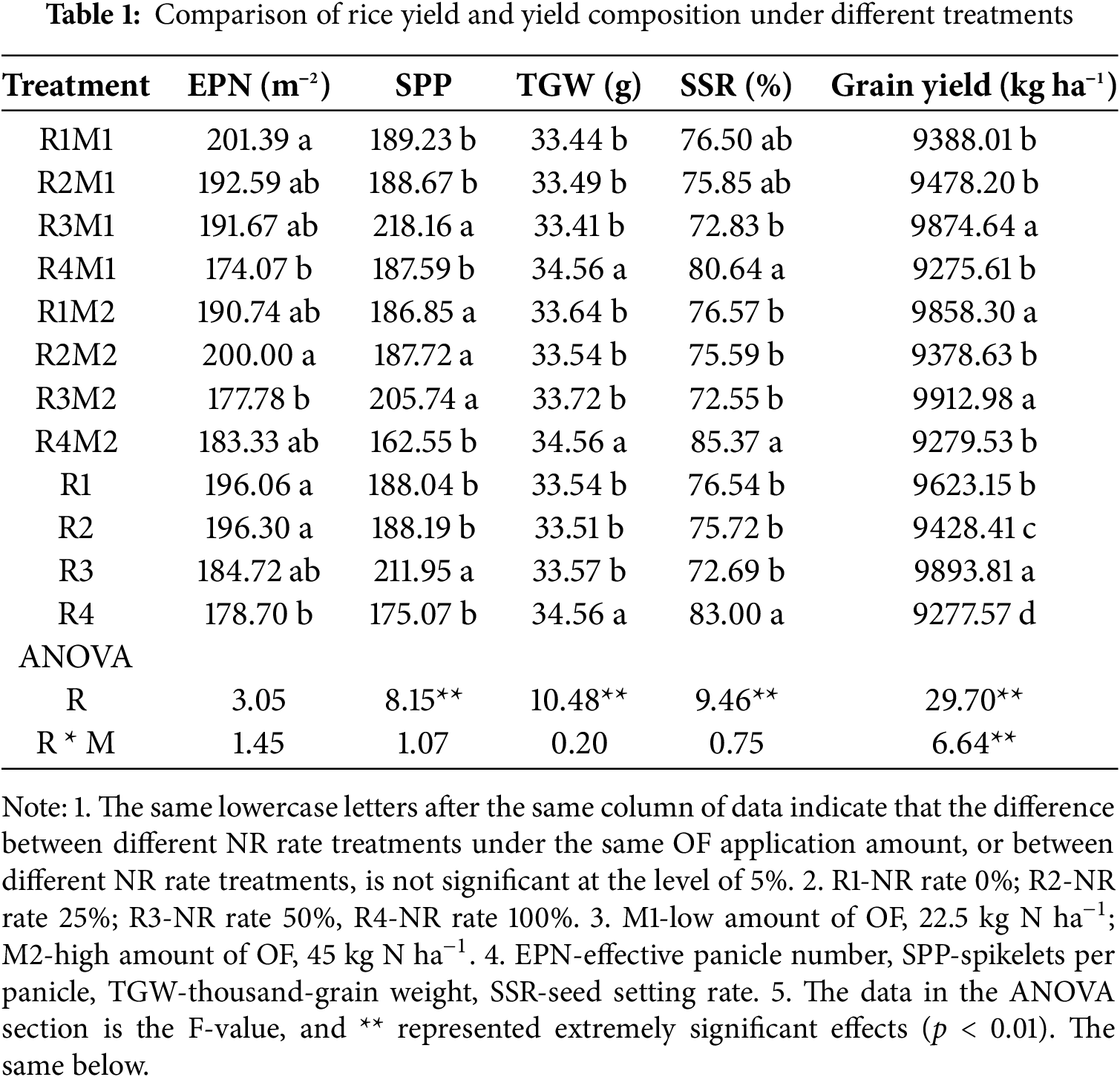
Table 2 shows that under isonitrogen conditions, compared with single nitrogen fertilizer (180 kgN ha−1), the grain yield was significantly increased under 25% NR combined with a high amount of OF (R2M2). Under non-isonitrogen conditions, the grain yield was significantly improved under a low or high OF amount with 50% (R3M1, R3M2) and a low OF amount under 25% NR (R2M1) compared with a single N application (180 kgN ha−1).
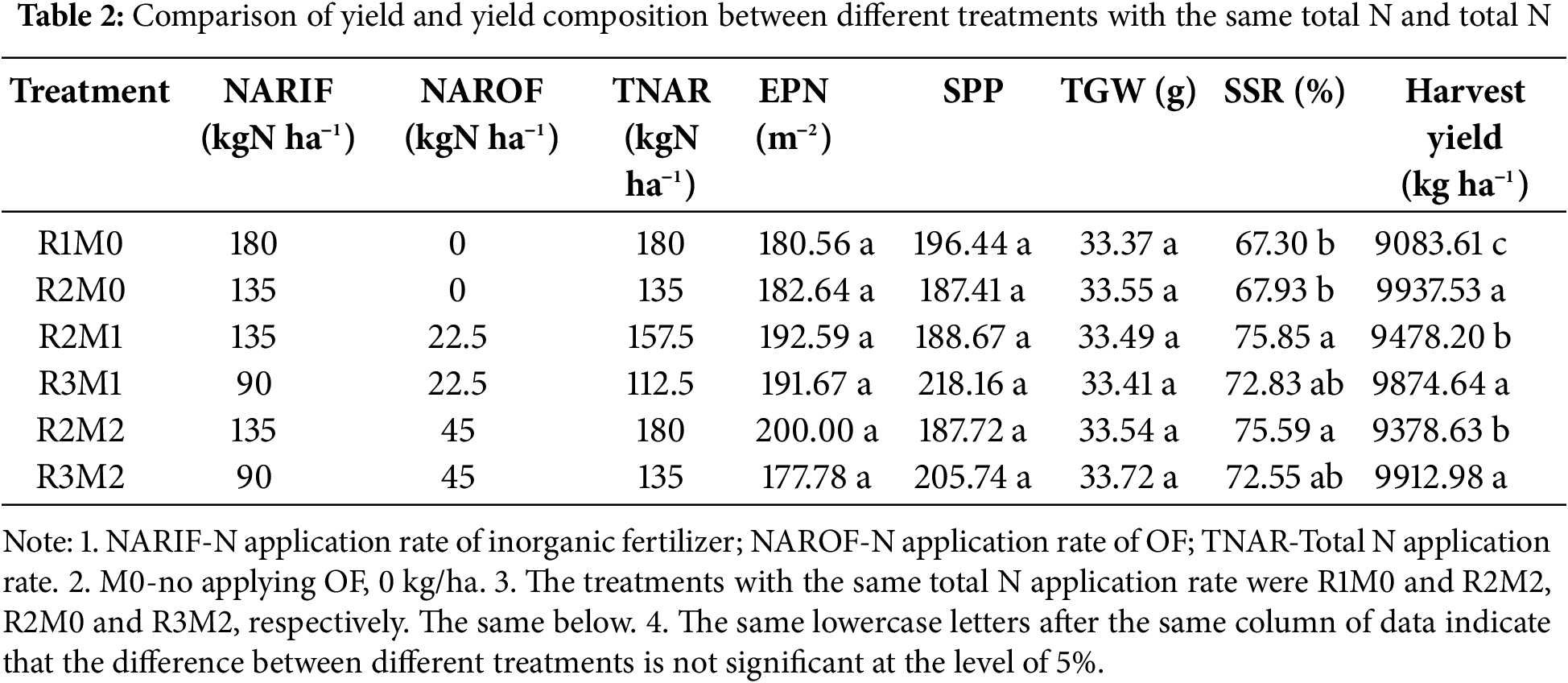
Table 1 demonstrates that the NR rate had a significant impact on the SPP, TGW, and SSR. As the NR rate increased, there were different changes in the yield components. Among them, the EPN and SPP displayed a trend of increasing first and then decreasing, while TGW and SSR were the opposite. The EPN of R2 was the highest, which was significantly higher than that of R4. The SPP of R3 was the highest and was significantly higher than that of R4. The TGW and SSR were highest at R4 and were significantly higher than those of other NR treatments.
Under a low amount of OF, the EPN of the 0% NR rate (R1) was highest and was significantly higher than that of R4, but the difference between R2 and R3 treatment was not significant. R3 had the highest SPP and was significantly higher than that of the other NR treatments. The SSR and TGW of R4 were highest and significantly higher than those of the R3 treatment. Under a high OF amount, the SPP of R3 was also the highest and significantly higher than that of R4. The TGW and SSR were highest under R4 and were significantly higher than those of the other NR treatments. Whether under the combined application of low or high amounts of OF, excessive NR was not conducive to the increase of EPN and SPP, among which the NR rate should not exceed 25% for the EPN, and the NR rate of the SPP should not exceed 50%. However, for TGW and SSR, the 100% reduction in N was more conducive to the improvement of both.
Table 2 indicates that under isonitrogen condition, the SSR of R2M2 was significantly 12.32% higher than that of a single N fertilizer (R1M0). In addition, compared with R1M0, the SSR of R2M1 was significantly increased by 12.70% under non-isonitrogen conditions.
As shown in Fig. 1a,b, the main effect of the NR rate indicates that as the NR rate improved, RE, AE, and PFP showed a continuous increasing trend, and the grain production efficiency of N (GPE) first decreased and then increased. These four N efficiency indexes were highest inR4, and all were significantly higher than those of R1 and R2. The N harvest index (NHI) showed a trend of increasing first and then decreasing, but there was no significant difference between the treatments.
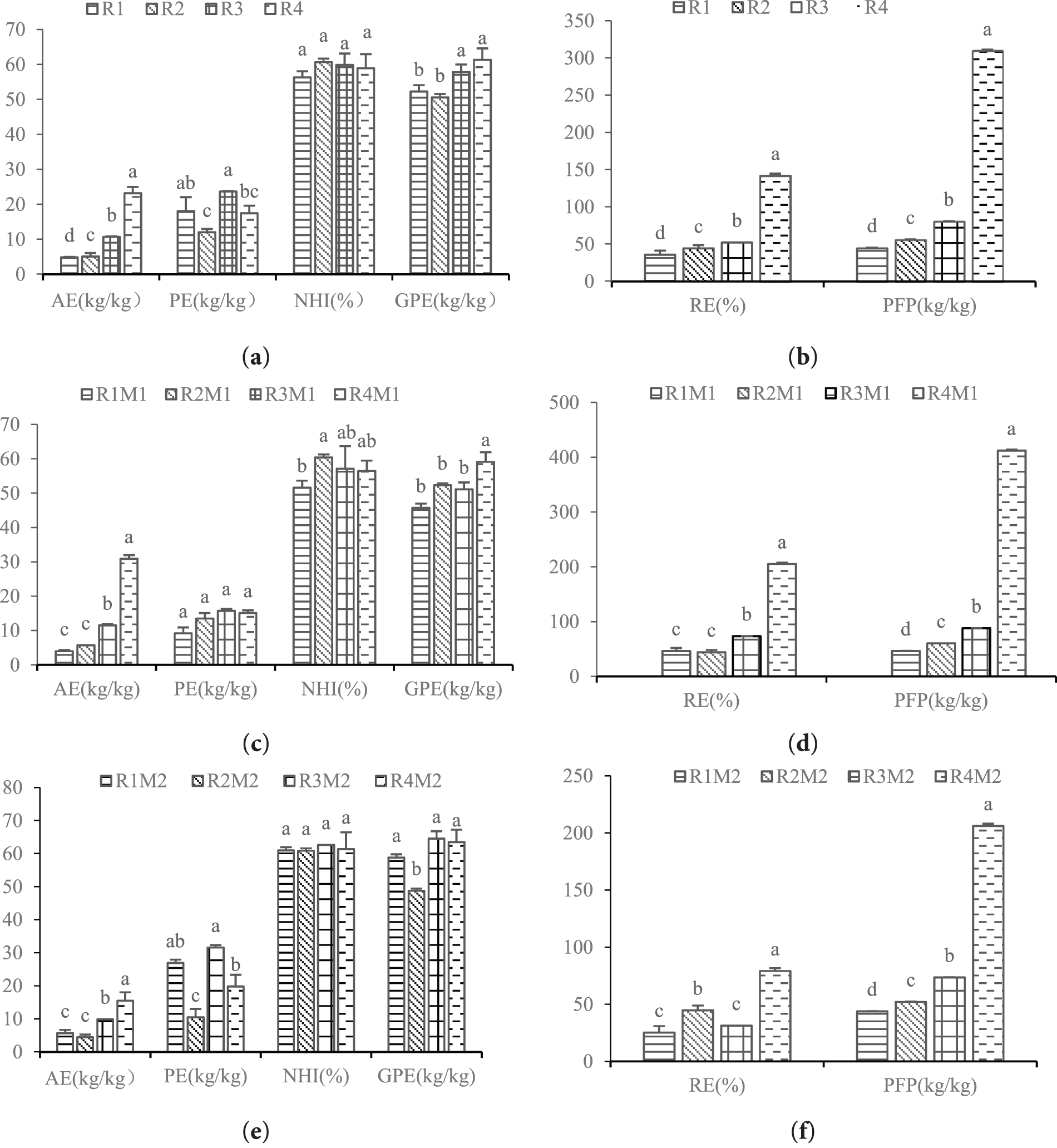
Figure 1: Effects of NR on N utilization rate. 1. The plot data in Fig. 1a,b are the average values of the two OF application rates at the same NR rate. 2. The vertical line indicates SE (n = 3). 3. In the histogram of the same indicator, different lowercase letters represented significant difference between different treatments (p < 0.05). 4. AE-agronomic efficiency of N, PE-physiological efficiency of N, NHI-N harvest index, GPE-grain production efficiency of N, RE-recovery efficiency of N, PFP-partial factor productivity of N. The same below. (a) AE, PE, NHI, GPE under R1, R2, R3, and R4; (b) RE, PFP under R1, R2, R3, and R4; (c) AE, PE, NHI, GPE under R1M1, R2M1, R3M1, and R4M1; (d) RE, PFP under R1M1, R2M1, R3M1, and R4M1; (e) AE, PE, NHI, GPE under R1M2, R2M2, R3M2, and R4M2; (f) RE, PFP under R1M2, R2M2, R3M2, and R4M2
Fig. 1c–f shows that under a low and high amount of OF, RE, AE, and PFP were highest in R4, which was significantly higher than other NR treatments. The PE of R3 was the highest among all treatments, which was significantly higher than that of R2 and R4 under a high amount of OF. The NHI increased first and then decreased when the NR rate improved. There was no significant difference between R2 and R3 under a low amount of OF, but it was significantly higher than that of R1.
Fig. 2 demonstrates that under isonitrogen conditions, the RE of R2M2 was significantly 40.77% higher than that of R1M0, and the PE of R3M2 was significantly 32.59% higher than that of R2M0. Under non-isonitrogen conditions, compared with R1M0, the RE of R2M1 and R3M1 significantly increased. Additionally, the AE of R2M1, R3M1, and R3M2, and the PE of R3M1 and R3M2 significantly improved, and the PFP of R2M1, R3M1, and R3M2 and the GPE of R3M2 were significantly enhanced.
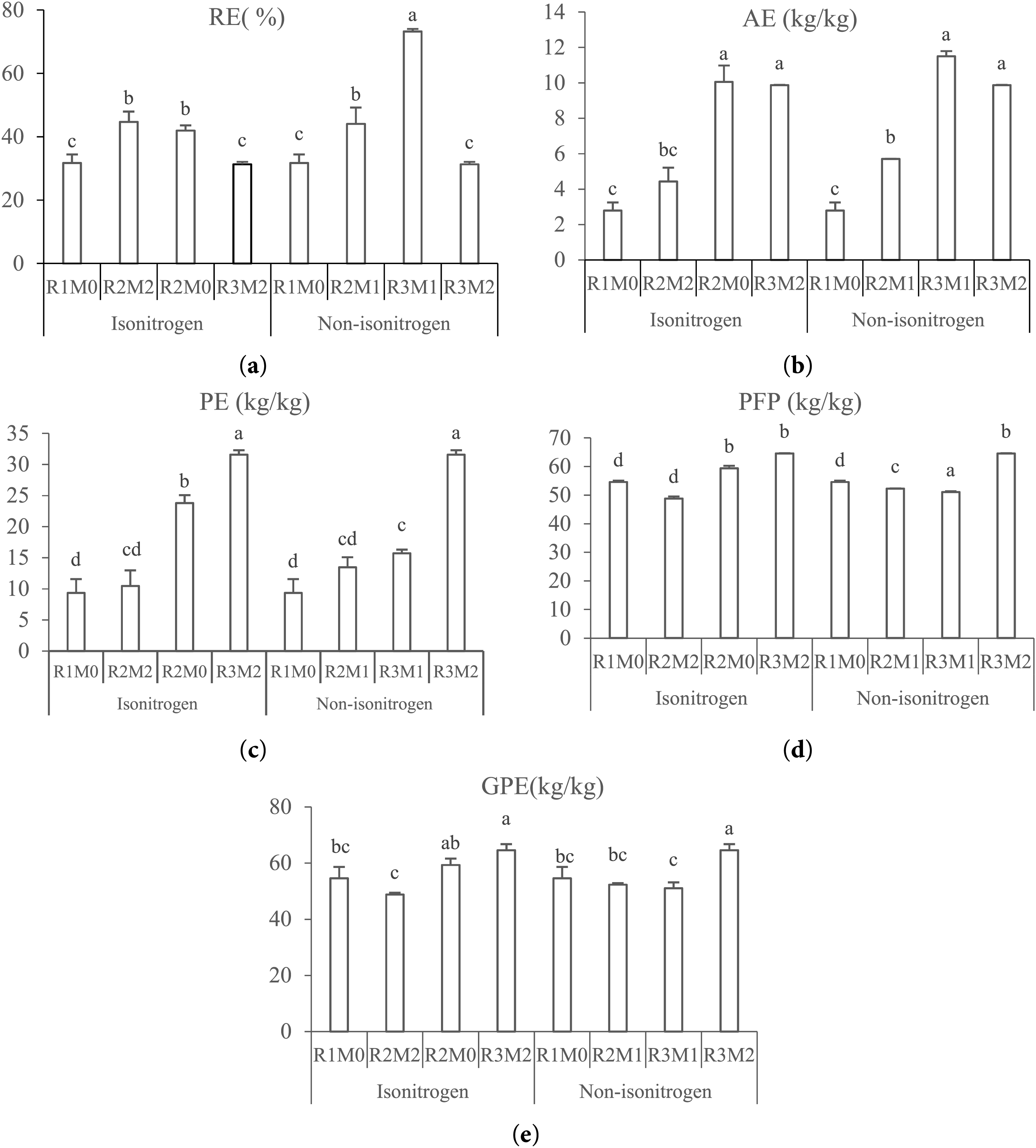
Figure 2: Comparison of N utilization rates among treatments under isonitrogen or non-isonitrogen conditions. 1. (a–e) are RE, AE, PE, PFP, and GPE under equal and unequal nitrogen conditions, respectively. 2. The treatments under isonitrogen conditions were R1M0 and R2M2, R2M0 and R3M2, respectively; the treatments under non-isonitrogen conditions were R1M0 and R2M2, R2M0 and R3M2, respectively. 3. In the histogram of the same indicator, different lowercase letters represented significant difference between different treatments (p < 0.05)
The results of variance analysis showed that the NR rate and the interaction between the NR rate and the OF application rate had a very significant impact on RE, AE, PE, PFP, and GPE.
Table 3 shows that the NR rate had no significant effect on the brown rice rate, but it had a significant or very significant effect on the milled rice rate (MRR) and the head rice rate (HRR). As the NR rate improved, the MRR and HRR continued to decrease.
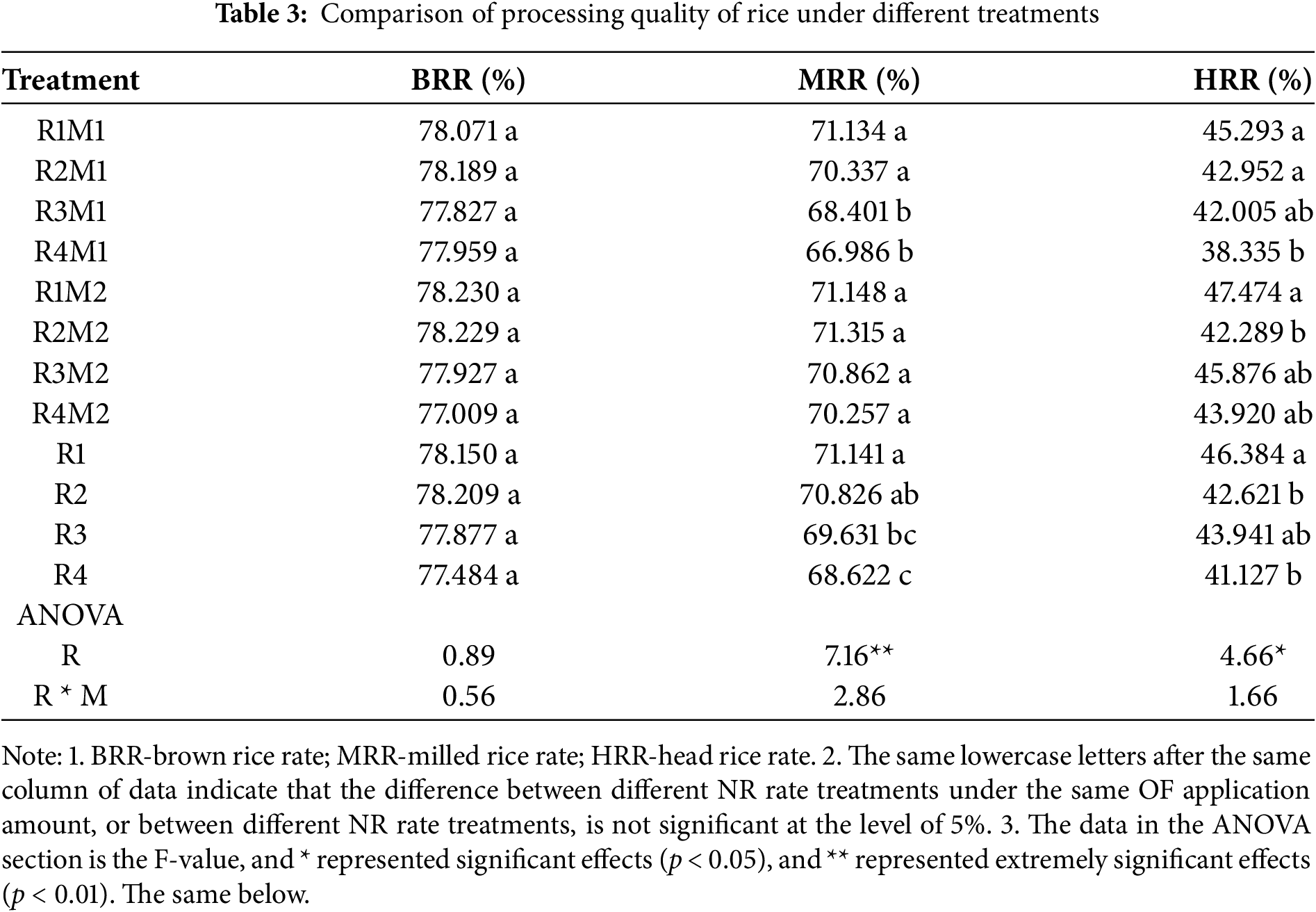
Under a low amount of OF, with the increase in the NR rate, MRR and HRR showed a continuous decreasing trend, and R1 was significantly higher than R4. However, under a high amount of OF, although R3 and R4 decreased compared with R1, there was no significant difference from R1. The increase in the amount of OF improved the significant decrease in MRR and HRR caused by the increase in the NR rate.
Table 4 shows that, Under isonitrogen conditions, compared with R1M0, the BRR and MRR of R2M2 showed no significant difference, but they increased by 1.45% and 2.02%, respectively. Under non-isonitrogen conditions, compared with R1M0, the BRR and MRR of R2M1 also had no significant difference, but they increased by 1.4% and 0.62%, respectively; the BRR, MRR, and HRR of R3M2 had no significant difference compared with that of R1M0, but they increased by 1.06%, 1.36%, and 6.08%, respectively.
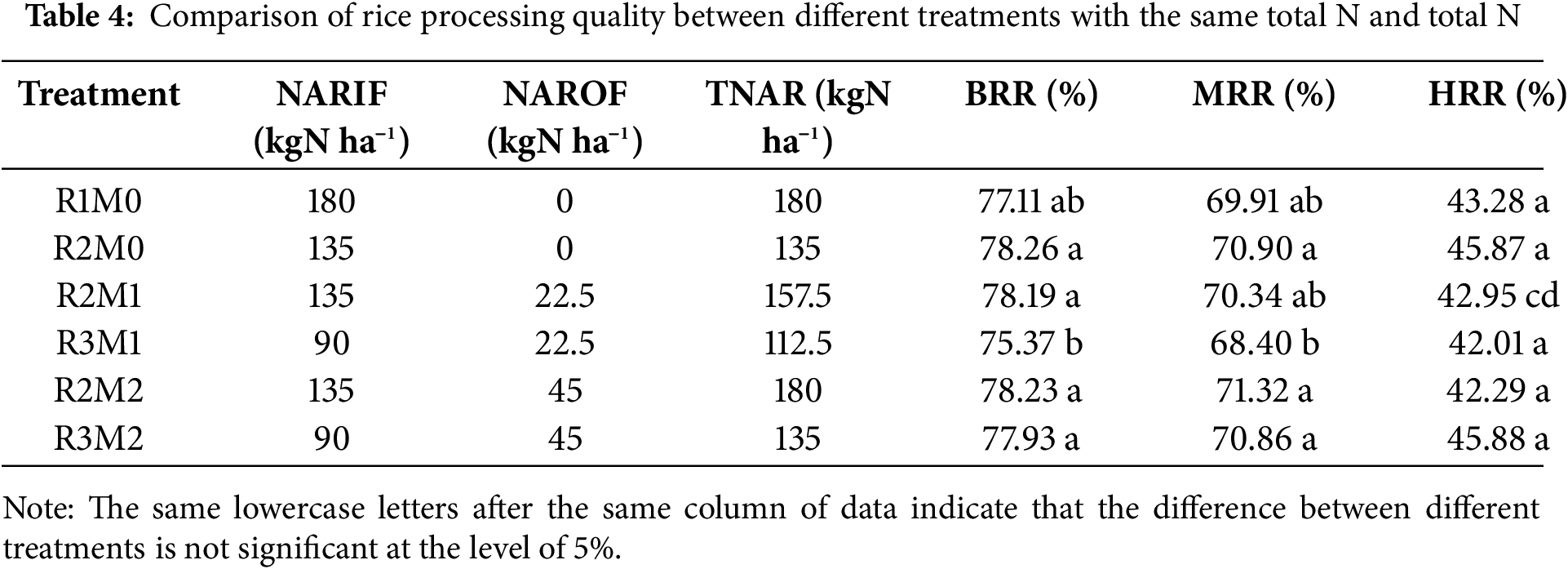
Table 5 indicates that with the increase in the NR rate, the CD and CRR had a continuous downward trend. The CD of R1 was highest and was significantly higher than that of R4; the CR of R2 was highest and was not significantly different from R1 and R3 but was significantly higher than R4.
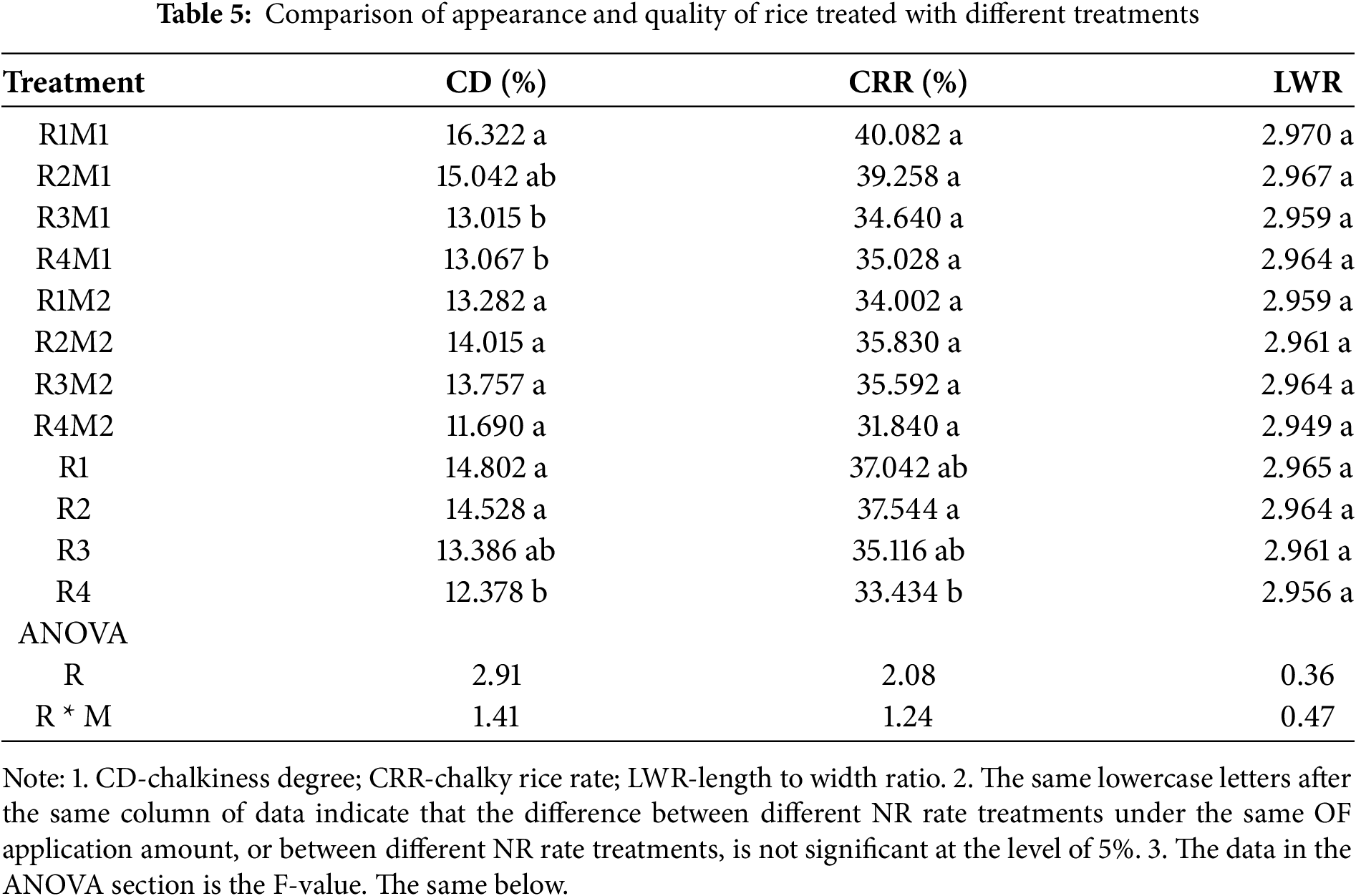
Under a low amount of OF, the CD and CR showed a trend of first decreasing and then increasing, while under a high amount of OF, the CD and CR showed the opposite trend. There was no significant difference in the length-width ratio (LWR) between treatments under a low or high amount of OF.
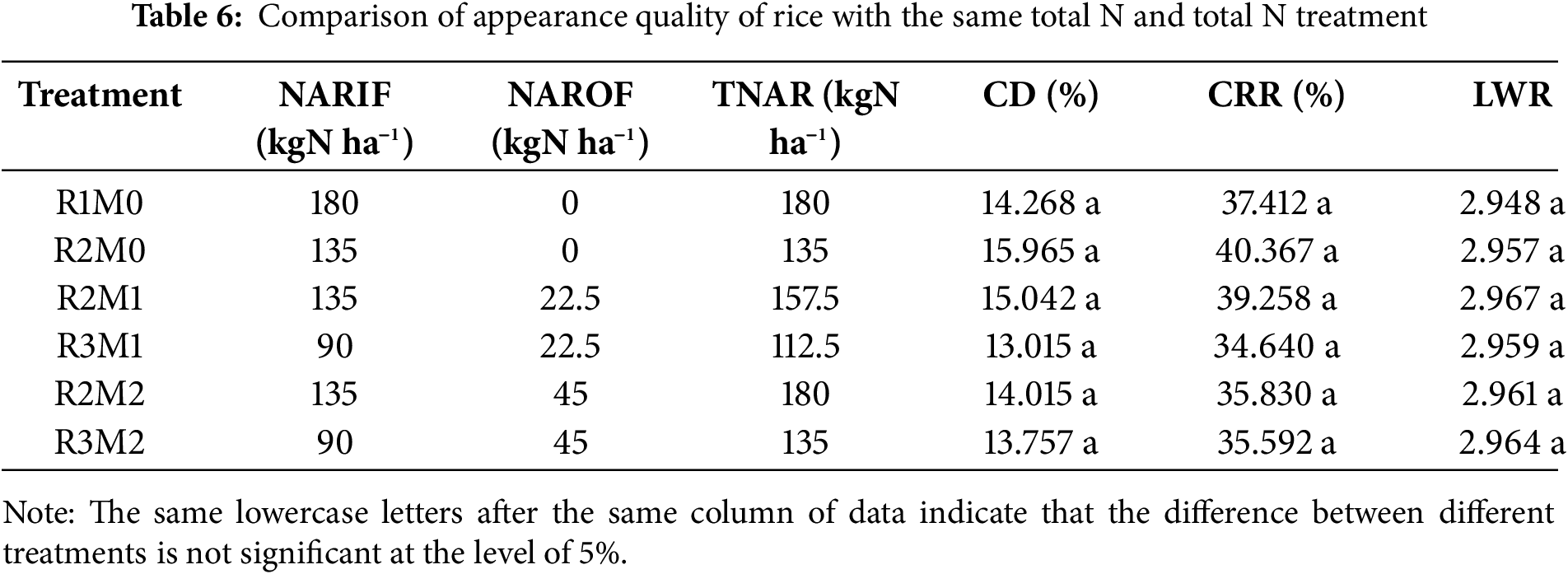
Table 6 demonstrates that under isonitrogen or non-isonitrogen conditions, the CD and CR were not significantly different between treatments, but there were still differences. Under isonitrogen conditions, compared with R1M0, the CD and CR of R2M2 decreased by 1.77% and 4.23%, respectively; compared with R2M0, the CD and CR of R3M2 decreased by 13.83% and 11.83%, respectively. Under non-isonitrogen conditions, compared with R1M0, the CD of R3M1 and R3M2 decreased by 8.78% and 3.58%, respectively, and the CR decreased by 7.41% and 4.86%, respectively; compared with R2M0, the CD and CR of R3M1 decreased by 18.48% and 14.19%, respectively.
4.3.3 Cooking and Nutritional Quality
Table 7 indicates that the NR rate had an extremely significant effect on the protein content (PC) and a significant effect on the amylose content (AC). The main effect of the NR rate showed that as the NR rate improved, AC and GC continued to increase, both of which were largest under R4 and significantly higher than those of R1 and R2. With the increase in the NR rate, the PC continued to decline and was the largest under R1, but there was no significant difference between R1 and R2.
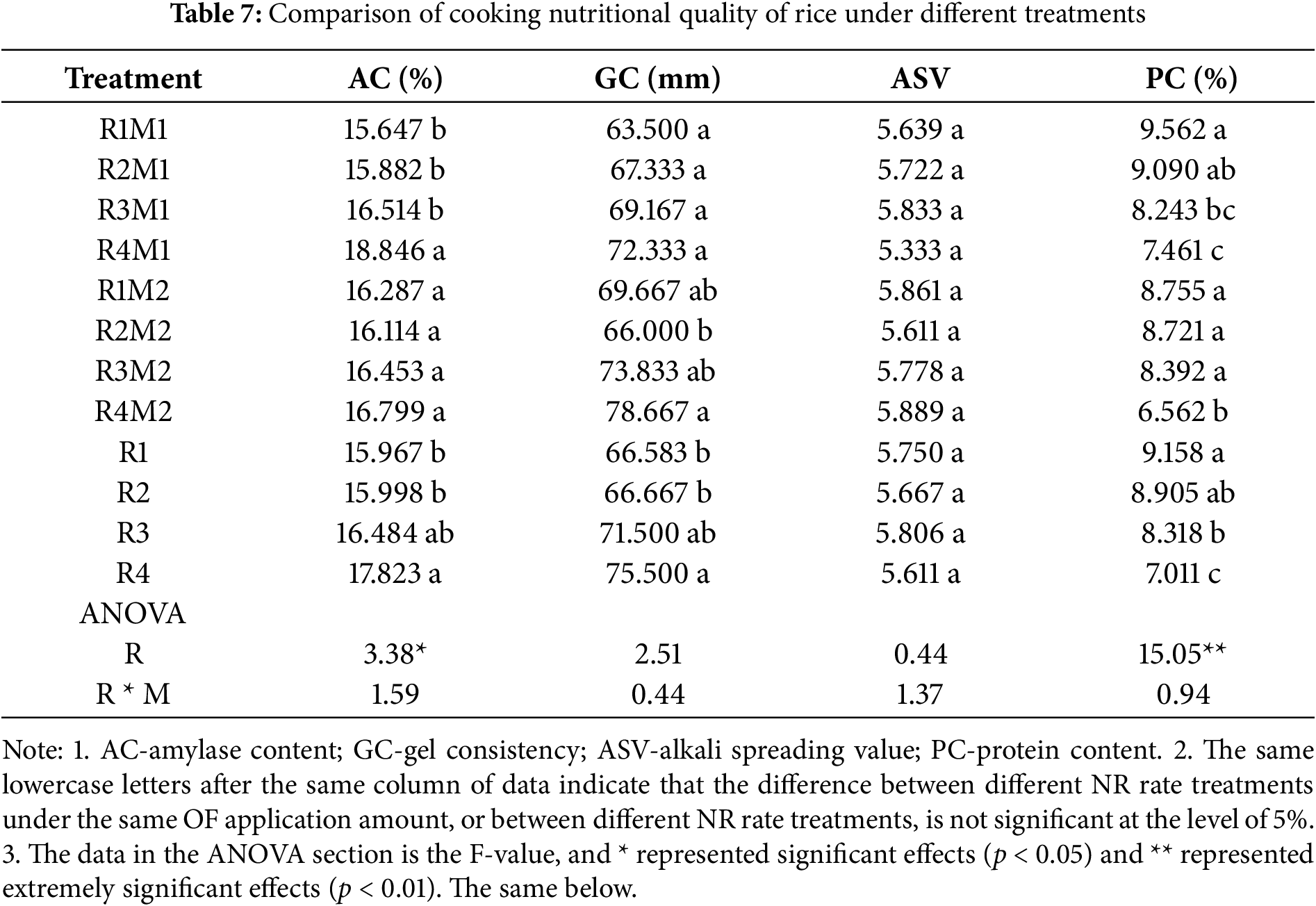
Under a low or high amount of OF, with the increase in the NR rate, the AC and GC continued to increase, while the PC showed a contrasting trend. Among them, under a low amount of OF, the AC was largest under R4 and was significantly higher than that of the other treatments. Under a high amount of OF, the GC was largest under R4 and was significantly higher than that of R2. The PC was highest at R1 under both OF volumes, but there was no significant difference between R1 and R2.
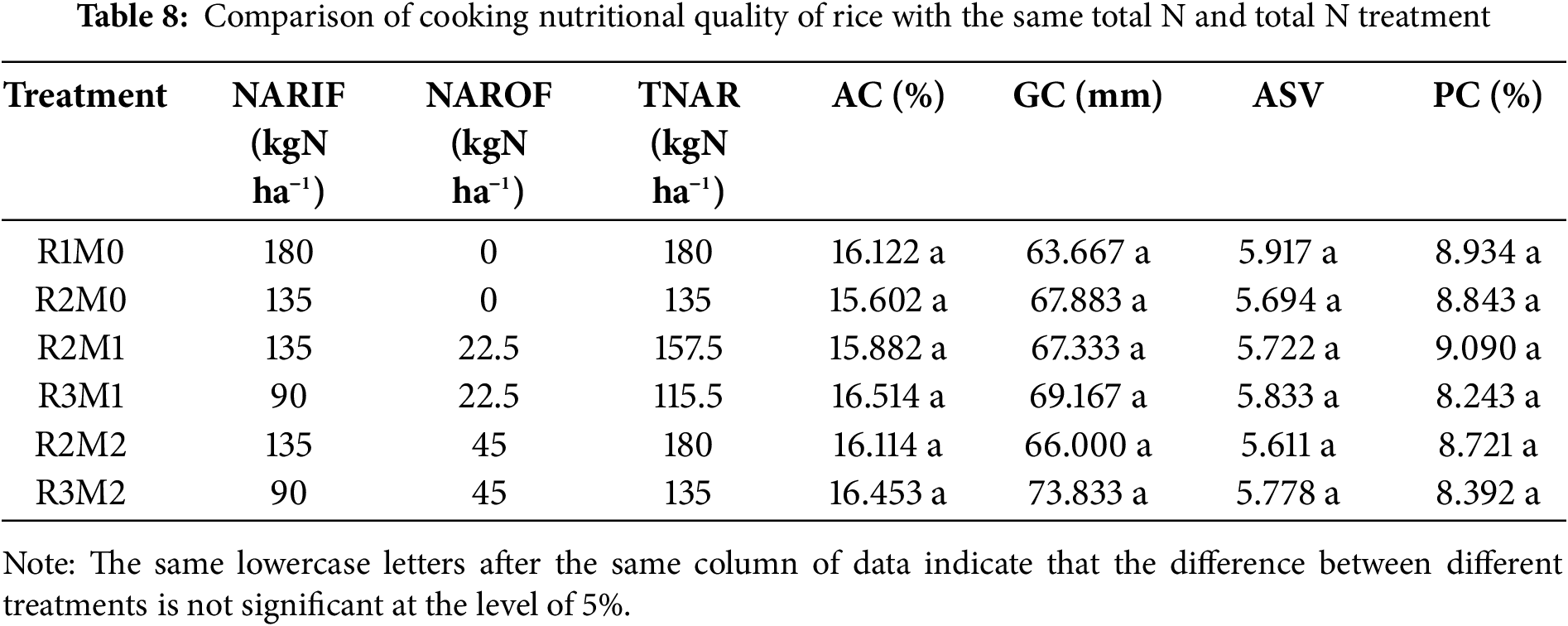
Table 8 shows that under isonitrogen or non-isonitrogen conditions, there was no significant difference in the nutritional quality of rice cooking between the treatments, but a certain increase or decrease existed. Under isonitrogen conditions, the GC of R2M2 increased by 3.66% compared with that of M0R1, and compared with R2M0, the GC and ASV of R3M2 increased by 8.85% and 1.48%, respectively. Under non-isonitrogen conditions conditions, compared with R1M0, the ASV and PC of R2M1 increased by 5.76% and 1.75%, respectively; the GC of R3M1 or R3M2 increased by 2.43% and 2.05%, respectively. The GC and ASV of R3M1 increased by 1.9% and 2.44% compared with R2M0, respectively.
5.1 Response of Yield and Its Composition to N Reduction with Organic Fertilizer Application
In this study, there were three modes of NR and OF application: NR under the same amount of OF (mode 1); NR and OF application under isonitrogen conditions (mode 2); and NR and OF application under non-isonitrogen conditions (mode 3). In mode 1, the grain yield was highest at 50% NR, whether at a low or high amount of OF. However, A study showed rice yield continued to decline with the increase in NR rate under the application of 300 kg ha−1 OF [22]. This conclusion differed from that of this study, which may be due to the lower amount of OF applied and the different types of OF compared with this study. Under equal nutrient content, compared with conventional fertilization, the rice yield was higher under OF with a 25% NR [25]. Under the same nutrient content, compared with N fertilization alone, the yield of cow manure or poultry manure with 30% NR significantly increased [28]. Under non-isonitrogen conditions, compared with conventional fertilization, the yield of late rice significantly increased with a 62.5% NR combined with OF, and these conclusions were similar to this study [29]. In modes 2 and 3 of this study, the yield was significantly higher under NR combined with OF treatment than under single N application (180 kgN ha−1). Regardless of the mode, NR and OF application can increase the yield, which may be because the application of OF can balance the nutrients in the soil and make the nutrient supply of rice sufficient throughout the growth period [30–32], in addition, OF application reduces chemical fertilizer N application, solving the problem of low nutrient utilization caused by excessive N application in conventional fertilization [33,34].
This study indicates that excessive NR (100% NR) under the same amount of OF is not conducive to an increase in EPN and SPP, which is similar to the results of Zhang [35]. This may be due to the obvious N deficiency in rice tillering growth and panicle differentiation due to excessive NR and insufficient nutrient supply, thus showing a smaller reservoir capacity [36]. However, the TGW and SSR were the opposite, and both were highest at 100% NR, indicating that a single application of OF had an increasing effect on TGW and SSR. This is similar to the findings of Gu et al. [21]. The reason for this may be that compared with fast-acting chemical N fertilizer, OF has a gentle and continuous fertilizer effect, which can improve biological N fixation, thus, the N fertilizer can be continuously supplied throughout the entire growth period, which is beneficial to the nutrient supply of grain filling in the late growth period, thereby increasing TGW and SSR [37–39].
5.2 Response of N Efficiency to N Reduction with Organic Fertilizer Application
The N fertilizer utilization rate is a dynamic parameter reflecting the relationship between the crop, soil, and fertilizer, and it is also an important indicator for determining whether the fertilizer application rate and fertilization method are scientific and reasonable [40–45]. Wei et al. [46] found that under the same amount of OF, as the NR rate increased, the RE, AE, and PFP increased first and then decreased, in addition, under different conditions of total N application rate, compared with single N fertilization, NR combined with OF significantly improved RE and AE, which differs from the conclusion of this study. In this experiment, under mode 1, with the increase in the NR rate, the above-mentioned three N fertilizer utilization indexes continued to increase; meanwhile, in mode 3, compared with a single N fertilizer (180 kgN ha−1), NR combined with OF not only improved the RE and AE but also improved PFP, PE, and GPE. This may be due to the difference in OF application amount; the OF application rate in this study was higher than that in Wei et al. [46], and increasing the OF application rate was conducive to improving the nutrient preservation capacity of the soil, reducing N leaching, and increasing the microbial activity in the soil, promoting the decomposition of organic matter and adding more effective nutrients to the soil, thereby promoting absorption and utilization in rice [47]. Ren et al. [48] reported that, under the same nutrient content, compared with single N fertilizer, OF application with 50% NR significantly improved the RE. He et al. [49] indicated that under the same total N application rate, compared with a single N fertilizer, the N absorption and utilization rate significantly increased under OF with 20% NR, which was similar to the conclusion obtained in mode 2 in this experiment. Under the same conditions of total N application rate, compared with single N fertilizer (180 kgN ha−1), 25% NR combined with OF significantly improved the RE, further indicating that 25%–50% NR combined with OF can improve the N absorption and utilization rate.
5.3 Response of Quality to N Reduction with Organic Fertilizer Application
In mode 1 of this study, with the increase in the NR rate, the MRR and HRR continued to decrease. Overall, under the same amount of OF, the increase in the NR rate was not conducive to improving the quality of rice processing, similar to the research conclusion of Li [26]. This may be because N fertilizer is closely related to the grouting effect in the late growth stage of rice, and the formation of rice processing quality is inseparable from the grout process, so the processing quality of NR treatment is reduced [50]. In modes 2 and 3, although the rice processing quality indicators did not differ significantly between treatments, the BRR and MRR were improved under NR and OF treatment compared with single chemical fertilizer, and the HRR was also increased under mode 3. The results showed that based on a single application of chemical fertilizer, the mode of NR combined with OF was more conducive to improving the quality of rice processing than the NR mode under the same amount of OF.
Zhou [51] reported that with the increase in the NR rate, CD, and CRR increased in single-crop rice, while there was no significant change in the length-width ratio, which is different from the conclusion of this paper. This study showed that, in mode 1, as the NR rate increased, CD and CRR had a decreasing trend, and there was no significant change in LWR. NR under OF application improved the appearance quality of rice. This may be because NR combined with OF is beneficial for potassium absorption in rice and enhances the transport of potassium in plants, which is beneficial for improving the appearance quality of rice [52]. Under modes 2 and 3 of this experiment, compared with the single application of chemical fertilizer, the CD and CRR of NR combined with OF treatment decreased, indicating that NR combined with OF was beneficial in improving the appearance quality.
This study showed that in mode 1, with the application of OF, with the increase in the NR rate, AC and GC had an increasing trend, indicating that NR combined with OF increased the GC, thereby ensuring the palatability of rice. However, the amylose content increased, but the range was 15%–17%, which is a low amylose content; therefore, the rice remained soft and elastic after cooking. This is consistent with the conclusions of Li et al. [53]. In terms of nutritional quality, PC showed an opposite trend to AC and GC, indicating that NR under the same amount of OF was not conducive to the improvement of PC, which was consistent with the research conclusion of Wu et al. [54]. This may be because chemical fertilizer work earlier than OF, allowing rice plants to store enough nutrients in the early stages, thus ensuring the material preparation for grouting and filling the grain [51]. In modes 2 and 3, the GC of NR and OF treatment was higher than that of the single fertilizer treatment, and the PC of R2M1 increased by 1.75% compared with R1M0 in mode 3. NR combined with OF application improved the GC compared with the single application of chemical fertilizer, and the appropriate NR rate increased the protein content under the amount of OF.
Three NR modes increased grain yield, among which a 50% reduction in N under OF application was the most conducive to increasing grain yield. Under isonitrogen or non-isonitrogen conditons, the grain yield was significantly higher under NR combined with OF treatment than under a single nitrogen fertilizer (180 kgN ha−1). Under the combined application of OF, excessive NR was not conducive to the increase of the EPN or SSP, among which the NR rate did not exceed 25% for the EPN, and the SPP did not exceed 50%. However, for TGW and SSR, a NR rate of 100% was more beneficial to the improvement of both. Under equal or unequal N conditions, the SSR significantly increased under the NR combined application compared with a single nitrogen fertilizer (180 kgN ha−1). Under the mixed application of OF, as the NR rate increased, RE, AE, and PFP continued to increase. Compared with a single nitrogen fertilizer (180 kgN ha−1), the RE, AE, PFP, PE, and GPE were significantly increased by NR combined with OF under equal or unequal N conditions. Under the mixed application of OF, NR was not conducive to improving the processing quality of rice, but it improved the appearance quality of rice and the GC in the cooking quality index. Under equal or unequal N conditions, the processing quality, appearance quality, and GC were improved under NR combined with OF treatment compared with a single fertilizer treatment.
Acknowledgement: Not applicable.
Funding Statement: This work was supported by the National Key Research and Development Plan Project Sub Topic of China (2022YFD1901500/2022YFD1901505-07), the National Natural Science Foundation of China (32260531), the Key Laboratory of Molecular Breeding for Grain and Oil Crops in Guizhou Province (Qiankehezhongyindi (2023)008), and the Key Laboratory of Functional Agriculture of Guizhou Provincial Higher Education Institutions (Qianjiaoji (2023) 007).
Author Contributions: The authors confirm contribution to the paper as follows: study conception and design: Guiling Xu, Xiaoxuan You, Yuehua Feng; data collection: Xiaoke Wang, Zhili Han, Jiale Li; analysis and interpretation of results: Yuqi Gao, Hongjun Ren; draft manuscript preparation: Guiling Xu, Xiaoxuan You. All authors reviewed the results and approved the final version of the manuscript.
Availability of Data and Materials: All the data supporting the findings of this study are included in this article.
Ethics Approval: Not applicable.
Conflicts of Interest: The authors declare no conflicts of interest to report regarding the present study.
Abbreviations
| AC | Amylase content |
| AE | Agronomic efficiency |
| ASV | Alkali spreading value |
| BRR | Brown rice rate |
| CD | Chalkiness degree |
| CRR | Chalky rice rate |
| EPN | Effective panicle number |
| GC | Gel consistency |
| GPE | Grain production efficiency of nitrogen |
| HRR | Head rice rate |
| LWR | Length-width ratio |
| MRR | Milled rice rat |
| N | Nitrogen |
| NARIF | Nitrogen application rate of inorganic fertilize |
| NAROF | Nitrogen application rate of organic fertilizer |
| NHI | N Harvest index |
| NR | Nitrogen reduction |
| OF | Organic fertilizer |
| PC | Protein content |
| PFP | Partial factor productivity |
| RE | Nitrogen recovery efficiency |
| SPP | Spikelets per panicle |
| SSR | Seed setting rat |
| TGW | Thousand-grain weigh |
| TNAR | Total nitrogen application rat |
References
1. Tang S, Zhang H, Liu W, Dou Z, Zhou Q, Chen W, et al. Nitrogen fertilizer at heading stage effectively compensates for the deterioration of rice quality by affecting the starch-related properties under elevated temperatures. Food Chem. 2019;277(5):455–62. doi:10.1016/j.foodchem.2018.10.137. [Google Scholar] [PubMed] [CrossRef]
2. Xiong R, Tan X, Yang T, Pan X, Zeng Y, Huang S, et al. Relation of cooked rice texture to starch structure and physicochemical properties under different nitrogen managements. Carbohydr Polym. 2022;295:119882. doi:10.1016/j.carbpol.2022.119882. [Google Scholar] [PubMed] [CrossRef]
3. Mao J, Wang S, Xu YM, Wang MY, Liu YH, Ren JL, et al. Effects of nitrogen application rate on yield and quality of different genotypes of foxtail millet. Phyton-Int J Exp Bot. 2024;93(12):3487–507. doi:10.32604/PHYTON.2024.057945. [Google Scholar] [CrossRef]
4. Wang Y, Li Y, Xie Y, Yang X, He Z, Tian H, et al. Effects of nitrogen fertilizer rate under deep placement on grain yield and nitrogen use efficiency in mechanical pot-seedling transplanting rice. J Plant Growth Regul. 2023;42(5):3100–10. doi:10.1007/s00344-022-10773-4. [Google Scholar] [CrossRef]
5. Zhang Y, Sun T, Zhu J, Xiong Q, Hu J, Zhang H, et al. Revealing the effect of different nitrogen fertilizer levels on rice yield through metabolite evaluation. Phyton-Int J Exp Bot. 2024;93(12):3573–87. doi:10.32604/phyton.2024.057690. [Google Scholar] [CrossRef]
6. Proud C, Shu F, Dunn B, Dunn T, Mitchell J. Effect of nitrogen management on grain yield of rice grown in a high-yielding environment under flooded and non-flooded conditions. Crop Environ. 2023;2(1):37–45. doi:10.1016/j.crope.2023.02.004. [Google Scholar] [CrossRef]
7. Li YJ, Wang YH, Chen S, Gao Y, Shi Y. Effects of different nitrogen and phosphorus synergistic fertilizer on enzymes and genes related to nitrogen metabolism in wheat. Phyton-Int J Exp Bot. 2023;92(7):2151–64. doi:10.32604/PHYTON.2023.027930. [Google Scholar] [CrossRef]
8. Liu M, Hu F, Chen X, Huang Q, Jiao J, Zhang B, et al. Organic amendments with reduced chemical fertilizer promote soil microbial development and nutrient availability in a subtropical paddy field: the influence of quantity, type and application time of organic amendments. Appl Soil Ecol. 2009;42(2):166–75. doi:10.1016/j.apsoil.2009.03.006. [Google Scholar] [CrossRef]
9. Li B, Yan L, Zhang W. Study on N application and N reduction potential of farmland in China. Environ Monit Assess. 2023;195(10):1156. doi:10.1007/s10661-023-11780-y. [Google Scholar] [PubMed] [CrossRef]
10. Wang J, Zhang X, Yuan M, Wu G, Sun Y. Effects of partial replacement of nitrogen fertilizer with organic fertilizer on rice growth, nitrogen utilization efficiency and soil properties in the Yangtze river basin. Life. 2023;13(3):624. doi:10.3390/life13030624. [Google Scholar] [PubMed] [CrossRef]
11. Ladha JK, Pathak H, Krupnik TJ, Six J, van Kessel C. Efficiency of fertilizer nitrogen in cereal production: retrospects and prospects. Adv Agron. 2005;87(3):85–156. doi:10.1016/S0065-2113(05)87003-8. [Google Scholar] [CrossRef]
12. Mahboob W, Yang G, Irfan M. Crop nitrogen (N) utilization mechanism and strategies to improve N use efficiency. Acta Physiol Plant. 2023;45(4):52. doi:10.1007/s11738-023-03527-6. [Google Scholar] [CrossRef]
13. Thorburn PJ, Biggs JS, Puntel LA, Sawyer JE, Everingham YL, Archontoulis SV. The nitrogen fertilizer conundrum: why is yield a poor determinant of crops’ nitrogen fertilizer requirements? Agron Sustain Dev. 2024;44(2):18. doi:10.1007/s13593-024-00955-7. [Google Scholar] [CrossRef]
14. Zhang M, Yao Y, Tian Y, Ceng K, Zhao M, Zhao M, et al. Increasing yield and N use efficiency with organic fertilizer in Chinese intensive rice cropping systems. Field Crops Res. 2018;227:102–9. doi:10.1016/j.fcr.2018.08.010. [Google Scholar] [CrossRef]
15. Chander S, Tripathi SC, Venkatesh K, Kumar N, Meena RP, Chhokar RS, et al. Sustainability assessment of rice-wheat system through organic fertilizers and green manuring in sub-tropical humid climate. Int J Plant Prod. 2023;17(2):219–34. doi:10.1007/s42106-023-00232-9. [Google Scholar] [CrossRef]
16. Mando A, Bonzi M, Wopereis MCS, Lompo F, Stroosnijder L. Long-term effects of mineral and organic fertilization on soil organic matter fractions and sorghum yield under Sudano-Sahelian conditions. Soil Use Manag. 2005;21(4):396–401. doi:10.1079/SUM2005339. [Google Scholar] [CrossRef]
17. Tao W, Zhang Y, Gu J, Zhu K, Wang Z, Yang J. The synergistic optimization of rice yield, quality, and profit by the combined application of organic and inorganic nitrogen fertilizers. Agronomy. 2024;14(11):2665. doi:10.3390/agronomy14112665. [Google Scholar] [CrossRef]
18. Tu Q, Zhang Z, Liu M. Effect of reducing nitrogen and applying organic fertilizer on nitrogen use efficiency and rice yield in red soil regions of the Southern China. J Energy Environ Chem Eng. 2021;6(1):10. doi:10.11648/j.jeece.20210601.12. [Google Scholar] [CrossRef]
19. Gao Q, Dang S, Huang XL, Wang XJ, Zhao GR, Zhang ZY. Study on the technology of organic-inorganic fertilizer reduction. Northern Rice. 2022;52(4):19–22. doi:10.16170/j.cnki.1673-6737.2022.04.011. [Google Scholar] [CrossRef]
20. Ding HX, Wu XQ, Lu Y. Effects of combined application of organic and inorganic fertilizers on rice and wheat yield and soil quality. J Zhejiang Agric Sci. 2021;62(3):505–7. doi:10.16178/j.issn.0528-9017.20210315. [Google Scholar] [CrossRef]
21. Gu WW, Gu SP, Zhang Q, Shen J, Yuan W. Effect of combination application of organic and inorganic fertilizer on the yield and yield components of rice. Acta Agric Shanghai. 2015;31(6):95–100. (In Chinese). doi:10.15955/j.issn1000-3924.2015.06.20. [Google Scholar] [CrossRef]
22. Hu FL, Yu HM, Shen BS. Effects of reducing nitrogen and applying organic fertilizer on nitrogen utilization rate and yield benefit of rice in cold region. Northern Rice. 2020;50(1):13–17,31. (In Chinese). doi:10.16170/j.cnki.1673-6737.2020.01.003. [Google Scholar] [CrossRef]
23. Liu HJ, Jiang HW, Sun GF, Shen MX, Chen LG, Zheng JC. Effect of different organic-inorganic fertilizers combination ratio on nitrogen use efficiency of rice. Soil Fertil Sci China. 2017;2017(5):61–6. (In Chinese). [Google Scholar]
24. Yu QQ, Wang HF, Zhao XL, Zhang H. The effects of combined application of organic and inorganic fertilizers on rice yield and nitrogen utilization efficiency in the Tongnan district. J Anhui Agric Sci. 2018;46(35):137–9,194. (In Chinese). doi:10.13989/j.cnki.0517-6611.2018.35.042. [Google Scholar] [CrossRef]
25. Yang SL, Huang XC, Li Y, Liu YL, Zhang YR, Zhang Y, et al. Effects of long-term organic and inorganic fertilizer application on growth, dry matter accumulation and yield of rice. Acta Agric Zhejiangensis. 2022;34:1815–25. (In Chinese). [Google Scholar]
26. Li H. Study of the application of organic-inorganic fertilizer on the nutrient accumulation of rice and nitrogen use efficiency [master’s thesis]. Harbin, China: Northeast Agricultural University; 2012. [Google Scholar]
27. Zhang Q. Effects of reducing chemical nitrogen fertilizer with different organic fertilizer on the crop yield and quality under rice-oilseed rape rotation [master’s thesis]. Wuhan, China: Huazhong Agricultural University; 2024. [Google Scholar]
28. Iqbal A, Liang H, McBride SG, Yuan P, Ali I, Zaman M, et al. Manure applications combined with chemical fertilizer improves soil functionality, microbial biomass and rice production in a paddy field. Agron J. 2022;114(2):1431–46. doi:10.1002/agj2.20990. [Google Scholar] [CrossRef]
29. Ma B. Organic fertilizer replacing part of nitrogen fertilzer influence paddy soil fertility and rice yield in subtropical region [master’s thesis]. Changsha, China: Hunan Agricultural University; 2017. [Google Scholar]
30. Devi NT, Devi AS, Singh KR. Impact of chemical fertilizer and composts application on growth and yield of rice in Northeast India. Sci Rep. 2025;15(1):8575. doi:10.1038/s41598-025-93684-0. [Google Scholar] [PubMed] [CrossRef]
31. Zhao TC, He A, Khan MN, Yin Q, Song S, Nie LX. Coupling of reduced inorganic fertilizer with plant-based organic fertilizer as a promising fertilizer management strategy for colored rice in tropical regions. J Integr Agr. 2024;23(1):93–107. doi:10.1016/j.jia.2023.04.035. [Google Scholar] [CrossRef]
32. Zhu XJ, Ros GH, Xu MG, Cai ZJ, Sun N, Duan YH, et al. Long-term impacts of mineral and organic fertilizer inputs on nitrogen use efficiency for different cropping systems and site conditions in Southern China. Eur J Agron. 2023;146(1–2):126797. doi:10.1016/j.eja.2023.126797. [Google Scholar] [CrossRef]
33. The SV, Snyder R, Tegeder M. Targeting nitrogen metabolism and transport processes to improve plant nitrogen use efficiency. Front Plant Sci. 2021;11:628366. doi:10.3389/fpls.2020.628366. [Google Scholar] [PubMed] [CrossRef]
34. Luo K, Zeng YJ, Wu ZM, Guo L, Xie XB, Shi QH, et al. Nutrient utilization and double cropping rice yield response to dense planting with a decreased nitrogen rate in two different ecological regions of south China. Agriculture. 2022;12(6):871. doi:10.3390/agriculture12060871. [Google Scholar] [CrossRef]
35. Zhang WJ. Effects of combined application of organic and inorganic fertilizers on crop growth and quality in rice-lolium multiflorum rotation system [dissertation]. Hohhot, China: Inner Mongolia Agricultural University; 2021. [Google Scholar]
36. Ju CX, Zhu YW, Liu T, Sun CM. The effect of nitrogen reduction at different stages on grain yield and nitrogen use efficiency for nitrogen efficient rice varieties. Agronomy. 2021;11(3):462. doi:10.3390/agronomy11030462. [Google Scholar] [CrossRef]
37. Yang J, Liao B, Fang C, Sheteiwy MS, Yi Z, Liu S, et al. Effects of applying different organic materials on grain yield and soil fertility in a double-season rice cropping system. Agronomy. 2022;12(11):2838. doi:10.3390/agronomy12112838. [Google Scholar] [CrossRef]
38. Fei LW, Pan YH, Ma HL, Guo RJ, Wang M, Ling N, et al. Optimal organic-inorganic fertilization increases rice yield through source-sink balance during grain filling. Field Crop Res. 2024;308:109285. doi:10.1016/j.fcr.2024.109285. [Google Scholar] [CrossRef]
39. Zhou T, Chen L, Wang W, Xu Y, Zhang W, Zhang H, et al. Effects of application of rapeseed cake as organic fertilizer on rice quality at high yield level. J Sci Food Agric. 2022;102(5):1832–41. doi:10.1002/jsfa.11518. [Google Scholar] [PubMed] [CrossRef]
40. Javed T, Indu I, Singhal RK, Shabbir R, Shah AN, Kumar P, et al. Recent advances in agronomic and physio-molecular approaches for improving nitrogen use efficiency in crop plants. Front Plant Sci. 2022;13:877544. doi:10.3389/fpls.2022.877544. [Google Scholar] [PubMed] [CrossRef]
41. Dimkpa CO, Fugice J, Singh U, Lewis TD. Development of fertilizers for enhanced nitrogen use efficiency—trends and perspectives. Sci Total Environ. 2020;731:139113. doi:10.1016/j.scitotenv.2020.139113. [Google Scholar] [PubMed] [CrossRef]
42. Congreves KA, Otchere O, Ferland D, Farzadfar S, Williams S, Arcand MM. Nitrogen use efficiency definitions of today and tomorrow. Front Plant Sci. 2021;12:637108. doi:10.3389/fpls.2021.637108. [Google Scholar] [PubMed] [CrossRef]
43. Gu B, Ju X, Chang SX, Ge Y, Chang J. Nitrogen use efficiencies in chinese agricultural systems and implications for food security and environmental protection. Reg Environ Change. 2017;17(4):1217–27. doi:10.1007/s10113-016-1101-5. [Google Scholar] [CrossRef]
44. Wei HH, Meng TY, Ge JL, Zhang XB, Shi TY, Ding EH, et al. Reduced nitrogen application rate with dense planting improves rice grain yield and nitrogen use efficiency: a case study in east China. Crop J. 2021;9(4):954–61. doi:10.1016/j.cj.2020.10.013. [Google Scholar] [CrossRef]
45. Fu Y, Huang N, Zhong X, Mai G, Pan H, Xu H, et al. Improving grain yield and nitrogen use efficiency of direct-seeded rice with simplified and nitrogen-reduced practices under a double-cropping system in South China. J Sci Food Agric. 2023;103(12):5727–37. doi:10.1002/jsfa.12644. [Google Scholar] [PubMed] [CrossRef]
46. Wei J, Guo SF, Zhai LM, Liu HB, Sun BH, Hua LL, et al. Effects of combined application of organic manure and different levels of chemical fertilizers on nitrogen use efficiency and nitrogen loss risk in rice growing system. Soils. 2018;50(5):874–80. (In Chinese). doi:10.13758/j.cnki.tr.2018.05.003. [Google Scholar] [CrossRef]
47. Ren T, Wang J, Chen Q, Zhang F, Lu S. The effects of manure and nitrogen fertilizer applications on soil organic carbon and nitrogen in a high-input cropping system. PLoS One. 2014;9(5):e97732. doi:10.1371/journal.pone.0097732. [Google Scholar] [PubMed] [CrossRef]
48. Ren Y, Shao JJ, Lu CG, Ye B, Ge JY, Lv XD, et al. Effects of fertilizer application on rice yield and nitrogen uptake. J Zhejiang Agric Sci. 2021;62(8):1486–8,1496. (In Chinese). doi:10.16178/j.issn.0528-9017.20210807. [Google Scholar] [CrossRef]
49. He X, Rong XM, Xie Y, Shi DJ, Tang L. Effects of fertilization reduction and organic fertilizer replacement on rice yield and nutrient utilization. Hunan Agric Sci. 2017;2017(3):31–4. (In Chinese). doi:10.16498/j.cnki.hnnykx.2017.003.010. [Google Scholar] [CrossRef]
50. Dong W, Zhang Y, Danso F, Zhang J, Tang A, Liu Y, et al. Nitrogen fertiliser reduction at different rice growth stages and increased density improve rice yield and quality in Northeast China. Agriculture. 2025;15(8):892. doi:10.3390/agriculture15080892. [Google Scholar] [CrossRef]
51. Zhou JM. Effect of combined application of organic and mineral fertilizers on yield, quality and nitrogen uptake of rice. Plant Nutr Fert Sci. 2012;18(1):234–40. [Google Scholar]
52. Chen G, Duan Q, Wu C, He X, Hu M, Li C, et al. Optimizing rice yield, quality and nutrient use efficiency through combined application of nitrogen and potassium. Front Plant Sci. 2024;15:1335744. doi:10.3389/fpls.2024.1335744. [Google Scholar] [PubMed] [CrossRef]
53. Li Y, Liang C, Liu J, Zhou C, Wu Z, Guo S, et al. Moderate reduction in nitrogen fertilizer results in improved rice quality by affecting starch properties without causing yield loss. Foods. 2023;12(13):2601. doi:10.3390/foods12132601. [Google Scholar] [PubMed] [CrossRef]
54. Wu H, Jin Y, Qi Y, Huang R, Wang F. Combination of nitrogen and organic fertilizer practices increased rice yields and quality with lower CH4 emissions in a subtropical rice cropping system. Front Plant Sci. 2025;16:1613163. doi:10.3389/fpls.2025.1613163. [Google Scholar] [PubMed] [CrossRef]
Cite This Article
 Copyright © 2025 The Author(s). Published by Tech Science Press.
This work is licensed under a Creative Commons Attribution 4.0 International License , which permits unrestricted use, distribution, and reproduction in any medium, provided the original work is properly cited.
 Downloads
 Citation Tools
