
 Login
Login Register
 Submit a Paper
 Propose a Special lssue
 Open Access
ARTICLE
Eco-Metabolomic Assessment of Aconitum heterophyllum in the Kashmir Himalaya; Integrating Morphological, Edaphic, Phytochemical, Antioxidant and Climatic Factors
1 Division of Forest Products and Utilization, Faculty of Forestry, Sher-E-Kashmir University of Agricultural Sciences and Technology of Kashmir, Benhama Ganderbal J&K, Srinagar, India
2 Prince Fahd Bin Sultan chair for biomedical research, Department of Medical Laboratory Technology, Faculty of Applied Medical Sciences, University of Tabuk, Tabuk, Saudi Arabia
3 Division of Natural Resource Management, Faculty of Forestry, Sher-E-Kashmir University of Agricultural Sciences and Technology of Kashmir, Benhama Ganderbal J&K, Srinagar, India
4 Department of Surgical Oncology, Faculty of Medicine, University of Tabuk, Tabuk, Saudi Arabia
* Corresponding Authors: Ishtiyak Ahmad Peerzada. Email: ; Talib Bashir Bhat. Email:
(This article belongs to the Special Issue: Aromatic and Medicinal Plants: Sustainable Cultivation and Ecology, Phytochemical Diversity, and Bioactive Applications)
Phyton-International Journal of Experimental Botany 2026, 95(9), 16 https://doi.org/10.32604/phyton.2026.086958
Received 08 June 2026; Accepted 27 August 2026; Issue published 24 September 2026
 View Full Text
 Download PDF
Abstract
The present study elucidated the integrated relationships among plant morphology, phytochemical composition, 2,2-diphenyl-1-picrylhydrazyl (DPPH) radical-scavenging activity, soil properties, and climatic drivers of Aconitum heterophyllum Wall. ex Royle, a critically endangered medicinal plant endemic to the Kashmir Himalaya, India. Significant site-specific variations were observed in the aboveground morphological traits, with the Langate Forest Division (LFD) populations exhibiting superior vegetative growth and vigor. Soil parameters, particularly soil organic carbon and soil potassium, were strongly associated with improved plant morphology and antioxidant activity. Gas chromatography–mass spectrometry (GC-MS) profiling of volatile and semi-volatile metabolites identified LFD as the most chemically diverse ecotype, whereas the Jhelum Valley Forest Division (JVFD) revealed a stress-responsive metabolite signature, and Kamraj Forest Division (KFD) showed constrained metabolic expression under comparatively less favourable conditions. Multivariate analyses suggested a synergistic influence of soil nutrients and climatic factors on plant performance and metabolic outcomes. Overall, the superior ecological performance and higher DPPH radical-scavenging activity of the LFD populations highlight their suitability for germplasm collection, sustainable utilization, and conservation. These findings provide a robust scientific basis for site-specific conservation planning, habitat management, and the development of climate-resilient cultivation strategies for this critically endangered medicinal plant.Keywords
Supplementary Material
Supplementary Material FileMedicinal plants are an important source of bioactive compounds and continue to play fundamental roles in traditional healthcare, pharmaceutical development, biodiversity conservation, and sustainable livelihood [1,2,3,4]. The growing global interest in herbal medicines and plant-derived therapeutic products has increased demand for medicinal plant resources [5,6]. This increasing demand has intensified the exploitation of wild medicinal plant populations, particularly in biodiversity-rich mountain ecosystems, resulting in overharvesting, habitat degradation, and climate-driven population decline [7]. Himalayan medicinal plants are particularly vulnerable because of their restricted geographical distribution, slow growth, and limited regenerative capacity [8]. Consequently, understanding how environmental factors influence the growth, phytochemical composition, and ecological adaptation of threatened medicinal plants is essential for developing effective conservation and sustainable utilization strategies [9].
Aconitum heterophyllum Wall. ex Royle is a high-value alpine medicinal herb endemic to the Western Himalayas and is widely recognized in Ayurvedic and traditional Himalayan medicine for the treatment of fever, diarrhoea, dyspepsia, respiratory disorders, diabetes, inflammation, and gastrointestinal ailments [10,11]. In contrast to many other Aconitum species, which contain highly toxic aconitine-type diterpenoid alkaloids, A. heterophyllum possesses comparatively lower concentrations of toxic alkaloids and is therefore considered one of the safer medicinal species in the genus [11,12]. Its pharmacological significance is primarily attributed to norditerpenoid alkaloids, including atisine and heteratisine along with phenolic compounds, flavonoids, and fatty acids, which exhibit anti-inflammatory, antioxidant, antimicrobial, antidiabetic, hepatoprotective, and immunomodulatory activities [13]. Owing to its high therapeutic value, the annual demand for A. heterophyllum exceeds 500 metric tonnes, leading to unsustainable harvesting and an estimated 30–40% decline in natural populations over the past decade [14]. The species naturally occurs between 2400 and 3600 m elevation [15] and is currently classified as Critically Endangered owing to excessive exploitation, habitat degradation, poor seed viability, and slow natural regeneration [16].
Beyond its medicinal importance, the distribution, growth, and persistence of A. heterophyllum are strongly influenced by unique environmental conditions in alpine ecosystems. This species is adapted to cool, moist habitats characterized by low temperatures, prolonged snow cover, adequate winter chilling, and sufficient precipitation, all of which regulate its growth, phenology, and habitat suitability [17,18,19]. Species distribution modelling has demonstrated that suitable habitats for A. heterophyllum are largely confined to the higher elevations of Jammu, Kashmir, and Ladakh, whereas future climate projections indicate substantial reductions in habitat suitability, posing significant challenges to its long-term survival [20].
Environmental conditions also influence the production of bioactive secondary metabolites, which determine the medicinal quality of the species. Soil physicochemical properties and nutrient availability affect plant growth and metabolic processes, whereas climatic variables, including temperature, precipitation, and solar radiation, regulate the accumulation of pharmacologically important compounds in plants [21]. Transcriptomic studies have revealed that the biosynthesis of norditerpenoid alkaloids is controlled by complex genetic and metabolic pathways, suggesting that environmental variations may influence the expression of these pathways and ultimately alter the metabolite composition [21,22]. In addition to alkaloids, phenolic compounds and flavonoids contribute substantially to the antioxidant potential of A. heterophyllum, making antioxidant evaluation an important functional indicator of phytochemical variation among natural populations [23]. Furthermore, gas chromatography–mass spectrometry (GC-MS) provides an effective analytical platform for characterizing volatile and semi-volatile metabolites that may vary across environmental gradients and contribute to the medicinal properties of these species. Therefore, integrating environmental, phytochemical, and functional analyses is essential for understanding the ecological adaptation and medicinal quality of these plants.
Although considerable research has been conducted on A. heterophyllum, previous investigations have largely focused on the individual aspects of the species. Morphological studies have documented variations across altitudinal and geographical gradients [24], phytochemical investigations have primarily characterized alkaloid profiles and metabolite composition [25], and ecological studies have described distribution patterns and conservation status without directly linking environmental variables to plant functional traits [26]. Similarly, studies on soil characteristics have reported nutrient-associated variations in Aconitum species but have rarely integrated edaphic factors with morphological and phytochemical attributes [26,27]. Cultivation research has mainly addressed reproductive limitations, including poor seed germination and low seedling establishment [13,28]. Consequently, the interactions among climate, soil properties, plant morphology, metabolite composition, and antioxidant activity remain poorly understood in natural environmental conditions.
The Kashmir Himalaya exhibits pronounced environmental heterogeneity across relatively short spatial scales, providing an ideal natural laboratory for investigating how ecological gradients influence plant performance and secondary metabolism [29,30]. Despite the ecological and medicinal importance of A. heterophyllum, no previous study has comprehensively integrated morphological characteristics, soil physicochemical properties, climatic variables, GC–MS-based metabolite profiling, and antioxidant activity across natural populations in this region to date. Addressing this knowledge gap will improve our understanding of the ecological drivers of phytochemical variation and medicinal quality, while providing scientific evidence to support habitat management, sustainable utilization, and conservation planning under changing environmental conditions. The specific objectives of this study were as follows.
- 1.To assess the morphological variability of A. heterophyllum populations across ecologically diverse altitudinal zones.
- 2.To analyze the phytochemical composition of tuber extracts using GC-MS.
- 3.To evaluate edaphic factors and their influence on plant growth and antioxidant potential.
- 4.To integrate morphological, phytochemical, climate, and edaphic variables to identify habitat-specific traits and determine optimal conditions for the germplasm collection and conservation of Aconitum heterophyllum Wall. ex Royle.
This study was conducted at three environmentally distinct sites in the Kashmir Valley: Kamraj Forest Division (KFD), Langate Forest Division (LFD), and Jhelum Valley Forest Division (JVFD) (Fig. 1). Kamraj Forest Division (KFD) lies between latitude 34°34′26″ N and longitude 74°17′55″ E, at an altitude of 3200 to 3500 m. The division covers an area of 71,146 ha and faces the open slopes of northeast Machil. Langate Forest Division (LFD) lies at latitude 34°15′22″ N and longitude 74°07′52″ E, with an elevation of 3291 m. It covers a total area of 36,061 ha and is situated on the northeastern slopes of the Kazinag and Shamsabari Ranges. The Haril region has mainly east-facing open slopes, with most of its drainage occurring in the east. The Jhelum Valley Forest Division (JVFD) is located at a latitude of 34°12′25″ N and a longitude of 74°21′26″ E at an altitude of 3500 m. It covers a total area of 45,906 ha. It has east-west rocky slopes in Boniyar. This forest division is characterized by mild summers and cold winters, with snowfall occurring between December and February of the following year. The mean annual temperatures in these upper Himalayan forest belts generally range between 5 and 12°C, reflecting strong altitudinal thermal gradients that influence vegetation patterns [30]. These forests are predominantly composed of broadleaved species such as Acer caesium (Wall. ex Brandis), Prunus cornuta (Wall. ex Royle) Steud, and Robinia pseudoacacia L., alongside conifers like Abies pindrow (Royle ex D. Don), Picea smithiana (Wall.) Boiss, and Cedrus deodara (Roxb. ex D. Don) G. Don, and Pinus wallichiana A. B. Jacks. The shrub species in these forests include Rosa webbiana (Wall. ex Royle), Berberis lycium Royle, and Indigofera heterantha (Wall. ex Brandis) [31].
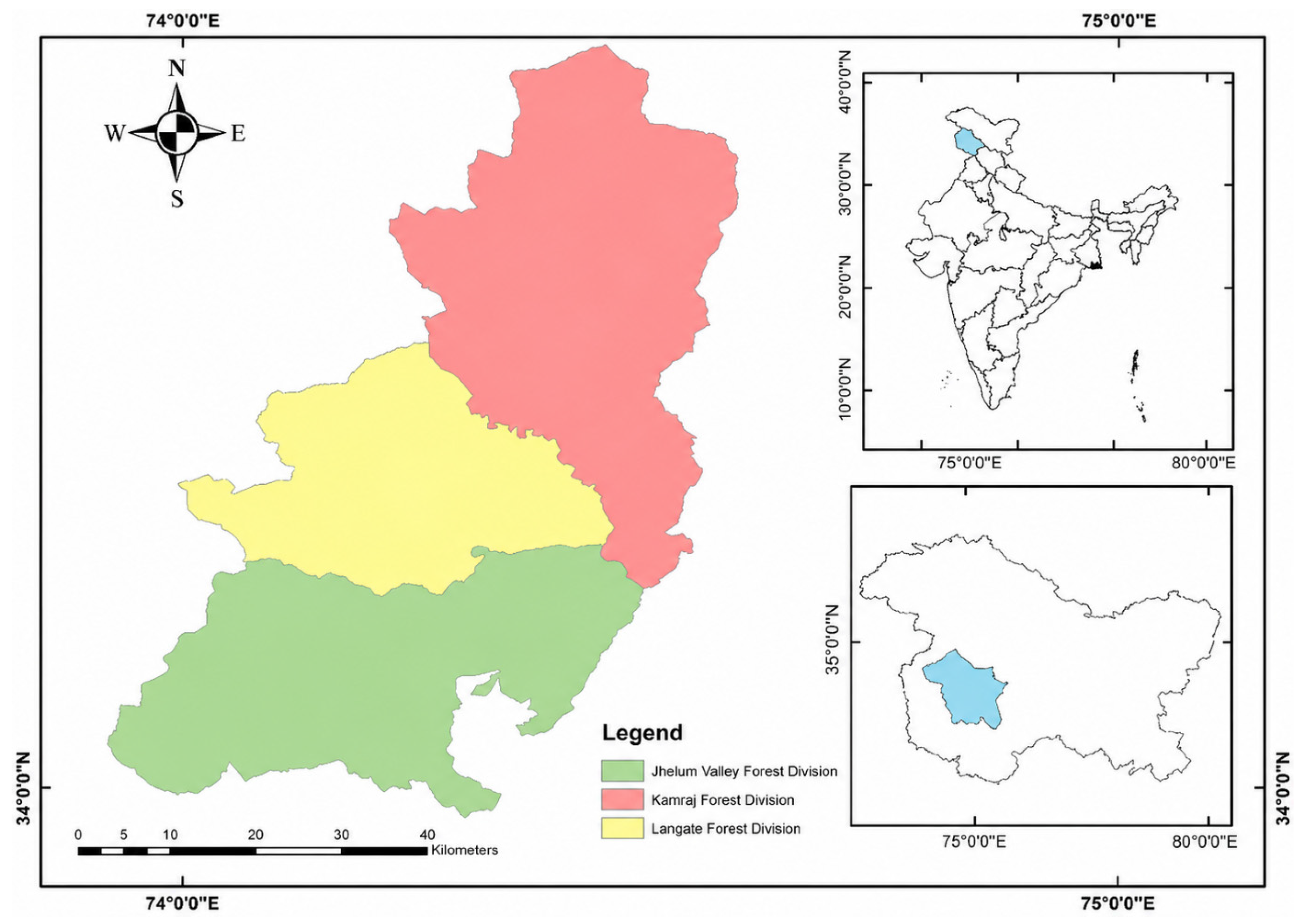
Figure 1: Location map of study sites of Kamraj Forest Division (KFD), Langate Forest Division (LFD) and Jhelum Valley Forest Division (JVFD).
2.2 Plant Sampling and Morphological Data Collection
Comprehensive field surveys were conducted across the three sites (KFD, LFD, and JVFD) to collect plant and soil samples in July and August 2021. Morphological variability in Aconitum heterophyllum Wall. ex Royle populations collected from three ecologically distinct sites (KFD, JVFD, and LFD) were analyzed to explore site-specific morphological patterns. Qualitative and quantitative data on morphological characteristics were recorded for 30 randomly selected plants at each site. At each study site, three 10 × 10 m plots were established for sampling. Within each plot, ten healthy and mature Aconitum heterophyllum individuals were randomly selected for morphological assessment, resulting in a total of 30 plants at each site. Eleven quantitative traits were measured for each population: plant height (cm), number of leaves per plant, leaf length (cm), leaf width (cm), leaf area (cm2), length of floral axis (cm), number of flowers per plant, number of root hairs per plant, tuber length (cm), root biomass (g), and tuber thickness (cm) [32]. Herbarium sheets were prepared and identified at the Centre for Biodiversity and Taxonomy, Department of Botany, University of Kashmir, India. The voucher specimen numbers were 3742-ASH for the Langate Forest Division, 3743-KASH for the Kamraj Forest Division, and 3744-KASH for the Jhelum Valley Forest Division.
2.3 Phytochemical Screening and Antioxidant Properties:
2.3.1 Preparation of Plant Extract
Thirty healthy Aconitum heterophyllum plants were collected from each study site and equal amounts of tuberous root material from all individuals within a site were pooled and homogenized to prepare a representative composite sample for that site. Extraction was performed using a Soxhlet apparatus with methanol [33]. Methanol was selected as the extraction solvent because the objective of this study was to characterize methanol-extractable phytochemicals rather than the essential oils. Soxhlet extraction enables the efficient recovery of a broad spectrum of semi-volatile and thermally stable bioactive metabolites, including fatty acids, esters, phenolics, and other compounds suitable for GC–MS analysis, whereas hydro distillation is primarily intended for volatile essential oil constituents. The extracts were filtered through Whatman No. 1 filter paper and concentrated to dryness using a rotary evaporator at 40°C. The dried residues were weighed to determine the percentage yield and stored at 5°C for future analysis. All dried extracts were preserved in sterile, screw-capped amber bottles labelled appropriately and kept at 5°C until further use [34].
2.3.2 Gas Chromatography-Mass Spectrometry (GC-MS) Analysis
GC-MS analysis of the plant extracts was performed to characterize the phytochemical constituents [35]. GC-MS profiling was conducted using representative composite samples prepared from pooled tuberous root material collected at each study site. Accordingly, the results are presented as comparative site-level metabolite profiles and were not intended for inferential statistical comparisons among individual plants. The filtered extract (0.22 μm) was injected into a GC–MS system equipped with an HP-5MS capillary column (30 m × 0.25 mm i.d., 0.25 μm film thickness). The oven temperature was programmed from 60°C (held for 2 min) to 280°C at 10°C/min, with a final hold of 10 min. Helium was used as the carrier gas at a constant flow rate of 1.0 mL/min, and the injection volume was 1 μL (split ratio of 10:1). The mass spectrometer operated in electron ionization mode (70 eV), scanning a mass range of m/z 40–700, in accordance with the NIST (2020) library recommendations, with similarity >80%. Chemical constituents were identified by comparing their mass spectra and retention indices with those in the NIST/EPA/NIH Mass Spectral Library (NIST, 2020) and by cross-referencing published literature [36].
2.3.3 DPPH Radical-Scavenging Assay
The antioxidant activity of the extract was evaluated using the 2,2-diphenyl-1picrylhydrazyl (DPPH) assay [37]. A 0.1 mM DPPH solution in methanol was freshly prepared and incubated in the dark until it stabilized. Various concentrations of the extract (50–250 μg/mL) were mixed with the DPPH solution in equal volumes and incubated at room temperature for 30 min. The decrease in absorbance was recorded at 517 nm using a UV-Vis spectrophotometer, where lower absorbance indicated higher radical neutralization.
Radical scavenging activity was calculated using the following formula Eq. (1).
IC50 values were determined by plotting inhibition % against concentration using nonlinear regression, as recommended by [38].
2.4 Soil Sampling and Analysis
Rhizosphere soil was collected from the active rooting zone (0–15 cm) by gently detaching the soil adhering to fine roots. Three subsamples per plot were homogenized to obtain a composite sample representing local edaphic conditions [39], and soil physicochemical parameters were analyzed following standard protocols, as mentioned in Table 1.
Table 1: Methods used for measuring soil physico-chemical parameters.
| Soil Parameter | Standard Method Used | Reference |
|---|---|---|
| Soil pH | pH measured in 1:2.5 soil–water suspension using a digital pH meter | [40] |
| Electrical Conductivity (EC) | EC determined in soil–water extract (1:2.5) using a conductivity meter | [41] |
| Organic Carbon (OC) | Walkley & Black wet oxidation method using chromic acid and titration | [42] |
| Available Nitrogen (N) | Alkaline KMnO4 distillation method (Subbiah & Asija method) | [43] |
| Available Phosphorus (P) | Olsen’s method (for neutral–alkaline soils) using 0.5 M NaHCO3 extractant | [44] |
| Available Potassium (K) | Neutral ammonium acetate (1N NH4OAc) extraction followed by flame photometry | [45] |
Daily meteorological data for a 3-year duration (2020–2023), considering the gestation period of the species, were sourced from the Agrometeorological (Agromet) Unit of Sher-e-Kashmir University of Agricultural Sciences and Technology of Kashmir (SKUAST-K), India. The dataset included routinely monitored parameters such as maximum and minimum temperatures, total rainfall, and solar radiation, which were recorded using standard IMD-approved instrumentation.
Data were examined for normality (Shapiro–Wilk test) and homogeneity of variance (Levene’s test). Box-and-whisker plots were constructed using ggplot2 in R (version 4.3.1), with the sites as categorical factors. A principal component analysis (PCA) biplot was used to visualize soil parameters across sites, with 95% confidence interval ellipses showing site-wise clustering. PC1 and PC2 loadings identified the major soil variables contributing to site variation. A Scree plot selected the principal components using the Kaiser criterion (eigenvalue > 1) and cumulative variance. DPPH antioxidant assays were performed in triplicate, and the results are expressed as the mean ± standard deviation (SD). IC50 values were estimated using nonlinear regression with a four-parameter logistic model in GraphPad Prism version 8. Multivariate analysis assessed relationships among morphological traits, soil parameters, antioxidant data and climatic variables, with correlation matrix and scatterplot generated using GGally and ggplot2 in R (version 4.3.1). Daily climatic data (temperature, precipitation, and solar radiation) were integrated using site-specific Agromet records, and mean monthly values were plotted to characterize the seasonal environmental gradients.
3.1 Morphological Characterization
ANOVA results revealed significant variations among the three Aconitum heterophyllum Wall. ex Royle populations (JVFD, KFD, and LFD) for most morphological traits (Table 2; Fig. 2). All variables satisfied the normality assumptions (Shapiro-Wilk p > 0.05), plant height (F = 12.81, p = 0.003), number of leaves per plant (F = 9.00, p = 0.009), and leaf traits, leaf length (F = 10.96, p = 0.005), width (F = 15.30, p = 0.002), and area (F = 51.65, p < 0.001). Most morphological traits showed significant interpopulation differences; LFD generally exhibited higher values for several morphological traits, whereas the relative differences between JVFD and KFD varied among traits. For number of leaves per plant and number of flowers per plant, JVFD was statistically comparable to LFD, while KFD showed significantly lower values. The length of the floral axis (F = 19.70, p < 0.001), number of flowers (F = 7.22, p = 0.016), and number of root hairs (F = 5.37, p = 0.033) also differed significantly, with LFD exhibiting the highest values. In contrast, tuber length (F = 3.28, p = 0.091) and root biomass (F = 1.61, p = 0.258) did not vary significantly in this study. Therefore, LFD population exhibited higher values for most morphological traits, indicating potential differences in morphological performance among sites that may be associated with site-specific environmental conditions.
Table 2: Intra population variation in the different traits of Aconitum heterophyllum Wall. ex Royle at three different sites.
| Trait | Replication F-Value (p-Value) | Treatment F-Value (p-Value) | R Square | Normality (Shapiro-Wilk) | Means Comparison | LSD | Groups |
|---|---|---|---|---|---|---|---|
| Plant Height (A1) | 1.27 (0.356) | 12.81 (0.003) | 0.793 | Normal (p = 0.998) | Different | 35.95 | LFD (94.6, a) > JVFD (28.2, b) = KFD (24.5, b) |
| No. of Leaves/Plant (A2) | 0.45 (0.772) | 9.00 (0.009) | 0.712 | Normal (p = 0.864) | Different | 3.92 | LFD (10.2, a) = JVFD (7.0, a) > KFD (3.0, b) |
| Leaf Length (A3) | 0.13 (0.969) | 10.96 (0.005) | 0.737 | Normal (p = 0.879) | Different | 2.31 | LFD (8.42, a) > JVFD (4.60, b) = KFD (4.15, b) |
| Leaf Width (A4) | 0.43 (0.784) | 15.30 (0.002) | 0.802 | Normal (p = 0.763) | Different | 1.99 | LFD (7.96, a) > KFD (3.90, b) = JVFD (3.76, b) |
| Leaf Area (A5) | 1.12 (0.413) | 51.65 (<0.001) | 0.931 | Normal (p = 0.476) | Different | 15.86 | LFD (78.02, a) > JVFD (18.40, b) = KFD (16.58, b) |
| Length of Floral Axis | 1.64 (0.255) | 19.70 (<0.001) | 0.852 | Normal (p = 0.216) | Different | 5.27 | LFD (20.96, a) > JVFD (9.50, b) = KFD (7.78, b) |
| No. of Flowers/Plant | 0.17 (0.949) | 7.22 (0.016) | 0.654 | Normal (p = 0.053) | Different | 2.53 | LFD (11, a) = JVFD (10, a) > KFD (7, b) |
| No. of Root Hairs/Plant | 0.92 (0.498) | 5.37 (0.033) | 0.643 | Normal (p = 0.432) | Different | 3.43 | LFD (18.2, a) > KFD (14.2, b) = JVFD (13.8, b) |
| Tuber Length (A9) | 0.74 (0.591) | 3.28 (0.091) | 0.543 | Normal (p = 0.297) | Same | 1.51 | LFD (6.04, a) > KFD (5.90, ab) > JVFD (4.52, b) |
| Root Biomass (A10) | 0.18 (0.942) | 1.61 (0.258) | 0.330 | Normal (p = 0.662) | Same | 0.77 | LFD = JVFD = KFD |
| Tuber thickness | 0.8569 (0.5284) | 2.4122 (0.1514) | 0.508 | Normal (p = 0.4122) | 0.862 | LFD: (1.90, a); JVFD (1.34, a); KFD (1.10, a) |
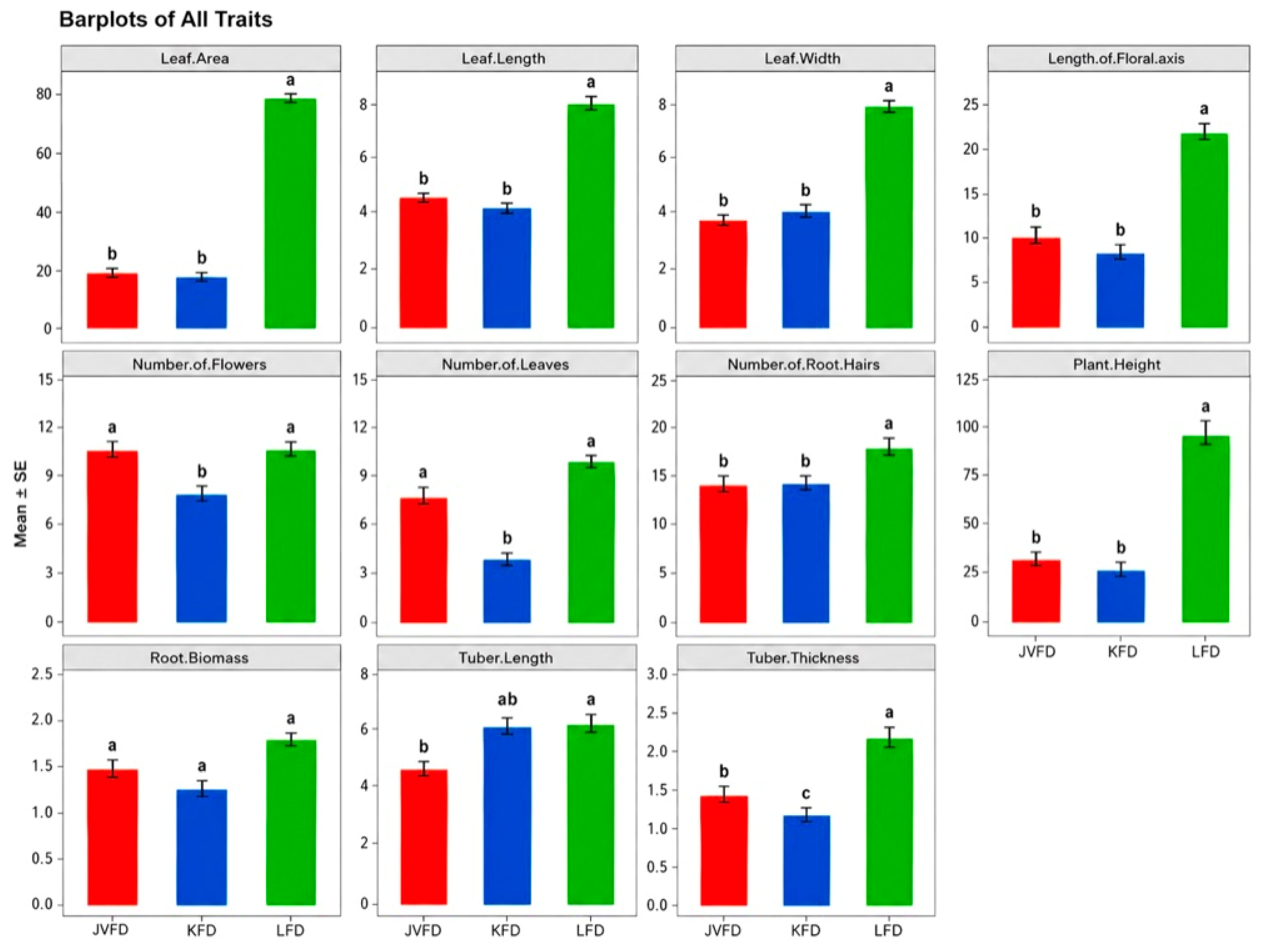
Figure 2: Morphological traits of Aconitum heterophyllum collected from three forest divisions of the Kashmir Himalaya: Jhelum Valley Forest Division (JVFD), Kamraj Forest Division (KFD), and Langate Forest Division (LFD). Bars represent the mean ± standard error (SE) of the measured traits. Different lowercase letters above the bars indicate significant differences among forest divisions based on one-way analysis of variance (ANOVA) followed by Fisher’s Least Significant Difference (LSD) test at p < 0.05, whereas bars sharing the same letter are not significantly different. Traits include leaf area, leaf length, leaf width, floral axis length, number of flowers, number of leaves, number of root hairs, plant height, root biomass, tuber length, and tuber thickness.
3.2 Gas Chromatography-Mass Spectrometry (GC-MS)
GC-MS profiling of Aconitum heterophyllum Wall. ex Royle root extracts revealed clear site-specific chemotypic differentiation. LFD exhibited the greatest chemical diversity, characterized by unsaturated fatty acids, aromatic esters, carbohydrate derivatives, silicon-based cyclic ethers, and nitrogen-rich heterocycles, indicating a metabolically active profile likely supported by higher organic carbon and nutrient-rich soil. JVFD showed a contrasting pattern dominated by polyunsaturated fatty acids (PUFA), mainly 9,12-octadecadienoic acid and its methyl ester, suggesting stress-associated lipid remodelling under fluctuating temperature and moisture conditions. KFD exhibited the lowest apparent diversity of GC-MS-detectable compounds. However, the chromatogram was dominated by diisobutyl phthalate (DIBP), a compound widely recognized as a potential laboratory contaminant rather than an endogenous plant metabolite. Therefore, DIBP was excluded from biological and ecological interpretation. After excluding DIBP, only palmitic acid and methyl palmitate were detected in relatively low abundance in the KFD extract (Figs. S1–S4; Table 3). These findings demonstrate that environmental conditions influence the composition of GC–MS-detectable volatile and semi-volatile metabolites. However, because GC-MS is not optimal for detecting the characteristic diterpenoid and norditerpenoid alkaloids of A. heterophyllum, these results should not be interpreted as representing the complete phytochemical composition of the species.
Table 3: Comparative GC–MS profile of methanolic root extracts of Aconitum heterophyllum Wall. ex Royle from Langate Forest Division (LFD), Jhelum Forest Division (JVFD) and Kamraj Forest Division (KFD).
| Peak/Compound Name | Langate Forest Division LFD* (Area%) | Jhelum Valley Forest Division JVFD (Area%) | Kamraj Forest Division KFD (Area%) |
|---|---|---|---|
| cis,cis,cis-9,12,15-Octadecatrienoic acid | 19.24 | ND | ND |
| γ-Aminobutyric acid ester (GABA derivative) | 10.97 | ND | ND |
| Benzene-1,3-dicarboxylic acid, 5-hydroxymethyl-, diethyl ester | 13.72 | ND | ND |
| Hexa(trimethylene)-1,3,5,7,9,11-hexasila-hexaoxacyclododecane | 10.01 | ND | ND |
| n-Hexadecanoic acid (Palmitic acid) | 4.16 | 12.13 | 9.67 |
| 5-Methyl-1R,3-trans-cyclohexanediol | 6.51 | ND | ND |
| Hexadecanoic acid, methyl ester (Methyl palmitate) | 4.81 | 19.74 | 9.72 |
| 1,2,3-Tri-O-acetyl-5-deoxy-β-D-ribofuranose | 8.88 | ND | ND |
| Carbamic acid pyrimidine derivative | 10.38 | ND | ND |
| Hexa(methoxymethyl)melamine | 11.32 | ND | ND |
| 9,12-Octadecadienoic acid (Z,Z), methyl ester | ND | 28.13 | 12.53 |
| 9,12-Octadecadienoic acid (Z,Z) | ND | 28.81 | ND |
| cis,cis,cis-7,10,13-Hexadecatrienal | ND | 11.19 | ND |
| 1,2-Benzenedicarboxylic acid, bis(2-methylpropyl) ester (Diisobutyl phthalate) | ND | ND | 68.08 |
3.3 DPPH Radical-Scavenging Activity
The DPPH inhibition response increased progressively with concentration (50–250 μg/mL) for all Aconitum heterophyllum Wall. ex Royle extracts across the three sites (LFD, KFD, and JVFD). Among the populations, the LFD extract consistently exhibited the highest DPPH radical-scavenging activity at every concentration, reaching nearly 65% inhibition at 250 μg/mL, followed by KFD and JVFD (Fig. 3). Dose-response modelling using a four-parameter logistic regression showed that among the plant extracts, the LFD sample showed stronger DPPH radical-scavenging activity (IC50 = 193.38 μg/mL), followed by KFD (IC50 = 254.91 μg/mL). The JVFD extract failed to reach 50% inhibition within the tested range (IC50 > 250 μg/mL), indicating a notably weaker radical-scavenging potential.
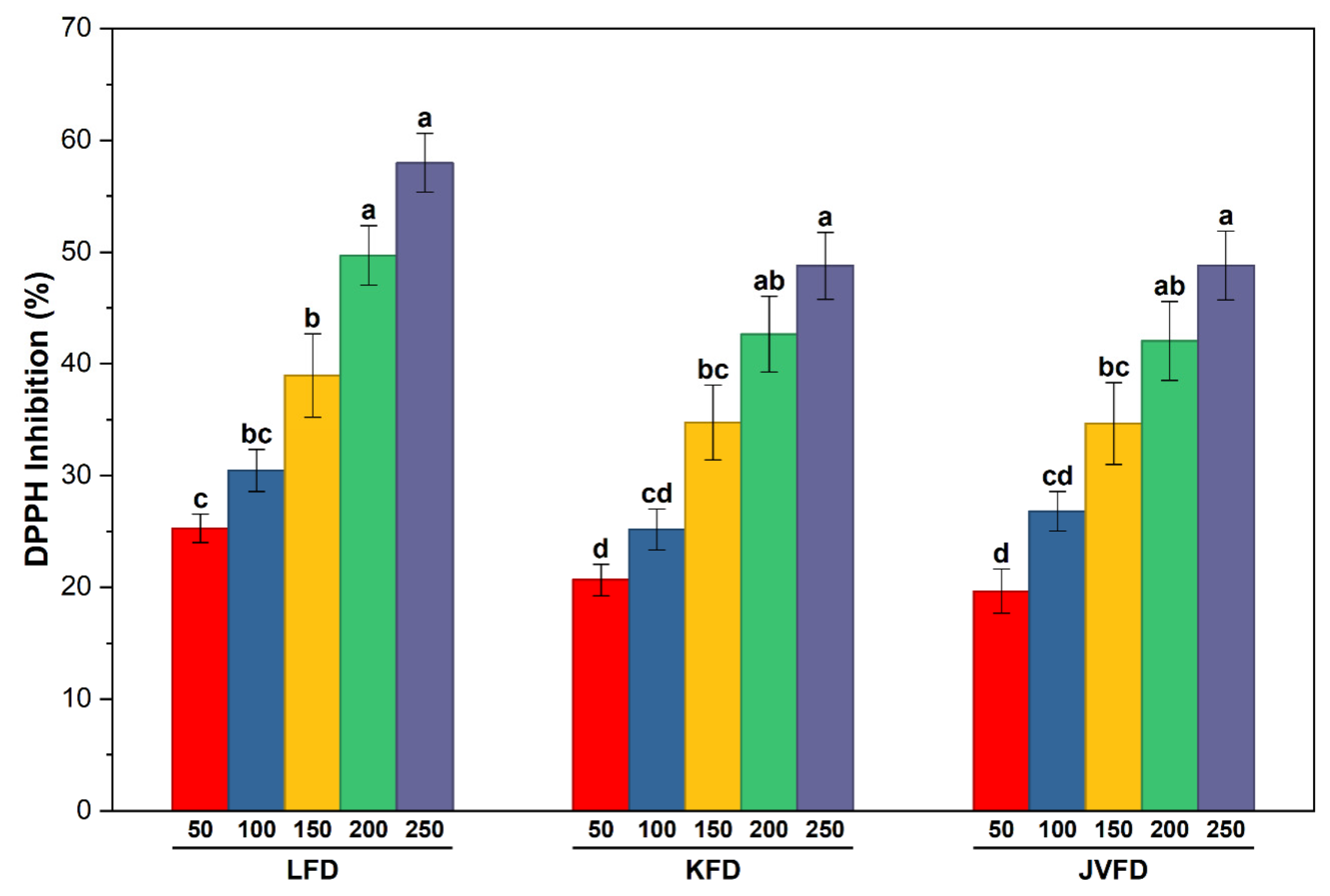
Figure 3: Concentration-dependent DPPH radical scavenging activity of methanolic extracts of Aconitum heterophyllum collected from Jhelum Valley Forest Division (JVFD), Kamraj Forest Division (KFD), and Langate Forest Division (LFD) at concentrations of 50, 100, 150, 200, and 250 μg mL−1. Bars represent the mean ± standard error (SE) of three independent replicates. Different lowercase letters above the bars indicate significant differences among concentrations within each forest division according to one-way ANOVA followed by Fisher’s Least Significant Difference (LSD) test at p < 0.05; bars sharing the same letter are not significantly different. The highest DPPH inhibition was observed at 250 μg mL−1, with the LFD extract exhibiting significantly greater antioxidant activity than the JVFD and KFD extracts.
3.4 Soil Physicochemical Properties
Physicochemical properties of soil in Aconitum heterophyllum Wall. ex Royle showed clear site-wise variations (Table 4). The EC was highest in the KFD group, intermediate in the LFD group, and lowest in the JVFD group. Organic carbon was greatest in the LFD, with lower values in the KFD and JVFD. Phosphorus levels were highest in the KFD group, followed by the LFD and JVFD groups, forming three distinct groups. The soil pH was higher in the LFD than in the KFD and JVFD treatments. Nitrogen was highest in JVFD, whereas LFD and KFD showed similar values. Potassium content was highest in the LFD group, followed by the JVFD and KFD groups. These patterns reflect distinct nutrient regimes across sites, with LFD being richer in organic carbon, pH, and potassium, KFD characterized by higher EC and phosphorus, and JVFD by elevated nitrogen levels (Table 4). PCA revealed clear site-based separation of soil properties, with PC1 (41.7%) driven by phosphorus and EC, while PC2 (25.5%) was influenced by organic carbon and pH. The LFD was grouped towards higher pH and OC values, whereas the KFD was aligned with elevated phosphorus and EC (Fig. 4).
Table 4: Site-wise variation in soil physicochemical properties of Aconitum heterophyllum Wall. ex Royle habitats.
| Site | EC | OC | P | pH | N | K |
|---|---|---|---|---|---|---|
| KFD | 0.414 ± 0.00474a | 1.59333 ± 0.05229b | 22.80 ± 0.66395a | 5.54667 ± 0.05023b | 442.33 ± 8.16b | 387.31 ± 0.74c |
| LFD | 0.35742 ± 0.01021b | 2.27419 ± 0.06204a | 16.70323 ± 0.33288b | 5.81935 ± 0.01761a | 444.96 ± 6.41b | 486.88 ± 0.55a |
| JVFD | 0.33419 ± 0.00859b | 1.50645 ± 0.04796b | 13.24677 ± 0.33339c | 5.11613 ± 0.07761c | 473.80 ± 4.39a | 479.90 ± 1.30b |
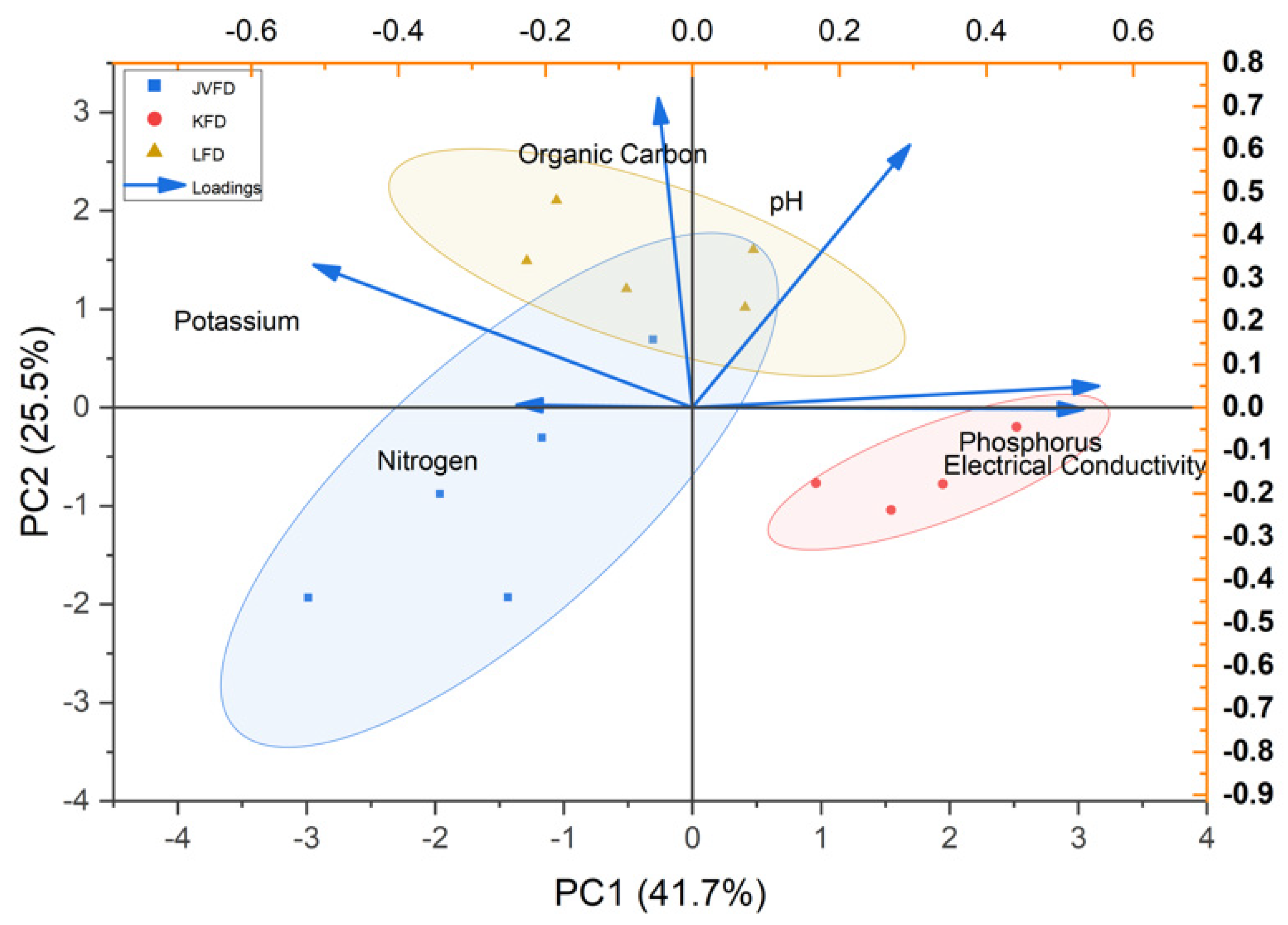
Figure 4: PCA biplot of soil physicochemical parameters across the three study sites. PC1 and PC2 explained 41.7% and 25.5% of the total variance, respectively. Arrows represent variable loadings, and shaded ellipses indicate 95% confidence intervals for site clusters.
The normalized radar plot revealed pronounced differences in the climatic regimes among the three forest divisions. KFD exhibited the highest solar radiation (SRAD) values across the study period, forming a distinct peak on the SRAD axis, whereas JVFD recorded the highest maximum and minimum temperatures (TMAX and TMIN), indicating a comparatively warmer microclimate. In contrast, LFD showed the lowest SRAD but the highest normalized rainfall (RAIN), suggesting a cooler and moisture-rich environment with a reduced radiative load. Together, these patterns indicate that the three sites operate under markedly different thermal and hydrometeorological conditions, which can influence the physiological performance and phytochemical responses of Aconitum heterophyllum Wall. ex Royle (Fig. 5).
Year-wise trends further supported site-specific climatic signatures. The SRAD values remained relatively stable across years at all sites, although KFD showed a slight decline from 2020 to 2023, whereas LFD maintained consistently higher radiation levels than the JVFD. The maximum temperature (TMAX) increased marginally at all sites, with JVFD remaining the warmest (~14.6°C) throughout the study period. The minimum temperature (TMIN) also showed a gradual upward trend, particularly at JVFD, which consistently exhibited higher night time temperatures than KFD and LFD. Rainfall exhibited the strongest inter-annual variability, with LFD showing a sharp increase in 2023, whereas KFD and JVFD displayed only minor fluctuations, maintaining comparatively higher baseline precipitation (Fig. 5).
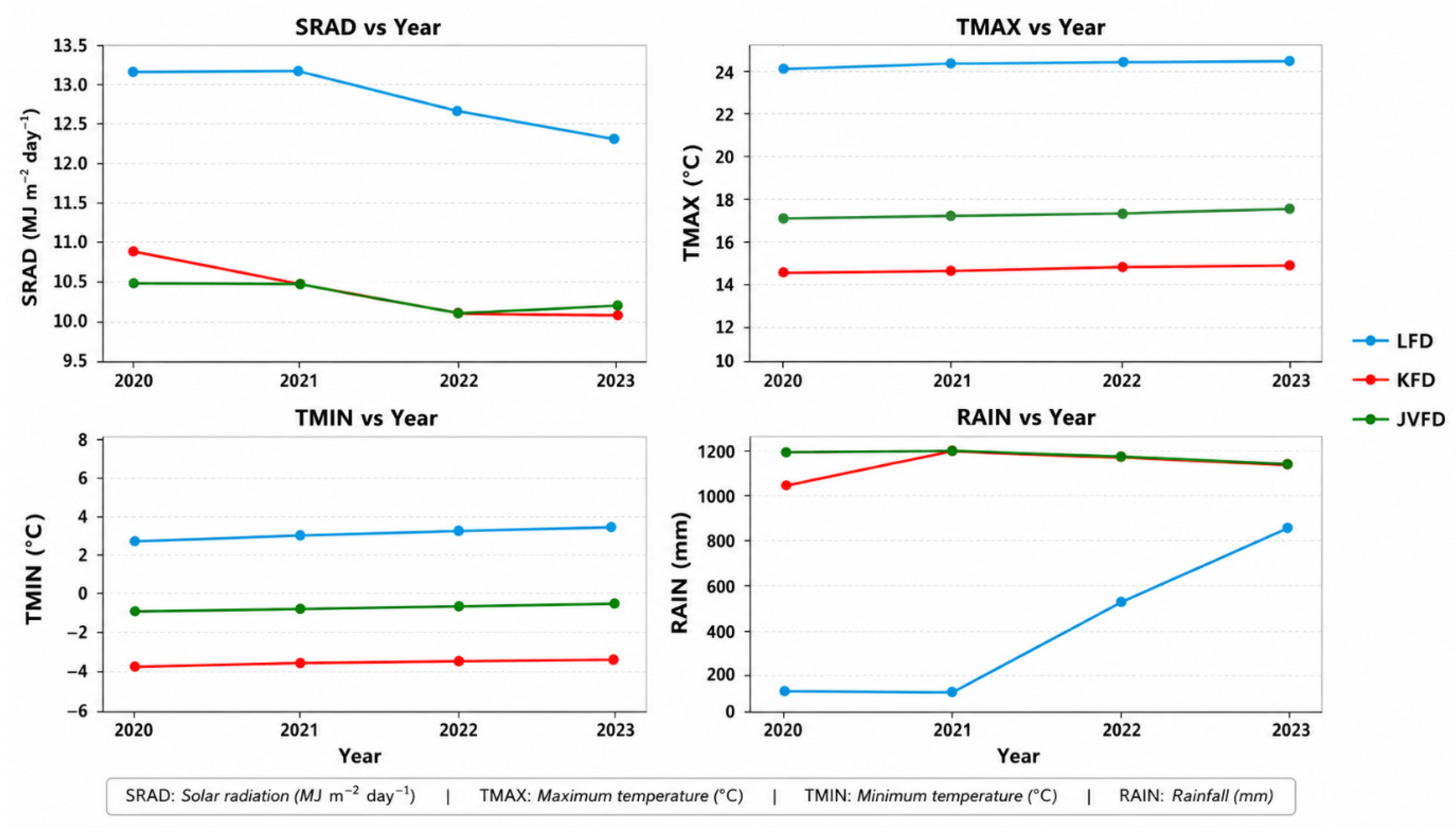
Figure 5: Inter-annual variation in SRAD, temperature, and rainfall (2020–2023) across forest divisions.
4.1 Morphological Differentiation
The distinct morphological differences observed among Aconitum heterophyllum populations in JVFD, KFD, and LFD highlight the potential influence of site-specific environmental conditions on phenotypic variation across the diverse environments of the Kashmir Himalaya, India. Variations in microclimate and soil characteristics are well-documented factors driving intraspecific morphological diversity in alpine plants [29]. Among the three locations, plants from LFD consistently exhibited higher vegetative and reproductive trait values, including significantly greater plant height, leaf number and size, floral axis length, flower production, and root hair development. These differences may be associated with local microclimatic and soil conditions that promote growth, resource acquisition, and reproductive development. Similar site-specific enhancements in growth traits of A. heterophyllum and other Himalayan medicinal plants have been documented in moist, nutrient-rich subalpine habitats of the northwestern Himalaya [46,47]. In the alpine region of the Kashmir Himalaya, environmental heterogeneity has also been reported to influence plant species richness and growth traits [48]. In contrast, populations from JVFD and KFD showed lower values for several traits, although their statistical relationships varied among individual traits. These differences may reflect the combined effects of microclimatic conditions, soil fertility, and growing-season characteristics, which are recognized as important factors influencing morphological development in Himalayan alpine and subalpine ecosystems [49].
The marked differences in integrative traits, such as plant height and leaf area, align with broader findings that intraspecific trait variation (ITV) is closely linked to environmental diversity and is crucial for adaptive capacity and population survival in alpine species [50]. Interestingly, despite the significant variation observed in most aboveground morphological traits, tuber length and root biomass did not differ significantly among the three populations. As the tuber is the principal medicinal part of A. heterophyllum, this finding suggests that belowground storage structures may be comparatively less responsive to environmental variation than vegetative traits. As a perennial alpine herb, A. heterophyllum depends on its tubers for nutrient storage, overwintering, and seasonal regeneration. Therefore, maintaining relatively stable tuber size and biomass across different habitats may represent an adaptive strategy that enhances survival under harsh alpine conditions, whereas aboveground traits exhibit greater phenotypic plasticity in response to local environmental conditions.
4.2 Physicochemical Analysis of Soil
The observed variation in soil physicochemical properties among the three forest divisions was closely associated with differences in the growth and morphological characteristics of Aconitum heterophyllum. Among the study sites, soils from LFD contained higher organic carbon and potassium contents and exhibited a moderately acidic pH. Such conditions may influence soil structure, microbial activity, nutrient cycling, and nutrient availability, thereby contributing to differences in plant growth and development. Similar relationships between organic matter-rich, moderately acidic to near-neutral soils and enhanced growth of A. heterophyllum and other Himalayan medicinal plants have been reported from the subalpine regions of Kashmir and the northwestern Himalaya [51].
In contrast, soils from KFD exhibited comparatively higher electrical conductivity (EC) and available phosphorus levels, which may reflect differences in parent material, mineral weathering, or nutrient dynamics. Although elevated EC can indicate increased concentrations of soluble salts, its influence on plant growth depends on the magnitude of salinity. The relatively higher EC observed at KFD may therefore have affected soil chemical conditions and nutrient availability rather than directly imposing salinity stress.
Soils from JVFD contained comparatively higher available nitrogen but were more acidic than those from the other two forest divisions. Although nitrogen is an essential nutrient for plant growth, lower soil pH may reduce the availability of certain nutrients and alter microbial activity, thereby limiting overall plant performance despite higher nitrogen levels. Previous studies have similarly demonstrated that soil pH is a key regulator of nutrient solubility, microbial processes, and plant nutrient uptake, with slightly acidic to near-neutral soils generally providing favourable conditions for alpine and subalpine plant species [52].
4.3 Variation in DPPH Radical Scavenging Activity across Sites
The DPPH assay revealed clear differences in free radical-scavenging activity among the three A. heterophyllum populations, with extracts from LFD consistently exhibiting the highest antioxidant activity. These findings indicate that DPPH radical-scavenging capacity varied among populations growing under different environmental conditions. However, because antioxidant activity was evaluated solely using the DPPH assay, the present results represent only one aspect of antioxidant behaviour and should not be regarded as a comprehensive assessment of antioxidant potential. Additional assays, including ABTS, FRAP, and ORAC, together with the determination of total phenolic content (TPC) and total flavonoid content (TFC), are required to provide a more complete evaluation of antioxidant capacity and to identify the phytochemical constituents responsible for the observed activity.
The antioxidant activity of A. heterophyllum extracts increased in a concentration-dependent manner, with the LFD population consistently showing the greatest DPPH radical-scavenging activity. At 250 μg mL−1, LFD extracts achieved nearly 65% inhibition and exhibited the lowest IC50 value, indicating greater antioxidant potency than the KFD and JVFD populations. The superior antioxidant activity observed in LFD may be associated with differences in the composition or abundance of antioxidant metabolites among populations. Phenolic compounds and flavonoids are widely recognized as important contributors to the antioxidant properties of A. heterophyllum and other medicinal plants [53,54]. However, because TPC and TFC were not determined in the present study, the contribution of these compounds to the observed antioxidant activity cannot be confirmed.
The comparatively lower DPPH radical-scavenging activity observed in the KFD and JVFD populations may be associated with differences in soil properties and local environmental conditions, which are known to influence the biosynthesis and accumulation of secondary metabolites in medicinal plants [55,56]. Similar geographic variation in antioxidant activity and phytochemical composition has been reported for A. heterophyllum and related Aconitum species from the Western and Kashmir Himalayas, where differences have been linked to habitat characteristics, climatic conditions, and edaphic factors [57,58]. Therefore, the present findings provide preliminary evidence of population-level variation in DPPH radical-scavenging activity and highlight the need for complementary antioxidant assays and phytochemical analyses to establish a comprehensive understanding of antioxidant potential.
4.4 GC-MS-Based Chemotypic Differentiation across Forest Divisions
GC-MS analysis revealed site-specific variation in the volatile and semi-volatile metabolite profiles of Aconitum heterophyllum, suggesting that environmental conditions may influence the composition of secondary metabolites detectable by GC-MS. However, the principal medicinal constituents of A. heterophyllum are diterpenoid and norditerpenoid alkaloids, which generally require LC-MS/MS, UHPLC-QTOF-MS, or HPLC-based analytical techniques for comprehensive characterization [59,60]. Therefore, the present findings should be interpreted as comparative metabolomic fingerprints rather than a comprehensive characterization of the pharmacologically active alkaloid profile. Future studies integrating advanced metabolomic approaches are required to elucidate the relationship between environmental variation and alkaloid biosynthesis and accumulation in this species.
The predominance of diisobutyl phthalate (DIBP; 68.08%) in the KFD chromatogram warrants careful interpretation. Phthalate esters, including DIBP, are widely recognized as potential laboratory contaminants that may originate from plastic laboratory consumables, solvent impurities, septa, tubing, or sample handling during GC-MS analysis [61]. Nevertheless, phthalate derivatives have also been reported in medicinal plants, fungi, bacteria, and environmental samples, where their occurrence has been attributed to environmental uptake, microbial biosynthesis, or anthropogenic contamination of surrounding habitats [62]. Because procedural blank analyses were not performed, the origin of DIBP in the present study cannot be conclusively attributed to endogenous plant metabolism. Consequently, DIBP was excluded from all biological, ecological, and correlation analyses, and inter-population comparisons were based exclusively on the remaining confirmed plant-derived metabolites, as phthalate esters are not considered reliable indicators of endogenous plant metabolism and are widely recognized as potential laboratory and environmental contaminants [63,64]. Although DIBP is reported in Table 3 as a detected GC-MS peak, it was not considered a representative plant metabolite for ecological interpretation. Accordingly, all ecological and biological inferences presented in this study are based solely on the confirmed plant-derived metabolite classes. Future studies should incorporate rigorous contamination-control measures, including procedural and field blanks, glass-only sample preparation, and complementary analytical techniques such as LC-MS/MS, to distinguish endogenous metabolites from analytical contamination and further validate metabolite identity.
The correlation analysis demonstrated strong positive relationships between key biochemical components (PUFA, nitrogen compounds, and carbohydrates) and soil fertility indicators, particularly OC, N, P, and K content (r ≈ 0.80–1.00) (Fig. 6). This suggests that soil factors are closely associated with the secondary metabolite composition of Aconitum heterophyllum [65,66,67]. The negative correlations between fatty acid methyl esters and soil nutrients suggest a shift towards simpler or stress-related metabolic pathways under less favorable conditions. Moderate positive correlations with temperature and solar radiation suggest that climatic conditions may also be associated with metabolite expression, whereas rainfall showed inconsistent or negative effects. These findings align with previous studies that underscore soil quality as a more crucial determinant of phytochemical variability than climatic factors in Himalayan medicinal plants [68,69,70].
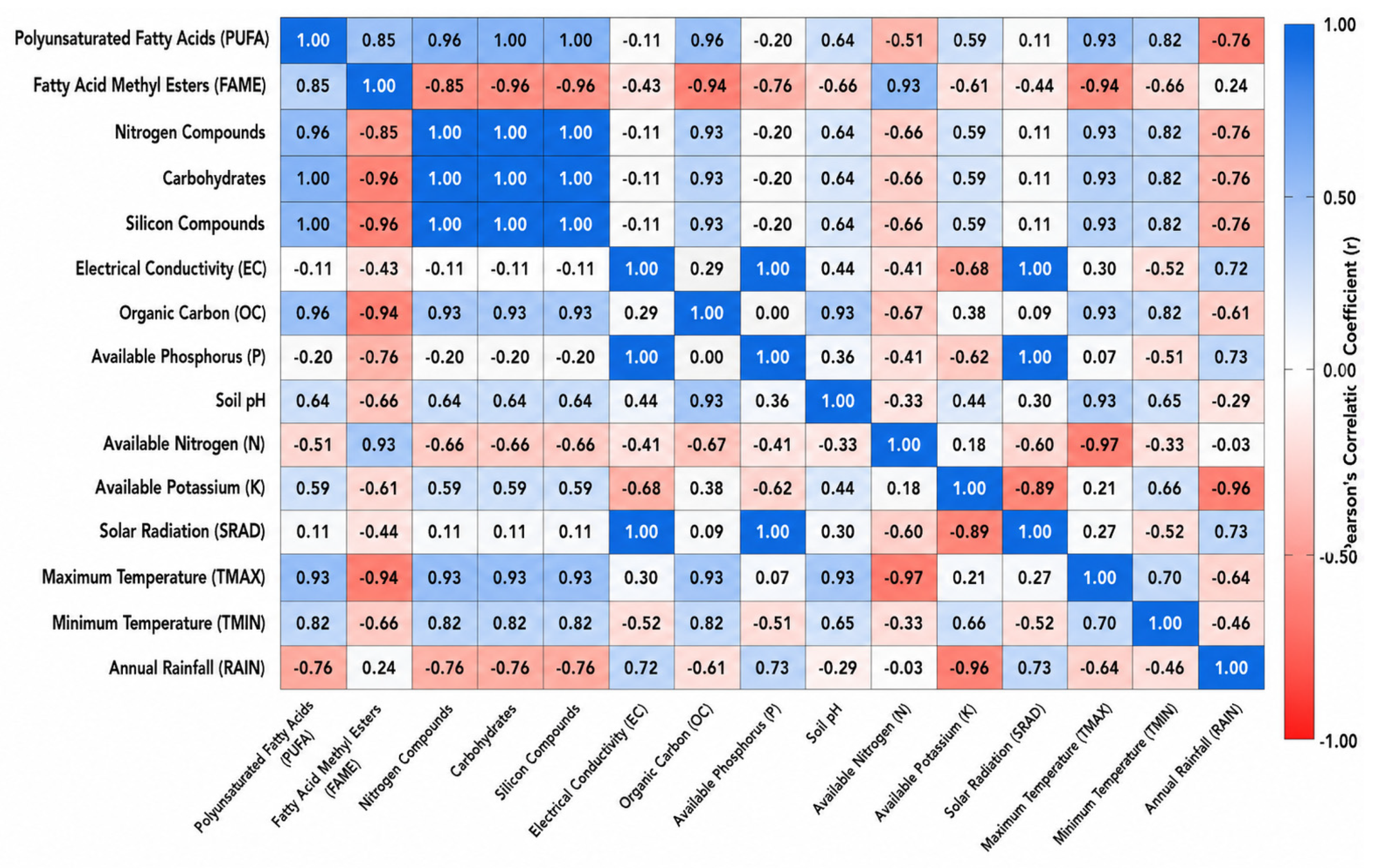
Figure 6: Correlation heatmap illustrating Pearson’s correlation coefficients (r) among biochemical constituents, soil physico-chemical properties, and climatic variables.
The pairwise correlation matrix in Fig. 7 highlights a strong integration among the primary morphological traits of Aconitum heterophyllum, including plant height (PH), leaf length (LL), leaf area (LFA), and number of leaves per plant (NL/Plant), across all three forest divisions. Exhibiting very high positive correlations (r = 0.90–0.97), reproductive traits number of flowers per plant and number of root hairs per plant (NF/plant and NRH/plant) were also strongly correlated (r = 0.85–0.93). This finding suggests a coordinated vegetative growth strategy that may reflect shared developmental regulation and carbon allocation patterns. Such close trait coupling is characteristic of perennial Himalayan medicinal herbs, such as those from the Kashmir Himalaya, where synchronized leaf and stem development enhances light capture and carbon gain during a brief, climatically constrained growing season [71,72]. In contrast, climatic factors such as temperature, rainfall, and solar radiation exhibit weaker and site-specific correlations with morphology, suggesting that growth responses may be associated with local topography and microclimatic diversity typical of the mountainous regions of Kashmir [73,74,75,76]. Soil variables showed strong internal covariance, particularly among organic carbon, nitrogen, phosphorus, potassium, EC, and pH, indicating tightly linked nutrient cycling processes in the soil (r = 0.70–0.95). Negative correlations between rainfall and nutrients suggest leaching effects in wetter conditions, which are common in the higher-elevation areas of Kashmir [77,78].
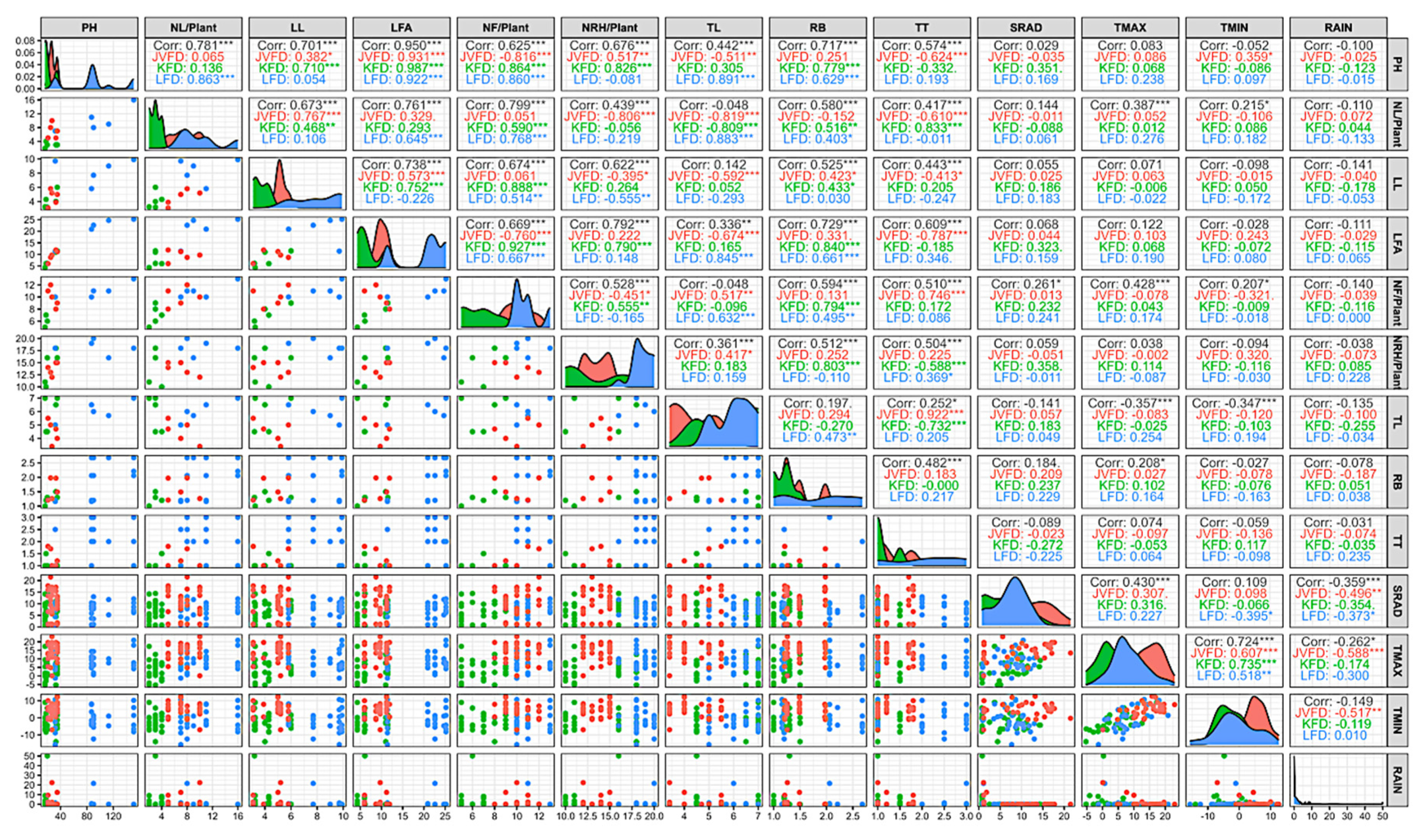
Figure 7: Pairwise correlation matrix of morphological, soil, and climatic variables in Aconitum heterophyllum Wall. ex Royle across three forest divisions. * = statistically significant at p < 0.05, ** = statistically significant at p < 0.01, *** = statistically significant at p < 0.001.
The pairwise correlation matrix in Fig. 8 reveals a significant and biologically relevant association between soil nutrient levels, climatic factors, and DPPH antioxidant activity in Aconitum heterophyllum across the three forest regions. Strong positive correlations were observed between DPPH inhibition and essential soil nutrients, particularly organic carbon (SOC), nitrogen (N), phosphorus (P), and potassium (K) (r ≈ 0.55–0.85). These associations suggest that nutrient-rich soils may be linked to greater antioxidant potential, possibly through enhanced carbon assimilation and allocation to secondary metabolism [79,80,81]. The positive associations between DPPH activity, SOC and N further suggest that improved soil fertility and microbial activity may favour the biosynthesis and accumulation of phenolic and flavonoid compounds, which are known for their radical-scavenging properties. In contrast, climatic factors such as solar radiation (SRAD), maximum temperature (Tmax), minimum temperature (Tmin), and rainfall exhibited relatively weaker and site-specific relationships with both soil chemistry and DPPH activity. These findings suggest that climatic variables may be indirectly associated with antioxidant potential, possibly through their influence on soil moisture dynamics and nutrient availability.
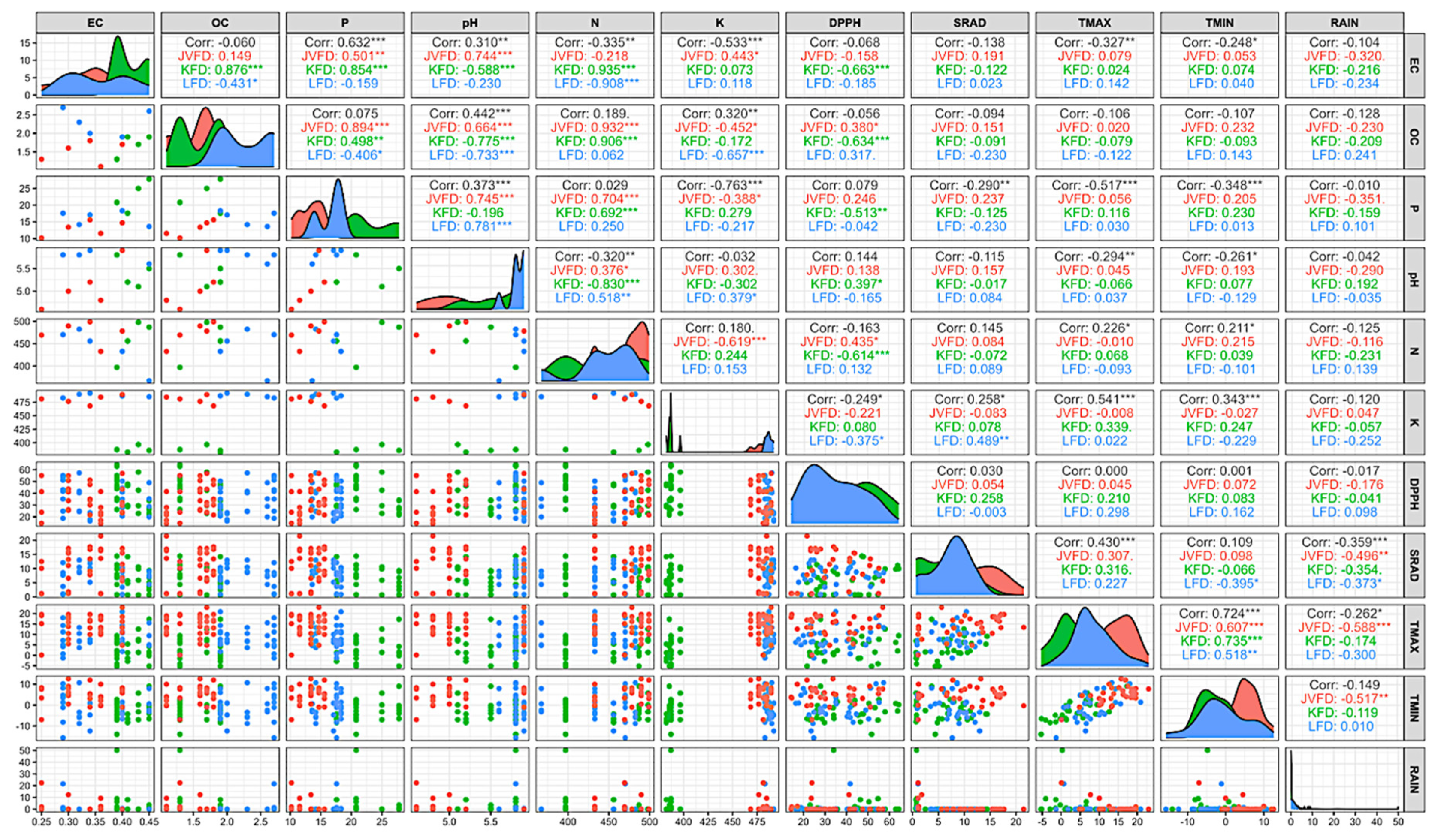
Figure 8: Pairwise correlation matrix of soil properties, climate variables, and DPPH antioxidant activity across forest divisions. * = statistically significant at p < 0.05, ** = statistically significant at p < 0.01, *** = statistically significant at p < 0.001.
Sampling was restricted to three forest divisions in the Kashmir Himalaya, which may not fully represent the ecological and phytochemical variability of Aconitum heterophyllum across its natural distribution. Plant traits were evaluated from a single sampling period, while climatic data represented only the estimated growth period, limiting assessment of temporal variation. Phytochemical characterization was restricted to GC–MS analysis of volatile and semi-volatile metabolites, whereas the principal bioactive diterpenoid and norditerpenoid alkaloids require complementary techniques such as LC-MS/MS, UHPLC-QTOF-MS, or HPLC for comprehensive characterization. Antioxidant activity was assessed only by the DPPH assay; complementary analyses, including ABTS, FRAP, ORAC, total phenolic content (TPC), and total flavonoid content (TFC), were beyond the scope of this study. Future research should incorporate broader geographic and seasonal sampling, long-term monitoring, advanced metabolomic analyses, multiple antioxidant assays, and controlled experiments to provide a more comprehensive understanding of environmental influences on the phytochemistry and biological activity of A. heterophyllum.
This study demonstrates that the conservation potential of the critically endangered Himalayan medicinal plant Aconitum heterophyllum was strongly influenced by integrated soil, climate and plant interactions. Among the studied sites, the Langate Forest Division (LFD) consistently supported superior morphological performance, greater diversity of GC-MS-detectable metabolites, and stronger DPPH radical-scavenging activity, driven primarily by higher soil organic carbon and potassium availability, optimal soil pH, and favourable moisture regimes. In contrast, populations from the Kamraj Forest Division (KFD) and Jhelum Valley Forest Divisions (JVFD) exhibited constrained growth and reduced metabolic expression under comparatively stressful edaphic and climatic conditions. Multivariate analyses indicated that soil properties were the environmental factor most strongly associated with plant performance and the volatile and semi-volatile metabolite profile detected by GC-MS among the variables examined. These findings suggest that LFD represents a promising site for future conservation planning for in situ protection, germplasm collection, and climate-resilient cultivation, providing a clear evidence-based framework for site-specific conservation and sustainable utilization of A. heterophyllum.
Acknowledgement:
Funding Statement: The authors received no specific funding for this study.
Author Contributions: Conceptualization and study design: Ishtiyak Ahmad Peerzada, Mir Muskan Un Nisa; Field investigation and sample collection: Ishtiyak Ahmad Peerzada, Mir Muskan Un Nisa; Laboratory analysis: Mir Muskan Un Nisa; Data analysis and statistical interpretation: Mir Muskan Un Nisa, Talib Bashir Bhat, Rashid Mir, Naseh A. Algehainy, Faris J. Tayeb; Writing—original draft preparation: Mir Muskan Un Nisa, Ishtiyak Ahmad Peerzada, Talib Bashir Bhat, Rashid Mir, Mohammed M. Jalal, Malik A. Altayar; Writing—review and editing: Ishtiyak Ahmad Peerzada, Rashid Mir, Ruqaiah I. Bedaiwi, Ibrahim Altedlawi Albalawi. All authors reviewed and approved the final version of the manuscript.
Availability of Data and Materials: Data sets generated during the current study are available from the corresponding author upon reasonable request.
Ethics Approval: Not applicable.
Conflicts of Interest: The authors declare no conflicts of interest.
Supplementary Materials: The supplementary material is available online at https://www.techscience.com/doi/10.32604/phyton.2026.086958/s1.
References
1. Fayiah M , Fayiah MS , Saccoh S , Kallon MK . Value of herbal medicine to sustainable development. In: Herbal medicine phytochemistry: Applications and trends. Cham, Switzerland: Springer International Publishing; 2023. p. 1– 28. doi:10.1007/978-3-031-21973-3_32-1. [Google Scholar] [CrossRef]
2. Scherrer MM , Zerbe S , Petelka J , Säumel I . Understanding old herbal secrets: the renaissance of traditional medicinal plants beyond the twenty classic species? Front Pharmacol. 2023; 14: 1141044. doi:10.3389/fphar.2023.1141044. [Google Scholar] [CrossRef]
3. Tendeukai Kunashe Ndondo J . Review of the food and agriculture organisation (FAO) strategic priorities on food safety 2023. In: Ahmad RS , editor. Food safety—New insights. London, UK: IntechOpen; 2023. p. 1– 11. doi:10.5772/intechopen.112132. [Google Scholar] [CrossRef]
4. Parvin S , Reza A , Das S , Miah MMU , Karim S . Potential role and international trade of medicinal and aromatic plants in the world. Eur J Agric Food Sci. 2023; 5( 5): 89– 99. doi:10.24018/ejfood.2023.5.5.701. [Google Scholar] [CrossRef]
5. Bhushan S , Gupta R , Saha S , Chaudhary AK . Herbal drugs in the global market: a growing trend towards natural healthcare solutions. In: Futuristic trends in herbal medicines and food products. Novi, MI, USA: Iterative International Publishers (IIP); 2024. p. 236– 51. doi:10.58532/nbennurch252. [Google Scholar] [CrossRef]
6. Saggar S , Mir PA , Kumar N , Chawla A , Uppal J , Shilpa S , et al. Traditional and herbal medicines: opportunities and challenges. Pharmacogn Res. 2022; 14( 2): 107– 14. doi:10.5530/PRES.14.2.15. [Google Scholar] [CrossRef]
7. Zaman W , Ayaz A , Park S . Climate change and medicinal plant biodiversity: conservation strategies for sustainable use and genetic resource preservation. Genet Resour Crop Evol. 2025; 72( 6): 6275– 308. doi:10.1007/s10722-025-02410-2. [Google Scholar] [CrossRef]
8. Kala CP . Indigenous uses, population density, and conservation of threatened medicinal plants in protected areas of the Indian Himalayas. Conserv Biol. 2005; 19( 2): 368– 78. doi:10.1111/j.1523-1739.2005.00602.x. [Google Scholar] [CrossRef]
9. Rai LK , Prasad P , Sharma E . Conservation threats to some important medicinal plants of the Sikkim Himalaya. Biol Conserv. 2000; 93( 1): 27– 33. doi:10.1016/S0006-3207(99)00116-0. [Google Scholar] [CrossRef]
10. Ali S , Chouhan R , Sultan P , Hassan QP , Gandhi SG . A comprehensive review of phytochemistry, pharmacology and toxicology of the genus Aconitum L. Adv Tradit Med. 2023; 23( 2): 299– 320. doi:10.1007/s13596-021-00565-8. [Google Scholar] [CrossRef]
11. Rajakrishnan R , Lekshmi R , Samuel D . Analytical standards for the root tubers of Ativisha-Aconitum heterophyllum Wall. ex Royle. Int J Sci Res Publ. 2018; 6( 5): 531– 4 doi:10.1007/SPRINGERREFERENCE_67969. [Google Scholar] [CrossRef]
12. Ahmad H , Ahmad S , Shah SAA , Latif A , Ali M , Khan FA , et al. Antioxidant and anticholinesterase potential of diterpenoid alkaloids from Aconitum heterophyllum. Bioorg Med Chem. 2017; 25( 13): 3368– 76. doi:10.1016/j.bmc.2017.04.022. [Google Scholar] [CrossRef]
13. Balaramnavar VM , Kour M , Ahuja A . Aconitum heterophyllum: an overview. J Pharm Res Int. 2021; 33( 46A): 242– 47. doi:10.9734/JPRI/2021/V33I46A32862. [Google Scholar] [CrossRef]
14. Barron ES , Chaudhary RP , Carvalho Ribeiro S , Gilman E , Hess J , Hilborn R , et al. Chapter 3: Status of and trends in the use of wild species and its implications for wild species, the environment and people. In: Fromentin JM , Emery MR , Donaldson J , Danner MC , Hallosserie A , Kieling D , editors. Thematic assessment report on the sustainable use of wild species of the intergovernmental science-policy platform on biodiversity and ecosystem services. Bonn, Germany: IPBES Secretariat; 2022. p. 152– 375. doi:10.5281/zenodo.6451322. [Google Scholar] [CrossRef]
15. Tali BA , Khuroo AA , Ganie AH , Nawchoo IA . Diversity, distribution and traditional uses of medicinal plants in Jammu and Kashmir (J&K) state of Indian Himalayas. J Herb Med. 2019; 17: 100280. doi:10.1016/j.hermed.2019.100280. [Google Scholar] [CrossRef]
16. Srivastava N , Sharma V , Kamal B , Dobriyal AK , Jadon VS . Polyphenolics free DNA isolation from different types of tissues of Aconitum heterophyllum wall-endangered medicinal species. J Plant Sci. 2010; 5( 4): 414– 9. doi:10.3923/jps.2010.414.419. [Google Scholar] [CrossRef]
17. Beigh SY , Nawchoo IA , Iqbal M . Cultivation and conservation of Aconitum heterophyllum: a critically endangered medicinal herb of the northwest Himalayas. J Herbs Spices Med Plants. 2006; 11( 4): 47– 56. doi:10.1300/J044v11n04_06. [Google Scholar] [CrossRef]
18. Gillani SW , Ahmad M , Manzoor M , Al-Andal A , Khan RWA , Ayoola JO , et al. Integrating environmental variables and biotic interactions to predict the future distribution of the endangered Aconitum heterophyllum Wall. ex Royle. BMC Plant Biol. 2025; 26( 1): 45. doi:10.1186/s12870-025-07859-y. [Google Scholar] [CrossRef]
19. Chauhan J , Purohit VK , Patni B , Charles B , Prasad P . Impact of climate change on the distribution range and niche dynamics of Himalayan Aconites: a highly important medicinal plant species of the higher Himalayan range. Environ Monit Assess. 2025; 197( 4): 496. doi:10.1007/s10661-025-13848-3. [Google Scholar] [CrossRef]
20. Dad JM , Rashid I . Differential responses of Kashmir Himalayan threatened medicinal plants to anticipated climate change. Environ Conserv. 2022; 49( 1): 33– 41. doi:10.1017/S0376892922000030. [Google Scholar] [CrossRef]
21. Pal T , Malhotra N , Chanumolu SK , Chauhan RS . Next-generation sequencing (NGS) transcriptomes reveal association of multiple genes and pathways contributing to secondary metabolites accumulation in tuberous roots of Aconitum heterophyllum Wall. Planta. 2015; 242( 1): 239– 58. doi:10.1007/s00425-015-2304-6. [Google Scholar] [CrossRef]
22. Ahmad M , Ahmad W , Ahmad M , Zeeshan M , Obaidullah , Shaheen F . Norditerpenoid alkaloids from the roots of Aconitum heterophyllum Wall with antibacterial activity. J Enzyme Inhib Med Chem. 2008; 23( 6): 1018– 22. doi:10.1080/14756360701810140. [Google Scholar] [CrossRef]
23. Gaira KS , Dhar U , Belwal OK . Potential of herbarium records to sequence phenological pattern: a case study of Aconitum heterophyllum in the Himalaya. Biodivers Conserv. 2011; 20( 10): 2201– 10. doi:10.1007/s10531-011-0082-4. [Google Scholar] [CrossRef]
24. Tomar S , Thakur S , Kanwal KS , Bhatt ID , Puri S . Population assessment and habitat suitability modelling of endangered medicinal plant, Aconitum heterophyllum Wall. ex Royle in the western Himalaya. Sci Rep. 2025; 15( 1): 33794. doi:10.1038/s41598-025-03324-w. [Google Scholar] [CrossRef]
25. Mares C , Udrea AM , Buiu C , Staicu A , Avram S . Therapeutic potentials of aconite-like alkaloids: bioinformatics and experimental approaches. Mini Rev Med Chem. 2024; 24( 2): 159– 75. doi:10.2174/1389557523666230328153417. [Google Scholar] [CrossRef]
26. Liu H , Yin D , He P , Cadotte MW , Ye Q . Linking plant functional traits to biodiversity under environmental change. Biol Divers. 2024; 1( 1): 22– 8. doi:10.1002/bod2.12004. [Google Scholar] [CrossRef]
27. Zhao Y , Liu DY , Clark TN , Linington RG , Kennelly EJ . Prediction of bioactive metabolites from American Aconitum using network integrating cellular morphological profiling and mass spectrometry data. J Nat Prod. 2025; 88( 7): 1557– 67. doi:10.1021/acs.jnatprod.4c01458. [Google Scholar] [CrossRef]
28. Subramanian K , Sankaramourthy D , Gunasekaran M . Toxicity studies related to medicinal plants. In: Natural products and drug discovery. Amsterdam, The Netherlands: Elsevier; 2018. p. 491– 505. doi:10.1016/b978-0-08-102081-4.00018-6. [Google Scholar] [CrossRef]
29. Nataraj N , Hussain M , Ibrahim M , Hausmann AE , Rao S , Kaur S , et al. Effect of altitude on volatile organic and phenolic compounds of Artemisia brevifolia Wall. ex DC. from the Western Himalayas. Front Ecol Evol. 2022; 10: 864728. doi:10.3389/fevo.2022.864728. [Google Scholar] [CrossRef]
30. Bhardwaj DR , Tahiry H , Sharma P , Pala NA , Kumar D , Kumar A , et al. Influence of aspect and elevational gradient on vegetation pattern, tree characteristics and ecosystem carbon density in northwestern Himalayas. Land. 2021; 10( 11): 1109. doi:10.3390/LAND10111109. [Google Scholar] [CrossRef]
31. Alam NM , Idrees M , Tinghong T , Arfan M , Shaheen H , Manzoor M . Spatial distribution and population structure of Himalayan fir (Abies pindrow) in moist temperate forests of the Kashmir region. Forests. 2023; 14( 3): 482. [Google Scholar]
32. Raina R , Chauhan R , Naithani R . A note on the floral morphology of Aconitum heterophyllum Wall. (Ranunculaceae)-an important temperate medicinal plant. Open Access J Med Aromat Plants. 2011; 2( 2): 1. [Google Scholar]
33. Waksmundzka-Hajnos M , Petruczynik A , Dragan A , Wianowska D , Dawidowicz AL . Effect of extraction method on the yield of furanocoumarins from fruits of Archangelica officinalis Hoffm. Phytochem Anal. 2004; 15( 5): 313– 9. doi:10.1002/pca.784. [Google Scholar] [CrossRef]
34. Bennour N , Mighri H , Eljani H , Zammouri T , Akrout A . Effect of solvent evaporation method on phenolic compounds and the antioxidant activity of Moringa oleifera cultivated in Southern Tunisia. S Afr N J Bot. 2020; 129: 181– 90. doi:10.1016/j.sajb.2019.05.005. [Google Scholar] [CrossRef]
35. Adams RP . Identification of essential oil components by gas chromatography/mass spectrometry. 4th ed. Carol Stream, IL, USA: Allured Publishing Corporation; 2007. [Google Scholar]
36. National Institute of Standards and Technology (NIST). NIST/EPA/NIH Mass Spectral Library, NIST 20. Gaithersburg, MD, USA: National Institute of Standards and Technology; 2020. doi:10.6028/NIST.SP.875. [Google Scholar] [CrossRef]
37. Blois MS . Antioxidant determinations by the use of a stable free radical. Nature. 1958; 181( 4617): 1199– 200. doi:10.1038/1811199a0. [Google Scholar] [CrossRef]
38. Diment D , Musl O , Balakshin M , Rigo D . Guidelines for evaluating the antioxidant activity of lignin via the 2, 2-diphenyl-1-picrylhydrazyl (DPPH) assay. ChemSusChem. 2025; 18( 10): e202402383. doi:10.1002/cssc.202402383. [Google Scholar] [CrossRef]
39. Helliwell JR , Sturrock CJ , Mairhofer S , Craigon J , Ashton RW , Miller AJ , et al. The emergent rhizosphere: imaging the development of the porous architecture at the root-soil interface. Sci Rep. 2017; 7( 1): 14875. doi:10.1038/s41598-017-14904-w. [Google Scholar] [CrossRef]
40. Jackson ML . Soil chemical analysis. New Delhi, India: Prentice Hall of India; 1967. [Google Scholar]
41. Wagh G , Chavhan D , Sayyed M . Physicochemical analysis of soils from Eastern part of Pune city. Univers J Environ Res Technol. 2013; 3( 1): 93– 9. [Google Scholar]
42. Walkley A , Black IA . An examination of the degtjareff method for determining soil organic matter, and a proposed modification of the chromic acid titration method. Soil Sci. 1934; 37( 1): 29– 38. doi:10.1097/00010694-193401000-00003. [Google Scholar] [CrossRef]
43. Subbiah BV , Asija GL . A rapid procedure for estimation of available nitrogen in soils. Curr Sci. 1956; 25: 259– 60. [Google Scholar]
44. Olsen SR , Cole CV , Watanabe FS , Dean LA . Estimation of available phosphorus in soils by extraction with sodium bicarbonate. USDA Circular No. 939 [Internet]. Washington, DC, USA: United States Department of Agriculture; 1954 [cited 2026 Jan 1]. Available from: https://www.scirp.org/reference/referencespapers?referenceid=1117235. [Google Scholar]
45. Toth SJ , Prince AL . Estimation of cation-exchange capacity and exchangeable Ca, k, and Na contents of soils by flame photometer techniques. Soil Sci. 1949; 67( 6): 439– 46. doi:10.1097/00010694-194906000-00003. [Google Scholar] [CrossRef]
46. Nautiyal BP , Nautiyal MC , Khanduri VP , Rawat N . Floral biology of Aconitum heterophyllum wall.: a critically endangered alpine medicinal plant of Himalaya, India. Turk J Bot. 2009; 33( 1): 13– 20. doi:10.3906/bot-0805-8. [Google Scholar] [CrossRef]
47. Jeelani SM , Ahmad Siddique MA , Rani S . Variations of morphology, ecology and chromosomes of Aconitum heterophyllum Wall., an endangered Alpine medicinal plant in Himalayas. Caryologia. 2015; 68( 4): 294– 305. doi:10.1080/00087114.2015.1109933. [Google Scholar] [CrossRef]
48. Binter J , Macek M , Dolezal J . Integrating morphological, anatomical, and physiological traits to explain elevational distributions in Himalayan steppe and alpine plants. J Integr Plant Biol. 2025; 67( 10): 2643– 57. doi:10.1111/jipb.13971. [Google Scholar] [CrossRef]
49. Doležal J , Mudrák O . Environmental stress shifts community assembly from niche differentiation to trait convergence across Himalayan plant communities. J Ecol. 2026; 114( 3): e70287. doi:10.1111/1365-2745.70287. [Google Scholar] [CrossRef]
50. Sachetti WL , de A Kamimura V , Mayer JLS , Arida BL , de Lima TM , Graciano DS , et al. We are not all the same: the role of intrapopulation trait variability in shaping functional strategy and performance of widespread species. Plant Divers. 2026; 48( 3): 576– 85. doi:10.1016/j.pld.2025.06.008. [Google Scholar] [CrossRef]
51. Neina D . The role of soil pH in plant nutrition and soil remediation. Appl Environ Soil Sci. 2019; 2019: 5794869. doi:10.1155/2019/5794869. [Google Scholar] [CrossRef]
52. Hartemink AE , Barrow NJ . Soil pH—nutrient relationships: the diagram. Plant Soil. 2023; 486( 1): 209– 15. doi:10.1007/s11104-022-05861-z. [Google Scholar] [CrossRef]
53. Chavan SS , Shekade PP , Dhabe AS . Antioxidant activity of a Polyherbal formulation ‘ACHF-01’ by DPPH radical scavenging assay. World J Adv Res Rev. 2025; 26( 3): 1199– 202. doi:10.30574/wjarr.2025.26.3.2265. [Google Scholar] [CrossRef]
54. Saravanan S , Hari R , Sekar K . In vitro and Insilico cytotoxicity activity of Aconitum heterophyllum Phyto niosomes and its ethyl acetate root extract: a comparative study. Int J Health Sci. 2022: 1473– 93. doi:10.53730/ijhs.v6ns5.8910. [Google Scholar] [CrossRef]
55. Gobbo-Neto L , Lopes NP . Medicinal plants: factors of influence on the content of secondary metabolites. Quim Nova. 2007; 30( 2): 374– 81. [Google Scholar]
56. Sampaio BL , Edrada-Ebel R , Da Costa FB . Effect of the environment on the secondary metabolic profile of Tithonia diversifolia: a model for environmental metabolomics of plants. Sci Rep. 2016; 6( 1): 29265. doi:10.1038/srep29265. [Google Scholar] [CrossRef]
57. Ali S , Kour D , Ntemafack A , Kapoor N , Sultan P , Kumar A , et al. Assessment of threatened status, phytochemical composition and biological properties of three Aconitum species from Kashmir Himalaya—India. Curr Bot. 2021; 7: 85– 96. doi:10.25081/CB.2021.V12.6892. [Google Scholar] [CrossRef]
58. Nengroo ZR , Ganie AS , Azeem M . Aconitum heterophylum from Kashmir: evaluation of fatty acid profile, antibacterial, antioxidant activities and functional group analysis. Carbohydr Polym Technol Appl. 2021; 2: 100105. doi:10.1016/j.carpta.2021.100105. [Google Scholar] [CrossRef]
59. Nyirimigabo E , Xu Y , Li Y , Wang Y , Agyemang K , Zhang Y . A review on phytochemistry, pharmacology and toxicology studies of Aconitum. J Pharm Pharmacol. 2015; 67( 1): 1– 19. doi:10.1111/jphp.12310. [Google Scholar] [CrossRef]
60. Punia A , Joshi R , Kumar R . Identification and quantification of eight alkaloids in Aconitum heterophyllum using UHPLC-DAD-QTOF-IMS: a valuable tool for quality control. Phytochem Anal. 2022; 33( 7): 1121– 34. doi:10.1002/pca.3164. [Google Scholar] [CrossRef]
61. Tripathy V , Basak BB , Varghese TS , Saha A . Residues and contaminants in medicinal herbs—a review. Phytochem Lett. 2015; 14: 67– 78. doi:10.1016/j.phytol.2015.09.003. [Google Scholar] [CrossRef]
62. Omidpanah S , Saeidnia S , Saeedi M , Hadjiakhondi A , Manayi A . Phthalate contamination of some plants and herbal products. Bol Latinoam Caribe Plant Med Aromat. 2018; 17( 1): 61– 8. [Google Scholar]
63. McDonald GR , Hudson AL , Dunn SM , You H , Baker GB , Whittal RM , et al. Bioactive contaminants leach from disposable laboratory plasticware. Science. 2008; 322( 5903): 917. doi:10.1126/science.1162395. [Google Scholar] [CrossRef]
64. Net S , Sempéré R , Delmont A , Paluselli A , Ouddane B . Occurrence, fate, behavior and ecotoxicological state of phthalates in different environmental matrices. Environ Sci Technol. 2015; 49( 7): 4019– 35. doi:10.1021/es505233b. [Google Scholar] [CrossRef]
65. Lü B , Wang H , Jin H . Research progress in the stress-improved medicinal plants. Sci Sin Vitae. 2025; 55( 6): 1233– 51. doi:10.1360/ssv-2024-0125. [Google Scholar] [CrossRef]
66. Yeshi K , Crayn D , Ritmejerytė E , Wangchuk P . Plant secondary metabolites produced in response to abiotic stresses has potential application in pharmaceutical product development. Molecules. 2022; 27( 1): 313. doi:10.3390/molecules27010313. [Google Scholar] [CrossRef]
67. Alami MM , Guo S , Mei Z , Yang G , Wang X . Environmental factors on secondary metabolism in medicinal plants: exploring accelerating factors. Med Plant Biol. 2024; 3: e016. doi:10.48130/mpb-0024-0016. [Google Scholar] [CrossRef]
68. Samarina LS , Terletskaya NV , Mussayeva AS . Environmental control of anthraquinone-flavonoid accumulation in wild plant species: biosynthetic pathways, ecological drivers, and adaptive significance. Front Plant Sci. 2026; 17: 1782805. doi:10.3389/fpls.2026.1782805. [Google Scholar] [CrossRef]
69. Salaudeen AO , Olawore YA , Yetunde AA , Yakubu H , Dewa AU . Preliminary study into the application of metabolomics in soil discrimination. Kwaghe Int J Sci Technol. 2025; 2( 2): 258– 77. doi:10.58578/kijst.v2i2.6486. [Google Scholar] [CrossRef]
70. Karimi A , Krähmer A , Herwig N , Schulz H , Hadian J , Meiners T . Variation of secondary metabolite profile of Zataria multiflora boiss. populations linked to geographic, climatic, and edaphic factors. Front Plant Sci. 2020; 11: 969. doi:10.3389/fpls.2020.00969. [Google Scholar] [CrossRef]
71. Yang Y , Wang H , Harrison SP , Prentice IC , Wright IJ , Peng C , et al. Quantifying leaf-trait covariation and its controls across climates and biomes. New Phytol. 2019; 221( 1): 155– 68. doi:10.1111/nph.15422. [Google Scholar] [CrossRef]
72. Rasheed A , Abdul Rehman Rashid M , Ali Shah A , Hussnain Siddique M , Zubair M , Azeem F . Plant metabolites and climate resilience. In: Climate-resilient crops. Boca Raton, FL, USA: CRC Press; 2026. p. 153– 71. doi:10.1201/9781032720142-12. [Google Scholar] [CrossRef]
73. Singh S , Ikram M , Sharma PC . Influence of climatic conditions on metabolite production in some Himalayan plants: a literature review. Metabolomics. 2025; 21( 6): 172. doi:10.1007/s11306-025-02375-4. [Google Scholar] [CrossRef]
74. Sun Y , Alseekh S , Fernie AR . Plant secondary metabolic responses to global climate change: a meta-analysis in medicinal and aromatic plants. Glob Change Biol. 2023; 29( 2): 477– 504. doi:10.1111/gcb.16484. [Google Scholar] [CrossRef]
75. Chandra S , Trivedi V , Purohit VK , Nautiyal MC , Chandra S . Climatic change and physiological adaptations in alpine medicinal plants. In: High altitude medicinal plants: Botany, conservation and cultivation. Cham, Switzerland: Springer Nature; 2026. p. 11– 35. doi:10.1007/978-3-031-99406-7_2. [Google Scholar] [CrossRef]
76. Ridwan Q , Anjum N , Rashid S , Hanief M . Fate of plant species in response to changing climatic scenarios with special reference to habitat suitability in the Himalayan Region. In: Bhat JA , Shukla G , Dobriyal MJ , Chakravarty S , Arunachalam A , Bussmann RW , editors. Sustainable forest resources management: Issues and implications. Palm Bay, FL, USA: Apple Academic Press; 2024. p. 131– 51. doi:10.1201/9781003539070-6. [Google Scholar] [CrossRef]
77. Javed A , Nazir S , Rashid Z , Mir YH , Hakeem SA , Bhat JA . Geospatial variability of micronutrient distribution in the Northern Himalayan Terrain of Kashmir. Int J Res Agron. 2024; 7( 2S): 24– 34. doi:10.33545/2618060x.2024.v7.i2sa.318. [Google Scholar] [CrossRef]
78. Mehraj MSM , Mir SA , Sofi JA , Ara S , Bhat MK , Fayaz S , et al. Depth-wise dynamics of soil chemical properties across contrasting land-use systems in the Kashmir valley. Plant Arch. 2025; 25( 2): 2273– 9. doi:10.51470/plantarchives.2025.v25.no.2.324. [Google Scholar] [CrossRef]
79. Ćwieląg-Piasecka I , Łyczko J , Jamroz E , Kocowicz A , Kawałko D . Antioxidant capacity sources of soils under different land uses. Sci Rep. 2024; 14( 1): 8394. doi:10.1038/s41598-024-58994-9. [Google Scholar] [CrossRef]
80. Ibrahim MH , Jaafar HZ . The relationship of nitrogen and C/N ratio with secondary metabolites levels and antioxidant activities in three varieties of Malaysian Kacip Fatimah (Labisia pumila Blume). Molecules. 2011; 16( 7): 5514– 26. doi:10.3390/molecules16075514. [Google Scholar] [CrossRef]
81. Joshi K , Adhikari P , Bhatt ID , Pande V . Source dependent variation in phenolics, antioxidant and antimicrobial activity of Paeonia emodi in west Himalaya, India. Physiol Mol Biol Plants. 2022; 28( 9): 1785– 98. doi:10.1007/s12298-022-01242-z. [Google Scholar] [CrossRef]
Cite This Article
 Copyright © 2026 The Author(s). Published by Tech Science Press.
This work is licensed under a Creative Commons Attribution 4.0 International License , which permits unrestricted use, distribution, and reproduction in any medium, provided the original work is properly cited.
 Downloads
 Citation Tools
