Home / Journals / PHYTON / Vol.95, No.9, 2026
Special Issues
Table of Content
cover

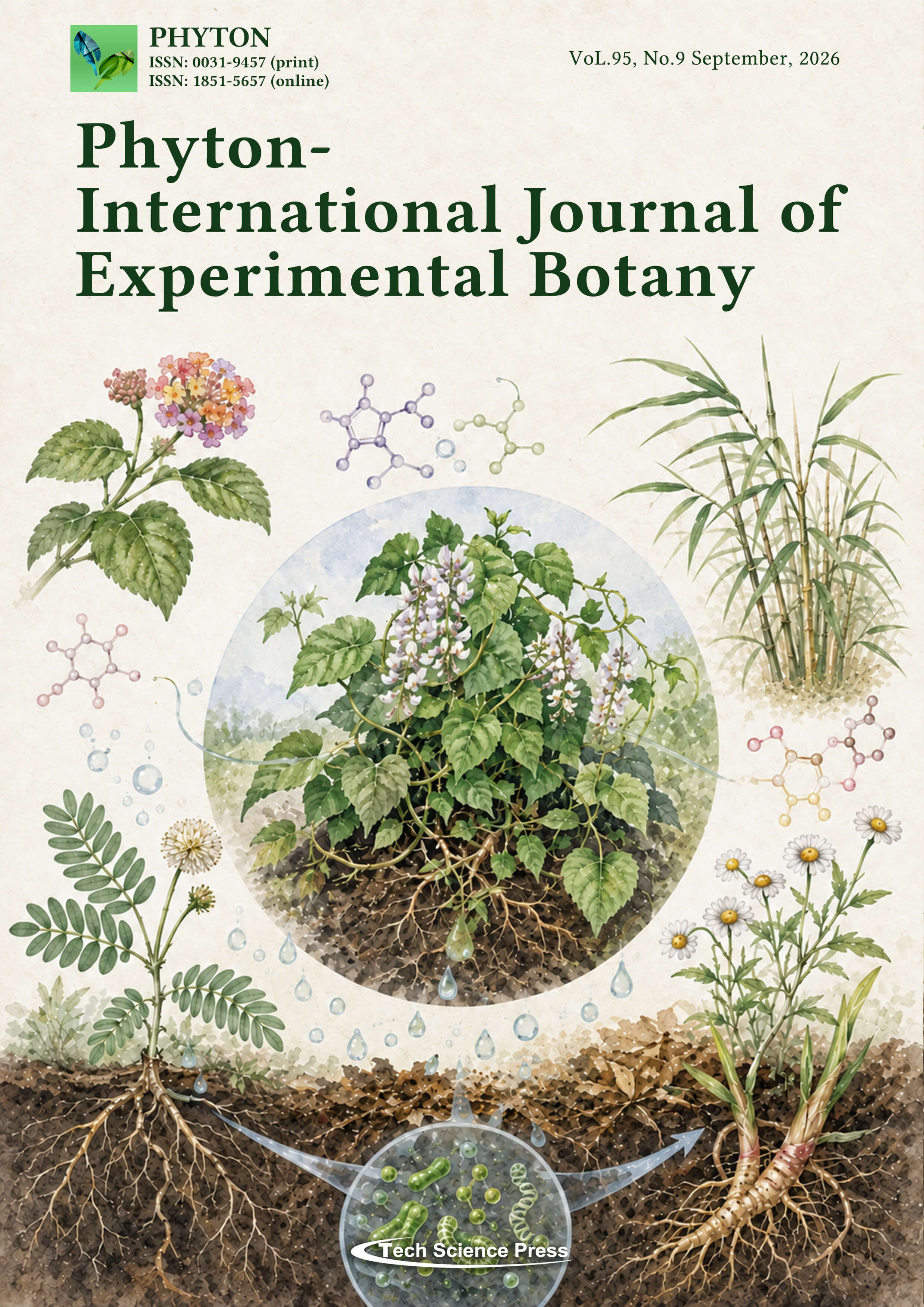
On the Cover

How do alien plants rapidly dominate new environments? This issue's cover reveals a hidden "chemical warfare." Invasive plants employ allelopathy, releasing allelochemicals into the soil to suppress native vegetation. The image features seven highly invasive species whose roots and leaves emit complex chemical molecules. These "chemical weapons" grant them a decisive edge in competing for resources. From molecular structures to ecological takeover, the cover illustrates how allelopathy drives their successful invasion and dominance.
This cover image was created using Al-generated content from "ChatGPT". The authorsconfirm that no human likenesses, copyrighted elements, or misleading representationsare included in the image.

View this paper

  • Open AccessOpen Access

    REVIEW

    Allelochemicals in the Invasive Success of Specific Alien Plant Species

    Hisashi Kato-Noguchi*, Midori Kato
    Phyton-International Journal of Experimental Botany, Vol.95, No.9, 2026, DOI:10.32604/phyton.2026.087465 - 24 September 2026
    (This article belongs to the Special Issue: Integrative Plant Biology: From Metabolism and Gene Function to Environmental Stress, Ecology, and Medicinal Innovations)
    Abstract This review investigates the allelopathic characteristics of seven highly invasive plant species: Lantana camara, Reynoutria japonica, Leucaena leucocephala, Bidens pilosa, Tithonia diversifolia, Arundo donax, and Pueraria montana var. lobata. A thorough literature search was conducted using five databases. These plants employ allelopathy, releasing specific chemicals called allelochemicals that suppress the germination and growth of neighboring vegetation. Each species produces a distinct profile of allelochemicals, including cinnamic acid derivatives, benzoic acid derivatives, monoterpenes, sesquiterpenes, sesquiterpene lactones, pentacyclic triterpenoids, flavonoids, a non-protein amino acid, indole alkaloids, and anthraquinones. These allelochemicals are released into the environment through their roots, leaves, and decaying matter, giving the plants More >

  • Open AccessOpen Access

    REVIEW

    Multi-Omics Approaches to Improve Rice Quality Characteristics under Abiotic and Biotic Environmental Stresses

    Jawaher Alkahtani*
    Phyton-International Journal of Experimental Botany, Vol.95, No.9, 2026, DOI:10.32604/phyton.2026.086622 - 24 September 2026
    Abstract Rice, the most widely consumed grain by billions of people worldwide, has become the first crop to have a complete genome sequence and serves as a model crop for monocots. Advancements in multi-omics methodologies have provided a comprehensive understanding of the molecular mechanisms underlying stress tolerance in rice and have accelerated the development of rice varieties with improved grain quality under both abiotic and biotic stresses. Recently, high-throughput multi-omics technologies have identified numerous key genes, proteins, and metabolites linked to stress-tolerance mechanisms. This review summarizes recent studies across multi-omics disciplines, including genomics, transcriptomics, proteomics, metabolomics,… More >

  • Open AccessOpen Access

    REVIEW

    Decoding C:N:S:Fe Stoichiometry in Plant Acclimation to Environmental Stress—Mechanisms, Trade-offs, and Future Challenges

    Georgios P. Stylianidis1, Chrysoula K. Pantazopoulou1, Styliani N. Chorianopoulou1,2, Dimitris L. Bouranis1,2,*
    Phyton-International Journal of Experimental Botany, Vol.95, No.9, 2026, DOI:10.32604/phyton.2026.085051 - 24 September 2026
    Abstract Cellular carbon (C) and nitrogen (N) metabolisms are tightly coordinated towards sustaining optimal growth and development for plants. C:N ratio is well-studied. Research results highlight strong interest in C:N dynamics in crops, especially in relation to soil health, crop production, as well as nutrient cycling. However, the C:N:S (sulfur) stoichiometry within plant tissues is under-reviewed. This lack of research persists despite the critical importance of the C:N:S elemental nexus for nutrient use efficiency, stress physiology, yield quality, and sustainable fertilization. Thus, the biochemical integration of C, N, and S and the corresponding homeostases are discussed. More >

  • Open AccessOpen Access

    REVIEW

    Phytohormones: Structure, Physiological Effects, and Hormone Interactions of Classical and Newly Discovered Plant Growth Regulators

    Mehmet Sezgin1,2,*, Mustafa Kahya2
    Phyton-International Journal of Experimental Botany, Vol.95, No.9, 2026, DOI:10.32604/phyton.2026.087624 - 24 September 2026
    Abstract Plants utilize a complex network of phytohormones to adapt to environmental stressors and coordinate their growth and development. Along with the classic five hormones (auxin, cytokinin, gibberellin, abscisic acid, and ethylene), newly discovered classes of hormones such as brassinosteroids, salicylic acid, jasmonic acid, strigolactones, karrikins, and peptide hormones regulate almost all aspects of plant physiology. This review article has been prepared with the needs of researchers and practitioners involved in plant production in mind. Phytohormones are systematically discussed in terms of their discovery history, chemical structures, fundamental roles in plant physiology, and interhormone interactions. Each More >

  • Open AccessOpen Access

    REVIEW

    PGPR and PGPF in Horticultural Systems: Physiological Functions, Synergistic Mechanisms, and Precision Microbiome Management

    Yumeng Zhao, Jun Tao*, Yuhan Tang*
    Phyton-International Journal of Experimental Botany, Vol.95, No.9, 2026, DOI:10.32604/phyton.2026.087467 - 24 September 2026
    Abstract This review focuses on the synergistic roles of plant growth-promoting rhizobacteria (PGPR) and plant growth-promoting fungi (PGPF) in horticultural systems, highlighting their mechanisms from physiological functions to molecular regulation and community-level synergy. PGPR and PGPF enhance nutrient acquisition, modulate phytohormones, induce systemic resistance, and alleviate abiotic stresses through complementary pathways. At the molecular level, microbial signals trigger downstream signaling cascades, leading to transcriptional reprogramming and epigenetic priming for long-lasting stress memory. The coexistence of PGPR and PGPF can generate synergistic benefits that may outperform single strains under suitable host, microbial, and environmental conditions; however, challenges More >

  • Open AccessOpen Access

    ARTICLE

    Genome-Wide Identification of bZIP Gene Family in Lilium davidii var. unicolor and Expression Analysis during Dormancy Release and Regeneration

    Jiaji Zhang, Yunyao Yang, Minmin Chen, Xin Han, Gongping Nie, Xiyan Chen, Lin Zhou, Liuyan Yang*, Yongchun Zhang*
    Phyton-International Journal of Experimental Botany, Vol.95, No.9, 2026, DOI:10.32604/phyton.2026.086524 - 24 September 2026
    Abstract The basic leucine zipper (bZIP) transcription factors constitute one of the largest and most functionally diverse gene families in plants, playing central roles in growth, development, and stress adaptation. However, systematic information on this family remains limited in Lilium davidii var. unicolor, an economically important ornamental and edible bulb crop with a remarkably large and complex genome. In this study, we conducted a genome-wide survey and identified 64 LdbZIP genes. Phylogenetic analysis with Arabidopsis and rice assigned the LdbZIPs to 11 of the 13 recognized subfamilies, with no member of subfamily IV or VIII detected. The encoded proteins… More >

  • Open AccessOpen Access

    ARTICLE

    Foliar Application of Boron Nanoparticles to Enhance Productivity, Postharvest Quality and Nutrient Use Efficiency in Summer Tomato (Solanum lycopersicum L.)

    Md. Abdul Quddus1,*, Khokan Kumer Sarker2, Zoheb Hasan Fahad1, Shafkat Tashzi3, Shimul Mondal4, Nazneen Ara Sultana5, Rabeka Sultana Smriti6, Md. Anarul Islam1, Md. Ruhul Amin7, Hela Znazen8, Ahmed Gaber9, Akbar Hossain10,*
    Phyton-International Journal of Experimental Botany, Vol.95, No.9, 2026, DOI:10.32604/phyton.2026.086296 - 24 September 2026
    (This article belongs to the Special Issue: Application of Nanomaterials in Plants)
    Abstract The productivity of summer tomato in subtropical regions is hampered by boron (B) deficiency, an element essential for reproductive development. Conventional soil or foliar applications often suffer from nutrient leaching and inadequate uptake. Nanoboron fertilizers offer a highly efficient and innovative alternative; their small particle size and high surface-to-volume ratio enhance cellular penetration. This study evaluated the efficacy of foliar-applied boron nanoparticles in improving summer tomato productivity, fruit quality, nutrient use efficiency and profitability, while determining the optimal dosage for maximizing yield. A field study was conducted using a randomized complete block design with three… More >

  • Open AccessOpen Access

    ARTICLE

    Construction of a Yeast cDNA Library from Chinese Cabbage and Identification of Upstream Regulators of the Key Tip-Burn Resistance Gene BrWRKY25

    Yunduan Qin1,2,#, Kekang Su1,2,#, Meng Zhao3, Yu Xu1,2, Yuanyuan Zhang1,2, Chunyang Feng1,2, Xinlei Guo1,2, Chunhui Wu1,2, Changwei Shen3,*, Jingping Yuan1,2,*
    Phyton-International Journal of Experimental Botany, Vol.95, No.9, 2026, DOI:10.32604/phyton.2026.085158 - 24 September 2026
    Abstract Tip-burn in Chinese cabbage (Brassica rapa L. ssp. pekinensis) is a calcium-deficiency-induced physiological disorder, and BrWRKY25 functions as a negative regulator of tip-burn resistance. To elucidate the regulatory mechanisms underlying BrWRKY25-mediated tip-burn resistance, we constructed a yeast cDNA library from Chinese cabbage subjected to calcium-deficient treatment to identify its key upstream transcription factors. The constructed yeast cDNA library exhibited a titer of 9.5 × 10⁶ colony forming unit (CFU)·mL1 and an average insert size exceeding 1000 bp, meeting the quality criteria for downstream applications. Using the 1044-bp promoter of BrWRKY25 as bait, we screened several transcription factors, including zinc… More >

  • Open AccessOpen Access

    ARTICLE

    Phytochemical Profiling and Pharmacological Evaluation of Astrantia major L. Herb Extracts with Systemic Anti-Inflammatory and Topical Hemostatic, Wound-Healing, and Antimicrobial Activities

    Taras Koliadzhyn1, Andriy Grytsyk1, Nadiia Lehin1, Lubov Grytsyk2, Ain Raal3, Oleh Koshovyi3,4,*
    Phyton-International Journal of Experimental Botany, Vol.95, No.9, 2026, DOI:10.32604/phyton.2026.085064 - 24 September 2026
    (This article belongs to the Special Issue: Medicinal Plants: Phytochemical and Pharmacological Research)
    Abstract Astrantia major L. (Apiaceae) is a non-official medicinal plant with a long history of use in the traditional medicine of many European countries; however, its phytochemical composition and pharmacological properties remain insufficiently studied. This study aimed to investigate the phenolic profile of A. major herb extracts and evaluate their biological activities. A total of 17 phenolic compounds were identified, including hydroxycinnamic acids, flavonoids, catechins and tannin-related metabolites. Chlorogenic acid was the predominant hydroxycinnamic acid, while rutin was the major flavonoid. Among the tannin-related metabolites, gallocathechin predominated in the aqueous extract (AM0), whereas epigallocatechin was the major constituent… More >

  • Open AccessOpen Access

    ARTICLE

    Antifungal Activity and Mechanistic Insights of Clove Essential Oil Against Fusarium oxysporum-Induced Root Rot Disease via Molecular Docking of Its Major Components

    Hualin Hu1,2,*, Caiwei Wang1,2, Jian Fan1,2, Chengmei Wang3, Chunguang Ren4
    Phyton-International Journal of Experimental Botany, Vol.95, No.9, 2026, DOI:10.32604/phyton.2026.084714 - 24 September 2026
    Abstract Clove (Syzygium aromaticum), a member of the Myrtaceae family, is widely distributed throughout tropical regions from Indonesia to China. This research aimed to investigate the antifungal effects and mechanisms of clove essential oil (CEO) against Fusarium oxysporum, the causal agent of root rot disease in Pseudostellaria heterophylla and other crops. The inhibitory effects of CEO on mycelial growth, spore germination and ergosterol biosynthesis of F. oxysporum were assessed through in vitro assays. The mechanism was initially investigated by analyzing the primary components of CEO using gas chromatography-mass spectrometry (GC-MS) and performing molecular docking studies with the target enzyme. Results showed… More >

  • Open AccessOpen Access

    ARTICLE

    Volatile Organic Compound Diversity across Banana Tissues and Ripening Stages Associated with Fruit Quality and Postharvest Utilization

    Hafiz Ghulam Muhu Din Ahmed1,2,#,*, Wei He2,3,#, Fenglan Yang2,4,#, Xiaomeng Yang2,#, Li-E Yang2, Yawen Zeng2, Jiazhen Yang2,*
    Phyton-International Journal of Experimental Botany, Vol.95, No.9, 2026, DOI:10.32604/phyton.2026.088204 - 24 September 2026
    Abstract Comprehensive volatile profiling of three banana varieties, Zhongjiao 8, Baodaojiao, and Jinyu 2203, was performed across multiple tissues and ripening stages, namely leaf vein (LV), leaf (L), unripe peel (UP), unripe fruit (UF), ripe peel (RP), and ripe fruit (RF), using (Headspace Solid-Phase Microextraction/Gas Chromatography-Mass Spectrometry) HS-SPME-GC–MS to characterize volatile organic compounds (VOCs) associated with aroma development, fruit quality, and post-harvest characteristics. Approximately 450 VOCs were retained after analytical filtering, with alcohols, esters, aldehydes, ketones, and terpenes representing the dominant chemical classes. Key tentatively identified volatile compounds, including 1-pentanol-3-methyl, (S)-(+)-3-methyl-1-pentanol, 1-hexanol, hexanal, propanoic acid pentyl ester, and butanoic acidMore >

  • Open AccessOpen Access

    ARTICLE

    Biochar-Loaded Purpureocillium lilacinum Formulation Enhances Soil Water Retention, Drought Tolerance, and Essential Oil Productivity of Spearmint (Mentha spicata L.)

    Doaa Mousa Khalifa1, Motrih Al-Mutiry2, Wael F. Shehata3, Amani O. Abuzaid4, Hidayah Alotaibi5, Makhdora Almuziny4, Gamal A. El-Shaboury6, Sally Negm7, Mohamed Abou-Zeid8,*
    Phyton-International Journal of Experimental Botany, Vol.95, No.9, 2026, DOI:10.32604/phyton.2026.087638 - 24 September 2026
    Abstract Water deficit severely constrains the productivity and essential oil yield of medicinal and aromatic crops grown in sandy soils. This study assessed whether a biochar-loaded Purpureocillium lilacinum formulation could improve soil properties, drought tolerance, growth, mineral nutrition, soil biological activity, and essential oil production of spearmint (Mentha spicata L.) under full and deficit irrigation. A two-season field experiment was conducted in 2024 and 2025 using a split-plot design arranged in a randomized complete block with three replicates. Irrigation regimes, including 100% and 75% of crop evapotranspiration (ETc), were assigned to main plots, whereas bioformulation treatments, including untreated… More >

    Graphic Abstract

    Biochar-Loaded <i>Purpureocillium lilacinum</i> Formulation Enhances Soil Water Retention, Drought Tolerance, and Essential Oil Productivity of Spearmint (<i>Mentha spicata</i> L.)

  • Open AccessOpen Access

    ARTICLE

    RNA-Seq Analysis of Quinoa Varieties with Different β-Carotene Contents Reveals Genes Related to Carotenoid Biosynthesis

    Yingbo Li1,2,#, Yingjie Zong1,2,#, Yulu Tao1,2, Wenqi Zhang1,2, Xiang Wang1,2, Runhong Gao1,2, Longhua Zhou1,2, Hongwei Xu1,2,*, Chenghong Liu1,2,*
    Phyton-International Journal of Experimental Botany, Vol.95, No.9, 2026, DOI:10.32604/phyton.2026.087573 - 24 September 2026
    Abstract Quinoa is a nutrient-enriched pseudocereal with excellent edible value, and its leaves contain abundant β-carotene, which serves as an important criterion for assessing leaf nutritional quality. However, the molecular regulatory pathway of β-carotene biosynthesis in quinoa remains largely unclear. To explore the molecular mechanism of β-carotene accumulation in quinoa leaves, we screened 196 quinoa resources and selected two high β-carotene germplasms (Cq39, Cq138) and two low β-carotene germplasms (Cq35, Cq92) for comparative transcriptome sequencing. Transcriptome profiling revealed divergent transcript profiles among the four quinoa germplasms. KEGG (Kyoto Encyclopedia of Genes and Genomes) enrichment analysis showed… More >

  • Open AccessOpen Access

    ARTICLE

    Genome-Wide Identification and Expression Analysis of the DUF506 Gene Family in Sorghum (Sorghum bicolor L.) under Abiotic Stresses

    Esra Alther1,2, Hind Abdelmonim Elsanosi1,2, Ghazi Badawi2, Guisheng Zhou1,*
    Phyton-International Journal of Experimental Botany, Vol.95, No.9, 2026, DOI:10.32604/phyton.2026.087409 - 24 September 2026
    Abstract The domain of unknown function 506 (DUF506) family belongs to the PD-(D/E) XK nuclease superfamily and is related to the regulation of plant growth and development and responses to abiotic stress. To date, no comprehensive analysis of the DUF506 gene family has been conducted in Sorghum bicolor. This study revealed nine SbDUF506 genes, which have been distributed unevenly across five chromosomes. Gene structure analysis indicated that SbDUF506 genes composed of one to three exons and introns. Cis-regulatory element analysis indicated that most SbDUF506 genes are associated with responses to abiotic stress. Collectively, the results suggest that gene duplication… More >

  • Open AccessOpen Access

    ARTICLE

    Identification and Expression Analysis of the TALE Gene Family Across the Genome of Tree Peony (Paeonia ostii)

    Huiyun Li*, Caimin Kuang, Zixin Liu, Yujian Song, Xue Guo, Jinbo Li, Yanzhao Zhang*
    Phyton-International Journal of Experimental Botany, Vol.95, No.9, 2026, DOI:10.32604/phyton.2026.087331 - 24 September 2026
    Abstract TALE transcription factors are essential for plant growth, development, and abiotic stress responses. In P. ostii, a species of high ornamental and economic value, heat and drought stress severely limit productivity, yet systematic identification of the TALE family has been lacking. Here, 30 TALE transcription factors were identified via bioinformatics, with protein lengths of 89–774 aa and molecular weights (Mws) of 10,182.91 Da–84,550.84 Da. Comprehensive analyses covered physicochemical properties, phylogenetics, chromosomal localization, promoter cis-elements, conserved motifs, synteny, and tissue-specific expression. Based on homeodomain features, genes were classified into KNOX and BELL subfamilies, with similar structural features within… More >

  • Open AccessOpen Access

    ARTICLE

    Eco-Metabolomic Assessment of Aconitum heterophyllum in the Kashmir Himalaya; Integrating Morphological, Edaphic, Phytochemical, Antioxidant and Climatic Factors

    Mir Muskan Un Nisa1, Ishtiyak Ahmad Peerzada1,*, Rashid Mir2, Talib Bashir Bhat3,*, Naseh A. Algehainy2, Mohammed M. Jalal2, Malik A. Altayar2, Faris J. Tayeb2, Ruqaiah I. Bedaiwi2, Ibrahim Altedlawi Albalawi4
    Phyton-International Journal of Experimental Botany, Vol.95, No.9, 2026, DOI:10.32604/phyton.2026.086958 - 24 September 2026
    (This article belongs to the Special Issue: Aromatic and Medicinal Plants: Sustainable Cultivation and Ecology, Phytochemical Diversity, and Bioactive Applications)
    Abstract The present study elucidated the integrated relationships among plant morphology, phytochemical composition, 2,2-diphenyl-1-picrylhydrazyl (DPPH) radical-scavenging activity, soil properties, and climatic drivers of Aconitum heterophyllum Wall. ex Royle, a critically endangered medicinal plant endemic to the Kashmir Himalaya, India. Significant site-specific variations were observed in the aboveground morphological traits, with the Langate Forest Division (LFD) populations exhibiting superior vegetative growth and vigor. Soil parameters, particularly soil organic carbon and soil potassium, were strongly associated with improved plant morphology and antioxidant activity. Gas chromatography–mass spectrometry (GC-MS) profiling of volatile and semi-volatile metabolites identified LFD as the most chemically… More >

  • Open AccessOpen Access

    ARTICLE

    Combining Meta-Analysis to Investigate the Role of Non-Target Metabolic Pathways in Maize Detoxification of Nicosulfuron

    Xi Feng1, Meng Zhang1, Jinling Han1, Yanbing Wang2,*, Jian Wang1,*
    Phyton-International Journal of Experimental Botany, Vol.95, No.9, 2026, DOI:10.32604/phyton.2026.086921 - 24 September 2026
    Abstract To clarify the effectiveness of nicosulfuron (NIF) in controlling weeds in cornfields and the physiological response mechanisms of corn, this study synthesized 29 relevant articles for a meta-analysis. A pair of sweet corn sister lines with different resistance to NIF (resistant HK301 and sensitive HK320) was selected as materials, and the responses of non-target metabolic pathways under NIF stress were analyzed using structural equation modeling. The results indicate that NIF is highly effective against weeds such as Eleusine indica and Amaranthus retroflexus, but less effective against weeds such as Cyperus difformis (13.20%) and Abutilon theophrasti (−4.10%). High… More >

    Graphic Abstract

    Combining Meta-Analysis to Investigate the Role of Non-Target Metabolic Pathways in Maize Detoxification of Nicosulfuron

  • Open AccessOpen Access

    ARTICLE

    Genetic Diversity of the 4th-Cycle Breeding Population of Cunninghamia lanceolata (Lamb.) Hook. Using SSR Markers

    Ziyi Wang1, Yuting Wei1, Liming Zhu2, Zezhong Lin2, Liming Bian1, Long Zhang3, Ling Ye2, Xiaoli Jiang4, Linfeng Yu2, Biaoqiang Zhang5, Youcheng Xu6, Hui Xiao2, Yuhan Zhang2, Shunde Su2,*, Renhua Zheng2,*
    Phyton-International Journal of Experimental Botany, Vol.95, No.9, 2026, DOI:10.32604/phyton.2026.089247 - 24 September 2026
    Abstract Cunninghamia lanceolata (Lamb.) Hook., a fast-growing timber species endemic to China, has been constrained in genetic improvement and marker-assisted breeding programs by the paucity of molecular-level genetic diversity information. In this study, 22 pairs of highly polymorphic SSR molecular markers were designed and developed based on transcriptome sequencing and public data, and subsequently employed for genetic diversity analysis of 258 germplasm accessions. These primers amplified 235 alleles across all accessions, averaging 10.682 alleles per marker. The mean observed heterozygosity (Ho) and expected heterozygosity (He) were 0.543 and 0.668, respectively, and the polymorphic information content (PIC) values… More >

  • Open AccessOpen Access

    ARTICLE

    Canopy Microclimate Affect Vine Physiology, Bunch Sunburn, and Berry Amino Acid Content in East–West Oriented Chardonnay Vines

    Gastón Gutiérrez-Gamboa1,2, Nicolás Verdugo-Vásquez2,3, Marisol Reyes Muñoz3, Marcos Carrasco-Benavides4, Sebastián Romero-Bravo4, Manuel Chacón-Fuentes5, Miguel Araya-Alman6,*
    Phyton-International Journal of Experimental Botany, Vol.95, No.9, 2026, DOI:10.32604/phyton.2026.088464 - 24 September 2026
    (This article belongs to the Special Issue: Molecular and Physiological Mechanisms of Berry Fruit Development and Quality Formation)
    Abstract (1) Background: Increasing heat and radiation exposure in Mediterranean vineyards are intensifying the risk of berry sunburn and altering grape composition, particularly in white cultivars such as Chardonnay. Canopy management and shading nets are potential adaptation strategies, but their effects on microclimate, vine physiology, and nitrogen-related berry composition remain insufficiently understood. (2) Methods: This study evaluated the effects of photoselective and conventional shade nets, leaf removal, and an untreated control on Chardonnay grapevines grown in east–west-oriented rows during one growing season. (3) Results: The incident photosynthetically active radiation (PARi) was strongly increased by leaf removal,… More >

  • Open AccessOpen Access

    ARTICLE

    Combined Effects of Plant Biostimulant Strategies on Lettuce Performance under Salinity Stress

    Hasret Güneş1,*, Ceren Ayşe Bayram2
    Phyton-International Journal of Experimental Botany, Vol.95, No.9, 2026, DOI:10.32604/phyton.2026.089702 - 24 September 2026
    Abstract Soil salinity, intensified by climate change, is a major abiotic constraint limiting crop productivity, and the development of sustainable management strategies is therefore essential for resilient agroecosystems. Plant biostimulants, including arbuscular mycorrhizal fungi (AMFs), Trichoderma spp., and organic amendments, are recognized as sustainable tools for enhancing plant tolerance to salinity through physiological and biochemical regulation. This study investigated the responses of lettuce (Lactuca sativa L.) cv. ‘Cospirina’ grown under a non-saline control condition and two salinity levels (50 and 150 mM NaCl) to applications of Rhizophagus intraradices, Trichoderma asperellum, vermicompost, and coconut waste, applied individually and in combination. Plant… More >

    Graphic Abstract

    Combined Effects of Plant Biostimulant Strategies on Lettuce Performance under Salinity Stress

  • Open AccessOpen Access

    ARTICLE

    Responses of Shrub Caragana korshinskii on China’s Loess Plateau to Combined Water and Nitrogen Addition Mediated by Leaf Economics Spectrum

    Jingshuo Zhu, Fengxia Zhao*, Dan Meng, Yue Xue, Maiqi Xiang
    Phyton-International Journal of Experimental Botany, Vol.95, No.9, 2026, DOI:10.32604/phyton.2026.087566 - 24 September 2026
    Abstract As a typical deciduous shrub native to China’s Loess Plateau, Caragana korshinskii plays an irreplaceable role in windbreaks and sand fixation. However, as stands age, C. korshinskii commonly exhibits aging-related problems related problems characterized by reduced growth rates and declining ecological benefits. As key drivers of global climate change, increased precipitation and nitrogen deposition profoundly affect the growth, development, and ecological functions of vegetation on the Loess Plateau. To elucidate the response mechanisms of early senescence-stage C. korshinskii to combined water and nitrogen addition effects, this study focused on 18- and 22-year-old C. korshinskii. Four treatments were applied: control… More >

Per Page:

Share Link