Home / Journals / PHYTON / Vol.94, No.8, 2025
Special Issues
Table of Content
cover

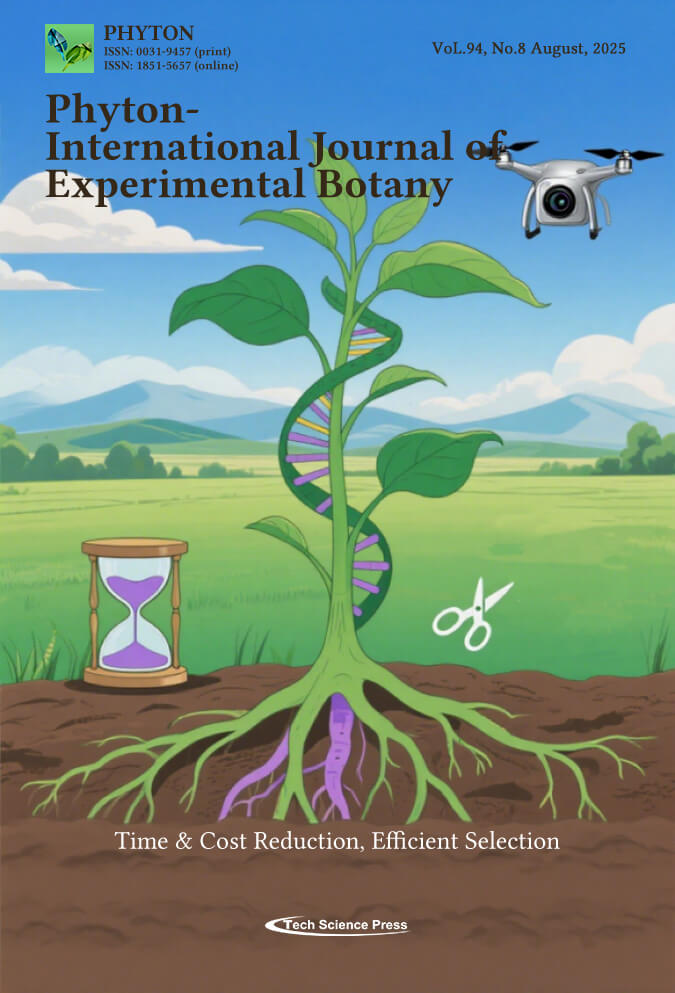
On the Cover

Agriculture is transforming due to climate uncertainty and population growth. Modern techniques like CRISPR-Cas9, marker-assisted selection, and genomic analysis enable precise gene editing, speeding up breeding from years to months for traits like drought tolerance and disease resistance. While these innovations enhance food security, traditional methods remain vital for maintaining genetic diversity and adaptability. The future lies in integrating molecular and traditional approaches—using science for speed and precision while preserving natural resilience—paving the way for sustainable agriculture that combines technological advancement with ecological wisdom to ensure global food security amid uncertainties. This cover image was created using AI-generated content from "doubao AI". The authorsconfirm that no human likenesses, copyrighted elements, or misleading representationsare included in the image.
View this paper

  • Open AccessOpen Access

    REVIEW

    Unraveling the Functional Diversity of MYB Transcription Factors in Plants: A Systematic Review of Recent Advances

    Imene Tatar Caliskan1,2, George Dzorgbenya Ametefe3, Aziz Caliskan4, Su-Ee Lau1,5, Yvonne Jing Mei Liew6, Nur Kusaira Khairul Ikram5, Boon Chin Tan1,*
    Phyton-International Journal of Experimental Botany, Vol.94, No.8, pp. 2229-2254, 2025, DOI:10.32604/phyton.2025.067225 - 29 August 2025
    (This article belongs to the Special Issue: Transcriptional Regulation and Signal Transduction Networks in Plant Growth, Development, Morphogenesis, and Environmental Responses)
    Abstract Myeloblastosis (MYB) transcription factors (TFs) are evolutionarily conserved regulatory proteins that are crucial for plant growth, development, secondary metabolism, and stress adaptation. Recent studies have highlighted their crucial role in coordinating growth–defense trade-offs through transcriptional regulation of key biosynthetic and stress-response genes. Despite extensive functional characterization in model plants such as Arabidopsis thaliana, systematically evaluating the broader functional landscape of MYB TFs across diverse species and contexts remains necessary. This systematic review integrates results from 24 peer-reviewed studies sourced from Scopus and Web of Science, focusing on the functional diversity of MYB TFs, particularly in relation… More >

  • Open AccessOpen Access

    REVIEW

    Regenerative Agriculture: A Sustainable Path for Boosting Plant and Soil Health

    Lobna Hajji-Hedfi1,2,*, Omaima Bargougui1,3, Abdelhak Rhouma1, Takwa Wannassi1, Amira Khlif1,3, Samar Dali1,3, Wafa Gamaoun4
    Phyton-International Journal of Experimental Botany, Vol.94, No.8, pp. 2255-2284, 2025, DOI:10.32604/phyton.2025.066951 - 29 August 2025
    (This article belongs to the Special Issue: Plants Abiotic and Biotic Stresses: from Characterization to Development of Sustainable Control Strategies)
    Abstract Fungal plant diseases are infections caused by pathogenic fungi that affect crops, ornamental plants, and trees. Symptoms of these diseases can include leaf spots, fruit rot, root rot, and generalized growth retardation. Fungal diseases can result in decreased quality and quantity of crops, which can have a negative economic impact on farmers and producers. Moreover, these diseases can cause environmental damage. Indeed, fungal diseases can directly affect crops by reducing plant growth and yield, as well as altering their quality and nutritional value. Although effective, the use of many chemical products is often harmful to… More >

  • Open AccessOpen Access

    REVIEW

    A Mini Review on Plant Immune System Dynamics: Modern Insights into Biotic and Abiotic Stress

    Malini Ray1, Sanchari Burman2, Shweta Meshram1,*
    Phyton-International Journal of Experimental Botany, Vol.94, No.8, pp. 2285-2312, 2025, DOI:10.32604/phyton.2025.067814 - 29 August 2025
    (This article belongs to the Special Issue: Plants Abiotic and Biotic Stresses: from Characterization to Development of Sustainable Control Strategies)
    Abstract Plants are under constant exposure to varied biotic and abiotic stresses, which significantly affect their growth, productivity, and survival. Biotic stress, caused by pathogens, and abiotic stress, including drought, salinity, extreme temperatures, and heavy metals, activate overlapping yet distinct immune pathways. These are comprised of morphological barriers, hormonal signaling, and the induction of stress-responsive genes through complex pathways mediated by reactive oxygen species (ROS), phytohormones, and secondary metabolites. Abiotic stress triggers organelle-mediated retrograde signaling from organelles like chloroplasts and mitochondria, which causes unfolded protein responses and the regulation of cellular homeostasis. Simultaneously, biotic stress activates… More >

    Graphic Abstract

    A Mini Review on Plant Immune System Dynamics: Modern Insights into Biotic and Abiotic Stress

  • Open AccessOpen Access

    REVIEW

    Combining Traditional Breeding with Molecular Techniques: An Integrative Approach

    Md. Nahid Hasan, Tasmina Islam Simi, Sk Shoaibur Rahaman, Md. Abdur Rahim*
    Phyton-International Journal of Experimental Botany, Vol.94, No.8, pp. 2313-2346, 2025, DOI:10.32604/phyton.2025.067633 - 29 August 2025
    (This article belongs to the Special Issue: Plant Biodiversity (Cultivated and Wild Flora) and Its Utility in Plant Breeding)
    Abstract Molecular tools have drawn the attention of modern plant breeders for its great precision and superiority. As the global population is increasing gradually, food production should be enhanced to feed the growing population. Therefore, precise and fast breeding tools are becoming obvious. Moreover, climate change has become a critical issue in crop improvement. Advanced breeding methods are vital to combat the impact of climate change, including biotic and abiotic stresses. Major molecular techniques, such as ‘CRISPR-Cas’ mediated ‘genome editing’, ‘marker-assisted selection (MAS)’, ‘whole genome sequencing’, ‘RNAi’, transgenic approach, ‘high-throughput phenotyping (HTP)’, mutation breeding, have been More >

  • Open AccessOpen Access

    ARTICLE

    Early Development and Phosphorus Use Efficiency Response to Phosphate Fertilizer Rates Associated with Phosphate-Solubilizing Bacteria in Contrasting Corn Hybrids

    Gilciany Ribeiro Soares1, Jiovana Kamila Vilas Boas1, Fábio Steiner1,2, Jorge González Aguilera2,*, Alan Mario Zuffo3, José Vitor Marçal do Prado2, Wellingthon da Silva Guimarães Júnnyor2, Leandris Argentel- Martínez4, Luis Morales-Aranibar5
    Phyton-International Journal of Experimental Botany, Vol.94, No.8, pp. 2347-2363, 2025, DOI:10.32604/phyton.2025.066264 - 29 August 2025
    (This article belongs to the Special Issue: Plant and Environments)
    Abstract Corn (Zea mays L.) is a very sensitive crop to phosphorus (P) deficiency during the early development phase, which may be a limiting factor for the sustainable production of this crop in P-deficient tropical soils. However, scientific evidence indicates that inoculation with phosphate-solubilizing bacteria can improve the development, uptake, and P-use efficiency of corn plants. In the present study, two contrasting corn hybrids were investigated for their responsiveness to multiple inoculations of Bacillus subtilis, B. megaterium, B. velezencis, and Pseudomonas fluorescens and application of phosphate fertilizer rates in the sandy soil of the Brazilian Cerrado. Plants from stable (DKB 360… More >

  • Open AccessOpen Access

    ARTICLE

    Application of Image Processing Techniques in Rice Grain Phenotypic Analysis and Genome-Wide Association Studies

    Jiexiong Xu*
    Phyton-International Journal of Experimental Botany, Vol.94, No.8, pp. 2365-2383, 2025, DOI:10.32604/phyton.2025.067124 - 29 August 2025
    (This article belongs to the Special Issue: Advances in Enhancing Grain Yield: From Molecular Mechanisms to Sustainable Agriculture)
    Abstract Background: Rice grain morphology—including traits such as awn length, hull color, size, and shape—is of central importance to yield, quality, and domestication, yet comprehensive quantification at scale has remained challenging. A promising solution has been provided by the integration of high-throughput imaging with genomic analysis. Methods: A standardized 2D image-processing pipeline was established to extract four categories of traits—awn length, hull color, projected grain area, and shape descriptors via PCA of normalized contours—from high-resolution photographs of 229 Oryza sativa japonica landraces. Genome-wide association analyses were then performed using a mixed linear model to control for population… More >

  • Open AccessOpen Access

    ARTICLE

    The Impact of Major Meteorological Factors in Tobacco Growing Areas on Key Chemical Constituents of Tobacco Leaves

    Guanhui Li1,2,#, Jiati Tang1,#, Qifang Zhang3, Guilin Ou1,3, Yingchao Lin1, Liping Chen4, Xiang Li4, Shengjiang Wu1, Zhu Ren1, Zeyu Zhao1,2, Xuekun Zhang2, Benbo Xu2,*, Xun Liu3, Kesu Wei1,*
    Phyton-International Journal of Experimental Botany, Vol.94, No.8, pp. 2385-2398, 2025, DOI:10.32604/phyton.2025.068213 - 29 August 2025
    (This article belongs to the Special Issue: Advances in Enhancing Grain Yield: From Molecular Mechanisms to Sustainable Agriculture)
    Abstract To clarify the relationships between the main chemical components in flue-cured tobacco in Guizhou and field meteorological factors during the tobacco growing period, the contributions of meteorological factors to the chemical composition of flue-cured tobacco and related components were explored in this study. The flue-cured tobacco variety Y87 was used as the experimental material, and tobacco samples and meteorological data were collected from seven typical tobacco-growing areas in Guizhou Province. Using a random forest model and canonical correlation analysis, the impact and contribution of the monthly mean temperature, precipitation, and sunshine duration during the field… More >

  • Open AccessOpen Access

    ARTICLE

    Evaluation of Seaweeds as Stimulators to Alleviate Salinity-Induced Stress on Some Agronomic Traits of Different Peanut (Arachis hypogaea L.) Cultivars

    Nilüfer Kocak Sahin*
    Phyton-International Journal of Experimental Botany, Vol.94, No.8, pp. 2399-2421, 2025, DOI:10.32604/phyton.2025.067880 - 29 August 2025
    (This article belongs to the Special Issue: Abiotic Stress in Agricultural Crops)
    Abstract Peanut (Arachis hypogaea) is of international importance as a source of oil and protein. Soil salinity is one of the most significant abiotic stress factors affecting the yield and quality of peanuts. This study evaluated the potential of a seaweed-based biostimulant to enhance emergence and seedling growth of four peanut cultivars (‘Ayse Hanım’, ‘Halis Bey’, ‘NC-7’, and ‘Albenek’) under increasing salinity levels. The experiment was conducted under greenhouse conditions using a randomized complete block design with four replicates. Seeds were sown in trays and treated with two doses of seaweed extract (0 and 5 g L−1) applied… More >

  • Open AccessOpen Access

    ARTICLE

    Seed Priming Mitigates the Salt Stress in Eggplant (Solanum melongena) by Activating Antioxidative Defense Mechanisms

    Muhammad Zaid Jawaid, Muhammad Fasih Khalid, Ahmed Abou Elezz, Talaat Ahmed*
    Phyton-International Journal of Experimental Botany, Vol.94, No.8, pp. 2423-2439, 2025, DOI:10.32604/phyton.2025.068303 - 29 August 2025
    (This article belongs to the Special Issue: Decoding Plant Resilience Under Abiotic Stresses)
    Abstract Salt stress is a major threat to crop agricultural productivity. Salinity affects plants’ physiological and biochemical functions by hampering metabolic functions and decreasing photosynthetic rates. Salinity causes hyperosmotic and hyperionic stress, directly impairing plant growth. In this study, eggplant seeds primed with moringa leaf extract (5%, 10%, and 15%), nano-titanium dioxide (0.02%, 0.04%, and 0.06%), and ascorbic acid (0.5, 1, and 2 mM) at different NaCl salt (0, 75, and 150 mM) concentration were grown. The germination attributes (final germination percentage, germination index, mean germination time, and mean germination rate) and growth (root length, shoot… More >

  • Open AccessOpen Access

    ARTICLE

    Comparative Analyses of Physiological and Transcriptomic Responses Reveal Chive (Allium ascalonicum L.) Bolting Tolerance Mechanisms

    Siyang Ou1, Liuyan Yang1, Tingting Yuan1, Mutong Li1, Guohui Liao2, Wanping Zhang1, Guangdong Geng1,*, Suqin Zhang1,*
    Phyton-International Journal of Experimental Botany, Vol.94, No.8, pp. 2441-2460, 2025, DOI:10.32604/phyton.2025.068368 - 29 August 2025
    Abstract Chive (Allium ascalonicum L.), a seeding-vernalization-type vegetable, is prone to bolting. To explore the physiological and molecular mechanisms of its bolting, bolting-prone (‘BA’) and bolting-resistant (‘WA’) chives were sampled at the vegetative growth, floral bud differentiation, and bud emergence stages. No bolting was observed in bolting-resistant ‘WA’ on the 130th day after planting, whereas the bolting reached 39.22% in bolting-prone ‘BA’, which was significantly higher than that of ‘WA’. The contents of gibberellins, abscisic acid, and zeatin riboside after floral bud differentiation in ‘WA’ were significantly less than in ‘BA’, whereas the indoleacetic acid content in… More >

  • Open AccessOpen Access

    ARTICLE

    Optimizing In Vitro Regeneration of Wheat via Somatic Embryogenesis Using Endosperm-Supported Mature Embryos

    Sumeyra Ucar1, Muhammed Aldaif 2, Esra Yaprak1, Esma Yigider 2, Murat Aydin2,*, Emre Ilhan1, Abdulkadir Ciltas2, Ertan Yildirim3
    Phyton-International Journal of Experimental Botany, Vol.94, No.8, pp. 2461-2477, 2025, DOI:10.32604/phyton.2025.068383 - 29 August 2025
    Abstract Wheat is a crucial crop for global food security, and effective in vitro plant regeneration techniques are considered a precondition for genetic engineering in wheat breeding programs. A practical approach for in vitro regeneration of the Kırik bread wheat cultivar via somatic embryogenesis was investigated using endosperm-supported mature embryos. Callus cultures were initiated from mature embryos supported by endosperm, cultured on phytagel-based Murashige and Skoog (MS) basal medium containing dicamba (12 mg/L) and indole-3-acetic acid (IAA) (0.5 mg/L) under dark conditions. This research was designed to examine the impact of putrescine (Put) (0.0 and 1.0 mM) on… More >

  • Open AccessOpen Access

    ARTICLE

    Early Spatiotemporal Dynamic of Green Fluorescent Protein-Tagged Fusarium oxysporum f. sp. batatas in Susceptible and Resistant Sweet Potato

    Hong Zhang1,2,#, Ying Zhu3,#, Xingyu Li3,#, Zhonghua Liu1,2, Guoliang Li1,2, Zhaomiao Lin1,2, Yongxiang Qiu1,2, Yongqing Xu1,2, Shimin Lyu3, Jiyang Wang3, Sixin Qiu1,2,*
    Phyton-International Journal of Experimental Botany, Vol.94, No.8, pp. 2479-2498, 2025, DOI:10.32604/phyton.2025.064850 - 29 August 2025
    Abstract Vascular wilt caused by Fusarium oxysporum f. sp. batatas (Fob) is a devastating disease threatening global sweet potato production. To elucidate Fob’s pathogenicity mechanisms and inform effective control strategies, we generated a green fluorescent protein (GFP)-tagged Fob strain to track infection dynamics in sweet potato susceptible cultivar Xinzhonghua and resistant cultivar Xiangshu75-55, respectively. Through cytological observation, we found in the susceptible Xinzhonghua, Fob predominantly colonized stem villi, injured root growth points, and directly invaded vascular bundles through stem wounds. Spore germination peaked at 2–3 h post-inoculation (hpi), followed by cyclical mycelial expansion and sporulation within vascular tissues… More >

  • Open AccessOpen Access

    ARTICLE

    Metabolic Profile Analysis and Key Metabolic Pathways Identification in Different Embryo Parts Regulating Dormancy and Germination in Pinus koraiensis

    Xinghuan Li1, Binxi Hao1, Shimin Cheng1, Ju Zhang1, Yuan Song2,*
    Phyton-International Journal of Experimental Botany, Vol.94, No.8, pp. 2499-2513, 2025, DOI:10.32604/phyton.2025.067104 - 29 August 2025
    (This article belongs to the Special Issue: Advances in Seed Dormancy, Germination and Ecology: Mechanisms, Regulation, and Applications)
    Abstract Pinus koraiensis is the dominant and constructive species of the zonal vegetation in Northeast China, known as the mixed broadleaf-Korean pine forest. Although carbohydrate metabolism pathways in the seed embryo are known to play crucial roles during seed dormancy and germination in P. koraiensis, it remains unclear whether these metabolic pathways function differentially across tissues. P. koraiensis seeds that had undergone different durations of moist chilling in their natural environment, yielding seeds with relatively deeper primary physiological dormancy (DDS) and seeds with released primary physiological dormancy (RDS). A non-targeted metabolomic analysis was conducted on the radicle and hypocotyl-cotyledon… More >

  • Open AccessOpen Access

    ARTICLE

    Antioxidant Potential of Different Plant Part of Allium roseum L. from Montenegro

    Zoran S. Ilić1,*, Ljiljana Stanojević2, Lidija Milenković1, Ljubomir Šunić1, Dragana Lalević1, Aleksandra Milenković2, Žarko Kevrešan3
    Phyton-International Journal of Experimental Botany, Vol.94, No.8, pp. 2515-2527, 2025, DOI:10.32604/phyton.2025.069082 - 29 August 2025
    (This article belongs to the Special Issue: Phytochemical and Medicinal Values of Plants)
    Abstract This study aims to determine the phytochemical composition and antioxidant activity (AA) of different plant parts (bulbs, stalk, leaves and flowers) of wild rosy garlic (Allium roseum) from Montenegro. The flower exhibited the highest concentration of total phenols (55.7 GAE/g d.e.), followed by the leaf (25.6 mg GAE/g d.e.). The leaf displayed the highest concentration of total flavonoids (41.48 mg RE/g d.e.), followed by the flower (36.26 mg RE/g d.e.) and top part of the stalk (26.80 mg RE/g d.e.). The AA of different parts of A. roseum after 60 min of incubation decreased in the following… More >

  • Open AccessOpen Access

    ARTICLE

    Physiological and Biochemical Responses and Non-Parametric Transcriptome Analysis for the Curcumin-Induced Improvement of Saline-Alkali Resistance in Akebia trifoliate (Thunb.) Koidz

    Xiaoqin Li, Yongfu Zhang*, Zhen Ren, Jiao Chen, Zuqin Qiao, Xingmei Tao, Xuan Yi, Kai Wang, Zhao Liu
    Phyton-International Journal of Experimental Botany, Vol.94, No.8, pp. 2529-2550, 2025, DOI:10.32604/phyton.2025.066894 - 29 August 2025
    (This article belongs to the Special Issue: Plant Responses to Abiotic Stress)
    Abstract Soil salinization is a major abiotic stress that hampers plant development and significantly reduces agricultural productivity, posing a serious challenge to global food security. Akebia trifoliata (Thunb.) Koidz, a species within the genus Akebia Decne., is valued for its use in food, traditional medicine, oil production, and as an ornamental plant. Curcumin, widely recognized for its pharmacological properties including anti-cancer, anti-neuroinflammatory, and anti-fibrotic effects, has recently drawn interest for its potential roles in plant stress responses. However, its impact on plant tolerance to saline-alkali stress remains poorly understood. In this study, the effects of curcumin on… More >

  • Open AccessOpen Access

    ARTICLE

    Enhancement of Growth and Quality of Chinese Bayberry Using LED Supplemental Lighting

    Ni Tang1,2,3,*, Chenchun Hao1,2, Rong Qiu1,2
    Phyton-International Journal of Experimental Botany, Vol.94, No.8, pp. 2551-2562, 2025, DOI:10.32604/phyton.2025.070556 - 29 August 2025
    Abstract Supplemental lighting has emerged as a widely adopted technique in greenhouse cultivation to enhance product visibility and improve the flavor characteristics of Chinese bayberry (Myrica rubra) in the international market. While studies on lighting have predominantly focused on colorimetry, limited research has addressed the precise control of chromatic parameters and their effect on fruit quality. This study examined the effects of varying lighting conditions, specifically correlated color temperatures and illuminance, on the growth and quality of Chinese bayberry varieties “Black Charcoal” and “Dongkui” using a precision control system. The bayberry plants were exposed to a constant… More >

  • Open AccessOpen Access

    ARTICLE

    Hypoglycemic Lignans from Amomum tsao-ko Leaves: Their α-Glucosidase Inhibitory Mechanism Integrated In Silico and In Vivo Validation

    Yun Wang1,2,#, Xin-Yu Li1,3,#, Sheng-Li Wu1,3, Pianchou Gongpan1, Da-Hong Li2, Chang-An Geng1,3,*
    Phyton-International Journal of Experimental Botany, Vol.94, No.8, pp. 2563-2574, 2025, DOI:10.32604/phyton.2025.068185 - 29 August 2025
    Abstract Twelve lignans (1–12) isolated from Amomum tsao-ko leaves were evaluated for the inhibitory effects against α-glucosidase and PTP1B. Compounds 1−4 and 10 showed inhibition on α-glucosidase with inhibitory ratios ranging from 53.8% to 90.0%, while compound 10 demonstrated 56.1% inhibition on PTP1B at 200 μM. Notably, erythro-5-methoxy-dadahol A (2) and threo-5-methoxy-dadahol A (3) displayed obvious inhibition on α-glucosidase with IC50 values of 33.3 μM and 22.1 μM, significantly outperforming acarbose (IC50 = 344.0 μM). Kinetic study revealed that compound 3 maintained a mixed-type mode, engaging with both free enzyme and enzyme-substrate complex via non-competitive and uncompetitive mechanisms. Molecular docking simulations further clarified its More >

  • Open AccessOpen Access

    ARTICLE

    Ecological Factors Drive the Accumulation of Active Components in Codonopsis pilosula

    Menghan Li1,2,#, Yuhui He1,#, Changning Chen2, Li Liu2, Jia Xu2, Jiahao Cao1,2, Xiaotong Guo1,*, Linlin Dong1,2,*
    Phyton-International Journal of Experimental Botany, Vol.94, No.8, pp. 2575-2591, 2025, DOI:10.32604/phyton.2025.064518 - 29 August 2025
    Abstract Codonopsis pilosula is a major Qi-tonifying medicinal herb, and its active composition is analyzed systematically. However, the relationship between its production origins and commodity specification grades with the active composition of C. pilosula lacks systematic research. This study integrates the HPLC and UV-Vis methodologies to evaluate the quality of C. pilosula from commodity specification grades and different origins, and it explores the correlation between ecological factors and production origins with active components. Here, network pharmacology is used to determine that lobetyolin, syringin, and tangshenoside I have potential efficacy in treating pulmonary fibrosis and oxidative stress. The HPLC and… More >

  • Open AccessOpen Access

    ARTICLE

    Comparative Transcriptomic Analysis of a Naturally Found Yellowish Leaf Rehmannia chingii H. L. Li Mutant and Wild Type

    Lina Song1, Caijie Yi1, Shiwei Zhao1, Yuxin Peng1, Zijing Li1, Yuqiang Zhang 2, Hua Zhang1, Helan Qin1, Huali Zhang1,*
    Phyton-International Journal of Experimental Botany, Vol.94, No.8, pp. 2593-2613, 2025, DOI:10.32604/phyton.2025.068133 - 29 August 2025
    Abstract Naturally occurring yellow leaf mutants are an important resource for studying pigment content and biosynthesis, as well as related gene expression. In our ongoing cultivation of Rehmannia chingii H. L. Li, we found an off-type yellow plant. The yellowing started with the new leaves and gradually spread downward until the entire plant exhibited a stable shade of yellow. We studied the differences in the chlorophyll and carotenoid content, carotenoid profile, and transcriptome of this yellow-leaf mutant (P2). Compared to the wild-type R. chingii plant (P1), P2 leaves had significantly lower chlorophyll and carotenoid content. LC-MS/MS analysis revealed More >

Per Page:

Share Link
