Home / Journals / PHYTON / Vol.95, No.1, 2026
Special Issues
Table of Content
cover

On the Cover

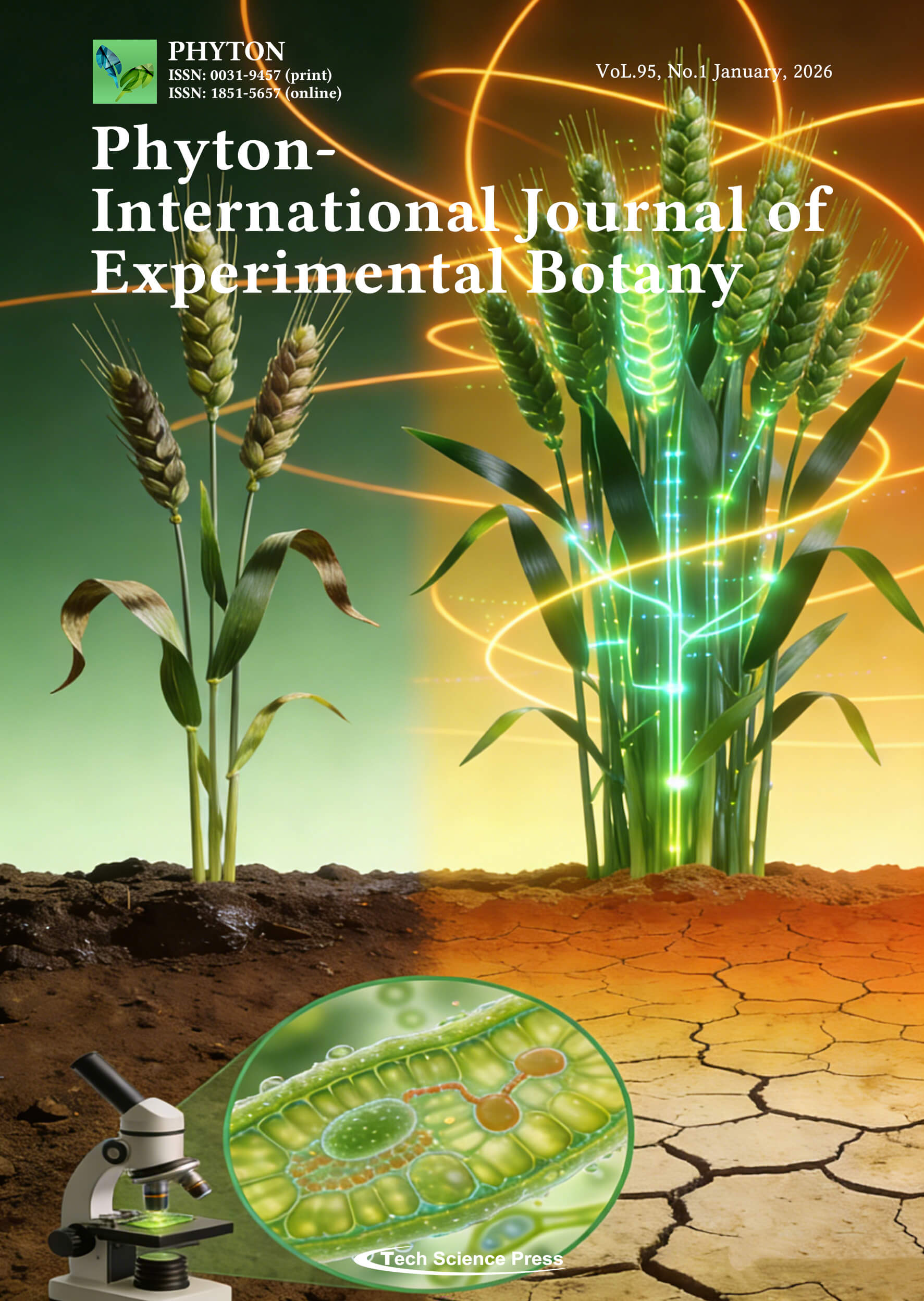
This picture compares the performance of proline dehydrogenase gene-modified wheat with wild-type under drought stress. Under normal conditions, both grow similarly. During drought, wild-type leaves show significant wilting and chlorosis, while transgenic wheat maintains upright growth and green coloration. The images provide visual evidence that by regulating proline metabolism, transgenic wheat significantly enhances water-use efficiency and photosynthetic stability under drought conditions, ultimately leading to higher grain weight per plant after drought exposure at the flowering stage. These findings offer reliable phenotypic support for breeding drought-tolerant wheat varieties.
This cover image was created using Al-generated content from "doubao Al". The authorsconfirm that no human likenesses, copyrighted elements, or misleading representationsare included in the image.

View this paper

  • Open AccessOpen Access

    ARTICLE

    Selection of Conservation Practices in Different Vineyards Impacts Soil, Vines and Grapes Quality Attributes

    Antonios Chrysargyris1,*, Demetris Antoniou2, Timos Boyias2, Nikolaos Tzortzakis1,*
    Phyton-International Journal of Experimental Botany, Vol.95, No.1, 2026, DOI:10.32604/phyton.2026.076565 - 30 January 2026
    Abstract Cyprus has an extensive record in grape production and winemaking. Grapevine is essential for the economic and environmental sustainability of the agricultural sector, as it is in other Mediterranean regions. Intensive agriculture can overuse and exhaust natural resources, including soil and water. The current study evaluated how conservation strategies, including no tillage and semi-tillage (as a variation of strip tillage), affected grapevine growth and grape quality when compared to conventional tillage application. Two cultivars were used: Chardonnay and Maratheftiko (indigenous). Soil pH decreased, and EC increased after tillage applications, in both vineyards. Tillage lowered soil… More >

  • Open AccessOpen Access

    ARTICLE

    Comparative Analysis of the Impact of Different Ecotypes on In Vitro Anti-Inflammatory Activity of Ethanolic Extracts of Moringa oleifera Leaves

    Mario D’Ambrosio1, Elisabetta Bigagli1,*, Lorenzo Cinci1, Cecilia Brunetti2,*, Edgardo Giordani3, Francesco Ferrini3, Cristina Luceri1
    Phyton-International Journal of Experimental Botany, Vol.95, No.1, 2026, DOI:10.32604/phyton.2026.073250 - 30 January 2026
    (This article belongs to the Special Issue: Plant-Derived Natural Products: Phytochemical Diversity and Functional Properties)
    Abstract Moringa oleifera (MO) is traditionally used to mitigate inflammatory-mediated disorders; however, the influence of ecotypic variation on its anti-inflammatory activity remains poorly understood. In this study, we compared the phytochemical composition and anti-inflammatory activity of ethanolic extracts obtained from fresh and dried leaves of four MO ecotypes (India, Paraguay, Mozambique, and Pakistan), all grown under the same outdoor conditions, as well as two commercial powders (Just Moringa and WISSA), using LPS-stimulated RAW 264.7 macrophages. Extracts from fresh leaves were 19–43% more cytotoxic than those from dried leaves, depending on the ecotype, likely due to higher cyanogenic… More >

  • Open AccessOpen Access

    ARTICLE

    Hydroalcoholic Extracts of Achillea spp. from Greece: A Study on Phenolic Content and Their Biological Activities

    Olga S. Tsiftsoglou1,*, Vladimir Mihailovic2, Nikola Sreckovic2, Jelena S. Katanic Stankovic3, Kyriakos Michail Dimitriadis1, Michalis K. Stefanakis4, Diamanto Lazari1
    Phyton-International Journal of Experimental Botany, Vol.95, No.1, 2026, DOI:10.32604/phyton.2026.075566 - 30 January 2026
    (This article belongs to the Special Issue: Plant Responses and Adaptations to Environmental Stresses)
    Abstract Achillea species are known for their healing properties since ancient times. There is extensive literature on their pharmacological action due to their bioactive compounds. The present study aimed to investigate the antioxidant and antimicrobial effects of hydroalcoholic extracts from the inflorescences and leaves of the species Achillea crithmifolia Waldst. and Kit., A. grandifolia Friv. and A. millefolium L. The phytochemical profiles of all extracts were evaluated both by NMR spectroscopy and LC-MS analysis, and the results were consistent with the spectrophotometrically determined total phenolic (TP: 125.42–191.98 mg/g) and total flavonoid (TF: 47.34–180.02 mg/g) contents. All the extracts were tested More >

  • Open AccessOpen Access

    ARTICLE

    Phenolic Profiling and Bioactive Potential of Iris bucharica

    Olha Mykhailenko1,2,3,#,*, Zigmantas Gudžinskas4, Liudas Ivanauskas5, Victoriya Georgiyants1, Chia-Hung Yen6,7,8, Chung-Fan Hsieh9, Riong Seulina Panjaitan6, Tsong-Long Hwang10,11,12,13, Bing-Hung Chen14,15, Michal Korinek6,7,8,#,*
    Phyton-International Journal of Experimental Botany, Vol.95, No.1, 2026, DOI:10.32604/phyton.2026.074209 - 30 January 2026
    (This article belongs to the Special Issue: Secondary Metabolites in Plants and Their Interaction With Ecological Factors)
    Abstract The sustainable sourcing of novel bioactive compounds from natural sources is crucial to the success of the pharmaceutical, food, and cosmetics industries. Iris bucharica Foster (syn. Juno bucharica (Foster) Vved.) is a promising source of novel bioactive molecules, particularly phenolic compounds, which are renowned for their antioxidant properties. In this study, we developed a reliable HPLC-UV-DAD method to identify and quantify phenolic compounds in the leaves and bulbs of I. bucharica, establishing the first set of quality control markers for this species. A total of 21 phenolic compounds were identified in the leaves, with flavonoids isoorientin, guaijaverin, hyperoside, More >

  • Open AccessOpen Access

    ARTICLE

    Physiological and Metabolic Responses of Red Leaf Lettuce (Lactuca sativa L.) under Low Pressure Conditions

    Wonkyu Yi, Jongseok Park*
    Phyton-International Journal of Experimental Botany, Vol.95, No.1, 2026, DOI:10.32604/phyton.2026.073450 - 30 January 2026
    (This article belongs to the Special Issue: Metabolic Mechanisms of Plant Responses to Stress)
    Abstract Understanding plant responses under low-pressure conditions is important for developing closed cultivation systems that simulate space environments. This study aimed to assess the effects of different pressure levels on growth, photosynthesis, and secondary metabolite accumulation in red leaf lettuce (Lactuca sativa L. var. ‘Super Caesar’s Red’). Plants were cultivated for three weeks in sealed chambers under 101 kPa (atmospheric pressure), 66 kPa (moderate low pressure), and 33 kPa (severe low pressure). Growth analysis showed that leaf length and leaf area decreased significantly with reduced pressure, while chlorophyll content and SPAD values increased gradually. Photosynthetic measurements indicated More >

  • Open AccessOpen Access

    ARTICLE

    Partial Suppression of the Proline Dehydrogenase Gene Mitigates the Impact of Drought on the Photosynthetic Apparatus and Productivity in Winter Wheat

    Dmytro A. Kiriziy1, Oksana V. Dubrovna1, Oksana G. Sokolovska-Sergiienko1, Alina S. Holoboroda1, Victor V. Rohach1,2, Oleg O. Stasik1,*
    Phyton-International Journal of Experimental Botany, Vol.95, No.1, 2026, DOI:10.32604/phyton.2026.075371 - 30 January 2026
    (This article belongs to the Special Issue: Plant Responses to Abiotic Stress Mechanisms)
    Abstract Water scarcity severely constrains the genetic potential of wheat yield worldwide. Proline is among the most versatile stress-related metabolites in plants, and targeting genes involved in proline synthesis and degradation represents a promising strategy for developing drought-tolerant wheat genotypes. This study evaluates the performance of the photosynthetic apparatus in transgenic wheat line with RNAi-mediated suppression of proline dehydrogenase (ProDH) and in the original (wild-type) genotype, under both drought and recovery conditions. Drought was induced at the flowering stage by lowering soil moisture to 30% field capacity for 7 days, compared with 70% field capacity in… More >

  • Open AccessOpen Access

    ARTICLE

    Tissue-Specific Transcriptomic Responses and Viral Accumulation in Lily Cultivars Infected with Cucumber Mosaic Virus

    Yun-Im Kang1, Youn Jung Choi1, Su Young Lee1, Young-Ran Lee1, Ki-Byung Lim2,3, Yun-Jae Ahn2,3,*
    Phyton-International Journal of Experimental Botany, Vol.95, No.1, 2026, DOI:10.32604/phyton.2026.073138 - 30 January 2026
    (This article belongs to the Special Issue: Plant Responses to Stress Factors)
    Abstract Cucumber mosaic virus (CMV) threatens lily production by reducing floral quality and enabling carry-over via infected planting stock. To explore tissue-specific host responses, we analyzed a legacy, single-replicate RNA-seq dataset from two cultivars, ‘Cancun’ and ‘Connecticut King’ (CK), profiling leaf (source) and bulb (sink) tissues at 0 and 28 days post-inoculation (dpi), alongside leaf DAS-ELISA. Principal component analysis indicated that tissue identity dominated the transcriptome (PC1 = 47.7%), with CMV treatment driving within-tissue shifts over time. Exploratory Gene Ontology/KEGG summaries and a focused marker panel revealed a consistent split: in leaves, genes linked to jasmonate/WRKY-associated… More >

  • Open AccessOpen Access

    ARTICLE

    Effects of NPK and Micronutrient Fertilization on Soil Enzyme Activities, Microbial Biomass, and Nutrient Availability

    Dilfuza Jabborova1,2,3,*, Khurshid Sulaymanov1, Muzafar Jabborov4, Nayan Ahmed5, Tatiana Minkina6, Olga Biryukova6, Nasir Mehmood6,*, Vishnu D. Rajput6
    Phyton-International Journal of Experimental Botany, Vol.95, No.1, 2026, DOI:10.32604/phyton.2026.072577 - 30 January 2026
    (This article belongs to the Special Issue: Integrated Nutrient Management in Cereal Crops)
    Abstract The combined effects of macronutrients (Nitrogen, Phosphorus, and Potassium-N, P, K) and micronutrient fertilization on turmeric yield, soil enzymatic activity, microbial biomass, and nutrient dynamics remains poorly understood, despite their significance for sustainable soil fertility management and optimizing crop productivity across diverse agroecosystems. To investigate, a net house experiment on sandy loam Haplic Chernozem was conducted to 03 fertilizer regimes, viz. N75P50K50 kg ha−1 (T-2), N125P100K100 kg ha−1 (T-3), and N100P75K75 + B3Zn6Fe6 kg ha−1 (T-4). Furthermore, the influence of these treatments was systematically assessed on soil nutrient status (N, P, K), enzymatic activities (alkaline phosphomonoesterase, dehydrogenase, fluorescein diacetate… More >

  • Open AccessOpen Access

    ARTICLE

    Integrative Analysis of Genetic-Ecological Factors Shaping Epimedium Chemical Diversity

    Ziying Huang1, Ruikang Ma1, Anning Li2, Yufei Cheng1, Xiaolin Lin2, Mengzhi Li3, Yu Zhang2, Liping Shi1, Linlin Dong1,*
    Phyton-International Journal of Experimental Botany, Vol.95, No.1, 2026, DOI:10.32604/phyton.2025.074419 - 30 January 2026
    Abstract Epimedium is commonly used to treat bone injury and kidney disease, with prenylated flavonol glycosides (PFGs) as its active ingredients. It has attracted much attention due to prominent healthcare and therapeutic effects, but faces problems of adulteration with closely related species and confusion about geographical origins. In this study, multiple technical approaches were employed to identify its genetic characteristics and metabolic differences. Based on DNA barcoding, 20 batches of samples were analyzed. The genetic distances of matK, ITS and psbA-trnH within species were all smaller than those between species, and psbA-trnH along with ITS + psbA-trnH proved most effective… More >

  • Open AccessOpen Access

    ARTICLE

    Growth and Yield Responses of Soledad Chili Pepper (Capsicum annuum L.) to the Application of Chitosan and Bacillus subtilis

    Adolfo Amador Mendoza1,*, Rosalba Guadalupe Gomez Raymundo2, Ana Rosa Ramírez Seañez1, Hipolito Hernández Hernández1, Rogelio Enrrique Palacios Torres1, Nelda Xanath Martínez Galero3, Miguel Ángel García Muñoz3, Saribel Zilli Gutiérrez4,*
    Phyton-International Journal of Experimental Botany, Vol.95, No.1, 2026, DOI:10.32604/phyton.2025.073856 - 30 January 2026
    (This article belongs to the Special Issue: Endophytic Microbiota: Prospects and Challenges for Application Towards Sustainable Agriculture and Environmental Management)
    Abstract The cultivation of Soledad pepper (Capsicum annuum L.) is essential in Oaxaca and Veracruz, but it faces issues with pests and diseases, which affect yield and cause economic losses. To mitigate these impacts, farmers have started using biostimulants such as chitosan and plant growth promoting bacteria instead of agrochemicals due to their environmental and health benefits. This study evaluated the effect of Bacillus subtilis and chitosan, both individually and combined, on the growth, yield, and fruit quality of Soledad pepper under greenhouse conditions. Four treatments were applied at different stages of the crop cycle: Q (Chitosan), BS (Bacillus More >

  • Open AccessOpen Access

    ARTICLE

    Impacts of Fertilization and Soil Amendments on Rhizosphere Microbiota and Growth of Panax: A Meta-Analysis

    Hong Chen1,2, Runze Yang1,2, Jing Tian1,2, Boyuan Xu1,2, Qiang Chen3, Yuzong Chen1,2, Ming-Xiao Zhao1,2,*
    Phyton-International Journal of Experimental Botany, Vol.95, No.1, 2026, DOI:10.32604/phyton.2025.072276 - 30 January 2026
    (This article belongs to the Special Issue: Fungal and Bacterial Disease Management in Agricultural Crops Through Biological Control, Disease Resistance, and Transcriptomics Approaches)
    Abstract Panax species are globally recognized for their high medicinal and economic value, yet large-scale cultivation is constrained by high production costs, progressive soil acidification, and persistent soil-borne diseases. Although various soil improvement strategies have been tested, a comprehensive synthesis of their comparative effectiveness has been lacking. Here, we conducted a meta-analysis of 1381 observations from 54 independent studies to evaluate the effects of conventional fertilizers, microbial fertilizers, organic amendments, and inorganic amendments on Panax cultivation. Our results demonstrate that microbial fertilizers, organic amendments, and inorganic amendments significantly increased soil pH, thereby ameliorating soil acidification. Among them,… More >

  • Open AccessOpen Access

    ARTICLE

    Influence of Phenological Stage on the Volatile Content and Biological Properties of Origanum elongatum Essential Oil

    Amine Batbat1,2, Khaoula Habbadi2, Mohamed Jeddi3, Samiah Hamad Al-Mijalli4, Hanae Naceiri Mrabti5, Fahad M. Alshabrmi6, Naif Hesham Moursi7, Hassane Greche1, Naoufal El Hachlafi8,*
    Phyton-International Journal of Experimental Botany, Vol.95, No.1, 2026, DOI:10.32604/phyton.2026.072398 - 30 January 2026
    (This article belongs to the Special Issue: Innovative Strategies in Medicinal Plant Biotechnology: From Traditional Knowledge to Modern Applications)
    Abstract Origanum elongatum (OE) is an aromatic, medicinal plant endemic to Morocco that is widely used in traditional medicine due to its biological properties. This study aimed to elucidate the chemical composition of the essential oil (EO) obtained from O. elongatum (OEEO) at three stages of its life cycle, including vegetative stage (OEEO-VS), flowering stage (OEEO-FS), and post-flowering (OEEO-PFS), as well as to evaluate its biological and antiradical characteristics. The chemical analysis of the essential oil was conducted using gas chromatography-mass spectrometry (GC-MS). The antibacterial activity was evaluated in vitro through distinct methodologies, namely, disc diffusion and microatmosphere assay;… More >

  • Open AccessOpen Access

    ARTICLE

    PpCSC1, a Novel ERD4 Ortholog from Physcomitrium patens, Plays a Negative Role in Salt Stress Tolerance

    Lu Chen1,2,#, Zhijie Ren2,#, Guangmin Zhao2, Xuan He2, Legong Li2, Sheng Teng1,*, Yikun He2,*, Fang Bao2,*
    Phyton-International Journal of Experimental Botany, Vol.95, No.1, 2026, DOI:10.32604/phyton.2025.073817 - 30 January 2026
    (This article belongs to the Special Issue: Plant Responses to Abiotic Stress Mechanisms)
    Abstract ERD4 proteins, members of the early responsive-to-dehydration family, act as plasma membrane ion channels that contribute to ion homeostasis and modulate plant response to abiotic stresses. However, the functions of ERD4 homologs in non-vascular species remain largely unexplored. Here, we characterized an ERD4 family homolog in Physcomitrium patens (Hedw.) Mitt., PpCSC1 (Calcium-permeable Stress-responsive Cation Channel 1), and investigated its role in salt stress response. PpCSC1 localized to the plasma membrane and functioned as a non-selective cation channel permeable to Na+, K+, Ca2+, and Mg2+. Under salt treatment, PpCSC1 transcripts were markedly downregulated, whereas overexpression lines exhibited enhanced salt sensitivity.… More >

  • Open AccessOpen Access

    ARTICLE

    Agro-Climatic Suitability of Purslane (Portulaca oleracea L.) under Abiotic Stress in Semiarid—Arid Zone in North America

    Aaron David Lugo-Palacios1, Edgar Omar Rueda-Puente2, César Omar Montoya-García2, Ignacio Orona-Castillo3, Urbano Nava-Camberos3, José Luis García-Hernández3,*
    Phyton-International Journal of Experimental Botany, Vol.95, No.1, 2026, DOI:10.32604/phyton.2025.075449 - 30 January 2026
    Abstract To ensure the efficient use of resources, particularly in water-scarce arid and semi-arid regions where abiotic stress threatens food security, assessing soil and climate suitability for specific crops is crucial. Simultaneously, food production must align with sustainable development goals by minimizing negative environmental impacts. Therefore, establishing agro-climatic suitability using a spatiotemporal approach is essential. This involves three key steps: first, determining the climatically appropriate months based on the species’ requirements (temporal suitability), and second, establishing the soil suitability of specific plots (spatial suitability). Following this, quantifying crop evapotranspiration allows for optimized water use. This study… More >

  • Open AccessOpen Access

    ARTICLE

    Spikelet Filling Characteristics in Early-Season Rice Experiencing High Temperatures during Ripening

    Jiazhou Li1,2, Mingyu Zhang1, Xing Li1,3, Fangbo Cao1,2, Jiana Chen1,2, Weiqin Wang1,2, Huabin Zheng1,2, Min Huang1,2,4,*
    Phyton-International Journal of Experimental Botany, Vol.95, No.1, 2026, DOI:10.32604/phyton.2025.075255 - 30 January 2026
    Abstract Spikelet filling characteristics in early-season rice in southern China may be distinctive due to its exposure to high temperatures during the ripening period. However, limited information is currently available on these characteristics. This study aimed to characterize spikelet filling in early-season rice and identify the key factors contributing to its improvement. Field experiments were conducted over two years (2021 and 2022) to mainly investigate the proportions of fully-filled, partially-filled, and empty spikelets, along with the biomass-fertilized spikelet ratio and harvest index, in 11 early-season rice varieties. The results revealed significant varietal variation in spikelet filling,… More >

  • Open AccessOpen Access

    ARTICLE

    Prediction of Root Zone Temperature Dynamics at Effective Depth on Lettuce Production in Greenhouse Using Sensitivity and Feature Importance Analysis with XGBoost

    Hasan Kaan Kucukerdem*
    Phyton-International Journal of Experimental Botany, Vol.95, No.1, 2026, DOI:10.32604/phyton.2026.074188 - 30 January 2026
    (This article belongs to the Special Issue: Application of Digital Agriculture and Machine Learning Technologies in Crop Production)
    Abstract Root-zone temperature (RZT) strongly affects plant growth, nutrient uptake and tolerance to environmental stress, making its regulation a key challenge in greenhouse cultivation in cold climates. This study aimed to assess the potential of passive techniques, namely black polyethylene mulch and row covers, for modifying RZT dynamics in lettuce (Lactuca sativa L.) production and to evaluate the predictive performance of the eXtreme Gradient Boosting (XGBoost) algorithm. Experiments were conducted in Iğdır, Türkiye, over a 61-day period, with soil temperature continuously monitored at depths of 1–30 cm under mulched and non-mulched conditions, alongside measurements of greenhouse air… More >

  • Open AccessOpen Access

    ARTICLE

    YOLO-SPDNet: Multi-Scale Sequence and Attention-Based Tomato Leaf Disease Detection Model

    Meng Wang1, Jinghan Cai1, Wenzheng Liu1, Xue Yang1, Jingjing Zhang1, Qiangmin Zhou1, Fanzhen Wang1, Hang Zhang1,*, Tonghai Liu2,*
    Phyton-International Journal of Experimental Botany, Vol.95, No.1, 2026, DOI:10.32604/phyton.2025.075541 - 30 January 2026
    (This article belongs to the Special Issue: Plant Protection and Pest Management)
    Abstract Tomato is a major economic crop worldwide, and diseases on tomato leaves can significantly reduce both yield and quality. Traditional manual inspection is inefficient and highly subjective, making it difficult to meet the requirements of early disease identification in complex natural environments. To address this issue, this study proposes an improved YOLO11-based model, YOLO-SPDNet (Scale Sequence Fusion, Position-Channel Attention, and Dual Enhancement Network). The model integrates the SEAM (Self-Ensembling Attention Mechanism) semantic enhancement module, the MLCA (Mixed Local Channel Attention) lightweight attention mechanism, and the SPA (Scale-Position-Detail Awareness) module composed of SSFF (Scale Sequence Feature… More >

  • Open AccessOpen Access

    ARTICLE

    Morpho-Anatomical and Biochemical Defense Responses of Pigeon Pea Varieties to Phytophthora Blight

    Kirti A. Yadav1, Yachana Jha1, Haiam O. Elkatry2, Heba I. Mohamed3,*, Ahmed Mahmoud Ismail4, Abdelrahman R. Ahmed2,*
    Phyton-International Journal of Experimental Botany, Vol.95, No.1, 2026, DOI:10.32604/phyton.2026.074570 - 30 January 2026
    (This article belongs to the Special Issue: Fungal and Bacterial Disease Management in Agricultural Crops Through Biological Control, Disease Resistance, and Transcriptomics Approaches)
    Abstract Phytophthora blight is a devastating disease of pigeon pea (Cajanus cajan) that severely impacts plant growth and productivity. This study investigates the morphological, anatomical, and biochemical responses of a susceptible variety (ICPL 11260) and a resistant variety (IPAC-02) following infection by Phytophthora. Morphological analyses showed that infection caused a drastic reduction in root length, shoot length, leaf number, fresh weight, and dry weight in the susceptible ICPL 11260 variety, with reductions ranging from 0.5- to 2-fold compared to non-infected controls. Anatomical observations revealed pronounced cellular damage and mycelial invasion in infected ICPL 11260 plants by 30… More >

  • Open AccessOpen Access

    ARTICLE

    Biostimulatory Influence of Commercial Seaweed Extract on Seed Emergence, Seedling Growth, and Vigor of Winter Rice

    Zakia Akter1, Sumona Akter Jannat2, Sheikh Md. Shibly1, Afroza Sultana1, Amdadul Hoque Amran1, Joairia Hossain Faria1, Sabina Yeasmin1, Md. Parvez Anwar1,*
    Phyton-International Journal of Experimental Botany, Vol.95, No.1, 2026, DOI:10.32604/phyton.2026.075524 - 30 January 2026
    (This article belongs to the Special Issue: Utilization of Biostimulants in Plant Growth and Health)
    Abstract Seaweed extract contains plant growth regulators and bio-stimulants that enhance plant growth and development. In Bangladesh, winter rice (Boro rice) in the nursery bed often shows poor seed emergence and weak seedling growth due to low temperature. This problem can be addressed by using seaweed extract as a seed priming agent and bio-stimulant. The objective of this study was to evaluate the effectiveness of seaweed extract (Crop Plus) on seed emergence, seedling growth, and vigor of winter rice in the nursery. Two experiments were conducted at Bangladesh Agricultural University using BRRI dhan89. The laboratory experiment… More >

  • Open AccessOpen Access

    ARTICLE

    Salicylic Acid-Elicited Alkaloid Accumulation in Pinellia ternata Microtubers: Cytotoxicity and Transcriptomic Analysis

    Xiaoqing Jiang1,2,#, Pengchong Li1,2,#, Hongchuang Liu1,2, Wenjie Dong1,2, Wenjing Liu1,2, Di Wu1,2, Jianping Xue1,2, Fenglan Zhao1,2,*, Yongbo Duan1,2,*
    Phyton-International Journal of Experimental Botany, Vol.95, No.1, 2026, DOI:10.32604/phyton.2026.074434 - 30 January 2026
    Abstract As its tuberous alkaloids induce valuable pharmacological effects, Pinellia ternata has considerable clinical value. However, its production currently fails to meet its demand. In vitro microtuber culture, combined with salicylic acid (SA) elicitation, may provide an effective alternative to traditional field production. In this study, an in vitro P. ternata microtuber induction system was developed and used to evaluate SA-induced elicitation of alkaloid accumulation. The quality of in vitro microtubers was assessed by total alkaloid measurement, a cytotoxicity assay, and transcriptomic analysis. With or without SA treatment, P. ternata microtuber induction was achieved within 60 d using petiole-derived explants, with… More >

Per Page:

Share Link
