Special Issues
Table of Content

Application of Digital Agriculture and Machine Learning Technologies in Crop Production

Submission Deadline: 15 December 2025 (closed) View: 1010 Submit to Special Issue

Guest Editors

Dr. Magdalena Piekutowska

Email: magdalena.piekutowska@upsl.edu.pl

Affiliation: Department of Botany and Nature Protection, Institute of Biology, Pomeranian University in Słupsk, 22b Arciszewskiego St., 76-200 Słupsk, Poland

Homepage:

Research Interests: artificial neural networks; artificial intelligence; machine learning; yield modelling; predictions; potato production; plant breeding; soil science; plant growth analysis

图片1.png


Dr. Patryk Hara

Email: phara@agrotechnology.pl

Affiliation: Agrotechnology, 4 Jagiellonów St., 73-150 Łobez, Poland

Homepage:

Research Interests: artificial neural networks, yield prediction, machine learning, neural modeling, precision agriculture, soil management, plant extracts, seed treatment, multiple linear regression modeling


Prof. Dr. Gniewko Niedbała

Email: gniewko.niedbala@up.poznan.pl

Affiliation: Department of Biosystems Engineering, Faculty of Environmental and Mechanical Engineering, Poznań University of Life Sciences, Wojska Polskiego 50, 60-627 Poznań, Poland

Homepage:

Research Interests: artificial neural networks, artificial intelligence, machine learning, yield modeling, forecasting, precision agriculture, environmental sustainability, agriculture soil fertility, crop production, plant nutrition, decision support systems

图片2.png


Summary

This special issue aims to explore the application of digital agriculture and machine learning technologies in crop production, focusing on how emerging technologies can enhance agricultural efficiency and sustainability. We invite high-quality original research papers, reviews, and case studies from scholars in related fields, covering but not limited to the following topics:

1. Applications of digital agriculture technologies in monitoring and managing crop growth.

2. The role of machine learning algorithms in crop yield prediction and pest/disease detection.

3. Implementation and effectiveness of data-driven decision support systems in farming.

4. Integration of sustainable agricultural practices with digital solutions through case studies.


In recent years, the agricultural sector has faced unprecedented challenges, including climate change, rising global population, and the pressing need for sustainable food production methods. Traditional agricultural practices are often insufficient to meet the increasing demands for food while simultaneously preserving the environment. As a result, the integration of digital technologies and machine learning into agriculture has emerged as a critical area of research.


Digital agriculture encompasses a wide range of technologies that enable farmers to gather, analyze, and act on data related to crop growth, soil health, and weather patterns. These technologies facilitate precision farming, allowing for resource optimization, reduced waste, and enhanced productivity. Machine learning, in particular, plays a pivotal role in transforming vast amounts of agricultural data into actionable insights, helping farmers make informed decisions to improve yield while minimizing the use of chemical inputs.


The importance of this research area lies not only in its potential to enhance agricultural efficiency but also in its ability to contribute to sustainable development goals. By adopting data-driven approaches, farmers can implement practices that promote environmental stewardship and social equity, ensuring food security for future generations. This special issue aims to highlight the innovative methodologies and applications in digital agriculture and machine learning, fostering collaboration and knowledge sharing among researchers and practitioners.


The aim of this special issue is to explore the applications of digital agriculture and machine learning technologies in crop production, focusing on how emerging technologies can enhance agricultural efficiency and sustainability. We invite researchers to submit high-quality original research papers, reviews, and case studies that will contribute to the advancement of knowledge in this field. The scope includes both innovative applications of technologies and theoretical approaches to issues related to agriculture.


· Applications of digital agriculture technologies in monitoring and managing crop growth.

· The role of machine learning algorithms in crop yield prediction and pest/disease detection.

· Implementation and effectiveness of data-driven decision support systems in farming.

· Integration of sustainable agricultural practices with digital solutions through case studies.


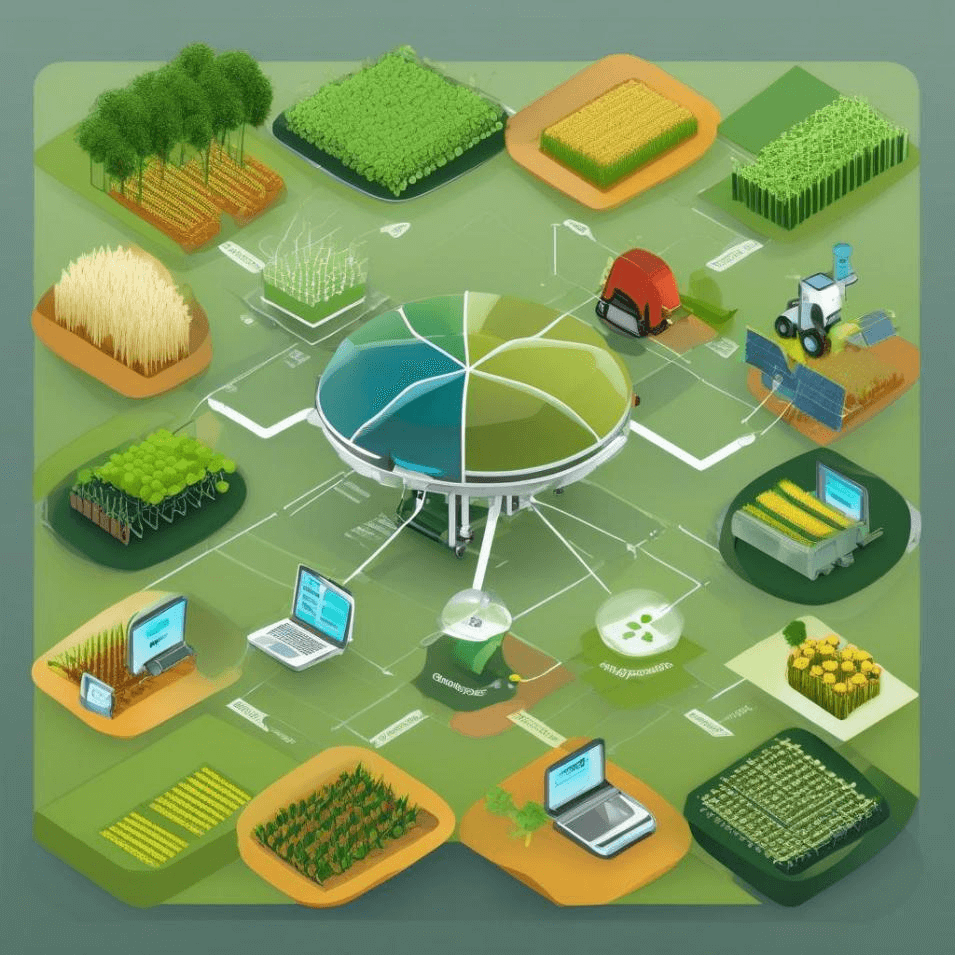
Graphic Abstract

Application of Digital Agriculture and Machine Learning Technologies in Crop Production

Keywords

Digital agriculture, machine learning, crop production, data analytics, sustainability

Published Papers


  • Open Access

    ARTICLE

    Forecasting Modeling Tool of Crop Diseases across Multiple Scenarios: System Design, Implementation, and Applications

    Mintao Xu, Zichao Jin, Yangyang Tian, Jingcheng Zhang, Huiqin Ma, Yujin Jing, Jiangxing Wu, Jing Zhai
    Phyton-International Journal of Experimental Botany, DOI:10.32604/phyton.2025.074422
    (This article belongs to the Special Issue: Application of Digital Agriculture and Machine Learning Technologies in Crop Production)
    Abstract The frequent outbreaks of crop diseases pose a serious threat to global agricultural production and food security. Data-driven forecasting models have emerged as an effective approach to support early warning and management, yet the lack of user-friendly tools for model development remains a major bottleneck. This study presents the Multi-Scenario Crop Disease Forecasting Modeling System (MSDFS), an open-source platform that enables end-to-end model construction-from multi-source data ingestion and feature engineering to training, evaluation, and deployment-across four representative scenarios: static point-based, static grid-based, dynamic point-based, and dynamic grid-based. Unlike conventional frameworks, MSDFS emphasizes modeling flexibility, allowing… More >

  • Open Access

    ARTICLE

    DenseSwinGNNNet: A Novel Deep Learning Framework for Accurate Turmeric Leaf Disease Classification

    Seerat Singla, Gunjan Shandilya, Ayman Altameem, Ruby Pant, Ajay Kumar, Ateeq Ur Rehman, Ahmad Almogren
    Phyton-International Journal of Experimental Botany, DOI:10.32604/phyton.2025.073354
    (This article belongs to the Special Issue: Application of Digital Agriculture and Machine Learning Technologies in Crop Production)
    Abstract Turmeric Leaf diseases pose a major threat to turmeric cultivation, causing significant yield loss and economic impact. Early and accurate identification of these diseases is essential for effective crop management and timely intervention. This study proposes DenseSwinGNNNet, a hybrid deep learning framework that integrates DenseNet-121, the Swin Transformer, and a Graph Neural Network (GNN) to enhance the classification of turmeric leaf conditions. DenseNet121 extracts discriminative low-level features, the Swin Transformer captures long-range contextual relationships through hierarchical self-attention, and the GNN models inter-feature dependencies to refine the final representation. A total of 4361 images from the… More >

  • Open Access

    ARTICLE

    Modeling and Estimating Soybean Leaf Area Index and Biomass Using Machine Learning Based on Unmanned Aerial Vehicle-Captured Multispectral Images

    Sadia Alam Shammi, Yanbo Huang, Weiwei Xie, Gary Feng, Haile Tewolde, Xin Zhang, Johnie Jenkins, Mark Shankle
    Phyton-International Journal of Experimental Botany, Vol.94, No.9, pp. 2745-2766, 2025, DOI:10.32604/phyton.2025.068955
    (This article belongs to the Special Issue: Application of Digital Agriculture and Machine Learning Technologies in Crop Production)
    Abstract Crop leaf area index (LAI) and biomass are two major biophysical parameters to measure crop growth and health condition. Measuring LAI and biomass in field experiments is a destructive method. Therefore, we focused on the application of unmanned aerial vehicles (UAVs) in agriculture, which is a cost and labor-efficient method. Hence, UAV-captured multispectral images were applied to monitor crop growth, identify plant bio-physical conditions, and so on. In this study, we monitored soybean crops using UAV and field experiments. This experiment was conducted at the MAFES (Mississippi Agricultural and Forestry Experiment Station) Pontotoc Ridge-Flatwoods Branch… More >

  • Open Access

    ARTICLE

    Limitation of RGB-Derived Vegetation Indices Using UAV Imagery for Biomass Estimation during Buckwheat Flowering

    E. M. B. M. Karunathilake, Thanh Tuan Thai, Sheikh Mansoor, Anh Tuan Le, Faheem Shehzad Baloch, Yong Suk Chung, Dong-Wook Kim
    Phyton-International Journal of Experimental Botany, Vol.94, No.7, pp. 2215-2228, 2025, DOI:10.32604/phyton.2025.067439
    (This article belongs to the Special Issue: Application of Digital Agriculture and Machine Learning Technologies in Crop Production)
    Abstract Accurate and timely estimation of above-ground biomass is crucial for understanding crop growth dynamics, optimizing agricultural input management, and assessing productivity in sustainable farming practices. However, conventional biomass assessments are destructive and resource-intensive. In contrast, remote sensing techniques, particularly those utilizing low-altitude unmanned aerial vehicles, provide a non-destructive approach to collect imagery data on plant canopy features, including spectral reflectance and structural details at any stage of the crop life cycle. This study explores the potential visible-light-derived vegetative indices to improve biomass prediction during the flowering period of buckwheat (Fagopyrum tataricum). Red, green, and blue (RGB)… More >

Share Link