Home / Journals / PHYTON / Vol.94, No.11, 2025
Special Issues
Table of Content
cover

On the Cover

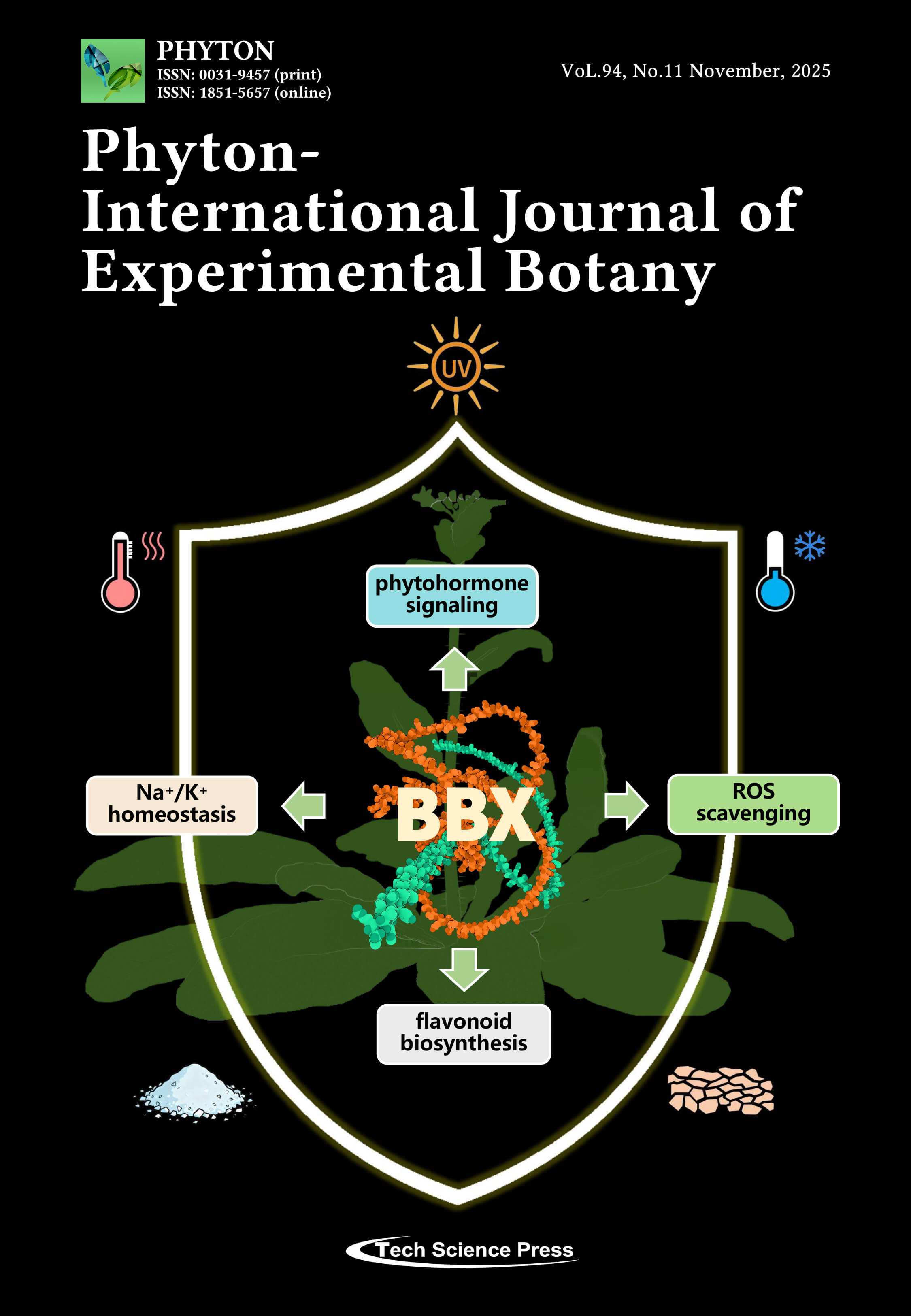
From regulators of light and development to master commanders of stress resilience, B-box (BBX) proteins are emerging as pivotal molecular orchestrators in plant biology. These zinc finger transcription factors integrate multiple environmental and hormonal signals, steering sophisticated adaptive responses by fine-tuning ROS homeostasis, enhancing anthocyanin production, and reprogramming phytohormone networks. Our review synthesizes and critically examines the expanding universe of BBX genes across the plant kingdom. Our cover image captures this central theme, visualizing how BBX proteins empower plants to thrive against a spectrum of abiotic stresses.

View this paper

  • Open AccessOpen Access

    REVIEW

    A Review of Phenolic Compounds: From Biosynthesis and Ecological Roles to Human Health and Nutrition

    Lucija Galić, Zdenko Lončarić, Miroslav Lisjak*
    Phyton-International Journal of Experimental Botany, Vol.94, No.11, pp. 3297-3318, 2025, DOI:10.32604/phyton.2025.072504 - 01 December 2025
    Abstract Phenolic compounds represent a broad and structurally diverse class of plant secondary metabolites with importance for both plant biology and human health. This review provides a comprehensive overview of their biosynthesis, chemical diversity, multifaceted functions in plants, roles in the wider ecosystem, and significance in human nutrition and biotechnology. Primarily synthesized via the phenylpropanoid pathway, these compounds encompass major classes such as lignin, flavonoids, and tannins. Within the plant, they perform critical functions including providing structural support (lignin), defending against biotic stresses (e.g., pathogens, herbivores), mediating ecological interactions (pollination, symbiosis, allelopathy), and protecting against abiotic… More >

  • Open AccessOpen Access

    REVIEW

    Cadmium Hyperaccumulation in Plants: Mechanistic Insights and Ecological Implications

    Mingwei Yue1, Shen Rao1,*, Xiaomeng Liu1, Wei Yang2, Yuan Yuan1, Feng Xu2, Shuiyuan Cheng1,*
    Phyton-International Journal of Experimental Botany, Vol.94, No.11, pp. 3319-3348, 2025, DOI:10.32604/phyton.2025.073602 - 01 December 2025
    (This article belongs to the Special Issue: Plant and Environments)
    Abstract Cadmium (Cd), a highly toxic heavy metal, represents a major global environmental threat due to its widespread dispersion through anthropogenic activities. Environmental Cd contamination poses significant risks to living organisms, including humans, animals, and plants. Certain plant species have evolved Cd hyperaccumulating capabilities to adapt to high-Cd habitats, playing critical roles in phytoremediation strategies. Here we review the biodiversity and biogeography of Cd hyperaccumulators, the underlying mechanisms of Cd uptake and accumulation, and the ecological impacts of hyperaccumulation. The major points are the following: twenty-four Cd hyperaccumulator species have been documented, with shoot Cd concentrations More >

  • Open AccessOpen Access

    REVIEW

    Beyond Photomorphogenesis: Multifaceted Roles of BBX Transcription Factors in Plant Stress Responses and Breeding Perspectives

    Qinfu Sun, Junqiang Xing, Wanyu Zhang, Chen Lin*
    Phyton-International Journal of Experimental Botany, Vol.94, No.11, pp. 3349-3370, 2025, DOI:10.32604/phyton.2025.071525 - 01 December 2025
    (This article belongs to the Special Issue: Plant Responses and Adaptations to Environmental Stresses)
    Abstract Extensive transcriptomic reprogramming is triggered by biotic and abiotic stresses in plants, with coordinated regulation mediated through multiple transcription factor families, such as WRKY, MYB, NAC, and BBX proteins. Among these, B-box (BBX) proteins represent a distinct class of zinc finger transcription factors characterized by the presence of conserved B-box domains. They serve as central regulators in plant photomorphogenesis and developmental processes. Accumulating genetic and biochemical evidence demonstrates that BBX family members orchestrate plant responses to biotic and abiotic stresses through multifaceted molecular mechanisms, including the regulation of reactive oxygen species (ROS) homeostasis, enhancement of… More >

  • Open AccessOpen Access

    REVIEW

    Metabolic Adaptations of Cyanobacteria to Environmental Stress: Mechanisms and Biotechnological Potentials

    Riya Tripathi, Varsha K. Singh, Palak Rana, Sapana Jha, Ashish P. Singh, Payel Rana, Rajeshwar P. Sinha*
    Phyton-International Journal of Experimental Botany, Vol.94, No.11, pp. 3371-3399, 2025, DOI:10.32604/phyton.2025.070712 - 01 December 2025
    (This article belongs to the Special Issue: Metabolic Mechanisms of Plant Responses to Stress)
    Abstract Cyanobacteria are photosynthetic prokaryotes. They exhibit remarkable metabolic adaptability, enabling them to withstand oxidative stress, high salinity, temperature extremes, and UV radiation (UVR). Their adaptive strategies involve complex regulatory networks that affect gene expression, enzyme activity, and metabolite fluxes to maintain cellular homeostasis. Key stress response systems include the production of antioxidants such as peroxidases (POD), catalase (CAT), and superoxide dismutase (SOD), which detoxify reactive oxygen species (ROS). To withstand environmental stresses, cyanobacteria maintain osmotic balance by accumulating compatible solutes, such as glycine betaine, sucrose, and trehalose. They also adapt to temperature and light fluctuations… More >

  • Open AccessOpen Access

    ARTICLE

    Antioxidant and Antiproliferative Potential of Nutrient—Rich Tragopogon dubius Stem and Leaves

    Sheikh Showkat Ahmad1, Chandni Garg1, Dalia Fouad2, Islam Abdulrahim Alredah3, Sandeep Kaur4, Satwinderjeet Kaur1,*
    Phyton-International Journal of Experimental Botany, Vol.94, No.11, pp. 3401-3426, 2025, DOI:10.32604/phyton.2025.067984 - 01 December 2025
    (This article belongs to the Special Issue: Medicinal and Aromatic Plants: Linking the Gap Between Properties, Compounds and Cropping Strategy)
    Abstract The Tragopogon dubius is traditionally used to treat many ailments, consumed as a vegetable, and utilized as fodder for livestock. Tragopogon dubius, found in the Kashmir Himalayas, is the least explored for its bioactivity properties and has a unique geographical location. This study is the first attempt to investigate the antioxidant, anticancer, and genoprotective properties of the aqueous extracts from the leaves (AQ-TrDL) and stems (AQ-TrDS) of this plant. AQ-TrDL and AQ-TrDS demonstrated significant amounts of phenolic and flavonoid contents. GC-HRMS identified various phytochemicals belonging to different classes, like carboxylic acids, fatty acid derivatives, phenols, and triterpenoids.… More >

  • Open AccessOpen Access

    ARTICLE

    Zinc Oxide Nanoparticle Alleviates the Inhibition of Dendrobium huoshanense Photosynthesis by Cadmium through Enhancing Antioxidant Enzyme System

    Cheng Song1,*, Iftikhar Hussein Shah2, Ghulam Abbas Ashraf3, Muhammad Arif4, Muhammad Aamir Manzoor1,5,*
    Phyton-International Journal of Experimental Botany, Vol.94, No.11, pp. 3427-3451, 2025, DOI:10.32604/phyton.2025.070778 - 01 December 2025
    (This article belongs to the Special Issue: Application of Nanomaterials in Plants)
    Abstract Heavy metal pollution has become a pervasive environmental issue affecting numerous regions worldwide. Recently, there has been significant attention given to the application of nano-enabled technologies with the purpose of enhancing plant development and alleviating heavy metal stress. This study aimed to illustrate the potential of zinc oxide nanoparticles (ZnO-NPs) to enhance the morphological traits of D. huoshenense exposed to cadmium (Cd) stress. The chemical structure and elemental composition of the ZnO-NPs were characterised by a series of analytical methods, including X-ray diffraction, UV-Vis spectrometry, XPS, and TEM. Plant samples used were collected at 0, 5,… More >

    Graphic Abstract

    Zinc Oxide Nanoparticle Alleviates the Inhibition of <i>Dendrobium huoshanense</i> Photosynthesis by Cadmium through Enhancing Antioxidant Enzyme System

  • Open AccessOpen Access

    ARTICLE

    Field Supplements of Ultraviolet-B Radiation in Veraison and Pre-Harvest Differentially Modify the Phenolic Composition of Grape Skins and Wines

    Raquel Hidalgo-Sanz, María-Ángeles Del-Castillo-Alonso, Laura Monforte, Rafael Tomás-Las-Heras, Encarnación Núñez-Olivera, Javier Martínez-Abaigar*
    Phyton-International Journal of Experimental Botany, Vol.94, No.11, pp. 3453-3470, 2025, DOI:10.32604/phyton.2025.070087 - 01 December 2025
    (This article belongs to the Special Issue: Adaptation Mechanisms of Grapevines to Growing Environments and Agricultural Strategies)
    Abstract Grapevine (Vitis vinifera L.) is one of the main crops worldwide, and ultraviolet-B (UV-B, 280–315 nm) radiation is emerging as a promising technical tool to enhance secondary metabolites that can contribute to the quality and health-promoting properties of both grapes and the resulting wines. However, few studies have assessed the effectiveness of UV-B supplements under field conditions. Here, we compared the effects of two different field UV-B treatments (a single supplement applied at pre-harvest, and a double supplement applied at both veraison and pre-harvest) on the phenolic composition of Tempranillo grape skins and the resulting wines.… More >

  • Open AccessOpen Access

    ARTICLE

    Melatonin Enhances Antioxidant Defense and Physiological Stability in Grapevine (Vitis vinifera L.) Cultivars ‘Merlot’ and ‘Erciş’ under UV-B Stress

    Sena Yıldız1, Nurhan Keskin2,*, Birhan Kunter3, Harlene Hatterman-Valenti4, Ozkan Kaya4,5,*
    Phyton-International Journal of Experimental Botany, Vol.94, No.11, pp. 3471-3492, 2025, DOI:10.32604/phyton.2025.073180 - 01 December 2025
    (This article belongs to the Special Issue: Precision Fertilization and Nutrient Use Efficiency in Crops)
    Abstract Climate change-driven environmental stresses, particularly ultraviolet-B (UV-B) radiation, pose severe threats to grapevine (Vitis vinifera L.) productivity and physiological stability. This study investigated the protective role of melatonin in in vitro plantlets of two grapevine cultivars, ‘Merlot’ and ‘Erciş’, subjected to low (≈8.25 μW cm−2, 16 h) and high (≈33 μW cm−2, 4 h) UV-B exposure. Significant cultivar-specific responses were observed (p < 0.001). The ‘Erciş’ cultivar exhibited higher oxidative stress, with malondialdehyde (MDA) levels reaching 24.30 mmol g−1 FW in control plants compared with 14.91 ± 0.25 mmol g−1 FW in ‘Merlot’. Melatonin provided dose-dependent mitigation, reducing MDA to… More >

  • Open AccessOpen Access

    ARTICLE

    Genetic Diversity of Tuberose (Polianthes tuberosa L.) Germplasm through Molecular Approaches to Obtain Desirable Plant Materials for Future Breeding Programs

    Vardhelli Soukya1, Soumen Maitra1,*, Nandita Sahana2, Saikat Das3, Rupsanatan Mandal3, Arpita Mandal Khan1, Arindam Das4, Ashok Choudhury5, Prodyut Kumar Paul6, Ahmed Gaber7, Mohammed M. Althaqafi8, Akbar Hossain9,*
    Phyton-International Journal of Experimental Botany, Vol.94, No.11, pp. 3493-3508, 2025, DOI:10.32604/phyton.2025.071450 - 01 December 2025
    (This article belongs to the Special Issue: Advances in Plant Breeding and Genetic Improvement: Leveraging Molecular Markers and Novel Genetic Strategies)
    Abstract The present study investigated the genetic diversity of 24 germplasms of Polianthes tuberosa L. via 16 inter simple sequence repeat (ISSR) marker techniques. The research findings revealed that the ISSR markers presented higher levels of band reproducibility and were more efficient at clustering germplasms. Among the 16 markers examined in this study, 12 had a complete polymorphism rate of 100%. The molecular analysis revealed a PIC ranging from 0.079 to 0.373, with a mean value of 0.30, whereas the range of the marker index was from 0.0001 to 0.409, with an average value of 0.03, and More >

  • Open AccessOpen Access

    ARTICLE

    Early Chemodiversity of Alkaloids in Seedlings Annona Species

    Iván De-la-Cruz-Chacón, Christian Anabí Riley-Saldaña, Marisol Castro-Moreno, Claudia Azucena Durán-Ruiz, Alma Rosa González-Esquinca*
    Phyton-International Journal of Experimental Botany, Vol.94, No.11, pp. 3509-3526, 2025, DOI:10.32604/phyton.2025.072586 - 01 December 2025
    (This article belongs to the Special Issue: Plant Secondary Metabolism and Functional Biology Volume II)
    Abstract The seedling phase represents an initial and critical stage for the establishment of individuals in the ecosystem. During this stage, specialized metabolites contribute to survival; however, studies analyzing the presence of these molecules and the reasons for their production and accumulation are still scarce. Annonaceae is a botanical family recognized for the chemodiversity of its secondary metabolites; nearly 1000 alkaloids have been reported in approximately 150 adult specimens. The aim of this study was to determine whether alkaloid biosynthesis in Annonaceae is expressed from early stages. For this purpose, Annona macroprophyllata, Annona muricata, Annona purpurea, and Annona reticulata seedlings,… More >

  • Open AccessOpen Access

    ARTICLE

    A Comprehensive Analysis of the Mineral Profile of Three Wild Tulips in China

    Yue Ma1,2, Douwen Qin1,2, Weiqiang Liu1,2, Xiuting Ju1,2,*
    Phyton-International Journal of Experimental Botany, Vol.94, No.11, pp. 3527-3538, 2025, DOI:10.32604/phyton.2025.069643 - 01 December 2025
    (This article belongs to the Special Issue: Ethnobotany: Value and Conservation)
    Abstract Comprehensive evaluation based on mineral element content is one of the effective methods for the exploration and utilization of wild tulip germplasm resources. In this study, Tulipa iliensis, Tulipa tianschanica and Tulipa heterophylla distributed in China were used as the research objects. The contents of 10 mineral elements (N, K, P, S, Ca, Mg, Cu, Zn, Fe, Mn) in roots, bulbs and leaves were determined, and the three wild tulips were comprehensively evaluated by correlation analysis, principal component analysis and cluster analysis. The results showed distinct variations in mineral element content among different organs of T. iliensis, T. tianschanica and T.More >

  • Open AccessOpen Access

    ARTICLE

    Genome-Wide Scanning Analysis for MYB and MADS in Hydrangea macrophylla and the Inflorescence Type Related Candidate Genes Expression Analysis

    Qunlu Liu1,#, Fiza Liaquat1,2,#, Qiqi Tang1, Jun Yang3,4, Shuai Qiu5, Amber Malik2, Kang Ye3,4, Kai Gao5, Jun Qin3,4,*
    Phyton-International Journal of Experimental Botany, Vol.94, No.11, pp. 3539-3562, 2025, DOI:10.32604/phyton.2025.071989 - 01 December 2025
    (This article belongs to the Special Issue: Nutrient Dynamics in Improving Plant Productivity and Ecosystem Functioning: Adaptation and Resource Conservation)
    Abstract Hydrangea macrophylla is a popular ornamental shrub with a lot of economic and aesthetic value. It is known for its different flower shapes (lacecap and mophead) and the way its flowers change color depending on the pH of the soil. Even though it is important for gardening, we still don’t know much about the molecular processes that lead to flower growth. The purpose of this study was to find and study SNP-related genes and transcription factors that are connected to the growth of H. macrophylla flowers. Genome-wide SNP analysis identified 11 SNPs associated with MYB transcription factors… More >

  • Open AccessOpen Access

    ARTICLE

    Valorisation of Northern Moroccan Centaurium erythraea: Targeted Phytochemistry, Antioxidant, Antimicrobial Efficacy and Drug Likeness Benchmarking

    Yousra Hammouti1,2,*, François Mesnard2, Oussama Khibech3, Mohamed Taibi1, Yousra Belbachir3, El Hassania Loukili4, Reda Bellaouchi5, Abdeslam Asehraou5, Mohamed Addi1,*
    Phyton-International Journal of Experimental Botany, Vol.94, No.11, pp. 3563-3583, 2025, DOI:10.32604/phyton.2025.071139 - 01 December 2025
    (This article belongs to the Special Issue: Medicinal Plants and Natural Bioactives: From Pharmacology to Cosmeceutical Innovation)
    Abstract Centaurium erythraea Rafn (“Gosset El Haya”) has long been prized in North African folk medicine, yet Moroccan chemobiological data remain scarce. Ethanol extracts of northern Moroccan aerial parts were profiled by high-performance liquid chromatography (HPLC) and found rich in phenolics, dominated by 4-hydroxybenzoic acid (57.8%) and naringin (10.3%). The extract exhibited strong antioxidant power in the 2,2-diphenyl-1-picrylhydrazyl (DPPH) radical-scavenging assay, with a half-maximal inhibitory concentration (IC50) of ≈74 µg mL−1, and a total antioxidant capacity (TAC) of ≈201 µg mL−1 and selective antimicrobial activity, sharply inhibiting Aspergillus niger, Penicillium digitatum, and Rhodotorula glutinis while sparing Staphylococcus aureus. In-silico absorption, distribution, metabolism,… More >

  • Open AccessOpen Access

    REVIEW

    Key Plant Transcription Factors in Crop Tolerance to Abiotic Stresses

    Nadia Lamsaadi1, Oumaima Maarouf2, Soukaina Lahmaoui2, Hamid Msaad2, Omar Farssi2, Chaima Hamim2, Mohamed Tamoudjout2, Hafsa Hirt2, Habiba Kamal2, Majida El Hassni2, Cherki Ghoulam3,4, Ahmed El Moukhtari5,*, Mohamed Farissi2
    Phyton-International Journal of Experimental Botany, Vol.94, No.11, pp. 3585-3610, 2025, DOI:10.32604/phyton.2025.072311 - 01 December 2025
    (This article belongs to the Special Issue: Abiotic Stress Tolerance in Crop Plants: Physio-biochemical and Molecular Mechanisms)
    Abstract Abiotic stresses, such as drought, heavy metals, salinity, and extreme temperatures, are among the most common adverse threats that restrict the use of land for agriculture and limit crop growth and productivity. As sessile organisms, plants defend themselves from abiotic stresses by developing various tolerance mechanisms. These mechanisms are governed by several biochemical traits. The biochemical mechanisms are the products of key genes that express under specific conditions. Interestingly, the expression of these genes is regulated by specialized proteins known as transcription factors (TFs). Several TFs, including those from the bZIP, bHLH, MYB, HSF, WRKY,… More >

  • Open AccessOpen Access

    ARTICLE

    Synergistic Regulation of Light Intensity and Calcium Nutrition in PFAL-Grown Lettuce by Optimizing Morphogenesis and Nutrient Homeostasis

    Jie Jin1, Tianci Wang1, Yaning Wang1, Jingqi Yao2, Jinxiu Song1,*
    Phyton-International Journal of Experimental Botany, Vol.94, No.11, pp. 3611-3632, 2025, DOI:10.32604/phyton.2025.070680 - 01 December 2025
    (This article belongs to the Special Issue: Advances in Plant Nutrition-Mechanisms, Regulation, and Sustainable Applications)
    Abstract In plant factory with artificial lighting, precise regulation of environmental and nutritional factors is essential to optimize both growth and quality of leafy vegetables. This study systematically evaluated the combined effects of light intensity (150, 200, 250 μmol/(m2·s)) and calcium supply in the nutrient solution (0.5, 1.0, 1.5 mmol/L) on lettuce morphology, photosynthesis, quality indices, and tipburn incidence. Elevating light from 150 to 200 μmol/(m2·s) significantly enhanced leaf number, area, photosynthetic rate, biomass, and foliar calcium. These gains plateaued at 250 μmol/(m2·s), where tipburn incidence surged to 76.5%. Photosynthetic pigments progressively rose with light intensity. Calcium supply… More >

  • Open AccessOpen Access

    ARTICLE

    Survival Status and Trend Prediction of the Endangered Plant Cupressus gigantea Populations in Tibet Plateau

    Manzhu Liao1, Lan Yang1, Liehua Tie1, Qiqiang Guo1,*, Weilie Zheng2,*, Jiangrong Li2, Yongxia Li2
    Phyton-International Journal of Experimental Botany, Vol.94, No.11, pp. 3633-3652, 2025, DOI:10.32604/phyton.2025.072725 - 01 December 2025
    Abstract Cupressus gigantea is an endemic endangered tree species in the Tibet Plateau, and studying the survival status of the different C. gigantea populations and revealing the main environmental factors that affect the population survival are particularly significant for the conservation and sustainable development of endangered species. Based on the 28 sample plots, the Hierarchical Cluster Method was used to classify the C. gigantea populations into four community types. Age structure diagrams were drawn based on the structure of each community, static life tables and survival curves were compiled, and the future development trends of each age group in… More >

  • Open AccessOpen Access

    ARTICLE

    Survey of Barley Sodium Transporter HvHKT1;1 Variants and Their Functional Analysis

    Shahin Imran1,2, Maki Katsuhara1,*
    Phyton-International Journal of Experimental Botany, Vol.94, No.11, pp. 3653-3665, 2025, DOI:10.32604/phyton.2025.073959 - 01 December 2025
    (This article belongs to the Special Issue: Plant Responses to Biological and Abiotic Stresses)
    Abstract Barley (Hordeum vulgare L.) employs the Na+ transporter HvHKT1;1, which is an N+-selective transporter. This study characterized the full-length HvHKT1;1 (HvHKT1;1-FL) and three mRNA variants (HvHKT1;1-V1, -V2, and -V3), which encode polypeptides of 64.7, 54.0, 40.5, and 32.9 kDa, respectively. Tissue-specific expression profiling revealed that HvHKT1;1-FL is the most abundant transcript across leaf, sheath, and root tissues under normal conditions, with the highest expression in leaves. Under 150 mM NaCl stress, HvHKT1;1-FL and its variants showed a dynamic, time-dependent expression pattern, with peak leaf expression at 2 h, sheath expression at 12 h, and root expression at 2 h, suggesting their… More >

  • Open AccessOpen Access

    ARTICLE

    Allelopathic Effects of Plant Fallen Leaves Extract on the Growth and Physiology of Thuidium kanedae

    Fang Liao, Xiurong Wang*, Muyan Xie, Lixin Duan
    Phyton-International Journal of Experimental Botany, Vol.94, No.11, pp. 3667-3686, 2025, DOI:10.32604/phyton.2025.069653 - 01 December 2025
    (This article belongs to the Special Issue: Plant Metabolism Changes to Abiotic and Biotic Stresses: Plant Physiology and Biochemistry Responses and Possible Adaptations Strategies)
    Abstract Bryophytes play important ecological roles in terrestrial ecosystems, but their growth is often influenced by environmental factors and chemical interactions with surrounding vegetation. Fallen leaves are an important source of allelopathic substances, yet little is known about their impact on mosses. This study investigates the allelopathic effects of fallen leaves from Cinnamomum camphora, Pinus massoniana, and Bambusa emeiensis on the bryophyte Thuidium kanedae in Guiyang. The litter aqueous extract (0.0125 g/mL (T1), 0.025 g/mL (T2), 0.05 g/mL (T3), 0.1 g/mL (T4) and distilled water control (CK)) was used to regularly water and culture T. kanedae. During the 120-day test period,… More >

  • Open AccessOpen Access

    ARTICLE

    Germination and Early Growth Responses of Bread Wheat (Triticum aestivum L.) to Cadmium Stress

    Nada Zaari Jabri1, Mohamed Ait-El-Mokhtar1,*, Fadoua Mekkaoui1, Najwa Rabah1, Ilham Amghar1, Ghizlane Diria2, Abdelaziz Hmyene1
    Phyton-International Journal of Experimental Botany, Vol.94, No.11, pp. 3687-3701, 2025, DOI:10.32604/phyton.2025.071634 - 01 December 2025
    (This article belongs to the Special Issue: Plant Responses and Adaptations to Environmental Stresses)
    Abstract Cadmium (Cd) contamination is a major environmental stressor that adversely affects crop germination and early development. This study assessed the impact of increasing Cd concentrations (0.125 to 1 g/L) on seed germination and early seedling growth in three bread wheat (Triticum aestivum L.) cultivars: Achtar, Lina, and Snina. The results revealed a clear dose-dependent inhibitory effect of Cd. Germination percentage (GP) significantly declined with increasing Cd levels, while mean germination time was progressively delayed, particularly at higher concentrations. Vigor index (VI) also showed significant reductions, reflecting compromised seedling establishment. Morphological traits, especially shoot and root lengths,… More >

  • Open AccessOpen Access

    ARTICLE

    The Combination of Appropriate Drip Irrigation and Straw Mulching Increased the Yield of Maize

    Chen Xu1,#, Tianhao Luan1,#, Zexin Qi2, Xiaolong Liu3, Yaliang Liu4, Hui Sun5, Yueqiao Li1, Ning Sun1, Qian Li1, Shaofeng Bian1, Lihua Zhang1,*, Hongxiang Zhao1,*
    Phyton-International Journal of Experimental Botany, Vol.94, No.11, pp. 3703-3719, 2025, DOI:10.32604/phyton.2025.071324 - 01 December 2025
    (This article belongs to the Special Issue: Abiotic Stress in Agricultural Crops)
    Abstract Optimizing drip irrigation with straw mulch return represents a promising sustainable intensification strategy for revolutionizing regional water management. This 2-year controlled field experiment examined straw incorporation effects (removal and return) and drip irrigation levels (200, 350, 500 mm) on maize carbon-nitrogen metabolism, root bleeding sap characteristics, dry matter accumulation, and yield. Dry matter and yield increased with irrigation amount. Under 200–350 mm irrigation, straw return enhanced root bleeding intensity; elevated nitrogen, phosphorus, potassium, calcium, and magnesium concentrations in bleeding sap; and promoted soluble sugar and hydrolyzed amino acid contents, establishing material foundations for yield formation. More >

  • Open AccessOpen Access

    REVIEW

    Traditional Uses, Polysaccharide Pharmacology, and Active Components Biosynthesis Regulation of Dendrobium officinale: A Review

    Ruikang Ma1,2, Ziying Huang1, Zexiu Zhang3, Ruohui Lu4, Menghan Li1, Zhiyi Luo3, Mengni Li5, Pengyue Zhang3, Xiaohong Lin3, Guozhuang Zhang1,*, Linlin Dong1,*
    Phyton-International Journal of Experimental Botany, Vol.94, No.11, pp. 3721-3748, 2025, DOI:10.32604/phyton.2025.072062 - 01 December 2025
    Abstract Dendrobium officinale (DO) is a well-recognized medicinal and edible plant with a long history of application in traditional medicinal practices across China and Southeast Asia. Recent studies have demonstrated that DO is abundant in diverse bioactive compounds, including polysaccharides (DOP), flavonoids, alkaloids, and bibenzyls thought to exert a range of pharmacological effects, such as anti-tumor and immunomodulatory effects. However, our comprehensive understanding of two key aspects—pharmacological functions and biosynthetic mechanisms—of DO’s major constituents remains limited, especially when considered within the clinical contexts of traditional use. To address this gap, this study reviews DO’s historical applications, clinical effects, and… More >

    Graphic Abstract

    Traditional Uses, Polysaccharide Pharmacology, and Active Components Biosynthesis Regulation of <i>Dendrobium officinale</i>: A Review

Per Page:

Share Link
