Home / Journals / PHYTON / Vol.95, No.6, 2026
Special Issues
Table of Content
cover

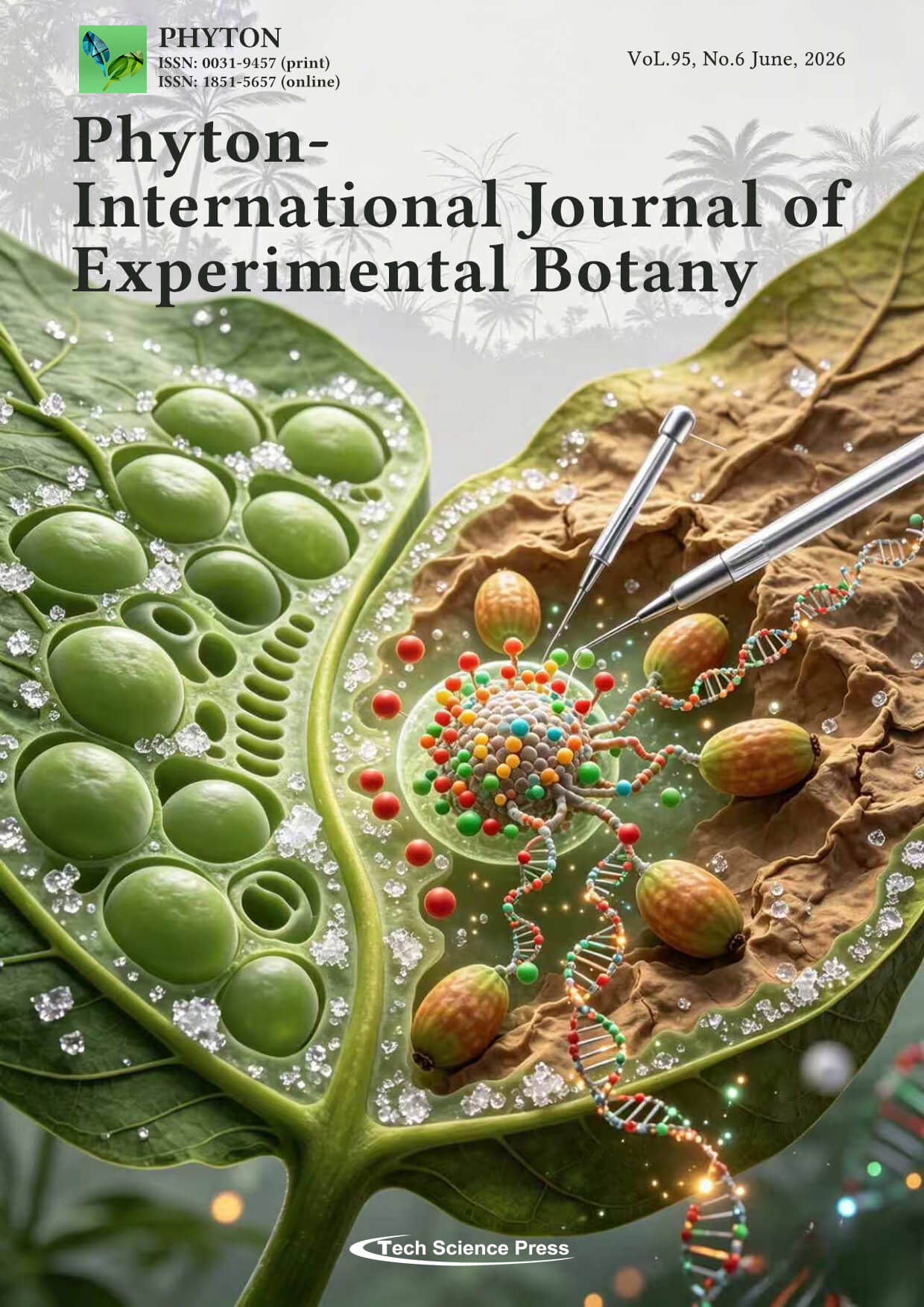
On the Cover

Drought, salinity, and heat increasingly threaten tropical agriculture as compound stress events intensify with climate change. While multi-omics tools have advanced plant stress biology, research remains biased toward model species. This Review champions tropical and underutilized non-model plants—banana, cassava, cocoa, oil palm, and millets—arguing they deserve central focus. We synthesize multi-omics evidence, explore epigenetic regulation and stress memory, and highlight single-cell and spatial technologies through case studies including Garcinia, mango, and Avicennia marina. We also address key bottlenecks and propose priorities—genomic resources, machine learning, and validated experiments—advocating an inclusive framework for understanding stress adaptation in a warming world.
This cover image was created using Al-generated. The authorsconfirm that no human likenesses, copyrighted elements, or misleading representationsare included in the image.

View this paper

  • Open AccessOpen Access

    REVIEW

    Role of Nitric Oxide in Mitigating Cadmium Stress in Plants: Mechanisms and Perspectives

    Mohammad Reza Boorboori1,2, Haiyang Zhang1,2,*
    Phyton-International Journal of Experimental Botany, Vol.95, No.6, 2026, DOI:10.32604/phyton.2026.082409 - 29 June 2026
    (This article belongs to the Special Issue: Regulators of Plant Growth and Environmental Stress Adaptation)
    Abstract Cadmium (Cd) is a toxic heavy metal pollutant released from various human activities including industrial production and agricultural practices. This pollutant adversely affects plant physiology by damaging root systems, inhibiting photosynthesis, and inducing oxidative stress through the accumulation of reactive oxygen species (ROS). This review highlights the critical role of nitric oxide (NO) as a key signaling molecule that enhances plant tolerance to cadmium stress. The application of exogenous NO effectively alleviates Cd toxicity by stimulating the activity of antioxidant enzymes such as superoxide dismutase (SOD) and catalase (CAT), scavenging harmful ROS, and preventing membrane More >

  • Open AccessOpen Access

    REVIEW

    Nanotechnology and Plant Biostimulants for Sustainable Agriculture: A Systematic Review and Future Perspectives

    Sumit Sow1,#, Alkajyoti Sharma2,#, Mainak Ghosh3,*, Nintu Mandal4, Sanjay Kumar2, Shivani Ranjan5,*, Souvik Sadhu6, Dibyajyoti Nath7, Harun Gitari8, Rakesh Panday9
    Phyton-International Journal of Experimental Botany, Vol.95, No.6, 2026, DOI:10.32604/phyton.2026.081362 - 29 June 2026
    (This article belongs to the Special Issue: Application of Nanomaterials in Plants)
    Abstract Increasing population pressure and growing constraints on cultivable land and water resources necessitate improving resource use efficiency through the adoption of advanced and efficient agricultural technologies. With finite resources and a growing global population, agriculture has become increasingly essential as a source of food, fiber, and livestock. Due to their eco-friendly nature, the integration of crop improvement strategies with nanotechnology and plant biostimulants (PB) plays an important role in the development of smart and sustainable agriculture. Improved agricultural techniques have the potential to transform agricultural systems, and as a result, could be a viable option… More >

  • Open AccessOpen Access

    REVIEW

    Multi-Omics Integration for Abiotic Stress Acclimation in Tropical and Underutilized Plants

    Saqib Ali1, Hoe-Han Goh2,*
    Phyton-International Journal of Experimental Botany, Vol.95, No.6, 2026, DOI:10.32604/phyton.2026.084657 - 29 June 2026
    (This article belongs to the Special Issue: Multi-Omics Insights into Plant Acclimation to Environmental Stress)
    Abstract Abiotic stresses particularly drought, salinity, and temperature extremes increasingly threaten crop stability in tropical environments where combinatorial stress events are intensifying under climate change. Despite growing omics capacity, current multi-omics syntheses of plant stress acclimation remain dominated by model species and major crops, leaving tropical and underutilized plants underrepresented in comparative stress biology. This review examines how transcriptomics, proteomics, metabolomics, epigenomics, and integrative multi-omics frameworks have been applied to abiotic stress acclimation in selected tropical and underutilized plants, including banana, cassava, cacao, oil palm, papaya, Garcinia, coconut, mango, Avicennia marina, and tropical millets. We show that transcriptomics… More >

    Graphic Abstract

    Multi-Omics Integration for Abiotic Stress Acclimation in Tropical and Underutilized Plants

  • Open AccessOpen Access

    REVIEW

    Emerging Roles of Plant Growth-Promoting Rhizobacteria in Drought Management: Mechanisms and Advanced Strategies for Enhanced Efficiency

    Sajida1,#, Hamdy Kashtoh2,#, Tensangmu Lama Tamang2,*, Kwang-Hyun Baek2,*
    Phyton-International Journal of Experimental Botany, Vol.95, No.6, 2026, DOI:10.32604/phyton.2026.075288 - 29 June 2026
    (This article belongs to the Special Issue: Abiotic Stresses and Plant Defences in Climate Change)
    Abstract Drought represents a major environmental challenge, limiting water availability to plants and disrupting their physiological functions and growth, particularly in dryland regions. Traditional strategies, including water conservation practices, plant breeding, and advanced tools such as genetic engineering, have been employed to enhance drought tolerance. However, these methods are often time-consuming and expensive. Plant growth-promoting bacteria (PGPR) present a promising alternative by forming symbiotic relationships with plant roots and boosting drought resilience. PGPR enhances plant tolerance to drought-induced water stress through complex biochemical and physiological mechanisms, including phytohormone modulation, exopolysaccharides production, nutrient uptake, and gene regulation.… More >

  • Open AccessOpen Access

    REVIEW

    Advances in Anthocyanins from Edible Ornamental Flowers: Biosynthesis, Extraction, Stability, and Food Applications

    Zixin Lin1, Cen Xiong2, Yanli Yu1, Sy-Yu Shiau1,*
    Phyton-International Journal of Experimental Botany, Vol.95, No.6, 2026, DOI:10.32604/phyton.2026.080430 - 29 June 2026
    (This article belongs to the Special Issue: Ornamental Plants: Traits, Flowering, Aroma, Molecular Mechanisms, Postharvest Handling, and Application)
    Abstract Anthocyanins (ACNs), a major class of water-soluble flavonoid pigments, are responsible for the vivid red, purple, and blue hues in many edible ornamental flowers. Recently, increasing attention has been directed toward these flowers not only for their aesthetic value but also for their nutritional and functional potential, such as antioxidant, anti-inflammatory, antidiabetic, anticancer, and cardioprotective activities. This review summarizes current knowledge on the source and biosynthesis pathways of ACNs in edible ornamental flowers, highlighting the key enzymes and regulatory genes involved. Factors affecting ACN stability, such as chemical structure, pH, temperature, light, oxygen, water activity,… More >

  • Open AccessOpen Access

    ARTICLE

    In Silico Prioritization of Plant Growth Regulators as Candidate Modulators of Microalgal Lipid Biosynthesis for Biofuel Production

    Hanane Oucif1,2,*, Miloud Benaissa1,2, Leila Saddikioui3, Nadia Y. Asfouri3, Meriem F. Meliani1, Zineb Belhamra1,2, Djilali Baghdadi1,2
    Phyton-International Journal of Experimental Botany, Vol.95, No.6, 2026, DOI:10.32604/phyton.2026.080926 - 29 June 2026
    (This article belongs to the Special Issue: Plant Growth Regulators (PGRs) and Plant Stress)
    Abstract Enhancing lipid productivity in microalgae is a critical goal for advancing sustainable biofuel production. Among emerging strategies, the supplementation of plant growth regulators (PGRs) has gained attention as a potential approach for modulating microalgal metabolism. This in silico study evaluated the predicted binding of sixty-five PGRs from 11 chemical classes to five microalgal enzymes associated with lipid biosynthesis, (FabD, KASII, FabG, FATA, and GPAT) using an integrative computational workflow combining virtual screening, molecular docking, molecular dynamics (MD) simulations, and density functional theory (DFT) calculations. Structure-based screening identified fifty-eight compounds with docking scores below −5.0 kcal/mol, consistent… More >

  • Open AccessOpen Access

    ARTICLE

    Genome-Wide Identification and Functional Characterization of TIFY Gene Family in Verbena bonariensis with Insights into VbTIFY16’s Role in Petal

    Yuan Chen#, Sumeera Asghar#, Hanfei Li, Ju Cai, Yin You, Yan Li*
    Phyton-International Journal of Experimental Botany, Vol.95, No.6, 2026, DOI:10.32604/phyton.2026.080045 - 29 June 2026
    (This article belongs to the Special Issue: Ornamental Plants: Traits, Flowering, Aroma, Molecular Mechanisms, Postharvest Handling, and Application)
    Abstract The TIFY transcription factor family plays a major role in plant growth and development. Petal size is a very important agronomic characteristic in the ornamental species of Verbena bonariensis. This study identifies 16 TIFY genes (VbTIFYs) in the V. bonariensis genome. Phylogenetic reconstruction divided these genes into six distinct subclades, indicating a high degree of homology between Verbena bonariensis and Arabidopsis thaliana. Promoter sequence analysis illustrated that the promoters of TIFY genes harbor not only cis-acting elements related to hormone regulation, but also functional motifs involved in light responses and low-temperature adaptation. Chromosomal localization results shows that VbTIFY genes… More >

  • Open AccessOpen Access

    ARTICLE

    Comparative Analysis of Chloroplast Genomes and Phylogenetic Relationships of Eight Quercus Species

    Xin Li#, Xiaoming Tian#,*, Guangfeng Xiang, Lan Zhou, Gaofei Li, Lu Zhu, Chao Liu, Xiangpeng Li, Li Liu, Tianyi Jiang, Cun Mou, Hao Lv*
    Phyton-International Journal of Experimental Botany, Vol.95, No.6, 2026, DOI:10.32604/phyton.2026.079853 - 29 June 2026
    Abstract Quercus is widely distributed globally and holds significant ecological and economic value. However, the morphological classification of this genus has long been controversial, with the core issue being whether the Cyclobalanopsis should be treated as an independent genus or as a subgenus within Quercus. In this study, the chloroplast genomes of eight Quercus species were determined and analyzed. Among these, the complete chloroplast genome of Quercus pachyloma is reported for the first time, alongside newly published chloroplast genome data for seven other Quercus species collected from Hunan and Jiangxi provinces in China. All eight species exhibited a typical quadripartite… More >

  • Open AccessOpen Access

    ARTICLE

    Effects of Water Stress on the Morpho-Physiological Characteristics of Gossypium hirsutum (Cotton) and Abutilon theophrasti (Velvetleaf)

    Argyrios Kalaitzidis1, Anastasia Zotou1, Dimitra Loka2, Paraskevi Mpeza1, Persephone Archimandriti1, Nicholas E. Korres1,*
    Phyton-International Journal of Experimental Botany, Vol.95, No.6, 2026, DOI:10.32604/phyton.2026.081379 - 29 June 2026
    (This article belongs to the Special Issue: Plant Responses to Abiotic Stress)
    Abstract The effects of water stress on the morphophysiological and biochemical characteristics of cotton (Gossypium hirsutum L.) and velvetleaf (Abutilon theophrasti) were investigated in a pot experiment under greenhouse conditions. Both species were exposed to four irrigation levels: no stress (1000 mL H2O), mild stress (800 mL H2O), moderate stress (600 mL H2O), and severe stress (400 mL H2O), with treatments applied every 2 days over a period of eight weeks. The results demonstrated the negative impacts of water stress, especially under moderate and severe conditions. Specifically, there was a reduction in height and dry weight in both species, with… More >

  • Open AccessOpen Access

    ARTICLE

    PsSEP3L1 Positively Regulates Petal Number in Tree Peony (Paeonia suffruticosa) by Interacting with MADS-Box Family Proteins

    Renjie Li#, Ruiya Li#, Yuying Li, Lili Guo, Qi Guo, Xiangnan He, Yunxin Zhou, Xiaogai Hou*
    Phyton-International Journal of Experimental Botany, Vol.95, No.6, 2026, DOI:10.32604/phyton.2026.083737 - 29 June 2026
    (This article belongs to the Special Issue: Advances in Crop Genetics and Breeding for Sustainable Agriculture)
    Abstract SEP3, one of the SEPALLATA (SEP) genes, plays a crucial role in the regulation of floral organ morphogenesis in plants. However, its specific function and molecular regulatory mechanisms remain largely unclear in tree peony (Paeonia suffruticosa Andr.). In this study, the PsSEP3L1 sequence of the tree peony cultivar ‘Luoyang Hong’ was obtained by homologous cloning. The open reading frame of PsSEP3L1 is 738 bp and encodes 245 amino acids. Phylogenetic analysis indicated that PsSEP3L1 was most closely related to the SEP3 homolog from cassava. The expression level of PsSEP3L1 in petals, petaloid petals, and stamens was significantly higher than… More >

  • Open AccessOpen Access

    ARTICLE

    Integrated Physiological and Transcriptomic Analysis Reveals Key Transcriptional Responses to Prolonged Heat Stress in Chinese Cabbage

    Jongwon Park1,#, Jinhyoung Lee2,#, Gunhee Lee1, Eunji Lee1, Jiwoo Kim1, Seunghwan Wi2, Tae-Cheol Seo2, Seonghoe Jang1,*
    Phyton-International Journal of Experimental Botany, Vol.95, No.6, 2026, DOI:10.32604/phyton.2026.082849 - 29 June 2026
    (This article belongs to the Special Issue: Plant Responses to Abiotic Stress)
    Abstract Heat stress severely impairs plant growth and productivity, particularly in cool-season crops such as Chinese cabbage (Brassica rapa subsp. pekinensis). While short-term heat responses have been extensively studied, the mechanisms underlying prolonged heat stress adaptation remain insufficiently understood. In this study, we conducted an integrative analysis of Chinese cabbage exposed to sustained high temperatures. Our approach combined physiological characterization, antioxidant profiling, and transcriptome-wide gene expression analysis to dissect long-term heat stress responses. Prolonged heat stress caused marked growth inhibition, including leaf chlorosis and a 39% reduction in leaf length by day 9. Biochemical analyses revealed a progressive… More >

  • Open AccessOpen Access

    ARTICLE

    AP60: A Taxonomy-Guided Benchmark Dataset for Fine-Grained Pest Recognition with Feature-Level Confusion Analysis

    Xianfeng Zhou1,2,3, Shaogang Lei1,*, Xinfeng Li2, Zhaojie Zhang2, Lijiao Jin2, Jingcheng Zhang3, Dongmei Chen3,*
    Phyton-International Journal of Experimental Botany, Vol.95, No.6, 2026, DOI:10.32604/phyton.2026.080299 - 29 June 2026
    Abstract Accurate recognition of visually similar pest species remains a major challenge in agricultural vision, given that existing datasets often lack sufficient taxonomic structure, confusable categories, and quantitative analysis of class-level visual difficulty. To address these limitations, we present AP60, a taxonomy-guided benchmark dataset for fine-grained pest recognition, comprising 62,091 images from 60 pest categories and organized according to insect taxonomy. A distinctive characteristic of AP60 is the deliberate inclusion of morphologically confusable taxa, which enables more realistic evaluation of recognition models under biologically meaningful fine-grained settings. Beyond dataset construction, we introduce a feature-level confusion analysis… More >

  • Open AccessOpen Access

    ARTICLE

    Systematic Analysis of the FLA Gene Family and Expression Profiling in Soybean Varieties with Varying Stem Thickness

    Mazin Ahmed Abdelraouf1,2, Xiaoqi He1, Hind Abdelmonim Elsanosi1,3, Tiantian Zhu1, Jinghui Shi1, Ullah Habib1, Li Song1,*
    Phyton-International Journal of Experimental Botany, Vol.95, No.6, 2026, DOI:10.32604/phyton.2026.079749 - 29 June 2026
    (This article belongs to the Special Issue: Advances in Crop Genetics and Breeding for Sustainable Agriculture)
    Abstract The fasciclin-like arabinogalactan protein (FLA) family is involved in important plant wall formation and mechanical strength of the stems, and has never been systematically characterized in soybean (Glycine max), a huge crop in which stem lodging has been the cause of significant losses in yield. Here, we found that the soybean genome has 64 GmFLA genes, or a considerable increase over Arabidopsis, rice, and poplar, and these genes were grouped into three phylogenetic clusters (A, B, and C) that have varied domain structures. Evolutionary studies showed that duplication of segments was the most common cause of family… More >

  • Open AccessOpen Access

    ARTICLE

    Identification of Informative Microsatellite Markers in the Avena Chloroplast Genome Provides New Insights into Oat Phylogeny

    Svetlana Goryunova1,2,*, Margarita Lebedeva1, Aya Trifonova1, Denis Goryunov2,3, Anastasia Sivolapova2, Aleksey Troitsky3, Igor Loskutov4, Vitalii Pukhalskiy1
    Phyton-International Journal of Experimental Botany, Vol.95, No.6, 2026, DOI:10.32604/phyton.2026.077294 - 29 June 2026
    Abstract Twenty-six cultivated and wild oat species with genomes of varying ploidy levels are currently known worldwide. The search for informative markers, as well as the analysis of variability and phylogeny of oat species, represents a key research directions with both fundamental and applied significance. Chloroplast microsatellites are promising markers for studying groups of closely related species, particularly in the context of allopolyploid origin analyses. The transferability of chloroplast microsatellite markers among species belonging to different “core pooids” supertribes within the Pooideae subfamily of Poaceae has been demonstrated. Following preliminary screening, twelve primer pairs were selected… More >

  • Open AccessOpen Access

    ARTICLE

    Effects of Static Magnetic Field and Cold Stratification on Germination and Starch-Related Biochemical Traits in Blackberry (Rubus fruticosus L.) Seeds

    Antonio Santos-Rufo1,*, Carlos Weiland-Ardáiz1, Jose A. Dueñas2
    Phyton-International Journal of Experimental Botany, Vol.95, No.6, 2026, DOI:10.32604/phyton.2026.082736 - 29 June 2026
    Abstract Seed germination in blackberry (Rubus fruticosus L.) is frequently constrained by deep physiological dormancy, limiting its use in breeding and germplasm studies. This study evaluated the combined effects of cold stratification (CS) and static magnetic field (SMF; 80 mT) exposure on germination performance and associated biochemical changes related to starch metabolism. Seeds of the commercial cultivar ‘Loch Ness’ were subjected to different stratification periods and magnetic treatments prior to germination under laboratory conditions. Some SMF + CS combinations showed higher germination than the untreated control, although overall germination remained low. Higher germination values were associated with… More >

  • Open AccessOpen Access

    ARTICLE

    Weed Species Associated with Cacao Cultivation Exhibiting Phytoremediation Potential for Cadmium and Lead: A Study Based on Bioconcentration and Translocation Factors

    Lorena E. Romero-Chávez1,*, Emilee Calero-Rios2, Uriel Aldava-Pardave3, Elvis Ottos-Díaz1, Noelito Salgado-Veramendi3, Eldhy S. Huerto-Pajuelo4, Carolina Ibarra-Porras4, Richard A. Solórzano-Acosta2
    Phyton-International Journal of Experimental Botany, Vol.95, No.6, 2026, DOI:10.32604/phyton.2026.081119 - 29 June 2026
    (This article belongs to the Special Issue: Plant–Soil Interactions Under Stress: Mechanisms and Mitigation Strategies)
    Abstract The exploration and identification of spontaneous weed species in heavy metal–contaminated soils represent a relevant approach for understanding the role and their potential application in phytoremediation. In cacao cultivation, cadmium contamination poses a significant risk due to the restrictions established for soils and cacao-derived products, thereby threatening productive sustainability and export viability. The objective of this study was to identify weed species associated with cacao cultivation exhibiting accumulation patterns and phytoremediation potential for Cd and Pb, through the assessment of biomass production and the bioconcentration factor (BCF) and translocation factor (TF), in natural conditions. Soil… More >

  • Open AccessOpen Access

    ARTICLE

    Expression Analysis and Functional Validation of Lily LoWRKY22

    Ling He, Shun Tao, Qian Wang, Yu-Pei Yin, Xin-Yu He, Shuo Shi, Chun-Yan Wang*
    Phyton-International Journal of Experimental Botany, Vol.95, No.6, 2026, DOI:10.32604/phyton.2026.081349 - 29 June 2026
    (This article belongs to the Special Issue: Advances in Ornamental Plants: Micropropagation, Plant Biotechnology, Chromosome Doubling, Mutagenesis, Plant Breeding, Environmental Stress Tolerance, and Postharvest Physiology)
    Abstract As essential regulatory proteins, WRKY transcription factors participate in the regulation of plant growth, development and stress resistance; however, the functions of LoWRKY22 in the ‘Siberia’ cultivar of Lilium remain uncharacterized. In this study, LoWRKY22 was cloned and subjected to comprehensive functional analyses. Phylogenetic analysis revealed that LoWRKY22 belongs to the WRKY-IIe type subgroup, featuring a conserved WRKY domain and a C2H2-type zinc finger motif, indicating evolutionary conservation with WRKY homologs from Arabidopsis thaliana. Subcellular localization and transactivation assays confirmed its nuclear localization and transcriptional activation activity, supporting its role as a transcriptional regulator. Structural characterization of the LoWRKY22More >

  • Open AccessOpen Access

    ARTICLE

    Seed Morphological Changes Associated with the Domestication of Vitis Cultivars

    José Luis Rodríguez-Lorenzo1, José Javier Martín-Gómez2, Ángel Anocibar Beloqui3, Félix Cabello Sáenz de Santamaría4, Gregorio Muñoz Organero4, Ángel Tocino5, Emilio Cervantes2,*
    Phyton-International Journal of Experimental Botany, Vol.95, No.6, 2026, DOI:10.32604/phyton.2026.080612 - 29 June 2026
    (This article belongs to the Special Issue: Advances in Genomics and Molecular Breeding of Grapevine and Kiwifruit)
    Abstract Background: The transition from wild Vitis vinifera subsp. sylvestris to cultivated grapes led to major changes in seed shape, known as the “domestication syndrome.” While traditional measurements distinguish these groups, high-resolution geometric analysis provides a more precise way to track domestication and variety stability. Objective: This study uses a multi-parametric approach—combining Fourier descriptors, curvature analysis, and the J-Index—to quantify seed shape variation across 121 Vitis populations. Methods: We analysed 48 varieties, including wild species and three major cultivated lineages (Iberian, Central European, and Muscat). Results: Principal Component Analysis (PCA) successfully separated wild and cultivated groups. The first three components explained… More >

Per Page:

Share Link
