Home / Journals / PHYTON / Vol.95, No.4, 2026
Special Issues
Table of Content
cover

On the Cover

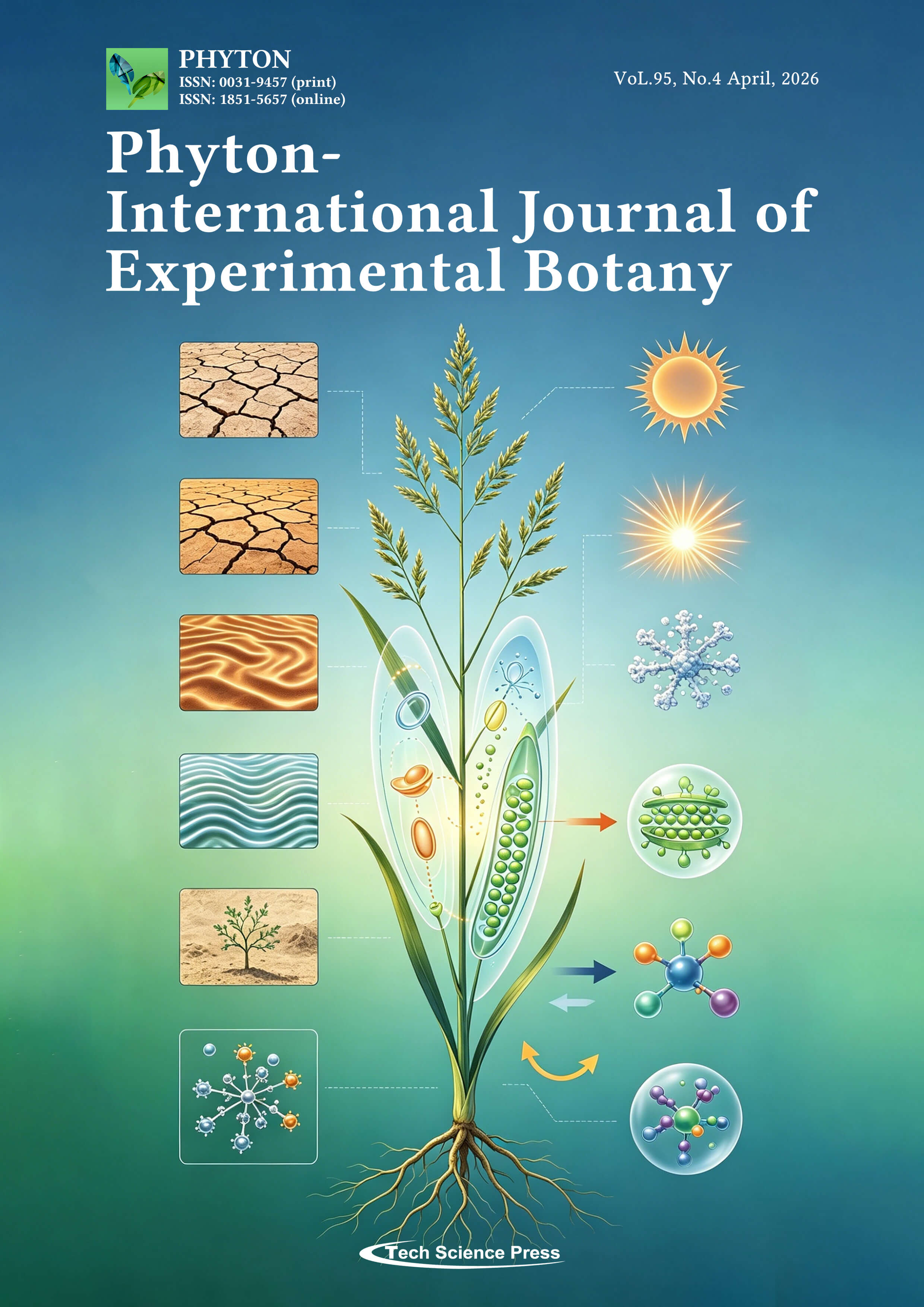
Climate change causes abiotic stresses such as drought, heat, high light, and salinity to occur simultaneously or sequentially, triggering unpredictable physiological responses in plants. This figure illustrates the concept of cross-tolerance, where prior stress exposure enhances resilience to other stresses. Key interacting processes determining plant tolerance include stomatal regulation, energy balance, hydraulic function, and photosynthetic efficiency—particularly PSII stability and Rubisco activation. Understanding these coordinated mechanisms is essential for predicting plant performance under increasingly complex environmental conditions.
This cover image was created using Al-generated content from "doubao Al". The authorsconfirm that no human likenesses, copyrighted elements, or misleading representationsare included in the image.

View this paper

  • Open AccessOpen Access

    REVIEW

    Cross-Tolerance in a Changing Climate: Physiological Responses to Combined Abiotic Stress

    Damilola Olofintuyi, Ayesha Siddika, Abdollah Monfared, Hong Zhang, Jennifer Smith*
    Phyton-International Journal of Experimental Botany, Vol.95, No.4, 2026, DOI:10.32604/phyton.2026.079971 - 28 April 2026
    (This article belongs to the Special Issue: Physiological and Ecological Adaptations of Plants to Climate Change)
    Abstract Climate change is increasing the frequency and intensity of overlapping abiotic stresses, making cross-tolerance a critical component of plant resilience. While single stress responses have been extensively characterized, plants in natural and agricultural environments frequently encounter simultaneous or sequential stresses such as drought–heat, light–drought, and drought–salinity, which trigger nonadditive and often unpredictable physiological outcomes that vary with stress intensity, timing, and species. This review synthesizes current understanding of the mechanisms underlying cross-tolerance, emphasizing how contradictory signals, stress timing, and physiological integration shape plant responses under combined stress. We highlight how stomatal regulation, leaf energy balance,… More >

  • Open AccessOpen Access

    REVIEW

    Biostimulants in Modern Agriculture: A Comprehensive Review with Emphasis on Protein Hydrolysates

    Matthew Starr1, Lori Unruh-Snyder1,*, Luke Gatiboni1, Koralalage Jayaratne2
    Phyton-International Journal of Experimental Botany, Vol.95, No.4, 2026, DOI:10.32604/phyton.2026.072898 - 28 April 2026
    Abstract Biostimulants, categorized as microbial or non-microbial, including humic substances, seaweed extracts, chitosan, or protein hydrolysates (PHs), have gained significant attention in modern agriculture for their ability to enhance crop productivity, improve nutrient use efficiency, and increase resilience to abiotic and biotic stresses, while reducing dependence on conventional agrochemicals. This review synthesizes the historical development, classification, mechanisms of action, and agronomic benefits of biostimulants, with a particular emphasis on PHs, which are mixtures of amino acids, peptides, and polypeptides derived from plant or animal proteins through enzymatic, chemical, or thermal hydrolysis. The concept of biostimulants has… More >

  • Open AccessOpen Access

    REVIEW

    Rhizosphere Microorganisms in Sustainable Agriculture: Mechanisms and Applications

    Yingying Xing, Rong Wei, Xiukang Wang*
    Phyton-International Journal of Experimental Botany, Vol.95, No.4, 2026, DOI:10.32604/phyton.2026.078974 - 28 April 2026
    (This article belongs to the Special Issue: Plant Physiological and Molecular Responses to Coupled Water-Nutrient Management: Towards Climate-Resilient Crops)
    Abstract Rhizosphere microorganisms, as crucial biological groups at the soil–plant interface, play a significant role in advancing sustainable agriculture. This review systematically synthesizes three decades of research to elucidate the mechanisms and applications of rhizosphere microbes—including nitrogen-fixing bacteria, phosphate-solubilizing microorganisms, and plant growth–promoting rhizobacteria (PGPR)—in enhancing soil health, improving crop stress tolerance, and optimizing ecosystem functioning. Key findings indicate that replacing 50% of synthetic nitrogen with organic fertilizer in maize–wheat rotation systems can reduce nitrous oxide emissions by up to 68% in loamy soils. Long-term no-till systems enhance carbon sequestration through microbial-driven soil organic matter accumulation.… More >

  • Open AccessOpen Access

    ARTICLE

    Effects of Paclobutrazol Application Methods and Dosages on the Growth, Morphological Characteristics, and Color Quality of Silene compacta Fisch.

    Selma Kösa*
    Phyton-International Journal of Experimental Botany, Vol.95, No.4, 2026, DOI:10.32604/phyton.2026.079055 - 28 April 2026
    (This article belongs to the Special Issue: Regulators of Plant Growth and Environmental Stress Adaptation)
    Abstract This study was conducted to determine the effects of paclobutrazol (PBZ) application methods and dosages on the growth, leaf, flower, and color characteristics of Silene compacta Fisch., a natural species with high potential for use as a seasonal bedding and potted ornamental plant in landscape design. The experiment was carried out under greenhouse conditions, where potted plants received a single PBZ application during the vegetative stage. The study was arranged in a completely randomized design with a 2 × 3 factorial structure. PBZ was applied either as a foliar spray or as a soil drench at… More >

  • Open AccessOpen Access

    ARTICLE

    Integrated Transcriptome and Lipidome to Analyze the Characteristics of Oil Accumulation in Seeds of Acer truncatum

    Shengqun Chen1,2,#, Lianwen Shen1,2,#, Shuang Qu1,2, Xia Jiang1,2,3,*, Gang Wang1,2,4,*
    Phyton-International Journal of Experimental Botany, Vol.95, No.4, 2026, DOI:10.32604/phyton.2026.078590 - 28 April 2026
    (This article belongs to the Special Issue: Advances in Plant Breeding and Genetic Improvement: Leveraging Molecular Markers and Novel Genetic Strategies)
    Abstract Acer truncatum is a significant woody oil-bearing tree species known for its ability to synthesize various unsaturated fatty acids. This study systematically analyzes the lipid metabolic pathways and the associated transcript abundance changes involved in the biosynthesis and accumulation of seed oil in A. truncatum. By integrating lipidomics and transcriptomics analyses across different developmental stages of A. truncatum seeds, we thoroughly investigate the dynamic characteristics of oil metabolism. The results show that triacylglycerols (TAGs) become the dominating lipid class throughout seed development and that their amount increases greatly as the seeds mature, whereas diacylglycerols (DAGs) show a significantly… More >

  • Open AccessOpen Access

    ARTICLE

    Foliar Application of γ-Polyglutamic Acid Enhances Chilling Tolerance in Pepper Seedlings by Orchestrating Root-to-Shoot Defense Responses

    Dongmei Lian#, Zhou Li#, Bizhen Lin, Shaoping Zhang, Susu Yuan, Yunfa Yao, Yudong Ju, Zhengfeng Lai*
    Phyton-International Journal of Experimental Botany, Vol.95, No.4, 2026, DOI:10.32604/phyton.2026.078378 - 28 April 2026
    (This article belongs to the Special Issue: Utilization of Biostimulants in Plant Growth and Health)
    Abstract Pepper (Capsicum annuum L.) is highly susceptible to chilling stress, which severely constrains its growth and productivity. Although the eco-friendly biostimulant γ-polyglutamic acid (γ-PGA) has shown promise in enhancing plant tolerance to abiotic stresses, its specific role and underlying mechanisms in alleviating chilling injury in pepper remain poorly understood. This study systematically investigated the physiological and molecular mechanisms by which foliar application of 100 mg·L−1 γ-PGA enhances chilling tolerance in pepper seedlings. Our results demonstrated that γ-PGA pretreatment significantly mitigated chilling-induced growth inhibition and promoted root development, evidenced by a 110.8% increase in the number of root… More >

  • Open AccessOpen Access

    ARTICLE

    Evaluation of the Antifungal Activity of Aqueous Extracts of Corrigiola telephiifolia and Marrubium vulgare against Major Post-Harvest Citrus Diseases

    Hajar Zennouhi1,2, Rachid Ez-zouggari1,3, Mamadou Traoré1, Abderrahim Lazraq2, Saadia Belmalha4, Rachid Lahlali1,*
    Phyton-International Journal of Experimental Botany, Vol.95, No.4, 2026, DOI:10.32604/phyton.2026.078088 - 28 April 2026
    (This article belongs to the Special Issue: Innovations in Post-Harvest Disease Control and Quality Preservation of Horticultural Crops)
    Abstract Citrus fruits are highly susceptible to post-harvest diseases such as green rot (Penicillium digitatum), blue rot (P. italicum), and sour rot (Geotrichum citri-aurantii), causing significant economic losses. Due to the risks associated with synthetic fungicides and the emergence of resistant strains, natural alternatives are needed. This study evaluated the antifungal activity of aqueous extracts of Corrigiola telephiifolia and Marrubium vulgare. In vitro tests were conducted using PDA medium with extract concentrations of 12.5–100 mg/mL and in vivo assays were performed on artificially wounded oranges with the same extract concentrations. In vitro tests showed strong inhibition of mycelial growth and spore germination, with C. telephiifolia More >

    Graphic Abstract

    Evaluation of the Antifungal Activity of Aqueous Extracts of <i>Corrigiola telephiifolia</i> and <i>Marrubium vulgare</i> against Major Post-Harvest Citrus Diseases

  • Open AccessOpen Access

    ARTICLE

    Detection and Characterization of an Isolate of Cucumber Mosaic Virus Infecting Catharanthus roseus Using Deep Sequencing

    Zahid Khorshid Abbas1,#, Anjana Singh2,#, Mirza Sarwar Baig3, Sulaiman Ali Alharbi4, Yussri M. Mahrous5, Naif Abdulrhman Zabin Alnefiei1, Moawia Mukhtar Hassan1, M. Nasir Khan6, Zahid Hameed Siddiqui1,7,*, Md Salik Noorani2,*
    Phyton-International Journal of Experimental Botany, Vol.95, No.4, 2026, DOI:10.32604/phyton.2026.076432 - 28 April 2026
    (This article belongs to the Special Issue: Technological Advances for Sustainable Management and Biological Control of Plant Pests and Diseases)
    Abstract Cucumber mosaic virus (CMV) is among the most widespread plant viruses, infecting over a thousand plant species, including Catharanthus roseus, a medicinal plant valued for producing the anticancer alkaloids vincristine and vinblastine. Despite its economic significance, genomic information on CMV infecting C. roseus in India has been lacking. In this study, we employed small RNA deep sequencing integrated with advanced bioinformatics to generate the first complete genome of CMV infecting C. roseus in India, followed by validation through RT-PCR and Sanger sequencing. The reconstructed tripartite CMV genome encodes replication, silencing suppressor, movement, and coat proteins, consistent with known More >

    Graphic Abstract

    Detection and Characterization of an Isolate of Cucumber Mosaic Virus Infecting <i>Catharanthus roseus</i> Using Deep Sequencing

  • Open AccessOpen Access

    ARTICLE

    Aneuploidy-Induced Floral and Fertility Defects in Hibiscus syriacus Revealed by Cytogenetics and Integrative Trait Analysis: Implications for Chromosome Engineering in Ornamental Breeding

    Yun-Jae Ahn1,2,3, Moon-Seok Kang2, Ki-Byung Lim2,3,4,*
    Phyton-International Journal of Experimental Botany, Vol.95, No.4, 2026, DOI:10.32604/phyton.2026.078884 - 28 April 2026
    (This article belongs to the Special Issue: Advances in Ornamental Plants: Micropropagation, Plant Biotechnology, Chromosome Doubling, Mutagenesis, Plant Breeding, Environmental Stress Tolerance, and Postharvest Physiology)
    Abstract Artificial polyploidy induction is widely used in ornamental breeding but can yield aneuploidy derivatives that vary in developmental stability and breeding utility. In Hibiscus syriacus ‘Blue Bird’, in vivo colchicine and oryzalin treatments generated regenerated shoots in which genome-size shifts were detected by flow cytometry; among the candidate lines, a subset reached flowering maturity and was characterized in detail. These flowering aneuploids displayed diverse floral alterations, including reduced corolla size, altered pigmentation, and partial conversion of stamens into petaloid organs. Flow cytometry and somatic chromosome counts indicated aneuploid status (150–182 chromosomes). Pollen morphology was highly variable, with… More >

  • Open AccessOpen Access

    ARTICLE

    Genome-Wide Analysis of the Cinnamoyl-CoA Reductase (CCR) Gene Family in Rosa chinensis and Rosa × hybrida and Drought Stress Response of Four RhCCR Genes

    Cuifang Chang, Hua Fang, Xinfang Chen, Zhongfeng Yao, Yali Zhu, Caicai Ma, Qi Wang, Weibiao Liao*
    Phyton-International Journal of Experimental Botany, Vol.95, No.4, 2026, DOI:10.32604/phyton.2026.077290 - 28 April 2026
    (This article belongs to the Special Issue: Plant Responses to Abiotic Stress)
    Abstract The cinnamoyl-CoA reductase (CCR) gene family plays a pivotal role in lignin biosynthesis and plant stress adaptation by catalyzing the first committed step in the monolignol-specific branch of the phenylpropanoid pathway. However, a comprehensive and systematic analysis of CCRs in the economically important Rosa genus remains lacking. Here, we conducted a systematic genome-wide investigation of CCR genes in a diploid species, Rosa chinensis, and a tetraploid cultivar, Rosa × hybrida. We identified 15 and 36 non-redundant CCR genes in R. chinensis and R. × hybrida, respectively. From these, we selected 14 high-confidence orthologs of RcCCR in the R. × hybrida genome as a core… More >

  • Open AccessOpen Access

    ARTICLE

    Investigation on Chemical Constituents from Prunus cerasifera Ehrh. Fruits and Evaluation of Their Anti-Inflammatory Activity

    Haofan Lv1, Qihang Zhang1, Yufan He1, Wuwei Xin2, Wei Liu1,*, Chunpeng Wan1,3,*
    Phyton-International Journal of Experimental Botany, Vol.95, No.4, 2026, DOI:10.32604/phyton.2026.076015 - 28 April 2026
    Abstract The fruits of Prunus cerasifera Ehrh. have been traditionally utilized as both medicinal and edible resource, however, their specific phytochemical profile and anti-inflammatory mechanisms remain to be fully elucidated. This study aimed to isolate and identify the chemical constituents from the fruits and evaluate their anti-inflammatory activities. The separation was performed using a combination of chromatographic techniques. The structures of the obtained compounds were elucidated using a combination of 1H and 13C nuclear magnetic resonance (NMR) and electrospray ionization mass spectrometry (ESI-MS). The anti-inflammatory activity of the compounds was initially investigated based on their capacity to inhibit… More >

  • Open AccessOpen Access

    ARTICLE

    Elicitors of Salt Stress Tolerance during Germination and Early Growth of Basil (Ocimum basilicum L.)

    Edilma Alves da Silva1, João Batista Costa Neto1, Silvana Nunes Barreto1, Matheus Henrique de Souza Alencar1, Maria Valdiglezia de Mesquita Arruda2, Daise Feitoza da Rocha2, Salvador Barros Torres2, Francisco Vanies da Silva Sá3,*, Kleane Targino Oliveira Pereira2, Cynthia Cavalcanti de Albuquerque1
    Phyton-International Journal of Experimental Botany, Vol.95, No.4, 2026, DOI:10.32604/phyton.2026.077713 - 28 April 2026
    (This article belongs to the Special Issue: Abiotic Stress in Agricultural Crops)
    Abstract Salt stress attenuators assist seed germination by reducing the effects of osmotic and ionic stress, y promoting water uptake, they stabilize enzymes and enhance metabolic tolerance, resulting in higher germination rates and more uniform early development. This study evaluates the effects of applying salt stress attenuators on the germination and seedling formation of O. basilicum as a pre-germination treatment. Two cultivars, Limoncino (tolerant) and Genaro de Menta (sensitive), were subjected to pre-germination treatments combining salt stress with a stress-attenuating agent: no pre-germination treatment and no salt stress; salt stress (6.98 dS m1 NaCl); hydropriming + salt stress;… More >

  • Open AccessOpen Access

    ARTICLE

    Integrative Genome-Wide Analysis of R2R3-MYB Transcription Factors in Oryza sativa subsp. japonica Reveals Candidate Regulators of Anthocyanin Biosynthesis

    N. V. T. Jayaprada1, Muhammad Hammad2, S. Geekiyanage3, Muhammad Shafiq4, Heba I. Moamed5,*, Haiam O. Elkatry6, Mohamed El Oirdi7, Ahmed Mahmoud Ismail8, Mohamed M. El-Mogy8, Abdelrahman R. Ahmed6,*
    Phyton-International Journal of Experimental Botany, Vol.95, No.4, 2026, DOI:10.32604/phyton.2026.078307 - 28 April 2026
    (This article belongs to the Special Issue: Advances in Molecular Insights of Plant Secondary Metabolites: Biosynthesis, Regulation, and Applications)
    Abstract Pigment biofortification in rice, particularly through enhanced anthocyanin accumulation, is increasingly recognized in Asia for its potential to improve nutritional quality and antioxidant capacity while addressing regional health challenges. However, the regulatory network underlying anthocyanin biosynthesis in rice remains incompletely characterized, especially regarding MYB transcription factors that may control pigment accumulation in diverse germplasm. In this study, a genome-wide analysis of MYB transcription factors in Oryza sativa subsp. japonica identified 109 OsMYB genes. Phylogenetic comparison with known anthocyanin regulators from Arabidopsis thaliana and Oryza rufipogon revealed conserved clades containing potential pigment-related regulators. Integrative analyses including gene structure, conserved motif identification,… More >

  • Open AccessOpen Access

    ARTICLE

    Genome-Wide Identification of the KCS Gene Family in Foxtail Millet (Setaria italica L.)

    Tao Wang1, Yangyang Wei1, Pengtao Li1, Yuling Liu1, Hui Song2,*, Renhai Peng1,*
    Phyton-International Journal of Experimental Botany, Vol.95, No.4, 2026, DOI:10.32604/phyton.2026.078858 - 28 April 2026
    Abstract Very long-chain fatty acids (VLCFAs) are widely distributed across plant tissues. 3-Ketoacyl-CoA synthase (KCS) is one of the most crucial enzymes in VLCFA synthesis and markedly influences fatty acid composition in plants. However, the relevant information on KCS proteins in foxtail millet remains poorly understood. In the current study, 30 KCS genes were found in foxtail millet using bioinformatics methods. Phylogenetic data indicated that these genes cluster into eight distinct groups, with members of each group sharing similar motif structures. Further analysis revealed that the cis-acting elements of SiKCS genes are mainly involved in growth and developmental More >

  • Open AccessOpen Access

    ARTICLE

    Physiological Mechanisms and Application Potential of Nano-Zinc Oxide in Alleviating Saline-Alkali Stress in Sorghum

    Haoran Li, Qi Sun, Haoran Sun, Ziyan Wu, Wenjin Wang, Fang Liu*
    Phyton-International Journal of Experimental Botany, Vol.95, No.4, 2026, DOI:10.32604/phyton.2026.079359 - 28 April 2026
    (This article belongs to the Special Issue: Application of Nanomaterials in Plants)
    Abstract Soil salinization is an increasingly severe global issue, posing a significant threat to crop growth and food security. Although sorghum exhibits moderate tolerance to saline-alkali stress, it remains highly sensitive to such conditions during the seedling stage. This study investigates the mechanisms by which zinc oxide nanoparticles (ZnO NPs) alleviate saline-alkali stress in sorghum seedlings and determines their optimal application concentration, thereby providing a scientific basis for agricultural production in saline-alkali soils. Hydroponic experiments were conducted to simulate varying degrees of saline-alkali stress. Sorghum seedlings were treated with different concentrations of ZnO NPs (0, 50,… More >

  • Open AccessOpen Access

    ARTICLE

    Association Mapping of Hundred-Grain Weight in Paeonia ostii Using SSR Markers of Transcription Factors from the Comparative Transcriptome

    Xin Guo1,2, Shuangting Qi2, Lian Duan2, Xueyuan Lou2, Xian Wang2, Songlin He1,*, Fangyun Cheng3,*
    Phyton-International Journal of Experimental Botany, Vol.95, No.4, 2026, DOI:10.32604/phyton.2026.076905 - 28 April 2026
    (This article belongs to the Special Issue: Ornamental Plants: Traits, Flowering, Aroma, Molecular Mechanisms, Postharvest Handling, and Application)
    Abstract Plant quantitative trait allelic variation stems from complex regulatory networks. Tree peony, which is native to China, is a unique woody plant with ornamental, medicinal, and oil-producing value. Paeonia ostii, as an important species of tree peony, has emerged as a novel woody oil crop in recent years. However, research on functional genes associated with yield traits in P. ostii remains relatively limited. To gain deeper insights into the genetic architecture underlying one of the three key yield components—grain weight—in this study, a genome-wide association map for 123 unrelated P. ostii was constructed by integrating short-read and long-read… More >

  • Open AccessOpen Access

    ARTICLE

    Phytochemical Landscape of Coleus forskohlii and Its Role in Countering Staphylococcus Species

    Saleh Al-Maaqar1,2,3,*, Bassam Al-Johny1,*, Majed Al-Shaeri1,3, Lara Al-Johny4, Adel Qumusani1, Zakia Albalawy1, Djadjiti Namla1,3,5,*
    Phyton-International Journal of Experimental Botany, Vol.95, No.4, 2026, DOI:10.32604/phyton.2026.077998 - 28 April 2026
    (This article belongs to the Special Issue: Microbiome Interactions for Transgenerational Stress Resilience in Crops)
    Abstract Staphylococcal meningitis, a severe infection of the meninges, highlights the urgent need for new strategies to combat Staphylococcus aureus (S. aureus) infections. In this study, ethanolic leaf extracts of Coleus forskohlii were evaluated for their antibacterial potential against clinical S. aureus isolates associated with meningitis. Gas chromatography-mass spectrometry (GC-MS) analysis identified 15 phytochemical compounds, two of which—urs-12-en-28-ol (CID 22213452) and petroselaidic acid (CID 5282754) showed promising binding affinities (−7.5 and −5.9 kcal/mol, respectively) against S. aureus protein (30S ribosomal subunit) in molecular docking studies. In vitro assays confirmed the antibacterial activity of the crude extract, with a minimum inhibitory concentration (MIC) More >

  • Open AccessOpen Access

    ARTICLE

    Evaluation of Commercial Potting Substrates for Reproducible Growth of Arabidopsis thaliana and Nicotiana tabacum under Laboratory Conditions

    Ramtin Vamenani#, Ethan Brister#, Ling Li*
    Phyton-International Journal of Experimental Botany, Vol.95, No.4, 2026, DOI:10.32604/phyton.2026.078683 - 28 April 2026
    Abstract The potting substrate is an important determinant of post-germination growth in Arabidopsis thaliana and Nicotiana tabacum under controlled laboratory conditions. We evaluated four commercially available soil substrates—Sta-Green potting mix plus fertilizer (SPM), Sta-Green flower & vegetable garden soil plus fertilizer (SGS), Miracle-Gro potting mix (MPM), and Miracle-Gro raised bed soil (MBS)—to assess their effects on seed germination and post-germination growth. Germination rates did not differ significantly among substrates for either species. In contrast, post-germination growth was strongly influenced by the substrate, with MPM consistently supporting greater biomass accumulation, stem elongation, and leaf production. Through integrated analysis of More >

  • Open AccessOpen Access

    ARTICLE

    Integration of Computer Vision and Physicochemical Parameters for Post-Harvest Ripeness Classification of TomEJC Mango

    Savindi Thathsarani1, Ashan Lakshitha2, Pasindu Pramodya2, Praveen Perera2, Rasanjali Samarakoon1,*, Shagufta Henna3, Upaka Rathnayake4,*
    Phyton-International Journal of Experimental Botany, Vol.95, No.4, 2026, DOI:10.32604/phyton.2026.078657 - 28 April 2026
    (This article belongs to the Special Issue: Advances in the Physiological, Biochemical and Molecular Mechanisms Regulating Fruit Ripening in Tropical Fruits)
    Abstract Accurately determining the optimal post-harvest storage period is still a major challenge in mango processing, especially for the Tom EJC (TEJC) variety, due to reliance on subjective visual evaluations, leading to inconsistent product quality and increased post-harvest losses. This study presents an artificial intelligence-based framework combining computer vision and physicochemical analysis to objectively predict the optimal post-harvest storage period of TEJC mango before processing. TEJC mangoes of grade one were stored for eight days at 24–28°C temperature and 66.4–80% relative humidity. Daily measurements of pH, Total Soluble Solids (TSS), firmness, and peel color parameters (L*,… More >

    Graphic Abstract

    Integration of Computer Vision and Physicochemical Parameters for Post-Harvest Ripeness Classification of TomEJC Mango

  • Open AccessOpen Access

    ARTICLE

    Taxonomic Clarification and Revision of Lycoris haywardii Traub

    Pengchong Zhang1, Yingfeng Hu2, Siyu Zhang3, Yaying Mo1, Yuhong Zheng4,5,*
    Phyton-International Journal of Experimental Botany, Vol.95, No.4, 2026, DOI:10.32604/phyton.2026.075166 - 28 April 2026
    (This article belongs to the Special Issue: Taxonomy, Phytogeography and Ecology of Mediterranean Flora)
    Abstract Based on an integrative analysis of morphological traits, phenological characteristics, karyotype, and chloroplast genome data, we revised the taxonomic status of Lycoris haywardii Traub, reclassifying it as a cultivar of Lycoris rosea Traub ex Moldenke, designated as Lycoris rosea ‘Lin’. Lycoris haywardii Traub was originally published by Traub in 1957 as a spring-leafing taxon with orchid purple flowers and stamens slightly shorter than the perianth, with a flowering period from July to mid-August and a purported distribution in Japan. However, populations cultivated in Hangzhou Botanical Garden, previously referred to as L. haywardii, exhibited autumnal leaf emergence, deep purple-pink flowers, and More >

Per Page:

Share Link
