
 Login
Login Register
 Submit a Paper
 Propose a Special lssue
 Open Access
ARTICLE
Responses of Shrub Caragana korshinskii on China’s Loess Plateau to Combined Water and Nitrogen Addition Mediated by Leaf Economics Spectrum
School of Geography, Shanxi Normal University, Taiyuan, China
* Corresponding Author: Fengxia Zhao. Email:
Phyton-International Journal of Experimental Botany 2026, 95(9), 21 https://doi.org/10.32604/phyton.2026.087566
Received 18 June 2026; Accepted 18 September 2026; Issue published 24 September 2026
 View Full Text
 Download PDF
Abstract
As a typical deciduous shrub native to China’s Loess Plateau, Caragana korshinskii plays an irreplaceable role in windbreaks and sand fixation. However, as stands age, C. korshinskii commonly exhibits aging-related problems related problems characterized by reduced growth rates and declining ecological benefits. As key drivers of global climate change, increased precipitation and nitrogen deposition profoundly affect the growth, development, and ecological functions of vegetation on the Loess Plateau. To elucidate the response mechanisms of early senescence-stage C. korshinskii to combined water and nitrogen addition effects, this study focused on 18- and 22-year-old C. korshinskii. Four treatments were applied: control (CK), water addition (W: 100 L), nitrogen addition (N: 8.15 g N·m−2·a−1), and combined water and nitrogen addition (WN). The study examined the effects of water, nitrogen, and their combination on the leaf economics spectrum of C. korshinskii and the mechanisms regulating growth rate. The results showed that: (1) W treatment, N treatment, and WN treatment all significantly enhanced the growth rate of C. korshinskii; (2) W treatment, N treatment, and WN treatment significantly increased leaf area, specific leaf area, and total leaf nitrogen concentration, at the same time, they significantly reduce leaf mass per area, shifting the leaf economics spectrum toward a “fast investment-return” strategy; (3) Structural equation modeling revealed that W treatment, N treatment, and WN treatment could all regulate the growth rate of C. korshinskii through the leaf economics spectrum, specifically manifested as the positive driving effect of acquisitive traits on growth rate and the negative constraining effect of conservative traits on growth rate. Furthermore, the regulatory effect of WN treatment was superior to that of W or N treatment alone. These findings suggest that the leaf economics spectrum is the core regulatory pathway through which early senescence stage C. korshinskii growth responds to WN treatment.Keywords
In recent years, global climate change has intensified, leading to notable shifts in global precipitation patterns, with a significant increasing trend in many regions [1,2]. Concurrently, atmospheric nitrogen deposition has risen substantially due to global economic development [3]. The Loess Plateau, serving as both an ecologically fragile zone and a typical transition belt between semi-humid and semi-arid regions, is particularly sensitive to these alterations [4]. Changes in its precipitation patterns and nitrogen input affect physiological processes such as photosynthesis, water transport, and nutrient cycling, thereby having substantial effects on the growth and development of vegetation in this region and the functioning of the ecosystem [5,6,7]. The availability of water and nitrogen jointly influences the growth and development of the vegetation in this area. Therefore, a detailed investigation of the responses of plant growth to water and nitrogen is crucial for understanding vegetation responses in the Loess Plateau region to future climate change and maintaining ecological stability.
As the key organ for interactions between plants and the external environment, leaves can rapidly adjust their morphological, physiological, and biochemical status in response to environmental changes; to some extent, leaf traits serve as important indicators of the overall ecological adaptation strategy of plants [8,9]. Leaf Economics Spectrum quantifies the resource trade-offs among leaf traits to reveal the internal mechanism of plant’s adaptation to the environment [10]. At one end of the spectrum, plants exhibit short lifespans, high photosynthetic rates, high nitrogen concentration, and low specific leaf mass, reflecting a “rapid investment strategy”, while at the opposite end, plants have long lifespans, low photosynthetic rates, low nitrogen concentration, and high specific leaf mass, reflecting a “slow investment strategy” [11]. As the primary organ for aboveground resource acquisition, leaves undergo trait adjustments in different external environments to respond to changes in the external environment and form feedback patterns in plant leaves [12]. Water and nitrogen are essential for plant growth and development [13], and changes in plant leaves are particularly sensitive to water and nitrogen availability [14]. In-depth research on the differences in leaf trait responses to different external environments is crucial for understanding plant adaptability, predicting adaptation strategies, and growth trajectories. Previous studies have shown that varying external environments cause plants to form different survival strategies to adapt to environmental changes. For example, when plants are under drought stress, they close stomata to reduce water loss and improve water use efficiency to meet their survival needs. In this context, leaves respond to drought stress by increasing leaf thickness rather than expanding leaf area [15].
Leaves tend to focus on a “slow investment-return” growth strategy with longer lifespans and higher specific leaf mass. During rehydration, leaves expand their area to enhance photosynthesis and support growth. In this process, the stomata increase, photosynthesis rises, and the overall tendency is towards “large and thin” construction and a “rapid investment-return” growth strategy [16]. Nitrogen availability directly affects the strength of plant photosynthesis, and nitrogen addition can significantly influence the photosynthetic capacity and photosynthetic nitrogen utilization efficiency of plant leaves [17]. Studies have shown that nitrogen addition can significantly enhance leaf traits such as specific leaf area and leaf nitrogen concentration by increasing soil nitrogen concentration, thereby driving shifts in plant survival strategies. Water and nitrogen are key limiting resources for plant growth, not only promoting adjustments of the plant’s leaf economics spectrum strategy but also exerting a direct and significant positive effect on plant growth rate. Previous studies have shown that the addition of water and nitrogen individually can improve soil moisture and nutrients, thereby modulating plant physiological processes and substantially increasing growth rates [18,19].
However, in the future context of intensified precipitation and nitrogen deposition on the Loess Plateau, the responses of vegetation to climate are unlikely to result from water or nitrogen alone. Instead, the synergistic effects of water-nitrogen interactions are expected to become the dominant mechanism regulating the growth and development of vegetation in this region. Water and nitrogen are not independent environmental factors; they interact significantly. Water can promote soil nitrogen mineralization, improve soil nutrient availability, and accelerate nutrient uptake by plant roots; Nitrogen, in return, can increase soil nitrogen concentration and enhance water use efficiency. The interaction of water and nitrogen produces a stronger synergistic effect on plant growth and development than either factor alone [20]. Previous studies have shown that water-nitrogen interaction can significantly increase basal diameter, plant height, leaf nitrogen concentration [21], chlorophyll concentration [22], and maximum net photosynthetic rate. The effects drive plants toward a resource acquisition strategy and accelerate biomass accumulation. In a study of bitter vetch, water-nitrogen interaction was shown to have a significant, and in some cases extremely significant, synergistic effect on plant height [23]. At the same time, water-nitrogen interaction can promote biomass accumulation by synergistically enhancing key physiological processes, including photosynthetic carbon assimilation and nitrogen metabolism [24]. These interactions also optimize plant height and structure and improve water use efficiency, thereby accelerating plant growth across multiple dimensions and increasing growth rate [25]. The addition of water and nitrogen in birch stems increased their growth rate significantly [26]. Together, these studies indicate that the additions of water and nitrogen, as well as their interaction, can substantially alter leaf traits, promoting the formation of a new distribution pattern of the leaf economic spectrum, driving plant survival strategies to shift from a “slow investment return” type towards a “fast investment return” type, thereby exerting a positive regulatory effect on growth and development.
C. korshinskii, a typical xerophytic shrub, has an extensive root system [27], stable drought-resistant physiological mechanisms [28], and a superior capacity for nodule nitrogen fixation [29]. Furthermore, its dense shrub canopy effectively reduces surface runoff and wind speed [30], giving it a high ecological adaptability to harsh environments with drought and nutrient-poor soils. The Loess Plateau is located in an ecological transition zone, where natural conditions are harsh and the ecosystem is extremely fragile [31], with sparse vegetation and frequent wind and sand activities. As a typical species for ecological restoration, C. korshinskii is widely planted across the Loess Plateau, serving as an ecological barrier and contributing significantly to the region’s ecological recovery. However, with increasing stand age, C. korshinskii commonly exhibits aging-related problems characterized by reduced growth rates and declining ecological benefits. Studies have shown that Caragana enters the old-aged stage after 14 years of growth [28]; consequently, the age structure of local planted Caragana shrublands is predominantly composed of old-aged stands. Changes in water and nitrogen availability are expected to have a significant influence on C. korshinskii’s growth, development, biomass accumulation, survival strategies, and ecological functions, especially as precipitation and nitrogen deposition on the Loess Plateau continue to increase. However, most existing research on C. korshinskii focuses on stumping, root growth, hydraulic traits, and leaf characteristics [32,33,34,35,36]. Against the backdrop of global climate change driving significant shifts in precipitation patterns and nitrogen inputs on the Loess Plateau, do the growth strategies and resource allocation of C. korshinskii at the early senescence stage change when confronted with simultaneous enrichment of water and nitrogen? Furthermore, through which pathways do water and nitrogen influence the growth and development of C. korshinskii at this early senescence stage? The exploration of these questions will not only contribute to understanding the growth dynamics and physio-ecological adaptation strategies of aged C. korshinskii under future climate change scenarios—providing a theoretical foundation for its sustainable development and the enhancement of its ecological barrier function—but will also provide essential insights into the response patterns, adaptation mechanisms, and functional improvement of vegetation under the synergistic combined water and nitrogen addition effect in this region.
Based on this, the study investigated how W treatment, N treatment, and WN treatment affected leaf traits such as relative growth rate, leaf area, specific leaf area (SLA), and leaf nitrogen. The main objective was to better understand how aged C. korshinskii growth responds to water and nitrogen additions, as well as the combined effect of water and nitrogen additions, with a particular emphasis on changes in C. korshinskii growth rate and regulatory mechanisms. This research also provides a theoretical basis and valuable insights into predicting the growth and development of C. korshinskii and other vegetation in the Loess Plateau region in the future, assuming increased precipitation and nitrogen deposition. We propose a mechanistic hypothesis: water-nitrogen interaction enhances the growth rate of C. korshinskii by shifting the leaf economic spectrum toward a “fast investment—return” strategy. In particular, we predict that: (1) the combined effect of water and nitrogen addition can exert a positive driving effect on plant growth by promoting the optimization of acquisition traits in C. korshinskii; (2) conservation traits impose a negative constraint on growth, jointly shifting the growth response of C. korshinskii along the combined water and nitrogen addition effect.
The study area is located in Shijutou Village, Wuzhai County, Xinzhou City, in the central Loess Plateau (38°58′13″ N, 111°48′22″ E), at an altitude of 1370–1533 m. The study area is shown in Fig. 1. The region experiences a temperate continental monsoon climate, with cool, short summers and long, cold winters, as well as frequent dust storms in spring. The mean annual precipitation is 515 mm (based on the average natural annual precipitation over the past decade, with precipitation data obtained from ERA5), which is primarily concentrated in the summer and autumn and often occurs as short-duration heavy rainfall events. The mean annual temperature is approximately 4–5°C, with January being the coldest month at −13.3°C and July being the warmest at 20.1°C, (temperature data from ERA5). The frost-free period lasts about 120 days. The dominant soil type in this area is light chestnut soil, which is sandy, has low organic matter content, low fertility, and maiked soil desiccation. This region represents a typical fragile area and ecological transition zone in the semi-arid and semi-humid regions. Because natural vegetation in this area has been largely destroyed, artificially planted C. korshinskii stands serve as the main tree species for windbreak and sand fixation in the region. The county currently has more than 44,000 hm2 of C. korshinskii planted. With its well-developed root system, high-temperature tolerance, and strong root-sucking ability, it serves as a crucial ecological barrier in windbreak, sand fixation, and soil and water conservation.
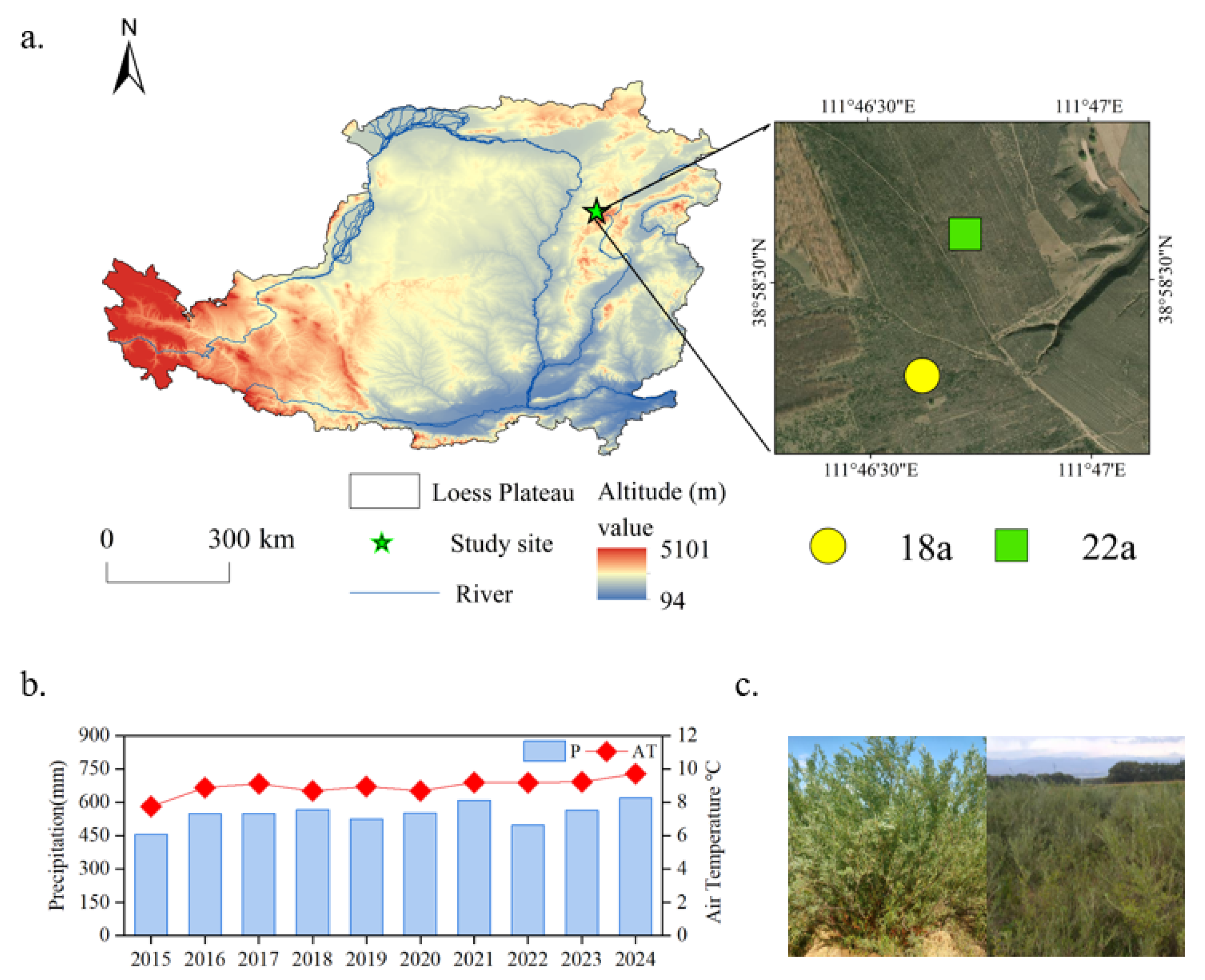
Figure 1: Location of the study area. (a) overview map of the study site. (b) variations in precipitation and air temperature in the study area. (c) field photograph of C. korshinskii in the study site.
2.2 Water and Nitrogen Treatments
To account for the sensitivity of early senescence-stage C. korshinskii to water and nitrogen availability, and to enhance the reliability of our experimental findings, two age classes of early senescence stands, 18-year-old and 22-year-old, were randomly selected as study subjects within the research area, with three plots established in each age class. The seedlings used in both age classes were locally produced and grown directly from seeds. The 18a plot was planted in 2005, and the 22a plot was planted in 2001. To ensure the rigor and accuracy of the experiment, the two selected age classes were in close proximity to each other and exhibited no differences in plant density, plant health status, soil conditions, topography, or wind exposure. Each plot measured 15 m × 15 m, with a row spacing of 2 m and a plant spacing of 2 m for C. korshinskii within the plots. Three healthy and well-grown individuals were randomly selected from each treatment within each plot for sample collection, as shown in Fig. 2: Schematic diagram of the plot layout. Three treatment levels were designed: control (CK), water addition (W), and combined water and nitrogen addition effect (WN). The water and nitrogen addition experiments ran from April to July 2023, to simulate the randomness of natural precipitation, water was added randomly, at irregular intervals, and in variable amounts from April to July, the total amount of water added is 100 L. Artificial uniform irrigation was applied in a 0.5-m-radius centered on each plant. A monthly irrigation volume of 25 L per plant was applied over a continuous period of 4 months, resulting in a total of 100 L per plant. Nitrogen addition gradients were established using the nitrogen deposition rate commonly adopted in existing nitrogen deposition research [37], with N set at 8.15 g N·m−2·a−1. The nitrogen fertilizer used was urea (CH4N2O, 100% purity), and the amount applied each time was dissolved in water. For each irrigation event, 5.56 g of urea was mixed with water for the N treatment, while the control treatment received the with volume of water without urea. combined water and nitrogen addition effect treatment involved the simultaneous addition of water and nitrogen. To clarify, because our experimental design did not include a nitrogen-alone treatment, the difference between the WN and W treatments does not represent a pure nitrogen main effect. Rather, it reflects the additional growth promotion conferred by nitrogen supply when water is simultaneously supplemented—an effect we term the “nitrogen-supplement effect” and refer to simply as the “N treatment” in the text for brevity. The N treatment was designed primarily to isolate and quantify the incremental growth effect attributable to nitrogen supply when water is not limiting. Consequently, the principal comparisons in this study focus on the CK, W, and WN treatments, with the N treatment data serving mainly as a supplementary reference.
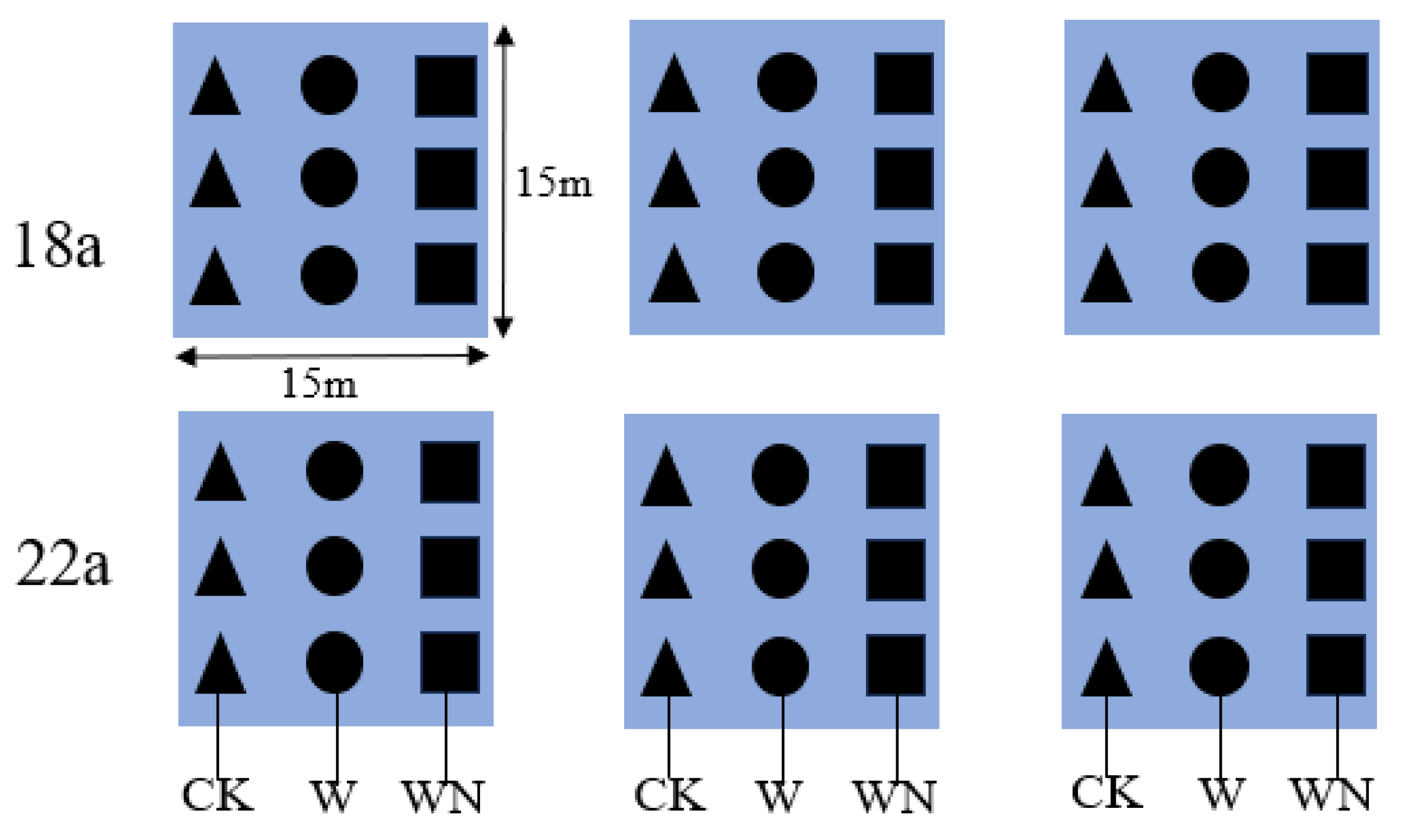
Figure 2: Schematic diagram of the plot layout, CK: control; W: W treatment; WN: WN treatment. Note: For clarity of illustrating the quadrat layout, this schematic diagram shows only the plants actually used for sampling in each treatment; the remaining plants within the plots are not depicted.
Leaf and branch samples were collected in mid-August 2023 during the peak growing season. Three C. korshinskii individuals with similar growth status, free of pests, diseases, and obvious deformities were selected from each quadrat. Mature, healthy, and intact leaves were randomly clipped from different orientations of each plant, placed in sealable plastic bags, and transported to the laboratory in an ice box. The tallest branch and its lateral branches of each individual were clipped using scissors. Plant height was measured and recorded in the field during the August sampling period. The specific sample sizes collected are as follows: This study included three treatments. For each treatment, three C. korshinskii shrubs were selected for leaf collection, and a total of 150 leaves were randomly collected for the determination of LA, SLA, and LMA. For each treatment, 15 g of leaves were randomly collected from three shrubs: 10 g were used for LDMC determination, of which 2 g of the oven-dried and ground sample were used for LNC determination; an additional 2 g of fresh leaves were used for Chl determination.
2.4 Trait Measurement and Analytical Methods
In this study, we selected six leaf functional traits with the strongest physiological relevance to water and nitrogen availability. These included four resource-acquisition traits, namely leaf area (LA), specific leaf area (SLA), leaf nitrogen content (LNC), and chlorophyll content, as well as two resource-conservation traits, namely leaf mass per area (LMA) and leaf dry matter content (LDMC). Together, these traits provide direct insights into plant strategies for capturing, using, and partitioning water and nitrogen resources [11]. Determination of C. korshinskii Leaf Traits: After removing the petioles, leaf fresh weight was measured using an electronic balance (with 0.0001 g) accuracy. Leaf blade images were scanned using a Canon CanoScan LiDE 120 scanner to determine leaf area. Samples were then oven-dried at 65°C to constant weight to obtain leaf dry weight. The following formulas were used calculate the indicators [38]:
Chlorophyll (Chl) content was extracted using 95% ethanol and quantified by spectrophotometry. (LNC) was determined using an elemental analyzer (vario MACRO cube, Elementar, Hanau, Germany).
Determination of C. korshinskii Average Growth Rate (AGR): The tallest branch of each C. korshinskii individual within a quadrat was selected and categorized into primary, secondary, and tertiary branches based on branching points. In August 2023, the vertical distances between branching points were measured using a tape measure to record the lengths of primary, secondary, and tertiary branches, as well as overall plant height. Basal diameters of the branches were measured 10 cm from the branching point using a vernier caliper. At the end of August, each individual was clipped at ground level, weighed, and transported to the laboratory, where it was oven-dried at 65°C to constant weight to determine biomass. Using branch and plant characteristics under different water and nitrogen treatments in August 2023—including primary, secondary, and tertiary branch basal diameters and lengths, and plant height—as independent variables, and biomass as the dependent variable, a biomass estimation equation for C. korshinskii was constructed (Table 1). Biomass sampling of C. korshinskii was conducted at the end of the growing season (August). Allometric equations for estimating biomass were established using field-measured plant height and basal diameter of first-, second-, and third-order branches collected in August, with equations fitted separately for each treatment gradient. From April to July, only non-destructive measurements of height and basal diameter were taken for branches of each order. Aboveground biomass in April was then calculated by substituting the respective April measurements into the allometric equations. Given that the height and basal diameter measurements used to establish the allometric equations were obtained one day before the start of the water and nitrogen addition treatments—prior to any detectable growth response to the treatments—we applied a unified allometric equation derived from the CK treatment to all treatments for the estimation of April biomass (The biomass equations are shown in Table 2), thereby ensuring the comparability and reliability of the initial biomass estimates. Growth rates were then computed as: (August biomass − April biomass)/number of days.
Table 1: Overview of the study site plots.
| C. korshinskii Age Class/a | Slope/° | Elevation/m | Soil Type | Average Height of the Tallest Branch/cm | Average Basal Diameter/mm | Average Crown Area/cm2 |
|---|---|---|---|---|---|---|
| 18a | 0~5 | 1423~1446 | loessal soil | 164.83 ± 13.38 | 12.11 ± 1.90 | 38,903.44 ± 3951.75 |
| 22a | 0~10 | 1444~1448 | loessal soil | 207.25 ± 8.33 | 13.69 ± 1.18 | 74,062.29 ± 4543.63 |
Table 2: Allometric equations used for biomass estimation of planted C. korshinskii stands.
| Treatments | Fitted Biomass Equation for C. korshinskii | R2 | P |
|---|---|---|---|
| CK | y = 9.074X1 − 1.156X2 − 9.487X3 − 0.716X4 + 51.289X5 − 4.059X6 + 2.817X7 − 258.837 | R2 = 0.717 | P < 0.01 |
2.5 Data Processing and Statistical Analyses
The differential responses of C. korshinskii growth rate and leaf economic spectrum to different water and nitrogen additions across different forest ages. Were investigated using one-way analysis of variance (ANOVA). Before analysis, leaf trait data were log10-transformed to satisfy the assumptions of homogeneity of variance and normal distribution. To elucidate the mechanisms underlying the growth response of aged C. korshinskii shrubs to water-nitrogen coupling in the Loess Plateau region, this study employed structural equation modeling (SEM) to parse the direct and indirect pathways through which W treatment, N treatment, and WN treatment both plant growth and leaf traits. The relationships between trait indicators were first investigated using Pearson correlation analysis. Leaf traits were than categorized into “acquisition-type” and “conservation-type” functions dimensions. An initial path model with various water and nitrogen treatments, leaf functional traits, and growth rate was constructed based on this classification and theoretical frameworks. The chi-square to degrees of freedom ratio (χ2/df < 3), goodness-of-fit index (GFI > 0.85), comparative fit index (CFI > 0.9), root mean square error of approximation (RMSEA < 0.08), and probability value (p > 0.05) were multiple of the indices used to assess the model’s goodness-of-fit. Causal relationships between variables were interpreted using standardized path coefficients. Excel was used to process all of the data. SPSS23.0 was used for statistical analysis, and Origin 2021 was used to generate the figures.
3.1 Effect of Combined Water and Nitrogen Addition on the Growth Rate of C. korshinskii
By analyzing the effects of different W treatment and N treatment on the growth rate of C. korshinskii of different ages (Fig. 3), the results showed that W treatment and N treatment significantly increased the growth rate in both age groups. In 18- and 22-years-old C. korshinskii, W treatment and N treatment had a significant effect on growth rate (p < 0.05). In 18-years-old C. korshinskii, the growth rate increased by 49.34% with W treatment and 97.94% with N treatment. In 22-years-old C. korshinskii, the growth rate increased by 112.51% with addition and 41.07% with N treatment. The WN treatment had a highly significant effect on growth rate (p < 0.01). Under C. korshinskiis under the WN treatment, growth rates increased by 195.58% in 18-years-old and 199.97% in 22-years-old C. korshinskii. These results indicate a positive response of C. korshinskii growth to W treatment, N treatment and WN treatment. Notably, for both age groups, the effect of WN treatment on growth rate was significantly greater than that of W treatment and N treatment.
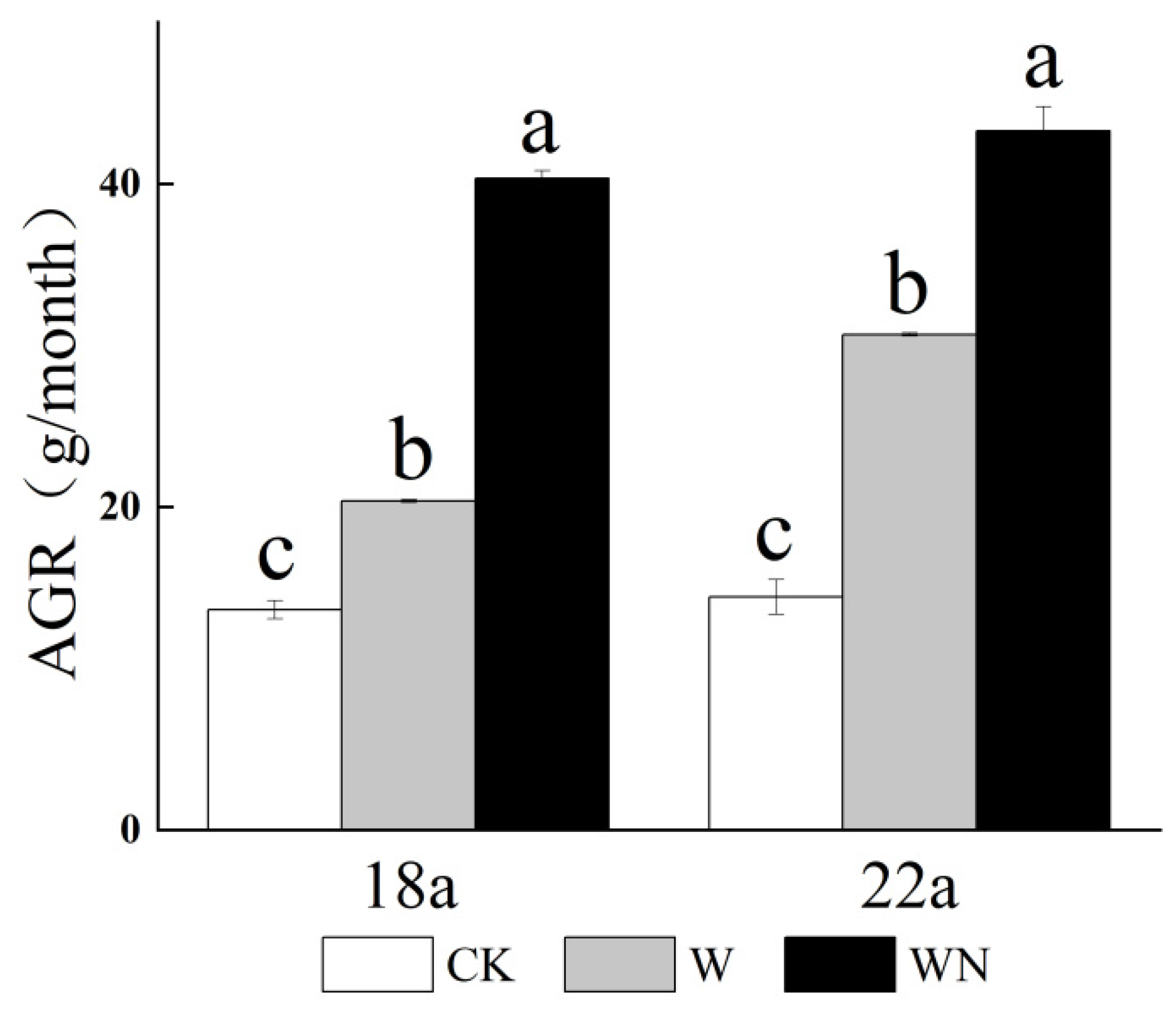
Figure 3: Effects of combined water and nitrogen addition on the relative growth rate of C. korshinskii at different stand ages. AGR represents the average growth rate. CK: control; W: W treatment; WN: WN treatment. Different lowercase letters above the error bars indicate statistically significant differences (p < 0.05).
3.2 Responses of the Leaf Economics Spectrum C. korshinskii to WN Treatment
By analyzing the effects of different water and nitrogen addition gradients on the leaf traits of C. korshinskii (Fig. 4), we found that, W treatment significantly increased the LA of 18-years-old plants by 7.7% (p < 0.05) and the LNC of 22-years-old plants by 9.2% (p < 0.05). Under N treatment, LA increased significantly in both 18- and 22-years-old plants by 20.3% and 12.5%, respectively (p < 0.05). In 22-years-old plants, SLA increased by 15.4% (p < 0.05), LMA by 14% (p < 0.05), and Chlorophyll content declined by 9.4% (p < 0.05). Under the WN treatment, LA increased highly significantly in 18-years-old plants by 29.6% (p < 0.01), and significantly in 22-years-old plants by 17.7% (p < 0.05). These results indicate that the leaf economics spectrum of C. korshinskii responds markedly to different water and nitrogen addition gradients, WN treatment exerting a stronger effect on leaf traits than either W treatment or N treatment.
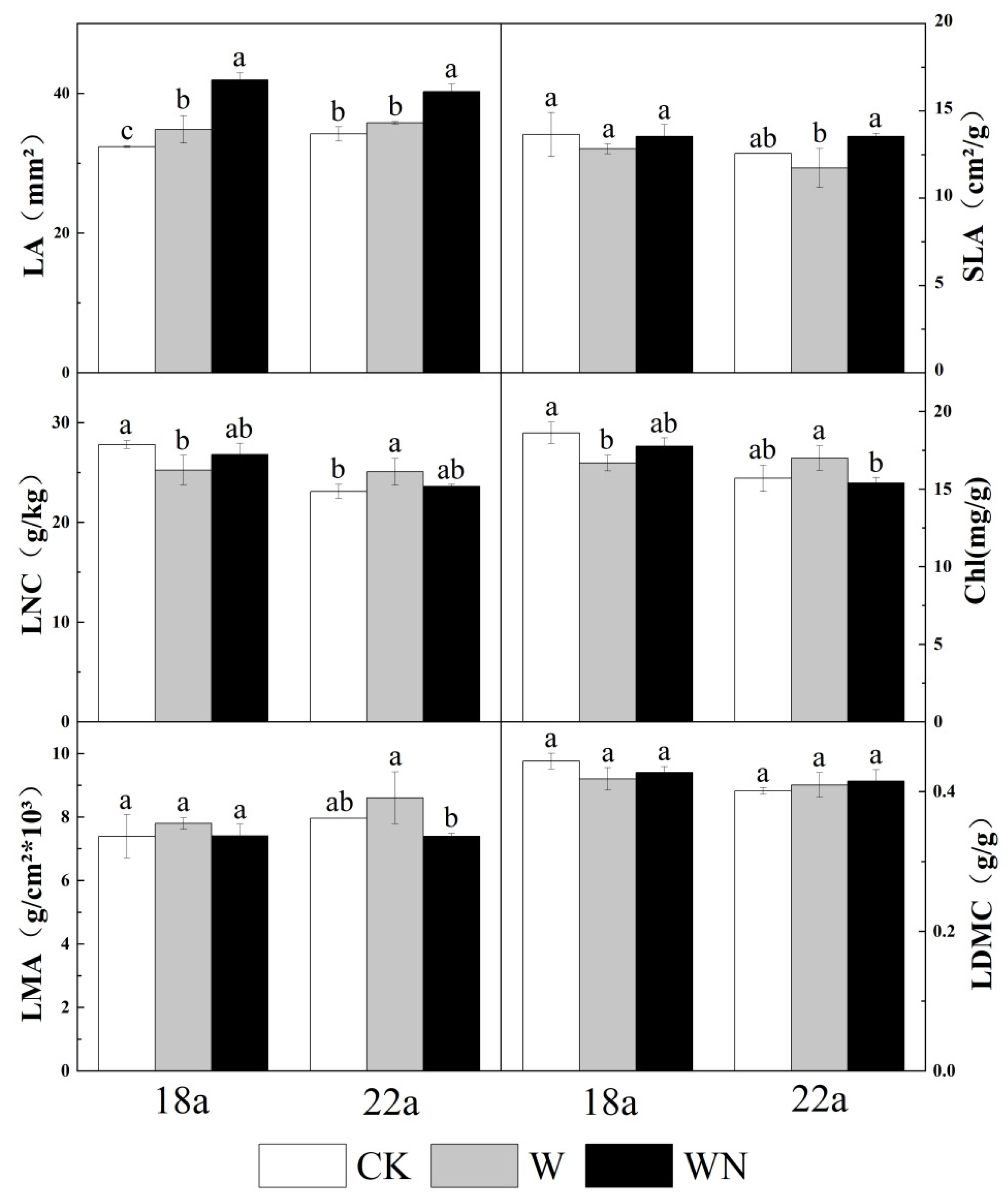
Figure 4: Effects of water and nitrogen addition on leaf functional traits of C. korshinskii. LA: leaf area. SLA: specific leaf area. LNC: leaf nitrogen concentration. Chl: chlorophyll. LMA: leaf mass per area. LDMC: leaf dry matter content. Different lowercase letters above the error bars indicate statistically significant differences (p < 0.05).
3.3 Correlations among Leaf Economics Spectrum Traits of C. korshinskii under Combined Water and Nitrogen Addition Effect
Pearson correlation analysis was conducted to examine among leaf traits of C. korshinskii under WN treatment (Fig. 5). The results revealed that LA was significantly negatively correlated with LDMC (r = −0.72, p < 0.001), and SLA was strongly negatively correlated with LMA (r = −0.95, p < 0.001); LNC was significantly positively correlated with Chl (r = 0.90, p < 0.001). LMA was significantly negatively correlated with both LNC (r = −0.58, p < 0.05) and Chl (r = −0.52, p < 0.05), whereas SLA was significantly positively correlated with LNC (r = 0.53, p < 0.05) and Chl (r = 0.49, p < 0.05). Overall, under water and nitrogen addition, the correlations among leaf economics spectrum traits of C. korshinskii on the Loess Plateau were generally consistent with patterns reported at the global scale.
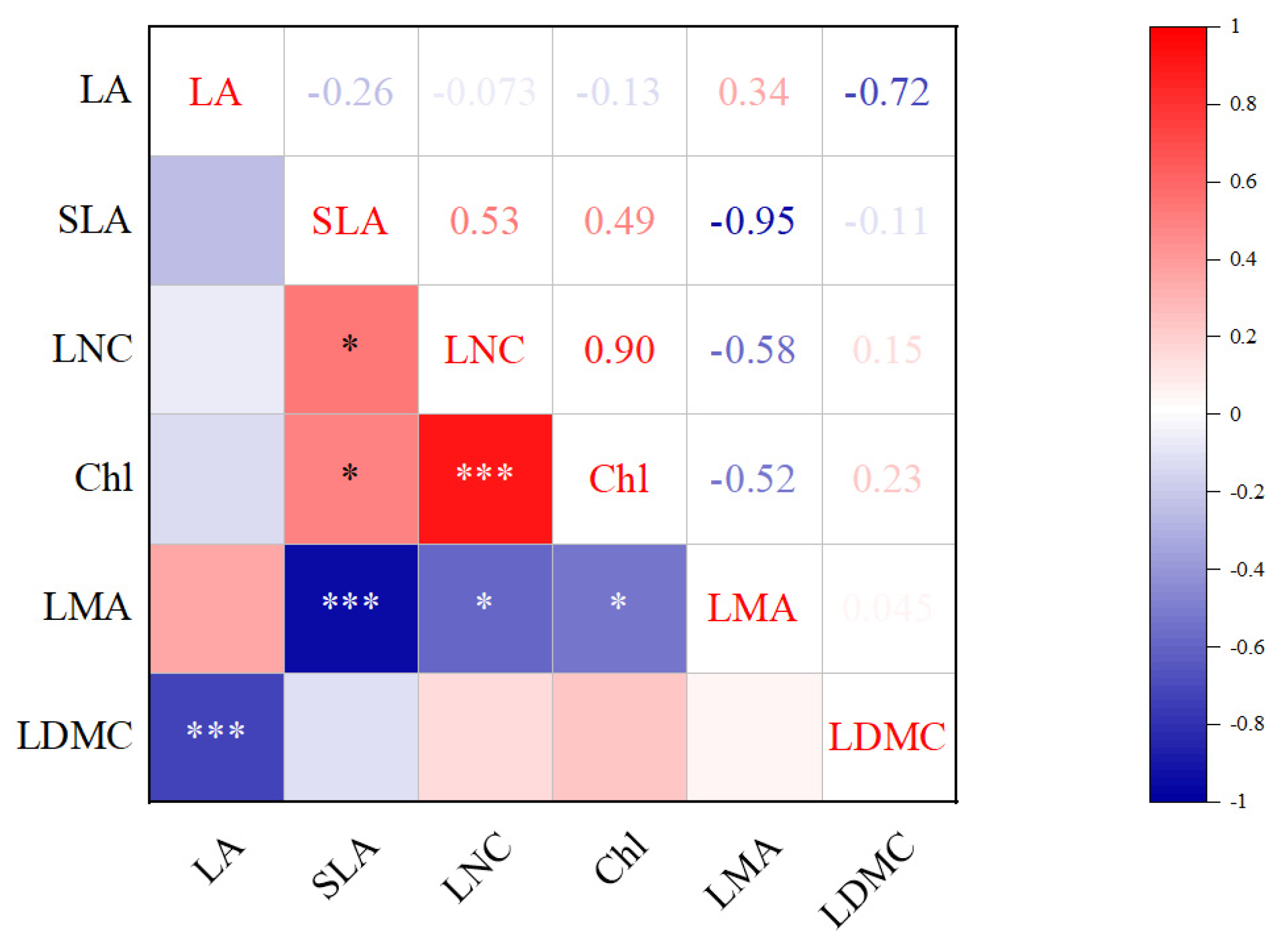
Figure 5: Pearson correlation analysis of leaf traits under different water and nitrogen treatments. The color gradient represents Pearson correlation coefficients between variables, with red indicating positive correlations and blue indicating negative correlations. Asterisks denote significance levels: *p < 0.05, ***p < 0.001.
3.4 Regulatory Effects of Combined Water and Nitrogen Addition in and Stand Age on Growth Rate
Based on SEM (As shown in Fig. 6), the analysis of the regulatory pathways of water and nitrogen addition on the growth rate of C. korshinskii showed that W treatment, N treatment, and WN treatment had significant influences on the growth rate of C. korshinskii, but the regulatory pathways differed. W treatment had two distinct regulatory effects on C. korshinskii growth. First, it exerted a direct positive effect on growth rate (β = 0.542, p < 0.01). Second, it influenced growth indirectly through the leaf economics spectrum. Specifically, W treatment had an indirect positive effect on growth via acquisitive leaf traits (γ = 0.387, p < 0.01) and an indirect negative effect on via conservative leaf traits (γ = −0.418, p < 0.01). N treatment had a single regulatory effect on the growth rate of C. korshinskii, acting through the leaf economics spectrum; Specifically, N treatment had an indirect positive effect on growth via acquisitive leaf traits (γ = 0.401, p < 0.01), and an indirect negative effect via conservative leaf traits (γ = −0.296, p < 0.01). WN treatment had two regulatory effects on growth. First, it exerted a direct positive effect on growth rate (β = 0.864, p < 0.001). Second, it influenced growth indirectly through the leaf economics spectrum. WN treatment produced an indirect positive effect via acquisitive leaf traits (γ = 0.918, p < 0.01) and an indirect negative effect via conservative leaf traits (γ = −0.365, p < 0.01). Overall, water and nitrogen additions regulated the leaf economics spectrum traits of C. korshinskii, promoting increased growth. These results indicated that the leaf economics spectrum serves as the central pathway mediating the growth response of C. korshinskii.
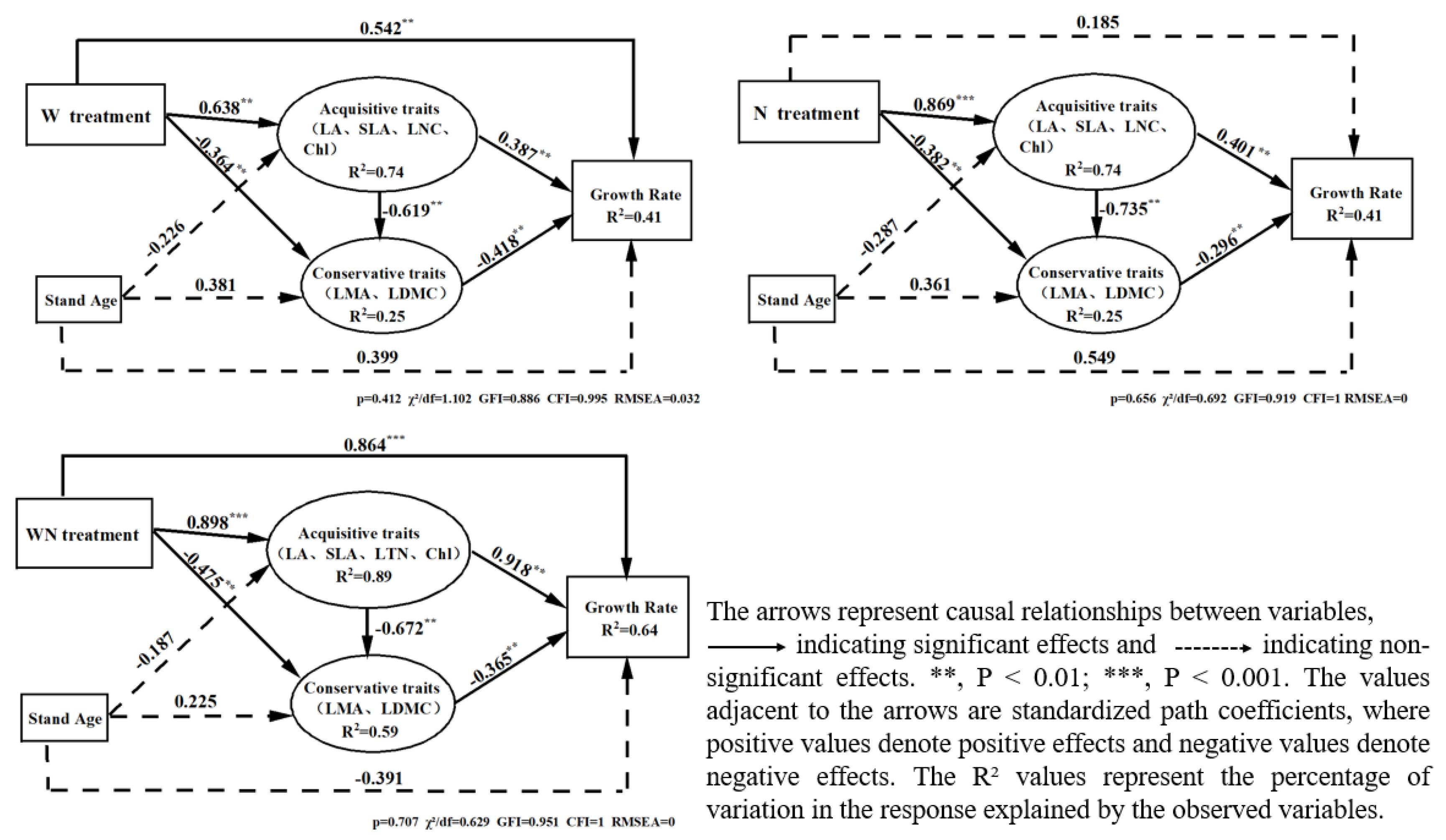
Figure 6: Structural equation model illustrating the effects of water and nitrogen addition on the growth rate of C. korshinskii. W treatment: 100 L; N treatment: 8.15 g N·m−2·a−1; WN treatment: 100 L and 8.15 g N·m−2·a−1.
4.1 Effect of Combined Water and Nitrogen Addition on the Growth Rate of C. korshinskii
The increase in growth rate can be regarded as a crucial link connecting the internal physiological processes of plants, external resource environment, and ecosystem functions [39]. Its physiological significance lies in that when the external environment improves, plants tend to adopt a strategy of rapid growth, allocating more water and nutrients to growth investment, thereby achieving the effect of accelerating development. As a primary factor for plant growth and development, water and nitrogen can influence relative growth rate, biomass accumulation, and morphological traits by regulating physiological processes such as leaf photosynthesis and nutrient uptake and assimilation [40,41,42,43]. Our study demonstrates that the addition of W treatment, N treatment, and WN treatment has significant effects on the growth rate of C. korshinskii. Moreover, the growth rates of C. korshinskii of both age groups were significantly enhanced under W treatment or N treatment. However, for different-aged C. korshinskii, their responses to single W treatment and N treatment were significantly different. The 18-year-old trees responded more sensitively to nitrogen addition, whereas the 22-year-old trees showed greater sensitivity to W treatment. This pattern is consistent with the fact that soil aridity increases with stand age [44]. 18-year-old trees have a lower degree of soil aridity than the 22-year-old trees, and they require more nutrient availability than water for growth and development, whereas the 22-year-old trees have a higher degree of soil aridity, with water being the primary element for growth and development. C. korshinskii growth rate increased significantly under the WN treatment, demonstrating the importance of WN treatment in promoting C. korshinskii growth. At the same time, the response of early senescence stage C. korshinskii growth rate to water and nitrogen addition suggests that WN treatment can stimulate the growth vitality of C. korshinskii by improving the supply of water and nitrogen, thereby increasing early senescence stage C. korshinskii’s growth rate, confirming our first hypothesis. Furthermore, the significant increase in C. korshinskii growth rate under WN treatment suggests that the synergistic effect of water and nitrogen should be emphasized when promoting C. korshinskii growth and biomass accumulation.
4.2 Responses of the Leaf Economics Spectrum of C. korshinskii to WN Treatment
Studies have shown that environmental changes trigger trade-offs in plant leaf resource allocation, and leaf traits can respond to environmental changes through self-regulation [45]. In different environments, various leaf traits may adjust to adapt to environmental variations [37]. LA, SLA, LNC, and Chl serve as important indicators of leaf resource allocation and investment, reflecting, to some extent, the leaf’s light capture capacity and photosynthetic efficiency. LMA and LDMC serve as key structural indicators, representing leaf construction strategies [46]. The results of this study showed that under W treatment, LA and LNC increased significantly. Under N treatment, LA and SLA increased significantly, while LMA decreased significantly. Under WN treatment, LA increased significantly. These results indicate that C. korshinskii leaves respond to changes in water and nitrogen addition through a significant increase in acquisitive traits such as LA and a significant decrease in conservative traits such as LMA. The flexible response of these traits to external environmental changes helps promote a shift in leaves towards a “fast investment-return” growth strategy under water and nitrogen addition, thereby supporting a higher growth rate. Leaf traits also varied significantly across stand ages in response to water and nitrogen addition. In this study, the LNC of 18-year-old plants decreased significantly under W treatment. Under drought stress, plants may increase leaf thickness to store more carbon dioxide, enhancing water and photosynthetic efficiency and allowing them to maintain growing and developing normally [43]. In addition, plants may increase leaf nitrogen concentration in response to drought stress. Under drought conditions, evapotranspiration intensifies, and leaf stomata close. To sustain normal growth, leaves require more nitrogen to support photosynthesis. Water addition helps to alleviate the water scarcity that limits plant growth. As a result, plants no longer need to allocate significant nitrogen to leaves to improve water use efficiency. Instead, nitrogen is redistributed to other organs to support growth [47]. Unlike the change in LNC observed in 18-year-old plants, 22-year-old plants’ LNC increased significantly under water addition. Water addition can accelerate the mineralization of organic nitrogen by stimulating soil microbial activity, and thus the supply of available nitrogen [48]. This response highlights the central role of water in the nitrogen cycle of ecosystems in the sandy region of the Loess Plateau, emphasizing that water is both a prerequisite and a key limiting factor for nitrogen utilization in this system. The increase in LNC due to W treatment enhances nitrogen absorption and photosynthetic capacity, allowing more nitrogen to be used for photosynthesis, promoting plant growth and development. This optimized nitrogen allocation strategy accelerates the growth of C. korshinskii, as supported by the synchronous changes in LNC and Chl observed in this study. Notably, LA responded the most pronouncedly response to water and nitrogen addition. For 18-year-old plants, LA increased significantly under both W treatment and N treatment exhibited a highly significant increase under the WN treatment. For 22-year-old plants, LA increased significantly under both individual nitrogen addition and the WN treatment. Previous research indicates that C. korshinskii adopts an adaptive strategy of producing smaller thicker leaves to reduce water loss while maintaining photosynthetic capacity under drought stress [36]. However, water and nitrogen addition alleviate this drought stress. Under these conditions, C. korshinskii prioritizes expanding leaf area to maximize photosynthetic production and support growth and development. The pronounced differences in leaf area in response to drought stress versus water–nitrogen interaction treatments reflect the species’ distinct survival strategies and adaptive responses to environmental conditions. Considering projected increases in precipitation and nitrogen deposition, future research on the environmental adaptation of C. korshinskii should pay particular attention to changes in leaf area.
4.3 Relationships among Leaf Economics Spectrum Traits of C. korshinskii under Combined Water and Nitrogen Addition
The synergistic relationships among leaf traits can partially reflect plant adaptive strategiesto the environment because leaves are crucial organs for the exchange of materials and energy between plants and the environment [49]. The correlations between C. korshinskii leaf economic spectrum traits on the Loess Plateau under water and nitrogen addition were largely in line with those found globally [11]. This strong positive correlation between LNC and Chl shows that C. korshinskii prioritizes the allocation of nitrogen to photosynthetic organs, independent of environmental changes. To some extent, this stable synergistic relationship guarantees that C. korshinskii can sustain minimum photosynthetic efficiency to satisfy fundamental growth requirements even under stress conditions. Subsequently, it also describes the adaptability of C. korshinskii in terms of survival strategies: synchronously increasing investment to attain maximum plant growth under favorable conditions, while concurrently decreasing investment to lower costs and guarantee basic survival under unfavorable conditions [50]. The study found a strong correlation between LA and LDMC. LDMC is an important indicator of leaf construction cost [51], while LA reflects photosynthetic capacity to some extent [52]. The water nitrogen interaction that simultaneously increases LA and promotes the relative dilution of LDMC may be the cause of the strong negative correlation between LA and LDMC. This indicates that C. korshinskii’s adaptive strategy tends to prioritize photosynthesis over further strengthening structural defense under improved water and nitrogen resource conditions, indicating a shift from a “conservative” to an “acquisitive” survival strategy. From the perspective of synergistic trait changes, this suggests that C. korshinskii’s survival strategy still follows the leaf economic spectrum principles [11]. Water-nitrogen interaction can improve C. korshinskii’s overall growth efficiency by regulating the “photosynthesis-structure” trade-off in leaves.
4.4 Mechanisms by Which WN Treatment Regulates the Growth Rate of C. korshinskii
The regulation of C. korshinskii growth rate by W treatment, N treatment, WN treatment all promoted plant growth by influencing acquisitive leaf traits, according to an integrated analysis using SEM of the relationships among leaf traits, growth, and stand age in C. korshinskii under three treatments (W treatment, N treatment and WN treatment) (Fig. 5). This suggests that C. korshinskii invests in leaf organs with high photosynthetic capacity and rapid resource returns, when constraints on essential resources like water and nitrogen are reduced. This investment is converted into a growth advantage, thereby exerting a positive regulatory effect on plant growth rate. The regulatory effects of the three treatments on the growth rate of C. korshinskii were found to differ significantly. Growth rate was significantly impacted by W treatment both directly and indirectly through its effects on the leaf economics spectrum. The main way that N treatment had a regulatory effect was by altering the leaf economics spectrum, which had a major impact on growth rate. The underlying mechanism is that plant leaves’ structural defense needs and construction costs can be decreased by adding water and nitrogen. As a result, plants shift their leaves toward a “fast investment-return” survival strategy with high LA, high SLA, high LNC, and low LMA by allocating more nitrogen to photosynthetic tissues for photosynthesis. The accumulation of photosynthetic products ultimately promotes plant growth [53,54]. The study’s results also showed that LA, SLA, and LNC of C. korshinskii significantly increased under W treatment and N treatment, while LMA significantly decreased, confirming a shift in the leaf economics spectrum towards the “fast investment-return” strategy. However, water is the most critical limiting factor for vegetation growth and development in the Loess Plateau, which is located in a transitional zone between semi-humid and semi-arid regions [4]. Water scarcity in this area restricts the direct conversion of nitrogen into growth because efficient nitrogen utilization requires an adequate water supply [55]. Therefore, the growth rate of C. korshinskii was not directly impacted by nitrogen addition alone. W treatment, on the other hand, relieved the growth inhibition caused by drought stress, which decreased the amount of resources plants had to devote to producing drought resistant compounds. Instead, resources were redirected to growth processes, which enhanced growth vigor and significantly increased C. korshinskii’s growth rate.
WN treatment had a particularly strong regulatory effect on C. korshinskii growth rate: it had a greater direct effect on growth rate than that of W treatment, and it had a greater indirect effect on growth rate through the leaf economics spectrum than N treatment. The positive response of C. korshinskii growth rate to WN treatment indicates that the combined effect of water and nitrogen is better than the addition of either resource individually in terms of improving growth rate, a key physiological process in plants. Water and nitrogen work together to improve soil moisture, nutrient availability and mobility [56]. The mature and well-developed root system of C. korshinskii absorbs these resources and uses an effective hydraulic conduction system to transport them to the aboveground sections [57]. Strong photosynthetic physiological reactions, including an increase in leaf area and nitrogen concentration, are triggered by this. Higher marginal growth returns and compensatory growth are achieved when a competitive growth strategy directs the resulting extra photosynthetic products to aboveground biomass accumulation rather than defense or maintenance [58]. Furthermore, the limitations of single-resource addition are effectively overcome by the synergistic effect of water-nitrogen interaction. In particular, while W treatment can accelerate C. korshinskii growth, this growth effect is often difficult to sustain due to insufficient nitrogen support for continuous tissue construction. Conversely, under water-limited conditions, C. korshinskii cannot fully carry out photosynthesis and material transport, resulting in low nitrogen use efficiency and limiting the translation of added nitrogen into rapid growth advantages even though nitrogen addition alone can improve the plant’s nitrogen nutritional status. WN treatment, through resource complementarity and the linkage of physiological processes, overcomes the bottleneck of sustained growth under water addition alone and alleviates the metabolic conversion constraints under nitrogen addition alone [59]. As a result, it shows a sustained and effective growth pattern at the trait and physiological levels, with effects that are markedly superior to that of W treatment and N treatment.
WN treatment markedly enhanced the growth rate of early senescence stage C. korshinskii, with rapid increases observed in both 18- and 22-year-old stands across varying water and nitrogen gradients. Key leaf economics spectrum traits, including LA, SLA, LMA, and LNC, responded strongly to combined water and nitrogen addition, shifting leaves toward a “fast investment-return” growth strategy. Furthermore, the responsiveness of both growth rate and leaf economics spectrum traits was greater under WN treatment than W treatment or N treatment. Among all traits, leaf area exhibited the most pronounced changes in response to water and nitrogen inputs, showing significant or highly significant responses in both 18- and 22-year-old stands across all treatment gradients. These results indicate that leaf area may serve as a primary indicator of C. korshinskii’s response to environmental changes, and future studies of the species’ environmental adaptation should prioritize this trait. Water and nitrogen additions exerted significant regulatory effects on C. korshinskii growth. Specifically, W treatment and WN treatment influenced growth rate both directly and indirectly via the leaf economics spectrum, whereas N treatment alone affected growth rate only indirectly through this spectrum. These results highlight the leaf economics spectrum as the central regulatory pathway mediating early senescence stage C. korshinskii’s response to WN treatment, with WN treatment enhancing growth primarily by modulating this spectrum.
Acknowledgement:
Funding Statement: This study was funded by the Shanxi Provincial Natural Science Foundation General Program (202203021221127). the Shanxi Provincial Basic Research Program (202203021222226), and the Shanxi Provincial Research Program for Returned Overseas Scholars (2023-109).
Author Contributions: Jingshuo Zhu: formal analysis, manuscript drafting; Fengxia Zhao: study design, study supervision, manuscript review; Dan Meng and Yue Xue: experiments, data collection; Maiqi Xiang: formal analysis, coordination. All authors reviewed and approved the final version of the manuscript.
Availability of Data and Materials: The datasets used and/or analysed during the current study are available from the corresponding author on reasonable request.
Ethics Approval: Not applicable.
Conflicts of Interest: The authors declare no conflicts of interest.
References
1. Abbasi AO , Salazar A , Oh Y , Reinsch S , del Rosario Uribe M , Li J , et al. Reviews and syntheses: Soil responses to manipulated precipitation changes–an assessment of meta-analyses. Biogeosciences. 2020; 17( 14): 3859– 73. doi:10.5194/bg-17-3859-2020. [Google Scholar] [CrossRef]
2. Donat MG , Lowry AL , Alexander LV , O’Gorman PA , Maher N . More extreme precipitation in the world’s dry and wet regions. Nat Clim Change. 2016; 6( 5): 508– 13. doi:10.1038/nclimate2941. [Google Scholar] [CrossRef]
3. Gao Y , Zhou F , Ciais P , Miao C , Yang T , Jia Y , et al. Human activities aggravate nitrogen-deposition pollution to inland water over China. Natl Sci Rev. 2020; 7( 2): 430– 40. doi:10.1093/nsr/nwz073. [Google Scholar] [CrossRef]
4. Yan D , Yang Y , Song H , Yue Y , Duan X , Kassout J , et al. Landscape aggregation enhances soil conservation service: Insights from the grain for green program on the Loess Plateau. J Environ Manage. 2025; 396: 128136. doi:10.1016/j.jenvman.2025.128136. [Google Scholar] [CrossRef]
5. Liang X , Zhang T , Lu X , Ellsworth DS , BassiriRad H , You C , et al. Global response patterns of plant photosynthesis to nitrogen addition: A meta-analysis. Glob Chang Biol. 2020; 26( 6): 3585– 600. doi:10.1111/gcb.15071. [Google Scholar] [CrossRef]
6. Shi S , Yu J , Wang F , Wang P , Zhang Y , Jin K . Quantitative contributions of climate change and human activities to vegetation changes over multiple time scales on the Loess Plateau. Sci Total Environ. 2021; 755( Pt 2): 142419. doi:10.1016/j.scitotenv.2020.142419. [Google Scholar] [CrossRef]
7. Tang S , Zhang L , Lambers H , Ren W , Lu X , Hou E , et al. Addition of nitrogen to canopy versus understorey has different effects on leaf traits of understorey plants in a subtropical evergreen broad-leaved forest. J Ecol. 2021; 109( 2): 692– 702. doi:10.1111/1365-2745.13496. [Google Scholar] [CrossRef]
8. Walker TWN , Alexander JM , Allard PM , Baines O , Baldy V , Bardgett RD , et al. Functional Traits 2.0: The power of the metabolome for ecology. J Ecol. 2022; 110( 1): 4– 20. doi:10.1111/1365-2745.13826. [Google Scholar] [CrossRef]
9. Wang Z , Townsend PA , Kruger EL . Leaf spectroscopy reveals divergent inter- and intra-species foliar trait covariation and trait-environment relationships across NEON domains. New Phytol. 2022; 235( 3): 923– 38. doi:10.1111/nph.18204. [Google Scholar] [CrossRef]
10. Díaz S , Kattge J , Cornelissen JH , Wright IJ , Lavorel S , Dray S , et al. The global spectrum of plant form and function. Nature. 2016; 529( 7585): 167– 71. doi:10.1038/NATURE16489. [Google Scholar] [CrossRef]
11. Wright IJ , Reich PB , Westoby M , Ackerly DD , Baruch Z , Bongers F , et al. The worldwide leaf economics spectrum. Nature. 2004; 428( 6985): 821– 7. doi:10.1038/NATURE02403. [Google Scholar] [CrossRef]
12. Niinemets U . Is there a species spectrum within the world-wide leaf economics spectrum? Major variations in leaf functional traits in the Mediterranean sclerophyll Quercus ilex. New Phytol. 2015; 205( 1): 79– 96. doi:10.1111/nph.13001. [Google Scholar] [CrossRef]
13. Sakschewski B , von Bloh W , Boit A , Rammig A , Kattge J , Poorter L , et al. Leaf and stem economics spectra drive diversity of functional plant traits in a dynamic global vegetation model. Glob Chang Biol. 2015; 21( 7): 2711– 25. doi:10.1111/gcb.12870. [Google Scholar] [CrossRef]
14. Mo Q , Wang W , Chen Y , Peng Z , Zhou Q . Response of foliar functional traits to experimental N and P addition among overstory and understory species in a tropical secondary forest. Glob Ecol Conserv. 2020; 23: e01109. doi:10.1016/j.gecco.2020.e01109. [Google Scholar] [CrossRef]
15. Yue X , Zuo X , Yu Q , Xu C , Lv P , Zhang J , et al. Response of plant functional traits of Leymus chinensis to extreme drought in Inner Mongolia grasslands. Plant Ecol. 2019; 220( 2): 141– 9. doi:10.1007/s11258-018-0887-2. [Google Scholar] [CrossRef]
16. Liu J , Du T , Yang X , Zhao J , Liang S , Chen Z , et al. A trade-off between leaf water retention capacity and rehydration capacity among plant species. New Phytol. 2026; 249( 4): 1727– 38. doi:10.1111/nph.70821. [Google Scholar] [CrossRef]
17. Wang B , Gong J , Zhang Z , Yang B , Liu M , Zhu C , et al. Nitrogen addition alters photosynthetic carbon fixation, allocation of photoassimilates, and carbon partitioning of Leymus chinensis in a temperate grassland of Inner Mongolia. Agric For Meteor. 2019; 279: 107743. doi:10.1016/j.agrformet.2019.107743. [Google Scholar] [CrossRef]
18. Jiang X , Song M , Qiao Y , Liu M , Ma L , Fu S . Long-term water use efficiency and non-structural carbohydrates of dominant tree species in response to nitrogen and water additions in a warm temperate forest. Front Plant Sci. 2022; 13: 1025162. doi:10.3389/fpls.2022.1025162. [Google Scholar] [CrossRef]
19. Walker RL , Burns IG , Moorby J . Responses of plant growth rate to nitrogen supply: A comparison of relative addition and N interruption treatments. J Exp Bot. 2001; 52( 355): 309– 17. doi:10.1093/JEXBOT/52.355.309. [Google Scholar] [CrossRef]
20. Li M , Sun R , He Y , Zhou T , Mao J , Li W , et al. Different responses of canopy and shrub leaves to canopy nitrogen and water addition in warm temperate forest. Front Plant Sci. 2025; 16: 1530588. doi:10.3389/fpls.2025.1530588. [Google Scholar] [CrossRef]
21. Ren H , Xu Z , Huang J , Clark C , Chen S , Han X . Nitrogen and water addition reduce leaf longevity of steppe species. Ann Bot. 2011; 107( 1): 145– 55. doi:10.1093/aob/mcq219. [Google Scholar] [CrossRef]
22. Lü XT , Han XG . Nutrient resorption responses to water and nitrogen amendment in semi-arid grassland of Inner Mongolia, China. Plant Soil. 2010; 327( 1): 481– 91. doi:10.1007/s11104-009-0078-y. [Google Scholar] [CrossRef]
23. Huang X , Niu P , Gao Y , Rong W , Luo C , Zhang X , et al. Effects of water and nitrogen on growth, rhizosphere environment, and microbial community of Sophora alopecuroides: Their interrelationship. Plants. 2024; 13( 14): 1970. doi:10.3390/plants13141970. [Google Scholar] [CrossRef]
24. Zhang J , Zuo X , Zhao X , Ma J , Medina-Roldán E . Effects of rainfall manipulation and nitrogen addition on plant biomass allocation in a semiarid sandy grassland. Sci Rep. 2020; 10: 9026. doi:10.1038/s41598-020-65922-0. [Google Scholar] [CrossRef]
25. Zhao Y , Wang L , Knighton J , Evaristo J , Wassen M . Contrasting adaptive strategies by Caragana korshinskii and Salix psammophila in a semiarid revegetated ecosystem. Agric For Meteor. 2021; 300: 108323. doi:10.1016/j.agrformet.2021.108323. [Google Scholar] [CrossRef]
26. Wendler R , Millard P . Impacts of water and nitrogen supplies on the physiology, leaf demography and nitrogen dynamics of Betula pendula. Tree Physiol. 1996; 16( 1_2): 153– 9. doi:10.1093/treephys/16.1-2.153. [Google Scholar] [CrossRef]
27. Zhao Y , Wang L . Coordination of available soil water content and root distribution modifies water source apportionment of the shrub plant Caragana korshinskii. Sci Total Environ. 2023; 900: 165893. doi:10.1016/j.scitotenv.2023.165893. [Google Scholar] [CrossRef]
28. Ning P , Wang J , Zhou Y , Gao L , Wang J , Gong C . Adaptional evolution of trichome in Caragana korshinskii to natural drought stress on the Loess Plateau, China. Ecol Evol. 2016; 6( 11): 3786– 95. doi:10.1002/ece3.2157. [Google Scholar] [CrossRef]
29. Liu Y , He L , An L , Helgason T , Feng H . Arbuscular mycorrhizal dynamics in a chronosequence of Caragana korshinskii plantations: AM fungal dynamics in a chronosequence of C. korshinskii. FEMS Microbiol Ecol. 2009; 67( 1): 81– 92. doi:10.1111/j.1574-6941.2008.00597.x. [Google Scholar] [CrossRef]
30. Theroux S , Mazor RD , Beck MW , Ode PR , Stein ED , Sutula M . Predictive biological indices for algae populations in diverse stream environments. Ecol Indic. 2020; 119: 106421. doi:10.1016/j.ecolind.2020.106421. [Google Scholar] [CrossRef]
31. Cui Z , Jiang H , Zou L , Wu J , Yin H . Spatiotemporal evolution and driving mechanisms of habitat quality on the Loess Plateau. Sci Rep. 2025; 15: 37771. doi:10.1038/s41598-025-12055-x. [Google Scholar] [CrossRef]
32. Peng L , Lang S , Wang Y , Pritchard HW , Wang X . Modulating role of ROS in re-establishing desiccation tolerance in germinating seeds of Caragana korshinskii Kom. J Exp Bot. 2017; 68( 13): 3585– 601. doi:10.1093/jxb/erx172. [Google Scholar] [CrossRef]
33. Mei F , Yang T , Chao H , Ma X , Wu J , Yang Q , et al. Genomic insights into drought adaptation of the forage shrub Caragana korshinskii (Fabaceae) widely planted in drylands. Plant J. 2025; 121( 3): e17255. doi:10.1111/tpj.17255. [Google Scholar] [CrossRef]
34. Li J , Xie L , Ren J , Zhang T , Cui J , Bao Z , et al. CkREV regulates xylem vessel development in Caragana korshinskii in response to drought. Front Plant Sci. 2022; 13: 982853. doi:10.3389/fpls.2022.982853. [Google Scholar] [CrossRef]
35. Waseem M , Nie ZF , Yao GQ , Hasan M , Xiang Y , Fang XW . Dew absorption by leaf trichomes in Caragana korshinskii: An alternative water acquisition strategy for withstanding drought in arid environments. Physiol Plant. 2021; 172( 2): 528– 39. doi:10.1111/ppl.13334. [Google Scholar] [CrossRef]
36. Huo J , Zhao Z , Han G , Xu B , Nan Y , Zhang H , et al. Quantitative study on whole canopy leaf area and daily transpiration and photosynthetic carbon assimilation of Caragana korshinskii. Physiol Plant. 2025; 177( 6): e70618. doi:10.1111/ppl.70618. [Google Scholar] [CrossRef]
37. Liang T , Tong YA , Xu W , Wei Y , Lin W , Pang Y , et al. Atmospheric nitrogen deposition in the Loess area of China. Atmos Pollut Res. 2016; 7( 3): 447– 53. doi:10.1016/j.apr.2015.11.001. [Google Scholar] [CrossRef]
38. Garnier E , Shipley B , Roumet C , Laurent G . A standardized protocol for the determination of specific leaf area and leaf dry matter content. Funct Ecol. 2001; 15( 5): 688– 95. doi:10.1046/j.0269-8463.2001.00563.x. [Google Scholar] [CrossRef]
39. Nielsen RL , James JJ , Drenovsky RE . Functional traits explain variation in chaparral shrub sensitivity to altered water and nutrient availability. Front Plant Sci. 2019; 10: 505. doi:10.3389/fpls.2019.00505. [Google Scholar] [CrossRef]
40. Du Z , Bai H , Liu M , Liu Y , Zhu G , Chai G , et al. Response of ecological stoichiometry and homeostasis characteristic to nitrogen addition in Hippophae rhamnoides L. Sci Total Environ. 2024; 951: 175591. doi:10.1016/j.scitotenv.2024.175591. [Google Scholar] [CrossRef]
41. Plett DC , Ranathunge K , Melino VJ , Kuya N , Uga Y , Kronzucker HJ . The intersection of nitrogen nutrition and water use in plants: New paths toward improved crop productivity. J Exp Bot. 2020; 71( 15): 4452– 68. doi:10.1093/jxb/eraa049. [Google Scholar] [CrossRef]
42. Deng H , Pan X , Li G , Wang Q , Xiao R . Rational water and nitrogen regulation can improve yield and water-nitrogen productivity of the maize (Zea mays L.)-soybean (Glycine max L. merr.) strip intercropping system in the China Hexi oasis irrigation area. Plants. 2025; 14( 13): 2050. doi:10.3390/plants14132050. [Google Scholar] [CrossRef]
43. Ramírez-Valiente JA , Center A , Sparks JP , Sparks KL , Etterson JR , Longwell T , et al. Population-level differentiation in growth rates and leaf traits in seedlings of the neotropical live oak Quercus oleoides grown under natural and manipulated precipitation regimes. Front Plant Sci. 2017; 8: 585. doi:10.3389/fpls.2017.00585. [Google Scholar] [CrossRef]
44. Liang H , Xue Y , Shi J , Li Z , Liu G , Fu B . Soil moisture dynamics under Caragana korshinskii shrubs of different ages in Wuzhai County on the Loess Plateau, China. Earth Environ Sci Trans R Soc Edinb. 2018; 109( 3–4): 387– 96. doi:10.1017/s1755691018000622. [Google Scholar] [CrossRef]
45. Maire V , Gross N , Hill D , Martin R , Wirth C , Wright IJ , et al. Disentangling coordination among functional traits using an individual-centred model: Impact on plant performance at intra- and inter-specific levels. PLoS One. 2013; 8( 10): e77372. doi:10.1371/journal.pone.0077372. [Google Scholar] [CrossRef]
46. Ding X , Zhang W , Li X , Wang Z , Sun X , Han W . Effects of nitrogen addition on leaf functional traits of dominant species in Bayanbulak grassland, Xinjiang, China. Plants. 2025; 14( 4): 597. doi:10.3390/PLANTS14040597. [Google Scholar] [CrossRef]
47. Lü XT , Kong DL , Pan QM , Simmons ME , Han XG . Nitrogen and water availability interact to affect leaf stoichiometry in a semi-arid grassland. Oecologia. 2012; 168( 2): 301– 10. doi:10.1007/s00442-011-2097-7. [Google Scholar] [CrossRef]
48. Xu G , Li G , Wu J , Ma W , Wang H , Yuan J , et al. Effects of rainfall amount and frequencies on soil net nitrogen mineralization in Gahai wet meadow in the Qinghai-Tibetan Plateau. Sci Rep. 2023; 13: 14860. doi:10.1038/s41598-023-39267-3. [Google Scholar] [CrossRef]
49. Wang J , Wang X , Ji Y , Gao J . Climate factors determine the utilization strategy of forest plant resources at large scales. Front Plant Sci. 2022; 13: 990441. doi:10.3389/fpls.2022.990441. [Google Scholar] [CrossRef]
50. Ma J , Wang T , Wang H , Chen Y , Yang J , Xie T , et al. Discrepancy in coordination and variation of root and leaf traits among herbaceous and shrub species in the desert, China. Front Plant Sci. 2024; 15: 1485542. doi:10.3389/fpls.2024.1485542. [Google Scholar] [CrossRef]
51. Manavalan M , Kothari S , Fridley JD . Elevated CO2, warming and drought differentially impact reproductive and vegetative economic traits in two grassland species. Ann Bot. 2025; 137( 3): 673– 88. doi:10.1093/AOB/MCAF214. [Google Scholar] [CrossRef]
52. Selvi F , Carrari E , Campetella G , Canullo R , Chelli S , Coppi A , et al. Leaf trait variation across Mediterranean forest endemics: Drivers and evidence for lower resource acquisition ability than in widespread forest congeners. Front Plant Sci. 2025; 16: 1664759. doi:10.3389/fpls.2025.1664759. [Google Scholar] [CrossRef]
53. Che C , Xiao S , Ding A , Peng X , Su J . The characteristics of radial growth and ecological response of Caragana korshinskii kom. under different precipitation gradient in the western Loess Plateau, China. Front Plant Sci. 2022; 13: 862529. doi:10.3389/fpls.2022.862529. [Google Scholar] [CrossRef]
54. Lv Y , Wang X , Ding B , Xiao M , Qin C . Effects of nitrogen addition on the growth and photosynthetic physiology of Gleditsia sinensis Lam. seedlings under shading conditions. Sci Rep. 2025; 15( 1): 32727. doi:10.1038/s41598-025-17825-1. [Google Scholar] [CrossRef]
55. Munjonji L , Behn K , Vincent M , Ayisi KK , Nielsen U , Linstädter A . Drought, grazing, and nitrogen input influence nutrient supply and soil faunal activity in a semi-arid savannah grassland. Sci Rep. 2025; 15( 1): 34248. doi:10.1038/s41598-025-16281-1. [Google Scholar] [CrossRef]
56. Wen H , He S , Liu W , Li Y , Wang P , Cheng J , et al. Root order and stand age synergistically drive the evolution of fine root hydraulic anatomical traits in Caragana korshinskii. Biodivers Sci. 2026. (In Chinese). [Google Scholar]
57. Liang ZS , Yang JW , Shao HB , Han RL . Investigation on water consumption characteristics and water use efficiency of poplar under soil water deficits on the Loess Plateau. Colloids Surf B Biointerfaces. 2006; 53( 1): 23– 8. doi:10.1016/j.colsurfb.2006.07.008. [Google Scholar] [CrossRef]
58. Xu Z , Jiang L , Ren H , Han X . Opposing responses of temporal stability of aboveground and belowground net primary productivity to water and nitrogen enrichment in a temperate grassland. Glob Chang Biol. 2024; 30( 1): e17071. doi:10.1111/gcb.17071. [Google Scholar] [CrossRef]
59. Cui X , Yue P , Gong Y , Li K , Tan D , Goulding K , et al. Impacts of water and nitrogen addition on nitrogen recovery in Haloxylon ammodendron dominated desert ecosystems. Sci Total Environ. 2017; 601–602: 1280– 8. doi:10.1016/j.scitotenv.2017.05.202. [Google Scholar] [CrossRef]
Cite This Article
 Copyright © 2026 The Author(s). Published by Tech Science Press.
This work is licensed under a Creative Commons Attribution 4.0 International License , which permits unrestricted use, distribution, and reproduction in any medium, provided the original work is properly cited.
 Downloads
 Citation Tools
