
 Login
Login Register
 Submit a Paper
 Propose a Special lssue
 Open Access
ARTICLE
Biochar-Loaded Purpureocillium lilacinum Formulation Enhances Soil Water Retention, Drought Tolerance, and Essential Oil Productivity of Spearmint (Mentha spicata L.)
1 Soil Physics and Chemistry Department, Soils, Water and Environmental Research Institute (SWERI), Agricultural Research Center (ARC), Giza, Egypt
2 Department of Geography and Environmental Sustainability, College of Humanities and Social Sciences, Princess Nourah Bint Abdulrahman University, Riyadh, Saudi Arabia
3 Department of Agricultural Biotechnology, College of Agriculture and Food Sciences, King Faisal University, Al-Ahsa, Saudi Arabia
4 Department of Biological Sciences, Faculty of Science, King Abdulaziz University, Jeddah, Saudi Arabia
5 Department of Biology, College of Science, Princess Nourah bint Abdulrahman University, Riyadh, Saudi Arabia
6 Department of Biology, College of Science, King Khalid University, Abha, Saudi Arabia
7 Health Specialities, Basic Sciences and Their Applications Unit, Applied College, Mahayil Asir, King Khalid University, Abha, Saudi Arabia
8 Plant Pathology Research Institute, Agriculture Research Center, Giza, Egypt
* Corresponding Author: Mohamed Abou-Zeid. Email:
Phyton-International Journal of Experimental Botany 2026, 95(9), 12 https://doi.org/10.32604/phyton.2026.087638
Received 28 June 2026; Accepted 28 August 2026; Issue published 24 September 2026
 View Full Text
 Download PDF
Abstract
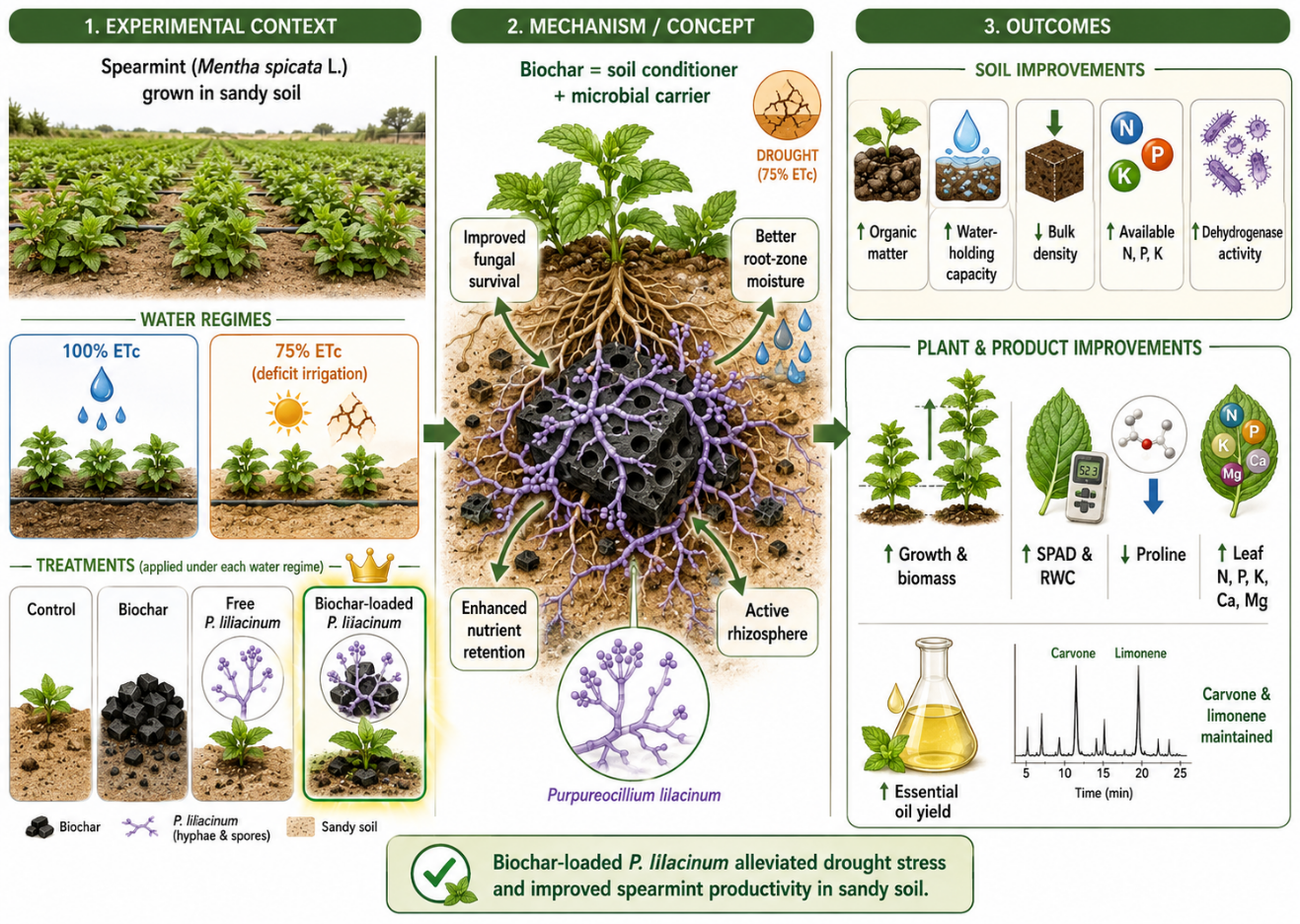
Water deficit severely constrains the productivity and essential oil yield of medicinal and aromatic crops grown in sandy soils. This study assessed whether a biochar-loaded Purpureocillium lilacinum formulation could improve soil properties, drought tolerance, growth, mineral nutrition, soil biological activity, and essential oil production of spearmint (Mentha spicata L.) under full and deficit irrigation. A two-season field experiment was conducted in 2024 and 2025 using a split-plot design arranged in a randomized complete block with three replicates. Irrigation regimes, including 100% and 75% of crop evapotranspiration (ETc), were assigned to main plots, whereas bioformulation treatments, including untreated control, biochar alone, free P. lilacinum, and biochar-loaded P. lilacinum, were assigned to subplots. The formulation maintained high viability during storage, with fungal counts declining from 8.30 × 10⁷ to 5.10 × 10⁷ colony-forming units (CFU) g−1 after 60 days, while pH and electrical conductivity remained relatively stable. Deficit irrigation reduced soil organic matter, water-holding capacity, available macronutrients, plant growth, chlorophyll content, relative water content, leaf nutrient concentrations, essential oil yield, and dehydrogenase activity, while increasing proline accumulation. Conversely, bioformulation treatments improved most measured traits, with biochar-loaded P. lilacinum producing the strongest response. This treatment enhanced soil water retention and nutrient availability, reduced bulk density, improved biomass accumulation and physiological status, and maintained high essential oil yield under both irrigation regimes. Overall, biochar-loaded P. lilacinum represents a promising bioformulation for improving spearmint productivity, drought resilience, soil biological activity, and essential oil performance in sandy soils under deficit irrigation.Graphic Abstract
Keywords
Water deficit is a major constraint limiting the growth, productivity, and metabolic performance of medicinal and aromatic plants, particularly in arid and semi-arid production systems [1,2]. Reduced soil water availability restricts nutrient uptake, stomatal conductance, photosynthetic activity, cell expansion, and biomass accumulation, thereby affecting both herb yield and the biosynthesis of economically important secondary metabolites [3,4]. In aromatic crops, drought may also alter essential oil yield and composition, although the magnitude and direction of these changes depend on stress intensity, plant species, developmental stage, and crop management practices [5,6]. Accordingly, sustainable approaches that improve soil water retention and support plant physiological performance under deficit irrigation are increasingly needed for the production of high-value aromatic crops in water-limited environments [7,8].
Spearmint (Mentha spicata L.) is an economically important medicinal and aromatic plant cultivated primarily for its essential oil, which is widely used in food, pharmaceutical, cosmetic, and flavoring industries [9,10]. Its commercial value is closely related to essential oil yield and chemical composition, particularly the relative abundance of major monoterpenes such as carvone, limonene, and 1,8-cineole, as well as other oxygenated compounds [11,12]. However, spearmint productivity and essential oil traits are highly sensitive to environmental conditions, especially water availability. Previous studies on M. spicata and other Lamiaceae species have shown that water deficit and salinity can alter chlorophyll content, oxidative stress responses, proline accumulation, biomass production, and essential oil characteristics [13,14]. Improving drought resilience in spearmint while maintaining essential oil productivity and quality is therefore an important agronomic and biochemical objective.
Biochar has attracted considerable attention as a sustainable soil amendment due to its porous structure, high surface area, relative stability, and capacity to improve soil physical and chemical properties [15,16]. In coarse-textured soils, biochar can enhance water-holding capacity, reduce bulk density, improve nutrient retention, increase cation-exchange capacity, and decrease nutrient leaching [17,18]. Recent reviews and meta-analyses further indicate that biochar can improve soil fertility and crop performance, although its effects vary according to feedstock type, pyrolysis conditions, soil texture, application rate, and environmental context [19,20]. Under drought-prone conditions, these properties may help conserve water in the root zone, sustain nutrient availability, and support plant physiological activity during deficit irrigation [21].
In addition to its direct effects on soil properties, biochar can serve as a carrier material for microbial inoculants [22]. Its porous matrix, surface functional groups, moisture-retention capacity, and stable carbon framework can provide protective microhabitats for beneficial microorganisms, thereby improving their survival, adhesion, establishment, and functional persistence in the rhizosphere [22,23]. Biochar-based microbial inoculants are therefore increasingly viewed as integrated tools that combine soil conditioning with biological plant-growth promotion and stress mitigation [24].
Purpureocillium lilacinum, formerly known as Paecilomyces lilacinus, is a beneficial soil fungus widely recognized for its biological control activity, particularly against plant-parasitic nematodes [25,26]. Beyond its biocontrol function, available evidence suggests that P. lilacinum can contribute to plant growth by improving root performance, photosynthetic pigments, biomass accumulation, and rhizosphere functionality [25,27]. However, the practical effectiveness of fungal inoculants under field or semi-field conditions is often constrained by poor survival, limited persistence, and reduced adaptation to unfavorable soil environments. Suitable carrier-based formulations are therefore required to improve the stability and field performance of beneficial fungal inoculants.
Recent studies also reflect growing interest in biologically based crop-support strategies, including microbial culture filtrates, field evaluation under drought-prone environments, and endophytic bacterial and fungal isolates under stress-associated conditions [28,29,30]. However, such studies are largely disease- or host-specific and do not directly address the use of biochar-mediated delivery systems for improving drought tolerance and essential oil productivity in aromatic crops. Combining biochar with P. lilacinum may therefore provide a dual-function bioformulation in which biochar serves as both a soil conditioner and a protective carrier for the fungus. This approach may enhance fungal viability, support rhizosphere establishment, improve soil water retention and biological activity, and ultimately strengthen plant performance under water-limited conditions.
Despite the potential of biochar-based microbial delivery systems, limited information is available on the use of biochar-loaded Purpureocillium lilacinum formulations for improving drought tolerance and essential oil productivity in aromatic plants. The purpose of this study was to determine whether biochar-mediated delivery of P. lilacinum could improve soil water retention, plant drought tolerance, growth performance, physiological status, mineral nutrition, soil biological activity, and essential oil productivity of spearmint (Mentha spicata L.) under full and deficit irrigation. The study also aimed to assess whether the biochar-loaded fungal formulation provides greater functional benefits than biochar alone or free P. lilacinum inoculation under water-limited sandy-soil conditions.
2.1 Experimental Site and Soil Characterization
The field experiment was carried out during two consecutive summer seasons, 2024 and 2025, at the Ismailia Agricultural Research Station, Ismailia Governorate, Egypt (30°35′41.9″ N, 32°16′45.8″ E). Before transplanting, surface soil samples were collected from the 0–30 cm layer and analyzed for selected physical and chemical properties using standard soil analytical procedures [31].
2.2 Biochar Preparation and Characterization
Biochar was produced from rice straw residues by slow pyrolysis at 500°C for 2 h under oxygen-limited conditions, following the procedure described by Lee et al. [32]. After pyrolysis, the material was ground and passed through a 0.5-mm sieve to obtain a uniform particle size. The prepared biochar was used both as a soil amendment and as a carrier material for Purpureocillium lilacinum. Biochar was incorporated into the soil before transplanting at a rate of 7.35 m3 feddan−1. Its main chemical characteristics are shown in Table 1.
2.3 Fungal Isolate and Preparation of Purpureocillium lilacinum Inoculum
The isolate was tentatively identified as Purpureocillium lilacinum based on cultural and microscopic characteristics. Molecular identification using ITS-rDNA sequencing was not performed for the exact working isolate used in this study; therefore, no GenBank accession number is available. In addition, the isolate has not been deposited in a public culture collection such as ATCC, CGMCC, or CBS. The fungal culture was maintained in the culture collection of the Microbiology Department, Soil, Water and Environment Research Institute, Agricultural Research Center, Egypt, and was used as a morphology-based working isolate. Accordingly, species-level identification should be interpreted with caution, and the absence of molecular confirmation and public strain-deposit accession number is acknowledged as a limitation of this study.
The isolate was tentatively identified as Purpureocillium lilacinum based on cultural and microscopic characteristics. This morphological identification was based on colony appearance on potato dextrose agar (PDA), including colony color, growth pattern, texture, and sporulation, as well as microscopic examination of conidiophores, phialides, conidial chains, and conidial morphology using a light microscope according to standard taxonomic criteria for Purpureocillium/Paecilomyces-like fungi. However, molecular confirmation, such as ITS-rDNA sequencing, was not performed for the exact working isolate used in the present experiment; therefore, species-level identification should be interpreted as morphology-based and represents a limitation of this study. Colony morphology was examined on potato dextrose agar (PDA), including colony color, growth pattern, texture, and sporulation. Microscopic identification was performed by examining conidiophores, phialides, conidial chains, and conidial morphology using a light microscope, according to standard taxonomic criteria for Purpureocillium/Paecilomyces-like fungi.
Molecular identification was not performed for the exact working isolate used in the present experiment; therefore, no GenBank accession number is reported for this isolate. Future work will include ITS rDNA-based molecular confirmation and sequence deposition to support strain-level identification.
Before use, the fungal culture was maintained on potato dextrose agar (PDA) slants at 4 ± 1°C and periodically subcultured to preserve its viability. For inoculum preparation, the isolate was cultured on PDA plates and incubated at 25 ± 2°C for 7–10 days until abundant conidial production was achieved. Conidia were harvested by flooding the culture surface with sterile distilled water containing 0.05% (v/v) Tween 80 and gently scraping the colony surface with a sterile glass rod. The resulting suspension was filtered through two layers of sterile cheesecloth to remove mycelial fragments. The conidial concentration was determined using a hemocytometer and adjusted to 1 × 10⁷ conidia mL−1 for preparation of the free fungal inoculum and the biochar-loaded formulation. The use of P. lilacinum as a beneficial fungal inoculant was based on its documented biocontrol and plant-growth-promoting potential [25,26].
Conidial viability was evaluated using a germination test [33]. Briefly, an aliquot of the conidial suspension was spread onto PDA plates and incubated at 25 ± 2°C for 18–24 h. At least 100 conidia were examined microscopically. A conidium was considered germinated when the germ tube length was equal to or greater than the conidial diameter. Conidial viability was calculated as the percentage of germinated conidia relative to the total number of conidia examined. Only conidial suspensions with viability greater than 90% were used for preparation of the experimental treatments.
Table 1: Selected chemical properties and available nutrient contents of the biochar used in the experiment.
| Property | Value |
|---|---|
| Total carbon (C; %) | 82.48 |
| Total nitrogen (N; %) | 0.70 |
| Hydrogen (H; %) | 1.35 |
| Sulfur (S; %) | ND |
| pH (1:2.5 biochar:water suspension) | 7.73 |
| Electrical conductivity, EC (1:5 biochar:water extract; dS m−1) | 0.85 |
| Available nitrogen (N; mg kg−1) | 46.7 |
| Available phosphorus (P; mg kg−1) | 35.0 |
| Available potassium (K; mg kg−1) | 3705 |
2.4 Preparation of Biochar-Loaded Purpureocillium Lilacinum Formulation
Biochar was sterilized at the Egyptian Atomic Energy Authority before being used as a carrier material for Purpureocillium lilacinum. The sterilized biochar was moistened with the prepared conidial suspension until it reached approximately 50–60% of its water-holding capacity. It was then mixed thoroughly under aseptic conditions to ensure uniform distribution of the fungal inoculum.
The inoculated biochar was incubated at 25 ± 2°C for 10–14 days to allow fungal colonization of the biochar particles. After incubation, the biochar-loaded fungal formulation was air-dried under aseptic shaded conditions and stored in sterile containers at 4°C until field application. Fungal viability in the final formulation was determined by serial dilution plating on PDA, and the viable fungal population was expressed as colony-forming units per gram of formulation (CFU g−1), The representative appearance and packaged form of the final biochar-loaded Purpureocillium lilacinum formulation are shown in Fig. 1.
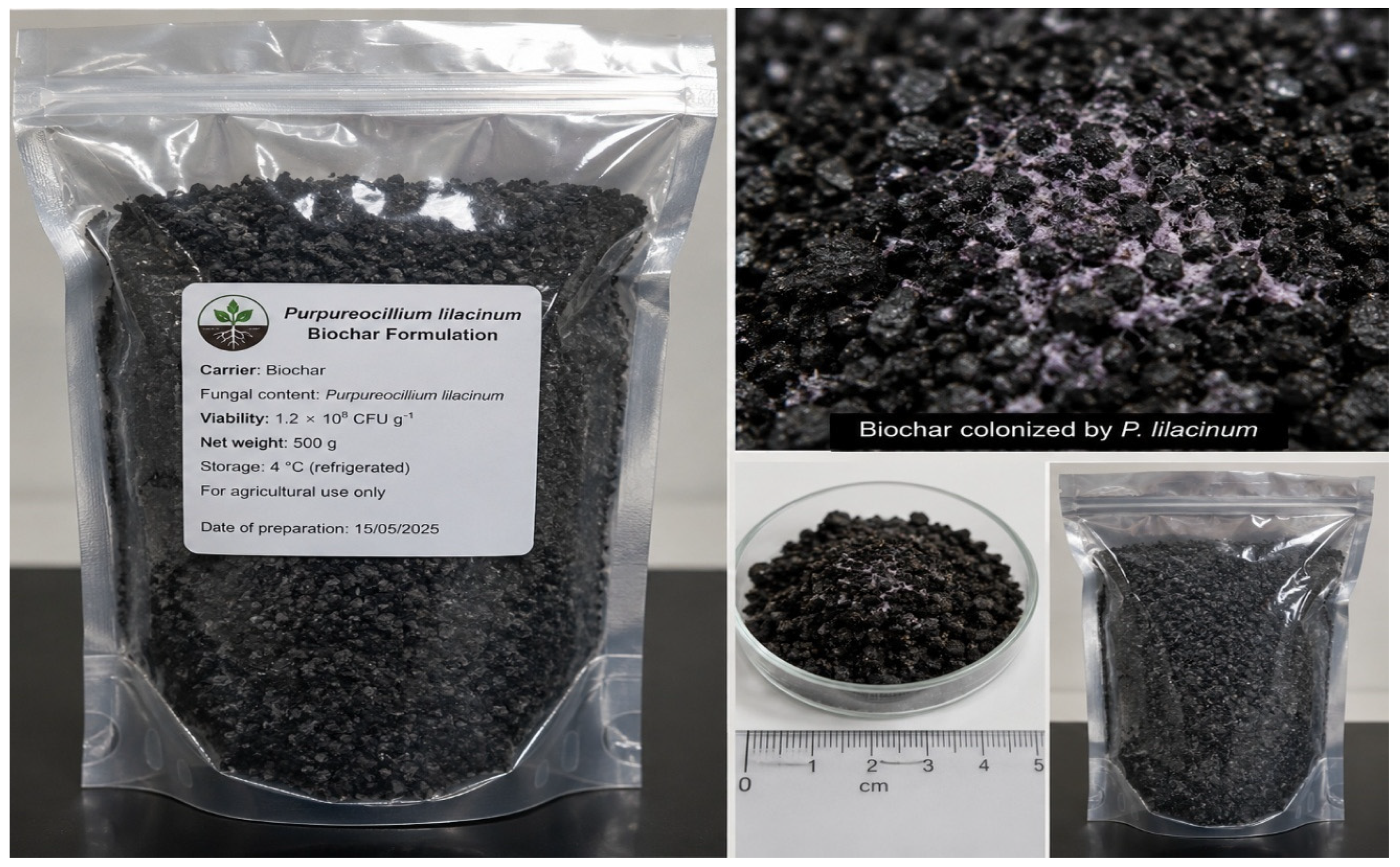
Figure 1: Representative appearance of the final biochar-loaded Purpureocillium lilacinum formulation. The formulation consisted of sterilized biochar particles colonized by Purpureocillium lilacinum and packed in sterile, sealed containers for refrigerated storage until field application. The magnified panel illustrates fungal colonization of the biochar particles, while the lower panels show the approximate particle size and final packaged formulation.
Irrigation treatments were scheduled according to crop evapotranspiration (ETc), calculated using the FAO-56 approach as follows: ETc = ETo × Kc where ETo is the reference evapotranspiration (mm day−1), calculated from daily climatic data obtained from the nearest meteorological station using the FAO Penman–Monteith equation, and Kc is the crop coefficient corresponding to the developmental stage of spearmint [34]. For calculation purposes, Kc values of 0.50, 0.75, 1.05, and 0.85 were used for the initial, crop-development, mid-season, and late-season stages, respectively.
Two irrigation regimes were imposed: full irrigation at 100% ETc and deficit irrigation at 75% ETc. All plots received equal irrigation during the first 14 days after transplanting to ensure successful crop establishment. Thereafter, irrigation treatments were initiated and maintained throughout the experimental period. Irrigation water was delivered through a drip irrigation system consisting of lateral lines spaced 0.70 m apart, and emitters spaced 0.30 m apart, with a nominal discharge rate of 4.0 L h−1.
Irrigation was applied every 2–3 days, depending on prevailing weather conditions. The amount of water applied at each irrigation event was calculated based on ETc, plot area, and an assumed irrigation-system efficiency of 90%. The seasonal irrigation water applied was approximately 5200 m3 ha−1 under the 100% ETc regime and 3900 m3 ha−1 under the 75% ETc regime. Irrigation duration was adjusted separately for each irrigation treatment, while irrigation frequency remained similar. The applied water volume was monitored using flow meters installed on the irrigation lines.
2.6 Plant Material and Growth Conditions
Uniform and healthy spearmint (Mentha spicata L.) seedlings were obtained from a certified commercial nursery located in Giza Governorate, Egypt. At transplanting, seedlings were approximately 6–8 weeks old, 12–15 cm in height, and had 4–6 fully developed leaves. Plants showing visible symptoms of nutrient deficiency, pest infestation, or mechanical damage were excluded.
Transplanting was carried out during the first week of March in both growing seasons. Seedlings were transplanted at 30 cm between plants and 45 cm between rows under drip irrigation. Each experimental subplot measured approximately 3.6 m2 and consisted of four rows, each 2.0 m long, with approximately 24 plants per subplot. The outer plants and terminal plants of each row were considered border plants, whereas plants from the central rows were used for measurements and sampling.
All plots received uniform agronomic management throughout both seasons. Phosphorus fertilizer was incorporated into the soil before transplanting at a rate equivalent to approximately 30–45 kg P2O5 ha−1. Nitrogen fertilizer was applied at a total rate of approximately 90–120 kg N ha−1 in three equal doses: after establishment, after the first cut, and during subsequent vegetative regrowth. Potassium fertilizer was applied at approximately 60–90 kg K2O ha−1 in two or three split applications. Fertilizers were supplied through the irrigation system or applied adjacent to the plant rows according to local production practices.
Weeds were removed manually whenever necessary. Pest and disease incidence was monitored regularly, and no pesticides were applied unless infestation exceeded the locally accepted economic threshold. All management practices were applied uniformly to all treatments. No additional microbial inoculants, biofertilizers, or soil amendments were applied except those specified in the experimental treatments.
Plants were harvested at approximately 50% flowering. Two cuts were obtained during each growing season. The first cut was conducted approximately 90–105 days after transplanting, and the second cut was performed approximately 60–75 days after the first.
The experiment was arranged as a split-plot design within a randomized complete block structure with three replicates. Irrigation regime was assigned to the main plots and consisted of two levels: 100% ETc and 75% ETc. Four soil bioformulation treatments were randomly assigned to the subplots within each main plot: untreated control, biochar alone, free P. lilacinum inoculation, and biochar-loaded P. lilacinum formulation.
Accordingly, the experiment included eight treatment combinations, resulting from the combination of two irrigation regimes and four bioformulation treatments. Each treatment combination was replicated three times, giving a total of 24 experimental subplots. This arrangement allowed assessment of the main effects of irrigation regime and bioformulation treatment, as well as their interaction, on soil water retention, soil physicochemical properties, plant growth, drought-related physiological responses, herb yield, essential oil percentage, essential oil yield, and essential oil composition of spearmint.
The biochar-loaded P. lilacinum formulation was evaluated for fungal viability, storage stability, moisture content, pH, and electrical conductivity (EC). These measurements were selected because the physicochemical properties of biochar carriers can influence microbial attachment, survival, and storage stability [35]. All measurements were performed in triplicate.
Fungal viability was determined immediately after formulation preparation and after 30 and 60 days of storage at 4°C. For each determination, 1.0 g of the formulation was aseptically transferred into 9.0 mL of sterile distilled water containing 0.05% (v/v) Tween 80. The suspension was vortexed thoroughly for 2–3 min to detach fungal propagules from the biochar particles. Serial tenfold dilutions were prepared, and 0.1 mL aliquots from the appropriate dilutions were spread onto PDA plates following the standard serial-dilution and viable plate-count procedure [36]. Plates were incubated at 25 ± 2°C for 3–5 days, after which colonies showing the characteristic morphology of P. lilacinum were counted. Plates containing approximately 30–300 colonies were used for enumeration.
The viable fungal population was expressed as CFU g−1 of formulation and calculated as follows: CFU g−1 = number of colonies × dilution factor × 10 where the factor 10 accounts for the 0.1 mL plated volume. Storage stability was assessed from changes in the viable fungal population during the 60-day storage period and expressed as CFU g−1 and as the percentage of the initial viable population remaining at each sampling time.
For pH determination, the formulation was mixed with distilled water at a 1:2.5 (w/v) ratio, shaken for 30 min, and allowed to equilibrate before measurement using a calibrated pH meter. Electrical conductivity was determined in a separate 1:5 (w/v) formulation-to-water extract using a calibrated EC meter, following general analytical procedures described for biochar materials [37]. The pH and EC meters were calibrated using appropriate standard buffer and conductivity solutions before analysis.
Moisture content was determined gravimetrically by drying approximately 5.0 g of formulation at 105°C until constant weight, following the general procedure described in ASTM D1762-84 [38]. Moisture content was calculated on a wet-weight basis as follows:
Moisture content (%) = [(fresh weight − oven-dry weight)/fresh weight] × 100.Soil samples were collected from the root zone after harvest during both growing seasons to evaluate the effects of irrigation regime and bioformulation treatments on soil physicochemical properties and microbial activity. Samples were air-dried, gently crushed, passed through a 2-mm sieve, and analyzed for organic matter (OM), water-holding capacity (WHC), bulk density, and available N, P, and K according to standard soil analysis procedures [31]. Soil organic matter was determined using the standard oxidation method. Available nitrogen, phosphorus, and potassium were determined using standard analytical procedures commonly applied for soil fertility assessment. Water-holding capacity was determined gravimetrically, whereas bulk density was measured using the core method [31].
Soil dehydrogenase activity was determined as an indicator of microbial activity using the colorimetric reduction of triphenyl tetrazolium chloride (TTC) to triphenyl formazan (TPF), and results were expressed as μg TPF g−1 soil h−1 [39].
2.10 Plant Growth, Physiological Traits, Essential Oil, and Leaf Nutrient Analysis
Plant growth and physiological measurements were recorded during each growing season. Plant height was measured from the soil surface to the terminal growing point, and the number of branches per plant was counted. Fresh biomass was recorded immediately after harvest, whereas dry biomass was determined after oven-drying plant samples at 70°C until constant weight. Chlorophyll content was estimated on fully expanded leaves using a SPAD chlorophyll meter [40]. Relative water content (RWC) was determined using fresh, turgid, and dry leaf weights [41]. Proline content was determined as a drought-stress indicator using the colorimetric method described by Bates et al. [42].
Essential oil was extracted from fresh spearmint aerial parts by hydrodistillation using a Clevenger-type apparatus [43]. Essential oil percentage was calculated on a fresh-weight basis, and essential oil yield was calculated relative to fresh herb yield. The chemical composition of the essential oil was analyzed using gas chromatography–mass spectrometry (GC–MS). The GC–MS analysis was performed using an Agilent 7890A gas chromatograph coupled to an Agilent 5975C mass selective detector and equipped with an HP-5MS capillary column (30 m × 0.25 mm, 0.25 μm film thickness). Helium was used as the carrier gas at a constant flow rate of 1.0 mL min−1. One microliter of diluted essential oil was injected in split mode, with the injector temperature set at 250°C. The oven temperature was programmed from 60°C to 240°C at 3°C min−1 and then held at 240°C for 10 min. The mass spectrometer was operated in electron-impact ionization mode at 70 eV, and mass spectra were recorded over the m/z 50–550 range. Volatile compounds were identified by comparing their mass spectra and retention behavior with the NIST mass spectral library and published mass spectral data [44]. The main identified constituents included carvone, limonene, 1,8-cineole, trans-carveol, cis-dihydrocarvone, β-caryophyllene, and germacrene D.
For leaf nutrient analysis, leaf samples were collected, washed with distilled water, oven-dried at 70°C until constant weight, ground, and digested for macroelement determination. The concentrations of P, K, Ca, and Mg in leaf tissues were determined using ICP-OES, whereas nitrogen was determined by the Kjeldahl method when applicable [45].
Data from each growing season were analyzed separately using analysis of variance appropriate for a split-plot randomized complete block design with three blocks. Irrigation regime was considered the main-plot factor, whereas bioformulation treatment was considered the subplot factor. The statistical model evaluated the effects of irrigation regime, bioformulation treatment, and their interaction using the appropriate whole-plot and subplot error terms. When significant effects were detected, irrigation regime × bioformulation treatment combination means were separated using Tukey’s honestly significant difference test at p ≤ 0.05. Data are presented as means ± standard deviation (n = 3).
3.1 Initial Soil Characteristics
The initial soil analysis showed that the experimental soil was sandy in texture, with low organic matter content and relatively low available macronutrient levels (Table 2). These baseline soil characteristics were used to describe the initial field condition before treatment application.
Table 2: Some physical and chemical properties of the experimental soil.
| Category | Soil Characteristic | Value |
|---|---|---|
| Particle-size distribution | Coarse sand (%) | 50.4 |
| Fine sand (%) | 40.4 | |
| Silt (%) | 3.20 | |
| Clay (%) | 6.00 | |
| Texture class | Sandy | |
| Chemical properties | CaCO3 (%) | 1.40 |
| pH (1:2.5 soil:water suspension) | 7.92 | |
| EC, saturated paste extract (dS m−1) | 0.37 | |
| Organic matter (%) | 0.32 | |
| Soluble cations | Ca2+ (meq L−1) | 0.94 |
| Mg2+ (meq L−1) | 0.89 | |
| Na+ (meq L−1) | 1.45 | |
| K+ (meq L−1) | 0.45 | |
| Soluble anions | CO32− (meq L−1) | ND |
| HCO3− (meq L−1) | 1.42 | |
| Cl− (meq L−1) | 1.02 | |
| SO42− (meq L−1) | 1.29 | |
| Available nutrients | Nitrogen (N; mg kg−1) | 40.0 |
| Phosphorus (P; mg kg−1) | 15.0 | |
| Potassium (K; mg kg−1) | 67.0 |
3.2 Shelf-Life Stability of Biochar-Loaded Purpureocillium lilacinum Formulation
Before formulation preparation, the conidial suspension showed viability greater than 90% and was therefore used to prepare the free fungal inoculum and the biochar-loaded formulation. The biochar-loaded Purpureocillium lilacinum formulation maintained relatively high fungal viability during storage, although viable counts declined gradually over time (Table 3). The viable population decreased from 8.30 × 10⁷ CFU g−1 at preparation to 6.75 × 10⁷ CFU g−1 after 30 days and 5.10 × 10⁷ CFU g−1 after 60 days. Similarly, log10 CFU values declined from 7.92 at day 0 to 7.83 and 7.71 after 30 and 60 days, respectively. Moisture content decreased from 28.6% at preparation to 26.9% after 30 days and 24.8% after 60 days. By contrast, pH and EC showed only minor changes during the storage period, ranging from 6.82 to 6.74 and from 0.91 to 0.95 dS m−1, respectively.
Table 3: Shelf-life stability of the biochar-loaded Purpureocillium lilacinum formulation during storage.
| Storage Time | Viable Count (CFU g−1 Formulation) | Log10 CFU g−1 | Moisture Content (%) | pH | EC (dS m−1) |
|---|---|---|---|---|---|
| Day 0 | (8.30 ± 0.42) × 107a | 7.92 ± 0.02a | 28.6 ± 0.9a | 6.82 ± 0.05a | 0.91 ± 0.03a |
| Day 30 | (6.75 ± 0.35) × 107b | 7.83 ± 0.02b | 26.9 ± 0.8b | 6.78 ± 0.04a | 0.93 ± 0.04a |
| Day 60 | (5.10 ± 0.31) × 107c | 7.71 ± 0.03c | 24.8 ± 0.7c | 6.74 ± 0.06a | 0.95 ± 0.03a |
3.3 Effects on Soil Organic Matter, Water-Holding Capacity, Bulk Density, and Available Macronutrients
Table 4 presents the effects of irrigation regime and bioformulation treatments on soil organic matter, water-holding capacity, and bulk density during the two growing seasons. In both seasons, deficit irrigation at 75% ETc recorded lower soil organic matter and water-holding capacity, and higher bulk density, than full irrigation at 100% ETc. Across irrigation regimes, biochar only, free Purpureocillium lilacinum, and biochar-loaded Purpureocillium lilacinum recorded higher soil organic matter and water-holding capacity and lower bulk density than the untreated control.
The biochar-loaded Purpureocillium lilacinum formulation recorded the highest soil organic matter and water-holding capacity and the lowest bulk density under both irrigation regimes and in both seasons. Under 100% ETc, this treatment recorded organic matter values of 0.88 and 0.96% in the first and second seasons, respectively, compared with 0.48 and 0.51% in the untreated control. Water-holding capacity reached 31.4 and 33.0%, whereas bulk density decreased to 1.36 and 1.32 g cm−3 in the first and second seasons, respectively. Under 75% ETc, the same treatment recorded organic matter values of 0.79 and 0.87%, water-holding capacity values of 28.6 and 30.1%, and bulk density values of 1.40 and 1.36 g cm−3 in the first and second seasons, respectively.
Table 4: Effects of irrigation regimes and bioformulation treatments on soil organic matter, water-holding capacity, and bulk density during two growing seasons. Data were analyzed using split-plot analysis of variance, and means were separated using Tukey’s HSD test at p ≤ 0.05.
| Bioformulation Treatment | First Season | Second Season | ||||
|---|---|---|---|---|---|---|
| 100% ETc | 75% ETc | Treatment Mean | 100% ETc | 75% ETc | Treatment Mean | |
| Organic matter (%) | ||||||
| Control | 0.48 ± 0.02f | 0.43 ± 0.02g | 0.46D | 0.51 ± 0.02f | 0.46 ± 0.02g | 0.49D |
| Biochar only | 0.72 ± 0.03c | 0.66 ± 0.03d | 0.69B | 0.78 ± 0.03c | 0.72 ± 0.03d | 0.75B |
| Free Purpureocillium lilacinum | 0.61 ± 0.03d | 0.55 ± 0.02e | 0.58C | 0.66 ± 0.03d | 0.60 ± 0.03e | 0.63C |
| Biochar-loaded Purpureocillium lilacinum | 0.88 ± 0.04a | 0.79 ± 0.03b | 0.84A | 0.96 ± 0.04a | 0.87 ± 0.04b | 0.92A |
| Irrigation mean | 0.67I | 0.61II | 0.73I | 0.66II | ||
| Water-holding capacity (%) | ||||||
| Control | 18.6 ± 0.7f | 15.9 ± 0.6g | 17.25D | 19.2 ± 0.8f | 16.7 ± 0.7g | 17.95D |
| Biochar only | 25.8 ± 1.0c | 23.4 ± 0.9d | 24.60B | 27.1 ± 1.1c | 24.6 ± 1.0d | 25.85B |
| Free Purpureocillium lilacinum | 21.7 ± 0.9d | 19.8 ± 0.8e | 20.75C | 22.8 ± 0.9d | 20.9 ± 0.8e | 21.85C |
| Biochar-loaded Purpureocillium lilacinum | 31.4 ± 1.2a | 28.6 ± 1.1b | 30.00A | 33.0 ± 1.3a | 30.1 ± 1.2b | 31.55A |
| Irrigation mean | 24.38I | 21.93II | 25.53I | 23.08II | ||
| Bulk density (g cm−3) | ||||||
| Control | 1.58 ± 0.04a | 1.62 ± 0.04a | 1.60A | 1.56 ± 0.03a | 1.60 ± 0.04a | 1.58A |
| Biochar only | 1.45 ± 0.03c | 1.48 ± 0.03bc | 1.47C | 1.42 ± 0.03c | 1.45 ± 0.03bc | 1.44C |
| Free Purpureocillium lilacinum | 1.52 ± 0.03b | 1.55 ± 0.04ab | 1.54B | 1.49 ± 0.03b | 1.52 ± 0.03ab | 1.51B |
| Biochar-loaded Purpureocillium lilacinum | 1.36 ± 0.02e | 1.40 ± 0.03d | 1.38D | 1.32 ± 0.02e | 1.36 ± 0.02d | 1.34D |
| Irrigation mean | 1.48II | 1.51I | 1.45II | 1.48I | ||
Table 5 presents the effects of irrigation regime and bioformulation treatments on soil available nitrogen, phosphorus, and potassium during the two growing seasons. In both seasons, deficit irrigation at 75% ETc recorded lower available N, P, and K than full irrigation at 100% ETc. Across irrigation regimes, biochar only, free Purpureocillium lilacinum, and biochar-loaded Purpureocillium lilacinum recorded higher available N, P, and K than the untreated control.
The biochar-loaded Purpureocillium lilacinum formulation recorded the highest available N, P, and K values under both irrigation regimes and in both seasons. Under 100% ETc, available N reached 68.9 and 73.2 mg kg−1 in the first and second seasons, respectively, compared with 42.6 and 44.1 mg kg−1 in the untreated control. Available P reached 9.1 and 9.8 mg kg−1, whereas available K reached 232 and 244 mg kg−1 in the first and second seasons, respectively. Under 75% ETc, the biochar-loaded Purpureocillium lilacinum formulation recorded available N values of 61.7 and 66.4 mg kg−1, available p values of 8.0 and 8.7 mg kg−1, and available K values of 214 and 226 mg kg−1 in the first and second seasons, respectively.
Table 5: Effects of irrigation regimes and bioformulation treatments on available nitrogen, phosphorus, and potassium in soil during two growing seasons. Data were analyzed using split-plot analysis of variance, and means were separated using Tukey’s HSD test at p ≤ 0.05.
| Bioformulation Treatment | First Season | Second Season | ||||
|---|---|---|---|---|---|---|
| 100% ETc | 75% ETc | Treatment Mean | 100% ETc | 75% ETc | Treatment Mean | |
| Available Nitrogen (mg kg−1) | ||||||
| Control | 42.6 ± 1.7f | 37.8 ± 1.5g | 40.20D | 44.1 ± 1.8f | 39.4 ± 1.6g | 41.75D |
| Biochar only | 56.8 ± 2.1c | 50.2 ± 1.9d | 53.50B | 60.3 ± 2.3c | 53.7 ± 2.0d | 57.00B |
| Free Purpureocillium lilacinum | 52.4 ± 2.0d | 46.5 ± 1.8e | 49.45C | 55.6 ± 2.1d | 49.6 ± 1.9e | 52.60C |
| Biochar-loaded Purpureocillium lilacinum | 68.9 ± 2.5a | 61.7 ± 2.3b | 65.30A | 73.2 ± 2.7a | 66.4 ± 2.5b | 69.80A |
| Irrigation mean | 55.18I | 49.05II | 58.30I | 52.28II | ||
| Available phosphorus (mg kg−1) | ||||||
| Control | 5.2 ± 0.3f | 4.6 ± 0.2g | 4.90D | 5.5 ± 0.3f | 4.9 ± 0.3g | 5.20D |
| Biochar only | 7.4 ± 0.4c | 6.5 ± 0.3d | 6.95B | 7.9 ± 0.4c | 7.0 ± 0.3d | 7.45B |
| Free Purpureocillium lilacinum | 6.8 ± 0.3d | 5.9 ± 0.3e | 6.35C | 7.2 ± 0.4d | 6.3 ± 0.3e | 6.75C |
| Biochar-loaded Purpureocillium lilacinum | 9.1 ± 0.4a | 8.0 ± 0.4b | 8.55A | 9.8 ± 0.5a | 8.7 ± 0.4b | 9.25A |
| Irrigation mean | 7.13I | 6.25II | 7.60I | 6.73II | ||
| Available potassium (mg kg−1) | ||||||
| Control | 158 ± 6f | 145 ± 5g | 151.50D | 164 ± 6f | 151 ± 6g | 157.50D |
| Biochar only | 198 ± 7c | 181 ± 7d | 189.50B | 207 ± 8c | 190 ± 7d | 198.50B |
| Free Purpureocillium lilacinum | 186 ± 7d | 170 ± 6e | 178.00C | 194 ± 7d | 178 ± 6e | 186.00C |
| Biochar-loaded Purpureocillium lilacinum | 232 ± 8a | 214 ± 8b | 223.00A | 244 ± 9a | 226 ± 8b | 235.00A |
| Irrigation mean | 193.50I | 177.50II | 202.25I | 186.25II | ||
The results presented in Fig. 2 show that irrigation regime and bioformulation treatments affected vegetative growth and biomass accumulation in spearmint during both growing seasons. Deficit irrigation at 75% ETc recorded lower plant height, branch number, fresh biomass, and dry biomass than full irrigation at 100% ETc. Across both irrigation regimes, biochar only, free Purpureocillium lilacinum, and biochar-loaded Purpureocillium lilacinum recorded higher values for all growth traits than the untreated control.
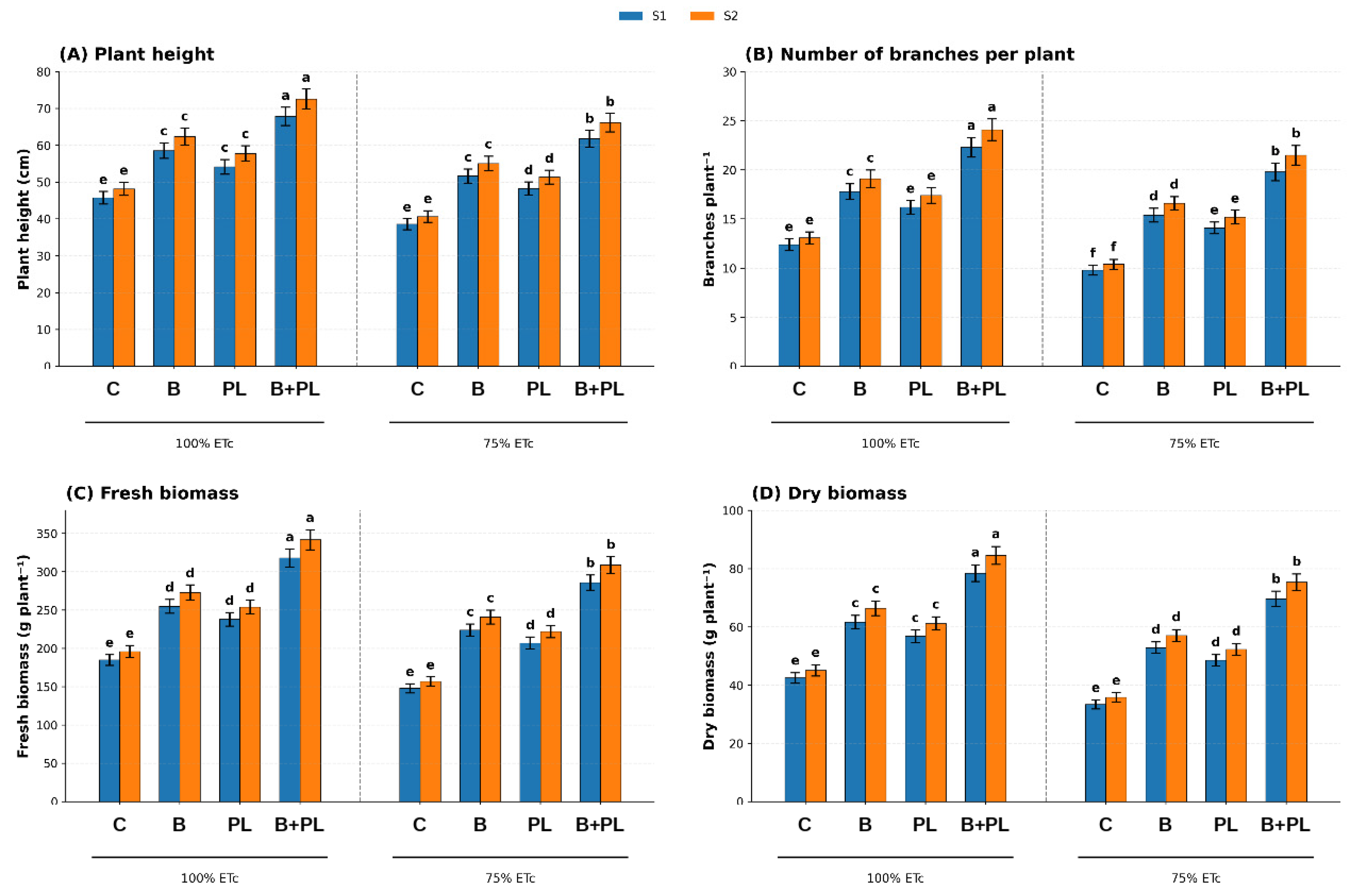
Figure 2: Effects of irrigation regimes and bioformulation treatments on plant height (A), number of branches per plant (B), fresh biomass (C), and dry biomass (D) of spearmint (Mentha spicata L.) During the first (S1) and second (S2) growing seasons. Bars represent means ± standard deviation (n = 3). Within each growing season, different lowercase letters indicate significant differences among irrigation regime × bioformulation treatment combinations according to split-plot analysis of variance followed by Tukey’s HSD test at p ≤ 0.05. ETc: crop evapotranspiration, C: control, B: biochar only, P: free Purpureocillium lilacinum, B+PL: biochar-loaded Purpureocillium lilacinum.
The biochar-loaded Purpureocillium lilacinum formulation recorded the highest plant height, number of branches, fresh biomass, and dry biomass under both irrigation regimes and in both seasons. Under 75% ETc, this treatment maintained higher growth and biomass values than the untreated control, biochar only, and free Purpureocillium lilacinum treatments. Growth and biomass values were generally higher in the second season than in the first season across most treatment combinations.
The results presented in Fig. 3 show that irrigation regime and bioformulation treatments affected SPAD chlorophyll value, relative water content (RWC), and proline content in spearmint during both growing seasons. Deficit irrigation at 75% ETc recorded lower SPAD and RWC values and higher proline content than full irrigation at 100% ETc. Across both irrigation regimes, biochar only, free Purpureocillium lilacinum, and biochar-loaded Purpureocillium lilacinum recorded higher SPAD and RWC values than the untreated control.
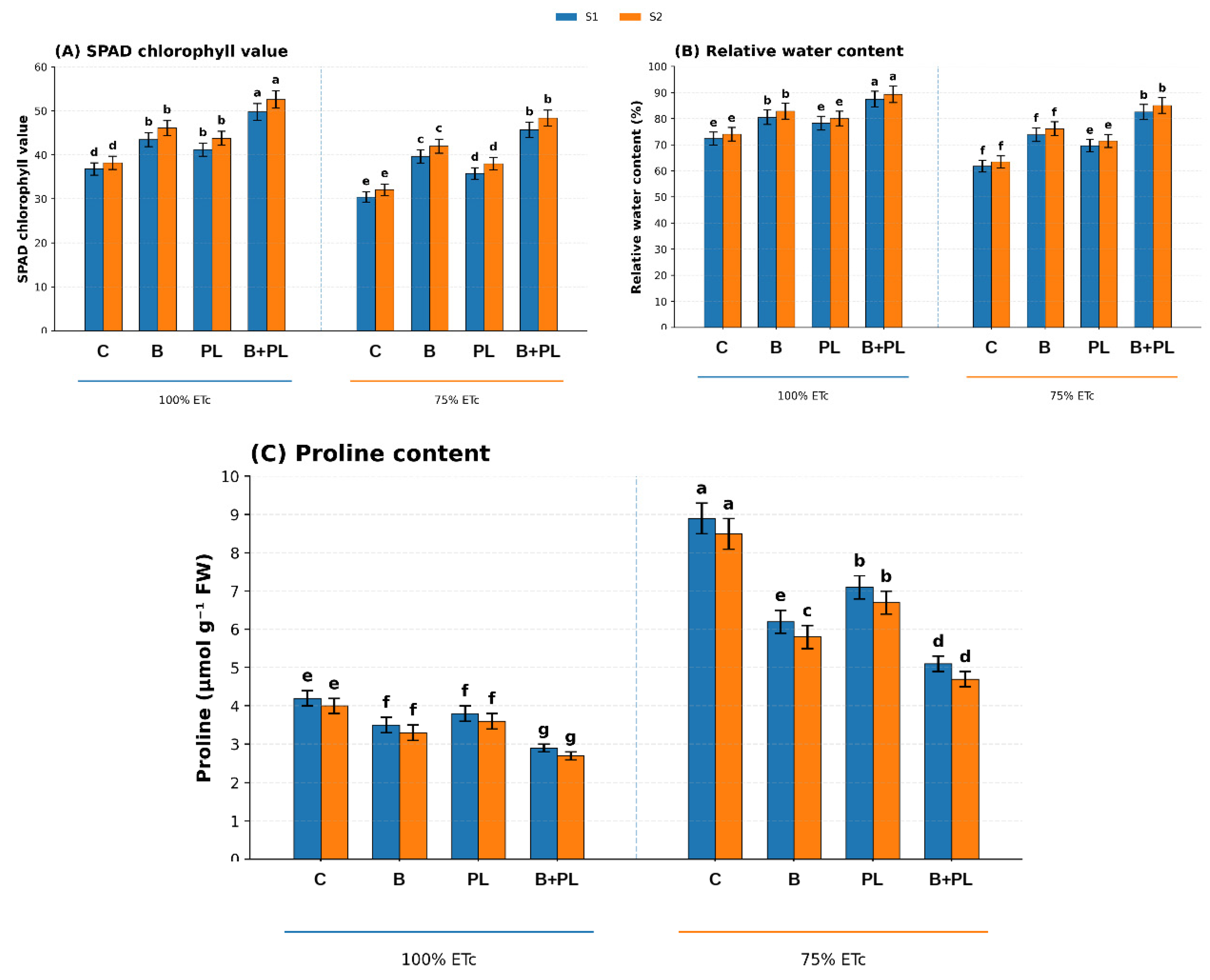
Figure 3: Effects of irrigation regimes and bioformulation treatments on SPAD chlorophyll value (A), relative water content (B), and proline content (C) of spearmint (Mentha spicata L.) During the first (S1) and second (S2) growing seasons. Bars represent means ± standard deviation (n = 3). Within each growing season, different lowercase letters indicate significant differences among irrigation regime × bioformulation treatment combinations according to split-plot analysis of variance followed by Tukey’s HSD test at p ≤ 0.05. ETc: crop evapotranspiration; FW: fresh weight. C: control, B: biochar only, P: free Purpureocillium lilacinum, B+PL: biochar-loaded Purpureocillium lilacinum.
The biochar-loaded Purpureocillium lilacinum formulation recorded the highest SPAD and RWC values under both irrigation regimes and in both seasons. Under 75% ETc, this treatment also recorded lower proline content than the untreated control and the individual biochar-only or free Purpureocillium lilacinum treatments. Physiological trait values were generally higher in the second season than in the first season across most treatment combinations, whereas proline accumulation was highest in the untreated control under 75% ETc.
The results presented in Fig. 4 show that irrigation regime and bioformulation treatments affected leaf macroelement concentrations of spearmint during both growing seasons. Plants grown under full irrigation at 100% ETc recorded higher concentrations of N, P, K, Ca, and Mg than those grown under deficit irrigation at 75% ETc. The untreated control recorded the lowest leaf macroelement concentrations under both irrigation regimes and in both seasons.
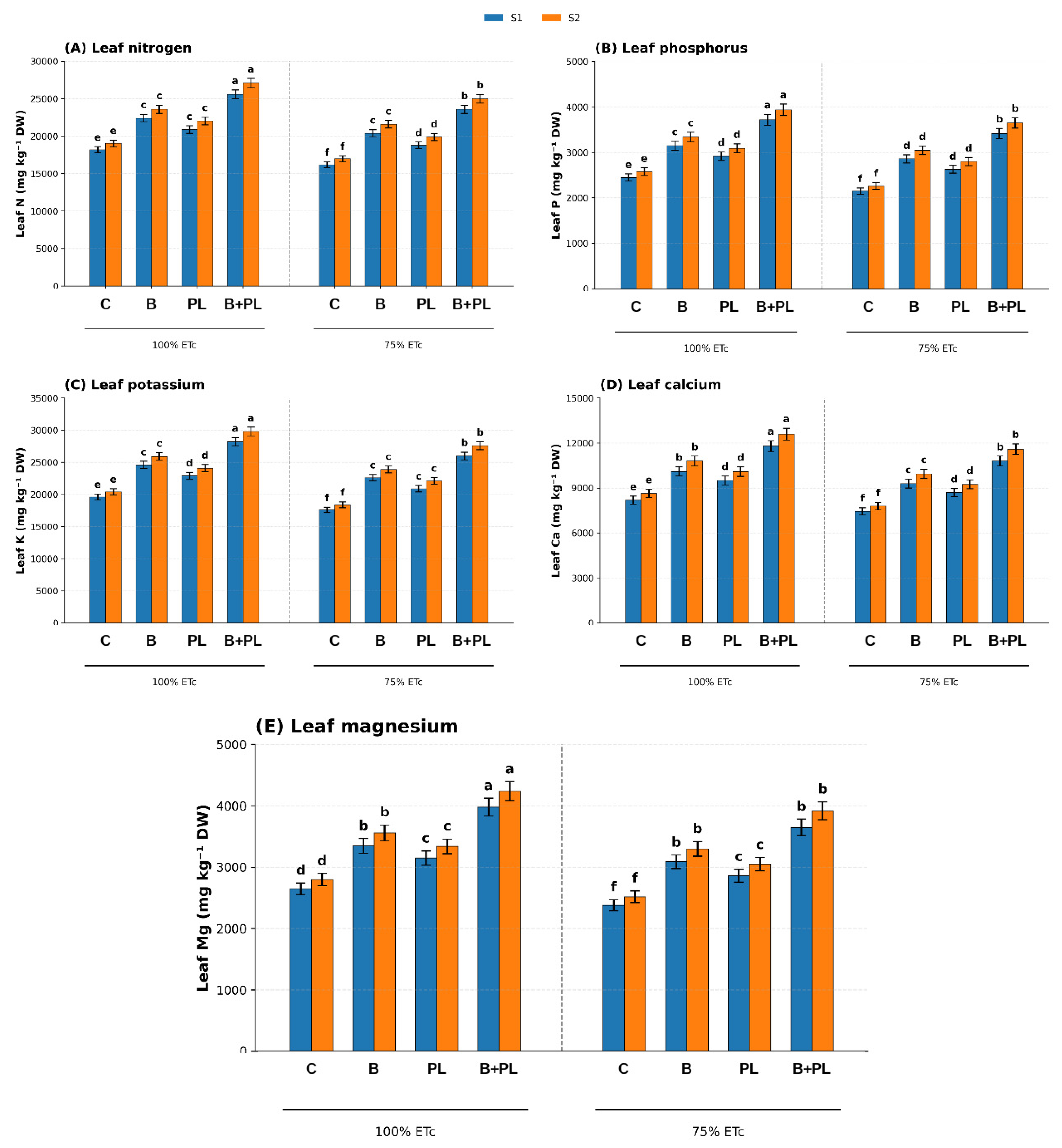
Figure 4: Effects of irrigation regimes and bioformulation treatments on leaf nitrogen (A), phosphorus (B), potassium (C), calcium (D), and magnesium (E) concentrations in spearmint (Mentha spicata L.) During the first (S1) and second (S2) growing seasons. Bars represent means ± standard deviation (n = 3). Within each growing season, different lowercase letters indicate significant differences among irrigation regime × bioformulation treatment combinations according to split-plot analysis of variance followed by Tukey’s HSD test at p ≤ 0.05. ETc: crop evapotranspiration; DW: dry weight. C: control, B: biochar only, P: free Purpureocillium lilacinum, B+PL: biochar-loaded Purpureocillium lilacinum.
Across irrigation regimes, biochar only, free Purpureocillium lilacinum, and biochar-loaded Purpureocillium lilacinum recorded higher leaf N, P, K, Ca, and Mg concentrations than the untreated control. The biochar-loaded Purpureocillium lilacinum formulation recorded the highest concentrations of all measured macroelements under both irrigation regimes and in both seasons. Under 75% ETc, this treatment maintained higher leaf macroelement concentrations than the untreated control, biochar only, and free Purpureocillium lilacinum treatments.
The results presented in Fig. 5 demonstrate that irrigation regimes and bioformulation treatments markedly influenced the percentage and yield of essential oil and soil dehydrogenase activity in spearmint during both growing seasons. In general, deficit irrigation at 75% ETc reduced essential oil yield and soil dehydrogenase activity compared with full irrigation at 100% ETc. This response can be explained by the negative effects of water limitation on plant biomass accumulation, root activity, nutrient uptake, and soil microbial processes. Since essential oil yield depends not only on oil percentage but also on total fresh herb biomass, any reduction in vegetative growth under deficit irrigation is expected to reduce the final oil yield per plant.
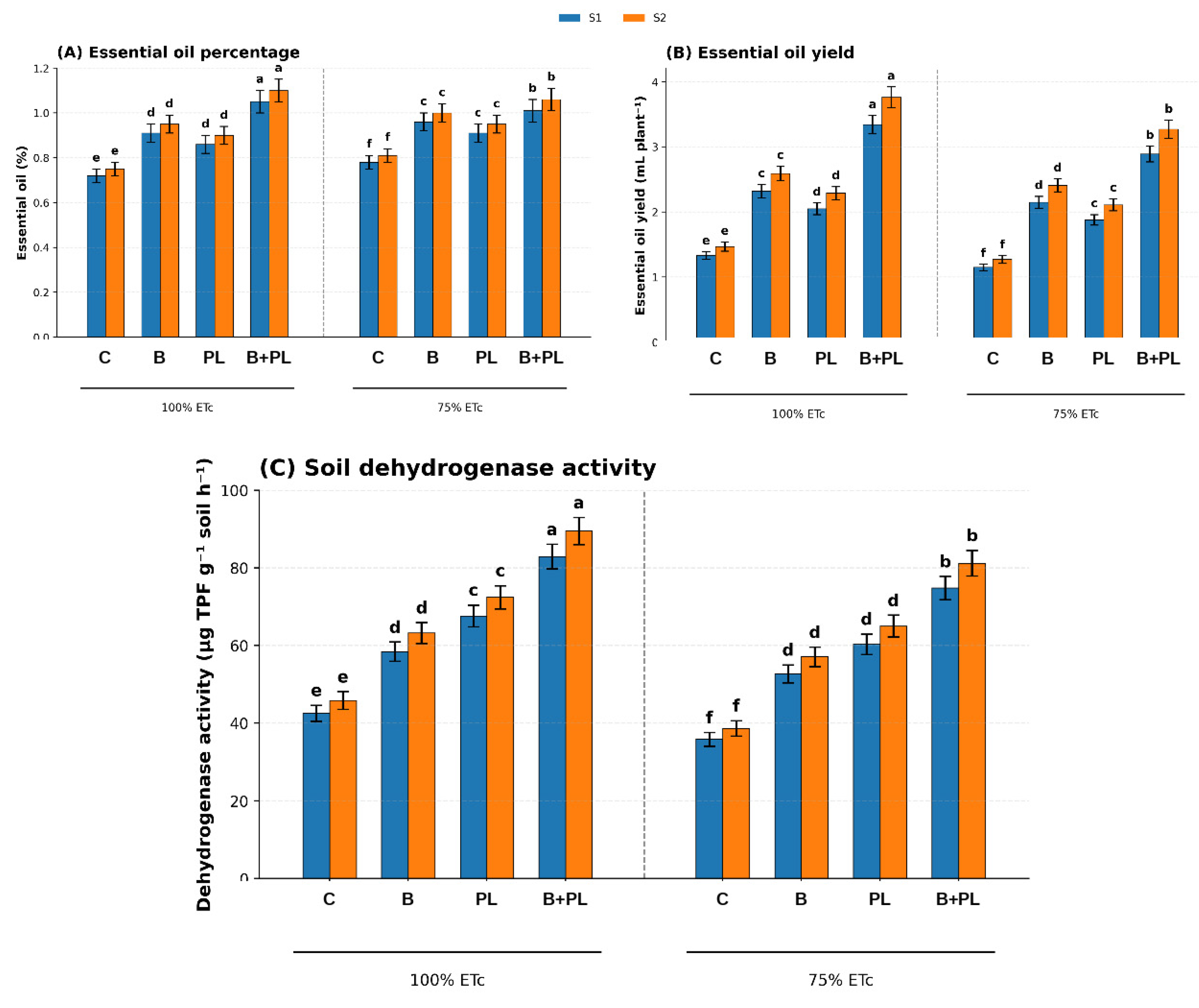
Figure 5: Effects of irrigation regimes and bioformulation treatments on essential oil percentage (A), essential oil yield (B), and soil dehydrogenase activity (C) of spearmint (Mentha spicata L.) During the first (S1) and second (S2) growing seasons. Bars represent means ± standard deviation (n = 3). Within each growing season, different lowercase letters indicate significant differences among irrigation regime × bioformulation treatment combinations according to split-plot analysis of variance followed by Tukey’s HSD test at p ≤ 0.05. ETc: crop evapotranspiration; TPF: triphenyl formazan. C: control, B: biochar only, P: free Purpureocillium lilacinum, B+PL: biochar-loaded Purpureocillium lilacinum.
Interestingly, the essential oil percentage showed a slightly different response from the essential oil yield. Under deficit irrigation, oil percentage was not always reduced and, in some cases, appeared slightly higher than the corresponding control under full irrigation. This may reflect a common response in aromatic plants, in which moderate water stress can stimulate secondary metabolism and increase the relative accumulation of certain volatile compounds. However, this increase in oil percentage does not necessarily mean higher productivity, because the reduction in fresh biomass under water stress can offset the increase in oil concentration. Therefore, essential oil yield is a more practical indicator of commercial productivity than oil percentage alone. Across both irrigation regimes, biochar only, free Purpureocillium lilacinum, and biochar-loaded P. lilacinum increased essential oil percentage and yield compared with the untreated control. Biochar alone enhanced oil productivity, most likely by improving soil water-holding capacity, reducing nutrient loss, and maintaining better root-zone conditions. These improvements may have supported higher photosynthetic activity and biomass production, which are essential for oil biosynthesis and accumulation. In addition, improved potassium and calcium availability under biochar treatments may have contributed to better physiological activity and secondary metabolite formation.
Free P. lilacinum inoculation also increased essential oil traits compared with the control, indicating the fungus’s beneficial role in improving plant performance. This effect may be related to enhanced rhizosphere activity, nutrient mobilization, and improved plant physiological status. However, the performance of free fungal inoculation was generally lower than that of the biochar-loaded formulation, particularly under deficit irrigation. This suggests that applying the fungus without a protective carrier may reduce its survival, persistence, and functional efficiency in sandy soil, especially when water availability is limited. The biochar-loaded P. lilacinum formulation recorded the highest essential oil percentage and essential oil yield under both irrigation regimes and in both seasons. This confirms the complementary interaction between biochar and the fungal inoculant. Biochar likely acted as a protective carrier for P. lilacinum, enhancing fungal survival and establishment in the rhizosphere while improving soil moisture retention and nutrient availability. Meanwhile, the fungal component may have contributed to better root activity, nutrient uptake, and physiological performance. Together, these effects supported greater biomass production and enhanced oil biosynthesis. Soil dehydrogenase activity followed a similar trend, with the highest values recorded under biochar-loaded P. lilacinum. Dehydrogenase activity is considered an indicator of overall microbial oxidative activity in soil; therefore, its increase suggests improved microbial functioning and biological activity in the rhizosphere. The reduction in dehydrogenase activity under deficit irrigation indicates that water limitation suppressed microbial processes, whereas the biochar-loaded formulation helped maintain higher biological activity even under 75% ETc. This is particularly important in sandy soils, where microbial activity is often limited by low organic matter and poor moisture retention. The slight improvement observed in the second season may be attributed to cumulative effects of biochar persistence, improved soil structure, enhanced water retention, and better fungal establishment over time. Overall, the results indicate that biochar-loaded P. lilacinum was the most effective treatment for improving both the biological quality of the soil and spearmint’s essential oil productivity. The treatment was especially valuable under deficit irrigation, where it reduced the negative impact of water stress and maintained relatively high oil yield and microbial activity.
Fig. 6 and Fig. 7 show the GC–MS chromatograms of spearmint essential oil during the first season in both S1–C1 and S1–C2, clearly demonstrating that the irrigation regime and bioformulation treatments influenced the volatile profile of the extracted oil. The chromatographic pattern was characterized by the appearance of several major volatile constituents typically associated with spearmint essential oil, particularly carvone and limonene, which represented the most dominant peaks. Other detected compounds, including α-pinene, β-pinene, β-myrcene, 1,8-cineole, trans-carveol, cis-dihydrocarvone, β-caryophyllene, and germacrene D, appeared as secondary constituents contributing to the overall essential oil profile. In both S1–C1 and S1–C2, the untreated control under 75% ETc showed the lowest peak intensities, indicating that deficit irrigation without amendment reduced the accumulation of the main volatile constituents. This reduction may be attributed to the negative effect of water limitation on plant growth, nutrient uptake, photosynthetic activity, and secondary metabolite biosynthesis. The 100% ETc control showed relatively higher peak responses than the 75% ETc control, confirming the positive role of adequate irrigation in supporting essential oil formation. The application of biochar-loaded Purpureocillium lilacinum markedly enhanced the GC–MS profile under both irrigation regimes. Under 100% ETc, this treatment produced the strongest chromatographic response, with clear increases in the major peaks, especially carvone and limonene. This indicates that the combined biochar–fungal formulation improved the physiological and nutritional status of spearmint, thereby enhancing the biosynthesis and accumulation of major monoterpenes. Biochar likely improved soil water retention, nutrient availability, and root-zone conditions, while P. lilacinum contributed to rhizosphere activity and nutrient mobilization. Under 75% ETc, biochar-loaded P. lilacinum maintained a stronger and more balanced chromatographic profile than the untreated deficit-irrigated control. This suggests that the formulation helped mitigate the adverse effects of water deficit on essential oil composition. Although deficit irrigation reduced the overall peak intensities compared with full irrigation, the biochar-loaded treatment preserved the main volatile constituents and supported higher relative abundance of key compounds. Overall, comparisons of S1–C1 and S1–C2 revealed that the qualitative composition of spearmint essential oil remained broadly stable, while the relative intensities of major peaks varied with irrigation level and bioformulation treatment. The biochar-loaded P. lilacinum formulation was the most effective treatment in enhancing the chromatographic profile of spearmint essential oil, particularly through increasing the abundance of carvone, limonene, and related monoterpenes. These results support the role of biochar-based fungal bioformulation as an effective strategy for improving essential oil quality and maintaining volatile compound production under deficit irrigation conditions.
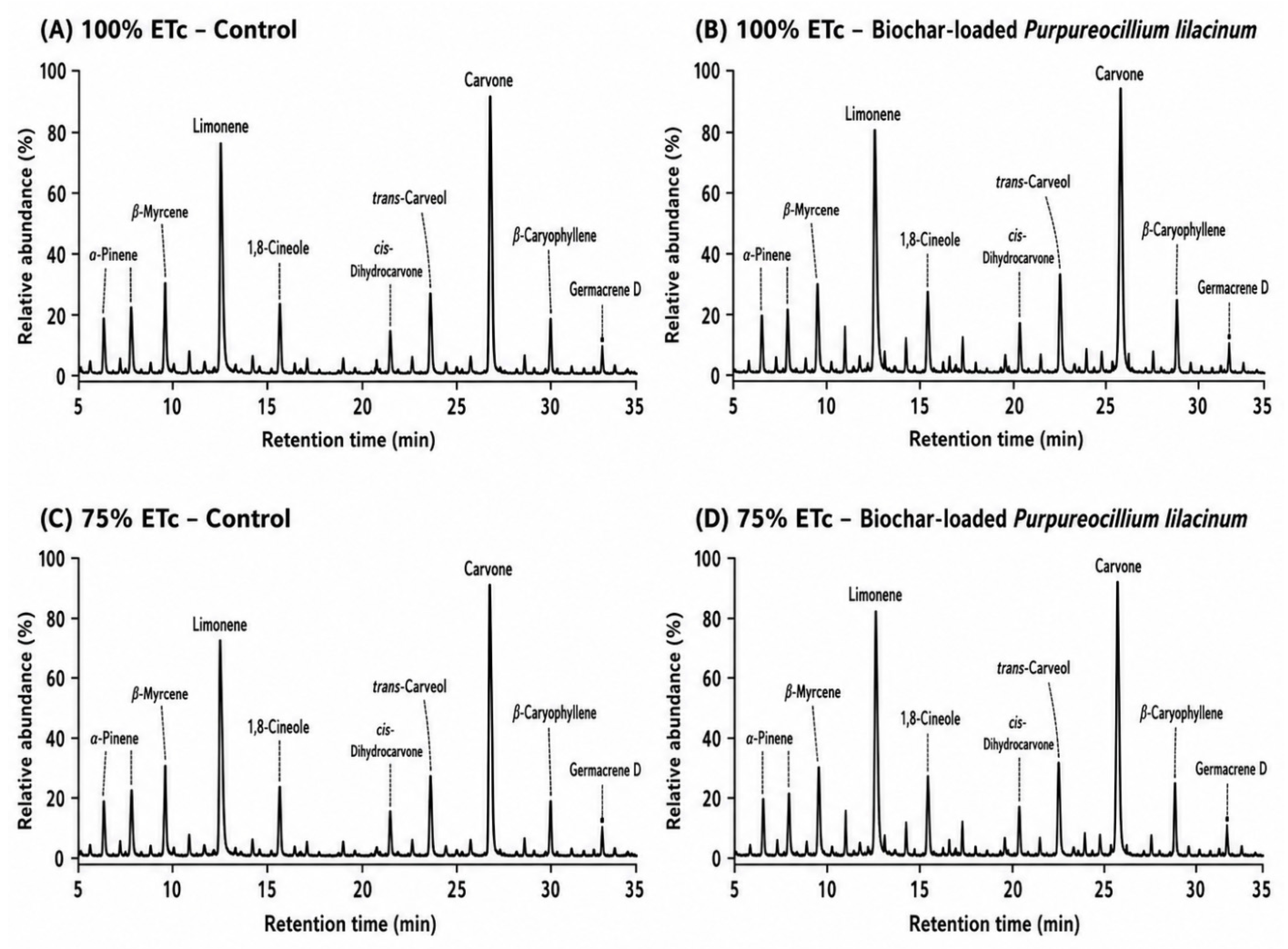
Figure 6: Representative GC–MS chromatograms of spearmint (Mentha spicata L.) Essential oil obtained during the first cut of the first growing season (S1–C1) under 100% ETc with the untreated control (A), 100% ETc with the biochar-loaded Purpureocillium lilacinum formulation (B), 75% ETc with the untreated control (C), and 75% ETc with the biochar-loaded Purpureocillium lilacinum formulation (D). The major identified volatile compounds and their retention times are indicated above the corresponding peaks. ETc: crop evapotranspiration; GC–MS: gas chromatography–mass spectrometry.
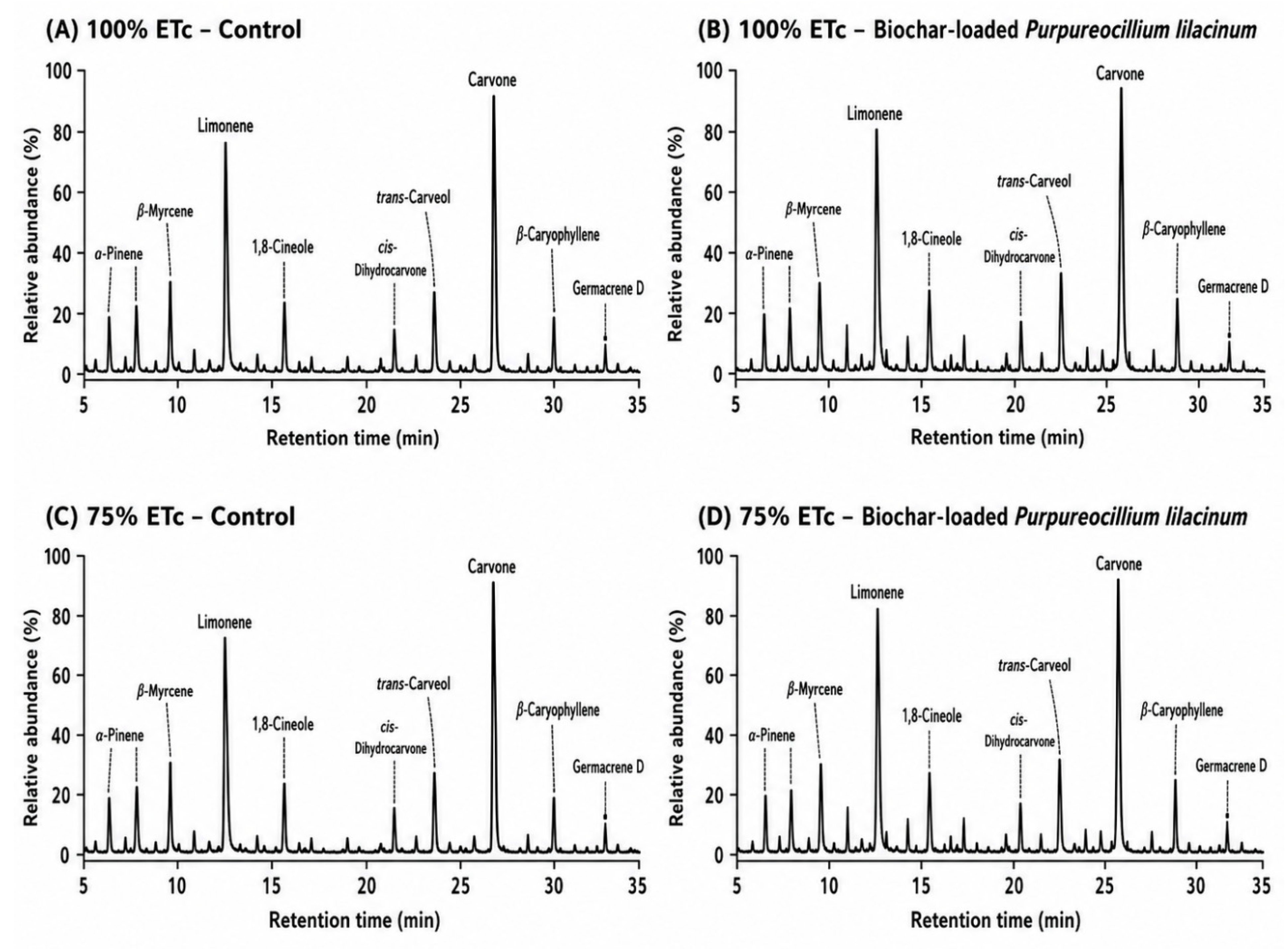
Figure 7: Representative GC–MS chromatograms of spearmint (Mentha spicata L.) Essential oil obtained during the second cut of the first growing season (S1–C2) under 100% ETc with the untreated control (A), 100% ETc with the biochar-loaded Purpureocillium lilacinum formulation (B), 75% ETc with the untreated control (C), and 75% ETc with the biochar-loaded Purpureocillium lilacinum formulation (D). The major identified volatile compounds and their retention times are indicated above the corresponding peaks. ETc: crop evapotranspiration; GC–MS: gas chromatography–mass spectrometry.
The present study showed that the biochar-loaded Purpureocillium lilacinum formulation was more effective than either biochar alone or free fungal inoculation in improving soil quality, plant growth, physiological performance, mineral nutrition, essential oil productivity, and soil biological activity of spearmint under both full and deficit irrigation. This response suggests that the combined formulation acted through complementary soil-conditioning and biological mechanisms. Biochar improved the physical and chemical conditions of the sandy soil, whereas P. lilacinum likely enhanced rhizosphere biological activity and supported plant growth. This integrated effect was particularly relevant under 75% ETc, where a restricted water supply can reduce nutrient mobility, microbial activity, root functioning, and biomass accumulation. The result is also consistent with the broader interest in biologically based crop-support strategies under stressful field conditions [28,29,30].
From a physiological perspective, the improved performance under deficit irrigation appears to result from the combined contribution of both formulation components rather than from a single mechanism. Biochar probably played the primary structural role by improving soil water retention and nutrient conservation in sandy soil, whereas Purpureocillium lilacinum may have contributed biologically by supporting rhizosphere activity, root functioning, and nutrient acquisition. Because root architecture and phytohormone production were not directly measured, any direct hormonal stimulation by the fungus remains a hypothesis that requires further verification.
The improvements in soil organic matter, water-holding capacity, and bulk density under biochar-containing treatments are consistent with biochar’s known capacity to modify the physical structure of coarse-textured soils. Because biochar particles generally possess high porosity, low bulk density, and large surface area, their incorporation can improve pore distribution, increase water retention, and reduce rapid drainage [46,47]. These effects are especially important in sandy soils, where low clay and organic matter contents limit water storage and nutrient retention. Previous reviews and experimental studies have shown that biochar can mitigate drought effects by improving soil structure, enhancing water retention, reducing bulk density, and increasing nutrient availability to plants [48,49,50]. In the present study, the biochar-loaded P. lilacinum treatment produced the greatest water-holding capacity and the lowest bulk density, indicating that the combined formulation improved the root-zone environment more efficiently than either component alone [51].
The increase in available N, P, and K under biochar-loaded P. lilacinum may be attributed to improved nutrient retention, reduced leaching, and enhanced biological nutrient cycling. Biochar can retain nutrient ions on its surface and within its porous matrix, whereas microbial inoculants may support nutrient mobilization through rhizosphere activity. The fungal component may also have contributed indirectly by improving root activity and nutrient acquisition. Previous studies on biological control fungi, including Paecilomyces/Purpureocillium lilacinum, have reported improvements in plant growth and rhizosphere performance, supporting the view that this fungus can function not only as a biocontrol agent but also as a plant-growth-supporting microorganism [52,53]. Therefore, loading P. lilacinum onto biochar may have enhanced fungal survival and persistence, allowing stronger effects on nutrient availability and plant performance.
The vegetative growth response of spearmint was consistent with the observed improvements in soil physical properties and nutrient availability. Deficit irrigation reduced plant height, branch number, fresh biomass, and dry biomass, reflecting the adverse effects of water limitation on cell expansion, photosynthetic activity, nutrient uptake, and assimilate accumulation. However, plants treated with biochar-loaded P. lilacinum maintained markedly higher growth under 75% ETc than untreated plants. This indicates that the formulation partially compensated for reduced irrigation by improving water and nutrient supply in the root zone. Similar findings have been reported in biochar-based studies under abiotic stress, where improved soil moisture conservation, nutrient retention, and photosynthetic performance were associated with better crop growth [46,48,54,55].
The physiological responses further confirmed the formulation’s stress-mitigating role. Deficit irrigation reduced SPAD chlorophyll values and relative water content, while increasing proline accumulation. Reduced chlorophyll content and RWC indicate impaired leaf hydration and photosynthetic capacity, whereas increased proline reflects osmotic adjustment under water stress. The biochar-loaded P. lilacinum treatment increased SPAD and RWC while reducing proline accumulation compared with the deficit-irrigated control. This lower proline accumulation should not be interpreted as a weaker stress response; rather, it suggests that treated plants experienced lower stress intensity because of improved soil water retention, nutrient availability, and rhizosphere functioning. By maintaining better hydration and nutritional status, the formulation likely reduced the need for excessive osmolyte accumulation. This interpretation agrees with previous reports showing that biochar amendments can improve plant water relations and physiological performance under drought and combined abiotic stress conditions [48,54,55].
Leaf macroelement concentrations followed the same general response pattern. The highest concentrations of N, P, K, Ca, and Mg were recorded under biochar-loaded P. lilacinum, particularly under full irrigation, while the same treatment also maintained relatively high nutrient concentrations under deficit irrigation. These findings indicate improved nutrient uptake and translocation to leaves. Improved K and Ca nutrition may be especially relevant under water stress, because K is involved in stomatal regulation and osmotic adjustment, whereas Ca contributes to membrane stability and stress signaling. Thus, improved mineral nutrition may partly explain the superior growth and physiological performance observed under the biochar-loaded fungal treatment.
The essential oil results highlight the distinction between essential oil percentage and essential oil yield. Deficit irrigation slightly increased oil percentage in some treatments, possibly due to stress-induced stimulation of secondary metabolism. However, essential oil yield per plant decreased under deficit irrigation because oil yield is strongly dependent on biomass production. Therefore, essential oil yield is a more relevant indicator of commercial productivity than oil percentage alone. The highest oil yield was obtained with biochar-loaded P. lilacinum, indicating that the formulation improved both biomass accumulation and oil productivity. Spearmint oil is commonly characterized by oxygenated monoterpenes and monoterpene hydrocarbons, particularly carvone and limonene [9,56,57,58,59]. Previous GC/MS studies have shown that carvone and limonene are the dominant constituents of Mentha spicata essential oil, although their proportions vary with genotype, environment, harvest stage, and extraction conditions [9,56,57,58,59]. The higher essential oil yield observed under the biochar-loaded treatment may therefore reflect improved physiological and nutritional conditions that supported biomass production and monoterpene biosynthesis.
Soil dehydrogenase activity was also maximized by the biochar-loaded Purpureocillium lilacinum formulation. Because dehydrogenase activity is widely used as an indicator of microbial oxidative activity, its increase suggests enhanced soil biological functioning. Biochar can provide protected microsites and carbon-rich surfaces that support microbial colonization, whereas fungal inoculation can directly contribute to rhizosphere biological activity. In addition, the porous structure and adsorption capacity of biochar may have temporarily retained nutrients and microbially derived metabolites within the root zone, thereby creating a more favorable microhabitat for microbial activity and enzyme functioning. However, nutrient sequestration and adsorption of fungal metabolites were not directly measured in the present study; therefore, this mechanism should be interpreted cautiously. The combination of biochar and Purpureocillium lilacinum, therefore, likely created a more favorable biological environment for nutrient cycling and plant performance. Previous studies have also reported positive effects of biochar on soil moisture retention, microbial respiration, and biological activity in sandy and sandy-loam soils [50,57,58,60,61]. In addition, recent work on fungal- and biologically based approaches supports the broader potential of beneficial fungi as components of integrated plant-support and plant-protection strategies, although their effects depend strongly on host species, stress type, and application context [62].
Although the storage stability of the biochar-loaded formulation was evaluated in vitro for 60 days, the persistence of Purpureocillium lilacinum in the rhizosphere at the end of the field seasons was not quantified as CFU g−1 soil. Therefore, the proposed improvement in fungal persistence under field conditions should be considered an inferred mechanism rather than a directly measured response.
The present findings are also consistent with recent reports on the use of biostimulant-based approaches to improve the performance of Mentha species under water-limited conditions. D’Agostino et al. [63] reported that gallic acid enhanced yield and essential oil quality of Mentha spicata under both deficit- and well-watered conditions, supporting the value of phytostimulants for improving aromatic crop performance under variable water supply. Similarly, Torabi Giglou et al. [64] showed that the combined application of Kitoplus® growth stimulant and chitosan-coated iron oxide nanoparticles improved physiological performance and essential oil biosynthesis in peppermint under drought stress. Compared with these foliar or nanoparticle-based approaches, the present study provides a soil-applied microbial bioformulation strategy, in which biochar functions as both a soil conditioner and a carrier for Purpureocillium lilacinum. This comparison indicates that different biostimulant strategies can support growth, physiological stability, and essential oil productivity in Mentha species under deficit irrigation, although their mechanisms of action differ according to the applied material and delivery system.
Overall, the findings indicate that biochar-loaded P. lilacinum is a promising bioformulation for improving spearmint productivity, drought tolerance, soil biological activity, and essential oil performance in sandy soils under deficit irrigation. Its advantage over biochar alone and free fungal inoculation suggests that biochar-based delivery may improve the functional efficiency of beneficial fungal inoculants under water-limited conditions. Nevertheless, further studies should verify fungal persistence in the rhizosphere, characterize root colonization, and quantify changes in essential oil composition in greater detail to clarify the mechanisms underlying the observed responses.
The present study demonstrated that biochar-loaded Purpureocillium lilacinum is an effective bioformulation for improving spearmint productivity, drought tolerance, essential oil yield, and soil biological activity in sandy soil under deficit irrigation. Deficit irrigation at 75% ETc reduced soil organic matter, water-holding capacity, available macronutrients, vegetative growth, physiological performance, leaf mineral nutrition, essential oil yield, and dehydrogenase activity, while increasing proline accumulation. However, biochar, free Purpureocillium lilacinum, and especially biochar-loaded Purpureocillium lilacinum, mitigated these adverse effects. Among the tested treatments, the biochar-loaded Purpureocillium lilacinum formulation consistently produced the greatest improvements across both growing seasons. Under 75% ETc, this treatment increased soil water-holding capacity from 15.9 to 28.6% in the first season and from 16.7 to 30.1% in the second season, corresponding to an approximately 1.8-fold increase compared with the untreated control. It also increased available nitrogen from 37.8 to 61.7 mg kg−1 in the first season and from 39.4 to 66.4 mg kg−1 in the second season, corresponding to approximately a 1.6–1.7-fold increase over the untreated control. These improvements were accompanied by increases in plant biomass, chlorophyll status, relative water content, leaf macroelement concentrations, essential oil yield, and soil dehydrogenase activity, while bulk density and stress-associated proline accumulation decreased. Overall, the findings suggest that biochar can serve as both a soil amendment and an efficient carrier for Purpureocillium lilacinum, thereby improving the functional performance of this beneficial fungus under water-limited sandy-soil conditions. Further studies should evaluate long-term field performance, rhizosphere persistence, strain-level molecular confirmation, essential oil composition, and economic feasibility under commercial production systems.
Acknowledgement:
Funding Statement: The authors extend their appreciation to the Deanship of Research and Graduate Studies at King Khalid University for funding this work through a Large Research Project under grant number RGP2/419/47. This research was funded by Princess Nourah bint Abdulrahman University Researchers Supporting Project number (PNURSP2026R241), Princess Nourah bint Abdulrahman University, Riyadh, Saudi Arabia. Additionally, this project received funding from the Deanship of Scientific Research, Vice Presidency for Graduate Studies and Scientific Research at King Faisal University, Saudi Arabia, under Project No. KFU, 264654, for supporting this research work.
Author Contributions: Doaa Mousa Khalifa: conceptualization, methodology, investigation, field experimentation, soil analysis, data collection, formal analysis, and writing—original draft. Motrih Al-Mutiry: methodology, interpretation of irrigation- and sustainability-related aspects, validation, and writing—review and editing. Wael F. Shehata: methodology, interpretation of agricultural biotechnology-related aspects, validation, and critical revision of the manuscript. Amani O. Abuzaid: data interpretation, revision of biological and physiological aspects, and writing—review and editing. Hidayah Alotaibi: data interpretation, graphical improvement, validation, and writing—review and editing. Makhdora Almuziny: methodological revision, interpretation of biological aspects, validation, and writing—review and editing. Gamal A. El-Shaboury: data validation, graphical and analytical revision, interpretation of biological responses, and writing—review and editing. Sally Negm: methodological refinement, interpretation of plant stress-related responses, critical revision, and writing—review and editing. Mohamed Abou-Zeid: conceptualization, methodology, supervision, project administration, data interpretation, writing—review and editing, correspondence with the journal, and final approval of the manuscript. All authors reviewed and approved the final version of the manuscript.
Availability of Data and Materials: The data supporting the findings of this study are available from the corresponding author upon reasonable request.
Ethics Approval: Not applicable. This study did not involve human participants, human data, animals, or endangered plant species.
Conflicts of Interest: The authors declare no conflicts of interest.
References
1. Bistgani ZE , Barker AV , Hashemi M . Physiology of medicinal and aromatic plants under drought stress. Crop J. 2024; 12: 330– 9. doi:10.1016/j.cj.2023.12.003. [Google Scholar] [CrossRef]
2. Tan U , Gören HK . Comprehensive evaluation of drought stress on medicinal plants: a meta-analysis. PeerJ. 2024; 12: e17801. doi:10.7717/PEERJ.17801. [Google Scholar] [CrossRef]
3. Araniti F , Costas-Gil A , Negrini N , Nocito FF , Espen L . Impact of cyclic-mild-drought stress on the metabolism of Mentha spicata L.: A strategy to improve quality traits. Ind Crops Prod. 2024; 209: 118129. doi:10.1016/j.indcrop.2024.118129. [Google Scholar] [CrossRef]
4. Stefanakis MK , Giannakoula AE , Ouzounidou G , Papaioannou C , Lianopoulou V , Philotheou-Panou E . The effect of salinity and drought on the essential oil yield and quality of various plant species of the Lamiaceae family (Mentha spicata L., Origanum dictamnus L., Origanum onites L.). Horticulturae. 2024; 10: 265. doi:10.3390/horticulturae10030265. [Google Scholar] [CrossRef]
5. Batista RCM , Carvalho JSB , Coqueiro DR , Aquino PGV , Alves LZ . Growth, gas exchange and essential oil production of Mentha spicata L. under water deficiency. Pesqui Agropecu Trop. 2023; 53. doi:10.1590/1983-40632023v5376893. [Google Scholar] [CrossRef]
6. Mulugeta SM , Sárosi S , Radácsi P . Physio-morphological traits and bioactive constituents of Ocimum species under drought stress. Ind Crops Prod. 2023; 205: 117545. doi:10.1016/j.indcrop.2023.117545. [Google Scholar] [CrossRef]
7. Khan S , Irshad S , Mehmood K , Hasnain Z , Nawaz M , Rais A , et al. Biochar production and characteristics, its impacts on soil health, crop production, and yield enhancement: A review. Plants. 2024; 13: 166. doi:10.3390/plants13020166. [Google Scholar] [CrossRef]
8. Anyebe O , Sadiq FK , Manono BO , Matsika TA . Biochar characteristics and application: Effects on soil ecosystem services and nutrient dynamics for enhanced crop yields. Nitrogen. 2025; 6: 31. doi:10.3390/nitrogen6020031. [Google Scholar] [CrossRef]
9. İsfendiyaroğlu H , Hanoğlu A , Yiğit Hanoğlu D , Alkaş FB , Başer KHC , Özkum Yavuz D . Chemical Characterization of the Essential Oil Compositions of Mentha spicata and M. longifolia ssp. cyprica from the Mediterranean Basin and Multivariate Statistical Analyses. Molecules. 2024; 29( 9): 1970. doi:10.3390/molecules29091970. [Google Scholar] [CrossRef]
10. Mondal PC , Salim R , Kumar V , Kaushik P , Shakil NA , Pankaj , et al. Aphidicidal activity of nano-emulsions of spearmint oil and carvone against Rhopalosiphum maidis and Sitobion avenae. Sci Rep. 2024; 14: 24226. doi:10.1038/s41598-024-74149-2. [Google Scholar] [CrossRef]
11. Saba I , Anwar F , Ahmad N , Iqbal M , Abbas A , Iqbal S , et al. Spearmint (Mentha spicata L.) leaves essential oil: Comparative compositional and biological attributes as a function of different agroclimatic regions. Biocatal Agric Biotechnol. 2024; 56: 102984. doi:10.1016/j.bcab.2023.102984. [Google Scholar] [CrossRef]
12. Hering N , Schmit AC , Herzog E , Corbin LT , Schmidt-Speicher L , Ahrens R , et al. Spearmint targets microtubules by (-)-carvone. Hortic Res. 2024; 11( 7): uhae151. doi:10.1093/hr/uhae151. [Google Scholar] [CrossRef]
13. Fouad H , Fouad R , Aziz EE , Omer EA , Ashry HM , El Namaky AH , et al. Variation in essential oil composition, antioxidant and mosquito larvicidal activity during three cuts dates of five Mentha species. Egypt J Chem. 2023; 66: 189– 97. doi:10.21608/EJCHEM.2023.189796.7515. [Google Scholar] [CrossRef]
14. Asadzadeh M , Ghavam M , Mirzaei R . The effect of irrigation with treated and untreated wastewater on the yield and chemical composition of essential oil of Mentha spicata L. and Rosmarinus officinalis L. Environ Sci Pollut Res. 2023; 30: 46175– 84. doi:10.1007/s11356-023-25398-7. [Google Scholar] [CrossRef]
15. Aurangzeib M , Zhang SL , Yan SH , Zhou JH , Niu XG , Yan PK , et al. Biochar application can improve most of the chemical properties of acidic soils: A global meta-analysis. ACS Agric Sci Technol. 2024; 4: 292– 306. doi:10.1021/acsagscitech.3c00564. [Google Scholar] [CrossRef]
16. Hu R , Wang L , Zhu J , Tan W , Gao M , Fu Q , et al. Calcium carbonate modified biochar ameliorates acid soil properties and promotes soybean growth. J Soils Sediments. 2026; 26: 33. doi:10.1007/s11368-025-04209-1. [Google Scholar] [CrossRef]
17. Herawati A , Mujiyo , Syamsiyah J , Baldan SK , Arifin I . Application of soil amendments as a strategy for water holding capacity in sandy soils. IOP Conf Ser Earth Environ Sci. 2021; 724: 012014. doi:10.1088/1755-1315/724/1/012014. [Google Scholar] [CrossRef]
18. Alghamdi AG , Majrashi MA , Ibrahim HM . Improving the physical properties and water retention of sandy soils by the synergistic utilization of natural clay deposits and wheat straw. Sustainability. 2024; 16: 46. doi:10.3390/su16010046. [Google Scholar] [CrossRef]
19. Liu T , Wu L , Tang S , Shaaban M , Meng L , Xu M , et al. Positive effects of amendments on crop yield and organic carbon in sandy soils are regulated by aridity: A global meta-analysis. Geoderma. 2025; 462: 117540. doi:10.1016/j.geoderma.2025.117540. [Google Scholar] [CrossRef]
20. Fachini J , Figueiredo CC , do Vale AT . Potassium-enriched biochar-based fertilizers for improved uptake in radish plants. Nutr Cycl Agroecosyst. 2024; 128: 415– 27. doi:10.1007/s10705-023-10273-1. [Google Scholar] [CrossRef]
21. Najafi-Ghiri M , Boostani HR , Bijanzadeh E . Influence of biochars and silica on K fractionations and release into CaCl2, HCl and oxalic acid in a calcareous soil. Sci Rep. 2025; 15: 23329. doi:10.1038/s41598-025-07686-z. [Google Scholar] [CrossRef]
22. Bolan S , Hou D , Wang L , Hale L , Egamberdieva D , Tammeorg P , et al. The potential of biochar as a microbial carrier for agricultural and environmental applications. Sci Total Environ. 2023; 886: 163968. doi:10.1016/j.scitotenv.2023.163968. [Google Scholar] [CrossRef]
23. Liu Z , Zhou W , Sun Y , Peng Y , Niu J , Tan J , et al. Biochar and its coupling with microbial inoculants for suppressing plant diseases: A review. Appl Soil Ecol. 2023; 190: 105025. doi:10.1016/j.apsoil.2023.105025. [Google Scholar] [CrossRef]
24. Kamyab H , Chelliapan S , Khalili E , Rezania S , Balasubramanian B , Taheri MM , et al. Biochar as a carrier for plant growth-promoting bacteria in phytoremediation of pesticides. J Hazard Mater Adv. 2025; 18: 100673. doi:10.1016/j.hazadv.2025.100673. [Google Scholar] [CrossRef]
25. Khan M , Tanaka K . Purpureocillium lilacinum for plant growth promotion and biocontrol against root-knot nematodes infecting eggplant. PLoS One. 2023; 18: e0283550. doi:10.1371/journal.pone.0283550. [Google Scholar] [CrossRef]
26. Rigobelo EC , Nicodemo D , Babalola OO , Desoignies N . Purpureocillium lilacinum as an agent of nematode control and plant growth-promoting fungi. Agronomy. 2024; 14: 1225. doi:10.3390/agronomy14061225. [Google Scholar] [CrossRef]
27. Ali AAI , Mahgoub SA , Ahmed AF , Mosa WFA , El-Saadony MT , Mohamed MDA , et al. Utilizing endophytic plant growth-promoting bacteria and the nematophagous fungus Purpureocillium lilacinum as biocontrol agents against the root-knot nematode (Meloidogyne incognita) on tomato plants. Eur J Plant Pathol. 2024; 170: 417– 36. doi:10.1007/s10658-024-02907-z. [Google Scholar] [CrossRef]
28. Mohdly BR , Safhi FA , Abou-Zeid MA , Abdel-Fattah AA , Almoshadak AS , Almanzalawi EA , et al. Understanding the influence of applying plant extracts and microorganism culture filtrates against barley leaf rust disease. Not Bot Horti Agrobot Cluj Napoca. 2024; 52( 1): 13450. doi:10.15835/nbha52113450. [Google Scholar] [CrossRef]
29. Negm S , Mohdly B , Al-Mutiry M , Shehata W , Ahmed K , Abou-Zeid M , et al. Evaluation of some Egyptian barley cultivars resistance to foliar fungal diseases in drought-prone environments under field conditions. Phyton Int J Exp Bot. 2025; 94( 2): 347– 77. doi:10.32604/phyton.2025.057448. [Google Scholar] [CrossRef]
30. Farag FM , Ghebrial EWR , Mabrouk OI , Abou-Zeid MA . Impact of endophytic bacterial and fungal isolates on tomato root rot under thermal stress. Egypt J Phytopathol. 2026; 54( 1): 103– 28. doi:10.21608/EJP.2026.454148.1173. [Google Scholar] [CrossRef]
31. Page AL , Miller RH , Keeney DR . Methods of soil analysis. Part 2: Chemical and microbiological properties. 2nd ed. Madison, WI, USA: American Society of Agronomy, Soil Science Society of America; 1982. [Google Scholar]
32. Lee Y , Park J , Ryu C , Gang KS , Yang W , Park YK , et al. Comparison of biochar properties from biomass residues produced by slow pyrolysis at 500°C. Bioresour Technol. 2013; 148: 196– 201. doi:10.1016/j.biortech.2013.08.135. [Google Scholar] [CrossRef]
33. Mohdly BR , Abou-Zeid MA , Abd Elfattah AA , Abd Elhamed WFM , Shehata WF , Al-Zahrani SS , et al. Alternative medium for the isolation, identification, and cultivation of fungi. Not Bot Horti Agrobot Cluj Napoca. 2026; 54( 1): 14895. doi:10.15835/nbha54114895. [Google Scholar] [CrossRef]
34. Allen RG , Pereira LS , Raes D , Smith M . Crop evapotranspiration: Guidelines for computing crop water requirements. FAO Irrigation and Drainage Paper No. 56. Rome, Italy: Food and Agriculture Organization of the United Nations; 1998. [Google Scholar]
35. Kocsis T , Ringer M , Biró B . Characteristics and applications of biochar in soil–plant systems: A short review of benefits and potential drawbacks. Appl Sci. 2022; 12( 8): 4051. doi:10.3390/app12084051. [Google Scholar] [CrossRef]
36. Reynolds J . Serial dilution protocols. Washington, DC, USA: American Society for Microbiology; 2005. [Google Scholar]
37. Singh B , Dolk MM , Shen Q , Camps-Arbestain M . Biochar pH, electrical conductivity and liming potential. In: Singh B , Camps-Arbestain M , Lehmann J , editors. Biochar: A guide to analytical methods. Clayton South, Australia: CSIRO Publishing; 2017. p. 23– 38. doi:10.1071/9781486305100. [Google Scholar] [CrossRef]
38. ASTM International . ASTM D1762-84 (Reapproved 2021): Standard Test Method for Chemical Analysis of Wood Charcoal. West Conshohocken, PA, USA: ASTM International; 2021. doi:10.1520/D1762-84R21. [Google Scholar] [CrossRef]
39. Casida LE Jr , Klein DA , Santoro T . Soil dehydrogenase activity. Soil Sci. 1964; 98: 371– 6. doi:10.1097/00010694-196412000-00004. [Google Scholar] [CrossRef]
40. Yadava UL . A rapid and nondestructive method to determine chlorophyll in intact leaves. HortScience. 1986; 21( 6): 1449– 50. doi:10.21273/HORTSCI.21.6.1449. [Google Scholar] [CrossRef]
41. Barrs HD , Weatherley PE . A re-examination of the relative turgidity technique for estimating water deficits in leaves. Aust J Biol Sci. 1962; 15: 413– 28. doi:10.1071/BI9620413. [Google Scholar] [CrossRef]
42. Bates LS , Waldren RP , Teare ID . Rapid determination of free proline for water-stress studies. Plant Soil. 1973; 39: 205– 7. doi:10.1007/BF00018060. [Google Scholar] [CrossRef]
43. Guenther E . The essential oils. Vol. 1. New York, NY, USA: D. Van Nostrand Company; 1961. [Google Scholar]
44. Adams RP . Identification of essential oil components by gas chromatography/mass spectrometry. 4th ed. Carol Stream, IL, USA: Allured Publishing Corporation; 2007. [Google Scholar]
45. Chapman HD , Pratt PF . Methods of analysis for soils, plants and waters. Berkeley, CA, USA: University of California, Division of Agricultural Sciences; 1961. doi:10.1097/00010694-196201000-00015. [Google Scholar] [CrossRef]
46. Rathinapriya P , Maharajan T , Jothi R , Prabakaran M , Lee IB , Yi PH , et al. Unlocking biochar impacts on abiotic stress dynamics: A systematic review of soil quality and crop improvement. Front Plant Sci. 2025; 15: 1479925. doi:10.3389/fpls.2024.1479925. [Google Scholar] [CrossRef]
47. Pandian K , Vijayakumar S , Mustaffa MRAF , Subramanian P , Chitraputhirapillai S . Biochar—A sustainable soil conditioner for improving soil health, crop production, and environment under changing climate: A review. Front Soil Sci. 2024; 4: 1376159. doi:10.3389/fsoil.2024.1376159. [Google Scholar] [CrossRef]
48. Wu Y , Wang X , Zhang L , Zheng Y , Liu X , Zhang Y . The critical role of biochar to mitigate the adverse impacts of drought and salinity stress in plants. Front Plant Sci. 2023; 14: 1163451. doi:10.3389/fpls.2023.1163451. [Google Scholar] [CrossRef]
49. Razzaghi F , Obour PB , Arthur E . Does biochar improve soil water retention? A systematic review and meta-analysis. Geoderma. 2020; 361: 114055. doi:10.1016/j.geoderma.2019.114055. [Google Scholar] [CrossRef]
50. Santos JA , Gonzaga MIS , dos Santos WM , da Silva AJ . Water retention and availability in tropical soils of different textures amended with biochar. CATENA. 2022; 219: 106616. doi:10.1016/j.catena.2022.106616. [Google Scholar] [CrossRef]
51. Acharya BS , Dodla S , Wang JJ , Pavuluri K , Darapuneni M , Dattamudi S , et al. Biochar impacts on soil water dynamics: Knowns, unknowns, and research directions. Biochar. 2024; 6: 34. doi:10.1007/s42773-024-00323-4. [Google Scholar] [CrossRef]
52. Mitu AI , Aminuzzaman FM , Kibria MG . Application of Paecilomyces lilacinus to suppress Meloidogyne incognita and promote the growth of selected vegetables. Discov Agric. 2025; 3: 149. doi:10.1007/s44279-025-00210-x. [Google Scholar] [CrossRef]
53. Shi F , Yang D , Meng XP , Li JX , Zhu YB , Liu JB . Effects of Paecilomyces lilacinus and Bacillus pumilus on stem nematode and rhizosphere bacterial communities of sweet potato. Sci Rep. 2024; 14: 23290. doi:10.1038/s41598-024-74268-w. [Google Scholar] [CrossRef]
54. Carvalho ML , de Moraes MT , Cerri CEP , Cherubin MR . Biochar amendment enhances water retention in a tropical sandy soil. Agriculture. 2020; 10( 3): 62. doi:10.3390/agriculture10030062. [Google Scholar] [CrossRef]
55. Zhang W , Niu W , Luo H . Effect of biochar amendment on the growth and photosynthetic traits of plants under drought stress: A meta-analysis. Agronomy. 2024; 14( 12): 2952. doi:10.3390/agronomy14122952. [Google Scholar] [CrossRef]
56. Snoussi M , Noumi E , Trabelsi N , Flamini G , Papetti A , De Feo V . Mentha spicata essential oil: Chemical composition, antioxidant and antibacterial activities against planktonic and biofilm cultures of Vibrio spp. strains. Molecules. 2015; 20: 14402– 24. doi:10.3390/molecules200814402. [Google Scholar] [CrossRef]
57. Moradi-Sadr JM , Ebadi MT , Ayyari M , Ghomi H . Steps to achieve carvone-rich spearmint (Mentha spicata L.) essential oil: A case study on the use of different distillation methods. Front Plant Sci. 2023; 14: 1292224. doi:10.3389/fpls.2023.1292224. [Google Scholar] [CrossRef]
58. Chauhan RS , Kaul MK , Shahi AK , Kumar A , Ram G , Tawa A . Chemical composition of essential oils in Mentha spicata L. accession [IIIM(J)26] from North-West Himalayan region, India. Ind Crops Prod. 2009; 29: 654– 6. doi:10.1016/j.indcrop.2008.12.003. [Google Scholar] [CrossRef]
59. Bardaweel SK , Bakchiche B , ALSalamat HA , Rezzoug M , Gherib A , Flamini G . Chemical composition, antioxidant, antimicrobial and antiproliferative activities of essential oil of Mentha spicata L. (Lamiaceae) from Algerian Saharan Atlas. BMC Complement Altern Med. 2018; 18: 201. doi:10.1186/s12906-018-2274-x. [Google Scholar] [CrossRef]
60. Abdou NM , EL-Samnoudi IM , Ibrahim AEAM , EL-Tawwab ARA . Biochar amendment alleviates the combined effects of salinity and drought stress on water productivity, yield and quality traits of sugar beet (Beta vulgaris L.). J Soil Sci Plant Nutr. 2024; 24: 2091– 110. doi:10.1007/s42729-024-01754-5. [Google Scholar] [CrossRef]
61. Thao T , Gonzales M , Ryals R , Dahlquist-Willard R , Diaz GC , Ghezzehei TA . Biochar impacts on soil moisture retention and respiration in a coarse-textured soil under dry conditions. Soil Sci Soc Am J. 2024; 88( 6): 1919– 31. doi:10.1002/saj2.20746. [Google Scholar] [CrossRef]
62. El-Debaiky SA , Amer SM , El-Shafay AA , Abou-Zeid M , Mahmoud YAG . Integrated biosynthesized silver nanoparticles, chitosan, and Trichoderma asperelloides for managing onion white rot under greenhouse conditions. Sci Rep. 2026; 16: 18689. doi:10.1038/s41598-026-56842-6. [Google Scholar] [CrossRef]
63. D’Agostino A , Di Marco G , Canini A , Gismondi A . Gallic acid as a phytostimulant enhancing yield and quality of Mentha spicata L. under deficit- and well-watered conditions. Environ Exp Bot. 2024; 219: 105656. doi:10.1016/j.envexpbot.2024.105656. [Google Scholar] [CrossRef]
64. Torabi Giglou M , Heydarnajad Giglou R , Esmaeilpour B , Azarmi R , Padash A , Falakian M , et al. A new method in mitigation of drought stress by chitosan-coated iron oxide nanoparticles and growth stimulant in peppermint. Ind Crops Prod. 2022; 187: 115286. doi:10.1016/j.indcrop.2022.115286. [Google Scholar] [CrossRef]
Cite This Article
 Copyright © 2026 The Author(s). Published by Tech Science Press.
This work is licensed under a Creative Commons Attribution 4.0 International License , which permits unrestricted use, distribution, and reproduction in any medium, provided the original work is properly cited.
 Downloads
 Citation Tools
