
 Login
Login Register
 Submit a Paper
 Propose a Special lssue
 Open Access
ARTICLE

Deep Q-Learning Driven Protocol for Enhanced Border Surveillance with Extended Wireless Sensor Network Lifespan
1 Department of Electronics Engineering, Sardar Vallabhbhai National Institute of Technology, Surat, 395007, Gujrat, India
2 Future Communication Networks, VTT Technical Research Centre of Finland Ltd., Oulu, 90590, Finland
* Corresponding Author: Nishu Gupta. Email:
# These authors contributed equally to this work
(This article belongs to the Special Issue: Next-Generation Intelligent Networks and Systems: Advances in IoT, Edge Computing, and Secure Cyber-Physical Applications)
Computer Modeling in Engineering & Sciences 2025, 143(3), 3839-3859. https://doi.org/10.32604/cmes.2025.065903
Received 24 March 2025; Accepted 23 May 2025; Issue published 30 June 2025
 View Full Text
 Download PDF
Abstract
Wireless Sensor Networks (WSNs) play a critical role in automated border surveillance systems, where continuous monitoring is essential. However, limited energy resources in sensor nodes lead to frequent network failures and reduced coverage over time. To address this issue, this paper presents an innovative energy-efficient protocol based on deep Q-learning (DQN), specifically developed to prolong the operational lifespan of WSNs used in border surveillance. By harnessing the adaptive power of DQN, the proposed protocol dynamically adjusts node activity and communication patterns. This approach ensures optimal energy usage while maintaining high coverage, connectivity, and data accuracy. The proposed system is modeled with 100 sensor nodes deployed over a 1000 m 1000 m area, featuring a strategically positioned sink node. Our method outperforms traditional approaches, achieving significant enhancements in network lifetime and energy utilization. Through extensive simulations, it is observed that the network lifetime increases by 9.75%, throughput increases by 8.85% and average delay decreases by 9.45% in comparison to the similar recent protocols. It demonstrates the robustness and efficiency of our protocol in real-world scenarios, highlighting its potential to revolutionize border surveillance operations.Keywords
Many sensor nodes in wireless sensor networks (WSNs) [1] send and receive information about things like temperature, humidity, pressure, and movement. These sensor nodes can monitor and report data to a central sink node or base station since they are outfitted with sensing, processing, and communication capabilities. WSNs gather and monitor huge geographical areas in real-time in distant or inaccessible areas. Many fields have discovered uses for WSNs because of their adaptability, affordability, and scalability. These fields include healthcare, industrial automation, environmental monitoring, and military surveillance. The deployment of WSNs in these diverse fields highlights their significance in gathering critical information and facilitating informed decision-making. WSNs are an integral part of the Internet of things (IoT) [2].
Border surveillance is a crucial aspect of national security, aimed at preventing illegal activities such as smuggling, human trafficking, and unauthorized border crossings. Traditional methods of border surveillance involve the use of physical barriers, patrols by security personnel, surveillance cameras, and radar systems. While these methods provide a degree of security, they are often limited by their coverage area, high operational costs, and susceptibility to environmental factors. Advancements in technology have led to the integration of unmanned aerial vehicles (UAVs) and satellite imagery, enhancing the ability to monitor vast and remote border areas. However, these methods still face challenges in terms of continuous real-time monitoring and resource allocation. Fig. 1 shows a general scenario of the use of WSNs in terrestrial border surveillance.
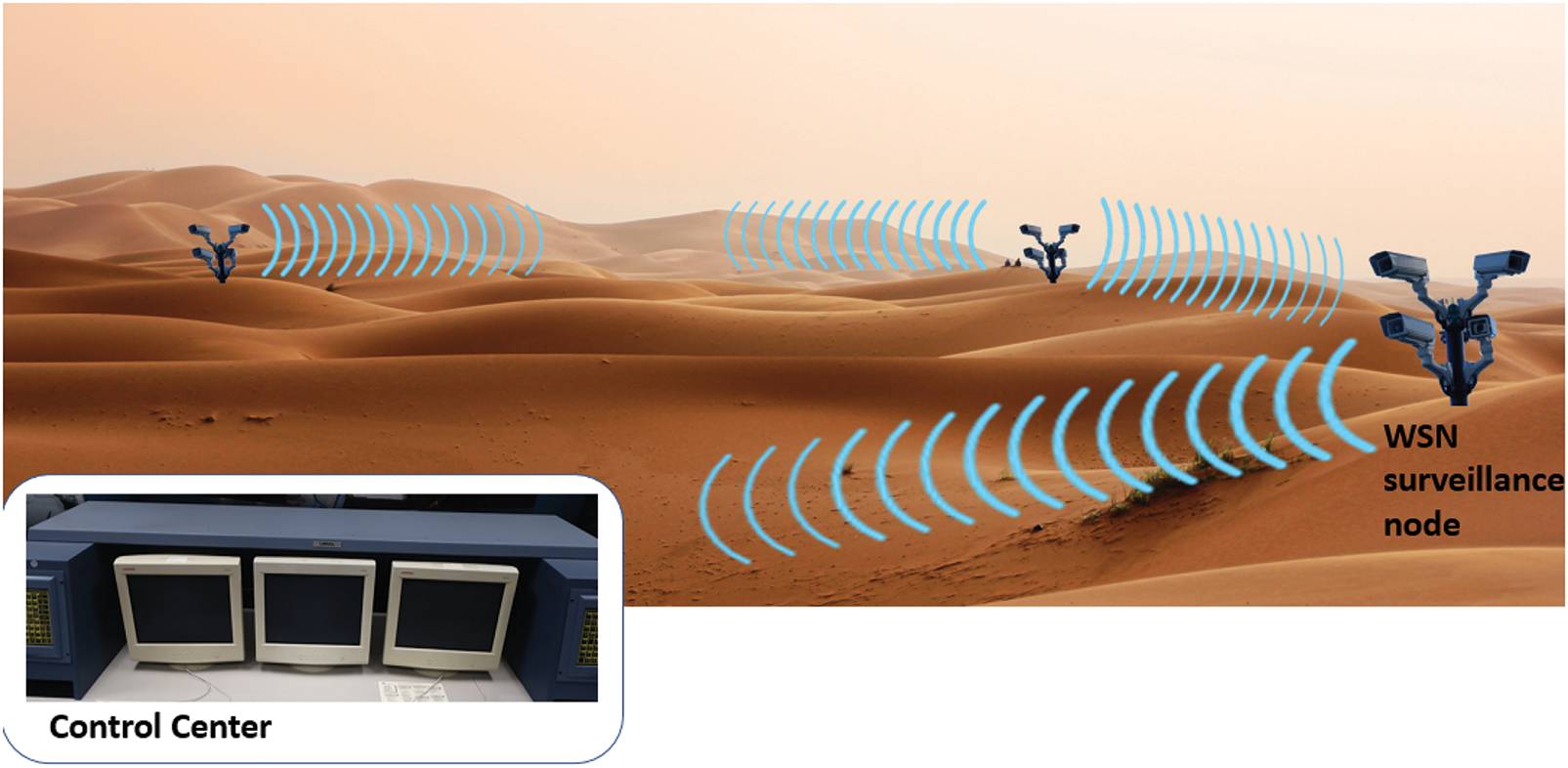
Figure 1: A general border surveillance wireless sensor network scenario
WSNs represent a highly effective technological approach for enhancing border surveillance. By enabling continuous, autonomous monitoring across large geographical regions, WSNs provide comprehensive oversight of border areas. Strategically deploying sensor nodes along boundary lines allows the construction of a robust surveillance framework capable of identifying and reporting unauthorized intrusions or suspicious movements in real-time. These networks are engineered to sense and transmit critical environmental data such as motion, vibrations, and other activity-specific signals, thereby improving situational awareness. Moreover, due to their resilience, WSNs remain functional in harsh climates and challenging terrains where conventional methods may underperform. The consistent and adaptive monitoring facilitated by WSNs substantially strengthens border security efforts, all while minimizing the reliance on human personnel.
Reinforcement Learning (RL) has emerged as an effective paradigm for optimizing the operation and control of WSNs [3]. Within these networks, RL algorithms have been successfully applied to manage core challenges such as optimal node deployment, efficient resource usage, and intelligent communication scheduling. Through interaction with their operating environment, RL agents learn adaptive strategies that enhance key network performance indicators, including energy efficiency, data throughput, and latency. For example, RL has been instrumental in dynamically modifying sensor node transmission power, timing data transmission events, and managing topological adjustments in response to evolving conditions. These practical implementations underscore the value of RL in improving the adaptability and efficiency of WSNs, particularly in unpredictable and dynamic deployment environments.
One of the most critical challenges facing WSNs in border surveillance is energy efficiency. As sensor nodes are generally powered by batteries, their maintenance–especially in remote or inaccessible areas–poses significant logistical difficulties. Consequently, extending the network’s operational lifespan through smart energy management becomes vital. Without such measures, high energy demands can result in early node failure, thereby degrading coverage, weakening communication links, and ultimately compromising the surveillance infrastructure.
To address this concern, reinforcement learning presents an intelligent and flexible solution. By designing Deep Q Learning (DQN)-driven energy aware routing protocols, it becomes possible to make real-time decisions about node activity and transmission behaviors. DQN-based models learn to conserve energy by determining optimal communication routes, adjusting transmission power as needed, and selectively activating nodes based on operational requirements. These capabilities help preserve battery life without sacrificing coverage or performance, resulting in significantly improved network sustainability. The protocol uses IEEE802.15.4 and is specifically designed for WSNs by incorporating energy models, duty cycling, and node-level decisions that reflect typical WSN constraints. Although the protocol is tailored for border surveillance applications using WSNs, its core learning mechanism can be adapted to other sensor-based or IoT deployments with similar energy and topology constraints.
The primary contributions of this paper can be summarized as follows:
1. A new energy-efficient protocol has been proposed based on reinforcement learning, specifically tailored to extend the lifespan of wireless sensor networks deployed in border surveillance applications.
2. A dynamic mechanism is introduced to govern node behavior and communication schedules in real-time, ensuring minimal energy usage while maintaining essential network parameters such as connectivity, coverage, and data fidelity. The dynamic mechanism refers to the Q-learning agent embedded in each node that, at each round, evaluates its current state (energy level, neighbor status, coverage need) and selects an action (sleep, forward, sense, or idle) to minimize long-term energy consumption while sustaining network performance.
3. The proposed protocol has been tested via simulation on a network of 100 sensor nodes distributed across a 1000 m
4. Experimental results reveal considerable improvements over existing techniques, with enhancements including a 9.75% increase in network lifetime, an 8.85% gain in throughput, and a 9.45% reduction in average packet delay.
This paper is organized as follows: Section 2 provides a comprehensive literature review, highlighting recent studies and identifying gaps in the field. In Section 3, we outline the system model that serves as the foundation for our research. Section 4 details the proposed approach, including the methodology and techniques utilized. Section 5 presents an in-depth analysis of the simulation findings, featuring performance metrics and comparisons with existing methods. Finally, Section 6 concludes the paper by summarizing the main contributions and suggesting directions for future research.
The applications of WSNs in a variety of domains, such as industrial automation, healthcare, military surveillance, and environmental monitoring, have been thoroughly investigated in this literature review. The deployment of WSNs in border surveillance presents unique challenges and opportunities, particularly concerning energy efficiency and network lifetime.
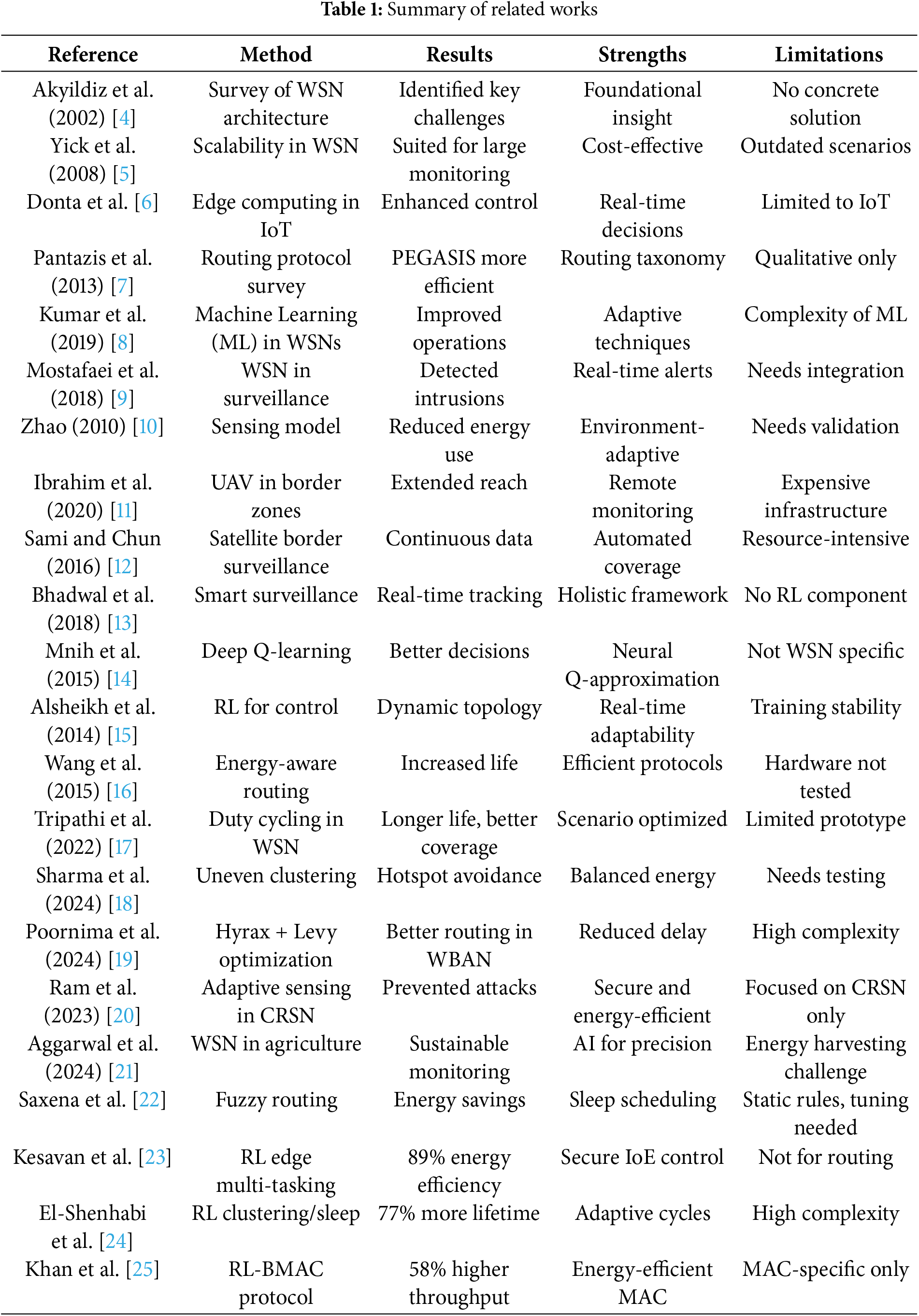
Akyildiz et al. (2002) conducted one of the earliest comprehensive surveys of WSN architecture, applications, and design challenges [4]. Their study methodically reviewed the state of WSNs, identifying fundamental technical issues such as severe energy constraints, limited computation, and the need for scalability and robustness. As a result, they highlighted energy efficiency as a paramount concern and outlined potential techniques (e.g., duty cycling and data aggregation) to mitigate power consumption. The strength of this seminal work lies in its broad, foundational insight–it established the key research problems and performance metrics that guided subsequent WSN research–however, it did not propose concrete solutions or quantitative evaluations. Studies such as [5] have highlighted the advantages of WSNs in terms of scalability, flexibility, and cost-effectiveness for large-scale monitoring applications. Authors in [6] present the use of edge computing in IoT networks.
Recent progress in the domain of WSNs has placed significant emphasis on improving system performance under adverse and dynamic operating conditions. For instance, the work of [7] examines multiple energy-conserving protocols aimed at extending the lifetime of WSNs. They reported that specialized routing techniques–for instance, forming a data-gathering chain among nodes with greedy neighbor selection–can drastically reduce redundant transmissions and thus conserve node energy. The results compiled in their survey showed that protocols like Power-Efficient Gathering in Sensor Information Systems (PEGASIS) achieve significantly longer network lifetime (by aggregating data to minimize communication cost) relative to shortest-path routing. The advantage of this work is its comprehensive taxonomy and comparative analysis of routing approaches, clearly identifying the strengths of each category (chain-based routing compresses data effectively, cluster-based routing balances load). Likewise, reference [8] delves into the integration of machine learning techniques to optimize various operational aspects of WSNs. When applied to border surveillance, WSNs demonstrate their capability to detect and relay unauthorized movements in real time, thereby enhancing situational awareness [9].
Conventional border surveillance infrastructures generally rely on a combination of physical barriers, patrolling personnel, video surveillance, and radar systems. While these tools do provide a level of protection, they suffer from inherent limitations such as restricted coverage, high maintenance costs, and vulnerability to environmental disruptions [10]. The incorporation of advanced technologies, such as unmanned aerial vehicles (UAVs) and satellite-based observation, has contributed to expanding surveillance reach in remote border zones [11]. Nonetheless, maintaining uninterrupted real-time monitoring and efficient resource allocation remains a major concern in such systems [12].
WSNs, in this context, offer multiple advantages. Their ability to function autonomously in isolated or difficult-to-access regions makes them suitable for persistent border surveillance. These networks facilitate real-time data acquisition and support adaptive monitoring based on situational needs. Empirical studies such as [11] confirm the utility of WSNs in tracking unauthorized crossings and illicit activity. Furthermore, WSNs can be effectively integrated with other surveillance technologies to establish a more resilient and holistic security framework [13].
The installation of sensor nodes along border areas enables the formation of an extensive surveillance grid that can continuously scan the surrounding environment. Data collected from such networks is typically forwarded to a centralized base station for further analysis. This persistent flow of information minimizes the need for constant manual oversight and enhances the efficiency of border security operations [11].
In recent years, advanced techniques from machine learning have been introduced to WSN problems, aiming to autonomously improve network decision-making and efficiency.
A notable contribution in this area is the introduction of deep Q-learning by [14], which applies neural networks to approximate Q-values, thus enabling better decision-making in complex operational spaces. Within WSNs, RL has been used to dynamically regulate transmission power, organize communication schedules, and restructure network topology based on current conditions [15].
Energy management remains one of the most pressing challenges in WSN applications, especially when these networks are deployed in remote areas with restricted access to power infrastructure. Prior research, such as [7] and [16], explores different strategies and routing algorithms aimed at reducing energy consumption and prolonging network longevity.
Reinforcement learning provides a strategic approach to counter this issue by enabling the development of energy-aware routing protocols. These protocols adapt in real time by modifying transmission behavior and node activity levels based on environmental feedback [10].
Research outlined in [14] demonstrates how RL can support intelligent routing, energy-efficient power control, and adaptive duty cycling. These capabilities ensure continuous monitoring while significantly extending the service life of WSNs [16].
The study by [17] offers a detailed analysis of clustering techniques tailored to heterogeneous WSNs, aiming to improve energy efficiency. This scheme relies on a probabilistic model that incorporates parameters such as node density within sensing range and current energy levels–initial, residual, and dynamic. This clustering approach balances network load distribution and improves overall energy utilization. Simulation results validated through MATLAB reveal that the protocol surpasses traditional models like Stable Election Protocol (SEP), especially in terms of network stability and energy performance.
Additional contributions, such as those by [18], explore the concept of uneven clustering to address the hotspot problem and optimize energy usage. Their analysis supports dynamic cluster creation and hierarchical clustering as effective means to extend network lifetime while maintaining balanced energy distribution across the WSN.
The authors in [19] used Circle Rock Hyrax Swarm Optimisation and Levy flight-based momentum search to propose energy-efficient clustering and routing for wireless body area networks (WBANs). These approaches optimize cluster head selection and routing patterns by enhancing energy use and decreasing delays in healthcare monitoring.
A method to prevent primary user emulation attacks in Cognitive radio sensor networks (CRSNs) was suggested by [20] using adaptive sensing. By using hardware-based validation and dynamically adjusting sensing procedures, their solution improves energy economy, throughput and minimises the likelihood of sensing errors.
The authors in [21] investigated the use of WSNs in precision farming, emphasising communication and data collecting that uses less energy. They highlighted how IoT and AI technology may be used for sustainable agriculture monitoring and highlighted issues like energy harvesting and scalability.
Several energy-efficient protocols for WSNs have been proposed in recent years to prolong network lifetime. For instance, Saxena et al. [22] developed a fuzzy logic-based routing protocol for environmental monitoring WSNs, which allows nodes to periodically enter low-power sleep modes to conserve energy. Their hardware-implemented protocol achieved notable energy savings, though the fuzzy rules require careful tuning and the approach was evaluated in a relatively static scenario. Reinforcement learning has also been applied to WSNs–Kesavan et al. [23] introduce an RL-based multi-task scheduling model at the network edge for Internet-of-Everything applications, focusing on secure and efficient data collection. This method improved energy efficiency (achieving 89% energy efficiency and low latency) by dynamically allocating tasks, but it is tailored to Internet of Everything (IoE) edge computing rather than sensor node routing. Other recent works have explored dynamic clustering and sleep scheduling. For example, El-Shenhabi et al. [24] discussed an RL-based clustering and sleep scheduling algorithm that yields a 77% extension in network lifetime over traditional schemes, thanks to adaptive sleep cycles; however, the complexity of their compressive data gathering technique may limit scalability. In the medium access control (MAC) layer domain, Khan et al. [25] employ deep RL to optimize duty cycling (RL-BMAC), obtaining 35% better energy efficiency and 58% higher throughput than the baseline B-MAC protocol. In Tables 1 and 2, we summarize key related works, comparing their techniques, performance, and limitations.
Research Gap
Despite significant advancements in WSNs and reinforcement learning, there remains a critical need to address the issue of energy consumption in border surveillance applications. Current methods, while effective in certain scenarios, often fall short in providing sustained energy efficiency and network longevity. This paper proposes a novel reinforcement learning-based energy-efficient protocol aimed at prolonging the lifetime of border surveillance WSNs. To improve the efficiency of border security operations, the suggested approach fills the current research gap by improving the WSN system’s energy usage while preserving high performance in terms of coverage, connection, and data accuracy.
This section outlines the modeling framework used to simulate the WSN for border surveillance. It provides the network architecture, deployment assumptions, and the energy consumption model employed for transmitting, receiving, and processing data within the network. These models form the foundation for implementing and evaluating the proposed Q-learning based energy efficient protocol.
The network’s 100 sensor nodes are evenly spaced within a 1000 m
Energy sensing and communication are both included in the energy consumption model. Reference [26] provides the energy needed to send a
In the definition of the threshold distance, represented by
The energy consumed to receive a
This section presents the design and operation of the proposed DQN based energy efficient protocol for WSNs deployed in border surveillance. The method leverages DQN to dynamically manage node activity, transmission power, and communication decisions in real time. Detailed descriptions of the learning framework, state-action representations, reward formulation, and learning algorithm are provided in the following subsections.
The proposed method employs deep Q-learning (DQN) to dynamically manage the activity and communication patterns of the sensor nodes to minimize energy consumption while maintaining network performance. The DQN agent at a node learns an optimal policy to balance the trade-off between energy efficiency, coverage and connectivity.
4.2 Reinforcement Learning Framework
The reinforcement learning framework consists of the following elements:
• State Space: The state space S represents the energy levels of all sensor nodes and their relative positions to the sink node.
• Action Space: The action space A includes actions such as adjusting transmission power levels, changing active/inactive states of nodes, and selecting communication paths.
• Reward Function: The reward function R is designed to penalize high energy consumption and reward actions that extend network lifetime while maintaining coverage and connectivity.
Each state
where
The action
where
The transmission power level
where:
•
•
•
•
•
•
•
•
The reward function
where
Coverage at time
where:
•
•
•
•
•
Here,
The total overlapping area
where the overlapping area between two sensor nodes
where:
•
•
Connectivity at time
where:
•
•
•
•
•
•
•
Link quality
where:
•
•
•
•
•
•
•
•
•
•
•
The Q-learning algorithm is utilized here, which is a type of model-free reinforcement learning method. Q-learning aids in determining the optimal policy. The Q-value, represented as
The update rule for Q-learning is formulated as:
Here:
•
•
•
• The discount factor,
•
•
This method refines the Q-values iteratively based on the agent’s experiences. The update rule modifies the Q-value
It represents the variation between the existing estimate of the Q-value and a revised estimate, which incorporates both the immediate reward and the maximum anticipated future Q-value, adjusted by the learning rate
The Q-values are progressively updated by striking a balance between exploration of new actions and exploitation of already learned behaviors. This iterative refinement guides the agent toward a policy that yields the highest expected reward over time. Within the Q-learning framework, the exploration rate, denoted as
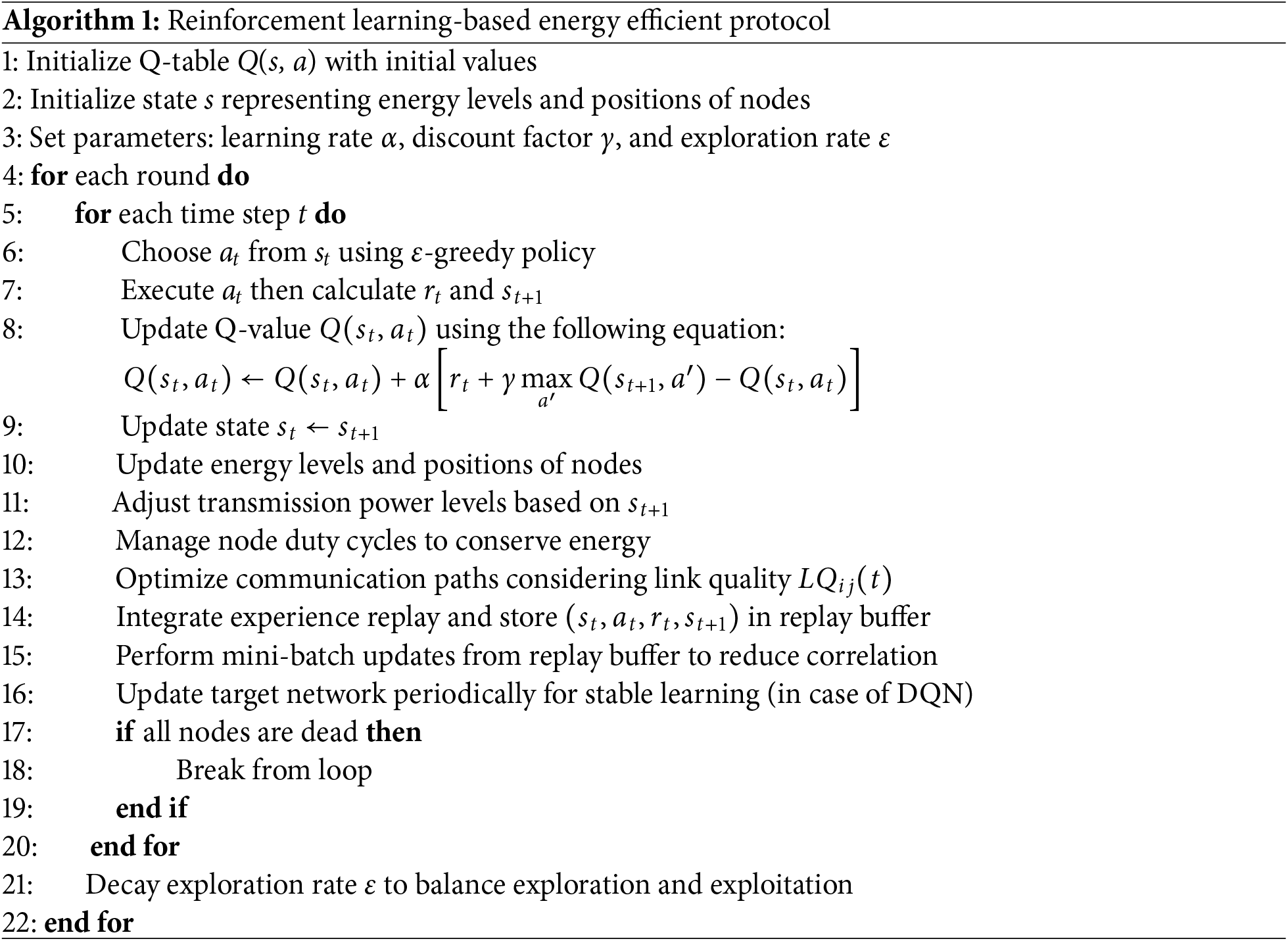
Algorithm 1 illustrates the step-by-step structure of the proposed reinforcement learning-based energy-efficient protocol tailored for WSNs. Initially, a Q-table
The agent operates in multiple learning episodes, where each episode comprises several time steps. During each time step, an action
Following this, transmission power levels for each node are adaptively adjusted based on multiple parameters, including remaining battery energy, proximity to the sink node, and the observed link quality. Duty cycling is applied to dynamically switch nodes between active and inactive states to conserve energy while maintaining the integrity of the sensing operation. Communication routes are selected by evaluating several link quality indicators such as signal-to-noise ratio (SNR), packet delivery ratio (PDR), received signal strength (RSS), and hop count.
To stabilize the learning process, the agent records each transition as a tuple
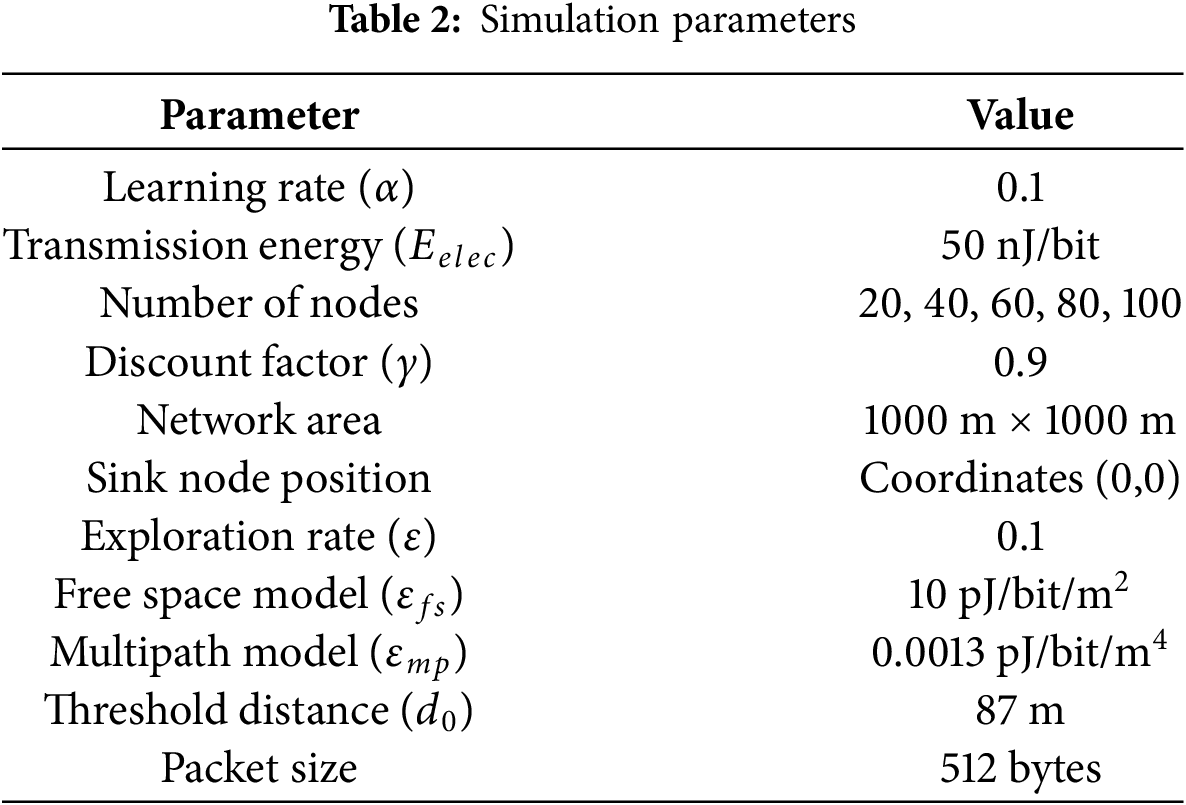
To validate the effectiveness of the proposed reinforcement learning-based energy-efficient protocol, extensive simulations were conducted. Network simulator 3 was used for this purpose. The number of nodes varied from 20 to 100 in increments of 20. The simulation environment mimics the real-world scenario of border surveillance using WSNs. Table 2 shows the simulation parameters.
Rationale for Simulation Parameters: The simulation parameters listed in Table 2 were carefully selected based on widely accepted values in WSN simulations and reinforcement learning literature to ensure a balance between energy efficiency, learning convergence, and practical deployment feasibility.
The learning rate (
The range of node numbers (20 to 100) was selected to study the scalability of the proposed method under both sparse and dense deployment conditions. This range captures key behaviors such as reduced connectivity at low densities and increased contention at higher densities.
The network area of 1000 m
The transmission energy per bit (
The exploration rate (
A fixed packet size of 512 bytes was used to simulate uniform data reporting intervals, ensuring fairness in comparison across protocols.
Impact of Varying Parameters: Altering these parameters would affect the performance and convergence behavior of the protocol. For example, increasing the packet size would lead to higher energy consumption per transmission, possibly reducing network lifetime. A larger exploration rate could result in poor convergence of the Q-values, while a smaller one may prevent sufficient policy space exploration. Increasing the number of nodes without proportionate energy or range adjustments could lead to increased collisions and delay. Likewise, changing the energy model parameters would significantly affect transmission costs, thereby impacting the effectiveness of the learned energy-saving policies.
Hence, these values were selected to strike a practical balance between simulation tractability and realism in WSN-based border monitoring.
The performance of the proposed method is evaluated using the following metrics:
• Packet Delivery Ratio (PDR): The ratio of packets successfully delivered to the sink to the total packets sent.
• Average Delay: The average time taken for a packet to reach the sink node from the source node.
• Average Remaining Energy after 2000 Rounds: The average energy remaining in the sensor nodes after 2000 rounds of data transmission.
• Throughput: The total number of packets successfully delivered to the sink node per unit time.
• Network Lifetime: The time until the half of the nodes deplete their energy.
5.2 Simulation Implementation Details
To simulate the proposed reinforcement learning-based energy-efficient protocol, the following step-wise procedure was followed using NS-3.44 on Ubuntu 24:
1. Simulation Setup:
• A custom NS-3 simulation script titled rl1.cc was developed.
• IEEE 802.15.4 MAC/PHY layer was integrated via LrWpanNetDevice.
• 6LoWPAN and Internet Stack modules were used for IP-based communication.
2. Application Layer Implementation:
• A custom application class named RlApp was created, inheriting from ns3::Application.
• Each sensor node was equipped with:
– A socket bound to the sink node address for packet delivery.
– A reference to its BasicEnergySource object.
– Initialization of energy level and unique node ID for tracking.
3. Reinforcement Learning Logic:
• Q-learning was used with discrete state-action representation.
• State Space: Discretized based on remaining energy as a fraction of initial energy.
• Action Space: Includes abstract transmission behavior actions.
• Reward Function: Designed to maximize utility using:
(a) Negative energy consumption,
(b) Coverage efficiency (detection probability and sensing radius),
(c) Connectivity awareness (number of neighbors in communication range).
• Q-table is updated at each transmission step using standard temporal difference (TD) learning.
4. Energy Consumption Modeling:
• Instead of using LrWpanRadioEnergyModel, energy consumption was manually managed.
• A fixed transmission energy cost of 50 nJ/bit was deducted from the node’s remaining energy.
• For each packet of 512 bytes, energy consumed was computed as:
where
5. Packet Logging and Debugging:
• All transmissions and receptions were logged via std::cout, showing packet size, node ID, and energy state.
• Guard checks were added to avoid pointer dereferencing errors after simulation ends.
• The simulation was configured to stop gracefully upon encountering invalid pointer states.
The simulation results are compared with traditional methods [17] to demonstrate the advantages of the proposed Q-learning-based protocol. To provide clarity, the discussion is organized into subsections based on five key performance metrics.
5.3.1 Packet Delivery Ratio (PDR)
Fig. 2 shows the Packet Delivery Ratio (PDR) for increasing numbers of nodes. As the number of nodes increases, the PDR initially increases due to better connectivity and redundancy, as more nodes provide more alternative paths for data packets to reach the sink. However, with further increases in the number of nodes, the PDR decreases due to increased collisions and congestion, which occur when too many nodes are transmitting simultaneously. The proposed method outperforms the existing method in all scenarios mainly because of the consideration of coverage and connectivity in the calculation of the reward function. Another reason for this improvement is the dynamic adjustment of node activity and transmission power, which helps in reducing packet collisions and ensuring efficient data transmission by adapting to the current network conditions, optimizing routes, and managing the load on individual nodes.
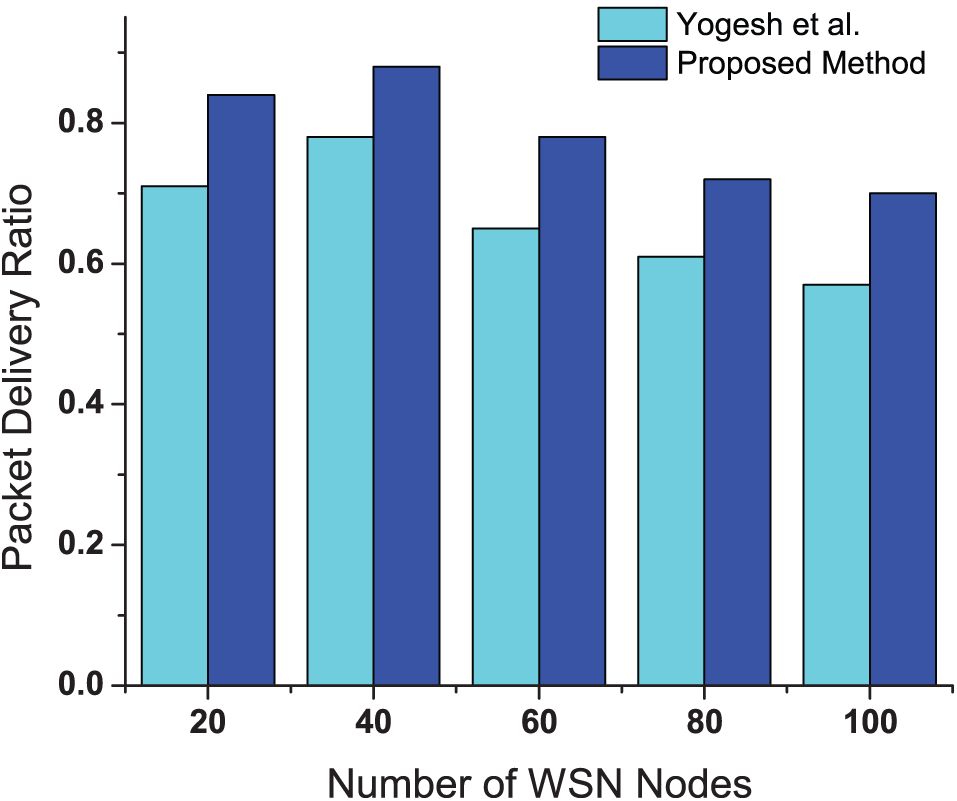
Figure 2: Packet Delivery Ratio (PDR) for different numbers of nodes compared with [17]
Fig. 3 illustrates the average delay experienced in the network. As the number of nodes increases, the average delay initially decreases due to improved path availability to the sink and reduced hop counts. However, beyond a certain point, the delay starts to increase due to higher network traffic and the network becomes congested with too many nodes attempting to communicate simultaneously. The proposed method consistently achieves lower delays compared to existing method because it optimizes the communication paths using coverage and connectivity terms, which further consider important parameters such as link quality, distance to the sink, residual energy, and node density. These optimizations ensure that data packets take the most efficient routes, avoiding congested or low-quality links, thereby reducing overall network delay.
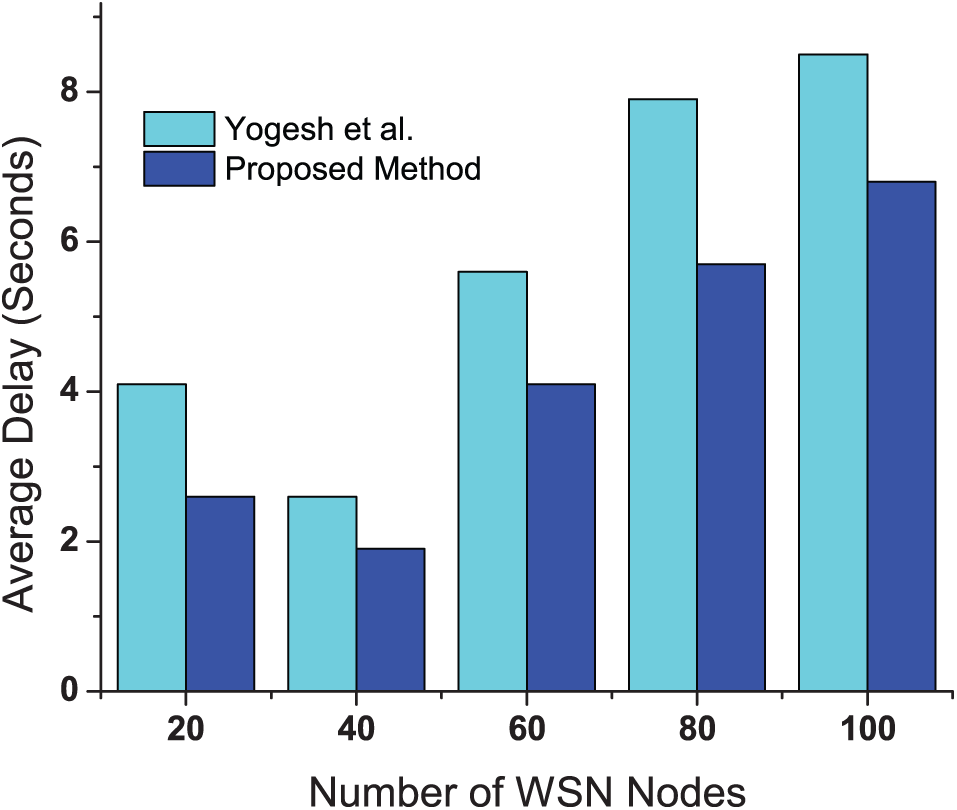
Figure 3: Average delay for different numbers of nodes compared with [17]
5.3.3 Average Remaining Energy after 2000 Rounds
Fig. 4 depicts the average remaining energy in the sensor nodes after 2000 rounds. As the number of nodes increases, the energy consumption is more evenly distributed, leading to higher average remaining energy across the network. The proposed method shows higher remaining energy compared to the existing method due to its efficient energy management strategies, such as adaptive transmission power adjustment, which optimizes energy usage based on node location, remaining battery life and several other parameters. Additionally, the method utilizes dynamic node activity scheduling to ensure that only necessary nodes are active at any given time, further conserving energy. This comprehensive approach to energy efficiency ensures that the sensor nodes maintain higher energy levels over prolonged periods, thereby extending the overall network lifetime and improving its sustainability.
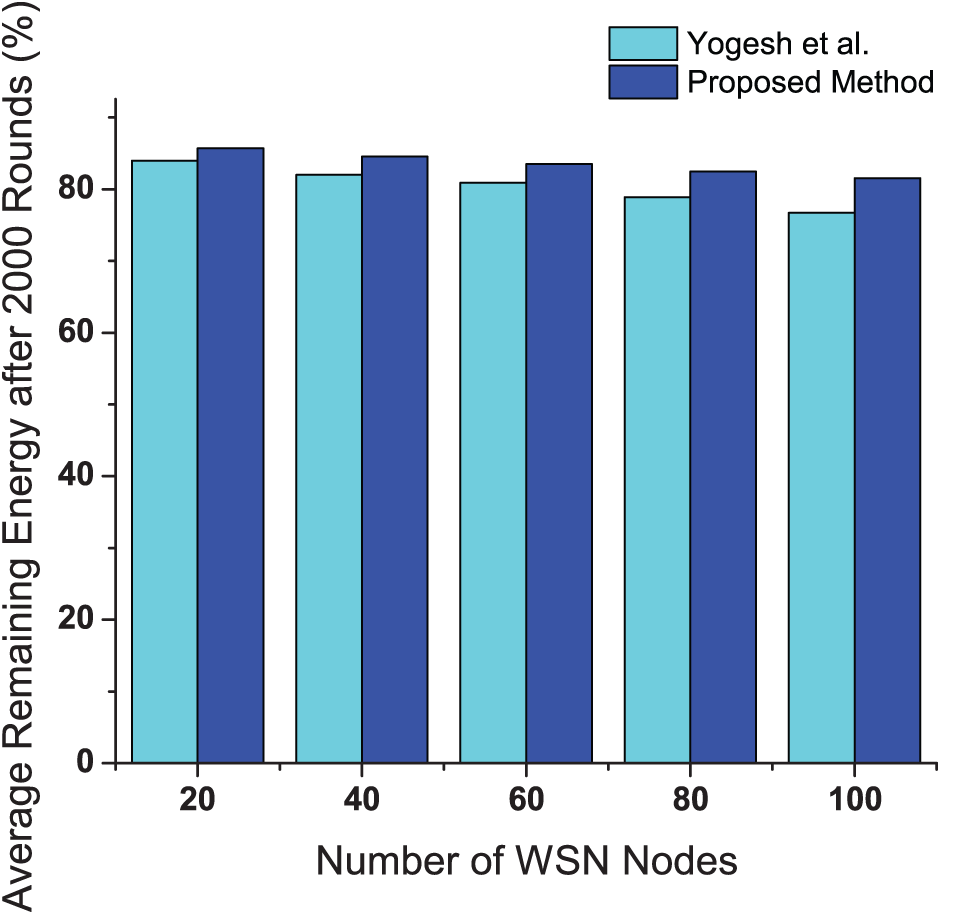
Figure 4: Average remaining energy after 2000 rounds for different numbers of nodes compared with [17]
Fig. 5 shows the throughput of the network for different numbers of nodes. As the number of nodes increases, the throughput increases continuously due to the higher volume of data being transmitted. The proposed method achieves the higher throughput compared to the existing method. This improvement is primarily due to the consideration of coverage and connectivity in the calculation of the reward function, which ensures optimal routing and efficient utilization of network resources. Additionally, the dynamic adjustment of node activity and transmission power reduces packet collisions and congestion, leading to a more stable and higher data transmission rate. The adaptive nature of the proposed method allows it to handle increased network traffic effectively by optimizing communication paths based on real-time network conditions. This approach ensures that the network maintains high throughput even as the number of nodes grows.
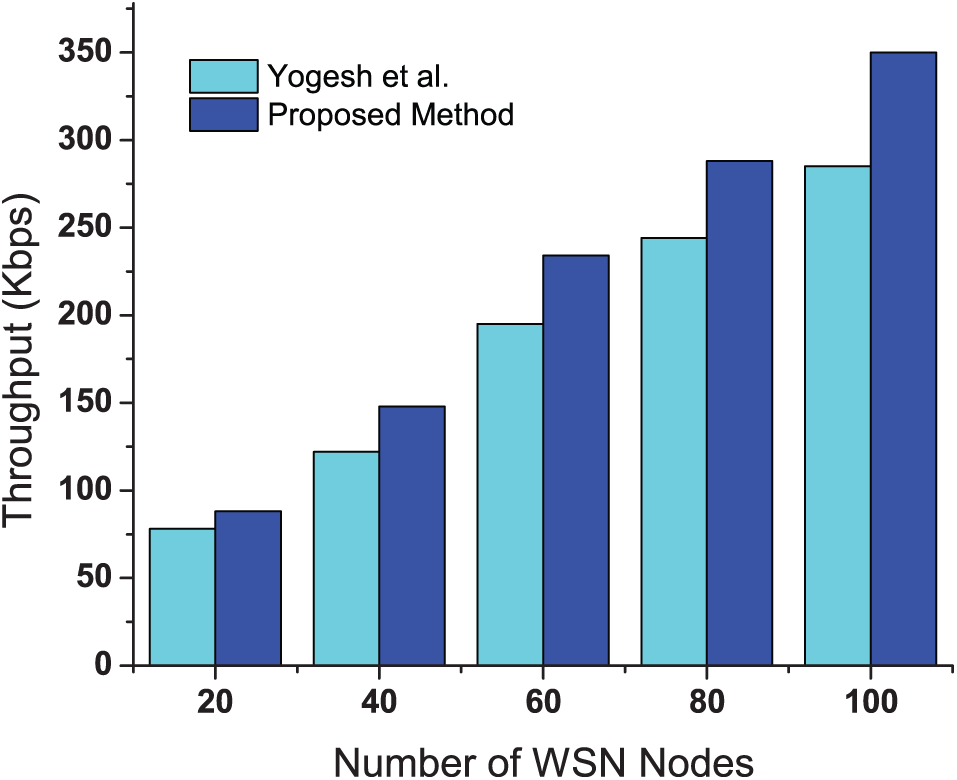
Figure 5: Throughput for different numbers of nodes compared with [17]
Fig. 6 presents the network lifetime for increasing numbers of nodes. Network lifetime is taken as the time since the starting of the simulation to the time at which the first node becomes dead. The proposed method significantly extends the network lifetime compared to existing method. This improvement is due to several factors. Firstly, the reinforcement learning-based approach continuously adapts to the network’s state, optimizing node activity and communication patterns. Dynamic transmission power adjustments reduce unnecessary energy expenditure. Further, the reward function incorporates coverage and connectivity, balancing operational efficiency and energy conservation. This balance prevents overuse of certain nodes and distributes energy consumption evenly across the network. Then the adaptive node activity control prioritizes nodes with higher energy levels for data transmission, while nodes with lower energy levels are put into sleep mode or assigned less frequent transmission duties, conserving energy. Finally, optimal path selection avoids energy-depleted nodes and chooses the most energy-efficient routes, maintaining connectivity and performance over a longer period. The proposed method’s ability to learn from real-time conditions ensures the network remains functional for an extended duration, showcasing the effectiveness of the reinforcement learning-based protocol.
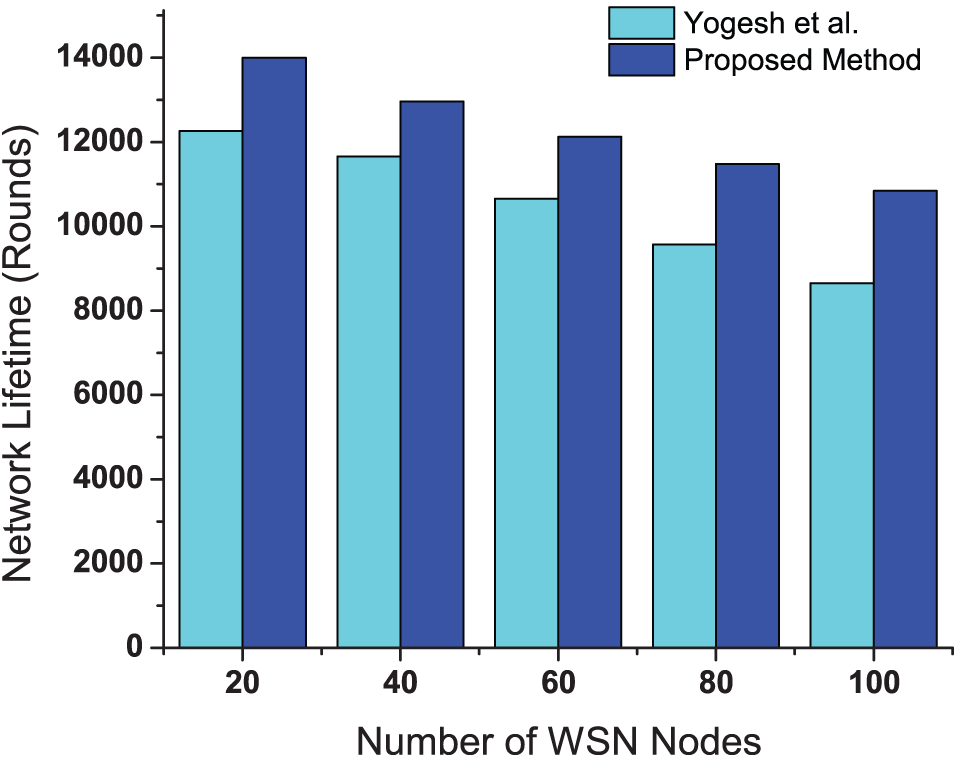
Figure 6: Network lifetime for different numbers of nodes compared with [17]
A reinforcement learning-based energy-efficient protocol is designed in this work to enhance the operational lifetime of WSNs for border surveillance. By leveraging the adaptive capabilities of reinforcement learning, the protocol dynamically optimizes node activity and communication patterns, ensuring optimal energy consumption without compromising coverage, connectivity, or data accuracy. Simulation results demonstrate significant improvements, with a 9.75% increase in network lifetime, an 8.85% boost in throughput, and a 9.45% reduction in average delay compared to recent similar protocols. This percentage improvement for each parameter is calculated using averaging the percentage improvement for each value of the corresponding parameters. These improvements directly translate to enhanced operational longevity and reliability in real-world border surveillance deployments. For instance, an increase in network lifetime reduces the frequency of battery replacement or re-deployment missions, which is particularly valuable in inaccessible or high-risk areas. Higher throughput and lower delay ensure faster and more reliable detection and reporting of security breaches or unauthorized intrusions along borders. Despite its promising performance, the proposed approach has certain limitations. First, the simulation assumes static sensor nodes and a fixed sink node; mobility and environmental dynamics have not yet been considered. Second, the DQN algorithm, although lightweight, may still present computational overhead for resource-constrained sensor nodes if scaled beyond moderate network sizes. Lastly, current evaluation is limited to simulation environments; real-world hardware implementations and field validations are required to assess robustness under actual deployment conditions. Future research will focus on incorporating advanced reinforcement learning techniques and addressing practical deployment challenges to further enhance the robustness and scalability of the protocol for real-world border surveillance applications. This approach offers a promising solution to revolutionize border surveillance operations.
Acknowledgement: Authors thank Department of Electronics Engineering, SVNIT, Surat to provide the necessary infrastructure to complete this work.
Funding Statement: This work is funded by Sardar Vallabhbhai National Institute of Technology through SEED grant No. Dean(R&C)/SEED Money/2021-22/11153 Date: 08/02/2022. This work is supported by Business Finland EWARE-6G project under 6G Bridge program, and in part by the Horizon Europe (Smart Networks and Services Joint Undertaking) program under Grant Agreement No. 101096838 (6G-XR project). The authors would like to thank for the support.
Author Contributions: The authors confirm contribution to the paper as follows: Conceptualization, Nimisha Rajput, Nishu Gupta and Raghavendra Pal; methodology, Nimisha Rajput; software, Raghavendra Pal; validation, Mikko Uitto, Jukka Mäkelä and Nishu Gupta; formal analysis, Nimisha Rajput; writing—original draft preparation, Amit Kumar; writing—review and editing, Amit Kumar and Raghavendra Pal; project administration, Raghavendra Pal; funding acquisition, Raghavendra Pal. All authors reviewed the results and approved the final version of the manuscript.
Availability of Data and Materials: The related code can be found at https://drive.google.com/drive/folders/1sO5UJWo6V1hmCPs64zUSoKNK7Be9FDAU?usp=sharing (accessed on 2025 May 22).
Ethics Approval: Not applicable.
Conflicts of Interest: The authors declare no conflicts of interest to report regarding the present study.
References
1. Han CC, Kumar R, Shea R, Srivastava M. Sensor network software update management: a survey. Int J Netw Manag. 2005;15(5):283–94. doi:10.1002/nem.574. [Google Scholar] [CrossRef]
2. Singh S, Anand V. Load balancing clustering and routing for IoT-enabled wireless sensor networks. Int J Netw Manag. 2023;33(5):e2244. doi:10.1002/nem.2244. [Google Scholar] [CrossRef]
3. Kagade RB, Jayagopalan S. Optimization assisted deep learning based intrusion detection system in wireless sensor network with two-tier trust evaluation. Int J Netw Manag. 2022;32(4):e2196. doi:10.1002/nem.2196. [Google Scholar] [CrossRef]
4. Akyildiz IF, Su W, Sankarasubramaniam Y, Cayirci E. Wireless sensor networks: a survey. Comput Netw. 2002;38(4):393–422. doi:10.1016/s1389-1286(01)00302-4. [Google Scholar] [CrossRef]
5. Yick J, Mukherjee B, Ghosal D. Wireless sensor network survey. Comput Netw. 2008;52(12):2292–330. doi:10.1016/j.comnet.2008.04.002. [Google Scholar] [CrossRef]
6. Donta PK, Monteiro E, Dehury CK, Murturi I. Learning-driven ubiquitous mobile edge computing: network management challenges for future generation Internet of Things. Int J Netw Manag. 2023;33(5):e2250. doi:10.1002/nem.2250. [Google Scholar] [CrossRef]
7. Pantazis NA, Nikolidakis SA, Vergados DD. Energy-efficient routing protocols in wireless sensor networks: a survey. IEEE Communicat Surv Tutor. 2013;15(2):551–91. doi:10.1109/SURV.2012.062612.00084. [Google Scholar] [CrossRef]
8. Kumar DP, Amgoth T, Annavarapu CSR. Machine learning algorithms for wireless sensor networks: a survey. Inform Fusion. 2019;49(4):1–25. doi:10.1016/j.inffus.2018.09.013. [Google Scholar] [CrossRef]
9. Mostafaei H, Chowdhury MU, Obaidat MS. Border surveillance with WSN systems in a distributed manner. IEEE Syst J. 2018;12(4):3703–12. doi:10.1109/jsyst.2018.2794583. [Google Scholar] [CrossRef]
10. Zhao G. Wireless sensor networks for industrial process monitoring and control: a survey. Netw Prot Algor. 2010;2(1):46–73. doi:10.5296/npa.v3i1.580. [Google Scholar] [CrossRef]
11. Ibrahim SW. A comprehensive review on intelligent surveillance systems. Commun Sci Technol. 2016;1(1):7–14. doi:10.21924/cst.1.1.2016.7. [Google Scholar] [CrossRef]
12. Sami DG, Chun S. Strengthening health security at ground border crossings: key components for improved emergency preparedness and response—a scoping review. Healthcare. 2024;12(19):2416. doi:10.3390/healthcare12191968. [Google Scholar] [PubMed] [CrossRef]
13. Bhadwal N, Madaan V, Agrawal P, Shukla A, Kakran A. Smart border surveillance system using wireless sensor network and computer vision. In: International Conference on Automation, Computational and Technology Management (ICACTM). London, UK; 2019. p. 183–90. doi:10.1109/ICACTM.2019.8776749. [Google Scholar] [CrossRef]
14. Mnih V, Kavukcuoglu K, Silver D, Rusu AA, Veness J, Bellemare MG, et al. Human-level control through deep reinforcement learning. Nature. 2015;518(7540):529–33. doi:10.1038/nature14236. [Google Scholar] [PubMed] [CrossRef]
15. Alsheikh MA, Lin S, Niyato D, Tan H. Machine learning in wireless sensor networks: algorithms, strategies, and applications. IEEE Communicat Surv Tutor. 2014;16(4):1996–2018. doi:10.1109/COMST.2014.2320099. [Google Scholar] [CrossRef]
16. Wang J, Yang W, Liu J, Ding M. A survey on energy-efficient data aggregation routing in wireless sensor networks. ACM Transact Sensor Netw. 2015;11(3):1–41. doi:10.1145/1387663.1387666. [Google Scholar] [CrossRef]
17. Tripathi Y, Prakash A, Tripathi R. A novel slot scheduling technique for duty-cycle based data transmission for wireless sensor network. Digit Communicat Netw. 2022;8(3):351–8. doi:10.1016/j.dcan.2022.01.006. [Google Scholar] [CrossRef]
18. Sharma Y, Ahmed G, Saini D. Uneven clustering in wireless sensor networks: a comprehensive review. Comput Electr Eng. 2024;120:109844. doi:10.1016/j.compeleceng.2024.109844. [Google Scholar] [CrossRef]
19. Poornima G, Amirtharaj S, Maheswaran M, Bhuvanesh A. Levy flight based momentum search and Circle Rock Hyrax swarm optimization algorithms for energy effective clustering and optimal routing in wireless body area networks. Comput Electr Eng. 2024;118:109461. doi:10.1016/j.compeleceng.2024.109461. [Google Scholar] [CrossRef]
20. Ram S, Kumar Ram S, Deepan. Energy-efficient adaptive sensing for cognitive radio sensor network in the presence of primary user emulation attack. Comput Electr Eng. 2023;106:108619. doi:10.1016/j.compeleceng.2023.108619. [Google Scholar] [CrossRef]
21. Aggarwal K, Reddy G, Makala R, Srihari T, Sharma N, Singh C. Studies on energy efficient techniques for agricultural monitoring by wireless sensor networks. Comput Electr Eng. 2024;113:109052. doi:10.1016/j.compeleceng.2023.109052. [Google Scholar] [CrossRef]
22. Saxena P, Singh Bhadauria S. Hardware implementation of fuzzy logic-based energy-efficient routing protocol for environment monitoring application of wireless sensor networks. Int J Commun Syst. 2025;38(8):e70087. doi:10.1002/dac.70087. [Google Scholar] [CrossRef]
23. Kesavan V, Thiruppathy T, Wong WK, Ng PK. Reinforcement learning based secure edge enabled multi-task scheduling model for Internet of Everything applications. Sci Rep. 2025;15(1):6254. doi:10.1038/s41598-025-89726-2. [Google Scholar] [PubMed] [CrossRef]
24. El-Shenhabi AN, Abdelhay EH, Mohamed MA, Moawad IF. A reinforcement learning-based dynamic clustering of sleep scheduling algorithm (RLDCSSA-CDG) for compressive data gathering in wireless sensor networks. Technologies. 2025;13(1):25. doi:10.3390/technologies13010025. [Google Scholar] [CrossRef]
25. Khan O, Ullah S, Khan M, Chao H-C. RL-BMAC: an RL-based MAC protocol for performance optimization in wireless sensor networks. Information. 2025;16(5):369. doi:10.3390/info16050369. [Google Scholar] [CrossRef]
26. Heinzelman WB, Chandrakasan AP, Balakrishnan H. An application-specific protocol architecture for wireless microsensor networks. IEEE Transact Wirel Communicat. 2002;1(4):660–70. doi:10.1109/twc.2002.804190. [Google Scholar] [CrossRef]
Cite This Article
 Copyright © 2025 The Author(s). Published by Tech Science Press.
This work is licensed under a Creative Commons Attribution 4.0 International License , which permits unrestricted use, distribution, and reproduction in any medium, provided the original work is properly cited.
 Downloads
 Citation Tools
