
 Login
Login Register
 Submit a Paper
 Propose a Special lssue
 Open Access
REVIEW
Explainable, Context-Aware Artificial Intelligence and Digital Twin in Healthcare: A Systematic Review and Unified Taxonomy
1 Humanities Research Center, Sultan Qaboos University, Muscat, Oman
2 Faculy of Computer Studies, International University of Africa, Khartoum, Sudan
3 Faculty of Computing and Informatics, Universiti Malaysia Sabah, Kota Kinabalu, Sabah, Malaysia
4 Department of Computing, Universiti Teknologi PETRONAS, Seri Iskandar, Malaysia
5 Chitkara University Institute of Engineering and Technology, Chitkara University, Punjab, India
6 Computer Science and Engineering, Saveetha School of Engineering, Saveetha Institute of Medical and Technical Sciences, Chennai, Tamilnadu, India
7 International Center for Materials Sciences and Technology, Western Caspian University, Baku, Azerbaijan
8 Centre for Promotion of Research, Graphic Era (Deemed to be University), Dehradun, India
9 Institute of Well-Aging Medicare & CSU G-LAMP Project Group, Chosun University, Gwangju, Republic of Korea
10 Department of Computer Engineering, Chosun University, Gwangju, Republic of Korea
* Corresponding Author: SeongKi Kim. Email:
(This article belongs to the Special Issue: Emerging Artificial Intelligence Technologies and Applications-II)
Computer Modeling in Engineering & Sciences 2026, 148(3), 5 https://doi.org/10.32604/cmes.2026.088032
Received 26 June 2026; Accepted 04 September 2026; Issue published 28 September 2026
 View Full Text
 Download PDF
Abstract
This paper provides a thorough, systematic review of explainable, context-sensitive Artificial Intelligence (AI) and Digital Twin (DT) technologies in healthcare, emphasizing their potential to transform the medical system into an intelligent, patient-centred system of care. The PRISMA framework helped identify 1842 records from the largest scientific databases, of which 97 high-quality studies were selected for a comprehensive analysis. The review analyses in detail the development of AI from traditional machine learning to modern deep learning and generative models with a focus on their use in disease diagnosis and predictive analytics, personalized medicine, and healthcare management. One of the priorities is the incorporation of Explainable AI (XAI), which tackles the significant issue of the black-box character of AI by making it more transparent, interpretable, and trusted by the clinical decision-making process. In addition, the paper examines how DT technology can be used to produce dynamic virtual models of patients and healthcare systems that can be monitored in real time, simulated, and analyzed to predict outcomes. An alternative, multi-layered taxonomy is proposed to bring together AI, XAI, DTs, and other emerging technologies, such as Internet of Things (IoT) and federated learning, within a unified, context-specific healthcare framework. The results show that although these technologies greatly enhance diagnostic accuracy, operational efficiency, and personalized care, difficulties such as data privacy concerns, model bias, lack of standardization, and high computational complexity prevent their adoption. The review finds significant research gaps, especially the lack of unified architectures, real-time explainability, and large-scale clinical validation. The work provides a systematic basis for future studies by describing the major challenges, innovation opportunities, and strategic paths to create integrated, understandable, and scalable intelligent healthcare ecosystems.Keywords
Artificial Intelligence (AI) has emerged as a transformative technology in modern healthcare, enabling data-driven decision-making, improving diagnostic accuracy, and enhancing patient outcomes [1]. With the rapid growth of digital health data—originating from electronic health records (EHRs), medical imaging, wearable devices, and Internet of Things (IoT) based monitoring systems—AI techniques such as machine learning (ML) and deep learning (DL) have become essential tools for extracting meaningful insights and supporting clinical decision-making [2]. These advancements have significantly improved disease detection, treatment planning, and healthcare management processes, ultimately contributing to more efficient and personalized care delivery [3,4].
In addition to improving clinical performance, AI has demonstrated its potential to optimize healthcare operations, enhance emergency response systems, and support strategic decision-making [5]. Recent studies highlight that AI-driven systems can assist healthcare professionals by automating routine tasks, analyzing complex datasets, and providing predictive insights that enable early intervention and improved patient outcomes. However, despite these benefits, the adoption of AI in healthcare remains limited due to concerns regarding transparency, trust, and interpretability [6].
A major challenge associated with AI systems, particularly deep learning models, is their “black-box” nature, which makes it difficult for clinicians to understand how decisions are generated. In high-stakes domains such as healthcare [7], where accountability and reliability are critical, the lack of explainability poses significant risks. To address this issue, Explainable Artificial Intelligence (XAI) has emerged as a promising approach to enhance transparency, interpretability, and trust in AI systems [8]. XAI techniques provide insights into model behaviour, enabling clinicians to validate predictions and make informed decisions [9].
Furthermore, the integration of emerging technologies such as Digital Twins (DTs), IoT, and federated learning (FL) is reshaping the landscape of healthcare systems [10]. DT technology, in particular, enables the creation of virtual representations of patients or healthcare processes, allowing real-time monitoring, simulation, and predictive analysis. When combined with AI, DTs offer new opportunities for personalized medicine, early diagnosis, and proactive healthcare management [11].
Despite these advancements, several challenges remain, including data privacy concerns, model bias, lack of standardization [12], and difficulties in integrating AI systems into clinical workflows [13,14]. Moreover, the need for context-aware and interpretable AI systems is becoming increasingly important to ensure safe and effective deployment in real-world healthcare environments [15–17]. Therefore, this paper presents a systematic review of explainable [18] and context-aware AI and DT technologies in healthcare [19]. The study aims to provide a comprehensive overview of current advancements, categorize existing approaches, identify key challenges [20], and highlight future research directions [19]. By integrating insights from recent literature, this work contributes to a deeper understanding of how explainable and context-aware AI can enhance the reliability, transparency, and effectiveness of next-generation healthcare systems [20].
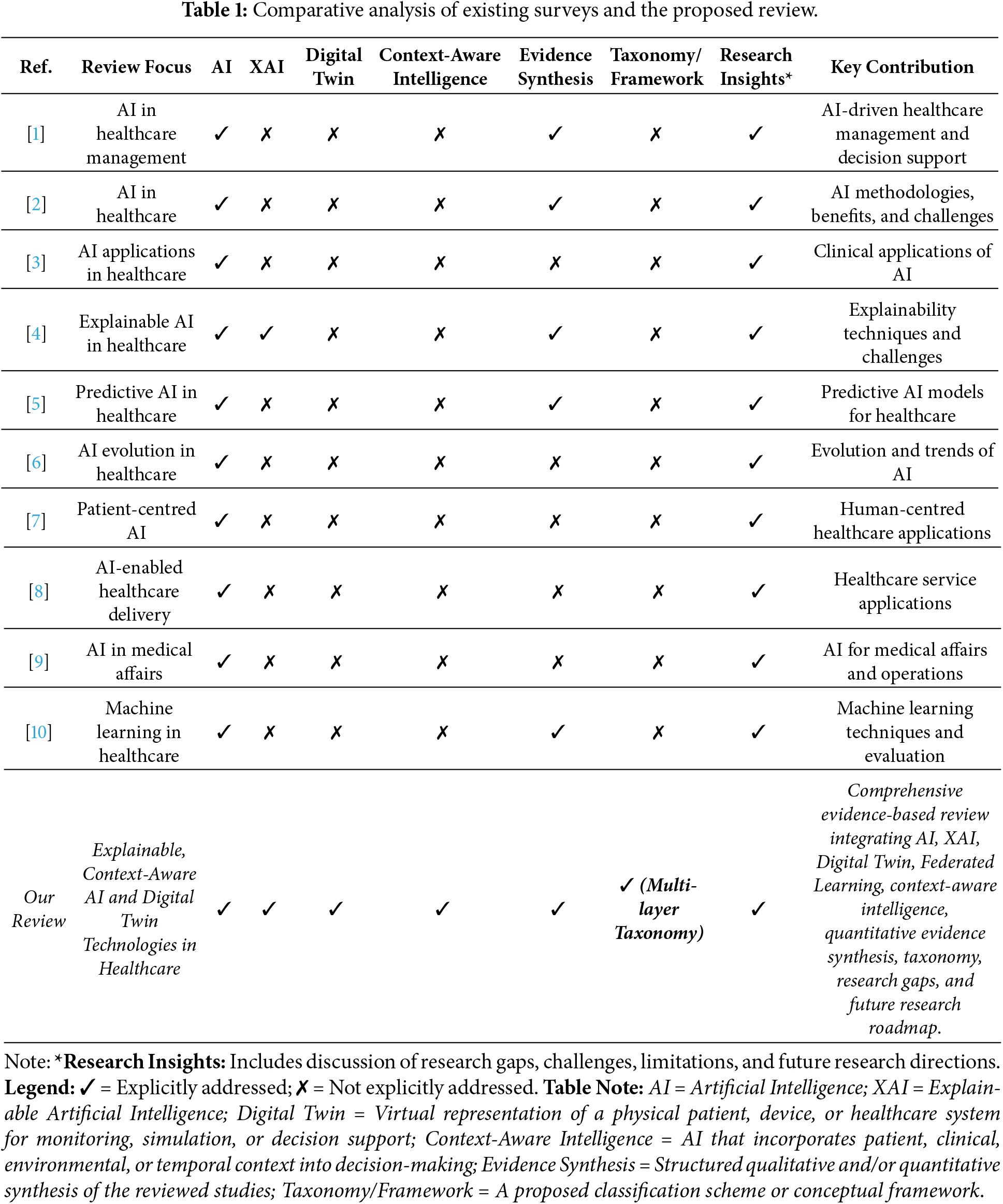
To critically analyze existing research, a comparative evaluation of prior studies is conducted along key dimensions [20–22], including AI use, XAI, DT integration, context-awareness, real-time capability, and system-level integration [23,24]. This analysis highlights the limitations of current approaches and identifies gaps in achieving a unified, intelligent healthcare framework [25–27]. The comparison also emphasizes the unique contribution of the proposed study, which integrates AI, XAI, and DT technologies into a comprehensive, context-aware system.
The proposed framework is organized into three interconnected layers: research foundation, core analysis, and outcome-driven insights, as illustrated in Fig. 1.
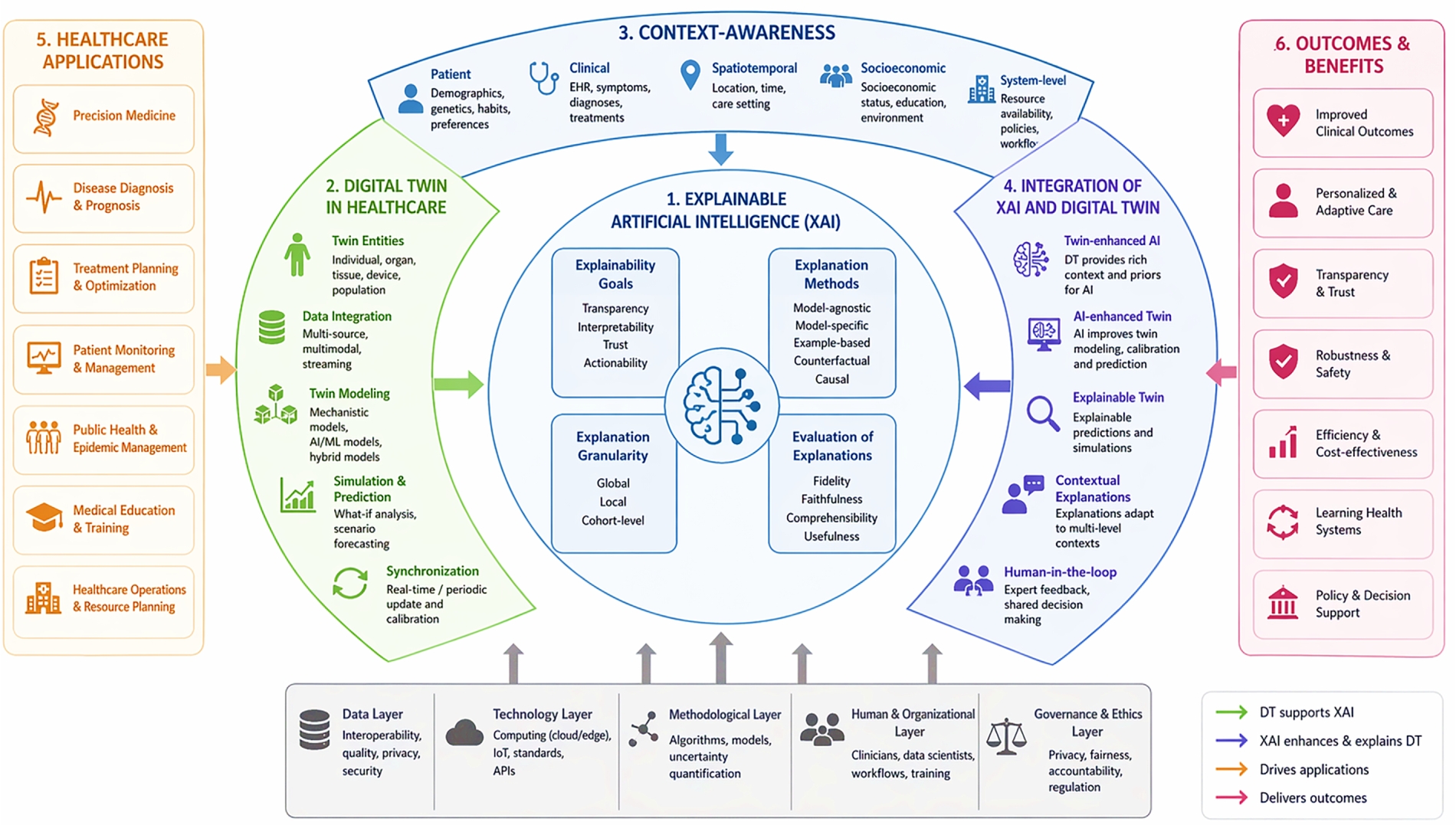
Figure 1: Layered framework of artificial intelligence and digital twin.
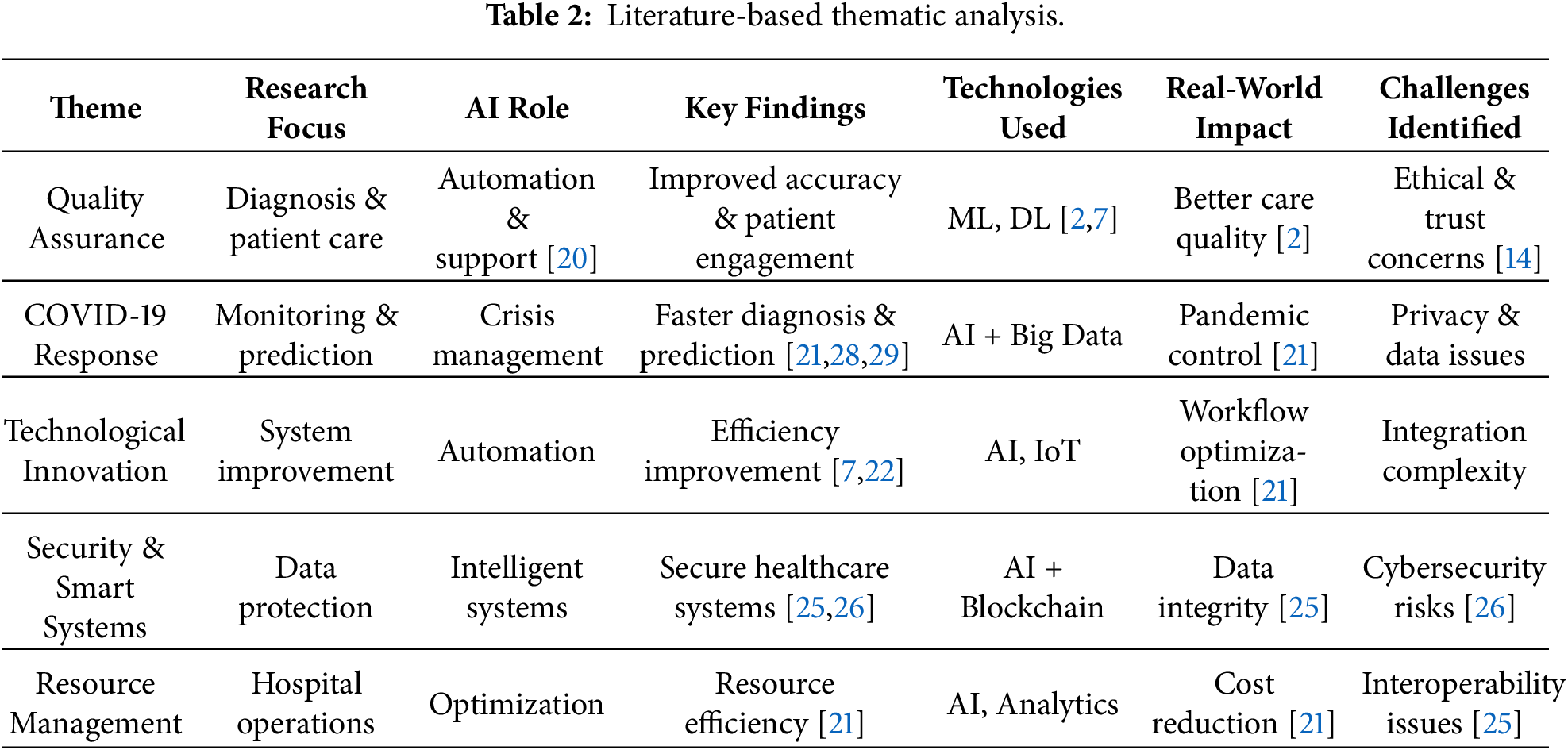
A comparative evaluation of existing studies is conducted to identify research gaps and highlight the novelty of the proposed framework. The comparison is presented in Table 1. The evolution of AI technologies and their corresponding healthcare applications is summarized in Table 2.
This study is guided by the following research questions to systematically investigate the role of AI, XAI, and DT technologies in healthcare:
• RQ1: What are the key characteristics and limitations of AI, XAI, and DT technologies in healthcare?
• RQ2: What are the major application areas and their impact on healthcare outcomes?
• RQ3: How can these technologies be integrated into a unified, context-aware healthcare framework?
• RQ4: What challenges and limitations affect their real-world adoption?
• RQ5: What research gaps and future directions exist for advancing intelligent healthcare systems?
• RQ6: What trends and performance insights can be derived from existing literature?
The remainder of this paper is organized as follows. Section 2 presents the background on AI, XAI, DTs, emerging technologies, and the associated challenges and research gaps in healthcare. Section 3 describes the PRISMA-based systematic review methodology, including the search strategy, study selection process, data extraction, evidence synthesis, and quality assessment. Section 4 presents the proposed taxonomy of explainable, context-aware AI and Digital Twin technologies. Section 5 discusses the major applications of AI, XAI, and Digital Twins in healthcare and provides evidence-based insights, comparative analyses, and emerging research trends. Section 6 presents the integration of AI and Digital Twin technologies within a unified context-aware healthcare ecosystem. Section 7 discusses the key challenges, research gaps, limitations, and future research opportunities. Finally, Section 8 concludes the paper by summarizing the major findings and outlining future directions for developing intelligent, trustworthy, and patient-centric healthcare systems.
The major contributions of this study are summarized as follows:
1. A comprehensive PRISMA-based systematic review of 97 high-quality studies on explainable, context-aware AI and Digital Twin (DT) technologies in healthcare, providing a systematic overview of recent advancements and applications.
2. A unified multi-layer taxonomy integrating AI, XAI, DTs, the IoT, FL, and Generative AI into a context-aware healthcare framework.
3. An evidence-based synthesis of technological trends, explainability techniques, validation strategies, and emerging healthcare applications to provide a comprehensive understanding of the current research landscape.
4. A comprehensive comparative analysis of existing AI, XAI, and DT approaches based on functionality, interpretability, scalability, interoperability, and clinical applicability.
5. Identification of key research gaps and deployment challenges, including real-time explainability, interoperability, scalability, data privacy, and large-scale clinical validation.
6. A future research roadmap outlining promising directions for developing scalable, trustworthy, explainable, and patient-centric intelligent healthcare ecosystems.
Research Questions
This study is systematically structured to address the defined research questions through dedicated sections, supported by detailed analysis, comparative tables, and evidence-based discussion. The alignment between the research questions and the corresponding sections ensures clarity, traceability, and a logical flow throughout the study.
– RQ1 (Technology Understanding): TI, XAI, and Digital Twin (DT) technologies are comprehensively discussed in Section 2 (Background). Table 3 presents the evolution of AI technologies and their progression toward emerging applications involving Generative AI and Digital Twins, while Table 4 summarizes the key challenges and limitations associated with AI, XAI, and DT technologies. Together, these discussions provide a foundational understanding of the capabilities, applications, challenges, and limitations of the technologies considered in this study.
– RQ2 (Applications): The major healthcare applications of AI, XAI, and DT technologies and their impact on clinical outcomes and healthcare system efficiency are addressed in Section 5 (Applications of Explainable, Context-Aware AI and Digital Twin in Healthcare). This section examines disease diagnosis, clinical decision support, predictive analytics, personalized medicine, remote monitoring, drug discovery, smart hospitals, and other application domains, supported by Section 5.
– RQ3 (Integration): The integration of AI, XAI, and DT technologies into a unified, context-aware healthcare ecosystem is presented in Section 4 (Taxonomy of Explainable, Context-Aware AI and Digital Twin in Healthcare) and further elaborated in Section 6 (Integration of AI and Digital Twin). These sections describe the proposed taxonomy, system architecture, interrelationships among technologies, and integrated healthcare framework, supported by Sections 4.6 and 4.7.
– RQ4 (Challenges): The key technical, ethical, operational, and infrastructural challenges affecting the adoption of AI, XAI, and DT technologies are discussed in Section 7 (Challenges and Limitations). This includes issues related to explainability, privacy, interoperability, scalability, computational complexity, and bias, supported by the multi-layer analysis.
– RQ5 (Research Gaps): Existing research gaps, limitations, and future research opportunities are identified in Section 7.1 (Research Gaps, Challenges, and Future Opportunities). Section 7.1 presents a comprehensive mapping of current progress, research gaps, innovation opportunities, and future directions.
– RQ6 (Evaluation & Trends): Quantitative evidence synthesis, performance trends, and evidence-based insights from the included studies are presented in Section 5.11 (Evidence-Based Insights and Trends). This section analyzes dominant AI techniques, healthcare applications, explainability methods, validation strategies, and emerging research directions, supported by Sections 5.10 and 5.11.
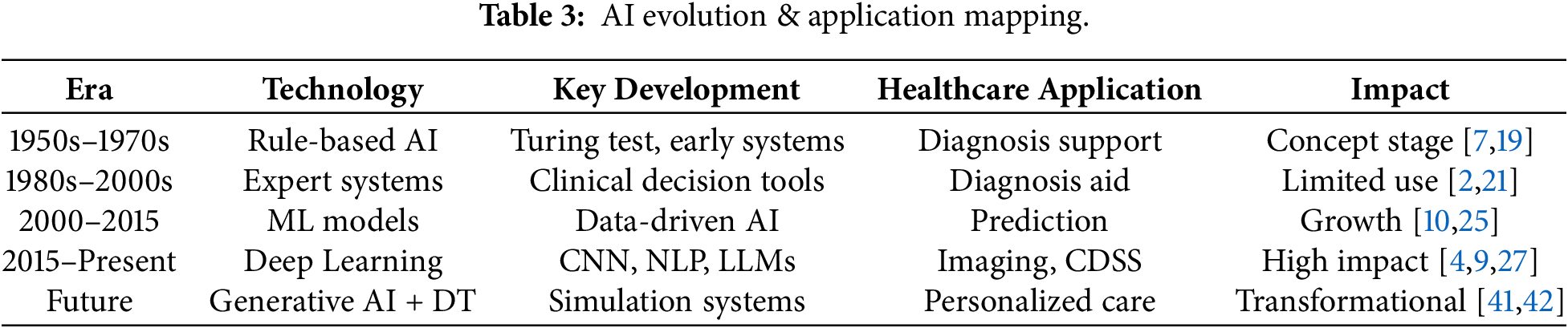
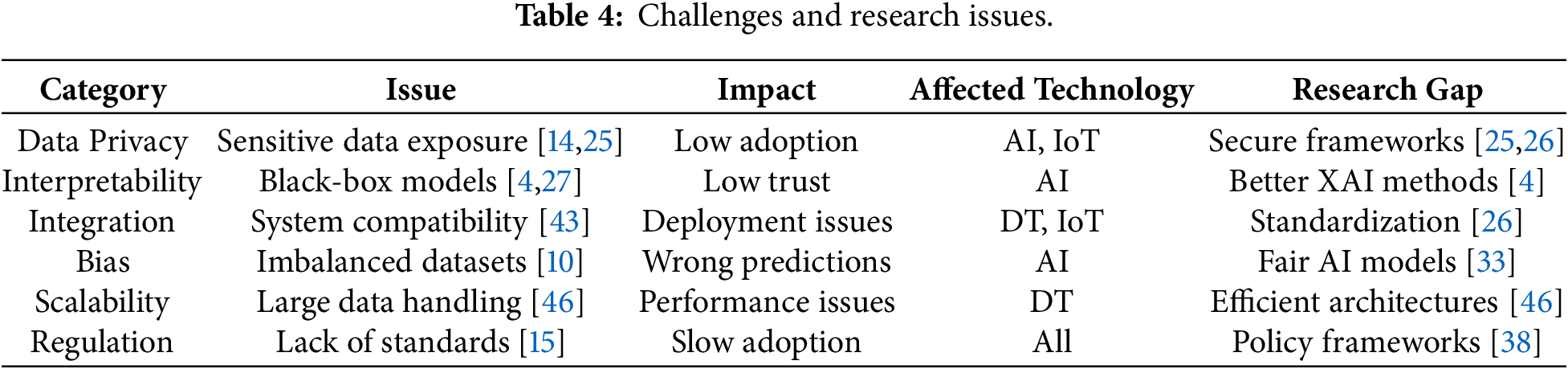
Fig. 2 illustrates the study’s layered structure, organized into three interconnected levels. The Research Foundation layer establishes the basis of the study through the introduction, background, and systematic methodology. The Core Analysis layer presents the main contributions, including taxonomy development, application analysis, and evidence-based insights. It highlights the integration of AI, XAI, and DT technologies within a unified healthcare ecosystem. The Outcomes and Implications layer summarizes key challenges, identifies research gaps, and outlines future research directions. This layered representation demonstrates the progression from foundational concepts to analytical contributions and ultimately to practical insights and future opportunities in intelligent healthcare systems.
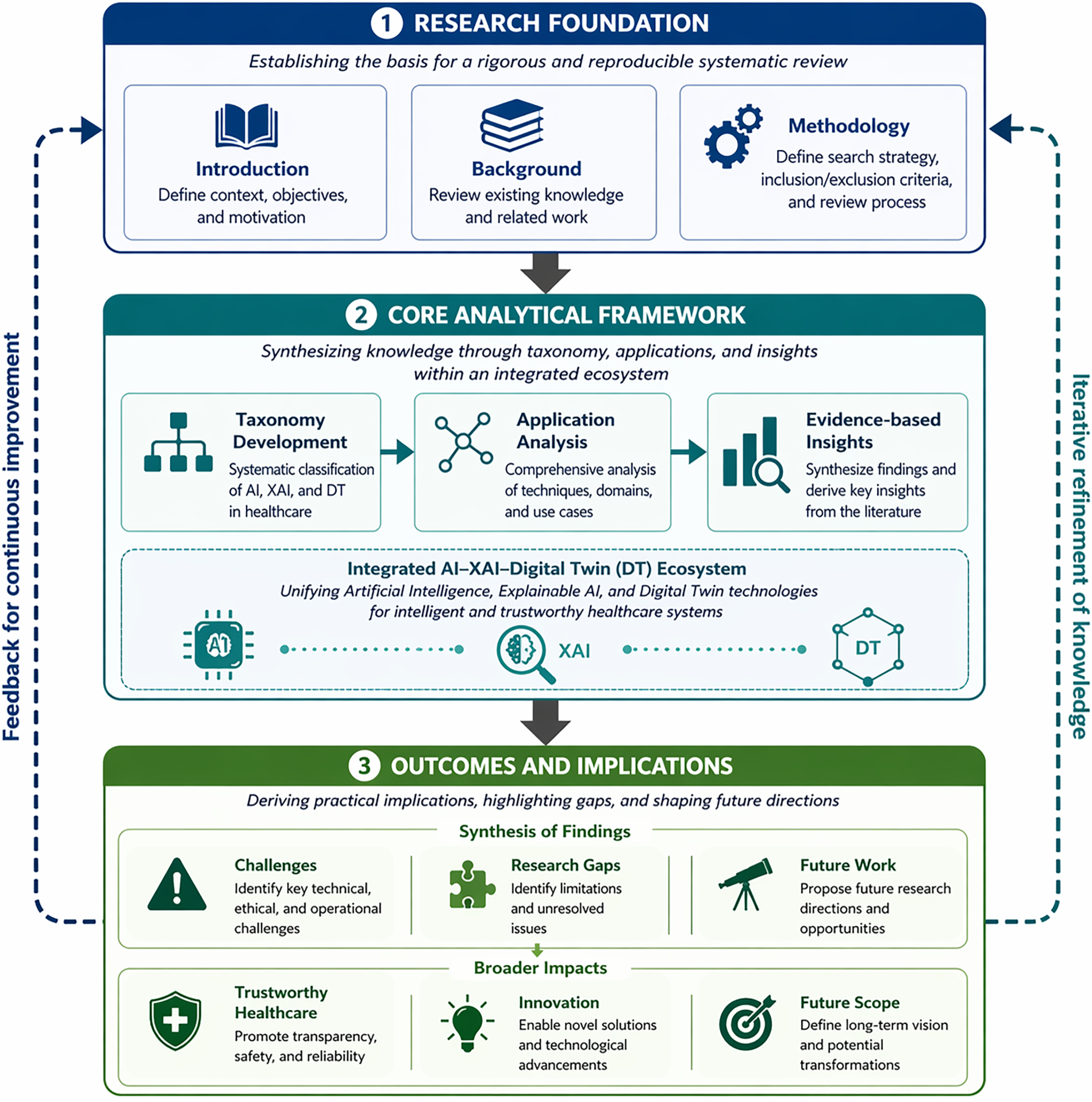
Figure 2: Conceptual structure of the proposed systematic review framework.
Unlike existing survey articles that primarily focus on individual aspects such as AI, Explainable AI, or Digital Twins, this review presents a unified and evidence-driven perspective by integrating these technologies within a context-aware healthcare ecosystem. The novelty of this work lies in four key aspects: (i) the development of a comprehensive multi-layer taxonomy that jointly incorporates AI, XAI, Digital Twins, IoT, Federated Learning, and Generative AI; (ii) an evidence-based synthesis of 97 systematically selected studies to identify technological trends, validation strategies, and explainability mechanisms; (iii) a comparative analysis that reveals current research gaps, limitations, and integration challenges across intelligent healthcare systems; and (iv) a future research roadmap that highlights opportunities for developing scalable, trustworthy, and patient-centric healthcare solutions. These contributions distinguish this review from existing surveys that typically address these technologies independently rather than as components of an integrated intelligent healthcare framework.
AI has become one of the most impactful innovations in modern healthcare, fundamentally changing the way clinicians diagnose, treat, and manage patients [28,29]. This integration of ML, DL, and natural language processing (NLP) into clinical processes has led to unprecedented improvements in personalized medicine, early disease diagnosis, and operational efficiency throughout the healthcare continuum [30,31].
Convolutional neural networks (CNNs) are DL models that have demonstrated high performance in medical image analysis and disease detection. They have been applied to conditions such as diabetic retinopathy, skin cancer, and pulmonary abnormalities, where automated feature extraction can assist clinicians in identifying disease-related patterns [32–34]. The ability of CNN-based models to learn discriminative features directly from medical images has contributed to their widespread adoption in diagnostic imaging.
Beyond conventional DL approaches, transformer-based architectures have increasingly been investigated for healthcare applications. These models can capture long-range dependencies in clinical and multimodal data, making them suitable for tasks such as clinical text analysis and decision support [35]. Large language models (LLMs) further extend these capabilities by facilitating the synthesis of patient information, extraction of clinically relevant knowledge, and generation of treatment-related recommendations. However, their use in clinical settings requires careful consideration of reliability, factual consistency, and clinical validation. AI has also become an important component of predictive healthcare and clinical decision support systems (CDSS). Machine learning and DL techniques have been used for risk prediction, disease classification, prognosis estimation, and treatment support [36,37]. These approaches can assist healthcare professionals by identifying patterns that may be difficult to detect through conventional statistical or manual analysis.
Another important application is continuous patient monitoring. AI-enabled systems can analyze EHRs and data obtained from wearable devices to support early detection and longitudinal assessment of health conditions [38,39]. Such systems can facilitate the identification of changes in physiological parameters and provide timely alerts for potential health risks. AI-based approaches have also contributed to personalized healthcare by supporting patient-specific risk assessment and treatment planning [40,41]. By integrating heterogeneous clinical information, these approaches can potentially improve the selection and adaptation of interventions according to individual patient characteristics. Nevertheless, challenges related to data quality, interoperability, model generalizability, privacy, and interpretability remain important barriers to clinical deployment [42,43]. The development of AI technologies and their mapping to healthcare applications are presented chronologically in Table 3. The table illustrates the progression from early rule-based AI and expert systems to machine learning and deep learning, followed by emerging Generative AI and DT-enabled healthcare applications. This progression reflects the increasing sophistication of AI systems, from predefined rule-based decision processes toward data-driven learning, multimodal reasoning, simulation, and personalized healthcare.
2.2 Explainable Artificial Intelligence (XAI)
With the growing role of AI systems in clinical settings, transparency, interpretability, and accountability are now essential demands [44]. XAI is a response to this requirement, as it offers ways to understand AI model decisions, with clinicians, patients, and regulatory authorities in mind. Interpretability in the healthcare industry is not only favourable but also mandatory, as AI-based decision-making can directly affect patient safety and the success of their treatment [45]. For example, predictive models designed to estimate sepsis risk should not only provide accurate predictions but should also indicate how individual clinical variables contributed to the model’s prediction. In the absence of such clarifications, clinicians might not be convinced to accept or embrace AI-guided recommendations. XAI is understood as the provision of explanations for traditional black-box models at various levels, such as feature importance, local decision explanations, and visual interpretations of model behavior. Various methods have been developed to achieve explainability. In parallel, Digital Twin technologies have been explored for healthcare applications, including remote surgery and medical-device management [46,47]. Digital Twin frameworks have also been integrated with deep learning for medical image analysis [48], while trust-oriented approaches have been investigated to improve the reliability of Digital Twin-enabled medical devices [49].
In contrast, others are model-agnostic, such as SHAP and LIME, which can explain complex models without altering their structure [4,28]. Moreover, visualization techniques such as Grad-CAM are commonly used in medical imaging to highlight areas of interest that affect predictions. Recent directions from 2022 to 2025 have increasingly focused on integrating heterogeneous and multimodal healthcare data, including medical imaging, electronic health records, and multi-sensor data [50]. Digital Twin technologies have also been explored to support smart hospital operations and healthcare system management [51]. In addition, AI-enabled Digital Twin systems have been investigated for computational resource management and task offloading in healthcare environments [52]. These developments are particularly relevant to healthcare because clinical decisions often depend on the integration of heterogeneous data sources rather than a single modality. Consequently, multimodal XAI can improve the transparency and interpretability of complex AI systems while supporting more informed clinical decision-making.
DT technology is a radically new approach to healthcare because it enables the creation of dynamic, constantly changing virtual models of patients, organs, or healthcare systems. In contrast to traditional static models [53], Digital Twins combine real-time data from a variety of sources, including wearable devices, medical imaging, genomic databases, and electronic health records [54]. This ongoing data integration enables Digital Twins to emulate physiological processes and accurately forecast future health outcomes [55]. A personalized computational model that corresponds to a patient’s state and evolves with it can be considered a healthcare DT [56]. This capability enables clinicians to implement various treatment strategies in a virtual setting and analyze them before applying them in clinical settings, thereby mitigating risks and improving outcomes [57,58]. The current DT solutions consist of a set of integrated layers that enable gathering data, communication, processing, and simulation. These architectures use modern technologies such as edge and cloud computing for real-time data processing, federated learning to train privacy-protecting models [59], and blockchain to manage data securely. The interpretability of DT predictions can be further increased by employing explainable AI, thereby making the predictions more trustworthy in clinical applications. Although it can bring a revolution in healthcare, DT technology is not without challenges, such as high computational demands, non-interoperability among different healthcare systems [60], privacy of patient information, and insufficient clinical validation. Moreover, a lack of unified structures and regulatory mechanisms continues to impede widespread adoption [61].
The interplay between AI and new technologies that enhance the intelligence, scalability, and efficiency of healthcare systems is increasingly popular in recent developments in the field [62]. One of these is Generative AI, which has received significant attention for generating synthetic medical data, automating clinical documentation, and facilitating complex decision-making. Large language models and generative models can handle vast amounts of medical information, enabling improvements in diagnosis, treatment planning, and patient communication. Moreover, the models are used in drug discovery and biological simulation, further enhancing innovation in medicine. Combining the Internet of Things with AI has enabled uninterrupted, real-time protection of patient health. Activated by AI algorithms, wearable devices and smart medical equipment will capture physiological data (including heart rate, glucose levels, and oxygen saturation), which are used to identify abnormalities and initiate early interventions. This combination of IoT and AI can help create a smart healthcare environment and improve remote patient care. Federated learning has proven to be an important solution for data privacy in healthcare. Compared with traditional centralized models, federated learning enables multiple institutions to collaboratively train AI models without exchanging raw patient data. Such a solution not only ensures compliance with data protection rules but also enhances the model’s robustness by using a variety of datasets. The intersection of Generative AI, IoT, and Federated Learning is a major contributor to the development of advanced healthcare systems, including Digital Twins and smart clinical decision-support systems. AI-enabled Digital Twins have also been explored in healthcare, including applications in cancer care and medical-device management [63,64]. These technologies contribute to the shift towards proactive, predictive, and personalized medical systems rather than reactive healthcare. AI-based approaches have demonstrated potential for improving disease diagnosis and clinical assessment, including cancer diagnosis and the diagnosis of venous diseases [65,66].
2.5 Challenges and Research Gaps
Although AI-based healthcare has driven some of the fastest technological advances, several essential issues still limit its widespread implementation and practical use. These issues stem from technical, ethical, and regulatory complexities that must be addressed to implement them safely and effectively [66]. Data privacy issues, inability to interpret, system integration challenges, dataset bias, scalability, and regulatory ambiguities remain noteworthy impediments. Table 4 summarises all these challenges, including their effects on healthcare systems, the technologies involved, and the research gaps [54]. Based on this table, it is necessary to create secure environments, enhance explainability, improve interoperability, build fairness into AI models, architect intelligent scaling, and implement robust policy principles [65].
The above discussion provides a comprehensive understanding of the characteristics, capabilities, and limitations of AI, XAI, and DT technologies in healthcare, thereby addressing the first research question (RQ1).
This study adopts the Preferred Reporting Items for Systematic Reviews and Meta-Analyses (PRISMA 2020) framework to ensure a systematic, transparent, and reproducible literature review process. The review methodology was designed to identify, evaluate, and synthesise existing research on explainable, context-aware AI and Digital Twin technologies in healthcare. In addition, a PRISMA-guided screening and quality assessment process was implemented to minimise selection bias and improve methodological rigour.
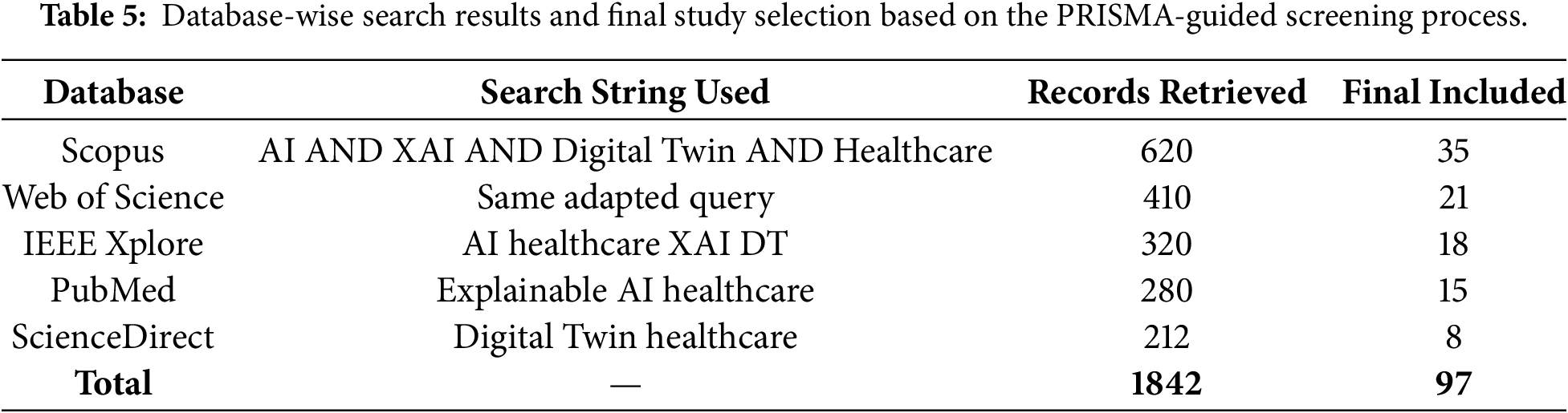
A comprehensive literature search was conducted across multiple well-established scientific databases, including Scopus, Web of Science, IEEE Xplore, PubMed, and ScienceDirect, to identify relevant peer-reviewed studies. The search was limited to publications from 2019 to 2026 to capture the most recent advancements in AI, XAI, and DT technologies.
We developed a structured search strategy using Boolean operators and keyword combinations. The primary search query was defined as: (“Artificial Intelligence” OR “Machine Learning” OR “Deep Learning”) AND (“Healthcare” OR “Medical” OR “Clinical”) AND (“Explainable AI” OR “XAI” OR “Interpretability”) AND (“Digital Twin” OR “Smart Healthcare” OR “IoT”) AND (“Federated Learning” OR “Privacy-preserving AI”).
To broaden coverage, we added keywords such as predictive analytics, clinical decision support systems, remote monitoring, generative AI, and personalised medicine. The literature search was conducted between January 2025 and February 2026. The final search update was performed on 28 January 2026 to include the most recent studies.
Database-Wise Search Results
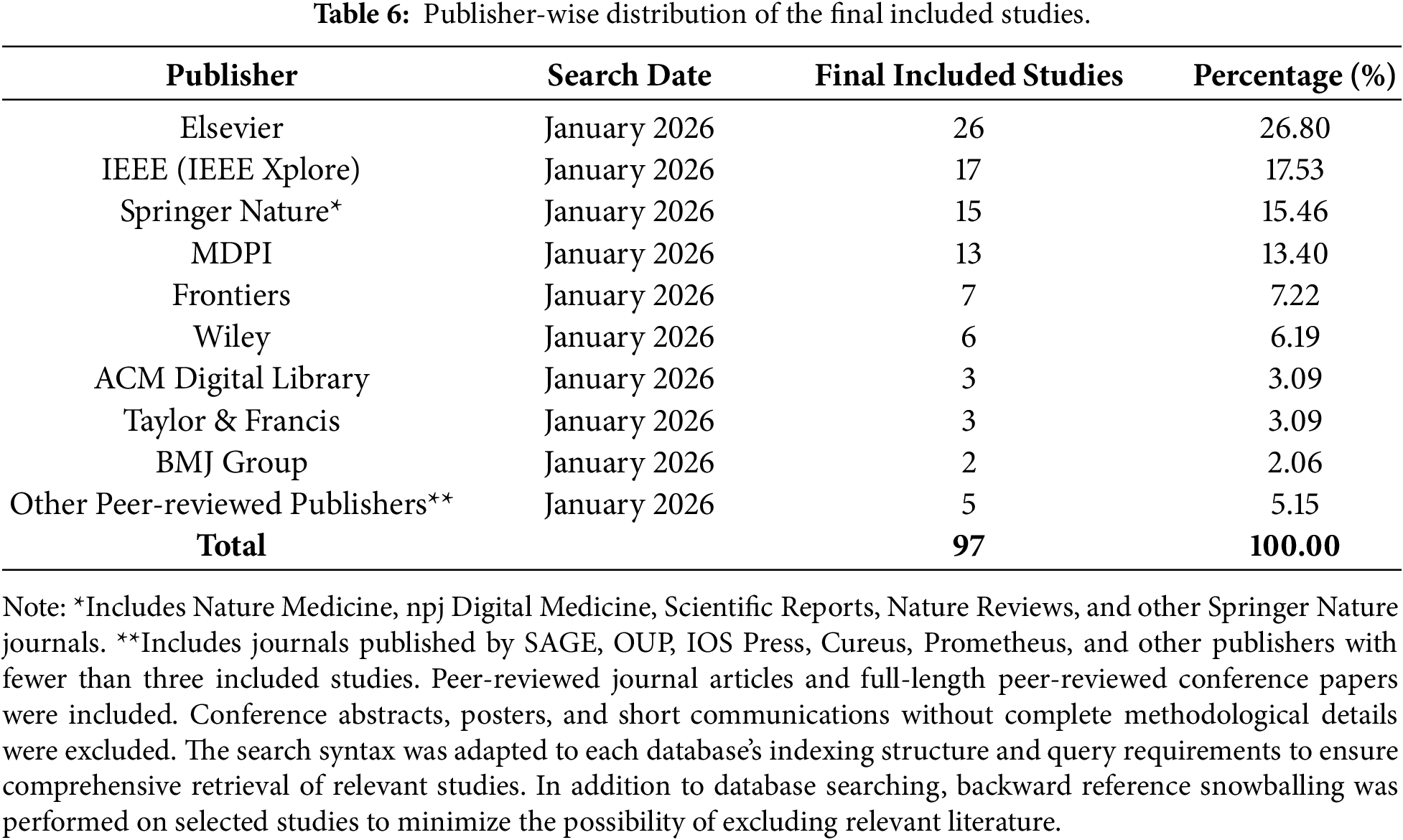
Two reviewers independently conducted the search and screening process to improve consistency and minimize selection bias. We removed duplicate records before screening using Zotero reference management software. We then screened titles and abstracts, followed by full-text eligibility assessment, according to the predefined PRISMA inclusion and exclusion criteria. Reviewers resolved disagreements through discussion and consensus. Table 5 presents the database-wise search results and final study selection, while Table 6 summarises the publisher-wise distribution of included studies.
3.2 Inclusion and Exclusion Criteria
To ensure the selection of relevant and high-quality studies, predefined inclusion and exclusion criteria were applied.
Inclusion Criteria
– Peer-reviewed journal articles and conference papers
– Studies related to AI, XAI, Digital Twin, or healthcare technologies
– Publications between 2019–2026
– Articles written in English
– Studies focusing on applications, models, or frameworks in healthcare
Exclusion Criteria
– Studies not related to artificial intelligence, XAI, Digital Twin technologies, or healthcare applications.
– Publications outside the predefined study period (2019–2026), except for seminal studies cited only for background discussion and not included in the systematic synthesis.
– Non-peer-reviewed literature, including editorials, opinion articles, letters, blogs, technical reports, dissertations, white papers, and preprints.
– Duplicate records identified across multiple databases.
– Studies with unavailable or incomplete full-text articles.
– Publications lacking sufficient methodological, experimental, or validation details to support evidence synthesis.
– Studies not published in the English language.
– Studies that failed to satisfy the predefined quality assessment threshold.
– Review articles, systematic reviews, meta-analyses, book chapters, and conference abstracts that did not provide primary research evidence.
– Studies with insufficient information regarding datasets, AI methodology, evaluation metrics, or clinical validation.
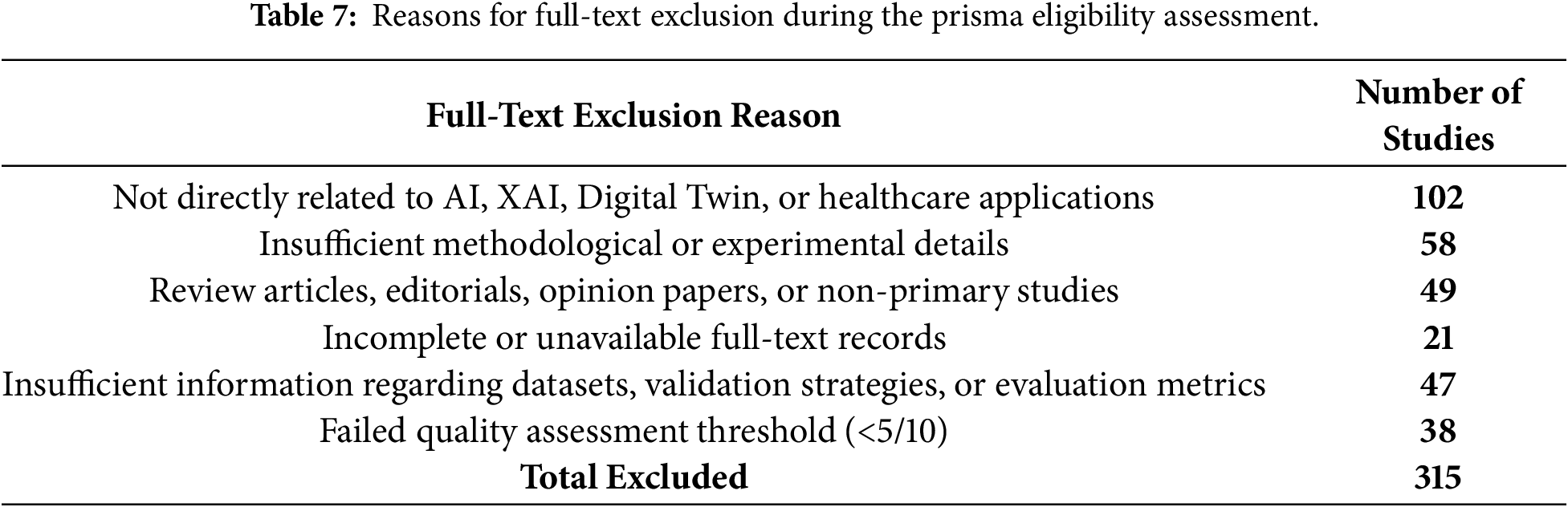
Table 7 summarizes the reasons for excluding studies during the full-text eligibility assessment conducted in accordance with the predefined inclusion, exclusion, and quality assessment criteria of the PRISMA-guided review process.
3.3 Study Selection Process (PRISMA Flow)
The study selection process was conducted in four stages: identification, screening, eligibility, and inclusion in accordance with PRISMA guidelines.
1. Identification: 1842 records were retrieved from the selected databases using the defined search strategy.
2. Duplicate Removal: After removing duplicate entries, 1326 unique records remained.
3. Screening: Titles and abstracts were reviewed to assess relevance, resulting in 412 studies shortlisted for full-text evaluation.
4. Eligibility: Full-text analysis was conducted according to the inclusion and exclusion criteria, resulting in the selection of 97 high-quality studies.
5. Inclusion: These 97 studies were included in the final qualitative synthesis of this systematic review.
The PRISMA-based study selection process, including identification, screening, eligibility, and inclusion phases, is presented in Fig. 3.
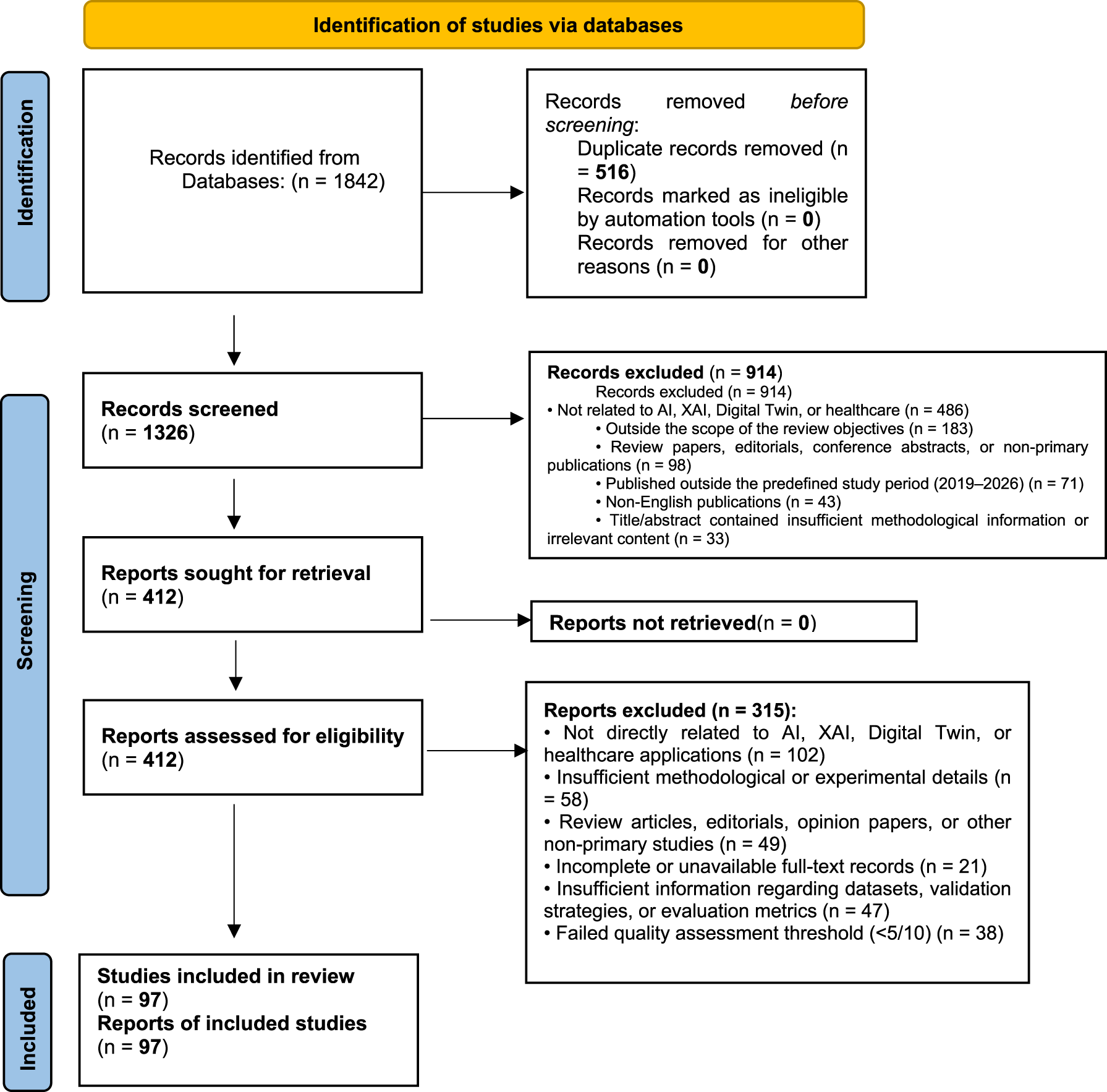
Figure 3: PRISMA framework.
3.4 Data Extraction and Analysis
A structured data extraction protocol was followed to ensure consistency and reliability. The following key attributes were extracted from each selected study:
– Study objectives and contributions
– AI techniques and models (ML, DL, XAI, etc.)
– Application domain (diagnosis, prediction, Digital Twin, etc.)
– Data sources (EHR, imaging, IoT, wearable data)
– Evaluation metrics (accuracy, precision, recall, AUROC)
– Key findings, limitations, and future directions
The extracted data were systematically categorized into five predefined thematic areas: Explainable AI, predictive healthcare analytics, Digital Twin systems, context-aware intelligence, and emerging healthcare technologies. This categorization enabled comparative analysis, trend identification, and the recognition of research gaps. A standardized data extraction form was developed in Microsoft Excel to ensure consistency across reviewers. Two reviewers independently extracted bibliographic information, study objectives, AI techniques, explainability methods, Digital Twin implementation, healthcare application domain, datasets, validation strategies, evaluation metrics, key findings, limitations, and future research directions. Any discrepancies between reviewers were resolved through discussion and consensus before the final dataset was established.
The extracted data were systematically categorized into five predefined thematic areas: Explainable AI, predictive healthcare analytics, Digital Twin systems, context-aware intelligence, and emerging healthcare technologies. This thematic organization provided a consistent framework for comparative analysis, trend identification, and systematic recognition of current research gaps.
Evidence Synthesis Methodology
Following data extraction, qualitative thematic analysis was conducted to synthesize evidence across the included studies. Each study was coded according to AI technique, explainability mechanism, Digital Twin implementation, healthcare application, validation strategy, reported limitations, and emerging technologies. Frequency analysis was then performed to identify dominant trends, while comparative synthesis was used to construct evidence-based summary tables and identify research gaps.
To ensure the reliability, validity, and methodological rigor of the selected studies, a structured quality assessment protocol was adopted. The quality assessment criteria, adapted from established healthcare AI systematic review methodologies, are presented in Table 8. The assessment focused on methodological transparency, validation strength, explainability assessment, reproducibility, and clinical relevance. Each criterion was scored on a scale of 0–2, where 0 indicates poor quality or absence of evidence, 1 indicates partial compliance, and 2 indicates strong compliance. The maximum achievable score for each study was 10.
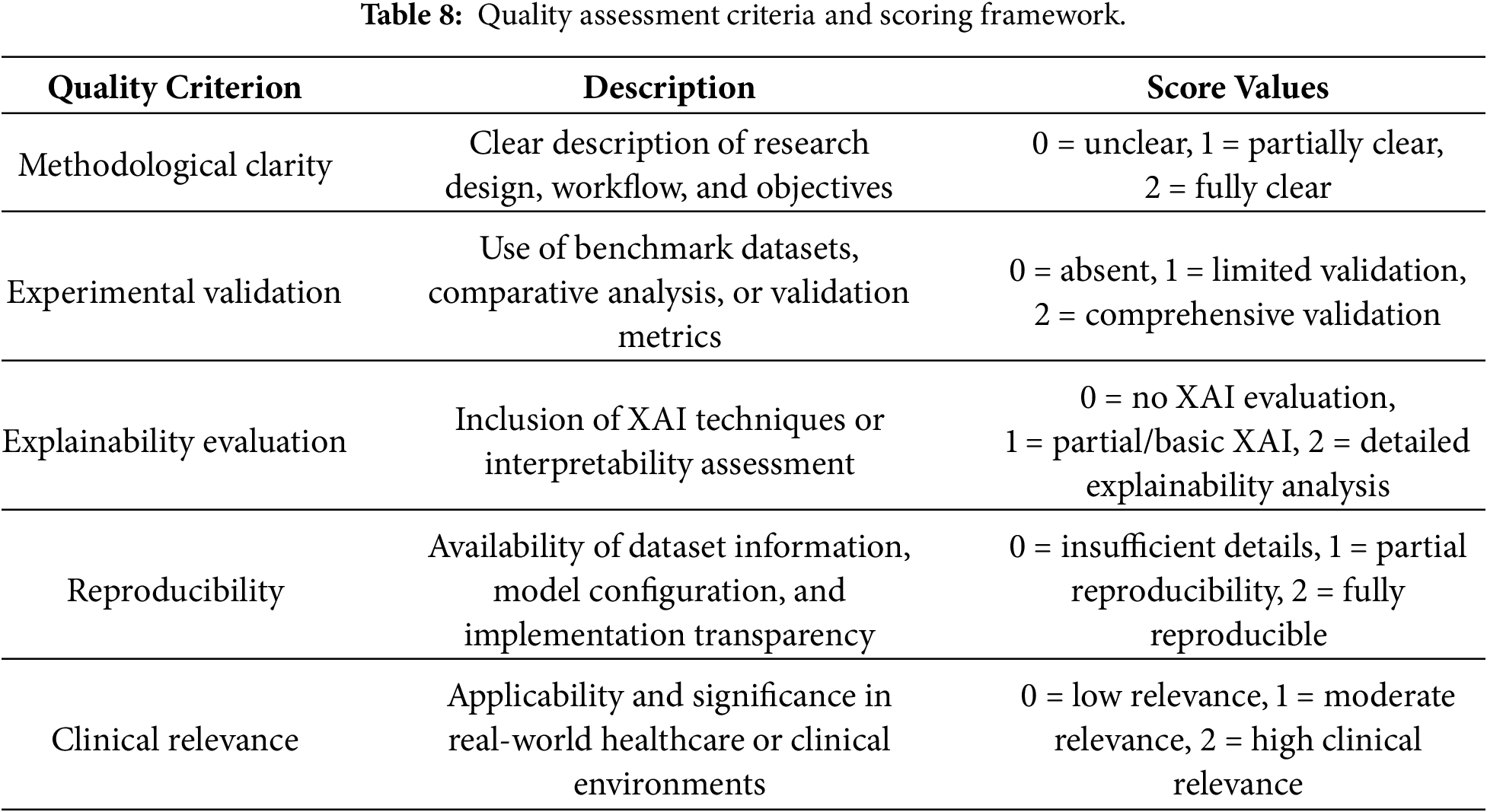
Studies scoring below 5/10 were excluded from the final synthesis. Two independent reviewers performed study screening, data extraction, and quality assessment to minimize selection bias and improve assessment reliability. Initial inter-reviewer agreement exceeded 90%, and any disagreements were resolved through discussion until consensus was achieved. Each included study was evaluated using the five quality criteria presented in Table 8, with individual criterion scores summed to obtain an overall quality score ranging from 0 to 10. Based on the total score, studies were categorized as Excellent (9–10), Good (7–8), or Acceptable (5–6). The quality assessment identified 31 studies (31.96%) as Excellent, 42 (43.30%) as Good, and 24 (24.74%) as Acceptable. Most selected studies demonstrated strong methodological rigor and high clinical relevance, particularly in disease diagnosis, predictive analytics, and personalized healthcare applications. However, several studies exhibited limitations in external validation, explainability assessment, and reproducibility, highlighting ongoing challenges in healthcare AI research. No study included in the final synthesis scored below the predefined inclusion threshold of 5/10, ensuring that only methodologically sound studies contributed to the evidence synthesis. Based on the total quality score, studies were categorized as Excellent (9–10), Good (7–8), or Acceptable (5–6). The study-level quality assessments are presented in Table 9, while the overall distribution of quality scores across the 97 included studies is summarized in Table 10.
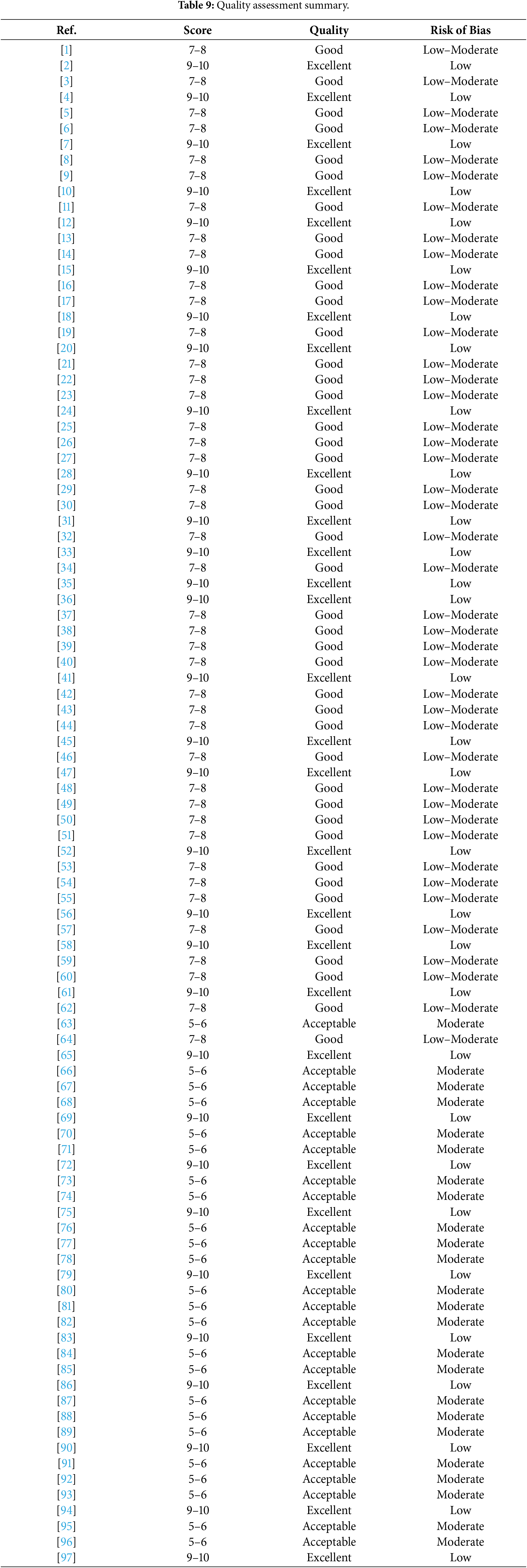
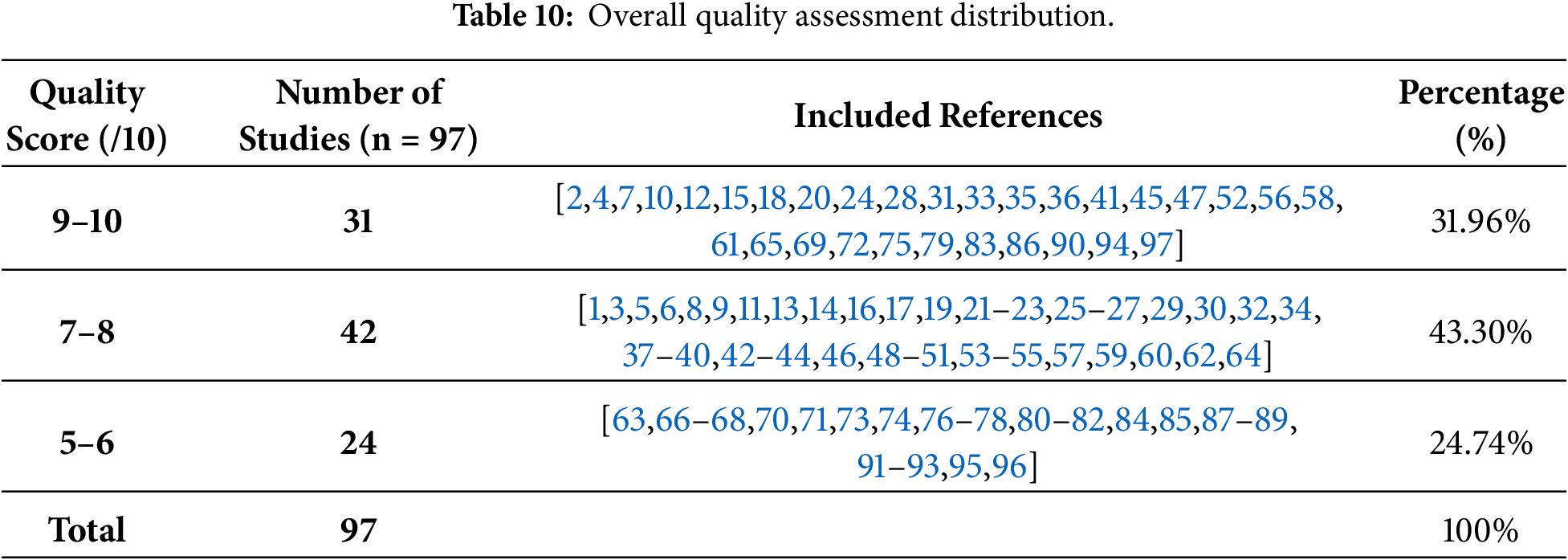
Table 11 summarizes the frequency-based evidence synthesis of the 97 included studies. Each study was independently coded according to AI technique, explainability method, healthcare application, data source, and validation strategy. Frequency counts and percentages were then calculated across all included studies to identify dominant research trends. Representative references are provided to illustrate each category; however, the reported frequencies were derived from the complete set of included studies rather than only the cited examples.
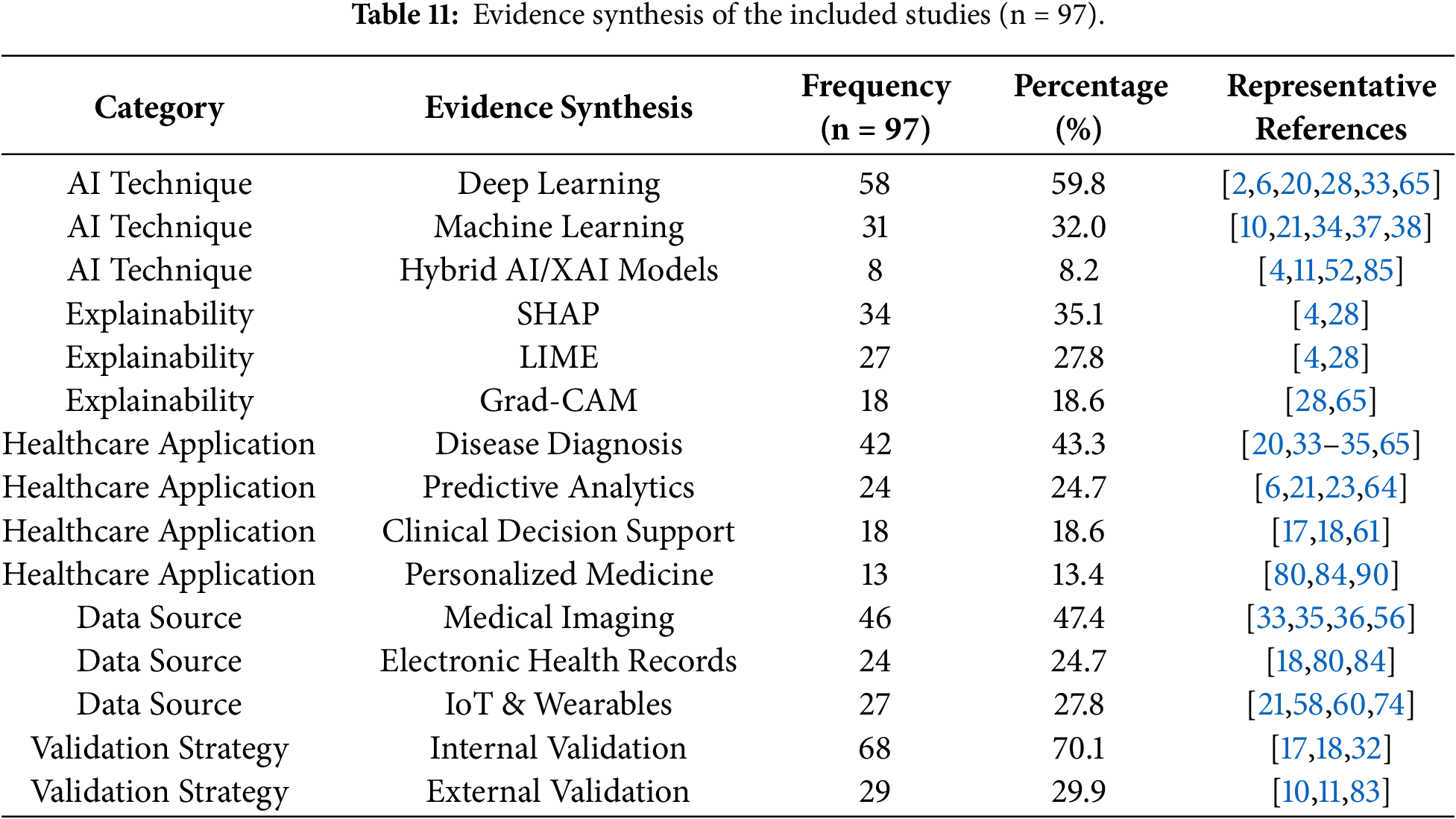
The evidence synthesis presented in Table 11 was generated through manual thematic coding of all 97 included studies. Each study was classified according to its primary AI technique, explainability method, healthcare application, data source, and validation strategy. Frequency counts and percentages were calculated to identify dominant research trends. Representative references are provided for illustration; however, the reported frequencies were derived from the complete set of included studies rather than solely from the cited examples.
Taxonomy Development. The proposed taxonomy was derived through an iterative thematic coding process. Following data extraction, all 97 included studies were independently coded according to their AI technique, explainability method, healthcare application, data source, validation strategy, and emerging technologies. Related codes were subsequently grouped into higher-level conceptual themes, which formed the hierarchical taxonomy presented in Section 4. This data-driven approach ensured that the taxonomy was grounded in the evidence synthesized from the included studies rather than being predefined.
4 Taxonomy of Explainable, Context-Aware AI and Digital Twin in Healthcare
To comprehensively understand the integration of intelligent technologies in healthcare, a multi-layered taxonomy is proposed that organizes AI, XAI, DT, and emerging technologies into a unified framework [45]. This taxonomy not only categorizes existing approaches but also highlights their interdependencies, enabling a holistic view of next-generation healthcare systems [57].
Unlike conventional survey-based taxonomies that provide only descriptive categorization, the proposed framework integrates evidence-driven synthesis derived from 97 systematically selected studies. The taxonomy establishes relationships among AI, XAI, Digital Twin, IoT, Federated Learning, and context-aware intelligence by mapping their functional roles, explainability requirements, real-time capabilities, scalability constraints, and healthcare applicability. Furthermore, the framework introduces a multi-layer integration perspective that combines predictive intelligence, explainability, simulation, and adaptive decision-making into a unified healthcare ecosystem. This evidence-based integration differentiates the proposed taxonomy from existing conceptual reviews and provides methodological novelty for next-generation intelligent healthcare systems.
4.1 Functional Taxonomy of AI in Healthcare
AI systems in healthcare can be further categorized based on their functional roles and operational characteristics [2,7–10]:
– Descriptive AI: Focuses on summarizing historical healthcare data to identify patterns and trends, supporting clinical reporting and decision-making [58,59].
– Predictive AI: Utilizes machine learning and DL algorithms to forecast patient outcomes such as disease onset, progression, and hospital readmission risks.
– Prescriptive AI: Provides actionable recommendations for treatment planning by integrating predictive insights with clinical guidelines [60].
– Autonomous AI Systems: Emerging systems capable of operating with minimal human intervention, particularly in robotic surgery, automated diagnostics, and real-time monitoring [61,62].
Additionally, AI systems can be categorized based on data types:
– Image-Based AI: Radiology, pathology, and ophthalmology
– Signal-Based AI: ECG, EEG, and wearable sensor data
– Text-Based AI: Clinical notes and electronic health records
– Multimodal AI: Integration of multiple data types for comprehensive analysis
XAI plays a critical role in bridging the gap between model performance and interpretability. A deeper classification of XAI methods includes [4,27,28]:
• Intrinsic Interpretability: Models inherently interpretable by design, such as linear models and decision trees, are often used in risk scoring systems [63].
• Post-Hoc Explainability: Techniques applied after model training to interpret predictions, including SHAP, LIME, and feature importance analysis.
• Local vs. Global Explanations:
○ Local explanations focus on individual predictions
○ Global explanations provide an overview of model behavior across the dataset
• Causal and Counterfactual Explanations: Provide insights into cause-and-effect relationships and simulate alternative outcomes, which are particularly useful in treatment planning [64].
• Human-Centered XAI: Focuses on generating explanations tailored to clinicians and patients, improving the usability and trust in AI systems [65].
Recent advancements emphasize multimodal XAI, where explanations are generated across heterogeneous data sources such as imaging, clinical text, and sensor data, enabling more comprehensive interpretation.
4.3 Hierarchical Taxonomy of Digital Twin Systems
DT systems can be structured hierarchically based on scope and complexity [42,43,46,47,66]
• Micro-Level DTs: Focus on cellular or molecular processes to support drug discovery and precision medicine [67].
• Organ-Level DTs: Simulate specific organs (e.g., cardiac or pulmonary models) for diagnosis and surgical planning [68,69].
• Patient-Level DTs: Represent the entire patient profile by integrating multimodal data, enabling personalized treatment and continuous monitoring [70].
• System-Level DTs: Model hospital operations, including patient flow, resource allocation, and emergency response systems.
• Population-Level DTs: Used for public health analysis, epidemiological modeling, and large-scale healthcare planning.
Furthermore, DTs can be categorized based on functionality [71,72]:
• Monitoring Twins: Real-time health tracking
• Predictive Twins: Forecast disease progression
• Prescriptive Twins: Recommend interventions
• Autonomous Twins: Adaptive systems capable of self-optimization [73,74]
4.4 Context-Aware Intelligence Layer
Context-awareness is a key enabler of intelligent healthcare systems and enhances decision-making by incorporating multiple contextual dimensions [25,26,72]:
• Temporal Context: Captures changes in patient health over time, enabling dynamic prediction and monitoring.
• Spatial Context: Considers location-based factors such as hospital environment or patient surroundings.
• Physiological Context: Integrates real-time biological signals and patient-specific conditions.
• Behavioral Context: Includes lifestyle factors, patient habits, and environmental influences.
• Clinical Context: Incorporates medical history, clinician expertise, and treatment protocols.
Context-aware systems enable adaptive and personalized healthcare solutions by dynamically adjusting AI models based on real-world conditions.
4.5 Integration with Emerging Technologies
The taxonomy is further enriched by integrating emerging technologies that enhance system capabilities [5,22–25].
• Generative AI: Enables synthetic data generation, automated reporting, and intelligent clinical assistants.
• Internet of Things (IoT): Facilitates continuous data collection through wearable devices and smart sensors.
• Federated Learning: Supports decentralized model training while preserving data privacy across institutions.
• Edge and Fog Computing: Enables low-latency processing and real-time decision-making at the data source.
• Blockchain Technology: Ensures secure, transparent, and tamper-proof data management in healthcare systems.
• 5G/6G Networks: Provide high-speed, low-latency communication essential for real-time healthcare applications and DT synchronization.
4.6 Interrelationship among Components
The proposed taxonomy highlights strong interdependencies among AI, XAI, and DT technologies [2].
• AI provides predictive and analytical intelligence [42–46].
• XAI ensures transparency, interpretability, and trust [4].
• DTs enable real-time simulation and personalization [77].
• Context-awareness enhances adaptability
• Emerging technologies support scalability, security, and connectivity
These components collectively form a closed-loop intelligent healthcare system in which data is continuously collected, analyzed, interpreted, and applied to improve patient outcomes. Fig. 4 illustrates the end-to-end architecture of the proposed framework, highlighting data acquisition, AI-driven analytics, explainability, and DT-based simulation for clinical decision-making.
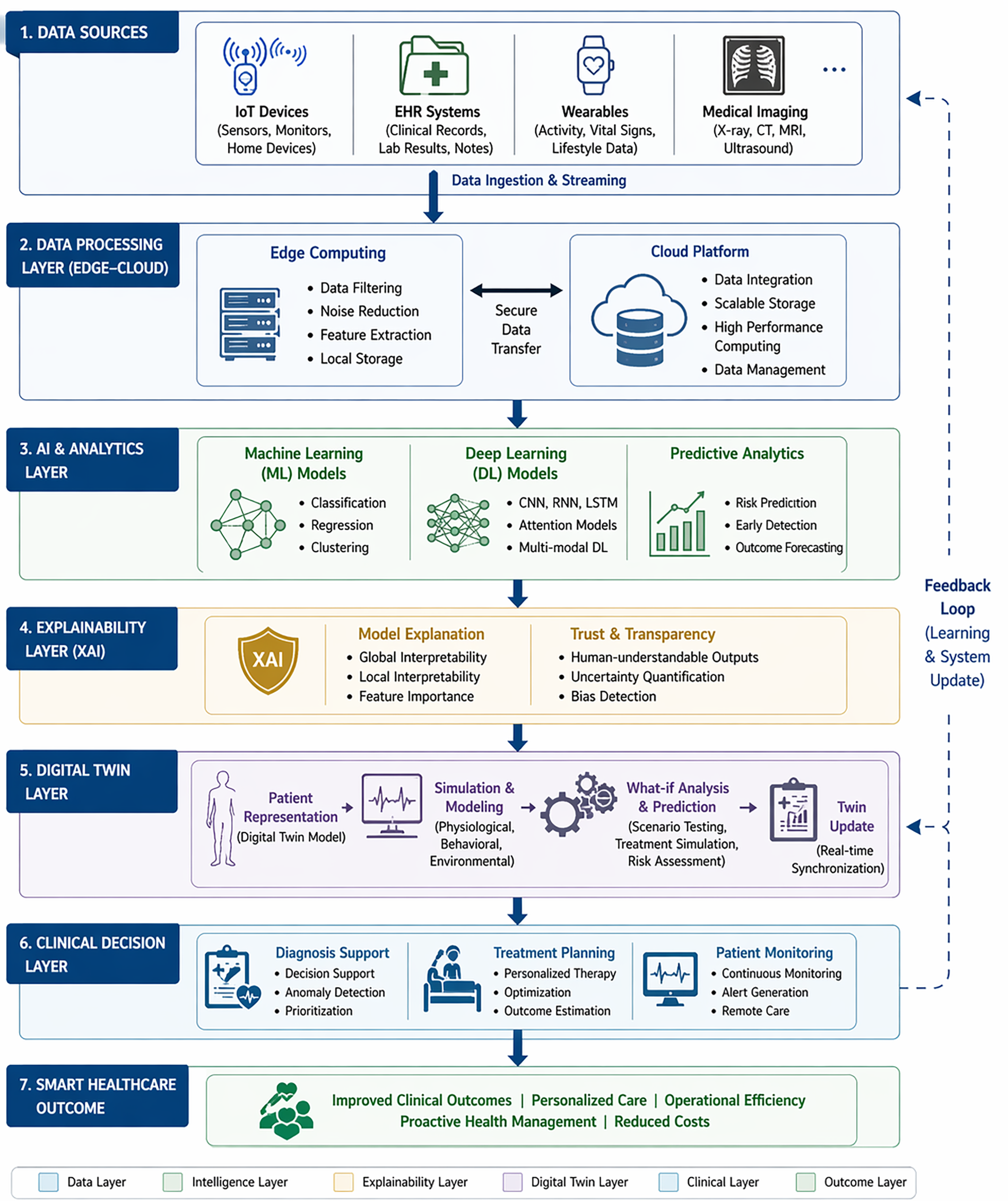
Figure 4: End-to-end architecture of the proposed framework.
Evidence-Based Taxonomy Insights
The proposed taxonomy was developed through thematic synthesis and comparative analysis of the selected studies. The evidence synthesis revealed several dominant trends across the literature:
• Deep learning and neural-network-based approaches remain the most widely adopted AI techniques in healthcare applications.
• Explainability mechanisms such as SHAP, LIME, and Grad-CAM are increasingly integrated into clinical decision-support systems to improve transparency and trust.
• Digital Twin technologies are primarily applied in personalized medicine, predictive monitoring, and virtual patient simulation.
• IoT and wearable technologies play a central role in enabling real-time context-aware healthcare environments.
• Most existing studies rely on internal validation, while large-scale external clinical validation remains limited.
These findings demonstrate that current healthcare AI ecosystems are evolving toward integrated, explainable, and patient-centric intelligent systems rather than isolated AI solutions.
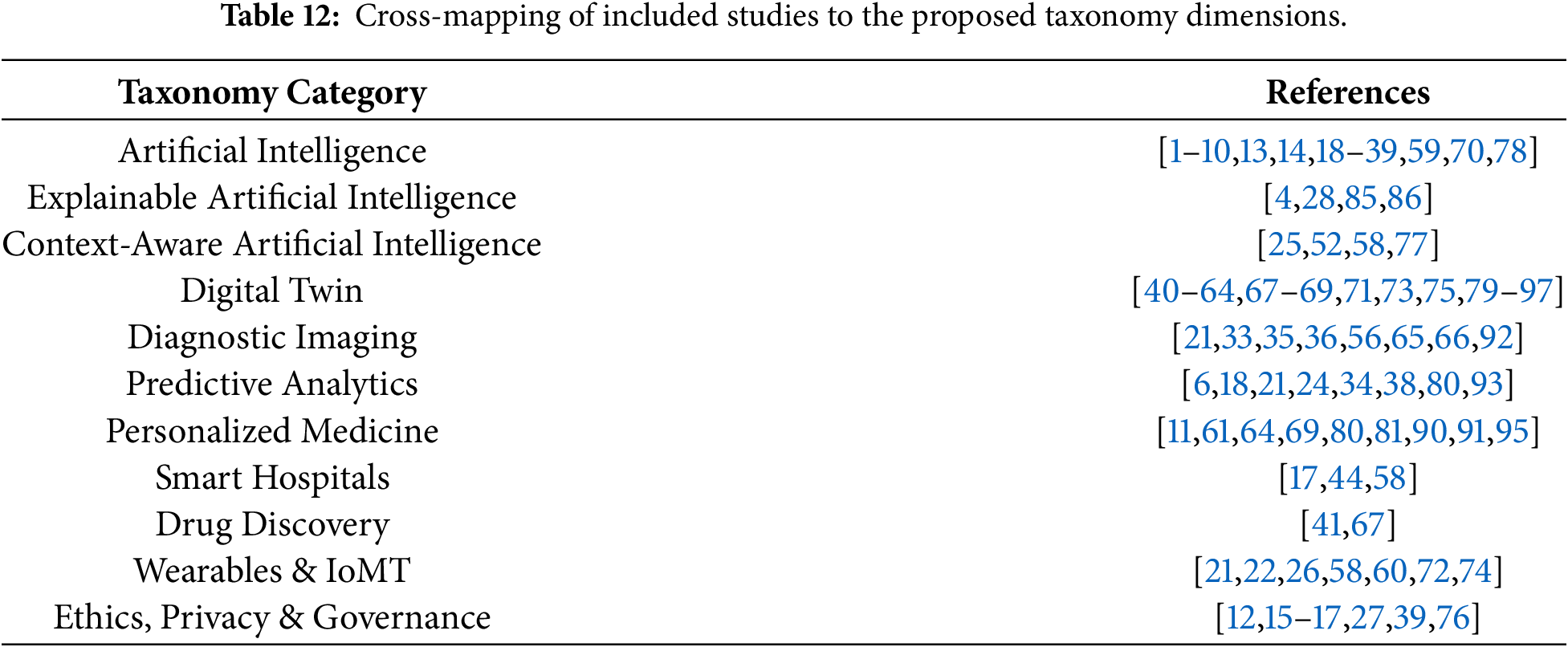
To improve the transparency and traceability of the proposed taxonomy, Table 12 maps the included studies to the corresponding taxonomy dimensions. Rather than presenting a study-by-study matrix, which would require a lengthy 97-row table and substantially reduce readability, the mapping is organized by taxonomy categories and the corresponding references. This representation enables readers to readily identify the studies supporting each taxonomy dimension while maintaining a concise and interpretable presentation of the evidence base.
4.7 Implications of the Taxonomy
The proposed taxonomy offers several important implications:
• Provides a structured framework for understanding complex healthcare systems
• Identifies gaps in integration between AI, XAI, and DT technologies
• Supports the design of next-generation context-aware healthcare systems
• Guides researchers in developing more interpretable and scalable solutions
The extended taxonomy presents a comprehensive classification of explainable, context-aware AI and DT technologies in healthcare [78,79]. It highlights the evolution from isolated AI models to integrated, intelligent ecosystems capable of real-time monitoring, prediction, and decision-making [80,81]. A comparative summary of the roles, outputs, and limitations of AI, XAI, and DT technologies is presented in Table 13.
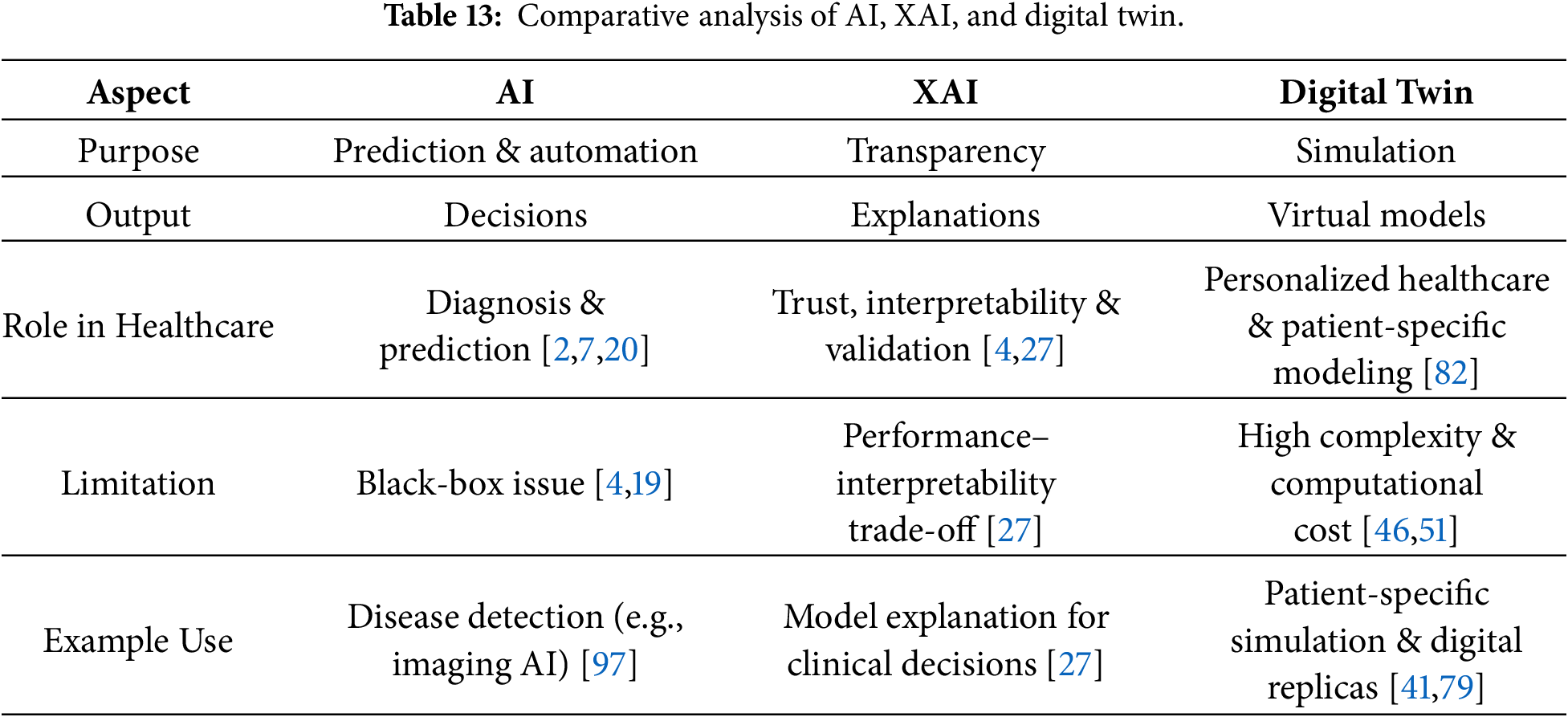
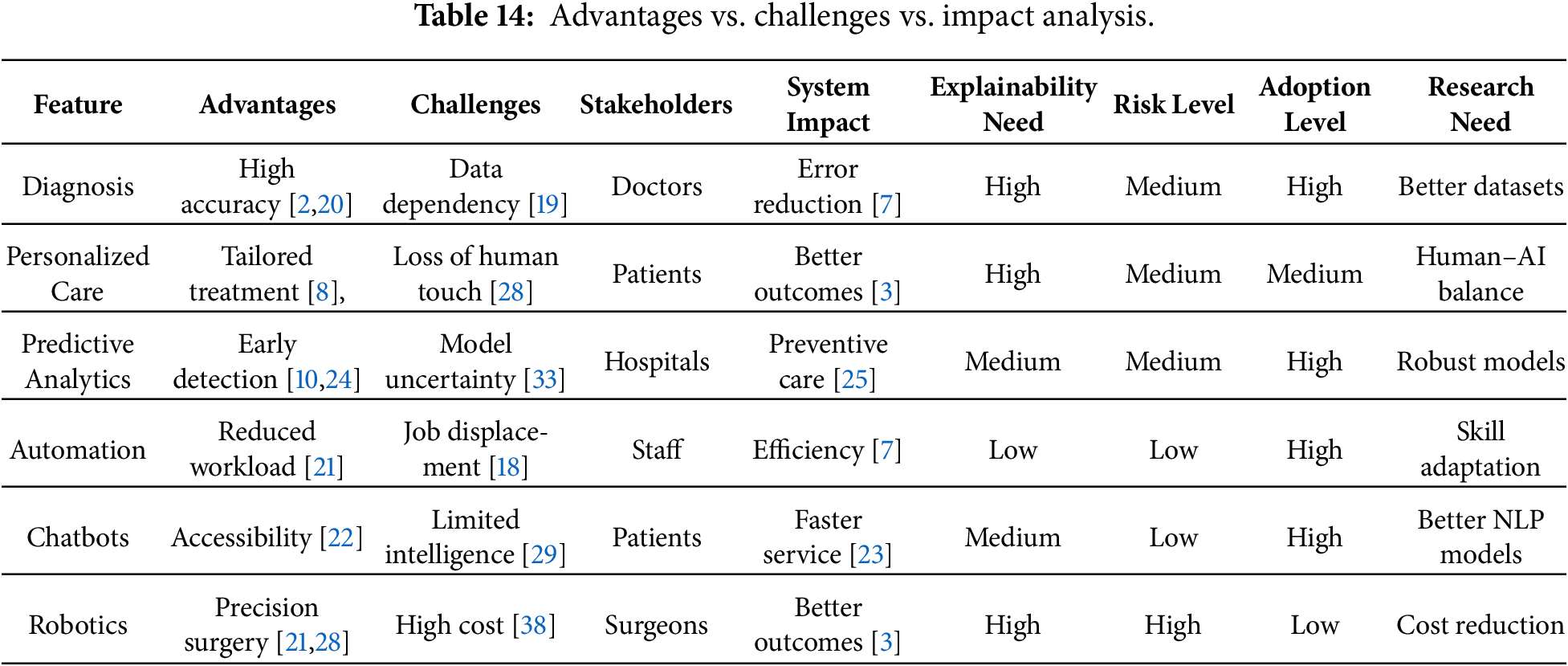
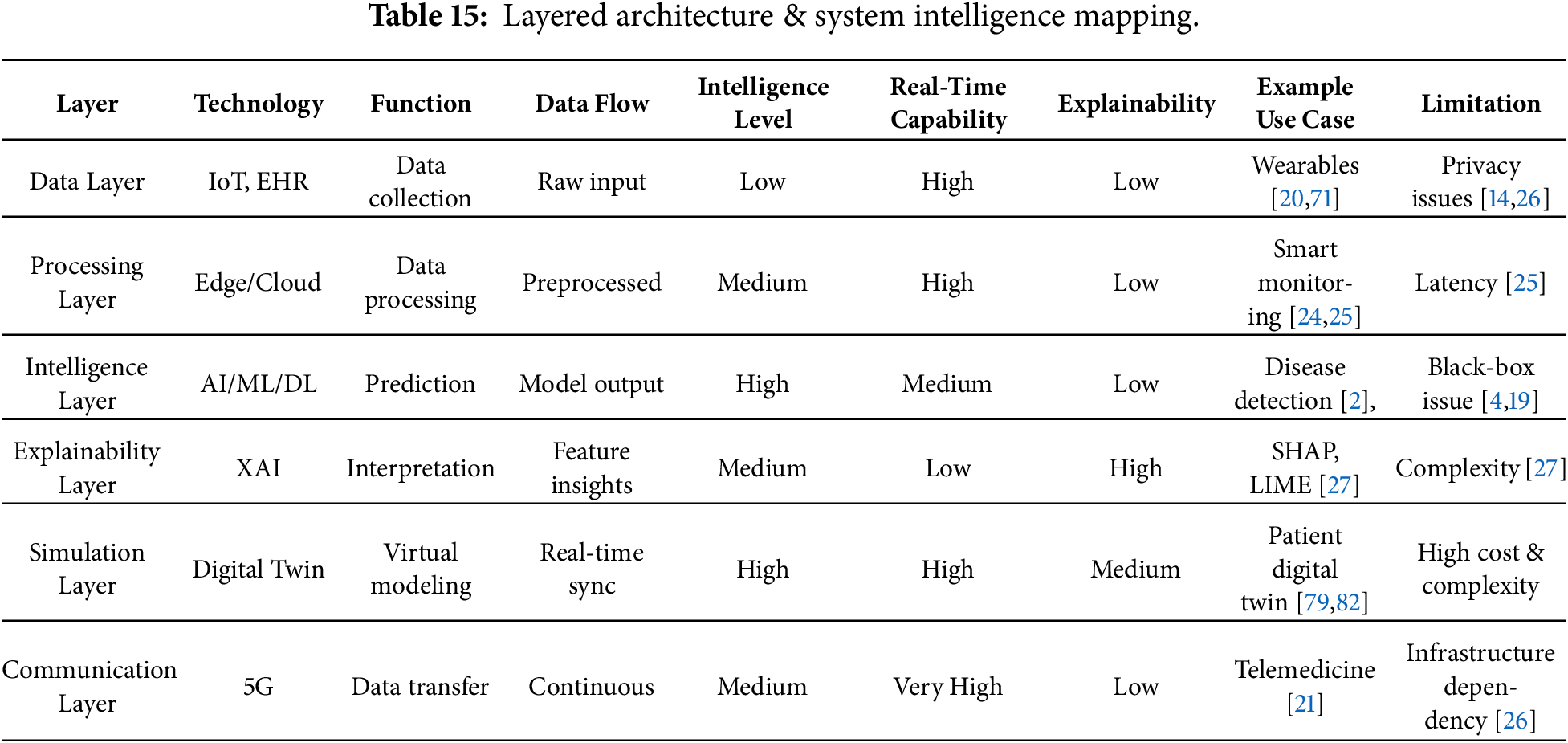
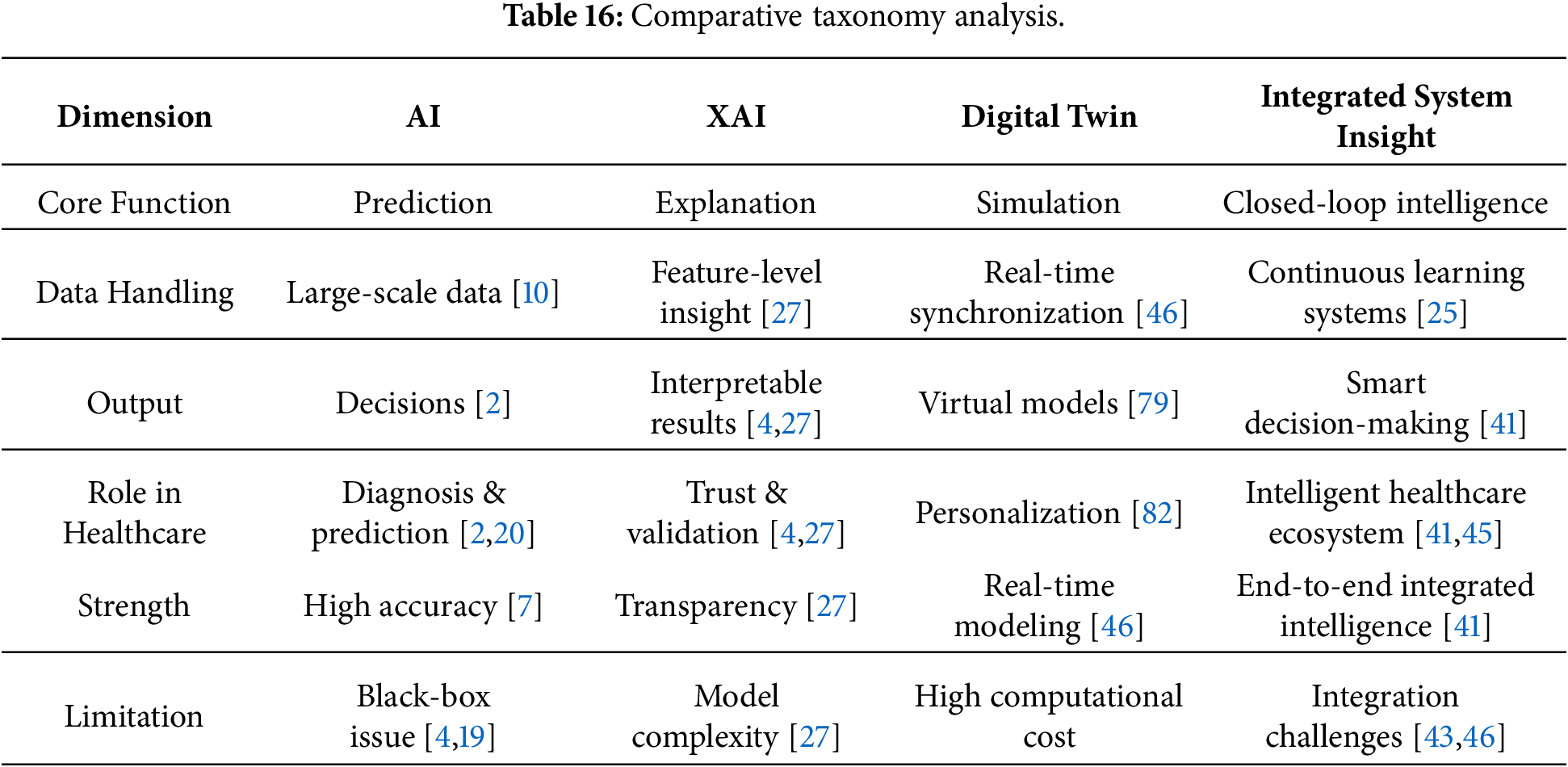
Along with the comparative analysis, the benefits, drawbacks, and general implications of AI, XAI, and DT technologies across various healthcare applications must be assessed [80]. All these technologies help enhance diagnostic accuracy, facilitate personalized treatment, and increase operational efficiency, but they also introduce problems such as data dependency, costly implementation, and ethical issues [81]. The analysis of these factors, such as the participation of stakeholders, the effect of the system, the need to explain, and risks, is summarised in Table 14, and the multi-dimensional trade-offs involved in the implementation of smart healthcare systems are indicated. In addition, a layered architectural view is required to gain better insight into the functioning of these technologies within a cohesive ecosystem [82]. In a multi-layered healthcare system, information is continuously collected, processed, analyzed, and converted into actionable insights. This architecture comprises interconnected layers, including data acquisition (IoT and EHR), processing (edge/cloud computing), intelligence (AI/ML models), explainability (XAI techniques), simulation (Digital Twin models), and communication (5G-enabled systems), as shown in Table 15. This may be read as a representation of layers that include data movement, levels of intelligence, real-time, and the view of exploitability, fostering transparency and trust across the system. Building on this architectural insight, it is worth analyzing the underlying roles and interactions among AI, XAI, and DT technologies, as well as with the broader healthcare ecosystem. Table 16 offers a comparative analysis of the taxonomy, illustrating that predictions and decision-making are possible with AI, that interpretability and trust are guaranteed with XAI, and that DT enables real-time simulation and personalization. These technologies can be integrated to create a closed-loop intelligent system that continuously learns, makes adaptive decisions, and provides patient-centered care. This coordinated view reflects the shift towards disaggregated AI, which leads to comprehensive, context-aware healthcare systems [83].
5 Applications of Explainable, Context-Aware AI and Digital Twin in Healthcare
AI, XAI, and DT technologies are increasingly applied across diagnostic, predictive, and personalized healthcare systems. Their integration supports intelligent clinical decision-making, real-time monitoring, and adaptive healthcare management. Medical imaging, disease prediction, clinical decision support, and remote patient monitoring are among the most common fields of application for AI-based methods [4,42,46]. Explainable AI also enhances these applications by boosting transparency and promoting trust among clinicians in risky situations related to diagnosis and treatment, in particular. DT technology goes further by enhancing these functions, providing real-time simulation of patient conditions so healthcare providers can test treatment approaches before clinical application [83]. Owing to its patient-centric approach, the combination of these technologies offers significant advantages, including faster diagnosis, tailored treatment, greater accessibility, and ongoing health checks [8,80]. Nonetheless, it also presents challenges, such as excessive reliance on automation, potential bias in decision-making, reduced human engagement, and data privacy and security issues [14,25,39]. Table 17 provides a structured, in-depth review of these factors, including their contributions, advantages, risks, and mitigation recommendations. The major application domains of explainable, context-aware AI and Digital Twin technologies in healthcare, including predictive analytics, personalized medicine, clinical decision support, and smart healthcare systems, are illustrated in Fig. 5.
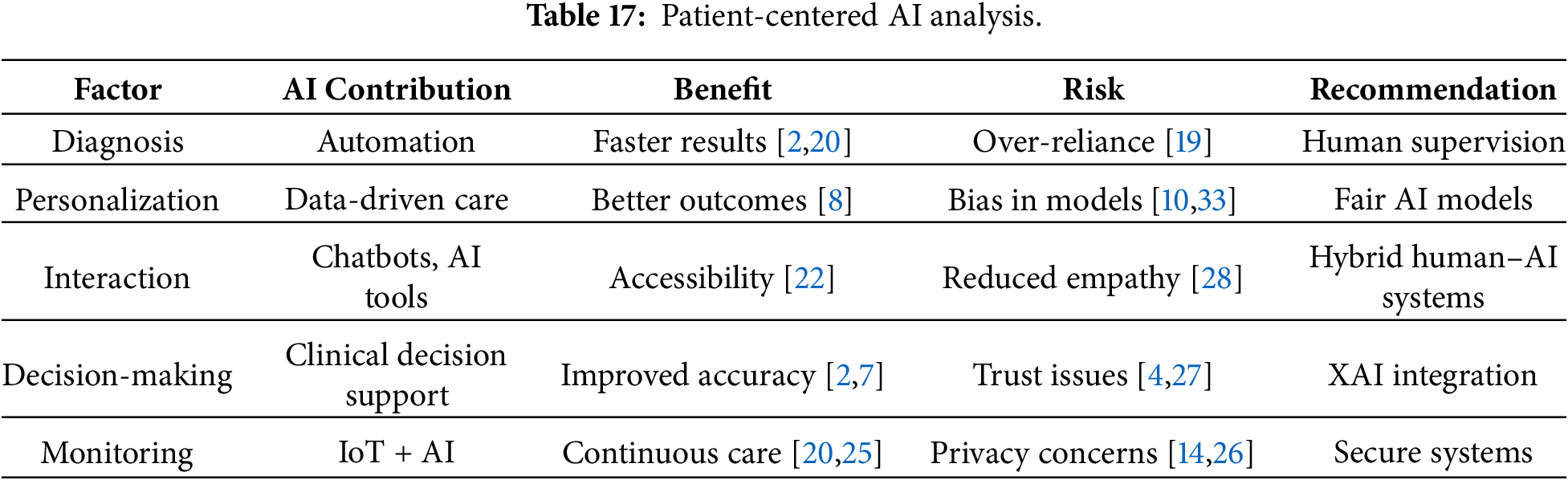
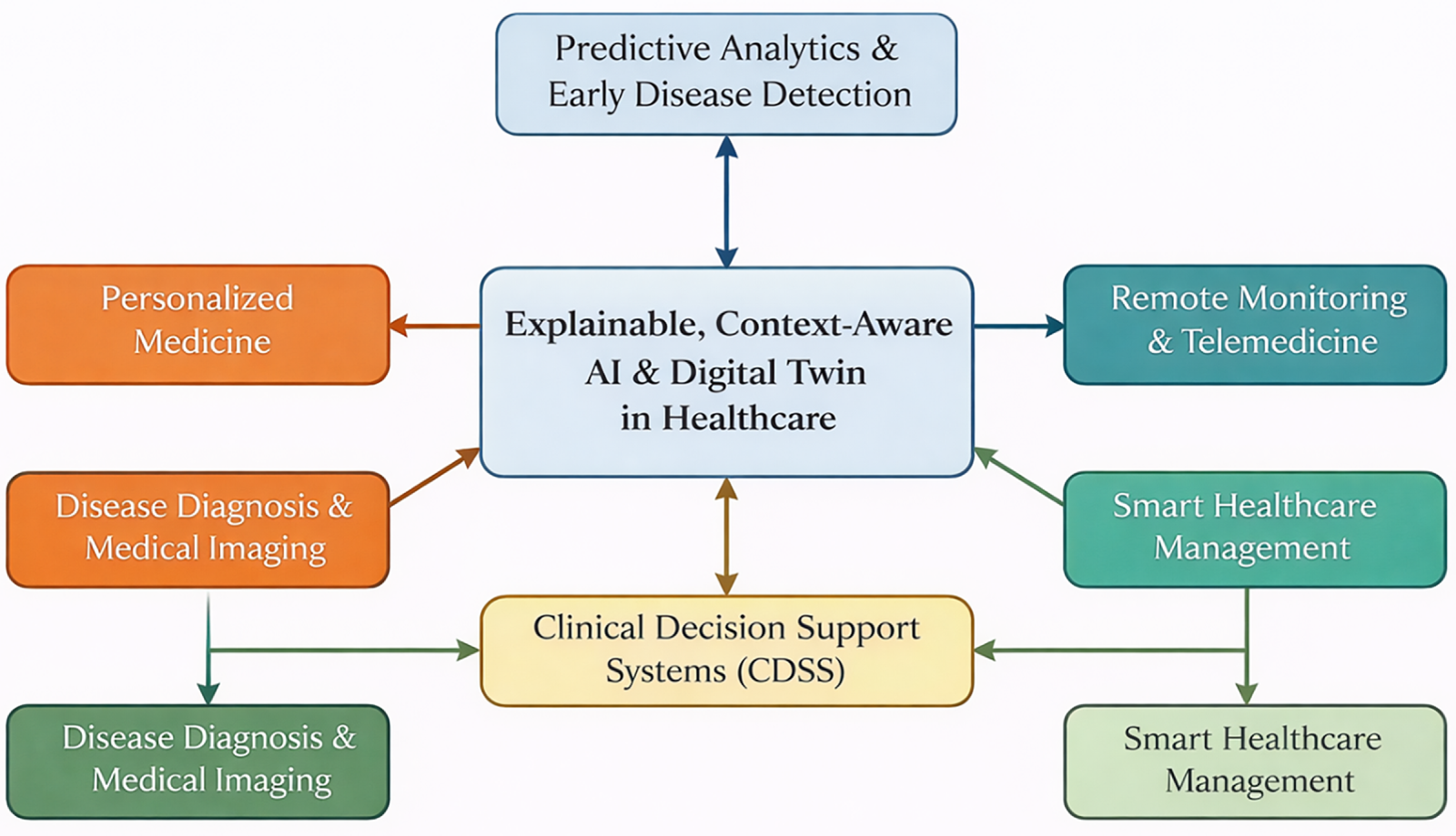
Figure 5: Application ecosystem of explainable, context-aware AI and Digital Twin in healthcare, illustrating key domains including predictive analytics and early disease detection, personalized medicine, disease diagnosis and medical imaging, CDSS, remote monitoring and telemedicine, and smart healthcare management.
5.1 Disease Diagnosis and Medical Imaging
AI has significantly improved disease diagnosis, particularly in medical imaging domains such as radiology, pathology, and ophthalmology [10]. DL models, especially CNNs, can detect abnormalities in X-rays, CT scans, MRI images, and histopathological slides with high accuracy [20]. These systems assist clinicians in identifying diseases such as cancer, cardiovascular conditions, and neurological disorders at early stages. The integration of XAI techniques further enhances trust in these systems by providing visual explanations, such as heatmaps and saliency maps, that highlight regions influencing model predictions. This improves interpretability and supports clinical validation of AI-assisted diagnoses [4,28].
5.2 Clinical Decision Support Systems (CDSS)
AI-powered CDSS assist healthcare professionals in making informed decisions by analyzing patient data and medical knowledge. These systems provide recommendations for diagnosis, treatment planning, and medication management. XAI plays a critical role in CDSS by ensuring that recommendations are transparent and understandable. Clinicians can interpret the reasoning behind AI-generated suggestions, improving trust and facilitating adoption in clinical workflows [2,7].
5.3 Predictive Analytics and Early Disease Detection
Predictive AI models are widely used to forecast disease progression, patient deterioration, and hospital readmission risks. Machine learning algorithms trained on EHRs and sensor data enable early detection of conditions such as sepsis, diabetes complications, and heart failure [10,25]. DT technology further enhances predictive analytics by simulating patient-specific scenarios and enabling proactive healthcare interventions. These systems allow clinicians to evaluate potential outcomes and select optimal treatment strategies [20,24].
Personalized medicine is one of the most impactful applications of AI and DT technologies. By analyzing patient-specific data, including genetics, lifestyle, and medical history, AI systems can recommend tailored treatment plans [8]. DTs enable the creation of virtual patient models that simulate responses to different treatments, allowing clinicians to optimize therapies before implementation. This approach improves treatment effectiveness and reduces adverse outcomes [80].
5.5 Remote Patient Monitoring and Telemedicine
The integration of AI with IoT devices enables continuous remote patient monitoring via wearable sensors and smart medical devices [20]. These systems collect real-time physiological data, such as heart rate, blood pressure, and glucose levels. AI algorithms analyze this data to detect anomalies and trigger alerts for early intervention [72,74]. DT systems further enhance remote monitoring by maintaining real-time virtual representations of patients, enabling continuous health assessment and predictive analysis [58,73].
5.6 Drug Discovery and Development
Artificial intelligence has significantly accelerated drug discovery by enabling the analysis of large-scale biological, genomic, and chemical datasets. Machine learning and deep learning models can predict molecular interactions, identify potential drug candidates, optimize compound design, and facilitate drug repurposing, thereby reducing both development time and research costs [5,6,41]. Recent advances in Generative AI have further enhanced molecular design by enabling the generation of novel therapeutic compounds with desirable pharmacological properties [5,6]. In parallel, XAI techniques improve the transparency and interpretability of computational predictions, thereby increasing confidence in AI-assisted drug discovery and supporting regulatory acceptance [4,27]. DTs are increasingly being integrated into drug discovery and precision medicine by creating virtual representations of patients, organs, or biological systems to simulate drug responses before clinical administration [67]. These patient-specific simulations enable researchers to evaluate treatment efficacy, optimize dosage selection, predict adverse drug reactions, and reduce reliance on costly and time-consuming clinical trials. Despite these advances, challenges remain regarding data quality, biological model fidelity, regulatory compliance, explainability, and large-scale clinical validation [14,46]. Future research should focus on integrating AI, DTs, real-world clinical data, and explainable decision-support frameworks to establish reliable, scalable, and personalized drug development ecosystems.
5.7 Smart Hospitals and Healthcare Management
At the healthcare system level, AI and DT technologies are transforming hospital operations by improving patient flow management, resource allocation, bed occupancy planning, emergency response, and overall healthcare service delivery [17,44,68]. Digital Twins enable virtual simulations of hospital environments, allowing administrators to evaluate operational scenarios, optimize workflows, and enhance decision-making while minimizing disruptions to clinical services [68]. AI-driven predictive analytics further supports capacity planning, patient risk stratification, and demand forecasting, enabling hospitals to improve operational efficiency and reduce healthcare costs [18,21,69].
In addition to clinical decision support, AI-powered systems automate administrative processes such as appointment scheduling, billing, medical documentation, inventory management, and workflow optimization, thereby reducing the workload of healthcare professionals and improving service quality [17,69]. The integration of the Internet of Medical Things (IoMT) with AI and DT platforms enables continuous patient monitoring, real-time equipment tracking, and predictive maintenance of critical medical infrastructure, contributing to more resilient and intelligent healthcare systems [20,21,58,60]. Nevertheless, widespread implementation remains constrained by interoperability challenges, cybersecurity risks, data privacy concerns, infrastructure costs, and integration with legacy hospital information systems [16,25,46]. Future research should prioritize standardized interoperable architectures, secure data-sharing mechanisms, and human-centered AI frameworks to facilitate the deployment of scalable, trustworthy, and patient-centric smart hospitals [25,46].
5.8 Surgical Planning and Robotics
AI-assisted surgical systems and robotic platforms are increasingly used for precision surgery [91,92]. DT models allow surgeons to simulate procedures on patient-specific anatomical models before actual surgery, improving accuracy and reducing risks [21]. Explainable AI further supports surgical decision-making by providing insights into model predictions and recommendations, thereby enhancing safety and reliability [50,51].
5.9 Public Health and Epidemiology
AI and DT technologies are also applied at the population level for disease surveillance, outbreak prediction, and healthcare planning [32]. These systems analyze large-scale data to identify trends, predict disease spread, and support public health interventions [93]. During global health crises such as pandemics, DTs of healthcare systems and populations can simulate various scenarios, helping policymakers make informed decisions [42,83].
5.10 Synthesis of Applications and Key Insights
The applications of explainable, context-aware AI and DT technologies [2,4,42] demonstrate their transformative impact across diverse healthcare domains [29,30]. These technologies collectively enhance diagnostic accuracy, enable personalized treatment strategies, and improve operational efficiency within healthcare systems [54,61].
By integrating predictive analytics, explainability, and real-time simulation, healthcare systems are progressively transitioning from reactive approaches toward proactive, intelligent, and patient-centric models [4]. The synergy among AI, XAI, and DT technologies enables improved decision-making, continuous monitoring, and optimized treatment planning [94]. Furthermore, the mapping of major healthcare applications, associated AI techniques, explainability mechanisms, and DT contributions is summarized in Table 18, providing a holistic understanding of their integrated role in modern healthcare systems. A comprehensive overview of key AI technologies, including their technique types, application domains, data types, and levels of explainability, is presented in Table 19, highlighting their characteristics, advantages, and limitations across different clinical settings [9].
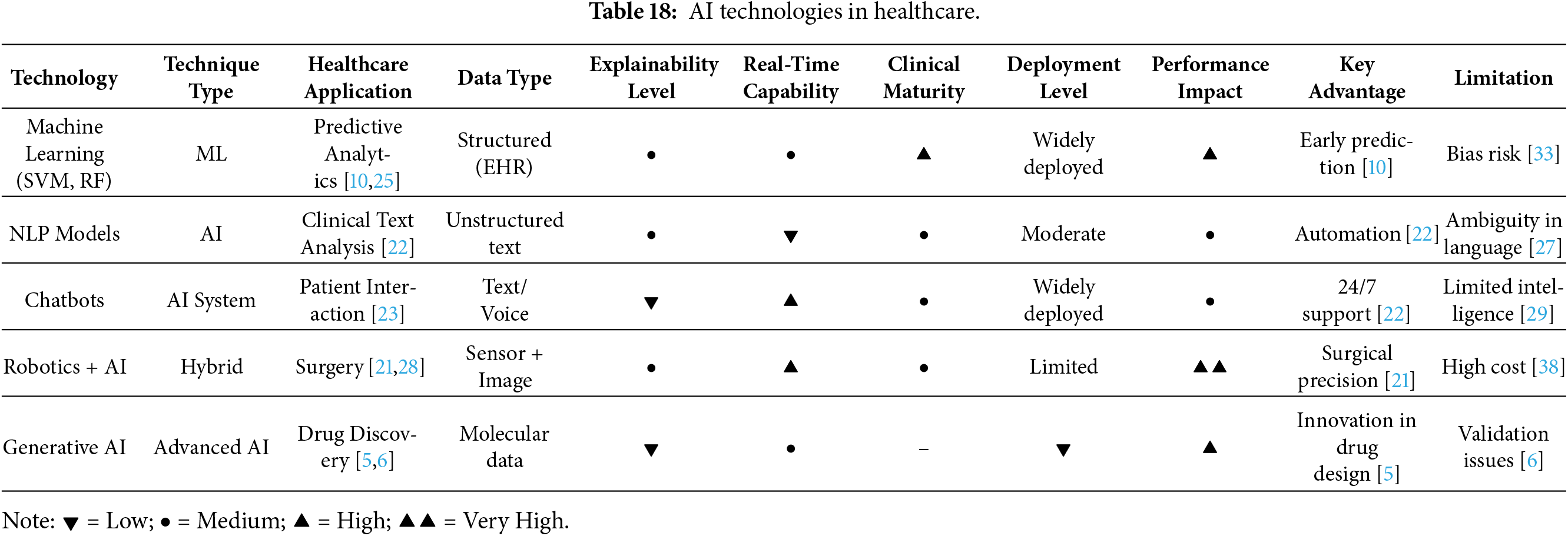
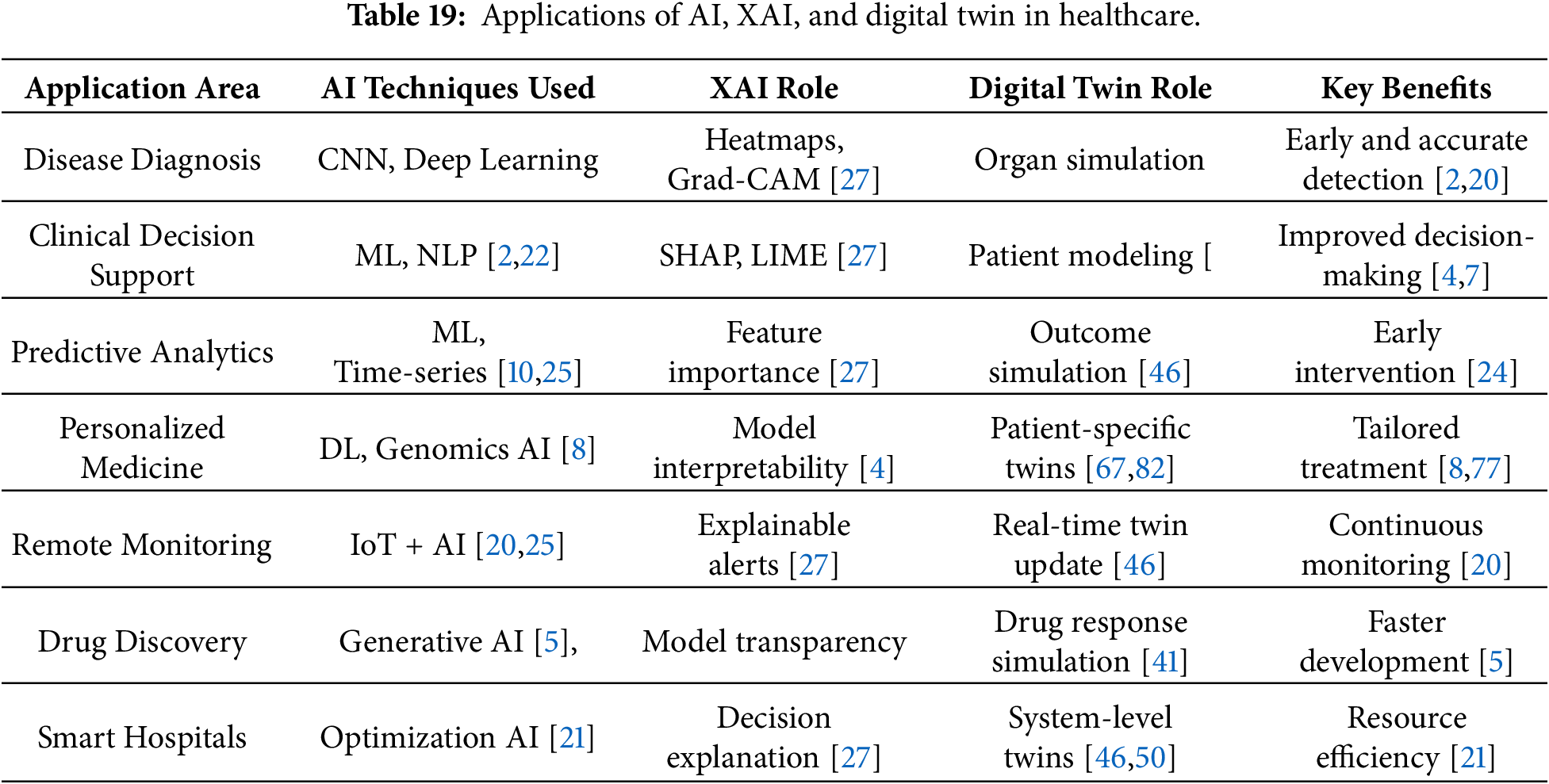
Across various application areas, AI techniques such as DL, natural language processing, and generative models have shown significant effectiveness in tasks including disease diagnosis, clinical decision support, predictive analytics, and drug discovery [95,96]. Explainable AI further strengthens these applications by providing transparency and interpretability, which are essential for building trust among clinicians and ensuring safe deployment. Meanwhile, DT technology enables real-time simulation of patients and healthcare systems, allowing for better planning, monitoring, and optimization of treatments and resources [97]. A comprehensive mapping of major healthcare application domains, associated AI techniques, the role of explainability, and the contribution of DT systems is summarized in Table 19.
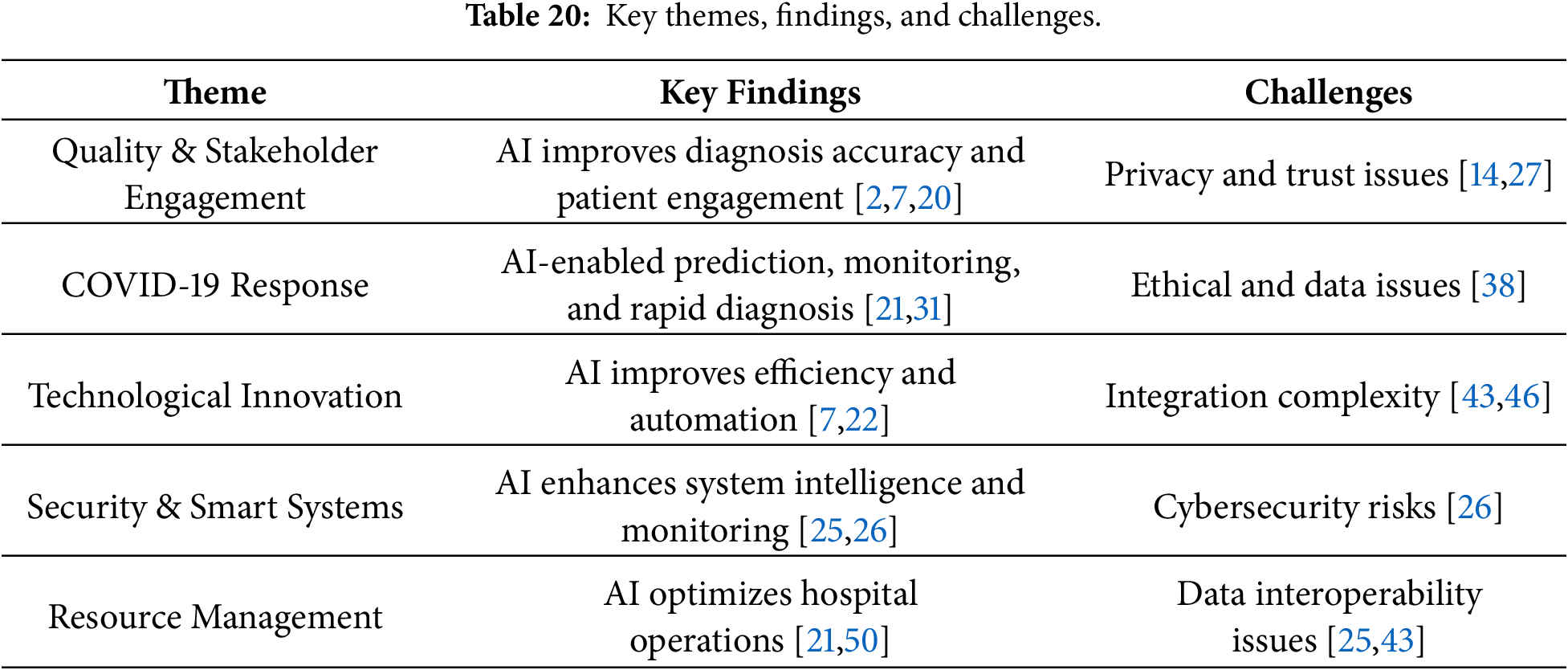
Furthermore, beyond their technical applications, it is essential to evaluate the broader implications of these technologies for healthcare quality, stakeholder engagement, system efficiency, and societal impact. While AI-driven systems significantly enhance diagnostic accuracy, operational efficiency, and patient engagement, they also introduce challenges related to data privacy, trust, ethical concerns, system integration, and cybersecurity risks. A thematic summary of key findings and associated challenges identified in this study is presented in Table 20.
5.11 Evidence-Based Insights and Trends
The current literature notes the rapid development and disruptive influence of AI across a variety of medical fields [2,7,10]. Research repeatedly shows that AI can dramatically enhance the quality of diagnosis, clinical efficiency, and patient outcomes through the analysis of massive amounts of healthcare data (medical imaging, EHRs, and wearable sensor data) [20,72]. Specifically, AI systems have achieved high performance in clinical prediction and disease prognosis, particularly in domains such as oncology and neurology, where imaging data is a major factor. Deep learning models, particularly neural network-based architectures [65], have become the dominant AI techniques because of their ability to handle high-dimensional medical data.
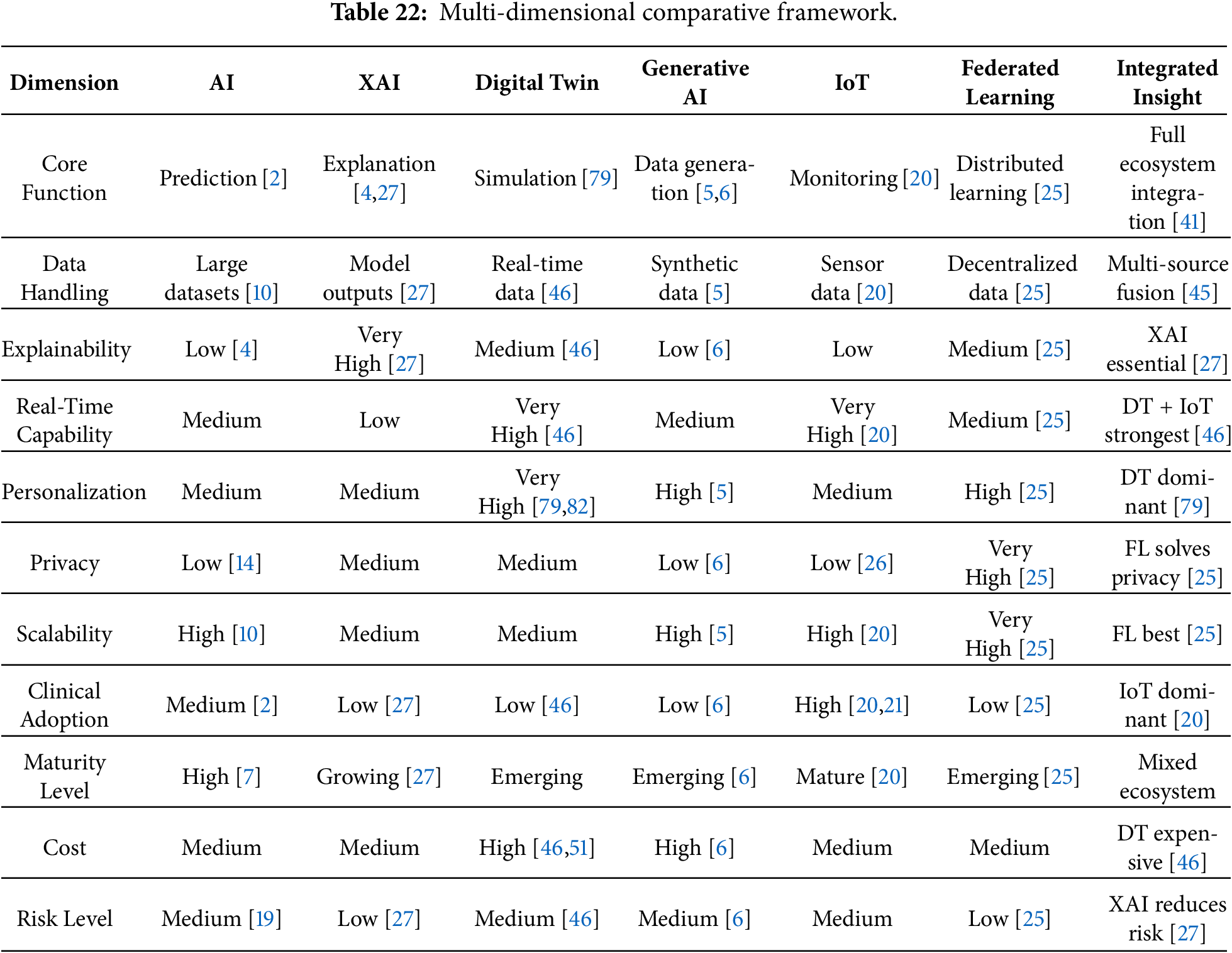
Moreover, AI has helped patients receive patient-centered care, facilitating personalized treatment planning, improving accessibility through telemedicine, and enabling ongoing health monitoring [3,19]. Nevertheless, the current literature also emphasizes that the overuse of AI can harm patient–physician interaction and the human component of care, underscoring the need to adopt a balanced human–AI collaboration framework [5,7]. Also, the development of AI as an evolution of rule-based systems to novel DL and generative models demonstrates its increased potential in clinical decision-making and drug discovery, and the introduction of robotic-assisted interventions, marking a shift from experimental research toward practical healthcare applications. Table 21 highlights performance trends, prevalent data types, algorithm use, validation practices, and areas of use through a structured synthesis of the literature’s major findings [25,47]. Through its analysis, it can be understood that although AI has high diagnostic accuracy and generalizability, serious limitations remain, including the reliance on internal validation, the absence of standardized evaluation metrics, and challenges associated with real-world deployment. These problems indicate a disconnect between scientific advancement and practical implementation, emphasizing the need for more robust validation strategies and implementation frameworks. Expanding on these ideas, it is crucial to analyze how AI interacts with related technologies such as XAI, Digital Twins, Generative AI, IoT, and Federated Learning within an integrated healthcare ecosystem [46,83]. Table 22 provides a multidimensional view by comparing key dimensions, including functionality, data handling, explainability, real-time operational capability, personalization, privacy, scalability, and clinical adoption. The analysis reveals that AI excels at predictive performance, whereas XAI enhances transparency and trust; Digital Twins enable real-time simulation and personalization; IoT provides continuous monitoring data; and Federated Learning preserves privacy through decentralized model training. Together, these technologies create a collaborative ecosystem that supports the evolution of intelligent, scalable, and patient-centered healthcare systems. Nonetheless, high computational cost, varying technology maturity, and integration complexity remain significant challenges, highlighting the need for unified architectures and standardized evaluation methodologies.
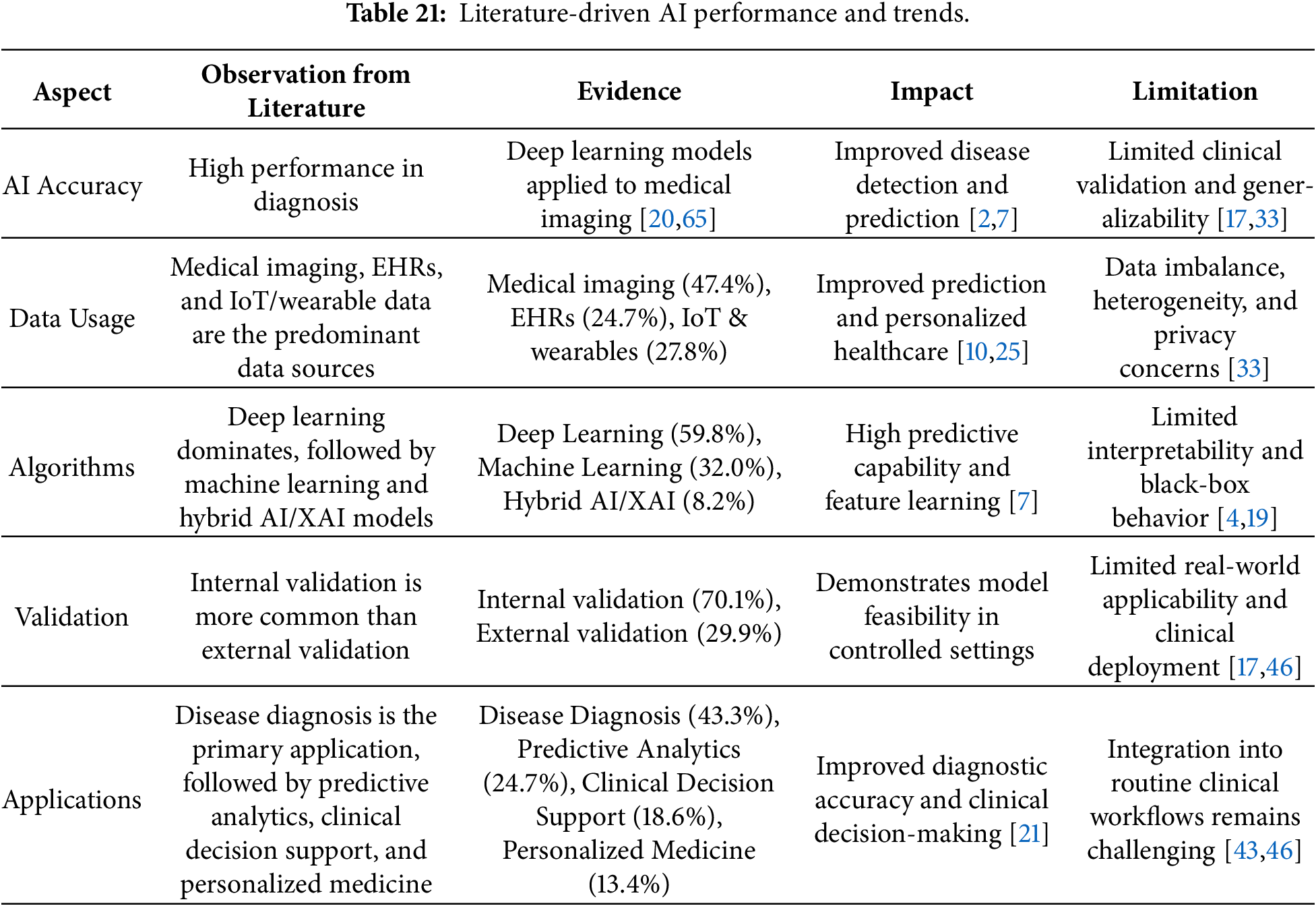
A quantitative synthesis of the 97 included studies revealed several important trends in explainable and context-aware healthcare AI research. Disease diagnosis was the most frequently investigated healthcare application, accounting for 42 studies (43.3%), followed by predictive analytics with 24 studies (24.7%), clinical decision support with 18 studies (18.6%), and personalized medicine with 13 studies (13.4%). Regarding AI techniques, deep learning was the dominant approach, appearing in 58 studies (59.8%), followed by machine learning in 31 studies (32.0%) and hybrid AI/XAI models in 8 studies (8.2%). Among explainability techniques, SHAP was the most frequently adopted method, appearing in 34 studies (35.1%), followed by LIME in 27 studies (27.8%) and Grad-CAM in 18 studies (18.6%). Medical imaging represented the primary data source in 46 studies (47.4%), followed by IoT and wearable data in 27 studies (27.8%) and electronic health records in 24 studies (24.7%). Furthermore, internal validation was employed in 68 studies (70.1%), whereas only 29 studies (29.9%) reported external validation, indicating that broader real-world validation remains necessary for reliable clinical deployment. These findings demonstrate the growing adoption of explainable, context-aware, and patient-centric AI solutions while highlighting the continued need for standardized evaluation and external clinical validation.
6 Integration of AI and Digital Twin
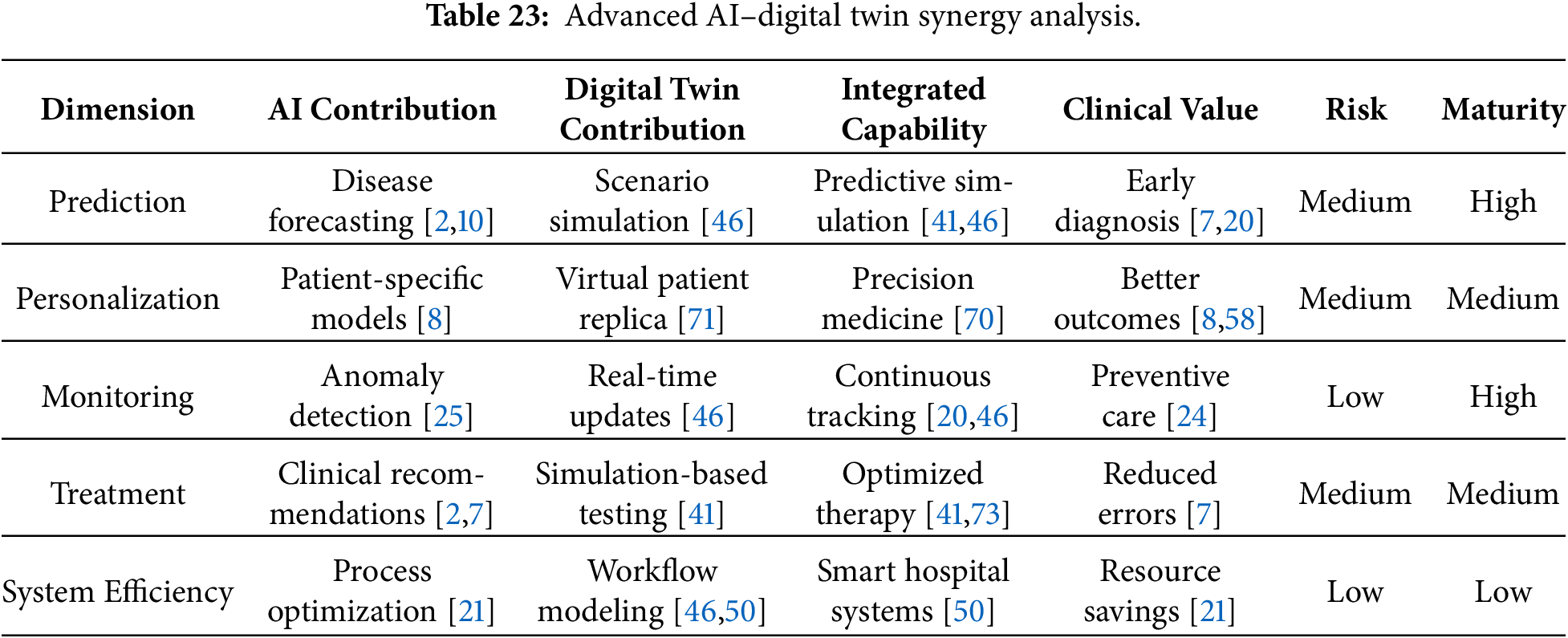
The integration of AI and DT technology represents a paradigm shift towards intelligent, adaptive, and predictive healthcare systems. Whereas AI enables decision-making based on data through predictive modelling and pattern recognition, DTs can simulate a patient’s state in real time, supporting continuous monitoring and interventions. AI improves DT systems by enabling advanced analytics, such as predicting disease outcomes, identifying anomalies, and optimizing treatment. DTs, in turn, provide a simulation environment for several treatment strategies that can be tested before their actual application. This forms a closed-loop intelligent system in which data is continuously collected, analyzed, simulated, and optimized. The recent literature emphasizes the use of AI-driven DTs, especially in precision medicine, when patient-specific models can be used to plan treatment. For example, in the cardiovascular domain, DTs can be used to model heart function to optimize surgery, and AI algorithms can predict disease progression and treatment success. Likewise, continuous monitoring and adaptive treatment can be organized using AI-based DTs in chronic disease management. In addition, the integration facilitates context-aware healthcare, in which real-time data inform decision-making on physiological, environmental, and behavioural factors. This enhances the quality and security of medical systems, enabling the detection of anomalies and timely intervention. Nonetheless, several pitfalls remain, including the high computational burden, the complexity of integration, and the lack of standardized frameworks. Moreover, explainability in DT systems is a key requirement for adoption in clinical settings. Table 23 presents a multidimensional analysis of the synergistic integration between AI and Digital Twin technologies, highlighting their combined capabilities, clinical value, associated risks, and maturity levels across various healthcare applications.
From a system-level perspective, integrating AI and Digital Twin technologies requires robust interoperability mechanisms to enable seamless communication among heterogeneous healthcare data sources, including EHRs, wearable sensors, imaging systems, and IoT platforms. The effectiveness of AI-driven DT systems largely depends on synchronized, real-time data exchange, low-latency communication, and standardized data architectures that support continuous updates and adaptive decision-making. Furthermore, the integration process introduces significant computational challenges due to large-scale data processing, real-time simulation requirements, and high-performance model execution. Edge computing, cloud-based infrastructures, and federated architectures are increasingly explored to address scalability and synchronization limitations in distributed healthcare environments. These integrated technologies collectively enable a closed-loop intelligent healthcare workflow in which patient data are continuously collected, analyzed, interpreted, simulated, and utilized to optimize clinical decision-making and personalized treatment strategies.
The use of AI, XAI, and DT technologies in the healthcare setting raises a variety of technical, ethical, and operational issues that shape their utilization in real-world settings and their subsequent scalability, as seen in Fig. 6. These technologies have transformative potential, but continue to be constrained by several basic limitations to their implementation. Probably one of the most severe issues is that advanced AI models, particularly DL architectures, are black boxes, thereby reducing interpretability and increasing clinicians’ distrust. Even though XAI methods aim to enhance transparency by offering post-hoc explanations of models, it is an open research question how to balance model accuracy and interpretability to reach an ideal point. Explainability: A lack of explainability may impede clinical acceptance and regulatory approval in high-stakes healthcare settings. Data privacy and security are another significant issue, as healthcare systems rely on large amounts of sensitive information in centralized systems. The ethical and legal impact of such data breaches or misuse may be disastrous.
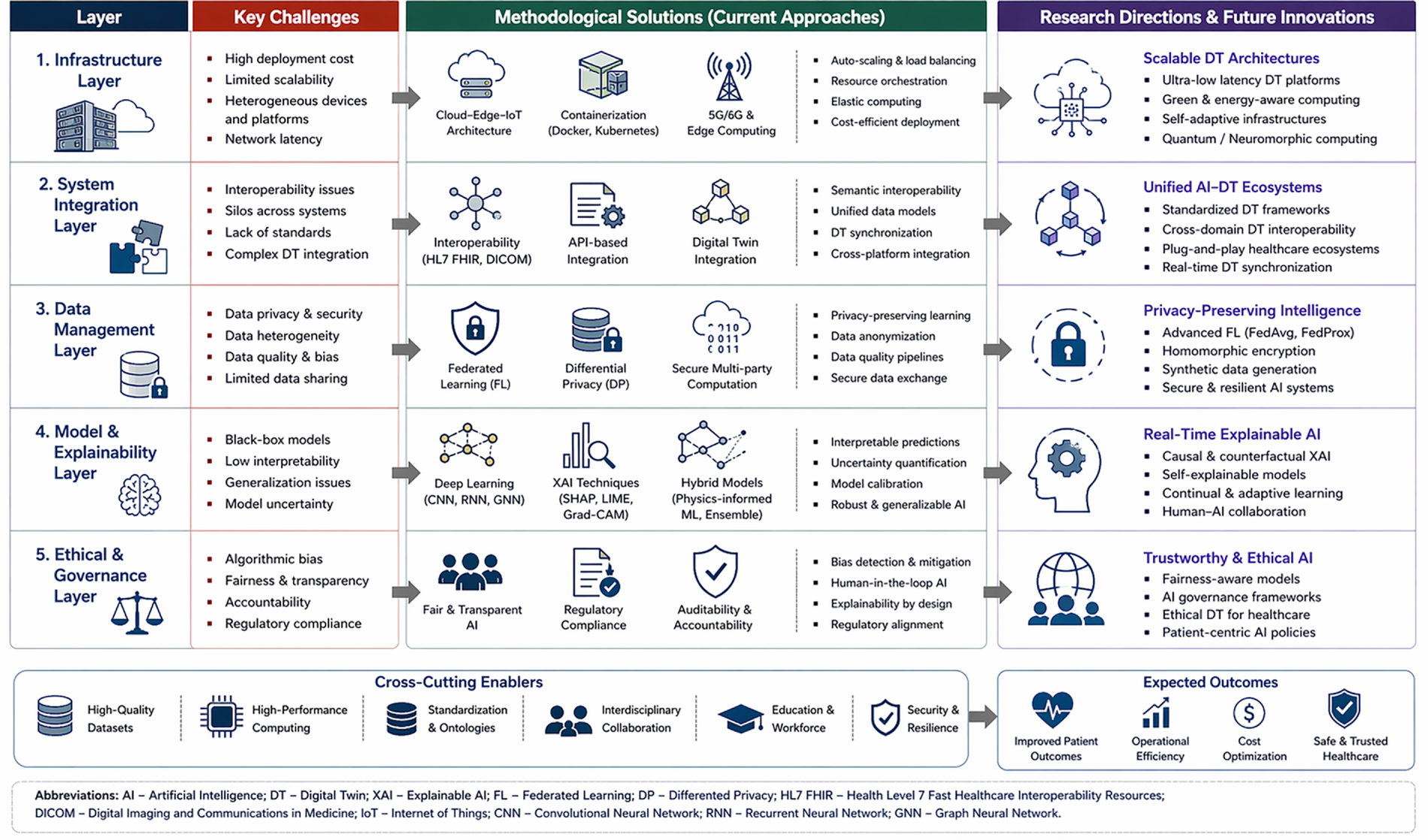
Figure 6: Unified challenge–solution–innovation framework for explainable, context-aware AI and DT in healthcare. It maps key challenges (infrastructure, integration, data, model, and ethics) to solution approaches and future research directions for developing scalable, intelligent, and patient-centric healthcare systems.
Although federated learning offers an attractive decentralized alternative, challenges related to communication efficiency, scalability, model convergence, and client-level data heterogeneity remain to be addressed. In FL, data heterogeneity primarily refers to the non-independent and identically distributed (non-IID) nature of data across participating healthcare institutions, where differences in patient populations, disease prevalence, clinical practices, and data distributions can adversely affect model convergence, generalization, and fairness. In addition to this FL-specific heterogeneity, healthcare environments exhibit substantial multimodal and cross-source data heterogeneity, as data are generated from imaging systems, clinical text, wearable sensors, genomic databases, and other sources. Integrating these diverse data types within a cohesive and consistent framework is challenging because differences in data formats, representations, quality, and missingness can introduce inconsistencies and reduce system efficiency. Furthermore, artificial intelligence models may perpetuate bias and unfairness, resulting in inaccurate predictions and unequal healthcare outcomes, particularly when training data are imbalanced or non-representative. This raises important ethical concerns and underscores the need for fair, efficient, and robust AI methods. Another important challenge is the lack of interoperability among heterogeneous healthcare information systems, including EHRs, Picture Archiving and Communication Systems (PACS), IoT devices, and Digital Twin platforms. The absence of standardized communication protocols, data representations, and exchange mechanisms limits seamless integration and hinders the large-scale deployment of intelligent healthcare ecosystems.
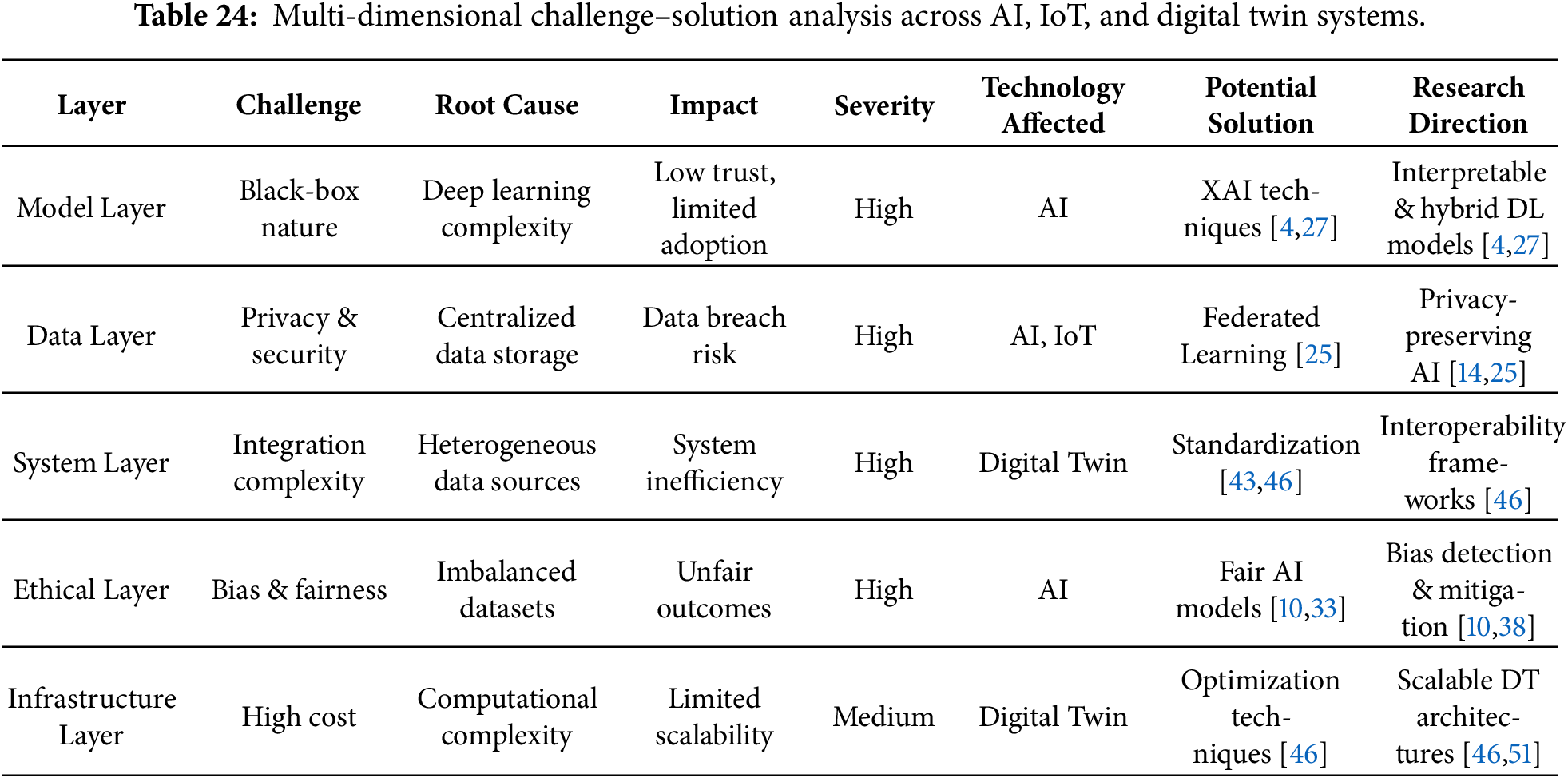
Lastly, DT systems are expensive to implement and maintain at scale because of their high computational demands and infrastructure requirements, which may hinder their widespread adoption in resource-constrained healthcare settings. Real-time simulation, continuous data synchronization, and high-performance computing can impose substantial computational and financial burdens, making large-scale implementation particularly challenging in developing regions. To provide a structured understanding of the relationship between existing challenges, corresponding solution approaches, and future research directions, a multi-layer challenge–solution–innovation analysis is presented in Table 24. The analysis organizes key issues across multiple dimensions, including infrastructure, system integration, data management, model interpretability, and ethical considerations, and maps them to appropriate technological solutions and emerging research opportunities. The structured analysis further identifies the root causes, impacts, affected technologies, and potential solutions associated with these challenges, providing a comprehensive overview of system-level limitations and corresponding research directions.
7.1 Research Gaps, Challenges, and Future Opportunities
Despite significant advancements, several critical research gaps remain in the domain of explainable, context-aware AI and DT technologies in healthcare, limiting their widespread adoption and real-world impact [2,4,42]. A major gap is the lack of unified, integrated frameworks that seamlessly combine AI, XAI, and DT systems. Existing research predominantly focuses on isolated components rather than developing holistic, end-to-end intelligent healthcare ecosystems. Another key limitation is the lack of real-time explainability. Most current XAI approaches provide post-hoc explanations, which are insufficient for time-critical clinical decision-making. Developing real-time, clinician-friendly explainability mechanisms remains a crucial research direction [4,28]. Additionally, there is a lack of standardized evaluation metrics that incorporate not only accuracy but also interpretability, fairness, robustness, and usability. The absence of such metrics makes it difficult to compare models and validate their effectiveness in clinical environments [83,96].
Although Federated Learning significantly enhances privacy by enabling decentralized model training without transferring sensitive patient data, several practical challenges remain, including communication overhead, model synchronization, client heterogeneity, and vulnerability to model poisoning attacks. Future research should focus on integrating Federated Learning with Explainable AI and Digital Twin architectures to develop secure, transparent, and scalable intelligent healthcare systems.
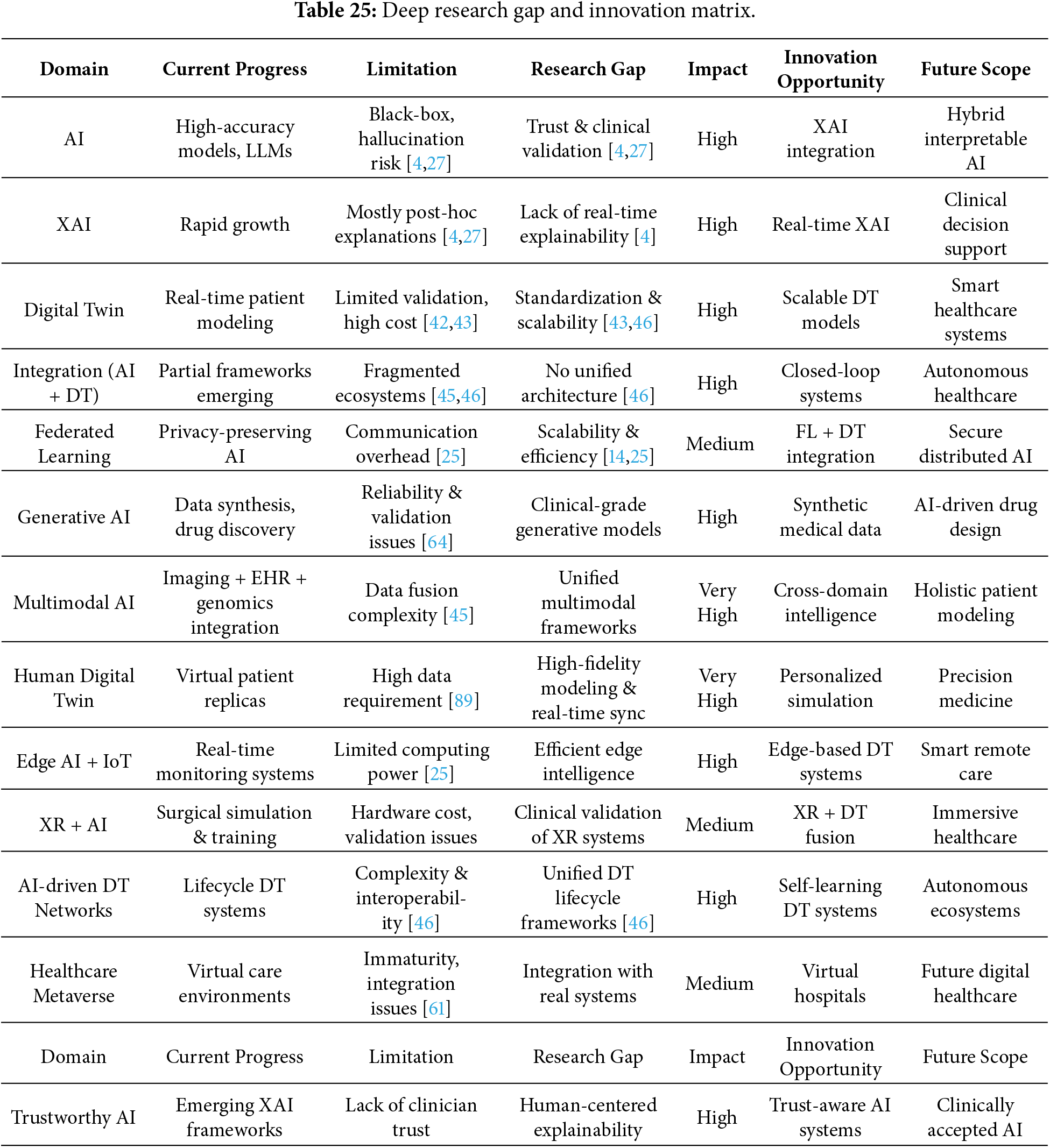
The limited clinical validation of DT systems is another significant barrier. Most implementations remain at the experimental or simulation stage, with insufficient real-world testing and regulatory approval. Moreover, while federated learning addresses privacy concerns, its practical deployment challenges, including communication overhead, system heterogeneity, and scalability, require further investigation. A detailed mapping of current progress, limitations, research gaps, and future opportunities is presented in Table 25, highlighting innovation pathways for next-generation healthcare systems.
Despite providing a comprehensive synthesis of explainable artificial intelligence, Digital Twin technologies, and intelligent healthcare systems, this review has several limitations. First, only English-language publications indexed in major scientific databases between 2019 and 2026 were considered, introducing potential language and publication bias. Second, grey literature, including technical reports, white papers, dissertations, patents, and preprints, was excluded to ensure methodological quality, although this may have omitted emerging developments. Third, owing to the rapid evolution of AI, XAI, Generative AI, and Digital Twin technologies, recently published studies may not have been captured after the final search date. Fourth, quantitative meta-analysis was not feasible because of substantial heterogeneity in study objectives, datasets, evaluation metrics, AI models, and clinical application domains. Fifth, although a structured quality assessment was performed, the review relied on published evidence, and the methodological quality of the included studies varied with respect to external clinical validation, reproducibility, and explainability evaluation. Finally, the proposed taxonomy and evidence synthesis were derived from the included literature and have not yet been validated through expert consensus, Delphi studies, or prospective clinical implementation. Future investigations should incorporate larger international datasets, standardized benchmarking protocols, real-world clinical validation, and expert-driven evaluation to strengthen the proposed framework further.
This study presented a PRISMA-based systematic review of explainable, context-aware AI and Digital Twin technologies in healthcare through the analysis of 97 high-quality studies. The review examined the evolution and applications of AI, XAI, and DT systems in disease diagnosis, predictive analytics, personalized medicine, remote monitoring, and healthcare management. A unified multi-layer taxonomy integrating AI, XAI, Digital Twin, IoT, Federated Learning, and Generative AI was proposed to support intelligent healthcare ecosystems. The findings indicate that although these technologies significantly improve predictive capability and operational efficiency, challenges related to interpretability, interoperability, privacy, scalability, and clinical validation still limit large-scale deployment. The review further revealed a shift from isolated AI models toward integrated and adaptive healthcare ecosystems capable of supporting real-time decision-making and personalized care. However, most existing studies still rely on internally validated datasets with limited real-world clinical implementation. Several important research gaps were identified, including the lack of unified architectures, real-time explainability, interoperable DT frameworks, privacy-preserving systems, and large-scale clinical validation. Future research should focus on developing secure, scalable, and interpretable healthcare systems with standardized evaluation frameworks, real-time explainability, and clinically validated intelligent infrastructures. Overall, this work provides an analytical foundation for future research and development in next-generation intelligent healthcare systems.
Acknowledgement: Not applicable.
Funding Statement: This research was supported by Global-Learning & Academic research institution for Master’s·Ph.D. students, and Postdocs (LAMP) Program of the National Research Foundation of Korea (NRF) grant funded by the Ministry of Education (No. RS-2023-00285353).
Author Contributions: Abdelzahir Abdelmaboud: Conceptualization; Data curation; Formal analysis; Methodology; Writing—original draft; Software. Ibrahim Hameed: Investigation; Methodology; Writing—original draft; Writing—review & editing. Salmah Fattah: Writing—review & editing; Project administration; Investigation; Methodology. Ashraf Osman Ibrahim: Validation; Investigation; Writing—review & editing. Salil Bharany: Writing—review & editing; Software; Resources; Methodology. Ateeq Ur Rehman: Writing—review & editing; Methodology; Conceptualization. SeongKi Kim: Visualization; Validation; Writing—review & editing, Funding Acquition; Conceptualization; Resources. All authors reviewed and approved the final version of the manuscript.
Availability of Data and Materials: Not applicable.
Ethics Approval: Not applicable.
Conflicts of Interest: The authors declare no conflicts of interest.
Abbreviations
The following abbreviations are used in this manuscript:
| AI | Artificial Intelligence |
| XAI | Explainable Artificial Intelligence |
| DT | Digital Twin |
| ML | Machine Learning |
| DL | Deep Learning |
| CNN | Convolutional Neural Network |
| NLP | Natural Languaage Processing |
| LLM | Large Language Model |
| SVM | Support Vector Machine |
| RF | Random Forest |
| GAN | Generative Adversarial Network |
| SHAP | SHapley Additive exPlanations |
| LIME | Local Interpretable Model-agnostic Explanations |
| Grad-CAM | Gradient-weighted Class Activation Mapping |
| EHR | Electronic Health Record |
| CDSS | Clinical Decision Support System |
| IoT | Internet of Things |
| PRISMA | Preferred Reporting Items for Systematic Reviews and Meta-Analyses |
| FL | Federated Learning |
References
1. Santamato V, Tricase C, Faccilongo N, Iacoviello M, Marengo A. Exploring the impact of artificial intelligence on healthcare management: a combined systematic review and machine-learning approach. Appl Sci. 2024;14(22):10144. doi:10.3390/app142210144. [Google Scholar] [CrossRef]
2. Ali O, Abdelbaki W, Shrestha A, Elbasi E, Ali Alryalat MA, Dwivedi YK. A systematic literature review of artificial intelligence in the healthcare sector: benefits, challenges, methodologies, and functionalities. J Innov Knowl. 2023;8(1):100333. doi:10.1016/j.jik.2023.100333. [Google Scholar] [CrossRef]
3. Olawade DB, David-Olawade AC, Wada OZ, Asaolu AJ, Adereni T, Ling J. Artificial intelligence in healthcare delivery: prospects and pitfalls. J Med Surg Public Heal. 2024;3(2):100108. doi:10.1016/j.glmedi.2024.100108. [Google Scholar] [CrossRef]
4. Mienye ID, Obaido G, Jere N, Mienye E, Aruleba K, Emmanuel ID, et al. A survey of explainable artificial intelligence in healthcare: concepts, applications, and challenges. Inform Med Unlocked. 2024;51(3):101587. doi:10.1016/j.imu.2024.101587. [Google Scholar] [CrossRef]
5. Huo D, Wang X. A new era in healthcare: the integration of artificial intelligence and microbial. Med Novel Technol Devices. 2024;23(93):100319. doi:10.1016/j.medntd.2024.100319. [Google Scholar] [CrossRef]
6. Al-Nafjan A, Aljuhani A, Alshebel A, Alharbi A, Alshehri A. Artificial intelligence in predictive healthcare: a systematic review. J Clin Med. 2025;14(19):6752. doi:10.3390/jcm14196752. [Google Scholar] [CrossRef]
7. Hirani R, Noruzi K, Khuram H, Hussaini AS, Aifuwa EI, Ely KE, et al. Artificial intelligence and healthcare: a journey through history, present innovations, and future possibilities. Life. 2024;14(5):557. doi:10.3390/life14050557. [Google Scholar] [CrossRef]
8. Kumah E. Artificial intelligence in healthcare and its implications for patient centered care. Discover Public Health. 2025;22(1):524. doi:10.1186/s12982-025-00924-9. [Google Scholar] [CrossRef]
9. Fröling E, Rajaeean N, Hinrichsmeyer KS, Domrös-Zoungrana D, Urban JN, Lenz C. Artificial intelligence in medical affairs: a new paradigm with novel opportunities. Pharmaceut Med. 2024;38(5):331–42. doi:10.1007/s40290-024-00536-9. [Google Scholar] [CrossRef]
10. Kolasa K, Admassu B, Hołownia-Voloskova M, Kędzior KJ, Poirrier JE, Perni S. Systematic reviews of machine learning in healthcare: a literature review. Expert Rev Pharmecon Outcomes Res. 2024;24(1):63–115. doi:10.1080/14737167.2023.2279107. [Google Scholar] [CrossRef]
11. Sel K, Hawkins-Daarud A, Chaudhuri A, Osman D, Bahai A, Paydarfar D, et al. Survey and perspective on verification, validation, and uncertainty quantification of digital twins for precision medicine. npj Digit Med. 2025;8(1):40. doi:10.1038/s41746-025-01447-y. [Google Scholar] [CrossRef]
12. Prakash S, Balaji JN, Joshi A, Surapaneni KM. Ethical conundrums in the application of artificial intelligence (AI) in healthcare—a scoping review of reviews. J Pers Med. 2022;12(11):1914. doi:10.3390/jpm12111914. [Google Scholar] [CrossRef]
13. Cacciamani GE, Chu TN, Sanford DI, Abreu A, Duddalwar V, Oberai A, et al. PRISMA AI reporting guidelines for systematic reviews and meta-analyses on AI in healthcare. Nat Med. 2023;29(1):14–5. doi:10.1038/s41591-022-02139-w. [Google Scholar] [CrossRef]
14. Joshi G, Jain A, Araveeti SR, Adhikari S, Garg H, Bhandari M. FDA-approved artificial intelligence and machine learning (AI/ML)-enabled medical devices: an updated landscape. Electronics. 2024;13(3):498. doi:10.3390/electronics13030498. [Google Scholar] [CrossRef]
15. Wang C, Zhang J, Lassi N, Zhang X. Privacy protection in using artificial intelligence for healthcare: Chinese regulation in comparative perspective. Healthcare. 2022;10(10):1878. doi:10.3390/healthcare10101878. [Google Scholar] [CrossRef]
16. Townsend BA, Sihlahla I, Naidoo M, Naidoo S, Donnelly DL, Thaldar DW. Mapping the regulatory landscape of AI in healthcare in Africa. Front Pharmacol. 2023;14:1214422. doi:10.3389/fphar.2023.1214422. [Google Scholar] [CrossRef]
17. Bartels R, Dudink J, Haitjema S, Oberski D, van’t Veen A. A perspective on a quality management system for AI/ML-based clinical decision support in hospital care. Front Digit Health. 2022;4:942588. doi:10.3389/fdgth.2022.942588. [Google Scholar] [CrossRef]
18. Feng J, Phillips RV, Malenica I, Bishara A, Hubbard AE, Celi LA, et al. Clinical artificial intelligence quality improvement: towards continual monitoring and updating of AI algorithms in healthcare. npj Digit Med. 2022;5(1):66. doi:10.1038/s41746-022-00611-y. [Google Scholar] [CrossRef]
19. Boonstra A, Laven M. Influence of artificial intelligence on the work design of emergency department clinicians a systematic literature review. BMC Health Serv Res. 2022;22(1):669. doi:10.1186/s12913-022-08070-7. [Google Scholar] [CrossRef]
20. Nisar DEM, Amin R, Shah NUH, Al Ghamdi MA, Almotiri SH, Alruily M. Healthcare techniques through deep learning: issues, challenges and opportunities. IEEE Access. 2021;9:98523–41. doi:10.1109/access.2021.3095312. [Google Scholar] [CrossRef]
21. Huang JD, Wang J, Ramsey E, Leavey G, Chico TJA, Condell J. Applying artificial intelligence to wearable sensor data to diagnose and predict cardiovascular disease: a review. Sensors. 2022;22(20):8002. doi:10.3390/s22208002. [Google Scholar] [CrossRef]
22. Bhaskar S, Bradley S, Sakhamuri S, Moguilner S, Chattu VK, Pandya S, et al. Designing futuristic telemedicine using artificial intelligence and robotics in the COVID-19 era. Front Public Health. 2020;8:556789. doi:10.3389/fpubh.2020.556789. [Google Scholar] [CrossRef]
23. Christopoulou SC. Machine learning models and technologies for evidence-based telehealth and smart care: a review. BioMedInformatics. 2024;4(1):754–79. doi:10.3390/biomedinformatics4010042. [Google Scholar] [CrossRef]
24. Tyler S, Olis M, Aust N, Patel L, Simon L, Triantafyllidis C, et al. Use of artificial intelligence in triage in hospital emergency departments: a scoping review. Cureus. 2024;16(5):e59906. doi:10.7759/cureus.59906. [Google Scholar] [CrossRef]
25. Badidi E. Edge AI for early detection of chronic diseases and the spread of infectious diseases: opportunities, challenges, and future directions. Future Internet. 2023;15(11):370. doi:10.3390/fi15110370. [Google Scholar] [CrossRef]
26. Nguyen DC, Pham QV, Pathirana PN, Ding M, Seneviratne A, Lin Z, et al. Federated learning for smart healthcare: a survey. ACM Comput Surv. 2023;55(3):1–37. doi:10.1145/3501296. [Google Scholar] [CrossRef]
27. Wazid M, Das AK, Mohd N, Park Y. Healthcare 5.0 security framework: applications, issues and future research directions. IEEE Access. 2022;10:129429–42. doi:10.1109/access.2022.3228505. [Google Scholar] [CrossRef]
28. Loh HW, Ooi CP, Seoni S, Barua PD, Molinari F, Acharya UR. Application of explainable artificial intelligence for healthcare: a systematic review of the last decade (2011–2022). Comput Methods Programs Biomed. 2022;226(10):107161. doi:10.1016/j.cmpb.2022.107161. [Google Scholar] [CrossRef]
29. Deo N, Anjankar A. Artificial intelligence with robotics in healthcare: a narrative review of its viability in India. Cureus. 2023;15(5):e39416. doi:10.7759/cureus.39416. [Google Scholar] [CrossRef]
30. Denecke K, Baudoin CR. A review of artificial intelligence and robotics in transformed health ecosystems. Front Med. 2022;9:795957. doi:10.3389/fmed.2022.795957. [Google Scholar] [CrossRef]
31. Padula WV, Kreif N, Vanness DJ, Adamson B, Rueda JD, Felizzi F, et al. Machine learning methods in health economics and outcomes research—the PALISADE checklist: a good practices report of an ISPOR task force. Value Health. 2022;25(7):1063–80. doi:10.1016/j.jval.2022.03.022. [Google Scholar] [CrossRef]
32. Adamidi ES, Mitsis K, Nikita KS. Artificial intelligence in clinical care amidst COVID-19 pandemic: a systematic review. Comput Struct Biotechnol J. 2021;19:2833–50. doi:10.1016/j.csbj.2021.05.010. [Google Scholar] [CrossRef]
33. Sharma P, Suehling M, Flohr T, Comaniciu D. Artificial intelligence in diagnostic imaging: status quo, challenges, and future opportunities. J Thorac Imaging. 2020;35(Suppl 1):S11–6. doi:10.1097/RTI.0000000000000499. [Google Scholar] [CrossRef]
34. Ahsan MM, Siddique Z. Machine learning-based heart disease diagnosis: a systematic literature review. Artif Intell Med. 2022;128(3):102289. doi:10.1016/j.artmed.2022.102289. [Google Scholar] [CrossRef]
35. Akazawa M, Hashimoto K. Artificial intelligence in gynecologic cancers: current status and future challenges—a systematic review. Artif Intell Med. 2021;120:102164. doi:10.1016/j.artmed.2021.102164. [Google Scholar] [CrossRef]
36. Alhasan AS. Clinical applications of artificial intelligence, machine learning, and deep learning in the imaging of gliomas: a systematic review. Cureus. 2021;13(11):e19580. doi:10.7759/cureus.19580. [Google Scholar] [CrossRef]
37. Binvignat M, Pedoia V, Butte AJ, Louati K, Klatzmann D, Berenbaum F, et al. Use of machine learning in osteoarthritis research: a systematic literature review. RMD. 2022;8(1):e001998. doi:10.1136/rmdopen-2021-001998. [Google Scholar] [CrossRef]
38. Boyd C, Brown G, Kleinig T, Dawson J, McDonnell MD, Jenkinson M, et al. Machine learning quantitation of cardiovascular and cerebrovascular disease: a systematic review of clinical applications. Diagnostics. 2021;11(3):551. doi:10.3390/diagnostics11030551. [Google Scholar] [CrossRef]
39. Gerke S, Minssen T, Cohen G. Ethical and legal challenges of artificial intelligence-driven healthcare. In: Artificial intelligence in healthcare. Amsterdam, The Netherlands: Elsevier; 2020. p. 295–336. doi:10.1016/b978-0-12-818438-7.00012-5. [Google Scholar] [CrossRef]
40. Tyagi AK, Richa. Digital twin technology: opportunities and challenges for smart era’s applications. In: Proceedings of the 2023 Fifteenth International Conference on Contemporary Computing; 2023 Aug 3–5; Noida, India. doi:10.1145/3607947.3608015. [Google Scholar] [CrossRef]
41. Khan O, Parvez M, Kumari P, Parvez S, Ahmad S. The future of pharmacy: how AI is revolutionizing the industry. Intell Pharm. 2023;1(1):32–40. doi:10.1016/j.ipha.2023.04.008. [Google Scholar] [CrossRef]
42. Haleem A, Javaid M, Singh RP, Suman R. Exploring the revolution in healthcare systems through the applications of digital twin technology. Biomed Technol. 2023;4(23):28–38. doi:10.1016/j.bmt.2023.02.001. [Google Scholar] [CrossRef]
43. Sun T, He X, Li Z. Digital twin in healthcare: recent updates and challenges. Digit Health. 2023;9:20552076221149651. doi:10.1177/20552076221149651. [Google Scholar] [CrossRef]
44. Elkefi S, Asan O. Digital twins for managing health care systems: rapid literature review. J Med Internet Res. 2022;24(8):e37641. doi:10.2196/37641. [Google Scholar] [CrossRef]
45. Erol T, Mendi AF, Dogan D. The digital twin revolution in healthcare. In: Proceedings of the 2020 4th International Symposium on Multidisciplinary Studies and Innovative Technologies (ISMSIT); 2020 Oct 22–24; Istanbul, Turkey. doi:10.1109/ismsit50672.2020.9255249. [Google Scholar] [CrossRef]
46. Chen J, Yi C, Okegbile SD, Cai J, Shen X. Networking architecture and key supporting technologies for human digital twin in personalized healthcare: a comprehensive survey. IEEE Commun Surv Tutorials. 2024;26(1):706–46. doi:10.1109/comst.2023.3308717. [Google Scholar] [CrossRef]
47. Xames MD, Topcu TG. A systematic literature review of digital twin research for healthcare systems: research trends, gaps, and realization challenges. IEEE Access. 2024;12(1):4099–126. doi:10.1109/access.2023.3349379. [Google Scholar] [CrossRef]
48. Mourtzis D, Angelopoulos J, Panopoulos N, Kardamakis D. A smart IoT platform for oncology patient diagnosis based on AI: towards the human digital twin. Procedia CIRP. 2021;104(2):1686–91. doi:10.1016/j.procir.2021.11.284. [Google Scholar] [CrossRef]
49. Lokhande PP, Chinnaiah K. Heart disease detection and prognosis using IoT-based ECG sensor data with hybrid deep learning architecture and optimal resource allocation. Cybern Syst. 2025;56(7):1002–52. doi:10.1080/01969722.2025.2459959. [Google Scholar] [CrossRef]
50. Lv J, Kim BG, Parameshachari BD, Slowik A, Li K. Large model-driven hyperscale healthcare data fusion analysis in complex multi-sensors. Inf Fusion. 2025;115(1):102780. doi:10.1016/j.inffus.2024.102780. [Google Scholar] [CrossRef]
51. Han Y, Li Y, Li Y, Yang B, Cao L. Digital twinning for smart hospital operations: framework and proof of concept. Technol Soc. 2023;74:102317. doi:10.1016/j.techsoc.2023.102317. [Google Scholar] [CrossRef]
52. Jameil AK, Al-Raweshidy H. AI-enabled healthcare and enhanced computational resource management with digital twins into task offloading strategies. IEEE Access. 2024;12:90353–70. doi:10.1109/access.2024.3420741. [Google Scholar] [CrossRef]
53. Kleinbeck C, Zhang H, Killeen BD, Roth D, Unberath M. Neural digital twins: reconstructing complex medical environments for spatial planning in virtual reality. Int J Comput Assist Radiol Surg. 2024;19(7):1301–12. doi:10.1007/s11548-024-03143-w. [Google Scholar] [CrossRef]
54. Laaki H, Miche Y, Tammi K. Prototyping a digital twin for real time remote control over mobile networks: application of remote surgery. IEEE Access. 2019;7:20325–36. doi:10.1109/access.2019.2897018. [Google Scholar] [CrossRef]
55. Sartaj H, Ali S, Marie Gjøby J. Uncertainty-aware environment simulation of medical devices digital twins. Softw Syst Model. 2025;24(3):651–77. doi:10.1007/s10270-024-01223-8. [Google Scholar] [CrossRef]
56. Ahmed I, Ahmad M, Jeon G. Integrating digital twins and deep learning for medical image analysis in the era of COVID-19. Virtual Real Intell Hardw. 2022;4(4):292–305. doi:10.1016/j.vrih.2022.03.002. [Google Scholar] [CrossRef]
57. Bersani MM, Braghin C, Gargantini A, Mirandola R, Riccobene E, Scandurra P. Engineering of trust analysis-driven digital twins for a medical device. In: Proceedings of the Software Architecture ECSA 2022 Tracks and Workshops; 2022 Sep 19–23; Prague, Czech Republic. doi:10.1007/978-3-031-36889-9_31. [Google Scholar] [CrossRef]
58. Chen J, Wang W, Fang B, Liu Y, Yu K, Leung VCM, et al. Digital twin empowered wireless healthcare monitoring for smart home. IEEE J Select Areas Commun. 2023;41(11):3662–76. doi:10.1109/jsac.2023.3310097. [Google Scholar] [CrossRef]
59. Athab NM, Ibrahim AA, Naseri RAS, Farhan HM. A novel pancreatic tumor detection and diagnosis using adaptive TransResUnet aided segmentation and ASPP with multi-scale EfficientNet-based classification. Cybern Syst. 2026;57(6):1155–202. doi:10.1080/01969722.2025.2488820. [Google Scholar] [CrossRef]
60. Yu F, Yu C, Tian Z, Liu X, Cao J, Liu L, et al. Intelligent wearable system with motion and emotion recognition based on digital twin technology. IEEE Internet Things J. 2024;11(15):26314–28. doi:10.1109/jiot.2024.3394244. [Google Scholar] [CrossRef]
61. Yang H, Jiang Z. Decision support for personalized therapy in implantable medical devices: a digital twin approach. Expert Syst Appl. 2024;243(6):122883. doi:10.1016/j.eswa.2023.122883. [Google Scholar] [CrossRef]
62. Ghaempanah F, Moasses Ghafari B, Hesami D, Hossein Zadeh R, Noroozpoor R, Moodi Ghalibaf A, et al. Metaverse and its impact on medical education and health care system: a narrative review. Health Sci Rep. 2024;7(9):e70100. doi:10.1002/hsr2.70100. [Google Scholar] [CrossRef]
63. Sartaj H, Ali S, Gjøby JM. MeDeT: medical device digital twins creation with few-shot meta-learning. ACM Trans Softw Eng Methodol. 2025;34(6):1–36. doi:10.1145/3708534. [Google Scholar] [CrossRef]
64. Kaul R, Ossai C, Forkan ARM, Jayaraman PP, Zelcer J, Vaughan S, et al. The role of AI for developing digital twins in healthcare: the case of cancer care. WIREs Data Min Knowl. 2023;13(1):e1480. doi:10.1002/widm.1480. [Google Scholar] [CrossRef]
65. Alshuhri MS, Al-Musawi SG, Al-Alwany AA, Uinarni H, Rasulova I, Rodrigues P, et al. Artificial intelligence in cancer diagnosis: opportunities and challenges. Pathol Res Pract. 2024;253:154996. doi:10.1016/j.prp.2023.154996. [Google Scholar] [CrossRef]
66. Levshinskii V, Galazis C, Losev A, Zamechnik T, Kharybina T, Vesnin S, et al. Using AI and passive medical radiometry for diagnostics (MWR) of venous diseases. Comput Meth Programs Biomed. 2022;215(1):106611. doi:10.1016/j.cmpb.2021.106611. [Google Scholar] [CrossRef]
67. Rahman HU, Mahmood MHB, Khan MSA, Sama NU, Asaruddin MR, Afzal M. To explore the pharmacological mechanism of action using digital twin. Int J Adv Appl Sci. 2022;9(2):55–62. doi:10.21833/ijaas.2022.02.006. [Google Scholar] [CrossRef]
68. Amram B, Klempner U, Leibler Y, Greenbaum D. In their own image: ethical implications of the rise of digital twins/clones/simulacra in healthcare. Am J Bioeth. 2023;23(9):79–81. doi:10.1080/15265161.2023.2237456. [Google Scholar] [CrossRef]
69. Wickramasinghe N, Jayaraman PP, Forkan ARM, Ulapane N, Kaul R, Vaughan S, et al. A vision for leveraging the concept of digital twins to support the provision of personalized cancer care. IEEE Internet Comput. 2022;26(5):17–24. doi:10.1109/mic.2021.3065381. [Google Scholar] [CrossRef]
70. Mennella C, Maniscalco U, De Pietro G, Esposito M. The role of artificial intelligence in future rehabilitation services: a systematic literature review. IEEE Access. 2023;11:11024–43. doi:10.1109/access.2023.3236084. [Google Scholar] [CrossRef]
71. de Boer B, Strasser C, Mulder S. Imagining digital twins in healthcare: designing for values as designing for technical milieus. Prometheus. 2022;38(1):67–81. doi:10.13169/prometheus.38.1.0067. [Google Scholar] [CrossRef]
72. Manickam P, Mariappan SA, Murugesan SM, Hansda S, Kaushik A, Shinde R, et al. Artificial intelligence (AI) and Internet of Medical Things (IoMT) assisted biomedical systems for intelligent healthcare. Biosensors. 2022;12(8):562. doi:10.3390/bios12080562. [Google Scholar] [CrossRef]
73. Volkov I, Radchenko G, Tchernykh A. Digital twins, IoT and mobile medicine: a review. Program Comput Softw. 2021;47:578–90. [Google Scholar]
74. Adibi S, Rajabifard A, Shojaei D, Wickramasinghe N. Enhancing healthcare through sensor-enabled digital twins in smart environments: a comprehensive analysis. Sensors. 2024;24(9):2793. doi:10.3390/s24092793. [Google Scholar] [CrossRef]
75. Mounika P, Narayanan B, Balmuri KR. An adaptive trans-ResUnet++Based segmentation and hybrid CNN-aided classification for detecting breast cancer from mammogram images. Cybern Syst. 2026;57(7):2149–86. doi:10.1080/01969722.2025.2540517. [Google Scholar] [CrossRef]
76. Garg H, Sharma B, Shekhar S, Agarwal R. Spoofing detection system for e-health digital twin using EfficientNet convolution neural network. Multimed Tools Appl. 2022;81(19):26873–88. doi:10.1007/s11042-021-11578-5. [Google Scholar] [CrossRef]
77. Elayan H, Aloqaily M, Guizani M. Digital twin for intelligent context-aware IoT healthcare systems. IEEE Internet Things J. 2021;8(23):16749–57. doi:10.1109/jiot.2021.3051158. [Google Scholar] [CrossRef]
78. Li Z, Liu F, Yang W, Peng S, Zhou J. A survey of convolutional neural networks: analysis, applications, and prospects. IEEE Trans Neural Netw Learn Syst. 2022;33(12):6999–7019. doi:10.1109/TNNLS.2021.3084827. [Google Scholar] [CrossRef]
79. Böttcher L, Fonseca LL, Laubenbacher RC. Control of medical digital twins with artificial neural networks. Philos Trans A Math Phys Eng Sci. 2025;383(2292):20240228. doi:10.1098/rsta.2024.0228. [Google Scholar] [CrossRef]
80. Venkatesh KP, Raza MM, Kvedar JC. Health digital twins as tools for precision medicine: considerations for computation, implementation, and regulation. npj Digit Med. 2022;5(1):150. doi:10.1038/s41746-022-00694-7. [Google Scholar] [CrossRef]
81. Weinberger N, Hery D, Mahr D, Adler SO, Stadlbauer J, Ahrens TD. Beyond the gender data gap: co-creating equitable digital patient twins. Front Digit Health. 2025;7:1584415. doi:10.3389/fdgth.2025.1584415. [Google Scholar] [CrossRef]
82. Viceconti M, Juarez MA, Curreli C, Pennisi M, Russo G, Pappalardo F. Credibility of in silico trial technologies—a theoretical framing. IEEE J Biomed Health Inform. 2020;24(1):4–13. doi:10.1109/jbhi.2019.2949888. [Google Scholar] [CrossRef]
83. Katsoulakis E, Wang Q, Wu H, Shahriyari L, Fletcher R, Liu J, et al. Digital twins for health: a scoping review. npj Digit Med. 2024;7(1):77. doi:10.1038/s41746-024-01073-0. [Google Scholar] [CrossRef]
84. Zhang K, Zhou HY, Baptista-Hon DT, Gao Y, Liu X, Oermann E, et al. Concepts and applications of digital twins in healthcare and medicine. Patterns. 2024;5(8):101028. doi:10.1016/j.patter.2024.101028. [Google Scholar] [CrossRef]
85. Upreti D, Yang E, Kim H, Seo C. A comprehensive survey on federated learning in the healthcare area: concept and applications. Comput Model Eng Sci. 2024;140(3):2239–74. doi:10.32604/cmes.2024.048932. [Google Scholar] [CrossRef]
86. Akbarialiabad H, Safaee E, Letafati M, Gong J, Leachman SA, Grada A, et al. Generative AI empowered digital twins for advancing precision medicine. Discover Artif Intell. 2026;6(1):401. doi:10.1007/s44163-026-01034-4. [Google Scholar] [CrossRef]
87. Croatti A, Gabellini M, Montagna S, Ricci A. On the integration of agents and digital twins in healthcare. J Med Syst. 2020;44(9):161. doi:10.1007/s10916-020-01623-5. [Google Scholar] [CrossRef]
88. Sahal R, Alsamhi SH, Brown KN. Personal digital twin: a close look into the present and a step towards the future of personalised healthcare industry. Sensors. 2022;22(15):5918. doi:10.3390/s22155918. [Google Scholar] [CrossRef]
89. Kamel Boulos MN, Zhang P. Digital twins: from personalised medicine to precision public health. J Pers Med. 2021;11(8):745. doi:10.3390/jpm11080745. [Google Scholar] [CrossRef]
90. Hernandez-Boussard T, Macklin P, Greenspan EJ, Gryshuk AL, Stahlberg E, Syeda-Mahmood T, et al. Digital twins for predictive oncology will be a paradigm shift for precision cancer care. Nat Med. 2021;27(12):2065–6. doi:10.1038/s41591-021-01558-5. [Google Scholar] [CrossRef]
91. Stahlberg EA, Abdel-Rahman M, Aguilar B, Asadpoure A, Beckman RA, Borkon LL, et al. Exploring approaches for predictive cancer patient digital twins: opportunities for collaboration and innovation. Front Digit Health. 2022;4:1007784. doi:10.3389/fdgth.2022.1007784. [Google Scholar] [CrossRef]
92. Wu C, Lorenzo G, Hormuth DA II, Lima EABF, Slavkova KP, DiCarlo JC, et al. Integrating mechanism-based modeling with biomedical imaging to build practical digital twins for clinical oncology. Biophys Rev. 2022;3(2):021304. doi:10.1063/5.0086789. [Google Scholar] [CrossRef]
93. Yang PC, Rose A, DeMarco KR, Dawson JRD, Han Y, Jeng MT, et al. A multiscale predictive digital twin for neurocardiac modulation. J Physiol. 2023;601(17):3789–812. doi:10.1113/jp284391. [Google Scholar] [CrossRef]
94. Wang HE, Triebkorn P, Breyton M, Dollomaja B, Lemarechal JD, Petkoski S, et al. Virtual brain twins: from basic neuroscience to clinical use. Natl Sci Rev. 2024;11(5):nwae079. doi:10.1093/nsr/nwae079. [Google Scholar] [CrossRef]
95. Corral-Acero J, Margara F, Marciniak M, Rodero C, Loncaric F, Feng Y, et al. The ‘Digital Twin’ to enable the vision of precision cardiology. Eur Heart J. 2020;41(48):4556–64. doi:10.1093/eurheartj/ehaa159. [Google Scholar] [CrossRef]
96. Zhang J, Qian H, Zhou H. Application and research of digital twin technology in safety and health monitoring of the elderly in community. Chin J Med Instrum. 2019;43:410–3. [Google Scholar]
97. Chen Z, Liu R, Huang S, Guo Y, Ren Y. A survey of large-scale deep learning models in medicine and healthcare. Comput Model Eng Sci. 2025;144(1):37–81. doi:10.32604/cmes.2025.067809. [Google Scholar] [CrossRef]
Cite This Article
 Copyright © 2026 The Author(s). Published by Tech Science Press.
This work is licensed under a Creative Commons Attribution 4.0 International License , which permits unrestricted use, distribution, and reproduction in any medium, provided the original work is properly cited.
 Downloads
 Citation Tools
