
 Login
Login Register
 Submit a Paper
 Propose a Special lssue
 Open Access
ARTICLE

The Growth Trajectory of Moral Disengagement in Junior High School Students: Influence of Trait Aggressiveness and Gender
1 School of Education, School of Psychology, Jiangxi Normal University, Nanchang, 330099, China
2 Student Affairs Office, Jiangxi College of Foreign Studies, Nanchang, 330099, China
3 School of Business Administration, Nanchang Institute of Technology, Nanchang, 330099, China
4 Mental Health Education Center, Chengdu University, Chengdu, 610106, China
5 School Administration Office, Nanchang Hongdu Middle School, Nanchang, 330024, China
6 Mental Health Education Center, Jiangxi University of Science and Technology, Nanchang, 341000, China
* Corresponding Author: Baojuan Ye. Email:
(This article belongs to the Special Issue: Exploring the Impact of School Bullying, Aggression and Childhood Trauma in the Digital Age: Influencing Factors, Interventions, and Prevention Methods)
International Journal of Mental Health Promotion 2025, 27(3), 303-318. https://doi.org/10.32604/ijmhp.2025.060117
Received 24 October 2024; Accepted 12 February 2025; Issue published 31 March 2025
 View Full Text
 Download PDF
Abstract
Objectives: The aim of this study was to verify the causal relationship between trait aggressiveness (TA) and moral disengagement (MD), know more about the growth trajectory of MD, and explore the effects of gender and TA on the growth trajectory. Methods: We used the Buss-Perry Aggression Questionnaire and Moral Disengagement Scale to survey 433 Chinese junior high school students longitudinally three times. Results: The results of the random intercept cross-lagged panel model (RI-CLPM) analysis indicated that TA positively predicted MD, while MD did not predict TA at the within-person level. Thus, TA could be considered an antecedent variable of MD. Furthermore, the unconditional latent growth linear model analysis revealed that MD among junior high school students exhibited an upward trend, characterized by an increasing rate of growth over time. In the conditional latent growth linear model analysis, we found that gender influenced only the initial level of MD but had no effect on its growth rate. Conversely, TA demonstrated both delayed and immediate positive effects on the growth of MD. Conclusions: Our findings suggested a one-way cross-lag effect between TA and MD. Additionally, the growth trajectory of MD among junior high school students was found to be ascending. This growth trajectory was influenced by gender and TA, offering valuable insights for the prevention and intervention of behavioral problems in junior high school students.Keywords
Although educational institutions all over the world pay great attention to students’ moral education, there are still many immoral behaviors among adolescents, such as school bullying, academic cheating, deviant behavior, and even juvenile crimes [1–4]. In 2023, China’s procuratorial organs aproved the arrest of 26,855 juvenile suspects and prosecuted 38,954 juvenile suspects, up 73.7% and 40.7% year-on-year, respectively [4]. The immoral behaviors of adolescents not only have a profound impact on the individuals but can also be harmful to society and can continue into adulthood [5]. Why is it that individuals who have learned moral concepts and formed the ability to make moral judgments are still likely to commit immoral behaviors? Moral disengagement (MD) provides a perspective to explain the above dissociative relationship [6].
MD is a psychological concept that was first proposed by Albert Bandura in 1986 [7]. It refers to the cognitive tendency of individuals to rationalize immoral behavior by shirking their moral responsibility [8]. According to Bandura’s social cognition theory, the individual moral system plays an important role in individual behavior through three interacting self-regulation systems: self-supervision, self-judgment, and self-reaction. The moral self-regulation system monitors and judges each behavior according to the individual’s internal moral standards and external environment, and then produces corresponding self-reactions, such as self-reward or self-satisfaction reactions when the actions meet his/her moral standards, and self-condemnation or other upsetting thoughts when the actions do not accord with his/her moral standards. The former reactions cause individuals to continue to behave by their moral standards, while the latter reactions usually cause individuals to self-stop those behaviors that violate moral standards. However, the connections between the various parts of this regulatory system are not uniform. Whether people respond to behavior after supervision and judgment is not only affected by moral standards but also by the behavioral environment. When the causal link between the unethical behavior and its harmful consequences is obvious, various “excuses” will appear that can separate the self-reaction from the behavior, resulting in an individual who has committed an unethical behavior without obvious guilt and self-blame, and MD is also produced [9].
Breaking away from moral self-sanction allows people to come to terms with their own moral standards while still preserving their own moral integrity [10]. MD is a set of interrelated cognitive strategies or mechanisms of an entity that tries to separate its own behavior from its inner values, so as to prevent its behavior from deviating from the norms of its own values [11]. Numerous study results verify that MD has a significant relationship with delinquent conduct, such as transgressions, antisocial behaviors, adolescent alcohol use, and aggressive behaviors [12–15]. Whether at the individual, organizational, or social level, the existence of MD can have harmful effects [14,16], so it is important to explore the influencing factors of MD. Although the research on MD is abundant, the antecedent research is relatively few [17]. Existing research finds that personality is an important individual factor, such as agreeableness of the Big Five personality, dark triad, and trait cynicism [18,19]. Another personality trait that has become a hot topic of research is trait aggressiveness (TA).
TA identifies people prone to hostile cognitions and angry affect as well as a readiness to engage in physical and verbal aggression [20]. TA is often measured using self-reported assessments, such as the Buss–Perry Aggression Questionnaire (BPAQ) [21]. It’s always an important and hot issue in psychology and sociology, because it’s the direct influence factor of aggressive behaviors [22,23], and has a close connection with suicide, self-abuse behavior, and alcohol-related problem behaviors [24,25]. Sufficient evidence indicates that TA is a personality characteristic, evidence come from 3 ways. First, TA has heredity which is certified by gene research [26,27]. Second, TA has neural bases, it’s associated with different neural activation patterns [28,29]. Third, some analyses certify that TA can be inlaid into the five-factor personality traits, especially in agreeableness and neuroticism dimensionality [30,31].
1.3 Moral Disengagement and Trait Aggressiveness
A large number of studies showed that MD and aggressive behaviors present close ties [12]. However, the relationship between MD and TA is unclear. TA consists of cognitive (hostility), emotional (anger), and behavioral/motor components (aggression). Aggression can be manifested in various forms, but from the standpoint of this research, the distinction between their functions is more important, i.e., premeditated (proactive) and impulsive (reactive) functions [32]. The general aggression model (GAM) is a comprehensive social cognitive framework for understanding aggression that divides each episode of aggressive behavior into three stages: input, routes, and outcomes, where proximate causes and processes explain a single episode of aggression and are influenced by distal causes and processes. Proximal causes and distal causes include a variety of factors: social, cognitive, personality, developmental, and biological aspects [33,34]. Although TA can predict highly aggressive behaviors, other factors can also lead to it, including personal and situational factors according to the GAM. We can’t transplant the connection between MD and aggressive behaviors to the connection between MD and TA. In existing studies, MD is mostly used as a mediating variable or moderating variable to explore the relationship between other variables and aggression, and most of them are cross-sectional studies. Few studies take TA as a personality trait to study its causal relationship with MD.
As mentioned earlier, TA is a personality trait, while MD is a cognitive process. Personality traits are often antecedents of MD. So, the first research objective of this study was to explore whether TA was also one of the antecedent variables of MD using longitudinal data.
1.4 The Growth Trajectory of Adolescents’ Moral Disengagement
In order to better prevent and intervene in the immoral behaviors of adolescents caused by MD, it is important to explore the growth trajectory of MD. According to Kohlberg’s stage theory of moral development, children between the ages of 9 and 15 are at the conventional level and they can understand social norms and believe that individual behavior should conform to the expectations of society and others [35]. However, adolescents are experiencing complex moral lives and feeling tensions between important moral principles and their behavior [36]. MD may have served to bridge moral principles and their behavior. By justifying immoral behavior, individuals can misbehave while maintaining the belief that they themselves are moral human beings, thereby reducing the discomfort and guilt typically experienced when ethical standards are violated [37].
Hirschi and Gottfredson analyzed crime curves using official data from different countries and regions, and emphasized the age distribution of crime [38]. The crime rate typically rises sharply beginning in early adolescence, peaking in mid to late adolescence, followed by a rapid decline until late adolescence, and gradually slowing down as individuals move from late adolescence to early adulthood and then to mid-adulthood. A study takes MD as criminal thinking and explains the reason for the decrease in crime rate after middle and late adolescence by studying the changing trajectory of MD in 16–22-year-old subjects [39]. The results find that MD from age 16 to 22 is on the decline, similar to two other studies in different cultures [40,41]. The trend of declining MD from middle to late adolescence seems to be uncontroversial, but there are different research results on the development trend of MD in early to middle adolescence. Two studies comparing the mean values of MD from cross-sectional data find an increasing trend among early adolescents in Italy and China, respectively [42,43]. However, two other studies on Italian students and American adolescent male felony offenders respectively, using latent growth model (LGM) analysis on longitudinal data, find that adolescent MD begins to decline at least as early as age 14 [40,41]. These contradictory results may be due to differences in participants and research methods. Participants in two of the studies are from early to late adolescence. The LGM analysis doesn’t divide these participants into early, middle, and late adolescents. It remains to be seen whether MD in early to middle adolescence climbs like the crime curve. Junior high school students in China happen to be in the transition stage from early adolescence to middle adolescence (about 12−15 years old). So, the second objective of this study was to explore the development trajectory of MD of junior high school students with the LGM which is based on two growth parameters, intercept and slope, to reflect the overall, individual, and inter-individual trends [44].
1.5 The Impact of Gender and Trait Aggressiveness on the Growth Trajectory of Moral Disengagement
Studies have shown that there is a significant gender difference in MD, with the level of MD in males being higher than in females [45,46]. However, there is relatively little research on the factors that influence the growth trajectory of adolescents’ MD. Is the development trajectory of MD of junior high school students also influenced by gender? At the same time, if TA is shown to be the antecedent variable of MD, does it also influence the tendency of MD over time? Thus, the third purpose of the study was to explore whether gender and TA, as time-invariant covariates and time-variant covariates respectively, have an influence on the growth trajectory of MD.
In summary, although research on MD is not rare, questions remain about whether TA is an antecedent variable of MD and about the growth trajectory and influencing factors of MD among junior high school students. Given the close relationship between MD and unethical behavior, it is necessary to understand the causes of MD in adolescents to identify the root cause of the problem and take targeted preventive measures. Exploring the development of MD could help us identify problems in time and take interventions to prevent further deterioration of MD.
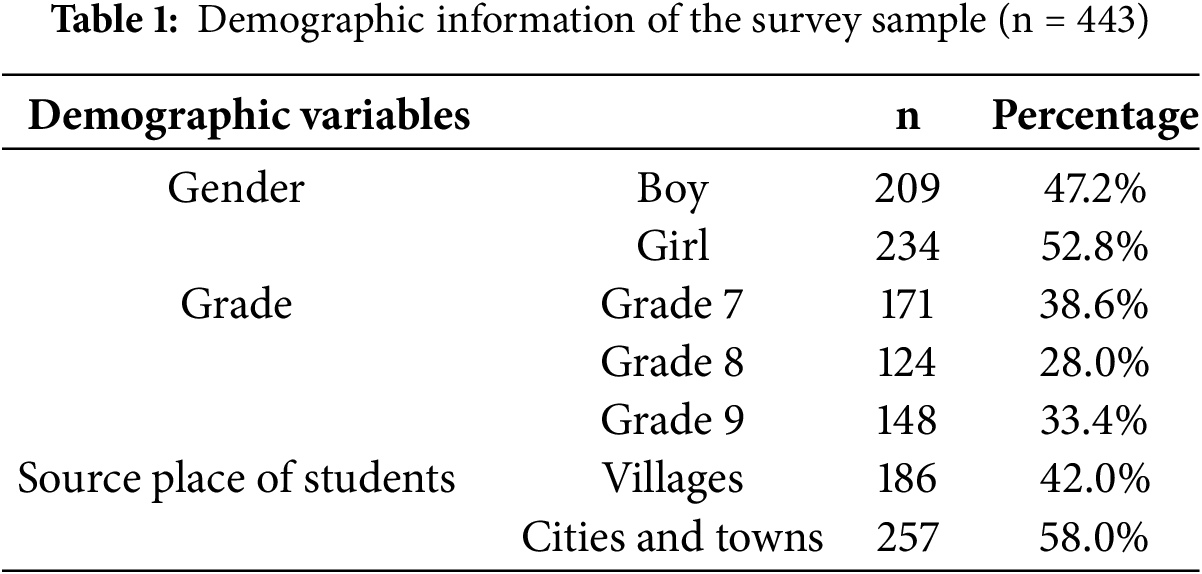
All the participants were junior high school students from Jiangxi Province, China. They completed the paper questionnaires three times from September 2022 to June 2023 with an interval of about 5 months between waves. The number of participants in each survey was different (501 in the first wave, 493 in the second, and 479 in the third) because there were students asking for leave, transferring to other schools, etc. After deleting the data lacking survey waves, and invalid data such as regular and incomplete answers, 443 valid data were obtained. The average age of the participants was 13.27(±1.01) years. The distribution of other demographic information is shown in Table 1.
The Buss-Perry Aggression Questionnaire (BPAQ) compiled by Buss et al. [21], revised by Zhang et al. [47] was adopted. It was a typical, valid, and widely used questionnaire of a trait measure of aggressiveness [48,49]. This scale had 29 items (e.g., “Some of my friends think I’m a hothead.”) using a 5-point Likert scale, ranging from 1 (not at all) to 5 (completely), and included four factors: physical aggression, verbal aggression, anger, and hostility. Responses for 29 items were summarized as higher scores indicating higher levels of aggressive traits. In the current study, the BPAQ has good internal consistency across three waves, with Cronbach’s α coefficient ranging from 0.856 to 0.907. The confirmatory factor analysis (CFA) in wave 1 showed an acceptable fit to the 4 factors structure (χ2(210) = 471.048, RMSEA = 0.053, CFI = 0.927, TLI = 0.904, SRMR = 0.046).
The MD Scale compiled by Bandura et al. [50], and revised by Wang et al. [51] was adopted. There were 26 items (e.g., “It’s alright to fight to protect your friends”) in 8 dimensions of moral justification, euphemistic labeling, advantageous comparison, displacement of responsibility, diffusion of responsibility, distortion of consequences, attribution of blame, and dehumanization. Each item was rated on a 5-point Likert scale, ranging from 1 (completely disagree) to 5 (completely agree), the higher the score, the higher the level of moral evasion of the individual. In the current study, the MD Scale showed excellent internal consistency across three waves, with Cronbach’s α coefficient ranging from 0.903 to 0.960. The confirmatory factor analysis (CFA) in wave 1 showed an acceptable fit to the 8 factors structure (χ2(356) = 611.919, RMSEA = 0.040, CFI = 0.912, TLI = 0.900, SRMR = 0.047).
The study was conducted in strict compliance with the Declaration of Helsinki and was approved by the Research Ethics Committee of Jiangxi Normal University’s School of Psychology. The ethics review approval number was IRB-JXNU-PSY-2022018. Informed consent from the education authorities and the student’s guardians was obtained prior to the test. Students’ informed consent was presented at the top of the questionnaire. The paper questionnaires were distributed three times by trained psychology master’s or doctoral students. The junior high school students were told that they had 20 to 30 min to complete the questionnaire. The confidentiality of the research was ensured in these ways: after data entry, each student was assigned a code to avoid revealing personal information; All researchers involved in the survey were required to sign non-disclosure agreements. The effectiveness of the survey was ensured in these ways: before students filled in the questionnaire, they were asked to complete it independently; they were told that the question options were not good or bad, and all the results were confidential and used only for scientific research. Students volunteered to take the survey and could withdraw at any time.
SPSS 25.0 was used to conduct descriptive statistics, correlation analysis, and reliability analysis. Mplus 8.3 was used to conduct longitudinal measurement invariance (MI) test, RI-CLPM analysis, confirmatory factor analysis (CFA), and LGM. MI ensured that the same attribute was measured consistently across different time points [52]. RI-CLPM provided a more accurate method to verify the causal relationship between TA and MD, as it effectively distinguished between-person effects and within-person effects. In RI-CLPM, the autoregressive paths represented the relationship between the same variable at different time points after controlling for variation in trait-like level, while the cross-lagged path represented the relationship between different variables at different time points after controlling for variation in trait-like level [53,54]. LGM was used to provide information about intra and interindividual differences in the growth trajectories of the junior high school students’ MD by extracting the slope and intercept. The mean of the intercept reflected the average of the starting levels of every individual, whereas the variance in the intercepts reflected the heterogeneity of the starting levels of individuals. Similarly, the mean of the slope reflected the overall rate of growth, whereas the variance in the slope reflected individual differences in the rate of growth [55]. The goodness-of-fit indices included the Chi-Square Test value (χ2), the Degree of Freedom (df), the Comparative Fit Index (CFI), the Tucker-Lewis Index (TLI), the Root-Mean Square Error of Approximation (RMSEA), and the Standardized Root-Mean-Square Residual (SRMR). A model fit was considered adequate if CFI and TLI exceeded 0.90, and RMSEA and SRMR were below 0.08 [56].
3.1 Descriptive Statistics and Correlation Analysis
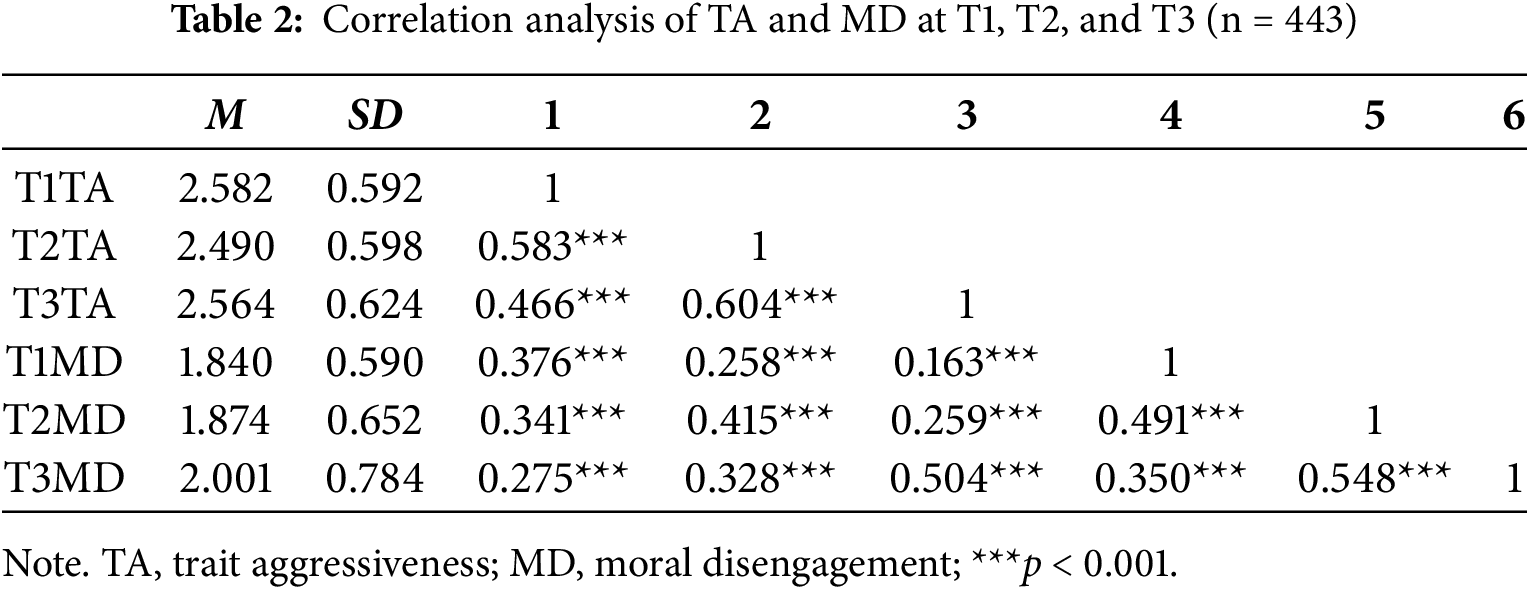
Descriptive statistics and correlation analysis were conducted on the data of each variable, and the results were presented in Table 2. Correlations of TA among T1, T2, and T3 were in the 0.498–0.611 range. Correlations of MD among T1, T2, and T3 measures were in the 0.284–0.465 range. Correlations between TA and MD were 0.368, 0.530, and 0.565 at three-time points, respectively, conforming to the expected direction.
3.2 Measurement Invariance of Longitudinal Data
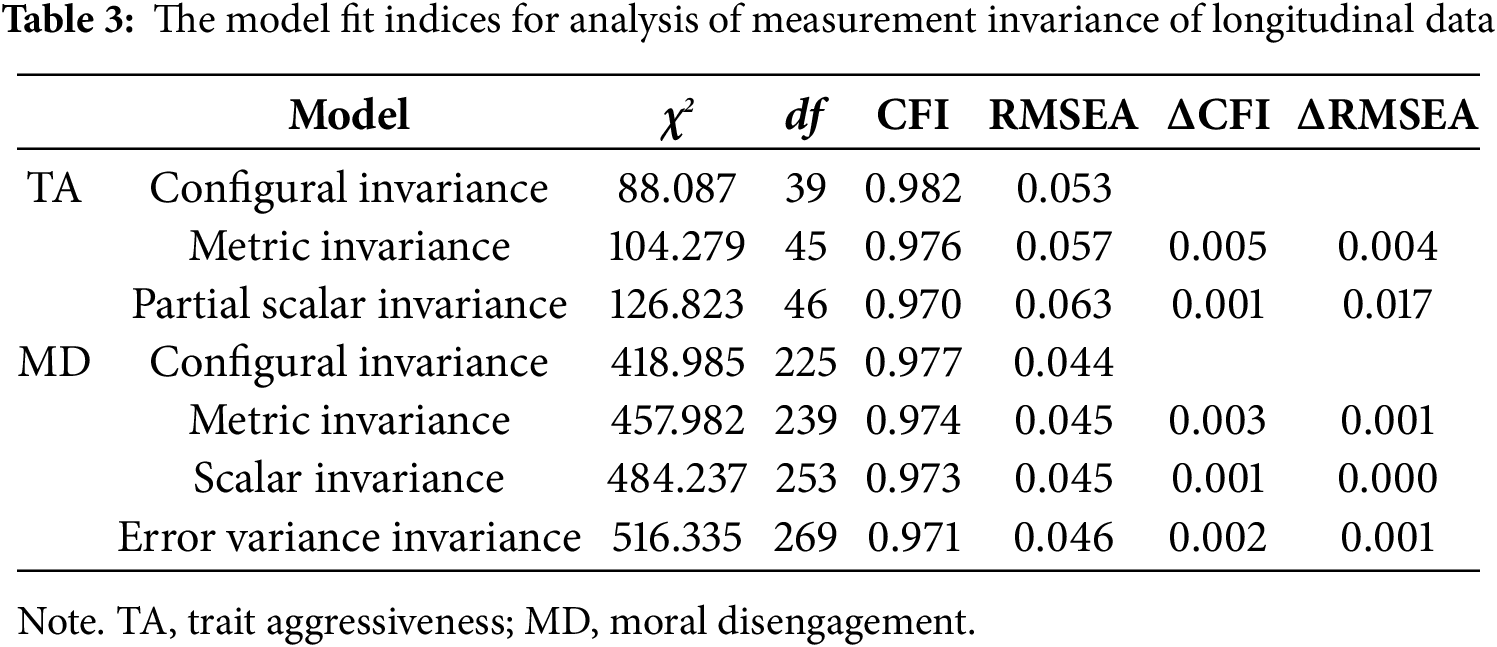
This study evaluated four models for assessing the invariance of samples across various time points: configural invariance, metric invariance, scalar invariance, and error variance invariance (see Table 3). According to Chen’s recommendations, if the difference between each model fitting index is less than the set critical values (ΔCFI < 0.01, ΔRMSEA < 0.015), the model is considered to pass the equivalence test [52]. In this study, the TA satisfied partial scalar invariance but did not meet the criteria for error variance invariance. However, the error variance invariance test was not a necessary step for measuring equivalence [57]. The MD satisfied the error variance invariance. This indicated that the data collected at different time points in this study were comparable.
3.3 The Cross-Lagged Associations between Trait Aggressiveness and Moral Disengagement
To investigate the longitudinal causal relationship, the RI-CLPM was constructed. The fit indices for the RI-CLPM were satisfactory: χ2 = 2.739, df = 1, RMSEA = 0.063, CFI = 0.998, TLI = 0.972, and SRMR = 0.014. At the between-person level, the intercept of TA was significantly positively correlated with the intercept of MD. Specifically, junior high school students with relatively high levels of TA exhibited higher levels of MD compared to those with low TA levels. At the within-person level, all autoregressive paths were significant, except for the one between T1 and T2 MD. This finding suggested that, relative to the baseline level, the variance of MD at the previous time point was predictive of the subsequent variance of MD. The variance of T2 MD was primarily influenced by factors other than the variance of T1 MD, while the variance of T3 MD was influenced by the variance of T2 MD. Regarding cross-lag pathways, TA at both T1 and T2 positively predicted the within-person variation of TA at T2 and T3. However, TA at T1 and T2 did not significantly predict the within-person variation in MD at T2 and T3. This indicated that TA and MD exerted one-way effects within individuals (see Fig. 1). To test whether the path coefficients of T1TA-T2MD and T2TA-T3MD were significantly different, model constraints were carried out based on RI-CLPM. The results showed that the difference between the path coefficients was not significant (p = 0.369).
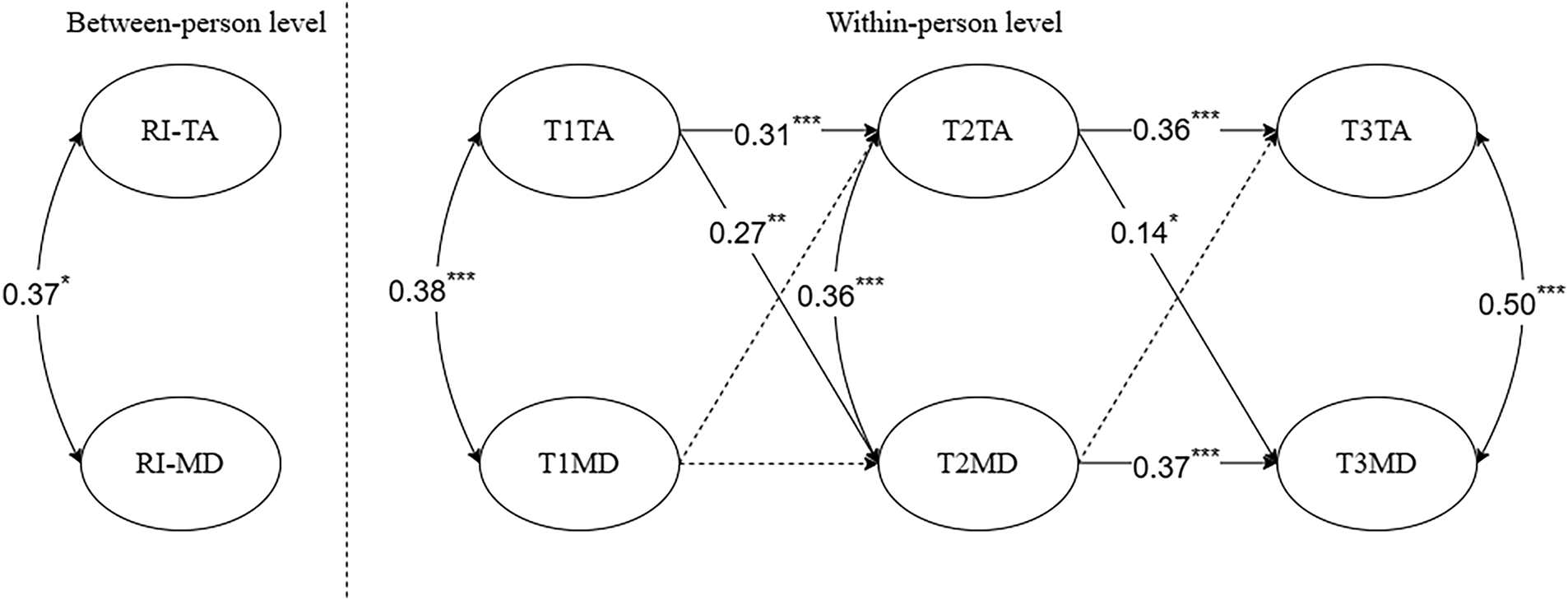
Figure 1: RI-CLPM standardized estimates for trait aggressiveness and moral disengagement. Note: dotted lines represent nonsignificant paths, solid lines represent significant paths; TA, trait aggressiveness; MD, moral disengagement; *p < 0.05; **p < 0.01; ***p < 0.001
3.4 The Unconditional Latent Growth Linear Model of Moral Disengagement
To investigate the growth trajectory of junior students’ MD, unconditional latent variable growth models were constructed first. The fit indexes of the linear growth model of MD were good (see Table 3). In the result parameter of the linear growth model of MD, the mean of the initial level of junior high school students was 1.830 (p < 0.001). The MD of junior high school students showed a rising tendency in the three measurements, and the result was significant (Mslope = 0.080, p < 0.001), that is, the linear growth trajectory of junior high school students’ MD was significant. In addition, the intercept variation (σ2 = 0.217, p < 0.001) and slope variation (σ2 = 0.074, p < 0.001) of MD were both significantly greater than 0, indicating that the initial level and the change of MD over time were systematically different among individuals. It is therefore necessary to further examine what factors contribute to individual differences in the level and speed of development. The correlation between the intercept factor and the slope factor (r = −0.194, p > 0.05) was not significant, indicating that there was no significant correlation between the initial level of MD and the rate of growth [58].
Fig. 2 shows the unconditional latent variable growth models of MD, in which the intercept represents the initial levels and the slope represents the change trajectory of the variables. According to test waves, 0, 1, 2 represented factor load.
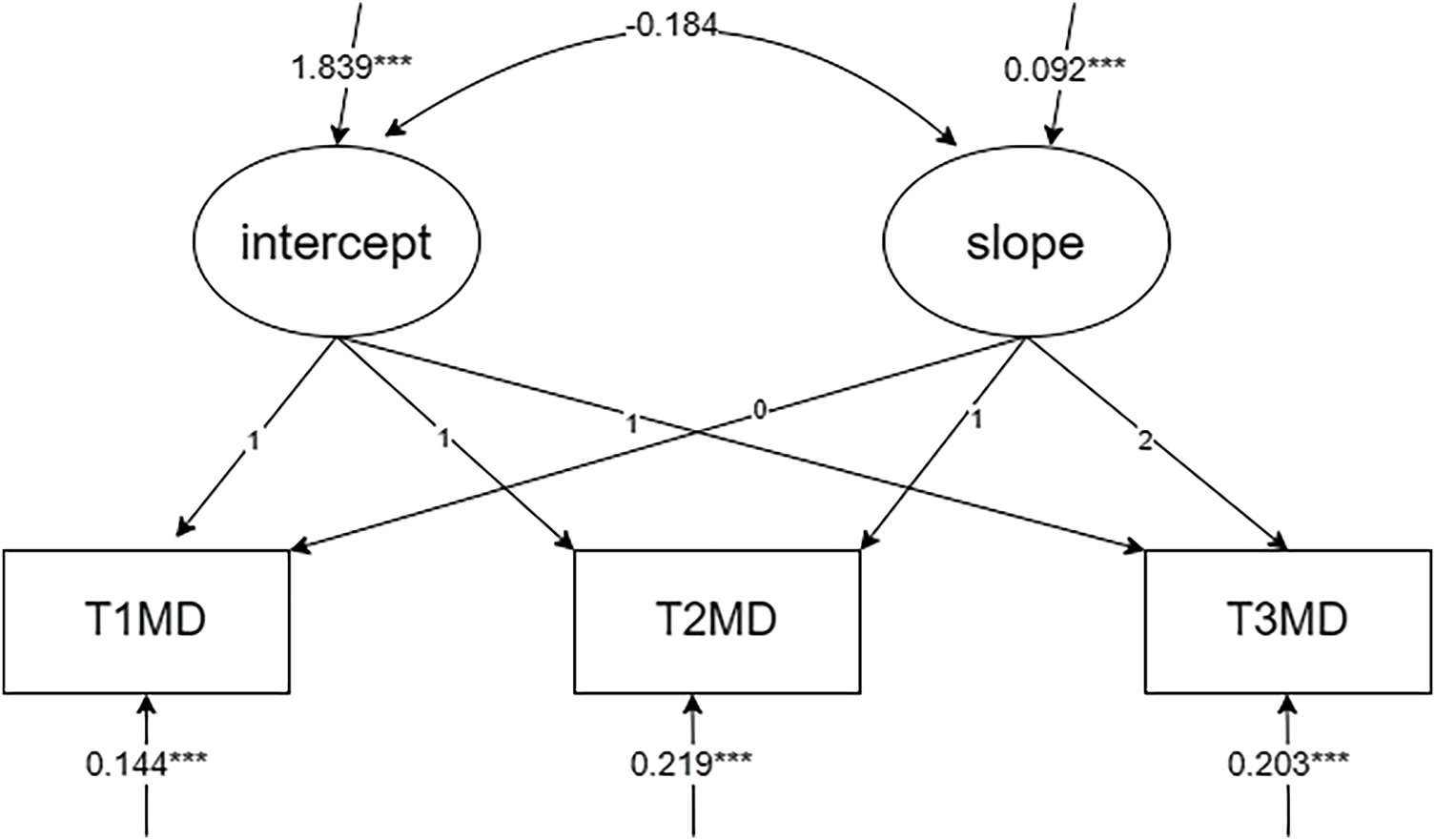
Figure 2: Unconditional latent growth linear model of moral disengagement. Note: TA, TA; MD, MD; T1 = Time 1, T2 = Time 2, T3 = Time 3; ***p < 0.001
3.5 The Conditional Latent Growth Linear Model of Moral Disengagement
To investigate the influence of gender and TA on the growth trajectory of junior high school students’ MD, we tested a conditional latent growth linear model, in which gender was added as a time-invariant covariate and TA as a time-variant covariate (see Fig. 3). The fit indexes of the linear growth model of MD were good (see Table 4). The initial level of MD of boys was significantly higher than that of girls (γI = −0.379, p < 0.001), and there was no significant difference in the rate of change of MD between boys and girls (γs = −0.085, p > 0.05). At a certain time point, the higher the TA level, the higher the MD level (T1, β = 0.338, p < 0.001; T2, β = 0.431, p < 0.001; T3, β = 0.509, p < 0.001), indicating that the TA of junior high school students had a promoting effect on the growth of MD.
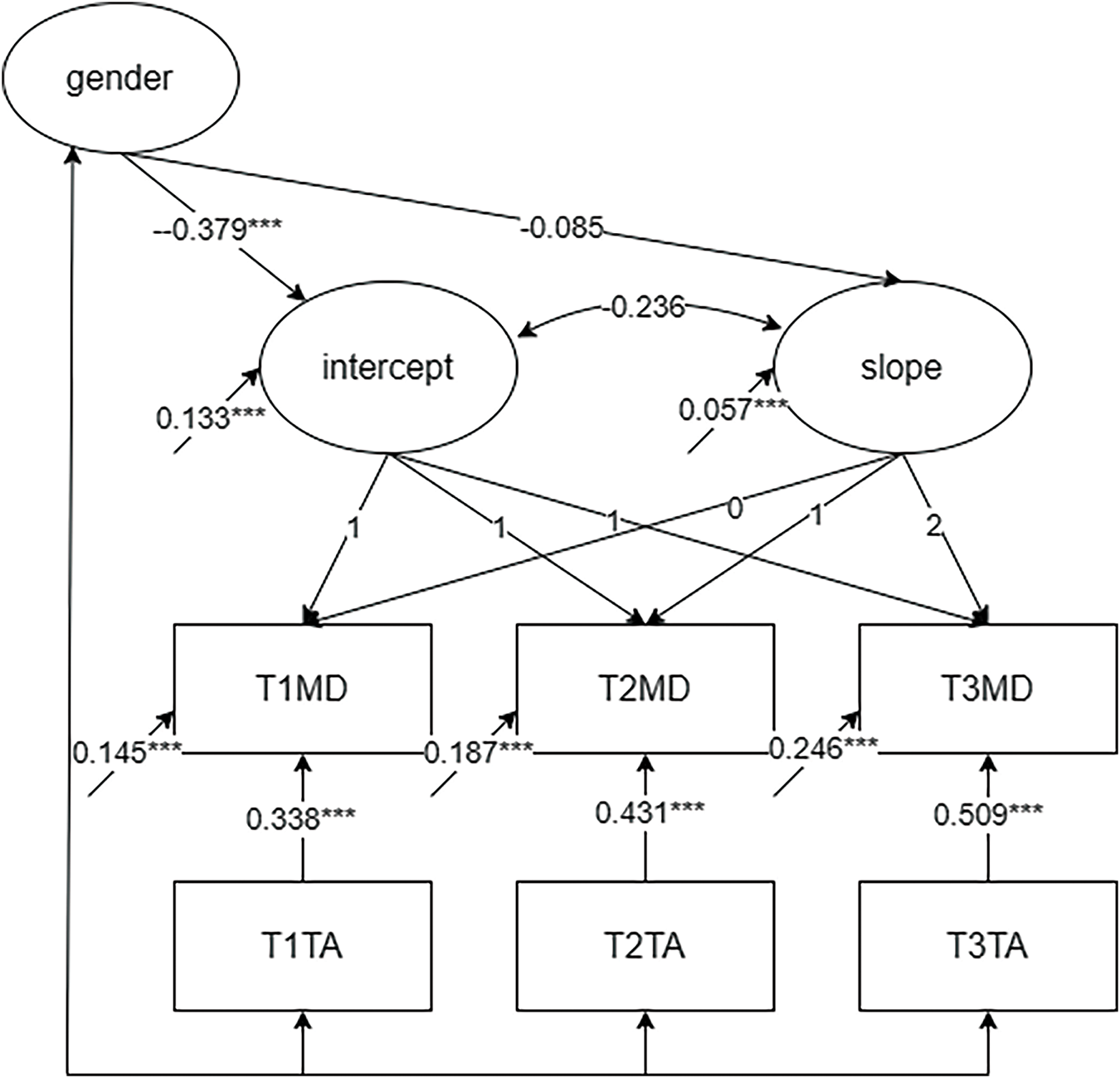
Figure 3: Conditional latent growth linear model of moral disengagement. Note: TA, trait aggressiveness; MD, moral disengagement; ***p < 0.001

To investigate which component of TA contributes to the growth trajectory of MD, we decomposed TA into three components: behavior (including dimensions of verbal aggression and physical aggression), emotion (specifically the anger dimension), and cognition (the hostility dimension) [25,56]. We then conducted conditional LGM analysis. The fit indices were satisfactory: χ2 = 32.300, df = 20, RMSEA = 0.037, CFI = 0.979, TLI = 0.965, SRMR = 0.051. At three time points, both behavioral (T1, βbehavior = 0.168, p < 0.01; T2, βbehavior = 0.202, p < 0.001; T3, βbehavior = 0.305, p < 0.001) and emotional (T1, βemotion = 0.200, p < 0.001; T2, βemotion = 0.205, p < 0.001; T3, βemotion = 0.144, p < 0.01) components had significant effects on MD, while cognitive (T1, βcognition = 0.036, p > 0.05; T2, βcognition = 0.091, p > 0.05; T3, βcognition = 0.130, p < 0.01) components had significant effects only at T3 (see Fig. A1).
This study investigated the causal relationship between TA and MD, the growth trajectory of MD, and the effects of gender and TA on the growth trajectory of junior high school students.
4.1 The Causal Relationship between Trait Aggressiveness and Moral Disengagement
From the results of the RI-CLPM, we found that, after disentangling the trait-like effects, the TA of the earlier time points predicted the MD of the later time points at the within-person level. But MD in the earlier time points couldn’t predict TA in the latter time points. The state-like one-way link indicated that TA was one of the antecedent variables of MD in junior high school students. According to Kohlberg’s theory of moral development, junior high school students are characterized by their recognition that social order depends on individual accountability and respect for established authority. The order of society and their duties are to be maintained as best they can, by abiding by unchanging laws and respecting authority [35]. However, GAM shows that people with aggressive perceptual tendencies may be more prone to aggressive responses [33]. Although the causes of aggressive behavior are complex, TA is positively correlated with aggressive behavior [21]. Event-related brain potential studies demonstrate impaired response inhibition to angry expressions and fearful expressions in individuals with high TA, which makes them more likely to engage in aggressive behavior [29,59]. Law and authority equip junior high school students with basic moral standards, but individuals with high TA are more likely to engage in unethical behavior. When there is a gap between intrinsic values and immoral behavior, MD stands up to free them from the guilt and self-blame that moral judgment brings. Therefore, junior high school students with high TA have a higher level of MD. There was no significant difference in the path coefficients between T1TA-T2MD and T2TA-T3MD, indicating that the effect of TA on MD of junior high school students was stable during the one-year observation period. This stabilizing effect may be because teenagers in junior high school are in a period of psychological turmoil, and TA is a stable personality trait.
4.2 The Growth Trajectory of Junior High School Students’ Moral Disengagement
The results of unconditional latent growth linear model analysis of MD showed that with the development of time, the MD level of junior high school students was on the rise, and the growth rate was also on the rise. From the perspective of the close relationship between MD and criminal behavior, the results of this study were highly consistent with the age curve of crime [38]. This suggested that we should pay more attention to the identification and correction of moral cognition in the moral education of junior high school students. People should take appropriate intervention measures to slow the accelerating growth of MD, so as to reduce the immoral behavior of adolescents, such as the role-play method [60], enhancing their sense of self-efficacy in moral judgment [7], using children’s literature to interfere with MD [61], and making students understand the eight mechanisms of MD to identify and reduce this cognitive strategy of MD.
In addition, there was no significant correlation between the initial level and the growth rate of MD of junior high school students, which meant that the initial level didn’t affect the growth rate. Junior high school students are in the early and middle of adolescence and are experiencing psychological turmoil of biological transition, cognitive transition, and social transition [62]. This turmoil led to more emotional and behavioral problems, including immoral behavior. Thus, the growth of MD is a general trend, regardless of their initial level. However, there were significant individual differences in junior high school students’ initial value and growth rate of MD. The influencing factors of MD are complex, including individual differences (gender, personality traits, empathy, etc.), family functions, peer influences, and so on [17,42], which lead to differences in the initial level and growth trajectory of adolescents’ MD. This also suggested that we should pay attention to individual differences in moral education and teach students in accordance with their aptitude.
4.3 The Impact of Gender and Trait Aggressiveness on the Growth Trajectory of Moral Disengagement
The conditional latent growth linear model of MD results showed that gender and TA contribute to the growth trajectory of MD as time-invariant and time-varying covariates, respectively. The initial level of MD was higher in boys than in girls, but there was no significant difference in the growth rate between the two. The reason might lie in that boys tend to be more aggressive than girls [63], they need higher MD to deactivate moral self-regulatory processes than girls to balance the differences between behavior and moral perception, to reduce feelings of guilt and self-blame. It may be because no matter whether boys or girls, they are both facing the psychological turmoil of adolescence and are both affected by collective MD [64], so there is no significant difference in the growth rate of MD.
The conditional latent growth model also examined the role of TA in the development of MD in junior high school students and found that TA has a long-term and dynamic impact on their MD. Higher TA could promote the growth of junior high school students’ MD at the same moment. If RI-CLPM analysis showed that the impact of junior high school students’ TA on MD was delayed, then the impact was still instantaneous in the conditional latent growth model, and the promotion effects at different time points make up the long-term impact [65]. In other words, TA has both immediate and delayed promoting effects on MD. In addition, the behavioral and emotional components of TA had positive effects on the development trajectory of MD to varying degrees. Several previous studies have demonstrated a positive relationship between them and MD using cross-sectional data [12,66,67]. This study further confirmed that the growth trajectory of MD was affected by behavioral, and emotional components of TA. As for the cognitive component of TA, only T3 showed a significant effect and the path coefficient was small. Whether there is a significant relationship between hostility and MD has different research conclusions [66,68]. From the results of some longitudinal studies, hostility does not always have a significant effect on MD at different time points [69,70]. The findings of this study are consistent with this uncertainty, which may be something that needs to be explored further in future research.
Through the follow-up investigation, this study verified a new antecedent variable of junior high school students’ MD–TA, which enriched the research on personality factors affecting MD. This study also verified the growth trajectory of MD in middle and early adolescence, and how gender and TA influenced the growth trajectory of their MD. All these provided a clearer empirical basis for preventing and intervening in the phenomenon of junior high school students’ MD.
At the same time, several limitations should also be noticed for future research. First, the relationships among the variables in this study were relatively simplistic; therefore, more complex models could be developed in subsequent investigations to explore additional relationship mechanisms around MD. Second, all variables in this study were self-reported by students. Future research could incorporate reports and observations from teachers, parents, and peers, as well as evidence from objective measurement tools. Third, this study only conducted 3 surveys with intervals of 5 months. In the future, a more comprehensive and accurate understanding of the development trend of MD can be obtained by extending the tracking time and increasing the number of surveys.
TA served as the antecedent variable for the MD of junior high school students. The MD among these students was escalating at an increasing rate, influenced by both gender and TA. These observations underscored the necessity for moral education in junior high schools to consider the variations in gender and personality traits to effectively mitigate their levels of MD.
Acknowledgement: Thanks to all the volunteers who provided help for this study, to the school leaders and teachers of junior high school students who participated in the questionnaire surveys. All individuals have consented to the acknowledge.
Funding Statement: This study was supported by the National Natural Science Foundation of China (72164018), Humanities and Social Sciences Research Planning Foundation of the Ministry of Education (22YJA190012), Jiangxi Universities Key Research Base Project of Humanities and Social Sciences (JD23071), Jiangxi Provincial Colleges and Universities Ideological and Political Education Research Association Project (XSGZ24239).
Author Contributions: The authors confirm contribution to the paper as follows: study conception and design: all authors; data collection and data entry: Xuezhi Liu and Lingjing Guo; analysis and interpretation of results: Xuezhi Liu and Jianxiao Wu; draft manuscript preparation: Xuezhi Liu, Baojuan Ye, Ronghuan Wang, Qiang Yang and Xiufeng Guo. All authors reviewed the results and approved the final version of the manuscript.
Availability of Data and Materials: The datasets generated and analyzed during the current study are available from the corresponding author upon reasonable request.
Ethics Approval: The study was conducted in strict compliance with the Declaration of Helsinki and was approved by the Research Ethics Committee of Jiangxi Normal University’s School of Psychology. The ethics review approval number was IRB-JXNU-PSY-2022018. Informed consent from the education authorities and the student’s guardians was obtained prior to the test. Students’ informed consent was presented at the top of the questionnaire.
Conflicts of Interest: The authors declare no conflicts of interest to report regarding the present study.
References
1. Varlık S. The silent shadow in primary school: the invisible face of bullying. Child Youth Serv Rev. 2024;166(1):107924. doi:10.1016/j.childyouth.2024.107924. [Google Scholar] [CrossRef]
2. Busching R, Krahé B. The contagious effect of deviant behavior in adolescence: a longitudinal multilevel study. Soc Psychol Personal Sci. 2018;9(7):815–24. doi:10.1177/1948550617725151. [Google Scholar] [CrossRef]
3. Waltzer T, DeBernardi FC, Dahl A. Student and teacher views on cheating in high school: perceptions, evaluations, and decisions. J Res Adolescence. 2023;33(1):108–26. doi:10.1111/jora.12784. [Google Scholar] [PubMed] [CrossRef]
4. The Supreme People’s Procuratorate of the People’s Republic of China. White paper on juvenile prosecutorial work. [cited 2025 Feb 11]. Available from: https://www.spp.gov.cn/spp/xwfbh/wsfbt/202306/t20230601_615967.shtml#1. [Google Scholar]
5. Lansford JE, Dodge KA, Fontaine RG, Bates JE, Pettit GS. Peer rejection, affiliation with deviant peers, delinquency, and risky sexual behavior. J Youth Adolescence. 2014;43(10):1742–51. doi:10.1007/s10964-014-0175-y. [Google Scholar] [PubMed] [CrossRef]
6. Guo Z, Yang Y, Li W, Yao X, Kou Y. Longitudinal relations among honesty-humility, moral disengagement, and unethical behavior in adolescents: a between- and within-person analysis. J Res Pers. 2023;106(4):104401. doi:10.1016/j.jrp.2023.104401. [Google Scholar] [CrossRef]
7. Bandura A. National Institute of Mental Health. Mechanisms of moral disengagement. Social foundations of thought and action: a social cognitive theory. Upper Sudbury, NJ, USA: Prentice-Hall, Inc.; 1986. [Google Scholar]
8. Bandura A. Selective activation and disengagement of moral control. J Soc Issues. 1990;46(1):27–46. doi:10.1111/j.1540-4560.1990.tb00270.x. [Google Scholar] [CrossRef]
9. Bandura A. Social cognitive theory: an agentic perspective. Psychology. 2020;12(3):313. doi:10.12681/psy_hps.23964. [Google Scholar] [CrossRef]
10. Bandura A. Palliating the harmful effects of moral disengagement. moral disengagement: how people do harm and live with themselves. USA: Worth Publishers; 2016. 529 p. [Google Scholar]
11. Bandura A. Moral disengagement in the perpetration of inhumanities. Pers Soc Psychol Rev. 1999;3(3):193–209. doi:10.1207/s15327957pspr0303_3. [Google Scholar] [PubMed] [CrossRef]
12. Gini G, Pozzoli T, Hymel S. Moral disengagement among children and youth: a meta-analytic review of links to aggressive behavior. Aggressive Behav. 2014;40(1):56–68. doi:10.1002/ab.21502. [Google Scholar] [PubMed] [CrossRef]
13. Gentile A, Milovanovic I, Pišot S, Bianco A, Lavanco G. Moral disengagement in youth athletes: a narrative review. J Funct Morphol Kinesiol. 2022;7(2):33. doi:10.3390/jfmk7020033. [Google Scholar] [PubMed] [CrossRef]
14. Luo A, Bussey K. Moral disengagement in youth: a meta-analytic review. Dev Rev. 2023;70(1):101101. doi:10.1016/j.dr.2023.101101. [Google Scholar] [CrossRef]
15. Quinn CA, Bussey K. Moral disengagement, anticipated social outcomes and adolescents’ alcohol use: parallel latent growth curve analyses. J Youth Adolescence. 2015;44(10):1854–70. doi:10.1007/s10964-015-0345-6. [Google Scholar] [PubMed] [CrossRef]
16. Johnson JF, Ronald Buckley M. Multi-level organizational moral disengagement: directions for future investigation. J Bus Ethics. 2015;130(2):291–300. doi:10.1007/s10551-014-2220-x. [Google Scholar] [CrossRef]
17. Gülseven Z, Yu MVB, Zarrett N, Vandell DL, Simpkins SD. Self-control and cooperation in childhood as antecedents of less moral disengagement in adolescence. Dev Psychopathol. 2023;35(1):290–300. doi:10.1017/S0954579421000584. [Google Scholar] [PubMed] [CrossRef]
18. Navas MP, Maneiro L, Cutrín O, Gómez-Fraguela JA, Sobral J. Contributions of the dark triad to moral disengagement among incarcerated and community adults. Legal Criminol Psychol. 2021;26(2):196–214. doi:10.1111/lcrp.12190. [Google Scholar] [CrossRef]
19. Rengifo M, Laham SM. Big Five personality predictors of moral disengagement: a comprehensive aspect-level approach. Pers Individ Dif. 2022;184(1):111176. doi:10.1016/j.paid.2021.111176. [Google Scholar] [CrossRef]
20. Bettencourt BA, Talley A, Benjamin AJ, Valentine J. Personality and aggressive behavior under provoking and neutral conditions: a meta-analytic review. Psychol Bull. 2006;132(5):751–77. doi:10.1037/0033-2909.132.5.751. [Google Scholar] [PubMed] [CrossRef]
21. Buss AH, Perry M. The aggression questionnaire. J Pers Soc Psychol. 1992;63(3):452–9. doi:10.1037/0022-3514.63.3.452. [Google Scholar] [PubMed] [CrossRef]
22. Kersten R, Greitemeyer T. Human aggression in everyday life: an empirical test of the general aggression model. British J Social Psychol. 2024 Jan 3;63(3):12718. doi:10.1111/bjso.12718. [Google Scholar] [PubMed] [CrossRef]
23. Lawrence C, Hodgkins E. Personality influences on interpretations of aggressive behavior: the role of provocation sensitivity and trait aggression. Pers Individ Dif. 2009;46(3):319–24. doi:10.1016/j.paid.2008.10.022. [Google Scholar] [CrossRef]
24. Kleiman EM, Ammerman BA, Kulper DA, Uyeji LL, Jenkins AL, McCloskey MS. Forms of non-suicidal self-injury as a function of trait aggression. Compr Psychiat. 2015;59:21–7. doi:10.1016/j.comppsych.2014.12.004. [Google Scholar] [PubMed] [CrossRef]
25. Molapour T, Lindström B, Olsson A. Aversive learning and trait aggression influence retaliatory behavior. Front Psychol. 2016;8(7):833. doi:10.3389/fpsyg.2016.00833. [Google Scholar] [PubMed] [CrossRef]
26. Alia-Klein N, Goldstein RZ, Kriplani A, Logan J, Tomasi D, Williams B, et al. Brain monoamine oxidase a activity predicts trait aggression. J Neurosci. 2008;28(19):5099–104. doi:10.1523/JNEUROSCI.0925-08.2008. [Google Scholar] [PubMed] [CrossRef]
27. Gietl A, Giegling I, Hartmann AM, Schneider B, Schnabel A, Maurer K, et al. ABCG1 gene variants in suicidal behavior and aggression-related traits. Eur Neuropsychopharmacol. 2007;17(6–7):410–6. doi:10.1016/j.euroneuro.2006.11.004. [Google Scholar] [PubMed] [CrossRef]
28. Sun L, Sima J, Lian T, Wang J, Wu H, Luo Y. Differences in early-stage facial structure coding in high and low individuals with trait aggression: an event-related brain potential study. Pers Individ Dif. 2022;184(3):111231. doi:10.1016/j.paid.2021.111231. [Google Scholar] [CrossRef]
29. Sun L, Niu G, Li J, Du H, Hu X, Yang S, et al. Trait aggression affects the response inhibition to angry expressions: an event-related brain potential study. Pers Individ Dif. 2020;152(6):109553. doi:10.1016/j.paid.2019.109553. [Google Scholar] [CrossRef]
30. Dam VH, Hjordt LV, Da Cunha-Bang S, Sestoft D, Knudsen GM, Stenbæk DS. Trait aggression is associated with five-factor personality traits in males. Brain Behav. 2021;11(7):e02175. doi:10.1002/brb3.2175. [Google Scholar] [PubMed] [CrossRef]
31. West SJ, Chester DS. The tangled webs we wreak: examining the structure of aggressive personality using psychometric networks. J Pers. 2022;90(5):762–80. doi:10.1111/jopy.12695. [Google Scholar] [PubMed] [CrossRef]
32. Bowden VM. Subtyping aggression in children and adolescents. The journal of neuropsychiatry and clinical neurosciences. JAMA. 1992;268(11):1473. doi:10.1001/jama.1992.03490110111047. [Google Scholar] [CrossRef]
33. Anderson CA, Bushman BJ. Human aggression. Annu Rev Psychol. 2002;53(1):27–51. doi:10.1146/annurev.psych.53.100901.135231. [Google Scholar] [PubMed] [CrossRef]
34. Allen JJ, Anderson CA. General aggression model. In: Rössler P, Hoffner CA, Zoonen L, editors. The international encyclopedia of media effects. 1st ed. USA: Wiley; 2017. p. 1–15. doi:10.1002/9781118783764.wbieme0078. [Google Scholar] [CrossRef]
35. Kohlberg L. The philosophy of moral development: moral stages and the idea of justice. San Francisco: Harper & Row; 1981. [Google Scholar]
36. Scirocco A, Recchia H. Links between adolescents’ moral mindsets and narratives of their inconsistent and consistent moral value experiences. J Youth Adolescence. 2022;51(12):2368–82. doi:10.1007/s10964-022-01676-4. [Google Scholar] [PubMed] [CrossRef]
37. Bussey K. Development of moral disengagement: learning to make wrong Right. In: Jensen LA, editor. The Oxford handbook of moral development: an interdisciplinary perspective. UK: Oxford University Press; 2020. doi:10.1093/oxfordhb/9780190676049.013.17. [Google Scholar] [CrossRef]
38. Hirschi T, Gottfredson M. Age and the explanation of crime. Am J Sociol. 1983;89(3):552–84. doi:10.1086/227905. [Google Scholar] [CrossRef]
39. Walters GD. Changes in Criminal thinking from midadolescence to early adulthood: does trajectory direction matter? Law Hum Behav. 2022;46(2):154–63. doi:10.1037/lhb0000468. [Google Scholar] [PubMed] [CrossRef]
40. Paciello M, Fida R, Tramontano C, Lupinetti C, Caprara GV. Stability and change of moral disengagement and its impact on aggression and violence in late adolescence. Child Dev. 2008;79(5):1288–309. doi:10.1111/j.1467-8624.2008.01189.x. [Google Scholar] [PubMed] [CrossRef]
41. Shulman EP, Cauffman E, Piquero AR, Fagan J. Moral disengagement among serious juvenile offenders: a longitudinal study of the relations between morally disengaged attitudes and offending. Dev Psychol. 2011;47(6):1619–32. doi:10.1037/a0025404. [Google Scholar] [PubMed] [CrossRef]
42. Caravita SCS, Sijtsema JJ, Rambaran JA, Gini G. Peer influences on moral disengagement in late childhood and early adolescence. J Youth Adolescence. 2014;43(2):193–207. doi:10.1007/s10964-013-9953-1. [Google Scholar] [PubMed] [CrossRef]
43. Gao L, Zhang SJ. The developmental characteristics of teenagers’ moral disengagement based on situation. Theo Pract Educ. 2017;37(19):42–5. [Google Scholar]
44. Hancock GR, Choi J. A vernacular for linear latent growth models. Struct Equ Model: A Multidiscip J. 2006;13(3):352–77. doi:10.1207/s15328007sem1303_2. [Google Scholar] [CrossRef]
45. Martínez-Bacaicoa J, Real-Brioso N, Mateos-Pérez E, Gámez-Guadix M. The role of gender and sexism in the moral disengagement mechanisms of technology-facilitated sexual violence. Comput Human Behav. 2024;152(7–8):108060. doi:10.1016/j.chb.2023.108060. [Google Scholar] [CrossRef]
46. Sánchez-Hernández MD, Herrera MC, Expósito F. Is online disinhibition related to cyberdating abuse perpetration through moral disengagement? the moderating role of gender, sexism, and cybervictimization. Sex Roles. 2024;90(7):938–59. doi:10.1007/s11199-024-01480-3. [Google Scholar] [CrossRef]
47. Zhang L, Liu S, Xu Q, Wu X, Yang M. Long-term effect of violence exposure in real-life on aggressive behaviors: a moderated mediation model. Acta Psychol Sin. 2017;49(1):50. doi:10.3724/SP.J.1041.2017.00050. [Google Scholar] [CrossRef]
48. Archer J, Webb IA. The relation between scores on the Buss-Perry Aggression Questionnaire and aggressive acts, impulsiveness, competitiveness, dominance, and sexual jealousy. Aggr Behav. 2006;32(5):464–73. doi:10.1002/(ISSN)1098-2337. [Google Scholar] [CrossRef]
49. Gallagher JM, Ashford JB. Buss-perry aggression questionnaire: testing alternative measurement models with assaultive misdemeanor offenders. Crim Justice Behav. 2016;43(11):1639–52. doi:10.1177/0093854816643986. [Google Scholar] [CrossRef]
50. Bandura A, Caprara GV, Barbaranelli C, Pastorelli C, Regalia C. Sociocognitive self-regulatory mechanisms governing transgressive behavior. J Pers Soc Psychol. 2001;80(1):125–35. doi:10.1037/0022-3514.80.1.125. [Google Scholar] [CrossRef]
51. Wang XC, Yang JP. Moral disengagement and college students’ prosocial behavior: the moderating effect of moral identity. J Psychol Sci. 2013;36(4):904–9. doi:10.16719/j.cnki.1671-6981.2013.04.009. [Google Scholar] [CrossRef]
52. Chen FF. Sensitivity of goodness of fit indexes to lack of measurement invariance. Struct Equ Modeling. 2007;14(3):464–504. doi:10.1080/10705510701301834. [Google Scholar] [CrossRef]
53. Hamaker EL, Kuiper RM, Grasman RPPP. A critique of the cross-lagged panel model. Psychol Methods. 2015;20(1):102–16. doi:10.1037/a0038889. [Google Scholar] [PubMed] [CrossRef]
54. Mulder JD, Hamaker EL. Three extensions of the random intercept cross-lagged panel model. Struct Equ Modeling. 2021;28(4):638–48. doi:10.1080/10705511.2020.1784738. [Google Scholar] [CrossRef]
55. Meredith W, Tisak J. Latent curve analysis. Psychometrika. 1990;55(1):107–22. doi:10.1007/BF02294746. [Google Scholar] [CrossRef]
56. Marsh HW, Hau KT, Wen Z. In search of golden rules: comment on hypothesis-testing approaches to setting cutoff values for fit indexes and dangers in overgeneralizing hu and bentler’s, 1999 findings. Struct Equ Modeling. 2004;11(3):320–41. doi:10.1207/s15328007sem1103_2. [Google Scholar] [CrossRef]
57. Putnick DL, Bornstein MH. Measurement invariance conventions and reporting: the state of the art and future directions for psychological research. Dev Rev. 2016;41:71–90. doi:10.1016/j.dr.2016.06.004. [Google Scholar] [PubMed] [CrossRef]
58. Wang MC, Bi XY. Latent growth curve models. In: Latent variable modeling and mplus application. Chongqing, China: Chongqing University Press; 2018. [Google Scholar]
59. Verona E, Bresin K. Aggression proneness: transdiagnostic processes involving negative valence and cognitive systems. Int J Psychophysiol. 2015;98(2):321–9. doi:10.1016/j.ijpsycho.2015.03.008. [Google Scholar] [PubMed] [CrossRef]
60. Jasemi M. Educating ethics codes by lecture or role-play; which one improves nursing students’ ethical sensitivity and ethical performance more? a quasi-experimental study. J Prof Nurs. 2022;40(11):122–9. doi:10.1016/j.profnurs.2021.11.002. [Google Scholar] [PubMed] [CrossRef]
61. Wang C, Goldberg TS. Using children’s literature to decrease moral disengagement and victimization among elementary school students. Psychol Sch. 2017;54(9):918–31. doi:10.1002/pits.22042. [Google Scholar] [CrossRef]
62. Mastorci F, Lazzeri MFL, Vassalle C, Pingitore A. The transition from childhood to adolescence: between health and vulnerability. Children. 2024;11(8):989. doi:10.3390/children11080989. [Google Scholar] [PubMed] [CrossRef]
63. Rahman MS, Nahar L. Aggression in boys and girls as related to their academic achievement and residential background. Psychology. 2013;4(5):459–62. doi:10.4236/psych.2013.45065. [Google Scholar] [CrossRef]
64. Gini G, Pozzoli T, Bussey K. The role of individual and collective moral disengagement in peer aggression and bystanding: a multilevel analysis. J Abnorm Child Psychol. 2015;43(3):441–52. doi:10.1007/s10802-014-9920-7. [Google Scholar] [PubMed] [CrossRef]
65. Tan DQ, Ding W, Song SC, Wu W, Lin XY. The intergenerational transmission of violence-the influence of parental abuse on bullying perpetration: an analysis based on latent growth model. Psychol Develop Educat. 2025;41:410–9. doi:10.16187/j.cnki.issn1001-4918.2025.03.11. [Google Scholar] [CrossRef]
66. Shen Y, Sun X, Xin T. How social support affects moral disengagement: the role of anger and hostility. Soc Behav Pers. 2019;47(3):1–9. doi:10.2224/sbp.7720. [Google Scholar] [CrossRef]
67. Dou G, Xiang Y, Sun X, Chen L. Link between cyberbullying victimization and perpetration among undergraduates: mediating effects of trait anger and moral disengagement. Psychol Res Behav Manag. 2020;13:1269–76. doi:10.2147/PRBM.S286543. [Google Scholar] [PubMed] [CrossRef]
68. Maftei A, Bostan CM, Zaharia DV. Hostility and civic moral disengagement: cognitive reappraisal and expressive suppression as moderators. J Moral Educ. 2019;50(2):202–18. doi:10.1080/03057240.2019.1691512. [Google Scholar] [CrossRef]
69. Li X, Xia L. A serial cascade effect of cybervictimization and hostile rumination on the within-person change of moral disengagement. J Pers. 2024;92(6):1726–43. doi:10.1111/jopy.12920. [Google Scholar] [PubMed] [CrossRef]
70. Li X, Li Z, Xia L. Understanding the moral cognition of aggression: longitudinal serial effects of personal relative deprivation and hostility on within-person changes in civic moral disengagement. Aggress Behav. 2024;50(4):e22164. doi:10.1002/ab.22164. [Google Scholar] [PubMed] [CrossRef]
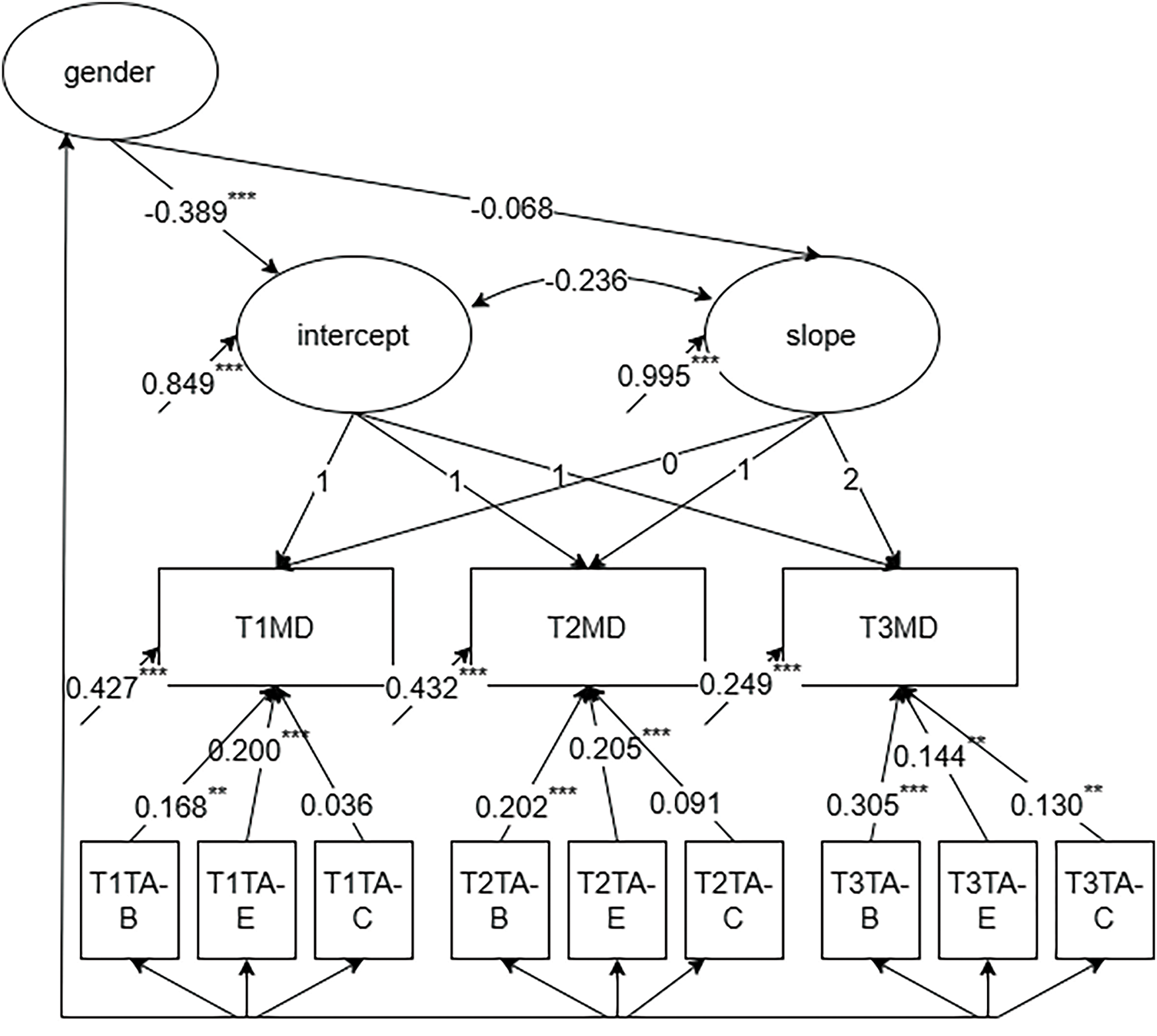
Figure A1: Conditional latent growth linear model of moral disengagement with a time-invariant variable and three components of a time-variant variable. Note: TA-B, behavior component of trait aggressiveness; TA-E, emotion or affection component of trait aggressiveness; TA-C, cognition component of trait aggressiveness; MD, moral disengagement; **p < 0.01; ***p < 0.001
Cite This Article
 Copyright © 2025 The Author(s). Published by Tech Science Press.
This work is licensed under a Creative Commons Attribution 4.0 International License , which permits unrestricted use, distribution, and reproduction in any medium, provided the original work is properly cited.
 Downloads
 Citation Tools
